EP3687196B1 - Ortungsgeraete zum verfolgen von rettungspersonal - Google Patents
Ortungsgeraete zum verfolgen von rettungspersonal Download PDFInfo
- Publication number
- EP3687196B1 EP3687196B1 EP20164449.9A EP20164449A EP3687196B1 EP 3687196 B1 EP3687196 B1 EP 3687196B1 EP 20164449 A EP20164449 A EP 20164449A EP 3687196 B1 EP3687196 B1 EP 3687196B1
- Authority
- EP
- European Patent Office
- Prior art keywords
- beacon
- portable
- emergency responder
- portable device
- location
- Prior art date
- Legal status (The legal status is an assumption and is not a legal conclusion. Google has not performed a legal analysis and makes no representation as to the accuracy of the status listed.)
- Active
Links
Images


Classifications
-
- H—ELECTRICITY
- H04—ELECTRIC COMMUNICATION TECHNIQUE
- H04W—WIRELESS COMMUNICATION NETWORKS
- H04W4/00—Services specially adapted for wireless communication networks; Facilities therefor
- H04W4/02—Services making use of location information
- H04W4/029—Location-based management or tracking services
-
- A—HUMAN NECESSITIES
- A62—LIFE-SAVING; FIRE-FIGHTING
- A62C—FIRE-FIGHTING
- A62C99/00—Subject matter not provided for in other groups of this subclass
- A62C99/009—Methods or equipment not provided for in groups A62C99/0009 - A62C99/0081
-
- G—PHYSICS
- G01—MEASURING; TESTING
- G01C—MEASURING DISTANCES, LEVELS OR BEARINGS; SURVEYING; NAVIGATION; GYROSCOPIC INSTRUMENTS; PHOTOGRAMMETRY OR VIDEOGRAMMETRY
- G01C21/00—Navigation; Navigational instruments not provided for in groups G01C1/00 - G01C19/00
- G01C21/20—Instruments for performing navigational calculations
- G01C21/206—Instruments for performing navigational calculations specially adapted for indoor navigation
-
- G—PHYSICS
- G01—MEASURING; TESTING
- G01S—RADIO DIRECTION-FINDING; RADIO NAVIGATION; DETERMINING DISTANCE OR VELOCITY BY USE OF RADIO WAVES; LOCATING OR PRESENCE-DETECTING BY USE OF THE REFLECTION OR RERADIATION OF RADIO WAVES; ANALOGOUS ARRANGEMENTS USING OTHER WAVES
- G01S1/00—Beacons or beacon systems transmitting signals having a characteristic or characteristics capable of being detected by non-directional receivers and defining directions, positions, or position lines fixed relatively to the beacon transmitters; Receivers co-operating therewith
-
- G—PHYSICS
- G01—MEASURING; TESTING
- G01S—RADIO DIRECTION-FINDING; RADIO NAVIGATION; DETERMINING DISTANCE OR VELOCITY BY USE OF RADIO WAVES; LOCATING OR PRESENCE-DETECTING BY USE OF THE REFLECTION OR RERADIATION OF RADIO WAVES; ANALOGOUS ARRANGEMENTS USING OTHER WAVES
- G01S5/00—Position-fixing by co-ordinating two or more direction or position line determinations; Position-fixing by co-ordinating two or more distance determinations
- G01S5/02—Position-fixing by co-ordinating two or more direction or position line determinations; Position-fixing by co-ordinating two or more distance determinations using radio waves
- G01S5/0205—Details
- G01S5/0226—Transmitters
- G01S5/0231—Emergency, distress or locator beacons
-
- G—PHYSICS
- G06—COMPUTING OR CALCULATING; COUNTING
- G06Q—INFORMATION AND COMMUNICATION TECHNOLOGY [ICT] SPECIALLY ADAPTED FOR ADMINISTRATIVE, COMMERCIAL, FINANCIAL, MANAGERIAL OR SUPERVISORY PURPOSES; SYSTEMS OR METHODS SPECIALLY ADAPTED FOR ADMINISTRATIVE, COMMERCIAL, FINANCIAL, MANAGERIAL OR SUPERVISORY PURPOSES, NOT OTHERWISE PROVIDED FOR
- G06Q10/00—Administration; Management
- G06Q10/08—Logistics, e.g. warehousing, loading or distribution; Inventory or stock management
- G06Q10/083—Shipping
- G06Q10/0833—Tracking
-
- G—PHYSICS
- G06—COMPUTING OR CALCULATING; COUNTING
- G06Q—INFORMATION AND COMMUNICATION TECHNOLOGY [ICT] SPECIALLY ADAPTED FOR ADMINISTRATIVE, COMMERCIAL, FINANCIAL, MANAGERIAL OR SUPERVISORY PURPOSES; SYSTEMS OR METHODS SPECIALLY ADAPTED FOR ADMINISTRATIVE, COMMERCIAL, FINANCIAL, MANAGERIAL OR SUPERVISORY PURPOSES, NOT OTHERWISE PROVIDED FOR
- G06Q50/00—Information and communication technology [ICT] specially adapted for implementation of business processes of specific business sectors, e.g. utilities or tourism
- G06Q50/10—Services
-
- G—PHYSICS
- G08—SIGNALLING
- G08B—SIGNALLING SYSTEMS, e.g. PERSONAL CALLING SYSTEMS; ORDER TELEGRAPHS; ALARM SYSTEMS
- G08B21/00—Alarms responsive to a single specified undesired or abnormal condition and not otherwise provided for
- G08B21/02—Alarms for ensuring the safety of persons
- G08B21/0202—Child monitoring systems using a transmitter-receiver system carried by the parent and the child
- G08B21/0241—Data exchange details, e.g. data protocol
- G08B21/0247—System arrangements wherein the alarm criteria uses signal strength
-
- G—PHYSICS
- G08—SIGNALLING
- G08B—SIGNALLING SYSTEMS, e.g. PERSONAL CALLING SYSTEMS; ORDER TELEGRAPHS; ALARM SYSTEMS
- G08B21/00—Alarms responsive to a single specified undesired or abnormal condition and not otherwise provided for
- G08B21/02—Alarms for ensuring the safety of persons
- G08B21/0202—Child monitoring systems using a transmitter-receiver system carried by the parent and the child
- G08B21/0272—System arrangements wherein the object is to detect exact location of child or item using triangulation other than GPS
-
- G—PHYSICS
- G08—SIGNALLING
- G08B—SIGNALLING SYSTEMS, e.g. PERSONAL CALLING SYSTEMS; ORDER TELEGRAPHS; ALARM SYSTEMS
- G08B21/00—Alarms responsive to a single specified undesired or abnormal condition and not otherwise provided for
- G08B21/02—Alarms for ensuring the safety of persons
- G08B21/0202—Child monitoring systems using a transmitter-receiver system carried by the parent and the child
- G08B21/0277—Communication between units on a local network, e.g. Bluetooth®, piconet, Zigbee®, Wireless Personal Area Networks [WPAN]
-
- G—PHYSICS
- G08—SIGNALLING
- G08B—SIGNALLING SYSTEMS, e.g. PERSONAL CALLING SYSTEMS; ORDER TELEGRAPHS; ALARM SYSTEMS
- G08B21/00—Alarms responsive to a single specified undesired or abnormal condition and not otherwise provided for
- G08B21/02—Alarms for ensuring the safety of persons
- G08B21/0202—Child monitoring systems using a transmitter-receiver system carried by the parent and the child
- G08B21/0294—Display details on parent unit
-
- G—PHYSICS
- G08—SIGNALLING
- G08B—SIGNALLING SYSTEMS, e.g. PERSONAL CALLING SYSTEMS; ORDER TELEGRAPHS; ALARM SYSTEMS
- G08B25/00—Alarm systems in which the location of the alarm condition is signalled to a central station, e.g. fire or police telegraphic systems
- G08B25/009—Signalling of the alarm condition to a substation whose identity is signalled to a central station, e.g. relaying alarm signals in order to extend communication range
-
- G—PHYSICS
- G08—SIGNALLING
- G08B—SIGNALLING SYSTEMS, e.g. PERSONAL CALLING SYSTEMS; ORDER TELEGRAPHS; ALARM SYSTEMS
- G08B25/00—Alarm systems in which the location of the alarm condition is signalled to a central station, e.g. fire or police telegraphic systems
- G08B25/01—Alarm systems in which the location of the alarm condition is signalled to a central station, e.g. fire or police telegraphic systems characterised by the transmission medium
- G08B25/016—Personal emergency signalling and security systems
-
- G—PHYSICS
- G08—SIGNALLING
- G08B—SIGNALLING SYSTEMS, e.g. PERSONAL CALLING SYSTEMS; ORDER TELEGRAPHS; ALARM SYSTEMS
- G08B7/00—Signalling systems according to two or more of groups G08B3/00 - G08B6/00
- G08B7/06—Signalling systems according to two or more of groups G08B3/00 - G08B6/00 using electric transmission, e.g. involving audible and visible signalling through the use of sound and light sources
- G08B7/066—Signalling systems according to two or more of groups G08B3/00 - G08B6/00 using electric transmission, e.g. involving audible and visible signalling through the use of sound and light sources guiding along a path, e.g. evacuation path lighting strip
-
- H—ELECTRICITY
- H04—ELECTRIC COMMUNICATION TECHNIQUE
- H04W—WIRELESS COMMUNICATION NETWORKS
- H04W4/00—Services specially adapted for wireless communication networks; Facilities therefor
- H04W4/30—Services specially adapted for particular environments, situations or purposes
- H04W4/33—Services specially adapted for particular environments, situations or purposes for indoor environments, e.g. buildings
-
- H—ELECTRICITY
- H04—ELECTRIC COMMUNICATION TECHNIQUE
- H04W—WIRELESS COMMUNICATION NETWORKS
- H04W4/00—Services specially adapted for wireless communication networks; Facilities therefor
- H04W4/80—Services using short range communication, e.g. near-field communication [NFC], radio-frequency identification [RFID] or low energy communication
-
- H—ELECTRICITY
- H04—ELECTRIC COMMUNICATION TECHNIQUE
- H04W—WIRELESS COMMUNICATION NETWORKS
- H04W4/00—Services specially adapted for wireless communication networks; Facilities therefor
- H04W4/90—Services for handling of emergency or hazardous situations, e.g. earthquake and tsunami warning systems [ETWS]
-
- H—ELECTRICITY
- H04—ELECTRIC COMMUNICATION TECHNIQUE
- H04W—WIRELESS COMMUNICATION NETWORKS
- H04W88/00—Devices specially adapted for wireless communication networks, e.g. terminals, base stations or access point devices
- H04W88/02—Terminal devices
- H04W88/04—Terminal devices adapted for relaying to or from another terminal or user
-
- H—ELECTRICITY
- H04—ELECTRIC COMMUNICATION TECHNIQUE
- H04B—TRANSMISSION
- H04B1/00—Details of transmission systems, not covered by a single one of groups H04B3/00 - H04B13/00; Details of transmission systems not characterised by the medium used for transmission
- H04B1/38—Transceivers, i.e. devices in which transmitter and receiver form a structural unit and in which at least one part is used for functions of transmitting and receiving
Definitions
- the location of people and objects inside an environment may be important.
- the cost of acquiring location data should not be prohibitive.
- Systems that can send and receive signals, and then process the signals to provide a location can be expensive. Reducing the cost of such systems is desirable.
- US 7,598,856 B1 discloses a navigation system for navigating in low visibility environments, including a portable detection unit which uses position and orientation sensors and/or wireless location to track the position of the portable detection unit relative to some reference location, such as a fire truck. The relative position of the portable detection unit, and thus its user, is then output to a visual display for viewing by the user so that the user may see his/her position in a dark or smoky environment.
- the system may also include portable beacons which may be left at landmarks so that the relative positions of the landmarks may be seen on the visual display.
- component or feature may,” “can,” “could,” “should,” “would,” “preferably,” “possibly,” “typically,” “optionally,” “for example,” “often,” or “might” (or other such language) be included or have a characteristic, that particular component or feature is not required to be included or to have the characteristic. Such component or feature may be optionally included, or it may be excluded.
- Locating firefighters and emergency workers on the grounds of an active incident has been a key unmet need for some time. Precise location and tracking has been demonstrated to be feasible, but is currently orders of magnitude beyond acceptable cost targets. While some systems such as a Global Positioning System (GPS) could be used, such systems may not work within a closed structure. In addition, such systems often consume large amounts of power from the devices carried by the firefighters and emergency works. Most frequently, incident commanders may need to know the vicinity (e.g., side of the building, floor of the building) of a team member, rather than an exact position.
- GPS Global Positioning System
- Firefighter or emergency workers may cany portable systems (e.g., a self-contained breathing apparatus ("SCBA")) that can include a low cost, low power radio frequency (“RF”) transceiver.
- SCBA self-contained breathing apparatus
- RF radio frequency
- These simple, disposable, low cost RF beacons may be provided to key members of a firefighting team, as they enter and move around a structure. At key points inside or outside the structure, the firefighters may take one of the RF beacons, activate the RF beacon (e.g., by turning dial 104, etc.), and mount it to a surrounding structure.
- the RF beacon may begin transmitting a signal (e.g., wireless) providing its identification and/or location.
- the RF beacon may have a simple mounting mechanism (e.g., screws, bolts, straps, adhesive, or combinations thereof) to allow mounting of the RF beacon on many internal or external structures, such as, for example, a wall, door, siding, tree, telephone pole, etc.
- a firefighter activates and attaches the RF beacon to a surrounding structure, the firefighter may also contact the incident commander and indicate the location of the RF beacon and verify its correct operation.
- the incident commander may maintain a map containing the locations of all of the RF beacons deployed, or list the location of each of the RF beacons using software integrated to an incident commander (e.g., a computer). Since the signal for the RF beacon may not travel significant distances; when subsequent firefighters pass through the same vicinity, their portable systems may detect the RF beacon and may relay the identification of the RF beacon back to the incident commander. Since the RF signal may travel a short distance, the incident commander can precisely note the place and time the firefighter was at that location associated with the specific RF beacon. Additional uses of the RF beacons may include mounting the RF beacons on rocks or heavy objects that can be thrown into a structure. If the RF beacon is thrown into the vicinity of a lost firefighter, the relay of the RF beacon identification can be used to confirm the firefighter's position.
- an incident commander e.g., a computer
- FIG. 1 is a schematic illustration of an RF beacon 100.
- the RF beacon 100 includes an RF module 102 configured to communicate via radio frequencies.
- the RF beacon 100 may also include dial 104 for turning the RF beacon 100 on/off Dial 104 may also be utilized to set an address (e.g., a unique address) of the location of the RF beacon 100.
- Dial 104 may set the address via a color coding scheme (e.g., a specific color for a specific location, set by the factory/manufacturing facility or automatically set by a firefighter's system/equipment).
- a color coding scheme e.g., a specific color for a specific location, set by the factory/manufacturing facility or automatically set by a firefighter's system/equipment.
- the RF beacon 100 may have a length, L, from about 1.5 inches to about 3 inches; a width, W, from about 1 inch to about 2 inches; and a height, H, from about 0.5 inch to about 1 inch.
- the RF beacon 100 may be of any suitable shape, such as, for example, a polyhedron (e.g., cube, rectangular prism, a triangular prism).
- the RF beacon 100 may operate using a battery having a suitable voltage (e.g., a 3 volt battery, etc.) and may be waterproof and/or heat resistant up to about 600°F.
- the RF beacon 100 may be constructed in a minimally insulated package allowing it to survive for a short time period in a fire situation in order to transmit signals that can be relayed (e.g., through a portable device, etc.) back to an incident commander (e.g., incident commander 112 shown on FIG. 2 ).
- incident commander e.g., incident commander 112 shown on FIG. 2 .
- the RF beacon 100 may be a low power radio/battery combination that uses one of many wireless protocols, such as, for example, low power protocols such as Bluetooth Low Energy ("BLE”), low power wide area network (“LPWAN”), 802.15.4, or combinations thereof.
- BLE Bluetooth Low Energy
- LPWAN low power wide area network
- Turning dial 104 to an ON position may cause the RF beacon 100 to start transmitting a signal including information, such as, for example, a unique identifier, the RF beacon 100's location (e.g., a regional location, room identifier, site location, etc.), last location a firefighter was detected, and/or current time.
- This signal may be immediately received by the firefighter's portable device 116 mounted telemetry module (e.g., a SCBA mounted telemetry module shown on FIG.
- a safety communicator comprising a portable communication device capable of using cellular communication protocols, etc.
- Data can be transmitted from the portable device to the RF beacon to be stored.
- a location estimate, or any of the other information listed herein, provided by the portable device can be provided to the RF beacon, which can then be transmitted as part of the RF beacon transmission.
- the user may indicate an area the RF beacon 100 has been mounted in.
- a notification at the time the RF beacon is deployed can communicate the latest location determination of the portable device, which may be reasonably close to the location of the RF beacon 100 to serve as the location estimate.
- Subsequent firefighters coming into the same vicinity may detect the RF beacon 100 with their respective portable devices and relay information received from the RF beacon 100 to the incident commander.
- the transmitted information including the unique identifier, the RF beacon 100's location, a last location a firefighter was detected, and/or current time may be logged by the incident commander.
- the RF beacon 100 may be utilized as a location marker. That is, at key points inside or outside a structure (e.g., a building), a user (e.g., an emergency responder such as a firefighter) may take the RF beacon 100, activate the RF beacon 100 by turning dial 104 to an ON position, and attaching/mounting/positioning the RF beacon 100 on a surrounding structure (e.g., wall, floor, ceiling, furniture) within a building.
- the dial 104 may be graspable by gloved hands (e.g., insulated gloves substantially larger than a human hand, such as firefighter gloves).
- the RF beacon 100 may begin transmitting, a signal including information, such as, for example, a unique identifier, the RF beacon 100's location (e.g., regional location), last location (e.g., regional location) a firefighter was detected, and/or current time.
- the RF beacon 100 may include a simple mounting mechanism (e.g., screws, bolts, straps, adhesive, or combinations thereof) to allow mounting of RF beacon 100 on many internal and/or external structures, such as, for example, a wall, door, siding, tree, telephone pole, etc.
- the RF beacon 100 may also be placed/attached to vehicles (e.g., a fire truck) to identify a recovery area, nearness to trucks, etc.
- the RF beacon 100 may indicate that a user is outside of a structure or inside a structure based on signal strength between the RF beacon 100 and portable device 116.
- an incident commander e.g., a computer system for monitoring RF beacon(s) 100 and processing information received from RF beacon(s) 100
- the incident commander may maintain a map containing the locations/positions of the RF beacons 100 deployed, or list the location of each RF beacon 100 by using software integrated to incident commander 112.
- signals from/to the RF beacon 100 may not travel significant distances (e.g., up to about 30 feet), when subsequent firefighters pass through the same vicinity, their portable device 116 detect the RF beacon 100 and relay information including the unique identifier, the RF beacon 100's location (e.g., regional location), last location (e.g., regional location) a firefighter was detected, and/or current time to incident commander 112. Since the RF signal may travel a short distance, incident commander 112 can precisely or approximately note the place and time each firefighter was at that location. Additional uses of the RF beacons 100 may include mounting the RF beacons 100 on rocks or heavy objects that can be thrown into a structure.
- the RF beacon 100 may be activated and thrown/deployed into the vicinity of a lost firefighter, confirmation of the firefighter's position can be established. That is, the RF beacon 100 may be thrown into, for example, windows where a lost firefighter is thought to be, and may indicate a presence of the lost firefighter based on signal strength between RF beacon 100 and a portable device 116. Signal strength may indicate whether a firefighter is located at a near distance, a medium distance, or a far distance from the RF beacon 100.
- the RF beacon 100 may contain a color code wheel numbering system to allow the incident commander to identify the locations of the RF beacon(s) 100.
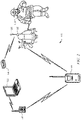
- FIG. 2 illustrates an emergency responder tracking system 110.
- the system 110 includes incident commander 112, an optional RF relay station 114, the RF beacon 100 (breadcrumb), and a portable device 116.
- a wireless protocol such as, for example, BLE, low power wide area network (“LPWAN"), 802.15.4, or combinations thereof, may be a communication protocol for communication between RF beacon 100 and portable device 116.
- a wireless protocol such as, for example, a long range radio may be a communication protocol for communication among the RF relay station 114, the portable device 116, and the incident commander 112.
- the incident commander 112 includes a computer system for monitoring the RF beacon(s) 100 and processing information received from the RF beacon(s) 100 and communication module 113 (e.g., long range radio).
- the incident commander 112 may be manned or unmanned.
- the RF relay station 114 may be an optional component of the system 110.
- the RF relay station(s) 114 may be deployed as needed to increase a communication range between incident commander 112 and the portable device 116.
- the portable device 116 may include long range (e.g., up to about 20 miles) radio 118, and may relay information (e.g., a unique identifier, the RF beacon 100's location (e.g., regional location), last location (e.g., regional location) a firefighter was detected, and/or current time) it receives from the RF beacon 100 to the RF relay station 114 which may relay the information to incident commander 112.
- the RF relay station 114 may be a long range radio configured to relay a signal up to about 20 miles.
- portable device 116 may transmit the information directly to incident commander 112.
- the portable device 116 is worn by an emergency responder, such as, for example, firefighter 119.
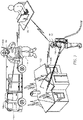
- FIG. 3 illustrates an RF beacon 100a positioned on an emergency vehicle (e.g., fire truck 120), and an RF beacon 100b positioned on structure 122.
- the RF beacon 100a may be activated by firefighter 119a and placed on fire truck 120.
- the firefighter 119a may then notify (e.g., via radio, cell phone) the incident commander 112 of the location of the RF beacon 100a (e.g., describing that the RF beacon 100a is positioned on fire truck 120).
- the RF beacon 100a transmits information including a unique identifier, RF beacon 100a's location (e.g., regional location), last location (e.g., regional location) firefighter 119a was detected, and/or current time, to portable device 116a which relays the information to incident commander 112 via radio 118a.
- location e.g., regional location
- last location e.g., regional location
- the firefighter 119b may activate the RF beacon 100b and place it on structure 122.
- the firefighter 119b may then notify (e.g., via radio, cell phone) incident commander 112 of the location of the RF beacon 100b (e.g., describing that the RF beacon 100b is positioned on structure 122, relaying the firefighter's 119b current location, etc.).
- the RF beacon 100b transmits information including a unique identifier, the RF beacon 100b's location (e.g., regional location), last location (e.g., regional location) firefighter 119b was detected, and/or current time, to portable device 116b which relays the information to incident commander 112 via radio 118b.
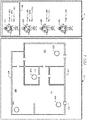
- FIG. 4 illustrates user interface 122 for incident commander 112.
- the user interface 122 may allow for rapid identification and selection of all of the personnel (e.g., firefighters 136, 138, 140, and 142) in the vicinity, and display annotations (e.g., markers) tracking the movement of the personnel (e.g., emergency responders).
- the incident commander 112 may draw floor plans 124 of structure 123 using location descriptions provided by a firefighter and/or the information provided by the RF beacons 100c-100f and display floor plans 124 in user interface 122.
- the floor plans 124 may include a map of the placement/location of each of the RF beacons 100c-100f. As illustrated in FIG.
- a firefighter may enter structure 123 via entrance 125, activate the RF beacons 100c-100f, and place the RF beacon 100c in area 126 (e.g., room, stairwell, or hallway), place 100d in area 128, place 100e in area 130, and place 100fin area 132.
- the firefighter may then contact the incident commander 112 and describe the regional placement/location of each of the RF beacons 100c-100f relative to internal structures, such as, for example, stairs, hallways, rooms, closets, doors, entrance 125, exit, structure level (e.g., second floor or first floor), elevators, furniture, etc.
- the incident commander 112 may then create/draw floor plans 124 based on the regional placement descriptions communicated to incident commander 112 by the firefighter.
- the panel 134 of the user interface 122 may show each firefighter (e.g., firefighter 136, firefighter 138, firefighter 140, firefighter 142) within structure 123.
- the panel 134 may also show the signal strength between each of the RF beacons 100c-100f and a portable device 116.
- the signal strength between the RF beacons 100c-100f and a portable device 116 shown on FIG.
- a firefighter i.e., a firefighter wearing portable device 116
- the signal strength may be calculated by incident commander 112 with a triangulation algorithm. Specific values for distances may depend upon building materials and/or the layout of structure 123.
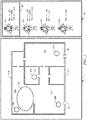
- FIG. 5 illustrates user interface 122 showing an estimated region or vicinity 144 of firefighter 136.
- the user interface 122 may select/highlight (e.g., box 146) a firefighter (e.g., firefighter 136) from a plurality of firefighters (e.g., firefighters 136, 138, 140, and 142) shown in panel 134 when displaying an estimated region (e.g., vicinity 144) for that particular firefighter.
- the signal strength between the RF beacons 100c-100f and a portable device 116 may indicate a vicinity (e.g., vicinity 144) where each firefighter may be located/positioned.
- the vicinity 144 may be shown with a circular graphic.
- the vicinity of each firefighter may be calculated by incident commander 112 with a triangulation algorithm. That is, a telemetry module may receive signals from 3 or more RF beacons 100 and may triangulate an estimated region of each firefighter based on signal strength.
- the signals detected by the firefighters from the RF beacon(s) can be transmitted back to the incident commander, where the signals can be detected and stored along with various identification information for the firefighters, as well as a time stamp.
- a path can be detected for each firefighter such that the relative locations and timings of the firefighters can be traced. This may allow other firefighters to follow a lead firefighter, or the firefighters' position to be tracked over time.
- FIG. 6 illustrates exit route 148 in user interface 122 based on the positions of the RF beacons 100c-100f.
- the incident commander 112 may draw an exit route 148 in user interface 122 for firefighters 136, 138, 140, and/or 142 within structure 123, and direct firefighters 136, 138, 140, and/or 142 to exit 150 based on signal strength between a portable device 116 of each of firefighters 136, 138, 140, 142, and the RF beacons 100c-100f.
- the incident commander 112 may also direct (e.g., via radio) each of the firefighters 136, 138, 140, and/or 142 to exit 150 based on the descriptions of the locations of each of the RF beacons 100c-100f.
- each of the firefighters 136, 138, 140, and/or 142 may have communicated to incident commander 112, a description of the location of each of the RF beacons 100c-100f during activation and positioning of RF beacons 100c-100f.
- the positions can then be used to locate and direct the firefighters to a position such as an exit, or the location of a firefighter who is in trouble or is injured.
Landscapes
- Engineering & Computer Science (AREA)
- Business, Economics & Management (AREA)
- Physics & Mathematics (AREA)
- General Physics & Mathematics (AREA)
- Health & Medical Sciences (AREA)
- Computer Networks & Wireless Communication (AREA)
- Radar, Positioning & Navigation (AREA)
- Emergency Management (AREA)
- Signal Processing (AREA)
- Remote Sensing (AREA)
- General Health & Medical Sciences (AREA)
- Child & Adolescent Psychology (AREA)
- Tourism & Hospitality (AREA)
- Economics (AREA)
- Public Health (AREA)
- Human Resources & Organizations (AREA)
- General Business, Economics & Management (AREA)
- Theoretical Computer Science (AREA)
- Strategic Management (AREA)
- Marketing (AREA)
- Automation & Control Theory (AREA)
- Primary Health Care (AREA)
- Environmental & Geological Engineering (AREA)
- Quality & Reliability (AREA)
- Entrepreneurship & Innovation (AREA)
- Development Economics (AREA)
- Operations Research (AREA)
- Computer Security & Cryptography (AREA)
- Alarm Systems (AREA)
Claims (11)
- System zum Verfolgen von Notfallhelfern, umfassend:ein Computersystem, das eine Benutzeroberfläche (122) umfasst;eine Vielzahl von transportablen Baken (100), die ein Funkfrequenzmodul (102) umfassen, das eine erste Reichweite zu Kommunikationszwecken aufweist;eine transportable Vorrichtung (116), die im Gebrauch durch einen Notfallhelfer getragen wird, wobei die transportable Vorrichtung (116) einen Transceiver umfasst, wobei die transportable Vorrichtung (116) so konfiguriert ist, dass sie ein drahtloses Signal von einer transportablen Bake (100) der Vielzahl von transportablen Baken (100) empfängt, wenn sie sich innerhalb der ersten Reichweite befinden, und das drahtlose Signal zu dem Computersystem innerhalb einer zweiten Reichweite überträgt, die größer als die erste Reichweite ist;wobei das Computersystem konfiguriert ist zum:Empfangen des drahtlosen Signals von der transportablen Vorrichtung (116);Empfangen einer Beschreibung einer Platzierung der transportablen Bake (100) in Bezug auf ein Gebäude;Ermitteln eines Standorts der transportablen Bake (100) auf der Grundlage der Beschreibung; undAnzeigen des Standorts der transportablen Bake (100) auf der Benutzeroberfläche (122);wobei das drahtlose Signal eine eindeutige Kennung, den Standort der transportablen Bake (100) einen zuletzt ermittelten Standort des Notfallhelfers und/oder die aktuelle Zeit umfasst; undwobei die Vielzahl von transportablen Baken (100) zur Befestigung an einer Struktur innerhalb des Gebäudes konfiguriert ist.
- System zum Verfolgen von Notfallhelfern nach Anspruch 1, wobei die transportable Vorrichtung (116) an einem umgebungsluftunabhängigen Atemgerät montiert ist, das einem Notfallhelfer zugeordnet ist.
- System zum Verfolgen von Notfallhelfern nach Anspruch 1, ferner umfassend eine Funkfrequenzrelaisstation (114), die so konfiguriert ist, dass sie das drahtlose Signal von der transportablen Vorrichtung (116) empfängt und das drahtlose Signal über eine vorgegebene Entfernung zu dem Computersystem überträgt.
- System zum Verfolgen von Notfallhelfern nach Anspruch 1, wobei das Computersystem so konfiguriert ist, dass es die Identifizierung mindestens eines Notfallhelfers innerhalb einer vorgegebenen nahen Umgebung des Gebäudes ermöglicht.
- System zum Verfolgen von Notfallhelfern nach Anspruch 1, wobei das Computersystem ferner so konfiguriert ist, dass es auf der Benutzeroberfläche (122) Markierungen anzeigt, die die Bewegung mindestens eines Notfallhelfers verfolgen.
- System zum Verfolgen von Notfallhelfern nach Anspruch 5, wobei die Benutzeroberfläche (122) so konfiguriert ist, dass sie mit einer kreisförmigen Grafik eine vorgegebene nahe Umgebung des mindestens einen Notfallhelfers anzeigt.
- System zum Verfolgen von Notfallhelfer nach Anspruch 1, wobei das Computersystem so konfiguriert ist, dass es eine Signalstärke zwischen der transportablen Bake (100) und der transportablen Vorrichtung (116) verwendet, um eine Entfernung zwischen der Bake (100) und der transportablen Vorrichtung (116) zu ermitteln.
- System zum Verfolgen von Notfallhelfern nach Anspruch 1, wobei die transportable Bake (100) so konfiguriert ist, dass sie durch Schrauben, Bolzen, Gurte, Klebstoff oder Kombinationen davon an einer Struktur montiert wird.
- System zum Verfolgen von Notfallhelfern nach Anspruch 1, wobei die transportable Bake (100) eine Wähleinrichtung zum Aktivieren der Bake (100) umfasst.
- System zum Verfolgen von Notfallhelfern nach Anspruch 1, wobei ein Drahtlos-Protokoll zu Kommunikationszwecken zwischen der transportablen Bake (100) und der transportablen Vorrichtung (116) BLUETOOTH Low Energy, ein Niedrigenergieweitverkehrsnetzwerk, 802.15.4 oder eine Kombination davon ist.
- Verfahren zum Verfolgen von Notfallhelfern, umfassend:Anbringen einer Vielzahl von transportablen Baken (100) innerhalb eines Gebäudes an einer Vielzahl von Standorten, wobei jede transportable Bake (100) der Vielzahl von transportablen Baken (100) ein Funkfrequenzmodul (102) umfasst, das eine erste Reichweite zu Kommunikationszwecken aufweist;Aktivieren jeder transportablen Bake (100);Übermitteln einer Beschreibung einer Platzierung jeder transportablen Bake (100) an ein Computersystem;Erkennen jeder transportablen Bake (100) durch eine transportable Vorrichtung (116), die sich innerhalb der ersten Reichweite befindet und die durch einen Notfallhelfer getragen wird, der sich innerhalb des Gebäudes bewegt, wobei die transportable Vorrichtung (116) eine zweite Reichweite zu Kommunikationszwecken aufweist, die größer die erste Reichweite ist;Übertragen von Informationen von jeder transportablen Bake (100) zu der transportablen Vorrichtung (116) innerhalb der ersten Reichweite;Übertragen der Informationen von der transportablen Vorrichtung (116) zu dem Computersystem innerhalb der zweiten Reichweite;Anzeigen von Standorten jeder transportablen Bake (100) in einer Benutzeroberfläche (122); undVerfolgen eines Standorts der transportablen Vorrichtung (116) auf der Grundlage der Informationen, die von der transportablen Vorrichtung (116) zu dem Computersystem übertragen wurden.
Applications Claiming Priority (2)
| Application Number | Priority Date | Filing Date | Title |
|---|---|---|---|
| US15/634,044 US10129704B1 (en) | 2017-06-27 | 2017-06-27 | First responder tracking breadcrumbs |
| EP18180184.6A EP3422039B1 (de) | 2017-06-27 | 2018-06-27 | Ortungsgeraete zum verfolgen von rettungspersonal |
Related Parent Applications (1)
| Application Number | Title | Priority Date | Filing Date |
|---|---|---|---|
| EP18180184.6A Division EP3422039B1 (de) | 2017-06-27 | 2018-06-27 | Ortungsgeraete zum verfolgen von rettungspersonal |
Publications (2)
| Publication Number | Publication Date |
|---|---|
| EP3687196A1 EP3687196A1 (de) | 2020-07-29 |
| EP3687196B1 true EP3687196B1 (de) | 2022-08-17 |
Family
ID=62916412
Family Applications (2)
| Application Number | Title | Priority Date | Filing Date |
|---|---|---|---|
| EP20164449.9A Active EP3687196B1 (de) | 2017-06-27 | 2018-06-27 | Ortungsgeraete zum verfolgen von rettungspersonal |
| EP18180184.6A Active EP3422039B1 (de) | 2017-06-27 | 2018-06-27 | Ortungsgeraete zum verfolgen von rettungspersonal |
Family Applications After (1)
| Application Number | Title | Priority Date | Filing Date |
|---|---|---|---|
| EP18180184.6A Active EP3422039B1 (de) | 2017-06-27 | 2018-06-27 | Ortungsgeraete zum verfolgen von rettungspersonal |
Country Status (2)
| Country | Link |
|---|---|
| US (1) | US10129704B1 (de) |
| EP (2) | EP3687196B1 (de) |
Families Citing this family (14)
| Publication number | Priority date | Publication date | Assignee | Title |
|---|---|---|---|---|
| US10176692B1 (en) * | 2015-10-21 | 2019-01-08 | Raptor Technologies LLC | Network based reunification management using portable devices |
| WO2018094229A1 (en) | 2016-11-17 | 2018-05-24 | Lorenzo LO MONTE | Radio frequency identification (rfid) system for determining location |
| US11144867B2 (en) * | 2017-11-30 | 2021-10-12 | DoorDash, Inc. | Predictions by using beacons in a real-time last mile logistics platform |
| US11055913B2 (en) | 2018-12-04 | 2021-07-06 | Curious Company, LLC | Directional instructions in an hybrid reality system |
| US10872584B2 (en) * | 2019-03-14 | 2020-12-22 | Curious Company, LLC | Providing positional information using beacon devices |
| US11263891B2 (en) | 2019-05-15 | 2022-03-01 | Skydome Ab | Enhanced emergency response |
| CN114208222A (zh) * | 2019-08-08 | 2022-03-18 | 3M创新有限公司 | 确定最接近倒下响应者的响应者 |
| CN112601184B (zh) * | 2020-12-18 | 2021-08-20 | 西安电子科技大学 | 便携式野外移动应急通信系统 |
| US11810050B2 (en) * | 2021-08-20 | 2023-11-07 | Ford Global Technologies, Llc | Robotic package delivery with ad-hoc network fusion localization |
| US12530956B2 (en) | 2023-01-12 | 2026-01-20 | 3M Innovative Properties Company | Location system and article of personal protective equipment |
| US12392583B2 (en) | 2023-12-22 | 2025-08-19 | John Bridge | Body safety device with visual sensing and haptic response using artificial intelligence |
| US12299557B1 (en) | 2023-12-22 | 2025-05-13 | GovernmentGPT Inc. | Response plan modification through artificial intelligence applied to ambient data communicated to an incident commander |
| US12567282B2 (en) | 2024-04-13 | 2026-03-03 | GovernmentGPT Inc. | Corrections officer tactical gear, system and method using computer vision to notify of an ambient threat |
| KR102901758B1 (ko) * | 2025-03-17 | 2025-12-18 | (주)한서정공 | 화재진압 통합 관리 시스템 |
Citations (1)
| Publication number | Priority date | Publication date | Assignee | Title |
|---|---|---|---|---|
| US20080211906A1 (en) * | 2005-02-16 | 2008-09-04 | Ivan Lovric | Intelligent Remote Multi-Communicating Surveillance System And Method |
Family Cites Families (13)
| Publication number | Priority date | Publication date | Assignee | Title |
|---|---|---|---|---|
| US5898363A (en) * | 1997-03-05 | 1999-04-27 | Safety Systems, Inc. | Portable audible beacon |
| WO2000023956A1 (en) * | 1998-10-22 | 2000-04-27 | University Of Maryland | Method and system for providing location dependent and personal identification information to a public safety answering point |
| US7398097B2 (en) * | 2002-12-23 | 2008-07-08 | Scott Technologies, Inc. | Dual-mesh network and communication system for emergency services personnel |
| US7177623B2 (en) * | 2003-07-02 | 2007-02-13 | The United States Of America As Represented By The Secretary Of The Army | Localized cellular awareness and tracking of emergencies |
| US7135967B2 (en) * | 2003-08-01 | 2006-11-14 | Spectrum Tracking Systems, Inc. | Method for locating an asset |
| US7899583B2 (en) | 2005-04-12 | 2011-03-01 | Ehud Mendelson | System and method of detecting and navigating to empty parking spaces |
| US7598856B1 (en) | 2006-01-31 | 2009-10-06 | Firesite Llc | Navigation aid for low-visibility environments |
| CA2653622C (en) * | 2006-05-31 | 2017-07-04 | Trx Systems, Inc. | Method and system for locating and monitoring first responders |
| US20080122696A1 (en) | 2006-11-28 | 2008-05-29 | Huseth Steve D | Low cost fire fighter tracking system |
| US9717065B2 (en) * | 2013-12-20 | 2017-07-25 | Apple Inc. | Indoor remote triggered location scanning |
| US9494674B2 (en) | 2014-03-03 | 2016-11-15 | Safetracks Gps Canada Inc. | Personal locator beacon system |
| WO2017100686A1 (en) * | 2015-12-11 | 2017-06-15 | Patrocinium Systems, Llc | Secure beacon-based location systems and methods |
| US10142772B2 (en) * | 2015-12-16 | 2018-11-27 | Qualcomm Incorporated | Systems and methods for emergency data communication |
-
2017
- 2017-06-27 US US15/634,044 patent/US10129704B1/en active Active
-
2018
- 2018-06-27 EP EP20164449.9A patent/EP3687196B1/de active Active
- 2018-06-27 EP EP18180184.6A patent/EP3422039B1/de active Active
Patent Citations (1)
| Publication number | Priority date | Publication date | Assignee | Title |
|---|---|---|---|---|
| US20080211906A1 (en) * | 2005-02-16 | 2008-09-04 | Ivan Lovric | Intelligent Remote Multi-Communicating Surveillance System And Method |
Also Published As
| Publication number | Publication date |
|---|---|
| EP3422039B1 (de) | 2020-04-08 |
| US10129704B1 (en) | 2018-11-13 |
| EP3422039A1 (de) | 2019-01-02 |
| EP3687196A1 (de) | 2020-07-29 |
Similar Documents
| Publication | Publication Date | Title |
|---|---|---|
| EP3687196B1 (de) | Ortungsgeraete zum verfolgen von rettungspersonal | |
| KR102142510B1 (ko) | 소방관 팀의 자동화된 감지 | |
| AU2021201818B2 (en) | Tracking and accountability device and system | |
| US10147295B2 (en) | Personnel tracking and monitoring system and method employing protective gear including a personnel electronic monitor device | |
| US7327252B2 (en) | Emergency rescuer tracking system and method | |
| US20120286933A1 (en) | First responder team tracking system and method | |
| EP3064899A1 (de) | Verfolgung in einer innenraumumgebung | |
| JP2008111828A (ja) | ポータプルの測位およびナビゲーション・システム | |
| WO2013012445A1 (en) | User navigation guidance and network system | |
| CN107942363A (zh) | 基于建筑结构图计算的消防员用室内导航系统及其方法 | |
| US20080122696A1 (en) | Low cost fire fighter tracking system | |
| JP2014146288A (ja) | 監視システム | |
| Di Giampaolo | A passive-RFID based indoor navigation system for visually impaired people | |
| US9858791B1 (en) | Tracking and accountability device and system | |
| Pascucci et al. | A REference implementation of interoperable indoor location & communication systems for First REsponders: The REFIRE project | |
| KR20150121341A (ko) | 생체신호 측정을 이용한 건물 에너지 관리 및 재난구조 시스템 | |
| US20070040743A1 (en) | Method and arrangement for locating people | |
| US20070194910A1 (en) | Real time personnel location system and method | |
| KR102026704B1 (ko) | 거리 센서를 이용한 수하물 위치 알림 시스템 및 거리 센서를 이용한 수하물 위치 알림 방법 | |
| WO2015015371A1 (en) | Security system for users and equipment |
Legal Events
| Date | Code | Title | Description |
|---|---|---|---|
| PUAI | Public reference made under article 153(3) epc to a published international application that has entered the european phase |
Free format text: ORIGINAL CODE: 0009012 |
|
| STAA | Information on the status of an ep patent application or granted ep patent |
Free format text: STATUS: THE APPLICATION HAS BEEN PUBLISHED |
|
| AC | Divisional application: reference to earlier application |
Ref document number: 3422039 Country of ref document: EP Kind code of ref document: P |
|
| AK | Designated contracting states |
Kind code of ref document: A1 Designated state(s): AL AT BE BG CH CY CZ DE DK EE ES FI FR GB GR HR HU IE IS IT LI LT LU LV MC MK MT NL NO PL PT RO RS SE SI SK SM TR |
|
| STAA | Information on the status of an ep patent application or granted ep patent |
Free format text: STATUS: REQUEST FOR EXAMINATION WAS MADE |
|
| 17P | Request for examination filed |
Effective date: 20210122 |
|
| RBV | Designated contracting states (corrected) |
Designated state(s): AL AT BE BG CH CY CZ DE DK EE ES FI FR GB GR HR HU IE IS IT LI LT LU LV MC MK MT NL NO PL PT RO RS SE SI SK SM TR |
|
| GRAP | Despatch of communication of intention to grant a patent |
Free format text: ORIGINAL CODE: EPIDOSNIGR1 |
|
| STAA | Information on the status of an ep patent application or granted ep patent |
Free format text: STATUS: GRANT OF PATENT IS INTENDED |
|
| RIC1 | Information provided on ipc code assigned before grant |
Ipc: G08B 7/06 20060101ALN20220208BHEP Ipc: G06Q 50/10 20120101ALI20220208BHEP Ipc: G08B 21/02 20060101ALI20220208BHEP Ipc: A62C 99/00 20100101ALI20220208BHEP Ipc: G01C 21/20 20060101ALI20220208BHEP Ipc: H04W 4/33 20180101ALI20220208BHEP Ipc: H04W 4/80 20180101ALI20220208BHEP Ipc: H04W 4/90 20180101ALI20220208BHEP Ipc: H04W 4/029 20180101AFI20220208BHEP |
|
| RIC1 | Information provided on ipc code assigned before grant |
Ipc: G08B 7/06 20060101ALN20220221BHEP Ipc: G06Q 50/10 20120101ALI20220221BHEP Ipc: G08B 21/02 20060101ALI20220221BHEP Ipc: A62C 99/00 20100101ALI20220221BHEP Ipc: G01C 21/20 20060101ALI20220221BHEP Ipc: H04W 4/33 20180101ALI20220221BHEP Ipc: H04W 4/80 20180101ALI20220221BHEP Ipc: H04W 4/90 20180101ALI20220221BHEP Ipc: H04W 4/029 20180101AFI20220221BHEP |
|
| INTG | Intention to grant announced |
Effective date: 20220310 |
|
| GRAS | Grant fee paid |
Free format text: ORIGINAL CODE: EPIDOSNIGR3 |
|
| GRAA | (expected) grant |
Free format text: ORIGINAL CODE: 0009210 |
|
| STAA | Information on the status of an ep patent application or granted ep patent |
Free format text: STATUS: THE PATENT HAS BEEN GRANTED |
|
| AC | Divisional application: reference to earlier application |
Ref document number: 3422039 Country of ref document: EP Kind code of ref document: P |
|
| AK | Designated contracting states |
Kind code of ref document: B1 Designated state(s): AL AT BE BG CH CY CZ DE DK EE ES FI FR GB GR HR HU IE IS IT LI LT LU LV MC MK MT NL NO PL PT RO RS SE SI SK SM TR |
|
| REG | Reference to a national code |
Ref country code: CH Ref legal event code: EP |
|
| REG | Reference to a national code |
Ref country code: DE Ref legal event code: R096 Ref document number: 602018039568 Country of ref document: DE |
|
| REG | Reference to a national code |
Ref country code: IE Ref legal event code: FG4D |
|
| REG | Reference to a national code |
Ref country code: AT Ref legal event code: REF Ref document number: 1512950 Country of ref document: AT Kind code of ref document: T Effective date: 20220915 |
|
| REG | Reference to a national code |
Ref country code: NL Ref legal event code: MP Effective date: 20220817 |
|
| REG | Reference to a national code |
Ref country code: LT Ref legal event code: MG9D |
|
| PG25 | Lapsed in a contracting state [announced via postgrant information from national office to epo] |
Ref country code: SE Free format text: LAPSE BECAUSE OF FAILURE TO SUBMIT A TRANSLATION OF THE DESCRIPTION OR TO PAY THE FEE WITHIN THE PRESCRIBED TIME-LIMIT Effective date: 20220817 Ref country code: RS Free format text: LAPSE BECAUSE OF FAILURE TO SUBMIT A TRANSLATION OF THE DESCRIPTION OR TO PAY THE FEE WITHIN THE PRESCRIBED TIME-LIMIT Effective date: 20220817 Ref country code: PT Free format text: LAPSE BECAUSE OF FAILURE TO SUBMIT A TRANSLATION OF THE DESCRIPTION OR TO PAY THE FEE WITHIN THE PRESCRIBED TIME-LIMIT Effective date: 20221219 Ref country code: NO Free format text: LAPSE BECAUSE OF FAILURE TO SUBMIT A TRANSLATION OF THE DESCRIPTION OR TO PAY THE FEE WITHIN THE PRESCRIBED TIME-LIMIT Effective date: 20221117 Ref country code: NL Free format text: LAPSE BECAUSE OF FAILURE TO SUBMIT A TRANSLATION OF THE DESCRIPTION OR TO PAY THE FEE WITHIN THE PRESCRIBED TIME-LIMIT Effective date: 20220817 Ref country code: LV Free format text: LAPSE BECAUSE OF FAILURE TO SUBMIT A TRANSLATION OF THE DESCRIPTION OR TO PAY THE FEE WITHIN THE PRESCRIBED TIME-LIMIT Effective date: 20220817 Ref country code: LT Free format text: LAPSE BECAUSE OF FAILURE TO SUBMIT A TRANSLATION OF THE DESCRIPTION OR TO PAY THE FEE WITHIN THE PRESCRIBED TIME-LIMIT Effective date: 20220817 Ref country code: FI Free format text: LAPSE BECAUSE OF FAILURE TO SUBMIT A TRANSLATION OF THE DESCRIPTION OR TO PAY THE FEE WITHIN THE PRESCRIBED TIME-LIMIT Effective date: 20220817 |
|
| REG | Reference to a national code |
Ref country code: AT Ref legal event code: MK05 Ref document number: 1512950 Country of ref document: AT Kind code of ref document: T Effective date: 20220817 |
|
| PG25 | Lapsed in a contracting state [announced via postgrant information from national office to epo] |
Ref country code: PL Free format text: LAPSE BECAUSE OF FAILURE TO SUBMIT A TRANSLATION OF THE DESCRIPTION OR TO PAY THE FEE WITHIN THE PRESCRIBED TIME-LIMIT Effective date: 20220817 Ref country code: IS Free format text: LAPSE BECAUSE OF FAILURE TO SUBMIT A TRANSLATION OF THE DESCRIPTION OR TO PAY THE FEE WITHIN THE PRESCRIBED TIME-LIMIT Effective date: 20221217 Ref country code: HR Free format text: LAPSE BECAUSE OF FAILURE TO SUBMIT A TRANSLATION OF THE DESCRIPTION OR TO PAY THE FEE WITHIN THE PRESCRIBED TIME-LIMIT Effective date: 20220817 Ref country code: GR Free format text: LAPSE BECAUSE OF FAILURE TO SUBMIT A TRANSLATION OF THE DESCRIPTION OR TO PAY THE FEE WITHIN THE PRESCRIBED TIME-LIMIT Effective date: 20221118 |
|
| PG25 | Lapsed in a contracting state [announced via postgrant information from national office to epo] |
Ref country code: SM Free format text: LAPSE BECAUSE OF FAILURE TO SUBMIT A TRANSLATION OF THE DESCRIPTION OR TO PAY THE FEE WITHIN THE PRESCRIBED TIME-LIMIT Effective date: 20220817 Ref country code: RO Free format text: LAPSE BECAUSE OF FAILURE TO SUBMIT A TRANSLATION OF THE DESCRIPTION OR TO PAY THE FEE WITHIN THE PRESCRIBED TIME-LIMIT Effective date: 20220817 Ref country code: ES Free format text: LAPSE BECAUSE OF FAILURE TO SUBMIT A TRANSLATION OF THE DESCRIPTION OR TO PAY THE FEE WITHIN THE PRESCRIBED TIME-LIMIT Effective date: 20220817 Ref country code: DK Free format text: LAPSE BECAUSE OF FAILURE TO SUBMIT A TRANSLATION OF THE DESCRIPTION OR TO PAY THE FEE WITHIN THE PRESCRIBED TIME-LIMIT Effective date: 20220817 Ref country code: CZ Free format text: LAPSE BECAUSE OF FAILURE TO SUBMIT A TRANSLATION OF THE DESCRIPTION OR TO PAY THE FEE WITHIN THE PRESCRIBED TIME-LIMIT Effective date: 20220817 Ref country code: AT Free format text: LAPSE BECAUSE OF FAILURE TO SUBMIT A TRANSLATION OF THE DESCRIPTION OR TO PAY THE FEE WITHIN THE PRESCRIBED TIME-LIMIT Effective date: 20220817 |
|
| REG | Reference to a national code |
Ref country code: DE Ref legal event code: R097 Ref document number: 602018039568 Country of ref document: DE |
|
| PG25 | Lapsed in a contracting state [announced via postgrant information from national office to epo] |
Ref country code: SK Free format text: LAPSE BECAUSE OF FAILURE TO SUBMIT A TRANSLATION OF THE DESCRIPTION OR TO PAY THE FEE WITHIN THE PRESCRIBED TIME-LIMIT Effective date: 20220817 Ref country code: EE Free format text: LAPSE BECAUSE OF FAILURE TO SUBMIT A TRANSLATION OF THE DESCRIPTION OR TO PAY THE FEE WITHIN THE PRESCRIBED TIME-LIMIT Effective date: 20220817 |
|
| PLBE | No opposition filed within time limit |
Free format text: ORIGINAL CODE: 0009261 |
|
| STAA | Information on the status of an ep patent application or granted ep patent |
Free format text: STATUS: NO OPPOSITION FILED WITHIN TIME LIMIT |
|
| PG25 | Lapsed in a contracting state [announced via postgrant information from national office to epo] |
Ref country code: AL Free format text: LAPSE BECAUSE OF FAILURE TO SUBMIT A TRANSLATION OF THE DESCRIPTION OR TO PAY THE FEE WITHIN THE PRESCRIBED TIME-LIMIT Effective date: 20220817 |
|
| 26N | No opposition filed |
Effective date: 20230519 |
|
| PG25 | Lapsed in a contracting state [announced via postgrant information from national office to epo] |
Ref country code: SI Free format text: LAPSE BECAUSE OF FAILURE TO SUBMIT A TRANSLATION OF THE DESCRIPTION OR TO PAY THE FEE WITHIN THE PRESCRIBED TIME-LIMIT Effective date: 20220817 |
|
| PG25 | Lapsed in a contracting state [announced via postgrant information from national office to epo] |
Ref country code: MC Free format text: LAPSE BECAUSE OF FAILURE TO SUBMIT A TRANSLATION OF THE DESCRIPTION OR TO PAY THE FEE WITHIN THE PRESCRIBED TIME-LIMIT Effective date: 20220817 |
|
| PG25 | Lapsed in a contracting state [announced via postgrant information from national office to epo] |
Ref country code: MC Free format text: LAPSE BECAUSE OF FAILURE TO SUBMIT A TRANSLATION OF THE DESCRIPTION OR TO PAY THE FEE WITHIN THE PRESCRIBED TIME-LIMIT Effective date: 20220817 |
|
| REG | Reference to a national code |
Ref country code: CH Ref legal event code: PL |
|
| REG | Reference to a national code |
Ref country code: BE Ref legal event code: MM Effective date: 20230630 |
|
| PG25 | Lapsed in a contracting state [announced via postgrant information from national office to epo] |
Ref country code: LU Free format text: LAPSE BECAUSE OF NON-PAYMENT OF DUE FEES Effective date: 20230627 |
|
| REG | Reference to a national code |
Ref country code: IE Ref legal event code: MM4A |
|
| PG25 | Lapsed in a contracting state [announced via postgrant information from national office to epo] |
Ref country code: LU Free format text: LAPSE BECAUSE OF NON-PAYMENT OF DUE FEES Effective date: 20230627 |
|
| PG25 | Lapsed in a contracting state [announced via postgrant information from national office to epo] |
Ref country code: IE Free format text: LAPSE BECAUSE OF NON-PAYMENT OF DUE FEES Effective date: 20230627 |
|
| PG25 | Lapsed in a contracting state [announced via postgrant information from national office to epo] |
Ref country code: IE Free format text: LAPSE BECAUSE OF NON-PAYMENT OF DUE FEES Effective date: 20230627 Ref country code: CH Free format text: LAPSE BECAUSE OF NON-PAYMENT OF DUE FEES Effective date: 20230630 |
|
| PG25 | Lapsed in a contracting state [announced via postgrant information from national office to epo] |
Ref country code: IT Free format text: LAPSE BECAUSE OF FAILURE TO SUBMIT A TRANSLATION OF THE DESCRIPTION OR TO PAY THE FEE WITHIN THE PRESCRIBED TIME-LIMIT Effective date: 20220817 Ref country code: BE Free format text: LAPSE BECAUSE OF NON-PAYMENT OF DUE FEES Effective date: 20230630 |
|
| PG25 | Lapsed in a contracting state [announced via postgrant information from national office to epo] |
Ref country code: BG Free format text: LAPSE BECAUSE OF FAILURE TO SUBMIT A TRANSLATION OF THE DESCRIPTION OR TO PAY THE FEE WITHIN THE PRESCRIBED TIME-LIMIT Effective date: 20220817 |
|
| PG25 | Lapsed in a contracting state [announced via postgrant information from national office to epo] |
Ref country code: BG Free format text: LAPSE BECAUSE OF FAILURE TO SUBMIT A TRANSLATION OF THE DESCRIPTION OR TO PAY THE FEE WITHIN THE PRESCRIBED TIME-LIMIT Effective date: 20220817 |
|
| REG | Reference to a national code |
Ref country code: DE Ref legal event code: R081 Ref document number: 602018039568 Country of ref document: DE Owner name: HONEYWELL SAFETY PRODUCTS USA, INC., WILMINGTO, US Free format text: FORMER OWNER: HONEYWELL INTERNATIONAL INC., MORRIS PLAINS, NJ, US |
|
| REG | Reference to a national code |
Ref country code: GB Ref legal event code: 732E Free format text: REGISTERED BETWEEN 20250515 AND 20250521 |
|
| PGFP | Annual fee paid to national office [announced via postgrant information from national office to epo] |
Ref country code: DE Payment date: 20250626 Year of fee payment: 8 |
|
| PGFP | Annual fee paid to national office [announced via postgrant information from national office to epo] |
Ref country code: GB Payment date: 20250617 Year of fee payment: 8 |
|
| PGFP | Annual fee paid to national office [announced via postgrant information from national office to epo] |
Ref country code: FR Payment date: 20250624 Year of fee payment: 8 |
|
| PG25 | Lapsed in a contracting state [announced via postgrant information from national office to epo] |
Ref country code: CY Free format text: LAPSE BECAUSE OF FAILURE TO SUBMIT A TRANSLATION OF THE DESCRIPTION OR TO PAY THE FEE WITHIN THE PRESCRIBED TIME-LIMIT; INVALID AB INITIO Effective date: 20180627 |
|
| PG25 | Lapsed in a contracting state [announced via postgrant information from national office to epo] |
Ref country code: HU Free format text: LAPSE BECAUSE OF FAILURE TO SUBMIT A TRANSLATION OF THE DESCRIPTION OR TO PAY THE FEE WITHIN THE PRESCRIBED TIME-LIMIT; INVALID AB INITIO Effective date: 20180627 |
|
| PG25 | Lapsed in a contracting state [announced via postgrant information from national office to epo] |
Ref country code: TR Free format text: LAPSE BECAUSE OF FAILURE TO SUBMIT A TRANSLATION OF THE DESCRIPTION OR TO PAY THE FEE WITHIN THE PRESCRIBED TIME-LIMIT Effective date: 20220817 |