EP3686073A1 - Verfahren und vorrichtung zur steuerung einer anfahrhilfe eines fahrzeugs - Google Patents
Verfahren und vorrichtung zur steuerung einer anfahrhilfe eines fahrzeugs Download PDFInfo
- Publication number
- EP3686073A1 EP3686073A1 EP20152480.8A EP20152480A EP3686073A1 EP 3686073 A1 EP3686073 A1 EP 3686073A1 EP 20152480 A EP20152480 A EP 20152480A EP 3686073 A1 EP3686073 A1 EP 3686073A1
- Authority
- EP
- European Patent Office
- Prior art keywords
- vehicle
- road surface
- information
- starting aid
- determined
- Prior art date
- Legal status (The legal status is an assumption and is not a legal conclusion. Google has not performed a legal analysis and makes no representation as to the accuracy of the status listed.)
- Ceased
Links
Images


Classifications
-
- B—PERFORMING OPERATIONS; TRANSPORTING
- B60—VEHICLES IN GENERAL
- B60W—CONJOINT CONTROL OF VEHICLE SUB-UNITS OF DIFFERENT TYPE OR DIFFERENT FUNCTION; CONTROL SYSTEMS SPECIALLY ADAPTED FOR HYBRID VEHICLES; ROAD VEHICLE DRIVE CONTROL SYSTEMS FOR PURPOSES NOT RELATED TO THE CONTROL OF A PARTICULAR SUB-UNIT
- B60W30/00—Purposes of road vehicle drive control systems not related to the control of a particular sub-unit, e.g. of systems using conjoint control of vehicle sub-units
- B60W30/18—Propelling the vehicle
- B60W30/18172—Preventing, or responsive to skidding of wheels
-
- B—PERFORMING OPERATIONS; TRANSPORTING
- B60—VEHICLES IN GENERAL
- B60T—VEHICLE BRAKE CONTROL SYSTEMS OR PARTS THEREOF; BRAKE CONTROL SYSTEMS OR PARTS THEREOF, IN GENERAL; ARRANGEMENT OF BRAKING ELEMENTS ON VEHICLES IN GENERAL; PORTABLE DEVICES FOR PREVENTING UNWANTED MOVEMENT OF VEHICLES; VEHICLE MODIFICATIONS TO FACILITATE COOLING OF BRAKES
- B60T8/00—Arrangements for adjusting wheel-braking force to meet varying vehicular or ground-surface conditions, e.g. limiting or varying distribution of braking force
- B60T8/17—Using electrical or electronic regulation means to control braking
- B60T8/172—Determining control parameters used in the regulation, e.g. by calculations involving measured or detected parameters
-
- B—PERFORMING OPERATIONS; TRANSPORTING
- B60—VEHICLES IN GENERAL
- B60T—VEHICLE BRAKE CONTROL SYSTEMS OR PARTS THEREOF; BRAKE CONTROL SYSTEMS OR PARTS THEREOF, IN GENERAL; ARRANGEMENT OF BRAKING ELEMENTS ON VEHICLES IN GENERAL; PORTABLE DEVICES FOR PREVENTING UNWANTED MOVEMENT OF VEHICLES; VEHICLE MODIFICATIONS TO FACILITATE COOLING OF BRAKES
- B60T8/00—Arrangements for adjusting wheel-braking force to meet varying vehicular or ground-surface conditions, e.g. limiting or varying distribution of braking force
- B60T8/17—Using electrical or electronic regulation means to control braking
- B60T8/175—Brake regulation specially adapted to prevent excessive wheel spin during vehicle acceleration, e.g. for traction control
-
- B—PERFORMING OPERATIONS; TRANSPORTING
- B60—VEHICLES IN GENERAL
- B60T—VEHICLE BRAKE CONTROL SYSTEMS OR PARTS THEREOF; BRAKE CONTROL SYSTEMS OR PARTS THEREOF, IN GENERAL; ARRANGEMENT OF BRAKING ELEMENTS ON VEHICLES IN GENERAL; PORTABLE DEVICES FOR PREVENTING UNWANTED MOVEMENT OF VEHICLES; VEHICLE MODIFICATIONS TO FACILITATE COOLING OF BRAKES
- B60T8/00—Arrangements for adjusting wheel-braking force to meet varying vehicular or ground-surface conditions, e.g. limiting or varying distribution of braking force
- B60T8/17—Using electrical or electronic regulation means to control braking
- B60T8/176—Brake regulation specially adapted to prevent excessive wheel slip during vehicle deceleration, e.g. ABS
- B60T8/1763—Brake regulation specially adapted to prevent excessive wheel slip during vehicle deceleration, e.g. ABS responsive to the coefficient of friction between the wheels and the ground surface
- B60T8/17636—Microprocessor-based systems
-
- B—PERFORMING OPERATIONS; TRANSPORTING
- B60—VEHICLES IN GENERAL
- B60W—CONJOINT CONTROL OF VEHICLE SUB-UNITS OF DIFFERENT TYPE OR DIFFERENT FUNCTION; CONTROL SYSTEMS SPECIALLY ADAPTED FOR HYBRID VEHICLES; ROAD VEHICLE DRIVE CONTROL SYSTEMS FOR PURPOSES NOT RELATED TO THE CONTROL OF A PARTICULAR SUB-UNIT
- B60W30/00—Purposes of road vehicle drive control systems not related to the control of a particular sub-unit, e.g. of systems using conjoint control of vehicle sub-units
- B60W30/18—Propelling the vehicle
- B60W30/18009—Propelling the vehicle related to particular drive situations
- B60W30/18027—Drive off, accelerating from standstill
-
- B—PERFORMING OPERATIONS; TRANSPORTING
- B60—VEHICLES IN GENERAL
- B60W—CONJOINT CONTROL OF VEHICLE SUB-UNITS OF DIFFERENT TYPE OR DIFFERENT FUNCTION; CONTROL SYSTEMS SPECIALLY ADAPTED FOR HYBRID VEHICLES; ROAD VEHICLE DRIVE CONTROL SYSTEMS FOR PURPOSES NOT RELATED TO THE CONTROL OF A PARTICULAR SUB-UNIT
- B60W40/00—Estimation or calculation of non-directly measurable driving parameters for road vehicle drive control systems not related to the control of a particular sub unit, e.g. by using mathematical models
- B60W40/02—Estimation or calculation of non-directly measurable driving parameters for road vehicle drive control systems not related to the control of a particular sub unit, e.g. by using mathematical models related to ambient conditions
- B60W40/06—Road conditions
- B60W40/068—Road friction coefficient
-
- B—PERFORMING OPERATIONS; TRANSPORTING
- B60—VEHICLES IN GENERAL
- B60T—VEHICLE BRAKE CONTROL SYSTEMS OR PARTS THEREOF; BRAKE CONTROL SYSTEMS OR PARTS THEREOF, IN GENERAL; ARRANGEMENT OF BRAKING ELEMENTS ON VEHICLES IN GENERAL; PORTABLE DEVICES FOR PREVENTING UNWANTED MOVEMENT OF VEHICLES; VEHICLE MODIFICATIONS TO FACILITATE COOLING OF BRAKES
- B60T2210/00—Detection or estimation of road or environment conditions; Detection or estimation of road shapes
- B60T2210/10—Detection or estimation of road conditions
- B60T2210/12—Friction
-
- B—PERFORMING OPERATIONS; TRANSPORTING
- B60—VEHICLES IN GENERAL
- B60W—CONJOINT CONTROL OF VEHICLE SUB-UNITS OF DIFFERENT TYPE OR DIFFERENT FUNCTION; CONTROL SYSTEMS SPECIALLY ADAPTED FOR HYBRID VEHICLES; ROAD VEHICLE DRIVE CONTROL SYSTEMS FOR PURPOSES NOT RELATED TO THE CONTROL OF A PARTICULAR SUB-UNIT
- B60W2300/00—Indexing codes relating to the type of vehicle
- B60W2300/14—Tractor-trailers, i.e. combinations of a towing vehicle and one or more towed vehicles, e.g. caravans; Road trains
- B60W2300/147—Road trains
-
- B—PERFORMING OPERATIONS; TRANSPORTING
- B60—VEHICLES IN GENERAL
- B60W—CONJOINT CONTROL OF VEHICLE SUB-UNITS OF DIFFERENT TYPE OR DIFFERENT FUNCTION; CONTROL SYSTEMS SPECIALLY ADAPTED FOR HYBRID VEHICLES; ROAD VEHICLE DRIVE CONTROL SYSTEMS FOR PURPOSES NOT RELATED TO THE CONTROL OF A PARTICULAR SUB-UNIT
- B60W2420/00—Indexing codes relating to the type of sensors based on the principle of their operation
- B60W2420/54—Audio sensitive means, e.g. ultrasound
-
- B—PERFORMING OPERATIONS; TRANSPORTING
- B60—VEHICLES IN GENERAL
- B60W—CONJOINT CONTROL OF VEHICLE SUB-UNITS OF DIFFERENT TYPE OR DIFFERENT FUNCTION; CONTROL SYSTEMS SPECIALLY ADAPTED FOR HYBRID VEHICLES; ROAD VEHICLE DRIVE CONTROL SYSTEMS FOR PURPOSES NOT RELATED TO THE CONTROL OF A PARTICULAR SUB-UNIT
- B60W2520/00—Input parameters relating to overall vehicle dynamics
- B60W2520/26—Wheel slip
-
- B—PERFORMING OPERATIONS; TRANSPORTING
- B60—VEHICLES IN GENERAL
- B60W—CONJOINT CONTROL OF VEHICLE SUB-UNITS OF DIFFERENT TYPE OR DIFFERENT FUNCTION; CONTROL SYSTEMS SPECIALLY ADAPTED FOR HYBRID VEHICLES; ROAD VEHICLE DRIVE CONTROL SYSTEMS FOR PURPOSES NOT RELATED TO THE CONTROL OF A PARTICULAR SUB-UNIT
- B60W2555/00—Input parameters relating to exterior conditions, not covered by groups B60W2552/00, B60W2554/00
- B60W2555/20—Ambient conditions, e.g. wind or rain
-
- B—PERFORMING OPERATIONS; TRANSPORTING
- B60—VEHICLES IN GENERAL
- B60W—CONJOINT CONTROL OF VEHICLE SUB-UNITS OF DIFFERENT TYPE OR DIFFERENT FUNCTION; CONTROL SYSTEMS SPECIALLY ADAPTED FOR HYBRID VEHICLES; ROAD VEHICLE DRIVE CONTROL SYSTEMS FOR PURPOSES NOT RELATED TO THE CONTROL OF A PARTICULAR SUB-UNIT
- B60W2756/00—Output or target parameters relating to data
- B60W2756/10—Involving external transmission of data to or from the vehicle
-
- B—PERFORMING OPERATIONS; TRANSPORTING
- B60—VEHICLES IN GENERAL
- B60W—CONJOINT CONTROL OF VEHICLE SUB-UNITS OF DIFFERENT TYPE OR DIFFERENT FUNCTION; CONTROL SYSTEMS SPECIALLY ADAPTED FOR HYBRID VEHICLES; ROAD VEHICLE DRIVE CONTROL SYSTEMS FOR PURPOSES NOT RELATED TO THE CONTROL OF A PARTICULAR SUB-UNIT
- B60W30/00—Purposes of road vehicle drive control systems not related to the control of a particular sub-unit, e.g. of systems using conjoint control of vehicle sub-units
- B60W30/14—Adaptive cruise control
- B60W30/16—Control of distance between vehicles, e.g. keeping a distance to preceding vehicle
- B60W30/165—Automatically following the path of a preceding lead vehicle, e.g. "electronic tow-bar"
Definitions
- the invention relates to a method for controlling a starting aid of a vehicle, preferably a commercial vehicle.
- the invention further relates to a device for controlling such a starting aid.
- traction aids are known, in particular for commercial vehicles, which allow the driver to switch on the starting aid in unsafe road conditions, thereby facilitating a starting process.
- a starting aid for commercial vehicles it is known to relieve or raise these auxiliary axles in the case of multi-axle vehicles which have, for example, a third auxiliary axle in the form of a lift axle, and thus to increase the axle load on the remaining axles and in particular on driven axles. Due to the increased axle load, increased traction can also be achieved in slippery road conditions. It is possible to briefly exceed the officially permissible maximum axle load in order to achieve the necessary traction, for example as a starting aid.
- Automatic snow chains are also known as traction aids, for example, which can be attached to the drive axles in commercial vehicles, in particular trucks, and are applied by means of a centrifugal mechanism between the road surface and the tires, so as to increase traction on a slippery surface such as a snow-covered or icy road surface .
- the driver To carry out the axle load shifting or axle load relief of the auxiliary axle for starting aid, the driver must first recognize the slippery, for example snow-covered or icy road surface, and then manually activate the corresponding starting aid.
- a disadvantage of this approach is that the detection of the nature of the road surface by means of reflected radiation, for example infrared radiation, is inaccurate, in particular when the road is covered with snow, since the reflection of light on a snow surface can be very different. Accordingly, driving situations are often misjudged as to whether the traction help is required or not.
- reflected radiation for example infrared radiation
- the object of the invention is, in particular, to provide an improved approach in order to be able to automatically and reliably assess driving situations as to whether the starting aid is required or not.
- the invention relates to a vehicle which is equipped with a corresponding device and in which the method according to the invention is carried out.
- the method according to the invention for controlling a starting aid of a vehicle comprises the steps of determining at least one piece of information about a state of the road surface and controlling the starting aid if, depending on the at least one piece of information, it has been determined whether the starting aid is required or is no longer required .
- a starting aid also referred to as traction aid
- traction aid can advantageously be switched on automatically even when the vehicle is at a standstill, since the slippery road surface, e.g. B. due to a snow-covered or icy roadway, can be recognized before starting.
- the method and the device can also be used to switch off a starting aid if the condition or the nature of the road surface no longer makes this necessary.
- the vehicle can be a utility vehicle, preferably a utility vehicle that has at least one auxiliary axle, e.g. B. has a leading axis or trailing axis, which is designed as a lifting axis.
- the traction help can comprise an axle relief, as is also known to the person skilled in the art from the prior art, so that controlling the traction aid comprises relieving and / or lifting an axle of the vehicle.
- the starting aid is formed by lifting or relieving the lift axle Axle load on the remaining axles and in particular on driven axles is increased, whereby increased traction can be achieved in slippery road conditions.
- the starting aid can also include automatic snow chains, as are known per se to the person skilled in the art.
- the at least one piece of information about a state of the road surface can include whether the road surface is icy or covered with snow.
- the traction help is preferably activated if the road surface is covered with snow or icy.
- information about the condition of the road surface is determined on the basis of tire noises of the vehicle or a passing third-party vehicle, which are detected by means of an acoustic sensor of the vehicle.
- tire noises of the vehicle On the basis of the recorded tire noises of the vehicle, it can be recognized in a particularly reliable manner whether, for example, the roadway is covered with snow, since the tire noises on the snow-covered roadway produce characteristic rolling noises that can be reliably distinguished from tire noises on the roadway not covered with snow. Since the traction help is required in the majority of cases when the road is covered with snow, a particularly reliable automatic assessment can be made in this way as to whether the traction help is currently required or not.
- the acoustic sensor can comprise at least one microphone arranged on the underside of the vehicle, which is arranged in such a way that it can detect the rolling noise of one or more tires.
- the at least one piece of information about a state of the road surface can be determined by means of an electronic brake control system, for example an electronic stability program (ESP), anti-lock braking system (ABS) and / or traction control system (ASR) system .
- ESP electronic stability program
- ABS anti-lock braking system
- ASR traction control system
- the at least one piece of information about a state of the road surface can be determined by means of an image of the road surface captured by a camera of the vehicle. Using the image of the road surface, it can be determined, for example, by means of image analysis whether the road is covered with snow or icy.
- the at least one piece of information about a state of the road surface can be determined by means of an image of a traffic sign and / or a traffic display captured by a camera of the vehicle if the traffic sign and / or the traffic display indicate an indication of a Displays snow or black ice warnings.
- the at least one piece of information about a state of the road surface can be determined on the basis of an operation of a windshield wiper if it is activated below a predetermined temperature threshold. For example, if the windshield wiper is operated at temperatures below freezing (0 ° C) and around freezing during a start-up process, the probability is increased that the road is covered with snow or icy.
- the at least one piece of information about a state of the road surface can be determined using an ambient temperature detected by sensors. It is advantageous here to use the ambient temperature in combination with one of the other approaches and information described in this document (such as tire noise detection, image evaluation of the road surface, information from a brake control system, windshield wiper operation). For example, it can first be checked whether the ambient temperature is in an area in which snow-covered and / or icy roads can occur. If so, the condition of the road surface can be checked using one or more of the other approaches and information described in this document.
- each of the approaches described in this document can be used alone or in combination with other approaches to determine information about the condition of the road surface.
- the state of the road surface can also be determined on the basis of information from the brake control system and it can be determined whether a starting aid is required.
- the fusion preferably takes place in a control device of the vehicle, for example in a central control device.
- a possible implementation provides that it is first determined whether the current ambient temperature is below a predetermined threshold value, which is selected such that the temperatures below this threshold value are low enough to enable snow-covered roads or icy roads.
- the predetermined threshold value can be set, for example, to a value of 0 ° C. (freezing point) or to a value in the vicinity of the freezing point. If the ambient temperature is below the threshold value, one or more of the approaches and information described in this document (such as tire noise detection, image evaluation of the road surface, information from a brake control system, windshield wiper operation) are used to determine a condition of the road surface.
- the control device determine whether the road surface is icy or covered with snow by means of recorded tire noises, recorded camera images of the road surface or a traffic sign, operating information from a windshield wiper and / or information from an electronic brake control system .
- the tire noises of the vehicle or a passing third-party vehicle which are detected by means of an acoustic sensor of the vehicle, can be evaluated using an artificial neural network in order to determine the information about a state of the road surface.
- an evaluation of tire noise using an artificial neural network can be implemented, for example, using the approach described in the publication " Automatic Detection of Road Surface States from Tire Noise Using Neural Network Analysis ", W. Kongrattanaprasert et al., Proceedings of 20th International Congress on Acoustics, ICA 2010 , is disclosed.
- a message from the vehicle for the third-party vehicles of the convoy has been activated is generated, which indicates that the vehicle's traction help has been activated.
- this information can be passed on quickly to the other vehicles in the platoon, in order to enable a safe start-up of all vehicles in the platoon.
- the method according to the invention for controlling a starting aid of a vehicle comprises means for acquiring at least one piece of information about a state of the road surface and a control device which is designed to determine at least one piece of information about a state of the road surface and to control the starting aid if dependent on the information it was determined whether the traction help is required or is no longer required.
- the control device can control the starting aid directly or indirectly, for. B. by controlling a control unit, which in turn controls a lift mechanism of the axis.
- the latter can be an air spring control unit that is controlled via a CAN data bus.
- the device can comprise, as a means for detecting at least one piece of information about a state of the road surface, an acoustic sensor for detecting tire noises of the vehicle or a passing third-party vehicle.
- the control device can be designed to determine information about the state of the road surface on the basis of the recorded tire noise of the vehicle or a passing third-party vehicle.
- the device can further comprise at least one camera by means of which the at least one piece of information can be captured at least one image of the road surface is recorded via a state of the road surface and / or a traffic sign and / or traffic information which indicates indications of snow or ice warnings.
- Figure 1 shows a schematic representation of a vehicle with a device for controlling a starting aid according to an embodiment of the invention.
- vehicle 1 is a commercial vehicle, such as a truck. However, it can also be a bus or any other multi-axle vehicle, in particular a vehicle with a double axle.
- the vehicle preferably has at least three axles.
- the vehicle 1 has a steerable front axle, a driven second axle and a trailing and releasable third axle 2.
- Die third axle 2 serves to take up part of the load, for example when the vehicle 1 is loaded, and thus to reduce the axle load to the second axle during normal driving. In order not to wear the tires of the third axle 2 in particular unnecessarily, it has long been known to raise the third axle 2 when the vehicle 1 is not loaded and the permissible total axle load of the second axle is therefore not exceeded.
- the third axis 2 is shown raised or relieved.
- the third axle 2 can also be relieved or lifted in order to increase the traction of the second axle at least for a short time.
- the permissible axle load of the second axle can also be exceeded, at least for a short time.
- the releasable third axle 2 thus represents a traction aid 14.
- the releasable third axle 2 is shown behind the driven second axle.
- the relievable third axle 2 it is equally possible for the relievable third axle 2 to be arranged in front of the driven second axle in the direction of travel and thus to be designed as a leading axle.
- the vehicle 1 has a control device, for. B. a central control device 4, which receives input information, from which a state of the road surface 11 can be determined.
- the control device 4 is designed to determine a state of the road surface based on the information received, in particular whether the road is covered with snow or icy.
- the reference number 12 is in Figure 1 a snow-covered section of the road surface 11 is shown schematically.
- the control device 4 is also connected in terms of signals (represented by a solid black line) to a starting aid 14, here the lift axle 2, in order to activate it, here to lift the lift axle 2 or to relieve it, if the control device 4 has determined that the Roadway is covered with snow or icy, or is generally so slippery and / or has a low road friction value that a starting aid 14 is required.
- the control device can directly control the lift axle 2 or e.g. only indirectly via control of a further control device (not shown), which in turn controls the lift axle directly, e.g. B. an air spring control unit.
- the vehicle 1 can in an area near one of the tires an acoustic sensor 3, z. B. have a microphone, which can detect the rolling noise 8 of a tire acoustically.
- the detected tire noises are fed from the acoustic sensor 3 to the control device 4 and evaluated there.
- conclusions on the nature can be drawn from the tire noise the road surface, especially whether it is covered with snow and / or icy.
- the rolling noise of the tires for different road conditions can be recorded experimentally in advance and classified based on characteristic features and stored in the control device as evaluation and detection logic, so that the vehicle can then be operated during operation
- the current tire noise can be drawn from the stored evaluation and detection logic to determine the nature of the road surface.
- control device 4 can receive and evaluate the measured values of a temperature sensor 7, which measures the outside temperature.
- the vehicle 1 can have a camera 6, the viewing cone 9 of which captures a road surface, the corresponding measured values also being able to be fed to the control device 4.
- the control device 4 can evaluate the images captured by the camera 6 in order to draw conclusions from this about the nature of the road surface, in particular whether it is covered with snow and / or icy.
- the roadway images of the camera for different road conditions dry roadway, snow-covered roadway, icy roadway, etc.
- image evaluation algorithms and stored in the control device as further evaluation and recognition logic, so that then, during operation of the vehicle, a conclusion can be drawn about the nature of the road surface based on the current roadway images based on the stored evaluation and recognition logic.
- the control device 4 can receive information from a brake control system 5 of the vehicle.
- the brake control system 5 can be, for example, an ESP, ABS and / or ASR system.
- the control device 4 can be designed to determine, depending on the information from the brake control system, whether the vehicle is starting to break out and / or has a spinning wheel, and if this is the case, it can be concluded that the road surface is slippery and the need to to activate the traction help.
- control device 4 can receive information from a control 13 of the windshield wiper system and can also use this information to to infer a condition of the road surface, preferably when the wiper is activated at temperatures below or around freezing point.
- FIG. 1 a plurality of information sources 3, 5, 7, 8 and 13 in the form of sensors 3, 6 and 7 or in the form of other operating components 5 and 13 of the vehicle 1.
- the vehicle 1 can also have only a part thereof, or the control device 4 can be designed to receive and process information from only a part of these information sources, which will be explained again below.
- FIG. 2 shows a flowchart to illustrate a method for controlling a starting aid according to an embodiment of the invention.
- the method comprises a step S10, in which at least information 30 about a state of the road surface 11 is determined. For example, it can be determined whether the condition of the road surface is such that activation of a starting aid is required, for example if the road surface is covered with snow or icy.
- information about the state of the road surface can be determined on the basis of tire noises 8 of the vehicle 1 or a passing third-party vehicle, which are detected by means of the acoustic sensor 3 of the vehicle.
- the method further includes step S20, in which the starting aid 14 is activated when it has been determined as a function of the at least one piece of information 30 whether the starting aid 14 is required or is no longer required. If, for example, with the acoustic sensor 3 during the start-up process, tire rolling noises are detected, which are typical for snow-covered road surfaces, it can be concluded that the road is covered with snow.
- the starting aid 14 can be activated when it has been determined that the road surface is covered with snow or icy, and deactivated again when the starting process has been successfully completed or the road is no longer covered with snow or is no longer traveling.
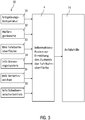
- Figure 3 shows a block diagram illustrating the control of a starting aid according to an embodiment of the invention.
- the control device can be designed to determine the at least one piece of information 30 about a state of the road surface, at least two, more preferably at least three, in Figure 3 to receive and merge the following information 30 shown, ie to link different information 30 with the aim of reliably determining the state of the road surface, as to whether activation of the starting aid is necessary or not.
- a possible implementation provides that it is first determined whether the current ambient temperature is below a predetermined threshold value, which is selected such that the temperatures below this threshold value are low enough to enable snow-covered roads or icy roads. If the ambient temperature is below the threshold value, one or more of the approaches and information described in this document (such as tire noise detection, image evaluation of the road surface, information from a brake control system, windshield wiper operation) are used to determine a condition of the road surface. For example, only if the ambient temperature is below a predefined threshold value can the control device determine whether the road surface is icy or covered in snow by means of recorded tire noises, recorded camera images of the road surface or a traffic sign, operating information from a windshield wiper and / or information from an electronic brake control system .
- a predetermined threshold value which is selected such that the temperatures below this threshold value are low enough to enable snow-covered roads or icy roads.
- the advantage of this approach is that a particularly reliable detection of a state of the road surface is possible in which the traction help is to be activated or not.
- the tire noise recorded can be used to determine whether the road is covered with snow or not.
- the brake control system determines that the vehicle breaks out during the starting process, it can be reliably assumed that the starting aid is required. Therefore, by using additional information from the brake control system, it is possible to more precisely identify situations in which the traction help must be activated.
Landscapes
- Engineering & Computer Science (AREA)
- Transportation (AREA)
- Mechanical Engineering (AREA)
- Automation & Control Theory (AREA)
- Physics & Mathematics (AREA)
- Mathematical Physics (AREA)
- Chemical & Material Sciences (AREA)
- Combustion & Propulsion (AREA)
- Microelectronics & Electronic Packaging (AREA)
- Regulating Braking Force (AREA)
- Control Of Driving Devices And Active Controlling Of Vehicle (AREA)
Abstract
Description
- Die Erfindung betrifft ein Verfahren zur Steuerung einer Anfahrhilfe eines Fahrzeugs, vorzugsweise eines Nutzfahrzeugs. Die Erfindung betrifft ferner eine Vorrichtung zur Steuerung einer solchen Anfahrhilfe.
- Insbesondere für Nutzfahrzeuge sind automatische Anfahrhilfen, auch als Traktionshilfen bezeichnet, bekannt, welche es dem Fahrer erlauben, bei unsicheren Straßenverhältnissen die Anfahrhilfe zuzuschalten, wodurch ein Anfahrvorgang erleichtert wird. Als Anfahrhilfe für Nutzfahrzeuge ist bekannt, bei mehrachsigen Fahrzeugen, welche beispielsweise über eine dritte Hilfsachse in Form einer Liftachse verfügen, diese Hilfsachsen kurzfristig zu entlasten bzw. anzuheben und somit die Achslast auf die verbleibenden Achsen und insbesondere auf angetriebene Achsen zu erhöhen. Durch die erhöhte Achslast kann auch eine erhöhte Traktion bei rutschigen Fahrbahnverhältnissen erreicht werden. Dabei ist es möglich, die offiziell zulässige maximale Achslast kurzfristig zu überschreiten, um die nötige Traktion beispielsweise als Anfahrhilfe zu erreichen. Als Traktionshilfen sind beispielsweise ferner automatische Schneeketten bekannt, welche bei Nutzfahrzeugen, insbesondere bei Lastkraftwagen, an den Antriebsachsen angebracht sein können und mittels eines Schleudermechanismus zwischen Fahrbahn und Reifen ausgebracht werden, um so die Traktion auf einem rutschigen Untergrund wie einer verschneiten oder vereisten Fahrbahn zu erhöhen.
- Um die Achslastverlagerung bzw. Achslastentlastung der Hilfsachse zur Anfahrhilfe auszuführen, muss der Fahrer zunächst die rutschige, beispielsweise schneebedeckte oder vereiste Fahrbahnoberfläche, erkennen und dann manuell die entsprechende Anfahrhilfe aktivieren.
- Um diese durch den Fahrer durchgeführte Erkennung des Zustands der Fahrbahnoberfläche zu vermeiden, wird in der Offenlegungsschrift
DE 10 2011 015 510 A1 vorgeschlagen, die Beschaffenheit der Fahrbahnoberfläche optisch mittels ausgesendetem und von der Fahrbahn reflektiertem Licht zu erkennen und entsprechend die Anfahrhilfe automatisch bei Bedarf anzusteuern. - Ein Nachteil dieses Ansatzes ist, dass die Erkennung der Beschaffenheit der Fahrbahnoberfläche mittels reflektierter Strahlung, beispielsweise Infrarotstrahlung, insbesondere bei schneebedeckter Fahrbahn ungenau ist, da die Reflexion von Licht an einer Schneeoberfläche sehr unterschiedlich sein kann. Entsprechend werden Fahrsituationen dahingehend, ob die Anfahrhilfe benötigt wird oder nicht, oftmals falsch eingeschätzt.
- Es ist daher eine Aufgabe der vorliegenden Erfindung, die Nachteile des Standes der Technik zu überwinden. Die Aufgabe der Erfindung ist es insbesondere, einen verbesserten Ansatz bereitzustellen, um Fahrsituationen dahingehend zuverlässiger automatisch einschätzen zu können, ob die Anfahrhilfe benötigt wird oder nicht.
- Diese Aufgaben werden durch Vorrichtungen und Verfahren mit den Merkmalen der unabhängigen Ansprüche gelöst. Vorteilhafte Ausführungsformen und Anwendungen der Erfindung ergeben sich aus den abhängigen Ansprüchen und werden in der folgenden Beschreibung unter teilweiser Bezugnahme auf die Figuren näher erläutert. Ferner bezieht sich die Erfindung auf ein Fahrzeug, welches mit einer entsprechenden Vorrichtung ausgestattet ist und in welchem das erfindungsgemäße Verfahren ausgeführt wird.
- Das erfindungsgemäße Verfahren zur Steuerung einer Anfahrhilfe eines Fahrzeugs umfasst hierbei die Schritte des Ermittelns zumindest einer Information über einen Zustand der Fahrbahnoberfläche und des Steuerns der Anfahrhilfe, wenn in Abhängigkeit von der zumindest einen Information ermittelt wurde, ob die Anfahrhilfe erforderlich ist oder nicht mehr erforderlich ist.
- Mit dem Verfahren und der Vorrichtung kann vorteilhaft eine Anfahrhilfe, auch als Traktionshilfe bezeichnet, bereits bei stehendem Fahrzeug automatisch zugeschaltet werden, da anhand der automatischen Ermittlung des Zustands der Fahrbahnoberfläche die rutschige Fahrbahnoberfläche, z. B. aufgrund einer schneebedeckten oder vereisten Fahrbahn, bereits vor dem Anfahren erkannt werden kann.
- Das Verfahren und die Vorrichtung können auch verwendet werden, um eine Anfahrhilfe abzuschalten, wenn dies der Zustand bzw. die Beschaffenheit der Fahrbahnoberfläche nicht mehr erforderlich macht.
- Das Fahrzeug kann ein Nutzfahrzeug sein, vorzugsweise ein Nutzfahrzeug, das mindestens eine Hilfsachse, z. B. eine Vorlaufachse oder Nachlaufachse, aufweist, die als Liftachse ausgeführt ist. Die Anfahrhilfe kann eine Achsentlastung umfassen, wie sie dem Fachmann ebenfalls aus dem Stand der Technik bekannt ist, so dass das Steuern der Anfahrhilfe das Entlasten und/oder Anheben einer Achse des Fahrzeugs umfasst. Gemäß dieser Ausführungsform ist die Anfahrhilfe dadurch ausgebildet, dass durch Anheben oder Entlasten der Liftachse die Achslast auf die verbleibenden Achsen und insbesondere auf angetriebene Achsen erhöht wird, wodurch eine erhöhte Traktion bei rutschigen Fahrbahnverhältnissen erreicht werden kann. Die Anfahrhilfe kann ferner automatische Schneeketten umfassen, wie sie an sich dem Fachmann bekannt sind.
- Die zumindest eine Information über einen Zustand der Fahrbahnoberfläche kann umfassen, ob die Fahrbahnoberfläche vereist oder schneebedeckt ist. Die Anfahrhilfe wird vorzugsweise aktiviert, falls die Fahrbahnoberfläche schneebedeckt oder vereist ist.
- Gemäß einer besonders bevorzugten Ausführungsvariante wird eine Information über den Zustand der Fahrbahnoberfläche anhand von Reifengeräuschen des Fahrzeugs oder eines vorbeifahrenden Fremdfahrzeugs ermittelt, die mittels eines akustischen Sensors des Fahrzeugs erfasst werden. Anhand der erfassten Reifengeräusche des Fahrzeugs kann auf besonders zuverlässige Weise erkannt werden, ob beispielsweise die Fahrbahn schneebedeckt ist, da die Reifengeräusche bei schneebedeckter Fahrbahn hierfür charakteristische Abrollgeräusche erzeugen, die zuverlässig von Reifengeräuschen bei nicht schneebedeckter Fahrbahn unterschieden werden können. Da die Anfahrhilfe in der Mehrzahl der Fälle bei schneebedeckter Fahrbahn erforderlich ist, kann auf diese Weise eine besonders zuverlässige automatische Einschätzung erfolgen, ob die Anfahrhilfe aktuell benötigt wird oder nicht. Der akustische Sensor kann mindestens ein an der Unterseite des Fahrzeugs angeordnetes Mikrofon umfassen, das so angeordnet ist, dass es Abrollgeräusche eines oder mehrerer Reifen erfassen kann.
- Die Erkennung eines Zustands der Fahrbahnoberfläche anhand der Auswertung von akustischen Reifengeräuschen ist an sich aus dem Stand der Technik bekannt und daher hier nicht näher beschrieben. Lediglich beispielhaft wird auf die Dokumente
DE 10 2004 04791 A1 ,DE 10 2008 062 735 A1 undUS 5,852,243 A verwiesen. - Alternativ oder zusätzlich kann gemäß einem weiteren Aspekt der Erfindung die zumindest eine Information über einen Zustand der Fahrbahnoberfläche mittels eines elektronischen Bremsregelsystems, beispielsweise eines elektronischen Stabilitätsprogramms (ESP)-, Antiblockiersystem (ABS)- und/oder Antriebsschlupfregelung (ASR)-Systems, bestimmt werden. Wenn beispielsweise anhand des Bremsregelsystems festgestellt wird, dass das Fahrzeug bei einem Anfahrvorgang ausbricht oder mindestens ein Rad durchdreht, kann hieraus gefolgert werden, dass der Zustand der Fahrbahnoberfläche derart ist, dass eine Anfahrhilfe erforderlich ist und/oder dass die Anfahrhilfe aktiviert werden soll.
- Alternativ oder zusätzlich kann gemäß einem weiteren Aspekt der Erfindung die zumindest eine Information über einen Zustand der Fahrbahnoberfläche mittels eines von einer Kamera des Fahrzeugs erfassten Bildes der Fahrbahnoberfläche bestimmt werden. Anhand des Bilds des Fahrbahnoberfläche kann beispielsweise mittels Bildanalyse bestimmt werden, ob die Fahrbahn schneebedeckt oder vereist ist.
- Alternativ oder zusätzlich kann gemäß einem weiteren Aspekt der Erfindung die zumindest eine Information über einen Zustand der Fahrbahnoberfläche mittels eines von einer Kamera des Fahrzeugs erfassten Bildes eines Verkehrszeichens und/oder einer Verkehrsanzeige bestimmt werden, wenn das Verkehrszeichens und/oder die Verkehrsanzeige einen Hinweis auf eine Schnee- oder Glatteiswarnungen anzeigt.
- Alternativ oder zusätzlich kann gemäß einem weiteren Aspekt der Erfindung die zumindest eine Information über einen Zustand der Fahrbahnoberfläche anhand eines Betriebs eines Scheibenwischers bestimmt wird, falls dieser unterhalb einer vorbestimmten Temperaturschwelle aktiviert ist. Falls beispielsweise der Scheibenwischer bei einem Anfahrvorgang bei Temperaturen unter dem Gefrierpunkt (0 °C) und um dem Gefrierpunkt betrieben wird, ist die Wahrscheinlichkeit erhöht, dass die Fahrbahn schneebedeckt oder vereist ist.
- Alternativ oder zusätzlich kann gemäß einem weiteren Aspekt der Erfindung die zumindest eine Information über einen Zustand der Fahrbahnoberfläche unter Verwendung einer sensorisch erfassten Umgebungstemperatur bestimmt werden. Hierbei ist es vorteilhaft, die Umgebungstemperatur in Kombination mit einer der anderen in diesem Dokument beschriebenen Ansätze und Informationen (wie Reifengeräuscherkennung, Bildauswertung der Fahrbahnoberfläche, Informationen eines Bremsregelsystems, Scheibenwischerbetrieb) zu verwenden. Beispielsweise kann zuerst geprüft werden, ob die Umgebungstemperatur in einem Bereich liegt, in dem schneebedeckte und/oder vereiste Straßen auftreten können. Falls ja, kann eine Überprüfung des Zustands der Fahrbahnoberfläche anhand der einen oder mehrerer der anderen in diesem Dokument beschriebenen Ansätze und Informationen erfolgen.
- Es wird betont, dass zur Steuerung der Anfahrhilfe jeder der in diesem Dokument beschriebenen Ansätze allein oder in Kombination mit anderen Ansätzen zur Ermittlung einer Information über den Zustand der Fahrbahnoberfläche verwendet werden kann. Beispielsweise kann anstelle oder zusätzlich zu der Verwendung der akustisch erfassten Reifengeräusche des Fahrzeugs auch anhand von Informationen des Bremsregelsystem der Zustand der Fahrbahnoberfläche ermittelt werden und festgestellt werden, ob eine Anfahrhilfe benötigt wird.
- Gemäß einer besonders bevorzugten Ausführungsform werden mehrere der vorgenannten Ansätze kombiniert, um auf diese Weise eine besonders zuverlässige und genaue Ermittlung des Zustands der Fahrbahnoberfläche zu erzielen und um Fahrsituationen dahingehend zuverlässiger automatisch einschätzen zu können, ob die Anfahrhilfe benötigt wird oder nicht. Entsprechend diesem Aspekt können zur Ermittlung der zumindest einen Information über einen Zustand der Fahrbahnoberfläche zumindest zwei, weiter vorzugsweise zumindest drei, der folgenden Informationen zur Ermittlung des Zustands der Fahrbahnoberfläche fusioniert werden:
- a) eine Umgebungstemperatur;
- b) Reifengeräusche des Fahrzeugs oder eines vorbeifahrenden Fremdfahrzeugs, die mittels eines akustischen Sensors des Fahrzeugs erfasst werden;
- c) eine Information eines elektronischen Bremsregelsystems;
- d) eine Information eines von einer Kamera des Fahrzeugs erfassten Bildes der Fahrbahnoberfläche und/oder eines Hinweise auf Schnee- oder Glatteiswarnungen anzeigenden Verkehrszeichens; und
- e) Betriebsinformationen eines Scheibenwischers.
- Die Fusionierung erfolgt vorzugsweise in einer Steuereinrichtung des Fahrzeugs, beispielsweise in einem zentralen Steuergerät.
- Eine mögliche Realisierung sieht hierbei vor, dass zunächst bestimmt wird, ob die aktuelle Umgebungstemperatur unterhalb eines vorbestimmten Schwellenwerts liegt, der so gewählt ist, dass unterhalb dieses Schwellenwerts die Temperaturen niedrig genug sind, um schneebedeckte Straßen oder vereiste Straßen zu ermöglichen. Der vorbestimmte Schwellenwert kann beispielsweise auf einen Wert von 0 °C (Gefrierpunkt) oder auf einen Wert in der Nähe des Gefrierpunkts festgelegt werden. Falls die Umgebungstemperatur unterhalb des Schwellenwerts liegt, werden ein oder mehrere der in diesem Dokument beschriebenen Ansätze und Informationen (wie Reifengeräuscherkennung, Bildauswertung der Fahrbahnoberfläche, Informationen eines Bremsregelsystems, Scheibenwischerbetrieb) herangezogen, um einen Zustand der Fahrbahnoberfläche zu ermitteln. Beispielsweise kann nur dann, wenn die Umgebungstemperatur unterhalb eines vordefinierten Schwellenwertes liegt, von der Steuereinrichtung anhand von erfassten Reifengeräuschen, erfassten Kamerabildern der Fahrbahnoberfläche oder eines Verkehrszeichens, Betriebsinformationen eines Scheibenwischers und/oder Informationen eines elektronischen Bremsregelsystems ermittelt werden, ob die Fahrbahnoberfläche vereist oder schneebedeckt ist.
- Gemäß einem weiteren vorteilhaften Aspekt können die Reifengeräusche des Fahrzeugs oder eines vorbeifahrenden Fremdfahrzeugs, die mittels eines akustischen Sensors des Fahrzeugs erfasst werden, unter Verwendung eines künstlichen neuronalen Netzes ausgewertet werden, um die Information über einen Zustand der Fahrbahnoberfläche zu ermitteln. Eine solche Auswertung der Reifengeräusche mittels eines künstlichen neuronalen Netzes kann beispielsweise realisiert werden mittels des Ansatzes, der in der Veröffentlichung " Automatic Detection of Road Surface States from Tire Noise Using Neural Network Analysis", W. Kongrattanaprasert et al., Proceedings of 20th International Congress on Acoustics, ICA 2010, offenbart ist.
- Gemäß einer weiteren Ausführungsform besteht die Möglichkeit, dass, falls das Fahrzeug in einem elektronisch verbunden Konvoi mit mindestens einem Fremdfahrzeug fährt, im sog. Platooning-Betrieb, und die Anfahrhilfe des Fahrzeugs aktiviert wurde, dann eine Nachricht von dem Fahrzeug für die Fremdfahrzeuge des Konvois erzeugt wird, die angibt, dass die Anfahrhilfe des Fahrzeugs aktiviert wurde. Auf dieser Weise kann bei einer automatischen Aktivierung der Anfahrhilfe diese Information schnell an die weiteren Fahrzeuge im Platoon weitergegeben werden, um ein sicheres Anfahren aller Fahrzeuge des Platoons zu ermöglichen.
- Das erfindungsgemäße Verfahren zur Steuerung einer Anfahrhilfe eines Fahrzeugs umfasst Mittel zur Erfassung zumindest einer Information über einen Zustand der Fahrbahnoberfläche und eine Steuereinrichtung, die ausgebildet ist, zumindest eine Information über einen Zustand der Fahrbahnoberfläche zu ermitteln und die Anfahrhilfe anzusteuern, wenn in Abhängigkeit von der Information ermittelt wurde, ob die Anfahrhilfe erforderlich ist oder nicht mehr erforderlich ist. Die Steuereinrichtung kann hierbei die Anfahrhilfe unmittelbar ansteuern oder mittelbar, z. B. durch Ansteuerung eines Steuergeräts, das wiederum eine Liftmechanismus der Achse ansteuert. Letzteres kann ein Luftfeder-Steuergerät sein, das über einen CAN-Datenbus angesteuert wird.
- Gemäß einer Ausführungsform kann die Vorrichtung als Mittel zur Erfassung zumindest einer Information über einen Zustand der Fahrbahnoberfläche einen akustischen Sensor zur Erfassung von Reifengeräuschen des Fahrzeugs oder eines vorbeifahrenden Fremdfahrzeugs umfassen. Die Steuereinrichtung kann ausgebildet sein, eine Information über den Zustand der Fahrbahnoberfläche anhand der erfassten Reifengeräusche des Fahrzeugs oder eines vorbeifahrenden Fremdfahrzeugs zu ermitteln. Alternativ oder zusätzlich kann die Vorrichtung ferner zumindest eine Kamera umfassen, mittels derer zur Erfassung der zumindest einen Information über einen Zustand der Fahrbahnoberfläche mindestens ein Bild der Fahrbahnoberfläche erfasst wird und/oder ein Verkehrszeichen und/oder Verkehrshinweise, das Hinweise auf Schnee- oder Glatteiswarnungen anzeigt.
- Zur Vermeidung von Wiederholungen sollen rein verfahrensgemäß offenbarte Merkmale auch als vorrichtungsgemäß offenbart gelten und beanspruchbar sein und umgekehrt. Die vorgenannten Aspekte und erfindungsgemäßen Merkmale gelten somit auch für die Vorrichtung, insbesondere für die Steuereinrichtung, die ausgebildet ist, die Schritte des Verfahrens betreffend das Ermitteln der zumindest einen Information über einen Zustand der Fahrbahnoberfläche und das Steuern der Anfahrhilfe, wenn in Abhängigkeit von der zumindest einen Information ermittelt wurde, ob die Anfahrhilfe erforderlich ist oder nicht mehr erforderlich ist, durchzuführen.
- Die zuvor beschriebenen bevorzugten Ausführungsformen und Merkmale der Erfindung sind beliebig miteinander kombinierbar. Weitere Einzelheiten und Vorteile der Erfindung werden im Folgenden unter Bezug auf die beigefügten Zeichnungen beschrieben. Es zeigen:
- Figur 1
- eine schematische Darstellung eines Fahrzeugs mit einer Vorrichtung zur Steuerung einer Anfahrhilfe gemäß einer Ausführungsform der Erfindung;
- Figur 2
- ein Ablaufdiagramm zur Illustration eines Verfahrens zur Steuerung einer Anfahrhilfe gemäß einer Ausführungsform der Erfindung, und
- Figur 3
- ein Blockdiagramm zur Illustration der Steuerung einer Anfahrhilfe gemäß einer Ausführungsform der Erfindung.
- Gleiche oder äquivalente Elemente sind in allen Figuren mit denselben Bezugszeichen bezeichnet und zum Teil nicht gesondert beschrieben.
-
Figur 1 zeigt eine schematische Darstellung eines Fahrzeugs mit einer Vorrichtung zur Steuerung einer Anfahrhilfe gemäß einer Ausführungsform der Erfindung. - Das Fahrzeug 1 ist im dargestellten Beispiel ein Nutzfahrzeug wie ein Lastkraftwagen. Es kann sich aber auch um einen Omnibus oder jedes andere mehrachsige Fahrzeug, insbesondere um ein Fahrzeug mit einer Doppelachse, handeln. Vorzugsweise hat das Fahrzeug mindestens drei Achsen. Im dargestellten Beispiel hat das Fahrzeug 1 eine lenkbare Vorderachse, eine angetriebene zweite Achse und eine nachlaufende und entlastbare dritte Achse 2. Die dritte Achse 2 dient dazu, einen Teil der Last aufzunehmen, beispielsweise wenn das Fahrzeug 1 beladen ist, und so im normalen Fahrbetrieb die Achslast auf die zweite Achse zu verringern. Um insbesondere die Reifen der dritten Achse 2 nicht unnötig zu verschleißen, ist es seit Langem bekannt, die dritte Achse 2 anzuheben, wenn das Fahrzeug 1 nicht beladen ist und die zulässige Gesamtachslast der zweiten Achse somit nicht überschritten wird. Im dargestellten Beispiel ist die dritte Achse 2 angehoben bzw. entlastet dargestellt. Die dritte Achse 2 kann auch entlastet bzw. angehoben werden, um die Traktion der zweiten Achse zumindest kurzfristig zu erhöhen. In diesem Fall kann die zulässige Achslast der zweiten Achse auch zumindest kurzfristig überschritten werden. Somit stellt die entlastbare dritte Achse 2 eine Traktionshilfe 14 dar. Im dargestellten Beispiel ist die entlastbare dritte Achse 2 hinter der angetriebenen zweiten Achse dargestellt. Es ist jedoch genauso möglich, dass die entlastbare dritte Achse 2 in Fahrtrichtung vor der angetriebenen zweiten Achse angeordnet ist und somit als Vorlaufachse ausgebildet ist.
- Wie in
Figur 1 erkennbar ist, weist das Fahrzeug 1 eine Steuereinrichtung, z. B. eine zentrale Steuereinrichtung 4, auf, die eingangsseitige Informationen empfängt, aus denen ein Zustand der Fahrbahnoberfläche 11 ermittelbar ist. Die Steuereinrichtung 4 ist ausgebildet, anhand der empfangenen Informationen einen Zustand der Fahrbahnoberfläche zu ermitteln, insbesondere, ob die Fahrbahn schneebedeckt oder vereist ist. Mit dem Bezugszeichen 12 ist inFigur 1 ein schneebedeckter Abschnitt der Fahrbahnoberfläche 11 schematisch dargestellt. - Die Steuereinrichtung 4 ist ferner signaltechnisch (dargestellt durch eine durchgezogene schwarze Linie) mit einer Anfahrhilfe 14, hier der Liftachse 2, verbunden, um diese zu aktivieren, hier die Liftachse 2 anzuheben bzw. zu entlasten, falls die Steuereinrichtung 4 ermittelt hat, dass die Fahrbahn schneebedeckt oder vereist ist oder allgemein so rutschig ist und/ oder so einen geringen Fahrbahnreibwert aufweist, dass eine Anfahrhilfe 14 vonnöten ist. Die Steuereinrichtung kann die Liftachse 2 direkt ansteuern oder z.B. nur mittelbar über Ansteuerung eines weiteren Steuergeräts (nicht dargestellt), das wiederum die Liftachse direkt ansteuert, wie z. B. ein Luftfeder-Steuergerät.
- Das Fahrzeug 1 kann in einem unteren Bereich in der Nähe eines der Reifen einen akustischen Sensor 3, z. B. ein Mikrofon, aufweisen, der die Abroll-Geräusche 8 eines Reifens akustisch erfassen kann. Die erfassten Reifengeräusche werden von dem akustischen Sensor 3 der Steuereinrichtung 4 zugeführt und dort ausgewertet. Mit an sich aus dem Stand der Technik bekannten Auswerteverfahren können anhand der Reifengeräusche Rückschlüsse auf die Beschaffenheit der Fahrbahnoberfläche gezogen werden, insbesondere, ob diese schneebedeckt und/oder vereist ist. Beispielsweise können vorab experimentell die Abrollgeräusche der Reifen für verschiedene Fahrbahnzustände (trockene Fahrbahn, schneebedeckte Fahrbahn, vereiste Fahrbahn etc.) erfasst und anhand von charakteristischen Merkmalen klassifiziert und in der Steuereinrichtung als Auswerte- und Erkennungslogik hinterlegt werden, so dass dann im Betrieb des Fahrzeugs anhand der aktuellen Reifengeräusche anhand der hinterlegten Auswerte- und Erkennungslogik ein Rückschluss auf die Beschaffenheit der Fahrbahnoberfläche gezogen werden kann.
- Alternativ oder zusätzlich kann die Steuereinrichtung 4 die Messwerte eines Temperatursensors 7 empfangen und auswerten, welcher die Außentemperatur misst.
- Alternativ oder zusätzlich kann das Fahrzeug 1 eine Kamera 6 aufweisen, deren Sichtkegel 9 eine Straßenoberfläche erfasst, wobei die entsprechenden Messwerte ebenfalls der Steuereinrichtung 4 zugeführt werden können. Mittels einer Bildauswertung kann die Steuereinrichtung 4 die von der Kamera 6 erfassten Bilder auswerten, um hieraus Rückschlüsse auf die Beschaffenheit der Fahrbahnoberfläche zu ziehen, insbesondere ob diese schneebedeckt und/oder vereist ist. Auch hier können vorab experimentell die Fahrbahnbilder der Kamera für verschiedene Fahrbahnzustände (trockene Fahrbahn, schneebedeckte Fahrbahn, vereiste Fahrbahn etc.) erfasst und anhand von Bildauswerte-Algorithmen analysiert und klassifiziert werden und in der Steuereinrichtung als weitere Auswerte- und Erkennungslogik hinterlegt werden, so dass dann im Betrieb des Fahrzeugs anhand der aktuellen Fahrbahnbilder anhand der hinterlegten Auswerte- und Erkennungslogik ein Rückschluss auf die Beschaffenheit der Fahrbahnoberfläche gezogen werden kann.
- Alternativ oder zusätzlich kann die Steuereinrichtung 4 Informationen von einem Bremsregelsystem 5 des Fahrzeugs empfangen. Bei dem Bremsregelsystem 5 kann es sich beispielsweise um ein ESP-, ABS- und/oder ASR-Systems handeln. Die Steuereinrichtung 4 kann ausgebildet sein, in Abhängigkeit von den Informationen des Bremsregelsystems zu bestimmen, ob das Fahrzeug bei einem Anfahrvorgang ausbricht und/oder ein durchdrehendes Rad aufweist, und falls dies der Fall ist, kann auf eine rutschige Fahrbahnoberfläche geschlossen werden und die Notwendigkeit, die Anfahrhilfe zu aktivieren.
- Alternativ oder zusätzlich kann die Steuereinrichtung 4 Informationen von einer Steuerung 13 der Scheibenwischanlage empfangen und diese Informationen ebenfalls dazu zu verwenden, um auf einen Zustand der Fahrbahnoberfläche zu schließen, vorzugsweise dann, wenn der Scheibenwischer bei Temperaturen unter oder um dem Gefrierpunkt aktiviert ist.
- Zur Vereinfachung der Darstellung sind in
Figur 1 mehrere Informationsquellen 3, 5, 7, 8 und 13 in Form von Sensoren 3, 6 und 7 oder in Form von anderen Betriebskomponenten 5 und 13 des Fahrzeugs 1 dargestellt. Das Fahrzeug 1 kann jedoch auch nur einen Teil hiervon aufweisen, bzw. die Steuereinrichtung 4 kann ausgebildet sein, Informationen von nur einem Teil dieser Informationsquellen zu empfangen und zu verarbeiten, was nachfolgend nochmals erläutert wird. -
Figur 2 zeigt ein Ablaufdiagramm zur Illustration eines Verfahrens zur Steuerung einer Anfahrhilfe gemäß einer Ausführungsform der Erfindung. Das Verfahren umfasst einen Schritt S10, bei dem zumindest eine Information 30 über einen Zustand der Fahrbahnoberfläche 11 ermittelt wird. Beispielsweise kann ermittelt werden, ob der Zustand der Fahrbahnoberfläche derart ist, dass die Aktivierung einer Anfahrhilfe erforderlich ist, beispielsweise wenn die Fahrbahnoberfläche schneebedeckt oder vereist ist. Beispielsweise kann in Schritt S10 eine Information über den Zustand der Fahrbahnoberfläche anhand von Reifengeräuschen 8 des Fahrzeugs 1 oder eines vorbeifahrenden Fremdfahrzeugs ermittelt werden, die mittels des akustischen Sensors 3 des Fahrzeugs erfasst werden. - Das Verfahren umfasst ferner den Schritt S20, bei dem die Anfahrhilfe 14 angesteuert wird, wenn in Abhängigkeit von der zumindest einen Information 30 ermittelt wurde, ob die Anfahrhilfe 14 erforderlich ist oder nicht mehr erforderlich ist. Wenn beispielsweise mit dem akustischen Sensor 3 beim Anfahrvorgang Abrollgeräusche der Reifen erfasst werden, die typisch sind für schneebedeckte Fahrbahnoberflächen, kann auf eine schneebedeckte Fahrbahn geschlossen werden. Beispielsweise kann die Anfahrhilfe 14 aktiviert werden, wenn ermittelt wurde, dass die Fahrbahnoberfläche schneebedeckt oder vereist ist, und wieder deaktiviert werden, wenn der Anfahrvorgang erfolgreich abgeschlossen wurde oder die Fahrbahn nicht mehr schneebedeckt oder nicht mehr verreist ist.
-
Figur 3 zeigt ein Blockdiagramm zur Illustration der Steuerung einer Anfahrhilfe gemäß einer Ausführungsform der Erfindung. - Die Steuereinrichtung kann ausgebildet sein, zur Ermittlung der zumindest einen Information 30 über einen Zustand der Fahrbahnoberfläche zumindest zwei, weiter vorzugsweise zumindest drei, der in
Figur 3 gezeigten folgenden Informationen 30 zu empfangen und zu fusionieren, d. h. unterschiedliche Informationen 30 zu verknüpfen mit dem Ziel, zuverlässig den Zustand der Fahrbahnoberfläche zu ermitteln, dahingehend, ob eine Ansteuerung der Anfahrhilfe erforderlich ist oder nicht. - Die Informationen 30, die von der Steuereinrichtung 30 verwendet werden können, umfassen:
- a) eine Umgebungstemperatur 31, gemessen mit dem Temperatursensor 7;
- b) Reifengeräusche 32 des Fahrzeugs oder eines vorbeifahrenden Fremdfahrzeugs, die mittels des akustischen Sensors 3 des Fahrzeugs erfasst werden;
- c) eine Information 34 des elektronischen Bremsregelsystems, insbesondere ob das Fahrzeug bei einem Anfahrvorgang ausbricht oder Räder durchdrehen;
- d) ein von einer Kamera 6 des Fahrzeugs erfasstes Bild 33 der Fahrbahnoberfläche und/oder ein Bild 35 eines einen Hinweis (35) auf Schnee- oder Glatteiswarnungen anzeigenden Verkehrszeichens; und/ oder
- e) eine Betriebsinformationen 36 eines Scheibenwischers 13.
- Eine mögliche Realisierung sieht hierbei vor, dass zunächst bestimmt wird, ob die aktuelle Umgebungstemperatur unterhalb eines vorbestimmten Schwellenwerts liegt, der so gewählt ist, dass unterhalb dieses Schwellenwerts die Temperaturen niedrig genug sind, um schneebedeckte Straßen oder vereiste Straßen zu ermöglichen. Falls die Umgebungstemperatur unterhalb des Schwellenwerts liegt, werden ein oder mehrere der in diesem Dokument beschriebenen Ansätze und Informationen (wie Reifengeräuscherkennung, Bildauswertung der Fahrbahnoberfläche, Informationen eines Bremsregelsystems, Scheibenwischerbetrieb) herangezogen, um einen Zustand der Fahrbahnoberfläche zu ermitteln. Beispielsweise kann nur dann, wenn die Umgebungstemperatur unterhalb eines vordefinierten Schwellenwertes liegt, von der Steuereinrichtung anhand von erfassten Reifengeräuschen, erfassten Kamerabildern der Fahrbahnoberfläche oder eines Verkehrszeichens, Betriebsinformationen eines Scheibenwischers und/oder Informationen eines elektronischen Bremsregelsystems ermittelt werden, ob die Fahrbahnoberfläche vereist oder schneebedeckt ist.
- Der Vorteil dieses Ansatzes liegt darin, dass eine besonders zuverlässige Erkennung eines Zustands der Fahrbahnoberfläche möglich ist, bei dem die Anfahrhilfe zu aktivieren ist oder nicht. Beispielsweise kann anhand der erfassten Reifengeräusche festgestellt werden, ob die Fahrbahn schneebedeckt ist oder nicht. Es kann jedoch sein, dass trotz schneebedeckter Fahrbahn ein Anfahren ohne Anfahrhilfe möglich ist. Wenn jedoch anhand der Informationen des Bremsregelsystems festgestellt wird, dass das Fahrzeug beim Anfahrvorgang ausbricht, kann zuverlässig davon ausgegangen werden, dass die Anfahrhilfe benötigt wird. Daher kann durch zusätzliche Verwendung von Informationen des Bremsregelsystems eine genauere Erkennung von Situationen erfolgen, in denen die Anfahrhilfe angesteuert werden muss.
- Obwohl die Erfindung unter Bezugnahme auf bestimmte Ausführungsbeispiele beschrieben worden ist, ist es für einen Fachmann ersichtlich, dass verschiedene Änderungen ausgeführt werden können und Äquivalente als Ersatz verwendet werden können, ohne den Bereich der Erfindung zu verlassen. Folglich soll die Erfindung nicht auf die offenbarten Ausführungsbeispiele begrenzt sein, sondern soll alle Ausführungsbeispiele umfassen, die in den Bereich der beigefügten Patentansprüche fallen. Insbesondere beansprucht die Erfindung auch Schutz für den Gegenstand und die Merkmale der Unteransprüche unabhängig von den in Bezug genommenen Ansprüchen.
-
- 1
- Fahrzeug
- 2
- Liftachse
- 3
- Akustischer Sensor
- 4
- Steuereinrichtung
- 5
- Bremsregelsystem
- 6
- Kamera
- 7
- Umgebungstemperatursensor
- 8
- Reifengeräusche
- 9
- Sichtkegel
- 11
- Fahrbahnoberfläche
- 12
- Schneebedeckung
- 13
- Scheibenwischanlage
- 14
- Anfahrhilfe
- 30
- Informationen über den Zustand der Fahrbahnoberfläche
- 31
- Umgebungstemperatur
- 32
- Reifengeräusche
- 33
- Bildinformation der Fahrbahnoberfläche
- 34
- Informationen des Bremsregelsystem
- 35
- Bildinformationen eines Verkehrszeichens
- 36
- Informationen eines Scheibenwischerbetriebs
- S10, S20
- Verfahrensschritte
Claims (15)
- Verfahren zur Steuerung einer Anfahrhilfe (14) eines Fahrzeugs (1), vorzugsweise eines Nutzfahrzeugs, wobei das Verfahren umfasst:Ermitteln (S10) zumindest einer Information (30) über einen Zustand der Fahrbahnoberfläche (11);Steuern (S20) der Anfahrhilfe (14), wenn in Abhängigkeit von der zumindest einen Information (30) ermittelt wurde, ob die Anfahrhilfe (14) erforderlich ist oder nicht mehr erforderlich ist,dadurch gekennzeichnet, dass eine Information über den Zustand der Fahrbahnoberfläche anhand von Reifengeräuschen (8) des Fahrzeugs (1) oder eines vorbeifahrenden Fremdfahrzeugs ermittelt wird, die mittels eines akustischen Sensors (3) des Fahrzeugs erfasst werden.
- Verfahren nach Anspruch 1, dadurch gekennzeichnet, dass zumindest eine Information (30) über einen Zustand der Fahrbahnoberfläche (11) mittels eines elektronischen Bremsregelsystems (5), beispielsweise eines ESP-, ABS-, und/oder ASR-Systems, bestimmt wird.
- Verfahren nach Anspruch 2, dadurch gekennzeichnet, dass wenn anhand des Bremsregelsystems festgestellt wird, dass das Fahrzeug bei einem Anfahrvorgang ausbricht oder mindestens ein Rad durchdreht, bestimmt wird, dass der Zustand der Fahrbahnoberfläche (11) derart ist, dass eine Anfahrhilfe (14) erforderlich ist und/oder dass die Anfahrhilfe (14) aktiviert wird.
- Verfahren nach einem der vorhergehenden Ansprüche, dadurch gekennzeichnet, dass zumindest eine Information (30) über einen Zustand der Fahrbahnoberfläche (11) mittels eines von einer Kamera (6) des Fahrzeugs erfasstena) Bildes der Fahrbahnoberfläche bestimmt wird; und/oderb) Verkehrszeichens, das Hinweise auf Schnee- oder Glatteiswarnungen anzeigt, bestimmt wird.
- Verfahren nach einem der vorhergehenden Ansprüche, dadurch gekennzeichnet, dass zumindest eine Information (30) über einen Zustand der Fahrbahnoberfläche unter Verwendung einer sensorisch erfassten Umgebungstemperatur bestimmt wird.
- Verfahren nach einem der vorhergehenden Ansprüche, dadurch gekennzeichnet, dass zumindest eine Information (30) über einen Zustand der Fahrbahnoberfläche (11) anhand eines Betriebs eines Scheibenwischers (13) bestimmt wird, falls dieser unterhalb einer vorbestimmten Temperaturschwelle aktiviert ist.
- Verfahren nach einem der vorhergehenden Ansprüche, dadurch gekennzeichnet, dass zur Ermittlung der zumindest einer Information (30) über einen Zustand der Fahrbahnoberfläche (11) eine Steuereinrichtung (4) des Fahrzeugs (1) zumindest zwei, weiter vorzugsweise zumindest drei, der folgenden Informationen fusioniert werden:a) eine Umgebungstemperatur (31);b) Reifengeräusche (32) des Fahrzeugs oder eines vorbeifahrenden Fremdfahrzeugs, die mittels eines akustischen Sensors des Fahrzeugs erfasst werden;c) eine Information (34) eines elektronischen Bremsregelsystems;d) von einer Kamera des Fahrzeugs erfassten Bildes (33) der Fahrbahnoberfläche und/oder eines Hinweises (35) auf Schnee- oder Glatteiswarnungen anzeigenden Verkehrszeichens; unde) Betriebsinformationen eines Scheibenwischers (36).
- Verfahren nach einem der vorhergehenden Ansprüche, dadurch gekennzeichnet, dass die zumindest eine Information (30) über einen Zustand der Fahrbahnoberfläche (11) umfasst, ob die Fahrbahnoberfläche vereist oder schneebedeckt ist, und dass die Anfahrhilfe aktiviert wird, falls die Fahrbahnoberfläche schneebedeckt oder vereist ist.
- Verfahren nach einem der vorhergehenden Ansprüche 7 und 8, dadurch gekennzeichnet, dass nur, falls die Umgebungstemperatur unterhalb eines vordefinierten Schwellenwertes liegt, von der Steuereinrichtung (4) anhand von erfassten Reifengeräuschen, erfassten Kamerabildern der Fahrbahnoberfläche oder eines Verkehrszeichens, Betriebsinformationen eines Scheibenwischers und/oder Informationen eines elektronischen Bremsregelsystems ermittelt wird, ob die Fahrbahnoberfläche vereist oder schneebedeckt ist.
- Verfahren nach einem der vorhergehenden Ansprüche, dadurch gekennzeichnet, dass zur Ermittlung der zumindest einen Information (30) über einen Zustand der Fahrbahnoberfläche (11) Reifengeräusche (32) des Fahrzeugs oder eines vorbeifahrenden Fremdfahrzeugs, die mittels eines akustischen Sensors des Fahrzeugs erfasst werden, unter Verwendung eines künstlichen neuronalen Netzes ausgewertet werden.
- Verfahren nach einem der vorhergehenden Ansprüche, dadurch gekennzeichnet, dass, falls das Fahrzeug in einem elektronisch verbunden Konvoi mit mindestens einem Fremdfahrzeug, im sog. Platooning-Betrieb, fährt und die Anfahrhilfe des Fahrzeugs aktiviert wurde, eine Nachricht von dem Fahrzeug für die Fremdfahrzeuge des Konvois erzeugt wird, die angibt, dass die Anfahrhilfe des Fahrzeugs aktiviert wurde.
- Verfahren nach einem der vorhergehenden Ansprüche, dadurch gekennzeichnet, dass das Steuern der Anfahrhilfe das Entlasten einer Achse des Fahrzeugs umfasst.
- Vorrichtung zur Steuerung einer Anfahrhilfe (14) eines Fahrzeugs (1), vorzugsweise eines Nutzfahrzeugs, umfassend:einen akustischen Sensor (3) zur Erfassung von Reifengeräuschen des Fahrzeugs oder eines vorbeifahrenden Fremdfahrzeugs;eine Steuereinrichtung (4), die ausgebildet ist, zumindest eine Information (30) über einen Zustand der Fahrbahnoberfläche (11) zu ermitteln und die Anfahrhilfe anzusteuern, wenn in Abhängigkeit von der Information ermittelt wurde, ob die Anfahrhilfe (14) erforderlich ist oder nicht mehr erforderlich ist, wobei eine Information über den Zustand der Fahrbahnoberfläche anhand der erfassten Reifengeräusche (32) des Fahrzeugs oder eines vorbeifahrenden Fremdfahrzeugs ermittelt wird.
- Kraftfahrzeug (1), vorzugsweise Nutzfahrzeug, wie beispielsweise ein Lastkraftwagen oder Omnibus, mit einer Vorrichtung nach Anspruch 13.
- Kraftfahrzeug (1) nach Anspruch14, nämlich ein Nutzfahrzeug mit mindestens einer Liftachse (2), die von der Steuereinrichtung (4) zur Ausbildung der Anfahrhilfe derart angesteuert wird, dass die Liftachse (2) entlastet und/oder angehoben wird.
Applications Claiming Priority (1)
| Application Number | Priority Date | Filing Date | Title |
|---|---|---|---|
| DE102019101704.1A DE102019101704A1 (de) | 2019-01-24 | 2019-01-24 | Verfahren und Vorrichtung zur Steuerung einer Anfahrhilfe eines Fahrzeugs |
Publications (1)
| Publication Number | Publication Date |
|---|---|
| EP3686073A1 true EP3686073A1 (de) | 2020-07-29 |
Family
ID=69177107
Family Applications (1)
| Application Number | Title | Priority Date | Filing Date |
|---|---|---|---|
| EP20152480.8A Ceased EP3686073A1 (de) | 2019-01-24 | 2020-01-17 | Verfahren und vorrichtung zur steuerung einer anfahrhilfe eines fahrzeugs |
Country Status (2)
| Country | Link |
|---|---|
| EP (1) | EP3686073A1 (de) |
| DE (1) | DE102019101704A1 (de) |
Cited By (1)
| Publication number | Priority date | Publication date | Assignee | Title |
|---|---|---|---|---|
| EP3957502A1 (de) * | 2020-08-21 | 2022-02-23 | Tusimple, Inc. | Verfahren, computerprogramm, speicherelement ind system für automatischen schneeketteneinsatz |
Families Citing this family (1)
| Publication number | Priority date | Publication date | Assignee | Title |
|---|---|---|---|---|
| DE102023114049B4 (de) | 2023-05-30 | 2025-02-06 | Daimler Truck AG | Verminderung der Gefahr der Bildung einer eisigen Mulde unter Reifen eines Fahrzeugs |
Citations (8)
| Publication number | Priority date | Publication date | Assignee | Title |
|---|---|---|---|---|
| US5852243A (en) | 1997-07-21 | 1998-12-22 | J-Squared, Llc | Method and apparatus for detecting a road pavement surface condition |
| JP2002240520A (ja) * | 2001-02-13 | 2002-08-28 | Bridgestone Corp | タイヤ走行状態の検出方法とタイヤ走行状態検出装置、及び路面状態の推定方法と路面状態推定装置 |
| US20040138831A1 (en) * | 2002-11-08 | 2004-07-15 | Kabushiki Kaisha Toyota Chuo Kenkyusho | Road surface state estimating apparatus, road surface friction state estimating apparatus, road surface state physical quantity calculating apparatus, and road surface state announcing apparatus |
| DE102004047914A1 (de) * | 2004-09-29 | 2006-03-30 | A.D.C. Automotive Distance Control Systems Gmbh | Methode zur Einschätzung des Fahrbahnzustands |
| DE102008062735A1 (de) | 2008-12-17 | 2010-06-24 | GM Global Technology Operations, Inc., Detroit | Kraftfahrzeug-Sicherheitseinheit |
| US20110109448A1 (en) * | 2009-11-10 | 2011-05-12 | Gm Global Technology Operations, Inc. | Method and System for Identifying Wet Pavement Using Tire Noise |
| EP2402737A1 (de) * | 2010-06-30 | 2012-01-04 | WABCO GmbH | Verfahren und Vorrichtung zur Steuerung einer Traktionshilfe eines Fahrzeuges |
| DE102016209831A1 (de) * | 2016-06-03 | 2017-12-07 | Bayerische Motoren Werke Aktiengesellschaft | System und Verfahren zur verbesserten Warnung vor Glätte |
Family Cites Families (4)
| Publication number | Priority date | Publication date | Assignee | Title |
|---|---|---|---|---|
| US5586028A (en) * | 1993-12-07 | 1996-12-17 | Honda Giken Kogyo Kabushiki Kaisha | Road surface condition-detecting system and anti-lock brake system employing same |
| DE102007015954A1 (de) * | 2007-04-03 | 2008-10-09 | Daimler Ag | Kraftfahrzeug mit wenigstens einer Achse mit Fluidfedereinheiten |
| DE102009014748B4 (de) * | 2009-03-25 | 2021-05-27 | Audi Ag | Verfahren zur Steuerung eines die Fahrdynamik eines Fahrzeugs beeinflussenden Fahrerassistenzsystems |
| DE102015212948A1 (de) * | 2015-07-10 | 2017-01-12 | Bayerische Motoren Werke Aktiengesellschaft | Antriebsmomentenkompensation bei μ-Split Situationen |
-
2019
- 2019-01-24 DE DE102019101704.1A patent/DE102019101704A1/de not_active Withdrawn
-
2020
- 2020-01-17 EP EP20152480.8A patent/EP3686073A1/de not_active Ceased
Patent Citations (9)
| Publication number | Priority date | Publication date | Assignee | Title |
|---|---|---|---|---|
| US5852243A (en) | 1997-07-21 | 1998-12-22 | J-Squared, Llc | Method and apparatus for detecting a road pavement surface condition |
| JP2002240520A (ja) * | 2001-02-13 | 2002-08-28 | Bridgestone Corp | タイヤ走行状態の検出方法とタイヤ走行状態検出装置、及び路面状態の推定方法と路面状態推定装置 |
| US20040138831A1 (en) * | 2002-11-08 | 2004-07-15 | Kabushiki Kaisha Toyota Chuo Kenkyusho | Road surface state estimating apparatus, road surface friction state estimating apparatus, road surface state physical quantity calculating apparatus, and road surface state announcing apparatus |
| DE102004047914A1 (de) * | 2004-09-29 | 2006-03-30 | A.D.C. Automotive Distance Control Systems Gmbh | Methode zur Einschätzung des Fahrbahnzustands |
| DE102008062735A1 (de) | 2008-12-17 | 2010-06-24 | GM Global Technology Operations, Inc., Detroit | Kraftfahrzeug-Sicherheitseinheit |
| US20110109448A1 (en) * | 2009-11-10 | 2011-05-12 | Gm Global Technology Operations, Inc. | Method and System for Identifying Wet Pavement Using Tire Noise |
| EP2402737A1 (de) * | 2010-06-30 | 2012-01-04 | WABCO GmbH | Verfahren und Vorrichtung zur Steuerung einer Traktionshilfe eines Fahrzeuges |
| DE102011015510A1 (de) | 2010-06-30 | 2012-01-05 | Wabco Gmbh | Verfahren und Vorrichtung zur Steuerung einer Traktionshilfe eines Fahrzeuges |
| DE102016209831A1 (de) * | 2016-06-03 | 2017-12-07 | Bayerische Motoren Werke Aktiengesellschaft | System und Verfahren zur verbesserten Warnung vor Glätte |
Non-Patent Citations (1)
| Title |
|---|
| W. KONGRATTANAPRASERT ET AL.: "Automatic Detection of Road Surface States from Tire Noise Using Neural Network Analysis", PROCEEDINGS OF 20TH INTERNATIONAL CONGRESS ON ACOUSTICS, ICA, 2010 |
Cited By (2)
| Publication number | Priority date | Publication date | Assignee | Title |
|---|---|---|---|---|
| EP3957502A1 (de) * | 2020-08-21 | 2022-02-23 | Tusimple, Inc. | Verfahren, computerprogramm, speicherelement ind system für automatischen schneeketteneinsatz |
| US12286121B2 (en) | 2020-08-21 | 2025-04-29 | Tusimple, Inc. | Automatic snow chain deployment |
Also Published As
| Publication number | Publication date |
|---|---|
| DE102019101704A1 (de) | 2020-07-30 |
Similar Documents
| Publication | Publication Date | Title |
|---|---|---|
| DE102009041566B4 (de) | Verfahren zur Klassifizierung des Fahrbahnreibwerts | |
| EP2888721B1 (de) | Verfahren und vorrichtung zum ermitteln einer gefahrenquelle einer fahrstrecke | |
| EP3388973B1 (de) | Verfahren und vorrichtung zur ermittlung eines fahrbahnzustands | |
| EP2311707B1 (de) | Verfahren zum Betrieb eines Fahrerassistenzsystems in einem Kraftfahrzeug sowie zugehöriges Kraftfahrzeug | |
| EP1480855B1 (de) | Verfahren und vorrichtung zur erkennung abgehobener fahrzeugräder | |
| DE102016003026A1 (de) | Verfahren zur Betätigung eines adaptiven Kurvenassistenzsystems eines Fahrzeuges | |
| DE102013013232B4 (de) | Fahrerassistenzsystem und Betriebsverfahren für ein Fahrerassistenzsystem zur Fahrzeug-Längsregelung | |
| DE102011108218A1 (de) | Bodenfreiheitsassistent für ein Kraftfahrzeug | |
| DE102018120327A1 (de) | Beschleunigungsmesserbasierte Fahrzeugwischerblattüberwachung | |
| DE102019101704A1 (de) | Verfahren und Vorrichtung zur Steuerung einer Anfahrhilfe eines Fahrzeugs | |
| DE102023001905B3 (de) | Verfahren zum Betrieb eines automatisiert fahrenden Fahrzeuges | |
| DE102004010233A1 (de) | Verfahren zur Abbremsung eines Fahrzeuges | |
| DE102014225085B4 (de) | Verfahren und Vorrichtung zur Ermittlung des Reibwertes einer Fahrbahnoberfläche | |
| DE102018200861A1 (de) | Verfahren und Vorrichtung zur videobasierten Überwachung eines Bestandelements eines Güterkraftfahrzeugs | |
| DE102019202803A1 (de) | Verfahren und System zur Ermittlung mindestens einer Reifenkennlinie für zumindest einen Reifen eines Kraftfahrzeugs | |
| DE102010046599A1 (de) | Verfahren zur Unterstützung eines Fahrers eines Fahrzeuges für einen Überholvorgang | |
| DE102020005470A1 (de) | Ermittlung einer sicheren Geschwindigkeit für ein Fahrzeug | |
| DE102019005147A1 (de) | Vorrichtung zur Geschwindigkeitsregelung | |
| DE102020132114B3 (de) | Verfahren zum Signalisieren eines unstetigen Reifenparameters eines Rades eines Kraftfahrzeugs | |
| DE102022118054A1 (de) | Verfahren und vorrichtung zum betreiben eines kraftfahrzeugs | |
| EP4263309A1 (de) | Verfahren und vorrichtung zum sicheren abstellen eines fahrzeugs | |
| DE102021201519A1 (de) | Verfahren zur Erfassung und/oder Überwachung eines Reifendrucks eines Anhängers eines Fahrzeuggespanns | |
| DE102010053310A1 (de) | Verfahren und Vorrichtung zur Ermittlung einer Aquaplaninggefahr auf einer Fahrspur eines Fahrzeugs | |
| DE102020109623A1 (de) | Fortbewegungsmittel, Vorrichtung und Verfahren zum Ausgeben einer Warnung an einen Führer eines Fortbewegungsmittels vor Eingreifen eines Fahrdynamikregelsystems | |
| DE102020210269A1 (de) | Verfahren zum Ermitteln von Fahrbahnbedingungen |
Legal Events
| Date | Code | Title | Description |
|---|---|---|---|
| PUAI | Public reference made under article 153(3) epc to a published international application that has entered the european phase |
Free format text: ORIGINAL CODE: 0009012 |
|
| STAA | Information on the status of an ep patent application or granted ep patent |
Free format text: STATUS: THE APPLICATION HAS BEEN PUBLISHED |
|
| AK | Designated contracting states |
Kind code of ref document: A1 Designated state(s): AL AT BE BG CH CY CZ DE DK EE ES FI FR GB GR HR HU IE IS IT LI LT LU LV MC MK MT NL NO PL PT RO RS SE SI SK SM TR |
|
| AX | Request for extension of the european patent |
Extension state: BA ME |
|
| STAA | Information on the status of an ep patent application or granted ep patent |
Free format text: STATUS: REQUEST FOR EXAMINATION WAS MADE |
|
| 17P | Request for examination filed |
Effective date: 20210118 |
|
| RBV | Designated contracting states (corrected) |
Designated state(s): AL AT BE BG CH CY CZ DE DK EE ES FI FR GB GR HR HU IE IS IT LI LT LU LV MC MK MT NL NO PL PT RO RS SE SI SK SM TR |
|
| STAA | Information on the status of an ep patent application or granted ep patent |
Free format text: STATUS: EXAMINATION IS IN PROGRESS |
|
| 17Q | First examination report despatched |
Effective date: 20210428 |
|
| STAA | Information on the status of an ep patent application or granted ep patent |
Free format text: STATUS: THE APPLICATION HAS BEEN REFUSED |
|
| 18R | Application refused |
Effective date: 20211010 |