EP3684658B1 - Verfahren zur detektion und korrektur des ausfalls eines automatischen bremssystems - Google Patents
Verfahren zur detektion und korrektur des ausfalls eines automatischen bremssystems Download PDFInfo
- Publication number
- EP3684658B1 EP3684658B1 EP18783607.7A EP18783607A EP3684658B1 EP 3684658 B1 EP3684658 B1 EP 3684658B1 EP 18783607 A EP18783607 A EP 18783607A EP 3684658 B1 EP3684658 B1 EP 3684658B1
- Authority
- EP
- European Patent Office
- Prior art keywords
- vehicle
- automatic braking
- deceleration
- function
- distance
- Prior art date
- Legal status (The legal status is an assumption and is not a legal conclusion. Google has not performed a legal analysis and makes no representation as to the accuracy of the status listed.)
- Active
Links
Images

Classifications
-
- B—PERFORMING OPERATIONS; TRANSPORTING
- B60—VEHICLES IN GENERAL
- B60T—VEHICLE BRAKE CONTROL SYSTEMS OR PARTS THEREOF; BRAKE CONTROL SYSTEMS OR PARTS THEREOF, IN GENERAL; ARRANGEMENT OF BRAKING ELEMENTS ON VEHICLES IN GENERAL; PORTABLE DEVICES FOR PREVENTING UNWANTED MOVEMENT OF VEHICLES; VEHICLE MODIFICATIONS TO FACILITATE COOLING OF BRAKES
- B60T7/00—Brake-action initiating means
- B60T7/12—Brake-action initiating means for automatic initiation; for initiation not subject to will of driver or passenger
- B60T7/22—Brake-action initiating means for automatic initiation; for initiation not subject to will of driver or passenger initiated by contact of vehicle, e.g. bumper, with an external object, e.g. another vehicle, or by means of contactless obstacle detectors mounted on the vehicle
-
- B—PERFORMING OPERATIONS; TRANSPORTING
- B60—VEHICLES IN GENERAL
- B60T—VEHICLE BRAKE CONTROL SYSTEMS OR PARTS THEREOF; BRAKE CONTROL SYSTEMS OR PARTS THEREOF, IN GENERAL; ARRANGEMENT OF BRAKING ELEMENTS ON VEHICLES IN GENERAL; PORTABLE DEVICES FOR PREVENTING UNWANTED MOVEMENT OF VEHICLES; VEHICLE MODIFICATIONS TO FACILITATE COOLING OF BRAKES
- B60T8/00—Arrangements for adjusting wheel-braking force to meet varying vehicular or ground-surface conditions, e.g. limiting or varying distribution of braking force
- B60T8/17—Using electrical or electronic regulation means to control braking
-
- B—PERFORMING OPERATIONS; TRANSPORTING
- B60—VEHICLES IN GENERAL
- B60T—VEHICLE BRAKE CONTROL SYSTEMS OR PARTS THEREOF; BRAKE CONTROL SYSTEMS OR PARTS THEREOF, IN GENERAL; ARRANGEMENT OF BRAKING ELEMENTS ON VEHICLES IN GENERAL; PORTABLE DEVICES FOR PREVENTING UNWANTED MOVEMENT OF VEHICLES; VEHICLE MODIFICATIONS TO FACILITATE COOLING OF BRAKES
- B60T8/00—Arrangements for adjusting wheel-braking force to meet varying vehicular or ground-surface conditions, e.g. limiting or varying distribution of braking force
- B60T8/17—Using electrical or electronic regulation means to control braking
- B60T8/171—Detecting parameters used in the regulation; Measuring values used in the regulation
-
- B—PERFORMING OPERATIONS; TRANSPORTING
- B60—VEHICLES IN GENERAL
- B60T—VEHICLE BRAKE CONTROL SYSTEMS OR PARTS THEREOF; BRAKE CONTROL SYSTEMS OR PARTS THEREOF, IN GENERAL; ARRANGEMENT OF BRAKING ELEMENTS ON VEHICLES IN GENERAL; PORTABLE DEVICES FOR PREVENTING UNWANTED MOVEMENT OF VEHICLES; VEHICLE MODIFICATIONS TO FACILITATE COOLING OF BRAKES
- B60T8/00—Arrangements for adjusting wheel-braking force to meet varying vehicular or ground-surface conditions, e.g. limiting or varying distribution of braking force
- B60T8/17—Using electrical or electronic regulation means to control braking
- B60T8/172—Determining control parameters used in the regulation, e.g. by calculations involving measured or detected parameters
-
- B—PERFORMING OPERATIONS; TRANSPORTING
- B60—VEHICLES IN GENERAL
- B60T—VEHICLE BRAKE CONTROL SYSTEMS OR PARTS THEREOF; BRAKE CONTROL SYSTEMS OR PARTS THEREOF, IN GENERAL; ARRANGEMENT OF BRAKING ELEMENTS ON VEHICLES IN GENERAL; PORTABLE DEVICES FOR PREVENTING UNWANTED MOVEMENT OF VEHICLES; VEHICLE MODIFICATIONS TO FACILITATE COOLING OF BRAKES
- B60T8/00—Arrangements for adjusting wheel-braking force to meet varying vehicular or ground-surface conditions, e.g. limiting or varying distribution of braking force
- B60T8/17—Using electrical or electronic regulation means to control braking
- B60T8/1755—Brake regulation specially adapted to control the stability of the vehicle, e.g. taking into account yaw rate or transverse acceleration in a curve
- B60T8/17558—Brake regulation specially adapted to control the stability of the vehicle, e.g. taking into account yaw rate or transverse acceleration in a curve specially adapted for collision avoidance or collision mitigation
-
- B—PERFORMING OPERATIONS; TRANSPORTING
- B60—VEHICLES IN GENERAL
- B60T—VEHICLE BRAKE CONTROL SYSTEMS OR PARTS THEREOF; BRAKE CONTROL SYSTEMS OR PARTS THEREOF, IN GENERAL; ARRANGEMENT OF BRAKING ELEMENTS ON VEHICLES IN GENERAL; PORTABLE DEVICES FOR PREVENTING UNWANTED MOVEMENT OF VEHICLES; VEHICLE MODIFICATIONS TO FACILITATE COOLING OF BRAKES
- B60T2201/00—Particular use of vehicle brake systems; Special systems using also the brakes; Special software modules within the brake system controller
- B60T2201/02—Active or adaptive cruise control system; Distance control
- B60T2201/022—Collision avoidance systems
-
- B—PERFORMING OPERATIONS; TRANSPORTING
- B60—VEHICLES IN GENERAL
- B60T—VEHICLE BRAKE CONTROL SYSTEMS OR PARTS THEREOF; BRAKE CONTROL SYSTEMS OR PARTS THEREOF, IN GENERAL; ARRANGEMENT OF BRAKING ELEMENTS ON VEHICLES IN GENERAL; PORTABLE DEVICES FOR PREVENTING UNWANTED MOVEMENT OF VEHICLES; VEHICLE MODIFICATIONS TO FACILITATE COOLING OF BRAKES
- B60T2230/00—Monitoring, detecting special vehicle behaviour; Counteracting thereof
- B60T2230/02—Side slip angle, attitude angle, floating angle, drift angle
-
- B—PERFORMING OPERATIONS; TRANSPORTING
- B60—VEHICLES IN GENERAL
- B60T—VEHICLE BRAKE CONTROL SYSTEMS OR PARTS THEREOF; BRAKE CONTROL SYSTEMS OR PARTS THEREOF, IN GENERAL; ARRANGEMENT OF BRAKING ELEMENTS ON VEHICLES IN GENERAL; PORTABLE DEVICES FOR PREVENTING UNWANTED MOVEMENT OF VEHICLES; VEHICLE MODIFICATIONS TO FACILITATE COOLING OF BRAKES
- B60T2240/00—Monitoring, detecting wheel/tyre behaviour; counteracting thereof
-
- B—PERFORMING OPERATIONS; TRANSPORTING
- B60—VEHICLES IN GENERAL
- B60T—VEHICLE BRAKE CONTROL SYSTEMS OR PARTS THEREOF; BRAKE CONTROL SYSTEMS OR PARTS THEREOF, IN GENERAL; ARRANGEMENT OF BRAKING ELEMENTS ON VEHICLES IN GENERAL; PORTABLE DEVICES FOR PREVENTING UNWANTED MOVEMENT OF VEHICLES; VEHICLE MODIFICATIONS TO FACILITATE COOLING OF BRAKES
- B60T2250/00—Monitoring, detecting, estimating vehicle conditions
-
- B—PERFORMING OPERATIONS; TRANSPORTING
- B60—VEHICLES IN GENERAL
- B60T—VEHICLE BRAKE CONTROL SYSTEMS OR PARTS THEREOF; BRAKE CONTROL SYSTEMS OR PARTS THEREOF, IN GENERAL; ARRANGEMENT OF BRAKING ELEMENTS ON VEHICLES IN GENERAL; PORTABLE DEVICES FOR PREVENTING UNWANTED MOVEMENT OF VEHICLES; VEHICLE MODIFICATIONS TO FACILITATE COOLING OF BRAKES
- B60T2250/00—Monitoring, detecting, estimating vehicle conditions
- B60T2250/03—Vehicle yaw rate
-
- B—PERFORMING OPERATIONS; TRANSPORTING
- B60—VEHICLES IN GENERAL
- B60T—VEHICLE BRAKE CONTROL SYSTEMS OR PARTS THEREOF; BRAKE CONTROL SYSTEMS OR PARTS THEREOF, IN GENERAL; ARRANGEMENT OF BRAKING ELEMENTS ON VEHICLES IN GENERAL; PORTABLE DEVICES FOR PREVENTING UNWANTED MOVEMENT OF VEHICLES; VEHICLE MODIFICATIONS TO FACILITATE COOLING OF BRAKES
- B60T2250/00—Monitoring, detecting, estimating vehicle conditions
- B60T2250/04—Vehicle reference speed; Vehicle body speed
-
- B—PERFORMING OPERATIONS; TRANSPORTING
- B60—VEHICLES IN GENERAL
- B60T—VEHICLE BRAKE CONTROL SYSTEMS OR PARTS THEREOF; BRAKE CONTROL SYSTEMS OR PARTS THEREOF, IN GENERAL; ARRANGEMENT OF BRAKING ELEMENTS ON VEHICLES IN GENERAL; PORTABLE DEVICES FOR PREVENTING UNWANTED MOVEMENT OF VEHICLES; VEHICLE MODIFICATIONS TO FACILITATE COOLING OF BRAKES
- B60T2270/00—Further aspects of brake control systems not otherwise provided for
- B60T2270/40—Failsafe aspects of brake control systems
- B60T2270/402—Back-up
Definitions
- the invention relates generally to an automatic braking system for a vehicle, which includes a failure detection and correction function, which is operable for detecting a failure in the automatic braking function of the automatic braking system.
- Automated braking functions which are part of an autonomous driving vehicle, or a vehicle having an autonomous driving function, use sensors such as radar, laser, or cameras to detect objects that could cause potential collisions. These objects could be other vehicles, pedestrians or other objects. These braking functions apply braking to avoid an imminent collision with any of these objects without any driver input.
- Automatic braking is designed to function as a backup co-pilot that is always paying attention to road objects and braking on these collision-potential objects, even if the driver is not. It doesn't take away the responsibility of the driver the use the brakes to avoid collisions or slow the vehicle down, but it can support the driver to intervene in situations where the driver is distracted or fails to react quickly enough when traffic suddenly slows or stops, or an obstacle appears too quickly on the road ahead. Distracted driving is an issue for many drivers, which is not an issue for an automated braking function, but rather the automated braking function is constantly monitoring the road ahead and providing adequate braking at the desired time and with the sufficient magnitude of force.
- US 2013/0110370 A1 shows a collision-avoidance braking device, where a target deceleration is calculated, and a brake fluid pressure is adapted until the true deceleration becomes equal to the target deceleration.
- a demanded deceleration is set to gradually increase to the target value.
- the brake fluid pressure is than set based on the deviation of the true deceleration and the demanded deceleration.
- a Park assist is known, calculating a required deceleration based on an object position and vehicle data. This required deceleration is normally communicated to the brake system. Furthermore, it is disclosed to include a drivers' wish, by communicating the drivers' requested deceleration to the brake system, if it is larger than the required deceleration.
- the present invention is a failure detection and correction function which is able to detect a failure of an automatic braking system, and provide a corrected action, and is defined by the features of independent claims 1 and 9.
- the failure detection and correction function is independent of the automatic braking function.
- the failure detection and correction function uses object coordinates and the speed of the vehicle to determine the collision risk, and then calculates a desired deceleration if there is imminent collision.
- the function uses desired deceleration to compare to a deceleration request from automatic braking function to determine if there is a failure.
- the failure detection and correction function takes corrected action to avoid the collision if the automatic braking function has failed.
- the present invention is an automatic braking system for a vehicle having a failure detection and correction function, the automatic braking system including one or more braking units, a brake actuator module operable for controlling the one or more braking units, and an object detection function in electrical communication with the brake actuator module.
- the object detection function detects at least one object in proximity to the vehicle.
- the automatic braking system also includes an automatic braking function in electrical communication with the brake actuator module, where the automatic braking function generates a deceleration request to determine a collision risk with the object based on the position of the vehicle and the vehicle trajectory.
- the automatic braking system also includes a failure detection and correction function which part of the brake actuator module.
- the failure detection and correction function calculates a desired deceleration.
- the failure detection and correction function compares the desired deceleration to the deceleration request, and the vehicle is decelerated depending upon which of the desired deceleration or the deceleration request results in the vehicle stopping within the shortest distance.
- the system uses the deceleration request to decelerate the vehicle when the deceleration request is greater than or equal to the desired deceleration.
- the position of the vehicle is based on a combination of roll angle, pitch angle, and yaw angle.
- the automatic braking system includes a vehicle data provider in electrical communication with the brake actuator module and the automatic braking function.
- the vehicle data provider detects one or more operating parameters of the vehicle, where the vehicle operating parameters include, but are not limited to, pitch angle, roll angle, yaw angle, yaw displacement, yaw rate, speed, acceleration, wheel speed, and front wheel angle.
- the automatic braking system also includes a desired stopping distance, which is determined based on information received from the vehicle data provider.
- an x-position represents a first coordinate corresponding to a first relative distance between the at least one object and the vehicle
- a y-position represents a second coordinate corresponding to a second relative distance between the object and the vehicle
- a second calculated distance is the combined length of the x-position and one-half the length of the vehicle. The desired deceleration is calculated if the second calculated distance is less than or equal to the desired stopping distance.
- FIG. 1 A diagram of an automatic braking system for a vehicle according to the present invention is shown in Figure 1 generally at 10.
- the automatic braking system 10 may be used as part of a vehicle 10A which is fully autonomous, and never to be driven by a driver, or the automatic braking system 10 of the present invention may be used with a vehicle that may be driven by a driver, and have an autonomous driving mode.
- the automatic braking system 10 includes of an object detection function 12, a vehicle data provider 14, an automatic braking function 16, a brake actuator module 18 for controlling one or more braking units of the vehicle 10A, and a driver information provider 20.
- the automatic braking function 16 is part of a module or controller.
- the automatic braking function 16 determines a collision risk based in information received from the object detection function 12 and the vehicle data provider 14. The automatic braking function 16 then sends a deceleration request to the brake actuator module 18 if there is an imminent collision.
- the brake actuator module 18 resides in the controller of the electronic brake system module (not shown).
- the object detection function 12 uses sensors, laser, cameras, LIDAR (Light Imaging, Detection, and Ranging), LADAR (Laser Imaging, Detection, and Ranging), other types of radar, ultrasound, sonar, a global positioning system (GPS), or any other type of suitable sensing device, to detect potential collisions between the vehicle 10A and other vehicles, pedestrians or hazards.
- vehicle data provider 14 is also able to provide the coordinates of the vehicle 10A.
- the coordinates may include, but are not limited to, pitch angle, roll angle, yaw angle, yaw displacement, and yaw rate.
- the vehicle data provider 14 may also provide other operational parameters, including, but not limited to, speed, acceleration, wheel speed, and front wheel angle.
- the vehicle data provider 14 is able to provide roll angle 22 of the vehicle 10A, which is the angle of the vehicle 10A about the longitudinal axis 22A (position x).
- the vehicle data provider 14 is also able to provide the pitch angle 24 of the vehicle 10A, which is the angle of the vehicle 10A about the lateral axis 24A (position y).
- the vehicle data provider 14 is also able to provide the yaw angle 26 of the vehicle 10A, which is the position of the vehicle 10A about the yaw axis 26A (position z).
- the roll angle 22, pitch angle 24, and yaw angle 26, are in accord with ISO vehicle coordinate definition, as shown Figure 2 .
- the driver information provider 20 is able to provide information regarding any input from the driver of the vehicle 10A, such as throttle position, or the amount of brake force applied.
- the driver information provider 20 provides this information when the vehicle 10A is being driven in manual mode, or when the driver of the vehicle 10A decides to override the autonomous driving function.
- the object detection function 12 In operation, either when the vehicle 10A is a fully autonomous vehicle, or is operating in an autonomous driving mode, the object detection function 12 is able to determine the location and relative speed of at least one object, or many different objects around the vehicle 10A, and this information is sent to the automatic braking function 16.
- the information received from the object detection function 12 is used to determine if deceleration of the vehicle 10A is necessary. If the location of an object does not directly intersect the vehicle trajectory, there still may be a need to decelerate the vehicle 10A to reduce the risk of collision with an object that may be in close proximity to the vehicle trajectory.
- the automatic braking function 16 also receives information from the vehicle data provider 14 regarding the angles 22,24,26 of the vehicle 10A, the vehicle trajectory of the vehicle 10A, and the other operational parameters listed above.
- the automatic braking function 16 then sends a signal to the brake actuator module 18 corresponding to a deceleration request based on the information received from the object detection function 12 and the vehicle data provider 14.
- the brake actuator module 18 actuates the brakes of the vehicle 10A based on the signal received from the brake actuator module 18, and the vehicle 10A stops within a requested stopping distance 54.
- the requested stopping distance 54 therefore corresponds to the deceleration request.
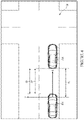
- FIG. 4 An example of this is shown in Figure 4 .
- the vehicle 10A is approaching an intersection, shown generally at 50, where a second vehicle 10B is stopped.
- the second vehicle 10B has an x-position and y-position relative to the vehicle 10A, which are detected by the object detection function 12, where the x-position and y-position are based on the same coordinate system as the roll angle 22, pitch angle 24, and the yaw angle 26.
- the x-position is shown by the distance 52, and the y-position in this example has a measurement of zero, because the second vehicle 10B is in front the vehicle 10A (and is not offset to the left or to the right of the vehicle 10A).
- the vehicle trajectory of the vehicle 10A is substantially straight, but the vehicle trajectory of the vehicle 10A could be different if the vehicle 10A were performing some other type of autonomous driving maneuver, such as a passing maneuver, or navigating a curve.
- the automatic braking function 16 sends a signal representing the deceleration request to the brake actuator module 18, and the brake actuator module 18 receives the deceleration request, and executes the deceleration request (i.e., actuates one or more braking units to decelerate the vehicle 10A) in order to avoid a collision. If there is a failure in the automatic braking function 16, a collision occurs when an object, such as the vehicle 10B, is at a location which intersects with the vehicle trajectory.
- the automatic braking system 10 of the present invention also includes a failure detection and correction function 28, which resides in the brake actuator module 18.
- the failure detection and correction function 28 is used to provide a braking function in case there is a failure in the automatic braking function 16.
- the object detection function 12 also sends position coordinates for the x-position and y-position for various objects, such as the second vehicle 10B, to the failure detection and correction function 28.
- the failure detection and correction function 28 calculates a desired stopping distance 56 (for the vehicle 10A).
- the failure detection and correction function 28 also calculates a second calculated distance, where the second calculated distance is the total distance of the x-position of the object (relative to the vehicle 10A) combined with half of the length of the vehicle 10A.
- the failure detection and correction function 28 then makes a determination if the second calculated distance is less than the desired stopping distance 56. If the second calculated distance is less than the desired stopping distance 56, deceleration of the vehicle 10A is therefore necessary. Once it is determined that deceleration of the vehicle 10A is necessary, the failure detection and correction function 28 then generates a desired deceleration, which is sent to the brake actuator module 18. The desired deceleration corresponds to the desired stopping distance 56.
- the brake actuator module 18 includes an algorithm which compares the deceleration request (received from the automatic braking function 16) with the desired deceleration (generated by the failure detection and correction function 28), and the brake actuator module 18 actuates one or more of the braking units to decelerate the vehicle 10A based on which of the deceleration request or the desired deceleration results in the vehicle 10A stopping within the shortest distance. If the automatic braking function 16 is functioning properly, the requested stopping distance 54 (corresponding to the deceleration request from the automatic braking function 16) and the desired stopping distance 56 (generated by the failure detection and correction function 28) should be similar.
- the deceleration corresponding to the shorter stopping distance is used to decelerate the vehicle 10A.
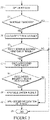
- FIG. 3 shows a functional flowchart of the operation of the failure detection and correction function 28.
- the Get Object Data step 32 involves obtaining the x-position and y-position coordinates of an object (such as the vehicle 10B) that is in proximity to the vehicle 10A.
- a determination is made as to whether the absolute value of distance of the y-position (of the object) multiplied by two is less than or equal to the width of the vehicle 10A.
- the purpose of step 34 is to determine if an object (such as the vehicle 10B) is in a location (either intersecting, or in close proximity to, the vehicle trajectory) such that deceleration of the vehicle 10A is necessary.
- the function 28 calculates the desired stopping distance 56 at step 36 (the requested stopping distance 54 is provided by the brake actuator module 18 based on information received from the automatic braking function 16), if not, the program ends at step 38 because no deceleration is necessary.
- the vehicle stopping distance calculation uses the equation for desired stopping distance 56 calculation:
- Pos X x ⁇ position of the object + vehicle length * 0.5
- the x-position is the distance 52 between the vehicles 10A,10B
- Pos X is the total combined length of the distance 52 and half of the length of the vehicle 10A.
- Desired deceleration V 2 ⁇ U 2 / 2 S
- the failure detection and correction function 28 After calculating desired deceleration at step 42, the failure detection and correction function 28 obtains the requested deceleration (based on the deceleration request) from the automatic braking function 16. At step 44, a comparison is made between the desired deceleration (which is calculated by the failure detection and correction function 28) and the requested deceleration received from the automatic braking function 16. If the requested deceleration from the automatic braking function 16 is greater than or equal to the desired deceleration, at step 46 the system 10 applies the deceleration request to decelerate the vehicle 10A. Otherwise, it is indicated that there is a failure in the automatic braking function 16, and the system 10 applies the calculated desired deceleration at step 48.
- the failure detection and correction function 28 is executed every 20 milliseconds, and is independent of the automatic braking function 16. The frequency of the execution of the failure detection and correction function 28 ensures that there is a fault in the automatic braking function 16 is detected as soon as possible.
Landscapes
- Engineering & Computer Science (AREA)
- Transportation (AREA)
- Mechanical Engineering (AREA)
- Regulating Braking Force (AREA)
Claims (15)
- Automatisches Bremssystem für ein Fahrzeug, umfassend:eine oder mehrere Bremseinheiten;ein Bremsbetätigungsmodul (18) zum Steuern der einen oder der mehreren Bremseinheiten;eine Objekterkennungsfunktion (12) in elektrischer Verbindung mit dem Bremsbetätigungsmodul, wobei die Objekterkennungsfunktion zum Erkennen mindestens eines Objekts in der Nähe des Fahrzeugs dient;eine automatische Bremsfunktion (16) in elektrischer Verbindung mit dem Bremsbetätigungsmodul (18), wobei die automatische Bremsfunktion (16) eine Verzögerungsanforderung zum Bestimmen eines Risikos von Kollision mit dem mindestens einen Objekt auf der Grundlage der Position des Fahrzeugs und der Fahrzeugtrajektorie erzeugt;gekennzeichnet durcheine Fehlererkennungs- und -korrekturfunktion (28) zum Berechnen einer gewünschten Verzögerung, wobei die Fehlererkennungs- und -korrekturfunktion (28) Teil des Bremsbetätigungsmoduls ist;wobei die Fehlererkennungs- und -korrekturfunktion die gewünschte Verzögerung mit der Verzögerungsanforderung vergleicht und das Fahrzeug in Abhängigkeit davon verzögert wird, welches von der gewünschten Verzögerung und der Verzögerungsanforderung dazu führt, dass das Fahrzeug innerhalb der kürzesten Strecke anhält.
- Automatisches Bremssystem für ein Fahrzeug nach Anspruch 1, wobei das System die Verzögerungsanforderung zum Verzögern des Fahrzeugs verwendet, wenn die Verzögerungsanforderung größer als oder gleich der gewünschten Verzögerung ist.
- Automatisches Bremssystem für ein Fahrzeug nach Anspruch 1, wobei die Position des Fahrzeugs auf einer Kombination aus Rollwinkel (22), Nickwinkel (24) und Gierwinkel (26) basiert.
- Automatisches Bremssystem für ein Fahrzeug nach Anspruch 1, ferner umfassend einen Fahrzeugdatenbereitsteller (14) in elektrischer Verbindung mit dem Bremsbetätigungsmodul (18) und der automatischen Bremsfunktion (16), wobei der Fahrzeugdatenbereitsteller (14) einen oder mehrere Betriebsparameter des Fahrzeugs erfasst.
- Automatisches Bremssystem für ein Fahrzeug nach Anspruch 4, ferner umfassend:einen gewünschten Anhalteweg;wobei der gewünschte Anhalteweg auf der Grundlage der vom Fahrzeugdatenbereitsteller (14) empfangenen Informationen bestimmt wird.
- Automatisches Bremssystem für ein Fahrzeug nach Anspruch 5, ferner umfassend:eine x-Position, die eine erste Koordinate darstellt, die einem ersten relativen Abstand zwischen dem mindestens einen Objekt und dem Fahrzeug entspricht; eine y-Position, die eine zweite Koordinate darstellt, die einem zweiten relativen Abstand zwischen dem mindestens einen Objekt und dem Fahrzeug entspricht;eine zweite berechnete Strecke;wobei die zweite berechnete Strecke der kombinierten Länge der x-Position und der halben Länge des Fahrzeugs entspricht.
- Automatisches Bremssystem für ein Fahrzeug nach Anspruch 6, wobei die gewünschte Verzögerung berechnet wird, wenn die zweite berechnete Strecke kleiner oder gleich dem gewünschten Anhalteweg ist.
- Automatisches Bremssystem für ein Fahrzeug nach Anspruch 4, wobei der eine oder die mehreren Betriebsparameter ferner mindestens einen der folgenden Parameter umfassen: Nickwinkel (24), Rollwinkel (22), Gierwinkel (26), Gierverschiebung, Gierrate, Geschwindigkeit, Beschleunigung, Raddrehzahl und Vorderradwinkel.
- Verfahren zum Erkennen eines Fehlers in einem automatischen Bremssystem für ein Fahrzeug, umfassend:Bereitstellen eines Bremsbetätigungsmoduls (18);Bereitstellen einer Objekterkennungsfunktion (12) in elektrischer Verbindung mit dem Bremsbetätigungsmodul;Bereitstellen einer automatischen Bremsfunktion (16), wobei das Bremsbetätigungsmodul die automatische Bremsfunktion aufweist;Bereitstellen einer Fehlererkennungs- und -korrekturfunktion (28), die Teil des Bremsbetätigungsmoduls ist;Erkennen (32) mindestens eines Objekts, das sich in der Nähe des Fahrzeugs befindet, unter Verwendung der Objekterkennungsfunktion;Bestimmen (34), ob das mindestens eine Objekt die Fahrzeugtrajektorie kreuzt;Erzeugen einer Verzögerungsanforderung für ein Risiko von Kollision mit dem mindestens einen Objekt auf der Grundlage der Position des Fahrzeugs und der Fahrzeugtrajektorie, wobei die Verzögerungsanforderung durch die automatische Bremsfunktion erzeugt wird;gekennzeichnet durchBerechnen (42) einer gewünschten Verzögerung, die von der Fehlererkennungsund -korrekturfunktion berechnet wird;Vergleichen (44) der gewünschten Verzögerung und derVerzögerungsanforderung; undVerzögern des Fahrzeugs basierend darauf, welches von der gewünschten Verzögerung und der angeforderten Verzögerung dazu führt, dass das Fahrzeug innerhalb der kürzesten Strecke anhält.
- Verfahren nach Anspruch 9, ferner umfassend die folgenden Schritte:Bereitstellen eines Fahrzeugdatenbereitstellers (14);Bereitstellen eines gewünschten Anhalteweges;Bestimmen des gewünschten Anhalteweges auf der Grundlage der vom Fahrzeugdatenbereitsteller empfangenen Informationen.
- Verfahren nach Anspruch 10, ferner umfassend die folgenden Schritte:Bereitstellen einer x-Position, die eine erste Koordinate darstellt, die einem ersten relativen Abstand zwischen dem mindestens einen Objekt und dem Fahrzeug entspricht;Bereitstellen einer y-Position, die eine zweite Koordinate darstellt, die einem zweiten relativen Abstand zwischen dem mindestens einen Objekt und dem Fahrzeug entspricht;Bereitstellen einer zweiten berechneten Strecke;Bestimmen der zweiten berechneten Strecke durch Kombinieren der Länge der x-Position und der halben Fahrzeuglänge.
- Verfahren nach Anspruch 11, ferner umfassend die folgenden Schritte:Bestimmen, ob die zweite berechnete Strecke kleiner oder gleich dem gewünschten Anhalteweg ist;Berechnen der gewünschten Verzögerung, wenn die zweite berechnete Strecke kleiner oder gleich dem gewünschten Anhalteweg ist.
- Verfahren nach Anspruch 12, ferner umfassend die Schritte des Erfassens eines oder mehrerer Betriebsparameter des Fahrzeugs unter Verwendung des Fahrzeugdatenbereitstellers.
- Verfahren nach Anspruch 13, ferner umfassend die Schritte des Bereitstellens des einen oder der mehreren Betriebsparameter, bei denen es sich um mindestens einen der folgenden Parameter handelt: Nickwinkel (24), Rollwinkel (22), Gierwinkel (26), Gierverschiebung, Gierrate, Geschwindigkeit, Beschleunigung, Raddrehzahl und Vorderradwinkel.
- Verfahren nach Anspruch 10, ferner umfassend die Schritte des Bereitstellens, dass der Fahrzeugdatenbereitsteller (14) in elektrischer Verbindung mit der automatischen Bremsfunktion (16) und dem Bremsbetätigungsmodul (18) steht.
Applications Claiming Priority (3)
| Application Number | Priority Date | Filing Date | Title |
|---|---|---|---|
| US201762560711P | 2017-09-20 | 2017-09-20 | |
| US16/131,000 US10730490B2 (en) | 2017-09-20 | 2018-09-13 | Method of detecting and correcting the failure of automatic braking system |
| PCT/US2018/051263 WO2019060231A1 (en) | 2017-09-20 | 2018-09-16 | METHOD FOR DETECTING AND CORRECTING FAILURE OF AUTOMATIC BRAKE SYSTEM |
Publications (2)
| Publication Number | Publication Date |
|---|---|
| EP3684658A1 EP3684658A1 (de) | 2020-07-29 |
| EP3684658B1 true EP3684658B1 (de) | 2022-12-14 |
Family
ID=65719843
Family Applications (1)
| Application Number | Title | Priority Date | Filing Date |
|---|---|---|---|
| EP18783607.7A Active EP3684658B1 (de) | 2017-09-20 | 2018-09-16 | Verfahren zur detektion und korrektur des ausfalls eines automatischen bremssystems |
Country Status (3)
| Country | Link |
|---|---|
| US (1) | US10730490B2 (de) |
| EP (1) | EP3684658B1 (de) |
| WO (1) | WO2019060231A1 (de) |
Families Citing this family (6)
| Publication number | Priority date | Publication date | Assignee | Title |
|---|---|---|---|---|
| CN111332270B (zh) * | 2020-02-27 | 2021-09-21 | 上海钧正网络科技有限公司 | 一种刹车性能判断方法、装置、介质、控制器及车辆 |
| CN111923893A (zh) * | 2020-07-09 | 2020-11-13 | 赛格威科技有限公司 | 一种制动系统故障检测系统及方法、车辆、存储介质 |
| CN112224029B (zh) * | 2020-10-15 | 2022-04-12 | 中车青岛四方车辆研究所有限公司 | 轨道车辆的电子机械制动系统的冗余控制方法 |
| WO2022197713A1 (en) * | 2021-03-15 | 2022-09-22 | Motional Ad Llc | Brake arbitration |
| CN117284308A (zh) * | 2022-06-17 | 2023-12-26 | 罗伯特·博世有限公司 | 用于车辆的舒适制动控制系统和控制方法 |
| US12522218B2 (en) * | 2022-07-08 | 2026-01-13 | Toyota Motor Engineering & Manufacturing North America, Inc. | Systems, methods, and vehicles for classifying driving behavior of a target vehicle |
Family Cites Families (10)
| Publication number | Priority date | Publication date | Assignee | Title |
|---|---|---|---|---|
| US5955945A (en) | 1995-07-10 | 1999-09-21 | Fuhrer; Kenneth | Fail safe system for providing warning signals upon the failure of motorcycle brake or tail lights |
| JP2001014596A (ja) * | 1999-04-30 | 2001-01-19 | Takata Corp | 車両衝突警報装置 |
| US6842684B1 (en) | 2003-09-17 | 2005-01-11 | General Motors Corporation | Methods and apparatus for controlling a brake system |
| US7393065B2 (en) | 2006-06-01 | 2008-07-01 | Lockheed Martin Corporation | Redundant braking system |
| US8639426B2 (en) * | 2010-07-15 | 2014-01-28 | George C Dedes | GPS/IMU/video/radar absolute/relative positioning communication/computation sensor platform for automotive safety applications |
| DE102011080789B4 (de) | 2010-08-10 | 2022-11-10 | Continental Automotive Technologies GmbH | Verfahren und System zur Regelung der Fahrstabilität |
| WO2013065089A1 (ja) * | 2011-11-02 | 2013-05-10 | トヨタ自動車株式会社 | 制動制御装置 |
| DE102013001228B4 (de) | 2013-01-25 | 2025-05-15 | Zf Cv Systems Europe Bv | Verfahren zum Ermitteln eines Auslösekriteriums für eine Bremsung und Notbremssystem für ein Fahrzeug |
| US9096199B2 (en) | 2013-10-09 | 2015-08-04 | Ford Global Technologies, Llc | Monitoring autonomous vehicle braking |
| DE102014224019A1 (de) | 2014-11-25 | 2016-05-25 | Bayerische Motoren Werke Aktiengesellschaft | Steuereinheit zur Ermittlung einer Steuergröße für ein Bremssystem eines Fahrzeugs |
-
2018
- 2018-09-13 US US16/131,000 patent/US10730490B2/en active Active
- 2018-09-16 WO PCT/US2018/051263 patent/WO2019060231A1/en not_active Ceased
- 2018-09-16 EP EP18783607.7A patent/EP3684658B1/de active Active
Also Published As
| Publication number | Publication date |
|---|---|
| EP3684658A1 (de) | 2020-07-29 |
| US20190084532A1 (en) | 2019-03-21 |
| US10730490B2 (en) | 2020-08-04 |
| WO2019060231A1 (en) | 2019-03-28 |
Similar Documents
| Publication | Publication Date | Title |
|---|---|---|
| EP3684658B1 (de) | Verfahren zur detektion und korrektur des ausfalls eines automatischen bremssystems | |
| US11396294B2 (en) | Driving control apparatus for vehicle | |
| US11433898B2 (en) | Driving control apparatus for vehicle | |
| JP6950546B2 (ja) | 車両の走行制御装置 | |
| CN102897169B (zh) | 通过差速制动的避免碰撞系统和方法 | |
| US9233692B2 (en) | Method to control a vehicle path during autonomous braking | |
| US8930060B1 (en) | Post-impact path assist for vehicles | |
| US11059462B2 (en) | Method and device for controlling a movement of a vehicle, and vehicle movement control system | |
| US10065637B2 (en) | Method for avoiding a collision of a vehicle with an object | |
| US9081387B2 (en) | Method and device for the prediction and adaptation of movement trajectories of motor vehicles | |
| US9633565B2 (en) | Active safety system and method for operating the same | |
| US8538674B2 (en) | Vehicle collision avoidance apparatus and method | |
| CN106103216B (zh) | 用于运行机动车的自主工作的行驶安全或驾驶员辅助系统的方法 | |
| US9037379B2 (en) | Apparatus and method for providing a crash prevention control functionality for a vehicle | |
| US12012112B2 (en) | Vehicle control system | |
| KR102118632B1 (ko) | 브레이크 적용의 작동 기준을 결정하기 위한 방법 및 그 방법을 수행하기 위한 비상 브레이크 시스템 | |
| US20180188735A1 (en) | Lane change system | |
| US20200255012A1 (en) | Driving Control Apparatus for Vehicle | |
| US20170341652A1 (en) | Vehicle Control System | |
| US9771055B1 (en) | Front impact mitigation system for a vehicle and method | |
| EP2712780A1 (de) | Verfahren und Vorrichtung zur Fahrunterstützung | |
| KR20170046483A (ko) | 자율 비상 제동 장치 및 방법 | |
| EP3597511A1 (de) | Verfahren und system zur bereitstellung einer lenkanleitung an einen fahrer eines host-fahrzeugs | |
| JP5899761B2 (ja) | 運転支援装置及び運転支援方法 | |
| KR20220082182A (ko) | 군집 주행 트레일러 차량의 추돌 회피 장치 및 방법 |
Legal Events
| Date | Code | Title | Description |
|---|---|---|---|
| STAA | Information on the status of an ep patent application or granted ep patent |
Free format text: STATUS: UNKNOWN |
|
| STAA | Information on the status of an ep patent application or granted ep patent |
Free format text: STATUS: THE INTERNATIONAL PUBLICATION HAS BEEN MADE |
|
| PUAI | Public reference made under article 153(3) epc to a published international application that has entered the european phase |
Free format text: ORIGINAL CODE: 0009012 |
|
| STAA | Information on the status of an ep patent application or granted ep patent |
Free format text: STATUS: REQUEST FOR EXAMINATION WAS MADE |
|
| 17P | Request for examination filed |
Effective date: 20200420 |
|
| AK | Designated contracting states |
Kind code of ref document: A1 Designated state(s): AL AT BE BG CH CY CZ DE DK EE ES FI FR GB GR HR HU IE IS IT LI LT LU LV MC MK MT NL NO PL PT RO RS SE SI SK SM TR |
|
| AX | Request for extension of the european patent |
Extension state: BA ME |
|
| RAP1 | Party data changed (applicant data changed or rights of an application transferred) |
Owner name: CONTINENTAL AUTOMOTIVE SYSTEMS, INC. |
|
| DAV | Request for validation of the european patent (deleted) | ||
| DAX | Request for extension of the european patent (deleted) | ||
| GRAP | Despatch of communication of intention to grant a patent |
Free format text: ORIGINAL CODE: EPIDOSNIGR1 |
|
| STAA | Information on the status of an ep patent application or granted ep patent |
Free format text: STATUS: GRANT OF PATENT IS INTENDED |
|
| INTG | Intention to grant announced |
Effective date: 20220706 |
|
| GRAS | Grant fee paid |
Free format text: ORIGINAL CODE: EPIDOSNIGR3 |
|
| GRAA | (expected) grant |
Free format text: ORIGINAL CODE: 0009210 |
|
| STAA | Information on the status of an ep patent application or granted ep patent |
Free format text: STATUS: THE PATENT HAS BEEN GRANTED |
|
| AK | Designated contracting states |
Kind code of ref document: B1 Designated state(s): AL AT BE BG CH CY CZ DE DK EE ES FI FR GB GR HR HU IE IS IT LI LT LU LV MC MK MT NL NO PL PT RO RS SE SI SK SM TR |
|
| REG | Reference to a national code |
Ref country code: GB Ref legal event code: FG4D |
|
| REG | Reference to a national code |
Ref country code: CH Ref legal event code: EP |
|
| REG | Reference to a national code |
Ref country code: DE Ref legal event code: R096 Ref document number: 602018044284 Country of ref document: DE |
|
| REG | Reference to a national code |
Ref country code: IE Ref legal event code: FG4D |
|
| REG | Reference to a national code |
Ref country code: AT Ref legal event code: REF Ref document number: 1537507 Country of ref document: AT Kind code of ref document: T Effective date: 20230115 |
|
| REG | Reference to a national code |
Ref country code: LT Ref legal event code: MG9D |
|
| REG | Reference to a national code |
Ref country code: NL Ref legal event code: MP Effective date: 20221214 |
|
| PG25 | Lapsed in a contracting state [announced via postgrant information from national office to epo] |
Ref country code: SE Free format text: LAPSE BECAUSE OF FAILURE TO SUBMIT A TRANSLATION OF THE DESCRIPTION OR TO PAY THE FEE WITHIN THE PRESCRIBED TIME-LIMIT Effective date: 20221214 Ref country code: NO Free format text: LAPSE BECAUSE OF FAILURE TO SUBMIT A TRANSLATION OF THE DESCRIPTION OR TO PAY THE FEE WITHIN THE PRESCRIBED TIME-LIMIT Effective date: 20230314 Ref country code: LT Free format text: LAPSE BECAUSE OF FAILURE TO SUBMIT A TRANSLATION OF THE DESCRIPTION OR TO PAY THE FEE WITHIN THE PRESCRIBED TIME-LIMIT Effective date: 20221214 Ref country code: FI Free format text: LAPSE BECAUSE OF FAILURE TO SUBMIT A TRANSLATION OF THE DESCRIPTION OR TO PAY THE FEE WITHIN THE PRESCRIBED TIME-LIMIT Effective date: 20221214 |
|
| REG | Reference to a national code |
Ref country code: AT Ref legal event code: MK05 Ref document number: 1537507 Country of ref document: AT Kind code of ref document: T Effective date: 20221214 |
|
| PG25 | Lapsed in a contracting state [announced via postgrant information from national office to epo] |
Ref country code: RS Free format text: LAPSE BECAUSE OF FAILURE TO SUBMIT A TRANSLATION OF THE DESCRIPTION OR TO PAY THE FEE WITHIN THE PRESCRIBED TIME-LIMIT Effective date: 20221214 Ref country code: LV Free format text: LAPSE BECAUSE OF FAILURE TO SUBMIT A TRANSLATION OF THE DESCRIPTION OR TO PAY THE FEE WITHIN THE PRESCRIBED TIME-LIMIT Effective date: 20221214 Ref country code: HR Free format text: LAPSE BECAUSE OF FAILURE TO SUBMIT A TRANSLATION OF THE DESCRIPTION OR TO PAY THE FEE WITHIN THE PRESCRIBED TIME-LIMIT Effective date: 20221214 Ref country code: GR Free format text: LAPSE BECAUSE OF FAILURE TO SUBMIT A TRANSLATION OF THE DESCRIPTION OR TO PAY THE FEE WITHIN THE PRESCRIBED TIME-LIMIT Effective date: 20230315 |
|
| PG25 | Lapsed in a contracting state [announced via postgrant information from national office to epo] |
Ref country code: NL Free format text: LAPSE BECAUSE OF FAILURE TO SUBMIT A TRANSLATION OF THE DESCRIPTION OR TO PAY THE FEE WITHIN THE PRESCRIBED TIME-LIMIT Effective date: 20221214 |
|
| PG25 | Lapsed in a contracting state [announced via postgrant information from national office to epo] |
Ref country code: SM Free format text: LAPSE BECAUSE OF FAILURE TO SUBMIT A TRANSLATION OF THE DESCRIPTION OR TO PAY THE FEE WITHIN THE PRESCRIBED TIME-LIMIT Effective date: 20221214 Ref country code: RO Free format text: LAPSE BECAUSE OF FAILURE TO SUBMIT A TRANSLATION OF THE DESCRIPTION OR TO PAY THE FEE WITHIN THE PRESCRIBED TIME-LIMIT Effective date: 20221214 Ref country code: PT Free format text: LAPSE BECAUSE OF FAILURE TO SUBMIT A TRANSLATION OF THE DESCRIPTION OR TO PAY THE FEE WITHIN THE PRESCRIBED TIME-LIMIT Effective date: 20230414 Ref country code: ES Free format text: LAPSE BECAUSE OF FAILURE TO SUBMIT A TRANSLATION OF THE DESCRIPTION OR TO PAY THE FEE WITHIN THE PRESCRIBED TIME-LIMIT Effective date: 20221214 Ref country code: EE Free format text: LAPSE BECAUSE OF FAILURE TO SUBMIT A TRANSLATION OF THE DESCRIPTION OR TO PAY THE FEE WITHIN THE PRESCRIBED TIME-LIMIT Effective date: 20221214 Ref country code: CZ Free format text: LAPSE BECAUSE OF FAILURE TO SUBMIT A TRANSLATION OF THE DESCRIPTION OR TO PAY THE FEE WITHIN THE PRESCRIBED TIME-LIMIT Effective date: 20221214 Ref country code: AT Free format text: LAPSE BECAUSE OF FAILURE TO SUBMIT A TRANSLATION OF THE DESCRIPTION OR TO PAY THE FEE WITHIN THE PRESCRIBED TIME-LIMIT Effective date: 20221214 |
|
| PG25 | Lapsed in a contracting state [announced via postgrant information from national office to epo] |
Ref country code: SK Free format text: LAPSE BECAUSE OF FAILURE TO SUBMIT A TRANSLATION OF THE DESCRIPTION OR TO PAY THE FEE WITHIN THE PRESCRIBED TIME-LIMIT Effective date: 20221214 Ref country code: PL Free format text: LAPSE BECAUSE OF FAILURE TO SUBMIT A TRANSLATION OF THE DESCRIPTION OR TO PAY THE FEE WITHIN THE PRESCRIBED TIME-LIMIT Effective date: 20221214 Ref country code: IS Free format text: LAPSE BECAUSE OF FAILURE TO SUBMIT A TRANSLATION OF THE DESCRIPTION OR TO PAY THE FEE WITHIN THE PRESCRIBED TIME-LIMIT Effective date: 20230414 Ref country code: AL Free format text: LAPSE BECAUSE OF FAILURE TO SUBMIT A TRANSLATION OF THE DESCRIPTION OR TO PAY THE FEE WITHIN THE PRESCRIBED TIME-LIMIT Effective date: 20221214 |
|
| REG | Reference to a national code |
Ref country code: DE Ref legal event code: R097 Ref document number: 602018044284 Country of ref document: DE |
|
| PLBE | No opposition filed within time limit |
Free format text: ORIGINAL CODE: 0009261 |
|
| STAA | Information on the status of an ep patent application or granted ep patent |
Free format text: STATUS: NO OPPOSITION FILED WITHIN TIME LIMIT |
|
| PG25 | Lapsed in a contracting state [announced via postgrant information from national office to epo] |
Ref country code: DK Free format text: LAPSE BECAUSE OF FAILURE TO SUBMIT A TRANSLATION OF THE DESCRIPTION OR TO PAY THE FEE WITHIN THE PRESCRIBED TIME-LIMIT Effective date: 20221214 |
|
| 26N | No opposition filed |
Effective date: 20230915 |
|
| PG25 | Lapsed in a contracting state [announced via postgrant information from national office to epo] |
Ref country code: SI Free format text: LAPSE BECAUSE OF FAILURE TO SUBMIT A TRANSLATION OF THE DESCRIPTION OR TO PAY THE FEE WITHIN THE PRESCRIBED TIME-LIMIT Effective date: 20221214 |
|
| REG | Reference to a national code |
Ref country code: CH Ref legal event code: PL |
|
| PG25 | Lapsed in a contracting state [announced via postgrant information from national office to epo] |
Ref country code: LU Free format text: LAPSE BECAUSE OF NON-PAYMENT OF DUE FEES Effective date: 20230916 |
|
| REG | Reference to a national code |
Ref country code: BE Ref legal event code: MM Effective date: 20230930 |
|
| GBPC | Gb: european patent ceased through non-payment of renewal fee |
Effective date: 20230916 |
|
| PG25 | Lapsed in a contracting state [announced via postgrant information from national office to epo] |
Ref country code: MC Free format text: LAPSE BECAUSE OF FAILURE TO SUBMIT A TRANSLATION OF THE DESCRIPTION OR TO PAY THE FEE WITHIN THE PRESCRIBED TIME-LIMIT Effective date: 20221214 Ref country code: LU Free format text: LAPSE BECAUSE OF NON-PAYMENT OF DUE FEES Effective date: 20230916 Ref country code: IT Free format text: LAPSE BECAUSE OF FAILURE TO SUBMIT A TRANSLATION OF THE DESCRIPTION OR TO PAY THE FEE WITHIN THE PRESCRIBED TIME-LIMIT Effective date: 20221214 |
|
| REG | Reference to a national code |
Ref country code: IE Ref legal event code: MM4A |
|
| PG25 | Lapsed in a contracting state [announced via postgrant information from national office to epo] |
Ref country code: IE Free format text: LAPSE BECAUSE OF NON-PAYMENT OF DUE FEES Effective date: 20230916 |
|
| PG25 | Lapsed in a contracting state [announced via postgrant information from national office to epo] |
Ref country code: GB Free format text: LAPSE BECAUSE OF NON-PAYMENT OF DUE FEES Effective date: 20230916 |
|
| PG25 | Lapsed in a contracting state [announced via postgrant information from national office to epo] |
Ref country code: CH Free format text: LAPSE BECAUSE OF NON-PAYMENT OF DUE FEES Effective date: 20230930 |
|
| PG25 | Lapsed in a contracting state [announced via postgrant information from national office to epo] |
Ref country code: IE Free format text: LAPSE BECAUSE OF NON-PAYMENT OF DUE FEES Effective date: 20230916 Ref country code: GB Free format text: LAPSE BECAUSE OF NON-PAYMENT OF DUE FEES Effective date: 20230916 Ref country code: CH Free format text: LAPSE BECAUSE OF NON-PAYMENT OF DUE FEES Effective date: 20230930 |
|
| PG25 | Lapsed in a contracting state [announced via postgrant information from national office to epo] |
Ref country code: BE Free format text: LAPSE BECAUSE OF NON-PAYMENT OF DUE FEES Effective date: 20230930 |
|
| PG25 | Lapsed in a contracting state [announced via postgrant information from national office to epo] |
Ref country code: BG Free format text: LAPSE BECAUSE OF FAILURE TO SUBMIT A TRANSLATION OF THE DESCRIPTION OR TO PAY THE FEE WITHIN THE PRESCRIBED TIME-LIMIT Effective date: 20221214 |
|
| PG25 | Lapsed in a contracting state [announced via postgrant information from national office to epo] |
Ref country code: BG Free format text: LAPSE BECAUSE OF FAILURE TO SUBMIT A TRANSLATION OF THE DESCRIPTION OR TO PAY THE FEE WITHIN THE PRESCRIBED TIME-LIMIT Effective date: 20221214 |
|
| PG25 | Lapsed in a contracting state [announced via postgrant information from national office to epo] |
Ref country code: CY Free format text: LAPSE BECAUSE OF FAILURE TO SUBMIT A TRANSLATION OF THE DESCRIPTION OR TO PAY THE FEE WITHIN THE PRESCRIBED TIME-LIMIT; INVALID AB INITIO Effective date: 20180916 |
|
| PG25 | Lapsed in a contracting state [announced via postgrant information from national office to epo] |
Ref country code: HU Free format text: LAPSE BECAUSE OF FAILURE TO SUBMIT A TRANSLATION OF THE DESCRIPTION OR TO PAY THE FEE WITHIN THE PRESCRIBED TIME-LIMIT; INVALID AB INITIO Effective date: 20180916 |
|
| PGFP | Annual fee paid to national office [announced via postgrant information from national office to epo] |
Ref country code: DE Payment date: 20250930 Year of fee payment: 8 |
|
| PGFP | Annual fee paid to national office [announced via postgrant information from national office to epo] |
Ref country code: FR Payment date: 20250922 Year of fee payment: 8 |
|
| PG25 | Lapsed in a contracting state [announced via postgrant information from national office to epo] |
Ref country code: TR Free format text: LAPSE BECAUSE OF FAILURE TO SUBMIT A TRANSLATION OF THE DESCRIPTION OR TO PAY THE FEE WITHIN THE PRESCRIBED TIME-LIMIT Effective date: 20221214 |