EP3680357A1 - Boron-doped high-entropy alloy and manufacturing method therefor - Google Patents
Boron-doped high-entropy alloy and manufacturing method therefor Download PDFInfo
- Publication number
- EP3680357A1 EP3680357A1 EP17913104.0A EP17913104A EP3680357A1 EP 3680357 A1 EP3680357 A1 EP 3680357A1 EP 17913104 A EP17913104 A EP 17913104A EP 3680357 A1 EP3680357 A1 EP 3680357A1
- Authority
- EP
- European Patent Office
- Prior art keywords
- boron
- alloy
- high entropy
- entropy alloy
- doped
- Prior art date
- Legal status (The legal status is an assumption and is not a legal conclusion. Google has not performed a legal analysis and makes no representation as to the accuracy of the status listed.)
- Withdrawn
Links
Images


Classifications
-
- C—CHEMISTRY; METALLURGY
- C22—METALLURGY; FERROUS OR NON-FERROUS ALLOYS; TREATMENT OF ALLOYS OR NON-FERROUS METALS
- C22C—ALLOYS
- C22C30/00—Alloys containing less than 50% by weight of each constituent
- C22C30/02—Alloys containing less than 50% by weight of each constituent containing copper
-
- C—CHEMISTRY; METALLURGY
- C22—METALLURGY; FERROUS OR NON-FERROUS ALLOYS; TREATMENT OF ALLOYS OR NON-FERROUS METALS
- C22C—ALLOYS
- C22C30/00—Alloys containing less than 50% by weight of each constituent
-
- C—CHEMISTRY; METALLURGY
- C22—METALLURGY; FERROUS OR NON-FERROUS ALLOYS; TREATMENT OF ALLOYS OR NON-FERROUS METALS
- C22F—CHANGING THE PHYSICAL STRUCTURE OF NON-FERROUS METALS AND NON-FERROUS ALLOYS
- C22F1/00—Changing the physical structure of non-ferrous metals or alloys by heat treatment or by hot or cold working
-
- C—CHEMISTRY; METALLURGY
- C22—METALLURGY; FERROUS OR NON-FERROUS ALLOYS; TREATMENT OF ALLOYS OR NON-FERROUS METALS
- C22C—ALLOYS
- C22C2202/00—Physical properties
Definitions
- the present invention relates to a method for improving the mechanical properties at room temperature of a high entropy alloy through boron doping, and a high entropy alloy doped with boron with improved mechanical properties at room temperature while maintaining intrinsic properties of the entropy alloy by adding boron which improves the cohesive strength of grain boundary.
- the traditional alloy design which has been ongoing for a long time, is designed to a direction to improve the physical properties of materials by adding a small amount of heteroatoms based on one or two main metal elements.
- Commercial alloys such as steel, nickel alloys, titanium alloys and aluminum alloys are representative examples.
- the newly developed high-entropy alloy in contrast to the existing alloy design, is an alloy consisting of multi-component main elements that alloy five or more constituent elements at the composition of atoms having the same or similar ratio but without a main element.
- This is a metal material that forms a single phase structure such as face-centered cubic (FCC) or body-centered cubic (BCC) without forming an intermetallic compound or an intermediate phase, by increasing the mixed entropy in the alloy through the substitutional type properties of the multiatom.
- These entropy alloys should constitute of a mixture of at least five elements, and each alloy constituent element should contain a composition ratio of 5 to 35 at%. If an alloy element other than the main element is added, the addition amount should be 5 at% or less.
- the FCC-based high entropy alloy exhibits excellent mechanical properties
- the Fe-Mn-Cr-Co-Ni-based high entropy alloy which has attracted attention as a material appliable as a structure material in an extreme environment by having excellent cryogenic properties which have not be seen in conventional structure materials due to the expression of mechanical twinned crystal between cryogenic deformations, high fracture toughness and corrosion resistance.
- the formation of mechanical twinned crystal is not active so that it exhibits very low mechanical properties compared to commercial structure materials.
- the high entropy alloy also exhibits the low yield strength which is the limit of FCC-based metals, so that limiting the application range as structure materials and having a limitation in replacing conventional commercial materials.
- An object of the present invention to provide a high entropy alloy which realizes a high yield strength and excellent mechanical properties at room temperature while maintaining the properties exhibited by the high entropy alloy by adding a trace amount of boron, which is an interstitial element, to the conventional FCC-based high entropy alloy.
- a high entropy alloy doped with boron comprises four or more metals selected from iron (Fe), chromium (Cr), nickel (Ni), cobalt (Co), manganese (Mn), molybdenum (Mo), aluminum (Al) and copper (Cu), and boron (B) and has single phase FCC structure.
- the content of the four or more metals may be 5 to 35 at% respectively, and the content of boron (B) may be 3 at% or less (0 is not included).
- the alloy may comprise 18 to 42 % of iron (Fe), 18 to 42 % of manganese (Mn), 9 to 22 % of chromium (Cr), 9 to 22 % of cobalt (Co), 9 to 22 % of nickel (Ni) and 0.001 to 0.01 % of boron (B) on the basis of weight%.
- the alloy may comprise 18 to 42 % of iron (Fe), 18 to 42 % of manganese (Mn), 9 to 22 % of chromium (Cr), 9 to 22 % of cobalt (Co) and 0.001 to 0.01 % of boron (B) on the basis of weight%.
- the alloy may comprise 0.004 to 0.005 % of boron (B).
- the alloy may comprise boron (B) segregated in grain boundary.
- the maximum concentration of the boron (B) segregated in the grain boundary may be 0.20 at%
- the boron (B) segregated in the grain boundary may be 95 % or more of the total boron (B).
- the average grain size of the alloy may be 60 ⁇ m or less.
- the yield strength of the alloy may be 450 MPa or more.
- a method for manufacturing a high entropy alloy doped with boron comprises preparing a raw material of four or more metals selected from iron (Fe), chromium (Cr), nickel (Ni), cobalt (Co), manganese (Mn), molybdenum (Mo), aluminum (Al) and copper (Cu), and a raw material of boron (B); dissolving the raw materials to cast an ingot; cold-rolling the ingot to produce an alloy material; and annealing the alloy material; wherein the alloy material has a single phase FCC structure.
- the steps of homogenization heat treating the ingot; and removing oxides generated on the surface of the ingot; after the step of casting the ingot may be further comprised.
- the annealing temperature may be 650 to 1100 °C.
- the step of forming mechanical twinned crystal by deformation of the alloy material; after the step of annealing the alloy material may be further comprised.
- the high entropy alloy doped with boron according to the present invention suppresses growth of grain boundary and improves cohesive strength by adding a trace amount of boron which is an interstitial element to segregates into a grain boundary.
- a portion of a layer, film, region, plate, etc. when referred to as being “on” or “above” another portion, it includes not only the case where it is “directly on” another part but also the case where there is another part in the middle. Conversely, when a part is “directly on” another part, it means that there is no other part in the middle.
- the reference portion is located above or below the reference portion and does not necessarily mean “on” or "above” toward the opposite direction of gravity.
- a high entropy alloy doped with boron comprises four or more metals selected from iron (Fe), chromium (Cr), nickel (Ni), cobalt (Co), manganese (Mn), molybdenum (Mo), aluminum (Al) and copper (Cu), and boron (B) and has single phase FCC structure.
- the content of the four or more metals may be 5 to 35 at% respectively, and the content of boron (B) may be 3 at% or less (0 is not included),
- the high entropy alloy has excellent mechanical properties in a cryogenic environment. On the other hand, it was studied to improve low yield strength and mechanical properties at room temperature which are pointed out as limit of high entropy alloy.
- composition of high entropy alloy doped with boron there is no particular limitation on the composition of high entropy alloy doped with boron according to the present invention.
- it comprises four or more metals selected from iron (Fe), chromium (Cr), nickel (Ni), cobalt (Co), manganese (Mn), molybdenum (Mo), aluminum (Al) and copper (Cu), wherein content of metal is from 5 to 35 at% respectively, so it may be the composition of atoms having the same or similar ratio.
- metals selected from iron (Fe), chromium (Cr), nickel (Ni), cobalt (Co), manganese (Mn), molybdenum (Mo), aluminum (Al) and copper (Cu), wherein content of metal is from 5 to 35 at% respectively, so it may be the composition of atoms having the same or similar ratio.
- this may be a alloy forming FCC structure without forming an intermetallic compound or an intermediate phase, by increasing the mixed entropy in the alloy through the substitutional type properties of the metal elements.
- Boron is added to alloys and it serves to improve grain boundary cohesion stress and grain growth resistance. Boron may be added at 3 at% or less. Accordingly, the grains become refiner and the low yield strength and insufficient mechanical properties at room temperature of the conventional high entropy alloy may be improved.
- the high entropy alloy doped with boron may comprises 18 to 42 % of iron (Fe), 18 to 42 % of manganese (Mn), 9 to 22 % of chromium (Cr), 9 to 22 % of cobalt (Co), 9 to 22 % of nickel (Ni) and 0.001 to 0.01 % of boron (B) on the basis of wt% and it may be expressed as the following composition formula 1.
- Composition Formula 1 Fe 18-42 Mn 18-42 Cr 9-22 Co 9-22 Ni 9-22 B 0.001-0.01 (wt%)
- the high entropy alloy doped with boron may comprises 18 to 42 % of iron (Fe), 18 to 42 % of manganese (Mn), 9 to 22 % of chromium (Cr), 9 to 22 % of cobalt (Co), and 0.001 to 0.01 % of boron (B) on the basis of wt% and it may be expressed as the following composition formula 2.
- Composition Formula 2 Fe 18-42 Mn 18 - 42 Cr 9-22 Co 9-22 B 0.001-0.01 (wt%)
- composition formula 1 As in the composition formula 1 and the composition formula 2, 0.001 to 0.01% of boron may be added.
- 0.004 to 0.005% of boron may be added in order to prevent the formation of the boron compound as much as possible and to maximize the grain refining effect.
- the high entropy alloy doped with boron according to the present invention may comprise boron segregated in grain boundary.
- Boron is segregated into grain boundary by the addition of boron, which is an interstitial element, to suppress growth of grain boundary and improve cohesion strength.
- the concentration of boron in the grain boundary between the FCC grains and the FCC grains may be 0.20 at% maximum.
- boron (B) segregated in the grain boundary may be 95 % or more of the total boron.
- the boron concentration of FCC grains may be confirmed to be 0.075 at% maximum. More than 95% of the boron added is concentrated in the grain boundary to suppress the growth of the grains.
- the average grain size of the high entropy alloy doped with boron according to the present invention by addition of boron may be 60 ⁇ m or less. Specifically, it may be 8 ⁇ m or less, and more specifically may be 4 ⁇ m or less. As mentioned above, excellent yield strength and mechanical properties at room temperature may be expected as the grain becomes refiner.
- the yield strength of the high entropy alloy doped with boron according to the present invention may be 440 MPa or more. Specifically, it may be 650 MPa or more.
- a method for manufacturing a high entropy alloy doped with boron comprises preparing a raw material of four or more metals selected from iron (Fe), chromium (Cr), nickel (Ni), cobalt (Co), manganese (Mn), molybdenum (Mo), aluminum (Al) and copper (Cu), and a raw material of boron (B), dissolving the raw materials to cast an ingot, cold-rolling the ingot to produce an alloy material, and annealing the alloy material.
- a raw material of four or more metals selected from, iron (Fe), chromium (Cr), nickel (Ni), cobalt (Co), manganese (Mn), molybdenum (Mo), Aluminum (Al) and copper (Cu) having a purity of 99.9% or more are prepared, and then boron (B) raw materials are prepared, and then it may be weighed so as to have a mixing ratio single phase FCC structure.
- the raw materials prepared are charged into the crucible, and then melted by heating at 1400 to 1800 °C, and then the ingot may cast using the mold.
- the ingot is cold-rolled so as to have a reduction ratio of 50 to 80% to produce an alloy material, and the alloy material produced through cold rolling be annealed.
- boron is preferentially segregated in grain boundary having high energy, so that the yield strength and the room temperature mechanical properties may be improved.
- the annealing temperature may be a temperature of 650 to 1100 °C. Specifically, it may be a temperature of 700 to 800 °C.
- the annealing time may be 10 to 100 minutes.
- It may include a step of homogenizing heat treating the ingot and a step of removing oxides generated on the surface of the ingot after the step of casting the ingot.
- the ingot from which the oxide has been removed may be subjected to homogenizing heat treating at a temperature of 1000 to 1200 °C for 4 to 8 hours to homogenize the structure.
- the oxide formed on the surface of the ingot may be removed by grinding the surface of the cast ingot.
- step of forming mechanical twinned crystal by deformation of the alloy material after the step of annealing the alloy material may be further comprised.
- the alloy material may be intentionally deformed or may be deformed naturally in the environment of use after application to the product. It does not depend on the method of transformation. Despite the addition of boron, it is possible to maintain the characteristics of the FCC-based high entropy alloy having the expression of mechanical twinned crystal as the main enhancement mechanism.
- Raw material of iron (Fe), manganese (Mn), chromium (Cr), cobalt (Co), nickel (Ni) and boron (B) having a purity of 99.9% or more was prepared so as to have the mixing ratio shown in Table 1 below.
- the metal prepared as above was charged into a crucible and then melted by heating at 1550 °C, a plurality of ingots which are rectangular parallelepiped shapes having a thickness of 7.8 mm, 150 g, a width of 33 mm, and a length of 80 mm, were cast using a mold.
- the surface of the cast ingot was subjected to surface grinding to remove the oxide generated on the surface, and the thickness of the ground ingot became 7 mm.
- the ingot which had been subjected to surface grinding and has a thickness of 7 mm was subjected to homogenizing heat treatment at a temperature of 1100 °C for 6 hours, followed by cold rolling from a thickness of 7 mm to 1.5 mm to prepare a plurality of alloy plates (specimens 1 to 7 of Example 1).
- each alloy sheet was subjected to annealing under the conditions shown in Table 2 below.
- Raw material of iron (Fe), manganese (Mn), chromium (Cr), cobalt (Co), and boron (B) having a purity of 99.9% or more was prepared so as to have the mixing ratio shown in Table 1 below.
- the metal prepared as above was charged into a crucible and then melted by heating at 1550 °C, a ingot which is a rectangular parallelepiped shape having a thickness of 7.8 mm, 150 g, a width of 33 mm, and a length of 80 mm, was cast using a mold.
- the surface of the cast ingot was subjected to surface grinding to remove the oxide generated on the surface, and the thickness of the ground ingot became 7 mm.
- the ingot which had been subjected to surface grinding and has a thickness of 7 mm was subjected to homogenizing heat treatment at a temperature of 1100 °C for 6 hours, followed by cold rolling from a thickness of 7 mm to 1.5 mm to prepare an alloy plate.
- the alloy sheet material was subjected to annealing at 800 °C for 60 minutes.
- Raw material of iron (Fe), manganese (Mn), chromium (Cr), cobalt (Co), nickel (Ni), and boron (B) having a purity of 99.9% or more was prepared so as to have the mixing ratio shown in Table 1 below.
- Raw material of iron (Fe), manganese (Mn), chromium (Cr), cobalt (Co), nickel (Ni), and boron (B) having a purity of 99.9% or more was prepared so as to have the mixing ratio shown in Table 1 below.
- Raw material of iron (Fe), manganese (Mn), chromium (Cr), cobalt (Co), and nickel (Ni) having a purity of 99.9% or more was prepared so as to have the mixing ratio shown in Table 1 below.
- each alloy sheet was subjected to annealing under the conditions shown in Table 2 below.
- Raw material of iron (Fe), manganese (Mn), chromium (Cr), and cobalt (Co) having a purity of 99.9% or more was prepared so as to have the mixing ratio shown in Table 1 below.
- Example 2 Thereafter, the alloy plate was prepared in the same manner as in Example 2.
- Example 1 19.915 19.591 18.542 21.016 20.931 0.005
- Example 2 40.318 39.663 9.381 10.633 - 0.004
- Example 3 19.914 19.59 18.541 21.015 20.93 0.02
- Example 4 19.91 19.586 18.537 21.011 20.926 0.03
- Comparative Example 1 19.916 19.592 18.543 21.017 20.932 - Comparative Example 2 40.317 39.662 9.385 10.637 - -
- Table 2 Classification Annealing conditions Species Specimen No.
- FIG. 1 shows grain size changes with annealing temperature through electron backscatter diffraction (EBSD) analysis of alloys of specimens 1 to 7 of Example 1 and specimens 1 to 7 of Comparative Example 1 which are subjected to annealing.
- EBSD electron backscatter diffraction
- Example 1 the grain size grows as the annealing temperature increases, in the case of Example 1, however, since boron is further added, the grain size is relatively small as compared with Comparative Example 1. In addition, it can be seen that the difference in grain size between Example 1 and Comparative Example 1 is gradually increased as annealing temperature is increased.
- FIG. 2 shows the result of the atomic probe spectroscopy analysis of the annealed Example 2.
- Atomic probe spectroscopy analysis is a method to identify atomic images by element, which is a method to analyze atomic distribution through ionization of material and detection using electric field by applying electrical pulses to atomic probe samples ( ⁇ 50 nm) manufactured in conical shape.
- iron (Fe), manganese (Mn), chromium (Cr), cobalt (Co), and nickel (Ni) are randomly distributed uniformly over the whole area, while it can be seen that the boron added of 0.004 wt% is segregated in a specific region, and this region corresponds to grain boundary.
- boron is preferentially segregated in the grain boundary having a relatively higher energy than the matrix in the annealing.
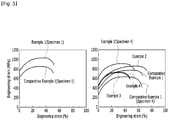
- Fig. 3 and Table 3 show the results of the room temperature tensile test of the specimens 1 and 4 of Example 1, Example 2, the specimens 1 and 4 of Comparative Example 1, and Comparative Example 2, respectively.
- the specimen 4 of Example 1, Example 2, Example 3, Example 4, the specimen 4 of Comparative Example 1 and Comparative Example 2 of the high entropy alloy doped with boron according to the present invention are which are all subjected to annealing at 800 °C and the specimen 4 of Comparative Example 1 In Example 2, the annealing was carried out at 800 °C so when comparing the physical properties, the tensile strength of the examples were improved compared to the specimens 1 and 4 of Comparative Example 1 and Comparative Example 2 in which boron was not added, showing excellent mechanical properties.
- Example 3 and Example 4 Comparing the specimen 4 of Example 1 and Example 2 in which boron is added to 0.01 % or less with Example 3 and Example 4 in which boron is added in excess of 0.01%, it has been confirmed that in Example 3 and Example 4, the boron is added in excess to lower all of the yield strength, the tensile strength and the elongation, thereby deteriorating the mechanical properties.
- the method of adding boron, which is an interstitial element, to the optimum range as a means for solving the low yield strength of the FCC-based high entropy alloy is more effective as an improving method for mechanical properties than other means.
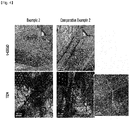
- FIG. 4 shows the transmission-electron backscatter diffraction (t-EBSD) analysis results of the expression of mechanical twinned crystal during tensile deformation of the high entropy alloys according to Example 2 and Comparative Example 2.
- the mechanical properties at room temperature is further improved due to boron segregated in grain boundary while retaining the properties of FCC-based high entropy alloys having the expression of mechanical twinned crystal as the main enhancement mechanism.
- the present invention is not limited to the above-mentioned embodiments and/or examples and may be manufactured in various forms, those who have ordinary knowledge of the technical field to which the present invention belongs may understand that it may be carried out in different and concrete forms without changing the technical idea or fundamental feature of the present invention. Therefore, the aforementioned embodiments and/or examples are exemplary in all the ways but not limited thereto.
Landscapes
- Chemical & Material Sciences (AREA)
- Engineering & Computer Science (AREA)
- Materials Engineering (AREA)
- Mechanical Engineering (AREA)
- Metallurgy (AREA)
- Organic Chemistry (AREA)
- Physics & Mathematics (AREA)
- Thermal Sciences (AREA)
- Crystallography & Structural Chemistry (AREA)
- Heat Treatment Of Steel (AREA)
Abstract
Description
- The present invention relates to a method for improving the mechanical properties at room temperature of a high entropy alloy through boron doping, and a high entropy alloy doped with boron with improved mechanical properties at room temperature while maintaining intrinsic properties of the entropy alloy by adding boron which improves the cohesive strength of grain boundary.
- The traditional alloy design, which has been ongoing for a long time, is designed to a direction to improve the physical properties of materials by adding a small amount of heteroatoms based on one or two main metal elements. Commercial alloys such as steel, nickel alloys, titanium alloys and aluminum alloys are representative examples.
- However, the newly developed high-entropy alloy (HEA), in contrast to the existing alloy design, is an alloy consisting of multi-component main elements that alloy five or more constituent elements at the composition of atoms having the same or similar ratio but without a main element. This is a metal material that forms a single phase structure such as face-centered cubic (FCC) or body-centered cubic (BCC) without forming an intermetallic compound or an intermediate phase, by increasing the mixed entropy in the alloy through the substitutional type properties of the multiatom.
- These entropy alloys should constitute of a mixture of at least five elements, and each alloy constituent element should contain a composition ratio of 5 to 35 at%. If an alloy element other than the main element is added, the addition amount should be 5 at% or less.
- Among the high entropy alloys designed through the above definition, the FCC-based high entropy alloy exhibits excellent mechanical properties, and the Fe-Mn-Cr-Co-Ni-based high entropy alloy, which has attracted attention as a material appliable as a structure material in an extreme environment by having excellent cryogenic properties which have not be seen in conventional structure materials due to the expression of mechanical twinned crystal between cryogenic deformations, high fracture toughness and corrosion resistance.
- However, at room temperature, unlike cryogenic temperatures, the formation of mechanical twinned crystal is not active so that it exhibits very low mechanical properties compared to commercial structure materials. In addition, considering the yield strength, which is one of important factors in the application of structure materials, the high entropy alloy also exhibits the low yield strength which is the limit of FCC-based metals, so that limiting the application range as structure materials and having a limitation in replacing conventional commercial materials.
- There have been many studies to solve this problem, and among them, there is a method of improving the mechanical properties by adding a trace amount of a heteroatom other than the main element to the high entropy alloy to form a precipitate in the material.
- As the content of boron in the Cu-Co-Ni-Cr-Al0.5-Fe based high entropy alloy was varied from 3.5 to 15.4 at%, the amount of boride precipitation was increased to improve the hardness and compressive yield strength but it showed a limitation with low ductility and toughness due to formation of boride.
- Therefore, it is essential to increase the yield strength and simultaneously to secure excellent mechanical properties at room temperature while maintaining the properties to be shown by existing high entropy alloys for application as structure materials in various fields of high entropy alloys.
- An object of the present invention to provide a high entropy alloy which realizes a high yield strength and excellent mechanical properties at room temperature while maintaining the properties exhibited by the high entropy alloy by adding a trace amount of boron, which is an interstitial element, to the conventional FCC-based high entropy alloy.
- A high entropy alloy doped with boron according to the present invention, comprises four or more metals selected from iron (Fe), chromium (Cr), nickel (Ni), cobalt (Co), manganese (Mn), molybdenum (Mo), aluminum (Al) and copper (Cu), and boron (B) and has single phase FCC structure.
- The content of the four or more metals may be 5 to 35 at% respectively, and the content of boron (B) may be 3 at% or less (0 is not included).
- The alloy may comprise 18 to 42 % of iron (Fe), 18 to 42 % of manganese (Mn), 9 to 22 % of chromium (Cr), 9 to 22 % of cobalt (Co), 9 to 22 % of nickel (Ni) and 0.001 to 0.01 % of boron (B) on the basis of weight%.
- The alloy may comprise 18 to 42 % of iron (Fe), 18 to 42 % of manganese (Mn), 9 to 22 % of chromium (Cr), 9 to 22 % of cobalt (Co) and 0.001 to 0.01 % of boron (B) on the basis of weight%.
- The alloy may comprise 0.004 to 0.005 % of boron (B).
- The alloy may comprise boron (B) segregated in grain boundary.
- The maximum concentration of the boron (B) segregated in the grain boundary may be 0.20 at%
- The boron (B) segregated in the grain boundary may be 95 % or more of the total boron (B).
- The average grain size of the alloy may be 60 µm or less.
- The yield strength of the alloy may be 450 MPa or more.
- A method for manufacturing a high entropy alloy doped with boron according to the present invention, comprises preparing a raw material of four or more metals selected from iron (Fe), chromium (Cr), nickel (Ni), cobalt (Co), manganese (Mn), molybdenum (Mo), aluminum (Al) and copper (Cu), and a raw material of boron (B); dissolving the raw materials to cast an ingot; cold-rolling the ingot to produce an alloy material; and annealing the alloy material; wherein the alloy material has a single phase FCC structure.
- The steps of homogenization heat treating the ingot; and removing oxides generated on the surface of the ingot; after the step of casting the ingot may be further comprised.
- In the step of annealing the alloy material, the annealing temperature may be 650 to 1100 °C.
- The step of forming mechanical twinned crystal by deformation of the alloy material; after the step of annealing the alloy material may be further comprised.
- The high entropy alloy doped with boron according to the present invention suppresses growth of grain boundary and improves cohesive strength by adding a trace amount of boron which is an interstitial element to segregates into a grain boundary.
- In addition, it does not affect the formation of mechanical twinned crystal, which is the main strengthening mechanism of FCC-based high entropy alloys, and thus has excellent properties of high elongation while obtaining high yield strength and tensile strength.
-
-
Fig. 1 is a graph showing changes in average grain size when annealing is performed forspecimens 1 to 7 of Example 1 andSpecimens 1 to 7 of Comparative Example 1 at different temperature conditions. -
Fig. 2 shows boron segregated in grain boundary by atomic probe spectroscopy analysis according to Example 2. -
Fig. 3 is a graph showing tensile properties at room temperature in Examples and Comparative Examples. -
Fig. 4 shows ESBD analysis results on whether mechanical twinned crystal is formed after tensile deformation of Example 2 and Comparative Example 2. - Hereinafter, some embodiments of the present invention will be described in detail with reference to the accompanying drawings so that those people who are having ordinary knowledge will easily carry out. The present invention may be implemented in several different forms and is not limited to the embodiments described herein.
- In order to clearly illustrate the present invention, parts that are not related to the description are omitted, and the same or similar components are denoted by the same reference numerals throughout the description.
- In addition, the size and thickness of each component shown in the drawings are arbitrarily shown for convenience of explanation, and thus the present invention is not necessarily limited to those shown in the drawings. In the drawings, the thicknesses are enlarged to clearly indicate layers and regions. In the drawings, for the convenience of explanation, the thicknesses of some layers and regions are exaggerated.
- Also, when a portion of a layer, film, region, plate, etc. is referred to as being "on" or "above" another portion, it includes not only the case where it is "directly on" another part but also the case where there is another part in the middle. Conversely, when a part is "directly on" another part, it means that there is no other part in the middle. In addition, to be "on" or "above" the reference portion is located above or below the reference portion and does not necessarily mean "on" or "above" toward the opposite direction of gravity.
- Also, throughout the specification, when referring that a certain part "comprises" a certain component, it means that it may comprise other components as well, rather than excluding other components, unless specifically stated otherwise.
- A high entropy alloy doped with boron according to the present invention comprises four or more metals selected from iron (Fe), chromium (Cr), nickel (Ni), cobalt (Co), manganese (Mn), molybdenum (Mo), aluminum (Al) and copper (Cu), and boron (B) and has single phase FCC structure.
- The content of the four or more metals may be 5 to 35 at% respectively, and the content of boron (B) may be 3 at% or less (0 is not included),
- The high entropy alloy has excellent mechanical properties in a cryogenic environment. On the other hand, it was studied to improve low yield strength and mechanical properties at room temperature which are pointed out as limit of high entropy alloy.
- As a result, it was found that when boron which is an interstitial element is added in a trace amount, not only the grain boundary cohesion stress is improved but also the grain growth resistance is improved, so that a high yield strength and excellent mechanical properties at room temperature can be obtained due to grain refining effect.
- In particular, when boron was added, it was found and reached the present invention that the mechanical properties at room temperature could be further improved due to effect of the segregation of boron into grain boundary while maintaining the characteristics of the FCC-based high entropy alloy having the expression of mechanical twinned crystal as the main enhancement mechanism.
- There is no particular limitation on the composition of high entropy alloy doped with boron according to the present invention.
- However, since the FCC single phase is realized, and the cryogenic mechanical properties are excellent so that it is high possibility of application to cryogenic structure materials.
- But it has low yield strength and mechanical properties at room temperature, so it is sufficient that the high entropy alloy is required improvement.
- For example, it comprises four or more metals selected from iron (Fe), chromium (Cr), nickel (Ni), cobalt (Co), manganese (Mn), molybdenum (Mo), aluminum (Al) and copper (Cu), wherein content of metal is from 5 to 35 at% respectively, so it may be the composition of atoms having the same or similar ratio.
- Accordingly, this may be a alloy forming FCC structure without forming an intermetallic compound or an intermediate phase, by increasing the mixed entropy in the alloy through the substitutional type properties of the metal elements.
- Boron is added to alloys and it serves to improve grain boundary cohesion stress and grain growth resistance. Boron may be added at 3 at% or less. Accordingly, the grains become refiner and the low yield strength and insufficient mechanical properties at room temperature of the conventional high entropy alloy may be improved.
- However, if the amount of boron to be added is excessive, a boron compound having a weak brittleness is formed in the alloy, which may cause a serious effect on the mechanical properties.
- Specifically, the high entropy alloy doped with boron according to the present invention may comprises 18 to 42 % of iron (Fe), 18 to 42 % of manganese (Mn), 9 to 22 % of chromium (Cr), 9 to 22 % of cobalt (Co), 9 to 22 % of nickel (Ni) and 0.001 to 0.01 % of boron (B) on the basis of wt% and it may be expressed as the following
composition formula 1.
[Composition Formula 1] Fe18-42Mn18-42Cr9-22Co9-22Ni9-22B0.001-0.01 (wt%)
- In addition, specifically, the high entropy alloy doped with boron according to the present invention may comprises 18 to 42 % of iron (Fe), 18 to 42 % of manganese (Mn), 9 to 22 % of chromium (Cr), 9 to 22 % of cobalt (Co), and 0.001 to 0.01 % of boron (B) on the basis of wt% and it may be expressed as the following
composition formula 2.
[Composition Formula 2] Fe18-42Mn18-42Cr9-22Co9-22B0.001-0.01 (wt%)
- As in the
composition formula 1 and thecomposition formula 2, 0.001 to 0.01% of boron may be added. - When boron is added in an amount less than 0.001%, the grain refining effect is not large, and when it is added in excess of 0.01%, boron compounds having weak brittleness can be formed in the alloy.
- More specifically, 0.004 to 0.005% of boron may be added in order to prevent the formation of the boron compound as much as possible and to maximize the grain refining effect.
- The high entropy alloy doped with boron according to the present invention may comprise boron segregated in grain boundary.
- Boron is segregated into grain boundary by the addition of boron, which is an interstitial element, to suppress growth of grain boundary and improve cohesion strength.
- Specifically, as can be seen in
FIG. 2 , the concentration of boron in the grain boundary between the FCC grains and the FCC grains may be 0.20 at% maximum. In addition, boron (B) segregated in the grain boundary may be 95 % or more of the total boron. - On the other hand, the boron concentration of FCC grains may be confirmed to be 0.075 at% maximum. More than 95% of the boron added is concentrated in the grain boundary to suppress the growth of the grains.
- In addition, it does not affect the formation of mechanical twinned crystal, which is the main enhancement mechanism of FCC-based high entropy alloys, and thus has excellent properties of high elongation while obtaining high yield strength and tensile strength.
- The average grain size of the high entropy alloy doped with boron according to the present invention by addition of boron may be 60 µm or less. Specifically, it may be 8 µm or less, and more specifically may be 4 µm or less. As mentioned above, excellent yield strength and mechanical properties at room temperature may be expected as the grain becomes refiner.
- The yield strength of the high entropy alloy doped with boron according to the present invention may be 440 MPa or more. Specifically, it may be 650 MPa or more.
- A method for manufacturing a high entropy alloy doped with boron according to the present invention, comprises preparing a raw material of four or more metals selected from iron (Fe), chromium (Cr), nickel (Ni), cobalt (Co), manganese (Mn), molybdenum (Mo), aluminum (Al) and copper (Cu), and a raw material of boron (B), dissolving the raw materials to cast an ingot, cold-rolling the ingot to produce an alloy material, and annealing the alloy material.
- First, in the step of preparing a raw material of four or more metals selected from, iron (Fe), chromium (Cr), nickel (Ni), cobalt (Co), manganese (Mn), molybdenum (Mo), Aluminum (Al) and copper (Cu) having a purity of 99.9% or more are prepared, and then boron (B) raw materials are prepared, and then it may be weighed so as to have a mixing ratio single phase FCC structure.
- Next, in the step of casting the ingot, the raw materials prepared are charged into the crucible, and then melted by heating at 1400 to 1800 °C, and then the ingot may cast using the mold.
- Thereafter, the ingot is cold-rolled so as to have a reduction ratio of 50 to 80% to produce an alloy material, and the alloy material produced through cold rolling be annealed.
- During the annealing treatment, boron is preferentially segregated in grain boundary having high energy, so that the yield strength and the room temperature mechanical properties may be improved.
- The annealing temperature may be a temperature of 650 to 1100 °C. Specifically, it may be a temperature of 700 to 800 °C. The annealing time may be 10 to 100 minutes.
- Generally, as the temperature during the annealing process increases, the grain size grows, but boron is segregated into grain boundary due to the addition of boron, thereby suppressing the growth of grains. As a result, excellent yield strength and mechanical properties at room temperature may be exhibited due to grain refining.
- It may include a step of homogenizing heat treating the ingot and a step of removing oxides generated on the surface of the ingot after the step of casting the ingot.
- In a step of homogenizing heat treating, the ingot from which the oxide has been removed may be subjected to homogenizing heat treating at a temperature of 1000 to 1200 °C for 4 to 8 hours to homogenize the structure.
- In the step of removing the oxide, the oxide formed on the surface of the ingot may be removed by grinding the surface of the cast ingot.
- On the other hand, step of forming mechanical twinned crystal by deformation of the alloy material after the step of annealing the alloy material may be further comprised.
- The alloy material may be intentionally deformed or may be deformed naturally in the environment of use after application to the product. It does not depend on the method of transformation.
Despite the addition of boron, it is possible to maintain the characteristics of the FCC-based high entropy alloy having the expression of mechanical twinned crystal as the main enhancement mechanism. - Hereinafter, specific examples of the present invention will be described. However, the following examples are only specific examples of the present invention, and the present invention is not limited to the following examples.
- Raw material of iron (Fe), manganese (Mn), chromium (Cr), cobalt (Co), nickel (Ni) and boron (B) having a purity of 99.9% or more was prepared so as to have the mixing ratio shown in Table 1 below.
- The metal prepared as above was charged into a crucible and then melted by heating at 1550 °C, a plurality of ingots which are rectangular parallelepiped shapes having a thickness of 7.8 mm, 150 g, a width of 33 mm, and a length of 80 mm, were cast using a mold.
- The surface of the cast ingot was subjected to surface grinding to remove the oxide generated on the surface, and the thickness of the ground ingot became 7 mm.
- The ingot which had been subjected to surface grinding and has a thickness of 7 mm was subjected to homogenizing heat treatment at a temperature of 1100 °C for 6 hours, followed by cold rolling from a thickness of 7 mm to 1.5 mm to prepare a plurality of alloy plates (
specimens 1 to 7 of Example 1). - Next, each alloy sheet was subjected to annealing under the conditions shown in Table 2 below.
- Raw material of iron (Fe), manganese (Mn), chromium (Cr), cobalt (Co), and boron (B) having a purity of 99.9% or more was prepared so as to have the mixing ratio shown in Table 1 below.
- The metal prepared as above was charged into a crucible and then melted by heating at 1550 °C, a ingot which is a rectangular parallelepiped shape having a thickness of 7.8 mm, 150 g, a width of 33 mm, and a length of 80 mm, was cast using a mold.
- The surface of the cast ingot was subjected to surface grinding to remove the oxide generated on the surface, and the thickness of the ground ingot became 7 mm.
- The ingot which had been subjected to surface grinding and has a thickness of 7 mm was subjected to homogenizing heat treatment at a temperature of 1100 °C for 6 hours, followed by cold rolling from a thickness of 7 mm to 1.5 mm to prepare an alloy plate. Next, the alloy sheet material was subjected to annealing at 800 °C for 60 minutes.
- Raw material of iron (Fe), manganese (Mn), chromium (Cr), cobalt (Co), nickel (Ni), and boron (B) having a purity of 99.9% or more was prepared so as to have the mixing ratio shown in Table 1 below.
- Thereafter, the alloy plate was prepared in the same manner as in Example 2.
- Raw material of iron (Fe), manganese (Mn), chromium (Cr), cobalt (Co), nickel (Ni), and boron (B) having a purity of 99.9% or more was prepared so as to have the mixing ratio shown in Table 1 below.
- Thereafter, the alloy plate was prepared in the same manner as in Example 2.
- Raw material of iron (Fe), manganese (Mn), chromium (Cr), cobalt (Co), and nickel (Ni) having a purity of 99.9% or more was prepared so as to have the mixing ratio shown in Table 1 below.
- Thereafter, a plurality of alloy plates (
specimens 1 to 7 of Comparative Example 1) was prepared in the same manner as in Example 1. - Next, each alloy sheet was subjected to annealing under the conditions shown in Table 2 below.
- Raw material of iron (Fe), manganese (Mn), chromium (Cr), and cobalt (Co) having a purity of 99.9% or more was prepared so as to have the mixing ratio shown in Table 1 below.
- Thereafter, the alloy plate was prepared in the same manner as in Example 2.
[Table 1] Mixing Ratio of the Raw Material (wt%) Fe Mn Cr Co Ni B Example 1 19.915 19.591 18.542 21.016 20.931 0.005 Example 2 40.318 39.663 9.381 10.633 - 0.004 Example 3 19.914 19.59 18.541 21.015 20.93 0.02 Example 4 19.91 19.586 18.537 21.011 20.926 0.03 Comparative Example 1 19.916 19.592 18.543 21.017 20.932 - Comparative Example 2 40.317 39.662 9.385 10.637 - - [Table 2] Classification Annealing conditions Species Specimen No. Annealing Temperature (°C) Annealing Time (min) Example 1/Comparative Example 1 Specimen 1650 60 Specimen 2700 60 Specimen 3750 60 Specimen 4800 60 Specimen 5 900 60 Specimen 61000 60 Specimen 7 1100 60 -
FIG. 1 shows grain size changes with annealing temperature through electron backscatter diffraction (EBSD) analysis of alloys ofspecimens 1 to 7 of Example 1 andspecimens 1 to 7 of Comparative Example 1 which are subjected to annealing. - As can be seen from
FIG. 1 , in both of Example 1 and Comparative Example 1, the grain size grows as the annealing temperature increases, in the case of Example 1, however, since boron is further added, the grain size is relatively small as compared with Comparative Example 1. In addition, it can be seen that the difference in grain size between Example 1 and Comparative Example 1 is gradually increased as annealing temperature is increased. - That is, in the Fe-Mn-Cr-Co-Ni alloy system, by keeping the composition of the other elements constant while adding 0.005 wt% of boron to suppress grain growth during the annealing, it can be seen that it finally has relatively fine grains as compared with Comparative Example 1.
-
FIG. 2 shows the result of the atomic probe spectroscopy analysis of the annealed Example 2. Atomic probe spectroscopy analysis is a method to identify atomic images by element, which is a method to analyze atomic distribution through ionization of material and detection using electric field by applying electrical pulses to atomic probe samples (∼ 50 nm) manufactured in conical shape. - As can be seen from
FIG. 2 , iron (Fe), manganese (Mn), chromium (Cr), cobalt (Co), and nickel (Ni) are randomly distributed uniformly over the whole area, while it can be seen that the boron added of 0.004 wt% is segregated in a specific region, and this region corresponds to grain boundary. - That is, boron is preferentially segregated in the grain boundary having a relatively higher energy than the matrix in the annealing.
-
Fig. 3 and Table 3 show the results of the room temperature tensile test of thespecimens specimens [Table 3] Specimen Yield Strength (MPa) Tensile Strength (MPa) Elongation (%) Specimen 1 of Example 1800 1035 51 Specimen 1 of Comparative Example 1652 854 50 Specimen 4 of Example 1650 910 55 Specimen 4 of Comparative Example 1275 635 65 Example 2 441 858 73 Comparative Example 2 380 773 67 Example 3 451 734 47 Example 4 476 716 48 - As can be seen from
FIG. 3 and Table 3, thespecimen 4 of Example 1, Example 2, Example 3, Example 4, thespecimen 4 of Comparative Example 1 and Comparative Example 2 of the high entropy alloy doped with boron according to the present invention are which are all subjected to annealing at 800 °C and thespecimen 4 of Comparative Example 1 In Example 2, the annealing was carried out at 800 °C so when comparing the physical properties, the tensile strength of the examples were improved compared to thespecimens - Comparing the
specimen 1 of Example 1 with thespecimen 1 of Comparative Example 1, it can be seen that the tensile strength is greatly improved due to the influence of boron. - Particularly, comparing the
specimen 4 of Example 1 with thespecimen 4 of Comparative Example 1, it has been confirmed that the yield strength and the tensile strength are improved remarkably by adding boron (yield strength: 275 MPa → 650 MPa, tensile strength: 635 MPa → 910 MPa), while the elongation shows similar results to the case where boron was not added. - In addition, in the alloy of Example 2, the result has been confirmed that the yield strength and tensile strength were improved and at the same time, the elongation was also slightly increased by the effect of adding boron compared to the alloy of Comparative Example 2.
- Comparing the
specimen 4 of Example 1 and Example 2 in which boron is added to 0.01 % or less with Example 3 and Example 4 in which boron is added in excess of 0.01%, it has been confirmed that in Example 3 and Example 4, the boron is added in excess to lower all of the yield strength, the tensile strength and the elongation, thereby deteriorating the mechanical properties. - Therefore, it has been confirmed that the method of adding boron, which is an interstitial element, to the optimum range as a means for solving the low yield strength of the FCC-based high entropy alloy is more effective as an improving method for mechanical properties than other means.
-
FIG. 4 shows the transmission-electron backscatter diffraction (t-EBSD) analysis results of the expression of mechanical twinned crystal during tensile deformation of the high entropy alloys according to Example 2 and Comparative Example 2. - As shown in
Fig. 4 , it has been confirmed that the mechanical twinned crystal between deformations was also expressed at the same level as in Comparative Example 2 in which boron was not added even in the Example 2 alloy in which boron was added. - Therefore, it can be seen that the mechanical properties at room temperature is further improved due to boron segregated in grain boundary while retaining the properties of FCC-based high entropy alloys having the expression of mechanical twinned crystal as the main enhancement mechanism.
- The present invention is not limited to the above-mentioned embodiments and/or examples and may be manufactured in various forms, those who have ordinary knowledge of the technical field to which the present invention belongs may understand that it may be carried out in different and concrete forms without changing the technical idea or fundamental feature of the present invention. Therefore, the aforementioned embodiments and/or examples are exemplary in all the ways but not limited thereto.
Claims (14)
- A high entropy alloy doped with boron, comprising:four or more metals selected from iron (Fe), chromium (Cr), nickel (Ni), cobalt (Co), manganese (Mn), molybdenum (Mo), aluminum (Al) and copper (Cu), and boron (B) andhaving single phase FCC structure.
- The high entropy alloy doped with boron of claim 1, wherein
the content of the four or more metals is 5 to 35 at% respectively, and
the content of boron (B) is 3 at% or less (0 is not included). - The high entropy alloy doped with boron of claim 1, wherein
the alloy comprises 18 to 42 % of iron (Fe), 18 to 42 % of manganese (Mn), 9 to 22 % of chromium (Cr), 9 to 22 % of cobalt (Co), 9 to 22 % of nickel (Ni) and 0.001 to 0.01 % of boron (B) on the basis of weight%. - The high entropy alloy doped with boron of claim 1, wherein
the alloy comprises 18 to 42 % of iron (Fe), 18 to 42 % of manganese (Mn), 9 to 22 % of chromium (Cr), 9 to 22 % of cobalt (Co) and 0.001 to 0.01 % of boron (B) on the basis of weight%. - The high entropy alloy doped with boron of claim 3 or 4, wherein
the alloy comprises 0.004 to 0.005 % of boron (B). - The high entropy alloy doped with boron of claim 1, wherein
the alloy comprises boron (B) segregated in grain boundary. - The high entropy alloy doped with boron of claim 6, wherein
the maximum concentration of the boron (B) segregated in the grain boundary is 0.20 at%. - The high entropy alloy doped with boron of claim 6, wherein
the boron (B) segregated in the grain boundary is 95 % or more of the total boron (B). - The high entropy alloy doped with boron of claim 1, wherein
the average grain size of the alloy is 60 µm or less. - The high entropy alloy doped with boron of claim 1, wherein
the yield strength of the alloy is 450 MPa or more. - A method for manufacturing a high entropy alloy doped with boron, comprising:preparing a raw material of four or more metals selected from iron (Fe), chromium (Cr), nickel (Ni), cobalt (Co), manganese (Mn), molybdenum (Mo), aluminum (Al) and copper (Cu), and a raw material of boron (B);dissolving the raw materials to cast an ingot;cold-rolling the ingot to produce an alloy material; andannealing the alloy material;wherein the alloy material has a single phase FCC structure.
- The method of claim 11, further comprising:homogenizing heat treating the ingot; andremoving oxides generated on the surface of the ingot; after the step of casting the ingot.
- The method of claim 11, wherein
in the step of annealing the alloy material,
the annealing temperature is 650 to 1100 °C. - The method of claim 11, further comprising:
forming mechanical twinned crystal by deformation of the alloy material; after the step of annealing the alloy material.
Applications Claiming Priority (2)
| Application Number | Priority Date | Filing Date | Title |
|---|---|---|---|
| KR1020170115407A KR101962229B1 (en) | 2017-09-08 | 2017-09-08 | Boron-doped High Entropy Alloy and Manufacturing Method of the Same |
| PCT/KR2017/012543 WO2019050084A1 (en) | 2017-09-08 | 2017-11-07 | Boron-doped high-entropy alloy and manufacturing method therefor |
Publications (2)
| Publication Number | Publication Date |
|---|---|
| EP3680357A1 true EP3680357A1 (en) | 2020-07-15 |
| EP3680357A4 EP3680357A4 (en) | 2020-12-23 |
Family
ID=65634271
Family Applications (1)
| Application Number | Title | Priority Date | Filing Date |
|---|---|---|---|
| EP17913104.0A Withdrawn EP3680357A4 (en) | 2017-09-08 | 2017-11-07 | BORON-DOPED HIGH ENTROPY ALLOY AND METHOD FOR MANUFACTURING ITEM |
Country Status (5)
| Country | Link |
|---|---|
| US (1) | US20210222274A1 (en) |
| EP (1) | EP3680357A4 (en) |
| JP (1) | JP6839213B2 (en) |
| KR (1) | KR101962229B1 (en) |
| WO (1) | WO2019050084A1 (en) |
Cited By (2)
| Publication number | Priority date | Publication date | Assignee | Title |
|---|---|---|---|---|
| CN113444954A (en) * | 2021-06-01 | 2021-09-28 | 中国矿业大学 | Ni-Co-Fe-B series eutectic high-entropy alloy and preparation method and application thereof |
| CN118639079A (en) * | 2023-08-04 | 2024-09-13 | 中南大学 | A B microalloyed Fe-Mn-Co-Cr system metastable high entropy alloy and additive manufacturing technology forming method |
Families Citing this family (38)
| Publication number | Priority date | Publication date | Assignee | Title |
|---|---|---|---|---|
| CN109136601A (en) * | 2018-09-10 | 2019-01-04 | 南京工程学院 | A kind of high hardware heart cubic phase enhances the high-entropy alloy composite material and preparation method of tough modeling face-centred cubic structure |
| CN109295373A (en) * | 2018-10-24 | 2019-02-01 | 江西理工大学 | Application of a kind of high entropy alloy and preparation method thereof |
| CN109913736B (en) * | 2019-03-28 | 2020-03-17 | 西安交通大学 | Method for improving plasticity of high-entropy alloy |
| CN110306099A (en) * | 2019-08-06 | 2019-10-08 | 鞍钢股份有限公司 | Low-cost high-entropy alloy and preparation method thereof |
| CN110344047B (en) * | 2019-08-27 | 2021-06-04 | 兰州理工大学 | In-situ synthesis low-pressure cold spraying CuNiCoFeCrAl2.8Preparation method of high-entropy alloy coating |
| CN110818432B (en) * | 2019-11-19 | 2024-05-17 | 华南理工大学 | Superfine high-entropy boride nano powder and preparation method thereof |
| CN111019177A (en) * | 2019-12-31 | 2020-04-17 | 江苏祥邦建筑新材料科技有限公司 | Waterproof sound insulation pad and manufacturing method thereof |
| CN111004959A (en) * | 2019-12-31 | 2020-04-14 | 江苏祥邦建筑新材料科技有限公司 | FeNiCrCuCoBxNano high-entropy alloy and preparation method thereof |
| CN111235454B (en) * | 2020-02-14 | 2021-09-28 | 江苏理工学院 | AlCoCrFeMn high-entropy alloy with unequal atomic ratio and preparation method thereof |
| KR102386200B1 (en) * | 2020-05-20 | 2022-04-12 | 포항공과대학교 산학협력단 | Medium entropy alloys and manufacturing method thereof |
| CN111850544A (en) * | 2020-06-22 | 2020-10-30 | 昆明理工大学 | A kind of high entropy alloy coating and preparation method thereof |
| CN111763868A (en) * | 2020-06-29 | 2020-10-13 | 安徽盛赛再制造科技有限公司 | High-entropy alloy powder for additive manufacturing and preparation method thereof |
| CN114711632B (en) * | 2020-12-21 | 2025-06-10 | 武汉苏泊尔炊具有限公司 | Container body and preparation method thereof and cooking utensil |
| CN117425742A (en) * | 2021-06-08 | 2024-01-19 | 株式会社博迈立铖 | Alloy materials, alloy products using alloy materials, and mechanical devices with alloy products |
| US11549165B2 (en) * | 2021-06-09 | 2023-01-10 | Halliburton Energy Services, Inc. | Functionally graded variable entropy alloys with resistance to hydrogen induced cracking |
| CN114438390B (en) * | 2022-01-13 | 2022-10-18 | 贵州大学 | A kind of high plasticity corrosion resistant high entropy alloy and preparation method thereof |
| CN114892058A (en) * | 2022-04-13 | 2022-08-12 | 哈尔滨工业大学 | Quaternary high-entropy alloy powder with body-centered cubic structure and preparation method thereof |
| CN114855097B (en) * | 2022-05-09 | 2023-09-22 | 西北工业大学 | A method to improve the strength and low-temperature wear resistance of FeMnCoCr high-entropy alloy |
| CN115161532B (en) * | 2022-07-08 | 2023-05-12 | 西安稀有金属材料研究院有限公司 | High-entropy alloy wave-absorbing material with effective wave-absorbing frequency bandwidth and preparation method thereof |
| CN115029601B (en) * | 2022-07-20 | 2023-12-19 | 上海海事大学 | A high-entropy alloy/hard ceramic synergistically strengthened composite coating and its preparation method |
| CN115323240B (en) * | 2022-08-29 | 2023-06-30 | 沈阳工业大学 | A kind of high-strength and toughness metastable dual-phase FeMnCrCo high-entropy alloy and preparation method thereof |
| US12103269B2 (en) * | 2022-10-14 | 2024-10-01 | Halliburton Energy Services, Inc. | High-entropy surface coating for protecting metal downhole |
| CN116024478B (en) * | 2022-10-20 | 2024-10-15 | 北京工业大学 | A high entropy alloy material and coating for thermal control coating and preparation method thereof |
| CN115821171B (en) * | 2022-12-09 | 2023-12-19 | 大连理工大学 | Trace B element doped modified high-strength high-plasticity multicomponent alloy, and preparation method and application thereof |
| CN116083775B (en) * | 2022-12-22 | 2025-03-25 | 北京科技大学 | A high-strength, high-plasticity copper-rich high-entropy alloy and its preparation method and application |
| CN115976351B (en) * | 2023-01-16 | 2024-05-17 | 山东科技大学 | A method for improving the mechanical properties of kilogram-level AlCoCrFeNi2.1 eutectic high entropy alloy based on remelting process |
| CN116574958B (en) * | 2023-03-17 | 2024-11-05 | 上海大学 | Hydrogen embrittlement-resistant medium-entropy alloy with high strength and high ductility and preparation method thereof |
| CN116288033B (en) * | 2023-03-29 | 2025-08-12 | 武汉科技大学 | B element microalloyed high-wear-resistance block high-entropy alloy and preparation method and application thereof |
| CN116640976B (en) * | 2023-04-19 | 2026-04-28 | 三峡大学 | A high-performance multi-principal-element high-entropy alloy with eutectic structure containing type B and its preparation method. |
| CN116227254B (en) * | 2023-05-10 | 2023-07-04 | 吉林大学 | Method for predicting FeCoNiCr-doped high-entropy alloy strength |
| CN116770152B (en) * | 2023-06-21 | 2026-06-12 | 中国矿业大学 | Nanoscale rod-shaped eutectic high-entropy alloy and preparation method thereof |
| KR102781976B1 (en) | 2023-07-11 | 2025-03-13 | 국립한밭대학교 산학협력단 | B-Si DUAL COATING METHOD USING PACK CEMENTATION FOR IMPROVING HIGH TEMPERATURE OXIDATION RESISTANCE OF HIGH-ENTROPY ALLOY |
| CN117051303B (en) * | 2023-08-22 | 2025-10-31 | 上海大学 | Co-free eutectic high-entropy alloy with wide component range and preparation method thereof |
| WO2025073042A1 (en) * | 2023-10-03 | 2025-04-10 | Uti Limited Partnership | Stable nanocrystalline high-entropy alloys, and methods of making the same |
| CN117444234A (en) * | 2023-10-06 | 2024-01-26 | 北京工业大学 | A laser additive manufacturing method to improve the mechanical properties of multi-principal alloys with FCC structures |
| CN117144223A (en) * | 2023-10-06 | 2023-12-01 | 北京工业大学 | A high-entropy alloy with low temperature, high strength and high toughness and its preparation method |
| CN117511405B (en) * | 2023-11-13 | 2026-03-03 | 中国科学院兰州化学物理研究所 | Functional protective coating and preparation method thereof |
| CN119615374B (en) * | 2024-12-10 | 2025-09-26 | 中国科学院赣江创新研究院 | A NiMn-based polycrystalline alloy and its preparation method and application |
Family Cites Families (9)
| Publication number | Priority date | Publication date | Assignee | Title |
|---|---|---|---|---|
| US20020159914A1 (en) * | 2000-11-07 | 2002-10-31 | Jien-Wei Yeh | High-entropy multielement alloys |
| JP4190720B2 (en) * | 2000-11-29 | 2008-12-03 | 國立清華大學 | Multi-component alloy |
| CN103290404B (en) * | 2013-05-06 | 2015-11-18 | 浙江工业大学 | The preparation method of laser melting coating high-entropy alloy powder and high-entropy alloy coating |
| FR3026748B1 (en) * | 2014-10-06 | 2017-05-12 | Ass Pour La Rech Et Le Dev De Methodes Et Processus Ind Armines | METAL ALLOY, METALLIC PART AND METHOD OF OBTAINING |
| CN104561990B (en) * | 2014-11-25 | 2017-06-30 | 沈阳工业大学 | A kind of stainless steel surfaces laser of resistance to cavitation corrosion high-entropy alloy powder and preparation technology |
| US10190197B2 (en) | 2015-12-11 | 2019-01-29 | The Trustees Of Dartmouth College | Oxidation resistant high-entropy alloys |
| US10364487B2 (en) * | 2016-02-15 | 2019-07-30 | Seoul National University R&Db Foundation | High entropy alloy having TWIP/TRIP property and manufacturing method for the same |
| CN105950947B (en) * | 2016-07-06 | 2018-08-14 | 浙江亚通焊材有限公司 | Rich iron high-entropy alloy powder body material and preparation method thereof for 3D printing |
| CN106119663B (en) * | 2016-08-16 | 2019-05-21 | 安徽瑞泰新材料科技有限公司 | Alloy powder for inner surface of upper transition zone of cement rotary kiln, preparation and coating thereof |
-
2017
- 2017-09-08 KR KR1020170115407A patent/KR101962229B1/en active Active
- 2017-11-07 EP EP17913104.0A patent/EP3680357A4/en not_active Withdrawn
- 2017-11-07 JP JP2018566550A patent/JP6839213B2/en active Active
- 2017-11-07 WO PCT/KR2017/012543 patent/WO2019050084A1/en not_active Ceased
- 2017-11-07 US US16/310,855 patent/US20210222274A1/en not_active Abandoned
Cited By (2)
| Publication number | Priority date | Publication date | Assignee | Title |
|---|---|---|---|---|
| CN113444954A (en) * | 2021-06-01 | 2021-09-28 | 中国矿业大学 | Ni-Co-Fe-B series eutectic high-entropy alloy and preparation method and application thereof |
| CN118639079A (en) * | 2023-08-04 | 2024-09-13 | 中南大学 | A B microalloyed Fe-Mn-Co-Cr system metastable high entropy alloy and additive manufacturing technology forming method |
Also Published As
| Publication number | Publication date |
|---|---|
| JP6839213B2 (en) | 2021-03-03 |
| JP2019534374A (en) | 2019-11-28 |
| KR20190028219A (en) | 2019-03-18 |
| EP3680357A4 (en) | 2020-12-23 |
| US20210222274A1 (en) | 2021-07-22 |
| WO2019050084A1 (en) | 2019-03-14 |
| KR101962229B1 (en) | 2019-03-26 |
Similar Documents
| Publication | Publication Date | Title |
|---|---|---|
| US20210222274A1 (en) | High entropy alloy doped with boron and method for manufacturing the same | |
| KR102178332B1 (en) | High-strength and high-toughness medium entropy alloy and manufacturing method for the same | |
| Fu et al. | Engineering heterostructured grains to enhance strength in a single-phase high-entropy alloy with maintained ductility | |
| KR102178331B1 (en) | Medium-entropy alloys and Manufacturing method of the same | |
| KR101418775B1 (en) | Beta type titanium alloy with low elastic modulus and high strength | |
| EP2957646B1 (en) | High-strength cu-ni-co-si base copper alloy sheet, process for producing same, and current-carrying component | |
| EP3351647B1 (en) | Copper alloy sheet and manufacturing method therefor | |
| EP3660178A1 (en) | Medium-entropy alloy having excellent cryogenic characteristics | |
| CN114990382B (en) | Ultra-low-gap phase transition induced plasticity metastable beta titanium alloy and preparation method thereof | |
| KR20140056003A (en) | Cu-ni-co-si based copper alloy sheet materal and method for producing the same | |
| KR101915906B1 (en) | High Entropy Alloy Based Vanadium, Chromium, Iron and Nickle | |
| EP2706125A1 (en) | Copper alloy sheet material and process for producing same | |
| Guo et al. | Comparative study of microstructure and mechanical properties of cold rolled and annealed CoCrFeNi-MEA and CoCrFeNiMn-HEA fabricated by laser energy deposition | |
| EP3511435A1 (en) | Fe-BASED SHAPE MEMORY ALLOY MATERIAL AND METHOD FOR PRODUCING SAME | |
| KR102179460B1 (en) | High entropy alloy and manufacturing method of the same | |
| KR101952015B1 (en) | High Entropy Alloy Based Cobalt, Copper, Nickle and Manganese | |
| EP3307920B1 (en) | Steel strip for cutlery | |
| KR20040048337A (en) | Copper alloy and method for producing the same | |
| KR102086758B1 (en) | High entropy alloy and manufacturing method of the same | |
| EP3693483B1 (en) | Transformation-induced plasticity high-entropy alloy, and manufacturing method therefor | |
| KR20200066925A (en) | High entropy alloy and manufacturing method of the same | |
| KR20200041629A (en) | Transformation-induced-plasticity dual-phase high-entropy alloy and manufacturing method of the same | |
| KR102768690B1 (en) | High entropy alloy and manufacturing method of the same | |
| KR20230106927A (en) | Age-hardened Ti-Ni-Cu shape memory alloy and manufacturing method thereof | |
| KR102509526B1 (en) | Precipitation hardening high entropy alloy having vanadium precipitates |
Legal Events
| Date | Code | Title | Description |
|---|---|---|---|
| STAA | Information on the status of an ep patent application or granted ep patent |
Free format text: STATUS: UNKNOWN |
|
| STAA | Information on the status of an ep patent application or granted ep patent |
Free format text: STATUS: THE INTERNATIONAL PUBLICATION HAS BEEN MADE |
|
| PUAI | Public reference made under article 153(3) epc to a published international application that has entered the european phase |
Free format text: ORIGINAL CODE: 0009012 |
|
| STAA | Information on the status of an ep patent application or granted ep patent |
Free format text: STATUS: REQUEST FOR EXAMINATION WAS MADE |
|
| 17P | Request for examination filed |
Effective date: 20181218 |
|
| AK | Designated contracting states |
Kind code of ref document: A1 Designated state(s): AL AT BE BG CH CY CZ DE DK EE ES FI FR GB GR HR HU IE IS IT LI LT LU LV MC MK MT NL NO PL PT RO RS SE SI SK SM TR |
|
| AX | Request for extension of the european patent |
Extension state: BA ME |
|
| DAV | Request for validation of the european patent (deleted) | ||
| DAX | Request for extension of the european patent (deleted) | ||
| A4 | Supplementary search report drawn up and despatched |
Effective date: 20201125 |
|
| RIC1 | Information provided on ipc code assigned before grant |
Ipc: C22C 30/00 20060101AFI20201119BHEP Ipc: C22C 30/02 20060101ALI20201119BHEP |
|
| STAA | Information on the status of an ep patent application or granted ep patent |
Free format text: STATUS: EXAMINATION IS IN PROGRESS |
|
| 17Q | First examination report despatched |
Effective date: 20211011 |
|
| 17Q | First examination report despatched |
Effective date: 20211022 |
|
| STAA | Information on the status of an ep patent application or granted ep patent |
Free format text: STATUS: THE APPLICATION IS DEEMED TO BE WITHDRAWN |
|
| 18D | Application deemed to be withdrawn |
Effective date: 20220320 |