EP3677700A1 - High-mn steel and production method therefor - Google Patents
High-mn steel and production method therefor Download PDFInfo
- Publication number
- EP3677700A1 EP3677700A1 EP18851150.5A EP18851150A EP3677700A1 EP 3677700 A1 EP3677700 A1 EP 3677700A1 EP 18851150 A EP18851150 A EP 18851150A EP 3677700 A1 EP3677700 A1 EP 3677700A1
- Authority
- EP
- European Patent Office
- Prior art keywords
- less
- steel
- temperature
- comparative example
- rolling
- Prior art date
- Legal status (The legal status is an assumption and is not a legal conclusion. Google has not performed a legal analysis and makes no representation as to the accuracy of the status listed.)
- Granted
Links
Images
Classifications
-
- C—CHEMISTRY; METALLURGY
- C22—METALLURGY; FERROUS OR NON-FERROUS ALLOYS; TREATMENT OF ALLOYS OR NON-FERROUS METALS
- C22C—ALLOYS
- C22C38/00—Ferrous alloys, e.g. steel alloys
- C22C38/02—Ferrous alloys, e.g. steel alloys containing silicon
-
- C—CHEMISTRY; METALLURGY
- C22—METALLURGY; FERROUS OR NON-FERROUS ALLOYS; TREATMENT OF ALLOYS OR NON-FERROUS METALS
- C22C—ALLOYS
- C22C38/00—Ferrous alloys, e.g. steel alloys
- C22C38/18—Ferrous alloys, e.g. steel alloys containing chromium
- C22C38/38—Ferrous alloys, e.g. steel alloys containing chromium with more than 1.5% by weight of manganese
-
- C—CHEMISTRY; METALLURGY
- C21—METALLURGY OF IRON
- C21D—MODIFYING THE PHYSICAL STRUCTURE OF FERROUS METALS; GENERAL DEVICES FOR HEAT TREATMENT OF FERROUS OR NON-FERROUS METALS OR ALLOYS; MAKING METAL MALLEABLE, e.g. BY DECARBURISATION OR TEMPERING
- C21D8/00—Modifying the physical properties of ferrous metals or ferrous alloys by deformation combined with, or followed by, heat treatment
- C21D8/02—Modifying the physical properties of ferrous metals or ferrous alloys by deformation combined with, or followed by, heat treatment during manufacturing of plates or strips
-
- C—CHEMISTRY; METALLURGY
- C21—METALLURGY OF IRON
- C21D—MODIFYING THE PHYSICAL STRUCTURE OF FERROUS METALS; GENERAL DEVICES FOR HEAT TREATMENT OF FERROUS OR NON-FERROUS METALS OR ALLOYS; MAKING METAL MALLEABLE, e.g. BY DECARBURISATION OR TEMPERING
- C21D8/00—Modifying the physical properties of ferrous metals or ferrous alloys by deformation combined with, or followed by, heat treatment
- C21D8/02—Modifying the physical properties of ferrous metals or ferrous alloys by deformation combined with, or followed by, heat treatment during manufacturing of plates or strips
- C21D8/0221—Modifying the physical properties of ferrous metals or ferrous alloys by deformation combined with, or followed by, heat treatment during manufacturing of plates or strips characterised by the working steps
- C21D8/0226—Hot rolling
-
- C—CHEMISTRY; METALLURGY
- C21—METALLURGY OF IRON
- C21D—MODIFYING THE PHYSICAL STRUCTURE OF FERROUS METALS; GENERAL DEVICES FOR HEAT TREATMENT OF FERROUS OR NON-FERROUS METALS OR ALLOYS; MAKING METAL MALLEABLE, e.g. BY DECARBURISATION OR TEMPERING
- C21D8/00—Modifying the physical properties of ferrous metals or ferrous alloys by deformation combined with, or followed by, heat treatment
- C21D8/02—Modifying the physical properties of ferrous metals or ferrous alloys by deformation combined with, or followed by, heat treatment during manufacturing of plates or strips
- C21D8/0247—Modifying the physical properties of ferrous metals or ferrous alloys by deformation combined with, or followed by, heat treatment during manufacturing of plates or strips characterised by the heat treatment
- C21D8/0263—Modifying the physical properties of ferrous metals or ferrous alloys by deformation combined with, or followed by, heat treatment during manufacturing of plates or strips characterised by the heat treatment following hot rolling
-
- C—CHEMISTRY; METALLURGY
- C22—METALLURGY; FERROUS OR NON-FERROUS ALLOYS; TREATMENT OF ALLOYS OR NON-FERROUS METALS
- C22C—ALLOYS
- C22C38/00—Ferrous alloys, e.g. steel alloys
-
- C—CHEMISTRY; METALLURGY
- C22—METALLURGY; FERROUS OR NON-FERROUS ALLOYS; TREATMENT OF ALLOYS OR NON-FERROUS METALS
- C22C—ALLOYS
- C22C38/00—Ferrous alloys, e.g. steel alloys
- C22C38/001—Ferrous alloys, e.g. steel alloys containing N
-
- C—CHEMISTRY; METALLURGY
- C22—METALLURGY; FERROUS OR NON-FERROUS ALLOYS; TREATMENT OF ALLOYS OR NON-FERROUS METALS
- C22C—ALLOYS
- C22C38/00—Ferrous alloys, e.g. steel alloys
- C22C38/04—Ferrous alloys, e.g. steel alloys containing manganese
-
- C—CHEMISTRY; METALLURGY
- C22—METALLURGY; FERROUS OR NON-FERROUS ALLOYS; TREATMENT OF ALLOYS OR NON-FERROUS METALS
- C22C—ALLOYS
- C22C38/00—Ferrous alloys, e.g. steel alloys
- C22C38/06—Ferrous alloys, e.g. steel alloys containing aluminium
-
- C—CHEMISTRY; METALLURGY
- C22—METALLURGY; FERROUS OR NON-FERROUS ALLOYS; TREATMENT OF ALLOYS OR NON-FERROUS METALS
- C22C—ALLOYS
- C22C38/00—Ferrous alloys, e.g. steel alloys
- C22C38/18—Ferrous alloys, e.g. steel alloys containing chromium
- C22C38/22—Ferrous alloys, e.g. steel alloys containing chromium with molybdenum or tungsten
-
- C—CHEMISTRY; METALLURGY
- C22—METALLURGY; FERROUS OR NON-FERROUS ALLOYS; TREATMENT OF ALLOYS OR NON-FERROUS METALS
- C22C—ALLOYS
- C22C38/00—Ferrous alloys, e.g. steel alloys
- C22C38/18—Ferrous alloys, e.g. steel alloys containing chromium
- C22C38/24—Ferrous alloys, e.g. steel alloys containing chromium with vanadium
-
- C—CHEMISTRY; METALLURGY
- C21—METALLURGY OF IRON
- C21D—MODIFYING THE PHYSICAL STRUCTURE OF FERROUS METALS; GENERAL DEVICES FOR HEAT TREATMENT OF FERROUS OR NON-FERROUS METALS OR ALLOYS; MAKING METAL MALLEABLE, e.g. BY DECARBURISATION OR TEMPERING
- C21D2211/00—Microstructure comprising significant phases
- C21D2211/001—Austenite
Definitions
- the steel plate needs to have high strength and excellent toughness at low temperature because the structure is used at extremely low temperature.
- excellent toughness needs to be guaranteed at the boiling point of the liquefied natural gas, that is, -164 °C or lower.
- a steel material has poor low-temperature toughness, the safety as a structure for an extremely low temperature storage tank may not be maintained.
- an extremely low temperature range including -164 °C is referred to as "low temperature”.
- austenitic stainless steel which has austenite as a microstructure of a steel plate, the austenite having no brittleness at low temperature, 9 % Ni steel, or five thousand series aluminum alloys have been conventionally used.
- the alloy cost and production cost are high, and thus there is a demand for steel materials which are inexpensive and excellent in low-temperature toughness.
- JP 2017-71817 A proposes using, as structural steel used in a low temperature environment, high-Mn steel added with a large amount of Mn which is a relatively inexpensive austenite-stabilizing element.
- Patent Literature PTL1 JP2017-71817A
- the phrase "excellent in low-temperature toughness" means that the absorbed energy vE -196 in a Charpy impact test at -196 °C is 100 J or more.
- the C is an inexpensive austenite-stabilizing element, and an important element to obtain austenite. To obtain this effect, the C content needs to be 0.100 % or more. On the other hand, a C content beyond 0.700 % generates excessive Cr carbides, deteriorating low-temperature toughness. Therefore, the C content is set to be 0.100 % or more and 0.700 % or less. The C content is preferably 0.200 % or more and 0.600 % or less.
- Si 0.05 % or more and 1.00 % or less
- Si acts as a deoxidizer, is necessary for steelmaking, and is effective at increasing the strength of a steel plate by solid solution strengthening when dissolved in steel. To obtain such an effect, the Si content needs to be 0.05 % or more. On the other hand, a Si content beyond 1.00 % deteriorates weldability. Therefore, the Si content is set to 0.05 % or more and 1.00 % or less, and preferably 0.07 % or more and 0.50 % or less.
- Mn 20.0 % or more and 35.0 % or less
- Mn is a relatively inexpensive austenite-stabilizing element.
- Mn is an important element for achieving both strength and low-temperature toughness.
- the Mn content needs to be 20.0 % or more.
- a Mn content beyond 35.0 % deteriorates low-temperature toughness.
- such a high Mn content deteriorates weldability and cuttability, and further promotes segregation as well as the occurrence of stress corrosion cracking. Therefore, the Mn content is set to 20.0 % or more and 35.0 % or less, preferably 23.0 % or more and 30.0 % or less, and more preferably 28.0 % or less.
- the upper limit of the P content is 0.030 %, and desirably, the P content is kept as small as possible. Therefore, the P content is set to 0.030 % or less. Excessively reducing P involves high refining cost and is economically disadvantageous. Therefore, the P content is desirably set to 0.002 % or more, preferably 0.005 % or more and 0.028 % or less, and more preferably 0.024 % or less.
- the upper limit of the S content is 0.0070 %, and desirably, the S content is kept as small as possible. Therefore, the S content is set to 0.0070 % or less. Excessively reducing S involves high refining cost and is economically disadvantageous. Therefore, the lower limit of the S content is desirably set to 0.001 % or more.
- the S content is preferably set to 0.0020 % or more and 0.0060 % or less.
- Al 0.01 % or more and 0.07 % or less
- Al acts as a deoxidizer and is used most commonly in molten steel deoxidizing processes to obtain a steel plate. To obtain such an effect, the Al content needs to be 0.01 % or more. On the other hand, when the Al content is beyond 0.07 %, Al is mixed into a weld metal portion during welding, deteriorating the toughness of the weld metal. Therefore, the Al content is set to 0.07 % or less. Therefore, the Al content is set to 0.01 % or more and 0.07 % or less, and preferably 0.02 % or more and 0.06 % or less.
- the Cr content is an element which stabilizes austenite with an appropriate amount of addition and is effective for improving low-temperature toughness and base metal strength. To obtain such effects, the Cr content needs to be 0.5 % or more. On the other hand, a Cr content beyond 7.0 % generates Cr carbides, deteriorating low-temperature toughness and stress corrosion cracking resistance. Therefore, the Cr content is set to 0.5 % or more and 7.0 % or less, preferably 1.0 % or more and 6.7 % or less, and more preferably 1.2 % or more and 6.5 % or less. To further improve stress corrosion cracking resistance, the Cr content is further preferably 2.0 % or more and 6.0 % or less.
- N 0.0050 % or more and 0.0500 % or less
- N is an austenite-stabilizing element and an element which is effective for improving low-temperature toughness. To obtain such an effect, the N content needs to be 0.0050 % or more. On the other hand, the N content beyond 0.0500 % coarsens nitrides or carbonitrides, deteriorating toughness. Therefore, the N content is set to 0.0050 % or more and 0.0500 % or less, and preferably 0.0060 % or more and 0.0400 % or less.
- the O content is set to 0.0050 % or less, and preferably 0.0045 % or less. Excessively reducing O involves high refining cost and is economically disadvantageous. Therefore, the O content is desirably set to 0.0010 % or more.
- Ti and Nb form carbonitrides with a high melting point in steel to prevent coarsening of crystal grains, then becoming an origin of fracture and a propagation path of cracks.
- Ti and Nb hinder microstructure control for enhancing low-temperature toughness and improving ductility, and thus, need to be intentionally limited.
- Ti and Nb are components which are inevitably mixed from raw materials and the like into steel, and Ti of more than 0.005 % and 0.010 % or less and Nb of more than 0.005 % and 0.010 % or less are typically mixed.
- each Ti and Nb By limiting the content of each Ti and Nb to 0.005 % or less, it is possible to eliminate the adverse effect of carbonitrides and guarantee excellent low-temperature toughness and ductility.
- the content of each Ti and Nb is preferably set to 0.003 % or less.
- the contents of each Ti and Nb may be 0 %.
- the balance other than the aforementioned components is Fe and inevitable impurities.
- the inevitable impurities include H, and a total content of 0.01 % or less is allowable.
- the steel material When a steel material has a body centered cubic (bcc) crystal structure, the steel material may cause brittle fracture in a low temperature environment, and thus, is not suitable for use in a low temperature environment.
- the steel material When the steel material is assumed to be used in a low temperature environment, the steel material is required to have, as a matrix phase, an austenite microstructure which has a face centered cubic (fcc) crystal structure.
- the phrase "having austenite as a matrix phase” and similar phrases mean that the area ratio of an austenite phase is 90 % or more.
- the balance other than the austenite phase is a ferrite or martensite phase.
- the area ratio of the austenite phase is preferably 95 % or more.
- a segregation portion having a low Mn concentration and a segregation portion having a high Mn concentration, compared with the Mn content in the chemical composition are formed.
- the Mn concentration of a Mn segregation portion and an absorbed energy in a Charpy impact test at -196 °C were measured on a steel plate obtained by hot rolling a steel material having the aforementioned chemical composition under various conditions.
- the Mn segregation portion which is a region having a low or high Mn concentration within a Mn segregation band, is specifically represented by a region having a lowest or highest Mn concentration which is measured by EBSD (Electron Backscatter Diffraction) analysis on a polished surface in a cross section along a rolling direction of a steel plate after hot rolling.
- EBSD Electro Backscatter Diffraction
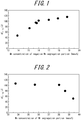
- FIG. 1 illustrates the result of measuring the Mn concentration and the absorbed energy in the Charpy impact test at -196 °C, it is found that when the Mn concentration in the Mn segregation portion is 16 % or more, an absorbed energy of 100 J or more is achieved.
- the Mn concentration in the Mn segregation portion is preferably 17 % or more.
- FIG. 2 illustrates a result obtained by measuring the Mn concentration and the absorbed energy in the Charpy impact test at -196 °C, it is found that when the Mn concentration in the Mn segregation portion is 38 % or less, an absorbed energy of 100 J or more is achieved.
- the Mn concentration in the Mn segregation portion is preferably 37 % or less.
- KAM Kernel Average Misorientation
- the KAM value is determined by performing EBSD (Electron Backscatter Diffraction) analysis in a field of 500 ⁇ m ⁇ 200 ⁇ m in an arbitrary two fields of a steel plate after hot rolling and calculating from the analysis results an average of orientation difference between each pixel (having a pitch of 0.3 ⁇ m) and the adjacent pixel in a crystal grain.
- the KAM value reflects the local crystal orientation change caused by dislocation in the microstructure.
- a higher KAM value represents a larger orientation difference between a measurement point and the adjacent portion.
- a higher KAM value means a higher local deformation degree in a grain. Therefore, a higher KAM value in a steel plate after rolling means a higher dislocation density.
- the average KAM value when the average KAM value is 0.3 or more, it means accumulation of a large amount of dislocation, and thus, yield stress increases.
- the average KAM value is preferably 0.5 or more.
- the average KAM value when the average KAM value is beyond 1.3, toughness may be deteriorated.
- the average KAM value is preferably 1.3 or less.
- a Mn segregation portion having a Mn concentration of 16 % or more and 38 % or less and an average KAM value of 0.3 or more as stated above can be obtained by adjusting the chemical composition as described above and performing hot rolling according to the following conditions.
- the following elements can be contained as necessary. At least one of Mo: 2.0 % or less, V: 2.0 % or less, W: 2.0 % or less, Ca: 0.0005 % or more and 0.0050 % or less, Mg: 0.0005 % or more and 0.0050 % or less, and REM: 0.0010 % or more and 0.0200 % or less.
- Mo, V, and W 2.0 % or less
- Mo, V, and W contribute to stabilizing austenite and improving base metal strength.
- Mo, V, and/or W is preferably contained in an amount of 0.001 % or more.
- the content of Mo, V, and/or W is beyond 2.0 %, coarse carbonitrides are generated, which may become an origin of fracture, and additionally increase production cost. Therefore, when Mo, V, and/or W is contained, the content of each added alloying element is 2.0 %, preferably 0.003 % or more and 1.7 % or less, and more preferably 1.5 % or less.
- Ca, Mg, and REM are elements useful for morphological control of inclusions and can be contained as necessary.
- the morphological control of inclusions means granulating elongated sulfide-based inclusions.
- the morphological control of inclusions improves ductility, toughness, and sulfide stress corrosion cracking resistance.
- Ca and/or Mg is preferably contained in an amount of 0.0005 % or more and REM is preferably contained in an amount of 0.0010 % or more.
- these elements are contained in a large amount, not only the amount of nonmetallic inclusions may be increased, ending up deteriorating ductility, toughness, and sulfide stress corrosion cracking resistance, but also an economic disadvantage may be entailed.
- the content of each element is set to 0.0005 % or more and 0.0050 % or less.
- the content is set to 0.0010 % or more and 0.0200 % or less.
- the Ca content is set to 0.0010 % or more and 0.0040 % or less
- the Mg content is set to 0.0010 % or more and 0.0040 % or less
- the REM content is set to 0.0020 % or more and 0.0150 % or less.
- Our high-Mn steel can be obtained from molten steel having the aforementioned chemical composition which is prepared by steelmaking using a publicly-known method such as using a converter and an electric heating furnace.
- the high-Mn steel may also be subjected to secondary refinement in a vacuum degassing furnace.
- secondary refinement to limit the contents of Ti and Nb which hinder suitable microstructure control within the aforementioned range, it is necessary to prevent Ti and Nb from being inevitably mixed from raw materials or the like into steel and decrease the contents of Ti and Nb. For example, by decreasing the basicity of slag in the refining stage such that these alloy elements are concentrated in the slag to be discharged, it is possible to reduce the Ti and Nb concentrations in a final slab product.
- the following provides a further definition of production conditions to make the aforementioned steel material into a steel material exhibiting excellent low-temperature toughness.
- Heating temperature of steel material 1100 °C or higher and 1300 °C or lower
- the rolling finish temperature is set to 800 °C or higher. This is because Mn is not sufficiently diffused at a temperature of lower than 800 °C, which is well below two thirds of the melting point of Mn.
- the rolling finish temperature is preferably 950 °C or higher and more preferably 1000 °C or higher and 1050 °C or lower.
- the total rolling reduction is preferably 30 % or more. No upper limit is placed on the total rolling reduction, but from the viewpoint of improving rolling efficiency, the upper limit is preferably 98 %.
- the second hot rolling may be continued as it is, whereas when the finish temperature is lower than 1100 °C, re-heating to 1100 °C or higher is performed.
- a heating temperature beyond 1300 °C may trigger steel melting.
- the upper limit of the heating temperature is set to 1300 °C.
- the temperature is controlled based on the surface temperature of the steel material.
- the heating temperature is preferably 1150 °C or higher and 1250 °C or lower.
- the second hot rolling requires at least one pass of final finish rolling at 700 °C or higher and lower than 950 °C. Specifically, by performing at least one pass of rolling preferably with a rolling reduction of 10 % or more at lower than 950 °C, dislocations having being introduced during the first rolling are less likely to be recovered and easily remain, and thus, the KAM value can be increased. Further, crystal grains become excessively coarse in a finish temperature range of 950 °C or higher, and thus desired yield stress cannot be obtained. Therefore, it is preferable to perform at least one pass of final finish rolling at lower than 950 °C.
- the finish temperature is preferably 900 °C or lower and more preferably 850 °C or lower.
- a finish temperature of lower than 700 °C deteriorates toughness, and thus, the finish temperature is set to 700 °C or higher, and preferably 750 °C or higher.
- the rolling reduction at lower than 950 °C is preferably 20 % or more and more preferably 50 % or more. However, rolling with a rolling reduction of beyond 95 % deteriorates toughness, and thus, a rolling reduction of 95 % or less is preferable.
- cooling is immediately performed.
- Gentle cooling of the steel plate after the hot rolling promotes formation of precipitates, thus deteriorating low-temperature toughness. Cooling the steel plate at a cooling rate of 1.0 °C/s or more can prevent formation of these precipitates. Further, excessive cooling distorts the steel plate, deteriorating productivity.
- the upper limit of the cooling start temperature is set to 900 °C.
- the average cooling rate within a range of a temperature at or above (a rolling finish temperature - 100 °C) to a temperature ranging from 300 °C to 650 °C is set to 1.0 °C/s or more. Note that the subsequent heating treatment is unnecessary because the Mn segregation portions in the as-rolled state are maintained within a narrow Mn concentration range.
- Steel slabs having the chemical compositions listed in Table 1 were made by a converter-ladle refining-continuous casting process. Next, the obtained steel slabs were subjected to blooming (the first hot rolling) and hot rolling (the second hot rolling) under conditions listed in Table 2 to obtain steel plates having a thickness of 10 mm to 30 mm. Tensile properties, toughness, and microstructure of the obtained steel plates were evaluated as described below.
- JIS NO. 5 tensile test pieces were collected from each steel plate. Then, the test pieces were subjected to a tensile test in conformity with JIS Z 2241 (1998) to investigate tensile properties.
- a test piece had a yield stress of 400 MPa or more and a tensile strength of 800 MPa or more, the corresponding steel plate was determined to have excellent tensile properties. Further, when a test piece had an elongation of 40 % or more, the corresponding steel plate was determined to have excellent ductility.
- Charpy V-notch test pieces were collected from each steel plate having a plate thickness of more than 20 mm at a 1/4 position of the plate thickness or from each steel plate having a plate thickness of 20 mm or less at a 1/2 position of the plate thickness, in a direction parallel to the rolling direction in conformity with JIS Z 2242 (2005). Then, the test pieces were subjected to Charpy impact test in conformity with JIS Z 2242 (2005), where three test pieces were used for each steel plate, to determine absorbed energy at -196 °C and evaluate base metal toughness. In this disclosure, when the three test pieces had an average absorbed energy (vE -196 ) of 100 J or more, the corresponding steel plate was determined to have excellent base steel toughness.
- Charpy V-notch test pieces having a sub-size of 5 mm were collected from each steel plate at a 1/2 position of the plate thickness, in a direction parallel to the rolling direction in conformity with JIS Z 2242 (2005). Then, the test pieces were subjected to Charpy impact test at -196 °C in conformity with JIS Z 2242 (2005), where three test pieces were used for each steel plate. When the three test pieces had an average absorbed energy (vE -196 ) of 67 J or more, the corresponding steel plate was determined to have excellent base steel toughness.
- EBSD Electro Backscatter Diffraction
- test piece was polished stepwise for convenience of observation to its notch bottom.
- five fields with a size of 100 ⁇ m ⁇ 100 ⁇ m were observed by EBSD analysis (measurement step: 0.08 ⁇ m) to determine the presence/absence of deformation-induced martensite.
- EPMA Electro Probe Micro Analyzer
- Second rolling conditions Remarks Slab heating temperature (°C) Rolling finish temperature (°C) Total rolling reduction (%) Re-heating temperature (°C) Rolling finish temperature (°C) Cooling start temperature (°C) Cooling rate within a range of 300 °C to 650 °C (°C/s) 1 1 22 1130 921 32 1130 810 774 8 Example 2 2 25 1130 918 29 1130 823 787 9 Example 3 3 18 1100 887 36 1100 765 702 9 Example 4 4 20 1100 892 35 1100 796 734 8 Example 5 5 25 1150 939 43 1150 838 805 8 Example 6 6 15 1150 937 46 1150 811 741 12 Example 7 7 10 1180 946 51 1180 805 728 16 Example 8 10 1200 953 53 1200 763 671 10 Example 9 9 13 1160 941 30 1160 813 762 7 Example 10 10 28 1250 1034 26 1250 946 915 16 Example 11 1 30 1300 1102 20
Landscapes
- Chemical & Material Sciences (AREA)
- Engineering & Computer Science (AREA)
- Materials Engineering (AREA)
- Mechanical Engineering (AREA)
- Metallurgy (AREA)
- Organic Chemistry (AREA)
- Physics & Mathematics (AREA)
- Thermal Sciences (AREA)
- Crystallography & Structural Chemistry (AREA)
- Heat Treatment Of Steel (AREA)
Abstract
Description
- This disclosure relates to high-Mn steel that is suitable for structural steel used in an extremely low-temperature environment such as a storage tank of liquefied gas, in particular, high-Mn steel excellent in toughness at low temperature, and a production method therefor.
- To use a hot-rolled steel plate in a structure for a storage tank of liquefied gas, the steel plate needs to have high strength and excellent toughness at low temperature because the structure is used at extremely low temperature. For example, when a hot-rolled steel plate is used for a storage tank of liquefied natural gas, excellent toughness needs to be guaranteed at the boiling point of the liquefied natural gas, that is, -164 °C or lower. When a steel material has poor low-temperature toughness, the safety as a structure for an extremely low temperature storage tank may not be maintained. Thus, there is a growing demand for steel materials with improved low-temperature toughness that are applied to such a structure. Hereinafter, an extremely low temperature range including -164 °C is referred to as "low temperature".
- In view of the demand, austenitic stainless steel which has austenite as a microstructure of a steel plate, the austenite having no brittleness at low temperature, 9 % Ni steel, or five thousand series aluminum alloys have been conventionally used. However, the alloy cost and production cost are high, and thus there is a demand for steel materials which are inexpensive and excellent in low-temperature toughness.
- As new steel materials replacing conventional steel for low temperature use, for example,
JP 2017-71817 A - PTL 1 proposes a technique of controlling the Mn segregation ratio to prevent carbides generated in crystal grain boundaries from becoming an origin of fracture.
- Patent Literature
PTL1:JP2017-71817A - Though it is possible to provide high-Mn steel excellent in low-temperature toughness according to the technique of PTL 1, there has been a demand for material cost reduction since the high-Mn steel needs to contain Ni from the viewpoint of guaranteeing toughness. Further, to reduce the Mn segregation ratio, diffusion heat treatment having a product of heating temperature (°C) and heating time (hr) of 30000 °C·hr or more is required, which incurs a high production cost.
- It could thus be helpful to provide high-Mn steel excellent in low-temperature toughness which can suppress costs of materials and production. Further, it could be helpful to propose an advantageous method for producing such high-Mn steel. As used herein, the phrase "excellent in low-temperature toughness" means that the absorbed energy vE-196 in a Charpy impact test at -196 °C is 100 J or more.
- To achieve the aforementioned objects, the inventors conducted extensive study on high-Mn steel as to various factors determining the chemical composition and microstructure of a steel plate to discover the following:
- a. Since high-Mn austenite steel has slow diffusion of Mn, a Mn segregation portion having a low Mn concentration formed during continuous casting remains after hot rolling. When the Mn segregation portion has a Mn concentration of less than 16 %, deformation-induced martensite forms at low temperature, deteriorating low-temperature toughness. Therefore, to improve the low-temperature toughness of high-Mn steel, it is effective to increase the Mn concentration in the Mn segregation portion.
- b. Since high-Mn austenite steel has slow diffusion of Mn, a Mn segregation portion having a high Mn concentration formed during continuous casting remains after hot rolling. The Mn segregation having a Mn concentration of more than 38 % causes intergranular fracture, deteriorating low-temperature toughness. Therefore, to improve the low-temperature toughness of high-Mn steel, it is effective to decrease the Mn concentration in the Mn segregation portion.
- c. With hot rolling under suitable conditions, the above a or b can be realized without diffusion heat treatment, and production costs can be suppressed.
- d. Performing hot rolling under suitable conditions to provide a high dislocation density is effective for increasing yield stress.
- This disclosure is based on the above discoveries and further investigation conducted by the inventors. The primary features of this disclosure are as follows.
- 1. High-Mn steel comprising: a chemical composition containing (consisting of), in mass%,
- C: 0.100 % or more and 0.700 % or less,
- Si: 0.05 % or more and 1.00 % or less,
- Mn: 20.0 % or more and 35.0 % or less,
- P: 0.030 % or less,
- S: 0.0070 % or less,
- Al: 0.01 % or more and 0.07 % or less,
- Cr: 0.5 % or more and 7.0 % or less,
- N: 0.0050 % or more and 0.0500 % or less,
- O: 0.0050 % or less,
- Ti: 0.0050 % or less, and
- Nb: 0.0050 % or less
- a microstructure having austenite as a matrix phase, wherein
- the microstructure has a Mn segregation portion with a Mn concentration of 16 % or more and 38 % or less, and
- the high-Mn steel has an average KAM (Kernel Average Misorientation) value of 0.3 or more, an absorbed energy in a Charpy impact test at -196 °C of 100 J or more, and a yield stress of 400 MPa or more.
Further, the KAM value represents an average of orientation difference between each pixel (having a pitch of 0.3 µm) and the adjacent pixel in a crystal grain. For a steel plate after hot rolling, EBSD (Electron Backscatter Diffraction) analysis in a field of 500 µm × 200 µm was performed in arbitrary two fields, and an average of the analysis results for all the measured regions was calculated to determine an average KAM value. - 2. The high-Mn steel according to 1., wherein the chemical composition further contains, in mass%, at least one selected from the group consisting of
- Mo: 2.0 % or less,
- V: 2.0 % or less,
- W: 2.0 % or less,
- Ca: 0.0005 % or more and 0.0050 % or less,
- Mg: 0.0005 % or more and 0.0050 % or less, and
- REM: 0.0010 % or more and 0.0200 % or less.
- 3. A method for producing high-Mn steel, comprising: heating a steel material having the chemical composition according to 1. or 2. to a temperature range of 1100 °C or higher and 1300 °C or lower; and
hot rolling the steel material with a rolling finish temperature of 800 °C or higher and a total rolling reduction of 20 % or more. - 4. The method for producing high-Mn steel according to 3., further comprising:
- hot rolling the steel material with a rolling finish temperature of 700 °C or higher and lower than 950 °C; and
- then subjecting the steel material to cooling treatment at an average cooling rate of 1.0 °C/s or more within a range of a temperature at or above (the rolling finish temperature - 100 °C) to a temperature ranging from 300 °C to 650 °C.
- As used herein, each temperature range represents a surface temperature of a steel material or a steel plate.
- According to this disclosure, it is possible to provide high-Mn steel excellent in low-temperature toughness. Therefore, our high-Mn steel largely contributes to the improvement of the safety and the service life of a steel structure used in a low temperature environment such as a tank for a storage tank of liquefied gas, and has industrially significant effects. Further, our production method does not decrease productivity or increase the production cost, and thus is excellent in economic efficiency.
- In the accompanying drawings:
-
FIG. 1 is a graph representing a relationship between the Mn concentration of a negative Mn segregation portion and a Charpy absorbed energy (vE-196); and -
FIG. 2 is a graph representing a relationship between the Mn concentration of a Mn segregation portion and a Charpy absorbed energy (vE-196). - The chemical composition of our high-Mn steel and the reasons for the limitations thereof are described first. In the description of the chemical composition, "%" denotes "mass%" unless otherwise noted.
- C is an inexpensive austenite-stabilizing element, and an important element to obtain austenite. To obtain this effect, the C content needs to be 0.100 % or more. On the other hand, a C content beyond 0.700 % generates excessive Cr carbides, deteriorating low-temperature toughness. Therefore, the C content is set to be 0.100 % or more and 0.700 % or less. The C content is preferably 0.200 % or more and 0.600 % or less.
- Si acts as a deoxidizer, is necessary for steelmaking, and is effective at increasing the strength of a steel plate by solid solution strengthening when dissolved in steel. To obtain such an effect, the Si content needs to be 0.05 % or more. On the other hand, a Si content beyond 1.00 % deteriorates weldability. Therefore, the Si content is set to 0.05 % or more and 1.00 % or less, and preferably 0.07 % or more and 0.50 % or less.
- Mn is a relatively inexpensive austenite-stabilizing element. In this disclosure, Mn is an important element for achieving both strength and low-temperature toughness. To obtain the effects, the Mn content needs to be 20.0 % or more. On the other hand, a Mn content beyond 35.0 % deteriorates low-temperature toughness. Further, such a high Mn content deteriorates weldability and cuttability, and further promotes segregation as well as the occurrence of stress corrosion cracking. Therefore, the Mn content is set to 20.0 % or more and 35.0 % or less, preferably 23.0 % or more and 30.0 % or less, and more preferably 28.0 % or less.
- When a P content is beyond 0.030 %, P segregates to grain boundaries and becomes an origin of stress corrosion cracking. Therefore, the upper limit of the P content is 0.030 %, and desirably, the P content is kept as small as possible. Therefore, the P content is set to 0.030 % or less. Excessively reducing P involves high refining cost and is economically disadvantageous. Therefore, the P content is desirably set to 0.002 % or more, preferably 0.005 % or more and 0.028 % or less, and more preferably 0.024 % or less.
- S deteriorates the low-temperature toughness and ductility of the base metal. Therefore, the upper limit of the S content is 0.0070 %, and desirably, the S content is kept as small as possible. Therefore, the S content is set to 0.0070 % or less. Excessively reducing S involves high refining cost and is economically disadvantageous. Therefore, the lower limit of the S content is desirably set to 0.001 % or more. The S content is preferably set to 0.0020 % or more and 0.0060 % or less.
- Al acts as a deoxidizer and is used most commonly in molten steel deoxidizing processes to obtain a steel plate. To obtain such an effect, the Al content needs to be 0.01 % or more. On the other hand, when the Al content is beyond 0.07 %, Al is mixed into a weld metal portion during welding, deteriorating the toughness of the weld metal. Therefore, the Al content is set to 0.07 % or less. Therefore, the Al content is set to 0.01 % or more and 0.07 % or less, and preferably 0.02 % or more and 0.06 % or less.
- Cr is an element which stabilizes austenite with an appropriate amount of addition and is effective for improving low-temperature toughness and base metal strength. To obtain such effects, the Cr content needs to be 0.5 % or more. On the other hand, a Cr content beyond 7.0 % generates Cr carbides, deteriorating low-temperature toughness and stress corrosion cracking resistance. Therefore, the Cr content is set to 0.5 % or more and 7.0 % or less, preferably 1.0 % or more and 6.7 % or less, and more preferably 1.2 % or more and 6.5 % or less. To further improve stress corrosion cracking resistance, the Cr content is further preferably 2.0 % or more and 6.0 % or less.
- N is an austenite-stabilizing element and an element which is effective for improving low-temperature toughness. To obtain such an effect, the N content needs to be 0.0050 % or more. On the other hand, the N content beyond 0.0500 % coarsens nitrides or carbonitrides, deteriorating toughness. Therefore, the N content is set to 0.0050 % or more and 0.0500 % or less, and preferably 0.0060 % or more and 0.0400 % or less.
- O deteriorates low-temperature toughness because of the formation of oxides. Therefore, the O content is set to 0.0050 % or less, and preferably 0.0045 % or less. Excessively reducing O involves high refining cost and is economically disadvantageous. Therefore, the O content is desirably set to 0.0010 % or more.
- Ti and Nb form carbonitrides with a high melting point in steel to prevent coarsening of crystal grains, then becoming an origin of fracture and a propagation path of cracks. In particular, in high-Mn steel, Ti and Nb hinder microstructure control for enhancing low-temperature toughness and improving ductility, and thus, need to be intentionally limited. Specifically, Ti and Nb are components which are inevitably mixed from raw materials and the like into steel, and Ti of more than 0.005 % and 0.010 % or less and Nb of more than 0.005 % and 0.010 % or less are typically mixed. Thus, according to the method described below, it is necessary to avoid inevitable mixing of Ti and Nb and limit the content of each Ti and Nb to 0.005 % or less. By limiting the content of each Ti and Nb to 0.005 % or less, it is possible to eliminate the adverse effect of carbonitrides and guarantee excellent low-temperature toughness and ductility. The content of each Ti and Nb is preferably set to 0.003 % or less. The contents of each Ti and Nb may be 0 %.
- The balance other than the aforementioned components is Fe and inevitable impurities. The inevitable impurities include H, and a total content of 0.01 % or less is allowable.
- When a steel material has a body centered cubic (bcc) crystal structure, the steel material may cause brittle fracture in a low temperature environment, and thus, is not suitable for use in a low temperature environment. When the steel material is assumed to be used in a low temperature environment, the steel material is required to have, as a matrix phase, an austenite microstructure which has a face centered cubic (fcc) crystal structure. As used herein, the phrase "having austenite as a matrix phase" and similar phrases mean that the area ratio of an austenite phase is 90 % or more. The balance other than the austenite phase is a ferrite or martensite phase. The area ratio of the austenite phase is preferably 95 % or more.
- As stated above, in high-Mn steel containing Mn in an amount of 20.0 % or more and 35.0 % or less, a segregation portion having a low Mn concentration and a segregation portion having a high Mn concentration, compared with the Mn content in the chemical composition are formed. As described below, the inventors found that these portions having different Mn concentrations are a factor behind the deterioration of low-temperature toughness.
- Specifically, the Mn concentration of a Mn segregation portion and an absorbed energy in a Charpy impact test at -196 °C were measured on a steel plate obtained by hot rolling a steel material having the aforementioned chemical composition under various conditions. As used herein, the Mn segregation portion, which is a region having a low or high Mn concentration within a Mn segregation band, is specifically represented by a region having a lowest or highest Mn concentration which is measured by EBSD (Electron Backscatter Diffraction) analysis on a polished surface in a cross section along a rolling direction of a steel plate after hot rolling.
- First, in a Mn segregation portion having a low Mn concentration (negative Mn segregation portion), as
FIG. 1 illustrates the result of measuring the Mn concentration and the absorbed energy in the Charpy impact test at -196 °C, it is found that when the Mn concentration in the Mn segregation portion is 16 % or more, an absorbed energy of 100 J or more is achieved. The Mn concentration in the Mn segregation portion is preferably 17 % or more. - Further, in a Mn segregation portion having a high Mn concentration, as
FIG. 2 illustrates a result obtained by measuring the Mn concentration and the absorbed energy in the Charpy impact test at -196 °C, it is found that when the Mn concentration in the Mn segregation portion is 38 % or less, an absorbed energy of 100 J or more is achieved. The Mn concentration in the Mn segregation portion is preferably 37 % or less. - As stated above, the KAM value is determined by performing EBSD (Electron Backscatter Diffraction) analysis in a field of 500 µm × 200 µm in an arbitrary two fields of a steel plate after hot rolling and calculating from the analysis results an average of orientation difference between each pixel (having a pitch of 0.3 µm) and the adjacent pixel in a crystal grain. The KAM value reflects the local crystal orientation change caused by dislocation in the microstructure. A higher KAM value represents a larger orientation difference between a measurement point and the adjacent portion. Specifically, a higher KAM value means a higher local deformation degree in a grain. Therefore, a higher KAM value in a steel plate after rolling means a higher dislocation density. Further, when the average KAM value is 0.3 or more, it means accumulation of a large amount of dislocation, and thus, yield stress increases. The average KAM value is preferably 0.5 or more. On the other hand, when the average KAM value is beyond 1.3, toughness may be deteriorated. Thus, the average KAM value is preferably 1.3 or less.
- A Mn segregation portion having a Mn concentration of 16 % or more and 38 % or less and an average KAM value of 0.3 or more as stated above can be obtained by adjusting the chemical composition as described above and performing hot rolling according to the following conditions.
- In this disclosure, to further improve strength and low-temperature toughness, in addition to the above essential elements, the following elements can be contained as necessary.
At least one of Mo: 2.0 % or less, V: 2.0 % or less, W: 2.0 % or less, Ca: 0.0005 % or more and 0.0050 % or less, Mg: 0.0005 % or more and 0.0050 % or less, and REM: 0.0010 % or more and 0.0200 % or less. - Mo, V, and W contribute to stabilizing austenite and improving base metal strength. To obtain such an effect, Mo, V, and/or W is preferably contained in an amount of 0.001 % or more. On the other hand, when the content of Mo, V, and/or W is beyond 2.0 %, coarse carbonitrides are generated, which may become an origin of fracture, and additionally increase production cost. Therefore, when Mo, V, and/or W is contained, the content of each added alloying element is 2.0 %, preferably 0.003 % or more and 1.7 % or less, and more preferably 1.5 % or less.
- Ca, Mg, and REM are elements useful for morphological control of inclusions and can be contained as necessary. The morphological control of inclusions means granulating elongated sulfide-based inclusions. The morphological control of inclusions improves ductility, toughness, and sulfide stress corrosion cracking resistance. To obtain such effects, Ca and/or Mg is preferably contained in an amount of 0.0005 % or more and REM is preferably contained in an amount of 0.0010 % or more. On the other hand, when these elements are contained in a large amount, not only the amount of nonmetallic inclusions may be increased, ending up deteriorating ductility, toughness, and sulfide stress corrosion cracking resistance, but also an economic disadvantage may be entailed.
- Therefore, when Ca and Mg are contained, the content of each element is set to 0.0005 % or more and 0.0050 % or less. When REM is contained, the content is set to 0.0010 % or more and 0.0200 % or less. Preferably, the Ca content is set to 0.0010 % or more and 0.0040 % or less, the Mg content is set to 0.0010 % or more and 0.0040 % or less, and the REM content is set to 0.0020 % or more and 0.0150 % or less.
- Our high-Mn steel can be obtained from molten steel having the aforementioned chemical composition which is prepared by steelmaking using a publicly-known method such as using a converter and an electric heating furnace. In addition, the high-Mn steel may also be subjected to secondary refinement in a vacuum degassing furnace. During the secondary refinement, to limit the contents of Ti and Nb which hinder suitable microstructure control within the aforementioned range, it is necessary to prevent Ti and Nb from being inevitably mixed from raw materials or the like into steel and decrease the contents of Ti and Nb. For example, by decreasing the basicity of slag in the refining stage such that these alloy elements are concentrated in the slag to be discharged, it is possible to reduce the Ti and Nb concentrations in a final slab product. It is also possible to apply a method in which oxygen is blown into the furnace or the like for oxidation such that an alloy of Ti and Nb can be floated and separated during circulation. Subsequently, it is preferable to make the steel into a steel material such as a slab having a predetermined size by a publicly-known steel making method such as continuous casting.
- The following provides a further definition of production conditions to make the aforementioned steel material into a steel material exhibiting excellent low-temperature toughness.
- To obtain high-Mn steel having the aforementioned features, it is important to perform heating to a temperature range of 1100 °C to 1300 °C and hot rolling with a rolling finish temperature of 800 °C or higher and a total rolling reduction of 20 % or more. The temperature is controlled based on the surface temperature of the steel material.
- Specifically, to promote diffusion of Mn during the hot rolling, the heating temperature before the rolling is set to 1100 °C or higher. On the other hand, a heating temperature beyond 1300 °C may trigger steel melting, and thus, the upper limit of the heating temperature is set to 1300 °C. The heating temperature is preferably 1150 °C or higher and 1250 °C or lower.
- Further, it is important to set the total rolling reduction during the rolling to as high as 20 % or more to thereby decrease the distance between Mn segregation portions such that diffusion of Mn is promoted. Similarly, from the viewpoint of promoting diffusion of Mn during the rolling, the rolling finish temperature is set to 800 °C or higher. This is because Mn is not sufficiently diffused at a temperature of lower than 800 °C, which is well below two thirds of the melting point of Mn. The rolling finish temperature is preferably 950 °C or higher and more preferably 1000 °C or higher and 1050 °C or lower. Further, the total rolling reduction is preferably 30 % or more. No upper limit is placed on the total rolling reduction, but from the viewpoint of improving rolling efficiency, the upper limit is preferably 98 %.
- Further, if necessary, it is advantageous for increasing the KAM value to additionally perform the second hot rolling which satisfies the following conditions after the above hot rolling. Here, when the finish temperature of the above first hot rolling is 1100 °C or higher, the second hot rolling may be continued as it is, whereas when the finish temperature is lower than 1100 °C, re-heating to 1100 °C or higher is performed. Again, a heating temperature beyond 1300 °C may trigger steel melting. Thus, the upper limit of the heating temperature is set to 1300 °C. The temperature is controlled based on the surface temperature of the steel material. The heating temperature is preferably 1150 °C or higher and 1250 °C or lower.
- The second hot rolling requires at least one pass of final finish rolling at 700 °C or higher and lower than 950 °C. Specifically, by performing at least one pass of rolling preferably with a rolling reduction of 10 % or more at lower than 950 °C, dislocations having being introduced during the first rolling are less likely to be recovered and easily remain, and thus, the KAM value can be increased. Further, crystal grains become excessively coarse in a finish temperature range of 950 °C or higher, and thus desired yield stress cannot be obtained. Therefore, it is preferable to perform at least one pass of final finish rolling at lower than 950 °C. The finish temperature is preferably 900 °C or lower and more preferably 850 °C or lower.
- On the other hand, a finish temperature of lower than 700 °C deteriorates toughness, and thus, the finish temperature is set to 700 °C or higher, and preferably 750 °C or higher. The rolling reduction at lower than 950 °C is preferably 20 % or more and more preferably 50 % or more. However, rolling with a rolling reduction of beyond 95 % deteriorates toughness, and thus, a rolling reduction of 95 % or less is preferable.
- After the hot rolling, cooling is immediately performed. Gentle cooling of the steel plate after the hot rolling promotes formation of precipitates, thus deteriorating low-temperature toughness. Cooling the steel plate at a cooling rate of 1.0 °C/s or more can prevent formation of these precipitates. Further, excessive cooling distorts the steel plate, deteriorating productivity. In particular, for a steel material having a plate thickness of less than 10 mm, air cooling is preferable. Therefore, the upper limit of the cooling start temperature is set to 900 °C. For the aforementioned reasons, in the cooling after the hot rolling, on a surface of the steel plate, the average cooling rate within a range of a temperature at or above (a rolling finish temperature - 100 °C) to a temperature ranging from 300 °C to 650 °C is set to 1.0 °C/s or more. Note that the subsequent heating treatment is unnecessary because the Mn segregation portions in the as-rolled state are maintained within a narrow Mn concentration range.
- This disclosure will be described in further detail below by way of examples. Note that this disclosure is not limited to the following examples.
- Steel slabs having the chemical compositions listed in Table 1 were made by a converter-ladle refining-continuous casting process. Next, the obtained steel slabs were subjected to blooming (the first hot rolling) and hot rolling (the second hot rolling) under conditions listed in Table 2 to obtain steel plates having a thickness of 10 mm to 30 mm. Tensile properties, toughness, and microstructure of the obtained steel plates were evaluated as described below.
- JIS NO. 5 tensile test pieces were collected from each steel plate. Then, the test pieces were subjected to a tensile test in conformity with JIS Z 2241 (1998) to investigate tensile properties. In this disclosure, when a test piece had a yield stress of 400 MPa or more and a tensile strength of 800 MPa or more, the corresponding steel plate was determined to have excellent tensile properties. Further, when a test piece had an elongation of 40 % or more, the corresponding steel plate was determined to have excellent ductility.
- Charpy V-notch test pieces were collected from each steel plate having a plate thickness of more than 20 mm at a 1/4 position of the plate thickness or from each steel plate having a plate thickness of 20 mm or less at a 1/2 position of the plate thickness, in a direction parallel to the rolling direction in conformity with JIS Z 2242 (2005). Then, the test pieces were subjected to Charpy impact test in conformity with JIS Z 2242 (2005), where three test pieces were used for each steel plate, to determine absorbed energy at -196 °C and evaluate base metal toughness. In this disclosure, when the three test pieces had an average absorbed energy (vE-196) of 100 J or more, the corresponding steel plate was determined to have excellent base steel toughness. For steel plates having a plate thickness of less than 10 mm, Charpy V-notch test pieces having a sub-size of 5 mm were collected from each steel plate at a 1/2 position of the plate thickness, in a direction parallel to the rolling direction in conformity with JIS Z 2242 (2005). Then, the test pieces were subjected to Charpy impact test at -196 °C in conformity with JIS Z 2242 (2005), where three test pieces were used for each steel plate. When the three test pieces had an average absorbed energy (vE-196) of 67 J or more, the corresponding steel plate was determined to have excellent base steel toughness.
- After the Charpy impact test at -196 °C, SEM observation (at 500 magnifications in 10 fields) was performed to measure percent brittle fracture. When the test pieces had a percent brittle fracture of 0 %, the corresponding steel plate was determined to have excellent low-temperature toughness.
- For each steel plate after the hot rolling, EBSD (Electron Backscatter Diffraction) analysis (measurement step: 0.3 µm) in a field of 500 µm × 200 µm was performed in arbitrary two fields (at a 1/4 position of the plate thickness or and 1/2 position of the plate thickness) on a polished surface in a cross section along the rolling direction of the steel plate and an average of the analysis results for all the measured regions was calculated to determine an average KAM value.
- After the Charpy impact test, the test piece was polished stepwise for convenience of observation to its notch bottom. In the test piece, five fields with a size of 100 µm × 100 µm were observed by EBSD analysis (measurement step: 0.08 µm) to determine the presence/absence of deformation-induced martensite.
- Further, at the above-described positions where the KAM values were measured by EBSD, EPMA (Electron Probe Micro Analyzer) analysis was further performed to determine Mn concentrations, and those portions having the lowest Mn concentration and the highest Mn concentration were defined as segregation portions.
- The results of these measurements are listed in Table 3.
Table 1 Steel No. Chemical compostion (mass%) Remarks C Si Mn P S Al Cr O N Nb Ti V Mo W Ca Mg REM 1 0.150 0.82 29.4 0.025 0.0058 0.034 3.78 0.0034 0.0150 0.002 0.002 - - - - - - Example 2 0.654 0.12 20.8 0.018 0.0042 0.028 2.78 0.0027 0.0132 0.002 0.002 - - - - - - Example 3 0.432 0.26 22.9 0.016 0.0039 0.037 4.81 0.0019 0.0259 0.001 0.002 0.09 - - - - - Example 4 0.332 0.78 21.3 0.020 0.0065 0.045 3.12 0.0033 0.0191 0.002 0.003 - 0.48 - - - - Example 5 0.294 0.77 28.1 0.027 0.0028 0.063 1.87 0.0036 0.0243 0.001 0.002 - - 0.09 - - - Example 6 0.465 0.63 27.1 0.017 0.0024 0.038 6.19 0.0046 0.0350 0.003 0.003 - - - 0.0016 - - Example 7 0.327 0.46 22.5 0.018 0.0043 0.056 2.43 0.0032 0.0245 0.002 0.002 - - - - 0.003 - Example 8 0.364 0.41 20.2 0.028 0.0029 0.029 1.12 0.0042 0.0078 0.004 0.001 - - - - - 0.0044 Example 9 0.288 0.19 24.3 0.023 0.0057 0.047 5.78 0.0038 0.0334 0.002 0.001 - - - - - - Example 10 0.587 0.32 25.2 0.021 0.0034 0.045 4.24 0.0041 0.0092 0.003 0.001 - - - - - - Example 11 0.912 0.41 27.5 0.020 0.0024 0.038 3.43 0.0022 0.0113 0.002 0.002 - - - - - - Comparative Example 12 0.571 0.03 25.4 0.017 0.0027 0.037 5.11 0.0029 0.0387 0.002 0.002 - - - - - - Comparative Example 13 0.135 0.48 17.6 0.026 0.0019 0.049 2.33 0.0047 0.0471 0.001 0.001 - - - - - - Comparative Example 14 0.172 0.44 26.3 0.042 0.0025 0.039 0.87 0.0039 0.0334 0.001 0.003 - - - - - - Comparative Example 15 0.299 0.25 28.7 0.021 0.0084 0.027 1.86 0.0021 0.0062 0.002 0.001 - - - - - - Comparative Example 16 0.554 0.11 21.4 0.019 0.0034 0.090 3.69 0.0034 0.0224 0.002 0.003 - - - - - - Comparative Example 17 0.291 0.26 27.4 0.013 0.0025 0.061 8.25 0.0042 0.0143 0.003 0.002 - - - - - - Comparative Example 18 0.425 0.13 21.9 0.022 0.0049 0.024 3.77 0.0082 0.0241 0.002 0.002 - - - - - - Comparative Example 19 0.356 0.43 25.7 0.023 0.0036 0.053 6.37 0.0031 0.0589 0.004 0.002 - - - - - - Comparative Example 20 0.095 0.29 28.1 0.025 0.0036 0.042 6.12 0.0023 0.0095 0.002 0.002 - - - - - - Comparative Example 21 0.633 1.04 23.3 0.019 0.0040 0.035 2.53 0.0037 0.0170 0.002 0.002 - - - - - - Comparative Example 22 0.540 0.35 21.6 0.027 0.0033 0.050 0.47 0.0028 0.0210 0.001 0.003 - - - - - - Comparative Example 23 0.451 0.26 20.8 0.029 0.0060 0.035 2.87 0.0038 0.0327 0.006 0.002 - - - - - - Comparative Example 24 0.624 0.51 24.0 0.025 0.0052 0.028 3.18 0.0032 0.0188 0.002 0.006 - - - - - - Comparative Example 25 0.236 0.64 34.5 0.022 0.0061 0.042 1.45 0.0031 0.0363 0.002 0.002 - - - - - - Example 26 0.119 0.86 35.7 0.027 0.0063 0.029 0.55 0.0044 0.0466 0.002 0.002 - - - - - - Comparative Example 27 0.671 0.75 21.3 0.020 0.0047 0.008 0.94 0.0095 0.0377 0.001 0.001 - - - - - - Comparative Example 28 0.312 0.32 33.5 0.023 0.0034 0.045 0.50 0.0026 0.0139 0.002 0.002 - - - - - - Example Table 2 Sample No. Steel No. Plate thickness (mm) First rolling conditions Second rolling conditions Remarks Slab heating temperature (°C) Rolling finish temperature (°C) Total rolling reduction (%) Re-heating temperature (°C) Rolling finish temperature (°C) Cooling start temperature (°C) Cooling rate within a range of 300 °C to 650 °C (°C/s) 1 1 22 1130 921 32 1130 810 774 8 Example 2 2 25 1130 918 29 1130 823 787 9 Example 3 3 18 1100 887 36 1100 765 702 9 Example 4 4 20 1100 892 35 1100 796 734 8 Example 5 5 25 1150 939 43 1150 838 805 8 Example 6 6 15 1150 937 46 1150 811 741 12 Example 7 7 10 1180 946 51 1180 805 728 16 Example 8 8 10 1200 953 53 1200 763 671 10 Example 9 9 13 1160 941 30 1160 813 762 7 Example 10 10 28 1250 1034 26 1250 946 915 16 Example 11 1 30 1300 1102 20 - 803 770 14 Example 12 11 20 1250 1011 30 1250 871 836 6 Comparative Example 13 12 15 1250 1019 41 1250 855 817 11 Comparative Example 14 13 20 1120 919 42 1120 789 748 12 Comparative Example 15 14 25 1120 931 29 1120 802 770 7 Comparative Example 16 15 20 1170 955 38 1170 820 774 3 Comparative Example 17 16 10 1170 937 53 1170 786 735 5 Comparative Example 18 17 20 1150 917 43 1150 801 756 13 Comparative Example 19 18 18 1150 926 32 1150 790 746 8 Comparative Example 20 19 13 1130 903 45 1130 767 710 12 Comparative Example 21 20 20 1150 920 38 1150 828 771 10 Comparative Example 22 21 18 1150 914 39 1150 821 760 7 Comparative Example 23 22 25 1170 956 30 1170 837 794 12 Comparative Example 24 23 14 1190 958 48 1190 819 762 8 Comparative Example 25 24 17 1190 966 46 1190 830 788 10 Comparative Example 26 1 17 1130 897 39 1130 682 587 8 Comparative Example 27 2 23 1200 956 16 1200 873 831 12 Comparative Example 28 3 15 1200 961 23 1200 841 780 0.5 Comparative Example 29 4 15 1230 756 37 1230 823 768 7 Comparative Example 30 5 20 1230 975 31 1230 810 653 3 Comparative Example 31 6 15 1050 888 25 1150 876 830 6 Comparative Example 32 7 25 1150 930 36 1050 731 687 10 Comparative Example 33 8 30 1250 1025 55 1300 980 947 9 Comparative Example 34 9 30 1300 704 75 - - 655 6 Comparative Example 35 25 15 1130 906 35 1130 763 694 7 Example 36 25 15 1130 933 18 1130 707 655 6 Comparative Example 37 26 20 1150 934 42 1150 795 752 8 Comparative Example 38 27 6 1200 920 31 1200 734 air cooling - Comparative Example 39 28 6 1250 963 44 1250 860 air cooling - Example 40 1 30 1300 808 60 - - 765 13 Example Table 3 Sample No. Steel No. Microstructure Mechanical properties Remarks Average KAM value Deformation induced martensite Mn concentration in Mn segregation portion (lowest) (mass%) Mn concentration in Mn segregation portion (highest) (mass%) Yield stress (MPa) Tensile strength (MPa) Total elongation (%) Absorbed energy at-196°C (vE-196°C) (J) Brittleness fracture (%) 1 1 0.9 absent 25.1 33.7 409 845 66 107 0 Example 2 2 0.8 absent 17.0 24.7 506 913 50 105 0 Example 3 3 1.1 absent 20.6 25.0 426 952 65 124 0 Example 4 4 1.0 absent 17.9 24.6 408 821 68 110 0 Example 5 5 0.7 absent 24.5 31.8 418 808 61 117 0 Example 6 6 0.9 absent 23.5 30.7 454 971 65 138 0 Example 7 7 1.2 absent 18.8 25.8 421 943 63 115 0 Example 8 8 0.8 absent 16.0 24.6 438 1012 69 102 0 Example 9 9 0.9 absent 21.3 27.3 413 957 65 131 0 Example 10 10 0.3 absent 22.6 27.4 401 925 67 153 0 Example 11 1 1.0 absent 23.5 35.6 420 855 64 103 0 Example 12 11 0.5 absent 23.3 31.5 614 755 47 61 25 Comparative Example 13 12 0.7 absent 22.2 28.7 385 930 67 124 0 Comparative Example 14 13 1.0 present 13.9 21.8 406 924 71 47 30 Comparative Example 15 14 0.9 absent 21.5 31.1 411 971 62 67 21 Comparative Example 16 15 0.9 absent 25.3 32.5 421 875 53 76 14 Comparative Example 17 16 1.0 absent 18.2 24.6 495 975 61 93 11 Comparative Example 18 17 0.9 absent 23.6 31.0 436 850 51 50 38 Comparative Example 19 18 1.0 absent 17.5 26.4 468 891 53 81 13 Comparative Example 20 19 1.1 absent 21.3 30.4 514 840 47 73 14 Comparative Example 21 20 0.8 absent 24.7 31.4 370 785 68 127 0 Comparative Example 22 21 0.8 absent 20.5 26.1 577 775 50 64 23 Comparative Example 23 22 0.7 absent 17.9 25.3 481 893 62 75 15 Comparative Example 24 23 0.9 absent 17.1 24.3 450 936 55 89 12 Comparative Example 25 24 0.7 absent 21.1 27.3 514 940 51 96 11 Comparative Example 26 1 1.5 absent 25.5 33.1 503 865 45 56 28 Comparative Example 27 2 0.5 present 15.7 25.9 536 923 50 95 11 Comparative Example 28 3 0.7 absent 20.8 25.3 415 876 43 61 24 Comparative Example 29 4 0.8 present 15.1 27.5 412 931 53 74 15 Comparative Example 30 5 0.8 absent 24.1 31.9 407 770 41 46 40 Comparative Example 31 6 0.4 present 15.8 37.7 440 899 46 93 11 Comparative Example 32 7 1.4 absent 18.6 26.1 468 941 54 73 15 Comparative Example 33 8 0.2 absent 16.5 24.0 365 933 72 116 0 Comparative Example 34 9 1.4 absent 20.7 27.7 553 802 43 41 45 Comparative Example 35 25 1.1 absent 30.8 38.0 427 760 56 102 0 Example 36 25 1.1 absent 30.5 38.6 459 787 52 80 13 Comparative Example 37 26 0.9 absent 31.8 39.4 450 777 50 52 35 Comparative Example 38 27 1.3 absent 17.7 24.9 494 902 52 58* 12 Comparative Example 39 28 0.7 absent 30.8 36.3 449 886 54 73* 0 Example 40 1 1.0 absent 26.1 32.5 418 846 65 104 0 Example *5 mm sub-size charpy - Our high-Mn steel samples were all confirmed to satisfy the aforementioned desired performance (a base metal yield stress of 400 MPa or more and an average absorbed energy (vE-196) of 100 J or more for low-temperature toughness). In contrast, the comparative examples out of the scope of this disclosure did not satisfy the aforementioned desired performance in terms of either or both of yield stress and low-temperature toughness.
Claims (4)
- High-Mn steel comprising:a chemical composition containing, in mass%,C: 0.100 % or more and 0.700 % or less,Si: 0.05 % or more and 1.00 % or less,Mn: 20.0 % or more and 35.0 % or less,P: 0.030 % or less,S: 0.0070 % or less,Al: 0.01 % or more and 0.07 % or less,Cr: 0.5 % or more and 7.0 % or less,N: 0.0050 % or more and 0.0500 % or less,O: 0.0050 % or less,Ti: 0.005 % or less, andNb: 0.005 % or lesswith the balance being Fe and inevitable impurities; anda microstructure having austenite as a matrix phase, whereinthe microstructure has a Mn segregation portion with a Mn concentration of 16 % or more and 38 % or less, andthe high-Mn steel has an average KAM (Kernel Average Misorientation) value of 0.3 or more, an absorbed energy in a Charpy impact test at -196 °C of 100 J or more, and a yield stress of 400 MPa or more.
- The high-Mn steel according to claim 1, wherein the chemical composition further contains, in mass%, at least one selected from the group consisting ofMo: 2.0 % or less,V: 2.0 % or less,W: 2.0 % or less,Ca: 0.0005 % or more and 0.0050 % or less,Mg: 0.0005 % or more and 0.0050 % or less, andREM: 0.0010 % or more and 0.0200 % or less.
- A method for producing high-Mn steel, comprising:heating a steel material having the chemical composition according to claim 1 or 2 to a temperature range of 1100 °C or higher and 1300 °C or lower; andhot rolling the steel material with a rolling finish temperature of 800 °C or higher and a total rolling reduction of 20 % or more.
- The method for producing high-Mn steel according to claim 3, further comprising:hot rolling the steel material with a rolling finish temperature of 700 °C or higher and lower than 950 °C; andthen subjecting the steel material to cooling treatment at an average cooling rate of 1.0 °C/s or more within a range of a temperature at or above (the rolling finish temperature - 100 °C) to a temperature ranging from 300 °C to 650 °C.
Applications Claiming Priority (2)
| Application Number | Priority Date | Filing Date | Title |
|---|---|---|---|
| JP2017168857 | 2017-09-01 | ||
| PCT/JP2018/032022 WO2019044928A1 (en) | 2017-09-01 | 2018-08-29 | High-mn steel and production method therefor |
Publications (3)
| Publication Number | Publication Date |
|---|---|
| EP3677700A1 true EP3677700A1 (en) | 2020-07-08 |
| EP3677700A4 EP3677700A4 (en) | 2020-07-08 |
| EP3677700B1 EP3677700B1 (en) | 2023-05-10 |
Family
ID=65527524
Family Applications (1)
| Application Number | Title | Priority Date | Filing Date |
|---|---|---|---|
| EP18851150.5A Active EP3677700B1 (en) | 2017-09-01 | 2018-08-29 | High-mn steel and production method therefor |
Country Status (8)
| Country | Link |
|---|---|
| EP (1) | EP3677700B1 (en) |
| JP (2) | JP6856129B2 (en) |
| KR (1) | KR102355570B1 (en) |
| CN (1) | CN111051553B (en) |
| MY (1) | MY194444A (en) |
| PH (1) | PH12020550068A1 (en) |
| SG (1) | SG11202001418YA (en) |
| WO (1) | WO2019044928A1 (en) |
Cited By (3)
| Publication number | Priority date | Publication date | Assignee | Title |
|---|---|---|---|---|
| US11959157B2 (en) | 2018-08-03 | 2024-04-16 | Jfe Steel Corporation | High-Mn steel and method of producing same |
| EP4249621A4 (en) * | 2021-02-08 | 2024-06-05 | JFE Steel Corporation | Steel material and method for producing same, and tank and method for producing same |
| US12486558B2 (en) | 2019-08-21 | 2025-12-02 | Jfe Steel Corporation | Steel and method of producing same |
Families Citing this family (3)
| Publication number | Priority date | Publication date | Assignee | Title |
|---|---|---|---|---|
| KR102714307B1 (en) * | 2019-08-21 | 2024-10-07 | 제이에프이 스틸 가부시키가이샤 | Steel and method of manufacturing the same |
| WO2021181543A1 (en) * | 2020-03-11 | 2021-09-16 | Jfeスチール株式会社 | Steel material, manufacturing method therefor, and tank |
| JP7276597B2 (en) * | 2020-12-17 | 2023-05-18 | Jfeスチール株式会社 | WIRE FOR SUBMERGED ARC WELDING AND METHOD FOR MANUFACTURING WELD JOINT USING THE SAME |
Family Cites Families (13)
| Publication number | Priority date | Publication date | Assignee | Title |
|---|---|---|---|---|
| JPS56258A (en) * | 1979-06-12 | 1981-01-06 | Sumitomo Metal Ind Ltd | No-nickel high-manganese-content steel for low temperature |
| JPS5942068B2 (en) * | 1981-06-01 | 1984-10-12 | 川崎製鉄株式会社 | High manganese non-magnetic steel for cryogenic temperatures |
| JPS5867824A (en) * | 1981-10-17 | 1983-04-22 | Kawasaki Steel Corp | Hot processing of high tenacity high manganese non- magnetic steel |
| JPS60204864A (en) * | 1984-03-29 | 1985-10-16 | Sanyo Tokushu Seikou Kk | Nonmagnetic high-mn steel having superior toughness at ordinary and low temperatures |
| US5833919A (en) * | 1997-01-09 | 1998-11-10 | Korea Advanced Institute Of Science And Technology | Fe-Mn-Cr-Al cryogenix alloy and method of making |
| FR2857980B1 (en) * | 2003-07-22 | 2006-01-13 | Usinor | PROCESS FOR MANUFACTURING HIGH-STRENGTH FERRO-CARBON-MANGANESE AUSTENITIC STEEL SHEET, EXCELLENT TENACITY AND COLD SHAPINGABILITY, AND SHEETS THUS PRODUCED |
| JP4529872B2 (en) * | 2005-11-04 | 2010-08-25 | 住友金属工業株式会社 | High Mn steel material and manufacturing method thereof |
| JP5003785B2 (en) * | 2010-03-30 | 2012-08-15 | Jfeスチール株式会社 | High tensile steel plate with excellent ductility and method for producing the same |
| JP6240778B2 (en) * | 2013-12-06 | 2017-11-29 | ポスコPosco | High strength weld joint with excellent cryogenic impact toughness and flux cored arc welding wire for this purpose |
| JP6645103B2 (en) * | 2014-10-22 | 2020-02-12 | 日本製鉄株式会社 | High Mn steel material and method for producing the same |
| JP6693217B2 (en) * | 2015-04-02 | 2020-05-13 | 日本製鉄株式会社 | High Mn steel for cryogenic temperatures |
| JP6589535B2 (en) | 2015-10-06 | 2019-10-16 | 日本製鉄株式会社 | Low temperature thick steel plate and method for producing the same |
| KR101797319B1 (en) * | 2015-12-23 | 2017-11-14 | 주식회사 포스코 | Hot rolled steel sheet having excellent weldability and ductility for pipe and method for manufacturing the same |
-
2018
- 2018-08-29 CN CN201880055742.0A patent/CN111051553B/en active Active
- 2018-08-29 SG SG11202001418YA patent/SG11202001418YA/en unknown
- 2018-08-29 MY MYPI2020000867A patent/MY194444A/en unknown
- 2018-08-29 KR KR1020207004808A patent/KR102355570B1/en active Active
- 2018-08-29 EP EP18851150.5A patent/EP3677700B1/en active Active
- 2018-08-29 WO PCT/JP2018/032022 patent/WO2019044928A1/en not_active Ceased
- 2018-08-29 JP JP2019539597A patent/JP6856129B2/en active Active
-
2020
- 2020-02-28 PH PH12020550068A patent/PH12020550068A1/en unknown
- 2020-11-04 JP JP2020184625A patent/JP7063364B2/en active Active
Cited By (3)
| Publication number | Priority date | Publication date | Assignee | Title |
|---|---|---|---|---|
| US11959157B2 (en) | 2018-08-03 | 2024-04-16 | Jfe Steel Corporation | High-Mn steel and method of producing same |
| US12486558B2 (en) | 2019-08-21 | 2025-12-02 | Jfe Steel Corporation | Steel and method of producing same |
| EP4249621A4 (en) * | 2021-02-08 | 2024-06-05 | JFE Steel Corporation | Steel material and method for producing same, and tank and method for producing same |
Also Published As
| Publication number | Publication date |
|---|---|
| JP2021036077A (en) | 2021-03-04 |
| WO2019044928A1 (en) | 2019-03-07 |
| SG11202001418YA (en) | 2020-03-30 |
| JP6856129B2 (en) | 2021-04-07 |
| MY194444A (en) | 2022-11-30 |
| CN111051553B (en) | 2022-04-12 |
| KR20200033901A (en) | 2020-03-30 |
| KR102355570B1 (en) | 2022-01-25 |
| JP7063364B2 (en) | 2022-05-09 |
| EP3677700A4 (en) | 2020-07-08 |
| PH12020550068A1 (en) | 2021-02-08 |
| BR112020003351A2 (en) | 2020-08-18 |
| EP3677700B1 (en) | 2023-05-10 |
| JPWO2019044928A1 (en) | 2020-03-26 |
| CN111051553A (en) | 2020-04-21 |
Similar Documents
| Publication | Publication Date | Title |
|---|---|---|
| EP3677700B1 (en) | High-mn steel and production method therefor | |
| EP3553195B1 (en) | High mn steel sheet and method for producing same | |
| EP3202943B1 (en) | High-strength seamless steel pipe for oil wells, and production method for high-strength seamless steel pipe for oil wells | |
| EP3617337A1 (en) | HIGH-Mn STEEL AND PRODUCTION METHOD THEREFOR | |
| EP3722448B1 (en) | High-mn steel and method for manufacturing same | |
| WO2021106368A1 (en) | Steel sheet and method for producing same | |
| US11959157B2 (en) | High-Mn steel and method of producing same | |
| EP3686306B1 (en) | Steel plate and method for manufacturing same | |
| EP4019656A1 (en) | Steel and method for manufacturing same | |
| EP3926057A1 (en) | High-mn steel and method for manufacturing same | |
| EP4249621A1 (en) | Steel material and method for producing same, and tank and method for producing same | |
| EP4477769A1 (en) | Steel sheet and method for producing same | |
| WO2023162522A1 (en) | Steel sheet and method for producing same | |
| KR102902872B1 (en) | Manufacturing method for steel material | |
| EP4019657A1 (en) | Steel, and method for producing same | |
| JP7622839B2 (en) | Steel plate and its manufacturing method | |
| EP4474491A1 (en) | Steel sheet and method for producing same | |
| EP4234740A1 (en) | Steel plate | |
| WO2025022587A1 (en) | Steel sheet and method for manufacturing same |
Legal Events
| Date | Code | Title | Description |
|---|---|---|---|
| STAA | Information on the status of an ep patent application or granted ep patent |
Free format text: STATUS: THE INTERNATIONAL PUBLICATION HAS BEEN MADE |
|
| PUAI | Public reference made under article 153(3) epc to a published international application that has entered the european phase |
Free format text: ORIGINAL CODE: 0009012 |
|
| STAA | Information on the status of an ep patent application or granted ep patent |
Free format text: STATUS: REQUEST FOR EXAMINATION WAS MADE |
|
| 17P | Request for examination filed |
Effective date: 20200325 |
|
| A4 | Supplementary search report drawn up and despatched |
Effective date: 20200512 |
|
| AK | Designated contracting states |
Kind code of ref document: A1 Designated state(s): AL AT BE BG CH CY CZ DE DK EE ES FI FR GB GR HR HU IE IS IT LI LT LU LV MC MK MT NL NO PL PT RO RS SE SI SK SM TR |
|
| AX | Request for extension of the european patent |
Extension state: BA ME |
|
| DAV | Request for validation of the european patent (deleted) | ||
| DAX | Request for extension of the european patent (deleted) | ||
| STAA | Information on the status of an ep patent application or granted ep patent |
Free format text: STATUS: EXAMINATION IS IN PROGRESS |
|
| 17Q | First examination report despatched |
Effective date: 20220411 |
|
| GRAP | Despatch of communication of intention to grant a patent |
Free format text: ORIGINAL CODE: EPIDOSNIGR1 |
|
| STAA | Information on the status of an ep patent application or granted ep patent |
Free format text: STATUS: GRANT OF PATENT IS INTENDED |
|
| INTG | Intention to grant announced |
Effective date: 20221207 |
|
| RIN1 | Information on inventor provided before grant (corrected) |
Inventor name: NAKASHIMA, KOICHI Inventor name: HASE, KAZUKUNI Inventor name: UEDA, KEIJI Inventor name: IZUMI, DAICHI |
|
| GRAS | Grant fee paid |
Free format text: ORIGINAL CODE: EPIDOSNIGR3 |
|
| GRAA | (expected) grant |
Free format text: ORIGINAL CODE: 0009210 |
|
| STAA | Information on the status of an ep patent application or granted ep patent |
Free format text: STATUS: THE PATENT HAS BEEN GRANTED |
|
| RAP3 | Party data changed (applicant data changed or rights of an application transferred) |
Owner name: JFE STEEL CORPORATION |
|
| AK | Designated contracting states |
Kind code of ref document: B1 Designated state(s): AL AT BE BG CH CY CZ DE DK EE ES FI FR GB GR HR HU IE IS IT LI LT LU LV MC MK MT NL NO PL PT RO RS SE SI SK SM TR |
|
| REG | Reference to a national code |
Ref country code: GB Ref legal event code: FG4D |
|
| REG | Reference to a national code |
Ref country code: AT Ref legal event code: REF Ref document number: 1566735 Country of ref document: AT Kind code of ref document: T Effective date: 20230515 Ref country code: CH Ref legal event code: EP |
|
| REG | Reference to a national code |
Ref country code: DE Ref legal event code: R096 Ref document number: 602018049784 Country of ref document: DE |
|
| REG | Reference to a national code |
Ref country code: IE Ref legal event code: FG4D |
|
| REG | Reference to a national code |
Ref country code: LT Ref legal event code: MG9D |
|
| REG | Reference to a national code |
Ref country code: NL Ref legal event code: MP Effective date: 20230510 |
|
| PG25 | Lapsed in a contracting state [announced via postgrant information from national office to epo] |
Ref country code: SE Free format text: LAPSE BECAUSE OF FAILURE TO SUBMIT A TRANSLATION OF THE DESCRIPTION OR TO PAY THE FEE WITHIN THE PRESCRIBED TIME-LIMIT Effective date: 20230510 Ref country code: PT Free format text: LAPSE BECAUSE OF FAILURE TO SUBMIT A TRANSLATION OF THE DESCRIPTION OR TO PAY THE FEE WITHIN THE PRESCRIBED TIME-LIMIT Effective date: 20230911 Ref country code: NO Free format text: LAPSE BECAUSE OF FAILURE TO SUBMIT A TRANSLATION OF THE DESCRIPTION OR TO PAY THE FEE WITHIN THE PRESCRIBED TIME-LIMIT Effective date: 20230810 Ref country code: NL Free format text: LAPSE BECAUSE OF FAILURE TO SUBMIT A TRANSLATION OF THE DESCRIPTION OR TO PAY THE FEE WITHIN THE PRESCRIBED TIME-LIMIT Effective date: 20230510 Ref country code: ES Free format text: LAPSE BECAUSE OF FAILURE TO SUBMIT A TRANSLATION OF THE DESCRIPTION OR TO PAY THE FEE WITHIN THE PRESCRIBED TIME-LIMIT Effective date: 20230510 |
|
| PG25 | Lapsed in a contracting state [announced via postgrant information from national office to epo] |
Ref country code: RS Free format text: LAPSE BECAUSE OF FAILURE TO SUBMIT A TRANSLATION OF THE DESCRIPTION OR TO PAY THE FEE WITHIN THE PRESCRIBED TIME-LIMIT Effective date: 20230510 Ref country code: PL Free format text: LAPSE BECAUSE OF FAILURE TO SUBMIT A TRANSLATION OF THE DESCRIPTION OR TO PAY THE FEE WITHIN THE PRESCRIBED TIME-LIMIT Effective date: 20230510 Ref country code: LV Free format text: LAPSE BECAUSE OF FAILURE TO SUBMIT A TRANSLATION OF THE DESCRIPTION OR TO PAY THE FEE WITHIN THE PRESCRIBED TIME-LIMIT Effective date: 20230510 Ref country code: LT Free format text: LAPSE BECAUSE OF FAILURE TO SUBMIT A TRANSLATION OF THE DESCRIPTION OR TO PAY THE FEE WITHIN THE PRESCRIBED TIME-LIMIT Effective date: 20230510 Ref country code: IS Free format text: LAPSE BECAUSE OF FAILURE TO SUBMIT A TRANSLATION OF THE DESCRIPTION OR TO PAY THE FEE WITHIN THE PRESCRIBED TIME-LIMIT Effective date: 20230910 Ref country code: HR Free format text: LAPSE BECAUSE OF FAILURE TO SUBMIT A TRANSLATION OF THE DESCRIPTION OR TO PAY THE FEE WITHIN THE PRESCRIBED TIME-LIMIT Effective date: 20230510 Ref country code: GR Free format text: LAPSE BECAUSE OF FAILURE TO SUBMIT A TRANSLATION OF THE DESCRIPTION OR TO PAY THE FEE WITHIN THE PRESCRIBED TIME-LIMIT Effective date: 20230811 |
|
| PG25 | Lapsed in a contracting state [announced via postgrant information from national office to epo] |
Ref country code: FI Free format text: LAPSE BECAUSE OF FAILURE TO SUBMIT A TRANSLATION OF THE DESCRIPTION OR TO PAY THE FEE WITHIN THE PRESCRIBED TIME-LIMIT Effective date: 20230510 |
|
| PG25 | Lapsed in a contracting state [announced via postgrant information from national office to epo] |
Ref country code: SK Free format text: LAPSE BECAUSE OF FAILURE TO SUBMIT A TRANSLATION OF THE DESCRIPTION OR TO PAY THE FEE WITHIN THE PRESCRIBED TIME-LIMIT Effective date: 20230510 |
|
| PG25 | Lapsed in a contracting state [announced via postgrant information from national office to epo] |
Ref country code: SM Free format text: LAPSE BECAUSE OF FAILURE TO SUBMIT A TRANSLATION OF THE DESCRIPTION OR TO PAY THE FEE WITHIN THE PRESCRIBED TIME-LIMIT Effective date: 20230510 Ref country code: SK Free format text: LAPSE BECAUSE OF FAILURE TO SUBMIT A TRANSLATION OF THE DESCRIPTION OR TO PAY THE FEE WITHIN THE PRESCRIBED TIME-LIMIT Effective date: 20230510 Ref country code: RO Free format text: LAPSE BECAUSE OF FAILURE TO SUBMIT A TRANSLATION OF THE DESCRIPTION OR TO PAY THE FEE WITHIN THE PRESCRIBED TIME-LIMIT Effective date: 20230510 Ref country code: EE Free format text: LAPSE BECAUSE OF FAILURE TO SUBMIT A TRANSLATION OF THE DESCRIPTION OR TO PAY THE FEE WITHIN THE PRESCRIBED TIME-LIMIT Effective date: 20230510 Ref country code: DK Free format text: LAPSE BECAUSE OF FAILURE TO SUBMIT A TRANSLATION OF THE DESCRIPTION OR TO PAY THE FEE WITHIN THE PRESCRIBED TIME-LIMIT Effective date: 20230510 Ref country code: CZ Free format text: LAPSE BECAUSE OF FAILURE TO SUBMIT A TRANSLATION OF THE DESCRIPTION OR TO PAY THE FEE WITHIN THE PRESCRIBED TIME-LIMIT Effective date: 20230510 |
|
| REG | Reference to a national code |
Ref country code: DE Ref legal event code: R097 Ref document number: 602018049784 Country of ref document: DE |
|
| REG | Reference to a national code |
Ref country code: AT Ref legal event code: UEP Ref document number: 1566735 Country of ref document: AT Kind code of ref document: T Effective date: 20230510 |
|
| PG25 | Lapsed in a contracting state [announced via postgrant information from national office to epo] |
Ref country code: MC Free format text: LAPSE BECAUSE OF FAILURE TO SUBMIT A TRANSLATION OF THE DESCRIPTION OR TO PAY THE FEE WITHIN THE PRESCRIBED TIME-LIMIT Effective date: 20230510 |
|
| PLBE | No opposition filed within time limit |
Free format text: ORIGINAL CODE: 0009261 |
|
| STAA | Information on the status of an ep patent application or granted ep patent |
Free format text: STATUS: NO OPPOSITION FILED WITHIN TIME LIMIT |
|
| REG | Reference to a national code |
Ref country code: CH Ref legal event code: PL |
|
| PG25 | Lapsed in a contracting state [announced via postgrant information from national office to epo] |
Ref country code: MC Free format text: LAPSE BECAUSE OF FAILURE TO SUBMIT A TRANSLATION OF THE DESCRIPTION OR TO PAY THE FEE WITHIN THE PRESCRIBED TIME-LIMIT Effective date: 20230510 |
|
| PG25 | Lapsed in a contracting state [announced via postgrant information from national office to epo] |
Ref country code: LU Free format text: LAPSE BECAUSE OF NON-PAYMENT OF DUE FEES Effective date: 20230829 |
|
| 26N | No opposition filed |
Effective date: 20240213 |
|
| GBPC | Gb: european patent ceased through non-payment of renewal fee |
Effective date: 20230829 |
|
| PG25 | Lapsed in a contracting state [announced via postgrant information from national office to epo] |
Ref country code: LU Free format text: LAPSE BECAUSE OF NON-PAYMENT OF DUE FEES Effective date: 20230829 Ref country code: CH Free format text: LAPSE BECAUSE OF NON-PAYMENT OF DUE FEES Effective date: 20230831 |
|
| PG25 | Lapsed in a contracting state [announced via postgrant information from national office to epo] |
Ref country code: SI Free format text: LAPSE BECAUSE OF FAILURE TO SUBMIT A TRANSLATION OF THE DESCRIPTION OR TO PAY THE FEE WITHIN THE PRESCRIBED TIME-LIMIT Effective date: 20230510 |
|
| REG | Reference to a national code |
Ref country code: BE Ref legal event code: MM Effective date: 20230831 |
|
| REG | Reference to a national code |
Ref country code: IE Ref legal event code: MM4A |
|
| PG25 | Lapsed in a contracting state [announced via postgrant information from national office to epo] |
Ref country code: SI Free format text: LAPSE BECAUSE OF FAILURE TO SUBMIT A TRANSLATION OF THE DESCRIPTION OR TO PAY THE FEE WITHIN THE PRESCRIBED TIME-LIMIT Effective date: 20230510 Ref country code: IT Free format text: LAPSE BECAUSE OF FAILURE TO SUBMIT A TRANSLATION OF THE DESCRIPTION OR TO PAY THE FEE WITHIN THE PRESCRIBED TIME-LIMIT Effective date: 20230510 |
|
| PG25 | Lapsed in a contracting state [announced via postgrant information from national office to epo] |
Ref country code: IE Free format text: LAPSE BECAUSE OF NON-PAYMENT OF DUE FEES Effective date: 20230829 |
|
| PG25 | Lapsed in a contracting state [announced via postgrant information from national office to epo] |
Ref country code: GB Free format text: LAPSE BECAUSE OF NON-PAYMENT OF DUE FEES Effective date: 20230829 |
|
| PG25 | Lapsed in a contracting state [announced via postgrant information from national office to epo] |
Ref country code: IE Free format text: LAPSE BECAUSE OF NON-PAYMENT OF DUE FEES Effective date: 20230829 Ref country code: GB Free format text: LAPSE BECAUSE OF NON-PAYMENT OF DUE FEES Effective date: 20230829 Ref country code: FR Free format text: LAPSE BECAUSE OF NON-PAYMENT OF DUE FEES Effective date: 20230831 |
|
| PG25 | Lapsed in a contracting state [announced via postgrant information from national office to epo] |
Ref country code: BE Free format text: LAPSE BECAUSE OF NON-PAYMENT OF DUE FEES Effective date: 20230831 |
|
| PG25 | Lapsed in a contracting state [announced via postgrant information from national office to epo] |
Ref country code: BG Free format text: LAPSE BECAUSE OF FAILURE TO SUBMIT A TRANSLATION OF THE DESCRIPTION OR TO PAY THE FEE WITHIN THE PRESCRIBED TIME-LIMIT Effective date: 20230510 |
|
| PG25 | Lapsed in a contracting state [announced via postgrant information from national office to epo] |
Ref country code: BG Free format text: LAPSE BECAUSE OF FAILURE TO SUBMIT A TRANSLATION OF THE DESCRIPTION OR TO PAY THE FEE WITHIN THE PRESCRIBED TIME-LIMIT Effective date: 20230510 |
|
| PG25 | Lapsed in a contracting state [announced via postgrant information from national office to epo] |
Ref country code: CY Free format text: LAPSE BECAUSE OF FAILURE TO SUBMIT A TRANSLATION OF THE DESCRIPTION OR TO PAY THE FEE WITHIN THE PRESCRIBED TIME-LIMIT; INVALID AB INITIO Effective date: 20180829 |
|
| PG25 | Lapsed in a contracting state [announced via postgrant information from national office to epo] |
Ref country code: HU Free format text: LAPSE BECAUSE OF FAILURE TO SUBMIT A TRANSLATION OF THE DESCRIPTION OR TO PAY THE FEE WITHIN THE PRESCRIBED TIME-LIMIT; INVALID AB INITIO Effective date: 20180829 |
|
| PGFP | Annual fee paid to national office [announced via postgrant information from national office to epo] |
Ref country code: DE Payment date: 20250702 Year of fee payment: 8 |
|
| PGFP | Annual fee paid to national office [announced via postgrant information from national office to epo] |
Ref country code: AT Payment date: 20250725 Year of fee payment: 8 |
|
| PG25 | Lapsed in a contracting state [announced via postgrant information from national office to epo] |
Ref country code: TR Free format text: LAPSE BECAUSE OF FAILURE TO SUBMIT A TRANSLATION OF THE DESCRIPTION OR TO PAY THE FEE WITHIN THE PRESCRIBED TIME-LIMIT Effective date: 20230510 |