EP3672979B1 - Chemisch stabiles ligninderivat und verfahren zur herstellung davon - Google Patents
Chemisch stabiles ligninderivat und verfahren zur herstellung davon Download PDFInfo
- Publication number
- EP3672979B1 EP3672979B1 EP18778493.9A EP18778493A EP3672979B1 EP 3672979 B1 EP3672979 B1 EP 3672979B1 EP 18778493 A EP18778493 A EP 18778493A EP 3672979 B1 EP3672979 B1 EP 3672979B1
- Authority
- EP
- European Patent Office
- Prior art keywords
- lignin
- hydrogen atom
- group
- general formula
- represent
- Prior art date
- Legal status (The legal status is an assumption and is not a legal conclusion. Google has not performed a legal analysis and makes no representation as to the accuracy of the status listed.)
- Active
Links
- 0 CC1=C(CC(C(CO)Oc2c(*)cc(C3SC3)cc2*)c2cc(*)c(*)c(*)c2)C=C*1 Chemical compound CC1=C(CC(C(CO)Oc2c(*)cc(C3SC3)cc2*)c2cc(*)c(*)c(*)c2)C=C*1 0.000 description 5
- BTUIQZYCAXSGNW-UHFFFAOYSA-N CC(CCc([o]cc1)c1-c(cc1)cc(OC)c1O)=O Chemical compound CC(CCc([o]cc1)c1-c(cc1)cc(OC)c1O)=O BTUIQZYCAXSGNW-UHFFFAOYSA-N 0.000 description 1
- JPCHSLYUYPMYLR-UHFFFAOYSA-N CCc1ccc(Cc(cc2)cc(OC)c2OC)[s]1 Chemical compound CCc1ccc(Cc(cc2)cc(OC)c2OC)[s]1 JPCHSLYUYPMYLR-UHFFFAOYSA-N 0.000 description 1
- NWPZRTYPVZJFIM-UHFFFAOYSA-N C[n]1c(Cc(cc2)cc(OC)c2O)ccc1 Chemical compound C[n]1c(Cc(cc2)cc(OC)c2O)ccc1 NWPZRTYPVZJFIM-UHFFFAOYSA-N 0.000 description 1
- XGSFVLFKEAERPC-UHFFFAOYSA-N Cc1ccc(C(C(CO)Oc(cccc2)c2OC)c(cc2OC)ccc2OC)[o]1 Chemical compound Cc1ccc(C(C(CO)Oc(cccc2)c2OC)c(cc2OC)ccc2OC)[o]1 XGSFVLFKEAERPC-UHFFFAOYSA-N 0.000 description 1
Images


Classifications
-
- C—CHEMISTRY; METALLURGY
- C07—ORGANIC CHEMISTRY
- C07G—COMPOUNDS OF UNKNOWN CONSTITUTION
- C07G1/00—Low-molecular-weight derivatives of lignin
-
- Y—GENERAL TAGGING OF NEW TECHNOLOGICAL DEVELOPMENTS; GENERAL TAGGING OF CROSS-SECTIONAL TECHNOLOGIES SPANNING OVER SEVERAL SECTIONS OF THE IPC; TECHNICAL SUBJECTS COVERED BY FORMER USPC CROSS-REFERENCE ART COLLECTIONS [XRACs] AND DIGESTS
- Y02—TECHNOLOGIES OR APPLICATIONS FOR MITIGATION OR ADAPTATION AGAINST CLIMATE CHANGE
- Y02P—CLIMATE CHANGE MITIGATION TECHNOLOGIES IN THE PRODUCTION OR PROCESSING OF GOODS
- Y02P20/00—Technologies relating to chemical industry
- Y02P20/50—Improvements relating to the production of bulk chemicals
- Y02P20/55—Design of synthesis routes, e.g. reducing the use of auxiliary or protecting groups
Definitions
- the present invention falls within the field of the preparation of molecules of interest from biobased material, more specifically from lignocellulosic biomass.
- the present invention relates to a particularly chemically stable lignin derivative, as well as to a process for preparing such a lignin derivative.
- the invention further relates to a more general process for the depolymerization of lignin, and to a depolymerization product derived from lignin which can be obtained by such a process.
- Lignins are macromolecules of complex structure, very heterogeneous, which constitute one of the main components of wood, and which are present in the cell walls of vascular plants as well as in some non-vascular organisms such as certain algae and liverworts.
- lignins represent the most abundant source of natural aromatic compounds, so that the industrial exploitation of these macromolecules has been an important economic stake for several decades. More precisely, lignins are organic biopolymers of monolignols, their main constituent monomers being coumaryl alcohol, coniferyl alcohol and sinapyl alcohol. In terms of their chemical structure, lignins are made up of propyl-phenol units linked together via various types of bonds including CO bonds and CC bonds, such as bi-aryl ether, bi-aryl, aryl glycerol and ⁇ -aryl ether.
- R indifferently represents a hydrogen atom, a methoxy group -OMe or a unit
- R ⁇ represents a hydrogen atom or an aryl group
- R ⁇ represents a hydrogen atom, an acetyl group or a cinnamoyl derivative (feruoyl for example).
- lignins remain to date very little valued, particularly for medium to high added value applications.
- Catalytic hydrogenolysis, or hydrocracking is in particular described as the technique currently available making it possible to access the best depolymerization yields of lignins. This type of process is based on the presence in the lignin of bonds sensitive to hydrogenolysis, and in particular the glycerol- ⁇ - O -4-aryl bonds mentioned above.
- the present invention aims to remedy the drawbacks of the processes proposed by the prior art for the depolymerization of lignins, in particular the drawbacks set out above, by proposing a process which makes it possible to produce, with a high yield, monophenolic organic molecules. from lignin, isolated or in the form of lignocellulosic biomass.
- the present invention aims most particularly to provide a lignin derivative which can, by a suitable reaction, in particular a hydrolysis or hydrogenolysis reaction, be easily depolymerized with a high yield, to obtain constituent monomers of lignin, in particular of aromatic monomers, in particular phenolic, of great interest in the field of chemistry.
- the present invention further aims for this method to be easy and quick to implement, and what is more at low cost.
- An additional objective of the invention is that the implementation of this method is respectful of the environment, and without danger for the human being.
- the lignin derivative of general formula (I) according to the invention in which the benzylic hydroxyl group naturally present in the ⁇ position lignin has been substituted by a metallole, more particularly a derivative of furan, thiophene or pyrrole, is very chemically stable. Subjected to a hydrocracking reaction, it therefore makes it possible to obtain constituent monomers of lignin in particularly high yields.
- the configurations of the lignin derivative according to the invention in which R 1 , R 2 , R 3 and / or R 4 represent a hydroxyl group can be obtained, from lignin, for example by liberation of methoxy groups naturally carried by the lignin by chemical, biophysical or microbial demethylation treatment, as described for example by Sawamura et al. 2017, in ACS Sustainable Chemistry and Engineering, 5 (6), 5424-5431 .
- the general formula (I) above encompasses all possible combinations of isomeric forms at the asymmetric carbon level, and all mixtures of such isomeric forms. From a mixture of isomers, each particular isomer can be obtained by purification methods conventional in themselves for those skilled in the art.
- protecting group for a hydroxyl function is understood to mean any group used in a conventional manner in itself to protect a hydroxyl function, more particularly a phenolic hydroxyl, ie to mask its reactivity with a view to subsequent reactions. It is within the competence of those skilled in the art to know how to identify the protective groups of hydroxyl functions which can be used within the framework of the invention. These groups are listed in particular in the book by Greene, "Protective groups in Organic Synthesis", Wiley & Sons, 1981 , in particular in chapter 2, which deals specifically with the protection of hydroxyl groups, and chapter 3 which deals with the protection of phenols and catechols.
- Each of the protective groups for a hydroxyl function can for example be chosen from alkyl, acyl, in particular acetyl, benzyl, silyl, sulfonyl, alkoxy-alkyl, for example methoxymethyl, methoxyethoxymethyl or benzoxymethyl groups, etc.
- the protective groups of a hydroxyl function carried by the derivative according to the invention can all be identical, or be different from each other, the protective groups carried by the hydroxyl functions of the same ring then preferably being identical to each other. other.
- aromatic nucleus will denote in the present description, by convention, the 5-membered aromatic nucleus derived from furan, thiophene or pyrrole, which is attached to the lignin backbone. Thus, by convention, this expression will never be used in the present description to designate one of the aromatic rings entering into the constitution of the lignin macromolecule itself.
- substituted nucleus not comprising an electron withdrawing group by mesomeric effect conjugated to the aromatic nucleus
- substituent not comprising an electron withdrawing group by mesomeric effect which is linked directly, or by conjugation, to the aromatic nucleus of the lignin derivative of formula general (I). It is appreciated, according to the present invention, the electron-withdrawing character of a group relative to the aromatic nucleus of the metallole to which the substituent carrying this group is attached.
- the aromatic nucleus of the metallole does not carry any substituent capable of depleting it in electrons, that is to say no substituent comprising an electron-withdrawing group (this character being appreciated with respect to this aromatic nucleus) by the mesomeric effect which is combined with it.
- substituents excluded from the definition of R ' 1 , R' 2 , R ' 3 and R' 4 are substituents comprising, linked directly or by conjugation to the aromatic ring, an electron-withdrawing radical such as 'a nitro, carbonyl, carboxylic or sulfonic radical, optionally salified or esterified, amide, cyano, sulfonyl, etc.
- R 5 represents a hydrogen atom or a protecting group for a hydroxyl function
- the unit of general formula (I) is a terminal unit of the lignin derivative.
- R 5 represents a pattern: the unit of general formula (I) is an extension unit of the lignin derivative.
- the number of groups R 1 , R 2 , R 3 and R 4 representing a unit in the unit of general formula (I) is variable, and depends on the degree of crosslinking of the lignin derivative according to the invention.
- none of R 1 , R 2 , R 3 and R 4 represents a unit
- only one of R 1 , R 2 , R 3 and R 4 represents a unit
- the invention does not however exclude that two, three or even four of R 1 , R 2 , R 3 and R 4 represent a unit
- the electron-donor character of a radical is appreciated with respect to the aromatic nucleus of the metallole to which the substituent bearing this radical is attached.
- the aromatic nucleus of the metallole carries one or more substituents capable of enriching it with electrons by a mesomeric or inductive effect, that is to say comprising an electro group.
- -donor vis-à-vis this aromatic nucleus linked directly or by conjugation to this aromatic nucleus.
- each of R ′ 1 , R ′ 2 , R ′ 3 and R ′ 4 can represent, independently of the others, an alkyl group, in particular with a straight chain, preferably C1-C18, more preferably C1-C10 , and preferably in C1-C4, for example a methyl group or an ethyl group.
- At least one substituent among R ′ 1 , R ′ 2 , R ′ 3 and R ′ 4 represents a hydrogen atom.
- R ′ 1 , R ′ 2 , R ′ 3 and R ′ 4 identical or different, each represent, when they do not form the covalent bond with the benzylic carbon, a hydrogen atom or a linear or branched hydrocarbon radical, optionally substituted, optionally interrupted by one or more heteroatoms and / or by one or more groups comprising one or more heteroatoms, each heteroatom possibly being for example chosen from O, N, P, Si and S, said hydrocarbon radical not comprising an electron-withdrawing group by mesomeric effect conjugated to the aromatic nucleus.
- R ′ 1 , R ′ 2 , R ′ 3 and R ′ 4 can all represent a hydrogen atom, the compound according to the invention then corresponding to the formula general: in which A, R 1 , R 2 , R 3 , R 4 and R 5 are as described above.
- R ' 2 , R' 3 and R ' 4 can all represent a hydrogen atom, and R' 1 can represent the covalent bond with the benzylic carbon.
- A, R 1 , R 2 , R 3 , R 4 , R 5 and R ' 1 , R' 2 , R ' 3 and R' 4 are as defined above with reference in general formula (I), at least one group from R ′ 1 , R ′ 2 , R ′ 3 and R ′ 4, however, representing neither a hydrogen atom nor the covalent bond with the benzylic carbon.
- the group (s) from R ′ 1 , R ′ 2 , R ′ 3 and R ′ 4 not representing either a hydrogen atom or the covalent bond with the benzylic carbon can then represent an alkyl group, in particular in C1-C4, by example a methyl group or an ethyl group.
- the lignin derivative according to the invention can in particular be such that, in general formula (I), two groups from R ' 1 , R' 3 and R ' 4 each represent a hydrogen atom, the third of these groups representing the covalent bond with the benzylic carbon, and R ′ 2 represents an alkyl group, in particular with a straight chain, preferably C1-C18, more preferably C1-C10 , and preferably in C1-C4.
- R ' 2 can then represent a methyl radical, the compound then corresponding to the general formula (Ib) below, in which A, R 1 , R 2 , R 3 , R 4 and R 5 are as defined above:
- the lignin derivative according to the invention can in particular be such that, in the general formula (I), R ' 3 and R' 4 each represent a hydrogen atom, R ' 1 represents the covalent bond with the benzylic carbon, and R ′ 2 represents an alkyl group, in particular with a straight chain, preferably C1-C18, more preferably C1-C10, and preferably C1-C4.
- A may represent an oxygen atom.
- the aromatic nucleus attached to the lignin macromolecule is then furan, or a derivative of furan.
- These compounds exhibit in particular the advantages of being biobased, organosoluble and of having sufficient reactivity at moderate temperatures, that is to say of the order of about 40 to 60 ° C, for the substitution reaction to take place. occurs on the benzylic carbon, in the ⁇ position of the lignin building block.
- the lignin derivative according to the invention corresponds to the general formula (Ic): in which R 1 , R 2 , R 3 , R 4 and R 5 , and R ' 1 , R' 2 , R ' 3 and R' 4 , are as described above.
- A represents an oxygen atom
- R ′ 1 represents the covalent bond with the benzylic carbon
- R ′ 2 represents an alkyl group in C1-C18, in particular in C1-C7, in particular in C1 -C4, for example a methyl group or an n-pentyl group
- R ' 3 and R' 4 each represent a hydrogen atom.
- the lignin derivative in which the lignin is then functionalized with a furan derivative, then corresponds to the general formula (Ic '): in which R 1 , R 2 , R 3 and R 4 are as described above, and R ′ 2 represents a C1-C18, in particular C1-C7, alkyl group, for example a methyl group or an n-pentyl group.
- A represents an oxygen atom
- R ' 1 , R' 2 and one of R ' 3 and R' 4 do not simultaneously all three represent a methyl group.
- A may represent an -NR ′ group.
- the aromatic nucleus attached to the lignin macromolecule is then pyrrole, or a derivative of pyrrole.
- the lignin derivative according to the invention then corresponds to the general formula (Id): in which R 1 , R 2 , R 3 , R 4 and R 5 , and R ', R' 1 , R ' 2 , R' 3 and R ' 4 , are as described above.
- A represents an -NR 'group, where R' represents a hydrogen atom or a C1-C4 alkyl radical, in particular a methyl group, R ' 1 represents the covalent bond with carbon benzyl, and R ' 2 , R' 3 and R ' 4 each represent a hydrogen atom.
- the lignin derivative in which the lignin is then functionalized by pyrrole, then corresponds to the general formula (Id '): in which R 1 , R 2 , R 3 , R 4 and R 5 are as described above.
- A represents a group - NR ', where R' represents a hydrogen atom or a C1-C4 alkyl radical, R ' 1 represents the covalent bond with the benzylic carbon, R' 2 , R ' 3 and R' 4 each represent an alkyl group, preferably C1-C4, and for example a methyl group or an ethyl group.
- R' represents a hydrogen atom or a C1-C4 alkyl radical
- R ' 1 represents the covalent bond with the benzylic carbon
- R' 2 , R ' 3 and R' 4 each represent an alkyl group, preferably C1-C4, and for example a methyl group or an ethyl group.
- A can represent an -NH group or an -NMe group
- R ' 1 can represent the covalent bond with the benzylic carbon
- R' 2 and R ' 4 can each represent a methyl group
- R ' 3 can represent an ethyl group.
- A may represent an -NMe group
- R ' 1 may represent the covalent bond with the benzylic carbon
- R' 2 , R ' 3 and R' 4 may each represent an atom of hydrogen.
- A may otherwise represent a sulfur atom.
- the aromatic nucleus attached to the lignin macromolecule is then thiophene, or a derivative of thiophene.
- the lignin derivative according to the invention corresponds to the general formula (le): in which R 1 , R 2 , R 3 , R 4 and R 5 , and R ' 1 , R' 2 , R ' 3 and R' 4 , are as described above.
- A can represent a sulfur atom
- R ' 1 can represent the covalent bond with the benzylic carbon
- R' 3 and R ' 4 can each represent a hydrogen atom
- R' 2 can represent an ethyl group.
- the lignin derivative according to the invention which is chemically stable and which may advantageously be available in large quantities, finds utility in itself for a large number of applications.
- the lignin derivative according to the invention can be functionalized at the level of the metallole unit, for example with a fatty acid, giving it greater lipophilicity.
- the lignin derivative according to the invention finds application, for example, in the field of surface treatment.
- the lignin derivative according to the invention also constitutes a starting compound for obtaining a number of molecules of interest.
- A represents an oxygen atom
- the lignin derivative corresponding to this formula has advantageously an increased lipophilicity, which considerably facilitates its extraction, in particular with organic solvents.
- hydroxyl group encompasses here both free hydroxyl groups and those present in the lignin molecule in modified form, especially in ether or ester form.
- the process according to the invention can implement a single compound of general formula (II) above, or a plurality of such compounds, simultaneously or successively.
- lignin one encompasses according to the present invention both a single lignin and a mixture of different lignins.
- Lignin can in particular be used in the process according to the invention in the form of a salt, or in the form of a crude extract, that is to say of lignocellulosic biomass, or even in the form of a partially purified extract, containing it in admixture with other components, or a substantially pure extract.
- Such an extract can be obtained according to any method conventional in itself for a person skilled in the art, for example implemented under acidic or neutral conditions.
- lignin can be implementation in the process according to the invention in partially purified form by the methods known under the name of Organosolv processes.
- the compound of general formula (II) is brought into contact with lignin under reaction conditions, in particular of temperature, time and pH, such that its reaction is caused with the lignin, leading to the substitution of hydroxyl groups (where appropriate in modified form, for example ethers or esters) of the latter by the nucleophilic reagent of general formula (II), in particular at the benzylic carbon level, c 'that is to say located in position ⁇ relative to the glycerol- ⁇ - O -4-aryl bond.
- the compound of general formula (II) does not act as a solvent for the lignin, but rather as a reagent producing with the latter an irreversible chemical reaction.
- the coupling of lignin with the nucleophilic compound of general formula (II) can be verified, at the end of the reaction, by suitable analytical methods, such as Nuclear Magnetic Resonance (NMR) or gas chromatography. coupled to mass spectrometry (GC-MS), by looking on the lignin molecule, before and after the reaction, for the evolution of marker signals of this coupling.
- suitable analytical methods such as Nuclear Magnetic Resonance (NMR) or gas chromatography. coupled to mass spectrometry (GC-MS)
- GC-MS mass spectrometry
- the displacements, in proton NMR, of the hydrogen atom (H ⁇ ) carried by the benzylic carbon atom and, in carbon NMR, of the benzylic carbon atom (C ⁇ ) of lignin are modified after reaction of lignin with the nucleophilic compound.
- These shifts can in particular vary from 0.3 to 0.6 ppm for H ⁇ and from a few tens of ppm for C ⁇ , which makes their detection
- substitution of hydroxyl groups of lignin by the nucleophilic reagent of general formula (II) can in particular make it possible to eliminate the reactivity of hydroxyl groups of lignin, in particular benzyl groups, by pure and simple elimination of these groups, which has the effect of effect of chemically stabilizing the lignin derivative obtained.
- A represents an oxygen atom.
- the compound of general formula (II) is then furan (in which R ' 1 , R' 2 , R ' 3 and R' 4 all represent a hydrogen atom), or a derivative of furan, such as sylvan ( in which R ' 2 represents a methyl group).
- Furan and its derivatives have the particular advantage of being, like lignins, biobased: they can be derived from biomass, in particular from products derived from furaldehyde, the latter being derived from processes for dehydration of pentoses (in particular from xylans), or else present in the form of furan groups in certain lipids as described for example by Liengprayoon et al., 2011, in Phytochemistry 72, 1902-1913 . Furan, as well as its derivatives, therefore fit particularly well in a process that meets the principles of green and sustainable chemistry.
- R ' 1 , R' 2 , R ' 3 and R' 4 can for example be such that, in general formula (II): R ' 1 represents a hydrogen atom, R ' 2 represents a C1-C18, especially C1-C7, alkyl group, for example a methyl group or an n-pentyl group, and R' 3 and R ' 4 each represent an atom of 'hydrogen.
- A represents an oxygen atom
- R ′ 1 , R ′ 2 and one of the groups from R ′ 3 and R ′ 4 do not simultaneously all three represent a methyl group
- the other of the groups among R ' 3 and R' 4 represents a hydrogen atom
- A represents an oxygen atom
- R ′ 1 represents a hydrogen atom
- at least one of R ′ 2 , R ' 3 and R' 4 , and in particular two groups from R ' 2 , R' 3 and R ' 4 represents (s) a C1-C4 alkyl group, in particular a methyl group or an ethyl group.
- R ' 1 and R' 2 may each represent a C1-C4 alkyl group, in particular a methyl group or an ethyl group, and at least one of R ' 3 and R' 4 may represent an atom of hydrogen.
- the compound of general formula (II) can for example be chosen from 2-methylfuran, 2-ethylfuran, 2,3-dimethylfuran and 2,5-dimethylfuran.
- A represents a sulfur atom.
- the compound of general formula (II) is then thiophene (in which R ' 1 , R' 2 , R ' 3 and R' 4 all represent a hydrogen atom), or a thiophene derivative.
- A can represent a sulfur atom
- R ' 1 , R' 3 and R ' 4 can each represent a hydrogen atom
- R' 2 can represent an ethyl group.
- the compound of general formula (II) is then 2-ethylthiophene.
- A represents an -NR 'group, where R' represents a hydrogen atom or a substituent not comprising an electro- group. attractor by mesomeric effect conjugated to the aromatic nucleus, in particular a C1-C4 alkyl radical, for example a methyl group.
- the compound of general formula (II) is then pyrrole (in which A represents an -NH group and R ' 1 , R' 2 , R ' 3 and R' 4 all represent a hydrogen atom), or a pyrrole derivative.
- A represents an -NR 'group, where R' represents a hydrogen atom or a substituent not comprising no electron withdrawing group by mesomeric effect conjugated to the aromatic ring, in particular a C1-C4 alkyl radical, for example a methyl group, R ' 1 represents the covalent bond with the benzylic carbon, R' 2 , R ' 3 and R ' 4 each represent an alkyl group, preferably C1-C4, and for example a methyl group or an ethyl group.
- A represents a group -NR ', where R' represents a hydrogen atom or a C1-C4 alkyl radical, in particular a methyl group, and R ' 1 , R' 2 , R ' 3 and R' 4 each represent a hydrogen atom.
- the compound of general formula (II) can for example be N-methylpyrrole.
- A can represent an -NH group or an -NMe group
- R ' 1 can represent a hydrogen atom
- R' 2 and R ' 4 can each represent a methyl group
- R ' 3 can represent an ethyl group.
- the compound of general formula (II) can for example be 2,4-dimethyl-3-ethyl-pyrrole.
- the method according to the invention is particularly simple to implement, and at low cost. It is also particularly respectful of the environment.
- the method according to the invention can be implemented directly on lignocellulosic biomass, for example on sawdust, that is to say without a step of prior extraction of the lignin from this biomass. It then constitutes in particular a hydrophobic treatment of the wood.
- the process according to the invention can comprise, as a final step, a step of extracting the lignin derivative obtained from the biomass. Any classical method in itself can be put implemented for this purpose.
- the method according to the invention can otherwise be implemented on lignin which has been previously extracted from lignocellulosic biomass, for example in an acidic or neutral medium, such as Organosolv lignin.
- the process according to the invention can also be implemented simultaneously with a process for extracting lignin from lignocellulosic biomass, that is to say during steps of extracting lignin from biomass containing it. , simultaneously with these stages, and in the same reactor (reaction known as "in single reactor", for the English “one pot”).
- the process according to the invention can be implemented by adding the metallole of general formula (II) to the reactor in which the extraction of lignin from biomass takes place according to the Organosolv process. There is thus advantageously obtained directly, at the end of the process for extracting lignin from lignocellulosic biomass, a lignin derivative according to the present invention.
- the exact amount of compound of general formula (II) to be used depends more particularly on the nucleophilic strength of this compound, on the amount of benzylic carbon atoms (C ⁇ ) of the lignin to be substituted.
- the nucleophilic strength of the compound of general formula (II) can be evaluated theoretically, for example by calculating the nucleophilic index N of this compound according to the density functional theory (known as DFT, for the English Density Functional Theory), described in the publication of Domingo and Perez, 2011, in Org. Biomol. Chem. 9, 7168-7175 , and comparison of this index with that of other compounds for which the nucleophilic strength has been determined experimentally, for example the compounds which are the subject of the examples below.
- DFT density functional theory
- the amount of benzylic C ⁇ carbons in lignin can be determined by the derivatization method followed by reductive cleavage, known as DFRC (for English "Derivatization followed by reductive cleavage") described in the publication by Lu and Ralph, 1997, in J. Agric. Food Chem. 45, 4655-4660 .
- This method consists in selectively substituting the --OR ⁇ groups carried by the benzylic C ⁇ carbons with bromine atoms. Binding to the bromine atom in NMR causes characteristic shifts of the signals associated with C ⁇ and H ⁇ (hydrogen atom carried by the benzylic carbon C ⁇ ).
- the quantity of H ⁇ and of C ⁇ can be assayed by NMR by an external calibration, and reduced to the mass of lignin extracted.
- the number of molar equivalents of compound of general formula (II) used in the process according to the invention is preferably greater than or equal to the amount of C ⁇ benzylic carbons of lignin.
- the compound of general formula (II), or where appropriate the compounds of general formula (II), is / are introduced into the reaction medium in an amount such that the number of molar equivalents of the compound of formula general (II), or where appropriate of all the compounds of general formula (II) used, relative to the number of benzylic carbons of the lignin, is between 2 and 15.
- the method according to the invention can be implemented under basic conditions.
- reaction between lignin and the compound of general formula (II) is carried out in an acidic medium, under conditions however ensuring that the least possible degradation of the reagents used occurs.
- reaction between lignin and the compound of general formula (II) can for example be carried out in the presence of an acid chosen from the acids commonly used in the industrial field, such as sulfuric acid (H 2 SO 4 ) , hydrochloric acid (HCl), methanesulfonic acid (MsOH), formic acid and acetic acid, or a mixture of such acids.
- an acid chosen from the acids commonly used in the industrial field, such as sulfuric acid (H 2 SO 4 ) , hydrochloric acid (HCl), methanesulfonic acid (MsOH), formic acid and acetic acid, or a mixture of such acids.
- the solvent used for the reaction between lignin and the compound of general formula (II) can also be of different types.
- the reaction between the lignin and the compound of general formula (II) is carried out in an organic solvent, alone or as a mixture with water.
- organic solvent includes here mixtures of organic solvents.
- the organic solvent used is preferably polar, and preferably miscible with water.
- This solvent can in particular be chosen from organic solvents such as glyme (dimethoxyethane), tetrahydrofuran or dioxane, including mixtures of such organic solvents, and / or from alcohols, such as methanol, ethanol, etc. isopropanol, butanol or tert-butanol, including mixtures of alcohols.
- the reaction step between lignin and the compound of general formula (II) is preferably carried out at a temperature less than or equal to the boiling point of the compound of general formula (II) at the pressure applied in the reactor, and at a temperature less than or equal to the boiling point of the solvent at this same pressure.
- a temperature less than or equal to the boiling point of the compound of general formula (II) at the pressure applied in the reactor and at a temperature less than or equal to the boiling point of the solvent at this same pressure.
- temperatures of between 30 ° C. and 65 ° C. are particularly preferred in the context of the invention.
- the contact time between the lignin and the compound of formula general (II) is for its part sufficiently long to allow the substitution reaction of the hydroxyl groups of the target lignin, by the compound of general formula (II), to take place.
- cracking is meant the actual depolymerization of the lignin derivative, that is to say the cleavage of a bond of the polymer backbone of the lignin, giving rise to the formation of the monomer units which constitute it, in in particular the cleavage of the glycerol- ⁇ - O -4-aryl bond.
- the cracking step can be carried out by any method that is conventional in itself for a person skilled in the art, for example by acidocatalysed depolymerization (acidolysis), basocatalysed depolymerization (hydrolysis in an alkaline medium), thermocatalysed depolymerization (thermolysis, pyrolysis), depolymerization oxidative (in the presence of an oxidant) or reductive depolymerization (hydrogenolysis).
- the hydrogenolysis can be carried out according to any method which is conventional in itself for those skilled in the art. As such methods, mention may be made of those described in the publications of Goncalves, et al., 2002, Applied biochemistry and biotechnology 98-100, 1213-1219 ; of Molinar et al., 2016, ACS Catalysis 6 (3), 1663-1670 ; de Torr et al., 2011, Bioresource Technology, 102 (16), 7608-7611 ; de Shuai et al., 2016 cited above; or even Zhai et al., 2017, Green Chemistry, 19,1895-1903 .
- the hydrolysis can be carried out by any method classic in itself for those skilled in the art. As such methods, mention may be made of that described in the aforementioned publication by Roberts et al., 2011.
- this step can equally well be carried out in a non-aqueous solvent as in an aqueous solvent, for example in an alcoholic medium.
- This reaction can be carried out in any manner conventional in itself, for example as described in the publication of Vuori et al. 1988, Holzaba, 42: 327-334 .
- the temperature applied may for example be between 350 and 1200 ° C.
- any method that is conventional in itself for those skilled in the art can be implemented, for example those described in the publication of Pandey et al., 2011, Chemical Engineering & Technology, 34: 29-41 .
- the step of cracking / depolymerization of the lignin derivative can be carried out by any method described in the review of Sun et al., 2016, Chemical Reviews., 118: 614-678 .
- the cracking / depolymerization step can also be carried out on a lignin derivative comprising a unit corresponding to general formula (I) obtained by a process different from the process for preparing a lignin derivative according to the present invention.
- the two above steps are carried out successively in the same reactor.
- no step, in particular of purification, or where appropriate of change of solvent, is interposed between these two steps.
- the process for depolymerizing lignin according to the invention advantageously leads to the production of monophenols.
- the aromatic nucleus derived from the compound of general formula (II) is kept intact, or it undergoes controlled hydrogenation to give rise to a cyclic or open non-aromatic derivative, all by preserving the phenolic nucleus derived from the lignin macromolecule, advantageously opening the way to several types of derivatives which can be used for different applications.
- Another aspect of the present invention relates to a depolymerization product derived from lignin which can be obtained by a process for depolymerizing lignin according to the invention, meeting one or more of the above characteristics.
- This depolymerization product can in particular be a derivative of the guaiacyl monomer, a derivative of the syringyl monomer or a p-hydroxyphenyl derivative.
- depolymerization products which can be obtained in accordance with the invention correspond to the following formulas:
- the depolymerization products according to the invention find a number of applications, for example in the field of materials in contact with food.
- the condensation of metalloles of general formula (II) with simple lignin models is carried out: p-hydroxybenzyl alcohols such as gastrodigenin, vanillic alcohol and syringic alcohol, 1- (4-hydroxy-3- methoxyphenyl) -2- (2-methoxyphenoxy) propan-1,3-diol, and p-alkoxybenzyl alcohols such as anisal alcohol, veratric alcohol, and 3,4,5-trimethoxybenzyl alcohol, 1 - (3,4-Dimethoxyphenyl) -2- (2-methoxyphenoxy) propane-1,3-diol, in accordance with the present invention.
- the method according to the invention is also implemented from lignin extracts, or from lignocellulosic biomass.
- the masses of the compounds obtained are verified by mass spectrometry with an ES (+) electrospray probe after purification by preparative chromatography.
- the compounds obtained are also analyzed by 1 H and 13 C NMR.
- the reaction yields are followed by HPLC with detection at 280 nm.
- the reaction mixture is prepared by dissolving the benzyl alcohol and the metallole (15 molar equivalents) in methanol to achieve a final concentration of benzyl alcohol of 150 mmol.L -1 .
- This solution is acidified to 0.1 mol.L -1 with fuming hydrochloric acid (37% aq.). The reaction is continued for 120 min at 40 ° C.
- reaction mixture is neutralized by adding an aqueous solution of sodium hydrogencarbonate, then the methanol and the excess metallole are evaporated off in vacuo.
- aqueous suspension is then extracted with diethyl ether, the organic fractions are combined, dried over sodium sulfate, and evaporated in vacuo.
- the crude extract is purified by chromatography on silica gel with a 0 ⁇ 50% ethyl acetate / petroleum ether gradient.
- the reaction mixture is prepared by dissolving the benzyl alcohol and the metallole (15 molar equivalents) in glyme to achieve a final concentration of benzyl alcohol of 150 mmol.L -1 .
- This solution is acidified to 0.5 mol.L -1 with anhydrous methanesulfonic acid. The reaction is continued for 15 min at 60 ° C.
- the crude extract is purified by chromatography on silica gel with a 0 ⁇ 50% ethyl acetate / petroleum ether gradient.
- the biomass (sawdust from Douglas fir or corn stalks previously fragmented with a vegetable grinder) is put into a grinder Retsch SM 100 type knife equipped with a 1 mm grid. Douglas fir sawdust is also ground with a finer grid of 0.25 mm.
- the average dimension of the sawdust particles crushed with the 0.25 mm grid is reduced to a micrometric dimension in a Retsch MM 400 mill, setting the frequency at 20 Hz and the time at 10 min.
- the extraction medium is cooled, filtered through a Büchner funnel and the solid residue washed with water (2x500mL).
- the black liquor thus filtered is acidified by the addition of fuming hydrochloric acid to pH 2, and left so until the lignins precipitate.
- the lignins in suspension are isolated and washed with water by centrifugation, then dried in an oven for 3 days at 40 ° C. and pulverized in a mill.
- the ground vegetable matter (100g) is suspended in formic acid (400mL), acetic acid (500mL) and fuming hydrochloric acid (2mL).
- the extraction continues for 4 hours at 90 ° C.
- the extraction medium is cooled, filtered through a Büchner funnel and the solid residue washed.
- To the solution thus filtered are added 8 volume equivalents of water and the solution is then left in this way until the lignins precipitate.
- the lignins in suspension are isolated and washed with water by centrifugation, then dried in an oven for 3 days at 40 ° C. and pulverized in a mill.
- the sawdust, wood flour or lignin extract (48 mg) is suspended in a 20% v / v methanol / methanol mixture acidified to 0.1 mol.L -1 of hydrochloric acid for a total volume of 3mL.
- the suspension is stirred by sonication at 40 ° C. for 2 h.
- the suspension is neutralized by adding ammonium acetate and evaporated in vacuo.
- the solid obtained is analyzed directly by pyrolysis and gas chromatography coupled with mass spectrometry (Py-CPG-MS).
- a weighed amount of sample is placed in a quartz pyrolysis tube.
- the tube is placed on the automatic sample changer of a CDS 5250-T analytical pyrolysis system equipped with the trapping option (CDS Analytical, USA).
- the sample is pyrolyzed under a helium atmosphere in the pyrolysis chamber at 600 ° C for 15 s, the compounds resulting from the pyrolysis being trapped by adsorption on a Tenax-TA trap (trap) heated to 100 ° C.
- the volatile compounds are transferred into the injector of a GC Trace® gas chromatograph Ultra (Thermo Scientific, USA) via a transfer line heated to 280 ° C, at a constant flow rate of 1.2 mL / min.
- the injector is heated to 300 ° C and set with a division ratio of 8.
- the volatiles are separated on a Phenomenex Zebron® ZB5-HT Inferno capillary column (30m ⁇ 0.25mm ⁇ 0.1 ⁇ m). The oven is programmed at 100 ° C for 3 min, then the temperature is increased to 350 ° C at 20 ° C / min, then maintained at this temperature for 5 min.
- the column is connected via a transfer line heated to 325 ° C to a DSQ II single quadrupole mass spectrometer (Thermo Scientific).
- the acquisition of the fragmentation spectra obtained by electron ionization at 70 eV is carried out in full scan mode over a range going from 46 to 650 m / z.
- a solution containing the lignin derivative according to the invention at a final concentration of 10 g / L and 0.1 mol / L methanesulfonic acid in methanol is stirred and heated at reflux (65 ° C) for 3 to 4 hrs.
- the formation of the product corresponding to the breaking of the ⁇ -O-4 bond is followed by analysis in high performance liquid chromatography / diode array detector / mass spectrometry (UPLC-DAD-MS) coupling.
- An equivalent volume of water is added to the reaction mixture and the methanol is evaporated in vacuo.
- the aqueous solution is extracted 3 times with 1 equivalent volume of diethyl ether.
- the organic phases are combined, dried over sodium sulfate, filtered through glass wool and evaporated to dryness under vacuum.
- the crude product is purified by low pressure chromatography.
- a methanolic solution containing the lignin derivative according to the invention at a final concentration of 10 g / L and 1M NaOH is stirred and heated to 100 ° C. in a threaded SVL tube, hermetically sealed for 7 to 8 h.
- the formation of the product corresponding to the breaking of the ⁇ -O-4 bond is followed by analysis in UPLC-DAD-MS coupling.
- An equivalent volume of water is added to the reaction mixture and the methanol is evaporated in vacuo.
- the aqueous solution is extracted 3 times with 1 equivalent volume of diethyl ether.
- the organic phases are combined, dried over sodium sulfate, filtered through glass wool and evaporated to dryness under vacuum.
- the crude product is purified by low pressure chromatography.
- a mass of a lignin extract (containing or not a lignin derivative according to the invention) is placed in a quartz boat, itself placed in a rotary furnace reactor to carry out the pyrolysis experiments. Before each experimental run, the reactor is purged with nitrogen for 30 min to ensure an oxygen free environment. Then the experiments are carried out at 500 ° C, applying a heating rate of approximately 20 ° C / min. The residence time at the maximum temperature was 10 min at atmospheric pressure, under an inert atmosphere.
- the sylvanyl derivative of general formula is obtained: in which the hydroxyl group carried by the benzylic carbon has been substituted by the sylvan.
- This derivative is in the form of a dark yellow oil.
- the sylvanyl derivative of general formula is obtained: in which the hydroxyl group carried by the benzylic carbon has been substituted by the sylvan.
- This derivative is in the form of a brown oil.
- Operative protocol A is applied to the sylvanylation of syringic alcohol.
- the sylvanyl derivative of general formula is obtained: in which the hydroxyl group carried by the benzylic carbon has been substituted by the sylvan.
- This derivative is in the form of an orange oil.
- Operating protocol B is applied to the silvanylation of anisic alcohol.
- the sylvanyl derivative of general formula is obtained: in which the hydroxyl group carried by the benzylic carbon has been substituted by the sylvan.
- This derivative is in the form of a dark yellow oil.
- Operative protocol B is applied to the sylvanylation of veratric alcohol, of general formula:
- the sylvanyl derivative of general formula is obtained: in which the hydroxyl group carried by the benzylic carbon has been substituted by the sylvan.
- This derivative is in the form of a yellow oil.
- Operative protocol B is applied to the silvanylation of alcohol 3,4,5-trimethoxybenzyl.
- the sylvanyl derivative of general formula is obtained: in which the hydroxyl group carried by the benzylic carbon has been substituted by the sylvan.
- This derivative is in the form of a dark yellow oil.
- Operating protocol A is applied to the condensation of N-methylpyrrole with vanillic alcohol.
- This derivative is in the form of a red oil.
- Operating protocol B is applied to the condensation of N-methylpyrrole with veratric alcohol.
- This derivative is in the form of a yellow oil.
- Operating protocol B is applied to the condensation of 2-ethylthiophene with veratric alcohol.
- This derivative is in the form of an orange-brown oil.
- Operating protocol B is applied to the condensation of sylvane with 1- (3,4-dimethoxyphenyl) -2- (2-methoxyphenoxy) propane-1,3-diol.
- This derivative is in the form of a slightly yellowish viscous oil.
- Operating protocol B is applied to the condensation of N-methylpyrrole with 1- (3,4-dimethoxyphenyl) -2- (2-methoxyphenoxy) propan-1,3-diol.
- This derivative is in the form of a slightly yellowish viscous oil.
- Operating protocol B is applied, over 180 min, to the condensation of 2-ethylthiophene with 1- (3,4-dimethoxyphenyl) -2- (2-methoxyphenoxy) propane-1,3-diol.
- This derivative is in the form of a slightly yellowish viscous oil.
- Operating protocol B is applied to the condensation of N-methylpyrrole with 1- (4-hydroxy-3-methoxyphenyl) -2- (2-methoxyphenoxy) propane-1,3-diol.
- This derivative is in the form of a slightly yellowish viscous oil.
- Operating protocol B is applied to the condensation of sylvane with 1- (4-hydroxy-3-methoxyphenyl) -2- (2-methoxyphenoxy) propane-1,3-diol.
- This derivative is in the form of a slightly yellowish viscous oil.
- Example 15 Simultaneous implementation of the extraction of lignin from sawdust of Douglas-fir by a process of Organosolv type and of a process for preparing a lignin derivative according to the invention
- the sawdust with particle sizes of 1 mm is placed in a batch reactor with an EtOH / sylvane / water solution (70/20/10 v / v%) under the conditions of Protocol H.
- the reactor is placed under an atmosphere of nitrogen.
- the solution is stirred and brought to 195 ° C., giving a working pressure of 22 bars. Heating is maintained for 1 hour.
- the extract of lignin conjugated to the metallole is recovered after filtration, precipitation and centrifugation.
- the precipitate is dried in an oven at 40 ° C.
- the dry lignin extract is analyzed by Pyrolysis-CPG-SM coupling, according to Protocol I.
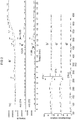
- the signals characteristic of the functionalization of lignin by metalloles are sought on the basis of the results obtained in Py-CPG-SM, according to Protocol I (electron impact ionization mode), for the model dimer derivatives described in Example 14 for sylvane and in Example 12 for 2-ethylthiophene.
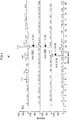
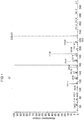
- the spectra obtained for the silvanyl derivative of Example 14 are shown on the figure 1 .
- Protocols E or F Different extracts of lignins, either commercial, or prepared from Douglas fir sawdust or crushed corn stalks according to Protocols E or F, are stabilized by condensation with a metallol (sylvane or 2-ethylthiophene) in accordance with the present invention according to Protocol A '.
- the products obtained are neutralized by adding an equimolar amount of base and concentrated to dryness under vacuum.
- condensation with sylvane is carried out directly on samples of biomass (sawdust and wood flour) according to Protocol A 'or according to Protocol H.
- the difference in m / z 14 with the characteristic signals obtained as described above with the model dimer comes from the absence of the second -CH 3 group on the phenolic nucleus in lignin compared to this model dimer.
- the pyrolysis products obtained for the lignin derivative, and the associated markers, are in fact as follows:
- Example 17 Acid-catalyzed depolymerization of the sylvanyl derivative obtained in Example 14 according to protocol J
- This derivative can be converted by heating methanol under reflux under oxidizing conditions into its unsaturated form of the following general formula:
- Example 18 Baso-catalyzed depolymerization of the sylvanyl derivative obtained in Example 10 according to protocol K
- Example 19 Thermo-catalyzed depolymerization of the sylvanyl derivative obtained in Example 16
- a small quantity of alkaline extract of sylvanylated wood lignin obtained in Example 16 is pyrolyzed at 500 ° C. under the conditions of Protocol L.
- the oil condensed and recovered at the end of the pyrolysis is analyzed in CPG- coupling. SM.
Landscapes
- Chemical & Material Sciences (AREA)
- Organic Chemistry (AREA)
- Compositions Of Macromolecular Compounds (AREA)
- Compounds Of Unknown Constitution (AREA)
- Organic Low-Molecular-Weight Compounds And Preparation Thereof (AREA)
- Heterocyclic Carbon Compounds Containing A Hetero Ring Having Oxygen Or Sulfur (AREA)
Claims (19)
- Ligninderivat, umfassend eine Einheit der allgemeinen Formel (I):
 R1, R2, R3 und R4, die gleich oder verschieden sind, jeweils für ein Wasserstoffatom, eine Methoxygruppe -OMe, eine Hydroxylgruppe, gegebenenfalls durch eine Schutzgruppe füreine Hydroxylgruppe geschützt, oder ein Motiv
 Hydroxylfunktion oder ein Motiv
 R'1, R'2, R'3 und R'4, die gleich oder verschieden sind, jeweils für ein Wasserstoffatom oder einen Substituenten stehen, der keine durch den mesomeren Effekt elektronenziehende Gruppe umfasst, die an den aromatischen Kern konjugiert ist,wobei ein Substituent von R'1, R'2, R'3 und R'4 für die kovalente Bindung mit dem Benzylkohlenstoff steht,
oder eines ihrer Salze. - Ligninderivat nach Anspruch 1, wobei R'1 und R'2, die gleich oder verschieden sind, mit Ausnahme des Substituenten, der die kovalente Bindung mit dem Benzylkohlenstoff bildet, jeweils für:- ein Wasserstoffatom- oder ein lineares, verzweigtes und/oder cyclisches, gesättigtes und/oder ungesättigtes, gegebenenfalls aromatisches, eventuell substituiertes Kohlenstoffradikal, das einen einzigen Cyclus oder mehrere kondensierte Cyclen umfassen kann, eventuell umfassend ein oder mehrere Heteroatome und/oder eine oder mehrere Gruppen, umfassend ein oder mehrere Heteroatome, stehen.
- Ligninderivat nach einem der Ansprüche 1 bis 2, wobei R'3 und R'4, die gleich oder verschieden sind, mit Ausnahme des Substituenten, der die kovalente Bindung mit dem Benzylkohlenstoff bildet, jeweils für:- ein Wasserstoffatom,- eine Gruppe, umfassend ein elektronenspendendes Radikal, das direkt oder durch Konjugation mit dem aromatischen Kern verbunden ist,- oder ein lineares, verzweigtes und/oder cyclisches, gesättigtes und/oder ungesättigtes, gegebenenfalls aromatisches, eventuell substituiertes Kohlenstoffradikal, das einen einzigen Cyclus oder mehrere kondensierte Cyclen umfassen kann, eventuell umfassend ein oder mehrere Heteroatome und/oder eine oder mehrere Gruppen, umfassend ein oder mehrere Heteroatome, stehen.
- Ligninderivat nach einem der Ansprüche 1 bis 3, wobei mindestens ein Substituent von R'1, R'2, R'3 und R'4 für ein Wasserstoffatom steht.
- Ligninderivat nach einem der Ansprüche 1 bis 4, wobei R'1 für die kovalente Bindung mit dem Benzylkohlenstoff steht.
- Ligninderivat nach einem der Ansprüche 1 bis 5, wobei R'3 und R'4 jeweils für ein Wasserstoffatom stehen.
- Ligninderivat nach einem der Ansprüche 1 bis 6, wobei R'2 für ein Wasserstoffatom oder eine Alkylgruppe steht.
- Ligninderivat nach einem der Ansprüche 1 bis 7, wobei A für ein Sauerstoffatom steht, R'1 für die kovalente Bindung mit dem Benzylkohlenstoff steht, R'2 für eine C1-C7-Alkylgruppe steht und R'3 und R'4 jeweils für ein Wasserstoffatom stehen.
- Ligninderivat nach einem der Ansprüche 1 bis 7, wobei A für eine -NR'-Gruppe steht, wo R' für ein Wasserstoffatom oder eine C1-C4-Alkylgruppe steht, R'1 für die kovalente Bindung mit dem Benzylkohlenstoff steht und R'2, R'3 und R'4 jeweils für ein Wasserstoffatom stehen.
- Verfahren zur Herstellung eines Ligninderivats, dadurch gekennzeichnet, dass Lignin mit einer Verbindung der allgemeinen Formel (II):
 A für ein Sauerstoffatom, ein Schwefelatom oder eine -NR'-Gruppe steht, wo R' für ein Wasserstoffatom oder einen Substituenten steht, der keine durch den mesomeren Effekt elektronenziehende Gruppe umfasst, die an den aromatischen Kern konjugiert ist,R'1, R'2, R'3 und R'4, die gleich oder verschieden sind, jeweils für ein Wasserstoffatom oder einen Substituenten stehen, der keine durch den mesomeren Effekt elektronenziehende Gruppe umfasst, die an den aromatischen Kern konjugiert ist, wobei mindestens ein Substituent von R'1, R'2, R'3 und R'4 für ein Wasserstoffatom steht,oder einem ihrer Salze,
reagieren gelassen wird,
so dass die Substitution einer Hydroxylgruppe des Lignins, insbesondere einer Gruppe, die von einem Benzylkohlenstoff getragen wird, durch die Verbindung der allgemeinen Formel (II) durchgeführt wird. - Verfahren nach Anspruch 10, wobei die Verbindung der allgemeinen Formel (II) in das Reaktionsmedium in einer Menge eingebracht wird, so dass die Anzahl von Moläquivalenten der Verbindung der allgemeinen Formel (II) im Verhältnis zu der Anzahl von Benzylkohlenstoffen des Lignins zwischen 2 und 15 liegt.
- Verfahren nach einem der Ansprüche 10 bis 11, wobei die Reaktion zwischen dem Lignin und der Verbindung der allgemeinen Formel (II) in einem sauren Medium durchgeführt wird.
- Verfahren nach einem der Ansprüche 10 bis 12, wobei die Reaktion zwischen dem Lignin und der Verbindung der allgemeinen Formel (II) in einem organischen Lösungsmittel, für sich oder im Gemisch mit Wasser, durchgeführt wird.
- Verfahren nach einem der Ansprüche 10 bis 13, an Lignocellulosebiomasse umgesetzt.
- Verfahren nach einem der Ansprüche 10 bis 13, an aus Lignocellulosebiomasse extrahiertem Lignin umgesetzt.
- Verfahren nach einem der Ansprüche 10 bis 13, gleichzeitig mit einem Verfahren zur Extraktion von Lignin aus Lignocellulosebiomasse umgesetzt.
- Verfahren zur Entpolymerisation von Lignin, dadurch gekennzeichnet, dass es zwei aufeinanderfolgende Schritte umfasst:- Umsetzen eines Verfahrens zur Herstellung eines Ligninderivats nach einem der Ansprüche 10 bis 16- und Cracken des so erhaltenen Ligninderivats.
- Verfahren nach Anspruch 17, wobei die zwei Schritte nacheinander im selben Reaktor durchgeführt werden.
- Entpolymerisationsprodukt, das durch ein Verfahren zur Entpolymerisation von Lignin nach einem der Ansprüche 17 bis 18 erhalten werden kann.
Applications Claiming Priority (2)
| Application Number | Priority Date | Filing Date | Title |
|---|---|---|---|
| FR1759134A FR3071837B1 (fr) | 2017-09-29 | 2017-09-29 | Derive de lignine chimiquement stable et procede pour sa preparation |
| PCT/EP2018/076531 WO2019063826A1 (fr) | 2017-09-29 | 2018-09-28 | Dérivé de lignine chimiquement stable et procédé pour sa préparation |
Publications (2)
| Publication Number | Publication Date |
|---|---|
| EP3672979A1 EP3672979A1 (de) | 2020-07-01 |
| EP3672979B1 true EP3672979B1 (de) | 2021-01-06 |
Family
ID=61187393
Family Applications (1)
| Application Number | Title | Priority Date | Filing Date |
|---|---|---|---|
| EP18778493.9A Active EP3672979B1 (de) | 2017-09-29 | 2018-09-28 | Chemisch stabiles ligninderivat und verfahren zur herstellung davon |
Country Status (7)
| Country | Link |
|---|---|
| US (1) | US11236119B2 (de) |
| EP (1) | EP3672979B1 (de) |
| CN (1) | CN111315756B (de) |
| CA (1) | CA3076874A1 (de) |
| ES (1) | ES2857875T3 (de) |
| FR (1) | FR3071837B1 (de) |
| WO (1) | WO2019063826A1 (de) |
Family Cites Families (7)
| Publication number | Priority date | Publication date | Assignee | Title |
|---|---|---|---|---|
| GB2108486B (en) * | 1981-10-26 | 1986-01-29 | Farmos Group Ltd | Alkane and alkene derivatives and their preparation and use |
| US7132432B2 (en) * | 2003-06-05 | 2006-11-07 | Bristol-Myers Squibb Company | Hydantoin derivatives as inhibitors of tumor necrosis factor-alpha converting enzyme (TACE) |
| US8772557B2 (en) * | 2011-07-26 | 2014-07-08 | Uop Llc | Aromatic hydrocarbons from depolymerization and deoxygenation of lignin |
| EP2862890A1 (de) * | 2012-05-03 | 2015-04-22 | Virdia Ltd. | Verfahren zur Extraktion von Lignin aus Biomasse |
| US9493851B2 (en) * | 2012-05-03 | 2016-11-15 | Virdia, Inc. | Methods for treating lignocellulosic materials |
| FR3024452B1 (fr) * | 2014-08-04 | 2016-08-19 | Agronomique Inst Nat Rech | Composes derives de flavanoides et procede pour leur preparation par depolymerisation de tanins condenses |
| US10676688B2 (en) * | 2015-06-15 | 2020-06-09 | Ren Fuel K2B Ab | Composition comprising derivatized lignin for fuel production |
-
2017
- 2017-09-29 FR FR1759134A patent/FR3071837B1/fr not_active Expired - Fee Related
-
2018
- 2018-09-28 ES ES18778493T patent/ES2857875T3/es active Active
- 2018-09-28 CA CA3076874A patent/CA3076874A1/fr not_active Abandoned
- 2018-09-28 CN CN201880063383.3A patent/CN111315756B/zh active Active
- 2018-09-28 US US16/651,445 patent/US11236119B2/en not_active Expired - Fee Related
- 2018-09-28 WO PCT/EP2018/076531 patent/WO2019063826A1/fr not_active Ceased
- 2018-09-28 EP EP18778493.9A patent/EP3672979B1/de active Active
Non-Patent Citations (1)
| Title |
|---|
| None * |
Also Published As
| Publication number | Publication date |
|---|---|
| US20200299318A1 (en) | 2020-09-24 |
| CN111315756A (zh) | 2020-06-19 |
| WO2019063826A1 (fr) | 2019-04-04 |
| BR112020006378A2 (pt) | 2020-09-24 |
| CN111315756B (zh) | 2021-06-29 |
| ES2857875T3 (es) | 2021-09-29 |
| FR3071837B1 (fr) | 2019-11-01 |
| US11236119B2 (en) | 2022-02-01 |
| EP3672979A1 (de) | 2020-07-01 |
| FR3071837A1 (fr) | 2019-04-05 |
| CA3076874A1 (fr) | 2019-04-04 |
Similar Documents
| Publication | Publication Date | Title |
|---|---|---|
| US11639324B2 (en) | Production of monomers from lignin during depolymerization of lignocellulose-containing composition | |
| JP7718710B2 (ja) | 官能基を有するリグニンのフラグメントの製造 | |
| Zakaria et al. | Efficiency of bronsted acidic ionic liquids in the dissolution and depolymerization of lignin from rice husk into high value-added products | |
| EP2547716A1 (de) | Verfahren zur entpolymerisation von lignocellulosischer ebiomasse | |
| US12358858B2 (en) | Low-pressure depolymerization of lignocellulosic biomass | |
| Liang et al. | Biorefinery lignin to renewable chemicals via sequential fractionation and depolymerization | |
| Gu et al. | Improved catalytic depolymerization of lignin waste using carbohydrate derivatives | |
| EP3672979B1 (de) | Chemisch stabiles ligninderivat und verfahren zur herstellung davon | |
| JP2017505300A (ja) | リグノセルロース材料から非熱分解バイオオイルを製造する方法 | |
| EP3177613A1 (de) | Flavonoidderivatverbindungen und verfahren zur herstellung davon durch depolymerisierung von kondensierten tanninen | |
| RU2840028C1 (ru) | Получение фрагментов лигнина с функциональными группами | |
| CA3029301C (en) | Production of monomers from lignin during depolymerisation of lignocellulose-containing composition | |
| FR3006687A1 (fr) | Procede de production de furfural a partir de biomasse lignocellulosique | |
| Hambrusch | Lignin-derived phenols as platform chemicals for N-alkylation transformations | |
| BR112020006378B1 (pt) | Derivado de lignina e métodos para preparar um derivado de lignina e para despolimerização da lignina | |
| FR3046790A1 (fr) | Procede de transformation en milieu aqueux des glucides presents dans une biomasse en des levulinates d’alkyles |
Legal Events
| Date | Code | Title | Description |
|---|---|---|---|
| STAA | Information on the status of an ep patent application or granted ep patent |
Free format text: STATUS: UNKNOWN |
|
| STAA | Information on the status of an ep patent application or granted ep patent |
Free format text: STATUS: THE INTERNATIONAL PUBLICATION HAS BEEN MADE |
|
| PUAI | Public reference made under article 153(3) epc to a published international application that has entered the european phase |
Free format text: ORIGINAL CODE: 0009012 |
|
| STAA | Information on the status of an ep patent application or granted ep patent |
Free format text: STATUS: REQUEST FOR EXAMINATION WAS MADE |
|
| 17P | Request for examination filed |
Effective date: 20200324 |
|
| AK | Designated contracting states |
Kind code of ref document: A1 Designated state(s): AL AT BE BG CH CY CZ DE DK EE ES FI FR GB GR HR HU IE IS IT LI LT LU LV MC MK MT NL NO PL PT RO RS SE SI SK SM TR |
|
| AX | Request for extension of the european patent |
Extension state: BA ME |
|
| GRAP | Despatch of communication of intention to grant a patent |
Free format text: ORIGINAL CODE: EPIDOSNIGR1 |
|
| STAA | Information on the status of an ep patent application or granted ep patent |
Free format text: STATUS: GRANT OF PATENT IS INTENDED |
|
| DAV | Request for validation of the european patent (deleted) | ||
| DAX | Request for extension of the european patent (deleted) | ||
| INTG | Intention to grant announced |
Effective date: 20200824 |
|
| GRAS | Grant fee paid |
Free format text: ORIGINAL CODE: EPIDOSNIGR3 |
|
| GRAA | (expected) grant |
Free format text: ORIGINAL CODE: 0009210 |
|
| STAA | Information on the status of an ep patent application or granted ep patent |
Free format text: STATUS: THE PATENT HAS BEEN GRANTED |
|
| AK | Designated contracting states |
Kind code of ref document: B1 Designated state(s): AL AT BE BG CH CY CZ DE DK EE ES FI FR GB GR HR HU IE IS IT LI LT LU LV MC MK MT NL NO PL PT RO RS SE SI SK SM TR |
|
| REG | Reference to a national code |
Ref country code: GB Ref legal event code: FG4D Free format text: NOT ENGLISH |
|
| REG | Reference to a national code |
Ref country code: AT Ref legal event code: REF Ref document number: 1352262 Country of ref document: AT Kind code of ref document: T Effective date: 20210115 Ref country code: CH Ref legal event code: EP |
|
| REG | Reference to a national code |
Ref country code: DE Ref legal event code: R096 Ref document number: 602018011681 Country of ref document: DE |
|
| REG | Reference to a national code |
Ref country code: IE Ref legal event code: FG4D Free format text: LANGUAGE OF EP DOCUMENT: FRENCH |
|
| REG | Reference to a national code |
Ref country code: FI Ref legal event code: FGE |
|
| REG | Reference to a national code |
Ref country code: SE Ref legal event code: TRGR |
|
| REG | Reference to a national code |
Ref country code: NO Ref legal event code: T2 Effective date: 20210106 |
|
| REG | Reference to a national code |
Ref country code: NL Ref legal event code: FP |
|
| REG | Reference to a national code |
Ref country code: AT Ref legal event code: MK05 Ref document number: 1352262 Country of ref document: AT Kind code of ref document: T Effective date: 20210106 |
|
| REG | Reference to a national code |
Ref country code: LT Ref legal event code: MG9D |
|
| PG25 | Lapsed in a contracting state [announced via postgrant information from national office to epo] |
Ref country code: BG Free format text: LAPSE BECAUSE OF FAILURE TO SUBMIT A TRANSLATION OF THE DESCRIPTION OR TO PAY THE FEE WITHIN THE PRESCRIBED TIME-LIMIT Effective date: 20210406 Ref country code: GR Free format text: LAPSE BECAUSE OF FAILURE TO SUBMIT A TRANSLATION OF THE DESCRIPTION OR TO PAY THE FEE WITHIN THE PRESCRIBED TIME-LIMIT Effective date: 20210407 Ref country code: HR Free format text: LAPSE BECAUSE OF FAILURE TO SUBMIT A TRANSLATION OF THE DESCRIPTION OR TO PAY THE FEE WITHIN THE PRESCRIBED TIME-LIMIT Effective date: 20210106 Ref country code: LT Free format text: LAPSE BECAUSE OF FAILURE TO SUBMIT A TRANSLATION OF THE DESCRIPTION OR TO PAY THE FEE WITHIN THE PRESCRIBED TIME-LIMIT Effective date: 20210106 Ref country code: PT Free format text: LAPSE BECAUSE OF FAILURE TO SUBMIT A TRANSLATION OF THE DESCRIPTION OR TO PAY THE FEE WITHIN THE PRESCRIBED TIME-LIMIT Effective date: 20210506 |
|
| PG25 | Lapsed in a contracting state [announced via postgrant information from national office to epo] |
Ref country code: AT Free format text: LAPSE BECAUSE OF FAILURE TO SUBMIT A TRANSLATION OF THE DESCRIPTION OR TO PAY THE FEE WITHIN THE PRESCRIBED TIME-LIMIT Effective date: 20210106 Ref country code: PL Free format text: LAPSE BECAUSE OF FAILURE TO SUBMIT A TRANSLATION OF THE DESCRIPTION OR TO PAY THE FEE WITHIN THE PRESCRIBED TIME-LIMIT Effective date: 20210106 Ref country code: RS Free format text: LAPSE BECAUSE OF FAILURE TO SUBMIT A TRANSLATION OF THE DESCRIPTION OR TO PAY THE FEE WITHIN THE PRESCRIBED TIME-LIMIT Effective date: 20210106 Ref country code: LV Free format text: LAPSE BECAUSE OF FAILURE TO SUBMIT A TRANSLATION OF THE DESCRIPTION OR TO PAY THE FEE WITHIN THE PRESCRIBED TIME-LIMIT Effective date: 20210106 |
|
| REG | Reference to a national code |
Ref country code: ES Ref legal event code: FG2A Ref document number: 2857875 Country of ref document: ES Kind code of ref document: T3 Effective date: 20210929 |
|
| PG25 | Lapsed in a contracting state [announced via postgrant information from national office to epo] |
Ref country code: IS Free format text: LAPSE BECAUSE OF FAILURE TO SUBMIT A TRANSLATION OF THE DESCRIPTION OR TO PAY THE FEE WITHIN THE PRESCRIBED TIME-LIMIT Effective date: 20210506 |
|
| REG | Reference to a national code |
Ref country code: DE Ref legal event code: R097 Ref document number: 602018011681 Country of ref document: DE |
|
| PG25 | Lapsed in a contracting state [announced via postgrant information from national office to epo] |
Ref country code: SM Free format text: LAPSE BECAUSE OF FAILURE TO SUBMIT A TRANSLATION OF THE DESCRIPTION OR TO PAY THE FEE WITHIN THE PRESCRIBED TIME-LIMIT Effective date: 20210106 Ref country code: CZ Free format text: LAPSE BECAUSE OF FAILURE TO SUBMIT A TRANSLATION OF THE DESCRIPTION OR TO PAY THE FEE WITHIN THE PRESCRIBED TIME-LIMIT Effective date: 20210106 Ref country code: EE Free format text: LAPSE BECAUSE OF FAILURE TO SUBMIT A TRANSLATION OF THE DESCRIPTION OR TO PAY THE FEE WITHIN THE PRESCRIBED TIME-LIMIT Effective date: 20210106 |
|
| PLBE | No opposition filed within time limit |
Free format text: ORIGINAL CODE: 0009261 |
|
| STAA | Information on the status of an ep patent application or granted ep patent |
Free format text: STATUS: NO OPPOSITION FILED WITHIN TIME LIMIT |
|
| PG25 | Lapsed in a contracting state [announced via postgrant information from national office to epo] |
Ref country code: DK Free format text: LAPSE BECAUSE OF FAILURE TO SUBMIT A TRANSLATION OF THE DESCRIPTION OR TO PAY THE FEE WITHIN THE PRESCRIBED TIME-LIMIT Effective date: 20210106 Ref country code: RO Free format text: LAPSE BECAUSE OF FAILURE TO SUBMIT A TRANSLATION OF THE DESCRIPTION OR TO PAY THE FEE WITHIN THE PRESCRIBED TIME-LIMIT Effective date: 20210106 Ref country code: SK Free format text: LAPSE BECAUSE OF FAILURE TO SUBMIT A TRANSLATION OF THE DESCRIPTION OR TO PAY THE FEE WITHIN THE PRESCRIBED TIME-LIMIT Effective date: 20210106 |
|
| 26N | No opposition filed |
Effective date: 20211007 |
|
| PG25 | Lapsed in a contracting state [announced via postgrant information from national office to epo] |
Ref country code: AL Free format text: LAPSE BECAUSE OF FAILURE TO SUBMIT A TRANSLATION OF THE DESCRIPTION OR TO PAY THE FEE WITHIN THE PRESCRIBED TIME-LIMIT Effective date: 20210106 |
|
| PG25 | Lapsed in a contracting state [announced via postgrant information from national office to epo] |
Ref country code: IS Free format text: LAPSE BECAUSE OF FAILURE TO SUBMIT A TRANSLATION OF THE DESCRIPTION OR TO PAY THE FEE WITHIN THE PRESCRIBED TIME-LIMIT Effective date: 20210506 Ref country code: MC Free format text: LAPSE BECAUSE OF FAILURE TO SUBMIT A TRANSLATION OF THE DESCRIPTION OR TO PAY THE FEE WITHIN THE PRESCRIBED TIME-LIMIT Effective date: 20210106 |
|
| PG25 | Lapsed in a contracting state [announced via postgrant information from national office to epo] |
Ref country code: IE Free format text: LAPSE BECAUSE OF NON-PAYMENT OF DUE FEES Effective date: 20210928 |
|
| PG25 | Lapsed in a contracting state [announced via postgrant information from national office to epo] |
Ref country code: CY Free format text: LAPSE BECAUSE OF FAILURE TO SUBMIT A TRANSLATION OF THE DESCRIPTION OR TO PAY THE FEE WITHIN THE PRESCRIBED TIME-LIMIT Effective date: 20210106 |
|
| PG25 | Lapsed in a contracting state [announced via postgrant information from national office to epo] |
Ref country code: HU Free format text: LAPSE BECAUSE OF FAILURE TO SUBMIT A TRANSLATION OF THE DESCRIPTION OR TO PAY THE FEE WITHIN THE PRESCRIBED TIME-LIMIT; INVALID AB INITIO Effective date: 20180928 |
|
| PG25 | Lapsed in a contracting state [announced via postgrant information from national office to epo] |
Ref country code: SI Free format text: LAPSE BECAUSE OF FAILURE TO SUBMIT A TRANSLATION OF THE DESCRIPTION OR TO PAY THE FEE WITHIN THE PRESCRIBED TIME-LIMIT Effective date: 20210106 |
|
| PG25 | Lapsed in a contracting state [announced via postgrant information from national office to epo] |
Ref country code: MK Free format text: LAPSE BECAUSE OF FAILURE TO SUBMIT A TRANSLATION OF THE DESCRIPTION OR TO PAY THE FEE WITHIN THE PRESCRIBED TIME-LIMIT Effective date: 20210106 |
|
| PG25 | Lapsed in a contracting state [announced via postgrant information from national office to epo] |
Ref country code: TR Free format text: LAPSE BECAUSE OF FAILURE TO SUBMIT A TRANSLATION OF THE DESCRIPTION OR TO PAY THE FEE WITHIN THE PRESCRIBED TIME-LIMIT Effective date: 20210106 |
|
| PG25 | Lapsed in a contracting state [announced via postgrant information from national office to epo] |
Ref country code: MT Free format text: LAPSE BECAUSE OF FAILURE TO SUBMIT A TRANSLATION OF THE DESCRIPTION OR TO PAY THE FEE WITHIN THE PRESCRIBED TIME-LIMIT Effective date: 20210106 |
|
| PGFP | Annual fee paid to national office [announced via postgrant information from national office to epo] |
Ref country code: FI Payment date: 20240926 Year of fee payment: 7 Ref country code: DE Payment date: 20240926 Year of fee payment: 7 |
|
| PGFP | Annual fee paid to national office [announced via postgrant information from national office to epo] |
Ref country code: GB Payment date: 20240926 Year of fee payment: 7 |
|
| PGFP | Annual fee paid to national office [announced via postgrant information from national office to epo] |
Ref country code: LU Payment date: 20240926 Year of fee payment: 7 |
|
| PGFP | Annual fee paid to national office [announced via postgrant information from national office to epo] |
Ref country code: FR Payment date: 20240926 Year of fee payment: 7 |
|
| PGFP | Annual fee paid to national office [announced via postgrant information from national office to epo] |
Ref country code: NL Payment date: 20240926 Year of fee payment: 7 |
|
| PGFP | Annual fee paid to national office [announced via postgrant information from national office to epo] |
Ref country code: NO Payment date: 20240926 Year of fee payment: 7 |
|
| PGFP | Annual fee paid to national office [announced via postgrant information from national office to epo] |
Ref country code: BE Payment date: 20240926 Year of fee payment: 7 |
|
| PGFP | Annual fee paid to national office [announced via postgrant information from national office to epo] |
Ref country code: IT Payment date: 20240926 Year of fee payment: 7 Ref country code: ES Payment date: 20241030 Year of fee payment: 7 |
|
| PGFP | Annual fee paid to national office [announced via postgrant information from national office to epo] |
Ref country code: SE Payment date: 20240930 Year of fee payment: 7 |
|
| PGFP | Annual fee paid to national office [announced via postgrant information from national office to epo] |
Ref country code: CH Payment date: 20241001 Year of fee payment: 7 |
|
| PG25 | Lapsed in a contracting state [announced via postgrant information from national office to epo] |
Ref country code: FI Free format text: LAPSE BECAUSE OF NON-PAYMENT OF DUE FEES Effective date: 20250928 |