EP3672933B1 - Verfahren zur rückgewinnung von organischen säuren aus wässrigen lösungen - Google Patents
Verfahren zur rückgewinnung von organischen säuren aus wässrigen lösungen Download PDFInfo
- Publication number
- EP3672933B1 EP3672933B1 EP18759091.4A EP18759091A EP3672933B1 EP 3672933 B1 EP3672933 B1 EP 3672933B1 EP 18759091 A EP18759091 A EP 18759091A EP 3672933 B1 EP3672933 B1 EP 3672933B1
- Authority
- EP
- European Patent Office
- Prior art keywords
- acid
- aqueous solution
- extraction phase
- alcohol
- organic
- Prior art date
- Legal status (The legal status is an assumption and is not a legal conclusion. Google has not performed a legal analysis and makes no representation as to the accuracy of the status listed.)
- Active
Links
Images

Classifications
-
- C—CHEMISTRY; METALLURGY
- C07—ORGANIC CHEMISTRY
- C07C—ACYCLIC OR CARBOCYCLIC COMPOUNDS
- C07C51/00—Preparation of carboxylic acids or their salts, halides or anhydrides
- C07C51/42—Separation; Purification; Stabilisation; Use of additives
- C07C51/487—Separation; Purification; Stabilisation; Use of additives by treatment giving rise to chemical modification
-
- C—CHEMISTRY; METALLURGY
- C07—ORGANIC CHEMISTRY
- C07C—ACYCLIC OR CARBOCYCLIC COMPOUNDS
- C07C51/00—Preparation of carboxylic acids or their salts, halides or anhydrides
- C07C51/42—Separation; Purification; Stabilisation; Use of additives
- C07C51/50—Use of additives, e.g. for stabilisation
-
- C—CHEMISTRY; METALLURGY
- C07—ORGANIC CHEMISTRY
- C07C—ACYCLIC OR CARBOCYCLIC COMPOUNDS
- C07C67/00—Preparation of carboxylic acid esters
- C07C67/08—Preparation of carboxylic acid esters by reacting carboxylic acids or symmetrical anhydrides with the hydroxy or O-metal group of organic compounds
Definitions
- the present invention is related to methods of efficiently recovering organic acids, such as carboxylic acids, from aqueous solutions, in particular from fermentation broths.
- the carboxylic acid salt comprises a cation that forms an insoluble carbonate salt, such as Ca, Zn, Ba and Mg.
- a tertiary amine and CO 2 are added to the aqueous salt solution to form an acid-amine complex and the insoluble carbonate salt.
- the acid-amine complex is recovered from the aqueous salt solution by adding a water immiscible solvent, in particular an alcohol, to form a reaction phase that includes the acid-amine complex and the water immiscible solvent.
- the reaction phase forms a separate phase from the aqueous solution and is separated.
- An ester is then formed from the acid and the alcohol solvent.
- a method of recovering an organic acid from an aqueous solution as set out in the appended claims.
- the method comprises a first step of extracting the organic acid, which is dissolved in the aqueous solution, into a water immiscible extraction phase.
- the extraction phase comprises an extractant for the organic acid.
- the extractant is advantageously an organic extractant, and advantageously is or comprises an organic amine able to complex with the organic acid, in particular a tertiary organic amine.
- the extractant is advantageously a reactive extractant.
- the extraction phase is separated from the aqueous solution.
- the extracting step can be performed in an extraction tank, and the extraction phase can be drawn from the extraction tank.
- the aqueous solution which may be at least partially depleted from the organic acid, is recycled.
- the aqueous solution can be drawn from a fermentation broth, and the depleted aqueous solution can be recycled to the fermentation broth.
- the organic acid present in the extraction phase is then reacted with an alcohol to form a corresponding ester in a catalyst-free esterification reaction.
- the alcohol is added to the extraction phase following separation of the extraction phase from the aqueous solution.
- the extraction phase and the alcohol can be mixed and fed to an esterifying reactor.
- the organic acids as referred to in the present description advantageously refer to (water-soluble, or at least water-miscible) carboxylic acids that are formed in aqueous media, such as, though not limited to, fermentation broths.
- aqueous media such as, though not limited to, fermentation broths.
- Present methods are advantageously applicable to recovery of dicarboxylic acids. These may be linear, branched-chained, saturated, unsaturated, or substituted. Present methods may as well be applicable to other types of carboxylic acids, such as mono-carboxylic acid or poly-carboxylic acids, in particular tri-carboxylic acids (e.g., citric acid).
- useful dicarboxylic acids are: succinic acid, fumaric acid, malic acid, maleic acid, glutaconic acid, 2,5-furan dicarboxylic acid, aspartic acid, glucaric acid, glutamic acid, levulinic acid and itaconic acid.
- useful mono-carboxylic acids are: propionic acid (specifically derivative hydroxypropanoic acid), acetic acid, formic acid, butyric acid (and isobutyric acid), valeric acid (and isovaleric acid), caproic acid (and isocaproic acid), caprylic acid, lactic acid. Methods as described herein may be applicable to derivatives of the above acids.
- the organic acid is advantageously one which is produced through fermentation, in particular fermentation of a sugar in the presence of a microorganism.
- An enzyme may be used instead of a microorganism.
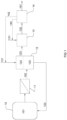
- the fermentation reaction 21 takes place in a fermentation reactor 10 to produce a fermentation broth 101 which contains the organic acid. Suitable microorganisms and sugars for such fermentation reactions are well known to the skilled artisan.
- the fermentation reaction 21 typically proceeds at slightly elevated temperatures, such as between 20°C and 65°C. This is also the temperature at which the fermentation broth 101 is present in reactor 10.
- the pH of the fermentation broth is preferably acidic, and advantageously between pH 2 and pH 6.5, advantageously between pH 2 and pH 5.5. Nevertheless, also fermentations taking place at neutral pH up to 7.5, e.g. between pH 6.5 and pH 7, or between pH 6.5 and pH 7.5, can be used, provided that the fermentation broth 101 is acidified to acid pH (e.g., pH 6.5 or less) before performing the reactive extraction step.
- the organic acid is recovered from the fermentation broth 101 in an extraction tank 12 in which the extraction step 22 takes place.
- the fermentation broth is drawn from reactor 10 and supplied to the extraction tank 12.
- a cell retention unit 11 may be arranged between the reactor 10 and the extraction tank 12, which retains microorganisms useful for the fermentation reactions and provides an organic acid feed 102 which is substantially cell-free.
- Cell retention unit 11 may retain microorganisms by filtration, and therefore comprise or be formed of a filtration unit, such as a microfiltration or ultrafiltration unit.
- a membrane contactor device as cell retention unit 11.
- the membrane contactor device may be integrated into extraction tank 12 to fulfil the role of cell separator and extraction at the same time.
- Feed 102 is supplied to extraction tank 12 and forms an aqueous phase 122 in tank 12.
- An advantageously organic extractant 121 is added to tank 12.
- the extraction in tank 12 is advantageously carried out at ambient temperature, or temperatures between 20°C and 50°C. It may be carried out at substantially a same temperature as the temperature of the fermentation in reactor 10.
- the extractant is capable of extracting the organic acid from the aqueous phase 122 into an extraction phase 123 which is immiscible with water, and hence is immiscible with phase 122.
- the aqueous phase, at least partially depleted from the organic acid can be recycled to the fermentation reactor 10.
- the process can be applied in batch or continuously.
- immiscible refers to two compounds or streams forming a two-phase mixture.
- compounds which would form a salt with the organic acid are not added to feed 102, or reactor 10, nor to extraction tank 12.
- no ammonia or water miscible amine is added to feed 102.
- the organic acid is advantageously present in feed 102 in its free form and e.g. not as a salt. It was observed by the inventors that the presence of salts in feed 102 dramatically reduces the extraction yield by amine extractants (trioctyl amine, dioctyl amine) by 10%-20% and more.
- One class of useful extractants are reactive extractants which include organic amines, in particular aliphatic amines.
- the organic amines are advantageously immiscible in water. These are advantageously amines having at least one alkylgroup, wherein each of the at least one alkylgroup comprises at least 6 carbon atoms.
- the amines also advantageously have boiling points greater than 100°C (measured at atmospheric pressure) and advantageously at least 175°C (measured at atmospheric pressure).
- Primary, secondary, and tertiary amines, as well as quaternary amine salts can be used.
- the amines are advantageously tertiary amines, which advantageously have at least six carbon atoms per chain. Among such amines, aliphatic tertiary amines have been found to be most effective.
- the nitrogen atom of the amine may be substituted with groups including alkyl, aryl (e.g., phenyl), and aralkyl (e.g., benzyl) groups. These groups, in turn, may be straight chain or branched, and may be substituted or unsubstituted. Examples of substituted groups include halogenated groups (e.g., halogenated alkyl groups) and hydroxyl-containing groups (e.g., hydroxyalkyl groups such as hydroxyethyl and hydroxypropyl). The groups may be the same as, or different from, each other.
- groups including alkyl, aryl (e.g., phenyl), and aralkyl (e.g., benzyl) groups. These groups, in turn, may be straight chain or branched, and may be substituted or unsubstituted. Examples of substituted groups include halogenated groups (e.g., halogenated alkyl groups) and hydroxyl
- Alkyl groups are preferred, particularly higher alkyl groups (e.g., having at least 6 carbon atoms, and preferably between 8 and 14 carbon atoms).
- Examples of useful alkyl amines include trialkyl amines such as trioctyl amine, tridecyl amine, tridodecyl amine, and combinations thereof.
- Dialkyl amines such as dioctyl amine may be suitable as well.
- a second class of useful extractants includes solvating extractants such as carbon bonded oxygen bearing extractants, phosphorus bonded oxygen bearing extractants, phosphine sulfide extractants, and alkyl sulfide extractants. These solvating extractants advantageously have boiling points of at least 175°C (measured at atmospheric pressure).
- useful carbon-oxygen extractants include alcohols (e.g., alkyl alcohols having between 8 and 14 carbon atoms, such as octanol, decanol, and dodecanol), ethers (e.g., alkyl ethers such as dibutylcarbitol), ketones (e.g., decanone), and amides (e.g., N,N-dialkyl amides such as N,N-dibutyl formamide, N,N-dibutyl acetamide, N,N-dibutyl propionamide, N,N-dipropyl propionamide, and N,N-di-n-butyl lactamide).
- alcohols e.g., alkyl alcohols having between 8 and 14 carbon atoms, such as octanol, decanol, and dodecanol
- ethers e.g., alkyl ethers such as dibutylcarbito
- useful phosphorus-oxygen extractants include phosphorus esters (e.g., alkyl phosphates such as tri-n-butylphosphate, dibutylbutylphosphonate, and dimethylmethylphosphonate), and phosphine oxides (e.g., tri-n-octylphosphine oxide).
- phosphorus esters e.g., alkyl phosphates such as tri-n-butylphosphate, dibutylbutylphosphonate, and dimethylmethylphosphonate
- phosphine oxides e.g., tri-n-octylphosphine oxide
- useful phosphine sulfides include triisobutylphosphine sulfide.
- useful alkyl sulfides include dihexyl sulfide and diheptyl sulfide.
- any of the above-described extractants may be used alone or in combination with other extractants, or other compounds.
- it may be useful to combine an organic amine extractant with one of the solvating extractants.
- a water insoluble, or water immiscible diluent is added to the tank 12, either together with the extractant 121, or separately.
- the diluent is miscible with the extractant and advantageously reduces the viscosity of the extraction phase 123 in order to facilitate the extraction of the organic acid from the aqueous phase 122.
- alcohols may participate in downstream esterification reactions to yield a blend of different types of esters, or nonvolatile esters which will be more difficult to separate. Therefore, the diluent - and hence the extraction phase 123 - does not comprise substantial amounts of an alcohol.
- esters used as diluent For example, an ester having at least 5 carbon atoms, and advantageously a total of between 7 and 16 carbon atoms may be used as diluent and combined with the organic amine.
- the ester may be linear, or branched-chain, saturated, or substituted.
- Specific examples of suitable esters are pentyl acetate,methyl octanoate and triglycerides.
- a hydrocarbon may be used as diluent and combined with the organic amine.
- the hydrocarbon may be linear or aromatic, branched or unbranched.
- suitable hydrocarbons are alkanes.
- an alkane having at least 5 carbon atoms, and advantageously a total of between 7 and 16 carbon atoms may be used as diluent and combined with the organic amine.
- Examples of useful alkanes are hexane, heptane and octane.
- Toluene can be used as diluent as well.
- the weight ratio of diluent to extractant in the extraction phase is advantageously less than or equal to 5, advantageously less than or equal to 4, advantageously less than or equal to 2.5 ,
- the diluent advantageously forms the largest part of the extraction phase, i.e., weight ratio of at least 1.
- the extraction tank 12 therefore advantageously comprises a feed inlet for the aqueous solution 102, an inlet for the extractant/diluent 121 and an outlet for the extraction phase 123.
- the extraction tank may further comprise an outlet for recycling the depleted aqueous phase 122, and which may be fluidly connected to the reactor 10.
- the organic acid in the extraction phase 123 is now back extracted to separate the extractant (and possibly the diluent) from the acid in step 24.
- the organic acid is back extracted as an ester.
- the extraction phase 123 is fed to an esterification reactor 13.
- An esterifying agent 131 is added to reactor 13. The esterifying agent reacts with the organic acid to form the corresponding ester.
- Suitable esterifying agents include alcohols, in particular alkyl alcohols. Alcohols having a total of between 1 and 5 carbon atoms are preferred. Specific examples of useful alcohols are methanol and ethanol. These alcohols advantageously provide a fast and efficient reaction, at relatively short residence times.
- the residence time of the mixture of extraction phase and esterifying agent in reactor 13 is advantageously between 1 min and 240 min, advantageously 120 min or less, advantageously 60 min or less, advantageously 40 min or less.
- the residence time refers to the average time in which a stream stays inside the reactor. For continuous processes, residence time may be calculated as the volume of reactor divided by the sum of the (volumetric) flow rates of all in-going streams.
- the acid is de-complexed.
- the extractant and/or the diluent does not react during the esterification reaction, and is retained substantially unmodified in the product stream 132 supplied from reactor 13.
- the product stream 132 comprises the ester of the organic acid, and advantageously the extractant and possibly the diluent.
- alcohols are advantageously not used as diluent.
- the esterification reaction is catalyst-free, i.e. no catalyst is used, which leaves no catalyst residues in the product, and avoids any undesired reaction of the extractant and/or diluent with the catalyst.
- a catalyst-free esterification reaction is advantageously less affected by the presence of water that can be formed during esterification.
- the extraction phase 123 may comprise small amounts of water, e.g. 5% or less by weight, typically between 0.1% and 3% by weight.
- the esterifying reactions may produce additional amounts of water.
- the esterification reaction is advantageously carried out at elevated temperature, such as between 100°C and 350°C, advantageously between 120°C and 320°C, advantageously between 150°C and 300°C. It may be useful to carry out the esterification reaction at elevated pressure, such as pressures of at least 5 bar, advantageously at least 10 bar, advantageously between 20 bar and 250 bar.
- Product stream 132 may be fed to a separator 14 to separate the ester 141 from a stream 142 which may include water, the extractant and/or the diluent.
- Stream 142 may be recycled to the extraction tank 12.
- Separator 14 may further be configured to separate the ester 141 from any excess alcohol, which may form a second stream 143 and may be recycled to reactor 13.
- One suitable class of separation processes 25 to recover the ester is distillation, such as though not limited to membrane distillation. Another suitable class of separation processes is pervaporation.
- the ester is a useful starting product that can be used for further processing, such as polymerisation.
- the back extraction of the organic acid as an ester allows for greatly simplifying the downstream processing and recovering the acid through its corresponding ester in a highly efficient way.
- a feed solution was prepared to simulate an extraction phase for itaconic acid, as would result from reactive extraction based on trioctylamine and with methyl octanoate as diluent in order to show the feasibility of the esterification reactions.
- the relative amounts of itaconic acid and trioctylamine in the feed solution were 1 mole itaconic acid to 2 moles trioctylamine.
- the ratio of trioctylamine to the diluent methyl octanoate in the feed solution was 0.4 g/g.
- the water content of the feed solution was measured and resulted about 1% by weight.
- the feed solution so obtained was mixed with methanol in a 1 g/g ratio (methanol/feed).
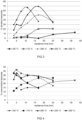
- This mixture was pumped into a continuous reactor held at a specified temperature. Reaction temperatures between 150°C and 250°C were tested. The pumping rate was adjusted to achieve a specified residence time. Residence times between 3 min and 35 min were tested. The reaction pressure was held at 150 bar. Under these conditions an esterification of the complexed mixture was observed as indicated in Figs. 3 and 4 . No catalyst was used. At a temperature between 200°C and 250°C up to 70% conversion of itaconic acid into dimethyl itaconate and 30% monomethylitaconate was observed (conversion rates based on the molar ratio of the ester product against the dosed itaconic acid).
- a feed solution was prepared following the procedure in experiment 1.
- the feed solution was mixed with methanol in a 0.5 g/g ratio (methanol/feed).
- This mixture was pumped into a continuous reactor at 200°C and the pumping rate was adjusted to obtain a residence time of 17 min.
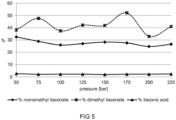
- Reaction pressures between 50 bar and 225 bar were tested, as shown in Fig. 5 . From Fig. 5 it can be seen that useful conversion rates of the acid into the corresponding ester were obtained for a wide range of reaction pressure, without presence of catalysts. As can also be seen in Fig. 5 , the itaconic acid reacted almost completely.
Landscapes
- Chemical & Material Sciences (AREA)
- Organic Chemistry (AREA)
- Engineering & Computer Science (AREA)
- Oil, Petroleum & Natural Gas (AREA)
- Chemical Kinetics & Catalysis (AREA)
- General Chemical & Material Sciences (AREA)
- Organic Low-Molecular-Weight Compounds And Preparation Thereof (AREA)
Claims (11)
- Verfahren zum Gewinnen einer organischen Säure aus einer wässrigen Lösung (102), das umfasst:Extrahieren (22) der organischen Säure, die in der wässrigen Lösung gelöst ist, in eine mit Wasser nicht mischbare Extraktionsphase (123), die ein Extraktionsmittel (121) für die organische Säure umfasst,Trennen (23) der Extraktionsphase von der wässrigen Lösung,Zusetzen eines Alkohols (131) zu der von der wässrigen Lösung getrennten Extraktionsphase und Umsetzen (24) der von der wässrigen Lösung getrennten Extraktionsphase mit dem Alkohol, um einen Ester (141) aus der organischen Säure und dem Alkohol zu bilden,wobei der Alkohol ein Alkylalkohol mit insgesamt zwischen 1 und 5 Kohlenstoffatomen ist,dadurch gekennzeichnet, dass das Extrahieren (22) der organischen Säure das Zusetzen eines mit Wasser nicht mischbaren Verdünnungsmittels zu der Extraktionsphase umfasst, wobei das Verdünnungsmittel frei von Alkoholen und mit dem Extraktionsmittel mischbar ist, und dass das Umsetzen (24) der von der wässrigen Lösung getrennten Extraktionsphase mit dem Alkohol eine katalysatorfreie Veresterungsreaktion umfasst.
- Verfahren nach Anspruch 1, wobei die wässrige Lösung während des Extraktionsschritts einen pH-Wert zwischen 2 und 5,5 aufweist.
- Verfahren nach Anspruch 1 oder 2, wobei der Extraktionsschritt das Zusetzen eines mit Wasser nicht mischbaren organischen Amins umfasst, wobei das organische Amin und die organische Säure ein Säure-Amin-Komplex, der in der Extraktionsphase (123) gelöst ist, bilden.
- Verfahren nach Anspruch 3, wobei das organische Amin zumindest 6 Kohlenstoffatome umfasst.
- Verfahren nach Anspruch 3 oder 4, wobei das organische Amin ein tertiäres Amin ist, das zumindest sechs Kohlenstoffatome pro Kette umfasst.
- Verfahren nach irgendeinem der vorstehenden Ansprüche, wobei das Verdünnungsmittel ein Ester ist.
- Verfahren nach irgendeinem der vorstehenden Ansprüche, wobei die wässrige Lösung aus einer Fermentationsbrühe (101) gezogen wird und das Rückführen der wässrigen Lösung (122) zu der Fermentationsbrühe nach dem Extraktionsschritt umfasst.
- Verfahren nach irgendeinem der vorstehenden Ansprüche, wobei der Schritt des Umsetzens das Erhitzen der von der wässrigen Lösung getrennten Extraktionsphase und des Alkohols auf eine Temperatur zwischen 100 °C und 350 °C umfasst.
- Verfahren nach irgendeinem der vorstehenden Ansprüche, wobei der Schritt des Umsetzens das Beaufschlagen der von der wässrigen Lösung getrennten Extraktionsphase (123) und des Alkohols mit einem Druck von zumindest 5 bar umfasst.
- Verfahren nach irgendeinem der vorstehenden Ansprüche, wobei die organische Säure eine wasserlösliche Dicarbonsäure ist.
- Verfahren nach irgendeinem der vorstehenden Ansprüche, das ferner das Trennen (25) des Esters (141) von einer Mischung, die das Extraktionsmittel umfasst, und das Rückführen des Extraktionsmittels zu der Extraktionsphase umfasst.
Applications Claiming Priority (2)
| Application Number | Priority Date | Filing Date | Title |
|---|---|---|---|
| EP17187734.3A EP3447043A1 (de) | 2017-08-24 | 2017-08-24 | Verfahren zur rückgewinnung von organischen säuren aus wässrigen strömen |
| PCT/EP2018/072588 WO2019038303A1 (en) | 2017-08-24 | 2018-08-21 | METHOD FOR RECOVERING ORGANIC ACIDS FROM AQUEOUS SOLUTIONS |
Publications (3)
| Publication Number | Publication Date |
|---|---|
| EP3672933A1 EP3672933A1 (de) | 2020-07-01 |
| EP3672933C0 EP3672933C0 (de) | 2023-06-07 |
| EP3672933B1 true EP3672933B1 (de) | 2023-06-07 |
Family
ID=59699596
Family Applications (2)
| Application Number | Title | Priority Date | Filing Date |
|---|---|---|---|
| EP17187734.3A Withdrawn EP3447043A1 (de) | 2017-08-24 | 2017-08-24 | Verfahren zur rückgewinnung von organischen säuren aus wässrigen strömen |
| EP18759091.4A Active EP3672933B1 (de) | 2017-08-24 | 2018-08-21 | Verfahren zur rückgewinnung von organischen säuren aus wässrigen lösungen |
Family Applications Before (1)
| Application Number | Title | Priority Date | Filing Date |
|---|---|---|---|
| EP17187734.3A Withdrawn EP3447043A1 (de) | 2017-08-24 | 2017-08-24 | Verfahren zur rückgewinnung von organischen säuren aus wässrigen strömen |
Country Status (4)
| Country | Link |
|---|---|
| US (1) | US11401230B2 (de) |
| EP (2) | EP3447043A1 (de) |
| CN (1) | CN111094226B (de) |
| WO (1) | WO2019038303A1 (de) |
Families Citing this family (1)
| Publication number | Priority date | Publication date | Assignee | Title |
|---|---|---|---|---|
| CN113461154B (zh) * | 2021-08-03 | 2024-12-13 | 同济大学 | 一种从厌氧消化液中在线选择性分离有机酸的装置 |
Citations (2)
| Publication number | Priority date | Publication date | Assignee | Title |
|---|---|---|---|---|
| US20100124773A1 (en) * | 2008-11-19 | 2010-05-20 | The Ohio State University | Methods and processes for producing esters |
| WO2019002240A1 (en) * | 2017-06-29 | 2019-01-03 | Akzo Nobel Chemicals International B.V. | METHOD FOR RECOVERING ACETIC ACID FROM AN AQUEOUS FLOW COMPRISING THE SAME |
Family Cites Families (7)
| Publication number | Priority date | Publication date | Assignee | Title |
|---|---|---|---|---|
| FR1250722A (fr) * | 1959-12-22 | 1961-01-13 | L I R C Lab Italiani Di Ricerc | Procédé pour la purification de l'acide itaconique brut |
| BR8404579A (pt) * | 1983-09-14 | 1985-08-06 | Halcon Sd Group Inc | Processo para tratamento de acido acetico aquoso diluido |
| WO2002090312A1 (en) | 2001-05-07 | 2002-11-14 | Cargill, Incorporated | Process for preparing carboxylic acids and derivatives thereof |
| NZ586246A (en) | 2004-01-29 | 2013-03-28 | Zeachem Inc | Recovery of organic acids from a fermentation broth |
| WO2009137708A1 (en) * | 2008-05-07 | 2009-11-12 | Zeachem Inc. | Recovery of organic acids |
| FI20106311L (fi) * | 2010-12-10 | 2012-06-11 | Kemira Oyj | Menetelmä orgaanisen hapon talteenottamiseksi laimeasta vesiliuoksesta |
| EP3259361A1 (de) * | 2015-02-16 | 2017-12-27 | DSM IP Assets B.V. | Verfahren zur herstellung von itaconsäure unter anaeroben bedingungen |
-
2017
- 2017-08-24 EP EP17187734.3A patent/EP3447043A1/de not_active Withdrawn
-
2018
- 2018-08-21 EP EP18759091.4A patent/EP3672933B1/de active Active
- 2018-08-21 CN CN201880053684.8A patent/CN111094226B/zh active Active
- 2018-08-21 WO PCT/EP2018/072588 patent/WO2019038303A1/en not_active Ceased
- 2018-08-21 US US16/640,687 patent/US11401230B2/en active Active
Patent Citations (2)
| Publication number | Priority date | Publication date | Assignee | Title |
|---|---|---|---|---|
| US20100124773A1 (en) * | 2008-11-19 | 2010-05-20 | The Ohio State University | Methods and processes for producing esters |
| WO2019002240A1 (en) * | 2017-06-29 | 2019-01-03 | Akzo Nobel Chemicals International B.V. | METHOD FOR RECOVERING ACETIC ACID FROM AN AQUEOUS FLOW COMPRISING THE SAME |
Also Published As
| Publication number | Publication date |
|---|---|
| US20200354302A1 (en) | 2020-11-12 |
| CN111094226A (zh) | 2020-05-01 |
| EP3672933A1 (de) | 2020-07-01 |
| WO2019038303A1 (en) | 2019-02-28 |
| EP3672933C0 (de) | 2023-06-07 |
| CN111094226B (zh) | 2023-05-05 |
| US11401230B2 (en) | 2022-08-02 |
| EP3447043A1 (de) | 2019-02-27 |
Similar Documents
| Publication | Publication Date | Title |
|---|---|---|
| EP0804607B1 (de) | Verfahren zur herstellung von milchsäure, trennungs- und/oder isolationsverfahren dafür | |
| US8143444B2 (en) | Recovery of organic acids | |
| US8048655B2 (en) | Recovery of organic acids | |
| US20010014758A1 (en) | Lactic acid production, separation and/or recovery process | |
| EP0932592B1 (de) | Verfahren zur gewinnung von milchsäure aus wässrigen lösungen, die sie enthalten, mit hilfe eines basischen organischen extraktionsmittels | |
| EP3672933B1 (de) | Verfahren zur rückgewinnung von organischen säuren aus wässrigen lösungen | |
| US5959144A (en) | Process for the recovery of lactic acid | |
| US4350668A (en) | Recovery of cobalt component from 3-pentenoic ester synthesis | |
| KR102422368B1 (ko) | 금속 유기산염의 에스테르화 방법 및 이를 이용한 이산화탄소의 전환 반응 시스템 | |
| EP1218330B1 (de) | Ein verfahren zur rückgewinnung von säure | |
| CA2184928C (en) | Lactic acid production, separation and/or recovery process | |
| MXPA00004788A (en) | An improved process for purifying alpha-keto acids |
Legal Events
| Date | Code | Title | Description |
|---|---|---|---|
| STAA | Information on the status of an ep patent application or granted ep patent |
Free format text: STATUS: UNKNOWN |
|
| STAA | Information on the status of an ep patent application or granted ep patent |
Free format text: STATUS: THE INTERNATIONAL PUBLICATION HAS BEEN MADE |
|
| PUAI | Public reference made under article 153(3) epc to a published international application that has entered the european phase |
Free format text: ORIGINAL CODE: 0009012 |
|
| STAA | Information on the status of an ep patent application or granted ep patent |
Free format text: STATUS: REQUEST FOR EXAMINATION WAS MADE |
|
| 17P | Request for examination filed |
Effective date: 20200309 |
|
| AK | Designated contracting states |
Kind code of ref document: A1 Designated state(s): AL AT BE BG CH CY CZ DE DK EE ES FI FR GB GR HR HU IE IS IT LI LT LU LV MC MK MT NL NO PL PT RO RS SE SI SK SM TR |
|
| AX | Request for extension of the european patent |
Extension state: BA ME |
|
| DAV | Request for validation of the european patent (deleted) | ||
| DAX | Request for extension of the european patent (deleted) | ||
| STAA | Information on the status of an ep patent application or granted ep patent |
Free format text: STATUS: EXAMINATION IS IN PROGRESS |
|
| 17Q | First examination report despatched |
Effective date: 20210324 |
|
| GRAP | Despatch of communication of intention to grant a patent |
Free format text: ORIGINAL CODE: EPIDOSNIGR1 |
|
| STAA | Information on the status of an ep patent application or granted ep patent |
Free format text: STATUS: GRANT OF PATENT IS INTENDED |
|
| INTG | Intention to grant announced |
Effective date: 20221209 |
|
| GRAS | Grant fee paid |
Free format text: ORIGINAL CODE: EPIDOSNIGR3 |
|
| GRAA | (expected) grant |
Free format text: ORIGINAL CODE: 0009210 |
|
| STAA | Information on the status of an ep patent application or granted ep patent |
Free format text: STATUS: THE PATENT HAS BEEN GRANTED |
|
| AK | Designated contracting states |
Kind code of ref document: B1 Designated state(s): AL AT BE BG CH CY CZ DE DK EE ES FI FR GB GR HR HU IE IS IT LI LT LU LV MC MK MT NL NO PL PT RO RS SE SI SK SM TR |
|
| REG | Reference to a national code |
Ref country code: GB Ref legal event code: FG4D |
|
| REG | Reference to a national code |
Ref country code: CH Ref legal event code: EP Ref country code: AT Ref legal event code: REF Ref document number: 1574670 Country of ref document: AT Kind code of ref document: T Effective date: 20230615 Ref country code: DE Ref legal event code: R096 Ref document number: 602018051141 Country of ref document: DE |
|
| P01 | Opt-out of the competence of the unified patent court (upc) registered |
Effective date: 20230528 |
|
| U01 | Request for unitary effect filed |
Effective date: 20230704 |
|
| P04 | Withdrawal of opt-out of the competence of the unified patent court (upc) registered |
Effective date: 20230714 |
|
| U07 | Unitary effect registered |
Designated state(s): AT BE BG DE DK EE FI FR IT LT LU LV MT NL PT SE SI Effective date: 20230719 |
|
| REG | Reference to a national code |
Ref country code: LT Ref legal event code: MG9D |
|
| U20 | Renewal fee for the european patent with unitary effect paid |
Year of fee payment: 6 Effective date: 20230822 |
|
| PG25 | Lapsed in a contracting state [announced via postgrant information from national office to epo] |
Ref country code: NO Free format text: LAPSE BECAUSE OF FAILURE TO SUBMIT A TRANSLATION OF THE DESCRIPTION OR TO PAY THE FEE WITHIN THE PRESCRIBED TIME-LIMIT Effective date: 20230907 Ref country code: ES Free format text: LAPSE BECAUSE OF FAILURE TO SUBMIT A TRANSLATION OF THE DESCRIPTION OR TO PAY THE FEE WITHIN THE PRESCRIBED TIME-LIMIT Effective date: 20230607 |
|
| PG25 | Lapsed in a contracting state [announced via postgrant information from national office to epo] |
Ref country code: RS Free format text: LAPSE BECAUSE OF FAILURE TO SUBMIT A TRANSLATION OF THE DESCRIPTION OR TO PAY THE FEE WITHIN THE PRESCRIBED TIME-LIMIT Effective date: 20230607 Ref country code: HR Free format text: LAPSE BECAUSE OF FAILURE TO SUBMIT A TRANSLATION OF THE DESCRIPTION OR TO PAY THE FEE WITHIN THE PRESCRIBED TIME-LIMIT Effective date: 20230607 Ref country code: GR Free format text: LAPSE BECAUSE OF FAILURE TO SUBMIT A TRANSLATION OF THE DESCRIPTION OR TO PAY THE FEE WITHIN THE PRESCRIBED TIME-LIMIT Effective date: 20230908 |
|
| PG25 | Lapsed in a contracting state [announced via postgrant information from national office to epo] |
Ref country code: SK Free format text: LAPSE BECAUSE OF FAILURE TO SUBMIT A TRANSLATION OF THE DESCRIPTION OR TO PAY THE FEE WITHIN THE PRESCRIBED TIME-LIMIT Effective date: 20230607 |
|
| PG25 | Lapsed in a contracting state [announced via postgrant information from national office to epo] |
Ref country code: IS Free format text: LAPSE BECAUSE OF FAILURE TO SUBMIT A TRANSLATION OF THE DESCRIPTION OR TO PAY THE FEE WITHIN THE PRESCRIBED TIME-LIMIT Effective date: 20231007 |
|
| PG25 | Lapsed in a contracting state [announced via postgrant information from national office to epo] |
Ref country code: SM Free format text: LAPSE BECAUSE OF FAILURE TO SUBMIT A TRANSLATION OF THE DESCRIPTION OR TO PAY THE FEE WITHIN THE PRESCRIBED TIME-LIMIT Effective date: 20230607 Ref country code: SK Free format text: LAPSE BECAUSE OF FAILURE TO SUBMIT A TRANSLATION OF THE DESCRIPTION OR TO PAY THE FEE WITHIN THE PRESCRIBED TIME-LIMIT Effective date: 20230607 Ref country code: RO Free format text: LAPSE BECAUSE OF FAILURE TO SUBMIT A TRANSLATION OF THE DESCRIPTION OR TO PAY THE FEE WITHIN THE PRESCRIBED TIME-LIMIT Effective date: 20230607 Ref country code: IS Free format text: LAPSE BECAUSE OF FAILURE TO SUBMIT A TRANSLATION OF THE DESCRIPTION OR TO PAY THE FEE WITHIN THE PRESCRIBED TIME-LIMIT Effective date: 20231007 Ref country code: CZ Free format text: LAPSE BECAUSE OF FAILURE TO SUBMIT A TRANSLATION OF THE DESCRIPTION OR TO PAY THE FEE WITHIN THE PRESCRIBED TIME-LIMIT Effective date: 20230607 |
|
| PG25 | Lapsed in a contracting state [announced via postgrant information from national office to epo] |
Ref country code: PL Free format text: LAPSE BECAUSE OF FAILURE TO SUBMIT A TRANSLATION OF THE DESCRIPTION OR TO PAY THE FEE WITHIN THE PRESCRIBED TIME-LIMIT Effective date: 20230607 |
|
| REG | Reference to a national code |
Ref country code: DE Ref legal event code: R097 Ref document number: 602018051141 Country of ref document: DE |
|
| PG25 | Lapsed in a contracting state [announced via postgrant information from national office to epo] |
Ref country code: MC Free format text: LAPSE BECAUSE OF FAILURE TO SUBMIT A TRANSLATION OF THE DESCRIPTION OR TO PAY THE FEE WITHIN THE PRESCRIBED TIME-LIMIT Effective date: 20230607 |
|
| PG25 | Lapsed in a contracting state [announced via postgrant information from national office to epo] |
Ref country code: MC Free format text: LAPSE BECAUSE OF FAILURE TO SUBMIT A TRANSLATION OF THE DESCRIPTION OR TO PAY THE FEE WITHIN THE PRESCRIBED TIME-LIMIT Effective date: 20230607 |
|
| PLBE | No opposition filed within time limit |
Free format text: ORIGINAL CODE: 0009261 |
|
| STAA | Information on the status of an ep patent application or granted ep patent |
Free format text: STATUS: NO OPPOSITION FILED WITHIN TIME LIMIT |
|
| 26N | No opposition filed |
Effective date: 20240308 |
|
| REG | Reference to a national code |
Ref country code: IE Ref legal event code: MM4A |
|
| PG25 | Lapsed in a contracting state [announced via postgrant information from national office to epo] |
Ref country code: IE Free format text: LAPSE BECAUSE OF NON-PAYMENT OF DUE FEES Effective date: 20230821 |
|
| PG25 | Lapsed in a contracting state [announced via postgrant information from national office to epo] |
Ref country code: IE Free format text: LAPSE BECAUSE OF NON-PAYMENT OF DUE FEES Effective date: 20230821 |
|
| U20 | Renewal fee for the european patent with unitary effect paid |
Year of fee payment: 7 Effective date: 20240723 |
|
| P05 | Withdrawal of opt-out of the competence of the unified patent court (upc) changed |
Free format text: CASE NUMBER: APP_550276/2023 Effective date: 20230719 |
|
| PG25 | Lapsed in a contracting state [announced via postgrant information from national office to epo] |
Ref country code: CY Free format text: LAPSE BECAUSE OF FAILURE TO SUBMIT A TRANSLATION OF THE DESCRIPTION OR TO PAY THE FEE WITHIN THE PRESCRIBED TIME-LIMIT; INVALID AB INITIO Effective date: 20180821 |
|
| PG25 | Lapsed in a contracting state [announced via postgrant information from national office to epo] |
Ref country code: HU Free format text: LAPSE BECAUSE OF FAILURE TO SUBMIT A TRANSLATION OF THE DESCRIPTION OR TO PAY THE FEE WITHIN THE PRESCRIBED TIME-LIMIT; INVALID AB INITIO Effective date: 20180821 |
|
| U20 | Renewal fee for the european patent with unitary effect paid |
Year of fee payment: 8 Effective date: 20250723 |
|
| PGFP | Annual fee paid to national office [announced via postgrant information from national office to epo] |
Ref country code: GB Payment date: 20250724 Year of fee payment: 8 |
|
| PGFP | Annual fee paid to national office [announced via postgrant information from national office to epo] |
Ref country code: CH Payment date: 20250901 Year of fee payment: 8 |