EP3671694B1 - Verfahren und vorrichtung für zugang zu unbemanntem luftfahrzeug - Google Patents
Verfahren und vorrichtung für zugang zu unbemanntem luftfahrzeug Download PDFInfo
- Publication number
- EP3671694B1 EP3671694B1 EP17924007.2A EP17924007A EP3671694B1 EP 3671694 B1 EP3671694 B1 EP 3671694B1 EP 17924007 A EP17924007 A EP 17924007A EP 3671694 B1 EP3671694 B1 EP 3671694B1
- Authority
- EP
- European Patent Office
- Prior art keywords
- uav
- verification
- mme
- imsi
- access
- Prior art date
- Legal status (The legal status is an assumption and is not a legal conclusion. Google has not performed a legal analysis and makes no representation as to the accuracy of the status listed.)
- Active
Links
Images





Classifications
-
- H—ELECTRICITY
- H04—ELECTRIC COMMUNICATION TECHNIQUE
- H04W—WIRELESS COMMUNICATION NETWORKS
- H04W76/00—Connection management
- H04W76/10—Connection setup
- H04W76/14—Direct-mode setup
-
- G—PHYSICS
- G08—SIGNALLING
- G08G—TRAFFIC CONTROL SYSTEMS
- G08G5/00—Traffic control systems for aircraft
- G08G5/20—Arrangements for acquiring, generating, sharing or displaying traffic information
- G08G5/26—Transmission of traffic-related information between aircraft and ground stations
-
- H—ELECTRICITY
- H04—ELECTRIC COMMUNICATION TECHNIQUE
- H04W—WIRELESS COMMUNICATION NETWORKS
- H04W12/00—Security arrangements; Authentication; Protecting privacy or anonymity
- H04W12/06—Authentication
-
- H—ELECTRICITY
- H04—ELECTRIC COMMUNICATION TECHNIQUE
- H04B—TRANSMISSION
- H04B7/00—Radio transmission systems, i.e. using radiation field
- H04B7/14—Relay systems
- H04B7/15—Active relay systems
- H04B7/185—Space-based or airborne stations; Stations for satellite systems
- H04B7/18502—Airborne stations
- H04B7/18506—Communications with or from aircraft, i.e. aeronautical mobile service
-
- H—ELECTRICITY
- H04—ELECTRIC COMMUNICATION TECHNIQUE
- H04W—WIRELESS COMMUNICATION NETWORKS
- H04W12/00—Security arrangements; Authentication; Protecting privacy or anonymity
- H04W12/60—Context-dependent security
- H04W12/69—Identity-dependent
-
- H—ELECTRICITY
- H04—ELECTRIC COMMUNICATION TECHNIQUE
- H04W—WIRELESS COMMUNICATION NETWORKS
- H04W12/00—Security arrangements; Authentication; Protecting privacy or anonymity
- H04W12/60—Context-dependent security
- H04W12/69—Identity-dependent
- H04W12/71—Hardware identity
-
- H—ELECTRICITY
- H04—ELECTRIC COMMUNICATION TECHNIQUE
- H04W—WIRELESS COMMUNICATION NETWORKS
- H04W12/00—Security arrangements; Authentication; Protecting privacy or anonymity
- H04W12/60—Context-dependent security
- H04W12/69—Identity-dependent
- H04W12/72—Subscriber identity
-
- H—ELECTRICITY
- H04—ELECTRIC COMMUNICATION TECHNIQUE
- H04W—WIRELESS COMMUNICATION NETWORKS
- H04W28/00—Network traffic management; Network resource management
- H04W28/02—Traffic management, e.g. flow control or congestion control
- H04W28/0268—Traffic management, e.g. flow control or congestion control using specific QoS parameters for wireless networks, e.g. QoS class identifier [QCI] or guaranteed bit rate [GBR]
-
- H—ELECTRICITY
- H04—ELECTRIC COMMUNICATION TECHNIQUE
- H04W—WIRELESS COMMUNICATION NETWORKS
- H04W28/00—Network traffic management; Network resource management
- H04W28/16—Central resource management; Negotiation of resources or communication parameters, e.g. negotiating bandwidth or QoS [Quality of Service]
- H04W28/24—Negotiating SLA [Service Level Agreement]; Negotiating QoS [Quality of Service]
-
- H—ELECTRICITY
- H04—ELECTRIC COMMUNICATION TECHNIQUE
- H04W—WIRELESS COMMUNICATION NETWORKS
- H04W48/00—Access restriction; Network selection; Access point selection
- H04W48/02—Access restriction performed under specific conditions
-
- H—ELECTRICITY
- H04—ELECTRIC COMMUNICATION TECHNIQUE
- H04W—WIRELESS COMMUNICATION NETWORKS
- H04W76/00—Connection management
- H04W76/10—Connection setup
- H04W76/11—Allocation or use of connection identifiers
-
- H—ELECTRICITY
- H04—ELECTRIC COMMUNICATION TECHNIQUE
- H04W—WIRELESS COMMUNICATION NETWORKS
- H04W8/00—Network data management
- H04W8/02—Processing of mobility data, e.g. registration information at HLR [Home Location Register] or VLR [Visitor Location Register]; Transfer of mobility data, e.g. between HLR, VLR or external networks
- H04W8/04—Registration at HLR or HSS [Home Subscriber Server]
-
- H—ELECTRICITY
- H04—ELECTRIC COMMUNICATION TECHNIQUE
- H04W—WIRELESS COMMUNICATION NETWORKS
- H04W8/00—Network data management
- H04W8/02—Processing of mobility data, e.g. registration information at HLR [Home Location Register] or VLR [Visitor Location Register]; Transfer of mobility data, e.g. between HLR, VLR or external networks
- H04W8/08—Mobility data transfer
-
- B—PERFORMING OPERATIONS; TRANSPORTING
- B64—AIRCRAFT; AVIATION; COSMONAUTICS
- B64U—UNMANNED AERIAL VEHICLES [UAV]; EQUIPMENT THEREFOR
- B64U2201/00—UAVs characterised by their flight controls
- B64U2201/20—Remote controls
-
- H—ELECTRICITY
- H04—ELECTRIC COMMUNICATION TECHNIQUE
- H04L—TRANSMISSION OF DIGITAL INFORMATION, e.g. TELEGRAPHIC COMMUNICATION
- H04L2101/00—Indexing scheme associated with group H04L61/00
- H04L2101/60—Types of network addresses
- H04L2101/618—Details of network addresses
- H04L2101/654—International mobile subscriber identity [IMSI] numbers
-
- H—ELECTRICITY
- H04—ELECTRIC COMMUNICATION TECHNIQUE
- H04W—WIRELESS COMMUNICATION NETWORKS
- H04W84/00—Network topologies
- H04W84/02—Hierarchically pre-organised networks, e.g. paging networks, cellular networks, WLAN [Wireless Local Area Network] or WLL [Wireless Local Loop]
- H04W84/04—Large scale networks; Deep hierarchical networks
- H04W84/06—Airborne or Satellite Networks
Definitions
- the present disclosure generally relates to the technical field of communication, and more particularly, to an Unmanned Aerial Vehicle (UAV) access method and device.
- UAV Unmanned Aerial Vehicle
- UAV unmanned aerial vehicle
- radio remote control device operated by a radio remote control device and the UAV's own program control device.
- UAVs have also been widely used.
- a cellular network needs to provide a service for the UAV that satisfies the demand.
- an existing cellular network to control of a UAV, and if a UAV of any user is allowed to access the cellular network, strong interference may be brought to the cellular network.
- Related prior art can be found in CN102905266A , WO2017013417A1 and CN105225540A .
- FIG 1 is a flow chart illustrating a UAV access method, according to an exemplary embodiment.
- the UAV access method may be applied to an MME.
- the UAV access method includes the following Steps 110-140.
- Step 110 an attach request sent by a UAV is received.
- the UAV is a cellular-network-based UAV, namely the UAV may accept service provided by a cellular network.
- the UAV needs to access the cellular network, it is necessary to send the attach request to the MME at first to enable the MME to verify an identity of a user using the UAV and a device identity of the UAV.
- the UAV when sending the attach request to the MME, may transparently transmit the attach request to the MME.
- Step 120 an identity of a user using the UAV and a device identity of the UAV are verified according to the attach request to obtain a verification result.
- the MME may verify the identity of the user using the UAV by many methods. For example, verification is performed according to an IMSI of the UAV.
- the IMSI is a label distinguishing the user of the UAV, is stored in a Subscriber Identity Module (SIM) card and is valid information configured to distinguish the user of the UAV.
- SIM Subscriber Identity Module
- the MME may also verify the device identity of the UAV by many methods. For example, verification is performed according to an IMEI of the UAV.
- IMEI IMEI
- GSMA Global System for Mobile Communications Alliance
- TAC Type Allocation Code
- An aforementioned IMEI is required to be allocated to each cellular-network-based UAV.
- Step 130 if the verification result indicates that verification succeeds, access of the UAV is allowed, and a first attach response for indicating that access is allowed is sent to the UAV.
- the MME when sending the first attach response for indicating that access is allowed to the UAV, may further transparently transmit the first attach response to the UAV through a base station.
- Step 140 if the verification result indicates that verification fails, access of the UAV is rejected, and a second attach response for indicating that access is rejected is sent to the UAV.
- the MME when sending the second attach response for indicating that access is rejected to the UAV, may further transparently transmit the second attach response to the UAV through the base station.
- the attach request sent by the UAV is received, the identity of the user using the UAV and the device identity of the UAV are verified according to the attach request to obtain the verification result, if the verification result indicates that verification succeeds, access of the UAV is allowed and the first attach response for indicating that access is allowed is sent to the UAV, and if the verification result indicates that verification fails, access of the UAV is rejected and the second attach response for indicating that access is rejected is sent to the UAV, so that access of a UAV that fails to be verified to the cellular network may be prevented to reduce interference to the cellular network, access reliability of the UAV is improved, dedicated service may be conveniently provided for a UAV that is successfully verified, and working efficiency of the UAV is improved.
- FIG 2 is a flow chart illustrating another UAV access method, according to an exemplary embodiment.
- the UAV access method may be applied to the MME, and is established based on the method illustrated in FIG 1 .
- the MME verifies the identity of the user using the UAV and the device identity of the UAV according to the attach request to obtain the verification result, the following Steps 210-270 may be included.
- Step 210 an IMSI of the UAV is acquired.
- Step 220 first verification is performed on the identity of the user using the UAV according to the IMSI of the UAV.
- Step 230 an IMEI of the UAV is acquired.
- Step 240 second verification is performed on the device identity of the UAV according to the IMEI of the UAV.
- Step 210 and Step 230 there is no sequence for execution of Step 210 and Step 230, and Step 210 may be executed at first and then Step 230 is executed, or Step 230 may be executed at first and then Step 210 is executed, or Step 210 and Step 230 may be executed at the same time.
- Step 250 whether both first verification and second verification succeed, if both first verification and second verification succeed, Step 260 is executed, and if at least one of first verification and second verification does not succeed, Step 270 is executed.
- Step 260 it is determined that the verification result indicates that verification succeeds, and the flow is ended.
- Step 270 it is determined that the verification result indicates that verification fails, and the flow is ended.
- the IMSI of the UAV is acquired, first verification is performed on the identity of the user using the UAV according to the IMSI of the UAV, the IMEI of the UAV is acquired, second verification is performed on the device identity of the UAV according to the IMEI of the UAV, it is determined that the final verification result indicates that verification succeeds only when both first verification and second verification succeed, otherwise verification fails, so that it is ensured that access of the UAV is allowed only when both the identity of the user using the UAV and the device identity of the UAV are legal to reduce interference of an illegal UAV to the cellular network, and a verification standard for access of the UAV may be improved to provide network service for the UAV better.
- the UAV when sending the attach request to the MME, may add the IMSI of the UAV into the attach request and may also not add the IMSI of the UAV into the attach request. Therefore, when the IMSI of the UAV is acquired in Step 210, the following acquisition manner may be adopted:
- the attach request contains the IMSI of the UAV is determined; if the attach request contains the IMSI of the UAV, the IMSI of the UAV is read from the attach request; and if the attach request does not contain the IMSI of the UAV, a user identity request is sent to the UAV, the user identity request being used to instruct the UAV to provide the UAV's own IMSI, and a user identity response sent by the UAV is received, the user identity response containing the IMSI of the UAV.
- the IMSI of the UAV may be directly read from the attach request and the UAV may also be actively required to provide its own IMSI.
- the MME may conveniently verify the identity of the user through the IMSI provided by the UAV, so that user identity verification efficiency is improved.
- verification when first verification is performed on the identity of the user using the UAV according to the IMSI of the UAV in Step 220, verification may be performed through an HSS.
- a specific verification process includes the following operations.
- the HSS after receiving the update location request, queries dedicated QoS configuration information of the UAV according to the IMSI of the UAV, and sends a first update location reply for indicating that the QoS configuration information of the UAV is obtained by query to the MME if the QoS configuration information of the UAV is obtained by query, the first update location reply containing the QoS configuration information of the UAV, and sends a second update location reply for indicating that the QoS configuration information of the UAV is not obtained by query to the MME if the QoS configuration information of the UAV is not obtained by query.
- the update location reply contains the QoS configuration information of the UAV, and the second update location reply does not contain the QoS configuration information of the UAV.
- the update location request is sent to the HSS, the update location request containing the IMSI of the UAV, it is determined that first verification succeeds if the first update location reply configured to indicate that the QoS configuration information of the UAV is obtained by query is received from the HSS and the first update location reply contains the QoS configuration information of the UAV, and it is determined that first verification fails if the second update location reply configured to indicate that the QoS configuration information of the UAV is not obtained by query is received from the HSS, so that verification over the identity of the user using the UAV is implemented through the MME, and the user identity verification efficiency is further improved.
- the UAV when sending the attach request to the MME, may add the IMEI of the UAV into the attach request and may also not add the IMEI of the UAV into the attach request. Therefore, when the IMEI of the UAV is acquired in Step 210, the following acquisition manner may be adopted: whether the attach request contains the IMEI of the UAV is determined; if the attach request contains the IMEI of the UAV, the IMEI of the UAV is read from the attach request; and if the attach request does not contain the IMEI of the UAV, a device identity request is sent to the UAV, the device identity request being used to instruct the UAV to provide the UAV's own IMEI, and a device identity response sent by the UAV is received, the device identity response containing the IMEI of the UAV.
- the IMEI of the UAV may be directly read from the attach request and the UAV may also be actively required to provide its own IMEI.
- the MME may conveniently verify the device identity through the IMEI provided by the UAV, so that device identity verification efficiency is improved.
- verification when second verification is performed on the device identity of the UAV according to the IMEI of the UAV in Step 220, verification may be performed through an EIR.
- a specific verification process includes the following operations.
- the ME device identity check request is sent to the EIR
- the ME device identity check ACK sent by the EIR is received
- the ME device identity check ACK containing the query result obtained after the MME queries the corresponding registration record according to the IMEI of the UAV it is determined that second verification succeeds if the query result indicates that the registration record of the UAV is obtained by query
- FIG 3 is a flow chart illustrating a UAV access method, according to an exemplary embodiment.
- the UAV access method may be applied to a UAV, the UAV having an IMSI and an IMEI. As illustrated in FIG 3 , the UAV access method includes the following Steps 310-330.
- Step 310 an attach request is sent to an MME.
- Step 320 when a first attach response for indicating that access is allowed is received from the MME, it is determined that the MME allows access of the UAV.
- Step 330 when a second attach response for indicating that access is rejected is received from the MME, it is determined that the MME rejects access of the UAV.
- the attach request is sent to the MME, it is determined that the MME allows access of the UAV when the first attach response for indicating that access is allowed is received from the MME, and it is determined that the MME rejects access of the UAV when the second attach response for indicating that access is rejected is received from the MME, so that the MME may control access of the UAV, and access security of the UAV is improved.
- the UAV access method may further include the following operations.
- the MME may conveniently perform user identity verification by use of the IMSI provided by the UAV, so that user identity verification efficiency of the UAV is improved.
- the UAV access method may further include the following operations.
- the device identity request sent by the MME is received, the device identity request being used to instruct the UAV to provide the UAV's own IMEI, and the device identity response is sent to the MME, the device identity response containing the IMEI of the UAV.
- the MME may conveniently perform device identity verification by use of the IMEI provided by the UAV, so that device identity verification efficiency of the UAV is improved.
- the attach request sent by the UAV contains at least one of the IMSI of the UAV or the IMEI of the UAV.
- the attach request contains at least one of the IMSI of the UAV or the IMEI of the UAV, so that the MME may directly read the IMSI and/or IMEI for legality verification of the UAV from the attach request conveniently, and access efficiency of the UAV is further improved.
- FIG 4 is a flow chart illustrating a UAV access method, according to an exemplary embodiment.
- the UAV access method may be applied to an HSS, the HSS being configured to assist an MME in performing verification over an identity of a user using a UAV.
- the UAV access method includes the following Steps 410-440.
- Step 410 an update location request sent by the MME is received, the update location request containing an IMSI of the UAV that requests for access.
- Step 420 dedicated QoS configuration information of the UAV is queried according to the IMSI of the UAV.
- Step 430 if the QoS configuration information of the UAV is obtained by query, a first update location reply for indicating that the QoS configuration information of the UAV is obtained by query is sent to the MME, the first update location reply containing the QoS configuration information of the UAV.
- Step 440 if the QoS configuration information of the UAV is not obtained by query, a second update location reply for indicating that the QoS configuration information of the UAV is not obtained by query is sent to the MME.
- the update location request sent by the MME is received, the update location request containing the IMSI of the UAV that requests for access, the first update location reply configured to indicate that the QoS configuration information of the UAV is obtained by query is sent to the MME if the QoS configuration information of the UAV is obtained by query, the first update location reply containing the QoS configuration information of the UAV, and the second update location reply configured to indicate that the QoS configuration information of the UAV is not obtained by query is sent to the MME if the QoS configuration information of the UAV is not obtained by query, so that the HSS may assist the MME in completing verification over the identity of the user using the UAV, and access reliability of the UAV is improved.
- FIG 5 is a flow chart illustrating a UAV access method, according to an exemplary embodiment.
- the UAV access method may be applied to an EIR, the EIR being configured to assist an MME in performing verification over a device identity of a UAV.
- the UAV access method includes the following Steps 410-430.
- Step 510 a ME device identity check request sent by the MME is received, the ME device identity check request containing an IMEI of the UAV that requests for access.
- Step 520 a corresponding registration record is queried according to the IMEI of the UAV to obtain a query result.
- the query result may include that the registration record of the UAV is obtained by query or that the registration record of the UAV is not obtained by query.
- Step 530 a ME device identity check ACK containing the query result is sent to the MME.
- the ME device identity check request sent by the MME is received, the ME device identity check request containing the IMEI of the UAV that requests for access, the corresponding registration record is queried according to the IMEI of the UAV to obtain the query result, and the ME device identity check ACK containing the query result is sent to the MME, so that the EIR may assist the MME in completing verification over the device identity of the UAV, and access reliability of the UAV is improved.
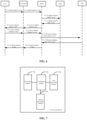
- FIG 6 is an information interaction diagram of a UAV access method, according to an exemplary embodiment. As illustrated in FIG 6 , the information interaction diagram includes a UAV, a base station, an MME, an HSS and an EIR.
- the present disclosure also provides embodiments of a UAV access device.
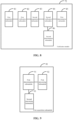
- FIG 7 is a block diagram of a UAV access device, according to an exemplary embodiment.
- the UAV access device may be applied to an MME, and is configured to execute the UAV access method illustrated in FIG 1 .
- the UAV access device may include a receiving module 71, a verification module 72, a first processing module 73 and a second processing module 74.
- the receiving module 71 is configured to receive an attach request sent by a UAV.
- the verification module 72 is configured to verify an identity of a user using the UAV and a device identity of the UAV according to the attach request to obtain a verification result.
- the first processing module 73 is configured to, if the verification result indicates that verification succeeds, allow access of the UAV and send a first attach response for indicating that access is allowed to the UAV.
- the second processing module 74 is configured to, if the verification result indicates that verification fails, reject access of the UAV and send a second attach response for indicating that access is rejected to the UAV.
- the attach request sent by the UAV is received, the identity of the user using the UAV and the device identity of the UAV are verified according to the attach request to obtain the verification result, if the verification result indicates that verification succeeds, access of the UAV is allowed and the first attach response for indicating that access is allowed is sent to the UAV, and if the verification result indicates that verification fails, access of the UAV is rejected and the second attach response for indicating that access is rejected is sent to the UAV, so that access of a UAV that fails to be verified to the cellular network may be prevented to reduce interference to the cellular network, access reliability of the UAV is improved, dedicated service may be conveniently provided for a UAV that is successfully verified, and working efficiency of the UAV is improved.
- FIG 8 is a block diagram of another UAV access device, according to an exemplary embodiment.
- the UAV access device may be applied to the MME, and is established based on the device illustrated in FIG 7 .
- the verification module 72 may include a first acquisition submodule 81, a first verification submodule 82, a second acquisition submodule 83, a second verification submodule 84, a first determination submodule 85, and a second determination submodule 86.
- the first acquisition submodule 81 is configured to acquire an IMSI of the UAV.
- the first verification submodule 82 is configured to perform first verification on the identity of the user using the UAV according to the IMSI of the UAV.
- the second acquisition submodule 83 is configured to acquire an IMEI of the UAV.
- the second verification submodule 84 is configured to perform second verification on the device identity of the UAV according to the IMEI of the UAV.
- the first determination submodule 85 is configured to, if both first verification and second verification succeed, determine that the verification result indicates that verification succeeds.
- the second determination submodule 86 is configured to, if at least one of first verification and second verification fails, determine that the verification result indicates that verification fails.
- the IMSI of the UAV is acquired, first verification is performed on the identity of the user using the UAV according to the IMSI of the UAV, the IMEI of the UAV is acquired, second verification is performed on the device identity of the UAV according to the IMEI of the UAV, it is determined that the final verification result indicates that verification succeeds only when both first verification and second verification succeed, otherwise verification fails, so that it is ensured that access of the UAV is allowed only when both the identity of the user using the UAV and the device identity of the UAV are legal to reduce interference of an illegal UAV to the cellular network, and a verification standard for access of the UAV may be improved to provide network service for the UAV better.
- FIG 9 is a block diagram of another UAV access device, according to an exemplary embodiment.
- the UAV access device may be applied to the MME, and is established based on the device illustrated in FIG 8 .
- the first acquisition submodule 81 may include a first determination submodule 91, a first processing submodule 92 and a second processing submodule 93.
- the first determination submodule 91 is configured to determine whether the attach request contains the IMSI of the UAV.
- the first processing submodule 92 is configured to, if a determination result of the first determination submodule 91 is that the attach request contains the IMSI of the UAV, read the IMSI of the UAV from the attach request.
- the second processing submodule 93 is configured to, if the determination result of the first determination submodule 91 is that the attach request does not contain the IMSI of the UAV, send a user identity request to the UAV, the user identity request being used to instruct the UAV to provide the UAV's own IMSI, and receive a user identity response sent by the UAV, the user identity response containing the IMSI of the UAV.
- the IMSI of the UAV may be directly read from the attach request and the UAV may also be actively required to provide its own IMSI.
- the MME may conveniently verify the identity of the user through the IMSI provided by the UAV, so that user identity verification efficiency is improved.
- the first sending submodule 101 is configured to send an update location request to an HSS, the update location request containing the IMSI of the UAV.
- the first succeeding verification submodule 102 is configured to, if a first update location reply for indicating that QoS configuration information of the UAV is obtained by query is received from the HSS and the first update location reply contains the QoS configuration information of the UAV, determine that first verification succeeds.
- the first failing verification submodule 103 is configured to, if a second update location reply for indicating that the QoS configuration information of the UAV is not obtained by query is received from the HSS, determine that first verification fails.
- the update location request is sent to the HSS, the update location request containing the IMSI of the UAV, it is determined that first verification succeeds if the first update location reply configured to indicate that the QoS configuration information of the UAV is obtained by query is received from the HSS and the first update location reply contains the QoS configuration information of the UAV, and it is determined that first verification fails if the second update location reply configured to indicate that the QoS configuration information of the UAV is not obtained by query is received from the HSS, so that verification over the identity of the user using the UAV is implemented through the MME, and the user identity verification efficiency is further improved.
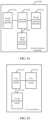
- FIG 11 is a block diagram of another UAV access device, according to an exemplary embodiment.
- the UAV access device may be applied to the MME, and is established based on the device illustrated in FIG 8 .
- the second acquisition submodule 83 may include a second determination submodule 111, a third processing submodule 112 and a fourth processing submodule 113.
- the second determination submodule 111 is configured to determine whether the attach request contains the IMEI of the UAV.
- the third processing submodule 112 is configured to, if a determination result of the second determination submodule 111 is that the attach request contains the IMEI of the UAV, read the IMEI of the UAV from the attach request.
- the fourth processing submodule 113 is configured to, if the determination result of the second determination submodule 111 is that the attach request does not contain the IMEI of the UAV, send a device identity request to the UAV, the device identity request being used to instruct the UAV to provide the UAV's own IMEI, and receive a device identity response sent by the UAV, the device identity response containing the IMEI of the UAV.
- the IMEI of the UAV may be directly read from the attach request and the UAV may also be actively required to provide its own IMEI.
- the MME may conveniently verify the device identity through the IMEI provided by the UAV, so that device identity verification efficiency is improved.
- FIG 12 is a block diagram of another UAV access device, according to an exemplary embodiment.
- the UAV access device may be applied to the MME, and is established based on the device illustrated in FIG 8 or FIG 11 .
- the second verification submodule 84 may include a second sending submodule 121, a receiving submodule 122, a second succeeding verification submodule 123 and a second failing verification submodule 124.
- the second sending submodule 121 is configured to send a ME device identity check request to an EIR, the ME device identity check request containing the IMEI of the UAV.
- the receiving submodule 122 is configured to receive a ME device identity check ACK sent by the EIR, the ME device identity check ACK containing a query result obtained by the MME querying a corresponding registration record according to the IMEI of the UAV.
- the second succeeding verification submodule 123 is configured to, if the query result indicates that the registration record of the UAV is obtained by query, determine that second verification succeeds.
- the second failing verification submodule 124 is configured to, if the query result indicates that the registration record of the UAV is not obtained by query, determine that second verification fails.
- the ME device identity check request is sent to the EIR
- the ME device identity check ACK sent by the EIR is received
- the ME device identity check ACK containing the query result obtained after the MME queries the corresponding registration record according to the IMEI of the UAV it is determined that second verification succeeds if the query result indicates that the registration record of the UAV is obtained by query
- FIG 13 is a block diagram of a UAV access device, according to an exemplary embodiment.
- the UAV access device may be applied to a UAV, the UAV having an IMSI and an IMEI, and is configured to execute the UAV access method illustrated in FIG 3 .
- the UAV access device may include a first sending module 131, a first determination module 132 and a second determination module 133.
- the first sending module 131 is configured to send an attach request to an MME.
- the first determination module 132 is configured to, when a first attach response for indicating that access is allowed is received from the MME, determine that the MME allows access of the UAV.
- the second determination module 133 is configured to, when a second attach response for indicating that access is rejected is received from the MME, determine that the MME rejects access of the UAV.
- the attach request is sent to the MME, it is determined that the MME allows access of the UAV when the first attach response for indicating that access is allowed is received from the MME, and it is determined that the MME rejects access of the UAV when the second attach response for indicating that access is rejected is received from the MME, so that the MME may control access of the UAV, and access security of the UAV is improved.
- FIG 14 is a block diagram of another UAV access device, according to an exemplary embodiment.
- the UAV access device may be applied to the UAV, and is established based on the device illustrated in FIG 13 .
- the UAV access device may further include a first receiving module 141 and a second sending module 142.
- the first receiving module 141 is configured to receive a user identity request sent by the MME, the user identity request being used to instruct the UAV to provide the UAV's own IMSI.
- the second sending module 142 is configured to send a user identity response to the MME, the user identity response containing the IMSI of the UAV.
- the MME may conveniently perform user identity verification by use of the IMSI provided by the UAV, so that user identity verification efficiency of the UAV is improved.
- FIG 15 is a block diagram of another UAV access device, according to an exemplary embodiment.
- the UAV access device may be applied to the UAV, and is established based on the device illustrated in FIG 13 .
- the UAV access device may further include a second receiving module 151 and a third sending module 152.
- the second receiving module 151 is configured to receive a device identity request sent by the MME, the device identity request being used to instruct the UAV to provide the UAV's own IMEI.
- the third sending module 152 is configured to send a device identity response to the MME, the device identity response containing the IMEI of the UAV.
- the device identity request sent by the MME is received, the device identity request being used to instruct the UAV to provide the UAV's own IMEI, and the device identity response is sent to the MME, the device identity response containing the IMEI of the UAV.
- the MME may conveniently perform device identity verification by use of the IMEI provided by the UAV, so that device identity verification efficiency of the UAV is improved.
- the attach request contains at least one of the IMSI of the UAV or the IMEI of the UAV.
- the attach request contains at least one of the IMSI of the UAV or the IMEI of the UAV, so that the MME may directly read information, i.e., the IMSI and/or the IMEI, for legality verification of the UAV from the attach request conveniently, and access efficiency of the UAV is further improved.
- FIG 16 is a block diagram of a UAV access device, according to an exemplary embodiment.
- the UAV access device may be applied to an HSS, the HSS being configured to assist an MME in performing verification over an identity of a user using a UAV, and is configured to execute the UAV access method illustrated in FIG 4 .
- the UAV access device may include a receiving module 161, a query module 162, a first sending module 163 and a second sending module 164.
- the receiving module 161 is configured to receive an update location request sent by the MME, the update location request containing an IMSI of the UAV that requests for access.
- the query module 162 is configured to query dedicated QoS configuration information of the UAV according to the IMSI of the UAV.
- the first sending module 163 is configured to, if the QoS configuration information of the UAV is obtained by query, send a first update location reply for indicating that the QoS configuration information of the UAV is obtained by query to the MME, the first update location reply containing the QoS configuration information of the UAV.
- the second sending module 164 is configured to, if the QoS configuration information of the UAV is not obtained by query, send a second update location reply for indicating that the QoS configuration information of the UAV is not obtained by query to the MME.
- the update location request sent by the MME is received, the update location request containing the IMSI of the UAV that requests for access, the first update location reply configured to indicate that the QoS configuration information of the UAV is obtained by query is sent to the MME if the QoS configuration information of the UAV is obtained by query, the first update location reply containing the QoS configuration information of the UAV, and the second update location reply configured to indicate that the QoS configuration information of the UAV is not obtained by query is sent to the MME if the QoS configuration information of the UAV is not obtained by query, so that the HSS may assist the MME in completing verification over the identity of the user using the UAV, and access reliability of the UAV is improved.
- FIG 17 is a block diagram of a UAV access device, according to an exemplary embodiment.
- the UAV access device may be applied to an EIR, the EIR being configured to assist an MME in performing verification over a device identity of a UAV, and is configured to execute the UAV access method illustrated in FIG 5 .
- the UAV access device may include a receiving module 171, a query module 172 and a sending module 173.
- the receiving module 171 is configured to receive a ME device identity check request sent by the MME, the ME device identity check request containing an IMEI of the UAV that requests for access.
- the query module 172 is configured to query a corresponding registration record according to the IMEI of the UAV to obtain a query result.
- the sending module 173 is configured to send a ME device identity check ACK containing the query result to the MME.
- the ME device identity check request sent by the MME is received, the ME device identity check request containing the IMEI of the UAV that requests for access, the corresponding registration record is queried according to the IMEI of the UAV to obtain the query result, and the ME device identity check ACK containing the query result is sent to the MME, so that the EIR may assist the MME in completing verification over the device identity of the UAV, and access reliability of the UAV is improved.
- the device embodiments substantially correspond to the method embodiments, and thus related parts refer to part of descriptions of the method embodiments.
- the device embodiments described above are only schematic, units described as separate parts therein may or may not be physically separated, and parts displayed as units may or may not be physical units, and namely may be located in the same place or may also be distributed to multiple network units. Part or all of the modules therein may be selected according to a practical requirement to achieve the purpose of the solutions of the present disclosure. Those of ordinary skill in the art may understand and implement without creative work.
- the present disclosure also provides a non-transitory computer-readable storage medium having stored thereon a computer program for executing the UAV access method illustrated in FIG 1 or FIG 2 .
- the present disclosure also provides a non-transitory computer-readable storage medium having stored thereon a computer program for executing the UAV access method illustrated in FIG 3 .
- the present disclosure also provides a non-transitory computer-readable storage medium having stored thereon a computer program for executing the UAV access method illustrated in FIG 4 .
- the present disclosure also provides a non-transitory computer-readable storage medium having stored thereon a computer program for executing the UAV access method illustrated in FIG 5 .
- the present disclosure also provides a UAV access device, which is applied to an MME and includes:
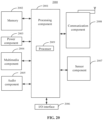
- FIG 18 is a structure diagram of a UAV access device, according to an exemplary embodiment. As illustrated in FIG 18 , the UAV access device 1800 according to the exemplary embodiment may be provided as an MME.
- the device 1800 may include one or more of the following components: a processing component 1801, a memory 1802, a power component 1803, a multimedia component 1804, an audio component 1805, an Input/Output (I/O) interface 1806, a sensor component 1807, and a communication component 1808.
- a processing component 1801 a memory 1802, a power component 1803, a multimedia component 1804, an audio component 1805, an Input/Output (I/O) interface 1806, a sensor component 1807, and a communication component 1808.
- the processing component 1801 typically controls overall operations of the device 1800, such as the operations associated with display, telephone calls, data communications, camera operations, and recording operations.
- the processing component 1801 may include one or more processors 1809 to execute instructions to perform all or part of the steps in the abovementioned method.
- the processing component 1801 may include one or more modules which facilitate interaction between the processing component 1801 and the other components.
- the processing component 1801 may include a multimedia module to facilitate interaction between the multimedia component 1804 and the processing component 1801.
- the memory 1802 is configured to store various types of data to support the operation of the device 1800. Examples of such data include instructions for any application programs or methods operated on the device 1800, contact data, phonebook data, messages, pictures, video, etc.
- the memory 1802 may be implemented by any type of volatile or non-volatile memory devices, or a combination thereof, such as a Static Random Access Memory (SRAM), an Electrically Erasable Programmable Read-Only Memory (EEPROM), an Erasable Programmable Read-Only Memory (EPROM), a Programmable Read-Only Memory (PROM), a Read-Only Memory (ROM), a magnetic memory, a flash memory, and a magnetic or optical disk.
- SRAM Static Random Access Memory
- EEPROM Electrically Erasable Programmable Read-Only Memory
- EPROM Erasable Programmable Read-Only Memory
- PROM Programmable Read-Only Memory
- ROM Read-Only Memory
- magnetic memory a magnetic memory
- flash memory and a magnetic or optical disk.
- the power component 1803 provides power for various components of the device 1800.
- the power component 1803 may include a power management system, one or more power supplies, and other components associated with generation, management and distribution of power for the device 1800.
- the multimedia component 1804 includes a screen providing an output interface between the device 1800 and a user.
- the screen may include a Liquid Crystal Display (LCD) and a Touch Panel (TP). If the screen includes the TP, the screen may be implemented as a touch screen to receive an input signal from the user.
- the TP includes one or more touch sensors to sense touches, swipes and gestures on the TP. The touch sensors may not only sense a boundary of a touch or swipe action but also detect a duration and pressure associated with the touch or swipe action.
- the multimedia component 1804 includes a front camera and/or a rear camera.
- the front camera and/or the rear camera may receive external multimedia data when the device 1800 is in an operation mode, such as a photographing mode or a video mode.
- an operation mode such as a photographing mode or a video mode.
- Each of the front camera and the rear camera may be a fixed optical lens system or have focusing and optical zooming capabilities.
- the audio component 1805 is configured to output and/or input an audio signal.
- the audio component 1805 includes a Microphone (MIC), and the MIC is configured to receive an external audio signal when the device 1800 is in the operation mode, such as a call mode, a recording mode and a voice recognition mode.
- the received audio signal may further be stored in the memory 1802 or sent through the communication component 1808.
- the audio component 1805 further includes a speaker configured to output the audio signal.
- the I/O interface 1806 provides an interface between the processing component 1801 and a peripheral interface module, and the peripheral interface module may be a keyboard, a click wheel, a button and the like.
- the button may include, but not limited to: a home button, a volume button, a starting button and a locking button.
- the sensor component 1807 includes one or more sensors configured to provide status assessment in various aspects for the device 1800. For instance, the sensor component 1807 may detect an on/off status of the device 1800 and relative positioning of components, such as a display and small keyboard of the device 1800, and the sensor component 1807 may further detect a change in a position of the device 1800 or a component of the device 1800, presence or absence of contact between the user and the device 1800, orientation or acceleration/deceleration of the device 1800 and a change in temperature of the device 1800.
- the sensor component 1807 may include a proximity sensor configured to detect presence of an object nearby without any physical contact.
- the sensor component 1807 may also include a light sensor, such as a Complementary Metal Oxide Semiconductor (CMOS) or Charge Coupled Device (CCD) image sensor, configured for use in an imaging application.
- CMOS Complementary Metal Oxide Semiconductor
- CCD Charge Coupled Device
- the sensor component 1807 may also include an acceleration sensor, a gyroscope sensor, a magnetic sensor, a pressure sensor or a temperature sensor.
- the communication component 1808 is configured to facilitate wired or wireless communication between the device 1800 and another device.
- the device 1800 may access a communication-standard-based wireless network, such as a Wireless Fidelity (WiFi) network, a 2nd-Generation (2G) or 3rd-Generation (3G) network or a combination thereof.
- WiFi Wireless Fidelity
- 2G 2nd-Generation
- 3G 3rd-Generation
- the communication component 1808 receives a broadcast signal or broadcast associated information from an external broadcast management system through a broadcast channel.
- the communication component 1808 further includes a Near Field Communication (NFC) module to facilitate short-range communication.
- NFC Near Field Communication
- the NFC module may be implemented based on a Radio Frequency Identification (RFID) technology, an Infrared Data Association (IrDA) technology, an Ultra-WideBand (UWB) technology, a Bluetooth (BT) technology and another technology.
- RFID Radio Frequency Identification
- IrDA Infrared Data Association
- UWB Ultra-WideBand
- BT Bluetooth
- the device 1800 may be implemented by one or more Application Specific Integrated Circuits (ASICs), Digital Signal Processors (DSPs), Digital Signal Processing Devices (DSPDs), Programmable Logic Devices (PLDs), Field Programmable Gate Arrays (FPGAs), controllers, micro-controllers, microprocessors or other electronic components, and is configured to execute the abovementioned method.
- ASICs Application Specific Integrated Circuits
- DSPs Digital Signal Processors
- DSPDs Digital Signal Processing Devices
- PLDs Programmable Logic Devices
- FPGAs Field Programmable Gate Arrays
- controllers micro-controllers, microprocessors or other electronic components, and is configured to execute the abovementioned method.
- a non-transitory computer-readable storage medium including an instruction such as the memory 1802 including an instruction
- the instruction may be executed by the processor 1809 of the device 1800 to implement the abovementioned method.
- the non-transitory computer-readable storage medium may be a ROM, a Random Access Memory (RAM), a Compact Disc Read-Only Memory (CD-ROM), a magnetic tape, a floppy disc, an optical data storage device and the like.
- the instruction in the storage medium is executed by the processor to enable the device 1800 to execute any UAV access method.
- the present disclosure also provides a UAV access device, which is applied to a UAV, the UAV having an IMSI and an IMEI, the device including:
- the present disclosure also provides a UAV access device, which is applied to an HSS, the HSS being configured to assist an MME in performing verification over an identity of a user using a UAV, the device including:
- FIG 19 is a structure diagram of a UAV access device, according to an exemplary embodiment.
- the UAV access device 1900 may be provided as an HSS.
- components of the device 1900 are similar to FIG 18 and elaborations thereof will not be repeated herein.
- the present disclosure also provides a UAV access device, which is applied to an EIR, the EIR being configured to assist an MME in performing verification over a device identity of a UAV, the device including:
- FIG 20 is a structure diagram of a UAV access device, according to an exemplary embodiment. As illustrated in FIG 20 , the UAV access device 2000 according to the exemplary embodiment may be provided as an EIR. Moreover, components of the device 2000 are similar to FIG 18 and elaborations thereof will not be repeated herein.
Landscapes
- Engineering & Computer Science (AREA)
- Computer Networks & Wireless Communication (AREA)
- Signal Processing (AREA)
- Computer Security & Cryptography (AREA)
- Databases & Information Systems (AREA)
- Aviation & Aerospace Engineering (AREA)
- Quality & Reliability (AREA)
- Physics & Mathematics (AREA)
- General Physics & Mathematics (AREA)
- Astronomy & Astrophysics (AREA)
- Mobile Radio Communication Systems (AREA)
Claims (8)
- Verfahren für den Zugang eines unbemannten Luftfahrzeugs (Unmanned Aerial Vehicle, UAV) , das auf eine Mobilitätsmanagementeinheit (Mobility Management Entity, MME) angewendet wird und Folgendes umfasst:Empfangen (110) einer von einem UAV gesendeten Anschlussanfrage;Verifizieren (120) einer Identität eines das UAV nutzenden Nutzers und einer Geräteidentität des UAV gemäß der Anschlussanfrage, um ein Verifizierungsergebnis zu erlangen;wobeidas Verifizieren der Identität des Nutzers, der das UAV verwendet, und der Geräteidentität des UAV gemäß der Anschlussanfrage, um das Verifizierungsergebnis zu erlangen, umfasst:Beschaffen einer Internationalen Mobilfunk-Teilnehmerkennungsnummer, IMSI, des UAV;Durchführen einer ersten Verifizierung der Identität des Nutzers, der das UAV verwendet, gemäß der IMSI des UAV;Beschaffen einer Internationalen Mobilfunkgerätekennung, IMEI, des UAV;Durchführen einer zweiten Verifizierung der Geräteidentität des UAV gemäß der IMEI des UAV;wenn sowohl die erste Verifizierung als auch die zweite Verifizierung erfolgreich sind, Ermitteln, dass das Verifizierungsergebnis angibt, dass die Verifizierung erfolgreich ist; undwenn zumindest eine der ersten Verifizierung oder der zweiten Verifizierung fehlschlägt, Ermitteln, dass das Verifizierungsergebnis angibt, dass die Verifizierung fehlschlägt;wobei das Durchführen der ersten Verifizierung der Identität des Nutzers, der das UAV verwendet, gemäß der IMSI des UAV umfasst:Senden einer Standortaktualisierungsanfrage an einen Home Subscriber Server, HSS, wobei die Standortaktualisierungsanfrage die IMSI des UAV enthält, wobei der HSS nach dem Empfang der Standortaktualisierungsanfrage dedizierte Dienstgüte-, QoS-, Konfigurationsinformationen des UAV gemäß der IMSI des UAV abfragt;wenn eine erste Standortaktualisierungsantwort zum Angeben, dass QoS-Konfigurationsinformationen des UAV durch die Abfrage erlangt werden, von dem HSS empfangen wird und die erste Standortaktualisierungsantwort die QoS-Konfigurationsinformationen des UAV enthält, Ermitteln, dass die erste Verifizierung erfolgreich ist; undwenn eine zweite Standortaktualisierungsantwort zum Angeben, dass die QoS-Konfigurationsinformationen des UAV nicht durch die Abfrage erlangt werden, von dem HSS empfangen wird, Ermitteln, dass die erste Verifizierung fehlschlägt;wenn das Ergebnis der Verifizierung angibt, dass die Verifizierung erfolgreich ist, Gewähren des Zugangs des UAV und Senden einer ersten Anschlussantwort zum Angeben, dass der Zugang zum UAV gewährt wird (130); undwenn das Ergebnis der Verifizierung angibt, dass die Verifizierung fehlschlägt, Ablehnen des Zugangs des UAV und Senden einer zweiten Anschlussantwort zum Angeben, dass der Zugang zum UAV abgelehnt wird (140).
- Verfahren nach Anspruch 1, wobei das Beschaffen der IMSI des UAV umfasst:Ermitteln, ob die Anschlussanfrage die IMSI des UAV enthält;wenn die Anschlussanfrage die IMSI des UAV enthält, Lesen der IMSI des UAV aus der Anschlussanfrage; undwenn die Anschlussanfrage die IMSI des UAV nicht enthält, Senden einer Nutzeridentitätsanfrage an das UAV, die dazu verwendet wird, das UAV anzuweisen, die eigene IMSI des UAV bereitzustellen, und Empfangen einer vom UAV gesendeten Nutzeridentitätsantwort, die die IMSI des UAV enthält.
- Verfahren nach Anspruch 1, wobei das Beschaffen der IMEI des UAV umfasst:Ermitteln, ob die Anschlussanfrage die IMEI des UAV enthält;wenn die Anschlussanfrage die IMEI des UAV enthält, Lesen der IMEI des UAV aus der Anschlussanfrage; undwenn die Anschlussanfrage die IMEI des UAV nicht enthält, Senden einer Geräteidentitätsanfrage an das UAV, die dazu verwendet wird, das UAV anzuweisen, die eigene IMEI des UAV bereitzustellen, und Empfangen einer vom UAV gesendeten Geräteidentitätsantwort, die die IMEI des UAV enthält.
- Verfahren nach Anspruch 1 oder 3, wobei das Durchführen der zweiten Verifizierung der Geräteidentität des UAV gemäß der IMEI des UAV umfasst:Senden einer ME-Geräteidentitätsprüfungsanforderung an ein Geräteidentitätsregister (Equipment Identity Register, EIR), wobei die ME-Geräteidentitätsprüfungsanforderung die IMEI des UAV enthält;Empfangen einer vom EIR gesendeten ME-Geräteidentitätsprüfungsbestätigung (ACK), die ein Abfrageergebnis enthält, das durch die MME durch Abfrage eines entsprechenden Registrierungseintrags gemäß der IMEI des UAV erlangt wurde;Ermitteln, dass die zweite Verifizierung erfolgreich ist, wenn das Abfrageergebnis angibt, dass der Registrierungseintrag des UAV durch Abfrage erlangt wurde; undErmitteln, dass die zweite Verifizierung fehlschlägt, wenn das Abfrageergebnis angibt, dass der Registrierungsdatensatz des UAV per Abfrage nicht erlangt wurde.
- Verfahren für den Zugang eines unbemannten Luftfahrzeugs, UAV, das auf ein UAV angewendet wird, wobei das UAV eine internationale Mobilfunk-Teilnehmerkennung, IMSI, und eine internationale Mobilfunkgerätekennung, IMEI, aufweist, wobei das Verfahren umfasst:Senden (310) einer Anschlussanfrage an eine Mobilitätsmanagementeinheit, MME, die das Verfahren nach Anspruch 1 ausführt;Empfangen einer von der MME gesendeten Nutzeridentitätsanfrage, die dazu verwendet wird, das UAV anzuweisen, seine eigene IMSI bereitzustellen;Senden einer Nutzeridentitätsantwort an die MME, wobei die Nutzeridentitätsantwort die IMSI des UAV enthält, wobei die IMSI des UAV von der MME verwendet wird, um die erste Verifizierung der Identität eines Nutzers, der das UAV verwendet, durchzuführen;Empfangen einer von der MME gesendeten Geräteidentitätsanforderung, die dazu verwendet wird, das UAV anzuweisen, die eigene IMEI des UAV bereitzustellen; undSenden einer Geräteidentitätsantwort an die MME, wobei die Geräteidentitätsantwort die IMEI des UAV enthält;wobei die IMEI des UAV von der MME verwendet wird, um die zweite Verifizierung einer Geräteidentität des UAV gemäß der IMEI des UAV durchzuführen;wobei, wenn sowohl die erste Verifizierung als auch die zweite Verifizierung erfolgreich sind, ermittelt wird, dass die MME Zugang des UAV gewährt und die MME die erste Anschlussantwort sendet, um anzugeben, dass der Zugang zum UAV gewährt wird; und wenn zumindest eine der ersten Verifizierung oder der zweiten Verifizierung fehlschlägt, ermittelt wird, dass die MME den Zugang des UAV ablehnt und die MME die zweite Anschlussantwort sendet, um anzugeben, dass der Zugang zum UAV abgelehnt wird;
undwobei das Durchführen der ersten Verifizierung durch die MME umfasst:Senden einer Standortaktualisierungsanfrage an einen Home Subscriber Server, HSS, wobei die Standortaktualisierungsanfrage die IMSI des UAV enthält, wobei der HSS nach dem Empfangen der Standortaktualisierungsanfrage dedizierte QoS-Konfigurationsinformationen des UAV gemäß der IMSI des UAV abfragt;wenn eine erste Aktualisierungsortantwort zum Angeben, dass QoS-Konfigurationsinformationen des UAV durch die Abfrage von dem HSS erlangt werden, von dem HSS empfangen wird und die erste Aktualisierungsortantwort die QoS-Konfigurationsinformationen des UAV enthält, Ermitteln, dass die erste Verifizierung erfolgreich ist; undwenn eine zweite Aktualisierungsortantwort zum Angeben, dass die QoS-Konfigurationsinformationen des UAV nicht durch die Abfrage erlangt werden, von dem HSS empfangen wird, Ermitteln, dass die erste Verifizierung fehlschlägt;wenn die erste Anschlussantwort zum Angeben, dass der Zugriff gewährt wird, von der MME empfangen wird, Ermitteln, dass die MME den Zugriff des UAV gewährt (320); undwenn die zweite Anschlussantwort zum Angeben, dass der Zugriff abgelehnt wird, von der MME empfangen wird, Ermitteln, dass die MME den Zugriff des UAV ablehnt (330). - Vorrichtung für den Zugang eines unbemannten Luftfahrzeugs, UAV, angewandt auf eine Mobilitätsmanagementeinheit, MME, und umfassend:ein Empfangsmodul (71), das dazu konfiguriert ist, eine von einem UAV gesendete Anschlussanfrage zu empfangen;ein Verifizierungsmodul (72), das dazu konfiguriert ist, eine Identität eines das UAV verwendenden Nutzers und eine Geräteidentität des UAV gemäß der Anschlussanfrage zu verifizieren, um ein Verifizierungsergebnis zu erlangen;wobei das Verifizierungsmodul (72) Folgendes umfasst:ein erstes Erfassungs-Submodul (81), konfiguriert zum Beschaffen einer internationalen Mobilfunk-Teilnehmerkennungsnummer, IMSI, des UAV;ein erstes Verifizierungs-Submodul (82), konfiguriert zum Durchführen einer ersten Verifizierung der Identität des Nutzers, der das UAV verwendet, gemäß der IMSI des UAV;ein zweites Erfassungs-Submodul (83), konfiguriert zum Beschaffen einer internationalen Mobilfunkgerätekennung (IMEI) des UAV;ein zweites Verifizierungs-Submodul (84), konfiguriert zum Durchführen einer zweiten Verifizierung der Geräteidentität des UAV gemäß der IMEI des UAV;ein erstes Ermittlungs-Submodul (85), konfiguriert dazu, wenn sowohl die erste Verifizierung als auch die zweite Verifizierung erfolgreich sind, zu ermitteln, dass das Verifizierungsergebnis angibt, dass die Verifizierung erfolgreich ist; undein zweites Ermittlungs-Submodul (86), konfiguriert dazu, wenn zumindest eine der ersten oder zweiten Verifizierungen fehlschlägt, zu ermitteln, dass das Verifizierungsergebnis angibt, dass die Verifizierung fehlschlägt;wobei das erste Verifizierungs-Submodul umfasst:ein erstes Sende-Submodul, konfiguriert zum Senden einer Standortaktualisierungsanfrage an einen Home Subscriber Server, HSS, wobei die Standortaktualisierungsanfrage die IMSI des UAV enthält, wobei der HSS nach dem Empfang der Standortaktualisierungsanfrage dedizierte QoS-Konfigurationsinformationen des UAV gemäß der IMSI des UAV abfragt;ein erstes Erfolg-Verifizierungs-Submodul, konfiguriert dazu, wenn eine erste Standortaktualisierungsantwort zum Angeben, dass QoS-Konfigurationsinformationen des UAV durch die Abfrage erlangt werden, von dem HSS empfangen wird und die erste Standortaktualisierungsantwort die QoS-Konfigurationsinformationen des UAV enthält, zu ermitteln, dass die erste Verifizierung erfolgreich ist; undein erstes Fehlschlag-Verifikations-Submodul, konfiguriert dazu, wenn eine zweite Standortaktualisierungsantwort zum Anzeigen, dass die QoS-Konfigurationsinformationen des UAV nicht durch die Abfrage erlangt werden, von dem HSS empfangen wird, zu ermitteln, dass die erste Verfizierung fehlschlägt;ein erstes Verarbeitungsmodul (73), konfiguriert dazu, wenn das Verfizierungsergebnis angibt, dass die Verfizierung erfolgreich ist, den Zugang des UAV zu gewähren und eine erste Anschlussantwort zum Anzeigen, dass der Zugang zu dem UAV gewährt wird, zu senden; undein zweites Verarbeitungsmodul (74), das dazu konfiguriert ist, den Zugang des UAV abzulehnen und eine zweite Anschlussantwort zu senden, um anzuzeigen, dass der Zugang zum UAV abgelehnt wird, wenn das Verifizierungsergebnis angibt, dass die Verifizierung fehlschlägt.
- Vorrichtung nach Anspruch 6, wobei das erste Erfassungs-Submodul (81) umfasst:ein erstes Bestimmungs-Submodul (91), das dazu konfiguriert ist, zu ermitteln, ob die Anschlussanfrage die IMSI des UAV enthält;ein erstes Verarbeitungs-Submodul (92), konfiguriert dazu, wenn ein Ermittlungsergebnis des ersten Ermittlungs-Submoduls ist, dass die Anschlussanfrage die IMSI des UAV enthält, die IMSI des UAV aus der Anschlussanfrage zu lesen; undein zweites Verarbeitungs-Submodul (93), dazu konfiguriert, wenn das Ermitteln des ersten Ermitteln-Submoduls ergibt, dass die Anschlussanfrage die IMSI des UAV nicht enthält, eine Nutzeridentitätsanfrage an das UAV zu senden, die dazu verwendet wird, das UAV anzuweisen, dessen eigene IMSI bereitzustellen, und eine vom UAV gesendete Nutzeridentitätsantwort zu empfangen, die die IMSI des UAV enthält.
- Vorrichtung für den Zugang eines unbemannten Luftfahrzeugs, UAV, angewandt auf ein UAV, wobei das UAV eine internationale Mobilfunk-Teilnehmerkennung, IMSI, und eine internationale Mobilfunkgerätekennung, IMEI, aufweist, wobei die Vorrichtung Folgendes umfasst:ein erstes Sendemodul (131), konfiguriert zum Senden einer Anschlussanfrage an eine Mobilitätsmanagementeinheit (MME), die das Verfahren nach Anspruch 1 ausführt;ein erstes Ermittlungsmodul (132), konfiguriert zum Ermitteln, dass die MME den Zugang des UAV gewährt, wenn die erste Anschlussantwort zum Angeben, dass der Zugang gewährt wird, von der MME empfangen wird;ein zweites Ermittlungsmodul (133), konfiguriert zum Ermitteln, dass die MME den Zugang des UAV ablehnt, wenn die zweite Anschlussantwort zum Angeben, dass der Zugang abgelehnt wird, von der MME empfangen wird;ein erstes Empfangsmodul (141), konfiguriert zum Empfangen einer von der MME gesendeten Nutzeridentitätsanfrage, die dazu verwendet wird, das UAV anzuweisen, seine eigene IMSI bereitzustellen;ein zweites Sendemodul (142), das dazu konfiguriert ist, eine Nutzeridentitätsantwort an die MME zu senden, die die IMSI des UAV enthält, wobei die IMSI des UAV von der MME verwendet wird, um die erste Verifizierung der Identität eines Nutzers, der das UAV verwendet, durchzuführen;ein zweites Empfangsmodul (151), das dazu konfiguriert ist, eine von der MME gesendete Geräteidentitätsanfrage zu empfangen, die dazu verwendet wird, das UAV anzuweisen, die eigene IMEI des UAV bereitzustellen; undein drittes Sendemodul (152), konfiguriert zum Senden einer Geräteidentitätsantwort an die MME, welche die IMEI des UAV enthält; wobei die IMEI des UAV von der MME dazu verwendet wird, eine zweite Verifizierung einer Geräteidentität des UAV gemäß der IMEI des UAV durchzuführen;wobei, wenn sowohl die erste Verifizierung als auch die zweite Verifizierung erfolgreich sind, ermittelt wird, dass die MME den Zugang des UAV gewährt, und die MME die erste Anschlussantwort sendet, um anzugeben, dass der Zugang zum UAV gewährt wird;und wenn zumindest eine der ersten Verifizierung oder der zweiten Verifizierung fehlschlägt, ermittelt wird, dass die MME den Zugang des UAV ablehnt, und die MME die zweite Anschlussantwort sendet, um anzugeben, dass der Zugang zum UAV abgelehnt wird;
undwobei die MME dazu konfiguriert ist,eine Standortaktualisierungsanfrage an einen Home Subscriber Server, HSS, zu senden, wobei die Standortaktualisierungsanfrage die IMSI des UAV enthält, wobei der HSS nach dem Empfang der Standortaktualisierungsanfrage dedizierte QoS-Konfigurationsinformationen des UAV gemäß der IMSI des UAV abfragt;wenn eine erste Standortaktualisierungsantwort zum Angeben, dass QoS-Konfigurationsinformationen des UAV durch die Abfrage von dem HSS erlangt werden, von dem HSS empfangen wird und die erste Standortaktualisierungsantwort die QoS-Konfigurationsinformationen des UAV enthält, zu ermitteln, dass die erste Verifizierung erfolgreich ist; undwenn eine zweite Standortaktualisierungsantwort zum Angeben, dass die QoS-Konfigurationsinformationen des UAV nicht durch die Abfrage erlangt werden, von dem HSS empfangen wird, zu ermitteln, dass die erste Verifizierung fehlschlägt.
Applications Claiming Priority (1)
| Application Number | Priority Date | Filing Date | Title |
|---|---|---|---|
| PCT/CN2017/100731 WO2019047066A1 (zh) | 2017-09-06 | 2017-09-06 | 无人机接入方法及装置 |
Publications (3)
| Publication Number | Publication Date |
|---|---|
| EP3671694A1 EP3671694A1 (de) | 2020-06-24 |
| EP3671694A4 EP3671694A4 (de) | 2020-09-09 |
| EP3671694B1 true EP3671694B1 (de) | 2025-06-11 |
Family
ID=65633445
Family Applications (1)
| Application Number | Title | Priority Date | Filing Date |
|---|---|---|---|
| EP17924007.2A Active EP3671694B1 (de) | 2017-09-06 | 2017-09-06 | Verfahren und vorrichtung für zugang zu unbemanntem luftfahrzeug |
Country Status (4)
| Country | Link |
|---|---|
| US (1) | US11212856B2 (de) |
| EP (1) | EP3671694B1 (de) |
| CN (2) | CN115243260B (de) |
| WO (1) | WO2019047066A1 (de) |
Families Citing this family (16)
| Publication number | Priority date | Publication date | Assignee | Title |
|---|---|---|---|---|
| EP3671694B1 (de) * | 2017-09-06 | 2025-06-11 | Beijing Xiaomi Mobile Software Co., Ltd. | Verfahren und vorrichtung für zugang zu unbemanntem luftfahrzeug |
| JP6634423B2 (ja) * | 2017-09-26 | 2020-01-22 | Kddi株式会社 | 運行管理方法及び運行管理装置 |
| EP3806510B1 (de) * | 2018-06-14 | 2024-01-31 | Beijing Xiaomi Mobile Software Co., Ltd. | Informationsübertragungsverfahren, vorrichtung und system sowie speichermedium |
| US11272371B2 (en) * | 2019-04-18 | 2022-03-08 | Huawei Technologies Co., Ltd. | Method and apparatus for unmanned aerial vehicle authentication |
| CN112533139B (zh) * | 2019-09-18 | 2022-06-10 | 华为技术有限公司 | 一种无人机系统的飞行授权方法、装置及系统 |
| CN114600487B (zh) * | 2019-11-04 | 2023-12-08 | 华为技术有限公司 | 身份认证方法及通信装置 |
| US12250544B2 (en) * | 2020-01-06 | 2025-03-11 | Qualcomm Incorporated | Techniques for identifying aerial vehicles in mobile networks |
| WO2021173583A1 (en) * | 2020-02-24 | 2021-09-02 | Qualcomm Incorporated | A mechanism for unmanned vehicle authorization for operation over cellular networks |
| WO2022016520A1 (en) * | 2020-07-24 | 2022-01-27 | Guangdong Oppo Mobile Telecommunications Corp., Ltd. | Apparatus and method of communication |
| US11172019B1 (en) * | 2020-08-28 | 2021-11-09 | Tencent America LLC | Systems and methods for unmanned aerial system communication |
| CN116761171B (zh) * | 2020-12-14 | 2024-12-17 | Oppo广东移动通信有限公司 | 目标信息获取方法、发送方法、装置、设备及存储介质 |
| US11722210B2 (en) * | 2021-01-12 | 2023-08-08 | Tencent America LLC | Unmanned aerial system communication |
| US11611937B1 (en) * | 2021-01-19 | 2023-03-21 | T-Mobile Innovations Llc | Network-assisted charging prioritization for cellular unmanned aerial vehicles |
| US11888999B2 (en) * | 2021-04-27 | 2024-01-30 | Qualcomm Incorporated | Managing an unmanned aerial vehicle identity |
| TWI904337B (zh) * | 2021-04-27 | 2025-11-11 | 美商高通公司 | 用於管理無人機身份的方法及網路計算設備 |
| CN118212811A (zh) * | 2022-12-15 | 2024-06-18 | 中兴通讯股份有限公司 | 无人机的控制方法、终端及系统 |
Family Cites Families (26)
| Publication number | Priority date | Publication date | Assignee | Title |
|---|---|---|---|---|
| JP2008105591A (ja) * | 2006-10-26 | 2008-05-08 | Hiroboo Kk | 自律制御無人飛行体の飛行管理方法 |
| FR2910876B1 (fr) * | 2007-01-02 | 2009-06-05 | Jannick Simeray | Helicoptere a pilote automatique. |
| CN101662415B (zh) * | 2008-08-29 | 2012-11-07 | 华为技术有限公司 | 一种策略控制方法及通讯系统以及相关设备 |
| CN101730035A (zh) * | 2009-03-19 | 2010-06-09 | 中兴通讯股份有限公司 | 用户设备附着的处理方法、移动性管理实体以及用户设备 |
| CN102026303A (zh) * | 2009-09-21 | 2011-04-20 | 中兴通讯股份有限公司 | 一种实现家用基站上QoS控制的方法和系统 |
| US9313759B2 (en) * | 2009-10-16 | 2016-04-12 | Tekelec, Inc. | Methods, systems, and computer readable media for providing triggerless equipment identity register (EIR) service in a diameter network |
| CN102098659B (zh) * | 2011-02-11 | 2013-07-24 | 王兰睿 | 一种快速校验国际移动设备标识的方法及系统 |
| EP2787768B1 (de) * | 2011-12-22 | 2019-07-24 | Huawei Technologies Co., Ltd. | Zugriffsverfahren und -system |
| US9144082B2 (en) * | 2012-06-13 | 2015-09-22 | All Purpose Networks LLC | Locating and tracking user equipment in the RF beam areas of an LTE wireless system employing agile beam forming techniques |
| CN103686651B (zh) * | 2012-09-12 | 2018-05-11 | 中兴通讯股份有限公司 | 一种基于紧急呼叫的认证方法、设备和系统 |
| CN102905266B (zh) * | 2012-10-11 | 2015-05-20 | 大唐移动通信设备有限公司 | 一种实现移动设备附着的方法及装置 |
| CN102917332B (zh) * | 2012-10-11 | 2015-06-03 | 大唐移动通信设备有限公司 | 一种实现移动设备附着的方法及装置 |
| CN104754542B (zh) * | 2013-12-25 | 2018-10-02 | 华为软件技术有限公司 | 自动开户方法和装置 |
| US10115277B2 (en) * | 2014-07-29 | 2018-10-30 | GeoFrenzy, Inc. | Systems and methods for geofence security |
| US9820184B2 (en) | 2014-09-23 | 2017-11-14 | Qualcomm Incorporated | Methods and apparatus for secure connectionless uplink small data transmission |
| WO2016130148A1 (en) * | 2015-02-13 | 2016-08-18 | Nokia Technologies Oy | Flexible security rating and decision mechanism for machine type communications |
| CN104936180B (zh) * | 2015-06-26 | 2018-10-09 | 陈昊 | 一种针对无人机和地面站提供鉴权服务的鉴权系统及方法 |
| US20180218619A1 (en) * | 2015-07-17 | 2018-08-02 | Relmatech Limited | An aircraft controlled by a secure integrated airspace management system |
| US20180253092A1 (en) * | 2015-09-09 | 2018-09-06 | Tecteco Security Systems, S.L. | Secure control of unmanned vehicles |
| CN105225540A (zh) * | 2015-10-21 | 2016-01-06 | 杨珊珊 | 无人飞行器的飞行区域监控装置及其监控方法 |
| CN106658478B (zh) * | 2015-10-29 | 2019-06-25 | 中国移动通信集团公司 | 一种业务数据的传输方法、装置、控制设备及通信系统 |
| US9940842B2 (en) * | 2015-11-02 | 2018-04-10 | At&T Intellectual Property I, L.P. | Intelligent drone traffic management via radio access network |
| US9942721B2 (en) * | 2016-07-11 | 2018-04-10 | At&T Intellectual Property I, L.P. | Aerial profiling of communication networks |
| CN106507276A (zh) * | 2016-10-31 | 2017-03-15 | 中国联合网络通信集团有限公司 | 无人机、无人机的标识方法及无人机管理系统 |
| US11197147B2 (en) * | 2017-08-10 | 2021-12-07 | Beijing Xiaomi Mobile Software Co., Ltd. | Unmanned aerial vehicle access method and device |
| EP3671694B1 (de) * | 2017-09-06 | 2025-06-11 | Beijing Xiaomi Mobile Software Co., Ltd. | Verfahren und vorrichtung für zugang zu unbemanntem luftfahrzeug |
-
2017
- 2017-09-06 EP EP17924007.2A patent/EP3671694B1/de active Active
- 2017-09-06 WO PCT/CN2017/100731 patent/WO2019047066A1/zh not_active Ceased
- 2017-09-06 CN CN202210788157.XA patent/CN115243260B/zh active Active
- 2017-09-06 CN CN201780001551.1A patent/CN109757129B/zh active Active
-
2020
- 2020-03-04 US US16/809,155 patent/US11212856B2/en active Active
Also Published As
| Publication number | Publication date |
|---|---|
| CN115243260A (zh) | 2022-10-25 |
| CN109757129A (zh) | 2019-05-14 |
| EP3671694A1 (de) | 2020-06-24 |
| EP3671694A4 (de) | 2020-09-09 |
| US20200205211A1 (en) | 2020-06-25 |
| US11212856B2 (en) | 2021-12-28 |
| CN115243260B (zh) | 2025-01-28 |
| WO2019047066A1 (zh) | 2019-03-14 |
| CN109757129B (zh) | 2022-07-22 |
Similar Documents
| Publication | Publication Date | Title |
|---|---|---|
| EP3671694B1 (de) | Verfahren und vorrichtung für zugang zu unbemanntem luftfahrzeug | |
| US11197147B2 (en) | Unmanned aerial vehicle access method and device | |
| EP2975821B1 (de) | Netzwerkverbindungsverfahren und -vorrichtung | |
| EP3076716A1 (de) | Netzwerkzugangsverfahren und -vorrichtung | |
| EP3177077A1 (de) | Netzwerkzugangsverfahren und -vorrichtung | |
| US20170019265A1 (en) | Method, terminal and server for controlling smart device | |
| US20180146420A1 (en) | Method and apparatus for establishing network connection | |
| US9565554B2 (en) | Method, device, and system for transmitting information and storage medium | |
| EP3407278A1 (de) | Verfahren und vorrichtung zur meldung des verlustes der karte oder einer einrichtung, die mit einer kontonummer oder einer gestohlenen kontonummer verbunden ist | |
| US20200187262A1 (en) | Unmanned aerial vehicle management method and apparatus, and communication connection establishment method and apparatus | |
| US11805562B2 (en) | User device pairing method and apparatus | |
| US12082143B2 (en) | Network registration method, apparatus, system, and storage medium | |
| US12096407B2 (en) | Time domain configuration method, device, and storage media | |
| US11864255B2 (en) | Method and apparatus for accessing base station | |
| US11627615B2 (en) | UAV indication method and apparatus | |
| CN109194639B (zh) | 消息接收处理方法、装置、终端及可读存储介质 | |
| CN109005680B (zh) | 实现物联网设备引导的方法、装置、设备及基站 | |
| US12207355B2 (en) | Random access method and apparatus, and computer readable storage medium | |
| US11291004B2 (en) | Method and device for accessing 5G network, and non-transitory computer readable storage medium | |
| EP4380294A1 (de) | Direktkommunikationsverfahren und -vorrichtung, benutzergerät und speichermedium |
Legal Events
| Date | Code | Title | Description |
|---|---|---|---|
| STAA | Information on the status of an ep patent application or granted ep patent |
Free format text: STATUS: THE INTERNATIONAL PUBLICATION HAS BEEN MADE |
|
| PUAI | Public reference made under article 153(3) epc to a published international application that has entered the european phase |
Free format text: ORIGINAL CODE: 0009012 |
|
| STAA | Information on the status of an ep patent application or granted ep patent |
Free format text: STATUS: REQUEST FOR EXAMINATION WAS MADE |
|
| 17P | Request for examination filed |
Effective date: 20200320 |
|
| AK | Designated contracting states |
Kind code of ref document: A1 Designated state(s): AL AT BE BG CH CY CZ DE DK EE ES FI FR GB GR HR HU IE IS IT LI LT LU LV MC MK MT NL NO PL PT RO RS SE SI SK SM TR |
|
| AX | Request for extension of the european patent |
Extension state: BA ME |
|
| RAP1 | Party data changed (applicant data changed or rights of an application transferred) |
Owner name: BEIJING XIAOMI MOBILE SOFTWARE CO., LTD. |
|
| RIN1 | Information on inventor provided before grant (corrected) |
Inventor name: HONG, WEI |
|
| A4 | Supplementary search report drawn up and despatched |
Effective date: 20200807 |
|
| RIC1 | Information provided on ipc code assigned before grant |
Ipc: G05D 1/10 20060101ALI20200803BHEP Ipc: H04W 12/06 20090101ALI20200803BHEP Ipc: G08G 5/00 20060101AFI20200803BHEP |
|
| DAV | Request for validation of the european patent (deleted) | ||
| DAX | Request for extension of the european patent (deleted) | ||
| STAA | Information on the status of an ep patent application or granted ep patent |
Free format text: STATUS: EXAMINATION IS IN PROGRESS |
|
| 17Q | First examination report despatched |
Effective date: 20241024 |
|
| RIC1 | Information provided on ipc code assigned before grant |
Ipc: H04W 12/69 20210101ALI20241129BHEP Ipc: G08G 5/00 20060101AFI20241129BHEP |
|
| GRAP | Despatch of communication of intention to grant a patent |
Free format text: ORIGINAL CODE: EPIDOSNIGR1 |
|
| STAA | Information on the status of an ep patent application or granted ep patent |
Free format text: STATUS: GRANT OF PATENT IS INTENDED |
|
| INTG | Intention to grant announced |
Effective date: 20250224 |
|
| GRAS | Grant fee paid |
Free format text: ORIGINAL CODE: EPIDOSNIGR3 |
|
| GRAA | (expected) grant |
Free format text: ORIGINAL CODE: 0009210 |
|
| STAA | Information on the status of an ep patent application or granted ep patent |
Free format text: STATUS: THE PATENT HAS BEEN GRANTED |
|
| P01 | Opt-out of the competence of the unified patent court (upc) registered |
Free format text: CASE NUMBER: APP_16663/2025 Effective date: 20250407 |
|
| AK | Designated contracting states |
Kind code of ref document: B1 Designated state(s): AL AT BE BG CH CY CZ DE DK EE ES FI FR GB GR HR HU IE IS IT LI LT LU LV MC MK MT NL NO PL PT RO RS SE SI SK SM TR |
|
| REG | Reference to a national code |
Ref country code: GB Ref legal event code: FG4D |
|
| REG | Reference to a national code |
Ref country code: CH Ref legal event code: EP |
|
| REG | Reference to a national code |
Ref country code: IE Ref legal event code: FG4D |
|
| REG | Reference to a national code |
Ref country code: DE Ref legal event code: R096 Ref document number: 602017089943 Country of ref document: DE |
|
| REG | Reference to a national code |
Ref country code: NL Ref legal event code: FP |
|
| PG25 | Lapsed in a contracting state [announced via postgrant information from national office to epo] |
Ref country code: FI Free format text: LAPSE BECAUSE OF FAILURE TO SUBMIT A TRANSLATION OF THE DESCRIPTION OR TO PAY THE FEE WITHIN THE PRESCRIBED TIME-LIMIT Effective date: 20250611 Ref country code: ES Free format text: LAPSE BECAUSE OF FAILURE TO SUBMIT A TRANSLATION OF THE DESCRIPTION OR TO PAY THE FEE WITHIN THE PRESCRIBED TIME-LIMIT Effective date: 20250611 |
|
| REG | Reference to a national code |
Ref country code: LT Ref legal event code: MG9D |
|
| PG25 | Lapsed in a contracting state [announced via postgrant information from national office to epo] |
Ref country code: NO Free format text: LAPSE BECAUSE OF FAILURE TO SUBMIT A TRANSLATION OF THE DESCRIPTION OR TO PAY THE FEE WITHIN THE PRESCRIBED TIME-LIMIT Effective date: 20250911 Ref country code: GR Free format text: LAPSE BECAUSE OF FAILURE TO SUBMIT A TRANSLATION OF THE DESCRIPTION OR TO PAY THE FEE WITHIN THE PRESCRIBED TIME-LIMIT Effective date: 20250912 |
|
| PGFP | Annual fee paid to national office [announced via postgrant information from national office to epo] |
Ref country code: NL Payment date: 20250918 Year of fee payment: 9 |
|
| PG25 | Lapsed in a contracting state [announced via postgrant information from national office to epo] |
Ref country code: BG Free format text: LAPSE BECAUSE OF FAILURE TO SUBMIT A TRANSLATION OF THE DESCRIPTION OR TO PAY THE FEE WITHIN THE PRESCRIBED TIME-LIMIT Effective date: 20250611 |
|
| PGFP | Annual fee paid to national office [announced via postgrant information from national office to epo] |
Ref country code: GB Payment date: 20250919 Year of fee payment: 9 |
|
| PG25 | Lapsed in a contracting state [announced via postgrant information from national office to epo] |
Ref country code: HR Free format text: LAPSE BECAUSE OF FAILURE TO SUBMIT A TRANSLATION OF THE DESCRIPTION OR TO PAY THE FEE WITHIN THE PRESCRIBED TIME-LIMIT Effective date: 20250611 |
|
| PGFP | Annual fee paid to national office [announced via postgrant information from national office to epo] |
Ref country code: FR Payment date: 20250922 Year of fee payment: 9 |
|
| PG25 | Lapsed in a contracting state [announced via postgrant information from national office to epo] |
Ref country code: RS Free format text: LAPSE BECAUSE OF FAILURE TO SUBMIT A TRANSLATION OF THE DESCRIPTION OR TO PAY THE FEE WITHIN THE PRESCRIBED TIME-LIMIT Effective date: 20250911 |
|
| PG25 | Lapsed in a contracting state [announced via postgrant information from national office to epo] |
Ref country code: LV Free format text: LAPSE BECAUSE OF FAILURE TO SUBMIT A TRANSLATION OF THE DESCRIPTION OR TO PAY THE FEE WITHIN THE PRESCRIBED TIME-LIMIT Effective date: 20250611 |
|
| PG25 | Lapsed in a contracting state [announced via postgrant information from national office to epo] |
Ref country code: PT Free format text: LAPSE BECAUSE OF FAILURE TO SUBMIT A TRANSLATION OF THE DESCRIPTION OR TO PAY THE FEE WITHIN THE PRESCRIBED TIME-LIMIT Effective date: 20251013 |
|
| REG | Reference to a national code |
Ref country code: AT Ref legal event code: MK05 Ref document number: 1802907 Country of ref document: AT Kind code of ref document: T Effective date: 20250611 |
|
| PG25 | Lapsed in a contracting state [announced via postgrant information from national office to epo] |
Ref country code: IS Free format text: LAPSE BECAUSE OF FAILURE TO SUBMIT A TRANSLATION OF THE DESCRIPTION OR TO PAY THE FEE WITHIN THE PRESCRIBED TIME-LIMIT Effective date: 20251011 |
|
| PG25 | Lapsed in a contracting state [announced via postgrant information from national office to epo] |
Ref country code: SM Free format text: LAPSE BECAUSE OF FAILURE TO SUBMIT A TRANSLATION OF THE DESCRIPTION OR TO PAY THE FEE WITHIN THE PRESCRIBED TIME-LIMIT Effective date: 20250611 Ref country code: AT Free format text: LAPSE BECAUSE OF FAILURE TO SUBMIT A TRANSLATION OF THE DESCRIPTION OR TO PAY THE FEE WITHIN THE PRESCRIBED TIME-LIMIT Effective date: 20250611 |
|
| PG25 | Lapsed in a contracting state [announced via postgrant information from national office to epo] |
Ref country code: CZ Free format text: LAPSE BECAUSE OF FAILURE TO SUBMIT A TRANSLATION OF THE DESCRIPTION OR TO PAY THE FEE WITHIN THE PRESCRIBED TIME-LIMIT Effective date: 20250611 |
|
| PG25 | Lapsed in a contracting state [announced via postgrant information from national office to epo] |
Ref country code: PL Free format text: LAPSE BECAUSE OF FAILURE TO SUBMIT A TRANSLATION OF THE DESCRIPTION OR TO PAY THE FEE WITHIN THE PRESCRIBED TIME-LIMIT Effective date: 20250611 |
|
| PG25 | Lapsed in a contracting state [announced via postgrant information from national office to epo] |
Ref country code: EE Free format text: LAPSE BECAUSE OF FAILURE TO SUBMIT A TRANSLATION OF THE DESCRIPTION OR TO PAY THE FEE WITHIN THE PRESCRIBED TIME-LIMIT Effective date: 20250611 |
|
| PG25 | Lapsed in a contracting state [announced via postgrant information from national office to epo] |
Ref country code: RO Free format text: LAPSE BECAUSE OF FAILURE TO SUBMIT A TRANSLATION OF THE DESCRIPTION OR TO PAY THE FEE WITHIN THE PRESCRIBED TIME-LIMIT Effective date: 20250611 Ref country code: SK Free format text: LAPSE BECAUSE OF FAILURE TO SUBMIT A TRANSLATION OF THE DESCRIPTION OR TO PAY THE FEE WITHIN THE PRESCRIBED TIME-LIMIT Effective date: 20250611 |