EP3670809B1 - Methods of draughtproofing and refurbishing sash windows - Google Patents
Methods of draughtproofing and refurbishing sash windows Download PDFInfo
- Publication number
- EP3670809B1 EP3670809B1 EP19215353.4A EP19215353A EP3670809B1 EP 3670809 B1 EP3670809 B1 EP 3670809B1 EP 19215353 A EP19215353 A EP 19215353A EP 3670809 B1 EP3670809 B1 EP 3670809B1
- Authority
- EP
- European Patent Office
- Prior art keywords
- sash
- existing
- sashes
- seals
- window
- Prior art date
- Legal status (The legal status is an assumption and is not a legal conclusion. Google has not performed a legal analysis and makes no representation as to the accuracy of the status listed.)
- Active
Links
Images





Classifications
-
- E—FIXED CONSTRUCTIONS
- E06—DOORS, WINDOWS, SHUTTERS, OR ROLLER BLINDS IN GENERAL; LADDERS
- E06B—FIXED OR MOVABLE CLOSURES FOR OPENINGS IN BUILDINGS, VEHICLES, FENCES OR LIKE ENCLOSURES IN GENERAL, e.g. DOORS, WINDOWS, BLINDS, GATES
- E06B3/00—Window sashes, door leaves, or like elements for closing wall or like openings; Layout of fixed or moving closures, e.g. windows in wall or like openings; Features of rigidly-mounted outer frames relating to the mounting of wing frames
- E06B3/32—Arrangements of wings characterised by the manner of movement; Arrangements of movable wings in openings; Features of wings or frames relating solely to the manner of movement of the wing
- E06B3/34—Arrangements of wings characterised by the manner of movement; Arrangements of movable wings in openings; Features of wings or frames relating solely to the manner of movement of the wing with only one kind of movement
- E06B3/42—Sliding wings; Details of frames with respect to guiding
- E06B3/44—Vertically-sliding wings
-
- E—FIXED CONSTRUCTIONS
- E06—DOORS, WINDOWS, SHUTTERS, OR ROLLER BLINDS IN GENERAL; LADDERS
- E06B—FIXED OR MOVABLE CLOSURES FOR OPENINGS IN BUILDINGS, VEHICLES, FENCES OR LIKE ENCLOSURES IN GENERAL, e.g. DOORS, WINDOWS, BLINDS, GATES
- E06B3/00—Window sashes, door leaves, or like elements for closing wall or like openings; Layout of fixed or moving closures, e.g. windows in wall or like openings; Features of rigidly-mounted outer frames relating to the mounting of wing frames
- E06B3/32—Arrangements of wings characterised by the manner of movement; Arrangements of movable wings in openings; Features of wings or frames relating solely to the manner of movement of the wing
- E06B3/34—Arrangements of wings characterised by the manner of movement; Arrangements of movable wings in openings; Features of wings or frames relating solely to the manner of movement of the wing with only one kind of movement
- E06B3/42—Sliding wings; Details of frames with respect to guiding
- E06B3/44—Vertically-sliding wings
- E06B3/4415—Double-hung, i.e. with two vertical sliding panels
-
- E—FIXED CONSTRUCTIONS
- E06—DOORS, WINDOWS, SHUTTERS, OR ROLLER BLINDS IN GENERAL; LADDERS
- E06B—FIXED OR MOVABLE CLOSURES FOR OPENINGS IN BUILDINGS, VEHICLES, FENCES OR LIKE ENCLOSURES IN GENERAL, e.g. DOORS, WINDOWS, BLINDS, GATES
- E06B7/00—Special arrangements or measures in connection with doors or windows
- E06B7/16—Sealing arrangements on wings or parts co-operating with the wings
- E06B7/22—Sealing arrangements on wings or parts co-operating with the wings by means of elastic edgings, e.g. elastic rubber tubes; by means of resilient edgings, e.g. felt or plush strips, resilient metal strips
-
- E—FIXED CONSTRUCTIONS
- E06—DOORS, WINDOWS, SHUTTERS, OR ROLLER BLINDS IN GENERAL; LADDERS
- E06B—FIXED OR MOVABLE CLOSURES FOR OPENINGS IN BUILDINGS, VEHICLES, FENCES OR LIKE ENCLOSURES IN GENERAL, e.g. DOORS, WINDOWS, BLINDS, GATES
- E06B7/00—Special arrangements or measures in connection with doors or windows
- E06B7/16—Sealing arrangements on wings or parts co-operating with the wings
- E06B7/22—Sealing arrangements on wings or parts co-operating with the wings by means of elastic edgings, e.g. elastic rubber tubes; by means of resilient edgings, e.g. felt or plush strips, resilient metal strips
- E06B7/23—Plastic, sponge rubber, or like strips or tubes
- E06B7/2314—Plastic, sponge rubber, or like strips or tubes characterised by the material
-
- E—FIXED CONSTRUCTIONS
- E06—DOORS, WINDOWS, SHUTTERS, OR ROLLER BLINDS IN GENERAL; LADDERS
- E06B—FIXED OR MOVABLE CLOSURES FOR OPENINGS IN BUILDINGS, VEHICLES, FENCES OR LIKE ENCLOSURES IN GENERAL, e.g. DOORS, WINDOWS, BLINDS, GATES
- E06B1/00—Border constructions of openings in walls, floors, or ceilings; Frames to be rigidly mounted in such openings
- E06B1/04—Frames for doors, windows, or the like to be fixed in openings
- E06B1/34—Coverings, e.g. protecting against weather, for decorative purposes
- E06B1/345—Renovation window frames covering the existing old frames
-
- E—FIXED CONSTRUCTIONS
- E06—DOORS, WINDOWS, SHUTTERS, OR ROLLER BLINDS IN GENERAL; LADDERS
- E06B—FIXED OR MOVABLE CLOSURES FOR OPENINGS IN BUILDINGS, VEHICLES, FENCES OR LIKE ENCLOSURES IN GENERAL, e.g. DOORS, WINDOWS, BLINDS, GATES
- E06B3/00—Window sashes, door leaves, or like elements for closing wall or like openings; Layout of fixed or moving closures, e.g. windows in wall or like openings; Features of rigidly-mounted outer frames relating to the mounting of wing frames
- E06B3/32—Arrangements of wings characterised by the manner of movement; Arrangements of movable wings in openings; Features of wings or frames relating solely to the manner of movement of the wing
- E06B3/34—Arrangements of wings characterised by the manner of movement; Arrangements of movable wings in openings; Features of wings or frames relating solely to the manner of movement of the wing with only one kind of movement
- E06B3/42—Sliding wings; Details of frames with respect to guiding
- E06B3/44—Vertically-sliding wings
- E06B2003/4476—Coverings, e.g. for protecting against weather or for decorative purposes
Definitions
- This invention generally relates to draughtproofing and refurbishing existing sash windows.
- sash windows typically have one or more movable panels, or “sashes” that form a frame to hold panes of glass, which are often separated from other panes (or “lights") by glazing bars.
- Each sash window may slide in a channel formed in the surrounding window frame, also known as the "case”.
- the channels may be formed by a dividing parting "bead” which is usually parallel to the plane of the windows and extends around the inside of the frame.
- sash window refers usually to windows where the glazed panels are opened by sliding vertically or horizontally.
- sash window may be used interchangeably with the expression “box sash windows”, so called because weights are concealed in the box case.
- Sash windows often include brush-style seals which have a number of bristles.
- Insulating brushes however, have a number of disadvantages, including absorbing moisture which leads to deterioration. They flatten and become ineffective when wet or if painted.
- it is aimed to provide effective draughtproofing, including an energy efficient sash window for period buildings as well as methods for refurbishing existing windows with replacement sashes.
- the invention provides a method of refurbishing an existing sash window as claimed in claim 1.
- the term of timber being 'planed down' is well known in the art, as the tool used by specialists in the refurbishment of timber windows is called a 'plane'.
- the aim is to shape the frames of the existing sash windows into a substantially planar surface.
- the combination of method steps has a surprisingly high efficiency without compromising the movement of sashes, which makes a significant improvement for refurbished existing sashes of traditional windows.
- the method improves mechanical efficiency as a nominal margin is achieved to accommodate historical movement to the boxes.
- the method steps including seals around each outer perimeter of the sashes and a replacement parting bead with seals within a channel of the parting bead sized appropriately for the existing window, enables an efficient draughtproofing system of integrated compressible foam seals for existing windows being refurbished.
- the first compressible foam seals are flipper seals and the second compressible foam seals are bubble seals.
- the flipper seals around the perimeter have the advantage that they only open as necessary, whilst the bubble seals in a replacement parting bead compensate for the existing boxes that may have become mis-shaped over time.
- the choice of thickness of the replacement parting bead and the choice of bubble seal aids efficiency in the movement in relation to the front to back of the existing (narrow) box.
- the method includes removing the existing parting bead and providing a replacement parting bead that fits the existing sash box, wherein a bubble compressible foam seal is provided within a channel of the replacement parting bead to compensate for any misshaping of the existing sash box and to aid mechanical efficiency.
- the new parting bead is sized appropriately with a groove to fit a bubble seal.
- the new parting bead fits into the existing groove which housed the parting bead prior to removal.
- the method further comprises the step of providing a conservation joint that allows for movement of the sashes.
- the conservation joints are created at the mortice and tenon joint of existing sashes. This is the point that opens allowing water ingress.
- a Repair-care conservation joint can stop this cycle which results in decay. Normally windows have previously been painted with solvent based gloss paint so once the water gets in, it is lodged behind the paint. Further dependent aspects are provided in the dependent claims.
- a sash window 10 extends between a window head 100 at the top and a window sill 200 at the bottom.
- the sash window 10 comprises an upper sash window 11 and a lower sash window 12 (wooden opening sashes) which meet at mid-rail ("meeting rail") 13.
- a parting bead 14 separates the upper sash window 11 from the lower sash window 12.
- Staff beads 15 help to keep the sash windows in place in the sash box 16.
- Memory foam seals 20, 21 are respectively included across the mid-rail 13 and along parting bead 14 (within a channel of the parting bead).
- additional memory foam seals 23 are included in the staff beads 15 and further memory seals 24 are also included In respective grooves (channels) formed in each side of each sash 11,12.
- the memory seals 24 are included around each sash 11, 12, substantially around the perimeter of each sash 11,12 although it would be appreciated that there may be gaps at the ends of each side, and the seals do not necessarily run along a continuous perimeter.
- the perimeter of each sash refers to the outside of the timber that makes up the sash (typically a rectangular perimeter).
- each side of the sash 11,12 has a memory foam seal 24.
- Memory foam weather seal is made of polyurethane (PU) foam seals.
- PU polyurethane
- Memory foam weather seals preferably have the following characteristics/advantages over other seals:
- the mid-rail seal 20, parting bead seal 21 and staff bead seal 23 are Schlegel Q-Lon ® QL48650 "bubble seals".
- Bubble memory foam seals are also known in the art as bubble gaskets.
- Parting bead seal 21 runs from the top to the bottom of the parting bead 14 and is cut halfway through. Bubble seals compensate for boxes that may become mis shaped over time.
- the bubble seal may be cut halfway through so it fits within the channel of the parting bead 14 and is not seen.
- the bubble seal and parting bead may be in two sections so that the bubble seal is concealed by the respective top and bottom sash when closed.
- Figures 5A to 5C show examples of bubble seals as may be fitted within channels or grooves made in the timber. It may be seen that the base of the bubble seals is fitted within a track.
- Figure 5B shows a bubble seal fitted in a staff bead 15.
- the bubble seals in Figures 5B and 5C may be cut above the surface of the timber, so they fit within the timber and do not protrude outside the recess formed in the timber.
- Memory foam seals 24 in this example are each a Schlegel Q-Lon ® AQ21 "flipper seal" which is included on each side of each sash 11,12.
- Flipper memory foam seals are also known in the art as flipper gaskets and they have the advantage that they only open when necessary.
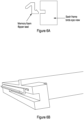
- Figures 6A to 6D show examples of flipper seals as may be fitted within channels or grooves made in the timber.
- flipper seals 24 are included within a groove 11', 12' around the perimeter of each sash 11, 12.
- flipper seals fold back into the groove so they do not affect the movement of the sash.
- the staff bead 15 also includes a memory foam seal 23, which may optionally be of the same type as the seal used in the parting bead 14.
- the box 16 is chosen to have a slim profile with a high U-value glass pane, as will be exemplified in Figures 4A and 4B .
- the combination of an efficient draughtproofing system of integrated memory foam seals with a slim profile is particularly advantageous as it provides an effective solution for Georgia and Edwardian facades for example.
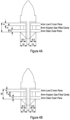
- Figure 4A shows an example of conservation approved double glazing, having an inner pane and an outer pane of 4mm each, with a krypton gas filled cavity of 6mm.
- acoustic glass panes have a thickness of around 6.8 mm.
- This unit is referred to as a 'heritage 4/6/4 unit', having an overall thickness of 14mm and a centre pane U-value of 1.1 to 1.3 W/m 2 (or 1.4 to 1.5 W/m 2 ).
- the outer pane is clear whilst the inner pane is coated with glazing such as SafeGuard TM glazing.
- the inside of the inner pane is treated with SOFT COAT TECHNOLOGY by SafeGuard TM glazing.
- the cavity is thicker, having 8mm, as show in Figure 4B .
- This 'heritage 4/8/4' unit has an overall thickness value of 16 mm.
- This unit achieves a pane U-value of 1.1 to 1.3 W/m 2 , preferably 1.1 to 1.2 W/m 2 .
- the slim profiles make the upgrade to double glazing almost undetectable from a distance, preserving the historical integrity of the windows. This is the case for both replacement sashes with integral memory foam seals and for new box sash sliding sash windows (also with integral memory foam seals).
- the slim glass units can be housed in narrow wooden sash (e.g. with matching horn details to those replaced if required) either within existing narrow boxes or within newly constructed narrow wooden boxes, making the upgrade appear almost identical to the existing arrangement.
- the sliding sash windows with integrated memory foam seals and slim profiles fit seamlessly into Georgia and Edwardian facades for example.
- Sash windows according to aspects of the invention are energy efficient whilst enabling a completely authentic look in line with planning regulations and conservation areas.
- the draughtproofing system comprising the combination of memory foam seals may be included in new sash windows as well as in replacement sashes for existing window boxes.
- a spiral balance is normally fitted to operate sash windows when there is not space to fit a traditional box arrangement.
- the slim profile sliding sash window with an ultra slim box can be advantageously used in most situations.
- These windows will operate with traditional cords and weights in the traditional manner, e.g. cylindrical lead weights up to 40 mm diameter, preferably between 32 to 40 mm diameter (for example 38mm diameter) or square lead weights.
- the example protocol for refurbishment as described above works effectively to reduce air, noise and dust ingress and completely preserves the historical integrity of the windows.
- the DRY FIX ® /DRY FLEX ® primer and repair system is a durable solution for decayed and damaged joinery.
- DRY FIX ® primers penetrate deep into the fibres of the wood ensuring that DRY FLEXO bonds permanently. Based on a unique epoxy resin formula, DRY FLEXO remains elastic so that it accommodates any movement.
- the repair system may be used when joining timber together primarily to act as a waterproof expansion joint. This includes the work to the sills and lower portions of boxes that often require timber sections to be spliced in with sash windows or the frames of casement windows.
- Use of the repair system in combination with traditional joinery methods ensures that the box, frames, existing sashes with conservation joints and sills are in good order. The draught proofing process can then be used on the existing sashes or new replacement sashes before they are fitted.
- a method of replacing bespoke sashes for existing casement windows includes similar preparatory steps to those listed in the method above.
- New double glazed sashes are provided, protected with a primer/undercoat.
- the sashes are planed down to facilitate smooth mechanical operation and a memory foam seal 24 is routed into the perimeter of each opening sash.
Landscapes
- Engineering & Computer Science (AREA)
- Civil Engineering (AREA)
- Structural Engineering (AREA)
- Door And Window Frames Mounted To Openings (AREA)
- Wing Frames And Configurations (AREA)
- Securing Of Glass Panes Or The Like (AREA)
Description
- This invention generally relates to draughtproofing and refurbishing existing sash windows.
- Known sash windows typically have one or more movable panels, or "sashes" that form a frame to hold panes of glass, which are often separated from other panes (or "lights") by glazing bars. Each sash window may slide in a channel formed in the surrounding window frame, also known as the "case". The channels may be formed by a dividing parting "bead" which is usually parallel to the plane of the windows and extends around the inside of the frame.
- The expression "sash window" refers usually to windows where the glazed panels are opened by sliding vertically or horizontally. The expression "sash window" may be used interchangeably with the expression "box sash windows", so called because weights are concealed in the box case.
- The space required for the window to slide in its channel often leads to draughts being allowed to pass through the window as well as allowing the window to rattle within the case in windy conditions, therefore creating noise. Moreover, the gap itself may allow for further noise and moisture which often results in the rotting of the wood. The rot normally occurs externally often due to gloss paint sealing in moisture Any attempts of addressing the above problems and improve the efficiency of the sash window must take into account that such windows are often subject to planning regulations and planning control for conservation areas and for listed buildings. These regulations require the original character and appearance of the building, such as Victorian or Edwardian facades, to be preserved (externally and internally). For this reason, double glazing cannot easily be achieved with current sash windows.
- Sash windows often include brush-style seals which have a number of bristles. Insulating brushes, however, have a number of disadvantages, including absorbing moisture which leads to deterioration. They flatten and become ineffective when wet or if painted.
- Other seals made of compressible foam material known as "memory foam" or "weather seals" or "compressible gasket seals" exist, but such seals can hinder a smooth and efficient sliding motion of the sashes. Such memory foam seals have been used at most in restricted areas on the sash windows. For example, patent application
GB2281580A GB2358658B GB2256220A - It is an aim of the present invention to address the above-mentioned problems of sliding sash windows. In particular, it is aimed to provide effective draughtproofing, including an energy efficient sash window for period buildings as well as methods for refurbishing existing windows with replacement sashes.
- The invention provides a method of refurbishing an existing sash window as claimed in claim 1.
- The term of timber being 'planed down' is well known in the art, as the tool used by specialists in the refurbishment of timber windows is called a 'plane'. The aim is to shape the frames of the existing sash windows into a substantially planar surface. The combination of method steps has a surprisingly high efficiency without compromising the movement of sashes, which makes a significant improvement for refurbished existing sashes of traditional windows. The method improves mechanical efficiency as a nominal margin is achieved to accommodate historical movement to the boxes.
- Using the method steps, including seals around each outer perimeter of the sashes and a replacement parting bead with seals within a channel of the parting bead sized appropriately for the existing window, enables an efficient draughtproofing system of integrated compressible foam seals for existing windows being refurbished. The first compressible foam seals are flipper seals and the second compressible foam seals are bubble seals. The flipper seals around the perimeter have the advantage that they only open as necessary, whilst the bubble seals in a replacement parting bead compensate for the existing boxes that may have become mis-shaped over time. The choice of thickness of the replacement parting bead and the choice of bubble seal aids efficiency in the movement in relation to the front to back of the existing (narrow) box. With this method, the refurbished sashes and replacement parting bead fit within the existing sash window and have smooth mechanical operation.
- According to the invention the method includes removing the existing parting bead and providing a replacement parting bead that fits the existing sash box, wherein a bubble compressible foam seal is provided within a channel of the replacement parting bead to compensate for any misshaping of the existing sash box and to aid mechanical efficiency.
- The new parting bead is sized appropriately with a groove to fit a bubble seal. The new parting bead fits into the existing groove which housed the parting bead prior to removal.
- In a dependent aspect, the method further comprises the step of providing a conservation joint that allows for movement of the sashes. For example, the conservation joints are created at the mortice and tenon joint of existing sashes. This is the point that opens allowing water ingress. A Repair-care conservation joint can stop this cycle which results in decay. Normally windows have previously been painted with solvent based gloss paint so once the water gets in, it is lodged behind the paint. Further dependent aspects are provided in the dependent claims.
- Aspects of the invention will be described with reference to the Figures, in which:
-
Figures 1A and 1B respectively show side and top views of a sash window; -
Figures 2A and 2B show partial detailed views ofFigure 1A , including a draughtproofing system according to aspects of the invention; -
Figure 3 shows a partial detailed view ofFigure 1B , including a draughtproofing system according to aspects of the invention; -
Figures 4A and 4B show examples of slim glass units for use in aspects of the invention; -
Figures 5A to 5C shows examples of bubble seals; -
Figures 6A to 6D shows examples of flipper seals; and -
Figure 7 is a table describing characteristics of slim glass units for use in aspects of the invention. - With reference to
Figures 1A and 1B , asash window 10 extends between awindow head 100 at the top and awindow sill 200 at the bottom. Thesash window 10 comprises an uppersash window 11 and a lower sash window 12 (wooden opening sashes) which meet at mid-rail ("meeting rail") 13. Aparting bead 14 separates the uppersash window 11 from the lowersash window 12.Staff beads 15 help to keep the sash windows in place in thesash box 16. -
Memory foam seals mid-rail 13 and along parting bead 14 (within a channel of the parting bead). With reference toFigures 2A, 2B , and3 , additionalmemory foam seals 23 are included in thestaff beads 15 andfurther memory seals 24 are also included In respective grooves (channels) formed in each side of eachsash memory seals 24 are included around eachsash sash sash memory foam seal 24. - An example of memory foam weather seal is made of polyurethane (PU) foam seals. Memory foam weather seals preferably have the following characteristics/advantages over other seals:
- Excellent memory - they return to original shape after compression.
- Stability - low/no stretch gained by glass fibre internal cord or insert.
- Easily compressed - low compression forces, unaffected by temperature variance.
- Very good acoustic performance.
- Very good thermal conductivity.
- Paint and stain proof - properties unaffected by standard paints and stains.
- Stabilised - unaffected by rot, fungi, UV light or ozone.
- Wide temperature range: +70°C to -65°C.
- In this example, the
mid-rail seal 20, partingbead seal 21 andstaff bead seal 23 are Schlegel Q-Lon® QL48650 "bubble seals". Bubble memory foam seals are also known in the art as bubble gaskets. Partingbead seal 21 runs from the top to the bottom of the partingbead 14 and is cut halfway through. Bubble seals compensate for boxes that may become mis shaped over time. The bubble seal may be cut halfway through so it fits within the channel of the partingbead 14 and is not seen. For example, the bubble seal and parting bead may be in two sections so that the bubble seal is concealed by the respective top and bottom sash when closed. -
Figures 5A to 5C show examples of bubble seals as may be fitted within channels or grooves made in the timber. It may be seen that the base of the bubble seals is fitted within a track. In particular,Figure 5B shows a bubble seal fitted in astaff bead 15. The bubble seals inFigures 5B and 5C may be cut above the surface of the timber, so they fit within the timber and do not protrude outside the recess formed in the timber. - Memory foam seals 24 in this example are each a Schlegel Q-Lon® AQ21 "flipper seal" which is included on each side of each
sash -
Figures 6A to 6D show examples of flipper seals as may be fitted within channels or grooves made in the timber. Advantageously, flipper seals 24 are included within a groove 11', 12' around the perimeter of eachsash - With reference to
Figure 2B thestaff bead 15 also includes amemory foam seal 23, which may optionally be of the same type as the seal used in the partingbead 14. - With reference to
Figure 1B show a window section from the top, thebox 16 is chosen to have a slim profile with a high U-value glass pane, as will be exemplified inFigures 4A and 4B . The combination of an efficient draughtproofing system of integrated memory foam seals with a slim profile is particularly advantageous as it provides an effective solution for Victorian and Edwardian facades for example. -
Figure 4A shows an example of conservation approved double glazing, having an inner pane and an outer pane of 4mm each, with a krypton gas filled cavity of 6mm. In contrast, acoustic glass panes have a thickness of around 6.8 mm. This unit is referred to as a 'heritage 4/6/4 unit', having an overall thickness of 14mm and a centre pane U-value of 1.1 to 1.3 W/m2 (or 1.4 to 1.5 W/m2). The outer pane is clear whilst the inner pane is coated with glazing such as SafeGuard™ glazing. The inside of the inner pane is treated with SOFT COAT TECHNOLOGY by SafeGuard™ glazing. - In other embodiments, the cavity is thicker, having 8mm, as show in
Figure 4B . This 'heritage 4/8/4' unit has an overall thickness value of 16 mm. This unit achieves a pane U-value of 1.1 to 1.3 W/m2 , preferably 1.1 to 1.2 W/m2. - The slim profiles make the upgrade to double glazing almost undetectable from a distance, preserving the historical integrity of the windows. This is the case for both replacement sashes with integral memory foam seals and for new box sash sliding sash windows (also with integral memory foam seals). Advantageously, the slim glass units can be housed in narrow wooden sash (e.g. with matching horn details to those replaced if required) either within existing narrow boxes or within newly constructed narrow wooden boxes, making the upgrade appear almost identical to the existing arrangement.
- In some cases, particularly when the original windows have been changed to inferior windows (often with poor quality timber and aesthetically out of keeping), new bespoke windows are the only option. Advantageously, the sliding sash windows with integrated memory foam seals and slim profiles (approved heritage glass) fit seamlessly into Victorian and Edwardian facades for example. Sash windows according to aspects of the invention are energy efficient whilst enabling a completely authentic look in line with planning regulations and conservation areas.
- It will be appreciated that the draughtproofing system comprising the combination of memory foam seals may be included in new sash windows as well as in replacement sashes for existing window boxes. In the prior art, a spiral balance is normally fitted to operate sash windows when there is not space to fit a traditional box arrangement. The slim profile sliding sash window with an ultra slim box can be advantageously used in most situations. These windows will operate with traditional cords and weights in the traditional manner, e.g. cylindrical lead weights up to 40 mm diameter, preferably between 32 to 40 mm diameter (for example 38mm diameter) or square lead weights.
- In an example of a renovate and upgrade service, a method of refurbishment and comprehensive overhaul of existing sliding timber sash windows uses a system according to aspects of the invention (with the existing sashes being retained) is described below:
- All frame joinery is comprehensively rubbed down.
- The sills are sanded/burned back to bare wood/timber.
- All rotten wood is cut out and restored using repair care products such as DRY FIX®/DRY FLEXO for example. Preferably, the repair product is epoxy based to enable the wood to remain elastic and thus accommodate any movement. For example, new timber sections will be spliced in where necessary and complete sill sections will be replaced if required.
- Any new wood is coated with a primer.
- Existing
sashes - Timber is made good using repair care products.
- Conservation joints are created to allow for movement in existing sashes at the mortice and tenon joint.
- The
sashes foam weather seal 24 is routed into the perimeter of eachsash - Sash weights are calculated and re-calibrated to accommodate the existing sash units-changes in glass over the years often result in an imbalance.
- All sash cords are replaced with pre-stretched nylon cord.
- Parting and staff beads are removed and replaced. The new beads have integral memory foam seals.
- New high-quality window accessories are supplied, such as brass/chrome pulley wheels, sash lifts and a lockable heritage fitch fastener (secured by design).
- The example protocol for refurbishment as described above works effectively to reduce air, noise and dust ingress and completely preserves the historical integrity of the windows.
- The DRY FIX®/DRY FLEX® primer and repair system is a durable solution for decayed and damaged joinery. DRY FIX® primers penetrate deep into the fibres of the wood ensuring that DRY FLEXO bonds permanently. Based on a unique epoxy resin formula, DRY FLEXO remains elastic so that it accommodates any movement. The repair system may be used when joining timber together primarily to act as a waterproof expansion joint. This includes the work to the sills and lower portions of boxes that often require timber sections to be spliced in with sash windows or the frames of casement windows. Use of the repair system in combination with traditional joinery methods ensures that the box, frames, existing sashes with conservation joints and sills are in good order. The draught proofing process can then be used on the existing sashes or new replacement sashes before they are fitted.
- In an example of a renovate and sash replacement service, a method for replacing sashes incorporating the sealing system according to aspects of the invention is described as:
- Existing sashes and glass are removed and disposed of (unless useful).
- All frame joinery is comprehensively rubbed down.
- The sills are sanded/burned back to bare wood.
- All rotten wood is cut out and restored using repair care products such as DRY FIXO/DRY FLEXO for example. Any new wood will be coated with primer.
- Sets of high-
quality hardwood sashes foam weather seal 24 is routed into the perimeter of eachsash - Sash weights are calculated and re-calibrated to accommodate the new sash units (it is anticipated that existing weights will be replaced with bespoke lead weights).
- All sash cords to be replaced with pre-stretched nylon cord.
- Parting and staff beads are removed. They are replaced with new beads incorporating a memory foam seal.
- New high-quality window accessories are supplied, such as brass/chrome pulley wheels, sash lifts and two lockable heritage fitch fasteners. Two fitches pull the mid-rail together and maximise the benefit of the mid-seal. Two fitches may be used in all systems.
- An example method of refurbishment and comprehensive overhaul of existing casement windows using a sealing system not according to the invention is described below:
- All frame joinery is comprehensively rubbed down.
- The sills are sanded/burned back to bare wood/timber.
- All rotten wood is cut out and restored using repair care products such as DRY FIX®/DRY FLEXO for example.
- Any new wood is coated with a primer.
- Timber is made good using repair care products for example.
- Conservation joints are created to allow for movement in existing sashes at the mortice and tenon joint.
- The sashes are planed down to facilitate smooth mechanical operation and a memory
foam weather seal 24 is routed into the perimeter of each opening sash. - New window furniture is fitted to the opening sashes, including hinges, fasteners and stays.
- In an example of a casement sash replacement, a method of replacing bespoke sashes for existing casement windows includes similar preparatory steps to those listed in the method above. New double glazed sashes are provided, protected with a primer/undercoat. The sashes are planed down to facilitate smooth mechanical operation and a
memory foam seal 24 is routed into the perimeter of each opening sash. - In an example of manufacturing and supplying a bespoke box sash windows, a method is described below:
- Sliding sash windows with hardwood sashes are supplied and fitted, pre glazed with conservation approved double glazed units (toughened as standard), achieving a U value of 1.1 W/m2. A memory
foam weather seal 24 will be routed into the perimeter of eachsash - The
sashes - Sash cords made from pre-stretched nylon cord are used.
- Parting and staff beads incorporate a memory foam seal.
- Window accessories are fitted to include, for example, satin chrome pulley wheels, sash lifts and lockable heritage fitch fasteners.
Claims (7)
- A method of refurbishing an existing sash window (10) comprising an existing parting bead and sashes (11,12) formed of timber for sliding relative to a window frame within an existing sash box, wherein each sash (11,12) has a respective outer perimeter defined by the outside of the timber forming said sash and facing the window frame; the method comprising the steps of:providing first compressible foam seals (24) within respective grooves in each side of said respective outer perimeter of each sash (11,12);removing the existing parting bead and providing a replacement parting bead (14) that fits the existing sash box, wherein a second compressible foam seal (21) is provided within a channel of the replacement parting bead to compensate for any misshaping of the existing sash box (16),wherein the first compressible foam seals (24) are flipper seals and wherein the second compressible foam seal (21) is a bubble seal, wherein the choice of thickness of the replacement parting bead (14) and the choice of bubble seal aids efficiency in the movement in relation to the front to back of the existing sash box.
- A method according to claim 1, the method further comprising the steps of:
removing an existing staff bead of the sash window and providing a replacement staff bead (15) that fits the existing sash box, with a compressible bubble foam seal within a channel of the replacement staff bead (15). - A method according to claim 1 or claim 2, the sash window (10) further comprising a mid-rail (13), the method further comprising a further compressible foam seal within a channel of the mid-rail.
- A method according to any of claims 1 to 3, the method further comprising the step of calibrating a weight of the refurbished sash window and balancing the sashes (11,12) with the calibrated weight.
- A method according to claim 4, wherein the weight has a diameter up to a value between 32-40mm which fits inside the existing sash box (16).
- A method according to any of claims 1 to 5, further comprising the step of providing a conservation joint that allows for movement of the sashes at mortice and tenon joints.
- A method according to any of claims 1 to 6, wherein the sashes (11,12) are existing sashes of the existing sash window or the sashes are replacement sashes.
Applications Claiming Priority (1)
| Application Number | Priority Date | Filing Date | Title |
|---|---|---|---|
| GB1820680.5A GB2580028B (en) | 2018-12-19 | 2018-12-19 | Sash windows and methods of draughtproofing thereof |
Publications (2)
| Publication Number | Publication Date |
|---|---|
| EP3670809A1 EP3670809A1 (en) | 2020-06-24 |
| EP3670809B1 true EP3670809B1 (en) | 2023-10-11 |
Family
ID=65147258
Family Applications (1)
| Application Number | Title | Priority Date | Filing Date |
|---|---|---|---|
| EP19215353.4A Active EP3670809B1 (en) | 2018-12-19 | 2019-12-11 | Methods of draughtproofing and refurbishing sash windows |
Country Status (2)
| Country | Link |
|---|---|
| EP (1) | EP3670809B1 (en) |
| GB (1) | GB2580028B (en) |
Citations (1)
| Publication number | Priority date | Publication date | Assignee | Title |
|---|---|---|---|---|
| GB2256220A (en) * | 1991-04-27 | 1992-12-02 | Sibley Eileen Mary | Sash window seals. |
Family Cites Families (5)
| Publication number | Priority date | Publication date | Assignee | Title |
|---|---|---|---|---|
| GB9318200D0 (en) | 1993-09-02 | 1993-10-20 | Tolson John | Draughtproofing of sliding sash windows |
| GB9929253D0 (en) * | 1999-12-11 | 2000-02-02 | Maher Paul | Draught proofing of windows |
| GB201017827D0 (en) * | 2010-10-21 | 2010-12-01 | Hampton Conservatories Ltd | Window assembly |
| GB2488329B (en) * | 2011-02-23 | 2016-03-23 | Adrian Smith | Window system |
| GB2538727B (en) * | 2015-05-26 | 2018-04-25 | George Barnsdale & Sons Ltd | Window assembly |
-
2018
- 2018-12-19 GB GB1820680.5A patent/GB2580028B/en active Active
-
2019
- 2019-12-11 EP EP19215353.4A patent/EP3670809B1/en active Active
Patent Citations (1)
| Publication number | Priority date | Publication date | Assignee | Title |
|---|---|---|---|---|
| GB2256220A (en) * | 1991-04-27 | 1992-12-02 | Sibley Eileen Mary | Sash window seals. |
Also Published As
| Publication number | Publication date |
|---|---|
| GB201820680D0 (en) | 2019-01-30 |
| GB2580028B (en) | 2022-07-13 |
| EP3670809A1 (en) | 2020-06-24 |
| GB2580028A (en) | 2020-07-15 |
Similar Documents
| Publication | Publication Date | Title |
|---|---|---|
| US20100115852A1 (en) | Sash windows | |
| RU2639626C2 (en) | Frame | |
| US20100083597A1 (en) | Fenestration covering and fenestration assembly | |
| US11619090B1 (en) | Composite fenestration assembly | |
| US8973305B2 (en) | Mitered shutter | |
| WO1986001249A1 (en) | Frames | |
| EP3670809A1 (en) | Sash windows and methods of draughtproofing and refurbishing thereof | |
| US1995233A (en) | Method of constructing and installing windows | |
| RU98213U1 (en) | WINDOW BLOCK | |
| CN104747024B (en) | Energy conservation solid wood door and window combination | |
| GB2514213A (en) | Seal element, assembly, and method | |
| KR101819861B1 (en) | wood type window with aluminum type window frame | |
| EP1528209A1 (en) | Covering frame for a casing and relative assembly method | |
| WO2014112962A1 (en) | Composite joinery system with locking feature | |
| EP3918171B1 (en) | Door and window frame, and related methods | |
| GB2480616A (en) | Secondary glazing system | |
| US20200270935A1 (en) | Storm Door | |
| US20260015903A1 (en) | Opening assembly and method for renovating thereof | |
| Strzałka-Rogal | Historical windows and their impact on the energy balance of the building | |
| RU104224U1 (en) | UNIVERSAL DOOR UNIT | |
| CN222362890U (en) | Antique partition fan with rotating shaft and sealing structure | |
| GB2264742A (en) | Improvements relating to the manufacture and glazing of windows and doors | |
| CN113246253B (en) | Production method of novel Jingtai wood energy-saving antique wood window | |
| CA2083506A1 (en) | Window | |
| RU2204676C2 (en) | Wooden window |
Legal Events
| Date | Code | Title | Description |
|---|---|---|---|
| PUAI | Public reference made under article 153(3) epc to a published international application that has entered the european phase |
Free format text: ORIGINAL CODE: 0009012 |
|
| STAA | Information on the status of an ep patent application or granted ep patent |
Free format text: STATUS: THE APPLICATION HAS BEEN PUBLISHED |
|
| AK | Designated contracting states |
Kind code of ref document: A1 Designated state(s): AL AT BE BG CH CY CZ DE DK EE ES FI FR GB GR HR HU IE IS IT LI LT LU LV MC MK MT NL NO PL PT RO RS SE SI SK SM TR |
|
| AX | Request for extension of the european patent |
Extension state: BA ME |
|
| STAA | Information on the status of an ep patent application or granted ep patent |
Free format text: STATUS: REQUEST FOR EXAMINATION WAS MADE |
|
| 17P | Request for examination filed |
Effective date: 20200921 |
|
| RBV | Designated contracting states (corrected) |
Designated state(s): AL AT BE BG CH CY CZ DE DK EE ES FI FR GB GR HR HU IE IS IT LI LT LU LV MC MK MT NL NO PL PT RO RS SE SI SK SM TR |
|
| STAA | Information on the status of an ep patent application or granted ep patent |
Free format text: STATUS: EXAMINATION IS IN PROGRESS |
|
| 17Q | First examination report despatched |
Effective date: 20211014 |
|
| GRAP | Despatch of communication of intention to grant a patent |
Free format text: ORIGINAL CODE: EPIDOSNIGR1 |
|
| STAA | Information on the status of an ep patent application or granted ep patent |
Free format text: STATUS: GRANT OF PATENT IS INTENDED |
|
| INTG | Intention to grant announced |
Effective date: 20230606 |
|
| GRAS | Grant fee paid |
Free format text: ORIGINAL CODE: EPIDOSNIGR3 |
|
| GRAA | (expected) grant |
Free format text: ORIGINAL CODE: 0009210 |
|
| STAA | Information on the status of an ep patent application or granted ep patent |
Free format text: STATUS: THE PATENT HAS BEEN GRANTED |
|
| AK | Designated contracting states |
Kind code of ref document: B1 Designated state(s): AL AT BE BG CH CY CZ DE DK EE ES FI FR GB GR HR HU IE IS IT LI LT LU LV MC MK MT NL NO PL PT RO RS SE SI SK SM TR |
|
| REG | Reference to a national code |
Ref country code: GB Ref legal event code: FG4D |
|
| REG | Reference to a national code |
Ref country code: CH Ref legal event code: EP |
|
| REG | Reference to a national code |
Ref country code: DE Ref legal event code: R096 Ref document number: 602019039062 Country of ref document: DE |
|
| REG | Reference to a national code |
Ref country code: IE Ref legal event code: FG4D |
|
| REG | Reference to a national code |
Ref country code: LT Ref legal event code: MG9D |
|
| REG | Reference to a national code |
Ref country code: NL Ref legal event code: MP Effective date: 20231011 |
|
| REG | Reference to a national code |
Ref country code: AT Ref legal event code: MK05 Ref document number: 1620380 Country of ref document: AT Kind code of ref document: T Effective date: 20231011 |
|
| PG25 | Lapsed in a contracting state [announced via postgrant information from national office to epo] |
Ref country code: NL Free format text: LAPSE BECAUSE OF FAILURE TO SUBMIT A TRANSLATION OF THE DESCRIPTION OR TO PAY THE FEE WITHIN THE PRESCRIBED TIME-LIMIT Effective date: 20231011 |
|
| PG25 | Lapsed in a contracting state [announced via postgrant information from national office to epo] |
Ref country code: GR Free format text: LAPSE BECAUSE OF FAILURE TO SUBMIT A TRANSLATION OF THE DESCRIPTION OR TO PAY THE FEE WITHIN THE PRESCRIBED TIME-LIMIT Effective date: 20240112 |
|
| PG25 | Lapsed in a contracting state [announced via postgrant information from national office to epo] |
Ref country code: IS Free format text: LAPSE BECAUSE OF FAILURE TO SUBMIT A TRANSLATION OF THE DESCRIPTION OR TO PAY THE FEE WITHIN THE PRESCRIBED TIME-LIMIT Effective date: 20240211 |
|
| PG25 | Lapsed in a contracting state [announced via postgrant information from national office to epo] |
Ref country code: LT Free format text: LAPSE BECAUSE OF FAILURE TO SUBMIT A TRANSLATION OF THE DESCRIPTION OR TO PAY THE FEE WITHIN THE PRESCRIBED TIME-LIMIT Effective date: 20231011 |
|
| PG25 | Lapsed in a contracting state [announced via postgrant information from national office to epo] |
Ref country code: AT Free format text: LAPSE BECAUSE OF FAILURE TO SUBMIT A TRANSLATION OF THE DESCRIPTION OR TO PAY THE FEE WITHIN THE PRESCRIBED TIME-LIMIT Effective date: 20231011 |
|
| PG25 | Lapsed in a contracting state [announced via postgrant information from national office to epo] |
Ref country code: ES Free format text: LAPSE BECAUSE OF FAILURE TO SUBMIT A TRANSLATION OF THE DESCRIPTION OR TO PAY THE FEE WITHIN THE PRESCRIBED TIME-LIMIT Effective date: 20231011 |
|
| PG25 | Lapsed in a contracting state [announced via postgrant information from national office to epo] |
Ref country code: LT Free format text: LAPSE BECAUSE OF FAILURE TO SUBMIT A TRANSLATION OF THE DESCRIPTION OR TO PAY THE FEE WITHIN THE PRESCRIBED TIME-LIMIT Effective date: 20231011 Ref country code: IS Free format text: LAPSE BECAUSE OF FAILURE TO SUBMIT A TRANSLATION OF THE DESCRIPTION OR TO PAY THE FEE WITHIN THE PRESCRIBED TIME-LIMIT Effective date: 20240211 Ref country code: GR Free format text: LAPSE BECAUSE OF FAILURE TO SUBMIT A TRANSLATION OF THE DESCRIPTION OR TO PAY THE FEE WITHIN THE PRESCRIBED TIME-LIMIT Effective date: 20240112 Ref country code: ES Free format text: LAPSE BECAUSE OF FAILURE TO SUBMIT A TRANSLATION OF THE DESCRIPTION OR TO PAY THE FEE WITHIN THE PRESCRIBED TIME-LIMIT Effective date: 20231011 Ref country code: BG Free format text: LAPSE BECAUSE OF FAILURE TO SUBMIT A TRANSLATION OF THE DESCRIPTION OR TO PAY THE FEE WITHIN THE PRESCRIBED TIME-LIMIT Effective date: 20240111 Ref country code: AT Free format text: LAPSE BECAUSE OF FAILURE TO SUBMIT A TRANSLATION OF THE DESCRIPTION OR TO PAY THE FEE WITHIN THE PRESCRIBED TIME-LIMIT Effective date: 20231011 Ref country code: PT Free format text: LAPSE BECAUSE OF FAILURE TO SUBMIT A TRANSLATION OF THE DESCRIPTION OR TO PAY THE FEE WITHIN THE PRESCRIBED TIME-LIMIT Effective date: 20240212 |
|
| PG25 | Lapsed in a contracting state [announced via postgrant information from national office to epo] |
Ref country code: SE Free format text: LAPSE BECAUSE OF FAILURE TO SUBMIT A TRANSLATION OF THE DESCRIPTION OR TO PAY THE FEE WITHIN THE PRESCRIBED TIME-LIMIT Effective date: 20231011 Ref country code: RS Free format text: LAPSE BECAUSE OF FAILURE TO SUBMIT A TRANSLATION OF THE DESCRIPTION OR TO PAY THE FEE WITHIN THE PRESCRIBED TIME-LIMIT Effective date: 20231011 Ref country code: PL Free format text: LAPSE BECAUSE OF FAILURE TO SUBMIT A TRANSLATION OF THE DESCRIPTION OR TO PAY THE FEE WITHIN THE PRESCRIBED TIME-LIMIT Effective date: 20231011 Ref country code: NO Free format text: LAPSE BECAUSE OF FAILURE TO SUBMIT A TRANSLATION OF THE DESCRIPTION OR TO PAY THE FEE WITHIN THE PRESCRIBED TIME-LIMIT Effective date: 20240111 Ref country code: LV Free format text: LAPSE BECAUSE OF FAILURE TO SUBMIT A TRANSLATION OF THE DESCRIPTION OR TO PAY THE FEE WITHIN THE PRESCRIBED TIME-LIMIT Effective date: 20231011 Ref country code: HR Free format text: LAPSE BECAUSE OF FAILURE TO SUBMIT A TRANSLATION OF THE DESCRIPTION OR TO PAY THE FEE WITHIN THE PRESCRIBED TIME-LIMIT Effective date: 20231011 |
|
| REG | Reference to a national code |
Ref country code: DE Ref legal event code: R119 Ref document number: 602019039062 Country of ref document: DE |
|
| PG25 | Lapsed in a contracting state [announced via postgrant information from national office to epo] |
Ref country code: DK Free format text: LAPSE BECAUSE OF FAILURE TO SUBMIT A TRANSLATION OF THE DESCRIPTION OR TO PAY THE FEE WITHIN THE PRESCRIBED TIME-LIMIT Effective date: 20231011 |
|
| PG25 | Lapsed in a contracting state [announced via postgrant information from national office to epo] |
Ref country code: CZ Free format text: LAPSE BECAUSE OF FAILURE TO SUBMIT A TRANSLATION OF THE DESCRIPTION OR TO PAY THE FEE WITHIN THE PRESCRIBED TIME-LIMIT Effective date: 20231011 |
|
| PG25 | Lapsed in a contracting state [announced via postgrant information from national office to epo] |
Ref country code: SK Free format text: LAPSE BECAUSE OF FAILURE TO SUBMIT A TRANSLATION OF THE DESCRIPTION OR TO PAY THE FEE WITHIN THE PRESCRIBED TIME-LIMIT Effective date: 20231011 |
|
| PG25 | Lapsed in a contracting state [announced via postgrant information from national office to epo] |
Ref country code: SM Free format text: LAPSE BECAUSE OF FAILURE TO SUBMIT A TRANSLATION OF THE DESCRIPTION OR TO PAY THE FEE WITHIN THE PRESCRIBED TIME-LIMIT Effective date: 20231011 Ref country code: SK Free format text: LAPSE BECAUSE OF FAILURE TO SUBMIT A TRANSLATION OF THE DESCRIPTION OR TO PAY THE FEE WITHIN THE PRESCRIBED TIME-LIMIT Effective date: 20231011 Ref country code: RO Free format text: LAPSE BECAUSE OF FAILURE TO SUBMIT A TRANSLATION OF THE DESCRIPTION OR TO PAY THE FEE WITHIN THE PRESCRIBED TIME-LIMIT Effective date: 20231011 Ref country code: IT Free format text: LAPSE BECAUSE OF FAILURE TO SUBMIT A TRANSLATION OF THE DESCRIPTION OR TO PAY THE FEE WITHIN THE PRESCRIBED TIME-LIMIT Effective date: 20231011 Ref country code: EE Free format text: LAPSE BECAUSE OF FAILURE TO SUBMIT A TRANSLATION OF THE DESCRIPTION OR TO PAY THE FEE WITHIN THE PRESCRIBED TIME-LIMIT Effective date: 20231011 Ref country code: DK Free format text: LAPSE BECAUSE OF FAILURE TO SUBMIT A TRANSLATION OF THE DESCRIPTION OR TO PAY THE FEE WITHIN THE PRESCRIBED TIME-LIMIT Effective date: 20231011 Ref country code: CZ Free format text: LAPSE BECAUSE OF FAILURE TO SUBMIT A TRANSLATION OF THE DESCRIPTION OR TO PAY THE FEE WITHIN THE PRESCRIBED TIME-LIMIT Effective date: 20231011 |
|
| REG | Reference to a national code |
Ref country code: CH Ref legal event code: PL |
|
| PLBE | No opposition filed within time limit |
Free format text: ORIGINAL CODE: 0009261 |
|
| STAA | Information on the status of an ep patent application or granted ep patent |
Free format text: STATUS: NO OPPOSITION FILED WITHIN TIME LIMIT |
|
| PG25 | Lapsed in a contracting state [announced via postgrant information from national office to epo] |
Ref country code: LU Free format text: LAPSE BECAUSE OF NON-PAYMENT OF DUE FEES Effective date: 20231211 |
|
| PG25 | Lapsed in a contracting state [announced via postgrant information from national office to epo] |
Ref country code: MC Free format text: LAPSE BECAUSE OF FAILURE TO SUBMIT A TRANSLATION OF THE DESCRIPTION OR TO PAY THE FEE WITHIN THE PRESCRIBED TIME-LIMIT Effective date: 20231011 |
|
| REG | Reference to a national code |
Ref country code: BE Ref legal event code: MM Effective date: 20231231 |
|
| PG25 | Lapsed in a contracting state [announced via postgrant information from national office to epo] |
Ref country code: MC Free format text: LAPSE BECAUSE OF FAILURE TO SUBMIT A TRANSLATION OF THE DESCRIPTION OR TO PAY THE FEE WITHIN THE PRESCRIBED TIME-LIMIT Effective date: 20231011 Ref country code: LU Free format text: LAPSE BECAUSE OF NON-PAYMENT OF DUE FEES Effective date: 20231211 |
|
| 26N | No opposition filed |
Effective date: 20240712 |
|
| PG25 | Lapsed in a contracting state [announced via postgrant information from national office to epo] |
Ref country code: DE Free format text: LAPSE BECAUSE OF NON-PAYMENT OF DUE FEES Effective date: 20240702 |
|
| PG25 | Lapsed in a contracting state [announced via postgrant information from national office to epo] |
Ref country code: BE Free format text: LAPSE BECAUSE OF NON-PAYMENT OF DUE FEES Effective date: 20231231 |
|
| PG25 | Lapsed in a contracting state [announced via postgrant information from national office to epo] |
Ref country code: CH Free format text: LAPSE BECAUSE OF NON-PAYMENT OF DUE FEES Effective date: 20231231 |
|
| PG25 | Lapsed in a contracting state [announced via postgrant information from national office to epo] |
Ref country code: SI Free format text: LAPSE BECAUSE OF FAILURE TO SUBMIT A TRANSLATION OF THE DESCRIPTION OR TO PAY THE FEE WITHIN THE PRESCRIBED TIME-LIMIT Effective date: 20231011 |
|
| PG25 | Lapsed in a contracting state [announced via postgrant information from national office to epo] |
Ref country code: SI Free format text: LAPSE BECAUSE OF FAILURE TO SUBMIT A TRANSLATION OF THE DESCRIPTION OR TO PAY THE FEE WITHIN THE PRESCRIBED TIME-LIMIT Effective date: 20231011 Ref country code: DE Free format text: LAPSE BECAUSE OF NON-PAYMENT OF DUE FEES Effective date: 20240702 Ref country code: CH Free format text: LAPSE BECAUSE OF NON-PAYMENT OF DUE FEES Effective date: 20231231 Ref country code: BE Free format text: LAPSE BECAUSE OF NON-PAYMENT OF DUE FEES Effective date: 20231231 |
|
| PG25 | Lapsed in a contracting state [announced via postgrant information from national office to epo] |
Ref country code: FI Free format text: LAPSE BECAUSE OF FAILURE TO SUBMIT A TRANSLATION OF THE DESCRIPTION OR TO PAY THE FEE WITHIN THE PRESCRIBED TIME-LIMIT Effective date: 20231011 |
|
| PG25 | Lapsed in a contracting state [announced via postgrant information from national office to epo] |
Ref country code: CY Free format text: LAPSE BECAUSE OF FAILURE TO SUBMIT A TRANSLATION OF THE DESCRIPTION OR TO PAY THE FEE WITHIN THE PRESCRIBED TIME-LIMIT; INVALID AB INITIO Effective date: 20191211 |
|
| PG25 | Lapsed in a contracting state [announced via postgrant information from national office to epo] |
Ref country code: HU Free format text: LAPSE BECAUSE OF FAILURE TO SUBMIT A TRANSLATION OF THE DESCRIPTION OR TO PAY THE FEE WITHIN THE PRESCRIBED TIME-LIMIT; INVALID AB INITIO Effective date: 20191211 |
|
| PG25 | Lapsed in a contracting state [announced via postgrant information from national office to epo] |
Ref country code: TR Free format text: LAPSE BECAUSE OF FAILURE TO SUBMIT A TRANSLATION OF THE DESCRIPTION OR TO PAY THE FEE WITHIN THE PRESCRIBED TIME-LIMIT Effective date: 20231011 |
|
| PGFP | Annual fee paid to national office [announced via postgrant information from national office to epo] |
Ref country code: GB Payment date: 20251103 Year of fee payment: 7 |
|
| PGFP | Annual fee paid to national office [announced via postgrant information from national office to epo] |
Ref country code: FR Payment date: 20251222 Year of fee payment: 7 |
|
| PGFP | Annual fee paid to national office [announced via postgrant information from national office to epo] |
Ref country code: IE Payment date: 20251107 Year of fee payment: 7 |