EP3668951B1 - Aminsalze zur verwendung in benzinmotoren - Google Patents
Aminsalze zur verwendung in benzinmotoren Download PDFInfo
- Publication number
- EP3668951B1 EP3668951B1 EP18711780.9A EP18711780A EP3668951B1 EP 3668951 B1 EP3668951 B1 EP 3668951B1 EP 18711780 A EP18711780 A EP 18711780A EP 3668951 B1 EP3668951 B1 EP 3668951B1
- Authority
- EP
- European Patent Office
- Prior art keywords
- fuel
- amine
- amine salt
- engine
- ppm
- Prior art date
- Legal status (The legal status is an assumption and is not a legal conclusion. Google has not performed a legal analysis and makes no representation as to the accuracy of the status listed.)
- Active
Links
Images



Classifications
-
- C—CHEMISTRY; METALLURGY
- C10—PETROLEUM, GAS OR COKE INDUSTRIES; TECHNICAL GASES CONTAINING CARBON MONOXIDE; FUELS; LUBRICANTS; PEAT
- C10L—FUELS NOT OTHERWISE PROVIDED FOR; NATURAL GAS; SYNTHETIC NATURAL GAS OBTAINED BY PROCESSES NOT COVERED BY SUBCLASSES C10G OR C10K; LIQUIFIED PETROLEUM GAS; USE OF ADDITIVES TO FUELS OR FIRES; FIRE-LIGHTERS
- C10L1/00—Liquid carbonaceous fuels
- C10L1/10—Liquid carbonaceous fuels containing additives
- C10L1/14—Organic compounds
- C10L1/18—Organic compounds containing oxygen
- C10L1/19—Esters ester radical containing compounds; ester ethers; carbonic acid esters
- C10L1/1905—Esters ester radical containing compounds; ester ethers; carbonic acid esters of di- or polycarboxylic acids
-
- C—CHEMISTRY; METALLURGY
- C10—PETROLEUM, GAS OR COKE INDUSTRIES; TECHNICAL GASES CONTAINING CARBON MONOXIDE; FUELS; LUBRICANTS; PEAT
- C10L—FUELS NOT OTHERWISE PROVIDED FOR; NATURAL GAS; SYNTHETIC NATURAL GAS OBTAINED BY PROCESSES NOT COVERED BY SUBCLASSES C10G OR C10K; LIQUIFIED PETROLEUM GAS; USE OF ADDITIVES TO FUELS OR FIRES; FIRE-LIGHTERS
- C10L1/00—Liquid carbonaceous fuels
- C10L1/10—Liquid carbonaceous fuels containing additives
- C10L1/14—Organic compounds
- C10L1/22—Organic compounds containing nitrogen
- C10L1/222—Organic compounds containing nitrogen containing at least one carbon-to-nitrogen single bond
- C10L1/2222—(cyclo)aliphatic amines; polyamines (no macromolecular substituent 30C); quaternair ammonium compounds; carbamates
- C10L1/2225—(cyclo)aliphatic amines; polyamines (no macromolecular substituent 30C); quaternair ammonium compounds; carbamates hydroxy containing
-
- C—CHEMISTRY; METALLURGY
- C10—PETROLEUM, GAS OR COKE INDUSTRIES; TECHNICAL GASES CONTAINING CARBON MONOXIDE; FUELS; LUBRICANTS; PEAT
- C10L—FUELS NOT OTHERWISE PROVIDED FOR; NATURAL GAS; SYNTHETIC NATURAL GAS OBTAINED BY PROCESSES NOT COVERED BY SUBCLASSES C10G OR C10K; LIQUIFIED PETROLEUM GAS; USE OF ADDITIVES TO FUELS OR FIRES; FIRE-LIGHTERS
- C10L1/00—Liquid carbonaceous fuels
- C10L1/10—Liquid carbonaceous fuels containing additives
- C10L1/14—Organic compounds
- C10L1/22—Organic compounds containing nitrogen
- C10L1/222—Organic compounds containing nitrogen containing at least one carbon-to-nitrogen single bond
- C10L1/224—Amides; Imides carboxylic acid amides, imides
-
- C—CHEMISTRY; METALLURGY
- C10—PETROLEUM, GAS OR COKE INDUSTRIES; TECHNICAL GASES CONTAINING CARBON MONOXIDE; FUELS; LUBRICANTS; PEAT
- C10L—FUELS NOT OTHERWISE PROVIDED FOR; NATURAL GAS; SYNTHETIC NATURAL GAS OBTAINED BY PROCESSES NOT COVERED BY SUBCLASSES C10G OR C10K; LIQUIFIED PETROLEUM GAS; USE OF ADDITIVES TO FUELS OR FIRES; FIRE-LIGHTERS
- C10L1/00—Liquid carbonaceous fuels
- C10L1/10—Liquid carbonaceous fuels containing additives
- C10L1/14—Organic compounds
- C10L1/22—Organic compounds containing nitrogen
- C10L1/234—Macromolecular compounds
- C10L1/238—Macromolecular compounds obtained otherwise than by reactions involving only carbon-to-carbon unsaturated bonds
- C10L1/2383—Polyamines or polyimines, or derivatives thereof (poly)amines and imines; derivatives thereof (substituted by a macromolecular group containing 30C)
-
- C—CHEMISTRY; METALLURGY
- C10—PETROLEUM, GAS OR COKE INDUSTRIES; TECHNICAL GASES CONTAINING CARBON MONOXIDE; FUELS; LUBRICANTS; PEAT
- C10L—FUELS NOT OTHERWISE PROVIDED FOR; NATURAL GAS; SYNTHETIC NATURAL GAS OBTAINED BY PROCESSES NOT COVERED BY SUBCLASSES C10G OR C10K; LIQUIFIED PETROLEUM GAS; USE OF ADDITIVES TO FUELS OR FIRES; FIRE-LIGHTERS
- C10L10/00—Use of additives to fuels or fires for particular purposes
- C10L10/06—Use of additives to fuels or fires for particular purposes for facilitating soot removal
-
- C—CHEMISTRY; METALLURGY
- C10—PETROLEUM, GAS OR COKE INDUSTRIES; TECHNICAL GASES CONTAINING CARBON MONOXIDE; FUELS; LUBRICANTS; PEAT
- C10L—FUELS NOT OTHERWISE PROVIDED FOR; NATURAL GAS; SYNTHETIC NATURAL GAS OBTAINED BY PROCESSES NOT COVERED BY SUBCLASSES C10G OR C10K; LIQUIFIED PETROLEUM GAS; USE OF ADDITIVES TO FUELS OR FIRES; FIRE-LIGHTERS
- C10L1/00—Liquid carbonaceous fuels
- C10L1/10—Liquid carbonaceous fuels containing additives
- C10L1/14—Organic compounds
- C10L1/16—Hydrocarbons
- C10L1/1616—Hydrocarbons fractions, e.g. lubricants, solvents, naphta, bitumen, tars, terpentine
-
- C—CHEMISTRY; METALLURGY
- C10—PETROLEUM, GAS OR COKE INDUSTRIES; TECHNICAL GASES CONTAINING CARBON MONOXIDE; FUELS; LUBRICANTS; PEAT
- C10L—FUELS NOT OTHERWISE PROVIDED FOR; NATURAL GAS; SYNTHETIC NATURAL GAS OBTAINED BY PROCESSES NOT COVERED BY SUBCLASSES C10G OR C10K; LIQUIFIED PETROLEUM GAS; USE OF ADDITIVES TO FUELS OR FIRES; FIRE-LIGHTERS
- C10L1/00—Liquid carbonaceous fuels
- C10L1/10—Liquid carbonaceous fuels containing additives
- C10L1/14—Organic compounds
- C10L1/18—Organic compounds containing oxygen
- C10L1/182—Organic compounds containing oxygen containing hydroxy groups; Salts thereof
- C10L1/1822—Organic compounds containing oxygen containing hydroxy groups; Salts thereof hydroxy group directly attached to (cyclo)aliphatic carbon atoms
- C10L1/1824—Organic compounds containing oxygen containing hydroxy groups; Salts thereof hydroxy group directly attached to (cyclo)aliphatic carbon atoms mono-hydroxy
-
- C—CHEMISTRY; METALLURGY
- C10—PETROLEUM, GAS OR COKE INDUSTRIES; TECHNICAL GASES CONTAINING CARBON MONOXIDE; FUELS; LUBRICANTS; PEAT
- C10L—FUELS NOT OTHERWISE PROVIDED FOR; NATURAL GAS; SYNTHETIC NATURAL GAS OBTAINED BY PROCESSES NOT COVERED BY SUBCLASSES C10G OR C10K; LIQUIFIED PETROLEUM GAS; USE OF ADDITIVES TO FUELS OR FIRES; FIRE-LIGHTERS
- C10L1/00—Liquid carbonaceous fuels
- C10L1/10—Liquid carbonaceous fuels containing additives
- C10L1/14—Organic compounds
- C10L1/18—Organic compounds containing oxygen
- C10L1/19—Esters ester radical containing compounds; ester ethers; carbonic acid esters
- C10L1/191—Esters ester radical containing compounds; ester ethers; carbonic acid esters of di- or polyhydroxyalcohols
-
- C—CHEMISTRY; METALLURGY
- C10—PETROLEUM, GAS OR COKE INDUSTRIES; TECHNICAL GASES CONTAINING CARBON MONOXIDE; FUELS; LUBRICANTS; PEAT
- C10L—FUELS NOT OTHERWISE PROVIDED FOR; NATURAL GAS; SYNTHETIC NATURAL GAS OBTAINED BY PROCESSES NOT COVERED BY SUBCLASSES C10G OR C10K; LIQUIFIED PETROLEUM GAS; USE OF ADDITIVES TO FUELS OR FIRES; FIRE-LIGHTERS
- C10L1/00—Liquid carbonaceous fuels
- C10L1/10—Liquid carbonaceous fuels containing additives
- C10L1/14—Organic compounds
- C10L1/18—Organic compounds containing oxygen
- C10L1/192—Macromolecular compounds
- C10L1/198—Macromolecular compounds obtained otherwise than by reactions involving only carbon-to-carbon unsaturated bonds homo- or copolymers of compounds having one or more unsaturated aliphatic radicals, each having only one carbon to carbon double bond, and at least one being terminated by an acyloxy radical of a saturated carboxylic acid, of carbonic acid
- C10L1/1985—Macromolecular compounds obtained otherwise than by reactions involving only carbon-to-carbon unsaturated bonds homo- or copolymers of compounds having one or more unsaturated aliphatic radicals, each having only one carbon to carbon double bond, and at least one being terminated by an acyloxy radical of a saturated carboxylic acid, of carbonic acid polyethers, e.g. di- polygylcols and derivatives; ethers - esters
-
- C—CHEMISTRY; METALLURGY
- C10—PETROLEUM, GAS OR COKE INDUSTRIES; TECHNICAL GASES CONTAINING CARBON MONOXIDE; FUELS; LUBRICANTS; PEAT
- C10L—FUELS NOT OTHERWISE PROVIDED FOR; NATURAL GAS; SYNTHETIC NATURAL GAS OBTAINED BY PROCESSES NOT COVERED BY SUBCLASSES C10G OR C10K; LIQUIFIED PETROLEUM GAS; USE OF ADDITIVES TO FUELS OR FIRES; FIRE-LIGHTERS
- C10L1/00—Liquid carbonaceous fuels
- C10L1/10—Liquid carbonaceous fuels containing additives
- C10L1/14—Organic compounds
- C10L1/22—Organic compounds containing nitrogen
- C10L1/234—Macromolecular compounds
- C10L1/238—Macromolecular compounds obtained otherwise than by reactions involving only carbon-to-carbon unsaturated bonds
-
- C—CHEMISTRY; METALLURGY
- C10—PETROLEUM, GAS OR COKE INDUSTRIES; TECHNICAL GASES CONTAINING CARBON MONOXIDE; FUELS; LUBRICANTS; PEAT
- C10L—FUELS NOT OTHERWISE PROVIDED FOR; NATURAL GAS; SYNTHETIC NATURAL GAS OBTAINED BY PROCESSES NOT COVERED BY SUBCLASSES C10G OR C10K; LIQUIFIED PETROLEUM GAS; USE OF ADDITIVES TO FUELS OR FIRES; FIRE-LIGHTERS
- C10L1/00—Liquid carbonaceous fuels
- C10L1/10—Liquid carbonaceous fuels containing additives
- C10L1/14—Organic compounds
- C10L1/22—Organic compounds containing nitrogen
- C10L1/234—Macromolecular compounds
- C10L1/238—Macromolecular compounds obtained otherwise than by reactions involving only carbon-to-carbon unsaturated bonds
- C10L1/2383—Polyamines or polyimines, or derivatives thereof (poly)amines and imines; derivatives thereof (substituted by a macromolecular group containing 30C)
- C10L1/2387—Polyoxyalkyleneamines (poly)oxyalkylene amines and derivatives thereof (substituted by a macromolecular group containing 30C)
-
- C—CHEMISTRY; METALLURGY
- C10—PETROLEUM, GAS OR COKE INDUSTRIES; TECHNICAL GASES CONTAINING CARBON MONOXIDE; FUELS; LUBRICANTS; PEAT
- C10L—FUELS NOT OTHERWISE PROVIDED FOR; NATURAL GAS; SYNTHETIC NATURAL GAS OBTAINED BY PROCESSES NOT COVERED BY SUBCLASSES C10G OR C10K; LIQUIFIED PETROLEUM GAS; USE OF ADDITIVES TO FUELS OR FIRES; FIRE-LIGHTERS
- C10L2200/00—Components of fuel compositions
- C10L2200/04—Organic compounds
- C10L2200/0407—Specifically defined hydrocarbon fractions as obtained from, e.g. a distillation column
- C10L2200/0415—Light distillates, e.g. LPG, naphtha
- C10L2200/0423—Gasoline
-
- C—CHEMISTRY; METALLURGY
- C10—PETROLEUM, GAS OR COKE INDUSTRIES; TECHNICAL GASES CONTAINING CARBON MONOXIDE; FUELS; LUBRICANTS; PEAT
- C10L—FUELS NOT OTHERWISE PROVIDED FOR; NATURAL GAS; SYNTHETIC NATURAL GAS OBTAINED BY PROCESSES NOT COVERED BY SUBCLASSES C10G OR C10K; LIQUIFIED PETROLEUM GAS; USE OF ADDITIVES TO FUELS OR FIRES; FIRE-LIGHTERS
- C10L2270/00—Specifically adapted fuels
- C10L2270/02—Specifically adapted fuels for internal combustion engines
- C10L2270/023—Specifically adapted fuels for internal combustion engines for gasoline engines
Definitions
- the field of the disclosed technology is generally related to fuel additive compositions comprising amine salts of succinic esters or acids.
- GDI gasoline direct injection
- PFI port fuel injection gasoline
- the fuel injectors of GDI engines are prone to carbon build-up or "deposits" because of the injectors' proximity to the combustion chamber. These deposits can affect the spray pattern of fuel passing through the nozzle of the injector and reduce the amount of fuel entering into the combustion chamber.
- Detergents such as Mannich compounds and polyetheramines, are added to gasoline fuels to help keep injectors clean (“keep-clean”) or remove deposit build-up (“clean-up”) in the injectors and elsewhere in the engine.
- Corrosion or rust inhibitors may also be added to fuels to prevent corrosion of the internal surfaces of the engine. Some corrosion inhibitors may neutralize acid compounds in the fuel to reduce corrosion. Other corrosion inhibitors may reduce corrosion by forming a protective film on the metal surface. Corrosion inhibitors are generally effective at reducing corrosion when they are added to fuels in amounts ranging from 1- to 10 ppm, or 2 to 3 ppm by weight of the total fuel composition.
- a fuel composition comprising at least 10 ppm by weight of a succinic ester acid amine salt or a succinamide acid amine salt (both "amine salt(s)" is disclosed.
- the amine salt is the product of (a) and (b), wherein: (a) is an amine with (i) at least one tertiary nitrogen and (ii) at least one hydroxy alkyl functional group and/or at least one secondary amine functionality; and (b) is a hydrocarbyl-substituted succinic acid/or anhydride.
- the molar ratio of (a) to (b) may range from 3:1 to 1:3.
- the fuel composition comprises gasoline and an optional oxygenate.
- At least a portion of the amine salt has the formula (I): wherein R 1 is hydrogen or a C 1 to C 50 linear or branched hydrocarbyl group; R 4 is a C 1 to C 5 linear or branched hydrocarbyl group; and R 5 and R 6 are independently hydrogen, a C 1 to C 22 linear or branched hydrocarbyl group, or are moieties which, taken together with the carbon atoms to which they are bonded, form a 5-, 6-, or 7-membered ring.
- the amine salt may be the product of N-methyldiethanolamine and N-hexadecenylsuccinic anhydride.
- the amine salt has the formula (II): wherein R 1 is hydrogen or a C 1 to C 50 linear or branched hydrocarbyl group; R 4 and R 7 are independently a C 1 to C 5 linear or branched hydrocarbyl group; and R 5 , R 6 , are independently hydrogen, a C1, to C 22 linear or branched hydrocarbyl group, or are moieties which, when taken together, form a 5-, 6-, or 7-membered ring, n is 0 or 1, and R 8 and R 9 are independently hydrogen or a C 1 to C 22 linear or branched hydrocarbyl group, or are moieties which, when taken together, form a 5-, 6-, or 7-membered ring
- the amine used to make the amine salt may be an alkoxylated fatty amine.
- the fuel composition may further comprise an alkoxylated fatty amine in addition to the tertiary amine used to make the amine salt.
- the alkoxylated fatty amine used to make the amine salt, and/or added to the fuel composition may have the formula (III): wherein R is a C 4 to C 30 hydrocarbyl group; A 1 and A 2 are individually a C 1 to C 10 alkylene group; and the sum of x and y is an integer of at least 1.
- the amine salt may be present in the fuel composition in an amount of at least 10 ppm, 12 ppm, 25 ppm, or 50 ppm to 100ppm, 500 or 2500 ppm, based on a total weight of the fuel composition.
- the fuel comprises gasoline and an optional oxygenate.
- the fuel composition may comprise 0.1 vol% to 100 vol% gasoline, based on a total volume of the fuel composition.
- the oxygenate may be ethanol.
- the fuel composition may comprise gasoline and 5 vol% to 30 vol% ethanol.
- the method may comprise operating the engine using the fuel composition described above.
- the amine salt may be present in the fuel composition in an amount of at least 10 ppm or 20 ppm to 100 ppm ("keep clean"), or at least 100 ppm to 500 ppm ("clean-up") by weight based on a total weight of the fuel composition.
- the engine may be a gasoline direct injection (“GDI”) engine, a port fuel injection (“PFI”) engine, a homogeneous charge compression ignition (“HCCI”) engine, or a combination thereof.
- the amine salt may be added to a fuel using an onboard dosing system.
- the fuel composition described above is used to reduce carbonaceous deposits in an engine operated on the fuel composition.
- the amine salt is present in an amount of at least 10 ppm or 20 ppm to 100 ppm ("keep clean"), or at least 100 ppm to 500 ppm ("clean-up") by weight based on a total weight of the fuel composition.
- the additive composition may be used in an internal combustion engine.
- the engine may be a gasoline direct injection (“GDI”) engine, port fuel injection (“PFI”) engine, a homogeneous charge compression ignition (“HCCI”) engine, or combinations thereof.
- a fuel composition comprising at least 10 ppm by weight of a succinic ester acid amine salt or a succinamide acid amine salt (both "amine salt(s)" is disclosed.
- the amine salt is the product of (a) and (b), wherein: (a) is an amine with (i) at least one tertiary nitrogen and (ii) at least one hydroxy alkyl functional group and/or at least one secondary amine functional group; and (b) is a hydrocarbyl-substituted succinic acid/or anhydride.
- the molar ratio of (a) to (b) may range from 3:1 to 1:3.
- the fuel composition comprises gasoline and an optional oxygenate.
- hydrocarbyl substituent or “hydrocarbyl group” refers to a group having a carbon atom directly attached to the remainder of the molecule and having predominantly hydrocarbon character.
- hydrocarbyl groups include:
- Amines suitable for making the amine salt are not overly limited provided the amine with (i) at least one tertiary nitrogen and (ii) at least one hydroxyl alkyl functionality and/or at least one secondary amine functionality.
- “functionality” can be interchanged with “functional group”.
- the amines may be mono-, di-, or polyamines, and include cyclic amines. For monoamines, the amine will be tertiary and have at least one hydroxyl alkyl functional group. If the amine is a diamine, one nitrogen must be tertiary and the other must be secondary.
- the amine is a polyamine
- at least one nitrogen is tertiary and at least one nitrogen is secondary, and the remaining nitrogens may be secondary, tertiary, or a combination thereof.
- the polyamine may or may not have at least one hydroxyl alkyl functional group.
- Exemplary amines include, but are not limited to, triethanolamine, N,N-dimethylaminopropanol, N,N-diethyla-minopropanol, N,N-diethylaminobutanol, triisopropanolamine, 1-[2-hydroxyethyl]piperidine, 1-[2-hydroxyethyl]piperazine, 1-[2-hydroxyethyl]-4-hyrocarbyl-piperazine 1,4-bis[2-hydroxyethyl]piperazine4-[2-hydroxyethyl]morpholine, 2-[2-(dimethylamine)ethoxy]-ethanol, N-ethyldiethanolamine, N-methyldiethanolamine, N-butyldieth-anolamine, N,N-diethylaminoethanol, N,N-dimethylaminoethanol, 2-dimethylamino-2-methyl-1-propanol, and N1-(3-(dimethylamino)propy
- Additional amines suitable for making the amine salt include alkoxylated fatty amines, for example polyethoxylated tallow amine.
- the alkoxylated fatty amines may have the formula (III): wherein R is a C 4 to C 30 hydrocarbyl group; A 1 and A 2 are individually a C 1 to C 10 alkylene group; and the sum of x and y is an integer of at least 1.
- the hydrocarbyl-substituted succinic acids and anhydrides suitable for making the amine salt include dimer acids.
- Dimer acids are a type of di-acid polymer derived from fatty acids and/or polyolefins and include polyalkenes containing acid functionality.
- the dimer acid is derived from C 10 to C 20 polyolefins, C 12 to C 18 polyolefins, and/or C 16 to C 18 polyolefins.
- the hydrocarbyl group of the hydrocarbyl-substituted succinic acid or anhydride generally contains an average of at least about 8, or about 30, or about 35 up to about 350, or to about 200, or to about 100 carbon atoms.
- the hydrocarbyl group is derived from a polyalkene.
- the polyalkene may be characterized by a M n (number average molecular weight) of at least about 300.
- M n number average molecular weight
- the polyalkene is characterized by an M n of about 500, or about 700, or about 800, or even about 900 up to about 5000, or to about 2500, or to about 2000, or even to about 1500.
- n varies between about 300, or about 500, or about 700 up to about 1200 or to about 1300.
- M n the number average molecular weight (M n ) is measured using gel permeation chromatography ("GPC") (Waters GPC 2000) based on polystyrene standards.
- GPC gel permeation chromatography
- the instrument is equipped with a refractive index detector and Waters Empower TM data acquisition and analysis software.
- the columns are polystyrene (PLgel, 5 micron, available from Agilent/Polymer Laboratories, Inc.).
- PLgel polystyrene
- the polyalkenes include homopolymers and interpolymers of polymerizable olefin monomers of 2 to about 16 or to about 6, or to about 4 carbon atoms.
- the olefins may be monoolefins such as ethylene, propylene, 1-butene, isobutene, and 1-octene; or a polyolefinic monomer, such as diolefinic monomer, such 1,3-butadiene and isoprene.
- the interpolymer is a homopolymer.
- An example of a polymer is a polybutene. In one instance about 50% of the polybutene is derived from isobutylene.
- the polyalkenes are prepared by conventional procedures.
- the hydrocarbyl groups are derived from polyalkenes having an M n of about 200 to at least about 1300, or about 1500, or about 1600 up to about 5000, or to about 3000, or to about 2500, or to about 2000, or to about 1800, and the M w /M n is from about 1.5 or about 1.8, or about 2, or to about 2.5 to about 3.6, or to about 3.2.
- the polyalkene is polyisobutylene with a molecular weight of 200 to 550.
- the polyalkene is N-hexadecenylsuccinic anhydride (“HDSA”) having an M n of about 225.
- HDSA N-hexadecenylsuccinic anhydride
- the hydrocarbyl-substituted succinic acids and anhydrides may be prepared by reacting the above described polyalkene with an excess of maleic anhydride to provide substituted succinic compounds wherein the number of succinic groups for each equivalent weight of substituent group is at least 1.3, or to about 1.5, or to about 1.7, or to about 1.8. The maximum number generally will not exceed 4.5, or to about 2.5, or to about 2.1, or to about 2.0.
- the hydrocarbyl group contains an average from about 8, or about 10, or about 12 up to about 40, or to about 30, or to about 24, or to about 20 carbon atoms. In one embodiment, the hydrocarbyl group contains an average of 16 to 18 carbon atoms. In another embodiment, the hydrocarbyl group is a tetrapropenyl group. In one embodiment, the hydrocarbyl group is an alkenyl group.
- the hydrocarbyl group may be derived from one or more olefins having from about 2 to about 40 carbon atoms or oligomers thereof. These olefins are preferably alpha-olefins (sometimes referred to as mono-1-olefins) or isomerized alpha-olefins.
- alpha-olefins examples include ethylene, propylene, butylene, 1-octene, 1-non-ene, 1-decene, 1-dodecene, 1-tridecene, 1-tetradecene, 1-pentadecene, 1-hexadecene, 1-heptadecene, 1-octadecene, 1-nonadecene, 1-eicosene, 1-henicosene, 1-docosene, 1-tetracosene, etc.
- alpha-olefin fractions that may be used include the C 15-18 alpha-olefins, C 12-16 alpha-olefins, C 14-16 alpha-olefins, C 14-18 alpha-olefins, C 16-18 alpha-olefins, C 16-20 alpha-olefins, C 22-28 alpha-olefins, etc.
- the olefins are C 16 and C 16-18 alpha-olefins.
- C 30 + alpha-olefin fractions such as those available from Gulf Oil Company under the name Gulftene can be used.
- the olefin monomers include ethylene, propylene and 1-butene.
- Isomerized alpha-olefins are alpha-olefins that have been converted to internal olefins.
- the isomerized alpha-olefins suitable for use herein are usually in the form of mixtures of internal olefins with some alpha-olefins present.
- the procedures for isomerizing alpha-olefins are well known to those in the art. Briefly, these procedures involve contacting alpha-olefin with a cation exchange resin at a temperature in a range of about 80 to about 130°C until the desired degree of isomerization is achieved.
- the mono-olefins may be derived from the cracking of paraffin wax.
- the wax cracking process yields both even and odd number C 6-20 liquid olefins of which 85% to 90% are straight chain 1-olefins.
- the balance of the cracked wax olefins is made up of internal olefins, branched olefins, diolefins, aromatics and impurities. Distillation of the C 6-20 liquid olefins, obtained from the wax cracking process, yields fractions (e.g., C 15-18 alpha-olefins) which are useful in preparing the succinic acylating agents.
- mono-olefins can be derived from the ethylene chain growth process. This process yields even numbered straight-chain 1-olefins from a controlled Ziegler polymerization.
- Other methods for preparing the mono-olefins include chlorination-dehydrochlorination of paraffin and catalytic dehydrogenation of paraffins.
- the succinic acids and anhydrides may be prepared by reacting the above-described olefins, isomerized olefins or oligomers thereof with unsaturated carboxylic acylating agents, such as itaconic, citraconic, or maleic acylating agents at a temperature of about 160°, or about 185°C up to about 240°C, or to about 210°C.
- unsaturated carboxylic acylating agents such as itaconic, citraconic, or maleic acylating agents at a temperature of about 160°, or about 185°C up to about 240°C, or to about 210°C.
- the procedures for preparing the acylating agents are well known to those skilled in the art.
- the alkenyl group is derived from oligomers of lower olefins, i.e., olefins containing from 2 to about 6, or about 4 carbon atoms.
- olefins include ethylene, propylene and butylene.
- the olefin, olefin oligomer, or polyalkene may be reacted with the carboxylic reagent such that there is at least one mole of carboxylic reagent for each mole of olefin, olefin oligomer, or polyalkene that reacts.
- An excess of carboxylic reagent may be used. In one embodiment, this excess is between about 5% to about 25%. In another embodiment, the excess is greater than 40%, or greater than 50%, and even greater than 70%.
- the conditions i.e., temperature, agitation, solvents, and the like, for forming the hydrocarbyl-substituted succinic acylating agent, are known to those in the art.
- the hydrocarbyl substituted succinic acids or anhydrides contain di-acid functionality.
- the hydrocarbyl group of the hydrocarbyl substituted succinic acid or anhydride is derived from polyisobutylene and the di-acid functionality of the agent is derived from carboxylic acid groups, such as hydrocarbyl substituted succinic acid.
- the hydrocarbyl substituents of the substituted succinic acids or anhydrides described above are derived from homopolymers and/or copolymers containing 2 to 10 carbon atoms. In some embodiments the hydrocarbyl substituents are derived from polyisobutylene. In yet other embodiments, the hydrocarbyl substituents are derived from N-hexadecenylsuccinic anhydride.
- the fuel composition further comprises (c) an organic solvent.
- the organic solvent may be added to the amine salt or be included in a fuel additive package comprising the amine salt, the organic solvent, and other fuel additives.
- the organic solvent may provide for a homogeneous and liquid amine salt composition and/or fuel additive package that facilitates handling.
- the organic solvent may also provide for a homogeneous fuel composition comprising gasoline and the additive composition.
- the organic solvent may be an aliphatic or aromatic hydrocarbon. These types of organic solvents generally boil in the range of about 65°C to 235°C. Aliphatic hydrocarbons include various naphtha and kerosene boiling point fractions that have a majority of aliphatic components. Aromatic hydrocarbons include benzene, toluene, xylenes and various naphtha and kerosene boiling point fractions that have a majority of aromatic components. Additional organic solvents include aromatic hydrocarbons and mixtures of alcohols with aromatic hydrocarbons or kerosene having enough aromatic content that allows the additive composition to be a fluid at a temperature from about 0°C to minus 18°C.
- the aliphatic or aromatic hydrocarbon may be present at about 0 to 70 wt%, 0 to 50 wt%, 0 to 40 wt%, 0 to 35 wt%, or 0 to 30 wt%, based on a total weight of the amine salt and/or additive package.
- the organic solvent may be an alcohol.
- Alcohols can be aliphatic alcohols having about 2 to 16 or 2 to 10 carbon atoms.
- the alcohol can be ethanol, 1-propanol, isopropyl alcohol, 1-butanol, isobutyl alcohol, amyl alcohol, isoamyl alcohol, 2-methyl-1-butanol, and 2-ethylhexanol.
- the alcohol can be present in the additive composition at about 0 to 40 wt%, 0 to 30 wt%, or 0 to 20 wt%, based on total weight of the amine salt and/or additive package.
- the organic solvent may comprise at least one of 2-ethylhexanol, naphtha, dimethylbenzene ("xylene"), or mixtures thereof.
- Naphtha can include heavy aromatic naphtha (“HAN”).
- the organic solvent may comprise at least one of 2-ethylhexanol, naphtha, dimethylbenzene, or mixtures thereof.
- At least a portion of the amine salt has the formula (I) or (II): wherein R 1 is hydrogen or a C 1 to C 50 linear or branched hydrocarbyl group; R 4 and R 7 are independently a C 1 to C 5 linear or branched hydrocarbyl group; and R 5 and R 6 , are independently hydrogen, a C1, to C 22 linear or branched hydrocarbyl group, or are moieties which, when taken together, form a 5-, 6-, or 7-membered ring, n is 0 or 1, and R 8 and R 9 are independently hydrogen, a C 1 to C 22 linear or branched hydrocarbyl group, or are moieties which, when taken together, form a 5-, 6-, or 7-membered ring.
- R 5 and R 6 in either formula (I) or (II), are independently a C1, to C 22 linear or branched hydrocarbyl group, or are moieties which, when taken together, form a 5-, 6-, or 7-membered ring.
- R 5 and R 6 in either formula (I) or (II) are independently a C1, to C 22 linear or branched hydrocarbyl group.
- n is 1 and R 8 and R 9 are independently a C 1 to C 22 linear or branched hydrocarbyl group, or are moieties which, when taken together, form a 5-, 6-, or 7-membered ring.
- n is 1 and R 5 , R 6 , R 8 and R 9 are independently a C 1 to C 22 linear or branched hydrocarbyl group.
- R 1 may be a C 8 to C 25 or C 12 to C 16 hydrocarbyl group. In another embodiment, R 1 is a C 16 hydrocarbyl group; R 4 is a C 2 hydrocarbyl group; and both R 5 and R 6 are methyl groups.
- the amine salt may be the product of N-methyldiethanolamine and N-hexadecenylsuccinic anhydride.
- the amine salt may have the formula (IV): wherein R 1 is hydrogen or a C 1 to C 50 linear or branched hydrocarbyl group. In one embodiment, R 1 is a C 12 to C 20 linear or branched hydrocarbyl group. In yet another embodiment, R 1 is a C 16 linear hydrocarbyl group. It yet other embodiments, the amine salt may comprise the product of hexadecenylsuccinic anhydride (“HDSA”) and N,N-dimethylethanol amine (N,N-dimethylaminoethanol).
- HDSA hexadecenylsuccinic anhydride
- N,N-dimethylethanol amine N,N-dimethylaminoethanol
- the amine salt may have the formula (V): wherein R 1 is hydrogen or a C 1 to C 50 linear or branched hydrocarbyl group. In one embodiment, R 1 is a C 12 to C 20 linear or branched hydrocarbyl group. In yet another embodiment, R 1 is a C 16 linear hydrocarbyl group. It yet other embodiments, the amine salt may comprise the product of hexadecenylsuccinic anhydride (“HDSA”) and N1-(3 -(dimethylamino)propyl)-N3,N3 -dimethylpropane-1,3-diamine.
- HDSA hexadecenylsuccinic anhydride
- the amine salt may have the formulas above, wherein R 1 may be a linear or branched C 8 to C 25 hydrocarbyl group.
- exemplary hydrocarbyl groups include, but are not limited to, C 8 to C 18 , C 10 to C 16 , or C 13 to C 17 , linear or branched hydrocarbyl groups.
- R 1 may be a linear or branched C 12 to C 16 hydrocarbyl group.
- R 1 may be dodecyl or hexadecyl group.
- R 1 may be a linear dodecyl or linear hexadecyl group.
- R 1 may be a polyisobutylene (“PIB”) group having a number average molecular weight ("M n ") of 250 to 650, or 350 to 550.
- PIB polyisobutylene
- the amine used to make the amine salt may be an alkoxylated fatty amine.
- the fuel composition may further comprise an alkoxylated fatty amine in addition to the tertiary amine used to make the amine salt.
- the alkoxylated fatty amine used to make the amine salt, and/or added to the fuel composition may have the formula (III): wherein R is a C 4 to C 30 hydrocarbyl group; A 1 and A 2 are individually a C 1 to C 10 alkylene group; and the sum of x and y is an integer of at least 1.
- the fuel composition comprises a fuel which is liquid at room temperature and is useful in fueling an engine.
- the fuel is normally a liquid at ambient conditions e.g., room temperature (20 to 30°C).
- the fuel 2. is a hydrocarbon fuel, or a mixture of a hydrocarbon fuel and a non-hydrocarbon fuel.
- the hydrocarbon fuel can be a hydrocarbon prepared by a gas to liquid process to include for example hydrocarbons prepared by a process such as the Fischer-Tropsch process.
- the hydrocarbon fuel can be a petroleum distillate to include a gasoline as defined by ASTM specification D4814. In one embodiment the fuel is a gasoline, and in other embodiments the fuel is a leaded gasoline or a nonleaded gasoline.
- the nonhydrocarbon fuel is an oxygen containing composition, often referred to as an oxygenate, to include an alcohol, an ether, a ketone, an ester of a carboxylic acid, a nitroalkane, or a mixture thereof.
- the nonhydrocarbon fuel can include, for example, methanol, ethanol, butanol, methyl t-butyl ether, methyl ethyl ketone.
- the fuel can have an oxygenate content on a volume basis that is 1 percent by volume, or 10 percent by volume, or 50 percent by volume, or up to 85 percent by volume.
- Mixtures of hydrocarbon and nonhydrocarbon fuels can include, for example, gasoline and methanol and/or ethanol.
- the ethanol may be a fuel-grade ethanol according to ASTM D4806.
- the liquid fuel can be an emulsion of water in a hydrocarbon fuel, a nonhydrocarbon fuel, or a mixture thereof.
- the fuel comprises gasoline and an optional oxygenate.
- the fuel composition may comprise 0.1 vol% to 100 vol% gasoline, based on a total volume of the fuel composition.
- the oxygenate may be ethanol.
- the fuel composition may comprise gasoline and 5 vol% to 30 vol% ethanol.
- the method may comprise operating the engine using the fuel composition comprising the amine salt described above.
- the amine salt may be present in an amount of at least 10 or 20 ppm to 100 ppm ("keep clean"), or at least 100 ppm to 500 ppm (“clean-up”) based on a total weight of the fuel. It is generally understood that keep clean treat rates are treat rates that are sufficient to keep an engine clean of carbonaceous deposits whereas clean-up treat rates are generally higher concentrations to remove a buildup of carbonaceous deposits in an engine.
- the fuel compositions described above can further comprise one or more additional performance additives.
- additional performance additives can be based on several factors such as the type of internal combustion engine and the type of fuel being used in that engine, the quality of the fuel, and the service conditions under which the engine is being operated.
- the additional performance additives can include an antioxidant such as a hindered phenol or derivative thereof and/or a diarylamine or derivative thereof, a corrosion inhibitor such as an alkenylsuccinic acid, including PIB succinic acid, and/or a detergent/dispersant additive such as a polyetheramine or nitrogen containing detergent, including but not limited to PIB amine dispersants, Mannich dispersants, quaternary salt dispersants, and succinimide dispersants.
- Further additives can include, dyes, bacteriostatic agents and biocides, gum inhibitors, marking agents, and demulsifiers, such as polyalkoxylated alcohols.
- Other additives can include lubricity agents, such as fatty carboxylic acids, metal deactivators such as aromatic triazoles or derivatives thereof, and valve seat recession additives such as alkali metal sulfosuccinate salts.
- Additional additives can include, antistatic agents, de-icers, and combustion improvers such as an octane or cetane improver.
- the additional additives can comprise fluidizers such as mineral oil and/or poly(alpha-olefins) and/or polyethers.
- the fluidizer can be a polyetheramine.
- the polyetheramine can be a detergent.
- the polyetheramine can be represented by the formula R[OCH 2 CH(R 1 )]nA, where R is a hydrocarbyl group, R 1 is selected from the group consisting of hydrogen, hydrocarbyl groups of 1 to 16 carbon atoms, and mixtures thereof, n is a number from 2 to about 50, and A is selected from the group consisting of -OCH 2 CH 2 CH 2 NR 2 R 2 and -NR 3 R 3 , where each R 2 is independently hydrogen or hydrocarbyl, and each R 3 is independently hydrogen, hydrocarbyl or -[R 4 N(R 5 )]pR 6 , where R 4 is C 2 -C 10 alkylene, R 5 and R 6 are independently hydrogen or hydrocarbyl, and p is a number from 1-7.
- polyetheramines can be prepared by initially condensing an alcohol or alkylphenol with an alkylene oxide, mixture of alkylene oxides or with several alkylene oxides in sequential fashion in a 1:2-50 mole ratio of hydric compound to alkylene oxide to form a polyether intermediate.
- U.S. Patent 5,094,667 provides reaction conditions for preparing a polyether intermediate, the disclosure of which is incorporated herein by reference.
- the alcohols can be linear or branched from 1 to 30 carbon atoms, in another embodiment 6 to 20 carbon atoms, in yet another embodiment from 10 to 16 carbon atoms.
- the alkyl group of the alkylphenols can be 1 to 30 carbon atoms, in another embodiment 10 to 20 carbon atoms.
- alkylene oxides examples include ethylene oxide, propylene oxide or butylene oxide.
- the number of alkylene oxide units in the polyether intermediate can be 10-35 or 18-27.
- the polyether intermediate can be converted to a polyetheramine by amination with ammonia, an amine or a polyamine to form a polyetheramine of the type where A is -NR 3 R 3 .
- Published Patent Application EP310875 provides reaction conditions for the amination reaction, the disclosure of which is incorporated herein by reference.
- the polyether intermediate can also be converted to a polyetheramine of the type where A is -OCH 2 CH 2 CH 2 NR 2 R 2 by reaction with acrylonitrile followed by hydrogenation.
- Patent 5,094,667 provides reaction conditions for the cyanoethylation and subsequent hydrogenation, the disclosure of which is incorporated herein by reference.
- Polyetheramines where A is - OCH 2 CH 2 CH 2 NH 2 are typically preferred.
- Commercial examples of polyetheramines are the Techron TM range from Chevron and the Jeffamine TM range from Huntsman.
- the fluidizer can be a polyether, which can be represented by the formula R 7 O[CH 2 CH(R 8 )O]qH, where R 7 is a hydrocarbyl group, R 8 is selected from the group consisting of hydrogen, hydrocarbyl groups of 1 to 16 carbon atoms, and mixtures thereof, and q is a number from 2 to about 50.
- R 7 is a hydrocarbyl group
- R 8 is selected from the group consisting of hydrogen, hydrocarbyl groups of 1 to 16 carbon atoms, and mixtures thereof
- q is a number from 2 to about 50.
- Reaction conditions for preparation as well as various embodiments of the polyethers are presented above in the polyetheramine description for the polyether intermediate.
- a commercial example of a polyether is the Lyondell ND TM series.
- Other suitable polyethers are also available from Dow Chemicals, Huntsman, and Akzo.
- the fluidizer can be a hydrocarbyl-terminated poly-(oxyalklene) aminocarbamate as described US Patent No. 5,503,644 .
- the fluidizer can be an alkoxylate, wherein the alkoxylate can comprise: (i) a polyether containing two or more ester terminal groups; (ii) a polyether containing one or more ester groups and one or more terminal ether groups; or (iii) a polyether containing one or more ester groups and one or more terminal amino groups wherein a terminal group is defined as a group located within five connecting carbon or oxygen atoms from the end of the polymer. Connecting is defined as the sum of the connecting carbon and oxygen atoms in the polymer or end group.
- An alkoxylate can be represented by the formula (VI): wherein, R 21 is TC(O)- wherein T is a hydrocarbyl derived from tallow fatty acid; R 20 is OH, A, WC(O)-, or mixtures thereof, wherein A is -OCH 2 CH 2 CH 2 NR 23 R 23 or - NR 24 R 24 , where each R 23 is independently hydrogen or hydrocarbyl, and each R 24 is independently hydrogen, hydrocarbyl or -[R 25 N(R 26 )]pR 26 where R 25 is C 2-10 -alkylene, each R 26 is independently hydrogen or hydrocarbyl, and p is a number from 1-7, W is a C 1-36 hydrocarbyl group; R 22 is H, -CH 3 , -CH 2 CH 3 or mixtures thereof; and X is an integer from 1 to 36.
- alkoxylate can include: C 12-15 alcohol initiated polypropyleneoxide (22-24) ether amine, Bayer ACTACLEAR ND21-A TM (C 12-15 alcohol initiated polypropyleneoxide (22-24) ether-ol), tall oil fatty acid initiated polypropyleneoxide (22-24) ester-ol, butanol initiated polypropyleneoxide (23-25) ether-tallow fatty acid ester, glycerol dioleate initiated polypropyleneoxide (23-25) ether-ol, propylene glycol initiated polypropyleneoxide (33-34) ether tallow fatty acid ester, tallow fatty acid initiated polypropyleneoxide (22-24) ester-ol and C 12-15 alcohol initiated polypropyleneoxide (22-24) ether tallow fatty acid ester.
- C 12-15 alcohol initiated polypropyleneoxide (22-24) ether amine Bayer ACTACLEAR ND21-A TM (C 12-15 alcohol initiated polypropyleneoxide (22-2
- alkoxylates can be made from the reaction of a fatty acid such as tall oil fatty acids (TOFA), that is, the mixture of fatty acids predominately oleic and linoleic and contains residual rosin acids or tallow acid that is, the mixture of fatty acids are predominately stearic, palmitic and oleic with an alcohol terminated polyether such as polypropylene glycol in the presence of an acidic catalyst, usually methane sulfonic acid.
- TOFA tall oil fatty acids
- a fatty acid such as tall oil fatty acids (TOFA)
- TOFA tall oil fatty acids
- an alcohol terminated polyether such as polypropylene glycol
- an acidic catalyst usually methane sulfonic acid.
- These alkoxylates can also be made from the reaction of glycerol dioleate and propylene oxide in the presence of catalyst.
- the detergent can be a Mannich detergent, sometimes referred to as a Mannich base detergent.
- a Mannich detergent is a reaction product of a hydrocarbyl-substituted phenol, an aldehyde, and an amine or ammonia.
- the hydrocarbyl substituent of the hydrocarbyl-substituted phenol can have 10 to 400 carbon atoms, in another instance 30 to 180 carbon atoms, and in a further instance 10 or 40 to 110 carbon atoms.
- This hydrocarbyl substituent can be derived from an olefin or a polyolefin.
- Useful olefins include alpha-olefins, such as 1-decene, which are commercially available.
- the polyolefins which can form the hydrocarbyl substituent can be prepared by polymerizing olefin monomers by well-known polymerization methods and are also commercially available.
- the olefin monomers include monoolefins, including monoolefins having 2 to 10 carbon atoms such as ethylene, propylene, 1-butene, isobutylene, and 1-decene.
- An especially useful monoolefin source is a C4 refinery stream having a 35 to 75 weight percent butene content and a 30 to 60 weight percent isobutene content.
- Useful olefin monomers also include diolefins such as isoprene and 1,3-butadiene.
- Olefin monomers can also include mixtures of two or more monoolefins, of two or more diolefins, or of one or more monoolefins and one or more diolefins.
- Useful polyolefins include polyisobutylenes having a number average molecular weight of 140 to 5000, in another instance of 400 to 2500, and in a further instance of 140 or 500 to 1500.
- the polyisobutylene can have a vinylidene double bond content of 5 to 69 percent, in a second instance of 50 to 69 percent, and in a third instance of 50 to 95 percent or mixtures thereof.
- the polyolefin can be a homopolymer prepared from a single olefin monomer or a copolymer prepared from a mixture of two or more olefin monomers. Also possible as the hydrocarbyl substituent source are mixtures of two or more homopolymers, two or more copolymers, or one or more homopolymers and one or more copolymers.
- the hydrocarbyl-substituted phenol can be prepared by alkylating phenol with an olefin or polyolefin described above, such as a polyisobutylene or polypropylene, using well-known alkylation methods.
- the aldehyde used to form the Mannich detergent can have 1 to 10 carbon atoms, and is generally formaldehyde or a reactive equivalent thereof such as formalin or paraformaldehyde.
- the amine used to form the Mannich detergent can be a monoamine or a polyamine, including alkanolamines having one or more hydroxyl groups, as described in greater detail above.
- Useful amines include those described above, such as ethanolamine, diethanolamine, methylamine, dimethylamine, ethylenediamine, dimethylaminopropylamine, diethylenetriamine and 2-(2-aminoethylamino) ethanol.
- the Mannich detergent can be prepared by reacting a hydrocarbyl-substituted phenol, an aldehyde, and an amine as described in U.S. Patent No. 5,697,988 .
- the Mannich reaction product is prepared from an alkylphenol derived from a polyisobutylene, formaldehyde, and an amine that is a primary monoamine, a secondary monoamine, or an alkylenediamine, in particular, ethylenediamine or dimethylamine.
- the Mannich reaction product can be prepared by well-known methods generally involving reacting the hydrocarbyl substituted hydroxy aromatic compound, an aldehyde and an amine at temperatures between 50 to 200°C in the presence of a solvent or diluent while removing reaction water as described in U. S. Patent No. 5,876,468 .
- the detergent can be a polyisobutylene amine.
- the amine use to make the polyisobutylene amine can be a polyamine such as ethylenediamine, 2-(2-aminoethylamino)ethanol, or diethylenetriamine.
- the polyisobutylene amine can be prepared by several known methods generally involving amination of a derivative of a polyolefin to include a chlorinated polyolefin, a hydroformylated polyolefin, and an epoxidized polyolefin.
- the polyisobutylene amine is prepared by chlorinating a polyolefin such as a polyisobutylene and then reacting the chlorinated polyolefin with an amine such as a polyamine at elevated temperatures of generally 100 to 150°C as described in U. S. Patent No. 5,407,453 .
- a solvent can be employed, an excess of the amine can be used to minimize cross-linking, and an inorganic base such as sodium carbonate can be used to aid in removal of hydrogen chloride generated by the reaction.
- a glyoxylate detergent is a fuel soluble ashless detergent which, in a first embodiment, is the reaction product of an amine having at least one basic nitrogen, i.e. one >N-H, and a hydrocarbyl substituted acylating agent resulting from the reaction, of a long chain hydrocarbon containing an olefinic bond with at least one carboxylic reactant selected from the group consisting of compounds of the formula (VII) (R 1 C(O)(R 2 ) n C(O))R 3 (VII) and compounds of the formula (VIII) wherein each of R 1 , R 3 and R 4 is independently H or a hydrocarbyl group, R 2 is a divalent hydrocarbylene group having 1 to 3 carbons and n is 0 or 1.
- carboxylic reactants are glyoxylic acid, glyoxylic acid methyl ester methyl hemiacetal, and other omega-oxoalkanoic acids, keto alkanoic acids such as pyruvic acid, levulinic acid, ketovaleric acids, ketobutyric acids and numerous others. Persons of ordinary skill in the art will readily recognize the appropriate compound of formulas (VII) or (VIII) to employ as a reactant to generate a given intermediate.
- the hydrocarbyl substituted acylating agent can be the reaction of a long chain hydrocarbon containing an olefin and the above described carboxylic reactant of formula (VII) and (VIII), further carried out in the presence of at least one aldehyde or ketone.
- the aldehyde or ketone contains from 1 to about 12 carbon atoms.
- Suitable aldehydes include formaldehyde, acetaldehyde, propionaldehyde, butyraldehyde, isobutyraldehyde, pentanal, hexanal, heptaldehyde, octanal, benzaldehyde, and higher aldehydes.
- aldehydes such as dialdehydes, especially glyoxal
- Suitable ketones include acetone, butanone, methyl ethyl ketone, and other ketones. Typically, one of the hydrocarbyl groups of the ketone is methyl. Mixtures of two or more aldehydes and/or ketones are also useful. Compounds and the processes for making these compounds are disclosed in U.S. Pat. Nos. 5,696,060 ; 5,696,067 ; 5,739,356 ; 5,777,142 ; 5,856,524 ; 5,786,490 ; 6,020,500 ; 6,114,547 ; 5,840,920 .
- the glyoxylate detergent is the reaction product of an amine having at least one basic nitrogen, i.e. one >N-H, and a hydrocarbyl substituted acylating agent resulting from the condensation product of a hydroxyaromatic compound and at least one carboxylic reactant selected from the group consisting of the above described compounds of the formula (VII) and compounds of the formula (VIII).
- carboxylic reactants are glyoxylic acid, glyoxylic acid methyl ester methyl hemiacetal, and other such materials as listed above.
- the hydroxyaromatic compounds typically contain directly at least one hydrocarbyl group R bonded to at least one aromatic group.
- the hydrocarbyl group R may contain up to about 750 carbon atoms or 4 to 750 carbon atoms, or 4 to 400 carbon atoms or 4 to 100 carbon atoms.
- at least one R is derived from polybutene.
- R is derived from polypropylene.
- reaction of the hydroxyaromatic compound and the above described carboxylic acid reactant of formula (VII) or (VIII) can be carried out in the presence of at least one aldehyde or ketone.
- the aldehyde or ketone reactant employed in this embodiment is a carbonyl compound other than a carboxy-substituted carbonyl compound.
- Suitable aldehydes include monoaldehydes such as formaldehyde, acetaldehyde, propionaldehyde, butyraldehyde, isobutyraldehyde, pentanal, hexanal, heptaldehyde, octanal, benzaldehyde, and higher aldehydes.
- Other aldehydes such as dialdehydes, especially glyoxal, are useful.
- Suitable ketones include acetone, butanone, methyl ethyl ketone, and other ketones. Typically, one of the hydrocarbyl groups of the ketone is methyl.
- the detergent additive can be present in a mixture of various detergents referenced above.
- the detergent additive can be present in the additive composition at about 3 to about 60% by weight, or from about 3 to about 50% by weight, or from about 3 to about 20% weight by weight, or from about 10 to about 20% by weight.
- the detergent additive can be present in a fuel composition in one embodiment on a weight basis at 1 to 10,000 ppm (parts per million), and in other embodiments can be present at 10 to 5,000 ppm, at 10 to 3000 ppm, at 10 to 1000, or at 10 to 600 or at 10 to 300 ppm.
- the amine salt may be added directly to an unadditized or additized fuel.
- the amine salt may also be added to a fuel as part of an additive concentrate, or additive package.
- Exemplary additive packages are shown in Table 1 below.
- Table 1 Additive Additive Packages (wt%) A B C Amine Salt 0.1 to 20 0.5 to 15 1 to 10 Friction Modifier (optional) 0.1 to 20 0.5 to 15 1 to 10 Organic Solvent (xylene) 0 to 70 0 to 50 0 to 40 Organic Solvent (2-ethylhexanol) 0 to 40 0 to 30 0 to 20 Organic Solvent (HAN) 0 to 40 0 to 35 0 to 30 Fluidizer (polyether) 0 to 40 0 to 30 0 to 20 Detergent (polyetheramine) 0 to 70 0 to 50 0 to 30 Detergent (Mannich) 0 to 70 20 to 60 30 to 50 Detergent (PIB-amine) 0 to 70 20 to 60 30 to 50 Demul
- the fuel compositions may be prepared by combining the fuel, additives, and/or oxygenates prior to putting the fuel in a vehicle.
- the amine salt may be added and mixed together with a fuel at concentrations of at least 10 ppm.
- the additized fuel may then be pumped into the fuel tank.
- the fuel may be added to the fuel tank of a vehicle and the amine salt may be added to a separate dosing tank in the vehicle.
- the amine salt may then be dosed to the fuel at concentrations of at least 10 ppm as the vehicle is operating. This is known as "onboard dosing".
- each chemical component described is presented exclusive of any solvent or diluent oil, which may be customarily present in the commercial material, that is, on an active chemical basis, unless otherwise indicated.
- each chemical or composition referred to herein should be interpreted as being a commercial grade material which may contain the isomers, by-products, derivatives, and other such materials which are normally understood to be present in the commercial grade.
- the fuel compositions described above are useful for liquid fuel engines and/or for spark ignited engines and can include engines for hybrid vehicles and stationary engines.
- the type of engine is not overly limited and includes, but is not limited to, V, inline, opposed, and rotary engines.
- the engines may be naturally aspirated, boosted, E-boosted, supercharged, or turbocharged engines.
- the engine may be a carbureted or fuel injected gasoline engine. As such, the engine may have a carburetor or injectors (including piezo injectors).
- the engine may be a gasoline direct injection (“GDI”) engine (spray or wall guided, or combinations thereof), a port fuel injection (“PFI”) engine, a homogeneous charge compression ignition (“HCCI”) engine, stoichiometric burn or lean burn engines, spark controlled compression ignition (“SPCCI”) engine, variable compression, Miller cycle or Atkinson cycle engines, or a combination thereof, such as an engine that contains both GDI and PFI injectors in the same engine.
- GDI/PFI engines includes 2-stroke or 4-stroke engines fueled with gasoline, a mixed gasoline/alcohol or any of the fuel compositions described in the sections above.
- the additive composition can reduce wear in, and/or improve fuel economy of, an engine, such as a GDI/PFI engine.
- the fuel compositions may be prepared using an on-board dosing system for either a GDI engine, a PFI engine, or a combination thereof.
- any of the above engines may be equipped with a catalyst or device for treating exhaust emissions, such as reducing NOx.
- the engine may be a flexible-fuel engine able to operate on more than one fuel type, typically, gasoline and ethanol or gasoline and methanol.
- any of the above engine types may be in a hybrid vehicle that also includes an electric motor.
- the fuel compositions described above may be used to reduce carbonaceous deposits in an engine operated on the fuel.
- the amine salt may be present in the fuel composition in an amount of at least 10 ppm, 12 ppm, 25 ppm, or 50 ppm to 100ppm, 500 or 2500 ppm, based on a total weight of the fuel composition.
- Additive packages are prepared as listed in Table 2. The packages are mixed and heated to 80°C and then held at temperature for 30 minutes. The prepared samples are then allowed to cool to room temperature before they are added to a fuel.
- Table 2 ADDITIVE (wt%) Comp A Ex A 1 Ex B 2 Amine Salt - 100 100 Friction Modifier (polvoxyethylene tallow amine) 8.18 - - Friction Modifier (polyol ester oleate) 8.18 - - Deposit Control Additive (Mannich) 25.96 - - Fluidizer (Propoxylated Alcohol) 11.72 - - Organic Solvent (2-ethylhexanol) 10 - - Organic Solvent (HAN) 35.96 - - 1 - The Amine Salt is the product of N-hexadecenylsuccinic anhydride (“HDSA”) and N,N-dimethylethanolamine. 2 - The Amine Salt is the product of a 550 M n polyisobutylene (“
- Comparative Example A (“Comp A”) and Inventive Examples A and B (“Ex A” and “Ex B” respectively) are added to different samples of unadditized gasoline at the treat rates shown in Table 3 below.
- Table 3 Example Additive Treat Rate (ppm) Comp A Ex A Ex B Baseline (unadditized gasoline) - - - Comp 1 3000 - - Ex 1 - 286 - Ex 2 - - 286 Ex 3 - 100 - Ex 4 - - 100
- GDI engine The performance of each fuel is then tested in a GDI engine.
- the tests utilizes a 2013 GM 2.0L ECOTEC turbo LHU GDI engine.
- new injectors are used and the flow through the injectors is tested at 35 Bar and 100 Bar before and after each test.
- Long term fuel trim (“LTFT”) is collected during each cycle of the engine test.
- Fuel trim is an adaptive strategy that adjusts fuel injector open time (“fuel flow”) to adapt to changes in the engine and is accumulated over time as the engine control module tries to maintain a steady air/fuel ratio. Injector open time is adjusted accordingly based on the oxygen sensor input.
- Each cycle consists of 6 engine modes.
- the engine modes are shown in Table 4 below.
- Table 4 Mode Engine Speed Setpoint (RPM) Engine Torque Setpoint (N-m) Duration (sec) 1 2100 65 678 2 1630 52 910 3 2100 65 600 4 1630 52 1400 5 1325 41 1010 6 1630 52 910
- the tests may have one or more "dirty-up” (“DU”) cycles wherein unadditized fuel is used in the engine to generate a build-up of injector deposits and one or more clean-up (“CU”) cycles wherein additized fuel is used in the engine to clean-up the deposits formed during the DU cycle.
- a LTFT with a positive slope is an indication that the injection duration has been increased to compensate for less fuel flow due to deposits forming in the injector(s).
- a LTFT with a negative slope is an indications that deposits are being removed from the injector(s).
- the test may be a "keep-clean" test wherein only additized fuel is used in the engine and the change in LTFT is monitored during the duration of the test.
- a LTFT slope of about 0 indicates that the additive is effectively keeping an engine clean of deposits.
- FIG. 1 shows the dirty-up cycles of the baseline unadditized gasoline, followed by the clean-up cycles of Comp 1, a gasoline having 3000 ppm of Comp A.
- the clean-up slope of Comp 1 is -0.25.
- FIG. 2 shows the dirty-up cycles of the baseline unadditized gasoline followed by the clean-up cycles of Ex 1, a gasoline having 286 ppm of Ex A.
- the clean-up slope of Ex 1 is -0.29, thus Ex 1 results in a faster engine clean-up than Comp 1, even at lower treat rates.
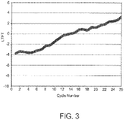
- FIG. 3 shows the LTFT of a keep-clean test of the baseline unadditized gasoline.
- FIG. 4 shows the LTFT of a keep-clean test of EX 3, a gasoline having 100 ppm of Ex A.
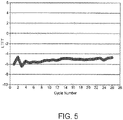
- FIG. 5 shows the LTFT of a keep-clean test of EX 4, a gasoline having 100 ppm of Ex B.
- FIGS. 4 and 5 both show that the amine salts are effective at keeping an engine clean of deposits, even
- the amine salt's performance in a fuel may be evaluated by measuring an engine's mean effective pressure ("MEP") when operated using the additized fuel.
- MEP mean effective pressure
- the MEP measures an engine's capacity to do work independently from engine displacement and can aid in comparing the performance of different engine types or the performance of the same engine operated on different fluids.
- Various ways of calculating MEP are known to persons ordinarily skilled in the art and include, but are not limited to, brake MEP, friction MEP, gross indicated MEP, net indicated MEP, and pumping MEP.
- Brake MEP (“BMEP") is calculated as a function of brake torque.
- the amine salt may improve an engine's BMEP.
- the transitional term "comprising,” which is synonymous with “including,” “containing,” or “characterized by,” is inclusive or open-ended and does not exclude additional, un-recited elements or method steps.
- the term also encompass, as alternative embodiments, the phrases “consisting essentially of' and “consisting of,” where “consisting of' excludes any element or step not specified and “consisting essentially of' permits the inclusion of additional un-recited elements or steps that do not materially affect the basic and novel characteristics of the composition or method under consideration.
Landscapes
- Chemical & Material Sciences (AREA)
- Oil, Petroleum & Natural Gas (AREA)
- Engineering & Computer Science (AREA)
- Organic Chemistry (AREA)
- Chemical Kinetics & Catalysis (AREA)
- General Chemical & Material Sciences (AREA)
- Combustion & Propulsion (AREA)
- Health & Medical Sciences (AREA)
- Emergency Medicine (AREA)
- Solid Fuels And Fuel-Associated Substances (AREA)
- Low-Molecular Organic Synthesis Reactions Using Catalysts (AREA)
- Liquid Carbonaceous Fuels (AREA)
Claims (14)
- Verwendung einer Kraftstoffzusammensetzung, um kohlenstoffhaltige Ablagerungen in einem Motor zu reduzieren, wobei die Verwendung ein Betreiben des Motors unter Verwendung der Kraftstoffzusammensetzung umfasst und wobei die Kraftstoffzusammensetzung Benzin und ein Aminsalz einer Bernsteinestersäure oder ein Aminsalz einer Succinamidsäure (beides "Aminsalz(e)") umfasst, das das Produkt von (a) und (b) ist, wobei:(a) ein Amin mit (i) wenigsten einem tertiären Stickstoff und (ii) wenigstens einer Hydroxyalkylfunktionalität und/oder wenigstens einer sekundären Aminfunktionalität ist;(b) eine mit Hydrocarbyl substituierte oder unsubstituierte Bernsteinsäure und/oder ein mit Hydrocarbyl substituiertes oder unsubstituiertes Anhydrid ist; undwobei das Aminsalz eine Konzentration von wenigstens 10 Gew.-ppm aufweist, basierend auf einem Gesamtgewicht der Kraftstoffzusammensetzung, und wobei wenigstens ein Anteil des Aminsalzes die folgende Formel (I) aufweist:


- Verwendung nach Anspruch 1, wobei der Kraftstoff ferner ein Oxygenat umfasst.
- Verwendung nach Anspruch 1 oder 2, wobei R1 in Formel (I) oder Formel (II) eine C8- bis C25- oder C12- bis C16-Hydrocarbylgruppe ist.
- Verwendung nach Anspruch 1 oder 2, wobei das Aminsalz die Formel (I) aufweist und das Produkt von N,N-Dimethylethanolamin und Hexadecenylbernsteinsäureanhydrid ist.
- Verwendung nach Anspruch 1 oder 2, wobei das Aminsalz die Formel (II) aufweist und das Produkt von N1-(3-(Dimethylamino)propyl)-N3,N3-dimethylpropan-1,3-diamin und Hexadecenylbernsteinsäureanhydrid ist.
- Verwendung nach einem der Ansprüche 1 bis 3, wobei das Aminsalz die Formel (I) aufweist und das Amin ein alkoxyliertes Fettamin ist.
- Verwendung nach einem der vorhergehenden Ansprüche, die ferner zusätzlich zu dem Amin, das verwendet wird, um das Reaktionsprodukt des Aminsalzes herzustellen, ein alkoxyliertes Fettamin umfasst.
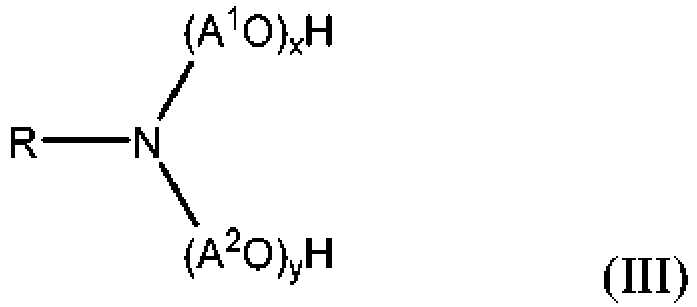
- Verwendung nach Anspruch 6 oder 7, wobei das alkoxylierte Fettamin die folgende Formel (III) aufweist:
- Verwendung nach einem der vorstehenden Ansprüche, wobei das Aminsalz eine Konzentration von wenigstens 12 ppm, 25 ppm oder 50 ppm aufweist, basierend auf einem Gesamtgewicht der Kraftstoffzusammensetzung.
- Verwendung nach einem der Ansprüche 2 bis 9, wobei das Oxygenat Ethanol ist.
- Verwendung nach Anspruch 10, wobei die Kraftstoffzusammensetzung Benzin und 5 Vol.-% bis 30 Vol.-% Ethanol umfasst, basierend auf einem Gesamtvolumen der Kraftstoffzusammensetzung.
- Verwendung nach Anspruch 1 oder 2, wobei das Aminsalz in einer Gewichtsmenge von wenigstens 20 Gew.-ppm bis 100 Gew.-ppm (sauber halten) oder wenigstens 100 Gew.-ppm bis 500 Gew.-ppm (säubern) vorliegt.
- Verwendung nach Anspruch 11 oder 12, wobei der Motor ein Benzinverbrennungsmotor ist, der aus einem Direkteinspritz-Benzin(gasoline direct injection - GDI)-Motor, einem Mehrpunkteinspritzungs(port fuel injection - PFI)-Motor, einem Motor mit homogener Kompressionszündung (homogenous charge compression ignition -HCCI) oder einer Kombination davon besteht.
- Verwendung nach einem der Ansprüche 12 bis 13, wobei das Aminsalz dem Kraftstoff unter Verwendung eines fahrzeugeigenen Dosierungssystems zugegeben wird.
Priority Applications (1)
| Application Number | Priority Date | Filing Date | Title |
|---|---|---|---|
| EP22183161.3A EP4108743B1 (de) | 2017-03-06 | 2018-03-05 | Aminsalze zur verwendung in benzinmotoren |
Applications Claiming Priority (3)
| Application Number | Priority Date | Filing Date | Title |
|---|---|---|---|
| US201762467292P | 2017-03-06 | 2017-03-06 | |
| US201762550753P | 2017-08-28 | 2017-08-28 | |
| PCT/US2018/020846 WO2018164986A1 (en) | 2017-03-06 | 2018-03-05 | Amine salts for use in gasoline engines |
Related Child Applications (1)
| Application Number | Title | Priority Date | Filing Date |
|---|---|---|---|
| EP22183161.3A Division EP4108743B1 (de) | 2017-03-06 | 2018-03-05 | Aminsalze zur verwendung in benzinmotoren |
Publications (2)
| Publication Number | Publication Date |
|---|---|
| EP3668951A1 EP3668951A1 (de) | 2020-06-24 |
| EP3668951B1 true EP3668951B1 (de) | 2022-07-06 |
Family
ID=61683941
Family Applications (2)
| Application Number | Title | Priority Date | Filing Date |
|---|---|---|---|
| EP18711780.9A Active EP3668951B1 (de) | 2017-03-06 | 2018-03-05 | Aminsalze zur verwendung in benzinmotoren |
| EP22183161.3A Active EP4108743B1 (de) | 2017-03-06 | 2018-03-05 | Aminsalze zur verwendung in benzinmotoren |
Family Applications After (1)
| Application Number | Title | Priority Date | Filing Date |
|---|---|---|---|
| EP22183161.3A Active EP4108743B1 (de) | 2017-03-06 | 2018-03-05 | Aminsalze zur verwendung in benzinmotoren |
Country Status (9)
| Country | Link |
|---|---|
| US (1) | US11208603B2 (de) |
| EP (2) | EP3668951B1 (de) |
| AU (1) | AU2018230607B2 (de) |
| CA (1) | CA3074434A1 (de) |
| DK (1) | DK3668951T3 (de) |
| ES (1) | ES2924069T3 (de) |
| PL (1) | PL3668951T3 (de) |
| SG (1) | SG11202001960SA (de) |
| WO (1) | WO2018164986A1 (de) |
Families Citing this family (2)
| Publication number | Priority date | Publication date | Assignee | Title |
|---|---|---|---|---|
| GB201805238D0 (en) | 2018-03-29 | 2018-05-16 | Innospec Ltd | Composition, method and use |
| EP4061911B1 (de) | 2019-11-22 | 2024-11-20 | The Lubrizol Corporation | Kraftstoffadditivzusammensetzungen für benzindirekteinspritzmotoren |
Family Cites Families (25)
| Publication number | Priority date | Publication date | Assignee | Title |
|---|---|---|---|---|
| GB1287443A (en) * | 1969-06-06 | 1972-08-31 | Exxon Research Engineering Co | Gasoline compositions |
| GB1446435A (en) | 1972-11-02 | 1976-08-18 | Cooper Ltd Ethyl | Lubricant additives |
| US4253876A (en) * | 1980-02-19 | 1981-03-03 | Petrolite Corporation | Corrosion inhibitors |
| DE3732908A1 (de) | 1987-09-30 | 1989-04-13 | Basf Ag | Polyetheramine enthaltende kraftstoffe fuer ottomotoren |
| US5094667A (en) | 1990-03-20 | 1992-03-10 | Exxon Research And Engineering Company | Guerbet alkyl ether mono amines |
| US5503644A (en) | 1991-09-23 | 1996-04-02 | Shell Oil Company | Gasoline composition for reducing intake valve deposits in port fuel injected engines |
| US5697988A (en) | 1991-11-18 | 1997-12-16 | Ethyl Corporation | Fuel compositions |
| US5407453A (en) | 1993-03-19 | 1995-04-18 | The Lubrizol Corporation | Deposit cleaning composition for internal combustion engines |
| US5458793A (en) | 1993-05-13 | 1995-10-17 | The Lubrizol Corporation | Compositions useful as additives for lubricants and liquid fuels |
| US5336278A (en) | 1993-05-13 | 1994-08-09 | The Lubrizol Corporation | Fuel composition containing an aromatic amide detergent |
| US6020500A (en) | 1995-08-22 | 2000-02-01 | The Lubrizol Corporation | Hydroxy-substituted monolactones useful as intermediates for preparing lubricating oil and fuel additives |
| US5777142A (en) | 1995-08-22 | 1998-07-07 | The Lubrizol Corporation | Unsaturated hydroxycarboxylic compounds useful as intermediates for preparing lubricant and fuel additives |
| SG64399A1 (en) | 1995-08-22 | 1999-04-27 | Lubrizol Corp | Process for preparing compositions useful as intermediates for preparing lubricanting oil and fuel additives |
| US5620949A (en) | 1995-12-13 | 1997-04-15 | The Lubrizol Corporation | Condensation products of alkylphenols and aldehydes, and derivatives thereof |
| US5696060A (en) | 1996-04-15 | 1997-12-09 | The Lubrizol Corporation | Acylated nitrogen compounds useful as additives for lubricating oil and fuel compositions |
| US5696067A (en) | 1996-04-15 | 1997-12-09 | The Lubrizol Corporation | Hydroxy-group containing acylated nitrogen compounds useful as additives for lubricating oil and fuel compositions |
| US5840920A (en) | 1996-08-08 | 1998-11-24 | The Lubrizol Corporation | Process for preparing compositions useful as intermediates for preparing lubricating oil and fuel additives |
| GB9618546D0 (en) | 1996-09-05 | 1996-10-16 | Bp Chemicals Additives | Dispersants/detergents for hydrocarbons fuels |
| US7491248B2 (en) * | 2003-09-25 | 2009-02-17 | Afton Chemical Corporation | Fuels compositions and methods for using same |
| US20080168708A1 (en) * | 2007-01-11 | 2008-07-17 | Cunningham Lawrence J | Method and compositions for reducing deposits in engines combusting ethanol-containing fuels and a corrosion inhibitor |
| EP1967567A3 (de) * | 2007-02-22 | 2008-10-08 | Afton Chemical Corporation | Verfahren und Zusammensetzungen zur Minderung von Ablagerungen in Motoren zur Verbrennung ethanolhaltiger Kraftstoffe |
| US9540581B2 (en) * | 2011-05-26 | 2017-01-10 | The Lubrizol Corporation | Stabilized blends containing friction modifiers |
| GB201113390D0 (en) * | 2011-08-03 | 2011-09-21 | Innospec Ltd | Fuel compositions |
| US9458400B2 (en) * | 2012-11-02 | 2016-10-04 | Afton Chemical Corporation | Fuel additive for improved performance in direct fuel injected engines |
| US9340742B1 (en) * | 2015-05-05 | 2016-05-17 | Afton Chemical Corporation | Fuel additive for improved injector performance |
-
2018
- 2018-03-05 EP EP18711780.9A patent/EP3668951B1/de active Active
- 2018-03-05 EP EP22183161.3A patent/EP4108743B1/de active Active
- 2018-03-05 AU AU2018230607A patent/AU2018230607B2/en active Active
- 2018-03-05 PL PL18711780.9T patent/PL3668951T3/pl unknown
- 2018-03-05 WO PCT/US2018/020846 patent/WO2018164986A1/en not_active Ceased
- 2018-03-05 US US16/643,346 patent/US11208603B2/en active Active
- 2018-03-05 SG SG11202001960SA patent/SG11202001960SA/en unknown
- 2018-03-05 ES ES18711780T patent/ES2924069T3/es active Active
- 2018-03-05 CA CA3074434A patent/CA3074434A1/en active Pending
- 2018-03-05 DK DK18711780.9T patent/DK3668951T3/da active
Also Published As
| Publication number | Publication date |
|---|---|
| PL3668951T3 (pl) | 2022-08-29 |
| EP4108743B1 (de) | 2024-01-31 |
| AU2018230607A1 (en) | 2020-07-09 |
| SG11202001960SA (en) | 2020-04-29 |
| ES2924069T3 (es) | 2022-10-04 |
| AU2018230607B2 (en) | 2023-09-21 |
| EP3668951A1 (de) | 2020-06-24 |
| DK3668951T3 (da) | 2022-08-01 |
| WO2018164986A1 (en) | 2018-09-13 |
| US20200255756A1 (en) | 2020-08-13 |
| US11208603B2 (en) | 2021-12-28 |
| CA3074434A1 (en) | 2018-09-13 |
| EP4108743A1 (de) | 2022-12-28 |
Similar Documents
| Publication | Publication Date | Title |
|---|---|---|
| CN106029844B (zh) | 添加剂组合物和包含该组合物的高性能燃料 | |
| US20060010767A1 (en) | Method of operating a direct injection spark-ignited engine with a fuel composition | |
| JP2005097612A (ja) | 燃料組成物およびその使用法 | |
| TW201538710A (zh) | 添加物之組合物及含有該組合物之高效率燃料 | |
| EP4108743B1 (de) | Aminsalze zur verwendung in benzinmotoren | |
| CN110382670B (zh) | 燃料添加剂 | |
| US12104133B2 (en) | Fuel additives and formulations for improving performance of gasoline direct injection engines | |
| EP4061911B1 (de) | Kraftstoffadditivzusammensetzungen für benzindirekteinspritzmotoren | |
| US8070837B2 (en) | Use of fatty acid alkoxylates as a method to remedy engine intake valve sticking | |
| BR112022009844B1 (pt) | Uso de aditivos de combustível para motores de injeção direta a gasolina | |
| BR112020004034A2 (pt) | sal de amina para uso em motores a gasolina | |
| BR112020004034B1 (pt) | Sal de amina para uso em motores a gasolina | |
| BR112019017472B1 (pt) | Composição de combustível e uso da mesma |
Legal Events
| Date | Code | Title | Description |
|---|---|---|---|
| STAA | Information on the status of an ep patent application or granted ep patent |
Free format text: STATUS: UNKNOWN |
|
| STAA | Information on the status of an ep patent application or granted ep patent |
Free format text: STATUS: THE INTERNATIONAL PUBLICATION HAS BEEN MADE |
|
| STAA | Information on the status of an ep patent application or granted ep patent |
Free format text: STATUS: THE APPLICATION IS DEEMED TO BE WITHDRAWN |
|
| STAA | Information on the status of an ep patent application or granted ep patent |
Free format text: STATUS: THE INTERNATIONAL PUBLICATION HAS BEEN MADE |
|
| PUAI | Public reference made under article 153(3) epc to a published international application that has entered the european phase |
Free format text: ORIGINAL CODE: 0009012 |
|
| STAA | Information on the status of an ep patent application or granted ep patent |
Free format text: STATUS: REQUEST FOR EXAMINATION WAS MADE |
|
| 17P | Request for examination filed |
Effective date: 20200422 |
|
| AK | Designated contracting states |
Kind code of ref document: A1 Designated state(s): AL AT BE BG CH CY CZ DE DK EE ES FI FR GB GR HR HU IE IS IT LI LT LU LV MC MK MT NL NO PL PT RO RS SE SI SK SM TR |
|
| STAA | Information on the status of an ep patent application or granted ep patent |
Free format text: STATUS: EXAMINATION IS IN PROGRESS |
|
| 17Q | First examination report despatched |
Effective date: 20210210 |
|
| GRAP | Despatch of communication of intention to grant a patent |
Free format text: ORIGINAL CODE: EPIDOSNIGR1 |
|
| STAA | Information on the status of an ep patent application or granted ep patent |
Free format text: STATUS: GRANT OF PATENT IS INTENDED |
|
| INTG | Intention to grant announced |
Effective date: 20211026 |
|
| GRAJ | Information related to disapproval of communication of intention to grant by the applicant or resumption of examination proceedings by the epo deleted |
Free format text: ORIGINAL CODE: EPIDOSDIGR1 |
|
| STAA | Information on the status of an ep patent application or granted ep patent |
Free format text: STATUS: EXAMINATION IS IN PROGRESS |
|
| GRAP | Despatch of communication of intention to grant a patent |
Free format text: ORIGINAL CODE: EPIDOSNIGR1 |
|
| STAA | Information on the status of an ep patent application or granted ep patent |
Free format text: STATUS: GRANT OF PATENT IS INTENDED |
|
| INTC | Intention to grant announced (deleted) | ||
| INTG | Intention to grant announced |
Effective date: 20220127 |
|
| RIN1 | Information on inventor provided before grant (corrected) |
Inventor name: NYCE, MATTHEW Inventor name: BARTLEY, STUART L. |
|
| GRAS | Grant fee paid |
Free format text: ORIGINAL CODE: EPIDOSNIGR3 |
|
| GRAA | (expected) grant |
Free format text: ORIGINAL CODE: 0009210 |
|
| STAA | Information on the status of an ep patent application or granted ep patent |
Free format text: STATUS: THE PATENT HAS BEEN GRANTED |
|
| AK | Designated contracting states |
Kind code of ref document: B1 Designated state(s): AL AT BE BG CH CY CZ DE DK EE ES FI FR GB GR HR HU IE IS IT LI LT LU LV MC MK MT NL NO PL PT RO RS SE SI SK SM TR |
|
| REG | Reference to a national code |
Ref country code: AT Ref legal event code: REF Ref document number: 1502894 Country of ref document: AT Kind code of ref document: T Effective date: 20220715 Ref country code: CH Ref legal event code: EP |
|
| REG | Reference to a national code |
Ref country code: DE Ref legal event code: R096 Ref document number: 602018037537 Country of ref document: DE |
|
| REG | Reference to a national code |
Ref country code: DK Ref legal event code: T3 Effective date: 20220727 |
|
| REG | Reference to a national code |
Ref country code: SE Ref legal event code: TRGR |
|
| REG | Reference to a national code |
Ref country code: IE Ref legal event code: FG4D |
|
| REG | Reference to a national code |
Ref country code: FI Ref legal event code: FGE |
|
| REG | Reference to a national code |
Ref country code: NO Ref legal event code: T2 Effective date: 20220706 |
|
| REG | Reference to a national code |
Ref country code: ES Ref legal event code: FG2A Ref document number: 2924069 Country of ref document: ES Kind code of ref document: T3 Effective date: 20221004 |
|
| REG | Reference to a national code |
Ref country code: LT Ref legal event code: MG9D |
|
| REG | Reference to a national code |
Ref country code: NL Ref legal event code: MP Effective date: 20220706 |
|
| PG25 | Lapsed in a contracting state [announced via postgrant information from national office to epo] |
Ref country code: RS Free format text: LAPSE BECAUSE OF FAILURE TO SUBMIT A TRANSLATION OF THE DESCRIPTION OR TO PAY THE FEE WITHIN THE PRESCRIBED TIME-LIMIT Effective date: 20220706 Ref country code: PT Free format text: LAPSE BECAUSE OF FAILURE TO SUBMIT A TRANSLATION OF THE DESCRIPTION OR TO PAY THE FEE WITHIN THE PRESCRIBED TIME-LIMIT Effective date: 20221107 Ref country code: NL Free format text: LAPSE BECAUSE OF FAILURE TO SUBMIT A TRANSLATION OF THE DESCRIPTION OR TO PAY THE FEE WITHIN THE PRESCRIBED TIME-LIMIT Effective date: 20220706 Ref country code: LV Free format text: LAPSE BECAUSE OF FAILURE TO SUBMIT A TRANSLATION OF THE DESCRIPTION OR TO PAY THE FEE WITHIN THE PRESCRIBED TIME-LIMIT Effective date: 20220706 Ref country code: LT Free format text: LAPSE BECAUSE OF FAILURE TO SUBMIT A TRANSLATION OF THE DESCRIPTION OR TO PAY THE FEE WITHIN THE PRESCRIBED TIME-LIMIT Effective date: 20220706 |
|
| REG | Reference to a national code |
Ref country code: AT Ref legal event code: MK05 Ref document number: 1502894 Country of ref document: AT Kind code of ref document: T Effective date: 20220706 |
|
| PG25 | Lapsed in a contracting state [announced via postgrant information from national office to epo] |
Ref country code: IS Free format text: LAPSE BECAUSE OF FAILURE TO SUBMIT A TRANSLATION OF THE DESCRIPTION OR TO PAY THE FEE WITHIN THE PRESCRIBED TIME-LIMIT Effective date: 20221106 Ref country code: HR Free format text: LAPSE BECAUSE OF FAILURE TO SUBMIT A TRANSLATION OF THE DESCRIPTION OR TO PAY THE FEE WITHIN THE PRESCRIBED TIME-LIMIT Effective date: 20220706 Ref country code: GR Free format text: LAPSE BECAUSE OF FAILURE TO SUBMIT A TRANSLATION OF THE DESCRIPTION OR TO PAY THE FEE WITHIN THE PRESCRIBED TIME-LIMIT Effective date: 20221007 |
|
| REG | Reference to a national code |
Ref country code: DE Ref legal event code: R097 Ref document number: 602018037537 Country of ref document: DE |
|
| PG25 | Lapsed in a contracting state [announced via postgrant information from national office to epo] |
Ref country code: SM Free format text: LAPSE BECAUSE OF FAILURE TO SUBMIT A TRANSLATION OF THE DESCRIPTION OR TO PAY THE FEE WITHIN THE PRESCRIBED TIME-LIMIT Effective date: 20220706 Ref country code: RO Free format text: LAPSE BECAUSE OF FAILURE TO SUBMIT A TRANSLATION OF THE DESCRIPTION OR TO PAY THE FEE WITHIN THE PRESCRIBED TIME-LIMIT Effective date: 20220706 Ref country code: CZ Free format text: LAPSE BECAUSE OF FAILURE TO SUBMIT A TRANSLATION OF THE DESCRIPTION OR TO PAY THE FEE WITHIN THE PRESCRIBED TIME-LIMIT Effective date: 20220706 Ref country code: AT Free format text: LAPSE BECAUSE OF FAILURE TO SUBMIT A TRANSLATION OF THE DESCRIPTION OR TO PAY THE FEE WITHIN THE PRESCRIBED TIME-LIMIT Effective date: 20220706 |
|
| PLBE | No opposition filed within time limit |
Free format text: ORIGINAL CODE: 0009261 |
|
| STAA | Information on the status of an ep patent application or granted ep patent |
Free format text: STATUS: NO OPPOSITION FILED WITHIN TIME LIMIT |
|
| PG25 | Lapsed in a contracting state [announced via postgrant information from national office to epo] |
Ref country code: SK Free format text: LAPSE BECAUSE OF FAILURE TO SUBMIT A TRANSLATION OF THE DESCRIPTION OR TO PAY THE FEE WITHIN THE PRESCRIBED TIME-LIMIT Effective date: 20220706 Ref country code: EE Free format text: LAPSE BECAUSE OF FAILURE TO SUBMIT A TRANSLATION OF THE DESCRIPTION OR TO PAY THE FEE WITHIN THE PRESCRIBED TIME-LIMIT Effective date: 20220706 |
|
| 26N | No opposition filed |
Effective date: 20230411 |
|
| P01 | Opt-out of the competence of the unified patent court (upc) registered |
Effective date: 20230516 |
|
| PG25 | Lapsed in a contracting state [announced via postgrant information from national office to epo] |
Ref country code: AL Free format text: LAPSE BECAUSE OF FAILURE TO SUBMIT A TRANSLATION OF THE DESCRIPTION OR TO PAY THE FEE WITHIN THE PRESCRIBED TIME-LIMIT Effective date: 20220706 |
|
| PG25 | Lapsed in a contracting state [announced via postgrant information from national office to epo] |
Ref country code: SI Free format text: LAPSE BECAUSE OF FAILURE TO SUBMIT A TRANSLATION OF THE DESCRIPTION OR TO PAY THE FEE WITHIN THE PRESCRIBED TIME-LIMIT Effective date: 20220706 |
|
| PG25 | Lapsed in a contracting state [announced via postgrant information from national office to epo] |
Ref country code: MC Free format text: LAPSE BECAUSE OF FAILURE TO SUBMIT A TRANSLATION OF THE DESCRIPTION OR TO PAY THE FEE WITHIN THE PRESCRIBED TIME-LIMIT Effective date: 20220706 |
|
| REG | Reference to a national code |
Ref country code: CH Ref legal event code: PL |
|
| REG | Reference to a national code |
Ref country code: BE Ref legal event code: MM Effective date: 20230331 |
|
| PG25 | Lapsed in a contracting state [announced via postgrant information from national office to epo] |
Ref country code: LU Free format text: LAPSE BECAUSE OF NON-PAYMENT OF DUE FEES Effective date: 20230305 |
|
| REG | Reference to a national code |
Ref country code: IE Ref legal event code: MM4A |
|
| PG25 | Lapsed in a contracting state [announced via postgrant information from national office to epo] |
Ref country code: LI Free format text: LAPSE BECAUSE OF NON-PAYMENT OF DUE FEES Effective date: 20230331 Ref country code: IE Free format text: LAPSE BECAUSE OF NON-PAYMENT OF DUE FEES Effective date: 20230305 Ref country code: CH Free format text: LAPSE BECAUSE OF NON-PAYMENT OF DUE FEES Effective date: 20230331 |
|
| PG25 | Lapsed in a contracting state [announced via postgrant information from national office to epo] |
Ref country code: BE Free format text: LAPSE BECAUSE OF NON-PAYMENT OF DUE FEES Effective date: 20230331 |
|
| PG25 | Lapsed in a contracting state [announced via postgrant information from national office to epo] |
Ref country code: BG Free format text: LAPSE BECAUSE OF FAILURE TO SUBMIT A TRANSLATION OF THE DESCRIPTION OR TO PAY THE FEE WITHIN THE PRESCRIBED TIME-LIMIT Effective date: 20220706 |
|
| PG25 | Lapsed in a contracting state [announced via postgrant information from national office to epo] |
Ref country code: BG Free format text: LAPSE BECAUSE OF FAILURE TO SUBMIT A TRANSLATION OF THE DESCRIPTION OR TO PAY THE FEE WITHIN THE PRESCRIBED TIME-LIMIT Effective date: 20220706 |
|
| PGFP | Annual fee paid to national office [announced via postgrant information from national office to epo] |
Ref country code: ES Payment date: 20250401 Year of fee payment: 8 |
|
| PG25 | Lapsed in a contracting state [announced via postgrant information from national office to epo] |
Ref country code: CY Free format text: LAPSE BECAUSE OF FAILURE TO SUBMIT A TRANSLATION OF THE DESCRIPTION OR TO PAY THE FEE WITHIN THE PRESCRIBED TIME-LIMIT; INVALID AB INITIO Effective date: 20180305 |
|
| PG25 | Lapsed in a contracting state [announced via postgrant information from national office to epo] |
Ref country code: HU Free format text: LAPSE BECAUSE OF FAILURE TO SUBMIT A TRANSLATION OF THE DESCRIPTION OR TO PAY THE FEE WITHIN THE PRESCRIBED TIME-LIMIT; INVALID AB INITIO Effective date: 20180305 |
|
| PG25 | Lapsed in a contracting state [announced via postgrant information from national office to epo] |
Ref country code: TR Free format text: LAPSE BECAUSE OF FAILURE TO SUBMIT A TRANSLATION OF THE DESCRIPTION OR TO PAY THE FEE WITHIN THE PRESCRIBED TIME-LIMIT Effective date: 20220706 |
|
| PGFP | Annual fee paid to national office [announced via postgrant information from national office to epo] |
Ref country code: SE Payment date: 20260327 Year of fee payment: 9 |
|
| PGFP | Annual fee paid to national office [announced via postgrant information from national office to epo] |
Ref country code: GB Payment date: 20260327 Year of fee payment: 9 |
|
| PGFP | Annual fee paid to national office [announced via postgrant information from national office to epo] |
Ref country code: NO Payment date: 20260327 Year of fee payment: 9 Ref country code: DK Payment date: 20260325 Year of fee payment: 9 Ref country code: DE Payment date: 20260327 Year of fee payment: 9 |
|
| PGFP | Annual fee paid to national office [announced via postgrant information from national office to epo] |
Ref country code: FI Payment date: 20260325 Year of fee payment: 9 Ref country code: IT Payment date: 20260319 Year of fee payment: 9 |
|
| PGFP | Annual fee paid to national office [announced via postgrant information from national office to epo] |
Ref country code: FR Payment date: 20260325 Year of fee payment: 9 |
|
| PGFP | Annual fee paid to national office [announced via postgrant information from national office to epo] |
Ref country code: PL Payment date: 20260217 Year of fee payment: 9 |