EP3665538B1 - Automatisches starten und landen eines flugzeuges - Google Patents
Automatisches starten und landen eines flugzeuges Download PDFInfo
- Publication number
- EP3665538B1 EP3665538B1 EP18846359.0A EP18846359A EP3665538B1 EP 3665538 B1 EP3665538 B1 EP 3665538B1 EP 18846359 A EP18846359 A EP 18846359A EP 3665538 B1 EP3665538 B1 EP 3665538B1
- Authority
- EP
- European Patent Office
- Prior art keywords
- aircraft
- tol
- atol
- instructions
- control station
- Prior art date
- Legal status (The legal status is an assumption and is not a legal conclusion. Google has not performed a legal analysis and makes no representation as to the accuracy of the status listed.)
- Active
Links
Images


Classifications
-
- G—PHYSICS
- G05—CONTROLLING; REGULATING
- G05D—SYSTEMS FOR CONTROLLING OR REGULATING NON-ELECTRIC VARIABLES
- G05D1/00—Control of position, course, altitude or attitude of land, water, air or space vehicles, e.g. using automatic pilots
- G05D1/04—Control of altitude or depth
- G05D1/06—Rate of change of altitude or depth
- G05D1/0607—Rate of change of altitude or depth specially adapted for aircraft
- G05D1/0653—Rate of change of altitude or depth specially adapted for aircraft during a phase of take-off or landing
-
- G—PHYSICS
- G05—CONTROLLING; REGULATING
- G05D—SYSTEMS FOR CONTROLLING OR REGULATING NON-ELECTRIC VARIABLES
- G05D1/00—Control of position, course, altitude or attitude of land, water, air or space vehicles, e.g. using automatic pilots
- G05D1/60—Intended control result
- G05D1/652—Take-off
-
- B—PERFORMING OPERATIONS; TRANSPORTING
- B64—AIRCRAFT; AVIATION; COSMONAUTICS
- B64C—AEROPLANES; HELICOPTERS
- B64C39/00—Aircraft not otherwise provided for
- B64C39/02—Aircraft not otherwise provided for characterised by special use
- B64C39/024—Aircraft not otherwise provided for characterised by special use of the remote controlled vehicle type, i.e. RPV
-
- B—PERFORMING OPERATIONS; TRANSPORTING
- B64—AIRCRAFT; AVIATION; COSMONAUTICS
- B64D—EQUIPMENT FOR FITTING IN OR TO AIRCRAFT; FLIGHT SUITS; PARACHUTES; ARRANGEMENT OR MOUNTING OF POWER PLANTS OR PROPULSION TRANSMISSIONS IN AIRCRAFT
- B64D45/00—Aircraft indicators or protectors not otherwise provided for
- B64D45/04—Landing aids; Safety measures to prevent collision with earth's surface
-
- B—PERFORMING OPERATIONS; TRANSPORTING
- B64—AIRCRAFT; AVIATION; COSMONAUTICS
- B64U—UNMANNED AERIAL VEHICLES [UAV]; EQUIPMENT THEREFOR
- B64U70/00—Launching, take-off or landing arrangements
-
- G—PHYSICS
- G05—CONTROLLING; REGULATING
- G05D—SYSTEMS FOR CONTROLLING OR REGULATING NON-ELECTRIC VARIABLES
- G05D1/00—Control of position, course, altitude or attitude of land, water, air or space vehicles, e.g. using automatic pilots
-
- G—PHYSICS
- G05—CONTROLLING; REGULATING
- G05D—SYSTEMS FOR CONTROLLING OR REGULATING NON-ELECTRIC VARIABLES
- G05D1/00—Control of position, course, altitude or attitude of land, water, air or space vehicles, e.g. using automatic pilots
- G05D1/20—Control system inputs
- G05D1/22—Command input arrangements
- G05D1/221—Remote-control arrangements
- G05D1/226—Communication links with the remote-control arrangements
-
- G—PHYSICS
- G05—CONTROLLING; REGULATING
- G05D—SYSTEMS FOR CONTROLLING OR REGULATING NON-ELECTRIC VARIABLES
- G05D1/00—Control of position, course, altitude or attitude of land, water, air or space vehicles, e.g. using automatic pilots
- G05D1/20—Control system inputs
- G05D1/22—Command input arrangements
- G05D1/229—Command input data, e.g. waypoints
-
- G—PHYSICS
- G05—CONTROLLING; REGULATING
- G05D—SYSTEMS FOR CONTROLLING OR REGULATING NON-ELECTRIC VARIABLES
- G05D1/00—Control of position, course, altitude or attitude of land, water, air or space vehicles, e.g. using automatic pilots
- G05D1/20—Control system inputs
- G05D1/24—Arrangements for determining position or orientation
- G05D1/247—Arrangements for determining position or orientation using signals provided by artificial sources external to the vehicle, e.g. navigation beacons
- G05D1/248—Arrangements for determining position or orientation using signals provided by artificial sources external to the vehicle, e.g. navigation beacons generated by satellites, e.g. GPS
-
- G—PHYSICS
- G05—CONTROLLING; REGULATING
- G05D—SYSTEMS FOR CONTROLLING OR REGULATING NON-ELECTRIC VARIABLES
- G05D1/00—Control of position, course, altitude or attitude of land, water, air or space vehicles, e.g. using automatic pilots
- G05D1/60—Intended control result
- G05D1/654—Landing
-
- B—PERFORMING OPERATIONS; TRANSPORTING
- B64—AIRCRAFT; AVIATION; COSMONAUTICS
- B64U—UNMANNED AERIAL VEHICLES [UAV]; EQUIPMENT THEREFOR
- B64U2201/00—UAVs characterised by their flight controls
- B64U2201/10—UAVs characterised by their flight controls autonomous, i.e. by navigating independently from ground or air stations, e.g. by using inertial navigation systems [INS]
-
- G—PHYSICS
- G05—CONTROLLING; REGULATING
- G05D—SYSTEMS FOR CONTROLLING OR REGULATING NON-ELECTRIC VARIABLES
- G05D2109/00—Types of controlled vehicles
- G05D2109/20—Aircraft, e.g. drones
Definitions
- the presently disclosed subject matter relates to the field of aircraft control and specifically to aircraft control during takeoff and landing.
- Unmanned aerial vehicles otherwise known as remotely piloted aircraft (RPA) or remotely piloted aircraft system (RPAS)
- RPA remotely piloted aircraft
- RPAS remotely piloted aircraft system
- UAVs are used in a large variety of applications including, for example, traffic monitoring, remote sensing and reconnaissance, transportation, search and rescue, domestic policing, communication relaying, and more.
- a UAV is controlled and monitored from takeoff, through flight and mission performance, and until landing.
- the operation of a UAV throughout its mission is controlled by an aircraft control station which is manned by an aircraft control station operator.
- WO2017/065486 discloses a communication system for an unmanned aerial vehicle comprising a mounted communication apparatus, mounted on an unmanned aerial vehicle, for communicating by means of a previously configured frequency band; and a ground communication apparatus for communicating with the mounted communication apparatus by means of the previously configured frequency band.
- Keiser B E entitled: "Unified Control Systems” (IEEE TRANSACTIONS ON AEROSPACE AND ELECTRONIC SYSTEMS, IEEE SERVICE CENTER, PISCATAWAY, NJ, US, Vol. AES-10, no. 5, 1 September 1971, pages 809-829, XP011167813, ISSN: 0018-9251 ), discloses a survey of the subject of unified control systems for the guidance of unmanned vehicles, such as pilotless aircraft and satellites. Unified refers to the fact that the tracking, telemetry, and command functions are performed using a single RF channel and, at least ideally, a single set of equipment.
- EP1586969 discloses an automatic takeoff apparatus for an aircraft.
- US5600329 discloses a plurality of DGPS receivers which are employed to determine receiver-satellite-specific differential correction values.
- satellite-specific differential correction values are determined as an average of the individual receiver-satellite-specific differential correction values for each of the tracked satellites.
- a discriminator is employed for determining a receiver-satellite-specific discriminant which may be sampled and subsequent determination of a receiver-satellite-specific statistical value thereof. The receiver-satellite-specific statistical values may then be employed for determination of a Detection Threshold value and other integrity information associated with each of the satellite-specific differential correction values.
- a ground station further includes a means for communicating the satellite-specific differential correction values and integrity information associated therewith to a DGPS airborne receiver.
- An DGPS airborne system is configured to include a mechanization for receiving the satellite-specific differential correction values and integrity information associated therewith.
- An airborne integrity monitoring system is used to derive particular integrity limit values associated with the DGPS derived position for pilot awareness as to whether or not the pilot should rely upon the DGPS solution for a precision landing.
- WO9410582 discloses an aircraft landing system in which a differential GPS global positioning system is employed.
- a ground station located in the vicinity of one or more landing strips, includes a GPS receiver and a data link transmitter for transmitting GPS correction data and also the global position of two points which define a desired aircraft glide path associated with a particular landing strip.
- TOL takeoff or landing
- an aircraft is controlled during TOL by a pilot, or in case of a UAV by a trained operator of an aircraft control station, where the aircraft and the control station maintains a line of sight (LOS) to enable the operator to guide it through the TOL process.
- LOS line of sight
- a UAV system normally comprises an aircraft control station (sometimes known as ground control unit (GCU)) at one location and a UAV, typically carrying some type of payload (e.g. a sensing unit such as a camera and ⁇ or RADAR), which is airborne at another location.
- the aircraft control station is configured to enable an operator of the aircraft control station to monitor and control the operation of a respective UAV.
- Control of the UAV can include both control over the operation of the UAV flight, as well as control over the operation of various payloads which may be installed on the UAV.
- Aircraft control station can communicate with UAV over an LOS communication link and/or satellite based communicating link (also known as beyond line of sight (BLOS)).
- BLOS beyond line of sight
- a handover process is performed before TOL.
- control over the UAV is transferred between a first aircraft control station communicating via a BLOS communication link and a second aircraft control station, located in the area of the landing/takeoff site and capable of communicating with the UAV via a LOS communication link.
- the handover process ensures that LOS communication, which allows more accurate control over the UAV, is available during TOL. This of course requires to maintain a fully functional aircraft control station manned by trained operators at the vicinity of the TOL area of the UAV in addition to the aircraft control station which is located remote from the UAV deployment area and is used for controlling the UAV while airborne.
- the presently disclosed subject matter includes an aircraft control system and an aircraft operating method which enable to control an aircraft (e.g. a UAV) by a remote aircraft control station communicating over a BLOS communication link with the aircraft, without the need to deploy an aircraft control station at the TOL site located remotely from the aircraft control station.
- an aircraft e.g. a UAV
- a remote aircraft control station communicating over a BLOS communication link with the aircraft, without the need to deploy an aircraft control station at the TOL site located remotely from the aircraft control station.
- ATOL automatic takeoff or landing
- Accurate positioning data which is required for execution of the ATOL, can be obtained by a positioning system which is located within LOS communication range from the UAV.
- DGPS differential global position system
- TLS remote takeoff and landing support
- the TLS unit comprises a DGPS which provides to the aircraft the accurate positioning data required to enable ATOL execution.
- an aircraft control system enabling automatic takeoff or landing (denoted by "ATOL") of an aircraft, the system comprising:
- system according to this aspect of the presently disclosed subject matter can optionally comprise one or more of features (i) to (iii) below, mutatis mutandis, in any technically possible combination or permutation.
- a method of controlling an aircraft during takeoff or landing comprising: at an automatic takeoff or landing (denoted by” ATOL") subsystem mounted on an aircraft, using one or more computer processors for:
- the method according to this aspect of the presently disclosed subject matter can optionally comprise one or more of features (i) to (iv) below, mutatis mutandis, in any technically possible combination or permutation.
- a non-transitory program storage device readable by a computer, tangibly embodying a computer readable instructions executable by the computer to perform a method of controlling an aircraft during takeoff or landing (TOL), the method comprising: operating an ATOL subsystem mounted on an aircraft comprising:
- the computer storage device disclosed in accordance with the presently disclosed subject matter can optionally comprise one or more of features (i) to (iv) listed above, mutatis mutandis, in any technically possible combination or permutation.
- Units 101, 103 and onboard ATOL subsystem described below comprise or are otherwise operatively connected to one or more computer devices.
- the terms "computer”, “computer device”, “computerized device”, “computer system”, or variation thereof should be expansively construed to include any kind of electronic device with a processing circuitry capable of data processing and which includes one or more computer processors operatively connected to a computer memory (optionally including non-transitory computer memory) operating together for executing and/or generating instructions. Examples of such a device include: digital signal processor (DSP), a microcontroller, a field programmable gate array (FPGA), an application specific integrated circuit (ASIC), a personal computer, server computer device, a dedicated processing device, etc.
- DSP digital signal processor
- FPGA field programmable gate array
- ASIC application specific integrated circuit
- the phrase “for example,” “such as”, “for instance” and variants thereof describe non-limiting embodiments of the presently disclosed subject matter.
- Reference in the specification to “one case”, “some cases”, “other cases” or variants thereof means that a particular feature, structure or characteristic described in connection with the embodiment(s) is included in at least one embodiment of the presently disclosed subject matter.
- the appearance of the phrase “one case”, “some cases”, “other cases” or variants thereof does not necessarily refer to the same embodiment(s).
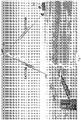
- Figs. 2 is a schematic illustration of a system in accordance with some examples of the presently disclosed subject matter. Components in Fig. 2 may be centralized in one location or dispersed over more than one location. In other embodiments of the presently disclosed subject matter, the system may comprise fewer, more, and/or different modules than those shown in Fig. 2 .
- FIG. 1 shows a deployed aircraft control system comprising an aircraft control station 101, a takeoff and landing support unit 103 and an aircraft 105 (e.g. UAV).
- Aircraft 105 is operating at an area which is remote from the location of deployment of the aircraft control station 101.
- a takeoff and landing runway (TLR) 107 is located remotely from the aircraft control station 101 and therefore communication between aircraft 105 and aircraft control station 101 is possible by BLOS communication only.
- TLR takeoff and landing runway
- Fig. 1 shows that satellite communication (SATCOM), via satellite 109, is used for communicating between the aircraft control station 101 and the aircraft 105.
- SATCOM satellite communication
- TLS unit 103 is located in close proximity to the TLR 107 and therefore can communicate with the aircraft over a line of sight (LOS) communication link (using for example Ultra High Frequency (UHF) radio communication) during takeoff or landing of the aircraft.
- LOS line of sight
- UHF Ultra High Frequency
- Fig. 2 is a block diagram schematically illustrating aircraft control system, in accordance with some none limiting examples of the presently disclosed subject matter.
- aircraft control system 100 comprises aircraft control station 101, TLS unit 103 and an automatic takeoff and landing subsystem, which is mountable on an aircraft 105.
- TLS unit 103 is physically separated from control station 101 where TLS is located in closed proximity to TLR 107 and control station 101 is located remotely from TLR 107.
- aircraft control station 101 comprises pilot box (PBX) comprising an operator console and configured to enable interaction with a ground aircraft control station (GCS) and control an aircraft (e.g. UAV).
- GCS can comprise for example, ATOL control system configured to execute and monitor automatic takeoff or landing, and DGPS configured to calculate and provide accurate positioning data errors, as known in the art.
- GCS is further connected to ground data terminal (GDT) and ground satellite equipment (GSAT).
- GDT is configured to communicate (e.g. with an aircraft) over line of sight communication link (e.g. UHF transmitter and controller (UTC)) and GSAT is configured to communicate with the aircraft over satellite based (BLOS) communication link.
- line of sight communication link e.g. UHF transmitter and controller (UTC)
- BLOS satellite based
- the architecture of aircraft control station 101 can be designed in compliance with the requirements of STANAG 4586 which is the NATO specification of a core UAV control system (CUCS), however this is not always necessary.
- STANAG 4586 which is the NATO specification of a core UAV control system (CUCS)
- TLS unit 103 comprises only a selected part of the functionalities of aircraft control station 101 and accordingly its dimensions and weight are significantly smaller than those of aircraft control station 101.
- TLS unit 103 may not comprise GSAT and is accordingly incapable of BLOS communication with the aircraft.
- TLS unit 103 may be designed not to have full control over the flight of the aircraft (and possibly neither to have control over various payloads onboard the aircraft).
- TLS unit 103 is configured to have limited control over specific operations of the aircraft during TOL. Thus, unlike an aircraft control station 101, operation of a TLS unit 103 does not require extensive training of operators.
- TLS unit 103 comprises a computer device operatively connected to a DGPS and an LOS communication unit (e.g. UTC). This allows TLS 103 to calculate and transmit to an aircraft, over a LOS communication link, DGPS positioning data to thereby enable accurate positioning of the aircraft, during TOL.
- the computerized device can further comprise or be otherwise operatively connected to a PBX to enable user interaction with the TLS unit.
- TLS unit 103 further comprises an abort control device (which can be for example, any one of: a graphical user interface button displayed over a computer screen of TLS unit computer, physical abort button, key or lever, etc.) configured to allow an operator to issue an abort command for aborting TOL.
- an abort input device is provided at the TLS unit to allow cancellation of the TOL process by a technician or flight supervisor operating the TLS unit who is located near the TOL site and has a line of sight with the aircraft, and to thereby increase TOL safety. for example, if the flight supervisor identifies that there is another aircraft on the runway, an abort command cancelling the landing or takeoff process can be issued to avoid dire consequences.
- Aircraft 105 comprises a flight control subsystem, the flight control subsystem is configured to control the aircraft during ATOL and while airborne. Flight control subsystem, can be configured, responsive to flight instructions received over a BLOS communication link from aircraft control station 101, to control the aircraft. Flight control subsystem can be operatively connected to various onboard flight control subsystems (including for example, rudder control unit, ailerons control unit, flap control unit, throttle control unit, etc.) and generate commands for controlling these subsystems according to the received instructions.
- flight control subsystem can be operatively connected to various onboard flight control subsystems (including for example, rudder control unit, ailerons control unit, flap control unit, throttle control unit, etc.) and generate commands for controlling these subsystems according to the received instructions.
- ATOL subsystem is mountable on aircraft 105 and configured to execute automatic takeoff or landing.
- onboard ATOL subsystem can be operatively connected to flight control subsystem to facilitate control the aircraft during TOL.
- Activation of ATOL can be in response to received ATOL activation command, transmitted for example over a BLOS communication link from aircraft control station 101.
- onboard ATOL subsystem is configured to execute an ATOL process where DGPS data is received over a LOS communication link from TLS unit 103 and navigation instructions are received by BLOS communication link from aircraft control station 101.
- the received DGPS data is integrated with native positioning data, determined by an onboard GPS subsystem to thereby obtain positioning data with augmented accuracy.
- Autonomous control over the aircraft during execution of ATOL is done according to navigation instructions and the augmented positioning data. This allows to perform TOL of the aircraft from a runway located remotely from the aircraft control station 101.
- an inherent delay in BLOS communication creates a time gap between the time when sensing data (e.g. images) is obtained by the aircraft at the landing site and a time the sensing data is received at the aircraft control station and a further time when a command for controlling the aircraft responsive to the sensing data, generated at the aircraft control station, is received and executed at the aircraft. Due to this inherent time delay in BLOS communication and the need for accurate control over the aircraft during TOL, TOL cannot be controlled from a remote aircraft control station even if the positioning data provided by the station is sufficiently accurate. Rather, as disclosed herein, ATOL is implemented instead.
- Example of techniques for implementing ATOL are provided by way of example, in publication entitled " Advanced flight control technologies for UAVs" by Moshe Attar, Elias Wahonon and Doron Chaimovitz; Israeli Aircraft Industries - Engineering Division ; 2end AIAA "Unmanned Unlimited” Systems, Technologies, and Operations -Aerospac 15-18 September 2003, San Diego, Californian .
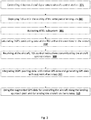
- Fig. 3 is a flowchart showing a sequence of operations carried out as part of automatic landing process, according to an example of the presently disclosed subject matter. Operations described with reference to Fig. 3 (as well as Fig. 4 below) can be executed by components of aircraft control system 100 described above. However, it is noted that reference made to specific components illustrated in Fig. 1 is made by way of example only and should not be construed as limiting.
- an airborne aircraft 105 is controlled by a remote aircraft control station 101.
- communication between the two is facilitate by a BLOS communication link.
- initial takeoff of the aircraft can be executed by the aircraft control station 101 from a runway located in close proximity to the aircraft control station 101.
- the aircraft can be directed to fly to an area, where communication between aircraft and aircraft control station is only possible by a BLOS communication link.
- a TLS unit is deployed in the vicinity (close proximity) of the anticipated landing site, e.g. a takeoff and landing runway (TLR 107) located remotely from the aircraft control station 101.
- TLS unit can be deployed for example by small team of technicians (e.g. between 1 to 3 technicians).
- TLS unit is activated once the aircraft reaches an area close to the runway, e.g. once the aircraft is within LOS communication range.
- operation of the TLS unit and/or communication between the aircraft and the TLS unit is initiated in response to a command transmitted from the aircraft control station 101.
- the aircraft can be controlled from the aircraft control station 101 until it reaches the remote runway.
- TOL onboard ATOL subsystem is activated (Block 305 ). Activation of ATOL subsystem can be for example in response to an activation command received over BLOS communication from aircraft control station 101.
- DGPS positioning data is calculated by a DGPS operatively connected to the TLS and transmitted to the aircraft using the LOS communication link. Transmitted DGPS positioning data is received for examples at onboard ATOL subsystem.
- TOL control instructions are transmitted from the aircraft control station 101 (over BLOS communication) to the aircraft.
- TOL control instructions can include for example, navigation instructions.
- Navigation instruction includes for example, coordinates of touchdown point on runway and of waypoints of predetermined landing approach path including and the like.
- TOL control instructions can also include a TOL activation command.
- ATOL subsystem initiates the landing process, where the navigation data is used for controlling the aircraft along the approach path for landing.
- DGPS data is integrated with native GPS data (e.g. data determined by a GPS subsystem onboard the aircraft) and GPS data with augmented accuracy is generated based on the DGPS data (block 311 ).
- the augmented GPS data is used for controlling the aircraft along the landing approach path and during actual landing of the aircraft on the runway (block 313 ).
- an operator of the TLS unit can interact with the abort control device (e.g. press an abort button, or pull an abort lever) to thereby issue a landing abort command which is transmitted automatically to the aircraft. Responsive to the landing abort command the aircraft ceases the landing process e.g. can rise back to circle around the landing site. Examples of abort situations include an un-cleared runway, an un-cleared landing approach path, dangerous landing conditions e.g. bad weather, etc.
- Fig. 4 is a flowchart showing a sequence of operations carried out as part of automatic takeoff process, according to an example of the presently disclosed subject matter.
- an aircraft 105 is prepared for takeoff from a runway. Preparation include for example positioning the aircraft on the runway in a ready to takeoff position and performing various pre-flight checks.
- the control over the aircraft is given to an aircraft control station 101 located remotely from the runway, which can communicate with the aircraft over a BLOS communication link.
- TOL control instructions are provided by the aircraft control station 101 to the aircraft from aircraft control station 101 over BLOS communication link.
- TOL control instructions can include for example, ATOL activation command for activating the onboard ATOL subsystem, TOL initiation command for initiating TOL and navigation instructions.
- Navigation instructions include for example, way points coordinates of takeoff route and of flight route for flying following takeoff.
- DGPS positioning data is calculated at the TLS unit and transmitted to the aircraft.
- Transmitted DGPS positioning data can be received for examples by onboard ATOL subsystem.
- ATOL subsystem initiates a takeoff process, where the navigation data is used for controlling the aircraft during takeoff.
- DGPS data is integrated with native GPS data (e.g. determined by a GPS subsystem onboard the aircraft) and GPS data with augment accuracy is generated based on the DGPS data (block 409 ).
- the augmented GPS data is used for controlling the aircraft along the takeoff process and also later along the initial stages of the aircraft flight route (block 411 ).
- the operator of the TLS unit can interact with the abort control device (e.g. press an abort button) to thereby issue a takeoff abort command which is transmitted automatically to the aircraft. Responsive to the takeoff abort command the aircraft ceases the takeoff process e.g. can stop on the runway before takeoff.
- the abort control device e.g. press an abort button
- the presently disclosed subject matter enables to execute safe takeoff or landing of an aircraft at a TOL site located remotely from an aircraft control station.
- This approach helps to reduce costs and to simplify operation of the aircraft control station 100 as it does not require to deploy a fully functional aircraft control station at the TOL site and also does not require to accommodate trained aircraft control station operators at the TOL site.
- a UAV aircraft control station can be located thousands of kilometers away from the operation area of the UAV and be used for controlling the UAV while airborne.
- onboard ATOL subsystem is activated and controls the UAV while communicating with TLS unit for obtaining DGPS data needed for calculating accurate position data.
- Additional application of the disclosed system and method include for example: transferring aircrafts by flying rather than as cargo, to any destination lacking an aircraft control station and/or trained operators of an aircraft control station; training operators of aircraft control stations, where the aircraft control stations are located remotely from the TOL site of the aircrafts.
Landscapes
- Engineering & Computer Science (AREA)
- Aviation & Aerospace Engineering (AREA)
- Radar, Positioning & Navigation (AREA)
- Remote Sensing (AREA)
- Physics & Mathematics (AREA)
- General Physics & Mathematics (AREA)
- Automation & Control Theory (AREA)
- Position Fixing By Use Of Radio Waves (AREA)
- Traffic Control Systems (AREA)
- General Engineering & Computer Science (AREA)
- Radio Relay Systems (AREA)
Claims (12)
- Luftfahrzeugsteuerungssystem (100) zum Ermöglichen von automatischem Starten oder Landen, als "ATOL" (Automatic Takeoff or Landing) bezeichnet, eines Luftfahrzeugs, wobei das System gekennzeichnet ist durch:eine Luftfahrzeugsteuerstation (101), die dazu konfiguriert ist, über eine sogennante "BLOS"-Kommunikationsverbindung (Beyond Line of Sight, außerhalb der Sichtlinie) mit dem Luftfahrzeug zu kommunizieren;eine Start- und Landehilfe-Einheit (103), als "TLS" (Takeoff and Landing Support)-Einheit bezeichnet, die physisch von der Luftfahrzeugsteuerstation getrennt ist und dazu konfiguriert ist, über eine sogennante "LOS"-Kommunikationsverbindung (Line Of Sight, Sichtlinie) mit dem Luftfahrzeug zu kommunizieren;ein ATOL-Subsystem, das an einem Luftfahrzeug (105) montierbar und dazu konfiguriert ist, ein automatisches Starten oder Landen (als "TOL", Takeoff Or Landing, bezeichnet) auszuführen;wobei während des Startens oder Landens:die Luftfahrzeugsteuerstation (101) dazu konfiguriert ist, über die BLOS-Kommunikationsverbindung Navigationsanweisungen bereitzustellen, die es dem ATOL-Subsystem an Bord des Luftfahrzeugs (105) ermöglichen, das Luftfahrzeug (105) während des TOL zu steuern;die TLS-Einheit (103) dazu konfiguriert ist, dem ATOL-Subsystem an Bord des Luftfahrzeugs (105) über die LOS-Kommunikationsverbindung DGPS-Positionierungsdaten bereitzustellen;das ATOL-Subsystem so konfiguriert ist, dass es die DGPS-Positionierungsdaten mit nativen Positionierungsdaten integriert, die von einer Bord-GPS-Einrichtung erfasst werden, um dadurch erweiterte Positionierungsdaten zu erzeugen; und dass es während des TOL basierend auf den erweiterten Positionierungsdaten und den Navigationsanweisungen Anweisungen zum Steuern des Luftfahrzeugs (105) erzeugt.
- Luftfahrzeugsteuerungssystem (100) nach Anspruch 1, wobei die TLS-Einheit eine Abbruchsteuerungsvorrichtung umfasst und dazu konfiguriert ist, als Reaktion auf einen als Reaktion auf eine Interaktion mit der Abbruchsteuerungsvorrichtung erzeugten Abbruchbefehl einen Abbruchbefehl über die LOS-Kommunikationsverbindung an das Luftfahrzeug zu übertragen, wobei ATOL-Subsystem dazu konfiguriert ist, als Reaktion auf einen von der TLS-Einheit empfangenen Abbruchbefehl, das TOL abzubrechen.
- Luftfahrzeugsteuerungssystem (100) nach einem der Ansprüche 1 und 2, wobei das Luftfahrzeug in Bezug auf den Standort der Luftfahrzeugsteuerstation an einem entfernten Ort in der Luft ist, so dass die Entfernung zwischen dem Luftfahrzeug und der Luftfahrzeugsteuerstation nur über BLOS-Kommunikation kommunizieren kann.
- Luftfahrzeugsteuerungssystem (100) nach einem der vorhergehenden Ansprüche, wobei das Luftfahrzeug ein unbemanntes Fluggerät ist (als "UAV" (Unmanned Aerial Vehicle) bezeichnet).
- Luftfahrzeugsteuerungssystem (100) nach einem der vorhergehenden Ansprüche, wobei die Luftfahrzeugsteuerstation dazu konfiguriert ist, TOL-Einleitungsanweisungen an das ATOL-Subsystem zu übertragen.
- Verfahren zum Steuern eines Luftfahrzeugs während des Startens oder Landens (als "TOL" (Takeoff Or Landing) bezeichnet), wobei das Verfahren Folgendes umfasst:
an einem ATOL-Subsystem (Subsystem zum automatischen Starten oder Landen, Automatic Takeoff Or Landing subsystem), das an einem Luftfahrzeug montiert ist, Verwenden eines oder mehrerer Computerprozessoren zum:Empfangen von Anweisungen, und zwar über eine "BLOS"-Kommunikationsverbindung (Beyond Line of Sight, außerhalb der Sichtlinie), die es dem ATOL-Subsystem an Bord des Luftfahrzeugs ermöglichen, einen ATOL-Prozess auszuführen, wobei die Anweisungen an einer vom Luftfahrzeug entfernt angeordneten Luftfahrzeugsteuerstation erzeugt werden;Empfangen von aus einer Start- und Landehilfe-Einheit (als "TLS" (Takeoff and Landing Support)-Einheit bezeichnet) stammenden DGPS-Positionierungsdaten über eine sogennante "LOS"-Kommunikationsverbindung (Line Of Sight, Sichtlinie), wobei die TLS-Einheit physisch von der Luftfahrzeugsteuerstation getrennt ist und sich in unmittelbarer Nähe des Luftfahrzeugs befindet;Integrieren der DGPS-Positionierungsdaten mit nativen Positionierungsdaten, um dadurch erweiterte Positionierungsdaten zu erzeugen; undErzeugen von TOL-Anweisungen zum Steuern des Luftfahrzeugs während des TOL, basierend auf den erweiterten Positionierungsdaten und den an der Luftfahrzeugsteuerstation erzeugten Anweisungen. - Verfahren nach Anspruch 6, das ferner das Betreiben einer oder mehrerer Flugsteuerungsvorrichtungen gemäß den TOL-Anweisungen umfasst.
- Verfahren nach einem der Ansprüche 6 und 7, ferner umfassend:
an der TLS-Einheit, Verwenden eines oder mehrerer Computerprozessoren zum:Erzeugen eines Abbruchbefehls als Reaktion auf eine Benutzerinteraktion mit einer Abbruchsteuerungsvorrichtung der TLS-Einheit,Erzeugen von Anweisungen zum Abbrechen des TOL als Reaktion auf den Abbruchbefehl, undÜbertragen der Anweisung an das ATOL-Subsystem; undam ATOL-Subsystem:
Abbrechen des TOL gemäß dem Abbruchbefehl. - Verfahren nach einem der Ansprüche 6 und 8, wobei das Luftfahrzeug ein UAV ist.
- Verfahren nach einem der Ansprüche 6 und 9, wobei die Anweisungen Navigationsanweisungen zum Steuern des Luftfahrzeugs während des TOL umfassen; wobei die TOL-Anweisungen auch basierend auf den Navigationsanweisungen erzeugt werden.
- Verfahren nach einem der Ansprüche 6 bis 8, wobei eine Kommunikation zwischen dem Luftfahrzeug und der Luftfahrzeugsteuerstation nur durch eine BLOS-Kommunikationsverbindung möglich ist.
- Nichtflüchtige Programmspeichervorrichtung, die von einem Computer eines ATOL nach Anspruch 1 gelesen werden kann, die computerlesbare Anweisungen konkret verkörpert, die durch den Computer ausführbar sind, um ein Verfahren zum Steuern des Luftfahrzeugs während des Startens oder Landens (TOL) durchzuführen, wobei das Verfahren Folgendes umfasst:
Betreiben des an einem Luftfahrzeug montierten ATOL-Subsystems, umfassend:Empfangen von Anweisungen über die BLOS-Kommunikationsverbindung, die es dem ATOL-Subsystem an Bord des Luftfahrzeugs ermöglichen, einen ATOL-Prozess auszuführen, wobei die Anweisungen an der Luftfahrzeugsteuerstation erzeugt werden, die sich entfernt vom Luftfahrzeug befindet;Empfangen von aus der Start- und Landehilfe- (TLS)-Einheit stammenden DGPS-Positionierungsdaten, und zwar über die LOS-Kommunikationsverbindung, wobei die TLS-Einheit physisch von der Luftfahrzeugsteuerstation getrennt ist und sich in unmittelbarer Nähe des Luftfahrzeugs befindet;Integrieren der DGPS-Positionierungsdaten mit nativen Positionierungsdaten, um dadurch erweiterte Positionierungsdaten zu erzeugen; undErzeugen von TOL-Anweisungen zum Steuern des Luftfahrzeugs während des TOL, basierend auf den erweiterten Positionierungsdaten und den an der Luftfahrzeugsteuerstation erzeugten Anweisungen.
Applications Claiming Priority (2)
| Application Number | Priority Date | Filing Date | Title |
|---|---|---|---|
| IL253970A IL253970B (en) | 2017-08-13 | 2017-08-13 | Automatic takeoff and landing by an aircraft |
| PCT/IL2018/050896 WO2019035123A1 (en) | 2017-08-13 | 2018-08-13 | AUTOMATIC TAKEOFF AND LANDING BY AN AIRCRAFT |
Publications (3)
| Publication Number | Publication Date |
|---|---|
| EP3665538A1 EP3665538A1 (de) | 2020-06-17 |
| EP3665538A4 EP3665538A4 (de) | 2020-07-29 |
| EP3665538B1 true EP3665538B1 (de) | 2021-12-08 |
Family
ID=60942715
Family Applications (1)
| Application Number | Title | Priority Date | Filing Date |
|---|---|---|---|
| EP18846359.0A Active EP3665538B1 (de) | 2017-08-13 | 2018-08-13 | Automatisches starten und landen eines flugzeuges |
Country Status (9)
| Country | Link |
|---|---|
| EP (1) | EP3665538B1 (de) |
| KR (1) | KR102269340B1 (de) |
| AU (1) | AU2018316850B2 (de) |
| BR (1) | BR112020003011A2 (de) |
| CA (1) | CA3072870C (de) |
| ES (1) | ES2906805T3 (de) |
| IL (1) | IL253970B (de) |
| SG (1) | SG11202001158VA (de) |
| WO (1) | WO2019035123A1 (de) |
Family Cites Families (6)
| Publication number | Priority date | Publication date | Assignee | Title |
|---|---|---|---|---|
| US5361212A (en) * | 1992-11-02 | 1994-11-01 | Honeywell Inc. | Differential GPS landing assistance system |
| US5600329A (en) * | 1995-06-30 | 1997-02-04 | Honeywell Inc. | Differential satellite positioning system ground station with integrity monitoring |
| US6178363B1 (en) * | 1998-12-22 | 2001-01-23 | The Boeing Company | Inertially augmented GPS landing system |
| JP4328660B2 (ja) * | 2004-04-15 | 2009-09-09 | 富士重工業株式会社 | 航空機の自動離陸装置、自動着陸装置及び自動離着陸装置並びに航空機の自動離陸方法、自動着陸方法及び自動離着陸方法 |
| WO2016132295A1 (en) * | 2015-02-19 | 2016-08-25 | Francesco Ricci | Guidance system and automatic control for vehicles |
| KR101720157B1 (ko) * | 2015-10-13 | 2017-03-27 | 한국항공우주연구원 | 무인항공기를 위한 통신 장치 및 방법 |
-
2017
- 2017-08-13 IL IL253970A patent/IL253970B/en unknown
-
2018
- 2018-08-13 AU AU2018316850A patent/AU2018316850B2/en active Active
- 2018-08-13 BR BR112020003011-2A patent/BR112020003011A2/pt not_active Application Discontinuation
- 2018-08-13 CA CA3072870A patent/CA3072870C/en active Active
- 2018-08-13 SG SG11202001158VA patent/SG11202001158VA/en unknown
- 2018-08-13 WO PCT/IL2018/050896 patent/WO2019035123A1/en not_active Ceased
- 2018-08-13 ES ES18846359T patent/ES2906805T3/es active Active
- 2018-08-13 KR KR1020207006245A patent/KR102269340B1/ko active Active
- 2018-08-13 EP EP18846359.0A patent/EP3665538B1/de active Active
Also Published As
| Publication number | Publication date |
|---|---|
| WO2019035123A1 (en) | 2019-02-21 |
| AU2018316850A1 (en) | 2020-03-12 |
| IL253970B (en) | 2022-02-01 |
| EP3665538A4 (de) | 2020-07-29 |
| ES2906805T3 (es) | 2022-04-20 |
| KR102269340B1 (ko) | 2021-06-28 |
| SG11202001158VA (en) | 2020-03-30 |
| IL253970A0 (en) | 2017-12-31 |
| BR112020003011A2 (pt) | 2020-08-11 |
| CA3072870A1 (en) | 2019-02-21 |
| AU2018316850B2 (en) | 2021-11-25 |
| EP3665538A1 (de) | 2020-06-17 |
| CA3072870C (en) | 2023-09-12 |
| KR20200038495A (ko) | 2020-04-13 |
Similar Documents
| Publication | Publication Date | Title |
|---|---|---|
| US11482114B2 (en) | Automated un-manned air traffic control system | |
| Kim et al. | Fully autonomous vision-based net-recovery landing system for a fixed-wing UAV | |
| US10059444B2 (en) | Systems and methods for integrating automatic dependent surveillance-broadcast capabilities in small unmanned aircraft system (sUAS) operations | |
| US5906336A (en) | Method and apparatus for temporarily interconnecting an unmanned aerial vehicle | |
| US5785281A (en) | Learning autopilot | |
| Wesson et al. | Hacking drones | |
| US20170269594A1 (en) | Controlling an Unmanned Aerial System | |
| Skulstad et al. | Autonomous net recovery of fixed-wing UAV with single-frequency carrier-phase differential GNSS | |
| CN104808674A (zh) | 多旋翼飞行器的控制系统、终端及机载飞控系统 | |
| KR101720157B1 (ko) | 무인항공기를 위한 통신 장치 및 방법 | |
| KR101694115B1 (ko) | 무인항공기를 위한 통신 장치 및 방법 | |
| US20220404273A1 (en) | High-Altitude Airborne Remote Sensing | |
| US20200111371A1 (en) | Management of asynchronous flight management systems | |
| KR20110066401A (ko) | 무인 항공 자동 항법시스템 설계 | |
| Skulstad et al. | Net recovery of UAV with single-frequency RTK GPS | |
| Gryte et al. | Control system architecture for automatic recovery of fixed-wing unmanned aerial vehicles in a moving arrest system | |
| US20110022250A1 (en) | Helicopter autopilot | |
| Hardesty et al. | Development of Navigation and Automated Flight Control System Solutions for Maritime VTOL UAS Operations. | |
| US10926887B2 (en) | Systems for and methods of providing indicators useful for piloting an aircraft | |
| EP3665538B1 (de) | Automatisches starten und landen eines flugzeuges | |
| Rangel et al. | Development of a multipurpose tactical surveillance system using UAV's | |
| KR20100129543A (ko) | 무인항공기 항로 유도장치 | |
| WO2019134714A1 (en) | Unmanned aerial vehicle launch parachute landing methods and systems | |
| KR20190118826A (ko) | 무인항공기 항로 유도장치와 장착방법 | |
| Kunze et al. | Concept for a Geo-Awareness-System for Civilian Unmanned Aerial Systems |
Legal Events
| Date | Code | Title | Description |
|---|---|---|---|
| STAA | Information on the status of an ep patent application or granted ep patent |
Free format text: STATUS: THE INTERNATIONAL PUBLICATION HAS BEEN MADE |
|
| PUAI | Public reference made under article 153(3) epc to a published international application that has entered the european phase |
Free format text: ORIGINAL CODE: 0009012 |
|
| STAA | Information on the status of an ep patent application or granted ep patent |
Free format text: STATUS: REQUEST FOR EXAMINATION WAS MADE |
|
| 17P | Request for examination filed |
Effective date: 20200312 |
|
| AK | Designated contracting states |
Kind code of ref document: A1 Designated state(s): AL AT BE BG CH CY CZ DE DK EE ES FI FR GB GR HR HU IE IS IT LI LT LU LV MC MK MT NL NO PL PT RO RS SE SI SK SM TR |
|
| AX | Request for extension of the european patent |
Extension state: BA ME |
|
| A4 | Supplementary search report drawn up and despatched |
Effective date: 20200629 |
|
| RIC1 | Information provided on ipc code assigned before grant |
Ipc: G05D 1/00 20060101AFI20200623BHEP |
|
| DAV | Request for validation of the european patent (deleted) | ||
| DAX | Request for extension of the european patent (deleted) | ||
| REG | Reference to a national code |
Ref country code: DE Ref legal event code: R079 Ref document number: 602018028024 Country of ref document: DE Free format text: PREVIOUS MAIN CLASS: G05D0001000000 Ipc: G05D0001060000 |
|
| RIC1 | Information provided on ipc code assigned before grant |
Ipc: G05D 1/06 20060101AFI20210521BHEP |
|
| GRAP | Despatch of communication of intention to grant a patent |
Free format text: ORIGINAL CODE: EPIDOSNIGR1 |
|
| STAA | Information on the status of an ep patent application or granted ep patent |
Free format text: STATUS: GRANT OF PATENT IS INTENDED |
|
| INTG | Intention to grant announced |
Effective date: 20210702 |
|
| GRAS | Grant fee paid |
Free format text: ORIGINAL CODE: EPIDOSNIGR3 |
|
| GRAA | (expected) grant |
Free format text: ORIGINAL CODE: 0009210 |
|
| STAA | Information on the status of an ep patent application or granted ep patent |
Free format text: STATUS: THE PATENT HAS BEEN GRANTED |
|
| AK | Designated contracting states |
Kind code of ref document: B1 Designated state(s): AL AT BE BG CH CY CZ DE DK EE ES FI FR GB GR HR HU IE IS IT LI LT LU LV MC MK MT NL NO PL PT RO RS SE SI SK SM TR |
|
| REG | Reference to a national code |
Ref country code: GB Ref legal event code: FG4D |
|
| REG | Reference to a national code |
Ref country code: AT Ref legal event code: REF Ref document number: 1454247 Country of ref document: AT Kind code of ref document: T Effective date: 20211215 Ref country code: CH Ref legal event code: EP |
|
| REG | Reference to a national code |
Ref country code: DE Ref legal event code: R096 Ref document number: 602018028024 Country of ref document: DE |
|
| REG | Reference to a national code |
Ref country code: IE Ref legal event code: FG4D |
|
| REG | Reference to a national code |
Ref country code: GR Ref legal event code: EP Ref document number: 20220400370 Country of ref document: GR Effective date: 20220309 |
|
| REG | Reference to a national code |
Ref country code: LT Ref legal event code: MG9D |
|
| REG | Reference to a national code |
Ref country code: NL Ref legal event code: MP Effective date: 20211208 |
|
| REG | Reference to a national code |
Ref country code: ES Ref legal event code: FG2A Ref document number: 2906805 Country of ref document: ES Kind code of ref document: T3 Effective date: 20220420 |
|
| PG25 | Lapsed in a contracting state [announced via postgrant information from national office to epo] |
Ref country code: RS Free format text: LAPSE BECAUSE OF FAILURE TO SUBMIT A TRANSLATION OF THE DESCRIPTION OR TO PAY THE FEE WITHIN THE PRESCRIBED TIME-LIMIT Effective date: 20211208 Ref country code: LT Free format text: LAPSE BECAUSE OF FAILURE TO SUBMIT A TRANSLATION OF THE DESCRIPTION OR TO PAY THE FEE WITHIN THE PRESCRIBED TIME-LIMIT Effective date: 20211208 Ref country code: FI Free format text: LAPSE BECAUSE OF FAILURE TO SUBMIT A TRANSLATION OF THE DESCRIPTION OR TO PAY THE FEE WITHIN THE PRESCRIBED TIME-LIMIT Effective date: 20211208 Ref country code: BG Free format text: LAPSE BECAUSE OF FAILURE TO SUBMIT A TRANSLATION OF THE DESCRIPTION OR TO PAY THE FEE WITHIN THE PRESCRIBED TIME-LIMIT Effective date: 20220308 |
|
| REG | Reference to a national code |
Ref country code: AT Ref legal event code: MK05 Ref document number: 1454247 Country of ref document: AT Kind code of ref document: T Effective date: 20211208 |
|
| PG25 | Lapsed in a contracting state [announced via postgrant information from national office to epo] |
Ref country code: SE Free format text: LAPSE BECAUSE OF FAILURE TO SUBMIT A TRANSLATION OF THE DESCRIPTION OR TO PAY THE FEE WITHIN THE PRESCRIBED TIME-LIMIT Effective date: 20211208 Ref country code: NO Free format text: LAPSE BECAUSE OF FAILURE TO SUBMIT A TRANSLATION OF THE DESCRIPTION OR TO PAY THE FEE WITHIN THE PRESCRIBED TIME-LIMIT Effective date: 20220308 Ref country code: LV Free format text: LAPSE BECAUSE OF FAILURE TO SUBMIT A TRANSLATION OF THE DESCRIPTION OR TO PAY THE FEE WITHIN THE PRESCRIBED TIME-LIMIT Effective date: 20211208 Ref country code: HR Free format text: LAPSE BECAUSE OF FAILURE TO SUBMIT A TRANSLATION OF THE DESCRIPTION OR TO PAY THE FEE WITHIN THE PRESCRIBED TIME-LIMIT Effective date: 20211208 |
|
| PG25 | Lapsed in a contracting state [announced via postgrant information from national office to epo] |
Ref country code: NL Free format text: LAPSE BECAUSE OF FAILURE TO SUBMIT A TRANSLATION OF THE DESCRIPTION OR TO PAY THE FEE WITHIN THE PRESCRIBED TIME-LIMIT Effective date: 20211208 |
|
| PG25 | Lapsed in a contracting state [announced via postgrant information from national office to epo] |
Ref country code: SM Free format text: LAPSE BECAUSE OF FAILURE TO SUBMIT A TRANSLATION OF THE DESCRIPTION OR TO PAY THE FEE WITHIN THE PRESCRIBED TIME-LIMIT Effective date: 20211208 Ref country code: SK Free format text: LAPSE BECAUSE OF FAILURE TO SUBMIT A TRANSLATION OF THE DESCRIPTION OR TO PAY THE FEE WITHIN THE PRESCRIBED TIME-LIMIT Effective date: 20211208 Ref country code: RO Free format text: LAPSE BECAUSE OF FAILURE TO SUBMIT A TRANSLATION OF THE DESCRIPTION OR TO PAY THE FEE WITHIN THE PRESCRIBED TIME-LIMIT Effective date: 20211208 Ref country code: PT Free format text: LAPSE BECAUSE OF FAILURE TO SUBMIT A TRANSLATION OF THE DESCRIPTION OR TO PAY THE FEE WITHIN THE PRESCRIBED TIME-LIMIT Effective date: 20220408 Ref country code: EE Free format text: LAPSE BECAUSE OF FAILURE TO SUBMIT A TRANSLATION OF THE DESCRIPTION OR TO PAY THE FEE WITHIN THE PRESCRIBED TIME-LIMIT Effective date: 20211208 Ref country code: CZ Free format text: LAPSE BECAUSE OF FAILURE TO SUBMIT A TRANSLATION OF THE DESCRIPTION OR TO PAY THE FEE WITHIN THE PRESCRIBED TIME-LIMIT Effective date: 20211208 |
|
| PG25 | Lapsed in a contracting state [announced via postgrant information from national office to epo] |
Ref country code: PL Free format text: LAPSE BECAUSE OF FAILURE TO SUBMIT A TRANSLATION OF THE DESCRIPTION OR TO PAY THE FEE WITHIN THE PRESCRIBED TIME-LIMIT Effective date: 20211208 Ref country code: AT Free format text: LAPSE BECAUSE OF FAILURE TO SUBMIT A TRANSLATION OF THE DESCRIPTION OR TO PAY THE FEE WITHIN THE PRESCRIBED TIME-LIMIT Effective date: 20211208 |
|
| REG | Reference to a national code |
Ref country code: DE Ref legal event code: R097 Ref document number: 602018028024 Country of ref document: DE |
|
| PG25 | Lapsed in a contracting state [announced via postgrant information from national office to epo] |
Ref country code: IS Free format text: LAPSE BECAUSE OF FAILURE TO SUBMIT A TRANSLATION OF THE DESCRIPTION OR TO PAY THE FEE WITHIN THE PRESCRIBED TIME-LIMIT Effective date: 20220408 |
|
| PLBE | No opposition filed within time limit |
Free format text: ORIGINAL CODE: 0009261 |
|
| STAA | Information on the status of an ep patent application or granted ep patent |
Free format text: STATUS: NO OPPOSITION FILED WITHIN TIME LIMIT |
|
| PG25 | Lapsed in a contracting state [announced via postgrant information from national office to epo] |
Ref country code: DK Free format text: LAPSE BECAUSE OF FAILURE TO SUBMIT A TRANSLATION OF THE DESCRIPTION OR TO PAY THE FEE WITHIN THE PRESCRIBED TIME-LIMIT Effective date: 20211208 Ref country code: AL Free format text: LAPSE BECAUSE OF FAILURE TO SUBMIT A TRANSLATION OF THE DESCRIPTION OR TO PAY THE FEE WITHIN THE PRESCRIBED TIME-LIMIT Effective date: 20211208 |
|
| 26N | No opposition filed |
Effective date: 20220909 |
|
| PG25 | Lapsed in a contracting state [announced via postgrant information from national office to epo] |
Ref country code: SI Free format text: LAPSE BECAUSE OF FAILURE TO SUBMIT A TRANSLATION OF THE DESCRIPTION OR TO PAY THE FEE WITHIN THE PRESCRIBED TIME-LIMIT Effective date: 20211208 |
|
| PG25 | Lapsed in a contracting state [announced via postgrant information from national office to epo] |
Ref country code: MC Free format text: LAPSE BECAUSE OF FAILURE TO SUBMIT A TRANSLATION OF THE DESCRIPTION OR TO PAY THE FEE WITHIN THE PRESCRIBED TIME-LIMIT Effective date: 20211208 |
|
| REG | Reference to a national code |
Ref country code: CH Ref legal event code: PL |
|
| GBPC | Gb: european patent ceased through non-payment of renewal fee |
Effective date: 20220813 |
|
| PG25 | Lapsed in a contracting state [announced via postgrant information from national office to epo] |
Ref country code: LU Free format text: LAPSE BECAUSE OF NON-PAYMENT OF DUE FEES Effective date: 20220813 Ref country code: LI Free format text: LAPSE BECAUSE OF NON-PAYMENT OF DUE FEES Effective date: 20220831 Ref country code: CH Free format text: LAPSE BECAUSE OF NON-PAYMENT OF DUE FEES Effective date: 20220831 |
|
| REG | Reference to a national code |
Ref country code: BE Ref legal event code: MM Effective date: 20220831 |
|
| PG25 | Lapsed in a contracting state [announced via postgrant information from national office to epo] |
Ref country code: IE Free format text: LAPSE BECAUSE OF NON-PAYMENT OF DUE FEES Effective date: 20220813 |
|
| PG25 | Lapsed in a contracting state [announced via postgrant information from national office to epo] |
Ref country code: BE Free format text: LAPSE BECAUSE OF NON-PAYMENT OF DUE FEES Effective date: 20220831 |
|
| PG25 | Lapsed in a contracting state [announced via postgrant information from national office to epo] |
Ref country code: GB Free format text: LAPSE BECAUSE OF NON-PAYMENT OF DUE FEES Effective date: 20220813 |
|
| REG | Reference to a national code |
Ref country code: DE Ref legal event code: R079 Ref document number: 602018028024 Country of ref document: DE Free format text: PREVIOUS MAIN CLASS: G05D0001060000 Ipc: G05D0001485000 |
|
| PG25 | Lapsed in a contracting state [announced via postgrant information from national office to epo] |
Ref country code: CY Free format text: LAPSE BECAUSE OF FAILURE TO SUBMIT A TRANSLATION OF THE DESCRIPTION OR TO PAY THE FEE WITHIN THE PRESCRIBED TIME-LIMIT Effective date: 20211208 |
|
| PG25 | Lapsed in a contracting state [announced via postgrant information from national office to epo] |
Ref country code: MK Free format text: LAPSE BECAUSE OF FAILURE TO SUBMIT A TRANSLATION OF THE DESCRIPTION OR TO PAY THE FEE WITHIN THE PRESCRIBED TIME-LIMIT Effective date: 20211208 Ref country code: HU Free format text: LAPSE BECAUSE OF FAILURE TO SUBMIT A TRANSLATION OF THE DESCRIPTION OR TO PAY THE FEE WITHIN THE PRESCRIBED TIME-LIMIT; INVALID AB INITIO Effective date: 20180813 |
|
| PG25 | Lapsed in a contracting state [announced via postgrant information from national office to epo] |
Ref country code: TR Free format text: LAPSE BECAUSE OF FAILURE TO SUBMIT A TRANSLATION OF THE DESCRIPTION OR TO PAY THE FEE WITHIN THE PRESCRIBED TIME-LIMIT Effective date: 20211208 |
|
| PG25 | Lapsed in a contracting state [announced via postgrant information from national office to epo] |
Ref country code: MT Free format text: LAPSE BECAUSE OF FAILURE TO SUBMIT A TRANSLATION OF THE DESCRIPTION OR TO PAY THE FEE WITHIN THE PRESCRIBED TIME-LIMIT Effective date: 20211208 |
|
| PGFP | Annual fee paid to national office [announced via postgrant information from national office to epo] |
Ref country code: FR Payment date: 20250610 Year of fee payment: 8 |
|
| PGFP | Annual fee paid to national office [announced via postgrant information from national office to epo] |
Ref country code: ES Payment date: 20250909 Year of fee payment: 8 |
|
| PGFP | Annual fee paid to national office [announced via postgrant information from national office to epo] |
Ref country code: DE Payment date: 20250618 Year of fee payment: 8 |
|
| PGFP | Annual fee paid to national office [announced via postgrant information from national office to epo] |
Ref country code: GR Payment date: 20250716 Year of fee payment: 8 |
|
| PGFP | Annual fee paid to national office [announced via postgrant information from national office to epo] |
Ref country code: IT Payment date: 20250722 Year of fee payment: 8 |