EP3664483A1 - Drahtloskommunikationsvorrichtung, drahtloskommunikationsverfahren und drahtloskommunikationssystem - Google Patents
Drahtloskommunikationsvorrichtung, drahtloskommunikationsverfahren und drahtloskommunikationssystem Download PDFInfo
- Publication number
- EP3664483A1 EP3664483A1 EP18841945.1A EP18841945A EP3664483A1 EP 3664483 A1 EP3664483 A1 EP 3664483A1 EP 18841945 A EP18841945 A EP 18841945A EP 3664483 A1 EP3664483 A1 EP 3664483A1
- Authority
- EP
- European Patent Office
- Prior art keywords
- node
- wireless communication
- position information
- communication device
- base station
- Prior art date
- Legal status (The legal status is an assumption and is not a legal conclusion. Google has not performed a legal analysis and makes no representation as to the accuracy of the status listed.)
- Withdrawn
Links
Images






Classifications
-
- H—ELECTRICITY
- H04—ELECTRIC COMMUNICATION TECHNIQUE
- H04W—WIRELESS COMMUNICATION NETWORKS
- H04W4/00—Services specially adapted for wireless communication networks; Facilities therefor
- H04W4/02—Services making use of location information
- H04W4/021—Services related to particular areas, e.g. point of interest [POI] services, venue services or geofences
-
- H—ELECTRICITY
- H04—ELECTRIC COMMUNICATION TECHNIQUE
- H04W—WIRELESS COMMUNICATION NETWORKS
- H04W12/00—Security arrangements; Authentication; Protecting privacy or anonymity
- H04W12/04—Key management, e.g. using generic bootstrapping architecture [GBA]
-
- H—ELECTRICITY
- H04—ELECTRIC COMMUNICATION TECHNIQUE
- H04L—TRANSMISSION OF DIGITAL INFORMATION, e.g. TELEGRAPHIC COMMUNICATION
- H04L63/00—Network architectures or network communication protocols for network security
- H04L63/04—Network architectures or network communication protocols for network security for providing a confidential data exchange among entities communicating through data packet networks
- H04L63/0428—Network architectures or network communication protocols for network security for providing a confidential data exchange among entities communicating through data packet networks wherein the data content is protected, e.g. by encrypting or encapsulating the payload
- H04L63/0442—Network architectures or network communication protocols for network security for providing a confidential data exchange among entities communicating through data packet networks wherein the data content is protected, e.g. by encrypting or encapsulating the payload wherein the sending and receiving network entities apply asymmetric encryption, i.e. different keys for encryption and decryption
-
- H—ELECTRICITY
- H04—ELECTRIC COMMUNICATION TECHNIQUE
- H04L—TRANSMISSION OF DIGITAL INFORMATION, e.g. TELEGRAPHIC COMMUNICATION
- H04L9/00—Cryptographic mechanisms or cryptographic arrangements for secret or secure communications; Network security protocols
- H04L9/08—Key distribution or management, e.g. generation, sharing or updating, of cryptographic keys or passwords
- H04L9/088—Usage controlling of secret information, e.g. techniques for restricting cryptographic keys to pre-authorized uses, different access levels, validity of crypto-period, different key- or password length, or different strong and weak cryptographic algorithms
-
- H—ELECTRICITY
- H04—ELECTRIC COMMUNICATION TECHNIQUE
- H04W—WIRELESS COMMUNICATION NETWORKS
- H04W12/00—Security arrangements; Authentication; Protecting privacy or anonymity
- H04W12/06—Authentication
-
- H—ELECTRICITY
- H04—ELECTRIC COMMUNICATION TECHNIQUE
- H04W—WIRELESS COMMUNICATION NETWORKS
- H04W12/00—Security arrangements; Authentication; Protecting privacy or anonymity
- H04W12/06—Authentication
- H04W12/069—Authentication using certificates or pre-shared keys
-
- H—ELECTRICITY
- H04—ELECTRIC COMMUNICATION TECHNIQUE
- H04W—WIRELESS COMMUNICATION NETWORKS
- H04W12/00—Security arrangements; Authentication; Protecting privacy or anonymity
- H04W12/10—Integrity
- H04W12/104—Location integrity, e.g. secure geotagging
-
- H—ELECTRICITY
- H04—ELECTRIC COMMUNICATION TECHNIQUE
- H04W—WIRELESS COMMUNICATION NETWORKS
- H04W12/00—Security arrangements; Authentication; Protecting privacy or anonymity
- H04W12/60—Context-dependent security
- H04W12/63—Location-dependent; Proximity-dependent
- H04W12/64—Location-dependent; Proximity-dependent using geofenced areas
-
- H—ELECTRICITY
- H04—ELECTRIC COMMUNICATION TECHNIQUE
- H04W—WIRELESS COMMUNICATION NETWORKS
- H04W24/00—Supervisory, monitoring or testing arrangements
- H04W24/10—Scheduling measurement reports ; Arrangements for measurement reports
-
- H—ELECTRICITY
- H04—ELECTRIC COMMUNICATION TECHNIQUE
- H04W—WIRELESS COMMUNICATION NETWORKS
- H04W4/00—Services specially adapted for wireless communication networks; Facilities therefor
- H04W4/20—Services signaling; Auxiliary data signalling, i.e. transmitting data via a non-traffic channel
-
- H—ELECTRICITY
- H04—ELECTRIC COMMUNICATION TECHNIQUE
- H04W—WIRELESS COMMUNICATION NETWORKS
- H04W4/00—Services specially adapted for wireless communication networks; Facilities therefor
- H04W4/30—Services specially adapted for particular environments, situations or purposes
- H04W4/38—Services specially adapted for particular environments, situations or purposes for collecting sensor information
-
- H—ELECTRICITY
- H04—ELECTRIC COMMUNICATION TECHNIQUE
- H04W—WIRELESS COMMUNICATION NETWORKS
- H04W64/00—Locating users or terminals or network equipment for network management purposes, e.g. mobility management
-
- H—ELECTRICITY
- H04—ELECTRIC COMMUNICATION TECHNIQUE
- H04W—WIRELESS COMMUNICATION NETWORKS
- H04W12/00—Security arrangements; Authentication; Protecting privacy or anonymity
- H04W12/10—Integrity
- H04W12/106—Packet or message integrity
-
- H—ELECTRICITY
- H04—ELECTRIC COMMUNICATION TECHNIQUE
- H04W—WIRELESS COMMUNICATION NETWORKS
- H04W4/00—Services specially adapted for wireless communication networks; Facilities therefor
- H04W4/80—Services using short range communication, e.g. near-field communication [NFC], radio-frequency identification [RFID] or low energy communication
Definitions
- the present technology relates to a wireless communication system. Specifically, the present technology relates to a wireless communication device, a wireless communication system, and a processing method of those, which authenticate transmission information transmitted from a node.
- Patent Document 1 Japanese Patent Application Laid-Open No. 2009-124643
- the conventional technique described above whether or not to permit wireless communication is determined on the basis of position information without using a user ID or a password.
- the conventional technique is premised on two-way communication between the information terminal and the access point, and is not suitable for a system configuration that requires power saving as in the IoT field.
- the present technology has been conceived in view of such a situation, and an object of the present technology is to easily and safely authenticate a wireless terminal in a wireless communication system premised on one-way communication from the wireless terminal.
- a first aspect of the present technology is to provide a wireless communication device, a wireless communication method thereof, and a wireless communication system including the wireless communication device including a decryption unit that decrypts, with its own private key, encrypted node position information included in transmission information transmitted by one-way communication from a node and an authentication unit that authenticates the node with an authentication condition that the decrypted node position information indicates inside of a predetermined area. Accordingly, there is exerted an effect in which the node is authenticated with the authentication condition that the node position information obtained by decrypting the encrypted node position information included in the transmission information transmitted by one-way communication indicates the inside of the predetermined area.
- the predetermined area described above may be an area managed by the wireless communication device. Accordingly, there is exerted an effect in which the node is authenticated with an authentication condition that the decrypted node position information indicates inside of the area managed by the wireless communication device.
- the authentication unit may authenticate the node with an authentication condition that both of the decrypted node position information and registered position information transmitted from another wireless communication device indicate the inside of the predetermined area described above. Accordingly, there is exerted an effect in which the node is authenticated with an authentication condition that a plurality of pieces of position information indicates the inside of the predetermined area.
- the predetermined area described above may be an area managed by the wireless communication device, and may be classified according to the registered position information. Accordingly, there is exerted an effect in which the node is classified according to the registered position information.
- the decryption unit described above may decrypt encrypted node identification information included in the transmission information with a public key of the node, and the authentication unit may authenticate the node with an authentication condition that the decrypted node position information indicates the inside of the predetermined area and the decrypted node identification information matches with predetermined node identification information. Accordingly, there is exerted an effect in which the node is authenticated further with the authentication condition that the node identification information obtained by decrypting the encrypted node identification information included in the transmission information transmitted by one-way communication matches with the predetermined node identification information.
- the public key of the node described above may be received from another wireless communication device. Furthermore, the public key of the node described above may be obtained from the node in advance.
- the transmission information described above may further include unencrypted second node identification information for identifying the node. Accordingly, there is exerted an effect in which the node can be easily identified and a public key to be used can be efficiently obtained.
- the transmission information described above may further include measurement information measured by the node. Accordingly, there is exerted an effect in which node measurement information is collected in the wireless communication device. Furthermore, in this case, the measurement information described above may be encrypted measurement information encrypted with its own public key, and the decryption unit may decrypt the encrypted measurement information with its own private key.
- the one-way communication described above may be wireless communication based on a low power, wide area (LPWA) scheme.
- LPWA wide area
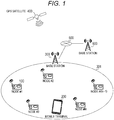
- Fig. 1 is a diagram illustrating an exemplary overall configuration of a wireless communication system according to an embodiment of the present technology.
- the wireless communication system includes a plurality of nodes 100, a mobile terminal 200, and a base station 300.
- the node 100 and the mobile terminal 200 have a function of receiving signals from a global positioning system (GPS) satellite 400 and obtaining position information.
- the base station 300 has a function of communicating with another base station 600 via a wide area network (WAN) 500, such as the Internet.
- WAN wide area network
- the node 100 is a wireless terminal, and a plurality of the nodes 100 can be present in a communication area 301 of the base station 300.
- N N is an integer of 1 or more
- the node 100 is a terminal having LPWA and GPS communication functions.
- the low power, wide area (LPWA) is a wireless communication scheme that enables long-distance communication with low power consumption. While it becomes possible to drive a battery for a long period of several years or more by being premised on the LPWA, high-speed communication based on constant connection, which is performed by a mobile phone or the like, is not performed.
- the node 100 encrypts the position information obtained by the GPS as will be described later, and transmits it to the base station 300. Furthermore, the node 100 can be combined with a temperature sensor, an acceleration sensor, or the like. Accordingly, the node 100 can be used for various purposes, such as the fisheries industry and farming industry.
- the mobile terminal 200 is a mobile terminal (user equipment: UE) such as a mobile phone.
- the mobile terminal 200 includes a short-range low-power communication interface for reading public key information possessed by the node 100, a GPS receiving function for obtaining position information, and a long-term evolution (LTE) communication function for connecting to the Internet.
- LTE long-term evolution
- the base station 300 is a base station for receiving information transmitted from the node 100.
- the base station 300 includes a network interface for transmitting received information to the Internet or the like.
- the base station 600 is a mobile phone base station for communicating with another mobile terminal.
- the WAN 500 is the Internet or the like, and connects the base station 300 and the base station 600 in this example.
- the GPS satellite 400 is a communication satellite for providing position information to the node 100 and the mobile terminal 200. There are equal to or more than 20 GPS satellites 400 above the earth. In order to accurately determine position information, information of at least three or four satellites is required.
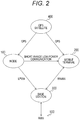
- Fig. 2 is a diagram illustrating an exemplary communication mode of the wireless communication system according to the embodiment of the present technology.
- GPS signals transmitted from the GPS satellite 400 is received by the node 100 and the mobile terminal 200.
- the node 100 and the mobile terminal 200 that have received the GPS signals obtain their own position information.
- an A-GPS or the like may be used instead of or together with the GPS.
- short-range low-power communication When information is transmitted from the node 100 to the mobile terminal 200, short-range low-power communication is used. According to the short-range low-power communication, identification information and the public key information are transmitted from the node 100 to the mobile terminal 200.
- the short-range low-power communication for example, communication based on near field communication (NFC), ZigBee, Bluetooth (registered trademark) low energy (BLE), or the like can be used.
- the mobile terminal 200 can obtain information by imaging a two-dimensional bar-code displayed on the node 100 or the like.
- DPP device provisioning protocol
- bootstrap information defined by the Wi-Fi alliance may be included.
- the LPWA For one-way communication (uplink) in which information is transmitted from the node 100 to the base station 300, the LPWA in a 920 MHz band is used.
- the LPWA is a wireless communication scheme that enables long-distance communication with low power consumption.
- LTE-MTC LTE machine type communication
- a downlink communication function from the base station 300 to the node 100 is not required in the embodiment.
- Two-way wireless communication is performed between the mobile terminal 200 and the base station 300 on the basis of a wireless wide area network (WWAN).
- the mobile terminal 200 transmits information associated with the node 100 to the base station 300 using the WWAN.
- the base station 300 transmits setup completion notification of the node 100 to the mobile terminal 200.
- the base station 300 is connected to the WAN 500 to communicate with another base station 600. Since the WAN 500 requires a bandwidth, wired communication is normally used.
- Fig. 3 is a diagram illustrating an exemplary configuration of the node 100 according to the embodiment of the present technology.
- the node 100 includes a processing unit 110, a storage 120, and a communication unit 130.
- the processing unit 110 performs necessary processing in the node 100.
- the storage 120 stores data and the like necessary for the node 100.
- the communication unit 130 includes a communication module for communicating with the outside.
- the communication unit 130 includes a GPS module 131, an LPWA module 132, and a short-range low-power communication module 133.
- the short-range low-power communication module 133 may require a power source like an NFC reader/writer, or may not require a power source like an NFC token (radio frequency identifier (RFID) tag). Furthermore, a power source is not required in the case of a bar-code or a QR code (registered trademark).
- the node 100 has a function for starting up its own power source.
- a physical member such as a power startup button or a power source started up in conjunction with the RFID may be used.
- a reset operation may be accompanied.
- the node 100 continues to transmit the position information obtained from the GPS signals to the base station 300 until the battery runs out after the power source is started up. For example, during a fixed period of 5 to 10 minutes after the power source is started up, the node 100 continues to transmit position information to the base station 300 at relatively short time intervals, such as 1 minute. Then, after the fixed period, it continues to transmit position information to the base station 300 at relatively long time intervals, such as 1 hour and 24 hours, to reduce power consumption.
- the storage 120 includes node identification information of the node 100, its own private key for generating encrypted node identification information from the identification information, and its own public key transmitted by short-range low-power communication. Furthermore, the storage 120 stores the node position information obtained from the GPS signals, and a public key of the base station 300. A public key and a private key are paired, and information encrypted with the public key can be decrypted only with the paired private key whereas information encrypted with the private key can be decrypted only with the paired public key.
- MAC media access control
- IMEI international mobile equipment identity
- UUID universally unique ID
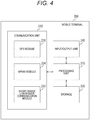
- Fig. 4 is a diagram illustrating an exemplary configuration of the mobile terminal 200 according to the embodiment of the present technology.
- the mobile terminal 200 includes a processing unit 210, a storage 220, a communication unit 230, and an input/output unit 240.
- the processing unit 210 performs necessary processing in the mobile terminal 200.
- the storage 220 stores data and the like necessary for the mobile terminal 200.
- the communication unit 230 includes a communication module for communicating with the outside.
- the input/output unit 240 is a user interface, which is implemented by, for example, a touch panel or the like.
- the communication unit 230 includes a GPS module 231, a WWAN module 234, and a short-range low-power communication module 233.
- the storage 220 includes the public key information of the node 100 received by the short-range low-power communication module 233, the position information obtained on the basis of the GPS signals, and the like.
- the input/output unit 240 is used to confirm intention of a user when the user obtains the public key information of the node.
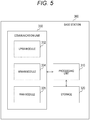
- Fig. 5 is a diagram illustrating an exemplary configuration of the base station 300 according to the embodiment of the present technology.
- the base station 300 includes a processing unit 310, a storage 320, and a communication unit 330.
- the processing unit 310 performs necessary processing in the base station 300.
- the storage 320 stores data and the like necessary for the base station 300.
- the communication unit 330 includes a communication module for communicating with the outside.
- the communication unit 330 includes a WAN module 335 for performing wired communication or the like, an LPWA module 332 for communicating with the node 100, and a WWAN module 334 for communicating with the mobile terminal 200.
- the storage 320 stores information transmitted from the node 100, a public key of the node 100, a private key of its own, base station area information managed by itself, a node information table of the node 100, and the like.
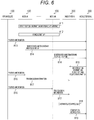
- Fig. 6 is a sequence diagram illustrating an exemplary process flow of the wireless communication system according to the first embodiment of the present technology.
- the public key of the base station 300, and the public key and the identification information of the node 100 itself are written in advance at the time of factory shipment or the like (811). Thereafter, the power source of the node 100 is started up at the time of starting registration of the node 100 (812). At this time, in a case where the power source is linked to proximity communication, the power source is started up at the time of proximity.
- the mobile terminal 200 receives GPS signals from the GPS satellite 400, and obtains position information of its own (813). Then, for the registration, the mobile terminal 200 obtains, using short-range low-power communication, public keys #1 to #N and identification information #1 to #N of the N nodes 100 (814). The mobile terminal 200 transmits, to the base station 300, those public keys and the identification information together with the position information at the time of registration using the WWAN (815). In a case where locations of the nodes 100 from which the public keys are obtained are different, the mobile terminal 200 obtains the position information of its own each time and transmits it to the base station 300 together with the public key and the identification information of the node 100.
- the storage 320 of the base station 300 stores the public key and the identification information of the node 100 and the position information at the time of registration for authenticating whether the information from the node 100 is valid.
- the node 100 receives GPS signals from the GPS satellite 400, and obtains position information of its own (816). Then, encrypted node position information obtained by encrypting the position information with the public key of the base station 300 is transmitted to the base station 300 using the LPWA (817). At this time, the node 100 also transmits encrypted node identification information created by encrypting its own identification information with the private key to the base station 300 (817). The base station 300 can decrypt the encrypted node identification information using the public key of the node 100 previously obtained. Therefore, it becomes possible to play a role as a signature for identity confirmation.
- the base station 300 performs the following process as an authentication process (818). First, the base station 300 decrypts the encrypted position information received from the node 100 using the private key of the base station 300 itself to obtain node position information. Then, it compares the node position information with the position information at the time of registration (815), and confirms that it is within the base station area managed by itself. Moreover, the base station 300 decrypts the encrypted identification information received from the node 100 using the public key of the node 100 to obtain node identification information. Then, the base station 300 confirms that the node identification information and management identification information managed by itself are the same. That is, if the position information indicates the inside of the area managed by the base station and the node identification information is a management target, the authentication succeeds. On the other hand, in the case of other than that, the authentication fails.
- the base station 300 transmits setup completion notification to the mobile terminal 200 using the WWAN (819).
- the setup completion notification includes information associated with the node 100 that has succeeded or failed in the authentication.
- Fig. 7 is a diagram illustrating exemplary transmission information transmitted from the node 100 to the base station 300 according to the embodiment of the present technology.
- the transmission information (817) in the sequence diagram described above includes, for example, encrypted node identification information 191, encrypted node position information 192, a node number 193, and measurement information 194.
- the encrypted node identification information 191 is obtained by encrypting the identification information of the node 100 with the private key of the node 100.
- the encrypted node identification information 191 is decrypted with the public key of the node 100 in the base station 300.
- the encrypted node position information 192 is obtained by encrypting the position information of the node 100 with the public key of the base station 300.
- the encrypted node position information 192 is decrypted with the private key of the base station 300 in the base station 300.
- the node number 193 is a number or the like for identifying the node 100, which is transmitted without being encrypted unlike the encrypted node identification information 191.
- the base station 300 can decrypt the encrypted node identification information 191 according to a brute-force approach using the public key of the node 100 managed by itself even without the node number 193, a process for trial is required in that case. Meanwhile, by identifying the node 100 on the basis of the node number 193 not being subject to encryption, the public key to be used can be efficiently obtained.
- the node number 193 is exemplary second node identification information described in the claims.
- the measurement information 194 is information measured by a sensor provided in the node 100. For example, at the time of managing a cow by adding the node 100 thereto, by measuring a body temperature of the cow and transmitting the body temperature as the measurement information 194 in addition to the position information, more advanced management can be performed.
- the measurement information 194 may be encrypted with the public key of the base station 300 in a similar manner to the encrypted node position information 192. In that case, it is decrypted with the private key of the base station 300 in the base station 300.
- Fig. 8 is a diagram illustrating an exemplary relationship between encryption in the node 100 and decryption in the base station 300 according to the embodiment of the present technology.
- Node identification information 121 stored in advance in the storage 120 of the node 100 is encrypted by an encryption unit 111 using a private key 123 stored in the storage 120 of the node 100, and is transmitted to the base station 300 as the encrypted node identification information 191 using the LPWA.
- the encryption unit 111 is one of the functions of the processing unit 110.
- the base station 300 that has received the encrypted node identification information 191 decrypts it with a decryption unit 311 using a public key 324 of the node 100, and stores obtained node identification information 321 in the storage 320.
- the public key 324 of the node 100 is transmitted from the mobile terminal 200 to the base station 300 using the WWAN, and is stored in the storage 320.
- the decryption unit 311 is one of the functions of the processing unit 310.
- Node position information 122 indicating the current position of the node 100 is encrypted by the encryption unit 111 using a public key 125 of the base station 300 stored in advance in the storage 120 of the node 100, and is transmitted to the base station 300 as the encrypted node position information 192 using the LPWA.
- the base station 300 that has received the encrypted node position information 192 decrypts it with the decryption unit 311 using a private key 326 stored in the storage 320 of the base station 300, and stores obtained node position information 322 in the storage 320.
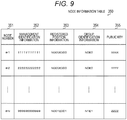
- Fig. 9 is a diagram illustrating exemplary items in a node information table 350 according to the embodiment of the present technology.
- the node information table 350 is stored in the storage 320 of the base station 300, and retains a node number 351, management identification information 352, registered position information 353, group identification information 354, and a public key 355. Those pieces of information are obtained by the mobile terminal 200 using short-range low-power communication, and are transmitted to the base station 300 using the WWAN.
- the node number 351 corresponds to the node number 193 to be transmitted from the node 100, which is a number or the like for identifying the corresponding node 100.
- the corresponding item can be promptly obtained.
- the management identification information 352 is information for identifying the corresponding node 100.
- the base station 300 compares the node identification information 321 obtained by decrypting the encrypted node identification information 191 transmitted from the node 100 with the management identification information 352, thereby performing an authentication process.
- the registered position information 353 is position information at the time when the corresponding node 100 is registered by the mobile terminal 200.
- the base station 300 performs the authentication process with reference to the registered position information 353.
- the group identification information 354 is information for identifying a group to which the node 100 belongs.
- the group identification information 354 is classified according to the registered position information 353. This facilitates management at the time of newly adding the node 100.
- the public key 355 is a public key of the corresponding node 100.
- the base station 300 can decrypt the encrypted node identification information 191 using the public key 355 as the public key 324 described above.
- Fig. 10 is a diagram illustrating an exemplary overview of the authentication process according to the embodiment of the present technology.
- the authentication unit 312 of the base station 300 authenticates the node 100.
- one of the authentication conditions is that the node position information 322 indicates the inside of a predetermined area.
- the authentication unit 312 is one of the functions of the processing unit 310.
- one of the conditions for authenticating the node 100 is that not only the node position information 322 but also the registered position information 353 indicate the inside of the predetermined area.
- the registered position information 353 is transmitted from the mobile terminal 200 as position information at the time of registration of the node 100.
- the predetermined area referred to in the authentication process is an area managed by the base station 300.
- the predetermined area is classified and managed according to the registered position information 353. That is, the grouping of the nodes 100 as described above can be performed by the group identification information 354 being assigned to each area at the time of registration.
- one of the authentication conditions is that the node identification information 321 matches with predetermined node identification information.
- the predetermined node identification information is the management identification information 352 registered in the node information table 350 managed by the base station 300.
- the authentication succeeds in a case where the node position information 322 and the registered position information 353 indicate the inside of the area managed by the base station 300 and the node identification information 321 is registered in the node information table 350 as the management identification information 352.
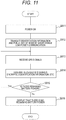
- Fig. 11 is a flowchart illustrating an exemplary processing procedure of the node 100 according to the embodiment of the present technology.
- a power button or the like is pressed, whereby the node 100 is powered on (step S911). Furthermore, in a case where the power source is linked to proximity communication, the power source is started up at the time of proximity.
- the node 100 transmits the public key and the identification information of its own to the mobile terminal 200 by short-range low-power communication (step S912). As a result, information associated with the node 100 is registered in the base station 300 via the mobile terminal 200. Note that, in the case of using a passive tag, a bar-code, or a QR code, no transmission operation is required, and those pieces of information are obtained by processing performed on the side of the mobile terminal 200.
- the node 100 receives GPS signals from the GPS satellite 400, and obtains position information of its own (step S913). Then, the node 100 transmits, to the base station 300, the encrypted node position information obtained by encrypting the position information with the public key of the base station 300 and the encrypted node identification information created by encrypting the identification information of its own with the private key using the LPWA (step S914). Those operations are repeated until the remaining battery level of the node 100 becomes less than a predetermined threshold value (Yes in step S915).
- the node 100 transmits, to the base station 300, signals indicating that there is no remaining battery level (step S916). Note that the remaining battery level may be transmitted together with the identification information or the like in step S914.
- Fig. 12 is a flowchart illustrating an exemplary processing procedure of the mobile terminal 200 according to the embodiment of the present technology.
- the mobile terminal 200 receives GPS signals from the GPS satellite 400, and obtains position information of its own (step S921) .
- the mobile terminal 200 obtains the public key and the identification information of the node 100 using short-range low-power communication (step S922).
- the node 100 may be one, or may be plural. Note that the node 100 is powered on here in a case where the power source of the node 100 is linked to proximity communication.
- the mobile terminal 200 associates those position information, the public key, and the identification information with each other, and transmits them to the base station 300 using the WWAN (step S923).
- the mobile terminal 200 waits for authentication completion notification from the base station 300 (No in step S924).
- the mobile terminal 200 displays setup completion to the user through the input/output unit 240 (step S925).
- Fig. 13 is a flowchart illustrating an exemplary processing procedure of the base station 300 according to the embodiment of the present technology.
- the base station 300 obtains, from the mobile terminal 200, the position information at the time of registration, and the public key and the identification information of the node 100 using the WWAN (step S931). In a case where there is a plurality of nodes 100, the position information of the mobile terminal 200, the public key, and the identification information are assumed to have one-to-one correspondence.
- the base station 300 waits for transmission information from the node 100 (No in step S932).
- the base station 300 decrypts the encrypted position information included in the transmission information using the private key of the base station 300 to obtain the position information (step S933).
- the base station 300 decrypts the encrypted identification information included in the transmission information using the public key of the node 100 received from the mobile terminal 200 to obtain the identification information (step S934).
- the base station 300 determines the authentication condition of the node 100 (step S935). That is, the authentication succeeds in a case where the node position information 322 and the registered position information 353 are within the area managed by the base station 300 and the node identification information 321 and the management identification information 352 match with each other. If the authentication fails (No in step S935), the processing of step S931 and subsequent steps are repeated.
- the base station 300 completes the authentication procedure of the node 100, and notifies the mobile terminal 200 of the completion of the authentication (step S936).
- Fig. 14 is a diagram illustrating exemplary screen display of the mobile terminal 200 according to the embodiment of the present technology.
- the user selects "setup start” or "end” on the display screen of the input/output unit 240 of the mobile terminal 200.
- setup start is selected, acquisition of the position information starts and an acquisition status thereof is displayed as illustrated din b in the drawing.
- a screen prompting acquisition of the identification information and the public key information from the node 100 is displayed as illustrated in c in the drawing.
- the user brings the mobile terminal 200 close to the node to perform scanning.
- the user captures an image with a camera of the mobile terminal 200 to read the label.
- a list of unique information of the node is displayed as illustrated in d in the drawing. If there is no problem with the listed nodes, the user selects "confirm”. In a case where there is shortage or the like, the user selects "cancel" to redo the scanning operation.
- the position information of the mobile terminal 200 and the identification information and the public key information of the node 100 are transmitted from the mobile terminal 200 to the base station 300 using the WWAN. Meanwhile, a transmission status thereof is displayed as illustrated in e in the drawing.
- a message indicating the setup completion, information associated with the node, and the status are displayed as illustrated in f in the drawing. After confirming the display, the user selects "end" to terminate the setup.
- the node 100 encrypts its own position information with the public key of the base station 300 and transmits the position information to the base station 300 by one-way communication, and the base station 300 that has received the encrypted position information decrypts it with the private key of its own. Accordingly, the node 100 can be easily and safely authenticated in the base station 300. That is, according to the first embodiment, public key authentication is used, whereby the node 100 can be individually authenticated and managed.
- information volume of the transmission information transmitted from the node 100 can be made smaller than the public key, whereby data communication can be performed without introducing a key other than the public key. That is, it is not required to create a key for data communication, such as a block cipher key and a stream cipher key, separately from the public key in consideration of the calculation time.
- the node 100 is authenticated using the position information of the mobile terminal 200, whereby the authentication can be performed at a location convenient for the user. Furthermore, the nodes can be grouped by changing the setup location depending on the node 100.
- a passive tag, a bar-code, a QR code, or the like is used for delivery of the public key information, whereby the power consumption and manufacturing cost of the node 100 can be reduced.
- the transmission interval may be increased after the setup is complete, whereby the power consumption can be reduced.
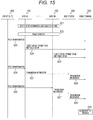
- Fig. 15 is a sequence diagram illustrating an exemplary process flow of the wireless communication system according to the second embodiment of the present technology.
- a public key of a base station 300, and a public key and identification information of the node 100 itself are written in advance at the time of factory shipment or the like (821). Thereafter, the power source of the node 100 is started up at the time of starting registration of the node 100 (822) .
- the mobile terminal 200 receives GPS signals from a GPS satellite 400, and obtains position information of its own (823). Then, for the registration, the mobile terminal 200 obtains, using short-range low-power communication, public keys #1 to #N and identification information #1 to #N of the N nodes 100 (824). The mobile terminal 200 stores, in a storage 220, those public keys and identification information in association with the position information at the time of registration.
- the storage 220 of the mobile terminal 200 stores the public key and the identification information of the node 100 and the position information at the time of registration for authenticating whether the information from the node 100 is valid. Furthermore, the storage 220 stores area information received from the base station 300 in advance.
- the node 100 receives GPS signals from the GPS satellite 400, and obtains position information of its own (826). Then, encrypted node position information obtained by encrypting the position information with the public key of the base station 300 is transmitted to the base station 300 using LPWA (827). At this time, the node 100 also transmits encrypted node identification information created by encrypting its own identification information with a private key to the base station 300 (827) .
- the base station 300 decrypts the encrypted position information received from the node 100 using a private key of the base station 300 of its own.
- the decrypted node position information and the encrypted node identification information are transmitted from the base station 300 to the mobile terminal 200 (828).
- the encrypted node identification information can be decrypted with the public key of the node 100 previously obtained by the mobile terminal 200. Therefore, it becomes possible to play a role as a signature for identity confirmation.
- the mobile terminal 200 performs the following process as an authentication process (829). First, it compares the node position information decrypted by the base station 300 with the position information at the time of registration (823), and confirms that it is within the base station area managed by itself. Moreover, the mobile terminal 200 decrypts the encrypted identification information received from the node 100 using the public key of the node 100 to obtain node identification information. Then, the mobile terminal 200 confirms that the node identification information and management identification information managed by itself are the same. That is, if the position information indicates the inside of the area managed by the base station and the node identification information is a management target, the authentication succeeds. On the other hand, in the case of other than that, the authentication fails.
- the mobile terminal 200 not only registers the node 100 but also authenticates the node 100. Accordingly, an authentication result can be displayed on an input/output unit 240 of the mobile terminal 200 as it is.
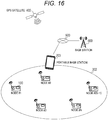
- Fig. 16 is a diagram illustrating an exemplary overall configuration of a wireless communication system according to the third embodiment of the present technology.
- the wireless communication system according to the third embodiment includes a portable base station 203 in which a base station and a mobile terminal are integrated.
- the portable base station 203 functions as the mobile terminal 200 according to the first embodiment described above, and also functions as the base station 300 according to the first embodiment described above.
- the portable base station 203 has a function of receiving signals from a GPS satellite 400 and obtaining position information. Furthermore, the portable base station 203 includes a short-range low-power communication interface for reading public key information owned by the node 100. Furthermore, the portable base station 203 has a function of communicating with another base station 600 via a WAN 500 such as the Internet. Furthermore, the portable base station 203 has a function of receiving transmission information transmitted from the node 100 in a communication area 302 by LPWA one-way communication.
- GPS satellite 400 and the node 100 are similar to those in the first embodiment described above, and detailed descriptions thereof will be omitted. Furthermore, a configuration of each of them is also similar to that in the first embodiment described above, and detailed descriptions thereof will be omitted.
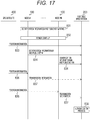
- Fig. 17 is a sequence diagram illustrating an exemplary process flow of the wireless communication system according to the third embodiment of the present technology.
- the node 100 In the node 100, a public key of the portable base station 203, and a public key and identification information of the node 100 itself are written in advance at the time of factory shipment or the like (831). Thereafter, the power source of the node 100 is started up at the time of starting registration of the node 100 (832). At this time, in a case where the power source is linked to proximity communication, the power source is started up at the time of proximity.
- the portable base station 203 receives GPS signals from the GPS satellite 400, and obtains position information of its own (833). Then, for the registration, the portable base station 203 obtains, using short-range low-power communication, public keys #1 to #N and identification information #1 to #N of the N nodes 100 (834). The portable base station 203 stores those public keys and identification information in association with the position information at the time of registration. In a case where locations of the nodes 100 from which the public keys are obtained are different, the portable base station 203 obtains the position information of its own each time and stores it together with the public key and the identification information of the node 100.
- the portable base station 203 stores the public key and the identification information of the node 100 and the position information at the time of registration for authenticating whether the information from the node 100 is valid.
- the node 100 receives GPS signals from the GPS satellite 400, and obtains position information of its own (836). Then, encrypted node position information obtained by encrypting the position information with the public key of the portable base station 203 is transmitted to the portable base station 203 using LPWA (837). At this time, the node 100 also transmits encrypted node identification information created by encrypting its own identification information with a private key to the portable base station 203 (837). The portable base station 203 can decrypt the encrypted node identification information using the public key of the node 100 previously obtained. Therefore, it becomes possible to play a role as a signature for identity confirmation.
- the portable base station 203 performs the following process as an authentication process (839). First, the portable base station 203 decrypts the encrypted position information received from the node 100 using the private key of the portable base station 203 itself to obtain node position information. Then, it compares the node position information with the position information at the time of registration (833), and confirms that it is within the base station area managed by itself. Moreover, the portable base station 203 decrypts the encrypted identification information received from the node 100 using the public key of the node 100 to obtain node identification information. Then, the portable base station 203 confirms that the node identification information and management identification information managed by itself are the same. That is, if the position information indicates the inside of the area managed by the base station and the node identification information is a management target, the authentication succeeds. On the other hand, in the case of other than that, the authentication fails.
- the node 100 can be registered and authenticated in the portable base station 203 in which the base station and the mobile terminal are integrated.
- processing procedures described in the embodiments above may be regarded as a method having a series of those procedures, or may be regarded as a program for causing a computer to execute the series of those procedures or a recording medium storing the program.
- the recording medium for example, a compact disc (CD), a mini disc (MD), a digital versatile disc (DVD), a memory card, a Blu-ray (registered trademark) disc, or the like can be used.
Landscapes
- Engineering & Computer Science (AREA)
- Computer Security & Cryptography (AREA)
- Computer Networks & Wireless Communication (AREA)
- Signal Processing (AREA)
- Computer Hardware Design (AREA)
- Computing Systems (AREA)
- General Engineering & Computer Science (AREA)
- Mobile Radio Communication Systems (AREA)
- Telephone Function (AREA)
Applications Claiming Priority (2)
| Application Number | Priority Date | Filing Date | Title |
|---|---|---|---|
| JP2017149572 | 2017-08-02 | ||
| PCT/JP2018/019589 WO2019026391A1 (ja) | 2017-08-02 | 2018-05-22 | 無線通信装置、無線通信方法および無線通信システム |
Publications (2)
| Publication Number | Publication Date |
|---|---|
| EP3664483A4 EP3664483A4 (de) | 2020-06-10 |
| EP3664483A1 true EP3664483A1 (de) | 2020-06-10 |
Family
ID=65232388
Family Applications (1)
| Application Number | Title | Priority Date | Filing Date |
|---|---|---|---|
| EP18841945.1A Withdrawn EP3664483A1 (de) | 2017-08-02 | 2018-05-22 | Drahtloskommunikationsvorrichtung, drahtloskommunikationsverfahren und drahtloskommunikationssystem |
Country Status (4)
| Country | Link |
|---|---|
| US (1) | US20200228976A1 (de) |
| EP (1) | EP3664483A1 (de) |
| JP (1) | JP7099461B2 (de) |
| WO (1) | WO2019026391A1 (de) |
Cited By (1)
| Publication number | Priority date | Publication date | Assignee | Title |
|---|---|---|---|---|
| WO2024068923A1 (en) | 2022-09-29 | 2024-04-04 | Michael Walsh | Location-based authentication using a unique digital id device |
Families Citing this family (2)
| Publication number | Priority date | Publication date | Assignee | Title |
|---|---|---|---|---|
| US11997498B2 (en) * | 2023-08-24 | 2024-05-28 | David E. Newman | Cybersecure low-complexity IoT sub-networks for 5G/6G |
| US12248579B1 (en) | 2023-08-24 | 2025-03-11 | David E. Newman | AI-based vehicle cybersecurity with 5G/6G sub-network topology |
Family Cites Families (10)
| Publication number | Priority date | Publication date | Assignee | Title |
|---|---|---|---|---|
| BRPI0806197A2 (pt) | 2007-01-26 | 2011-08-30 | Interdigital Tech Corp | método e aparelho de garantia da segurança de informações de localização e controle de acesso utilizando as informações de localização |
| JP4959463B2 (ja) | 2007-08-01 | 2012-06-20 | 株式会社トヨタIt開発センター | 位置認証システム |
| JP2009124643A (ja) | 2007-11-19 | 2009-06-04 | Oki Electric Ind Co Ltd | ネットワークシステム |
| US8370629B1 (en) * | 2010-05-07 | 2013-02-05 | Qualcomm Incorporated | Trusted hybrid location system |
| US20130013397A1 (en) * | 2011-07-10 | 2013-01-10 | 3 Legged Dog, Inc. | System and method for bid-sensitive, zone-based, mobile advertising |
| JP5682610B2 (ja) | 2012-11-07 | 2015-03-11 | トヨタ自動車株式会社 | 車載通信装置、車載通信システムおよび通信方法 |
| JP6344970B2 (ja) * | 2014-05-15 | 2018-06-20 | 三菱電機株式会社 | 位置情報検証装置、中継装置、移動体装置、位置情報検証プログラム、中継プログラムおよび移動体プログラム |
| US9504003B2 (en) * | 2014-06-18 | 2016-11-22 | Broadcom Corporation | Arrival-delta position determination |
| JP6660689B2 (ja) * | 2015-08-18 | 2020-03-11 | 株式会社Nayuta | 測定システム、測定システム構築方法、プログラム及び記録媒体 |
| US10341814B2 (en) * | 2017-03-17 | 2019-07-02 | SCRRD, Inc. | Wireless device detection, tracking, and authentication platform and techniques |
-
2018
- 2018-05-22 US US16/633,670 patent/US20200228976A1/en not_active Abandoned
- 2018-05-22 EP EP18841945.1A patent/EP3664483A1/de not_active Withdrawn
- 2018-05-22 JP JP2019533917A patent/JP7099461B2/ja not_active Expired - Fee Related
- 2018-05-22 WO PCT/JP2018/019589 patent/WO2019026391A1/ja not_active Ceased
Cited By (1)
| Publication number | Priority date | Publication date | Assignee | Title |
|---|---|---|---|---|
| WO2024068923A1 (en) | 2022-09-29 | 2024-04-04 | Michael Walsh | Location-based authentication using a unique digital id device |
Also Published As
| Publication number | Publication date |
|---|---|
| EP3664483A4 (de) | 2020-06-10 |
| JP7099461B2 (ja) | 2022-07-12 |
| JPWO2019026391A1 (ja) | 2020-06-11 |
| WO2019026391A1 (ja) | 2019-02-07 |
| US20200228976A1 (en) | 2020-07-16 |
Similar Documents
| Publication | Publication Date | Title |
|---|---|---|
| EP2963959B1 (de) | Verfahren, konfigurationsvorrichtung und drahtlose vorrichtung zum verbindungsaufbau zwischen vorrichtungen | |
| EP2885936B1 (de) | Konfiguration einer neuen antragstellungsvorrichtung für kommunikationsnetz | |
| US20190116046A1 (en) | Privacy preserving tag | |
| US20160054962A1 (en) | Method of setting wireless connection via near field communication function and image forming apparatus for performing the method | |
| US20150063164A1 (en) | Provisioning of Electronic Devices | |
| US20160180100A1 (en) | System and method for securely connecting network devices using optical labels | |
| KR20150083405A (ko) | 모바일 단말기를 화상형성장치에 사용 등록하는 방법 및 이를 이용한 화상형성장치, 모바일 단말기의 사용 등록을 요청하는 방법 및 이를 이용한 모바일 단말기 | |
| US10291595B2 (en) | System and method for securely connecting network devices | |
| US20140282924A1 (en) | Application connection for devices in a network | |
| US10003459B2 (en) | Information processing device, wireless communication system, information processing method, and program | |
| CA2969829A1 (en) | An embedded universal integrated circuit card supporting two-factor authentication | |
| US9054881B2 (en) | Radio frequency identification (RFID) tag and interrogator for supporting normal mode and secure mode, and operation method thereof | |
| US20100161982A1 (en) | Home network system | |
| CN103413161B (zh) | 一种可切换为安全模式的电子标签及切换的方法 | |
| US9312902B1 (en) | Linking a subscriber identity module to a mobile device | |
| EP3664483A1 (de) | Drahtloskommunikationsvorrichtung, drahtloskommunikationsverfahren und drahtloskommunikationssystem | |
| US20150180837A1 (en) | Network system and networking method | |
| KR102292007B1 (ko) | 단거리 통신을 사용한 네트워크 노드 보안 | |
| US10666625B2 (en) | Communication apparatus, communication method, and non-transitory computer-readable storage medium for reducing the time for automatic setting of communication parameters | |
| US20100217981A1 (en) | Method and apparatus for performing security communication | |
| JP2010124161A (ja) | 通信システム、通信装置、情報処理方法及び情報処理プログラム | |
| WO2020090443A1 (ja) | 通信装置、制御方法及びプログラム | |
| JP7509148B2 (ja) | データ処理装置、データ処理方法、およびプログラム | |
| US9992196B2 (en) | Information processing device, wireless communication system, information processing method, and program | |
| JP2012044395A (ja) | 通信装置、情報処理システムおよび暗号切替方法 |
Legal Events
| Date | Code | Title | Description |
|---|---|---|---|
| STAA | Information on the status of an ep patent application or granted ep patent |
Free format text: STATUS: THE INTERNATIONAL PUBLICATION HAS BEEN MADE |
|
| PUAI | Public reference made under article 153(3) epc to a published international application that has entered the european phase |
Free format text: ORIGINAL CODE: 0009012 |
|
| STAA | Information on the status of an ep patent application or granted ep patent |
Free format text: STATUS: REQUEST FOR EXAMINATION WAS MADE |
|
| 17P | Request for examination filed |
Effective date: 20200124 |
|
| A4 | Supplementary search report drawn up and despatched |
Effective date: 20200504 |
|
| AK | Designated contracting states |
Kind code of ref document: A1 Designated state(s): AL AT BE BG CH CY CZ DE DK EE ES FI FR GB GR HR HU IE IS IT LI LT LU LV MC MK MT NL NO PL PT RO RS SE SI SK SM TR |
|
| AX | Request for extension of the european patent |
Extension state: BA ME |
|
| DAV | Request for validation of the european patent (deleted) | ||
| DAX | Request for extension of the european patent (deleted) | ||
| STAA | Information on the status of an ep patent application or granted ep patent |
Free format text: STATUS: EXAMINATION IS IN PROGRESS |
|
| 17Q | First examination report despatched |
Effective date: 20210514 |
|
| RAP3 | Party data changed (applicant data changed or rights of an application transferred) |
Owner name: SONY GROUP CORPORATION |
|
| REG | Reference to a national code |
Ref country code: DE Ref legal event code: R079 Free format text: PREVIOUS MAIN CLASS: H04W0004380000 Ipc: H04W0012640000 |
|
| GRAP | Despatch of communication of intention to grant a patent |
Free format text: ORIGINAL CODE: EPIDOSNIGR1 |
|
| STAA | Information on the status of an ep patent application or granted ep patent |
Free format text: STATUS: GRANT OF PATENT IS INTENDED |
|
| RIC1 | Information provided on ipc code assigned before grant |
Ipc: H04W 4/20 20180101ALI20220131BHEP Ipc: H04W 4/021 20180101ALI20220131BHEP Ipc: H04W 4/38 20180101ALI20220131BHEP Ipc: H04W 12/104 20210101ALI20220131BHEP Ipc: H04W 12/069 20210101ALI20220131BHEP Ipc: H04W 12/64 20210101AFI20220131BHEP |
|
| INTG | Intention to grant announced |
Effective date: 20220217 |
|
| GRAS | Grant fee paid |
Free format text: ORIGINAL CODE: EPIDOSNIGR3 |
|
| STAA | Information on the status of an ep patent application or granted ep patent |
Free format text: STATUS: THE APPLICATION IS DEEMED TO BE WITHDRAWN |
|
| 18D | Application deemed to be withdrawn |
Effective date: 20221201 |