EP3663715B1 - Winkel- und abstandsmessverfahren, verfahren zum zeichnen von trajektoriediagrammen und laserentfernungsmessungssystem - Google Patents
Winkel- und abstandsmessverfahren, verfahren zum zeichnen von trajektoriediagrammen und laserentfernungsmessungssystem Download PDFInfo
- Publication number
- EP3663715B1 EP3663715B1 EP18840199.6A EP18840199A EP3663715B1 EP 3663715 B1 EP3663715 B1 EP 3663715B1 EP 18840199 A EP18840199 A EP 18840199A EP 3663715 B1 EP3663715 B1 EP 3663715B1
- Authority
- EP
- European Patent Office
- Prior art keywords
- laser
- angle
- receiving device
- emitting device
- laser emitting
- Prior art date
- Legal status (The legal status is an assumption and is not a legal conclusion. Google has not performed a legal analysis and makes no representation as to the accuracy of the status listed.)
- Active
Links
Images


Classifications
-
- G—PHYSICS
- G01—MEASURING; TESTING
- G01C—MEASURING DISTANCES, LEVELS OR BEARINGS; SURVEYING; NAVIGATION; GYROSCOPIC INSTRUMENTS; PHOTOGRAMMETRY OR VIDEOGRAMMETRY
- G01C15/00—Surveying instruments or accessories not provided for in groups G01C1/00 - G01C13/00
- G01C15/002—Active optical surveying means
-
- G—PHYSICS
- G01—MEASURING; TESTING
- G01B—MEASURING LENGTH, THICKNESS OR SIMILAR LINEAR DIMENSIONS; MEASURING ANGLES; MEASURING AREAS; MEASURING IRREGULARITIES OF SURFACES OR CONTOURS
- G01B11/00—Measuring arrangements characterised by the use of optical techniques
- G01B11/26—Measuring arrangements characterised by the use of optical techniques for measuring angles or tapers; for testing the alignment of axes
-
- G—PHYSICS
- G01—MEASURING; TESTING
- G01C—MEASURING DISTANCES, LEVELS OR BEARINGS; SURVEYING; NAVIGATION; GYROSCOPIC INSTRUMENTS; PHOTOGRAMMETRY OR VIDEOGRAMMETRY
- G01C1/00—Measuring angles
-
- G—PHYSICS
- G01—MEASURING; TESTING
- G01C—MEASURING DISTANCES, LEVELS OR BEARINGS; SURVEYING; NAVIGATION; GYROSCOPIC INSTRUMENTS; PHOTOGRAMMETRY OR VIDEOGRAMMETRY
- G01C15/00—Surveying instruments or accessories not provided for in groups G01C1/00 - G01C13/00
-
- G—PHYSICS
- G01—MEASURING; TESTING
- G01C—MEASURING DISTANCES, LEVELS OR BEARINGS; SURVEYING; NAVIGATION; GYROSCOPIC INSTRUMENTS; PHOTOGRAMMETRY OR VIDEOGRAMMETRY
- G01C15/00—Surveying instruments or accessories not provided for in groups G01C1/00 - G01C13/00
- G01C15/02—Means for marking measuring points
- G01C15/06—Surveyors' staffs; Movable markers
-
- G—PHYSICS
- G01—MEASURING; TESTING
- G01C—MEASURING DISTANCES, LEVELS OR BEARINGS; SURVEYING; NAVIGATION; GYROSCOPIC INSTRUMENTS; PHOTOGRAMMETRY OR VIDEOGRAMMETRY
- G01C3/00—Measuring distances in line of sight; Optical rangefinders
- G01C3/02—Details
- G01C3/06—Use of electric means to obtain final indication
- G01C3/08—Use of electric radiation detectors
-
- G—PHYSICS
- G01—MEASURING; TESTING
- G01S—RADIO DIRECTION-FINDING; RADIO NAVIGATION; DETERMINING DISTANCE OR VELOCITY BY USE OF RADIO WAVES; LOCATING OR PRESENCE-DETECTING BY USE OF THE REFLECTION OR RERADIATION OF RADIO WAVES; ANALOGOUS ARRANGEMENTS USING OTHER WAVES
- G01S11/00—Systems for determining distance or velocity not using reflection or reradiation
- G01S11/12—Systems for determining distance or velocity not using reflection or reradiation using electromagnetic waves other than radio waves
-
- G—PHYSICS
- G01—MEASURING; TESTING
- G01S—RADIO DIRECTION-FINDING; RADIO NAVIGATION; DETERMINING DISTANCE OR VELOCITY BY USE OF RADIO WAVES; LOCATING OR PRESENCE-DETECTING BY USE OF THE REFLECTION OR RERADIATION OF RADIO WAVES; ANALOGOUS ARRANGEMENTS USING OTHER WAVES
- G01S17/00—Systems using the reflection or reradiation of electromagnetic waves other than radio waves, e.g. lidar systems
- G01S17/02—Systems using the reflection of electromagnetic waves other than radio waves
- G01S17/06—Systems determining position data of a target
Definitions
- the present disclosure generally relates to the field of distance measurement and positioning and, more particularly, relates to a method for measuring an angle and a distance, a method for plotting a trajectory map, and a laser ranging system employing the methods thereof.
- EP 2 103 905 A2 discloses a surveying instrument for measuring a 3-dimensional position of a measured object. Furthermore, in the existing technology, a level projects a visible laser beam, and then an elevation can be accurately located according to the laser beam. The level may also be driven by a rapidly rotating shaft to sweep a visible laser beam (generally a red or green light beam) at a same elevation for an engineer to locate the same elevation.
- a visible laser beam generally a red or green light beam
- the commonly available level may be generally categorized into three types: a bubble leveling laser level, a self-leveling laser level, and an electronic automatic leveling laser level.
- the bubble leveling laser level has a simple structure and a low cost so that the bubble leveling laser level is a popular instrument suitable for construction work such as building construction and interior decoration.
- Laser light emitted from a laser diode contained in the bubble leveling laser level passes through an objective lens to obtain a laser beam.
- the laser beam is split into two beams after passing through a pentagonal prism. One of the two beams passes directly and the other beam changes its direction by about 90 degrees.
- a rotating head of the instrument is driven by an electric motor through a belt to rotate and form a scanning laser plane.
- a long bubble level is configured on the instrument for leveling the instrument. Similar to the bubble level, the instrument uses the bubble level as a reference.
- the accuracy of the leveling of the laser plane depends on the precision of the bubble level.
- a laser scanned vertical plane is obtained based on a vertical bubble level.
- the accuracy of the instrument is substantially affected by human factors. Because construction and engineering operations require convenience and swiftness and certain special applications require high accuracy, the bubble level is unable to satisfy these requirements.
- a variety of automatic leveling laser instruments and unique leveling methods become available to satisfy these requirements.
- the automatic leveling laser level is an instrument using a wire suspended optical compensator to achieve the objective of automatic leveling within a certain range. No matter how the instrument is tilted, the scanned laser plane always maintains leveled or horizontal within a compensation range.
- the instrument is suitable for construction sites having substantial vibrations.
- the electronic automatic leveling laser level includes an opto-mechanical compensator and has the advantages of a simple structure, a low cost, and insensitivity to vibrations.
- the compensation accuracy decreases as the compensation range increases.
- the compensation accuracy is limited to about 1/10 th inch at 100 feet.
- Recently developed electronic automatic leveling mechanisms expand the compensation range while maintaining substantially high stability and compensation accuracy.
- the rotating head of the instrument facilitates sweeping the laser beam to form the scanned laser plane, thereby instructing the operator to perform corresponding construction operation.
- the instruments may be implemented sufficiently with the rotating head without the need for rotating the instruments themselves.
- the instruments require a solid base to stably fix the levels to a reference surface.
- the levels are required to be fixed to the reference surface, the levels are unable to rotate to follow movement of a detector. Thus, the levels are unable to measure different distances at different angles and unable to plot a trajectory map of a traveling route of the detector.
- one aspect of the present disclosure provides a method for measuring an angle and a distance as defined in claim 1.
- the method for measuring the angle and the distance creatively records the corresponding angle and distance at different positions, respectively, such that the position of the laser receiving device relative to the laser emitting device is accurately determined.
- the method further includes: rotating the laser receiving device around the laser emitting device for at least one round.
- the laser emitting device is able to measure or calculate a distance at a corresponding direction to determine a trajectory of the laser receiving device.
- the first angle and the second angle are recorded as a difference between a current direction and a true north direction.
- the trajectory of the laser receiving device is associated with the directions, thereby preparing for subsequent matching of the trajectory of the laser receiving device to a corresponding map.
- the true north direction is indicated by means of an orientation sensor.
- the orientation sensor includes, but is not limited to, a gyroscope, an electronic compass, and a code wheel.
- the method further includes: recording and saving the first angle and the first distance as one pair; and recording and saving the second angle and the second distance as another pair. As such, the corresponding angle and distance are saved in one pair, thereby providing convenience for subsequent plotting.
- measuring the first distance between the laser emitting device and the laser receiving device further includes: using a first laser emitting component of the laser emitting device to emit a vertical laser beam rotating in a vertical plane at a first rotation speed; using a first optical detection component and a second optical component that are at least partially located on a same vertical plane to calculate a time difference when the vertical laser beam reaches the first optical detection component and the second optical detection component, where a distance between the two optical components is called a first separation distance; and according to the first rotation speed, the first separation distance, and the time difference, calculating the first distance.
- the laser receiving device is vertically set by a universal joint or a horizontally-set bearing.
- the laser receiving device is vertically set by an angle sensor and a control motor.
- Another aspect of the present disclosure provides a method for plotting a trajectory map as defined in claim 8.
- the method further includes: rotating the laser receiving device around the laser emitting device for at least one round.
- the first angle and the second angle are recorded as a difference between a current direction and a true north direction.
- the true north direction is indicated by means of an orientation sensor.
- the orientation sensor includes, but is not limited to, a gyroscope, an electronic compass, and a code wheel.
- measuring the first distance between the laser emitting device and the laser receiving device further includes: using a first laser emitting component of the laser emitting device to emit a vertical laser beam rotating in a vertical plane at a first rotation speed; using a first optical detection component and a second optical component that are at least partially located on a same vertical plane to calculate a time difference when the vertical laser beam reaches the first optical detection component and the second optical detection component, where a distance between the two optical components is called a first separation distance; and according to the first rotation speed, the first separation distance, and the time difference, calculating the first distance.
- the laser ranging system is configured implement the disclosed method for measuring the angle and the distance or the disclosed method for plotting the trajectory map.
- the method for measuring the angle and the distance creatively records the corresponding angle and distance at different positions, respectively, such that the position of the laser receiving device relative to the laser emitting device is accurately determined.
- horizontal setting and vertical setting both refer to the arrangement of photosensitive elements included in an optical detection component of a laser receiving device.
- vertical setting means that the photosensitive elements such as stripes included in the optical detection component of the laser receiving device are arranged substantially perpendicular to a horizontal plane while the term “horizontal setting” means that the photosensitive elements such as stripes included in the optical detection component of the laser receiving device are arranged substantially on a same horizontal plane.
- FIG. 1 illustrates a schematic diagram of an example of a laser emitting device according to the existing technology.
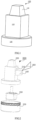
- the laser emitting device 100 according to the existing technology such as a level, includes a base 130, a housing 110 fixed to the base 130, and a rotating head 120 mounted on the upper part of the housing 110.
- the rotating head 120 is able to sweep a plane and to show the plane to a construction worker to instruct the construction worker to perform subsequent operations.
- the rotating head 120 because the rotating head 120 is able to rotate to form a laser scanned leveling plane through a laser beam, it is only necessary to fix the housing 110 relative to the base 130.
- the housing 110 may be securely fixed to the base 130, such that the laser emitting device 100 is able to stably sweep the laser plane.
- the laser emitting device includes: a housing, a first laser emitting component configured to be rotatably mounted on the housing, a base coupled to the housing, and a driving mechanism configured to rotate the housing at a pre-determined angle in a first plane. Equipped with the driving mechanism, the laser emitting device according to the present disclosure includes the housing capable of rotating relative to the base, thereby achieving adjusting the direction of the laser beam in a vertical plane.
- the laser emitting device according to the present disclosure overcomes the technical bias that the base is configured not to rotate relative to the housing in the existing technology and creatively introduces the driving mechanism to drive the base to rotate relative to the housing to adjust the direction of the laser beam in the vertical plane.
- the first laser emitting component is configured to emit an automatically leveled laser beam in a vertical direction.
- the laser emitting device is able to emit the automatically leveled laser beam in the vertical direction, that is, the laser beam perpendicular to the horizontal plane, thereby facilitating subsequent marking.
- the laser emitting device further includes a second laser emitting component configured to be rotatably mounted on the housing. As such, the laser emitting device is able to not only emit the laser beam in the vertical direction, but also emit another laser beam not in the vertical direction.
- the second laser emitting component is configured to emit automatically leveled laser beam in a horizontal direction.
- the laser emitting device is able to emit automatically leveled laser beam in the horizontal direction, thereby facilitating the subsequent marking.
- the laser beam emitted from the first laser emitting component forms the first plane and the laser beam emitted from the second laser emitting component forms a second plane.
- the first plane and the second plane are perpendicular to each other.
- the laser emitting device is able to emit the automatically leveled laser beam in the vertical direction and the automatically leveled laser beam in the horizontal direction perpendicular to the vertical direction, thereby facilitating the subsequent marking.
- the driving mechanism includes an electric motor.
- the electric motor is a stepper motor. As such, an amount of rotation by the stepper motor can be controlled, thereby providing the possibility for subsequent positioning by means of the laser emitting device.
- the base is marked with an angle scale. As such, it is possible to visually monitor an angle of the rotation of the housing driven by the driving mechanism.
- the laser emitting device further includes a control circuit configured to control the amount of the rotation by the driving mechanism.
- the control circuit is able to rapidly control the amount of the rotation by the driving mechanism.
- the control circuit of the laser emitting device is coupled with the laser receiving device for detecting the laser beam emitted from the laser emitting device.
- the control circuit is able to communicatively couple with the laser receiving device for detecting the laser beam emitted from the laser emitting device.
- the amount of the rotation by the driving mechanism can be controlled through the feedback from the laser receiving device for detecting the laser beam emitted from the laser emitting device.
- the control circuit is configured to control the amount of the rotation by the driving mechanism through the feedback signal from the laser receiving device.
- the control circuit is able to communicatively couple with the laser receiving device for detecting the laser beam emitted from the laser emitting device.
- the amount of the rotation by the driving mechanism can be controlled through the feedback signal from the laser receiving device for detecting the laser beam emitted from the laser emitting device.
- the housing of the laser emitting device may rotate relative to the base, thereby achieving adjusting the direction of the laser beam in the vertical plane.
- the laser emitting device according to the present disclosure overcomes the technical bias that the base is configured not to rotate relative to the housing in the existing technology and creatively introduces the driving mechanism to drive the base to rotate relative to the housing to adjust the direction of the laser beam in the vertical plane.
- a laser emitting circuit is able to track the laser receiving circuit and to measure a relative position of the laser emitting circuit relative to the laser receiving circuit at a specific moment.
- the relative position includes both an angle and a distance.
- FIG. 2 illustrates a schematic diagram of an example of a laser emitting device used in a method according to some embodiments of the present disclosure.
- FIG. 3 illustrates a schematic diagram of another example of a laser emitting device used in a method according to some embodiments of the present disclosure.
- the laser emitting device 200 (e.g., the level 200) used in the tracking method according to the present disclosure includes a housing 200 and a first laser emitting component 240.
- the first laser emitting component 240 (e.g., a rotating head 240) is configured to be rotatably mounted on the housing 210, such that the first laser emitting component 240 is able to rotate in a plane to sweep a laser beam to form a leveling plane.
- the laser emitting device 200 further includes a base 230 coupled with the housing 210.
- the laser emitting device 200 further includes a driving mechanism 250.
- the driving mechanism 250 is configured to drive the housing 210 to rotate at a pre-determined angle in the first plane.
- the housing 210 of the laser emitting device 200 may rotate relative to the base 230, thereby achieving adjusting the direction of a rotating laser plane emitted from the first laser emitting component such as the rotating head 240.
- the laser emitting device 200 used in the tracking method according to the present disclosure overcomes the technical bias that the base 130 is configured not to rotate relative to the housing 110 in the existing technology and creatively introduces the driving mechanism 250 to drive the base 230 to rotate relative to the housing 210 to adjust the direction of the laser beam.
- the first laser emitting component 240 is configured to emit the automatically leveled laser beam in the vertical direction.
- the laser emitting device 200 further includes a second laser emitting component 220 configured to be rotatably mounted on the housing 210.
- the second laser emitting component 220 is further configured to emit the automatically leveled laser beam in the horizontal direction.
- the laser beam emitted from the first laser emitting component 240 forms the first plane
- the laser beam emitted from the second laser emitting component 220 forms the second plane.
- the first plane and the second plane are perpendicular with each other.
- the driving mechanism 250 includes an electric motor. More specifically, the electric motor is configured to be a stepper motor.
- the amount of the rotation by the stepper motor can be controlled, thereby providing the possibility for subsequent positioning by means of the laser emitting device.
- the rotated angle of the laser emitting device may also be directly obtained from the rotated angle of the electric motor, thereby obtaining angles corresponding to different positions to which the laser receiving device is moved.
- the base 230 is marked with an angle scale. As such, it is possible to visually monitor an angle of the rotation of the housing driven by the driving mechanism 250.
- the laser emitting device 200 also includes a control circuit (not shown in the drawing) configured to control the amount of the rotation by the driving mechanism 250.
- control circuit of the laser emitting device 200 is coupled with the laser receiving device (not shown in the drawing) for detecting the laser beam emitted from the laser emitting device 200.
- the control circuit is configured to control the amount of the rotation by the driving mechanism 250 through the feedback signal from the laser receiving device.
- the driving mechanism 250 is directly mounted inside the housing 210 and an output shaft of the driving mechanism 250 is directly or indirectly installed to the housing 210 to drive the housing 210 to rotate relative to the base 230.
- the laser emitting device 300 (e.g., the level 300) used in the tracking method according to the present disclosure includes a housing 310 and a first laser emitting component 340.
- the first laser emitting component 340 (e.g., a rotating head 340) is configured to be rotatably mounted on the housing 310, such that the first laser emitting component 340 is able to rotate in a plane to sweep a laser beam to form a leveling plane.
- the laser emitting device 300 further includes a base 330 coupled with the housing 310.
- the laser emitting device 300 further includes a driving mechanism. The driving mechanism is configured to drive the housing 310 to rotate at a pre-determined angle in the first plane.
- the housing 310 of the laser emitting device 300 may rotate relative to the base 330, thereby achieving adjusting the direction of a rotating laser plane emitted from the first laser emitting component 340 such as the rotating head 340.
- the laser emitting device 300 used in the tracking method according to the present disclosure overcomes the technical bias that the base 130 is configured not to rotate relative to the housing 110 in the existing technology and creatively introduces the driving mechanism to drive the base 330 to rotate relative to the housing 310 to adjust the direction of the laser beam.
- the first laser emitting component 340 is configured to emit the automatically leveled laser beam in the vertical direction.
- the laser emitting device 300 further includes a second laser emitting component 320 configured to be rotatably mounted on the housing 310.
- the second laser emitting component 320 is further configured to emit the automatically leveled laser beam in the horizontal direction.
- the laser beam emitted from the first laser emitting component 340 forms the first plane
- the laser beam emitted from the second laser emitting component 320 forms the second plane.
- the first plane and the second plane are perpendicular with each other.
- the driving mechanism includes an electric motor 351. More specifically, the electric motor is configured to be a stepper motor.
- the amount of the rotation by the stepper motor can be controlled, thereby providing the possibility for subsequent positioning by means of the laser emitting device.
- the base 330 is marked with an angle scale. As such, it is possible to visually monitor an angle of the rotation of the housing driven by the driving mechanism.
- the laser emitting device 300 also includes a control circuit (not shown in the drawing) configured to control the amount of the rotation by the driving mechanism. In this way, the control circuit of the laser emitting device 300 is coupled with the laser receiving device (not shown in the drawing) for detecting the laser beam emitted from the laser emitting device 300. The control circuit is configured to control the amount of the rotation by the driving mechanism through the feedback signal from the laser receiving device.
- the driving mechanism includes an electric motor 351, a drive shaft 352, a drive wheel 353, and a connecting shaft 354.
- the electric motor is installed inside the housing 310.
- the output shaft of the electric motor 351 directly or indirectly coupled with the drive shaft 352 drives the housing 310 to rotate relative to the base 330 through the drive wheel 353 and the connecting shaft 354.
- the tracking method for tracking the laser receiving device in the laser emitting device includes: establishing, by the laser emitting device, a communication connection with the laser receiving device; receiving, by the laser emitting device, an indication signal from the laser receiving device, indicating a movement direction of the laser receiving device; and based on the indication signal, controlling, by the laser emitting device, the rotation of the laser emitting device until the laser beam emitted from the laser emitting device is realigned with the laser receiving device.
- the tracking method for tracking the laser receiving device in the laser emitting device enables the laser emitting device to obtain the movement direction of the laser receiving device through the communication connection established between the laser emitting device and the laser receiving device (e.g., the laser receiver), such that the laser emitting device is able to control the movement direction of itself based on the movement direction of the laser receiving device, thereby achieving the tracking of the laser receiving device by the laser emitting device.
- controlling, by the laser emitting device, the rotation of the laser emitting device further includes: based on the indication signal, controlling, by the laser emitting device, the rotation of the stepper motor included in the laser emitting device.
- controlling, by the laser emitting device, the rotation of the stepper motor included in the laser emitting device based on the indication signal.
- using the stepper motor effectively controls the rotation of the laser emitting device.
- using the stepper motor to control the amount of the rotation has the advantages of accurate control and high precision.
- the tracking method further includes: recording initially aligned positions of the laser emitting device and the laser receiving device as a first angle. In one embodiment, the tracking method further includes: recording the realigned positions of the laser emitting device and the laser receiving device as a second angle. In one embodiment, the first angle and the second angle are determined according to the angle scale (e.g., the angle scale on the base 230 and 330 in FIG. 2 and FIG. 3 , respectively) included in the laser emitting device. In addition, the in one embodiment, the tracking method further includes: detecting, by the laser emitting device, a distance between the laser emitting device and the laser receiving device.
- the angle scale e.g., the angle scale on the base 230 and 330 in FIG. 2 and FIG. 3
- the laser emitting device is able to measure the distances between the laser emitting device and the laser receiving device when the laser emitting device aligns with the laser receiving device at different angles.
- the first angle and the second angle are determined according to the rotation angles of the stepper motor.
- the first angle is a true north direction, that is, at the beginning of the measurement, the laser receiver of the laser receiving device is located at the true north direction of the laser emitting device such as the level.
- the laser beam emitted from the laser emitting device aligns with the laser receiving device and measures the distance between the laser emitting device and the laser receiving device as about 5 meters.
- the laser receiving device moves toward the east (not necessarily at the true east direction).
- the laser receiving device sends a signal indicating the movement direction to the laser emitting device.
- the signal may be in an electrical form or in an optical form.
- the laser emitting device controls the stepper motor included in the laser emitting device to rotate according to the signal indicating the movement direction, for example, rotate in a clockwise direction in the case of a top view.
- the laser beam emitted from the laser emitting device realigns with the laser receiving device at the second angle (e.g., about 10 degrees northeast), the distance between the laser emitting device and the laser receiving device is measured as about 6 meters.
- the laser emitting device is able to measure the different distances at the different angles.
- the establishing the communication connection between the laser emitting device and the laser receiving device includes establishing a wireless communication connection and/or an optical signal communication connection between the laser emitting device and the laser receiving device. As such, through the electrical or the optical communication link, the communication connection between the laser emitting device and the laser receiving device is established, such that the movement direction of the laser receiving device is sent to the laser emitting device in the form of the electrical or optical signal to instruct the laser emitting device to rotate to track the laser receiving device.
- the laser receiving device is configured with a second laser receiving circuit for receiving the laser beam emitted from the second laser emitting component of the laser emitting device and a first laser receiving circuit configured to be substantially perpendicular to the second laser receiving circuit for receiving the laser beam emitted from the first laser emitting component of the laser emitting device.
- the second laser receiving circuit includes two parts separated by a certain distance and may include a first optical detection component and a second optical detection component, which are configured in parallel with each other.
- the second laser receiving circuit is used to align with the searched horizontal laser plane emitted from the second laser emitting component to ensure that the laser receiving device is always located on a same reference plane during the measurement of the different points and to ensure the accuracy of the data of the angles and the distances collected at the different positions. Then, through adjusting the laser emitting device, the laser beam emitted from the first laser emitting component in the vertical direction is received by the first optical detection component and the second optical detection component of the first laser receiving device. Thus, the realignment is achieved and the distance measurement is secured.
- the distance between the laser emitting device and the laser receiving device further includes: using the first laser emitting component of the laser emitting device to emit the vertical laser beam rotating in the vertical plane at a first rotation speed; using the first optical detection component and the second optical component that are at least partially located on the same vertical plane to calculate a time difference when the vertical laser beam reaches the first optical detection component and the second optical detection component, where a distance between the two optical components is called a first separation distance; and according to the first rotation speed, the first separation distance, and the time difference, calculating a first distance between the laser emitting device and the laser receiving device.
- the laser receiving device is vertically set by a universal joint or a horizontally-set bearing and/or the laser receiving device is vertically set by an angle sensor and a control motor.
- the tracking method for tracking the laser receiving device in the laser emitting device enables the laser emitting device to obtain the movement direction of the laser receiving device through the communication connection established between the laser emitting device and the laser receiving device (e.g., the laser receiver), such that the laser emitting device is able to control the movement direction of itself based on the movement direction of the laser receiving device, thereby achieving the tracking of the laser receiving device by the laser emitting device.
- the laser emitting device is able to track the laser receiving device, the following describes how to measure the pair of the angle and the distance and how to use the obtained angle and distance data to plot a trajectory map of the laser receiving device in conjunction with FIG. 5 and FIG. 6 .
- FIG. 5 illustrates a schematic diagram of an example of a method for measuring an angle and a distance and plotting a trajectory map according to some embodiments of the present disclosure.
- FIG. 6 illustrates a schematic diagram of another example of a method for measuring an angle and a distance and plotting a trajectory map according to some embodiments of the present disclosure.
- the method uses the laser emitting device (e.g., the laser emitting device 520 such as the laser level shown in the center of FIG. 5 ) to measure the angle and the distance.
- the method records the angle (e.g., ⁇ 1) and measures the distance 11 between the laser emitting device 520 and the laser receiving device 560 after the laser emitting device 520 aligns with the laser receiving device 560. Then, the laser receiving device 560 moves for a certain distance.
- the method records the angle (e.g., ⁇ 2) and measures the distance l2 between the laser emitting device 520 and the laser receiving device 560 after the laser emitting device 520 realigns with the laser receiving device 560.
- the laser receiving device 560 rotates around the laser emitting device 520 for at least one round.
- the one round of the rotation is not necessarily in a shape shown in FIG. 5 and may be in other shapes.
- the above-described scheme artificially determines at which point the relative angle and the distance are measured.
- the angle ⁇ 1 and the angle ⁇ 2 are recorded as a difference between the current direction and the true north direction.
- the trajectory (e.g., 550) of the laser receiving device 560 is associated with the directions, preparing for subsequent matching of the trajectory of the laser receiving device 560 to a corresponding map.
- the angle ⁇ 1 and the distance 11 are recorded and saved as one pair and the angle ⁇ 2 and the distance l2 are recorded and saved as another pair.
- the true north direction is indicated by an orientation sensor.
- the orientation sensor herein includes, but is not limited to, a gyroscope, an electronic compass, and a code wheel.
- the trajectory map of the laser receiving device 560 can be plotted based on the data pairs.
- the method for using the laser emitting device 520 to plot the trajectory map obtains the angles and the distances when the laser receiving device 560 is located at least at two different positions, thereby determining the trajectory of the laser receiving device 560.
- the method further includes: rotating the laser receiving device 560 around the laser emitting device 520 for at least one round.
- the method uses the laser emitting device 602 (e.g., the laser emitting device 620 such as the laser level shown in the center of FIG. 6 ) to measure the angle and the distance.
- the method records the angle (e.g., ⁇ 3) and measures the distance l3 between the laser emitting device 620 and the laser receiving device 660 after the laser emitting device 620 aligns with the laser receiving device 660. Then, the laser receiving device 660 moves for a certain distance.
- the method records the angle (e.g., ⁇ 4) and measures the distance l4 between the laser emitting device 620 and the laser receiving device 660 after the laser emitting device 620 realigns with the laser receiving device 660.
- the laser receiving device 660 is located at one side of the laser emitting device 620 and does not rotate around the laser emitting device 620 for at least one round.
- the above-described scheme artificially determines at which point the relative angle and the distance are measured.
- the angle ⁇ 3 and the angle ⁇ 4 are recorded as a difference between the current direction and the true north direction.
- the trajectory (e.g., 650) of the laser receiving device 660 is associated with the direction, preparing for subsequent matching the trajectory of the laser receiving device 660 to the corresponding map.
- the angle ⁇ 3 and the distance l3 are recorded and saved as one pair and the angle ⁇ 4 and the distance l4 are recorded and saved as another pair.
- the trajectory map 650 of the laser receiving device 660 can be plotted based on the data pairs.
- the method for using the laser emitting device 620 to plot the trajectory map obtains the angles and the distances when the laser receiving device 660 is located at least at two different positions, thereby determining the trajectory of the laser receiving device 660.
- the present disclosure also provides a laser ranging system configured to implement the method for measuring the angel and the distance or the method for plotting the trajectory map.
- the detector of the laser receiving device needs to include a timing circuit.
- the timing circuit is configured to initialize the first angle as 0 degree at the initial position and to record the current position as the initial position. At the initial position, the timing circuit is reset to zero.
- the timing circuit knows N counts (e.g., 100) corresponding to the one round of the rotation of the laser emitting device. Then, the laser receiving device moves to a first position different from the initial position.
- the timing circuit starts counting at the initial position and counts to M (M is cycled between 0 and 100, e.g., 10) at this time. Then, the difference between the first angle and the second angle is (M/N)*360 degrees. In one embodiment, the difference is (10/100)*360 degrees, that is, 36 degrees.
- the N counts may be pre-configured.
- a value is pre-configured at the time the timing circuit starts to operate.
- the value corresponds to one of many cooperation modes between the laser emitting device and the laser receiving device.
- the value is pre-configured to be 80, that is, the timing circuit counts to 80 after the laser beam emitted from the laser emitting device rotates for one round.
- the laser receiving device detects the N counts by itself. For example, at the beginning, the laser receiving device remains at the initial position for a certain time to detect a cycle that the laser receiving device receives the laser beam emitted from the laser emitting device. For example, for every 100 counts, the laser receiving device receives the laser beam emitted from the laser emitting device once. That is, the timing circuit counts to 100 after the laser beam emitted from the laser emitting device rotates for one round.
Landscapes
- Physics & Mathematics (AREA)
- Engineering & Computer Science (AREA)
- General Physics & Mathematics (AREA)
- Radar, Positioning & Navigation (AREA)
- Remote Sensing (AREA)
- Electromagnetism (AREA)
- Computer Networks & Wireless Communication (AREA)
- Optical Radar Systems And Details Thereof (AREA)
Claims (11)
- Verfahren zum Messen eines Winkels und eines Abstands, umfassend:in einer Anfangsposition, nachdem eine Lasersendevorrichtung (200, 300, 520, 620) auf eine Laserempfangsvorrichtung (560, 660) ausgerichtet ist, Aufzeichnen eines ersten Winkels und Messen eines ersten Abstands zwischen der Lasersendevorrichtung (200, 300, 520, 620) und der Laserempfangsvorrichtung (560, 660); und Bewegen der Laserempfangsvorrichtung (560, 660) aus der Ausgangsposition in eine erste Position und, nachdem sich die Laseremissionsvorrichtung (200, 300, 520, 620) wieder auf die Laserempfangsvorrichtung (560, 660) ausgerichtet hat, Aufzeichnen eines zweiten Winkels und Messen eines zweiten Abstands zwischen der Laseremissionsvorrichtung (200, 300, 520, 620) und der Laserempfangsvorrichtung (560, 660), dadurch gekennzeichnet, dass die Laserempfangsvorrichtung (560, 660) eine Zeitsteuerungsschaltung enthält, die so konfiguriert ist:- N Zählungen zu kennen, die einer Runde der Rotation der laseremittierenden Vorrichtung entsprechen;- Initialisieren des ersten Winkels als 0 Grad an der Anfangsposition und Aufzeichnen der aktuellen Position als die Anfangsposition, wobei an der Anfangsposition die Zeitschaltung auf Null zurückgesetzt wird, und- Erhalten einer Differenz zwischen dem ersten Winkel und dem zweiten Winkel,wobei, nachdem sich die Laserempfangsvorrichtung in die erste Position bewegt und nachdem sie in der Anfangsposition initialisiert wurde, die Zeitsteuerungsschaltung in der Anfangsposition mit dem Zählen beginnt und zu diesem Zeitpunkt bis M zählt, wobei M zwischen 0 und N zykliert wird, und die Differenz zwischen dem ersten Winkel und dem zweiten Winkel (M/N)*360 Grad beträgt.
- Verfahren nach Anspruch 1, ferner umfassend:
Drehen der Laserempfangsvorrichtung (560, 660) um die Laseremissionsvorrichtung (200, 300, 520, 620) für mindestens eine Runde. - Verfahren nach Anspruch 1, wobei:
der erste Winkel und der zweite Winkel als Differenz zwischen einer aktuellen Richtung und einer wahren Nordrichtung aufgezeichnet werden. - Verfahren nach Anspruch 1, ferner umfassend:
Aufzeichnen und Speichern des ersten Winkels und des ersten Abstands als ein Paar; und Aufzeichnen und Speichern des zweiten Winkels und des zweiten Abstands als ein weiteres Paar. - Verfahren nach Anspruch 3, wobei:
die Laserempfangsvorrichtung (560, 660) durch ein Kardangelenk oder ein horizontal angeordnetes Lager vertikal eingestellt wird. - Verfahren nach Anspruch 3, wobei:
die Laserempfangsvorrichtung (560, 660) durch einen Winkelsensor und einen Steuermotor vertikal eingestellt wird. - Verfahren nach Anspruch 1, wobei das Messen des ersten Abstands zwischen der laseremittierenden Vorrichtung (200, 300, 520, 620) und der laserempfangenden Vorrichtung (560, 660) ferner Folgendes umfasst:Verwenden einer ersten lasersendenden Komponente (240, 340) der lasersendenden Vorrichtung (200, 300, 520, 620) zum Emittieren eines vertikalen Laserstrahls, der sich in einer vertikalen Ebene mit einer ersten Rotationsgeschwindigkeit dreht;Verwenden einer ersten optischen Erfassungskomponente und einer zweiten optischen Komponente, die sich zumindest teilweise auf derselben vertikalen Ebene befinden, um eine Zeitdifferenz zu berechnen, wenn der vertikale Laserstrahl die erste optische Erfassungskomponente und die zweite optische Erfassungskomponente erreicht, wobei ein Abstand zwischen den beiden optischen Komponenten als erster Trennungsabstand bezeichnet wird; und Berechnen des ersten Abstands gemäß der ersten Rotationsgeschwindigkeit, dem ersten Trennungsabstand und der Zeitdifferenz.
- Verfahren zum Aufzeichnen einer Trajektorienkarte, umfassend:Aufzeichnen eines ersten Winkels und Messen eines ersten Abstands zwischen der lasersendenden Vorrichtung (200, 300, 520, 620) und der laserempfangenden Vorrichtung (560, 660) in einer Anfangsposition, nachdem eine lasersendende Vorrichtung (200, 300, 520, 620) auf eine laserempfangende Vorrichtung (560, 660) ausgerichtet ist, und Aufzeichnen und Speichern des ersten Winkels und des ersten Abstands als ein erstes Datenpaar;Bewegen der Laserempfangsvorrichtung (560, 660) von der Anfangsposition zu mindestens einer ersten Position, und, nachdem die Laseremissionsvorrichtung (200, 300, 520, 620) mit der Laserempfangsvorrichtung (560, 660) neu ausgerichtet ist, Aufzeichnen mindestens eines zweiten Winkels und Messen mindestens eines zweiten Abstands zwischen der Laseremissionsvorrichtung (200, 300, 520, 620) und der Laserempfangsvorrichtung (560, 660), und Aufzeichnen und Speichern des mindestens einen zweiten Winkels und des mindestens einen zweiten Abstands als mindestens ein zweites Datenpaar; und auf der Grundlage des ersten Datenpaares und des mindestens einen zweiten Datenpaares das Plotten der Trajektorienkarte der Laserempfangsvorrichtung (560, 660), dadurch gekennzeichnet, dass die Laserempfangsvorrichtung (560, 660) eine Zeitsteuerungsschaltung enthält, die konfiguriert ist, um:- N Zählungen kennen, die einer Runde der Rotation der Laseremissionsvorrichtung entsprechen
Vorrichtung;- Initialisieren des ersten Winkels als 0 Grad an der Anfangsposition und Aufzeichnen der aktuellen
Initialisieren des ersten Winkels als 0 Grad an der Anfangsposition und Aufzeichnen der aktuellen Position als die Anfangsposition, wobei an der Anfangsposition die Zeitschaltung auf Null zurückgesetzt wird, und- Gewinnen einer Differenz zwischen dem ersten Winkel und dem zweiten Winkel,wobei, nachdem sich die Laserempfangsvorrichtung in die erste Position bewegt hat und nachdem sie in der Anfangsposition initialisiert wurde, die Zeitsteuerungsschaltung in der Anfangsposition zu zählen beginnt und bis M zählt, wobei M zwischen 0 und N zykliert wird, zu diesem Zeitpunkt die Differenz zwischen dem ersten Winkel und dem zweiten Winkel (M/N)*360 Grad beträgt. - Verfahren nach Anspruch 8, ferner umfassend:
Drehen der Laserempfangsvorrichtung (560, 660) um die Laseremissionsvorrichtung (200, 300, 520, 620) für mindestens eine Runde. - Verfahren nach Anspruch 8, wobei das Messen des ersten Abstands zwischen der laseremittierenden Vorrichtung (200, 300, 520, 620) und der laserempfangenden Vorrichtung (560, 660) ferner Folgendes umfasst:Verwenden einer ersten laseremittierenden Komponente (240, 340) der laseremittierenden Vorrichtung (200, 300, 520, 620), um einen vertikalen Laserstrahl zu emittieren, der sich in einer vertikalen Ebene mit einer ersten Rotationsgeschwindigkeit dreht;Verwenden einer ersten optischen Erfassungskomponente und einer zweiten optischen Komponente, die sich zumindest teilweise auf derselben vertikalen Ebene befinden, um eine Zeitdifferenz zu berechnen, wenn der vertikale Laserstrahl die erste optische Erfassungskomponente und die zweite optische Erfassungskomponente erreicht, wobei ein Abstand zwischen den beiden optischen Komponenten als erster Trennungsabstand bezeichnet wird; und Berechnen des ersten Abstands gemäß der ersten Rotationsgeschwindigkeit, dem ersten Trennungsabstand und der Zeitdifferenz.
- Ein Laser-Entfernungsmesssystem, wobei:
das Laser-Entfernungsmesssystem so konfiguriert ist, dass es das Verfahren nach einem der Ansprüche 1-7 oder das Verfahren nach einem der Ansprüche 8-10 durchführt.
Applications Claiming Priority (2)
| Application Number | Priority Date | Filing Date | Title |
|---|---|---|---|
| CN201710662589.5A CN109387826B (zh) | 2017-08-04 | 2017-08-04 | 测量角度、距离的方法、绘制轨迹图方法及激光测距系统 |
| PCT/CN2018/096946 WO2019024731A1 (zh) | 2017-08-04 | 2018-07-25 | 测量角度、距离的方法、绘制轨迹图方法及激光测距系统 |
Publications (3)
| Publication Number | Publication Date |
|---|---|
| EP3663715A1 EP3663715A1 (de) | 2020-06-10 |
| EP3663715A4 EP3663715A4 (de) | 2021-08-04 |
| EP3663715B1 true EP3663715B1 (de) | 2024-10-30 |
Family
ID=65233525
Family Applications (1)
| Application Number | Title | Priority Date | Filing Date |
|---|---|---|---|
| EP18840199.6A Active EP3663715B1 (de) | 2017-08-04 | 2018-07-25 | Winkel- und abstandsmessverfahren, verfahren zum zeichnen von trajektoriediagrammen und laserentfernungsmessungssystem |
Country Status (4)
| Country | Link |
|---|---|
| US (1) | US11150087B2 (de) |
| EP (1) | EP3663715B1 (de) |
| CN (1) | CN109387826B (de) |
| WO (1) | WO2019024731A1 (de) |
Families Citing this family (18)
| Publication number | Priority date | Publication date | Assignee | Title |
|---|---|---|---|---|
| CN107218920B (zh) * | 2017-08-04 | 2020-07-10 | 美国西北仪器公司 | 距离测定方法及距离测定系统 |
| CN109916309B (zh) * | 2019-03-04 | 2024-04-26 | 中铁第四勘察设计院集团有限公司 | 一种基于激光测距的地表裂缝监测装置及方法 |
| CN109974630B (zh) * | 2019-04-26 | 2025-02-07 | 湖北刊江建设工程有限公司 | 角度检测装置 |
| US11577859B1 (en) * | 2019-10-08 | 2023-02-14 | Rockwell Collins, Inc. | Fault resilient airborne network |
| MX2022013294A (es) * | 2020-04-24 | 2022-11-30 | Crown Equip Corp | Calibracion de un dispositivo de medicion de distancia y alcance. |
| CN114061920B (zh) * | 2020-08-07 | 2025-01-28 | 北京小米移动软件有限公司 | 折叠轨迹检测装置及折叠轨迹检测方法、折叠检测系统 |
| CN112179324B (zh) * | 2020-10-08 | 2022-08-23 | 山西省交通建设工程质量检测中心(有限公司) | 一种桥梁墩柱竖直度检测装置 |
| CN112129264B (zh) * | 2020-10-20 | 2025-02-07 | 四川大学 | 一种激光测距传感器测量系统及测量方法 |
| CN112496863B (zh) * | 2020-11-23 | 2022-10-28 | 中国航发沈阳黎明航空发动机有限责任公司 | 一种数控加工角度自动测量方法 |
| CN112953644B (zh) * | 2021-01-25 | 2022-08-02 | 华中科技大学鄂州工业技术研究院 | 水下机器人群无线通信方法、装置、通信设备及存储介质 |
| WO2022216594A1 (en) * | 2021-04-05 | 2022-10-13 | Milwaukee Electric Tool Corporation | Laser level system |
| EP4320406A4 (de) | 2021-04-05 | 2025-04-09 | Milwaukee Electric Tool Corporation | Rotationslaser mit mechanischer maske |
| CN113581702B (zh) * | 2021-07-06 | 2022-10-11 | 浙江世仓智能仓储设备有限公司 | 一种基于四向车行驶距离的定位方法 |
| CN114683234B (zh) * | 2022-05-09 | 2023-07-18 | 中国石油大学(华东) | 一种管道动火连头快速测量画线自动化装置 |
| CN116202425B (zh) * | 2022-06-15 | 2023-09-12 | 武汉鑫岳光电科技有限公司 | 一种激光测距装置 |
| CN116007595A (zh) * | 2022-12-28 | 2023-04-25 | 湖南中联重科应急装备有限公司 | 用于确定偏摆量的方法、存储介质、处理器及高空作业车 |
| CN116499422B (zh) * | 2023-04-27 | 2025-12-26 | 阿维塔科技(重庆)有限公司 | 一种辅助测试装置及测试方法 |
| CN116379971B (zh) * | 2023-05-29 | 2023-08-11 | 华北理工大学 | 金属构件垂直度激光测量装置及测量方法 |
Family Cites Families (19)
| Publication number | Priority date | Publication date | Assignee | Title |
|---|---|---|---|---|
| US5243397A (en) * | 1992-11-25 | 1993-09-07 | Elop-Electrooptics Industries Ltd. | Distance measuring system |
| BE1008234A5 (nl) * | 1994-03-25 | 1996-02-20 | Sotec B V I O | Werkwijze en inrichting voor het in meer dan een dimensie meten met laserlicht. |
| JP4328653B2 (ja) * | 2004-03-23 | 2009-09-09 | 株式会社トプコン | レーザ測定システム |
| JP5124319B2 (ja) * | 2008-03-21 | 2013-01-23 | 株式会社トプコン | 測量機、測量システム、測定対象の検出方法、および測定対象の検出プログラム |
| JP5124321B2 (ja) * | 2008-03-21 | 2013-01-23 | 株式会社トプコン | 測定システム |
| US9400170B2 (en) * | 2010-04-21 | 2016-07-26 | Faro Technologies, Inc. | Automatic measurement of dimensional data within an acceptance region by a laser tracker |
| US8724119B2 (en) * | 2010-04-21 | 2014-05-13 | Faro Technologies, Inc. | Method for using a handheld appliance to select, lock onto, and track a retroreflector with a laser tracker |
| US9686532B2 (en) * | 2011-04-15 | 2017-06-20 | Faro Technologies, Inc. | System and method of acquiring three-dimensional coordinates using multiple coordinate measurement devices |
| EP2620745A1 (de) * | 2012-01-30 | 2013-07-31 | Hexagon Technology Center GmbH | Vermessungssystem mit einem Vermessungsgerät und einem Scanmodul |
| EP2639548A1 (de) * | 2012-03-15 | 2013-09-18 | Leica Geosystems AG | Laserempfänger mit Funktion zur Erkennung der eigenen Bewegungen |
| EP2687866A1 (de) * | 2012-07-19 | 2014-01-22 | Leica Geosystems AG | Lasertracker mit Kalibriereinheit zur Selbstkalibrierung |
| EP2746806B1 (de) * | 2012-12-21 | 2016-10-19 | Leica Geosystems AG | Selbstkalibrierender Lasertracker und Selbstkalibrierungsverfahren |
| CN103235302B (zh) * | 2013-02-28 | 2014-10-15 | 中国地质大学(武汉) | 基于激光扫描和双探测器的距离与速度测量装置及方法 |
| US9188430B2 (en) * | 2013-03-14 | 2015-11-17 | Faro Technologies, Inc. | Compensation of a structured light scanner that is tracked in six degrees-of-freedom |
| EP2781879B1 (de) * | 2013-03-19 | 2015-09-30 | Leica Geosystems AG | Konstruktionslasersystem aus Rotationslaser und Laserreceiver, mit Funktionalität zur automatischen Bestimmung der Laserreceiver-Richtung |
| CN103345269B (zh) * | 2013-06-30 | 2017-08-25 | 湖南农业大学 | 一种激光发射装置及自动追踪方法 |
| EP2894491B1 (de) * | 2013-12-18 | 2020-05-27 | LG Electronics Inc. | Distanzmessvorrichtung und Verfahren dafür |
| CN205317206U (zh) | 2015-12-10 | 2016-06-15 | 新余学院 | 一种多功能测量工程仪器 |
| CN106802412B (zh) * | 2017-01-23 | 2020-08-04 | 南京大学 | 一种基于激光及无线技术的近距离移动定位系统及其方法 |
-
2017
- 2017-08-04 CN CN201710662589.5A patent/CN109387826B/zh active Active
-
2018
- 2018-07-25 US US16/636,536 patent/US11150087B2/en active Active
- 2018-07-25 EP EP18840199.6A patent/EP3663715B1/de active Active
- 2018-07-25 WO PCT/CN2018/096946 patent/WO2019024731A1/zh not_active Ceased
Also Published As
| Publication number | Publication date |
|---|---|
| CN109387826B (zh) | 2024-03-19 |
| EP3663715A1 (de) | 2020-06-10 |
| CN109387826A (zh) | 2019-02-26 |
| EP3663715A4 (de) | 2021-08-04 |
| US20210156679A1 (en) | 2021-05-27 |
| US11150087B2 (en) | 2021-10-19 |
| WO2019024731A1 (zh) | 2019-02-07 |
Similar Documents
| Publication | Publication Date | Title |
|---|---|---|
| EP3663715B1 (de) | Winkel- und abstandsmessverfahren, verfahren zum zeichnen von trajektoriediagrammen und laserentfernungsmessungssystem | |
| US11486704B2 (en) | Intelligent positioning module | |
| US10823558B2 (en) | Surveying instrument | |
| CN108291809B (zh) | 用于检验和/或校准旋转激光器的竖直轴线的方法 | |
| US7196302B2 (en) | Laser measuring method and laser measuring system having fan-shaped tilted laser beams and three known points of photodetection system | |
| CN105865426B (zh) | 一种自动对中与测量的全站仪 | |
| EP2788715B1 (de) | Robotisches nivellierungsinstrument | |
| EP2056066A2 (de) | Vermessungsinstrument | |
| EP2708969B1 (de) | Baumaschinensteuerungsverfahren und Baumaschinensteuerungssystem | |
| US11500096B2 (en) | Surveying instrument | |
| EP1983299B1 (de) | Vorrichtung und Verfahren zum Bestimmen der Höhe von Arbeitswerkzeugen auf der Basis eines Lasersystems | |
| KR101791955B1 (ko) | 측량정보의 오차발생 범위를 최소화하는 수준 측지측량 장치 | |
| JPS5912966B2 (ja) | 測角器を自動整準する方法とその装置 | |
| US20190154501A1 (en) | Procedure for Comparing a Reception Beam Impinging on a Laser Receiver with a Rotating Laser Beam | |
| JP2019219319A (ja) | 鉛直測定システム及び基準点のトレース方法 | |
| US12571631B2 (en) | Surveying instrument | |
| CN111271052A (zh) | 用于桩深、桩径及桩孔垂直度测量的组合装置及方法 | |
| EP0803044A1 (de) | Ferngesteuerte nivelliervorrichtung | |
| CN109387827B (zh) | 用于在激光发射装置中跟踪激光接收装置的跟踪方法 | |
| WO1996030720A1 (en) | Method and apparatus for measuring position and posture of tunnel excavator | |
| CN110108265B (zh) | 一种自主获取地理纬度并自动寻北的陀螺测量仪器 | |
| JP2024043881A (ja) | 測量装置、測量装置の動作方法およびプログラム | |
| GB2217454A (en) | Position measurement system | |
| CN107270880A (zh) | 一种激光发射装置 | |
| CN116006185A (zh) | 微型顶管机用可嵌入自动导向系统 |
Legal Events
| Date | Code | Title | Description |
|---|---|---|---|
| STAA | Information on the status of an ep patent application or granted ep patent |
Free format text: STATUS: THE INTERNATIONAL PUBLICATION HAS BEEN MADE |
|
| PUAI | Public reference made under article 153(3) epc to a published international application that has entered the european phase |
Free format text: ORIGINAL CODE: 0009012 |
|
| STAA | Information on the status of an ep patent application or granted ep patent |
Free format text: STATUS: REQUEST FOR EXAMINATION WAS MADE |
|
| 17P | Request for examination filed |
Effective date: 20200304 |
|
| AK | Designated contracting states |
Kind code of ref document: A1 Designated state(s): AL AT BE BG CH CY CZ DE DK EE ES FI FR GB GR HR HU IE IS IT LI LT LU LV MC MK MT NL NO PL PT RO RS SE SI SK SM TR |
|
| AX | Request for extension of the european patent |
Extension state: BA ME |
|
| DAV | Request for validation of the european patent (deleted) | ||
| DAX | Request for extension of the european patent (deleted) | ||
| RIC1 | Information provided on ipc code assigned before grant |
Ipc: G01C 15/00 20060101AFI20210309BHEP Ipc: G01C 15/06 20060101ALI20210309BHEP Ipc: G01C 3/08 20060101ALI20210309BHEP |
|
| A4 | Supplementary search report drawn up and despatched |
Effective date: 20210705 |
|
| RIC1 | Information provided on ipc code assigned before grant |
Ipc: G01C 15/00 20060101AFI20210629BHEP Ipc: G01C 15/06 20060101ALI20210629BHEP Ipc: G01C 3/08 20060101ALI20210629BHEP |
|
| GRAP | Despatch of communication of intention to grant a patent |
Free format text: ORIGINAL CODE: EPIDOSNIGR1 |
|
| STAA | Information on the status of an ep patent application or granted ep patent |
Free format text: STATUS: GRANT OF PATENT IS INTENDED |
|
| INTG | Intention to grant announced |
Effective date: 20240605 |
|
| GRAS | Grant fee paid |
Free format text: ORIGINAL CODE: EPIDOSNIGR3 |
|
| GRAA | (expected) grant |
Free format text: ORIGINAL CODE: 0009210 |
|
| STAA | Information on the status of an ep patent application or granted ep patent |
Free format text: STATUS: THE PATENT HAS BEEN GRANTED |
|
| AK | Designated contracting states |
Kind code of ref document: B1 Designated state(s): AL AT BE BG CH CY CZ DE DK EE ES FI FR GB GR HR HU IE IS IT LI LT LU LV MC MK MT NL NO PL PT RO RS SE SI SK SM TR |
|
| REG | Reference to a national code |
Ref country code: GB Ref legal event code: FG4D |
|
| REG | Reference to a national code |
Ref country code: CH Ref legal event code: EP |
|
| REG | Reference to a national code |
Ref country code: IE Ref legal event code: FG4D |
|
| REG | Reference to a national code |
Ref country code: DE Ref legal event code: R096 Ref document number: 602018076072 Country of ref document: DE |
|
| REG | Reference to a national code |
Ref country code: LT Ref legal event code: MG9D |
|
| REG | Reference to a national code |
Ref country code: NL Ref legal event code: MP Effective date: 20241030 |
|
| PG25 | Lapsed in a contracting state [announced via postgrant information from national office to epo] |
Ref country code: PT Free format text: LAPSE BECAUSE OF FAILURE TO SUBMIT A TRANSLATION OF THE DESCRIPTION OR TO PAY THE FEE WITHIN THE PRESCRIBED TIME-LIMIT Effective date: 20250228 Ref country code: HR Free format text: LAPSE BECAUSE OF FAILURE TO SUBMIT A TRANSLATION OF THE DESCRIPTION OR TO PAY THE FEE WITHIN THE PRESCRIBED TIME-LIMIT Effective date: 20241030 Ref country code: IS Free format text: LAPSE BECAUSE OF FAILURE TO SUBMIT A TRANSLATION OF THE DESCRIPTION OR TO PAY THE FEE WITHIN THE PRESCRIBED TIME-LIMIT Effective date: 20250228 |
|
| PG25 | Lapsed in a contracting state [announced via postgrant information from national office to epo] |
Ref country code: FI Free format text: LAPSE BECAUSE OF FAILURE TO SUBMIT A TRANSLATION OF THE DESCRIPTION OR TO PAY THE FEE WITHIN THE PRESCRIBED TIME-LIMIT Effective date: 20241030 Ref country code: NL Free format text: LAPSE BECAUSE OF FAILURE TO SUBMIT A TRANSLATION OF THE DESCRIPTION OR TO PAY THE FEE WITHIN THE PRESCRIBED TIME-LIMIT Effective date: 20241030 |
|
| REG | Reference to a national code |
Ref country code: AT Ref legal event code: MK05 Ref document number: 1737252 Country of ref document: AT Kind code of ref document: T Effective date: 20241030 |
|
| PG25 | Lapsed in a contracting state [announced via postgrant information from national office to epo] |
Ref country code: BG Free format text: LAPSE BECAUSE OF FAILURE TO SUBMIT A TRANSLATION OF THE DESCRIPTION OR TO PAY THE FEE WITHIN THE PRESCRIBED TIME-LIMIT Effective date: 20241030 |
|
| PG25 | Lapsed in a contracting state [announced via postgrant information from national office to epo] |
Ref country code: ES Free format text: LAPSE BECAUSE OF FAILURE TO SUBMIT A TRANSLATION OF THE DESCRIPTION OR TO PAY THE FEE WITHIN THE PRESCRIBED TIME-LIMIT Effective date: 20241030 |
|
| PG25 | Lapsed in a contracting state [announced via postgrant information from national office to epo] |
Ref country code: NO Free format text: LAPSE BECAUSE OF FAILURE TO SUBMIT A TRANSLATION OF THE DESCRIPTION OR TO PAY THE FEE WITHIN THE PRESCRIBED TIME-LIMIT Effective date: 20250130 |
|
| PG25 | Lapsed in a contracting state [announced via postgrant information from national office to epo] |
Ref country code: LV Free format text: LAPSE BECAUSE OF FAILURE TO SUBMIT A TRANSLATION OF THE DESCRIPTION OR TO PAY THE FEE WITHIN THE PRESCRIBED TIME-LIMIT Effective date: 20241030 Ref country code: AT Free format text: LAPSE BECAUSE OF FAILURE TO SUBMIT A TRANSLATION OF THE DESCRIPTION OR TO PAY THE FEE WITHIN THE PRESCRIBED TIME-LIMIT Effective date: 20241030 Ref country code: GR Free format text: LAPSE BECAUSE OF FAILURE TO SUBMIT A TRANSLATION OF THE DESCRIPTION OR TO PAY THE FEE WITHIN THE PRESCRIBED TIME-LIMIT Effective date: 20250131 |
|
| PG25 | Lapsed in a contracting state [announced via postgrant information from national office to epo] |
Ref country code: PL Free format text: LAPSE BECAUSE OF FAILURE TO SUBMIT A TRANSLATION OF THE DESCRIPTION OR TO PAY THE FEE WITHIN THE PRESCRIBED TIME-LIMIT Effective date: 20241030 |
|
| PG25 | Lapsed in a contracting state [announced via postgrant information from national office to epo] |
Ref country code: RS Free format text: LAPSE BECAUSE OF FAILURE TO SUBMIT A TRANSLATION OF THE DESCRIPTION OR TO PAY THE FEE WITHIN THE PRESCRIBED TIME-LIMIT Effective date: 20250130 |
|
| PG25 | Lapsed in a contracting state [announced via postgrant information from national office to epo] |
Ref country code: SM Free format text: LAPSE BECAUSE OF FAILURE TO SUBMIT A TRANSLATION OF THE DESCRIPTION OR TO PAY THE FEE WITHIN THE PRESCRIBED TIME-LIMIT Effective date: 20241030 |
|
| PG25 | Lapsed in a contracting state [announced via postgrant information from national office to epo] |
Ref country code: DK Free format text: LAPSE BECAUSE OF FAILURE TO SUBMIT A TRANSLATION OF THE DESCRIPTION OR TO PAY THE FEE WITHIN THE PRESCRIBED TIME-LIMIT Effective date: 20241030 |
|
| PG25 | Lapsed in a contracting state [announced via postgrant information from national office to epo] |
Ref country code: EE Free format text: LAPSE BECAUSE OF FAILURE TO SUBMIT A TRANSLATION OF THE DESCRIPTION OR TO PAY THE FEE WITHIN THE PRESCRIBED TIME-LIMIT Effective date: 20241030 |
|
| PG25 | Lapsed in a contracting state [announced via postgrant information from national office to epo] |
Ref country code: RO Free format text: LAPSE BECAUSE OF FAILURE TO SUBMIT A TRANSLATION OF THE DESCRIPTION OR TO PAY THE FEE WITHIN THE PRESCRIBED TIME-LIMIT Effective date: 20241030 |
|
| PG25 | Lapsed in a contracting state [announced via postgrant information from national office to epo] |
Ref country code: SK Free format text: LAPSE BECAUSE OF FAILURE TO SUBMIT A TRANSLATION OF THE DESCRIPTION OR TO PAY THE FEE WITHIN THE PRESCRIBED TIME-LIMIT Effective date: 20241030 |
|
| PG25 | Lapsed in a contracting state [announced via postgrant information from national office to epo] |
Ref country code: CZ Free format text: LAPSE BECAUSE OF FAILURE TO SUBMIT A TRANSLATION OF THE DESCRIPTION OR TO PAY THE FEE WITHIN THE PRESCRIBED TIME-LIMIT Effective date: 20241030 |
|
| PG25 | Lapsed in a contracting state [announced via postgrant information from national office to epo] |
Ref country code: IT Free format text: LAPSE BECAUSE OF FAILURE TO SUBMIT A TRANSLATION OF THE DESCRIPTION OR TO PAY THE FEE WITHIN THE PRESCRIBED TIME-LIMIT Effective date: 20241030 |
|
| REG | Reference to a national code |
Ref country code: DE Ref legal event code: R097 Ref document number: 602018076072 Country of ref document: DE |
|
| PLBE | No opposition filed within time limit |
Free format text: ORIGINAL CODE: 0009261 |
|
| STAA | Information on the status of an ep patent application or granted ep patent |
Free format text: STATUS: NO OPPOSITION FILED WITHIN TIME LIMIT |
|
| PG25 | Lapsed in a contracting state [announced via postgrant information from national office to epo] |
Ref country code: SE Free format text: LAPSE BECAUSE OF FAILURE TO SUBMIT A TRANSLATION OF THE DESCRIPTION OR TO PAY THE FEE WITHIN THE PRESCRIBED TIME-LIMIT Effective date: 20241030 |
|
| 26N | No opposition filed |
Effective date: 20250731 |
|
| PGFP | Annual fee paid to national office [announced via postgrant information from national office to epo] |
Ref country code: DE Payment date: 20250812 Year of fee payment: 8 |
|
| PGFP | Annual fee paid to national office [announced via postgrant information from national office to epo] |
Ref country code: GB Payment date: 20250826 Year of fee payment: 8 |
|
| PGFP | Annual fee paid to national office [announced via postgrant information from national office to epo] |
Ref country code: FR Payment date: 20250731 Year of fee payment: 8 |
|
| REG | Reference to a national code |
Ref country code: CH Ref legal event code: H13 Free format text: ST27 STATUS EVENT CODE: U-0-0-H10-H13 (AS PROVIDED BY THE NATIONAL OFFICE) Effective date: 20260224 |
|
| PG25 | Lapsed in a contracting state [announced via postgrant information from national office to epo] |
Ref country code: LU Free format text: LAPSE BECAUSE OF NON-PAYMENT OF DUE FEES Effective date: 20250725 |
|
| REG | Reference to a national code |
Ref country code: BE Ref legal event code: MM Effective date: 20250731 |
|
| PG25 | Lapsed in a contracting state [announced via postgrant information from national office to epo] |
Ref country code: BE Free format text: LAPSE BECAUSE OF NON-PAYMENT OF DUE FEES Effective date: 20250731 |