EP3662728B1 - System, vorrichtung und verfahren zur herstellung von galliumradioisotopen auf teilchenbeschleunigern unter verwendung von festen targets und dadurch hergestellte ga-68-zusammensetzung - Google Patents
System, vorrichtung und verfahren zur herstellung von galliumradioisotopen auf teilchenbeschleunigern unter verwendung von festen targets und dadurch hergestellte ga-68-zusammensetzung Download PDFInfo
- Publication number
- EP3662728B1 EP3662728B1 EP18842372.7A EP18842372A EP3662728B1 EP 3662728 B1 EP3662728 B1 EP 3662728B1 EP 18842372 A EP18842372 A EP 18842372A EP 3662728 B1 EP3662728 B1 EP 3662728B1
- Authority
- EP
- European Patent Office
- Prior art keywords
- target
- zinc
- assembly apparatus
- target assembly
- recess
- Prior art date
- Legal status (The legal status is an assumption and is not a legal conclusion. Google has not performed a legal analysis and makes no representation as to the accuracy of the status listed.)
- Active
Links
Images




Classifications
-
- H—ELECTRICITY
- H05—ELECTRIC TECHNIQUES NOT OTHERWISE PROVIDED FOR
- H05H—PLASMA TECHNIQUE; PRODUCTION OF ACCELERATED ELECTRICALLY-CHARGED PARTICLES OR OF NEUTRONS; PRODUCTION OR ACCELERATION OF NEUTRAL MOLECULAR OR ATOMIC BEAMS
- H05H6/00—Targets for producing nuclear reactions
-
- G—PHYSICS
- G21—NUCLEAR PHYSICS; NUCLEAR ENGINEERING
- G21G—CONVERSION OF CHEMICAL ELEMENTS; RADIOACTIVE SOURCES
- G21G1/00—Arrangements for converting chemical elements by electromagnetic radiation, corpuscular radiation or particle bombardment, e.g. producing radioactive isotopes
- G21G1/04—Arrangements for converting chemical elements by electromagnetic radiation, corpuscular radiation or particle bombardment, e.g. producing radioactive isotopes outside nuclear reactors or particle accelerators
- G21G1/10—Arrangements for converting chemical elements by electromagnetic radiation, corpuscular radiation or particle bombardment, e.g. producing radioactive isotopes outside nuclear reactors or particle accelerators by bombardment with electrically charged particles
-
- G—PHYSICS
- G21—NUCLEAR PHYSICS; NUCLEAR ENGINEERING
- G21G—CONVERSION OF CHEMICAL ELEMENTS; RADIOACTIVE SOURCES
- G21G1/00—Arrangements for converting chemical elements by electromagnetic radiation, corpuscular radiation or particle bombardment, e.g. producing radioactive isotopes
- G21G1/001—Recovery of specific isotopes from irradiated targets
-
- G—PHYSICS
- G21—NUCLEAR PHYSICS; NUCLEAR ENGINEERING
- G21G—CONVERSION OF CHEMICAL ELEMENTS; RADIOACTIVE SOURCES
- G21G1/00—Arrangements for converting chemical elements by electromagnetic radiation, corpuscular radiation or particle bombardment, e.g. producing radioactive isotopes
- G21G1/001—Recovery of specific isotopes from irradiated targets
- G21G2001/0021—Gallium
Definitions
- the present invention relates generally to the field of radiopharmaceutical production. More particularly, it relates to systems, apparatus, and methods of producing gallium radioisotopes from solid zinc targets irradiated by an accelerated particle beam.
- Gallium-68 is a positron emitting radioactive isotope of gallium that is desirable for medical use. Ga-68 possesses two desirable properties for medical use, a short half-life (t1/2: 68 min) and a high branching ratio for positron emission ( ⁇ +%: 89%). Ga-68 tracers may be used for brain, heart, bone, lung or tumor imaging. Specifically, Ga-68 is useful for the production of radiolabeled compounds used as tracer molecules in positron emission tomography (PET) imaging techniques.
- PET positron emission tomography
- chelating agents for example DOTA (1,4,7,10-tetraazacyclododecane-1,4,7,10-tetraacetic acid), NOTA (1,4,7-triazacyclononane-1,4,7-triacetic acid) and HBED-CC (N, N'-bis-[2-hydroxy-5-(carboxyethyl)benzyl]ethylenediamine-N, N'-diaceticacid).
- 68Ge/Ga-68 generators may deliver Ga-68, but this Ga-68 activity decreases over time due to the decay of the parent nuclide 68Ge (t1/2: 271 d).
- the present invention is directed to a solid target assembly apparatus for making gallium isotopes, such as Ga-68.
- the assembly has a target backing portion and a Zn portion on top of it.
- the present invention is also directed to method of making a solid target assembly apparatus.
- this is done by preparing a quantity of Zn, depositing the Zn onto a substrate, heating the Zn until at least some of it begins to melt, and (actively or passively) allowing the Zn to cool off and solidify.
- this is done by providing a metal disc with front and rear surfaces and some Zn, preparing the top surface of the disc, applying the Zn onto this surface to form the stacked target apparatus, and bonding the quantity of Zn to the surface of the disc (e.g. by applying heat to it).
- the present invention is also directed to a solid target assembly apparatus made according to any of the methods discussed above.
- the present invention is also directed to a method of producing Ga-68 by cyclotron by:
- the present invention is directed to a system, apparatus, and method for producing gallium radioisotopes (e.g. Ga-68) from a non-radioactive isotope of zinc (e.g. Zn-68) on particle accelerators and a Ga-68 composition produced by this method.
- gallium radioisotopes e.g. Ga-68
- a non-radioactive isotope of zinc e.g. Zn-68
- Ga-68 is produced in a cyclotron via the 68Zn(p,n)Ga-68 reaction in a solid target.
- the parent compound, zinc, for example Zn-68, a naturally occurring stable isotope of zinc, is deposited on a substrate that is irradiated with a proton beam. After irradiation, the target is dissolved in a strong acid solution to obtain a solution that is then purified to obtain Ga-68.
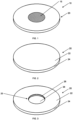
- Fig. 1 shows a perspective view of an assembly apparatus 10.
- the apparatus 10 has a substrate (i.e. target backing portion) 20 and a zinc portion 15 disposed on top of the backing 20.
- Fig. 1 shows the apparatus 10 where the target backing 20 is a circular shaped metal disc with front and rear surfaces.
- the metal disc may be made of a material selected from the group consisting of Al, Ag, and Cu.
- the zinc portion 15 is on the front surface of the target backing 20.
- the zinc may be impregnated in the target backing material, but not substantially within it.
- the zinc material mostly contains zinc Zn-68 (at least 90%), a stable (non-radioactive) isotope of zinc, and also has traces of other zinc isotopes, such as Zn-64, Zn-66, Zn-67, and/or Zn-70 and other elements, such as Al, As, Ca, Cd, Co, Cr, Cu, Fe, K, Mg, Mn, Na, Pb, Si, and/or Sn.
- the target backing material may be made of chemically inert metals, such as the noble metals or the refractory metals, or any other material with a high thermal conductivity that is suitable for mechanical or other modification and bonds easily to zinc, such as silver, copper or aluminum.
- the backing material is of sufficient robustness to dissipate an exemplary proton beam current of at least approximately 10 ⁇ A and energy of approximately 15 MeV on a beam spot of approximately 10 mm diameter.
- Fig. 2 shows a perspective view of the apparatus 10 of Fig. 1 (with no recess and no zinc).
- the target backing 20 has front 22, rear (not shown), and side 24 surface and no recess.
- Fig. 3 shows a perspective view of an embodiment of the apparatus 10 of Fig. 1 (with recess and no zinc).
- the target backing 20 has a recess 25 in the front surface 22 of the backing for receiving and securing the zinc portion (not shown) in the apparatus 10.
- the recess 25 has a recess floor 28 and a side wall 26.
- the Zn portion 15 is in the recess on top of the recess floor 28.
- Fig. 4 shows a front view of the embodiment of the apparatus 10 of Figs. 1-3 with the target backing 20 and a zinc portion 15. With no recess ( Fig. 2 ), the zinc portion 15 sits on top of the backing's surface 22. In an embodiment with a recess 25 ( Fig. 3 ), the zinc portion 15 sits within the recess 25.
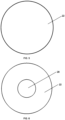
- Figs. 5 and 6 show front views of the embodiments of the apparatus 10 of Figs. 2 and 3 , respectively, with no zinc on the front surface 22 of the target backing 20.
- Fig. 6 shows an embodiment of the target backing 20 with a recess and recess floor 28 formed in the front surface 22 of the target backing 20.
- Fig. 7 shows a rear view of the embodiment of the apparatus 10 of Fig. 1 with the rear surface 29.
- Fig. 8 shows a side view of the embodiment of the apparatus 10 of Fig. 1 with the front, side, and rear surfaces 22, 24, 29.
- Figs. 8-9 show side views of the embodiments of the apparatus (with or without zinc) with the side 24 and top 22 surfaces of the target backing.
- the top of the zinc portion may be below (not shown) or flush with (not shown) the front surface 22 of the target backing 20.
- the top of the zinc portion 15 may rise above the front surface 22 of the zinc portion 20.
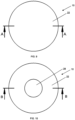
- Fig. 9 shows a front view of the target backing 20 of the apparatus 10 of Fig. 2 with section line A-A taken along the diameter of target backing 20. Fig. 9 shows no zinc.
- Fig. 10 shows a front view of the embodiment of the target backing 20 of the apparatus 10 of Fig. 3 and section line B-B taken along the diameter of the target backing 20.
- the target backing 20 has a recess with a recess floor 28.
- Fig. 9 shows am embodiment with no zinc.
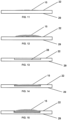
- Figs. 11-12 show sectional views of the apparatus 10 taken along section line A-A.
- a zinc portion 15 sits on the front surface 22 of the target backing 20 of the apparatus 10.
- the size and shape of the zinc portion 15 may vary. It must be thick and dense enough to dissipate the intensity of a proton beam that strikes the zinc during irradiation.
- zinc portion 15 may be a thin layer ( Fig. 11 ) or a thick layer ( Fig. 12 ) that protrudes out from the front surface 22 of the target backing 20.
- Figs. 13-15 show sectional views of embodiments of the apparatus 10 taken along section line B-B.
- Fig. 13 shows a cross section of the target backing 20 with the recess formed in the front surface 22.
- the size and shape of the zinc portion 15 may vary and must be suitable to withstand and dissipate the intensity of a proton beam that strikes the zinc during irradiation.
- the zinc portion 15 may fill the recess and be flush with the front surface 22 ( Fig. 14 ) or may overfill the recess and rise above the front surface 22 ( Fig. 15 ).
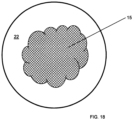
- Figs. 16-18 show front views of the apparatus of Fig. 1 with various sized and shaped zinc portions 15.
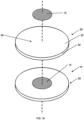
- Figs. 19 shows an exploded view of the apparatus of Figs. 1, 2 , 11-12 with the zinc portion 15 on the smooth, planar surface of the target backing 20.
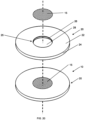
- Fig. 20 shows an exploded view of the apparatus of Figs. 1, 3 , 14-15 with the zinc portion 15 within the recess 25 of the target backing 20.
- the present invention is also directed to method of making a solid target assembly apparatus.
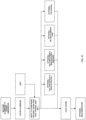
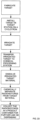
- Figs. 21 and 22 show flowcharts methods of making the apparatus 10 of Fig. 1 , where the target backing 20 is aluminum ( Fig. 19 ) and silver ( Fig. 20 ), respectively.
- a method of making a solid target assembly is defined in claim 1.
- bonding the Zn to the surface of the disc may be done by in an oxygen-free or low oxygen environment.
- the target assembly is heated using any suitable heat source such as a hot plate, furnace, blow torch, induction heating, laser, arc melting, or a combination thereof.
- the target assembly discussed above may be made according to any of the methods discussed above.
- the target backings 20 are made. They may be various sizes or shapes. In an embodiment, they are smooth, solid, planar discs with a recess.
- the bonding surfaces are prepared for bonding the target backing 20 with the zinc portion 15 to form the target assembly apparatus 10.
- Many metal bonding methods such as soldering or diffusion bonding, require preparation of the metal surfaces of materials to be bonded.
- the front surface 22 of the target backing 20 is prepared as a bonding surface for bonding to the zinc portion 15.
- Some example preparation techniques include, but are not limited to mechanically cleaning, degreasing, etching, roughening (e.g. using an abrasive such as sand paper), polishing, laser engraving, and/or mechanically indenting the surface. Adhesion may occur independent of the surface finish.
- oxide layer which may compromise bonding between the target backing 20 and the zinc portion 15.
- This oxide layer may be removed from the target backing 20 mechanically (e.g. via sanding) or chemically (e.g. via etching with chemicals) before bonding. Alternatively, plasma etching or other techniques may be applied. Oxide layers may also be removed during the bonding process by using corrosive fluxes.
- the target backing 20 of the apparatus 10 may contain silver, aluminum, or copper.
- Commercial aluminum may be naturally coated with a relatively thick oxide layer that protects the metal from further corrosion.
- the front surface 22 of a backing 20 containing aluminum may be prepared by removing this oxide layer mechanically or chemically (e.g. using mineral acids or bases, such as alkali hydroxide or alkali carbonates).
- the cleaned surface may then be rinsed and used for target assembly apparatus fabrication as soon as possible before re-oxidation occurs.
- the preparation and fabrication steps may be done in an oxygen free environment in order to avoid re-oxidation.
- the bonding surface of the target backing 20 containing aluminum may be prepared and cleaned using an aqueous zincate solution containing 10% sodium hydroxide (w/w), 2% zinc oxide (w/w), and 0.2% sodium cyanide (w/w).
- the zincate process may be applied at least twice, with acid etching and rinsing steps in between.
- An exemplary double zincate method would be: Cleaning and degreasing; sodium hydroxide etching; rinsing; etching with half-concentrated nitric acid; rinsing; zincate; rinse; etching with half-concentrated nitric acid; rinse; zincate; rinse.
- the target backing 20 may not oxidize as rapidly as aluminum or other metals.
- Bonding surface preparation of a target backing 20 containing silver may be prepared by cleaning it mechanically (e.g. with and abrasive such as sandpaper) and/or chemically (e.g. removing a silver oxide layer with acid such as sulfuric acid).
- the target backing 28 may also be made of copper.
- the zinc is deposited onto the prepared surface of the metal disc 20.
- the zinc may be in a variety of forms such as a solid disc, powder, compressed powder, compacted powder, a foil, shavings or granules that are loose or compacted into a thin pellet, or the like.
- the zinc is applied directly to the metal disc 20, for example in accordance with any of the application methods discussed below.
- the zinc may be applied to the metal disc 20 by plasma spraying or a similar technique.
- the zinc should be heated until it melts (i.e. to a temperature of at least its melting point) to achieve a strong bond between the two components.
- the zinc may be heated briefly (e.g. a few seconds). When heated in ambient air, heating should be stopped shortly after the zinc melts.
- the target backing contains aluminum, the zinc should not be melted for more than approximately 30 minutes.
- the heat source is a hotplate, large industrial solder table, or a blow torch.
- the zinc is applied on the front surface of the metal disc 20 (either on the front surface 22 or within a recess).
- the zinc and metal disc assembly is then heated (e.g. placed on a hotplate, within the flame of a blow torch, in a furnace, using induction heating, laser, arc melting, a combination thereof, etc.) and heated to a predetermined temperature and/or for a predetermined period of time until the zinc melts.
- the assembly is removed from the heat and allowed to cool down (actively or passively) to ambient in order to allow the zinc to solidify.
- pressure is applied to the assembly during or immediately after heating to facilitate bonding between the components.
- a weight made out of an inert material that does not bond to zinc e.g. quartz
- the small force caused by this additional weight aids in the bonding process.
- heating sources and methods such as metallurgical or brazing furnace, induction heating, or hot pressing, may be used.
- the bonding process is performed in an oxygen free environment (or substantially oxygen free environment), for example in an inert gas atmosphere or in a vacuum.
- the flowing of the zinc and its adhesion may be improved by using a flux material (e.g. a paste which contains e.g. a corrosive substance, some binder and other chemicals).
- a flux material e.g. a paste which contains e.g. a corrosive substance, some binder and other chemicals.
- the process may include pre-coating the backing with a minute quantity of ammonium chloride before melting the zinc onto the backing. Ammonium chloride decomposes upon heating, liberating hydrochloric acid, which aids in the removal of oxide films on both the zinc and the backing, thus improving the diffusion bond. Unused flux may be removed after the soldering.
- the target assembly may be fabricated using a die casting process.
- Liquid zinc may be applied to the target backing 20 through a heated injection system (e.g. using a heated Pasteur pipette) directly onto the target backing (pre-heated or at ambient temperature).
- the zinc may be laser melted onto the disc.
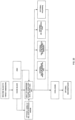
- Fig. 23 shows an embodiment of a method of making Ga-68 via proton bombardment of the zinc target assembly apparatus by cyclotron.
- a method of producing Ga-68 by cyclotron comprises the steps of:
- the target assembly 10 is irradiated with a proton beam having a current of up to 100 ⁇ A, beam energy of no more than 12.7 MeV, and a beam spot of approximately 10 mm diameter.
- the apparatus 10 is irradiated for at least 5 minutes and no more than approximately hours.
- Fig. 24 shows an embodiment of a method of separating Ga-68 from an irradiated target assembly apparatus.
- irradiation of the zinc target also produces other isotopes such as Ga-64, Ga-66, Ga-67, and Ga-70. These other radioisotopes decay over time (i.e. 2 minutes - 3 days). After irradiation, the Ga-68 that forms in irradiated zinc target material must be separated chemically from the irradiated target.
- a purification method based on ion exchange chromatography in strong hydrochloric acid to dissolve the zinc and perform a standard purification protocol may be used.
- Silver does not dissolve remarkably in hydrochloric acid due to the formation of insoluble silver chloride on the surface of the silver backing, whereas zinc and radio-gallium are rapidly dissolved.
- the resulting solution may be processed immediately in an ion exchange separation.
- a variation of this method may be used in which thermal diffusion is used to help Ga-68 migrate to the surface of the zinc layer 15 on the target assembly 10, which is then etched with a small amount of a suitable acid to recover a large fraction of Ga-68 while minimizing the quantity of zinc that needs to be dissolved and then separated. Further purification of Ga-68 may be achieved by liquid-liquid extraction.
- hydrochloric acid may be used but it dissolves both zinc and aluminum.
- a high concentration of aluminum in the solution may affect the separation chemistry, thus leading to lower yield and/or lower purity or reactivity of the Ga-68 product.
- dissolving a 200 mg zinc pellet on a 4.0 g aluminum target disc by immersion in 12N HCl resulted in a zinc chloride solution contained approximately 15 mg of aluminum.
- zinc may be dissolved from a target disc containing aluminum using acetic or nitric acid.
- the dissolution may be expedited by adding a small quantity of an oxidizing agent, such as hydrogen peroxide, and/or by applying heat.
- the resulting acetate solution may be evaporated and taken up in hydrochloric acid for subsequent standard ion exchange separation.
- purification may be achieved via cation exchange in ammonia containing solution.
- the dissolution of zinc in acetic acid proceeds rather slowly (e.g. >20 minutes for a 200 mg zinc pellet), unless the solution is heated to near boiling.
- the resulting solution contains only trace amounts of aluminum.
- the nitric acid selectively dissolves zinc while the oxidizing properties of nitric acid increase the thickness of the natural oxide layer on metallic aluminum, thus protecting it from attack by the acid.
- the dissolution of zinc proceeds rapidly, and a wide range of concentrations may be used.
- nitric acid a 10 mm diameter, 200 mg zinc pellet dissolves in approximately 1-2 minutes. Concentrated nitric acid dissolved a similar pellet in less than one minute. In ⁇ 2N HNO3, the dissolution is complete in ⁇ 6 minutes. The resulting nitrate solution may be evaporated to dryness and taken up in hydrochloric acid for standard ion exchange separation.
- aluminum in a 35mm diameter target, aluminum may be dissolved concomitantly from a ⁇ 2.5 gram backing in the range of 0 - 1.5 mg (0.06%), which may not affect the subsequent Ga-68 purification.
- the aluminum content may be further reduced by not exposing the entire area of the target backing to nitric acid, for example, only the zinc layer on the front surface of the metal disc.
- Nitric acid dissolution proceeds much faster than acetic acid dissolution, and is therefore desirable with Ga-68 separation because of the relatively short half-life of Ga-68 (approximately 68 minutes).
- a Ga-68 composition of matter is made according to the any of the methods discussed above.
- Material ratios after separation are determined from the isotope ratios at the end of bombardment, the efficacy of the chosen chemical purification process, and then accounting for decay that occurs for each isotope during the time required to conduct separation.
- Methods of the invention can produce Ga-68 compositions that, after purification and following the end of bombardment, have the following quotient of activity ratios:
- the impurities present in a Ga-68 composition made from a proton irradiated zinc target depend on the chemical and isotopic composition of the zinc starting material. For example, if the zinc starting material were 100% pure Zn-68, the only expected impurity would be Ga-67 if the proton energy is above 12.7 MeV.
- the proportion of Zn-68 in the target material relative to other materials is directly related to the relative proportion of Ga-68 created in the target material post irradiation.
- irradiations yield different results, depending on the composition of the starting material and irradiation time.
- Ga-68 nears saturation before Ga-66 and Ga-67 because the half-life of Ga-68 is shorter than the half-life of Ga-66 and Ga-67.
Landscapes
- Physics & Mathematics (AREA)
- Engineering & Computer Science (AREA)
- Chemical & Material Sciences (AREA)
- Chemical Kinetics & Catalysis (AREA)
- High Energy & Nuclear Physics (AREA)
- General Engineering & Computer Science (AREA)
- General Chemical & Material Sciences (AREA)
- Plasma & Fusion (AREA)
- Spectroscopy & Molecular Physics (AREA)
- Optics & Photonics (AREA)
- Particle Accelerators (AREA)
- Manufacture And Refinement Of Metals (AREA)
- Physical Vapour Deposition (AREA)
Claims (9)
- Verfahren zur Herstellung einer Vorrichtung (10) zur Montage eines festen Targets, wobei das Verfahren umfasst:Bereitstellen eines Targetträgersubstrats (20),wobei das Targetträgersubstrat (20) eine Vorderfläche (22) aufweist mit einer Aussparung (25) mit einem Aussparungsboden (28), undwobei das Targetträgersubstrat (20) aus einem Material hergestellt ist ausgewählt aus der Gruppe bestehend aus Al, Ag und Cu;Bereitstellen einer Menge von Zn (15),gekennzeichnet durch
wobei die Menge an Zn (15) mindestens 90% Zn-68 umfasst;
Abscheiden der Menge an Zn (15) in der Ausnehmung (25); und
Verbinden der Menge an Zn (15) mit dem Targetträgersubstrat (20) durch Erhitzen der Menge an Zn (15) auf mindestens 419,5 °C, bis die Menge an Zn (15) geschmolzen ist, Anwenden von selektivem Druck auf die Vorrichtung (10) zur Montage eines festen Targets während oder unmittelbar nach dem Erhitzen und Beenden des Erhitzens der Menge an Zn (15) auf Umgebungstemperatur, um das Verfestigen der Menge an Zn (15) zu ermöglichen. - Verfahren nach Anspruch 1, wobei die Bindung der Zn-Menge (15) in einer sauerstofffreien oder sauerstoffarmen Umgebung erfolgt.
- Verfahren nach Anspruch 1 oder Anspruch 2, wobei der Schritt des Erhitzens der Vorrichtung (10) zur Montage eines festen Targets das Erhitzen der Vorrichtung (10) zur Montage eines festen Targets in einem Ofen umfasst.
- Verfahren nach Anspruch 1, 2 oder 3, wobei das Erhitzen bis zu 30 Minuten lang durchgeführt wird.
- Verfahren nach einem der vorhergehenden Ansprüche, wobei die Zn-Menge (15) die Vertiefung ausfüllt und mit der Vorderfläche (22) bündig ist.
- Verfahren nach einem der vorhergehenden Ansprüche, wobei die Abscheidung durch Plasmaspritzen erfolgt.
- Vorrichtung zur Montage eines festen Targets, hergestellt nach dem Verfahren gemäß einem der Ansprüche 1 bis 6.
- Verfahren zur Herstellung von Ga-68 mittels Zyklotron, wobei das Verfahren umfasst:Bereitstellen der Vorrichtung (10) zur Montage eines festen Targets nach Anspruch 7, Bereitstellen eines Zyklotrons, das in der Lage ist, Protonenstrahlen zu erzeugen, wobei das Zyklotron eine Target-Bestrahlungsstation umfasst,Platzieren der Vorrichtung (10) zur Montage eines festen Targets in der Target-Bestrahlungsstation, Bestrahlen der Vorrichtung (10) zur Montage eines festen Targets, Überführen der bestrahlten Vorrichtung (10) zur Montage eines festen Targets von der Target-Bestrahlungsstation zu einer chemischen Verarbeitungsstation,chemisches Abtrennen von Ga-68 von der Menge an Zn (15) auf der bestrahlten Vorrichtung (10) zur Montage eines festen Targets,Sammeln des abgetrennten Ga-68, undLagern des gesammelten Ga-68.
- Verfahren nach Anspruch 8, wobei die Vorrichtung (10) zur Montage eines festen Targets mit einem Protonenstrahl mit einem Strom von bis zu 100 µA und einer Strahlenergie von nicht mehr als 12,7 MeV bestrahlt wird.
Priority Applications (1)
| Application Number | Priority Date | Filing Date | Title |
|---|---|---|---|
| EP24173891.3A EP4389155A3 (de) | 2017-07-31 | 2018-07-30 | System, vorrichtung und verfahren zur herstellung von gallium-radioisotopen auf teilchenbeschleunigern unter verwendung fester targets und damit hergestellte ga-68-zusammensetzung |
Applications Claiming Priority (2)
| Application Number | Priority Date | Filing Date | Title |
|---|---|---|---|
| US201762538954P | 2017-07-31 | 2017-07-31 | |
| PCT/CA2018/000146 WO2019023787A1 (en) | 2017-07-31 | 2018-07-30 | SYSTEM, APPARATUS AND METHOD FOR PRODUCING GALLIUM RADIOISOTOPES ON PARTICLE ACCELERATORS USING SOLID TARGETS AND COMPOSITION OF GA-68 PRODUCED ACCORDING TO THE METHOD |
Related Child Applications (1)
| Application Number | Title | Priority Date | Filing Date |
|---|---|---|---|
| EP24173891.3A Division EP4389155A3 (de) | 2017-07-31 | 2018-07-30 | System, vorrichtung und verfahren zur herstellung von gallium-radioisotopen auf teilchenbeschleunigern unter verwendung fester targets und damit hergestellte ga-68-zusammensetzung |
Publications (4)
| Publication Number | Publication Date |
|---|---|
| EP3662728A1 EP3662728A1 (de) | 2020-06-10 |
| EP3662728A4 EP3662728A4 (de) | 2021-08-18 |
| EP3662728C0 EP3662728C0 (de) | 2024-05-08 |
| EP3662728B1 true EP3662728B1 (de) | 2024-05-08 |
Family
ID=65232116
Family Applications (2)
| Application Number | Title | Priority Date | Filing Date |
|---|---|---|---|
| EP24173891.3A Pending EP4389155A3 (de) | 2017-07-31 | 2018-07-30 | System, vorrichtung und verfahren zur herstellung von gallium-radioisotopen auf teilchenbeschleunigern unter verwendung fester targets und damit hergestellte ga-68-zusammensetzung |
| EP18842372.7A Active EP3662728B1 (de) | 2017-07-31 | 2018-07-30 | System, vorrichtung und verfahren zur herstellung von galliumradioisotopen auf teilchenbeschleunigern unter verwendung von festen targets und dadurch hergestellte ga-68-zusammensetzung |
Family Applications Before (1)
| Application Number | Title | Priority Date | Filing Date |
|---|---|---|---|
| EP24173891.3A Pending EP4389155A3 (de) | 2017-07-31 | 2018-07-30 | System, vorrichtung und verfahren zur herstellung von gallium-radioisotopen auf teilchenbeschleunigern unter verwendung fester targets und damit hergestellte ga-68-zusammensetzung |
Country Status (12)
| Country | Link |
|---|---|
| US (1) | US20200243210A1 (de) |
| EP (2) | EP4389155A3 (de) |
| JP (1) | JP2020529115A (de) |
| KR (1) | KR20200044005A (de) |
| CN (1) | CN111133842A (de) |
| AU (1) | AU2018310769A1 (de) |
| BR (1) | BR112020002016A2 (de) |
| CA (1) | CA3071449A1 (de) |
| CR (1) | CR20200104A (de) |
| RU (1) | RU2020108651A (de) |
| WO (1) | WO2019023787A1 (de) |
| ZA (1) | ZA202001086B (de) |
Families Citing this family (6)
| Publication number | Priority date | Publication date | Assignee | Title |
|---|---|---|---|---|
| GB201814291D0 (en) * | 2018-09-03 | 2018-10-17 | Univ Oslo | Process for the production of gallium radionculides |
| AU2019201117B1 (en) * | 2019-02-18 | 2020-09-03 | Sumitomo Heavy Industries, Ltd. | Self-shielding cyclotron system |
| US12121828B2 (en) * | 2019-10-12 | 2024-10-22 | Telix Artms Inc. | Systems and methods of isolation of gallium-68 |
| EP4175963A4 (de) | 2020-07-03 | 2025-10-29 | Entegris Inc | Verfahren zur herstellung von organozinnverbindungen |
| CN116157586A (zh) * | 2020-09-03 | 2023-05-23 | 美国锔责任有限公司 | 用于制备无载体添加的铜-64的纯化方法 |
| CN113200564A (zh) * | 2021-04-09 | 2021-08-03 | 广东回旋医药科技股份有限公司 | 一种[68Zn]硝酸锌靶溶液的制备方法及应用 |
Family Cites Families (16)
| Publication number | Priority date | Publication date | Assignee | Title |
|---|---|---|---|---|
| JPH04326096A (ja) * | 1991-04-26 | 1992-11-16 | Daiichi Rajio Isotope Kenkyusho:Kk | 粒子加速器用ターゲット本体及び放射性同位元素の製造方法 |
| JP4231779B2 (ja) * | 2001-06-05 | 2009-03-04 | 日本メジフィジックス株式会社 | ターゲット処理 |
| CN1138008C (zh) * | 2001-09-10 | 2004-02-11 | 中国原子能科学研究院 | 放射性同位素镓-67的一种制备工艺 |
| EP2118905B1 (de) * | 2006-12-11 | 2013-04-03 | Mallinckrodt LLC | Target-körper und verwendungen dieser bei der herstellung von radioisotopmaterialien |
| RU2344387C1 (ru) * | 2007-09-25 | 2009-01-20 | Федеральное государственное унитарное предприятие "Исследовательский Центр имени М.В. Келдыша" | Способ определения вектора тяги при испытании ракетного двигателя и устройство для определения боковых составляющих вектора тяги |
| EP2205952B1 (de) * | 2007-10-31 | 2011-11-23 | E. I. du Pont de Nemours and Company | Schwingungsdämpfer |
| US8670513B2 (en) * | 2009-05-01 | 2014-03-11 | Bti Targetry, Llc | Particle beam target with improved heat transfer and related apparatus and methods |
| US20110214995A1 (en) * | 2010-03-05 | 2011-09-08 | Atomic Energy Council-Institute Of Nuclear Energy Research | Method for Making Radioactive Isotopic Gallium-67 |
| IN2013MN01963A (de) * | 2011-04-10 | 2015-07-03 | Univ Alberta | |
| EP3461240B1 (de) * | 2012-04-27 | 2022-11-16 | Triumf Inc. | Verfahren, systeme und vorrichtung für zyklotronherstellung von technetium-99m |
| CA2946048C (en) * | 2014-04-24 | 2022-09-06 | Triumf | Target system for irradiation of molybdenum with particle beams |
| EP3142709B1 (de) * | 2014-05-15 | 2025-07-30 | Mayo Foundation for Medical Education and Research | Synthesesystem mit einem lösungsziel für die zyklotronherstellung von radiometallen und zugehöriges verfahren |
| US11062816B2 (en) * | 2014-08-11 | 2021-07-13 | Best Theratronics Ltd. | Target, apparatus and process for the manufacture of molybdenum-100 targets |
| EP3101660B1 (de) * | 2015-06-05 | 2017-08-09 | Universidade de Coimbra | Verfahren zur herstellung von gallium-68 durch bestrahlung eines flüssigtargets |
| WO2016197084A1 (en) * | 2015-06-05 | 2016-12-08 | Ncm Usa Bronx Llc | Method and system for producing gallium-68 radioisotope by solid targeting in a cyclotrion |
| JP6534581B2 (ja) * | 2015-08-18 | 2019-06-26 | 日本メジフィジックス株式会社 | 放射性ガリウムを製造する方法、当該放射性ガリウムを含む医薬を製造する方法、亜鉛安定同位体を回収する方法 |
-
2018
- 2018-07-30 WO PCT/CA2018/000146 patent/WO2019023787A1/en not_active Ceased
- 2018-07-30 BR BR112020002016-8A patent/BR112020002016A2/pt not_active Application Discontinuation
- 2018-07-30 KR KR1020207006047A patent/KR20200044005A/ko not_active Withdrawn
- 2018-07-30 JP JP2020506223A patent/JP2020529115A/ja active Pending
- 2018-07-30 RU RU2020108651A patent/RU2020108651A/ru unknown
- 2018-07-30 CR CR20200104A patent/CR20200104A/es unknown
- 2018-07-30 EP EP24173891.3A patent/EP4389155A3/de active Pending
- 2018-07-30 AU AU2018310769A patent/AU2018310769A1/en not_active Abandoned
- 2018-07-30 US US16/635,027 patent/US20200243210A1/en not_active Abandoned
- 2018-07-30 CN CN201880052410.7A patent/CN111133842A/zh active Pending
- 2018-07-30 EP EP18842372.7A patent/EP3662728B1/de active Active
- 2018-07-30 CA CA3071449A patent/CA3071449A1/en active Pending
-
2020
- 2020-02-20 ZA ZA2020/01086A patent/ZA202001086B/en unknown
Also Published As
| Publication number | Publication date |
|---|---|
| CN111133842A (zh) | 2020-05-08 |
| KR20200044005A (ko) | 2020-04-28 |
| CR20200104A (es) | 2020-07-05 |
| EP4389155A2 (de) | 2024-06-26 |
| BR112020002016A2 (pt) | 2020-07-28 |
| AU2018310769A1 (en) | 2020-03-05 |
| EP3662728A1 (de) | 2020-06-10 |
| RU2020108651A (ru) | 2021-09-02 |
| EP4389155A3 (de) | 2024-11-13 |
| JP2020529115A (ja) | 2020-10-01 |
| WO2019023787A1 (en) | 2019-02-07 |
| EP3662728C0 (de) | 2024-05-08 |
| ZA202001086B (en) | 2023-10-25 |
| EP3662728A4 (de) | 2021-08-18 |
| US20200243210A1 (en) | 2020-07-30 |
| CA3071449A1 (en) | 2019-02-07 |
Similar Documents
| Publication | Publication Date | Title |
|---|---|---|
| EP3662728B1 (de) | System, vorrichtung und verfahren zur herstellung von galliumradioisotopen auf teilchenbeschleunigern unter verwendung von festen targets und dadurch hergestellte ga-68-zusammensetzung | |
| AU2020203637B2 (en) | Target system for irradiation of molybdenum with particle beams | |
| CA2594829C (en) | Method for production of radioisotope preparations and their use in life science, research, medical application and industry | |
| EP2384512B1 (de) | Herstellungsverfahren von verbindungen aus sn-117m mit hoher spezifischer aktivität | |
| Qaim | Target development for medical radioisotope production at a cyclotron | |
| EP3539138B1 (de) | Verfahren zur erzeugung von germanium-68 mit reduzierten flüchtigen stoffen | |
| HK40105217A (en) | System, apparatus and method for producing gallium radioisotopes on particle accelerators using solid targets and ga-68 composition produced by same | |
| WO2019053570A1 (en) | METHOD FOR OBTAINING A SOLID TARGET FOR THE PRODUCTION OF RADIOPHARMACEUTICAL PRODUCTS | |
| JPH04326096A (ja) | 粒子加速器用ターゲット本体及び放射性同位元素の製造方法 | |
| CN116635345A (zh) | 磷酸盐类靶材 | |
| RU2239900C1 (ru) | Способ получения радиоактивных изотопов кобальт-57 и кадмий-109 | |
| Skliarova | Development of novel cyclotron target for 99mTc production. | |
| Stevenson et al. | A new production method for germanium-68 | |
| HK1164532B (en) | Methods of preparing compositions of high specific activity sn-117m |
Legal Events
| Date | Code | Title | Description |
|---|---|---|---|
| STAA | Information on the status of an ep patent application or granted ep patent |
Free format text: STATUS: THE INTERNATIONAL PUBLICATION HAS BEEN MADE |
|
| PUAI | Public reference made under article 153(3) epc to a published international application that has entered the european phase |
Free format text: ORIGINAL CODE: 0009012 |
|
| STAA | Information on the status of an ep patent application or granted ep patent |
Free format text: STATUS: REQUEST FOR EXAMINATION WAS MADE |
|
| 17P | Request for examination filed |
Effective date: 20200227 |
|
| AK | Designated contracting states |
Kind code of ref document: A1 Designated state(s): AL AT BE BG CH CY CZ DE DK EE ES FI FR GB GR HR HU IE IS IT LI LT LU LV MC MK MT NL NO PL PT RO RS SE SI SK SM TR |
|
| AX | Request for extension of the european patent |
Extension state: BA ME |
|
| DAV | Request for validation of the european patent (deleted) | ||
| DAX | Request for extension of the european patent (deleted) | ||
| RIC1 | Information provided on ipc code assigned before grant |
Ipc: G21G 1/10 20060101AFI20210316BHEP Ipc: H05H 6/00 20060101ALI20210316BHEP Ipc: A61K 51/02 20060101ALI20210316BHEP |
|
| REG | Reference to a national code |
Ref country code: DE Ref legal event code: R079 Free format text: PREVIOUS MAIN CLASS: H05H0006000000 Ipc: G21G0001100000 Ref country code: DE Ref legal event code: R079 Ref document number: 602018069352 Country of ref document: DE Free format text: PREVIOUS MAIN CLASS: H05H0006000000 Ipc: G21G0001100000 |
|
| A4 | Supplementary search report drawn up and despatched |
Effective date: 20210716 |
|
| RIC1 | Information provided on ipc code assigned before grant |
Ipc: G21G 1/10 20060101AFI20210712BHEP Ipc: H05H 6/00 20060101ALI20210712BHEP Ipc: A61K 51/02 20060101ALI20210712BHEP |
|
| GRAP | Despatch of communication of intention to grant a patent |
Free format text: ORIGINAL CODE: EPIDOSNIGR1 |
|
| STAA | Information on the status of an ep patent application or granted ep patent |
Free format text: STATUS: GRANT OF PATENT IS INTENDED |
|
| INTG | Intention to grant announced |
Effective date: 20231208 |
|
| RAP1 | Party data changed (applicant data changed or rights of an application transferred) |
Owner name: TRIUMF INC. |
|
| RIN1 | Information on inventor provided before grant (corrected) |
Inventor name: KUMLIN, JOEL OSCAR OLSSON Inventor name: ZEISLER, STEFAN |
|
| GRAS | Grant fee paid |
Free format text: ORIGINAL CODE: EPIDOSNIGR3 |
|
| GRAA | (expected) grant |
Free format text: ORIGINAL CODE: 0009210 |
|
| STAA | Information on the status of an ep patent application or granted ep patent |
Free format text: STATUS: THE PATENT HAS BEEN GRANTED |
|
| AK | Designated contracting states |
Kind code of ref document: B1 Designated state(s): AL AT BE BG CH CY CZ DE DK EE ES FI FR GB GR HR HU IE IS IT LI LT LU LV MC MK MT NL NO PL PT RO RS SE SI SK SM TR |
|
| REG | Reference to a national code |
Ref country code: GB Ref legal event code: FG4D |
|
| REG | Reference to a national code |
Ref country code: CH Ref legal event code: EP |
|
| REG | Reference to a national code |
Ref country code: DE Ref legal event code: R096 Ref document number: 602018069352 Country of ref document: DE |
|
| REG | Reference to a national code |
Ref country code: IE Ref legal event code: FG4D |
|
| U01 | Request for unitary effect filed |
Effective date: 20240513 |
|
| U07 | Unitary effect registered |
Designated state(s): AT BE BG DE DK EE FI FR IT LT LU LV MT NL PT SE SI Effective date: 20240523 |
|
| U20 | Renewal fee for the european patent with unitary effect paid |
Year of fee payment: 7 Effective date: 20240729 |
|
| PG25 | Lapsed in a contracting state [announced via postgrant information from national office to epo] |
Ref country code: IS Free format text: LAPSE BECAUSE OF FAILURE TO SUBMIT A TRANSLATION OF THE DESCRIPTION OR TO PAY THE FEE WITHIN THE PRESCRIBED TIME-LIMIT Effective date: 20240908 |
|
| PG25 | Lapsed in a contracting state [announced via postgrant information from national office to epo] |
Ref country code: HR Free format text: LAPSE BECAUSE OF FAILURE TO SUBMIT A TRANSLATION OF THE DESCRIPTION OR TO PAY THE FEE WITHIN THE PRESCRIBED TIME-LIMIT Effective date: 20240508 |
|
| PG25 | Lapsed in a contracting state [announced via postgrant information from national office to epo] |
Ref country code: GR Free format text: LAPSE BECAUSE OF FAILURE TO SUBMIT A TRANSLATION OF THE DESCRIPTION OR TO PAY THE FEE WITHIN THE PRESCRIBED TIME-LIMIT Effective date: 20240809 |
|
| PG25 | Lapsed in a contracting state [announced via postgrant information from national office to epo] |
Ref country code: ES Free format text: LAPSE BECAUSE OF FAILURE TO SUBMIT A TRANSLATION OF THE DESCRIPTION OR TO PAY THE FEE WITHIN THE PRESCRIBED TIME-LIMIT Effective date: 20240508 |
|
| PG25 | Lapsed in a contracting state [announced via postgrant information from national office to epo] |
Ref country code: PL Free format text: LAPSE BECAUSE OF FAILURE TO SUBMIT A TRANSLATION OF THE DESCRIPTION OR TO PAY THE FEE WITHIN THE PRESCRIBED TIME-LIMIT Effective date: 20240508 |
|
| PG25 | Lapsed in a contracting state [announced via postgrant information from national office to epo] |
Ref country code: PL Free format text: LAPSE BECAUSE OF FAILURE TO SUBMIT A TRANSLATION OF THE DESCRIPTION OR TO PAY THE FEE WITHIN THE PRESCRIBED TIME-LIMIT Effective date: 20240508 Ref country code: NO Free format text: LAPSE BECAUSE OF FAILURE TO SUBMIT A TRANSLATION OF THE DESCRIPTION OR TO PAY THE FEE WITHIN THE PRESCRIBED TIME-LIMIT Effective date: 20240808 Ref country code: IS Free format text: LAPSE BECAUSE OF FAILURE TO SUBMIT A TRANSLATION OF THE DESCRIPTION OR TO PAY THE FEE WITHIN THE PRESCRIBED TIME-LIMIT Effective date: 20240908 Ref country code: HR Free format text: LAPSE BECAUSE OF FAILURE TO SUBMIT A TRANSLATION OF THE DESCRIPTION OR TO PAY THE FEE WITHIN THE PRESCRIBED TIME-LIMIT Effective date: 20240508 Ref country code: GR Free format text: LAPSE BECAUSE OF FAILURE TO SUBMIT A TRANSLATION OF THE DESCRIPTION OR TO PAY THE FEE WITHIN THE PRESCRIBED TIME-LIMIT Effective date: 20240809 Ref country code: ES Free format text: LAPSE BECAUSE OF FAILURE TO SUBMIT A TRANSLATION OF THE DESCRIPTION OR TO PAY THE FEE WITHIN THE PRESCRIBED TIME-LIMIT Effective date: 20240508 Ref country code: RS Free format text: LAPSE BECAUSE OF FAILURE TO SUBMIT A TRANSLATION OF THE DESCRIPTION OR TO PAY THE FEE WITHIN THE PRESCRIBED TIME-LIMIT Effective date: 20240808 |
|
| PG25 | Lapsed in a contracting state [announced via postgrant information from national office to epo] |
Ref country code: CZ Free format text: LAPSE BECAUSE OF FAILURE TO SUBMIT A TRANSLATION OF THE DESCRIPTION OR TO PAY THE FEE WITHIN THE PRESCRIBED TIME-LIMIT Effective date: 20240508 |
|
| PG25 | Lapsed in a contracting state [announced via postgrant information from national office to epo] |
Ref country code: SK Free format text: LAPSE BECAUSE OF FAILURE TO SUBMIT A TRANSLATION OF THE DESCRIPTION OR TO PAY THE FEE WITHIN THE PRESCRIBED TIME-LIMIT Effective date: 20240508 Ref country code: RO Free format text: LAPSE BECAUSE OF FAILURE TO SUBMIT A TRANSLATION OF THE DESCRIPTION OR TO PAY THE FEE WITHIN THE PRESCRIBED TIME-LIMIT Effective date: 20240508 |
|
| PG25 | Lapsed in a contracting state [announced via postgrant information from national office to epo] |
Ref country code: SM Free format text: LAPSE BECAUSE OF FAILURE TO SUBMIT A TRANSLATION OF THE DESCRIPTION OR TO PAY THE FEE WITHIN THE PRESCRIBED TIME-LIMIT Effective date: 20240508 |
|
| PG25 | Lapsed in a contracting state [announced via postgrant information from national office to epo] |
Ref country code: SM Free format text: LAPSE BECAUSE OF FAILURE TO SUBMIT A TRANSLATION OF THE DESCRIPTION OR TO PAY THE FEE WITHIN THE PRESCRIBED TIME-LIMIT Effective date: 20240508 Ref country code: SK Free format text: LAPSE BECAUSE OF FAILURE TO SUBMIT A TRANSLATION OF THE DESCRIPTION OR TO PAY THE FEE WITHIN THE PRESCRIBED TIME-LIMIT Effective date: 20240508 Ref country code: RO Free format text: LAPSE BECAUSE OF FAILURE TO SUBMIT A TRANSLATION OF THE DESCRIPTION OR TO PAY THE FEE WITHIN THE PRESCRIBED TIME-LIMIT Effective date: 20240508 Ref country code: CZ Free format text: LAPSE BECAUSE OF FAILURE TO SUBMIT A TRANSLATION OF THE DESCRIPTION OR TO PAY THE FEE WITHIN THE PRESCRIBED TIME-LIMIT Effective date: 20240508 |
|
| PG25 | Lapsed in a contracting state [announced via postgrant information from national office to epo] |
Ref country code: MC Free format text: LAPSE BECAUSE OF FAILURE TO SUBMIT A TRANSLATION OF THE DESCRIPTION OR TO PAY THE FEE WITHIN THE PRESCRIBED TIME-LIMIT Effective date: 20240508 |
|
| REG | Reference to a national code |
Ref country code: DE Ref legal event code: R097 Ref document number: 602018069352 Country of ref document: DE |
|
| PLBE | No opposition filed within time limit |
Free format text: ORIGINAL CODE: 0009261 |
|
| STAA | Information on the status of an ep patent application or granted ep patent |
Free format text: STATUS: NO OPPOSITION FILED WITHIN TIME LIMIT |
|
| 26N | No opposition filed |
Effective date: 20250211 |
|
| PG25 | Lapsed in a contracting state [announced via postgrant information from national office to epo] |
Ref country code: IE Free format text: LAPSE BECAUSE OF NON-PAYMENT OF DUE FEES Effective date: 20240730 |
|
| U20 | Renewal fee for the european patent with unitary effect paid |
Year of fee payment: 8 Effective date: 20250725 |
|
| PGFP | Annual fee paid to national office [announced via postgrant information from national office to epo] |
Ref country code: GB Payment date: 20250722 Year of fee payment: 8 |
|
| PGFP | Annual fee paid to national office [announced via postgrant information from national office to epo] |
Ref country code: CH Payment date: 20250801 Year of fee payment: 8 |