EP3650299B1 - Reguliervorrichtung der beladung einer luftseilförderanlage - Google Patents
Reguliervorrichtung der beladung einer luftseilförderanlage Download PDFInfo
- Publication number
- EP3650299B1 EP3650299B1 EP18205793.5A EP18205793A EP3650299B1 EP 3650299 B1 EP3650299 B1 EP 3650299B1 EP 18205793 A EP18205793 A EP 18205793A EP 3650299 B1 EP3650299 B1 EP 3650299B1
- Authority
- EP
- European Patent Office
- Prior art keywords
- vehicle
- value
- wght
- frplcnr
- thr
- Prior art date
- Legal status (The legal status is an assumption and is not a legal conclusion. Google has not performed a legal analysis and makes no representation as to the accuracy of the status listed.)
- Active
Links
Images


Classifications
-
- B—PERFORMING OPERATIONS; TRANSPORTING
- B61—RAILWAYS
- B61B—RAILWAY SYSTEMS; EQUIPMENT THEREFOR NOT OTHERWISE PROVIDED FOR
- B61B12/00—Component parts, details or accessories not provided for in groups B61B7/00 - B61B11/00
-
- B—PERFORMING OPERATIONS; TRANSPORTING
- B61—RAILWAYS
- B61B—RAILWAY SYSTEMS; EQUIPMENT THEREFOR NOT OTHERWISE PROVIDED FOR
- B61B1/00—General arrangement of stations, platforms, or sidings; Railway networks; Rail vehicle marshalling systems
- B61B1/02—General arrangement of stations and platforms including protection devices for the passengers
-
- B—PERFORMING OPERATIONS; TRANSPORTING
- B61—RAILWAYS
- B61B—RAILWAY SYSTEMS; EQUIPMENT THEREFOR NOT OTHERWISE PROVIDED FOR
- B61B12/00—Component parts, details or accessories not provided for in groups B61B7/00 - B61B11/00
- B61B12/02—Suspension of the load; Guiding means, e.g. wheels; Attaching traction cables
- B61B12/022—Vehicle receiving and dispatching devices
-
- G—PHYSICS
- G06—COMPUTING OR CALCULATING; COUNTING
- G06V—IMAGE OR VIDEO RECOGNITION OR UNDERSTANDING
- G06V20/00—Scenes; Scene-specific elements
- G06V20/50—Context or environment of the image
- G06V20/59—Context or environment of the image inside of a vehicle, e.g. relating to seat occupancy, driver state or inner lighting conditions
- G06V20/593—Recognising seat occupancy
-
- G—PHYSICS
- G07—CHECKING-DEVICES
- G07C—TIME OR ATTENDANCE REGISTERS; REGISTERING OR INDICATING THE WORKING OF MACHINES; GENERATING RANDOM NUMBERS; VOTING OR LOTTERY APPARATUS; ARRANGEMENTS, SYSTEMS OR APPARATUS FOR CHECKING NOT PROVIDED FOR ELSEWHERE
- G07C11/00—Arrangements, systems or apparatus for checking, e.g. the occurrence of a condition, not provided for elsewhere
-
- G—PHYSICS
- G07—CHECKING-DEVICES
- G07C—TIME OR ATTENDANCE REGISTERS; REGISTERING OR INDICATING THE WORKING OF MACHINES; GENERATING RANDOM NUMBERS; VOTING OR LOTTERY APPARATUS; ARRANGEMENTS, SYSTEMS OR APPARATUS FOR CHECKING NOT PROVIDED FOR ELSEWHERE
- G07C11/00—Arrangements, systems or apparatus for checking, e.g. the occurrence of a condition, not provided for elsewhere
- G07C2011/04—Arrangements, systems or apparatus for checking, e.g. the occurrence of a condition, not provided for elsewhere related to queuing systems
-
- Y—GENERAL TAGGING OF NEW TECHNOLOGICAL DEVELOPMENTS; GENERAL TAGGING OF CROSS-SECTIONAL TECHNOLOGIES SPANNING OVER SEVERAL SECTIONS OF THE IPC; TECHNICAL SUBJECTS COVERED BY FORMER USPC CROSS-REFERENCE ART COLLECTIONS [XRACs] AND DIGESTS
- Y02—TECHNOLOGIES OR APPLICATIONS FOR MITIGATION OR ADAPTATION AGAINST CLIMATE CHANGE
- Y02T—CLIMATE CHANGE MITIGATION TECHNOLOGIES RELATED TO TRANSPORTATION
- Y02T30/00—Transportation of goods or passengers via railways, e.g. energy recovery or reducing air resistance
Definitions
- the invention relates to a device for controlling a cable transport installation, in particular in an urban or peri-urban environment.
- Such an installation generally comprises two end stations, between which are stretched one or more cables which provide at least the traction of passenger vehicles. Additional stations can be inserted between these end stations, along the cable path. This is very often the case in urban or peri-urban areas.
- a particular feature of cable transport installations of the type mentioned in the introduction resides in that the movement of all the vehicles takes place in a loop or back-and-forth path, at least between the end stations. It is necessary to respect a certain distribution of the vehicles on the line, or a cadence from a temporal point of view, in particular to avoid collisions between vehicles. To respect this pace, boarding and disembarking at the station is generally done according to a prescribed period of time. In other words, any vehicle in the line has the same time interval in station during which the vehicle can embark and disembark passengers.
- the installation is generally equipped with a control device comprising at least one controller capable of organizing a boarding period for vehicles in station. This boarding period ends with a ban on access to the vehicle.
- a station In fairly simple installations, especially in the mountains, a station is equipped with a quay, at least one section of which is fitted out for disembarking and boarding passengers.
- the vehicle doors open, conventionally by mechanical action of a cam, which marks the start of the period. boarding / disembarking.
- the vehicle doors Moving away from this section, the vehicle doors close, also by mechanical action of a cam, which marks the end of the embarkation / disembarkation period. Embarkation and disembarkation take place while the vehicle is moving, at reduced speed, along the quay section.
- the embarkation / disembarkation period corresponds to the time taken by the vehicle to cover the portion of the quay.
- the embarkation and disembarkation period may include stopping the vehicle in the station, and opening and then closing the doors. If necessary, audible and / or light warning signals may be emitted during this period.
- this type of regulation requires a number of agents which is all the greater as the operating times are long, or the vehicles and / or the stations are numerous. In some cases, this type of regulation is too expensive to be considered, in particular when the installation is located in an urban or peri-urban environment.
- FR 2 953 476 an aerial cable transport facility, in which passengers indicate, at the entrance of each station, their destination through a compulsory check-in device. A programmer centralizes these indications throughout the installation and deduces, for each vehicle arriving at the station, a number of places available for boarding. An access lock is set up on each embarkation platform, which can only be accessed by a number of passengers corresponding to the seats available.
- This installation is very sensitive to any errors in entering destinations.
- the installation does not include any redundancy device enabling any deviations from the actual to be corrected.
- the deduction of the number of available seats does not take into account the volume actually occupied by the passengers in the vehicle, nor the overall weight of these passengers.
- the object of the invention is to improve the situation.
- a device for controlling a cable transport installation comprising at least one controller capable of organizing a boarding period of a nominal duration for vehicles in station, this boarding period ending in a ban on boarding. 'access to the vehicle.
- the controller comprises an input for receiving at least one quantity representative of a vehicle occupancy.
- the controller is arranged to react to the reception of such a quantity during the boarding period by comparing it with a threshold value and by triggering the prohibition of access to the vehicle in such a way. anticipated, before the end of the boarding period, as a function of the result of the comparison between said magnitude and the threshold value.
- the proposed device makes it possible to regulate in a simple and efficient manner the flow of passengers to embark / disembark in vehicles of the installation, without modifying the embarkation platform, and in a manner which increases the comfort of the passengers.
- an access prohibition can be triggered in advance, during the boarding period. This results in an interruption of the boarding of passengers, before the end of the boarding period.
- the number of passengers in the vehicle is regulated. As long as the occupancy value in question remains below the threshold value, passengers can board, until the end of the boarding period.
- the boarding period is determined by the timing of the vehicles on the line. The boarding period can respect a nominal time delay, resulting from the timing of the vehicles on the line, while preventing access to the vehicle in advance.
- the boarding period takes place according to a first time delay and, when the controller triggers an access ban in advance of the first time delay, the machine organizes a timeout period of a determined duration at the end of this prohibition of access, the duration of the timeout period being determined as a function of this advance.
- the automaton checks that a starting condition is fulfilled, and, preferably, generates a starting order.
- the threshold value may be less than a maximum vehicle capacity value, so as to ensure the comfort of the passengers.
- the ban on access to the vehicle, when triggered early, can be similar to a ban triggered at the end of the boarding period.
- a cable transport installation of the type comprising vehicles and at least one station is further proposed, the installation further comprising a control device as described above.
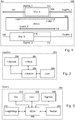
- Station 100 includes an elongated platform 102 which extends along a portion of a first transport path 104 and a second transport path 106 of the system, therebetween.
- the system comprises vehicles suitable for transporting passengers, here a first vehicle 108 and a second vehicle 110. These vehicles are able to cross the station 100 by taking the first track 104, like the first vehicle 108, or the second track 106, like the second vehicle 110.
- first vehicle 108 travels from the right to the left of the figure 1
- second vehicle 110 travels from left to right in this figure.
- one or more sections of the elongated platform 102 are arranged as berths, for the embarkation and / or disembarkation of passengers in vehicles.
- Each berth corresponds to an area of embarkation in one or more vehicles, and / or disembarkation thereof.
- each berth corresponds to a vehicle stop position in station 100.
- a first berth corresponding to a first stop position 112
- a second berth corresponding to a second stop position 114
- the first vehicle 108 is shown here in the first stop position 112, while the second vehicle 110 approaches the second stop position 114.
- Each dock station here comprises a landing door arrangement, consisting of one or more door elements and installed on the dock 102 opposite a respective stop position.
- a first landing door arrangement 116 is located opposite the first stop position 112, while a second landing door arrangement 118 is opposite the second stop position 114.
- Each landing door arrangement can be controlled to toggle between a first state, or open state, where the arrangement allows passenger access, from platform 102, to a vehicle stopped in a respective stop position, and a second state, or closed state, where this arrangement prohibits such access.
- the first landing door arrangement 116 is shown in its open state (dotted line), while the second landing door arrangement 118 is shown in its closed state (solid line).
- It shows an example of an automatic control system for use in vehicles of a cable transport installation, for example the first vehicle 108 and the second vehicle 110 of the figure 1 .
- the vehicle automation 200 comprises an on-board controller 202.
- the vehicle automation 200 here further comprises an unoccupied seat detection module, or FrStDet module 204, connected to the on-board controller 202 and capable of delivering to the latter a representative value.
- the cabin corresponds to the sub-assembly of the vehicle in which the passengers are physically located.
- the cabin can be organized in seating and / or standing places.
- One or more inputs of the FrStDet 204 module can be connected to the output of one or more devices from the group made up of weighing devices installed in the seats, dry contacts arranged in the seats, an optical detector, a camera associated with an image processing circuit and the like.
- the vehicle automation system 200 here again comprises a free area detection module, or FrSpcDet module 206, connected to the on-board controller 202 and capable of delivering to the latter a value representative of an unoccupied area in the cabin.
- a free area detection module or FrSpcDet module 206
- One or more inputs of the FrSpcDet 206 module can be connected to the output of one or more devices of the group formed by an arrangement of optical reflectors distributed on the floor of the cabin and optical detectors distributed on the ceiling of this cabin, of a camera associated with an image processing circuit, a floor mat with distributed contactors, a mat of the capacitive type and the like.
- the vehicle automation 200 also comprises a communication module 208, connected to the on-board controller 202, through which the vehicle automation 200 can communicate with other automation systems, in particular station.
- It shows an example of a control automatism for use in a station of a cable transport installation, such as station 100 of the figure 1 for example.
- the station automation 300 includes a station controller 302.
- the station automation 300 further includes a positioning module 304 for the station vehicles.
- the positioning module 304 is capable of determining the presence of a vehicle in at least some of the embarkation and / or disembarkation zones of the station, where appropriate at the stop positions of the station.
- the positioning module 304 is capable of determining the presence of a vehicle in at least one of the first stop position 112 and the second stop position 114 of the figure 1 .
- the positioning module 304 is for example connected to one or more sensors installed in a respective stop position.
- the station automation system 300 also includes a charging module 306 for the station vehicles.
- the load module 306 is capable of determining a weight value for at least some of the vehicles of the station, in particular when these are are in a respective stop position, as the first vehicle 108 of the figure 1 for example. This weight value is preferably obtained by measurement.
- the load module 306 is for example connected to one or more devices of the load cell type installed on what guides the vehicles along a station track, for example rails.
- Station automation 300 also includes a communication module 308, connected to station controller 302, which allows station automation 300 to communicate with other automation systems, typically vehicle automation systems, such as that described in relation to the figure 2 for example.
- the station automation system 300 also includes a timer module 310 linked to the station controller 302.
- the timer module 310 is capable of delivering to the station controller 302 time measurement values.
- the station automation system 300 finally comprises a management module 312 for arrangements selectively prohibiting boarding from a berth, in particular the access of passengers to a vehicle stopped in a respective stop position, typically arrangements of the station. type of the first landing door arrangement 116 described in connection with figure 1 .
- the management module 312 controls in particular the opening and closing of the arrangements in question.
- the management module 312 can be configured so as to additionally control the opening and / or closing of the doors of a vehicle, at least when this vehicle is located opposite a berth. , in particular in a respective stop position.
- This command can be direct, to the address of an opening device in a station, or indirect, typically via the vehicle automation system.
- FIG. 3 It shows the operation of a station automaton, such as the station automatism 300 of the figure 3 , in a sequence corresponding to stopping a vehicle at a berth of the station, in order to embark / disembark passengers.
- the StpVhclCnd condition can be verified, at least partially, by an on-board automatic device, for example the vehicle automatic system 200 of the figure 2 .
- Information relating to this verification can be transmitted to the station PLC.
- the automaton controls a sub-sequence intended to authorize access to the vehicle to users present on the platform, or boarding, and, conversely, access to the platform to passengers in the cabin, or disembarkation .
- This is typically a door opening sequence, or DrOpnSeq sequence.
- This DrOpnSeq sequence includes a command to open devices preventing access to the vehicle from the platform, in particular landing doors, for example the first landing door arrangement 116 on the platform. figure 1 .
- This DrOpnSeq sequence can also include a vehicle door opening command, directly to an opening device in the station or, indirectly, to the vehicle automation system.
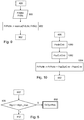
- the automaton begins a time period measurement, for example by controlling a device similar to timer 310 of the figure 3 .
- the start of this measurement is illustrated here by the initialization of a variable t forming a time counter to the value 0 ("zero"), at step 404. This corresponds to the start of a period of embarkation / disembarkation .
- next step 406 it is checked whether the time period elapsed since the start of the measurement in step 404 is greater than or equal to a first time parameter Tn_max.
- the timer 310 can provide the controller in real time with the time that has elapsed since this timer 310 received the measurement command. This condition is illustrated here by the fact that the time counter t is greater than or equal to the first time parameter Tn_max.
- the automaton controls a sequence intended to prohibit boarding / disembarking. This is the end of the embarkation / disembarkation period.
- DrClsSeq This is typically a door closing sequence, or DrClsSeq sequence.
- This DrClsSeq closing sequence generally comprises an audible and / or visual announcement transmission command, as well as a subsequent landing door closing command.
- this DrClsSeq sequence can also include a vehicle door closing command, directly to a closing device in the station or, indirectly, to the vehicle PLC.
- This sequence has a nominal duration, or duration Tcls_nom, which is another time parameter of the installation.
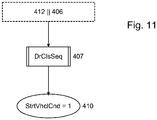
- step 407 follows test 406, the value of the variable TmFrm calculated at step 408 is zero.
- step 408 the automaton implements a time delay whose duration corresponds to the value of the variable TmFrm stored in step 408, which corresponds to step 409.
- this time delay is zero. This is the case when the time elapsed in step 406 is greater than or equal to the first time parameter Tn_max.
- the vehicle stopping sequence can end.
- the vehicle is ready to start again, at least as regards the part of the station automat which controls the berth. This corresponds to the verification of a starting condition, or StrtVhclCnd condition.
- a start order is for example transmitted from the station PLC to the vehicle PLC.
- a time delay corresponding to the first time parameter Tn_max is recognized in the succession of the test of step 406 and of the sequence of step 407.
- the automaton commands the closing sequence of the doors of step 407. And the vehicle is ready to go. leave immediately after this closure, because the duration of the additional delay provided in step 409 is zero in this case.
- This time delay period of duration Tn_max corresponds to an embarkation / disembarkation period for vehicles in station according to a nominal time delay.
- step 406 If the test of step 406 is negative, that is to say in the case where the time elapsed since the end of the opening sequence of step 402 is less than the value of the first time parameter Tn_max, then the automaton checks a condition relating to a quantity representative of an occupation of the vehicle, or condition VhclOccCnd.
- the magnitude relates to a measurement made on the vehicle. For example, this condition relates to a comparison of an occupancy measurement with a threshold value.
- step 412 the automaton checks that the time period elapsed since the end of the opening sequence of step 402 is greater than a second time parameter Tn_min.
- the value of this second time parameter Tn_min is less than the value of the first time parameter Tn_max. This is represented by step 412, in which it is checked whether the time counter t is greater than the value of the second time parameter Tn_min.
- the automaton goes to step 407, where it controls the end of the embarkation / disembarkation period, then to the following step 408.
- the value stored in the variable TmFrm corresponds to the difference between the second time parameter Tn_max and the time elapsed since the end of the opening sequence of step 402.
- This value TmFrm then corresponds to a time advance with respect to a time delay period whose duration corresponds to the first time parameter Tn_max, advance from which is deduced, where appropriate, a delay in the DrClsSeq sequence with respect to the nominal duration Tcls_nom of this sequence.
- step 407 the automatic device triggers a prohibition of access to the vehicle, in advance with respect to the first time parameter Tn_max.
- This early triggering results from the evaluation of the condition VhclOccCnd relating to a quantity representative of the occupancy of the vehicle.
- the automaton implements a time delay whose duration corresponds to the value TmFrm, that is to say the advance with respect to the first time parameter Tn_max, After deduction of any delay in the execution of the DrClsSeq sequence.
- the time elapsed since the opening of the doors, at the end of the sequence 402 corresponds to the first time parameter Tn_max, to which is added the nominal duration of the DrClsSeq sequence.
- Tn_max the first time parameter
- DrClsSeq the closing sequence DrClsSeq of step 407. The controller then proceeds to step 410.
- step 414 a time delay is carried out for a period dt before returning to the test of step 406.
- the delay time dt of step 414 corresponds to a time increment. This duration dt can be very short, or even negligible, compared to the values of the first time parameter Tn_max and of the second time parameter Tn_min. This allows the sequence of the figure 4 practically in real time.
- step 411 In the case where the test of step 411 is negative, that is to say if the condition of occupancy of the vehicle is not met, then the automaton returns to the time delay of step 414.
- a time delay corresponding to the second time parameter Tn_min is recognized in the succession of the test of step 412 and of the sequence of step 414. Before the expiration of this time delay, the PLC does not control the closing sequence of the doors of step 407. Everything works so that the PLC reacts to the evaluation of the VhclOccCnd condition after expiration of a minimum period. access to the vehicle, started at the end of step 402, and the duration of which corresponds to the second time parameter Tn_min.
- the second time parameter Tn_min corresponds to a minimum time during which access to the vehicle is authorized for boarding / disembarking.
- the first parameter temporal Tn_max corresponds to a maximum time during which access to the vehicle is authorized for boarding / disembarking.
- the values of the first time parameter Tn_max and of the second time parameter Tn_min, as well as of the additional parameter Tcls_nom, are determined as nominal operating times.
- a value of the first time parameter Tn_max is typically of the order of a few tens of seconds, for example between 12 and 40 seconds.
- a value of the second time parameter Tn_min is typically of the order of ten seconds, for example between 5 and 15 seconds.
- a value of the additional time parameter Tcls_nom is typically of the order of a few seconds, for example between 1 and 3 seconds.
- the advance TmFrm with respect to the nominal duration of opening of the doors Tn_max, with which the closing sequence of step 407 is controlled, is used here in the timing step 409.
- the vehicle starting condition StrtVhclCnd of step 410 is only verified after the expiration of a time delay whose duration corresponds to the first time parameter Tn_max, to which is added the duration of the sequence DrClsSeq, which the sequence for closing the doors of step 407 may or may not have been ordered in advance, ie before the expiration of a period corresponding to the first time parameter Tn_max.
- TmFrm advance
- a typical operational hazard relates to an inability to close the doors due to their blocking by a passenger. This type of hazard, like others, occurs especially in the event of heavy crowds. In case of crowds, the doors are closed early.
- the nominal timing is all the more reliably respected as the timing step 409 offers an operating time margin, which makes it possible to absorb the delays associated with these operating hazards without consequence on the timing of the vehicles of the installation. .
- step 411 of the figure 4 relating to the verification of a condition of occupancy of the vehicle.
- step 500 which follows step 406, the automaton determines a value representative of a number of places available in the cabin of the vehicle, or value FrPlcNr. Instead, it could be a rate.
- the automaton compares the value FrPlcNr with a threshold value FrPlcNr_thr. If the value FrPlcNr is less than the threshold value FrPlcNr_thr, then we go to the next step 412. The PLC will be able to control the sequence of closing the doors of step 407 then record the time advance TmFrm on the nominal value Tn_max in step 408. Otherwise, the automaton delays for a time period dt, in step 414.
- the automaton controls the sequence for closing the doors as soon as the number of places available in the car is below a threshold value FrPlcNr_thr of available places, provided that access to the vehicle has been authorized beyond 'a minimum operating period defined by the value of the second time parameter Tn_min (condition of step 412). This amounts to anticipating the closing of the doors with respect to the embarkation / disembarkation period, or maximum operating time, corresponding to the value of the first time parameter Tn_max.
- step 411 of the figure 4 relating to the verification of a condition of occupancy of the vehicle.
- step 600 which follows step 406, the automaton obtains a measurement value, representative of a current weight of the cabin of the vehicle, or of the vehicle itself. This value can be obtained from a module analogous to the load module 306 on the figure 3 .
- the automaton compares this measured weight value with a threshold weight value Wght_thr. If the weight of the car is greater than the threshold value Wght_thr, then we go to the next step 412. The PLC will be able to control the sequence of closing the doors of step 407 then record the advance TmFrm at the step 408. Otherwise, the automaton delays by a time period dt, in step 414.
- the automaton commands the closing of the doors as soon as a weight of the car Wght greater than a threshold weight value Wght_thr is measured, provided that access to the car has been authorized beyond the minimum duration d 'operation defined by the value of the second time parameter Tn_min (condition of step 412).
- This threshold value Wght_thr of the weight is determined as an operating threshold, rather than a safety threshold.
- this threshold value Wght_thr is determined so as to take into account the regularity of the timing of the vehicles of the installation and the comfort of the passengers, rather than as a limit value of the safety type, linked for example to a maximum authorized weight for a vehicle.
- This threshold value Wght_thr can be related to a number of passengers, for example by considering an average weight per passenger.
- Steps 700 and 702 are analogous to steps 500 and 502 of figure 5 , with the exception that, when the value of the number of free places FrPlcNr is greater than the threshold value FrPlcNr_thr, the automaton implements steps 704 and 706 respectively analogous to steps 600 and 602 of the figure 6 .
- the automaton controls the sequence for closing the doors of step 407 as soon as the number of places available in the car is less than the threshold value FrPlcNr_thr or the weight of this car exceeds the threshold value Wght_thr, at condition, to each time, that the duration of opening of these doors has exceeded a minimum duration Tn_min (condition of step 412).
- step 602 in the case where the weight of the cabin is greater than the threshold value Wght_thr, the automaton compares the value of the weight of the vehicle with a value of maximum weight, or value Wght_max, during a step 800. If the measured weight is less than the maximum weight Wght_max, then the automaton controls the sequence for closing the doors of step 407 and records an advance value TmFrm at step 408, in the case where the condition of step 412 is verified.
- the automaton commands a sequence for blocking the doors in the open position in step 802.
- This sequence can in particular include a command to send a safety signal or an invitation to the last passengers on board to disembark.
- the door closing sequence is not triggered as long as the quantity representative of the occupancy of the vehicle, here the weight of the cabin, is greater than a limit value, greater than the threshold value.
- the maximum weight value Wght_max is a safe limit value, set in itself based on vehicle capacity, rather than operating. For example, it is set by standards. This value can be deduced from a number of seats and a floor area of the cabin, considering a minimum authorized area per passenger and an average passenger weight.
- the threshold weight value Wght_thr and the maximum weight value Wght_max are determined in relation to one another in order to prevent the sequence of locking the doors from being controlled. step 802, at least under normal operating conditions. It is a question of not penalizing the timing of the vehicles, and, finally, the efficiency of the operation of the installation and the availability of the latter.
- vehicle represented by the threshold weight Wght_thr and maximum weight Wght_max values are determined in relation to each other so that the operation of the installation is smooth, efficient, robust and safe.
- the values of the parameters FrPlcNr_thr and of threshold weight Wght_thr correspond to threshold values of occupancy of the vehicle.
- step 500 of the figure 5 it details a first realization of step 500 of the figure 5 , in which the automaton determines a number of places available in the vehicle.
- the automaton receives a value representative of a number of unoccupied seats in the cabin, or value FrStNr, and a value representative of a free floor area in this cabin, or value FrSfc.
- values can come from the vehicle automaton, for example from the FrStDet 204 and FrSpcDet 206 modules respectively.
- the automaton determines the value FrPlcNr as the result of calling an estimation function with these values.
- step 900 The values of step 900 are received each time the occupation condition VhclOccCnd is evaluated in step 411, regularly, at the end of each time delay of duration dt (step 414). These values can be measured regularly, with a time interval consistent with the timing of step 414. In practice, these values are thus obtained in real time, at least over a period of time corresponding to an open state of the doors, between the end of step 402 and the start of step 407.
- step 500 of the figure 5 it details a second realization of step 500 of the figure 5 , in which the automaton determines a number of places available in the vehicle.
- the PLC has previously received a value FrPlcNr relating to the number of places available before the door opening sequence of step 402. This value is for example calculated by the vehicle PLC using the modules FrStDet 204 and FrSpcDet 206.
- step 1000 which follows step 406, the automaton interrogates a first counter relating to the number of passengers on board since the opening of the doors.
- the automaton interrogates a second counter, relating to the number of passengers disembarked since the opening of the doors.
- the automaton determines the value FrPlcNr as the difference between the sum of the initial value FrPlcNr and the number of disembarked passengers, and the number of embarked passengers.
- this value FrPlcNr comes from a single measurement, or an estimate.
- step 410 shows a variant of the operation of the station controller illustrated in figure 4 .
- the starting condition of step 410 is verified, at least with regard to the station automaton which controls the docking station, from the end of the access prohibition sequence of step 407. , whether this sequence has been triggered in advance with respect to the first time parameter Tn_max (following step 412) or not (following step 406).
- This variant is more particularly suitable in the case of an installation where compliance with the timing of the vehicles is managed other than by the station automaton, or the part of this automaton which controls the dock station.
- This variant of operation retains the advantages drawn from an early triggering of the prohibition of access to the vehicle, in particular the provision of a time window making it possible to absorb at least part of a delay linked to a hazard. operating.
Landscapes
- Engineering & Computer Science (AREA)
- Transportation (AREA)
- Mechanical Engineering (AREA)
- Physics & Mathematics (AREA)
- General Physics & Mathematics (AREA)
- Multimedia (AREA)
- Theoretical Computer Science (AREA)
- Power-Operated Mechanisms For Wings (AREA)
- Train Traffic Observation, Control, And Security (AREA)
- Electric Propulsion And Braking For Vehicles (AREA)
Claims (19)
- Vorrichtung zur Steuerung einer Seilförderanlage, umfassend mindestens eine Kontrolleinrichtung, die fähig ist, einen Verladungszeitraum (Tn_max) mit einer Nenndauer für Fahrzeuge (108, 110) in einer Station (100) zu organisieren, wobei dieser Verladungszeitraum (Tn_max) durch ein Fahrzeugzugangsverbot (407) beendet wird,
wobei die Kontrolleinrichtung einen Eingang umfasst, um mindestens eine Größe (FrPlcNr, Wght) zu empfangen, die bezeichnend ist für eine Fahrzeugbelegung, dadurch gekennzeichnet, dass die Kontrolleinrichtung angeordnet ist, um auf den Empfang einer solchen Größe (FrPlcNr, Wght) während des Verladungszeitraums (Tn_max) zu reagieren, indem sie mit einem Schwellenwert (FrPlcNr_thr, Wght_thr) verglichen wird und indem das Fahrzeugzugangsverbot (407) antizipiert, vor dem Ende des Verladungszeitraums (Tn_max), ausgelöst wird, in Abhängigkeit von dem Ergebnis des Vergleichs zwischen der Größe (FrPlcNr, Wght) und dem Schwellenwert (FrPlcNr_thr, Wght_thr). - Vorrichtung nach Anspruch 1, wobei die Kontrolleinrichtung angeordnet ist, um auf den Empfang der Größe (FrPlcNr, Wght) zu reagieren, nachdem ein Mindestzeitraum (Tn_min) für den Zugang zum Fahrzeug (108, 110) abgelaufen ist.
- Vorrichtung nach einem der Ansprüche 1 und 2, wobei die Größe (FrPlcNr, Wght) in Echtzeit empfangen wird.
- Vorrichtung nach einem der vorstehenden Ansprüche, wobei die Größe (FrPlcNr, Wght) mindestens teilweise aus einer Messung (FrStNr, FrSfc, Wght) hervorgeht, die an dem Fahrzeug (108, 110) durchgeführt wird.
- Vorrichtung nach einem der vorstehenden Ansprüche, wobei die Größe (FrPlcNr, Wght), die bezeichnend ist für die Fahrzeugbelegung, eine Größe umfasst, die bezeichnend (FrPlcNr) ist für eine Anzahl von freien oder belegten Plätzen in dem Fahrzeug (108, 110) .
- Vorrichtung nach Anspruch 5, wobei die Größe, die bezeichnend (FrPlcNr) ist für die Anzahl von freien oder belegten Plätzen in dem Fahrzeug, aus mindestens einem hervorgeht von einer Messung einer jeweils freien oder belegten Oberfläche (FrSfc) in dem Fahrzeug (108, 110) und von einer Erkennung von jeweils freien oder belegten Sitzen (FrStNr) in disem Fahrzeug (108, 110).
- Vorrichtung nach Anspruch 6, wobei die Messung der freien oder belegten Oberfläche (FrSfc) aus einer oder mehreren Vorrichtungen der Gruppe hervorgeht, die gebildet wird von einer Anordnung optischer Reflektoren, die auf dem Boden des Fahrzeugs verteilt sind, und optischer Detektoren, die an der Decke dieses Fahrzeugs verteilt sind, von einer Bildaufnahmevorrichtung, die mit einer Bildverarbeitungsschaltung verbunden ist, von einer Bodenmatte mit verteilten Kontaktgebern, von einer Matte kapazitiver Art und Ähnlichen.
- Vorrichtung nach einem der Ansprüche 6 und 7, wobei die Erkennung von freien oder belegten Sitzen (FrStNr) in dem Fahrzeug (108, 110) aus einer oder mehreren Vorrichtungen der Gruppe hervorgeht, die gebildet wird von Wiegevorrichtungen, die in den Sitzen installiert sind, von potenzialfreien Kontakten, die in den Sitzen angeordnet sind, von einem optischen Detektor, von einer Bildaufnahmevorrichtung, die mit einer Bildverarbeitungsschaltung verbunden ist, und Ähnlichen.
- Vorrichtung nach einem der vorstehenden Ansprüche, wobei die Größe (FrPlcNr, Wght), die bezeichnend ist für die Fahrzeugbelegung, eine Größe umfasst, die bezeichnend (Wght) ist für ein Gewicht des Fahrzeugs.
- Vorrichtung nach einem der vorstehenden Ansprüche, wobei der Schwellenwert (FrPlcNr_thr, Wght_thr) einem Schwellenwert der Fahrzeugbelegung entspricht.
- Vorrichtung nach einem der vorstehenden Ansprüche, wobei der Schwellenwert (FrPlcNr_thr, Wght_thr) mindestens teilweise in Abhängigkeit von einem Sicherheitsgrenzwert (Wght_max) bestimmt wird.
- Vorrichtung nach einem der vorstehenden Ansprüche, wobei der Verladungszeitraum (Tn_max) gemäß einem ersten Timeout erfolgt und, wenn die Kontrolleinrichtung ein Zugangsverbot (407) vor (TmFrm) dem ersten Timeout auslöst, der Automat eine Timeout-Frist mit einer bestimmten Dauer nach diesem Zugangsverbot (408) organisiert, wobei die Dauer der Timeout-Frist in Abhängigkeit von diesem Vorsprung (TmFrm) bestimmt wird.
- Vorrichtung nach Anspruch 12, wobei die Dauer der Timeout-Frist dem Vorsprung (TmFrm) entspricht, von dem gegebenenfalls eine Verzögerung im Zugangsverbot (407) abgezogen wird.
- Vorrichtung nach einem der Ansprüche 12 und 13, dadurch gekennzeichnet, dass nach der Timeout-Frist der Automat prüft, ob eine Ausgangsbedingung (StrtVhclCnd) erfüllt ist und vorzugsweise einen Startbefehl erzeugt.
- Vorrichtung nach einem der vorstehenden Ansprüche, wobei die Größe (Wght), die bezeichnend ist für die Fahrzeugbelegung, einen Belegungswert umfasst, und die Kontrolleinrichtung angeordnet ist, um das Fahrzeugzugangsverbot (407) auszulösen, wenn der Belegungswert größer ist als der Schwellenwert (Wght_thr).
- Vorrichtung nach einem der vorstehenden Ansprüche, wobei die Größe (FrPlcNr), die bezeichnend ist für die Fahrzeugbelegung, einen Leerbestandswert umfasst, und die Kontrolleinrichtung angeordnet ist, um das Fahrzeugzugangsverbot (407) auszulösen, wenn der Leerbestandswert kleiner ist als der Schwellenwert (FrPlcNr_thr).
- Vorrichtung nach einem der vorstehenden Ansprüche, wobei die Kontrolleinrichtung angeordnet ist, um das Fahrzeugzugangsverbot (408) nicht auszulösen, solange die Größe (FrPlcNr, Wght), die bezeichnend ist für die Fahrzeugbelegung, größer ist als ein Höchstwert der Fahrzeugbelegung (Wght_max), der größer ist als der Schwellenwert (FrPlcNr_thr, Wght_thr).
- Seilförderanlage von der Art, die Fahrzeuge (108, 110) und mindestens eine Station (100) umfasst, wobei die Anlage ferner eine Vorrichtung zur Steuerung nach einem der vorstehenden Ansprüche umfasst.
- Verfahren zur Steuerung einer Seilförderanlage, wobei ein Verladungszeitraum (Tn_max) mit einer Nenndauer für Fahrzeuge (108, 110) in einer Station (100) organisiert wird, wobei dieser Verladungszeitraum (Tn_max) mit einem Fahrzeugzugangsverbot endet, wobei das Verfahren den folgenden Schritt umfasst:- Empfangen mindestens einer Größe (FrPlcNr, Wght), die bezeichnend ist für eine Fahrzeugbelegung,dadurch gekennzeichnet, dass das Verfahren ferner den folgenden Schritt umfasst:- Reagieren auf den Empfang einer solchen Größe während des Verladungszeitraums (Tn_max), indem sie mit einem Schwellenwert (FrPlcNr_thr, Wght_thr) verglichen wird und indem das Fahrzeugzugangsverbot antizipiert, vor dem Ende des Verladungszeitraums (Tn_max), ausgelöst (407) wird, in Abhängigkeit von dem Ergebnis des Vergleichs zwischen der Größe (FrPlcNr, Wght) und dem Schwellenwert (FrPlcNr_thr, Wght_thr).
Priority Applications (5)
| Application Number | Priority Date | Filing Date | Title |
|---|---|---|---|
| ES18205793T ES2871807T3 (es) | 2018-11-12 | 2018-11-12 | Dispositivo de regulación del embarque en una instalación de transporte por cable |
| EP18205793.5A EP3650299B1 (de) | 2018-11-12 | 2018-11-12 | Reguliervorrichtung der beladung einer luftseilförderanlage |
| US17/292,115 US12403939B2 (en) | 2018-11-12 | 2019-11-07 | Device for controlling the embarking in a cable transport facility |
| CA3118660A CA3118660A1 (fr) | 2018-11-12 | 2019-11-07 | Dispositif de regulation de l'embarquement dans une installation de transport par cable |
| PCT/EP2019/080601 WO2020099244A1 (fr) | 2018-11-12 | 2019-11-07 | Dispositif de regulation de l'embarquement dans une installation de transport par cable |
Applications Claiming Priority (1)
| Application Number | Priority Date | Filing Date | Title |
|---|---|---|---|
| EP18205793.5A EP3650299B1 (de) | 2018-11-12 | 2018-11-12 | Reguliervorrichtung der beladung einer luftseilförderanlage |
Publications (2)
| Publication Number | Publication Date |
|---|---|
| EP3650299A1 EP3650299A1 (de) | 2020-05-13 |
| EP3650299B1 true EP3650299B1 (de) | 2021-02-17 |
Family
ID=64308550
Family Applications (1)
| Application Number | Title | Priority Date | Filing Date |
|---|---|---|---|
| EP18205793.5A Active EP3650299B1 (de) | 2018-11-12 | 2018-11-12 | Reguliervorrichtung der beladung einer luftseilförderanlage |
Country Status (5)
| Country | Link |
|---|---|
| US (1) | US12403939B2 (de) |
| EP (1) | EP3650299B1 (de) |
| CA (1) | CA3118660A1 (de) |
| ES (1) | ES2871807T3 (de) |
| WO (1) | WO2020099244A1 (de) |
Families Citing this family (1)
| Publication number | Priority date | Publication date | Assignee | Title |
|---|---|---|---|---|
| US10384078B2 (en) | 2013-10-15 | 2019-08-20 | Ip Liberty Vision Corporation | Polymeric radiation-sources |
Family Cites Families (15)
| Publication number | Priority date | Publication date | Assignee | Title |
|---|---|---|---|---|
| US5176082A (en) * | 1991-04-18 | 1993-01-05 | Chun Joong H | Subway passenger loading control system |
| JPH0558276A (ja) * | 1991-08-27 | 1993-03-09 | Nippon Cable Co Ltd | 索道の乗車ゾーンにおける乗客入場規制装置 |
| JPH06234363A (ja) * | 1991-12-02 | 1994-08-23 | Nippon Cable Co Ltd | 索道のプラットホームのホームドア装置 |
| US6035757A (en) * | 1997-12-15 | 2000-03-14 | Caluori; Raymond | Rotary saw cut alignment device |
| AR018972A1 (es) * | 2000-01-13 | 2001-12-12 | Serrano Jorge | DISPOSICIoN AUToNOMA DE TRANSPORTE Y VEHíCULO AUToNOMO DE TRANSPORTE. |
| ES2237743T3 (es) * | 2002-07-16 | 2005-08-01 | Innova Patent Gmbh | Sistema funicular con un cable de soporte y transporte y con medios funcionales para el transporte acoplables formados por cabinas y por telesillas. |
| JP2009122863A (ja) * | 2007-11-13 | 2009-06-04 | Nippon Cable Co Ltd | ゴンドラリフトの搬器の乗客数表示装置 |
| ES2878131T3 (es) * | 2009-07-08 | 2021-11-18 | Ropetrans Ag | Instalación de teleférico con medios de transporte para el transporte de personas y/o mercancías |
| US8573133B2 (en) * | 2009-09-22 | 2013-11-05 | Pomagalski | Passenger transport installation comprising independent vehicles travelling on tracks and hauled by cables, and method for transporting passengers |
| FR2953476B1 (fr) * | 2009-12-03 | 2015-04-24 | Denis Creissels Consultant | Telepherique avec controle du nombre admissible de passagers en cabine |
| EP2924663B1 (de) * | 2014-03-26 | 2019-10-23 | Airbus Operations GmbH | Automatische Personenzählung an Bord eines Flugzeugs |
| DE102014215857A1 (de) * | 2014-08-11 | 2016-02-11 | Init Innovative Informatikanwendungen In Transport-, Verkehrs- Und Leitsystemen Gmbh | Verfahren zum Leiten der Fahrgäste öffentlicher Verkehrsmittel |
| EP3009993B1 (de) | 2014-10-14 | 2018-12-19 | Skidata Ag | Verfahren und System zur Erhöhung der Sicherheit im Einsteigebereich und zur Optimierung der Ausnutzung der Kapazität bei Transportmitteln, welche zumindest einen örtlich festgelegten Einsteigebereich aufweisen |
| AT516582B1 (de) * | 2014-11-20 | 2020-12-15 | Innova Patent Gmbh | Seilbahnanlage |
| US11157839B2 (en) * | 2018-11-27 | 2021-10-26 | International Business Machines Corporation | Distribution management for public transit vehicles |
-
2018
- 2018-11-12 ES ES18205793T patent/ES2871807T3/es active Active
- 2018-11-12 EP EP18205793.5A patent/EP3650299B1/de active Active
-
2019
- 2019-11-07 US US17/292,115 patent/US12403939B2/en active Active
- 2019-11-07 WO PCT/EP2019/080601 patent/WO2020099244A1/fr not_active Ceased
- 2019-11-07 CA CA3118660A patent/CA3118660A1/fr active Pending
Non-Patent Citations (1)
| Title |
|---|
| None * |
Also Published As
| Publication number | Publication date |
|---|---|
| EP3650299A1 (de) | 2020-05-13 |
| US12403939B2 (en) | 2025-09-02 |
| CA3118660A1 (fr) | 2020-05-22 |
| US20220055667A1 (en) | 2022-02-24 |
| WO2020099244A1 (fr) | 2020-05-22 |
| ES2871807T3 (es) | 2021-11-02 |
Similar Documents
| Publication | Publication Date | Title |
|---|---|---|
| EP2507106B1 (de) | Luftseilbahn mit überwachung der zulässigen passagierzahl in der kabine | |
| EP1403163B1 (de) | Regelverfahren für ein Transportsystem | |
| EP2550420A1 (de) | Sicherheitsvorrichtung zum schliessen und öffnen einer tür | |
| EP2778014B1 (de) | Verfahren zur Steuerung des Verkehrs auf einer automatischen Metrolinie und entsprechendes System | |
| EP3650299B1 (de) | Reguliervorrichtung der beladung einer luftseilförderanlage | |
| WO2017006006A1 (fr) | Procédé et système de gestion du trafic d'une ligne de véhicules circulant entre plusieurs stations d'arrêt | |
| FR3040371A1 (fr) | Procede et dispositif de determination automatique d'un etat de piste. | |
| CA2856062C (fr) | Vehicule de remontee mecanique | |
| FR2991649A1 (fr) | Methode de controle de securite pour telesiege | |
| EP1089904B1 (de) | Sessellift mit verbessertem einstieg | |
| FR2825337A1 (fr) | Systeme de transport automatique et guide de personnes et procede de commande de modules de transport circulant dans un tel systeme | |
| RU2789928C2 (ru) | Устройство регулирования посадки на канатную транспортную установку | |
| FR2752803A1 (fr) | Procede d'augmentation du debit horaire de personnes empruntant des vehicules transportes par cable et installation pour sa mise en oeuvre | |
| EP4164933A1 (de) | Verfahren und vorrichtung zur steuerung eines kabeltransportsystems und system mit solch einer steuerungsvorrichtung | |
| EP4467412A1 (de) | Autonome anlage zum transport von fahrzeugen durch ein kontinuierlich bewegtes kabel | |
| EP1980466B1 (de) | Verfahren zur Kontrolle einer Seilbahnanlage und Anlage zur Umsetzung dieses Verfahrens | |
| FR2898321A1 (fr) | Installation de transport par cable aerien | |
| FR2663599A1 (fr) | Systeme de transport automatique et rapide a trafic optimise. | |
| EP4417482A1 (de) | Fahrzeug mit hebevorrichtung und verfahren dafür | |
| EP2610204A2 (de) | Bewegungskontrolle einer Aufzugskabine | |
| FR3126114A1 (fr) | Système de contrôle de fermeture de portes | |
| EP3225499B1 (de) | Verfahren zur steuerung des verkehrs von fahrzeugen auf einem schienennetz, entsprechendes steuerungssystem und entsprechende schienenanlage | |
| FR3146642A1 (fr) | Procédé et dispositif de contrôle pour mettre en sécurité un véhicule autonome | |
| WO2026037924A1 (fr) | Système de transport automatique | |
| WO2025215568A1 (en) | System and method of controlling a ropeway and a ropeway transportation system |
Legal Events
| Date | Code | Title | Description |
|---|---|---|---|
| STAA | Information on the status of an ep patent application or granted ep patent |
Free format text: STATUS: EXAMINATION IS IN PROGRESS |
|
| PUAI | Public reference made under article 153(3) epc to a published international application that has entered the european phase |
Free format text: ORIGINAL CODE: 0009012 |
|
| 17P | Request for examination filed |
Effective date: 20181112 |
|
| AK | Designated contracting states |
Kind code of ref document: A1 Designated state(s): AL AT BE BG CH CY CZ DE DK EE ES FI FR GB GR HR HU IE IS IT LI LT LU LV MC MK MT NL NO PL PT RO RS SE SI SK SM TR |
|
| AX | Request for extension of the european patent |
Extension state: BA ME |
|
| GRAJ | Information related to disapproval of communication of intention to grant by the applicant or resumption of examination proceedings by the epo deleted |
Free format text: ORIGINAL CODE: EPIDOSDIGR1 |
|
| GRAP | Despatch of communication of intention to grant a patent |
Free format text: ORIGINAL CODE: EPIDOSNIGR1 |
|
| STAA | Information on the status of an ep patent application or granted ep patent |
Free format text: STATUS: GRANT OF PATENT IS INTENDED |
|
| GRAP | Despatch of communication of intention to grant a patent |
Free format text: ORIGINAL CODE: EPIDOSNIGR1 |
|
| INTG | Intention to grant announced |
Effective date: 20200826 |
|
| INTG | Intention to grant announced |
Effective date: 20200901 |
|
| GRAS | Grant fee paid |
Free format text: ORIGINAL CODE: EPIDOSNIGR3 |
|
| GRAA | (expected) grant |
Free format text: ORIGINAL CODE: 0009210 |
|
| STAA | Information on the status of an ep patent application or granted ep patent |
Free format text: STATUS: THE PATENT HAS BEEN GRANTED |
|
| AK | Designated contracting states |
Kind code of ref document: B1 Designated state(s): AL AT BE BG CH CY CZ DE DK EE ES FI FR GB GR HR HU IE IS IT LI LT LU LV MC MK MT NL NO PL PT RO RS SE SI SK SM TR |
|
| REG | Reference to a national code |
Ref country code: GB Ref legal event code: FG4D Free format text: NOT ENGLISH |
|
| REG | Reference to a national code |
Ref country code: CH Ref legal event code: EP |
|
| REG | Reference to a national code |
Ref country code: DE Ref legal event code: R096 Ref document number: 602018012598 Country of ref document: DE |
|
| REG | Reference to a national code |
Ref country code: AT Ref legal event code: REF Ref document number: 1361101 Country of ref document: AT Kind code of ref document: T Effective date: 20210315 |
|
| REG | Reference to a national code |
Ref country code: IE Ref legal event code: FG4D Free format text: LANGUAGE OF EP DOCUMENT: FRENCH |
|
| REG | Reference to a national code |
Ref country code: LT Ref legal event code: MG9D |
|
| REG | Reference to a national code |
Ref country code: NL Ref legal event code: MP Effective date: 20210217 |
|
| PG25 | Lapsed in a contracting state [announced via postgrant information from national office to epo] |
Ref country code: BG Free format text: LAPSE BECAUSE OF FAILURE TO SUBMIT A TRANSLATION OF THE DESCRIPTION OR TO PAY THE FEE WITHIN THE PRESCRIBED TIME-LIMIT Effective date: 20210517 Ref country code: FI Free format text: LAPSE BECAUSE OF FAILURE TO SUBMIT A TRANSLATION OF THE DESCRIPTION OR TO PAY THE FEE WITHIN THE PRESCRIBED TIME-LIMIT Effective date: 20210217 Ref country code: GR Free format text: LAPSE BECAUSE OF FAILURE TO SUBMIT A TRANSLATION OF THE DESCRIPTION OR TO PAY THE FEE WITHIN THE PRESCRIBED TIME-LIMIT Effective date: 20210518 Ref country code: HR Free format text: LAPSE BECAUSE OF FAILURE TO SUBMIT A TRANSLATION OF THE DESCRIPTION OR TO PAY THE FEE WITHIN THE PRESCRIBED TIME-LIMIT Effective date: 20210217 Ref country code: NO Free format text: LAPSE BECAUSE OF FAILURE TO SUBMIT A TRANSLATION OF THE DESCRIPTION OR TO PAY THE FEE WITHIN THE PRESCRIBED TIME-LIMIT Effective date: 20210517 Ref country code: PT Free format text: LAPSE BECAUSE OF FAILURE TO SUBMIT A TRANSLATION OF THE DESCRIPTION OR TO PAY THE FEE WITHIN THE PRESCRIBED TIME-LIMIT Effective date: 20210617 Ref country code: LT Free format text: LAPSE BECAUSE OF FAILURE TO SUBMIT A TRANSLATION OF THE DESCRIPTION OR TO PAY THE FEE WITHIN THE PRESCRIBED TIME-LIMIT Effective date: 20210217 |
|
| PG25 | Lapsed in a contracting state [announced via postgrant information from national office to epo] |
Ref country code: NL Free format text: LAPSE BECAUSE OF FAILURE TO SUBMIT A TRANSLATION OF THE DESCRIPTION OR TO PAY THE FEE WITHIN THE PRESCRIBED TIME-LIMIT Effective date: 20210217 Ref country code: PL Free format text: LAPSE BECAUSE OF FAILURE TO SUBMIT A TRANSLATION OF THE DESCRIPTION OR TO PAY THE FEE WITHIN THE PRESCRIBED TIME-LIMIT Effective date: 20210217 Ref country code: RS Free format text: LAPSE BECAUSE OF FAILURE TO SUBMIT A TRANSLATION OF THE DESCRIPTION OR TO PAY THE FEE WITHIN THE PRESCRIBED TIME-LIMIT Effective date: 20210217 Ref country code: LV Free format text: LAPSE BECAUSE OF FAILURE TO SUBMIT A TRANSLATION OF THE DESCRIPTION OR TO PAY THE FEE WITHIN THE PRESCRIBED TIME-LIMIT Effective date: 20210217 Ref country code: SE Free format text: LAPSE BECAUSE OF FAILURE TO SUBMIT A TRANSLATION OF THE DESCRIPTION OR TO PAY THE FEE WITHIN THE PRESCRIBED TIME-LIMIT Effective date: 20210217 |
|
| PG25 | Lapsed in a contracting state [announced via postgrant information from national office to epo] |
Ref country code: IS Free format text: LAPSE BECAUSE OF FAILURE TO SUBMIT A TRANSLATION OF THE DESCRIPTION OR TO PAY THE FEE WITHIN THE PRESCRIBED TIME-LIMIT Effective date: 20210617 |
|
| PG25 | Lapsed in a contracting state [announced via postgrant information from national office to epo] |
Ref country code: SM Free format text: LAPSE BECAUSE OF FAILURE TO SUBMIT A TRANSLATION OF THE DESCRIPTION OR TO PAY THE FEE WITHIN THE PRESCRIBED TIME-LIMIT Effective date: 20210217 Ref country code: CZ Free format text: LAPSE BECAUSE OF FAILURE TO SUBMIT A TRANSLATION OF THE DESCRIPTION OR TO PAY THE FEE WITHIN THE PRESCRIBED TIME-LIMIT Effective date: 20210217 Ref country code: EE Free format text: LAPSE BECAUSE OF FAILURE TO SUBMIT A TRANSLATION OF THE DESCRIPTION OR TO PAY THE FEE WITHIN THE PRESCRIBED TIME-LIMIT Effective date: 20210217 |
|
| REG | Reference to a national code |
Ref country code: ES Ref legal event code: FG2A Ref document number: 2871807 Country of ref document: ES Kind code of ref document: T3 Effective date: 20211102 |
|
| REG | Reference to a national code |
Ref country code: DE Ref legal event code: R097 Ref document number: 602018012598 Country of ref document: DE |
|
| PG25 | Lapsed in a contracting state [announced via postgrant information from national office to epo] |
Ref country code: DK Free format text: LAPSE BECAUSE OF FAILURE TO SUBMIT A TRANSLATION OF THE DESCRIPTION OR TO PAY THE FEE WITHIN THE PRESCRIBED TIME-LIMIT Effective date: 20210217 Ref country code: RO Free format text: LAPSE BECAUSE OF FAILURE TO SUBMIT A TRANSLATION OF THE DESCRIPTION OR TO PAY THE FEE WITHIN THE PRESCRIBED TIME-LIMIT Effective date: 20210217 Ref country code: SK Free format text: LAPSE BECAUSE OF FAILURE TO SUBMIT A TRANSLATION OF THE DESCRIPTION OR TO PAY THE FEE WITHIN THE PRESCRIBED TIME-LIMIT Effective date: 20210217 |
|
| PLBE | No opposition filed within time limit |
Free format text: ORIGINAL CODE: 0009261 |
|
| STAA | Information on the status of an ep patent application or granted ep patent |
Free format text: STATUS: NO OPPOSITION FILED WITHIN TIME LIMIT |
|
| 26N | No opposition filed |
Effective date: 20211118 |
|
| PG25 | Lapsed in a contracting state [announced via postgrant information from national office to epo] |
Ref country code: AL Free format text: LAPSE BECAUSE OF FAILURE TO SUBMIT A TRANSLATION OF THE DESCRIPTION OR TO PAY THE FEE WITHIN THE PRESCRIBED TIME-LIMIT Effective date: 20210217 |
|
| PG25 | Lapsed in a contracting state [announced via postgrant information from national office to epo] |
Ref country code: IS Free format text: LAPSE BECAUSE OF FAILURE TO SUBMIT A TRANSLATION OF THE DESCRIPTION OR TO PAY THE FEE WITHIN THE PRESCRIBED TIME-LIMIT Effective date: 20210617 |
|
| PG25 | Lapsed in a contracting state [announced via postgrant information from national office to epo] |
Ref country code: MC Free format text: LAPSE BECAUSE OF FAILURE TO SUBMIT A TRANSLATION OF THE DESCRIPTION OR TO PAY THE FEE WITHIN THE PRESCRIBED TIME-LIMIT Effective date: 20210217 |
|
| PG25 | Lapsed in a contracting state [announced via postgrant information from national office to epo] |
Ref country code: LU Free format text: LAPSE BECAUSE OF NON-PAYMENT OF DUE FEES Effective date: 20211112 |
|
| PG25 | Lapsed in a contracting state [announced via postgrant information from national office to epo] |
Ref country code: IE Free format text: LAPSE BECAUSE OF NON-PAYMENT OF DUE FEES Effective date: 20211112 |
|
| REG | Reference to a national code |
Ref country code: AT Ref legal event code: UEP Ref document number: 1361101 Country of ref document: AT Kind code of ref document: T Effective date: 20210217 |
|
| PG25 | Lapsed in a contracting state [announced via postgrant information from national office to epo] |
Ref country code: CY Free format text: LAPSE BECAUSE OF FAILURE TO SUBMIT A TRANSLATION OF THE DESCRIPTION OR TO PAY THE FEE WITHIN THE PRESCRIBED TIME-LIMIT Effective date: 20210217 |
|
| PG25 | Lapsed in a contracting state [announced via postgrant information from national office to epo] |
Ref country code: HU Free format text: LAPSE BECAUSE OF FAILURE TO SUBMIT A TRANSLATION OF THE DESCRIPTION OR TO PAY THE FEE WITHIN THE PRESCRIBED TIME-LIMIT; INVALID AB INITIO Effective date: 20181112 |
|
| PG25 | Lapsed in a contracting state [announced via postgrant information from national office to epo] |
Ref country code: SI Free format text: LAPSE BECAUSE OF FAILURE TO SUBMIT A TRANSLATION OF THE DESCRIPTION OR TO PAY THE FEE WITHIN THE PRESCRIBED TIME-LIMIT Effective date: 20210217 |
|
| PGFP | Annual fee paid to national office [announced via postgrant information from national office to epo] |
Ref country code: GB Payment date: 20231123 Year of fee payment: 6 |
|
| PGFP | Annual fee paid to national office [announced via postgrant information from national office to epo] |
Ref country code: BE Payment date: 20231130 Year of fee payment: 6 |
|
| PG25 | Lapsed in a contracting state [announced via postgrant information from national office to epo] |
Ref country code: MK Free format text: LAPSE BECAUSE OF FAILURE TO SUBMIT A TRANSLATION OF THE DESCRIPTION OR TO PAY THE FEE WITHIN THE PRESCRIBED TIME-LIMIT Effective date: 20210217 |
|
| PG25 | Lapsed in a contracting state [announced via postgrant information from national office to epo] |
Ref country code: TR Free format text: LAPSE BECAUSE OF FAILURE TO SUBMIT A TRANSLATION OF THE DESCRIPTION OR TO PAY THE FEE WITHIN THE PRESCRIBED TIME-LIMIT Effective date: 20210217 |
|
| PG25 | Lapsed in a contracting state [announced via postgrant information from national office to epo] |
Ref country code: MT Free format text: LAPSE BECAUSE OF FAILURE TO SUBMIT A TRANSLATION OF THE DESCRIPTION OR TO PAY THE FEE WITHIN THE PRESCRIBED TIME-LIMIT Effective date: 20210217 |
|
| GBPC | Gb: european patent ceased through non-payment of renewal fee |
Effective date: 20241112 |
|
| REG | Reference to a national code |
Ref country code: BE Ref legal event code: MM Effective date: 20241130 |
|
| PG25 | Lapsed in a contracting state [announced via postgrant information from national office to epo] |
Ref country code: BE Free format text: LAPSE BECAUSE OF NON-PAYMENT OF DUE FEES Effective date: 20241130 Ref country code: GB Free format text: LAPSE BECAUSE OF NON-PAYMENT OF DUE FEES Effective date: 20241112 |
|
| REG | Reference to a national code |
Ref country code: CH Ref legal event code: U11 Free format text: ST27 STATUS EVENT CODE: U-0-0-U10-U11 (AS PROVIDED BY THE NATIONAL OFFICE) Effective date: 20251201 |
|
| PGFP | Annual fee paid to national office [announced via postgrant information from national office to epo] |
Ref country code: DE Payment date: 20251119 Year of fee payment: 8 |
|
| PGFP | Annual fee paid to national office [announced via postgrant information from national office to epo] |
Ref country code: AT Payment date: 20251120 Year of fee payment: 8 |
|
| PGFP | Annual fee paid to national office [announced via postgrant information from national office to epo] |
Ref country code: IT Payment date: 20251125 Year of fee payment: 8 |
|
| PGFP | Annual fee paid to national office [announced via postgrant information from national office to epo] |
Ref country code: FR Payment date: 20251112 Year of fee payment: 8 |
|
| PGFP | Annual fee paid to national office [announced via postgrant information from national office to epo] |
Ref country code: CH Payment date: 20251201 Year of fee payment: 8 |
|
| PGFP | Annual fee paid to national office [announced via postgrant information from national office to epo] |
Ref country code: ES Payment date: 20251229 Year of fee payment: 8 |