EP3649835B1 - Elektronikmodul und kombination eines elektronikmoduls mit einer hydraulikplatte - Google Patents
Elektronikmodul und kombination eines elektronikmoduls mit einer hydraulikplatte Download PDFInfo
- Publication number
- EP3649835B1 EP3649835B1 EP18726094.8A EP18726094A EP3649835B1 EP 3649835 B1 EP3649835 B1 EP 3649835B1 EP 18726094 A EP18726094 A EP 18726094A EP 3649835 B1 EP3649835 B1 EP 3649835B1
- Authority
- EP
- European Patent Office
- Prior art keywords
- circuit board
- sensor element
- printed circuit
- electronics module
- potting compound
- Prior art date
- Legal status (The legal status is an assumption and is not a legal conclusion. Google has not performed a legal analysis and makes no representation as to the accuracy of the status listed.)
- Active
Links
Images
Classifications
-
- H—ELECTRICITY
- H05—ELECTRIC TECHNIQUES NOT OTHERWISE PROVIDED FOR
- H05K—PRINTED CIRCUITS; CASINGS OR CONSTRUCTIONAL DETAILS OF ELECTRIC APPARATUS; MANUFACTURE OF ASSEMBLAGES OF ELECTRICAL COMPONENTS
- H05K5/00—Casings, cabinets or drawers for electric apparatus
- H05K5/0026—Casings, cabinets or drawers for electric apparatus provided with connectors and printed circuit boards [PCB], e.g. automotive electronic control units
- H05K5/0082—Casings, cabinets or drawers for electric apparatus provided with connectors and printed circuit boards [PCB], e.g. automotive electronic control units specially adapted for transmission control units, e.g. gearbox controllers
-
- G—PHYSICS
- G01—MEASURING; TESTING
- G01D—MEASURING NOT SPECIALLY ADAPTED FOR A SPECIFIC VARIABLE; ARRANGEMENTS FOR MEASURING TWO OR MORE VARIABLES NOT COVERED IN A SINGLE OTHER SUBCLASS; TARIFF METERING APPARATUS; MEASURING OR TESTING NOT OTHERWISE PROVIDED FOR
- G01D11/00—Component parts of measuring arrangements not specially adapted for a specific variable
- G01D11/24—Housings ; Casings for instruments
- G01D11/245—Housings for sensors
-
- G—PHYSICS
- G01—MEASURING; TESTING
- G01L—MEASURING FORCE, STRESS, TORQUE, WORK, MECHANICAL POWER, MECHANICAL EFFICIENCY, OR FLUID PRESSURE
- G01L19/00—Details of, or accessories for, apparatus for measuring steady or quasi-steady pressure of a fluent medium insofar as such details or accessories are not special to particular types of pressure gauges
- G01L19/14—Housings
- G01L19/147—Details about the mounting of the sensor to support or covering means
-
- H—ELECTRICITY
- H05—ELECTRIC TECHNIQUES NOT OTHERWISE PROVIDED FOR
- H05K—PRINTED CIRCUITS; CASINGS OR CONSTRUCTIONAL DETAILS OF ELECTRIC APPARATUS; MANUFACTURE OF ASSEMBLAGES OF ELECTRICAL COMPONENTS
- H05K3/00—Apparatus or processes for manufacturing printed circuits
- H05K3/22—Secondary treatment of printed circuits
- H05K3/28—Applying non-metallic protective coatings
- H05K3/284—Applying non-metallic protective coatings for encapsulating mounted components
-
- H—ELECTRICITY
- H05—ELECTRIC TECHNIQUES NOT OTHERWISE PROVIDED FOR
- H05K—PRINTED CIRCUITS; CASINGS OR CONSTRUCTIONAL DETAILS OF ELECTRIC APPARATUS; MANUFACTURE OF ASSEMBLAGES OF ELECTRICAL COMPONENTS
- H05K5/00—Casings, cabinets or drawers for electric apparatus
- H05K5/02—Details
- H05K5/0204—Mounting supporting structures on the outside of casings
-
- H—ELECTRICITY
- H05—ELECTRIC TECHNIQUES NOT OTHERWISE PROVIDED FOR
- H05K—PRINTED CIRCUITS; CASINGS OR CONSTRUCTIONAL DETAILS OF ELECTRIC APPARATUS; MANUFACTURE OF ASSEMBLAGES OF ELECTRICAL COMPONENTS
- H05K5/00—Casings, cabinets or drawers for electric apparatus
- H05K5/06—Hermetically-sealed casings
- H05K5/064—Hermetically-sealed casings sealed by potting, e.g. waterproof resin poured in a rigid casing
-
- H—ELECTRICITY
- H05—ELECTRIC TECHNIQUES NOT OTHERWISE PROVIDED FOR
- H05K—PRINTED CIRCUITS; CASINGS OR CONSTRUCTIONAL DETAILS OF ELECTRIC APPARATUS; MANUFACTURE OF ASSEMBLAGES OF ELECTRICAL COMPONENTS
- H05K2201/00—Indexing scheme relating to printed circuits covered by H05K1/00
- H05K2201/10—Details of components or other objects attached to or integrated in a printed circuit board
- H05K2201/10227—Other objects, e.g. metallic pieces
- H05K2201/10409—Screws
Definitions
- electronic modules are installed on or in the transmission to control a transmission.
- the electronic modules can be designed, for example, as transmission control modules and, in addition to a control circuit arranged on a circuit board, can also have plug parts, sensors and contact interfaces to actuators.
- the electronic control circuit must be protected from the aggressive transmission fluid.
- potting compounds are also used, which are applied to the circuit board to protect the electronic control circuit.
- an electronic transmission control module which has a metallic cup housing and has a circuit carrier arranged in the cup housing and equipped with electronic components.
- the circuit carrier is cast with a casting compound in the cup housing to protect it from the aggressive transmission fluid and metal chips contained therein.
- the connection elements protrude from the casting compound and are partly used to connect to the power supply, an EC motor, sensors and/or a LIN or CAN bus.
- the cup housing can be attached to a housing part of the transmission or the transmission hydraulics via screwable fasteners, via which the control unit can also be cooled.
- a transmission control unit with a central module which comprises a carrier plate and electronic components arranged on the carrier plate and a casting compound as a cover for the electronic components, the central module having a socket with an opening for receiving a screwable fastener in order to attach the central module to the transmission attach.
- a control device which has a control circuit and a pressure sensor, which are housed in a common housing.
- the housing has a metal base plate that is connected in a pressure-tight manner to a hydraulic unit of a transmission and is provided with a hole through which the pressure sensor is pressurized.
- the invention relates to an electronic module, in particular a control module or a sensor module for a transmission, with a circuit board which has a first side and a second side facing away from it, with circuit boards arranged on the first side electronic components and with a potting compound arranged on the first side, which covers the electronic components, the circuit board having an opening connecting the first side to the second side and a sensor element covering the opening being arranged on the first side of the circuit board.
- a socket for receiving a screwable connecting means is arranged on the circuit board, the socket being flanked all around by the potting compound applied to the first side of the circuit board and having an end face not covered with the potting compound, from which a receiving opening extends extends to the second side of the circuit board.
- the invention relates to a combination of such an electronic module with a hydraulic plate, wherein the electronic module lies flat with the second side of the circuit board on a surface of the hydraulic plate and the hydraulic plate has a medium channel opening on the surface, the medium channel being in fluid connection with the sensor element .
- the position of a sensor element in the electronic module can be changed without great effort and adapted to the respective requirement profile. If design changes to the position of the sensor element on the electronic module are necessary, this change can therefore be implemented in a very short time. If the design is changed, advantageously only the circuit board layout needs to be adjusted with regard to the position of the opening and the electrical connections of the sensor element.
- no separate plastic carrier is required for arranging the sensor element and the costs for such a plastic carrier are eliminated. The difficulties associated with the different thermal expansion of the plastic carrier and the circuit board are also eliminated.
- the sensor element for example a pressure sensor element, is arranged in a simple manner on the first side of the circuit board in such a way that it covers an opening provided for supplying the measuring medium.
- the printed circuit board is not subjected to mechanical stress due to the installation of the sensor element and when the sensor element is loaded with hydraulic pressure, thereby avoiding the risk of damage.
- the sensor element can be installed before or after the assembly and soldering of electronic components onto the circuit board.
- a soldering oven which are necessary, for example, for soldering lead-free solders, it can advantageously be achieved that the oven temperature does not lead to the solder connections in the sensor element itself melting.
- At least one socket for receiving a screwable connecting means is arranged on the circuit board, the socket being flanked all around by the casting compound applied to the first side of the circuit board and having an end face not covered with the casting compound, from which a receiving opening extends to the second side of the circuit board.
- the sensor element Since the sensor element is permanently installed on the electronic module, this force is advantageously absorbed by the screwed-on sockets.
- the circuit board advantageously does not experience any unacceptably high pressing or tensile forces.
- several sockets can also be provided on the electronic module.
- the sensor element can completely cover the breakthrough and be covered with the casting compound on the first side of the circuit board, whereby the sensor element is arranged in a mechanically stable manner on the electronic module and is adequately protected from the aggressive transmission fluid and metal chips contained therein.
- no fastening screws or rivets are required to secure the sensor element to the circuit board, which would require areas and free space on the circuit board.
- Electrical connecting means which electrically connect the sensor element to the circuit board, can advantageously be embedded in the casting compound.
- FPC Flexible Printed Circuit
- the sensor element can advantageously be inserted into the opening, which results in a relaxation-free installation that does not require springs and minimizes pressure and tensile loads on the circuit board.
- the sensor element can advantageously have a circumferential collar which rests on the edge of the opening on the first side of the circuit board.
- the sensor element can be mounted on the circuit board by simply inserting it in one of the last manufacturing steps of the electronic module and can be electrically contacted at the same time.
- a frame part surrounding the sensor element can advantageously be arranged there, within which the potting compound is applied to the first side of the circuit board with a greater filling height than in an area outside the frame part .
- filling height is understood to mean the material thickness or thickness of the potting compound in a direction perpendicular to the first side of the circuit board.
- a combination of the electronic module described with a hydraulic plate is also advantageous, wherein the electronic module lies flat with the second side of the circuit board on a surface of the hydraulic plate and the hydraulic plate has a medium channel opening on the surface of the hydraulic plate, the medium channel being in fluid connection with the sensor element stands.
- the medium can be a gas or a liquid and in particular transmission fluid.
- the medium channel has, for example, a shoulder on which a sealing ring is arranged, which is pressed between a section of the sensor element projecting into the opening and the shoulder.
- the electronic module can be, for example, a control module for controlling a unit or a sensor module with several sensors.
- a control module for controlling a unit or a sensor module with several sensors.
- it is a transmission control module or a sensor module for a transmission.
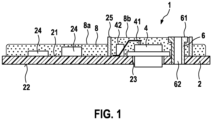
- a circuit board 2 which has a first side 21 and a second side 22 facing away from it, is equipped with electronic components 24 and a contact assembly 42.
- the electronic components 24 can, for example, form an electronic control circuit and can be applied to the circuit board 2 and contacted in standard processes. This includes, for example, gluing and bonding of bare-die components as well as the assembly and reflow soldering of housed electronic components.
- the circuit board 2 can be a conventional FR4 circuit board made of glass fiber reinforced epoxy resin with in copper conductor tracks arranged in one or more layers.
- the circuit board 2 is provided with an opening 23 which extends from the first side 21 to the second side 22.
- the breakthrough 23 can be introduced into the circuit board 2, for example by milling or drilling.
- the circuit board has, for example, a further recess 29 designed as a bore.
- Electrical connecting means 41 can be arranged on the contact assembly 42, which can be designed, for example, as a stamped grid part, flexible circuit board or cable.
- the electronic components 24 and the contact assembly 42 with the electrical connecting means 41 can be soldered, for example, in a soldering oven with contact surfaces on the first side 21 of the circuit board 2.
- a frame part 25 can be arranged on the first side 21 of the circuit board, which surrounds the opening 23 and the contact assembly 41.
- the frame part can be made from metal or plastic or using a viscous and fast-hardening adhesive application.
- a metallic bushing 6 is pressed into the recess 29.
- the socket 6 has an end face 61 which faces away from the first side 21 of the circuit board 2 and from which a receiving opening 62 extends to the second side 22 of the circuit board 2.
- the socket 6 can also be soldered to a contact surface on the first side of the circuit board 2.
- the socket 6 can have a circumferential collar 63 for contact with the first side 21 of the circuit board 2.
- the circuit board 2 can be in the in Fig. 2 or Fig. 3 shown state can be soldered in the soldering oven.
- a sensor element 4 for example a pressure sensor element 4a
- the sensor element 4 can have a circumferential collar 43, which comes into contact with the edge of the opening 23 on the first side 21 of the circuit board 2.
- the sensor element 4 is pushed under the flexible connecting means 41, which can be raised for this purpose.
- the sensor element 4 preferably completely covers the breakthrough 23 in order to avoid the sealing compound running through the breakthrough 23 when applying the casting compound.
- the electrical contact between the sensor element 4 and the connecting means 4 can be made after inserting the sensor element 4, for example by laser welding or with a soldering tip or another selective soldering process. In the same way, at least one or more sensor elements 4 can be mounted on the circuit board 2.
- a potting compound 8 is applied to the first side 21 of the circuit board.
- the casting compound 8 can be filled in a first filling area 8a outside the frame part 25 and at the same time in a second filling area 8b with a larger filling height within the frame part 25.
- the potting compound 8 can be applied with a dispensing head. Drainage of the casting compound 8 from the first filling area 8a can be prevented with a circumferential dam, not shown, arranged on the first side.
- the potting compound 8 completely covers the electronic components 24, the contact assembly with the connecting means 41 and the sensor element 4 on the first side 21 of the circuit board 2.
- the casting compound 8 can then be hardened.
- no injection molding or molding tools are required.
- thermoset in particular an epoxy resin
- CTE Coefficient of Thermal Expansion
- the circuit board with a CTE of 18 ppm/K
- the sensor element with a steel housing and a CTE of 20 ppm/K
- the electronic components 24 and the frame part 25 and the thermoset contact assembly 42 with a CTE between 10 and 40 ppm/K
- the bushing 6 made of steel with a CTE of 20 ppm/K.
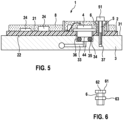
- the electronic module 1 can, for example, as in Fig. 5 shown, with the second side 22 of the circuit board 2 being placed flat on a flat surface 31 of a hydraulic plate 3 of a motor vehicle transmission.
- the hydraulic plate 3 can have a medium channel 33, for example a hydraulic channel, opening on the surface 31 of the hydraulic plate 3.
- the electronic module 1 is mounted on the hydraulic plate in such a way that the medium channel 33 is in fluid communication with the sensor element 4.
- the medium channel 33 can have a section designed as a depression 36, the bottom of which has a horizontal shoulder 34, on which a sealing ring 35 is arranged, which is pressed between a section 44 of the sensor element 4 projecting into the opening 23 and the shoulder 34.
- the electronic module 1 can be screwed into threaded holes 37 in the hydraulic plate 3 by means of screwable connecting means 5, the screw heads 51 of which are supported on the end face 61 of the socket 6.
- the screwable ones Connecting means 5 press the entire electronic module 1 against the hydraulic plate 3.
- a fluid pressure prevailing in the medium channel 33 acts on the sensor element 4 designed as a pressure sensor element 4a. Since the sensor element 4 is firmly installed on the electronic module 1 via the casting compound 8, the force transmitted to the electronic module 1 is advantageously absorbed by the screwed-on sockets 6 .
Landscapes
- Engineering & Computer Science (AREA)
- Microelectronics & Electronic Packaging (AREA)
- Physics & Mathematics (AREA)
- General Physics & Mathematics (AREA)
- Chemical & Material Sciences (AREA)
- Analytical Chemistry (AREA)
- Manufacturing & Machinery (AREA)
- Measuring Fluid Pressure (AREA)
Description
- In der Kraftfahrzeugtechnik werden Elektronikmodule zur Ansteuerung eines Getriebes am oder im Getriebe verbaut. Die Elektronikmodule können beispielsweise als Getriebesteuermodule ausgelegt sein und außer einer auf einer Leiterplatte angeordneten Steuerschaltung beispielsweise zusätzlich noch Steckerteile, Sensoren und Kontaktierungsschnittstellen zu Aktuatoren aufweisen. Die elektronische Steuerschaltung und muss vor dem aggressiven Getriebefluid geschützt werden. Zu diesem Zweck werden auch Vergussmassen eingesetzt, die auf die Leiterplatte zum Schutz der elektronischen Steuerschaltung aufgebracht wird.
- So ist beispielsweise aus der der
DE 10 2011 085 629 A1 ein elektronisches Getriebesteuermodul bekannt, das ein metallisches Bechergehäuse aufweist und einen in dem Bechergehäuse angeordneten, mit elektronischen Bauelementen bestückten Schaltungsträger aufweist. Der Schaltungsträger ist zum Schutz vor dem aggressiven Getriebefluid und darin enthaltenen Metallspänen in dem Bechergehäuse mit einer Vergussmasse vergossen. Die Anschlusselemente ragen aus der Vergussmasse heraus und dienen teilweise zum Anschluss an die Spannungsversorgung, an einen EC-Motor, an Sensoren und/oder einen LIN- oder CAN-Bus. Das Bechergehäuse kann über schraubbare Befestigungsmittel an einem Gehäuseteil des Getriebes oder der Getriebehydraulik befestigt werden, über das auch die Kühlung des Steuergerätes erfolgen kann. - Weiterhin ist beispielsweise aus der
DE 10 2013 205 155 A1 bekannt, ein pillenförmiges Drucksensorelement in einem Kunststoffträger zu verbauen und dort mit einem in den Kunststoffträger eingebetteten Stanzgittern elektrisch zu kontaktieren. Diese Baugruppe ist auf einer Trägerplatte eines Getriebesteuermoduls fixiert. Im Betrieb tritt Relaxation des Kunststoffbauteils auf, was durch eine mechanische Vorspannung des System kompensiert wird. Die Position des Drucksensors ist dabei fest vorgegebenen und kann ohne aufwändige Änderung des Gesamtaufbaus nicht verändert werden. - Ferner ist aus der
DE 10 2015 205 445 ein Getriebesteuergerät mit einem Zentralmodul bekannt, das eine Trägerplatte und auf der Trägerplatte angeordnete elektronische Bauelemente und eine Vergussmasse als Abdeckung für die elektronischen Bauelemente umfasst, wobei das Zentralmodul eine Buchse mit einer Öffnung zur Aufnahme eines schraubbaren Befestigungsmittels aufweist, um das Zentralmodul an dem Getriebe zu befestigen. - Aus der
DE 10 2015 209191 A1 ist ein Elektronikmodul mit einer Leiterplatte, welche eine erste Seite und eine davon abgewandte zweite Seite aufweist, mit auf der ersten Seite angeordneten elektronischen Bauelementen und mit einer auf der ersten Seite angeordneten Vergussmasse bekannt, welche die elektronischen Bauelemente abdeckt. Die Leiterplatte weiste einen die erste Seite mit der zweiten Seite verbindenden Durchbruch auf, wobei ein den Durchbruch abdeckendes Sensorelement an der ersten Seite der Leiterplatte angeordnet ist. - Aus der
DE 198 34 212 A1 ist ein Steuergerät bekannt, das eine Steuerschaltung und einen Drucksensor aufweist, die in einem gemeinsamen Gehäuse untergebracht sind. Das Gehäuse hat eine metallische Grundplatte, die druckdicht mit einer Hydraulikeinheit eines Getriebes verbunden und mit einer Bohrung versehen ist, durch die der Drucksensor mit Druck beaufschlagt wird. - Weitere Elektronikmodule, die Leiterplatten mit darauf angeordneten und von einer Vergussmasse abgedeckten elektronischen Bauelementen aufweisen, sind aus der
EP 2 906 024 A1 , derDE 10 2005 002 813 A1 und derWO 2014/146614 A1 bekannt. - Die Erfindung betrifft ein Elektronikmodul, insbesondere ein Steuermodul oder ein Sensormodul für ein Getriebe, mit einer Leiterplatte, welche eine erste Seite und eine davon abgewandte zweite Seite aufweist, mit auf der ersten Seite angeordneten elektronischen Bauelementen und mit einer auf der ersten Seite angeordneten Vergussmasse, welche die elektronischen Bauelemente abdeckt, wobei die Leiterplatte einen die erste Seite mit der zweiten Seite verbindenden Durchbruch aufweist und ein den Durchbruch abdeckendes Sensorelement an der ersten Seite der Leiterplatte angeordnet ist. Erfindungsgemäß wird vorgeschlagen, dass eine Buchse zur Aufnahme eines schraubbaren Verbindungsmittels an der Leiterplatte angeordnet ist, wobei die Buchse von der auf die ersten Seite der Leiterplatte aufgetragenen Vergussmasse umlaufend flankiert ist und eine nicht mit der Vergussmasse abgedeckte Stirnseite aufweist, von der sich eine Aufnahmeöffnung bis zu der zweiten Seite der Leiterplatte erstreckt.
- Weiterhin betrifft die Erfindung eine Kombination eines derartigen Elektronikmoduls mit einer Hydraulikplatte, wobei das Elektronikmodul mit der zweiten Seite der Leiterplatte an einer Oberfläche der Hydraulikplatte flach anliegt und die Hydraulikplatte einen an der Oberfläche mündenden Mediumkanal aufweist, wobei der Mediumkanal mit dem Sensorelement in einer Fluidverbindung steht.
- Vorteilhaft kann bei dem erfindungsgemäßen Elektronikmodul die Lage eines Sensorelementes in dem Elektronikmodul ohne großen Aufwand geändert und an das jeweilige Anforderungsprofil angepasst werden. Bei notwendigen Designänderungen der Position des Sensorelementes an dem Elektronikmodul kann diese Änderung daher in sehr kurzer Zeit umgesetzt werden. Bei einer Änderung des Designs muss vorteilhaft nur das Leiterplatten-Layout in Hinblick auf die Lage des Durchbruchs und der elektrischen Anschlüsse des Sensorelementes angepasst werden. Vorteilhaft ist kein separater Kunststoffträger zur Anordnung des Sensorelements erforderlich und die Kosten für einen derartigen Kunststoffträger entfallen. Ebenso entfallen die mit der unterschiedlichen Wärmeausdehnung von Kunststoffträger und Leiterplatte verbundenen Schwierigkeiten. Das Sensorelement, beispielsweise ein Drucksensorelement, wird in einfacher Weise an der ersten Seite der Leiterplatte derart angeordnet, dass es dort einen zur Zuführung des Messmediums vorgesehenen Durchbruch abdeckt. Die Leiterplatte wird durch den Einbau des Sensorelementes und bei einer Belastung des Sensorelementes mit hydraulischem Druck mechanisch nicht belastet, wodurch die Gefahr einer Beschädigung vermieden wird.
- Der Einbau des Sensorelements kann vor oder nach dem Bestücken und Auflöten von elektronischen Bauelementen auf die Leiterplatte erfolgen. Im letzteren Fall kann bei hohen Löttemperaturen eines Lötofens, die beispielsweise zur Verlötung von bleifreien Loten notwendig sind, vorteilhaft erreicht werden, dass die Ofentemperatur nicht zum Aufschmelzen der Lötverbindungen im Sensorelement selbst führt.
- Zur mechanischen Festlegung des elektronischen Elektronikmoduls an einem Getriebebauteil ist erfindungsgemäß wenigstens eine Buchse zur Aufnahme eines schraubbaren Verbindungsmittels an der Leiterplatte angeordnet, wobei die Buchse von der auf der ersten Seite der Leiterplatte aufgetragenen Vergussmasse umlaufend flankiert ist und eine nicht mit der Vergussmasse abgedeckte Stirnseite aufweist, von der sich eine Aufnahmeöffnung bis zu der zweiten Seite der Leiterplatte erstreckt. Dadurch wird vorteilhaft erreicht, dass ein in die Aufnahmeöffnung eingeführte schraubbares Verbindungsmittel beim Festziehen die Spannkraft auf die Stirnseite der Buchse überträgt. Die Buchse wiederum kann sich auf der zweiten Seite der Leiterplatte direkt am Getriebebauteil abstützen, so dass eine Krafteinleitung auf die Leiterplatte beim Festziehen der Schraube vermieden wird. Beim Anliegen eines Hydraulikdrucks erfährt das Sensorelement eine Druckkraft. Da das Sensorelement fest an dem elektronischen Elektronikmodul verbaut ist, wird diese Kraft vorteilhaft von den angeschraubten Buchsen aufgenommen. Die Leiterplatte erfährt hierbei vorteilhaft keine unzulässig hohen Press- oder Zugkräfte. Natürlich können auch mehrere Buchsen an dem Elektronikmodul vorgesehen sein.
- Vorteilhafte Ausgestaltungen und Weiterbildungen der Erfindung werden durch die in den abhängigen Ansprüchen enthaltenen Merkmale ermöglicht.
- Vorteilhaft kann das Sensorelement den Durchbruch vollständig abdecken und auf der ersten Seite der Leiterplatte mit der Vergussmasse abgedeckt sein, wodurch das Sensorelement mechanisch stabil an dem Elektronikmodul angeordnet und vor dem aggressiven Getriebefluid und darin enthaltenen Metallspänen ausreichend geschützt ist. Vorteilhaft sind zur Festlegung des Sensorelementes an der Leiterplatte keine Befestigungsschrauben oder Nieten erforderlich, die Flächen und Freiraum auf der Leiterplatte benötigen würden. Durch die Verwendung einer Vergussmasse, beispielsweise einen duroplastischen Werkstoffs, zur mechanischen Festlegung des Sensorelements tritt bei Temperaturschwankungen und Alterung des Elektronikmoduls keine Relaxation auf, so dass sich die Lage des Sensorelementes an dem Elektronikmodul bei Druckbelastung und Alterung des Elektronikmoduls vorteilhaft nicht verändert.
- Vorteilhaft können elektrische Verbindungsmittel, welche das Sensorelement mit der Leiterplatte elektrisch verbinden, in die Vergussmasse eingebettet sein. Die elektrischen Verbindungsmittel zwischen dem Sensorelement und der Leiterplatte können beispielsweise mittels Kabelverbindungen, Stanzgittern oder flexiblen Leiterplatten (FPC = Flexible Printed Circuit) aus Polyimid oder FR4-Material erfolgen. Durch die Einbettung in die Vergussmasse sind die elektrischen Verbindungsmittel gegen Kurzschlüsse, welche durch Metallspäne im Getriebefluid entstehen können, und gegen chemische Belastungen geschützt.
- Vorteilhaft kann das Sensorelement in den Durchbruch eingesetzt sein, wodurch ein relaxationsfreier Einbau gelingt, der ohne Federn auskommt und Druck- sowie Zugbelastungen der Leiterplatte minimiert. Das Sensorelement kann zu diesem Zweck vorteilhaft einen umlaufenden Kragen aufweisen, der am Rand des Durchbruchs auf der ersten Seite der Leiterplatte aufliegt. Vorteilhaft kann das Sensorelement bei einem der letzten Herstellungsschritte des Elektronikmoduls an der Leiterplatte durch einfaches Einsetzen montiert und gleichzeitig elektrisch kontaktiert werden.
- Falls das an der ersten Seite der Leiterplatte angeordnete Sensorelement eine relativ große Bauhöhe aufweist, kann dort vorteilhaft ein das Sensorelement umgebendes Rahmenteil angeordnet sein, innerhalb dessen die Vergussmasse mit einer größeren Füllhöhe als in einem Bereich außerhalb des Rahmenteils auf die ersten Seite der Leiterplatte aufgetragen ist. Unter Füllhöhe wird in diesem Zusammenhang die Materialstärke beziehungsweise Dicke der Vergussmasse in einer Richtung senkrecht zur ersten Seite der Leiterplatte verstanden.
- Weiterhin vorteilhaft ist eine Kombination des beschriebenen Elektronikmoduls mit einer Hydraulikplatte, wobei das Elektronikmodul mit der zweiten Seite der Leiterplatte an einer Oberfläche der Hydraulikplatte flach anliegt und die Hydraulikplatte einen an der Oberfläche der Hydraulikplatte mündenden Mediumkanal aufweist, wobei der Mediumkanal mit dem Sensorelement in einer Fluidverbindung steht. Das Medium kann ein Gas oder eine Flüssigkeit und insbesondere Getriebefluid sein.
- Zur Abdichtung des Mediumkanals kann in einfacher Weise vorteilhaft vorgesehen sein, dass der Mediumkanal beispielsweise einen Absatz aufweist, an dem ein Dichtungsring angeordnet ist, der zwischen einem in den Durchbruch hineinragenden Abschnitt des Sensorelements und dem Absatz eingepresst ist.
- Es zeigen:
-
Fig. 1 einen Querschnitt durch ein Ausführungsbeispiel eines erfindungsgemäßen Elektronikmoduls, -
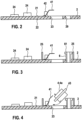
Fig. 2 bis Fig. 4 einzelne Fertigungsschritte bei der Herstellung des Elektronikmoduls, -
Fig. 5 einen Querschnitt durch eine Ausführungsbeispiel einer Kombination eines Elektronikmoduls mit einer Hydraulikplatte -
Fig. 6 eine Ausführungsform einer an dem Elektronikmodul verbauten Schraubenbuchse. - Bei dem Elektronikmodul kann es sich beispielsweise um ein Steuermodul zur Ansteuerung eines Aggregats oder um ein Sensormodul mit mehreren Sensoren handeln. Insbesondere handelt es ich um ein Getriebesteuermodul oder eine Sensormodul für ein Getriebe.
- Der Aufbau eines in
Fig. 1 dargestellten Elektronikmoduls 1 wird im Folgenden anhand des inFig. 2 bis Fig. 4 dargestellten Herstellungsverfahren beschrieben. - Zunächst wird, wie in
Fig. 2 gezeigt, eine Leiterplatte 2, welche eine erste Seite 21 und eine davon abgewandte zweite Seite 22 aufweist, mit elektronischen Bauelementen 24 und einer Kontaktbaugruppe 42 bestückt. Die elektronischen Bauelemente 24, können beispielsweise eine elektronische Steuerschaltung bilden und in Standardprozessen auf die Leiterplatte 2 aufgebracht und kontaktiert werden. Hierzu zählen beispielsweise Aufkleben und Bonden von Bare-Die-Bauelementen ebenso wie das Bestücken und Reflowlöten von gehäusten elektronischen Bauelementen. Bei der Leiterplatte 2 kann es sich um eine konventionelle FR4-Leiterplatte aus glasfaserverstärktem Epoxidharz mit in einer oder mehreren Lagen angeordneten Kupferleiterbahnen handeln. Die Leiterplatte 2 ist mit einem Durchbruch 23 versehen, der sich ausgehend von der ersten Seite 21 bis zu der zweiten Seite 22 hindurch erstreckt. Der Durchbruch 23 kann beispielsweise durch Fräsen oder Bohren in die Leiterplatte 2 eingebracht werden. Außerdem weist die Leiterplatte beispielsweise eine weitere als Bohrung ausgebildete Ausnehmung 29 auf. An der Kontaktbaugruppe 42 können elektrische Verbindungsmittel 41 angeordnet sein, welche beispielsweise als Stanzgitterteil, flexible Leiterplatte oder Kabel ausgebildet sein können. Die elektronischen Bauelemente 24 und die Kontaktbaugruppe 42 mit den elektrischen Verbindungsmitteln 41 können beispielsweise in einem Lötofen mit Kontaktflächen auf der ersten Seite 21 der Leiterplatte 2 verlötet werden. - Wie in
Fig. 3 dargestellt, kann ein Rahmenteil 25 auf der ersten Seite 21 der Leiterplatte angeordnet werden, das den Durchbruch 23 und die Kontaktbaugruppe 41 umlaufend umgibt. Das Rahmenteil kann aus Metall oder Kunststoff oder mittels eines zähflüssigen und schnell härtenden Kleberauftrags hergestellt werden. Weiterhin ist eine metallische Buchse 6 in die Ausnehmung 29 eingepresst. Die Buchse 6 weist eine von der ersten Seite 21 der Leiterplatte 2 abweisende Stirnseite 61 aufweist, von der aus sich eine Aufnahmeöffnung 62 bis zu der zweiten Seite 22 der Leiterplatte 2 erstreckt. Die Buchse 6 kann zusätzlich zum Einpressen in die Ausnehmung 29 noch mit einer Kontaktfläche auf der ersten Seite der Leiterplatte 2 verlötet werden. Wie inFig. 6 gezeigt kann die Buchse 6 einen umlaufenden Kragen 63 zur Anlage an der ersten Seite 21 der Leiterplatte 2 aufweisen. Die Leiterplatte 2 kann in dem inFig. 2 oder Fig. 3 dargestellten Zustand im Lötofen verlötet werden. - Wie in
Fig. 4 gezeigt, kann ein Sensorelement 4, beispielsweise ein Drucksensorelement 4a in den Durchbruch 23 eingesetzt werden. Das Sensorelement 4 kann einen umlaufenden Kragen 43 aufweisen, der am Rand des Durchbruchs 23 auf der ersten Seite 21 der Leiterplatte 2 zur Anlage gelangt. Dabei wird das Sensorelement 4 unter die flexibel ausgestalteten Verbindungsmittel 41 geschoben, die zu diesem Zweck angehoben werden können. Das Sensorelement 4 deckt den Durchbruch 23 vorzugsweise vollständig ab, um bei einer Auftragung von Vergussmasse ein Ablaufen derselben durch den Durchbruch 23 zu vermeiden. Die elektrische Kontaktierung zwischen dem Sensorelement 4 und den Verbindungsmitteln 4 kann nach dem Einsetzen des Sensorelementes 4 beispielsweise durch Laserschweißen oder mit einer Lötspitze oder anderem Selektivlötverfahren erfolgen. In der gleichen Weise kann wenigstens ein oder auch mehrere Sensorelemente 4 an der Leiterplatte 2 montiert werden. - Schließlich wird, wie in
Fig. 1 gezeigt ist, eine Vergussmasse 8 auf die erste Seite 21 der Leiterplatte aufgetragen. Hierzu kann die Vergussmasse 8 in einem ersten Füllbereich 8a außerhalb des Rahmenteils 25 und gleichzeitig in einem zweiten Füllbereich 8b mit größerer Füllhöhe innerhalb des Rahmenteils 25 eingefüllt werden. Die Vergussmasse 8 kann mit einem Dispenskopf aufgetragen werden. Ein Ablaufen der Vergussmasse 8 aus dem ersten Füllbereich 8a kann mit einem auf der ersten Seite angeordneten, nicht dargestellten umlaufenden Damm verhindert werden. Die Vergussmasse 8 deckt die elektronischen Bauelemente 24, die Kontaktbaugruppe mit den Verbindungsmitteln 41 und das Sensorelement 4 auf der ersten Seite 21 der Leiterplatte 2 vollständig ab. Die Vergussmasse 8 kann anschließend ausgehärtet werden. Vorteilhaft wird kein Spritzguss- oder Mold-Werkzeug benötigt. Als Vergussmasse 8 kann ein Duroplast, insbesondere ein Epoxidharz verwendet werden, beispielsweise ein Epoxidharz mit einem CTE (CTE = Coefficient of Thermal Expansion) im Bereich von 18-25 ppm/K. Dies passt zur Leiterplatte mit einem CTE von 18 ppm/K, dem Sensorelement mit Stahlgehäuse und einem CTE von 20 ppm/K, den elektronischen Bauelementen 24 und dem Rahmenteil 25 und der Kontaktbaugruppe 42 aus Duroplast mit einem CTE zwischen 10 und 40 ppm/K, sowie der Buchse 6 aus Stahl mit einem CTE von 20 ppm/K. - Das Elektronikmodul 1 kann beispielsweise, wie in
Fig. 5 gezeigt, mit der zweiten Seite 22 der Leiterplatte 2 an einer ebenen Oberfläche 31 einer Hydraulikplatte 3 eines Kraftfahrzeuggetriebes flach aufgelegt werden. Die Hydraulikplatte 3 kann einen an der Oberfläche 31 der Hydraulikplatte 3 mündenden Mediumkanal 33, beispielsweise einen Hydraulikkanal aufweisen. Das Elektronikmodul 1 wird dabei derart an der Hydraulikplatte montiert, dass der Mediumkanal 33 mit dem Sensorelement 4 in einer Fluidverbindung steht. Der Mediumkanal 33 kann einen als Absenkung 36 ausgebildeten Abschnitt aufweisen, dessen Boden einen horizontalen Absatz 34 aufweist, an dem ein Dichtungsring 35 angeordnet ist, der zwischen einem in den Durchbruch 23 hineinragenden Abschnitt 44 des Sensorelements 4 und dem Absatz 34 eingepresst ist. Das Elektronikmodul 1 kann mittels schraubbarer Verbindungsmittel 5, deren Schraubenköpfe 51 sich an der Stirnseite 61 der Buchse 6 abstützen, in Gewindebohrungen 37 der Hydraulikplatte 3 festgeschraubt werden. Die schraubbaren Verbindungsmittel 5 drücken das gesamt Elektronikmodul 1 gegen die Hydraulikplatte 3 an. - Ein in dem Mediumkanal 33 herrschender Fluiddruck wirkt im Betrieb auf das als Drucksensorelement 4a ausgebildete Sensorelement 4. Da das Sensorelement 4 über die Vergussmasse 8 fest an dem Elektronikmodul 1 verbaut ist, wird die auf das Elektronikmodul 1 übertragene Kraft vorteilhaft von den angeschraubten Buchsen 6 aufgenommen.
Claims (9)
- Elektronikmodul (1), insbesondere Steuermodul oder Sensormodul für ein Kraftfahrzeuggetriebe, mit einer Leiterplatte (2), welche eine erste Seite (21) und eine davon abgewandte zweite Seite (22) aufweist, mit auf der ersten Seite (21) angeordneten elektronischen Bauelementen (24) und mit einer auf der ersten Seite (21) angeordneten Vergussmasse (8), welche die elektronischen Bauelemente (24) abdeckt, wobei die Leiterplatte (2) einen die erste Seite (21) mit der zweiten Seite (22) verbindenden Durchbruch (23) aufweist und ein den Durchbruch (23) abdeckendes Sensorelement (4) an der ersten Seite (21) der Leiterplatte (2) angeordnet ist, dadurch gekennzeichnet, dass eine Buchse (6) zur Aufnahme eines schraubbaren Verbindungsmittels (5) an der Leiterplatte (2) angeordnet ist, wobei die Buchse (6) von der auf die ersten Seite (21) der Leiterplatte (2) aufgetragenen Vergussmasse (8) umlaufend flankiert ist und eine nicht mit der Vergussmasse (8) abgedeckte Stirnseite (61) aufweist, von der sich eine Aufnahmeöffnung (62) bis zu der zweiten Seite (22) der Leiterplatte (2) erstreckt.
- Elektronikmodul nach Anspruch 1, dadurch gekennzeichnet, dass das Sensorelement (4) den Durchbruch (23) vollständig abdeckt und dass das Sensorelement (4) auf der ersten Seite (21) der Leiterplatte (2) mit der Vergussmasse (8) abgedeckt ist.
- Elektronikmodul nach Anspruch 1 oder 2, dadurch gekennzeichnet, dass elektrische Verbindungsmittel (41), welche das Sensorelement (4) mit der Leiterplatte (2) elektrisch verbinden, in die Vergussmasse (8) eingebettet sind.
- Elektronikmodul nach einem der vorstehenden Ansprüche, dadurch gekennzeichnet, dass das Sensorelement (4) in den Durchbruch (23) eingesetzt ist.
- Elektronikmodul nach einem der vorstehenden Ansprüche, dadurch gekennzeichnet, dass das Sensorelement (4) einen umlaufenden Kragen (43) aufweist, der am Rand des Durchbruchs (23) auf der ersten Seite (21) der Leiterplatte (2) aufliegt.
- Elektronikmodul nach einem der vorstehenden Ansprüche, dadurch gekennzeichnet, dass das Sensorelement (4) ein Drucksensorelement (4a) ist.
- Elektronikmodul nach einem der vorstehenden Ansprüche, dadurch gekennzeichnet, dass auf der ersten Seite (21) der Leiterplatte (2) ein das Sensorelement (4) umgebendes Rahmenteil (25) angeordnet ist, innerhalb dessen die Vergussmasse (8) mit einer größeren Füllhöhe als in einem Bereich außerhalb des Rahmenteils (25) auf die ersten Seite (21) der Leiterplatte aufgetragen ist.
- Kombination eines Elektronikmoduls (1) nach einem der vorstehenden Ansprüche 1 bis 7 mit einer Hydraulikplatte (3), wobei das Elektronikmodul (1) mit der zweiten Seite (22) der Leiterplatte (2) an einer Oberfläche (31) der Hydraulikplatte (3) flach anliegt und die Hydraulikplatte (3) einen an der Oberfläche (31) der Hydraulikplatte (3) mündenden Mediumkanal (33) aufweist, wobei der Mediumkanal (33) mit dem Sensorelement (4) in einer Fluidverbindung steht.
- Kombination eines Elektronikmoduls nach Anspruch 8, dadurch gekennzeichnet, dass der Mediumkanal (33) einen Absatz (34) aufweist, an dem ein Dichtungsring (35) angeordnet ist, der zwischen einem in den Durchbruch (23) hineinragenden Abschnitt des Sensorelements (4) und dem Absatz (34) eingepresst ist.
Applications Claiming Priority (2)
| Application Number | Priority Date | Filing Date | Title |
|---|---|---|---|
| DE102017211513.0A DE102017211513A1 (de) | 2017-07-06 | 2017-07-06 | Elektronikmodul und Kombination eines Elektronikmoduls mit einer Hydraulikplatte |
| PCT/EP2018/062389 WO2019007573A1 (de) | 2017-07-06 | 2018-05-14 | Elektronikmodul und kombination eines elektronikmoduls mit einer hydraulikplatte |
Publications (2)
| Publication Number | Publication Date |
|---|---|
| EP3649835A1 EP3649835A1 (de) | 2020-05-13 |
| EP3649835B1 true EP3649835B1 (de) | 2023-12-20 |
Family
ID=62217955
Family Applications (1)
| Application Number | Title | Priority Date | Filing Date |
|---|---|---|---|
| EP18726094.8A Active EP3649835B1 (de) | 2017-07-06 | 2018-05-14 | Elektronikmodul und kombination eines elektronikmoduls mit einer hydraulikplatte |
Country Status (6)
| Country | Link |
|---|---|
| US (1) | US11166391B2 (de) |
| EP (1) | EP3649835B1 (de) |
| KR (1) | KR20200024208A (de) |
| CN (1) | CN110809911B (de) |
| DE (1) | DE102017211513A1 (de) |
| WO (1) | WO2019007573A1 (de) |
Families Citing this family (9)
| Publication number | Priority date | Publication date | Assignee | Title |
|---|---|---|---|---|
| JP6565867B2 (ja) * | 2016-10-28 | 2019-08-28 | 株式会社デンソー | 空気物理量センサ |
| DE102019132570A1 (de) * | 2019-12-01 | 2021-06-02 | Danfoss Silicon Power Gmbh | Leistungsmodul mit einem Drucksensor |
| DE102020212585A1 (de) * | 2020-10-06 | 2022-04-07 | Robert Bosch Gesellschaft mit beschränkter Haftung | Elektronikmodul |
| DE102021212582A1 (de) | 2021-11-09 | 2023-05-11 | Robert Bosch Gesellschaft mit beschränkter Haftung | Sensoranordnung, Brennstoffzellensystem mit einer Sensoranordnung und Verfahren zum Herstellen einer Sensoranordnung |
| DE102022101839A1 (de) * | 2022-01-27 | 2023-07-27 | Schaeffler Technologies AG & Co. KG | Elektrische und verschmutzungsdichte Verbindung zwischen zwei Bauräumen |
| DE102022205358A1 (de) * | 2022-05-30 | 2023-11-30 | Robert Bosch Gesellschaft mit beschränkter Haftung | Elektronische Baugruppe, insbesondere eine elektronische Leistungsbaugruppe für Hybridfahrzeuge oder Elektrofahrzeuge |
| DE102022120682A1 (de) * | 2022-08-16 | 2024-02-22 | Kyocera Avx Components (Werne) Gmbh | Einbetten einer Leiterplatte in Vergussmasse |
| DE102022212420A1 (de) | 2022-11-22 | 2024-05-23 | Robert Bosch Gesellschaft mit beschränkter Haftung | Elektronikmodul |
| TWI822490B (zh) * | 2022-11-25 | 2023-11-11 | 彥豪金屬工業股份有限公司 | 自行車後變速器及自行車元件的傳動組件 |
Citations (3)
| Publication number | Priority date | Publication date | Assignee | Title |
|---|---|---|---|---|
| DE102005002813A1 (de) * | 2005-01-20 | 2006-08-10 | Robert Bosch Gmbh | Steuermodul |
| WO2014146614A1 (en) * | 2013-03-22 | 2014-09-25 | Dow Corning (China) Holding Co., Ltd. | Sectioned potting in power converters |
| EP2906024A1 (de) * | 2014-01-15 | 2015-08-12 | Hitachi Ltd. | Kommunikationsvorrichtung und Herstellungsverfahren dafür |
Family Cites Families (15)
| Publication number | Priority date | Publication date | Assignee | Title |
|---|---|---|---|---|
| DE19834212A1 (de) | 1998-07-29 | 2000-02-10 | Siemens Ag | Steuergerät in einem Kraftfahrzeug und von diesem verwendeter Drucksensor |
| EP1108163B1 (de) * | 1998-08-24 | 2002-03-06 | Siemens Aktiengesellschaft | Steuergerät in einem kraftfahrzeug |
| DE10101091A1 (de) * | 2001-01-11 | 2002-07-25 | Siemens Ag | Hydraulisches Kraftfahrzeug-Getriebesteuergerät mit Kunststoff-Hydraulikverteilerplatte und darin integrierten Leitern und Verfahren zu dessen Herstellung |
| JP4585828B2 (ja) * | 2004-10-06 | 2010-11-24 | 日立オートモティブシステムズ株式会社 | 制御装置およびその製造方法 |
| CN101361182B (zh) * | 2006-11-30 | 2011-09-14 | 松下电器产业株式会社 | 无源部件内置式内插板 |
| US7550828B2 (en) | 2007-01-03 | 2009-06-23 | Stats Chippac, Inc. | Leadframe package for MEMS microphone assembly |
| US8898690B2 (en) * | 2007-10-30 | 2014-11-25 | BBS Media | Apparatus and method for managing media content |
| JP4941509B2 (ja) * | 2008-10-20 | 2012-05-30 | 株式会社デンソー | 電子制御装置 |
| DE102011085629A1 (de) | 2011-11-02 | 2013-05-02 | Robert Bosch Gmbh | Elektronikmodul zum Betrieb im Getriebe |
| DE102012222180B4 (de) * | 2012-12-04 | 2024-07-18 | Robert Bosch Gmbh | Superflaches Getriebesteuermodul |
| DE102013205155B4 (de) | 2013-03-22 | 2023-05-04 | Robert Bosch Gmbh | Vorrichtung zur Befestigung eines Drucksensors an einer mit einem Druckkanal versehenen Trägerplatte |
| DE102013227003A1 (de) * | 2013-12-20 | 2015-06-25 | Robert Bosch Gmbh | Elektronisches Steuermodul und Verfahren zur Herstellung eines elektronischen Steuermoduls |
| DE102015209191A1 (de) | 2015-02-10 | 2016-08-11 | Conti Temic Microelectronic Gmbh | Mechatronische Komponente und Verfahren zu deren Herstellung |
| DE102015205445A1 (de) | 2015-03-25 | 2016-09-29 | Robert Bosch Gmbh | Getriebesteuergerät für ein Getriebe eines Fahrzeugs |
| DE102015221149A1 (de) * | 2015-10-29 | 2017-05-04 | Robert Bosch Gmbh | Steuervorrichtung für eine Getriebesteuerung eines Kraftfahrzeugs |
-
2017
- 2017-07-06 DE DE102017211513.0A patent/DE102017211513A1/de not_active Withdrawn
-
2018
- 2018-05-14 KR KR1020207000194A patent/KR20200024208A/ko not_active Withdrawn
- 2018-05-14 WO PCT/EP2018/062389 patent/WO2019007573A1/de not_active Ceased
- 2018-05-14 CN CN201880044788.2A patent/CN110809911B/zh not_active Expired - Fee Related
- 2018-05-14 EP EP18726094.8A patent/EP3649835B1/de active Active
- 2018-05-14 US US16/627,975 patent/US11166391B2/en not_active Expired - Fee Related
Patent Citations (3)
| Publication number | Priority date | Publication date | Assignee | Title |
|---|---|---|---|---|
| DE102005002813A1 (de) * | 2005-01-20 | 2006-08-10 | Robert Bosch Gmbh | Steuermodul |
| WO2014146614A1 (en) * | 2013-03-22 | 2014-09-25 | Dow Corning (China) Holding Co., Ltd. | Sectioned potting in power converters |
| EP2906024A1 (de) * | 2014-01-15 | 2015-08-12 | Hitachi Ltd. | Kommunikationsvorrichtung und Herstellungsverfahren dafür |
Also Published As
| Publication number | Publication date |
|---|---|
| CN110809911B (zh) | 2022-09-30 |
| CN110809911A (zh) | 2020-02-18 |
| WO2019007573A1 (de) | 2019-01-10 |
| KR20200024208A (ko) | 2020-03-06 |
| EP3649835A1 (de) | 2020-05-13 |
| US20200221591A1 (en) | 2020-07-09 |
| US11166391B2 (en) | 2021-11-02 |
| DE102017211513A1 (de) | 2019-01-10 |
Similar Documents
| Publication | Publication Date | Title |
|---|---|---|
| WO2019007573A1 (de) | Elektronikmodul und kombination eines elektronikmoduls mit einer hydraulikplatte | |
| EP1831055B1 (de) | Steuermodul | |
| EP3085211B1 (de) | Elektronisches steuermodul und verfahren zur herstellung eines elektronischen steuermoduls | |
| EP1842407B1 (de) | Steuermodul | |
| EP2225125B1 (de) | Steuergerätegehäuse | |
| EP3381246B1 (de) | Elektronikmodul und verfahren zum herstellen eines elektronikmoduls mit einem fluiddichten gehäuse | |
| WO2013068146A1 (de) | Elektronikmodul für ein steuergerät | |
| DE10051945C1 (de) | Dichte Aufnahmekammer für Kfz-Elektronikbauteil und Verfahren zur Herstellung derselben | |
| EP3225085B1 (de) | Elektronikmodul, insbesondere für kfz-getriebesteuergerät, mit presskontakt-sandwich-modul-technik | |
| DE102015219569A1 (de) | Elektronische Anordnung, Kombination und Verfahren zur Montage einer elektronischen Anordnung | |
| EP3289839B1 (de) | Elektronische baugruppe, insbesondere für ein getriebesteuermodul | |
| EP3292593A1 (de) | Elektrische verbindungsanordnung | |
| EP3574723B1 (de) | Verfahren zum mechanischen verbinden von elektronischen bauelementen und entsprechende anordnung dieser elektronischen bauelemente | |
| WO2020043341A1 (de) | Elektronikmodul und verfahren zum fertigen desselben | |
| DE102019201404A1 (de) | Elektronikmodul | |
| EP3643147B1 (de) | Elektronikmodul | |
| EP2609795B1 (de) | Verfahren zur bestückung einer leiterplatte mit mehreren bauteilen und elektrische schaltung mit einer leiterplatte und darauf montierten mehreren bauteilen | |
| WO2019162077A1 (de) | Pressverbindung | |
| EP3520585B1 (de) | Verfahren zum herstellen einer elektronischen baugruppe und elektronische baugruppe, insbesondere für ein getriebesteuermodul | |
| EP3284327B1 (de) | Elektronikmodul für ein getriebesteuergerät | |
| EP2288246B1 (de) | Leistungshalbleitermodul und Verfahren zur Montage eines Leistungshalbleitermoduls | |
| EP3250010A1 (de) | Elektronisches steuermodul und verfahren zur herstellung eines elektronischen steuermoduls | |
| DE102020212585A1 (de) | Elektronikmodul | |
| EP3659410B1 (de) | Elektrische baugruppe | |
| DE102015218171B4 (de) | Verfahren zur Herstellung einer elektronischen Komponente und elektronische Komponente |
Legal Events
| Date | Code | Title | Description |
|---|---|---|---|
| STAA | Information on the status of an ep patent application or granted ep patent |
Free format text: STATUS: UNKNOWN |
|
| STAA | Information on the status of an ep patent application or granted ep patent |
Free format text: STATUS: THE INTERNATIONAL PUBLICATION HAS BEEN MADE |
|
| PUAI | Public reference made under article 153(3) epc to a published international application that has entered the european phase |
Free format text: ORIGINAL CODE: 0009012 |
|
| STAA | Information on the status of an ep patent application or granted ep patent |
Free format text: STATUS: REQUEST FOR EXAMINATION WAS MADE |
|
| 17P | Request for examination filed |
Effective date: 20200206 |
|
| AK | Designated contracting states |
Kind code of ref document: A1 Designated state(s): AL AT BE BG CH CY CZ DE DK EE ES FI FR GB GR HR HU IE IS IT LI LT LU LV MC MK MT NL NO PL PT RO RS SE SI SK SM TR |
|
| AX | Request for extension of the european patent |
Extension state: BA ME |
|
| DAV | Request for validation of the european patent (deleted) | ||
| DAX | Request for extension of the european patent (deleted) | ||
| STAA | Information on the status of an ep patent application or granted ep patent |
Free format text: STATUS: EXAMINATION IS IN PROGRESS |
|
| 17Q | First examination report despatched |
Effective date: 20220202 |
|
| GRAJ | Information related to disapproval of communication of intention to grant by the applicant or resumption of examination proceedings by the epo deleted |
Free format text: ORIGINAL CODE: EPIDOSDIGR1 |
|
| GRAP | Despatch of communication of intention to grant a patent |
Free format text: ORIGINAL CODE: EPIDOSNIGR1 |
|
| GRAP | Despatch of communication of intention to grant a patent |
Free format text: ORIGINAL CODE: EPIDOSNIGR1 |
|
| STAA | Information on the status of an ep patent application or granted ep patent |
Free format text: STATUS: GRANT OF PATENT IS INTENDED |
|
| INTG | Intention to grant announced |
Effective date: 20231005 |
|
| GRAS | Grant fee paid |
Free format text: ORIGINAL CODE: EPIDOSNIGR3 |
|
| GRAA | (expected) grant |
Free format text: ORIGINAL CODE: 0009210 |
|
| STAA | Information on the status of an ep patent application or granted ep patent |
Free format text: STATUS: THE PATENT HAS BEEN GRANTED |
|
| AK | Designated contracting states |
Kind code of ref document: B1 Designated state(s): AL AT BE BG CH CY CZ DE DK EE ES FI FR GB GR HR HU IE IS IT LI LT LU LV MC MK MT NL NO PL PT RO RS SE SI SK SM TR |
|
| REG | Reference to a national code |
Ref country code: GB Ref legal event code: FG4D Free format text: NOT ENGLISH |
|
| REG | Reference to a national code |
Ref country code: DE Ref legal event code: R096 Ref document number: 502018013842 Country of ref document: DE |
|
| REG | Reference to a national code |
Ref country code: CH Ref legal event code: EP |
|
| REG | Reference to a national code |
Ref country code: IE Ref legal event code: FG4D Free format text: LANGUAGE OF EP DOCUMENT: GERMAN |
|
| PG25 | Lapsed in a contracting state [announced via postgrant information from national office to epo] |
Ref country code: GR Free format text: LAPSE BECAUSE OF FAILURE TO SUBMIT A TRANSLATION OF THE DESCRIPTION OR TO PAY THE FEE WITHIN THE PRESCRIBED TIME-LIMIT Effective date: 20240321 |
|
| REG | Reference to a national code |
Ref country code: LT Ref legal event code: MG9D |
|
| PG25 | Lapsed in a contracting state [announced via postgrant information from national office to epo] |
Ref country code: LT Free format text: LAPSE BECAUSE OF FAILURE TO SUBMIT A TRANSLATION OF THE DESCRIPTION OR TO PAY THE FEE WITHIN THE PRESCRIBED TIME-LIMIT Effective date: 20231220 |
|
| REG | Reference to a national code |
Ref country code: NL Ref legal event code: MP Effective date: 20231220 |
|
| PG25 | Lapsed in a contracting state [announced via postgrant information from national office to epo] |
Ref country code: ES Free format text: LAPSE BECAUSE OF FAILURE TO SUBMIT A TRANSLATION OF THE DESCRIPTION OR TO PAY THE FEE WITHIN THE PRESCRIBED TIME-LIMIT Effective date: 20231220 |
|
| PG25 | Lapsed in a contracting state [announced via postgrant information from national office to epo] |
Ref country code: LT Free format text: LAPSE BECAUSE OF FAILURE TO SUBMIT A TRANSLATION OF THE DESCRIPTION OR TO PAY THE FEE WITHIN THE PRESCRIBED TIME-LIMIT Effective date: 20231220 Ref country code: GR Free format text: LAPSE BECAUSE OF FAILURE TO SUBMIT A TRANSLATION OF THE DESCRIPTION OR TO PAY THE FEE WITHIN THE PRESCRIBED TIME-LIMIT Effective date: 20240321 Ref country code: FI Free format text: LAPSE BECAUSE OF FAILURE TO SUBMIT A TRANSLATION OF THE DESCRIPTION OR TO PAY THE FEE WITHIN THE PRESCRIBED TIME-LIMIT Effective date: 20231220 Ref country code: ES Free format text: LAPSE BECAUSE OF FAILURE TO SUBMIT A TRANSLATION OF THE DESCRIPTION OR TO PAY THE FEE WITHIN THE PRESCRIBED TIME-LIMIT Effective date: 20231220 Ref country code: BG Free format text: LAPSE BECAUSE OF FAILURE TO SUBMIT A TRANSLATION OF THE DESCRIPTION OR TO PAY THE FEE WITHIN THE PRESCRIBED TIME-LIMIT Effective date: 20240320 |
|
| PG25 | Lapsed in a contracting state [announced via postgrant information from national office to epo] |
Ref country code: NL Free format text: LAPSE BECAUSE OF FAILURE TO SUBMIT A TRANSLATION OF THE DESCRIPTION OR TO PAY THE FEE WITHIN THE PRESCRIBED TIME-LIMIT Effective date: 20231220 |
|
| PG25 | Lapsed in a contracting state [announced via postgrant information from national office to epo] |
Ref country code: SE Free format text: LAPSE BECAUSE OF FAILURE TO SUBMIT A TRANSLATION OF THE DESCRIPTION OR TO PAY THE FEE WITHIN THE PRESCRIBED TIME-LIMIT Effective date: 20231220 Ref country code: RS Free format text: LAPSE BECAUSE OF FAILURE TO SUBMIT A TRANSLATION OF THE DESCRIPTION OR TO PAY THE FEE WITHIN THE PRESCRIBED TIME-LIMIT Effective date: 20231220 Ref country code: NO Free format text: LAPSE BECAUSE OF FAILURE TO SUBMIT A TRANSLATION OF THE DESCRIPTION OR TO PAY THE FEE WITHIN THE PRESCRIBED TIME-LIMIT Effective date: 20240320 Ref country code: NL Free format text: LAPSE BECAUSE OF FAILURE TO SUBMIT A TRANSLATION OF THE DESCRIPTION OR TO PAY THE FEE WITHIN THE PRESCRIBED TIME-LIMIT Effective date: 20231220 Ref country code: LV Free format text: LAPSE BECAUSE OF FAILURE TO SUBMIT A TRANSLATION OF THE DESCRIPTION OR TO PAY THE FEE WITHIN THE PRESCRIBED TIME-LIMIT Effective date: 20231220 Ref country code: HR Free format text: LAPSE BECAUSE OF FAILURE TO SUBMIT A TRANSLATION OF THE DESCRIPTION OR TO PAY THE FEE WITHIN THE PRESCRIBED TIME-LIMIT Effective date: 20231220 |
|
| PG25 | Lapsed in a contracting state [announced via postgrant information from national office to epo] |
Ref country code: IS Free format text: LAPSE BECAUSE OF FAILURE TO SUBMIT A TRANSLATION OF THE DESCRIPTION OR TO PAY THE FEE WITHIN THE PRESCRIBED TIME-LIMIT Effective date: 20240420 |
|
| PG25 | Lapsed in a contracting state [announced via postgrant information from national office to epo] |
Ref country code: CZ Free format text: LAPSE BECAUSE OF FAILURE TO SUBMIT A TRANSLATION OF THE DESCRIPTION OR TO PAY THE FEE WITHIN THE PRESCRIBED TIME-LIMIT Effective date: 20231220 |
|
| PG25 | Lapsed in a contracting state [announced via postgrant information from national office to epo] |
Ref country code: SK Free format text: LAPSE BECAUSE OF FAILURE TO SUBMIT A TRANSLATION OF THE DESCRIPTION OR TO PAY THE FEE WITHIN THE PRESCRIBED TIME-LIMIT Effective date: 20231220 |
|
| PG25 | Lapsed in a contracting state [announced via postgrant information from national office to epo] |
Ref country code: SM Free format text: LAPSE BECAUSE OF FAILURE TO SUBMIT A TRANSLATION OF THE DESCRIPTION OR TO PAY THE FEE WITHIN THE PRESCRIBED TIME-LIMIT Effective date: 20231220 Ref country code: SK Free format text: LAPSE BECAUSE OF FAILURE TO SUBMIT A TRANSLATION OF THE DESCRIPTION OR TO PAY THE FEE WITHIN THE PRESCRIBED TIME-LIMIT Effective date: 20231220 Ref country code: RO Free format text: LAPSE BECAUSE OF FAILURE TO SUBMIT A TRANSLATION OF THE DESCRIPTION OR TO PAY THE FEE WITHIN THE PRESCRIBED TIME-LIMIT Effective date: 20231220 Ref country code: IT Free format text: LAPSE BECAUSE OF FAILURE TO SUBMIT A TRANSLATION OF THE DESCRIPTION OR TO PAY THE FEE WITHIN THE PRESCRIBED TIME-LIMIT Effective date: 20231220 Ref country code: IS Free format text: LAPSE BECAUSE OF FAILURE TO SUBMIT A TRANSLATION OF THE DESCRIPTION OR TO PAY THE FEE WITHIN THE PRESCRIBED TIME-LIMIT Effective date: 20240420 Ref country code: EE Free format text: LAPSE BECAUSE OF FAILURE TO SUBMIT A TRANSLATION OF THE DESCRIPTION OR TO PAY THE FEE WITHIN THE PRESCRIBED TIME-LIMIT Effective date: 20231220 Ref country code: CZ Free format text: LAPSE BECAUSE OF FAILURE TO SUBMIT A TRANSLATION OF THE DESCRIPTION OR TO PAY THE FEE WITHIN THE PRESCRIBED TIME-LIMIT Effective date: 20231220 |
|
| PGFP | Annual fee paid to national office [announced via postgrant information from national office to epo] |
Ref country code: FR Payment date: 20240522 Year of fee payment: 7 |
|
| PG25 | Lapsed in a contracting state [announced via postgrant information from national office to epo] |
Ref country code: PL Free format text: LAPSE BECAUSE OF FAILURE TO SUBMIT A TRANSLATION OF THE DESCRIPTION OR TO PAY THE FEE WITHIN THE PRESCRIBED TIME-LIMIT Effective date: 20231220 Ref country code: PT Free format text: LAPSE BECAUSE OF FAILURE TO SUBMIT A TRANSLATION OF THE DESCRIPTION OR TO PAY THE FEE WITHIN THE PRESCRIBED TIME-LIMIT Effective date: 20240422 |
|
| PG25 | Lapsed in a contracting state [announced via postgrant information from national office to epo] |
Ref country code: PT Free format text: LAPSE BECAUSE OF FAILURE TO SUBMIT A TRANSLATION OF THE DESCRIPTION OR TO PAY THE FEE WITHIN THE PRESCRIBED TIME-LIMIT Effective date: 20240422 Ref country code: PL Free format text: LAPSE BECAUSE OF FAILURE TO SUBMIT A TRANSLATION OF THE DESCRIPTION OR TO PAY THE FEE WITHIN THE PRESCRIBED TIME-LIMIT Effective date: 20231220 |
|
| REG | Reference to a national code |
Ref country code: DE Ref legal event code: R097 Ref document number: 502018013842 Country of ref document: DE |
|
| PGFP | Annual fee paid to national office [announced via postgrant information from national office to epo] |
Ref country code: DE Payment date: 20240726 Year of fee payment: 7 |
|
| PG25 | Lapsed in a contracting state [announced via postgrant information from national office to epo] |
Ref country code: DK Free format text: LAPSE BECAUSE OF FAILURE TO SUBMIT A TRANSLATION OF THE DESCRIPTION OR TO PAY THE FEE WITHIN THE PRESCRIBED TIME-LIMIT Effective date: 20231220 |
|
| PLBE | No opposition filed within time limit |
Free format text: ORIGINAL CODE: 0009261 |
|
| STAA | Information on the status of an ep patent application or granted ep patent |
Free format text: STATUS: NO OPPOSITION FILED WITHIN TIME LIMIT |
|
| PG25 | Lapsed in a contracting state [announced via postgrant information from national office to epo] |
Ref country code: SI Free format text: LAPSE BECAUSE OF FAILURE TO SUBMIT A TRANSLATION OF THE DESCRIPTION OR TO PAY THE FEE WITHIN THE PRESCRIBED TIME-LIMIT Effective date: 20231220 |
|
| PG25 | Lapsed in a contracting state [announced via postgrant information from national office to epo] |
Ref country code: SI Free format text: LAPSE BECAUSE OF FAILURE TO SUBMIT A TRANSLATION OF THE DESCRIPTION OR TO PAY THE FEE WITHIN THE PRESCRIBED TIME-LIMIT Effective date: 20231220 Ref country code: DK Free format text: LAPSE BECAUSE OF FAILURE TO SUBMIT A TRANSLATION OF THE DESCRIPTION OR TO PAY THE FEE WITHIN THE PRESCRIBED TIME-LIMIT Effective date: 20231220 |
|
| 26N | No opposition filed |
Effective date: 20240923 |
|
| REG | Reference to a national code |
Ref country code: CH Ref legal event code: PL |
|
| PG25 | Lapsed in a contracting state [announced via postgrant information from national office to epo] |
Ref country code: MC Free format text: LAPSE BECAUSE OF FAILURE TO SUBMIT A TRANSLATION OF THE DESCRIPTION OR TO PAY THE FEE WITHIN THE PRESCRIBED TIME-LIMIT Effective date: 20231220 |
|
| PG25 | Lapsed in a contracting state [announced via postgrant information from national office to epo] |
Ref country code: LU Free format text: LAPSE BECAUSE OF NON-PAYMENT OF DUE FEES Effective date: 20240514 |
|
| GBPC | Gb: european patent ceased through non-payment of renewal fee |
Effective date: 20240514 |
|
| PG25 | Lapsed in a contracting state [announced via postgrant information from national office to epo] |
Ref country code: MC Free format text: LAPSE BECAUSE OF FAILURE TO SUBMIT A TRANSLATION OF THE DESCRIPTION OR TO PAY THE FEE WITHIN THE PRESCRIBED TIME-LIMIT Effective date: 20231220 Ref country code: LU Free format text: LAPSE BECAUSE OF NON-PAYMENT OF DUE FEES Effective date: 20240514 Ref country code: CH Free format text: LAPSE BECAUSE OF NON-PAYMENT OF DUE FEES Effective date: 20240531 |
|
| REG | Reference to a national code |
Ref country code: BE Ref legal event code: MM Effective date: 20240531 |
|
| PG25 | Lapsed in a contracting state [announced via postgrant information from national office to epo] |
Ref country code: IE Free format text: LAPSE BECAUSE OF NON-PAYMENT OF DUE FEES Effective date: 20240514 |
|
| PG25 | Lapsed in a contracting state [announced via postgrant information from national office to epo] |
Ref country code: BE Free format text: LAPSE BECAUSE OF NON-PAYMENT OF DUE FEES Effective date: 20240531 |
|
| PG25 | Lapsed in a contracting state [announced via postgrant information from national office to epo] |
Ref country code: GB Free format text: LAPSE BECAUSE OF NON-PAYMENT OF DUE FEES Effective date: 20240514 |
|
| REG | Reference to a national code |
Ref country code: AT Ref legal event code: MM01 Ref document number: 1643594 Country of ref document: AT Kind code of ref document: T Effective date: 20240514 |
|
| PG25 | Lapsed in a contracting state [announced via postgrant information from national office to epo] |
Ref country code: AT Free format text: LAPSE BECAUSE OF NON-PAYMENT OF DUE FEES Effective date: 20240514 |
|
| PG25 | Lapsed in a contracting state [announced via postgrant information from national office to epo] |
Ref country code: CY Free format text: LAPSE BECAUSE OF FAILURE TO SUBMIT A TRANSLATION OF THE DESCRIPTION OR TO PAY THE FEE WITHIN THE PRESCRIBED TIME-LIMIT; INVALID AB INITIO Effective date: 20180514 |
|
| PG25 | Lapsed in a contracting state [announced via postgrant information from national office to epo] |
Ref country code: HU Free format text: LAPSE BECAUSE OF FAILURE TO SUBMIT A TRANSLATION OF THE DESCRIPTION OR TO PAY THE FEE WITHIN THE PRESCRIBED TIME-LIMIT; INVALID AB INITIO Effective date: 20180514 |
|
| REG | Reference to a national code |
Ref country code: DE Ref legal event code: R119 Ref document number: 502018013842 Country of ref document: DE |
|
| PG25 | Lapsed in a contracting state [announced via postgrant information from national office to epo] |
Ref country code: DE Free format text: LAPSE BECAUSE OF NON-PAYMENT OF DUE FEES Effective date: 20251202 |
|
| PG25 | Lapsed in a contracting state [announced via postgrant information from national office to epo] |
Ref country code: FR Free format text: LAPSE BECAUSE OF NON-PAYMENT OF DUE FEES Effective date: 20250531 |
|
| PG25 | Lapsed in a contracting state [announced via postgrant information from national office to epo] |
Ref country code: TR Free format text: LAPSE BECAUSE OF FAILURE TO SUBMIT A TRANSLATION OF THE DESCRIPTION OR TO PAY THE FEE WITHIN THE PRESCRIBED TIME-LIMIT Effective date: 20231220 |