EP3642375B2 - Verbesserte dicke knetlegierungen aus 7xxx-aluminium und verfahren zur herstellung davon - Google Patents
Verbesserte dicke knetlegierungen aus 7xxx-aluminium und verfahren zur herstellung davon Download PDFInfo
- Publication number
- EP3642375B2 EP3642375B2 EP18740432.2A EP18740432A EP3642375B2 EP 3642375 B2 EP3642375 B2 EP 3642375B2 EP 18740432 A EP18740432 A EP 18740432A EP 3642375 B2 EP3642375 B2 EP 3642375B2
- Authority
- EP
- European Patent Office
- Prior art keywords
- aluminum alloy
- 7xxx aluminum
- another embodiment
- alloy product
- new
- Prior art date
- Legal status (The legal status is an assumption and is not a legal conclusion. Google has not performed a legal analysis and makes no representation as to the accuracy of the status listed.)
- Active
Links
Images

Classifications
-
- C—CHEMISTRY; METALLURGY
- C22—METALLURGY; FERROUS OR NON-FERROUS ALLOYS; TREATMENT OF ALLOYS OR NON-FERROUS METALS
- C22C—ALLOYS
- C22C21/00—Alloys based on aluminium
- C22C21/10—Alloys based on aluminium with zinc as the next major constituent
-
- C—CHEMISTRY; METALLURGY
- C22—METALLURGY; FERROUS OR NON-FERROUS ALLOYS; TREATMENT OF ALLOYS OR NON-FERROUS METALS
- C22F—CHANGING THE PHYSICAL STRUCTURE OF NON-FERROUS METALS AND NON-FERROUS ALLOYS
- C22F1/00—Changing the physical structure of non-ferrous metals or alloys by heat treatment or by hot or cold working
- C22F1/002—Changing the physical structure of non-ferrous metals or alloys by heat treatment or by hot or cold working by rapid cooling or quenching; cooling agents used therefor
-
- C—CHEMISTRY; METALLURGY
- C22—METALLURGY; FERROUS OR NON-FERROUS ALLOYS; TREATMENT OF ALLOYS OR NON-FERROUS METALS
- C22F—CHANGING THE PHYSICAL STRUCTURE OF NON-FERROUS METALS AND NON-FERROUS ALLOYS
- C22F1/00—Changing the physical structure of non-ferrous metals or alloys by heat treatment or by hot or cold working
- C22F1/04—Changing the physical structure of non-ferrous metals or alloys by heat treatment or by hot or cold working of aluminium or alloys based thereon
- C22F1/053—Changing the physical structure of non-ferrous metals or alloys by heat treatment or by hot or cold working of aluminium or alloys based thereon of alloys with zinc as the next major constituent
Definitions
- the present patent application relates to improved thick wrought 7xxx aluminum alloy products and methods for producing the same.
- Aluminum alloys are useful in a variety of applications. However, improving one property of an aluminum alloy without degrading another property is elusive. For example, it is difficult to increase the strength of a wrought aluminum alloy without affecting other properties such as fracture toughness or corrosion resistance. 7xxx (Al-Zn-Mg based) are prone to corrosion. See, e.g., Bonn, W. Grubl, "The stress corrosion behaviour of high strength AlZnMg alloys," Paper held at the International Meeting of Associazione Italiana di Metallurgie, "Aluminum Alloys in Aircraft Industries," Turin, October 1976 .
- the US patent application US 2014/0224386 A1 discloses a Al-Zn-Mg-Cu alloy that has improved damage tolerance and is intended for aerospace products having a wide range of thicknesses.
- the present patent application relates to improved thick wrought 7xxx aluminum alloy products, and methods for producing the same.
- the new thick wrought 7xxx aluminum alloy products (“the new 7xxx aluminum alloy products") may realize an improved combination of environmentally assisted crack resistance and at least one of strength, elongation, and fracture toughness, among other properties.
- the new 7xxx aluminum alloy products generally include high amounts of manganese. Manganese in combination with appropriate amounts of zinc, magnesium, and copper has been found to facilitate production of thick 7xxx aluminum alloy products having a high resistance to environmentally assisted cracking.
- the new 7xxx aluminum alloy has a composition as defined in claim 1.
- the new wrought 7xxx aluminum alloy products are at least 3.8 - 30 cm (1.5- 12 inches) thick and realize resistance to environmentally assisted cracking in the short transverse (ST) direction, which resistance is important for aerospace and other applications, especially those with structural loading in the short transverse (ST) direction.
- Such thick, wrought 7xxx aluminum alloy product generally also realize good strength, elongation, fracture toughness and crack-deviation resistance properties.
- the new wrought 7xxx aluminum alloy products generally realize an improved combination of corrosion resistance and at least one of strength, elongation, fracture toughness and crack-deviation resistance.
- the new 7xxx aluminum alloy products may include normal grain structure control materials, grain refiners, and impurities.
- the new 7xxx aluminum alloy products include 0.05-0.25 wt. % each of one or more of Zr, Cr, Sc, and Hf as grain structure control materials, limiting the total amounts of these elements to 1.0 % such that large primary particles do not form in the alloy.
- the new 7xxx aluminum alloy products may include up to 0.15 wt.
- the new 7xxx aluminum alloy products may include up to 0.20 wt. % Fe and up to 0.15 wt. % Si as impurities. Lower amounts of iron and silicon may be used. The balance of the new 7xxx aluminum alloy products is aluminum and other unavoidable impurities (other than iron and silicon).
- the new 7xxx aluminum alloy products contain from 0.15 to 0.50 wt. % Mn.
- the new 7xxx aluminum alloy products generally include a sufficient amount of the manganese to facilitate realization of environmentally assisted crack resistance (EAC resistance) in the new 7xxx aluminum alloy products.
- EAC resistance environmentally assisted crack resistance
- a new 7xxx aluminum alloy product includes at least 0.18 wt. % Mn to facilitate EAC resistance.
- a new 7xxx aluminum alloy product includes at least 0.20 wt. % Mn.
- a new 7xxx aluminum alloy product includes at least 0.22 wt. % Mn.
- a new 7xxx aluminum alloy product includes at least 0.25 wt. % Mn.
- a new 7xxx aluminum alloy product includes at least 0.275 wt. % Mn.
- a new 7xxx aluminum alloy product includes not greater than 0.45 wt. % Mn. In another embodiment, a new 7xxx aluminum alloy product includes not greater than 0.40 wt. % Mn. In yet another embodiment, a new 7xxx aluminum alloy product includes not greater than 0.375 wt. % Mn. In another embodiment, a new 7xxx aluminum alloy product includes not greater than 0.35 wt. % Mn. In another embodiment, a new 7xxx aluminum alloy product includes not greater than 0.325 wt. % Mn. In yet another embodiment, a new 7xxx aluminum alloy product includes not greater than 0.30 wt. % Mn.
- the new 7xxx aluminum alloy products generally include tailored amounts of zinc, magnesium and copper, in addition to the manganese, to facilitate realization of EAC resistance in combination with good strength and/or fracture toughness properties, among others.
- the new 7xxx aluminum alloy products contain from 0.15 to 0.50 wt. % Mn, such as any of the manganese limits / ranges described above, in combination with 5.5-7.3 wt. % Zn, 0.95-2.15 wt. % Mg, and 1.50-2.2 wt. % Cu.
- the new 7xxx aluminum alloy products generally include from 0.15 to 0.50 wt. % Mn, such as any of the manganese limits / ranges described above, in combination with 5.5-7.2 wt. % Zn, 1.05-2.05 wt. % Mg, and 1.5-2.2 wt. % Cu.
- a new alloy includes at least 5.75 wt. % Zn. In yet another embodiment, a new alloy includes at least 6.0 wt. % Zn. In another embodiment, a new alloy includes at least 6.25 wt. % Zn. In another embodiment, a new alloy includes at least 6.375 wt. % Zn. In another embodiment, a new alloy includes at least 6.5 wt. % Zn.
- the new 7xxx aluminum alloy products contain from 1.5 to 2.2 wt. % Cu.
- a new alloy includes not greater than 2.1 wt. % Cu.
- a new alloy includes not greater than 2.0 wt. % Cu.
- a new alloy includes at least 1.55 wt. % Cu.
- a new alloy includes at least 1.60 wt. % Cu.
- a new alloy includes at least 1.65 wt. % Cu.
- a new alloy includes at least 1.70 wt. % Cu.
- a new alloy includes at least 1.75 wt. % Cu.
- a new alloy includes at least 1.80 wt. % Cu.
- the new 7xxx aluminum alloy products contain from 0.95 to 2.15 wt. % Mg.
- a new alloy includes at least 1.05 wt. % Mg.
- a new alloy includes at least 1.15 wt. % Mg.
- a new alloy includes at least 1.25 wt. % Mg.
- a new alloy includes at least 1.35 wt. % Mg.
- a new alloy includes at least 1.40 wt. % Mg.
- a new alloy includes at least 1.45 wt. % Mg.
- a new alloy includes at least 1.50 wt. % Mg.
- a new alloy includes at least 1.55 wt. % Mg. In another embodiment, a new alloy includes at least 1.60 wt. % Mg. In yet another embodiment, a new alloy includes at least 1.65 wt. % Mg. In another embodiment, a new alloy includes at least 1.70 wt. % Mg. In one embodiment, a new alloy includes not greater than 2.10 wt. % Mg. In yet another embodiment, a new alloy includes not greater than 2.05 wt. % Mg. In another embodiment, a new alloy includes not greater than 2.00 wt. % Mg. In another embodiment, a new alloy includes not greater than 1.95 wt. % Mg. In yet another embodiment, a new alloy includes not greater than 1.90 wt. % Mg.
- a 7xxx aluminum alloy product includes from 5.5 - 7.3 wt. % Zn, 1.35 - 1.7 wt. % Mg and 1.5 - 2.1 wt. % Cu. In one embodiment, the 7xxx aluminum alloy product includes not greater than 7.2 wt. % Zn or not greater than 7.0 wt. % Zn (e.g., to facilitate improved EAC resistance). In one embodiment, the 7xxx aluminum alloy product comprises 6.0 - 7.0 wt. % Zn.
- a new alloy includes a total amount of copper and magnesium such that (wt. % Cu + wt. % Mg) ⁇ 2.9 wt. %. In another embodiment, a new alloy includes a total amount of copper and magnesium such that (wt. % Cu + wt. % Mg) ⁇ 3.0 wt. %. In yet another embodiment, a new alloy includes a total amount of copper and magnesium such that (wt. % Cu + wt. % Mg) ⁇ 3.1 wt. %. In another embodiment, a new alloy includes a total amount of copper and magnesium such that (wt. % Cu + wt. % Mg) ⁇ 3.2 wt. %.
- a new alloy includes a total amount of copper and magnesium such that (wt. % Cu + wt. % Mg) ⁇ 3.3 wt. %. In yet another embodiment, a new alloy includes a total amount of copper and magnesium such that (wt. % Cu + wt. % Mg) ⁇ 3.35 wt. %. In another embodiment, a new alloy includes a total amount of copper and magnesium such that (wt. % Cu + wt. % Mg) ⁇ 3.4 wt. %. In yet another embodiment, a new alloy includes a total amount of copper and magnesium such that (wt. % Cu + wt. % Mg) ⁇ 3.45 wt. %.
- a new alloy includes a total amount of copper and magnesium such that (wt. % Cu + wt. % Mg) ⁇ 3.5 wt. %. In yet another embodiment, a new alloy includes a total amount of copper and magnesium such that (wt. % Cu + wt. % Mg) ⁇ 3.55 wt. %. In another embodiment, a new alloy includes a total amount of copper and magnesium such that (wt. % Cu + wt. % Mg) ⁇ 3.6 wt. %. In yet another embodiment, a new alloy includes a total amount of copper and magnesium such that (wt. % Cu + wt. % Mg) ⁇ 3.65 wt. %. In another embodiment, a new alloy includes a total amount of copper and magnesium such that (wt. % Cu + wt. % Mg) ⁇ 3.7 wt. %.
- a new alloy includes a total amount of copper and magnesium such that (wt. % Cu + wt. % Mg) ⁇ 4.3 wt. %. In another embodiment, a new alloy includes a total amount of copper and magnesium such that (wt. % Cu + wt. % Mg) ⁇ 4.2 wt. %. In yet another embodiment, a new alloy includes a total amount of copper and magnesium such that (wt. % Cu + wt. % Mg) ⁇ 4.1 wt. %. In another embodiment, a new alloy includes a total amount of copper and magnesium such that (wt. % Cu + wt. % Mg) ⁇ 4.0 wt. %.
- the amounts of zinc, magnesium and copper within the 7xxx aluminum alloy product satisfy the relationship: 2.362 ⁇ Mg+0.429*Cu+0.067*Zn ⁇ 3.062. In another embodiment, the amounts of zinc, magnesium and copper within the 7xxx aluminum alloy product satisfy the relationship: 2.502 ⁇ Mg+0.429*Cu+0.067*Zn ⁇ 2.912. In yet another embodiment, the amounts of zinc, magnesium and copper within the 7xxx aluminum alloy product satisfy the relationship: 2.662 ⁇ Mg+0.429*Cu+0.067*Zn ⁇ 3.062. In another embodiment, the amounts of zinc, magnesium and copper within the 7xxx aluminum alloy product satisfy the relationship: 2.662 ⁇ Mg+0.429*Cu+0.067*Zn ⁇ 2.912. Any of the zinc, magnesium, and copper amounts described in the preceding paragraphs may be used in combination with the above-shown empirical relationships.
- the amounts of zinc and magnesium within the 7xxx aluminum alloy product are such that the weight ratio of zinc-to-magnesium is not greater than 5.25:1 (i.e., (wt. % Zn / wt. % Mg) ⁇ 5.25:1). In one embodiment, a weight ratio of zinc-to-magnesium is not greater than 5.00:1 (i.e., (wt. % Zn/wt. % Mg) ⁇ 5.00:1). In another embodiment, a weight ratio of zinc-to-magnesium is not greater than 4.75:1 (i.e., (wt. % Zn / wt. % Mg) ⁇ 4.75:1).
- a weight ratio of zinc-to-magnesium is not greater than 4.60:1 (i.e., (wt. % Zn / wt. % Mg) ⁇ 4.60:1). In another embodiment, a weight ratio of zinc-to-magnesium is not greater than 4.50:1 (i.e., (wt. % Zn / wt. % Mg) ⁇ 4.50:1). In yet another embodiment, a weight ratio of zinc-to-magnesium is not greater than 4.40:1 (i.e., (wt. % Zn / wt. % Mg) ⁇ 4.40:1).
- a weight ratio of zinc-to-magnesium is not greater than 4.35:1 (i.e., (wt. % Zn / wt. % Mg) ⁇ 4.35:1). In yet another embodiment, a weight ratio of zinc-to-magnesium is not greater than 4.30:1 (i.e., (wt. % Zn / wt. % Mg) ⁇ 4.30:1). In another embodiment, a weight ratio of zinc-to-magnesium is not greater than 4.25:1 (i.e., (wt. % Zn / wt. % Mg) ⁇ 4.25:1).
- a weight ratio of zinc-to-magnesium is not greater than 4.20:1 (i.e., (wt. % Zn / wt. % Mg) ⁇ 4.20:1). In another embodiment, a weight ratio of zinc-to-magnesium is not greater than 4.15:1 (i.e., (wt. % Zn / wt. % Mg) ⁇ 4.15:1). In yet another embodiment, a weight ratio of zinc-to-magnesium is not greater than 4.10:1 (i.e., (wt. % Zn / wt. % Mg) ⁇ 4.10:1).
- a weight ratio of zinc-to-magnesium is not greater than 4.00:1 (i.e., (wt. % Zn / wt. % Mg) ⁇ 4.00:1). In yet another embodiment, a weight ratio of zinc-to-magnesium is not greater than 3.95:1 (i.e., (wt. % Zn / wt. % Mg) ⁇ 3.95:1). In another embodiment, a weight ratio of zinc-to-magnesium is not greater than 3.90:1 (i.e., (wt. % Zn / wt. % Mg) ⁇ 3.90:1).
- the amounts of zinc and magnesium within the 7xxx aluminum alloy product are such that the weight ratio of zinc-to-magnesium is at least 3.0:1 (i.e., (wt. % Zn / wt. % Mg) ⁇ 3.0:1). In one embodiment, the amounts of zinc and magnesium within the 7xxx aluminum alloy product are such that the weight ratio of zinc-to-magnesium is at least 3.25:1 (i.e., (wt. % Zn / wt. % Mg) ⁇ 3.25:1). In another embodiment, the amounts of zinc and magnesium within the 7xxx aluminum alloy product are such that the weight ratio of zinc-to-magnesium is at least 3.33:1 (i.e., (wt.
- the amounts of zinc and magnesium within the 7xxx aluminum alloy product are such that the weight ratio of zinc-to-magnesium is at least 3.45:1 (i.e., (wt. % Zn / wt. % Mg) ⁇ 3.45:1). In another embodiment, the amounts of zinc and magnesium within the 7xxx aluminum alloy product are such that the weight ratio of zinc-to-magnesium is at least 3.55:1 (i.e., (wt. % Zn / wt. % Mg) ⁇ 3.55:1).
- the amounts of zinc and magnesium within the 7xxx aluminum alloy product are such that the weight ratio of zinc-to-magnesium is at least 3.60:1 (i.e., (wt. % Zn / wt. % Mg) ⁇ 3.60:1).
- the new 7xxx aluminum alloy product includes 0.05-0.25 wt. % each of one or more of Zr, Cr, Sc, and Hf as grain structure control materials, limiting the total amounts of these elements to 1.0 wt% such that large primary particles do not form in the alloy.
- Grain structure control materials may, for instance, facilitate an appropriate grain structure (e.g., an unrecrystallized grain structure).
- a new 7xxx aluminum alloy product includes at least 0.05 wt. % of the grain structure control materials.
- a new 7xxx aluminum alloy product includes at least 0.07 wt. % of the grain structure control materials.
- a new 7xxx aluminum alloy product includes at least 0.09 wt. % of the grain structure control materials.
- a new 7xxx aluminum alloy product includes not greater than 1.0 wt. % of the grain structure control materials. In one embodiment, a new 7xxx aluminum alloy product includes not greater than 0.75 wt. % of the grain structure control materials. In yet another embodiment, a new 7xxx aluminum alloy product includes not greater than 0.50 wt. % of the grain structure control materials.
- the grain structure control materials are selected from the group consisting of Zr, Cr, Sc, and Hf. In one embodiment, the grain structure control materials are selected from the group consisting of Zr and Cr. In another embodiment, the grain structure control material is Zr. In another embodiment, the grain structure control material is Cr.
- the grain structure control materials comprise both Zr and Cr, and a new 7xxx aluminum alloy product includes at least 0.07 wt. % Zr and at least 0.07 wt. % Cr, wherein the wt. % Zr plus the wt. % Cr is not greater than 0.40 wt. % (i.e., wt. % Zr + wt. % Cr ⁇ 0.40 wt. %).
- the grain structure control materials comprise both Zr and Cr, and a new 7xxx aluminum alloy product includes at least 0.07 wt. % Zr and at least 0.07 wt. % Cr, wherein the wt. % Zr plus the wt.
- the grain structure control materials comprise both Zr and Cr, and a new 7xxx aluminum alloy product includes at least 0.07 wt. % Zr and at least 0.07 wt. % Cr, wherein the wt. % Zr plus the wt. % Cr is not greater than 0.30 wt. % (i.e., wt. % Zr + wt. % Cr ⁇ 0.30 wt. %).
- the grain structure control materials comprise both Zr and Cr, and a new 7xxx aluminum alloy product includes at least 0.07 wt. % Zr and at least 0.07 wt. % Cr, wherein the wt. % Zr plus the wt. % Cr is not greater than 0.25 wt. % (i.e., wt. % Zr + wt. % Cr ⁇ 0.25 wt. %).
- the grain structure control materials comprise both Zr and Cr, and a new 7xxx aluminum alloy product includes at least 0.07 wt. % Zr and at least 0.07 wt. % Cr, wherein the wt. % Zr plus the wt.
- % Cr is not greater than 0.20 wt. % (i.e., wt. % Zr + wt. % Cr ⁇ 0.20 wt. %).
- a new 7xxx aluminum alloy product may include at least 0.09 wt. % of at least one of Zr and Cr.
- a new 7xxx aluminum alloy product may include at least 0.09 wt. % of both Zr and Cr.
- the grain structure control material is Zr, and a new 7xxx aluminum alloy product includes from 0.07 to 0.18 wt. % Zr. In another embodiment, the grain structure control material is Zr, and a new 7xxx aluminum alloy product includes from 0.07 to 0.16 wt. % Zr. In yet another embodiment, the grain structure control material is Zr, and a new 7xxx aluminum alloy product includes from 0.08 to 0.15 wt. % Zr. In another embodiment, the grain structure control material is Zr, and a new 7xxx aluminum alloy product includes from 0.09 to 0.14 wt. % Zr.
- the grain structure control material is Cr, and a new 7xxx aluminum alloy product includes from 0.07 to 0.25 wt. % Cr. In another embodiment, the grain structure control material is Cr, and a new 7xxx aluminum alloy product includes from 0.07 to 0.20 wt. % Cr. In yet another embodiment, the grain structure control material is Cr, and a new 7xxx aluminum alloy product includes from 0.08 to 0.15 wt. % Cr. In another embodiment, the grain structure control material is Cr, and a new 7xxx aluminum alloy product includes from 0.10 to 0.15 wt. % Cr.
- the new 7xxx aluminum alloy product may include up to 0.15 wt. % Ti. Titanium may be used to facilitate grain refining during casting, such as by using TiB 2 or TiC. Elemental titanium may also or alternatively be used. In one embodiment, the new 7xxx aluminum alloy product includes from 0.005 to 0.025 wt. % Ti.
- the new 7xxx aluminum alloy product may include up to 0.15 wt. % Si and up to 0.20 wt. % Fe as impurities.
- the amount of silicon and iron may be limited so as to avoid detrimentally impacting the combination of strength, fracture toughness and crack deviation resistance.
- the new 7xxx aluminum alloy product may include up to 0.12 wt. % Si and up to 0.15 wt. % Fe as impurities.
- the new 7xxx aluminum alloy product may include up to 0.10 wt. % Si and up to 0.12 wt. % Fe as impurities.
- the new 7xxx aluminum alloy product may include up to 0.08 wt. % Si and up to 0.10 wt.
- the new 7xxx aluminum alloy product may include up to 0.06 wt. % Si and upto 0.08 wt. % Fe as impurities. In yet another embodiment, the new 7xxx aluminum alloy product may include up to 0.04 wt. % Si and up to 0.06 wt. % Fe as impurities. In another embodiment, the new 7xxx aluminum alloy product may include up to 0.03 wt. % Si and up to 0.05 wt. % Fe as impurities.
- the new 7xxx aluminum alloy product has a thickness of from 1.5 to 12.0 inches. In one embodiment, the new 7xxx aluminum alloy product has a thickness of from 2.0 to 10.0 inches. In another embodiment, the new 7xxx aluminum alloy product has a thickness of from 3.0 to 8.0 inches (7.62 - 20.3 cm). In another embodiment, the new 7xxx aluminum alloy product has a thickness of from 1.5 to 8.0 inches. In another embodiment, the new 7xxx aluminum alloy product has a thickness of from 1.5 to 6.0 inches. In another embodiment, the new 7xxx aluminum alloy product has a thickness of from 1.5 to 4.0 inches. In another embodiment, the new 7xxx aluminum alloy product has a thickness of from 2.0 to 8.0 inches.
- the new 7xxx aluminum alloy product has a thickness of from 2.0 to 6.0 inches. In another embodiment, the new 7xxx aluminum alloy product has a thickness of from 3.0 to 6.0 inches. In another embodiment, the new 7xxx aluminum alloy product has a thickness of from 4.0 to 10.0 inches. In another embodiment, the new 7xxx aluminum alloy product has a thickness of from 4.0 to 8.0 inches. In another embodiment, the new 7xxx aluminum alloy product has a thickness of from 4.0 to 6.0 inches.
- a new 7xxx aluminum alloy product is a rolled product (e.g., a plate product).
- a new 7xxx aluminum alloy product is an extruded product.
- a new 7xxx aluminum alloy product is a forged product (e.g., a hand forged product, a die forged product).
- the new 7xxx aluminum alloy products may realize an improved combination of properties.
- a new 7xxx aluminum alloy product realizes a typical tensile yield strength (L) of at least 63 ksi as per ASTM E8 and B557.
- a new 7xxx aluminum alloy product realizes a typical tensile yield strength (L) of at least 64 ksi.
- a new 7xxx aluminum alloy product realizes a typical tensile yield strength (L) of at least 65 ksi.
- a 7xxx aluminum alloy product may realize a typical tensile yield strength (L) of at least 66 ksi.
- a 7xxx aluminum alloy product may realize a typical tensile yield strength (L) of at least 67 ksi. In another embodiment, a 7xxx aluminum alloy product may realize a typical tensile yield strength (L) of at least 68 ksi. In yet another embodiment, a 7xxx aluminum alloy product may realize a typical tensile yield strength (L) of at least 69 ksi. In another embodiment, a 7xxx aluminum alloy product may realize a typical tensile yield strength (L) of at least 70 ksi. In yet another embodiment, a 7xxx aluminum alloy product may realize a typical tensile yield strength (L) of at least 71 ksi.
- a 7xxx aluminum alloy product may realize a typical tensile yield strength (L) of at least 72 ksi. In yet another embodiment, a 7xxx aluminum alloy product may realize a typical tensile yield strength (L) of at least 73 ksi.
- a new 7xxx aluminum alloy product realizes a typical tensile yield strength (ST) of at least 57 ksi as per ASTM E8 and B557.
- a 7xxx aluminum alloy product may realize a typical tensile yield strength (ST) of at least 58 ksi.
- a 7xxx aluminum alloy product may realize a typical tensile yield strength (ST) of at least 59 ksi.
- a 7xxx aluminum alloy product may realize a typical tensile yield strength (ST) of at least 60 ksi.
- a 7xxx aluminum alloy product may realize a typical tensile yield strength (ST) of at least 61 ksi.
- a 7xxx aluminum alloy product may realize a typical tensile yield strength (ST) of at least 62 ksi. In yet another embodiment, a 7xxx aluminum alloy product may realize a typical tensile yield strength (ST) of at least 63 ksi. In another embodiment, a 7xxx aluminum alloy product may realize a typical tensile yield strength (ST) of at least 64 ksi. In yet another embodiment, a 7xxx aluminum alloy product may realize a typical tensile yield strength (ST) of at least 65 ksi. In another embodiment, a 7xxx aluminum alloy product may realize a typical tensile yield strength (ST) of at least 66 ksi.
- a new 7xxx aluminum alloy product realizes a typical K IC plane-strain fracture toughness (L-T) of at least 25 ksi-sqrt-inch as per ASTM E8 and E399-12. In yet another embodiment, a new 7xxx aluminum alloy product realizes a typical K IC plane-stain fracture toughness (L-T) of at least 27 ksi-sqrt-inch. In another embodiment, a new 7xxx aluminum alloy product realizes a typical K IC plane-stain fracture toughness (L-T) of at least 28 ksi-sqrt-inch.
- a new 7xxx aluminum alloy product realizes a typical K IC plane-stain fracture toughness (L-T) of at least 29 ksi-sqrt-inch. In another embodiment, a new 7xxx aluminum alloy product realizes a typical K IC plane-stain fracture toughness (L-T) of at least 30 ksi-sqrt-inch. In yet another embodiment, a new 7xxx aluminum alloy product realizes a typical K IC plane-stain fracture toughness (L-T) of at least 31 ksi-sqrt-inch.
- a new 7xxx aluminum alloy product realizes a typical K IC plane-stain fracture toughness (L-T) of at least 32 ksi-sqrt-inch. In yet another embodiment, a new 7xxx aluminum alloy product realizes a typical K IC plane-stain fracture toughness (L-T) of at least 33 ksi-sqrt-inch. In another embodiment, a new 7xxx aluminum alloy product realizes a typical K IC plane-stain fracture toughness (L-T) of at least 34 ksi-sqrt-inch.
- a new 7xxx aluminum alloy product realizes a typical K IC plane-stain fracture toughness (L-T) of at least 35 ksi-sqrt-inch. In another embodiment, a new 7xxx aluminum alloy product realizes a typical K IC plane-stain fracture toughness (L-T) of at least 36 ksi-sqrt-inch. In yet another embodiment, a new 7xxx aluminum alloy product realizes a typical K IC plane-stain fracture toughness (L-T) of at least 37 ksi-sqrt-inch.
- a new 7xxx aluminum alloy product realizes a typical K IC plane-stain fracture toughness (L-T) of at least 38 ksi-sqrt-inch. In yet another embodiment, a new 7xxx aluminum alloy product realizes a typical K IC plane-stain fracture toughness (L-T) of at least 39 ksi-sqrt-inch. In another embodiment, a new 7xxx aluminum alloy product realizes a typical K IC plane-stain fracture toughness (L-T) of at least 40 ksi-sqrt-inch.
- a new 7xxx aluminum alloy product realizes a typical K IC plane-stain fracture toughness (L-T) of at least 41 ksi-sqrt-inch. In another embodiment, a new 7xxx aluminum alloy product realizes a typical K IC plane-stain fracture toughness (L-T) of at least 42 ksi-sqrt-inch. In yet another embodiment, a new 7xxx aluminum alloy product realizes a typical K IC plane-stain fracture toughness (L-T) of at least 43 ksi-sqrt-inch.
- a new 7xxx aluminum alloy product realizes a typical K IC plane-stain fracture toughness (L-T) of at least 44 ksi-sqrt-inch. In yet another embodiment, a new 7xxx aluminum alloy product realizes a typical K IC plane-stain fracture toughness (L-T) of at least 45 ksi-sqrt-inch.
- a new 7xxx aluminum alloy product realizes a typical K IC plane-strain fracture toughness (S-L) of at least 20 ksi-sqrt-inch as per ASTM E8 and E399-12.
- a new 7xxx aluminum alloy product realizes a typical K IC plane-strain fracture toughness (S-L) of at least 22 ksi-sqrt-inch.
- a new 7xxx aluminum alloy product realizes a typical K IC plane-strain fracture toughness (S-L) of at least 24 ksi-sqrt-inch.
- a new 7xxx aluminum alloy product realizes a typical K IC plane-strain fracture toughness (S-L) of at least 26 ksi-sqrt-inch. In another embodiment, a new 7xxx aluminum alloy product realizes a typical K IC plane-strain fracture toughness (S-L) of at least 28 ksi-sqrt-inch. In another embodiment, a new 7xxx aluminum alloy product realizes a typical K IC plane-strain fracture toughness (S-L) of at least 30 ksi-sqrt-inch.
- a new 7xxx aluminum alloy product realizes a typical K IC plane-strain fracture toughness (S-L) of at least 32 ksi-sqrt-inch. In another embodiment, a new 7xxx aluminum alloy product realizes a typical K IC plane-strain fracture toughness (S-L) of at least 34 ksi-sqrt-inch. In another embodiment, a new 7xxx aluminum alloy product realizes a typical K IC plane-strain fracture toughness (S-L) of at least 36 ksi-sqrt-inch.
- a new 7xxx aluminum alloy product realizes a typical K IC plane-strain fracture toughness (S-L) of at least 38 ksi-sqrt-inch. In another embodiment, a new 7xxx aluminum alloy product realizes a typical K IC plane-strain fracture toughness (S-L) of at least 40 ksi-sqrt-inch.
- a new 7xxx aluminum alloy product realizes a typical elongation (L) of at least 8% as per ASTM E8 and B557. In another embodiment, a new 7xxx aluminum alloy product realizes a typical elongation (L) of at least 9%. In yet another embodiment, a new 7xxx aluminum alloy product realizes a typical elongation (L) of at least 10%. In another embodiment, a new 7xxx aluminum alloy product realizes a typical elongation (L) of at least 11%. In yet another embodiment, a new 7xxx aluminum alloy product realizes a typical elongation (L) of at least 12%.
- a new 7xxx aluminum alloy product realizes a typical elongation (L) of at least 13%. In yet another embodiment, a new 7xxx aluminum alloy product realizes a typical elongation (L) of at least 14%. In another embodiment, a new 7xxx aluminum alloy product realizes a typical elongation (L) of at least 15%. In yet another embodiment, a new 7xxx aluminum alloy product realizes a typical elongation (L) of at least 16%.
- a new 7xxx aluminum alloy product realizes a typical elongation (ST) of at least 3% as per ASTM E8 and B557. In another embodiment, a new 7xxx aluminum alloy product realizes a typical elongation (ST) of at least 4%. In yet another embodiment, a new 7xxx aluminum alloy product realizes a typical elongation (ST) of at least 5%. In another embodiment, a new 7xxx aluminum alloy product realizes a typical elongation (ST) of at least 6%. In yet another embodiment, a new 7xxx aluminum alloy product realizes a typical elongation (ST) of at least 7%.
- a new 7xxx aluminum alloy product realizes a typical elongation (ST) of at least 8%. In yet another embodiment, a new 7xxx aluminum alloy product realizes a typical elongation (ST) of at least 9%. In another embodiment, a new 7xxx aluminum alloy product realizes a typical elongation (ST) of at least 10%.
- a new 7xxx aluminum alloy product realizes a typical L-S crack deviation resistance (K max-dev ) of at least 25 ksi-sqrt-in. In another embodiment, a new 7xxx aluminum alloy product realizes a typical L-S crack deviation resistance (K max-dev ) of at least 27 ksi-sqrt-in. In yet another embodiment, a new 7xxx aluminum alloy product realizes a typical L-S crack deviation resistance (K max-dev ) of at least 29 ksi-sqrt-in. In another embodiment, a new 7xxx aluminum alloy product realizes a typical L-S crack deviation resistance (K max-dev ) of at least 31 ksi-sqrt-in.
- a new 7xxx aluminum alloy product realizes a typical L-S crack deviation resistance (K max-dev ) of at least 33 ksi-sqrt-in. In another embodiment, a new 7xxx aluminum alloy product realizes a typical L-S crack deviation resistance (K max-dev ) of at least 35 ksi-sqrt-in. In yet another embodiment, a new 7xxx aluminum alloy product realizes a typical L-S crack deviation resistance (K max-dev ) of at least 37 ksi-sqrt-in. In another embodiment, a new 7xxx aluminum alloy product realizes a typical L-S crack deviation resistance (K max-dev ) of at least 39 ksi-sqrt-in.
- a new 7xxx aluminum alloy product realizes a typical L-S crack deviation resistance (K max-dev ) of at least 41 ksi-sqrt-in. In another embodiment, a new 7xxx aluminum alloy product realizes a typical L-S crack deviation resistance (K max-dev ) of at least 43 ksi-sqrt-in. In yet another embodiment, a new 7xxx aluminum alloy product realizes a typical L-S crack deviation resistance (K max-dev ) of at least 45 ksi-sqrt-in. In another embodiment, a new 7xxx aluminum alloy product realizes a typical L-S crack deviation resistance (K max-dev ) of at least 47 ksi-sqrt-in.
- a new 7xxx aluminum alloy product realizes a typical L-S crack deviation resistance (K max-dev ) of at least 49 ksi-sqrt-in. In another embodiment, a new 7xxx aluminum alloy product realizes a typical L-S crack deviation resistance (K max-dev ) of at least 50 ksi-sqrt-in.
- a new 7xxx aluminum alloy product realizes a typical EAC resistance at 85% of TYS-ST of at least 80 days. In another embodiment, a new 7xxx aluminum alloy product realizes a typical EAC resistance at 85% of TYS-ST of at least 100 days. In another embodiment, a new 7xxx aluminum alloy product realizes a typical EAC resistance at 85% of TYS-ST of at least 120 days. In another embodiment, a new 7xxx aluminum alloy product realizes a typical EAC resistance at 85% of TYS-ST of at least 140 days. In another embodiment, a new 7xxx aluminum alloy product realizes a typical EAC resistance at 85% of TYS-ST of at least 160 days.
- a new 7xxx aluminum alloy product realizes a typical EAC resistance at 85% of TYS-ST of at least 180 days. In another embodiment, a new 7xxx aluminum alloy product realizes a typical EAC resistance at 85% of TYS-ST of at least 200 days. In another embodiment, a new 7xxx aluminum alloy product realizes a typical EAC resistance at 85% of TYS-ST of at least 220 days. In another embodiment, a new 7xxx aluminum alloy product realizes a typical EAC resistance at 85% of TYS-ST of at least 240 days. In another embodiment, a new 7xxx aluminum alloy product realizes a typical EAC resistance at 85% of TYS-ST of at least 260 days.
- a new 7xxx aluminum alloy product realizes a typical EAC resistance at 85% of TYS-ST of at least 280 days. In another embodiment, a new 7xxx aluminum alloy product realizes a typical EAC resistance at 85% of TYS-ST of at least 300 days.
- a new 7xxx aluminum alloy product realizes a typical EAC resistance at 60% of TYS-ST of at least 90 days. In another embodiment, a new 7xxx aluminum alloy product realizes a typical EAC resistance at 60% of TYS-ST of at least 120 days. In another embodiment, a new 7xxx aluminum alloy product realizes a typical EAC resistance at 60% of TYS-ST of at least 150 days. In another embodiment, a new 7xxx aluminum alloy product realizes a typical EAC resistance at 60% of TYS-ST of at least 180 days. In another embodiment, a new 7xxx aluminum alloy product realizes a typical EAC resistance at 60% of TYS-ST of at least 210 days.
- a new 7xxx aluminum alloy product realizes a typical EAC resistance at 60% of TYS-ST of at least 240 days. In another embodiment, a new 7xxx aluminum alloy product realizes a typical EAC resistance at 60% of TYS-ST of at least 270 days. In another embodiment, a new 7xxx aluminum alloy product realizes a typical EAC resistance at 60% of TYS-ST of at least 300 days. In another embodiment, a new 7xxx aluminum alloy product realizes a typical EAC resistance at 60% of TYS-ST of at least 330 days. In another embodiment, a new 7xxx aluminum alloy product realizes a typical EAC resistance at 60% of TYS-ST of at least 360 days.
- a new 7xxx aluminum alloy product realizes a typical EAC resistance at 60% of TYS-ST of at least 390 days. In another embodiment, a new 7xxx aluminum alloy product realizes a typical EAC resistance at 60% of TYS-ST of at least 420 days. In another embodiment, a new 7xxx aluminum alloy product realizes a typical EAC resistance at 60% of TYS-ST of at least 450 days. In another embodiment, a new 7xxx aluminum alloy product realizes a typical EAC resistance at 60% of TYS-ST of at least 480 days. In another embodiment, a new 7xxx aluminum alloy product realizes a typical EAC resistance at 60% of TYS-ST of at least 500 days.
- the new thick 7xxx aluminum alloy products may be suitable for parts in various aerospace applications.
- the alloy product is an aerospace structural component.
- the aircraft structural component may be any of an upper wing panel (skin), an upper wing stringer, an upper wing cover with integral stringers, a spar, a spar cap, a spar web, a rib, rib feet or a rib web, stiffening elements, frames, a landing gear component (e.g., a cylinders, beams), drag braces, bulkheads, flap track assemblies, fuselage and windshield frames, gear ribs, side stays, fittings, a fuselage component (e.g., a fuselage skin), and space components (e.g., for rockets and other vehicles that may exit the earth).
- a fuselage component e.g., a fuselage skin
- space components e.g., for rockets and other vehicles that may exit the earth.
- the alloy product is an armor component (e.g., of a motorized vehicle). In one embodiment, the alloy product is used in the oil and gas industry (e.g., as pipes, structural components). In one embodiment, the alloy product is a thick mold block / mold plate product (e.g., for injection molding). In one embodiment, the alloy product is an automotive product.
- the new thick 7xxx aluminum alloy products may be made into wrought products by casting an aluminum alloy having any of the aforementioned compositions into an ingot or billet, followed by homogenizing of the ingot or billet.
- the homogenized ingot or billet may worked by rolling, extruding, or forging to final gauge, generally by hot working, optionally with some cold working.
- the final gauge product may be solution heat treated, and then quenched, and then stress relieved (e.g., by stretching or compression) and then artificially aged.
- the new 7xxx aluminum alloys may be made into shape castings or by additive manufacturing into additively manufactured products.
- the additively manufactured products may be used as-is, or may be subsequently processed, e.g., processed via mechanical, thermal, or thermomechanical treatment.
- TYS(L) typically longitudinal (L) tensile yield strength
- TYS(L) is determined in accordance with ASTM B557-10 and by measuring the tensile yield strength (TYS) in the longitudinal direction (L) at the T/4 location from at least three different lots of material, and with at least duplicate specimens being tested for each lot, for a total of at least 6 different measured specimen values, with the typical TYS(L) being the average of the at least 6 different measured specimen values.
- Typical elongation (L) is measured during longitudinal tensile testing.
- TYS(ST) typically longitudinal (ST) tensile yield strength
- ST short transverse direction
- K IC typically plane strain fracture toughness
- K IC typically plane strain fracture toughness (S-L)
- ASTM E399-12 is determined in accordance with ASTM E399-12, by measuring the plane strain fracture toughness in the S-L direction at the T/2 location from at least three different lots of material using a C(T) specimen, where "W” and “B” are per the below table, with at least duplicate specimens being tested for each lot, for a total of at least 6 different measured specimen values, and with the typical plane strain fracture toughness (K IC ) (S-L) being the average of the at least 6 different valid K IC measured specimen values.
- the typical L-S crack deviation resistance properties (K max-dev ) are to be determined per the procedure described in commonly-owned U.S. Patent Application Publication No. 2017/0088920 , paragraph 0058, except : (a) the "W" dimension of the specimen shall be 2.0 inches (5.08 cm), (b) the specimen shall be centered at T/2 (as opposed to the notch tip), and (c) the test specimens may be tested in lab air as opposed to high humidity air.
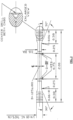
- EAC resistance is tested per ASTM G49 and per the conditions defined below. At least three short transverse (ST) samples are taken from mid-thickness of the final product and between W/4 and 3W/4 of the final product. The extracted samples are then machined into tensile specimens per ASTM E8 and matching the dimensions of FIG. 3 (the dimensions of FIG. 3 are in inches). If the final product thickness is at least 2.25 inches, then the length of the tensile specimen is 2.00 inches, as shown in FIG. 3 . If the final product thickness is from 1.50 inches to less than 2.25 inches, the length of the specimen must be at least 1.25 inches and should be as close to 2.00 inches as possible.
- the tensile specimens Prior to testing the tensile specimens are to be cleaned / degreased by washing in acetone. The tensile specimens are then strained in the short-transverse direction at 85% or 60% of their ST tensile yield strength (strength being measured at room temperature).
- the stressing frame used is a constant strain type per ASTM G49, section 7.2.2 ( see, e.g., FIG. 4a of ASTM G49).
- the strained specimens are then placed into a controlled cabinet having air at 85% relative humidity (without additions to the air, such as chlorides) and a temperature of 70°C. At least three specimens must be tested.
- the "typical EAC resistance" is the lowest failure date of the at least three specimens.
- the "typical EAC resistance" is 76 days.
- a failure is when the specimen breaks into two halves, either along the gauge length or at one of the specimen shoulders adjoining the gauge length. Shoulder failures are statistically equivalent to gauge length failures. Thread failures are not included when determining typical EAC resistance. A thread failure is when a crack occurs in a threaded end of a specimen as opposed to in the gauge length. Thread failures are generally not detectable until the specimen is removed from the stressing frame.
- the term “or” is an inclusive “or” operator, and is equivalent to the term “and/or,” unless the context clearly dictates otherwise.
- the term “based on” is not exclusive and allows for being based on additional factors not described, unless the context clearly dictates otherwise.
- the meaning of “a,” “an,” and “the” include plural references, unless the context clearly dictates otherwise.
- the meaning of “in” includes “in” and “on”, unless the context clearly dictates otherwise.
- 7085-LS is a lab scale version of a conventional aluminum alloy, registered with the Aluminum Association as aluminum alloy 7085.
- the registered version of the 7085 alloy requires, among other things, 0.08 - 0.15 wt. % Zr, not greater than 0.04 wt. % Mn and not greater than 0.04 wt. % Cr, as shown by the document " International Alloy Designations and Chemical Composition Limits for Wrought Aluminum and Wrought Aluminum Alloys", The Aluminum Association (2009), page 12 .
- Alloys 1-7 are new alloys having lower amounts of zinc (Zn) and/or also having manganese (Mn).
- Example alloys 1,4 and 5 fall outside the scope of protection as defined by the claims.
- each alloy was aluminum and unavoidable impurities ( ⁇ 0.03 wt. % each, ⁇ 0.10 wt. % total).
- the ingots were stress-relieved, sawed into multiple sections, scalped, homogenized, and then hot rolled to plate having a final gauge of about 1.75 inches (4.445 cm).
- the alloy plates were then solution heat treated and then hot water quenched in 190°F water (87.8°C) to simulate cooling conditions at T/2 (mid-thickness) for 5 inch plate relative to cold water (ambient) quenching.
- the plates were then stretched about 2.25% and then artificially aged. Table 2, below, provides the aging conditions for the various alloys.
- the new alloys with manganese and having zinc, magnesium, and copper within the scope of the formula 2.362 ⁇ Mg+0.429*Cu+0.067*Zn ⁇ 3.062 realize an improved combination of properties, including EAC resistance properties, over the conventional 7085 materials.
- This data also suggests that using a Zn/Mg (wt. % ratio) of not greater than 5.25:1 in combination with the use of manganese may lead to an improved combination of properties.
- Table 5a Plant Mechanical Property Data Alloy-Temper Gauge (in) TYS-L (ksi) UTS-L (ksi) elong-L(%) TYS-ST (ksi) UTS-ST (ksi) elong-ST (%) Kmax-dev (ksi-sqrt-in.) KQ L-T (ksi-sqrt-in.) 7085-T7651 4.331 73.8 76.6 12.1 67.4 77.0 5.95 N/A N/A 7085-T7451 4.3 71.2 74.8 15.1 66.0 76.0 7.85 N/A N/A 7050-T7651 5.42 68.2 76.0 12.5 60.9 72.4 8 27.5 33.4 7050-T7451 3.92 68.9 77.2 12.45 6
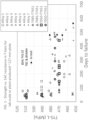
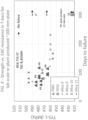
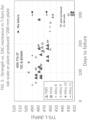
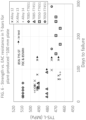
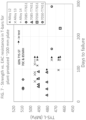
- FIGS. 1-2 illustrate the tensile strength versus EAC results. As shown, alloys falling within the scope of the composition ranges defined herein realize an improved combination of EAC resistance and strength.
- the plant produced materials include the label PP.
- the lab scale materials include the label LS.
- the plant produced materials have a dark border on the data markers.
- Alloys 2, 3, 6 and 7 achieve an improved combination of mechanical and corrosion properties over the conventional 7085-T7451 alloy.
- each alloy was aluminum and unavoidable impurities ( ⁇ 0.03 wt. % each, ⁇ 0.10 wt. % total).
- the ingots were then hot rolled to a final gauge of 1.75 inches, and then solution heat treated, and then hot water quenched to simulate cooling conditions at T/2 (mid-thickness) for approximately 8-inch thick plate.
- the plates were then stretched about 2.25% and then artificially aged, after which mechanical and corrosion properties were tested. The aging conditions and results are shown in Tables 10-13, below.
- Example 3 the same testing standards as Example 1 were used for strength, fracture toughness, EAC resistance and L-S crack deviation resistance (K max-dev ).
- the shown strength and elongation values are averages of duplicate specimens.
- the fracture toughness values are taken from a single specimen.
- the crack deviation values are averages of triplicate specimens.
- alloy 7085 simulating around 8 inch thick plate realizes longer days to failure than alloy 7085 shown in Table 4a and 4b that simulated around 5 inch thick plate.
- alloy 11 realizes no EAC failures after 300 days, but with significantly higher strength and fracture toughness than that of alloy 7050. Alloy 11 realizes significantly better EAC resistance properties than alloy 7085 and with similar strength and fracture toughness properties. Alloys 8-10 have slightly lower properties, but may realize properties similar to alloy 11 if alloys 8-10 had at least 1.35 wt. % Mg and/or a lower weight ratio of zinc-to-magnesium (e.g., a ratio of not greater than 4.75:1, (wt. % Zn)/(wt. % Mg)).
- Table 14 Composition of Plant Scale Ingot - Invention Alloys Alloy Si Fe Cu Mn Mg Cr Zn Ti Zr 12 0.02 0.04 1.68 0.27 1.53 -- 6.62 0.02 0.11 13 0.02 0.04 1.87 0.25 1.52 -- 6.43 0.02 0.11 14 0.02 0.04 1.64 0.25 1.65 -- 6.37 0.02 0.11
- each alloy was aluminum and unavoidable impurities ( ⁇ 0.03 wt. % each, ⁇ 0.10 wt. % total).
- the ingots were then hot rolled to various final gauges, and then solution heat treated and quenched in cold water.
- the plates were then stretched about 2.25-2.50% and then artificially aged.
- Table 15, below, provides the various conditions for the various alloys.
- Table 16 provides various artificial aging conditions listed in Table 15.
- the 7085 plates were aged to a T7451-type or a T7651-type temper ( see, ANSI H35.1, AMS-4329A).
- the 7050 plates were also aged to a T7451-type or a T651-type temper.
- Example 4 the same ASTM testing standards as Example 1 were used for strength, fracture toughness and EAC resistance.
- the typical L-S crack deviation resistance properties (K max-dev ) were determined per the procedure described in commonly-owned U.S. Patent Application Publication No. 2017/0088920 , paragraph 0058, as modified above per the Definitions section, above.
- the shown strength, elongation and fracture toughness values are averages of duplicate specimens.
- the crack deviation values are averages of triplicate specimens.
- Tables 17-19 below.
- alloys 12-14 show significantly improved EAC resistance over 7085 at equivalent gauge for at least one of the aging conditions.
- alloys 12-14 exhibit significantly better strength and fracture toughness relative to 7050 in similar gauges and a comparable strength and fracture toughness relative to 7085.
- EAC resistance increases with increasing gauge for given aging practices.
Landscapes
- Chemical & Material Sciences (AREA)
- Engineering & Computer Science (AREA)
- Materials Engineering (AREA)
- Mechanical Engineering (AREA)
- Metallurgy (AREA)
- Organic Chemistry (AREA)
- Crystallography & Structural Chemistry (AREA)
- Thermal Sciences (AREA)
- Physics & Mathematics (AREA)
- Conductive Materials (AREA)
- Forging (AREA)
- Heat Treatment Of Steel (AREA)
- Manufacture And Refinement Of Metals (AREA)
- Powder Metallurgy (AREA)
- Continuous Casting (AREA)
- Cell Electrode Carriers And Collectors (AREA)
Claims (15)
- 7xxx-Aluminium-Knetlegierungsprodukt, das Folgendes umfasst:0,15 bis 0,50 Gew.-% Mn;5,5-7,3 Gew.-% Zn;0,95-2,15 Gew.-% Mg;1,5-2,2 Gew.-% Cu;0,05-0,25 Gew.-% von einem oder mehreren von Zr, Cr, Sc, und Hf als Kornstruktursteuermaterialien; undbis zu 0,15 Gew.-% Ti;wobei der Rest Aluminium und unvermeidbare Verunreinigungen ist;wobei das 7xxx-Aluminium-Knetlegierungsprodukt eine Dicke von 3,8-30 cm (1,5 bis 12 Zoll) aufweist.
- 7xxx-Aluminium-Knetlegierungsprodukt nach Anspruch 1, wobei das 7xxx-Aluminium-Knetlegierungsprodukt wenigstens 0,20 Gew.-% Mn oder wenigstens 0,22 Gew.-% Mn oder wenigstens 0,25 Gew.-% Mn beinhaltet.
- 7xxx-Aluminium-Knetlegierungsprodukt nach einem der vorhergehenden Ansprüche, wobei das 7xxx-Aluminium-Knetlegierungsprodukt maximal 0,45 Gew.-% Mn oder maximal 0,40 Gew.-% Mn oder maximal 0,35 Gew.-% Mn oder maximal 0,325 Gew.-% Mn oder maximal 0,30 Gew.-% Mn beinhaltet.
- 7xxx-Aluminium-Knetlegierungsprodukt nach einem der vorhergehenden Ansprüche, wobei das 7xxx-Aluminium-Knetlegierungsprodukt maximal 7,2 Gew.-% Zn oder maximal 7,1 Gew.-% Zn oder maximal 7,0 Gew.-% Zn oder maximal 6,9 Gew.-% Zn oder maximal 6,8 Gew.-% Zn oder maximal 6,7 Gew.-% Zn beinhaltet.
- 7xxx-Aluminium-Knetlegierungsprodukt nach einem der vorhergehenden Ansprüche, wobei das 7xxx-Aluminium-Knetlegierungsprodukt wenigstens 5,75 Gew.-% Zn oder wenigstens 6,0 Gew.-% Zn oder wenigstens 6,25 Gew.-% Zn oder wenigstens 6,375 Gew.-% Zn oder wenigstens 6,5 Gew.-% Zn beinhaltet.
- 7xxx-Aluminium-Knetlegierungsprodukt nach einem der vorhergehenden Ansprüche, wobei das 7xxx-Aluminium-Knetlegierungsprodukt maximal 2,1 Gew.-% Cu oder maximal 2,0 Gew.-% Cu beinhaltet.
- 7xxx-Aluminium-Knetlegierungsprodukt nach einem der vorhergehenden Ansprüche, wobei das 7xxx-Aluminium-Knetlegierungsprodukt wenigstens 1,55 Gew.-% Cu oder wenigstens 1,60 Gew.-% Cu oder wenigstens 1,65 Gew.-% Cu oder wenigstens 1,70 Gew.-% Cu oder wenigstens 1,75 Gew.-% Cu oder wenigstens 1,80 Gew.-% Cu beinhaltet.
- 7xxx-Aluminium-Knetlegierungsprodukt nach einem der vorhergehenden Ansprüche, wobei das 7xxx-Aluminium-Knetlegierungsprodukt wenigstens 1,05 Gew.-% Mg oder wenigstens 1,15 Gew.-% Mg oder wenigstens 1,25 Gew.-% Mg oder wenigstens 1,35 Gew.-% Mg oder wenigstens 1,40 Gew.-% Mg oder wenigstens 1,45 Gew.-% Mg oder wenigstens 1,50 Gew.-% Mg oder wenigstens 1,55 Gew.-% Mg oder wenigstens 1,60 Gew.-% Mg oder wenigstens 1,65 Gew.-% Mg oder wenigstens 1,70 Gew.-% Mg beinhaltet.
- 7xxx-Aluminium-Knetlegierungsprodukt nach einem der vorhergehenden Ansprüche, wobei das 7xxx-Aluminium-Knetlegierungsprodukt maximal 2,10 Gew.-% Mg oder maximal 2,05 Gew.-% Mg oder maximal 2,00 Gew.-% Mg oder maximal 1,95 Gew.-% Mg oder über 1,90 Gew.-% Mg beinhaltet.
- 7xxx-Aluminium-Knetlegierungsprodukt nach einem der vorhergehenden Ansprüche, wobei das 7xxx-Aluminium-Knetlegierungsprodukt Folgendes beinhaltet: eine Gesamtmenge an Kupfer und Magnesium derart, dass (Gew.-% Cu + Gew.-% Mg) ≥ 2,9 Gew.-%, oder eine Gesamtmenge an Kupfer und Magnesium derart, dass (Gew.-% Cu + Gew.-% Mg) ≥ 3,0 Gew.-%, oder eine Gesamtmenge an Kupfer und Magnesium derart, dass (Gew.-% Cu + Gew.-% Mg) ≥ 3,1 Gew.-%, oder eine Gesamtmenge an Kupfer und Magnesium derart, dass (Gew.-% Cu + Gew.-% Mg) ≥ 3,2 Gew.-%, oder eine Gesamtmenge an Kupfer und Magnesium derart, dass (Gew.-% Cu + Gew.-% Mg) ≥ 3,3 Gew.-%, oder eine Gesamtmenge an Kupfer und Magnesium derart, dass (Gew.-% Cu + Gew.-% Mg) ≥ 3,35 Gew.-%, oder eine Gesamtmenge an Kupfer und Magnesium derart, dass (Gew.-% Cu + Gew.-% Mg) ≥ 3,4 Gew.-%, oder eine Gesamtmenge an Kupfer und Magnesium derart, dass (Gew.-% Cu + Gew.-% Mg) ≥ 3,45 Gew.-%, oder eine Gesamtmenge an Kupfer und Magnesium derart, dass (Gew.-% Cu + Gew.-% Mg) ≥ 3,5 Gew.-%, oder eine Gesamtmenge an Kupfer und Magnesium derart, dass (Gew.-% Cu + Gew.-% Mg) ≥ 3,55 Gew.-%, oder eine Gesamtmenge an Kupfer und Magnesium derart, dass (Gew.-% Cu + Gew.-% Mg) ≥ 3,6 Gew.-%, oder eine Gesamtmenge an Kupfer und Magnesium derart, dass (Gew.-% Cu + Gew.-% Mg) ≥ 3,65 Gew.-%, oder eine Gesamtmenge an Kupfer und Magnesium derart, dass (Gew.-% Cu + Gew.-% Mg) ≥ 3,7 Gew.-%.
- 7xxx-Aluminium-Knetlegierungsprodukt nach einem der vorhergehenden Ansprüche, wobei das 7xxx-Aluminium-Knetlegierungsprodukt Folgendes beinhaltet: eine Gesamtmenge an Kupfer und Magnesium derart, dass (Gew.-% Cu + Gew.-% Mg) ≤ 4,3 Gew.-%, oder eine Gesamtmenge an Kupfer und Magnesium derart, dass (Gew.-% Cu + Gew.-% Mg) ≤ 4,2 Gew.-%, oder eine Gesamtmenge an Kupfer und Magnesium derart, dass (Gew.-% Cu + Gew.-% Mg) ≤ 4,1 Gew.-%, oder eine Gesamtmenge an Kupfer und Magnesium derart, dass (Gew.-% Cu + Gew.-% Mg) ≤ 4,0 Gew.-%.
- 7xxx-Aluminium-Knetlegierungsprodukt nach einem der vorhergehenden Ansprüche, wobei die Mengen an Zink, Magnesium und Kupfer innerhalb des 7xxx-Aluminiumlegierungsprodukts (in Gew.-%) die Beziehung
2,362 ≤ Mg + 0,429 * Cu + 0,067 * Zn ≤ 3,062 erfüllen, oder die Mengen an Zink, Magnesium und Kupfer innerhalb des 7xxx-Aluminiumlegierungsprodukts (in Gew.-%) die Beziehung 2,502 ≤ Mg + 0,429 * Cu + 0,067 * Zn ≤ 2,912 erfüllen, oder die Mengen an Zink, Magnesium und Kupfer innerhalb des 7xxx-Aluminiumlegierungsprodukts (in Gew.-%) die Beziehung 2,662 ≤ Mg + 0,429 * Cu + 0,067 * Zn ≤ 3,062 erfüllen, oder die Mengen an Zink, Magnesium und Kupfer innerhalb des 7xxx-Aluminiumlegierungsprodukts die Beziehung
2,662 ≤ Mg + 0,429 * Cu + 0,067 * Zn ≤ 2,912 erfüllen (in Gew.-%). - 7xxx-Aluminium-Knetlegierungsprodukt nach einem der vorhergehenden Ansprüche, wobei die Mengen an Zink und Magnesium derart sind, dass ein Gewichtsverhältnis von Zink zu Magnesium maximal 5,25 : 1 oder maximal 5,00 : 1 oder maximal 4,75 : 1 oder maximal 4,60 : 1 oder maximal 4,50 : 1 oder maximal 4,40 : 1 oder maximal 4,35 : 1 oder maximal 4,30 : 1 oder maximal 4,25 : 1 oder maximal 4,20 : 1 oder maximal 4,15 : 1 oder maximal 4,10 : 1 oder maximal 4,05 : 1 oder maximal 4,00 : 1 oder maximal 3,95: 1 oder maximal 3,90 : 1 beträgt.
- 7xxx-Aluminium-Knetlegierungsprodukt nach einem der vorhergehenden Ansprüche, wobei die Mengen an Zink und Magnesium derart sind, dass ein Gewichtsverhältnis von Zink zu Magnesium wenigstens 3,00 : 1 oder wenigstens 3,25 : 1 oder wenigstens 3,33 : 1 oder wenigstens 3,45 : 1 oder wenigstens 3,55 : 1 oder wenigstens 3,60 : 1 beträgt.
- Strukturkomponente für Luft- und Raumfahrt, die aus einem beliebigen der 7xxx-Aluminium-Knetlegierungsprodukte nach den Ansprüchen 1-14 hergestellt wird.
Applications Claiming Priority (3)
| Application Number | Priority Date | Filing Date | Title |
|---|---|---|---|
| US201762523128P | 2017-06-21 | 2017-06-21 | |
| US201762571401P | 2017-10-12 | 2017-10-12 | |
| PCT/US2018/038838 WO2018237196A1 (en) | 2017-06-21 | 2018-06-21 | Improved thick wrought 7xxx aluminum alloys, and methods for making the same |
Publications (3)
| Publication Number | Publication Date |
|---|---|
| EP3642375A1 EP3642375A1 (de) | 2020-04-29 |
| EP3642375B1 EP3642375B1 (de) | 2022-01-05 |
| EP3642375B2 true EP3642375B2 (de) | 2025-05-14 |
Family
ID=62904621
Family Applications (1)
| Application Number | Title | Priority Date | Filing Date |
|---|---|---|---|
| EP18740432.2A Active EP3642375B2 (de) | 2017-06-21 | 2018-06-21 | Verbesserte dicke knetlegierungen aus 7xxx-aluminium und verfahren zur herstellung davon |
Country Status (6)
| Country | Link |
|---|---|
| EP (1) | EP3642375B2 (de) |
| CN (1) | CN110832094A (de) |
| BR (1) | BR112019026036B1 (de) |
| CA (1) | CA3066252C (de) |
| RU (1) | RU2745433C1 (de) |
| WO (1) | WO2018237196A1 (de) |
Families Citing this family (5)
| Publication number | Priority date | Publication date | Assignee | Title |
|---|---|---|---|---|
| FR3068370B1 (fr) * | 2017-07-03 | 2019-08-02 | Constellium Issoire | Alliages al- zn-cu-mg et procede de fabrication |
| WO2020102441A2 (en) | 2018-11-14 | 2020-05-22 | Arconic Inc. | Improved 7xxx aluminum alloys |
| CN120174241A (zh) | 2019-06-24 | 2025-06-20 | 奥科宁克技术有限责任公司 | 改进的厚锻造7xxx铝合金及其制造方法 |
| CN111959608B (zh) * | 2020-08-14 | 2021-06-29 | 福建祥鑫股份有限公司 | 一种铝合金轻卡大梁及其制备方法 |
| US20220145439A1 (en) * | 2020-11-11 | 2022-05-12 | Kaiser Aluminum Fabricated Products, Llc | High Strength and High Fracture Toughness 7xxx Aerospace Alloy Products |
Citations (2)
| Publication number | Priority date | Publication date | Assignee | Title |
|---|---|---|---|---|
| US20050189044A1 (en) † | 2003-04-10 | 2005-09-01 | Rinze Benedictus | Al-Zn-Mg-Cu alloy with improved damage tolerance-strength combination properties |
| US20170088920A1 (en) † | 2015-05-11 | 2017-03-30 | Arconic Inc. | Thick wrought 7xxx aluminum alloys, and methods for making the same |
Family Cites Families (4)
| Publication number | Priority date | Publication date | Assignee | Title |
|---|---|---|---|---|
| IL156386A0 (en) | 2000-12-21 | 2004-01-04 | Alcoa Inc | Aluminum alloy products and artificial aging method |
| AT502310B1 (de) * | 2003-04-10 | 2010-02-15 | Corus Aluminium Walzprod Gmbh | Eine al-zn-mg-cu-legierung |
| JP5149629B2 (ja) * | 2005-02-10 | 2013-02-20 | コンステリウム ロールド プロダクツ−レイヴンズウッド,エルエルシー | アルミニウムを主成分とするAl‐Zn‐Cu‐Mg合金及びその製造方法と使用方法 |
| CN101479397B (zh) * | 2006-06-30 | 2013-03-13 | 肯联铝业轧制品-雷文斯伍德有限公司 | 高强度、可热处理的Al-Zn-Mg铝合金 |
-
2018
- 2018-06-21 EP EP18740432.2A patent/EP3642375B2/de active Active
- 2018-06-21 CA CA3066252A patent/CA3066252C/en active Active
- 2018-06-21 RU RU2019143665A patent/RU2745433C1/ru active
- 2018-06-21 WO PCT/US2018/038838 patent/WO2018237196A1/en not_active Ceased
- 2018-06-21 CN CN201880038484.5A patent/CN110832094A/zh active Pending
- 2018-06-21 BR BR112019026036-6A patent/BR112019026036B1/pt active IP Right Grant
Patent Citations (2)
| Publication number | Priority date | Publication date | Assignee | Title |
|---|---|---|---|---|
| US20050189044A1 (en) † | 2003-04-10 | 2005-09-01 | Rinze Benedictus | Al-Zn-Mg-Cu alloy with improved damage tolerance-strength combination properties |
| US20170088920A1 (en) † | 2015-05-11 | 2017-03-30 | Arconic Inc. | Thick wrought 7xxx aluminum alloys, and methods for making the same |
Also Published As
| Publication number | Publication date |
|---|---|
| CA3066252A1 (en) | 2018-12-27 |
| CN110832094A (zh) | 2020-02-21 |
| WO2018237196A1 (en) | 2018-12-27 |
| CA3066252C (en) | 2022-11-01 |
| BR112019026036B1 (pt) | 2024-02-06 |
| EP3642375A1 (de) | 2020-04-29 |
| WO2018237196A9 (en) | 2019-02-21 |
| BR112019026036A2 (pt) | 2020-06-23 |
| EP3642375B1 (de) | 2022-01-05 |
| RU2745433C1 (ru) | 2021-03-25 |
Similar Documents
| Publication | Publication Date | Title |
|---|---|---|
| EP3642375B2 (de) | Verbesserte dicke knetlegierungen aus 7xxx-aluminium und verfahren zur herstellung davon | |
| US10472707B2 (en) | Al—Zn—Mg—Cu alloy with improved damage tolerance-strength combination properties | |
| US7666267B2 (en) | Al-Zn-Mg-Cu alloy with improved damage tolerance-strength combination properties | |
| EP1673484B1 (de) | Aluminium-kupfer-magnesium-legierungen mit zusätzen von lithium | |
| EP1861516B1 (de) | Legierungen auf al-zn-cu-mg aluminum-basis, verfahren zu ihrer herstellung und verwendung | |
| EP2231888B1 (de) | Verbesserte aluminium-kupfer-lithium-legierungen | |
| US20050006010A1 (en) | Method for producing a high strength Al-Zn-Mg-Cu alloy | |
| EP3649268B1 (de) | Al-zn-cu-mg-legierungen und deren herstellungsverfahren | |
| EP1945825B1 (de) | Al-cu-mg- legierung für luftfahrtanwendung | |
| US20220106672A1 (en) | Improved thick wrought 7xxx aluminum alloys, and methods for making the same | |
| US20210340656A1 (en) | 7xxx aluminum alloys | |
| EP3414352B1 (de) | Aus al-cu-li-mg-mn-zn-legierung geschmiedetes produkt | |
| US20200115780A1 (en) | Thick wrought 7xxx aluminum alloys, and methods for making the same | |
| CA3199970A1 (en) | Method of manufacturing 2xxx-series aluminum alloy products | |
| RU2813825C2 (ru) | Улучшенные деформируемые алюминиевые сплавы серии 7xxx большой толщины и способы их получения |
Legal Events
| Date | Code | Title | Description |
|---|---|---|---|
| STAA | Information on the status of an ep patent application or granted ep patent |
Free format text: STATUS: UNKNOWN |
|
| STAA | Information on the status of an ep patent application or granted ep patent |
Free format text: STATUS: THE INTERNATIONAL PUBLICATION HAS BEEN MADE |
|
| PUAI | Public reference made under article 153(3) epc to a published international application that has entered the european phase |
Free format text: ORIGINAL CODE: 0009012 |
|
| STAA | Information on the status of an ep patent application or granted ep patent |
Free format text: STATUS: REQUEST FOR EXAMINATION WAS MADE |
|
| 17P | Request for examination filed |
Effective date: 20191216 |
|
| AK | Designated contracting states |
Kind code of ref document: A1 Designated state(s): AL AT BE BG CH CY CZ DE DK EE ES FI FR GB GR HR HU IE IS IT LI LT LU LV MC MK MT NL NO PL PT RO RS SE SI SK SM TR |
|
| AX | Request for extension of the european patent |
Extension state: BA ME |
|
| RAP1 | Party data changed (applicant data changed or rights of an application transferred) |
Owner name: ARCONIC TECHNOLOGIES LLC |
|
| DAV | Request for validation of the european patent (deleted) | ||
| DAX | Request for extension of the european patent (deleted) | ||
| GRAP | Despatch of communication of intention to grant a patent |
Free format text: ORIGINAL CODE: EPIDOSNIGR1 |
|
| STAA | Information on the status of an ep patent application or granted ep patent |
Free format text: STATUS: GRANT OF PATENT IS INTENDED |
|
| INTG | Intention to grant announced |
Effective date: 20210723 |
|
| GRAJ | Information related to disapproval of communication of intention to grant by the applicant or resumption of examination proceedings by the epo deleted |
Free format text: ORIGINAL CODE: EPIDOSDIGR1 |
|
| STAA | Information on the status of an ep patent application or granted ep patent |
Free format text: STATUS: REQUEST FOR EXAMINATION WAS MADE |
|
| GRAP | Despatch of communication of intention to grant a patent |
Free format text: ORIGINAL CODE: EPIDOSNIGR1 |
|
| STAA | Information on the status of an ep patent application or granted ep patent |
Free format text: STATUS: GRANT OF PATENT IS INTENDED |
|
| GRAS | Grant fee paid |
Free format text: ORIGINAL CODE: EPIDOSNIGR3 |
|
| GRAA | (expected) grant |
Free format text: ORIGINAL CODE: 0009210 |
|
| STAA | Information on the status of an ep patent application or granted ep patent |
Free format text: STATUS: THE PATENT HAS BEEN GRANTED |
|
| INTC | Intention to grant announced (deleted) | ||
| INTG | Intention to grant announced |
Effective date: 20211125 |
|
| AK | Designated contracting states |
Kind code of ref document: B1 Designated state(s): AL AT BE BG CH CY CZ DE DK EE ES FI FR GB GR HR HU IE IS IT LI LT LU LV MC MK MT NL NO PL PT RO RS SE SI SK SM TR |
|
| REG | Reference to a national code |
Ref country code: GB Ref legal event code: FG4D |
|
| REG | Reference to a national code |
Ref country code: CH Ref legal event code: EP |
|
| REG | Reference to a national code |
Ref country code: AT Ref legal event code: REF Ref document number: 1460660 Country of ref document: AT Kind code of ref document: T Effective date: 20220115 |
|
| REG | Reference to a national code |
Ref country code: DE Ref legal event code: R096 Ref document number: 602018029126 Country of ref document: DE |
|
| REG | Reference to a national code |
Ref country code: IE Ref legal event code: FG4D |
|
| REG | Reference to a national code |
Ref country code: RO Ref legal event code: EPE |
|
| REG | Reference to a national code |
Ref country code: LT Ref legal event code: MG9D |
|
| REG | Reference to a national code |
Ref country code: NL Ref legal event code: MP Effective date: 20220105 |
|
| PG25 | Lapsed in a contracting state [announced via postgrant information from national office to epo] |
Ref country code: NL Free format text: LAPSE BECAUSE OF FAILURE TO SUBMIT A TRANSLATION OF THE DESCRIPTION OR TO PAY THE FEE WITHIN THE PRESCRIBED TIME-LIMIT Effective date: 20220105 |
|
| PG25 | Lapsed in a contracting state [announced via postgrant information from national office to epo] |
Ref country code: SE Free format text: LAPSE BECAUSE OF FAILURE TO SUBMIT A TRANSLATION OF THE DESCRIPTION OR TO PAY THE FEE WITHIN THE PRESCRIBED TIME-LIMIT Effective date: 20220105 Ref country code: RS Free format text: LAPSE BECAUSE OF FAILURE TO SUBMIT A TRANSLATION OF THE DESCRIPTION OR TO PAY THE FEE WITHIN THE PRESCRIBED TIME-LIMIT Effective date: 20220105 Ref country code: PT Free format text: LAPSE BECAUSE OF FAILURE TO SUBMIT A TRANSLATION OF THE DESCRIPTION OR TO PAY THE FEE WITHIN THE PRESCRIBED TIME-LIMIT Effective date: 20220505 Ref country code: NO Free format text: LAPSE BECAUSE OF FAILURE TO SUBMIT A TRANSLATION OF THE DESCRIPTION OR TO PAY THE FEE WITHIN THE PRESCRIBED TIME-LIMIT Effective date: 20220405 Ref country code: LT Free format text: LAPSE BECAUSE OF FAILURE TO SUBMIT A TRANSLATION OF THE DESCRIPTION OR TO PAY THE FEE WITHIN THE PRESCRIBED TIME-LIMIT Effective date: 20220105 Ref country code: HR Free format text: LAPSE BECAUSE OF FAILURE TO SUBMIT A TRANSLATION OF THE DESCRIPTION OR TO PAY THE FEE WITHIN THE PRESCRIBED TIME-LIMIT Effective date: 20220105 Ref country code: ES Free format text: LAPSE BECAUSE OF FAILURE TO SUBMIT A TRANSLATION OF THE DESCRIPTION OR TO PAY THE FEE WITHIN THE PRESCRIBED TIME-LIMIT Effective date: 20220105 Ref country code: BG Free format text: LAPSE BECAUSE OF FAILURE TO SUBMIT A TRANSLATION OF THE DESCRIPTION OR TO PAY THE FEE WITHIN THE PRESCRIBED TIME-LIMIT Effective date: 20220405 |
|
| PG25 | Lapsed in a contracting state [announced via postgrant information from national office to epo] |
Ref country code: PL Free format text: LAPSE BECAUSE OF FAILURE TO SUBMIT A TRANSLATION OF THE DESCRIPTION OR TO PAY THE FEE WITHIN THE PRESCRIBED TIME-LIMIT Effective date: 20220105 Ref country code: LV Free format text: LAPSE BECAUSE OF FAILURE TO SUBMIT A TRANSLATION OF THE DESCRIPTION OR TO PAY THE FEE WITHIN THE PRESCRIBED TIME-LIMIT Effective date: 20220105 Ref country code: GR Free format text: LAPSE BECAUSE OF FAILURE TO SUBMIT A TRANSLATION OF THE DESCRIPTION OR TO PAY THE FEE WITHIN THE PRESCRIBED TIME-LIMIT Effective date: 20220406 Ref country code: FI Free format text: LAPSE BECAUSE OF FAILURE TO SUBMIT A TRANSLATION OF THE DESCRIPTION OR TO PAY THE FEE WITHIN THE PRESCRIBED TIME-LIMIT Effective date: 20220105 |
|
| PG25 | Lapsed in a contracting state [announced via postgrant information from national office to epo] |
Ref country code: IS Free format text: LAPSE BECAUSE OF FAILURE TO SUBMIT A TRANSLATION OF THE DESCRIPTION OR TO PAY THE FEE WITHIN THE PRESCRIBED TIME-LIMIT Effective date: 20220505 |
|
| REG | Reference to a national code |
Ref country code: DE Ref legal event code: R026 Ref document number: 602018029126 Country of ref document: DE |
|
| PLBI | Opposition filed |
Free format text: ORIGINAL CODE: 0009260 |
|
| PLAX | Notice of opposition and request to file observation + time limit sent |
Free format text: ORIGINAL CODE: EPIDOSNOBS2 |
|
| PG25 | Lapsed in a contracting state [announced via postgrant information from national office to epo] |
Ref country code: SM Free format text: LAPSE BECAUSE OF FAILURE TO SUBMIT A TRANSLATION OF THE DESCRIPTION OR TO PAY THE FEE WITHIN THE PRESCRIBED TIME-LIMIT Effective date: 20220105 Ref country code: SK Free format text: LAPSE BECAUSE OF FAILURE TO SUBMIT A TRANSLATION OF THE DESCRIPTION OR TO PAY THE FEE WITHIN THE PRESCRIBED TIME-LIMIT Effective date: 20220105 Ref country code: EE Free format text: LAPSE BECAUSE OF FAILURE TO SUBMIT A TRANSLATION OF THE DESCRIPTION OR TO PAY THE FEE WITHIN THE PRESCRIBED TIME-LIMIT Effective date: 20220105 Ref country code: DK Free format text: LAPSE BECAUSE OF FAILURE TO SUBMIT A TRANSLATION OF THE DESCRIPTION OR TO PAY THE FEE WITHIN THE PRESCRIBED TIME-LIMIT Effective date: 20220105 Ref country code: CZ Free format text: LAPSE BECAUSE OF FAILURE TO SUBMIT A TRANSLATION OF THE DESCRIPTION OR TO PAY THE FEE WITHIN THE PRESCRIBED TIME-LIMIT Effective date: 20220105 |
|
| 26 | Opposition filed |
Opponent name: CONSTELLIUM ISSOIRE/C-TEC CONSTELLIUM TECHNOLOGY CENTER Effective date: 20221004 |
|
| PG25 | Lapsed in a contracting state [announced via postgrant information from national office to epo] |
Ref country code: AL Free format text: LAPSE BECAUSE OF FAILURE TO SUBMIT A TRANSLATION OF THE DESCRIPTION OR TO PAY THE FEE WITHIN THE PRESCRIBED TIME-LIMIT Effective date: 20220105 |
|
| PG25 | Lapsed in a contracting state [announced via postgrant information from national office to epo] |
Ref country code: MC Free format text: LAPSE BECAUSE OF FAILURE TO SUBMIT A TRANSLATION OF THE DESCRIPTION OR TO PAY THE FEE WITHIN THE PRESCRIBED TIME-LIMIT Effective date: 20220105 |
|
| REG | Reference to a national code |
Ref country code: CH Ref legal event code: PL |
|
| REG | Reference to a national code |
Ref country code: BE Ref legal event code: MM Effective date: 20220630 |
|
| PLBB | Reply of patent proprietor to notice(s) of opposition received |
Free format text: ORIGINAL CODE: EPIDOSNOBS3 |
|
| PG25 | Lapsed in a contracting state [announced via postgrant information from national office to epo] |
Ref country code: SI Free format text: LAPSE BECAUSE OF FAILURE TO SUBMIT A TRANSLATION OF THE DESCRIPTION OR TO PAY THE FEE WITHIN THE PRESCRIBED TIME-LIMIT Effective date: 20220105 |
|
| PG25 | Lapsed in a contracting state [announced via postgrant information from national office to epo] |
Ref country code: LU Free format text: LAPSE BECAUSE OF NON-PAYMENT OF DUE FEES Effective date: 20220621 Ref country code: LI Free format text: LAPSE BECAUSE OF NON-PAYMENT OF DUE FEES Effective date: 20220630 Ref country code: IE Free format text: LAPSE BECAUSE OF NON-PAYMENT OF DUE FEES Effective date: 20220621 Ref country code: CH Free format text: LAPSE BECAUSE OF NON-PAYMENT OF DUE FEES Effective date: 20220630 |
|
| PG25 | Lapsed in a contracting state [announced via postgrant information from national office to epo] |
Ref country code: BE Free format text: LAPSE BECAUSE OF NON-PAYMENT OF DUE FEES Effective date: 20220630 |
|
| P01 | Opt-out of the competence of the unified patent court (upc) registered |
Effective date: 20230517 |
|
| REG | Reference to a national code |
Ref country code: AT Ref legal event code: UEP Ref document number: 1460660 Country of ref document: AT Kind code of ref document: T Effective date: 20220105 |
|
| PG25 | Lapsed in a contracting state [announced via postgrant information from national office to epo] |
Ref country code: IT Free format text: LAPSE BECAUSE OF FAILURE TO SUBMIT A TRANSLATION OF THE DESCRIPTION OR TO PAY THE FEE WITHIN THE PRESCRIBED TIME-LIMIT Effective date: 20220105 |
|
| PG25 | Lapsed in a contracting state [announced via postgrant information from national office to epo] |
Ref country code: MK Free format text: LAPSE BECAUSE OF FAILURE TO SUBMIT A TRANSLATION OF THE DESCRIPTION OR TO PAY THE FEE WITHIN THE PRESCRIBED TIME-LIMIT Effective date: 20220105 Ref country code: CY Free format text: LAPSE BECAUSE OF FAILURE TO SUBMIT A TRANSLATION OF THE DESCRIPTION OR TO PAY THE FEE WITHIN THE PRESCRIBED TIME-LIMIT Effective date: 20220105 |
|
| PG25 | Lapsed in a contracting state [announced via postgrant information from national office to epo] |
Ref country code: HU Free format text: LAPSE BECAUSE OF FAILURE TO SUBMIT A TRANSLATION OF THE DESCRIPTION OR TO PAY THE FEE WITHIN THE PRESCRIBED TIME-LIMIT; INVALID AB INITIO Effective date: 20180621 |
|
| PG25 | Lapsed in a contracting state [announced via postgrant information from national office to epo] |
Ref country code: TR Free format text: LAPSE BECAUSE OF FAILURE TO SUBMIT A TRANSLATION OF THE DESCRIPTION OR TO PAY THE FEE WITHIN THE PRESCRIBED TIME-LIMIT Effective date: 20220105 |
|
| PG25 | Lapsed in a contracting state [announced via postgrant information from national office to epo] |
Ref country code: MT Free format text: LAPSE BECAUSE OF FAILURE TO SUBMIT A TRANSLATION OF THE DESCRIPTION OR TO PAY THE FEE WITHIN THE PRESCRIBED TIME-LIMIT Effective date: 20220105 |
|
| PUAH | Patent maintained in amended form |
Free format text: ORIGINAL CODE: 0009272 |
|
| STAA | Information on the status of an ep patent application or granted ep patent |
Free format text: STATUS: PATENT MAINTAINED AS AMENDED |
|
| 27A | Patent maintained in amended form |
Effective date: 20250514 |
|
| AK | Designated contracting states |
Kind code of ref document: B2 Designated state(s): AL AT BE BG CH CY CZ DE DK EE ES FI FR GB GR HR HU IE IS IT LI LT LU LV MC MK MT NL NO PL PT RO RS SE SI SK SM TR |
|
| REG | Reference to a national code |
Ref country code: DE Ref legal event code: R102 Ref document number: 602018029126 Country of ref document: DE |
|
| PGFP | Annual fee paid to national office [announced via postgrant information from national office to epo] |
Ref country code: DE Payment date: 20250520 Year of fee payment: 8 |
|
| PGFP | Annual fee paid to national office [announced via postgrant information from national office to epo] |
Ref country code: GB Payment date: 20250520 Year of fee payment: 8 |
|
| PGFP | Annual fee paid to national office [announced via postgrant information from national office to epo] |
Ref country code: FR Payment date: 20250520 Year of fee payment: 8 |
|
| PGFP | Annual fee paid to national office [announced via postgrant information from national office to epo] |
Ref country code: AT Payment date: 20250522 Year of fee payment: 8 Ref country code: RO Payment date: 20250616 Year of fee payment: 8 |