EP3640889B1 - In situ creation of planar natural feature targets - Google Patents
In situ creation of planar natural feature targets Download PDFInfo
- Publication number
- EP3640889B1 EP3640889B1 EP19211717.4A EP19211717A EP3640889B1 EP 3640889 B1 EP3640889 B1 EP 3640889B1 EP 19211717 A EP19211717 A EP 19211717A EP 3640889 B1 EP3640889 B1 EP 3640889B1
- Authority
- EP
- European Patent Office
- Prior art keywords
- planar target
- reference image
- target
- camera
- planar
- Prior art date
- Legal status (The legal status is an assumption and is not a legal conclusion. Google has not performed a legal analysis and makes no representation as to the accuracy of the status listed.)
- Active
Links
Images

Classifications
-
- G—PHYSICS
- G06—COMPUTING OR CALCULATING; COUNTING
- G06T—IMAGE DATA PROCESSING OR GENERATION, IN GENERAL
- G06T19/00—Manipulating three-dimensional [3D] models or images for computer graphics
- G06T19/006—Mixed reality
-
- G—PHYSICS
- G06—COMPUTING OR CALCULATING; COUNTING
- G06T—IMAGE DATA PROCESSING OR GENERATION, IN GENERAL
- G06T7/00—Image analysis
- G06T7/20—Analysis of motion
- G06T7/246—Analysis of motion using feature-based methods, e.g. the tracking of corners or segments
-
- G—PHYSICS
- G06—COMPUTING OR CALCULATING; COUNTING
- G06T—IMAGE DATA PROCESSING OR GENERATION, IN GENERAL
- G06T7/00—Image analysis
- G06T7/70—Determining position or orientation of objects or cameras
- G06T7/73—Determining position or orientation of objects or cameras using feature-based methods
- G06T7/74—Determining position or orientation of objects or cameras using feature-based methods involving reference images or patches
-
- G—PHYSICS
- G06—COMPUTING OR CALCULATING; COUNTING
- G06T—IMAGE DATA PROCESSING OR GENERATION, IN GENERAL
- G06T2207/00—Indexing scheme for image analysis or image enhancement
- G06T2207/30—Subject of image; Context of image processing
- G06T2207/30244—Camera pose
Definitions
- the subject matter disclosed herein relates generally to planar target creation and tracking.
- Camera sensor data or images can be used as input to build a 3D map of an environment.
- virtual objects can be inserted into a device display, the virtual objects interacting with or replacing real/physical world objects.
- An AR system can include input from a camera sensor to record real world objects as images or video, and display an AR view on the device display.
- AR systems can implement a tracking system to estimate a user's position and orientation (pose) relative to a reference.
- Traditional tracking systems are limited by the type of reference tracked as well as by initialization procedures used to begin tracking.
- a previously acquired reference or an artificial marker may be used to initialize tracking of a 3-Dimensional (3D) model of an environment. Otherwise, without the previously known reference, objects may appear at the wrong location or float around the map of the environment.
- a tracking system utilizing a single camera may also rely upon initializing a 3D map from two subsequent reference images captured by the single camera. Creating a 3D map using traditional techniques based on the two reference images is only possible if the camera motion between the two reference images is appropriate, and also maintains enough overlap between the scenes in both images.
- Traditional tracking implementations may also rely on direct user input to select the two reference images or may provide an additional visual target to record 6 degrees of freedom (6DoF) camera motion before a 3D map can be initialized.
- 6DoF 6 degrees of freedom
- some tracking methods require the user to perform a specific unintuitive motion sequence without visual feedback so that 3D reconstruction methods can be used to find a real plane of the target.
- US 2012/ 269 388 A1 is directed to tracking systems for augmented reality.
- Embodiments disclosed herein may relate to a method for planar target creation and tracking.
- the method includes initializing a three-dimensional target from a single fist reference image and prior to processing a subsequent image.
- the method further includes processing one or more subsequent images, and tracking the planar target in six degrees of freedom (6DoF) upon the processing of the one or more subsequent images.
- the method further includes selecting a second reference image from the processed one or more subsequent images and refining the planar target to a more accurate planar target.
- Embodiments disclosed herein may also relate to a computer readable non-transitory storage medium with instructions to perform planar target creation and tracking.
- the medium includes initializing a three-dimensional target from a single fist reference image and prior to processing a subsequent image.
- the medium further includes processing one or more subsequent images, and tracking the planar target in 6DoF upon the processing of the one or more subsequent images.
- the medium further includes selecting a second reference image from the processed one or more subsequent images and refining the planar target to a more accurate planar target.
- planar target is assumed as initialized from a fronto-parallel view and the entire reference image is used to initialize the planar target.
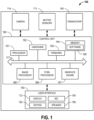
- FIG. 1 is a block diagram illustrating a system in which embodiments of the invention may be practiced.
- the system may be a device 100, which may include a general purpose processor 161, image processor 166, pose processor 168, graphics engine 167 and a memory 164.
- the device 100 may also include a number of device sensors coupled to one or more buses 177 or signal lines further coupled to at least one of the processors 161, 166, and 168.
- the device 100 may be a: mobile device, wireless device, cell phone, personal digital assistant, wearable device (e.g., eyeglasses, watch, head wear, or similar bodily attached device), mobile computer, tablet, personal computer, laptop computer, or any type of device that has processing capabilities.
- the device 100 may function as a mobile or wireless device and may communicate via one or more wireless communication links through a wireless network that are based on or otherwise support any suitable wireless communication technology.
- the device 100 may be a client or server, and may associate with a wireless network.
- the network may comprise a body area network or a personal area network (e.g., an ultra-wideband network).
- the network may comprise a local area network or a wide area network.
- a wireless device may support or otherwise use one or more of a variety of wireless communication technologies, protocols, or standards such as, for example, CDMA, TDMA, OFDM, OFDMA, WiMAX, and Wi-Fi.
- a wireless device may support or otherwise use one or more of a variety of corresponding modulation or multiplexing schemes.
- a mobile wireless device may wirelessly communicate with other mobile devices, cell phones, other wired and wireless computers, Internet web sites, etc.
- an in-situ target creation module may initialize a planar target instantly from a single reference image.
- the term module is used to refer to hardware, firmware, software, or some combination thereof that is capable of performing the recited functions.
- an ITC may receive images or video from a single camera 114 or monocular visual input. Planar target initialization may occur upon processing the single reference image and before any other images are processed.
- the ITC may process the single reference image (e.g., extract feature points associated with a target) and may estimate a 6-degree of freedom camera position and orientation (pose) from a set of point correspondences (e.g., features from two or more images).
- the detection of feature points and the estimation the 6DoF camera pose for the feature points are jointly referred to as "tracking" the target.
- the ITC may initialize the planar target without prior knowledge of the user's environment (e.g., without a prepopulated map, CAD model, markers in the scene or similar predefined target descriptor) and without the use of two different precise reference images.
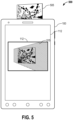
- the ITC may provide visual (e.g., displayed target adjustment) feedback during initialization.
- the ITC may output or display an augmented reality (AR) representation of the input images or video after receiving images or video input.
- the ITC may display the AR representation (e.g., a modification or addition of a virtual object into a real world scene) of the target in real-time, near real-time, within a short time window, or instantaneously upon initialization of the target from a single image depending on the capabilities of the device 100.
- the ITC module may initialize and display the AR representation without any additional sensor input (e.g., without the aid of an accelerometer, laser rangefinder, gyroscope, GPS, or other sensors used for determining position). Therefore, expensive and complex multiple camera array systems can be minimized and the ITC may be coupled to commonly available camera sensors.
- the ITC may be coupled to a single camera, mobile device such as a smartphone, or wearable device such as AR eyeglasses.
- the ITC can fully initialize a planar target from a single reference image, no additional specific camera motions or input are used before tracking can begin.
- the ITC may track a scene or object immediately, in real-time, near real-time, or within a short time window of receiving the reference image and may provide concurrent real-time AR updates to the display (e.g., an augmentation of the target).
- targets tracking from initialization of a single initial reference image users are naturally (i.e. without specific prompting or instructions) encouraged to continue to move/reposition the camera and explore a target or scene with the camera. Greater exploration of a scene at different angles and viewpoints allows the ITC to collect additional subsequent images that can be tested for sufficient translation from the first reference image. Once an image with sufficient translation is detected, the image can be assigned as a second reference image to be used in triangulation or further refinement of the map, target, and camera pose.
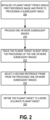
- FIG. 2 illustrates a flow diagram of one embodiment of in-situ target creation.
- the ITC can initialize a planar target from a captured image (e.g., as a single reference image) and prior to processing any other/subsequent images. In some embodiments, the initialization may occur immediately, in real-time, near real-time, or within a short time window of the reference image capture.
- the ITC may create the planar target based on the processing of the single reference image.
- planar is used to describe objects approximately flat with a two-dimensional surface.
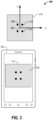
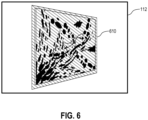
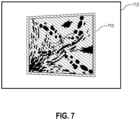
- processing a captured image can include calculating a set of extracted features or feature points and treating the single reference image as a fronto-parallel view of a target. Initialization of the planar target is described in greater detail below.
- the ITC may process one or more subsequent images. Processing can include determining a set of features within the subsequent image.
- the set of features may be the same features determined after processing the single reference image, however the reference feature location for one or more features may be different in the subsequent image if the camera pose changed since processing the single reference image.
- the ITC can track the planar target (e.g., a planar natural feature target) in six degrees of freedom upon the processing of the one or more subsequent images.
- the ITC tracking may occur immediately, instantaneously, in real-time, near real time, or within a short time period following receipt by the ITC of the single reference image. Tracking the target may include comparing locations of each feature point from the single reference image with corresponding features in subsequent image(s) and determining a change in location of one or more of the same feature points found in both images.
- the ITC may update the reference feature locations to provide an updated camera pose.
- the ITC may continue tracking a target (e.g., scene, object, or map) based on processing of one or more subsequent images (e.g., one or more images captured at a later point in time from the capture of the single reference image).
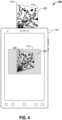
- the ITC may also cause the device display to output an augmented reality representation of the target immediately, in real-time, near real-time, or within a short time window of the initialization of the planar target.
- the ITC may select a second reference image from the processed one or more subsequent images. For example, a second reference image may be selected upon the ITC determining that the translation of the second reference image relative to the first reference image meets a translation threshold.
- the ITC may further refine the planar target to a more accurate planar target.
- the ITC may optimize the camera and model (target) based on accumulated feature(s) from a subsequent image that meets a translation threshold. Further details on refinement of the planar target are described below.
- the ITC can initialize a planar target immediately, in real-time, near real-time, or within a short time window of receiving a captured image (i.e., single reference image) and prior to processing any subsequent images. In some embodiments, the ITC may create a complete planar target based entirely on the processing of the single reference image.
- the ITC may not have access to and may not solicit input pertaining to predetermined information about a target such as object or scene markers, map, alternate sensor data measurements or other target information collected before an initial captured image.
- a device may automatically start, execute, or run the ITC (e.g., by using processor 161) without any direct or manual user interaction.
- the device may capture a first image from a camera (e.g., camera 114) and send the image to the ITC for planar target initialization, tracking, and/or augmented reality processing.
- the ITC may cause the device to prompt a user to start initialization and tracking of a target by touching a touch screen, pressing a button, or similar input.
- the ITC may also be integrated into an application or program, and the application or program can capture the single reference image and trigger the ITC.
- the captured image may be received from an image feed on the device or a user may initiate the capture of the captured image.
- the single reference image may be automatically captured by camera 114 when camera movement or motion is detected. Captured images may be still camera images or frames from a video feed.
- a feature e.g., feature point or interest point
- the features extracted from the image may represent distinct points along three-dimensional space (e.g., coordinates on axes X, Y, and Z) and every feature point may have an associated feature location.
- the single reference image may have reference features that are used for comparison to features found in subsequent images. The features in subsequent images either match or fail to match (i.e. are the same) as the reference features of the single reference image.
- Feature detection may be an image processing operation to examine every pixel to determine whether a feature exists at a particular pixel. Feature detection may process an entire image or, alternatively certain portions or parts of the image.
- a local image patch around the feature can be extracted.
- Features may be extracted using a well-known technique, such as Scale Invariant Feature Transform (SIFT), which localizes features and generates their descriptions.
- SIFT Scale Invariant Feature Transform
- other techniques such as Speed Up Robust Features (SURF), Gradient Location-Orientation histogram (GLOH), Normalized Cross Correlation (NCC) or other comparable techniques may be used.
- SURF Speed Up Robust Features
- GLOH Gradient Location-Orientation histogram
- NCC Normalized Cross Correlation
- the image can be saved as the single reference image and the extracted features can be defined as reference features/points (or extracted feature points) of a target.
- a target may include extracted features from a single isolated object within an image, or multiple objects.
- an entire scene captured in an image may include multiple objects and each object may have one or more extracted features.
- a group of objects within an image or scene may also have a collective combined feature set associated with the entire group.
- non-transitory computer-readable media can comprise RAM, ROM, EEPROM, CD-ROM or other optical disk storage, magnetic disk storage or other magnetic storage devices, or any other medium that can be used to carry or store desired program code in the form of instructions or data structures and that can be accessed by a computer. Also, any connection is properly termed a computer-readable medium.
Landscapes
- Engineering & Computer Science (AREA)
- Physics & Mathematics (AREA)
- Theoretical Computer Science (AREA)
- General Physics & Mathematics (AREA)
- Computer Vision & Pattern Recognition (AREA)
- Multimedia (AREA)
- Software Systems (AREA)
- General Engineering & Computer Science (AREA)
- Computer Hardware Design (AREA)
- Computer Graphics (AREA)
- Image Analysis (AREA)
- Processing Or Creating Images (AREA)
- User Interface Of Digital Computer (AREA)
- Apparatus For Radiation Diagnosis (AREA)
Applications Claiming Priority (3)
| Application Number | Priority Date | Filing Date | Title |
|---|---|---|---|
| US13/802,834 US10733798B2 (en) | 2013-03-14 | 2013-03-14 | In situ creation of planar natural feature targets |
| EP14712814.4A EP2973395A1 (en) | 2013-03-14 | 2014-02-26 | In situ creation of planar natural feature targets |
| PCT/US2014/018787 WO2014158620A1 (en) | 2013-03-14 | 2014-02-26 | In situ creation of planar natural feature targets |
Related Parent Applications (1)
| Application Number | Title | Priority Date | Filing Date |
|---|---|---|---|
| EP14712814.4A Division EP2973395A1 (en) | 2013-03-14 | 2014-02-26 | In situ creation of planar natural feature targets |
Publications (2)
| Publication Number | Publication Date |
|---|---|
| EP3640889A1 EP3640889A1 (en) | 2020-04-22 |
| EP3640889B1 true EP3640889B1 (en) | 2025-07-02 |
Family
ID=50382554
Family Applications (2)
| Application Number | Title | Priority Date | Filing Date |
|---|---|---|---|
| EP19211717.4A Active EP3640889B1 (en) | 2013-03-14 | 2014-02-26 | In situ creation of planar natural feature targets |
| EP14712814.4A Ceased EP2973395A1 (en) | 2013-03-14 | 2014-02-26 | In situ creation of planar natural feature targets |
Family Applications After (1)
| Application Number | Title | Priority Date | Filing Date |
|---|---|---|---|
| EP14712814.4A Ceased EP2973395A1 (en) | 2013-03-14 | 2014-02-26 | In situ creation of planar natural feature targets |
Country Status (7)
| Country | Link |
|---|---|
| US (2) | US10733798B2 (enExample) |
| EP (2) | EP3640889B1 (enExample) |
| JP (1) | JP6456347B2 (enExample) |
| KR (1) | KR102169492B1 (enExample) |
| CN (2) | CN105074776B (enExample) |
| BR (1) | BR112015023345B1 (enExample) |
| WO (1) | WO2014158620A1 (enExample) |
Families Citing this family (19)
| Publication number | Priority date | Publication date | Assignee | Title |
|---|---|---|---|---|
| US10733798B2 (en) | 2013-03-14 | 2020-08-04 | Qualcomm Incorporated | In situ creation of planar natural feature targets |
| US20140270477A1 (en) * | 2013-03-14 | 2014-09-18 | Jonathan Coon | Systems and methods for displaying a three-dimensional model from a photogrammetric scan |
| US9595125B2 (en) * | 2013-08-30 | 2017-03-14 | Qualcomm Incorporated | Expanding a digital representation of a physical plane |
| US20150206343A1 (en) * | 2014-01-17 | 2015-07-23 | Nokia Corporation | Method and apparatus for evaluating environmental structures for in-situ content augmentation |
| JP6476657B2 (ja) * | 2014-08-27 | 2019-03-06 | 株式会社リコー | 画像処理装置、画像処理方法、およびプログラム |
| US9754416B2 (en) * | 2014-12-23 | 2017-09-05 | Intel Corporation | Systems and methods for contextually augmented video creation and sharing |
| US10152825B2 (en) | 2015-10-16 | 2018-12-11 | Fyusion, Inc. | Augmenting multi-view image data with synthetic objects using IMU and image data |
| RU2613734C1 (ru) * | 2015-10-22 | 2017-03-21 | Общество с ограниченной ответственностью "Аби Девелопмент" | Захват видео в сценарии ввода данных |
| WO2018144929A1 (en) * | 2017-02-02 | 2018-08-09 | Infatics, Inc. (DBA DroneDeploy) | System and methods for improved aerial mapping with aerial vehicles |
| US10796477B2 (en) * | 2017-06-20 | 2020-10-06 | Edx Technologies, Inc. | Methods, devices, and systems for determining field of view and producing augmented reality |
| US11551368B2 (en) * | 2017-08-31 | 2023-01-10 | Sony Group Corporation | Electronic devices, methods, and computer program products for controlling 3D modeling operations based on pose metrics |
| US10706561B2 (en) * | 2017-12-21 | 2020-07-07 | 612 Authentic Media | Systems and methods to track objects in video |
| EP3815045B1 (en) * | 2018-06-29 | 2025-10-22 | Zoox, Inc. | Sensor calibration |
| EP3899874A4 (en) * | 2018-12-20 | 2022-09-07 | Packsize, LLC | SYSTEMS AND METHODS FOR OBJECT DIMENSIONING BASED ON PARTIAL VISUAL INFORMATION |
| US11532093B2 (en) | 2019-10-10 | 2022-12-20 | Intermap Technologies, Inc. | First floor height estimation from optical images |
| US11370124B2 (en) * | 2020-04-23 | 2022-06-28 | Abb Schweiz Ag | Method and system for object tracking in robotic vision guidance |
| US11551366B2 (en) * | 2021-03-05 | 2023-01-10 | Intermap Technologies, Inc. | System and methods for correcting terrain elevations under forest canopy |
| US12056888B2 (en) | 2021-09-07 | 2024-08-06 | Intermap Technologies, Inc. | Methods and apparatuses for calculating building heights from mono imagery |
| WO2025182598A1 (ja) * | 2024-02-26 | 2025-09-04 | ソニーグループ株式会社 | 情報処理装置、情報処理方法及び情報処理プログラム |
Family Cites Families (28)
| Publication number | Priority date | Publication date | Assignee | Title |
|---|---|---|---|---|
| GB2411532B (en) * | 2004-02-11 | 2010-04-28 | British Broadcasting Corp | Position determination |
| US7356165B2 (en) * | 2004-03-09 | 2008-04-08 | Matsushita Electric Industrial Co., Ltd. | Imaging apparatus performing a high reliability data analysis |
| EP1723605A1 (en) | 2004-03-12 | 2006-11-22 | Bracco Imaging, S.P.A. | Accuracy evaluation of video-based augmented reality enhanced surgical navigation systems |
| CN100397411C (zh) * | 2006-08-21 | 2008-06-25 | 北京中星微电子有限公司 | 实时鲁棒的人脸追踪显示方法及系统 |
| WO2008032375A1 (fr) * | 2006-09-13 | 2008-03-20 | Pioneer Corporation | Dispositif et procédé de correction d'image, et programme informatique |
| FR2911707B1 (fr) * | 2007-01-22 | 2009-07-10 | Total Immersion Sa | Procede et dispositifs de realite augmentee utilisant un suivi automatique, en temps reel, d'objets geometriques planaires textures, sans marqueur, dans un flux video. |
| US8126260B2 (en) * | 2007-05-29 | 2012-02-28 | Cognex Corporation | System and method for locating a three-dimensional object using machine vision |
| US8446468B1 (en) * | 2007-06-19 | 2013-05-21 | University Of Southern California | Moving object detection using a mobile infrared camera |
| US8401276B1 (en) * | 2008-05-20 | 2013-03-19 | University Of Southern California | 3-D reconstruction and registration |
| US8970690B2 (en) * | 2009-02-13 | 2015-03-03 | Metaio Gmbh | Methods and systems for determining the pose of a camera with respect to at least one object of a real environment |
| US8379130B2 (en) * | 2009-08-07 | 2013-02-19 | Qualcomm Incorporated | Apparatus and method of processing images based on an adjusted value of an image processing parameter |
| FR2951565B1 (fr) * | 2009-10-20 | 2016-01-01 | Total Immersion | Procede, programme d'ordinateur et dispositif de suivi hybride de representations d'objets, en temps reel, dans une sequence d'images |
| KR101100784B1 (ko) * | 2009-11-10 | 2012-01-02 | 광운대학교 산학협력단 | 물체 인식 방법 및 장치 |
| US8509482B2 (en) | 2009-12-21 | 2013-08-13 | Canon Kabushiki Kaisha | Subject tracking apparatus, subject region extraction apparatus, and control methods therefor |
| EP2339537B1 (en) * | 2009-12-23 | 2016-02-24 | Metaio GmbH | Method of determining reference features for use in an optical object initialization tracking process and object initialization tracking method |
| KR101080375B1 (ko) | 2010-04-23 | 2011-11-04 | 광주과학기술원 | 객체 학습 방법, 객체 학습 방법을 이용한 객체 추적 방법, 객체 학습 및 추적 시스템 |
| KR101657120B1 (ko) * | 2010-05-06 | 2016-09-13 | 엘지전자 주식회사 | 이동 단말기 및 이것의 영상 디스플레이 방법 |
| EP2395478A1 (en) | 2010-06-12 | 2011-12-14 | Toyota Motor Europe NV/SA | Monocular 3D pose estimation and tracking by detection |
| US9013550B2 (en) | 2010-09-09 | 2015-04-21 | Qualcomm Incorporated | Online reference generation and tracking for multi-user augmented reality |
| US9262002B2 (en) | 2010-11-03 | 2016-02-16 | Qualcomm Incorporated | Force sensing touch screen |
| US20120120113A1 (en) | 2010-11-15 | 2012-05-17 | Eduardo Hueso | Method and apparatus for visualizing 2D product images integrated in a real-world environment |
| JP5781682B2 (ja) * | 2011-03-23 | 2015-09-24 | メタイオ ゲゼルシャフト ミット ベシュレンクテル ハフツングmetaio GmbH | 共線変換ワープ関数を用いて第1の画像の少なくとも一部と第2の画像の少なくとも一部を位置合わせする方法 |
| US8638986B2 (en) | 2011-04-20 | 2014-01-28 | Qualcomm Incorporated | Online reference patch generation and pose estimation for augmented reality |
| US9020187B2 (en) | 2011-05-27 | 2015-04-28 | Qualcomm Incorporated | Planar mapping and tracking for mobile devices |
| US9342610B2 (en) * | 2011-08-25 | 2016-05-17 | Microsoft Technology Licensing, Llc | Portals: registered objects as virtualized, personalized displays |
| US9305361B2 (en) * | 2011-09-12 | 2016-04-05 | Qualcomm Incorporated | Resolving homography decomposition ambiguity based on orientation sensors |
| GB2506338A (en) * | 2012-07-30 | 2014-04-02 | Sony Comp Entertainment Europe | A method of localisation and mapping |
| US10733798B2 (en) * | 2013-03-14 | 2020-08-04 | Qualcomm Incorporated | In situ creation of planar natural feature targets |
-
2013
- 2013-03-14 US US13/802,834 patent/US10733798B2/en active Active
-
2014
- 2014-02-26 EP EP19211717.4A patent/EP3640889B1/en active Active
- 2014-02-26 WO PCT/US2014/018787 patent/WO2014158620A1/en not_active Ceased
- 2014-02-26 CN CN201480013489.4A patent/CN105074776B/zh active Active
- 2014-02-26 CN CN201910659586.5A patent/CN110458865B/zh active Active
- 2014-02-26 JP JP2016500443A patent/JP6456347B2/ja active Active
- 2014-02-26 EP EP14712814.4A patent/EP2973395A1/en not_active Ceased
- 2014-02-26 KR KR1020157028697A patent/KR102169492B1/ko active Active
- 2014-02-26 BR BR112015023345-7A patent/BR112015023345B1/pt active IP Right Grant
-
2020
- 2020-07-01 US US16/918,277 patent/US11481982B2/en active Active
Also Published As
| Publication number | Publication date |
|---|---|
| JP6456347B2 (ja) | 2019-01-23 |
| US20140267397A1 (en) | 2014-09-18 |
| WO2014158620A1 (en) | 2014-10-02 |
| JP2016530581A (ja) | 2016-09-29 |
| CN105074776A (zh) | 2015-11-18 |
| KR20150130483A (ko) | 2015-11-23 |
| KR102169492B1 (ko) | 2020-10-23 |
| US11481982B2 (en) | 2022-10-25 |
| US10733798B2 (en) | 2020-08-04 |
| EP3640889A1 (en) | 2020-04-22 |
| CN110458865A (zh) | 2019-11-15 |
| CN110458865B (zh) | 2023-08-29 |
| BR112015023345B1 (pt) | 2022-08-09 |
| EP2973395A1 (en) | 2016-01-20 |
| US20200334913A1 (en) | 2020-10-22 |
| BR112015023345A2 (pt) | 2017-07-18 |
| CN105074776B (zh) | 2019-08-16 |
Similar Documents
| Publication | Publication Date | Title |
|---|---|---|
| US11481982B2 (en) | In situ creation of planar natural feature targets | |
| EP2915140B1 (en) | Fast initialization for monocular visual slam | |
| US9674507B2 (en) | Monocular visual SLAM with general and panorama camera movements | |
| EP3251090B1 (en) | Occlusion handling for computer vision | |
| CN106062821B (zh) | 用于不受限制的slam的基于传感器的相机运动检测 | |
| US20170201708A1 (en) | Information processing apparatus, information processing method, and program | |
| WO2017052805A1 (en) | Optimized object detection | |
| US9025823B2 (en) | Tracking texture rich objects using rank order filtering | |
| EP3317854A1 (en) | Hypotheses line mapping and verification for 3d maps |
Legal Events
| Date | Code | Title | Description |
|---|---|---|---|
| PUAI | Public reference made under article 153(3) epc to a published international application that has entered the european phase |
Free format text: ORIGINAL CODE: 0009012 |
|
| STAA | Information on the status of an ep patent application or granted ep patent |
Free format text: STATUS: REQUEST FOR EXAMINATION WAS MADE |
|
| 17P | Request for examination filed |
Effective date: 20191127 |
|
| AC | Divisional application: reference to earlier application |
Ref document number: 2973395 Country of ref document: EP Kind code of ref document: P |
|
| AK | Designated contracting states |
Kind code of ref document: A1 Designated state(s): AL AT BE BG CH CY CZ DE DK EE ES FI FR GB GR HR HU IE IS IT LI LT LU LV MC MK MT NL NO PL PT RO RS SE SI SK SM TR |
|
| STAA | Information on the status of an ep patent application or granted ep patent |
Free format text: STATUS: EXAMINATION IS IN PROGRESS |
|
| 17Q | First examination report despatched |
Effective date: 20211130 |
|
| GRAP | Despatch of communication of intention to grant a patent |
Free format text: ORIGINAL CODE: EPIDOSNIGR1 |
|
| STAA | Information on the status of an ep patent application or granted ep patent |
Free format text: STATUS: GRANT OF PATENT IS INTENDED |
|
| INTG | Intention to grant announced |
Effective date: 20250221 |
|
| GRAS | Grant fee paid |
Free format text: ORIGINAL CODE: EPIDOSNIGR3 |
|
| GRAA | (expected) grant |
Free format text: ORIGINAL CODE: 0009210 |
|
| STAA | Information on the status of an ep patent application or granted ep patent |
Free format text: STATUS: THE PATENT HAS BEEN GRANTED |
|
| AC | Divisional application: reference to earlier application |
Ref document number: 2973395 Country of ref document: EP Kind code of ref document: P |
|
| AK | Designated contracting states |
Kind code of ref document: B1 Designated state(s): AL AT BE BG CH CY CZ DE DK EE ES FI FR GB GR HR HU IE IS IT LI LT LU LV MC MK MT NL NO PL PT RO RS SE SI SK SM TR |
|
| REG | Reference to a national code |
Ref country code: GB Ref legal event code: FG4D |
|
| REG | Reference to a national code |
Ref country code: CH Ref legal event code: EP |
|
| REG | Reference to a national code |
Ref country code: DE Ref legal event code: R096 Ref document number: 602014092104 Country of ref document: DE |
|
| REG | Reference to a national code |
Ref country code: IE Ref legal event code: FG4D |
|
| REG | Reference to a national code |
Ref country code: NL Ref legal event code: MP Effective date: 20250702 |
|
| PG25 | Lapsed in a contracting state [announced via postgrant information from national office to epo] |
Ref country code: PT Free format text: LAPSE BECAUSE OF FAILURE TO SUBMIT A TRANSLATION OF THE DESCRIPTION OR TO PAY THE FEE WITHIN THE PRESCRIBED TIME-LIMIT Effective date: 20251103 |
|
| PG25 | Lapsed in a contracting state [announced via postgrant information from national office to epo] |
Ref country code: NL Free format text: LAPSE BECAUSE OF FAILURE TO SUBMIT A TRANSLATION OF THE DESCRIPTION OR TO PAY THE FEE WITHIN THE PRESCRIBED TIME-LIMIT Effective date: 20250702 |
|
| REG | Reference to a national code |
Ref country code: AT Ref legal event code: MK05 Ref document number: 1810122 Country of ref document: AT Kind code of ref document: T Effective date: 20250702 |
|
| PG25 | Lapsed in a contracting state [announced via postgrant information from national office to epo] |
Ref country code: IS Free format text: LAPSE BECAUSE OF FAILURE TO SUBMIT A TRANSLATION OF THE DESCRIPTION OR TO PAY THE FEE WITHIN THE PRESCRIBED TIME-LIMIT Effective date: 20251102 |
|
| PG25 | Lapsed in a contracting state [announced via postgrant information from national office to epo] |
Ref country code: NO Free format text: LAPSE BECAUSE OF FAILURE TO SUBMIT A TRANSLATION OF THE DESCRIPTION OR TO PAY THE FEE WITHIN THE PRESCRIBED TIME-LIMIT Effective date: 20251002 |
|
| REG | Reference to a national code |
Ref country code: LT Ref legal event code: MG9D |
|
| PG25 | Lapsed in a contracting state [announced via postgrant information from national office to epo] |
Ref country code: AT Free format text: LAPSE BECAUSE OF FAILURE TO SUBMIT A TRANSLATION OF THE DESCRIPTION OR TO PAY THE FEE WITHIN THE PRESCRIBED TIME-LIMIT Effective date: 20250702 |
|
| PG25 | Lapsed in a contracting state [announced via postgrant information from national office to epo] |
Ref country code: FI Free format text: LAPSE BECAUSE OF FAILURE TO SUBMIT A TRANSLATION OF THE DESCRIPTION OR TO PAY THE FEE WITHIN THE PRESCRIBED TIME-LIMIT Effective date: 20250702 |
|
| PG25 | Lapsed in a contracting state [announced via postgrant information from national office to epo] |
Ref country code: HR Free format text: LAPSE BECAUSE OF FAILURE TO SUBMIT A TRANSLATION OF THE DESCRIPTION OR TO PAY THE FEE WITHIN THE PRESCRIBED TIME-LIMIT Effective date: 20250702 |
|
| PG25 | Lapsed in a contracting state [announced via postgrant information from national office to epo] |
Ref country code: GR Free format text: LAPSE BECAUSE OF FAILURE TO SUBMIT A TRANSLATION OF THE DESCRIPTION OR TO PAY THE FEE WITHIN THE PRESCRIBED TIME-LIMIT Effective date: 20251003 |
|
| PG25 | Lapsed in a contracting state [announced via postgrant information from national office to epo] |
Ref country code: SE Free format text: LAPSE BECAUSE OF FAILURE TO SUBMIT A TRANSLATION OF THE DESCRIPTION OR TO PAY THE FEE WITHIN THE PRESCRIBED TIME-LIMIT Effective date: 20250702 Ref country code: CZ Free format text: LAPSE BECAUSE OF FAILURE TO SUBMIT A TRANSLATION OF THE DESCRIPTION OR TO PAY THE FEE WITHIN THE PRESCRIBED TIME-LIMIT Effective date: 20250702 |
|
| PG25 | Lapsed in a contracting state [announced via postgrant information from national office to epo] |
Ref country code: LV Free format text: LAPSE BECAUSE OF FAILURE TO SUBMIT A TRANSLATION OF THE DESCRIPTION OR TO PAY THE FEE WITHIN THE PRESCRIBED TIME-LIMIT Effective date: 20250702 |
|
| PG25 | Lapsed in a contracting state [announced via postgrant information from national office to epo] |
Ref country code: BG Free format text: LAPSE BECAUSE OF FAILURE TO SUBMIT A TRANSLATION OF THE DESCRIPTION OR TO PAY THE FEE WITHIN THE PRESCRIBED TIME-LIMIT Effective date: 20250702 Ref country code: PL Free format text: LAPSE BECAUSE OF FAILURE TO SUBMIT A TRANSLATION OF THE DESCRIPTION OR TO PAY THE FEE WITHIN THE PRESCRIBED TIME-LIMIT Effective date: 20250702 |
|
| PG25 | Lapsed in a contracting state [announced via postgrant information from national office to epo] |
Ref country code: RS Free format text: LAPSE BECAUSE OF FAILURE TO SUBMIT A TRANSLATION OF THE DESCRIPTION OR TO PAY THE FEE WITHIN THE PRESCRIBED TIME-LIMIT Effective date: 20251002 |
|
| PG25 | Lapsed in a contracting state [announced via postgrant information from national office to epo] |
Ref country code: ES Free format text: LAPSE BECAUSE OF FAILURE TO SUBMIT A TRANSLATION OF THE DESCRIPTION OR TO PAY THE FEE WITHIN THE PRESCRIBED TIME-LIMIT Effective date: 20250702 |
|
| PG25 | Lapsed in a contracting state [announced via postgrant information from national office to epo] |
Ref country code: SM Free format text: LAPSE BECAUSE OF FAILURE TO SUBMIT A TRANSLATION OF THE DESCRIPTION OR TO PAY THE FEE WITHIN THE PRESCRIBED TIME-LIMIT Effective date: 20250702 |
|
| PGFP | Annual fee paid to national office [announced via postgrant information from national office to epo] |
Ref country code: GB Payment date: 20260113 Year of fee payment: 13 |
|
| PG25 | Lapsed in a contracting state [announced via postgrant information from national office to epo] |
Ref country code: DK Free format text: LAPSE BECAUSE OF FAILURE TO SUBMIT A TRANSLATION OF THE DESCRIPTION OR TO PAY THE FEE WITHIN THE PRESCRIBED TIME-LIMIT Effective date: 20250702 |
|
| PGFP | Annual fee paid to national office [announced via postgrant information from national office to epo] |
Ref country code: DE Payment date: 20260115 Year of fee payment: 13 |
|
| PG25 | Lapsed in a contracting state [announced via postgrant information from national office to epo] |
Ref country code: IT Free format text: LAPSE BECAUSE OF FAILURE TO SUBMIT A TRANSLATION OF THE DESCRIPTION OR TO PAY THE FEE WITHIN THE PRESCRIBED TIME-LIMIT Effective date: 20250702 |
|
| PGFP | Annual fee paid to national office [announced via postgrant information from national office to epo] |
Ref country code: FR Payment date: 20260109 Year of fee payment: 13 |
|
| PG25 | Lapsed in a contracting state [announced via postgrant information from national office to epo] |
Ref country code: SK Free format text: LAPSE BECAUSE OF FAILURE TO SUBMIT A TRANSLATION OF THE DESCRIPTION OR TO PAY THE FEE WITHIN THE PRESCRIBED TIME-LIMIT Effective date: 20250702 Ref country code: EE Free format text: LAPSE BECAUSE OF FAILURE TO SUBMIT A TRANSLATION OF THE DESCRIPTION OR TO PAY THE FEE WITHIN THE PRESCRIBED TIME-LIMIT Effective date: 20250702 |
|
| PLBE | No opposition filed within time limit |
Free format text: ORIGINAL CODE: 0009261 |
|
| STAA | Information on the status of an ep patent application or granted ep patent |
Free format text: STATUS: NO OPPOSITION FILED WITHIN TIME LIMIT |