EP3638796B1 - Expressionsvektoren mit manipulierten genen - Google Patents
Expressionsvektoren mit manipulierten genen Download PDFInfo
- Publication number
- EP3638796B1 EP3638796B1 EP18731829.0A EP18731829A EP3638796B1 EP 3638796 B1 EP3638796 B1 EP 3638796B1 EP 18731829 A EP18731829 A EP 18731829A EP 3638796 B1 EP3638796 B1 EP 3638796B1
- Authority
- EP
- European Patent Office
- Prior art keywords
- optionally
- kcna1
- viral
- engineered
- cell
- Prior art date
- Legal status (The legal status is an assumption and is not a legal conclusion. Google has not performed a legal analysis and makes no representation as to the accuracy of the status listed.)
- Active
Links
Images




Classifications
-
- C—CHEMISTRY; METALLURGY
- C12—BIOCHEMISTRY; BEER; SPIRITS; WINE; VINEGAR; MICROBIOLOGY; ENZYMOLOGY; MUTATION OR GENETIC ENGINEERING
- C12N—MICROORGANISMS OR ENZYMES; COMPOSITIONS THEREOF; PROPAGATING, PRESERVING, OR MAINTAINING MICROORGANISMS; MUTATION OR GENETIC ENGINEERING; CULTURE MEDIA
- C12N15/00—Mutation or genetic engineering; DNA or RNA concerning genetic engineering, vectors, e.g. plasmids, or their isolation, preparation or purification; Use of hosts therefor
- C12N15/09—Recombinant DNA-technology
- C12N15/63—Introduction of foreign genetic material using vectors; Vectors; Use of hosts therefor; Regulation of expression
- C12N15/79—Vectors or expression systems specially adapted for eukaryotic hosts
- C12N15/85—Vectors or expression systems specially adapted for eukaryotic hosts for animal cells
- C12N15/86—Viral vectors
-
- A—HUMAN NECESSITIES
- A61—MEDICAL OR VETERINARY SCIENCE; HYGIENE
- A61K—PREPARATIONS FOR MEDICAL, DENTAL OR TOILETRY PURPOSES
- A61K48/00—Medicinal preparations containing genetic material which is inserted into cells of the living body to treat genetic diseases; Gene therapy
- A61K48/005—Medicinal preparations containing genetic material which is inserted into cells of the living body to treat genetic diseases; Gene therapy characterised by an aspect of the 'active' part of the composition delivered, i.e. the nucleic acid delivered
- A61K48/0058—Nucleic acids adapted for tissue specific expression, e.g. having tissue specific promoters as part of a contruct
-
- A—HUMAN NECESSITIES
- A61—MEDICAL OR VETERINARY SCIENCE; HYGIENE
- A61K—PREPARATIONS FOR MEDICAL, DENTAL OR TOILETRY PURPOSES
- A61K38/00—Medicinal preparations containing peptides
- A61K38/16—Peptides having more than 20 amino acids; Gastrins; Somatostatins; Melanotropins; Derivatives thereof
- A61K38/17—Peptides having more than 20 amino acids; Gastrins; Somatostatins; Melanotropins; Derivatives thereof from animals; from humans
- A61K38/177—Receptors; Cell surface antigens; Cell surface determinants
-
- A—HUMAN NECESSITIES
- A61—MEDICAL OR VETERINARY SCIENCE; HYGIENE
- A61P—SPECIFIC THERAPEUTIC ACTIVITY OF CHEMICAL COMPOUNDS OR MEDICINAL PREPARATIONS
- A61P25/00—Drugs for disorders of the nervous system
- A61P25/08—Antiepileptics; Anticonvulsants
-
- C—CHEMISTRY; METALLURGY
- C07—ORGANIC CHEMISTRY
- C07K—PEPTIDES
- C07K14/00—Peptides having more than 20 amino acids; Gastrins; Somatostatins; Melanotropins; Derivatives thereof
- C07K14/435—Peptides having more than 20 amino acids; Gastrins; Somatostatins; Melanotropins; Derivatives thereof from animals; from humans
- C07K14/705—Receptors; Cell surface antigens; Cell surface determinants
-
- C—CHEMISTRY; METALLURGY
- C12—BIOCHEMISTRY; BEER; SPIRITS; WINE; VINEGAR; MICROBIOLOGY; ENZYMOLOGY; MUTATION OR GENETIC ENGINEERING
- C12Q—MEASURING OR TESTING PROCESSES INVOLVING ENZYMES, NUCLEIC ACIDS OR MICROORGANISMS; COMPOSITIONS OR TEST PAPERS THEREFOR; PROCESSES OF PREPARING SUCH COMPOSITIONS; CONDITION-RESPONSIVE CONTROL IN MICROBIOLOGICAL OR ENZYMOLOGICAL PROCESSES
- C12Q1/00—Measuring or testing processes involving enzymes, nucleic acids or microorganisms; Compositions therefor; Processes of preparing such compositions
- C12Q1/68—Measuring or testing processes involving enzymes, nucleic acids or microorganisms; Compositions therefor; Processes of preparing such compositions involving nucleic acids
- C12Q1/6876—Nucleic acid products used in the analysis of nucleic acids, e.g. primers or probes
-
- A—HUMAN NECESSITIES
- A61—MEDICAL OR VETERINARY SCIENCE; HYGIENE
- A61K—PREPARATIONS FOR MEDICAL, DENTAL OR TOILETRY PURPOSES
- A61K38/00—Medicinal preparations containing peptides
-
- C—CHEMISTRY; METALLURGY
- C12—BIOCHEMISTRY; BEER; SPIRITS; WINE; VINEGAR; MICROBIOLOGY; ENZYMOLOGY; MUTATION OR GENETIC ENGINEERING
- C12N—MICROORGANISMS OR ENZYMES; COMPOSITIONS THEREOF; PROPAGATING, PRESERVING, OR MAINTAINING MICROORGANISMS; MUTATION OR GENETIC ENGINEERING; CULTURE MEDIA
- C12N2740/00—Reverse transcribing RNA viruses
- C12N2740/00011—Details
- C12N2740/10011—Retroviridae
- C12N2740/15011—Lentivirus, not HIV, e.g. FIV, SIV
- C12N2740/15041—Use of virus, viral particle or viral elements as a vector
- C12N2740/15043—Use of virus, viral particle or viral elements as a vector viral genome or elements thereof as genetic vector
-
- C—CHEMISTRY; METALLURGY
- C12—BIOCHEMISTRY; BEER; SPIRITS; WINE; VINEGAR; MICROBIOLOGY; ENZYMOLOGY; MUTATION OR GENETIC ENGINEERING
- C12N—MICROORGANISMS OR ENZYMES; COMPOSITIONS THEREOF; PROPAGATING, PRESERVING, OR MAINTAINING MICROORGANISMS; MUTATION OR GENETIC ENGINEERING; CULTURE MEDIA
- C12N2740/00—Reverse transcribing RNA viruses
- C12N2740/00011—Details
- C12N2740/10011—Retroviridae
- C12N2740/15011—Lentivirus, not HIV, e.g. FIV, SIV
- C12N2740/15051—Methods of production or purification of viral material
- C12N2740/15052—Methods of production or purification of viral material relating to complementing cells and packaging systems for producing virus or viral particles
-
- C—CHEMISTRY; METALLURGY
- C12—BIOCHEMISTRY; BEER; SPIRITS; WINE; VINEGAR; MICROBIOLOGY; ENZYMOLOGY; MUTATION OR GENETIC ENGINEERING
- C12N—MICROORGANISMS OR ENZYMES; COMPOSITIONS THEREOF; PROPAGATING, PRESERVING, OR MAINTAINING MICROORGANISMS; MUTATION OR GENETIC ENGINEERING; CULTURE MEDIA
- C12N2740/00—Reverse transcribing RNA viruses
- C12N2740/00011—Details
- C12N2740/10011—Retroviridae
- C12N2740/16011—Human Immunodeficiency Virus, HIV
- C12N2740/16041—Use of virus, viral particle or viral elements as a vector
- C12N2740/16043—Use of virus, viral particle or viral elements as a vector viral genome or elements thereof as genetic vector
-
- C—CHEMISTRY; METALLURGY
- C12—BIOCHEMISTRY; BEER; SPIRITS; WINE; VINEGAR; MICROBIOLOGY; ENZYMOLOGY; MUTATION OR GENETIC ENGINEERING
- C12N—MICROORGANISMS OR ENZYMES; COMPOSITIONS THEREOF; PROPAGATING, PRESERVING, OR MAINTAINING MICROORGANISMS; MUTATION OR GENETIC ENGINEERING; CULTURE MEDIA
- C12N2830/00—Vector systems having a special element relevant for transcription
- C12N2830/008—Vector systems having a special element relevant for transcription cell type or tissue specific enhancer/promoter combination
-
- C—CHEMISTRY; METALLURGY
- C12—BIOCHEMISTRY; BEER; SPIRITS; WINE; VINEGAR; MICROBIOLOGY; ENZYMOLOGY; MUTATION OR GENETIC ENGINEERING
- C12Q—MEASURING OR TESTING PROCESSES INVOLVING ENZYMES, NUCLEIC ACIDS OR MICROORGANISMS; COMPOSITIONS OR TEST PAPERS THEREFOR; PROCESSES OF PREPARING SUCH COMPOSITIONS; CONDITION-RESPONSIVE CONTROL IN MICROBIOLOGICAL OR ENZYMOLOGICAL PROCESSES
- C12Q2600/00—Oligonucleotides characterized by their use
- C12Q2600/158—Expression markers
Definitions
- the present invention relates generally to methods and materials involving engineered genes encoding Kv1.1 which can be used in treating epilepsy and similar neurological disorders.
- Epilepsy affects over 60 million people worldwide (Ngugi et al., 2010). Even with optimal treatment ⁇ 30% remain resistant to pharmacotherapy (Kwan et al., 2011; Picot et al., 2008). The development of new anti-epileptic drugs in the last 20 years has had little impact on refractory epilepsy; people with inadequately controlled seizures continue to experience major co-morbidities, social exclusion, and an annual rate of sudden unexpected death in epilepsy (SUDEP) of 0.5-1% (Devinsky, 2011; Hoppe and Elger, 2011). Although surgery can result in seizure freedom for patients with refractory epilepsy, it is unsuitable in over 90% of cases.
- Neocortical focal epilepsy is particularly poorly suited to surgical intervention because of the high risk of damage to eloquent regions of the cortex involved in language, vision or fine motor control (Schuele and Lüders, 2008). People with focal neocortical epilepsy are often left with very few, usually palliative, treatment options. There is therefore an urgent need to develop new treatments.
- Potassium ion channels normally reduce the propensity of neurons to fire and to release neurotransmitters. When introduced to the brain using viral vectors they are effective as tools to dampen brain excitability and to treat experimental epilepsy in rodents. Potassium channel gene therapy is therefore promising for the treatment of human epilepsy as well as other neuropsychiatric diseases where neurons fire excessively such as chronic pain.
- the amino acid sequence of Mus musculus KCNA1 and Callithrix jacchus KCNA1 is UniProt: Q2KHP0 and U3FYB1, respectively.
- Kv1.1 overexpression reduced both intrinsic neuronal excitability and glutamate release from transduced pyramidal neurons (Heeroma et al., 2009; Wykes et al., 2012).
- both effects were graded; that is, neither neuronal excitability nor neurotransmitter release was completely abolished.
- Kv1.1 channels undergo enzymatic RNA deamination to generate a channel with a single amino acid exchange located in the inner pore cavity (Kv1.1 I400V ).
- Streit (2011) further describes that I400V RNA editing of Kv1.1 channels may account for reduced ictogenic potential of 4-aminopyridine in chronic epileptic rats.
- Bhalla et al. (2004) describes constructs of wild-type Kv1.1 and Kv1.1 I400V subcloned in a pBSTA vector and expressed in X. laevis oocytes.
- the present inventors have made a number of modifications to the KCNA1 gene that unexpectedly can be combined to enhance the translation and activity of the encoded Kv1.1 protein and improve the detection of KCNA1 gene expression in a cell.
- the inventors have designed and tested an expression vector comprising an engineered KCNA1 gene that encodes an edited potassium channel.
- the engineered KCNA1 gene of the present invention produces functional Kv1.1 channels and that when packaged in a lentiviral vector was able to significantly reduce seizure frequency when administered to rats in a randomised, blinded preclinical trial.
- the invention provides an expression vector comprising an engineered KCNA1 gene encoding an edited Kv1.1 potassium channel operably linked to a promoter suitable to drive expression of the edited Kv1.1 potassium channel in human cells, wherein the KCNA1 gene has a nucleotide sequence having at least 90% sequence identity to the nucleotide sequence shown in SEQ ID NO: 1, and wherein the edited Kv1.1 potassium channel comprises a valine amino acid residue at a position corresponding to amino acid residue 400 shown in SEQ ID NO: 2 and has at least 90% sequence identity to the amino acid sequence shown in SEQ ID NO:2.
- the engineered KCNA1 gene has a nucleotide sequence comprising or consisting of the nucleotide sequence shown in SEQ ID NO: 1.
- the expression vector is a viral vector, such as a lentiviral vector.
- the invention also provides viral particles comprising a single stranded RNA molecule encoding an engineered KCNA1 gene encoding an edited Kv1.1 as defined herein, and in vitro methods of making viral particles as defined herein.
- kits comprising lentiviral vectors as defined herein and one or more viral packaging and envelope vectors as defined herein.
- the invention provides a viral particle as defined herein for use in a method of treatment of the human or animal body.
- the invention provides methods of confirming the presence of engineered KCNA1 mRNA in a cell as defined herein and also an in vitro or ex vivo method of confirming the presence of engineered KCNA1 mRNA in a cell that has been obtained from a subject administered with a viral particle as defined herein.
- the invention also provides cells comprising the expression vector as defined herein.
- the invention also provides a nucleic acid as defined herein.
- the invention provides an expression vector comprising an engineered KCNA1 gene encoding an edited Kv1.1 potassium channel operably linked to a promoter as defined herein.
- An expression vector as used herein is a DNA molecule used to transfer and express foreign genetic material in a cell.
- Such vectors include a promoter sequence operably linked to the gene encoding the protein to be expressed.
- Promoter means a minimal DNA sequence sufficient to direct transcription of a DNA sequence to which it is operably linked.
- Promoter is also meant to encompass those promoter elements sufficient for promoter-dependent gene expression controllable for cell type specific expression; such elements may be located in the 5' or 3' regions of the native gene.
- An expression vector may also include a termination codon and expression enhancers. Any suitable vectors, promoters, enhancers and termination codons may be used to express the edited Kv1.1 potassium channel from an expression vector according to the invention. Suitable vectors include plasmids, binary vectors, phages, phagemids, viral vectors and artificial chromosomes (e.g. yeast artificial chromosomes or bacterial artificial chromosomes). As described in more detail below, preferred expression vectors include viral vectors such as lentiviral vectors.
- An expression vector may additionally include a reporter gene encoding a reporter protein.
- a reporter protein is a green fluorescent protein (GFP).
- GFP green fluorescent protein
- a reporter gene may be operably linked to its own promoter or, more preferably, may be operably linked to the same promoter as the engineered KCNA1 gene of the invention.
- the KCNA1 gene and reporter gene may be located either side of a sequence encoding a 2A peptide, such as a T2A peptide.
- 2A peptides are short ( ⁇ 20 amino acids) sequences that permit multicistronic gene expression from single promoters by impairing peptide bond formation during ribosome-mediated translation (Szymczak and Vignali, 2005).
- KCNA1 KCNA1 gene expression
- An expression vector including a reporter gene may be particularly useful in for preclinical applications, for example for use in animal models where it would be it can be used to help assess the localisation of gene expression.
- the expression vector lacks a sequence encoding a reporter protein. This may be preferred for regulatory reasons, for example.
- reporting or detecting the KCNA1 gene of the invention may be achieved in different ways - for example based on its engineered sequence.
- Suitable vectors can be chosen or constructed, containing, in addition to the elements of the invention described above, appropriate regulatory sequences, including promoter sequences, terminator fragments, polyadenylation sequences, marker genes and other sequences as appropriate.
- appropriate regulatory sequences including promoter sequences, terminator fragments, polyadenylation sequences, marker genes and other sequences as appropriate.
- Molecular biology techniques suitable for the expression of polypeptides in cells are well known in the art. For further details see, for example, Molecular Cloning: a Laboratory Manual: 2nd edition, Sambrook et al, 1989, Cold Spring Harbor Laboratory Press or Current Protocols in Molecular Biology, Second Edition, Ausubel et al. eds., John Wiley & Sons, (1995 , and periodic supplements).
- operably linked includes the situation where a selected gene and promoter are covalently linked in such a way as to place the expression of the gene (i.e. polypeptide coding) under the influence or control of the promoter.
- a promoter is operably linked to an engineered KNCA1 gene if the promoter is capable of effecting transcription of the gene into RNA in a cell.
- the resulting RNA transcript may then be translated into a desired protein or polypeptide.
- the promoter is suitable to effect expression of the operably linked gene in a mammalian cell.
- the mammalian cell is a human cell.
- KCNA1 (Gene ID 3736, also known as the Potassium Voltage-Gated Channel Subfamily A Member 1, KV1.1, HBK1 and RBK1 ) is a human gene that encodes the human Kv1.1 potassium channel (also known as Potassium voltage-gated channel subfamily A member 1).
- wild-type KCNA1 gene it is meant the nucleic acid molecule that is found in human cells and encodes the human Kv1.1 potassium channel.
- the KCNA1 gene may include regulatory sequences upstream or downstream of the coding sequence.
- a nucleotide sequence for the wild-type KCNA1 gene, including the noncoding 5' and 3' untranslated regions (5' and 3' UTRs) is provided in NCBI Reference Sequence NM_000217.2.
- the coding sequence for the wild-type KCNA1 gene has the nucleotide sequence of SEQ ID NO: 4, which corresponds to positions 1106 to 2593 of NCBI Reference Sequence NM_000217.2.
- the Kv1.1 potassium channel is a voltage-gated delayed potassium channel that is phylogenetically related to the Drosophila Shaker channel.
- the amino acid sequence for the wild-type Kv1.1 potassium channel has the amino acid sequence of SEQ ID NO: 5 which is identical to the NCBI Reference Sequence NP_000208.2.
- Voltage-dependent potassium channels modulate excitability by opening and closing a potassium-selective pore in response to voltage. In many cases, potassium ion flow can be interrupted when an intracellular particle occludes the pore, a process known as fast inactivation.
- the Kv1.1 potassium channel has six putative transmembrane segments, and the loop between the fifth and sixth segment forms the pore.
- KCNA1 RNA in the cell is edited by an adenosine deaminase acting on RNA (ADAR) that causes an isoleucine/valine (I/V) recoding event at a single position I400 that lies within the sixth transmembrane domain and lines the inner vestibule of the ion-conducting pore ( Hoopengardner et al., Science 301(5634):832-6, 2003 ).
- ADAR adenosine deaminase acting on RNA
- I/V isoleucine/valine
- the present invention involves the expression of an edited Kv1.1 potassium channel.
- An "edited Kv1.1 potassium channel” is a functional Kv1.1 potassium channel but contains the isoleucine/valine mutation described above. Without wishing to be bound by any particular theory, it is believed that providing an edited Kv1.1 potassium channel is advantageous as it immediately provides the cell with edited Kv1.1 potassium channels, without relying on the ADAR-dependent RNA edited step that normally occurs in the cell. It is believed that these edited Kv1.1 potassium channels are much quicker at recovering from inactivation than their unedited counterparts.
- KCNA1 RNA is normally edited in the cell.
- the amount of RNA editing that occurs varies across different regions of the human nervous system, ranging from around 17% in the caudate nucleus to around 77% in the medulla.
- around 20% of KCNA1 RNA is believed to be edited in the frontal cortex meaning that around 80% of KCNA1 RNA remains unedited in this region of the brain.
- providing an engineered KCNA1 gene that encodes an edited Kv1.1 channel was able to efficiently reduce seizure frequency when administered to rats in a randomised, blinded, preclinical trial.
- an edited Kv1.1 potassium channel has an amino acid sequence having at least 90, 91, 92, 93, 94, 95, 96, 97, 98, 99 or 100% sequence identity to the amino acid sequence shown in SEQ ID NO: 2 provided it also contains a valine amino acid residue at a position corresponding to amino acid residue 400 shown in SEQ ID NO: 2 (the 'edited position').
- the edited Kv1.1 potassium channel has an amino acid sequence comprising or consisting of the amino acid sequence shown in SEQ ID NO: 2.
- An edited Kv1.1 potassium channel that contains a valine amino acid residue at a position corresponding to amino acid residue 400 shown in SEQ ID NO: 2 can be identified by methods known in the art.
- the edited position can be identified by a sequence alignment between the amino acid sequence of SEQ ID NO: 2 and the amino acid sequence of the edited Kv1.1 potassium channel of interest. Such sequence alignments can then be used to identify the edited position in the edited Kv1.1 potassium channel of interest which, at least in the alignment, is near, or at the same position as, the edited position at amino acid residue 400 in the amino acid sequence shown in SEQ ID NO:2.
- a functional Kv1.1 potassium channel is a protein that retains the normal activity of a potassium channel, e.g. the channels are able to open and close in response to voltage.
- Methods of testing that the Kv1.1 potassium channels are functional are known in the art and some of which are described herein. Briefly, a suitable method for confirming that the Kv1.1 potassium channel is functional involves transfecting cells with an expression vector encoding a Kv1.1 potassium channel and using electrophysiological techniques such as patch clamping to record currents of the potassium channels.
- the wild-type Kv1.1 potassium channel comprises a tyrosine amino acid at position 379 as shown in SEQ ID NO: 5.
- an edited Kv1.1 potassium channel comprises a tyrosine amino acid residue at a position corresponding to amino acid residue 379 shown in SEQ ID NO: 2.
- an edited Kv1.1 potassium channel comprises a valine amino acid residue at a position corresponding to amino acid residue 379 shown in SEQ ID NO: 2.
- An example of an edited Kv1.1 potassium channel with this amino acid sequence is shown in SEQ ID NO: 14.
- TAA tetraethylammonium
- an “engineered KCNA1 gene” is used.
- An engineered KCNA1 gene differs from the nucleotide sequence of the wild-type KCNA1 gene as described herein but still encodes for a functional Kv1.1 potassium channel.
- an engineered KCNA1 gene has a nucleotide sequence having at least 90, 91, 92, 93, 94, 95, 96, 97, 98, 99 or 100% sequence identity to the nucleotide sequence shown in SEQ ID NO: 1.
- the engineered KCNA1 gene has a nucleotide sequence comprising or consisting of the nucleotide sequence shown in SEQ ID NO: 1.
- an embodiment of the invention includes an engineered KCNA1 gene encoding an edited potassium channel that comprises a valine amino acid residue at position 379, as shown in SEQ ID NO: 14.
- An example of an engineered KCNA1 gene that encodes the amino acid sequence shown in SEQ ID NO: 14 is the nucleotide sequence shown in SEQ ID NO: 13.
- the engineered KCNA1 gene has a nucleotide sequence comprising or consisting of the nucleotide sequence shown in SEQ ID NO: 13, or has at least 90, 91, 92, 93, 94, 95, 96, 97, 98, 99 or 100% sequence identity to the nucleotide sequence shown in SEQ ID NO: 13.
- the present inventors found that the improved expression as a result of the engineered KCNA1 gene meant that a cell type specific promoter could be used to drive expression of this gene.
- the promoter is a cell type specific promoter that drives cell type specific expression of the edited Kv1.1 potassium channel.
- a cell type specific promoter is a promoter that drives more expression in the cell type of interest than in other cell types.
- the cell type specific promoter means at least 60%, 70%, 80%, 90%, 95%, 96%, 97%, 98% 99% or most preferably 100% of expression occurs in the cell type of interest than in another cell type.
- Methods of determining gene and protein expression and localisation are known in the art. They include assays that detect RNA transcripts, such as hybridisation methods described herein, as well as and methods that detect protein such as immunohistochemical methods.
- One such method for assessing the cell type specificity of the cell type specific promoter would be to compare the overlap of RNA transcripts or protein with markers for particular cell types. For example, where the cell type specific promoter is believed to be specific for neurons, localisation of the RNA or protein for the gene of interest operably linked to this promoter can be compared for overlap with localisation of known immunohistochemical markers for neurons, e.g. NeuN, and glial cells, e.g. GFAP. The promoter will be considered a neuron cell type specific promoter if greater overlap is observed between the gene of interest and neurons than between the gene of interest and glial cells.
- the cell type specific promoter that is used will depend on the cell type that is being targeted. For example, in the case of a treating a neurological disorder, it may be preferable to target neural cells, such as neurons and glial cells. In particularly preferred examples, the cell type specific promoters is specific for neurons, in other words it drives higher levels of expression in neurons than in glial cells. In some cases, the cell type specific promoter is specific for excitatory neurons, such as glutamatergic neurons. An example of an excitatory neuron is a pyramidal neuron.
- Glutamatergic neurons can be identified by detecting markers that are specific for gluatamatergic cells, such as vGlut1, vGlut2, NMDAR1, NMDAR2B, glutaminase, glutamine synthetase.
- markers that are specific for gluatamatergic cells such as vGlut1, vGlut2, NMDAR1, NMDAR2B, glutaminase, glutamine synthetase.
- cell type specific expression of the engineered KCNA1 gene in glutamatergic neurons is believed to be useful for treatment of diseases associated with neuronal hyperexcitability, in particular epilepsy.
- a preferred example of the neuronal cell type specific promoter is the human CAMK2A (alpha CaM kinase II gene) promoter.
- the CAMK2A promoter is known to bias expression to excitatory neurons and furthermore leads to very little expression in GABAergic cells (also known as interneurons) (Dittgen et al., 2004; Yaguchi et al., 2013).
- the CAMK2A promoter is therefore an example of a cell type specific promoter that is specific for excitatory neurons.
- the CAMK2A promoter may have a nucleotide sequence comprising or consisting of the nucleotide sequence of SEQ ID NO: 3.
- the CAMK2A promoter may have a nucleotide sequence comprising or consisting of a nucleotide sequence having at least 80, 85, 90, 91, 92, 93, 94, 95, 96, 97, 98 or 99% identity to the nucleotide sequence of SEQ ID NO: 3.
- VGLUT1 promoter Zhang et al. Brain Research 1377:1-12, 2011 .
- PAG promoter Rasmussen et al. Brain Research 1144: 19-32, 2007 .
- neuronal cell type-specific promoters include the NSE promoter ( Liu H. et al., Journal of Neuroscience. 23(18):7143-54, 2003 & Peel AL. et al., Gene Therapy. 4(1): 16-24, 1997 ); tyrosine hydroxylase promoter ( Kessler MA. et al., Brain Research. Molecular Brain Research. 112(I-2):8-23, 2003 ); myelin basic protein promoter ( Kessler MA. et al Biochemical & Biophysical Research Communications. 288(4):809-18, 2001 ); neurofilaments gene (heavy, medium, light) promoters ( Yaworsky PJ.et al., Journal of Biological Chemistry.
- a further suitable promoter is the Synapsin1 promoter (see Riegler et al "Human synapsin 1 gene promoter confers highly neuron-specific long-term transgene expression from an adenoviral vector in the adult rat brain depending on the transduced area.” Gene Therapy. 10(4):337-47 2003 ).
- the Nav1.7 and Nav1.8 sodium channels are thought to play an important role in pain and therefore their promoter could be used for the treatment of diseases such as chronic pain.
- the human gene that encodes Nav1.7 is SCN9A and the identification and use of the SCN9A promoter has been described, for example, in Diss et al. Molecular and Cellular Neuroscience. 37(3): 537-47, 2008 .
- the human gene that encodes Nav1.8 is SCN10A and the identification and use of the SCN10A has been described, for example, in Puhl & Ikeda, Journal of Neurochemistry. 106(3): 1209-24, 2008 .
- a preferred expression vector for use with the present invention is a viral vector, such as a lentiviral or AAV vector.
- a particularly preferred expression vector is a lentiviral vector.
- Lentiviral vectors are a special type of retroviral vector which, when assembled into viral particles, are typically characterized by having a long incubation period for infection and are able to infect non-dividing cells, such as post-mitotic neurons. Lentiviral vectors generally lead to rapid, stable and spatially-restricted expression (Lundberg et al., 2008). This may be optimal for treatment of disease such as epilepsy where focal seizures often arise from brain areas very close to eloquent cortex.
- the large packaging capacity of lentivectors allows a greater choice of promoter-transgene combinations (Kantor et al., 2014), which can further increase the specificity of expression.
- Lentiviral vectors are based on the nucleic acid backbone of a virus from the lentiviral family of viruses.
- the infectious process of a lentivirus found in nature is well known to the skilled person. Without wishing to be bound by any particular theory, a brief description of this is provided here.
- a lentivirus is a retrovirus, meaning it has a single stranded RNA genome and a reverse transcriptase enzyme. This single stranded RNA genome is packaged within a viral envelope with protruding glycoproteins that aid in attachment to a host cell's outer membrane. Within the viral genome are nucleic acid sequences, including the gag, pol and env gene regions.
- the pol gene encodes the reverse transcriptase enzyme, required for reverse transcription of the viral RNA genome and the integrase enzyme, required for efficient integration of the viral genome into the host cell genome.
- the env gene encodes various envelope proteins and the gag gene encodes various structural proteins.
- the viral material is injected into the host cell where the viral reverse transcriptase performs reverse transcription of the viral RNA genome to create a viral DNA genome.
- the viral DNA is then incorporated into the host cell's genome. From there the host cell performs transcription and translation to create viral particles which burst from the host cell and can go on to infect other host cells.
- Lentiviral vectors have been developed by removing the non-essential sequences and genomic regions involved with viral replication and virulence from the wild-type lentiviral genome, resulting in a replication defective vector containing the necessary elements for packaging and processing ( Shaw & Cornetta, Biomedicines 2(1): 14-35, 2014 ).
- a lentiviral vector means a DNA expression vector which comprises the lentiviral genes sufficient to result in the engineered KCNA1 gene being transcribed into RNA and which RNA is packaged into a viral particle when expressed alongside lentiviral envelope and packaging proteins.
- the lentiviral vector contains 5' and 3' long terminal repeat (LTR) regions of a lentivirus, such as SIV and HIV.
- the 5' LTR can act as an RNA polymerase promoter.
- part of the 5' LTR promoter such as the U3 region, is replaced by another promoter, generally a constitutive promoter such as a CMV or RSV promoter.
- the lentiviral vector may also contain a bacterial plasmid portion, additional lentiviral elements required for viral vector RNA packaging and intracellular transport, a marker gene and elements for their regulation, optional chromatin-control elements and sites for convenient plasmid DNA re-engineering.
- the lentiviral vector comprises, in order from 5' to 3', a CMV enhancer/promoter, a truncated 5' LTR, a HIV-1 packaging signal, a Rev response element, a central polypurine tract and central termination sequence (cPPT/CTS), a cell type specific promoter (such as a human CAMK2A promoter), an engineered KCNA1 gene, a woodchuck hepatitis virus post-translational regulatory element and a 3' LTR.
- the lentiviral vector contains a sequence encoding a reporter protein, such as a fluorescent protein.
- a lentiviral vector containing a sequence encoding GFP is shown in SEQ ID NO: 7.
- the lentiviral vector lacks a sequence encoding a reporter protein, such as a fluorescent protein.
- the lentiviral vector comprises a nucleotide sequence having at least 95, 96, 97, 98 or 99% identity to the nucleotide sequence of SEQ ID NO: 9 or SEQ ID NO: 11.
- the lentiviral vector comprises the nucleotide sequence of SEQ ID NO: 9 or SEQ ID NO: 11.
- SEQ ID NO: 9 encodes an edited Kv1.1 potassium channel with a tyrosine at position 379 whilst SEQ ID NO: 11 encodes an edited Kv1.1 potassium channel with a valine at position 379.
- SEQ ID NO: 10 encodes an edited Kv1.1 potassium channel with a tyrosine at position 379 whilst SEQ ID NO: 12 encodes an edited Kv1.1 potassium channel with a valine at position 379.
- the lentiviral vector additionally comprises genes encoding viral packaging and envelope proteins.
- the lentiviral vector is a non-integrating lentiviral vector (NILV).
- NILVs non-integrating lentiviral vector
- Vector particles produced from these vectors do not integrate their viral genome into the genome of the cells and therefore are useful in applications where transient expression is required or for sustained episomal expression such as in quiescent cells.
- NILVs can be developed by mutations in the integrase enzyme or by altering the 5' LTR and/or the 3' LTR to prevent integrase from attaching these sequences. These modifications eliminate integrase activity without affecting reverse transcription and transport of the pre-integration complex to the nucleus.
- a NILV when a NILV enters a cell the lentiviral DNA is expected to remain as remains in the nucleus as an episome, leading to sustained expression in cell, e.g. post-mitotic cells.
- a cell type specific promoter such as CAMK2A means that expression can be effectively targeted to particular cell types such as neurons.
- NILVs Methods of generating NILVs are described by Shaw & Cornetta Biomedicines 2(1): 14-35, 2014 .
- Examples of a mutation that is used to inhibit integration is the D64 mutation in an integrase enzyme, for example a D64V substitution.
- This and other examples of suitable modifications that inhibit integration are described in, e.g. Table 1 of Shaw & Cornetta, Biomedicines 2(1): 14-35, 2014 .
- the invention also includes in vitro methods of making lentiviral particles.
- this method involves transducing mammalian cells with a lentiviral vector as described herein and expressing viral packaging and envelope proteins necessary for particle formation in the cells and culturing the transduced cells in a culture medium, such that the cells produce lentiviral particles that are released into the medium.
- a suitable mammalian cell is a human embryonic kidney (HEK) 293 cell.
- expression cassettes encoding the one or more viral packaging and envelope proteins have been integrated stably into a mammalian cell.
- transducing these cells with a lentiviral vector described herein is sufficient to result in the production of lentiviral particles without the addition of further expression vectors.
- the in vitro methods involve using multiple expression vectors.
- the method comprises transducing the mammalian cells with one or more expression vectors encoding the viral packaging and envelope proteins that encode the viral packaging and envelope proteins necessary for particle formation.
- the viral packaging expression vector or expression cassette expresses the gag, pol, rev, and tat gene regions of HIV-1 which encode proteins required for vector particle formation and vector processing.
- the viral envelope expression vector or expression cassette expresses an envelope protein such as VSV-G.
- the packaging proteins are provided on two separate vectors - one encoding Rev and one encoding Gag and Pol.
- Examples of lentiviral vectors along with their associated packaging and envelope vectors include those of Dull, T. et al., "A Third-generation lentivirus vector with a conditional packaging system" J. Virol72(11):8463-71 (1998 ).
- viral envelope expression vector is pMDG-VSV-G, which contains the vsv-g gene operably linked to a CMV promoter.
- the construction of this vector is described by Kafri et al. 1999 J Virol. 73(1): 576-584 .
- a viral packaging expression vector is pCMVdR8.74, which contains the gag, pol, tat and rev genes operably linked to a CMV promoter.
- This viral packaging expression vector is available, for example, from Addgene (Cambridge, MA, USA) as plasmid number 22036.
- the viral packaging expression vector is an integrase-deficient viral packaging expression vector.
- the integrase-deficient viral packaging expression vector may encode a non-functional (e.g. mutated) integrase enzyme, such as a mutant D64V integrase.
- Vector particles produced from these vectors having non-functional integrases do not efficiently integrate their viral genome into the genome of the cells.
- An example of an integrase-deficient viral packaging expression vector is pCMVdR8.74 D64V , which contains the gag, pol, tat and rev genes operably linked to a CMV promoter and where the pol gene encodes a mutant D64V integrase.
- pCMVdR8.74 D64V is a 2 nd generation human immunodeficiency virus 1 (HIV-1) packaging plasmid with an aspartic acid 64 -valine mutation in its integrase coding sequence. This mutation reduces genomic integration by a factor of 10,000 compared to wild-type levels (Leavitt et al. 1996). The construction and use of this vector is described in Leavitt et al. 1996 and Yá ⁇ ez-Mu ⁇ oz et al. Nature Medicine. 12(3): 348-53, 2006 .
- the culture medium comprising the viral particles may be collected and, optionally the viral particles may be separated from the culture medium. Optionally, the viral particles may be concentrated.
- the viral particles may be stored, for example by freezing at -80°C ready for use by administering to a cell and/or use in therapy.
- a viral particle comprises a RNA genome packaged within the viral envelope that is capable of infecting a cell, e.g. a mammalian cell.
- a viral particle may be integrase deficient, e.g. it may contain a mutant integrase enzyme or contain alterations in the 5' and/or 3' LTRs as described herein.
- kits that comprise a lentiviral vector as described herein and one or more packaging and envelope expression vectors also described herein.
- the viral packaging expression vector is an integrase-deficient viral packaging expression vector, such as the pCMVdR8.74 D64V vector described herein.
- viral vectors and viral particles described herein may also be for use as a medicament.
- a viral particle as described herein may be used in gene therapy.
- the invention provides a viral particle as described herein for use in the treatment of a human or animal body.
- the viral particle is used in the treatment of a neurological disorder.
- neurological disorders include seizure disorders (such as epilepsy), Alzheimer's disease, multiple sclerosis, Parkinson's disease, tremor and other movement disorders, chronic pain, migraine, and other neuropsychiatric diseases associated with alterations in neuronal excitability, including major depression, bipolar disorder, anxiety, and schizophrenia.
- the neurological disorder is associated with neuronal hyperexcitibility.
- neurological disorders associated with neuronal hyperexcitability include seizure disorders (such as epilepsy), Alzheimer's disease, multiple sclerosis, Parkinson's disease, tremor and other movement disorders, chronic pain, migraine, major depression, bipolar disorder, anxiety, and schizophrenia.
- the treatment is for epilepsy, chronic pain, depression or Parkinson's disease.
- the treatment is for epilepsy, for example idiopathic, symptomatic and cryptogenic epilepsy.
- the epilepsy may be neocortical epilepsy.
- the treatments described herein may be used to quench or blocking epileptogenic activity.
- the treatments may be used to reduce the frequency of seizures.
- the treatments may be used to temporally or permanently reduce neuronal excitability in the neurons.
- the viral particles for use in a method of treatment as described herein can be delivered to the subject in a variety of ways, such as direct injection of the viral particles into the brain.
- the treatment may involve direct injection of the viral particles into the cerebral cortex, in particular the neocortex.
- the treatment may involve direct injection of the viral particles into the location in the brain where it is believed to be functionally associated with the disorder.
- the treatment is for epilepsy this may involve direct injection of the viral particles into the motor cortex; where the treatment is for chronic pain, this may involve direct injection of the viral particles into the dorsal root ganglion; and where the treatment is for Parkinson's disease, this may involve direct injection of the viral particles into the Substantia Nigra.
- the particular method and site of administration would be at the discretion of the physician who would also select administration techniques using his/her common general knowledge and those techniques known to a skilled practitioner.
- the invention may also be used to treat multiple epileptic foci simultaneously by injection directly into the multiple identified loci.
- the patient may be one who has been diagnosed as having drug-resistant or medically-refractory epilepsy, by which is meant that epileptic seizures continue despite adequate administration of antiepileptic drugs.
- the subject may be one who has been diagnosed as having well defined focal epilepsy affecting a single area of the neocortex of the brain.
- Focal epilepsy can arise, for example, from developmental abnormalities or following strokes, tumours, penetrating brain injuries or infections.
- the recipient individual may exhibit reduction in symptoms of the disease or disorder being treated. For example, for an individual being treated who has a seizure disorder such as epilepsy, the recipient individual may exhibit a reduction in the number of seizures. This may have a beneficial effect on the disease condition in the individual.
- a seizure disorder such as epilepsy
- treatment refers generally to treatment and therapy of a human, in which some desired therapeutic effect is achieved, for example, the inhibition of the progress of the condition, and includes a reduction in the rate of progress, a halt in the rate of progress, regression of the condition, amelioration of the condition, and cure of the condition.
- Treatment as a prophylactic measure i.e., prophylaxis, prevention is also included.
- the viral particle for use according to the invention can be delivered in a therapeutically-effective amount.
- terapéuticaally-effective amount refers to that amount of the viral particle which is effective for producing some desired therapeutic effect, commensurate with a reasonable benefit/risk ratio, when administered in accordance with a desired treatment regimen.
- prophylactically effective amount refers to that amount of the viral particle which is effective for producing some desired prophylactic effect, commensurate with a reasonable benefit/risk ratio, when administered in accordance with a desired treatment regimen.
- prophylaxis in the context of the present specification should not be understood to circumscribe complete success i.e. complete protection or complete prevention. Rather prophylaxis in the present context refers to a measure which is administered in advance of detection of a symptomatic condition with the aim of preserving health by helping to delay, mitigate or avoid that particular condition.
- the viral particle While it is possible for the viral particle to be used (e.g., administered) alone, it is often preferable to present it as a composition or formulation e.g. with a pharmaceutically acceptable carrier or diluent.
- pharmaceutically acceptable pertains to compounds, ingredients, materials, compositions, dosage forms, etc., which are, within the scope of sound medical judgment, suitable for use in contact with the tissues of the subject in question (e.g., human) without excessive toxicity, irritation, allergic response, or other problem or complication, commensurate with a reasonable benefit/risk ratio.
- Each carrier, diluent, excipient, etc. must also be “acceptable” in the sense of being compatible with the other ingredients of the formulation.
- the composition is a pharmaceutical composition (e.g., formulation, preparation, medicament) comprising, or consisting essentially of, or consisting of as a sole active ingredient, viral particle as described herein, and a pharmaceutically acceptable carrier, diluent, or excipient.
- a pharmaceutical composition e.g., formulation, preparation, medicament
- a pharmaceutically acceptable carrier e.g., diluent, or excipient.
- the unit dose may be calculated in terms of the dose of viral particles being administered.
- Viral doses include a particular number of virus particles or plaque forming units (pfu).
- particular unit doses include 10 3 , 10 4 , 10 5 , 10 6 , 10 7 , 10 8 , 10 9 , 10 10 , 10 11 , 10 12 , 10 13 or 10 14 pfu.
- Particle doses may be somewhat higher (10 to 100 fold) due to the presence of infection-defective particles.
- the viral particles of the invention for use in a method of treatment combined with other therapies, whether symptomatic or disease modifying.
- treatment includes combination treatments and therapies, in which two or more treatments or therapies are combined, for example, sequentially or simultaneously.
- co-therapeutics will be known to those skilled in the art on the basis of the disclosure herein.
- the co-therapeutic may be any known in the art which it is believed may give therapeutic effect in treating the diseases described herein, subject to the diagnosis of the individual being treated.
- epilepsy can sometimes be ameliorated by directly treating the underlying etiology, but anticonvulsant drugs, such as phenytoin, gabapentin, lamotrigine, levetiracetam, carbamazepine and clobazam, and topiramate, and others, which suppress the abnormal electrical discharges and seizures, are the mainstay of conventional treatment ( Rho & Sankar, 1999, Epilepsia 40: 1471-1483 ).
- the agents may be administered simultaneously or sequentially, and may be administered in individually varying dose schedules and via different routes.
- the agents can be administered at closely spaced intervals (e.g., over a period of 5-10 minutes) or at longer intervals (e.g., 1, 2, 3, 4 or more hours apart, or even longer periods apart where required), the precise dosage regimen being commensurate with the properties of the therapeutic agent(s).
- the invention also provides a method of confirming the presence of engineered KCNA1 in a cell.
- RNA-fingerprint permits specific tracking of transgene expression with RNA-targeted techniques that would otherwise fail to distinguish between transgenic and endogenous KCNA1. This is particularly useful where it is important to determine the localisation of engineered KCNA1 gene expression without having to include sequences encoding fluorescent tags or epitopes that could potentially result in immunogenicity.
- tissue removed from patients who have been treated with the engineered KCNA1 gene could be examined to determine where and in which cell types (excitatory neurons as expected, or inhibitory neurons or glial cells) the KCNA1 RNA was present.
- tissue could be obtained, for instance, from epilepsy surgery in the event of epilepsy gene therapy failure, or post-mortem. This data is expected to be useful for preclinical dosage calculation, biodistribution studies, regulatory approval and further clinical development on potassium channel gene therapy.
- the method comprises transducing a cell with an expression vector of the invention or administering a viral particle of the invention to a cell under conditions that permit expression of engineered KCNA1 mRNA and detecting the presence of engineered KCNA1 mRNA in the cell using a hybridisation assay.
- This method can be carried out in vitro or ex vivo , for example in cell culture or in cells explanted from a human or animal body.
- the method can be carried out in vivo , for example where the viral particles are administered to a cell in a human or animal subject before extracting the cells or tissues from the human or animal subject in order to detect the presence of engineered KCNA1 RNA in the cell using a hybridisation assay.
- Cells or tissues may be extracted from a subject who has been treated with viral particles of the invention in order to examine localisation of the expressed KCNA1 gene.
- tissue could be obtained, for instance, from epilepsy surgery in the event of epilepsy gene therapy failure, or post-mortem.
- the invention also provides an in vitro or ex vivo method of confirming the presence of engineered KCNA1 in a cell that has been obtained from a subject administered with a viral particle of the invention, the method comprising detecting the presence of engineered KCNA1 mRNA in the cell using a hybridisation assay.
- Hybridisation assays are known in the art and generally involve using complementary nucleic acid probes (such as in situ hybridization using labelled probe, Northern blot and related techniques).
- the hybridisation assay is an in situ hybridisation assay using a labelled probe, such as a fluorescently labelled probe.
- probe refers to a nucleic acid used to detect a complementary nucleic acid.
- the probe is an RNA probe.
- Suitable selective hybridisation conditions for oligonucleotides of 17 to 30 bases include hybridization overnight at 42°C in 6X SSC and washing in 6X SSC at a series of increasing temperatures from 42°C to 65°C.
- the invention also provides a cell comprising the nucleic acid or vector described above.
- this cell is a mammalian cell such as a human cell.
- the cell is a human embryonic kidney cell (HEK) 293.
- HEK human embryonic kidney cell
- the invention also provides a nucleic acid comprising an engineered KCNA1 gene encoding an edited Kv1.1 potassium channel, as defined herein.
- the engineered KCNA1 gene present in the nucleic acid and edited Kv1.1 potassium channel has the requisite features and sequence identity as described herein in relation to the expression vectors.
- Alignment and calculation of percentage amino acid or nucleotide sequence identity can be achieved in various ways know to a person of skill in the art, for example, using publically available computer software such as ClustalW 1.82, T-coffee or Megalign (DNASTAR) software.
- ClustalW 1.82 the default parameters, e.g. for gap penalty and extension penalty, are preferably used.
- the percentage identity can then be calculated from the multiple alignment as (N/T)*100, where N is the number of positions at which the two sequences share an identical residue, and T is the total number of positions compared.
- percentage identity can be calculated as (N/S)*100 where S is the length of the shorter sequence being compared.
- the amino acid/polypeptide/nucleic acid sequences may be synthesised de novo , or may be native amino acid/polypeptide/nucleic acid sequence, or a derivative thereof.
- nucleic acid sequence could be varied or changed without substantially affecting the sequence of the protein encoded thereby, to provide a functional variant thereof.
- Suitable nucleotide variants are those having a sequence altered by the substitution of different codons that encode the same amino acid within the sequence, thus producing a silent change.
- Other suitable variants are those having homologous nucleotide sequences but comprising all, or portions of, sequence which are altered by the substitution of different codons that encode an amino acid with a side chain of similar biophysical properties to the amino acid it substitutes, to produce a conservative change.
- small non-polar, hydrophobic amino acids include glycine, alanine, leucine, isoleucine, valine, proline, and methionine.
- Large non-polar, hydrophobic amino acids include phenylalanine, tryptophan and tyrosine.
- the polar neutral amino acids include serine, threonine, cysteine, asparagine and glutamine.
- the positively charged (basic) amino acids include lysine, arginine and histidine.
- the negatively charged (acidic) amino acids include aspartic acid and glutamic acid.
- suitable variants of the edited Kv1.1 potassium channel can contain amino acid substitutions at any amino acid other than the amino acid residue at a position corresponding to amino acid residue 400 shown in SEQ ID NO: 2.
- Example 1 Demonstration of delivery of an engineered potassium channel gene in epilepsy gene therapy
- KCNA1 Lentiviral transfer plasmids were constructed using standard subcloning techniques. KCNA1 was codon optimized for human expression using GeneOptimizer® software, and synthesised using GeneArt® (Thermo Fisher Scientific). All plasmids were fully sequenced before use.
- Neuro-2a cells were obtained as a gift from the laboratory of S. Hart (UCL Institute of Child Health). Cells were grown in Gibco® Dulbecco's Modified Eagle Medium (DMEM) + GlutaMAXTM (Thermo Fisher Scientific), supplemented with 10% heat-inactivated foetal bovine serum (Thermo Fisher Scientific), 1% penicillin/streptomycin (Thermo Fisher Scientific) and 1% non-essential amino acids (Sigma). Cultures were maintained in logarithmic growth phase in a humidified 5% CO 2 atmosphere at 37°C. Transfections were performed using TurboFectTM transfection reagent (Thermo Fisher Scientific) according to the manufacturer's instructions.
- Transfected cells were plated onto 13 mm borosilicate glass coverslips (VWR). Coverslips were placed into the chamber of a BX51WI fixed-stage upright microscope equipped with UMPLFLN 10x and LUMPLFLN 40x water-immersion objectives (Olympus). Coverslips were submerged in a static bath of extracellular solution with the following composition (in mM): 140 NaCl, 4 KCI, 1.8 CaCl 2 , 2 MgCl 2 , 10 HEPES (pH 7.35, osmolarity ⁇ 301 mOsm/L).
- Filamented borosilicate glass micropipettes (GC150-F; Warner Instruments) were pulled to tip resistances between 2.0 and 3.0 M ⁇ using a P-97 Flaming/Brown micropipette puller (Sutter Instrument Company). Micropipettes were filled with an intracellular solution of the following composition (in mM): 140 KCI, 10 HEPES, 10 EGTA (pH 7.35, osmolarity ⁇ 291 mOsm/L). Transfected cells were identified by their expression of the fluorescent marker dscGFP, excited with light of wavelength 488 nm. Macroscopic currents were recorded under voltage clamp using the whole-cell patch clamp configuration.
- the voltage step protocol used was as follows: cells were held at a resting potential of -80 mV and currents evoked by 200 ms depolarising steps delivered in 10 mV increments up to +20 mV. A 40 ms hyperpolarising step to -100 mV was included before returning to baseline. Data were filtered at 3 kHz and acquired at 10 kHz using WinWCP software (J. Dempster, University of Strathclyde) and an Axon Multiclamp 700B amplifier (Molecular Devices). Series resistance compensation was employed throughout, with prediction and correction components adjusted to 80% and the bandwidth set to 1.2 kHz. Cells with series resistance greater than 10 M ⁇ were excluded from the analysis. All recordings were made at room temperature (23-26°C). The liquid junction potential, calculated to be +4.1 mV, was left uncorrected. Leak currents were minimal and left unsubtracted.
- evoked currents were taken as the steady-state current in the last 40 ms of each voltage step. Baseline holding currents were subtracted before division by cell capacitance to generate current density values. To calculate normalised conductance, the current density at each voltage step was divided by the step potential minus the potassium reversal potential (-91.34 mV). This generates raw conductance values that are corrected for the variation in K + driving force which accompanies stepwise changes in membrane potential.
- Raw conductance values were normalised to A 1 and A 2 of their own Boltzmann functions. Normalised conductance was then plotted against voltage for each EKC-transfected cell and again fit with individual Boltzmann functions. The mean adjusted R 2 and V 0.5 values presented in the results were extracted from these fits. For Fig. 5Biii , mean normalised conductance across cells was plotted against voltage before fitting with a final Boltzmann function. In line with convention, adjusted R 2 and V 0.5 values for this fit were not reported.
- the CMV- KCNA1 lentivector was identical to that used in Wykes et al., 2012 and has the nucleotide sequence shown in SEQ ID NO: 6.
- HEK293 producer cells were grown in Gibco® DMEM + GlutaMAXTM, supplemented with 10% heat-inactivated foetal bovine serum and 1% penicillin/streptomycin. Cultures were maintained in logarithmic growth phase in a humidified 5% CO 2 atmosphere at 37°C. Cells were split every 3-4 days using 0.05% Trypsin-EDTA (Thermo Fisher Scientific) and never grown for more than 15 passages. For lentiviral synthesis, cells were grown to a confluency of ⁇ 70% and transiently co-transfected with pMDG-VSV.G, pCMVdR8.74 D64V , and either the EKC transfer plasmid or its dscGFP-only control.
- pMDG-VSV.G and pCMVdR8.74 D64v were obtained as gifts from the laboratory of A.J. Thrasher and W. Qasim (UCL Institute of Child Health).
- pMDG(VSV-G) encodes the envelope glycoprotein of the vesicular stomatitis virus.
- Lentivectors pseudotyped with VSV-G display a broad tropism and are relatively resistant to mechanical destruction during ultracentrifugation (Burns et al., 1993).
- pCMVdR8.74 D64v is a 2 nd generation human immunodeficiency virus 1 (HIV-1) packaging plasmid with an aspartic acid 64 -valine mutation in its integrase coding sequence.
- This mutation reduces genomic integration by a factor of 10,000 compared to wild-type levels (Leavitt et al., 1996).
- the mass ratio of envelope to packaging to transfer plasmids was 1: 2.5: 1.5.
- Transfections were performed using Lipofectamine® 2000 transfection reagent (Thermo Fisher Scientific) at approximately 160 ⁇ l per 100 ⁇ g of total plasmid DNA. The transfection medium was removed after 18 hours and replaced with fresh medium. Two media harvests were collected, at 40 hours and 60 hours following transfection. Special care was taken to minimise cell detachment during each harvest. Harvested media were pre-cleaned by centrifugation at 1000 rpm for 3 min at 4 °C, filtered through 0.45 ⁇ m micropores and stored at 4°C.
- An ECoG transmitter (A3028E; Open Source Instruments, MA, USA) was implanted subcutaneously with a subdural intracranial recording electrode positioned above the injection site.
- a reference electrode was implanted in the contralateral skull.
- a cannula (Plastics One) was positioned above the injection site for delivery of lentiviral vectors 11 or 14 days later.
- Each rat received a maximum of 2.0 ⁇ l of lentivirus injected directly into the seizure focus.
- Animals injected with TeNT were housed separately in Faraday cages for the duration of the study.
- ECoG was recorded continuously for up to 6 weeks after surgery. Data were acquired using hardware and software purchased from Open Source Instruments. The method of seizure detection differed for the characterisation of the model, the pilot study and the final preclinical experiment. For the model characterisation, seizures were detected by continuous observation of the entire ECoG dataset by a neurologist. For the pilot study, ECoG traces were first divided into 1 s epochs. Four metrics (power, coastline, intermittency and coherence) were quantified for each epoch, and their values compared to those from a user-curated library of epochs validated by video as representing seizure activity (Wykes et al., 2012).
- Matched values were fed into a consolidation script that returned all instances of 5 or more sequential epochs identified as containing seizure activity. All seizures in the consolidation output were verified by an experimenter. For the final preclinical trial, 6 metrics were quantified for each epoch (power, coastline, intermittency, coherence, asymmetry and rhythm) and all matched values were checked for seizure activity without the use of a consolidation script. Seizure counts in this experiment were performed by an experimenter blinded to the treatment. For all datasets the minimum duration for a seizure was set at 10 s.
- slices were permeabilised for 20 minutes in PBS plus 0.3% Triton X-100 (Sigma) before blocking for 1 hour in PBS plus 0.3% Triton X-100 (Sigma), 1% bovine serum albumin (Sigma) and 4% goat serum (Sigma).
- Slices were incubated overnight at 4 °C in PBS plus 0.3% Triton X-100 and rabbit anti-NeuN (diluted 1:750; ab177487; Abcam), mouse anti-GFAP (diluted 1:500; MAB3402; Merck Millipore) or mouse anti-GAD67 (diluted 1:500; MAB5406; Merck Millipore) primary antibodies.
- Bright-field and fluorescence images were acquired using one of two microscopes: an Axio Imager A1 fluorescence microscope (Axiovision LE software) equipped with 2.5x, 10x and 40x EC Plan-Neofluar non-immersion objectives, or an inverted LSM 710 confocal laser scanning microscope (ZEN 2009 software) equipped with 40x and 63x EC Plan-Neofluar oil-immersion objectives (Zeiss).
- dscGFP and Alexa Fluor® 594 were excited with the 488 nm and 561 nm lines of an argon or diode pumped solid state (DPSS) laser, respectively. All image processing was performed using ImageJ software. Composite images were assembled using the MosaicJ ImageJ plugin.
- Efficacy of treatment data were analysed using a generalized log-linear mixed model with random effect of animal (autoregressive covariance) and fixed effects of treatment group, week, and the interaction between treatment group and week. Seizure counts in the week preceding treatment ( Fig. 7C ) were compared using a Mann Whitney U test. Current densities at +20 mV ( Fig. 5Bii ) were compared using a Welch's one-way ANOVA followed by Games-Howell post-hoc tests.
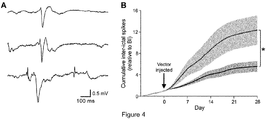
- Epilepsy is associated with a number of comorbidities. Among these are cognitive deficits which in temporal lobe epilepsies strongly correlate to inter-ictal discharges (Holmes GL 2013, Bragatti JA et al 2014, Dinkelacker V et al 2016). Similarly, in the neocortex inter-ictal activity is likely to cause significant disruption to normal brain function. In addition to its suppression of seizure frequency, Kv1.1 overexpression with the CMV- KCNA1 lentivector significantly reduced the frequency of inter-ictal discharges, another signature consistent with epileptogenesis ( Fig . 4 ).
- KCNA1 gene therapy To bring KCNA1 gene therapy closer to the clinic, we designed a new lentiviral transfer plasmid ( Fig . 5Aii ).
- the CMV promoter from the original CMV- KCNA1 construct (Fig . 5Ai ) was replaced with a 1.3 kb human CAMK2A promoter (hCAMK2A) to bias expression to excitatory neurons (Dittgen et al., 2004; Yaguchi et al., 2013).
- the KCNA1 gene was codon-optimized for expression in human cells, and mutated to introduce an I400V amino acid change normally generated by RNA-editing.
- dscGFP reporter gene was linked to the engineered potassium channel (EKC) gene by a T2A peptide, which permits dual protein expression from a single promoter.
- the salient components of our EKC lentiviral transfer plasmid include:
- the EKC transfer plasmid used in these experiments has the sequence shown in SEQ ID NO: 7.
- the sequence of the dscGFP-only control transfer plasmid has the sequence shown in SEQ ID NO: 8.
- Neuro-2a cells were transiently transfected with the EKC or dscGFP-only control transfer plasmids and subjected to whole-cell patch clamping. Cells exposed to the transfection mixture but lacking dscGFP fluorescence were used as a second set of controls.
- a typical voltage step protocol evoked negligible outward currents in both control groups, while Neuro-2a cells transfected with the EKC transfer plasmid displayed large voltage-dependent currents that peaked in amplitude at several nanoamps ( Fig. 5Bi ,ii ).
- V 0.5 of -28.2 ⁇ 0.4 mV was similar to values obtained from HEK293 cells transfected with CMV-driven, wild-type KCNA1 (-32.8 ⁇ 0.9 mV) (Tomlinson et al., 2013).
- GFAP glial fibrillary acidic protein
- EKC gene therapy reduces seizure frequency in a randomised, blinded, preclinical trial
- EKC gene therapy represents an effective new treatment for focal neocortical seizures in a format adapted to improve safety and translation to the clinic.
- Lentiviral gene therapy approaches are becoming more common in CNS disorders, and have shown good safety and tolerability even in extended trials (Palfi et al., 2014).
- epilepsy an additional safety concern is the possibility of potassium channel overexpression in interneurons, which could aggravate seizure activity by exacerbating rather than attenuating local excitability.
- a human CAMK2A promoter that in rats leads to very little expression in GABAergic cells.
- potassium channel overexpression may hold therapeutic promise in the treatment of other diseases characterised by neuronal hyperexcitability.
- Other disorders such as Parkinson's disease may be associated with excessive activity in specific groups of neurons (Lobb, 2014), and could be candidates for treatment if suitable cell type specific promoters can be identified.
- Vesicular stomatitis virus G glycoprotein pseudotyped retroviral vectors concentration to very high titer and efficient gene transfer into mammalian and nonmammalian cells. Proc. Natl. Acad. Sci. U. S. A. 90, 8033-8037 .
- K(+) channelepsy progress in the neurobiology of potassium channels and epilepsy. Front. Cell. Neurosci. 7, 134
- RNA editing of Kv1.1 channels may account for reduced ictogenic potential of 4-aminopyridine in chronic epileptic rats. Epilepsia. 52, 645-8
- Nucleotide sequence of an exemplary engineered human KCNA1 gene (SEQ ID NO: 1) wherein n is T or C
- Amino acid sequence of an edited human Kv1.1 comprising a valine at position 400 (underlined) (SEQ ID NO: 2)
- Nucleotide sequence of an exemplary human CAMK2A promoter (SEQ ID NO: 3)
- Nucleotide sequence of wild-type KCNA1 coding sequence comprising an adenine at nucleotide position 1998 (underlined) (SEQ ID NO: 4)
- Amino acid sequence of wild-type human Kv1.1 comprising a isoleucine at position 400 (underlined) (SEQ ID NO: 5)
- Nucleotide sequence of an exemplary engineered KCNA1 gene viral vector lacking a reporter (without bacterial plasmid portion) (SEQ ID NO: 9) wherein n is T or C
- Amino acid sequence of an edited human Kv1.1 comprising a valine at position 400 (underlined) and a valine at position 379 substitution (bolded) (SEQ ID NO: 14)
Landscapes
- Health & Medical Sciences (AREA)
- Life Sciences & Earth Sciences (AREA)
- Chemical & Material Sciences (AREA)
- Engineering & Computer Science (AREA)
- Genetics & Genomics (AREA)
- Organic Chemistry (AREA)
- Zoology (AREA)
- General Health & Medical Sciences (AREA)
- Bioinformatics & Cheminformatics (AREA)
- Biochemistry (AREA)
- Biotechnology (AREA)
- Biomedical Technology (AREA)
- Molecular Biology (AREA)
- Proteomics, Peptides & Aminoacids (AREA)
- Medicinal Chemistry (AREA)
- Wood Science & Technology (AREA)
- Biophysics (AREA)
- General Engineering & Computer Science (AREA)
- Public Health (AREA)
- Animal Behavior & Ethology (AREA)
- Veterinary Medicine (AREA)
- Immunology (AREA)
- Pharmacology & Pharmacy (AREA)
- Microbiology (AREA)
- Gastroenterology & Hepatology (AREA)
- Physics & Mathematics (AREA)
- Cell Biology (AREA)
- Epidemiology (AREA)
- Analytical Chemistry (AREA)
- Virology (AREA)
- Plant Pathology (AREA)
- Toxicology (AREA)
- Pain & Pain Management (AREA)
- Neurology (AREA)
- Neurosurgery (AREA)
- Chemical Kinetics & Catalysis (AREA)
- General Chemical & Material Sciences (AREA)
- Nuclear Medicine, Radiotherapy & Molecular Imaging (AREA)
- Micro-Organisms Or Cultivation Processes Thereof (AREA)
- Medicines That Contain Protein Lipid Enzymes And Other Medicines (AREA)
Claims (15)
- Expressionsvektor, der ein manipuliertes KCNA1 -Gen umfasst, das für einen bearbeiteten Kv1.1-Kaliumkanal kodiert, der operabel an einen Promotor gebunden ist, der in der Lage ist, die Expression des bearbeiteten Kv1.1-Kaliumkanals in menschlichen Zellen zu betreiben,wobei das manipulierte KCNA1-Gen eine Nucleotidsequenz mit zumindest 90 % Sequenzidentität mit der in SEQ ID NO: 1 gezeigten Nucleotidsequenz aufweist undwobei der bearbeitete Kv1.1-Kaliumkanal eine Aminosäuresequenz mit zumindest 90 % Sequenzidentität mit der in SEQ ID NO: 2 gezeigten Aminosäuresequenz aufweist und einen Valin-Aminosäurerest an einer Position umfasst, die dem in SEQ ID NO: 2 gezeigten Aminosäurerest 400 entspricht.
- Expressionsvektor nach Anspruch 1, wobei der bearbeitete Kv1.1-Kaliumkanal eine Aminosäuresequenz aufweist, die die in SEQ ID NO: 2 gezeigte Aminosäuresequenz umfasst oder aus dieser besteht.
- Expressionsvektor nach Anspruch 1 oder Anspruch 2, wobei das bearbeitete KCNA1-Gen eine Nucleotidsequenz aufweist, die die in SEQ ID NO: 1 gezeigte Nucleotidsequenz umfasst oder aus dieser besteht.
- Expressionsvektor nach einem der Ansprüche 1 bis 3, wobei der Promotor ein zelltypspezifischer Promotor ist, wobei:(i) der Promotor gegebenenfalls spezifisch für Neuronen ist, die gegebenenfalls Pyramidenneuronen sind, und/oder(ii) der Promotor gegebenenfalls einen menschlichen CAMK2A-Promotor umfasst,
wobei der menschliche CAMK2A-Promotor gegebenenfalls eine Nucleotidsequenz aufweist, die die in SEQ ID NO: 3 gezeigte Nucleotidsequenz oder eine Nucleotidsequenz mit zumindest 80 % Sequenzidentität mit der in SEQ ID NO: 3 gezeigten Nucleotidsequenz umfasst oder aus dieser besteht. - Expressionsvektor nach einem der Ansprüche 1 bis 4, wobei der Vektor ein viraler Vektor ist, wobei der virale Vektor gegebenenfalls ein lentiviraler Vektor ist, wobei der lentivirale Vektor gegebenenfalls ein nicht integrierender lentiviraler Vektor ist und wobei der lentivirale Vektor gegebenenfalls eine Nucleotidsequenz mit zumindest 95 % Identität mit der Nucleotidsequenz von SEQ ID NO: 9 umfasst.
- In-vitro-Verfahren zur Herstellung von Viruspartikeln, das Folgendes umfasst:(i) das Transduzieren von Säugetierzellen mit einem lentiviralen Vektor nach Anspruch 5 und das Exprimieren von viralen Verpackungs- und Hüllproteinen, die für die Partikelbildung in den Zellen erforderlich sind; und(ii) das Kultivieren der transduzierten Zellen in einem Kulturmedium, so dass die Zellen lentivirale Partikel produzieren, die in das Medium freigesetzt werden,wobei das Verfahren gegebenenfalls das Transduzieren der Säugetierzellen mit einem oder mehreren viralen Verpackungs- und Hüllen-Expressionsvektoren umfasst, die für die viralen Verpackungs- und Hüllproteine kodieren, die für die Partikelbildung erforderlich sind,wobei das eine oder die mehreren Verpackungsproteine ein nicht funktionelles Integrase-Enzym umfassen, so dass der lentivirale Vektor nicht in der Lage ist, sein virales Genom in das Genom der Zelle zu integrieren, und(iii) gegebenenfalls das Atrennen der Viruspartikel von dem Kulturmedium und gegebenenfalls das Aufkonzentrieren der Viruspartikel.
- Viruspartikel, das ein einzelsträngiges RNA-Molekül umfasst, das für ein manipuliertes KCNA1-Gen kodiert, das operabel an einen Promotor gebunden ist, der in der Lage ist, die Expression in menschlichen Zellen zu betreiben,wobei das manipulierte Gen für einen bearbeiteten Kv1.1-Kaliumkanal kodiert,wobei das manipulierte KCNA1-Gen eine Nucleotidsequenz mit zumindest 90 % Sequenzidentität mit der in SEQ ID NO: 1 gezeigten Nucleotidsequenz aufweist undwobei der bearbeitete Kv1.1-Kaliumkanal eine Aminosäuresequenz mit zumindest 90 % Sequenzidentität mit der in SEQ ID NO: 2 gezeigten Aminosäuresequenz aufweist und einen Valin-Aminosäurerest an einer Position umfasst, die dem in SEQ ID NO: 2 gezeigten Aminosäurerest 400 entspricht,wobei der bearbeitete Kv1.1-Kaliumkanal und das manipulierte KCNA1-Gen gegebenenfalls wie in Anspruch 2 oder Anspruch 3 definiert sind,wobei der Promotor gegebenenfalls wie in einem der Ansprüche 4 bis 8 definiert ist,wobei das Viruspartikel gegebenenfalls ein lentivirales Partikel ist, das gegebenenfalls ein nicht integrierendes lentivirales Partikel ist.
- Set, das einen lentiviralen Expressionsvektor nach Anspruch 5 und einen oder mehrere virale Verpackungs- und Hüllen-Expressionsvektoren umfasst, die für virale Verpackungs- und Hüllproteine kodieren, die bei der Expression in einer Zelle für die Partikelbildung erforderlich sind,
wobei der virale Verpackungs-Expressionsvektor gegebenenfalls ein Integrasedefizienter viraler Verpackungs-Expressionsvektor ist. - Viruspartikel nach Anspruch 7 zur Verwendung in einem Verfahren zur Behandlung des menschlichen oder eines tierischen Körpers, wobei das Verfahren gegebenenfalls zur Behandlung einer neurologischen Störung dient.
- Viruspartikel nach Anspruch 9, wobei die neurologische Störung mit Neuronenübererregbarkeit in Zusammenhang steht und gegebenenfalls eine Anfallsstörung ist, die gegebenenfalls Epilepsie ist, die gegebenenfalls neokortikale Epilepsie ist.
- Viruspartikel zur Verwendung nach Anspruch 9, wobei die neurologische Störung die Parkinson-Krankheit oder chronischer Schmerz ist.
- Verfahren zur Bestätigung der Gegenwart von manipulierter KCNA1 -mRNA in einer Zelle, wobei das Verfahren Folgendes umfasst:das Transduzieren einer Zelle mit einem Expressionsvektor nach einem der Ansprüche 1 bis 5 oder das Verabreichen eines Viruspartikels nach Anspruch 7 an eine Zelle unter Bedingungen, die die Expression von manipulierter KCNA1-mRNA erlauben; unddas Nachweisen der Gegenwart der manipulierten KCNA1-mRNA in der Zelle unter Verwendung eines Hybridisierungstests,wobei der Hybridisierungstest gegebenenfalls ein Hybridisierungstest in situ unter Verwendung einer markierten RNA-Sonde ist, wobei die markierte RNA-Sonde gegebenenfalls fluoreszenzmarkiert ist.
- In-vitro- oder Ex-vivo-Verfahren zur Bestätigung der Gegenwart von manipulierter KCNA1-mRNA in einer Zelle, die von einem Individuum erhalten wurde, dem ein Viruspartikel nach Anspruch 7 verabreicht wurde, wobei das Verfahren Folgendes umfasst:das Nachweisen der Gegenwart von manipulierter KCNA1-mRNA in der Zelle unter Verwendung eines Hybridisierungstests,wobei der Hybridisierungstest gegebenenfalls ein Hybridisierungstest in situ unter Verwendung einer markierten RNA-Sonde ist, wobei die markierte RNA-Sonde gegebenenfalls fluoreszenzmarkiert ist.
- Zelle, die einen Expressionsvektor nach einem der Ansprüche 1 bis 5 umfasst, wobei die Zelle gegebenenfalls eine Säugetierzelle ist, die gegebenenfalls eine menschliche Zelle ist, die gegebenenfalls eine menschliche embryonale Nierenzelle ist.
- Nucleinsäure, die ein manipuliertes KCNA1 -Gen umfasst, das für einen bearbeiteten Kv1.1-Kaliumkanal kodiert, wobei das manipulierte KCNA1-Gen eine Nucleotidsequenz mit zumindest 90 % Sequenzidentität mit der in SEQ ID NO: 1 gezeigten Nucleotidsequenz aufweist undwobei der bearbeitete Kv1.1-Kaliumkanal eine Aminosäuresequenz mit zumindest 90 % Sequenzidentität mit der in SEQ ID NO: 2 gezeigten Aminosäuresequenz aufweist und einen Valin-Aminosäurerest an einer Position umfasst, die dem in SEQ ID NO: 2 gezeigten Aminosäurerest 400 entspricht,wobei der bearbeitete Kv1.1-Kaliumkanal und das manipulierte KCNA1-Gen gegebenenfalls wie in Anspruch 2 oder Anspruch 3 definiert sind.
Priority Applications (1)
| Application Number | Priority Date | Filing Date | Title |
|---|---|---|---|
| PL18731829T PL3638796T3 (pl) | 2017-06-15 | 2018-06-15 | Wektory ekspresyjne zawierające zmodyfikowane geny |
Applications Claiming Priority (2)
| Application Number | Priority Date | Filing Date | Title |
|---|---|---|---|
| GBGB1709551.4A GB201709551D0 (en) | 2017-06-15 | 2017-06-15 | Expression vectors comprising engineered genes |
| PCT/EP2018/065953 WO2018229254A1 (en) | 2017-06-15 | 2018-06-15 | Expression vectors comprising engineered genes |
Publications (2)
| Publication Number | Publication Date |
|---|---|
| EP3638796A1 EP3638796A1 (de) | 2020-04-22 |
| EP3638796B1 true EP3638796B1 (de) | 2021-10-13 |
Family
ID=59462424
Family Applications (1)
| Application Number | Title | Priority Date | Filing Date |
|---|---|---|---|
| EP18731829.0A Active EP3638796B1 (de) | 2017-06-15 | 2018-06-15 | Expressionsvektoren mit manipulierten genen |
Country Status (7)
| Country | Link |
|---|---|
| US (1) | US11779658B2 (de) |
| EP (1) | EP3638796B1 (de) |
| JP (1) | JP7077343B2 (de) |
| ES (1) | ES2902774T3 (de) |
| GB (1) | GB201709551D0 (de) |
| PL (1) | PL3638796T3 (de) |
| WO (1) | WO2018229254A1 (de) |
Families Citing this family (3)
| Publication number | Priority date | Publication date | Assignee | Title |
|---|---|---|---|---|
| GB202004498D0 (en) * | 2020-03-27 | 2020-05-13 | Ucl Business Ltd | Activity-dependent gene therapy for neurological disorders |
| WO2023131682A1 (en) | 2022-01-06 | 2023-07-13 | Ucl Business Ltd | Endogenous gene regulation to treat neurological disorders and diseases |
| GB202401492D0 (en) | 2024-02-05 | 2024-03-20 | Ucl Business Ltd | Chloride channels and uses thereof |
Family Cites Families (4)
| Publication number | Priority date | Publication date | Assignee | Title |
|---|---|---|---|---|
| WO2008096268A2 (en) | 2007-02-07 | 2008-08-14 | Vegenics Limited | Autologous lymph node transfer in combination with vegf-c or vegf-d growth factor therapy to treat secondary lymphedema and to improve reconstructive surgery |
| CA2838330C (en) * | 2010-08-23 | 2021-01-26 | President And Fellows Of Harvard College | Optogenetic probes for measuring membrane potential |
| AU2013243948A1 (en) * | 2012-04-02 | 2014-10-30 | Moderna Therapeutics, Inc. | Modified polynucleotides for the production of proteins associated with human disease |
| GB201404470D0 (en) * | 2014-03-13 | 2014-04-30 | Ucl Business Plc | Therapeutic methods and materials |
-
2017
- 2017-06-15 GB GBGB1709551.4A patent/GB201709551D0/en not_active Ceased
-
2018
- 2018-06-15 ES ES18731829T patent/ES2902774T3/es active Active
- 2018-06-15 PL PL18731829T patent/PL3638796T3/pl unknown
- 2018-06-15 US US16/622,800 patent/US11779658B2/en active Active
- 2018-06-15 WO PCT/EP2018/065953 patent/WO2018229254A1/en not_active Ceased
- 2018-06-15 EP EP18731829.0A patent/EP3638796B1/de active Active
- 2018-06-15 JP JP2019569265A patent/JP7077343B2/ja active Active
Also Published As
| Publication number | Publication date |
|---|---|
| US20210000977A1 (en) | 2021-01-07 |
| GB201709551D0 (en) | 2017-08-02 |
| WO2018229254A1 (en) | 2018-12-20 |
| US11779658B2 (en) | 2023-10-10 |
| ES2902774T3 (es) | 2022-03-29 |
| JP7077343B2 (ja) | 2022-05-30 |
| EP3638796A1 (de) | 2020-04-22 |
| JP2020527941A (ja) | 2020-09-17 |
| PL3638796T3 (pl) | 2022-03-28 |
Similar Documents
| Publication | Publication Date | Title |
|---|---|---|
| Snowball et al. | Epilepsy gene therapy using an engineered potassium channel | |
| JP7233375B2 (ja) | リソソーム障害を治療する方法 | |
| US20220040333A1 (en) | Use of neuroglobin agonist for preventing or treating mitochondrial RCCI and/or RCCIII deficiency disease | |
| US20220220173A1 (en) | Tdp-43 mitochondrial localization inhibitor for the treatment of neurogenerative disease | |
| CN110809476B (zh) | 用于神经退行性病症或中风的治疗的基因构建体 | |
| RS62359B1 (sr) | Lečenje amd upotrebom aav sflt-1 | |
| EP3638796B1 (de) | Expressionsvektoren mit manipulierten genen | |
| CN113966400A (zh) | 用于使神经元细胞兴奋性正常化和治疗德拉韦综合征的中间神经元特异性治疗剂 | |
| JP2008303215A (ja) | ベクターシステム | |
| JP2008505602A (ja) | 神経性疾患を処置するための方法および組成物 | |
| US20230165975A1 (en) | Activity-dependent gene therapy for neurological disorders | |
| JP2022103298A (ja) | 幹細胞由来移植片からの増殖性細胞の排除 | |
| CN117642187A (zh) | 用于治疗听力损失的基因疗法构建体和方法 | |
| Snowball et al. | Epilepsy gene therapy using non-integrating lentiviral delivery of an engineered potassium channel gene | |
| US20100105761A1 (en) | Treatment of pain through expression of opioid receptors | |
| US20230135501A1 (en) | Gene therapy | |
| US20210348196A1 (en) | Kir 7.1 gene therapy vectors and methods of using the same | |
| Cattaneo | Combinatorial gene therapy for epilepsy | |
| Stieglitz | The control of neuronal activity and behavior by members of the HCN and TPC family | |
| WO2017087671A1 (en) | Light-regulated gabaa receptors and methods of use thereof | |
| Kolstad | Development and assessment of gene therapies for inherited blinding diseases | |
| EA053066B1 (ru) | Промоторы стереоцилина и варианты их применения | |
| Mantoan | Neuronal Signalling Studied with Light-activated Ion Channels to Target Interneurons, Entrain Hippocampal Gamma Oscillations and Suppress Epileptiform Activity | |
| HK40016634A (en) | Methods of treating lysosomal disorders | |
| WO2015035364A1 (en) | Proteins for targeting neuronal nitric oxide synthase to muscle sarcolemma and related methods of use |
Legal Events
| Date | Code | Title | Description |
|---|---|---|---|
| STAA | Information on the status of an ep patent application or granted ep patent |
Free format text: STATUS: UNKNOWN |
|
| STAA | Information on the status of an ep patent application or granted ep patent |
Free format text: STATUS: THE INTERNATIONAL PUBLICATION HAS BEEN MADE |
|
| PUAI | Public reference made under article 153(3) epc to a published international application that has entered the european phase |
Free format text: ORIGINAL CODE: 0009012 |
|
| STAA | Information on the status of an ep patent application or granted ep patent |
Free format text: STATUS: REQUEST FOR EXAMINATION WAS MADE |
|
| 17P | Request for examination filed |
Effective date: 20200109 |
|
| AK | Designated contracting states |
Kind code of ref document: A1 Designated state(s): AL AT BE BG CH CY CZ DE DK EE ES FI FR GB GR HR HU IE IS IT LI LT LU LV MC MK MT NL NO PL PT RO RS SE SI SK SM TR |
|
| AX | Request for extension of the european patent |
Extension state: BA ME |
|
| DAV | Request for validation of the european patent (deleted) | ||
| DAX | Request for extension of the european patent (deleted) | ||
| STAA | Information on the status of an ep patent application or granted ep patent |
Free format text: STATUS: EXAMINATION IS IN PROGRESS |
|
| 17Q | First examination report despatched |
Effective date: 20201127 |
|
| GRAP | Despatch of communication of intention to grant a patent |
Free format text: ORIGINAL CODE: EPIDOSNIGR1 |
|
| STAA | Information on the status of an ep patent application or granted ep patent |
Free format text: STATUS: GRANT OF PATENT IS INTENDED |
|
| INTG | Intention to grant announced |
Effective date: 20210506 |
|
| GRAS | Grant fee paid |
Free format text: ORIGINAL CODE: EPIDOSNIGR3 |
|
| GRAA | (expected) grant |
Free format text: ORIGINAL CODE: 0009210 |
|
| STAA | Information on the status of an ep patent application or granted ep patent |
Free format text: STATUS: THE PATENT HAS BEEN GRANTED |
|
| AK | Designated contracting states |
Kind code of ref document: B1 Designated state(s): AL AT BE BG CH CY CZ DE DK EE ES FI FR GB GR HR HU IE IS IT LI LT LU LV MC MK MT NL NO PL PT RO RS SE SI SK SM TR |
|
| REG | Reference to a national code |
Ref country code: GB Ref legal event code: FG4D |
|
| REG | Reference to a national code |
Ref country code: CH Ref legal event code: EP |
|
| REG | Reference to a national code |
Ref country code: DE Ref legal event code: R096 Ref document number: 602018024996 Country of ref document: DE |
|
| REG | Reference to a national code |
Ref country code: IE Ref legal event code: FG4D |
|
| REG | Reference to a national code |
Ref country code: AT Ref legal event code: REF Ref document number: 1438218 Country of ref document: AT Kind code of ref document: T Effective date: 20211115 |
|
| REG | Reference to a national code |
Ref country code: FI Ref legal event code: FGE |
|
| REG | Reference to a national code |
Ref country code: SE Ref legal event code: TRGR |
|
| REG | Reference to a national code |
Ref country code: NL Ref legal event code: FP |
|
| REG | Reference to a national code |
Ref country code: LT Ref legal event code: MG9D |
|
| REG | Reference to a national code |
Ref country code: AT Ref legal event code: MK05 Ref document number: 1438218 Country of ref document: AT Kind code of ref document: T Effective date: 20211013 |
|
| REG | Reference to a national code |
Ref country code: ES Ref legal event code: FG2A Ref document number: 2902774 Country of ref document: ES Kind code of ref document: T3 Effective date: 20220329 |
|
| RAP4 | Party data changed (patent owner data changed or rights of a patent transferred) |
Owner name: UCL BUSINESS LTD |
|
| PG25 | Lapsed in a contracting state [announced via postgrant information from national office to epo] |
Ref country code: RS Free format text: LAPSE BECAUSE OF FAILURE TO SUBMIT A TRANSLATION OF THE DESCRIPTION OR TO PAY THE FEE WITHIN THE PRESCRIBED TIME-LIMIT Effective date: 20211013 Ref country code: LT Free format text: LAPSE BECAUSE OF FAILURE TO SUBMIT A TRANSLATION OF THE DESCRIPTION OR TO PAY THE FEE WITHIN THE PRESCRIBED TIME-LIMIT Effective date: 20211013 Ref country code: BG Free format text: LAPSE BECAUSE OF FAILURE TO SUBMIT A TRANSLATION OF THE DESCRIPTION OR TO PAY THE FEE WITHIN THE PRESCRIBED TIME-LIMIT Effective date: 20220113 Ref country code: AT Free format text: LAPSE BECAUSE OF FAILURE TO SUBMIT A TRANSLATION OF THE DESCRIPTION OR TO PAY THE FEE WITHIN THE PRESCRIBED TIME-LIMIT Effective date: 20211013 |
|
| PG25 | Lapsed in a contracting state [announced via postgrant information from national office to epo] |
Ref country code: IS Free format text: LAPSE BECAUSE OF FAILURE TO SUBMIT A TRANSLATION OF THE DESCRIPTION OR TO PAY THE FEE WITHIN THE PRESCRIBED TIME-LIMIT Effective date: 20220213 Ref country code: PT Free format text: LAPSE BECAUSE OF FAILURE TO SUBMIT A TRANSLATION OF THE DESCRIPTION OR TO PAY THE FEE WITHIN THE PRESCRIBED TIME-LIMIT Effective date: 20220214 Ref country code: NO Free format text: LAPSE BECAUSE OF FAILURE TO SUBMIT A TRANSLATION OF THE DESCRIPTION OR TO PAY THE FEE WITHIN THE PRESCRIBED TIME-LIMIT Effective date: 20220113 Ref country code: LV Free format text: LAPSE BECAUSE OF FAILURE TO SUBMIT A TRANSLATION OF THE DESCRIPTION OR TO PAY THE FEE WITHIN THE PRESCRIBED TIME-LIMIT Effective date: 20211013 Ref country code: HR Free format text: LAPSE BECAUSE OF FAILURE TO SUBMIT A TRANSLATION OF THE DESCRIPTION OR TO PAY THE FEE WITHIN THE PRESCRIBED TIME-LIMIT Effective date: 20211013 Ref country code: GR Free format text: LAPSE BECAUSE OF FAILURE TO SUBMIT A TRANSLATION OF THE DESCRIPTION OR TO PAY THE FEE WITHIN THE PRESCRIBED TIME-LIMIT Effective date: 20220114 |
|
| REG | Reference to a national code |
Ref country code: DE Ref legal event code: R097 Ref document number: 602018024996 Country of ref document: DE |
|
| PG25 | Lapsed in a contracting state [announced via postgrant information from national office to epo] |
Ref country code: SM Free format text: LAPSE BECAUSE OF FAILURE TO SUBMIT A TRANSLATION OF THE DESCRIPTION OR TO PAY THE FEE WITHIN THE PRESCRIBED TIME-LIMIT Effective date: 20211013 Ref country code: SK Free format text: LAPSE BECAUSE OF FAILURE TO SUBMIT A TRANSLATION OF THE DESCRIPTION OR TO PAY THE FEE WITHIN THE PRESCRIBED TIME-LIMIT Effective date: 20211013 Ref country code: RO Free format text: LAPSE BECAUSE OF FAILURE TO SUBMIT A TRANSLATION OF THE DESCRIPTION OR TO PAY THE FEE WITHIN THE PRESCRIBED TIME-LIMIT Effective date: 20211013 Ref country code: EE Free format text: LAPSE BECAUSE OF FAILURE TO SUBMIT A TRANSLATION OF THE DESCRIPTION OR TO PAY THE FEE WITHIN THE PRESCRIBED TIME-LIMIT Effective date: 20211013 Ref country code: DK Free format text: LAPSE BECAUSE OF FAILURE TO SUBMIT A TRANSLATION OF THE DESCRIPTION OR TO PAY THE FEE WITHIN THE PRESCRIBED TIME-LIMIT Effective date: 20211013 Ref country code: CZ Free format text: LAPSE BECAUSE OF FAILURE TO SUBMIT A TRANSLATION OF THE DESCRIPTION OR TO PAY THE FEE WITHIN THE PRESCRIBED TIME-LIMIT Effective date: 20211013 |
|
| PLBE | No opposition filed within time limit |
Free format text: ORIGINAL CODE: 0009261 |
|
| STAA | Information on the status of an ep patent application or granted ep patent |
Free format text: STATUS: NO OPPOSITION FILED WITHIN TIME LIMIT |
|
| 26N | No opposition filed |
Effective date: 20220714 |
|
| PG25 | Lapsed in a contracting state [announced via postgrant information from national office to epo] |
Ref country code: AL Free format text: LAPSE BECAUSE OF FAILURE TO SUBMIT A TRANSLATION OF THE DESCRIPTION OR TO PAY THE FEE WITHIN THE PRESCRIBED TIME-LIMIT Effective date: 20211013 |
|
| PG25 | Lapsed in a contracting state [announced via postgrant information from national office to epo] |
Ref country code: SI Free format text: LAPSE BECAUSE OF FAILURE TO SUBMIT A TRANSLATION OF THE DESCRIPTION OR TO PAY THE FEE WITHIN THE PRESCRIBED TIME-LIMIT Effective date: 20211013 |
|
| PG25 | Lapsed in a contracting state [announced via postgrant information from national office to epo] |
Ref country code: MC Free format text: LAPSE BECAUSE OF FAILURE TO SUBMIT A TRANSLATION OF THE DESCRIPTION OR TO PAY THE FEE WITHIN THE PRESCRIBED TIME-LIMIT Effective date: 20211013 |
|
| PG25 | Lapsed in a contracting state [announced via postgrant information from national office to epo] |
Ref country code: LU Free format text: LAPSE BECAUSE OF NON-PAYMENT OF DUE FEES Effective date: 20220615 |
|
| P01 | Opt-out of the competence of the unified patent court (upc) registered |
Effective date: 20230522 |
|
| P02 | Opt-out of the competence of the unified patent court (upc) changed |
Effective date: 20230526 |
|
| PG25 | Lapsed in a contracting state [announced via postgrant information from national office to epo] |
Ref country code: MK Free format text: LAPSE BECAUSE OF FAILURE TO SUBMIT A TRANSLATION OF THE DESCRIPTION OR TO PAY THE FEE WITHIN THE PRESCRIBED TIME-LIMIT Effective date: 20211013 Ref country code: CY Free format text: LAPSE BECAUSE OF FAILURE TO SUBMIT A TRANSLATION OF THE DESCRIPTION OR TO PAY THE FEE WITHIN THE PRESCRIBED TIME-LIMIT Effective date: 20211013 |
|
| PG25 | Lapsed in a contracting state [announced via postgrant information from national office to epo] |
Ref country code: HU Free format text: LAPSE BECAUSE OF FAILURE TO SUBMIT A TRANSLATION OF THE DESCRIPTION OR TO PAY THE FEE WITHIN THE PRESCRIBED TIME-LIMIT; INVALID AB INITIO Effective date: 20180615 |
|
| PG25 | Lapsed in a contracting state [announced via postgrant information from national office to epo] |
Ref country code: TR Free format text: LAPSE BECAUSE OF FAILURE TO SUBMIT A TRANSLATION OF THE DESCRIPTION OR TO PAY THE FEE WITHIN THE PRESCRIBED TIME-LIMIT Effective date: 20211013 |
|
| PG25 | Lapsed in a contracting state [announced via postgrant information from national office to epo] |
Ref country code: MT Free format text: LAPSE BECAUSE OF FAILURE TO SUBMIT A TRANSLATION OF THE DESCRIPTION OR TO PAY THE FEE WITHIN THE PRESCRIBED TIME-LIMIT Effective date: 20211013 |
|
| PGFP | Annual fee paid to national office [announced via postgrant information from national office to epo] |
Ref country code: FI Payment date: 20250617 Year of fee payment: 8 |
|
| PGFP | Annual fee paid to national office [announced via postgrant information from national office to epo] |
Ref country code: PL Payment date: 20250613 Year of fee payment: 8 Ref country code: DE Payment date: 20250618 Year of fee payment: 8 |
|
| PGFP | Annual fee paid to national office [announced via postgrant information from national office to epo] |
Ref country code: GB Payment date: 20250616 Year of fee payment: 8 |
|
| PGFP | Annual fee paid to national office [announced via postgrant information from national office to epo] |
Ref country code: NL Payment date: 20250618 Year of fee payment: 8 Ref country code: BE Payment date: 20250617 Year of fee payment: 8 |
|
| PGFP | Annual fee paid to national office [announced via postgrant information from national office to epo] |
Ref country code: FR Payment date: 20250626 Year of fee payment: 8 |
|
| PGFP | Annual fee paid to national office [announced via postgrant information from national office to epo] |
Ref country code: IE Payment date: 20250618 Year of fee payment: 8 |
|
| PGFP | Annual fee paid to national office [announced via postgrant information from national office to epo] |
Ref country code: SE Payment date: 20250618 Year of fee payment: 8 |
|
| PGFP | Annual fee paid to national office [announced via postgrant information from national office to epo] |
Ref country code: ES Payment date: 20250718 Year of fee payment: 8 |
|
| PGFP | Annual fee paid to national office [announced via postgrant information from national office to epo] |
Ref country code: IT Payment date: 20250630 Year of fee payment: 8 |
|
| PGFP | Annual fee paid to national office [announced via postgrant information from national office to epo] |
Ref country code: CH Payment date: 20250701 Year of fee payment: 8 |