EP3638696B1 - Anwendubg von anti cd70 antikörper argx-110, um akute myeloid leukemie zu behandeln - Google Patents
Anwendubg von anti cd70 antikörper argx-110, um akute myeloid leukemie zu behandeln Download PDFInfo
- Publication number
- EP3638696B1 EP3638696B1 EP18732064.3A EP18732064A EP3638696B1 EP 3638696 B1 EP3638696 B1 EP 3638696B1 EP 18732064 A EP18732064 A EP 18732064A EP 3638696 B1 EP3638696 B1 EP 3638696B1
- Authority
- EP
- European Patent Office
- Prior art keywords
- antibody
- antigen
- binding fragment
- nmi
- use according
- Prior art date
- Legal status (The legal status is an assumption and is not a legal conclusion. Google has not performed a legal analysis and makes no representation as to the accuracy of the status listed.)
- Active
Links
Images






Classifications
-
- A—HUMAN NECESSITIES
- A61—MEDICAL OR VETERINARY SCIENCE; HYGIENE
- A61K—PREPARATIONS FOR MEDICAL, DENTAL OR TOILETRY PURPOSES
- A61K31/00—Medicinal preparations containing organic active ingredients
- A61K31/70—Carbohydrates; Sugars; Derivatives thereof
- A61K31/7042—Compounds having saccharide radicals and heterocyclic rings
- A61K31/7052—Compounds having saccharide radicals and heterocyclic rings having nitrogen as a ring hetero atom, e.g. nucleosides, nucleotides
- A61K31/706—Compounds having saccharide radicals and heterocyclic rings having nitrogen as a ring hetero atom, e.g. nucleosides, nucleotides containing six-membered rings with nitrogen as a ring hetero atom
-
- A—HUMAN NECESSITIES
- A61—MEDICAL OR VETERINARY SCIENCE; HYGIENE
- A61K—PREPARATIONS FOR MEDICAL, DENTAL OR TOILETRY PURPOSES
- A61K35/00—Medicinal preparations containing materials or reaction products thereof with undetermined constitution
- A61K35/12—Materials from mammals; Compositions comprising non-specified tissues or cells; Compositions comprising non-embryonic stem cells; Genetically modified cells
- A61K35/28—Bone marrow; Haematopoietic stem cells; Mesenchymal stem cells of any origin, e.g. adipose-derived stem cells
-
- A—HUMAN NECESSITIES
- A61—MEDICAL OR VETERINARY SCIENCE; HYGIENE
- A61K—PREPARATIONS FOR MEDICAL, DENTAL OR TOILETRY PURPOSES
- A61K39/00—Medicinal preparations containing antigens or antibodies
- A61K39/0005—Vertebrate antigens
- A61K39/0011—Cancer antigens
- A61K39/001136—Cytokines
- A61K39/001138—Tumor necrosis factors [TNF] or CD70
-
- A—HUMAN NECESSITIES
- A61—MEDICAL OR VETERINARY SCIENCE; HYGIENE
- A61K—PREPARATIONS FOR MEDICAL, DENTAL OR TOILETRY PURPOSES
- A61K39/00—Medicinal preparations containing antigens or antibodies
- A61K39/395—Antibodies; Immunoglobulins; Immune serum, e.g. antilymphocytic serum
- A61K39/39533—Antibodies; Immunoglobulins; Immune serum, e.g. antilymphocytic serum against materials from animals
- A61K39/39558—Antibodies; Immunoglobulins; Immune serum, e.g. antilymphocytic serum against materials from animals against tumor tissues, cells, antigens
-
- A—HUMAN NECESSITIES
- A61—MEDICAL OR VETERINARY SCIENCE; HYGIENE
- A61K—PREPARATIONS FOR MEDICAL, DENTAL OR TOILETRY PURPOSES
- A61K45/00—Medicinal preparations containing active ingredients not provided for in groups A61K31/00 - A61K41/00
- A61K45/06—Mixtures of active ingredients without chemical characterisation, e.g. antiphlogistics and cardiaca
-
- A—HUMAN NECESSITIES
- A61—MEDICAL OR VETERINARY SCIENCE; HYGIENE
- A61P—SPECIFIC THERAPEUTIC ACTIVITY OF CHEMICAL COMPOUNDS OR MEDICINAL PREPARATIONS
- A61P35/00—Antineoplastic agents
-
- A—HUMAN NECESSITIES
- A61—MEDICAL OR VETERINARY SCIENCE; HYGIENE
- A61P—SPECIFIC THERAPEUTIC ACTIVITY OF CHEMICAL COMPOUNDS OR MEDICINAL PREPARATIONS
- A61P35/00—Antineoplastic agents
- A61P35/02—Antineoplastic agents specific for leukemia
-
- C—CHEMISTRY; METALLURGY
- C07—ORGANIC CHEMISTRY
- C07K—PEPTIDES
- C07K16/00—Immunoglobulins [IGs], e.g. monoclonal or polyclonal antibodies
- C07K16/18—Immunoglobulins [IGs], e.g. monoclonal or polyclonal antibodies against material from animals or humans
- C07K16/28—Immunoglobulins [IGs], e.g. monoclonal or polyclonal antibodies against material from animals or humans against receptors, cell surface antigens or cell surface determinants
- C07K16/2875—Immunoglobulins [IGs], e.g. monoclonal or polyclonal antibodies against material from animals or humans against receptors, cell surface antigens or cell surface determinants against the NGF/TNF superfamily, e.g. CD70, CD95L, CD153, CD154
-
- A—HUMAN NECESSITIES
- A61—MEDICAL OR VETERINARY SCIENCE; HYGIENE
- A61K—PREPARATIONS FOR MEDICAL, DENTAL OR TOILETRY PURPOSES
- A61K39/00—Medicinal preparations containing antigens or antibodies
- A61K2039/505—Medicinal preparations containing antigens or antibodies comprising antibodies
-
- A—HUMAN NECESSITIES
- A61—MEDICAL OR VETERINARY SCIENCE; HYGIENE
- A61K—PREPARATIONS FOR MEDICAL, DENTAL OR TOILETRY PURPOSES
- A61K39/00—Medicinal preparations containing antigens or antibodies
- A61K2039/545—Medicinal preparations containing antigens or antibodies characterised by the dose, timing or administration schedule
-
- A—HUMAN NECESSITIES
- A61—MEDICAL OR VETERINARY SCIENCE; HYGIENE
- A61K—PREPARATIONS FOR MEDICAL, DENTAL OR TOILETRY PURPOSES
- A61K2300/00—Mixtures or combinations of active ingredients, wherein at least one active ingredient is fully defined in groups A61K31/00 - A61K41/00
-
- C—CHEMISTRY; METALLURGY
- C07—ORGANIC CHEMISTRY
- C07K—PEPTIDES
- C07K2317/00—Immunoglobulins specific features
- C07K2317/20—Immunoglobulins specific features characterized by taxonomic origin
- C07K2317/21—Immunoglobulins specific features characterized by taxonomic origin from primates, e.g. man
-
- C—CHEMISTRY; METALLURGY
- C07—ORGANIC CHEMISTRY
- C07K—PEPTIDES
- C07K2317/00—Immunoglobulins specific features
- C07K2317/20—Immunoglobulins specific features characterized by taxonomic origin
- C07K2317/22—Immunoglobulins specific features characterized by taxonomic origin from camelids, e.g. camel, llama or dromedary
-
- C—CHEMISTRY; METALLURGY
- C07—ORGANIC CHEMISTRY
- C07K—PEPTIDES
- C07K2317/00—Immunoglobulins specific features
- C07K2317/20—Immunoglobulins specific features characterized by taxonomic origin
- C07K2317/24—Immunoglobulins specific features characterized by taxonomic origin containing regions, domains or residues from different species, e.g. chimeric, humanized or veneered
-
- C—CHEMISTRY; METALLURGY
- C07—ORGANIC CHEMISTRY
- C07K—PEPTIDES
- C07K2317/00—Immunoglobulins specific features
- C07K2317/40—Immunoglobulins specific features characterized by post-translational modification
- C07K2317/41—Glycosylation, sialylation, or fucosylation
-
- C—CHEMISTRY; METALLURGY
- C07—ORGANIC CHEMISTRY
- C07K—PEPTIDES
- C07K2317/00—Immunoglobulins specific features
- C07K2317/70—Immunoglobulins specific features characterized by effect upon binding to a cell or to an antigen
- C07K2317/73—Inducing cell death, e.g. apoptosis, necrosis or inhibition of cell proliferation
- C07K2317/732—Antibody-dependent cellular cytotoxicity [ADCC]
-
- C—CHEMISTRY; METALLURGY
- C07—ORGANIC CHEMISTRY
- C07K—PEPTIDES
- C07K2317/00—Immunoglobulins specific features
- C07K2317/70—Immunoglobulins specific features characterized by effect upon binding to a cell or to an antigen
- C07K2317/73—Inducing cell death, e.g. apoptosis, necrosis or inhibition of cell proliferation
- C07K2317/734—Complement-dependent cytotoxicity [CDC]
-
- C—CHEMISTRY; METALLURGY
- C07—ORGANIC CHEMISTRY
- C07K—PEPTIDES
- C07K2317/00—Immunoglobulins specific features
- C07K2317/70—Immunoglobulins specific features characterized by effect upon binding to a cell or to an antigen
- C07K2317/76—Antagonist effect on antigen, e.g. neutralization or inhibition of binding
-
- C—CHEMISTRY; METALLURGY
- C07—ORGANIC CHEMISTRY
- C07K—PEPTIDES
- C07K2317/00—Immunoglobulins specific features
- C07K2317/90—Immunoglobulins specific features characterized by (pharmaco)kinetic aspects or by stability of the immunoglobulin
-
- C—CHEMISTRY; METALLURGY
- C07—ORGANIC CHEMISTRY
- C07K—PEPTIDES
- C07K2317/00—Immunoglobulins specific features
- C07K2317/90—Immunoglobulins specific features characterized by (pharmaco)kinetic aspects or by stability of the immunoglobulin
- C07K2317/94—Stability, e.g. half-life, pH, temperature or enzyme-resistance
Definitions
- the present invention relates to compositions and combinations for use in methods of treating acute myeloid leukaemia (AML) and myelodysplastic syndrome (MDS).
- AML acute myeloid leukaemia
- MDS myelodysplastic syndrome
- AML Acute myeloid leukaemia
- AML is a heterogeneous disease characterized by uncontrolled clonal expansion of hematopoietic progenitor cells.
- AML is the most common acute leukaemia affecting adults, with a yearly incidence in European adults of 5 to 8 cases per 100,000 individuals, and a steep increase in the population aged over 70 years where the incidence reaches 15-25/100,000 per year.
- Chemotherapy is used to treat most types of leukaemia. Under appropriate conditions, high-dose chemotherapy followed by hematopoietic stem cell transplantation may also be used. Around 60% to 70% of adults with AML will attain complete remission (CR) status following appropriate induction therapy, and about 45% of those who attain CR can be expected to survive 3 or more years and may be cured (American Cancer Society). However, the side effects of chemotherapy can place significant burden on the patient, and many patients are not fit for standard intensive chemotherapy. Alternative therapies for AML are therefore desirable.
- WO2012123586 describes antibodies and antigen binding fragments thereof which bind to the human CD70 protein with high affinity and display potent inhibition of tumour cell growth.
- the invention provides an anti-CD70 antibody or antigen-binding fragment thereof for use in a method for treating acute myeloid leukaemia (AML) or myelodysplastic syndrome (MDS) in a subject, the method comprising: administering to the subject one or more doses of an anti-CD70 antibody or antigen-binding fragment thereof and administering to the subject a nucleoside metabolic inhibitor (NMI) selected from azacitidine and decitabine, wherein the anti-CD70 antibody or antigen-binding fragment thereof inhibits CD70-CD27 binding.
- AML acute myeloid leukaemia
- MDS myelodysplastic syndrome
- a nucleoside metabolic inhibitor selected from azacitidine and decitabine for use in a method of treating acute myeloid leukaemia (AML) or myelodysplastic syndrome (MDS) in a subject, the method comprising: administering to the subject the nucleoside metabolic inhibitor (NMI), and administering to the subject one or more doses of an anti-CD70 antibody or antigen-binding fragment thereof, wherein the anti-CD70 antibody or antigen-binding fragment thereof inhibits CD70-CD27 binding.
- AML acute myeloid leukaemia
- MDS myelodysplastic syndrome
- a combination comprising an anti-CD70 antibody or antigen binding fragment thereof and a nucleoside metabolic inhibitor (NMI) selected from azacitidine and decitabine for use in a method of treating acute myeloid leukaemia (AML) or myelodysplastic syndrome (MDS) in a subject, the method comprising: administering to the subject one or more doses of the anti-CD70 antibody or antigen-binding fragment thereof, and administering to the subject the nucleoside metabolic inhibitor (NMI), wherein the anti-CD70 antibody or antigen-binding fragment thereof inhibits CD70-CD27 binding.
- NMI nucleoside metabolic inhibitor
- references herein to methods of treatment are to be understood to refer to the anti-CD70 antibody or antigen-binding fragment thereof, NMI, or combination for use in those methods in accordance with the appended claims.
- the claimed invention does not encompass methods of treatment performed on the human or animal body as excluded by Article 53(c) EPC.
- CD70 is a cell surface antigen normally expressed in a small subset of activated B- and T-lymphocytes as well as on mature dendritic cells, and involved in lymphocyte differentiation and survival signalling upon binding to its cognate cell surface receptor, CD27.
- CD70-induced signalling of CD27 results in increased production and activation of regulatory T cells, which express CD27.
- CD70 expression is low or absent from normal tissues, including all vital organs. CD70 is over-expressed in several tumour types, often together with CD27 in haematological malignancies suggesting its involvement in proliferation and survival of the malignant cells. CD70 also appears to play a role in evasion of immune surveillance by inducing Tregs, thus promoting tumour growth.
- a combination therapy according to the invention does not require simultaneous administration of the two or more active agents, or for the two or more agents to be formulated into a single composition.
- AML patients treated with the therapies provided herein exhibited greater than 90% response rates, with 2 in every 3 patients achieving complete remission. These results represent a significant advance in AML therapy for all patients.
- treatment according to the invention significantly reduces the percentage of bone marrow blasts in a patient.
- treatment according to the invention significantly reduced the number of blasts to the point that patients entered complete remission.
- significantly reducing the percentage of bone marrow blasts in a patient is important if the patient is to receive a successful haematopoietic stem cell transplant (HSCT), a treatment that can be curative.
- HSCT haematopoietic stem cell transplant
- treatment according to the invention has resulted in a patient progressing to transplant.
- treatment according to the invention effectively treats AML without any observed increased toxicity compared to that reported for conventional NMI treatment.
- the surprising efficacy of treatment according to the invention is of further importance given the nature of the patients recruited to the trial.
- the treated patients were not eligible for standard chemotherapy because they were not fit enough to tolerate the toxicity associated with conventional intensive chemotherapy.
- HSCT bone marrow blasts
- monotherapy and combination therapy according to the present invention significantly reduces AML blasts in patients who cannot receive standard intensive chemotherapy. Accordingly, the therapies provided in accordance with the invention open up the prospect of a successful HSCT in a population of patients for whom HSCT was not previously recommended.
- a further significant advantage of the fact that anti-CD70 antibodies can effectively treat AML both as a monotherapy and also in a potent combination therapy with a nucleoside metabolic inhibitor is that it allows a range of treatment models to be used.
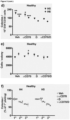
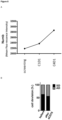
- the combination therapy with a nucleoside metabolic inhibitor provides a potent therapy arising from the effects of the CD70 antibodies being augmented by the upregulation of CD70 on blasts in response to the NMI ( in vitro and in vivo ( Figure 1 )).
- NMI nucleoside metabolic inhibitor
- This provides an effective therapy with reduced toxicity compared to standard intensive chemotherapy, particularly important for patients who would not be healthy enough to tolerate standard intensive chemotherapy.
- Monotherapy with CD70 antibodies provides an effective treatment without the need even for a NMI. This further reduces the toxicity by avoiding the effect of the NMI on non-blast cells, which can lead to a reduced risk of the patient developing cytopenias. By reducing the risk of cytopenias, the patient is less at risk from infection and requires fewer blood transfusions.
- a further treatment model made available by the present invention is an "induction” and "maintenance” model. That is, an induction treatment using the combination of anti-CD70 plus nucleoside metabolic inhibitor (with an optional loading dose of anti-CD70) can be used to potently decrease AML blast percentages in the bone marrow. The patient can then transition to a maintenance treatment of anti-CD70 alone or in combination with lower doses of NMI.
- This model has the advantage that the decrease in blasts can be maintained without the need to expose the patient to potential accumulated toxicity from prolonged administration of the nucleoside metabolic inhibitor.
- administering promotes LSC differentiation into myeloid cells. Promotion of such differentiation reduces the population of LSCs able to self-renew. LSCs contribute significantly to the propagation and maintenance of disease, providing a self-renewing pool of malignant cells.
- administration of an anti-CD70 antibody decreases the LSC population thereby increasing the prospect of remission and reducing the risk of relapse.
- the invention provides an anti-CD70 antibody or antigen-binding fragment thereof for use in a method for treating acute myeloid leukaemia (AML) or myelodysplastic syndrome (MDS) in a subject, the method comprising: administering to the subject one or more doses of an anti-CD70 antibody or antigen-binding fragment thereof and administering to the subject a nucleoside metabolic inhibitor (NMI) selected from azacitidine and decitabine, wherein the anti-CD70 antibody or antigen-binding fragment thereof inhibits CD70-CD27 binding.
- AML acute myeloid leukaemia
- MDS myelodysplastic syndrome
- a nucleoside metabolic inhibitor selected from azacitidine and decitabine for use in a method of treating acute myeloid leukaemia (AML) or myelodysplastic syndrome (MDS) in a subject, the method comprising: administering to the subject the nucleoside metabolic inhibitor (NMI), and administering to the subject one or more doses of an anti-CD70 antibody or antigen-binding fragment thereof, wherein the anti-CD70 antibody or antigen-binding fragment thereof inhibits CD70-CD27 binding.
- AML acute myeloid leukaemia
- MDS myelodysplastic syndrome
- a combination comprising an anti-CD70 antibody or antigen binding fragment thereof and a nucleoside metabolic inhibitor (NMI) selected from azacitidine and decitabine for use in a method of treating acute myeloid leukaemia (AML) or myelodysplastic syndrome (MDS) in a subject, the method comprising: administering to the subject one or more doses of the anti-CD70 antibody or antigen-binding fragment thereof, and administering to the subject the nucleoside metabolic inhibitor (NMI), wherein the anti-CD70 antibody or antigen-binding fragment thereof inhibits CD70-CD27 binding.
- NMI nucleoside metabolic inhibitor
- the anti-CD70 antibody or antigen-binding fragment thereof is administered at a dose in the range from 0.1 mg/kg to 25 mg/kg per dose, optionally at a dose in the range from 1 mg/kg to 20 mg/kg. In certain embodiments the anti-CD70 antibody or antigen-binding fragment thereof is administered at a dose of 1 mg/kg, 3 mg/kg, 10 mg/kg or 20 mg/kg. In certain preferred embodiments the anti-CD70 antibody or antigen-binding fragment thereof is administered at a dose of 10 mg/kg.
- the anti-CD70 antibody or antigen-binding fragment thereof, NMI or combination for use in accordance with the claims is for use in methods comprising: (i) a first stage comprising the administration of an anti-CD70 antibody and a nucleoside metabolic inhibitor selected from azacitidine and decitabine as a combination therapy in accordance with the dosage regimens described herein, and (ii) a second stage comprising the administration of an anti-CD70 antibody in accordance with the dosage regimens described herein and the administration of a lower dose of the nucleoside metabolic inhibitor than the dose of nucleoside metabolic inhibitor administered in the first stage.
- the subject is not eligible for standard intensive chemotherapy prior to treatment according to the invention.
- the anti-CD70 antibody or antigen-binding fragment thereof, NMI or combination for use in accordance with the claims is for use in methods further comprising performing a haematopoietic stem cell transplant on the subject.
- the patient is 60 years or older, optionally 75 years old or older.
- the anti-CD70 antibody or antigen-binding fragment thereof, NMI or combination for use in accordance with the claims is for use in methods that further comprise the administration of one or more active agents selected from an anti-CD33 antibody, an anti-CD123 antibody, an E-selectin inhibitor, a FLT3 inhibitor, a cyclin-dependent kinase inhibitor, a BCL-2 inhibitor, an aminopeptidase inhibitor and a JAK/STAT inhibitor as part of a combination therapy.
- the anti-CD70 antibody may possess antibody effector function, for example antibody dependent cell-mediated cytotoxicity (ADCC), complement dependent cytotoxicity (CDC) and/or antibody dependent cellular phagocytosis (ADCP).
- ADCC antibody dependent cell-mediated cytotoxicity
- CDC complement dependent cytotoxicity
- ADCP antibody dependent cellular phagocytosis
- the anti-CD70 antibody or antigen-binding fragment thereof may deplete CD70-expressing cells, for example via antibody effector function.
- the anti-CD70 antibody may be a modified antibody, for example an antibody drug conjugate (ADC).
- ADCs are antibodies conjugated to an active agent such as a cytotoxic agent. ADCs may also possess one or more antibody effector functions in addition to delivering the active agent to a target.
- the anti-CD70 antibody comprises a variable heavy chain domain (VH) and a variable light chain domain (VL), wherein the VH and VL domains comprise the CDRs:
- the anti-CD70 antibody or antigen-binding fragment comprises a VH domain at least 80%, at least 90%, at least 95%, at least 98%, at least 99% identical to SEQ ID No 4 and/or comprises a VL domain at least 80% at least 90%, at least 95%, at least 98%, at least 99% identical to SEQ ID No 8.
- the VH and/or VL domains may retain identical CDR sequences to those present in the reference sequence such that the variation is present only within the framework regions.
- the anti-CD70 antibody is an IgG1 antibody.
- the anti-CD70 antibody is preferably ARGX-110.
- a preferred embodiment is a combination of ARGX-110 and azacitidine.
- the subject or patient is a human subject or patient.
- AML is a heterogeneous disease and disease relapse is often due to one or more leukemic stem cell (LSC) clones that were resistant to therapy.
- LSC leukemic stem cell
- novel therapies not only debulk the disease by reducing blast load in bone marrow and blood but also decrease or even eradicate the heterogeneous LSC populations.
- human subjects having AML or MDS are effectively treated by administration of an anti-CD70 antibody.
- Such treatment of AML or MDS patients is particularly desirable, as conventional treatment with standard intensive chemotherapy is associated with significant toxicity and side-effects.
- many patients for example elderly patients
- have comorbidities such that they would not tolerate standard intensive chemotherapy, meaning only less effective therapies are available to them.
- Provided herein are treatments for AML that are effective even at low doses and with limited side effects and toxicity, meaning they are suitable for administration to all patients. This is especially advantageous for treating patients who otherwise would be ineligible for standard intensive chemotherapy.
- AML Acute myeloid leukaemia refers to haematopoietic neoplasms involving myeloid cells. AML is characterised by clonal proliferation of myeloid precursors with reduced differentiation capacity. AML patients exhibit an accumulation of blast cells in the bone marrow. Blast cells typically also accumulate in the peripheral blood of AML patients. Typically AML is diagnosed if the patient exhibits 20% or more blast cells in the bone marrow or peripheral blood.
- blast cells or simply “blasts”, as used herein refers to clonal myeloid progenitor cells exhibiting disrupted differentiation potential.
- a subset of blast cells is leukemic stem cells (LSCs). These are blast cells having stem cell properties such that, if transplanted into an immuno-deficient recipient, are capable of initiating leukemic disease. LSCs can self-renew by giving rise to leukaemia and also partially differentiate into non-LSC conventional blast cells that resemble the original disease but are unable to self-renew. LSCs occur with a frequency in the range of 1 in 10,000 to 1 in 1 million as a proportion of primary AML blast cells ( Pollyea and Jordan, Blood 2017 129:1627-1635 ). LSCs may be characterised as cells that are CD34+, CD38-, optionally also CD45- and/or CD123+. LSCs may also be characterised as CD45dim, SSClo, CD90+CD34+ cells.
- AML can be categorised and diagnosed according to the WHO 2008 classification, taken in combination with the 2016 update to this classification ( Arber et al. Blood, 19 May 2016 vol. 127, no. 20 ).
- WHO classification AML in general encompasses the following subtypes: acute myeloid leukaemia with recurrent genetic abnormalities; AML with myelodysplasia-related changes; therapy-related myeloid neoplasms; myeloid sarcoma; myeloid proliferations related to Down syndrome; blastic plasmacytoid dendritic cell neoplasm; and AML not otherwise categorized (e.g. acute megakaryoblastic leukaemia, acute basophilic leukaemia).
- AML can also be categorised according to the French-American-British (FAB) classification, encompassing the subtypes: M0 (acute myeloblastic leukaemia, minimally differentiated); M1 (acute myeloblastic leukaemia, without maturation); M2 (acute myeloblastic leukaemia, with granulocytic maturation); M3 (promyelocytic, or acute promyelocytic leukaemia (APL)); M4 (acute myelomonocytic leukaemia); M4eo (myelomonocytic together with bone marrow eosinophilia); M5 (acute monoblastic leukaemia (M5a) or acute monocytic leukaemia (M5b)); M6 (acute erythroid leukaemias, including erythroleukaemia (M6a) and very rare pure erythroid leukaemia (M6b)); or M7 (
- AML refers to any of the conditions encompassed by the WHO and/or FAB classifications, unless specified otherwise. Certain AML subtypes are considered to be of more favourable prognosis, some of intermediate prognosis and some of poor or adverse prognosis. The skilled person is aware of which subtypes would fall into which risk catgory.
- MDS Myelodysplastic syndrome
- MDS in general encompasses the following subtypes: MDS with single lineage dysplasia (previously called “refractory cytopenia with unilineage dysplasia", which includes refractory anemia, refractory neutropenia, and refractory thrombocytopenia); MDS with ring sideroblasts, which includes subgroups with single lineage dysplasia and multilineage dysplasia (previously called “refractory anemia with ring sideroblasts”); MDS with multilineage dysplasia (previously called “refractory cytopenia with multilineage dysplasia”); MDS with excess blasts (MDS-EB, previously called “refractory anemia with excess blasts”), which can be further subclassified into MDS-EB-1 and MDS-EB-2 based on blast percentages; MDS with isolated del(5q); and MDS, unclassified.
- MDS-EB MDS with excess blasts
- MDS can also be categorised according to the French-American-British (FAB) classification, encompassing the subtypes: M9980/3 (refractory anaemia (RA)); M9982/3 (refractory anaemia with ring sideroblasts (RARS)); M9983/3 (refractory anaemia with excess blasts (RAEB)); M9984/3 (refractory anaemia with excess blasts in transformation (RAEB-T)); and M9945/3 (chronic myelomonocytic leukaemia (CMML)).
- FAB French-American-British
- MDS refers to any of the conditions encompassed by the WHO and/or FAB classifications, unless specified otherwise.
- the WHO categorisation is preferred herein.
- MDS patients that is, MDS patients with a high risk of evolving to AML and with a poor survival prognosis.
- Whether a MDS patient is a "high risk” patient can be determined using the Revised International Prognostic Scoring System for MDS, or IPSS-R ( Greenberg et al, Blood. 2012 Sep 20; 120(12): 2454-2465 ).
- IPSS-R takes into account the patient's bone marrow blast percentage, cytogenetic abnormalities, the number and extent of cytopenias in order to place a patient in a prognostic category.
- a patient with an IPSS-R score greater than 4.5 is considered to be a "high-risk" MDS patient.
- a subject's response to AML therapy can be clinically characterised according to the criteria of Table 1: Table 1 Response Criteria Definition Complete remission (CR)* Bone marrow blasts ⁇ 5%; absence of blasts with Auer rods; absence of extramedullary disease; absolute neutrophil count > 1.0 ⁇ 10 9 /L (1000/ ⁇ L); platelet count > 100 ⁇ 10 9 /L (100.000/ ⁇ L); independence of red cell transfusions CR with incomplete recovery (CRi) All CR criteria except for residual neutropenia ( ⁇ 1.0 ⁇ 10 9 /L [1000/ ⁇ L]) or thrombocytopenia ( ⁇ 100 ⁇ 10 9 /L [100.000/ ⁇ L) Morphologic leukemia-free state (MLFS) Bone marrow blasts ⁇ 5%; absence of blasts with Auer rods; absence of extramedullary disease; no hematologic recovery required Partial remission (PR) all hematologic criteria of CR; decrease of bone marrow blast percentage to
- dose is taken to mean an effective amount of an active agent.
- Administration of a dose to a subject is the administration of an effective amount of a particular active agent per day.
- the “dose” may be administered as a single administration, or as multiple administrations per day, provided the indicated effective amount of the dose is administered to the subject.
- a dose of 1mg/kg can be administered as one daily administration of 1mg/kg, or two administrations per day, the two administrations reaching a total of 1mg/kg.
- CD70 protein or “CD70 antigen” or “CD70” or “TNFSF7” or “CD27L” are used interchangeably and refer to a member of the human TNF ligand family which is a ligand for TNFRSF27/CD27.
- human CD70 include the polypeptide having the amino acid sequence shown under NCBI Reference Sequence Accession No. NP_001243, or the extracellular domain thereof.
- an antibody includes an immunoglobulin having a combination of two heavy and two light chains which have significant specific immuno-reactive activity to an antigen of interest (e.g. human CD70).
- CD70 antibodies is used herein to refer to antibodies which exhibit immunological specificity for human CD70 protein. "Specificity” for human CD70 does not exclude cross-reaction with species homologues of CD70.
- Antibodies comprise light and heavy chains, with or without an interchain covalent linkage between them.
- An antigen-binding fragment of an antibody includes peptide fragments that exhibit specific immuno-reactive activity to the same antigen as the antibody (e.g. CD70).
- antigen-binding fragments include: an antibody light chain variable domain (VL); an antibody heavy chain variable domain; a single chain variable fragment or single chain antibody (scFv); a Fab fragment; a F(ab') 2 fragment; a Fd fragment; a Fv fragment; a one armed (monovalent) antibody; diabodies; triabodies; tetrabodies; or any antigen binding molecule formed by combination, assembly or conjugation of such antigen binding fragments. Fragments can be obtained, for example, by chemical or enzymatic treatment of an intact or complete antibody or antibody chain, or by recombinant means.
- nucleoside metabolic inhibitors refers to molecules which interfere with epigenetic modification (e.g. methylation, demethylation, acetylation, or deacetylation) of nucleotides (DNA and/or RNA).
- nucleoside metabolic inhibitors include hypomethylating agents (HMAs), isocitrate dehydrogenase (IDH) inhibitors, histone deacetylase (HDAC) inhibitors, and bromodomain and extraterminal (BET) inhibitors.
- HMAs hypomethylating agents
- IDH isocitrate dehydrogenase
- HDAC histone deacetylase
- BET bromodomain and extraterminal
- Preferred nucleoside metabolic inhibitors are hypomethylating agents. Hypomethylating agents inhibit normal methylation of DNA and/or RNA. Examples of hypomethylating agents are azacitidine, decitabine and guadecitabine.
- standard intensive chemotherapy refers to the so-called “7+3" induction chemotherapy characterised by 7 days of high dose cytarabine followed by 3 days of anthracycline administration (e.g. daunorubicin or idarubicin).
- Intensive chemotherapy is given with the aim of inducing complete remission of AML, typically with the intention of the patient undergoing a stem cell transplant following successful chemotherapy.
- Standard intensive chemotherapy is associated with significant toxicity and side-effects, meaning it is not suitable for patients unable to tolerate these effects. As used herein, these patients are termed "ineligible for standard intensive chemotherapy".
- a patient may be ineligible for standard intensive chemotherapy because, for example, they exhibit one or more comorbidities indicating they would not tolerate the toxicity, or the prognostic factors characterising their disease indicate an unfavourable outcome of standard intensive chemotherapy. Determination of an individual patient's eligibility for standard intensive chemotherapy would be performed by a clinician taking into account the individual patient's medical history and clinical guidelines (e.g. the National Comprehensive Cancer Network (NCCN) guidelines).
- AML patients over the age of 60 are often assessed as ineligible for standard intensive chemotherapy, with other factors to be considered including the cytogenetics and/or molecular abnormalities of the AML being treated.
- a patient ineligible for standard intensive chemotherapy may instead receive chemotherapy of reduced intensity, such as low dose cytarabine (LDAC).
- LDAC low dose cytarabine
- Patients ineligible for standard intensive chemotherapy and for whom LDAC is not appropriate can receive best supportive care (BSC), including hydroxyurea (HU) and transfusion support.
- BSC best supportive care
- subject and “patient” are used interchangeably to refer to a human individual.
- patients suffering from myeloid neoplasms such as AML and MDS can be treated with an anti-CD70 antibody.
- anti-CD70 antibody Following a single administration of anti-CD70 antibody, the number of leukemic stem cells able to be isolated from subjects' bone marrow was significantly reduced, as was the number of blast cells detected in the bone marrow and peripheral blood. This result was observed even at surprisingly low doses of the antibody.
- Anti-CD70 antibody monotherapy and aCD70+NMI combination therapy reduce bone marrow and peripheral blood blast cells
- the anti-CD70 antibody or antigen binding fragment thereof, NMI or combination for use in accordance with the claims reduces the number and/or proportion of blast cells in the bone marrow and/or in the peripheral blood, preferably in both the bone marrow and peripheral blood.
- the proportion of blast cells in the bone marrow or peripheral blood can be assessed by methods known in the art and described herein, for example flow cytometric or cell morphologic assessment of cells obtained from a bone marrow biopsy of the subject, or a peripheral blood smear.
- the proportion of blasts is determined versus total cells in the sample.
- flow cytometry can be used to determine the proportion of blast cells using the number of CD45 dim , SSC low cells relative to total cell number.
- cell morphological assessment can be used to determine the number of morphologically identified blasts relative to the total number of cells in the field of view being examined.
- the proportion of blasts cells in the bone marrow is reduced by at least 5% in absolute terms - that is, reducing the percentage of blast cells in the bone marrow from 30% to 25% or less, for example.
- treatment can be characterised as reducing the proportion of blasts cells in the bone marrow by at least 10% in absolute terms, preferably at least 15%, preferably at least 20%, preferably at least 25%, preferably at least 30%, preferably at least 40%, preferably at least 50%, preferably at least 55%, preferably at least 60% in absolute terms.
- the proportion of blasts cells in the bone marrow is reduced by at least 50% compared to before treatment.
- the proportion of bone marrow blasts is measured by cell morphological assessment. In certain embodiments, the proportion of bone marrow blasts is measured by flow cytometric assessment. In certain embodiments, the proportion of bone marrow blasts is measured in accordance with minimum residual disease (MRD) assessment.
- MRD minimum residual disease
- the proportion of blasts cells in the peripheral blood is reduced by at least 5% in absolute terms - that is, reducing the percentage of blast cells in the peripheral blood from 30% to 25% or less, for example. In certain embodiments, the proportion of blasts cells in the peripheral blood is reduced by at least 5% in absolute terms, optionally at least 10% in absolute terms, preferably at least 15%, preferably at least 20%, preferably at least 25% in absolute terms. In certain embodiments, the proportion of peripheral blood (PB) blasts is measured by cell morphological assessment. In certain embodiments, the proportion of PB blasts is measured by flow cytometric assessment. In certain embodiments, the proportion of PB blasts is measured in accordance with minimum residual disease (MRD) assessment.
- MRD minimum residual disease
- the proportion of blasts cells in the bone marrow is reduced to less than 40%, optionally to less than 20%, for example less than 10%. In certain embodiments, the proportion of blasts cells in the bone marrow is reduced to less than 5%.
- the proportion of blasts cells in the peripheral blood is reduced to less than 40%, optionally less than 20%, for example less than 10%. In certain embodiments, the proportion of blasts cells in the peripheral blood is reduced to less than 5%.
- the subject has a bone marrow blast percentage of at least 20%, optionally at least 40%, optionally at least 60%, optionally at least 70%, prior to treatment.
- the subject has a peripheral blood blast percentage of at least 5% prior to treatment, optionally of at least 8%, optionally of at least 10%, optionally of at least 15%, optionally of at least 20%, optionally of at least 30%, optionally of at least 40%, optionally of at least 50%, optionally at least 60% prior to treatment.
- cell morphological assessment For clinical determination of blast cell percentage, typically cell morphological (also known as cytomorphology) assessment is preferred.
- Anti-CD70 antibody monotherapy and aCD70+NMI combination therapy reduce the level of leukaemic stem cells and promote differentiation
- LSCs leukemic stem cells
- LSCs are cancer stem cells capable of initiating leukemic disease. LSCs can self-renew by giving rise to leukaemia and also partially differentiate into non-LSC conventional blast cells that resemble the original disease but are unable to self-renew.
- LSCs may be characterised as cells that are CD34+, CD38-, optionally also CD45- and/or CD123+. LSCs may also be characterised as CD45dim, SSClo, lin-CD90+CD34+ cells. Reducing the number of LSCs in an AML patient should greatly improve the prospect of remission and reduce the potential for relapse.
- the monotherapy and combination treatments according to the invention reduce the proportion of LSCs in a patient by at least 2-fold and in some instances to a much greater extent. Treatment according to the invention is therefore expected to not only reduce the overall blast percentage in a patient, but also reduce the likelihood of subsequent relapse of disease.
- the anti-CD70 antibody or antigen binding fragment thereof, NMI or combination for use in accordance with the claims reduces the number of LSCs as a proportion of mononuclear cells (also referred to as a reduction in LSC frequency).
- LSC frequency is reduced by at least a factor of 2.
- assessment of the proportion of LSCs in the bone marrow can be determined by serial dilution plating on e.g. methylcellulose.
- Monotherapy and combination treatments also promote LSC differentiation into myeloid cells. Promotion of such differentiation reduces the population of LSCs able to self-renew, thereby increasing the prospect of remission and reducing the risk of relapse.
- Myeloid differentiation of LSCs is characterised by asymmetric cell division, in contrast to symmetric cell division which results in two daughter stem cells.
- Asymmetric division can be assessed via microscopy techniques or by measuring cell fate determination markers such as the Numb protein.
- LSCs from patients which have received anti-CD70 antibody monotherapy exhibit increased Numb expression (and therefore increased differentiation) compared to before treatment. Numb expression (and therefore differentiation) is further increased when patients are treated with anti-CD70 antibody in combination with an NMI.
- the anti-CD70 antibody or antigen binding fragment thereof, NMI or combination for use in accordance with the claims promotes leukaemic stem cell differentiation. In certain embodiments, the anti-CD70 antibody or antigen binding fragment thereof, NMI or combination for use in accordance with the claims promotes asymmetric division of leukaemic stem cells. In certain embodiments, the anti-CD70 antibody or antigen binding fragment thereof, NMI or combination for use in accordance with the claims promotes expression of Numb on leukaemic stem cells.
- the anti-CD70 antibody or antigen-binding fragment thereof is administered at a dose in the range from 0.1 mg/kg to 25 mg/kg per dose, for example in the range of from 0.1 mg/kg to 20 mg/kg. In certain embodiments, the anti-CD70 antibody or antigen-binding fragment thereof is administered at a dose in the range from 1 mg/kg to 20 mg/kg per dose. Ranges described herein include the end points of the range unless indicated otherwise - for example, administration at a dose in the range of 0.1-25 mg/kg includes administration at a dose of 0.1 mg/kg and administration at a dose of 25 mg/kg, as well as all doses between the two end points).
- the anti-CD70 antibody or antigen-binding fragment thereof is administered at a dose in the range from 0.1-15 mg/kg. In certain embodiments the anti-CD70 antibody or antigen-binding fragment thereof is administered at a dose in the range from 0.5-2 mg/kg. In certain embodiments the anti-CD70 antibody or antigen-binding fragment thereof is administered at a dose of 1 mg/kg, 3 mg/kg, 10 mg/kg, or 20 mg/kg. In certain preferred embodiments the anti-CD70 antibody or antigen-binding fragment thereof is administered at a dose of 1mg/kg. In certain preferred embodiments the anti-CD70 antibody or antigen-binding fragment thereof is administered at a dose of 10 mg/kg.
- each dose of the anti-CD70 antibody or antigen binding fragment is administered.
- each dose of the anti-CD70 antibody or antigen-binding fragment thereof is separated by 10-20 days, optionally 12-18 days. In certain embodiments each dose of anti-CD70 antibody is separated by 14-17 days.
- the anti-CD70 antibody or antigen binding fragment thereof, NMI or combination for use in accordance with the claims results in at least partial remission. In certain embodiments, the anti-CD70 antibody or antigen binding fragment thereof, NMI or combination for use in accordance with the claims results in the patient exhibiting a morphologic leukaemia-free state. In certain embodiments, the anti-CD70 antibody or antigen binding fragment thereof, NMI or combination for use in accordance with the claims results in at least complete remission with incomplete recovery (CRi). In certain embodiments, the anti-CD70 antibody or antigen binding fragment thereof, NMI or combination for use in accordance with the claims results in at least complete remission.
- the anti-CD70 antibody or antigen binding fragment thereof, NMI and combination for use in accordance with the claims are thus able to treat AML or MDS by reducing the number of blast cells (including leukemic stem cells) in the bone marrow and in the peripheral blood.
- the anti-CD70 antibody or antigen binding fragment thereof, NMI and combination for use in accordance with the claims are also particularly effective at reducing the level of LSCs specifically.
- the anti-CD70 antibody or antigen binding fragment thereof, NMI and combination for use in accordance with the claims are particularly advantageous as they provide an effective means of inducing remission (partial or complete) of AML without the significant toxicity and morbidity associated with standard intensive chemotherapy. Providing a therapy without these side effects is a significant advantage of the invention.
- AML therapy Reducing the side effects of AML therapy is clearly desirable for the treatment of AML patients in general. In addition, it is particularly advantageous for patients who would not ordinarily be able to receive the more potent AML treatments.
- alternative therapies for these patients are available (e.g. low dose cytarabine (LDAC)), they provide a reduced likelihood of achieving remission and are still associated with significant side-effects.
- treatment according to the invention provides an effective therapy for AML that can be tolerated by patients who would not be able to tolerate the toxicity of standard intensive chemotherapy.
- the subject is not eligible for standard intensive chemotherapy prior to treatment.
- the subject is at least 60 years old, optionally at least 70 years old.
- a further conventional therapy for AML is haematopoietic stem cell transplant (HSCT), using either allogenic or autologous stem cells.
- HSCT haematopoietic stem cell transplant
- Patients ineligible to receive standard intensive chemotherapy are typically precluded from receiving HSCT. This is because the prospect of successful transplant is reduced in patients receiving only low dose chemotherapy, since they are unable to receive the standard intensive chemotherapy intended to ablate the bone marrow blasts in preparation for receiving the transplant. Whilst HSCT can be conducted using reduced intensity chemotherapy, the prospect of success is lower due to the greater likelihood of residual blasts remaining in the bone marrow.
- the suitability of an individual patient for HSCT will depend on the case by case assessment of a clinician, taking into account the prospect of the transplant being successful and other factors such as remaining treatment options and quality of life.
- An exemplary but significant factor to consider is the percentage of bone marrow blasts exhibited by the patient.
- treatment according to the invention is able to significantly reduce the percentage of bone marrow blasts.
- the anti-CD70 antibody or antigen binding fragment thereof, NMI and combination for use in accordance with the claims open up the prospect of a successful HSCT in a population of patients for whom HSCT was not previously recommended.
- the subject is not eligible for standard intensive chemotherapy prior to treatment and the treatment reduces the percentage of bone marrow blasts such that the subject is eligible for HSCT.
- the anti-CD70 antibody or antigen binding fragment thereof, NMI or combination for use in accordance with the claims is for use in a method that further comprises conducting a haematopoietic stem cell transplant on the subject.
- Treatment according to the invention is expected to be particularly effective at treating patients with abnormally high levels of soluble CD27 in serum.
- sCD27 soluble CD27
- Soluble CD27 can therefore serve as a biomarker for the extent of CD70/CD27 interactions ( Riether et al. J. Exp. Med. 2017 Feb;214(2):359-380 ).
- sCD27 is thought to correlate with the percentage of blast cells in bone marrow, as well as to serve as a marker for the sternness of a patient's blasts, with increased sCD27 indicating increased levels of stemness ( Riether et al. J. Exp. Med. 2017 Feb;214(2):359-380 ).
- CD70/CD27-mediated signalling is thought to promote aberrant cell divisions and high levels of serum sCD27 are correlated with poor prognosis of AML patients.
- Use of an anti-CD70 antibody in accordance with the invention reduces the percentage of blast cells in bone marrow (see Examples) and blocks CD27/CD70 interactions, thereby decreasing levels of blast stemness and promoting differentiation. Accordingly, AML patients exhibiting elevated sCD27 are expected to derive particular benefit from treatment with anti-CD70 antibody according to the invention.
- the patient to be treated has a serum sCD27 concentration of greater than 200 U/ml. It has also been determined that, for all AML patients across ages and AML sub-type risk categories (that is, across patients with favourable, intermediate and high risk/adverse cytogenetic classifications) those with a serum sCD27 level greater than a threshold of 577 U/ml have a poorer prognosis than those patients with sCD27 levels lower than this threshold. Therefore in certain embodiments, the patient to be treated has a serum sCD27 concentration of greater than 577 U/ml.
- the patient to be treated has a favourable or low risk AML subtype and has a serum sCD27 concentration of greater than 470 U/ml.
- the patient to be treated has an intermediate risk AML subtype and has a serum sCD27 concentration of greater than 586 U/ml.
- the patient to be treated has a high risk AML subtype and has a serum sCD27 concentration of greater than 714 U/ml.
- the anti-CD70 antibody or antigen binding fragment thereof, NMI or combination for use in accordance with the claims is for use in a method that further comprises the step of measuring the patient's serum CD27 concentration.
- administering reduces the number of bone marrow blasts and can block the interaction of CD27 and CD70.
- the anti-CD70 antibody or antigen binding fragment thereof, NMI or combination for use in accordance with the claims reduces serum sCD27 compared to before treatment.
- serum sCD27 is reduced by at least 200 pg/ml, optionally at least 500 pg/ml.
- serum CD27 is reduced by at least 1000 pg/ml, at least 1500 pg/ml or at least 10,000 pg/ml compared to before treatment.
- levels of sCD27 could be used as a correlate of anti-CD70 antibody engagement of its target antigen. Soluble CD27 levels can decrease in response to CD70 antibody administration and then subsequently increase when therapy is stopped. Accordingly, in some embodiments the anti-CD70 antibody or antigen binding fragment thereof, NMI or combination for use in accordance with the claims is for use in methods further comprising monitoring treatment efficacy by detecting serum sCD27.
- an anti-CD70 antibody in accordance with the invention not only reduces the percentage of blasts but preferentially reduces the number of blast cells that express CD70 (CD70+ blasts).
- CD70+ blasts Aberrant AML blast cells are understood to overexpress CD70 relative to healthy progenitor cells.
- Targeting CD70-expressing blast cells thus reduces the number of pathogenic blasts but with a negligible effect on healthy progenitor cells, thereby reducing the risk of the patient developing cytopenias.
- the percentage of CD70+ blasts is reduced. In certain embodiments the percentage of CD70+ blasts is reduced by at least 5%, optionally by at least 10% in absolute terms. In certain embodiments, the percentage of CD70+ cells is reduced to less than 20%, optionally less than 10%. In certain embodiments the percentage of CD70+ blast cells is reduced to less than 5%. The percentage of CD70+ blasts may be reduced by the indicated amount in the bone marrow and/or the peripheral blood.
- the patient is a "high risk” MDS patient.
- the patient has an IPSS-R score greater than 4.5.
- NMI nucleoside metabolic inhibitor
- NMI nucleoside metabolic inhibitor
- HMA hypomethylating agent
- the invention provides an anti-CD70 antibody or antigen-binding fragment thereof for use in a method for treating acute myeloid leukaemia (AML) or myelodysplastic syndrome (MDS) in a subject, the method comprising: administering to the subject one or more doses of an anti-CD70 antibody or antigen-binding fragment thereof and administering to the subject a nucleoside metabolic inhibitor (NMI) selected from azacitidine and decitabine, wherein the anti-CD70 antibody or antigen-binding fragment thereof inhibits CD70-CD27 binding.
- AML acute myeloid leukaemia
- MDS myelodysplastic syndrome
- a nucleoside metabolic inhibitor selected from azacitidine and decitabine for use in a method of treating acute myeloid leukaemia (AML) or myelodysplastic syndrome (MDS) in a subject, the method comprising: administering to the subject the nucleoside metabolic inhibitor (NMI), and administering to the subject one or more doses of an anti-CD70 antibody or antigen-binding fragment thereof, wherein the anti-CD70 antibody or antigen-binding fragment thereof inhibits CD70-CD27 binding.
- AML acute myeloid leukaemia
- MDS myelodysplastic syndrome
- a combination comprising an anti-CD70 antibody or antigen binding fragment thereof and a nucleoside metabolic inhibitor (NMI) selected from azacitidine and decitabine for use in a method of treating acute myeloid leukaemia (AML) or myelodysplastic syndrome (MDS) in a subject, the method comprising: administering to the subject one or more doses of the anti-CD70 antibody or antigen-binding fragment thereof, and administering to the subject the nucleoside metabolic inhibitor (NMI), wherein the anti-CD70 antibody or antigen-binding fragment thereof inhibits CD70-CD27 binding.
- NMI nucleoside metabolic inhibitor
- Azacitidine is an analogue of cytidine and decitabine is its deoxy derivative.
- AZA and decitabine are inhibitors of DNA methyltransferases (DNMT) known to upregulate gene expression by promoter hypomethylation. Such hypomethylation disrupts cell function, thereby resulting in cytotoxic effects.
- DNMT DNA methyltransferases
- the therapeutic effect arising from treatment with both a CD70 antibody and a nucleoside metabolic inhibitor such as AZA is thought to be due to an enhanced effect from combining the two active agents.
- the anti-CD70 antibody alone depletes bone marrow and circulating blasts (i.e. those in bone marrow, the peripheral blood, or both), and a nucleoside metabolic inhibitor (such as AZA) alone disrupts cell activity.
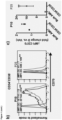
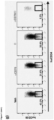
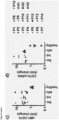
- upregulation of CD70 on the surface of AML blasts and LSCs is induced by treatment with a nucleoside metabolic inhibitor (azacitidine or decitabine)(see Examples and Figure 1 ).
- a nucleoside metabolic inhibitor azacitidine or decitabine
- This effect of upregulating the antigen correlates with an increase in the efficacy of the anti-CD70 antibody when used in combination with a nucleoside metabolic inhibitor such as azacitidine, as demonstrated in the accompanying Examples.
- This results in the number of blast cells being reduced further than after administration of either active agent alone and could explain the surprising efficacy of the combination treatment when anti-CD70 antibody is administered as a low dose.
- the nucleoside metabolic inhibitor is azacitidine or decitabine. In certain preferred embodiments the nucleoside metabolic inhibitor is azacitidine.
- the nucleoside metabolic inhibitor (e.g. azacitidine) is administered at a dose in the range of 50-100 mg/m 2 per day.
- ranges described herein include the end points of the range unless indicated otherwise - for example, administration at a dose in the range of 50-100 mg/m 2 per day includes administration at a dose of 50 mg/m 2 per day and administration at a dose of 100 mg/m 2 per day, as well as all doses between the two end points.
- the nucleoside metabolic inhibitor is administered at a dose in the range of 70-80 mg/m 2 per day. In certain preferred embodiments the nucleoside metabolic inhibitor is administered at a dose of 75 mg/m 2 per day.
- the nucleoside metabolic inhibitor is administered over a dosing period of a daily dose for 5-9 days. That is, a dose of the nucleoside inhibitor is administered every day for a period 5, 6, 7, 8, or 9 days in length. In certain preferred embodiments the nucleoside metabolic inhibitor is administered over a dosing period of a daily dose for 7 days.
- the nucleoside metabolic inhibitor is administered according to a dosage regimen of repeated dosing periods, wherein the end of one dosing period and the start of the next dosing period are separated by 18-25 days. That is, the dosage regimen includes at least 2 dosing periods in which a dose of the nucleoside inhibitor is administered every day (for example for a period 5, 6, 7, 8, or 9 days in length), wherein the end of the one dosing period and the start of the next dosing period are separated by 18, 19, 20, 21, 22, 23, 24, or 25 days. In certain embodiments the end of one dosing period and the start of the next dosing period are separated 21 days.
- each dosing period is of the same length (e.g. 7 days). In certain embodiments, the end of each dosing period and the start of the next dosing period are separated by the same number of days (e.g. 21 days).
- the first dose of nucleoside metabolic inhibitor is administered 7-21 days after the first dose of anti-CD70 antibody or antigen binding fragment thereof. In certain embodiments the first dose of nucleoside metabolic inhibitor is administered 10-17 days after the first dose of anti-CD70 antibody or antigen binding fragment thereof. In certain embodiments the first dose of nucleoside metabolic inhibitor is administered 14 days after the first dose of anti-CD70 antibody or antigen binding fragment thereof.
- one of the daily doses of the nucleoside metabolic inhibitor is administered on the same day as a dose of the anti-CD70 antibody or antigen-binding fragment thereof. That is, in embodiments of the methods of the invention in which the subject is administered both an anti-CD70 antibody (or antigen binding fragment thereof) and a nucleoside metabolic inhibitor, the dosage regimes of both the anti-CD70 antibody and the nucleoside metabolic inhibitor are such that at least one of the scheduled doses of the anti-CD70 antibody is on the same day as one of the scheduled daily doses of the nucleoside metabolic inhibitor. That day could be the first, second, third, fourth, fifth, sixth or seventh day of the dosing period of the nucleoside metabolic inhibitor.
- a dose of the anti-CD70 antibody or antigen-binding fragment thereof is administered every 14-17 days and the nucleoside metabolic inhibitor is administered according to a dosage regimen of repeated dosing periods of a daily dose for 7 days, wherein the end of one dosing period and the start of the next dosing period are separated by 21 days, and wherein the first daily dose of the first dosing period is administered 14 days after the first dose of the anti-CD70 antibody or antigen-binding fragment thereof.
- the administration of the NMI can be tapered or stopped.
- NMI e.g. aza
- an initial period of combination therapy with CD70 antibody and NMI can significantly reduce the patient's blast percentage.
- cytopenias arising from the effect of NMIs on non-blast cell types.
- the risk of such toxicity will be reduced and non-blast cell types can recover.
- the percentage of blasts will still be controlled by maintaining the dose of anti-CD70 antibody.
- the patient can be treated with an induction therapy of the combination treatment already described and can then be transitioned to a maintenance therapy comprising anti-CD70 therapy with tapering doses of NMI or simply CD70 antibody as a monotherapy.
- the anti-CD70 antibody or antigen binding fragment thereof, NMI or combination for use in accordance with the claims is for use in a method that comprises administering to the patient the anti-CD70 antibody and the NMI as a combination therapy according to any of the embodiments described above in a first stage (induction therapy), and in a subsequent second stage administering to the patient the anti-CD70 antibody and administering a dose of the NMI lower than the dose of NMI administered in the first stage (maintenance therapy).
- the dose of the NMI in the second stage may be zero - that is, the second stage can involve administration of the anti-CD70 antibody only.
- the dose of CD70 antibody administered in the second stage is any dose according to the embodiments already described. That is, in certain embodiments the dose is in the range from 0.1 mg/kg to 25 mg/kg, for example 0.1 mg/kg to 20 mg/kg, for example from 1 mg/kg to 20 mg/kg. In certain embodiments the dose is in the range of from 0.1 mg/kg to 15 mg/kg per dose. In certain embodiments the dose is in the range from 0.5 mg/kg to 2 mg/kg. In certain embodiments the dose is 1 mg/kg, 3 mg/kg, 10 mg/kg, or 20 mg/kg. In certain embodiments the dose is 1 mg/kg. In certain embodiments the dose is 10 mg/kg.
- the duration of the first stage i.e. induction therapy
- the timing of the transition to the second stage i.e. maintenance therapy
- the extent to which the dose of NMI is tapered or stopped entirely are factors that will be tailored to the individual patient and determined by their clinician according to the individual patient's response to therapy and their medical history. Therefore the following embodiments are provided by way of non-limiting example.
- the induction therapy is administered to the patient until their bone marrow and/or peripheral blood blast percentage is less than 10%, optionally less than 5%. In certain embodiments, the induction therapy is administered for at least 5 NMI dosing periods, optionally at least 6, 7, 8, 9, or at least 10 NMI dosing periods.
- the dose of the NMI in the maintenance period is no more than 50 mg/m 2 per day, optionally no more than 40 mg/m 2 per day, optionally no more than 30 mg/m 2 per day, optionally no more than 20 mg/m 2 per day.
- the anti-CD70 antibody may be in a pharmaceutical composition comprising a pharmaceutically acceptable excipient or carrier.
- Suitable pharmaceutically acceptable carriers and excipients would be familiar to the skilled person.
- Examples of pharmaceutically acceptable carriers and excipients suitable for inclusion in pharmaceutical compositions of the invention include sodium citrate, glycine, polysorbate (e.g. polysorbate 80) and saline solution.
- the anti-CD70 antibody or antigen binding fragment may be formulated for administration via the same route or via a different route as compared with the nucleoside metabolic inhibitor.
- the anti-CD70 antibody is administered to the subject parenterally, preferably intravenously (i.v.). In certain embodiments the anti-CD70 antibody is administered as a continuous i.v. infusion until the desired dose is achieved.
- the nucleoside metabolic inhibitor is administered parenterally, preferably subcutaneously (s.c.).
- the anti-CD70 antibody or antigen binding fragment thereof, NMI or combination for use in accordance with the claims is administered as a combination therapy with one or more additional active agents, such as therapeutic or palliative agents (e.g. radiotherapy, analgesics or antibiotics).
- additional active agents such as therapeutic or palliative agents (e.g. radiotherapy, analgesics or antibiotics).
- active agents may be administered as therapeutics, to improve patient's response to therapy and/or their quality of life.
- an anti-CD70 antibody as a monotherapy or as a combination therapy with an NMI such as aza
- an NMI such as aza
- a particular advantage is that the CD70 antibodies are selective for blasts over other cell types (as CD70 has minimal expression in normal tissues) and can induce stem cell differentiation /reduce their stemness (for example by interfering with CD27/CD70 mediated signalling).
- CD33 is a receptor that is expressed on the majority of myeloid blasts and LSCs but is absent or present only at low levels on normal haematopoietic stem cells. Whilst CD33 is expressed on a variety of other cell types less associated with AML, CD33 is expressed on the majority of AML cells and the level of CD33 seems to correlate with the disease prognosis.
- Antibodies to CD33 such as bispecific antibody AMG330 and antibody drug conjugate (ADC) vadastuximab talirine have been described as effectively treating AML and vadastuximab talirine (also known as SGN-CD33A from Seattle Genetics) is being tested in phase III trials. It is therefore expected that anti-CD33 antibodies will combine with an anti-CD70 antibody and azacitidine or decitabine to provide a particularly effective therapy for AML. Therefore, in certain embodiments, the anti-CD70 antibody or antigen binding fragment thereof, NMI or combination for use in accordance with the claims is for use in a method further comprising the administration of an anti-CD33 agent, for example an anti-CD33 antibody, to the patient as part of a combination therapy.
- an anti-CD33 agent for example an anti-CD33 antibody
- CD123 is another receptor associated with myeloid blasts and LSCs but with low level expression on other cell types, such as healthy hematopoietic stem cells and lymphocytes.
- AML cells with high CD123 expression exhibit higher proliferation and higher expression of CD123 among AML blasts is associated with lower complete remission rates and poorer overall survival.
- Agents targeting CD123 therefore represent another suitable combination for use with treatment according to the present invention.
- Anti-CD123 agents suitable for use in treating AML include toxin-linked natural ligand (e.g. DT 388 IL3) and antibodies such as CSL360, CSL362 and MGD006 (a modified antibody (DART)).
- the anti-CD70 antibody or antigen binding fragment thereof, NMI or combination for use in accordance with the claims is for use in a method further comprising the administration of an anti-CD123 agent, for example an anti-CD123 antibody, to the patient as part of a combination therapy.
- Treatment of AML with an anti-CD70 antibody together with azacitidine or decitabine can be further advantageously combined in a combination therapy with other AML therapeutic agents, for example E-selectin inhibitors, FMS-like tyrosine kinase receptor 3 (FLT3) inhibitors, cyclin-dependent kinase inhibitors, BCL-2 inhibitors, aminopeptidase inhibitors and JAK/STAT inhibitors.
- E-selectin inhibitors for example E-selectin inhibitors, FMS-like tyrosine kinase receptor 3 (FLT3) inhibitors, cyclin-dependent kinase inhibitors, BCL-2 inhibitors, aminopeptidase inhibitors and JAK/STAT inhibitors.
- FLT3 FMS-like tyrosine kinase receptor 3
- AML therapeutic agents include cytarabine, anthracycline compounds (e.g. daunorubicin, idarubicin), and hydroxyurea.
- an anti-CD70 antibody or antigen binding fragment thereof refers to immunoglobulins having a combination of two heavy and two light chains which have specific immunoreactive activity to an antigen of interest (e.g. human CD70).
- an antigen of interest e.g. human CD70.
- CD70 antibodies or “anti-CD70 antibodies” are used interchangeably herein to refer to antibodies which exhibit immunological specificity for human CD70 protein. "Specificity" for human CD70 in this context does not exclude cross-reaction with species homologues of CD70.
- Antibody as used herein encompasses antibodies of any human class (e.g. IgG, IgM, IgA, IgD, IgE) as well as subclasses/isotypes thereof (e.g. IgG1, IgG2, IgG3, IgG4, !gA1). Antibody as used herein also refers to modified antibodies.
- Modified antibodies include synthetic forms of antibodies, which are altered such that they are not naturally occurring, e.g., antibodies that comprise at least two heavy chain portions but not two complete heavy chains (such as, domain deleted antibodies or minibodies); multispecific forms of antibodies (e.g., bispecific, trispecific, etc.) altered to bind to two or more different antigens or to different epitopes on a single antigen); heavy chain molecules joined to scFv molecules and the like.
- modified antibody includes multivalent forms of antibodies (e.g., trivalent, tetravalent, etc., antibodies that bind to three or more copies of the same antigen).
- Antibodies described herein may possess antibody effector function, for example one or more of antibody dependent cell-mediated cytotoxicity (ADCC), complement dependent cytotoxicity (CDC) and antibody dependent cellular phagocytosis (ADCP).
- ADCC antibody dependent cell-mediated cytotoxicity
- CDC complement dependent cytotoxicity
- ADCP antibody dependent cellular phagocytosis
- CD70 antibody suitable for use according to all aspects of the invention include ARGX-110 described in WO2012123586 and SGN-70 ( WO2006113909 , and McEarChern et al. Clin Cancer Res 2008;14(23) p7763 ).
- a CD70 antibody suitable for use according to all aspects of the invention may also be an antibody drug conjugate (ADC).
- ADCs are antibodies attached to active agents, for example auristatins and maytansines or other cytotoxic agents. Certain ADCs maintain antibody blocking and/or effector function (e.g. ADCC, CDC, ADCP) while also delivering the conjugated active agent to cells expressing the target (e.g. CD70).
- Examples of anti-CD70 ADCs include vorsetuzumab mafodotin (also known as SGN-75, Seattle Genetics), SGN-70A (Seattle Genetics), and MDX-1203/BMS936561 (Britsol-Myers Squibb), each of which may be used in accordance with the invention. Suitable anti-CD70 ADCs are also described in WO2008074004 and WO2004073656 ).
- an "antigen binding fragment” refers to a polypeptide fragment of an antibody that maintains binding specificity for CD70 and includes : an antibody light chain variable domain (VL); an antibody heavy chain variable domain; a single chain variable fragment or single chain antibody (scFv); a Fab fragment; a F(ab') 2 fragment; a Fd fragment; a Fv fragment; a one armed (monovalent) antibody; diabodies; triabodies; tetrabodies; or any antigen binding molecule including such antigen binding fragments (e.g. a chimeric antigen receptor), or any antigen binding molecule formed by combination, assembly or conjugation of such antigen binding fragments. Fragments can be obtained, for example, by chemical or enzymatic treatment of an intact or complete antibody or antibody chain, or by recombinant means.
- ARGX-110 is an IgG1 anti-CD70 antibody that has been shown to inhibit the interaction of CD70 with its receptor CD27 ( Silence et al. MAbs. 2014 Mar-Apr;6(2):523-32 ).
- ARGX-110 has been shown to inhibit CD70-induced CD27 signalling.
- Levels of CD27 signalling may be determined by, for example, measurement of serum soluble CD27 as described in Riether et al (J. Exp. Med. 2017 Feb;214(2):359-380 ) or of IL-8 expression as described in Silence et al (MAbs. 2014 Mar-Apr;6(2):523-32 ).
- inhibiting CD27 signalling is thought to reduce activation and/or proliferation of Treg cells, thereby reducing inhibition of antitumour effector T cells.
- the anti-CD70 antibody may be an antibody that inhibits the interaction of CD70 with its receptor CD27.
- the anti-CD70 antibody may compete with CD27 for CD70 binding.
- the anti-CD70 antibody may inhibit CD70-induced CD27 signalling.
- the anti-CD70 antibody may inhibit Treg activation and/or proliferation.
- AGRX-110 has also been demonstrated to deplete CD70-expressing tumour cells.
- ARGX-110 has been shown to lyse CD70-expressing tumour cells via antibody dependent cell-mediated cytotoxicity (ADCC) and complement dependent cytotoxicity (CDC), and also to increase antibody dependent cellular phagocytosis (ADCP) of CD70-expressing cells ( Silence et al, MAbs. 2014 Mar-Apr;6(2):523-32 ).
- the anti-CD70 antibody may be an antibody that depletes CD70-expressing cells.
- the anti-CD70 antibody may induce lysis of CD70-expressing cells.
- the anti-CD70 antibody may possess ADCC and/or CDC functionality.
- the anti-CD70 antibody may induce ADCP.
- the Fc region of ARGX-110 is a defucosylated Fc region according to the Potelligent TM system and ARGX-110 has been described as exhibiting increased ADCC functionality compared to a fucosylated counterpart ( Silence et al. MAbs. 2014 Mar-Apr;6(2):523-32 ). Therefore, in certain embodiments the anti-CD70 antibody is fully or partially defucosylated.
- the CD70 antibody comprises an Fc domain, CH3 domain or Fc-hinge derived from human IgG1 comprising Lys433, Phe434 and Tyr436 (according to EU numbering).
- the anti-CD70 antibody further comprises one or more of Tyr252, Thr254 and Glu256 (according to EU numbering). These residues at these positions have been demonstrated to prolong antibody circulation time.
- the anti-CD70 antibody is an IgG antibody, preferably an IgG1 antibody.
- anti-CD70 antibodies other than ARGX-110 are expected to be effective treatments in accordance with the invention, for example CD70 antibodies that inhibit interaction of CD70 with CD27, compete with CD27 for CD70 binding, inhibit CD70-induced CD27 signalling, inhibit Treg activation and/or proliferation, deplete CD70-expressing cells, induce lysis of CD70-expressing cells, possesses ADCC, CDC functionality, and/or induces ADCP.
- Alternative CD70 antibodies expected to be useful in treatment according to the invention are known in the art, for example SGN-70 and those described in WO2006044643 and WO2007038637 .
- Modified CD70 antibodies such as the ADCs SGN-75, SGN-70A and MDX-1203/BMS936561 are further examples of anti-CD70 antibodies expected to effective in treatments according to the invention.
- the anti-CD70 antibody may comprise the CDR sequences of ARGX-110. That is, in certain embodiments the anti-CD70 antibody comprises a variable heavy chain domain (VH) and a variable light chain domain (VL), wherein the VH and VL domains comprise the CDRs (by Kabat definition):
- VH variable heavy chain domain
- VL variable light chain domain
- the VH and/or VL domains of the anti-CD70 antibody exhibit at least 70%, at least 80%, at least 90%, at least 95%, at least 98%, at least 99% sequence identity to the VH and/or VL domains of ARGX-110, respectively (VH: SEQ ID NO: 4; VL: SEQ ID NO: 8).
- the VH and/or VL domains may retain identical CDR sequences to those present in the reference sequence such that the variation is present only within the framework regions.
- the anti-CD70 antibody is ARGX-110.
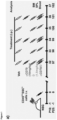
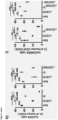
- NSG mice were transplanted with 5 ⁇ 10 6 CD45 dim SSC lo human AML cells. 32 days after engraftment (engraftment in PB: 14.45 +/- 0.95%), NSG mice were randomized to treatment with vehicle (Veh), aCD70 mAb (aCD70, ARGX-110, 10 mg/kg), decitabine (D, 1,5 mg/kg/d) or the combination (aCD70/D) for 5 days and bone marrow, spleen and blood were analyzed.
- vehicle Vehicle
- aCD70 mAb aCD70, ARGX-110, 10 mg/kg
- decitabine D, 1,5 mg/kg/d
- aCD70/D the combination for 5 days and bone marrow, spleen and blood were analyzed.
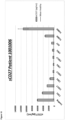
- the combination therapy also reduced CD34+ AML cells (a marker of progenitor cells) in the bone marrow better than either decitabine or anti-CD70 alone ( Figure 1 ).
- anti-CD70 treatment reduced both the number of CD34+CD38- cells and of CD34+CD45- cells, both cell populations thought to be markers for leukemic stem cells (LSCs). Whilst decitabine alone showed minimal effect at reducing LSC numbers, the combination of anti-CD70 and decitabine resulted in a greatly enhanced reduction of LSCs ( Figure 1 ).
- Example 2 Hypomethylating agents (HMAs) upregulate CD70 expression on primary AML stem cells ex two and in vivo, correlating with enhanced reduction in AML colony formation by anti-CD70 antibody combined with an HMA.
- HMAs Hypomethylating agents
- NMI nucleoside metabolic inhibitor
- NMI treatment e.g. HMAs such as azacitidine or decitabine
- CD70 expression by AML LSCs was investigated.
- CD34+ CD38- cells were isolated from AML patients and cultured in the presence of 0.5mM decitabine or vehicle.
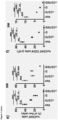
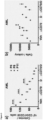
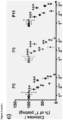
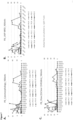
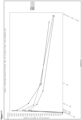
- Figure 3A shows that both anti-CD70 and decitabine monotherapy reduce the number of colonies formed by AML LSCs in a colony plating assay. Notably, the combination of anti-CD70 and decitabine reduced colony formation more than either monotherapy alone. This effect was observed across all disease risk categories (favourable (P6), intermediate (P8) and adverse (p11)). The re-plating capacity of the AML LSCs was also reduced ( Figure 3C ).
- Figure 3D-F show anti-CD70 as a monotherapy had no effect on healthy cells compared to vehicle alone, and when used in combination had no effect compared to decitabine used alone.
- anti-CD70 as a monotherapy for AML, as well as in combination with a nucleoside metabolic inhibitor (NMI), for example an HMA such as azacitidine or decitabine.
- NMI nucleoside metabolic inhibitor
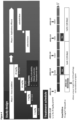
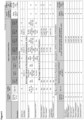
- Example 3 Phase I/II trial of anti-CD70 antibody ARGX-110 in combination with standard doses of AZA in subjects with previously untreated AML and high risk MDS
- a phase I/II clinical trial was begun to investigate the efficacy/clinical benefits and safety and tolerability of ARGX-110 in combination with standard doses of AZA in subjects with previously untreated AML and high risk MDS who are eligible for AZA treatment.
- the study included a screening phase (between Day -35 and Day -14), a loading dose of ARGX-110 (Day -14) and an open-label treatment phase during which subjects visited the study centre for administration of the study drug (Day -14 until disease progression), and end-of-treatment (EOT) evaluations performed within 7 days after the last ARGX-110 treatment. Additional follow-up evaluations were scheduled at 30 and 60 days ( ⁇ 7 days) after the EOT date. The 60-days follow-up visit was also the end-of-study (EOS) visit.
- EOS end-of-study
- Subjects Male and female subjects, at least 18 years of age, with newly diagnosed histologically confirmed (bone marrow biopsy) AML or high-risk myelodysplastic syndrome (MDS) with blast-count >20%, who were not fit for standard intensive chemotherapy were eligible for enrolment in the study. Subjects were required to have a life expectancy of 3 or more months, and Eastern Cooperative Oncology Group (ECOG) performance status of 0 - 2 at screening. Subjects received a loading dose of ARGX-110 on Day -14, followed by administration of ARGX-110 in combination with standard doses of AZA.
- AZA Eastern Cooperative Oncology Group
- ARGX-110 were administered intravenously every 2 weeks (loading dose at Day -14 and further doses on Days 3 and 17) in combination with standard doses of AZA to determine the dose limiting toxicity (see Figure 4 ).
- the first patient of each cohort was monitored until day 7 before a second patient was included. Since no significant adverse events occurred within this timeframe the other patients of each cohort were enrolled.
- the ARGX-110 dose level in the first cohort in Phase I was 1 mg/kg body weight.
- the infusion was started at a rate of 10 mL/hr. The rate was then increased according to the tolerability of the drug by the patient.
- the serum concentrations of ARGX-110 were analysed using a validated enzyme-linked immunosorbent assay (ELISA) method. The following pharmacokinetic parameters were assessed:
- venous blood samples were drawn to assess anti-drug antibodies (ADAs).
- ADAs anti-drug antibodies
- the immunogenicity of ARGX-110 was evaluated in serum samples using an ELISA method that can detect any class of ADA. Reactive samples were analysed in a confirmatory assay for verification of specificity.
- biomarkers may be performed on bone marrow aspirates and/or whole blood collected at time points as specified in Figure 5 .
- Pharmacodynamics was examined by measuring a series of biomarkers including:
- Stemness determinations were performed on mononuclear cells purified from blood or bone marrow. Depending on the number of cells that were harvested, readouts included Numb staining (to determine the ratio of asymmetric/symmetric division), cell and in vivo studies (evaluate stem cell potential by e.g. CFU methylcellulose colony assays or survival studies of NSG mice injected with patient mononuclear cells) or gene expression analysis.
- MRD minimal residual disease
- Flow cytometry was utilized as the primary method of MRD analysis. Suitable flow cytometry markers for MRD assessment and determining AML subtype include CD16, CD13, CD34, CD117, CD11b, CD10, HLA-DR, CD45, CD35, CD64, IREM-2, CD36, CD105, CD14, CD33, CD71, CD36, CD105, CD33, CD71, cTdT, CD56, CD7, CD19, cMPO, cLactoferrin, cLysozyme.
- Bone marrow aspirates or whole blood may be utilized for immunophenotyping (performed by flow cytometry or mass cytometry) which includes analyses of NK cells, and T cells as well as other potential immune cell subpopulations.
- Table 4 shows the best response of those patients for whom sufficient time has been spent on the trial to assess response. Across each of the 1 mg/kg, 3 mg/kg and 10 mg/kg cohorts, 2 of the 3 patients in each cohort showed complete remission. In Cohort 1 the third patient achieved complete remission with incomplete haematological recovery.
- a response level of greater than 90% is in stark contrast to the response rate of approximately 25% seen with aza alone ( Dombret et al. Blood 2015 ( Blood. 2015;126(3):291-299 ).
- Table 4 Risk Best response to date Time to best response Cohort 1 (1mg/kg) Adverse CRi C5D1 Intermediate CR EOT Adverse CR C7D1 Cohort 2 (3mg/kg) Intermediate CR C4D1 Intermediate CR C7D2 Adverse PR EOT Cohort 3 (10mg/kg) Intermediate CR C3D23 Intermediate CR C4D1 Adverse MLFS C1D1 Cohort 4 (20mg/kg) Adverse CRi C3D1 Adverse PR C1D1 Intermediate No response to date
- MLFS morphologic leukemia-free state
- combination treatment allowed one patient to progress to bone marrow transplant. This is significant due to the fact that many AML patients, particularly the elderly patients, are typically unable to undergo transplant due to the aggressive nature of the conventional therapies required to meet the transplant criteria. The fact that the combination treatment was sufficiently effective to allow a 75 year old AML patient to progress to transplant shows the advantages of the combination therapy over conventional treatment.
- Mono and combination therapy reduce blasts in bone marrow and peripheral blood
- bone marrow aspirates taken at the various time points were analysed.
- Methylcellulose colony assays using FACS sorted monocytes (mononuclear cells (CD45 dim ) were selectively sorted by excluding doublets, dead cells and lymphocytes using Annexin V and antibodies for CD19 and CD4/CD8) were used to assess the number of LSCs in the bone marrow.
- bone marrow blast percentages were also assessed by cell morphology and flow cytometric analysis.
- MRD minimum residual disease
- peripheral blood blast percentages Similar results are also observed when peripheral blood blast percentages are assessed ( Figure 7 ). Changes in a patient's peripheral blood data are more susceptible to exterior factors, thus leading to more variation in the data. Nevertheless, the peripheral blood (PB) results correspond to the changes observed in the bone marrow following mono and combination therapy ( Figure 7 ).
- Figure 7 shows that, similarly to the data from bone marrow, PB blast percentage in general is reduced following ARGX-110 monotherapy (i.e. at C1D1 compared to earlier data points) and then further reduced under the combination therapy (from C1D1 onwards). Again, this effect is observed regardless of whether cytomorphological or flow based blast assays are used, and is evident when using MRD assessment criteria.
- Anti-CD70 antibody monotherapy and the combination of anti-CD70 plus an HMA such as aza are thus each able to reduce blast percentage in the bone marrow and peripheral blood and, in the case of the combination therapy, maintain this reduced percentage over a number of time points.
- LSCs leukaemic stem cells
- An alternative cell fate for LSCs is to undergo myeloid differentiation.
- an LSC undergoes asymmetric division, generating a myeloid differentiated daughter cell alongside a daughter stem cell.
- Such asymmetric division greatly reduces the pool of LSCs in the patient and increased asymmetric division is indicative of improved response by the patient.
- the level of asymmetric division in a population of LSCs can be determined by measuring the level of a cell fate determinant such as the Numb protein ( Riether et al. J Exp Med. 2017 Feb; 214(2): 359-380 ). Increased Numb expression is indicative of an increase in asymmetric division and therefore an increase in myeloid differentiation and decreased LSC populations.
- a cell fate determinant such as the Numb protein
- Figure 8 shows that Numb expression is increased following ARGX-110 monotherapy (C1D1) and then further increased under the combination ARGX-110/aza therapy, indicating both therapies increase asymmetric division and thus myeloid differentiation of LSCs.
- methylcellulose colony assays using FACS sorted ex vivo monocytes were performed.
- Mononuclear cells (CD45 dim ) were selectively sorted by excluding doublets, dead cells and lymphocytes using Annexin V and antibodies for CD19 and CD4/CD8 and serially plated on methylcellulose for 14 days.
- Figure 9A-E provides representative data for colony formation per well (and thus the number of LSCs) before treatment (SCR) and after monotherapy with ARGX-110 (Time-point 0, corresponding to C1D1)
- Figure 9F provides representative data for colony formation per well (and thus the number of LSCs) before treatment, after monotherapy with ARGX-110 (i.e. at C1D1) and after the combination therapy (C4D1). These data correspond to approximately a 24-fold reduction in LSC frequency compared to baseline levels.
- Soluble CD27 can serve as a biomarker for the extent of CD70/CD27 interactions.
- CD70/CD27-mediated signalling is thought to promote aberrant cell divisions and high levels of serum sCD27 are correlated with poor prognosis of AML patients.
- sCD27 is thought to correlate with the percentage of blast cells in bone marrow, as well as to serve as a marker for the sternness of a patient's blasts, with increased sCD27 indicating increased levels of stemness ( Riether et al. J. Exp. Med. 2017 Feb;214(2):359-380 ).
- Figure 10 shows representative sCD27 levels for a patient during the treatment cycle.
- Monotherapy with ARGX-110 reduces sCD27 levels compared to before treatment ("Loading"), and this reduction continues to decrease during combination therapy such that it reaches levels representative of a healthy patient.
- Figure 10 shows that sCD27 levels rise after the end of treatment (EOT). This is likely driven by an increase in the CD27/CD70 interaction once the anti-CD70 antibody is removed, and indicates that sCD27 can be used as an effective marker for anti-CD70 drug engagement in a patient.
- EOT end of treatment
- ARGX-110 therapy does not increase toxicity
- a significant factor in the suitability of a therapeutic regimen is the associated toxicity to the patient.
- the anti-CD70 antibody ARGX-110 did not result in any observed increase in toxicity, either as a monotherapy or when used in combination with aza.
- FIG. 11 provides individual patient PK plots for the 10mg/kg cohort. The PK plot presents data for ARGX-110 cycle 1 (D-14 pre-dose until Cycle1 D1 pre-dose).
- Concentration of ARGX-110 in bone marrow aspirates was measured in limited samples and compared to the matching plasma samples.
- the ARGX-110 concentration in bone marrow aspirates was comparable to the plasma levels for patient 1001005 and 1001007 in dose cohort 3 mg/kg and 10 mg/kg respectively.
- Table 6 Patient Dose cohort Sample C ARGX-110 BM aspirate C ARGX-110 plasma 1001005 3 mg/kg Cycle 7 Day 2 33,1 ⁇ g/ml 37,3 ⁇ g/ml 1001007 10 mg/kg Cycle 4 Day 1 117,7 ⁇ g/ml 126,6 ⁇ g/ml
- Table 7 provides a summary of the newly diagnosed AML patients recruited to each cohort: Table 7 Patient Characteristic 1 mg/kg 3 mg/kg 10 mg/kg 20 mg/kg Total Age Mean (range) 78 (71-80) 75 (71-84) 71 (64-75) 75 (72-77) 74 (64-84) Gender (Male : Female) 2:1 1:2 2:1 2:1 7:5 Risk (ELN 2017) Intermediate 1 2 2 1 6 Adverse 2 1 1 2 6 Bone Marrow Blasts Median % (range) 51.3 (24-90) 40 (20-60) 70 (50-80) 50 (22-80) 52.7 (20 -90) AML Classification (WHO 2016) NOS 0 1 3 0 4 With Myelodysplasia-related changes 2 2 0 2 6 Therapy related myeloid neoplasm 1 0 0 0 1 Recurrent genetic abnormalities 0 0 0 1 1 French American British Classification M4, M1, M2 M4, M5, M2 M1, M2, M5a M2, M2, M4
- Patient 1001001 is an 80 year old female with therapy-related AML 5 years after adjuvant chemotherapy for breast cancer with blast counts of 90% in bone marrow (BM) and 80% in peripheral blood (PB) (39.5 G/L), FAB subtype: M4 myelomonocytic and WHO 2016 classification: Provisional subentity: AML with mutated RUNX1. Patient was treated according to protocol in the 1mg/kg therapy arm.
- Bone marrow aspirate taken at day 1 was compared to bone marrow aspirate taken before administration of the ARGX-110 loading dose.
- Methylcellulose colony assays using FACS sorted monocytes were selectively sorted by excluding doublets, dead cells and lymphocytes using Annexin V and antibodies for CD19 and CD4/CD8) were used to assess the number of LSCs in the bone marrow.
- Patient 1001002 is a 75 year old male with AML with myelodysplasia-related changes (WHO classification; M1/M2 AML according to FAB classification). The patient exhibited 40% bone marrow blasts prior to treatment. Patient was treated according to protocol in the 1mg/kg therapy arm.
- Bone marrow aspirate taken at day 1 was compared to bone marrow aspirate taken before administration of the ARGX-110 loading dose and assessed using methylcellulose colony assays on monocytes.
- a single dose of ARGX-110 monotherapy reduced the number of LSCs in the bone marrow.
- LSCs were reduced by a factor of 2 following the loading dose of ARGX-110. Colony formation was decreased by greater than 50% at all informative serial dilution concentrations and cell number per colony was also reduced.
- Patient 1001003 is a 77 year old male with AML with myelodysplasia-related changes by WHO classification (AML-M2 by FAC classification) and 24% bone marrow blasts.
- WHO classification AML-M2 by FAC classification
- C2D1 the patient exhibited no peripheral blasts and was recovering after a brief thrombopenia and lymphopenia (platelets 98 G/L; ANC 0.38 G/L; Hb 9.2 g/dL).
- Blast percentage at C1D1 was stable.
- the data from these patients demonstrates that monotherapy treatment with an anti-CD70 antibody (ARGX-110) reduces the number of leukemic stem cells in the bone marrow of AML patients, and can reduce the total blast percentage in the bone marrow and in the peripheral blood.
- Combined therapy with an anti-CD70 antibody (ARGX-110) and a nucleoside metabolic inhibitor (azacitidine) further reduces the total blast percentage in the bone marrow and in the peripheral blood to the extent that the patient can be categorised as free of minimum residual disease, an outcome not typically observed with azacitidine therapy alone.
Landscapes
- Health & Medical Sciences (AREA)
- Life Sciences & Earth Sciences (AREA)
- Chemical & Material Sciences (AREA)
- Medicinal Chemistry (AREA)
- General Health & Medical Sciences (AREA)
- Public Health (AREA)
- Veterinary Medicine (AREA)
- Pharmacology & Pharmacy (AREA)
- Animal Behavior & Ethology (AREA)
- Immunology (AREA)
- Organic Chemistry (AREA)
- Epidemiology (AREA)
- Oncology (AREA)
- Engineering & Computer Science (AREA)
- Molecular Biology (AREA)
- General Chemical & Material Sciences (AREA)
- Chemical Kinetics & Catalysis (AREA)
- Nuclear Medicine, Radiotherapy & Molecular Imaging (AREA)
- Hematology (AREA)
- Biomedical Technology (AREA)
- Microbiology (AREA)
- Mycology (AREA)
- Developmental Biology & Embryology (AREA)
- Cell Biology (AREA)
- Biophysics (AREA)
- Biochemistry (AREA)
- Proteomics, Peptides & Aminoacids (AREA)
- Genetics & Genomics (AREA)
- Bioinformatics & Cheminformatics (AREA)
- Biotechnology (AREA)
- Virology (AREA)
- Zoology (AREA)
- Medicines Containing Antibodies Or Antigens For Use As Internal Diagnostic Agents (AREA)
- Pharmaceuticals Containing Other Organic And Inorganic Compounds (AREA)
- Medicines That Contain Protein Lipid Enzymes And Other Medicines (AREA)
- Peptides Or Proteins (AREA)
- Nitrogen And Oxygen Or Sulfur-Condensed Heterocyclic Ring Systems (AREA)
Claims (15)
- Anti-CD70-Antikörper oder Antigen-bindendes Fragment davon zur Verwendung in einem Verfahren zur Behandlung von akuter myeloischer Leukämie (AML) oder myelodysplastischem Syndrom (MDS) bei einem Subjekt, wobei das Verfahren umfasst:Verabreichung einer oder mehrerer Dosen des Anti-CD70-Antikörpers oder eines Antigen-bindenden Fragments davon an das Subjekt, undVerabreichung eines Nukleosid-Metabolismusinhibitors (NMI), ausgewählt aus Azacitidin und Decitabin, an das Subjekt,wobei der Anti-CD70-Antikörper oder das Antigen-bindende Fragment davon die CD70-CD27-Bindung hemmt.
- Nukleosid-Metabolismusinhibitor (NMI), ausgewählt aus Azacitidin und Decitabin, zur Verwendung in einem Verfahren zur Behandlung von akuter myeloischer Leukämie (AML) oder myelodysplastischem Syndrom (MDS) bei einem Subjekt, wobei das Verfahren umfasst:Verabreichung des Nukleosid-Metabolismusinhibitors (NMI) an das Subjekt, undVerabreichen einer oder mehrerer Dosen eines Anti-CD70-Antikörpers oder eines Antigen-bindenden Fragments davon an das Subjekt,wobei der Anti-CD70-Antikörper oder das Antigen-bindende Fragment davon die CD70-CD27-Bindung hemmt.
- Kombination, die einen Anti-CD70-Antikörper oder ein Antigen-bindendes Fragment davon und einen Nukleosid-Metabolismusinhibitor (NMI), ausgewählt aus Azacitidin und Decitabin, umfasst, zur Verwendung in einem Verfahren zur Behandlung von akuter myeloischer Leukämie (AML) oder myelodysplastischem Syndrom (MDS) bei einem Subjekt, wobei das Verfahren umfasst:Verabreichung einer oder mehrerer Dosen des Anti-CD70-Antikörpers oder eines Antigen-bindenden Fragments davon an das Subjekt, undVerabreichung des Nukleosid-Metabolismusinhibitors (NMI) an das Subjekt,wobei der Anti-CD70-Antikörper oder das Antigen-bindende Fragment davon die CD70-CD27-Bindung hemmt.
- Anti-CD70-Antikörper oder Antigen-bindendes Fragment davon zur Verwendung gemäß Anspruch 1, NMI zur Verwendung gemäß Anspruch 2 oder Kombination zur Verwendung gemäß Anspruch 3, wobei das Verfahren den Prozentsatz an Blasten im Knochenmark und/oder peripheren Blut des Subjekts reduziert.
- Anti-CD70-Antikörper oder Antigen-bindendes Fragment davon zur Verwendung gemäß Anspruch 1 oder Anspruch 4, NMI zur Verwendung gemäß Anspruch 2 oder Anspruch 4 oder Kombination zur Verwendung gemäß Anspruch 3 oder Anspruch 4, wobei der Anti-CD70-Antikörper oder das Antigen-bindende Fragment davon in einer pharmazeutischen Zusammensetzung vorliegt, die einen pharmazeutisch akzeptablen Hilfsstoff oder Träger umfasst.
- Anti-CD70-Antikörper oder Antigen-bindendes Fragment davon zur Verwendung gemäß einem der Ansprüche 1, 4 oder 5, NMI zur Verwendung gemäß einem der Ansprüche 2, 4 oder 5 oder Kombination zur Verwendung gemäß einem der Ansprüche 3-5, wobei das Subjekt vor der Behandlung nicht für eine intensive Standard-Chemotherapie in Frage kommt.
- Anti-CD70-Antikörper oder Antigen-bindendes Fragment davon zur Verwendung gemäß einem der Ansprüche 1 oder 4-6, NMI zur Verwendung gemäß einem der Ansprüche 2 oder 4-6 oder Kombination zur Verwendung gemäß einem der Ansprüche 3-6, wobei das Verfahren ferner den Schritt der Durchführung einer hämatopoetischen Stammzelltransplantation an dem Subjekt umfasst.
- Anti-CD70-Antikörper oder Antigen-bindendes Fragment davon zur Verwendung gemäß einem der Ansprüche 1 oder 4-7, NMI zur Verwendung gemäß einem der Ansprüche 2 oder 4-7 oder Kombination zur Verwendung gemäß einem der Ansprüche 3-7, wobei das Subjekt 60 Jahre alt oder älter ist, wahlweise 75 Jahre alt oder älter.
- Anti-CD70-Antikörper oder Antigen-bindendes Fragment davon zur Verwendung gemäß einem der Ansprüche 1 oder 4-8, NMI zur Verwendung gemäß einem der Ansprüche 2 oder 4-8 oder Kombination zur Verwendung gemäß einem der Ansprüche 3-8, wobei der Anti-CD70-Antikörper eine variable Domäne der schweren Kette (VH) und eine variable Domäne der leichten Kette (VL) umfasst, wobei die VH- und VL-Domänen die CDRs umfassen:HCDR3, umfassend oder bestehend aus SEQ ID NO:3 (DAGYSNHVPIFDS)HCDR2, umfassend oder bestehend aus SEQ ID NO:2 (DINNEGGTTYYADSVKG)HCDR1 umfassend oder bestehend aus SEQ ID NO:1 (VYYMN)LCDR3 umfassend oder bestehend aus SEQ ID NO:7 (ALFISNPSVE)LCDR2, umfassend oder bestehend aus SEQ ID NO:6 (NTNTRHS), undLCDR1, umfassend oder bestehend aus SEQ ID NO:5 (GLKSGSVTSDNFPT).
- Anti-CD70-Antikörper oder Antigen-bindendes Fragment davon, NMI oder Kombination zur Verwendung gemäß Anspruch 9, wobei der Anti-CD70-Antikörper oder das Antigen-bindende Fragment eine VH-Domäne umfasst, die zu mindestens 80% mit SEQ ID NO:4 identisch ist und/oder eine VL-Domäne umfasst, die zu mindestens 80% mit SEQ ID NO:8 identisch ist.
- Anti-CD70-Antikörper oder Antigen-bindendes Fragment davon, NMI oder Kombination zur Verwendung gemäß Anspruch 9 oder Anspruch 10, wobei der Anti-CD70-Antikörper oder das Antigen-bindende Fragment eine VH-Domäne umfasst, die SEQ ID NO:4 umfasst oder daraus besteht, und/oder eine VL-Domäne umfasst, die SEQ ID NO:8 umfasst oder daraus besteht.
- Anti-CD70-Antikörper zur Verwendung gemäß einem der Ansprüche 1 oder 4-11, NMI zur Verwendung gemäß einem der Ansprüche 2 oder 4-11 oder Kombination zur Verwendung gemäß einem der Ansprüche 3-11, wobei der Anti-CD70-Antikörper ein IgG1-Antikörper ist.
- Anti-CD70-Antikörper, NMI oder Kombination zur Verwendung gemäß Anspruch 12, wobei der Anti-CD70-Antikörper eine VH-Domäne umfasst, die aus SEQ ID NO:4 besteht, und eine VL-Domäne umfasst, die aus SEQ ID NO:8 besteht.
- Anti-CD70-Antikörper, NMI oder Kombination zur Verwendung gemäß Anspruch 13, wobei der Anti-CD70-Antikörper in einer Dosis in einem Bereich von 0,1 mg/kg bis 25 mg/kg pro Dosis verabreicht wird.
- Anti-CD70-Antikörper, NMI oder Kombination zur Verwendung gemäß Anspruch 13 oder 14, wobei jede Dosis des Anti-CD70-Antikörpers im Abstand von 10-20 Tagen, wahlweise 12-18 Tagen, wahlweise 14-17 Tagen erfolgt.
Priority Applications (1)
| Application Number | Priority Date | Filing Date | Title |
|---|---|---|---|
| EP24160069.1A EP4389142A3 (de) | 2017-06-16 | 2018-06-18 | Verwendung von anti-cd70-antikörper argx-110 zur behandlung von akuter myeloischer leukämie |
Applications Claiming Priority (2)
| Application Number | Priority Date | Filing Date | Title |
|---|---|---|---|
| GB1709677.7A GB2567613A (en) | 2017-06-16 | 2017-06-16 | Treatment for acute myeloid leukaemia |
| PCT/EP2018/066144 WO2018229303A1 (en) | 2017-06-16 | 2018-06-18 | Use of anti cd70 antibody argx-110 to treat acute myeloid leukaemia |
Related Child Applications (2)
| Application Number | Title | Priority Date | Filing Date |
|---|---|---|---|
| EP24160069.1A Division-Into EP4389142A3 (de) | 2017-06-16 | 2018-06-18 | Verwendung von anti-cd70-antikörper argx-110 zur behandlung von akuter myeloischer leukämie |
| EP24160069.1A Division EP4389142A3 (de) | 2017-06-16 | 2018-06-18 | Verwendung von anti-cd70-antikörper argx-110 zur behandlung von akuter myeloischer leukämie |
Publications (3)
| Publication Number | Publication Date |
|---|---|
| EP3638696A1 EP3638696A1 (de) | 2020-04-22 |
| EP3638696B1 true EP3638696B1 (de) | 2024-03-06 |
| EP3638696B8 EP3638696B8 (de) | 2024-06-26 |
Family
ID=59462340
Family Applications (2)
| Application Number | Title | Priority Date | Filing Date |
|---|---|---|---|
| EP18732064.3A Active EP3638696B8 (de) | 2017-06-16 | 2018-06-18 | Anwendung von anti cd70 antikörper argx-110, um akute myeloid leukemie zu behandeln |
| EP24160069.1A Pending EP4389142A3 (de) | 2017-06-16 | 2018-06-18 | Verwendung von anti-cd70-antikörper argx-110 zur behandlung von akuter myeloischer leukämie |
Family Applications After (1)
| Application Number | Title | Priority Date | Filing Date |
|---|---|---|---|
| EP24160069.1A Pending EP4389142A3 (de) | 2017-06-16 | 2018-06-18 | Verwendung von anti-cd70-antikörper argx-110 zur behandlung von akuter myeloischer leukämie |
Country Status (23)
| Country | Link |
|---|---|
| US (2) | US20190106498A1 (de) |
| EP (2) | EP3638696B8 (de) |
| JP (2) | JP7498564B2 (de) |
| KR (1) | KR102799514B1 (de) |
| CN (1) | CN110730789A (de) |
| AU (3) | AU2018285731B2 (de) |
| BR (1) | BR112019026795A2 (de) |
| CA (1) | CA3063694A1 (de) |
| DK (1) | DK3638696T5 (de) |
| EA (1) | EA202090061A1 (de) |
| ES (1) | ES2974678T3 (de) |
| FI (1) | FI3638696T3 (de) |
| GB (2) | GB2567613A (de) |
| HU (1) | HUE066603T2 (de) |
| IL (2) | IL321494A (de) |
| JO (1) | JOP20190285A1 (de) |
| LT (1) | LT3638696T (de) |
| MA (1) | MA49377A (de) |
| MX (1) | MX2019015204A (de) |
| PH (1) | PH12019502477A1 (de) |
| PL (1) | PL3638696T3 (de) |
| PT (1) | PT3638696T (de) |
| WO (1) | WO2018229303A1 (de) |
Families Citing this family (15)
| Publication number | Priority date | Publication date | Assignee | Title |
|---|---|---|---|---|
| CA2828753C (en) | 2011-03-16 | 2022-07-26 | arGEN-X BV | Antibodies to cd70 |
| US10391168B1 (en) | 2014-08-22 | 2019-08-27 | University Of Bern | Anti-CD70 combination therapy |
| GB2567613A (en) * | 2017-06-16 | 2019-04-24 | Argenx Bvba | Treatment for acute myeloid leukaemia |
| GB201800649D0 (en) | 2018-01-16 | 2018-02-28 | Argenx Bvba | CD70 Combination Therapy |
| TWI848030B (zh) | 2018-12-18 | 2024-07-11 | 比利時商阿根思公司 | Cd70組合治療 |
| EP3946322B1 (de) * | 2019-03-29 | 2023-09-20 | Novocure GmbH | Verfahren zur wiederherstellung der empfindlichkeit gegenüber ttfields in ttfields-resistenten krebszellen mit ptger3-inhibitoren |
| US11701428B2 (en) * | 2019-04-29 | 2023-07-18 | Immunogen, Inc. | Therapeutic combinations comprising anti-CD123 immunoconjugates |
| EP4031150A4 (de) * | 2019-09-16 | 2023-11-01 | The General Hospital Corporation | Gegen cd70 gerichtete chimäre antigen-rezeptor (car)-t-zellen und deren verwendungen |
| TWI877278B (zh) * | 2019-12-30 | 2025-03-21 | 美商思進公司 | 以非海藻糖苷化抗-cd70抗體治療癌症之方法 |
| JP2023532197A (ja) * | 2020-06-30 | 2023-07-27 | 江蘇恒瑞医薬股▲ふん▼有限公司 | 抗cd70抗体及びその応用 |
| US20230266332A1 (en) * | 2020-07-28 | 2023-08-24 | Inserm (Institut National De La Santè Et De La Recherch Médicale) | Methods and compositions for preventing and treating a cancer |
| WO2022043538A1 (en) | 2020-08-29 | 2022-03-03 | argenx BV | Method of treatment of patients having reduced sensitivity to a bcl-2 inhibitor |
| CN114685657B (zh) * | 2020-12-31 | 2024-08-16 | 康诺亚生物医药科技(成都)有限公司 | 一种功能增强型抗体阻断剂的开发及其应用 |
| CN114720358B (zh) * | 2022-04-11 | 2022-09-27 | 浙江普罗亭健康科技有限公司 | 一种质谱流式血液肿瘤免疫分型中替代侧向散射光信号的抗体组合及应用 |
| WO2024102954A1 (en) | 2022-11-10 | 2024-05-16 | Massachusetts Institute Of Technology | Activation induced clipping system (aics) |
Citations (3)
| Publication number | Priority date | Publication date | Assignee | Title |
|---|---|---|---|---|
| WO2006044643A2 (en) | 2004-10-15 | 2006-04-27 | Seattle Genetics, Inc. | Anti-cd70 antibody and its use for the treatment and prevention of cancer and immune disorders |
| WO2012123586A1 (en) | 2011-03-16 | 2012-09-20 | arGEN-X BV | Antibodies to cd70 |
| WO2013192360A1 (en) | 2012-06-19 | 2013-12-27 | Ambrx, Inc. | Anti-cd70 antibody drug conjugates |
Family Cites Families (8)
| Publication number | Priority date | Publication date | Assignee | Title |
|---|---|---|---|---|
| DK1594542T3 (da) | 2003-02-20 | 2010-10-11 | Seattle Genetics Inc | Anti-CD70 antistof-lægemiddelkonjugater og deres anvendelse ved behandling af cancer |
| CA2605507C (en) | 2005-04-19 | 2016-06-28 | Seattle Genetics, Inc. | Humanized anti-cd70 binding agents and uses thereof |
| NZ566395A (en) * | 2005-09-26 | 2012-03-30 | Medarex Inc | Human monoclonal antibodies to CD70 |
| NZ578354A (en) | 2006-12-14 | 2012-01-12 | Medarex Inc | Antibody-partner molecule conjugates that bind cd70 and uses thereof |
| US9284351B2 (en) * | 2011-05-31 | 2016-03-15 | Hutchison Biofilm Medical Solutions Ltd. | Dispersion and detachment of cell aggregates |
| ES2628156T3 (es) * | 2013-02-14 | 2017-08-01 | Bristol-Myers Squibb Company | Compuestos de tubulisina, métodos para su fabricación y su uso |
| BR112018008891A8 (pt) | 2015-11-03 | 2019-02-26 | Janssen Biotech Inc | anticorpos que se ligam especificamente a pd-1 e tim-3 e seus usos |
| GB2567613A (en) * | 2017-06-16 | 2019-04-24 | Argenx Bvba | Treatment for acute myeloid leukaemia |
-
2017
- 2017-06-16 GB GB1709677.7A patent/GB2567613A/en not_active Withdrawn
- 2017-07-31 GB GBGB1712273.0A patent/GB201712273D0/en not_active Ceased
-
2018
- 2018-06-18 PT PT187320643T patent/PT3638696T/pt unknown
- 2018-06-18 CA CA3063694A patent/CA3063694A1/en active Pending
- 2018-06-18 MX MX2019015204A patent/MX2019015204A/es unknown
- 2018-06-18 ES ES18732064T patent/ES2974678T3/es active Active
- 2018-06-18 JP JP2019569314A patent/JP7498564B2/ja active Active
- 2018-06-18 EP EP18732064.3A patent/EP3638696B8/de active Active
- 2018-06-18 WO PCT/EP2018/066144 patent/WO2018229303A1/en not_active Ceased
- 2018-06-18 BR BR112019026795-6A patent/BR112019026795A2/pt unknown
- 2018-06-18 MA MA049377A patent/MA49377A/fr unknown
- 2018-06-18 HU HUE18732064A patent/HUE066603T2/hu unknown
- 2018-06-18 PL PL18732064.3T patent/PL3638696T3/pl unknown
- 2018-06-18 KR KR1020207000169A patent/KR102799514B1/ko active Active
- 2018-06-18 AU AU2018285731A patent/AU2018285731B2/en active Active
- 2018-06-18 EA EA202090061A patent/EA202090061A1/ru unknown
- 2018-06-18 EP EP24160069.1A patent/EP4389142A3/de active Pending
- 2018-06-18 DK DK18732064.3T patent/DK3638696T5/da active
- 2018-06-18 US US16/011,342 patent/US20190106498A1/en not_active Abandoned
- 2018-06-18 CN CN201880038934.0A patent/CN110730789A/zh active Pending
- 2018-06-18 FI FIEP18732064.3T patent/FI3638696T3/fi active
- 2018-06-18 IL IL321494A patent/IL321494A/en unknown
- 2018-06-18 LT LTEPPCT/EP2018/066144T patent/LT3638696T/lt unknown
- 2018-12-16 JO JOP/2019/0285A patent/JOP20190285A1/ar unknown
-
2019
- 2019-11-04 PH PH12019502477A patent/PH12019502477A1/en unknown
- 2019-12-08 IL IL271266A patent/IL271266A/en unknown
-
2022
- 2022-01-27 AU AU2022200521A patent/AU2022200521A1/en not_active Abandoned
-
2024
- 2024-05-31 JP JP2024088812A patent/JP2024109951A/ja active Pending
-
2025
- 2025-01-14 US US19/020,727 patent/US20250230252A1/en active Pending
- 2025-02-25 AU AU2025201328A patent/AU2025201328A1/en active Pending
Patent Citations (3)
| Publication number | Priority date | Publication date | Assignee | Title |
|---|---|---|---|---|
| WO2006044643A2 (en) | 2004-10-15 | 2006-04-27 | Seattle Genetics, Inc. | Anti-cd70 antibody and its use for the treatment and prevention of cancer and immune disorders |
| WO2012123586A1 (en) | 2011-03-16 | 2012-09-20 | arGEN-X BV | Antibodies to cd70 |
| WO2013192360A1 (en) | 2012-06-19 | 2013-12-27 | Ambrx, Inc. | Anti-cd70 antibody drug conjugates |
Non-Patent Citations (29)
| Title |
|---|
| AGGARWAL, S. ; HE, T. ; FITZHUGH, W. ; ROSENTHAL, K. ; FEILD, B. ; HEIDBRINK, J. ; MESMER, D. ; RUBEN, S.M. ; MOORE, P.A.: "Immune modulator CD70 as a potential cisplatin resistance predictive marker in ovarian cancer", GYNECOLOGIC ONCOLOGY., ACADEMIC PRESS, LONDON., GB, vol. 115, no. 3, 1 December 2009 (2009-12-01), GB , pages 430 - 437, XP026733157, ISSN: 0090-8258, DOI: 10.1016/j.ygyno.2009.08.031 |
| ANONYMOUS: " argenx announces publication of seminal data supporting the therapeutic potential of ARGX-110 for acute myeloid leukemia in the Journal of Experimental Medicine", ARGENX, XP093246346, Retrieved from the Internet <URL:https://us.argenx.com/news/2016/argenx-announces-publication-seminal-data-supporting-therapeutic-potential-argx-110-acute> |
| ANONYMOUS: " argenx to provide updates on Phase 1/2 clinical trials of ARGX-110 in Acute Myeloid Leukemia and Cutaneous T-Cell Lymphoma during American Society of Hematology Annual Meeting", ARGENX, XP093246331, Retrieved from the Internet <URL:https://us.argenx.com/news/2017/argenx-provide-updates-phase-12-clinical-trials-argx-110-acute-myeloid-leukemia-and-cutaneous> |
| ANONYMOUS: "A Study of ARGX-110 in Combination With Azacytidine in Participants With Newly Diagnosed Acute Myeloid Leukemia (AML) or High Risk Myelodysplatic Syndrome (MDS)", CLINICALTRIALS.GOV; NCT03030612, XP093246308, Retrieved from the Internet <URL:https://clinicaltrials.gov/study/NCT03030612?term=NCT03030612&rank=1&a=2> |
| ANONYMOUS: "A Study of ARGX-110 in Combination With Azacytidine in Participants With Newly Diagnosed Acute Myeloid Leukemia (AML) or High Risk Myelodysplatic Syndrome (MDS)", CLINICALTRIALS.GOV; NCT03030612, XP093246328, Retrieved from the Internet <URL:https://clinicaltrials.gov/study/NCT03030612?term=NCT03030612&rank=1&a=4> |
| ANONYMOUS: "arGEN-X and University of Bern enter into license agreement to develop ARGX-110-based combination therapies for treatment-resistant cancers", ARGENX, XP093246340, Retrieved from the Internet <URL:https://argenx.com/news/2015/argen-x-and-university-bern-enter-license-agreement-develop-argx-110-based-combination> |
| ANONYMOUS: "argenx launches Phase I/II study of ARGX110 in combination with azacitidine in newly diagnosed AML patients", ARGENX, XP093246321, Retrieved from the Internet <URL:https://us.argenx.com/news/2016/argenx-launches-phase-iii-study-argx-110-combination-azacitidine-newly-diagnosed-aml-patients> |
| ANONYMOUS: "arGEN-X Reports Preclinical Data on ARGX-110 in Chronic Myelogenous Leukemia Model", ARGENX, XP093246336, Retrieved from the Internet <URL:https://us.argenx.com/news/2014/argen-x-reports-preclinical-data-argx-110-chronic-myelogenous-leukemia-model> |
| ANONYMOUS: "ARGX-110, a novel anti-CD70 antibody, meets translational development goals in dose escalation part of Phase lb cancer study", ARGENX, XP093246334, Retrieved from the Internet <URL:https://us.argenx.com/news/2013/argx-110-novel-anti-cd70-antibody-meets-translational-development-goals-dose-escalation-part> |
| BAS KERSTEN; MATTHIJS VALKERING; ROLF WOUTERS; ROSA AMERONGEN; DIANA HANEKAMP; ZINIA KWIDAMA; PETER VALK; GERT OSSENKOPPELE; WENDE: "CD45RA, a specific marker for leukaemia stem cell sub‐populations in acute myeloid leukaemia", BRITISH JOURNAL OF HAEMATOLOGY, JOHN WILEY, HOBOKEN, USA, vol. 173, no. 2, 27 January 2016 (2016-01-27), Hoboken, USA, pages 219 - 235, XP071121862, ISSN: 0007-1048, DOI: 10.1111/bjh.13941 |
| CARSTEN RIETHER ET AL: "CD70/CD27 signaling promotes blast stemness and is a viable therapeutic target in acute myeloid leukemia", JOURNAL OF EXPERIMENTAL MEDICINE, vol. 214, no. 2, 28 December 2016 (2016-12-28), US, pages 359 - 380, XP055735891, ISSN: 0022-1007, DOI: 10.1084/jem.20152008 * |
| CARSTEN RIETHER, CHRISTIAN M. SCHüRCH, ELIAS D. BüHRER, MAGDALENA HINTERBRANDNER, ANNE-LAURE HUGUENIN, SABINE HOEPNER, I: "CD70/CD27 signaling promotes blast stemness and is a viable therapeutic target in acute myeloid leukemia", JOURNAL OF EXPERIMENTAL MEDICINE, ROCKEFELLER UNIVERSITY PRESS, US, vol. 214, no. 2, 1 February 2017 (2017-02-01), US , pages 359 - 380, XP055735891, ISSN: 0022-1007, DOI: 10.1084/jem.20152008 |
| D25 - T2506_12 |
| DOMBRET HERVÉ, SEYMOUR JOHN F., BUTRYM ALEKSANDRA, WIERZBOWSKA AGNIESZKA, SELLESLAG DOMINIK, JANG JUN HO, KUMAR RAJAT, CAVENAGH JA: "International phase 3 study of azacitidine vs conventional care regimens in older patients with newly diagnosed AML with >30% blasts", BLOOD, W.B. SAUNDERS, vol. 126, no. 3, 16 July 2015 (2015-07-16), pages 291 - 299, XP093246319, ISSN: 0006-4971, DOI: 10.1182/blood-2015-01-621664 |
| HINTERBRANDNER MAGDALENA; KALLEN NILS MARIA; LüTHI URSINA; PABST THOMAS; VAN ROMPAEY LUC; LEUPIN NICOLAS; DE HAARD HANS; OCHS: "Blocking CD70/CD27 Signaling in Combination with Hypomethylating Agents Eradicates Human CD34+ AML Stem and Progenitor Cells in Vitro and In Vivo", BLOOD, W.B. SAUNDERS, vol. 130, 8 December 2017 (2017-12-08), pages 2652, XP086631541, ISSN: 0006-4971, DOI: 10.1182/blood.V130.Suppl_1.2652.2652 |
| KAMINSKAS EDVARDAS, FARRELL ANN, ABRAHAM SOPHIA, BAIRD AMY, HSIEH LI-SHAN, LEE SHWU-LUAN, LEIGHTON JOHN K., PATEL HASMUKH, RAHMAN : "Approval Summary: Azacitidine for Treatment of Myelodysplastic Syndrome Subtypes", CLINICAL CANCER RESEARCH, ASSOCIATION FOR CANCER RESEARCH, US, vol. 11, no. 10, 15 May 2005 (2005-05-15), US, pages 3604 - 3608, XP093026273, ISSN: 1078-0432, DOI: 10.1158/1078-0432.CCR-04-2135 |
| KAREN SILENCE, TORSTEN DREIER, MAHAN MOSHIR, PETER ULRICHTS, SOFIE ME GABRIELS, MICHAEL SAUNDERS, HARALD WAJANT, PETER BROUCKAERT,: "ARGX-110, a highly potent antibody targeting CD70, eliminates tumors via both enhanced ADCC and immune checkpoint blockade", MABS, LANDES BIOSCIENCE, US, vol. 6, no. 2, 1 March 2014 (2014-03-01), US , pages 523 - 532, XP055245046, ISSN: 1942-0870, DOI: 10.4161/mabs.27398 |
| KLEPIN HEIDI D.: "Myelodysplastic Syndromes and Acute Myeloid Leukemia in the Elderly", CLINICS IN GERIATRIC MEDICINE., W.B. SOUNDERS CO., LONDON., GB, vol. 32, no. 1, 1 February 2016 (2016-02-01), GB , pages 155 - 173, XP093246315, ISSN: 0749-0690, DOI: 10.1016/j.cger.2015.08.010 |
| LIU, SHENG, LIU, YU, ZHANG: "Increased CD70 expression is associated with clinical resistance to cisplatin-based chemotherapy and poor survival in advanced ovarian carcinomas", ONCOTARGETS AND THERAPY, DOVE MEDICAL PRESS, pages 615, XP093246355, ISSN: 1178-6930, DOI: 10.2147/OTT.S44445 |
| MAY KUNG SUTHERLAND ET AL: "5-azacytidine enhances the anti-leukemic activity of lintuzumab (SGN-33) in preclinical models of acute myeloid leukemia", MABS LANDES BIOSCIENCE, vol. 24, 1 July 2010 (2010-07-01), pages 440 - 448, XP055096014, DOI: 10.4161/mabs.12203 * |
| MCEARCHERN JULIE A ET AL: "Preclinical characterization of SGN-70, a humanized antibody directed against CD70.", CLINICAL CANCER RESEARCH, ASSOCIATION FOR CANCER RESEARCH, US, vol. 14, no. 23, 1 December 2008 (2008-12-01), US, pages 7763 - 7772, XP002556891, ISSN: 1078-0432, DOI: 10.1158/1078-0432.CCR-08-0493 |
| MICHOT JEAN-MARIE, MAEREVOET MARIE, AFTIMOS PHILIPPE GEORGES, ROTTEY SYLVIE, ROLFO CHRISTIAN DIEGO, OFFNER FRITZ, VAN ROMPAEY LUC,: "Clinical response observed in a phase I study in T cell lymphoma patients treated with anti-CD70 SIMPLE Antibody ARGX-110.", JOURNAL OF CLINICAL ONCOLOGY, GRUNE & STRATTON, vol. 34, no. 15_suppl, 20 May 2016 (2016-05-20), pages 7556 - 7556, XP093184915, ISSN: 0732-183X, DOI: 10.1200/JCO.2016.34.15_suppl.7556 |
| PHILIPPE AFTIMOS, CHRISTIAN ROLFO, SYLVIE ROTTEY, FRITZ OFFNER, DOMINIQUE BRON, MARIE MAEREVOET, JEAN-CHARLES SORIA, MAHAN MOSHIR,: "Phase I Dose-Escalation Study of the Anti-CD70 Antibody ARGX-110 in Advanced Malignancies", CLINICAL CANCER RESEARCH, ASSOCIATION FOR CANCER RESEARCH, US, vol. 23, no. 21, 1 November 2017 (2017-11-01), US, pages 6411 - 6420, XP055584259, ISSN: 1078-0432, DOI: 10.1158/1078-0432.CCR-17-0613 |
| RIETHER CARSTEN, SCHÜRCH CHRISTIAN M., FLURY CHRISTOPH, HINTERBRANDNER MAGDALENA, DRÜCK LINDA, HUGUENIN ANNE-LAURE, BAERLOCHER GAB: "Tyrosine kinase inhibitor–induced CD70 expression mediates drug resistance in leukemia stem cells by activating Wnt signaling", SCIENCE TRANSLATIONAL MEDICINE, AMERICAN ASSOCIATION FOR THE ADVANCEMENT OF SCIENCE, vol. 7, no. 298, 29 July 2015 (2015-07-29), XP093246350, ISSN: 1946-6234, DOI: 10.1126/scitranslmed.aab1740 |
| RIETHER CARSTEN; PABST THOMAS; HöPNER SABINE; BACHER ULRIKE; HINTERBRANDNER MAGDALENA; BANZ YARA; MüLLER ROUVEN; MANZ MA: "Targeting CD70 with cusatuzumab eliminates acute myeloid leukemia stem cells in patients treated with hypomethylating agents", NATURE MEDICINE(AUTHOR MANUSCRIPT ), NATURE PUBLISHING GROUP US, NEW YORK, vol. 26, no. 9, 29 June 2020 (2020-06-29), New York, pages 1459 - 1467, XP037241569, ISSN: 1078-8956, DOI: 10.1038/s41591-020-0910-8 |
| RIETHER CARSTEN; SCHüRCH CHRISTIAN M.; RADPOUR RAMIN; HINTERBRANDNER MAGDALENA; HUGUENIN ANNE-LAURE; OCHSENBEIN ADRIAN F.: "CD70/CD27 Signaling Mediates Resistance of Chronic Myeloid Leukemia Stem Cells to Tyrosine Kinase Inhibitors By Compensatory Activation of the Wnt Pathway", BLOOD, W.B. SAUNDERS, vol. 124, no. 21, 14 November 2014 (2014-11-14), pages 400, XP086741704, ISSN: 0006-4971, DOI: 10.1182/blood.V124.21.400.400 |
| SCHÖNEFELDT C, SOCKEL K, WEHNER R, SOPPER S, WOLF D, WERMKE M, THIEDE C, OELSCHLÄGEL U, EHNINGER G, BORNHÄUSER M, PLATZBECKER U, S: "Azacytidine impairs NK cell activity in AML and MDS patients undergoing MRD-based pre-emptive treatment after allogeneic stem cell transplantation", BLOOD CANCER JOURNAL, NATURE PUBLISHING GROUP, GB, vol. 3, no. 8, GB , pages e136 - e136, XP093271812, ISSN: 2044-5385, DOI: 10.1038/bcj.2013.35 |
| SHULTZ LEONARD D; LYONS BONNIE L; BURZENSKI LISA M; GOTT BRUCE; CHEN XIAOHUA; CHALEFF STANLEY; KOTB MALAK; GILLIES STEPHEN D; KING: "Human lymphoid and myeloid cell development in NOD/LtSz-scid IL2R gamma(null) mice engrafted with mobilized human hemopoietic stem cells", JOURNAL OF IMMUNOLOGY, WILLIAMS & WILKINS CO., vol. 174, no. 10, 15 May 2005 (2005-05-15), pages 6477 - 6489, XP008164911, ISSN: 0022-1767, DOI: 10.4049/jimmunol.174.10.6477 |
| STÜBIG THOMAS, BADBARAN ANITA, LUETKENS TIM, HILDEBRANDT YORK, ATANACKOVIC DJORDJE, BINDER THOMAS M. C., FEHSE BORIS, KRÖGER NICOL: "5-Azacytidine Promotes an Inhibitory T-Cell Phenotype and Impairs Immune Mediated Antileukemic Activity", MEDIATORS OF INFLAMMATION., RAPID COMMUNICATION OF OXFORD LTD., OXFORD., GB, vol. 2014, 1 January 2014 (2014-01-01), GB , pages 1 - 12, XP093184980, ISSN: 0962-9351, DOI: 10.1155/2014/418292 |
Also Published As
Similar Documents
| Publication | Publication Date | Title |
|---|---|---|
| US20250230252A1 (en) | Treatment for acute myeloid leukemia with anti-cd70 antibodies | |
| EP3890740B1 (de) | Cd70 und venetoclax, ein bcl-2 -inhibitor, kombinationstherapie zur behandlung von akuter myeloischer leukämie | |
| EP4129336B1 (de) | Anti-cd47-wirkstoffbasierte behandlung von cd20-positivem krebs | |
| EP3419999B1 (de) | Antikörper mit spezifizität für btla und verwendungen davon | |
| EP3263599A1 (de) | Antikrebsmittel und antimetastatisches mittel mit fstl1 und begleitarzneimittel dafür | |
| JP2023501211A (ja) | 逐次抗cd19治療 | |
| HK40112285A (en) | Use of anti cd70 antibody argx-110 to treat acute myeloid leukaemia | |
| EP3886866A1 (de) | Behandlungsverfahren mit decitabin und einer gegen cd123-gerichteten therapie | |
| CN113993543B (zh) | 使用抗cd38抗体的组合疗法 | |
| US20220119523A1 (en) | Treatment of cutaneous t cell lymphoma with targeting of cd47 pathway | |
| EA044996B1 (ru) | Применение антитела против cd70, argx–110 для лечения острого миелоидного лейкоза | |
| HK40014553A (en) | Use of anti cd70 antibody argx-110 to treat acute myeloid leukaemia | |
| HK40097470A (en) | Cd70 and venetoclax, a bcl-2 inhibitor, combination therapy for treating acute myeloid leukemia | |
| HK40086849A (en) | Anti-cd47 agent-based treatment of cd20-positive cancer | |
| WO2024149224A1 (zh) | Ccr8抗体的应用 | |
| HK40052961B (en) | Cd70 and venetoclax, a bcl-2 inhibitor, combination therapy for treating acute myeloid leukemia | |
| HK40052961A (en) | Cd70 and venetoclax, a bcl-2 inhibitor, combination therapy for treating acute myeloid leukemia | |
| EA048837B1 (ru) | Ступенчатая анти-cd19 терапия | |
| EP1645284A1 (de) | Verwendung von CDw52-Liganden zur Behandlung von Erkrankungen, die auf degenerierten Makrophagen basieren |
Legal Events
| Date | Code | Title | Description |
|---|---|---|---|
| REG | Reference to a national code |
Ref country code: HR Ref legal event code: TUEP Ref document number: P20240456T Country of ref document: HR |
|
| STAA | Information on the status of an ep patent application or granted ep patent |
Free format text: STATUS: UNKNOWN |
|
| STAA | Information on the status of an ep patent application or granted ep patent |
Free format text: STATUS: THE INTERNATIONAL PUBLICATION HAS BEEN MADE |
|
| PUAI | Public reference made under article 153(3) epc to a published international application that has entered the european phase |
Free format text: ORIGINAL CODE: 0009012 |
|
| STAA | Information on the status of an ep patent application or granted ep patent |
Free format text: STATUS: REQUEST FOR EXAMINATION WAS MADE |
|
| 17P | Request for examination filed |
Effective date: 20200116 |
|
| AK | Designated contracting states |
Kind code of ref document: A1 Designated state(s): AL AT BE BG CH CY CZ DE DK EE ES FI FR GB GR HR HU IE IS IT LI LT LU LV MC MK MT NL NO PL PT RO RS SE SI SK SM TR |
|
| AX | Request for extension of the european patent |
Extension state: BA ME |
|
| STAA | Information on the status of an ep patent application or granted ep patent |
Free format text: STATUS: EXAMINATION IS IN PROGRESS |
|
| 17Q | First examination report despatched |
Effective date: 20220830 |
|
| GRAP | Despatch of communication of intention to grant a patent |
Free format text: ORIGINAL CODE: EPIDOSNIGR1 |
|
| STAA | Information on the status of an ep patent application or granted ep patent |
Free format text: STATUS: GRANT OF PATENT IS INTENDED |
|
| INTG | Intention to grant announced |
Effective date: 20231006 |
|
| RAP3 | Party data changed (applicant data changed or rights of an application transferred) |
Owner name: UNIVERSITY OF BERN Owner name: ARGENX BVBA |
|
| GRAS | Grant fee paid |
Free format text: ORIGINAL CODE: EPIDOSNIGR3 |
|
| GRAA | (expected) grant |
Free format text: ORIGINAL CODE: 0009210 |
|
| STAA | Information on the status of an ep patent application or granted ep patent |
Free format text: STATUS: THE PATENT HAS BEEN GRANTED |
|
| AK | Designated contracting states |
Kind code of ref document: B1 Designated state(s): AL AT BE BG CH CY CZ DE DK EE ES FI FR GB GR HR HU IE IS IT LI LT LU LV MC MK MT NL NO PL PT RO RS SE SI SK SM TR |
|
| REG | Reference to a national code |
Ref country code: GB Ref legal event code: FG4D |
|
| REG | Reference to a national code |
Ref country code: CH Ref legal event code: EP |
|
| REG | Reference to a national code |
Ref country code: DE Ref legal event code: R096 Ref document number: 602018066191 Country of ref document: DE |
|
| REG | Reference to a national code |
Ref country code: IE Ref legal event code: FG4D |
|
| REG | Reference to a national code |
Ref country code: PT Ref legal event code: SC4A Ref document number: 3638696 Country of ref document: PT Date of ref document: 20240503 Kind code of ref document: T Free format text: AVAILABILITY OF NATIONAL TRANSLATION Effective date: 20240426 |
|
| REG | Reference to a national code |
Ref country code: FI Ref legal event code: FGE Ref country code: DK Ref legal event code: T3 Effective date: 20240502 |
|
| REG | Reference to a national code |
Ref country code: SE Ref legal event code: TRGR |
|
| REG | Reference to a national code |
Ref country code: CH Ref legal event code: PK Free format text: BERICHTIGUNG B8 Ref country code: CH Ref legal event code: PK Free format text: TITEL |
|
| REG | Reference to a national code |
Ref country code: DE Ref legal event code: R081 Ref document number: 602018066191 Country of ref document: DE Owner name: UNIVERSITY OF BERN, CH Free format text: FORMER OWNERS: ARGENX BVBA, GENT, BE; UNIVERSITY OF BERN, BERN, CH Ref country code: DE Ref legal event code: R081 Ref document number: 602018066191 Country of ref document: DE Owner name: ARGENX BV, BE Free format text: FORMER OWNERS: ARGENX BVBA, GENT, BE; UNIVERSITY OF BERN, BERN, CH |
|
| REG | Reference to a national code |
Ref country code: NL Ref legal event code: FP |
|
| RAP4 | Party data changed (patent owner data changed or rights of a patent transferred) |
Owner name: UNIVERSITY OF BERN Owner name: ARGENX BV |
|
| REG | Reference to a national code |
Ref country code: GR Ref legal event code: EP Ref document number: 20240401165 Country of ref document: GR Effective date: 20240611 |
|
| REG | Reference to a national code |
Ref country code: ES Ref legal event code: FG2A Ref document number: 2974678 Country of ref document: ES Kind code of ref document: T3 Effective date: 20240701 |
|
| P01 | Opt-out of the competence of the unified patent court (upc) registered |
Free format text: CASE NUMBER: APP_35097/2024 Effective date: 20240611 |
|
| PG25 | Lapsed in a contracting state [announced via postgrant information from national office to epo] |
Ref country code: RS Free format text: LAPSE BECAUSE OF FAILURE TO SUBMIT A TRANSLATION OF THE DESCRIPTION OR TO PAY THE FEE WITHIN THE PRESCRIBED TIME-LIMIT Effective date: 20240606 |
|
| REG | Reference to a national code |
Ref country code: NL Ref legal event code: HC Owner name: ARGENX BV; BE Free format text: DETAILS ASSIGNMENT: CHANGE OF OWNER(S), CHANGE OF OWNER(S) NAME; FORMER OWNER NAME: UNIVERSITY OF BERN Effective date: 20240607 |
|
| PG25 | Lapsed in a contracting state [announced via postgrant information from national office to epo] |
Ref country code: RS Free format text: LAPSE BECAUSE OF FAILURE TO SUBMIT A TRANSLATION OF THE DESCRIPTION OR TO PAY THE FEE WITHIN THE PRESCRIBED TIME-LIMIT Effective date: 20240606 Ref country code: BG Free format text: LAPSE BECAUSE OF FAILURE TO SUBMIT A TRANSLATION OF THE DESCRIPTION OR TO PAY THE FEE WITHIN THE PRESCRIBED TIME-LIMIT Effective date: 20240306 |
|
| REG | Reference to a national code |
Ref country code: BE Ref legal event code: HC Owner name: ARGENX BV; BE Free format text: DETAILS ASSIGNMENT: CHANGE OF OWNER(S), CHANGE OF OWNER(S) NAME; FORMER OWNER NAME: ARGENX BVBA Effective date: 20240603 |
|
| REG | Reference to a national code |
Ref country code: DK Ref legal event code: T5 Effective date: 20240823 |
|
| REG | Reference to a national code |
Ref country code: HU Ref legal event code: AG4A Ref document number: E066603 Country of ref document: HU |
|
| REG | Reference to a national code |
Ref country code: HR Ref legal event code: OTEP Ref document number: P20240456T Country of ref document: HR |
|
| REG | Reference to a national code |
Ref country code: AT Ref legal event code: HC Ref document number: 1663435 Country of ref document: AT Kind code of ref document: T Owner name: UNIVERSITY OF BERN, CH Effective date: 20240717 Ref country code: AT Ref legal event code: HC Ref document number: 1663435 Country of ref document: AT Kind code of ref document: T Owner name: ARGENX BV, BE Effective date: 20240717 |
|
| PG25 | Lapsed in a contracting state [announced via postgrant information from national office to epo] |
Ref country code: HR Free format text: LAPSE BECAUSE OF FAILURE TO SUBMIT A TRANSLATION OF THE DESCRIPTION OR TO PAY THE FEE WITHIN THE PRESCRIBED TIME-LIMIT Effective date: 20240328 |
|
| VS25 | Lapsed in a validation state [announced via postgrant information from nat. office to epo] |
Ref country code: MD Free format text: LAPSE BECAUSE OF FAILURE TO SUBMIT A TRANSLATION OF THE DESCRIPTION OR TO PAY THE FEE WITHIN THE PRESCRIBED TIME-LIMIT Effective date: 20240306 |
|
| PG25 | Lapsed in a contracting state [announced via postgrant information from national office to epo] |
Ref country code: SM Free format text: LAPSE BECAUSE OF FAILURE TO SUBMIT A TRANSLATION OF THE DESCRIPTION OR TO PAY THE FEE WITHIN THE PRESCRIBED TIME-LIMIT Effective date: 20240306 |
|
| PG25 | Lapsed in a contracting state [announced via postgrant information from national office to epo] |
Ref country code: EE Free format text: LAPSE BECAUSE OF FAILURE TO SUBMIT A TRANSLATION OF THE DESCRIPTION OR TO PAY THE FEE WITHIN THE PRESCRIBED TIME-LIMIT Effective date: 20240306 |
|
| PG25 | Lapsed in a contracting state [announced via postgrant information from national office to epo] |
Ref country code: SK Free format text: LAPSE BECAUSE OF FAILURE TO SUBMIT A TRANSLATION OF THE DESCRIPTION OR TO PAY THE FEE WITHIN THE PRESCRIBED TIME-LIMIT Effective date: 20240306 |
|
| PG25 | Lapsed in a contracting state [announced via postgrant information from national office to epo] |
Ref country code: SM Free format text: LAPSE BECAUSE OF FAILURE TO SUBMIT A TRANSLATION OF THE DESCRIPTION OR TO PAY THE FEE WITHIN THE PRESCRIBED TIME-LIMIT Effective date: 20240306 Ref country code: SK Free format text: LAPSE BECAUSE OF FAILURE TO SUBMIT A TRANSLATION OF THE DESCRIPTION OR TO PAY THE FEE WITHIN THE PRESCRIBED TIME-LIMIT Effective date: 20240306 Ref country code: HR Free format text: LAPSE BECAUSE OF FAILURE TO SUBMIT A TRANSLATION OF THE DESCRIPTION OR TO PAY THE FEE WITHIN THE PRESCRIBED TIME-LIMIT Effective date: 20240328 Ref country code: EE Free format text: LAPSE BECAUSE OF FAILURE TO SUBMIT A TRANSLATION OF THE DESCRIPTION OR TO PAY THE FEE WITHIN THE PRESCRIBED TIME-LIMIT Effective date: 20240306 |
|
| VS25 | Lapsed in a validation state [announced via postgrant information from nat. office to epo] |
Ref country code: MD Free format text: LAPSE BECAUSE OF FAILURE TO SUBMIT A TRANSLATION OF THE DESCRIPTION OR TO PAY THE FEE WITHIN THE PRESCRIBED TIME-LIMIT Effective date: 20240306 |
|
| REG | Reference to a national code |
Ref country code: AT Ref legal event code: UEP Ref document number: 1663435 Country of ref document: AT Kind code of ref document: T Effective date: 20240306 |
|
| REG | Reference to a national code |
Ref country code: DE Ref legal event code: R026 Ref document number: 602018066191 Country of ref document: DE |
|
| PLBI | Opposition filed |
Free format text: ORIGINAL CODE: 0009260 |
|
| PLAX | Notice of opposition and request to file observation + time limit sent |
Free format text: ORIGINAL CODE: EPIDOSNOBS2 |
|
| 26 | Opposition filed |
Opponent name: PFIZER INC. Effective date: 20241206 |
|
| PG25 | Lapsed in a contracting state [announced via postgrant information from national office to epo] |
Ref country code: MC Free format text: LAPSE BECAUSE OF FAILURE TO SUBMIT A TRANSLATION OF THE DESCRIPTION OR TO PAY THE FEE WITHIN THE PRESCRIBED TIME-LIMIT Effective date: 20240306 |
|
| PG25 | Lapsed in a contracting state [announced via postgrant information from national office to epo] |
Ref country code: SI Free format text: LAPSE BECAUSE OF FAILURE TO SUBMIT A TRANSLATION OF THE DESCRIPTION OR TO PAY THE FEE WITHIN THE PRESCRIBED TIME-LIMIT Effective date: 20240306 |
|
| PLBB | Reply of patent proprietor to notice(s) of opposition received |
Free format text: ORIGINAL CODE: EPIDOSNOBS3 |
|
| PGFP | Annual fee paid to national office [announced via postgrant information from national office to epo] |
Ref country code: FI Payment date: 20250625 Year of fee payment: 8 |
|
| PGFP | Annual fee paid to national office [announced via postgrant information from national office to epo] |
Ref country code: PL Payment date: 20250602 Year of fee payment: 8 Ref country code: DE Payment date: 20250627 Year of fee payment: 8 |
|
| PGFP | Annual fee paid to national office [announced via postgrant information from national office to epo] |
Ref country code: GB Payment date: 20250627 Year of fee payment: 8 Ref country code: DK Payment date: 20250625 Year of fee payment: 8 |
|
| PGFP | Annual fee paid to national office [announced via postgrant information from national office to epo] |
Ref country code: LT Payment date: 20250602 Year of fee payment: 8 |
|
| PGFP | Annual fee paid to national office [announced via postgrant information from national office to epo] |
Ref country code: IS Payment date: 20250612 Year of fee payment: 8 Ref country code: NO Payment date: 20250627 Year of fee payment: 8 |
|
| PGFP | Annual fee paid to national office [announced via postgrant information from national office to epo] |
Ref country code: LU Payment date: 20250627 Year of fee payment: 8 Ref country code: NL Payment date: 20250626 Year of fee payment: 8 Ref country code: BE Payment date: 20250627 Year of fee payment: 8 |
|
| PGFP | Annual fee paid to national office [announced via postgrant information from national office to epo] |
Ref country code: LV Payment date: 20250602 Year of fee payment: 8 Ref country code: PT Payment date: 20250602 Year of fee payment: 8 |
|
| PGFP | Annual fee paid to national office [announced via postgrant information from national office to epo] |
Ref country code: HU Payment date: 20250612 Year of fee payment: 8 Ref country code: FR Payment date: 20250625 Year of fee payment: 8 |
|
| PGFP | Annual fee paid to national office [announced via postgrant information from national office to epo] |
Ref country code: GR Payment date: 20250626 Year of fee payment: 8 |
|
| PGFP | Annual fee paid to national office [announced via postgrant information from national office to epo] |
Ref country code: RO Payment date: 20250605 Year of fee payment: 8 Ref country code: AT Payment date: 20250603 Year of fee payment: 8 |
|
| PGFP | Annual fee paid to national office [announced via postgrant information from national office to epo] |
Ref country code: TR Payment date: 20250618 Year of fee payment: 8 |
|
| PGFP | Annual fee paid to national office [announced via postgrant information from national office to epo] |
Ref country code: CZ Payment date: 20250605 Year of fee payment: 8 |
|
| PGFP | Annual fee paid to national office [announced via postgrant information from national office to epo] |
Ref country code: IE Payment date: 20250627 Year of fee payment: 8 |
|
| PGFP | Annual fee paid to national office [announced via postgrant information from national office to epo] |
Ref country code: SE Payment date: 20250627 Year of fee payment: 8 |
|
| PGFP | Annual fee paid to national office [announced via postgrant information from national office to epo] |
Ref country code: ES Payment date: 20250701 Year of fee payment: 8 |
|
| PGFP | Annual fee paid to national office [announced via postgrant information from national office to epo] |
Ref country code: IT Payment date: 20250619 Year of fee payment: 8 |
|
| PGFP | Annual fee paid to national office [announced via postgrant information from national office to epo] |
Ref country code: CH Payment date: 20250701 Year of fee payment: 8 |
|
| VS25 | Lapsed in a validation state [announced via postgrant information from nat. office to epo] |
Ref country code: MA Free format text: FAILURE TO ELECT DOMICILE IN THE NATIONAL COUNTRY Effective date: 20240607 |
|
| PG25 | Lapsed in a contracting state [announced via postgrant information from national office to epo] |
Ref country code: CY Free format text: LAPSE BECAUSE OF FAILURE TO SUBMIT A TRANSLATION OF THE DESCRIPTION OR TO PAY THE FEE WITHIN THE PRESCRIBED TIME-LIMIT; INVALID AB INITIO Effective date: 20180618 |
|
| PLAB | Opposition data, opponent's data or that of the opponent's representative modified |
Free format text: ORIGINAL CODE: 0009299OPPO |