EP3635944B1 - Elektronische einrichtung zur anzeige von informationen und verfahren dafür - Google Patents
Elektronische einrichtung zur anzeige von informationen und verfahren dafür Download PDFInfo
- Publication number
- EP3635944B1 EP3635944B1 EP18832197.0A EP18832197A EP3635944B1 EP 3635944 B1 EP3635944 B1 EP 3635944B1 EP 18832197 A EP18832197 A EP 18832197A EP 3635944 B1 EP3635944 B1 EP 3635944B1
- Authority
- EP
- European Patent Office
- Prior art keywords
- electronic device
- information
- level information
- display
- locking mode
- Prior art date
- Legal status (The legal status is an assumption and is not a legal conclusion. Google has not performed a legal analysis and makes no representation as to the accuracy of the status listed.)
- Active
Links
Images











Classifications
-
- H—ELECTRICITY
- H04—ELECTRIC COMMUNICATION TECHNIQUE
- H04M—TELEPHONIC COMMUNICATION
- H04M1/00—Substation equipment, e.g. for use by subscribers
- H04M1/72—Mobile telephones; Cordless telephones, i.e. devices for establishing wireless links to base stations without route selection
- H04M1/724—User interfaces specially adapted for cordless or mobile telephones
- H04M1/72403—User interfaces specially adapted for cordless or mobile telephones with means for local support of applications that increase the functionality
-
- H—ELECTRICITY
- H04—ELECTRIC COMMUNICATION TECHNIQUE
- H04M—TELEPHONIC COMMUNICATION
- H04M1/00—Substation equipment, e.g. for use by subscribers
- H04M1/66—Substation equipment, e.g. for use by subscribers with means for preventing unauthorised or fraudulent calling
- H04M1/667—Preventing unauthorised calls from a telephone set
- H04M1/67—Preventing unauthorised calls from a telephone set by electronic means
-
- G—PHYSICS
- G06—COMPUTING OR CALCULATING; COUNTING
- G06Q—INFORMATION AND COMMUNICATION TECHNOLOGY [ICT] SPECIALLY ADAPTED FOR ADMINISTRATIVE, COMMERCIAL, FINANCIAL, MANAGERIAL OR SUPERVISORY PURPOSES; SYSTEMS OR METHODS SPECIALLY ADAPTED FOR ADMINISTRATIVE, COMMERCIAL, FINANCIAL, MANAGERIAL OR SUPERVISORY PURPOSES, NOT OTHERWISE PROVIDED FOR
- G06Q20/00—Payment architectures, schemes or protocols
- G06Q20/30—Payment architectures, schemes or protocols characterised by the use of specific devices or networks
- G06Q20/32—Payment architectures, schemes or protocols characterised by the use of specific devices or networks using wireless devices
- G06Q20/325—Payment architectures, schemes or protocols characterised by the use of specific devices or networks using wireless devices using wireless networks
- G06Q20/3255—Payment architectures, schemes or protocols characterised by the use of specific devices or networks using wireless devices using wireless networks using mobile network messaging services for payment, e.g. SMS
-
- G—PHYSICS
- G06—COMPUTING OR CALCULATING; COUNTING
- G06F—ELECTRIC DIGITAL DATA PROCESSING
- G06F21/00—Security arrangements for protecting computers, components thereof, programs or data against unauthorised activity
-
- G—PHYSICS
- G06—COMPUTING OR CALCULATING; COUNTING
- G06F—ELECTRIC DIGITAL DATA PROCESSING
- G06F21/00—Security arrangements for protecting computers, components thereof, programs or data against unauthorised activity
- G06F21/30—Authentication, i.e. establishing the identity or authorisation of security principals
- G06F21/31—User authentication
-
- G—PHYSICS
- G06—COMPUTING OR CALCULATING; COUNTING
- G06F—ELECTRIC DIGITAL DATA PROCESSING
- G06F21/00—Security arrangements for protecting computers, components thereof, programs or data against unauthorised activity
- G06F21/30—Authentication, i.e. establishing the identity or authorisation of security principals
- G06F21/31—User authentication
- G06F21/32—User authentication using biometric data, e.g. fingerprints, iris scans or voiceprints
-
- G—PHYSICS
- G06—COMPUTING OR CALCULATING; COUNTING
- G06F—ELECTRIC DIGITAL DATA PROCESSING
- G06F21/00—Security arrangements for protecting computers, components thereof, programs or data against unauthorised activity
- G06F21/60—Protecting data
- G06F21/62—Protecting access to data via a platform, e.g. using keys or access control rules
- G06F21/6218—Protecting access to data via a platform, e.g. using keys or access control rules to a system of files or objects, e.g. local or distributed file system or database
-
- G—PHYSICS
- G06—COMPUTING OR CALCULATING; COUNTING
- G06F—ELECTRIC DIGITAL DATA PROCESSING
- G06F21/00—Security arrangements for protecting computers, components thereof, programs or data against unauthorised activity
- G06F21/70—Protecting specific internal or peripheral components, in which the protection of a component leads to protection of the entire computer
- G06F21/71—Protecting specific internal or peripheral components, in which the protection of a component leads to protection of the entire computer to assure secure computing or processing of information
- G06F21/74—Protecting specific internal or peripheral components, in which the protection of a component leads to protection of the entire computer to assure secure computing or processing of information operating in dual or compartmented mode, i.e. at least one secure mode
-
- G—PHYSICS
- G06—COMPUTING OR CALCULATING; COUNTING
- G06F—ELECTRIC DIGITAL DATA PROCESSING
- G06F21/00—Security arrangements for protecting computers, components thereof, programs or data against unauthorised activity
- G06F21/70—Protecting specific internal or peripheral components, in which the protection of a component leads to protection of the entire computer
- G06F21/82—Protecting input, output or interconnection devices
- G06F21/84—Protecting input, output or interconnection devices output devices, e.g. displays or monitors
-
- G—PHYSICS
- G06—COMPUTING OR CALCULATING; COUNTING
- G06F—ELECTRIC DIGITAL DATA PROCESSING
- G06F3/00—Input arrangements for transferring data to be processed into a form capable of being handled by the computer; Output arrangements for transferring data from processing unit to output unit, e.g. interface arrangements
- G06F3/01—Input arrangements or combined input and output arrangements for interaction between user and computer
- G06F3/03—Arrangements for converting the position or the displacement of a member into a coded form
- G06F3/041—Digitisers, e.g. for touch screens or touch pads, characterised by the transducing means
-
- G—PHYSICS
- G06—COMPUTING OR CALCULATING; COUNTING
- G06F—ELECTRIC DIGITAL DATA PROCESSING
- G06F3/00—Input arrangements for transferring data to be processed into a form capable of being handled by the computer; Output arrangements for transferring data from processing unit to output unit, e.g. interface arrangements
- G06F3/01—Input arrangements or combined input and output arrangements for interaction between user and computer
- G06F3/048—Interaction techniques based on graphical user interfaces [GUI]
-
- G—PHYSICS
- G06—COMPUTING OR CALCULATING; COUNTING
- G06Q—INFORMATION AND COMMUNICATION TECHNOLOGY [ICT] SPECIALLY ADAPTED FOR ADMINISTRATIVE, COMMERCIAL, FINANCIAL, MANAGERIAL OR SUPERVISORY PURPOSES; SYSTEMS OR METHODS SPECIALLY ADAPTED FOR ADMINISTRATIVE, COMMERCIAL, FINANCIAL, MANAGERIAL OR SUPERVISORY PURPOSES, NOT OTHERWISE PROVIDED FOR
- G06Q20/00—Payment architectures, schemes or protocols
- G06Q20/30—Payment architectures, schemes or protocols characterised by the use of specific devices or networks
- G06Q20/32—Payment architectures, schemes or protocols characterised by the use of specific devices or networks using wireless devices
- G06Q20/322—Aspects of commerce using mobile devices [M-devices]
-
- G—PHYSICS
- G06—COMPUTING OR CALCULATING; COUNTING
- G06Q—INFORMATION AND COMMUNICATION TECHNOLOGY [ICT] SPECIALLY ADAPTED FOR ADMINISTRATIVE, COMMERCIAL, FINANCIAL, MANAGERIAL OR SUPERVISORY PURPOSES; SYSTEMS OR METHODS SPECIALLY ADAPTED FOR ADMINISTRATIVE, COMMERCIAL, FINANCIAL, MANAGERIAL OR SUPERVISORY PURPOSES, NOT OTHERWISE PROVIDED FOR
- G06Q20/00—Payment architectures, schemes or protocols
- G06Q20/30—Payment architectures, schemes or protocols characterised by the use of specific devices or networks
- G06Q20/32—Payment architectures, schemes or protocols characterised by the use of specific devices or networks using wireless devices
- G06Q20/322—Aspects of commerce using mobile devices [M-devices]
- G06Q20/3223—Realising banking transactions through M-devices
-
- G—PHYSICS
- G06—COMPUTING OR CALCULATING; COUNTING
- G06Q—INFORMATION AND COMMUNICATION TECHNOLOGY [ICT] SPECIALLY ADAPTED FOR ADMINISTRATIVE, COMMERCIAL, FINANCIAL, MANAGERIAL OR SUPERVISORY PURPOSES; SYSTEMS OR METHODS SPECIALLY ADAPTED FOR ADMINISTRATIVE, COMMERCIAL, FINANCIAL, MANAGERIAL OR SUPERVISORY PURPOSES, NOT OTHERWISE PROVIDED FOR
- G06Q20/00—Payment architectures, schemes or protocols
- G06Q20/30—Payment architectures, schemes or protocols characterised by the use of specific devices or networks
- G06Q20/32—Payment architectures, schemes or protocols characterised by the use of specific devices or networks using wireless devices
- G06Q20/327—Short range or proximity payments by means of M-devices
- G06Q20/3274—Short range or proximity payments by means of M-devices using a pictured code, e.g. barcode or QR-code, being displayed on the M-device
-
- G—PHYSICS
- G06—COMPUTING OR CALCULATING; COUNTING
- G06Q—INFORMATION AND COMMUNICATION TECHNOLOGY [ICT] SPECIALLY ADAPTED FOR ADMINISTRATIVE, COMMERCIAL, FINANCIAL, MANAGERIAL OR SUPERVISORY PURPOSES; SYSTEMS OR METHODS SPECIALLY ADAPTED FOR ADMINISTRATIVE, COMMERCIAL, FINANCIAL, MANAGERIAL OR SUPERVISORY PURPOSES, NOT OTHERWISE PROVIDED FOR
- G06Q20/00—Payment architectures, schemes or protocols
- G06Q20/30—Payment architectures, schemes or protocols characterised by the use of specific devices or networks
- G06Q20/34—Payment architectures, schemes or protocols characterised by the use of specific devices or networks using cards, e.g. integrated circuit [IC] cards or magnetic cards
- G06Q20/351—Virtual cards
-
- G—PHYSICS
- G06—COMPUTING OR CALCULATING; COUNTING
- G06Q—INFORMATION AND COMMUNICATION TECHNOLOGY [ICT] SPECIALLY ADAPTED FOR ADMINISTRATIVE, COMMERCIAL, FINANCIAL, MANAGERIAL OR SUPERVISORY PURPOSES; SYSTEMS OR METHODS SPECIALLY ADAPTED FOR ADMINISTRATIVE, COMMERCIAL, FINANCIAL, MANAGERIAL OR SUPERVISORY PURPOSES, NOT OTHERWISE PROVIDED FOR
- G06Q20/00—Payment architectures, schemes or protocols
- G06Q20/38—Payment protocols; Details thereof
- G06Q20/40—Authorisation, e.g. identification of payer or payee, verification of customer or shop credentials; Review and approval of payers, e.g. check credit lines or negative lists
-
- G—PHYSICS
- G07—CHECKING-DEVICES
- G07F—COIN-FREED OR LIKE APPARATUS
- G07F19/00—Complete banking systems; Coded card-freed arrangements adapted for dispensing or receiving monies or the like and posting such transactions to existing accounts, e.g. automatic teller machines
- G07F19/20—Automatic teller machines [ATMs]
- G07F19/209—Monitoring, auditing or diagnose of functioning of ATMs
-
- G—PHYSICS
- G07—CHECKING-DEVICES
- G07G—REGISTERING THE RECEIPT OF CASH, VALUABLES, OR TOKENS
- G07G1/00—Cash registers
- G07G1/01—Details for indicating
-
- H—ELECTRICITY
- H04—ELECTRIC COMMUNICATION TECHNIQUE
- H04L—TRANSMISSION OF DIGITAL INFORMATION, e.g. TELEGRAPHIC COMMUNICATION
- H04L63/00—Network architectures or network communication protocols for network security
- H04L63/10—Network architectures or network communication protocols for network security for controlling access to devices or network resources
- H04L63/105—Multiple levels of security
-
- H—ELECTRICITY
- H04—ELECTRIC COMMUNICATION TECHNIQUE
- H04M—TELEPHONIC COMMUNICATION
- H04M1/00—Substation equipment, e.g. for use by subscribers
- H04M1/66—Substation equipment, e.g. for use by subscribers with means for preventing unauthorised or fraudulent calling
-
- H—ELECTRICITY
- H04—ELECTRIC COMMUNICATION TECHNIQUE
- H04M—TELEPHONIC COMMUNICATION
- H04M1/00—Substation equipment, e.g. for use by subscribers
- H04M1/72—Mobile telephones; Cordless telephones, i.e. devices for establishing wireless links to base stations without route selection
- H04M1/724—User interfaces specially adapted for cordless or mobile telephones
- H04M1/72469—User interfaces specially adapted for cordless or mobile telephones for operating the device by selecting functions from two or more displayed items, e.g. menus or icons
-
- H—ELECTRICITY
- H04—ELECTRIC COMMUNICATION TECHNIQUE
- H04W—WIRELESS COMMUNICATION NETWORKS
- H04W12/00—Security arrangements; Authentication; Protecting privacy or anonymity
- H04W12/06—Authentication
-
- G—PHYSICS
- G06—COMPUTING OR CALCULATING; COUNTING
- G06F—ELECTRIC DIGITAL DATA PROCESSING
- G06F2221/00—Indexing scheme relating to security arrangements for protecting computers, components thereof, programs or data against unauthorised activity
- G06F2221/21—Indexing scheme relating to G06F21/00 and subgroups addressing additional information or applications relating to security arrangements for protecting computers, components thereof, programs or data against unauthorised activity
- G06F2221/2105—Dual mode as a secondary aspect
-
- G—PHYSICS
- G06—COMPUTING OR CALCULATING; COUNTING
- G06F—ELECTRIC DIGITAL DATA PROCESSING
- G06F2221/00—Indexing scheme relating to security arrangements for protecting computers, components thereof, programs or data against unauthorised activity
- G06F2221/21—Indexing scheme relating to G06F21/00 and subgroups addressing additional information or applications relating to security arrangements for protecting computers, components thereof, programs or data against unauthorised activity
- G06F2221/2113—Multi-level security, e.g. mandatory access control
-
- G—PHYSICS
- G06—COMPUTING OR CALCULATING; COUNTING
- G06F—ELECTRIC DIGITAL DATA PROCESSING
- G06F2221/00—Indexing scheme relating to security arrangements for protecting computers, components thereof, programs or data against unauthorised activity
- G06F2221/21—Indexing scheme relating to G06F21/00 and subgroups addressing additional information or applications relating to security arrangements for protecting computers, components thereof, programs or data against unauthorised activity
- G06F2221/2141—Access rights, e.g. capability lists, access control lists, access tables, access matrices
-
- G—PHYSICS
- G06—COMPUTING OR CALCULATING; COUNTING
- G06F—ELECTRIC DIGITAL DATA PROCESSING
- G06F2221/00—Indexing scheme relating to security arrangements for protecting computers, components thereof, programs or data against unauthorised activity
- G06F2221/21—Indexing scheme relating to G06F21/00 and subgroups addressing additional information or applications relating to security arrangements for protecting computers, components thereof, programs or data against unauthorised activity
- G06F2221/2149—Restricted operating environment
-
- H—ELECTRICITY
- H04—ELECTRIC COMMUNICATION TECHNIQUE
- H04M—TELEPHONIC COMMUNICATION
- H04M2201/00—Electronic components, circuits, software, systems or apparatus used in telephone systems
- H04M2201/34—Microprocessors
-
- H—ELECTRICITY
- H04—ELECTRIC COMMUNICATION TECHNIQUE
- H04M—TELEPHONIC COMMUNICATION
- H04M2201/00—Electronic components, circuits, software, systems or apparatus used in telephone systems
- H04M2201/36—Memories
-
- H—ELECTRICITY
- H04—ELECTRIC COMMUNICATION TECHNIQUE
- H04M—TELEPHONIC COMMUNICATION
- H04M2250/00—Details of telephonic subscriber devices
- H04M2250/22—Details of telephonic subscriber devices including a touch pad, a touch sensor or a touch detector
Definitions
- the disclosure relates, generally, to an electronic device and a method for displaying information, and more particularly, to an electronic device and a method for displaying information based on user authentication.
- multimedia devices As information communication and semiconductor technologies are developed, electronic devices have become multimedia devices providing various services, such as broadcast services, wireless Internet services, camera services, and electronic payment services.
- the user may pay for the article by using an electronic card that is registered in the electronic device, instead of a real card (e.g., a credit card) through the electronic payment service.
- a real card e.g., a credit card
- the user may execute a bookmark function for favorite cards on a locked screen of the electronic device to display electronic cards on the locked screen.
- information provided may be limited by the electronic device in a locking mode.
- the user may need to release the locking mode to receive desired information from the electronic device.
- the electronic device may provide some information in the locking mode, the information provided by the electronic device is significantly limited and personal information may be limited from exposure.
- the locking mode needs to be released, the electronic device requires user authentication. Thus, the experience of the user using the electronic device may be interrupted, so the user may experience inconvenience.
- EP 2 495 677 A1 which constitutes the closest known prior-art and discloses an electronic device capable of transitioning from a restricted mode of operation to an unrestricted mode of operation based on an input authentication sequence from a group of several input authentication sequences.
- EP 2 495 677 A1 discloses that which operations may be executed in the unrestricted is dependent on which input authentication sequence is input.
- an aspect of the present disclosure is to provide a method comprising steps specified in the appended independent method claim.
- an electronic device is provided exhibiting features specified in the appended independent apparatus claim.
- a or B at least one of A or/and B
- one or more of A or/and B as used herein include all possible combinations of items enumerated with them.
- “A or B,” “at least one of A and B,” or “at least one of A or B” means (1) including at least one A, (2) including at least one B, or (3) including both at least one A and at least one B.
- first and second may use corresponding components regardless of importance or an order and are used to distinguish a component from another without limiting the components. These terms may be used for the purpose of distinguishing one element from another element.
- a first user device and a second user device may indicate different user devices regardless of the order or importance.
- a first element may be referred to as a second element without departing from the scope the disclosure, and similarly, a second element may be referred to as a first element.
- a processor configured to (set to) perform A, B, and C may mean a dedicated processor (e.g., an embedded processor) for performing a corresponding operation, or a generic-purpose processor (e.g., a central processing unit (CPU) or an application processor (AP)) capable of performing a corresponding operation by executing one or more software programs stored in a memory device.
- a dedicated processor e.g., an embedded processor
- a generic-purpose processor e.g., a central processing unit (CPU) or an application processor (AP) capable of performing a corresponding operation by executing one or more software programs stored in a memory device.
- module as used herein may, for example, mean a unit including one of hardware, software, and firmware or a combination of two or more of them.
- the “module” may be interchangeably used with, for example, the term “unit”, “logic”, “logical block”, “component”, or “circuit”.
- the “module” may be a minimum unit of an integrated component element or a part thereof.
- the “module” may be a minimum unit for performing one or more functions or a part thereof.
- the “module” may be mechanically or electronically implemented.
- the "module” may include at least one of an application-specific integrated circuit (ASIC) chip, a field-programmable gate array (FPGA), and a programmable-logic device for performing operations which has been known or are to be developed hereinafter.
- ASIC application-specific integrated circuit
- FPGA field-programmable gate array
- programmable-logic device for performing operations which has been known or are to be developed hereinafter.
- An electronic device may include at least one of, for example, a smart phone, a tablet personal computer (PC), a mobile phone, a video phone, an electronic book reader (e-book reader), a desktop PC, a laptop PC, a netbook computer, a workstation, a server, a personal digital assistant (PDA), a portable multimedia player (PMP), a MPEG-1 audio layer-3 (MP3) player, a mobile medical device, a camera, and a wearable device.
- a smart phone a tablet personal computer (PC), a mobile phone, a video phone, an electronic book reader (e-book reader), a desktop PC, a laptop PC, a netbook computer, a workstation, a server, a personal digital assistant (PDA), a portable multimedia player (PMP), a MPEG-1 audio layer-3 (MP3) player, a mobile medical device, a camera, and a wearable device.
- PC personal computer
- PMP portable multimedia player
- MP3 MPEG-1 audio layer-3
- the wearable device may include at least one of an accessory type (e.g., a watch, a ring, a bracelet, an anklet, a necklace, a glasses, a contact lens, or a head-mounted device (HMD)), a fabric or clothing integrated type (e.g., an electronic clothing), a body-mounted type (e.g., a skin pad, or tattoo), and a bio-implantable type (e.g., an implantable circuit).
- an accessory type e.g., a watch, a ring, a bracelet, an anklet, a necklace, a glasses, a contact lens, or a head-mounted device (HMD)
- a fabric or clothing integrated type e.g., an electronic clothing
- a body-mounted type e.g., a skin pad, or tattoo
- a bio-implantable type e.g., an implantable circuit
- the electronic device may be a home appliance.
- the home appliance may include at least one of, for example, a television, a digital video disk (DVD) player, an audio, a refrigerator, an air conditioner, a vacuum cleaner, an oven, a microwave oven, a washing machine, an air cleaner, a set-top box, a home automation control panel, a security control panel, a TV box (e.g., Samsung HomeSync TM , Apple TV TM , or Google TV TM ), a game console (e.g., Xbox TM and PlayStation TM ), an electronic dictionary, an electronic key, a camcorder, and an electronic photo frame.
- a TV box e.g., Samsung HomeSync TM , Apple TV TM , or Google TV TM
- a game console e.g., Xbox TM and PlayStation TM
- an electronic dictionary e.g., an electronic key, a camcorder, and an electronic photo frame.
- the electronic device may include at least one of various medical devices (e.g., various portable medical measuring devices (a blood glucose monitoring device, a heart rate monitoring device, a blood pressure measuring device, a body temperature measuring device, etc.), a magnetic resonance angiography (MRA), a magnetic resonance imaging (MRI), a computed tomography (CT) machine, and an ultrasonic machine), a navigation device, a global positioning system (GPS) receiver, an event data recorder (EDR), a flight data recorder (FDR), a vehicle infotainment device, an electronic device for a ship (e.g., a navigation device for a ship, and a gyro-compass), avionics, security devices, an automotive head unit, a robot for home or industry, an automatic teller machine (ATM) in banks, point of sales (POS) devices in a shop, or an Internet of things (IoT) device (e.g., a light bulb, various sensors, electric or gas meter, a sprinkler device,
- the electronic device may include at least one of a part of furniture or a building/ structure, an electronic board, an electronic signature receiving device, a projector, and various kinds of measuring instruments (e.g., a water meter, an electric meter, a gas meter, and a radio wave meter).
- the electronic device may be a combination of one or more of the aforementioned various devices.
- the electronic device may also be a flexible device. Further, the electronic device is not limited to the aforementioned devices, and may include an electronic device according to the development of new technology.
- the term "user” may indicate a person using an electronic device or a device (e.g., an artificial intelligence electronic device) using an electronic device.
- FIG. 1 is a diagram of an electronic device in a network environment, according to an embodiment.
- an electronic device 101 may communicate with an electronic device 102 through a first network 198 (e.g., a short-range wireless communication) or may communicate with an electronic device 104 or a server 108 through a second network 199 (e.g., a long-distance wireless communication) in a network environment 100.
- the electronic device 101 may communicate with the electronic device 104 through the server 108.
- the electronic device 101 may include a processor 120, a memory 130, an input device 150, a sound output device 155, a display device 160, an audio module 170, a sensor module 176, an interface 177, a haptic module 179, a camera module 180, a power management module 188, a battery 189, a communication module 190, a subscriber identification module 196, and an antenna module 197.
- At least one (e.g., the display device 160 or the camera module 180) among components of the electronic device 101 may be omitted or other components may be added to the electronic device 101.
- Some components may be integrated and implemented as in the case of the sensor module 176 (e.g., a fingerprint sensor, an iris sensor, or an illuminance sensor) embedded in the display device 160 (e.g., a display).
- the processor 120 may operate, for example, software (e.g., a program 140) to control at least one of other components (e.g., a hardware or software component) of the electronic device 101 connected to the processor 120 and may process and compute a variety of data.
- the processor 120 may load a command set or data, which is received from other components (e.g., the sensor module 176 or the communication module 190), into a volatile memory 132, may process the loaded command or data, and may store result data into a nonvolatile memory 134.
- the processor 120 may include a main processor 121 (e.g., a central processing unit or an application processor) and an co-processor 123 (e.g., a graphic processing device, an image signal processor, a sensor hub processor, or a communication processor (CP)), which operates independently from the main processor 121, additionally or alternatively uses less power than the main processor 121, or is specified to a designated function.
- the co-processor 123 may operate separately from the main processor 121 or embedded.
- the co-processor 123 may control at least some of functions or states associated with at least one component (e.g., the display device 160, the sensor module 176, or the communication module 190) among the components of the electronic device 101 instead of the main processor 121 while the main processor 121 is in an inactive (e.g., sleep) state or together with the main processor 121 while the main processor 121 is in an active (e.g., an application execution) state.
- the co-processor 123 e.g., the image signal processor or the CP
- the memory 130 may store a variety of data used by at least one component (e.g., the processor 120 or the sensor module 176) of the electronic device 101, for example, software (e.g., the program 140) and input data or output data with respect to commands associated with the software.
- the memory 130 may include the volatile memory 132 or the nonvolatile memory 134.
- the program 140 may be stored in the memory 130 as software and may include an operating system 142, a middleware 144, or an application 146.
- the input device 150 may be a device for receiving a command or data, which is used for a component (e.g., the processor 120) of the electronic device 101, from an outside (e.g., a user) of the electronic device 101 and may include, for example, a microphone, a mouse, a keyboard, a touch panel (or a touch circuit), a pressure sensor, or the like.
- the sound output device 155 may be a device for outputting a sound signal to the outside of the electronic device 101 and may include a speaker used for general purposes, such as multimedia play or recordings play, and a receiver used only for receiving calls.
- the receiver and the speaker may be either integrally or separately implemented.
- the display device 160 may be a device for visually presenting information to the user and may include a display, a hologram device, or a projector and a control circuit for controlling a corresponding device.
- the display device 160 and a touch panel, which is the input device 150, may be stacked to configure the touch screen.
- the audio module 170 may convert a sound and an electrical signal in dual directions.
- the audio module 170 may obtain the sound through the input device 150 or may output the sound through an external electronic device (e.g., the electronic device 102, a speaker, a headphone, etc.) wired or wirelessly connected to the sound output device 155 or the electronic device 101.
- an external electronic device e.g., the electronic device 102, a speaker, a headphone, etc.
- the sensor module 176 may generate an electrical signal or a data value corresponding to an operating state (e.g., power or temperature) inside or an environmental state outside the electronic device 101.
- the sensor module 176 may include a gesture sensor, a gyro sensor, a barometric pressure sensor, a magnetic sensor, an acceleration sensor, a grip sensor, a proximity sensor, a color sensor, an infrared sensor, a biometric sensor, a temperature sensor, a humidity sensor, or an illuminance sensor.
- the interface 177 may support a designated protocol wired or wirelessly connected to the external electronic device 102.
- the interface 177 may include, for example, a high-definition multimedia interface (HDMI), a universal serial bus (USB) interface, an SD card interface, or an audio interface.
- HDMI high-definition multimedia interface
- USB universal serial bus
- SD card interface Secure Digital interface
- audio interface audio interface
- a connection terminal 178 may include a connector that physically connects the electronic device 101 to the external electronic device 102 an HDMI connector, a USB connector, an SD card connector, or an audio connector (e.g., a headphone connector).
- the haptic module 179 may convert an electrical signal to a mechanical stimulation (e.g., vibration or movement) or an electrical stimulation perceived by the user through tactile or kinesthetic sensations.
- the haptic module 179 may include, for example, a motor, a piezoelectric element, or an electric stimulator.
- the camera module 180 may shoot a still image or a video image.
- the camera module 180 may include at least one lens, an imaging sensor, an image signal processor, or a flash.
- the power management module 188 may be a module for managing power supplied to the electronic device 101 and may serve as at least a part of a power management integrated circuit (PMIC).
- PMIC power management integrated circuit
- the battery 189 may be a device for supplying power to at least one component of the electronic device 101 and may include a non-rechargeable (primary) battery, a rechargeable (secondary) battery, or a fuel cell.
- the communication module 190 may establish a wired or wireless communication channel between the electronic device 101 and the external electronic device (e.g., the electronic device 102, the electronic device 104, or the server 108) and support communication execution through the established communication channel.
- the communication module 190 may include at least one communication processor operating independently from the processor 120 (e.g., the AP) and supporting the wired communication or the wireless communication.
- the communication module 190 may include a wireless communication module 192 (e.g., a cellular communication module, a short-range wireless communication module, or a global navigation satellite system (GNSS) communication module) or a wired communication module 194 (e.g., an local area network (LAN) communication module or a power line communication module) and may communicate with the external electronic device using a corresponding communication module among them through the first network 198 (e.g., the short-range communication network such as a Bluetooth, a WiFi direct, or an Infrared Data Association (IrDA) standard network) or the second network 199 (e.g., the long-distance wireless communication network such as a cellular network, an internet, or a computer network (e.g., LAN or WAN)).
- the above-mentioned various communication modules 190 may be implemented into one chip or into separate chips, respectively.
- the wireless communication module 192 may identify and authenticate the electronic device 101 using user information stored in the subscriber identification module 196 in the communication network.
- the antenna module 197 may include one or more antennas to transmit or receive the signal to or from an external source.
- the communication module 190 e.g., the wireless communication module 192 may transmit or receive the signal to or from the external electronic device through the antenna suitable for the communication method.
- Some components among the components may be connected to each other through a communication method (e.g., a bus, a general purpose input/output (GPIO), a serial peripheral interface (SPI), or a mobile industry processor interface (MIPI)) used between peripheral devices to exchange signals (e.g., a command or data) with each other.
- a communication method e.g., a bus, a general purpose input/output (GPIO), a serial peripheral interface (SPI), or a mobile industry processor interface (MIPI) used between peripheral devices to exchange signals (e.g., a command or data) with each other.
- the command or data may be transmitted or received between the electronic device 101 and the external electronic device 104 through the server 108 connected to the second network 199.
- Each of the electronic devices 102 and 104 may be the same or different types as or from the electronic device 101. All or some of the operations performed by the electronic device 101 may be performed by another electronic device or a plurality of external electronic devices.
- the electronic device 101 may request the external electronic device to perform at least some of the functions related to the functions or services, in addition to or instead of performing the functions or services by itself.
- the external electronic device receiving the request may carry out the requested function or the additional function and transmit the result to the electronic device 101.
- the electronic device 101 may provide the requested functions or services based on the received result as is or after additionally processing the received result.
- a cloud computing, distributed computing, or client-server computing technology may be used.
- FIGs. 2a and 2b are diagrams of procedures of releasing a locking mode of an electronic device, according to an embodiment.
- FIG. 2a is a view conceptually illustrating a conventional procedure of releasing a locking mode
- FIG. 2b is a view conceptually illustrating a procedure of releasing a locking mode.
- the access to an unlocked screen 202 is interrupted by a locked screen (locking mode screen) 201 as illustrated in reference sign (a-1) of FIG. 2a .
- the electronic device 101 may prevent the personal information of the user from being exposed.
- the electronic device 101 releases the locking mode and exposes the unlocked screen 202 including the personal information as illustrated in reference sign (a-2) of FIG. 2a .
- the concept of partial unlocking is applied to provide the continuous user experience until the personal information is recognized.
- the electronic device 101 may apply the concept of a partial unlocked screen 203 between the locked screen 201 and the unlocked screen 202, in the locking mode.
- the partial releasing of the locking mode may be performed through a partial authentication scheme.
- the partial authentication scheme may refer to an authentication scheme of automatically partially releasing the locking mode in the situation that the user has no intent to release the locking mode of the electronic device 101.
- the partial authentication scheme may refer to an authentication scheme of partially releasing the locking mode in advance before receiving an intentional user input for releasing the locking mode of the electronic device 101.
- the partial authentication scheme may employ information captured using an image sensor to automatically perform user authentication regardless of the intent of the user. While the user is facing the locked screen 201, the electronic device 101 may acquire bio-information of the user, such as the face information or iris information, by using the image sensor. When the partial authentication passes based on the acquired bio-information, the electronic device 101 may display the partial unlocked screen 203 including first-level information as the locking mode is partially released as shown in reference sign (b-2) of FIG. 2b .
- the partial authentication scheme may be called a noncontact user authentication scheme in that authentication is performed through a non-touch user input.
- the electronic device 101 may provide the unlocked screen 202 including second-level information having a security level higher than a security level of the first-level information as the locking mode is fully released.
- a user input for fully releasing the locking mode may include user inputs such as a pattern drawn for releasing the locking mode, a password input (e.g., a number or a character), fingerprint touch input for fingerprint authentication, etc.
- a user authentication scheme of fully releasing the locking mode may be referred to as a full authentication scheme.
- the user authentication scheme may be referred to as a contact-based user authentication scheme.
- the second-level information having a security level higher than the security level of the first-level information may include a larger amount of information, additional personal information, additional detailed information, or information requiring stronger access authority, as compared with the first-level information, or may include at least a portion of the first-level information.
- a user may use a partial authentication scheme as well as a full authentication scheme.
- the locking mode may be released through iris recognition or face recognition.
- FIGs. 3a - 3i are diagrams of execution screens of a payment application as the locking mode is partially released, according to an embodiment.
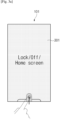
- the electronic device 101 may provide a locking mode screen 301 as the electronic device 101 is in a locking mode.
- the locking mode screen 301 may include a user interface for receiving a pattern or a password for unlocking.
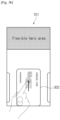
- the user may make a user input of swiping toward a display from a bezel area provided at a lower end of the electronic device 101 to execute a bookmark function for favorite cards of the payment application.
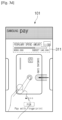
- the electronic device 101 may gradually show one electronic card 302 of cards, which are previously registered in the electronic device 101, from the lower end of the electronic device 101 while displaying the electronic card 302 on a screen, by executing a payment application (e.g., Samsung Pay ) based on the user input in FIG. 3b and FIG. 3c .
- a payment application e.g., Samsung Pay
- the electronic card 302 may include a card for payment, a card for banking, a membership card, and a card for managing personal information.
- the card for payment may include at least one of a credit card, a bearer prepaid card (e.g., a gift card), a check card, and a debit card.
- the electronic device 101 may perform partial authentication.
- the electronic device 101 may perform the partial authentication when receiving the user input (e.g., a swipe input).
- the partial authentication may be performed.
- the electronic device 101 may perform the partial authentication during the state of a transition effect that the electronic card 302 gradually appears or may perform the partial authentication in a standby state of receiving a user input as the electronic card 302 is displayed.
- the partial authentication may be performed in background based on bio-information (e.g., face information or iris information) acquired through the image sensor.
- bio-information e.g., face information or iris information
- the electronic device 101 may display visual information such as an indicator (or a cue) 303 in FIG. 3c , on the display.
- the indicator 303 may include an icon having the shape of an eye to represent that iris recognition is in progress or finished for full authentication, or an icon having the shape of a face to represent that the face recognition is in progress or finished for full authentication.
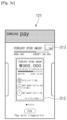
- the electronic device 101 may display first-level information 311 on the display as the electronic device 101 is partially released from the locking mode.
- the electronic device 101 may display the first-level information 311 on the execution screen of the first payment application (e.g., Samsung Pay ).
- an additional first-level information 312 may be displayed on the display, based on the user input (e.g., a flip or swipe gesture) on the display made in FIG. 3d .
- the additional first-level information 312 may include lower-level personal information such as a spend amount of a card, an amount to be paid, a budget for the card, and a card benefit to a cardholder. Accordingly, a user may rapidly and clearly recognize the card usage status of himself/herself before making payment, to manage expenses in a smart manner.
- a screen may include a user interface 313 for accessing second-level information having a security level higher than a security level of the first-level information.
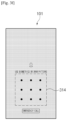
- the electronic device 101 may provide a locking mode screen, which includes a UI 314 for user authentication performed in a touch scheme (e.g., a scheme of inputting a pattern), based on a user input for selecting the UI 313.
- a touch scheme e.g., a scheme of inputting a pattern
- the electronic device 101 may perform full authentication based on the received user input.
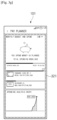
- the electronic device 101 may fully release the locking mode and may display second-level information 321 having a security level higher than a security level of the first-level information on the display in FIG. 3g .
- the second-level information 321 may include, for example, a spend amount of a card, a budget of a card, spend amount for each card, budget for each card, and a spending analysis graph.
- the electronic device 101 may display the second-level information 321 on the execution screen of a second application (e.g., Samsung planner ).
- the first application to display the first-level information may be identical to the second application to display the second level-information or the first and second applications may be different from each other.
- the first-level information may be information included in a screen displayed as an execution result of a first function of a specific application.
- the second-level information 321 may be information included in a screen displayed as the execution result of the second function of the specific application.
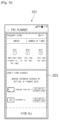
- the electronic device 101 may display second-level information 322 on the display.
- the second-level information 322 may include expenditure items, or a spend amount for each expenditure item.
- the electronic device 101 may display second-level information 323 on the display.
- the second-level information 323 may include an UI for spending details for each category, the number of spending times for each category, a card usage frequency for each business, or the setting of a payment date.
- the electronic device 101 may sequentially display screens as in FIGS. 3g , 3h , and 3i , based on the user input.
- the screen in FIG. 3h may be provided based on a flip gesture of a user made on the display having the screen in FIG. 3g
- the screen in FIG. 3i may be provided, based on the flip gesture of the user made on the display in FIG. 3h .
- the second-level information may include a larger amount of information, additional personal information, additional detailed information, or information requiring stronger access authority, as compared with the first-level information, or may include at least a portion of the first-level information.
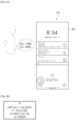
- FIGs. 4a - 4c are diagrams of the execution screens of a voice recognition application as the locking mode is partially released, according to an embodiment.
- the electronic device 101 may provide a locking mode screen 401 in a locking mode.
- the electronic device 101 may recognize a voice of a user 1 uttered through a voice recognition application (e.g., Samsung Bixby )
- a voice recognition application e.g., Samsung Bixby
- the electronic device 101 may perform partial authentication based on the user voice without an additional action of the user, as in FIG. 4b .
- the electronic device 101 may partially release the locking mode.
- the electronic device 101 may perform a first function as the result of the partial releasing of the locking mode as in FIG. 4c .
- the first function may be a function of determining a recipient according to the result of voice recognition and a function of starting calling a phone number corresponding to the determined recipient.
- the electronic device 101 may fully release the locking mode and may perform a second function.
- the second function may be a function having a security level higher than a security level of the first function.
- the second function may be a function more personal than the first function, a function requiring an access authority stronger than that of the first function, or a function of providing a larger amount of information than the first function.
- the second function may include a function of providing a list of phone numbers stored in the electronic device 101, providing a conference call, providing a video conference, or displaying a UI accessible to the above functions.
- the electronic device 101 when the electronic device 101 is controlled by using the voice of the user, whenever a voice command is executed, the electronic device 101 requests unlocking and thus the experience of the user is interrupted. However, the voice command is instantly performed as the partial unlocking is performed and thus the continuous experience of the user is possible.
- FIGs. 5a - 5c are diagrams of execution screens of a notification application based on partially releasing the locking mode, according to various embodiments.
- the electronic device 101 may provide a locking mode screen 501.
- Simple notification information serving as third-level information 502 may be displayed on the locking mode screen 501.
- the notification information displayed on the locking mode screen 501 may be information, such as the number of messages, an advertisement for each application, an alarm, news, or weather, which is irrelevant to or has lower relationship with personal information.
- the electronic device 101 may perform the partial authentication as FIG. 5b .
- the electronic device 101 may determine that a user stares at the display and may perform the partial authentication, in response to a trigger signal (e.g., a signal generated as a user presses a button for turning on the electronic device 101) of activating a black screen, which is the deactivated screen of the electronic device 101, to become the locking mode screen 501.
- a trigger signal e.g., a signal generated as a user presses a button for turning on the electronic device 101
- the electronic device 101 may automatically perform the partial authentication when a specific period (e.g., one second to three seconds) elapses after the locking mode screen 501 is displayed.
- the electronic device 101 may partially release the locking mode.
- the electronic device 101 may display first-level information 511 on the display as in FIG. 5c .
- the first-level information 511 may be information having a security level higher than a security level of the third-level information 502 displayed on the locking mode screen 501.
- the first-level information 511 may include a larger amount of information, more personal information, more detailed information, or information requiring stronger access authority, as compared with the third-level information, or may include at least a portion of the third-level information 502.
- the first-level information 511 may include, for example, information provided by a messenger application.
- the first-level information 511 may include detailed information associated with notification information 502-1 included in the third-level information 502.
- the detailed information may include at least a portion of a body of a message or information on a transmission time of the message.
- the electronic device 101 may display second-level information provided by the messenger application when the user authentication passes based on the user input.
- the second-level information may include an attached file of a message, a carbon copy of the message, another message, a sender of the message, or a full body of the message.
- the locking mode may be automatically partially released without an additional user input for performing unlocking and thus a user may rapidly recognize the content of a message.
- the content of the message is hidden when another person uses the electronic device 101 and is displayed when the user uses the electronic device 101. Accordingly, the security of the electronic device 101 may be improved.
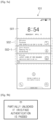
- FIGs. 6a - 6c are diagrams of execution screens of a notification application obtained as the locking mode is partially released, according to an embodiment.
- the electronic device 101 may provide a locking mode screen. Notification information serving as third-level information 602 may be displayed.
- the electronic device 101 may perform partial authentication.
- the electronic device 101 may perform the partial authentication, in response to a trigger signal or after a specific period elapses as shown in FIG. 6b .
- the electronic device 101 may display first-level information 611 on the display as in FIG. 6c .
- the first-level information 611 may include information which is not included in the third-level information 602.
- the first-level information 611 may include new notification information.
- the new notification information which is personal information, may include the health information (for example, a user weight, a user height, or a user health state managed through an "S-health " app) of the user.
- the first-level information 611 may be displayed instead of one of multiple pieces of information included in the third-level information 602.
- the first-level information 611 may be displayed together with the third-level information 602.
- the number of notification information displayed on the electronic device 101 may be increased.
- the spectrum of the notification information displayed on the display may be automatically changed or increased as the locking mode is partially released, so the convenience of the user, who refers to the notification information, may be improved.
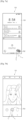
- FIGs. 7a - 7e are diagrams of execution screens of a camera application obtained as the locking mode is partially released, according to an embodiment.
- the electronic device 101 may receive a user input for selecting a short-cut icon of an application on a locking mode screen 701.
- the electronic device 101 may receive a user input for selecting a camera icon UI 702 to execute a camera application.
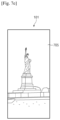
- the electronic device 101 may provide the execution screen of the camera application as in FIG. 7b , in response to the user input. Subsequently, when a subject is captured in response to the selection of a user for a shooting UI 703 in FIG. 7b , the electronic device 101 may display an image 704, which is captured, on the display as illustrated in FIG. 7c . When receiving a user input (e.g., a flip gesture made on the display) for requesting for the display of another image which is previously captured, the electronic device 101 may sequentially display captured images in a locking mode.
- a user input e.g., a flip gesture made on the display
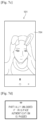
- the electronic device 101 may perform partial authentication as in FIG. 7d .
- the electronic device 101 may perform the partial authentication in advance before the user input is received.
- the partial authentication may be performed based on an event occurring depending on the selection for the camera UI 702 in FIG. 7a or the shooting UI 703 in FIG. 7b .
- the electronic device 101 may partially release the locking mode when the partial authentication passes as iris recognition or face recognition is performed for the partial authentication.
- the electronic device 101 may continuously display another image 705, which is previously captured before the electronic device 101 enters the locking mode, as first-level information based on the user input, as in FIG. 7e .
- the electronic device 101 may receive a user input for selecting a UI for sharing or editing the displayed photo.
- the electronic device 101 may display a locking mode screen including a UI allowing the releasing of the locking mode, based on the user input.
- the electronic device 101 may perform full authentication based on the user input. When the full authentication passes, the electronic device 101 may fully release the locking mode and may provide a screen including at least one UI allowing the sharing or editing of the displayed photo.
- the second-level information may include a UI representing each sharer and a UI associated with an editing function as the at least one UI allowing the sharing or editing of the displayed photo.
- the camera application As described above, as some aspects associated with the camera application are automatically partially unlocked without an additional user input for performing the unlocking, a user may naturally view stored photos. Accordingly, the experience of the user using the camera application is not interrupted but continued.
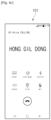
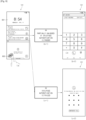
- FIG. 8 is a diagram of execution screens of a phone application obtained as the locking mode is partially released, according to various embodiments.
- the electronic device 101 may receive a user input for selecting a phone icon UI 802 as a short-cut icon of an application on a locking mode screen 801.
- the electronic device 101 may automatically perform partial authentication as in reference sign (b-1) of FIG. 8 , in response to an event occurring based on the user input for selecting the phone icon UI 802.
- the electronic device 101 may display an execution screen of the phone application, which includes a UI allowing the input of a phone number, as first-level information.
- the partial authentication may fail as in in reference sign (c-1) of FIG. 8 .
- the electronic device 101 may display an unlocking screen for requesting for fully releasing the locking mode as in reference sign (c-2) of FIG. 8 .
- the electronic device 101 may display the execution screen of the phone application as in reference sign (b-2) of FIG. 8 .
- the electronic device 101 may display a screen, which includes the list of emergency phone numbers, as third-level information.
- the first-level information which is information having a security level higher than a security level of the third-level information, may include a larger amount of information, more personal information, more detailed information, or information requiring stronger access authority, as compared with the first-level information, or may include may include at least a portion of the third-level information.
- FIGs. 9a - 9d are diagrams of screens for settings of a communication network as the locking mode is partially released, according to an embodiment.
- the electronic device 101 may receive a user input (e.g., a user input of swiping from a bezel area of an upper end of the electronic device 101 toward a display of the electronic device 101) for displaying a quick panel 902 on a locking mode screen 901.
- a user input e.g., a user input of swiping from a bezel area of an upper end of the electronic device 101 toward a display of the electronic device 101
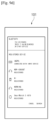
- the electronic device 101 may display the quick panel 902 on the display in FIG. 9b , based on the user input.
- the quick panel 902 may have a screen including setting UIs for controlling the settings of the electronic device 101.
- the electronic device 101 may receive a user input for selecting a UI 902-1 among the setting UIs.
- the electronic device 101 may perform the partial authentication based on the user input for selecting the UI 902-1 in FIG. 9c . In addition, the electronic device 101 may perform the partial authentication in advance, based on the user input for displaying the quick panel.
- the electronic device 101 may activate a setting function of the electronic device 101, which corresponds to the UI 902-1.
- the electronic device 101 may establish connection of a communication network (e.g., a short-range wireless communication network such as a Bluetooth network or a Wi-Fi network) as the setting function corresponding to the UI 902-1 is activated.
- the electronic device 101 may automatically establish a communication network channel with one, which has recently accessed the electronic device 101, of third devices located at a short distance from the electronic device 101 by turning on a Bluetooth network function as the connection of the communication network is established.
- the electronic device 101 may display a screen showing a target list for connection, which includes identification information of a third device allowing short-range wireless communication with the electronic device 101.
- the electronic device 101 may establish a short-range communication connection with a third device corresponding to the selected identification information, based on a user input for selecting one of multiple pieces of identification information included in the target list for connection.
- the electronic device 101 may automatically establish the communication connection with the third device based on the partial unlocking function to naturally provide a user experience for controlling or using the third device.
- FIG. 10 is a flowchart for displaying information by the electronic device 101, according to an embodiment.
- the electronic device 101 may display a locking mode screen representing that the electronic device 101 is in a locking mode.
- the electronic device 101 may perform partial authentication based on bio-information obtained through an image sensor in the locking mode.
- the electronic device 101 may continuously display the locking mode screen at step 1001.
- FIG. 11 is a flowchart for displaying information by the electronic device 101, according to an embodiment.
- the electronic device 101 may display a locking mode screen representing that the electronic device 101 is in a locking mode.
- the electronic device 101 may perform partial authentication based on bio-information obtained through an image sensor in the locking mode.
- the electronic device 101 may display first-level information as the locking mode is partially released at step 1107.
- the electronic device 101 may continuously display the locking mode screen at step 1101.
- the electronic device 101 may perform full authentication based on a user input through the input device 150 in the state in which the locking mode is partially released.
- the electronic device 101 may display second-level information having a security level higher than a security level of the first-level information as the locking mode is fully released at step 1113.
- the electronic device 101 may continuously display a partial locking mode screen representing that the electronic device 101 is partially released from the locking mode at step 1107.
- the electronic device 101 may display a full locking mode screen representing that the electronic device 101 is fully in the locking mode.
- the first-level information at step 1107 may have a security level higher than a security level of the third-level information.
- the third-level information is notification information
- the first-level information may be detailed information associated with the notification information or new notification information.
- the electronic device 101 when the electronic device 101 displays a locking mode screen including one UI at 1101 and when the partial authentication passes, the electronic device 101 may display the first-level information based on a user input for selecting one UI. In contrast, when the partial authentication fails, the electronic device 101 may display the third-level information based on the user input for selecting one UI.
- Various embodiments of the present disclosure may be implemented by software including an instruction stored in a machine-readable storage media readable by a machine (e.g., a computer).
- the machine may be a device that calls the instruction from the machine-readable storage media and operates depending on the called instruction and may include the electronic device.
- the processor may perform a function corresponding to the instruction directly or using other components under the control of the processor.
- the instruction may include a code generated or executed by a compiler or an interpreter.
- the machine-readable storage media may be provided in the form of non-transitory storage media.
- non-transitory is a limitation of the medium itself (i.e., tangible, not a signal) as opposed to a limitation on data storage persistency.
- the method according to various embodiments disclosed in the present disclosure may be provided as a part of a computer program product.
- the computer program product may be traded between a seller and a buyer as a product.
- the computer program product may be distributed in the form of machine-readable storage medium (e.g., a compact disc read only memory (CD-ROM)) or may be distributed only through an application store (e.g., a Play Store ).
- an application store e.g., a Play Store
- at least a portion of the computer program product may be temporarily stored or generated in a storage medium such as a memory of a manufacturer's server, an application store's server, or a relay server.
- Each component may include at least one of the above components, and a portion of the above sub-components may be omitted, or additional other sub-components may be further included.
- some components e.g., the module or the program
- Operations performed by a module, a programming, or other components according to various embodiments of the present disclosure may be executed sequentially, in parallel, repeatedly, or in a heuristic method. Also, at least some operations may be executed in different sequences, omitted, or other operations may be added.
- an electronic device may include a housing, a display exposed to one surface of the housing, the input device provided integrally to the display, mounted in the housing, or wirelessly connected with the electronic device, and an image sensor which converts an optical signal for a subject positioned outside the electronic device into an electrical signal. At least a portion of the image sensor may be provided inside the housing of the electronic device or mounted in the housing of the electronic device.
- an external device having an image sensor may be wirelessly connected with the electronic device.
- the electronic device may include the processor electrically connected with the display, the image sensor, and the input device, and the non-transitory computer readable storage medium electrically connected with the processor.
- a non-transitory computer readable storage medium may store instructions that, when executed, cause the processor to control the display to display first-level information as a locking mode is partially released, when partial authentication passes based on bio-information obtained through the image sensor in the state that the electronic device is in the locking mode, and causing the processor to control the display to display second-level information having a security level higher than a security level of the first-level information as the locking mode is fully released, when full authentication passes based on a user input made through the input device, in the state that the electronic device is in the locking mode.
- the second-level information may include an additional amount of information, additional personal information, more detailed information, or information requiring stronger access authority, as compared with the first-level information, or may include at least a portion of the first-level information.
- the first-level information may include at least one of a spend amount of a card, an amount to be paid, a budget for the card, and a card benefit to a cardholder
- the second-level information may include at least one of a spend amount for each card, a budget of the card, a spending analysis graph, and spending details based on categories.
- the partial authentication may be authentication based on face information or iris information of a user which is acquired through the image sensor.
- the full authentication may be authentication based on a user input of a pattern drawn on the display for unlocking, a user input of a password input with the input device for unlocking, or a user input of a fingerprint for fingerprint recognition.
- first-level information may be displayed on an execution screen of a first application and the second-level information may be displayed on an execution screen of a second application different from the first application.
- the executed instructions may cause the processor to control the display to display third-level information in the locking mode, and causing the processor to control the display to display the first-level information having a security level higher than a security level of the third-level information, when the partial authentication passes.
- the third-level information is notification information
- the memory stores instructions to control the display to display detailed information associated with the notification information or new notification information which serves as the first-level information, when the partial authentication passes.
- executed instructions may cause the processor to control the display to display an image previously captured in the locking mode, and causing the processor to control the display to display an image, which is captured before entering the locking mode, as the first-level information, when the partial authentication passes.
- the executed instructions may cause the processor to control the display to display one user interface (UI) in the locking mode, causing the processor to control the display to display the first-level information, based on a user input for selecting one UI when the partial authentication passes and causing the processor to control the display to display the third-level information, based on the user input for selecting one UI when the partial authentication fails.
- UI user interface
Landscapes
- Engineering & Computer Science (AREA)
- Theoretical Computer Science (AREA)
- Physics & Mathematics (AREA)
- General Physics & Mathematics (AREA)
- Business, Economics & Management (AREA)
- Computer Security & Cryptography (AREA)
- General Engineering & Computer Science (AREA)
- Accounting & Taxation (AREA)
- Computer Hardware Design (AREA)
- Computer Networks & Wireless Communication (AREA)
- Strategic Management (AREA)
- General Business, Economics & Management (AREA)
- Software Systems (AREA)
- Human Computer Interaction (AREA)
- Signal Processing (AREA)
- Finance (AREA)
- Computing Systems (AREA)
- Mathematical Physics (AREA)
- Databases & Information Systems (AREA)
- Health & Medical Sciences (AREA)
- Bioethics (AREA)
- General Health & Medical Sciences (AREA)
- Microelectronics & Electronic Packaging (AREA)
- User Interface Of Digital Computer (AREA)
- Telephone Function (AREA)
Claims (10)
- Elektronische Vorrichtung (101), die Folgendes umfasst:ein Touchscreen-Display (160), das zum Anzeigen von Informationen konfiguriert ist;einen Bildsensor;einen Prozessor (120), der mit dem Touchscreen-Display (160) und dem Bildsensor verbunden elektrisch ist; undeinen Speicher (130), der mit dem Prozessor (120) elektrisch verbunden ist,wobei in dem Speicher (130) Anweisungen gespeichert sind, die, wenn sie von der elektronischen Vorrichtung (101) ausgeführt werden, den Prozessor (120) zu Folgendem veranlassen:Steuern des Touchscreen-Displays (160), so dass es einen Sperrmodus-Bildschirm (501) anzeigt, der Informationen der dritten Ebene (502) einschließlich einer Anzahl von Nachrichten umfasst;während der Sperrmodus-Bildschirm (501) angezeigt wird, Durchführen einer teilweisen Authentifizierung mithilfe des Bildsensors basierend auf Iris- oder Gesichtserkennung;wenn die teilweise Authentifizierung erfolgreich ist, Steuern des Touchscreen-Displays (160), so dass es Informationen der ersten Ebene (511) anzeigt, die eine größere Menge an Informationen als die Informationen der dritten Ebene (502) enthalten, wobei die Informationen der ersten Ebene (611) einen Teil eines Nachrichtentexts enthalten, undwenn die vollständige Authentifizierung auf Grundlage einer über das Touchscreen-Display (160) vorgenommenen Benutzereingabe erfolgreich ist, Steuern des Touchscreen-Displays (160), so dass es Informationen der zweiten Ebene anzeigt, die den vollständigen Text der Nachricht enthalten.
- Elektronische Vorrichtung (101) nach Anspruch 1, wobei die Informationen der zweiten Ebene ferner Folgendes umfassen:
eine zusätzliche Menge an Informationen, zusätzliche persönliche Informationen, zusätzliche ausführliche Informationen oder Informationen, die im Vergleich zu den Informationen der ersten Ebene eine stärkere Zugriffsberechtigung erfordern (511). - Elektronische Vorrichtung (101) nach Anspruch 1, wobei die vollständige Authentifizierung auf einer durch den Benutzer über das Touchscreen-Display vorgenommene Eingabe eines Musters zum Entsperren oder Eingabe eines Passwortes zum Entsperren basiert.
- Elektronische Vorrichtung (101) nach Anspruch 1, wobei die Anweisungen den Prozessor (120) ferner zum Folgenden veranlassen:
Steuern des Touchscreen-Displays (160), so dass es die Informationen der dritten Ebene (502) in einem Sperrmodus anzeigt. - Elektronische Vorrichtung (101) nach Anspruch 4, wobei, wenn es sich bei den Informationen der dritten Ebene (502, 602) um Benachrichtigungsinformationen handelt, die Anweisungen den Prozessor (120) ferner dazu veranlassen, das Touchscreen-Display (160) so zu steuern, dass es ausführliche Informationen anzeigt, die mit den Benachrichtigungsinformationen verknüpft sind, oder neue Benachrichtigungsinformationen, die als Informationen der ersten Ebene (511) dienen, wenn die teilweise Authentifizierung erfolgreich ist.
- Elektronische Vorrichtung (101) nach Anspruch 1, wobei die Anweisungen den Prozessor (120) ferner zum Folgenden veranlassen:Steuern des Touchscreen-Displays (160), so dass es im Sperrmodus eine Benutzeroberfläche anzeigt, undSteuern des Touchscreen-Displays (160), so dass es die Informationen der ersten Ebene (511) basierend auf einer Benutzereingabe zum Auswählen der einen Benutzeroberfläche anzeigt, wenn die teilweise Authentifizierung erfolgreich ist, undSteuern des Touchscreen-Displays (160), so dass es die Informationen der dritten Ebene basierend auf der Benutzereingabe zum Auswählen der einen Benutzeroberfläche anzeigt, wenn die teilweise Authentifizierung fehlschlägt.
- Verfahren zum Anzeigen von Informationen in einer elektronischen Vorrichtung (101), wobei das Verfahren Folgendes umfasst:Anzeigen eines Sperrmodus-Bildschirms (501), der Informationen der dritten Ebene (502) einschließlich einer Anzahl von Nachrichten umfasst;Durchführen einer teilweisen Authentifizierung unter Verwendung von Bioinformationen, die über einen Bildsensor der elektronischen Vorrichtung (101) erfasst werden, basierend auf Iris- oder Gesichtserkennung in einem Sperrmodus;wenn die teilweise Authentifizierung erfolgreich ist, Anzeigen von Informationen der ersten Ebene (511), die eine größere Menge an Informationen als die Informationen der dritten Ebene (502) enthalten, wobei die Informationen der ersten Ebene (511) einen Teil eines Nachrichtentexts enthalten;Durchführen einer vollständigen Authentifizierung basierend auf einer Benutzereingabe über ein Touchscreen-Display (160) der elektronischen Vorrichtung (101); undwenn die vollständige Authentifizierung erfolgreich ist, Anzeigen von Informationen der zweiten Ebene, die den vollständigen Nachrichtentext umfassen.
- Verfahren nach Anspruch 7, wobei die Informationen der zweiten Ebene ferner Folgendes umfassen:
eine zusätzliche Menge an Informationen, zusätzliche persönliche Informationen, zusätzliche ausführliche Informationen oder Informationen, die im Vergleich zu den Informationen der ersten Ebene eine stärkere Zugriffsberechtigung erfordern. - Verfahren nach Anspruch 7, wobei die vollständige Authentifizierung auf einer durch den Benutzer auf dem Touchscreen-Display (160) der elektronischen Vorrichtung (101) vorgenommene Eingabe eines gezeichneten Musters zum Entsperren, Eingabe eines Passwortes zum Entsperren oder Eingabe eines Fingerabdrucks zur Fingerabdruckerkennung basiert.
- Verfahren nach Anspruch 7, wobei das Anzeigen der Informationen der ersten Ebene ferner Folgendes umfasst:
Anzeigen der Informationen der ersten Ebene mit einer höheren Sicherheitsstufe als die Sicherheitsstufe der Informationen der dritten Ebene, wenn die teilweise Authentifizierung erfolgreich ist.
Applications Claiming Priority (2)
| Application Number | Priority Date | Filing Date | Title |
|---|---|---|---|
| KR1020170089100A KR102406099B1 (ko) | 2017-07-13 | 2017-07-13 | 전자 장치 및 이의 정보 표시 |
| PCT/KR2018/007993 WO2019013594A1 (en) | 2017-07-13 | 2018-07-13 | ELECTRONIC DEVICE FOR DISPLAYING INFORMATION AND ITS METHOD |
Publications (4)
| Publication Number | Publication Date |
|---|---|
| EP3635944A1 EP3635944A1 (de) | 2020-04-15 |
| EP3635944A4 EP3635944A4 (de) | 2020-06-03 |
| EP3635944B1 true EP3635944B1 (de) | 2025-06-11 |
| EP3635944C0 EP3635944C0 (de) | 2025-06-11 |
Family
ID=64999625
Family Applications (1)
| Application Number | Title | Priority Date | Filing Date |
|---|---|---|---|
| EP18832197.0A Active EP3635944B1 (de) | 2017-07-13 | 2018-07-13 | Elektronische einrichtung zur anzeige von informationen und verfahren dafür |
Country Status (5)
| Country | Link |
|---|---|
| US (2) | US11017378B2 (de) |
| EP (1) | EP3635944B1 (de) |
| KR (1) | KR102406099B1 (de) |
| CN (2) | CN110800279B (de) |
| WO (1) | WO2019013594A1 (de) |
Families Citing this family (19)
| Publication number | Priority date | Publication date | Assignee | Title |
|---|---|---|---|---|
| KR102406099B1 (ko) * | 2017-07-13 | 2022-06-10 | 삼성전자주식회사 | 전자 장치 및 이의 정보 표시 |
| US11450069B2 (en) | 2018-11-09 | 2022-09-20 | Citrix Systems, Inc. | Systems and methods for a SaaS lens to view obfuscated content |
| JP7187286B2 (ja) * | 2018-11-29 | 2022-12-12 | キヤノン株式会社 | 画像処理装置、画像処理方法及びプログラム |
| KR20200101222A (ko) * | 2019-02-19 | 2020-08-27 | 삼성전자주식회사 | 사용자 지문 인증 방법 및 이를 지원하는 전자 장치 |
| US11201889B2 (en) | 2019-03-29 | 2021-12-14 | Citrix Systems, Inc. | Security device selection based on secure content detection |
| KR102646536B1 (ko) * | 2019-04-25 | 2024-03-13 | 삼성전자주식회사 | 전자 장치 및 전자 장치에서 사용자 입력에 기반한 생체 인증 및 지능형 에이전트 기능 수행 방법 |
| CN111046356B (zh) * | 2019-12-05 | 2022-03-15 | 广东欢太科技有限公司 | 一种内容访问方法、装置及计算机可读存储介质 |
| US11544415B2 (en) | 2019-12-17 | 2023-01-03 | Citrix Systems, Inc. | Context-aware obfuscation and unobfuscation of sensitive content |
| US11539709B2 (en) | 2019-12-23 | 2022-12-27 | Citrix Systems, Inc. | Restricted access to sensitive content |
| US11582266B2 (en) * | 2020-02-03 | 2023-02-14 | Citrix Systems, Inc. | Method and system for protecting privacy of users in session recordings |
| US11361113B2 (en) | 2020-03-26 | 2022-06-14 | Citrix Systems, Inc. | System for prevention of image capture of sensitive information and related techniques |
| WO2022041058A1 (en) | 2020-08-27 | 2022-03-03 | Citrix Systems, Inc. | Privacy protection during video conferencing screen share |
| WO2022041163A1 (en) | 2020-08-29 | 2022-03-03 | Citrix Systems, Inc. | Identity leak prevention |
| KR102420064B1 (ko) | 2020-11-20 | 2022-07-13 | 주식회사 안랩 | 컨텐츠 유출 방지 방법, 장치, 컴퓨터 판독 가능한 기록매체 및 컴퓨터 프로그램 |
| CN115705567B (zh) * | 2021-08-06 | 2024-04-19 | 荣耀终端有限公司 | 支付方法及相关装置 |
| CN113986369B (zh) * | 2021-09-18 | 2023-02-28 | 荣耀终端有限公司 | 物联网设备控制方法、系统、电子设备及存储介质 |
| CN113993115B (zh) * | 2021-12-27 | 2022-04-01 | 飞天诚信科技股份有限公司 | 自动解锁屏幕方法、装置、电子设备及可读存储介质 |
| US20240193241A1 (en) * | 2022-12-12 | 2024-06-13 | Western Digital Technologies, Inc. | Raiseable profile-based access for media content |
| US20260025466A1 (en) * | 2024-07-16 | 2026-01-22 | Motorola Mobility Llc | Authentication security for interfacing with incoming communications at an electronic device |
Family Cites Families (38)
| Publication number | Priority date | Publication date | Assignee | Title |
|---|---|---|---|---|
| JP4729074B2 (ja) * | 2008-05-23 | 2011-07-20 | Necカシオモバイルコミュニケーションズ株式会社 | 携帯端末装置及びプログラム |
| US20110320345A1 (en) * | 2010-06-29 | 2011-12-29 | Ebay, Inc. | Smart wallet |
| EP2669835B1 (de) * | 2011-01-28 | 2017-12-27 | Ntt Docomo, Inc. | Tragbares informationsendgerät und verfahren zum speichern von greifmerkmalen dafür |
| EP2495677B1 (de) | 2011-03-02 | 2015-05-06 | BlackBerry Limited | Passwortbasierter Betrieb einer gesperrten Computervorrichtung |
| CN102778996A (zh) * | 2011-05-10 | 2012-11-14 | 宏达国际电子股份有限公司 | 解锁方法以及应用其的手持电子装置 |
| JP5505807B2 (ja) | 2011-06-20 | 2014-05-28 | コニカミノルタ株式会社 | 情報入力表示装置及び制御プログラム |
| KR101882339B1 (ko) | 2011-08-30 | 2018-07-27 | 삼성전자주식회사 | 휴대단말기의 어플리케이션 관리장치 및 방법 |
| JP2013186851A (ja) * | 2012-03-12 | 2013-09-19 | Panasonic Corp | セキュリティを解除するための情報の入力が要求される情報処理装置及びログイン方法 |
| KR101435487B1 (ko) | 2012-09-28 | 2014-08-28 | 크루셜텍 (주) | 사용자 단말기, 사용자 단말기의 숨김 페이지 사용 방법 및 컴퓨터 판독 가능한 기록 매체 |
| KR102001913B1 (ko) | 2012-09-27 | 2019-07-19 | 엘지전자 주식회사 | 휴대 단말기 및 그 동작 방법 |
| KR101449681B1 (ko) * | 2012-10-04 | 2014-10-13 | 크루셜텍 (주) | 지문을 이용한 메시지 표시 방법, 사용자 단말기 및 기록 매체 |
| CN103793636B (zh) * | 2012-11-01 | 2017-12-22 | 华为技术有限公司 | 一种设备及保护设备隐私的方法 |
| US20140283141A1 (en) * | 2013-03-15 | 2014-09-18 | Apple Inc. | Switching a Mobile Device from Operating in a Primary Access Mode to a Secondary Access Mode |
| CN104102862A (zh) * | 2013-04-09 | 2014-10-15 | 深圳富泰宏精密工业有限公司 | 多重屏幕解锁系统及方法 |
| KR20140136350A (ko) | 2013-05-20 | 2014-11-28 | 삼성전자주식회사 | 전자장치의 사용 방법 및 장치 |
| US9721107B2 (en) * | 2013-06-08 | 2017-08-01 | Apple Inc. | Using biometric verification to grant access to redacted content |
| CN107659703A (zh) | 2013-06-19 | 2018-02-02 | 华为终端(东莞)有限公司 | 一种数据和消息处理的方法及装置 |
| US9898642B2 (en) * | 2013-09-09 | 2018-02-20 | Apple Inc. | Device, method, and graphical user interface for manipulating user interfaces based on fingerprint sensor inputs |
| US8838071B1 (en) | 2014-04-30 | 2014-09-16 | Oto Technologies Llc | Secure communications smartphone system |
| US10402896B1 (en) * | 2014-07-03 | 2019-09-03 | Wells Fargo Bank, N.A. | Systems and methods for interactive financial categorization and budgeting |
| US20160050209A1 (en) * | 2014-08-18 | 2016-02-18 | Ebay Inc. | Access control based on authentication |
| US9311464B2 (en) * | 2014-08-19 | 2016-04-12 | Airwatch, Llc | Authentication via accelerometer |
| US9602490B2 (en) * | 2014-11-10 | 2017-03-21 | Intel Corporation | User authentication confidence based on multiple devices |
| KR102460459B1 (ko) | 2015-02-27 | 2022-10-28 | 삼성전자주식회사 | 전자 장치를 이용한 카드 서비스 방법 및 장치 |
| US20160364600A1 (en) * | 2015-06-10 | 2016-12-15 | Microsoft Technology Licensing, Llc | Biometric Gestures |
| CN108650391A (zh) | 2015-07-16 | 2018-10-12 | 珠海市魅族科技有限公司 | 一种来电显示信息的显示方法及终端 |
| CN105095733A (zh) * | 2015-07-28 | 2015-11-25 | 努比亚技术有限公司 | 屏幕显示方法及移动终端 |
| CN105184567B (zh) * | 2015-08-26 | 2019-06-11 | 宇龙计算机通信科技(深圳)有限公司 | 信息的处理方法、处理装置和移动终端 |
| KR101778008B1 (ko) * | 2015-10-20 | 2017-09-13 | 삼성에스디에스 주식회사 | 보안 처리된 객체의 보안 상태 해제 방법 및 그 장치 |
| CN105426745B (zh) * | 2015-10-28 | 2019-08-06 | 小米科技有限责任公司 | 信息显示方法及装置 |
| CN106650361A (zh) * | 2015-10-30 | 2017-05-10 | 中兴通讯股份有限公司 | 一种解锁方法及装置 |
| KR102558439B1 (ko) * | 2015-11-18 | 2023-07-24 | 삼성전자주식회사 | 사용 정책 조절 방법 및 이를 지원하는 전자 장치 |
| CN106096346A (zh) * | 2016-06-02 | 2016-11-09 | 深圳市万普拉斯科技有限公司 | 通知信息访问方法及装置、屏幕解锁方法 |
| WO2017214217A1 (en) * | 2016-06-08 | 2017-12-14 | Open Invention Network Llc | Delivering data to multiple devices of a recipient |
| CN106446631A (zh) * | 2016-09-20 | 2017-02-22 | 深圳市金立通信设备有限公司 | 一种查看锁屏通知信息的方法及终端 |
| US10346223B1 (en) * | 2016-11-23 | 2019-07-09 | Google Llc | Selective obfuscation of notifications |
| KR102354415B1 (ko) * | 2017-05-12 | 2022-01-21 | 삼성전자주식회사 | 전자 장치 및 전자 장치 제어 방법 |
| KR102406099B1 (ko) * | 2017-07-13 | 2022-06-10 | 삼성전자주식회사 | 전자 장치 및 이의 정보 표시 |
-
2017
- 2017-07-13 KR KR1020170089100A patent/KR102406099B1/ko active Active
-
2018
- 2018-07-13 US US16/035,084 patent/US11017378B2/en active Active
- 2018-07-13 WO PCT/KR2018/007993 patent/WO2019013594A1/en not_active Ceased
- 2018-07-13 EP EP18832197.0A patent/EP3635944B1/de active Active
- 2018-07-13 CN CN201880041916.8A patent/CN110800279B/zh active Active
- 2018-07-13 CN CN202110593808.5A patent/CN113438353A/zh active Pending
-
2021
- 2021-05-24 US US17/328,541 patent/US11593787B2/en active Active
Also Published As
| Publication number | Publication date |
|---|---|
| KR102406099B1 (ko) | 2022-06-10 |
| CN110800279A (zh) | 2020-02-14 |
| WO2019013594A1 (en) | 2019-01-17 |
| US11593787B2 (en) | 2023-02-28 |
| EP3635944C0 (de) | 2025-06-11 |
| KR20190007735A (ko) | 2019-01-23 |
| EP3635944A1 (de) | 2020-04-15 |
| CN113438353A (zh) | 2021-09-24 |
| EP3635944A4 (de) | 2020-06-03 |
| US11017378B2 (en) | 2021-05-25 |
| CN110800279B (zh) | 2021-06-18 |
| US20210279713A1 (en) | 2021-09-09 |
| US20190019177A1 (en) | 2019-01-17 |
Similar Documents
| Publication | Publication Date | Title |
|---|---|---|
| US11593787B2 (en) | Electronic device for displaying information and method thereof | |
| KR102708781B1 (ko) | 외부의 IoT 장치를 관리 및 제어하는 방법 및 이를 지원하는 전자 장치 | |
| KR102635437B1 (ko) | 콘텐츠 공유 방법 및 이를 지원하는 전자 장치 | |
| US10860271B2 (en) | Electronic device having bended display and control method thereof | |
| EP3057024B1 (de) | Elektronische vorrichtung und verfahren zur registrierung von fingerabdrücken in elektronischer vorrichtung | |
| CN107408168B (zh) | 使用显示信息的虹膜认证方法和装置 | |
| KR102371943B1 (ko) | 자기장 통신이 가능한 휴대 전자 장치 및 이를 이용한 결제 방법 | |
| EP3654268B1 (de) | Kartenregistrierungsverfahren für bezahldienst und mobile elektronische vorrichtung zur implementierung davon | |
| US20170103382A1 (en) | Method of providing payment service and electronic device for implementing same | |
| KR102446600B1 (ko) | 차량 식별 정보에 기반하여 결정된 그래픽 사용자 인터페이스를 차량으로 전송하는 방법 및 이를 지원하는 전자 장치 | |
| US10028143B2 (en) | Electronic device and method for executing application or service | |
| KR102264220B1 (ko) | 전자 장치 및 전자 장치의 디스플레이 방법 | |
| CN110024370A (zh) | 电子装置以及在电子装置中显示用于虹膜辨识的图像的方法 | |
| CN107918760A (zh) | 具有多个指纹感测模式的电子装置及其控制方法 | |
| US20180218135A1 (en) | Electronic device and method for performing authentication | |
| KR102607791B1 (ko) | 거래 이력 기반의 서비스 제공 방법 및 그 전자 장치 | |
| CN106971299A (zh) | 支付处理方法及支持其的电子设备 | |
| US20180137488A1 (en) | Electronic device and remittance method thereof | |
| KR102707427B1 (ko) | 결제 방법 및 이를 수행하는 전자 장치 | |
| KR102707426B1 (ko) | 컨텐츠를 제공하기 위한 전자 장치, 시스템 및 방법 | |
| EP3520059B1 (de) | Elektronische vorrichtung und betriebsverfahren zur registrierung einer elektronischen karte in der elektronischen vorrichtung | |
| KR102575910B1 (ko) | 가이드를 출력하는 전자 장치 및 방법 | |
| KR102676682B1 (ko) | 카드 운용 정보 처리 방법 및 이를 지원하는 전자 장치 | |
| KR20150116546A (ko) | 전자장치의 중독 방지 기능을 수행하는 방법과 이를 수행하는 장치 및 시스템 | |
| US20170200024A1 (en) | Electronic device and method of securing the same |
Legal Events
| Date | Code | Title | Description |
|---|---|---|---|
| STAA | Information on the status of an ep patent application or granted ep patent |
Free format text: STATUS: THE INTERNATIONAL PUBLICATION HAS BEEN MADE |
|
| PUAI | Public reference made under article 153(3) epc to a published international application that has entered the european phase |
Free format text: ORIGINAL CODE: 0009012 |
|
| STAA | Information on the status of an ep patent application or granted ep patent |
Free format text: STATUS: REQUEST FOR EXAMINATION WAS MADE |
|
| 17P | Request for examination filed |
Effective date: 20200106 |
|
| AK | Designated contracting states |
Kind code of ref document: A1 Designated state(s): AL AT BE BG CH CY CZ DE DK EE ES FI FR GB GR HR HU IE IS IT LI LT LU LV MC MK MT NL NO PL PT RO RS SE SI SK SM TR |
|
| AX | Request for extension of the european patent |
Extension state: BA ME |
|
| A4 | Supplementary search report drawn up and despatched |
Effective date: 20200506 |
|
| RIC1 | Information provided on ipc code assigned before grant |
Ipc: G06F 21/31 20130101ALI20200428BHEP Ipc: H04M 1/66 20060101ALI20200428BHEP Ipc: G06F 21/32 20130101ALI20200428BHEP Ipc: G06F 21/62 20130101ALI20200428BHEP Ipc: G06F 21/74 20130101ALI20200428BHEP Ipc: H04M 1/725 20060101AFI20200428BHEP |
|
| DAV | Request for validation of the european patent (deleted) | ||
| DAX | Request for extension of the european patent (deleted) | ||
| STAA | Information on the status of an ep patent application or granted ep patent |
Free format text: STATUS: EXAMINATION IS IN PROGRESS |
|
| 17Q | First examination report despatched |
Effective date: 20211001 |
|
| REG | Reference to a national code |
Ref country code: DE Free format text: PREVIOUS MAIN CLASS: H04M0001725000 Ipc: G06F0003048000 Ref country code: DE Ref legal event code: R079 Ref document number: 602018082558 Country of ref document: DE Free format text: PREVIOUS MAIN CLASS: H04M0001725000 Ipc: G06F0003048000 |
|
| GRAP | Despatch of communication of intention to grant a patent |
Free format text: ORIGINAL CODE: EPIDOSNIGR1 |
|
| RIC1 | Information provided on ipc code assigned before grant |
Ipc: G06F 21/62 20130101ALI20241127BHEP Ipc: G06F 21/74 20130101ALI20241127BHEP Ipc: G06F 21/32 20130101ALI20241127BHEP Ipc: G06F 21/31 20130101ALI20241127BHEP Ipc: G07G 1/01 20060101ALI20241127BHEP Ipc: G07F 19/00 20060101ALI20241127BHEP Ipc: G06Q 20/40 20120101ALI20241127BHEP Ipc: G06Q 20/32 20120101ALI20241127BHEP Ipc: G06F 3/048 20130101AFI20241127BHEP |
|
| STAA | Information on the status of an ep patent application or granted ep patent |
Free format text: STATUS: GRANT OF PATENT IS INTENDED |
|
| INTG | Intention to grant announced |
Effective date: 20250102 |
|
| GRAS | Grant fee paid |
Free format text: ORIGINAL CODE: EPIDOSNIGR3 |
|
| GRAA | (expected) grant |
Free format text: ORIGINAL CODE: 0009210 |
|
| STAA | Information on the status of an ep patent application or granted ep patent |
Free format text: STATUS: THE PATENT HAS BEEN GRANTED |
|
| AK | Designated contracting states |
Kind code of ref document: B1 Designated state(s): AL AT BE BG CH CY CZ DE DK EE ES FI FR GB GR HR HU IE IS IT LI LT LU LV MC MK MT NL NO PL PT RO RS SE SI SK SM TR |
|
| REG | Reference to a national code |
Ref country code: GB Ref legal event code: FG4D |
|
| REG | Reference to a national code |
Ref country code: CH Ref legal event code: EP |
|
| REG | Reference to a national code |
Ref country code: IE Ref legal event code: FG4D |
|
| REG | Reference to a national code |
Ref country code: DE Ref legal event code: R096 Ref document number: 602018082558 Country of ref document: DE |
|
| U01 | Request for unitary effect filed |
Effective date: 20250708 |
|
| U07 | Unitary effect registered |
Designated state(s): AT BE BG DE DK EE FI FR IT LT LU LV MT NL PT RO SE SI Effective date: 20250714 |
|
| U20 | Renewal fee for the european patent with unitary effect paid |
Year of fee payment: 8 Effective date: 20250723 |
|
| PG25 | Lapsed in a contracting state [announced via postgrant information from national office to epo] |
Ref country code: ES Free format text: LAPSE BECAUSE OF FAILURE TO SUBMIT A TRANSLATION OF THE DESCRIPTION OR TO PAY THE FEE WITHIN THE PRESCRIBED TIME-LIMIT Effective date: 20250611 |
|
| PG25 | Lapsed in a contracting state [announced via postgrant information from national office to epo] |
Ref country code: NO Free format text: LAPSE BECAUSE OF FAILURE TO SUBMIT A TRANSLATION OF THE DESCRIPTION OR TO PAY THE FEE WITHIN THE PRESCRIBED TIME-LIMIT Effective date: 20250911 Ref country code: GR Free format text: LAPSE BECAUSE OF FAILURE TO SUBMIT A TRANSLATION OF THE DESCRIPTION OR TO PAY THE FEE WITHIN THE PRESCRIBED TIME-LIMIT Effective date: 20250912 |
|
| PGFP | Annual fee paid to national office [announced via postgrant information from national office to epo] |
Ref country code: GB Payment date: 20250722 Year of fee payment: 8 |
|
| PG25 | Lapsed in a contracting state [announced via postgrant information from national office to epo] |
Ref country code: HR Free format text: LAPSE BECAUSE OF FAILURE TO SUBMIT A TRANSLATION OF THE DESCRIPTION OR TO PAY THE FEE WITHIN THE PRESCRIBED TIME-LIMIT Effective date: 20250611 |
|
| PG25 | Lapsed in a contracting state [announced via postgrant information from national office to epo] |
Ref country code: RS Free format text: LAPSE BECAUSE OF FAILURE TO SUBMIT A TRANSLATION OF THE DESCRIPTION OR TO PAY THE FEE WITHIN THE PRESCRIBED TIME-LIMIT Effective date: 20250911 |
|
| PG25 | Lapsed in a contracting state [announced via postgrant information from national office to epo] |
Ref country code: IS Free format text: LAPSE BECAUSE OF FAILURE TO SUBMIT A TRANSLATION OF THE DESCRIPTION OR TO PAY THE FEE WITHIN THE PRESCRIBED TIME-LIMIT Effective date: 20251011 |
|
| PG25 | Lapsed in a contracting state [announced via postgrant information from national office to epo] |
Ref country code: SM Free format text: LAPSE BECAUSE OF FAILURE TO SUBMIT A TRANSLATION OF THE DESCRIPTION OR TO PAY THE FEE WITHIN THE PRESCRIBED TIME-LIMIT Effective date: 20250611 |
|
| PG25 | Lapsed in a contracting state [announced via postgrant information from national office to epo] |
Ref country code: CZ Free format text: LAPSE BECAUSE OF FAILURE TO SUBMIT A TRANSLATION OF THE DESCRIPTION OR TO PAY THE FEE WITHIN THE PRESCRIBED TIME-LIMIT Effective date: 20250611 |
|
| PG25 | Lapsed in a contracting state [announced via postgrant information from national office to epo] |
Ref country code: PL Free format text: LAPSE BECAUSE OF FAILURE TO SUBMIT A TRANSLATION OF THE DESCRIPTION OR TO PAY THE FEE WITHIN THE PRESCRIBED TIME-LIMIT Effective date: 20250611 |
|
| PG25 | Lapsed in a contracting state [announced via postgrant information from national office to epo] |
Ref country code: SK Free format text: LAPSE BECAUSE OF FAILURE TO SUBMIT A TRANSLATION OF THE DESCRIPTION OR TO PAY THE FEE WITHIN THE PRESCRIBED TIME-LIMIT Effective date: 20250611 |