EP3634032A1 - Configuring a decoding period in a hsdpa radio access network - Google Patents
Configuring a decoding period in a hsdpa radio access network Download PDFInfo
- Publication number
- EP3634032A1 EP3634032A1 EP19191148.6A EP19191148A EP3634032A1 EP 3634032 A1 EP3634032 A1 EP 3634032A1 EP 19191148 A EP19191148 A EP 19191148A EP 3634032 A1 EP3634032 A1 EP 3634032A1
- Authority
- EP
- European Patent Office
- Prior art keywords
- mac
- tti
- packet
- transmission
- packets
- Prior art date
- Legal status (The legal status is an assumption and is not a legal conclusion. Google has not performed a legal analysis and makes no representation as to the accuracy of the status listed.)
- Withdrawn
Links
- 230000005540 biological transmission Effects 0.000 claims abstract description 106
- 238000000034 method Methods 0.000 claims abstract description 65
- 230000011664 signaling Effects 0.000 claims description 9
- 239000000872 buffer Substances 0.000 description 11
- 238000012545 processing Methods 0.000 description 11
- 230000001965 increasing effect Effects 0.000 description 9
- 230000008901 benefit Effects 0.000 description 5
- 238000010586 diagram Methods 0.000 description 5
- 238000004891 communication Methods 0.000 description 4
- 230000003111 delayed effect Effects 0.000 description 4
- 101000665442 Homo sapiens Serine/threonine-protein kinase TBK1 Proteins 0.000 description 2
- 102100038192 Serine/threonine-protein kinase TBK1 Human genes 0.000 description 2
- 230000001413 cellular effect Effects 0.000 description 2
- 238000007796 conventional method Methods 0.000 description 2
- 230000001360 synchronised effect Effects 0.000 description 2
- 208000037918 transfusion-transmitted disease Diseases 0.000 description 2
- 101000741965 Homo sapiens Inactive tyrosine-protein kinase PRAG1 Proteins 0.000 description 1
- 102100038659 Inactive tyrosine-protein kinase PRAG1 Human genes 0.000 description 1
- 230000003044 adaptive effect Effects 0.000 description 1
- 238000013459 approach Methods 0.000 description 1
- 238000004590 computer program Methods 0.000 description 1
- 238000013461 design Methods 0.000 description 1
- 238000011161 development Methods 0.000 description 1
- 230000008030 elimination Effects 0.000 description 1
- 238000003379 elimination reaction Methods 0.000 description 1
- 238000005516 engineering process Methods 0.000 description 1
- 230000002708 enhancing effect Effects 0.000 description 1
- 230000006870 function Effects 0.000 description 1
- 238000013507 mapping Methods 0.000 description 1
- 238000005259 measurement Methods 0.000 description 1
- 238000005457 optimization Methods 0.000 description 1
- 230000002441 reversible effect Effects 0.000 description 1
- 238000006467 substitution reaction Methods 0.000 description 1
- 238000012546 transfer Methods 0.000 description 1
Images



Classifications
-
- H—ELECTRICITY
- H04—ELECTRIC COMMUNICATION TECHNIQUE
- H04J—MULTIPLEX COMMUNICATION
- H04J3/00—Time-division multiplex systems
- H04J3/16—Time-division multiplex systems in which the time allocation to individual channels within a transmission cycle is variable, e.g. to accommodate varying complexity of signals, to vary number of channels transmitted
-
- H—ELECTRICITY
- H04—ELECTRIC COMMUNICATION TECHNIQUE
- H04L—TRANSMISSION OF DIGITAL INFORMATION, e.g. TELEGRAPHIC COMMUNICATION
- H04L1/00—Arrangements for detecting or preventing errors in the information received
- H04L1/12—Arrangements for detecting or preventing errors in the information received by using return channel
- H04L1/16—Arrangements for detecting or preventing errors in the information received by using return channel in which the return channel carries supervisory signals, e.g. repetition request signals
- H04L1/18—Automatic repetition systems, e.g. Van Duuren systems
- H04L1/1812—Hybrid protocols; Hybrid automatic repeat request [HARQ]
-
- H—ELECTRICITY
- H04—ELECTRIC COMMUNICATION TECHNIQUE
- H04L—TRANSMISSION OF DIGITAL INFORMATION, e.g. TELEGRAPHIC COMMUNICATION
- H04L1/00—Arrangements for detecting or preventing errors in the information received
- H04L1/12—Arrangements for detecting or preventing errors in the information received by using return channel
- H04L1/16—Arrangements for detecting or preventing errors in the information received by using return channel in which the return channel carries supervisory signals, e.g. repetition request signals
- H04L1/18—Automatic repetition systems, e.g. Van Duuren systems
- H04L1/1867—Arrangements specially adapted for the transmitter end
- H04L1/1887—Scheduling and prioritising arrangements
-
- H—ELECTRICITY
- H04—ELECTRIC COMMUNICATION TECHNIQUE
- H04W—WIRELESS COMMUNICATION NETWORKS
- H04W28/00—Network traffic management; Network resource management
- H04W28/02—Traffic management, e.g. flow control or congestion control
-
- H—ELECTRICITY
- H04—ELECTRIC COMMUNICATION TECHNIQUE
- H04W—WIRELESS COMMUNICATION NETWORKS
- H04W80/00—Wireless network protocols or protocol adaptations to wireless operation
- H04W80/02—Data link layer protocols
Definitions
- the transmission of a low bit rate service over E-DCH introduces the requirement for large control overhead due to several control channels in the uplink (UL) and the downlink (DL), and because the amount of control bits per TTI is the same for all packet sizes.
- an acknowledge/non-acknowledge (ACK/NACK) is transmitted in the DL and the enhanced transport format combination indicator (E-TFCI), in a robust secure network (RSN), and a 'Happy bit' is transmitted in the UL. It is possible to reduce the control overhead by transmitting more packets in the same transport block but less often. However, the payload in the TB and the TTI would be increased.
- the UTRAN could increase the transmission interval for specific services (e.g. voice over Internet protocol (VoIP)) in the UTRAN in order to increase transmission capacity.
- VoIP voice over Internet protocol
- the UTRAN should take into account the characteristics of the service, e.g. an assumed or known bit rate, delay requirement, possibly known service data unit (SDU) arrival rates, etc, when defining the transmission interval.
- SDU service data unit
- a control parameter that is independent from an air interface transmission time interval (TTI), hybrid automatic repeat request (HARQ) processes or enhanced dedicated transport channel (E-DCH) scheduling is used.
- TTI air interface transmission time interval
- HARQ hybrid automatic repeat request
- E-DCH enhanced dedicated transport channel
- the rate at which the MAC-e sends power distribution units (PDUs) to the physical layer for the transport format (TF(s)) belonging to a minimum set is decelerated so as to reduce the impact of the minimum set over a "Rise over Thermal" (RoT).
- the minimum set defines a set of transport formats (TFs) for which a valid scheduling grant is not required in order for packets to be transmitted.
- a Node B i.e., a base station
- a new control parameter is implemented in either a packet data protocol (PDP) context/radio access bearer (RAB) layer or in the MAC layer.
- PDP packet data protocol
- RAB radio access bearer
- a new PDP context/quality of signal (QoS) parameter is used.
- the new parameter is a "service data unit (SOU) inter-arrival rate" that establishes the minimum required time interval between consecutive SDUs that are transmitted on a specific RAB.
- the parameter is signaled in different interfaces than the existing PDP context/RAB QoS parameters.
- the present invention relates to a system and methods for slow medium access control entity (MAC-e) for autonomous transmission in HSUPA, along with service specific transmission time control.
- MAC-e slow medium access control entity
- MAC-e slow medium access control entity
- a control parameter that is independent from the air interface transmission time interval (TTI), hybrid automatic repeat request (HARQ) processes or enhanced dedicated transport channel (E-DCH) scheduling is used.
- TTI air interface transmission time interval
- HARQ hybrid automatic repeat request
- E-DCH enhanced dedicated transport channel
- the air interface standard may conform to a Time Division Multiple Access (TDMA) air interface, and the network may be a Universal Mobile Telecommunications System (UMTS) network or other type of network.
- TDMA Time Division Multiple Access
- UMTS Universal Mobile Telecommunications System
- CDMA Code Division Multiple Access
- the MS 10 may be considered a handheld radiotelephone, such as a cellular, mobile telephone or a personal digital assistant (PDA), and may have a microphone and a speaker (not shown) for conducting voice communications.
- the MS 10 could also be contained within a card or module that is connected during use to another device.
- the MS 10 could be contained within a PCMCIA or similar type of card or module that is installed during use within a portable data processor, such as a laptop or notebook computer, or even a computer that is wearable by the user.
- packet schedulers are located in the Radio Network Controller (RNC) (not shown).
- RNC Radio Network Controller
- RRC Radio Resource
- UE user equipment
- the packet scheduler is limited in its ability to adapt to instantaneous traffic changes.
- the packet scheduler must conservatively allocate uplink power to take into account the influence from inactive users during a subsequent scheduling period.
- this solution is spectrally inefficient for high allocated data-rates and long-release timer values.
- the present invention utilizes the Node B (i.e., the base station) to handle the allocation of uplink resources, i.e. it performs Node B scheduling.
- the UE selects a transport channel combination (TFC) that is optimal for the amount of data to be transmitted in the radio link control (RLC) buffer of the UE in order to transmit data.
- TFC transport channel combination
- RLC radio link control
- the selection of the TFC is subject to constraints on the maximum transmission power of the UE and the maximum allowed TFC.
- the UE can request a higher bit rate, and the Node B will then decide whether to grant additional resources.
- the Node B may adjust the resources allocated to all UEs based on the current cell load.
- FDD frequency division duplex
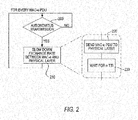
- Stage 2 sends a MAC-e PDU to the layer one (i.e., the physical layer), as indicated in step 220.
- the MAC-e PDU is sent to the physical layer every n ⁇ TTI, instead of once every transmission time interval (TTI), as indicated in step 230.
- TTI transmission time interval
- the rate at which the MAC-e sends power distribution units (PDUs) to the physical layer for the transport format (TF(s)) belonging to a minimum set is decelerated so as to reduce the impact of the minimum set over a "Rise over Thermal" (RoT).
- the minimum set defines a set of transport formats (TFs) for which a valid scheduling grant is not required in order for packets to be transmitted.
- the Node B allocates a share of an uplink resource to the UE via a scheduling grant. From the perspective of layer one, the method of the invention is transparent, i.e., it appears that packets are only sent occasionally (e.g. once in a while).
- HARQ hybrid automatic repeat request
- n may be selected by specification, signaled to UEs (i.e., a common value is signaled to the UEs) or UE dependant (i.e., a specific value that is signaled to a specific UE).
- the method of the invention is advantageously simpler than conventional methods for performing scheduling grants for scheduled transmissions.
- the present invention is transparent to Layer One, and provides a minimum impact on Layer Two.
- the application does not deliver SDUs to the MAC layer at a higher rate than the rate specified by the parameter. If the data source produces several packets within this time interval, the packets are grouped into a single SDU. Grouping the packets in the MAC layer provides the ability to obtain the benefits associated with optimizing the packet header overhead, such as more efficiently sharing the uplink power resource between packet data users.
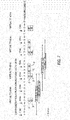
- FIGS. 3 and 4 are exemplary timing diagrams associated with the introduction of a packet data protocol (PDP) context/ radio access bearer (RAB) Quality of Signal (QoS) parameter in the PDP context/RAB layer in accordance with an embodiment of the invention for a 10 ms and 2 ms air interface transmission time interval (TTI), respectively.
- PDP packet data protocol
- RAB radio access bearer
- QoS Quality of Signal
- 2 VoIP packets (i.e., 1 RLC SDU) are transmitted every 40 ms.
- a single VoIP packet is transmitted from the source every 20 ms. That is, the data source produces several (i.e. two) data packets within the 40 ms SDU inter-arrival rate that are grouped into the single SDU.
- One retransmission is shown for RLC SDUs #1 and #2, both containing 2 VoIP packets.
- the SDU inter-arrival rate of 40 ms ensures that the subsequent new RLC SDU #2 (B) will be transmitted after a delay of at least 40 ms after the RLC SDU #1 (A), and that the 2 VoIP packets produced by the source during the 40 ms period arc grouped into single RLC SDU #2 (B). Due to retransmission (C) of the RLC SDU #1 (A), the delay for the first generated packet in the RLC SDU #1 (A) is 70 ms and the delay for the packet in the RLC SDU #1 (A) that is subsequently generated 20 ms later is 50 ms, i.e., both packets in the single RLC SDU are retransmitted.
- the delay for the first generated packet in the RLC SDU #1 (A) is 70 ms and the delay for the VoIP packet in the RLC SDU #1 (A) that is subsequently generated 20 ms later is 50 ms, i.e., both packets in the single RLC SDU are retransmitted 3 times.
- the preferred transmission interval would be an optimization for radio access network purposes and depends on, for example, the transport channel that is used. Consequently, the PDP context/RAB QoS parameter may not be the best place in which to define the transmission interval.
- the new parameter is a "virtual TTI" that defines the minimum time interval between subsequent new transmissions for a MAC-d flow.
- a first transmission would be permitted only once, during the virtual TTI.
- the virtual TTI could be signaled to the UE by the radio network controller (RNC). The UE could then implement the virtual TTI in the MAC-d layer.
- VoIP packets are transmitted every 20 ms.
- a 40 ms virtual TTI in MAC-d 2 VoIP packets are transmitted in the same air interface TTI every 40 ms.
- a single packet is transmitted from the source every 20 ms and each RLC SDU contains one VoIP packet. That is, RLC SDUs, each containing a single VoIP packet, arc delivered from the application to MAC every 20 ms.
- packets #1 ( A ) and packets #2 ( B ) are delivered to MAC layer in their own separate RLC SDUs with a 20 ms time difference, and grouped at MAC-d layer for transmittal in the same single 10 ms air interface TTI.
- the subsequent new packets #3 and #4 are grouped together in MAC-d for transmittal in the same 10 ms air interface TTI, because the 40 ms virtual TTI prevents this transmission before 40 ms after the start of the previous transmission has elapsed.
- the packets #1 ( A ) and #2 ( B ) are retransmitted ( C and D ).
- the packet #1 ( A ) is transmitted from the source 20 ms earlier than packet #2 ( B ), but is not allowed to be transmitted before the 40 ms virtual TTI has elapsed after the start of the previous packet first transmission.
- the delay for the packet #1 ( A ) with one retransmission ( C ) is 70 ms and the delay for the packet #2 ( B ) with one retransmission ( D ) is 50 ms.
- a packet refers to a VoIP packet from the source (e.g., voice codec) and the numbers with the boxes ( A, B, C, D ) refers to both packet and RLC SDU numbers.
- packets #1 ( A ) and #2 ( B ) are transmitted in the same 2 ms air interface TTI and are retransmitted 3 times.
- the delay for packet #1 ( A ) is 70 ms and the delay for packet #2 ( B ) is 50 ms.
- the first transmission for the packet #1 ( A ) is allowed only 40 ms later than the previous packet first transmission and is thus, delayed an additional 20 ms in comparison to packet #2 ( B ) that can be transmitted without additional delay.
- the packets #3 ( C ) and #4 ( D ) are transmitted at the 40 ms virtual TTI later than the first transmission of the packets #1 ( A ) and ( B ).
- Defining the parameter in the MAC layer advantageously supports the elimination of the dependency on the radio access network, as compared to the case where the transmission interval is defined in the PDP context/RAB parameter. If several radio bearers (RB) are multiplexed into the same transport channel, it should be possible to separately define a "virtual TTI" for each RB.
- the RNC uses the parameters delivered by the serving general packet radio service (GPRS) support node (SGSN) to identify the specific services.
- GPRS general packet radio service
- SGSN serving general packet radio service support node
- the control i.e., the calculated delay
- the QoS values such as "source statistics descriptor” (SSD), "traffic class”, and "transfer delay” can be used to calculate the delay.
- SSD source statistics descriptor
- traffic class traffic class
- transfer delay can be used to calculate the delay.
- the virtual TTI is determined to be 40 ms.
- the load in the radio access network can be included as another criterion for determining the most optimal virtual TTI length.
- the lower the load level the shorter the virtual TTI that is used.
- the present invention is not to be limited to the examples based on the QoS and the like, i.e., the general approach regarding RNC algorithms in 3GPP. It is to be appreciated that other specific implementations are possible, which are based on specific RNC algorithms as required be each specific implementation.
- the invention is implemented in a high speed downlink shared transport channel (HS-DSCH).
- HS-DSCH high speed downlink shared transport channel
- the RAB attribute 'SDU inter-arrival rate' in the DL would permit the UTRAN to optimize its DL resources.
- the UTRAN is permitted to determine whether to use a 'virtual TTI' in the DL in the MAC layer.
- the advantage of signaling the 'virtual TTI' to the UE in the DL is that the UE can switch the receiver off during the inter-arrival period, even though it is possible to provide this functionality in the DL without signaling it to the UE.
- an alternative periodicity parameter T can be used to define the HS-SCCH decoding period instead of the HS-DSCH decoding period.
- the radio network controller (RNC) and base station (i.e., Node B), as defined in the current 3GPP specified network are exemplary. Therefore, the present invention is not to be limited to such a device. Rather, the present invention may be implemented in other packet switched (PS) networks, e.g., in an evolved 3GPP network depending on their frame structure and flexibility of the structure.
- PS packet switched
- the UE decides whether to use a 40 ms virtual TTI when it detects that the underlying RAN network is HSUPA. i.e., signalling of the parameters (i.e., the transmission interval) is not performed by the network, but is implemented internally in the UE.
- the UE may decide to use the 40 ms virtual TTI when it detects that the underlying RAN network is HSUPA.
- the virtual TTI is signalled by the network, and used on the MAC level as describe above.
- the information pertaining to the virtual TTI is conveyed to a unit that controls the packetization of packets from the data source into SDUs, for example, packetization of speech frames (in real-time transport protocol (RTP) payload).
- RTP real-time transport protocol
- based on the length of the virtual TTI it is possible to modify the packetizing rules so as to optimise the speech connection to the virtual TTI. For example, in the default operation, one 20 ms speech frame is placed into one user datagram protocol/real-time transport protocol/Internet protocol (UDP/RTP/IP) packet.
- UDP/RTP/IP user datagram protocol/real-time transport protocol/Internet protocol
- the virtual TTI is known to have a length of 40 ms, it is possible to insert two 20 ms frames into one UDP/RTP/IP packet and thus, reduce the UDP/RTP/IP protocol overhead and processing load in UE and the network.
- a single speech packet per radio link control (RLC) service data unit (SDU) or UDP/RTP/IP packet potentially provides a greater level of flexibility than embodiments of the invention in which several speech packets are combined into one RTP/UDP/IP packet.
- RLC radio link control
- SDU radio link control
- UDP/RTP/IP packet potentially provides a greater level of flexibility than embodiments of the invention in which several speech packets are combined into one RTP/UDP/IP packet.
- HSDPA high-speed download packet access
- each speech packet in separate RLC SDUs permits the sending of only one speech packet per air interface TTI of 2 ms or 10 ms.
- RLC radio link control
- SR B signalling radio bearer
- the UE power limitations in bad radio conditions such as the UE running out of transmission power, are taken into account so that it then becomes possible to send a single speech packet per air interface TTI of 2 ms or 10 ms.
- the MAC-d would check the RLC buffer of the UE once per virtual TTI, i.e., at the same interval as a normal TTI as defined in the 3GPP IS 25. 309 specification. As a result, packets received during the virtual TTI would be buffered at the RLC level.
- the MAC is permitted to check the RLC buffer more frequently in certain special cases, such as when it is not possible to clear the RLC buffer due to power limitations, the transmission of higher priority packets from other RLC buffer (e.g. SRB) or if there are bigger RLC SDUs (e.g., non-compressed headers or real time control protocol (RTCP) packets) that cannot be transmitted within one air interface TTI.
- RLC SDUs e.g., non-compressed headers or real time control protocol (RTCP) packets
- packets #1 (A) and packets #2 ( B ) are grouped together into a single SDU since the subsequent new packet #2 ( B ) is transmitted within the 40 ms time period.
- a single transmission for packets #1 ( C ) and #2 ( F ) and #3 ( D ) and #4 ( E ) is shown.
- these packets are grouped together and transmitted in separate TTIs.
- Examples of the operation of the UE MAC under such conditions are as follows: (i) if the MAC is able to empty the RLC buffer during this air interface TTI, then the MAC will check the RLC buffer at the next predetermined subsequent time interval after the virtual TTI; (ii) if the MAC is not able to empty the buffer, then the MAC will also check the RLC buffer for the next air interface TTI. This permits rapid clearing of the RLC buffers when required, i.e., when large SDUs are utilized. However, the frequency of transmissions during normal operation remains limited.
- the implementation of the present contemplated embodiment is permitted based on the configuration of the network, e.g., the network is configured to restrict the transmissions only to instances of times that are established by the virtual TTI or the network is configured to permit the above previously described operations.
- the transmission can be limited by controlling HARQ processes only up to every 16 ms, and in case of a 10 ms TTI up to 40 ms. It is also possible to control the TTI of scheduled transmissions by scheduling. However, this introduces large control overhead, i.e., two scheduled grants per single transmission occur.
- the present invention advantageously conserves control overhead. Specifically, the downlink E-DCH HARQ Indicator Channel (HICH) (i.e., the HARQ ACK/NAK is sent on E-HICH) overhead can be reduced because ACK/NAKs are needed less frequently. Also, the E-DCH dedicated physical control channel (E-DPCCH) overhead is reduced. In addition, a further savings in overhead is possible if the uplink dedicated physical control channel (UL DPCCH) gating is introduced. In this case, the DPCCH is not transmitted continuously but only when other UL channels are transmitted. In addition to the savings in system capacity, another advantage of the present invention is that battery power of the UE is conserved, since the UE needs to transmit and receive less often when a virtual TTI is used.
- HICH E-DCH HARQ Indicator Channel
- E-DPCCH E-DCH dedicated physical control channel
- UL DPCCH uplink dedicated physical control channel
- another advantage of the present invention is that battery power of the UE is conserve
Landscapes
- Engineering & Computer Science (AREA)
- Computer Networks & Wireless Communication (AREA)
- Signal Processing (AREA)
- Mobile Radio Communication Systems (AREA)
Applications Claiming Priority (6)
| Application Number | Priority Date | Filing Date | Title |
|---|---|---|---|
| US61537704P | 2004-10-01 | 2004-10-01 | |
| US70636005P | 2005-08-08 | 2005-08-08 | |
| EP14197908.8A EP2866491B1 (en) | 2004-10-01 | 2005-09-30 | Slow MAC-E for autonomous transmission in high speed uplink packet access (HSUPA) along with service specific transmission time control |
| PCT/IB2005/002907 WO2006038078A2 (en) | 2004-10-01 | 2005-09-30 | Slow mac-e for autonomous transmission in high speed uplink packet access (hsupa) along with service specific transmission time control |
| EP17188939.7A EP3300421B1 (en) | 2004-10-01 | 2005-09-30 | Slow mac-e for autonomous transmission in high speed uplink packet access (hsupa) along with service specific transmission time control |
| EP05805638.3A EP1797659B1 (en) | 2004-10-01 | 2005-09-30 | Slow mac-e for autonomous transmission in high speed uplink packet access (hsupa) along with service specific transmission time control |
Related Parent Applications (3)
| Application Number | Title | Priority Date | Filing Date |
|---|---|---|---|
| EP17188939.7A Division EP3300421B1 (en) | 2004-10-01 | 2005-09-30 | Slow mac-e for autonomous transmission in high speed uplink packet access (hsupa) along with service specific transmission time control |
| EP14197908.8A Division EP2866491B1 (en) | 2004-10-01 | 2005-09-30 | Slow MAC-E for autonomous transmission in high speed uplink packet access (HSUPA) along with service specific transmission time control |
| EP05805638.3A Division EP1797659B1 (en) | 2004-10-01 | 2005-09-30 | Slow mac-e for autonomous transmission in high speed uplink packet access (hsupa) along with service specific transmission time control |
Publications (1)
| Publication Number | Publication Date |
|---|---|
| EP3634032A1 true EP3634032A1 (en) | 2020-04-08 |
Family
ID=36142911
Family Applications (4)
| Application Number | Title | Priority Date | Filing Date |
|---|---|---|---|
| EP17188939.7A Revoked EP3300421B1 (en) | 2004-10-01 | 2005-09-30 | Slow mac-e for autonomous transmission in high speed uplink packet access (hsupa) along with service specific transmission time control |
| EP19191148.6A Withdrawn EP3634032A1 (en) | 2004-10-01 | 2005-09-30 | Configuring a decoding period in a hsdpa radio access network |
| EP05805638.3A Expired - Lifetime EP1797659B1 (en) | 2004-10-01 | 2005-09-30 | Slow mac-e for autonomous transmission in high speed uplink packet access (hsupa) along with service specific transmission time control |
| EP14197908.8A Revoked EP2866491B1 (en) | 2004-10-01 | 2005-09-30 | Slow MAC-E for autonomous transmission in high speed uplink packet access (HSUPA) along with service specific transmission time control |
Family Applications Before (1)
| Application Number | Title | Priority Date | Filing Date |
|---|---|---|---|
| EP17188939.7A Revoked EP3300421B1 (en) | 2004-10-01 | 2005-09-30 | Slow mac-e for autonomous transmission in high speed uplink packet access (hsupa) along with service specific transmission time control |
Family Applications After (2)
| Application Number | Title | Priority Date | Filing Date |
|---|---|---|---|
| EP05805638.3A Expired - Lifetime EP1797659B1 (en) | 2004-10-01 | 2005-09-30 | Slow mac-e for autonomous transmission in high speed uplink packet access (hsupa) along with service specific transmission time control |
| EP14197908.8A Revoked EP2866491B1 (en) | 2004-10-01 | 2005-09-30 | Slow MAC-E for autonomous transmission in high speed uplink packet access (HSUPA) along with service specific transmission time control |
Country Status (8)
| Country | Link |
|---|---|
| US (1) | US7804850B2 (enExample) |
| EP (4) | EP3300421B1 (enExample) |
| JP (1) | JP4527779B2 (enExample) |
| KR (1) | KR100929145B1 (enExample) |
| CN (2) | CN105743622B (enExample) |
| AU (1) | AU2005290975B9 (enExample) |
| ES (1) | ES2534995T3 (enExample) |
| WO (1) | WO2006038078A2 (enExample) |
Families Citing this family (53)
| Publication number | Priority date | Publication date | Assignee | Title |
|---|---|---|---|---|
| KR101141649B1 (ko) * | 2004-11-09 | 2012-05-17 | 엘지전자 주식회사 | 고속의 상향 데이터 전송을 위한 데이터 채널의 제어정보송수신 방법 |
| KR101199044B1 (ko) * | 2005-01-06 | 2012-11-07 | 엘지전자 주식회사 | 고속 업링크 패킷 접속 방식의 개선 |
| JP4538357B2 (ja) * | 2005-03-29 | 2010-09-08 | 株式会社エヌ・ティ・ティ・ドコモ | 伝送速度制御方法、移動局、無線基地局及び無線回線制御局 |
| ATE436169T1 (de) * | 2005-04-01 | 2009-07-15 | Panasonic Corp | ZUWEISUNG DES ßHAPPY BITß IN EINEM MOBILEN KOMMUNIKATIONSSYSTEM |
| US8179836B2 (en) * | 2005-04-20 | 2012-05-15 | Interdigital Technology Corporation | Method and apparatus for controlling transmissions via an enhanced dedicated channel |
| US7408895B2 (en) * | 2005-04-20 | 2008-08-05 | Interdigital Technology Corporation | Method and apparatus for scheduling transmissions via an enhanced dedicated channel |
| MY140921A (en) * | 2005-04-26 | 2010-02-12 | Nokia Corp | Method, system, apparatus and software product for combination of uplink dedicated physical control channel gating and enhanced uplink dedicated channel to improve capacity |
| EP3582542B1 (en) * | 2005-04-26 | 2021-05-26 | Conversant Wireless Licensing S.A.R.L. | Fixed hs-dsch or e-dch allocation for voip (or hs-dsch without hs-scch/e-dch without e-dpcch) |
| TWI506997B (zh) | 2005-04-29 | 2015-11-01 | Interdigital Tech Corp | 多工增強上鏈頻道資料的無線傳輸/接收單元及方法 |
| US8116292B2 (en) * | 2005-04-29 | 2012-02-14 | Interdigital Technology Corporation | MAC multiplexing and TFC selection procedure for enhanced uplink |
| ATE450945T1 (de) * | 2005-07-25 | 2009-12-15 | Panasonic Corp | Einschränkung eines harq verfahrens und übertragung von ungeplanten steuerdaten auf aufwärtskanäle |
| US20070025345A1 (en) * | 2005-07-27 | 2007-02-01 | Bachl Rainer W | Method of increasing the capacity of enhanced data channel on uplink in a wireless communications systems |
| WO2007052118A2 (en) * | 2005-11-02 | 2007-05-10 | Nokia Corporation | Apparatus, method and computer program product providing radio link parameter update for reallocation of harq process for 2ms nst/st |
| WO2007097544A1 (en) * | 2006-02-27 | 2007-08-30 | Samsung Electronics Co., Ltd. | Method and apparatus for non-scheduled transmission for packet service in a mobile communication system |
| US8204005B2 (en) * | 2006-03-09 | 2012-06-19 | Intel Corporation | Wireless communication device and method for dynamic bidirectional aggregation of MAC frames with delayed channel access in a wireless network |
| JP4818803B2 (ja) * | 2006-05-01 | 2011-11-16 | 株式会社エヌ・ティ・ティ・ドコモ | 可変tti長制御に基づく無線通信方法および無線通信装置 |
| EP1853011A1 (en) * | 2006-05-02 | 2007-11-07 | Alcatel Lucent | Method for transmission of high speed uplink packet access data information in a cellular communications system |
| MX2009000252A (es) | 2006-07-06 | 2009-02-05 | Interdigital Tech Corp | Metodo de comunicacion inalambrico de seleccion de una combinacion de formato de transporte de enlace ascendente mejorado al establecer una informacion util de otorgamiento de programacion a la informacion util mas alta que se puede transmitir. |
| JP4703513B2 (ja) * | 2006-08-22 | 2011-06-15 | 株式会社エヌ・ティ・ティ・ドコモ | 移動通信システムで使用される無線基地局及び方法 |
| CN100440807C (zh) * | 2006-08-28 | 2008-12-03 | 华为技术有限公司 | 无线网络控制器中hsupa过程的性能统计方法及装置 |
| JP4567718B2 (ja) * | 2006-09-29 | 2010-10-20 | イノヴァティヴ ソニック リミテッド | 無線通信システムにおける無線ベアラマッピング方法及び装置 |
| EP1909449A1 (en) * | 2006-10-02 | 2008-04-09 | Nokia Siemens Networks Gmbh & Co. Kg | Method for the transmission of VoIP frames |
| CN101166076B (zh) * | 2006-10-20 | 2012-06-27 | 创新音速有限公司 | 无线通信系统设定上链路传输信道组态的方法及相关装置 |
| KR100957420B1 (ko) * | 2006-12-15 | 2010-05-11 | 삼성전자주식회사 | 무선 통신 시스템에서 신호 송수신 방법 및 그 시스템 |
| US8145127B2 (en) * | 2007-08-14 | 2012-03-27 | Motorola Mobility, Inc. | Method and apparatus for transmit power calibration in a frequency division multiplexed wireless system |
| US8140102B2 (en) | 2007-08-14 | 2012-03-20 | Motorola Mobility, Inc. | Method and apparatus for transmit power calibration in a frequency division multiplexed wireless system |
| KR101433834B1 (ko) * | 2007-09-21 | 2014-08-29 | 삼성전자주식회사 | 이동통신 시스템에서 전송 시간 간격 재구성 장치 및 방법 |
| JP5030730B2 (ja) * | 2007-10-04 | 2012-09-19 | 株式会社エヌ・ティ・ティ・ドコモ | 無線通信システム、無線通信方法及び基地局 |
| WO2009076650A1 (en) * | 2007-12-12 | 2009-06-18 | Mogreet, Inc. | Methods and systems for transmitting video messages to mobile communication devices |
| JP5314702B2 (ja) * | 2007-12-29 | 2013-10-16 | アルカテル−ルーセント | 半グループ化および統計的多重化に基づく永続スケジューリングの方法および装置 |
| ES2751715T3 (es) | 2008-02-01 | 2020-04-01 | Optis Wireless Technology Llc | Terminal de comunicaciones y estación de base |
| US9008004B2 (en) * | 2008-02-01 | 2015-04-14 | Lg Electronics Inc. | Method for sending RLC PDU and allocating radio resource in mobile communications system and RLC entity of mobile communications |
| KR101531419B1 (ko) | 2008-02-01 | 2015-06-24 | 엘지전자 주식회사 | 시간동기 타이머의 만료 시 상향링크 harq의 동작 방법 |
| KR101375936B1 (ko) * | 2008-02-01 | 2014-03-18 | 엘지전자 주식회사 | 시간동기 타이머의 만료 시 하향링크 harq의 동작 방법 |
| KR20140105037A (ko) | 2008-08-08 | 2014-08-29 | 인터디지탈 패튼 홀딩스, 인크 | Mac 리셋 및 재구성 |
| ES2353779B1 (es) * | 2008-08-26 | 2012-01-26 | Vodafone España, S.A.U. | Procedimiento, sistema y dispositivo para transferir tráfico en comunicaciones punto a punto. |
| JP5784588B2 (ja) * | 2009-05-07 | 2015-09-24 | テレフオンアクチーボラゲット エル エム エリクソン(パブル) | 移動通信デバイスの電力消費管理 |
| EP2432276B1 (en) * | 2009-05-12 | 2017-10-11 | Mitsubishi Electric Corporation | Terminal switching method, base station and communication system |
| US9025497B2 (en) * | 2009-07-10 | 2015-05-05 | Qualcomm Incorporated | Media forwarding for a group communication session in a wireless communications system |
| US9088630B2 (en) | 2009-07-13 | 2015-07-21 | Qualcomm Incorporated | Selectively mixing media during a group communication session within a wireless communications system |
| WO2011068726A1 (en) * | 2009-12-01 | 2011-06-09 | Spidercloud Wireless, Inc. | Method, system and device for high speed uplink packet access scheduling |
| US20110257964A1 (en) * | 2010-04-16 | 2011-10-20 | Rathonyi Bela | Minimizing Speech Delay in Communication Devices |
| FR2961054A1 (fr) * | 2010-06-08 | 2011-12-09 | Sigfox Wireless | Procede d'utilisation d'une ressource frequentielle partagee, procede de configuration de terminaux, terminaux et systeme de telecommunications |
| US9173229B2 (en) * | 2012-11-26 | 2015-10-27 | Apple Inc. | QoS based buffering while TTI bundling is enabled |
| US9247529B2 (en) * | 2013-07-30 | 2016-01-26 | Qualcomm Incorporated | Apparatus and methods of managing signaling radio bearer transmissions at a user equipment |
| WO2016045017A1 (zh) * | 2014-09-24 | 2016-03-31 | 华为技术有限公司 | 通信设备和非连续传输的方法 |
| US9953655B2 (en) * | 2014-09-29 | 2018-04-24 | Qualcomm Incorporated | Optimizing frequent in-band signaling in dual SIM dual active devices by comparing signal level (RxLev) and quality (RxQual) against predetermined thresholds |
| RU2732482C1 (ru) | 2016-11-04 | 2020-09-18 | Гуандун Оппо Мобайл Телекоммьюникейшнс Корп., Лтд. | Способ передачи данных, оконечное устройство и сетевое устройство |
| US10484144B2 (en) * | 2016-11-11 | 2019-11-19 | Qualcomm Incorporated | Hybrid automatic repeat request management for low latency communications |
| US10652169B2 (en) * | 2017-02-10 | 2020-05-12 | Qualcomm Incorporated | Hybrid automatic repeat request management for differing types of hybrid automatic repeat request processes |
| US10313928B2 (en) * | 2017-03-13 | 2019-06-04 | Texas Instruments Incorporated | System and method for multi-mode communication based on power consumption corresponds to utilization factor and transmission time |
| WO2018174764A1 (en) * | 2017-03-24 | 2018-09-27 | Telefonaktiebolaget Lm Ericsson (Publ) | Apparatus and method for transmitting packet data units |
| US11038567B2 (en) * | 2018-01-23 | 2021-06-15 | Qualcomm Incorporated | Adaptive autonomous uplink communication design |
Citations (1)
| Publication number | Priority date | Publication date | Assignee | Title |
|---|---|---|---|---|
| US20040185918A1 (en) * | 2003-03-21 | 2004-09-23 | Chen-Huang Fan | Method and related apparatus for reducing cell phone power consumption |
Family Cites Families (18)
| Publication number | Priority date | Publication date | Assignee | Title |
|---|---|---|---|---|
| SE514635C2 (sv) | 1999-07-02 | 2001-03-26 | Ericsson Telefon Ab L M | Förfaranden och medel för att överföra och mottaga paketdataenheter i ett cellulärt radiokommunikationssystem |
| AU767981B2 (en) * | 1999-10-02 | 2003-11-27 | Samsung Electronics Co., Ltd. | Apparatus and method for gating data on a control channel in a CDMA communication system |
| US6996083B1 (en) * | 1999-12-10 | 2006-02-07 | Lucent Technologies Inc. | Burst based access and assignment method for providing real-time services |
| US20020082033A1 (en) | 2000-12-21 | 2002-06-27 | Anit Lohtia | Method and apparatus for efficient packet-based communications over a wireless network |
| ES2287195T3 (es) * | 2001-02-12 | 2007-12-16 | Lg Electronics Inc. | Control de la tasa de transmision de datos en el enlace inverso en cada estacion movil de manera dedicada. |
| US7768953B2 (en) * | 2001-10-19 | 2010-08-03 | Interdigital Technology Corporation | System for improved power savings during full DTX mode of operation in the downlink |
| JP3886795B2 (ja) | 2001-12-10 | 2007-02-28 | 株式会社エヌ・ティ・ティ・ドコモ | 移動通信システム、移動通信方法、移動端末及び通信基地局 |
| KR100876730B1 (ko) * | 2002-07-08 | 2008-12-31 | 삼성전자주식회사 | 광대역 부호 분할 다중 접속 통신 시스템의 효율적인 초기전송 포맷 결합 인자 설정 방법 |
| JP3655610B2 (ja) | 2002-11-26 | 2005-06-02 | アサステック・コンピューター・インコーポレイテッド | ワイヤレスコミュニケーションシステムにおける不測の伝送中断を処理する方法 |
| JP2004187237A (ja) * | 2002-12-06 | 2004-07-02 | Matsushita Electric Ind Co Ltd | 基地局装置およびパケット送信スケジューリング方法 |
| US20040228349A1 (en) * | 2003-01-10 | 2004-11-18 | Sophie Vrzic | Semi-distributed scheduling scheme for the reverse link of wireless systems |
| WO2004066661A1 (ja) * | 2003-01-23 | 2004-08-05 | Fujitsu Limited | 通信資源管理装置 |
| US7385951B2 (en) * | 2003-02-15 | 2008-06-10 | Lucent Technologies Inc. | Methods of transmitting and signaling over a reverse link in wireless systems |
| US7660282B2 (en) * | 2003-02-18 | 2010-02-09 | Qualcomm Incorporated | Congestion control in a wireless data network |
| WO2004080086A2 (en) * | 2003-03-06 | 2004-09-16 | Nortel Networks Limited | Autonomous mode transmission from a mobile station |
| ATE484157T1 (de) | 2004-05-13 | 2010-10-15 | Qualcomm Inc | Synchronisierung von audio und video daten in einem drahtlosen nachrichtenübertragungssystem |
| KR20060006725A (ko) | 2004-07-16 | 2006-01-19 | 삼성전자주식회사 | 향상된 상향링크 전용채널을 지원하는 이동통신시스템에서자율전송을 위한 파라미터 결정 방법 및 장치 |
| ATE450945T1 (de) | 2005-07-25 | 2009-12-15 | Panasonic Corp | Einschränkung eines harq verfahrens und übertragung von ungeplanten steuerdaten auf aufwärtskanäle |
-
2005
- 2005-09-29 US US11/239,706 patent/US7804850B2/en active Active
- 2005-09-30 ES ES05805638.3T patent/ES2534995T3/es not_active Expired - Lifetime
- 2005-09-30 WO PCT/IB2005/002907 patent/WO2006038078A2/en not_active Ceased
- 2005-09-30 JP JP2007534106A patent/JP4527779B2/ja not_active Expired - Lifetime
- 2005-09-30 EP EP17188939.7A patent/EP3300421B1/en not_active Revoked
- 2005-09-30 KR KR1020077009704A patent/KR100929145B1/ko not_active Expired - Lifetime
- 2005-09-30 CN CN201610182839.0A patent/CN105743622B/zh not_active Ceased
- 2005-09-30 EP EP19191148.6A patent/EP3634032A1/en not_active Withdrawn
- 2005-09-30 AU AU2005290975A patent/AU2005290975B9/en not_active Ceased
- 2005-09-30 CN CN200580038621.8A patent/CN101238659B/zh not_active Expired - Lifetime
- 2005-09-30 EP EP05805638.3A patent/EP1797659B1/en not_active Expired - Lifetime
- 2005-09-30 EP EP14197908.8A patent/EP2866491B1/en not_active Revoked
Patent Citations (1)
| Publication number | Priority date | Publication date | Assignee | Title |
|---|---|---|---|---|
| US20040185918A1 (en) * | 2003-03-21 | 2004-09-23 | Chen-Huang Fan | Method and related apparatus for reducing cell phone power consumption |
Non-Patent Citations (3)
| Title |
|---|
| "3rd Generation Partnership Project;Technical Specification Group Radio Access Network;High Speed Downlink Packet Access (HSDPA);Overall description; Stage 2(Release 5)", 3GPP DRAFT; R2-020141, 3RD GENERATION PARTNERSHIP PROJECT (3GPP), MOBILE COMPETENCE CENTRE ; 650, ROUTE DES LUCIOLES ; F-06921 SOPHIA-ANTIPOLIS CEDEX ; FRANCE, vol. RAN WG2, no. Sophia Antipolis, France; 20020110, 10 January 2002 (2002-01-10), XP050119717 * |
| PANASONIC: "HSDPA UE capability", 3GPP DRAFT; R1-02-0057, 3RD GENERATION PARTNERSHIP PROJECT (3GPP), MOBILE COMPETENCE CENTRE ; 650, ROUTE DES LUCIOLES ; F-06921 SOPHIA-ANTIPOLIS CEDEX ; FRANCE, vol. RAN WG1, no. Espoo, Finland; 20020112, 12 January 2002 (2002-01-12), XP050095641 * |
| PHILIPS: "Reliability of conveying Mac-hs PDUs to the right UE", 3GPP DRAFT; R2-030153 RELIABILITY OF CONVEYING MAC-HS PDUS TO THE RIGHT UE, 3RD GENERATION PARTNERSHIP PROJECT (3GPP), MOBILE COMPETENCE CENTRE ; 650, ROUTE DES LUCIOLES ; F-06921 SOPHIA-ANTIPOLIS CEDEX ; FRANCE, vol. RAN WG2, no. Sophia Antipolis, France; 20030214, 14 February 2003 (2003-02-14), XP050122886 * |
Also Published As
| Publication number | Publication date |
|---|---|
| JP2008517492A (ja) | 2008-05-22 |
| CN101238659A (zh) | 2008-08-06 |
| WO2006038078A3 (en) | 2008-01-03 |
| JP4527779B2 (ja) | 2010-08-18 |
| AU2005290975B9 (en) | 2010-03-11 |
| US20060120404A1 (en) | 2006-06-08 |
| KR100929145B1 (ko) | 2009-12-01 |
| EP3300421B1 (en) | 2019-08-21 |
| ES2534995T3 (es) | 2015-05-04 |
| EP2866491A1 (en) | 2015-04-29 |
| EP2866491B1 (en) | 2019-02-27 |
| EP1797659B1 (en) | 2015-02-18 |
| EP3300421A1 (en) | 2018-03-28 |
| AU2005290975B2 (en) | 2009-11-19 |
| CN105743622A (zh) | 2016-07-06 |
| CN101238659B (zh) | 2016-04-20 |
| AU2005290975A1 (en) | 2006-04-13 |
| CN105743622B (zh) | 2019-10-11 |
| US7804850B2 (en) | 2010-09-28 |
| WO2006038078A2 (en) | 2006-04-13 |
| KR20070065412A (ko) | 2007-06-22 |
| EP1797659A4 (en) | 2011-12-28 |
| EP1797659A2 (en) | 2007-06-20 |
Similar Documents
| Publication | Publication Date | Title |
|---|---|---|
| EP2866491B1 (en) | Slow MAC-E for autonomous transmission in high speed uplink packet access (HSUPA) along with service specific transmission time control | |
| CA2622148C (en) | Method and apparatus for transmitting/receiving control information of user equipment for uplink data transmission | |
| CN102088788B (zh) | 传送上行链路信令信息 | |
| EP1655907A1 (en) | Method and apparatus for scheduling uplink data transmission for a mobile station in soft handover region in a mobile communication system | |
| EP1594267A2 (en) | Method and apparatus for setting power for transmitting signaling information on an e-dch | |
| EP2999290A1 (en) | Signaling scheduling assistance data in a cellular communication system | |
| US8411697B2 (en) | Method and arrangement for improving media transmission quality using robust representation of media frames | |
| KR100866348B1 (ko) | 역방향 패킷 전송에 있어서 소프트 핸드오버 단말들을 위한 스케쥴링 방법 및 장치 | |
| EP4109962A1 (en) | Method for transmitting pdcp status report | |
| KR20060054658A (ko) | 역방향 패킷 전송을 위한 단말의 제어 정보 시그널링 방법및 장치 | |
| HK1147630B (en) | Signalling scheduling assitance data in a cellular communication system |
Legal Events
| Date | Code | Title | Description |
|---|---|---|---|
| PUAI | Public reference made under article 153(3) epc to a published international application that has entered the european phase |
Free format text: ORIGINAL CODE: 0009012 |
|
| STAA | Information on the status of an ep patent application or granted ep patent |
Free format text: STATUS: THE APPLICATION HAS BEEN PUBLISHED |
|
| AC | Divisional application: reference to earlier application |
Ref document number: 2866491 Country of ref document: EP Kind code of ref document: P Ref document number: 1797659 Country of ref document: EP Kind code of ref document: P Ref document number: 3300421 Country of ref document: EP Kind code of ref document: P |
|
| AK | Designated contracting states |
Kind code of ref document: A1 Designated state(s): AT BE BG CH CY CZ DE DK EE ES FI FR GB GR HU IE IS IT LI LT LU LV MC NL PL PT RO SE SI SK TR |
|
| STAA | Information on the status of an ep patent application or granted ep patent |
Free format text: STATUS: REQUEST FOR EXAMINATION WAS MADE |
|
| 17P | Request for examination filed |
Effective date: 20201008 |
|
| RBV | Designated contracting states (corrected) |
Designated state(s): AT BE BG CH CY CZ DE DK EE ES FI FR GB GR HU IE IS IT LI LT LU LV MC NL PL PT RO SE SI SK TR |
|
| STAA | Information on the status of an ep patent application or granted ep patent |
Free format text: STATUS: EXAMINATION IS IN PROGRESS |
|
| 17Q | First examination report despatched |
Effective date: 20211216 |
|
| STAA | Information on the status of an ep patent application or granted ep patent |
Free format text: STATUS: THE APPLICATION IS DEEMED TO BE WITHDRAWN |
|
| 18D | Application deemed to be withdrawn |
Effective date: 20220628 |