EP3632477B1 - Antibacterial wound dressing and preparation method and application thereof - Google Patents
Antibacterial wound dressing and preparation method and application thereof Download PDFInfo
- Publication number
- EP3632477B1 EP3632477B1 EP17910932.7A EP17910932A EP3632477B1 EP 3632477 B1 EP3632477 B1 EP 3632477B1 EP 17910932 A EP17910932 A EP 17910932A EP 3632477 B1 EP3632477 B1 EP 3632477B1
- Authority
- EP
- European Patent Office
- Prior art keywords
- wound dressing
- carboxymethyl cellulose
- antibacterial
- antibacterial wound
- degree
- Prior art date
- Legal status (The legal status is an assumption and is not a legal conclusion. Google has not performed a legal analysis and makes no representation as to the accuracy of the status listed.)
- Active
Links
Images
Classifications
-
- A—HUMAN NECESSITIES
- A61—MEDICAL OR VETERINARY SCIENCE; HYGIENE
- A61K—PREPARATIONS FOR MEDICAL, DENTAL OR TOILETRY PURPOSES
- A61K31/00—Medicinal preparations containing organic active ingredients
- A61K31/70—Carbohydrates; Sugars; Derivatives thereof
- A61K31/715—Polysaccharides, i.e. having more than five saccharide radicals attached to each other by glycosidic linkages; Derivatives thereof, e.g. ethers, esters
- A61K31/716—Glucans
- A61K31/717—Celluloses
-
- A—HUMAN NECESSITIES
- A61—MEDICAL OR VETERINARY SCIENCE; HYGIENE
- A61K—PREPARATIONS FOR MEDICAL, DENTAL OR TOILETRY PURPOSES
- A61K9/00—Medicinal preparations characterised by special physical form
- A61K9/0012—Galenical forms characterised by the site of application
- A61K9/0014—Skin, i.e. galenical aspects of topical compositions
-
- A—HUMAN NECESSITIES
- A61—MEDICAL OR VETERINARY SCIENCE; HYGIENE
- A61L—METHODS OR APPARATUS FOR STERILISING MATERIALS OR OBJECTS IN GENERAL; DISINFECTION, STERILISATION OR DEODORISATION OF AIR; CHEMICAL ASPECTS OF BANDAGES, DRESSINGS, ABSORBENT PADS OR SURGICAL ARTICLES; MATERIALS FOR BANDAGES, DRESSINGS, ABSORBENT PADS OR SURGICAL ARTICLES
- A61L15/00—Chemical aspects of, or use of materials for, bandages, dressings or absorbent pads
- A61L15/16—Bandages, dressings or absorbent pads for physiological fluids such as urine or blood, e.g. sanitary towels, tampons
- A61L15/22—Bandages, dressings or absorbent pads for physiological fluids such as urine or blood, e.g. sanitary towels, tampons containing macromolecular materials
- A61L15/28—Polysaccharides or their derivatives
-
- A—HUMAN NECESSITIES
- A61—MEDICAL OR VETERINARY SCIENCE; HYGIENE
- A61L—METHODS OR APPARATUS FOR STERILISING MATERIALS OR OBJECTS IN GENERAL; DISINFECTION, STERILISATION OR DEODORISATION OF AIR; CHEMICAL ASPECTS OF BANDAGES, DRESSINGS, ABSORBENT PADS OR SURGICAL ARTICLES; MATERIALS FOR BANDAGES, DRESSINGS, ABSORBENT PADS OR SURGICAL ARTICLES
- A61L15/00—Chemical aspects of, or use of materials for, bandages, dressings or absorbent pads
- A61L15/16—Bandages, dressings or absorbent pads for physiological fluids such as urine or blood, e.g. sanitary towels, tampons
- A61L15/42—Use of materials characterised by their function or physical properties
- A61L15/46—Deodorants or malodour counteractants, e.g. to inhibit the formation of ammonia or bacteria
-
- A—HUMAN NECESSITIES
- A61—MEDICAL OR VETERINARY SCIENCE; HYGIENE
- A61P—SPECIFIC THERAPEUTIC ACTIVITY OF CHEMICAL COMPOUNDS OR MEDICINAL PREPARATIONS
- A61P17/00—Drugs for dermatological disorders
- A61P17/02—Drugs for dermatological disorders for treating wounds, ulcers, burns, scars, keloids, or the like
-
- A—HUMAN NECESSITIES
- A61—MEDICAL OR VETERINARY SCIENCE; HYGIENE
- A61L—METHODS OR APPARATUS FOR STERILISING MATERIALS OR OBJECTS IN GENERAL; DISINFECTION, STERILISATION OR DEODORISATION OF AIR; CHEMICAL ASPECTS OF BANDAGES, DRESSINGS, ABSORBENT PADS OR SURGICAL ARTICLES; MATERIALS FOR BANDAGES, DRESSINGS, ABSORBENT PADS OR SURGICAL ARTICLES
- A61L2300/00—Biologically active materials used in bandages, wound dressings, absorbent pads or medical devices
- A61L2300/20—Biologically active materials used in bandages, wound dressings, absorbent pads or medical devices containing or releasing organic materials
- A61L2300/204—Biologically active materials used in bandages, wound dressings, absorbent pads or medical devices containing or releasing organic materials with nitrogen-containing functional groups, e.g. aminoxides, nitriles, guanidines
- A61L2300/206—Biguanides, e.g. chlorohexidine
-
- A—HUMAN NECESSITIES
- A61—MEDICAL OR VETERINARY SCIENCE; HYGIENE
- A61L—METHODS OR APPARATUS FOR STERILISING MATERIALS OR OBJECTS IN GENERAL; DISINFECTION, STERILISATION OR DEODORISATION OF AIR; CHEMICAL ASPECTS OF BANDAGES, DRESSINGS, ABSORBENT PADS OR SURGICAL ARTICLES; MATERIALS FOR BANDAGES, DRESSINGS, ABSORBENT PADS OR SURGICAL ARTICLES
- A61L2300/00—Biologically active materials used in bandages, wound dressings, absorbent pads or medical devices
- A61L2300/40—Biologically active materials used in bandages, wound dressings, absorbent pads or medical devices characterised by a specific therapeutic activity or mode of action
- A61L2300/404—Biocides, antimicrobial agents, antiseptic agents
Definitions
- the present disclosure relates to the field of wound care or wound healing medicine, and in particular, to an antibacterial wound dressing, a method for preparing the antibacterial wound dressing, and the antibacterial wound dressing for use in wound care.
- Natural cellulose is the most widely distributed and most abundant polysaccharide in nature, and has a very rich source. At present, the cellulose is improved mainly in etherification and esterification. Carboxymethylation reaction is one technique for the etherification. Carboxymethylation of cellulose can generate carboxymethyl cellulose (CMC). An aqueous solution of the carboxymethyl cellulose has the functions of thickening, film formation, adhesion, moisture retention, colloid protection, emulsification, suspension, and the like. The carboxymethyl cellulose is widely used in industries of petroleum, food, medicine, textile, papermaking, and the like, and is one of the most important cellulose ethers.
- the carboxymethyl cellulose has the ability to absorb a great deal of water and to form a gel on the surface of the carboxymethyl cellulose. This property of the carboxymethyl cellulose material has been found to be advantageous in the preparation of wound dressings that are both absorbent and gel-forming, and the use of the carboxymethyl cellulose for wound dressing is described in WO-A-94/16746 .
- sterilizing agents for killing bacteria or harmful microorganisms mainly include natural antibacterial agents (such as chitosan and its derivatives, and the like), inorganic antibacterial agents (such as silver-based antibacterial agents, and the like), and organic antibacterial agents (such as quaternary ammonium salts, guanidine salts, phenols, ethers, pyrroles, and the like).
- Silver is a useful antibacterial agent with a broad-spectrum activity together with a compatibility with mammalian tissues.
- Silver-salt solution can be used to sterilize by disrupting cell walls of bacteria and denaturing bacterial enzymes.
- Chitosan which belongs to the natural antibacterial agents, is also an effective antibacterial agent.
- Chinese Patents No. CN102675651B and No. CN103920180B disclose an antibacterial hydrogel formed by grafting biguanide onto chitosan. No precipitations will be precipitated from the antibacterial hydrogel prepared by the above method, and the antibacterial agent is safe. However, the preparation processes of the hydrogel are complicated, and the hydrogel is capable of absorbing only a small amount of liquid.
- the chitosan is a product obtained from an animal source, such that the chitosan is immunogenic, and thus there is still a potential safety hazard.
- Guanidine salt is a commonly used organic antibacterial agent.
- Patent 102,462,860 discloses an antibacterial fiber-based wound dressing and a preparation method of the wound dressing.
- the wound dressing is a fabric made of fibers which is sprayed with polyhexamethylene biguanide solution, or a fabric sprayed with the polyhexamethylene biguanide solution.
- the wound dressing can be continuously used for 7 days.
- the polyhexamethylene biguanide component is only adsorbed on the fabric and is easily precipitated from the fabric. After the polyhexamethylene biguanide component is precipitated from the fabric, the antibacterial properties of the dressing are decreased.
- WO 2014/0202133 describes an antimicrobial composition for use in an absorbent device, e.g.
- wound dressing comprising a derivatized quaternary ammonium salt which is covalently attached to a water-insoluble carrier, as well as at least one salt of a cationic antimicrobial.
- the cationic antimicrobial can be a quaternary ammonium salt or a guanidine-based salt.
- the present disclosure provides an antibacterial wound dressing having an excellent antibacterial effect, and the antibacterial rate of the antibacterial wound dressing is not less than 99% in seven days.
- the antibacterial wound dressing is capable of absorbing a large amount of liquid, and has a good liquid holding capacity after the antibacterial wound dressing absorbs liquid, and a good moisture-retaining capacity.
- the antibacterial wound dressing also has a good biocompatibility without sensitization, irritation, and immunogenicity.
- the present disclosure provides an antibacterial wound dressing and a method for preparing the antibacterial wound dressing as set out in the appended set of claims.
- an efficient antibacterial wound dressing may be prepared by grafting the guanidine compound onto the carboxymethyl cellulose by an amidation reaction, and the efficient antibacterial wound dressing combines both the properties of the carboxymethyl cellulose (including such as fast liquid absorption, good moisture retention, good gel protection, and the like) with antibacterial properties of the guanidine compound.
- the present disclosure has excellent antibacterial effects by controlling the grafting degree of the guanidine compound, and the antibacterial rate is not less than 99% in seven days.
- the antibacterial wound dressing has a large liquid absorption amount, a good liquid holding capacity after the antibacterial wound dressing absorbs liquid, and a good moisture-retaining capacity.
- the antibacterial wound dressing also has a good biocompatibility without sensitization, irritation, and immunogenicity.
- an antibacterial wound dressing having a structural formula I:
- R 1 , R 2 , R 3 and R 4 each is -OH or -OCH 2 COONa;
- R 5 is -CH 2 OH or -CH 2 OCH 2 COONa.
- R 6 is or
- R 7 is Cl - , H 2 PO 4 - , CH 3 CH 2 COO - , or CH 2 OH(CHOH) 4 COO -
- n represents a degree of polymerization and is in a range of 200 to 500 or is equal to 537 or 694
- m is in a range of 10 to 100
- a degree of substitution of the structural formula I is in a range of 0.1 to 0.6
- a grafting degree of the R7 to the antibacterial wound dressing is in a range of 0.2% to 9.0%, wherein the antibacterial wound dressing is obtained by carboxymethyl cellulose and a guanidine compound, and the connection between the carboxymethyl cellulose and the guanidine compound is an amide bond.
- the antibacterial wound dressing uses carboxymethyl cellulose as the main chain, and uses a guanidine compound as the side chain.
- the carboxymethyl cellulose has the ability to absorb a great deal of water and to form a gel on the surface of the carboxymethyl cellulose. This property of the carboxymethyl cellulose has been found to be advantageous in the preparation of wound dressings that are both absorbent and gel-forming.
- the guanidine compound is an environmental-friendly polymeric disinfectant, and is an efficient broad-spectrum antibacterial agent.
- the guanidine compound has excellent properties including such as a fast acting speed, being stable, being soluble in water, and the like. Besides, the guanidine compound can be used at room temperature, and perform long-term antibacterial activities.
- the guanidine compound is non-toxic, odorless, non-corrosive, free of side effects, and safe to use.
- the antibacterial wound dressing of the present disclosure has an excellent antibacterial effect, and the antibacterial rate is not less than 99% in seven days.
- the antibacterial wound dressing has a large liquid absorption amount, a good liquid holding capacity after the antibacterial wound dressing absorbs liquid, and a good moisture-retaining capacity.
- the antibacterial wound dressing of the present disclosure has a good biocompatibility without sensitization, irritation, and immunogenicity.
- the antibacterial wound dressing has a degree of polymerization of 200 to 500 or is equal to 537 or 694.
- the antibacterial wound dressing may perform a good liquid absorption ability.
- the antibacterial wound dressing is obtained by the carboxymethyl cellulose amidated with a guanidine compound.
- a degree of substitution of the carboxymethyl cellulose ranges from 0.1 to 0.6, and a grafting degree of the guanidine compound ranges from 0.2% to 9.0%.
- the degree of substitution of the carboxymethyl cellulose may be ranged from 0.2 to 0.5.
- the guanidine compound may be polyhexamethylene guanidine and a derivative thereof, or polyhexamethylene biguanide and a derivative thereof.
- the guanidine compound may be polyhexamethylene guanidine hydrochloride, polyhexamethylene biguanide hydrochloride, polyhexamethylene guanidine phosphate, polyhexamethylene guanidine propionate, or polyhexamethylene guanidine gluconate.
- the grafting degree of the guanidine compound may be ranged from 0.5% to 9.0%.
- the grafting degree of the guanidine compound may be ranged from 0.5% to 5.0%.
- the carboxymethyl cellulose may include one raw material selected from the group consisting of a lyocell fiber, a cotton fiber, a bamboo fiber and a viscose fiber.
- a method for preparing the antibacterial wound dressing includes the following blocks.
- cellulose is alkalized with sodium hydroxide by means of a solvent method wherein water and ethanol are used as the reaction media, such that an alkali cellulose is obtained, and the alkali cellulose is etherified with chloroacetic acid to prepare carboxymethyl cellulose having a degree of substitution of 0.1-0.6.
- an activating agent or an acid regulating agent and a condensing agent is added into the carboxymethyl cellulose-organic solvent suspension, a guanidine compound is further added, and a reaction is performed at 0°C to 50°C for 0.5 hours to 48 hours.
- an organic solvent of the carboxymethyl cellulose-organic solvent suspension is at least one solvent selected from a group consisting of toluene, acetone, butanone, tetrahydrofuran, chloroform, dimethylacetamide, dimethylformamide, dimethyl sulfoxide, dichloromethane, chloroform, acetonitrile, and pyridine.
- the activating agent is N-hydroxysuccinimide or 1-hydroxybenzotriazole.
- the amount of the activating agent to be used is 0.1% ⁇ 10% by mass of the carboxymethyl cellulose.
- the condensing agent may be a water-soluble carbodiimide compound. More specifically, the water-soluble carbodiimide compound may be 1-(3-dimethylaminopropyl)-3-ethylcarbodiimide hydrochloride, N,N'-dicyclohexylcarbodiimide, or N,N'-diisopropylcarbodiimide.
- the amount of the condensing agent to be used may be 0.15% ⁇ 15% by mass of the carboxymethyl cellulose.
- the acid regulating agent may be a mineral acid, such as hydrochloric acid or sulfuric acid.
- the acid regulating agent may be configured to control a PH of the reaction system to be 4-6.
- S1 may include the following blocks.
- S2 may include the following block.
- the carboxymethyl cellulose may be mixed with an organic solvent, such that the carboxymethyl cellulose-organic solvent suspension having a mass/volume ratio of 0.5 ⁇ 40% may be prepared.
- the carboxymethyl cellulose-organic solvent suspension has the mass/volume ratio of 10-30%.
- S3 may include the following block.
- a condensing agent, an activating agent, and a guanidine compound may be added to the carboxymethyl cellulose-organic solvent suspension, and an amidation reaction may be performed at a temperature of 20 ⁇ 50°C for 30 ⁇ 240mins.
- a mass ratio of the condensing agent, the activating agent, the guanidine compound, and the carboxymethyl cellulose is set in such a way that, the mass ratio of carboxymethyl cellulose: condensing agent: activating agent: guanidine compound is 1: (0.015 ⁇ 0.15): (0.01 ⁇ 0.1): (0.02 ⁇ 6).
- the reaction in S3 is performed at a temperature of 35°C for 120mins.
- S4 may include the following block.
- a mixed solution of ethanol and water may be added for washing, wherein the ethanol may be at the concentration of 83% ⁇ 86%.
- the washing may be performed at a temperature of 35°C ⁇ 45°C for 20mins to remove unreacted small molecular substances.
- a drying treatment may be further performed at 50°C to obtain the antibacterial wound dressing.
- the antibacterial wound dressing for use in acute or chronic wound care is further provided in the present disclsoure.
- the antimicrobial wound dressing is a woven or nonwoven fabric.
- a grafting degree of a guanidine compound in an antimicrobial wound dressing is measure by using the method disclosed in Appendix A in the hygienic standard for biguanides disinfectants in standard GB 26367-2010.
- An antibacterial wound dressing may be prepared by the following blocks.
- raw lyocell having a degree of polymerization of 600-1000 may be mixed with and react with sodium hydroxide aqueous solution and ethanol at a temperature of 30°C ⁇ 40°C for 60mins.
- the mass of the raw lyocell in the mixed solution may be 1.0 Kg
- the mass of the sodium hydroxide in the mixed solution may be 2.0Kg
- the mass of the water in the mixed solution may be 5.0Kg
- the mass of the ethanol the mixed solution may be 7.0Kg, respectively.
- 0.3Kg of chloroacetic acid may be further added, and a reaction may be controlled to be performed at a reaction temperature of 40°C ⁇ 50°C for 60mins, then performed at a temperature of 55°C ⁇ 65°C for 60mins.
- the carboxymethyl cellulose may be mixed with an organic solvent (in this case, acetone is used as the organic solvent) and water, and a carboxymethyl cellulose-organic solvent suspension having a mass/volume ratio of 20% may be prepared.
- an organic solvent in this case, acetone is used as the organic solvent
- a carboxymethyl cellulose-organic solvent suspension having a mass/volume ratio of 20% may be prepared.
- a condensing agent EDS (1-(3-dimethylaminopropyl)-3-ethylcarbodiimide hydrochlorid
- an activating agent NHS N-hydroxysuccinimide
- PHMB polyhexamethylene biguanide hydrochloride
- the mass ratio of the condensing agent, the activating agent, the guanidine compound to the carboxymethyl cellulose may be set as follow.
- a mass ratio of (carboxymethyl cellulose): (condensing agent): (activating agent): (guanidine compound) may be 1: 0.04: 0.025:0.25.
- a mixed solution of ethanol and water may be added for washing, wherein the ethanol may be at the concentration of 83% ⁇ 86%.
- the washing may be performed at a temperature of 35°C ⁇ 45°C for 20mins to remove unreacted small molecular substances.
- a drying treatment may be further performed at 50°C to obtain an antibacterial wound dressing.
- the measurement results indicate that a grafting degree of the PHMB in the antibacterial wound dressing is 2.0%.
- FIG. 2 An infrared spectrum of the raw lyocell and the antibacterial wound dressing prepared by the raw lyocell used in this example may be shown in FIG. 2 . It can be seen from FIG. 2 that, the antibacterial wound dressing prepared in this example has a characteristic peak indicating amide bond at a position near 1581cm -1 and a position near 1685cm -1 , which indicates that the PHMB has been successfully grafted onto the carboxymethyl cellulose, and thus the target product may be obtained.
- An antibacterial wound dressing may be prepared by the following blocks.
- raw lyocell having a degree of polymerization of 600-1000 may be mixed with and react with sodium hydroxide aqueous solution and ethanol at a temperature of 30°C ⁇ 40°C for 60mins.
- the mass of the raw lyocell, the sodium hydroxide, the water, and the ethanol in the mixed solution may be 1.0 Kg, 2.0Kg, 5.0Kg, and 7.0Kg, respectively.
- 0.3Kg of chloroacetic acid may be further added, and a reaction may be controlled to be performed at a reaction temperature of 40°C ⁇ 50°C for 60mins, then performed at a temperature of 55°C ⁇ 65°C for 60mins.
- the carboxymethyl cellulose may be mixed with an organic solvent (in this case, acetone is used as the organic solvent) and water, and a carboxymethyl cellulose-organic solvent suspension having a mass/volume ratio of 20% may be prepared.
- an organic solvent in this case, acetone is used as the organic solvent
- a carboxymethyl cellulose-organic solvent suspension having a mass/volume ratio of 20% may be prepared.
- a condensing agent EDS, an activating agent NHS, and a guanidine compound of polyhexamethylene guanidine phosphate may be further added into the carboxymethyl cellulose-organic solvent suspension, and an amidation reaction may be performed at a temperature of 30°C for 60mins.
- the mass ratio of the condensing agent, the activating agent, the guanidine compound to the carboxymethyl cellulose may be set as follow.
- a mass ratio of (carboxymethyl cellulose): (condensing agent): (activating agent): (guanidine compound) may be 1: 0.108: 0.066: 1.5.
- a mixed solution of ethanol and water may be added for washing, wherein the ethanol may be at the concentration of 83% ⁇ 86%.
- the washing may be performed at a temperature of 37°C ⁇ 43°C for 20mins to remove unreacted small molecular substances.
- a drying treatment may be further performed at 50°C to obtain an antibacterial wound dressing.
- the measurement results indicate that a grafting degree of the polyhexamethyl guanidine phosphate in the antibacterial wound dressing is 6.5%.
- An antibacterial wound dressing may be prepared by the following blocks.
- raw lyocell having a degree of polymerization of 600-1000 may be mixed with and react with sodium hydroxide aqueous solution and ethanol at a temperature of 30°C ⁇ 40°C for 60mins.
- the mass of the raw lyocell, the sodium hydroxide, the water, and the ethanol in the mixed solution may be 1.0 Kg, 2.0Kg, 5.0Kg, and 7.0Kg, respectively.
- 0.3Kg of chloroacetic acid may be further added, and a reaction may be controlled to be performed at a reaction temperature of 40°C ⁇ 50°C for 60mins, then performed at a temperature of 55°C ⁇ 65°C for 60mins.
- the carboxymethyl cellulose may be mixed with an organic solvent (in this case, acetone is used as the organic solvent) and water, and a carboxymethyl cellulose-organic solvent suspension having a mass/volume ratio of 20% may be prepared.
- an organic solvent in this case, acetone is used as the organic solvent
- a carboxymethyl cellulose-organic solvent suspension having a mass/volume ratio of 20% may be prepared.
- a condensing agent EDS, an activating agent NHS, and a guanidine compound of polyhexamethylene guanidine propionate may be further added into the carboxymethyl cellulose-organic solvent suspension, and an amidation reaction may be performed at a temperature of 30°C for 60mins.
- the mass ratio of the condensing agent, the activating agent, the guanidine compound to the carboxymethyl cellulose may be set as follow.
- a mass ratio of (carboxymethyl cellulose): (condensing agent): (activating agent): (guanidine compound) may be 1: 0.072: 0.044: 0.6.
- a mixed solution of ethanol and water may be added for washing, wherein the ethanol may be at the concentration of 83% ⁇ 86%.
- the washing may be performed at a temperature of 37°C ⁇ 43°C for 20mins to remove unreacted small molecular substances.
- a drying treatment may be further performed at 50°C to obtain an antibacterial wound dressing.
- the measurement results indicate that a grafting degree of the polyhexamethylene guanidine propionate in the antibacterial wound dressing is 3.6%.
- An antibacterial wound dressing may be prepared by the following blocks.
- raw lyocell having a degree of polymerization of 600-1000 may be mixed with and react with sodium hydroxide aqueous solution and ethanol at a temperature of 30°C ⁇ 40°C for 60mins.
- the mass of the raw lyocell, the sodium hydroxide, the water, and the ethanol in the mixed solution may be 1.0 Kg, 2.0Kg, 5.0Kg, and 7.0Kg, respectively.
- 0.3Kg of chloroacetic acid may be further added, and a reaction may be controlled to be performed at a reaction temperature of 40°C ⁇ 50°C for 60mins, then performed at a temperature of 55°C ⁇ 65°C for 60mins.
- the carboxymethyl cellulose may be mixed with an organic solvent (in this case, acetone is used as the organic solvent) and water, and a carboxymethyl cellulose-organic solvent suspension having a mass/volume ratio of 20% may be prepared.
- an organic solvent in this case, acetone is used as the organic solvent
- a carboxymethyl cellulose-organic solvent suspension having a mass/volume ratio of 20% may be prepared.
- a condensing agent EDS, an activating agent NHS, a guanidine compound of polyhexamethylene guanidine gluconate may be further added into the carboxymethyl cellulose-organic solvent suspension, and an amidation reaction may be performed at a temperature of 30°C for 60mins.
- the mass ratio of the condensing agent, the activating agent, the guanidine compound to the carboxymethyl cellulose may be set as follow.
- a mass ratio of (carboxymethyl cellulose): (condensing agent): (activating agent): (guanidine compound) may be 1: 0.15: 0.1: 3.2.
- a mixed solution of ethanol and water may be added for washing, wherein the ethanol may be at the concentration of 83% ⁇ 86%.
- the washing may be performed at a temperature of 37°C ⁇ 43°C for 20mins to remove unreacted small molecular substances.
- a drying treatment may be further performed at 50°C to obtain an antibacterial wound dressing. The measurement results indicate that a grafting degree of the polyhexamethylene guanidine gluconate in the antibacterial wound dressing is 8.7%.
- Raw lyocell having a degree of polymerization of 600-1000 may be mixed with and react with sodium hydroxide aqueous solution and ethanol at a temperature of 30°C ⁇ 40°C for 60mins.
- the mass of the raw lyocell, the sodium hydroxide, the water, and the ethanol in the mixed solution may be 1.0 Kg, 2.0Kg, 5.0Kg, and 7.0Kg, respectively.
- 0.2Kg of chloroacetic acid may be further added, and a reaction may be controlled to be performed at a reaction temperature of 40°C ⁇ 50°C for 60mins, then performed at a temperature of 55°C ⁇ 65°C for 60mins.
- the carboxymethyl cellulose may be further grafted with the polyhexamethylene biguanide hydrochloride (PHMB)by the method described in the blocks S2, S3 and S4 of Example 1to obtain the antibacterial wound dressing, and the grafting degree of the PHMB in the antibacterial wound dressing is indicated to be 0.21%.
- PHMB polyhexamethylene biguanide hydrochloride
- Raw lyocell having a degree of polymerization of 600-1000 may be mixed with and react with sodium hydroxide aqueous solution and ethanol at a temperature of 30°C ⁇ 40°C for 60mins.
- the mass of the raw lyocell, the sodium hydroxide, the water, and the ethanol in the mixed solution may be 1.0 Kg, 2.0Kg, 5.0Kg, and 7.0Kg, respectively.
- 0.55Kg of chloroacetic acid may be further added, and a reaction may be controlled to be performed at a reaction temperature of 40°C ⁇ 50°C for 60mins, then performed at a temperature of 55°C ⁇ 65°C for 60mins.
- the carboxymethyl cellulose may be further grafted with the polyhexamethylene biguanide hydrochloride (PHMB) by the method described in the blocks S2, S3 and S4 of Example 1 to obtain the antibacterial wound dressing, and the grafting degree of the PHMB in the antibacterial wound dressing is indicated to be 3.8%.
- PHMB polyhexamethylene biguanide hydrochloride
- An antibacterial wound dressing may be prepared by the following blocks.
- raw lyocell having a degree of polymerization of 600-1000 may be mixed with and react with sodium hydroxide aqueous solution and ethanol at a temperature of 30°C ⁇ 40°C for 60mins.
- the mass of the raw lyocell, the sodium hydroxide, the water, and the ethanol in the mixed solution may be 1.0 Kg, 2.0Kg, 5.0Kg, and 7.0Kg, respectively.
- 0.7Kg of chloroacetic acid may be further added, and a reaction may be controlled to be performed at a reaction temperature of 40°C ⁇ 50°C for 60mins, then performed at a temperature of 55°C ⁇ 65°C for 60mins.
- the carboxymethyl cellulose may be further grafted with the polyhexamethylene biguanide hydrochloride (PHMB)by the method described in the blocks S2, S3 and S4 of Example 1 to obtain the antibacterial wound dressing, and the grafting degree of the PHMB in the antibacterial wound dressing is indicated to be 7.2%.
- PHMB polyhexamethylene biguanide hydrochloride
- a raw viscose fiber having a degree of polymerization of 300-600 may be provided, and treated as the method described in Example 1, to obtain the carboxymethyl cellulose.
- the measurement results indicate that the carboxymethyl cellulose has a degree of substitution of 0.33 and a degree of polymerization of 227.
- an antibacterial wound dressing may be prepared according to the method described in Example 1.
- the measurement results indicate that the grafting degree of the PHMB in the antibacterial wound dressing is 2.5%.
- a raw cotton fiber having a degree of polymerization of 1000-1200 may be provided, and treated as the method described in Example 1, to obtain the carboxymethyl cellulose.
- the measurement results indicate that the carboxymethyl cellulose has a degree of substitution of 0.25 and a degree of polymerization of 694.
- an antibacterial wound dressing may be prepared according to the method described in Example 1.
- the measurement results indicate that the grafting degree of the PHMB in the antibacterial wound dressing is 1.1%.
- An antibacterial wound dressing may be prepared by the following blocks.
- Raw cotton fiber having degree of polymerization of 1500 ⁇ 18000 may be mixed with and react with sodium hydroxide aqueous solution and ethanol at a temperature of 30°C ⁇ 40°C for 60mins.
- the mass of the raw cotton fiber, sodium hydroxide, water, and ethanol in the mixed solution may be 1.0 Kg, 2.0Kg, 5.0Kg, and 7.0Kg, respectively.
- 0.1Kg of chloroacetic acid may be further added, and a reaction may be controlled to be performed at a reaction temperature of 40°C ⁇ 50°C for 60mins, then performed at a temperature of 55°C ⁇ 65°C for 60mins.
- 0.25L of glacial acetic acid may be added for neutralization at a temperature of 25°C ⁇ 30°C for 60mins.
- Washing may be performed by using ethanol and water and then a drying treatment may be further performed, such that the carboxymethyl cellulose may be obtained.
- the measurement results indicate that the carboxymethyl cellulose has a degree of substitution of 0.08 and a degree of polymerization of 877.
- the carboxymethyl cellulose may be further grafted with the polyhexamethylene biguanide hydrochloride (PHMB) by the method described in the blocks S2, S3 and S4 of Example 1 to obtain the antibacterial wound dressing, and the grafting degree of the PHMB in the antibacterial wound dressing is indicated to be 0.12%.
- PHMB polyhexamethylene biguanide hydrochloride
- the antibacterial wound dressings respectively prepared in Examples 1 to 9 and Comparative Example 1 may be measured for liquid absorption amount, biocompatibility, and antibacterial property.
- the measurement results may be shown in Table 1.
- the measurement standards or methods may be as follows.
- Liquid Absorption Amount 0.3g of sample which has been dried by blowing gas at 80°C for 2 hours may be weighed and further placed into a watch glass.
- Test solution A (the test solution A is a solution composed of sodium chloride and calcium chloride; the solution contains 142 mmol of sodium ions and 2.5 mmol of calcium ions; the ion content in the solution corresponds to that in the human serum or the wound fluid; 8.298g of sodium chloride and 0.368g of calcium chloride dihydrate are dissolved and diluted to 1L by deionized water in a volumetric flask) may be slowly added by dropwise into the sample, until the sample may be saturated by the liquid..
- a weight of the sample after absorbing the test solution A may be weighed, and the liquid absorption amount may be calculated by using the formula (W-0.3)/0.3*100%.
- the Antibacterial property may be measured by using the shake flask method described in part 3 in the GBT 20944.3-2008 Textiles-Evaluation for antibacterial activity.
- Test strains include Enterococcus faecalis (ATCC 51575) and Pseudomonas aeruginosa (ATCC 9027).
- Liquid holding capacity a sample may be cut into a size of 50mm*50mm, and weighed. The weight may be recorded as W1.
- the sample may be further placed into the watch glass, and a certain amount of the test solution A (the test solution A is a solution composed of sodium chloride and calcium chloride; the solution contains 142 mmol of sodium ions and 2.5 mmol of calcium ions; the ion content in the solution corresponds to that in the human serum or the wound fluid; 8.298g of sodium chloride and 0.368g of calcium chloride dihydrate are dissolved and diluted to 1L by deionized water in a volumetric flask) may be added, until the sample is saturated with the absorbed liquid.
- the test solution A is a solution composed of sodium chloride and calcium chloride; the solution contains 142 mmol of sodium ions and 2.5 mmol of calcium ions; the ion content in the solution corresponds to that in the human serum or the wound fluid; 8.298g of sodium chloride and 0.368g of
- the sample having the saturated liquid absorption amount may be further placed on a plane, and a pressure of 40mmHg (about 1.36kg) may be applied to a surface of the sample (50*50mm) for 5mins, the liquid exuded from the sample may be further sucked away.
- the sample may be then taken out, and weighed again; the weight of the sample may be recorded as W2 at this time.
- Enough filter papers may be placed on the sample.
- the filter papers may be further removed after 30mins. At this time, the sample may be weighed again and the weight of the sample may be recorded as W3.
- the liquid holding capacity may be calculated by the following formula: W 3 ⁇ W 1 / W 2 ⁇ W 1 ⁇ 100 % .
- test results indicate that the prepared antibacterial wound dressings are biocompatible.
Landscapes
- Health & Medical Sciences (AREA)
- Life Sciences & Earth Sciences (AREA)
- Public Health (AREA)
- Chemical & Material Sciences (AREA)
- Veterinary Medicine (AREA)
- Animal Behavior & Ethology (AREA)
- General Health & Medical Sciences (AREA)
- Epidemiology (AREA)
- Engineering & Computer Science (AREA)
- Pharmacology & Pharmacy (AREA)
- Medicinal Chemistry (AREA)
- Hematology (AREA)
- Materials Engineering (AREA)
- Dermatology (AREA)
- Molecular Biology (AREA)
- Bioinformatics & Cheminformatics (AREA)
- Chemical Kinetics & Catalysis (AREA)
- General Chemical & Material Sciences (AREA)
- Nuclear Medicine, Radiotherapy & Molecular Imaging (AREA)
- Organic Chemistry (AREA)
- Treatments For Attaching Organic Compounds To Fibrous Goods (AREA)
- Materials For Medical Uses (AREA)
Description
- The present disclosure relates to the field of wound care or wound healing medicine, and in particular, to an antibacterial wound dressing, a method for preparing the antibacterial wound dressing, and the antibacterial wound dressing for use in wound care.
- Natural cellulose is the most widely distributed and most abundant polysaccharide in nature, and has a very rich source. At present, the cellulose is improved mainly in etherification and esterification. Carboxymethylation reaction is one technique for the etherification. Carboxymethylation of cellulose can generate carboxymethyl cellulose (CMC). An aqueous solution of the carboxymethyl cellulose has the functions of thickening, film formation, adhesion, moisture retention, colloid protection, emulsification, suspension, and the like. The carboxymethyl cellulose is widely used in industries of petroleum, food, medicine, textile, papermaking, and the like, and is one of the most important cellulose ethers. The carboxymethyl cellulose has the ability to absorb a great deal of water and to form a gel on the surface of the carboxymethyl cellulose. This property of the carboxymethyl cellulose material has been found to be advantageous in the preparation of wound dressings that are both absorbent and gel-forming, and the use of the carboxymethyl cellulose for wound dressing is described in
WO-A-94/16746 - At present, sterilizing agents for killing bacteria or harmful microorganisms mainly include natural antibacterial agents (such as chitosan and its derivatives, and the like), inorganic antibacterial agents (such as silver-based antibacterial agents, and the like), and organic antibacterial agents (such as quaternary ammonium salts, guanidine salts, phenols, ethers, pyrroles, and the like). Silver is a useful antibacterial agent with a broad-spectrum activity together with a compatibility with mammalian tissues. Silver-salt solution can be used to sterilize by disrupting cell walls of bacteria and denaturing bacterial enzymes. There have been many proposals to incorporate silver into wound dressings to obtain the advantages of the antibacterial properties of silver in the wound dressings. Many patent documents, such as
GB-A-1,328,088 WO-A-91/11206 WO-A-92/22285 JP-A-4146218 WO-A-02/36866 WO-A-01/24839 US8828424B2 , andCN102580136B , have disclosed the technical solution of incorporating silver into calcium sodium alginate or CMC to prepare antibacterial dressings. However, many experts believe that silver ions will be precipitated from the dressing and further enter human bodies, thereby causing coagulation of proteins, which in turns results in a damage to skin surfaces. In this way, it may have harmful influence on human health and there is a potential safety hazard. Chitosan, which belongs to the natural antibacterial agents, is also an effective antibacterial agent. Chinese Patents No.CN102675651B and No.CN103920180B disclose an antibacterial hydrogel formed by grafting biguanide onto chitosan. No precipitations will be precipitated from the antibacterial hydrogel prepared by the above method, and the antibacterial agent is safe. However, the preparation processes of the hydrogel are complicated, and the hydrogel is capable of absorbing only a small amount of liquid. Besides, the chitosan is a product obtained from an animal source, such that the chitosan is immunogenic, and thus there is still a potential safety hazard. - Guanidine salt is a commonly used organic antibacterial agent. Patent 102,462,860 discloses an antibacterial fiber-based wound dressing and a preparation method of the wound dressing. The wound dressing is a fabric made of fibers which is sprayed with polyhexamethylene biguanide solution, or a fabric sprayed with the polyhexamethylene biguanide solution. The wound dressing can be continuously used for 7 days. However, the polyhexamethylene biguanide component is only adsorbed on the fabric and is easily precipitated from the fabric. After the polyhexamethylene biguanide component is precipitated from the fabric, the antibacterial properties of the dressing are decreased.
WO 2014/0202133 - Based on this, in order to overcome the defects in the related art, the present disclosure provides an antibacterial wound dressing having an excellent antibacterial effect, and the antibacterial rate of the antibacterial wound dressing is not less than 99% in seven days. The antibacterial wound dressing is capable of absorbing a large amount of liquid, and has a good liquid holding capacity after the antibacterial wound dressing absorbs liquid, and a good moisture-retaining capacity. The antibacterial wound dressing also has a good biocompatibility without sensitization, irritation, and immunogenicity.
- The present disclosure provides an antibacterial wound dressing and a method for preparing the antibacterial wound dressing as set out in the appended set of claims.
- The present disclosure may have the following beneficial effects. In the present disclosure, an efficient antibacterial wound dressing may be prepared by grafting the guanidine compound onto the carboxymethyl cellulose by an amidation reaction, and the efficient antibacterial wound dressing combines both the properties of the carboxymethyl cellulose (including such as fast liquid absorption, good moisture retention, good gel protection, and the like) with antibacterial properties of the guanidine compound. The present disclosure has excellent antibacterial effects by controlling the grafting degree of the guanidine compound, and the antibacterial rate is not less than 99% in seven days. Besides, the antibacterial wound dressing has a large liquid absorption amount, a good liquid holding capacity after the antibacterial wound dressing absorbs liquid, and a good moisture-retaining capacity. The antibacterial wound dressing also has a good biocompatibility without sensitization, irritation, and immunogenicity.
-
-
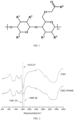
FIG. 1 illustrates a structural formula of an antibacterial wound dressing. -
FIG. 2 illustrates an infrared spectrum of carboxymethyl cellulose and the antimicrobial wound dressing. - The scope of this invention is defined by the claims. The present disclosure will now be described in detail with reference to the drawings and embodiments. The examples described below are merely illustrative of the embodiments of the present disclosure, and the description of the examples is specific and detailed.
- In one aspect, an antibacterial wound dressing is provided, having a structural formula I:

- In this case, R1, R2, R3 and R4 each is -OH or -OCH2COONa; R5 is -CH2OH or -CH2OCH2COONa. R6 is


- R7 is Cl-, H2PO4 -, CH3CH2COO-, or CH2OH(CHOH)4COO-, n represents a degree of polymerization and is in a range of 200 to 500 or is equal to 537 or 694, m is in a range of 10 to 100, a degree of substitution of the structural formula I is in a range of 0.1 to 0.6, and a grafting degree of the R7 to the antibacterial wound dressing is in a range of 0.2% to 9.0%, wherein the antibacterial wound dressing is obtained by carboxymethyl cellulose and a guanidine compound, and the connection between the carboxymethyl cellulose and the guanidine compound is an amide bond.
- In the present disclosure, the antibacterial wound dressing uses carboxymethyl cellulose as the main chain, and uses a guanidine compound as the side chain. The carboxymethyl cellulose has the ability to absorb a great deal of water and to form a gel on the surface of the carboxymethyl cellulose. This property of the carboxymethyl cellulose has been found to be advantageous in the preparation of wound dressings that are both absorbent and gel-forming. The guanidine compound is an environmental-friendly polymeric disinfectant, and is an efficient broad-spectrum antibacterial agent. The guanidine compound has excellent properties including such as a fast acting speed, being stable, being soluble in water, and the like. Besides, the guanidine compound can be used at room temperature, and perform long-term antibacterial activities. The guanidine compound is non-toxic, odorless, non-corrosive, free of side effects, and safe to use. The antibacterial wound dressing of the present disclosure has an excellent antibacterial effect, and the antibacterial rate is not less than 99% in seven days. The antibacterial wound dressing has a large liquid absorption amount, a good liquid holding capacity after the antibacterial wound dressing absorbs liquid, and a good moisture-retaining capacity. In addition, the antibacterial wound dressing of the present disclosure has a good biocompatibility without sensitization, irritation, and immunogenicity.
- The antibacterial wound dressing has a degree of polymerization of 200 to 500 or is equal to 537 or 694. When the antibacterial wound dressing has a degree of polymerization of 200 to 500, the antibacterial wound dressing may perform a good liquid absorption ability.
- According to the claimed invention, the antibacterial wound dressing is obtained by the carboxymethyl cellulose amidated with a guanidine compound. A degree of substitution of the carboxymethyl cellulose ranges from 0.1 to 0.6, and a grafting degree of the guanidine compound ranges from 0.2% to 9.0%.
- In some embodiments, the degree of substitution of the carboxymethyl cellulose may be ranged from 0.2 to 0.5.
- In some embodiments, the guanidine compound may be polyhexamethylene guanidine and a derivative thereof, or polyhexamethylene biguanide and a derivative thereof.
- In some embodiments, the guanidine compound may be polyhexamethylene guanidine hydrochloride, polyhexamethylene biguanide hydrochloride, polyhexamethylene guanidine phosphate, polyhexamethylene guanidine propionate, or polyhexamethylene guanidine gluconate.
- In some embodiments, the grafting degree of the guanidine compound may be ranged from 0.5% to 9.0%.
- In some embodiments, the grafting degree of the guanidine compound may be ranged from 0.5% to 5.0%.
- In some embodiments, the carboxymethyl cellulose may include one raw material selected from the group consisting of a lyocell fiber, a cotton fiber, a bamboo fiber and a viscose fiber.
- In another aspect, a method for preparing the antibacterial wound dressing is further provided. The method includes the following blocks.
- S1, cellulose is alkalized with sodium hydroxide by means of a solvent method wherein water and ethanol are used as the reaction media, such that an alkali cellulose is obtained, and the alkali cellulose is etherified with chloroacetic acid to prepare carboxymethyl cellulose having a degree of substitution of 0.1-0.6.
- S2, a carboxymethyl cellulose-organic solvent suspension having a mass/volume ratio of 0.5%~40% is prepared.
- S3, an activating agent or an acid regulating agent and a condensing agent is added into the carboxymethyl cellulose-organic solvent suspension, a guanidine compound is further added, and a reaction is performed at 0°C to 50°C for 0.5 hours to 48 hours.
- S4, unreacted small molecular substances are removed, and a drying treatment is performed to obtain the antibacterial wound dressing.
- In some embodiments, an organic solvent of the carboxymethyl cellulose-organic solvent suspension is at least one solvent selected from a group consisting of toluene, acetone, butanone, tetrahydrofuran, chloroform, dimethylacetamide, dimethylformamide, dimethyl sulfoxide, dichloromethane, chloroform, acetonitrile, and pyridine.
- In some embodiments, the activating agent is N-hydroxysuccinimide or 1-hydroxybenzotriazole.
- In some embodiments, the amount of the activating agent to be used is 0.1% ~10% by mass of the carboxymethyl cellulose.
- In some embodiments, the condensing agent may be a water-soluble carbodiimide compound. More specifically, the water-soluble carbodiimide compound may be 1-(3-dimethylaminopropyl)-3-ethylcarbodiimide hydrochloride, N,N'-dicyclohexylcarbodiimide, or N,N'-diisopropylcarbodiimide.
- In some embodiments, the amount of the condensing agent to be used may be 0.15%∼15% by mass of the carboxymethyl cellulose.
- In some embodiments, the acid regulating agent may be a mineral acid, such as hydrochloric acid or sulfuric acid.
- In some embodiments, the acid regulating agent may be configured to control a PH of the reaction system to be 4-6.
- In some embodiments, S1 may include the following blocks.
- 1) Raw lyocell having a degree of polymerization of 300-1200 may be mixed with and react with sodium hydroxide aqueous solution and ethanol at a temperature of 15°C~40°C for 30~90mins. A mass ratio of the raw lyocell, the sodium hydroxide, the water, and the ethanol may be 1: (0.3~3.0): (3.0~6.0): (6.0-9.0).
- 2) Chloroacetic acid may be further added, and a reaction may be controlled to be performed at a reaction temperature of 30°C~54°C for 1-3 hours, then performed at a temperature of 55°C~75°C for 1-3 hours. A mass ratio of the raw lyocell and the chloroacetic acid may be 1: (0.2~1).
- 3) Glacial acetic acid may be added for neutralization. The neutralization reaction may be performed at a temperature of 20°C~45°C for 30~90mins. A mass/volume ratio of the raw lyocell to the glacial acetic acid may be 1:0.25. Washing may be performed by ethanol and water and then a drying treatment may be further performed, such that the carboxymethyl cellulose may be obtained.
- In some embodiments, S2 may include the following block. The carboxymethyl cellulose may be mixed with an organic solvent, such that the carboxymethyl cellulose-organic solvent suspension having a mass/volume ratio of 0.5∼40% may be prepared.
- In some embodiments, the carboxymethyl cellulose-organic solvent suspension has the mass/volume ratio of 10-30%.
- In some embodiments, S3 may include the following block. A condensing agent, an activating agent, and a guanidine compound may be added to the carboxymethyl cellulose-organic solvent suspension, and an amidation reaction may be performed at a temperature of 20~50°C for 30~240mins. A mass ratio of the condensing agent, the activating agent, the guanidine compound, and the carboxymethyl cellulose is set in such a way that, the mass ratio of carboxymethyl cellulose: condensing agent: activating agent: guanidine compound is 1: (0.015~0.15): (0.01~0.1): (0.02~6).
- In some embodiments, the reaction in S3 is performed at a temperature of 35°C for 120mins.
- In some embodiments, S4 may include the following block. A mixed solution of ethanol and water may be added for washing, wherein the ethanol may be at the concentration of 83%~86%. The washing may be performed at a temperature of 35°C~45°C for 20mins to remove unreacted small molecular substances. After that, a drying treatment may be further performed at 50°C to obtain the antibacterial wound dressing.
- In a further aspect, the antibacterial wound dressing for use in acute or chronic wound care is further provided in the present disclsoure.
- In one embodiment, the antimicrobial wound dressing is a woven or nonwoven fabric.
- Materials used in the following examples are all commercially available products, unless otherwise stated.
- In the following examples, a degree of substitution of carboxymethyl cellulose is measured by using Method 5.5 in Food additive - Sodium carboxymethyl cellulose in standard GB 1904-2005.
- In the following examples, a grafting degree of a guanidine compound in an antimicrobial wound dressing is measure by using the method disclosed in Appendix A in the hygienic standard for biguanides disinfectants in standard GB 26367-2010.
- An antibacterial wound dressing may be prepared by the following blocks.
- S1, raw lyocell having a degree of polymerization of 600-1000 may be mixed with and react with sodium hydroxide aqueous solution and ethanol at a temperature of 30°C~40°C for 60mins. The mass of the raw lyocell in the mixed solution may be 1.0 Kg, the mass of the sodium hydroxide in the mixed solution may be 2.0Kg, the mass of the water in the mixed solution may be 5.0Kg, and the mass of the ethanol the mixed solution may be 7.0Kg, respectively. 0.3Kg of chloroacetic acid may be further added, and a reaction may be controlled to be performed at a reaction temperature of 40°C~50°C for 60mins, then performed at a temperature of 55°C~65°C for 60mins. 0.25L of glacial acetic acid may be added for neutralization at a temperature of 25°C~30°C for 60mins. Washing may be performed by using ethanol and water and then a drying treatment may be further performed, such that the carboxymethyl cellulose may be obtained. The measurement results indicate that the carboxymethyl cellulose has a degree of substitution of 0.3 and a degree of polymerization of 421.
- S2, the carboxymethyl cellulose may be mixed with an organic solvent (in this case, acetone is used as the organic solvent) and water, and a carboxymethyl cellulose-organic solvent suspension having a mass/volume ratio of 20% may be prepared.
- S3, a condensing agent EDS (1-(3-dimethylaminopropyl)-3-ethylcarbodiimide hydrochlorid), an activating agent NHS (N-hydroxysuccinimide), and a guanidine compound of polyhexamethylene biguanide hydrochloride (PHMB, m=50~80) may be further added into the carboxymethyl cellulose-organic solvent suspension, and an amidation reaction may be performed at a temperature of 30°C for 120mins. In this case, the mass ratio of the condensing agent, the activating agent, the guanidine compound to the carboxymethyl cellulose may be set as follow. A mass ratio of (carboxymethyl cellulose): (condensing agent): (activating agent): (guanidine compound) may be 1: 0.04: 0.025:0.25.
- S4, a mixed solution of ethanol and water may be added for washing, wherein the ethanol may be at the concentration of 83%~86%. In this case, the washing may be performed at a temperature of 35°C~45°C for 20mins to remove unreacted small molecular substances. After that, a drying treatment may be further performed at 50°C to obtain an antibacterial wound dressing. The measurement results indicate that a grafting degree of the PHMB in the antibacterial wound dressing is 2.0%.
- An infrared spectrum of the raw lyocell and the antibacterial wound dressing prepared by the raw lyocell used in this example may be shown in
FIG. 2 . It can be seen fromFIG. 2 that, the antibacterial wound dressing prepared in this example has a characteristic peak indicating amide bond at a position near 1581cm-1 and a position near 1685cm-1, which indicates that the PHMB has been successfully grafted onto the carboxymethyl cellulose, and thus the target product may be obtained. - An antibacterial wound dressing may be prepared by the following blocks.
- S1, raw lyocell having a degree of polymerization of 600-1000 may be mixed with and react with sodium hydroxide aqueous solution and ethanol at a temperature of 30°C~40°C for 60mins. The mass of the raw lyocell, the sodium hydroxide, the water, and the ethanol in the mixed solution may be 1.0 Kg, 2.0Kg, 5.0Kg, and 7.0Kg, respectively. 0.3Kg of chloroacetic acid may be further added, and a reaction may be controlled to be performed at a reaction temperature of 40°C~50°C for 60mins, then performed at a temperature of 55°C~65°C for 60mins. 0.25L of glacial acetic acid may be added for neutralization at a temperature of 25°C~30°C for 60mins. Washing may be then performed by using ethanol and water and a drying treatment may be further performed after that, such that the carboxymethyl cellulose may be obtained. The measurement results indicate that the carboxymethyl cellulose has a degree of substitution of 0.3 and a degree of polymerization of 421.
- S2, the carboxymethyl cellulose may be mixed with an organic solvent (in this case, acetone is used as the organic solvent) and water, and a carboxymethyl cellulose-organic solvent suspension having a mass/volume ratio of 20% may be prepared.
- S3, a condensing agent EDS, an activating agent NHS, and a guanidine compound of polyhexamethylene guanidine phosphate may be further added into the carboxymethyl cellulose-organic solvent suspension, and an amidation reaction may be performed at a temperature of 30°C for 60mins. In this case, the mass ratio of the condensing agent, the activating agent, the guanidine compound to the carboxymethyl cellulose may be set as follow. A mass ratio of (carboxymethyl cellulose): (condensing agent): (activating agent): (guanidine compound) may be 1: 0.108: 0.066: 1.5.
- S4, a mixed solution of ethanol and water may be added for washing, wherein the ethanol may be at the concentration of 83%~86%. In this case, the washing may be performed at a temperature of 37°C~43°C for 20mins to remove unreacted small molecular substances. After that, a drying treatment may be further performed at 50°C to obtain an antibacterial wound dressing. The measurement results indicate that a grafting degree of the polyhexamethyl guanidine phosphate in the antibacterial wound dressing is 6.5%.
- An antibacterial wound dressing may be prepared by the following blocks.
- S1, raw lyocell having a degree of polymerization of 600-1000 may be mixed with and react with sodium hydroxide aqueous solution and ethanol at a temperature of 30°C~40°C for 60mins. The mass of the raw lyocell, the sodium hydroxide, the water, and the ethanol in the mixed solution may be 1.0 Kg, 2.0Kg, 5.0Kg, and 7.0Kg, respectively. 0.3Kg of chloroacetic acid may be further added, and a reaction may be controlled to be performed at a reaction temperature of 40°C~50°C for 60mins, then performed at a temperature of 55°C~65°C for 60mins. 0.25L of glacial acetic acid may be added for neutralization at a temperature of 25°C~30°C for 60mins. Washing may be then performed by using ethanol and water and a drying treatment may be further performed after that, such that the carboxymethyl cellulose may be obtained. The measurement results indicate that the carboxymethyl cellulose has a degree of substitution of 0.3 and a degree of polymerization of 421.
- S2, the carboxymethyl cellulose may be mixed with an organic solvent (in this case, acetone is used as the organic solvent) and water, and a carboxymethyl cellulose-organic solvent suspension having a mass/volume ratio of 20% may be prepared.
- S3, a condensing agent EDS, an activating agent NHS, and a guanidine compound of polyhexamethylene guanidine propionate may be further added into the carboxymethyl cellulose-organic solvent suspension, and an amidation reaction may be performed at a temperature of 30°C for 60mins. In this case, the mass ratio of the condensing agent, the activating agent, the guanidine compound to the carboxymethyl cellulose may be set as follow. A mass ratio of (carboxymethyl cellulose): (condensing agent): (activating agent): (guanidine compound) may be 1: 0.072: 0.044: 0.6.
- S4, a mixed solution of ethanol and water may be added for washing, wherein the ethanol may be at the concentration of 83%~86%. In this case, the washing may be performed at a temperature of 37°C~43°C for 20mins to remove unreacted small molecular substances. After that, a drying treatment may be further performed at 50°C to obtain an antibacterial wound dressing. The measurement results indicate that a grafting degree of the polyhexamethylene guanidine propionate in the antibacterial wound dressing is 3.6%.
- An antibacterial wound dressing may be prepared by the following blocks.
- S1, raw lyocell having a degree of polymerization of 600-1000 may be mixed with and react with sodium hydroxide aqueous solution and ethanol at a temperature of 30°C~40°C for 60mins. The mass of the raw lyocell, the sodium hydroxide, the water, and the ethanol in the mixed solution may be 1.0 Kg, 2.0Kg, 5.0Kg, and 7.0Kg, respectively. 0.3Kg of chloroacetic acid may be further added, and a reaction may be controlled to be performed at a reaction temperature of 40°C~50°C for 60mins, then performed at a temperature of 55°C~65°C for 60mins. 0.25L of glacial acetic acid may be added for neutralization at a temperature of 25°C~30°C for 60mins. Washing may be then performed by using ethanol and water and a drying treatment may be further performed after that, such that the carboxymethyl cellulose may be obtained. The measurement results indicate that the carboxymethyl cellulose has a degree of substitution of 0.3 and a degree of polymerization of 421.
- S2, the carboxymethyl cellulose may be mixed with an organic solvent (in this case, acetone is used as the organic solvent) and water, and a carboxymethyl cellulose-organic solvent suspension having a mass/volume ratio of 20% may be prepared.
- S3, a condensing agent EDS, an activating agent NHS, a guanidine compound of polyhexamethylene guanidine gluconate may be further added into the carboxymethyl cellulose-organic solvent suspension, and an amidation reaction may be performed at a temperature of 30°C for 60mins. In this case, the mass ratio of the condensing agent, the activating agent, the guanidine compound to the carboxymethyl cellulose may be set as follow. A mass ratio of (carboxymethyl cellulose): (condensing agent): (activating agent): (guanidine compound) may be 1: 0.15: 0.1: 3.2.
- S4, a mixed solution of ethanol and water may be added for washing, wherein the ethanol may be at the concentration of 83%~86%. In this case, the washing may be performed at a temperature of 37°C~43°C for 20mins to remove unreacted small molecular substances. After that, a drying treatment may be further performed at 50°C to obtain an antibacterial wound dressing. The measurement results indicate that a grafting degree of the polyhexamethylene guanidine gluconate in the antibacterial wound dressing is 8.7%.
- Raw lyocell having a degree of polymerization of 600-1000 may be mixed with and react with sodium hydroxide aqueous solution and ethanol at a temperature of 30°C~40°C for 60mins. The mass of the raw lyocell, the sodium hydroxide, the water, and the ethanol in the mixed solution may be 1.0 Kg, 2.0Kg, 5.0Kg, and 7.0Kg, respectively. 0.2Kg of chloroacetic acid may be further added, and a reaction may be controlled to be performed at a reaction temperature of 40°C~50°C for 60mins, then performed at a temperature of 55°C~65°C for 60mins. 0.25L of glacial acetic acid may be added for neutralization at a temperature of 25°C~30°C for 60mins. Washing may be performed by using ethanol and water and then a drying treatment may be further performed, such that the carboxymethyl cellulose may be obtained. The measurement results indicate that the carboxymethyl cellulose has a degree of substitution of 0.18 and a degree of polymerization of 537.
- The carboxymethyl cellulose may be further grafted with the polyhexamethylene biguanide hydrochloride (PHMB)by the method described in the blocks S2, S3 and S4 of Example 1to obtain the antibacterial wound dressing, and the grafting degree of the PHMB in the antibacterial wound dressing is indicated to be 0.21%.
- Raw lyocell having a degree of polymerization of 600-1000 may be mixed with and react with sodium hydroxide aqueous solution and ethanol at a temperature of 30°C~40°C for 60mins. The mass of the raw lyocell, the sodium hydroxide, the water, and the ethanol in the mixed solution may be 1.0 Kg, 2.0Kg, 5.0Kg, and 7.0Kg, respectively. 0.55Kg of chloroacetic acid may be further added, and a reaction may be controlled to be performed at a reaction temperature of 40°C~50°C for 60mins, then performed at a temperature of 55°C~65°C for 60mins. 0.25L of glacial acetic acid may be added for neutralization at a temperature of 25°C~30°C for 60mins. Washing may be performed by using ethanol and water and then a drying treatment may be further performed, such that the carboxymethyl cellulose may be obtained. The measurement results indicate that the carboxymethyl cellulose has a degree of substitution of 0.48 and a degree of polymerization of 368.
- The carboxymethyl cellulose may be further grafted with the polyhexamethylene biguanide hydrochloride (PHMB) by the method described in the blocks S2, S3 and S4 of Example 1 to obtain the antibacterial wound dressing, and the grafting degree of the PHMB in the antibacterial wound dressing is indicated to be 3.8%.
- An antibacterial wound dressing may be prepared by the following blocks.
- S1, raw lyocell having a degree of polymerization of 600-1000 may be mixed with and react with sodium hydroxide aqueous solution and ethanol at a temperature of 30°C~40°C for 60mins. The mass of the raw lyocell, the sodium hydroxide, the water, and the ethanol in the mixed solution may be 1.0 Kg, 2.0Kg, 5.0Kg, and 7.0Kg, respectively. 0.7Kg of chloroacetic acid may be further added, and a reaction may be controlled to be performed at a reaction temperature of 40°C~50°C for 60mins, then performed at a temperature of 55°C~65°C for 60mins. 0.25L of glacial acetic acid may be added for neutralization at a temperature of 25°C~30°C for 60mins. Washing may be performed by using ethanol and water and then a drying treatment may be further performed, such that the carboxymethyl cellulose may be obtained. The measurement results indicate that the carboxymethyl cellulose has a degree of substitution of 0.6 and a degree of polymerization of 320.
- The carboxymethyl cellulose may be further grafted with the polyhexamethylene biguanide hydrochloride (PHMB)by the method described in the blocks S2, S3 and S4 of Example 1 to obtain the antibacterial wound dressing, and the grafting degree of the PHMB in the antibacterial wound dressing is indicated to be 7.2%.
- A raw viscose fiber having a degree of polymerization of 300-600 may be provided, and treated as the method described in Example 1, to obtain the carboxymethyl cellulose. The measurement results indicate that the carboxymethyl cellulose has a degree of substitution of 0.33 and a degree of polymerization of 227. After that, an antibacterial wound dressing may be prepared according to the method described in Example 1. The measurement results indicate that the grafting degree of the PHMB in the antibacterial wound dressing is 2.5%.
- A raw cotton fiber having a degree of polymerization of 1000-1200 may be provided, and treated as the method described in Example 1, to obtain the carboxymethyl cellulose. The measurement results indicate that the carboxymethyl cellulose has a degree of substitution of 0.25 and a degree of polymerization of 694. After that, an antibacterial wound dressing may be prepared according to the method described in Example 1. The measurement results indicate that the grafting degree of the PHMB in the antibacterial wound dressing is 1.1%.
- An antibacterial wound dressing may be prepared by the following blocks.
- Raw cotton fiber having degree of polymerization of 1500~18000 may be mixed with and react with sodium hydroxide aqueous solution and ethanol at a temperature of 30°C~40°C for 60mins. The mass of the raw cotton fiber, sodium hydroxide, water, and ethanol in the mixed solution may be 1.0 Kg, 2.0Kg, 5.0Kg, and 7.0Kg, respectively. 0.1Kg of chloroacetic acid may be further added, and a reaction may be controlled to be performed at a reaction temperature of 40°C~50°C for 60mins, then performed at a temperature of 55°C~65°C for 60mins. 0.25L of glacial acetic acid may be added for neutralization at a temperature of 25°C~30°C for 60mins. Washing may be performed by using ethanol and water and then a drying treatment may be further performed, such that the carboxymethyl cellulose may be obtained. The measurement results indicate that the carboxymethyl cellulose has a degree of substitution of 0.08 and a degree of polymerization of 877.
- The carboxymethyl cellulose may be further grafted with the polyhexamethylene biguanide hydrochloride (PHMB) by the method described in the blocks S2, S3 and S4 of Example 1 to obtain the antibacterial wound dressing, and the grafting degree of the PHMB in the antibacterial wound dressing is indicated to be 0.12%.
- The antibacterial wound dressings respectively prepared in Examples 1 to 9 and Comparative Example 1 may be measured for liquid absorption amount, biocompatibility, and antibacterial property. The measurement results may be shown in Table 1. The measurement standards or methods may be as follows.
- (1) Liquid Absorption Amount: 0.3g of sample which has been dried by blowing gas at 80°C for 2 hours may be weighed and further placed into a watch glass. Test solution A (the test solution A is a solution composed of sodium chloride and calcium chloride; the solution contains 142 mmol of sodium ions and 2.5 mmol of calcium ions; the ion content in the solution corresponds to that in the human serum or the wound fluid; 8.298g of sodium chloride and 0.368g of calcium chloride dihydrate are dissolved and diluted to 1L by deionized water in a volumetric flask) may be slowly added by dropwise into the sample, until the sample may be saturated by the liquid.. A weight of the sample after absorbing the test solution A may be weighed, and the liquid absorption amount may be calculated by using the formula (W-0.3)/0.3*100%.
- Antibacterial property: the Antibacterial property may be measured by using the shake flask method described in part 3 in the GBT 20944.3-2008 Textiles-Evaluation for antibacterial activity. Test strains include Enterococcus faecalis (ATCC 51575) and Pseudomonas aeruginosa (ATCC 9027).
- Liquid holding capacity: a sample may be cut into a size of 50mm*50mm, and weighed. The weight may be recorded as W1. The sample may be further placed into the watch glass, and a certain amount of the test solution A (the test solution A is a solution composed of sodium chloride and calcium chloride; the solution contains 142 mmol of sodium ions and 2.5 mmol of calcium ions; the ion content in the solution corresponds to that in the human serum or the wound fluid; 8.298g of sodium chloride and 0.368g of calcium chloride dihydrate are dissolved and diluted to 1L by deionized water in a volumetric flask) may be added, until the sample is saturated with the absorbed liquid. The sample having the saturated liquid absorption amount may be further placed on a plane, and a pressure of 40mmHg (about 1.36kg) may be applied to a surface of the sample (50*50mm) for 5mins, the liquid exuded from the sample may be further sucked away. The sample may be then taken out, and weighed again; the weight of the sample may be recorded as W2 at this time. Enough filter papers may be placed on the sample. The filter papers may be further removed after 30mins. At this time, the sample may be weighed again and the weight of the sample may be recorded as W3. The liquid holding capacity may be calculated by the following formula:

Table 1 Performance Test Result of Antibacterial Wound Dressing of Examples and Comparative Example Test items Exam ple 1 Exam ple 2 Exam ple 3 Exam ple 4 Exam ple 5 Exam ple 6 Exam ple 7 Exam ple 8 Exam ple 9 Compara tive Example 1 Liquid Absorpti on Amount /% 2660 2484 2533 2400 2187 1933 1795 935 3292 1680 Antibact erial property /% 99.99 99.99 99.99 99.99 99.99 99.99 99.99 99.99 99.99 70.23 Liquid holding capacity /% 83.57 79.40 80.25 78.66 71.32 77.68 74.72 81.68 82.21 52.44 - To verify the biocompatibility of the antibacterial wound dressings, tests for cytotoxicity (ISO 10993-5: 2009), acute toxicity (ISO 10993-11: 2006), skin sensitization (ISO 10993-10: 2010) and skin irritation (ISO 10993-10:2010) may be performed to the antibacterial wound dressings. The test results indicate that the prepared antibacterial wound dressings are biocompatible.
- The technical features of the above-mentioned embodiments may be combined in any combination. For a brief and concise description, not all possible combinations of the technical features in the above embodiments are described.
Claims (13)
- An antibacterial wound dressing, having a structural formula I:
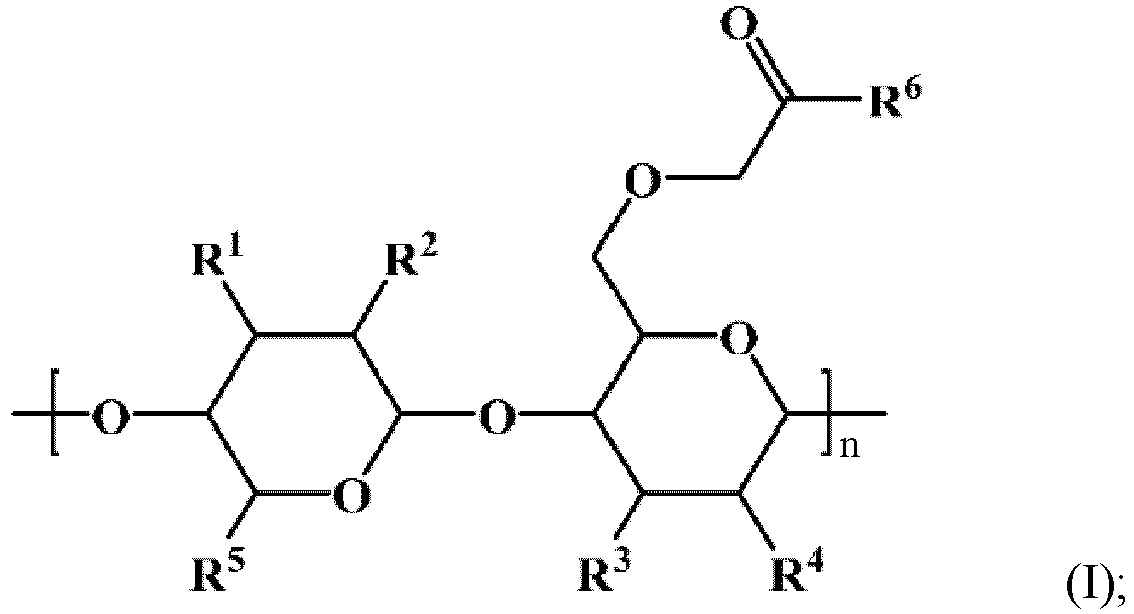 wherein R1, R2, R3 and R4 each is -OH or -OCH2COONa; R5 is -CH2OH or -CH2OCH2COONa; R6 is
 wherein R7 is Cl-, H2PO4 -, CH3CH2COO-, or CH2OH(CHOH)4COO-, n represents a degree of polymerization and is in a range of 200 to 500 or is equal to 537 or 694, m is in a range of 10 to 100, a degree of substitution of the structural formula I is in a range of 0.1 to 0.6, and a grafting degree of the R7 to the antibacterial wound dressing is in a range of 0.2% to 9.0%; wherein the antibacterial wound dressing is obtained by carboxymethyl cellulose and a guanidine compound, and the connection between the carboxymethyl cellulose and the guanidine compound is an amide bond.
 - The antibacterial wound dressing of claim 1, wherein the degree of substitution of the carboxymethyl cellulose is ranged from 0.2 to 0.5.
- The antibacterial wound dressing of claim 2, wherein the guanidine compound is polyhexamethylene guanidine, or polyhexamethylene biguanide.
- The antibacterial wound dressing of claim 3, wherein the guanidine compound is polyhexamethylene guanidine hydrochloride, polyhexamethylene biguanide hydrochloride, polyhexamethylene guanidine phosphate, polyhexamethylene guanidine propionate, or polyhexamethylene guanidine gluconate.
- The antibacterial wound dressing of any one of claims 3-4, wherein the grafting degree of the guanidine compound is ranged from 0.5% to 9.0%.
- The antibacterial wound dressing of any one of claims 3-5, wherein the grafting degree of the guanidine compound is ranged from 0.5% to 5.0%.
- The antibacterial wound dressing of any one of claims 2-6, wherein the carboxymethyl cellulose comprises one raw material selected from the group consisting of a lyocell fiber, a cotton fiber, a bamboo fiber and a viscose fiber.
- A method for preparing the antibacterial wound dressing of any one of claims 1-7, comprising:S1, alkalizing cellulose with sodium hydroxide by means of a solvent method by using water and ethanol as reaction media, such that an alkali cellulose is obtained, and etherifying the alkali cellulose with chloroacetic acid to prepare carboxymethyl cellulose having a degree of substitution in a range of 0.1 to 0.6;S2, preparing a carboxymethyl cellulose-organic solvent suspension having a mass/volume ratio in a range of 0.5% to 40%;S3, adding an activating agent or an acid regulating agent and a condensing agent into the carboxymethyl cellulose-organic solvent suspension, further adding a guanidine compound, and performing a reaction at a temperature in a range of 0°C to 50°C for 0.5hours to 48 hours; andS4, removing unreacted small molecular substances, and performing a drying treatment to obtain the antibacterial wound dressing.
- The method of claim 8, wherein an organic solvent of the carboxymethyl cellulose-organic solvent suspension is at least one solvent selected from a group consisting of toluene, acetone, butanone, tetrahydrofuran, chloroform, dimethylacetamide, dimethylformamide, dimethyl sulfoxide, dichloromethane, chloroform, acetonitrile, and pyridine.
- The method of any one of claims 8-9, wherein the activating agent is N-hydroxysuccinimide or 1-hydroxybenzotriazole.
- The method of any one of claims 8-10, wherein the condensing agent is a water-soluble carbodiimide compound.
- The method of any one of claims 8-11, wherein S3 comprises: adding the condensing agent, the activating agent, and the guanidine compound to the carboxymethyl cellulose-organic solvent suspension, and performing an amidation reaction at a temperature in a range of 20°C to 50°C for 30mins to 240mins; wherein a mass ratio of the condensing agent, the activating agent, the guanidine compound, and the carboxymethyl cellulose is set in such a way that, the mass ratio of carboxymethyl cellulose: condensing agent: activating agent: guanidine compound is 1: (0.015 to 0.15): (0.01 to 0.1): (0.02 to 6).
- An antibacterial wound dressing of any one of claims 1-7, wherein the antibacterial wound dressing is for use in acute or chronic wound care.
Applications Claiming Priority (1)
| Application Number | Priority Date | Filing Date | Title |
|---|---|---|---|
| PCT/CN2017/085429 WO2018214007A1 (en) | 2017-05-23 | 2017-05-23 | Antibacterial wound dressing and preparation method and application thereof |
Publications (3)
| Publication Number | Publication Date |
|---|---|
| EP3632477A1 EP3632477A1 (en) | 2020-04-08 |
| EP3632477A4 EP3632477A4 (en) | 2020-06-17 |
| EP3632477B1 true EP3632477B1 (en) | 2024-03-20 |
Family
ID=64396033
Family Applications (1)
| Application Number | Title | Priority Date | Filing Date |
|---|---|---|---|
| EP17910932.7A Active EP3632477B1 (en) | 2017-05-23 | 2017-05-23 | Antibacterial wound dressing and preparation method and application thereof |
Country Status (3)
| Country | Link |
|---|---|
| US (1) | US11129847B2 (en) |
| EP (1) | EP3632477B1 (en) |
| WO (1) | WO2018214007A1 (en) |
Families Citing this family (10)
| Publication number | Priority date | Publication date | Assignee | Title |
|---|---|---|---|---|
| GB2591088B (en) * | 2020-01-08 | 2024-07-03 | Adv Med Solutions Ltd | Antimicrobial fibres |
| CN111939306A (en) * | 2020-08-21 | 2020-11-17 | 江苏诺瓦立医疗用品有限公司 | Antibacterial dressing and its application |
| CN112575583A (en) * | 2020-12-01 | 2021-03-30 | 四川大学 | Durable safe antibacterial cotton fabric modified by grafting of polymeric guanidine and finishing method thereof |
| CN113059871A (en) * | 2021-03-19 | 2021-07-02 | 青岛惠唐盛世纺织有限公司 | All-cotton spunlaced non-woven fabric and preparation method thereof |
| CN114478834B (en) * | 2022-02-28 | 2023-08-08 | 江南大学 | A kind of guanidine hyaluronic acid antibacterial polymer and its preparation method and application |
| CN114656574B (en) * | 2022-04-26 | 2023-10-24 | 陕西科技大学 | Preparation method of cellulose-indolyl antibacterial material |
| CN115418796A (en) * | 2022-09-14 | 2022-12-02 | 百达联康生物科技(深圳)有限公司 | A kind of antibacterial fiber film and preparation method thereof |
| CN115368694B (en) * | 2022-09-30 | 2023-10-13 | 河北百展科技发展有限公司 | Biomass-based reinforced polyvinyl alcohol composite material and preparation method thereof |
| CN118079078A (en) * | 2024-04-25 | 2024-05-28 | 齐鲁工业大学(山东省科学院) | A quercetin-loaded double-network antibacterial gel dressing and preparation method thereof |
| CN120905950B (en) * | 2025-08-25 | 2026-04-07 | 普宁市润卡智造服饰有限公司 | Cool breathable clothing fabric and preparation method thereof |
Family Cites Families (21)
| Publication number | Priority date | Publication date | Assignee | Title |
|---|---|---|---|---|
| GB1328088A (en) | 1969-09-27 | 1973-08-30 | Wallace Cameron Co Ltd | Solubilized alginic materials |
| GB9001878D0 (en) | 1990-01-26 | 1990-03-28 | Beam Tech Ltd | Alginate materials |
| JP2777279B2 (en) | 1990-10-08 | 1998-07-16 | 工業技術院長 | Wound dressing and method for producing the same |
| WO1992022285A1 (en) | 1991-06-14 | 1992-12-23 | Viaderm Pharmaceuticals, Inc. | Alginate wound dressings |
| GB9301258D0 (en) | 1993-01-22 | 1993-03-17 | Courtaulds Plc | Use of absorbent fibre |
| KR100320636B1 (en) | 1993-01-22 | 2002-07-27 | 아코디스 스페셜리티 파이버스 리미티드 | Wound Protector |
| US6605751B1 (en) | 1997-11-14 | 2003-08-12 | Acrymed | Silver-containing compositions, devices and methods for making |
| EP1216065B1 (en) | 1999-10-01 | 2008-10-29 | Acrymed | Silver-containing compositions, devices and methods for making |
| GB0026863D0 (en) | 2000-11-03 | 2000-12-20 | Ssl Int Plc | Polysaccharide fibres |
| CA2458708C (en) | 2001-09-12 | 2011-08-02 | Acordis Speciality Fibres Limited | Antibacterial wound dressing |
| US7008979B2 (en) * | 2002-04-30 | 2006-03-07 | Hydromer, Inc. | Coating composition for multiple hydrophilic applications |
| DE102007062372A1 (en) * | 2007-12-22 | 2009-06-25 | Paul Hartmann Ag | Medical article with antimicrobial equipment |
| US20100215723A1 (en) * | 2009-02-20 | 2010-08-26 | Min Yao | Wound Dressing with Antimicrobial Gauze and Bonding Agent |
| CN102462860A (en) * | 2010-11-10 | 2012-05-23 | 广东百合医疗科技有限公司 | Fiber wound dressing with antibacterial effect and preparation method thereof |
| WO2012092813A1 (en) | 2011-01-07 | 2012-07-12 | 佛山市优特医疗科技有限公司 | Wound dressing with high moisture absorption and capable of being removed as a whole |
| US9402770B2 (en) | 2011-12-09 | 2016-08-02 | Covidien | Antimicrobial non-adherent dressings and related methods therefor |
| CN102675651B (en) | 2012-04-20 | 2014-06-04 | 常州华联保健敷料有限公司 | Preparation method of chitosan hydrogel for antiseptic dressing |
| GB201213782D0 (en) * | 2012-08-02 | 2012-09-12 | Crawford Healthcare Ltd | Process and dressing |
| WO2014113652A1 (en) * | 2013-01-21 | 2014-07-24 | Covidien Lp | Antimicrobial non-adherent dressings and related methods therefor |
| CN103920180B (en) | 2014-03-13 | 2016-01-20 | 上海应用技术学院 | A kind of antiseptic dressing aquagel and preparation method thereof |
| CN104805734B (en) * | 2015-04-10 | 2017-03-15 | 上海应用技术学院 | A kind of paper additive and preparation method thereof |
-
2017
- 2017-05-23 WO PCT/CN2017/085429 patent/WO2018214007A1/en not_active Ceased
- 2017-05-23 EP EP17910932.7A patent/EP3632477B1/en active Active
-
2019
- 2019-06-10 US US16/435,559 patent/US11129847B2/en active Active
Also Published As
| Publication number | Publication date |
|---|---|
| US20190290676A1 (en) | 2019-09-26 |
| EP3632477A4 (en) | 2020-06-17 |
| EP3632477A1 (en) | 2020-04-08 |
| WO2018214007A1 (en) | 2018-11-29 |
| US11129847B2 (en) | 2021-09-28 |
Similar Documents
| Publication | Publication Date | Title |
|---|---|---|
| US11129847B2 (en) | Antibacterial wound dressing, method for preparing the same, and use thereof | |
| DE69938612T2 (en) | FUNCTIONAL CHITOSANDERIVATE | |
| EP2695622B1 (en) | A chitosan wound dressing and its method of manufacturing | |
| KR101377569B1 (en) | Antimicrobial Wound Dressing and Preparing Method of the Same | |
| EP0799247B1 (en) | Chitosan salts and process for the preparation thereof | |
| CN111154149A (en) | A kind of hydrogel and its preparation method and dressing | |
| JPWO2000027889A1 (en) | Functional chitosan derivatives | |
| RU2465917C2 (en) | Polymers, which contain covalently connected antibiotic preparations | |
| CN107137749A (en) | A kind of antibacterial wound dressing and its preparation method and application | |
| US12491284B2 (en) | Antiseptic wound dressing | |
| MX2008000969A (en) | Biomaterials based on carboxymethylcellulose salified with zinc associated with hyaluronic acid derivatives. | |
| JP7366448B2 (en) | Chlorinated derivatives of hyaluronic acid, methods for their preparation, compositions containing said derivatives and uses thereof | |
| EP3660191B1 (en) | Antimicrobial alginate fibre, and preparation method for and use of dressing thereof | |
| Sun et al. | Development of part-dissolvable chitosan fibers with surface N-succinylation for wound care dressing | |
| Lim et al. | Biomedical-grade chitosan in wound management and its biocompatibility in vitro | |
| CN105664224B (en) | A kind of low molecular weight carboxymethyl chitosan composite alginic acid dressing and preparation method thereof | |
| CN105251051B (en) | A kind of surface has material and the preparation and application of antibiotic property and biocompatibility concurrently | |
| Yadav et al. | Wound healing potential of natural polymer: chitosan “A Wonder Molecule” | |
| Zhou et al. | Preparation and characterization of carboxymethyl-functionalized chitosan fiber | |
| CN112316195A (en) | Preparation method of loofah sponge antibacterial dressing | |
| CN107684636A (en) | A kind of bactericidal composition and as the bacteria cellulose antimicrobial composite material obtained by it | |
| CN107177980A (en) | A kind of contact Wound dressing and preparation method thereof | |
| Anisiei et al. | Biodegradable trimethyl chitosan nanofiber mats as bioabsorbable dressings for wound closure and healing | |
| CN111154010A (en) | Medical cationic polymer biopolymer material, preparation method and application | |
| Uppanan et al. | Synthesis of GTMAC modified chitin–PAA gel and evaluation of its biological properties |
Legal Events
| Date | Code | Title | Description |
|---|---|---|---|
| STAA | Information on the status of an ep patent application or granted ep patent |
Free format text: STATUS: THE INTERNATIONAL PUBLICATION HAS BEEN MADE |
|
| PUAI | Public reference made under article 153(3) epc to a published international application that has entered the european phase |
Free format text: ORIGINAL CODE: 0009012 |
|
| STAA | Information on the status of an ep patent application or granted ep patent |
Free format text: STATUS: REQUEST FOR EXAMINATION WAS MADE |
|
| 17P | Request for examination filed |
Effective date: 20190612 |
|
| AK | Designated contracting states |
Kind code of ref document: A1 Designated state(s): AL AT BE BG CH CY CZ DE DK EE ES FI FR GB GR HR HU IE IS IT LI LT LU LV MC MK MT NL NO PL PT RO RS SE SI SK SM TR |
|
| AX | Request for extension of the european patent |
Extension state: BA ME |
|
| A4 | Supplementary search report drawn up and despatched |
Effective date: 20200519 |
|
| RIC1 | Information provided on ipc code assigned before grant |
Ipc: A61P 17/02 20060101ALI20200512BHEP Ipc: A61K 31/717 20060101ALI20200512BHEP Ipc: A61L 15/46 20060101ALI20200512BHEP Ipc: A61L 15/28 20060101AFI20200512BHEP |
|
| DAV | Request for validation of the european patent (deleted) | ||
| DAX | Request for extension of the european patent (deleted) | ||
| STAA | Information on the status of an ep patent application or granted ep patent |
Free format text: STATUS: EXAMINATION IS IN PROGRESS |
|
| 17Q | First examination report despatched |
Effective date: 20211216 |
|
| GRAP | Despatch of communication of intention to grant a patent |
Free format text: ORIGINAL CODE: EPIDOSNIGR1 |
|
| STAA | Information on the status of an ep patent application or granted ep patent |
Free format text: STATUS: GRANT OF PATENT IS INTENDED |
|
| INTG | Intention to grant announced |
Effective date: 20231013 |
|
| GRAS | Grant fee paid |
Free format text: ORIGINAL CODE: EPIDOSNIGR3 |
|
| GRAA | (expected) grant |
Free format text: ORIGINAL CODE: 0009210 |
|
| STAA | Information on the status of an ep patent application or granted ep patent |
Free format text: STATUS: THE PATENT HAS BEEN GRANTED |
|
| AK | Designated contracting states |
Kind code of ref document: B1 Designated state(s): AL AT BE BG CH CY CZ DE DK EE ES FI FR GB GR HR HU IE IS IT LI LT LU LV MC MK MT NL NO PL PT RO RS SE SI SK SM TR |
|
| REG | Reference to a national code |
Ref country code: GB Ref legal event code: FG4D |
|
| REG | Reference to a national code |
Ref country code: CH Ref legal event code: EP |
|
| REG | Reference to a national code |
Ref country code: IE Ref legal event code: FG4D Ref country code: NL Ref legal event code: FP |
|
| REG | Reference to a national code |
Ref country code: DE Ref legal event code: R096 Ref document number: 602017080294 Country of ref document: DE |
|
| REG | Reference to a national code |
Ref country code: SE Ref legal event code: TRGR |
|
| P01 | Opt-out of the competence of the unified patent court (upc) registered |
Effective date: 20240410 |
|
| PG25 | Lapsed in a contracting state [announced via postgrant information from national office to epo] |
Ref country code: LT Free format text: LAPSE BECAUSE OF FAILURE TO SUBMIT A TRANSLATION OF THE DESCRIPTION OR TO PAY THE FEE WITHIN THE PRESCRIBED TIME-LIMIT Effective date: 20240320 |
|
| REG | Reference to a national code |
Ref country code: LT Ref legal event code: MG9D |
|
| PG25 | Lapsed in a contracting state [announced via postgrant information from national office to epo] |
Ref country code: GR Free format text: LAPSE BECAUSE OF FAILURE TO SUBMIT A TRANSLATION OF THE DESCRIPTION OR TO PAY THE FEE WITHIN THE PRESCRIBED TIME-LIMIT Effective date: 20240621 |
|
| PG25 | Lapsed in a contracting state [announced via postgrant information from national office to epo] |
Ref country code: RS Free format text: LAPSE BECAUSE OF FAILURE TO SUBMIT A TRANSLATION OF THE DESCRIPTION OR TO PAY THE FEE WITHIN THE PRESCRIBED TIME-LIMIT Effective date: 20240620 Ref country code: HR Free format text: LAPSE BECAUSE OF FAILURE TO SUBMIT A TRANSLATION OF THE DESCRIPTION OR TO PAY THE FEE WITHIN THE PRESCRIBED TIME-LIMIT Effective date: 20240320 |
|
| PG25 | Lapsed in a contracting state [announced via postgrant information from national office to epo] |
Ref country code: RS Free format text: LAPSE BECAUSE OF FAILURE TO SUBMIT A TRANSLATION OF THE DESCRIPTION OR TO PAY THE FEE WITHIN THE PRESCRIBED TIME-LIMIT Effective date: 20240620 Ref country code: NO Free format text: LAPSE BECAUSE OF FAILURE TO SUBMIT A TRANSLATION OF THE DESCRIPTION OR TO PAY THE FEE WITHIN THE PRESCRIBED TIME-LIMIT Effective date: 20240620 Ref country code: LT Free format text: LAPSE BECAUSE OF FAILURE TO SUBMIT A TRANSLATION OF THE DESCRIPTION OR TO PAY THE FEE WITHIN THE PRESCRIBED TIME-LIMIT Effective date: 20240320 Ref country code: HR Free format text: LAPSE BECAUSE OF FAILURE TO SUBMIT A TRANSLATION OF THE DESCRIPTION OR TO PAY THE FEE WITHIN THE PRESCRIBED TIME-LIMIT Effective date: 20240320 Ref country code: GR Free format text: LAPSE BECAUSE OF FAILURE TO SUBMIT A TRANSLATION OF THE DESCRIPTION OR TO PAY THE FEE WITHIN THE PRESCRIBED TIME-LIMIT Effective date: 20240621 Ref country code: FI Free format text: LAPSE BECAUSE OF FAILURE TO SUBMIT A TRANSLATION OF THE DESCRIPTION OR TO PAY THE FEE WITHIN THE PRESCRIBED TIME-LIMIT Effective date: 20240320 Ref country code: BG Free format text: LAPSE BECAUSE OF FAILURE TO SUBMIT A TRANSLATION OF THE DESCRIPTION OR TO PAY THE FEE WITHIN THE PRESCRIBED TIME-LIMIT Effective date: 20240320 |
|
| REG | Reference to a national code |
Ref country code: AT Ref legal event code: MK05 Ref document number: 1667270 Country of ref document: AT Kind code of ref document: T Effective date: 20240320 |
|
| PG25 | Lapsed in a contracting state [announced via postgrant information from national office to epo] |
Ref country code: LV Free format text: LAPSE BECAUSE OF FAILURE TO SUBMIT A TRANSLATION OF THE DESCRIPTION OR TO PAY THE FEE WITHIN THE PRESCRIBED TIME-LIMIT Effective date: 20240320 |
|
| PG25 | Lapsed in a contracting state [announced via postgrant information from national office to epo] |
Ref country code: IS Free format text: LAPSE BECAUSE OF FAILURE TO SUBMIT A TRANSLATION OF THE DESCRIPTION OR TO PAY THE FEE WITHIN THE PRESCRIBED TIME-LIMIT Effective date: 20240720 |
|
| PG25 | Lapsed in a contracting state [announced via postgrant information from national office to epo] |
Ref country code: PT Free format text: LAPSE BECAUSE OF FAILURE TO SUBMIT A TRANSLATION OF THE DESCRIPTION OR TO PAY THE FEE WITHIN THE PRESCRIBED TIME-LIMIT Effective date: 20240722 Ref country code: SM Free format text: LAPSE BECAUSE OF FAILURE TO SUBMIT A TRANSLATION OF THE DESCRIPTION OR TO PAY THE FEE WITHIN THE PRESCRIBED TIME-LIMIT Effective date: 20240320 |
|
| PG25 | Lapsed in a contracting state [announced via postgrant information from national office to epo] |
Ref country code: ES Free format text: LAPSE BECAUSE OF FAILURE TO SUBMIT A TRANSLATION OF THE DESCRIPTION OR TO PAY THE FEE WITHIN THE PRESCRIBED TIME-LIMIT Effective date: 20240320 |
|
| PG25 | Lapsed in a contracting state [announced via postgrant information from national office to epo] |
Ref country code: EE Free format text: LAPSE BECAUSE OF FAILURE TO SUBMIT A TRANSLATION OF THE DESCRIPTION OR TO PAY THE FEE WITHIN THE PRESCRIBED TIME-LIMIT Effective date: 20240320 Ref country code: CZ Free format text: LAPSE BECAUSE OF FAILURE TO SUBMIT A TRANSLATION OF THE DESCRIPTION OR TO PAY THE FEE WITHIN THE PRESCRIBED TIME-LIMIT Effective date: 20240320 |
|
| PG25 | Lapsed in a contracting state [announced via postgrant information from national office to epo] |
Ref country code: AT Free format text: LAPSE BECAUSE OF FAILURE TO SUBMIT A TRANSLATION OF THE DESCRIPTION OR TO PAY THE FEE WITHIN THE PRESCRIBED TIME-LIMIT Effective date: 20240320 |
|
| PG25 | Lapsed in a contracting state [announced via postgrant information from national office to epo] |
Ref country code: PL Free format text: LAPSE BECAUSE OF FAILURE TO SUBMIT A TRANSLATION OF THE DESCRIPTION OR TO PAY THE FEE WITHIN THE PRESCRIBED TIME-LIMIT Effective date: 20240320 |
|
| PG25 | Lapsed in a contracting state [announced via postgrant information from national office to epo] |
Ref country code: SK Free format text: LAPSE BECAUSE OF FAILURE TO SUBMIT A TRANSLATION OF THE DESCRIPTION OR TO PAY THE FEE WITHIN THE PRESCRIBED TIME-LIMIT Effective date: 20240320 |
|
| PG25 | Lapsed in a contracting state [announced via postgrant information from national office to epo] |
Ref country code: SM Free format text: LAPSE BECAUSE OF FAILURE TO SUBMIT A TRANSLATION OF THE DESCRIPTION OR TO PAY THE FEE WITHIN THE PRESCRIBED TIME-LIMIT Effective date: 20240320 Ref country code: SK Free format text: LAPSE BECAUSE OF FAILURE TO SUBMIT A TRANSLATION OF THE DESCRIPTION OR TO PAY THE FEE WITHIN THE PRESCRIBED TIME-LIMIT Effective date: 20240320 Ref country code: RO Free format text: LAPSE BECAUSE OF FAILURE TO SUBMIT A TRANSLATION OF THE DESCRIPTION OR TO PAY THE FEE WITHIN THE PRESCRIBED TIME-LIMIT Effective date: 20240320 Ref country code: PT Free format text: LAPSE BECAUSE OF FAILURE TO SUBMIT A TRANSLATION OF THE DESCRIPTION OR TO PAY THE FEE WITHIN THE PRESCRIBED TIME-LIMIT Effective date: 20240722 Ref country code: PL Free format text: LAPSE BECAUSE OF FAILURE TO SUBMIT A TRANSLATION OF THE DESCRIPTION OR TO PAY THE FEE WITHIN THE PRESCRIBED TIME-LIMIT Effective date: 20240320 Ref country code: IS Free format text: LAPSE BECAUSE OF FAILURE TO SUBMIT A TRANSLATION OF THE DESCRIPTION OR TO PAY THE FEE WITHIN THE PRESCRIBED TIME-LIMIT Effective date: 20240720 Ref country code: ES Free format text: LAPSE BECAUSE OF FAILURE TO SUBMIT A TRANSLATION OF THE DESCRIPTION OR TO PAY THE FEE WITHIN THE PRESCRIBED TIME-LIMIT Effective date: 20240320 Ref country code: EE Free format text: LAPSE BECAUSE OF FAILURE TO SUBMIT A TRANSLATION OF THE DESCRIPTION OR TO PAY THE FEE WITHIN THE PRESCRIBED TIME-LIMIT Effective date: 20240320 Ref country code: CZ Free format text: LAPSE BECAUSE OF FAILURE TO SUBMIT A TRANSLATION OF THE DESCRIPTION OR TO PAY THE FEE WITHIN THE PRESCRIBED TIME-LIMIT Effective date: 20240320 Ref country code: AT Free format text: LAPSE BECAUSE OF FAILURE TO SUBMIT A TRANSLATION OF THE DESCRIPTION OR TO PAY THE FEE WITHIN THE PRESCRIBED TIME-LIMIT Effective date: 20240320 |
|
| PG25 | Lapsed in a contracting state [announced via postgrant information from national office to epo] |
Ref country code: IT Free format text: LAPSE BECAUSE OF FAILURE TO SUBMIT A TRANSLATION OF THE DESCRIPTION OR TO PAY THE FEE WITHIN THE PRESCRIBED TIME-LIMIT Effective date: 20240320 |
|
| REG | Reference to a national code |
Ref country code: DE Ref legal event code: R097 Ref document number: 602017080294 Country of ref document: DE |
|
| REG | Reference to a national code |
Ref country code: CH Ref legal event code: PL |
|
| PG25 | Lapsed in a contracting state [announced via postgrant information from national office to epo] |
Ref country code: IT Free format text: LAPSE BECAUSE OF FAILURE TO SUBMIT A TRANSLATION OF THE DESCRIPTION OR TO PAY THE FEE WITHIN THE PRESCRIBED TIME-LIMIT Effective date: 20240320 |
|
| PG25 | Lapsed in a contracting state [announced via postgrant information from national office to epo] |
Ref country code: MC Free format text: LAPSE BECAUSE OF FAILURE TO SUBMIT A TRANSLATION OF THE DESCRIPTION OR TO PAY THE FEE WITHIN THE PRESCRIBED TIME-LIMIT Effective date: 20240320 |
|
| PG25 | Lapsed in a contracting state [announced via postgrant information from national office to epo] |
Ref country code: DK Free format text: LAPSE BECAUSE OF FAILURE TO SUBMIT A TRANSLATION OF THE DESCRIPTION OR TO PAY THE FEE WITHIN THE PRESCRIBED TIME-LIMIT Effective date: 20240320 |
|
| PG25 | Lapsed in a contracting state [announced via postgrant information from national office to epo] |
Ref country code: LU Free format text: LAPSE BECAUSE OF NON-PAYMENT OF DUE FEES Effective date: 20240523 |
|
| PLBE | No opposition filed within time limit |
Free format text: ORIGINAL CODE: 0009261 |
|
| STAA | Information on the status of an ep patent application or granted ep patent |
Free format text: STATUS: NO OPPOSITION FILED WITHIN TIME LIMIT |
|
| PG25 | Lapsed in a contracting state [announced via postgrant information from national office to epo] |
Ref country code: MC Free format text: LAPSE BECAUSE OF FAILURE TO SUBMIT A TRANSLATION OF THE DESCRIPTION OR TO PAY THE FEE WITHIN THE PRESCRIBED TIME-LIMIT Effective date: 20240320 Ref country code: LU Free format text: LAPSE BECAUSE OF NON-PAYMENT OF DUE FEES Effective date: 20240523 Ref country code: DK Free format text: LAPSE BECAUSE OF FAILURE TO SUBMIT A TRANSLATION OF THE DESCRIPTION OR TO PAY THE FEE WITHIN THE PRESCRIBED TIME-LIMIT Effective date: 20240320 Ref country code: CH Free format text: LAPSE BECAUSE OF NON-PAYMENT OF DUE FEES Effective date: 20240531 |
|
| REG | Reference to a national code |
Ref country code: BE Ref legal event code: MM Effective date: 20240531 |
|
| 26N | No opposition filed |
Effective date: 20241223 |
|
| PG25 | Lapsed in a contracting state [announced via postgrant information from national office to epo] |
Ref country code: IE Free format text: LAPSE BECAUSE OF NON-PAYMENT OF DUE FEES Effective date: 20240523 |
|
| PG25 | Lapsed in a contracting state [announced via postgrant information from national office to epo] |
Ref country code: SI Free format text: LAPSE BECAUSE OF FAILURE TO SUBMIT A TRANSLATION OF THE DESCRIPTION OR TO PAY THE FEE WITHIN THE PRESCRIBED TIME-LIMIT Effective date: 20240320 Ref country code: BE Free format text: LAPSE BECAUSE OF NON-PAYMENT OF DUE FEES Effective date: 20240531 |
|
| PGFP | Annual fee paid to national office [announced via postgrant information from national office to epo] |
Ref country code: NL Payment date: 20250429 Year of fee payment: 9 |
|
| PGFP | Annual fee paid to national office [announced via postgrant information from national office to epo] |
Ref country code: DE Payment date: 20250513 Year of fee payment: 9 |
|
| PGFP | Annual fee paid to national office [announced via postgrant information from national office to epo] |
Ref country code: FR Payment date: 20250530 Year of fee payment: 9 |
|
| PGFP | Annual fee paid to national office [announced via postgrant information from national office to epo] |
Ref country code: SE Payment date: 20250519 Year of fee payment: 9 |
|
| PG25 | Lapsed in a contracting state [announced via postgrant information from national office to epo] |
Ref country code: CY Free format text: LAPSE BECAUSE OF FAILURE TO SUBMIT A TRANSLATION OF THE DESCRIPTION OR TO PAY THE FEE WITHIN THE PRESCRIBED TIME-LIMIT; INVALID AB INITIO Effective date: 20170523 |
|
| PG25 | Lapsed in a contracting state [announced via postgrant information from national office to epo] |
Ref country code: HU Free format text: LAPSE BECAUSE OF FAILURE TO SUBMIT A TRANSLATION OF THE DESCRIPTION OR TO PAY THE FEE WITHIN THE PRESCRIBED TIME-LIMIT; INVALID AB INITIO Effective date: 20170523 |
|
| PGFP | Annual fee paid to national office [announced via postgrant information from national office to epo] |
Ref country code: GB Payment date: 20260319 Year of fee payment: 10 |