EP3627748A1 - Method and apparatus for utilizing multiple carriers in high speed packet access communications - Google Patents
Method and apparatus for utilizing multiple carriers in high speed packet access communications Download PDFInfo
- Publication number
- EP3627748A1 EP3627748A1 EP19199421.9A EP19199421A EP3627748A1 EP 3627748 A1 EP3627748 A1 EP 3627748A1 EP 19199421 A EP19199421 A EP 19199421A EP 3627748 A1 EP3627748 A1 EP 3627748A1
- Authority
- EP
- European Patent Office
- Prior art keywords
- carrier
- wtru
- frequency
- downlink
- scch
- Prior art date
- Legal status (The legal status is an assumption and is not a legal conclusion. Google has not performed a legal analysis and makes no representation as to the accuracy of the status listed.)
- Pending
Links
Images



Classifications
-
- H—ELECTRICITY
- H04—ELECTRIC COMMUNICATION TECHNIQUE
- H04W—WIRELESS COMMUNICATION NETWORKS
- H04W72/00—Local resource management
- H04W72/20—Control channels or signalling for resource management
- H04W72/23—Control channels or signalling for resource management in the downlink direction of a wireless link, i.e. towards a terminal
- H04W72/232—Control channels or signalling for resource management in the downlink direction of a wireless link, i.e. towards a terminal the control data signalling from the physical layer, e.g. DCI signalling
-
- H—ELECTRICITY
- H04—ELECTRIC COMMUNICATION TECHNIQUE
- H04B—TRANSMISSION
- H04B1/00—Details of transmission systems, not covered by a single one of groups H04B3/00 - H04B13/00; Details of transmission systems not characterised by the medium used for transmission
- H04B1/69—Spread spectrum techniques
- H04B1/707—Spread spectrum techniques using direct sequence modulation
-
- H—ELECTRICITY
- H04—ELECTRIC COMMUNICATION TECHNIQUE
- H04L—TRANSMISSION OF DIGITAL INFORMATION, e.g. TELEGRAPHIC COMMUNICATION
- H04L1/00—Arrangements for detecting or preventing errors in the information received
- H04L1/02—Arrangements for detecting or preventing errors in the information received by diversity reception
- H04L1/04—Arrangements for detecting or preventing errors in the information received by diversity reception using frequency diversity
-
- H—ELECTRICITY
- H04—ELECTRIC COMMUNICATION TECHNIQUE
- H04L—TRANSMISSION OF DIGITAL INFORMATION, e.g. TELEGRAPHIC COMMUNICATION
- H04L1/00—Arrangements for detecting or preventing errors in the information received
- H04L1/12—Arrangements for detecting or preventing errors in the information received by using return channel
- H04L1/16—Arrangements for detecting or preventing errors in the information received by using return channel in which the return channel carries supervisory signals, e.g. repetition request signals
- H04L1/18—Automatic repetition systems, e.g. Van Duuren systems
- H04L1/1812—Hybrid protocols; Hybrid automatic repeat request [HARQ]
-
- H—ELECTRICITY
- H04—ELECTRIC COMMUNICATION TECHNIQUE
- H04L—TRANSMISSION OF DIGITAL INFORMATION, e.g. TELEGRAPHIC COMMUNICATION
- H04L1/00—Arrangements for detecting or preventing errors in the information received
- H04L1/12—Arrangements for detecting or preventing errors in the information received by using return channel
- H04L1/16—Arrangements for detecting or preventing errors in the information received by using return channel in which the return channel carries supervisory signals, e.g. repetition request signals
- H04L1/18—Automatic repetition systems, e.g. Van Duuren systems
- H04L1/1867—Arrangements specially adapted for the transmitter end
- H04L1/1893—Physical mapping arrangements
-
- H—ELECTRICITY
- H04—ELECTRIC COMMUNICATION TECHNIQUE
- H04L—TRANSMISSION OF DIGITAL INFORMATION, e.g. TELEGRAPHIC COMMUNICATION
- H04L5/00—Arrangements affording multiple use of the transmission path
- H04L5/003—Arrangements for allocating sub-channels of the transmission path
- H04L5/0044—Allocation of payload; Allocation of data channels, e.g. PDSCH or PUSCH
-
- H—ELECTRICITY
- H04—ELECTRIC COMMUNICATION TECHNIQUE
- H04L—TRANSMISSION OF DIGITAL INFORMATION, e.g. TELEGRAPHIC COMMUNICATION
- H04L5/00—Arrangements affording multiple use of the transmission path
- H04L5/003—Arrangements for allocating sub-channels of the transmission path
- H04L5/0053—Allocation of signalling, i.e. of overhead other than pilot signals
-
- H—ELECTRICITY
- H04—ELECTRIC COMMUNICATION TECHNIQUE
- H04L—TRANSMISSION OF DIGITAL INFORMATION, e.g. TELEGRAPHIC COMMUNICATION
- H04L5/00—Arrangements affording multiple use of the transmission path
- H04L5/0091—Signalling for the administration of the divided path, e.g. signalling of configuration information
- H04L5/0096—Indication of changes in allocation
-
- H—ELECTRICITY
- H04—ELECTRIC COMMUNICATION TECHNIQUE
- H04W—WIRELESS COMMUNICATION NETWORKS
- H04W72/00—Local resource management
- H04W72/12—Wireless traffic scheduling
- H04W72/1263—Mapping of traffic onto schedule, e.g. scheduled allocation or multiplexing of flows
- H04W72/1273—Mapping of traffic onto schedule, e.g. scheduled allocation or multiplexing of flows of downlink data flows
-
- H—ELECTRICITY
- H04—ELECTRIC COMMUNICATION TECHNIQUE
- H04W—WIRELESS COMMUNICATION NETWORKS
- H04W72/00—Local resource management
- H04W72/20—Control channels or signalling for resource management
- H04W72/23—Control channels or signalling for resource management in the downlink direction of a wireless link, i.e. towards a terminal
-
- H—ELECTRICITY
- H04—ELECTRIC COMMUNICATION TECHNIQUE
- H04W—WIRELESS COMMUNICATION NETWORKS
- H04W88/00—Devices specially adapted for wireless communication networks, e.g. terminals, base stations or access point devices
- H04W88/02—Terminal devices
-
- H—ELECTRICITY
- H04—ELECTRIC COMMUNICATION TECHNIQUE
- H04L—TRANSMISSION OF DIGITAL INFORMATION, e.g. TELEGRAPHIC COMMUNICATION
- H04L5/00—Arrangements affording multiple use of the transmission path
- H04L5/0001—Arrangements for dividing the transmission path
- H04L5/0003—Two-dimensional division
- H04L5/0005—Time-frequency
- H04L5/0007—Time-frequency the frequencies being orthogonal, e.g. OFDM(A) or DMT
- H04L5/0012—Hopping in multicarrier systems
-
- H—ELECTRICITY
- H04—ELECTRIC COMMUNICATION TECHNIQUE
- H04W—WIRELESS COMMUNICATION NETWORKS
- H04W84/00—Network topologies
- H04W84/02—Hierarchically pre-organised networks, e.g. paging networks, cellular networks, WLAN [Wireless Local Area Network] or WLL [Wireless Local Loop]
- H04W84/04—Large scale networks; Deep hierarchical networks
- H04W84/042—Public Land Mobile systems, e.g. cellular systems
Definitions
- This application is related to wireless communications.
- Dual-cell high speed downlink packet access has been introduced in the Release 8 specifications of the third generation partnership project (3GPP) for universal mobile telecommunication systems (UMTS).
- 3GPP third generation partnership project
- UMTS universal mobile telecommunication systems
- base stations also referred to as Node-Bs
- WTRUs wireless transmit/receive units
- It not only doubles the bandwidth and the peak data rate available to the WTRUs, it also has a potential to increase the network efficiency by means of fast scheduling and fast channel feedback over two downlink carriers.
- Figure 1 shows a medium access control (MAC) architecture for DC-HSDPA operations.
- the MAC layer architecture of DC-HSDPA includes one hybrid automatic repeat request (HARQ) entity per high speed downlink shared channel (HS-DSCH).
- HARQ hybrid automatic repeat request
- HS-DSCH high speed downlink shared channel
- a WTRU capable of receiving on a single downlink carrier at a time may tune the receiver to one downlink carrier and switch the downlink carrier in accordance with a configured pattern.
- the WTRU may switch the carrier from an anchor carrier to a non-anchor carrier at a high speed shared control channel (HS-SCCH) sub-frame boundary, and switch back at an end of a subsequent high speed physical downlink shared channel (HS-PDSCH) subframe.
- the WTRU may switch the carrier at an HS-PDSCH sub-frame boundary.
- a WTRU capable of receiving on multiple downlink carriers simultaneously may tune the receiver to an anchor carrier and a supplementary carrier, and switch the supplementary carrier to another carrier based on a carrier switching order.
- the carrier switching order may be received via an HS-SCCH or via layer 2 signaling.
- the terminology “WTRU” includes but is not limited to a user equipment (UE), a mobile station, a fixed or mobile subscriber unit, a pager, a cellular telephone, a personal digital assistant (PDA), a computer, a machine-to machine (M2M) device, a sensor, or any other type of device capable of operating in a wireless environment.
- UE user equipment
- PDA personal digital assistant
- M2M machine-to machine
- Node-B includes but is not limited to a base station, a site controller, an access point (AP), or any other type of interfacing device capable of operating in a wireless environment.
- the network may assign at least one downlink and/or at least one uplink carrier as an anchor downlink carrier and an anchor uplink carrier, respectively.
- the anchor carrier may be defined as the carrier for carrying a specific set of control information for downlink/uplink transmissions. Any carrier that is not assigned as an anchor carrier is a supplementary carrier.
- the network may not assign an anchor carrier and no priority, preference, or default status may be given to any downlink or uplink carriers. For multi-carrier operation more than one supplementary carriers or supplementary carriers may exist.
- FIG. 2 shows a wireless communication system 100 including a plurality of WTRUs 110, a Node B 120, a controlling radio network controller (CRNC) 130, a serving radio network controller (SRNC) 140, and a core network 150.
- the Node B 120 and the CRNC 130 may collectively be referred to as the universal terrestrial radio access network (UTRAN).
- UTRAN universal terrestrial radio access network
- the WTRUs 110 are in communication with the Node B 120, which is in communication with the CRNC 130 and the SRNC 140. Although three WTRUs 110, one Node B 120, one CRNC 130, and one SRNC 140 are shown in Figure 2 , it should be noted that any combination of wireless and wired devices may be included in the wireless communication system 100.
- FIG 3 is a functional block diagram of a WTRU 110 and the Node B 120 of the wireless communication system 100 of Figure 2 . As shown in Figure 3 , the WTRU 110 is in communication with the Node B 120 and both are configured to perform a method of utilizing multiple carriers in high speed packet access system.
- the WTRU 110 includes a processor 115, a receiver 116, a transmitter 117, a memory 118, and an antenna 119, and other components (not shown) that may be found in a typical WTRU.
- the memory 118 is provided to store software including operating system, application, etc.
- the processor 115 is provided to perform, alone or in association with the software, a method of utilizing multiple carriers in high speed packet access system in accordance with embodiments disclosed below.
- the receiver 116 may be capable of receiving via only one downlink carrier at a time or via multiple downlink carriers simultaneously. Alternatively, the WTRU 110 may include multiple receivers for reception via multiple downlink carriers simultaneously.
- the receiver 116 and the transmitter 117 are in communication with the processor 115.
- the antenna 119 is in communication with both the receiver 116 and the transmitter 117 to facilitate the transmission and reception of wireless data.
- the Node B 120 includes a processor 125, a receiver 126, a transmitter 127, a memory 128, and an antenna 129, and other components (not shown) that may be found in a typical base station.
- the processor 125 is configured to support a method of utilizing multiple carriers in high speed packet access system in accordance with embodiments disclosed below.
- the receiver 126 and the transmitter 127 are in communication with the processor 125.
- the antenna 129 is in communication with both the receiver 126 and the transmitter 127 to facilitate the transmission and reception of wireless data.
- a WTRU is capable of receiving on a single downlink carrier at a given time.
- the downlink carrier associated to this HS-DSCH may change dynamically on a subframe basis.
- the WTRU reads a subset of downlink control channels from one specific downlink carrier, (i.e., "anchor carrier").
- This subset of control channels includes a fractional downlink physical channel (F-DPCH), an E-DCH absolute grant channel (E-AGCH), an E-DCH relative grant channel (E-RGCH), an E-DCH HARQ indicator channel (E-HICH).
- the other physical channels such as a common pilot channel (CPICH), a high-speed shared control channel (HS-SCCH) and a high-speed physical downlink shared channel (HS-PDSCH), may be transmitted on any downlink carrier.
- CPICH common pilot channel
- HS-SCCH high-speed shared control channel
- HS-PDSCH high-speed physical downlink shared
- the change of downlink carrier may follow a pre-determined pattern or a pattern signaled from a higher layer.
- each downlink carrier may be used every other subframe, or each downlink carrier may be used in alternation for two consecutive subframes.
- Such change of downlink carrier allows the network (Node-B) scheduler to schedule HARQ retransmissions in a downlink carrier different from the one used for the initial HARQ transmission, thus providing a frequency diversity gain. It is not required that all downlink carriers be used equally frequently.
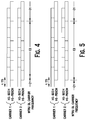
- the WTRU may switch its downlink carrier from the anchor carrier to the non-anchor carrier (i.e., supplementary carrier) at the HS-SCCH sub-frame boundary and switch back at the end of a subsequent HS-PDSCH subframe.
- Figure 4 shows example carrier switch timing in accordance with this embodiment.
- the WTRU misses the last E-AGCH, E-RGCH, and E-HICH subframe that start before the switch to the non-anchor carrier and all subsequent E-AGCH, E-RGCH, and E-HICH subframes up to and including the subframe that start before the end of the last HS-PDSCH subframe on the non-anchor carrier.
- the last HS-SCCH subframe on the non-anchor carrier that starts before the end of the last HS-PDSCH subframe is also lost.
- the WTRU may switch its downlink carrier at the HS-PDSCH sub-frame boundary.
- Figure 5 shows example carrier switch timing in accordance with this alternative embodiment.
- the Node-B may transmit the first two slots of the HS-SCCH subframe on the pre-switch carrier and transmit the last slot of the HS-SCCH subframe on the post-switch carrier.
- One advantage of this embodiment is that the WTRU does not miss an HS-DSCH sub-frame when it switches from one carrier to another.
- the E-AGCH subframe boundary is synchronized with the HS-PDSCH subframe boundary, loss of E-AGCH subframes is minimized.
- a guard interval may be included before every carrier switching. This guard interval may be necessary to allow the receiver to tune and synchronize to the newly selected downlink carrier. During this guard interval, the WTRU may not receive any control or data messages from any Node-B.
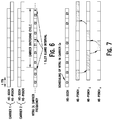
- Figure 6 shows an example downlink carrier switching with two downlink carriers with one radio slot of guard intervals and a carrier switching cycle of 6 TTIs.
- This guard interval may be predefined. This guard interval may have a duration of one radio slot to maintain the existing timing among data and control channels.
- the network may configure the WTRU with a specific guard interval, which may be cell-specific.
- the timing or behavior of the various downlink control channels needs to be modified to take into consideration the guard intervals.
- the E-HICH has a strict timing to comply to.
- the WTRU misses that interval from the transmitted signal.
- the network may transmit the E-HICH with a higher power when the network knows that the E-HICH transmission will fall during a guard interval (similar to the compress mode gaps in the uplink).
- the WTRU may not expect an E-HICH during the guard interval and interprets the missing E-HICH as a negative acknowledgement (NACK) and therefore systematically performs a HARQ retransmission.
- NACK negative acknowledgement
- the additional HARQ retransmission may be performed regardless of the maximum number of HARQ retransmissions allowed for that HARQ process.
- the WTRU may not transmit in a HARQ process that is known to have its corresponding E-HICH fall during a guard interval.
- the WTRU needs to report a channel quality indicator (CQI) of all downlink carriers.
- the WTRU may report the CQI for one downlink carrier in each HS-DPCCH subframe.
- the downlink carrier for which the CQI is reported is the carrier that the WTRU is receiving on according to the pattern for an HS-PDSCH subframe that is received X ms later or earlier.
- the WTRU evaluates the CQI by measuring the CPICH during the subframe received X ms earlier on the corresponding carrier.
- the WTRU may report the CQI for more than one carrier in each HS-DPCCH subframe. For instance, if there are two downlink carriers (including the anchor carrier) the WTRU may report two CQIs.
- the WTRU may in principle transmit continuously on the uplink since the uplink carrier is not switched.
- the downlink control channels required to control the uplink transmissions (e.g., F-DPCH, E-AGCH, E-HICH, E-RGCH, etc.), that are transmitted on the anchor carrier may not be available for all subframes since the WTRU may be receiving sometimes on a non-anchor carrier.
- the WTRU may not transmit an E-DCH during subframes for which the corresponding E-AGCH, E-RGCH, or E-HICH subframes (as per the conventional timing relationship) are not received.
- the WTRU may be allowed to transmit non-scheduled transmissions on an E-DCH during subframes for which the corresponding E-AGCH subframes are not received.
- the WTRU may be allowed to retransmit a MAC-e or MAC-i protocol data unit (PDU) as if a HARQ NACK had been transmitted over the E-HICH.
- the WTRU may be allowed to transmit the DPCCH, HS-DPCCH, E-DPCCH or E-DPDCH if the F-DPCH was received a certain number of slots earlier.
- N the number of HARQ processes that may be used across all downlink carriers. This would allow HARQ retransmissions on different carriers and simplify signaling mechanisms.
- Embodiments for multi-carrier operation with a receiver capable of operating with two carriers simultaneously are explained hereafter.
- the embodiments equivalently apply to a WTRU equipped with two receivers operating simultaneously, each being capable of receiving on a single carrier.
- the embodiments are also applicable to WTRUs with a receiver having a capability of processing on more than two carriers simultaneously, or a WTRU with multiple receivers for receiving multiple carriers.
- the following embodiments may apply to an evolved HSPA system and WTRU. They may also apply to a LTE-advanced (LTE-A) system and WTRU.
- LTE-A LTE-advanced
- the downlink control channels physical downlink control channel (PDCCH) and physical HARQ indicator channel (PHICH) together may be used in place of a set of F-DPCH, E-AGCH, E-RGCH and E-HICH.
- the physical channels PDCCH and physical downlink shared channel (PDSCH) may be used in place of the HS-SCCH and HS-PDSCH, respectively.
- a cell radio network temporary identity C-RNTI may be used in place of the H-RNTI or E-RNTI.
- a subset of downlink control channels may be received on the anchor carrier.
- Other downlink control or data physical channels such as HS-SCCH and/or HS-PDSCH, may be received from any downlink carrier.
- the receiver of the WTRU is tuned to the anchor carrier to ensure proper reception of the control channels.
- the receiver may also be tuned to any other downlink carrier at any given time in order to receive downlink traffic over the HS-DSCH. Alternatively, the receiver may be tuned to any two or more carriers.
- the WTRU monitors the F-DPCH, E-AGCH, E-RGCH, and E-HICH from the anchor carrier.
- the WTRU monitors the HS-SCCH and HS-PDSCH on more than one (Nc) downlink carriers according to the mapping between the Nc HS-DSCH transport channels and the downlink carriers.
- the network Upon radio resource control (RRC) connection setup or upon transitioning to the CELL_DCH state, the network configures the WTRU with the Nc downlink carrier information. More specifically, the network may configure, but is not limited to, the CPICH information, HS-DSCH radio network temporary identity (H-RNTI), HS-SCCH frequency information, and other parameters that may be required.
- the H-RNTI and HS-SCCH may not need to be configured for all carriers.
- a different set of parameters may be configured for LTE, LTE-A, or other types of systems.
- the change of downlink carrier may follow a pre-determined pattern or a pattern signaled from a higher layer.
- the WTRU may perform a fast and dynamic downlink carrier switching under the control of the Node B.
- the scheduling of the WTRU may be signaled to the WTRU, for example, via an HS-SCCH on the anchor carrier.
- the WTRU may monitor one HS-SCCH on the anchor carrier to obtain the information required to decode the data (such as the code set, the modulation format, the HARQ process, redundancy version (RV), etc. and the carrier in which the data is being scheduled).
- the information required to decode the data may include information pertaining to the allocated sub-carriers as per the used downlink control information (DCI) format of the PDCCH.
- DCI downlink control information
- the WTRU may monitor the HS-SCCH on the anchor carrier and move directly to the HS-PDSCH of the indicated downlink carrier.
- the WTRU may monitor the PDCCH on the anchor carrier and move directly to the PDSCH of the indicated downlink carrier.
- an additional bit(s) may be included in the HS-SCCH to explicitly indicate the carrier number (i.e., an index to the downlink carrier).
- the carrier information may be implicitly indicated, for example via the use of different H-RNTI. More specifically, the network may configure a different H-RNTI for each downlink carrier.
- the WTRU Upon decoding the H-RNTI in the HS-SCCH, the WTRU determines the downlink carrier associated with the decoded H-RNTI in which to monitor the HS-PDSCH.
- the carrier information may be indicated by the HS-SCCH code number such that a different channelization code may implicitly indicate the downlink carrier number.
- the carrier information may be indicated by the HARQ process number. HARQ processes may be allocated per downlink carrier and depending on the HARQ process signaled on the HS-SCCH the WTRU may detect which downlink carrier it corresponds to.
- the HS-SCCH may indicate the information X TTIs or slots in advance, where X may be equal to 0 (i.e., same timing as for current systems is maintained) or any arbitrary value predefined or signaled by the network.
- Figure 7 shows an example fast dynamic carrier scheduling over the HS-SCCH in accordance with this embodiment, where X is set to zero. If a different timing requirement is set, the WTRU may start monitoring the HS-PDSCH X slots or TTI after the reception of the HS-SCCH. In case of an LTE system, the WTRU may start monitoring the PDSCH X slots or TTIs after the reception of the PDCCH.
- the downlink carrier scheduling information is indicated via the HS-SCCH on the anchor carrier.
- the WTRU receives the HS-SCCH on the anchor carrier and switches the other carrier to receive the HS-PDSCH in accordance with the scheduling information received via the HS-SCCH.
- the carrier information may be contained in Part 2 as well. This would allow the WTRU to fully decode the three time slots of the HS-SCCH.
- the network may schedule the WTRU on the HS-PDSCH of the anchor carrier and additionally on the HS-PDSCH of other carrier(s). This may be done with the use of two H-RNTIs, one H-RNTI for the anchor carrier and the other H-RNTI for other carriers.
- two sets of HS-SCCH codes may be used, or two sets of HARQ processes may be configured. For instance, the first eight HARQ processes may be used for the anchor carrier, and the other set of HARQ processes may be shared among other carriers.
- Explicit carrier signaling may also be used, and the network may schedule the WTRU on two downlink carriers in the same TTI using two different HS-SCCH codes.
- the WTRU may perform slower dynamic switching under the control of the Node-B.
- the slower dynamic switching may be controlled by L1 or L2 signaling in the anchor cell or alternatively in any of the other cells the WTRU is monitoring.
- An HS-SCCH order may be used to indicate the downlink carrier the WTRU should switch to.
- the HS-SCCH order may include an order bit(s) for carrier switching and an information bit(s) to indicate the downlink carrier number the WTRU should start monitoring.
- the WTRU switches to the indicated downlink carrier, X slots or TTIs after the reception of the HS-SCCH order, where X may be 0 or any other predefined or configured value (e.g., 12 slots) and monitoring the HS-SCCH on the indicated downlink carrier.
- the WTRU may continue to monitor the HS-SCCH and the HS-PDSCH on the carrier until another order is received on the anchor carrier or on the supplementary carrier.
- Figure 8 shows an example of slower dynamic carrier scheduling using an HS-SCCH order, where the HS-SCCH orders are provided in the anchor carrier and X is equal to 0.
- the WTRU switches the supplementary carrier to carrier 2 (C2) to carrier n (Cn) to carrier 3 (C3) as the HS-SCCH order on the anchor carrier indicates.
- the HS-SCCH order for carrier change may be provided in the supplementary carrier.
- the WTRU receives an HS-SCCH order for carrier switch on carrier 2 and switches to carrier n after X slots or TTIs, and receives an HS-SCCH order for carrier switch on carrier n and moves to carrier 3 after X slots or TTIs.
- the network may configure the WTRU with an H-RNTI for each carrier.
- the WTRU moves to the indicated carrier it monitors the HS-SCCH for the corresponding H-RNTI.
- an H-RNTI that is common to all supplementary carriers may be assigned.
- an L2 message may be used, (e.g., MAC-hs/ehs PDU).
- the carrier indication may be included in the payload of the MAC PDU or in the header part, (e.g., may be indicated by a special value of the logical channel identity (LCH-ID)).
- the receiver of the WTRU may be tuned to the anchor carrier and one (or more) of the supplementary carriers, while the supplementary carrier to be tuned is dynamically switched from one supplementary carrier to another.
- the receiver may be tuned to any two (or more) downlink carriers.
- the switching time for the receiver may follow one of the embodiments disclosed above; (e.g., embodiments related to Figures 4-6 ).
- the ACK/NACK feedback for the supplementary carrier may be provided as in the conventional HSDPA procedures. Since the WTRU is monitoring one of the supplementary carriers at a time there is no ambiguity in the ACK/NACK feedback. Since the WTRU is monitoring the anchor carrier the CQI reporting for the anchor carrier may follow the conventional HSDPA procedure. However, in order to report the CQI of the supplementary carriers the WTRU may follow the following rules. Each carrier may have a corresponding subframe number during which the WTRU is allowed to measure and report the CQI. The network knows the mapping, (i.e., the configured subframes for each downlink carrier), and thus knows for which downlink carrier the CQI is being reported on the feedback channel. Alternatively, a strict timing between the downlink carrier in which data is received and the reporting may be defined. Alternatively, the CQI format in the HS-DPCCH may be modified to explicitly indicate the carrier number.
- the WTRU may not be monitoring all the downlink carriers it may not be able to measure and provide CQI reports for all downlink carriers.
- the CQI reporting is a useful measure to help the scheduler in the network.
- the WTRU may be configured to measure and report when receiving data from a carrier. Alternatively, the WTRU may be configured with a measurement period to tune to each carrier and perform measurements. The pattern may be defined by the network or the measurement may be performed in accordance with a predefined formula, for example, based on the H-RNTI. The receiver may perform the measurement only on the supplementary carrier. If discontinuous reception (DRX) is configured the WTRU may use the DRX periods to take measurements.
- DRX discontinuous reception
- ROM read only memory
- RAM random access memory
- register cache memory
- semiconductor memory devices magnetic media such as internal hard disks and removable disks, magneto-optical media, and optical media such as CD-ROM disks, and digital versatile disks (DVDs).
- Suitable processors include, by way of example, a general purpose processor, a special purpose processor, a conventional processor, a digital signal processor (DSP), a plurality of microprocessors, one or more microprocessors in association with a DSP core, a controller, a microcontroller, Application Specific Integrated Circuits (ASICs), Field Programmable Gate Arrays (FPGAs) circuits, any other type of integrated circuit (IC), and/or a state machine.
- DSP digital signal processor
- ASICs Application Specific Integrated Circuits
- FPGAs Field Programmable Gate Arrays
- a processor in association with software may be used to implement a radio frequency transceiver for use in a wireless transmit receive unit (WTRU), user equipment (UE), terminal, base station, radio network controller (RNC), or any host computer.
- the WTRU may be used in conjunction with modules, implemented in hardware and/or software, such as a camera, a video camera module, a videophone, a speakerphone, a vibration device, a speaker, a microphone, a television transceiver, a hands free headset, a keyboard, a Bluetooth® module, a frequency modulated (FM) radio unit, a liquid crystal display (LCD) display unit, an organic light-emitting diode (OLED) display unit, a digital music player, a media player, a video game player module, an Internet browser, and/or any wireless local area network (WLAN) or Ultra Wide Band (UWB) module.
- WLAN wireless local area network
- UWB Ultra Wide Band
Landscapes
- Engineering & Computer Science (AREA)
- Signal Processing (AREA)
- Computer Networks & Wireless Communication (AREA)
- Mobile Radio Communication Systems (AREA)
Applications Claiming Priority (4)
| Application Number | Priority Date | Filing Date | Title |
|---|---|---|---|
| US11011808P | 2008-10-31 | 2008-10-31 | |
| EP12183424.6A EP2533454B1 (en) | 2008-10-31 | 2009-10-31 | Method and apparatus for utilizing multiple carriers in high speed packet access communications |
| PCT/US2009/062896 WO2010051511A2 (en) | 2008-10-31 | 2009-10-31 | Method and apparatus for utilizing multiple carriers in high speed packet access communications |
| EP09749279A EP2356766A2 (en) | 2008-10-31 | 2009-10-31 | Method and apparatus for utilizing multiple carriers in high speed packet access communications |
Related Parent Applications (3)
| Application Number | Title | Priority Date | Filing Date |
|---|---|---|---|
| EP12183424.6A Division EP2533454B1 (en) | 2008-10-31 | 2009-10-31 | Method and apparatus for utilizing multiple carriers in high speed packet access communications |
| EP12183424.6A Division-Into EP2533454B1 (en) | 2008-10-31 | 2009-10-31 | Method and apparatus for utilizing multiple carriers in high speed packet access communications |
| EP09749279A Division EP2356766A2 (en) | 2008-10-31 | 2009-10-31 | Method and apparatus for utilizing multiple carriers in high speed packet access communications |
Publications (1)
| Publication Number | Publication Date |
|---|---|
| EP3627748A1 true EP3627748A1 (en) | 2020-03-25 |
Family
ID=41611324
Family Applications (3)
| Application Number | Title | Priority Date | Filing Date |
|---|---|---|---|
| EP19199421.9A Pending EP3627748A1 (en) | 2008-10-31 | 2009-10-31 | Method and apparatus for utilizing multiple carriers in high speed packet access communications |
| EP12183424.6A Active EP2533454B1 (en) | 2008-10-31 | 2009-10-31 | Method and apparatus for utilizing multiple carriers in high speed packet access communications |
| EP09749279A Withdrawn EP2356766A2 (en) | 2008-10-31 | 2009-10-31 | Method and apparatus for utilizing multiple carriers in high speed packet access communications |
Family Applications After (2)
| Application Number | Title | Priority Date | Filing Date |
|---|---|---|---|
| EP12183424.6A Active EP2533454B1 (en) | 2008-10-31 | 2009-10-31 | Method and apparatus for utilizing multiple carriers in high speed packet access communications |
| EP09749279A Withdrawn EP2356766A2 (en) | 2008-10-31 | 2009-10-31 | Method and apparatus for utilizing multiple carriers in high speed packet access communications |
Country Status (8)
| Country | Link |
|---|---|
| US (6) | US8305998B2 (OSRAM) |
| EP (3) | EP3627748A1 (OSRAM) |
| JP (2) | JP2012507959A (OSRAM) |
| KR (2) | KR101642538B1 (OSRAM) |
| CN (2) | CN104243122B (OSRAM) |
| AR (1) | AR074186A1 (OSRAM) |
| TW (3) | TWI498030B (OSRAM) |
| WO (1) | WO2010051511A2 (OSRAM) |
Families Citing this family (51)
| Publication number | Priority date | Publication date | Assignee | Title |
|---|---|---|---|---|
| US8095099B2 (en) * | 2007-03-09 | 2012-01-10 | Bhaskar Patel | Multiple radio receive chain wireless communication devices |
| US8036658B2 (en) * | 2007-05-17 | 2011-10-11 | Arumugam Govindswamy | Method and apparatus to improve network acquisition |
| CN101904198A (zh) * | 2007-12-21 | 2010-12-01 | 爱立信电话股份有限公司 | 移动电信网络中的方法和布置 |
| WO2009097481A1 (en) | 2008-02-01 | 2009-08-06 | Interdigital Patent Holdings, Inc. | Method and apparatus for serving high speed downlink shared channel cell change |
| US8699467B2 (en) * | 2008-03-25 | 2014-04-15 | Telefonaktiebolaget Lm Ericsson (Publ) | Anchor carrier selection in multi-carrier wireless network |
| EP3554170A1 (en) | 2008-10-20 | 2019-10-16 | InterDigital Patent Holdings, Inc. | Carrier aggregation |
| EP3627748A1 (en) | 2008-10-31 | 2020-03-25 | InterDigital Patent Holdings, Inc. | Method and apparatus for utilizing multiple carriers in high speed packet access communications |
| CN104980260A (zh) | 2008-11-21 | 2015-10-14 | 交互数字专利控股公司 | 激活/去激活多个次级载波的方法、wtru及处理drx/dtx的方法 |
| US8385281B2 (en) | 2009-01-30 | 2013-02-26 | Interdigital Patent Holdings, Inc. | Method and apparatus for component carrier aggregation in wireless communications |
| US8199666B2 (en) * | 2009-02-02 | 2012-06-12 | Texas Instruments Incorporated | Transmission of acknowledge/not-acknowledge with repetition |
| KR101863520B1 (ko) * | 2009-03-16 | 2018-05-31 | 블랙베리 리미티드 | 다운링크 캐리어 집합을 위한 harq 프로세스 번호 관리 |
| US8416706B2 (en) * | 2009-03-17 | 2013-04-09 | Qualcomm Incorporated | Apparatus and method for dual-cell high-speed uplink packet access |
| KR101524000B1 (ko) * | 2009-03-17 | 2015-06-10 | 삼성전자주식회사 | 이동통신시스템에서 하향링크 제어정보의 송수신 방법 및 장치 |
| EP2424139A4 (en) * | 2009-04-24 | 2016-05-18 | Lg Electronics Inc | METHOD AND DEVICE FOR TRANSMITTING AND RECEIVING CONTROL SIGNALS FOR MIXING SUPPLEMENTS IN A TRANSMISSION |
| GB2469800A (en) | 2009-04-27 | 2010-11-03 | Nec Corp | Communications system |
| US8848601B2 (en) * | 2009-08-21 | 2014-09-30 | Blackberry Limited | System and method for carrier activation |
| US8848623B2 (en) * | 2009-08-21 | 2014-09-30 | Blackberry Limited | System and method for channel timing offset |
| CN101998603A (zh) * | 2009-08-24 | 2011-03-30 | 中兴通讯股份有限公司 | 信干比目标值的发送/获取方法及服务无线电网络控制器 |
| US20120269148A1 (en) * | 2009-11-11 | 2012-10-25 | Telefonaktiebolaget L M Ericsson (Publ) | Methods and Devices for Switching Anchor Carrier |
| ES2902634T3 (es) * | 2009-12-14 | 2022-03-29 | Ericsson Telefon Ab L M | Método y disposición para reconfigurar el mapeo de un campo indicador de portadora a una portadora de componentes |
| KR101800016B1 (ko) * | 2010-01-21 | 2017-11-22 | 엘지전자 주식회사 | 다중 반송파 시스템에서 하이브리드 자동 재전송 요청 수행 방법 및 장치 |
| US9420608B2 (en) * | 2010-04-16 | 2016-08-16 | Samsung Electronics Co., Ltd | Access control method and device for machine type communications in a wireless communication network environment |
| US9258840B2 (en) * | 2010-05-13 | 2016-02-09 | Samsung Electronics Co., Ltd | Method and system of managing voice call and IP media sessions in a wireless network environment |
| EP2638755A1 (en) * | 2010-11-11 | 2013-09-18 | Telefonaktiebolaget LM Ericsson (PUBL) | Multi-carrier steering in rrc state cell_fach |
| CN102076101B (zh) * | 2011-01-28 | 2015-06-03 | 中兴通讯股份有限公司 | 一种多载波用户联合调度方法、基站及系统 |
| CN103503348B (zh) * | 2011-05-03 | 2016-06-22 | Lg电子株式会社 | 用于在无线通信系统中终端从基站接收下行链路信号的方法及其装置 |
| CN103597772B (zh) * | 2011-06-01 | 2018-10-26 | 诺基亚通信公司 | 用于信令布置的设备和方法 |
| US20130021987A1 (en) * | 2011-07-19 | 2013-01-24 | Industrial Technology Research Institute | Method of Performing Retransmissions by Using Different Resources and Related Communication Device |
| US20130021969A1 (en) * | 2011-07-19 | 2013-01-24 | Industrial Technology Research Institute | Method of Performing Retransmissions via Different Transmission Points and Related Communication Device |
| US20130155968A1 (en) | 2011-08-12 | 2013-06-20 | Interdigital Patent Holdings, Inc. | Method for channel estimation and pilot reception for remote radio head (rrh) deployments and multi-antenna downlink mimo |
| EP2761956A1 (en) * | 2011-09-26 | 2014-08-06 | Interdigital Patent Holdings, Inc. | Inter -band carrier aggregation |
| US9161357B2 (en) * | 2012-02-01 | 2015-10-13 | Qualcomm Incorporated | Method and apparatus for white space operation by a mobile entity |
| CN103313379B (zh) * | 2012-03-16 | 2017-11-03 | 中兴通讯股份有限公司 | 控制信道传输方法及装置 |
| US9036603B2 (en) | 2012-08-03 | 2015-05-19 | Intel Corporation | Network assistance for device-to-device discovery |
| US8913518B2 (en) | 2012-08-03 | 2014-12-16 | Intel Corporation | Enhanced node B, user equipment and methods for discontinuous reception in inter-ENB carrier aggregation |
| CN104040925B (zh) * | 2012-11-02 | 2017-05-31 | 华为技术有限公司 | 一种质量测量方法、系统及用户设备 |
| EP2924901A4 (en) * | 2012-11-22 | 2015-10-28 | Huawei Tech Co Ltd | METHOD FOR CHANGING BANDWIDTH, NETWORK SIDE DEVICE, AND USER EQUIPMENT |
| CN103198843A (zh) * | 2013-02-06 | 2013-07-10 | 方科峰 | 基于语音键盘的影音系统应用方法 |
| US10123323B2 (en) * | 2014-10-24 | 2018-11-06 | Qualcomm Incorporated | Dynamic uplink/downlink frame structure for enhanced component carriers |
| US10687285B2 (en) | 2015-04-30 | 2020-06-16 | Industrial Technology Research Institute | Control channel and data channel power allocation among multiple user equipment |
| WO2017101018A1 (zh) | 2015-12-15 | 2017-06-22 | 广东欧珀移动通信有限公司 | 载波跳转的方法、终端和基站 |
| CN107294681A (zh) * | 2016-04-01 | 2017-10-24 | 夏普株式会社 | 配置非锚物理资源块的方法和基站、确定非锚物理资源块位置的方法和用户设备 |
| CN107846710A (zh) * | 2016-09-20 | 2018-03-27 | 北京信威通信技术股份有限公司 | 一种非锚载波的配置方法及装置 |
| EP3512142B1 (en) * | 2017-02-24 | 2021-10-06 | Guangdong Oppo Mobile Telecommunications Corp., Ltd. | Communication method, terminal device and network device |
| CN108934191B (zh) | 2017-03-23 | 2021-06-15 | 瑞典爱立信有限公司 | 确定定时器配置的方法和设备 |
| WO2019134074A1 (en) * | 2018-01-03 | 2019-07-11 | Lenovo (Beijing) Limited | Non-anchor carrier frequency offset indication |
| CN110972177B (zh) * | 2018-09-28 | 2022-10-11 | 华为技术有限公司 | 一种链路检测方法及装置 |
| WO2021035595A1 (en) * | 2019-08-29 | 2021-03-04 | Qualcomm Incorporated | Configuring guard intervals for multiple uplink carriers |
| WO2021098046A1 (en) * | 2019-11-21 | 2021-05-27 | Qualcomm Incorporated | Collision handling for component carrier switching |
| CN111212452B (zh) * | 2020-01-13 | 2022-05-17 | 海能达通信股份有限公司 | 语音通信的越区切换方法、通信系统、终端和存储介质 |
| EP4213405A1 (en) | 2022-01-13 | 2023-07-19 | Nokia Technologies Oy | Multiple antenna arrangements |
Citations (2)
| Publication number | Priority date | Publication date | Assignee | Title |
|---|---|---|---|---|
| WO2002035873A2 (en) * | 2000-10-24 | 2002-05-02 | Ericsson Inc | Systems, methods, and computer program products for providing traffic frequency diversification in a cellular communication system |
| EP1758273A1 (en) * | 2005-08-22 | 2007-02-28 | Matsushita Electric Industrial Co., Ltd. | Method and apparatus for reducing a transmission time interval |
Family Cites Families (46)
| Publication number | Priority date | Publication date | Assignee | Title |
|---|---|---|---|---|
| US4797879A (en) * | 1987-06-05 | 1989-01-10 | American Telephone And Telegraph Company At&T Bell Laboratories | Packet switched interconnection protocols for a star configured optical lan |
| KR100754552B1 (ko) * | 2001-12-28 | 2007-09-05 | 삼성전자주식회사 | 고속 순방향 패킷 접속 방식을 사용하는 통신 시스템에서고속 공통 제어 채널 송수신 장치 및 방법 |
| CN1748435B (zh) * | 2003-02-13 | 2010-05-05 | 诺基亚公司 | 改进的上行链路信号检测和降低的上行链路信号功率的系统和方法 |
| JP4195716B2 (ja) | 2003-06-27 | 2008-12-10 | ノキア コーポレイション | 無線通信ネットワークでのパケット集約のための方法及び装置 |
| US20050036474A1 (en) * | 2003-08-13 | 2005-02-17 | Interdigital Technology Corporation | System and method for efficiently allocating wireless resources |
| US7630688B2 (en) | 2004-03-31 | 2009-12-08 | Interdigital Technology Corporation | Mitigation of wireless transmit/receive unit (WTRU) to WTRU interference using multiple antennas or beams |
| SE0402210D0 (sv) * | 2004-09-13 | 2004-09-13 | Ericsson Telefon Ab L M | a telecommunication system |
| US8693383B2 (en) | 2005-03-29 | 2014-04-08 | Qualcomm Incorporated | Method and apparatus for high rate data transmission in wireless communication |
| EP1878294A2 (en) * | 2005-04-25 | 2008-01-16 | Nokia Corporation | Method, apparatus and computer program providing high-speed downlink packet access (hsdpa) cell change without rrc acknowledgment |
| US7961700B2 (en) * | 2005-04-28 | 2011-06-14 | Qualcomm Incorporated | Multi-carrier operation in data transmission systems |
| CN101213801B (zh) | 2005-05-27 | 2012-12-12 | 诺基亚公司 | 用于网元、用户设备和系统的扩展的信令能力的方法和装置 |
| US20070049305A1 (en) * | 2005-08-25 | 2007-03-01 | Lucent Technologies, Inc. | Method for adjusting timing of channels in a wireless communications system |
| GB2439367A (en) | 2006-06-20 | 2007-12-27 | Nec Corp | Separate ACK/NACK channel from a control channel |
| US8831603B2 (en) * | 2006-06-30 | 2014-09-09 | Agere Systems Llc | Communications circuit and method with reduced power consumption |
| US9143288B2 (en) | 2006-07-24 | 2015-09-22 | Qualcomm Incorporated | Variable control channel for a wireless communication system |
| WO2008035905A1 (en) * | 2006-09-19 | 2008-03-27 | Samsung Electronics Co., Ltd. | Method and apparatus for performing discontinuous reception operation by connected mode user equipment in a mobile communication system |
| KR101026447B1 (ko) | 2006-12-01 | 2011-04-07 | 인터디지탈 테크날러지 코포레이션 | 불연속 송신 및 수신을 제어하기 위한 방법 및 장치 |
| DE102007002385A1 (de) | 2007-01-10 | 2008-07-24 | Bundesdruckerei Gmbh | Dokument mit einem optischen Sender |
| US8169957B2 (en) | 2007-02-05 | 2012-05-01 | Qualcomm Incorporated | Flexible DTX and DRX in a wireless communication system |
| CN101247171A (zh) | 2007-02-16 | 2008-08-20 | 北京三星通信技术研究有限公司 | 使用约定资源发送控制信道的设备和方法 |
| KR101206118B1 (ko) | 2007-03-14 | 2012-11-29 | 인터디지탈 테크날러지 코포레이션 | 진화된 utra에서의 ack/nack 및 송신 전력 제어 피드백의 송신 |
| US8582429B2 (en) | 2007-03-15 | 2013-11-12 | Interdigital Technology Corporation | Resource allocation and signalings for group scheduling in wireless communications |
| KR20080084533A (ko) | 2007-03-16 | 2008-09-19 | 엘지전자 주식회사 | 이동통신 시스템에서의 데이터 통신 방법 |
| CN101653024B (zh) | 2007-04-27 | 2013-03-27 | 艾利森电话股份有限公司 | 用于在无线用户终端中节省功率的方法和装置 |
| KR101468490B1 (ko) | 2007-05-02 | 2014-12-10 | 삼성전자주식회사 | 무선 통신 시스템에서 제어 채널들의 집합을 한정하여 송수신하는 방법 및 장치 |
| KR101593701B1 (ko) | 2007-06-20 | 2016-02-12 | 모토로라 모빌리티 엘엘씨 | 후보 제어 채널들을 위한 베이스 유닛 및 디바이스, 및 그 방법 |
| JP5001429B2 (ja) | 2007-08-22 | 2012-08-15 | エルジー エレクトロニクス インコーポレイティド | 無線通信システムにおける無線資源割り当て方法 |
| EP3024294B1 (en) | 2007-08-22 | 2018-06-06 | LG Electronics, Inc. | Allocating radio resources in a wireless communication system |
| US8638728B2 (en) | 2007-09-06 | 2014-01-28 | Qualcomm Incorporated | Blind decoding in a mobile environment |
| KR101448309B1 (ko) | 2007-09-28 | 2014-10-08 | 엘지전자 주식회사 | 무선통신 시스템에서 하향링크 제어채널 모니터링 방법 |
| US8687745B2 (en) | 2007-12-13 | 2014-04-01 | Telefonaktiebolaget Lm Ericsson (Publ) | Method and apparatus for blind decoding |
| KR100943908B1 (ko) | 2008-02-19 | 2010-02-24 | 엘지전자 주식회사 | Pdcch를 통한 제어 정보 송수신 방법 |
| CN101981854A (zh) | 2008-03-25 | 2011-02-23 | 诺基亚公司 | 在具有NxPDCCH结构的LTE-A TDD中的PUCCH上的ACK/NACK传输 |
| US8477734B2 (en) * | 2008-03-25 | 2013-07-02 | Qualcomm Incorporated | Reporting of ACK and CQI information in a wireless communication system |
| US8711811B2 (en) | 2008-06-19 | 2014-04-29 | Telefonaktiebolaget L M Ericsson (Publ) | Identifying multi-component carrier cells |
| WO2009157861A1 (en) | 2008-06-24 | 2009-12-30 | Telefonaktiebolaget L M Ericsson (Publ) | Methods and arrangements for frequency selective repetition |
| EP2308184A4 (en) | 2008-07-30 | 2014-08-20 | Lg Electronics Inc | METHOD AND DEVICE FOR PDCCH MONITORING IN A WIRELESS COMMUNICATION SYSTEM |
| CN102224758B (zh) | 2008-09-23 | 2015-02-04 | 诺基亚公司 | 针对扩展的带宽的优化的上行链路控制信令 |
| EP3554170A1 (en) | 2008-10-20 | 2019-10-16 | InterDigital Patent Holdings, Inc. | Carrier aggregation |
| EP3627748A1 (en) | 2008-10-31 | 2020-03-25 | InterDigital Patent Holdings, Inc. | Method and apparatus for utilizing multiple carriers in high speed packet access communications |
| US20100120442A1 (en) | 2008-11-12 | 2010-05-13 | Motorola, Inc. | Resource sharing in relay operations within wireless communication systems |
| CN102246553A (zh) | 2008-12-15 | 2011-11-16 | 诺基亚公司 | 用于扩展的带宽系统的下行链路控制和物理混合arq指示符信道(phich)配置 |
| US8385281B2 (en) | 2009-01-30 | 2013-02-26 | Interdigital Patent Holdings, Inc. | Method and apparatus for component carrier aggregation in wireless communications |
| US8358281B2 (en) | 2009-12-15 | 2013-01-22 | Apple Inc. | Device, method, and graphical user interface for management and manipulation of user interface elements |
| US8358218B2 (en) | 2010-03-02 | 2013-01-22 | Verifone, Inc. | Point of sale terminal having enhanced security |
| US20150103715A1 (en) * | 2013-10-14 | 2015-04-16 | Qualcomm Incorporated | Downlink control format indicator |
-
2009
- 2009-10-31 EP EP19199421.9A patent/EP3627748A1/en active Pending
- 2009-10-31 CN CN201410483704.9A patent/CN104243122B/zh not_active Expired - Fee Related
- 2009-10-31 US US12/610,284 patent/US8305998B2/en not_active Expired - Fee Related
- 2009-10-31 CN CN200980143434.4A patent/CN102204144B/zh active Active
- 2009-10-31 KR KR1020117029192A patent/KR101642538B1/ko active Active
- 2009-10-31 WO PCT/US2009/062896 patent/WO2010051511A2/en not_active Ceased
- 2009-10-31 EP EP12183424.6A patent/EP2533454B1/en active Active
- 2009-10-31 JP JP2011534834A patent/JP2012507959A/ja not_active Ceased
- 2009-10-31 EP EP09749279A patent/EP2356766A2/en not_active Withdrawn
- 2009-10-31 KR KR1020117012195A patent/KR101303709B1/ko not_active Expired - Fee Related
- 2009-11-02 AR ARP090104229A patent/AR074186A1/es unknown
- 2009-11-02 TW TW098137121A patent/TWI498030B/zh active
- 2009-11-02 TW TW104102764A patent/TWI569672B/zh active
- 2009-11-02 TW TW101146470A patent/TWI475917B/zh active
-
2012
- 2012-09-28 US US13/630,285 patent/US8804524B2/en active Active
-
2013
- 2013-01-28 JP JP2013013191A patent/JP2013138451A/ja active Pending
-
2014
- 2014-06-26 US US14/315,388 patent/US9137792B2/en not_active Expired - Fee Related
-
2015
- 2015-08-04 US US14/817,988 patent/US9549402B2/en not_active Expired - Fee Related
-
2016
- 2016-12-05 US US15/369,233 patent/US10021680B2/en active Active
-
2018
- 2018-06-11 US US16/005,304 patent/US10631283B2/en active Active
Patent Citations (2)
| Publication number | Priority date | Publication date | Assignee | Title |
|---|---|---|---|---|
| WO2002035873A2 (en) * | 2000-10-24 | 2002-05-02 | Ericsson Inc | Systems, methods, and computer program products for providing traffic frequency diversification in a cellular communication system |
| EP1758273A1 (en) * | 2005-08-22 | 2007-02-28 | Matsushita Electric Industrial Co., Ltd. | Method and apparatus for reducing a transmission time interval |
Non-Patent Citations (9)
| Title |
|---|
| "Basic Physical Layer Consideration for Enhanced DL in CELL_FACH state for 1.28Mcps TDD", 3GPP DRAFT; R1-080165(BASIC PHYSICAL LAYER CONSIDERATION FOR ENHANCED DL IN CELL_FACH STATE IN 1.28MCPS TDD), 3RD GENERATION PARTNERSHIP PROJECT (3GPP), MOBILE COMPETENCE CENTRE ; 650, ROUTE DES LUCIOLES ; F-06921 SOPHIA-ANTIPOLIS CEDEX ; FRANCE, vol. RAN WG1, no. Sevilla, Spain; 20080108, 8 January 2008 (2008-01-08), XP050108694 * |
| ERICSSON ET AL: "Text Proposal for DC-HSDPA assumptions and standards impact", 3GPP DRAFT; R1-082249 TEXT PROPOSAL FOR DC-HSDPA ASSUMPTIONS AND STANDARDS IMPACT, 3RD GENERATION PARTNERSHIP PROJECT (3GPP), MOBILE COMPETENCE CENTRE ; 650, ROUTE DES LUCIOLES ; F-06921 SOPHIA-ANTIPOLIS CEDEX ; FRANCE, vol. RAN WG1, no. Kansas City, USA; 20080523, 23 May 2008 (2008-05-23), XP050110541 * |
| HUAWEI: "Measurement scheme consideration of dual-cell mobility", 3GPP DRAFT; R2-084631, 3RD GENERATION PARTNERSHIP PROJECT (3GPP), MOBILE COMPETENCE CENTRE ; 650, ROUTE DES LUCIOLES ; F-06921 SOPHIA-ANTIPOLIS CEDEX ; FRANCE, no. Jeju; 20080819, 19 August 2008 (2008-08-19), XP050319633 * |
| MOULY M ET AL: "THE GSM SYSTEM FOR MOBILE COMMUNICATIONS. - Slow Frequency Hopping SFH -", 1 January 1993, GSM SYSTEM FOR MOBILE COMMUNICATIONS, LASSAY-LES-CHATEAUX, EUROPE MEDIA, FR, PAGE(S) 217 - 227, XP002089932 * |
| PHILIPS ET AL: "Control channel support for HSDPA Dual-Cell operation", 3GPP DRAFT; R1-082532, 3RD GENERATION PARTNERSHIP PROJECT (3GPP), MOBILE COMPETENCE CENTRE ; 650, ROUTE DES LUCIOLES ; F-06921 SOPHIA-ANTIPOLIS CEDEX ; FRANCE, vol. RAN WG1, no. Warsaw, Poland; 20080626, 26 June 2008 (2008-06-26), XP050110797 * |
| QUALCOMM EUROPE: "Cell Search and Association with Carriers", 3GPP DRAFT; R2-084403, 3RD GENERATION PARTNERSHIP PROJECT (3GPP), MOBILE COMPETENCE CENTRE ; 650, ROUTE DES LUCIOLES ; F-06921 SOPHIA-ANTIPOLIS CEDEX ; FRANCE, no. Jeju; 20080812, 12 August 2008 (2008-08-12), XP050319472 * |
| QUALCOMM EUROPE: "Introducing Dynamic Carrier Switching in DC-HSDPA", 3GPP DRAFT; R1-083313, 3RD GENERATION PARTNERSHIP PROJECT (3GPP), MOBILE COMPETENCE CENTRE ; 650, ROUTE DES LUCIOLES ; F-06921 SOPHIA-ANTIPOLIS CEDEX ; FRANCE, no. Jeju; 20080825, 25 August 2008 (2008-08-25), XP050316716 * |
| SIEMENS: "Encoding Frequency Parameters for Dual Carrier Assignments", 3GPP DRAFT; GP-061329_FREQUENCY_PARAMETER_ENCODING, 3RD GENERATION PARTNERSHIP PROJECT (3GPP), MOBILE COMPETENCE CENTRE ; 650, ROUTE DES LUCIOLES ; F-06921 SOPHIA-ANTIPOLIS CEDEX ; FRANCE, vol. TSG GERAN, no. Lisbon; 20060623, 23 June 2006 (2006-06-23), XP050016377 * |
| ZORAN KOSTIC ET AL: "Performance and Implementation of Dynamic Frequency Hopping in Limited-Bandwidth Cellular Systems", IEEE TRANSACTIONS ON WIRELESS COMMUNICATIONS, IEEE SERVICE CENTER, PISCATAWAY, NJ, US, vol. 1, no. 1, 1 January 2002 (2002-01-01), XP011064371, ISSN: 1536-1276 * |
Also Published As
Similar Documents
| Publication | Publication Date | Title |
|---|---|---|
| US10631283B2 (en) | Method and apparatus for utilizing multiple carriers in high speed packet access communications technical field | |
| US11750353B2 (en) | Controlling UE behavior for CSI/SRS reporting during DRX | |
| CN102742343B (zh) | 基站装置、移动站装置以及无线通信方法 | |
| EP2606593B1 (en) | Timing control in a multi-point high speed downlink packet access network | |
| EP3125628A1 (en) | Method and apparatus for multiple carrier utilization in wireless communications | |
| KR20130018135A (ko) | 듀얼 모드 단말의 성능 정보 보고 방법 및 장치 | |
| JP2016519478A (ja) | 無線通信システムにおいて端末間直接通信のためのディスカバリ信号の送信方法及びそのための装置 | |
| EP2856825A2 (en) | Common orders for a shared control channel | |
| EP3146758A1 (en) | Devices and methods for facilitating uplink transmissions on two or more carriers | |
| WO2014137262A1 (en) | System and methods for controlling the usage of a carrier |
Legal Events
| Date | Code | Title | Description |
|---|---|---|---|
| PUAI | Public reference made under article 153(3) epc to a published international application that has entered the european phase |
Free format text: ORIGINAL CODE: 0009012 |
|
| STAA | Information on the status of an ep patent application or granted ep patent |
Free format text: STATUS: REQUEST FOR EXAMINATION WAS MADE |
|
| 17P | Request for examination filed |
Effective date: 20190925 |
|
| AC | Divisional application: reference to earlier application |
Ref document number: 2533454 Country of ref document: EP Kind code of ref document: P Ref document number: 2356766 Country of ref document: EP Kind code of ref document: P |
|
| AK | Designated contracting states |
Kind code of ref document: A1 Designated state(s): AT BE BG CH CY CZ DE DK EE ES FI FR GB GR HR HU IE IS IT LI LT LU LV MC MK MT NL NO PL PT RO SE SI SK SM TR |
|
| STAA | Information on the status of an ep patent application or granted ep patent |
Free format text: STATUS: EXAMINATION IS IN PROGRESS |
|
| 17Q | First examination report despatched |
Effective date: 20211124 |