EP3619314B1 - Self-inactivating viral vector - Google Patents
Self-inactivating viral vector Download PDFInfo
- Publication number
- EP3619314B1 EP3619314B1 EP18723917.3A EP18723917A EP3619314B1 EP 3619314 B1 EP3619314 B1 EP 3619314B1 EP 18723917 A EP18723917 A EP 18723917A EP 3619314 B1 EP3619314 B1 EP 3619314B1
- Authority
- EP
- European Patent Office
- Prior art keywords
- protein
- viral
- virus
- vector
- agent
- Prior art date
- Legal status (The legal status is an assumption and is not a legal conclusion. Google has not performed a legal analysis and makes no representation as to the accuracy of the status listed.)
- Active
Links
Images












Classifications
-
- C—CHEMISTRY; METALLURGY
- C12—BIOCHEMISTRY; BEER; SPIRITS; WINE; VINEGAR; MICROBIOLOGY; ENZYMOLOGY; MUTATION OR GENETIC ENGINEERING
- C12N—MICROORGANISMS OR ENZYMES; COMPOSITIONS THEREOF; PROPAGATING, PRESERVING, OR MAINTAINING MICROORGANISMS; MUTATION OR GENETIC ENGINEERING; CULTURE MEDIA
- C12N15/00—Mutation or genetic engineering; DNA or RNA concerning genetic engineering, vectors, e.g. plasmids, or their isolation, preparation or purification; Use of hosts therefor
- C12N15/09—Recombinant DNA-technology
- C12N15/63—Introduction of foreign genetic material using vectors; Vectors; Use of hosts therefor; Regulation of expression
- C12N15/79—Vectors or expression systems specially adapted for eukaryotic hosts
- C12N15/85—Vectors or expression systems specially adapted for eukaryotic hosts for animal cells
- C12N15/86—Viral vectors
-
- C—CHEMISTRY; METALLURGY
- C07—ORGANIC CHEMISTRY
- C07K—PEPTIDES
- C07K14/00—Peptides having more than 20 amino acids; Gastrins; Somatostatins; Melanotropins; Derivatives thereof
- C07K14/005—Peptides having more than 20 amino acids; Gastrins; Somatostatins; Melanotropins; Derivatives thereof from viruses
-
- C—CHEMISTRY; METALLURGY
- C07—ORGANIC CHEMISTRY
- C07K—PEPTIDES
- C07K14/00—Peptides having more than 20 amino acids; Gastrins; Somatostatins; Melanotropins; Derivatives thereof
- C07K14/005—Peptides having more than 20 amino acids; Gastrins; Somatostatins; Melanotropins; Derivatives thereof from viruses
- C07K14/08—RNA viruses
- C07K14/145—Rhabdoviridae, e.g. rabies virus, Duvenhage virus, Mokola virus or vesicular stomatitis virus
-
- A—HUMAN NECESSITIES
- A01—AGRICULTURE; FORESTRY; ANIMAL HUSBANDRY; HUNTING; TRAPPING; FISHING
- A01K—ANIMAL HUSBANDRY; AVICULTURE; APICULTURE; PISCICULTURE; FISHING; REARING OR BREEDING ANIMALS, NOT OTHERWISE PROVIDED FOR; NEW BREEDS OF ANIMALS
- A01K2217/00—Genetically modified animals
- A01K2217/05—Animals comprising random inserted nucleic acids (transgenic)
- A01K2217/052—Animals comprising random inserted nucleic acids (transgenic) inducing gain of function
-
- A—HUMAN NECESSITIES
- A01—AGRICULTURE; FORESTRY; ANIMAL HUSBANDRY; HUNTING; TRAPPING; FISHING
- A01K—ANIMAL HUSBANDRY; AVICULTURE; APICULTURE; PISCICULTURE; FISHING; REARING OR BREEDING ANIMALS, NOT OTHERWISE PROVIDED FOR; NEW BREEDS OF ANIMALS
- A01K2217/00—Genetically modified animals
- A01K2217/20—Animal model comprising regulated expression system
- A01K2217/206—Animal model comprising tissue-specific expression system, e.g. tissue specific expression of transgene, of Cre recombinase
-
- A—HUMAN NECESSITIES
- A01—AGRICULTURE; FORESTRY; ANIMAL HUSBANDRY; HUNTING; TRAPPING; FISHING
- A01K—ANIMAL HUSBANDRY; AVICULTURE; APICULTURE; PISCICULTURE; FISHING; REARING OR BREEDING ANIMALS, NOT OTHERWISE PROVIDED FOR; NEW BREEDS OF ANIMALS
- A01K2227/00—Animals characterised by species
- A01K2227/10—Mammal
- A01K2227/105—Murine
-
- A—HUMAN NECESSITIES
- A01—AGRICULTURE; FORESTRY; ANIMAL HUSBANDRY; HUNTING; TRAPPING; FISHING
- A01K—ANIMAL HUSBANDRY; AVICULTURE; APICULTURE; PISCICULTURE; FISHING; REARING OR BREEDING ANIMALS, NOT OTHERWISE PROVIDED FOR; NEW BREEDS OF ANIMALS
- A01K2267/00—Animals characterised by purpose
- A01K2267/03—Animal model, e.g. for test or diseases
- A01K2267/0393—Animal model comprising a reporter system for screening tests
-
- A—HUMAN NECESSITIES
- A61—MEDICAL OR VETERINARY SCIENCE; HYGIENE
- A61K—PREPARATIONS FOR MEDICAL, DENTAL OR TOILETRY PURPOSES
- A61K38/00—Medicinal preparations containing peptides
-
- A—HUMAN NECESSITIES
- A61—MEDICAL OR VETERINARY SCIENCE; HYGIENE
- A61K—PREPARATIONS FOR MEDICAL, DENTAL OR TOILETRY PURPOSES
- A61K48/00—Medicinal preparations containing genetic material which is inserted into cells of the living body to treat genetic diseases; Gene therapy
- A61K48/005—Medicinal preparations containing genetic material which is inserted into cells of the living body to treat genetic diseases; Gene therapy characterised by an aspect of the 'active' part of the composition delivered, i.e. the nucleic acid delivered
-
- C—CHEMISTRY; METALLURGY
- C07—ORGANIC CHEMISTRY
- C07K—PEPTIDES
- C07K2319/00—Fusion polypeptide
-
- C—CHEMISTRY; METALLURGY
- C07—ORGANIC CHEMISTRY
- C07K—PEPTIDES
- C07K2319/00—Fusion polypeptide
- C07K2319/50—Fusion polypeptide containing protease site
-
- C—CHEMISTRY; METALLURGY
- C07—ORGANIC CHEMISTRY
- C07K—PEPTIDES
- C07K2319/00—Fusion polypeptide
- C07K2319/95—Fusion polypeptide containing a motif/fusion for degradation (ubiquitin fusions, PEST sequence)
-
- C—CHEMISTRY; METALLURGY
- C12—BIOCHEMISTRY; BEER; SPIRITS; WINE; VINEGAR; MICROBIOLOGY; ENZYMOLOGY; MUTATION OR GENETIC ENGINEERING
- C12N—MICROORGANISMS OR ENZYMES; COMPOSITIONS THEREOF; PROPAGATING, PRESERVING, OR MAINTAINING MICROORGANISMS; MUTATION OR GENETIC ENGINEERING; CULTURE MEDIA
- C12N2760/00—MICROORGANISMS OR ENZYMES; COMPOSITIONS THEREOF; PROPAGATING, PRESERVING, OR MAINTAINING MICROORGANISMS; MUTATION OR GENETIC ENGINEERING; CULTURE MEDIA ssRNA viruses negative-sense
- C12N2760/00011—Details
- C12N2760/20011—Rhabdoviridae
- C12N2760/20111—Lyssavirus, e.g. rabies virus
- C12N2760/20141—Use of virus, viral particle or viral elements as a vector
- C12N2760/20143—Use of virus, viral particle or viral elements as a vector viral genome or elements thereof as genetic vector
-
- C—CHEMISTRY; METALLURGY
- C12—BIOCHEMISTRY; BEER; SPIRITS; WINE; VINEGAR; MICROBIOLOGY; ENZYMOLOGY; MUTATION OR GENETIC ENGINEERING
- C12N—MICROORGANISMS OR ENZYMES; COMPOSITIONS THEREOF; PROPAGATING, PRESERVING, OR MAINTAINING MICROORGANISMS; MUTATION OR GENETIC ENGINEERING; CULTURE MEDIA
- C12N2770/00—MICROORGANISMS OR ENZYMES; COMPOSITIONS THEREOF; PROPAGATING, PRESERVING, OR MAINTAINING MICROORGANISMS; MUTATION OR GENETIC ENGINEERING; CULTURE MEDIA ssRNA viruses positive-sense
- C12N2770/00011—Details
- C12N2770/00022—New viral proteins or individual genes, new structural or functional aspects of known viral proteins or genes
-
- C—CHEMISTRY; METALLURGY
- C12—BIOCHEMISTRY; BEER; SPIRITS; WINE; VINEGAR; MICROBIOLOGY; ENZYMOLOGY; MUTATION OR GENETIC ENGINEERING
- C12N—MICROORGANISMS OR ENZYMES; COMPOSITIONS THEREOF; PROPAGATING, PRESERVING, OR MAINTAINING MICROORGANISMS; MUTATION OR GENETIC ENGINEERING; CULTURE MEDIA
- C12N2810/00—Vectors comprising a targeting moiety
- C12N2810/50—Vectors comprising as targeting moiety peptide derived from defined protein
-
- C—CHEMISTRY; METALLURGY
- C12—BIOCHEMISTRY; BEER; SPIRITS; WINE; VINEGAR; MICROBIOLOGY; ENZYMOLOGY; MUTATION OR GENETIC ENGINEERING
- C12N—MICROORGANISMS OR ENZYMES; COMPOSITIONS THEREOF; PROPAGATING, PRESERVING, OR MAINTAINING MICROORGANISMS; MUTATION OR GENETIC ENGINEERING; CULTURE MEDIA
- C12N2810/00—Vectors comprising a targeting moiety
- C12N2810/50—Vectors comprising as targeting moiety peptide derived from defined protein
- C12N2810/60—Vectors comprising as targeting moiety peptide derived from defined protein from viruses
- C12N2810/609—Vectors comprising as targeting moiety peptide derived from defined protein from viruses positive strand RNA viruses
Definitions
- the invention relates to a vector based on a virus from the order Mononegavirales, such as a rhabdovirus, and in particular a rabies virus vector. More specifically, it relates to a vector which, having transfected a target cell, is switchable between replication-competent and replication-incompetent forms. Amongst other applications, the invention avoids the cytotoxicity associated with current vectors based on Mononegavirales such as rabies virus vectors.
- Vectors based on viruses of the order Mononegavirales have considerable potential in various therapeutic, diagnostic and research contexts. Although these vectors can be engineered such that they do not propagate from a transfected cell, or are able to propagate only in a tightly controlled manner, they still show significant cytotoxicity to transfected cells which limits their application.
- neurotropic viruses particularly G-deleted rabies ( ⁇ G-Rabies) ( 12, 13 ), by spreading from neuron to neuron along circuit paths, provide a potential tool to gain genetic access to topologically defined neurons ( 13-16 ).
- the inventors have designed a viral vector which is capable of transfecting (and hence delivering a genetic payload to) a target cell, and which is switchable between an active state in which viral protein expression is possible and an inactive state in which viral protein expression is inhibited. Continued maintenance of the inactive state will typically result in the vector being eliminated from the host cell.
- the vector encodes a "replication modulator protein" which comprises a mononegaviral protein required for replication of the vector genome, and which is capable of adopting two configurations.
- the mononegaviral protein which forms part of the replication modulator protein is referred to here as the "viral protein moiety”.
- the replication modulator protein is targeted for degradation in the target cell.
- the “targeted” configuration is unstable. While the replication modulator protein maintains this configuration, expression from the vector genome and/or replication of the vector genome is inhibited or completely suppressed.
- the second configuration of the modulator protein referred to as the "untargeted" configuration, is more stable than the "targeted" configuration. As a result, it supports higher levels of expression from the vector and/or replication of the vector genome, typically because the viral protein moiety accumulates in the host cell cytosol to higher levels than the targeted configuration.
- references to "stability" in this context relate only to the half life of the relevant proteins in the target cell and their propensity to be degraded by the target cell's protein degradation pathways.
- the targeted configuration has a shorter half life than the untargeted configuration and is thus regarded as being less stable than the untargeted configuration.
- replication modulator protein provides a switch which enables strictly regulated expression from the vector genome and/or replication of the vector genome.
- the "targeted" configuration of the modulator protein displays a degradation targeting signal or "degron”, i.e. a moiety that marks the protein for degradation within the cell.
- degron i.e. a moiety that marks the protein for degradation within the cell.
- degron and “degradation targeting signal” are used interchangeably in this specification.
- the "untargeted" configuration of the modulator protein differs from the targeted configuration in that it either does not comprise or does not display the degron responsible for the lower stability of the targeted configuration. As a result, the untargeted configuration typically has a longer half-life within the cell than the targeted configuration.
- the default state of the replication modulator protein may be the targeted configuration. That is to say, the targeted configuration may be encoded by the vector genome, such that the replication modulator protein is synthesised in the targeted configuration. Adoption of the untargeted configuration is stimulated by contact with an agent which may be referred to as an "activating agent” or “stabilising agent”, since it supports production of sufficient functional protein to activate vector expression and/or replication. As result, may it permit the on-going persistence or survival of the vector within the cell.
- an activating agent or “stabilising agent”
- a replication modulator protein having the targeted configuration as its default state may be referred to as an "inhibitory" replication modulator protein, since expression from a vector encoding such a modulator protein (or replication of such a vector) will tend to be inhibited except in the presence of the cognate activating agent. Thus an “inhibitory” modulator protein is constitutively unstable.
- the initial level of protein synthesis may be sufficient to support a period of replication and potentially production of infectious progeny virions (depending on the payload of the vector and any other proteins provided in trans by the target cell). Thereafter, due to the instability of the replication modulator protein, replication is inhibited or completely suppressed in the absence of the activating agent.
- the default state of the replication modulator protein may be the untargeted configuration. That is to say, the untargeted configuration of the replication modulator may be encoded by the vector genome, such that the replication modulator protein is synthesised in the untargeted configuration. Adoption of the targeted configuration is stimulated by contact with an agent which may be referred to as a "inhibitory agent” or “destabilising agent”, since its presence will tend to inhibit or suppress expression from the vector and/or replication of the vector genome.
- a replication modulator protein having the untargeted configuration as its default state may be referred to as an "inhibitable" replication modulator protein since expression from a vector comprising such a modulator protein will tend to proceed except in the presence of the cognate inhibitory agent.
- the replication modulator protein comprises a viral protein moiety and a regulator moiety.
- the viral protein moiety and the regulator moiety may form distinctly folded domains of the modulator protein, although this may not always be necessary.
- the viral protein moiety is typically capable of exerting all the biological functions of the native form of the relevant viral protein.
- the nature and identity of the regulator moiety determines whether the modulator protein is an inhibitory modulator protein (i.e. vector expression or replication is inhibited in the absence of the cognate activating agent) or an inhibitable modulator protein (i.e. vector expression or replication proceeds as normal in the absence of the cognate inhibitory agent).
- the regulator moiety comprises or consists of the degron, and in the default state of the modulator protein, the degron is displayed such that the protein is targeted for degradation.
- the cognate activating agent will therefore act to remove, mask or otherwise disable the degron, e.g. by covalent or non-covalent modification.
- the cognate activating agent may cleave the regulator moiety from the viral protein moiety.
- the activating agent may be a protease which is capable of acting on the modulator protein to cleave the regulator moiety from the viral protein moiety. This mechanism may be described as "cleavage-induced stabilisation" of the replication modulator protein (or of the viral protein moiety).
- the activating agent may bind to the modulator protein, e.g. to the regulator moiety, to mask or otherwise inactivate the degron.
- the activating agent may be a ligand for the modulator protein, e.g. for the regulator moiety of the modulator protein. This mechanism may be described as "ligand-induced stabilisation" of the replication modulator protein (or of the viral protein moiety).
- the regulator moiety does not comprise or does not display the degron in its default state. Rather, the cognate inhibitory agent will interact with the modulator protein to create or reveal the degron, typically by covalent or non-covalent interaction with the regulator moiety.
- the cognate inhibitory agent may cleave the regulator moiety from the viral protein moiety in order to reveal or create the degron in the viral protein moiety. This mechanism may be described as "cleavage-induced destabilisation" (or "cleavage-induced degradation") of the replication modulator protein.
- the inhibitory agent may bind to the replication modulator protein, e.g. to the regulator moiety, so as to create or reveal the degron.
- the inhibitory agent may be a ligand for the modulator protein, e.g. for the regulator moiety of the modulator protein.
- This mechanism may be described as "ligand-induced destabilisation” (or “ligand-induced degradation") of the replication modulator protein.
- the regulator moiety and the inhibitory agent may respectively represent first and second components of an inducible degron system, wherein association of the first and second components generates a degron.
- the invention provides a mononegaviral vector genome comprising a gene encoding a replication modulator protein, wherein the replication modulator protein comprises a mononegaviral protein moiety which is required for replication of the viral genome, the replication modulator protein being capable of adopting a targeted configuration displaying a degron, and an untargeted configuration which does not display the degron.
- the replication modulator protein encoded by the vector genome may be an inhibitory modulator. It may comprise a viral protein moiety and a regulator moiety, wherein the regulator moiety comprises or consists of the degron.
- the replication modulator protein may be switchable to an untargeted configuration on contact with a cognate activating agent.
- the activating agent is capable of cleaving the regulator moiety from the modulator protein.
- the activating agent is a ligand for the modulator protein, e.g. for the regulator moiety.
- the ligand may mask or otherwise inactivate the degron, e.g. sterically or via a conformational change.
- the replication modulator protein encoded by the vector genome may be an inhibitable modulator which is switchable to a targeted configuration displaying a degron on contact with a cognate inhibitory agent. It may comprise a viral protein moiety and a regulator moiety.
- the inhibitory agent is capable of cleaving the regulator moiety from the modulator protein to create or reveal the degron.
- the inhibitory agent is a ligand for the regulator moiety and creates or reveals the degron on binding to the regulator moiety.
- the activating agent or inhibitory agent may act by cleaving the regulator moiety from the viral protein moiety in order to remove or reveal the degron respectively.
- the activating or inhibitory agent is typically a protease.
- the regulator moiety comprises a cleavage site for the protease.
- the protease may be orthogonal to the target cell. That is to say, the protease recognises a cleavage site which is not found in the proteome of the target cell, i.e. the cleavage site is not found in native proteins encoded by and expressed in the target cell.
- the particular protease may vary depending on the target cell.
- suitable proteases include viral proteases, especially proteases from viruses which are not mononegaviruses (e.g. Tobacco Etch Virus protease (TEVp) and human rhinovirus (HRV) 3C protease), Factor Xa, enterokinase and thrombin. Any of these may be suitable when the target cell is a neural cell.
- the protease selected does not act on any other proteins encoded by the vector genome, e.g. amongst the proteins encoded by the vector genome, only the replication modulator comprises a cleavage site recognised by the relevant protease.
- the activating agent or inhibitory agent may itself be encoded by the vector genome.
- expression or function of the agent will be inducible, typically by contacting a cell containing the vector genome with an appropriate inducer.
- the vector may comprise one or more genes encoding an agent which is expressed in functionally inactive form and wherein function is induced on contact with an inducer.
- the agent may be expressed as two or more separate protein moieties which require the presence of a functional inducer in order to associate into a functional form.
- Each of the component agent moieties may be expressed as a fusion with a partner protein, wherein the partner proteins associate on contact with the functional inducer.
- any mononegavirus may be used as the basis for a vector as described. Those having non-segmented genomes are particularly appropriate. For many applications, it may be desirable that the virus is capable of infecting and replicating in mammalian cells.
- the mononegavirus may be a rhabdovirus (e.g. a lyssavirus, such as a rabies virus) or a vesiculovirus (such as a vesicular stomatitis virus (VSV)).
- a rhabdovirus e.g. a lyssavirus, such as a rabies virus
- a vesiculovirus such as a vesicular stomatitis virus (VSV)
- the viral protein moiety of the replication modulator may comprise or consist of any one of the proteins common to the majority of mononegaviruses. These include the large protein (L), nucleoprotein (N or NP), phosphoprotein (P), matrix protein (M), or glycoprotein (G; also referred to as simply the "envelope” protein). This terminology is commonly used for rhabdoviruses, and is used in the present specification also to refer to their equivalents by function or sequence homology in other mononegaviruses. However, it is necessary to identify an appropriate viral protein moiety which provides adequate control over viral replication.
- L large protein
- N or NP nucleoprotein
- P phosphoprotein
- M matrix protein
- G glycoprotein
- the viral protein moiety of the replication modulator protein is a protein which is required for expression from the viral genome (e.g. for transcription of mRNA from the viral genome) and/or for replication of the viral genome.
- the viral protein moiety is typically not the viral envelope protein (e.g. the glycoprotein or G protein) as, for most mononegaviruses, replication of the other viral proteins and the genome proceeds in the absence of the envelope protein.
- the large protein (L), nucleoprotein (N or NP), phosphoprotein (P) or matrix protein (M) may be preferred, e.g. the large protein (L), nucleoprotein (N or NP) or phosphoprotein (P).
- the nucleoprotein may be particularly preferred, especially in rhabdoviral vectors such as rabies viral vectors. Indeed, the present inventors have found that only the N protein provides adequate control over viral replication in vectors based on the rabies virus.
- the replication modulator protein represents the only copy of that mononegaviral protein in the vector genome.
- the vector genome does not contain a gene encoding a version of the same protein which exists only in the untargeted configuration.
- the vector genome may comprise genes encoding one, two, three or all four of an N protein, a P protein, an M protein and an L protein, wherein one of these proteins is provided as the viral protein moiety of a replication modulator protein.
- the vector genome may comprise a gene encoding a replication modulator protein comprising an N protein as the viral protein moiety, and may optionally further comprise one, two, or three of a P protein, an M protein and an L protein.
- the vector genome may comprise genes encoding:
- the vector genome may also comprise a gene encoding an envelope protein.
- the envelope protein may be native to the mononegaviral vector.
- the vector when it is a rabies virus, it may be a rabies virus G protein.
- a different envelope protein may be incorporated to modulate infectivity of virions produced by the vector. Incorporation of alternative envelope proteins may be referred to as "pseudotyping".
- the envelope protein may comprise an intracellular domain and optionally also a trans-membrane domain of an envelope protein native to the vector, and a heterologous extracellular domain, i.e. the extracellular domain is not from the same mononegaviral envelope protein as the intracellular domain.
- a rabies virus vector may comprise an envelope protein having at least the extracellular domain from a VSV envelope protein, avian sarcoma leukosis virus (ASLV) type A envelope protein, or ASLV type B envelope protein. It may comprise an entire envelope protein from VSV, ASLV type A, or ASLV type B. Alternatively, it may comprise an intracellular domain and optionally also a trans-membrane domain from a rabies virus G protein.
- ASLV avian sarcoma leukosis virus
- the vector genome does not encode an envelope protein.
- Such virions are particularly useful for so-called “monosynaptic tracing" in neuronal cells.
- the vector genome may comprise one or more heterologous genes, i.e. a gene encoding an expression product (typically a protein or RNA molecule) which is not native to the vector genome, i.e. is not present encoded by a wild type virus of the same virus type as the vector.
- the heterologous gene or genes may be regarded as the "payload" which is to be delivered to the target cell by the vector.
- the heterologous gene(s) may encode any expression product (whether RNA or protein) which it is desired to express in the target cell.
- the identity and function of the heterologous gene(s) will thus depend on the intended role of the vector.
- the heterologous gene does not encode a mononegaviral expression product, or a viral expression product.
- the heterologous gene may be located at any suitable site within the vector genome. In some embodiments, it is located between the genes encoding the M and L proteins, e.g. replacing the gene encoding the endogenous G protein.
- the heterologous gene(s) may, for example, encode one or more of the following:
- heterologous gene or genes will be under the control of viral transcription regulatory sequences such as transcription initiator and terminator signals.
- heterologous genes will typically each have their own associated regulatory sequences.
- Heterologous gene expression may be affected by factors such as the transcriptional start site employed by the heterologous gene, and its spacing from the end of the gene located immediately upstream in the viral genome, i.e. the length of the intergenic region (IGR) between the end of the gene immediately upstream and the start of the heterologous gene.
- the N protein has the highest level of transcription in a rabies virus, so it may be desirable that the heterologous gene employs the transcriptional start site from the N protein.
- the transcriptional start site may, for example, have the sequence AACACCCCT (e.g. as seen in strains B19 and N2C) or AACACCTCT. Finke et al.
- the length of IGR upstream of a gene affects its expression, and that shorter IGR sequences correlate with increased expression.
- the IGR sequence upstream of the heterologous gene is 5 nucleotides or fewer in length, e.g. 2 nucleotides. Where the IGR is 2 nucleotides in length, its sequence may be CT.
- heterologous genes may be desirable to include two or more heterologous genes, especially if they have complementary functions.
- heterologous genes encoding an RNA-guided endonuclease, a guide RNA for that endonuclease (to direct the endonuclease to the desired site of the target cell chromosome), and optionally also a repair template RNA to direct the particular modification to be achieved at the target site.
- the heterologous genes may be adjacent to one another in the viral genome.
- the IGR sequence between the heterologous genes may, for example, be 5 nucleotides or fewer in length, e.g. 2 nucleotides. It may be desirable that each heterologous gene employs the N protein transcriptional start site from the N protein.
- Cas9 is used here to include functional variants of Cas9 endonucleases such as Cas9 nickase and nuclease-dead Cas9 (dCas9).
- heterologous genes which can be incorporated into the vector will depend on various factors, such as the specific virus on which the vector is based, the packaging capacity of the virion and which (if any) of the native viral genes have been deleted from the vector.
- rabies viral vector in which the G gene has been deleted it is possible to include at least 3.7kb of heterologous coding sequence without substantial effect on packaging efficiency, and even up to 4.0 kb, up to 4.5 kb, or up to 5.0 kb. See ref. 32.
- the invention further provides a ribonucleoprotein complex comprising the vector genome in association with one or more viral proteins, e.g. one or more of N, P and L proteins.
- the vector genome may be in association with all of N, P and L proteins.
- the ribonucloprotein complex may be a functional viral nucleocapsid, capable of initiating transcription on introduction to the cytoplasm of a target cell. It may additionally comprise an M protein.
- the invention further provides a mononegaviral vector virion comprising a mononegaviral vector genome as described herein.
- the virion typically comprises an L protein, an N protein, a P protein and an M protein, and also comprises an envelope protein.
- the envelope protein may be a native mononegaviral envelope protein.
- the virion may have been pseudotyped with a different envelope protein as described above to modulate its infectivity.
- the virion is capable of delivering the genome to the target cell and of initiating transcription of the genome.
- the virion typically does not contain a replication modulator protein; i.e. the proteins in the virion are not switchable between targeted and untargeted configurations.
- the invention further provides a positive sense nucleic acid molecule encoding a viral vector genome as described herein.
- the positive sense nucleic acid may be an RNA or DNA molecule.
- it may be provided as part of an expression construct, comprising transcriptional regulatory sequences capable of directing synthesis of viral genome molecules.
- the expression construct may be provided as part of an episome (e.g. a plasmid) or may be integrated into the chromosome of a host cell.
- the invention further provides a packaging cell comprising a nucleic acid construct encoding a vector genome and capable of producing virions as described herein.
- the packaging cell expresses L, N, M and P proteins and an envelope protein.
- the proteins are capable of forming infective virions also comprising the vector genome.
- these proteins may be encoded by the vector genome or provided in trans by other nucleic acid constructs within the cell.
- constructs encoding any proteins to be provided in trans are typically DNA constructs, and may independently be chromosomally integrated or present as episomes such as plasmids.
- the invention further provides a method of gene delivery to a target cell, comprising contacting the target cell with a ribonucleoprotein complex or a virion of the invention.
- a ribonucleoprotein complex When a ribonucleoprotein complex is employed, it may be desirable to deliver it directly into the cell cytosol, e.g. by microinjection, or in conjunction with a carrier, such as a polymer or lipid, to facilitate transit into the cell.
- a carrier such as a polymer or lipid
- the target cell does not naturally express the agent responsible for the switch between the targeted and untargeted configurations of the modulator protein.
- the vector encodes an inhibitory replicator protein
- the activating agent is required for continued replication and propagation of the vector after initial primary infection.
- the vector will often be employed alongside a delivery system for the activating agent, or the activating agent itself.
- the vector encodes an inhibitable modulator protein
- the method may comprise the step of contacting the target cell with the cognate activating agent or inhibitory agent, as appropriate.
- the target cell may be contacted with the cognate activating agent periodically, e.g. at repeated intervals of 1 day to 1 month, e.g. at intervals of 1 day to 14 days, e.g. at intervals of 5 to 10 days, for an indefinite period of time.
- Such periodic administration may be useful to maintain viable vector within a target cell without permitting sufficient transcription and viral replication to compromise the cell.
- the method may further comprise introducing into the target cell a nucleic acid comprising a gene encoding a cognate activating agent or inhibitory agent, such that the agent is expressed in the target cell.
- the agent may be introduced into the target cell before the vector, at substantially the same time as the vector, or after the vector.
- the agent When the agent is introduced after the vector, it will typically be introduced within a month, e.g. within 2 weeks, within 1 week, within 1 day, within 12 hours, or within 1 hour of the vector. It may be introduced periodically, e.g. at repeated intervals of 1 day to 1 month, e.g. at intervals of 1 day to 14 days, e.g. at intervals of 5 to 10 days, for an indefinite period of time.
- Expression of the agent may be inducible.
- the gene encoding the agent may comprise an inducible promoter so that transcription of the agent requires the cell to be contacted with a transcriptional inducer.
- the inducer may be an antibiotic for example, such as doxycycline or tetracycline.
- Inducible promoters which are responsive to such antibiotics are well known to the skilled person.
- the agent may be expressed in a functionally inactive form which requires the cell to be contacted with a functional inducer in order to restore function.
- the agent may be expressed as two or more separate protein moieties which require the presence of a functional inducer in order to associate into a functional form.
- Each of the component agent moieties may be expressed as a fusion with a partner protein, wherein the partner proteins associate on contact with the functional inducer.
- TEV protease (TEVp) can be expressed as two separate subunits each fused to heterologous protein moieties (FRB and FKBP) which associate only in the presence of rapamycin (a so-called "SPLIT-TEV" system) (See Gray et al. (2010) Activation of Specific Apoptotic Caspases with an Engineered Small-Molecule-Activated Protease, Cell 142(4): 637-646 .).
- FKBP heterologous protein moieties
- Other pairs of fusion partners may also be used, which have different requirements
- the agent may be encoded by the vector genome itself, or in the genome of the target cell.
- the vector genome or the target cell may comprise one or more genes encoding the activating agent or inhibitory agent, wherein expression or function of the agent is inducible.
- the method does not require the target cell to be contacted with the activating agent or inhibitory agent, but simply requires the target cell to be contacted with the inducer (of expression or function).
- the method may therefore include the step of inducing expression and/or function of the agent in the target cell, typically by contacting the target cell with the inducer.
- the target cell may be contacted with the inducer periodically, e.g. at repeated intervals of 1 day to 1 month, e.g. at intervals of 1 day to 14 days, e.g. at intervals of 5 to 10 days, for an indefinite period of time.
- the vector genome does not comprise a gene encoding an envelope protein.
- the method may (additionally or alternatively) comprise the step of introducing into the target cell a nucleic acid construct comprising a gene encoding an envelope protein, such that the envelope protein is expressed in the target cell and incorporated into the plasma membrane.
- the envelope protein may be introduced into the target cell before the vector, at substantially the same time as the vector, or after the vector. When the envelope protein is introduced after the vector, it will typically be introduced within a month, e.g. within 14 days, within 7 days, within 1 day, within 12 hours, or within 1 hour of the vector.
- Expression of the envelope protein may be inducible.
- the gene encoding the envelope protein may comprise an inducible promoter so that transcription of the envelope protein requires the cell to be contacted with a transcriptional inducer.
- each nucleic acid may independently be introduced as DNA or as RNA, as naked nucleic acid, in association with a carrier such as a polymer or lipid (e.g. as a complex with a carrier), in encapsulated form (e.g. encapsulated in a liposome) or via a viral vector.
- a carrier such as a polymer or lipid (e.g. as a complex with a carrier), in encapsulated form (e.g. encapsulated in a liposome) or via a viral vector.
- Suitable viral vectors include retroviral vectors (including lentiviral vectors), adenoviral vectors, and adeno-associated virus (AAV) vectors.
- AAV vectors may be particularly suitable.
- genes encoding the agent and the envelope protein may be delivered separately or together, e.g. as part of the same nucleic acid construct.
- a viral vector having an inhibitory modulator protein may find particular use as an immunostimulatory agent, e.g. as a vaccine, against the native form of the same virus. Delivery of the vector to a recipient will result in replication of the virus only in cells which also receive the activating agent. Progeny virions may be formed and released from such infected cells. However, they will be unable to replicate further in cells which do not receive the activating agent. Thus coadministration of the vector and the activating agent, to particular selected cells, may result in a short controlled cycle of viral replication and release, stimulating the immune system and priming it to recognise the virus.
- the viral vector may be otherwise attenuated to reduce any risk to the recipient. Thus it may comprise one or more further mutations to reduce or eliminate infectivity or virulence.
- Release of progeny virions may be useful to simulate an antibody response against the native virus.
- the viral vector In order to produce and release progeny virions, the viral vector must encode an envelope protein, or an envelope protein must be supplied separately in trans to the infected cells if the vector lacks an envelope protein. Use of a vector lacking an envelope protein may represent a useful safety measure.
- the vector lacks an envelope protein, and no envelope protein is supplied in trans, there may still be sufficient protein expression in the presence of the activating agent to result in display of viral antigens via the recipient cell's MHC molecules (especially MHC I), and consequent stimulation of a T cell response (especially a CTL response) against the virus.
- MHC molecules especially MHC I
- T cell response especially a CTL response
- the vectors of the invention find particular use in gene delivery to neural cells, especially when based on rabies virus or vesicular stomatitis virus.
- Use of G-deleted rabies virus is well known for monosynaptic circuit tracing in both the central and peripheral nervous system.
- current methods of monosynaptic circuit tracing have limited use because the labelled cells typically only remain viable for 1-2 weeks because of the accumulation of viral protein within the cell.
- the present vectors provide the capacity to genetically label neural cells without affecting viability.
- the invention further provides a kit comprising a vector genome of the invention and (a) a cognate activating or inhibitory agent, or a nucleic acid encoding a cognate activating or inhibitory agent, and/or (b) a nucleic acid encoding an envelope protein.
- the kit may comprise a system for delivery of the nucleic acid, such as a vector as described elsewhere.
- the same system may be used to deliver both the cognate survival factor and the envelope protein as described above.
- the invention further provides a composition comprising a vector virion of the invention, optionally admixed with an excipient or carrier.
- the composition may be a pharmaceutical composition and the carrier may be a pharmaceutically acceptable carrier.
- Mononegavirales infect diverse types of cell including plant, insect, fish and mammalian cells.
- the present invention can be applied to any type of mononegavirus because they conform to a similar pattern of genomic organisation and rely on a similar coupled system of transcription and replication.
- Rhabdoviruses may be particularly apt.
- the vectors of the invention may find particular use in the rhabdoviral genera and species which infect mammalian cells, especially lyssaviruses, such as the rabies virus ( Rabies lyssavirus; RABV) and vesiculoviruses, such as vesicular stomatitis virus (VSV).
- Rabies virus has a particular tropism for neurons, which makes it a valuable candidate for gene delivery to neural tissue.
- any appropriate strain may be used, including CVS (Challenge virus standard) and variants thereof such as CVS-N2c, PV4 (Pasteur virus), PM (Pitman-Moore), Flury-LEP (low egg passage), Flury-HEP (high egg passage), ERA and SAD (Street-Alabama Dufferin).
- CVS-N2c strain is described in reference 25 and a full genome sequence is available under GenBank accession no. HM535790, version HM535790.1, 29 December 2010.
- the target cell type may be any desired cell type. In some examples, it may be a neural cell, e.g. a neuron or glial cell. The neural cell may be part of the peripheral or central nervous system.
- a neural cell e.g. a neuron or glial cell.
- the neural cell may be part of the peripheral or central nervous system.
- the order Mononegavirales contains the families Bornaviridae, Filoviridae, Mymonaviridae, Nyamiviridae, Paramyxoviridae, Pneumoviridae, Rhabdoviridae and Sunviridae, as well as five unclassified genera Anphevirus, Arlivirus, Chengtivirus, Crustavirus, and Wastrivirus. Genera and species within those families are shown in the table below. Asterisks "*" in the following table denote type species.
- the viruses within the order are enveloped viruses possessing genomes of non-infectious, linear, single-stranded, negative sense RNA.
- the genome has inverse-complementary 3' and 5' termini and is not covalently linked to any proteins.
- the genomes generally have a conserved layout of coding and non-coding elements in the order 3'UTR (untranslated region) - core protein-coding genes - envelope protein-coding gene(s) - polymerase-coding gene - 5'UTR.
- the core proteins encoded by the genome include the nucleoprotein (often designated “N” or “NP”), a protein which is often phosphorylated and so is referred to as a phosphoprotein (designated "P”), and a matrix protein ("M").
- N nucleoprotein
- P protein which is often phosphorylated and so is referred to as a phosphoprotein
- M matrix protein
- the polymerase is an RNA-dependent RNA polymerase and often the largest protein encoded by the virus and so may be referred to as the large (or "L") protein.
- the polymerase is relatively highly conserved within the order.
- the P protein may represent a co-factor for the L protein, i.e. the L and P proteins may be required to be present together for polymerase activity.
- the envelope protein is a transmembrane protein which may be glycosylated. In some mononegaviruses, it is therefore referred to as the glycoprotein (or "G" protein).
- the virion comprises a helical ribonucleoprotein nucleocapsid, in which the genome is associated with the N, P and L proteins. This nucleocapsid is surrounded by the matrix and the membrane envelope layer.
- Infection of a host cell results in release of the viral nucleocapsid into the cytosol, where transcription and replication take place via the RNA-dependent RNA polymerase.
- All transcription takes place from a single promoter at the 3' end of the genome. After transcription of each gene, the polymerase either terminates or continues to the next gene downstream, yielding a gradient of mRNA production, with those genes closest to the 3' end of the genome being transcribed in the highest copy number, and increasingly fewer transcripts produced for the genes towards the 5' end. Typically each virus produces 5 to 10 different mRNAs.
- the level of the nucleoprotein (often designated “N” or "NP") determines the timing of a switch between mRNA generation and genome replication. Replication involves the production by the polymerase of full-length positive-sense antigenomes which are subsequently transcribed into full-length negative sense genome copies for packaging into virions.
- RNA in which case expression requires only transcription from the vector genome
- protein in which case expression requires transcription into mRNA by viral proteins followed by translation into protein.
- Rhabdoviruses typically have genomes of around 11-15kb in length. They variously infect vertebrates (including mammals and fish), insects and plants.
- the rabies genome has short non-coding regions at its termini, designated the 3' leader (le) and 5' trailer (tr), which respectively initiate and terminate genome transcription and replication.
- the very 3' and 5' ends are inversely complementary.
- the termini also contain promoter sequences for transcription and replication, and for encapsidation of genomic RNA.
- the 5 structural genes are ordered (3' to 5') N (nucleoprotein), P (phosphoprotein), M (matrix), G (glycoprotein) and L (large), with short non-coding intergenic regions (IGRs).
- Each structural gene comprises a coding region flanked by a 3' transcription initiation signal (TIS) (consensus sequence 3'-U-U-G-U-R-R-n-G-A-5'and a 5' transcription termination polyadenylation (TTP) signal (consensus sequence 3'A/U-C-U-U-U-U-U-U-U-U-U-G-5')
- TIS transcription initiation signal
- TTP transcription termination polyadenylation
- Infection is mediated by binding of the G protein to its receptor on the surface of the target cell.
- the virus is then internalised via the cell's endosomal transport pathway.
- the low pH in the endosome induces membrane fusion (between the endosomal membrane and the viral envelope), also mediated by the G protein, releasing the ribonucleoprotein complex into the cytoplasm.
- Transcription of mRNA encoding viral protein then begins, mediated by the viral polymerase (comprising P and L proteins). Transcription is believed to proceed via a stop-start mechanism, beginning at the 3' end of the genome and progressing towards the 5' end, producing 6 consecutive transcripts, firstly of the leader RNA, and then each of the N, P, M, G and L genes in turn. The polymerase is believed to dissociate from the template at each stop signal and reinitiate poorly at the next start signal. This results in a gradient of mRNA production with the amount of leader transcript being greatest, followed by N, P, M, G and L transcripts.
- the polymerase switches from mRNA production to replication of the viral genome, which proceeds via a full length positive sense RNA intermediate.
- Both the positive sense intermediate and the progeny negative sense viral genomes are packaged with protein N to form nucleoprotein complexes.
- the M protein plays a regulatory role in determining the timing of the switch between transcription and replication, as well as being involved in recruitment of RNP nucleocapsids to the host cell plasma membrane, association with glycoprotein G, and budding of the progeny virion particles from the cell.
- rabies N protein An exemplary sequence of a rabies N protein is as follows:
- rabies P protein An exemplary sequence of a rabies P protein is as follows:
- rabies M protein An exemplary sequence of a rabies M protein is as follows:
- rabies L protein An exemplary sequence of a rabies L protein is as follows:
- a rabies N protein when used in the vectors of the present invention, may have the sequence shown above, or may have at least 70% identity thereto, e.g. at least 75%, at least 80%, at least 85%, at least 90%, at least 95%, at least 96%, at least 97%, at least 98%, or at least 99% identity thereto.
- a rabies P protein may have the sequence shown above, or may have at least 70% identity thereto, e.g. at least 75%, at least 80%, at least 85%, at least 90%, at least 95%, at least 96%, at least 97%, at least 98%, or at least 99% identity thereto.
- a rabies M protein may have the sequence shown above, or may have at least 70% identity thereto, e.g. at least 75%, at least 80%, at least 85%, at least 90%, at least 95%, at least 96%, at least 97%, at least 98%, or at least 99% identity thereto.
- rabies G protein (strain B19G) is as follows: where the extracellular domain is shown in regular font, the transmembrane domain underlined, and the intracellular domain in italics.
- An alternative so-called “optimised” G protein having B19 strain intracellular domain but the extracellular domain from a different strain, has the sequence: where the extracellular domain is shown in regular font, the transmembrane domain underlined, and the intracellular domain in italics.
- a rabies G protein may have either of the sequences shown above, or may have at least 70% identity thereto, e.g. at least 75%, at least 80%, at least 85%, at least 90%, at least 95%, at least 96%, at least 97%, at least 98%, or at least 99% identity thereto.
- a pseudotyped envelope protein for use with a vector based on a rabies virus may have the intracellular domain and optionally the transmembrane domain from either of the G protein sequences shown above, or may have at least 70% identity thereto, e.g. at least 75%, at least 80%, at least 85%, at least 90%, at least 95%, at least 96%, at least 97%, at least 98%, or at least 99% identity thereto.
- the extracellular domain may have at least 70% identity, e.g.
- Each gene (or open reading frame) encoded by the vector is typically associated with appropriate regulatory signals to ensure expression (i.e. transcription and translation). This applies to any heterologous genes carried by the vector as well as to the gene encoding the replication modulator protein and other viral proteins.
- each gene may comprise a transcriptional start signal and a transcriptional stop signal.
- Transcriptional start signals are typically C-rich sequences of around 8 bases in length, such as ACATCCCT and ACACCCCT. Stop signals are typically stretches of poly(A), such as AAAAAAA.
- Each gene may also comprise a Kozak sequence to ensure appropriate transcriptional initiation. Additional regulatory sequences, including non-mononegaviral elements, such as internal ribosomal entry sites (IRES) may also be present to ensure desired levels of gene expression, especially for any heterologous gene or genes.
- IRES internal ribosomal entry sites
- Percent (%) amino acid sequence identity with respect to a reference sequence is defined as the percentage of amino acid residues in a candidate sequence that are identical with the amino acid residues in the reference sequence, after aligning the sequences and introducing gaps, if necessary, to achieve the maximum percent sequence identity, and not considering any conservative substitutions as part of the sequence identity.
- a % amino acid sequence identity value is determined by the number of matching identical residues as determined by WU-BLAST-2, divided by the total number of residues of the reference sequence (gaps introduced by WU-BLAST-2 into the reference sequence to maximize the alignment score being ignored), multiplied by 100.
- Rabies virus vectors lacking a functional glycoprotein G are well known for mapping synaptic connections between neurons. See, for example, US 8,334,095 B2 .
- the rabies virus is able to propagate to cells synaptically adjacent, but no further (as the adjacent cells do not express the envelope protein required for further propagation). This therefore enables synaptic connections to be visualised and mapped, e.g. via a fluorescent marker protein carried by the ⁇ G-Rabies vector.
- ⁇ G-Rabies is pseudotyped with the envelope protein from avian sarcoma leukosis virus (ASLV) type A or type B (EnvA, EnvB), which are specific for the receptors TVA and TVB respectively. Since these proteins are not naturally expressed in mammals, transduction by the relevant pseudotyped vector can be limited to cells specifically engineered to express TVA or TVB.
- ASLV avian sarcoma leukosis virus
- Some approaches to synaptic mapping use animal models which have been engineered to express a viral recombinase which may target recognition sites in the rabies vector or helper virus genomes. Further levels of control can be achieved by placing the recombinase gene in the recipient animal under the transcriptional control of an inducible promoter. Alternatively, the recipient animal may have been engineered to possess genomic recognition sites for such a recombinase, in order that a cellular genomic recombination event takes place after transduction with a vector encoding the recombinase protein.
- Cre-Lox pairing of recombinase and recognition sites is used, where the Cre recombinase acts on the Lox recognition sites.
- deletion or inactivation of the G glycoprotein does not interfere with the usual process of viral transcription, protein synthesis and replication of the core within the recipient cell.
- the accumulation of viral RNA and protein within the cell has the effect that the labelled cells typically remain viable for only 1-2 weeks, as a result of cell viability being directly compromised by viral proteins, an immune response against the infected cell, or other mechanisms.
- the vector encodes a replication modulator protein switchable between a configuration displaying a degron which targets that protein for degradation (e.g. by the proteasome) and a configuration which does not display that degron and is hence more stable.
- These configurations of the replication modulator protein are designated “targeted” and “untargeted” to reflect the presence or absence of the degron.
- the virus is unable to build up a significant quantity of the relevant protein in a functional form. Although a short period of viral transcription and replication may be possible immediately after primary infection, viral transcription and replication will stall thereafter. If this configuration is maintained for a sufficient period of time, the virus will eventually be cleared from the cell, since the other viral proteins and the RNA genome itself will be broken down by the normal mechanisms of the cell.
- the switch between configurations results from interaction between the regulator moiety and the activating agent or inhibitory agent, as appropriate.
- the interaction may involve covalent or non-covalent modification of the regulator moiety.
- Covalent modification may be achieved by enzyme action, i.e. the activating agent or inhibitory agent is an enzyme and the regulator moiety is a substrate for that enzyme.
- An example of covalent modification is proteolytic cleavage.
- Non-covalent modification may be achieved by binding of the activating agent or inhibitory agent to the regulator moiety, i.e. the activating agent or inhibitory agent may be a ligand for the regulator moiety.
- an activating agent may stabilise a replication modulator protein by "cleavage-induced stabilisation” or "ligand-induced stabilisation”.
- an inhibitory agent may destabilise a replication modulator protein by "cleavage-induced destabilisation” or "ligand-induced destabilisation”. (These may also be referred to as “cleavage-induced degradation” or "ligand-induced degradation”.)
- Other mechanisms may be possible.
- the switch between targeted and untargeted configurations may be reversible or irreversible, depending on the nature of the replication modulator protein and the activating or inhibitory agent.
- the activating agent or inhibitory agent is a ligand for the modulator protein
- the switch between the two configurations may be reversible.
- the switch between the configurations is mediated by covalent modification such as proteolysis, the switch is likely to be irreversible.
- the degron may be a PEST sequence.
- a PEST sequence is a peptide sequence motif typically at least 12 amino acids in length, hydrophilic, and rich in proline, glutamic acid, serine and threonine.
- Li at al. Generation of Destabilized Green Fluorescent Protein as a Transcription Reporter, J. Biol. Chem. 1998; 273(52): 34970-5 ) describe a PEST sequence at residues 423-450 of mouse ornithine decarboxylase, having the sequence HGFPPEVEEQDDGTLPMSCAQESGMDRH and variants thereof which also have destabilising activity.
- the region from residues 422 to 461 of this protein (“mODC(422-461)" is employed in the examples below and has the sequence SHGFPPEVEEQDDGTLPMSCAQESGMDRHPAACASARINV.
- NPDC-1 Neuronal proliferation and differentiation control protein-1
- PEST motif having the sequence KELDTASSDEENEDGDFTVYECPGLAPTGEMEVR.
- a PEST sequence will often be located C-terminal of the viral protein moiety, e.g. at the C-terminus of the modulator protein.
- the replication modulator protein will typically comprise a viral protein moiety and a regulator moiety located C-terminal of the viral protein moiety, wherein the regulator moiety comprises a protease cleavage site and a PEST sequence.
- the N protein viral protein moiety is shown in regular font.
- the regulator moiety is shown in italics, with single underlining for the TEV sequence and double underlining for the PEST sequence.
- the degron may be an N-terminal amino acid or short N-terminal sequence motif. It is well established that proteins having residues other than Met, Gly or Val at their N-terminus tend to be less stable than those having Met, Gly or Val. This is referred to as the N-end rule. See, for example, Varshavsky, A. (2011) “The N-end rule pathway and regulation by proteolysis”; Protein Science 20: 1298-1345 .
- Arg/N-end rule pathway which involves N-terminal arginylation of protein substrates
- Ac/N-end rule pathway which involves co-translational N-terminal acetylation of some proteins having Met, Ala, Val, Ser, Thr or Cys.
- endogenous cellular enzymes e.g. Met-aminopeptidases
- the N-terminal residue present after processing may represent the degron.
- the order of stability in mammalian cells is roughly Gln (Q), Arg (R), Glu (E), Phe (F), Asp (D), Cys (C), Lys (K), Asn (N), Ser (S), Tyr (Y), Trp (W), His (H), Ala (A), Leu (L), Thr (T), Ile (I), Pro (P), Gly (G), Met (M), Val (V).
- the modulator protein may comprise an N-terminal regulator moiety and a viral protein moiety downstream of the regulator moiety, wherein the regulator moiety comprises a first residue at its N-terminus and a cleavage site for a cognate protease, and wherein, after cleavage by the cognate protease, the viral protein moiety has at its N-terminus a second residue which confers a different half life than the first residue.
- an inhibitory modulator protein may comprise a first N-terminal residue, and be cleavable (e.g. by a protease) to expose a second N-terminal residue which confers greater stability than the first N-terminal residue.
- the first N-terminal residue may be Arg or Lys (or the sequence Arg-Lys), and the second N-terminal residue may be Val.
- an inhibitable modulator protein may be expressed with a first N-terminal residue, and be cleavable (e.g. by a protease) to expose a second N-terminal residue which confers lower stability than the first N-terminal residue.
- the first N-terminal residue may be Met or Val, or the sequence Met-Val
- the second N-terminal residue may be Arg or Lys (or the sequence Arg-Lys.
- the regulator moiety will be located at the N-terminus of the molecule and may comprise a cleavage site for a cognate protease immediately upstream of the chosen second N-terminal residue.
- the modulator protein will comprise one or more surface-exposed Lys residues to act as sites for ubiquitinylation.
- degron technologies described above provide examples of cleavage-induced stabilisation and cleavage-induced destabilisation.
- auxin-inducible degron An example of ligand-induced destabilisation is the auxin-inducible degron. This utilises an auxin to induce targeting for degradation. Binding of an auxin (such as indole-3-acetic acid (IAA) or 1-naphthaleneacetic acid (NAA)) to the plant protein TIR1 (a component of the ubiquitin ligase designated SCF) allows TIR1 to interact with proteins of the AUX/IAA family, resulting in ubiquitinylation of the AUX/IAA protein and its subsequent degradation by the proteasome. Other components of the SCF ubiquitin ligase are well conserved in most eukaryotes.
- IAA indole-3-acetic acid
- NAA 1-naphthaleneacetic acid
- an AUX/IAA protein such as IAA17 may be employed as a regulator moiety in cells which express TIR1 (e.g. eukaryotic non-plant cells which have been engineered to express TIR1). Addition of an auxin to the cell will then result in degradation of any protein comprising an AUX/IAA moiety.
- an inhibitable regulator moiety may comprise an AUX/IAA protein.
- the DD-FKBP and LID-FKBP degron systems are based on the FK506 binding protein 12 (FKBP12), and provide examples of ligand-induced stabilisation and ligand-induced destabilistion, respectively.
- Binding of a hydrophobic ligand to a regulator moiety may also be used to mark a protein for degradation.
- the so-called "HaloTag” system employs a modified haloalkane dehydrogenase (the HaloTag) and a small molecule hydrophobic ligand (e.g. HyT13) which covalently binds to the active site of the modified haloalkane dehydrogenase. It appears that the binding of the ligand to the protein marks the protein for degradation by the proteasome.
- an inhibitable regulator moiety may comprise a HaloTag, which and may be located either N-terminal or C-terminal of the viral protein moiety.
- the switch between targeted and untargeted configurations of the replication modulator protein may be implemented by cleavage of the regulator moiety from the viral protein moiety. This is typically accomplished by a protease.
- the regulator moiety typically comprises a degron and a cleavage site for the protease, wherein the protease cleavage site is located between the viral protein moiety and the degron.
- the replication modulator protein may comprise a linker peptide located between the viral protein moiety and the regulator moiety. Additionally or alternatively, the regulator moiety may comprise a linker peptide between the protease cleavage site and the degron.
- the moieties of the replication modulator may be in any appropriate orientation.
- the viral protein may be located N-terminal of the regulator moiety, or the regulator moiety may be located N-terminal of the viral protein, with the linker (where present) between them.
- the linker where present
- some degron sequences do have a requirement for being located at the N- or C-terminus of the protein.
- a peptide linker is typically between 3 and 30 amino acids in length, with a high proportion of small and hydrophilic amino acid residues (e.g. glycine and serine) to provide the required flexibility without compromising aqueous solubility of the molecule. It may also contain the cleavage site on which the protease acts. The residues other than the cleavage site (and any other sequence required for recognition by the protease) may comprise at least 50% glycine and serine residues, at least 60% glycine and serine residues, at least 70% glycine and serine residues, at least 80% glycine and serine residues, or at least 90% glycine and serine residues.
- the protease may be orthogonal to the target cell, which is to say that the protease recognises a cleavage site not found in native proteins encoded by and expressed in the target cell (i.e. in the proteome of the target cell).
- protease may vary depending on the intended target cell to which the vector is to be delivered.
- the target cell will typically be a neuron, in which case the protease should not act on any native cellular proteins expressed within that neuron.
- proteases examples include:
- Consensus cleavage sites for these proteases are as follows, where " ⁇ " indicates the position of the cleaved peptide bond: Protease Cognate cleavage site(s) TEVp ENLYFQ ⁇ G ENLYFQ ⁇ S HRV 3C protease LEVLFQ ⁇ GP Factor Xa IEGR ⁇ Enterokinase DDDDK ⁇ Thrombin LVPR ⁇ GS
- compositions and methods of treatment are provided.
- compositions can be formulated in pharmaceutical compositions.
- These compositions may comprise, in addition to one of the above substances, a pharmaceutically acceptable excipient, carrier, buffer, stabiliser or other materials well known to those skilled in the art. Such materials should be non-toxic and should not interfere with the efficacy of the active ingredient.
- the precise nature of the carrier or other material may depend on the route of administration, which may be by any suitable route, and may be oral or parenteral. Because of the difficulties experienced with oral delivery of peptide agents, parenteral administration may prove the most suitable. Suitable parenteral routes include but are not limited to intravenous, intramuscular, intraperitoneal, cutaneous, subcutaneous, transdermal, and other mucosal routes such as nasal, buccal, rectal and vaginal routes. Examples of suitable compositions and methods of administration are provided in Esseku and Adeyeye (2011) and Van den Mooter G. (2006).
- compositions for oral administration may be in tablet, capsule, powder or liquid form.
- a tablet may include a solid carrier such as gelatin or an adjuvant.
- Liquid pharmaceutical compositions generally include a liquid carrier such as water, petroleum, animal or vegetable oils, mineral oil or synthetic oil. Physiological saline solution, dextrose or other saccharide solution or glycols such as ethylene glycol, propylene glycol or polyethylene glycol may be included.
- the active ingredient will be in the form of a parenterally acceptable aqueous solution which is pyrogen-free and has suitable pH, isotonicity and stability.
- a parenterally acceptable aqueous solution which is pyrogen-free and has suitable pH, isotonicity and stability.
- isotonic vehicles such as Sodium Chloride Injection, Ringer's Injection, Lactated Ringer's Injection.
- Preservatives, stabilisers, buffers, antioxidants and/or other additives may be included, as required.
- administration is preferably in a "prophylactically effective amount” or a "therapeutically effective amount” (as the case may be, although prophylaxis may be considered therapy), this being sufficient to show benefit to the individual.
- a "prophylactically effective amount” or a "therapeutically effective amount” as the case may be, although prophylaxis may be considered therapy
- the actual amount administered, and rate and time-course of administration will depend on the nature and severity of what is being treated. Prescription of treatment, e.g. decisions on dosage etc., is within the responsibility of general practitioners and other medical doctors, and typically takes account of the disorder to be treated, the condition of the individual patient, the site of delivery, the method of administration and other factors known to practitioners. Examples of the techniques and protocols mentioned above can be found in Remington's Pharmaceutical Sciences, 20th Edition, 2000, pub. Lippincott, Williams & Wilkins .
- T obacco E tch V irus cleavage s ite (TEVs) was interposed between the viral proteins and the proteasome-targeting domain.
- TEVp T obacco E tch V irus p rotease selectively cleaves the TEVs linker, separating the viral proteins form the proteasome-targeting domain, sparing them from degradation ( Fig 1A ).
- the binary system composed by TEVp and TEVs can be pharmacologically regulated to modulate on the extent and temporal window of viral protein degradation during viral production and in vivo. Namely, the virus is able to transcribe and replicate only when TEVp is present, giving origin to a system in which viral transcription and replication are constitutively OFF unless TEVp is provided.
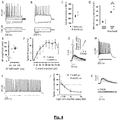
- SiR CRE-mCherry infected CA1 pyramidal neurons We then assessed the survival of SiR CRE-mCherry infected CA1 pyramidal neurons (by following YFP ON neurons over a 8-weeks period) and monitor the switching OFF of mCherry in infected neurons as a proxy of the viral transcription-replication cycle.
- SiR CRE-mCherry begins to switch OFF in a fraction of infected neurons (29 ⁇ 3% mCherry OFF YFP ON , Fig. 2C-C"', F ).
- the transition is complete as virtually all YFP ON neurons show no expression of the virally encoded mCherry (9812% YFP ON mCherry OFF , Fig.
- SiR can be used to monitor network activity in vivo using calcium imaging.
- the optimal temporal window for optical imaging of neurons is, typically, 5-7 days from the Rabies infection (17).
- the use of the recently introduced ⁇ G-Rabies strain variant CVS-N2c ⁇ G can push the useful temporal window for imaging further up to 17 days post-infection ( 25 ).
- SiR there are no upper bounds to the temporal window for the optical investigation of network elements.
- SiR the unique transient replicative nature of SiR, offers the possibility to follow circuit remodelling after physiological or pathological structural plasticity such as, upon learning, during neurodegenerative conditions or following traumatic brain injuries and it may pave the way to functional interventions at the network level in such cases.
- a SPLIT-TEV cassette ( 30 ) was added at the C-terminal of each viral protein ( ⁇ G-VP PEST Rabies SPLIT-TEV-mCherry ).
- a tag (myc, FLAG or V5) was fused to the N-terminal of each viral protein to monitor levels of protein expression.
- the SPLIT-TEV dimeric protease is only active in presence of rapamycin, and could potentially provide a tool for the exogenous regulation of viral protein stability during production and in vivo.
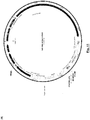
- Rabies plasmids listed in Table 1, were generated by Gibson cloning using the pSAD- ⁇ G-F3 plasmid ( 21 ) as starting material. Briefly, the Rabies genome was PCR amplified in 2 fragments starting from the protein to be tagged. These fragments were then mixed with the tag and/or PEST domain obtained by oligonucleotides annealing and assembled using Gibson master mix (NEB).
- NEB Gibson master mix
- the lentiviral vectors used to generate the packaging cells were derived from a 3 rd generation lentivirus transfer vector (gift from Michael Hastings "361 polilinker", originally pCCL-SIN-18PPT.Pgk.EGFP-WPRE). All the lentiviral vectors were generated by Gibson assembly, opening the backbone by digestion with XbaI and KpnI and PCR amplifying the CMV promoter and the different inserts.
- HEK293T cells and BHK were purchased from ATTC.
- HEK293T packaging cells expressing Rabies glycoprotein (HEK-GG) were generated by lentivirus infection with Lenti- H2B GFP-2A-GlySAD (Table 1) and after 3 passages by fluorescent activated cell sorting (FACS) of GFP expressing cells.
- HEK293T packaging cells expressing Rabies glycoprotein and TEV protease (HEK-TGG) were generated from HEK-GG by lentivirus infection with Lenti-puro-2A-TEV and selected, after 3 passages, with 1 ⁇ g/mL of puromycin added to the media for 1 week.
- BHK packaging cells for pseudotyping Rabies virus with optimized G were generated with the same procedure as the HEK-TGG infecting first with pLenti- H2B GFP-2A-oG and subsequently with pLenti-puro-2A-TEV.
- BHK packaging cells for pseudotyping Rabies virus with EnVA receptor were obtained infecting BHK-EnVA with Lenti-puro-2A-TEV and selecting with puromycin.
- HEK-GG or HEK-TGG cells were co-transfected with rabies genome vector, pcDNA-T7, pcDNA-SADB19N, pcDNA-SADB19P, pcDNA- SADB19L, and pcDNA-SADB19G (21) and maintained at 37 °C with 5% CO 2 humidified atmosphere in DMEM supplemented with 10% FBS (Gibco) and 100 u/ml Penicillin-Streptomycin.
- FBS Gibco
- Penicillin-Streptomycin 100 u/ml Penicillin-Streptomycin.
- the day after transfection and subsequently every 3 days cells were washed with PBS, treated with 0.05% trypsin and replated in a new dish in a ratio 1:3. After splitting, cells were maintained for one day at 37°C and 5% CO 2 and then 2 days at 35°C and 3% CO 2 . Every 3 days cells were fixed and viral spreading was assessed by FACS sorting the cells for mCh
- HEK-GG or HEK-TGG were infected in 10 cm dishes at 70-80% confluence with 1 ml of viral supernatant obtained as described in the viral screening section.
- Cells were split the day after infection and maintained for 1 or 2 days at 37°C and 5% CO 2 checking daily the viral spreading.
- the media was replaced with 2% FBS DMEM and maintained for 2 days at 35 °C and 3% CO 2 .
- the viral supernatant was collected, cell debris removed by centrifugation at 2500 rpm for 10 minutes followed by filtration with 0.45 ⁇ m filter and then the virus concentrated by ultracentrifugation with sucrose cushion as described before ( 22 ).
- Rabies viruses pseudotyped with oG were produced infecting BHK-T-oG cells in 10 cm dishes with 1 mL of viral supernatant. Cells were split the day after infection and maintained for one or two days at 37°C and 5% checking daily the viral spreading. When 70-80% of cells expressed the viral marker, the media was replaced with 2% FBS DMEM and maintained for 2-3 days at 35°C and 3% CO 2 . Then, the supernatant was collected and processed as previously described ( 20 ).
- Rabies viruses pseudotyped with EnVA were produced as previously described ( 22 ) using BHK-T-EnVA cells instead of BHK-EnVA cells.
- hESCs Human Embryonic Stem cells derived neurons were kindly provided by Dr. Rick Livesey. Cells were plated in 24-wells glass bottom plates and infected over night with attenuated or control ⁇ G-Rabies viruses supernatants at comparable MOI to obtain ⁇ 5% of infected cells. Cells were imaged every 4 days post infection overnight in a 37 °C heated Leica SP8 confocal microscope in Hibernate®-A Medium (Invitrogen) with 5 random fields imaged for each well. Cell survival was calculated normalizing each condition to the mortality of control Lentivirus-GFP infected hESCs derived neurons imaged and processed in the same conditions.
- mice All procedures using live animals were approved by the Home Office and the LMB Biosafety committee. For all experiments mice aged between 6-12 weeks were used. Mice were anesthetized with isofluorane delivered at a flow of 3% in 2L/min of oxygen for the initial induction and then maintained at 1-2% in 2 L/min of oxygen. The anesthetized animal was placed into a stereotaxic apparatus (David Kopf Instruments) and Rimadyl (2 mg/kg body weight) was administered subcutaneously (s.c.) as anti-inflamatory. A small hole (500 ⁇ m diameter) was drilled and viruses were injected using a Hamilton neurosyringe. The syringe was left in the brain for 5 min before being retracted.
- Viruses were injected at the following titers: 3 ⁇ 10 8 infectious units/ml for Rabies viruses, 2 ⁇ 10 12 genomic copies/ml for AAVs, 3 ⁇ 10 8 infectious units/ml for Lentiviruses. Up to a max of 400 nl in volume of virus were injected in the following brain areas: CA1 (AP: 2.3 mm, ML: 1.65 mm and DV: 1.45mm from bregma), V1 (AP: 2.3 mm, ML: 1.65 mm and DV: 1.45 mm from bregma), V2 (AP: 3.6 mm, ML: 1.2 mm, DV:0.6 mm from bregma).
- CA1 AP: 2.3 mm, ML: 1.65 mm and DV: 1.45mm from bregma
- V1 AP: 2.3 mm, ML: 1.65 mm and DV: 1.45 mm from bregma
- V2 AP: 3.6 mm,
- Rosa-LoxP-STOP-LoxP-YFP animals were injected in CA1 of hippocampus with an AAV constitutively expressing rTTA and TEV protease under the control of a doxycycline inducible promoter (Table 1).
- 1-week p.i. the same area was re-injected with SiR mCherry-CRE and doxycycline (Santa Cruz Biotechnology, 100 mg/Kg) administered at 1 or 2 weeks post SiR injection.
- brains were collected and sectioned at the cryostat (35 ⁇ m). Infected neurons were imaged and counted sampling the entire hippocampus (acquiring one every 4 sections) using a robot assisted Nikon HCA microscope.
- SiR mCherry-CRE was injected in CA1 region of hippocampus of Rosa-LoxP-STOP-LoxP-YFP animals. After 1, 2, 3 or 8 weeks, mice were culled and the injected hippocampi manually dissected immediately after. The hippocampi were homogenised using a Tissuelyser II (Qiagen) and processed accordingly to manufactory instruction with RNeasy kit (Qiagen) to extract total RNA.
- SiR mCherry-CRE was injected bilaterally in the CA1 of one month-old Rosa-LoxP-STOP-LoxP-ChR2YFP mice. Recordings were made either one week or between two and 3 months p.i..
- Coronal hippocampal slices (350 ⁇ m) were prepared using a vibrating microtome (7000smz-2, Campden Instruments LTD, Loughborough, UK) in ice-cold sucrose-based cutting solution oxygenated with carbogen gas (95% O 2 , 5% CO 2 ) and with the following composition (in mM): KCl 3, NaH 2 PO 4 1.25, MgSO 4 2, MgCl 2 1, CaCl 2 1, NaHCO 3 26.4, glucose 10, sucrose 206, ascorbic acid 0.40, kynurenic acid 1.
- aCSF oxygenated artificial cerebrospinal fluid
- aCSF oxygenated artificial cerebrospinal fluid
- mM NaCl 126, KCl 3, NaH 2 PO 4 1.25, MgSO 4 2, CaCl 2 2, NaHCO 3 26.4, glucose
- osmolarity adjusted to 280-300 mOsm/L and stored thereafter in the same holding chamber at room temperature for at least 1 h.
- Slices were then individually transferred to the recording chamber and were superfused with oxygenated aCSF at room temperature at a flow-rate of approximately 2 mL/min.
- Data were recorded using an Axon Multiclamp 700B amplifier (Molecular Devices, Union City, CA, USA) and signals were lowpass filtered at 2 kH and acquired at 5 kHz using a digitizer (Axon Digidata 1550A, Molecular Devices, Union City, CA, USA) on a PC running pClamp.
- a digitizer Axon Digidata 1550A, Molecular Devices, Union City, CA, USA
- Light-evoked responses from neurons infected with SiR virus were elicited using a 450-490 nm LED light (pE-300 coolLED system, Scientifica Ltd, Uckfield, UK) through a 40X water immersion objective (0.8 NA).
- the AMPA receptor antagonist DNQX (20 ⁇ M; Sigma-Aldrich, Dorset, UK) was used in a subset of electrophysiological recordings in order to probe synaptic connectivity between neurons infected with SiR virus and neighbouring neurons.
- Injected Rosa-LoxP-STOP-LoxP-tdTomato mice were anaesthetized with isofluorane 2%. Animal pinch withdrawal and eyelid reflex were tested to assay the depth of anaesthesia. Rimadyl (2 mg/kg body weight) was injected subcutaneously as an anti-inflammatory. Both eyes were covered with an eye ointment to prevent corneal desiccation during the experiment. The animal was head-fixed and a metal head-post cemented to the skull. A craniotomy of 4 mm in diameter was drilled over the V1 cortex.
- the cortical surface was kept moist with a cortex buffer, containing: 125 mM NaCl, 5 mM KCl, 10 mM Glucose, 10 mM HEPES, 2 mM MgSO 4 and 2 mM CaCl 2 , adjusted to pH 7.3.
- the cortex was then covered with a custom made plug coverslip ( 23 ) and sealed with Super Glue and dental cement.
- the objective was shielded with a black fabric cone equipped with a plastic o-ring fixed onto the head plate ( 24 ).
- Visual stimulation was controlled using a custom-made GUI in Python (based on PsychoPy toolbox) and was performed with a LED screen positioned 15 cm from the left eye of the mouse.
- Moving square-wave gratings were presented at 12 directions in 30 degrees steps and a photodiode was used to detect the starting and the ending time of each stimulus. Each grating direction was presented 5 times in random order alternated with a blank condition.
- the spatial frequency of the grating was 0.04 cycles per degree (cpd) and the temporal frequency was 1 Hz. Imaging and visual stimulation were triggered together using iOS micro-controller board.
- the words “comprising” (and any form of comprising, such as “comprise” and “comprises”), “having” (and any form of having, such as “have” and “has”), "including” (and any form of including, such as “includes” and “include”) or “containing” (and any form of containing, such as “contains” and “contain”) are inclusive or open-ended and do not exclude additional, unrecited elements or method steps.
Landscapes
- Health & Medical Sciences (AREA)
- Life Sciences & Earth Sciences (AREA)
- Chemical & Material Sciences (AREA)
- Genetics & Genomics (AREA)
- Organic Chemistry (AREA)
- Engineering & Computer Science (AREA)
- Virology (AREA)
- General Health & Medical Sciences (AREA)
- Biotechnology (AREA)
- Molecular Biology (AREA)
- Bioinformatics & Cheminformatics (AREA)
- Biomedical Technology (AREA)
- Zoology (AREA)
- Wood Science & Technology (AREA)
- General Engineering & Computer Science (AREA)
- Biophysics (AREA)
- Biochemistry (AREA)
- Medicinal Chemistry (AREA)
- Proteomics, Peptides & Aminoacids (AREA)
- Physics & Mathematics (AREA)
- Gastroenterology & Hepatology (AREA)
- Microbiology (AREA)
- Plant Pathology (AREA)
- Tropical Medicine & Parasitology (AREA)
- Animal Behavior & Ethology (AREA)
- Epidemiology (AREA)
- Veterinary Medicine (AREA)
- Public Health (AREA)
- Pharmacology & Pharmacy (AREA)
- Micro-Organisms Or Cultivation Processes Thereof (AREA)
- Medicines That Contain Protein Lipid Enzymes And Other Medicines (AREA)
- Medicines Containing Material From Animals Or Micro-Organisms (AREA)
- Peptides Or Proteins (AREA)
- Medicines Containing Antibodies Or Antigens For Use As Internal Diagnostic Agents (AREA)
Applications Claiming Priority (2)
| Application Number | Priority Date | Filing Date | Title |
|---|---|---|---|
| GBGB1706945.1A GB201706945D0 (en) | 2017-05-02 | 2017-05-02 | Self-inactivating viral vector |
| PCT/GB2018/051166 WO2018203049A1 (en) | 2017-05-02 | 2018-05-02 | Self-inactivating viral vector |
Publications (2)
| Publication Number | Publication Date |
|---|---|
| EP3619314A1 EP3619314A1 (en) | 2020-03-11 |
| EP3619314B1 true EP3619314B1 (en) | 2021-11-10 |
Family
ID=59011153
Family Applications (1)
| Application Number | Title | Priority Date | Filing Date |
|---|---|---|---|
| EP18723917.3A Active EP3619314B1 (en) | 2017-05-02 | 2018-05-02 | Self-inactivating viral vector |
Country Status (10)
| Country | Link |
|---|---|
| US (1) | US12203092B2 (https=) |
| EP (1) | EP3619314B1 (https=) |
| JP (1) | JP7420558B2 (https=) |
| KR (1) | KR20200015900A (https=) |
| CN (1) | CN110914439B (https=) |
| AU (1) | AU2018262281B2 (https=) |
| BR (1) | BR112019023003A2 (https=) |
| CA (1) | CA3060675A1 (https=) |
| GB (1) | GB201706945D0 (https=) |
| WO (1) | WO2018203049A1 (https=) |
Families Citing this family (10)
| Publication number | Priority date | Publication date | Assignee | Title |
|---|---|---|---|---|
| WO2021004389A1 (zh) * | 2019-07-05 | 2021-01-14 | 司龙龙 | 蛋白水解靶向病毒、其活疫苗及其制备方法和用途 |
| CA3208612A1 (en) * | 2021-02-19 | 2022-08-25 | Beam Therapeutics Inc. | Recombinant rabies viruses for gene therapy |
| AU2022264328A1 (en) * | 2021-04-27 | 2023-11-16 | The Henry M. Jackson Foundation For The Advancement Of Military Medicine, Inc. | Recombinant cedar virus chimeras |
| CN115704012A (zh) * | 2021-08-12 | 2023-02-17 | 中国科学院深圳先进技术研究院 | 一种含有降解决定子的重组病毒及其制备方法和应用 |
| CA3230629A1 (en) * | 2021-09-08 | 2023-03-16 | Beam Therapeutics Inc. | Viral guide rna delivery |
| CN116262911B (zh) * | 2021-12-14 | 2026-02-17 | 中国科学院深圳先进技术研究院 | 一种减毒、复制可控的顺向hsv示踪系统及其构建方法和应用 |
| CN114058641B (zh) * | 2022-01-17 | 2022-04-01 | 苏州大学 | 一种载体系统和应用及通过其降解目的蛋白的方法 |
| CN116676273A (zh) * | 2022-02-22 | 2023-09-01 | 中国科学院深圳先进技术研究院 | 一种蛋白水解靶向流感病毒及其制备方法和应用 |
| CN120366391A (zh) * | 2023-04-18 | 2025-07-25 | 上海本导基因技术有限公司 | 一种用于治疗亨廷顿疾病的慢病毒样颗粒 |
| CN117867029B (zh) * | 2023-12-29 | 2024-12-20 | 复百澳(苏州)生物医药科技有限公司 | 一种狂犬亚型假病毒的制备方法及应用 |
Family Cites Families (5)
| Publication number | Priority date | Publication date | Assignee | Title |
|---|---|---|---|---|
| HUP0500722A2 (hu) * | 2001-07-20 | 2005-11-28 | The University of Georgia Research Foundation, Inc@Á | Attenuált veszettség vírus, a veszettség elleni vakcináláshoz és a központi idegrendszer génterápiájához egy nukleoprotein mutációval a foszforilezés helyén |
| US7608682B2 (en) | 2002-10-30 | 2009-10-27 | Meso Scale Technologies Llc | Substrates of N-end rule ubiquitylation and methods for measuring the ubiquitylation of these substrates |
| US9212359B2 (en) | 2011-06-23 | 2015-12-15 | Sanford Jay Silverman | Systems for induction of gene expression and protein depletion in yeast |
| US20180195085A1 (en) | 2015-02-02 | 2018-07-12 | Id Pharma Co., Ltd. | Improved negative-strand rna viral vector |
| US10550379B2 (en) * | 2015-06-29 | 2020-02-04 | The Board Of Trustees Of The Leland Stanford Junior University | Degron fusion constructs and methods for controlling protein production |
-
2017
- 2017-05-02 GB GBGB1706945.1A patent/GB201706945D0/en not_active Ceased
-
2018
- 2018-05-02 EP EP18723917.3A patent/EP3619314B1/en active Active
- 2018-05-02 US US16/607,980 patent/US12203092B2/en active Active
- 2018-05-02 JP JP2019560380A patent/JP7420558B2/ja active Active
- 2018-05-02 AU AU2018262281A patent/AU2018262281B2/en active Active
- 2018-05-02 CN CN201880029221.8A patent/CN110914439B/zh active Active
- 2018-05-02 BR BR112019023003A patent/BR112019023003A2/pt not_active Application Discontinuation
- 2018-05-02 WO PCT/GB2018/051166 patent/WO2018203049A1/en not_active Ceased
- 2018-05-02 KR KR1020197035530A patent/KR20200015900A/ko not_active Withdrawn
- 2018-05-02 CA CA3060675A patent/CA3060675A1/en active Pending
Non-Patent Citations (1)
| Title |
|---|
| None * |
Also Published As
| Publication number | Publication date |
|---|---|
| US12203092B2 (en) | 2025-01-21 |
| CN110914439A (zh) | 2020-03-24 |
| KR20200015900A (ko) | 2020-02-13 |
| CA3060675A1 (en) | 2018-11-08 |
| EP3619314A1 (en) | 2020-03-11 |
| WO2018203049A1 (en) | 2018-11-08 |
| GB201706945D0 (en) | 2017-06-14 |
| CN110914439B (zh) | 2024-05-17 |
| AU2018262281A1 (en) | 2019-11-14 |
| AU2018262281B2 (en) | 2024-05-09 |
| JP2020518265A (ja) | 2020-06-25 |
| JP7420558B2 (ja) | 2024-01-23 |
| US20210115472A1 (en) | 2021-04-22 |
| BR112019023003A2 (pt) | 2020-05-19 |
Similar Documents
| Publication | Publication Date | Title |
|---|---|---|
| EP3619314B1 (en) | Self-inactivating viral vector | |
| US11802273B2 (en) | Mutations that confer genetic stability to additional genes in influenza viruses | |
| JP7754912B2 (ja) | インフルエンザウイルスにおける付加的遺伝子に遺伝的安定性を付与する突然変異 | |
| CA2775151C (fr) | Nouveaux polynucleotides et polypeptides chimeriques permettant la secretion d'un polypeptide d'interet en association avec des exosomes et leurs utilisations | |
| CN112423791B (zh) | 将核酸递送至耳蜗和前庭细胞的组合物和方法 | |
| BR112021013996A2 (pt) | Terapia gênica mediada por aav que recupera o gene otoferlina | |
| JP2025078752A (ja) | 腫瘍を標的にする合成アデノウイルスおよびその使用 | |
| KR20230169427A (ko) | 개선된 광 민감성을 갖는 채널옵신 변이체에서의 돌연변이의 확인 및 이의 용도 | |
| EP2415866A1 (en) | Vector utilizing borna disease virus and use thereof | |
| WO2024009280A1 (en) | Integrated stress response inhibitors and methods of using the same | |
| US12365898B2 (en) | Calcium channel 3.2 inhibitory peptides and uses thereof | |
| Schindewolf et al. | Optimizing Lentiviral Vector-Based Delivery of SCN1A transgenes to Mammalian Cells | |
| Stieglitz | The control of neuronal activity and behavior by members of the HCN and TPC family | |
| CN121574266A (zh) | 一种特异性靶向降解rna病毒基因组的嵌合体及其应用 | |
| Cattaneo | Combinatorial gene therapy for epilepsy | |
| CN118922541A (zh) | 用于rna可编程细胞编辑的组合物和系统及其制备和使用方法 | |
| WO2025030125A1 (en) | Applications of cmya5 minigenes | |
| McMichael | Posttranslational modifications and virus restriction activity of IFITM3 | |
| Levin | Muscle Lim Protein in naïve and injured neurons | |
| Jardetzky | Oral 1 STRUCTURE AND ACTIVATION OF PARAMYXOVIRUS FUSION GLYCOPROTEINS | |
| Dinh | Roles of cellular proteins in replication of vesicular stomatitis virus | |
| Chelbi-Alix | Resistance to Rhabdoviridae Infection and Subversion of Antiviral Responses | |
| JP2004357689A (ja) | 遺伝子導入ベクターの非侵襲的インビボ評価方法 |
Legal Events
| Date | Code | Title | Description |
|---|---|---|---|
| STAA | Information on the status of an ep patent application or granted ep patent |
Free format text: STATUS: UNKNOWN |
|
| STAA | Information on the status of an ep patent application or granted ep patent |
Free format text: STATUS: THE INTERNATIONAL PUBLICATION HAS BEEN MADE |
|
| PUAI | Public reference made under article 153(3) epc to a published international application that has entered the european phase |
Free format text: ORIGINAL CODE: 0009012 |
|
| STAA | Information on the status of an ep patent application or granted ep patent |
Free format text: STATUS: REQUEST FOR EXAMINATION WAS MADE |
|
| 17P | Request for examination filed |
Effective date: 20191114 |
|
| AK | Designated contracting states |
Kind code of ref document: A1 Designated state(s): AL AT BE BG CH CY CZ DE DK EE ES FI FR GB GR HR HU IE IS IT LI LT LU LV MC MK MT NL NO PL PT RO RS SE SI SK SM TR |
|
| AX | Request for extension of the european patent |
Extension state: BA ME |
|
| DAV | Request for validation of the european patent (deleted) | ||
| DAX | Request for extension of the european patent (deleted) | ||
| STAA | Information on the status of an ep patent application or granted ep patent |
Free format text: STATUS: EXAMINATION IS IN PROGRESS |
|
| 17Q | First examination report despatched |
Effective date: 20200916 |
|
| REG | Reference to a national code |
Ref country code: HK Ref legal event code: DE Ref document number: 40022890 Country of ref document: HK |
|
| GRAP | Despatch of communication of intention to grant a patent |
Free format text: ORIGINAL CODE: EPIDOSNIGR1 |
|
| STAA | Information on the status of an ep patent application or granted ep patent |
Free format text: STATUS: GRANT OF PATENT IS INTENDED |
|
| INTG | Intention to grant announced |
Effective date: 20210527 |
|
| GRAS | Grant fee paid |
Free format text: ORIGINAL CODE: EPIDOSNIGR3 |
|
| GRAA | (expected) grant |
Free format text: ORIGINAL CODE: 0009210 |
|
| STAA | Information on the status of an ep patent application or granted ep patent |
Free format text: STATUS: THE PATENT HAS BEEN GRANTED |
|
| AK | Designated contracting states |
Kind code of ref document: B1 Designated state(s): AL AT BE BG CH CY CZ DE DK EE ES FI FR GB GR HR HU IE IS IT LI LT LU LV MC MK MT NL NO PL PT RO RS SE SI SK SM TR |
|
| REG | Reference to a national code |
Ref country code: GB Ref legal event code: FG4D |
|
| REG | Reference to a national code |
Ref country code: AT Ref legal event code: REF Ref document number: 1446125 Country of ref document: AT Kind code of ref document: T Effective date: 20211115 Ref country code: CH Ref legal event code: EP |
|
| REG | Reference to a national code |
Ref country code: DE Ref legal event code: R096 Ref document number: 602018026445 Country of ref document: DE |
|
| REG | Reference to a national code |
Ref country code: IE Ref legal event code: FG4D |
|
| REG | Reference to a national code |
Ref country code: LT Ref legal event code: MG9D |
|
| REG | Reference to a national code |
Ref country code: NL Ref legal event code: MP Effective date: 20211110 |
|
| REG | Reference to a national code |
Ref country code: AT Ref legal event code: MK05 Ref document number: 1446125 Country of ref document: AT Kind code of ref document: T Effective date: 20211110 |
|
| PG25 | Lapsed in a contracting state [announced via postgrant information from national office to epo] |
Ref country code: RS Free format text: LAPSE BECAUSE OF FAILURE TO SUBMIT A TRANSLATION OF THE DESCRIPTION OR TO PAY THE FEE WITHIN THE PRESCRIBED TIME-LIMIT Effective date: 20211110 Ref country code: LT Free format text: LAPSE BECAUSE OF FAILURE TO SUBMIT A TRANSLATION OF THE DESCRIPTION OR TO PAY THE FEE WITHIN THE PRESCRIBED TIME-LIMIT Effective date: 20211110 Ref country code: FI Free format text: LAPSE BECAUSE OF FAILURE TO SUBMIT A TRANSLATION OF THE DESCRIPTION OR TO PAY THE FEE WITHIN THE PRESCRIBED TIME-LIMIT Effective date: 20211110 Ref country code: BG Free format text: LAPSE BECAUSE OF FAILURE TO SUBMIT A TRANSLATION OF THE DESCRIPTION OR TO PAY THE FEE WITHIN THE PRESCRIBED TIME-LIMIT Effective date: 20220210 Ref country code: AT Free format text: LAPSE BECAUSE OF FAILURE TO SUBMIT A TRANSLATION OF THE DESCRIPTION OR TO PAY THE FEE WITHIN THE PRESCRIBED TIME-LIMIT Effective date: 20211110 |
|
| PG25 | Lapsed in a contracting state [announced via postgrant information from national office to epo] |
Ref country code: IS Free format text: LAPSE BECAUSE OF FAILURE TO SUBMIT A TRANSLATION OF THE DESCRIPTION OR TO PAY THE FEE WITHIN THE PRESCRIBED TIME-LIMIT Effective date: 20220310 Ref country code: SE Free format text: LAPSE BECAUSE OF FAILURE TO SUBMIT A TRANSLATION OF THE DESCRIPTION OR TO PAY THE FEE WITHIN THE PRESCRIBED TIME-LIMIT Effective date: 20211110 Ref country code: PT Free format text: LAPSE BECAUSE OF FAILURE TO SUBMIT A TRANSLATION OF THE DESCRIPTION OR TO PAY THE FEE WITHIN THE PRESCRIBED TIME-LIMIT Effective date: 20220310 Ref country code: PL Free format text: LAPSE BECAUSE OF FAILURE TO SUBMIT A TRANSLATION OF THE DESCRIPTION OR TO PAY THE FEE WITHIN THE PRESCRIBED TIME-LIMIT Effective date: 20211110 Ref country code: NO Free format text: LAPSE BECAUSE OF FAILURE TO SUBMIT A TRANSLATION OF THE DESCRIPTION OR TO PAY THE FEE WITHIN THE PRESCRIBED TIME-LIMIT Effective date: 20220210 Ref country code: NL Free format text: LAPSE BECAUSE OF FAILURE TO SUBMIT A TRANSLATION OF THE DESCRIPTION OR TO PAY THE FEE WITHIN THE PRESCRIBED TIME-LIMIT Effective date: 20211110 Ref country code: LV Free format text: LAPSE BECAUSE OF FAILURE TO SUBMIT A TRANSLATION OF THE DESCRIPTION OR TO PAY THE FEE WITHIN THE PRESCRIBED TIME-LIMIT Effective date: 20211110 Ref country code: HR Free format text: LAPSE BECAUSE OF FAILURE TO SUBMIT A TRANSLATION OF THE DESCRIPTION OR TO PAY THE FEE WITHIN THE PRESCRIBED TIME-LIMIT Effective date: 20211110 Ref country code: GR Free format text: LAPSE BECAUSE OF FAILURE TO SUBMIT A TRANSLATION OF THE DESCRIPTION OR TO PAY THE FEE WITHIN THE PRESCRIBED TIME-LIMIT Effective date: 20220211 Ref country code: ES Free format text: LAPSE BECAUSE OF FAILURE TO SUBMIT A TRANSLATION OF THE DESCRIPTION OR TO PAY THE FEE WITHIN THE PRESCRIBED TIME-LIMIT Effective date: 20211110 |
|
| PG25 | Lapsed in a contracting state [announced via postgrant information from national office to epo] |
Ref country code: SM Free format text: LAPSE BECAUSE OF FAILURE TO SUBMIT A TRANSLATION OF THE DESCRIPTION OR TO PAY THE FEE WITHIN THE PRESCRIBED TIME-LIMIT Effective date: 20211110 Ref country code: SK Free format text: LAPSE BECAUSE OF FAILURE TO SUBMIT A TRANSLATION OF THE DESCRIPTION OR TO PAY THE FEE WITHIN THE PRESCRIBED TIME-LIMIT Effective date: 20211110 Ref country code: RO Free format text: LAPSE BECAUSE OF FAILURE TO SUBMIT A TRANSLATION OF THE DESCRIPTION OR TO PAY THE FEE WITHIN THE PRESCRIBED TIME-LIMIT Effective date: 20211110 Ref country code: EE Free format text: LAPSE BECAUSE OF FAILURE TO SUBMIT A TRANSLATION OF THE DESCRIPTION OR TO PAY THE FEE WITHIN THE PRESCRIBED TIME-LIMIT Effective date: 20211110 Ref country code: DK Free format text: LAPSE BECAUSE OF FAILURE TO SUBMIT A TRANSLATION OF THE DESCRIPTION OR TO PAY THE FEE WITHIN THE PRESCRIBED TIME-LIMIT Effective date: 20211110 Ref country code: CZ Free format text: LAPSE BECAUSE OF FAILURE TO SUBMIT A TRANSLATION OF THE DESCRIPTION OR TO PAY THE FEE WITHIN THE PRESCRIBED TIME-LIMIT Effective date: 20211110 |
|
| REG | Reference to a national code |
Ref country code: DE Ref legal event code: R097 Ref document number: 602018026445 Country of ref document: DE |
|
| PLBE | No opposition filed within time limit |
Free format text: ORIGINAL CODE: 0009261 |
|
| STAA | Information on the status of an ep patent application or granted ep patent |
Free format text: STATUS: NO OPPOSITION FILED WITHIN TIME LIMIT |
|
| 26N | No opposition filed |
Effective date: 20220811 |
|
| PG25 | Lapsed in a contracting state [announced via postgrant information from national office to epo] |
Ref country code: AL Free format text: LAPSE BECAUSE OF FAILURE TO SUBMIT A TRANSLATION OF THE DESCRIPTION OR TO PAY THE FEE WITHIN THE PRESCRIBED TIME-LIMIT Effective date: 20211110 |
|
| PG25 | Lapsed in a contracting state [announced via postgrant information from national office to epo] |
Ref country code: SI Free format text: LAPSE BECAUSE OF FAILURE TO SUBMIT A TRANSLATION OF THE DESCRIPTION OR TO PAY THE FEE WITHIN THE PRESCRIBED TIME-LIMIT Effective date: 20211110 |
|
| REG | Reference to a national code |
Ref country code: BE Ref legal event code: MM Effective date: 20220531 |
|
| PG25 | Lapsed in a contracting state [announced via postgrant information from national office to epo] |
Ref country code: MC Free format text: LAPSE BECAUSE OF FAILURE TO SUBMIT A TRANSLATION OF THE DESCRIPTION OR TO PAY THE FEE WITHIN THE PRESCRIBED TIME-LIMIT Effective date: 20211110 Ref country code: LU Free format text: LAPSE BECAUSE OF NON-PAYMENT OF DUE FEES Effective date: 20220502 |
|
| PG25 | Lapsed in a contracting state [announced via postgrant information from national office to epo] |
Ref country code: IT Free format text: LAPSE BECAUSE OF FAILURE TO SUBMIT A TRANSLATION OF THE DESCRIPTION OR TO PAY THE FEE WITHIN THE PRESCRIBED TIME-LIMIT Effective date: 20211110 Ref country code: BE Free format text: LAPSE BECAUSE OF NON-PAYMENT OF DUE FEES Effective date: 20220531 |
|
| P01 | Opt-out of the competence of the unified patent court (upc) registered |
Effective date: 20230518 |
|
| PG25 | Lapsed in a contracting state [announced via postgrant information from national office to epo] |
Ref country code: MK Free format text: LAPSE BECAUSE OF FAILURE TO SUBMIT A TRANSLATION OF THE DESCRIPTION OR TO PAY THE FEE WITHIN THE PRESCRIBED TIME-LIMIT Effective date: 20211110 Ref country code: CY Free format text: LAPSE BECAUSE OF FAILURE TO SUBMIT A TRANSLATION OF THE DESCRIPTION OR TO PAY THE FEE WITHIN THE PRESCRIBED TIME-LIMIT Effective date: 20211110 |
|
| PG25 | Lapsed in a contracting state [announced via postgrant information from national office to epo] |
Ref country code: HU Free format text: LAPSE BECAUSE OF FAILURE TO SUBMIT A TRANSLATION OF THE DESCRIPTION OR TO PAY THE FEE WITHIN THE PRESCRIBED TIME-LIMIT; INVALID AB INITIO Effective date: 20180502 |
|
| PG25 | Lapsed in a contracting state [announced via postgrant information from national office to epo] |
Ref country code: MT Free format text: LAPSE BECAUSE OF FAILURE TO SUBMIT A TRANSLATION OF THE DESCRIPTION OR TO PAY THE FEE WITHIN THE PRESCRIBED TIME-LIMIT Effective date: 20211110 |
|
| PGFP | Annual fee paid to national office [announced via postgrant information from national office to epo] |
Ref country code: DE Payment date: 20250519 Year of fee payment: 8 |
|
| PGFP | Annual fee paid to national office [announced via postgrant information from national office to epo] |
Ref country code: GB Payment date: 20250527 Year of fee payment: 8 |
|
| PGFP | Annual fee paid to national office [announced via postgrant information from national office to epo] |
Ref country code: FR Payment date: 20250521 Year of fee payment: 8 |
|
| PGFP | Annual fee paid to national office [announced via postgrant information from national office to epo] |
Ref country code: CH Payment date: 20250601 Year of fee payment: 8 |
|
| PGFP | Annual fee paid to national office [announced via postgrant information from national office to epo] |
Ref country code: IE Payment date: 20250522 Year of fee payment: 8 |
|
| PG25 | Lapsed in a contracting state [announced via postgrant information from national office to epo] |
Ref country code: TR Free format text: LAPSE BECAUSE OF FAILURE TO SUBMIT A TRANSLATION OF THE DESCRIPTION OR TO PAY THE FEE WITHIN THE PRESCRIBED TIME-LIMIT Effective date: 20211110 |