EP3615541B1 - Polymorphs and solid forms of (s)-2-((2-((s)-4-(difluoromethyl)-2-oxooxazolidin-3-yl)-5,6-dihydrobenzo[f]imidazo[1,2-d][1,4]oxazepin-9-yl)amino)propanamide, and methods of production - Google Patents
Polymorphs and solid forms of (s)-2-((2-((s)-4-(difluoromethyl)-2-oxooxazolidin-3-yl)-5,6-dihydrobenzo[f]imidazo[1,2-d][1,4]oxazepin-9-yl)amino)propanamide, and methods of production Download PDFInfo
- Publication number
- EP3615541B1 EP3615541B1 EP18728514.3A EP18728514A EP3615541B1 EP 3615541 B1 EP3615541 B1 EP 3615541B1 EP 18728514 A EP18728514 A EP 18728514A EP 3615541 B1 EP3615541 B1 EP 3615541B1
- Authority
- EP
- European Patent Office
- Prior art keywords
- polymorph
- crystalline
- gdc
- acid
- cancer
- Prior art date
- Legal status (The legal status is an assumption and is not a legal conclusion. Google has not performed a legal analysis and makes no representation as to the accuracy of the status listed.)
- Active
Links
Images









Classifications
-
- C—CHEMISTRY; METALLURGY
- C07—ORGANIC CHEMISTRY
- C07D—HETEROCYCLIC COMPOUNDS
- C07D498/00—Heterocyclic compounds containing in the condensed system at least one hetero ring having nitrogen and oxygen atoms as the only ring hetero atoms
- C07D498/02—Heterocyclic compounds containing in the condensed system at least one hetero ring having nitrogen and oxygen atoms as the only ring hetero atoms in which the condensed system contains two hetero rings
- C07D498/04—Ortho-condensed systems
-
- A—HUMAN NECESSITIES
- A61—MEDICAL OR VETERINARY SCIENCE; HYGIENE
- A61K—PREPARATIONS FOR MEDICAL, DENTAL OR TOILETRY PURPOSES
- A61K31/00—Medicinal preparations containing organic active ingredients
- A61K31/33—Heterocyclic compounds
- A61K31/395—Heterocyclic compounds having nitrogen as a ring hetero atom, e.g. guanethidine or rifamycins
- A61K31/55—Heterocyclic compounds having nitrogen as a ring hetero atom, e.g. guanethidine or rifamycins having seven-membered rings, e.g. azelastine, pentylenetetrazole
- A61K31/553—Heterocyclic compounds having nitrogen as a ring hetero atom, e.g. guanethidine or rifamycins having seven-membered rings, e.g. azelastine, pentylenetetrazole having at least one nitrogen and one oxygen as ring hetero atoms, e.g. loxapine, staurosporine
-
- A—HUMAN NECESSITIES
- A61—MEDICAL OR VETERINARY SCIENCE; HYGIENE
- A61P—SPECIFIC THERAPEUTIC ACTIVITY OF CHEMICAL COMPOUNDS OR MEDICINAL PREPARATIONS
- A61P35/00—Antineoplastic agents
-
- A—HUMAN NECESSITIES
- A61—MEDICAL OR VETERINARY SCIENCE; HYGIENE
- A61P—SPECIFIC THERAPEUTIC ACTIVITY OF CHEMICAL COMPOUNDS OR MEDICINAL PREPARATIONS
- A61P35/00—Antineoplastic agents
- A61P35/02—Antineoplastic agents specific for leukemia
-
- A—HUMAN NECESSITIES
- A61—MEDICAL OR VETERINARY SCIENCE; HYGIENE
- A61P—SPECIFIC THERAPEUTIC ACTIVITY OF CHEMICAL COMPOUNDS OR MEDICINAL PREPARATIONS
- A61P35/00—Antineoplastic agents
- A61P35/04—Antineoplastic agents specific for metastasis
-
- A—HUMAN NECESSITIES
- A61—MEDICAL OR VETERINARY SCIENCE; HYGIENE
- A61K—PREPARATIONS FOR MEDICAL, DENTAL OR TOILETRY PURPOSES
- A61K9/00—Medicinal preparations characterised by special physical form
- A61K9/20—Pills, tablets, discs, rods
-
- C—CHEMISTRY; METALLURGY
- C07—ORGANIC CHEMISTRY
- C07B—GENERAL METHODS OF ORGANIC CHEMISTRY; APPARATUS THEREFOR
- C07B2200/00—Indexing scheme relating to specific properties of organic compounds
- C07B2200/13—Crystalline forms, e.g. polymorphs
Definitions
- the invention relates to a polymorph form of a PI3K inhibitor compound GDC-0077, named as (S)-2-((2-((S)-4-(difluoromethyl)-2-oxooxazolidin-3-yl)-5,6-dihydrobenzo[ f ]limidazo[1,2- d ][1,4]oxazepin-9-yl)amino)propanamide.
- the invention also relates to processes to obtain a polymorph form of GDC-0077.
- Phosphoinositide 3-kinases are lipid kinases that phosphorylate lipids at the 3-hydroxyl residue of an inositol ring ( Whitman et al (1988) Nature, 332:664 ).
- the 3-phosphorylated phospholipids (PIP3s) generated by PI3-kinases act as second messengers recruiting kinases with lipid binding domains (including plekstrin homology (PH) regions), such as Akt and phosphoinositide-dependent kinase-1 (PDK1). Binding of Akt to membrane PIP3s causes the translocation of Akt to the plasma membrane, bringing Akt into contact with PDK1, which is responsible for activating Akt.
- the PI3-kinases Akt and PDK1 are important in the regulation of many cellular processes including cell cycle regulation, proliferation, survival, apoptosis and motility and are significant components of the molecular mechanisms of diseases such as cancer, diabetes and immune inflammation ( Vivanco et al (2002) Nature Rev. Cancer 2:489 ; Phillips et al (1998) Cancer 83:41 ).
- the main PI3-kinase isoform in cancer is the Class I PI3-kinase, p110 ⁇ (alpha) ( US 5824492 ; US 5846824 ; US 6274327 ).
- Other isoforms are implicated in cardiovascular and immune-inflammatory disease ( Workman P (2004) Biochem Soc Trans 32:393-396 ; Patel et al (2004) Proceedings of the American Association of Cancer Research (Abstract LB-247) 95th Annual Meeting, March 27-31, Orlando, Florida, USA ; Ahmadi K and Waterfield MD (2004) Encyclopedia of Biological Chemistry (Lennarz W J, Lane M D eds) Elsevier/Academic Press ).
- the PI3 kinase/Akt/PTEN pathway is an attractive target for cancer drug development since such modulating or inhibitory agents would be expected to inhibit proliferation, reverse the repression of apoptosis and surmount resistance to cytotoxic agents in cancer cells ( Folkes et al (2008) J. Med. Chem. 51:5522-5532 ; Yaguchi et al (2006) Jour. of the Nat. Cancer Inst. 98(8):545-556 ).
- the PI3K-PTEN-AKT signaling pathway is deregulated in a wide variety of cancers ( Samuels Y, et al. (2004) Science 304 (5670):554 ; Carpten J, et al (2007) Nature; 448:439-444 ).
- GDC-0077 also known by the IUPAC name: (S)-2-((2-((S)-4-(difluoromethyl)-2-oxooxazolidin-3-yl)-5,6-dihydrobenzo[ f ]imidazo[1,2- d ][1,4]oxazepin-9-yl)amino)propanamide, has potent PI3K activity ( WO 2017/001645 , US 2017/0015678 , Edgar K. et al, #156, "Preclinical characterization of GDC-0077, a specific PI3K alpha inhibitor in early clinical development ", and Staben. S.
- Powder X-ray Diffraction is a powerful tool in identifying different crystal phases by their unique diffraction patterns
- Polymorphism is often characterized as the ability of a drug substance, i.e. Active Pharmaceutical Ingredient (API), to exist as two or more crystalline phases that have different arrangements and/or conformations of the molecules in the crystal lattices giving the crystals different physicochemical properties.
- API Active Pharmaceutical Ingredient
- Crystal structure determination at the atomic level and intermolecular interactions offer important information to establish absolute configuration (enantiomers), phase identification, quality control, and process development control and optimization.
- X-ray Diffraction is widely recognized as a reliable tool for the crystal structure analysis of pharmaceutical solids and crystal form identification.
- the crystal structure can be solved from X-ray powder diffraction data obtained by measurements at ambient conditions and/or at variable temperature or humidity.
- the invention relates to polymorph Form A as defined herein of the PI3K inhibitor GDC-0077 ( CAS Registry Number 2060571-02-8 , Genentech, Inc.), named as (S)-2-((2-((S)-4-(difluoromethyl)-2-oxooxazolidin-3-yl)-5,6-dihydrobenzo[ f ]imidazo[1,2- d ][1,4]oxazepin-9-yl)amino)propanamide, having the structure, Formula I: or stereoisomers, geometric isomers, tautomers, and pharmaceutically acceptable salts thereof.
- An aspect of the invention is a process for preparing a crystalline polymorph Form A of GDC-0077.
- An aspect of the invention is a crystalline, anhydrate polymorph of (S)-2-((2-((S)-4-(difluoromethyl)-2-oxooxazolidin-3-yl)-5,6-dihydrobenzo[f]imidazo[1,2-d][1,4]oxazepin-9-yl)amino)propanamide designated the Form A polymorph that exhibits an X-ray powder diffraction pattern obtained using an incident beam of Cu K ⁇ (1.541904 ⁇ ) radiation generated using Cross Beam optics (40 kV ⁇ 44 mA) having a characteristic peak expressed in degrees 2-theta at approximately 5.7, 11.4, 17.2, 19.0, 19.7, and 24.4.
- An aspect of the invention is the Form A polymorph as described in the previous paragraph characterized by the X-ray powder diffraction pattern shown in Figure 4 .
- An aspect of the invention is the Form A polymorph as described in the two paragraphs above, characterized by the X-ray powder diffraction peaks shown herein: 2-Theta d( ⁇ ) BG Height H% 5.734 15.3997 1099 93701 100.0 11.434 7.7324 1215 76458 81.6 17.162 5.1625 1535 25735 27.5 19.000 4.6671 1692 35455 37.8 19.684 4.5064 1692 19728 21.1 20.184 4.3959 1692 13315 14.2 24.390 3.6466 2257 20616 22.0 28.142 3.1683 2003 10879 11.6 34.681 2.5844 2243 18146 19.4
- An aspect of the invention is the crystalline, anhydrate polymorph of (S)-2-((2-((S)-4-(difluoromethyl)-2-oxooxazolidin-3-yl)-5,6-dihydrobenzo[ f ]imidazo[1,2- d ][1,4]oxazepin-9-yl)amino)propanamide designated the Form A polymorph that exhibits an X-ray powder diffraction pattern having a characteristic peak expressed in degrees 2-theta at approximately 5.7.
- the Form A polymorph exhibits an X-ray powder diffraction pattern having characteristic peaks expressed in degrees 2-theta at approximately 5.7, 11.4, and 19.0.
- the Form A polymorph exhibits an X-ray powder diffraction pattern having characteristic peaks expressed in degrees 2-theta at approximately 5.7, 11.4, 17.2, 19.0, 19.7, and 24.4.
- An aspect of the invention is the crystalline, anhydrate polymorph of (S)-2-((2-((S)-4-(difluoromethyl)-2-oxooxazolidin-3-yl)-5,6-dihydrobenzo[ f ]imidazo[1,2- d ][1,4]oxazepin-9-yl)amino)propanamide designated the Form A polymorph that exhibits an X-ray powder diffraction pattern obtained using an incident beam of Cu K ⁇ radiation having a characteristic peak expressed in degrees 2-theta at approximately 5.7; or having characteristic peaks expressed in degrees 2-theta at approximately 5.7, 11.4, and 19.0; or having characteristic peaks expressed in degrees 2-theta at approximately 5.7, 11.4, 17.2, 19.0, 19.7, and 24.4.
- An aspect of the invention is the crystalline, anhydrate polymorph of (S)-2-((2-((S)-4-(difluoromethyl)-2-oxooxazolidin-3-yl)-5,6-dihydrobenzo[ f ]imidazo[1,2- d ][1,4]oxazepin-9-yl)amino)propanamide designated the Form A polymorph that exhibits an X-ray powder diffraction pattern obtained using an incident beam of Cu K ⁇ (1.541904 ⁇ ) radiation generated using Cross Beam optics (40 kV ⁇ 44 mA) having a characteristic peak expressed in degrees 2-theta at approximately 5.7; or having characteristic peaks expressed in degrees 2-theta at approximately 5.7, 11.4, and 19.0; or having characteristic peaks expressed in degrees 2-theta at approximately 5.7, 11.4, 17.2, 19.0, 19.7, and 24.4.
- Form A polymorph that exhibits an X-ray powder diffraction pattern obtained using an incident beam of Cu K
- An aspect of the invention is the Form A polymorph as described herein characterized by the X-ray powder diffraction pattern substantially as shown in Figure 4 .
- An aspect of the invention is the Form A polymorph as described herein characterized by the X-ray powder diffraction peaks shown in Table 2.
- An aspect of the invention is the Form A polymorph as described wherein a differential scanning calorimetry DSC shows a melting endotherm at approximately 212 to 215 °C.
- An aspect of the invention is the Form A polymorph as described wherein a differential scanning calorimetry DSC shows a melting endotherm at approximately 214 °C.
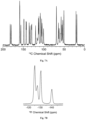
- An aspect of the invention is the Form A polymorph as described herein characterized by the 13 C SSNMR (solid-state nuclear magnetic resonance) spectra substantially as shown in Figure 7A .
- An aspect of the invention is the Form A polymorph as described herein characterized by the 19 F SSNMR (solid-state nuclear magnetic resonance) spectra substantially as shown in Figure 7B .
- An aspect of the application is a crystalline, anhydrate polymorph of (S)- 2-((2-(( S )-4-(difluoromethyl)-2-oxooxazolidin-3-yl)-5,6-dihydrobenzo[ f ]imidazo[1,2-d][1,4]oxazepin-9-yl)amino)propanamide designated the Form D polymorph that exhibits an X-ray powder diffraction pattern having characteristic peaks expressed in degrees 2-theta at approximately 7.5, 10.8, 16.8, and 20.4.
- the Form D polymorph (reference) exhibits an X-ray powder diffraction pattern having characteristic peaks expressed in degrees 2-theta at approximately 7.5, 8.6, 10.8, 16.8, 19.2, and 20.4.
- the Form D polymorph (reference) as described herein is characterized by the X-ray powder diffraction pattern shown in Figure 15A .
- the Form D polymorph (reference) as described herein is characterized by the X-ray powder diffraction peaks shown in Table 3.
- An aspect of the application is a crystalline, anhydrate polymorph of (S)- 2-((2-(( S )-4-(difluoromethyl)-2-oxooxazolidin-3-yl)-5,6-dihydrobenzo[ f ]imidazo[1,2-d][1,4]oxazepin-9-yl)amino)propanamide designated the Form D polymorph (reference) that exhibits an X-ray powder diffraction pattern obtained using an incident beam of Cu K ⁇ radiation having characteristic peaks expressed in degrees 2-theta at approximately 7.5, 10.8, 16.8, and 20.4; or having characteristic peaks expressed in degrees 2-theta at approximately 7.5, 8.6, 10.8, 16.8, 19.2, and 20.4.
- An aspect of the application is a crystalline, anhydrate polymorph of (S)- 2-((2-(( S )-4-(difluoromethyl)-2-oxooxazolidin-3-yl)-5,6-dihydrobenzo[ f ]imidazo[1,2-d][1,4]oxazepin-9-yl)amino)propanamide designated the Form D polymorph (reference) that exhibits an X-ray powder diffraction pattern using an incident beam of Cu K ⁇ (1.541904 ⁇ ) radiation generated using Cross Beam optics (40 kV ⁇ 44 mA) having characteristic peaks expressed in degrees 2-theta at approximately 7.5, 10.8, 16.8, and 20.4; or having characteristic peaks expressed in degrees 2-theta at approximately 7.5, 8.6, 10.8, 16.8, 19.2, and 20.4.
- An aspect of the application is a crystalline, trihydrate polymorph of (S)-2-((2-(( S )-4-(difluoromethyl)-2-oxooxazolidin-3-yl)-5,6-dihydrobenzo[ f ]imidazo[1,2-d][1,4]oxazepin-9-yl)amino)propanamide designated the Form B polymorph (reference) that exhibits an X-ray powder diffraction pattern having characteristic peaks expressed in degrees 2-theta at approximately 5.4, 10.5, and 25.2.
- An aspect of the application is a crystalline, trihydrate polymorph of (S)-2-((2-(( S )-4-(difluoromethyl)-2-oxooxazolidin-3-yl)-5,6-dihydrobenzo[ f ]imidazo[1,2-d][1,4]oxazepin-9-yl)amino)propanamide designated the Form B polymorph (reference) that exhibits an X-ray powder diffraction pattern using an incident beam of Cu K ⁇ radiation having characteristic peaks expressed in degrees 2-theta at approximately 5.4, 10.5, and 25.2; or having characteristic peaks expressed in degrees 2-theta at approximately 5.4, 10.5, 19.5, 20.1, 21.6, and 25.2.
- An aspect of the application is a crystalline, trihydrate polymorph of (S)-2-((2-(( S )-4-(difluoromethyl)-2-oxooxazolidin-3-yl)-5,6-dihydrobenzo[ f ]imidazo[1,2-d][1,4]oxazepin-9-yl)amino)propanamide designated the Form B polymorph (reference) that exhibits an X-ray powder diffraction pattern using an incident beam of Cu K ⁇ (1.541904 ⁇ ) radiation generated using Cross Beam optics (40 kV ⁇ 44 mA) having characteristic peaks expressed in degrees 2-theta at approximately 5.4, 10.5, and 25.2; or having characteristic peaks expressed in degrees 2-theta at approximately 5.4, 10.5, 19.5, 20.1, 21.6, and 25.2.
- An aspect of the invention is a pharmaceutical composition
- a pharmaceutical composition comprising a therapeutically effective amount of the crystalline, anhydrate polymorph of Form A as described above, and a pharmaceutically acceptable carrier, glidant, diluent, or excipient.
- An aspect of the application is a pharmaceutical composition
- a pharmaceutical composition comprising a therapeutically effective amount of the crystalline, anhydrate polymorph of Form D (reference) as described above, and a pharmaceutically acceptable carrier, glidant, diluent, or excipient.
- An aspect of the application is a pharmaceutical composition
- a pharmaceutical composition comprising a therapeutically effective amount of the crystalline, trihydrate polymorph of Form B (reference) as described above, and a pharmaceutically acceptable carrier, glidant, diluent, or excipient.
- An aspect of the invention is the pharmaceutical composition as described above in the form of a tablet.
- An aspect of the invention is the pharmaceutical composition as described above wherein the therapeutically effective amount is from about 1 to about 100 mg.
- An aspect of the invention is the pharmaceutical composition as described above wherein the crystalline, anhydrate or trihydrate polymorph is milled.
- An aspect of the invention is the process for preparing a crystalline polymorph comprising heating a slurry of (S)-2-((2-((S)-4-(difluoromethyl)-2-oxooxazolidin-3-yl)-5,6-dihydrobenzo[f]imidazo[1,2-d][1,4]oxazepin-9-yl)amino)propanamide in ethanol or n-propanol and then cooling the mixture whereby a Form A crystalline polymorph that exhibits an X-ray powder diffraction pattern having characteristic peaks expressed in degrees 2-theta at approximately 5.7, 11.4, 17.2, 19.0, 19.7, and 24.4, is formed.
- the process comprises heating a slurry of GDC-0077 in ethanol in the presence of less than 40% (or less than 20%, or less than 10%) of water, and then cooling the mixture whereby forming the Form A polymorph.
- the process further comprises seeding the mixture with crystalline GDC-0077 (e.g., a crystalline THF solvate).
- the process comprises slurring a Form A polymorph of (S)-2-((2-((S)-4-(difluoromethyl)-2-oxooxazolidin-3-yl)-5,6-dihydrobenzo[ f ]imidazo[1,2- d ][1,4]oxazepin-9-yl)amino)propanamide in DI water for 4 days at room temperature.
- a method for the treatment of cancer in a subject in need thereof comprising administering to the subject an effective amount of a crystalline polymorph of GDC-0077 detailed herein (e.g., crystalline anhydrate Form A, crystalline anhydrate Form D (reference), or crystalline trihydrate Form B (reference)), or a pharmaceutical composition comprising a crystalline polymorph of GDC-0077 detailed herein (e.g., crystalline anhydrate Form A, crystalline anhydrate Form D (reference), or crystalline trihydrate Form B (reference), and a pharmaceutically acceptable carrier, glidant, diluent, or excipient.
- a crystalline polymorph of GDC-0077 detailed herein e.g., crystalline anhydrate Form A, crystalline anhydrate Form D (reference), or crystalline trihydrate Form B (reference)
- a pharmaceutical composition comprising a crystalline polymorph of GDC-0077 detailed herein (e.g., crystalline anhydrate Form A, crystalline anhydrate Form D (reference), or
- the cancer is a HR-positive and HER2-negative breast cancel expressing a PIK3CA mutation.
- the method further comprises one or more additional therapeutic agents (e.g., fulvestrant, palbociclib and/or letrozole).
- An aspect of the invention is a crystalline anhydrate Form A of GDC-0077 detailed herein or a pharmaceutical composition comprising a crystalline anhydrate Form A of GDC-0077 detailed herein for use in the treatment of cancer.
- the cancer is a HR-positive and HER2-negative breast cancel expressing a PIK3CA mutation.
- the polymorphs for use further comprise one or more additional therapeutic agents (e.g., fulvestrant, palbociclib and/or letrozole).
- An aspect of the application is the use of a crystalline polymorph of GDC-0077 detailed herein (e.g., crystalline anhydrate Form A, crystalline anhydrate Form D (reference), or crystalline trihydrate Form B (reference)), or a pharmaceutical composition comprising a crystalline polymorph of GDC-0077 detailed herein (e.g., crystalline anhydrate Form A, crystalline anhydrate Form D (reference), or crystalline trihydrate Form B (reference)), in the manufacture of a medicament for use in the treatment of cancer.
- the cancer is a HR-positive and HER2-negative breast cancel expressing a PIK3CA mutation.
- the uses further comprise one or more additional therapeutic agents (e.g., fulvestrant, palbociclib and/or letrozole).
- Polymorph refers to the occurrence of different crystalline forms of a compound differing in packing or conformation/configuration but with the same chemical composition. Crystalline forms have different arrangements and/or conformations of the molecule in the crystal lattice. Solvates are crystal forms containing either stoichiometric or nonstoichiometric amounts of a solvent. If the incorporated solvent is water, the solvate is commonly known as a hydrate. Hydrates/solvates may exist as polymorphs for compounds with the same solvent content but different lattice packing or conformation.
- a single compound may give rise to a variety of polymorphic forms where each form has different and distinct physical properties, such as solubility profiles, melting point temperatures, hygroscopicity, particle shape, density, flowability, compactibility and/or x-ray diffraction peaks.
- the solubility of each polymorph may vary, thus, identifying the existence of pharmaceutical polymorphs is essential for providing pharmaceuticals with predictable solubility profiles. It is desirable to investigate all solid state forms of a drug, including all polymorphic forms, and to determine the stability, dissolution and flow properties of each polymorphic form.
- Polymorphic forms of a compound can be distinguished in a laboratory by X-ray diffractometry and by other methods such as, infrared or Raman or solid-state NMR spectrometry.
- X-ray diffractometry and by other methods such as, infrared or Raman or solid-state NMR spectrometry.
- J. K. Haleblian and W. McCrone J. Pharm. Sci., 58:911 (1969 ); " Polymorphism in Pharmaceutical Solids, Second Edition (Drugs and the Pharmaceutical Sciences)", Harry G. Brittain, Ed. (2011) CRC Press (2009 ); and J. K. Haleblian, J. Pharm. Sci., 64, 1269 (1975 ).
- XRPD means X-ray powder diffraction, an analytical technique which measures the diffraction of X-rays in the presence of a solid component.
- Materials which are crystalline and have regular repeating arrays of atoms generate a distinctive powder pattern. Materials with similar unit cells will give powder patterns that are similar in position as measured in °2 ⁇ (theta). Solvates which exhibit this property are called isostructural or isomorphous solvates.
- the intensity of the reflections varies according to the electron density causing diffraction as well as sample, sample preparation, and instrument parameters. Analysis of XRPD data is based upon the general appearance of the measured powder pattern(s) with respect to the known response of the X-ray diffraction system used to collect the data.
- diffraction peaks that may be present in the powder pattern
- their positions, shapes, widths and relative intensity distributions can be used to characterize the type of solid state order in the powder sample.
- the position, shape and intensity of any broad diffuse scatter (halos) on top of the instrumental background can be used to characterize the level and type of solid state disorder.
- the combined interpretation of the solid state order and disorder present in a powder sample provides a qualitative measure of the macro-structure of the sample.
- package insert is used to refer to instructions customarily included in commercial packages of therapeutic products, that contain information about the indications, usage, dosage, administration, contraindications and/or warnings concerning the use of such therapeutic products.
- phrases "pharmaceutically acceptable salt” as used herein, refers to pharmaceutically acceptable organic or inorganic salts of a compound of the invention.
- Exemplary salts include, but are not limited, to sulfate, citrate, acetate, oxalate, chloride, bromide, iodide, nitrate, bisulfate, phosphate, acid phosphate, isonicotinate, lactate, salicylate, acid citrate, tartrate, oleate, tannate, pantothenate, bitartrate, ascorbate, succinate, maleate, gentisinate, fumarate, gluconate, glucuronate, saccharate, formate, benzoate, glutamate, methanesulfonate "mesylate", ethanesulfonate, benzenesulfonate, p-toluenesulfonate, and pamoate (i.e., 1,1'-methylene-bis
- a pharmaceutically acceptable salt may involve the inclusion of another molecule such as an acetate ion, a succinate ion or other counter ion.
- the counter ion may be any organic or inorganic moiety that stabilizes the charge on the parent compound.
- a pharmaceutically acceptable salt may have more than one charged atom in its structure. Instances where multiple charged atoms are part of the pharmaceutically acceptable salt can have multiple counter ions. Hence, a pharmaceutically acceptable salt can have one or more charged atoms and/or one or more counter ion.
- the desired pharmaceutically acceptable salt may be prepared by any suitable method available in the art, for example, treatment of the free base with an inorganic acid, such as hydrochloric acid, hydrobromic acid, sulfuric acid, nitric acid, methanesulfonic acid, and phosphoric acid, or with an organic acid, such as acetic acid, maleic acid, succinic acid, mandelic acid, fumaric acid, malonic acid, pyruvic acid, oxalic acid, glycolic acid, salicylic acid, a pyranosidyl acid, such as glucuronic acid or galacturonic acid, an alpha hydroxy acid, such as citric acid or tartaric acid, an amino acid, such as aspartic acid or glutamic acid, an aromatic acid, such as benzoic acid or cinnamic acid, a sulfonic acid, such as p-toluenesulfonic acid or ethanesulfonic acid.
- an inorganic acid such as hydroch
- the desired pharmaceutically acceptable salt may be prepared by any suitable method, for example, treatment of the free acid with an inorganic or organic base, such as an amine (primary, secondary or tertiary), an alkali metal hydroxide or alkaline earth metal hydroxide.
- suitable salts include, but are not limited to, organic salts derived from amino acids, such as glycine and arginine, ammonia, primary, secondary, and tertiary amines, and cyclic amines, such as piperidine, morpholine and piperazine, and inorganic salts derived from sodium, calcium, potassium, magnesium, manganese, iron, copper, zinc, aluminum and lithium.
- the desired pharmaceutically acceptable salt may be prepared by any suitable method available in the art.
- treatment of the free base with an inorganic acid such as hydrochloric acid, hydrobromic acid, sulfuric acid, nitric acid, methanesulfonic acid, and phosphoric acid
- an organic acid such as acetic acid, maleic acid, succinic acid, mandelic acid, fumaric acid, malonic acid, pyruvic acid, oxalic acid, glycolic acid, salicylic acid, a pyranosidyl acid, such as glucuronic acid or galacturonic acid, an alpha hydroxy acid, such as citric acid or tartaric acid, an amino acid, such as aspartic acid or glutamic acid, an aromatic acid, such as benzoic acid or cinnamic acid, a sulfonic acid, such as p-toluenesulfonic acid or ethanesulfonic acid.
- an inorganic acid such as hydrochloric acid,
- Acids which are generally considered suitable for the formation of pharmaceutically useful or acceptable salts from basic pharmaceutical compounds are discussed, for example, by P. Stahl et al, Camille G. (eds.) Handbook of Pharmaceutical Salts. Properties, Selection and Use. (2002) Zurich: Wiley-VCH ; S. Berge et al, Journal of Pharmaceutical Sciences (1977) 66(1) 119 ; P. Gould, International J. of Pharmaceutics (1986) 33 201 217 ; Anderson et al, The Practice of Medicinal Chemistry (1996), Academic Press, New York ; Remington's Pharmaceutical Sciences, 18th ed., (1995) Mack Publishing Co., Easton PA ; and in The Orange Book (Food & Drug Administration, Washington, D.C. on their website ).
- phrases "pharmaceutically acceptable” indicates that the substance or composition must be compatible chemically and/or toxicologically, with the other ingredients comprising a formulation, and/or the mammal being treated therewith.
- a “solvate” refers to an association or complex of one or more solvent molecules and a compound of the invention.
- solvents that form solvates include, but are not limited to, water, isopropanol, ethanol, methanol, DMSO, ethyl acetate, acetic acid, and ethanolamine.
- hydrate refers to the complex where the solvent molecule is water.
- chiral refers to molecules which have the property of non-superimposability of the mirror image partner, while the term “achiral” refers to molecules which are superimposable on their mirror image partner.
- stereoisomers refers to compounds which have identical chemical constitution, but differ with regard to the arrangement of the atoms or groups in space.
- Diastereomer refers to a stereoisomer with two or more centers of chirality and whose molecules are not mirror images of one another. Diastereomers have different physical properties, e.g. melting points, boiling points, spectral properties, and reactivities. Mixtures of diastereomers may separate under high resolution analytical procedures such as electrophoresis and chromatography.
- Enantiomers refer to two stereoisomers of a compound which are non-superimposable mirror images of one another.
- the compounds of the invention may contain asymmetric or chiral centers, and therefore exist in different stereoisomeric forms. It is intended that all stereoisomeric forms of the compounds of the invention, including diastereomers, enantiomers and atropisomers, as well as mixtures thereof such as racemic mixtures, form part of the present invention.
- optically active compounds i.e., they have the ability to rotate the plane of plane-polarized light.
- the prefixes D and L, or R and S are used to denote the absolute configuration of the molecule about its chiral center(s).
- the prefixes d and 1 or (+) and (-) are employed to designate the sign of rotation of plane-polarized light by the compound, with (-) or 1 meaning that the compound is levorotatory.
- a compound prefixed with (+) or d is dextrorotatory. For a given chemical structure, these stereoisomers are identical except that they are mirror images of one another.
- a specific stereoisomer may also be referred to as an enantiomer, and a mixture of such isomers is often called an enantiomeric mixture.
- a 50:50 mixture of enantiomers is referred to as a racemic mixture or a racemate, which may occur where there has been no stereoselection or stereospecificity in a chemical reaction or process.
- the terms “racemic mixture” and “racemate” refer to an equimolar mixture of two enantiomeric species, devoid of optical activity.
- tautomer or “tautomeric form” refers to structural isomers of different energies which are interconvertible via a low energy barrier.
- proton tautomers also known as prototropic tautomers
- Valence tautomers include interconversions by reorganization of some of the bonding electrons.
- the present invention includes polymorph Form A of GDC-0077, and processes, methods, and reagents for the production of polymorphs of GDC-0077, shown as Formula I (CAS Registry Number 2060571-02-8): and named as: (S)-2-((2-((S)-4-(difluoromethyl)-2-oxooxazolidin-3-yl)-5,6-dihydrobenzo[f]imidazo[1,2-d][1,4]oxazepin-9-yl)amino)propanamide ( WO 2017/001645 , US 2017/0015678 )).
- GDC-0077 includes all stereoisomers, geometric isomers, tautomers, and pharmaceutically acceptable salts thereof.
- GDC-0077 is the API (Active Pharmaceutical Ingredient) in formulations being developed for the clinical treatment of breast cancer and other disorders.
- XRPD X-ray Powder Diffraction
- All crystalline substances are distinguished by their crystallographic unit cells (and therefore peak positions). By comparing measured peak positions with those held in a database, the crystalline substance may be identified uniquely.
- the positions of all peaks are generally a function of three parameters: a,b,c and three angles: alpha, beta, gamma ( ⁇ , ⁇ , ⁇ ) defining the elementary parallelepiped that constitutes the crystallographic unit cell.
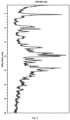
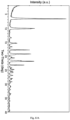
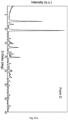
- the XRPD pattern of GDC-0077 as starting material, prepared as in Example 1, is shown in Figure 1 . As evident from the increased baseline counts and poorly resolved diffraction peaks, the starting material is poorly crystalline.
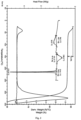
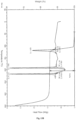
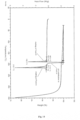
- Figure 2 shows DSC (Differential Scanning Calorimetry) and TGA (Thermogravimetry) traces of starting material GDC-0077. The desolvation/vaporization endotherm and the recrystallization endotherm occur at 64 and 141 °C respectively (onset), followed by the melting endotherm at 214 °C.
- TGA shows a weight loss of ⁇ 2.5% w/w before the melting event.
- the TGA data ( Figure 2 ) shows a weight loss of ⁇ 2.5% by 150°C.
- the DSC thermogram shows a sharp melting endotherm with an extrapolated onset of ⁇ 214°C preceded by a prominent shallow endotherm (possibly desolvation/vaporization) and an exotherm (crystallization/rearrangement/phase transformation) in the 50-175°C range.
- the desolvation/vaporization endotherm and the recrystallization endotherm occur at 64 and 141°C respectively (onset), followed by the melting endotherm at 214 °C.
- TGA shows a weight loss of ⁇ 2.5% w/w before the melting event.
- FIG. 1 XRPD patterns of several different solid form hits obtained from the full plate (96 well) high throughput screening, as detailed in Example 2.
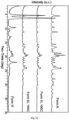
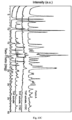
- Figure 3 shows overlay of the XRPD patterns of the different solid form hits, Forms 1-VI, obtained in the 96 well HTS polymorph screening for GDC-0077. The two most frequently obtained forms were Forms I and II, of which Form II matched the starting material ( Figure 3 ).
- Several other new polymorph hits were identified from the evaporation, precipitation and cooling plates which were scaled up 10 ⁇ fold, i.e. 150-200 mg each for further characterization. Table 1 summarizes the scale up condition for six different forms I-VI. Table 1.
- Figure 4 shows XRPD of anhydrous Form I (Form A) GDC-0077. Table 2 shows the XRPD Peak Search Report for GDC-0077 Form I/A.
- Figure 5A shows Scanning electron microscopy (SEM) at 1000X magnification of anhydrous Form I (Form A) GDC-0077.
- Figure 5B shows Polarized light microscopy (PLM) at 200X magnification of anhydrous Form I (Form A) GDC-0077.
- Form I was found to be substantially crystalline with small, rod shaped crystals of 30-40 ⁇ m (microns) in length.
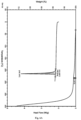
- Forms IV-VI appeared similar by XRPD ( Figure 3 ) with differences in relative peak intensities in the 5-20° 2 ⁇ range. These three forms showed a weight loss of ⁇ 13% w/w up to 150 °C by TGA ( Figure 6B ), and multiple transitions up to the melting point at 214 °C by DSC ( Figure 6C ). These transitions are speculated to be solvent loss (first endotherm, 88 °C for Forms IV and V) followed by crystallization of intermediate form and its subsequent melting/conversion to Form A, which melts at 214 °C.
- Form VI shows a similar trend of desolvation followed by a recrystallization exotherm to Form A by DSC.
- the XRPD of Form III was different from Forms IV-VI ( Figure 3 ).
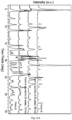
- the thermal analysis DSC and TGA traces of Form III in Figure 10B shows several transitions (desolvation/vaporization endotherm), similar to Form B (reference) in Figure 6C , followed by recrystallization exotherm and melting of the final form, which was confirmed to be Form A by XRPD ( Figure 11).
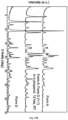
- Figure 11 shows overlay of the XRPD patterns of Form A and Form III solid forms. XRPD patterns of Form III at RT, and when heated to 165 and 195°C are shown. Form III converts to Form A upon heating at ⁇ 165 °C ( Figure 11 ).
- Form III showed only a 3% w/w weight loss by TGA, its water content was found to be 11% by qNMR.
- Form II was found to be the same as the starting material characterized in Figures 1 and 2 . Substantial similarity was observed upon comparison of the XRPD patterns of Form II, Form III and the product phase obtained upon isothermal dehydration of Form B (reference) at 60°C, indicating that Forms II and III are simply partially desolvated intermediates of Form B (reference), and differing only in their degrees of desolvation.
- Form is the partially dehydrated intermediate of Form B trihydrate (reference).
- the possibility of existence of an intermediate hydrate form is also suggested from the step wise desorption profile of Form B (reference) ( Figure 10A ).
- Forms II/III partially dehydrated form
- Form C At higher temperatures (>165C), Form III/C converts to Form I/A.
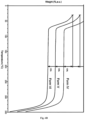
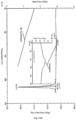
- Figure 12B summarizes the results of the slurry bridging experiments of hydrate-anhydrate mixtures, where the water activity is plotted against the vehicle composition (% water, v/v).
- Figure 12B shows slurry bridging experiment data for GDC-0077 hydrate-anhydrate system in ethanol-water mixtures at RT (room temperature).
- the equilibrium RH (relative humidity) zone for the two forms was identified as 82-86%, equivalent to 65-83% w/w water content.
- the anhydrous form (Form A) was found to be stable up to water activity (a w ) of 0.82
- the hydrate (Form B) reference
- the a w of anhydrate-hydrate equilibrium lies in the 0.82-0.86 range.
- Figure 12C shows XRPD of trihydrate Form B GDC-0077 (reference).
- Table 2A shows the XRPD Peak Search Report for GDC-0077 Form B (reference).
- Table 2A XRPD Peak Search Report for GDC-0077 trihydrate Form B (reference) 2-Theta d( ⁇ ) BG Height H% 5.359 16.4771 162 3466 100.0 9.470 9.3316 137 574 16.6 10.470 8.4424 136 1467 42.3 16.958 5.2242 115 813 23.5 19.511 4.5460 100 877 25.3 20.118 4.4102 100 1260 36.4 21.634 4.1045 112 1381 39.8 25.234 3.5265 148 1474 42.5
- Figure 13A shows the XRPD pattern of GDC-0077 THF solvate, which was found to contain 10% w/w THF as analyzed by LC-MS. A 14% w/w weight loss was observed by TGA. DSC showed multiple transitions which were further investigated by heating the sample to 175°C and 201°C, prior to the occurrence of the endotherms ( Figure 13B ). An overlay of the XRPD patterns of THF solvate, and the product phases obtained upon heating to 175 and 210°C shows the solvate desolvates to intermediate anhydrous Form which ultimately converts to Form A ( Figure 13C ).
- Form D (reference) is also obtained by slurrying the crude starting GDC-077, as the Active Pharmaceutical Ingredient (API), in n-propanol: water (99:1 v/v). The THF solvate was found to desolvate to anhydrous Form D (reference).
- Form D (reference) and Form A are monotropically related, with Form A being the thermodynamically stable form over the temperature range studied.
- Figure 15A shows XRPD of anhydrous Form D (reference) GDC-0077. Table 3 shows the representative XRPD peaks of Form D (reference).
- Figure 15B shows the XRPD pattern of the solid form isolated from the slurry post 12 hrs of agitation, which matches that of Form A. This confirms that Form D converts to Form A. In other words, Form A is the more stable form between RT to 214 °C.
- Figure 17 shows the Solid form landscape for GDC-0077, and provides a comprehensive snapshot of the different solid forms identified via high throughput screening and during crystallization optimization.
- the form landscape shows the phase transformation between the different forms and details the experimental conditions enabling these transformations as a guide for crystallization and scale up of the appropriate form.
- XRPD Figure 4
- solid-state NMR Figure 7A and 7B confirmed Form A.
- Figure 7A shows 13C SSNMR (solid-state nuclear magnetic resonance) spectra of anhydrous Form I (Form A) GDC-0077.
- Figure 7B shows 19F SSNMR of anhydrous Form I (Form A) GDC-0077.
- Thermal analysis DSC and TGA traces are included in Figure 6 .
- Form A is confirmed to be anhydrous.
- Microscopy data SEM and PLM are shown in Figures 5A and 5B , where the GDC-0077 Form API particles appear to be plate like.
- Table 4 shows the Particle Size Distribution (PSD) data for 5, 15 and 30 second sonication.
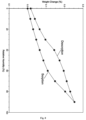
- Water sorption data of anhydrous Form I (Form A) GDC-0077 is shown in Figure 8 . The compound absorbs negligible moisture (0.25% w/w) up to 90% RH (25 °C).
- Table 4 Particle Size Distribution (PSD) for GDC-0077 Form A as a function of sonication time.
- Milling of Form A may optimize certain PK properties.
- a scaled up Form A lot was milled and also placed on stability studies (40 °C/75% RH, 25 °C/60% RH, open vials). Three more lots were also milled which behaved similarly upon milling.
- a milled representative lot was characterized and the physical form was determined. This lot was slurried in 100% ethanol to obtain Form A and milled using a jet mill at for 3.5 hrs with 60 psi pressure. The yield was found to be 91%.
- API Active Pharmaceutical Ingredient, i.e. GDC-0077
- stability at 40 °C/75% RH and 25 °C/60% RH in open vials.
- Solid-state data was collected at 4 and 8 weeks to evaluate effect of temperature and humidity on the physical form.
- the milled and stability samples were characterized by XRPD, PLM, DSC, TGA, Water sorption analysis and surface area analysis. DSC runs were performed in the modulated mode using non-hermetically crimped pans, a heating rate of 1°C/min from 0-175 °C, modulation amplitude of ⁇ 1 °C and a period of 60 seconds.
- GDC-0077 physical form remains unchanged under stress-stability conditions (open vials) as evident from XRPD.
- Reduction or disappearance of milling induced disorder upon exposure to moisture is evident from the decrease in ⁇ H (25 °C/60% RH) or complete absence of the recrystallization endotherm (40 °C/75% RH) in the stability samples by DSC.
- annealing or recrystallization of a disordered phase may occur upon exposure to moisture which acts as a plasticizer.
- GDC-0077 Form A shows milling induced disorder, but the crystalline form remains unchanged upon size reduction. The disorder is speculated to be surface related and reduced/anneals to crystalline form upon exposure to moisture.
- the physical form remains stable under open conditions up to 8 weeks at 40 °C/75%RH and 25 °C/60% RH.
- Crystalline forms of GDC-0077 detailed herein are useful for treating a human or animal patient suffering from a disease or disorder arising from abnormal cell growth, function or behavior associated with PI3K such as cancer, may thus be treated by a method comprising the administration thereto of a crystalline polymorph of GDC-0077 detailed herein (e.g., crystalline anhydrate Form A, crystalline anhydrate Form D (reference), or crystalline trihydrate Form B (reference)).
- a human or animal patient suffering from cancer may also be treated by a method comprising the administration thereto of a crystalline polymorph of GDC-0077 detailed herein. The condition of the patient may thereby be improved or ameliorated.
- Methods of the invention also include treating cancer selected from breast, ovary, cervix, prostate, testis, genitourinary tract, esophagus, larynx, glioblastoma, neuroblastoma, stomach, skin, keratoacanthoma, lung, epidermoid carcinoma, large cell carcinoma, non-small cell lung carcinoma (NSCLC), small cell carcinoma, lung adenocarcinoma, bone, colon, adenoma, pancreas, adenocarcinoma, thyroid, follicular carcinoma, undifferentiated carcinoma, papillary carcinoma, seminoma, melanoma, sarcoma, bladder carcinoma, liver carcinoma and biliary passages, kidney carcinoma, pancreatic, myeloid disorders, lymphoma, hairy cells, buccal cavity, naso-pharyngeal, pharynx, lip, tongue, mouth, small intestine, colon-rectum, large intestine, rectum, brain and
- Polymorphs of GDC-0077 may be employed alone or in combination with additional therapeutic agents for the treatment of a disease or disorder described herein, such as inflammation or a hyperproliferative disorder (e.g., cancer).
- a crystalline polymorph of GDC-0077 detailed herein e.g., crystalline anhydrate Form A, crystalline anhydrate Form D (reference), or crystalline trihydrate Form B (reference) is combined in a pharmaceutical combination formulation, or dosing regimen as combination therapy, with an additional, second therapeutic compound that has anti-inflammatory or anti-hyperproliferative properties or that is useful for treating an inflammation, immune-response disorder, or hyperproliferative disorder (e.g., cancer).
- the additional therapeutic may be a CDK4/6 inhibitor, Bcl-2 inhibitor, a JAK inhibitor, an anti-inflammatory agent, an immunomodulatory agent, chemotherapeutic agent, an apoptosis-enhancer, a neurotropic factor, an agent for treating cardiovascular disease, an agent for treating liver disease, an antiviral agent, an agent for treating blood disorders, an agent for treating diabetes, and an agent for treating immunodeficiency disorders.
- the second therapeutic agent may be an NSAID anti-inflammatory agent.
- the second therapeutic agent may be a chemotherapeutic agent.
- the second compound of the pharmaceutical combination formulation or dosing regimen preferably has complementary activities to GDC-0077 such that they do not adversely affect each other. Such compounds are suitably present in combination in amounts that are effective for the purpose intended.
- a composition of this invention comprises a crystalline polymorph of GDC-0077 detailed herein (e.g., crystalline anhydrate Form A, crystalline anhydrate Form D, or crystalline trihydrate Form B) (reference), in combination with a therapeutic agent such as a CDK4/6 inhibitor.
- Suitable dosages for any of the above coadministered agents are those presently used and may be lowered due to the combined action (synergy) of the newly identified agent and other therapeutic agents or treatments.
- a crystalline polymorph of GDC-0077 detailed herein may be combined with other therapeutic, hormonal or antibody agents such as those described herein, as well as combined with surgical therapy and radiotherapy.
- Combination therapies according to the present invention thus comprise the administration of a crystalline polymorph of GDC-0077 detailed herein (e.g., crystalline anhydrate Form A, crystalline anhydrate Form D, or crystalline trihydrate (reference)), and the use of at least one other cancer treatment method.
- the amounts of the crystalline polymorph of GDC-0077 and the other pharmaceutically active therapeutic agent(s) and the relative timings of administration will be selected in order to achieve the desired combined therapeutic effect.
- Additional therapeutic agents employed in combination with a crystalline polymorph of GDC-0077 detailed herein include 5-FU, docetaxel, eribulin, gemcitabine, cobimetinib, ipatasertib, paclitaxel, tamoxifen, fulvestrant, GDC-0810, dexamethasone, palbociclib, bevacizumab, pertuzumab, trastuzumab emtansine, trastuzumab and letrozole.
- the cancer is a HER2-negative, ER-negative and progesterone receptor (PR)-negative breast cancer.
- the subject is human.
- the subject is a postmenopausal woman.
- the breast cancer subtype is Basal or Luminal.
- the cancer has a PIK3CA mutation.
- the cancer expresses a PIK3CA mutant selected from E542K, E545K, Q546R, H1047L and H1047R.
- the cancer expresses a PTEN mutant.
- An aspect of the invention is a crystalline anhydrate Form A of GDC-0077 detailed herein or a pharmaceutical composition comprising a crystalline anhydrate Form A of GDC-0077 detailed herein for use in the treatment of cancer.
- the cancer is a HR-positive and HER2-negative breast cancel expressing a PIK3CA mutation.
- the polymorphs for use further comprise one or more additional therapeutic agents (e.g., fulvestrant, palbociclib and/or letrozole).
- a crystalline polymorph of GDC-0077 detailed herein e.g., crystalline anhydrate Form A, crystalline anhydrate Form D (reference), or crystalline trihydrate Form B) (reference
- a pharmaceutical composition comprising a crystalline polymorph of GDC-0077 detailed herein (e.g., crystalline anhydrate Form A, crystalline anhydrate Form D (reference), or crystalline trihydrate Form B (reference)), in the manufacture of a medicament for use in the treatment of cancer.
- the cancer is a HR-positive and HER2-negative breast cancel expressing a PIK3CA mutation.
- the uses further comprise one or more additional therapeutic agents (e.g., fulvestrant, palbociclib and/or letrozole).
- a polymorph form of GDC-0077, Formula I may be formulated in accordance with standard pharmaceutical practice for use in a therapeutic combination for therapeutic treatment (including prophylactic treatment) of hyperproliferative disorders in mammals including humans.
- the invention provides a pharmaceutical composition comprising GDC-0077 in association with one or more pharmaceutically acceptable carrier, glidant, diluent, or excipient.
- the formulations may be prepared using conventional dissolution and mixing procedures.
- the compound of the present invention is typically formulated into pharmaceutical dosage forms to provide an easily controllable dosage of the drug and to enable patient compliance with the prescribed regimen.
- the pharmaceutical formulation ordinarily can be stored as a solid composition, a tablet, a pill, a capsule, a lyophilized formulation or as an aqueous solution.
- the pharmaceutical formulations of the invention will be dosed and administered in a fashion, i.e., amounts, concentrations, schedules, course, vehicles and route of administration, consistent with good medical practice.
- Factors for consideration in this context include the particular disorder being treated, the clinical condition of the individual patient, the cause of the disorder, the site of delivery of the agent, the method of administration, the scheduling of administration, and other factors known to medical practitioners.
- the active pharmaceutical ingredients may also be entrapped in microcapsules prepared, for example, by coacervation techniques or by interfacial polymerization, for example, hydroxymethylcellulose or gelatin-microcapsules and poly-(methylmethacylate) microcapsules, respectively, in colloidal drug delivery systems (for example, liposomes, albumin microspheres, microemulsions, nano-particles and nanocapsules) or in macroemulsions.
- colloidal drug delivery systems for example, liposomes, albumin microspheres, microemulsions, nano-particles and nanocapsules
- macroemulsions for example, liposomes, albumin microspheres, microemulsions, nano-particles and nanocapsules
- Other examples of drug formulations can be found in Liberman, H. A. and Lachman, L., Eds., Pharmaceutical Dosage Forms, Marcel Decker, Vol 3, 2nd Ed., New York, NY .
- Tablets may comprise one or more pharmaceutically acceptable carrier, glidant, diluent, or excipient selected from microcrystalline cellulose, lactose, sodium starch glycolate, and magnesium stearate.
- glidants may be selected from silicon dioxide, powdered cellulose, microcrystalline cellulose, metallic stearates, sodium aluminosilicate, sodium benzoate, calcium carbonate, calcium silicate, corn starch, magnesium carbonate, asbestos free talc, stearowet C, starch, starch 1500, magnesium lauryl sulfate, magnesium oxide, and combinations thereof.
- the pharmaceutical formulations include those suitable for the administration routes detailed herein.
- the formulations may conveniently be presented in unit dosage form and may be prepared by any of the methods well known in the art of pharmacy. Techniques and formulations generally are found in Remington's Pharmaceutical Sciences 18th Ed. (1995) Mack Publishing Co., Easton, PA . Such methods include the step of bringing into association the active ingredient with the carrier which constitutes one or more accessory ingredients.
- the formulations are prepared by uniformly and intimately bringing into association the active ingredient with liquid carriers or finely divided solid carriers or both, and then, if necessary, shaping the product.
- the compounds may be administered by intralesional administration, including perfusing or otherwise contacting the graft with the inhibitor before transplantation. It will be appreciated that the preferred route may vary with for example the condition of the recipient. Where the compound is administered orally, it may be formulated as a pill, capsule, tablet, etc. with a pharmaceutically acceptable carrier, glidant, or excipient. Where the compound is administered parenterally, it may be formulated with a pharmaceutically acceptable parenteral vehicle or diluent, and in a unit dosage injectable form, as detailed below.
- a dose to treat human patients may range from about 1 mg to about 100 mg of a polymorph form of GDC-0077, such as about 2 mg to about 50 mg, about 3 mg to about 20 mg, about 3 mg to about 15 mg, about 3 mg to about 20 mg, about 1 mg, about 2 mg, about 3 mg, about 4 mg, about 5 mg, about 6 mg, about 9 mg, about 12 mg, about 15 mg, or about 20 mg of the compound.
- a dose may be administered once a day (QD), twice per day (BID), or more frequently, depending on the pharmacokinetic (PK) and pharmacodynamic (PD) properties, including absorption, distribution, metabolism, and excretion of the particular compound.
- PK pharmacokinetic
- PD pharmacodynamic
- toxicity factors may influence the dosage and administration dosing regimen.
- the pill, capsule, or tablet may be ingested twice daily, daily or less frequently such as weekly or once every two or three weeks for a specified period of time. The regimen may be repeated for a number of cycles of
- GDC-0077 was prepared according to WO 2017/001645 , US 2017/0015678 .
- GDC-0077 Form A (anhydrate) was obtained by slurring GDC-0077 in ethanol at 50 °C for 4 hours and then evaporating the solvent under nitrogen purge to give the highly crystalline Form A.
- DSC thermogram showed one endothermic transition with an onset at ⁇ 212-214 °C with an associated heat of fusion of ⁇ 107 J/g.
- Water solubility of Form A at room temperature is 30.8 ⁇ g/mL at a pH of 7.06.
- the trihydrate form was obtained by slurrying Form A in DI water over 4 days (RT), centrifuging the slurry to remove supernatant and then drying the solid at RT for a few hours.
- Solvents included water, 1,2-dichloroethane, heptane, cyclohexane, ethanol, 1-propanol, acetonitrile, butylamine, nitromethane, 1,4-dioxane, benzene, perfluoroheptane, ethyl acetate, (trifluoromethyl)benzene, butan-2-one (MEK), 1,2-dimethoxyethane, 2-methyltetrahydrofuran, carbon tetrachloride, dimethylacetamide, tetrahydrofuran (THF), acetone, anisole, toluene, and 2-ethoxyethanol.
- MEK butan-2-one
- DI Deionized
- XRPD patterns were collected with a Rigaku SmartLab ® diffractometer (Rigaku Corp., Tokyo, Japan), using an incident beam of Cu K ⁇ (1.541904 ⁇ ) radiation generated using Cross Beam optics (40 kV ⁇ 44 mA).
- GDC-0077 powder samples were packed using the top fill method onto zero-background holders and scans were acquired at a scan speed of 1or 3.0°/min and step size of 0.02 or 0.04° 2 ⁇ (2-theta) over 2-40° 2 ⁇ range in the bragg-brentano or parallel beam configuration (reflection geometry). Data was analyzed using commercial software (JADE ® , version 9, Materials Data Inc., Livermore, CA).
- thermogravimetric analyzer In a thermogravimetric analyzer (Discovery TGA, TA instruments), 3-4 mg of GDC-0077 samples were heated in an open aluminum pan from RT to 350°C at a heating rate of 10°C/min and RT to 350° under dry nitrogen purge. Temperature calibration was performed using Alumel ® and Nickel. Standard weights of 100mg and 1gm were used for weight calibration.
- thermogravimetric analyzer In a thermogravimetric analyzer (Q500 TGA, TA instruments), 3-4 mg of GDC-0077 samples were heated in an open aluminum pan from RT to 60°C at a heating rate of 10°C/min held isothermally at 60°C overnight. Samples were then either analyzed by XRPD or left to equilibrate at RT for 4 hours in the sample pan and then rerun isothermally at 60°C using the same experimental parameters as mentioned above.
- Samples were dispersed in silicon oil and observed under cross polarizers of a video enhanced Leica DM 4000B microscope equipped with a high resolution CCD camera and motorized stage (Clemex Technologies Inc., Longueuil, Quebec, Canada) at 200X magnification. Photomicrographs were acquired using the Clemex Vision PE software (Clemex Technologies Inc., Longueuil, Quebec, Canada).
- Particle size analysis was performed using a Malvern Mastersizer 2000 instrument equipped with a Hydros 2000SM wet dispersion attachment (Malvern Instruments Ltd., Malvern, UK). ⁇ 30 mg of API was weighed into a vial and 1 mL of 0.1% Span 85 in heptane was added. The vial was sonicated for 5 seconds, about 0.3 mL was added to the sampler at a stir speed of 1500 rpm, and a PSD was performed at an obscuration of 10-20%. The sample was then sonicated for 10 more seconds (a total of 15 seconds), about 0.3 mL was added to the sampler, a PLM image was acquired, and PSD was performed.
- the same sample was then sonicated for another 15 seconds (a total of 30 seconds), about 0.3 mL was added, a PLM photo was taken and PSD was performed. From the sonication study, an appropriate sonication period was chosen. The PLM images and PSDs were used to determine how much sonication the sample needed to disperse clumps but prevent or minimize crystal fracturing. Three more samples, of ⁇ 10 mg, were weighed into vials and 1 mL of 0.1% Span 85 in heptane was added. The samples were sonicated for the sonication period determined in the sonication study. The final PSD analysis was performed in triplicate using the predetermined sonication period. The instrument was rinsed twice with isopropyl alcohol (IPA) and once with heptane before being filled with 0.1% Span 85 in heptane for each sample. After the last sample had run, the instrument was rinsed with IPA once.
- IPA isopropyl alcohol
- SSNMR Solid-state Nuclear Magnetic Resonance Spec
Landscapes
- Health & Medical Sciences (AREA)
- Chemical & Material Sciences (AREA)
- Organic Chemistry (AREA)
- Public Health (AREA)
- Veterinary Medicine (AREA)
- General Health & Medical Sciences (AREA)
- Medicinal Chemistry (AREA)
- Animal Behavior & Ethology (AREA)
- Pharmacology & Pharmacy (AREA)
- Life Sciences & Earth Sciences (AREA)
- Nuclear Medicine, Radiotherapy & Molecular Imaging (AREA)
- General Chemical & Material Sciences (AREA)
- Chemical Kinetics & Catalysis (AREA)
- Oncology (AREA)
- Hematology (AREA)
- Epidemiology (AREA)
- Pharmaceuticals Containing Other Organic And Inorganic Compounds (AREA)
- Nitrogen And Oxygen Or Sulfur-Condensed Heterocyclic Ring Systems (AREA)
- Medicinal Preparation (AREA)
Priority Applications (1)
| Application Number | Priority Date | Filing Date | Title |
|---|---|---|---|
| EP25158128.6A EP4534148A3 (en) | 2017-04-28 | 2018-04-26 | Polymorphs and solid forms of (s)-2-((2-((s)-4-(difluoromethyl)-2-oxooxazolidin-3-yl)-5,6-dihydrobenzo[f]imidazo[1,2-d][1,4]oxazepin-9-yl)amino)propanamide, and methods of production |
Applications Claiming Priority (2)
| Application Number | Priority Date | Filing Date | Title |
|---|---|---|---|
| US201762491812P | 2017-04-28 | 2017-04-28 | |
| PCT/EP2018/060820 WO2018197653A1 (en) | 2017-04-28 | 2018-04-26 | Polymorphs and solid forms of (s)-2-((2-((s)-4-(difluoromethyl)-2-oxooxazolidin-3-yl)-5,6-dihydrobenzo[f]imidazo[1,2-d][1,4]oxazepin-9-yl)amino)propanamide, and methods of production |
Related Child Applications (1)
| Application Number | Title | Priority Date | Filing Date |
|---|---|---|---|
| EP25158128.6A Division EP4534148A3 (en) | 2017-04-28 | 2018-04-26 | Polymorphs and solid forms of (s)-2-((2-((s)-4-(difluoromethyl)-2-oxooxazolidin-3-yl)-5,6-dihydrobenzo[f]imidazo[1,2-d][1,4]oxazepin-9-yl)amino)propanamide, and methods of production |
Publications (3)
| Publication Number | Publication Date |
|---|---|
| EP3615541A1 EP3615541A1 (en) | 2020-03-04 |
| EP3615541C0 EP3615541C0 (en) | 2025-03-19 |
| EP3615541B1 true EP3615541B1 (en) | 2025-03-19 |
Family
ID=62492573
Family Applications (2)
| Application Number | Title | Priority Date | Filing Date |
|---|---|---|---|
| EP18728514.3A Active EP3615541B1 (en) | 2017-04-28 | 2018-04-26 | Polymorphs and solid forms of (s)-2-((2-((s)-4-(difluoromethyl)-2-oxooxazolidin-3-yl)-5,6-dihydrobenzo[f]imidazo[1,2-d][1,4]oxazepin-9-yl)amino)propanamide, and methods of production |
| EP25158128.6A Pending EP4534148A3 (en) | 2017-04-28 | 2018-04-26 | Polymorphs and solid forms of (s)-2-((2-((s)-4-(difluoromethyl)-2-oxooxazolidin-3-yl)-5,6-dihydrobenzo[f]imidazo[1,2-d][1,4]oxazepin-9-yl)amino)propanamide, and methods of production |
Family Applications After (1)
| Application Number | Title | Priority Date | Filing Date |
|---|---|---|---|
| EP25158128.6A Pending EP4534148A3 (en) | 2017-04-28 | 2018-04-26 | Polymorphs and solid forms of (s)-2-((2-((s)-4-(difluoromethyl)-2-oxooxazolidin-3-yl)-5,6-dihydrobenzo[f]imidazo[1,2-d][1,4]oxazepin-9-yl)amino)propanamide, and methods of production |
Country Status (13)
| Country | Link |
|---|---|
| US (4) | US20180339997A1 (enExample) |
| EP (2) | EP3615541B1 (enExample) |
| JP (2) | JP6998969B2 (enExample) |
| KR (1) | KR102342776B1 (enExample) |
| CN (1) | CN110650963B (enExample) |
| AU (1) | AU2018259089B2 (enExample) |
| CA (1) | CA3048591A1 (enExample) |
| ES (1) | ES3027566T3 (enExample) |
| IL (3) | IL298518B2 (enExample) |
| MX (1) | MX394540B (enExample) |
| PL (1) | PL3615541T3 (enExample) |
| TW (1) | TWI826373B (enExample) |
| WO (1) | WO2018197653A1 (enExample) |
Families Citing this family (11)
| Publication number | Priority date | Publication date | Assignee | Title |
|---|---|---|---|---|
| CN111909173B (zh) | 2015-07-02 | 2025-03-04 | 豪夫迈·罗氏有限公司 | 苯并氧氮杂䓬噁唑烷酮化合物及其使用方法 |
| PL3851441T3 (pl) | 2016-12-15 | 2023-11-06 | F. Hoffmann-La Roche Ag | Proces otrzymywania (S)-2-((2-((S)-4-(difluorometylo)-2-oksooksazolidyn-3-ylo)-5,6-dihydrobenzo[f]imidazo[1,2-d][1,4]oksazepin-9-ylo)amino)propanamidu |
| IL298518B2 (en) * | 2017-04-28 | 2025-05-01 | Hoffmann La Roche | Polymorphs and solid forms of (S)–2–((2–((S–4–(difluoromethyl)–2–oxoxazolidin-3–yl)–5,6–dihydrobenzo[F]imidazo[1,2–D][1,4]oxazepin-9–yl)amino)propanamide and methods of preparation |
| JP7365073B2 (ja) * | 2019-05-21 | 2023-10-19 | ジァンスー フォアフロント ファーマシューティカル カンパニー,リミテッド | トレプロスチニルナトリウムの新規な結晶形および製造方法 |
| CA3144791A1 (en) * | 2019-07-07 | 2021-01-14 | Olema Pharmaceuticals, Inc. | Regimens of estrogen receptor antagonists |
| WO2021041348A1 (en) | 2019-08-26 | 2021-03-04 | Arvinas Operations, Inc. | Methods of treating breast cancer with tetrahydronaphthalene derivatives as estrogen receptor degraders |
| CN112830935B (zh) * | 2019-11-25 | 2023-12-22 | 上海翰森生物医药科技有限公司 | 含三并环类衍生物自由碱的晶型及其药物组合物 |
| CN113227101B (zh) * | 2019-11-25 | 2024-10-11 | 上海翰森生物医药科技有限公司 | 含三并环类衍生物的盐或晶型及其药物组合物 |
| TWI801730B (zh) * | 2020-04-07 | 2023-05-11 | 神雲科技股份有限公司 | 具系統設定資料同步功能的伺服器 |
| WO2022161347A1 (zh) * | 2021-01-29 | 2022-08-04 | 南京明德新药研发有限公司 | 三并环类化合物及其应用 |
| TW202440096A (zh) | 2023-03-24 | 2024-10-16 | 美商亞文納營運公司 | 雌激素受體降解劑之給藥方案 |
Citations (1)
| Publication number | Priority date | Publication date | Assignee | Title |
|---|---|---|---|---|
| US20170015678A1 (en) | 2015-07-02 | 2017-01-19 | Genentech, Inc. | Benzoxazepin oxazolidinone compounds and methods of use |
Family Cites Families (8)
| Publication number | Priority date | Publication date | Assignee | Title |
|---|---|---|---|---|
| US6274327B1 (en) | 1992-04-13 | 2001-08-14 | Ludwig Institute For Cancer Research | Polypeptides having kinase activity, their preparation and use |
| US5846824A (en) | 1994-02-07 | 1998-12-08 | Ludwig Institute For Cancer Research | Polypeptides having kinase activity, their preparation and use |
| GB9208135D0 (en) | 1992-04-13 | 1992-05-27 | Ludwig Inst Cancer Res | Polypeptides having kinase activity,their preparation and use |
| TWI423980B (zh) | 2009-09-28 | 2014-01-21 | Hoffmann La Roche | 苯并氧氮呯pi3k抑制劑化合物及使用方法 |
| JP5808818B2 (ja) | 2010-11-25 | 2015-11-10 | ラツィオファーム・ゲーエムベーハー | アファチニブの新規塩及び多形形態 |
| US9266903B2 (en) | 2013-12-16 | 2016-02-23 | Genentech, Inc. | Polymorphs of 2-(4-(2-(1-isopropyl-3-methyl-1H-1,2,4-triazole-5-yl)-5,6-dihydrobenzo[F]imidazo [1,2-D][1,4]oxazepin-9-yl)-1H-pyrazol-1-yl)-2-methylpropanamide, methods of production, and pharmaceutical uses thereof |
| PL3851441T3 (pl) | 2016-12-15 | 2023-11-06 | F. Hoffmann-La Roche Ag | Proces otrzymywania (S)-2-((2-((S)-4-(difluorometylo)-2-oksooksazolidyn-3-ylo)-5,6-dihydrobenzo[f]imidazo[1,2-d][1,4]oksazepin-9-ylo)amino)propanamidu |
| IL298518B2 (en) | 2017-04-28 | 2025-05-01 | Hoffmann La Roche | Polymorphs and solid forms of (S)–2–((2–((S–4–(difluoromethyl)–2–oxoxazolidin-3–yl)–5,6–dihydrobenzo[F]imidazo[1,2–D][1,4]oxazepin-9–yl)amino)propanamide and methods of preparation |
-
2018
- 2018-04-26 IL IL298518A patent/IL298518B2/en unknown
- 2018-04-26 MX MX2019012507A patent/MX394540B/es unknown
- 2018-04-26 KR KR1020197031575A patent/KR102342776B1/ko active Active
- 2018-04-26 CN CN201880028227.3A patent/CN110650963B/zh active Active
- 2018-04-26 CA CA3048591A patent/CA3048591A1/en active Pending
- 2018-04-26 ES ES18728514T patent/ES3027566T3/es active Active
- 2018-04-26 US US15/963,876 patent/US20180339997A1/en not_active Abandoned
- 2018-04-26 EP EP18728514.3A patent/EP3615541B1/en active Active
- 2018-04-26 JP JP2019558502A patent/JP6998969B2/ja active Active
- 2018-04-26 EP EP25158128.6A patent/EP4534148A3/en active Pending
- 2018-04-26 TW TW107114314A patent/TWI826373B/zh active
- 2018-04-26 AU AU2018259089A patent/AU2018259089B2/en active Active
- 2018-04-26 PL PL18728514.3T patent/PL3615541T3/pl unknown
- 2018-04-26 IL IL317762A patent/IL317762A/en unknown
- 2018-04-26 WO PCT/EP2018/060820 patent/WO2018197653A1/en not_active Ceased
-
2019
- 2019-06-18 IL IL267464A patent/IL267464B2/en unknown
-
2020
- 2020-05-15 US US16/875,537 patent/US11028100B2/en active Active
- 2020-05-15 US US16/875,545 patent/US11591345B2/en active Active
-
2021
- 2021-07-19 JP JP2021118355A patent/JP2021181446A/ja active Pending
-
2023
- 2023-01-26 US US18/101,951 patent/US12410189B2/en active Active
Patent Citations (1)
| Publication number | Priority date | Publication date | Assignee | Title |
|---|---|---|---|---|
| US20170015678A1 (en) | 2015-07-02 | 2017-01-19 | Genentech, Inc. | Benzoxazepin oxazolidinone compounds and methods of use |
Non-Patent Citations (6)
| Title |
|---|
| "European Pharmacopeia 7.0", 1 January 2009, article ANONYMOUS: "2.9.33. - Characterisation of Crystalline and Partially Crystalline Solids by X-Ray Powder Diffraction (XRPD)", pages: 301 - 305, XP055582946 |
| EDGAR KYLE, HANAN EMILY, STABEN STEVEN, SCHMIDT STEPHEN, HONG REBECCA, SONG KYUNG, YOUNG AMY, HAMILTON PATRICIA, ARRAZATE ALFONSO,: "Abstract 156: Preclinical characterization of GDC-0077, a specific PI3K alpha inhibitor in early clinical development", CANCER RESEARCH, UNIVERSITY OF CHICAGO PRESS, vol. 77, no. 13_Supplement, 1 July 2017 (2017-07-01), pages 156 - 156, XP093355957, ISSN: 0008-5472, DOI: 10.1158/1538-7445.AM2017-156 |
| HARRY G. BRITTAIN (ED.): "Polymorphism in Pharmaceutical solids", 1 January 2009, M. DEKKER , USA , ISBN: 978-0-8247-0237-3, article BHATTACHARYA S, BRITTAIN H G, SURYANARAYANAN R: "Polymorphism in Pharmaceutical solids", pages: 318 - 346, XP003028323 |
| MINO R. CAIRA: "CRYSTALLINE POLYMORPHISM OF ORGANIC COMPOUNDS", TOPICS IN CURRENT CHEMISTRY., SPRINGER, BERLIN., DE, vol. 198, 1 January 1998 (1998-01-01), DE , pages 163 - 208, XP001156954, ISSN: 0340-1022, DOI: 10.1007/3-540-69178-2_5 |
| STABEN STEVEN T.: "Abstract DDT02-01: Discovery of GDC-0077, a highly isoform selective inhibitor of PI3Kα that promotes selective loss of mutant-p110α", CANCER RESEARCH, UNIVERSITY OF CHICAGO PRESS, vol. 77, no. 13_Supplement, 1 July 2017 (2017-07-01), pages DDT02 - DDT02-01, XP093355960, ISSN: 0008-5472, DOI: 10.1158/1538-7445.AM2017-DDT02-01 |
| STEPHEN BYRN; PFEIFFER RALPH; GANEY MICHAEL; HOIBERG CHARLES; POOCHIKIAN GUIRAG: "Pharmaceutical Solids: A strategic Approach to Regulatory Considerations", PHARMACEUTICAL RESEARCH, SPRINGER BERLIN HEIDELBERG, BERLIN/HEIDELBERG, vol. 12, no. 07, 1 July 1995 (1995-07-01), Berlin/Heidelberg, pages 945 - 954, XP000996386, ISSN: 0724-8741, DOI: 10.1023/A:1016241927429 |
Also Published As
Similar Documents
| Publication | Publication Date | Title |
|---|---|---|
| US12410189B2 (en) | Polymorphs and solid forms of (S)-2-2((2-((S)-4-(difluoromethyl)-2-oxooxazolidin-3-yl)-5,6-dihydrobenzo[f]imidazo[1,2-d][1,4]oxazepin-9- yl)amino)propanamide, and methods of production | |
| CA2900322C (en) | Solid forms of the selective cdk4/6 inhibitor compound acetyl-8-cyclopentyl-5-methyl-2-(5-piperazin-1-yl-pyridin-2-ylamino)-8h-pyrido[2,3-d]pyrimidin-7-one | |
| JP2019522051A (ja) | トリアゾロピリミジン化合物の結晶形態 | |
| TWI638818B (zh) | 2-(4-(2-(1-異丙基-3-甲基-1h-1,2,4-三唑-5-基)-5,6-二氫苯并[f]咪唑并[1,2-d][1,4]氧氮呯-9-基)-1h-吡唑-1-基)-2-甲基丙醯胺之多晶型、製造方法及醫藥用途 | |
| HK40124018A (en) | Polymorphs and solid forms of (s)-2-((2-((s)-4-(difluoromethyl)-2-oxooxazolidin-3-yl)-5,6-dihydrobenzo[f]imidazo[1,2-d][1,4]oxazepin-9-yl)amino)propanamide, and methods of production | |
| BR112019013292B1 (pt) | Polimorfos anidratos cristalinos, polimorfo triidrato cristalino, composições farmacêuticas, processo para preparar um polimorfo cristalino e uso de um polimorfo cristalino | |
| HK40020487A (en) | Polymorphs and solid forms of gdc-0077, and methods of production thereof | |
| HK40020487B (en) | Polymorphs and solid forms of gdc-0077, and methods of production thereof | |
| HK1223101B (en) | Polymorphs of gdc-0032, methods of production, and pharmaceutical uses thereof | |
| HK40003818A (en) | Polymorphs of gdc-0032, methods of production, and pharmaceutical uses thereof |
Legal Events
| Date | Code | Title | Description |
|---|---|---|---|
| STAA | Information on the status of an ep patent application or granted ep patent |
Free format text: STATUS: UNKNOWN |
|
| STAA | Information on the status of an ep patent application or granted ep patent |
Free format text: STATUS: THE INTERNATIONAL PUBLICATION HAS BEEN MADE |
|
| PUAI | Public reference made under article 153(3) epc to a published international application that has entered the european phase |
Free format text: ORIGINAL CODE: 0009012 |
|
| STAA | Information on the status of an ep patent application or granted ep patent |
Free format text: STATUS: REQUEST FOR EXAMINATION WAS MADE |
|
| 17P | Request for examination filed |
Effective date: 20191128 |
|
| AK | Designated contracting states |
Kind code of ref document: A1 Designated state(s): AL AT BE BG CH CY CZ DE DK EE ES FI FR GB GR HR HU IE IS IT LI LT LU LV MC MK MT NL NO PL PT RO RS SE SI SK SM TR |
|
| AX | Request for extension of the european patent |
Extension state: BA ME |
|
| DAV | Request for validation of the european patent (deleted) | ||
| DAX | Request for extension of the european patent (deleted) | ||
| STAA | Information on the status of an ep patent application or granted ep patent |
Free format text: STATUS: EXAMINATION IS IN PROGRESS |
|
| 17Q | First examination report despatched |
Effective date: 20220311 |
|
| GRAP | Despatch of communication of intention to grant a patent |
Free format text: ORIGINAL CODE: EPIDOSNIGR1 |
|
| STAA | Information on the status of an ep patent application or granted ep patent |
Free format text: STATUS: GRANT OF PATENT IS INTENDED |
|
| INTG | Intention to grant announced |
Effective date: 20240627 |
|
| GRAJ | Information related to disapproval of communication of intention to grant by the applicant or resumption of examination proceedings by the epo deleted |
Free format text: ORIGINAL CODE: EPIDOSDIGR1 |
|
| STAA | Information on the status of an ep patent application or granted ep patent |
Free format text: STATUS: EXAMINATION IS IN PROGRESS |
|
| GRAP | Despatch of communication of intention to grant a patent |
Free format text: ORIGINAL CODE: EPIDOSNIGR1 |
|
| STAA | Information on the status of an ep patent application or granted ep patent |
Free format text: STATUS: GRANT OF PATENT IS INTENDED |
|
| INTC | Intention to grant announced (deleted) | ||
| INTG | Intention to grant announced |
Effective date: 20241104 |
|
| GRAS | Grant fee paid |
Free format text: ORIGINAL CODE: EPIDOSNIGR3 |
|
| GRAA | (expected) grant |
Free format text: ORIGINAL CODE: 0009210 |
|
| STAA | Information on the status of an ep patent application or granted ep patent |
Free format text: STATUS: THE PATENT HAS BEEN GRANTED |
|
| AK | Designated contracting states |
Kind code of ref document: B1 Designated state(s): AL AT BE BG CH CY CZ DE DK EE ES FI FR GB GR HR HU IE IS IT LI LT LU LV MC MK MT NL NO PL PT RO RS SE SI SK SM TR |
|
| REG | Reference to a national code |
Ref country code: GB Ref legal event code: FG4D |
|
| REG | Reference to a national code |
Ref country code: CH Ref legal event code: EP |
|
| REG | Reference to a national code |
Ref country code: DE Ref legal event code: R096 Ref document number: 602018080249 Country of ref document: DE |
|
| REG | Reference to a national code |
Ref country code: IE Ref legal event code: FG4D |
|
| U01 | Request for unitary effect filed |
Effective date: 20250408 |
|
| U07 | Unitary effect registered |
Designated state(s): AT BE BG DE DK EE FI FR IT LT LU LV MT NL PT RO SE SI Effective date: 20250415 |
|
| U20 | Renewal fee for the european patent with unitary effect paid |
Year of fee payment: 8 Effective date: 20250423 |
|
| REG | Reference to a national code |
Ref country code: ES Ref legal event code: FG2A Ref document number: 3027566 Country of ref document: ES Kind code of ref document: T3 Effective date: 20250616 |
|
| PG25 | Lapsed in a contracting state [announced via postgrant information from national office to epo] |
Ref country code: RS Free format text: LAPSE BECAUSE OF FAILURE TO SUBMIT A TRANSLATION OF THE DESCRIPTION OR TO PAY THE FEE WITHIN THE PRESCRIBED TIME-LIMIT Effective date: 20250619 |
|
| PG25 | Lapsed in a contracting state [announced via postgrant information from national office to epo] |
Ref country code: NO Free format text: LAPSE BECAUSE OF FAILURE TO SUBMIT A TRANSLATION OF THE DESCRIPTION OR TO PAY THE FEE WITHIN THE PRESCRIBED TIME-LIMIT Effective date: 20250619 |
|
| PG25 | Lapsed in a contracting state [announced via postgrant information from national office to epo] |
Ref country code: HR Free format text: LAPSE BECAUSE OF FAILURE TO SUBMIT A TRANSLATION OF THE DESCRIPTION OR TO PAY THE FEE WITHIN THE PRESCRIBED TIME-LIMIT Effective date: 20250319 |
|
| REG | Reference to a national code |
Ref country code: GR Ref legal event code: EP Ref document number: 20250401013 Country of ref document: GR Effective date: 20250613 |
|
| PG25 | Lapsed in a contracting state [announced via postgrant information from national office to epo] |
Ref country code: SM Free format text: LAPSE BECAUSE OF FAILURE TO SUBMIT A TRANSLATION OF THE DESCRIPTION OR TO PAY THE FEE WITHIN THE PRESCRIBED TIME-LIMIT Effective date: 20250319 |
|
| PG25 | Lapsed in a contracting state [announced via postgrant information from national office to epo] |
Ref country code: CZ Free format text: LAPSE BECAUSE OF FAILURE TO SUBMIT A TRANSLATION OF THE DESCRIPTION OR TO PAY THE FEE WITHIN THE PRESCRIBED TIME-LIMIT Effective date: 20250319 |
|
| PG25 | Lapsed in a contracting state [announced via postgrant information from national office to epo] |
Ref country code: SK Free format text: LAPSE BECAUSE OF FAILURE TO SUBMIT A TRANSLATION OF THE DESCRIPTION OR TO PAY THE FEE WITHIN THE PRESCRIBED TIME-LIMIT Effective date: 20250319 |
|
| PG25 | Lapsed in a contracting state [announced via postgrant information from national office to epo] |
Ref country code: IS Free format text: LAPSE BECAUSE OF FAILURE TO SUBMIT A TRANSLATION OF THE DESCRIPTION OR TO PAY THE FEE WITHIN THE PRESCRIBED TIME-LIMIT Effective date: 20250719 |
|
| PG25 | Lapsed in a contracting state [announced via postgrant information from national office to epo] |
Ref country code: MC Free format text: LAPSE BECAUSE OF FAILURE TO SUBMIT A TRANSLATION OF THE DESCRIPTION OR TO PAY THE FEE WITHIN THE PRESCRIBED TIME-LIMIT Effective date: 20250319 |
|
| PLBI | Opposition filed |
Free format text: ORIGINAL CODE: 0009260 |
|
| PLAX | Notice of opposition and request to file observation + time limit sent |
Free format text: ORIGINAL CODE: EPIDOSNOBS2 |
|
| REG | Reference to a national code |
Ref country code: CH Ref legal event code: L10 Free format text: ST27 STATUS EVENT CODE: U-0-0-L10-L00 (AS PROVIDED BY THE NATIONAL OFFICE) Effective date: 20260114 |
|
| 26 | Opposition filed |
Opponent name: BOTTI & FERRARI S.P.A. Effective date: 20251219 |
|
| U1N | Appointed representative for the unitary patent procedure changed after the registration of the unitary effect |
Representative=s name: HOFFMANN EITLE; DE |
|
| PGFP | Annual fee paid to national office [announced via postgrant information from national office to epo] |
Ref country code: GB Payment date: 20260319 Year of fee payment: 9 |
|
| PG25 | Lapsed in a contracting state [announced via postgrant information from national office to epo] |
Ref country code: IE Free format text: LAPSE BECAUSE OF NON-PAYMENT OF DUE FEES Effective date: 20250426 |
|
| PGFP | Annual fee paid to national office [announced via postgrant information from national office to epo] |
Ref country code: TR Payment date: 20260330 Year of fee payment: 9 |
|
| PGFP | Annual fee paid to national office [announced via postgrant information from national office to epo] |
Ref country code: GR Payment date: 20260320 Year of fee payment: 9 Ref country code: PL Payment date: 20260325 Year of fee payment: 9 |
|
| U20 | Renewal fee for the european patent with unitary effect paid |
Year of fee payment: 9 Effective date: 20260319 |
|
| REG | Reference to a national code |
Ref country code: CH Ref legal event code: U11 Free format text: ST27 STATUS EVENT CODE: U-0-0-U10-U11 (AS PROVIDED BY THE NATIONAL OFFICE) Effective date: 20260501 |
|
| PLBB | Reply of patent proprietor to notice(s) of opposition received |
Free format text: ORIGINAL CODE: EPIDOSNOBS3 |
|
| PG25 | Lapsed in a contracting state [announced via postgrant information from national office to epo] |
Ref country code: CY Free format text: LAPSE BECAUSE OF FAILURE TO SUBMIT A TRANSLATION OF THE DESCRIPTION OR TO PAY THE FEE WITHIN THE PRESCRIBED TIME-LIMIT Effective date: 20250319 |
|
| PGFP | Annual fee paid to national office [announced via postgrant information from national office to epo] |
Ref country code: ES Payment date: 20260504 Year of fee payment: 9 |
|
| PGFP | Annual fee paid to national office [announced via postgrant information from national office to epo] |
Ref country code: CH Payment date: 20260501 Year of fee payment: 9 |