EP3615069B1 - N-acetylierte und nicht-acetylierte dipeptide mit arginin zur verringerung der viskosität von viskosen zusammensetzungen therapeutischer polypeptide - Google Patents
N-acetylierte und nicht-acetylierte dipeptide mit arginin zur verringerung der viskosität von viskosen zusammensetzungen therapeutischer polypeptide Download PDFInfo
- Publication number
- EP3615069B1 EP3615069B1 EP18724732.5A EP18724732A EP3615069B1 EP 3615069 B1 EP3615069 B1 EP 3615069B1 EP 18724732 A EP18724732 A EP 18724732A EP 3615069 B1 EP3615069 B1 EP 3615069B1
- Authority
- EP
- European Patent Office
- Prior art keywords
- acetyl
- arginine
- antibody
- viscosity
- proline
- Prior art date
- Legal status (The legal status is an assumption and is not a legal conclusion. Google has not performed a legal analysis and makes no representation as to the accuracy of the status listed.)
- Active
Links
Images



Classifications
-
- C—CHEMISTRY; METALLURGY
- C07—ORGANIC CHEMISTRY
- C07K—PEPTIDES
- C07K16/00—Immunoglobulins [IGs], e.g. monoclonal or polyclonal antibodies
- C07K16/40—Immunoglobulins [IGs], e.g. monoclonal or polyclonal antibodies against enzymes
-
- A—HUMAN NECESSITIES
- A61—MEDICAL OR VETERINARY SCIENCE; HYGIENE
- A61K—PREPARATIONS FOR MEDICAL, DENTAL OR TOILETRY PURPOSES
- A61K31/00—Medicinal preparations containing organic active ingredients
- A61K31/185—Acids; Anhydrides, halides or salts thereof, e.g. sulfur acids, imidic, hydrazonic or hydroximic acids
- A61K31/19—Carboxylic acids, e.g. valproic acid
- A61K31/195—Carboxylic acids, e.g. valproic acid having an amino group
- A61K31/197—Carboxylic acids, e.g. valproic acid having an amino group the amino and the carboxyl groups being attached to the same acyclic carbon chain, e.g. gamma-aminobutyric acid [GABA], beta-alanine, epsilon-aminocaproic acid or pantothenic acid
- A61K31/198—Alpha-amino acids, e.g. alanine or edetic acid [EDTA]
-
- A—HUMAN NECESSITIES
- A61—MEDICAL OR VETERINARY SCIENCE; HYGIENE
- A61K—PREPARATIONS FOR MEDICAL, DENTAL OR TOILETRY PURPOSES
- A61K31/00—Medicinal preparations containing organic active ingredients
- A61K31/33—Heterocyclic compounds
- A61K31/395—Heterocyclic compounds having nitrogen as a ring hetero atom, e.g. guanethidine or rifamycins
- A61K31/40—Heterocyclic compounds having nitrogen as a ring hetero atom, e.g. guanethidine or rifamycins having five-membered rings with one nitrogen as the only ring hetero atom, e.g. sulpiride, succinimide, tolmetin, buflomedil
- A61K31/401—Proline; Derivatives thereof, e.g. captopril
-
- A—HUMAN NECESSITIES
- A61—MEDICAL OR VETERINARY SCIENCE; HYGIENE
- A61K—PREPARATIONS FOR MEDICAL, DENTAL OR TOILETRY PURPOSES
- A61K31/00—Medicinal preparations containing organic active ingredients
- A61K31/33—Heterocyclic compounds
- A61K31/395—Heterocyclic compounds having nitrogen as a ring hetero atom, e.g. guanethidine or rifamycins
- A61K31/41—Heterocyclic compounds having nitrogen as a ring hetero atom, e.g. guanethidine or rifamycins having five-membered rings with two or more ring hetero atoms, at least one of which being nitrogen, e.g. tetrazole
- A61K31/4164—1,3-Diazoles
- A61K31/4172—Imidazole-alkanecarboxylic acids, e.g. histidine
-
- A—HUMAN NECESSITIES
- A61—MEDICAL OR VETERINARY SCIENCE; HYGIENE
- A61K—PREPARATIONS FOR MEDICAL, DENTAL OR TOILETRY PURPOSES
- A61K38/00—Medicinal preparations containing peptides
- A61K38/04—Peptides having up to 20 amino acids in a fully defined sequence; Derivatives thereof
- A61K38/05—Dipeptides
-
- A—HUMAN NECESSITIES
- A61—MEDICAL OR VETERINARY SCIENCE; HYGIENE
- A61K—PREPARATIONS FOR MEDICAL, DENTAL OR TOILETRY PURPOSES
- A61K39/00—Medicinal preparations containing antigens or antibodies
- A61K39/395—Antibodies; Immunoglobulins; Immune serum, e.g. antilymphocytic serum
- A61K39/39533—Antibodies; Immunoglobulins; Immune serum, e.g. antilymphocytic serum against materials from animals
- A61K39/3955—Antibodies; Immunoglobulins; Immune serum, e.g. antilymphocytic serum against materials from animals against proteinaceous materials, e.g. enzymes, hormones, lymphokines
-
- A—HUMAN NECESSITIES
- A61—MEDICAL OR VETERINARY SCIENCE; HYGIENE
- A61K—PREPARATIONS FOR MEDICAL, DENTAL OR TOILETRY PURPOSES
- A61K39/00—Medicinal preparations containing antigens or antibodies
- A61K39/395—Antibodies; Immunoglobulins; Immune serum, e.g. antilymphocytic serum
- A61K39/39591—Stabilisation, fragmentation
-
- A—HUMAN NECESSITIES
- A61—MEDICAL OR VETERINARY SCIENCE; HYGIENE
- A61K—PREPARATIONS FOR MEDICAL, DENTAL OR TOILETRY PURPOSES
- A61K47/00—Medicinal preparations characterised by the non-active ingredients used, e.g. carriers or inert additives; Targeting or modifying agents chemically bound to the active ingredient
- A61K47/06—Organic compounds, e.g. natural or synthetic hydrocarbons, polyolefins, mineral oil, petrolatum or ozokerite
- A61K47/16—Organic compounds, e.g. natural or synthetic hydrocarbons, polyolefins, mineral oil, petrolatum or ozokerite containing nitrogen, e.g. nitro-, nitroso-, azo-compounds, nitriles, cyanates
- A61K47/18—Amines; Amides; Ureas; Quaternary ammonium compounds; Amino acids; Oligopeptides having up to five amino acids
- A61K47/183—Amino acids, e.g. glycine, EDTA or aspartame
-
- A—HUMAN NECESSITIES
- A61—MEDICAL OR VETERINARY SCIENCE; HYGIENE
- A61K—PREPARATIONS FOR MEDICAL, DENTAL OR TOILETRY PURPOSES
- A61K47/00—Medicinal preparations characterised by the non-active ingredients used, e.g. carriers or inert additives; Targeting or modifying agents chemically bound to the active ingredient
- A61K47/06—Organic compounds, e.g. natural or synthetic hydrocarbons, polyolefins, mineral oil, petrolatum or ozokerite
- A61K47/26—Carbohydrates, e.g. sugar alcohols, amino sugars, nucleic acids, mono-, di- or oligo-saccharides; Derivatives thereof, e.g. polysorbates, sorbitan fatty acid esters or glycyrrhizin
-
- A—HUMAN NECESSITIES
- A61—MEDICAL OR VETERINARY SCIENCE; HYGIENE
- A61K—PREPARATIONS FOR MEDICAL, DENTAL OR TOILETRY PURPOSES
- A61K9/00—Medicinal preparations characterised by special physical form
- A61K9/08—Solutions
-
- A—HUMAN NECESSITIES
- A61—MEDICAL OR VETERINARY SCIENCE; HYGIENE
- A61K—PREPARATIONS FOR MEDICAL, DENTAL OR TOILETRY PURPOSES
- A61K9/00—Medicinal preparations characterised by special physical form
- A61K9/14—Particulate form, e.g. powders, Processes for size reducing of pure drugs or the resulting products, Pure drug nanoparticles
- A61K9/19—Particulate form, e.g. powders, Processes for size reducing of pure drugs or the resulting products, Pure drug nanoparticles lyophilised, i.e. freeze-dried, solutions or dispersions
-
- C—CHEMISTRY; METALLURGY
- C07—ORGANIC CHEMISTRY
- C07K—PEPTIDES
- C07K16/00—Immunoglobulins [IGs], e.g. monoclonal or polyclonal antibodies
-
- C—CHEMISTRY; METALLURGY
- C07—ORGANIC CHEMISTRY
- C07K—PEPTIDES
- C07K16/00—Immunoglobulins [IGs], e.g. monoclonal or polyclonal antibodies
- C07K16/18—Immunoglobulins [IGs], e.g. monoclonal or polyclonal antibodies against material from animals or humans
-
- C—CHEMISTRY; METALLURGY
- C07—ORGANIC CHEMISTRY
- C07K—PEPTIDES
- C07K5/00—Peptides containing up to four amino acids in a fully defined sequence; Derivatives thereof
- C07K5/04—Peptides containing up to four amino acids in a fully defined sequence; Derivatives thereof containing only normal peptide links
- C07K5/06—Dipeptides
Definitions
- the presented subject matter relates to the field of pharmaceutical compositions of antigen binding polypeptides and methods of reducing viscosity of such compositions. Specifically, disclosed herein are excipients that reduce viscosity of pharmaceutical compositions. Furthermore, the disclosed subject matter presents methods related to making such pharmaceutical compositions.
- Certain therapeutic polypeptides can be difficult to formulate such that an optimal viscosity is attained, whether because of the nature of the therapeutic polypeptide itself, or because of the concentration (high) of the therapeutic polypeptide, or even both.
- High viscosity formulations are difficult to handle during formulation and packaging.
- preparations can be difficult to administer optimally to a patient, and such administration can be uncomfortable for the patient.
- the need to identify compounds that are useful for reducing viscosity of highly concentrated protein formulations, to develop methods of reducing the viscosity of such formulations, and to provide pharmaceutical formulations with reduced viscosity are well known in the pharmaceutical arts.
- N-acetyl arginine, N-acetyl lysine, N-acetyl histidine, N-acetyl proline, and mixtures thereof, for reducing the viscosity of protein formulation, and methods thereof, are disclosed in WO 2016/065181 .
- the use of arginine dipeptides for reducing the viscosity of liquid formulations is disclosed in WO 2011/139718 , US 6 767 892 and WO 2015/196091 , and WO 2016/010927 discloses the use of L-arginine to reduce aggregation of polypeptides in liquid formulations.
- N-acetyl-proline-arginine dipeptide was disclosed in Chaturvedi et al., 1993.
- liquid pharmaceutical compositions comprising a therapeutic polypeptide, such as an antibody or an antigen-binding fragment thereof; a buffer, and at least one N-acetyl-dipeptide, wherein the N-acetyl-dipeptide is N-acetyl-serine-arginine, N-acetyl-proline-arginine, or N-acetyl-proline-arginine-NH 2 .
- the pH of the composition is 4 to 8.
- the therapeutic polypeptide such as an antibody or antigen-binding fragment thereof, can be present in a concentration of at least 70 mg/ml, at least 85 mg/ml, at least 100 mg/ml, at least 140 mg/ml, at least 160 mg/ml, at least 180 mg/ml, at least 200 mg/ml, and at least 210 mg/ml.
- the antibody can be selected from the group consisting of adalimumab, bevacizumab, blinatumomab, cetuximab, conatumumab, denosumab, eculizumab, erenumab, evolocumab, infliximab, natalizumab, panitumumab, rilotumumab, rituximab, romosozumab, and trastuzumab, or an antigen binding fragment thereof, or is an antibody selected from those presented in Table 1, or an antigen binding fragment thereof.
- the antibody is evolocumab.
- the N-acetyl-dipeptide can have a concentration from 10 mM to 500 mM, such as from 100 mM to 200 mM, 100 mM, 150 mM, and 200 mM.
- the N-acetylated dipeptide can be N-acetyl-serine-arginine.
- the N-acetylated dipeptide can be N-acetyl-proline-arginine.
- the N-acetylated dipeptide can be N-acetyl-proline-arginine-NH 2 .
- the buffer can be selected from the group consisting of acetate, glutamate, histidine, and phosphate buffers, or a combination thereof, such as acetate.
- the buffer can be present at a concentration of 5 mM to 30 mM, such as 10 mM.
- the pH of the compositions can have a pH of 4 to 8, such as a pH of 4.8 to 6.9, and such as a pH of 5.2.
- compositions can further comprise a surfactant, such as a surfactant selected from the group consisting of polyoxyethylenesorbitan monooleate (polysorbate 80 or polysorbate 20), polyoxyethylene-polyoxypropylene block copolymer (Poloxamers such as Pluronic ® F-68 and other Pluronics ® ), Sorbitan alkyl esters (Spans ® ) Polyethylene glycol octylphenyl ethers (Triton X-100), Polyethylene glycol alkyl ethers (Brij), Polypropylene glycol alkyl ethers, Glucoside alkyl ethers, and D- ⁇ -tocopherol polyethylene glycol succinate (vitamin E TPGS).
- a surfactant selected from the group consisting of polyoxyethylenesorbitan monooleate (polysorbate 80 or polysorbate 20), polyoxyethylene-polyoxypropylene block copolymer (Poloxamers such as Pluronic ®
- the surfactant is polysorbate 80, such as at a concentration of about 0.01% (w/v) polysorbate 80 or 0.004% polysorbate 20.
- the compositions can further comprise a second oligopeptide comprising arginine and consisting of two to ten amino acid residues.
- the compositions can further comprise an amino acid, N-acetyl-arginine, N-acetyl-lysine, N-acetyl-histidine, N-acetyl-proline or mixtures of any thereof.
- the amino acid can be arginine or proline.
- a pharmaceutical composition comprising a therapeutic polypeptide, such as an antibody or an antigen-binding fragment thereof, wherein the method comprises:
- the therapeutic polypeptide such as an antibody or antigen-binding fragment thereof, is present in a concentration of at least 70 mg/ml, at least 140 mg/ml, at least 180 mg/ml, at least 200 mg/ml, or at least 210 mg/ml.
- the antibody can be selected from the group consisting of adalimumab, bevacizumab, blinatumomab, cetuximab, conatumumab, denosumab, eculizumab, erenumab, evolocumab, infliximab, natalizumab, panitumumab, rilotumumab, rituximab, romosozumab, and trastuzumab, or an antigen binding fragment thereof, or is an antibody selected from those presented in Table 1, or an antigen binding fragment thereof.
- the antibody is evolocumab.
- the N-acetyl-dipeptide can have a concentration from 10 mM to 500 mM, such as from 100 mM to 200 mM, 100 mM, 150 mM, and 200 mM.
- the N-acetyl-dipeptide can be N-acetyl-serine-arginine.
- the N-acetyl-dipeptide can be N-acetyl-proline-arginine.
- the N-acetyl-dipeptide can be N-acetyl-proline-arginine-NH 2 .
- the N-acetyl-dipeptide can be a lyophilized powder prior to being placed in solution.
- the buffer can be selected from the group consisting of acetate, glutamate, histidine, and phosphate buffers, or a combination thereof, such as acetate.
- the buffer can be present at a concentration of 5 mM to 30 mM, such as 10 mM.
- the pH of the compositions can have a pH of 4 to 8, such as a pH of 4.8 to 6.9, and such as a pH of 5.2.
- compositions can further comprise a surfactant, such as a surfactant selected from the group consisting of polyoxyethylenesorbitan monooleate (polysorbate 80 or polysorbate 20), polyoxyethylene-polyoxypropylene block copolymer (Poloxamers such as Pluronic ® F-68 and other Pluronics ® ), Sorbitan alkyl esters (Spans ® ) Polyethylene glycol octylphenyl ethers (Triton X-100), Polyethylene glycol alkyl ethers (Brij), Polypropylene glycol alkyl ethers, Glucoside alkyl ethers, and D- ⁇ -tocopherol polyethylene glycol succinate (vitamin E TPGS), such as polysorbate 20 or polysorbate 80.
- a surfactant selected from the group consisting of polyoxyethylenesorbitan monooleate (polysorbate 80 or polysorbate 20), polyoxyethylene-polyoxypropylene block copolymer (
- the surfactant is polysorbate 80, such as at a concentration of about 0.1% (w/v) polysorbate 80 or 0.004% (w/v) polysorbate 20.
- the compositions can comprise a second oligopeptide comprising arginine and consisting of two to ten amono acid residues.
- the compositions can further comprise an amino acid, N-acetyl-arginine, N-acetyl-lysine, N-acetyl-histidine, N-acetyl-proline or mixtures of any thereof.
- the amino acid can be arginine or proline.
- the viscosity of the composition may be reduced by at least about 30% or by at least about 50% when compared to a control solution lacking the N-acetyl-dipeptide.
- N-acetyl-serine-arginine, N-acetyl-proline-arginine, N-acetyl-proline-arginine-NH 2 , and glutamate-arginine dipeptides were found to reduce the viscosity of therapeutic polypeptide formulations, such as those containing antibodies.
- the N-acetyl-dipeptides reduced viscosity to a similar extent as N-acetyl-arginine (NAR), they are significantly more soluble than NAR. Because of their increased solubility, these N-acetyl dipeptides are able to reduce the viscosity of therapeutic proteins even more than NAR because they can be formulated at much higher concentrations.
- “About” or “ ⁇ ” mean, when modifying a quantity (e.g ., “about” 3 mM), that variation around the modified quantity can occur. These variations can occur by a variety of means, such as typical measuring and handling procedures, inadvertent errors, ingredient purity, and the like.
- compositions and methods are intended to mean that the formulations and methods include the listed elements but do not exclude other unlisted elements.
- N-acetyl-Serine and N-acetyl-proline are modified versions of a naturally-occurring amino acids Serine and proline, respectively.
- N-acetyl-serine and N-acetyl-proline include both D and L forms of the amino acids, such as N-acetyl-L-serine, N-acetyl-D-serine, N-acetyl-L-proline, N-acetyl-D-proline.
- These N-acetyl-amino acids can be made part of arginine-containing dipeptides.
- N-acetyl-serine-arginine dipeptide The structure of N-acetyl-serine-arginine dipeptide is shown as structure 1; the structure of N-acetyl-proline-arginine dipeptide is shown as formula 2; the structure of N-actyl-proline-arginine-NH2 is shown as formula 3. Also shown is a glutamate-arginine dipeptide as formula 4.
- a “pharmaceutical composition” or a “pharmaceutical formulation” is a sterile composition of (i) a pharmaceutically active drug, such as a biologically active polypeptide, that is suitable for parenteral administration (including intravenous, intramuscular, subcutaneous, aerosolized, intrapulmonary, intranasal and intrathecal administration) to a patient in need thereof and (ii) one or more pharmaceutically acceptable excipients, diluents, and other additives deemed safe by the Federal Drug Administration or other foreign national authorities.
- Pharmaceutical formulations include liquid (e.g., aqueous) solutions that can be directly administered, and lyophilized powders that can be reconstituted into solutions by adding a diluent before administration.
- the term "pharmaceutical formulation” specifically excludes, however, compositions for topical administration to patients, compositions for oral ingestion, and compositions for parenteral feeding.
- a rotational viscometer such as a Brookfield Engineering Dial Reading Viscometer, model LVT, such as a Gemini 200 Rheometer (Malvern Instruments) or an AR-G2 Rheometer (TA Instruments).
- Viscosity can be measured using any other methods and in any other units known in the art (e.g ., absolute, kinematic or dynamic viscosity. Regardless of the method used to determine viscosity, the percent reduction in viscosity in excipient formulations versus control formulations remain approximately the same at a given shear rate.
- a formulation containing an amount of an excipient effective to "reduce viscosity" means that the viscosity of the formulation in its final form for administration is at least 5% less than the viscosity of an appropriate control formulation, such as water, buffer, other known viscosity-reducing agents such as salt and the like. Excipient-free control formulations might also be used even if they cannot be implementable as a therapeutic formulation, for example due to hypotonicity.
- a "reduced viscosity" formulation is a formulation that exhibits lower viscosity compared to a control formulation.
- “Stable” formulations of biologically active polypeptides are formulations that exhibit either (i) reduced aggregation and/or reduced loss of biological activity of at least 20% upon storage at 2-8 °C for at least two years compared with a control formula sample, or (ii) reduced aggregation and/or reduced loss of biological activity under conditions of thermal stress ( e.g . 25 °C for one week to 12 weeks; 40 °C for one to 12 weeks; 52 °C for seven-eight days, etc. ) .
- a formulation is considered stable when the polypeptide in the formulation retains physical stability, chemical stability and/or a biological activity.
- a polypeptide can be said to "retain its physical stability" in a formulation if, for example, it shows no signs of aggregation, precipitation and/or denaturation upon visual examination of color and/or clarity, or as measured by UV light scattering or by size exclusion chromatography (SEC) or electrophoresis, such as with reference to turbidity or aggregate formation.
- SEC size exclusion chromatography
- electrophoresis such as with reference to turbidity or aggregate formation.
- a polypeptide can be said to "retain its chemical stability" in a formulation if, for example, the chemical stability at a given time is such that no new chemical entity results from modification of the polypeptide by bond formation or cleavage.
- Chemical stability can be assessed by detecting and quantifying chemically-altered forms of the polypeptide.
- Chemical alteration can involve, for example, size modification (e.g ., clipping), which can be evaluated using size exclusion chromatography, SDS-PAGE and/or matrix-assisted laser desorption ionization/time-of-flight mass spectrometry (MALDI/TOF MS).
- Other types of chemical alteration include, for example, charge alteration (e.g ., resulting from deamidation), which can be evaluated by ion-exchange chromatography. Oxidation is another commonly observed chemical modification.
- a polypeptide can be said to "retain its biological activity" in a pharmaceutical formulation relative to unmodified polypeptide if, for example, the percentage of biological activity of the formulated polypeptide (e.g., an antibody) as determined by an assay (e.g., an antigen binding assay) compared to the control polypeptide is between either about 50% to about 200%, about 60% to about 170%, about 70% to about 150%, about 80% to about 125%, or about 90% to about 110%.
- the percentage of biological activity of the formulated polypeptide e.g., an antibody
- an assay e.g., an antigen binding assay
- a polypeptide in some cases, can be said to "retain its biological activity" in a pharmaceutical formulation, if, for example, the biological activity of the polypeptide at a given time is at least 1%, 5%, 10%, 15%, 20%, 25%, 30%, 35%, 40%, 45%, 50%, 55%, 60%, 65%, 70%, 75%, 80%, 85%, 90%, 95% or 100%.
- Antibodies (Abs) and the synonym “immunoglobulins” (Igs) are glycopolypeptides having the same structural characteristics. While antibodies exhibit binding specificity to a specific antigen, immunoglobulins include both antibodies and other antibody-like molecules that lack antigen specificity. Polypeptides of the latter kind are, for example, produced at low levels by the lymph system and at increased levels by myelomas.
- antibody refers to an intact antibody, an antibody derivative, an antibody analog, a genetically altered antibody, an antibody having a detectable label, an antibody that competes for specific binding with a specified antibody, or an antigen-binding fragment (e.g ., Fab, Fab', F(ab')2, Fv, single domain antibody) thereof that competes with the intact antibody for specific binding and includes chimeric, humanized, fully human, and bispecific antibodies.
- antigen-binding fragments are produced, for example, by recombinant DNA techniques.
- antigen-binding fragments are produced by enzymatic or chemical cleavage of intact antibodies.
- Antigen-binding fragments include Fab, Fab', F(ab)2, F(ab')2, Fv, and single-chain antibodies.
- Monoclonal antibodies and antibody constructs include "chimeric" antibodies in which a portion of the heavy and/or light chain is identical with or homologous to corresponding sequences in antibodies derived from a particular species or belonging to a particular antibody class or subclass, while the remainder of the chain(s) is/are identical with or homologous to corresponding sequences in antibodies derived from another species or belonging to another antibody class or subclass, as well as fragments of such antibodies, so long as they exhibit the desired biological activity.
- Chimeric antibodies include "primitized” antibodies comprising variable domain antigen-binding sequences derived from a non-human primate (e.g., Old World Monkey, Ape, etc. ) and human constant region sequences.
- Monoclonal antibodies and antibody constructs include antibodies referred to as "human” or “fully human.”
- the terms “human antibody” and “fully human antibody” each refer to an antibody that has an amino acid sequence of a human immunoglobulin, including antibodies isolated from human immunoglobulin libraries or from animals transgenic for one or more human immunoglobulins and that do not express endogenous immunoglobulins; for example, Xenomouse ® antibodies and antibodies as described by Kucherlapati et al. in U.S. Pat. No. 5,939,598 .
- Genetically altered antibodies means antibodies wherein the amino acid sequence has been varied from that of a native antibody. Because of the relevance of recombinant DNA techniques in the generation of antibodies, one need not be confined to the sequences of amino acids found in natural antibodies; antibodies can be redesigned to obtain desired characteristics. The possible variations are many and range from changes to just one or a few amino acids to complete redesign of, for example, the variable and/or constant region. Changes in the constant region, in general, are made in order to improve or alter characteristics, such as complement fixation, interaction with membranes and other effector functions, as well as manufacturability and viscosity. Changes in the variable region can be made to improve antigen binding characteristics.
- a "Fab fragment” is comprised of one light chain and the CH1 and variable regions of one heavy chain.
- the heavy chain of a Fab molecule cannot form a disulfide bond with another heavy chain molecule.
- a “Fab' fragment” contains one light chain and one heavy chain that contains more of the constant region, between the CH1 and CH2 domains, such that an interchain disulfide bond can be formed between two heavy chains to form a F(ab')2 molecule.
- a “F(ab')2 fragment” contains two light chains and two heavy chains containing a portion of the constant region between the CH1 and CH2 domains, such that an interchain disulfide bond is formed between two heavy chains.
- Fv fragment and “single chain antibody” refer to polypeptides containing antibody variable regions from both heavy and light chains but lacking constant regions. Like an intact antibody, an Fv fragment or single chain antibody are able to bind selectively to a specific antigen. With a molecular weight of only about 25 kDa, Fv fragments are much smaller than common antibodies (150-160 kD), and even smaller than Fab fragments (about 50 kDa, one light chain and half a heavy chain).
- a “single domain antibody” is an antibody fragment consisting of a single domain Fv unit, e.g ., VH or VL. Like an intact antibody, a single domain antibody is able to bind selectively to a specific antigen. With a molecular weight of only 12-15 kDa, single-domain antibodies are much smaller than common antibodies (150-160 kDa) which are composed of two heavy polypeptide chains and two light chains, and even smaller than Fab fragments (about 50 kDa, one light chain and half a heavy chain) and single-chain variable fragments (about 25 kDa, two variable domains, one from a light and one from a heavy chain). Nanobodies derived from light chains have also been shown to bind specifically to target epitopes.
- amino acid refers to either natural and/or unnatural or synthetic amino acids, including glycine and both the D and L optical isomers, amino acid analogs and peptidomimetics. In some aspects, the term amino acid refers to monomeric amino acids.
- “Additive” means, in the context of a pharmaceutical composition, a substance not naturally part of a material (e.g., drug substance) but deliberately added to fulfill some specific purpose (e.g., preservation, viscosity reduction, stabilization).
- “Surfactant” means surface-active agents, including substances commonly referred to as wetting agents, surface tension depressants, detergents, dispersing agents, emulsifiers, and quaternary ammonium antiseptics. Surfactants are further discussed below.
- Proteins including those that bind to one or more of the following, can be useful in the disclosed compositions and methods. These include CD proteins, including CD3, CD4, CD8, CD19, CD20, CD22, CD30, and CD34; including those that interfere with receptor binding.
- HER receptor family proteins including HER2, HER3, HER4, and the EGF receptor.
- Cell adhesion molecules for example, LFA-I, Mol, pl50, 95, VLA-4, ICAM-I, VCAM, and alpha v/beta 3 integrin.
- VEGF vascular endothelial growth factor
- growth hormone such as vascular endothelial growth factor ("VEGF"), growth hormone, thyroid stimulating hormone, follicle stimulating hormone, luteinizing hormone, growth hormone releasing factor, parathyroid hormone, Mullerian-inhibiting substance, human macrophage inflammatory protein (MIP-I -alpha), erythropoietin (EPO), nerve growth factor, such as NGF-beta, platelet-derived growth factor (PDGF), fibroblast growth factors, including, for instance, aFGF and bFGF, epidermal growth factor (EGF), transforming growth factors (TGF), including, among others, TGF- ⁇ and TGF- ⁇ , including TGF- ⁇ I, TGF- ⁇ 2, TGF- ⁇ 3, TGF- ⁇ 4, or TGF- ⁇ 5, insulin-like growth factors-I and -II (IGF-I and IGF-II), des(I-3)-IGF-I (brain IGF-I), and osteoin
- Insulins and insulin-related proteins including insulin, insulin A-chain, insulin B-chain, proinsulin, and insulin-like growth factor binding proteins.
- Coagulation and coagulation-related proteins such as, among others, factor VIII, tissue factor, von Willebrands factor, protein C, alpha-1-antitrypsin, plasminogen activators, such as urokinase and tissue plasminogen activator ("t-PA"), bombazine, thrombin, and thrombopoietin; (vii) other blood and serum proteins, including but not limited to albumin, IgE, and blood group antigens.
- Colony stimulating factors and receptors thereof including the following, among others, M-CSF, GM-CSF, and G-CSF, and receptors thereof, such as CSF-1 receptor (c-fms).
- Receptors and receptor-associated proteins including, for example, flk2/flt3 receptor, obesity (OB) receptor, LDL receptor, growth hormone receptors, thrombopoietin receptors ("TPO-R,” "c-mpl”), glucagon receptors, interleukin receptors, interferon receptors, T-cell receptors, stem cell factor receptors, such as c-Kit, and other receptors.
- Receptor ligands including, for example, OX40L, the ligand for the OX40 receptor.
- Neurotrophic factors including bone-derived neurotrophic factor (BDNF) and neurotrophin-3, -4, -5, or -6 (NT-3, NT-4, NT-5, or NT-6).
- Interleukins and interleukin receptors including IL-I to IL-33 and IL-I to IL-33 receptors, such as the IL-8 receptor, among others.
- Viral antigens including an AIDS envelope viral antigen.
- Lipoproteins Lipoproteins, calcitonin, glucagon, atrial natriuretic factor, lung surfactant, tumor necrosis factor-alpha and -beta, enkephalinase, RANTES (regulated on activation normally T-cell expressed and secreted), mouse gonadotropin-associated peptide, DNAse, inhibin, and activin. Integrin, protein A or D, rheumatoid factors, immunotoxins, bone morphogenetic protein (BMP), superoxide dismutase, surface membrane proteins, decay accelerating factor (DAF), AIDS envelope, transport proteins, homing receptors, addressins, regulatory proteins, immunoadhesins, antibodies.
- BMP bone morphogenetic protein
- DAF decay accelerating factor
- TALL proteins including TALL-I
- amyloid proteins including but not limited to amyloid-beta proteins, thymic stromal lymphopoietins ("TSLP"), RANK ligand ("OPGL”), c-kit
- TNF receptors including TNF Receptor Type 1, TRAIL-R2, angiopoietins, and biologically active fragments or analogs or variants of any of the foregoing.
- Exemplary polypeptides and antibodies include Activase ® (Alteplase); alirocumab, Aranesp ® (Darbepoetin-alfa), Epogen ® (Epoetin alfa, or erythropoietin); Avonex ® (Interferon ⁇ -la); Bexxar ® (Tositumomab); Betaseron ® (Interferon- ⁇ ); bococizumab (anti-PCSK9 monoclonal antibody designated as L1L3, see U.S.P.N.
- Campath ® (Alemtuzumab); Dynepo ® (Epoetin delta); Velcade ® (bortezomib); MLN0002 (anti- ⁇ 4 ⁇ 7 Ab); MLN1202 (anti-CCR2 chemokine receptor Ab); Enbrel ® (etanercept); Eprex ® (Epoetin alfa); Erbitux ® (Cetuximab); evolocumab; Genotropin ® (Somatropin); Herceptin ® (Trastuzumab); Humatrope ® (somatropin [rDNA origin] for injection); Humira ® (Adalimumab); Infergen ® (Interferon Alfacon-1); Natrecor ® (nesiritide); Kineret ® (Anakinra), Leukine ® (Sargamostim); LymphoCide ® (Epratuzumab
- Tysabri ® (Natalizumab); Valortim ® (MDX-1303, anti-B. anthracis Protective Antigen Ab); ABthraxTM; Vectibix ® (Panitumumab); Xolair ® (Omalizumab), ETI211 (anti-MRSA Ab), IL-I Trap (the Fc portion of human IgGI and the extracellular domains of both IL-I receptor components (the Type I receptor and receptor accessory protein)), VEGF Trap (Ig domains of VEGFRI fused to IgGI Fc), Zenapax ® (Daclizumab); Zenapax ® (Daclizumab), Zevalin ® (Ibritumomab tiuxetan), Zetia (ezetimibe), Atacicept (TACI-Ig), anti- ⁇ 4 ⁇ 7 Ab (vedolizumab); galiximab (anti-CD80 monoclonal antibody
- anti-CD3 Ab (NI-0401); Adecatumumab (MT201, anti-EpCAM-CD326 Ab); MDX-060, SGN-30, SGN-35 (anti-CD30 Abs); MDX-1333 (anti- IFNAR); HuMax CD38 (anti-CD38 Ab); anti-CD40L Ab; anti-Cripto Ab; anti-CTGF Idiopathic Pulmonary Fibrosis Phase I Fibrogen (FG-3019); anti-CTLA4 Ab; anti-eotaxinl Ab (CAT-213); anti-FGF8 Ab; anti-ganglioside GD2 Ab; anti-sclerostin antibodies (see, U.S.P.N.
- anti-sclerostin antibody designated as Ab-5 (see U.S.P.N. 8,715,663 or U.S.P.N. 7,592,429 ) anti-sclerostin antibody designated as Ab-5 (see U.S.P.N. 8,715,663 or U.S.P.N. 7,592,429 ); anti-ganglioside GM2 Ab; anti-GDF-8 human Ab (MYO-029); anti-GM-CSF Receptor Ab (CAM-3001); anti-HepC Ab (HuMax HepC); MEDI-545, MDX-1103 (anti-IFN ⁇ Ab); anti-IGFIR Ab; anti-IGF-IR Ab (HuMax-Inflam); anti-IL12/IL23p40 Ab (Briakinumab); anti-IL-23p19 Ab (LY2525623); anti-IL13 Ab (CAT-354); anti-IL-17 Ab (AIN457); anti-IL2Ra Ab (HuMax-TAC); anti-IL5 Receptor Ab
- antibodies suitable for the methods and pharmaceutical formulations include the antibodies shown in Table 1.
- suitable antibodies include infliximab, bevacizumab, ranibizumab, cetuximab, ranibizumab, palivizumab, abagovomab, abciximab, actoxumab, adalimumab, afelimomab, afutuzumab, alacizumab, alacizumab pegol, ald518, alemtuzumab, alirocumab, alemtuzumab, altumomab, amatuximab, anatumomab mafenatox, anrukinzumab, apolizumab, arcitumomab, aselizumab, altinumab, atlizumab, atorolimiumab, tocilizumab, bapineuzumab, basiliximab, bavitux
- antibodies for use in the disclosed formulations and methods are adalimumab, bevacizumab, blinatumomab, cetuximab, conatumumab, denosumab, eculizumab, erenumab, evolocumab, infliximab, natalizumab, panitumumab, rilotumumab, rituximab, romosozumab, and trastuzumab, and antibodies selected from Table 1.
- Table 1 Examples of therapeutic antibodies Target (informal name) Conc.
- Exemplary polypeptide concentrations in the formulation may range from about 70 mg/ml to about 300 mg/ml (or more), about 120 mg/ml to about 270 mg/ml, from about 140 mg/ml to about 255 mg/ml, from about 140 mg/ml to about 240 mg/ml, or from about 140 mg/ml to about 220 mg/ml, or alternatively from about 190 mg/ml to about 210 mg/ml, such as 210 mg/ml.
- concentration of protein will depend upon the end use of the pharmaceutical formulation and can be easily determined by a person of skill in the art.
- concentrations of protein are at least 70, 75, 80, 85, 90, 95, 100, 105, 110, 115, 120, 125, 130, 135, 140, 145, 150, 155, 160, 165, 170, 175, 180, 185, 190, 195, 200, 205, 210, 215, 220, 225, 230, 235, 240, 245, 250, 255, 260, 265, 270, 275, 280, 285, 290, 295 and 300 mg/ml and including all values in between.
- Acceptable formulation components preferably are nontoxic to patients at the dosages and concentrations used.
- Pharmaceutical formulations can comprise agents for modifying, maintaining or preserving, for example, the pH, osmolarity, viscosity, clarity, color, isotonicity, odor, sterility, stability, rate of dissolution or release, adsorption or penetration of the composition.
- excipients can be classified on the basis of the mechanisms by which they stabilize proteins against various chemical and physical stresses. Some excipients alleviate the effects of a specific stress or regulate a particular susceptibility of a specific polypeptide. Other excipients more generally affect the physical and covalent stabilities of proteins.
- the amount or range of excipient can be included in any particular formulation to achieve a biopharmaceutical formulation that promotes retention in stability of the biopharmaceutical.
- the amount and type of a salt to be included in a biopharmaceutical formulation can be selected based on to the desired osmolality (i.e., isotonic, hypotonic or hypertonic) of the final solution as well as the amounts and osmolality of other components to be included in the formulation.
- Solution pH affects the chemical integrity of a polypeptide's amino acid residues (e.g ., Asn deamidation and Met oxidation) and maintenance of its higher order structure.
- Buffering agents are used to control solution pH and optimize protein stability. Maximal stability of a polypeptide drug is often within a narrow pH range. Several approaches (e.g ., accelerated stability studies and calorimetric screening studies) are useful for this purpose. Once a formulation is finalized, the drug product must be manufactured and maintained within a predefined specification throughout its shelf-life. Hence, buffering agents are almost always used to control pH in the formulation.
- Organic acids, phosphates and Tris can be used as buffers in polypeptide formulations (see Table 3).
- the buffer capacity of the buffering species is maximal at a pH equal to the pKa and decreases as pH increases or decreases away from this value. Ninety percent of the buffering capacity exists within one pH unit of its pKa. Buffer capacity also increases proportionally with increasing buffer concentration.
- some therapeutic polypeptides can be "self-buffering" at a pharmaceutically sufficient concentration.
- Formulations of such polypeptides can often dispense with a conventional buffer.
- a pH buffering compound can be present in any amount suitable to maintain the pH of the formulation at a predetermined level.
- the pH buffering agent is an amino acid
- the concentration of the amino acid is often between 0.1 mM and 1000 mM (1 M).
- the pH buffering agent can be at least 0.1, 0.5, 0.7, 0.8 0.9, 1.0, 1.2, 1.5, 1.7, 2, 3, 4, 5, 6, 7, 8, 9, 10, 11, 12, 13, 14, 15, 16, 17, 18, 19, 20, 30, 40, 50, 60, 70, 80, 90, 100, 200, 500, 700, or 900 mM.
- the concentration of the pH buffering agent is between 1, 1.2, 1.5, 1.7, 2, 3, 4, 5, 6, 7, 8, 9, 10, 11, 12, 13, 14, 15, 16, 17, 18, 19, 20, 30, 40, 50, 60, 70, 80, or 90 mM and 100 mM. In other instances, the concentration of the pH buffering agent is between 5, 6, 7, 8, 9, 10, 11, 12, 13, 14, 15, 16, 17, 18, 19, 20, 30, or 40 mM and 50 mM.
- the pH buffering agent is 10 mM.
- the buffer is 10 mM phosphate. In other examples, the buffer is 10 mM acetate.
- Sugars are frequently used to stabilize polypeptides in both liquid and lyophilized formulations.
- Disaccharides such as sucrose and trehalose, are thought to stabilize proteins by preferential hydration at high concentrations in the liquid state and by specific interactions with polypeptides and formation of viscous glassy matrices in the solid state.
- Sugar molecules can increase the viscosity of monoclonal antibody solutions, presumably due to a preferential hydration mechanism.
- Sugar alcohols such as sorbitol, can stabilize polypeptides in solution and in the lyophilized state. Mannitol is often used as a bulking agent in lyophilized formulations.
- Lactose can be used as a carrier molecule for inhaled formulations of polypeptides.
- Cyclodextrin derivatives can stabilize proteins in liquid formulations of antibodies, vaccine antigens, and such smaller proteins as growth factors, interleukin-2 and insulin.
- Bulking agents are typically used in lyophilized formulations to enhance product elegance and to prevent blowout. Conditions in the formulation are generally designed so that the bulking agent crystallizes out of the frozen amorphous phase (either during freezing or annealing above the glass transition temperature of maximally freeze-concentrated solutes (Tg')) giving the cake structure and bulk. Mannitol and glycine are examples of commonly used bulking agents.
- Stabilizers include compounds that can serve as cryoprotectants, lyoprotectants, and glass-forming agents.
- Cryoprotectants act to stabilize polypeptides during freezing or in the frozen state at low temperatures.
- Lyoprotectants stabilize polypeptides in the freeze-dried solid dosage form by preserving the native-like conformational properties of the protein during dehydration stages of freeze-drying. Glassy state properties have been classified as "strong” or “fragile” depending on their relaxation properties as a function of temperature. It is important that cryoprotectants, lyoprotectants, and glass-forming agents remain in the same phase with the polypeptide in order to impart stability. Sugars, polymers, and polyols fall into this category and can sometimes serve all three roles of cryoprotectants, lyoprotectans, and glass-forming agents.
- Polyols encompass a class of excipients that includes sugars, (e.g . mannitol, sucrose, sorbitol), and other polyhydric alcohols (e.g ., glycerol and propylene glycol).
- the polymer polyethylene glycol (PEG) is included in this category.
- Polyols are commonly used as stabilizing excipients and/or isotonicity agents in both liquid and lyophilized parenteral polypeptide formulations. With respect to the Hofmeister series, the polyols are kosmotropic and are preferentially excluded from the polypeptide surface. Polyols can protect polypeptides from both physical and chemical degradation. Preferentially excluded co-solvents increase the effective surface tension of solvent at the polypeptide interface whereby the most energetically favorable polypeptide conformations are those with the smallest surface areas.
- Mannitol is often used as a bulking agent in lyophilized formulations because it crystallizes out of the amorphous protein phase during freeze-drying lending structural stability to the cake (e.g ., Leukine ® , Enbrel ® - Lyo, Betaseron ® ). It is generally used in combination with a cryo and/or lyoprotectant, like sucrose. Because of the propensity of mannitol to crystallize under frozen conditions, sorbitol and sucrose are preferred tonicity agents/stabilizers in liquid formulations to protect the product against freeze-thaw stresses encountered during transport or when freezing bulk prior to manufacturing.
- Sorbitol and sucrose are far more resistant to crystallization and therefore less likely to phase separate from the polypeptide.
- the use of reducing sugars containing free aldehyde or ketone groups, such as glucose and lactose, is preferably avoided because they can react and glycate surface lysine and arginine residues of polypeptides via the Maillard reaction of aldehydes and primary amines.
- Sucrose can hydrolyze to fructose and glucose under acidic conditions, and consequently may cause glycation.
- a stabilizer (or a combination of stabilizers) can be added to a lyophilization formulation to prevent or reduce lyophilization-induced or storage-induced aggregation and chemical degradation.
- a hazy or turbid solution upon reconstitution indicates that the polypeptide has precipitated.
- Stabilizer means an excipient capable of preventing aggregation or other physical degradation, as well as chemical degradation (for example, autolysis, deamidation, oxidation, etc.) in an aqueous and solid state.
- Stabilizers that are conventionally used in pharmaceutical compositions include sucrose, trehalose, mannose, maltose, lactose, glucose, raffinose, cellobiose, gentiobiose, isomaltose, arabinose, glucosamine, fructose, mannitol, sorbitol, glycine, arginine HCl, poly-hydroxy compounds, including polysaccharides such as dextran; starch, hydroxyethyl starch, cyclodextrins, N-methyl pyrollidene, cellulose and hyaluronic acid, sodium chloride.
- osmolytes examples include taurine, betaine, trimethylamine N-oxide (TMAO), choline-O-sulfate, and sarcosine.
- TMAO trimethylamine N-oxide
- choline-O-sulfate examples include taurine, betaine, trimethylamine N-oxide (TMAO), choline-O-sulfate, and sarcosine.
- Pharmaceutical formulation are preferably isotonic, with an osmolality ranging from between about 250 to about 400 mOsm/kg, e.g., about 250 mOsm/kg, about 260 mOsm/kg, about 270 mOsm/kg, about 280 mOsm/kg, about 290 mOsm/kg, about 300 mOsm/kg, about 310 mOsm/kg, about 320 mOsm/kg, about 330 mOsm/kg, about 340 mOsm/kg, about 350 mOsm/kg, about 360 mOsm/kg, about 370 mOsm/kg, about 380 mOsm/kg, about 390 mOsm/kg, or about 400 mOsm/kg.
- an osmolality ranging from between about 250 to about 400 mOsm/kg, e.g., about 250 mOsm/kg, about
- Osmolality is the measure of the ratio of solutes to volume fluid. In other words, it is the number of molecules and ions (or molecules) per kilogram of a solution.
- the osmolality can be 300 mOsm/kg.
- Osmolality can be measured by an osmometer, such as Advanced Instruments 2020 Multi-sample Osmometer, Norwood, MA.
- the Advanced Instruments 2020 Multi-sample Osmometer measures osmolality by using the Freezing Point Depression method. The higher the osmolytes in a solution, the temperature in which it will freeze drops. Osmolality can also be measured using any other methods and in any other units known in the art such as linear extrapolation.
- the pharmaceutical formulation can be isotonic to a human blood cell, such as a red blood cell.
- Polypeptide-based excipients add complexity to the formulation, especially in developing analytical methods to monitor the stability of the polypeptide-based drug or vaccine in the presence of a polypeptide-based excipient.
- Polymers have been evaluated as excipients (e.g., as bulking agents) in lyophilized polypeptide formulations.
- Controlled release formulations of polypeptide drugs and vaccines in which polypeptides are formulated with polymers, such as PLGA (poly(lactic-co-glycolic acid) and PEG (polyethylene glycol), can also be made.
- Many additional water-soluble polymers e.g ., HEC (hydroxyethylcellulose), CMC (carboxymethyl cellulose) can be used to formulate polypeptide drugs for topical application.
- Reducing agents, oxygen/free-radical scavengers, and chelating agents and be used as antioxidants in pharmaceutical formulations.
- Antioxidants in therapeutic polypeptide formulations must be water-soluble and remain active throughout the product shelf-life.
- Reducing agents and oxygen/free-radical scavengers work by ablating active oxygen species in solution.
- Chelating agents e.g ., EDTA (ethylenediamine tetra-acetic acid)
- EDTA ethylenediamine tetra-acetic acid
- transition metal ions are undesired in polypeptide formulations because they can catalyze physical and chemical degradation reactions in polypeptide drug products.
- Specific metal ions are included in formulations, however, when they act as co-factors to polypeptides.
- Metal ions can also be used in suspension formulations of polypeptides where they form coordination complexes (e.g ., zinc suspensions of insulin).
- Magnesium ions (10-120 mM) can be usedto inhibit the isomerization of aspartic acid to isoaspartic acid.
- Pulmozyme ® not only requires bivalent metal ions for its enzymatic activity, but it has improved conformational stability in the presence of calcium ions.
- aFGF and bFGF acidic and basic fibroblast growth factors
- aFGF and bFGF naturally bind to the highly negatively charged proteoglycans on cell surfaces.
- a variety of other highly negatively charged compounds also bind and dramatically stabilize aFGF by interaction with the protein's polyanion binding site.
- Polypeptide molecules have a high propensity to interact with surfaces, making them susceptible to adsorption and denaturation at air-liquid, vial-liquid, and liquid-liquid (silicone oil) interfaces. This phenomenon is inversely dependent on polypeptide concentration and results in soluble or insoluble polypeptide aggregates or the loss of polypeptide from solution through surface adsorption. In addition to container surface adsorption, surface-induced degradation is exacerbated with physical agitation, as can be experienced during shipping and handling.
- Surfactants are commonly used in polypeptide formulations to prevent surface-induced degradation.
- Surfactants are amphipathic molecules with the capability of out-competing polypeptides for interfacial positions. Hydrophobic portions of surfactant molecules occupy interfacial positions (e.g ., air/liquid), while hydrophilic portions of surfactant molecules remain oriented towards the bulk solvent.
- a surface layer of surfactant molecules serve to prevent protein molecules from adsorbing at the interface, minimizing surface-induced degradation.
- the most commonly used surfactants are the non-ionic fatty acid esters of sorbitan polyethoxylates-- i.e ., polysorbate 20 and polysorbate 80 ( e.g ., found in Avonex ® , Neupogen ® , Neulasta ® ). The two differ only in the length of the aliphatic chain that imparts hydrophobic character to the molecules, C-12 and C-18, respectively.
- Polysorbate 80 is more surface-active and has a lower critical micellar concentration than polysorbate 20. Both polysorbate 20 and polysorbate 80 have been shown to protect against agitation-induced aggregation. Polysorbate 20 and 80 also protect against stress induced by freezing, lyophilization and reconstitution.
- the surfactant poloxamer 188 has also been used in several marketed liquid products, such Gonal-F ® , Norditropin ® , and Ovidrel ® .
- Non-ionic surfactants stabilize polypeptides primarily by outcompeting polypeptide molecules for hydrophobic surfaces (e.g. , air-water interfaces), thereby preventing polypeptides from unfolding at these hydrophobic interfaces.
- Non-ionic surfactants can also block polypeptide molecules from adsorbing to other hydrophobic surfaces present during processing.
- non-ionic surfactants can directly interact with hydrophobic regions in polypeptide molecules.
- surfactants include polyoxyethylene-polyoxypropylene block copolymer (Poloxamers such as Pluronic ® F-68 and other Pluronics ® ), other sorbitan alkyl esters (Spans ® ), Polyethylene glycol alkyl ethers (Brij), Polypropylene glycol alkyl ethers, Glucoside alkyl ethers, and D- ⁇ -tocopherol polyethylene glycol succinate (vitamin E TPGS).
- Polyoxyethylene-polyoxypropylene block copolymer Polyoxyethylene-polyoxypropylene block copolymer
- Polyxamers such as Pluronic ® F-68 and other Pluronics ®
- Spans ® other sorbitan alkyl esters
- Polyethylene glycol alkyl ethers Brij
- Polypropylene glycol alkyl ethers Polypropylene glycol alkyl ethers
- Glucoside alkyl ethers Glucoside alky
- Surfactants can also affect the thermodynamic conformational stability of polypeptides.
- the effects of a given excipient are polypeptide-specific.
- polysorbates can reduce the stability of some polypeptides and increase the stability of others.
- Surfactant destabilization of polypeptides can be rationalized in terms of the hydrophobic tails of the detergent molecules that can engage in specific binding with partially or wholly unfolded polypeptide states. These types of interactions can cause a shift in the conformational equilibrium towards the more expanded polypeptide states ( i.e., increasing the exposure of hydrophobic portions of the polypeptide molecule in complement to binding polysorbate).
- the polypeptide native state exhibits some hydrophobic surfaces, detergent binding to the native state can stabilize that conformation.
- the effective concentration for a given polypeptide depends on the mechanism of stabilization.
- Surfactants can also be added in appropriate amounts to prevent surface-related aggregation during freezing and drying.
- exemplary surfactants include anionic, cationic, nonionic, zwitterionic, and amphoteric surfactants, including surfactants derived from naturally occurring amino acids.
- Anionic surfactants include sodium lauryl sulfate (SDS), dioctyl sodium sulfosuccinate and dioctyl sodium sulfonate, chenodeoxycholic acid, N-lauroylsarcosine sodium salt, lithium dodecyl sulfate, 1-octanesulfonic acid sodium salt, sodium cholate hydrate, sodium deoxycholate, and glycodeoxycholic acid sodium salt.
- SDS sodium lauryl sulfate
- dioctyl sodium sulfosuccinate and dioctyl sodium sulfonate chenodeoxycholic acid
- Cationic surfactants include benzalkonium chloride or benzethonium chloride, cetylpyridinium chloride monohydrate, and hexadecyltrimethylammonium bromide.
- Zwitterionic surfactants include CHAPS, CHAPSO, SB3-10, and SB3-12.
- Non-ionic surfactants include digitonin, TRITON TM X-100, TRITON TM X-114, TWEEN ® -20, and TWEEN ® -80.
- Surfactants also include lauromacrogol 400, polyoxyl 40 stearate, polyoxyethylene hydrogenated castor oil 10, 40, 50 and 60, glycerol monostearate, polysorbate 40, 60, 65 and 80, soy lecithin and other phospholipids, such as 1,2-Dioleoyl-sn-glycero-3-phosphocholine (DOPC), 1,2-Dimyristoyl-sn-glycero-3-phospho-rac-(1-glycerol) sodium salt (DMPG), 1,2-dimyristoyl-sn-glycero-3-phosphocholine (DMPC), and 1,2-Dioleoyl-sn-glycero-3-phospho-rac-(1-glycerol) sodium salt (DOPG); sucrose fatty acid ester, methyl cellulose and carboxymethyl cellulose.
- DOPC 1,2-Dioleoyl-sn-glycero-3-phosphocholine
- DMPG 1,2-Dimyristo
- the surfactant can be in a concentration of about 0% to about 5% w/v, such as in a concentration of at least about 0.001, 0.002, 0.004, 0.005, 0.007, 0.01, 0.05, 0.1, 0.2, 0.3, 0.4, 0.5, 0.6, 0.7, 0.7, 0.8, 0.9, 1.0, 1.5, 2.0, 2.5, 3.0, 3.5, 4.0, or 4.5% w/v.
- the surfactant is incorporated in a concentration of about 0.001% to about 0.5% w/v.
- the surfactant is incorporated in a concentration of about 0.004, 0.005, 0.007, 0.01, 0.05, or 0.1% w/v to about 0.2% w/v.
- the surfactant is incorporated in a concentration of about 0.01% to about 0.1% w/v.
- Salts are often added to increase the ionic strength of the formulation, which can be important for polypeptide solubility, physical stability, and isotonicity.
- Salts can affect the physical stability of polypeptides in a variety of ways. Ions can stabilize the native state of polypeptides by binding to charged residues on the polypeptide's surface. Alternatively, they can stabilize the denatured state by binding to the peptide groups along the polypeptide backbone. Salts can also stabilize the polypeptide native conformation by shielding repulsive electrostatic interactions between residues within a polypeptide. Electrolytes in polypeptide formulations can also shield attractive electrostatic interactions between polypeptide molecules that can lead to protein aggregation and insolubility.
- the effect of salt on the stability and solubility of polypeptides varies significantly with the characteristics of the ionic species.
- the Hofmeister series originated in the 1880's as a way to rank order electrolytes based on their ability to precipitate polypeptides.
- the Hofmeister series can used to illustrate polypeptide stabilization effects by ionic and non-ionic co-solutes, as shown in Table 4 (Cacace, Landau, & Ramsden, 1997).
- Table 4 (Cacace, Landau, & Ramsden, 1997).
- the differences in effects across the anions are far greater than that observed for the cations, and, for both types, the effects are most apparent at higher concentrations than are acceptable in parenteral formulations.
- kosmotropes e.g ., >1 molar ammonium sulfate
- Salting-out where the kosmotrope is preferentially excluded from the polypeptide surface reducing the solubility of the polypeptide in its native conformation. Removal or dilution of the salt returns the polypeptide to solution. Salting in occurs when destabilizing ions are used to increase the solubility of polypeptides by solvating the peptide bonds of the polypeptide backbone. Increasing concentrations of the chaotrope favor the denatured state of the polypeptide as the solubility of the peptide chain increases.
- the relative effectiveness of ions to salt-in and salt-out defines their position in the Hofmeister series.
- salt concentrations are generally limited to less than 150 mM for monovalent ion combinations.
- the mechanism of salt stabilization is probably due to screening of electrostatic repulsive intramolecular forces or attractive intermolecular forces (Debye-Huckel screening).
- chaotropic salts can be more effective at stabilizing polypeptide structure than similar concentrations of kosmotropes by this mechanism.
- the chaotropic anions bind more strongly than the kosmotropic ions.
- differential effects of ionic strength on this mechanism are expected through Debye-Huckel theory.
- the mechanisms by which salts affect polypeptide stability are polypeptide-specific and can vary significantly as a function of solution pH.
- Preservatives can be necessary when developing multi-use parenteral formulations that involve more than one extraction from the same container. Their primary function is to inhibit microbial growth and ensure product sterility throughout the shelf-life or term of use of the drug product.
- Commonly used preservatives include benzyl alcohol, phenol and m-cresol.
- Development of polypeptide formulations that include preservatives can be challenging. Preservatives almost always have a destabilizing effect (aggregation) on polypeptides. Benzyl alcohol has also been shown to affect polypeptide structure and stability in a concentration-, temperature- and time-dependent manner. Due to these destabilizing effects, many lyophilized polypeptide formulations are reconstituted with diluent containing benzyl alcohol to minimize the contact time with the polypeptide prior to administration.
- the effective preservative concentration in the drug product must be optimized. This requires testing a given preservative in the dosage form with concentration ranges that confer anti-microbial effectiveness without compromising polypeptide stability.
- liquid formulations containing preservatives are often more challenging than lyophilized formulations. Freeze-dried products can be lyophilized without a preservative and reconstituted with a preservative containing diluent at the time of use. With liquid formulations, preservative effectiveness and stability have to be maintained over the entire product shelf-life (usually about 18 -24 months). Preservative effectiveness often needs to be demonstrated in the final formulation containing the active drug and all excipient components.
- Some preservatives can cause injection site reactions. For example, patient pain perception can be lower in formulations containing phenol and benzyl alcohol as compared to formulations containing m-cresol. Benzyl alcohol appears to possess anesthetic properties.
- N-acetyl-serine-arginine, N-acetyl-proline-arginine, and N-acetyl-proline-arginine-NH 2 dipeptides to reduce viscosity of therapeutic polypeptide formulations
- N-acetyl-serine-arginine, N-acetyl-proline-arginine, and N-acetyl-proline-arginine-NH 2 dipeptides can be synthesized by understood methods in the art, such as by solid-state peptide synthesis. It is advantageous however, to use trifluoroacetic acid (TFA)-free methods, such as those that use, for example, HCl. In such methods, it can be advantageous to facilitate purification of the synthesized N-acetyl-dipeptides by purifying the protected dipeptides before deprotection.
- TFA trifluoroacetic acid
- the concentration of N-acetyl-serine-arginine, N-acetyl-proline-arginine, and N-acetyl-proline-arginine-NH 2 can be experimentally determined by one of ordinary skill.
- the N-acetyl-dipeptide can have a concentration from about 10 mM to about 500 mM, such as from about 100 mM to about 200 mM, 100 mM, 150 mM, and about 200 mM.
- the N-acetyl-dipeptide can be present from about (in mM) 10, 15, 20, 25, 30, 35, 40, 45, 50, 55, 60, 65, 70, 75, 80, 85, 90, 95, 100, 105, 110, 1115, 120, 125, 130, 135, 140, 145, 150, 155, 160, 165, 170, 175, 180, 185, 190, 195, and 200.
- the disclosed pharmaceutical formulations have a viscosity level of less than about 80 centipoise (cP) as measured at room temperature ( i.e., 25 °C).
- the pharmaceutical formulation is stable as measured by at least one stability assay, such as an assay that examines the biophysical or biochemical characteristics of the antibody over time.
- Pharmaceutical formulation stability can be measured using SEC-HPLC. SEC-HPLC separates proteins based on differences in their hydrodynamic volumes. Molecules with larger hydrodynamic proteins volumes elute earlier than molecules with smaller volumes.
- a stable pharmaceutical formulation exhibits no more than about a 5% increase in HMW species as compared to a control sample, such as, for example no more than about a 4%, no more than about a 3%, no more than about a 2%, no more than about a 1%, no more than about a 0.5% increase in HMW species as compared to a control sample.
- CEX-HPLC cation-exchange HPLC
- a stable pharmaceutical formulation exhibits no more than about a 5% decrease in the main isoform peak as compared to a control sample, such as, for example, no more than about a 3% to about a 5% decrease in the main isoform peak as compared to a control sample; no more than about a 4% decrease, no more than about a 3% decrease, no more than about a 2% decrease, no more than about a 1% decrease, no more than about a 0.5% decrease in the main isoform peak as compared to a control sample.
- formulation stability can be measured using Subvisible Particle Detection by Light Obscuration (HIAC).
- HIAC Subvisible Particle Detection by Light Obscuration
- An electronic, liquid-borne particle-counting system (HIAC/Royco 9703 (Hach Company; Loveland, CO) or equivalent) containing a light-obscuration sensor (HIAC/Royco HRLD-150 or equivalent) with a liquid sampler quantifies the number of particles and their size range in a given test sample. When particles in a liquid pass between the light source and the detector they diminish or "obscure" the beam of light that falls on the detector. When the concentration of particles lies within the normal range of the sensor, these particles are detected one-by-one.
- a stable pharmaceutical formulation exhibits no more than 6000 10 ⁇ m particles per container (or unit), as compared to a control sample, such as, for example no more than 5000, no more than 4000, no more than 3000, no more than 2000, no more than 1000, 10 ⁇ m particles per container (or unit) as compared to a control sample.
- a stable pharmaceutical formulation exhibits no more than 600 25 ⁇ m particles per container (or unit) as compared to a control sample, such as, for example, no more than 500, no more than 400, no more than 300, no more than 200, no more than 100, no more than 50 25 ⁇ m particles per container (or unit) as compared to a control sample.
- composition stability can also be assessed using visual assessment.
- Visual assessment is a qualitative method used to describe the visible physical characteristics of a sample. The sample is viewed against a black and/or white background of an inspection booth, depending on the characteristic being evaluated (e.g ., color, clarity, presence of particles or foreign matter). Samples are also viewed against an opalescent reference standard and color reference standards. In the case of visual assessment, a stable pharmaceutical formulation exhibits no significant change in color, clarity, presence of particles or foreign matter as compared to a control sample.
- Process 1 comprises:
- Process 2 comprises:
- the pH of the concentrated protein to achieve the desired final pH can range from about 4 to about 8.
- the pH of the concentrated protein solution to achieve the desired final pH can range from about 4 to about 8.
- the pharmaceutical formulation can be stored in sterile vials as a solution, suspension, gel, emulsion, solid, or as a dehydrated or lyophilized powder.
- Such formulations can be stored either in a ready-to-use form or in a form ( e.g ., lyophilized) that is reconstituted prior to administration.
- the therapeutic polypeptide formulations can be stored in containers, such as suitable storage bags ( e.g ., as manufactured by Sartorius (Gottingen, DE)) or in polycarbonate carboys.
- the pharmaceutical formulation can also be stored in pre-filled syringes (PFS; such as 2.25 ml PFS's) as a solution or suspension in a ready-to-use form, as well as in glass vials (such as 5 cc glass vials).
- PFS pre-filled syringes
- glass vials such as 5 cc glass vials
- Kits may be provided for producing a single-dose administration unit.
- the kit can contain both a first container having a dried protein and a second container having an aqueous formulation.
- Kits containing single and multi-chambered pre-filled syringes e.g ., liquid syringes and lyosyringes can be included.
- N-acetyl-arginine and N-acetyl-arginine-NH 2 were purchased from BACHEM (Torrance, CA).
- arginine HCl was purchased from SAFC Ajinomoto (Sigma-Aldrich, St. Louis, MO; Itasca, IL).
- N-acetyl-proline-arginine dipeptide, N-acetyl-proline-arginine-NH 2 , and N-acetyl-serine-arginine dipeptide were purchased from AnaSpec (Fremont, CA). The glutamate-arginine dipeptide was also sourced from AnaSpec.
- a 0.1% wt polysorbate 80 stock solution at pH 5.2 was prepared using glacial acetic acid and 2N NaOH was used for titration. This stock solution also served as a control. The remaining five formulations were prepared to contain 200 mM of each excipient. The glutamate-arginine dipeptide formulation was used as a reference.
- the protein concentration of each sample was measured using SoloVPE UV (C Technologies; Bridgewater, NJ) spectroscopy.
- the samples were stored at 2-8 °C until being brought to room temperature prior to sample loading on the viscometer.
- the samples were measured within 2 weeks of preparation (usually within 2-3 days).
- the viscosity of the protein formulations was measured using a standard cone-and-plate rotational viscometer (AR-G2 TA Instruments (New Castle, DE) using a 25 mm diameter with 2 degree cone) at a temperature 25°C and a shear rate range of 100-1000 S -1 ). Upon loading, each sample was equilibrated for 2 minutes at 25°C prior to the start of data collection. All formulation samples tested showed Newtonian rheological behavior. Therefore, the viscosity values reported herein were average values at a shear rate range of 100-1000 S -1 .
- Example 2 N-acetyl-proline-arginine and N-acetyl-serine-arginine dipeptides reduce the viscosity of a therapeutic human antibody formulated at high concentrations
- the objective of this example was to determine the ability of N-acetyl-proline-arginine and N-acetyl-serine-arginine dipeptides to reduce the viscosity of a high concentration therapeutic Ab.
- N-acetyl-arginine (NAR, see for example Sloey and Kanapuram (2016)) was used for comparison, as was arginine.
- Ab1 a human monoclonal antibody, was formulated at various concentrations, and included samples that contained 200 mM of either N-acetyl-arginine (NAR), arginine, N-acetyl-serine-arginine and N-acetyl-proline-arginine, or N-acetyl-arginine-NH 2 (this structure is shown as formula 3 ) The results are shown in Table 1.1 and in Fig. 1 .
- NAR N-acetyl-arginine
- arginine arginine
- N-acetyl-serine-arginine and N-acetyl-proline-arginine N-acetyl-arginine-NH 2
- Viscosity of 0.1% polysorbate 80-containing Ab1 solutions, pH 5.2 Excipient Ab1 concentration (mg/ml) Viscosity (cP) ( mP ⁇ s) arginine 208 38.2 N-acetyl-arginine 186 27.82 N-acetyl-proline-arginine 179 22.8 N-acetyl-serine-arginine 210 28.4 N-acetyl-arginine-NH 2 (amino capped) 255 166 Control (no excipient) 212 176
- Fig. 1 is a line graph representation of the results shown in Table 1.1, plotted against the results of a previous experiment using Ab1 formulated into 10 mM acetate/165 mM N-acetyl-arginine/75 mM Arg HCl, pH 5.1 (plot labeled "pH5.1”); 10 mM phosphate/165 mM N-acetyl-arginine/75 mM Arg HCl, pH 6.6 (plot labeled "pH6.6”); or 10 mM phosphate/165 mM N-acetyl-arginine/75 mM Arg HCl, pH 6.9 (plot labeled "pH6.9").
- N-acetyl-proline-arginine dipeptide-containing sample (“PR") was observed to have a viscosity of 22.8 cP at 179 mg/ml of Ab1, and N-acetyl-serine-arginine dipeptide-containing sample (“SR”) was observed to have a viscosity of 28.4 cP at 210 mg/ml of Ab1.
- the N-acetyl-arginine-containing sample (“NAR”) had a viscosity of 27.82 cP at 186 mg/ml of Ab1
- the arginine-containing sample (“Arg”) had a viscosity of 38.2 cP at 208 mg/ml of Ab1.
- Example 3 N-acetyl-proline-arginine, N-acetyl-serine-arginine, glutamate-arginine, and N-acetyl-proline-arginine-NH 2 (dipeptide + amide cap) dipeptides reduce viscosities of high concentration therapeutic protein samples
- the objective of this experiment was to extend the observations shown in Example 2 by assaying additional therapeutic proteins and additional Arg-containing dipeptides.
- Example 2 Using the methods described in Example 1 and sample preparation as described in Example 2, two additional therapeutic polypeptides, human antibodies Ab2 and Ab3, were tested at 210 mg/ml (+/-20%), 180 mg/ml (+/-10%), 140 mg/ml (+/-10%), and 70 mg/ml (+/- 10%) (+/-10.
- the plan of the experiment is shown in Table 2.1.
- Viscosities of the three therapeutic polypeptides were measured in formulations containing the concentrations of the five excipients listed in Table 2.1, as well as the absence of an excipient.
- Arginine HCl and glutamate-arginine were used as reference formulations.
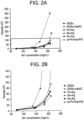
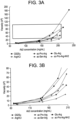
- the results are presented in Tables 2.2 (Ab1), 2.3 (Ab2), and Ab3; as well as in the line graphs shown Figs. 2 (Ab1), 3 (Ab2), and 4 (Ab3).
- Figs. 2 and 3 include closer views ( Figs. 2(B) and 3(B) ) of the line graphs, as indicated by the boxes shown in Figs.
- viscosity greatly increases as the concentration of Ab1 exceeds 140 mg/mL (small filled circles in Fig. 2 ). At 140 mg/mL, the viscosity is about 16 cP, but at about 200 mg/mL, the viscosity is almost 400 cP.
- Arg as Arg-HCl, N-acetyl-Pro-Arg, N-acetyl-Ser-Arg, and Glu-Arg decrease the viscosity of all tested samples at about 140 mg/mL Ab1 concentration, even at the highest Ab concentration of 200 mg/mL.
- Glu-Arg is less able to reduce the viscosity of the highest Ab1 concentration samples, having a viscosity of 173 cP at about 215 mg/mL of Ab1; interestingly, however, when the observed Ab1 concentration is decreased by about 13 mg/mL, the Glu-Arg dipeptide reduces the viscosity remarkably to about 56 cP (grey filled box in Figure 2 ).
- N-acetyl-Pro-Arg-NH 2 which contains an amide cap that reduces the overall charge on the molecule, also appeared to decrease the viscosity of the Ab1 samples, even at high concentrations of Ab1, such as about 200 mg/mL (empty triangles in Fig. 2 ).
- Table 2.3 Observed concentrations and viscosities for compositions comprising Ab2 [Target Ab] (mg/mL) Amino acid/dipeptide excipient Measured characteristics 210 180 140 70 None observed conc.
- viscosity greatly increases as the concentration of Ab2 exceeds 140 mg/mL (small filled circles in Fig. 3 ). At 140 mg/mL, the viscosity is about 57 cP, but at about 200 mg/mL, the viscosity is about 180 cP. When formulated with the different excipients, viscosity was reduced for all samples, although less uniformly than was observed for Ab1.
- N-acetylated dipeptides decreased the viscosities of all samples having an antibody concentration greater than about 140 mg/mL.
- a third Ab, Ab3 was also tested. Referring to Fig. 4 , which shows a line graph of the data shown in Table 2.4, this Ab does not show as high viscosity as Abs 1 and 2, with a viscosity of about 41 cP without any excipients. When viscosity was measured in these samples containing the indicated dipeptides and arginine, viscosity was reduced, but not as markedly as when the viscosity was greater. Even though the effect of the tested excipients is less notable, achieving a viscosity of, for example, about 30 cPs or less, can permit delivery by automated injection devices.
- Figure 5 aggregates the results such that the three antibodies are compared to each other in the presence of an excipient.
- Fig. 5A shows the results of the three antibodies in the presence of N-acetyl-Pro-Arg
- Fig. 5B shows the results of the three antibodies in the presence of N-acetyl-Ser-Arg
- Fig. 5C shows the results for N-acetyl-Pro-Arg-NH 2
- Fig. 5D shows the results for Glu-Arg.
- This figure clearly shows the viscosity-lowering effects of these four excipients particularly for therapeutic polypeptides that are viscous, such as at high therapeutic polypeptide concentrations, in the absence of these excipients.
Landscapes
- Health & Medical Sciences (AREA)
- Chemical & Material Sciences (AREA)
- Life Sciences & Earth Sciences (AREA)
- Medicinal Chemistry (AREA)
- General Health & Medical Sciences (AREA)
- Pharmacology & Pharmacy (AREA)
- Epidemiology (AREA)
- Animal Behavior & Ethology (AREA)
- Public Health (AREA)
- Veterinary Medicine (AREA)
- Engineering & Computer Science (AREA)
- Organic Chemistry (AREA)
- Immunology (AREA)
- Proteomics, Peptides & Aminoacids (AREA)
- Bioinformatics & Cheminformatics (AREA)
- Biochemistry (AREA)
- Molecular Biology (AREA)
- Genetics & Genomics (AREA)
- Biophysics (AREA)
- Chemical Kinetics & Catalysis (AREA)
- General Chemical & Material Sciences (AREA)
- Oil, Petroleum & Natural Gas (AREA)
- Microbiology (AREA)
- Mycology (AREA)
- Gastroenterology & Hepatology (AREA)
- Endocrinology (AREA)
- Medicinal Preparation (AREA)
- Medicines Containing Antibodies Or Antigens For Use As Internal Diagnostic Agents (AREA)
- Peptides Or Proteins (AREA)
Claims (15)
- Flüssige pharmazeutische Zusammensetzung, die ein therapeutisches Polypeptid, einen Puffer und mindestens ein N-Acetyl-Dipeptid umfasst, wobei das N-Acetyl-Dipeptid N-Acetyl-Serin-Arginin, N-Acetyl-Prolin-Arginin oder N-Acetyl-Prolin-Arginin-NH2 ist, optional wobei das therapeutische Polypeptid ein Antikörper oder ein Antigen-bindendes Fragment davon ist.
- Zusammensetzung nach Anspruch 1, wobei der Antikörper oder das Antigen-bindende Fragment davon in einer Konzentration vorliegt, die ausgewählt ist aus der Gruppe, bestehend aus: mindestens 70 mg/ml, mindestens 140 mg/ml, mindestens 180 mg/ml, 200 mg/ml und 210 mg/ml.
- Zusammensetzung nach Anspruch 1, wobei der Antikörper ausgewählt ist aus der Gruppe, bestehend aus Adalimumab, Bevacizumab, Blinatumomab, Cetuximab, Conatumumab, Denosumab, Eculizumab, Erenumab, Evolocumab, Infliximab, Natalizumab, Panitumumab, Rilotumumab, Rituximab, Romosozumab und Trastuzumab oder einem Antigen-bindenden Fragment davon; wobei der Antikörper vorzugsweise Evolocumab ist.
- Zusammensetzung nach Anspruch 1, wobei das N-Acetyl-Dipeptid eine Konzentration aufweist, ausgewählt aus der Gruppe, bestehend aus: 10 mM bis 500 mM, 100 mM bis 200 mM, 150 mM und 200 mM.
- Zusammensetzung nach Anspruch 1, wobei das N-Acetyl-Dipeptid N-Acetyl-Serin-Arginin oder N-Acetyl-Prolin-Arginin ist.
- Zusammensetzung nach Anspruch 1, wobei der Puffer ausgewählt ist aus der Gruppe, bestehend aus Acetat-, Glutamat-, Histidin- und Phosphatpuffern oder einer Kombination davon.
- Zusammensetzung nach Anspruch 1, wobei die Zusammensetzung einen pH-Wert aufweist, der ausgewählt ist aus der Gruppe, bestehend aus: 4 bis 8, 4,8 bis 6,9 und 5,2.
- Zusammensetzung nach Anspruch 1, die zusätzlich ein Tensid enthält, wobei das Tensid vorzugsweise ausgewählt ist aus der Gruppe, bestehend aus Polyoxyethylensorbitanmonooleat (Polysorbat 80 oder Polysorbat 20), Polyoxyethylen-Polyoxypropylen-Blockcopolymer (Poloxamere wie Pluronic® F-68 und anderen Pluronics®), Sorbitanalkylestern (Spans®) Polyethylenglykoloctylphenylethern (Triton X-100), Polyethylenglykolalkylethern (Brij), Polypropylenglykolalkylethern, Glucosidalkylethern, und D-α-Tocopherol-Polyethylenglykolsuccinat (Vitamin E TPGS), noch bevorzugter wobei das Tensid 0,01 % (Gew./Vol.) Polysorbat 80 oder 0,004 % Polysorbat 20 ist.
- Zusammensetzung nach Anspruch 1, die ferner ein zweites Oligopeptid umfasst, das Arginin umfasst und aus zwei bis zehn Aminosäureresten besteht, oder die ferner eine Aminosäure, N-Acetyl-Arginin, N-Acetyl-Lysin, N-Acetyl-Histidin, N-Acetyl-Prolin oder Gemische davon umfasst, wobei die Aminosäure vorzugsweise Arginin oder Prolin ist.
- Verfahren zur Verringerung der Viskosität in einer pharmazeutischen Zusammensetzung, die ein therapeutisches Polypeptid umfasst, wobei das Verfahren Folgendes umfasst:a. Bereitstellen einer Lösung, die (i) das therapeutische Polypeptid, (ii) mindestens ein N-Acetyl-Dipeptid, wobei das N-Acetyl-Dipeptid N-Acetyl-Serin-Arginin, N-Acetyl-Prolin-Aginin oder N-Acetyl-Prolin-Arginin-NH2 ist und in einer viskositätsreduzierenden Konzentration vorliegt, sowie (iii) einen Puffer umfasst; undb. Einstellen des pH-Werts der Lösung auf 4 bis 8,optional wobei das therapeutische Polypeptid ein Antikörper oder ein Antigen-bindendes Fragment davon ist, wobei der Antikörper oder das Antigen-bindende Fragment davon vorzugsweise in einer Konzentration vorliegt, die ausgewählt wird aus der Gruppe, bestehend aus: mindestens 70 mg/ml, mindestens 140 mg/ml, mindestens 180 mg/ml, mindestens 200 mg/ml und mindestens 210 mg/ml.
- Verfahren nach Anspruch 10, wobei der Antikörper ausgewählt ist aus der Gruppe, bestehend aus Adalimumab, Bevacizumab, Blinatumomab, Cetuximab, Conatumumab, Denosumab, Eculizumab, Erenumab, Evolocumab, Infliximab, Natalizumab, Panitumumab, Rilotumumab, Rituximab, Romosozumab und Trastuzumab oder einem Antigen-bindenden Fragment davon; wobei der Antikörper oder das Antigen-bindende Fragment davon vorzugsweise Evolocumab ist.
- Verfahren nach Anspruch 10, wobei das N-Acetyl-Dipeptid eine Konzentration aufweist, ausgewählt aus der Gruppe, bestehend aus: 10 mM bis 500 mM, 100 mM bis 200 mM, 150 mM und 200 mM.
- Verfahren nach Anspruch 10, wobei der Puffer ausgewählt ist aus der Gruppe, bestehend aus Acetat-, Glutamat-, Histidin- und Phosphatpuffern oder einer Kombination davon.
- Verfahren nach Anspruch 10, das zusätzlich ein Tensid umfasst, wobei das Tensid vorzugsweise ausgewählt ist aus der Gruppe, bestehend aus Polyoxyethylensorbitanmonooleat (Polysorbat 80 oder Polysorbat 20), Polyoxyethylen-Polyoxypropylen-Blockcopolymer (Poloxamere wie Pluronic® F-68 und anderen Pluronics®), Sorbitanalkylestern (Spans®) Polyethylenglykoloctylphenylethern (Triton X-100), Polyethylenglykolalkylethern (Brij), Polypropylenglykolalkylethern, Glucosidalkylethern, und D-α-Tocopherol-Polyethylenglykolsuccinat (Vitamin E TPGS).
- Verfahren nach Anspruch 10, wobei die Lösung ferner ein zweites Oligopeptid umfasst, das Arginin umfasst und aus zwei bis zehn Aminosäureresten besteht, oder wobei die Lösung ferner eine Aminosäure, N-Acetyl-Arginin, N-Acetyl-Lysin, N-Acetyl-Histidin, N-Acetyl-Prolin oder Gemische davon umfasst, wobei die Aminosäure vorzugsweise Arginin oder Prolin ist.
Applications Claiming Priority (2)
| Application Number | Priority Date | Filing Date | Title |
|---|---|---|---|
| US201762492020P | 2017-04-28 | 2017-04-28 | |
| PCT/US2018/029981 WO2018201064A1 (en) | 2017-04-28 | 2018-04-27 | N-acetylated and non-acetylated dipeptides containing arginine to reduce the viscosity of viscous compositions of therapeutic polypeptides |
Publications (2)
| Publication Number | Publication Date |
|---|---|
| EP3615069A1 EP3615069A1 (de) | 2020-03-04 |
| EP3615069B1 true EP3615069B1 (de) | 2025-05-28 |
Family
ID=62165708
Family Applications (1)
| Application Number | Title | Priority Date | Filing Date |
|---|---|---|---|
| EP18724732.5A Active EP3615069B1 (de) | 2017-04-28 | 2018-04-27 | N-acetylierte und nicht-acetylierte dipeptide mit arginin zur verringerung der viskosität von viskosen zusammensetzungen therapeutischer polypeptide |
Country Status (6)
| Country | Link |
|---|---|
| US (1) | US12103979B2 (de) |
| EP (1) | EP3615069B1 (de) |
| AU (1) | AU2018258676B2 (de) |
| ES (1) | ES3036143T3 (de) |
| MA (1) | MA48464A (de) |
| WO (1) | WO2018201064A1 (de) |
Families Citing this family (9)
| Publication number | Priority date | Publication date | Assignee | Title |
|---|---|---|---|---|
| TWI856084B (zh) * | 2019-04-01 | 2024-09-21 | 美商建南德克公司 | 用於穩定含有蛋白質之配方之組合物及方法 |
| MX2021012782A (es) * | 2019-04-23 | 2021-11-25 | Amgen Inc | El uso de polivinilpirrolidona (pvp) de bajo peso molecular para reducir la viscosidad de formulaciones de proteinas de alta concentracion. |
| CN119264273A (zh) | 2019-12-03 | 2025-01-07 | 埃沃特克国际有限责任公司 | 干扰素相关抗原结合蛋白及其用途 |
| CA3179812A1 (en) * | 2020-05-29 | 2021-12-02 | Teun Van De Laar | Methods of treating iga nephropathy with an april binding antibody |
| EP4238578A4 (de) * | 2020-10-30 | 2024-09-11 | Eisai R&D Management Co., Ltd. | Pharmazeutische zusammensetzung |
| KR20230121797A (ko) * | 2020-12-17 | 2023-08-21 | 아스트라제네카 아베 | 항-il5r 항체 제형 |
| MX2023009971A (es) * | 2021-03-03 | 2023-09-05 | Chia Tai Tianqing Pharmaceutical Group Co Ltd | Composicion farmaceutica que contiene anticuerpo anti-tslp. |
| WO2023018870A1 (en) * | 2021-08-12 | 2023-02-16 | Amgen Inc. | Antibody formulations |
| US12110324B2 (en) | 2022-07-22 | 2024-10-08 | Flagship Pioneering Innovations Vi, Llc | Antigen binding molecules targeting thymic stromal lymphopoietin (TSLP) |
Family Cites Families (14)
| Publication number | Priority date | Publication date | Assignee | Title |
|---|---|---|---|---|
| DK0463151T3 (da) | 1990-01-12 | 1996-07-01 | Cell Genesys Inc | Frembringelse af xenogene antistoffer |
| US6767892B1 (en) | 1997-11-07 | 2004-07-27 | Chrion Corporation | Compositions providing for increased IGF-I solubility |
| RS51829B (sr) | 2001-08-23 | 2012-02-29 | Genmab A/S. | Ljudska antitela specifična za interleukin 15 (il-15) |
| CA2589860A1 (en) | 2005-01-24 | 2006-08-03 | Amgen Inc. | Humanized anti-amyloid antibody |
| US7592429B2 (en) | 2005-05-03 | 2009-09-22 | Ucb Sa | Sclerostin-binding antibody |
| US8003108B2 (en) | 2005-05-03 | 2011-08-23 | Amgen Inc. | Sclerostin epitopes |
| US20100221823A1 (en) | 2007-06-11 | 2010-09-02 | Amgen Inc. | Method for culturing mammalian cells to improve recombinant protein production |
| WO2008155365A1 (en) | 2007-06-20 | 2008-12-24 | Irm Llc | Methods and compositions for treating allergic diseases |
| US7982016B2 (en) | 2007-09-10 | 2011-07-19 | Amgen Inc. | Antigen binding proteins capable of binding thymic stromal lymphopoietin |
| TWI445716B (zh) | 2008-09-12 | 2014-07-21 | Rinat Neuroscience Corp | Pcsk9拮抗劑類 |
| MX2012012743A (es) * | 2010-05-03 | 2012-11-23 | Genentech Inc | Composiciones y metodos utiles para reducir la viscosidad de formulaciones que contienen proteina. |
| US20160074515A1 (en) * | 2014-06-20 | 2016-03-17 | Reform Biologics, Llc | Viscosity-reducing excipient compounds for protein formulations |
| JP2017525680A (ja) | 2014-07-14 | 2017-09-07 | アムジェン インコーポレイテッド | 結晶性抗体製剤 |
| US11813328B2 (en) * | 2014-10-23 | 2023-11-14 | Amgen Inc. | Methods for reducing the viscosity of liquid pharmaceutical formulations comprising therapeutic proteins |
-
2018
- 2018-04-27 AU AU2018258676A patent/AU2018258676B2/en active Active
- 2018-04-27 EP EP18724732.5A patent/EP3615069B1/de active Active
- 2018-04-27 US US16/607,673 patent/US12103979B2/en active Active
- 2018-04-27 ES ES18724732T patent/ES3036143T3/es active Active
- 2018-04-27 MA MA048464A patent/MA48464A/fr unknown
- 2018-04-27 WO PCT/US2018/029981 patent/WO2018201064A1/en not_active Ceased
Also Published As
| Publication number | Publication date |
|---|---|
| EP3615069A1 (de) | 2020-03-04 |
| MA48464A (fr) | 2020-03-04 |
| CA3059369A1 (en) | 2018-11-01 |
| AU2018258676B2 (en) | 2024-09-19 |
| WO2018201064A1 (en) | 2018-11-01 |
| AU2018258676A1 (en) | 2019-10-31 |
| ES3036143T3 (en) | 2025-09-15 |
| US12103979B2 (en) | 2024-10-01 |
| US20200048367A1 (en) | 2020-02-13 |
Similar Documents
| Publication | Publication Date | Title |
|---|---|---|
| US11459401B2 (en) | Reduced viscosity protein pharmaceutical formulations | |
| EP3615069B1 (de) | N-acetylierte und nicht-acetylierte dipeptide mit arginin zur verringerung der viskosität von viskosen zusammensetzungen therapeutischer polypeptide | |
| US20250367115A1 (en) | Excipients To Reduce the Viscosity of Antibody Formulations and Formulation Compositions | |
| AU2017213510B2 (en) | Protein Formulations Containing Amino Acids | |
| US20240269273A1 (en) | Use of amino acids as stabilizing compounds in pharmaceutical compositions containing high concentrations of protein-based therapeutic agents | |
| EP3585360B1 (de) | Stabilisierte antikörper-enthaltende lösungen | |
| US20160250329A1 (en) | Antibody composition | |
| US20180256717A1 (en) | Protein compositions and use thereof | |
| AU2020245573B2 (en) | Methods of fingerprinting therapeutic proteins via a two-dimensional (2D) nuclear magnetic resonance technique at natural abundance for formulated biopharmaceutical products | |
| CA3059369C (en) | N-acetylated and non-acetylated dipeptides containing arginine to reduce the viscosity of viscous compositions of therapeutic polypeptides |
Legal Events
| Date | Code | Title | Description |
|---|---|---|---|
| STAA | Information on the status of an ep patent application or granted ep patent |
Free format text: STATUS: UNKNOWN |
|
| STAA | Information on the status of an ep patent application or granted ep patent |
Free format text: STATUS: THE INTERNATIONAL PUBLICATION HAS BEEN MADE |
|
| PUAI | Public reference made under article 153(3) epc to a published international application that has entered the european phase |
Free format text: ORIGINAL CODE: 0009012 |
|
| STAA | Information on the status of an ep patent application or granted ep patent |
Free format text: STATUS: REQUEST FOR EXAMINATION WAS MADE |
|
| 17P | Request for examination filed |
Effective date: 20191126 |
|
| AK | Designated contracting states |
Kind code of ref document: A1 Designated state(s): AL AT BE BG CH CY CZ DE DK EE ES FI FR GB GR HR HU IE IS IT LI LT LU LV MC MK MT NL NO PL PT RO RS SE SI SK SM TR |
|
| AX | Request for extension of the european patent |
Extension state: BA ME |
|
| STAA | Information on the status of an ep patent application or granted ep patent |
Free format text: STATUS: EXAMINATION IS IN PROGRESS |
|
| 17Q | First examination report despatched |
Effective date: 20230102 |
|
| RIC1 | Information provided on ipc code assigned before grant |
Ipc: C07K 16/00 20060101ALI20240614BHEP Ipc: A61K 9/19 20060101ALI20240614BHEP Ipc: A61K 47/18 20170101ALI20240614BHEP Ipc: A61K 9/08 20060101ALI20240614BHEP Ipc: A61K 39/395 20060101AFI20240614BHEP |
|
| GRAP | Despatch of communication of intention to grant a patent |
Free format text: ORIGINAL CODE: EPIDOSNIGR1 |
|
| STAA | Information on the status of an ep patent application or granted ep patent |
Free format text: STATUS: GRANT OF PATENT IS INTENDED |
|
| INTG | Intention to grant announced |
Effective date: 20240821 |
|
| GRAJ | Information related to disapproval of communication of intention to grant by the applicant or resumption of examination proceedings by the epo deleted |
Free format text: ORIGINAL CODE: EPIDOSDIGR1 |
|
| STAA | Information on the status of an ep patent application or granted ep patent |
Free format text: STATUS: EXAMINATION IS IN PROGRESS |
|
| GRAS | Grant fee paid |
Free format text: ORIGINAL CODE: EPIDOSNIGR3 |
|
| STAA | Information on the status of an ep patent application or granted ep patent |
Free format text: STATUS: GRANT OF PATENT IS INTENDED |
|
| GRAP | Despatch of communication of intention to grant a patent |
Free format text: ORIGINAL CODE: EPIDOSNIGR1 |
|
| INTC | Intention to grant announced (deleted) | ||
| INTG | Intention to grant announced |
Effective date: 20241217 |
|
| GRAA | (expected) grant |
Free format text: ORIGINAL CODE: 0009210 |
|
| STAA | Information on the status of an ep patent application or granted ep patent |
Free format text: STATUS: THE PATENT HAS BEEN GRANTED |
|
| P01 | Opt-out of the competence of the unified patent court (upc) registered |
Free format text: CASE NUMBER: APP_18489/2025 Effective date: 20250416 |
|
| AK | Designated contracting states |
Kind code of ref document: B1 Designated state(s): AL AT BE BG CH CY CZ DE DK EE ES FI FR GB GR HR HU IE IS IT LI LT LU LV MC MK MT NL NO PL PT RO RS SE SI SK SM TR |
|
| REG | Reference to a national code |
Ref country code: GB Ref legal event code: FG4D |
|
| REG | Reference to a national code |
Ref country code: CH Ref legal event code: EP |
|
| REG | Reference to a national code |
Ref country code: DE Ref legal event code: R096 Ref document number: 602018082271 Country of ref document: DE |
|
| REG | Reference to a national code |
Ref country code: IE Ref legal event code: FG4D |
|
| REG | Reference to a national code |
Ref country code: ES Ref legal event code: FG2A Ref document number: 3036143 Country of ref document: ES Kind code of ref document: T3 Effective date: 20250915 |
|
| REG | Reference to a national code |
Ref country code: NL Ref legal event code: MP Effective date: 20250528 |
|
| PG25 | Lapsed in a contracting state [announced via postgrant information from national office to epo] |
Ref country code: FI Free format text: LAPSE BECAUSE OF FAILURE TO SUBMIT A TRANSLATION OF THE DESCRIPTION OR TO PAY THE FEE WITHIN THE PRESCRIBED TIME-LIMIT Effective date: 20250528 |
|
| REG | Reference to a national code |
Ref country code: LT Ref legal event code: MG9D |
|
| PG25 | Lapsed in a contracting state [announced via postgrant information from national office to epo] |
Ref country code: NO Free format text: LAPSE BECAUSE OF FAILURE TO SUBMIT A TRANSLATION OF THE DESCRIPTION OR TO PAY THE FEE WITHIN THE PRESCRIBED TIME-LIMIT Effective date: 20250828 Ref country code: GR Free format text: LAPSE BECAUSE OF FAILURE TO SUBMIT A TRANSLATION OF THE DESCRIPTION OR TO PAY THE FEE WITHIN THE PRESCRIBED TIME-LIMIT Effective date: 20250829 |
|
| PG25 | Lapsed in a contracting state [announced via postgrant information from national office to epo] |
Ref country code: PL Free format text: LAPSE BECAUSE OF FAILURE TO SUBMIT A TRANSLATION OF THE DESCRIPTION OR TO PAY THE FEE WITHIN THE PRESCRIBED TIME-LIMIT Effective date: 20250528 Ref country code: NL Free format text: LAPSE BECAUSE OF FAILURE TO SUBMIT A TRANSLATION OF THE DESCRIPTION OR TO PAY THE FEE WITHIN THE PRESCRIBED TIME-LIMIT Effective date: 20250528 |
|
| PG25 | Lapsed in a contracting state [announced via postgrant information from national office to epo] |
Ref country code: BG Free format text: LAPSE BECAUSE OF FAILURE TO SUBMIT A TRANSLATION OF THE DESCRIPTION OR TO PAY THE FEE WITHIN THE PRESCRIBED TIME-LIMIT Effective date: 20250528 |
|
| PG25 | Lapsed in a contracting state [announced via postgrant information from national office to epo] |
Ref country code: HR Free format text: LAPSE BECAUSE OF FAILURE TO SUBMIT A TRANSLATION OF THE DESCRIPTION OR TO PAY THE FEE WITHIN THE PRESCRIBED TIME-LIMIT Effective date: 20250528 |
|
| PG25 | Lapsed in a contracting state [announced via postgrant information from national office to epo] |
Ref country code: RS Free format text: LAPSE BECAUSE OF FAILURE TO SUBMIT A TRANSLATION OF THE DESCRIPTION OR TO PAY THE FEE WITHIN THE PRESCRIBED TIME-LIMIT Effective date: 20250828 |
|
| PG25 | Lapsed in a contracting state [announced via postgrant information from national office to epo] |
Ref country code: IS Free format text: LAPSE BECAUSE OF FAILURE TO SUBMIT A TRANSLATION OF THE DESCRIPTION OR TO PAY THE FEE WITHIN THE PRESCRIBED TIME-LIMIT Effective date: 20250928 |
|
| PG25 | Lapsed in a contracting state [announced via postgrant information from national office to epo] |
Ref country code: LV Free format text: LAPSE BECAUSE OF FAILURE TO SUBMIT A TRANSLATION OF THE DESCRIPTION OR TO PAY THE FEE WITHIN THE PRESCRIBED TIME-LIMIT Effective date: 20250528 |
|
| REG | Reference to a national code |
Ref country code: AT Ref legal event code: MK05 Ref document number: 1798258 Country of ref document: AT Kind code of ref document: T Effective date: 20250528 |
|
| PG25 | Lapsed in a contracting state [announced via postgrant information from national office to epo] |
Ref country code: DK Free format text: LAPSE BECAUSE OF FAILURE TO SUBMIT A TRANSLATION OF THE DESCRIPTION OR TO PAY THE FEE WITHIN THE PRESCRIBED TIME-LIMIT Effective date: 20250528 Ref country code: AT Free format text: LAPSE BECAUSE OF FAILURE TO SUBMIT A TRANSLATION OF THE DESCRIPTION OR TO PAY THE FEE WITHIN THE PRESCRIBED TIME-LIMIT Effective date: 20250528 Ref country code: SM Free format text: LAPSE BECAUSE OF FAILURE TO SUBMIT A TRANSLATION OF THE DESCRIPTION OR TO PAY THE FEE WITHIN THE PRESCRIBED TIME-LIMIT Effective date: 20250528 |
|
| VS25 | Lapsed in a validation state [announced via postgrant information from nat. office to epo] |
Ref country code: MD Free format text: LAPSE BECAUSE OF FAILURE TO SUBMIT A TRANSLATION OF THE DESCRIPTION OR TO PAY THE FEE WITHIN THE PRESCRIBED TIME-LIMIT Effective date: 20250528 |
|
| PG25 | Lapsed in a contracting state [announced via postgrant information from national office to epo] |
Ref country code: CZ Free format text: LAPSE BECAUSE OF FAILURE TO SUBMIT A TRANSLATION OF THE DESCRIPTION OR TO PAY THE FEE WITHIN THE PRESCRIBED TIME-LIMIT Effective date: 20250528 |
|
| PG25 | Lapsed in a contracting state [announced via postgrant information from national office to epo] |
Ref country code: EE Free format text: LAPSE BECAUSE OF FAILURE TO SUBMIT A TRANSLATION OF THE DESCRIPTION OR TO PAY THE FEE WITHIN THE PRESCRIBED TIME-LIMIT Effective date: 20250528 |
|
| PG25 | Lapsed in a contracting state [announced via postgrant information from national office to epo] |
Ref country code: SK Free format text: LAPSE BECAUSE OF FAILURE TO SUBMIT A TRANSLATION OF THE DESCRIPTION OR TO PAY THE FEE WITHIN THE PRESCRIBED TIME-LIMIT Effective date: 20250528 Ref country code: RO Free format text: LAPSE BECAUSE OF FAILURE TO SUBMIT A TRANSLATION OF THE DESCRIPTION OR TO PAY THE FEE WITHIN THE PRESCRIBED TIME-LIMIT Effective date: 20250528 |