EP3612207B1 - Coversin variants lacking c5 binding - Google Patents
Coversin variants lacking c5 binding Download PDFInfo
- Publication number
- EP3612207B1 EP3612207B1 EP18719169.7A EP18719169A EP3612207B1 EP 3612207 B1 EP3612207 B1 EP 3612207B1 EP 18719169 A EP18719169 A EP 18719169A EP 3612207 B1 EP3612207 B1 EP 3612207B1
- Authority
- EP
- European Patent Office
- Prior art keywords
- seq
- coversin
- replaced
- modified
- modified coversin
- Prior art date
- Legal status (The legal status is an assumption and is not a legal conclusion. Google has not performed a legal analysis and makes no representation as to the accuracy of the status listed.)
- Active
Links
Images






Classifications
-
- C—CHEMISTRY; METALLURGY
- C07—ORGANIC CHEMISTRY
- C07K—PEPTIDES
- C07K14/00—Peptides having more than 20 amino acids; Gastrins; Somatostatins; Melanotropins; Derivatives thereof
- C07K14/435—Peptides having more than 20 amino acids; Gastrins; Somatostatins; Melanotropins; Derivatives thereof from animals; from humans
-
- C—CHEMISTRY; METALLURGY
- C07—ORGANIC CHEMISTRY
- C07K—PEPTIDES
- C07K14/00—Peptides having more than 20 amino acids; Gastrins; Somatostatins; Melanotropins; Derivatives thereof
- C07K14/435—Peptides having more than 20 amino acids; Gastrins; Somatostatins; Melanotropins; Derivatives thereof from animals; from humans
- C07K14/43504—Peptides having more than 20 amino acids; Gastrins; Somatostatins; Melanotropins; Derivatives thereof from animals; from humans from invertebrates
- C07K14/43513—Peptides having more than 20 amino acids; Gastrins; Somatostatins; Melanotropins; Derivatives thereof from animals; from humans from invertebrates from arachnidae
- C07K14/43527—Peptides having more than 20 amino acids; Gastrins; Somatostatins; Melanotropins; Derivatives thereof from animals; from humans from invertebrates from arachnidae from ticks
-
- A—HUMAN NECESSITIES
- A61—MEDICAL OR VETERINARY SCIENCE; HYGIENE
- A61K—PREPARATIONS FOR MEDICAL, DENTAL OR TOILETRY PURPOSES
- A61K38/00—Medicinal preparations containing peptides
-
- Y—GENERAL TAGGING OF NEW TECHNOLOGICAL DEVELOPMENTS; GENERAL TAGGING OF CROSS-SECTIONAL TECHNOLOGIES SPANNING OVER SEVERAL SECTIONS OF THE IPC; TECHNICAL SUBJECTS COVERED BY FORMER USPC CROSS-REFERENCE ART COLLECTIONS [XRACs] AND DIGESTS
- Y02—TECHNOLOGIES OR APPLICATIONS FOR MITIGATION OR ADAPTATION AGAINST CLIMATE CHANGE
- Y02A—TECHNOLOGIES FOR ADAPTATION TO CLIMATE CHANGE
- Y02A50/00—TECHNOLOGIES FOR ADAPTATION TO CLIMATE CHANGE in human health protection, e.g. against extreme weather
- Y02A50/30—Against vector-borne diseases, e.g. mosquito-borne, fly-borne, tick-borne or waterborne diseases whose impact is exacerbated by climate change
Definitions
- the present invention relates to modified Coversin polypeptides having leukotriene/hydroxyeicosanoid (LK/E) binding activity and reduced or absent C5 binding and compositions comprising the same useful in the treatment of diseases and conditions mediated by eicosanoids and in particular to modified tick-derived compounds having leukotriene/hydroxyeicosanoid (LK/E) binding activity for the treatment of diseases and conditions mediated by leukotrienes and hydroxyeicosanoids, and in particular LTB 4 .
- LK/E leukotriene/hydroxyeicosanoid
- Eicosanoids are a family of oxygenated biologically active lipid mediators that are derived from the 20-carbon fatty acid arachidonic acid (AA) through three major enzymatic pathways: cyclooxygenase (COX), lipoxygenase (LO), and cytochrome P450 monooxygenase (CYP450).
- COX cyclooxygenase
- LO lipoxygenase
- CYP450 cytochrome P450 monooxygenase
- Eicosanoids include prostanoids (including prostaglandins, PGs, and thromboxanes, TXBs) derived from COX pathway, leukotrienes (LKs) from LO pathway and hydroxyeicosatetraenoic acids (HETEs) and epoxyeicosatrienoic acids (EETs) from LO and P450 monooxygenase pathways (Curtis-Prior, 2004; Peters-Golden & Henderson Jr., 2007). Eicosanoids mediate numerous effects on diverse cell types and organs.
- prostanoids including prostaglandins, PGs, and thromboxanes, TXBs
- LKs leukotrienes
- HETEs hydroxyeicosatetraenoic acids
- EETs epoxyeicosatrienoic acids
- Leukotriene B4 (LTB 4 ) is the most powerful chemotactic and chemokinetic eicosanoid described and promotes adhesion of neutrophils to the vascular endothelium via upregulation of integrins (Hoover et al, 1984). It is also a complete secretagogue for neutrophils, induces their aggregation and increases microvascular permeability. LTB 4 recruits and activates natural killer cells, monocytes and eosinophils. It increases superoxide radical formation (Harrison and Murphy, 1995) and modulates gene expression including production of a number of proinflammatory cytokines and mediators which may augment and prolong tissue inflammation (Ford-Hutchinson, 1990; Showell et al., 1995).
- LTB 4 also has roles in the induction and management of adaptive immune responses. For example regulation of dendritic cell trafficking to draining lymph nodes (Klaas et al, 2005; Del Prete et al, 2007), Th2 cytokine IL-13 production from lung T cells (Miyahara et al, 2006), recruitment of antigen-specific effector CD8+ T cells (Taube et al, 2006) and activation and proliferation of human B lymphocytes (Yamaoka et al, 1989).
- Leukotriene B 4 (LTB 4 ) and the hydroxyeicosanoids mediate their effects though the BLT1 and BLT2 G-protein coupled receptors (Yokomizo et al, 1997, 2000).
- Human BLT1 is a high affinity receptor (K D 0.39 - 1.5nM; Tager and Luster, 2003) specific for LTB 4 with only 20-hydroxy LTB 4 and 12-epi LTB 4 able to displace LTB 4 in competitive binding studies (Yokomizo et al., 2001).
- Human BLT2 has a 20-fold lower affinity (K D 23nM) for LTB 4 than BLT1 and is activated by binding a broader range of eicosanoids including 12-epi LTB 4 , 20-hydroxy LTB 4 , 12(S)- and 15(S)-HETE and 12(S)- and 15(S)-HPETE (Yokomizo et al., 2001).
- Human BLT2 has 45.2 and 44.6% amino acid identity with human and mouse BLT1, while human and mouse BLT2 have 92.7% identity (Yokomizo et al, 2000).
- Human BLT1 is mainly expressed on the surface of leukocytes, though it has recently been described in endothelial cells and vascular smooth muscle cells. Human BLT2 is expressed in a broader range of tissue and cell types. A number of specific antagonists of BLT1 and BLT2 have been described which inhibit activation, extravasation and apoptosis of human neutrophils (Kim and Luster, 2007) and reduce symptoms caused by neutrophil infiltration in mouse models of inflammatory arthritis (Kim et al., 2006) and renal ischaemia reperfusion (Noiri et al., 2000).
- BLT1-/- deficient mice have also highlighted the importance of BLT1 in directing neutrophil migration in inflammatory responses.
- a 5LO deficient mouse strain was used to show autocrine activation of BLT1 on neutrophils is needed for their recruitment into arthritic joints (Chen et al., 2006).
- Oxidised isomeric derivatives of LTB 4 such as B4 isoleukotrienes are also biologically active (Harrison et al, 1995).
- the hydroxyeicosanoids for example 5(S)-HETE is a highly potent chemoattractant for eosinophils (Powell and Rokach, 2005).
- the cysteinyl LKs which are derived from LTA 4 , are correlated with the pathophysiology of asthma, including: bronchoconstriction caused by contraction of smooth muscle lining the airways; mucosal edema caused by vascular leakage; increased secretion of mucus; and the presence of an inflammatory-cell infiltrate that is rich in eosinophils (Bisgaard et al., 1985; Drazen et al., 1988).
- NSAID non-steroidal antiinflammatory drugs
- COX2 inhibitors which prevent synthesis of the PGs and TXBs
- LK modifiers which either inhibit the 5-LO enzyme required for LTB 4 synthesis ( Zileuton; Dube et al., 1998 ), or antagonise the CysLT, receptor that mediates the effects of cysteinyl leukotrienes (Zafirlukast and Montelukast) (Sharma and Mohammed, 2006).
- the LK modifiers are orally available and have been approved by the FDA for use in the treatment of e.g. asthma. No drug that acts specifically on LTB 4 or its receptors has yet reached the market.
- WO2004/106369 describes a soft tick derived complement (C) inhibitor Coversin that inhibits both the classical, lectin and alternative complement pathways by direct binding to complement component C5 (Nunn et al, 2005). Coversin is derived from the salivary glands of haemotophagous arthropods. It has proven therapeutic potential (Hepburn et al, 2007). Coversin prevents complement (C)-mediated activation of C component 5 (C5) in a wide range of mammalian species including humans ( Barratt-Due, A., et al . (2011) J. Immunol. 187, 4913-4919 )).
- Coversin prevents cleavage of C5 by the C5 complement convertases, thereby preventing release of anaphylatoxin C5a and formation of C5b which nucleates formation of the membrane attack complex (MAC) comprising complement components C5b-9 complex (see e.g. Jore et al. 2016) . It has also been shown that Coversin binds to eicosanoids, in particular LKs, especially LTB 4 ( Roversi, P., et al., (2013) J. Biol. Chem. 2013, 288:18789-18802 ) enclosing then within the body of the protein. It is known that Coversin can bind LTB 4 and C5 simultaneously, and the binding sites are located on opposite faces of Coversin, and the LTB 4 binding pocket is fully accessible in the C5-Coversin complex (Jore et al. 2016).
- WO 2009/098454 describes the treatment of diseases and conditions mediated by eicosanoids.
- Mans B.J. et al, (2008) describes the function, mechanism and evolution of the moubatin clade of soft tick lipocalins.
- the Coversin polypeptide can be modified to reduce or remove its C5 binding activity (and hence its complement inhibitor activity) while retaining leukotriene/hydroxyeicosanoid (LK/E) binding activity (e.g. LTB4 binding activity).
- LK/E leukotriene/hydroxyeicosanoid binding activity
- the present inventors have shown that modifying Coversin polypeptides comprising SEQ ID NO: 3 at specific residues can reduce or remove C5 binding.
- the present invention therefore relates to modified versions of Coversin polypeptides comprising SEQ ID NO: 3 as defined by the claims, specifically wherein the modified Coversin polypeptide exhibits leukotriene or hydroxyeicosanoid binding activity and reduced or absent C5 binding, said modified Coversin polypeptide comprising SEQ ID NO: 3 in which up to 30 amino acid substitutions are made, wherein
- modified Coversin polypeptides or polynucleotides encoding such modified Coversin polypeptides act as LK/E inhibitors and can be used in the treatment of diseases and conditions mediated by LK/E. It can be seen that these modified molecules will show reduced or no binding to C5 and as a consequence there will be reduced or no inhibition of the C5 convertase, and reduced or no interference with complement activity.
- the invention also relates to the modified Coversin polypeptides and encoding nucleotides of the invention for use in the treatment of diseases where leukotrienes, especially LTB 4 and hydroxyeicosanoids are implicated in the pathology of the diseases.
- the modified Coversin polypeptides of the invention can bind to and cage LKs and hydroxyeicosanoids. This may prevent the ligands interacting with both the BLT1 and BLT2 receptors and ameliorate the proinflammatory effects of the fatty acids which have frequently been shown to depend on signaling through both receptors.
- the modified Coversin polypeptides and encoding nucleotides of the invention for the treatment of a disease or condition mediated by a leukotriene or hydroxyeicosanoid.
- polypeptides or polynucleotides of the present invention may be used in the treatment of diseases and conditions mediated by a leukotriene or hydroxyeicosanoid.
- diseases and disorders which can be treated in accordance with the present invention include asthma.
- composition comprising a modified Coversin polypeptide of the invention and a fatty acid.
- the fatty acid is preferably a therapeutic fatty acid and is provided for delivery to an individual.
- a fusion protein comprising a the modified Coversin polypeptide of the invention that is genetically or chemically fused to one or more peptides or polypeptides, optionally
- the invention provides a modified Coversin polypeptide which exhibits leukotriene or hydroxyeicosanoid binding activity and reduced or absent C5 binding, said modified Coversin polypeptide comprising SEQ ID NO: 3 in which up to 30 amino acid substitutions are made, wherein
- fusion protein comprising a modified Coversin polypeptide according to the invention that is genetically or chemically fused to one or more peptides or polypeptides, optionally:
- nucleic acid molecule encoding a modified Coversin polypeptide or a fragment thereof according to the invention, as well as a vector comprising the nucleic acid molecule according to the invention, and a host cell comprising a nucleic acid molecule according to the invention or a vector according to the invention.
- a method for preparing a modified Coversin polypeptide or a fragment thereof according to the invention or a fusion protein according to the invention comprising culturing a host cell according to the invention under conditions whereby said protein is expressed and recovering said protein thus produced is also provided.
- a composition comprising a modified Coversin polypeptide according to the invention, a fusion protein according to the invention, or a nucleic acid molecule according to the invention in conjunction with a pharmaceutically acceptable carrier is also provided.
- a modified Coversin polypeptide according to the invention, a fusion protein according to the invention, a nucleic acid molecule according to the invention or composition according to the invention for use in therapy is further provided.
- a modified Coversin polypeptide according to the invention, a fusion protein according to the invention, a nucleic acid molecule according to the invention or composition according to the invention for use in the treatment of a disease or condition mediated by a leukotriene or hydroxyeicosanoid is also provided, as is a method of treating or preventing a disease or condition mediated by a leukotriene or hydroxyeicosanoid in a subject comprising administering to said subject according to the invention, a fusion protein according to the invention, a nucleic acid molecule according to the invention or composition according to the invention.
- the present invention provides modified Coversin polypeptides or polynucleotides encoding said modified Coversin polypeptides for the treatment of a disease or condition mediated by leukotrienes or hydroxyeicosanoids.
- a modified Coversin polypeptide according to the invention, a fusion protein according to the invention, a nucleic acid molecule according to the invention or composition according to the invention for use in a method of treating asthma is further provided.
- the modified Coversin polypeptide of the invention is based on a tick-derived complement inhibitor, isolated from the saliva of Ornithodoros moubata. This protein was first isolated from the salivary glands of the tick and has been found to inhibit the classical and alternative complement pathways as well as leukotriene and hydroxyeicosanoids, (in particular LTB 4 ). The amino acid sequence for this protein is shown in SEQ ID NO: 2.
- a modified Coversin polypeptide according to the invention may be a modified version of the complete sequence shown in SEQ ID NO: 2.
- the modified Coversin polypeptide is provided in a form which does not include the first 18 amino acids of the protein sequence (a signal sequence). Accordingly, a modified Coversin polypeptide according to the invention can be a modified version of SEQ ID NO: 3, that is amino acids 19 to 168 of the amino acid sequence of SEQ ID NO: 2.
- references to a "modified Coversin polypeptide" is to be understood as a reference to a modified version of either SEQ ID NO: 2 or SEQ ID NO: 3 i.e. the Coversin polypeptide with or without the 18 amino acid signal sequence seen at the N-terminus of SEQ ID NO: 2.
- amino acid within SEQ ID NO: 3 is defined by reference to the number of its position in SEQ ID NO: 3
- this amino acid can also be defined by reference to the number of its position in SEQ ID NO: 2 and this number will be 18 greater than for SEQ ID NO: 3 due to the presence of the 18 amino acid signal sequence at the N-terminus of SEQ ID NO: 2.
- the amino acid sequence of the modified Coversin polypeptides of the invention varies from that in SEQ ID NO: 2 or SEQ ID NO: 3 by up to 30 amino acids as specified in the claims, but retains to some degree the LK/E binding activity as seen with the unmodified Coversin polypeptide.
- the modified Coversin polypeptides of the invention also exhibit reduced or absent C5 binding compared to the unmodified Coversin polypeptides in SEQ ID NO: 2 and SEQ ID NO: 3.
- LK/E binding activity refers to the ability to bind to leukotrienes and hydroxyeicosanoids including but not limited to LTB 4 , B4 isoleukotrienes and any hydroxylated derivative thereof, HETEs, HPETEs and EETs. LTB 4 binding is of particular interest.
- the modified Coversin polypeptides of the invention may consist of SEQ ID NO: 2 or 3, modified as defined in the claims, such as in accordance with the description below, or may comprise SEQ ID NO: 2 or 3, modified as defined in the claims, such as in accordance with the description below.
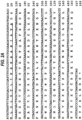
- the unmodified Coversin polypeptide in SEQ ID NO: 2 and SEQ ID NO: 3 features a loop between beta H and alpha2 at amino acid positions 114 to 124 of SEQ ID NO: 3 (amino acid positions 132-142 of SEQ ID NO: 2).
- This loop has the sequence shown below: -Met-Trp-Met-Leu-Asp-Ala-Gly-Gly-Leu-Glu-Val- (SEQ ID NO: 9)
- the first Met is at position 114 of SEQ ID NO: 3 and at position 132 of SEQ ID NO: 2.
- the Coversin polypeptide is modified such that at positions 114 to 124 of SEQ ID NO: 3 the following substitutions (a)-(e) are present:
- the Coversin polypeptide is modified such that at positions 114 to 124 of SEQ ID NO: 3 the following substitutions are present:
- amino acid residues corresponding to positions 114 to 124 of SEQ ID NO: 3 are as set out in SEQ ID NO: 11.
- the Coversin polypeptide is modified such that at positions 114 to 124 of SEQ ID NO: 3 the following substitutions are present:
- the Coversin polypeptide is modified such that Asp149 of SEQ ID NO: 3 is replaced with Gly.
- the Coversin polypeptide is modified such that at positions 114 to 124 of SEQ ID NO: 3 the following substitutions are present:
- amino acid residues corresponding to positions 114 to 124 of SEQ ID NO: 3 are as set out in SEQ ID NO:11.
- the Coversin polypeptide is modified such that at positions 114 to 124 of SEQ ID NO: 3 the following substitutions are present:
- the modified Coversin polypeptides of the invention differ from the unmodified Coversin polypeptides in SEQ ID NO: 2 and SEQ ID NO: 3 by up to 30 amino acids as specified in the claims.
- the six cysteine amino acids at positions 6, 38, 100, 128, 129, 150 of SEQ ID NO: 3 are retained in the modified Coversin polypeptides of the invention.
- Asn60 and Asn84 in SEQ ID NO: 3 are each replaced with Gln.
- This modification can be carried out by site directed mutagenesis to prevent N-linked hyperglycosylation when the polypeptide is expressed in eukaryotic cells (e.g. yeast, plant, mammalian).
- one or more of the following amino acids in SEQ ID NO: 3 are thought to be involved in binding to LTB 4 and may therefore be retained in unmodified form: Phe18, Tyr25, Arg36, Leu39, Gly41, Pro43, Leu52, Val54, Met56, Phe58, Thr67, Trp69, Phe71, Gln87, Arg89, His99, His101and Asp103.
- at least five, ten or fifteen, or all of these amino acids are retained in unmodified form in the modified Coversin polypeptides of the invention.
- one or more of these amino acids may be conservatively substituted.
- up to five, ten or fifteen, or all of these amino acids are conservatively substituted in the modified Coversin polypeptides of the invention.
- Amino acids at the following positions in SEQ ID NO: 3 are highly conserved between Coversin and TSGP2 and TSGP3: 5, 6, 11, 13-15, 20-21, 24-27, 29-32, 35-41, 45, 47-48, 50, 52-60, 64, 66, 69-81, 83, 84, 86, 90-94, 97-104, 112-113, 115, 125-129, 132-139, 145, 148, and 150.
- Amino acids at the following positions in SEQ ID NO: 3 are thought to be involved in binding to LTB4 and/or are highly conserved between Coversin and TSGP2 and TSGP3: 5, 6, 11, 13-15, 18, 20-21, 24-27, 29-32, 35-41, 43, 45, 47-48, 50, 52-60, 64, 66, 67, 69-81, 83, 84, 86, 87, 89, 90-94, 97-104, 112-113, 115125-129, 132-139, 145, 148, and 150.
- Amino acids at the following positions in SEQ ID NO: 3 are thought to be involved in binding to LTB4 and/or are highly conserved between Coversin and TSGP2 and TSGP3 : 5, 6, 11, 13-15, 18, 20-21, 24-25, 27, 30-32, 35-41, 43, 47-48, 50, 52-60, 64, 66, 67, 69-81, 83, 84, 86, 87, 89, 90-94, 98, 100, 102-104, 112-113, 115, 126, 128-129, 132-139, 145, 148, and 150.
- Trp115 is not substituted. In some embodiments, at least five, ten or fifteen, or all of these amino acids are retained in unmodified form in the modified Coversin polypeptides of the invention. In some embodiments one or more of these amino acids may be conservatively substituted. In some embodiments up to five, ten or fifteen, or twenty of these amino acids are conservatively substituted in the modified Coversin polypeptides of the invention.
- Modified Coversin polypeptides which have the loop between beta H and alpha2 at amino acid positions 114 to 124 of SEQ ID NO: 3 (amino acid positions 132-142 of SEQ ID NO: 2) as set out in SEQ ID NO: 11 have 5 amino acid substitutions compared to SEQ ID NO: 3 as a result of the presence of this loop.
- the modified Coversin polypeptides of the invention preferably therefore have 1-20, 2-15, 3-10, or up to 2, 3, 4, 5, 6, 7, 8, 9, 10 additional substitutions compared to SEQ ID NO: 3 beyond those that are set out in SEQ ID NO: 6.
- Substitutions may also be selected based on residues that are found in variants, such as a homologue of the Coversin protein obtained from Ornithodoros moubata.
- Such homologues may include paralogues and orthologues of the Coversin sequence that is set out in SEQ ID NO: 2 or 3, including, for example, the Coversin protein sequence from other tick species including Rhipicephalus appendiculatus, R. sanguineus, R. bursa, A. americanum, A. cajennense, A. hebraeum, Boophilus microplus, B. annulatus, B. decoloratus, Dermacentor reticulatus, D. andersoni, D. marginatus, D.
- the present invention also encompasses fragments of the modified Coversin polypeptide of SEQ ID NO: 3 in which up to five amino acids are deleted from the N terminus of the modified Coversin polypeptide.
- the fragment may correspond to 1, 2, 3, 4 or 5 deletions from the N terminus of the modified Coversin polypeptide.
- the modified Coversin polypeptides of the invention may also be provided as a fusion protein comprising the modified Coversin polypeptide genetically or chemically fused to another peptide.
- a fusion protein may be obtained, for example, by cloning a polynucleotide encoding the modified Coversin polypeptide in frame to the coding sequences for a heterologous protein sequence.
- heterologous when used herein, is intended to designate any polypeptide other than the modified Coversin polypeptide of the invention.
- heterologous sequences that can be comprised in the soluble fusion proteins either at N- or at C-terminus, are the following: extracellular domains of membrane-bound protein, immunoglobulin constant regions (Fc region), PAS or XTEN or other similar unstructured polypeptides, multimerization domains, domains of extracellular proteins, signal sequences, export sequences, or sequences allowing purification by affinity chromatography.
- Fc region immunoglobulin constant regions
- PAS or XTEN or other similar unstructured polypeptides multimerization domains, domains of extracellular proteins, signal sequences, export sequences, or sequences allowing purification by affinity chromatography.
- Many of these heterologous sequences are commercially available in expression plasmids since these sequences are commonly included in the fusion proteins in order to provide additional properties without significantly impairing the specific biological activity of the protein fused to them. Examples of such additional properties are a longer lasting half-life in body fluids (e.g.
- Fusion proteins may additionally contain linker sequences (e.g. 1-50, 2-30, 3-20, 5-10 amino acids in length), such that the components are separated by this linker.
- Fusion proteins are thus examples of proteins comprising modified Coversin polypeptides, and include by way of specific example a protein comprising a PAS sequence and a modified Coversin polypeptide sequence.
- PAS sequences are described e.g. in Schlapschy M, et al Protein Eng Des Sel. 2013 Aug;26(8):489-501 , and EP 08773567.6 , with a PASylated Coversin molecule being described in Kuhn et al Bioconjugate Chem., 2016, 27 (10), pp 2359-2371 .
- PASylation describes the genetic fusion of a protein with conformationally disordered polypeptide sequences composed of the amino acids Pro, Ala, and/or Ser.
- Examples include an amino acid sequence consisting of at least 100 amino acid residues forming a random coil conformation and consisting of alanine, serine and proline residues (or consisting of proline and alanine residues). This may comprise a plurality of amino acid repeats, wherein said repeats consist of Ala, Ser, and Pro residues (or proline and alanine residues) and wherein no more than 6 consecutive amino acid residues are identical. Proline residues may constitute more than 4 % and less than 40 % of the amino acids of the sequence.
- the sequence may comprise an amino acid sequence selected from:
- the linker comprises one or more alanine residues, e.g. 1-5 alanine residues, e.g. a single alanine residue.
- modified Coversin polypeptides of the invention may be chemically modified, e.g. post-translationally modified.
- they may be glycosylated, pegylated, phosphorylated or comprise modified amino acid residues.
- modified polypeptides fall within the scope of the term "polypeptide" used herein.
- the modified Coversin polypeptides of the invention are not chemically modified, e.g. post-translationally modified (e.g. not glycosylated, pegylated, phosphorylated).
- Modified Coversin polypeptides of the invention may be in a substantially isolated form. In the case when the polypeptides of the invention have been expressed in a host cell this may be that they have been separated from at least one component of the host cell and/or growth media in which it was expressed. It will be understood that the modified Coversin polypeptide may be mixed with carriers or diluents which will not interfere with the intended purpose of the polypeptide and still be regarded as substantially isolated.
- a polypeptide for use in the invention may also be in a substantially purified form, in which case it will generally comprise the polypeptide in a preparation in which more than 50%, e.g. more than 80%, 90%, 95% or 99%, by weight of the polypeptide in the preparation is a polypeptide of the invention. This may be determined, for example by electrophoresis or chromatography.
- the modified Coversin polypeptides may also be made synthetically or by recombinant means.
- a recombinant Coversin polypeptide may be produced by transfecting mammalian, fungal, bacterial or insect cells in culture with an expression vector comprising a nucleotide sequence encoding the modified Coversin polypeptide operably linked to suitable control sequences, culturing the cells, extracting and purifying the modified Coversin polypeptide produced by the cells.
- the polypeptides may also be modified following either synthetic or recombinant production.
- Polypeptides for use in the invention may also be produced using D-amino acids. In such cases the amino acids will be linked in reverse sequence in the C to N orientation. This is conventional in the art for producing such polypeptides.
- a number of side chain modifications are known in the art and may be made to the side chains of the modified Coversin polypeptides, provided that the modified Coversin polypeptides retain LK/E binding activity and exhibit reduced or absent complement inhibitor activity (e.g. complement C5 binding activity).
- polynucleotides encoding the modified Coversin polypeptides of the invention are provided.
- a polynucleotide encoding a modified Coversin polypeptide or fragment thereof according to the present invention may be used to treat a disease or condition mediated by leukotrienes or eicosanoids.
- the polynucleotide may comprise or consist of: (a) a coding sequence corresponding to that of SEQ ID NO: 1 (or nucleotides 55 to 507 thereof) with the necessary changes to reflect the modifications made to SEQ ID NO: 2 or SEQ ID NO: 3 in the modified Coversin polypeptides of the invention; (b) a sequence which is degenerate as a result of the genetic code to the sequence as defined in (a); or (c) a fragment of any one of the sequences as defined in (a), or (b) which encodes a modified polypeptide according to the invention having LK/E binding activity (e.g. as described herein in relation to the modified polypeptides) and reduced or absent complement inhibitor activity (e.g.
- the polynucleotide is DNA, e.g. cDNA.
- the polynucleotide may be a RNA polynucleotide.
- the polynucleotide may be single or double stranded, and may include within it synthetic or modified nucleotides.
- the coding sequence instead of the coding sequence corresponding to that of SEQ ID NO:1, the coding sequence will correspond to that of nucleotides 55 to 507 of the nucleotide sequence in Figure 2 (SEQ ID NO: 1).
- This nucleotide sequence encodes the Coversin protein in Figure 2 without the signal sequence i.e. encodes SEQ ID NO:3.
- the first 54 bases of the nucleotide sequence in Figure 2 encode the signal sequence which is not required for complement inhibitory activity or LTB4 binding activity.
- the polynucleotides of the invention may thus comprise or consist of modified versions of nucleotides 55 to 507 of the nucleotide sequence in Figure 2 (SEQ ID NO: 1).
- a polynucleotide of the invention can typically hybridize to the coding sequence or the complement of the coding sequence of SEQ ID NO: 1 (or nucleotides 55 to 507 thereof) with the necessary changes to reflect the modifications made to SEQ ID NO: 2 or SEQ ID NO: 3 in the modified Coversin polypeptides of the invention at a level significantly above background. Background hybridization may occur, for example, because of other DNAs present in a DNA library.
- the signal level generated by the interaction between a polynucleotide of the invention and the coding sequence or complement of the coding sequence of SEQ ID NO: 1 (or nucleotides 55 to 507 thereof) with the necessary changes to reflect the modifications made to SEQ ID NO: 2 or SEQ ID NO: 3 in the modified Coversin polypeptides of the invention is typically at least 10 fold, preferably at least 100 fold, as intense as interactions between other polynucleotides and the coding sequence of SEQ ID NO: 1 (or nucleotides 55 to 507 thereof).
- the intensity of interaction may be measured, for example, by radiolabelling the probe, e.g. with 32 P.
- Selective hybridisation may typically be achieved using conditions of medium to high stringency.
- hybridisation may be carried out under any suitable conditions known in the art (see Sambrook et al, Molecular Cloning: A Laboratory Manual, 1989 ).
- suitable conditions include from 0.1 to 0.2 x SSC at 60°C up to 65°C.
- suitable conditions include 2 x SSC at 60°C.
- polynucleotide referred to above may alternatively or additionally be modified to include sequences encoding extension at either or both ends or internally at loop regions of the polypeptide. Additional sequences such as signal sequences may also be included or sequences encoding another peptide or protein to aid detection, expression, separation or purification of the protein or encoding a peptide such as an Fc peptide, PAS or other molecules as referred to elsewhere herein to increase the circulating half-life of the protein, as referred to above.
- fusion partners include beta- galactosidase, glutathione-S-transferase, or luciferase.
- the modified polynucleotide generally encodes a polypeptide which has LK/E binding activity. Degenerate substitutions may be made and/or substitutions may be made which would result in a conservative amino acid substitution when the modified sequence is translated, for example as shown in the Table above.
- a nucleotide sequence which is capable of selectively hybridizing to the complement of the DNA coding sequence of SEQ ID NO: 1 with the necessary changes to reflect the modifications made to SEQ ID NO: 2 or SEQ ID NO: 3 in the modified Coversin polypeptides of the invention will generally have at least 60%, at least 70%, at least 80%, at least 90%, at least 95%, at least 98% or at least 99% sequence identity to the coding sequence of SEQ ID NO: 1 (or nucleotides 55 to 507 thereof) with the necessary changes to reflect the modifications made to SEQ ID NO: 2 or SEQ ID NO: 3 in the modified Coversin polypeptides of the invention over a region of at least 20, preferably at least 30, for instance at least 40, at least 60, at least 100, at least 200, at least 420, or most preferably over the full length of SEQ ID NO: 1 (with the necessary changes to reflect the modifications made to SEQ ID NO: 2 or SEQ ID NO: 3 in the modified Coversin polypeptides of the invention) or
- Polynucleotides for use in the invention may be produced recombinantly, synthetically, or by any means available to those of skill in the art. They may also be cloned by standard techniques. The polynucleotides are typically provided in isolated and/or purified form.
- Polynucleotides as described herein have utility in production of the polypeptides for use in the present invention, which may take place in vitro, in vivo or ex vivo.
- the polynucleotides may be used as therapeutic agents in their own right or may be involved in recombinant protein synthesis.
- the polynucleotides for use in the invention are typically incorporated into a recombinant replicable vector.
- the vector may be used to replicate the nucleic acid in a compatible host cell. Therefore, polynucleotides for use in the invention may be made by introducing a Coversin polynucleotide into a replicable vector, introducing the vector into a compatible host cell and growing the host cell under conditions which bring about replication of the vector.
- the host cell may, for example, be an E. coli cell.
- the invention also includes cloning and expression vectors comprising the nucleic acid molecules of this aspect of the invention.
- expression vectors may incorporate the appropriate transcriptional and translational control sequences, for example enhancer elements, promoter-operator regions, termination stop sequences, mRNA stability sequences, start and stop codons or ribosomal binding sites, linked in frame with the nucleic acid molecules of the invention.
- the vector is an expression vector comprising a nucleic acid sequence that encodes a modified Coversin polypeptide as defined herein.
- the coding sequences may also be selected to provide a preferred codon usage suitable for the host organism to be used.
- Other suitable vectors would be apparent to persons skilled in the art, see Sambrook et al. (1989).
- a polynucleotide for use in the invention in a vector is operably linked to a control sequence which is capable of providing for the expression of the coding sequence by the host cell, i.e. the vector is an expression vector.
- the term "operably linked” refers to a juxtaposition wherein the components described are in a relationship permitting them to function in their intended manner.
- a regulatory sequence, such as a promoter, "operably linked" to a coding sequence is positioned in such a way that expression of the coding sequence is achieved under conditions compatible with the regulatory sequence.
- Vectors according to the invention include plasmids and viruses (including both bacteriophage and eukaryotic viruses), as well as other linear or circular DNA carriers, such as those employing transposable elements or homologous recombination technology.
- viral vectors and expression systems are known and documented in the art (Fernandez & Hoeffler, 1998).
- Particularly suitable viral vectors include baculovirus-, adenovirus-and vaccinia virus-based vectors.
- Suitable hosts for recombinant expression include commonly used prokaryotic species, such as E. coli, or eukaryotic yeasts that can be made to express high levels of recombinant proteins and that can easily be grown in large quantities.
- the host cell is a eukaryotic yeast cell.
- Mammalian cell lines grown in vitro are also suitable, particularly when using virus-driven expression systems.
- Another suitable expression system is the baculovirus expression system that involves the use of insect cells as hosts.
- An expression system may also constitute host cells that have the DNA incorporated into their genome.
- Proteins, or protein fragments may also be expressed in vivo, for example in insect larvae or in mammalian tissues.
- a variety of techniques may be used to introduce the vectors according to the present invention into prokaryotic or eukaryotic cells. Suitable transformation or transfection techniques are well described in the literature (Sambrook et al, 1989; Ausubel et al, 1991; Spector, Goldman & Leinwald, 1998). In eukaryotic cells, expression systems may either be transient (e. g. episomal) or permanent (chromosomal integration) according to the needs of the system.
- the invention also includes transformed or transfected prokaryotic or eukaryotic host cells comprising a nucleic acid molecule, an antisense nucleic acid molecule or a vector as defined above.
- the host cells are prokaryotic cells, they are preferably E. coli cells.
- Preferred eukaryotic host cells include eukaryotic yeast cells and mammalian cells.
- the invention also provides a method for preparing a modified Coversin polypeptide, as defined above, which comprises culturing a host cell containing a nucleic acid molecule according to the invention under conditions whereby the protein is expressed and recovering the protein thus produced.
- the host cell is a yeast cell or an E. coli cell.
- composition comprising a modified Coversin polypeptide, a fusion protein comprising a modified Coversin polypeptide, or a nucleic acid molecule comprising a nucleic acid sequence encoding a modified Coversin polypeptide, according to the above-described aspects of the invention, in conjunction with a pharmaceutically acceptable carrier.
- pharmaceutically acceptable carrier includes genes, polypeptides, antibodies, liposomes, polysaccharides, polylactic acids, polyglycolic acids and inactive virus particles or indeed any other agent provided that the excipient does not itself induce toxicity effects or cause the production of antibodies that are harmful to the individual receiving the pharmaceutical composition.
- Pharmaceutically acceptable carriers may additionally contain liquids such as water, saline, glycerol, ethanol or auxiliary substances such as wetting or emulsifying agents, pH buffering substances and the like. By way of example a solution in water or PBS may be used.
- Excipients may enable the pharmaceutical compositions to be formulated into tablets, pills (including mechanical pills), dragees, capsules, liquids, gels, syrups, slurries, suspensions, emulsions, ointments, creams, aerosol sprays, to aid intake by the patient.
- Nanoparticles for the delivery of therapeutic substances or iontophoresis may also be used.
- a thorough discussion of pharmaceutically acceptable carriers is available in Remington's Pharmaceutical Sciences (Mack Pub. Co., N. J. 1991 ).
- the present invention provides a modified Coversin polypeptide, a fusion protein comprising a modified Coversin polypeptide, or a nucleic acid molecule comprising a nucleic acid sequence encoding a modified Coversin polypeptide, according to the above-described aspects of the invention, for use in therapy.
- the invention also provides a modified Coversin polypeptide, a fusion protein comprising a modified Coversin polypeptide, or a nucleic acid molecule comprising a nucleic acid sequence encoding a modified Coversin polypeptide, according to the above-described aspects of the invention, for use in a method of treating an animal suffering from a LK/E (in particular LTB 4 ) mediated disease or disorder.
- LK/E in particular LTB 4
- said animal is a mammal, more preferably a human.
- terapéuticaally effective amount refers to the amount of compound needed to treat or ameliorate a targeted disease or condition.
- the exact dosage will generally be dependent on the patient's status at the time of administration. Factors that may be taken into consideration when determining dosage include the severity of the disease state in the patient, the general health of the patient, the age, weight, gender, diet, time and frequency of administration, drug combinations, reaction sensitivities and the patient's tolerance or response to therapy.
- the dose of the agent is sufficient to bind as much available LK/E e.g. LTB 4 as possible in the subject, more preferably, all available LK/E e.g. LTB 4 .
- the frequency with which the dose needs to be administered will depend on the half-life of the agent involved.
- the modified Coversin polypeptide may be administered as a continuous infusion, in bolus doses or on a daily basis, twice daily basis, or every two, three, four days, five, six, seven, 10, 15 or 20 days or more.
- a particular advantage of the modified Coversin polypeptides is the relative ease and rapidity with which they can be administered, and the fact that medical professionals are not required to administer the protein.
- Single or multiple doses may be administered. For example at least 2, 3, 4, 5, 6, 7, or 8 doses may be administered. Single doses are one embodiment.
- the exact dosage and the frequency of doses may also be dependent on the patient's status at the time of administration. Factors that may be taken into consideration when determining dosage include the need for treatment or prophylaxis, the severity of the disease state in the patient, the general health of the patient, the age, weight, gender, diet, time and frequency of administration, drug combinations, reaction sensitivities and the patient's tolerance or response to therapy. The precise amount can be determined by routine experimentation, but may ultimately lie with the judgement of the clinician.
- the dosage regimen may also take the form of an initial "loading dose” followed by one or more subsequent “maintenance doses".
- the loading dose will be greater than the maintenance dose.
- the loading dose may be 2, 5, 10 or more times greater than the maintenance dose.
- the loading dose may be administered as a single dose, or as one or more doses in a particular time frame. Typically, the loading dose will be 1, 2, 3, 4 or 5 doses administered in a single 24 hour period.
- the maintenance dose may be a lower dose that is repeated at regular intervals.
- the maintenance dose may be repeated at intervals, such as every 3, 4, 6, 8, 12, 24, or 48 hours.
- the precise regimen can be determined by routine experimentation, but may ultimately lie with the judgement of the clinician.
- the maintenance dose may be at least 20, 30, 40, 50, 60, 70, 80, 90 or 100% of the initial loading dose, or up to 20, 30, 40, 50, 60, 70, 80, 90 or 100% of the initial loading dose.
- the same dose is used throughout the course of treatment (e.g. daily).
- the modified Coversin polypeptide, a fusion protein comprising a modified Coversin polypeptide, or a nucleic acid molecule comprising a nucleic acid sequence encoding a modified Coversin polypeptide may be delivered by any known route of administration. It may be delivered locally or systemically. It may be delivered by a parenteral route (e.g. by injection, either subcutaneously, intraperitoneally, intravenously or intramuscularly or delivered to the interstitial space of a tissue). The compositions can also be administered into a lesion. Other modes of administration include oral and pulmonary administration, suppositories, and transdermal or transcutaneous applications, needles, and hyposprays. Local administration may include topical administration. Preferably it is delivered via subcutaneous injection.
- modified Coversin polypeptides as defined in the claims have the ability to bind to E/LK, e.g. LTB 4 , but show no or reduced C5 binding.
- LTB 4 is the most powerful chemotatic and chemokinetic eicosanoid described and promotes adhesion of neutrophils to the vascular endothelium via up-regulation of integrins.
- LTB 4 induces aggregation of neutrophils and through a variety of processes plays a role in inflammation.
- LTB 4 has been shown to have roles in the induction and management of adaptive immune responses.
- the modified Coversin polypeptides having the ability to bind to and cage leukotrienes and hydroxyeicosanoids can prevent these ligands interacting with BLT1 and BLT2 receptors and can be used to ameliorate the proinflammatory effects of the fatty acids.
- Examples of diseases and disorders which can be treated using modified Coversin polypeptides of the present invention include asthma.
- the modified Coversin polypeptides of the invention exhibit leukotriene or hydroxyeicosanoid binding activity.
- the modified Coversin polypeptides also exhibit reduced or absent complement C5 binding activity (relative to the unmodified Coversin amino acid sequence in SEQ ID NO: 2 or SEQ ID NO: 3).
- a modified polypeptide of the invention to bind to the complement C5 protein, including C5 from subjects with C5 polymorphisms, may be determined by standard in vitro assays known in the art, for example by western blotting following incubation of the protein on the gel with labelled C5 or surface plasmon resonance (see, for example Example 2).
- Wild type Coversin binds to C5 and prevents its cleavage by C5 convertase in rat, mouse and human serum with an IC 50 of approximately 0.02 mg/ml.
- the Coversin protein has been demonstrated to bind to C5 with a K D of 1nM, determined using surface plasmon resonance (SPR) (see, for example Example 2).
- the modified Coversin polypeptides will preferably exhibit a reduced ability to bind to C5 compared to the unmodified Coversin polypeptide. In preferred embodiments, the modified Coversin polypeptides may exhibit no detectable binding to C5.
- C5 binding is, for example, reduced by at least 2, 5, 10, 15, 20, 50, 100 fold, or eliminated relative to the binding exhibited by the unmodified Coversin polypeptide in SEQ ID NO: 2 or 3.
- C5 binding is reduced by at least 50%, 60%, 70%, 80%, 90% or 95% relative to the unmodified Coversin polypeptide in SEQ ID NO: 2 or 3.
- the modified Coversin polypeptides bind C5 with a K D greater than 1 micromolar as determined by Surface Plasma Resonance according to the method described in Roversi et al. (2013) J Biol Chem. 288, 18789-18802 , or as set out in Example 2.
- the modified Coversin polypeptides inhibit sheep red blood cell lysis by less than 10% when present at a concentration of 0.02mg/mL in whole pooled normal serum with the CH50 lytic assay performed according to or similarly to Giclas 1994.
- the ability of the modified polypeptide of the invention to bind to C5 may be determined by measuring the ability of the agent to inhibit complement activation in serum.
- complement activity in the serum can be measured by any means known in the art.
- the modified Coversin polypeptide of the invention may inhibit LK/E (e.g. leukotriene B4 (LTB 4 )) activity.
- the modified Coversin polypeptide of the invention binds such molecules.
- the ability of an agent to bind these molecules may be determined by standard in vitro assays known in the art, for example by means of a competitive ELISA between Coversin and an anti LK/E (e.g.anti-LTB 4 ) antibody competing for binding to labelled LK/E (e.g. LTB 4 ).
- LK/E e.g. leukotriene B4
- the modified Coversin polypeptide according to the invention may bind LK/E with the same or greater affinity as wild type Coversin. Some reduction in binding may also be acceptable.
- Coversin LTB4 binding may also be expressed in terms of the K D , as determined by fluorescence titration. Data obtained using fluorescence titration has shown that wild type Coversin binds LTB 4 with a K D of between 200-300pM.
- Modified Coversin polypeptides according to the invention will preferably bind LTB 4 with a K D of less than 5nM, 2nM, or 1nM, more conveniently less than 0.9nM, most conveniently less than 0.8nM, preferably less than 0.7nM, more preferably less than 0.6nM, preferably less than 0.5nM, even more preferably less than 0.4 nM, and advantageously less than 0.3nM, wherein said K D is determined using fluorescence titration, e.g. according to the method described in Example 3.
- the modified Coversin polypeptides compete with antibody for binding to LTB 4 according to the ELISA methodology described in Roversi et al. (2013) J Biol Chem. 288, 18789-18802 .
- Variant 1 described in the following examples is a comparative example only.
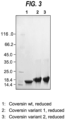
- the resulting clarified cell culture was concentrated in 20mM Bis-Tris buffer, pH 6.0, and applied to a DEAE-Sepharose FF column (GE Healthcare) and then eluted with a step gradient of NaCl in the same buffer. Purified fractions were then run on a Phenyl Sepharose HP column using a linear gradient of (NH 4 ) 2 SO 4 in 20 mM Bis-Tris buffer. Chromatography fractions were analysed with SDS-PAGE and pooled. For Coversin variant 1, a further purification step was carried out where the pooled protein fractions were applied to a Superdex 75 gel filtration column. For Coversin variant 2, a further purification step was carried out where pooled protein fractions were applied to a Q-sepharose ion exchange column.
- Example 3 Coversin/variants bind LTB 4 in the picomolar range
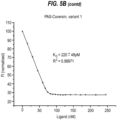
- Fluorescence titration of Coversin binding to LTB 4 was carried out for wild type Coversin and variants 1 and 2 as well as the PASylated versions thereof.
- Binding activity of Coversin, and variants 1 and 2 and the PASylated versions thereof for LTB 4 (Caymen Chemicals, Ann Arbor, Ml, USA) in phosphate buffered saline (PBS) was quantified in a LS 50 B spectrofluorimeter (Perkin-Elmer, Norwalk, CT, USA). Purified 100 nM solutions of the proteins in 2 mL PBS were applied in a quartz cuvette (10 mm path length; Hellma, Mühlheim, Germany) equipped with a magnetic stirrer. Temperature was adjusted to 20 °C and, after equilibrium was reached, protein Tyr/Trp fluorescence was excited at 280 nm (slit width: 15 nm).
- the fluorescence emission was measured at 340 nm (slit width: 16 nm) corresponding to the emission maximum.
- a ligand solution of 30 ⁇ M LTB 4 in PBS was added step-wise, up to a maximal volume of 20 ⁇ L (1 % of the whole sample volume), and after 30 s incubation steady state fluorescence was measured.
- K D value data was normalized to an initial fluorescence intensity of 100 %, the inner filter effect was corrected using a titration of 3 ⁇ M N-acetyl-tryptophanamide solution and data was plotted against the corresponding ligand concentration.
- Figures 5A and B show that both Coversin variants as well as the PASylated versions thereof retain LTB 4 binding activity, binding LTB 4 with a K D in the picomolar range.
- Circular dichroism was used to detect protein unfolding as a result of thermal denaturation. Using this method, the melting temperature of wild type Coversin and Coversin variants 1 and 2 was obtained.
- wild type Coversin has a melting temperature of 61.06°C ⁇ 0.03°C
- variant 2 has a melting temperature of 57.83°C ⁇ 0.04°C
- variant 1 has a melting temperature of 50.16°C ⁇ 0.06°C.
- Sheep red blood cells were sensitised using rabbit hemolysin (Sigma) according to the method of Giclas et al. 1994. Assays were conducted in a total volume of 50 ⁇ l using 25 ⁇ l pooled normal human sera (NHS) diluted 1:80 in gelatin veronal buffered saline supplemented with calcium and magnesium and 25 ⁇ l of sensitised SRBCs. All lytic assays were set up on ice. Serial dilutions of Coversin, Coversin variant 1 and Coversin variant 2 were made up in the diluted NHS. Assays were incubated for 30 minutes at 37°C with shaking at 350rpm.
- NHS normal human sera
- Reactions were stopped by micro centrifugation at 4000g for 5 seconds and supernatant removed to a flat bottomed 96 well plate. 100 ⁇ l ddH2O was added to each well and percentage lysis in the presence of the proteins calculated as a percentage of total lysis induced by adding 25 ⁇ l of water to the reactions in place of the diluted NHS.
- each protein on C5 was assessed through the percentage lysis of cells in the presence of each of the Coversin proteins. Absorbance measurements were taken as a measure of cell lysis at 405nm along the range of Coversin protein concentrations.
- Figure 7 shows that the percentage of cell lysis in the samples containing different concentrations of wild type Coversin was maintained below 10% at each concentration, demonstrating the known inhibitory effect of C5 by wild type Coversin. In contrast, nearly all of the cells in the samples containing both Coversin variants at different concentrations were lysed, indicating that neither of the variants possess any detectable inhibitory activity towards C5.
- Example 6 L-Coversin reduces granulocyte infiltrate in HDM mouse models of asthma
- variant 2 was introduced to a mouse model of asthma, induced by a house dust mite (HDM) allergen (see Gregory, L.G., et al., 2009).
- HDM house dust mite allergen
- HDM intra tracheally (i.t.) to groups of 4-6 mice in 50 ⁇ l PBS 3 times per week for 3 weeks.
- 100 ⁇ g of L-Coversin was administered in 50 ⁇ l PBS daily for 3 weeks.
- PBS was administered in the same dosing regimen to the control (group 1).
- eosinophils and neutrophils in the broncho alveolar lavage fluid were then tested for each group. The results are shown in figure 8 . It is shown in figure 8 that L-Coversin causes a significant reduction in neutrophil numbers and a near significant reduction in eosinophil numbers in the broncho alveolar lavage fluid relative to the HDM-only control.
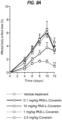
- Antibody transfer epidermolysis bullosa acquista was induced using a modified version of the protocol described by Sitaru et al., 2005. Briefly, mice were injected subcutaneously with 50 ⁇ g affinity-purified anti-Col7 IgG on days 0, 2, and 4. Mice were injected subcutaneously twice daily with Coversin or PASylated L-Coversin (PASylated variant 2) starting four days before the first injection of anti-Col7 IgG (day -2). This application was continued throughout the experiment until its last day on day 11. In the control groups the mice received only the vehicle subcutaneously.
- PASylated L-Coversin PASylated variant 2
- anti-COL7 murine type VII collagen
- New Zealand White rabbits were immunized with 200 ⁇ g of a protein mixture containing three different recombinant proteins (“Col7A, B, and C”) derived from the non-collagenous 1 (NC1) domain of collagen VII together with incomplete Freund's adjuvant.
- IgGs were isolated from the serum of immunized rabbits by use of protein G, and afterwards IgGs were affinity-purified with his-Col7 to specifically obtain rabbit anti-Col7 IgG.
- Antibodies were quality checked by determining the titer and the potency in the cryosection assay.
Landscapes
- Health & Medical Sciences (AREA)
- Life Sciences & Earth Sciences (AREA)
- Chemical & Material Sciences (AREA)
- Organic Chemistry (AREA)
- Proteomics, Peptides & Aminoacids (AREA)
- General Health & Medical Sciences (AREA)
- Medicinal Chemistry (AREA)
- Tropical Medicine & Parasitology (AREA)
- Insects & Arthropods (AREA)
- Zoology (AREA)
- Gastroenterology & Hepatology (AREA)
- Toxicology (AREA)
- Biochemistry (AREA)
- Biophysics (AREA)
- Genetics & Genomics (AREA)
- Molecular Biology (AREA)
- Bioinformatics & Cheminformatics (AREA)
- Engineering & Computer Science (AREA)
- Immunology (AREA)
- Pharmacology & Pharmacy (AREA)
- Epidemiology (AREA)
- Animal Behavior & Ethology (AREA)
- Public Health (AREA)
- Veterinary Medicine (AREA)
- Peptides Or Proteins (AREA)
- Micro-Organisms Or Cultivation Processes Thereof (AREA)
- Medicines That Contain Protein Lipid Enzymes And Other Medicines (AREA)
- Medicinal Preparation (AREA)
- Preparation Of Compounds By Using Micro-Organisms (AREA)
Applications Claiming Priority (2)
| Application Number | Priority Date | Filing Date | Title |
|---|---|---|---|
| GBGB1706406.4A GB201706406D0 (en) | 2017-04-21 | 2017-04-21 | Method of treatment |
| PCT/EP2018/060240 WO2018193121A1 (en) | 2017-04-21 | 2018-04-20 | Coversin variants lacking c5 binding |
Publications (3)
| Publication Number | Publication Date |
|---|---|
| EP3612207A1 EP3612207A1 (en) | 2020-02-26 |
| EP3612207C0 EP3612207C0 (en) | 2024-04-10 |
| EP3612207B1 true EP3612207B1 (en) | 2024-04-10 |
Family
ID=58795719
Family Applications (1)
| Application Number | Title | Priority Date | Filing Date |
|---|---|---|---|
| EP18719169.7A Active EP3612207B1 (en) | 2017-04-21 | 2018-04-20 | Coversin variants lacking c5 binding |
Country Status (12)
| Country | Link |
|---|---|
| US (2) | US11214602B2 (enExample) |
| EP (1) | EP3612207B1 (enExample) |
| JP (1) | JP7183180B2 (enExample) |
| KR (1) | KR102630702B1 (enExample) |
| CN (1) | CN110799207B (enExample) |
| AU (1) | AU2018253961B2 (enExample) |
| CA (1) | CA3060336A1 (enExample) |
| ES (1) | ES2980279T3 (enExample) |
| GB (1) | GB201706406D0 (enExample) |
| IL (1) | IL269856B2 (enExample) |
| PL (1) | PL3612207T3 (enExample) |
| WO (1) | WO2018193121A1 (enExample) |
Families Citing this family (8)
| Publication number | Priority date | Publication date | Assignee | Title |
|---|---|---|---|---|
| CN110831617A (zh) * | 2017-04-21 | 2020-02-21 | 沃卢申伊缪诺制药公司 | 用于治疗瘢痕性眼部发炎性病症的Coversin |
| GB201706406D0 (en) | 2017-04-21 | 2017-06-07 | Volution Immuno Pharmaceuticals Sa | Method of treatment |
| JP7209637B2 (ja) | 2017-04-21 | 2023-01-20 | ヴォリューション イミュノ ファーマシューティカルズ エスエイ | 自己免疫性水疱症の治療のためのコバーシン |
| JP7629394B2 (ja) * | 2018-09-10 | 2025-02-13 | ヴォリューション イミュノ ファーマシューティカルズ エスエイ | リウマチ性疾患の治療に使用するためのコバーシン |
| GB201905810D0 (en) * | 2019-04-25 | 2019-06-05 | Volution Immuno Pharmaceuticals Sa | Method of treatment |
| JP2023503776A (ja) | 2019-09-27 | 2023-02-01 | ヴォリューション イミュノ ファーマシューティカルズ エスエイ | 造血幹細胞移植後の血栓性微小血管症(hsct-tma)の治療方法 |
| GB202218084D0 (en) | 2022-12-01 | 2023-01-18 | Volution Immuno Pharmaceuticals Sa | Fusion proteins |
| GB202408081D0 (en) | 2024-06-06 | 2024-07-24 | Volution Immuno Pharmaceuticals Sa | Methods of removing impurities |
Citations (4)
| Publication number | Priority date | Publication date | Assignee | Title |
|---|---|---|---|---|
| WO2007028968A1 (en) * | 2005-09-09 | 2007-03-15 | Evolutec Limited | Method of treating myasthenia gravis |
| WO2015185945A2 (en) * | 2014-06-05 | 2015-12-10 | Isis Innovation Limited | Polypeptides and uses thereof |
| WO2016198133A1 (en) * | 2015-06-08 | 2016-12-15 | Volution Immuno Pharmaceuticals Sa | Ornithodoros moubata complement inhibitor for use in the treatment of acute graft versus host disease |
| WO2018193120A1 (en) * | 2017-04-21 | 2018-10-25 | Volution Immuno Pharmaceuticals Sa | Coversin for the treatment of cicatrising eye inflammatory disorders |
Family Cites Families (10)
| Publication number | Priority date | Publication date | Assignee | Title |
|---|---|---|---|---|
| US20030077709A1 (en) * | 2000-03-21 | 2003-04-24 | Masazumi Kamohara | Novel leukotriene B4 receptor |
| CA2481231A1 (en) * | 2002-04-05 | 2003-10-23 | University Of Utah Research Foundation | Colon tumor specific binding peptides |
| US7884188B2 (en) | 2003-06-02 | 2011-02-08 | Varleigh Immuno Pharmaceuticals (Vip) Ltd | Complement inhibitors |
| EP1739078A1 (de) | 2005-05-30 | 2007-01-03 | Jerini AG | C5a-Rezeptor-Antagonisten |
| WO2008113834A2 (en) | 2007-03-22 | 2008-09-25 | Novartis Ag | C5 antigens and uses thereof |
| GB0802116D0 (en) | 2008-02-05 | 2008-03-12 | Natural Enviromental Res Counc | Treatment |
| GB0906779D0 (en) | 2009-04-20 | 2009-06-03 | Natural Environment Res Council | Composition |
| CA2840270C (en) | 2011-06-22 | 2023-09-26 | Apellis Pharmaceuticals, Inc. | Methods of treating chronic disorders with complement inhibitors |
| JP7209637B2 (ja) | 2017-04-21 | 2023-01-20 | ヴォリューション イミュノ ファーマシューティカルズ エスエイ | 自己免疫性水疱症の治療のためのコバーシン |
| GB201706406D0 (en) | 2017-04-21 | 2017-06-07 | Volution Immuno Pharmaceuticals Sa | Method of treatment |
-
2017
- 2017-04-21 GB GBGB1706406.4A patent/GB201706406D0/en not_active Ceased
-
2018
- 2018-04-20 PL PL18719169.7T patent/PL3612207T3/pl unknown
- 2018-04-20 JP JP2019556928A patent/JP7183180B2/ja active Active
- 2018-04-20 CA CA3060336A patent/CA3060336A1/en active Pending
- 2018-04-20 EP EP18719169.7A patent/EP3612207B1/en active Active
- 2018-04-20 CN CN201880040770.5A patent/CN110799207B/zh active Active
- 2018-04-20 AU AU2018253961A patent/AU2018253961B2/en active Active
- 2018-04-20 KR KR1020197031710A patent/KR102630702B1/ko active Active
- 2018-04-20 WO PCT/EP2018/060240 patent/WO2018193121A1/en not_active Ceased
- 2018-04-20 US US16/603,357 patent/US11214602B2/en active Active
- 2018-04-20 IL IL269856A patent/IL269856B2/en unknown
- 2018-04-20 ES ES18719169T patent/ES2980279T3/es active Active
-
2021
- 2021-11-18 US US17/529,534 patent/US20230002456A1/en not_active Abandoned
Patent Citations (4)
| Publication number | Priority date | Publication date | Assignee | Title |
|---|---|---|---|---|
| WO2007028968A1 (en) * | 2005-09-09 | 2007-03-15 | Evolutec Limited | Method of treating myasthenia gravis |
| WO2015185945A2 (en) * | 2014-06-05 | 2015-12-10 | Isis Innovation Limited | Polypeptides and uses thereof |
| WO2016198133A1 (en) * | 2015-06-08 | 2016-12-15 | Volution Immuno Pharmaceuticals Sa | Ornithodoros moubata complement inhibitor for use in the treatment of acute graft versus host disease |
| WO2018193120A1 (en) * | 2017-04-21 | 2018-10-25 | Volution Immuno Pharmaceuticals Sa | Coversin for the treatment of cicatrising eye inflammatory disorders |
Non-Patent Citations (4)
| Title |
|---|
| BLOOD, vol. 128, no. 22, 2 December 2016 (2016-12-02), 58TH ANNUAL MEETING AND EXPOSITION OF THE AMERICAN-SOCIETY-OF-HEMATOLOGY; SAN DIEGO, CA, USA; DECEMBER 03 -06, 2016, pages 5900, ISSN: 0006-4971(print) * |
| CALDER VIRGINIA ET AL: "Experimental immune-mediated conjunctivitis (EIC): downregulation by Coversin, a dual C5 and LTB4 inhibitor", ANNUAL MEETING OF THE ASSOCIATION FOR RESEARCH IN VISION AND OPHTHALMOLOGY, vol. 59, 3 May 2018 (2018-05-03), pages 507, XP055815061 * |
| DATABASE BIOSIS [online] BIOSCIENCES INFORMATION SERVICE, PHILADELPHIA, PA, US; 2 December 2016 (2016-12-02), MILES NUNN ET AL: "Therapeutic Development of Complement C5 Inhibitor Coversin (TM) with Extended Half-Life Via PASylation (R)", XP002782430, Database accession no. PREV201700342092 * |
| DATABASE UniProt [online] 5 October 2016 (2016-10-05), ANONYMOUS: "TSGP2", XP055815876, retrieved from www.uniprot.org accession no. Q8I9U1 Database accession no. Q8I9U1 * |
Also Published As
| Publication number | Publication date |
|---|---|
| IL269856B2 (en) | 2024-09-01 |
| CN110799207A (zh) | 2020-02-14 |
| EP3612207C0 (en) | 2024-04-10 |
| PL3612207T3 (pl) | 2024-09-23 |
| GB201706406D0 (en) | 2017-06-07 |
| US11214602B2 (en) | 2022-01-04 |
| EP3612207A1 (en) | 2020-02-26 |
| WO2018193121A1 (en) | 2018-10-25 |
| CN110799207B (zh) | 2024-05-03 |
| IL269856A (en) | 2019-11-28 |
| AU2018253961A1 (en) | 2019-10-31 |
| IL269856B1 (en) | 2024-05-01 |
| US20230002456A1 (en) | 2023-01-05 |
| JP2020517260A (ja) | 2020-06-18 |
| KR20190141163A (ko) | 2019-12-23 |
| US20200385434A1 (en) | 2020-12-10 |
| ES2980279T3 (es) | 2024-09-30 |
| JP7183180B2 (ja) | 2022-12-05 |
| KR102630702B1 (ko) | 2024-01-29 |
| CA3060336A1 (en) | 2018-10-25 |
| AU2018253961B2 (en) | 2022-06-02 |
Similar Documents
| Publication | Publication Date | Title |
|---|---|---|
| US11214602B2 (en) | Coversin variants lacking C5 binding | |
| EP3047024B1 (en) | Compositions and methods for treatment of autoimmune and inflammatory diseases and disorders | |
| AU2009211257A1 (en) | Treatment of diseases and conditions mediated by eicosanoids | |
| CN110896606B (zh) | 用于治疗自身免疫性水疱病的coversin | |
| DK2393831T3 (en) | MODIFIED OMCI AS COMPLEMENT INHIBITOR | |
| KR20190129038A (ko) | 신규 니코틴 분해 효소 변형체 | |
| EP3419994B1 (en) | Peptide inhibitors of calcium channels | |
| CN102028935A (zh) | 败血症以及败血症休克的预测、预防和治疗方法及试剂盒 | |
| WO2025172720A1 (en) | Fragment of complement factor h related protein 5 which restores complement regulation |
Legal Events
| Date | Code | Title | Description |
|---|---|---|---|
| STAA | Information on the status of an ep patent application or granted ep patent |
Free format text: STATUS: UNKNOWN |
|
| STAA | Information on the status of an ep patent application or granted ep patent |
Free format text: STATUS: THE INTERNATIONAL PUBLICATION HAS BEEN MADE |
|
| PUAI | Public reference made under article 153(3) epc to a published international application that has entered the european phase |
Free format text: ORIGINAL CODE: 0009012 |
|
| STAA | Information on the status of an ep patent application or granted ep patent |
Free format text: STATUS: REQUEST FOR EXAMINATION WAS MADE |
|
| 17P | Request for examination filed |
Effective date: 20191121 |
|
| AK | Designated contracting states |
Kind code of ref document: A1 Designated state(s): AL AT BE BG CH CY CZ DE DK EE ES FI FR GB GR HR HU IE IS IT LI LT LU LV MC MK MT NL NO PL PT RO RS SE SI SK SM TR |
|
| AX | Request for extension of the european patent |
Extension state: BA ME |
|
| DAV | Request for validation of the european patent (deleted) | ||
| DAX | Request for extension of the european patent (deleted) | ||
| STAA | Information on the status of an ep patent application or granted ep patent |
Free format text: STATUS: EXAMINATION IS IN PROGRESS |
|
| PUAG | Search results despatched under rule 164(2) epc together with communication from examining division |
Free format text: ORIGINAL CODE: 0009017 |
|
| 17Q | First examination report despatched |
Effective date: 20210629 |
|
| 17Q | First examination report despatched |
Effective date: 20210713 |
|
| B565 | Issuance of search results under rule 164(2) epc |
Effective date: 20210713 |
|
| RIC1 | Information provided on ipc code assigned before grant |
Ipc: A61K 38/17 20060101AFI20210712BHEP Ipc: C07K 14/435 20060101ALI20210712BHEP |
|
| GRAP | Despatch of communication of intention to grant a patent |
Free format text: ORIGINAL CODE: EPIDOSNIGR1 |
|
| STAA | Information on the status of an ep patent application or granted ep patent |
Free format text: STATUS: GRANT OF PATENT IS INTENDED |
|
| RIC1 | Information provided on ipc code assigned before grant |
Ipc: A61P 11/06 20060101ALI20231024BHEP Ipc: C07K 14/435 20060101ALI20231024BHEP Ipc: A61K 38/17 20060101AFI20231024BHEP |
|
| INTG | Intention to grant announced |
Effective date: 20231109 |
|
| GRAS | Grant fee paid |
Free format text: ORIGINAL CODE: EPIDOSNIGR3 |
|
| GRAA | (expected) grant |
Free format text: ORIGINAL CODE: 0009210 |
|
| STAA | Information on the status of an ep patent application or granted ep patent |
Free format text: STATUS: THE PATENT HAS BEEN GRANTED |
|
| AK | Designated contracting states |
Kind code of ref document: B1 Designated state(s): AL AT BE BG CH CY CZ DE DK EE ES FI FR GB GR HR HU IE IS IT LI LT LU LV MC MK MT NL NO PL PT RO RS SE SI SK SM TR |
|
| REG | Reference to a national code |
Ref country code: GB Ref legal event code: FG4D |
|
| REG | Reference to a national code |
Ref country code: CH Ref legal event code: EP |
|
| REG | Reference to a national code |
Ref country code: DE Ref legal event code: R096 Ref document number: 602018067827 Country of ref document: DE |
|
| REG | Reference to a national code |
Ref country code: IE Ref legal event code: FG4D |
|
| U01 | Request for unitary effect filed |
Effective date: 20240502 |
|
| U07 | Unitary effect registered |
Designated state(s): AT BE BG DE DK EE FI FR IT LT LU LV MT NL PT SE SI Effective date: 20240515 |
|
| U20 | Renewal fee for the european patent with unitary effect paid |
Year of fee payment: 7 Effective date: 20240510 |
|
| REG | Reference to a national code |
Ref country code: ES Ref legal event code: FG2A Ref document number: 2980279 Country of ref document: ES Kind code of ref document: T3 Effective date: 20240930 |
|
| PG25 | Lapsed in a contracting state [announced via postgrant information from national office to epo] |
Ref country code: IS Free format text: LAPSE BECAUSE OF FAILURE TO SUBMIT A TRANSLATION OF THE DESCRIPTION OR TO PAY THE FEE WITHIN THE PRESCRIBED TIME-LIMIT Effective date: 20240810 |
|
| PG25 | Lapsed in a contracting state [announced via postgrant information from national office to epo] |
Ref country code: HR Free format text: LAPSE BECAUSE OF FAILURE TO SUBMIT A TRANSLATION OF THE DESCRIPTION OR TO PAY THE FEE WITHIN THE PRESCRIBED TIME-LIMIT Effective date: 20240410 |
|
| PG25 | Lapsed in a contracting state [announced via postgrant information from national office to epo] |
Ref country code: GR Free format text: LAPSE BECAUSE OF FAILURE TO SUBMIT A TRANSLATION OF THE DESCRIPTION OR TO PAY THE FEE WITHIN THE PRESCRIBED TIME-LIMIT Effective date: 20240711 |
|
| PG25 | Lapsed in a contracting state [announced via postgrant information from national office to epo] |
Ref country code: NO Free format text: LAPSE BECAUSE OF FAILURE TO SUBMIT A TRANSLATION OF THE DESCRIPTION OR TO PAY THE FEE WITHIN THE PRESCRIBED TIME-LIMIT Effective date: 20240710 Ref country code: IS Free format text: LAPSE BECAUSE OF FAILURE TO SUBMIT A TRANSLATION OF THE DESCRIPTION OR TO PAY THE FEE WITHIN THE PRESCRIBED TIME-LIMIT Effective date: 20240810 Ref country code: HR Free format text: LAPSE BECAUSE OF FAILURE TO SUBMIT A TRANSLATION OF THE DESCRIPTION OR TO PAY THE FEE WITHIN THE PRESCRIBED TIME-LIMIT Effective date: 20240410 Ref country code: GR Free format text: LAPSE BECAUSE OF FAILURE TO SUBMIT A TRANSLATION OF THE DESCRIPTION OR TO PAY THE FEE WITHIN THE PRESCRIBED TIME-LIMIT Effective date: 20240711 Ref country code: RS Free format text: LAPSE BECAUSE OF FAILURE TO SUBMIT A TRANSLATION OF THE DESCRIPTION OR TO PAY THE FEE WITHIN THE PRESCRIBED TIME-LIMIT Effective date: 20240710 |
|
| REG | Reference to a national code |
Ref country code: DE Ref legal event code: R097 Ref document number: 602018067827 Country of ref document: DE |
|
| PG25 | Lapsed in a contracting state [announced via postgrant information from national office to epo] |
Ref country code: CZ Free format text: LAPSE BECAUSE OF FAILURE TO SUBMIT A TRANSLATION OF THE DESCRIPTION OR TO PAY THE FEE WITHIN THE PRESCRIBED TIME-LIMIT Effective date: 20240410 |
|
| PG25 | Lapsed in a contracting state [announced via postgrant information from national office to epo] |
Ref country code: RO Free format text: LAPSE BECAUSE OF FAILURE TO SUBMIT A TRANSLATION OF THE DESCRIPTION OR TO PAY THE FEE WITHIN THE PRESCRIBED TIME-LIMIT Effective date: 20240410 Ref country code: SK Free format text: LAPSE BECAUSE OF FAILURE TO SUBMIT A TRANSLATION OF THE DESCRIPTION OR TO PAY THE FEE WITHIN THE PRESCRIBED TIME-LIMIT Effective date: 20240410 |
|
| PG25 | Lapsed in a contracting state [announced via postgrant information from national office to epo] |
Ref country code: SM Free format text: LAPSE BECAUSE OF FAILURE TO SUBMIT A TRANSLATION OF THE DESCRIPTION OR TO PAY THE FEE WITHIN THE PRESCRIBED TIME-LIMIT Effective date: 20240410 |
|
| PG25 | Lapsed in a contracting state [announced via postgrant information from national office to epo] |
Ref country code: SM Free format text: LAPSE BECAUSE OF FAILURE TO SUBMIT A TRANSLATION OF THE DESCRIPTION OR TO PAY THE FEE WITHIN THE PRESCRIBED TIME-LIMIT Effective date: 20240410 Ref country code: SK Free format text: LAPSE BECAUSE OF FAILURE TO SUBMIT A TRANSLATION OF THE DESCRIPTION OR TO PAY THE FEE WITHIN THE PRESCRIBED TIME-LIMIT Effective date: 20240410 Ref country code: RO Free format text: LAPSE BECAUSE OF FAILURE TO SUBMIT A TRANSLATION OF THE DESCRIPTION OR TO PAY THE FEE WITHIN THE PRESCRIBED TIME-LIMIT Effective date: 20240410 Ref country code: CZ Free format text: LAPSE BECAUSE OF FAILURE TO SUBMIT A TRANSLATION OF THE DESCRIPTION OR TO PAY THE FEE WITHIN THE PRESCRIBED TIME-LIMIT Effective date: 20240410 Ref country code: MC Free format text: LAPSE BECAUSE OF FAILURE TO SUBMIT A TRANSLATION OF THE DESCRIPTION OR TO PAY THE FEE WITHIN THE PRESCRIBED TIME-LIMIT Effective date: 20240410 |
|
| PLBE | No opposition filed within time limit |
Free format text: ORIGINAL CODE: 0009261 |
|
| STAA | Information on the status of an ep patent application or granted ep patent |
Free format text: STATUS: NO OPPOSITION FILED WITHIN TIME LIMIT |
|
| 26N | No opposition filed |
Effective date: 20250113 |
|
| U20 | Renewal fee for the european patent with unitary effect paid |
Year of fee payment: 8 Effective date: 20250310 |
|
| PGFP | Annual fee paid to national office [announced via postgrant information from national office to epo] |
Ref country code: IE Payment date: 20250310 Year of fee payment: 8 |
|
| PGFP | Annual fee paid to national office [announced via postgrant information from national office to epo] |
Ref country code: PL Payment date: 20250314 Year of fee payment: 8 |
|
| PGFP | Annual fee paid to national office [announced via postgrant information from national office to epo] |
Ref country code: GB Payment date: 20250306 Year of fee payment: 8 |
|
| PGFP | Annual fee paid to national office [announced via postgrant information from national office to epo] |
Ref country code: ES Payment date: 20250508 Year of fee payment: 8 |
|
| PGFP | Annual fee paid to national office [announced via postgrant information from national office to epo] |
Ref country code: CH Payment date: 20250501 Year of fee payment: 8 |
|
| PGFP | Annual fee paid to national office [announced via postgrant information from national office to epo] |
Ref country code: TR Payment date: 20250409 Year of fee payment: 8 |
|
| PG25 | Lapsed in a contracting state [announced via postgrant information from national office to epo] |
Ref country code: CY Free format text: LAPSE BECAUSE OF FAILURE TO SUBMIT A TRANSLATION OF THE DESCRIPTION OR TO PAY THE FEE WITHIN THE PRESCRIBED TIME-LIMIT; INVALID AB INITIO Effective date: 20180420 |
|
| PG25 | Lapsed in a contracting state [announced via postgrant information from national office to epo] |
Ref country code: HU Free format text: LAPSE BECAUSE OF FAILURE TO SUBMIT A TRANSLATION OF THE DESCRIPTION OR TO PAY THE FEE WITHIN THE PRESCRIBED TIME-LIMIT; INVALID AB INITIO Effective date: 20180420 |