EP3607964B1 - Pharmaceutical composition for treating a metabolic syndrome - Google Patents
Pharmaceutical composition for treating a metabolic syndrome Download PDFInfo
- Publication number
- EP3607964B1 EP3607964B1 EP19195239.9A EP19195239A EP3607964B1 EP 3607964 B1 EP3607964 B1 EP 3607964B1 EP 19195239 A EP19195239 A EP 19195239A EP 3607964 B1 EP3607964 B1 EP 3607964B1
- Authority
- EP
- European Patent Office
- Prior art keywords
- fgf
- glp
- pharmaceutical composition
- use according
- insulin
- Prior art date
- Legal status (The legal status is an assumption and is not a legal conclusion. Google has not performed a legal analysis and makes no representation as to the accuracy of the status listed.)
- Active
Links
Images


Classifications
-
- A—HUMAN NECESSITIES
- A61—MEDICAL OR VETERINARY SCIENCE; HYGIENE
- A61K—PREPARATIONS FOR MEDICAL, DENTAL OR TOILETRY PURPOSES
- A61K38/00—Medicinal preparations containing peptides
- A61K38/16—Peptides having more than 20 amino acids; Gastrins; Somatostatins; Melanotropins; Derivatives thereof
- A61K38/17—Peptides having more than 20 amino acids; Gastrins; Somatostatins; Melanotropins; Derivatives thereof from animals; from humans
- A61K38/22—Hormones
- A61K38/26—Glucagons
-
- A—HUMAN NECESSITIES
- A61—MEDICAL OR VETERINARY SCIENCE; HYGIENE
- A61K—PREPARATIONS FOR MEDICAL, DENTAL OR TOILETRY PURPOSES
- A61K31/00—Medicinal preparations containing organic active ingredients
- A61K31/13—Amines
- A61K31/155—Amidines (), e.g. guanidine (H2N—C(=NH)—NH2), isourea (N=C(OH)—NH2), isothiourea (—N=C(SH)—NH2)
-
- A—HUMAN NECESSITIES
- A61—MEDICAL OR VETERINARY SCIENCE; HYGIENE
- A61K—PREPARATIONS FOR MEDICAL, DENTAL OR TOILETRY PURPOSES
- A61K31/00—Medicinal preparations containing organic active ingredients
- A61K31/33—Heterocyclic compounds
- A61K31/395—Heterocyclic compounds having nitrogen as a ring hetero atom, e.g. guanethidine or rifamycins
- A61K31/495—Heterocyclic compounds having nitrogen as a ring hetero atom, e.g. guanethidine or rifamycins having six-membered rings with two or more nitrogen atoms as the only ring heteroatoms, e.g. piperazine or tetrazines
- A61K31/4985—Pyrazines or piperazines ortho- or peri-condensed with heterocyclic ring systems
-
- A—HUMAN NECESSITIES
- A61—MEDICAL OR VETERINARY SCIENCE; HYGIENE
- A61K—PREPARATIONS FOR MEDICAL, DENTAL OR TOILETRY PURPOSES
- A61K38/00—Medicinal preparations containing peptides
- A61K38/16—Peptides having more than 20 amino acids; Gastrins; Somatostatins; Melanotropins; Derivatives thereof
- A61K38/17—Peptides having more than 20 amino acids; Gastrins; Somatostatins; Melanotropins; Derivatives thereof from animals; from humans
- A61K38/18—Growth factors; Growth regulators
- A61K38/1825—Fibroblast growth factor [FGF]
-
- A—HUMAN NECESSITIES
- A61—MEDICAL OR VETERINARY SCIENCE; HYGIENE
- A61K—PREPARATIONS FOR MEDICAL, DENTAL OR TOILETRY PURPOSES
- A61K45/00—Medicinal preparations containing active ingredients not provided for in groups A61K31/00 - A61K41/00
- A61K45/06—Mixtures of active ingredients without chemical characterisation, e.g. antiphlogistics and cardiaca
-
- A—HUMAN NECESSITIES
- A61—MEDICAL OR VETERINARY SCIENCE; HYGIENE
- A61P—SPECIFIC THERAPEUTIC ACTIVITY OF CHEMICAL COMPOUNDS OR MEDICINAL PREPARATIONS
- A61P3/00—Drugs for disorders of the metabolism
-
- A—HUMAN NECESSITIES
- A61—MEDICAL OR VETERINARY SCIENCE; HYGIENE
- A61P—SPECIFIC THERAPEUTIC ACTIVITY OF CHEMICAL COMPOUNDS OR MEDICINAL PREPARATIONS
- A61P3/00—Drugs for disorders of the metabolism
- A61P3/04—Anorexiants; Antiobesity agents
-
- A—HUMAN NECESSITIES
- A61—MEDICAL OR VETERINARY SCIENCE; HYGIENE
- A61P—SPECIFIC THERAPEUTIC ACTIVITY OF CHEMICAL COMPOUNDS OR MEDICINAL PREPARATIONS
- A61P3/00—Drugs for disorders of the metabolism
- A61P3/06—Antihyperlipidemics
-
- A—HUMAN NECESSITIES
- A61—MEDICAL OR VETERINARY SCIENCE; HYGIENE
- A61P—SPECIFIC THERAPEUTIC ACTIVITY OF CHEMICAL COMPOUNDS OR MEDICINAL PREPARATIONS
- A61P3/00—Drugs for disorders of the metabolism
- A61P3/08—Drugs for disorders of the metabolism for glucose homeostasis
-
- A—HUMAN NECESSITIES
- A61—MEDICAL OR VETERINARY SCIENCE; HYGIENE
- A61P—SPECIFIC THERAPEUTIC ACTIVITY OF CHEMICAL COMPOUNDS OR MEDICINAL PREPARATIONS
- A61P3/00—Drugs for disorders of the metabolism
- A61P3/08—Drugs for disorders of the metabolism for glucose homeostasis
- A61P3/10—Drugs for disorders of the metabolism for glucose homeostasis for hyperglycaemia, e.g. antidiabetics
-
- A—HUMAN NECESSITIES
- A61—MEDICAL OR VETERINARY SCIENCE; HYGIENE
- A61P—SPECIFIC THERAPEUTIC ACTIVITY OF CHEMICAL COMPOUNDS OR MEDICINAL PREPARATIONS
- A61P43/00—Drugs for specific purposes, not provided for in groups A61P1/00-A61P41/00
-
- A—HUMAN NECESSITIES
- A61—MEDICAL OR VETERINARY SCIENCE; HYGIENE
- A61P—SPECIFIC THERAPEUTIC ACTIVITY OF CHEMICAL COMPOUNDS OR MEDICINAL PREPARATIONS
- A61P9/00—Drugs for disorders of the cardiovascular system
-
- A—HUMAN NECESSITIES
- A61—MEDICAL OR VETERINARY SCIENCE; HYGIENE
- A61P—SPECIFIC THERAPEUTIC ACTIVITY OF CHEMICAL COMPOUNDS OR MEDICINAL PREPARATIONS
- A61P9/00—Drugs for disorders of the cardiovascular system
- A61P9/10—Drugs for disorders of the cardiovascular system for treating ischaemic or atherosclerotic diseases, e.g. antianginal drugs, coronary vasodilators, drugs for myocardial infarction, retinopathy, cerebrovascula insufficiency, renal arteriosclerosis
-
- C—CHEMISTRY; METALLURGY
- C07—ORGANIC CHEMISTRY
- C07K—PEPTIDES
- C07K14/00—Peptides having more than 20 amino acids; Gastrins; Somatostatins; Melanotropins; Derivatives thereof
- C07K14/435—Peptides having more than 20 amino acids; Gastrins; Somatostatins; Melanotropins; Derivatives thereof from animals; from humans
- C07K14/475—Growth factors; Growth regulators
- C07K14/50—Fibroblast growth factor [FGF]
-
- A—HUMAN NECESSITIES
- A61—MEDICAL OR VETERINARY SCIENCE; HYGIENE
- A61K—PREPARATIONS FOR MEDICAL, DENTAL OR TOILETRY PURPOSES
- A61K2300/00—Mixtures or combinations of active ingredients, wherein at least one active ingredient is fully defined in groups A61K31/00 - A61K41/00
-
- C—CHEMISTRY; METALLURGY
- C07—ORGANIC CHEMISTRY
- C07K—PEPTIDES
- C07K2319/00—Fusion polypeptide
- C07K2319/30—Non-immunoglobulin-derived peptide or protein having an immunoglobulin constant or Fc region, or a fragment thereof, attached thereto
Definitions
- the present invention is directed to a pharmaceutical composition containing at least one FGF-21 (fibroblast growth factor 21) compound, at least one GLP-1R (glucagon-like peptide-1 receptor) agonist and optionally at least one anti-diabetic drug and/or at least one DPP-4 (dipeptidyl peptidase-4) inhibitor for the treatment of at least one metabolic syndrome and/or atherosclerosis, in particular diabetes, dyslipidemia, obesity and/or adipositas.
- FGF-21 fibroblast growth factor 21
- GLP-1R glucagon-like peptide-1 receptor
- DPP-4 dipeptidyl peptidase-4 inhibitor
- Diabetes mellitus is characterized by its clinical manifestations, namely the non-insulin-dependent or maturity onset form, also known as Type 2 diabetes and the insulin-dependent or juvenile onset form, also known as Type 1 diabetes.
- the manifestations of clinical symptoms of Type 2 diabetes and the underlying obesity usually appear at an age over 40.
- Type 1 diabetes usually shows a rapid onset of the disease often before 30.
- the disease is a metabolic disorder in humans with a prevalence of approximately one percent in the general population, with one-fourth of these being Type 1 and three-fourth of these being Type 2 diabetes.
- Type 2 diabetes is a disease characterized by high-circulating blood glucose, insulin and corticosteroid levels.
- Obesity is a chronic disease that is highly prevalent in modern society and is associated with numerous medical problems including diabetes mellitus, insulin resistance, hypertension, hypercholesterolemia, and coronary heart disease. It is further highly correlated with diabetes and insulin resistance, the latter of which is generally accompanied by hyperinsulinemia or hyperglycemia, or both. In addition, Type 2 diabetes is associated with a two to fourfold risk of coronary artery disease.
- Type 1 diabetics characteristically show very low or immeasurable plasma insulin with elevated glucagon.
- An immune response specifically directed against -cells leads to Type 1 diabetes because -cells secrete insulin.
- Fibroblast growth factor 21 is a novel metabolic regulator produced primarily by the liver that exerts potent antidiabetic and lipid-lowering effects in animal models of obesity and type 2 diabetes mellitus. This hormone contributes to body weight regulation and is involved in the response to nutritional deprivation and ketogenic state in mice.
- the principal sites of metabolic actions of FGF21 are adipose tissue, liver and pancreas. Experimental studies have shown improvements in diabetes compensation and dyslipidemia after FGF21 administration in diabetic mice and primates (Dostalova et a / . 2009).
- FGF21 has been shown to stimulate glucose uptake in mouse 3T3-L1 adipocytes in the presence and absence of insulin, and to decrease fed and fasting blood glucose, triglycerides, and glucagon levels in ob/ob and db/db mice and 8 week olf ZDF rats in a dose dependant manner, thus, providing the basis for the use of FGF-21 as a therapy for treating diabetes and obesity (see e.g. WO03/011213 ).
- Fibroblast growth factors are polypeptides widely expressed in developing and adult tissues.
- the FGF family currently consists of twenty-two members, FGF-1 to FGF-23.
- the members of the FGF family are highly conserved in both gene structure and amino acid sequence between vertebrate species.
- There are 18 mammalian fibroblast growth factors (FGF1-FGF10 and FGF16-FGF23) which are grouped into 6 subfamilies based on differences in sequence homology and phylogeny.
- FGF11-FGF14 FGF homologous factors
- FGF19 subfamily members including FGF15/19, FGF21 and FGF23 exert important metabolic effects by an endocrine fashion.
- the members of FGF19 subfamily regulate diverse physiological processes that are not affected by classical FGFs.
- the wide variety of metabolic activities of these endocrine factors include the regulation of the bile acid, carbohydrate and lipid metabolism as well as phosphate, calcium and vitamin D homeostasis (Tomlinson eta/. 2002, Holt et al 2003, Shimada et a / . 2004, Kharitonenkov et a/. 2005, Inagaki et a/. 2005, Lundasen et a/. 2006).
- FGF21 was originally isolated from mouse embryos. FGF21 mRNA was most abundantly expressed in the liver, and to lesser extent in the thymus (Nishimura et a/. 2000). Human FGF21 is highly identical (approximately 75 % amino acid identity) to mouse FGF21. Among human FGF family members, FGF21 is the most similar (approximately 35 % amino acid identity) to FGF19 (Nishimura eta / . 2000). FGF21 is free of the proliferative and tumorigenic effects (Kharitonenkov eta / . 2005, Huang eta/. 2006, Wente et a / . 2006) that are typical for majority of the members of FGF family (Ornitz and Itoh 2001, Nicholes eta / . 2002, Eswarakumar eta/. 2005).
- FGF21 The administration of FGF21 to obese leptin-deficient oblob and leptin receptor-deficient db / db mice and obese ZDF rats significantly lowered blood glucose and triglycerides, decreased fasting insulin levels and improved glucose clearance during an oral glucose tolerance test.
- FGF21 did not affect food intake or body weighUcomposition of diabetic or lean mice and rats over the course of 2 weeks of administration.
- FGF21 did not induce mitogenicity, hypoglycemia, or weight gain at any dose tested in diabetic or healthy animals or when overexpressed in transgenic mice (Kharitonenkov et a/. 2005).
- FGF21 The administration of FGF21 to diabetic rhesus monkeys for 6 weeks reduced fasting plasma glucose, fructosamine, triglyceride, insulin and glucagone levels. Importantly, hypoglycemia was not observed during the study despite of significant glucose-lowering effects. FGF21 administration also significantly lowered LDL-cholesterol and increased HDL-cholesterol and, in contrast to mice (Kharitonenkov et a/. 2005), slightly but significantly decreased body weight (Kharitonenkov eta / . 2007).
- the gut peptide glucagon-like peptide-1 (GLP-1) is an incretin hormone and secreted in a nutrient-dependent manner. It stimulates glucose-dependent insulin secretion. GLP-1 also promotes f3-cell proliferation and controls glycemia via additional actions on glucose sensors, inhibition of gastric emptying, food intake and glucagons secretion. Furthermore, GLP-1 stimulates insulin secretion and reduces blood glucose in human subjects with Type 2 diabetes. Exogenous administration of bioactive GLP-1, GLP-1(7-27) or GLP-1(7-36 amide), in doses elevating plasma concentrations to approximately 3-4 fold physiological postprandial levels fully normalizes fasting hyperglycaemia in Type 2 diabetic patients ( Nauck, M.
- GLP-1R human GLP-1 receptor
- the human GLP-1 receptor is a 463 amino acid heptahelical G protein-coupled receptor widely expressed in pancreatic islets, kidney, lung, heart and multiple regions of the peripheral and central nervous system. Within islets, the GLP-1R is predominantly localized to islet f-3-cells. Activation of GLP-1R signalling initiates a program of differentiation toward a more endocrine-like phenotype, in particular the differentiation of progenitors derived from human islets into functioning f3-cells ( Drucker, D. J. (2006) Cell Metabolism, 3, 153-165 ).
- One embodiment of the present invention is, therefore, directed to a pharmaceutical composition containing at least one FGF-21 (fibroblast growth factor 21) compound and at least one GLP-1R (glucagon-like peptide-1 receptor) agonist.
- FGF-21 fibroblast growth factor 21
- GLP-1R glucagon-like peptide-1 receptor
- FGF-21 compound is defined as a compound showing FGF-21 activity, in particular comprising (i) native FGF-21, especially human FGF-21, in particular human FGF-21 as shown in SEQ 10 NO: 1, or (ii) a FGF-21 mimetic with FGF-21 activity.
- FGF-21 activity is usually measured in a FGF-21 activity assay generally known to a person skilled in the art.
- An FGF-21 activity assay is e.g. a "glucose uptake assay” as described in Kharitonenkov, A. et al. (2005), 115; 1627, No. 6.
- adipocytes are starved for 3 hours in OMEM/0.1% BSA, stimulated with FGF-21 for 24 hours, and washed twice with KRP buffer (15 mM HEPES, pH 7.4, 118 mM NaCl, 4.8 mM KCI, 1.2 mM MgS04, 1.3 mM CaCI 2 , 1.2 mM KH2P04, 0.1% BSA), and 100 ).II of KRP buffer containing 2-deoxy-0-[ 14 C]glucose (2-OOG) (0.1 ).ICi, 100 ).IM) is added to each well.
- KRP buffer 15 mM HEPES, pH 7.4, 118 mM NaCl, 4.8 mM KCI, 1.2 mM MgS04, 1.3 mM CaCI 2 , 1.2 mM KH2P04, 0.1% BSA
- Control wells contains 100 III of KRP buffer with 2-00G (0.1 ).ICi, 10 mM) to monitor for nonspecificity.
- the uptake reaction is carried out for 1 hour at 3rC, terminated by addition of cytochalasin B (20 ).IM), and measured using Wallac 1450 MicroBeta counter (PerkinEimer, USA).
- FGF-21 mimetics are (a) proteins having at least about 96%, in particular 99% amino acid sequence identity to the amino acid sequence shown in SEQ 10 NO: 1 and having FGF-21 activity, (b) a FGF-21 fusion protein or a (c) FGF-21 conjugate, e.g. a FGF-21 mutein, a FGF-21-Fc fusion protein, a FGF-21-HSA fusion protein or a PEGylated FGF-21.
- FGF-21 muteins are described in e.g. WO2005/061712 , WO2006/028595 , WO2006/028714 , WO2006/065582 or WO2008/121563 .
- Exemplary muteins are muteins which have a reduced capacity for 0-glycosylation when e.g. expressed in yeast compared to wild-type human FGF-21, e.g. human FGF-21 with a substitution at position 167 (serine), e.g.
- human FGF-21 with one of the following substitutions: Ser167Aia, Ser167Giu, Ser167Asp, Ser167Asn, Ser167Gin, Ser167Giy, Ser167Val, Ser167His, Ser167Lys or Ser167Tyr.
- Another example is a mutein which shows reduced deamidation compared to wild-type human FGF-21, e.g. a mutein with a substitution at position 121 (asparagine) of human FGF-21, e.g. Asn121Aia, Asn121Val, Asn121Ser, Asn121Asp or Asn121Giu.
- An alternative mutein is human FGF-21 having one or more non-naturally encoded amino acids, e.g.
- muteins comprise a substitution of a charged (e.g. aspartate, glutamate) or polar but uncharged amino acids (e.g. serine, threonine, asparagine, glutamine) for e.g. a polar but uncharged or charged amino acid, respectively.
- a charged amino acid e.g. aspartate, glutamate
- polar but uncharged amino acids e.g. serine, threonine, asparagine, glutamine
- Examples are Leu139Giu, Ala145Giu, Leu146Giu, Ile152Giu, Gln156Giu, Ser163Giu, Ile152Giu, Ser163Giu or Gln54Giu.
- Another mutein is a mutein showing a reduced susceptibility for proteolytic degradation when expressed in e.g. yeast compared to human FGF-21, in particular human FGF-21 with a substitution of Leu153 with an amino acid selected from Gly, Ala, Val, Pro, Phe, Tyr, Trp, Ser, Thr, Asn, Asp, Gin, Glu, Cys or Met.
- a preferred FGF-21 mutein is the mutated FGF-21 according to SEQ ID NO: 2 which carries a deletion of amino acids 1-28 of human FGF-21 (SEQ ID NO: 1) and contains an additional glycine at the N-terminus.
- FGF-21 fusion proteins are described in e.g. WO2004/110472 or WO2005/113606 , for example a FGF-21-Fc fusion protein or a FGF-21-HAS fusion protein.
- Fe means the Fe portion of an immunoglobulin, e.g. the Fe portion of IgG4.
- HSA human serum albumin.
- FGF-21 conjugates are described in e.g. WO2005/091944 , WO2006/050247 or WO2009/089396 , for example glycol-linked FGF-21 compounds.
- Such glycol-linked FGF21 compounds usually carry a polyethylene glycol (PEG), e.g. at a cysteine or lysine amino acid residue or at an introduced N-linked or 0-linked glycosylation site, (herein referred to as "PEGylated FGF-21").
- PEGylated FGF-21 polyethylene glycol
- Such PEGylated FGF-21 compounds generally show an extended time action compared to human FGF-21.
- Suitable PEGs have a molecular weight of about 20,000 to 40,000 daltons.
- GLP-1R agonist is defined as a compound which binds to and activates the GLP-1 receptor, like GLP-1 (glucagon-like peptide 1).
- GLP-1 and/or of the GLP-1R agonist are described e.g. in Nauck, M. A. et al. (1997) Exp. Clin. Endocrinol. Diabetes, 105, 187-195 .
- physiological actions in normal subjects, in particular humans include e.g. glucose-dependent stimulation of insulin secretion, suppression of glucagon secretion, stimulation of (pro)insulin biosynthesis, reduction of food intake, deceleration of gastric emptying and/or equivocal insulin sensitivity.
- Suitable assays to discover GLP-1R agonists are described in e.g. Thorkildsen, Chr. et al. (2003), Journal of Pharmacology and Experimental Therapeutics, 307, 490-496 ; Knudsen, L. B. et al. (2007), PNAS, 104, 937-942, No.3 ; Chen, D. et al. (2007), PNAS, 104, 943-948, No. 3 ; or US2006/0003417 A1 (see e.g. Example 8).
- a receptor binding assay a purified membrane fraction of eukaryotic cells harbouring e.g. the human recombinant GLP-1 receptor, e.g.
- CHO, BHK or HEK293 cells is incubated with the test compound or compounds in the presence of e.g. human GLP-1, e.g. GLP-1 (7-36) amide which is marked with e.g. 125 1 (e.g. 80 kBq/pmol).
- human GLP-1 e.g. GLP-1 (7-36) amide which is marked with e.g. 125 1 (e.g. 80 kBq/pmol).
- concentrations of the test compound or compounds are used and the IC5o values are determined as the concentrations diminishing the specific binding of human GLP-1.
- a receptor functional assay isolated plasma membranes from eukaryotic cells, as e.g. described above, expressing e.g. the human GLP-1 receptor were prepared and incubated with a test compound.
- the functional assay is carried out by measuring cAMP as a response to stimulation by the test compound.
- a reporter gene assay eukaryotic cells, as e.g. described above, expressing e.g. the human GLP-1 receptor and containing e.g. a multiple response elemenUcAMP response element-driven luciferase reporter plasmid are cultured in the presence of a test compound.
- cAMP response element-driven luciferase activities are measured as a response to stimulation by the test compound.
- Suitable GLP-1R agonists are selected from a bioactive GLP-1, a GLP-1 analog or a GLP-1 substitute, as e.g. described in Drucker, D. J. (2006) Cell Metabolism, 3, 153-165 ; Thorkildsen, Chr. (2003; supra); Chen, D. et al. (2007; supra); Knudsen, L. B. et al. (2007; supra); Liu, J. et al. (2007) Neurochem Int., 51, 361-369, No. 6-7 ; Christensen, M. et al. (2009), Drugs, 12, 503-513 ; Maida, A. et al.
- Exemplary compounds are GLP-1(7-37), GLP-1(7-36)amide, extendin-4, liraglutide, CJC-1131, albugon, albiglutide, exenatide, exenatide-LAR, oxyntomodulin, lixisenatide, geniproside, AVE-0010, a short peptide with GLP-1R agonistic activity and/or a small organic compound with GLP-1R agonistic activity.
- Human GLP-1(7-37) possesses the amino acid sequence of SEQ ID NO: 3.
- Human GLP-1(7-36)amide possesses the amino acid sequence of SEQ ID NO: 4.
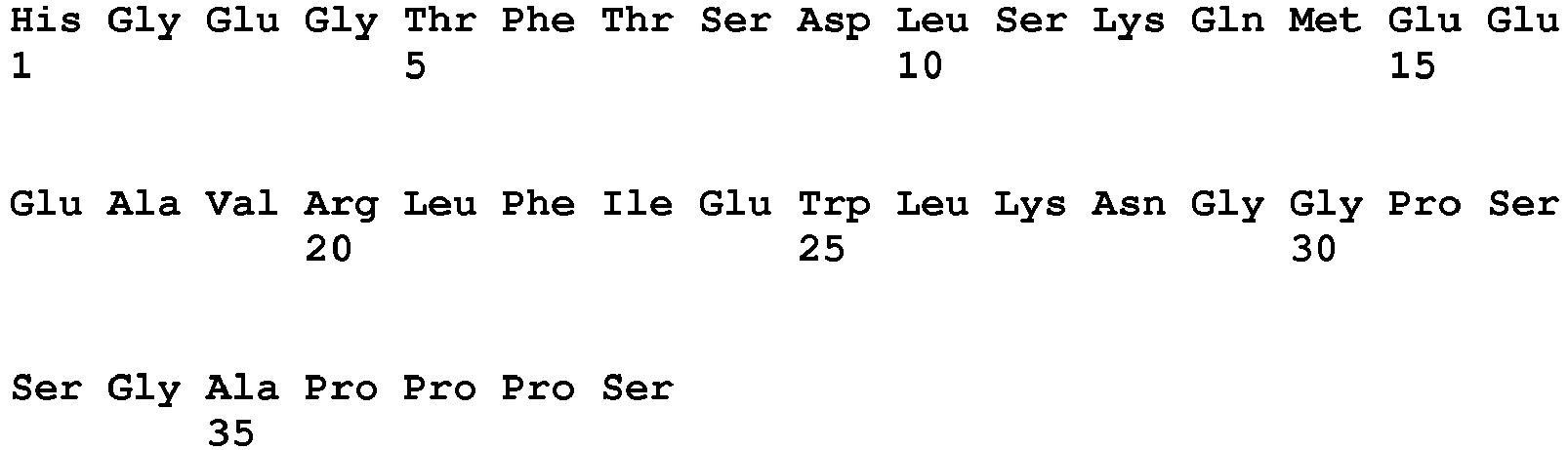
- Extendin-4 possesses the amino acid sequence of SEQ ID NO: 5.
- Exenatide possesses the amino acid sequence of SEQ ID NO: 6 and oxyntomodulin the amino acid sequence of SEQ ID NO: 7.
- the amino acid sequence of lixisenatide is shown in SEQ ID NO: 8.
- the structure of lixisenatide is based on exendin-4(1-39) modified C-terminally with six additional lysine residues in order to resist immediate physiological degradation by DPP-4 (dipeptidyl peptidase-4).
- the amino acid sequence of AVE0010 is shown in SEQ IDNO:9
- liraglutide was obtained by substitution of Lys 34 of GLP-1(7-37) to Arg, and by addition of a C16 fatty acid at position 26 using a y-glutamic acid spacer.
- the chemical name is [N-epsilon(gamma-L-glutamoyi(N-alpha-hexadecanoyl)-Lys 26 ,Arg 34 -GLP-1(7-37)].
- CJC-1131 shows a very good combination of stability and bioactivity.
- peptides with GLP-1R agonistic activity are exemplary disclosed in US 2006/0003417 and small organic compound with GLP-1R agonistic activity are exemplary disclosed in Chen et al. 2007, PNAS, 104, 943-948, NO.3 or Knudsen et al., 2007, PNAS, 104, 937-942 .
- the pharmaceutical composition additionally contains at least one anti-diabetic drug and/or at least one DPP-4 inhibitor.
- insulin means naturally occurring insulin, modified insulin or an insulin analogue, including salts thereof, and combinations thereof, e.g. combinations of a modified insulin and an insulin analogue, for example insulins which have amino acid exchanges/deletions/additions as well as further modifications such as acylation or other chemical modification.
- insulin detemir i.e. LysB29-tetradecanoyl/des(B30) human insulin.
- Another example may be insulins in which unnatural amino acids or amino acids which are normally noncoding in eukaryotes, such as D-amino acids, have been incorporated ( Geiger, R. et al., Hoppe Seylers Z. Physiol. Chern.
- insulin analogues in which the C-terminal carboxylic acid of either the A-chain or the B-chain, or both, are replaced by an amide.
- Modified insulin is preferably selected from acylated insulin with insulin activity, in particular wherein one or more amino acid(s) in the A and/or B chain of insulin is/are acylated, preferably human insulin acylated at position B29 ( Tsai, Y. J. et al. (1997) Journal of Pharmaceutical Sciences, 86, 1264-1268, No. 11 ).
- Other acetylated insulins are desB30 human insulin or B01 bovine insulin (Tsai, Y. J. et al., supra).
- Other Examples of acylated insulin are e.g. disclosed in US 5,750,497 and US 6,011,007 . An overview of the structure-activity relationships for modified insulins, is provided in Mayer, J. P.
- Modified insulins are typically prepared by chemical and/or enzymatic manipulation of insulin, or a suitable insulin precursor such as preproinsulin, proinsulin or truncated analogues thereof.
- an "insulin analogue” is preferably selected from insulin with insulin activity having one or more mutation(s), substitution(s), deletion(s) and/or addition(s), in particular an insulin with a C- and/or N-terminal truncation or extension in the A and/or B chain, preferably des(B30) insulin, PheB1 insulin, B1-4 insulin, AspB28 human insulin (insulin aspart), LysB28/ProB29 human insulin (insulin lispro), LysB03/Giu829 human insulin (insulin glulisine) or GlyA21/Arg831/ArgB32 human insulin (insulin glargine).
- the only proviso of an insulin analogue is that it has a sufficient insulin activity.
- the insulin analogues are preferably such wherein one or more of the naturally occurring amino acid residues, preferably one, two or three of them, have been substituted by another amino acid residue.
- insulin analogues are C-terminal truncated derivatives such as des(B30) human insulin; 8-chain N-terminal truncated insulin analogues such as des PheB1 insulin or des 81-4 insulin; insulin analogues wherein the A-chain and/or 8-chain have an N-terminal extension, including so-called "pre-insulins" where the 8-chain has an N-terminal extension; and insulin analogues wherein the A-chain and/or the B-chain have C-terminal extension. For example one or two Arg may be added to position 81.
- insulin analogues examples are described in the following patents and equivalents thereto: US 5,618,913 , EP 0 254 516 A2 and EP 0 280 534 A2 .
- An overview of insulin analogues in clinical use is provided in Mayer J. P. et al. (2007, supra).
- Insulin analogues or their precursors are typically prepared using gene technology techniques well known to those skilled in the art, typically in bacteria or yeast, with subsequent enzymatic or synthetic manipulation if required.
- insulin analogues can be prepared chemically ( Gao, Q. P. et al. (1986) Bioi. Chern. Hoppe Seyler, 367, 135-140, No. 2 ).
- insulin analogues examples include insulin aspart (i.e. AspB28 human insulin); insulin lispro (i.e. LysB28, ProB29 human insulin); insulin glulisine (ie. LysB03, GluB29 human insulin); and insulin glargine (i.e. GlyA21, ArgB31, ArgB32 human insulin).
- the individual compounds of the pharmaceutical composition of the present invention can be combined in one formulation or contained in several formulations for e.g. simultaneous or subsequent, i.e. sequential administration(s), or combinations thereof.
- the combination of at least one FGF-21 compound and at least one GLP-1R agonist surprisingly resulted in a synergistic effect in lowering plasma glucose levels as shown with the animal models in the Examples.
- the animal models are an ob/ob or obese mouse and a db/db mouse.
- the ob/ob mouse is a mutant mouse which cannot produce the hormone leptin which regulates the appetite. Consequently, the ob/ob mouse eats excessively and becomes profoundly obese.
- Another standard animal model for diabetes is the db/db mouse carrying a deficient leptin receptor activity. Also this mouse is characterized by obesity, hyperglycemia and insulin resistance.
- the pharmaceutical composition of the present invention contains therapeutically effective amounts of the individual compounds and generally an acceptable pharmaceutical carrier, diluent or excipient, e.g. sterile water, physiological saline, bacteriostatic saline, i.e. saline containing about 0.9% mg/ml benzyl alcohol, phosphate-buffered saline, Hank's solution, Ringer's-lactate, lactose, dextrose, sucrose, trehalose, sorbitol, Mannitol, and the like.
- the composition is generally a solution or suspension. It can be administered orally, subcutaneously, intramuscularly, pulmonary, by inhalation and/or through sustained release administrations. Preferably, the composition is administered subcutaneously.
- terapéuticaally effective amount generally means the quantity of a compound that results in the desired therapeutic and/or prophylactic effect without causing unacceptable side-effects.
- a typical dosage range is from about 0.01 mg per day to about 1000 mg per day.
- a preferred dosage range for each therapeutically effective compound is from about 0.1 mg per day to about 100 mg per day and a most preferred dosage range is from about 1.0 mg/day to about 10 mg/day, in particular about 1-5 mg/day.
- the individual compounds of the pharmaceutical composition are administered during a time period where the synergistic effect of the FGF-21 compound and the GLP-1R agonist are still measurable e.g. in a "glucose tolerance test", as e.g. shown in the Examples.
- the glucose tolerance test is a test to determine how quickly glucose is cleared from the blood after administration of glucose. The glucose is most often given orally ("oral glucose tolerance test" or "OGTI').
- the time period for the subsequent administration of the individual compounds, in particular of the FGF-21 compound and the GLP-1R agonist is usually within one hour, preferably, within half an hour, most preferably within 15 minutes, in particular within 5 minutes.
- the application of the pharmaceutical composition to a patient is one or several times per day, or one or several times a week, or even during longer time periods as the case may be.
- the most preferred application of the pharmaceutical composition of the present invention is a subcutaneous application one to three times per day in a combined dose.
- the pharmaceutical composition of the present invention lowers blood glucose levels up to normo-glycaemic levels and increase energy expenditure by faster and more efficient glucose utilization, and thus is useful for treating at least one metabolic syndrome and/or atherosclerosis, in particular Type 1 or Type 2 diabetes, dyslipidemia, obesity and/or adipositas, in particular Type 2-diabetes.
- the present invention is also directed to the use of the described pharmaceutical composition(s) for the preparation of a medicament for treating at least one of the above-mentioned diseases or disorders, and to a method for treating at least one of the above-mentioned diseases in a patient.
- the patient is especially selected from a Type 1-diabetic patient, a Type 2-diabetic patient, in particular a diet-treated Type 2-diabetic patient, a sulfonylurea-treated Type 2-diabetic patient, a far-advanced stage Type 2-diabetic patient and/or a long-term insulin-treated Type 2-diabetic patient.
- the medicament can be prepared by methods known to a person skilled in the art, e.g. by mixing the pharmaceutically effective amounts of the compound or compounds with an acceptable pharmaceutical carrier, diluent or excipient, as described above.
- mice Female oblob mice (B6.V-LEP 08/J, age of 6 weeks) were obtained from Charles Rivers Laboratories (Sulzfeld, Germany). Mice were randomly assigned to treatment or vehicle groups, and the randomization was stratified by body weight and fed blood glucose levels. The animals were housed in groups of 6 at 23°C and on a 12 h light-dark cycle. All experimental procedures were conducted according to German Animal Protection Law.
- Oblob mice were treated with vehicle (PBS), 0.05 mg . kg- 1 • day- 1 AVE0010 (SEQ ID NO:9), 0.75 mg ⁇ kg- 1 . day- 1 recombinant human FGF-21 (SEQ ID NO: 2) or a combined dose of FGF-21 (SEQ ID NO: 2) and AVE0010 (SEQ ID NO:9), (0.75 + 0.05 mg ⁇ kg- 1 ⁇ day- 1 ) subcutaneously once daily.
- Mice were fed ad libitum with standard rodent chow during the drug treatment periods. Body weight was recorded every other day, and food intake was measured once a week throughout the study. One day before the first treatment and at study day 10 blood glucose was measured by tail tip bleeding under fed conditions.
- mice Female db / db mice (BKS.Cg-m +/+ Leprdb /J, age of 6 weeks) were treated with vehicle (PBS), 0.05 mg . kg- 1 . day- 1 AVE0010, 0.75 mg . kg- 1 . day- 1 recombinant human FGF-21 (SEQ ID NO: 2) or a combined dose of FGF-21 (SEQ ID NO: 2) and AVE0010 (SEQ ID NO:9), (0.75 + 0.05 mg . kg- 1 . day- 1 ) subcutaneously once daily. Mice were fed ad
Landscapes
- Health & Medical Sciences (AREA)
- Life Sciences & Earth Sciences (AREA)
- Chemical & Material Sciences (AREA)
- General Health & Medical Sciences (AREA)
- Medicinal Chemistry (AREA)
- Veterinary Medicine (AREA)
- Public Health (AREA)
- Animal Behavior & Ethology (AREA)
- Pharmacology & Pharmacy (AREA)
- Bioinformatics & Cheminformatics (AREA)
- Engineering & Computer Science (AREA)
- Epidemiology (AREA)
- Organic Chemistry (AREA)
- Gastroenterology & Hepatology (AREA)
- Proteomics, Peptides & Aminoacids (AREA)
- Zoology (AREA)
- Immunology (AREA)
- General Chemical & Material Sciences (AREA)
- Chemical Kinetics & Catalysis (AREA)
- Nuclear Medicine, Radiotherapy & Molecular Imaging (AREA)
- Diabetes (AREA)
- Endocrinology (AREA)
- Hematology (AREA)
- Obesity (AREA)
- Biophysics (AREA)
- Molecular Biology (AREA)
- Genetics & Genomics (AREA)
- Biochemistry (AREA)
- Toxicology (AREA)
- Cardiology (AREA)
- Heart & Thoracic Surgery (AREA)
- Emergency Medicine (AREA)
- Vascular Medicine (AREA)
- Urology & Nephrology (AREA)
- Child & Adolescent Psychology (AREA)
- Medicines That Contain Protein Lipid Enzymes And Other Medicines (AREA)
- Pharmaceuticals Containing Other Organic And Inorganic Compounds (AREA)
- Peptides Or Proteins (AREA)
- Acyclic And Carbocyclic Compounds In Medicinal Compositions (AREA)
Description
- The present invention is directed to a pharmaceutical composition containing at least one FGF-21 (fibroblast growth factor 21) compound, at least one GLP-1R (glucagon-like peptide-1 receptor) agonist and optionally at least one anti-diabetic drug and/or at least one DPP-4 (dipeptidyl peptidase-4) inhibitor for the treatment of at least one metabolic syndrome and/or atherosclerosis, in particular diabetes, dyslipidemia, obesity and/or adipositas.
- Diabetes mellitus is characterized by its clinical manifestations, namely the non-insulin-dependent or maturity onset form, also known as Type 2 diabetes and the insulin-dependent or juvenile onset form, also known as Type 1 diabetes. The manifestations of clinical symptoms of Type 2 diabetes and the underlying obesity usually appear at an age over 40. In contrast, Type 1 diabetes usually shows a rapid onset of the disease often before 30. The disease is a metabolic disorder in humans with a prevalence of approximately one percent in the general population, with one-fourth of these being Type 1 and three-fourth of these being Type 2 diabetes. Type 2 diabetes is a disease characterized by high-circulating blood glucose, insulin and corticosteroid levels.
- Currently, there are various pharmacological approaches for the treatment of Type 2 diabetes, which may be utilized individually or in combination, and which act via different modes of action:
- 1) sulfonylurea stimulate insulin secretion;
- 2) biguanides (metformin) act by promoting glucose utilization, reducing hepatic glucose production and diminishing intestinal glucose output;
- 3) oc-glucosidase inhibitors (acarbose, miglitol) slow down carbohydrate digestion and consequently absorption from the gut and reduce postprandial hyperglycemia;
- 4) thiazolidinediones (troglitazone) enhance insulin action, thus promoting glucose utilization in peripheral tissues; and
- 5) insulin stimulates tissue glucose utilization and inhibits hepatic glucose output.
- However, most of the drugs have limited efficacy and do not address the most important problems, the declining f3-cell function and the associated obesity.
- Obesity is a chronic disease that is highly prevalent in modern society and is associated with numerous medical problems including diabetes mellitus, insulin resistance, hypertension, hypercholesterolemia, and coronary heart disease. It is further highly correlated with diabetes and insulin resistance, the latter of which is generally accompanied by hyperinsulinemia or hyperglycemia, or both. In addition, Type 2 diabetes is associated with a two to fourfold risk of coronary artery disease.
- Type 1 diabetics characteristically show very low or immeasurable plasma insulin with elevated glucagon. An immune response specifically directed against -cells leads to Type 1 diabetes because -cells secrete insulin.
- Current therapeutic regimens for Type 1 diabetes try to minimize hyperglycemia resulting from the lack of natural insulin.
- Fibroblast growth factor 21 (FGF21) is a novel metabolic regulator produced primarily by the liver that exerts potent antidiabetic and lipid-lowering effects in animal models of obesity and type 2 diabetes mellitus. This hormone contributes to body weight regulation and is involved in the response to nutritional deprivation and ketogenic state in mice. The principal sites of metabolic actions of FGF21 are adipose tissue, liver and pancreas. Experimental studies have shown improvements in diabetes compensation and dyslipidemia after FGF21 administration in diabetic mice and primates (Dostalova et a/. 2009). FGF21 has been shown to stimulate glucose uptake in mouse 3T3-L1 adipocytes in the presence and absence of insulin, and to decrease fed and fasting blood glucose, triglycerides, and glucagon levels in ob/ob and db/db mice and 8 week olf ZDF rats in a dose dependant manner, thus, providing the basis for the use of FGF-21 as a therapy for treating diabetes and obesity (see e.g.
WO03/011213 - Fibroblast growth factors (FGFs) are polypeptides widely expressed in developing and adult tissues. The FGF family currently consists of twenty-two members, FGF-1 to FGF-23. The members of the FGF family are highly conserved in both gene structure and amino acid sequence between vertebrate species. There are 18 mammalian fibroblast growth factors (FGF1-FGF10 and FGF16-FGF23) which are grouped into 6 subfamilies based on differences in sequence homology and phylogeny. The numbered 'FGFs' that are unassigned to subfamilies - the FGF homologous factors (previously known as FGF11-FGF14) - have high sequence identity with the FGF family but do not activate FGF receptors (FGFRs) and are therefore not generally considered members of the FGF family.
- While most of FGFs act as local regulators of cell growth and differentiation, recent studies indicated that FGF19 subfamily members including FGF15/19, FGF21 and FGF23 exert important metabolic effects by an endocrine fashion. The members of FGF19 subfamily regulate diverse physiological processes that are not affected by classical FGFs. The wide variety of metabolic activities of these endocrine factors include the regulation of the bile acid, carbohydrate and lipid metabolism as well as phosphate, calcium and vitamin D homeostasis (Tomlinson eta/. 2002, Holt et al 2003, Shimada et a/. 2004, Kharitonenkov et a/. 2005, Inagaki et a/. 2005, Lundasen et a/. 2006).
- FGF21 was originally isolated from mouse embryos. FGF21 mRNA was most abundantly expressed in the liver, and to lesser extent in the thymus (Nishimura et a/. 2000). Human FGF21 is highly identical (approximately 75 % amino acid identity) to mouse FGF21. Among human FGF family members, FGF21 is the most similar (approximately 35 % amino acid identity) to FGF19 (Nishimura eta/. 2000). FGF21 is free of the proliferative and tumorigenic effects (Kharitonenkov eta/. 2005, Huang eta/. 2006, Wente et a/. 2006) that are typical for majority of the members of FGF family (Ornitz and Itoh 2001, Nicholes eta/. 2002, Eswarakumar eta/. 2005).
- The administration of FGF21 to obese leptin-deficient oblob and leptin receptor-deficient db/db mice and obese ZDF rats significantly lowered blood glucose and triglycerides, decreased fasting insulin levels and improved glucose clearance during an oral glucose tolerance test. FGF21 did not affect food intake or body weighUcomposition of diabetic or lean mice and rats over the course of 2 weeks of administration. Importantly, FGF21 did not induce mitogenicity, hypoglycemia, or weight gain at any dose tested in diabetic or healthy animals or when overexpressed in transgenic mice (Kharitonenkov et a/. 2005). FGF21-overexpressing transgenic mice were resistant to diet-hduced obesity.
- The administration of FGF21 to diabetic rhesus monkeys for 6 weeks reduced fasting plasma glucose, fructosamine, triglyceride, insulin and glucagone levels. Importantly, hypoglycemia was not observed during the study despite of significant glucose-lowering effects. FGF21 administration also significantly lowered LDL-cholesterol and increased HDL-cholesterol and, in contrast to mice (Kharitonenkov et a/. 2005), slightly but significantly decreased body weight (Kharitonenkov eta/. 2007).
- Further information can be taken from the following references:
- 1. DOSTALOVA I. et al.: Fibroblast Growth Factor 21: A Novel Metabolic Regulator With Potential Therapeutic properties in Obesity/Type 2 Diabetes Mellitus. Physiol Res 58: 1-7, 2009.
- 2. ESWARAKUMAR V.P. et al.: Cellular signaling by fibroblast growth factor receptors. Cytokine Growth Factor Rev 16: 139-149, 2005.
- 3. HOLT J.A. et al.: Definition of a novel growth factor-dependent signal cascade for the suppression of bile acid biosynthesis. Genes Dev 17: 1581-1591, 2003.
- 4. HUANG X. et al.: Forced expression of hepatocytespecific fibroblast growth factor 21 delays initiation of chemically induced hepatocarcinogenesis. Mol Carcinog 45: 934-942, 2006.
- 5. INAGAKI T. et al.: Endocrine regulation of the fasting response by PPARa-mediated induction of fibroblast growth factor 21. Cell Metab 5: 415-425, 2007.
- 6. KHARITONENKOV A. et al.: FGF-21 as a novel metabolic regulator. J Clin Invest 115: 1627-1635,2005.
- 7. KHARITONENKOV A. et al.: The metabolic state of diabetic monkeys is regulated by fibroblast growth factor-21. Endocrinology 148: 774-781, 2007.
- 8. LUNDASEN T. et al.: Circulating intestinal fibroblast growth factor 19 has a pronounced diurnal variation and modulates hepatic bile acid synthesis in man. J Intern Med 260: 530-536, 2006.
- 9. NICHOLES K. et al.: A mouse model of hepatocellular carcinoma: ectopic expression of fibroblast growth factor 19 in skeletal muscle of transgenic mice. Am J Patho1160: 2295-2307, 2002.
- 10. NISHIMURA T. et al.: Identification of a novel FGF, FGF-21, preferentially expressed in the liver. Biochim Biophys Acta 1492: 203-206, 2000.
- 11. ORNITZ D.M. et al.: Fibroblast growth factors. Genome Bioi 2: REVIEWS3005, 2001.
- 12. SHIMADA T. et al.: FGF-23 is a potent regulator of vitamin D metabolism and phosphate homeostasis. J Bone Miner Res 19: 429-435, 2004.
- 13. TOMLINSON E. et al.: Transgenic mice expressing human fibroblast growth factor-19 display increased metabolic rate and decreased adiposity. Endocrinology 143: 1741-1747,2002.
- 14. WENTE W. et al.: Fibroblast growth factor-21 improves pancreatic beta-cell function and survival by activation of extracellular signal-regulated kinase 1/2 and Akt signaling pathways. Diabetes 55: 2470-2478,2006.
- The gut peptide glucagon-like peptide-1 (GLP-1) is an incretin hormone and secreted in a nutrient-dependent manner. It stimulates glucose-dependent insulin secretion. GLP-1 also promotes f3-cell proliferation and controls glycemia via additional actions on glucose sensors, inhibition of gastric emptying, food intake and glucagons secretion. Furthermore, GLP-1 stimulates insulin secretion and reduces blood glucose in human subjects with Type 2 diabetes. Exogenous administration of bioactive GLP-1, GLP-1(7-27) or GLP-1(7-36 amide), in doses elevating plasma concentrations to approximately 3-4 fold physiological postprandial levels fully normalizes fasting hyperglycaemia in Type 2 diabetic patients (Nauck, M. A. et al. (1997) Exp Clin Endocrinol Diabetes, 105, 187-197). The human GLP-1 receptor (GLP-1R) is a 463 amino acid heptahelical G protein-coupled receptor widely expressed in pancreatic islets, kidney, lung, heart and multiple regions of the peripheral and central nervous system. Within islets, the GLP-1R is predominantly localized to islet f-3-cells. Activation of GLP-1R signalling initiates a program of differentiation toward a more endocrine-like phenotype, in particular the differentiation of progenitors derived from human islets into functioning f3-cells (Drucker, D. J. (2006) Cell Metabolism, 3, 153-165).
- Unfortunately, both, FGF-21 and bioactive GLP-1, as well as other known drugs have limited efficacy by themselves to the complex and multifactorial metabolic dysfunctions which can be observed in Type 2 diabetes or othe metabolic disorders. This applies also for the efficacy in lowering the blood glucose levels by said compounds themselves.
- According to the present invention it has surprisingly been found that the combination of FGF-21 and a GLP-1R agonist significantly lowered blood glucose levels in a synergistic manner up to normo-glycaemic levels.
- One embodiment of the present invention is, therefore, directed to a pharmaceutical composition containing at least one FGF-21 (fibroblast growth factor 21) compound and at least one GLP-1R (glucagon-like peptide-1 receptor) agonist.
- A "FGF-21 compound" is defined as a compound showing FGF-21 activity, in particular comprising (i) native FGF-21, especially human FGF-21, in particular human FGF-21 as shown in
SEQ 10 NO: 1, or (ii) a FGF-21 mimetic with FGF-21 activity. - "FGF-21 activity" is usually measured in a FGF-21 activity assay generally known to a person skilled in the art. An FGF-21 activity assay is e.g. a "glucose uptake assay" as described in Kharitonenkov, A. et al. (2005), 115; 1627, No. 6. As an example for the glucose uptake assay, adipocytes are starved for 3 hours in OMEM/0.1% BSA, stimulated with FGF-21 for 24 hours, and washed twice with KRP buffer (15 mM HEPES, pH 7.4, 118 mM NaCl, 4.8 mM KCI, 1.2 mM MgS04, 1.3 mM CaCI 2, 1.2 mM KH2P04, 0.1% BSA), and 100 ).II of KRP buffer containing 2-deoxy-0-[ 14C]glucose (2-OOG) (0.1 ).ICi, 100 ).IM) is added to each well. Control wells contains 100 III of KRP buffer with 2-00G (0.1 ).ICi, 10 mM) to monitor for nonspecificity. The uptake reaction is carried out for 1 hour at 3rC, terminated by addition of cytochalasin B (20 ).IM), and measured using Wallac 1450 MicroBeta counter (PerkinEimer, USA).
- Examples of FGF-21 mimetics are (a) proteins having at least about 96%, in particular 99% amino acid sequence identity to the amino acid sequence shown in
SEQ 10 NO: 1 and having FGF-21 activity, (b) a FGF-21 fusion protein or a (c) FGF-21 conjugate, e.g. a FGF-21 mutein, a FGF-21-Fc fusion protein, a FGF-21-HSA fusion protein or a PEGylated FGF-21. - Examples of FGF-21 muteins are described in e.g.
WO2005/061712 ,WO2006/028595 ,WO2006/028714 ,WO2006/065582 orWO2008/121563 . Exemplary muteins are muteins which have a reduced capacity for 0-glycosylation when e.g. expressed in yeast compared to wild-type human FGF-21, e.g. human FGF-21 with a substitution at position 167 (serine), e.g. human FGF-21 with one of the following substitutions: Ser167Aia, Ser167Giu, Ser167Asp, Ser167Asn, Ser167Gin, Ser167Giy, Ser167Val, Ser167His, Ser167Lys or Ser167Tyr. Another example is a mutein which shows reduced deamidation compared to wild-type human FGF-21, e.g. a mutein with a substitution at position 121 (asparagine) of human FGF-21, e.g. Asn121Aia, Asn121Val, Asn121Ser, Asn121Asp or Asn121Giu. An alternative mutein is human FGF-21 having one or more non-naturally encoded amino acids, e.g. as described by the general formula in claim 29 ofWO2008/121563 . Other muteins comprise a substitution of a charged (e.g. aspartate, glutamate) or polar but uncharged amino acids (e.g. serine, threonine, asparagine, glutamine) for e.g. a polar but uncharged or charged amino acid, respectively. Examples are Leu139Giu, Ala145Giu, Leu146Giu, Ile152Giu, Gln156Giu, Ser163Giu, Ile152Giu, Ser163Giu or Gln54Giu. Another mutein is a mutein showing a reduced susceptibility for proteolytic degradation when expressed in e.g. yeast compared to human FGF-21, in particular human FGF-21 with a substitution of Leu153 with an amino acid selected from Gly, Ala, Val, Pro, Phe, Tyr, Trp, Ser, Thr, Asn, Asp, Gin, Glu, Cys or Met. A preferred FGF-21 mutein is the mutated FGF-21 according to SEQ ID NO: 2 which carries a deletion of amino acids 1-28 of human FGF-21 (SEQ ID NO: 1) and contains an additional glycine at the N-terminus. - Examples of FGF-21 fusion proteins are described in e.g.
WO2004/110472 orWO2005/113606 , for example a FGF-21-Fc fusion protein or a FGF-21-HAS fusion protein. "Fe" means the Fe portion of an immunoglobulin, e.g. the Fe portion of IgG4. "HSA" means human serum albumin. - Examples of FGF-21 conjugates are described in e.g.
WO2005/091944 ,WO2006/050247 orWO2009/089396 , for example glycol-linked FGF-21 compounds. Such glycol-linked FGF21 compounds usually carry a polyethylene glycol (PEG), e.g. at a cysteine or lysine amino acid residue or at an introduced N-linked or 0-linked glycosylation site, (herein referred to as "PEGylated FGF-21"). Such PEGylated FGF-21 compounds generally show an extended time action compared to human FGF-21. Suitable PEGs have a molecular weight of about 20,000 to 40,000 daltons. - A "GLP-1R agonist" is defined as a compound which binds to and activates the GLP-1 receptor, like GLP-1 (glucagon-like peptide 1). Physiological actions of GLP-1 and/or of the GLP-1R agonist are described e.g. in Nauck, M. A. et al. (1997) Exp. Clin. Endocrinol. Diabetes, 105, 187-195. These physiological actions in normal subjects, in particular humans, include e.g. glucose-dependent stimulation of insulin secretion, suppression of glucagon secretion, stimulation of (pro)insulin biosynthesis, reduction of food intake, deceleration of gastric emptying and/or equivocal insulin sensitivity.
- Suitable assays to discover GLP-1R agonists are described in e.g. Thorkildsen, Chr. et al. (2003), Journal of Pharmacology and Experimental Therapeutics, 307, 490-496; Knudsen, L. B. et al. (2007), PNAS, 104, 937-942, No.3; Chen, D. et al. (2007), PNAS, 104, 943-948, No. 3; or
US2006/0003417 A1 (see e.g. Example 8). In short, in a "receptor binding assay", a purified membrane fraction of eukaryotic cells harbouring e.g. the human recombinant GLP-1 receptor, e.g. CHO, BHK or HEK293 cells, is incubated with the test compound or compounds in the presence of e.g. human GLP-1, e.g. GLP-1 (7-36) amide which is marked with e.g. 1251 (e.g. 80 kBq/pmol). Usually different concentrations of the test compound or compounds are used and the IC5o values are determined as the concentrations diminishing the specific binding of human GLP-1. In a "receptor functional assay", isolated plasma membranes from eukaryotic cells, as e.g. described above, expressing e.g. the human GLP-1 receptor were prepared and incubated with a test compound. The functional assay is carried out by measuring cAMP as a response to stimulation by the test compound. In a "reporter gene assay", eukaryotic cells, as e.g. described above, expressing e.g. the human GLP-1 receptor and containing e.g. a multiple response elemenUcAMP response element-driven luciferase reporter plasmid are cultured in the presence of a test compound. cAMP response element-driven luciferase activities are measured as a response to stimulation by the test compound. - Suitable GLP-1R agonists are selected from a bioactive GLP-1, a GLP-1 analog or a GLP-1 substitute, as e.g. described in Drucker, D. J. (2006) Cell Metabolism, 3, 153-165; Thorkildsen, Chr. (2003; supra); Chen, D. et al. (2007; supra); Knudsen, L. B. et al. (2007; supra); Liu, J. et al. (2007) Neurochem Int., 51, 361-369, No. 6-7; Christensen, M. et al. (2009), Drugs, 12, 503-513; Maida, A. et al. (2008) Endocrinology, 149, 5670-5678, No. 11 and
US2006/0003417 . Exemplary compounds are GLP-1(7-37), GLP-1(7-36)amide, extendin-4, liraglutide, CJC-1131, albugon, albiglutide, exenatide, exenatide-LAR, oxyntomodulin, lixisenatide, geniproside, AVE-0010, a short peptide with GLP-1R agonistic activity and/or a small organic compound with GLP-1R agonistic activity. - In detail, Human GLP-1(7-37) possesses the amino acid sequence of SEQ ID NO: 3. Human GLP-1(7-36)amide possesses the amino acid sequence of SEQ ID NO: 4. Extendin-4 possesses the amino acid sequence of SEQ ID NO: 5. Exenatide possesses the amino acid sequence of SEQ ID NO: 6 and oxyntomodulin the amino acid sequence of SEQ ID NO: 7. The amino acid sequence of lixisenatide is shown in SEQ ID NO: 8. The structure of lixisenatide is based on exendin-4(1-39) modified C-terminally with six additional lysine residues in order to resist immediate physiological degradation by DPP-4 (dipeptidyl peptidase-4). The amino acid sequence of AVE0010 is shown in SEQ IDNO:9
- The chemical structure of liraglutide is shown in
Fig. 1 . Liraglutide was obtained by substitution of Lys 34 of GLP-1(7-37) to Arg, and by addition of a C16 fatty acid at position 26 using a y-glutamic acid spacer. The chemical name is [N-epsilon(gamma-L-glutamoyi(N-alpha-hexadecanoyl)-Lys26,Arg34-GLP-1(7-37)]. - The chemical structure of CJC-1131 is shown in
Fig. 2 . Albumin is attached at the C-terminal of GLP-1 with a d-alanine substitution at position 8. CJC-1131 shows a very good combination of stability and bioactivity. - Other peptides with GLP-1R agonistic activity are exemplary disclosed in
US 2006/0003417 and small organic compound with GLP-1R agonistic activity are exemplary disclosed in Chen et al. 2007, PNAS, 104, 943-948, NO.3 or Knudsen et al., 2007, PNAS, 104, 937-942. - In a further embodiment of the present invention the pharmaceutical composition additionally contains at least one anti-diabetic drug and/or at least one DPP-4 inhibitor.
- Exemplary anti-diabetic drugs are
- a) insulin,
- b) thiazolidinedione, e.g. rosiglitazone or pioglitazone (see e.g.
WO2005/072769 ), metformin (N,N-dimethylimidodicarbonimidic-diamide), or - c) sulphonylurea, such as chlorpropamide (4-chloro-N-(propylcarbamoyl)-benzenesulfonamide), tolazamide (N-[(azepan-1-ylamino)carbonyl]-4-methyl-benzenesulfonamide), gliclazide (N-(hexahydrocyclopenta[c]pyrrol-2(1H)-yl-carbamoyl)-4-methylbenzenesulfonamide), or glimepiride (3-ethyl-4-methyi-N-(4-[N-((1r,4r)-4-methylcyclohexylcarbamoyl)-sulfamoyl]phenethyl)-2-oxo-2,5-dihydro-1H-pyrrole-1-carboxamide).
- According to the present invention "insulin" means naturally occurring insulin, modified insulin or an insulin analogue, including salts thereof, and combinations thereof, e.g. combinations of a modified insulin and an insulin analogue, for example insulins which have amino acid exchanges/deletions/additions as well as further modifications such as acylation or other chemical modification. One example of this type of compound is insulin detemir, i.e. LysB29-tetradecanoyl/des(B30) human insulin. Another example may be insulins in which unnatural amino acids or amino acids which are normally noncoding in eukaryotes, such as D-amino acids, have been incorporated (Geiger, R. et al., Hoppe Seylers Z. Physiol. Chern. (1976) 357, 1267-1270; Geiger, R. et al., Hoppe Seylers Z. Physiol. Chern. (1975) 356, 1635-1649, No. 10; Krail, G. et al., Hoppe Seylers Z. Physiol. Chern. (1971) 352, 1595-1598, No. 11). Yet other examples are insulin analogues in which the C-terminal carboxylic acid of either the A-chain or the B-chain, or both, are replaced by an amide.
- "Modified insulin" is preferably selected from acylated insulin with insulin activity, in particular wherein one or more amino acid(s) in the A and/or B chain of insulin is/are acylated, preferably human insulin acylated at position B29 (Tsai, Y. J. et al. (1997) Journal of Pharmaceutical Sciences, 86, 1264-1268, No. 11). Other acetylated insulins are desB30 human insulin or B01 bovine insulin (Tsai, Y. J. et al., supra). Other Examples of acylated insulin are e.g. disclosed in
US 5,750,497 andUS 6,011,007 . An overview of the structure-activity relationships for modified insulins, is provided in Mayer, J. P. et al. (2007) Biopolymers, 88, 687-713, NO.5. Modified insulins are typically prepared by chemical and/or enzymatic manipulation of insulin, or a suitable insulin precursor such as preproinsulin, proinsulin or truncated analogues thereof. - An "insulin analogue" is preferably selected from insulin with insulin activity having one or more mutation(s), substitution(s), deletion(s) and/or addition(s), in particular an insulin with a C- and/or N-terminal truncation or extension in the A and/or B chain, preferably des(B30) insulin, PheB1 insulin, B1-4 insulin, AspB28 human insulin (insulin aspart), LysB28/ProB29 human insulin (insulin lispro), LysB03/Giu829 human insulin (insulin glulisine) or GlyA21/Arg831/ArgB32 human insulin (insulin glargine). The only proviso of an insulin analogue is that it has a sufficient insulin activity. An overview of the structure-activity relationships for insulin analogues, with discussion of which amino acid exchanges, deletions and/or additions are tolerated is provided in Mayer, J.P. et al. (2007; supra). The insulin analogues are preferably such wherein one or more of the naturally occurring amino acid residues, preferably one, two or three of them, have been substituted by another amino acid residue. Further examples of insulin analogues are C-terminal truncated derivatives such as des(B30) human insulin; 8-chain N-terminal truncated insulin analogues such as des PheB1 insulin or des 81-4 insulin; insulin analogues wherein the A-chain and/or 8-chain have an N-terminal extension, including so-called "pre-insulins" where the 8-chain has an N-terminal extension; and insulin analogues wherein the A-chain and/or the B-chain have C-terminal extension. For example one or two Arg may be added to position 81. Examples of insulin analogues are described in the following patents and equivalents thereto:
US 5,618,913 ,EP 0 254 516 A2EP 0 280 534 A2 - Exemplary DPP-4 Inhibitors are
- sitagliptin: (R)-4-oxo-4-[3-(trifluoromethyl)-5,6-dihydro[1,2,4]triazolo[4,3-a]-pyrazin-7(8H)-yl]-1-(2,4,5-trifluorophenyl)butan-2-amine,
- vildagliptin: (S)-1-[N-(3-hydroxy-1-adamantyl)glycyl]pyrrolidine-2-carbonitrile, saxagliptin: (1S,3S,5S)-2-[(2S)-2-amino-2-(3-hydroxy-1-adamantyl)-acetyl]-2-azabicyclo[3.1.0]hexane-3-carbonitrile,
- linagliptin 8-[(3R)-3-aminopiperidin-1-yl]-7-(but-2-yn-1-yl)-3-methyl-1-[(4-methyl-quinazolin-2-yl)methyl]-3,7-dihydro-1H-purine-2,6-dione) adogliptin(2-({6-[(3R)-3-aminopiperidin-1-yl]-3-methyl-2,4-dioxo-3,4-dihydropyrimidin-1(2H)-yl}methyl)-benzonitrile, and
- berberine which is a quaternary ammonium salt from the group of isoquinoline alkaloids found in in the roots, rhizomes, stems, and bark of plants such as Berberis, goldenseal (Hydrastis canadensis), and Coptis chinensis.
- The individual compounds of the pharmaceutical composition of the present invention can be combined in one formulation or contained in several formulations for e.g. simultaneous or subsequent, i.e. sequential administration(s), or combinations thereof.
- According to the present invention the combination of at least one FGF-21 compound and at least one GLP-1R agonist surprisingly resulted in a synergistic effect in lowering plasma glucose levels as shown with the animal models in the Examples. The animal models are an ob/ob or obese mouse and a db/db mouse. The ob/ob mouse is a mutant mouse which cannot produce the hormone leptin which regulates the appetite. Consequently, the ob/ob mouse eats excessively and becomes profoundly obese. It is a standard animal model for hyperglycemia, insulin resistance and obesity. Another standard animal model for diabetes is the db/db mouse carrying a deficient leptin receptor activity. Also this mouse is characterized by obesity, hyperglycemia and insulin resistance.
- The pharmaceutical composition of the present invention contains therapeutically effective amounts of the individual compounds and generally an acceptable pharmaceutical carrier, diluent or excipient, e.g. sterile water, physiological saline, bacteriostatic saline, i.e. saline containing about 0.9% mg/ml benzyl alcohol, phosphate-buffered saline, Hank's solution, Ringer's-lactate, lactose, dextrose, sucrose, trehalose, sorbitol, Mannitol, and the like. The composition is generally a solution or suspension. It can be administered orally, subcutaneously, intramuscularly, pulmonary, by inhalation and/or through sustained release administrations. Preferably, the composition is administered subcutaneously.
- The term "therapeutically effective amount" generally means the quantity of a compound that results in the desired therapeutic and/or prophylactic effect without causing unacceptable side-effects. A typical dosage range is from about 0.01 mg per day to about 1000 mg per day. A preferred dosage range for each therapeutically effective compound is from about 0.1 mg per day to about 100 mg per day and a most preferred dosage range is from about 1.0 mg/day to about 10 mg/day, in particular about 1-5 mg/day.
- In case of subsequent administration(s), the individual compounds of the pharmaceutical composition are administered during a time period where the synergistic effect of the FGF-21 compound and the GLP-1R agonist are still measurable e.g. in a "glucose tolerance test", as e.g. shown in the Examples. The glucose tolerance test is a test to determine how quickly glucose is cleared from the blood after administration of glucose. The glucose is most often given orally ("oral glucose tolerance test" or "OGTI'). The time period for the subsequent administration of the individual compounds, in particular of the FGF-21 compound and the GLP-1R agonist, is usually within one hour, preferably, within half an hour, most preferably within 15 minutes, in particular within 5 minutes.
- Generally, the application of the pharmaceutical composition to a patient is one or several times per day, or one or several times a week, or even during longer time periods as the case may be. The most preferred application of the pharmaceutical composition of the present invention is a subcutaneous application one to three times per day in a combined dose.
- The pharmaceutical composition of the present invention lowers blood glucose levels up to normo-glycaemic levels and increase energy expenditure by faster and more efficient glucose utilization, and thus is useful for treating at least one metabolic syndrome and/or atherosclerosis, in particular Type 1 or Type 2 diabetes, dyslipidemia, obesity and/or adipositas, in particular Type 2-diabetes.
- Consequently, the present invention is also directed to the use of the described pharmaceutical composition(s) for the preparation of a medicament for treating at least one of the above-mentioned diseases or disorders, and to a method for treating at least one of the above-mentioned diseases in a patient. The patient is especially selected from a Type 1-diabetic patient, a Type 2-diabetic patient, in particular a diet-treated Type 2-diabetic patient, a sulfonylurea-treated Type 2-diabetic patient, a far-advanced stage Type 2-diabetic patient and/or a long-term insulin-treated Type 2-diabetic patient. The medicament can be prepared by methods known to a person skilled in the art, e.g. by mixing the pharmaceutically effective amounts of the compound or compounds with an acceptable pharmaceutical carrier, diluent or excipient, as described above.
- The following figures and examples are for the purpose of illustration only and are not intended to be limiting of the present invention.
-
- Fig. 1
- shows the chemical structure of liraglutide.
- Fig. 2
- shows the chemical structure of CJC-1131.
- Fig. 3
- shows the results of an oral glucose tolerance test (OGTT) after ten days subcutaneous injection of FGF-21 together with AVE0010 in ob/ob mice.
- Fig. 4
- shows the plasma glucose levels over time after subcutaneous injection of FGF-21 together with AVE0010 in ob/ob mice.
- Fig. 5
- shows the results of an OGTI after after twenty-one days subcutaneous injection of FGF-21 together with AVE0010 in db/db mice.
- Fig.6
- shows the plasma glucose levels over time after subcutaneous injection of FGF-21 together with AVE0010 in db/db mice.
- Female oblob mice (B6.V-LEP 08/J, age of 6 weeks) were obtained from Charles Rivers Laboratories (Sulzfeld, Germany). Mice were randomly assigned to treatment or vehicle groups, and the randomization was stratified by body weight and fed blood glucose levels. The animals were housed in groups of 6 at 23°C and on a 12 h light-dark cycle. All experimental procedures were conducted according to German Animal Protection Law.
- Oblob mice were treated with vehicle (PBS), 0.05 mg . kg-1 • day-1 AVE0010 (SEQ ID NO:9), 0.75 mg · kg-1 . day-1 recombinant human FGF-21 (SEQ ID NO: 2) or a combined dose of FGF-21 (SEQ ID NO: 2) and AVE0010 (SEQ ID NO:9), (0.75 + 0.05 mg · kg-1 · day-1) subcutaneously once daily. Mice were fed ad libitum with standard rodent chow during the drug treatment periods. Body weight was recorded every other day, and food intake was measured once a week throughout the study. One day before the first treatment and at
study day 10 blood glucose was measured by tail tip bleeding under fed conditions. As shown inFigure 4 the blood glucose levels of the treated mice became normo-glycaemic. On study day 8 a glucose tolerance test (OGTT) was performed. Fasted mice were orally challenged with 2 g · kg-1 glucose. Blood glucose was measured at indicated time points by tail tip bleeding without anaesthesia. The results of the OGTT are shown inFigure 3 . Compared to the administration of only FGF-21 or only AVE0010 glucose tolerance was markedly stronger improved by combination treatment. The combination treated obese animals were even more glucose tolerant than lean control animals. - Female db/db mice (BKS.Cg-m +/+ Leprdb /J, age of 6 weeks) were treated with vehicle (PBS), 0.05 mg . kg-1 . day-1 AVE0010, 0.75 mg . kg-1 . day-1 recombinant human FGF-21 (SEQ ID NO: 2) or a combined dose of FGF-21 (SEQ ID NO: 2) and AVE0010 (SEQ ID NO:9), (0.75 + 0.05 mg . kg-1 . day-1) subcutaneously once daily. Mice were fed ad
- libitum. Before the first treatment, after one week and 4 weeks blood glucose and HbA1c were measured under fed conditions. After 21 days of treatment an oral glucose tolerance test (OGTT) was initiated. Fasted mice were orally challenged with 2 g · kg-1 glucose solution and blood glucose was measured at indicated time points. The results are shown in
Figure 5 and 6 . The administration of the FGF21 plus AVE0010 combination results in normalisation of blood glucose and improved dramatically the glucose tolerance compared to the vehicle treated obese control. On the other hand leads the single treatment of FGF21 or AVE0010 compared to the combination only to inhibition of blood glucose increase and a small improvement in glucose tolerance. -
-
Human FGF-21 (SEQ ID NO: 1):

-
Mutated FGF-21 (G + FGF21 H29-S209; SEQ ID NO: 2):

- Human GLP-1(7-37) (SEQ ID NO: 3):
HAEGTFTSDVSSYLEGQAAKEFIAWLVKGRG-NH2 - Human GLP-1(7-36)NH2 (SEQ ID NO: 4):
HAEGTFTSDVSSYLEGQAAKEFIAWLVKGR-NH2 - Exendin-4 (
SEQ 10 NO: 5):
HGEGTFTSDLSKQMEEEAVRLFIEWLKNGGPSSGAPPPS-NH2 - Exenatide (SEQ ID NO: 6):
HGEGTFTSDLSKQMEEEAVRLFIETLKNGGPSSGAPPPS-NH2 - Oxyntomodulin (SEQ ID NO: 7):
HSQGTFTSDYSKYLDSRRAQDFVQWLMNTKRNRNNIA-NH2 - Lixisenatide (SEQ ID NO: 8)
HGEGTFTSDLSKQMEEEAVRLFIEWLKNGGPSSGAPPSKKKKKK-NH2 - AVE0010 (SEQ ID NO: 9):
HGEGTFTSDLSKQMEEEAVRLFIEWLKNGGPSSGAPPSKKKKKK-NH2 -
- <110> Sanofi
- <120> Pharmaceutical composition for treating a metabolic syndrome
- <130> 589-169 PCTEPT5
- <150>
EP 10 305 070.4
<151> 2010-01-21 - <150>
PCT/EP2011/050793
<151> 2011-01-21 - <150>
EP 14 163 127.5
<151> 2011-01-21 - <150>
EP 16 205 881.2
<151> 2011-01-21 - <150>
EP 18 162 214.3
<151> 2011-01-21 - <160> 9
- <170> PatentIn version 3.3
- <210> 1
<211> 209
<212> PRT
<213> Homo sapiens - <400> 1


- <210> 2
<211> 182
<212> PRT
<213> unknown - <220>
<223> G linked to fragment of human FGF21 from H29 to S209 - <400> 2


- <210> 3
<211> 31
<212> PRT
<213> unknown - <220>
<223> Fragment of human GLP-1 (7 to 37) - <220>
<221> MOD_RES
<222> (31)..(31)
<223> AMIDATION - <400> 3

- <210> 4
<211> 30
<212> PRT
<213> unknown - <220>
<223> fragment of human GLP-1 (7-36) - <220>
<221> MOD_RES
<222> (30)..(30)
<223> AMIDATION - <400> 4


- <210> 5
<211> 39
<212> PRT
<213> Heloderma suspectum - <220>
<221> MOD_RES
<222> (39)..(39)
<223> AMIDATION - <400> 5
- <210> 6
<211> 39
<212> PRT
<213> Heloderma suspectum - <220>
<221> MOD_RES
<222> (39)..(39)
<223> AMIDATION - <400> 6

- <210> 7
<211> 37
<212> PRT
<213> Homo sapiens - <220>
<221> MOD_RES
<222> (37)..(37)
<223> AMIDATION - <400> 7

- <210> 8
<211> 44
<212> PRT
<213> unknown - <220>
<223> GLP-1 like peptide - <220>
<221> MOD_RES
<222> (44)..(44) - <400> 8

- <210> 9
<211> 44
<212> PRT
<213> unknown - <220>
<223> GLP-1 like peptide - <220>
<221> MOD_RES
<222> (44)..(44)
<223> AMIDATION - <400> 9


Claims (15)
- A pharmaceutical composition containing at least one FGF-21 (fibroblast growth factor 21) compound and at least one GLP-1 R (glucagon-like peptide-1 receptor) agonist for use in treating diabetes, wherein the dosage range for each therapeutically effective compound is 1 to 10 mg/day, preferably 1 to 5 mg/day.
- The pharmaceutical composition for use according to claim 1, wherein the composition further contains at least one anti-diabetic drug and/or at least one DPP-4 (dipeptidyl peptidase-4) inhibitor.
- The pharmaceutical composition for use according to claim 1 or 2, wherein the FGF-21 compound(s), the GLP-1 R agonist(s), optionally the anti-diabetic drug(s) and optionally the DPP-4 inhibitor are combined in one formulation or contained in several formulations.
- The pharmaceutical composition for use according to claim 3, wherein the formulations of the FGF-21 compound(s), the GLP-1 R agonist(s), optionally the anti-diabetic drug(s) and optionally the DPP-4 inhibitor are suitable for simultaneous or subsequent administration(s).
- The pharmaceutical composition for use according to any one of claims 1-4, wherein the FGF-21 compound is selected from FGF-21 or a FGF-21 mimetic.
- The pharmaceutical composition for use according to claim 5, wherein the FGF-21 mimetic is selected from a protein having at least about 96% amino acid sequence identity to the amino acid sequence shown in SEQ ID NO: 1 and having FGF-21 activity, a FGF-21 fusion protein and/or a FGF-21 conjugate.
- The pharmaceutical composition for use according to claim 6, wherein the FGF-21 mimetic is selected from a FGF-21 mutein, a FGF-21-Fc fusion protein, a FGF-21-HSA fusion protein and/or a PEGylated FGF-21.
- The pharmaceutical composition for use according to any one of claims 1-7, wherein the GLP-1 R agonist is selected from a bioactive GLP-1, a GLP-1 analog or a GLP-1 substitute.
- The pharmaceutical composition for use according to claim 8, wherein the GLP-1 R agonist is selected from GLP-1 (7-37), GLP-1 (7-36)amide, exendin-4, liraglutide, CJC-1131, albugon, albiglutide, exenatide, exenatide-LAR, oxyntomodulin, lixisenatide, geniproside, a short peptide with GLP-1 R agonistic activity and/or a small organic compound with GLP-1 R agonistic activity.
- The pharmaceutical composition for use according to any one of claims 2-9, wherein the anti- diabetic drug is selected from metformin, a thiazolidinedione, a sulphonylurea, and/or insulin.
- The pharmaceutical composition for use according to any one of claims 2-10, wherein the DPP-4 inhibitor is selected from sitagliptin, vildagliptin, saxagliptin, linagliptin, adogliptin and/or berberine.
- The pharmaceutical composition for use according to any one of the claims 1-11, wherein the diabetes is Type 2-diabetes.
- Use of the pharmaceutical composition according to any one of claims 1-11 for the preparation of a medicament for treating diabetes in a patient, wherein the dosage range for each therapeutically effective compound is 1 to 10 mg/day, preferably 1 to 5 mg/day.
- Use according to claim 13, wherein the diabetes is Type 2-diabetes.
- Use according to claim 13 or 14, wherein the patient is selected from a Type 1-diabetic patient, a Type 2-diabetic patient, in particular a diet-treated Type 2-diabetic patient, a sulfonylurea-treated Type 2-diabetic patient, a far-advanced stage Type 2-diabetic patient and/or a long-term insulin-treated Type 2-diabetic patient.
Applications Claiming Priority (6)
| Application Number | Priority Date | Filing Date | Title |
|---|---|---|---|
| EP10305070A EP2359843A1 (en) | 2010-01-21 | 2010-01-21 | Pharmaceutical composition for treating a metabolic syndrome |
| EP18162214.3A EP3357503B1 (en) | 2010-01-21 | 2011-01-21 | Pharmaceutical composition for treating a metabolic syndrome |
| PCT/EP2011/050793 WO2011089203A1 (en) | 2010-01-21 | 2011-01-21 | Pharmaceutical composition for treating a metabolic syndrome |
| EP11700669.2A EP2525807B1 (en) | 2010-01-21 | 2011-01-21 | Pharmaceutical composition for treating a metabolic syndrome |
| EP16205881.2A EP3216459B1 (en) | 2010-01-21 | 2011-01-21 | Pharmaceutical composition for treating a metabolic syndrome |
| EP20140163127 EP2754449A1 (en) | 2010-01-21 | 2011-01-21 | Pharmaceutical composition for treating a metabolic syndrome |
Related Parent Applications (5)
| Application Number | Title | Priority Date | Filing Date |
|---|---|---|---|
| EP20140163127 Division EP2754449A1 (en) | 2010-01-21 | 2011-01-21 | Pharmaceutical composition for treating a metabolic syndrome |
| EP18162214.3A Division EP3357503B1 (en) | 2010-01-21 | 2011-01-21 | Pharmaceutical composition for treating a metabolic syndrome |
| EP18162214.3A Division-Into EP3357503B1 (en) | 2010-01-21 | 2011-01-21 | Pharmaceutical composition for treating a metabolic syndrome |
| EP11700669.2A Division EP2525807B1 (en) | 2010-01-21 | 2011-01-21 | Pharmaceutical composition for treating a metabolic syndrome |
| EP16205881.2A Division EP3216459B1 (en) | 2010-01-21 | 2011-01-21 | Pharmaceutical composition for treating a metabolic syndrome |
Publications (2)
| Publication Number | Publication Date |
|---|---|
| EP3607964A1 EP3607964A1 (en) | 2020-02-12 |
| EP3607964B1 true EP3607964B1 (en) | 2022-08-31 |
Family
ID=41718306
Family Applications (7)
| Application Number | Title | Priority Date | Filing Date |
|---|---|---|---|
| EP10305070A Withdrawn EP2359843A1 (en) | 2010-01-21 | 2010-01-21 | Pharmaceutical composition for treating a metabolic syndrome |
| EP11174543A Withdrawn EP2460527A1 (en) | 2010-01-21 | 2010-01-21 | Pharmaceutical composition for treating a metabolic syndrome |
| EP20140163127 Withdrawn EP2754449A1 (en) | 2010-01-21 | 2011-01-21 | Pharmaceutical composition for treating a metabolic syndrome |
| EP16205881.2A Active EP3216459B1 (en) | 2010-01-21 | 2011-01-21 | Pharmaceutical composition for treating a metabolic syndrome |
| EP11700669.2A Active EP2525807B1 (en) | 2010-01-21 | 2011-01-21 | Pharmaceutical composition for treating a metabolic syndrome |
| EP19195239.9A Active EP3607964B1 (en) | 2010-01-21 | 2011-01-21 | Pharmaceutical composition for treating a metabolic syndrome |
| EP18162214.3A Active EP3357503B1 (en) | 2010-01-21 | 2011-01-21 | Pharmaceutical composition for treating a metabolic syndrome |
Family Applications Before (5)
| Application Number | Title | Priority Date | Filing Date |
|---|---|---|---|
| EP10305070A Withdrawn EP2359843A1 (en) | 2010-01-21 | 2010-01-21 | Pharmaceutical composition for treating a metabolic syndrome |
| EP11174543A Withdrawn EP2460527A1 (en) | 2010-01-21 | 2010-01-21 | Pharmaceutical composition for treating a metabolic syndrome |
| EP20140163127 Withdrawn EP2754449A1 (en) | 2010-01-21 | 2011-01-21 | Pharmaceutical composition for treating a metabolic syndrome |
| EP16205881.2A Active EP3216459B1 (en) | 2010-01-21 | 2011-01-21 | Pharmaceutical composition for treating a metabolic syndrome |
| EP11700669.2A Active EP2525807B1 (en) | 2010-01-21 | 2011-01-21 | Pharmaceutical composition for treating a metabolic syndrome |
Family Applications After (1)
| Application Number | Title | Priority Date | Filing Date |
|---|---|---|---|
| EP18162214.3A Active EP3357503B1 (en) | 2010-01-21 | 2011-01-21 | Pharmaceutical composition for treating a metabolic syndrome |
Country Status (34)
| Country | Link |
|---|---|
| US (4) | US20130203651A1 (en) |
| EP (7) | EP2359843A1 (en) |
| JP (3) | JP5925130B2 (en) |
| KR (2) | KR20120123445A (en) |
| CN (1) | CN102753192B (en) |
| AR (1) | AR079939A1 (en) |
| AU (2) | AU2011208650B2 (en) |
| BR (1) | BR112012017949A2 (en) |
| CA (1) | CA2787131A1 (en) |
| CL (1) | CL2012002031A1 (en) |
| CO (1) | CO6592082A2 (en) |
| CY (2) | CY1116026T1 (en) |
| DK (2) | DK2525807T3 (en) |
| ES (3) | ES2703581T3 (en) |
| HK (1) | HK1259492A1 (en) |
| HR (2) | HRP20150029T1 (en) |
| HU (1) | HUE041442T2 (en) |
| IL (2) | IL220862A0 (en) |
| LT (1) | LT3216459T (en) |
| MA (1) | MA33931B1 (en) |
| MX (2) | MX361922B (en) |
| NZ (1) | NZ601306A (en) |
| PH (1) | PH12012501403B1 (en) |
| PL (2) | PL2525807T3 (en) |
| PT (2) | PT3216459T (en) |
| RS (1) | RS53742B1 (en) |
| RU (2) | RU2593960C2 (en) |
| SG (2) | SG10201500465XA (en) |
| SI (2) | SI3216459T1 (en) |
| TR (1) | TR201820147T4 (en) |
| TW (2) | TWI623320B (en) |
| UY (1) | UY33194A (en) |
| WO (1) | WO2011089203A1 (en) |
| ZA (1) | ZA201204996B (en) |
Families Citing this family (43)
| Publication number | Priority date | Publication date | Assignee | Title |
|---|---|---|---|---|
| PT3228320T (en) | 2008-10-17 | 2020-03-26 | Sanofi Aventis Deutschland | Combination of an insulin and a glp-1 agonist |
| KR101337322B1 (en) | 2009-11-13 | 2013-12-06 | 사노피-아벤티스 도이칠란트 게엠베하 | Pharmaceutical composition comprising a glp-1 agonist and methionine |
| DK2498802T3 (en) | 2009-11-13 | 2015-04-13 | Sanofi Aventis Deutschland | Pharmaceutical composition comprising a GLP-1 agonist, insulin and a methionine |
| EP2359843A1 (en) * | 2010-01-21 | 2011-08-24 | Sanofi | Pharmaceutical composition for treating a metabolic syndrome |
| ES2606554T3 (en) | 2010-08-30 | 2017-03-24 | Sanofi-Aventis Deutschland Gmbh | Use of AVE0010 for the manufacture of a medication for the treatment of type 2 diabetes mellitus |
| US9821032B2 (en) | 2011-05-13 | 2017-11-21 | Sanofi-Aventis Deutschland Gmbh | Pharmaceutical combination for improving glycemic control as add-on therapy to basal insulin |
| WO2013006486A2 (en) | 2011-07-01 | 2013-01-10 | Ngm Biopharmaceuticals, Inc. | Compositions, uses and methods for treatment of metabolic disorders and diseases |
| EP2548570A1 (en) * | 2011-07-19 | 2013-01-23 | Sanofi | Pharmaceutical composition for treating a metabolic syndrome |
| AR087744A1 (en) | 2011-09-01 | 2014-04-16 | Sanofi Aventis Deutschland | PHARMACEUTICAL COMPOSITION FOR USE IN THE TREATMENT OF A NEURODEGENERATIVE DISEASE |
| UY34347A (en) | 2011-09-26 | 2013-04-30 | Novartis Ag | DUAL FUNCTION PROTEINS TO TREAT METABOLIC DISORDERS |
| CA2880929A1 (en) * | 2012-09-07 | 2014-03-13 | Sanofi | Fusion proteins for treating a metabolic syndrome |
| US9290557B2 (en) | 2012-11-28 | 2016-03-22 | Ngm Biopharmaceuticals, Inc. | Compositions comprising variants and fusions of FGF19 polypeptides |
| WO2014085365A2 (en) | 2012-11-28 | 2014-06-05 | Ngm Biopharmaceuticals, Inc. | Compositions and methods for treatment of metabolic disorders and diseases |
| US9273107B2 (en) | 2012-12-27 | 2016-03-01 | Ngm Biopharmaceuticals, Inc. | Uses and methods for modulating bile acid homeostasis and treatment of bile acid disorders and diseases |
| IL292303A (en) | 2012-12-27 | 2022-06-01 | Ngm Biopharmaceuticals Inc | Methods of regulating bile acid homeostasis and treatment of bile acid disorders and diseases |
| SG11201602870YA (en) | 2013-10-28 | 2016-05-30 | Ngm Biopharmaceuticals Inc | Cancer models and associated methods |
| PL3097122T3 (en) | 2014-01-24 | 2020-10-19 | Ngm Biopharmaceuticals, Inc. | Antibodies binding beta klotho domain 2 and methods of use thereof |
| US10532083B2 (en) | 2014-02-13 | 2020-01-14 | Technische Universität München | Methods for inducing differentiation or conversion of white adipocytes and/or preadipocytes to brown adipocites using FGF8 |
| EP3125921B1 (en) | 2014-03-11 | 2020-07-08 | Novartis AG | Fgf21 variants for use in treating hiv-haart induced partial lipodystrophy |
| TWI668010B (en) * | 2014-05-07 | 2019-08-11 | 丹麥商諾佛 儂迪克股份有限公司 | Treatment of diabetes using glp-1 and anti-il-21 |
| WO2015183890A2 (en) | 2014-05-28 | 2015-12-03 | Ngm Biopharmaceuticals, Inc. | Methods and compositions for the treatment of metabolic disorders and diseases |
| WO2015195509A2 (en) | 2014-06-16 | 2015-12-23 | Ngm Biopharmaceuticals, Inc. | Methods and uses for modulating bile acid homeostasis and treatment of bile acid disorders and diseases |
| CN104383523A (en) * | 2014-10-22 | 2015-03-04 | 山西医科大学 | Application of CJC-1131 hypoglycemic agent in treating Alzheimer's disease |
| WO2016065106A1 (en) | 2014-10-23 | 2016-04-28 | Ngm Biopharmaceuticals, Inc. | Pharmaceutical compositions comprising peptide variants and methods of use thereof |
| WO2016073855A1 (en) | 2014-11-07 | 2016-05-12 | Ngm Biopharmaceuticals, Inc. | Methods for treatment of bile acid-related disorders and prediction of clinical sensitivity to treatment of bile acid-related disorders |
| AU2015359376B2 (en) | 2014-12-12 | 2021-09-09 | Sanofi-Aventis Deutschland Gmbh | Insulin glargine/lixisenatide fixed ratio formulation |
| TWI748945B (en) | 2015-03-13 | 2021-12-11 | 德商賽諾菲阿凡提斯德意志有限公司 | Treatment type 2 diabetes mellitus patients |
| TW201705975A (en) | 2015-03-18 | 2017-02-16 | 賽諾菲阿凡提斯德意志有限公司 | Treatment of type 2 diabetes mellitus patients |
| US10800843B2 (en) | 2015-07-29 | 2020-10-13 | Ngm Biopharmaceuticals, Inc. | Beta klotho-binding proteins |
| AU2016353988B2 (en) | 2015-11-09 | 2019-09-26 | Ngm Biopharmaceuticals, Inc. | Methods for treatment of bile acid-related disorders |
| WO2018039557A1 (en) | 2016-08-26 | 2018-03-01 | Ngm Biopharmaceuticals, Inc. | Methods of treating fibroblast growth factor 19-mediated cancers and tumors |
| BR112019012693A2 (en) * | 2016-12-22 | 2019-11-19 | Sanofi | fgf21 / glp-1r agonist compound combinations with optimized activity ratio |
| JP2018110304A (en) | 2016-12-28 | 2018-07-12 | パナソニックIpマネジメント株式会社 | Monitoring system, monitoring method, and program |
| ES3014984T3 (en) * | 2017-03-14 | 2025-04-28 | Sunshine Lake Pharma Co Ltd | Dual-target fusion proteins comprising the fc portion of an immunoglobulin |
| CN111601613A (en) | 2017-12-22 | 2020-08-28 | 诺华股份有限公司 | Methods of treating metabolic disorders with FGF21 variants |
| EP3746467B1 (en) * | 2018-01-31 | 2025-10-08 | Sanofi | Modified lipidated relaxin b chain peptides and their therapeutic use |
| US11679143B2 (en) | 2018-02-08 | 2023-06-20 | Sunshine Lake Pharma Co., Ltd. | FGF21 variant, fusion protein and application thereof |
| US20210275643A1 (en) * | 2018-06-21 | 2021-09-09 | Sanofi | Fgf21 compound / glp-1r agonist combinations with optimized activity ratio |
| WO2021139744A1 (en) | 2020-01-11 | 2021-07-15 | Beijing Ql Biopharmaceutical Co., Ltd. | Conjugates of fusion proteins of glp-1 and fgf21 |
| KR20210149366A (en) * | 2020-06-02 | 2021-12-09 | 주식회사 고바이오랩 | A pharmaceutical composition for preventing or treating metabolic disease comprising icam-2 binding material as active ingredient |
| US12054551B2 (en) | 2020-07-02 | 2024-08-06 | Sanofi | FGFR1/KLB targeting agonistic antigen-binding proteins and conjugates thereof with GLP-1R agonistic peptides |
| JP2023540663A (en) * | 2020-07-02 | 2023-09-26 | サノフイ | GLP-1R agonist/FGF21 fusion protein |
| CN114712488B (en) * | 2021-01-04 | 2023-12-26 | 华领医药技术(上海)有限公司 | Pharmaceutical compositions of dorzagliptin and glucagon-like peptide-1 analogs |
Family Cites Families (31)
| Publication number | Priority date | Publication date | Assignee | Title |
|---|---|---|---|---|
| DK347086D0 (en) | 1986-07-21 | 1986-07-21 | Novo Industri As | NOVEL PEPTIDES |
| PH25772A (en) | 1985-08-30 | 1991-10-18 | Novo Industri As | Insulin analogues, process for their preparation |
| DE3880346T2 (en) | 1987-02-25 | 1993-07-29 | Novonordisk As | INSULINE DERIVATIVES. |
| US6011007A (en) | 1993-09-17 | 2000-01-04 | Novo Nordisk A/S | Acylated insulin |
| SI0792290T1 (en) | 1993-09-17 | 2001-12-31 | Novo Nordisk As | Acylated insulin |
| UA65549C2 (en) * | 1996-11-05 | 2004-04-15 | Елі Ліллі Енд Компані | Use of glucagon-like peptides such as glp-1, glp-1 analog, or glp-1 derivative in methods and compositions for reducing body weight |
| JP2002112772A (en) * | 2000-07-10 | 2002-04-16 | Takeda Chem Ind Ltd | New polypeptide and its dna |
| US6689385B2 (en) * | 2000-11-03 | 2004-02-10 | Chronorx Llc | Formulations for the treatment of insulin resistance and type 2 diabetes mellitus |
| US20040259780A1 (en) | 2001-07-30 | 2004-12-23 | Glasebrook Andrew Lawrence | Method for treating diabetes and obesity |
| AR036711A1 (en) | 2001-10-05 | 2004-09-29 | Bayer Corp | PEPTIDES THAT ACT AS GLON-RECEPTOR AGONISTS AND AS GLUCAGON RECEPTOR ANTAGONISTS AND THEIR PHARMACOLOGICAL USE METHODS |
| JP2006501820A (en) * | 2002-09-06 | 2006-01-19 | バイエル・フアーマシユーチカルズ・コーポレーシヨン | Modified GLP-1 receptor agonists and their pharmacological uses |
| PT1641483E (en) | 2003-06-12 | 2008-04-29 | Lilly Co Eli | Fusion proteins |
| AU2004303783A1 (en) | 2003-12-10 | 2005-07-07 | Eli Lilly And Company | Muteins of fibroblast growth factor 21 |
| EP1727559A1 (en) | 2004-01-26 | 2006-12-06 | Eli Lilly And Company | Use of fgf-21 and a thiazolidinedione for treating type 2 diabetes |
| WO2005091944A2 (en) | 2004-03-17 | 2005-10-06 | Eli Lilly And Company | Glycol linked fgf-21 compounds |
| PL1751184T3 (en) | 2004-05-13 | 2010-02-26 | Lilly Co Eli | Fgf-21 fusion proteins |
| DK1789442T3 (en) | 2004-09-02 | 2009-11-16 | Lilly Co Eli | Muteins of fibroblast growth factor 21 |
| US7622445B2 (en) | 2004-09-02 | 2009-11-24 | Eli Lilly And Company | Muteins of fibroblast growth factor 21 |
| EP3061461A1 (en) | 2004-10-29 | 2016-08-31 | ratiopharm GmbH | Remodeling and glycopegylation of fibroblast growth factor (fgf) |
| EP1831371A2 (en) | 2004-12-14 | 2007-09-12 | Eli Lilly And Company | Muteins of fibroblast growth factor 21 |
| EP2068910A2 (en) * | 2006-08-04 | 2009-06-17 | Amylin Pharmaceuticals, Inc. | Use of exendins and exendin agonists and glp-1 receptor agonists for altering lipoprotein particle size and subclass composition |
| TW200843794A (en) * | 2006-12-21 | 2008-11-16 | Centocor Inc | Use of long-acting GLP-1 receptor agonists to improve insulin sensitivity and lipid profiles |
| KR101476472B1 (en) * | 2007-03-30 | 2015-01-05 | 암브룩스, 인코포레이티드 | Modified FGF-21 polypeptides and uses thereof |
| US20110034373A1 (en) * | 2007-08-03 | 2011-02-10 | Eli Lilly And Company | Use of an fgf-21 compound and a glp-1 compound for the treatment of obesity |
| GB0716385D0 (en) * | 2007-08-22 | 2007-10-03 | Camurus Ab | Formulations |
| JP5647899B2 (en) | 2008-01-08 | 2015-01-07 | ラツィオファルム ゲーエムベーハーratiopharm GmbH | Glycoconjugation of polypeptides using oligosaccharyltransferase |
| WO2010006214A1 (en) * | 2008-07-09 | 2010-01-14 | Ambrx, Inc. | Fgf-21 neutralizing antibodies and their uses |
| US20120052069A1 (en) * | 2009-05-05 | 2012-03-01 | Amgen Inc | Fgf21 mutants and uses thereof |
| US20120172298A1 (en) * | 2009-06-11 | 2012-07-05 | Novo Nordisk A/S | Glp-1 and fgf21 combinations for treatment of diabetes type 2 |
| EP2359843A1 (en) * | 2010-01-21 | 2011-08-24 | Sanofi | Pharmaceutical composition for treating a metabolic syndrome |
| EP2548570A1 (en) * | 2011-07-19 | 2013-01-23 | Sanofi | Pharmaceutical composition for treating a metabolic syndrome |
-
2010
- 2010-01-21 EP EP10305070A patent/EP2359843A1/en not_active Withdrawn
- 2010-01-21 EP EP11174543A patent/EP2460527A1/en not_active Withdrawn
-
2011
- 2011-01-19 AR ARP110100174A patent/AR079939A1/en unknown
- 2011-01-19 TW TW105119851A patent/TWI623320B/en active
- 2011-01-19 UY UY0001033194A patent/UY33194A/en not_active Application Discontinuation
- 2011-01-19 TW TW100101879A patent/TWI561241B/en active
- 2011-01-21 US US13/521,275 patent/US20130203651A1/en not_active Abandoned
- 2011-01-21 RS RS20150004A patent/RS53742B1/en unknown
- 2011-01-21 TR TR2018/20147T patent/TR201820147T4/en unknown
- 2011-01-21 EP EP20140163127 patent/EP2754449A1/en not_active Withdrawn
- 2011-01-21 ES ES16205881T patent/ES2703581T3/en active Active
- 2011-01-21 PT PT16205881T patent/PT3216459T/en unknown
- 2011-01-21 SI SI201131638T patent/SI3216459T1/en unknown
- 2011-01-21 MX MX2015007689A patent/MX361922B/en unknown
- 2011-01-21 PH PH1/2012/501403A patent/PH12012501403B1/en unknown
- 2011-01-21 JP JP2012549361A patent/JP5925130B2/en not_active Expired - Fee Related
- 2011-01-21 HU HUE16205881A patent/HUE041442T2/en unknown
- 2011-01-21 SG SG10201500465XA patent/SG10201500465XA/en unknown
- 2011-01-21 EP EP16205881.2A patent/EP3216459B1/en active Active
- 2011-01-21 BR BR112012017949A patent/BR112012017949A2/en not_active Application Discontinuation
- 2011-01-21 WO PCT/EP2011/050793 patent/WO2011089203A1/en not_active Ceased
- 2011-01-21 EP EP11700669.2A patent/EP2525807B1/en active Active
- 2011-01-21 KR KR1020127021708A patent/KR20120123445A/en not_active Ceased
- 2011-01-21 RU RU2012135686/15A patent/RU2593960C2/en not_active IP Right Cessation
- 2011-01-21 AU AU2011208650A patent/AU2011208650B2/en not_active Ceased
- 2011-01-21 DK DK11700669.2T patent/DK2525807T3/en active
- 2011-01-21 ES ES19195239T patent/ES2930750T3/en active Active
- 2011-01-21 EP EP19195239.9A patent/EP3607964B1/en active Active
- 2011-01-21 DK DK16205881.2T patent/DK3216459T3/en active
- 2011-01-21 LT LTEP16205881.2T patent/LT3216459T/en unknown
- 2011-01-21 ES ES11700669.2T patent/ES2529612T3/en active Active
- 2011-01-21 PT PT117006692T patent/PT2525807E/en unknown
- 2011-01-21 MA MA35075A patent/MA33931B1/en unknown
- 2011-01-21 MX MX2012008092A patent/MX336751B/en unknown
- 2011-01-21 CA CA2787131A patent/CA2787131A1/en not_active Abandoned
- 2011-01-21 RU RU2016124562A patent/RU2732703C2/en active
- 2011-01-21 PL PL11700669T patent/PL2525807T3/en unknown
- 2011-01-21 NZ NZ601306A patent/NZ601306A/en not_active IP Right Cessation
- 2011-01-21 HR HRP20150029AT patent/HRP20150029T1/en unknown
- 2011-01-21 CN CN201180006759.5A patent/CN102753192B/en not_active Expired - Fee Related
- 2011-01-21 SI SI201130355T patent/SI2525807T1/en unknown
- 2011-01-21 SG SG2012054045A patent/SG182652A1/en unknown
- 2011-01-21 EP EP18162214.3A patent/EP3357503B1/en active Active
- 2011-01-21 KR KR1020187012112A patent/KR20180049194A/en not_active Ceased
- 2011-01-21 PL PL16205881T patent/PL3216459T3/en unknown
-
2012
- 2012-07-04 ZA ZA2012/04996A patent/ZA201204996B/en unknown
- 2012-07-10 IL IL220862A patent/IL220862A0/en unknown
- 2012-07-20 CL CL2012002031A patent/CL2012002031A1/en unknown
- 2012-08-15 CO CO12138126A patent/CO6592082A2/en not_active Application Discontinuation
-
2015
- 2015-02-12 CY CY20151100146T patent/CY1116026T1/en unknown
- 2015-02-20 US US14/628,037 patent/US20150231210A1/en not_active Abandoned
-
2016
- 2016-01-29 JP JP2016015359A patent/JP6521880B2/en active Active
- 2016-03-02 US US15/059,001 patent/US20160279199A1/en not_active Abandoned
- 2016-10-11 AU AU2016244202A patent/AU2016244202B2/en not_active Ceased
-
2018
- 2018-01-11 US US15/868,688 patent/US20180236033A1/en not_active Abandoned
- 2018-02-09 JP JP2018021608A patent/JP2018095659A/en active Pending
- 2018-03-09 HK HK19101914.0A patent/HK1259492A1/en unknown
- 2018-12-19 HR HRP20182158TT patent/HRP20182158T1/en unknown
- 2018-12-21 CY CY20181101387T patent/CY1121423T1/en unknown
-
2019
- 2019-07-10 IL IL267980A patent/IL267980B/en active IP Right Grant
Also Published As
Similar Documents
| Publication | Publication Date | Title |
|---|---|---|
| EP2525807B1 (en) | Pharmaceutical composition for treating a metabolic syndrome | |
| US20140142023A1 (en) | Pharmaceutical Composition for Treating A Metabolic Syndrome | |
| KR101852328B1 (en) | Aqueous insulin preparations containing methionine | |
| HK1243652B (en) | Pharmaceutical composition for treating a metabolic syndrome | |
| HK1243652A1 (en) | Pharmaceutical composition for treating a metabolic syndrome | |
| HK1173073B (en) | Pharmaceutical composition for treating a metabolic syndrome |
Legal Events
| Date | Code | Title | Description |
|---|---|---|---|
| PUAI | Public reference made under article 153(3) epc to a published international application that has entered the european phase |
Free format text: ORIGINAL CODE: 0009012 |
|
| STAA | Information on the status of an ep patent application or granted ep patent |
Free format text: STATUS: THE APPLICATION HAS BEEN PUBLISHED |
|
| AC | Divisional application: reference to earlier application |
Ref document number: 2525807 Country of ref document: EP Kind code of ref document: P Ref document number: 3357503 Country of ref document: EP Kind code of ref document: P Ref document number: 2754449 Country of ref document: EP Kind code of ref document: P Ref document number: 3216459 Country of ref document: EP Kind code of ref document: P |
|
| AK | Designated contracting states |
Kind code of ref document: A1 Designated state(s): AL AT BE BG CH CY CZ DE DK EE ES FI FR GB GR HR HU IE IS IT LI LT LU LV MC MK MT NL NO PL PT RO RS SE SI SK SM TR |
|
| RIN1 | Information on inventor provided before grant (corrected) |
Inventor name: SOMMERFELD, MARK Inventor name: DREYER, MATTHIAS Inventor name: SCHAEFER, HANS-LUDWIG Inventor name: RAO, ERCOLE Inventor name: HABERMANN, PAUL Inventor name: BOSCHEINEN, OLIVER |
|
| STAA | Information on the status of an ep patent application or granted ep patent |
Free format text: STATUS: REQUEST FOR EXAMINATION WAS MADE |
|
| 17P | Request for examination filed |
Effective date: 20200805 |
|
| RBV | Designated contracting states (corrected) |
Designated state(s): AL AT BE BG CH CY CZ DE DK EE ES FI FR GB GR HR HU IE IS IT LI LT LU LV MC MK MT NL NO PL PT RO RS SE SI SK SM TR |
|
| STAA | Information on the status of an ep patent application or granted ep patent |
Free format text: STATUS: EXAMINATION IS IN PROGRESS |
|
| 17Q | First examination report despatched |
Effective date: 20201215 |
|
| RIC1 | Information provided on ipc code assigned before grant |
Ipc: A61P 43/00 20060101ALI20211110BHEP Ipc: A61P 9/10 20060101ALI20211110BHEP Ipc: A61P 9/00 20060101ALI20211110BHEP Ipc: A61P 3/10 20060101ALI20211110BHEP Ipc: A61P 3/08 20060101ALI20211110BHEP Ipc: A61P 3/06 20060101ALI20211110BHEP Ipc: A61P 3/04 20060101ALI20211110BHEP Ipc: A61P 3/00 20060101ALI20211110BHEP Ipc: A61K 38/26 20060101ALI20211110BHEP Ipc: A61K 38/18 20060101AFI20211110BHEP |
|
| GRAP | Despatch of communication of intention to grant a patent |
Free format text: ORIGINAL CODE: EPIDOSNIGR1 |
|
| STAA | Information on the status of an ep patent application or granted ep patent |
Free format text: STATUS: GRANT OF PATENT IS INTENDED |
|
| INTG | Intention to grant announced |
Effective date: 20211221 |
|
| GRAJ | Information related to disapproval of communication of intention to grant by the applicant or resumption of examination proceedings by the epo deleted |
Free format text: ORIGINAL CODE: EPIDOSDIGR1 |
|
| STAA | Information on the status of an ep patent application or granted ep patent |
Free format text: STATUS: EXAMINATION IS IN PROGRESS |
|
| GRAP | Despatch of communication of intention to grant a patent |
Free format text: ORIGINAL CODE: EPIDOSNIGR1 |
|
| STAA | Information on the status of an ep patent application or granted ep patent |
Free format text: STATUS: GRANT OF PATENT IS INTENDED |
|
| INTC | Intention to grant announced (deleted) | ||
| INTG | Intention to grant announced |
Effective date: 20220517 |
|
| GRAS | Grant fee paid |
Free format text: ORIGINAL CODE: EPIDOSNIGR3 |
|
| GRAA | (expected) grant |
Free format text: ORIGINAL CODE: 0009210 |
|
| STAA | Information on the status of an ep patent application or granted ep patent |
Free format text: STATUS: THE PATENT HAS BEEN GRANTED |
|
| AC | Divisional application: reference to earlier application |
Ref document number: 2525807 Country of ref document: EP Kind code of ref document: P Ref document number: 2754449 Country of ref document: EP Kind code of ref document: P Ref document number: 3216459 Country of ref document: EP Kind code of ref document: P Ref document number: 3357503 Country of ref document: EP Kind code of ref document: P |
|
| AK | Designated contracting states |
Kind code of ref document: B1 Designated state(s): AL AT BE BG CH CY CZ DE DK EE ES FI FR GB GR HR HU IE IS IT LI LT LU LV MC MK MT NL NO PL PT RO RS SE SI SK SM TR |
|
| REG | Reference to a national code |
Ref country code: CH Ref legal event code: EP Ref country code: GB Ref legal event code: FG4D |
|
| REG | Reference to a national code |
Ref country code: AT Ref legal event code: REF Ref document number: 1514813 Country of ref document: AT Kind code of ref document: T Effective date: 20220915 |
|
| REG | Reference to a national code |
Ref country code: DE Ref legal event code: R096 Ref document number: 602011073237 Country of ref document: DE |
|
| REG | Reference to a national code |
Ref country code: IE Ref legal event code: FG4D |
|
| REG | Reference to a national code |
Ref country code: ES Ref legal event code: FG2A Ref document number: 2930750 Country of ref document: ES Kind code of ref document: T3 Effective date: 20221221 |
|
| REG | Reference to a national code |
Ref country code: LT Ref legal event code: MG9D |
|
| REG | Reference to a national code |
Ref country code: NL Ref legal event code: MP Effective date: 20220831 |
|
| PG25 | Lapsed in a contracting state [announced via postgrant information from national office to epo] |
Ref country code: SE Free format text: LAPSE BECAUSE OF FAILURE TO SUBMIT A TRANSLATION OF THE DESCRIPTION OR TO PAY THE FEE WITHIN THE PRESCRIBED TIME-LIMIT Effective date: 20220831 Ref country code: RS Free format text: LAPSE BECAUSE OF FAILURE TO SUBMIT A TRANSLATION OF THE DESCRIPTION OR TO PAY THE FEE WITHIN THE PRESCRIBED TIME-LIMIT Effective date: 20220831 Ref country code: NO Free format text: LAPSE BECAUSE OF FAILURE TO SUBMIT A TRANSLATION OF THE DESCRIPTION OR TO PAY THE FEE WITHIN THE PRESCRIBED TIME-LIMIT Effective date: 20221130 Ref country code: LV Free format text: LAPSE BECAUSE OF FAILURE TO SUBMIT A TRANSLATION OF THE DESCRIPTION OR TO PAY THE FEE WITHIN THE PRESCRIBED TIME-LIMIT Effective date: 20220831 Ref country code: LT Free format text: LAPSE BECAUSE OF FAILURE TO SUBMIT A TRANSLATION OF THE DESCRIPTION OR TO PAY THE FEE WITHIN THE PRESCRIBED TIME-LIMIT Effective date: 20220831 Ref country code: FI Free format text: LAPSE BECAUSE OF FAILURE TO SUBMIT A TRANSLATION OF THE DESCRIPTION OR TO PAY THE FEE WITHIN THE PRESCRIBED TIME-LIMIT Effective date: 20220831 |
|
| REG | Reference to a national code |
Ref country code: AT Ref legal event code: MK05 Ref document number: 1514813 Country of ref document: AT Kind code of ref document: T Effective date: 20220831 |
|
| PG25 | Lapsed in a contracting state [announced via postgrant information from national office to epo] |
Ref country code: PL Free format text: LAPSE BECAUSE OF FAILURE TO SUBMIT A TRANSLATION OF THE DESCRIPTION OR TO PAY THE FEE WITHIN THE PRESCRIBED TIME-LIMIT Effective date: 20220831 Ref country code: IS Free format text: LAPSE BECAUSE OF FAILURE TO SUBMIT A TRANSLATION OF THE DESCRIPTION OR TO PAY THE FEE WITHIN THE PRESCRIBED TIME-LIMIT Effective date: 20221231 Ref country code: HR Free format text: LAPSE BECAUSE OF FAILURE TO SUBMIT A TRANSLATION OF THE DESCRIPTION OR TO PAY THE FEE WITHIN THE PRESCRIBED TIME-LIMIT Effective date: 20220831 Ref country code: GR Free format text: LAPSE BECAUSE OF FAILURE TO SUBMIT A TRANSLATION OF THE DESCRIPTION OR TO PAY THE FEE WITHIN THE PRESCRIBED TIME-LIMIT Effective date: 20221201 |
|
| PG25 | Lapsed in a contracting state [announced via postgrant information from national office to epo] |
Ref country code: SM Free format text: LAPSE BECAUSE OF FAILURE TO SUBMIT A TRANSLATION OF THE DESCRIPTION OR TO PAY THE FEE WITHIN THE PRESCRIBED TIME-LIMIT Effective date: 20220831 Ref country code: RO Free format text: LAPSE BECAUSE OF FAILURE TO SUBMIT A TRANSLATION OF THE DESCRIPTION OR TO PAY THE FEE WITHIN THE PRESCRIBED TIME-LIMIT Effective date: 20220831 Ref country code: PT Free format text: LAPSE BECAUSE OF FAILURE TO SUBMIT A TRANSLATION OF THE DESCRIPTION OR TO PAY THE FEE WITHIN THE PRESCRIBED TIME-LIMIT Effective date: 20230102 Ref country code: DK Free format text: LAPSE BECAUSE OF FAILURE TO SUBMIT A TRANSLATION OF THE DESCRIPTION OR TO PAY THE FEE WITHIN THE PRESCRIBED TIME-LIMIT Effective date: 20220831 Ref country code: CZ Free format text: LAPSE BECAUSE OF FAILURE TO SUBMIT A TRANSLATION OF THE DESCRIPTION OR TO PAY THE FEE WITHIN THE PRESCRIBED TIME-LIMIT Effective date: 20220831 Ref country code: AT Free format text: LAPSE BECAUSE OF FAILURE TO SUBMIT A TRANSLATION OF THE DESCRIPTION OR TO PAY THE FEE WITHIN THE PRESCRIBED TIME-LIMIT Effective date: 20220831 |
|
| PG25 | Lapsed in a contracting state [announced via postgrant information from national office to epo] |
Ref country code: SK Free format text: LAPSE BECAUSE OF FAILURE TO SUBMIT A TRANSLATION OF THE DESCRIPTION OR TO PAY THE FEE WITHIN THE PRESCRIBED TIME-LIMIT Effective date: 20220831 Ref country code: EE Free format text: LAPSE BECAUSE OF FAILURE TO SUBMIT A TRANSLATION OF THE DESCRIPTION OR TO PAY THE FEE WITHIN THE PRESCRIBED TIME-LIMIT Effective date: 20220831 |
|
| REG | Reference to a national code |
Ref country code: DE Ref legal event code: R097 Ref document number: 602011073237 Country of ref document: DE |
|
| PG25 | Lapsed in a contracting state [announced via postgrant information from national office to epo] |
Ref country code: NL Free format text: LAPSE BECAUSE OF FAILURE TO SUBMIT A TRANSLATION OF THE DESCRIPTION OR TO PAY THE FEE WITHIN THE PRESCRIBED TIME-LIMIT Effective date: 20220831 Ref country code: AL Free format text: LAPSE BECAUSE OF FAILURE TO SUBMIT A TRANSLATION OF THE DESCRIPTION OR TO PAY THE FEE WITHIN THE PRESCRIBED TIME-LIMIT Effective date: 20220831 |
|
| PLBE | No opposition filed within time limit |
Free format text: ORIGINAL CODE: 0009261 |
|
| STAA | Information on the status of an ep patent application or granted ep patent |
Free format text: STATUS: NO OPPOSITION FILED WITHIN TIME LIMIT |
|
| 26N | No opposition filed |
Effective date: 20230601 |
|
| PG25 | Lapsed in a contracting state [announced via postgrant information from national office to epo] |
Ref country code: SI Free format text: LAPSE BECAUSE OF FAILURE TO SUBMIT A TRANSLATION OF THE DESCRIPTION OR TO PAY THE FEE WITHIN THE PRESCRIBED TIME-LIMIT Effective date: 20220831 |
|
| REG | Reference to a national code |
Ref country code: CH Ref legal event code: PL |
|
| PG25 | Lapsed in a contracting state [announced via postgrant information from national office to epo] |
Ref country code: LU Free format text: LAPSE BECAUSE OF NON-PAYMENT OF DUE FEES Effective date: 20230121 |
|
| REG | Reference to a national code |
Ref country code: BE Ref legal event code: MM Effective date: 20230131 |
|
| PG25 | Lapsed in a contracting state [announced via postgrant information from national office to epo] |
Ref country code: LI Free format text: LAPSE BECAUSE OF NON-PAYMENT OF DUE FEES Effective date: 20230131 Ref country code: CH Free format text: LAPSE BECAUSE OF NON-PAYMENT OF DUE FEES Effective date: 20230131 |
|
| PG25 | Lapsed in a contracting state [announced via postgrant information from national office to epo] |
Ref country code: BE Free format text: LAPSE BECAUSE OF NON-PAYMENT OF DUE FEES Effective date: 20230131 |
|
| PG25 | Lapsed in a contracting state [announced via postgrant information from national office to epo] |
Ref country code: IE Free format text: LAPSE BECAUSE OF NON-PAYMENT OF DUE FEES Effective date: 20230121 |
|
| PG25 | Lapsed in a contracting state [announced via postgrant information from national office to epo] |
Ref country code: MC Free format text: LAPSE BECAUSE OF FAILURE TO SUBMIT A TRANSLATION OF THE DESCRIPTION OR TO PAY THE FEE WITHIN THE PRESCRIBED TIME-LIMIT Effective date: 20220831 |
|
| PG25 | Lapsed in a contracting state [announced via postgrant information from national office to epo] |
Ref country code: MC Free format text: LAPSE BECAUSE OF FAILURE TO SUBMIT A TRANSLATION OF THE DESCRIPTION OR TO PAY THE FEE WITHIN THE PRESCRIBED TIME-LIMIT Effective date: 20220831 |
|
| PG25 | Lapsed in a contracting state [announced via postgrant information from national office to epo] |
Ref country code: BG Free format text: LAPSE BECAUSE OF FAILURE TO SUBMIT A TRANSLATION OF THE DESCRIPTION OR TO PAY THE FEE WITHIN THE PRESCRIBED TIME-LIMIT Effective date: 20220831 |
|
| PG25 | Lapsed in a contracting state [announced via postgrant information from national office to epo] |
Ref country code: BG Free format text: LAPSE BECAUSE OF FAILURE TO SUBMIT A TRANSLATION OF THE DESCRIPTION OR TO PAY THE FEE WITHIN THE PRESCRIBED TIME-LIMIT Effective date: 20220831 |
|
| PG25 | Lapsed in a contracting state [announced via postgrant information from national office to epo] |
Ref country code: CY Free format text: LAPSE BECAUSE OF FAILURE TO SUBMIT A TRANSLATION OF THE DESCRIPTION OR TO PAY THE FEE WITHIN THE PRESCRIBED TIME-LIMIT; INVALID AB INITIO Effective date: 20110121 |
|
| PG25 | Lapsed in a contracting state [announced via postgrant information from national office to epo] |
Ref country code: HU Free format text: LAPSE BECAUSE OF FAILURE TO SUBMIT A TRANSLATION OF THE DESCRIPTION OR TO PAY THE FEE WITHIN THE PRESCRIBED TIME-LIMIT; INVALID AB INITIO Effective date: 20110121 |
|
| PG25 | Lapsed in a contracting state [announced via postgrant information from national office to epo] |
Ref country code: TR Free format text: LAPSE BECAUSE OF FAILURE TO SUBMIT A TRANSLATION OF THE DESCRIPTION OR TO PAY THE FEE WITHIN THE PRESCRIBED TIME-LIMIT Effective date: 20220831 |
|
| PGFP | Annual fee paid to national office [announced via postgrant information from national office to epo] |
Ref country code: GB Payment date: 20251204 Year of fee payment: 16 |
|
| PGFP | Annual fee paid to national office [announced via postgrant information from national office to epo] |
Ref country code: FR Payment date: 20251208 Year of fee payment: 16 |
|
| PGFP | Annual fee paid to national office [announced via postgrant information from national office to epo] |
Ref country code: ES Payment date: 20260209 Year of fee payment: 16 |
|
| PGFP | Annual fee paid to national office [announced via postgrant information from national office to epo] |
Ref country code: DE Payment date: 20251203 Year of fee payment: 16 |
|
| PGFP | Annual fee paid to national office [announced via postgrant information from national office to epo] |
Ref country code: IT Payment date: 20251219 Year of fee payment: 16 |