EP3606099B1 - Halteschirm - Google Patents
Halteschirm Download PDFInfo
- Publication number
- EP3606099B1 EP3606099B1 EP19185327.4A EP19185327A EP3606099B1 EP 3606099 B1 EP3606099 B1 EP 3606099B1 EP 19185327 A EP19185327 A EP 19185327A EP 3606099 B1 EP3606099 B1 EP 3606099B1
- Authority
- EP
- European Patent Office
- Prior art keywords
- hearing aid
- indicator material
- retaining
- retaining dome
- holding screen
- Prior art date
- Legal status (The legal status is an assumption and is not a legal conclusion. Google has not performed a legal analysis and makes no representation as to the accuracy of the status listed.)
- Active
Links
Images
Classifications
-
- H—ELECTRICITY
- H04—ELECTRIC COMMUNICATION TECHNIQUE
- H04R—LOUDSPEAKERS, MICROPHONES, GRAMOPHONE PICK-UPS OR LIKE ACOUSTIC ELECTROMECHANICAL TRANSDUCERS; ELECTRIC HEARING AIDS; PUBLIC ADDRESS SYSTEMS
- H04R25/00—Electric hearing aids
- H04R25/30—Monitoring or testing of hearing aids, e.g. functioning, settings, battery power
-
- H—ELECTRICITY
- H04—ELECTRIC COMMUNICATION TECHNIQUE
- H04R—LOUDSPEAKERS, MICROPHONES, GRAMOPHONE PICK-UPS OR LIKE ACOUSTIC ELECTROMECHANICAL TRANSDUCERS; ELECTRIC HEARING AIDS; PUBLIC ADDRESS SYSTEMS
- H04R1/00—Details of transducers, loudspeakers or microphones
- H04R1/10—Earpieces; Attachments therefor ; Earphones; Monophonic headphones
- H04R1/1091—Details not provided for in groups H04R1/1008 - H04R1/1083
-
- H—ELECTRICITY
- H04—ELECTRIC COMMUNICATION TECHNIQUE
- H04R—LOUDSPEAKERS, MICROPHONES, GRAMOPHONE PICK-UPS OR LIKE ACOUSTIC ELECTROMECHANICAL TRANSDUCERS; ELECTRIC HEARING AIDS; PUBLIC ADDRESS SYSTEMS
- H04R25/00—Electric hearing aids
- H04R25/65—Housing parts, e.g. shells, tips or moulds, or their manufacture
- H04R25/658—Manufacture of housing parts
-
- H—ELECTRICITY
- H04—ELECTRIC COMMUNICATION TECHNIQUE
- H04R—LOUDSPEAKERS, MICROPHONES, GRAMOPHONE PICK-UPS OR LIKE ACOUSTIC ELECTROMECHANICAL TRANSDUCERS; ELECTRIC HEARING AIDS; PUBLIC ADDRESS SYSTEMS
- H04R25/00—Electric hearing aids
- H04R25/65—Housing parts, e.g. shells, tips or moulds, or their manufacture
- H04R25/652—Ear tips; Ear moulds
-
- H—ELECTRICITY
- H04—ELECTRIC COMMUNICATION TECHNIQUE
- H04R—LOUDSPEAKERS, MICROPHONES, GRAMOPHONE PICK-UPS OR LIKE ACOUSTIC ELECTROMECHANICAL TRANSDUCERS; ELECTRIC HEARING AIDS; PUBLIC ADDRESS SYSTEMS
- H04R25/00—Electric hearing aids
- H04R25/65—Housing parts, e.g. shells, tips or moulds, or their manufacture
- H04R25/652—Ear tips; Ear moulds
- H04R25/656—Non-customized, universal ear tips, i.e. ear tips which are not specifically adapted to the size or shape of the ear or ear canal
-
- H—ELECTRICITY
- H04—ELECTRIC COMMUNICATION TECHNIQUE
- H04R—LOUDSPEAKERS, MICROPHONES, GRAMOPHONE PICK-UPS OR LIKE ACOUSTIC ELECTROMECHANICAL TRANSDUCERS; ELECTRIC HEARING AIDS; PUBLIC ADDRESS SYSTEMS
- H04R2201/00—Details of transducers, loudspeakers or microphones covered by H04R1/00 but not provided for in any of its subgroups
- H04R2201/10—Details of earpieces, attachments therefor, earphones or monophonic headphones covered by H04R1/10 but not provided for in any of its subgroups
Definitions
- the invention relates to a holding screen for holding a hearing aid or a hearing aid part in the ear of a person wearing the hearing aid (hereinafter also “user”).
- the invention further relates to a method for using the holding screen, to a hearing aid which comprises the holding screen, and to the use of an indicator material for producing or coating a holding screen.
- a hearing aid is used to supply a hearing impaired person with acoustic ambient signals, which are processed accordingly and in particular amplified to compensate for the respective hearing impairment.
- a hearing aid usually comprises an input transducer, for example in the form of a microphone, a signal processing unit with an amplifier, and an output transducer.
- the output converter is usually implemented as a miniature loudspeaker and is also referred to as a listener or receiver. In particular, it generates acoustic output signals which are passed to the patient's hearing and generate the desired hearing perception in the patient.
- BTE hearing aids Behind-The-Ear, also behind-the-ear or BTE
- a housing with components such as a battery and the signal processing unit is worn behind the ear.
- the receiver can either be arranged directly in the wearer's auditory canal (so-called Ex-receiver hearing aids or receiver-in-the-canal (RIC) hearing aids).
- the receiver is arranged inside the housing itself and a flexible sound tube, also known as a tube, conducts the acoustic output signals of the receiver from the housing to the ear canal (tube hearing aid).
- ITE hearing aids in-the-ear, also IDO or in-the-ear
- a housing which contains all functional components including the microphone and the receiver, is worn at least partially in the ear canal.
- CIC hearing aids Completely-in-Canal
- ITE hearing aids are similar to ITE hearing aids, but are worn entirely in the ear canal.
- An “instant-fit hearing aid” is a design of an in-the-ear hearing aid in which the housing has a non-individually adapted standard shape, with a flexible holding screen, with which the hearing aid can be fastened in the ear canal, on the housing is put on.
- a flexible holding screen (often also referred to as a dome) is sometimes also used in RIC hearing aids or BTE hearing aids to hold the external receiver or the sound tube.
- the holding screen In addition to fixing the position, the holding screen also serves as an acoustic seal in the ear canal.
- Such a holding screen is, for example, from the manual " CROS Pure transmitter- User Guide ", Signia GmbH, 02/2016; URL: https: //www.signia-pro.dk/wp-content/u ploads / sites / 91/2016/07 / Userguide-CROS-Pure- primax-English-2.pdf known.
- a holding screen is exposed to soiling such as cerumen (colloquially: "ear wax") or sweat when it is used. These can block a sound opening in the holding screen through which sound generated by the hearing aid is conducted into the ear of the user. This at least affects the sound quality. In the worst case, a receiver carried by the holding screen can be damaged by penetrating dirt. Since proper cleaning of the holding screen is not guaranteed for every user, it is recommended that an inserted holding screen be replaced with a new one at regular intervals.
- a replacement indicator which can be assigned to an elastomer product such as a tire or a gas spring device, so that the replacement indicator is visible.
- a visible property of the replacement indicator changes as a function of ambient conditions from a first state to an optically different second state in a manner which is correlated with a change in a material property of the elastomer product.
- a color-changing wear indicator for a cleaning article comprises a surface with a first color and a surface coating with a different second color.
- the surface coating is removed when the cleaning article is used repeatedly, so that the first color becomes visible as an indication of wear and tear on the cleaning article.
- the invention is based on the object of specifying a holding screen for holding a hearing aid or a hearing aid part in the ear of a person wearing the hearing aid, which is set up to support the user in carrying out a regular exchange.
- the holding screen for holding a hearing aid or a hearing aid part in the ear of a user wearing the hearing aid comprises an indicator material which changes perceptibly as a function of the duration of use of the holding screen, so that a recommended maximum duration of use is exceeded on the basis of the change in the indicator.
- Material is recognizable.
- a certain amount of change serves as a criterion that a recommended maximum duration of use of the holding umbrella has been reached or exceeded.
- a certain change in the indicator material signals to the user to replace the holding screen.
- the holding screen is wholly or partially made of the indicator material that changes as a function of time. That is, within the scope of the invention, it is equally possible that the body of the holding screen consists entirely or partially of the indicator material or that the surface of the holding screen is completely or partially provided with a coating that consists of the indicator material.
- the holding screen is initially attached to a hearing aid as intended and worn as intended at the beginning of its period of use.
- the indicator material of the holding screen changes perceptibly.
- the holding screen is replaced when it can be seen from the change in the indicator material that a recommended maximum duration of use of the holding screen has been reached or exceeded.
- the indicator material signals to the user when the holding screen is recommended to be exchanged, a regular exchange of the holding screen is advantageously largely ensured.
- a high sound quality of an associated hearing aid is thus achieved even if the user only cleans the holding screen inadequately, irregularly or not at all.
- the same advantageously applies to the protection of a possibly assigned receiver from soiling which could penetrate the receiver if the holding screen was not cleaned adequately.
- the holding screen comprises an indicator material that degrades, in particular biodegrades, depending on the duration of use.
- the holding screen is wholly or partially made of the indicator material.
- a flexible screen section of the holding screen is made from the indicator material.
- the indicator material becomes brittle or hard after a certain period of use.
- the production of the holding screen from a degradable indicator material, in particular from a biodegradable / compostable material, is advantageous in terms of environmental protection in view of the immense amounts of plastic waste that accumulates.
- the holding screen comprises a section which is covered by a layer made of a degradable indicator material of a different color from the section.
- the differently colored layer degrades as a function of the duration of use of the holding screen, so that the initially covered section of the holding screen becomes visible after a certain period of use. This results in a visible change in color of the holding screen or of a section of the holding screen depending on the duration of use. As soon as the initially covered section of the holding screen becomes visible, the holding screen must be replaced.
- the holding screen comprises an indicator material that changes color depending on the duration of use.
- the term “discolor” encompasses both a change in the color itself (the hue) and a change in the intensity of the color.
- a complete or almost complete color change preferably a complete or almost complete fading of the color, serves as a visible criterion for the user to exchange the holding screen.
- a hearing aid according to the invention comprises a holding screen as described above.
- the hearing aid is, in particular, a hearing aid that enables users with reduced hearing ability to perceive normal acoustics.
- hearing aids for users with normal hearing such as headphones worn in the ear, are also within the scope of the invention.
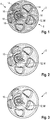
- a holding screen 2 ("ear dome") is shown with a view of a front 4 according to a first embodiment.
- the holding screen 2 can be attached, for example, to an external loudspeaker (receiver) of a RIC hearing aid or to the sound tube of a BTE hearing aid.
- the holding screen 2 is intended to be inserted into an ear of a user wearing the hearing aid, so that the front side 4 faces the inner ear of the user, while a rear side 6 of the holding screen 2 opposite the front side 4 faces the outer ear.
- the holding screen 2 comprises a flexible screen section 10 and a fastening section 12.
- the flexible screen section 10 rests against the wall of the ear canal of the user.
- the screen section 10 has approximately the shape of a thin-walled screen / a mushroom / a dome.
- a plurality of openings 14 are formed continuously in the axial direction in the screen section 10, as a result of which the flexibility of the screen section 10 is increased.
- the fastening section 12 has a fastening opening 16 on the rear side, which is used to fix the holding screen 2 in a force-locking manner on the loudspeaker or sound tube.
- the holding screen 2 On the front side, the holding screen 2 has a plurality of sound openings 18 through which the sound generated by the hearing aid is conducted into the ear of the user.
- the sound openings 18 can clog up due to soiling such as in particular ear wax.
- the fastening section 12 is made of a plastic which, as intended, fades over time.
- the holding screen 2 is shown in an unused state at the beginning of a period of use in which the holding screen 2 is used.
- the fastening section 12 has a strong color, for example red.
- Fig. 2 the holding screen 2 is shown in a used state during its period of use.
- the fastening section 12 has a comparison Fig. 1 slightly lighter color.
- Fig. 3 the holding screen is shown after an application period of about four weeks. At this time, the color of the attachment portion 12 is completely removed. The complete fading of the fastening section 12 serves as a visible criterion for the user that the holding screen 2 has reached its maximum duration of use (the maximum recommended wearing time) and must be replaced.
- the plastic from which the fastening section 12 is made, or a dye with which the plastic is colored thus serves as the indicator material M.
- Thermoplastic polyesters such as polylactide (PLA), polyglycolide (PGA) or their copolymers, i.e. a combination of PLA and PGA to form polylactide-co-glycolide (PLGA), are suitable as indicator material.
- PLA polylactide
- PGA polyglycolide
- copolymers i.e. a combination of PLA and PGA to form polylactide-co-glycolide (PLGA)
- indicator material are suitable as indicator material.
- biodegradable polymers which are well suited for use in the inner ear due to their low flexural strength and low water absorption.
- pigments are added (during processing).
- Iron (III) oxide for example, is used as a suitable pigment for obtaining a red color.
- other mineral pigments metal oxides are used to color the indicator material in a wide variety of shades.
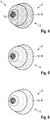
- the holding screen 2 is shown in an alternative embodiment.
- the screen section 10 is configured in the shape of a bell here and has no openings.
- the entire holding screen 2 is made of an indicator material M which changes its color depending on the duration of use.
- the holding screen 2 is colored bright red at the beginning of its period of use.
- the color of the holding screen 2 is visibly reduced after a wearing time of about two weeks.
- the color of the holding screen 2 is completely removed, causing the user to dispose of the holding screen 2 and replace it with a new one.
- the holding screen 2 (regardless of the embodiment) is preferably made of a biodegradable indicator material such as the thermoplastic mentioned above Polyesters PLA, PGA or PLGA made so that after disposal it can be composted without polluting the environment.
- a biodegradable indicator material such as the thermoplastic mentioned above Polyesters PLA, PGA or PLGA made so that after disposal it can be composted without polluting the environment.
Landscapes
- Engineering & Computer Science (AREA)
- Health & Medical Sciences (AREA)
- General Health & Medical Sciences (AREA)
- Otolaryngology (AREA)
- Physics & Mathematics (AREA)
- Acoustics & Sound (AREA)
- Signal Processing (AREA)
- Manufacturing & Machinery (AREA)
- Neurosurgery (AREA)
- Headphones And Earphones (AREA)
- Professional, Industrial, Or Sporting Protective Garments (AREA)
- Orthopedics, Nursing, And Contraception (AREA)
Description
- Die Erfindung bezieht sich auf einen Halteschirm zur Halterung eines Hörgeräts oder eines Hörgeräteteils im Ohr einer das Hörgerät tragenden Person (im Folgenden auch "Anwender"). Die Erfindung bezieht sich weiterhin auf ein Verfahren zur Anwendung des Halteschirms, auf ein Hörgerät, das den Halteschirm umfasst, sowie auf die Verwendung eines Indikator-Materials zur Herstellung oder Beschichtung eines Halteschirms.
- Ein Hörgerät dient der Versorgung einer hörgeschädigten Person mit akustischen Umgebungssignalen, die zu einer Kompensation der jeweiligen Hörschädigung entsprechend verarbeitet und insbesondere verstärkt werden. Ein Hörgerät umfasst hierzu üblicherweise einen Eingangswandler, beispielsweise in Form eines Mikrofons, eine Signalverarbeitungseinheit mit einem Verstärker, sowie einen Ausgangswandler. Der Ausgangswandler ist in der Regel als Miniaturlautsprecher realisiert und wird auch als Hörer oder Receiver bezeichnet. Er erzeugt insbesondere akustische Ausgabesignale, die zum Gehör des Patienten geleitet werden und bei diesem die gewünschte Hörwahrnehmung erzeugen.
- Um den zahlreichen individuellen Bedürfnissen entgegenzukommen, werden unterschiedliche Bauformen von Hörgeräten angeboten. Bei BTE-Hörgeräten (Behind-The-Ear, auch Hinter-dem-Ohr bzw. HdO) wird ein Gehäuse mit Komponenten wie einer Batterie und der Signalverarbeitungseinheit hinter dem Ohr getragen. Je nach Ausgestaltung kann der Receiver entweder direkt im Gehörgang des Trägers angeordnet sein (sogenannte Ex-Hörer-Hörgeräte oder Receiver-in-the-Canal (RIC)-Hörgeräte). Alternativ ist der Receiver innerhalb des Gehäuses selbst angeordnet und ein flexibler, auch als Tube bezeichneter Schallschlauch leitet die akustischen Ausgabesignale des Receivers vom Gehäuse zum Gehörgang (Schlauch-Hörgeräte). Bei ITE-Hörgeräten (In-the-Ear, auch IDO bzw. In-dem-Ohr) wird ein Gehäuse, welches sämtliche funktionale Komponenten einschließlich des Mikrofons und des Receivers enthält, zumindest teilweise im Gehörgang getragen. CIC-Hörgeräte (Completely-in-Canal) sind den ITE-Hörgeräten ähnlich, werden jedoch vollständig im Gehörgang getragen.
- Ein "Instant-Fit-Hörgerät" ist eine Bauform eines In-dem-Ohr-Hörgeräts, bei dem das Gehäuse eine nicht individuell angepasste Standard-Form aufweist, wobei ein flexibler Halteschirm, mit dem das Hörgerät im Gehörgang befestigbar ist, auf das Gehäuse aufgesetzt ist.
- Ein flexibler Halteschirm (häufig auch als Dome bezeichnet) wird mitunter auch bei RIC-Hörgeräten oder BTE-Hörgeräten zur Halterung des externen Hörers beziehungsweise des Schallschlauchs eingesetzt. Neben der Lagefixierung dient der Halteschirm auch als akustische Dichtung im Gehörgang.
- Ein solcher Halteschirm ist beispielsweise aus dem Handbuch "CROS Pure transmitter- User Guide", Signia GmbH, 02/2016; URL:https://www.signia-pro.dk/wp-content/u ploads/sites/91/2016/07/Userguide-CROS-Pure-primax-English-2.pdf bekannt.
- Erkanntermaßen ist ein Halteschirm bei seiner Benutzung Verschmutzungen wie Cerumen (umgangssprachlich: "Ohrenschmalz") oder Schweiß ausgesetzt. Diese können eine Schallöffnung in dem Halteschirm blockieren, durch die von dem Hörgerät erzeugter Schall in das Ohr des Anwenders geleitet wird. Hierdurch wird zumindest die Klangqualität beeinträchtigt. Schlimmstenfalls kann ein von dem Halteschirm getragener Receiver durch eindringende Verschmutzungen beschädigt werden. Da eine sachgemäße Reinigung des Halteschirms nicht bei jedem Anwender garantiert ist, wird empfohlen, einen eingesetzten Halteschirm in regelmäßigen Zeitabständen durch einen neuen Halteschirm zu ersetzen.
- Aus
US 2015/0000589 A1 ist ein Austauschanzeiger (replacement indicator) bekannt, der einem Elastomerprodukt wie beispielsweise einem Reifen oder einer Gasfedereinrichtung zugeordnet werden kann, so dass der Austauschanzeiger sichtbar ist. Eine sichtbare Eigenschaft des Austauschanzeigers wechselt in Abhängigkeit von Umgebungsbedingungen von einem ersten Zustand in einen optisch verschiedenen zweiten Zustand in einer Weise, die mit einer Veränderung einer Materialeigenschaft des Elastomerprodukts korreliert ist. - In
WO 2009/058191 A1 ist andererseits ein farbwechselnder Verschleißindikator für einen Reinigungsartikel beschrieben. Der Verschleißindikator umfasst eine Oberfläche mit einer ersten Farbe und eine Oberflächenbeschichtung mit einer davon verschiedenen zweiten Farbe. Die Oberflächenbeschichtung wird bei wiederholter Nutzung des Reinigungsartikels abgetragen, so dass die erste Farbe als Hinweis auf einen Verschleiß des Reinigungsartikels sichtbar wird. - Der Erfindung liegt die Aufgabe zugrunde, einen Halteschirm zur Halterung eines Hörgeräts oder eines Hörgeräteteils im Ohr einer das Hörgerät tragenden Person anzugeben, der dazu eingerichtet ist, den Anwender bei der Durchführung eines regelmäßigen Austauschs zu unterstützen.
- Diese Aufgabe wird gelöst durch einen Halteschirm mit den Merkmalen des Anspruchs 1, durch ein Verfahren zur Anwendung des Halteschirms mit den Merkmalen des Anspruchs 6. Vorteilhafte Ausgestaltungen der Erfindung sind in den Unteransprüchen und der nachfolgenden Beschreibung dargelegt.
- Der Halteschirm zur Halterung eines Hörgeräts oder eines Hörgeräteteils im Ohr eines das Hörgerät tragenden Anwenders umfasst erfindungsgemäß ein Indikator-Material, welches sich in Abhängigkeit von einer Anwendungsdauer des Halteschirms wahrnehmbar verändert, so dass eine Überschreitung einer empfohlenen Maximal-Anwendungsdauer anhand der Veränderung des Indikator-Materials erkennbar ist. Insbesondere dient ein bestimmtes Maß der Veränderung als Kriterium, dass eine empfohlene Maximal-Anwendungsdauer des Halteschirms erreicht oder überschritten ist. Mit anderen Worten wird dem Anwender durch eine bestimmte Veränderung des Indikator-Materials signalisiert, den Halteschirm auszutauschen.
- Der Begriff "umfasst" bezieht sich dabei darauf, dass im Rahmen der Erfindung der Halteschirm ganz oder teilweise aus dem zeitabhängig veränderlichen Indikator-Material gefertigt ist. D.h. es ist im Rahmen der Erfindung gleichermaßen möglich, dass der Körper des Halteschirms ganz oder teilweise aus dem Indikator-Material besteht oder dass der Halteschirm an seiner Oberfläche vollständig oder teilweise mit einer Beschichtung versehen ist, die aus dem Indikator-Material besteht.
- Im Zuge des erfindungsgemäßen Verfahrens zur Anwendung des Halteschirms wird der Halteschirm zunächst zu Beginn seiner Anwendungsdauer bestimmungsgemäß an einem Hörgerät befestigt und bestimmungsgemäß getragen. Im Laufe der Anwendung verändert sich das Indikator-Material des Halteschirms wahrnehmbar. Schließlich wird der Halteschirm ersetzt, wenn anhand der Veränderung des Indikator-Materials erkennbar ist, dass eine empfohlene Maximal-Anwendungsdauer des Halteschirms erreicht oder überschritten ist.
- Da durch das Indikator-Material dem Anwender signalisiert wird, wann der Halteschirm empfohlenermaßen ausgetauscht werden soll, ist ein regelmäßiger Austausch des Halteschirms vorteilhafterweise weitgehend sichergestellt. Somit wird auch dann eine hohe Klangqualität eines zugordneten Hörgeräts erzielt, wenn der Anwender den Halteschirm nur unzulänglich, unregelmäßig oder gar nicht reinigt. Gleiches gilt vorteilhafterweise für den Schutz eines gegebenenfalls zugeordneten Receivers vor Verschmutzungen, die bei einer unzureichenden Reinigung des Halteschirms zu dem Receiver durchdringen könnten.
- In einer besonders bevorzugten Ausführungsform umfasst der Halteschirm ein Indikator-Material, das in Abhängigkeit von der Anwendungsdauer degradiert, insbesondere biodegradiert.
- In einer ersten Variante ist dabei der Halteschirm ganz oder teilweise aus dem Indikator-Material gefertigt. Insbesondere ist ein flexibler Schirmabschnitt des Halteschirms aus dem Indikator-Material gefertigt. Durch die Degradierung wird das Indikator-Material nach einer gewissen Anwendungsdauer spröde oder hart. Diese Veränderung der Flexibilität dient dabei als fühlbares Kriterium, den Halteschirm auszutauschen. Vorteilhafterweise wird dabei der Austausch des Halteschirms durch den reduzierten Tragekomfort gewissermaßen erzwungen.
- Die Fertigung des Halteschirms aus einem degradierbaren Indikator-Material, insbesondere aus einem biodegradierbaren/kompostierbaren Material, ist in Hinblick auf die immensen Mengen von anfallendem Plastikmüll auch an sich aus umweltschutztechnischen Gründen von Vorteil.
- In einer zweiten Variante umfasst der Halteschirm einen Abschnitt, der von einer Schicht aus einem zu dem Abschnitt andersfarbigen, degradierbaren Indikator-Material überdeckt ist. Dabei degradiert die andersfarbige Schicht in Abhängigkeit von der Anwendungsdauer des Halteschirms, so dass der anfangs überdeckte Abschnitt des Halteschirms nach einer gewissen Anwendungsdauer sichtbar wird. Hierdurch wird eine sichtbare Farbveränderung des Halteschirms oder eines Abschnitts des Halteschirms in Abhängigkeit von der Anwendungsdauer realisiert. Sobald der anfangs überdeckte Abschnitt des Halteschirms sichtbar wird, ist der Halteschirm auszutauschen.
- In einer Ausführungsform umfasst der Halteschirm ein Indikator-Material, das sich in Abhängigkeit von der Anwendungsdauer verfärbt. Der Begriff "verfärben" umfasst dabei sowohl eine Änderung der Farbe selbst (des Farbtons) als auch eine Änderung der Farbintensität. Insbesondere dient ein vollständiger oder nahezu vollständiger Farbumschlag, vorzugsweise ein vollständiges oder nahezu vollständiges Verblassen der Farbe, für den Anwender als sichtbares Kriterium, den Halteschirm auszutauschen.
- Ein erfindungsgemäßes Hörgerät umfasst einen Halteschirm gemäß vorstehender Beschreibung.
- Bei dem Hörgerät handelt es sich insbesondere um ein Hörhilfegerät, das Anwendern mit vermindertem Hörvermögen eine normale akustische Wahrnehmung ermöglicht. Im Anwendungsbereich der Erfindung liegen ferner aber auch Hörgeräte für normalhörende Anwender, wie z.B. im Ohr getragene Kopfhörer.
- Nachfolgend werden Ausführungsbeispiele der Erfindung anhand einer Zeichnung näher erläutert. Darin zeigen:
- Fig. 1 bis Fig. 3
- jeweils in perspektivischer Darstellung einen austauschbaren Halteschirm für ein Hörgerät, umfassend einen Schirmabschnitt und einen Befestigungsabschnitt zum Aufstecken auf das Hörgerät, wobei der Befestigungsabschnitt gemäß seiner Anwendungsdauer unterschiedlich ausgebleicht ist, und
- Fig. 4 bis Fig. 6
- in Darstellung gemäß
Fig. 1 bis Fig. 3 den Halteschirm in einer alternativen Ausführungsform, in welcher der gesamte Halteschirm gemäß seiner Anwendungsdauer unterschiedlich ausgebleicht ist. - Einander entsprechende Teile sind in allen Figuren stets mit gleichen Bezugszeichen versehen.
- In
Fig. 1 ist ein Halteschirm 2 ("Ear Dome") mit Blick auf eine Frontseite 4 gemäß einer ersten Ausführungsform gezeigt. Der Halteschirm 2 ist z.B. auf einen externen Lautsprecher (Receiver) eines RIC-Hörgeräts oder auf den Schallschlauch eines BTE-Hörgeräts aufsteckbar. Der Halteschirm 2 wird bestimmungsgemäß in ein Ohr eines das Hörgerät tragenden Anwenders eingesetzt, so dass die Frontseite 4 dem Innenohr des Anwenders zugewandt ist, während eine zur Frontseite 4 entgegengesetzte Rückseite 6 des Halteschirms 2 dem Außenohr zugewandt ist. - Der Halteschirm 2 umfasst einen flexiblen Schirmabschnitt 10, sowie einen Befestigungsabschnitt 12. Der flexible Schirmabschnitt 10 liegt bei eingesetztem Hörgerät an einer Gehörgangswand des Anwenders an. Hierzu hat der Schirmabschnitt 10 in etwa die Gestalt eines dünnwandigen Schirms / eines Pilzes / einer Kuppel.
- In Axialrichtung durchgehend sind in den Schirmabschnitt 10 mehrere Durchbrüche 14 eingeformt, wodurch die Formflexibilität des Schirmabschnitts 10 erhöht wird.
- Der Befestigungsabschnitt 12 weist rückseitig eine Befestigungsöffnung 16 auf, die dazu dient, den Halteschirm 2 kraftschlüssig an dem Lautsprecher oder Schallschlauch zu fixieren. Frontseitig weist der Halteschirm 2 mehrere Schallöffnungen 18 auf, durch die von dem Hörgerät erzeugter Schall in das Ohr des Anwenders geleitet wird. Durch Verschmutzungen wie insbesondere Ohrenschmalz können die Schallöffnungen 18 verstopfen.
- In der dargestellten Ausführungsform ist der Befestigungsabschnitt 12 aus einem Kunststoff gefertigt, der bestimmungsgemäß im Laufe der Zeit ausbleicht.
- In der Darstellung gemäß
Fig. 1 ist der Halteschirm 2 in einem ungebrauchten Zustand zu Beginn einer Anwendungsdauer, in der der Halteschirm 2 verwendet wird, dargestellt. Zu diesem Zeitpunkt weist der Befestigungsabschnitt 12 eine kräftige Farbe, beispielsweise rot, auf. - In
Fig. 2 ist der Halteschirm 2 in einem gebrauchten Zustand während seiner Anwendungsdauer gezeigt. Zu dem Zeitpunkt gemäßFig. 2 (beispielsweise nach einer Anwendungsdauer von ca. zwei Wochen) weist der Befestigungsabschnitt 12 eine im Vergleich zuFig. 1 etwas hellere Farbe auf. - In
Fig. 3 ist der Halteschirm nach einer Anwendungsdauer von etwa vier Wochen gezeigt. Zu diesem Zeitpunkt ist die Farbe des Befestigungsabschnitts 12 vollständig entfernt. Das vollständige Verblassen des Befestigungsabschnitts 12 dient für den Anwender als sichtbares Kriterium, dass der Halteschirm 2 seine Maximal-Anwendungsdauer (die maximal empfohlene Tragezeit) erreicht hat und ausgetauscht werden muss. Im Sinne der Erfindung dient somit der Kunststoff, aus dem der Befestigungsabschnitt 12 hergestellt ist, oder ein Farbstoff, mit dem der Kunststoff eingefärbt ist, als Indikator-Material M. - Als Indikator-Material eignen sich thermoplastische Polyester wie Polylactid (PLA), Polyglycolid (PGA) oder deren Copolymer, also eine Zusammensetzung von PLA und PGA zu Polylactid-co-glycolid (PLGA). Dabei handelt es sich um biodegradable Polymere, welche sich durch ihre niedrige Biegefestigkeit und einer geringen Wasseraufnahme gut für den Einsatz im Innenohr eignen.
- Während des Herstellungsverfahren werden sich deren physikalische und mechanische Eigenschaften derart eingestellt, dass zum einen die Zeitspanne bis zum Abbau und damit des Entfärbens des Indikator-Materials verändert und zum anderen das Material an die Umgebungsbedingungen des Innenohrs angepasst wird.
- Um die Polymerzusammensetzungen einzufärben, werden (bei der Verarbeitung) Pigmente hinzugefügt. Als geeignetes Pigment zum Erhalt einer roten Färbung wird beispielsweise Eisen(III)-oxid genutzt. Alternativ werden andere Mineralpigmente (Metalloxide) zum Einfärben des Indikator-Materials in verschiedenste Farbtöne genutzt.
- In
Fig. 4 ist der Halteschirm 2 in einer alternativen Ausführungsform gezeigt. Im Unterschied zu der ersten Ausführungsform ist der Schirmabschnitt 10 hier glockenförmig ausgestaltet und ohne Durchbrüche ausgeführt. Weiterhin im Unterschied zu der ersten Ausführungsform ist hier der gesamte Halteschirm 2 (d.h. sowohl der Schirmabschnitt 10 als auch der Befestigungsabschnitt 12) aus einem Indikator-Material M gefertigt, das seine Farbe in Abhängigkeit von der Anwendungsdauer ändert. - Gemäß
Fig. 4 ist der Halteschirm 2 zu Beginn seiner Anwendungsdauer kräftig rot gefärbt. GemäßFig. 5 ist die Farbe des Halteschirms 2 nach einer Tragezeit von etwa zwei Wochen sichtlich reduziert. GemäßFig. 6 ist die Farbe des Halteschirms 2 vollständig entfernt, wodurch der Anwender dazu veranlasst wird, den Halteschirm 2 zu entsorgen und durch einen neuen zu ersetzen. - Vorzugsweise ist der Halteschirm 2 (unabhängig von der Ausführungsform) aus einem biologisch abbaubaren Indikator-Material wie den oben genannten thermoplastische Polyestern PLA, PGA oder PLGA gefertigt, so dass er nach seiner Entsorgung kompostiert werden kann, ohne die Umwelt zu verschmutzen.
- Die Erfindung wird an den vorstehend beschriebenen Ausführungsbeispielen besonders deutlich, ist auf diese Ausführungsbeispiele gleichwohl aber nicht beschränkt. Vielmehr können weitere Ausführungsformen der Erfindung aus den Ansprüchen und der vorstehenden Beschreibung abgeleitet werden.
-
- 2
- Halteschirm
- 4
- Frontseite
- 6
- Rückseite
- 10
- Schirmabschnitt
- 12
- Befestigungsabschnitt
- 14
- Durchbruch
- 16
- Befestigungsöffnung
- 18
- Schallöffnung
- M
- Indikator-Material
Claims (8)
- Halteschirm (2) zur Halterung eines Hörgeräts oder eines Hörgeräteteils im Ohr eines das Hörgerät tragenden Anwenders,
dadurch gekennzeichnet,
dass der Halteschirm (2) ein Indikator-Material (M) umfasst, welches sich in Abhängigkeit von einer Anwendungsdauer des Halteschirms (2) wahrnehmbar verändert,
so dass anhand der Veränderung des Indikator-Materials (M) eine Überschreitung einer empfohlenen Maximal-Anwendungsdauer des Halteschirms (2) erkennbar ist. - Halteschirm (2) nach Anspruch 1,
wobei das Indikator-Material (M) in Abhängigkeit von der Anwendungsdauer degradiert, insbesondere biodegradiert. - Halteschirm (2) nach Anspruch 2,
wobei der Halteschirm (2) ganz oder teilweise aus dem Indikator-Material (M) hergestellt ist. - Halteschirm (2) nach Anspruch 2,
wobei ein Abschnitt des Halteschirms (2) von einer Schicht aus einem zu dem Abschnitt andersfarbigen, degradierbaren Indikator-Material (M) überdeckt ist, und
wobei die Schicht in Abhängigkeit von der Anwendungsdauer degradiert, so dass der anfangs überdeckte Abschnitt des Halteschirms (2) sichtbar wird. - Halteschirm (2) einem der Ansprüche 1 bis 4,
wobei sich das Indikator-Material (M) in Abhängigkeit von der Anwendungsdauer verfärbt. - Verfahren zur Anwendung eines Halteschirms (2) gemäß einem der Ansprüche 1 bis 5,- wobei der Halteschirm (2) zu Beginn einer Anwendungsdauer bestimmungsgemäß an einem Hörgerät befestigt wird,- wobei sich das Indikator-Material (M) des Halteschirms (2) sukzessive wahrnehmbar verändert, und- wobei der Halteschirm (2) ersetzt wird, wenn anhand der Veränderung des Indikator-Materials (M) erkennbar ist, dass eine empfohlene Maximal-Anwendungsdauer des Halteschirms (2) überschritten ist.
- Hörgerät mit einem Halterschirm (2) gemäß einem der Ansprüche 1 bis 5.
- Verwendung eines Indikator-Materials (M) zur Herstellung oder Beschichtung eines Halteschirms (2) zur Halterung eines Hörgeräts oder eines Hörgeräteteils im Ohr eines das Hörgerät tragenden Anwenders,
wobei sich das Indikator-Material (M) in Abhängigkeit von einer Anwendungsdauer des Halteschirms (2) wahrnehmbar verändert,
so dass anhand der Veränderung des Indikator-Materials (M) eine Überschreitung einer empfohlenen Maximal-Anwendungsdauer des Halteschirms (2) erkennbar ist.
Applications Claiming Priority (1)
| Application Number | Priority Date | Filing Date | Title |
|---|---|---|---|
| DE102018212704.2A DE102018212704B3 (de) | 2018-07-30 | 2018-07-30 | Halteschirm |
Publications (2)
| Publication Number | Publication Date |
|---|---|
| EP3606099A1 EP3606099A1 (de) | 2020-02-05 |
| EP3606099B1 true EP3606099B1 (de) | 2021-06-16 |
Family
ID=67253679
Family Applications (1)
| Application Number | Title | Priority Date | Filing Date |
|---|---|---|---|
| EP19185327.4A Active EP3606099B1 (de) | 2018-07-30 | 2019-07-09 | Halteschirm |
Country Status (5)
| Country | Link |
|---|---|
| US (1) | US11019437B2 (de) |
| EP (1) | EP3606099B1 (de) |
| CN (1) | CN110784789B (de) |
| DE (1) | DE102018212704B3 (de) |
| DK (1) | DK3606099T3 (de) |
Family Cites Families (19)
| Publication number | Priority date | Publication date | Assignee | Title |
|---|---|---|---|---|
| JP2004186915A (ja) * | 2002-12-02 | 2004-07-02 | Sony Corp | 生分解性音響機器材料 |
| JP4165389B2 (ja) * | 2003-12-02 | 2008-10-15 | ソニー株式会社 | 樹脂組成物、成形品、電気製品、樹脂組成物の製造方法 |
| CN101103268A (zh) * | 2004-11-24 | 2008-01-09 | 纳幕尔杜邦公司 | 指示时间经过的装置及其方法和制品 |
| JP5175263B2 (ja) | 2006-03-14 | 2013-04-03 | ザ プロクター アンド ギャンブル カンパニー | 装飾発光体 |
| CN101400375A (zh) * | 2006-03-14 | 2009-04-01 | 宝洁公司 | 装饰性发光体 |
| US20090110890A1 (en) * | 2007-10-30 | 2009-04-30 | 3M Innovative Properties Company | Color changing wear indicator |
| US8121320B2 (en) * | 2008-01-11 | 2012-02-21 | Songbird Hearing, Inc. | Hearing aid |
| DK2351382T3 (da) * | 2008-09-26 | 2013-08-19 | Oticon As | Høreapparat med udskiftelige hylsterdele og trådløs kommunikation |
| CN201674641U (zh) * | 2010-06-01 | 2010-12-15 | 东莞达电电子有限公司 | 一种入耳式耳机 |
| EP2577995A2 (de) * | 2010-06-07 | 2013-04-10 | Phonak AG | Hörgerät mit einem lichtleiter und verfahren zur herstellung eines derartigen hörgeräts |
| WO2013130755A1 (en) * | 2012-02-29 | 2013-09-06 | Firestone Industrial Products Company, Llc | Replacement indicator, elastomeric articles and methods |
| US9167334B2 (en) * | 2013-01-21 | 2015-10-20 | Patrick R. Triato | Adjustable mechanism for securing in-ear audio device |
| EP3053354B1 (de) * | 2013-10-02 | 2020-12-09 | Acousticsheep LLC | Funktionelle kopfbedeckung |
| CN104949972B (zh) * | 2015-06-26 | 2018-09-21 | 广州立白企业集团有限公司 | 一种用于时间指示的变色组合物及其使用方法 |
| CN204810508U (zh) * | 2015-07-31 | 2015-11-25 | 王蔚源 | 一种胶管耳机连接套 |
| CN205808937U (zh) * | 2016-02-25 | 2016-12-14 | 深圳九星印刷包装集团有限公司 | 色变指示装置 |
| CN206272815U (zh) * | 2016-12-07 | 2017-06-20 | 海商电子(深圳)有限公司 | 新型头戴式耳机 |
| WO2018103899A1 (en) * | 2016-12-09 | 2018-06-14 | Sivantos Pte. Ltd. | A method for monitoring electro-acoustic performance of a hearing device and hearing device |
| CN206602626U (zh) * | 2017-04-14 | 2017-10-31 | 许会东 | 一种耳套及护耳耳机 |
-
2018
- 2018-07-30 DE DE102018212704.2A patent/DE102018212704B3/de not_active Expired - Fee Related
-
2019
- 2019-07-09 DK DK19185327.4T patent/DK3606099T3/da active
- 2019-07-09 EP EP19185327.4A patent/EP3606099B1/de active Active
- 2019-07-25 CN CN201910675371.2A patent/CN110784789B/zh active Active
- 2019-07-30 US US16/525,904 patent/US11019437B2/en active Active
Also Published As
| Publication number | Publication date |
|---|---|
| EP3606099A1 (de) | 2020-02-05 |
| DK3606099T3 (da) | 2021-08-23 |
| DE102018212704B3 (de) | 2019-11-21 |
| CN110784789B (zh) | 2021-04-20 |
| CN110784789A (zh) | 2020-02-11 |
| US11019437B2 (en) | 2021-05-25 |
| US20200037089A1 (en) | 2020-01-30 |
Similar Documents
| Publication | Publication Date | Title |
|---|---|---|
| DE102006008044B3 (de) | Im Ohr tragbares Hörhilfegerät mit einem Belüftungskanal | |
| DE102008038213B3 (de) | Hörhilfegerät mit einer Wandlerschutzeinrichtung | |
| DE3736591A1 (de) | Hoergeraet mit ohrschmalzschutz | |
| DE19640796A1 (de) | Schutzvorrichtung für die Schallein- und/oder Schallaustrittsöffnung an Gehäusen oder Ohrpaßstücken von Hörhilfegeräten | |
| DE202018107150U1 (de) | Ohrstöpsel mit Trümmersperre für akustische Vorrichtungen | |
| DE102004023306B3 (de) | Hörgerät mit Cerumenschutz | |
| EP3068147B1 (de) | Hörgerät mit einer cerumen-schutzeinrichtung und cerumen-schutzeinrichtung | |
| DE10214189B4 (de) | Vorrichtung zum Beschallen eines Trommelfells mit einer Cerumenschutzeinrichtung und Hörgerät | |
| DE102011006720A1 (de) | Gehörgangseinsatz mit einem Filterelement | |
| DE102008036258A1 (de) | Ohrpassstück für ein Hörgerät | |
| EP1993323A1 (de) | Ohrstück für eine Hörvorrichtung mit Bajonettverschluss | |
| DE102005012976B3 (de) | Hörvorrichtung und Verfahren zur Windgeräuschunterdrückung | |
| EP1906702B1 (de) | Verfahren zur Bedienkontrolle einer Hörvorrichtung und entsprechende Hörvorrichtung | |
| DE4339899A1 (de) | Im Ohr zu tragendes Teil eines Hörgeräts oder im Ohr zu tragendes Hörgerät | |
| DE102018212704B3 (de) | Halteschirm | |
| EP1562400B1 (de) | Austauschbare Hörerschutzmembran für Hörgerate | |
| EP1228666B1 (de) | Hörgerät | |
| EP2416595B1 (de) | Hörinstrument mit einteiligem Spritzguss-Gehäuse | |
| EP3554097B1 (de) | Dome für ein in einen ohrkanal einführbares hörhilfegerät | |
| EP3425927B1 (de) | Verfahren zum herstellen eines gehäuseteils einer hörvorrichtung, gehäuseteil für eine hörvorrichtung und hörvorrichtung | |
| EP1841288A2 (de) | Hörvorrichtung mit einer offenporigen Cerumenschutzeinrichtung | |
| DE102004050133B4 (de) | Offene Otoplastik | |
| DE102004062279A1 (de) | Zerumenschutzeinrichtung für ein Hörhilfegerät | |
| EP2866473B1 (de) | Otoplastik, Hörsystem sowie Verfahren zur Montage eines Hörsystems | |
| DE102019200372A1 (de) | Verfahren zur Herstellung und Nutzung eines Hörgerätes sowie Hörgerät |
Legal Events
| Date | Code | Title | Description |
|---|---|---|---|
| PUAI | Public reference made under article 153(3) epc to a published international application that has entered the european phase |
Free format text: ORIGINAL CODE: 0009012 |
|
| STAA | Information on the status of an ep patent application or granted ep patent |
Free format text: STATUS: THE APPLICATION HAS BEEN PUBLISHED |
|
| AK | Designated contracting states |
Kind code of ref document: A1 Designated state(s): AL AT BE BG CH CY CZ DE DK EE ES FI FR GB GR HR HU IE IS IT LI LT LU LV MC MK MT NL NO PL PT RO RS SE SI SK SM TR |
|
| AX | Request for extension of the european patent |
Extension state: BA ME |
|
| STAA | Information on the status of an ep patent application or granted ep patent |
Free format text: STATUS: REQUEST FOR EXAMINATION WAS MADE |
|
| 17P | Request for examination filed |
Effective date: 20200803 |
|
| RBV | Designated contracting states (corrected) |
Designated state(s): AL AT BE BG CH CY CZ DE DK EE ES FI FR GB GR HR HU IE IS IT LI LT LU LV MC MK MT NL NO PL PT RO RS SE SI SK SM TR |
|
| GRAP | Despatch of communication of intention to grant a patent |
Free format text: ORIGINAL CODE: EPIDOSNIGR1 |
|
| STAA | Information on the status of an ep patent application or granted ep patent |
Free format text: STATUS: GRANT OF PATENT IS INTENDED |
|
| INTG | Intention to grant announced |
Effective date: 20210128 |
|
| GRAS | Grant fee paid |
Free format text: ORIGINAL CODE: EPIDOSNIGR3 |
|
| GRAA | (expected) grant |
Free format text: ORIGINAL CODE: 0009210 |
|
| STAA | Information on the status of an ep patent application or granted ep patent |
Free format text: STATUS: THE PATENT HAS BEEN GRANTED |
|
| AK | Designated contracting states |
Kind code of ref document: B1 Designated state(s): AL AT BE BG CH CY CZ DE DK EE ES FI FR GB GR HR HU IE IS IT LI LT LU LV MC MK MT NL NO PL PT RO RS SE SI SK SM TR |
|
| REG | Reference to a national code |
Ref country code: GB Ref legal event code: FG4D Free format text: NOT ENGLISH |
|
| RIN1 | Information on inventor provided before grant (corrected) |
Inventor name: KUHN, JOHANNES Inventor name: BEYFUSS, STEFANIE Inventor name: CLAD, LARS Inventor name: BAYER, TOBIAS |
|
| REG | Reference to a national code |
Ref country code: CH Ref legal event code: EP |
|
| REG | Reference to a national code |
Ref country code: DE Ref legal event code: R096 Ref document number: 502019001616 Country of ref document: DE |
|
| REG | Reference to a national code |
Ref country code: AT Ref legal event code: REF Ref document number: 1403336 Country of ref document: AT Kind code of ref document: T Effective date: 20210715 |
|
| REG | Reference to a national code |
Ref country code: IE Ref legal event code: FG4D Free format text: LANGUAGE OF EP DOCUMENT: GERMAN |
|
| REG | Reference to a national code |
Ref country code: DK Ref legal event code: T3 Effective date: 20210818 |
|
| REG | Reference to a national code |
Ref country code: LT Ref legal event code: MG9D |
|
| PG25 | Lapsed in a contracting state [announced via postgrant information from national office to epo] |
Ref country code: FI Free format text: LAPSE BECAUSE OF FAILURE TO SUBMIT A TRANSLATION OF THE DESCRIPTION OR TO PAY THE FEE WITHIN THE PRESCRIBED TIME-LIMIT Effective date: 20210616 Ref country code: HR Free format text: LAPSE BECAUSE OF FAILURE TO SUBMIT A TRANSLATION OF THE DESCRIPTION OR TO PAY THE FEE WITHIN THE PRESCRIBED TIME-LIMIT Effective date: 20210616 Ref country code: LT Free format text: LAPSE BECAUSE OF FAILURE TO SUBMIT A TRANSLATION OF THE DESCRIPTION OR TO PAY THE FEE WITHIN THE PRESCRIBED TIME-LIMIT Effective date: 20210616 Ref country code: BG Free format text: LAPSE BECAUSE OF FAILURE TO SUBMIT A TRANSLATION OF THE DESCRIPTION OR TO PAY THE FEE WITHIN THE PRESCRIBED TIME-LIMIT Effective date: 20210916 |
|
| REG | Reference to a national code |
Ref country code: NL Ref legal event code: MP Effective date: 20210616 |
|
| PG25 | Lapsed in a contracting state [announced via postgrant information from national office to epo] |
Ref country code: LV Free format text: LAPSE BECAUSE OF FAILURE TO SUBMIT A TRANSLATION OF THE DESCRIPTION OR TO PAY THE FEE WITHIN THE PRESCRIBED TIME-LIMIT Effective date: 20210616 Ref country code: NO Free format text: LAPSE BECAUSE OF FAILURE TO SUBMIT A TRANSLATION OF THE DESCRIPTION OR TO PAY THE FEE WITHIN THE PRESCRIBED TIME-LIMIT Effective date: 20210916 Ref country code: SE Free format text: LAPSE BECAUSE OF FAILURE TO SUBMIT A TRANSLATION OF THE DESCRIPTION OR TO PAY THE FEE WITHIN THE PRESCRIBED TIME-LIMIT Effective date: 20210616 Ref country code: RS Free format text: LAPSE BECAUSE OF FAILURE TO SUBMIT A TRANSLATION OF THE DESCRIPTION OR TO PAY THE FEE WITHIN THE PRESCRIBED TIME-LIMIT Effective date: 20210616 Ref country code: GR Free format text: LAPSE BECAUSE OF FAILURE TO SUBMIT A TRANSLATION OF THE DESCRIPTION OR TO PAY THE FEE WITHIN THE PRESCRIBED TIME-LIMIT Effective date: 20210917 |
|
| PG25 | Lapsed in a contracting state [announced via postgrant information from national office to epo] |
Ref country code: SM Free format text: LAPSE BECAUSE OF FAILURE TO SUBMIT A TRANSLATION OF THE DESCRIPTION OR TO PAY THE FEE WITHIN THE PRESCRIBED TIME-LIMIT Effective date: 20210616 Ref country code: PT Free format text: LAPSE BECAUSE OF FAILURE TO SUBMIT A TRANSLATION OF THE DESCRIPTION OR TO PAY THE FEE WITHIN THE PRESCRIBED TIME-LIMIT Effective date: 20211018 Ref country code: NL Free format text: LAPSE BECAUSE OF FAILURE TO SUBMIT A TRANSLATION OF THE DESCRIPTION OR TO PAY THE FEE WITHIN THE PRESCRIBED TIME-LIMIT Effective date: 20210616 Ref country code: RO Free format text: LAPSE BECAUSE OF FAILURE TO SUBMIT A TRANSLATION OF THE DESCRIPTION OR TO PAY THE FEE WITHIN THE PRESCRIBED TIME-LIMIT Effective date: 20210616 Ref country code: CZ Free format text: LAPSE BECAUSE OF FAILURE TO SUBMIT A TRANSLATION OF THE DESCRIPTION OR TO PAY THE FEE WITHIN THE PRESCRIBED TIME-LIMIT Effective date: 20210616 Ref country code: SK Free format text: LAPSE BECAUSE OF FAILURE TO SUBMIT A TRANSLATION OF THE DESCRIPTION OR TO PAY THE FEE WITHIN THE PRESCRIBED TIME-LIMIT Effective date: 20210616 Ref country code: EE Free format text: LAPSE BECAUSE OF FAILURE TO SUBMIT A TRANSLATION OF THE DESCRIPTION OR TO PAY THE FEE WITHIN THE PRESCRIBED TIME-LIMIT Effective date: 20210616 Ref country code: ES Free format text: LAPSE BECAUSE OF FAILURE TO SUBMIT A TRANSLATION OF THE DESCRIPTION OR TO PAY THE FEE WITHIN THE PRESCRIBED TIME-LIMIT Effective date: 20210616 |
|
| PG25 | Lapsed in a contracting state [announced via postgrant information from national office to epo] |
Ref country code: PL Free format text: LAPSE BECAUSE OF FAILURE TO SUBMIT A TRANSLATION OF THE DESCRIPTION OR TO PAY THE FEE WITHIN THE PRESCRIBED TIME-LIMIT Effective date: 20210616 |
|
| REG | Reference to a national code |
Ref country code: DE Ref legal event code: R097 Ref document number: 502019001616 Country of ref document: DE |
|
| PG25 | Lapsed in a contracting state [announced via postgrant information from national office to epo] |
Ref country code: MC Free format text: LAPSE BECAUSE OF FAILURE TO SUBMIT A TRANSLATION OF THE DESCRIPTION OR TO PAY THE FEE WITHIN THE PRESCRIBED TIME-LIMIT Effective date: 20210616 |
|
| REG | Reference to a national code |
Ref country code: BE Ref legal event code: MM Effective date: 20210731 |
|
| PLBE | No opposition filed within time limit |
Free format text: ORIGINAL CODE: 0009261 |
|
| STAA | Information on the status of an ep patent application or granted ep patent |
Free format text: STATUS: NO OPPOSITION FILED WITHIN TIME LIMIT |
|
| 26N | No opposition filed |
Effective date: 20220317 |
|
| PG25 | Lapsed in a contracting state [announced via postgrant information from national office to epo] |
Ref country code: LU Free format text: LAPSE BECAUSE OF NON-PAYMENT OF DUE FEES Effective date: 20210709 Ref country code: AL Free format text: LAPSE BECAUSE OF FAILURE TO SUBMIT A TRANSLATION OF THE DESCRIPTION OR TO PAY THE FEE WITHIN THE PRESCRIBED TIME-LIMIT Effective date: 20210616 |
|
| PG25 | Lapsed in a contracting state [announced via postgrant information from national office to epo] |
Ref country code: IT Free format text: LAPSE BECAUSE OF FAILURE TO SUBMIT A TRANSLATION OF THE DESCRIPTION OR TO PAY THE FEE WITHIN THE PRESCRIBED TIME-LIMIT Effective date: 20210616 Ref country code: IE Free format text: LAPSE BECAUSE OF NON-PAYMENT OF DUE FEES Effective date: 20210709 Ref country code: BE Free format text: LAPSE BECAUSE OF NON-PAYMENT OF DUE FEES Effective date: 20210731 |
|
| PG25 | Lapsed in a contracting state [announced via postgrant information from national office to epo] |
Ref country code: CY Free format text: LAPSE BECAUSE OF FAILURE TO SUBMIT A TRANSLATION OF THE DESCRIPTION OR TO PAY THE FEE WITHIN THE PRESCRIBED TIME-LIMIT Effective date: 20210616 |
|
| PG25 | Lapsed in a contracting state [announced via postgrant information from national office to epo] |
Ref country code: HU Free format text: LAPSE BECAUSE OF FAILURE TO SUBMIT A TRANSLATION OF THE DESCRIPTION OR TO PAY THE FEE WITHIN THE PRESCRIBED TIME-LIMIT; INVALID AB INITIO Effective date: 20190709 |
|
| PG25 | Lapsed in a contracting state [announced via postgrant information from national office to epo] |
Ref country code: MK Free format text: LAPSE BECAUSE OF FAILURE TO SUBMIT A TRANSLATION OF THE DESCRIPTION OR TO PAY THE FEE WITHIN THE PRESCRIBED TIME-LIMIT Effective date: 20210616 |
|
| PG25 | Lapsed in a contracting state [announced via postgrant information from national office to epo] |
Ref country code: TR Free format text: LAPSE BECAUSE OF FAILURE TO SUBMIT A TRANSLATION OF THE DESCRIPTION OR TO PAY THE FEE WITHIN THE PRESCRIBED TIME-LIMIT Effective date: 20210616 |
|
| PG25 | Lapsed in a contracting state [announced via postgrant information from national office to epo] |
Ref country code: MT Free format text: LAPSE BECAUSE OF FAILURE TO SUBMIT A TRANSLATION OF THE DESCRIPTION OR TO PAY THE FEE WITHIN THE PRESCRIBED TIME-LIMIT Effective date: 20210616 |
|
| PGFP | Annual fee paid to national office [announced via postgrant information from national office to epo] |
Ref country code: GB Payment date: 20250619 Year of fee payment: 7 Ref country code: DK Payment date: 20250619 Year of fee payment: 7 |
|
| PGFP | Annual fee paid to national office [announced via postgrant information from national office to epo] |
Ref country code: FR Payment date: 20250620 Year of fee payment: 7 |
|
| REG | Reference to a national code |
Ref country code: AT Ref legal event code: MM01 Ref document number: 1403336 Country of ref document: AT Kind code of ref document: T Effective date: 20240709 |
|
| PGFP | Annual fee paid to national office [announced via postgrant information from national office to epo] |
Ref country code: DE Payment date: 20250620 Year of fee payment: 7 |
|
| PG25 | Lapsed in a contracting state [announced via postgrant information from national office to epo] |
Ref country code: AT Free format text: LAPSE BECAUSE OF NON-PAYMENT OF DUE FEES Effective date: 20240709 |
|
| PGFP | Annual fee paid to national office [announced via postgrant information from national office to epo] |
Ref country code: CH Payment date: 20250801 Year of fee payment: 7 |
|
| PGFP | Annual fee paid to national office [announced via postgrant information from national office to epo] |
Ref country code: AT Payment date: 20260410 Year of fee payment: 5 |