EP3604491A1 - Malt beverage having suppressed grain odor - Google Patents
Malt beverage having suppressed grain odor Download PDFInfo
- Publication number
- EP3604491A1 EP3604491A1 EP18777892.3A EP18777892A EP3604491A1 EP 3604491 A1 EP3604491 A1 EP 3604491A1 EP 18777892 A EP18777892 A EP 18777892A EP 3604491 A1 EP3604491 A1 EP 3604491A1
- Authority
- EP
- European Patent Office
- Prior art keywords
- malt beverage
- malt
- ppb
- concentration
- cubebol
- Prior art date
- Legal status (The legal status is an assumption and is not a legal conclusion. Google has not performed a legal analysis and makes no representation as to the accuracy of the status listed.)
- Granted
Links
Images

Classifications
-
- C—CHEMISTRY; METALLURGY
- C12—BIOCHEMISTRY; BEER; SPIRITS; WINE; VINEGAR; MICROBIOLOGY; ENZYMOLOGY; MUTATION OR GENETIC ENGINEERING
- C12C—BEER; PREPARATION OF BEER BY FERMENTATION; PREPARATION OF MALT FOR MAKING BEER; PREPARATION OF HOPS FOR MAKING BEER
- C12C5/00—Other raw materials for the preparation of beer
- C12C5/02—Additives for beer
-
- A—HUMAN NECESSITIES
- A23—FOODS OR FOODSTUFFS; TREATMENT THEREOF, NOT COVERED BY OTHER CLASSES
- A23L—FOODS, FOODSTUFFS OR NON-ALCOHOLIC BEVERAGES, NOT OTHERWISE PROVIDED FOR; PREPARATION OR TREATMENT THEREOF
- A23L2/00—Non-alcoholic beverages; Dry compositions or concentrates therefor; Preparation or treatment thereof
- A23L2/38—Other non-alcoholic beverages
- A23L2/382—Other non-alcoholic beverages fermented
-
- A—HUMAN NECESSITIES
- A23—FOODS OR FOODSTUFFS; TREATMENT THEREOF, NOT COVERED BY OTHER CLASSES
- A23L—FOODS, FOODSTUFFS OR NON-ALCOHOLIC BEVERAGES, NOT OTHERWISE PROVIDED FOR; PREPARATION OR TREATMENT THEREOF
- A23L2/00—Non-alcoholic beverages; Dry compositions or concentrates therefor; Preparation or treatment thereof
- A23L2/52—Adding ingredients
-
- A—HUMAN NECESSITIES
- A23—FOODS OR FOODSTUFFS; TREATMENT THEREOF, NOT COVERED BY OTHER CLASSES
- A23L—FOODS, FOODSTUFFS OR NON-ALCOHOLIC BEVERAGES, NOT OTHERWISE PROVIDED FOR; PREPARATION OR TREATMENT THEREOF
- A23L2/00—Non-alcoholic beverages; Dry compositions or concentrates therefor; Preparation or treatment thereof
- A23L2/52—Adding ingredients
- A23L2/56—Flavouring or bittering agents
-
- A—HUMAN NECESSITIES
- A23—FOODS OR FOODSTUFFS; TREATMENT THEREOF, NOT COVERED BY OTHER CLASSES
- A23L—FOODS, FOODSTUFFS OR NON-ALCOHOLIC BEVERAGES, NOT OTHERWISE PROVIDED FOR; PREPARATION OR TREATMENT THEREOF
- A23L27/00—Spices; Flavouring agents or condiments; Artificial sweetening agents; Table salts; Dietetic salt substitutes; Preparation or treatment thereof
- A23L27/84—Flavour masking or reducing agents
-
- C—CHEMISTRY; METALLURGY
- C12—BIOCHEMISTRY; BEER; SPIRITS; WINE; VINEGAR; MICROBIOLOGY; ENZYMOLOGY; MUTATION OR GENETIC ENGINEERING
- C12C—BEER; PREPARATION OF BEER BY FERMENTATION; PREPARATION OF MALT FOR MAKING BEER; PREPARATION OF HOPS FOR MAKING BEER
- C12C5/00—Other raw materials for the preparation of beer
- C12C5/02—Additives for beer
- C12C5/026—Beer flavouring preparations
-
- A—HUMAN NECESSITIES
- A23—FOODS OR FOODSTUFFS; TREATMENT THEREOF, NOT COVERED BY OTHER CLASSES
- A23V—INDEXING SCHEME RELATING TO FOODS, FOODSTUFFS OR NON-ALCOHOLIC BEVERAGES AND LACTIC OR PROPIONIC ACID BACTERIA USED IN FOODSTUFFS OR FOOD PREPARATION
- A23V2002/00—Food compositions, function of food ingredients or processes for food or foodstuffs
Definitions
- the present invention relates to a malt beverage, in particular relates to a beer-like malt beverage.
- a malt beverage refers to a beverage produced using malt as a raw material.
- a beverage obtained by fermenting a saccharide solution derived from malt a beverage obtained by mixing a saccharide solution derived from malt and the like fall under the malt beverage.
- a beer-like malt beverage and the like are specific examples of the malt beverage.
- Beer refers to a beverage obtained from malt, hops, water as raw materials, and by fermenting them using yeast.
- a beer-like malt beverage refers to the malt beverage designed so that the taste and flavor become similar to those of beer.
- the beer-like malt beverage may be fermented or non-fermented. Beer and a sparkling liquor, and a beverage, in which a saccharide solution derived from malt, hops, flavoring agents and carbon dioxide, etc. are mixed, are included in the beer-like malt beverage.
- so-called non-alcohol beer substantially not containing alcohol is also included.
- Wort as a raw material of the malt beverage is produced by crushing grain including malt, mixing it with auxiliary raw materials and water, heating them to thereby saccharify starch, adding hops to the resulting saccharide solution followed by further boiling.
- a process of heating malt and the like together with water is generally referred to as saccharification, and a process of boiling the saccharide solution is referred to as wort boiling.
- the meaning of the term wort may include a saccharide solution obtained after saccharification.
- Wort has a taste and grain smell derived from malt and hops.
- the grain smell of wort makes the flavor of the beer-like malt beverage thick and heavy if excessively present, which brings negative influence on the preferences of beer-like malt beverages.
- a grain smell of the malt beverage can be reduced by lowering the use ratio of malt that is the origin.
- a nitrogen compound derived from malt is deficient in wort, so that umami and rich feeling of beers are also impaired.
- the nitrogen compound is also a nutritional source for yeast, its depletion causes fermentation disorder. As a result, an unpleasant odor called fermentation disorder odor is imparted to beers.
- Patent Document 1 discloses that the pH is adjusted to a low value in a specific range when wort boiling is conducted to produce a beer-like malt beverage with a reduced grain smell.
- wort boiling is carried out at a low pH, thereafter, a step of adjusting the pH to high values again is also required in order to remove protein from wort.
- man-hours, workload and working hours increase, resulting in an increase in production cost.
- Patent Document 2 discloses that cubebol or ⁇ -cadinene, that is its decomposed product, are added to a beer-taste beverage, so that flavor deterioration of the beer-taste beverage due to oxidation is suppressed. However, this is different from the grain smell in that flavor due to oxidation degradation does not exist in the beginning. Also, Patent Document 2 discloses that an example of substances derived from the flavor deterioration of the above beer taste beverage includes trans-2-nonenal or citral. They are different from a causative substance of the grain smell of malt beverages.
- Patent Documents
- the present invention solves the above conventional problems, and an object thereof is to provide a malt beverage which has a reduced grain smell while maintaining rich feeling, and which can also be produced at a low cost.
- the present invention provides a malt beverage containing ⁇ -cadinene at a concentration of 3-10 ppb.
- the present invention provides a malt beverage containing cubebol at a concentration of 3-20 ppb.
- the present invention provides a malt beverage containing ⁇ -cadinene at a concentration of 3-10 ppb, and containing cubebol at a concentration of 3-20 ppb.
- the malt beverage further contains at least one sesquiterpenes selected from the group consisting of 4-epi-cubebol, ⁇ -cubebene, ⁇ -cadinol, ⁇ -cubebene, ⁇ -muurolene, ⁇ -amorphene and ⁇ -muurolene, and derivatives thereof.
- any one of the sesquiterpenes and derivatives thereof is contained in an amount such that the peak area ratio is 0.2-3.0 measured using a GC/MS device with 6 ppb concentration of D-linalool serving as an internal standard.
- the malt beverage contains sesquiterpenes derived from Polaris-variety hops and derivatives thereof.
- the malt beverage has a bitterness value of 10° EBC or more.
- grain as a raw material of the malt beverage contains 25 wt% or more of malt.
- the malt beverage is a beer-like fermented malt beverage.
- the present invention provides a method for reducing a grain smell of a malt beverage, wherein the method comprises including ⁇ -cadinene at a concentration of 3-10 ppb, and including cubebol at a concentration of 3-20 ppb.
- the method for reducing a grain smell of a malt beverage further includes adjusting the bitterness value to 10° EBC or more.
- the present invention provides a malt beverage for experiencing a cool feeling, wherein the malt beverage contains ⁇ -cadinene at a concentration of 3-10 ppb, and contains cubebol at a concentration of 3-20 ppb.
- the malt beverage for experiencing a cool feeling has a bitterness value of 10° EBC or more.
- a malt beverage which has a reduced grain smell while maintaining rich feeling, and which can be produced at a low cost.
- the malt beverage of the present invention achieves a flavor with a modest grain smell, and particularly improves in ease of drinking and sharp feeling.
- the inventors of the present invention found that, by including specific amounts of ⁇ -cadinene and cubebol in a malt beverage, a grain smell of the malt beverage could be reduced. Moreover, it was also found that, in such an occasion, rich feeling of the malt beverage was not substantially affected. Cubebol or ⁇ -cadinene may be used alone, or may be mixed and included. Preferably, cubebol and ⁇ -cadinene are included as a mixture.
- the content of ⁇ -cadinene is adjusted within a range of 3-10 ppb in concentration.
- concentration of cadinene is less than 3 ppb, the grain smell stands out, and sharp feeling becomes insufficient.
- it exceeds 10 ppb a flavor balance becomes worse.
- the content of ⁇ -cadinene is preferably 5-8 ppb in concentration.
- the content of cubebol is adjusted within a range of 3-20 ppb in concentration.
- concentration of cubebol is less than 3 ppb, the grain smell stands out, and sharp feeling becomes insufficient.
- it exceeds 20 ppb a flavor balance becomes worse.
- the content of cubebol is preferably 8-14 ppb in concentration.
- the concentration of ⁇ -cadinene or cubebol can be measured using a GC/MS device. Specifically, first, 10 mL of a test sample was adjusted to have a pH of 9 using sodium hydroxide, and then mixed with 40 mL of hexane to perform hexane extraction. Subsequently, a hexane layer after the extraction was concentrated to 1 mL by evaporation. This concentrated solution was subjected to the GC/MS device.
- a method for including ⁇ -cadinene and cubebol in the malt beverage is not particularly limited.
- ⁇ -cadinene and cubebol may be included by adding them to the malt beverage, and may also be included by adjusting the kind and amount of raw material used.
- An example of a raw material containing ⁇ -cadinene and cubebol includes Polaris-variety hops.
- Hops are raw materials used in producing a beer-like malt beverage for the purpose of imparting bitterness and refreshing aroma to beer, improving foam retention, and improving microbial durability.
- the form of hops added as raw materials may be hop pellets, and may also be hop extract.
- ⁇ -cadinene and cubebol are included in a malt beverage when, for example, Polaris-variety hops are used as raw materials.
- all or part of the hops of a commonly used variety may be replaced with Polaris-variety hops.
- the amount of Polaris-variety hops used is adjusted, as needed, to 3 wt% or more of commonly used hops, preferably within a range of 7-50 wt%, and more preferably 10-30 wt%, considering the contents of ⁇ -cadinene and cubebol, and the flavor of the malt beverage.
- sesquiterpenes and derivatives thereof are also included in the malt beverage besides ⁇ -cadinene and cubebol.
- Sesquiterpenes refer to a series of compounds having the chemical formula of C 15 H 24 . Examples of such sesquiterpenes and derivatives thereof include 4-epi-cubebol, ⁇ -cubebene, ⁇ -cadinol, ⁇ -cubebene, ⁇ -muurolene, ⁇ -amorphene, and ⁇ -muurolene.
- the malt beverage of the present invention contains a component derived from Polaris-variety hops, in particular the at least one of the above sesquiterpenes and derivatives thereof.
- the content of hop-derived components may be a concentration generated in a malt beverage when Polaris-variety hops are used for producing the malt beverage.
- it is an amount such that the peak area ratio is 0.2-3.0, preferably 0.5-2.5, and more preferably 0.8-1.6, measured using a GC/MS device with 6 ppb concentration of D-linalool serving as an internal standard.
- ⁇ -cadinene and cubebol When ⁇ -cadinene and cubebol are included in a malt beverage intended to reduce the grain smell, they can be included in a suitable step in the malt beverage production process.
- a suitable step in the malt beverage production process For example, when they are included in a beer-like fermented malt beverage, it may be any step such as before a saccharification step of a raw material solution such as wort, during boiling of wort, a cooling step after boiling of wort, a fermentation step or an aging step.
- a malt beverage of the present invention is carried out in the same manner as in the method and conditions which are commonly carried out when producing beer or a beer-like beverage except that ⁇ -cadinene and cubebol are included.
- a malt crushed product, auxiliary raw materials such as barley, and warm water are added to a preparation tank, and mixed to prepare maische.
- the preparation of maische can be carried out by a conventional method, for example, can be carried out by holding at 35-60°C for 20-90 minutes.
- a diastatic enzyme described below, an enzyme agent such as protease, flavor components such as spices and herbs, and the like may be added besides the main raw material and the auxiliary raw materials.
- Grain subjected to saccharification contains malt.
- the content of malt in the grain subjected to saccharification is not particularly limited. It may be 25 wt% or more, preferably 50 wt% or more, and more preferably 67 wt% more.
- the grain subjected to saccharification may be 100% malt.
- the more the content of malt in the grain the stronger umami and rich feeling derived from malt in the obtained wort become.
- the more the content of malt in the grain the more the content of a nitrogen compound in the obtained wort.
- fermentation disorder hardly occurs when the wort is subjected to fermentation, and an unpleasant odor hardly occurs.
- Malt contains 2-acetylpyrroline as an aroma component.
- the higher the use ratio of malt the higher the concentration of 2-acetylpyrroline concentration contained in a malt beverage.
- the malt beverage of the present invention preferably has a high malt use ratio, and preferably contains 2-acetylpyrroline in an amount of 0.2 ppb or more in concentration.
- the temperature of the maische was gradually raised followed by holding at a predetermined temperature for a fixed period to saccharify starch using an enzyme derived from malt or an enzyme added to the maische.
- the temperature and time during the saccharification treatment can be determined as needed, considering the kind of enzyme used and the amount of maische, the quality of the intended malt alcoholic beverage and the like. For example, it can be carried out by holding it at 60-72°C for 30-90 minutes. After the saccharification treatment, having been held at 76-78°C for about 10 minutes, the maische is filtered in a wort filtration tank to obtain a transparent saccharide solution. Furthermore, an appropriate amount of an enzyme drug may also be added when carrying out the saccharification treatment.
- the auxiliary raw materials mean raw materials other than malt and hops.
- auxiliary raw materials there are, for example, starch raw materials such as barley, wheat, corn starch, corn grits, rice, and kaoliang; carbohydrate raw materials such as liquid saccharide and sugar.
- starch raw materials such as barley, wheat, corn starch, corn grits, rice, and kaoliang
- carbohydrate raw materials such as liquid saccharide and sugar.
- liquid saccharide is a substance obtained by decomposing, and saccharifying starch using an acid or a diastatic enzyme, and mainly contains glucose, maltose, maltotriose and the like. Besides them, spices and herbs used for imparting or improving flavor are also included in the auxiliary raw materials.
- the diastatic enzyme means an enzyme for decomposing starch into saccharide.
- the diastatic enzyme there are, for example, ⁇ -amylase, glucoamylase, pullanase and the like.
- Grain subjected to saccharification includes malt.
- the content of malt in the grain used for saccharification is not particularly limited. It is 5 wt% or more, preferably 50 wt% or more, and more preferably 67 wt% or more.
- the grain used for saccharification may be 100% malt. The more the content of malt in the grain, the stronger umami and rich feeling derived from malt in the obtained wort become.
- Wort boiling operation is preferably carried out according to the method and conditions which are commonly carried out when producing beer or a beer-like beverage.
- a saccharide solution of which pH has been adjusted, is transferred to a boiling kettle, and boiled.
- hops are added. Hop extract or a component extracted from hops may be used as hops.
- the saccharide solution is then transferred to a precipitation tank called a whirlpool. After removing hop residue and curdled protein produced by boiling, the resulting solution is cooled to an appropriate fermentation temperature by a plate cooler. Wort is obtained by the above wort boiling operation.
- the obtained wort is fermented, for example, and can be used as a raw material for producing an alcohol-containing beer-like fermented malt beverage.
- Fermentation of wort may be carried out according to a conventional method.
- yeast is inoculated into cooled wort, and transferred to a fermentation tank to carry out alcohol fermentation.
- the resulting fermentation liquid is aged in a liquor storage tank, and stored under a low temperature condition of about 0°C to be stabilized.
- yeast, protein and the like are removed by filtering the fermentation liquid after aging, so that the intended alcohol-containing beer-like fermented malt beverage is obtained.
- a method for producing a non-fermented beer-like malt beverage according to the present invention comprises steps which are usually carried out when producing a non-fermented beer-like malt beverage, except that ⁇ -cadinene and cubebol are included in a suitable step.
- a malt-derived material, polymeric saccharide, a sweet substance and other components are mixed in predetermined amounts to prepare a blend.
- a predetermined amount of drinking water is added to the blend to prepare a primary raw material liquid. Hops are added to boil the primary raw material liquid, followed by cooling, addition of liquors, and addition of carbonic acid by a carbonation step.
- the liquors added serve as an alcohol source, for example, raw material alcohol, shochu, awamori, whisky, brandy, vodka, rum, tequila, gin, spirits and the like can be used.
- raw material alcohol is commonly used from the perspective of cost.
- Raw material alcohol includes those in which an alcohol-fermented liquid using as a raw material molasses obtained from sugarcane and the like is distilled to an ethanol concentration of about 95% by a continuous distillation still, and then diluted as needed, with the ethanol concentration of 45% as a lower limit to be used.
- precipitates can also be separated and removed in each step by filtration, centrifugation and the like. Also, after the above raw material liquid has been prepared in a thick state, carbonated water may be added. These enable a non-fermented beer-like alcoholic beverage to be simply prepared by using a common production process of a soft drink without having fermentation facilities.
- a causative substance for lees or off-flavors can be removed, which is more preferred.
- filtration and sterilization may also be performed before the carbonation step or carbonated water addition step.
- the malt beverage of the present invention preferably exhibits bitterness to some extent. By doing so, when ⁇ -cadinene and cubebol are included, the grain smell is modest, ease of drinking and sharp feeling are improved, and cool feeling is imparted.
- the malt beverage of the present invention has a bitterness value of 10° EBC or more, and preferably 18° EBC or more.
- the bitterness of the malt beverage can be increased by means such as increasing the amount of hops used, adding hop extract and the like.
- beer A Commercially available beer A was prepared. This beer A was divided into 6 aliquots. One of them was additive-free to use it as a control, and to the remaining 5 aliquots was added ⁇ -cadinene so that respective concentrations thereof were 3, 5, 9, 13 and 20 ppb.
- a beer was produced in the same manner as in Example 1 except that, in place of ⁇ -cadinene, cubebol was added so that respective concentrations thereof were 3, 10, 20, 25 and 35 ppb, and sensory evaluations were conducted.
- the scoring results by the respective panelists are shown in Table 2. Furthermore, average values of the scoring results for each concentration are shown in Figs. 4-6 .
- the bitterness value of the obtained beer was measured. It was 8° EBC.
- the bitterness value of the obtained beer was measured. It was 18° EBC.
- Example 3 From the results of Example 3, it is understood that, in malt beverages using Polaris-variety hops, the malt beverages with higher bitterness values had a reduced grain smell and increased sharp feeling than those having lower bitterness values. It is also understood that the higher the bitterness value, the more intense the cool feeling becomes.
Landscapes
- Chemical & Material Sciences (AREA)
- Engineering & Computer Science (AREA)
- Health & Medical Sciences (AREA)
- Life Sciences & Earth Sciences (AREA)
- Food Science & Technology (AREA)
- Nutrition Science (AREA)
- Polymers & Plastics (AREA)
- Organic Chemistry (AREA)
- Bioinformatics & Cheminformatics (AREA)
- General Engineering & Computer Science (AREA)
- General Health & Medical Sciences (AREA)
- Genetics & Genomics (AREA)
- Biochemistry (AREA)
- Wood Science & Technology (AREA)
- Zoology (AREA)
- Distillation Of Fermentation Liquor, Processing Of Alcohols, Vinegar And Beer (AREA)
- Non-Alcoholic Beverages (AREA)
- Alcoholic Beverages (AREA)
Abstract
Description
- The present invention relates to a malt beverage, in particular relates to a beer-like malt beverage.
- A malt beverage refers to a beverage produced using malt as a raw material. For example, a beverage obtained by fermenting a saccharide solution derived from malt, a beverage obtained by mixing a saccharide solution derived from malt and the like fall under the malt beverage. A beer-like malt beverage and the like are specific examples of the malt beverage.
- Beer refers to a beverage obtained from malt, hops, water as raw materials, and by fermenting them using yeast. A beer-like malt beverage refers to the malt beverage designed so that the taste and flavor become similar to those of beer. The beer-like malt beverage may be fermented or non-fermented. Beer and a sparkling liquor, and a beverage, in which a saccharide solution derived from malt, hops, flavoring agents and carbon dioxide, etc. are mixed, are included in the beer-like malt beverage. In the beer-like malt beverage, so-called non-alcohol beer substantially not containing alcohol is also included.
- Wort as a raw material of the malt beverage is produced by crushing grain including malt, mixing it with auxiliary raw materials and water, heating them to thereby saccharify starch, adding hops to the resulting saccharide solution followed by further boiling. A process of heating malt and the like together with water is generally referred to as saccharification, and a process of boiling the saccharide solution is referred to as wort boiling. The meaning of the term wort may include a saccharide solution obtained after saccharification.
- Wort has a taste and grain smell derived from malt and hops. The higher the malt use ratio, the more rich feeling, body feeling and aroma, that are characteristic of beer, are imparted to a beer-like malt beverage. On the other hand, the grain smell of wort makes the flavor of the beer-like malt beverage thick and heavy if excessively present, which brings negative influence on the preferences of beer-like malt beverages.
- A grain smell of the malt beverage can be reduced by lowering the use ratio of malt that is the origin. However, in such an occasion, a nitrogen compound derived from malt is deficient in wort, so that umami and rich feeling of beers are also impaired. Furthermore, since the nitrogen compound is also a nutritional source for yeast, its depletion causes fermentation disorder. As a result, an unpleasant odor called fermentation disorder odor is imparted to beers.
-
Patent Document 1 discloses that the pH is adjusted to a low value in a specific range when wort boiling is conducted to produce a beer-like malt beverage with a reduced grain smell. However, if wort boiling is carried out at a low pH, thereafter, a step of adjusting the pH to high values again is also required in order to remove protein from wort. As a result, man-hours, workload and working hours increase, resulting in an increase in production cost. -
Patent Document 2 discloses that cubebol or δ-cadinene, that is its decomposed product, are added to a beer-taste beverage, so that flavor deterioration of the beer-taste beverage due to oxidation is suppressed. However, this is different from the grain smell in that flavor due to oxidation degradation does not exist in the beginning. Also,Patent Document 2 discloses that an example of substances derived from the flavor deterioration of the above beer taste beverage includes trans-2-nonenal or citral. They are different from a causative substance of the grain smell of malt beverages. -
- Patent Document 1:
JP 2014-33638 A - Patent Document 2:
JP 2014-217347 A - The present invention solves the above conventional problems, and an object thereof is to provide a malt beverage which has a reduced grain smell while maintaining rich feeling, and which can also be produced at a low cost.
- The present invention provides a malt beverage containing δ-cadinene at a concentration of 3-10 ppb.
- The present invention provides a malt beverage containing cubebol at a concentration of 3-20 ppb.
- The present invention provides a malt beverage containing δ-cadinene at a concentration of 3-10 ppb, and containing cubebol at a concentration of 3-20 ppb.
- In one embodiment, the malt beverage further contains at least one sesquiterpenes selected from the group consisting of 4-epi-cubebol, α-cubebene, α-cadinol, α-cubebene, γ-muurolene, α-amorphene and α-muurolene, and derivatives thereof.
- In one embodiment, any one of the sesquiterpenes and derivatives thereof is contained in an amount such that the peak area ratio is 0.2-3.0 measured using a GC/MS device with 6 ppb concentration of D-linalool serving as an internal standard.
- In one embodiment, the malt beverage contains sesquiterpenes derived from Polaris-variety hops and derivatives thereof.
- In one embodiment, the malt beverage has a bitterness value of 10° EBC or more.
- In one embodiment, grain as a raw material of the malt beverage contains 25 wt% or more of malt.
- In one embodiment, the malt beverage is a beer-like fermented malt beverage.
- Also, the present invention provides a method for reducing a grain smell of a malt beverage, wherein the method comprises including δ-cadinene at a concentration of 3-10 ppb, and including cubebol at a concentration of 3-20 ppb.
- In one embodiment, the method for reducing a grain smell of a malt beverage further includes adjusting the bitterness value to 10° EBC or more.
- Furthermore, the present invention provides a malt beverage for experiencing a cool feeling, wherein the malt beverage contains δ-cadinene at a concentration of 3-10 ppb, and contains cubebol at a concentration of 3-20 ppb.
- In one embodiment, the malt beverage for experiencing a cool feeling has a bitterness value of 10° EBC or more.
- According to the method of the present invention, a malt beverage is provided which has a reduced grain smell while maintaining rich feeling, and which can be produced at a low cost. The malt beverage of the present invention achieves a flavor with a modest grain smell, and particularly improves in ease of drinking and sharp feeling.
-
-
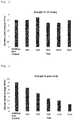
Fig. 1 is a graph showing the relationship between the strength of rich feeling of beer and the δ-cadinene concentration; -
Fig. 2 is a graph showing the relationship between the strength of grain smell of beer and the δ-cadinene concentration; -
Fig. 3 is a graph showing the relationship between the presence or absence of sharp feeling of beer and the δ-cadinene concentration; -
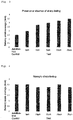
Fig. 4 is a graph showing the relationship between the strength of rich feeling of beer and the cubebol concentration; -
Fig. 5 is a graph showing the relationship between the strength of grain smell of beer and the cubebol concentration; and -
Fig. 6 is a graph showing the relationship between the presence or absence of sharp feeling of beer and the cubebol concentration. - The inventors of the present invention found that, by including specific amounts of δ-cadinene and cubebol in a malt beverage, a grain smell of the malt beverage could be reduced. Moreover, it was also found that, in such an occasion, rich feeling of the malt beverage was not substantially affected. Cubebol or δ-cadinene may be used alone, or may be mixed and included. Preferably, cubebol and δ-cadinene are included as a mixture.
- In the malt beverage of the present invention, the content of δ-cadinene is adjusted within a range of 3-10 ppb in concentration. When the concentration of cadinene is less than 3 ppb, the grain smell stands out, and sharp feeling becomes insufficient. When it exceeds 10 ppb, a flavor balance becomes worse. The content of δ-cadinene is preferably 5-8 ppb in concentration.
- In the malt beverage of the present invention, the content of cubebol is adjusted within a range of 3-20 ppb in concentration. When the concentration of cubebol is less than 3 ppb, the grain smell stands out, and sharp feeling becomes insufficient. When it exceeds 20 ppb, a flavor balance becomes worse. The content of cubebol is preferably 8-14 ppb in concentration.
- The concentration of δ-cadinene or cubebol can be measured using a GC/MS device. Specifically, first, 10 mL of a test sample was adjusted to have a pH of 9 using sodium hydroxide, and then mixed with 40 mL of hexane to perform hexane extraction. Subsequently, a hexane layer after the extraction was concentrated to 1 mL by evaporation. This concentrated solution was subjected to the GC/MS device.
- A method for including δ-cadinene and cubebol in the malt beverage is not particularly limited. δ-cadinene and cubebol may be included by adding them to the malt beverage, and may also be included by adjusting the kind and amount of raw material used.
- An example of a raw material containing δ-cadinene and cubebol includes Polaris-variety hops. Hops are raw materials used in producing a beer-like malt beverage for the purpose of imparting bitterness and refreshing aroma to beer, improving foam retention, and improving microbial durability. Furthermore, the form of hops added as raw materials may be hop pellets, and may also be hop extract. δ-cadinene and cubebol are included in a malt beverage when, for example, Polaris-variety hops are used as raw materials. For example, all or part of the hops of a commonly used variety may be replaced with Polaris-variety hops. When part of the hops of commonly used variety is replaced with Polaris-variety hops, the amount of Polaris-variety hops used is adjusted, as needed, to 3 wt% or more of commonly used hops, preferably within a range of 7-50 wt%, and more preferably 10-30 wt%, considering the contents of δ-cadinene and cubebol, and the flavor of the malt beverage.
- When Polaris-variety hops are used when producing a malt beverage, sesquiterpenes and derivatives thereof are also included in the malt beverage besides δ-cadinene and cubebol. Sesquiterpenes refer to a series of compounds having the chemical formula of C15H24. Examples of such sesquiterpenes and derivatives thereof include 4-epi-cubebol, α-cubebene, α-cadinol, α-cubebene, γ-muurolene, α-amorphene, and α-muurolene.
- It is considered that components derived from Polaris-variety hops, in particular the above sesquiterpenes and derivatives thereof increase the effect of reducing the grain smell. Therefore, it is preferred that the malt beverage of the present invention contains a component derived from Polaris-variety hops, in particular the at least one of the above sesquiterpenes and derivatives thereof.
- The content of hop-derived components may be a concentration generated in a malt beverage when Polaris-variety hops are used for producing the malt beverage. For example, it is an amount such that the peak area ratio is 0.2-3.0, preferably 0.5-2.5, and more preferably 0.8-1.6, measured using a GC/MS device with 6 ppb concentration of D-linalool serving as an internal standard.
- When δ-cadinene and cubebol are included in a malt beverage intended to reduce the grain smell, they can be included in a suitable step in the malt beverage production process. For example, when they are included in a beer-like fermented malt beverage, it may be any step such as before a saccharification step of a raw material solution such as wort, during boiling of wort, a cooling step after boiling of wort, a fermentation step or an aging step.
- The production of a malt beverage of the present invention is carried out in the same manner as in the method and conditions which are commonly carried out when producing beer or a beer-like beverage except that δ-cadinene and cubebol are included. For example, first, a malt crushed product, auxiliary raw materials such as barley, and warm water are added to a preparation tank, and mixed to prepare maische. The preparation of maische can be carried out by a conventional method, for example, can be carried out by holding at 35-60°C for 20-90 minutes. Also, as necessary, a diastatic enzyme described below, an enzyme agent such as protease, flavor components such as spices and herbs, and the like may be added besides the main raw material and the auxiliary raw materials.
- Grain subjected to saccharification contains malt. The content of malt in the grain subjected to saccharification is not particularly limited. It may be 25 wt% or more, preferably 50 wt% or more, and more preferably 67 wt% more. The grain subjected to saccharification may be 100% malt. The more the content of malt in the grain, the stronger umami and rich feeling derived from malt in the obtained wort become. Furthermore, the more the content of malt in the grain, the more the content of a nitrogen compound in the obtained wort. Thus, fermentation disorder hardly occurs when the wort is subjected to fermentation, and an unpleasant odor hardly occurs.
- Malt contains 2-acetylpyrroline as an aroma component. The higher the use ratio of malt, the higher the concentration of 2-acetylpyrroline concentration contained in a malt beverage. The malt beverage of the present invention preferably has a high malt use ratio, and preferably contains 2-acetylpyrroline in an amount of 0.2 ppb or more in concentration.
- Thereafter, the temperature of the maische was gradually raised followed by holding at a predetermined temperature for a fixed period to saccharify starch using an enzyme derived from malt or an enzyme added to the maische. The temperature and time during the saccharification treatment can be determined as needed, considering the kind of enzyme used and the amount of maische, the quality of the intended malt alcoholic beverage and the like. For example, it can be carried out by holding it at 60-72°C for 30-90 minutes. After the saccharification treatment, having been held at 76-78°C for about 10 minutes, the maische is filtered in a wort filtration tank to obtain a transparent saccharide solution. Furthermore, an appropriate amount of an enzyme drug may also be added when carrying out the saccharification treatment.
- The auxiliary raw materials mean raw materials other than malt and hops. As the auxiliary raw materials, there are, for example, starch raw materials such as barley, wheat, corn starch, corn grits, rice, and kaoliang; carbohydrate raw materials such as liquid saccharide and sugar. Here, liquid saccharide is a substance obtained by decomposing, and saccharifying starch using an acid or a diastatic enzyme, and mainly contains glucose, maltose, maltotriose and the like. Besides them, spices and herbs used for imparting or improving flavor are also included in the auxiliary raw materials.
- The diastatic enzyme means an enzyme for decomposing starch into saccharide. As the diastatic enzyme, there are, for example, α-amylase, glucoamylase, pullanase and the like.
- Grain subjected to saccharification includes malt. The content of malt in the grain used for saccharification is not particularly limited. It is 5 wt% or more, preferably 50 wt% or more, and more preferably 67 wt% or more. The grain used for saccharification may be 100% malt. The more the content of malt in the grain, the stronger umami and rich feeling derived from malt in the obtained wort become.
- Wort boiling operation is preferably carried out according to the method and conditions which are commonly carried out when producing beer or a beer-like beverage. For example, a saccharide solution, of which pH has been adjusted, is transferred to a boiling kettle, and boiled. During the time from the start of boiling of the saccharide solution until being left to stand in a whirlpool, hops are added. Hop extract or a component extracted from hops may be used as hops. The saccharide solution is then transferred to a precipitation tank called a whirlpool. After removing hop residue and curdled protein produced by boiling, the resulting solution is cooled to an appropriate fermentation temperature by a plate cooler. Wort is obtained by the above wort boiling operation.
- The obtained wort is fermented, for example, and can be used as a raw material for producing an alcohol-containing beer-like fermented malt beverage. Fermentation of wort may be carried out according to a conventional method. For example, yeast is inoculated into cooled wort, and transferred to a fermentation tank to carry out alcohol fermentation. Furthermore, as an aging step, the resulting fermentation liquid is aged in a liquor storage tank, and stored under a low temperature condition of about 0°C to be stabilized. Then, as a filtration step, yeast, protein and the like are removed by filtering the fermentation liquid after aging, so that the intended alcohol-containing beer-like fermented malt beverage is obtained.
- A method for producing a non-fermented beer-like malt beverage according to the present invention comprises steps which are usually carried out when producing a non-fermented beer-like malt beverage, except that δ-cadinene and cubebol are included in a suitable step. As an example, first, a malt-derived material, polymeric saccharide, a sweet substance and other components are mixed in predetermined amounts to prepare a blend. Then, a predetermined amount of drinking water is added to the blend to prepare a primary raw material liquid. Hops are added to boil the primary raw material liquid, followed by cooling, addition of liquors, and addition of carbonic acid by a carbonation step.
- The liquors added serve as an alcohol source, for example, raw material alcohol, shochu, awamori, whisky, brandy, vodka, rum, tequila, gin, spirits and the like can be used. Among these, raw material alcohol is commonly used from the perspective of cost. Raw material alcohol includes those in which an alcohol-fermented liquid using as a raw material molasses obtained from sugarcane and the like is distilled to an ethanol concentration of about 95% by a continuous distillation still, and then diluted as needed, with the ethanol concentration of 45% as a lower limit to be used.
- As necessary, precipitates can also be separated and removed in each step by filtration, centrifugation and the like. Also, after the above raw material liquid has been prepared in a thick state, carbonated water may be added. These enable a non-fermented beer-like alcoholic beverage to be simply prepared by using a common production process of a soft drink without having fermentation facilities.
- If precipitates are removed before the carbonation step and carbonated water addition step, a causative substance for lees or off-flavors can be removed, which is more preferred. As necessary, filtration and sterilization may also be performed before the carbonation step or carbonated water addition step.
- The malt beverage of the present invention preferably exhibits bitterness to some extent. By doing so, when δ-cadinene and cubebol are included, the grain smell is modest, ease of drinking and sharp feeling are improved, and cool feeling is imparted. The malt beverage of the present invention has a bitterness value of 10° EBC or more, and preferably 18° EBC or more. The bitterness of the malt beverage can be increased by means such as increasing the amount of hops used, adding hop extract and the like.
- The present invention will be further specifically described by Examples below. However, the present invention is not limited to them.
- Commercially available beer A was prepared. This beer A was divided into 6 aliquots. One of them was additive-free to use it as a control, and to the remaining 5 aliquots was added δ-cadinene so that respective concentrations thereof were 3, 5, 9, 13 and 20 ppb.
- Sensory evaluations of the obtained beers were conducted by 4 well-trained panelists under blind condition. The strength of rich feeling, strength of grain smell, and presence or absence of sharp feeling were provided as performance items to be evaluated. Five grades of evaluation criteria were provided as follows. The scoring results by the respective panelists are shown in Table 1. Furthermore, average values of the scoring results for each concentration are shown in
Figs. 1-3 . -
- 5:
- very strong
- 4:
- strong
- 3:
- strong to some extent
- 2:
- slightly weak
- 1:
- weak
-
- 5:
- very strong
- 4:
- strong
- 3:
- strong to some extent
- 2:
- slightly weak
- 1:
- weak
-
- 5:
- very crisp
- 4:
- crisp
- 3:
- crisp to some extent
- 2:
- slightly less crisp
- 1:
- not crisp
- A beer was produced in the same manner as in Example 1 except that, in place of δ-cadinene, cubebol was added so that respective concentrations thereof were 3, 10, 20, 25 and 35 ppb, and sensory evaluations were conducted. The scoring results by the respective panelists are shown in Table 2. Furthermore, average values of the scoring results for each concentration are shown in
Figs. 4-6 .[Table 2] Control Test Additive-free 3 ppb 10 ppb 20 ppb 25 ppb 35 ppb Strength of rich feeling Panel 1 3 3 2 2 2 2 Panel 22 2 2 2 3 3 Panel 33 3 3 3 3 2 Panel 42 2 2 2 2 2 Strength of grain smell Panel 1 4 3 3 2 2 1 Panel 24 4 3 2 2 1 Panel 34 4 3 3 2 1 Panel 43 3 3 2 2 1 Presence or absence of sharp feeling Panel 1 1 1 2 2 3 4 Panel 21 2 3 3 3 3 Panel 32 2 3 3 3 4 Panel 42 2 3 3 3 3 - 40 kg of crushed malt was mixed with hot water, saccharified and filtered to obtain 160 L of wort. To this were added 0.9 kg of Polaris-variety hops followed by boiling for 60 minutes. After boiling, the mixture was cooled, and a predetermined amount of yeast was added thereto, followed by fermentation for 7 days. The fermented green beer was aged for 10 days, and filtered after cooling.
- The bitterness value of the obtained beer was measured. It was 8° EBC.
- 40 kg of crushed malt was mixed with hot water, saccharified and filtered to obtain 160 L of wort. To this were added 0.9 kg of Polaris-variety hops followed by boiling for 60 minutes. After boiling, the mixture was cooled, and a predetermined amount of yeast was added thereto, followed by fermentation for 7 days. To the fermented green beer was added isomerized hop extract so that the bitterness value increased by 10° EBC in terms of the product beer. The resulting mixture was then aged and cooled to obtain a product beer.
- The bitterness value of the obtained beer was measured. It was 18° EBC.
- Sensory evaluations of the obtained beers were conducted by 4 well-trained panelists under blind condition. The strength of grain smell, and presence or absence of sharp feeling were provided as performance items to be evaluated. Five grades of evaluation criteria were provided as follows. Average values of the scoring results by the respective panelists are shown in Table 3.
-
- 5:
- very strong
- 4:
- strong
- 3:
- strong to some extent
- 2:
- slightly weak
- 1:
- weak
-
- 5:
- very crisp
- 4:
- crisp
- 3:
- crisp to some extent
- 2:
- slightly less crisp
- 1:
- not crisp
-
- 5:
- having a very intense cool feeling
- 4:
- having a cool feeling
- 3:
- having a cool feeling to some extent
- 2:
- having a slightly less intense cool feeling
- 1:
- having no cool feeling
- From the results of Example 3, it is understood that, in malt beverages using Polaris-variety hops, the malt beverages with higher bitterness values had a reduced grain smell and increased sharp feeling than those having lower bitterness values. It is also understood that the higher the bitterness value, the more intense the cool feeling becomes.
| Control | Test | |||||||
| Additive-free | 3 ppb | 5 ppb | 9 ppb | 13 ppb | 20 ppb | |||
| Strength of | Panel | 1 | 3 | 3 | 3 | 2 | 2 | 2 |
| |
2 | 2 | 2 | 2 | 2 | 2 | ||
| |
3 | 3 | 3 | 3 | 3 | 3 | ||
| |
2 | 2 | 3 | 2 | 2 | 2 | ||
| Strength of | Panel | 1 | 4 | 3 | 3 | 2 | 2 | 1 |
| |
4 | 4 | 3 | 2 | 2 | 1 | ||
| |
4 | 3 | 2 | 2 | 1 | 1 | ||
| |
4 | 3 | 2 | 1 | 1 | 1 | ||
| Presence or absence of | Panel | 1 | 1 | 2 | 3 | 3 | 3 | 4 |
| |
1 | 2 | 2 | 3 | 3 | 3 | ||
| |
2 | 2 | 3 | 3 | 3 | 4 | ||
| |
2 | 2 | 3 | 3 | 3 | 3 | ||
| Control product | Test product | |
| Bitterness value° EBC | 8 | 18 |
| Grain smell arade (average) | 4.0 | 2.3 |
| Grade of sharp feeling (average) | 2.3 | 4.5 |
| Grade of cool feeling (average) | 1.5 | 4.5 |
Claims (13)
- A malt beverage containing δ-cadinene at a concentration of 3-10 ppb.
- A malt beverage containing cubebol at a concentration of 3-20 ppb.
- A malt beverage containing δ-cadinene at a concentration of 3-10 ppb, and containing cubebol at a concentration of 3-20 ppb.
- The malt beverage according to any one of claims 1-3, further containing at least one sesquiterpenes selected from the group consisting of 4-epi-cubebol, α-cubebene, α-cadinol, α-cubebene, γ-muurolene, α-amorphene and α-muurolene, and derivatives thereof.
- The malt beverage according to claim 4, wherein any one of the sesquiterpenes and derivatives thereof is contained in an amount such that the peak area ratio is 0.2-3.0 measured using a GC/MS device with 6 ppb concentration of D-linalool serving as an internal standard.
- The malt beverage according to any one of claims 1-5 containing sesquiterpenes derived from Polaris-variety hops and derivatives thereof.
- The malt beverage according to any one of claims 1-6 having a bitterness value of 10° EBC or more.
- The malt beverage according to any one of claims 1-7, wherein grain as a raw material contains 25 wt% or more of malt.
- The malt beverage according to any one of claims 1-8 which is a beer-like fermented malt beverage.
- A method for reducing a grain smell of a malt beverage, wherein the method comprises including δ-cadinene at a concentration of 3-10 ppb, and including cubebol at a concentration of 3-20 ppb.
- The method for reducing a grain smell of a malt beverage according to claim 10, wherein the method further comprises adjusting the bitterness value to 10° EBC or more.
- A malt beverage for experiencing a cool feeling, wherein the beverage contains δ-cadinene at a concentration of 3-10 ppb, and contains cubebol at a concentration of 3-20 ppb.
- The malt beverage for experiencing a cool feeling according to claim 12, wherein the beverage has a bitterness value of 10° EBC or more.
Applications Claiming Priority (2)
| Application Number | Priority Date | Filing Date | Title |
|---|---|---|---|
| JP2017071595A JP6910177B2 (en) | 2017-03-31 | 2017-03-31 | Malt beverage with reduced grain aroma |
| PCT/JP2018/001865 WO2018179725A1 (en) | 2017-03-31 | 2018-01-23 | Malt beverage having suppressed grain odor |
Publications (4)
| Publication Number | Publication Date |
|---|---|
| EP3604491A1 true EP3604491A1 (en) | 2020-02-05 |
| EP3604491A4 EP3604491A4 (en) | 2021-01-27 |
| EP3604491B1 EP3604491B1 (en) | 2023-10-18 |
| EP3604491C0 EP3604491C0 (en) | 2023-10-18 |
Family
ID=63674618
Family Applications (1)
| Application Number | Title | Priority Date | Filing Date |
|---|---|---|---|
| EP18777892.3A Active EP3604491B1 (en) | 2017-03-31 | 2018-01-23 | Malt beverage having suppressed grain odor |
Country Status (8)
| Country | Link |
|---|---|
| US (1) | US11412763B2 (en) |
| EP (1) | EP3604491B1 (en) |
| JP (2) | JP6910177B2 (en) |
| KR (1) | KR102498654B1 (en) |
| CN (1) | CN110475847B (en) |
| AU (1) | AU2018245595B2 (en) |
| TW (1) | TWI750331B (en) |
| WO (1) | WO2018179725A1 (en) |
Families Citing this family (2)
| Publication number | Priority date | Publication date | Assignee | Title |
|---|---|---|---|---|
| JP7522575B2 (en) * | 2020-03-27 | 2024-07-25 | サッポロビール株式会社 | Carbonated alcoholic beverage, method for producing carbonated alcoholic beverage, and method for improving flavor of carbonated alcoholic beverage |
| JP7854293B2 (en) * | 2021-12-24 | 2026-05-01 | サッポロビール株式会社 | Beer-flavored beverage, method for manufacturing the same, and method for improving its flavor. |
Family Cites Families (13)
| Publication number | Priority date | Publication date | Assignee | Title |
|---|---|---|---|---|
| JPH11276151A (en) * | 1998-03-31 | 1999-10-12 | Suntory Ltd | Improvement of flavor of whisky |
| EP1682641B1 (en) | 2003-11-04 | 2007-06-27 | Firmenich Sa | Flavor ingredients for cooling preparations |
| WO2010079778A1 (en) * | 2009-01-08 | 2010-07-15 | 麒麟麦酒株式会社 | Improvement of flavor of unfermented beer-flavored malt beverage |
| DE102010002558A1 (en) * | 2009-11-20 | 2011-06-01 | Symrise Ag | Use of physiological cooling agents and agents containing such agents |
| JP5836572B2 (en) * | 2010-07-30 | 2015-12-24 | 麒麟麦酒株式会社 | Beer-taste beverage with a fruit-like aroma with a mandarin-like scent and a method for producing the same |
| JP5972521B2 (en) * | 2010-07-30 | 2016-08-17 | 麒麟麦酒株式会社 | Beer-taste beverage with pineapple-like fruit aroma and method for producing the same |
| JP5950748B2 (en) | 2012-08-08 | 2016-07-13 | アサヒビール株式会社 | Beer-like malt beverage with reduced grain flavor |
| WO2014090803A1 (en) | 2012-12-11 | 2014-06-19 | Dsm Ip Assets B.V. | Preparation of a stable beverage |
| JP6157920B2 (en) * | 2013-05-10 | 2017-07-05 | アサヒビール株式会社 | Fermented beer-taste beverage, method for producing fermented beer-taste beverage, and method for inhibiting flavor deterioration of fermented beer-taste beverage |
| JP6490886B2 (en) | 2013-09-03 | 2019-03-27 | アサヒビール株式会社 | Beer-taste beverage using lyophilized hop as raw material and method for enhancing hop aroma |
| US20170318848A1 (en) | 2014-11-28 | 2017-11-09 | Takasago International Corporation | Flavor-improving agent |
| JP6280264B1 (en) * | 2016-08-12 | 2018-02-14 | アサヒビール株式会社 | Citrus fruit-like beverage and method for producing the same |
| JP6491265B2 (en) * | 2017-06-06 | 2019-03-27 | アサヒビール株式会社 | Non-alcohol beer-taste beverage, non-alcohol beer-taste beverage production method, and non-alcohol beer-taste beverage deterioration control method |
-
2017
- 2017-03-31 JP JP2017071595A patent/JP6910177B2/en active Active
-
2018
- 2018-01-23 KR KR1020197026179A patent/KR102498654B1/en active Active
- 2018-01-23 WO PCT/JP2018/001865 patent/WO2018179725A1/en not_active Ceased
- 2018-01-23 CN CN201880021665.7A patent/CN110475847B/en active Active
- 2018-01-23 AU AU2018245595A patent/AU2018245595B2/en active Active
- 2018-01-23 EP EP18777892.3A patent/EP3604491B1/en active Active
- 2018-01-23 US US16/493,083 patent/US11412763B2/en active Active
- 2018-02-26 TW TW107106395A patent/TWI750331B/en active
-
2021
- 2021-03-26 JP JP2021053591A patent/JP7181333B2/en active Active
Also Published As
| Publication number | Publication date |
|---|---|
| JP2021100431A (en) | 2021-07-08 |
| TW201842179A (en) | 2018-12-01 |
| EP3604491B1 (en) | 2023-10-18 |
| AU2018245595B2 (en) | 2022-06-16 |
| TWI750331B (en) | 2021-12-21 |
| EP3604491A4 (en) | 2021-01-27 |
| US11412763B2 (en) | 2022-08-16 |
| JP6910177B2 (en) | 2021-07-28 |
| US20210186060A1 (en) | 2021-06-24 |
| EP3604491C0 (en) | 2023-10-18 |
| JP7181333B2 (en) | 2022-11-30 |
| CN110475847B (en) | 2023-07-18 |
| CN110475847A (en) | 2019-11-19 |
| KR102498654B1 (en) | 2023-02-09 |
| JP2018171004A (en) | 2018-11-08 |
| KR20190129855A (en) | 2019-11-20 |
| WO2018179725A1 (en) | 2018-10-04 |
| AU2018245595A1 (en) | 2019-10-17 |
Similar Documents
| Publication | Publication Date | Title |
|---|---|---|
| JP2021036907A (en) | Non-sweet beverage | |
| JP6282631B2 (en) | Method for producing fermented low alcohol beer flavored malt beverage | |
| JP6309181B1 (en) | Beer-like alcoholic beverage | |
| JP2017046627A (en) | Malt fermented beverage | |
| JP2021136961A (en) | Beer-like beverage | |
| JP7181333B2 (en) | Malt beverage with reduced grain aroma | |
| JP5855579B2 (en) | Process for producing beer-like sparkling fermented beverages with high pyruvic acid content | |
| JP6997532B2 (en) | A method for producing a beer-like effervescent beverage and a method for improving the sharpness of a beer-like effervescent beverage. | |
| JP7320918B2 (en) | Beer-like fermented malt beverage | |
| JP6948835B2 (en) | Malt beverage and its manufacturing method | |
| WO2018092656A1 (en) | Beer-like beverage | |
| JP2023042249A (en) | Beer-like fermented malt beverage | |
| RU2816894C2 (en) | Beer-flavored beverage | |
| RU2825472C1 (en) | Fermented malt beverage with beer taste | |
| JP2007110910A (en) | Method for producing sparkling beverage and sparkling beverage produced by the method | |
| JP2023132525A (en) | Fermented beer-like sparkling beverage and its manufacturing method | |
| WO2025154727A1 (en) | Fermented beer-like sparkling beverage | |
| JP2026013214A (en) | Beer-like malt beverage and method for producing same | |
| JP2006204172A (en) | Method for producing sparkling beverage using sorghum degradation product | |
| JP2025010874A (en) | Packaged fermented malt beverage | |
| JP2025065174A (en) | Method for enhancing the bacteriostasis of beer-like beverages | |
| HK40059489A (en) | Fermented malt beverage having beer taste |
Legal Events
| Date | Code | Title | Description |
|---|---|---|---|
| STAA | Information on the status of an ep patent application or granted ep patent |
Free format text: STATUS: THE INTERNATIONAL PUBLICATION HAS BEEN MADE |
|
| PUAI | Public reference made under article 153(3) epc to a published international application that has entered the european phase |
Free format text: ORIGINAL CODE: 0009012 |
|
| STAA | Information on the status of an ep patent application or granted ep patent |
Free format text: STATUS: REQUEST FOR EXAMINATION WAS MADE |
|
| 17P | Request for examination filed |
Effective date: 20190926 |
|
| AK | Designated contracting states |
Kind code of ref document: A1 Designated state(s): AL AT BE BG CH CY CZ DE DK EE ES FI FR GB GR HR HU IE IS IT LI LT LU LV MC MK MT NL NO PL PT RO RS SE SI SK SM TR |
|
| AX | Request for extension of the european patent |
Extension state: BA ME |
|
| DAV | Request for validation of the european patent (deleted) | ||
| DAX | Request for extension of the european patent (deleted) | ||
| A4 | Supplementary search report drawn up and despatched |
Effective date: 20210113 |
|
| RIC1 | Information provided on ipc code assigned before grant |
Ipc: A23L 2/38 20060101ALI20201222BHEP Ipc: C12C 5/02 20060101AFI20201222BHEP Ipc: A23L 2/56 20060101ALI20201222BHEP |
|
| GRAP | Despatch of communication of intention to grant a patent |
Free format text: ORIGINAL CODE: EPIDOSNIGR1 |
|
| STAA | Information on the status of an ep patent application or granted ep patent |
Free format text: STATUS: GRANT OF PATENT IS INTENDED |
|
| INTG | Intention to grant announced |
Effective date: 20230526 |
|
| GRAS | Grant fee paid |
Free format text: ORIGINAL CODE: EPIDOSNIGR3 |
|
| GRAA | (expected) grant |
Free format text: ORIGINAL CODE: 0009210 |
|
| STAA | Information on the status of an ep patent application or granted ep patent |
Free format text: STATUS: THE PATENT HAS BEEN GRANTED |
|
| AK | Designated contracting states |
Kind code of ref document: B1 Designated state(s): AL AT BE BG CH CY CZ DE DK EE ES FI FR GB GR HR HU IE IS IT LI LT LU LV MC MK MT NL NO PL PT RO RS SE SI SK SM TR |
|
| REG | Reference to a national code |
Ref country code: GB Ref legal event code: FG4D |
|
| REG | Reference to a national code |
Ref country code: CH Ref legal event code: EP |
|
| REG | Reference to a national code |
Ref country code: IE Ref legal event code: FG4D |
|
| REG | Reference to a national code |
Ref country code: DE Ref legal event code: R096 Ref document number: 602018059632 Country of ref document: DE |
|
| U01 | Request for unitary effect filed |
Effective date: 20231018 |
|
| U07 | Unitary effect registered |
Designated state(s): AT BE BG DE DK EE FI FR IT LT LU LV MT NL PT SE SI Effective date: 20231027 |
|
| U20 | Renewal fee for the european patent with unitary effect paid |
Year of fee payment: 7 Effective date: 20240111 |
|
| PG25 | Lapsed in a contracting state [announced via postgrant information from national office to epo] |
Ref country code: GR Free format text: LAPSE BECAUSE OF FAILURE TO SUBMIT A TRANSLATION OF THE DESCRIPTION OR TO PAY THE FEE WITHIN THE PRESCRIBED TIME-LIMIT Effective date: 20240119 |
|
| PG25 | Lapsed in a contracting state [announced via postgrant information from national office to epo] |
Ref country code: IS Free format text: LAPSE BECAUSE OF FAILURE TO SUBMIT A TRANSLATION OF THE DESCRIPTION OR TO PAY THE FEE WITHIN THE PRESCRIBED TIME-LIMIT Effective date: 20240218 |
|
| PG25 | Lapsed in a contracting state [announced via postgrant information from national office to epo] |
Ref country code: ES Free format text: LAPSE BECAUSE OF FAILURE TO SUBMIT A TRANSLATION OF THE DESCRIPTION OR TO PAY THE FEE WITHIN THE PRESCRIBED TIME-LIMIT Effective date: 20231018 |
|
| PG25 | Lapsed in a contracting state [announced via postgrant information from national office to epo] |
Ref country code: IS Free format text: LAPSE BECAUSE OF FAILURE TO SUBMIT A TRANSLATION OF THE DESCRIPTION OR TO PAY THE FEE WITHIN THE PRESCRIBED TIME-LIMIT Effective date: 20240218 Ref country code: GR Free format text: LAPSE BECAUSE OF FAILURE TO SUBMIT A TRANSLATION OF THE DESCRIPTION OR TO PAY THE FEE WITHIN THE PRESCRIBED TIME-LIMIT Effective date: 20240119 Ref country code: ES Free format text: LAPSE BECAUSE OF FAILURE TO SUBMIT A TRANSLATION OF THE DESCRIPTION OR TO PAY THE FEE WITHIN THE PRESCRIBED TIME-LIMIT Effective date: 20231018 |
|
| PG25 | Lapsed in a contracting state [announced via postgrant information from national office to epo] |
Ref country code: RS Free format text: LAPSE BECAUSE OF FAILURE TO SUBMIT A TRANSLATION OF THE DESCRIPTION OR TO PAY THE FEE WITHIN THE PRESCRIBED TIME-LIMIT Effective date: 20231018 Ref country code: PL Free format text: LAPSE BECAUSE OF FAILURE TO SUBMIT A TRANSLATION OF THE DESCRIPTION OR TO PAY THE FEE WITHIN THE PRESCRIBED TIME-LIMIT Effective date: 20231018 Ref country code: NO Free format text: LAPSE BECAUSE OF FAILURE TO SUBMIT A TRANSLATION OF THE DESCRIPTION OR TO PAY THE FEE WITHIN THE PRESCRIBED TIME-LIMIT Effective date: 20240118 Ref country code: HR Free format text: LAPSE BECAUSE OF FAILURE TO SUBMIT A TRANSLATION OF THE DESCRIPTION OR TO PAY THE FEE WITHIN THE PRESCRIBED TIME-LIMIT Effective date: 20231018 |
|
| REG | Reference to a national code |
Ref country code: DE Ref legal event code: R097 Ref document number: 602018059632 Country of ref document: DE |
|
| PG25 | Lapsed in a contracting state [announced via postgrant information from national office to epo] |
Ref country code: CZ Free format text: LAPSE BECAUSE OF FAILURE TO SUBMIT A TRANSLATION OF THE DESCRIPTION OR TO PAY THE FEE WITHIN THE PRESCRIBED TIME-LIMIT Effective date: 20231018 |
|
| PG25 | Lapsed in a contracting state [announced via postgrant information from national office to epo] |
Ref country code: SK Free format text: LAPSE BECAUSE OF FAILURE TO SUBMIT A TRANSLATION OF THE DESCRIPTION OR TO PAY THE FEE WITHIN THE PRESCRIBED TIME-LIMIT Effective date: 20231018 |
|
| PG25 | Lapsed in a contracting state [announced via postgrant information from national office to epo] |
Ref country code: SM Free format text: LAPSE BECAUSE OF FAILURE TO SUBMIT A TRANSLATION OF THE DESCRIPTION OR TO PAY THE FEE WITHIN THE PRESCRIBED TIME-LIMIT Effective date: 20231018 Ref country code: SK Free format text: LAPSE BECAUSE OF FAILURE TO SUBMIT A TRANSLATION OF THE DESCRIPTION OR TO PAY THE FEE WITHIN THE PRESCRIBED TIME-LIMIT Effective date: 20231018 Ref country code: RO Free format text: LAPSE BECAUSE OF FAILURE TO SUBMIT A TRANSLATION OF THE DESCRIPTION OR TO PAY THE FEE WITHIN THE PRESCRIBED TIME-LIMIT Effective date: 20231018 Ref country code: CZ Free format text: LAPSE BECAUSE OF FAILURE TO SUBMIT A TRANSLATION OF THE DESCRIPTION OR TO PAY THE FEE WITHIN THE PRESCRIBED TIME-LIMIT Effective date: 20231018 |
|
| PLBE | No opposition filed within time limit |
Free format text: ORIGINAL CODE: 0009261 |
|
| STAA | Information on the status of an ep patent application or granted ep patent |
Free format text: STATUS: NO OPPOSITION FILED WITHIN TIME LIMIT |
|
| PG25 | Lapsed in a contracting state [announced via postgrant information from national office to epo] |
Ref country code: MC Free format text: LAPSE BECAUSE OF FAILURE TO SUBMIT A TRANSLATION OF THE DESCRIPTION OR TO PAY THE FEE WITHIN THE PRESCRIBED TIME-LIMIT Effective date: 20231018 |
|
| PG25 | Lapsed in a contracting state [announced via postgrant information from national office to epo] |
Ref country code: MC Free format text: LAPSE BECAUSE OF FAILURE TO SUBMIT A TRANSLATION OF THE DESCRIPTION OR TO PAY THE FEE WITHIN THE PRESCRIBED TIME-LIMIT Effective date: 20231018 |
|
| REG | Reference to a national code |
Ref country code: CH Ref legal event code: PL |
|
| 26N | No opposition filed |
Effective date: 20240719 |
|
| PG25 | Lapsed in a contracting state [announced via postgrant information from national office to epo] |
Ref country code: CH Free format text: LAPSE BECAUSE OF NON-PAYMENT OF DUE FEES Effective date: 20240131 |
|
| PG25 | Lapsed in a contracting state [announced via postgrant information from national office to epo] |
Ref country code: CH Free format text: LAPSE BECAUSE OF NON-PAYMENT OF DUE FEES Effective date: 20240131 |
|
| U20 | Renewal fee for the european patent with unitary effect paid |
Year of fee payment: 8 Effective date: 20241205 |
|
| PG25 | Lapsed in a contracting state [announced via postgrant information from national office to epo] |
Ref country code: IE Free format text: LAPSE BECAUSE OF NON-PAYMENT OF DUE FEES Effective date: 20240123 |
|
| PG25 | Lapsed in a contracting state [announced via postgrant information from national office to epo] |
Ref country code: IE Free format text: LAPSE BECAUSE OF NON-PAYMENT OF DUE FEES Effective date: 20240123 |
|
| PG25 | Lapsed in a contracting state [announced via postgrant information from national office to epo] |
Ref country code: CY Free format text: LAPSE BECAUSE OF FAILURE TO SUBMIT A TRANSLATION OF THE DESCRIPTION OR TO PAY THE FEE WITHIN THE PRESCRIBED TIME-LIMIT; INVALID AB INITIO Effective date: 20180123 |
|
| PG25 | Lapsed in a contracting state [announced via postgrant information from national office to epo] |
Ref country code: HU Free format text: LAPSE BECAUSE OF FAILURE TO SUBMIT A TRANSLATION OF THE DESCRIPTION OR TO PAY THE FEE WITHIN THE PRESCRIBED TIME-LIMIT; INVALID AB INITIO Effective date: 20180123 |
|
| PG25 | Lapsed in a contracting state [announced via postgrant information from national office to epo] |
Ref country code: TR Free format text: LAPSE BECAUSE OF FAILURE TO SUBMIT A TRANSLATION OF THE DESCRIPTION OR TO PAY THE FEE WITHIN THE PRESCRIBED TIME-LIMIT Effective date: 20231018 |
|
| PGFP | Annual fee paid to national office [announced via postgrant information from national office to epo] |
Ref country code: GB Payment date: 20251204 Year of fee payment: 9 |
|
| U20 | Renewal fee for the european patent with unitary effect paid |
Year of fee payment: 9 Effective date: 20251205 |