EP3603262B1 - Mehrere start- und endpositionen für die geplante oder autonome uplink-übertragung im unlizenzierten spektrum - Google Patents
Mehrere start- und endpositionen für die geplante oder autonome uplink-übertragung im unlizenzierten spektrum Download PDFInfo
- Publication number
- EP3603262B1 EP3603262B1 EP18717998.1A EP18717998A EP3603262B1 EP 3603262 B1 EP3603262 B1 EP 3603262B1 EP 18717998 A EP18717998 A EP 18717998A EP 3603262 B1 EP3603262 B1 EP 3603262B1
- Authority
- EP
- European Patent Office
- Prior art keywords
- transmission
- tti
- start position
- wireless communication
- communication device
- Prior art date
- Legal status (The legal status is an assumption and is not a legal conclusion. Google has not performed a legal analysis and makes no representation as to the accuracy of the status listed.)
- Active
Links
Images








Classifications
-
- H—ELECTRICITY
- H04—ELECTRIC COMMUNICATION TECHNIQUE
- H04W—WIRELESS COMMUNICATION NETWORKS
- H04W74/00—Wireless channel access
- H04W74/08—Non-scheduled access, e.g. ALOHA
- H04W74/0808—Non-scheduled access, e.g. ALOHA using carrier sensing, e.g. carrier sense multiple access [CSMA]
-
- H—ELECTRICITY
- H04—ELECTRIC COMMUNICATION TECHNIQUE
- H04L—TRANSMISSION OF DIGITAL INFORMATION, e.g. TELEGRAPHIC COMMUNICATION
- H04L1/00—Arrangements for detecting or preventing errors in the information received
- H04L1/0001—Systems modifying transmission characteristics according to link quality, e.g. power backoff
- H04L1/0002—Systems modifying transmission characteristics according to link quality, e.g. power backoff by adapting the transmission rate
- H04L1/0003—Systems modifying transmission characteristics according to link quality, e.g. power backoff by adapting the transmission rate by switching between different modulation schemes
-
- H—ELECTRICITY
- H04—ELECTRIC COMMUNICATION TECHNIQUE
- H04L—TRANSMISSION OF DIGITAL INFORMATION, e.g. TELEGRAPHIC COMMUNICATION
- H04L5/00—Arrangements affording multiple use of the transmission path
- H04L5/003—Arrangements for allocating sub-channels of the transmission path
- H04L5/0078—Timing of allocation
- H04L5/0082—Timing of allocation at predetermined intervals
-
- H—ELECTRICITY
- H04—ELECTRIC COMMUNICATION TECHNIQUE
- H04W—WIRELESS COMMUNICATION NETWORKS
- H04W72/00—Local resource management
- H04W72/04—Wireless resource allocation
- H04W72/044—Wireless resource allocation based on the type of the allocated resource
- H04W72/0446—Resources in time domain, e.g. slots or frames
-
- H—ELECTRICITY
- H04—ELECTRIC COMMUNICATION TECHNIQUE
- H04W—WIRELESS COMMUNICATION NETWORKS
- H04W72/00—Local resource management
- H04W72/12—Wireless traffic scheduling
-
- H—ELECTRICITY
- H04—ELECTRIC COMMUNICATION TECHNIQUE
- H04W—WIRELESS COMMUNICATION NETWORKS
- H04W72/00—Local resource management
- H04W72/12—Wireless traffic scheduling
- H04W72/1263—Mapping of traffic onto schedule, e.g. scheduled allocation or multiplexing of flows
- H04W72/1268—Mapping of traffic onto schedule, e.g. scheduled allocation or multiplexing of flows of uplink data flows
-
- H—ELECTRICITY
- H04—ELECTRIC COMMUNICATION TECHNIQUE
- H04W—WIRELESS COMMUNICATION NETWORKS
- H04W74/00—Wireless channel access
- H04W74/08—Non-scheduled access, e.g. ALOHA
- H04W74/0808—Non-scheduled access, e.g. ALOHA using carrier sensing, e.g. carrier sense multiple access [CSMA]
- H04W74/0816—Non-scheduled access, e.g. ALOHA using carrier sensing, e.g. carrier sense multiple access [CSMA] with collision avoidance
-
- H—ELECTRICITY
- H04—ELECTRIC COMMUNICATION TECHNIQUE
- H04W—WIRELESS COMMUNICATION NETWORKS
- H04W16/00—Network planning, e.g. coverage or traffic planning tools; Network deployment, e.g. resource partitioning or cells structures
- H04W16/14—Spectrum sharing arrangements between different networks
-
- H—ELECTRICITY
- H04—ELECTRIC COMMUNICATION TECHNIQUE
- H04W—WIRELESS COMMUNICATION NETWORKS
- H04W76/00—Connection management
- H04W76/20—Manipulation of established connections
- H04W76/27—Transitions between radio resource control [RRC] states
Definitions
- LAA Licensed-Assisted Access
- sTTI short transmission time interval
- LAA Licensed-Assisted Access
- Candidate bands for LTE operation in the unlicensed spectrum include 5 GHz, 3.5 GHz, etc.
- the unlicensed spectrum can be used as a complement to the licensed spectrum or for standalone operation.
- a carrier aggregation (CA) framework allows aggregation of two or more carriers with the condition that at least one carrier (or frequency channel) is in the licensed spectrum and at least one carrier is in the unlicensed spectrum.
- CA carrier aggregation
- LBT listen-before-talk
- Wi-Fi Wireless Local Area Network
- LTE uses OFDM in the downlink and discrete Fourier transform spread (DFTS) spread orthogonal frequency division multiplexing (OFDM) (DFTS-OFDM) (also referred to as single-carrier FDMA) in the uplink.
- DFTS discrete Fourier transform spread
- OFDM orthogonal frequency division multiplexing
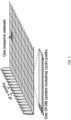
- the basic LTE downlink physical resource can thus be seen as a time-frequency grid as illustrated in Figure ( FIG.) 1 where each resource element (RE) corresponds to one OFDM subcarrier during one OFDM symbol interval.
- the uplink subframe has the same subcarrier spacing as the downlink and the same number of SC-FDMA symbols in the time domain as OFDM symbols in the downlink.
- Each subframe comprises two slots of duration 0.5 ms each, and the slot numbering within a frame ranges from 0 to 19.
- one subframe consists of 14 OFDM symbols. The duration of each symbol is approximately 71.4 ⁇ s.
- resource allocation in LTE is typically described in terms of resource blocks, where a resource block corresponds to one slot (0.5 ms) in the time domain and 12 contiguous subcarriers in the frequency domain.
- a pair of two adjacent resource blocks in time direction (1.0 ms) is known as a resource block pair.
- Resource blocks are numbered in the frequency domain, starting with 0 from one end of the system bandwidth.
- Downlink transmissions are dynamically scheduled, i.e., in each subframe the base station transmits control information about which terminals data is transmitted to and upon which resource blocks the data is transmitted, in the current downlink subframe.
- CFI Control Format Indicator
- the downlink subframe also contains common reference symbols, which are known to the receiver and used for coherent demodulation of e.g. the control information.
- the reference symbols shown in FIG. 3 are cell specific reference symbols (CRS) and are used to support multiple functions including fine time and frequency synchronization and channel estimation for certain transmission modes.
- CRS cell specific reference symbols
- Uplink transmissions are dynamically scheduled, i.e., in each downlink subframe the base station transmits control information about which terminals should transmit data to the eNB in subsequent subframes, and upon which resource blocks the data is transmitted.
- the uplink resource grid is comprised of data and uplink control information in the PUSCH, uplink control information in the PUCCH, and various reference signals such as demodulation reference signals (DMRS) and sounding reference signals (SRS).
- DMRS demodulation reference signals
- SRS sounding reference signals
- An example uplink subframe is shown in FIG. 4 .
- UL DMRS and SRS are time-multiplexed into the UL subframe, and SRS are always transmitted in the last symbol of a normal UL subframe.
- the PUSCH DMRS is transmitted once every slot for subframes with normal cyclic prefix, and is located in the fourth and eleventh SC-FDMA symbols.
- DL or UL resource assignments can also be scheduled on the enhanced Physical Downlink Control Channel (EPDCCH).
- EPCCH Physical Downlink Control Channel
- Resource grants are UE specific and are indicated by scrambling the DCI Cyclic Redundancy Check (CRC) with the UE-specific C-RNTI identifier.
- CRC DCI Cyclic Redundancy Check
- a unique C-RNTI is assigned by a cell to every UE associated with it, and can take values in the range 0001-FFF3 in hexadecimal format.
- a UE uses the same C-RNTI on all serving cells.
- the uplink access is typically controlled by eNB, i.e., scheduled.
- the UE would report to the eNB when data is available to be transmitted, e.g., by sending a scheduling request message (SR).
- SR scheduling request message
- the eNB would grant the resources and relevant information to the UE in order to carry out the transmission of a certain size of data.
- the assigned resources are not necessarily sufficient for the UE to transmit all the available data. Therefore, it is possible that the UE sends a buffer status report (BSR) control message in the granted resources, in order to inform the eNB about the correct size and updated size of the data waiting for transmission. Based on that, the eNB would further grant the resources to carry on with the UE uplink transmission of the corrected size of data.
- BSR buffer status report
- the UE In case the UE is not RRC connected in LTE or lost its uplink synchronization since it did not transmit or receive anything for a certain time, the UE would use the random access procedure to connect to the network, obtain synchronization and also send the SR. If this is the case the procedure until the data can be sent would take even longer than the SR transmission on PUCCH.
- DCI Downlink control information
- DCI downlink control information
- the DCI is first protected by 16-bit CRC.
- the CRC bits are further scrambled by the UE assigned identity (C-RNTI).
- C-RNTI UE assigned identity
- the DCI and scrambled CRC bits are further protected by convolutional coding.
- the encoded bits are transmitted from the eNB to UE using either PDCCH or EPDCCH.
- Special subframe is defined for frame structure 2 for LTE and the configuration is illustrated by the following Table 1.
- Table 1 Configuration of special subframe (lengths of DwPTS/GP/UpPTS) Special subframe configuration Normal cyclic prefix in downlink Extended cyclic prefix in downlink DwPTS UpPTS
- LAA Licensed-assisted access
- LTE the spectrum used by LTE is dedicated to LTE. This has the advantage that LTE system does not need to care about the coexistence issue and the spectrum efficiency can be maximized.
- the spectrum allocated to LTE is limited which cannot meet the ever increasing demand for larger throughput from applications/services. Therefore, Rel-13 LAA extended LTE to exploit unlicensed spectrum in addition to licensed spectrum. Unlicensed spectrum can, by definition, be simultaneously used by multiple different technologies. Therefore, LTE needs to consider the coexistence issue with other systems such as IEEE 802.11 (Wi-Fi). Operating LTE in the same manner in unlicensed spectrum as in licensed spectrum can seriously degrade the performance of Wi-Fi as Wi-Fi will not transmit once it detects the channel is occupied.
- Wi-Fi IEEE 802.11
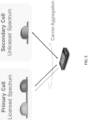
- one way to utilize the unlicensed spectrum reliably is to transmit essential control signals and channels on a licensed carrier. That is, as shown in FIG. 5 , a UE is connected to a PCell in the licensed band and one or more SCells in the unlicensed band.
- LAA SCell licensed-assisted access secondary cell
- no licensed cell is available for uplink control signal transmissions.
- Wi-Fi terminals For LTE UL channel access, both UE and eNB need to perform LBT operations corresponding to the scheduling request, scheduling grant and data transmission phases. In contrast, Wi-Fi terminals only need to perform LBT once in the UL data transmission phase. Moreover, Wi-Fi terminals can asynchronously send data compared to the synchronized LTE system. Thus, Wi-Fi terminals have a natural advantage over LTE terminals in UL data transmission, and show superior performance in collocated deployment scenarios as seen in our simulation studies. Overall study results show that Wi-Fi has better uplink performance than LTE particularly in low-load or less congested network conditions. As network congestion or load increases, the LTE channel access mechanism (TDMA type) becomes more efficient, but Wi-Fi uplink performance is still superior.
- TDMA type LTE channel access mechanism
- the UE can use the unscheduled mode for the whole data transmission or alternatively, transmits using unscheduled mode for first N transmission bursts and then switches back to the eNB controlled scheduling mode.
- SPS semi-persistent scheduling
- methods are provided for supporting multiple starting and ending positions for scheduled or autonomous UL transmission on unlicensed spectrum.
- UE has flexibility to transmit UL at different starting positions based on LBT outcome.
- One option is to define multiple starting/ending positions and rate match the transmission based on available REs for a certain starting/ending position. Another option is to adopt sTTI design on unlicensed spectrum.
- Certain embodiments can be applied to LAA/NR-U/MulteFire or other technologies operating scheduled or autonomous UL transmission on unlicensed spectrum.
- LAA scheduled UL on unlicensed spectrum follows eNB scheduling regarding the starting and ending positions of an UL transmission.
- the UE performs LBT before transmitting UL data. If LBT fails at the scheduled transmission starting point, UE will drop the transmission and eNB treat it as NACK and schedule a retransmission later on. This leads to delay of UL transmission and impact the UL performance.
- autonomous UL transmission on unlicensed spectrum has fixed starting point for each subframe. The UE performs LBT before transmitting UL data. If LBT fails at the starting point, the UE will drop the transmission for the subframe. This also leads to the delay of UL transmission and impact the UL performance.
- Certain embodiments may provide potential benefits compared to conventional techniques and technologies, such as the following examples.
- a method of operating a wireless communication device comprises identifying a first start position for performing uplink (UL) transmission in unlicensed spectrum during a first transmission time interval (TTI), performing UL transmission in the first TTI according to the first start position, identifying a second start position for performing UL transmission in unlicensed spectrum during a second TTI, wherein the first and second start positions correspond to different symbol offsets within the respective first and second TTIs, and performing UL transmission in the second TTI according to the second start position.
- TTI transmission time interval
- a symbol offset for the first start position corresponds to a symbol 0
- a symbol offset for the second start position corresponds to a symbol 7.
- identifying the first start position comprises performing a first listen-before-talk (LBT) procedure, and selecting the first start position in response to a success of the first LBT procedure, and identifying the second start position comprises performing a second LBT procedure, and selecting the second start position as a consequence of a failure of the second LBT procedure.
- LBT listen-before-talk
- identifying the second start position comprises receiving an UL grant indicating that a symbol offset for the second start position corresponds to a symbol 7.
- the method further comprises rate matching the UL transmission to be performed in the second TTI based on available resource elements (REs) for the second start position.
- REs resource elements
- the method further comprises identifying a first end position for performing the UL transmission the first TTI, performing the UL transmission in the first TTI according to the first end position, identifying a second end position for performing the UL transmission the second TTI, wherein the first and second end positions correspond to different symbol offsets within the respective first and second TTIs, and performing the UL transmission in the second TTI according to the second end position.
- identifying the first end position comprises receiving an UL grant indicating the first end position.
- the first TTI is a short TTI (sTTI) and the second TTI is a full-subframe or multi-subframe TTI.
- the sTTI is a 7-symbol based sTTI or a 2-symbol based sTTI.
- the method further comprises selecting different modulation and coding schemes (MCSs) for the UL transmissions in the first and second TTIs according to the respective first and second start positions.
- MCSs modulation and coding schemes
- the second start position has a larger symbol offset than the first start position
- the selected MCS for the UL transmission in the second TTI has a higher modulation order than the selected MCS for the UL transmission in the first TTI.
- a method of operating a wireless communication device comprises identifying multiple candidate start positions and end positions for uplink (UL) transmission in unlicensed spectrum, selecting start and end positions from among the candidates, based on an outcome of a listen-before-talk (LBT) procedure performed with respect to the unlicensed spectrum, and performing UL transmission in the unlicensed spectrum using the selected start and end positions.
- LBT listen-before-talk
- the selecting comprises determining that at least one initial LBT attempt fails and at least one subsequent LBT attempt succeeds, and selecting start and end positions that corresponds to the at least one subsequent LBT attempt.
- the selecting comprises determining that at least one initial LBT attempt fails, and declining to select start and end positions that correspond to the at least one initial LBT attempt.
- the method further comprises rate matching the UL transmission based on available resource elements (REs) for the selected start and end positions.
- REs resource elements
- the candidate start and end positions for UL transmission are defined in relation to a normal transmission time interval (TTI).
- TTI transmission time interval
- the candidate start and end positions for UL transmission are defined in relation to a short transmission time interval (sTTI).
- sTTI short transmission time interval
- start and end positions follow UpPTS positions defined for special subframe configuration for Frame structure 2 in LTE.
- the outcome of the LBT procedure comprises a successful LBT attempt in which the wireless communication device gains access to a communication channel in the unlicensed spectrum.
- the method further comprises performing the LBT procedure.
- the method further comprises receiving radio resource control (RRC) signaling that indicates the use of a multiple starting/ending position mode, and identifying the candidate start and end positions as a consequence of receiving the RRC signaling.
- RRC radio resource control
- the method further comprises selecting a modulation and coding schemes (MCS) for the UL transmission according to the selected start and end positions.
- MCS modulation and coding schemes
- a method of operating a radio access node comprises identifying a first start position for an uplink (UL) transmission performed in unlicensed spectrum during a first transmission time interval (TTI), receiving the UL transmission in the first TTI according to the first start position, identifying a second start position for an UL transmission performed in unlicensed spectrum during a second TTI, wherein the first and second start positions correspond to different symbol offsets within the respective first and second TTIs, and receiving the UL transmission in the second TTI according to the second start position.
- TTI transmission time interval
- a symbol offset for the first start position corresponds to a symbol 0
- a symbol offset of the second start position corresponds to a symbol 7.
- the first start position is identified in response to a first listen-before-talk (LBT) procedure successfully gaining access to a communication channel
- the second start position is identified in response to a second LBT procedure failing to gain access to the communication channel.
- LBT listen-before-talk
- the method further comprises transmitting an UL grant to a user equipment (UE) to indicate that a symbol offset for the second start position corresponds to a symbol 7.
- UE user equipment
- the method further comprises identifying a first end position for the UL transmission the first TTI, receiving the UL transmission in the first TTI according to the first end position, identifying a second end position for the UL transmission the second TTI, wherein the first and second end positions correspond to different symbol offsets within the respective first and second TTIs, and receiving the UL transmission in the second TTI according to the second end position.
- the method further comprises transmitting an UL grant indicating the first end position to a user equipment (UE).
- the first TTI is a short TTI (sTTI) and the second TTI is a full-subframe or multi-subframe TTI.
- the sTTI could be e.g. a 7-symbol based sTTI or a 2-symbol based sTTI.
- the disclosed subject matter provides, among other things, methods and apparatuses to support multiple starting and ending positions for scheduled or autonomous UL transmission on unlicensed spectrum.
- the following description presents various embodiments in relation to LAA operation as an example. However, the described concepts can also be applied to LAA/NR-U/Multefire or other technologies performing scheduled or autonomous UL transmission on unlicensed spectrum.
- multiple starting and ending positions for UL transmission on unlicensed spectrum are defined by eNB.
- a UE can start the UL transmission on one of the defined starting positions.
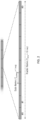
- One example is shown in FIG. 6 , where two starting positions on symbol 0 and 7 and two ending positions on symbol 12 and 13 are defined for LTE UL.
- the UE can start the UL transmission on either symbol 0 or symbol 7 depending on LBT outcome. If LBT fails on symbol 0, the UE will continue sensing the channel and transmit on symbol 7 if LBT succeeds there.
- starting and ending positions of UL transmission follows the UpPTS positions defined for special subframe configuration for Frame structure 2 in LTE.
- the starting partial subframe for UL should be applied only for the first UL subframe in an UL transmission burst. This also applies for the first UL subframe sharing a maximum channel occupancy time (MCOT) with DL transmission.
- MCOT maximum channel occupancy time
- the subsequent subframes shall use the whole subframe for transmission.
- the cell/carrier operating on unlicensed spectrum can be configured with "multiple starting/ending position mode" by eNB using RRC signaling, indicating that UL transmission can start/end at different positions and the UE has the flexibility to transmit UL on one of the configured positions.
- an eNB signals one of the starting positions in Table 2 in UL grant in addition to RRC configured starting positions (i.e. symbol 0 and 7 in the example). If UE transmits UL around symbol 0, the upper table applies and if UE transmits UL around symbol 7, the following Table 2 applies.
- the eNB performs scheduling and link adaptation assuming a full subframe transmission although UL transmission can start on other positions than subframe boundary.
- the UE rate matches the transport block size (TBS) to available REs based on the starting and ending position. Consequently, the code rate can be high if the starting positions is late in a subframe.
- TBS transport block size
- MCS modulation and coding scheme
- One principle is that UE uses a higher modulation order to decrease the code rate, similar to a DL partial subframe design for LAA provided in 3GPP R1-163508. When transmitting partial starting subframe using less than 13 symbols in UL, the new MCS entries shall be used.
- an eNB defines multiple starting and ending positions for UL transmission on unlicensed spectrum, such as those illustrated in FIG. 6 .
- a set of supported starting and ending positions is configured when the eNB activates autonomous UL transmission, and the UE can start the UL transmission autonomously on one of the configured starting positions based on LBT outcome. For instance, the UE can start the UL transmission on either symbol 0 or symbol 7 depending on LBT outcome. If LBT fails on symbol 0, UE continues sensing the channel and transmit on symbol 7 if LBT succeeds there.
- starting and ending positions of UL transmission follows the UpPTS positions defined for special subframe configuration for Frame structure 2 in LTE.
- starting and ending positions of UL transmission follows sTTI pattern.
- the autonomous transmission always starts with a reference symbol to mark the start of the transmission at the boundary of any or subset of the DFTS-OFDM symbols within a subframe.
- the starting partial subframe for UL is applied only for the first UL subframe in a UL transmission burst.
- the subsequent subframes use the whole subframe for transmission.
- the eNB performs scheduling assuming a full subframe transmission although UL transmission can start on other positions than subframe boundary.
- the UE rate matches the TBS to available REs based on the starting and ending position.
- New MCS entries can be introduced for UL MCS table for partial starting subframe.
- the starting and ending positions of autonomous UL transmission can be transmitted together with PUSCH data from UE to eNB.
- the configuration of starting points may be performed according to e.g. one or more of the following:
- Aspect 2 sTTI for UL transmission on unlicensed spectrum
- sTTI can be adopted on unlicensed spectrum to facilitate multiple starting/ending positions for efficient channel access and data transmission.
- Examples of sTTI can be 7-symbol based and 2-symbol based.
- Examples of sTTI patterns are shown in FIG. 7 .
- an eNB schedule sTTIs for all UL subframes in a transmission burst on LAA SCell.
- an eNB schedules the first UL transmission in a transmission burst to use sTTIs and subsequent subframes to use full subframe scheduling. It can be achieved by using single or multi subframe/TTI scheduling. Besides, both self-carrier scheduling or cross carrier scheduling can be used.
- the same DCI 0B from release 14 can be used to schedule multiple subframes that may include sTTI.
- the UE is configured to use sTTI in the first UL subframe of the burst. Given that, the MCS, frequency resource allocation, and other fields of the DCI applies to both the sTTIs in the first UL subframe and the subsequent subframes in the burst.
- UE performs LBT and follows UL grant for transmission. If the UE gets the channel on first scheduled subframe, it starts UL transmission using sTTI on the configured sTTI starting positions (on subframe n+3 in the example) and then full subframe transmissions (for subframe n+4 and n+5 in the example). If the UE doesn't get channel on first scheduled subframe, it shall then use full subframe transmission with fixed starting point for subsequent subframes as scheduled by eNB and transmit UL when it gets channel.
- the UE if it does not get channel on the first scheduled subframe, it shall attempt to transmit in the subsequent subframe based on the sTTI configuration. This means that the usage of sTTI is not linked to the first scheduled subframe, instead the UE keeps using sTTI until the LBT succeeds then switch to full subframe transmissions for the remaining of the scheduled UL burst.
- the sTTI transmissions on LAA Scell are granted using a new sDCI formats.
- One format can be used for single sTTI scheduling and another for multi-sTTI scheduling.
- the new sDCI fromats include all or subset of the following:
- the multi-sTTI scheduling sDCI includes number of scheduled sTTIs or subframes.
- an eNB schedules the first UL transmission in a transmission burst to use sTTIs and subsequent subframes to use aspect 1 as described above. More specifically, subsequent subframes also have multiple starting positions configured by RRC. If UE gets channel on the first subframe, it uses sTTI for first subframe and then full subframe transmission for subsequent subframes. If UE gets channel after the first subframe, it transmits on one of the RRC configured starting positions based on LBT outcome.
- the eNB may schedule a UE without a fixed time relationship between grant and UL transmission.
- the granted resources are valid for a certain window of time. Otherwise, the UE does not transmit and drops the grant.
- the first one or more subframes in the UL burst is scheduled based on sTTI to enable multiple start points and the later subframes are according to the full subframe transmissions.
- the UE can start preparing the resources at an earlier time, but cannot start the UL transmission unless it is triggered.
- the trigger in this case is the LBT success.
- the UE has the flexibility to always start the UL transmission with sTTI.
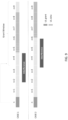
- FIG. 9 shows the behavior in 2 different interference situations.
- the eNB schedule UE for 4 subframes.
- the lower edge of the window in which the grant is valid is n+4 and the higher edge is n+9. If the UE does not get the channel before n+9, the UE drops the grant.
- the UE case the flexibility to start the UL burst using sTTI in any subframe within the grant window.
- an eNB sends two copies of grants for the same subframe, one based on sTTI and one based on full subframe configuration.
- UE performs UL LBT and decides on which grant to follow when transmitting UL data depending on LBT outcome.
- An eNB configures aspect 1 when large packet of data needs to be transmitted expanding several subframes.
- An eNB configures aspect 2 for small packet transmission.
- the selection of an aspect is done via RRC signaling.
- the selection of is done more dynamically or flexibly, e.g., using an UL grant.
- sTTI can also be adopted for autonomous UL transmission on unlicensed spectrum.
- Examples of sTTI can be 7-symbol based and 2-symbol based, such as those illustrated in FIG. 7 .
- eNB schedules autonomous UL transmission, i.e., the MCS, RB assignment and TBS selection, based on sTTI configuration and sends it to UE when activating autonomous UL.
- the first subframe of autonomous UL transmission follows such scheduling configuration by using the assigned MCS and TBS.
- UE can scale up the TBS accordingly based on available REs.
- eNB schedules autonomous UL transmission, i.e., the MCS, RB assignment and TBS selection, based on sTTI configuration.
- UE follows such scheduling configuration by using the assigned MCS and TBS for all subframes.
- eNB schedules autonomous UL transmission based on both sTTI configuration and full subframe configuration.
- Two copies of MCS, RB assignment and TBS are sent to UE.
- UE selects MCS, RB assignment and TBS based on starting position of autonomous UL transmission for a certain subframe. I.e., if it is partial starting subframe, the MCS/TBS based on sTTI is applied for transmission; otherwise, the MCS/TBS based on full subframe is applied for transmission.
- the eNB configures a UE to use sTTI configuration based on a certain frame periodicity. That is, the UE is configured with one or more subframe that can transmit autonomous UL transmission using sTTI every X subframes. Given that, the UE benefits from additional starting points only within the subframes that are configured with sTTI transmissions. In addition, it minimizes eNB blind detection efforts.
- the eNB can enable or disable the multiple starting points depending on the DL control signaling used. For instance, to enable more starting points based on sTTI configuration, the eNB sends the SPS activation command on sPDCCH. Otherwise, if SPS command is sent on PDCCH, the UE does not transmit according to the sTTI configuration. If SPS activation is sent on both PDCCH and sPDCCH, the UE has the flexibility to transmit according to a full subframe of sTTI configuration depending on LBT outcome.
- RRC higher layer configuration
- the UE may be configured to use sTTI configuration on SPS resources based on a certain frame periodicity, for instance "X" subframes configured with sTTI every "Y" subframes. The UE can still attempt to do autonomous UL outside those subframes but not using the sTTI configuration.
- the described embodiments may be implemented in any appropriate type of communication system supporting any suitable communication standards and using any suitable components. As one example, certain embodiments may be implemented in a communication system such as that illustrated in FIG. 1 . Although certain embodiments are described with respect to LTE systems and related terminology, the disclosed concepts are not limited to LTE or a 3GPP system. Additionally, although reference may be made to the term "cell”, the described concepts may also apply in other contexts, such as beams used in Fifth Generation (5G) systems, for instance.
- 5G Fifth Generation
- a communication system 100 comprises a plurality of wireless communication devices 105 (e.g., UEs, machine type communication [MTC] / machine-to-machine [M2M] UEs) and a plurality of radio access nodes 110 (e.g., eNodeBs or other base stations).
- Communication system 100 is organized into cells 115, which are connected to a core network 120 via corresponding radio access nodes 110.
- Radio access nodes 110 are capable of communicating with wireless communication devices 105 along with any additional elements suitable to support communication between wireless communication devices or between a wireless communication device and another communication device (such as a landline telephone).
- wireless communication devices 105 may represent communication devices that include any suitable combination of hardware and/or software, these wireless communication devices may, in certain embodiments, represent devices such as those illustrated in greater detail by FIGS. 11A and 11B .
- the illustrated radio access node may represent network nodes that include any suitable combination of hardware and/or software, these nodes may, in particular embodiments, represent devices such those illustrated in greater detail by FIGS. 12A, 12B and 13 .
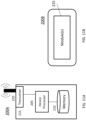
- a wireless communication device 200A comprises a processor 205 (e.g., Central Processing Units [CPUs], Application Specific Integrated Circuits [ASICs], Field Programmable Gate Arrays [FPGAs], and/or the like), a memory 210, a transceiver 215, and an antenna 220.
- processors 205 e.g., Central Processing Units [CPUs], Application Specific Integrated Circuits [ASICs], Field Programmable Gate Arrays [FPGAs], and/or the like
- a memory 210 e.g., Random Access to Access
- FPGAs Field Programmable Gate Arrays
- antenna 220 e.g., a wireless communication device 200A
- some or all of the functionality described as being provided by UEs, MTC or M2M devices, and/or any other types of wireless communication devices may be provided by the device processor executing instructions stored on a computer-readable medium, such as memory 210.
- Alternative embodiments may include additional components beyond those shown in FIG. 2A that may be responsible
- a wireless communication device 200B comprises at least one module 225 configured to perform one or more corresponding functions. Examples of such functions include various method steps or combinations of method steps as described herein with reference to wireless communication device(s).
- a module may comprise any suitable combination of software and/or hardware configured to perform the corresponding function. For instance, in some embodiments a module comprises software configured to perform a corresponding function when executed on an associated platform, such as that illustrated in FIG. 11A .
- a radio access node 300A comprises a control system 320 that comprises a node processor 305 (e.g., Central Processing Units (CPUs), Application Specific Integrated Circuits (ASICs), Field Programmable Gate Arrays (FPGAs), and/or the like), memory 310, and a network interface 315.
- radio access node 300A comprises at least one radio unit 325 comprising at least one transmitter 335 and at least one receiver coupled to at least one antenna 330.
- radio unit 325 is external to control system 320 and connected to control system 320 via, e.g., a wired connection (e.g., an optical cable).
- radio unit 325 and potentially the antenna 330 are integrated together with control system 320.
- Node processor 305 operates to provide at least one function 345 of radio access node 300A as described herein.
- the function(s) are implemented in software that is stored, e.g., in the memory 310 and executed by node processor 305.
- radio access node 300 may comprise additional components to provide additional functionality, such as the functionality described herein and/or related supporting functionality.
- a radio access node 300B comprises at least one module 350 configured to perform one or more corresponding functions. Examples of such functions include various method steps or combinations of method steps as described herein with reference to radio access node(s).
- a module may comprise any suitable combination of software and/or hardware configured to perform the corresponding function. For instance, in some embodiments a module comprises software configured to perform a corresponding function when executed on an associated platform, such as that illustrated in FIG. 12A .
- FIG. 13 is a block diagram that illustrates a virtualized radio access node 400 according to an embodiment of the disclosed subject matter.
- the concepts described in relation to FIG. 4 may be similarly applied to other types of network nodes. Further, other types of network nodes may have similar virtualized architectures.
- the term "virtualized radio access node” refers to an implementation of a radio access node in which at least a portion of the functionality of the radio access node is implemented as a virtual component(s) (e.g., via a virtual machine(s) executing on a physical processing node(s) in a network(s)).
- radio access node 400 comprises control system 320 as described in relation to FIG. 12A .
- Control system 320 is connected to one or more processing nodes 420 coupled to or included as part of a network(s) 425 via network interface 315.
- Each processing node 420 comprises one or more processors 405 (e.g., CPUs, ASICs, FPGAs, and/or the like), memory 410, and a network interface 415.
- functions 345 of radio access node 300A described herein are implemented at the one or more processing nodes 420 or distributed across control system 320 and the one or more processing nodes 420 in any desired manner.
- some or all of the functions 345 of radio access node 300A described herein are implemented as virtual components executed by one or more virtual machines implemented in a virtual environment(s) hosted by processing node(s) 420.
- additional signaling or communication between processing node(s) 420 and control system 320 is used in order to carry out at least some of the desired functions 345.
- control system 320 may be omitted, in which case the radio unit(s) 325 communicate directly with the processing node(s) 420 via an appropriate network interface(s).
- a computer program comprises instructions which, when executed by at least one processor, causes at least one processor to carry out the functionality of a radio access node (e.g., radio access node 110 or 300A) or another node (e.g., processing node 420) implementing one or more of the functions of the radio access node in a virtual environment according to any of the embodiments described herein.
- a radio access node e.g., radio access node 110 or 300A
- another node e.g., processing node 420
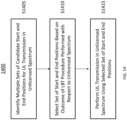
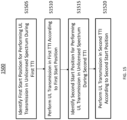
- FIGS. 14-15 illustrate various methods of operating a wireless communication device according to embodiments of the disclosed subject matter. These methods could be performed by an apparatus such as that illustrated in any of FIGS. 10-13 , for instance. Additionally, these methods could be performed in conjunction with any of various alternative features as described above, such as various alternative time transmission interval configurations, subframe configurations, timing arrangements, signaling procedures, etc.
- a method 1400 comprises identifying multiple sets of candidate start and end positions for uplink (UL) transmission in unlicensed spectrum (S1405), selecting at least one set of start and end positions from among the candidates, based on an outcome of a listen-before-talk (LBT) procedure performed with respect to the unlicensed spectrum (S1410), and performing UL transmission in the unlicensed spectrum using the selected at least one set of start and end positions (S 1415).
- the identification of multiple sets of candidate start positions may include e.g. receiving information from a radio access node, reading information from memory, etc.
- the selecting may be performed in any of various alternative ways as described above in relation to FIGS. 6-9 , for instance.
- the performing of UL transmission may comprise e.g. transmitting information using defined resources as described above.
- a method 1500 comprises identifying a first start position for performing uplink (UL) transmission in unlicensed spectrum during a first transmission time interval (TTI) (S1505), performing UL transmission in the first TTI according to the first start position (S 1510), identifying a second start position for performing UL transmission in unlicensed spectrum during a second TTI, wherein the first and second start positions correspond to different symbol offsets within the respective first and second TTIs (S 1515), and performing UL transmission in the second TTI according to the second start position (S 1520).
- TTI transmission time interval
- FIG. 16 illustrates a method of operating a radio access node according to an embodiment of the disclosed subject matter. This method could be performed by an apparatus such as that illustrated in any of FIGS. 10 , 12 or 13 , for instance. Additionally, this method could be performed in conjunction with any of various alternative features as described above, such as various alternative time transmission interval configurations, subframe configurations, timing arrangements, signaling procedures, etc.
- a method 1600 comprises identifying a first start position for an uplink (UL) transmission performed in unlicensed spectrum during a first transmission time interval (TTI) (S 1605), receiving the UL transmission in the first TTI according to the first start position (S1610), identifying a second start position for an UL transmission performed in unlicensed spectrum during a second TTI, wherein the first and second start positions correspond to different symbol offsets within the respective first and second TTIs (S1615), and receiving the UL transmission in the second TTI according to the second start position (S1620).
- TTI transmission time interval
Landscapes
- Engineering & Computer Science (AREA)
- Signal Processing (AREA)
- Computer Networks & Wireless Communication (AREA)
- Quality & Reliability (AREA)
- Mobile Radio Communication Systems (AREA)
Claims (15)
- Verfahren zum Betreiben einer Drahtloskommunikationsvorrichtung, umfassend:Durchführen eines ersten Listen-before-Talk-, LBT-Vorgangs;Durchführen der folgenden Schritte als Reaktion auf einen Erfolg des ersten LBT-Vorgangs:Auswählen einer ersten Startposition zum Durchführen von Uplink-, UL-Übertragung im unlizenzierten Spektrum während eines ersten Übertragungszeitintervalls, TTI, (S1505); undDurchführen von UL-Übertragung in dem ersten TTI gemäß der ersten Startposition (S1510);Durchführen der folgenden Schritte als Reaktion auf ein Scheitern des ersten LBT-Vorgangs:Durchführen eines zweiten LBT-Vorgangs;Auswählen, als Reaktion auf einen Erfolg des zweiten LBT-Vorgangs, einer zweiten Startposition zum Durchführen von UL-Übertragung im unlizenzierten Spektrum während eines zweiten TTI,wobei die erste und die zweite Startposition unterschiedlichen Symbolversätzen innerhalb des jeweiligen ersten und zweiten TTI entsprechen (S1515); undDurchführen von UL-Übertragung in dem zweiten TTI gemäß der zweiten Startposition (S1520).
- Verfahren nach Anspruch 1, wobei ein Symbolversatz für die erste Startposition einem Symbol 0 entspricht und ein Symbolversatz für die zweite Startposition einem Symbol 7 entspricht.
- Verfahren nach Anspruch 1, ferner umfassend Empfangen einer UL-Genehmigung, die angibt, dass ein Symbolversatz für die zweite Startposition einem Symbol 7 entspricht.
- Verfahren nach Anspruch 3, wobei das Verfahren ferner Ratenanpassen der UL-Übertragung, die in dem zweiten TTI durchzuführen ist, basierend auf verfügbarem Ressourcenelement, RE, für die zweite Startposition umfasst.
- Verfahren nach Anspruch 1, wobei das erste TTI ein kurzes TTI, sTTI, ist, und das zweite TTI ein TTI mit vollem Subframe oder Multi-Subframe ist.
- Verfahren nach Anspruch 5, wobei das sTTI ein sTTI basierend auf 7 Symbolen oder ein sTTI basierend auf 2 Symbolen ist.
- Verfahren nach Anspruch 1, ferner umfassend:Identifizieren einer ersten Endposition zum Durchführen der UL-Übertragung in dem ersten TTI;Durchführen der UL-Übertragung in dem ersten TTI gemäß der ersten Endposition;Identifizieren einer zweiten Endposition zum Durchführen der UL-Übertragung in dem zweiten TTI, wobei die erste und die zweite Endposition unterschiedlichen Symbolversätzen innerhalb des jeweiligen ersten und zweiten TTI entsprechen; undDurchführen der UL-Übertragung in dem zweiten TTI gemäß der zweiten Endposition.
- Verfahren nach Anspruch 7, wobei das Identifizieren der ersten Endposition Empfangen einer UL-Genehmigung, welche die erste Endposition angibt, umfasst.
- Verfahren nach Anspruch 1, ferner umfassend Auswählen von unterschiedlichen Modulations- und Codierschemata, MCS, für die UL-Übertragungen in dem ersten und dem zweiten TTI gemäß der jeweiligen ersten und zweiten Startposition, wobei die zweite Startposition einen größeren Symbolversatz als die erste Startposition aufweist, und das ausgewählte MCS für die UL-Übertragung in dem zweiten TTI eine höhere Modulationsordnung als das ausgewählte MCS für die UL-Übertragung in dem ersten TTI aufweist.
- Verfahren zum Betreiben eines Funkzugriffsknotens, umfassend:Identifizieren einer ersten Startposition für eine Uplink-, UL-Übertragung, die im unlizenzierten Spektrum während eines ersten Übertragungszeitintervalls, TTI, durchgeführt wird (S1605);Empfangen, von einer Drahtloskommunikationsvorrichtung, der UL-Übertragung in dem ersten TTI gemäß der ersten Startposition (S1610);Identifizieren einer zweiten Startposition für eine UL-Übertragung, die im unlizenzierten Spektrum während eines zweiten TTI durchgeführt wird, wobei die erste und die zweite Startposition unterschiedlichen Symbolversätzen innerhalb des jeweiligen ersten und zweiten TTI entsprechen (S1615); undEmpfangen, von der Drahtloskommunikationsvorrichtung, der UL-Übertragung in dem zweiten TTI gemäß der zweiten Startposition (S1620),wobei die erste Startposition als Reaktion darauf identifiziert wird, dass ein erster Listen-before-Talk-, LBT-Vorgang an der Drahtloskommunikationsvorrichtung erfolgreich Zugriff auf einen Kommunikationskanal erhält, und die zweite Startposition als Reaktion darauf identifiziert wird, dass der erste LBT-Vorgang an der Drahtloskommunikationsvorrichtung scheitert, Zugriff auf den Kommunikationskanal zu erhalten und ein zweiter LBT-Vorgang an der Drahtloskommunikationsvorrichtung erfolgreich Zugriff auf den Kommunikationskanal erhält.
- Drahtloskommunikationsvorrichtung, umfassend:
Verarbeitungsschaltung, die für Folgendes konfiguriert ist:Durchführen eines ersten Listen-before-Talk-, LBT-Vorgangs;Durchführen der folgenden Schritte als Reaktion auf einen Erfolg des ersten LBT-Vorgangs:Auswählen einer ersten Startposition zum Durchführen von Uplink-, UL-Übertragung im unlizenzierten Spektrum während eines ersten Übertragungszeitintervalls (S1505); undDurchführen von UL-Übertragung in dem ersten Übertragungszeitintervall, TTI, gemäß der ersten Startposition (S1510);Durchführen der folgenden Schritte als Reaktion auf ein Scheitern des ersten LBT-Vorgangs:Auswählen, als Reaktion auf einen Erfolg des zweiten LBT-Vorgangs, einer zweiten Startposition zum Durchführen von UL-Übertragung im unlizenzierten Spektrum während eines zweiten TTI, wobei die erste und die zweite Startposition unterschiedlichen Symbolversätzen innerhalb des jeweiligen ersten und zweiten TTI entsprechen (S1515); undDurchführen von UL-Übertragung in dem zweiten TTI gemäß der zweiten Startposition (S1520). - Drahtloskommunikationsvorrichtung nach Anspruch 11, wobei die Verarbeitungsschaltung ferner konfiguriert ist, um das Verfahren nach einem der Ansprüche 2 bis 9 durchzuführen.
- Computerprogramm, das Anweisungen umfasst, die, wenn sie auf einem Prozessor einer Drahtloskommunikationsvorrichtung ausgeführt werden, bewirken, dass die Drahtloskommunikationsvorrichtung das Verfahren nach einem der Ansprüche 1 bis 9 durchführt.
- Funkzugriffsknoten, umfassend:
Verarbeitungsschaltung, die für Folgendes konfiguriert ist:Identifizieren einer ersten Startposition für eine Uplink-, UL-Übertragung, die im unlizenzierten Spektrum während eines ersten Übertragungszeitintervalls, TTI, durchgeführt wird (S1605);Empfangen, von einer Drahtloskommunikationsvorrichtung, der UL-Übertragung in dem ersten TTI gemäß der ersten Startposition (S1610);Identifizieren einer zweiten Startposition für eine UL-Übertragung, die im unlizenzierten Spektrum während eines zweiten TTI durchgeführt wird, wobei die erste und die zweite Startposition unterschiedlichen Symbolversätzen innerhalb des jeweiligen ersten und zweiten TTI entsprechen (S1615); undEmpfangen, von der Drahtloskommunikationsvorrichtung, der UL-Übertragung in dem zweiten TTI gemäß der zweiten Startposition (S1620),wobei die erste Startposition als Reaktion darauf identifiziert wird, dass ein erster Listen-before-Talk-, LBT-Vorgang an der Drahtloskommunikationsvorrichtung erfolgreich Zugriff auf einen Kommunikationskanal erhält, und die zweite Startposition als Reaktion darauf identifiziert wird, dass der erste LBT-Vorgang an der Drahtloskommunikationsvorrichtung scheitert, Zugriff auf den Kommunikationskanal zu erhalten und ein zweiter LBT-Vorgang an der Drahtloskommunikationsvorrichtung erfolgreich Zugriff auf den Kommunikationskanal erhält. - Computerprogramm, das Anweisungen umfasst, die, wenn sie auf einem Prozessor eines Funkzugriffsknotens ausgeführt werden, bewirken, dass der Funkzugriffsknoten das Verfahren nach Anspruch 10 durchführt.
Priority Applications (1)
| Application Number | Priority Date | Filing Date | Title |
|---|---|---|---|
| EP23180289.3A EP4224967A1 (de) | 2017-03-24 | 2018-03-23 | Mehrere start- und endpositionen für geplante oder autonome uplink-übertragung in einem unlizenzierten spektrum |
Applications Claiming Priority (4)
| Application Number | Priority Date | Filing Date | Title |
|---|---|---|---|
| US201762476491P | 2017-03-24 | 2017-03-24 | |
| US201762476553P | 2017-03-24 | 2017-03-24 | |
| US201762479973P | 2017-03-31 | 2017-03-31 | |
| PCT/IB2018/052006 WO2018173005A1 (en) | 2017-03-24 | 2018-03-23 | Multiple starting and ending positions for scheduled or autonomous uplink transmission in unlicensed spectrum |
Related Child Applications (1)
| Application Number | Title | Priority Date | Filing Date |
|---|---|---|---|
| EP23180289.3A Division EP4224967A1 (de) | 2017-03-24 | 2018-03-23 | Mehrere start- und endpositionen für geplante oder autonome uplink-übertragung in einem unlizenzierten spektrum |
Publications (3)
| Publication Number | Publication Date |
|---|---|
| EP3603262A1 EP3603262A1 (de) | 2020-02-05 |
| EP3603262B1 true EP3603262B1 (de) | 2023-06-28 |
| EP3603262C0 EP3603262C0 (de) | 2023-06-28 |
Family
ID=61972567
Family Applications (3)
| Application Number | Title | Priority Date | Filing Date |
|---|---|---|---|
| EP18717998.1A Active EP3603262B1 (de) | 2017-03-24 | 2018-03-23 | Mehrere start- und endpositionen für die geplante oder autonome uplink-übertragung im unlizenzierten spektrum |
| EP23180289.3A Withdrawn EP4224967A1 (de) | 2017-03-24 | 2018-03-23 | Mehrere start- und endpositionen für geplante oder autonome uplink-übertragung in einem unlizenzierten spektrum |
| EP18717997.3A Active EP3603261B1 (de) | 2017-03-24 | 2018-03-23 | Mehrere start- und endpositionen für geplante downlink-übertragung auf unlizenziertem spektrum |
Family Applications After (2)
| Application Number | Title | Priority Date | Filing Date |
|---|---|---|---|
| EP23180289.3A Withdrawn EP4224967A1 (de) | 2017-03-24 | 2018-03-23 | Mehrere start- und endpositionen für geplante oder autonome uplink-übertragung in einem unlizenzierten spektrum |
| EP18717997.3A Active EP3603261B1 (de) | 2017-03-24 | 2018-03-23 | Mehrere start- und endpositionen für geplante downlink-übertragung auf unlizenziertem spektrum |
Country Status (7)
| Country | Link |
|---|---|
| US (5) | US11172505B2 (de) |
| EP (3) | EP3603262B1 (de) |
| CN (2) | CN110447287B (de) |
| BR (1) | BR112019017971A2 (de) |
| ES (1) | ES2962289T3 (de) |
| RU (1) | RU2733418C1 (de) |
| WO (2) | WO2018173004A1 (de) |
Families Citing this family (19)
| Publication number | Priority date | Publication date | Assignee | Title |
|---|---|---|---|---|
| EP3603262B1 (de) | 2017-03-24 | 2023-06-28 | Telefonaktiebolaget LM Ericsson (publ) | Mehrere start- und endpositionen für die geplante oder autonome uplink-übertragung im unlizenzierten spektrum |
| WO2018198092A1 (en) | 2017-04-28 | 2018-11-01 | Telefonaktiebolaget Lm Ericsson (Publ) | Multiple starting positions for uplink transmission on unlicensed spectrum |
| US10594456B2 (en) * | 2017-06-16 | 2020-03-17 | Ofinno, Llc | Distributed unit status information |
| US11664940B2 (en) * | 2017-08-11 | 2023-05-30 | Apple Inc. | Managing link quality and using partial subframes in wireless telecommunication networks |
| EP3665825B1 (de) * | 2017-08-11 | 2022-03-23 | Telefonaktiebolaget LM Ericsson (PUBL) | Autonome übertragung von uplink-steuerungsinformationen |
| US10708950B2 (en) * | 2018-01-16 | 2020-07-07 | Qualcomm Incorporated | Transmission opportunity sharing for autonomous uplink |
| KR20210038602A (ko) * | 2018-08-03 | 2021-04-07 | 광동 오포 모바일 텔레커뮤니케이션즈 코포레이션 리미티드 | 무선 통신의 방법, 단말 장치와 네트워크 장치 |
| WO2020063408A1 (en) | 2018-09-28 | 2020-04-02 | Huawei Technologies Co., Ltd. | Resource allocation for transmission with configured grant in unlicensed spectrum |
| CN109906573B (zh) * | 2019-02-01 | 2021-11-02 | 北京小米移动软件有限公司 | 传输格式确定方法、装置、基站、终端及存储介质 |
| CN111565462A (zh) * | 2019-02-14 | 2020-08-21 | 北京三星通信技术研究有限公司 | 用于确定信号发送时机的方法及设备 |
| CN111107637B (zh) * | 2019-03-25 | 2022-04-01 | 维沃移动通信有限公司 | 共享信道占用时间的方法和设备 |
| US11382116B2 (en) | 2019-03-28 | 2022-07-05 | Qualcomm Incorporated | Configuring a starting offset for a configured grant uplink communication |
| WO2021031029A1 (zh) * | 2019-08-16 | 2021-02-25 | 富士通株式会社 | 上行信号的发送和接收方法以及装置 |
| WO2021088040A1 (zh) * | 2019-11-08 | 2021-05-14 | Oppo广东移动通信有限公司 | 信息传输方法、相关设备和存储介质 |
| CN115804178B (zh) * | 2020-07-10 | 2026-03-17 | 联想(北京)有限公司 | 用于检测免许可频谱上的侧链路传输突发的方法及设备 |
| US20230292345A1 (en) * | 2020-08-21 | 2023-09-14 | Lenovo (Beijing) Limited | Method and apparatus for multiple sidelink transmission opportunities in one slot |
| WO2022217440A1 (zh) * | 2021-04-12 | 2022-10-20 | 北京小米移动软件有限公司 | 一种上行数据的传输方法及其装置 |
| KR20250081922A (ko) * | 2022-11-04 | 2025-06-05 | 애플 인크. | 사이드링크(sl) 통신을 위한 시스템들, 방법들, 및 디바이스들 |
| WO2025200209A1 (en) * | 2024-03-27 | 2025-10-02 | Huawei Technologies Co., Ltd. | Method for data transmission, communication apparatus and communication system |
Family Cites Families (85)
| Publication number | Priority date | Publication date | Assignee | Title |
|---|---|---|---|---|
| US7091830B2 (en) | 2001-09-04 | 2006-08-15 | Technical Development Consultants, Inc. | Subterranean two-wire power and communications network |
| US7523485B1 (en) * | 2003-05-21 | 2009-04-21 | Foundry Networks, Inc. | System and method for source IP anti-spoofing security |
| US7920544B2 (en) | 2005-03-28 | 2011-04-05 | Qualcomm Incorporated | Method and apparatus for enhancing signal-to-noise ratio of position location measurements |
| US8837421B2 (en) | 2008-03-26 | 2014-09-16 | Nokia Siemens Neworks Oy | Channelization procedure for implementing persistent ACK/NACK and scheduling request |
| US9270356B2 (en) * | 2009-03-22 | 2016-02-23 | Lg Electronics Inc. | Channel-sounding method using a plurality of antennas, and apparatus for same |
| WO2011068385A2 (ko) * | 2009-12-03 | 2011-06-09 | 엘지전자 주식회사 | 무선 통신 시스템에서 효율적인 경합 기반 전송 방법 및 장치 |
| CN101808409B (zh) * | 2010-04-01 | 2015-03-25 | 中兴通讯股份有限公司 | 一种lte-a系统中测量参考信号的配置方法和系统 |
| US9723592B2 (en) * | 2011-10-13 | 2017-08-01 | Lg Electronics Inc. | Method and user equipment for transmitting uplink signal, and method and evolved node B for receiving uplink signal |
| US9065545B2 (en) * | 2012-03-12 | 2015-06-23 | Blackberry Limited | Handling scheduling request collisions with an ACK/NACK repetition signal |
| US9485763B2 (en) * | 2013-01-14 | 2016-11-01 | Lg Electronics Inc. | Method and user equipment for receiving downlink signal and method and base station for transmitting downlink signal |
| US10314077B2 (en) | 2013-05-20 | 2019-06-04 | Qualcomm Incorporated | Gating scheme for wireless communication over unlicensed spectrum |
| CN104348579B (zh) * | 2013-08-05 | 2019-11-19 | 中兴通讯股份有限公司 | 下行信道时域位置确定方法和装置 |
| US9743432B2 (en) * | 2013-09-23 | 2017-08-22 | Qualcomm Incorporated | LTE-U uplink waveform and variable multi-subframe scheduling |
| CN104796232A (zh) * | 2014-01-18 | 2015-07-22 | 上海朗帛通信技术有限公司 | 一种在非授权频谱上的传输方法和装置 |
| EP3562077B1 (de) * | 2014-01-31 | 2021-07-07 | Panasonic Intellectual Property Corporation of America | Endgerät und sendeverfahren |
| US9826523B2 (en) * | 2014-03-21 | 2017-11-21 | Qualcomm Incorporated | Semi-persistent scheduling for eIMTA in LTE |
| US10194424B2 (en) * | 2014-05-20 | 2019-01-29 | Qualcomm Incorporated | Techniques for managing resources for uplink transmissions in a shared radio frequency spectrum band |
| CN105307276B (zh) * | 2014-06-08 | 2019-08-27 | 上海朗帛通信技术有限公司 | 一种利用非授权频带传输的方法和装置 |
| EP3179644B1 (de) * | 2014-08-06 | 2019-11-20 | LG Electronics Inc. | Verfahren zur übertragung eines uplink-signals und benutzergerät und verfahren zum empfangen eines uplink-signals und basisstation |
| EP3195508A1 (de) * | 2014-09-08 | 2017-07-26 | Interdigital Patent Holdings, Inc. | Systeme und verfahren für betrieb mit verschieden langen übertragungszeitintervallen (tti) |
| US9844072B2 (en) * | 2014-09-26 | 2017-12-12 | Qualcomm Incorporated | Ultra-low latency LTE uplink frame structure |
| US10014991B2 (en) * | 2014-11-07 | 2018-07-03 | Cisco Technology, Inc. | Methods for long term evolution (LTE) transmission bursts to improve spectral efficiency in unlicensed frequency channels and indoor scenarios |
| BR112017006554B1 (pt) * | 2014-11-15 | 2023-02-23 | Panasonic Intellectual Property Corporation Of America | Aparelho de comunicação, método de comunicação e circuito integrado |
| US11140713B2 (en) * | 2014-12-10 | 2021-10-05 | Telefonaktiebolaget Lm Ericsson (Publ) | Preemptive retransmissions on Listen-Before-Talk cells |
| US10349401B2 (en) | 2015-01-30 | 2019-07-09 | Telefonaktiebolaget Lm Ericsson (Publ) | Burst slot numbering for licensed assisted access |
| JP6561130B2 (ja) * | 2015-03-04 | 2019-08-14 | 華為技術有限公司Huawei Technologies Co.,Ltd. | ハイブリッド自動再送要求−肯定応答伝送方法及び装置 |
| KR20170127556A (ko) | 2015-03-17 | 2017-11-21 | 텔레폰악티에볼라겟엘엠에릭슨(펍) | 허가된 어시스트 액세스에서의 스케줄링 |
| US9781712B2 (en) * | 2015-03-17 | 2017-10-03 | Motorola Mobility Llc | Method and apparatus for scheduling user equipment uplink transmissions on an unlicensed carrier |
| US10051617B2 (en) * | 2015-03-17 | 2018-08-14 | Motorola Mobility Llc | Method and apparatus for scheduling user equipment uplink transmissions on an unlicensed carrier |
| US10009892B2 (en) | 2015-03-17 | 2018-06-26 | Telefonaktiebolaget L M Ericsson (Publ) | Listen-Before-Talk operation with freeze interval |
| US20160345345A1 (en) * | 2015-05-21 | 2016-11-24 | Qualcomm Incorporated | Methods and apparatus for signal timing detection, sharing, and interference avoidance |
| WO2016197366A1 (zh) * | 2015-06-11 | 2016-12-15 | 华为技术有限公司 | 一种drx实现方法、配置方法及相关设备 |
| US10742562B2 (en) | 2015-07-16 | 2020-08-11 | Samsung Electronics Co., Ltd. | Method and apparatus for adaptive control of contention window in LAA |
| US10805061B2 (en) * | 2015-07-20 | 2020-10-13 | Lg Electronics Inc. | Method and apparatus for handling MBSFN subframes for short TTI in wireless communication system |
| US10251197B2 (en) * | 2015-07-23 | 2019-04-02 | Qualcomm Incorporated | Transmitting uplink control channel information when a clear channel assessment of an unlicensed carrier fails |
| US10028151B2 (en) * | 2015-08-07 | 2018-07-17 | Cisco Technology, Inc. | Uplink channel access, reservation and data transmission for licensed assist access long term evolution (LAA-LTE) |
| EP3131223B1 (de) * | 2015-08-11 | 2018-06-27 | Panasonic Intellectual Property Corporation of America | Verbesserte blindcodierung von (e)pdcch für partielle unterrahmen |
| US10299496B2 (en) | 2015-08-13 | 2019-05-28 | Mary Elizabeth Goldberg | Pet-medicine-capsule wrapper apparatus and method |
| ES2991013T3 (es) * | 2015-08-14 | 2024-12-02 | Sun Patent Trust | Adaptación del orden de modulación para subtramas parciales |
| WO2017052193A1 (ko) * | 2015-09-21 | 2017-03-30 | 엘지전자 주식회사 | 비면허 대역에서 데이터를 송수신하는 방법 및 이를 위한 장치 |
| EP3354056B1 (de) | 2015-09-25 | 2020-04-08 | Panasonic Intellectual Property Corporation of America | Benutzergerät und drahtloskommunikationsverfahren |
| CN107926016B (zh) * | 2015-09-25 | 2022-08-02 | 苹果公司 | 支持针对不同传输时间间隔的半持续调度 |
| CN106656430B (zh) | 2015-10-28 | 2020-08-25 | 中兴通讯股份有限公司 | 先听后说参数处理方法、竞争窗调整方法和装置 |
| CN105451341B (zh) * | 2015-11-06 | 2019-03-15 | 北京佰才邦技术有限公司 | 非授权频段中配置参考信号的方法和装置 |
| CN105636233B (zh) * | 2015-12-11 | 2018-11-02 | 山东闻远通信技术有限公司 | 一种laa系统中同时考虑上下行链路的lbt方法 |
| US10368372B2 (en) | 2016-01-12 | 2019-07-30 | Qualcomm Incorporated | Listen-before-talk techniques for uplink transmissions |
| WO2017126926A1 (ko) * | 2016-01-20 | 2017-07-27 | 주식회사 윌러스표준기술연구소 | 비면허 대역 채널 액세스 방법, 장치, 및 시스템 |
| US10177875B2 (en) * | 2016-02-01 | 2019-01-08 | Ofinno Technologies, Llc | Downlink control signaling for uplink transmission in a wireless network |
| US10469209B2 (en) * | 2016-02-01 | 2019-11-05 | Ofinno, Llc | Downlink control information in a wireless device and wireless network |
| US9967902B2 (en) * | 2016-02-04 | 2018-05-08 | Sharp Laboratories Of America, Inc. | Systems and methods for contention access region in a licensed-assisted access(LAA) |
| KR102820057B1 (ko) * | 2016-02-04 | 2025-06-12 | 한국전자통신연구원 | 통신 네트워크에서 상향링크 전송의 스케쥴링 방법 |
| US10805953B2 (en) * | 2016-02-04 | 2020-10-13 | Ofinno, Llc | Channel access procedures in a wireless network |
| US10812982B2 (en) * | 2016-02-05 | 2020-10-20 | Qualcomm Incorporated | Autonomous uplink transmission in unlicensed spectrum |
| CN109565387B (zh) * | 2016-03-29 | 2020-07-10 | 欧芬诺有限责任公司 | 无线网络中的探测参考信号传输 |
| US10069613B2 (en) * | 2016-04-01 | 2018-09-04 | Motorola Mobility Llc | Method and apparatus for scheduling uplink transmissions with reduced latency |
| US10172156B2 (en) * | 2016-09-12 | 2019-01-01 | Motorola Mobility Llc | Method and apparatus for scheduling uplink transmissions with reduced latency |
| US10200992B2 (en) * | 2016-05-06 | 2019-02-05 | Comcast Cable Communications, Llc | Uplink signal starting position in a wireless device and wireless network |
| WO2017196086A1 (en) | 2016-05-12 | 2017-11-16 | Samsung Electronics Co., Ltd. | Method and apparatus for assigning uplink resource for cellular network using unlicensed bands |
| EP3466131B1 (de) | 2016-06-01 | 2020-08-05 | Telefonaktiebolaget LM Ericsson (PUBL) | Fernbereitstellung einer teilnehmereinheit |
| US10477526B2 (en) * | 2016-06-10 | 2019-11-12 | Qualcomm Incorporated | Uplink procedures on a shared communication medium |
| JP6959238B2 (ja) * | 2016-08-09 | 2021-11-02 | 三菱電機株式会社 | 通信システム |
| KR102493234B1 (ko) * | 2016-08-11 | 2023-01-30 | 프라운호퍼 게젤샤프트 쭈르 푀르데룽 데어 안겐반텐 포르슝 에. 베. | 단축된 프레임 구조들을 이용한 사운딩 피드백 |
| CN107872860B (zh) | 2016-09-27 | 2020-09-11 | 中国移动通信有限公司研究院 | 一种上行信号传输方法、装置和系统 |
| US10624125B2 (en) * | 2016-10-26 | 2020-04-14 | Qualcomm Incorporated | Techniques for semi-autonomously scheduling an uplink transmission in a shared radio frequency spectrum band |
| WO2018128363A1 (ko) | 2017-01-03 | 2018-07-12 | 엘지전자 주식회사 | 펑처링된 데이터의 재전송 방법 및 이를 위한 장치 |
| JP2020505833A (ja) * | 2017-01-13 | 2020-02-20 | 華為技術有限公司Huawei Technologies Co.,Ltd. | チャネルリスニング方法および装置 |
| US10965407B2 (en) * | 2017-02-02 | 2021-03-30 | Sharp Kabushiki Kaisha | User equipments, base stations and communication methods |
| JP2020057830A (ja) * | 2017-02-03 | 2020-04-09 | シャープ株式会社 | 端末装置および方法 |
| US10772113B2 (en) * | 2017-02-06 | 2020-09-08 | Qualcomm Incorporated | Autonomous uplink transmission techniques using shared radio frequency spectrum |
| WO2018170868A1 (en) | 2017-03-24 | 2018-09-27 | Telefonaktiebolaget Lm Ericsson (Publ) | SEMI-BLIND DETECTION OF URLLC IN PUNCTURED eMBB |
| EP3603262B1 (de) | 2017-03-24 | 2023-06-28 | Telefonaktiebolaget LM Ericsson (publ) | Mehrere start- und endpositionen für die geplante oder autonome uplink-übertragung im unlizenzierten spektrum |
| WO2018198092A1 (en) | 2017-04-28 | 2018-11-01 | Telefonaktiebolaget Lm Ericsson (Publ) | Multiple starting positions for uplink transmission on unlicensed spectrum |
| CN110800232B (zh) | 2017-05-02 | 2022-11-15 | 株式会社Ntt都科摩 | 用户终端以及无线通信方法 |
| US10630518B2 (en) | 2017-05-17 | 2020-04-21 | Qualcomm Incorporated | Pilot ratio adaptation |
| US11523422B2 (en) | 2017-11-16 | 2022-12-06 | Lenovo (Singapore) Pte. Ltd. | Determining transport block generation timing of an uplink transmission |
| CN109995483B (zh) | 2017-12-29 | 2020-09-04 | 华为技术有限公司 | Trs段的传输方法和装置 |
| CN111630932B (zh) | 2018-02-12 | 2023-09-15 | Lg电子株式会社 | 在无线通信系统中调整竞争窗口大小的方法和使用该方法的通信装置 |
| CN110474753A (zh) | 2018-05-10 | 2019-11-19 | 北京三星通信技术研究有限公司 | 用于数据传输的方法与设备 |
| US11102817B2 (en) | 2018-08-09 | 2021-08-24 | Huawei Technologies Co., Ltd. | System and method for supporting bursty communications in wireless communications systems |
| EP3704819A1 (de) | 2018-09-21 | 2020-09-09 | Ofinno, LLC | Kanalzugriff für unlizenzierte träger in einem funksystem |
| EP3864924A4 (de) | 2018-10-26 | 2022-03-30 | Huawei Technologies Co., Ltd. | Kanalzugriffsmechanismus für einen direktzugriffskanal in einem unlizenzierten spektrum |
| EP3900445B1 (de) | 2018-12-21 | 2025-07-16 | Lenovo (Singapore) Pte. Ltd. | Leistungsreservenmeldung |
| ES3056528T3 (en) | 2019-01-23 | 2026-02-23 | Lenovo Singapore Pte Ltd | Autonomous bandwidth part switching |
| EP3957123B1 (de) | 2019-04-18 | 2023-09-27 | Lenovo (Singapore) Pte. Ltd. | Transportblockübertragung |
| US11616633B2 (en) | 2019-08-30 | 2023-03-28 | Qualcomm Incorporated | Half-duplex operation in new radio frequency division duplexing bands |
-
2018
- 2018-03-23 EP EP18717998.1A patent/EP3603262B1/de active Active
- 2018-03-23 WO PCT/IB2018/052005 patent/WO2018173004A1/en not_active Ceased
- 2018-03-23 US US16/474,072 patent/US11172505B2/en active Active
- 2018-03-23 EP EP23180289.3A patent/EP4224967A1/de not_active Withdrawn
- 2018-03-23 CN CN201880020180.6A patent/CN110447287B/zh active Active
- 2018-03-23 US US16/484,070 patent/US11064522B2/en active Active
- 2018-03-23 EP EP18717997.3A patent/EP3603261B1/de active Active
- 2018-03-23 ES ES18717997T patent/ES2962289T3/es active Active
- 2018-03-23 BR BR112019017971-2A patent/BR112019017971A2/pt unknown
- 2018-03-23 RU RU2019133221A patent/RU2733418C1/ru active
- 2018-03-23 WO PCT/IB2018/052006 patent/WO2018173005A1/en not_active Ceased
- 2018-03-23 CN CN201880020161.3A patent/CN110431902B/zh active Active
-
2021
- 2021-06-15 US US17/347,723 patent/US11711846B2/en active Active
- 2021-09-24 US US17/484,474 patent/US11729826B2/en active Active
-
2023
- 2023-07-11 US US18/350,388 patent/US12538355B2/en active Active
Non-Patent Citations (1)
| Title |
|---|
| HUAWEI ET AL: "Discussion on usage of mini-slot in unlicensed band below 6GHz", vol. RAN WG1, no. Spokane, USA; 20170116 - 20170120, 16 January 2017 (2017-01-16), XP051207957, Retrieved from the Internet <URL:http://www.3gpp.org/ftp/Meetings_3GPP_SYNC/RAN1/Docs/> [retrieved on 20170116] * |
Also Published As
| Publication number | Publication date |
|---|---|
| WO2018173004A1 (en) | 2018-09-27 |
| US11729826B2 (en) | 2023-08-15 |
| EP3603261A1 (de) | 2020-02-05 |
| CN110447287B (zh) | 2023-10-27 |
| BR112019017971A2 (pt) | 2020-05-19 |
| WO2018173005A1 (en) | 2018-09-27 |
| CN110447287A (zh) | 2019-11-12 |
| US20210315008A1 (en) | 2021-10-07 |
| US12538355B2 (en) | 2026-01-27 |
| EP4224967A1 (de) | 2023-08-09 |
| US20230354423A1 (en) | 2023-11-02 |
| ES2962289T3 (es) | 2024-03-18 |
| US20190387543A1 (en) | 2019-12-19 |
| CN110431902A (zh) | 2019-11-08 |
| EP3603261B1 (de) | 2023-09-27 |
| US11711846B2 (en) | 2023-07-25 |
| US11064522B2 (en) | 2021-07-13 |
| CN110431902B (zh) | 2023-08-08 |
| US11172505B2 (en) | 2021-11-09 |
| US20200127798A1 (en) | 2020-04-23 |
| EP3603262C0 (de) | 2023-06-28 |
| US20220015145A1 (en) | 2022-01-13 |
| EP3603262A1 (de) | 2020-02-05 |
| RU2733418C1 (ru) | 2020-10-01 |
Similar Documents
| Publication | Publication Date | Title |
|---|---|---|
| US12538355B2 (en) | Multiple starting and ending positions for scheduled or autonomous uplink transmission in unlicensed spectrum | |
| US11184924B2 (en) | Multiple starting positions for uplink transmission on unlicensed spectrum | |
| JP6889258B2 (ja) | データ送信機器、データ受信機器、データを無線チャネル上でデータ送信ノードからデータ受信ノードに送信する方法、および、データを無線チャネル上でデータ送信機器から受信する方法 | |
| EP3641210B1 (de) | Funkzugangsknoten, kommunikationsendgerät und darin durchgeführte verfahren | |
| US20250016741A1 (en) | Method and apparatus for coordinating and allocating sidelink resource | |
| US10425923B2 (en) | Uplink channel multiplexing and waveform selection | |
| US11363631B2 (en) | Dynamic start for transmission on unlicensed spectrum | |
| EP3849261B1 (de) | Verfahren und vorrichtung zur drahtlosen kommunikation in einem unlizenzierten band | |
| EP4426026A1 (de) | Verfahren und vorrichtung zur übertragung von sidelink-ressourcenkoordinationsinformationen | |
| KR20200100001A (ko) | 통신 시스템에서 이동성 지원을 위한 측정 방법 및 장치 | |
| CN112335316A (zh) | 上行链路传输的资源共享 | |
| KR20200099973A (ko) | 통신 시스템에서 이동성 지원을 위한 측정 방법 및 장치 | |
| HK40024568A (en) | Multiple starting positions for uplink transmission on unlicensed spectrum |
Legal Events
| Date | Code | Title | Description |
|---|---|---|---|
| STAA | Information on the status of an ep patent application or granted ep patent |
Free format text: STATUS: UNKNOWN |
|
| STAA | Information on the status of an ep patent application or granted ep patent |
Free format text: STATUS: THE INTERNATIONAL PUBLICATION HAS BEEN MADE |
|
| PUAI | Public reference made under article 153(3) epc to a published international application that has entered the european phase |
Free format text: ORIGINAL CODE: 0009012 |
|
| STAA | Information on the status of an ep patent application or granted ep patent |
Free format text: STATUS: REQUEST FOR EXAMINATION WAS MADE |
|
| 17P | Request for examination filed |
Effective date: 20190612 |
|
| AK | Designated contracting states |
Kind code of ref document: A1 Designated state(s): AL AT BE BG CH CY CZ DE DK EE ES FI FR GB GR HR HU IE IS IT LI LT LU LV MC MK MT NL NO PL PT RO RS SE SI SK SM TR |
|
| AX | Request for extension of the european patent |
Extension state: BA ME |
|
| DAV | Request for validation of the european patent (deleted) | ||
| DAX | Request for extension of the european patent (deleted) | ||
| STAA | Information on the status of an ep patent application or granted ep patent |
Free format text: STATUS: EXAMINATION IS IN PROGRESS |
|
| 17Q | First examination report despatched |
Effective date: 20210628 |
|
| INTG | Intention to grant announced |
Effective date: 20230119 |
|
| INTG | Intention to grant announced |
Effective date: 20230119 |
|
| GRAS | Grant fee paid |
Free format text: ORIGINAL CODE: EPIDOSNIGR3 |
|
| STAA | Information on the status of an ep patent application or granted ep patent |
Free format text: STATUS: GRANT OF PATENT IS INTENDED |
|
| GRAA | (expected) grant |
Free format text: ORIGINAL CODE: 0009210 |
|
| STAA | Information on the status of an ep patent application or granted ep patent |
Free format text: STATUS: THE PATENT HAS BEEN GRANTED |
|
| AK | Designated contracting states |
Kind code of ref document: B1 Designated state(s): AL AT BE BG CH CY CZ DE DK EE ES FI FR GB GR HR HU IE IS IT LI LT LU LV MC MK MT NL NO PL PT RO RS SE SI SK SM TR |
|
| RIN1 | Information on inventor provided before grant (corrected) |
Inventor name: FALAHATI, SOROUR Inventor name: CHENG, JUNG-FU Inventor name: KOORAPATY, HAVISH Inventor name: YANG, YU Inventor name: KARAKI, REEM |
|
| REG | Reference to a national code |
Ref country code: CH Ref legal event code: EP |
|
| REG | Reference to a national code |
Ref country code: AT Ref legal event code: REF Ref document number: 1583859 Country of ref document: AT Kind code of ref document: T Effective date: 20230715 |
|
| REG | Reference to a national code |
Ref country code: IE Ref legal event code: FG4D |
|
| REG | Reference to a national code |
Ref country code: DE Ref legal event code: R096 Ref document number: 602018052398 Country of ref document: DE |
|
| U01 | Request for unitary effect filed |
Effective date: 20230712 |
|
| U07 | Unitary effect registered |
Designated state(s): AT BE BG DE DK EE FI FR IT LT LU LV MT NL PT SE SI Effective date: 20230720 |
|
| REG | Reference to a national code |
Ref country code: LT Ref legal event code: MG9D |
|
| PG25 | Lapsed in a contracting state [announced via postgrant information from national office to epo] |
Ref country code: NO Free format text: LAPSE BECAUSE OF FAILURE TO SUBMIT A TRANSLATION OF THE DESCRIPTION OR TO PAY THE FEE WITHIN THE PRESCRIBED TIME-LIMIT Effective date: 20230928 |
|
| PG25 | Lapsed in a contracting state [announced via postgrant information from national office to epo] |
Ref country code: RS Free format text: LAPSE BECAUSE OF FAILURE TO SUBMIT A TRANSLATION OF THE DESCRIPTION OR TO PAY THE FEE WITHIN THE PRESCRIBED TIME-LIMIT Effective date: 20230628 Ref country code: HR Free format text: LAPSE BECAUSE OF FAILURE TO SUBMIT A TRANSLATION OF THE DESCRIPTION OR TO PAY THE FEE WITHIN THE PRESCRIBED TIME-LIMIT Effective date: 20230628 Ref country code: GR Free format text: LAPSE BECAUSE OF FAILURE TO SUBMIT A TRANSLATION OF THE DESCRIPTION OR TO PAY THE FEE WITHIN THE PRESCRIBED TIME-LIMIT Effective date: 20230929 |
|
| PG25 | Lapsed in a contracting state [announced via postgrant information from national office to epo] |
Ref country code: SK Free format text: LAPSE BECAUSE OF FAILURE TO SUBMIT A TRANSLATION OF THE DESCRIPTION OR TO PAY THE FEE WITHIN THE PRESCRIBED TIME-LIMIT Effective date: 20230628 |
|
| PG25 | Lapsed in a contracting state [announced via postgrant information from national office to epo] |
Ref country code: ES Free format text: LAPSE BECAUSE OF FAILURE TO SUBMIT A TRANSLATION OF THE DESCRIPTION OR TO PAY THE FEE WITHIN THE PRESCRIBED TIME-LIMIT Effective date: 20230628 |
|
| PG25 | Lapsed in a contracting state [announced via postgrant information from national office to epo] |
Ref country code: IS Free format text: LAPSE BECAUSE OF FAILURE TO SUBMIT A TRANSLATION OF THE DESCRIPTION OR TO PAY THE FEE WITHIN THE PRESCRIBED TIME-LIMIT Effective date: 20231028 |
|
| PG25 | Lapsed in a contracting state [announced via postgrant information from national office to epo] |
Ref country code: SM Free format text: LAPSE BECAUSE OF FAILURE TO SUBMIT A TRANSLATION OF THE DESCRIPTION OR TO PAY THE FEE WITHIN THE PRESCRIBED TIME-LIMIT Effective date: 20230628 Ref country code: SK Free format text: LAPSE BECAUSE OF FAILURE TO SUBMIT A TRANSLATION OF THE DESCRIPTION OR TO PAY THE FEE WITHIN THE PRESCRIBED TIME-LIMIT Effective date: 20230628 Ref country code: RO Free format text: LAPSE BECAUSE OF FAILURE TO SUBMIT A TRANSLATION OF THE DESCRIPTION OR TO PAY THE FEE WITHIN THE PRESCRIBED TIME-LIMIT Effective date: 20230628 Ref country code: IS Free format text: LAPSE BECAUSE OF FAILURE TO SUBMIT A TRANSLATION OF THE DESCRIPTION OR TO PAY THE FEE WITHIN THE PRESCRIBED TIME-LIMIT Effective date: 20231028 Ref country code: ES Free format text: LAPSE BECAUSE OF FAILURE TO SUBMIT A TRANSLATION OF THE DESCRIPTION OR TO PAY THE FEE WITHIN THE PRESCRIBED TIME-LIMIT Effective date: 20230628 Ref country code: CZ Free format text: LAPSE BECAUSE OF FAILURE TO SUBMIT A TRANSLATION OF THE DESCRIPTION OR TO PAY THE FEE WITHIN THE PRESCRIBED TIME-LIMIT Effective date: 20230628 |
|
| PG25 | Lapsed in a contracting state [announced via postgrant information from national office to epo] |
Ref country code: PL Free format text: LAPSE BECAUSE OF FAILURE TO SUBMIT A TRANSLATION OF THE DESCRIPTION OR TO PAY THE FEE WITHIN THE PRESCRIBED TIME-LIMIT Effective date: 20230628 |
|
| REG | Reference to a national code |
Ref country code: DE Ref legal event code: R097 Ref document number: 602018052398 Country of ref document: DE |
|
| U20 | Renewal fee for the european patent with unitary effect paid |
Year of fee payment: 7 Effective date: 20240327 |
|
| PLBE | No opposition filed within time limit |
Free format text: ORIGINAL CODE: 0009261 |
|
| STAA | Information on the status of an ep patent application or granted ep patent |
Free format text: STATUS: NO OPPOSITION FILED WITHIN TIME LIMIT |
|
| 26N | No opposition filed |
Effective date: 20240402 |
|
| REG | Reference to a national code |
Ref country code: CH Ref legal event code: PL |
|
| PG25 | Lapsed in a contracting state [announced via postgrant information from national office to epo] |
Ref country code: MC Free format text: LAPSE BECAUSE OF FAILURE TO SUBMIT A TRANSLATION OF THE DESCRIPTION OR TO PAY THE FEE WITHIN THE PRESCRIBED TIME-LIMIT Effective date: 20230628 |
|
| GBPC | Gb: european patent ceased through non-payment of renewal fee |
Effective date: 20240323 |
|
| PG25 | Lapsed in a contracting state [announced via postgrant information from national office to epo] |
Ref country code: MC Free format text: LAPSE BECAUSE OF FAILURE TO SUBMIT A TRANSLATION OF THE DESCRIPTION OR TO PAY THE FEE WITHIN THE PRESCRIBED TIME-LIMIT Effective date: 20230628 |
|
| PG25 | Lapsed in a contracting state [announced via postgrant information from national office to epo] |
Ref country code: GB Free format text: LAPSE BECAUSE OF NON-PAYMENT OF DUE FEES Effective date: 20240323 |
|
| PG25 | Lapsed in a contracting state [announced via postgrant information from national office to epo] |
Ref country code: IE Free format text: LAPSE BECAUSE OF NON-PAYMENT OF DUE FEES Effective date: 20240323 |
|
| PG25 | Lapsed in a contracting state [announced via postgrant information from national office to epo] |
Ref country code: IE Free format text: LAPSE BECAUSE OF NON-PAYMENT OF DUE FEES Effective date: 20240323 Ref country code: GB Free format text: LAPSE BECAUSE OF NON-PAYMENT OF DUE FEES Effective date: 20240323 Ref country code: CH Free format text: LAPSE BECAUSE OF NON-PAYMENT OF DUE FEES Effective date: 20240331 |
|
| U20 | Renewal fee for the european patent with unitary effect paid |
Year of fee payment: 8 Effective date: 20250327 |
|
| PG25 | Lapsed in a contracting state [announced via postgrant information from national office to epo] |
Ref country code: CY Free format text: LAPSE BECAUSE OF FAILURE TO SUBMIT A TRANSLATION OF THE DESCRIPTION OR TO PAY THE FEE WITHIN THE PRESCRIBED TIME-LIMIT; INVALID AB INITIO Effective date: 20180323 |
|
| PG25 | Lapsed in a contracting state [announced via postgrant information from national office to epo] |
Ref country code: HU Free format text: LAPSE BECAUSE OF FAILURE TO SUBMIT A TRANSLATION OF THE DESCRIPTION OR TO PAY THE FEE WITHIN THE PRESCRIBED TIME-LIMIT; INVALID AB INITIO Effective date: 20180323 |
|
| PG25 | Lapsed in a contracting state [announced via postgrant information from national office to epo] |
Ref country code: TR Free format text: LAPSE BECAUSE OF FAILURE TO SUBMIT A TRANSLATION OF THE DESCRIPTION OR TO PAY THE FEE WITHIN THE PRESCRIBED TIME-LIMIT Effective date: 20230628 |