EP3591633B1 - Überwachungssystem und überwachungsverfahren unter verwendung von mehrdimensionalen sensordaten - Google Patents
Überwachungssystem und überwachungsverfahren unter verwendung von mehrdimensionalen sensordaten Download PDFInfo
- Publication number
- EP3591633B1 EP3591633B1 EP19154001.2A EP19154001A EP3591633B1 EP 3591633 B1 EP3591633 B1 EP 3591633B1 EP 19154001 A EP19154001 A EP 19154001A EP 3591633 B1 EP3591633 B1 EP 3591633B1
- Authority
- EP
- European Patent Office
- Prior art keywords
- local
- global
- type
- feature
- context
- Prior art date
- Legal status (The legal status is an assumption and is not a legal conclusion. Google has not performed a legal analysis and makes no representation as to the accuracy of the status listed.)
- Active
Links
Images










Classifications
-
- H—ELECTRICITY
- H04—ELECTRIC COMMUNICATION TECHNIQUE
- H04N—PICTORIAL COMMUNICATION, e.g. TELEVISION
- H04N7/00—Television systems
- H04N7/18—Closed-circuit television [CCTV] systems, i.e. systems in which the video signal is not broadcast
- H04N7/181—Closed-circuit television [CCTV] systems, i.e. systems in which the video signal is not broadcast for receiving images from a plurality of remote sources
-
- G—PHYSICS
- G08—SIGNALLING
- G08B—SIGNALLING SYSTEMS, e.g. PERSONAL CALLING SYSTEMS; ORDER TELEGRAPHS; ALARM SYSTEMS
- G08B29/00—Checking or monitoring of signalling or alarm systems; Prevention or correction of operating errors, e.g. preventing unauthorised operation
- G08B29/18—Prevention or correction of operating errors
- G08B29/185—Signal analysis techniques for reducing or preventing false alarms or for enhancing the reliability of the system
- G08B29/188—Data fusion; cooperative systems, e.g. voting among different detectors
-
- G—PHYSICS
- G06—COMPUTING OR CALCULATING; COUNTING
- G06F—ELECTRIC DIGITAL DATA PROCESSING
- G06F18/00—Pattern recognition
- G06F18/20—Analysing
- G06F18/25—Fusion techniques
- G06F18/251—Fusion techniques of input or preprocessed data
-
- G—PHYSICS
- G06—COMPUTING OR CALCULATING; COUNTING
- G06F—ELECTRIC DIGITAL DATA PROCESSING
- G06F18/00—Pattern recognition
- G06F18/20—Analysing
- G06F18/25—Fusion techniques
- G06F18/253—Fusion techniques of extracted features
-
- G—PHYSICS
- G06—COMPUTING OR CALCULATING; COUNTING
- G06V—IMAGE OR VIDEO RECOGNITION OR UNDERSTANDING
- G06V20/00—Scenes; Scene-specific elements
- G06V20/50—Context or environment of the image
- G06V20/52—Surveillance or monitoring of activities, e.g. for recognising suspicious objects
-
- G—PHYSICS
- G08—SIGNALLING
- G08B—SIGNALLING SYSTEMS, e.g. PERSONAL CALLING SYSTEMS; ORDER TELEGRAPHS; ALARM SYSTEMS
- G08B13/00—Burglar, theft or intruder alarms
- G08B13/18—Actuation by interference with heat, light, or radiation of shorter wavelength; Actuation by intruding sources of heat, light, or radiation of shorter wavelength
- G08B13/189—Actuation by interference with heat, light, or radiation of shorter wavelength; Actuation by intruding sources of heat, light, or radiation of shorter wavelength using passive radiation detection systems
- G08B13/194—Actuation by interference with heat, light, or radiation of shorter wavelength; Actuation by intruding sources of heat, light, or radiation of shorter wavelength using passive radiation detection systems using image scanning and comparing systems
- G08B13/196—Actuation by interference with heat, light, or radiation of shorter wavelength; Actuation by intruding sources of heat, light, or radiation of shorter wavelength using passive radiation detection systems using image scanning and comparing systems using television cameras
Definitions
- the disclosure relates to a surveillance system, and, in particular, to a surveillance system and a surveillance method using multi-dimensional sensor data.
- Video surveillance systems and video cameras have been widely used in homes, private areas, public places, and roadways to monitor these regions and record video to potentially serve as evidence. This, in large part, satisfies the need to protect private and public property, to provide traffic safety for vehicles, and to prevent criminals from striking.
- Conventional video surveillance systems are only capable of repeatedly recording videos, however, and after a long time period, a huge amount of video data can be generated by video cameras that are widely installed. When an event of interest occurs, it may not be discovered and dealt with in time. In addition, a lot of human resources and time are required to retrieve and inspect the recorded videos.
- US 2015/0009031 A1 discloses a system which includes perimeter intrusion detection sensors and a computer processor communicatively coupled to the perimeter intrusion detection sensors.
- a surveillance method using multi-dimensional sensor data for use in a surveillance system includes a plurality of sensors installed within a scene, and the plurality of sensors are classified into a plurality of types.
- the surveillance method includes the steps of: obtaining each type of sensor data about the scene using the sensors; performing a local-object process on each type of sensor data to generate local-object-feature information for each type; performing a global-object process according to the local-object-feature information of each type to generate global-object-feature information; and performing a global-object recognition process on the global-object-feature information to generate a global-recognition result.
- a surveillance system in another exemplary embodiment, includes: a plurality of sensors and a computation apparatus.
- the plurality of sensors are classified into a plurality of types and are configured to monitor a scene to obtain sensor data of each type.
- the computation apparatus is configured to perform a local-object process on each type of sensor data to generate local-object-feature information.
- the computation apparatus performs a global-object process according to the local-object-feature information of each type to generate global-object-feature information, and performs a global-object recognition process on the global-object-feature information to generate a global-recognition result.
- FIG. 1 is a block diagram of a surveillance system in accordance with an embodiment of the disclosure.
- the surveillance system 100 includes a plurality of sensors 110, one or more computation apparatuses 120.
- the sensors 110 includes various types of sensors such as cameras 110A, microphones 110B, taste sensors 110C, smell sensors 110D, tactile sensors 110E, or a combination thereof, the following embodiments of the present disclosure are not limited to the sensors of the above-mentioned types or attributes, and the number of sensors of each type or attribute may be adjusted according to practical conditions.
- the different types of sensors 110 may correspond to the five human senses.
- cameras 110A correspond to eyes and are configured to capture video images
- microphones 110B correspond to ears and are configured to capture acoustic signals
- taste sensors 110C e.g., electronic tongues
- smell sensors 110D e.g., electronic noses
- tactile sensors 110E e.g., electronic skins
- the sensor data obtained from each type of sensor can be regarded as data in one dimension, and the surveillance system 100 in the present disclosure may use sensor data from various types of sensors.
- the cameras 110A corresponding to eyes may include different types of cameras.
- the cameras 110A may be color cameras for capturing color images (e.g., RGB images) of a scene.
- the cameras 110A may be depth cameras for capturing depth images (e.g., gray images) of a scene.
- the cameras 110A may be infrared sensors for detecting radiation energy in the scene and converting the detected radiation energy to electrical signals that are shown as an infrared thermal image with different colors indicating different temperatures.
- the cameras 110A are color cameras in the following embodiments.
- the computation apparatus 120 may be one or more personal computers, servers, or a central data processing center, and configured to run a monitoring program 130 using multi-dimensional sensor data, wherein the monitoring program 130, for example, may be stored in a storage unit 121 of the computation apparatus 120.
- the storage unit 121 may be a non-volatile memory such as a hard disk drive (HDD), a solid-state disk (SSD), or a read-only memory (ROM), but the disclosure is not limited thereto.
- the computation apparatus 120 runs the monitoring program 130 to receive the sensor data from the different types of sensors 110, and performs the functions of local object recognition (LOR), local object feature extraction and fusion, feature information feedback and enhancement, and global recognition, and the details of these functions are described below.
- LOR local object recognition
- LOR local object feature extraction and fusion
- feature information feedback and enhancement feature information feedback and enhancement
- global recognition global recognition
- the cameras 110A, microphones 110B, taste sensor 110C, smell sensors 110D, and tactile sensors 110E correspond to detection and recognition of objects in the sensor modes of eyes, ears, noses, tongues, and bodies, respectively.
- the extracted object features for the object detection are different from those for the object recognition.
- the object detection may use rough features
- the object recognition may use detail features.
- the rough features may include directions, distances, roughness, or structures, but the disclosure is not limited thereto.
- the detail features may be classified according to sensor type.
- the video detail features may include colors, textures, and shapes; the acoustic detail features may include sound volumes, sound pitches, and tones; the smell detail features may include aromatic, spoiled, etheric, spicy, charred, and resinous smells; the taste detail features may include: sweet, salty, sour, bitter, spicy, and fresh tastes; and the tactile detail features may include pressure and temperature, but the disclosure is not limited thereto.
- the rough structure feature of an object can be used to describe the outline of the object, such as a cylindrical barrel, a rectangular standing sign, a person, a vehicle, or a motorcycle.
- the rough structure feature of an acoustic signal is the voiceprint of the acoustic signal. Since the voice of a person may be a combination of acoustic signals in different frequencies, the voiceprint may be a unique feature for the vocal organs of each person. Since the vocal organs (e.g., vocal cord, nose, and mouth), lips, and the tongue of each person may vary, the voiceprint of each person may be different.
- There are three primary components of an acoustic signal such as the tone, sound volume, and frequency of the acoustic signal. For example, the tone is determined by the size and structure of the nose and mouth. Accordingly, rough features such as the age, gender, face type, and height of a speaker can be obtained according to the features of the voiceprint of the speaker.
- the computation apparatus 120 may calculate color histograms of each primary color in the video images captured by each camera 110A to obtain the distribution of colors, and the rough feature of colors can be calculated using the probability-mass function (PMF).
- the computation apparatus 120 may analyze the acoustic signal captured by each microphone 110B to obtain the acoustic spectrum of the captured acoustic signal, and calculate the distribution of frequencies of the captured acoustic signal.
- the rough feature of frequencies can be calculated using the probability-density function (PDF).
- PDF probability-density function
- the chemical feelings can be classified into tastes and smells, and detection of tastes is performed on liquid chemical components, and detection of smells is performed on a substance in the air.
- the computation apparatus 120 may obtain distribution information about particles of 7 different smells (e.g., camphoraceous, musky, floral, minty, ethereal, pungent, and putrid smells) according to the sensor data captured by the smell sensors 110D, and calculate rough smell features using the probability mass function.
- the computation apparatus 120 may also obtain distribution information about six tastes (e.g., sweet, salty, sour, bitter, pungent, and fresh) according to the sensor data captured by the taste sensors 110C, and calculate rough taste features using the probability density function.
- the tactile feeling refers to the feeling caused by the skin being mechanically stimulated.
- the distribution density of the contact point on the skin surface and the area of the sensing region corresponding to the cerebral cortex are positively correlated with the sensitivity to the tactile feeling of the touched part.
- the computation apparatus 120 may obtain distribution information about three physical properties (e.g., type, strength, and size) according to the sensor data captured by the tactile sensors 110E, and calculate rough tactile features using the probability mass function.
- directional remote chemical sensors e.g., smell sensors 110D
- directional contact chemical sensors e.g., taste sensors 110C
- directional mechanical sensors e.g., tactile sensors 110E
- the probability-density function and probability-mass function are functions capable of describing the possibilities of output values of random variables around a certain determined value.
- the rough features of objects can be obtained by selecting several output values having the highest probabilities and calculating ratios between the selected probabilities.
- the smell sensors 110D or taste sensors 110C can be installed on a mobile carrier or a mobile electronic police dog in cases where a sniffer dog or a police dog with a keen sense of smell would otherwise be used.
- a positioning system may also be installed in the mobile carrier or mobile electronic police dog so that it may search back and forth in a domain.
- information about detected smells or tastes can be transmitted to a data processing center via wireless transmission, and this information can be used together with other types of feature data.
- the computation apparatus 120 may calculate rough features such as the directions and distances of the three persons using the three-dimensional camera/depth camera, or triangular positioning techniques of directional microphones, thereby roughly defining the space in which the objects are located and the motion vectors of the objects. Then, the computation apparatus 120 may analyze the video images and acoustic signals of the scene to obtain information about the three persons such as color histograms and tones, thereby obtaining the rough features such as roughness and structures of the three persons.
- the differences between the rough features and detail features of each type of sensor data may be based on the granularity and precision of samples and values.
- the rough features can be determined when the data is within a range.
- the rough feature of colors can be roughly determined using color histograms. If it is desired to obtain the detail features, various operations such as image-feature matching and calculation are required. As a result, the detail features have a higher precision but require a huge amount of calculating operations.
- the detail features can be used to recognize the identity of the object, and the rough features can be used for simple classifications.
- the computation apparatus 120 may determine the line pattern and the number of vertical lines and horizontal lines in the image. According to the granularity and precision of the samples and values, a greater amount of data may indicate that the extracted feature has more detail, but it may also indicate that a greater number of calculations and a longer calculation time are required.
- the average human ear is capable of perceiving acoustic signals having a sound volume between 0 and 140 dBs.
- the "decibel (dB)" is the unit indicating the sound strength or sound volume. 40 ⁇ 50 decibels of sound can disturb sleep, 60 ⁇ 70 decibels of sound can interfere with learning, and 120 decibels of noise and above can cause earache and even permanent hearing loss.
- Some examples of sound volumes are provided below, such as the friction sound of rustling leaves being 20 decibels; late-night ambient sound in a residential area in a suburb being 40 decibels; a quiet office being 50 decibels; an average speaking volume being 60 decibels; the sound in a car or the ringing of a phone being 70 decibels; a moving bus being 80 decibels; a dog's bark being 90 decibels; a tram passing over an iron bridge being 100 decibels; the horn of a car, a siren, and music in a karaoke establishment being 110 decibels; a shredder repairing a road being 120 decibels; and the engine sound of a jet taking off being 130 decibels.
- the human ear is a very special organ. In order to convert a noise signal measured by the noise-measuring instrument to the noise level perceived by the human ear, frequency domain weighting and calculation should be performed on the acoustic signals in different frequencies measured by the noise-measuring instrument.
- the human ear can hear sounds in a frequency range of about 20Hz ⁇ 20KHz, and there are different weighting curves for different sound strengths.
- the most common weighting curves are A-weighting, C-weighting, D-weighting, and G-weighting curves.
- the C-weighting curve is generally used to measure more noisy mechanical noises
- the D-weighting curve is generally used to measure aeronautical noises
- the G-weighting curve is generally used to measure ultra-low frequency noises that may be structural noises caused by low-frequency vibration.
- Timbre indicates different sounds caused by the difference in the harmonic (overtone) composition of the sounding body.
- Any sound in nature is a complex waveform that has a series of resonant frequencies in addition to the waveform of fundamental frequency, and the series of resonant frequencies are also known as "harmonics", which are whole-number multiples of the fundamental frequency.
- harmonics which are whole-number multiples of the fundamental frequency.
- the fundamental frequency of vibration of an object is 240Hz
- frequencies such as 480Hz (the second harmonic) and 720Hz (the third harmonic) will occur, and the proportion of the components of the harmonic sounds for different objects are also different.
- the sounds produced by different objects having different proportions of harmonic sounds can be identified as timbres.
- FIG. 2 is a schematic block diagram of a monitoring program 130 in accordance with an embodiment of the disclosure.
- the monitoring program 130 for example, includes a local-object-recognition module 131, a feature-fusion module 132, and a global-recognition module 133.
- the local-object-recognition module 131 is configured to perform a local-object process on each type of sensor data to generate local-object-feature information for each type.
- the local-object-recognition module 131 includes a local-object detection and correspondence module 1311, a local-object feature extraction and fusion module 1312, and a local-object recognition model 1313.
- the local-object process may include various processes performed by the local-object detection and correspondence module 1311, the local-object feature extraction and fusion module 1312, and the local-object recognition model 1313.
- the local-object detection and correspondence module 1311 may receive sensor data from the cameras 110A, microphones 110B, taste sensors 110C, smell sensors 110D, tactile sensors 110E, and perform a local-object detection and correspondence process in each type to generate a local-object ID (LOID) list and a local-rough-feature set (LRFS), and the details are described below.
- LOID local-object ID
- LRFS local-rough-feature set
- the local-object feature extraction and fusion module 1312 is configured to perform a local-object-feature extraction and fusion process which includes a local-detail-feature extraction (LDFE) process and a local-detail-feature fusion (LDFF) process.
- the computation apparatus 120 may extract local-detail features from each type of sensor data and build a corresponding local-detail-feature set (LDFS) according to the LOID list and the LRFS generated by the local-object-recognition module 131. Subsequently, the computation apparatus 120 may fuse the local-detail-feature set corresponding to each type of sensor data into a local-fusion-feature (LFF) of each local object according to the LOID list of each type.
- the local-object feature extraction and fusion module 1312 is configured to perform a context-extraction process and a context-fusion process on each type of sensor data to generate a fused-context region.
- the local-object recognition model 1313 is configured to perform local-object identity recognition to generate a local-identity-ID (LIID) list corresponding to each type of sensor data.
- the computation apparatus 120 may input the LFF of each type generated by the local-object feature extraction and fusion module 1312 into the local-object recognition model 1313 to perform a local-object-identity recognition process, label the recognition result with an LIID, and merges each LIID to generate a LIID list.
- a local recognition result and a corresponding confidence level of each type can be obtained.
- the local-object recognition model 1313 may feed the local recognition result of each type and its corresponding confidence level back to the local-object detection and correspondence module 1311 via a feedback path 1314, such that the local-object detection and correspondence module 1311 may perform self-learning according to the local recognition result of each type.
- the local-object-feature information generated by the local-object-recognition module 131 includes an LOID list, LRFS, LFF, and LIID list of each type.
- the feature-fusion module 132 is configured to perform a global-object process to generate global-object-feature information.
- the feature-fusion module 132 includes a global-object-and-feature-set correspondence module 1321, a context-region-analysis module 1322, a weighting-coefficient-selection module 1323, and a global-detail-feature fusion module 1324.
- the global-object process includes various processes performed by the global-object-and-feature-set correspondence module 1321, the context-region-analysis module 1322, the weighting-coefficient-selection module 1323, and the global-detail-feature fusion module 1324.
- the global-object-and-feature-set correspondence module 1321 is configured to perform a global-object-correspondence (GOC) process, and a global-detail-feature-correspondence (GDFC) process to generate a global-object ID (GOID) list and a corresponding global-detail-feature set (GDFS).
- the context-region-analysis module 1322 is configured to perform a local-context analysis on the fused-context region of each type generated by the local-object feature extraction and fusion module 1312, and merges the results of the local-context analysis of each type to generate a local-context-merged result.
- the weighting-coefficient-selection module 1323 is configured to determine whether to use an adjacent differential weighting coefficient (ADWC) or an adaptive weighting coefficient (AWC) in the global-detail-feature-fusion (GDFF) process.
- the global-detail-feature fusion module 1324 is configured to perform the GDFF process according to the weighting coefficient from the weighting-coefficient-selection module 1323. For example, the GDFSs generated by the global-object-and-feature-set correspondence module 1321 are merged into a global-fusion feature (GFF).
- GFF global-fusion feature
- the global-object-feature information generated by the feature-fusion module 132 includes the GOID list and its corresponding GDFF, and the GFF.
- the global-recognition module 133 is configured to perform global-object recognition on the global-object-feature information generated by the feature-fusion module 132 to generate a global-recognition result.
- the global-recognition module 133 may input the GFF generated by the global-detail-feature fusion module 1324 into a global-object-recognition model to recognize the global identity of each GFF, and build the GIID list recording the GIID of each GFF. Additionally, the GIID list further records the global-recognition result and its confidence level generated by the global-object-recognition model.
- the global-recognition module 133 is further configured to feed the global-recognition result and its confidence level back to the local-object recognition model 1313 via a feedback path 1331.
- the global-recognition module 133 may decompose the GFF generated by the global-detail-feature fusion module 1324 to obtain the local-detail feature of each type, and feed the obtained local-detail feature of each type back to the corresponding local-object-recognition model 1313, thereby improving the accuracy of the local-object recognition performed by each local-object-recognition model 1313, where the feedback path 1331 may be regarded as "co-learning".
- a configuration with cameras 110A and microphones 110B is used in the following embodiments, and the sensors in other types can be operated in a similar manner together with the cameras 110A and microphones 110B.
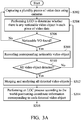
- FIGs. 3A-3B are portions of a flow chart of the local-object-correspondence process, local-detail-feature fusion process, and local-object-identity recognition for video objects in accordance with an embodiment of the disclosure.
- step S302 a plurality of cameras 110A are used to capture a plurality of pieces of video data.
- step S304 local-object detection (LOD) is performed to determine whether there is any noticeable video object (VO) in each piece of video data.
- step 306 it is determined whether a noticeable video object has been found. If noticeable video object has been found, step S308 is performed to record the corresponding video object. If no noticeable video object has been found, step S302 is performed.
- LOD local-object detection
- the computation apparatus 120 may detect whether there is any noticeable video object in a spatial region within the video frame in each piece of video data.
- the computation apparatus 120 may detect particular objects from each piece of video data, such as human, human faces, hands, vehicles, guns, knives, or sticks, but the disclosure is not limited thereto.
- the computation apparatus 120 may also detect particular behaviors from each piece of video data, such as gathering, chasing, snatching, fighting, or falling, but the disclosure is not limited thereto. That is, the computation apparatus 120 may determine that the above-mentioned particular objects or particular behaviors belong to the noticeable video objects.
- the computation apparatus 120 may detect different particular behaviors from each piece of video data using different determination schemes. Using the gathering behavior as an example, the computation apparatus 120 may determine whether the density of people within a space exceeds a predetermined density for longer than a predetermined time period. For example, the computation apparatus 120 may determine there is a gathering behavior upon detecting that there are from three to five people in each square meter within an area of 5 square meters for 10 ⁇ 30 minutes and these gathered people do not move.
- the computation apparatus 120 may determine the motion trajectory and speed between people from the video data captured by the cameras 110A. When the motion trajectories of two people are similar and are kept at a speed over a predetermined speed, the computation apparatus 120 may determine there is a chasing behavior in the video data. Using the falling behavior as an example, the computation apparatus 120 may determine whether four limbs of a person has an angular speed higher than a predetermined angular speed upon falling and has paused for a predetermined time period. In addition, the surveillance system 100 may also obtain the sensor data detected by the wearable device being worn on the user, thereby determining whether there is a falling behavior in the video data. Using snatching or fighting behaviors as an example, the computation apparatus 120 may use a well-known behavior determination algorithm to analyze whether there is a snatching or fighting behavior in the video data.
- behavior detection is a very high-end application.
- information such as dynamic time ordering, motion trajectories of objects, interactions between objects, distributions of objects, and density of objects can be used.
- sensors of different types can be incorporated to achieve complementary and global object recognition.
- video data belong to the different types of sensor data used by the surveillance system 100 of the present disclosure. It should be noted that the present disclosure is not limited to the techniques for behavior detection using video data described in the aforementioned embodiments.
- the computation apparatus 120 may calculate the world-positioning-coordinate information of each detected video object. For example, the computation apparatus 120 may obtain information such as the installation position, shooting angle, field of view of each camera 110A, and the world-positioning-coordinate information of each video object in the video data captured by each camera 110A. While each camera 110A is capturing video images of a scene, each camera 110A may add corresponding time stamps into the captured video images, thereby facilitating the subsequent local-object-correspondence (LOC) process and global-object-correspondence (GOC) process.
- LOC local-object-correspondence
- GOC global-object-correspondence
- step S310 it is determined whether all video objects in each piece of video data have been detected. If all video objects have been detected, step S312 is performed. If all video objects haven't been detected, step S304 is performed.
- step S312 all detected video objects are merged and analyzed.
- one or more video objects may be detected from each piece of video data, and each video object may have its own world-positioning-coordinate information and time stamps.
- the computation apparatus 120 may determine whether the video objects in different video data are correlated according to the world-positioning-coordinate information and time stamps of each video object.
- step S314 an LOC process is performed according to the world-positioning-coordinate information (and/or time stamps) corresponding to each detected video object, thereby corresponding and linking video objects associated with the same local video object, and labeling an LOID on the video objects associated with the same local video object.
- its local object ID can be regarded as a local video object ID (LVOID).
- an LOID list (e.g., first LOID list) for video objects is built, wherein the LOID list records one or more local video objects having different LOIDs.
- each local video object is merged to build an LRFS according to the LOID list, wherein the LRFS includes information about the direction, distance, roughness, and structure of each local video object.
- step S320 a local-detail-feature-extraction (LDFE) process is sequentially performed on each piece of video data corresponding to each local video object according to the LOID list to build an LDFS of each piece of video data corresponding to each local video object.
- LDFE local-detail-feature-extraction
- step S322 an LDFF process is performed according to the LOID list to sequentially fuse the LDFS of each piece of video data corresponding to each local video object into an LFF.
- step S324 the LFF of each local video object is input to a local-object-recognition (LOR) model to perform local-object-identity recognition, and a recognition result is labeled with a local-identity ID (LIID), and each LIID are merged to generate an LIID list L1.
- LOR local-object-recognition
- LIID local-identity ID
- each LIID generated in the flow of FIGs. 3A-3B is used to label a corresponding local video object in the video data, and thus each LIID can be regarded as local-video-identity ID (LVIID).
- the LIID list L1 can be regarded as a local-video-identity ID list.
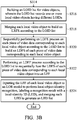
- FIGs. 4A-4B are portions of a flow chart of the local-object-correspondence process, local-detail-feature fusion process, and local-object-identity recognition for acoustic objects in accordance with an embodiment of the disclosure.
- step S402 a plurality of cameras 110A are used to capture a plurality of pieces of acoustic data.
- step S404 local-object detection (LOD) is performed to determine whether there is any noticeable acoustic object (AO) in each piece of acoustic data.
- LOD local-object detection
- step S408 is performed to record the corresponding acoustic object. If no noticeable acoustic object has been found, step S402 is performed.
- the computation apparatus 120 may detect whether there is any noticeable acoustic object in a temporal exploration region within an acoustic segment in each piece of acoustic data.
- the computation apparatus 120 may detect particular object sounds or event sounds from each piece of acoustic data, such as sounds of gunshots, explosions, crying, noises, or percussion, but the disclosure is not limited thereto. That is, the computation apparatus 120 may determine that the above-mentioned aforementioned particular object sounds or event sounds are unusual sounds in the environment, and thus these sounds belong to the noticeable acoustic objects.
- conventional speech-signal processing techniques such as "Mel-frequency cepstrum coefficient (MFCC)" method, or “linear prediction cepstrum coefficient (LPCC)” method can be used to perform feature extraction on the aforementioned unusual sounds.
- the computation apparatus 120 may convert the acoustic signal captured by each microphone 110B into a sound spectrum of unusual sounds, and perform feature description on the time-frequency feature of the sound spectrum using a 2D-Gabor filter. Then, the computation apparatus 120 may extract the features of the sound spectrum of unusual sounds using the "stochastic non-negative independent component analysis (SNICA)” method, and perform classification identification using “sparse representation classification (SRC)” method, thereby determining other types of unusual sounds in the real world.
- SNICA non-negative independent component analysis
- SRC separse representation classification
- the computation apparatus 120 may calculate the world-positioning-coordinate information of each detected acoustic object. For example, the computation apparatus 120 may obtain information such as the installation position, perceiving angle, gap distance of each microphone 110B, and the world-positioning-coordinate information of each acoustic object in the acoustic data captured by each microphone 110B. While each microphone 110B is capturing acoustic data of a scene, each microphone 110B may add corresponding time stamps into the captured acoustic data, thereby facilitating the subsequent local-object-correspondence (LOC) process and global-object-correspondence (GOC) process.
- LOC local-object-correspondence
- GOC global-object-correspondence
- step S410 it is determined whether all acoustic objects in each piece of acoustic data have been detected. If all acoustic objects have been detected, step S412 is performed. If all acoustic objects haven't been detected, step S404 is performed.
- step S412 all detected acoustic objects are merged and analyzed.
- one or more acoustic objects may be detected from each piece of acoustic data, and each acoustic object may have its own world-positioning-coordinate information and time stamps.
- the computation apparatus 120 may determine whether the acoustic objects in different acoustic data are correlated according to the world-positioning-coordinate information and time stamps of each acoustic object.
- a LOC process is performed according to the world-positioning-coordinate information (and/or time stamps) corresponding to each detected acoustic object, thereby corresponding and linking acoustic objects associated with the same local acoustic object, and labeling an LOID on the acoustic objects associated with the same local acoustic object.
- its local object ID can be regarded as a local acoustic object ID (LAOID).
- an LOID list (e.g., second LOID list) for local acoustic objects is built, wherein the LOID list records one or more local acoustic objects having different LOIDs.
- each local acoustic object is merged to build an LRFS according to the LOID list, wherein the LRFS includes information about the direction, distance, roughness, and structure of each local video object.
- step S420 a local-object-detail-feature extraction process is sequentially performed on each piece of acoustic data corresponding to each local acoustic object according to the LOID list to build an LDFS of each piece of acoustic data corresponding to each local acoustic object.
- step S422 an LDFF process is performed according to the LOID list to sequentially fuse the LDFS of each piece of acoustic data corresponding to each local acoustic object into an LFF.
- step S424 the LFF of each local acoustic object is input to a local-object-recognition (LOR) model to perform local-object-identity recognition, and a recognition result is labeled by a local-identity ID (LIID), and each LIID are merged to generate an LIID list L2.
- LOR local-object-recognition
- LIID local-identity ID
- Each LIID generated in the flow of FIG. 4 is used to label a corresponding local acoustic object in the acoustic data, and thus each LIID can be regarded as local-acoustic-identity ID (LAIID).
- the LIID list L2 can be regarded as a local-acoustic-identity ID list.
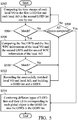
- FIG. 5 is a flow chart of the global-object-correspondence (GOC) process and building the global-detail-feature set (GDFS) in accordance with an embodiment of the disclosure.
- the information and LOID lists generated by various processes with regard to video objects and acoustic objects in FIGs. 3A-3B and FIG. 4 are used in the flow of the GOC process and building the GDFS in FIG. 5 .
- step S502 the time stamps of each local video object in the first LOID list and each local acoustic object in the second LOID list are compared one by one.
- step S504 it is determined whether the time stamps of the compared local video object and local acoustic object match. If the time stamps match, step S506 is performed. If the time stamps do not match, step S508 is performed.
- step S506 the first LRFS and the first world-positioning-coordinate (WPC) information of the local video object and the second LRFS and the second world-positioning-coordinate information of the local acoustic object are compared.
- WPC world-positioning-coordinate
- step S508 it is determined whether each local video object in the first LOID list and each local acoustic object in the second LOID list have been compared. If so, step S514 is performed; if not, step S502 is performed.
- step S510 it is determined whether the first LRFS matches the second LRFS and whether the first world-positioning-coordinate information matches the second world-positioning-coordinate information. If the first LRFS matches the second LRFS and the first world-positioning-coordinate information matches the second world-positioning-coordinate information, step S512 is performed. If the first LRFS does not match the second LRFS or the first world-positioning-coordinate information does not match the second world-positioning-coordinate information, step S508 is performed.
- step S510 determines that the time stamps of the selected local video object in the first LOID list and the selected local acoustic object in the second LOID list matches each other, and the first LRFS matches the second LRFS and the first world-positioning-coordinate information matches the second world-positioning-coordinate information. Accordingly, the computation apparatus 120 may determine that the selected local video object and the selected local acoustic object are associated with the same object.
- step S512 the successfully matched local video object and local acoustic object are recorded, and a GOID list and a global-rough-feature set (GRFS) are built.
- the successfully matched local video object and local acoustic object may be linked to each other and can be regarded as a global object, and the computation apparatus 120 may assign a global-object ID (GOID) to the global object. Accordingly, the computation apparatus 120 may record each global object and its corresponding GOID in the GOID list.
- GOID global-object ID
- each of the successfully matched local video object and local acoustic object has its own corresponding LRFS, and the computation apparatus 120 may link the LRFS of the local video object and the LRFS of the local acoustic object to each other to form the GRFS of the global object.
- step S514 different types of LOID lists and their LFFs corresponding to each global object in the GOID list are combined into the GDFS in the GOID list.
- the GOID list includes successfully matched local video objects and local acoustic objects, and each of the successfully matched local video objects and local acoustic objects has its own corresponding LFF, and thus the computation apparatus 120 may link the LFF of the local video object and the LFF of the local acoustic object to each other to generate a GDFS that corresponds to the global object.
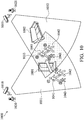
- FIG. 6A is a diagram of capturing video data of a scene using a plurality of cameras in accordance with an embodiment of the disclosure.
- each of objects O1, O2, and O3 may be captured by a portion of the cameras 110A due to the objects being covered or bad shooting angles.
- object O1 is captured by cameras 110A-1, 110A-2 and 110A-3
- object O2 is captured by cameras 110A-1 and 110A-2
- object O3 is captured by cameras 110A-1, 110A-2, and 110A-4.
- the computation apparatus 120 may perform object detection on the video data captured by each of the cameras 110A, and video objects VO1, VO2, and VO3 are detected.
- the computation apparatus 120 may assign a corresponding object ID to each of the video objects VO1, VO2, and VO3.
- the object IDs of the video objects VO1, VO2, and VO3 are VOID1, VOID2, and VOID3, respectively.
- the object IDs VOID1 ⁇ VOID3 corresponding to the video objects VO1 ⁇ VO3 can be regarded as local object IDs (LOIDs) of the video data.
- LOIDs local object IDs
- the computation apparatus 120 may perform the local-detail-feature-extraction process on the video data captured by the cameras 110A-1, 110A-2, and 110A-3 to obtain the local-video-detail features of video objects (e.g., colors, textures, and shapes of objects).
- the local-video-detail features VidF1_O1, VidF2_O1, and VidF3_O1 associated with object O1 can be obtained.
- the computation apparatus 120 may perform the local-detail-feature fusion process on the local-video-detail features VidF1_O1, VidF2_O1, and VidF3_O1 to obtain a fused-video-detail feature VidFF_O1 associated with object O1.
- the fused-video-detail feature VidFF_O1 may indicate different video features of the same object O1 captured by the cameras 110A at different shooting angles.
- the computation apparatus 120 may perform the local-detail-feature extraction process on the video data captured by the cameras 110A-1 and 110A-2 to obtain the local-video-detail features of video objects (e.g., colors, textures, and shapes of objects).
- the local-video-detail features VidF1_O2 and VidF2_O2 associated with object O2 can be obtained.
- the computation apparatus 120 may perform the local-detail-feature fusion process on the local-video-detail features VidF1_O2 and VidF2_O2 to obtain a fused-video-detail feature VidFF_O2 associated with object O2.
- the fused-video-detail feature VidFF_O2 may indicate different video features of the same object O2 captured by the cameras 110A at different shooting angles.
- the computation apparatus 120 may perform the local-detail-feature extraction process on the video data captured by the cameras 110A-1, 110A-2, and 110A-4 to obtain the local-video-detail features of video objects (e.g., colors, textures, and shapes of objects).
- the local-video-detail features VidF1_O3, VidF2_O3, and VidF4_O3 associated with object O3 can be obtained.
- the computation apparatus 120 may perform the local-detail-feature fusion process on the local-video-detail features VidF1_O3, VidF2_O3, and VidF4_O3 to obtain a fused-video-detail feature VidFF_O3 associated with object O3.
- the fused-video-detail feature VidFF_O3 may indicate different video features of the same object O3 captured by the cameras 110A at different shooting angles.
- the cameras 110A-1, 110A-2, 110A-3, and 110A-4 are capturing video images of the scene, corresponding time stamps are also added into the captured video images, and the fused-video-detail features VidFF_O1, VidFF_O2, and VidFF_O3 may also have corresponding time stamps.
- the first LOID list includes the fused-video-detail features VidFF _O1, VidFF_O2, VidFF_O3, and their corresponding time stamps.
- the computation apparatus 120 may input the fused-video-detail features VidFF _O1, VidFF_O2, and VidFF_O3 into a local-video-object-recognition model to recognize the identity of each of the fused-video-detail features VidFF _O1, VidFF_O2, and VidFF_O3.
- the computation apparatus 120 may assign a local-video-identity identifier (LVIID) such as LVIID1, LVIID2, and LVIID3 to each of the fused-video-detail features VidFF _O1, VidFF_O2, and VidFF_O3, respectively.
- the computation apparatus 120 may record the local-video-identity identifiers LVIID1, LVIID2, and LVIID3 into an LIID list (e.g., LIID list LI).
- FIG. 6B is a diagram of capturing acoustic data of a scene using a plurality of microphones in accordance with an embodiment of the disclosure.
- Three microphones 110B of the surveillance system 100 are installed in the scene 600 to capture acoustic data of the scene 600.
- the three microphones cameras 110B may include microphones 110B-1, 110B-2, and 110B-3 that are installed at different positions.
- the microphones 110B-1, 110B-2, and 110B-3 may be attached on the cameras 110A-1, 110A-2, and 110A-3 in FIG. 6A to capture acoustic data, respectively.
- microphones 110B-1, 110B-2, and 110B-3 may also be installed at different positions in the scene 600 to capture acoustic data.
- each of objects O1, O2, and O3 may be captured by a portion of the microphones 110B due to the objects being covered, sound volumes, or distances.
- object O1 is captured by microphones 110B-2 and 110A-3
- object O2 is captured by microphones 110B-1 and 110B-3
- object O3 is captured by microphone 110B-3.
- the computation apparatus 120 may perform the local-detail-feature extraction process on the acoustic data captured by the microphones 110B-2 and 110B-3 to obtain the local-acoustic-detail features of acoustic objects (e.g., sound volume, pitch, and tone of acoustic objects).
- the local-acoustic-detail features AudF2_O1 and AudF3_O1 associated with object O1 can be obtained.
- the computation apparatus 120 may perform the local-detail-feature fusion process on the local-acoustic-detail features AudF2_O1 and AudF3_O1 to obtain a fused-acoustic-detail feature AudFF_O1 associated with object O1.
- the fused-acoustic-detail feature AudFF_O1 may indicate different acoustic features of the same object O1 captured by the microphones 110B at different positions.
- the computation apparatus 120 may perform the local-detail-feature extraction process on the acoustic data captured by the microphones 110B-1 and 110B-3 to obtain the local-acoustic-detail features of acoustic objects (e.g., sound volume, pitch, and tone of acoustic objects).
- the local-acoustic-detail features AudF1_O2 and AudF3_O2 associated with object O2 can be obtained.
- the computation apparatus 120 may perform the local-detail-feature fusion process on the local-acoustic-detail features AudF1_O2 and AudF3_O2 to obtain a fused-acoustic-detail feature AudFF_O2 associated with object O2.
- the fused-acoustic-detail feature AudFF_O2 may indicate different acoustic features of the same object O2 captured by the microphones 110B at different positions.
- the computation apparatus 120 may perform the local-detail-feature extraction process on the acoustic data captured by the microphone 110B-3 to obtain the local-acoustic-detail features of acoustic objects (e.g., sound volume, pitch, and tone of acoustic objects).
- the local-acoustic-detail feature AudF3_O3 associated with object O3 can be obtained.
- the computation apparatus 120 may perform the local-detail-feature fusion process on the local-acoustic-detail features AudF3_O3 to obtain a fused-acoustic-detail feature AudFF_O3 associated with object O3.
- the fused-acoustic-detail feature AudFF_O3 may indicate different acoustic features of the same object O3 captured by the microphones 110B at different positions.
- the microphones 110B-1, 110B-2, and 110B-3 are capturing acoustic data of the scene 600, corresponding time stamps are also added into the captured acoustic data, and the fused-acoustic-detail features AudFF_O1, AudFF_O2, and AudFF_O3 include corresponding time stamps. That is, the second LOID list includes the fused-acoustic-detail features AudFF_O1, AudFF_O2, AudFF_O3, and corresponding time stamps.
- the computation apparatus 120 may input the fused-acoustic-detail features AudFF_O1, AudFF_O2, and AudFF_O3 into a local-acoustic-object-recognition model to recognize the identity of each of the fused-acoustic-detail features AudFF_O1, AudFF_O2, and AudFF_O3.
- the computation apparatus 120 may assign a local-acoustic-identity identifier (LAIID) such as LAIID1, LAIID2, and LAIID3 to each of the fused-acoustic-detail features AudFF_O1, AudFF_O2, and AudFF_O3, respectively.
- the computation apparatus 120 may record the local-acoustic-identity identifiers LAIID1, LAIID2, and LAIID3 into an LIID list (e.g., LIID list L2).
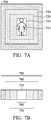
- FIG. 7A is a diagram of different spatial divisions within a video frame in accordance with an embodiment of the disclosure.
- the video frame 700 includes various regions such as a region of interest (ROI) 710, an exploration region 720, and a context region 730.
- ROI 710 indicates the spatial range of the video object 715 within the video frame 700.
- exploration region 720 indicates the region around the ROI 710 belonging to the video object 715, and is used for tracking the video object 715 in the computer vision.
- the context region 730 is larger than the exploration region 720, and indicates the spatial range used for performing the context analysis of the video object 715.
- FIG. 7B is a diagram of different temporal divisions within an acoustic segment in accordance with an embodiment of the disclosure.
- the acoustic segment 750 may include different regions such as a region of interest (ROI) 760, an exploration region 770, and a context region 780.
- the ROI 760 indicates the temporal range of the acoustic object 755 within the acoustic segment 750.
- the exploration region 770 indicates the range of time points close to the ROI 760, and is used for tracking the acoustic object 755 by the computation apparatus 120.
- the context region 780 is larger than the exploration region 770, and indicates the temporal range used for performing the context analysis of the acoustic object 755.
- the ROI region may be a spatial region or a temporal region in which the object is located.
- an exploration region e.g., exploration regions 720 and 770
- the computation apparatus 120 may use a context region spatially or temporally larger than the exploration region (e.g., exploration regions 720 and 770), such as the context region 730 in FIG. 7A and the context region 780 in FIG. 7B .
- the context region defines the boundaries of the largest exploration region, and the ROI is the smallest exploration region.
- the computation apparatus 120 may perform object tracking, a predicted ROI is defined by the user or the computation apparatus 120, and the recognition model (e.g., local-object-recognition model) may search for the object in the exploration region.
- the computation apparatus 120 may set the range of the exploration region to be twice the area of the ROI, but the disclosure is not limited thereto.
- the computation apparatus 120 may automatically adjust the size of the exploration region according to the motion speed and direction of the object.
- the computation apparatus 120 usually does not set an oversized exploration region in consideration of performance and efficiency, and the size of the exploration region can be limited by manually setting the context region.
- the computation apparatus 120 may first perform the context analysis (e.g., by the context-region-analysis module 1322) to calculate the distribution of weighting coefficients of each feature. If the computation apparatus 120, according to the results of the context analysis, determines that the distribution of weighting coefficients of the LFF of each type is biased toward some LFFs (i.e., can be regarded as the LFFs having great differences), it may result in a biased result of the global-object recognition. In this situation, the adaptive weighting coefficients (AWC) should be used for calculations of weighted features.
- the context analysis e.g., by the context-region-analysis module 1322
- the weighting coefficient of the local features in each type can be regarded as the adjacent differential weighting coefficient (ADWC).
- ADWC adjacent differential weighting coefficient
- the computation apparatus 120 performs the context analysis on the predicted ROI, the range used by the computation apparatus 120 in the calculation for the differences between the feature values in different types is regarded as a predicted ROI, and the predicted ROI can also be regarded as an interested-context region.
- the range of the ROI in which the object is located can be confirmed and regarded as a recognized ROI after searching and recognition by the recognition model in the exploration region have been completed.
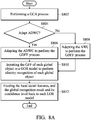
- FIG. 8A is a flow chart of selecting coefficients of global-detail-feature fusion according to the context analysis in accordance with an embodiment of the disclosure.
- a global-context-analysis (GCA) process is performed.
- the GCA process may analyze a context region corresponding to each of the video objects and acoustic objects.
- step S804 it is determined whether it is appropriate to adapt the ADWC.
- step S804 can be regarded as a weighting-coefficient determination step. If it is determined that it is appropriate to adapt the ADWC (e.g., little differences between the local-fusion features), step S806 is performed, and the ADWC is used to perform the global-detail-feature fusion process. If it is determined that it is not appropriate to adapt the ADWC (e.g., large differences between the local-fusion features), step S808 is performed, and the adaptive-weighting coefficient (AWC) is used to perform the global-detail-feature fusion process.
- AWC adaptive-weighting coefficient
- the computation apparatus 120 adapts the ADWC to perform the global-detail-feature fusion process.
- the computation apparatus 120 may update the ADWC, and use the updated ADWC to perform the global-detail-feature fusion process, thereby fusing the GDFS of each object in each type in the GOID list using the updated ADWC to generate a global-fusion feature.
- step S808 the computation apparatus 120 adapts the AWC to perform the global-detail-feature fusion process.
- the computation apparatus 120 may use the AWC via a feedback path to perform the global-detail-feature fusion process, thereby fusing the GFF of each object in each type of each global object in the GOID list using the AWC to generate a global-fusion feature.
- step S810 the global-fusion feature of each global object is input to a global-object-recognition (GOR) model to perform identity recognition of each global object, thereby generating a global-identity-ID (GIID) list.
- GOR global-object-recognition
- the computation apparatus 120 may record the GIID in the GIID list.
- the GIID list further records the global-recognition result and its confidence level.
- step S812 the local-detail features, and the global-recognition result and its confidence level are fed back to each local-object-recognition model.
- the global-fusion feature is further decomposed into original local-detail features that are fed back to a corresponding local-object-recognition model.
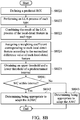
- FIG. 8B is a flow chart of the global-context analysis and weighting-coefficient determination steps in accordance with the embodiment of FIG. 8A .
- steps S802 and S804 are shown in FIG. 8B , wherein the global-context-analysis is performed in step S802, and the weighting-coefficient determination is performed in step S804.
- a predicted ROI is defined.
- the predicted ROI may be an interested context region, and can be defined by the user or the computation apparatus 120.
- a local-context-analysis (LCA) process is performed on each type, and the difference values between the feature values of each type of local-detail feature are calculated and normalized.
- the LCA is to perform feature extraction and fusion on the different types of sensor data (e.g., video, audio, smell, taste, and tactile sensor data) to obtain the LFF of each type of sensor data.
- the computation apparatus 120 may perform a set of specific calculations and analysis on the LFF of the current sensor data of each type to obtain the weighting coefficient corresponding to the LFF of the current sensor data of each type.
- the calculations of the weighting coefficients can be performed on the video-detail features including the color, texture, and shape, and the acoustic-detail features including the sound volume, pitch, and tone.
- the LFF of the sensor data in other types can be calculated in a similar manner to obtain the corresponding weighting coefficient.
- the color feature may include the difference values in density, saturation, and brightness.
- the texture feature may include the difference values in patterns.
- the shape feature may include the difference values in lines, relative positions, relative distances, and relative directions.
- the sound-volume feature may include the difference value in acoustic energy.
- the pitch feature may include the difference value in the acoustic frequency.
- the tone feature may include the difference values in proportions of harmonics or overtone. Since the property of each local-detail feature is different from each other, the difference value of each local-detail feature should be normalized to evaluate the normalized difference value of each local-detail feature.
- the normalized difference value indicates the relative importance of each selected LFF in the overall rating, and can be expressed by a natural number which may be a positive integer, a negative integer, or zero.
- the computation apparatus 120 may use local binary patterns to calculate the difference value of each local-detail feature in different types.
- step S8023 the results of the local-context analysis process of each type of local-detail feature are combined. For example, after obtaining the normalized difference value for each type of local-detail feature, the computation apparatus 120 may combine the results of the local-context analysis of all local-detail features of each type.
- a weighting coefficient corresponding to each local-detail feature is assigned according to the normalized difference value of each local-detail feature. If the normalized difference value of a specific local-detail feature is greater, the weighting coefficient of the local-detail feature is also greater. If the normalized difference value of a specific local-detail feature is smaller, the weighting coefficient of the local-detail feature is also smaller.
- an upper threshold and a lower threshold of a predetermined interval are obtained.
- the computation apparatus 120 may obtain the upper threshold and lower threshold (e.g., may be defined by the user or the computation apparatus 120) of the predetermined interval of the weighting coefficient defined by the practical condition of the type or application.
- step S8041 it is determined whether the weighting coefficient corresponding to each local-detail feature is within the predetermined interval. When the weighting coefficient corresponding to each local-detail feature is located within the predetermined interval, it indicates that the difference between the feature values of the local-detail features is little, and step S8042 is performed to determine that it is appropriate to adapt the ADWC. When one of the weighting coefficients corresponding to local-detail features is not located within the predetermined interval, it indicates that the difference between the feature values of the local-detail features is large, and step S8043 is performed to determine that it is not appropriate to adapt the ADWC, and the AWC is used.
- three effective LFFs for video objects such as features A, B, and C are selected, and two effective LFFs for acoustic objects such as features D and E are selected.
- the weighting coefficients WA ⁇ WE of the features A ⁇ E are respectively 7, 2, 4, 6, and 3
- the weighting coefficient WA exceeds the upper threshold of the predetermined interval 3 ⁇ 6 having the upper threshold of 7 and the lower threshold of 3. It indicates that the determination result is biased toward feature A, and the computation apparatus 120 may adapt the AWC.
- the computation apparatus 120 may adapt effective feature information of different types according to user's needs, determine which weighting coefficient is to be selected according to the results of the global-context analysis, and fuse the selected features. Additionally, the computation apparatus 120 may feed the results of the global-object recognition back to the local-object-recognition model. For example, before the computation apparatus 120 fuses the GDFSs into the GFF, the computation apparatus 120 has to select effective local-fusion features.
- the effective or ineffective features may refer to whether the feature is capable of improving the recognition accuracy. For example, the texture of the skin is an effective feature for predicting the user's age, and the color of the skin is an ineffective feature for predicting the user's age. That is, with regard to the sensor data in different types, the user may set which local-fusion features are effective features while performing the global-object recognition or local-object recognition.
- FIGs. 8C-1 and 8C-2 are portions of a flow chart of the global-detail-feature fusion and global-object recognition in accordance with an embodiment of the disclosure.
- step S8201 initial weighting coefficients (WCs) for the ADWC and AWC are set.
- step S8202 tracking conditions are obtained, and a predicted ROI is defined according to the tracking conditions.
- the tracking conditions can be defined by the user, such as a person wearing clothes having a specific color or texture, or a person having the fastest speed, but the disclosure is not limited thereto.
- the computation apparatus 120 may define the predicted ROI for each type of sensor data.
- step S8203 all local contexts and predicted ROIs are fused. For example, the context and the predicted ROI of each type are fused. If step S8203 is performed for the first time, the fused ROI generated by the fusion process can be regarded as an initial ROI.
- step S8204 a global-context analysis (GCA) process is performed, wherein the details of the global-context analysis can be referred to the flow chart in FIGs 8A and 8B .
- GCA global-context analysis
- step S8205 it is determined whether it is appropriate to adapt the ADWC.
- the details of step S8205 can be referred to the flow chart in FIG. 8B , and thus will be omitted here.
- step S8206 is performed.
- step S8210 is performed.
- step S8206 the weighting coefficient value of each type obtained from the global-context-analysis process is set to the ADWC. For example, when the weighting coefficient value of each local-fusion feature of each type is located within the predetermined interval, it indicates that the results of the global-object recognition will not be biased toward a certain feature, and thus the weighting coefficient obtained from the global-context analysis can be set to the ADWC.
- step S8207 the ADWC is adapted to perform the GDFF process to build a global-fusion feature.
- the computation apparatus 120 may perform calculation of the GDFF process according to the weighting coefficient of each local-fusion feature to generate a global-fusion feature.
- step S8208 the global-fusion feature is input to a global-object-recognition model to perform the global-object recognition.
- the global-object-recognition model may be the global-object-recognition model 920 shown in FIG. 9A-2 .
- step S8209 boundaries of a recognized ROI are generated according to the results of the global-object recognition. It should be noted that the flow of the global-object recognition of the current time frame is finished after completing step S8209, and the flow of the global-object recognition of the next time frame is ready to be performed.
- step S8210 the AWC is adapted to perform the GDFF process to build a global-fusion feature.
- the computation apparatus 120 may apply the AWC to perform the GDFF to build a global-fusion feature.
- step S8211 the global-fusion feature is input to a global-object-recognition model to perform the global-object recognition.
- the global-object-recognition model may be the global-object-recognition model 920 shown in FIG. 9A-2 .
- step S8212 boundaries of a recognized ROI are generated according to the results of the global-object recognition. It should be noted that, after completing step S8212, step S8213 is performed to determine whether the global-context analysis is performed for the first time. If the determination result of step S8213 is "yes”, step S8214 is performed; if the determination result of step S8213 is "yes”, step S8215 is performed.
- step S8214 the feature-similarity evaluation (FSE) between the features of the former ROI and the later ROI is performed.
- FSE feature-similarity evaluation
- step S8215 the feature-similarity evaluation between the features of the former ROI and the later ROI is performed.
- the global-context analysis is not performed for the first time in step S8215, the former ROI indicates the ROI after performing the global-object recognition for the previous time frame, and the later ROI indicates the ROI before performing global-object recognition for the current time frame.
- the Bhattacharyya distance is generally used in a feature-similarity evaluation between the features of the former ROI and the later ROI in steps S8214 and S8215. Since the properties of each feature are different, the feature value should be normalized before performing the evaluation. If the similarity of the same feature value in the former ROI and the later ROI is higher, the weighting coefficient corresponding to the feature is also greater.
- the AWC can be obtained after normalizing the weighting coefficient of the feature.
- step S8216 the AWC is updated. It should be noted that the updated AWC is used for processing the data in the next time frame.
- step S8217 the boundaries of the recognized ROI obtained from the current time frame are applied to the predicted ROI of the next time frame. Then, the flow of steps S8203 ⁇ S8207 is repeatedly performed.
- FIG. 8D is a diagram of the data pipeline of the global-detail-feature fusion and global-object recognition in accordance with an embodiment of the disclosure. The following embodiments are described with reference to FIGs. 8C-1 , 8C-2 , and 8D .
- phase 1 ⁇ phase 9 labeled on the left side denote different phases of the data pipeline of the global-detail-feature fusion and global-object recognition.
- TF1 ⁇ TF7 denote time frames.
- ROI1 ⁇ ROI7 denote the ROIs within time frames TF1 ⁇ TF7
- Context 1 ⁇ Context7 denote the context regions within time frame TF1 ⁇ TF7.
- phase 1 local-context fusion and predicted-ROI fusion are performed.
- time frame TF1 being the first time frame
- the fused-context region and the fused ROI can be used to perform the global-context analysis (GCA) in phase 2.
- GCA global-context analysis
- the determination for using the ADWC or AWC is set to a default value in time frame TF1.
- phase 2 it is determined which weighting coefficient is to be adapted according to the results of the GCA. If it is determined to adapt the AWC, phase 3 in FIG. 8D is labeled with A. If it is determined to adapt the ADWC, phase 3 in FIG. 8D is labeled with AD.
- phase 4 the GDFF is performed according to the selected weighting coefficient to generate a GFF in phase 5.
- phase 6 the global-object recognition is performed according to the GFF in phase 5. Then, in phase 7, the boundaries of the recognized region are generated according to the results of the global-object recognition.
- the feature-similarity evaluation between the features of the former ROI and the later ROI is performed. If the global-context analysis is performed for the first time (e.g., within time frame TF1), the former ROI indicates the ROI before performing the global-object recognition for the current time frame, and the later ROI indicates the ROI after performing global-object recognition for the current time frame. If the global-context analysis is not performed for the first time, the former ROI indicates the ROI after performing the global-object recognition for the previous time frame, and the later ROI indicates the ROI before performing global-object recognition for the current time frame.
- the first time e.g., within time frame TF1
- the former ROI indicates the ROI before performing the global-object recognition for the current time frame
- the later ROI indicates the ROI after performing global-object recognition for the current time frame.
- phase 9 the AWC is updated. For example, if the label of phase 3 is A, it indicates that the AWC is adapted. Thus, the AWC is updated in phase 9. If the label of phase 3 is AD, it indicates that the ADWC is adapted, and thus phase 8 and phase 9 can be omitted. For example, it is determined to adapt the AWC in time frames TF1, TF2, TF4, and TF5, the feature-similarity evaluation between the features of the former ROI and the later ROI in phase 8 is performed.
- the updated AWC in the current time frame in phase 9 will be adapted in phase 3 in the next time frame.
- the AWC generated in phase 9 in time frame TF1 is updated to AWC1
- the AWC adapted in phase 3 in time frame TF2 is AWC1, and so forth.
- the value of the ADWC is updated in the current frame. For example, it is determined to adapt the ADWC in phase 3 in time frame TF3, the ADWC is updated to the ADWC3 in the current time frame, and so forth.
- the boundaries of the recognized ROI such as ROI1a ⁇ ROI7a obtained in phase 7 of time frames TF1 ⁇ TF7 will be used in the next time frame.
- the boundary of the recognized ROI ROI1a obtained within time frame TF1 will be applied to the boundary of the predicted ROI within time frame TF2, and so forth.
- FIG. 8E is a flow chart of the global feedback in the recognition result feedback and enhancement step in accordance with an embodiment of the disclosure.
- step S832 the GFF is transmitted to the global-object recognition model to perform the global-object recognition to generate a global-recognition result (GRR) and its confidence level (CL).
- GRR global-recognition result
- CL its confidence level
- the global-recognition result output by the global-object-recognition model indicates a person (e.g., global object) is detected from the sensor data in different types.
- the global-recognition result is more reliable with a higher confidence level.
- a confidence-level threshold (CLT) is defined.
- the confidence-level threshold can be manually set by the user or automatically set by the computation apparatus 120, and the confidence-level threshold may indicate the lowest reliability required for the global-recognition result.
- step S836 it is determined whether the confidence level is lower than the confidence-level threshold. If so, the flow ends; if not, step S838 is performed. For example, if the confidence level of the global-recognition result is lower than the confidence-level threshold, it indicates that the reliability of the current global-recognition result is low, and the computation apparatus 120 may update the global-recognition result after the sensor data is updated or the object in the scene is moved to another place. If the confidence level of the global-recognition result is not lower than the confidence-level threshold, it indicates that the reliability of the global-recognition result is kept at a certain level.
- step S8308 the GDFF is decomposed into a local-fusion feature of each type. For example, since the reliability of the global-recognition result is at a certain level, the GDFF used for the global-object recognition in the global-object-recognition model can be decomposed into a local-fusion feature of each type.
- step S840 the global-recognition result, its confidence level, and each type of local-fusion feature are fed back to each local-object-recognition model (e.g., the local-object-recognition module 1313 in FIG. 2 ).
- each local-object-recognition model e.g., the local-object-recognition module 1313 in FIG. 2 .
- each local-object-recognition model may use the feedback path to perform co-learning between the local-object-recognition model and the global-object-recognition model, thereby automatically enhancing the capability and accuracy of the local-object recognition.
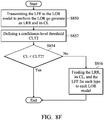
- FIG. 8F is a flow chart of the local feedback in the recognition result feedback and enhancement step in accordance with an embodiment of the disclosure.
- the global feedback is described, and the co-learning between the local-object-recognition model and the global-object-recognition model is performed. Additionally, a similar feedback can be used in the local terminals, that can be regarded as local feedback.
- step S850 the LFF is sent to the local-object-recognition model to perform the local-object recognition to generate a local-recognition result (LRR) and its confidence level (e.g., can be included in the LIID list).
- LRR local-recognition result
- its confidence level e.g., can be included in the LIID list.
- the local-recognition result output from the local-object-recognition model may indicate a person detected from the sensor data in the same type.
- the local-recognition result is more reliable with a higher confidence level.
- a confidence-level threshold CLT2 is defined.
- the confidence-level threshold can be manually set by the user or automatically set by the computation apparatus 120, and the confidence-level threshold may indicate the lowest reliability required for the local-recognition result. It should be noted that the confidence-level threshold used in the local-object recognition may be the same with or different from that used in the global-object recognition.
- step S854 it is determined whether the confidence level is lower than the confidence-level threshold. If so, the flow ends; if not, step S856 is performed. For example, if the confidence level of the local-recognition result is lower than the confidence-level threshold, it indicates that the reliability of the current local-recognition result is low, and the computation apparatus 120 may update the local-recognition result after the sensor data is updated or the object in the scene is moved to another place. If the confidence level of the local-recognition result is not lower than the confidence-level threshold, it indicates that the reliability of the local-recognition result is kept at a certain level.
- step S856 the local-recognition result, its confidence level, and each type of local-fusion feature are fed back to each local-object-detection model (e.g., the local-object-detection and correspondence module 1311 in FIG. 2 ).
- each local-object-detection model e.g., the local-object-detection and correspondence module 1311 in FIG. 2 .
- each local-object-detection model may use the feedback path to perform self-learning between the local-object-detection model and the local-object-recognition model, thereby automatically enhancing the capability and accuracy of the local-object detection.
- each local-object-detection model and local-object-recognition model may selectively refer to the feedback information, or determine how to use the feedback information according to practical conditions and needs.
- FIGs. 9A-1 and 9A-2 are portions of a block diagram of a surveillance method in accordance with an embodiment of the disclosure.
- the computation apparatus 120 performs a local-object-detection-and-correspondence (LODAC) process which includes a local-object-detection process and a local-object-correspondence process.
- LODAC local-object-detection-and-correspondence
- sensor data is received from each type of sensor. For example, in block 902-1, video data captured by one or more cameras 110A (e.g., cameras 110A-1 ⁇ 110A-4) is received.
- acoustic data captured by one or more microphones e.g., microphones 110B-1 ⁇ 110B-3) is received.
- smell data detected by one or more smell sensors 110D is received.
- an LOID list and a corresponding LRFS are generated for each type of sensor data.
- the LRFSs corresponding to the different types of sensor data may include information about the direction, distance, roughness, and structure of local objects from the different types of sensor data.
- the flow of building the LOID list and corresponding LRFS for the video objects and acoustic objects can be referred to in the embodiments of FIGs. 3A-3B and FIG. 4 .
- the computation apparatus 120 may perform a local-detail-feature extraction and fusion (LDFEF) process of the sensor data in different types, and the local-detail-feature extraction and fusion process includes a local-object-detail-feature-extraction process and a local-detail-feature-fusion process.
- LFEF local-detail-feature extraction and fusion
- the computation apparatus 120 may, according to the LOID list, sequentially perform the local-detail-feature extraction process on the sensor data corresponding to each local object to build an LDFS of the sensor data corresponding to each local object.
- the computation apparatus 120 may, according to the LOID list, perform a local-detail-feature-fusion process to sequentially fuse the LDFS of the sensor data corresponding to each local object into a local-fusion feature (LFF) of each local object.
- LFF local-fusion feature
- the computation apparatus 120 may input the LFF of each local object to a local-object-recognition model to perform a local-object-identity-recognition process, and label the recognition result with an LIID, and merge each LIID to generate an LIID list.
- the computation apparatus 120 may perform a global-object-correspondence (GOC) process to generate a GOID list and a GRFS corresponding to each global object.
- GOC global-object-correspondence
- the details for the global-object-correspondence process can be referred to in the embodiment of FIG. 5 .
- the correspondence process is not only performed on the video objects and acoustic objects here, but the flow is similar.
- the computation apparatus 120 may compare the time stamps of local objects in the LOID list for the different types of sensor data one by one. When the time stamps match each other, the computation apparatus 120 may further compare the world-positioning-coordinate information of the local objects having matching time stamps.
- the computation apparatus 120 further determines whether the LRFSs of the different types of sensor data match each other. When the LRFSs match each other, the computation apparatus 120 may link the successfully matched local object and corresponding LRFS in different types to build a global object and corresponding GRFS, wherein each global object has a corresponding GOID.
- the computation apparatus 120 may perform a global-detail-feature-correspondence (GDFC) process. For example, the computation apparatus 120 may combine the LOID list and corresponding LFF of different types corresponding to each global object in the GOID list into a GDFS in the GOID list. Since the GOID list includes the successfully matched different types of local objects that have corresponding LFFs, the computation apparatus 120 may link the LFFs corresponding to the different types of local objects to generate a GDFF that corresponds to the global object.
- GDFC global-detail-feature-correspondence
- the computation apparatus 120 may perform a global-context-analysis (GCA) process.
- GCA global-context-analysis
- the computation apparatus 120 may analyze a context region corresponding to each local object in different types of each global object in the GOIS list.
- video objects as an example, referring to FIG. 7A
- the computation apparatus 120 may perform a context analysis on the spatial range of the context region 730 within the video frame 700.
- acoustic objects as an example, referring to FIG. 7B , the computation apparatus 120 may perform a context analysis on the temporal range of the context region 780 within the acoustic segment 750.
- the computation apparatus 120 may further determine whether any detail feature in the context region in each local object is obvious.
- the video detail features includes colors, textures, and shapes
- the acoustic detail features includes the sound volume, pitch, and tone.
- the results of the context-analysis process may be to select either the ADWC or the AWC for the subsequent global-detail-feature fusion process.
- each weighting coefficient corresponds to a detail feature. Accordingly, there are six weighting coefficients for the video data and acoustic data.
- selector 914 if it is determined to use the ADWC to perform the global-detail-feature fusion process in block 912, the LIID list, GOID list and corresponding GDFS generated in block 910 are input to block 916, and the computation apparatus 120 may update the ADWC.
- the LIID list, GOID list and corresponding GDFS generated in block 910 are input to block 918 to perform the global-detail-feature fusion process.
- the updated AWC generated in block 924 will be sent to block 918 to perform the global-detail-feature fusion process.
- the AWC generated in block 924 is determined and updated according to the recognition result of the global-object-recognition model in the previous time frame.
- the computation apparatus 120 may perform the global-detail-feature fusion (GDFF) process.
- the input coefficients of the global-detail-feature fusion process may be the ADWC or AWC, depending on the results of the global-context analysis in block 912.
- the computation apparatus 120 may perform the feature-fusion process again on the GDFS corresponding to each global object to obtain a global-fusion feature (GFF) corresponding to each global object.
- GFF global-fusion feature
- the computation apparatus 120 may input the global-fusion feature into a global-object-recognition model to perform the identity recognition of the global object to generate a GIID list. For example, the computation apparatus 120 may assign a GIID to each global-fusion feature, and record the GIID in the GIID list. In addition, the GIID list further records the recognition result and its confidence level of the global-object-recognition model.
- the recognition result and its corresponding confidence level (e.g., both can be regarded as feedback information) output by block 920 will be input to the local-object-recognition model in different types such as blocks 906-1 ⁇ 906-N.
- the confidence level corresponding to the recognition result in a specific type is less than a predetermined ratio (e.g., 80%)
- selector 922 will not feed the recognition result and its confidence level back to the local-object-recognition models in blocks 906-1 ⁇ 906-N.
- the local-object-recognition models in blocks 906-1 ⁇ 906-N may determine whether to use the feedback information.
- the computation apparatus 120 may update the AWC, such as updating the AWC according to the previous recognition result of the global-object-recognition model.
- the computation apparatus 120 may decompose the global-detail feature (GDF) to obtain local-detail features in different types. It should be noted that the local-detail features obtained by the decomposition in block 926 will be input to the local-object-recognition models in blocks 906-1 ⁇ 906-N.
- GDF global-detail feature
- each of the local-object-recognition models in blocks 906-1 ⁇ 906-N may be adjusted or updated according to the recognition result and its confidence level in the corresponding type (e.g., from block 920 through selector 922), and the local-detail features in the corresponding type (e.g., from block 926), so that a more accurate recognition result of the local-object recognition can be obtained.
- FIGs. 9B-1 and 9B-2 are portions of a detailed block diagram of the global-context analysis process in accordance with the embodiment of FIGs. 9A-1 and 9A-2 .
- the global-context analysis process performed in block 912 of FIGs. 9A-1 and 9A-2 can be referred to content in the FIGs. 9B-1 and 9B-2 .
- each of blocks 904-1 ⁇ 904-N in FIGs. 9A-1 and 9A-2 may also perform a context-retrieving process and context-fusion process in a corresponding type, as illustrated in blocks 904-1 ⁇ 904-N in FIGs. 9B-1 and 9B-2 .
- block 904-1 As an example, after the video data Video 1, Video2, and Video 3 captured by the cameras 110A-1 ⁇ 110-3 are processed by block 902-1 in FIG. 9A-1 , the video data Video 1, Video2, and Video3 are still input to block 904-1. That is, the video data captured by each camera 110A will be input to block 904-1 to perform the local-detail-feature-extraction (LDFE) process and the context-retrieving (CR) process, such as blocks 904-1A, 904-1B, and 904-1C in FIG. 9B-1 .
- LDFE local-detail-feature-extraction
- CR context-retrieving
- the LDFF obtained from blocks 904-1A ⁇ 904-1C are input to block 904-ID to perform the local-detail-feature-fusion process to generate a LOID list and a local-fusion feature that corresponds to video objects that are input to block 910 to perform the GDFF-building process.
- the context-retrieving process performed in each of blocks 904-1A, 904-1B, and 904-1C may refer to the recognized video object and obtain the context region and predicted ROI in the corresponding video frame.
- the computation apparatus 120 may perform a local-context-fusion process and ROI-fusion process to fuse the context regions and predicted ROIs respectively from blocks 904-1A, 904-1B, and 904-1C to obtain a fused-context region and a fused ROI.
- Blocks 904-2 e.g., for acoustic data Audio1, Audio2, and Audio3
- 904-N e.g., for smell data Smell1, Smell2, and Smell3
- FIGs. 9B-1 and 9B-2 may perform similar processes on the sensor data in the corresponding type to obtain the fused-context region and fused ROI in the corresponding type.
- the fused-context regions and the fused ROIs obtained from blocks 904-1 ⁇ 904-N are input to corresponding blocks 912-1 ⁇ 912-N to perform a local-context-analysis (LCA) process, and the LCA result of each of blocks 912-1 ⁇ 912-N is transmitted to block 9120 to perform a context-analysis-result-fusion (CARF) process and an ROI-fusion process.
- the computation apparatus 120 may determine whether to use the ADWC or AWC to perform the GDFF process according to the fused-context result generated by block 9120.
- FIG. 9C is a flow chart of a surveillance method using multi-dimensional sensor data in accordance with an embodiment of the disclosure.
- the diagrams in FIGs. 9A-1 ⁇ 9A-2 and 9B-1 ⁇ 9B-2 can be combined and simplified into the flow in FIG. 9C .
- the sensor data is obtained using the sensor set in the same type.
- the sensor data obtained by the sensors in the same type is sent to the corresponding local-object detection and correspondence module 1311.
- a local-object detection and correspondence process is performed.
- the local-object detection and correspondence module 1311 may receive the sensor data from the cameras 110A, microphones 110B, taste sensor 110C, smell sensors 110D, and tactile sensors 110E, and perform the local-object detection and correspondence process on each type of sensor data to generate a LOID list and an LRFS for each type.
- a local-detail-feature extraction and fusion process is performed.
- the local-object feature extraction and fusion module 1312 may perform a local-feature-extraction and fusion process including a local-detail-feature extraction (LDFE) process and a local-object-fusion (LDFF) process.
- the computation apparatus 120 may, according to the LOID list and LRFS generated by the local-object-recognition module 131, extract the local-detail features from each type of sensor data to build the LDFS for each type. Then, the computation apparatus 120 may, according to the LOID list in each type, fuse the LRFS of each type into a local-fusion feature of each local object.
- the local-object feature extraction and fusion module 1312 may perform the context-retrieving process and context-fusion process of each type to generate a fused-context region.
- the local-object feature extraction and fusion module 1312 may also fuse each type of ROI to generate a fused ROI.
- the local-object recognition (LOR) is performed.
- the local-object recognition model 1313 may perform the local-object-identity recognition to generate an LIID list for each type.
- the computation apparatus 120 may input each type of local-fusion feature from block 956 to the local-object recognition model 1313 to perform a local-object-identity-recognition process, label the recognition result with an LIID, and merge each LIID to generate an LIID list.
- the local-object recognition model 1313 may feed the recognition result of the local-object recognition in each type back to the local-object detection and correspondence module 1311 via a feedback path (e.g., arrow 959), such that the local-object detection and correspondence module 1311 may perform self-learning according to the recognition result of the local-object recognition in each type.
- a feedback path e.g., arrow 959
- a global-object-correspondence (GOC) process is performed.
- the global-object-and-feature-set correspondence module 1321 may, according to the LOID list and LRFS from block 954 and the LIID list from block 958, perform the global-object correspondence process to generate a GOID list and GRFS.
- a global-detail-feature-correspondence process is performed.
- the global-object-and-feature-set correspondence module 1321 may perform the global-detail-feature-correspondence process to generate a GDFS according to the GOID list and GRFS from block 960, the LIID list from block 958, and the fused-context region and fused ROI of each type from block 956.
- a global-detail-feature-fusion (GDFF) process is performed.
- the global-detail-feature fusion module 1324 may perform the GDFF process according to the weighting coefficient output from the weighting-coefficient-selection module 1323, such as fusing the GDFS in each type generated by the global-object-and-feature-set correspondence module 1321 into a global-fusion feature (GFF).
- the weighting coefficient may be the AWC or ADWC, depending on the results of the global-context analysis, and the details can be referred to in the embodiments of FIGs. 8C-1 ⁇ 8C-2 and 9B-1 ⁇ 9B-2 .
- a global-object-recognition (GOR) process is performed.
- the global-recognition module 133 may input the global-fusion feature generated by the global-detail-feature fusion module 1324 to a global-object-recognition model to recognize the global identity of each global-fusion feature, such as building a GIID list recording the GIID of each global-fusion feature.
- the GIID list further records the recognition result and its confidence level of the global-object-recognition model.
- the computation apparatus 120 may decompose the global-detail feature (GDF) to obtain local-detail features in different types, and feed the local-detail features back to the LOR models via a feedback path 967.
- GDF global-detail feature
- the tone of a person's speech can be heard by the ear (e.g., using the microphones 110B) to determine who is speaking.
- the ear may hear a barking sound of an animal to determine whether the sound is from a dog, a cat, or other animals.
- the surrounding environment can be detected and possible danger can be predicted through odor smell (e.g., using smell sensors 110D), such as smelling smoke, smelling gasoline, etc.
- odor smell e.g., using smell sensors 110D
- smell sensors 110D such as smelling smoke, smelling gasoline, etc.
- the surveillance system 100 may take the appropriate action by listening to the tone of speech of the person, observing the behavior of the person, and smelling the smell from the person such as alcohol or perfume.
- the surveillance system 100 may fuse the sensor information from the different types of sensors (e.g., analogous to different organs), and take the appropriate action after the fusion of the sensor information. Specifically, a portion of the sensors of the surveillance may be not able to detect any noticeable data from the scene monitored by the surveillance system 100. For example, in the dark or low-light environment, the video data captured by the cameras 110A usually does not help to identify the global object. Meanwhile, the computation apparatus 120 may determine that there is no noticeable object in the video data, and it may determine that there is a noticeable object from acoustic data or other types of sensor data.
- the computation apparatus 120 may determine that there is no noticeable object in the video data, and it may determine that there is a noticeable object from acoustic data or other types of sensor data.
- the context-analysis process performed by the computation apparatus 120 may use the ADWC to perform the global-detail-feature-fusion process. That is, the weighting coefficients of the video-detail features (e.g., including colors, textures, and shapes) associated with the video data are set to 0 to perform the global-detail-feature-fusion process.
- the weighting coefficients of the video-detail features e.g., including colors, textures, and shapes
- the scene monitored by the surveillance system 100 may be a noisy environment, and the acoustic data captured by the microphones 110B may be mixed with various environmental noises.
- the computation apparatus 120 is capable of recognizing a noticeable object in the acoustic data, the recognition may be affected by the noises, resulting in a lower confidence level (or accuracy) for determining the acoustic objects.
- the determination result of the context-analysis process performed by the computation apparatus 120 may indicate adapting the ADWC to perform the global-detail-feature-fusion process. That is, the weighting coefficients of the acoustic detail features (e.g., including the sound volume, pitch, and tone) associated with the acoustic data are set to 0 to perform the global-detail-feature-fusion process.
- FIG. 10 is a diagram of a scene monitored by the surveillance system in accordance with an embodiment of the disclosure.
- each camera independently and continuously captures video images and stores them into the hard disks in the video surveillance system. After the cameras are installed, the video surveillance system can instantly display the captured image on the monitor screen that can be monitored by security personnel at any time. If an event occurs, it is necessary to manually access the video file stored in the hard disk. However, due to factors of shooting angles and the installation positions of the cameras, it is also necessary to manually track the images captured by the different cameras. Because the information between the independent cameras cannot be immediately integrated and communicated and the ability for cross-type sensing and fusion analysis is also lacking, it is easy to be affected by conditions of light interference, obscuration, overlapping objects, etc. Thus, complete information of the scene cannot be obtained, resulting in partial recognition and uncertain recognition results.
- scene 1000 is an area near a bank gate, wherein a camera 1010 and a directional microphone 1020 are installed on the bank gate to monitor the entry and exit of the bank gate 1001, and this area is defined as, for example, the first area 1031.
- a customer-waiting area in which a sofa 1002 is placed.
- a camera 1011 and a directional microphone 1021 are installed in the customer-waiting area for monitoring the range from the bank gate 1001 to the bank lobby and the customer-waiting area, and the monitoring range is defined as the second area 1032.
- the cameras 1011 ⁇ 1011 and microphones 1021 ⁇ 1021 are capable of monitoring the third area 1033.
- the locations of each type of the sensors in the surveillance system 100 and the scene which is being monitored by the cameras and microphones may have their own world-positioning-coordinate information.
- the positions of all detected objects can be converted to corresponding world-positioning coordinates.
- the information collected by all sensors can be transmitted to a central data-processing center (not shown).
- the central data-processing center is capable of performing the method described in the aforementioned embodiments in the disclosure to fuse the sensor data of the different types of sensors via an artificial intelligence (AI) system, and generate feedback information for self-training to enhance the capability and accuracy of object detection and recognition.
- AI artificial intelligence
- the computation apparatus 120 may perform the method described in the aforementioned embodiments to build labels ID#01, ID#02, and ID#03 on the people 1041, 1042, and 1043, respectively.
- the computation apparatus 120 may perform detail-feature extraction on the captured video data and acoustic data of the people 1041, 1042, and 1043.
- the video detail features may include the color, texture, and shape
- the acoustic detail features may include the sound volume, pitch, and tone.
- the video detail features corresponding to the label ID#01 of the person 1041 include: black, no stripes, adult, and female, and the acoustic detail features may include: loud, noisy, and clear.
- the video detail features corresponding to the label ID#02 of the person 1042 include: blue, no stripes, adult, and male, and the acoustic detail features may include: medium volume, deep, and full.
- the video detail features corresponding to the label ID#03 of the person 1043 include: black, horizontal stripes, and child, and the acoustic detail features may include: loud, bright and clear, and vibrant.
- the computation apparatus 120 may capture the video detail features and acoustic detail features corresponding to the labels ID#01, ID#02, and ID#03 corresponding to the people 1041, 1042, and 1043, and the video detail features and acoustic detail features are input to respective local-object-recognition models (e.g., blocks 906-1 and 906-2), and generate a recognition result of the respective video object and acoustic object, such as the LIID list L1 for the video object and the LIID list L2 for the acoustic object.
- respective local-object-recognition models e.g., blocks 906-1 and 906-2
- the global-object-correspondence process in block 908 and the GDFS-correspondence process in block 910 are performed to generate an LIID list, and a GRFS and corresponding GDFS.
- the AWC is adapted in block 912
- the LIID list, and the GRFS and corresponding GDFS are used in block 918 to perform the global-detail-feature-fusion to generate a global-fusion feature.
- the global-object-recognition model in block 920 generates a recognition result. For example, global objects P1, P2, and P3 are recognized, and the GIIDs GIID1, GIID2, and GIID3 are assigned to the recognized global objects P1, P2, and P3.
- the global objects corresponding to the GIIDs GIID1, GIID2, and GIID3 may carry all video detail features and acoustic detail features corresponding to the labels ID#01, ID#02, and ID#03, respectively.
- the computation apparatus 120 has built the labels ID#01, ID#02, and ID#03, global identity identifiers GIID1, GIID2, and GIID3, and all video detail features and acoustic detail features corresponding to the people 1041, 1042, and 1043, respectively.
- the third area 1033 is monitored simultaneously by cameras 1011 ⁇ 1011 and directional microphones 1020 ⁇ 1021. While the people 1041, 1042, and 1043 are entering the third area 1033 from the first area 1031, the camera 1010 and the directional microphone 1020 may continuously collect video data and acoustic data for object tracking and recognition. However, a portion of the feature information may be missing due to the installation positions and angles of the sensors, the light and background sounds of the environment, or the overlapping of the people.
- the computation apparatus 120 may also use the video data and acoustic data captured by the camera 1011 and directional microphone 1021 at different positions and angles to build the global-fusion feature of each global object according to the aforementioned steps. Additionally, the computation apparatus 120 is capable of fusing the feature data collected by the camera 1010 and directional microphone 1020.
- the global-object-recognition model in block 920 can be used to determine whether the global-fusion feature matches that of the previously recognized global objects corresponding to the GIIDs GIID1, GIID2, and GIID3. If the global-fusion features match, it is determined that the same person is detected. If the global-fusion features do not match, it is determined that a different person is detected.
- the computation apparatus 120 is only capable of using the video data and acoustic data captured by the camera 1011 and directional microphone 1021 to build the global-fusion feature of each global object according to the aforementioned steps.
- the global-object-recognition model in block 920 can be used to determine whether the global-fusion feature matches that of the previously recognized global objects corresponding to the GIIDs GIID1, GIID2, and GIID3. If the global-fusion features match, it is determined the same person is detected. If the global-fusion features do not match, it is determined that a different person is detected. Accordingly, the information used by the surveillance system in the present disclosure is richer and more complete than that used by the conventional surveillance system, and the surveillance system in the disclosure includes a feedback and enhancement mechanism capable of significantly improving the ability and accuracy of tracking and recognition.
- FIG. 11 is a flow chart of a surveillance method using multi-dimensional data in accordance with an embodiment of the disclosure.
- each type of sensor data about the scene is obtained by the different types of sensors (e.g., sensors 110A ⁇ 110E).
- the sensors 110 include different types of sensors, such as cameras 110A, microphones 110B, taste sensors 110C, smell sensors 110D, tactile sensors 110E, or a combination thereof, but the disclosure is not limited to the sensors of the aforementioned types or attributes.
- a local-object process is performed on each type of sensor data to generate local-object-feature information for each type.
- the local-object process may include various processes performed by the local-object detection and correspondence module 1311, the local-object feature extraction and fusion module 1312, and the local-object recognition model 1313.
- the local-object-feature information generated by the local-object-recognition module 131 includes an LIID list, LRFS, LFF, and LIID list for each type.
- a global-object process is performed according to the local-object-feature information to generate global-object-feature information.
- the global-object process includes various processes performed by the global-object-and-feature-set correspondence module 1321, the context-region-analysis module 1322, the weighting-coefficient-selection module 1323, and the global-detail-feature fusion module 1324.
- the global-object-feature information generated by the feature-fusion module 132 includes the GOID list and corresponding GDFS, and the global-fusion feature.
- a global-object-recognition process is performed on the global-object-feature information to generate a global-recognition result.
- the global-recognition module 133 may input the global-fusion feature generated by the global-detail-feature-fusion module 1324 into a global-object-recognition model to recognize the global identity of each global-fusion feature, such as building a GIID list recording the GIID of each global-fusion feature.
- a surveillance system and a surveillance method using multi-dimensional data are provided.
- the surveillance system and the surveillance method are capable of obtaining sensor data by sensors in different types, performing detection, correspondence, and recognition of local objects in each type, and generating a global object having a global-fusion feature by corresponding different types of local objects.
- the surveillance system and surveillance method using multi-dimensional sensor data in the disclosure are further capable of performing global-object recognition to improve the reliability and accuracy for monitoring objects in the scene.
Landscapes
- Engineering & Computer Science (AREA)
- Physics & Mathematics (AREA)
- General Physics & Mathematics (AREA)
- Theoretical Computer Science (AREA)
- Data Mining & Analysis (AREA)
- Multimedia (AREA)
- Bioinformatics & Computational Biology (AREA)
- Bioinformatics & Cheminformatics (AREA)
- Artificial Intelligence (AREA)
- Computer Vision & Pattern Recognition (AREA)
- Evolutionary Biology (AREA)
- Evolutionary Computation (AREA)
- General Engineering & Computer Science (AREA)
- Life Sciences & Earth Sciences (AREA)
- Computer Security & Cryptography (AREA)
- Signal Processing (AREA)
- Alarm Systems (AREA)
- Image Analysis (AREA)
Claims (13)
- Überwachungsverfahren unter Verwendung mehrdimensionaler Sensordaten zur Verwendung in einem Überwachungssystem (100), wobei das Überwachungssystem (100) mehrere in einer Szene installierte Sensoren (110) umfasst und die mehreren Sensoren (110) in eine Vielzahl von Typen klassifiziert sind, wobei das Überwachungsverfahren umfasst:Erhalten von (S1110) Sensordaten entsprechend jedes Typs über die Szene unter Verwendung der Vielzahl an Sensoren (110);Durchführen (S1120) eines Lokalobjektprozesses an den Sensordaten entsprechend jedes Typs, um Lokalobjektmerkmalsinformationen für jeden Typ zu erzeugen;Durchführen (S1130) eines Globalobjektprozesses gemäß den Lokalobjektmerkmalsinformationen für jeden Typ, um Globalobjektmerkmalsinformationen zu erzeugen; undDurchführen (S1140) eines Globalobjekterkennungsprozesses an den Globalobjektmerkmalsinformationen, um ein Globalerkennungsergebnis zu erzeugen, wobei das Überwachungsverfahren dadurch gekennzeichnet ist, dass:die Sensoren umfassen: Kameras und Mikrofone, und der Schritt (S1120) des Durchführens des Lokalobjektprozesses an den Sensordaten entsprechend jedes Typs, um Lokalobjektmerkmalsinformationen zu erzeugen, umfasst:Durchführen eines Lokalobjekterkennungs- und Übereinstimmungsprozesses an den Sensordaten entsprechend jedes Typs, um eine Lokalobjektidentifikator (LOID) Liste und einen entsprechenden Lokalgrobmerkmalssatz (LFRS) für jeden Typ zu erhalten;Durchführen eines Lokalmerkmalsextraktions- und Fusionsprozesses an den Sensordaten entsprechend jedes Typs gemäß der LOI D-Liste und dem entsprechenden LRFS für jeden Typ, um eine Vielzahl von Lokaldetailmerkmalssätzen (LDFS) zu erhalten, und Fusionieren der Vielzahl von LDFSs in ein Lokalfusionsmerkmal entsprechend jedes Typs; undEingeben des Lokalfusionsmerkmals entsprechend jedes Typs in ein Lokalobjekterkennungsmodell, um eine Lokalidentitätsidentifikator (LIID) Liste entsprechend jedes Typs zu erhalten,wobei die LII D-Liste für jeden Typ ein oder mehrere Lokalobjekte entsprechend jedes Typs umfasst, und jedes Lokalobjekt eine entsprechende Lokalobjektkennung (LOID) aufweist, wobei das LRFS die Richtung, Entfernung und Rauheit jedes Typs von lokalem Objekt umfasst.
- Überwachungsverfahren nach Anspruch 1, wobei die Sensoren (110) ferner umfassen: Geschmackssensoren (110C), Geruchssensoren (110D), taktile Sensoren (110E), oder eine Kombination davon.
- Überwachungsverfahren nach Anspruch 1, wobei der Lokalmerkmalsextraktions- und Fusionsprozesses umfasst:Extrahieren einer Vielzahl von Lokaldetailmerkmalen, um einen Lokaldetailmerkmalssatz (LDFS) gemäß der LIID-Liste und dem entsprechenden LRFS jedes Typs zu erstellen; undFusionieren des LDFS entsprechend jeden Typs mit dem Lokalfusionsmerkmaljedes Lokalobjekts.
- Überwachungsverfahren nach Anspruch 1, wobei die Lokalobjektmerkmalsinformationen die LOID-Liste, den LRFS, das LFF und die LIID-Liste für jeden Typ umfasst und der Schritt (S1130) zum Ausführen des Globalobjektprozesses gemäß der Lokalobjektmerkmalsinformationen jeden Typs zum Erzeugen der Globalobjektmerkmalsinformationen umfasst:Durchführen eines Globalobjektübereinstimmungsprozesses gemäß den Lokalobjektmerkmalsinformationen, um eine Globalobjektkennung (GOID) Liste und einen entsprechenden Globalgrobmerkmalssatz (GRFS) zu erzeugen; undDurchführen eines Globaldetailmerkmalsübereinstimmungsprozesses gemäß den Lokalobjektmerkmalsinformationen, wobei die GOID-Liste und das entsprechende GRFS einen Globaldetailmerkmalssatz (GDFS) für jedes eine oder mehrere Globalobjekte in der GOID Liste erzeugt,wobei der Schritt (S1140) des Durchführens des Globalobjekterkennungsprozesses an den Globalobjektmerkmalsinformationen zum Erzeugen des Globalerkennungsergebnisses umfasst:Durchführen eines Lokalkontextanalyseprozesses an den Sensordaten entsprechend jedes Typs, um ein Lokalkontextanalyseergebnis für jeden Typ zu generieren, und Zusammenführen des Lokalkontextanalyseergebnisses jedes Typs, um ein lokalkontextzusammengeführtes Ergebnis zu generieren;Auswählen eines benachbarten Differentialgewichtungskoeffizienten (ADWC) oder eines adaptiven Gewichtungskoeffizienten (AWC) gemäß dem lokalkontextzusammengeführten Ergebnis; undDurchführen eines globalen Detailmerkmalsfusionsprozesses gemäß dem ausgewählten ADWC oder AWC, um einen Globaldetailmerkmalsfusionsprozess durchzuführen, um ein Globalfusionsmerkmal entsprechen jedes Globalobjekts zu generieren.
- Überwachungsverfahren nach Anspruch 4, wobei das Globalerkennungsergebnis ein Konfidenzniveau umfasst, und das Überwachungsverfahren ferner umfasst:Zerlegen des Globalfusionsmerkmals in eine Vielzahl an Lokaldetailmerkmale verschiedener Typen; undZuführen des Lokaldetailmerkmals und seines entsprechenden Konfidenzniveaus entsprechen jeden Typs zurück zum Lokalobjekterkennungsmodell für jeden Typ.
- Überwachungsverfahren nach Anspruch 4, wobei der Lokalkontextanalyseprozess umfasst:Durchführen eines Kontextabrufprozesses an den Sensordaten entsprechend jeden Typs, um einen Kontextbereich für jeden Typ zu erhalten;Durchführen eines Kontextzusammenführungsprozesses an dem Kontextbereich entsprechend jedes Typs, um einen kontextzusammengeführten Bereich für jeden Typ zu erhalten;Durchführen des Lokalkontextanalyseprozesses an dem kontextzusammengeführten Bereich entsprechen jeden Typs, um das Lokalkontextanalyseergebnis zu erzeugen; undKombinieren jedes der Lokalkontextanalyseergebnisse, um das kombinierte Lokalkontextergebnis zu generieren.
- Überwachungsverfahren nach Anspruch 1, ferner umfassend:
Bestimmen, dass die Lokalobjekte erfolgreich miteinander übereinstimmen, wenn Zeitstempel, der LRFS und Weltpositionskoordinateninformationen des Lokalobjekts jeden Typs miteinander übereinstimmen; und
Zuweisen einer Globalobjektkennung zu den erfolgreich übereinstimmenden Lokalobjekten. - Überwachungssystem (100), umfassend:
Eine Vielzahl an Sensoren (110), wobei die Vielzahl an Sensoren (110) in mehrere Typen klassifiziert ist und ausgebildet ist, eine Szene überwachen, um Sensordaten entsprechend jeden Typs zu erhalten; und
eine Berechnungsvorrichtung (120), die ausgebildet ist, einen Lokalobjektprozess an den Sensordaten entsprechend jeden Typs durchzuführen, um Lokalobjektmerkmalsinformationen zu erzeugen;
wobei die Berechnungsvorrichtung (120) einen Globalobjektprozess gemäß den Lokalobjektmerkmalsinformationen jedes Typs ausführt, um Globalobjektmerkmalsinformationen zu erzeugen, und einen Globalobjekterkennungsprozess an den Globalobjektmerkmalsinformationen durchführt, um ein Globalerkennungsergebnis zu generieren,
wobei das Überwachungssystem dadurch gekennzeichnet ist, dass:die Sensoren Kameras und Mikrofone umfassen,wobei die Berechnungsvorrichtung (120) einen Lokalobjekterfassungs- und Übereinstimmungsprozess an den Sensordaten entsprechend jeden Typs durchführt, um eine Lokalobjektidentifikatorenliste (LOID-Liste) und einen entsprechenden Lokalgrobmerkmalssatz (LRFS) für jeden Typ zu erhalten;wobei die Berechnungsvorrichtung (120) einen Lokalmerkmalsextraktions- und Fusionsprozess an den Sensordaten entsprechend jedes Typs gemäß der LOID-Liste und dem entsprechenden LRFS jedes Typs durchführt, um mehrere Lokaldetailmerkmalssätze zu erhalten (LDFS) und Fusionieren der Vielzahl von LDFSs zu einem Lokalfusionsmerkmal entsprechend jedes Typs;wobei die Berechnungsvorrichtung (120) das Lokalfusionsmerkmal entsprechend jedes Typs in ein Lokalobjekterkennungsmodell eingibt, um eine Lokalidentitätsidentifikator (LIID) Liste entsprechend jedes Typs zu erhalten;wobei die Berechnungsvorrichtung (120) bestimmt, dass die Lokalobjekte erfolgreich übereinstimmen, wenn Zeitstempel, LRFS und Weltpositionskoordinateninformationen des Lokalobjekts in jedem Typ übereinstimmen, und den erfolgreich übereinstimmenden Lokalobjekten eine Globalobjektkennung zuweist,wobei die LIID-Liste in jedem Typ ein oder mehrere Lokalobjekte entsprechend jedes Typs umfasst, und jedes Lokalobjekt eine entsprechende Lokalobjektkennung (LOID) hat;wobei das LRFS die Richtung, den Abstand und die Rauheit jedes Lokalobjekts jedes Typs umfasst. - Überwachungssystem (100) nach Anspruch 8, wobei die Sensoren (110) ferner umfassen: Geschmackssensoren (110C), Geruchssensoren (110D), taktile Sensoren (110E) oder eine Kombination davon.
- Überwachungssystem (100) nach Anspruch 8, wobei die Berechnungsvorrichtung (120) eine Vielzahl von Lokaldetailmerkmalen extrahiert, um einen Lokaldetailmerkmalssatz (LDFS) gemäß der LIID-Liste und dem entsprechenden LRFS jedes Typs zu erstellen, und das LDFS jedes Typs in das Lokalfusionsmerkmaljedes Lokalobjekts fusioniert.
- Überwachungssystem (100) nach Anspruch 8, wobei die Lokalobjektmerkmalsinformationen die LOID-Liste, den LRFS, das LFF und die LIID-Liste in jedem Typ umfassen, und die Berechnungsvorrichtung einen Globalobjektübereinstimmungsprozess gemäß den Informationen zu Lokalobjektmerkmalen ausführt, um eine Globalobjektkennung (GOID) Liste und einen entsprechenden Globalgrobmerkmalssatz (GRFS) zu generieren, und führt einen Globaldetailmerkmalsübereinstimmungsprozesses gemäß den Lokalobjektmerkmalsinformationen aus, und die GOID-Liste und das entsprechende GRFS einen Globaldetailmerkmalssatz (GDFS) für jedes eine oder mehrere Globalobjekte in der GOID Liste erzeugt,
wobei die Berechnungsvorrichtung (120) einen Lokalkontextanalyseprozess an den Sensordaten entsprechen jedes Typs durchführt, um ein Lokalkontextanalyseergebnis für jeden Typ zu erzeugen, und das Lokalkontextanalyseergebnis jedes Typs zusammenführt, um ein lokalkontextzusammengeführtes Ergebnis zu erzeugen, und wählt einen benachbarten Differentialgewichtungskoeffizienten (ADWC) oder einen adaptiven Gewichtungskoeffizienten (AWC) gemäß dem lokalkontextzusammengeführtem Ergebnis aus;
wobei die Berechnungsvorrichtung (120) einen globalen Detailmerkmalsfusionsprozesses gemäß dem ausgewählten ADWC oder AWC ausführt, um einen Globaldetailmerkmalsfusionsprozess durchzuführen, um ein Globalfusionsmerkmal entsprechen jedes Globalobjekts zu generieren. - Überwachungssystem (100) nach Anspruch 11, wobei das Globalerkennungsergebnis ein Konfidenzniveau umfasst, und die Berechnungsvorrichtung das Globalfusionsmerkmal in eine Vielzahl von Lokaldetailmerkmalen verschiedener Typen zerlegt und das Lokaldetailmerkmal und sein entsprechendes Konfidenzniveau entsprechend jeden Typs zurück zum Lokalobjekterkennungsmodell für jeden Typ zuführt.
- Überwachungssystem (100) nach Anspruch 11, wobei die Berechnungsvorrichtung (120) einen Kontextabrufprozess an den Sensordaten entsprechend jeden Typs durchführt, um einen Kontextbereich für jeden Typ zu erhalten, und einen Kontextzusammenführungsprozesses an jedem Typ von Kontextbereich ausführt, um einen kontextzusammengeführten Bereich für jeden Typ zu erhalten;
wobei die Berechnungsvorrichtung (120) den Lokalkontextanalyseprozess an dem kontextzusammengeführten Bereich entsprechend jedes Typs durchführt, um das Lokalkontextanalyseergebnis zu erzeugen, und jedes der Lokalkontextanalyseergebnisse kombiniert, um das kombinierte Lokalkontextergebnis zu erzeugen.
Applications Claiming Priority (1)
| Application Number | Priority Date | Filing Date | Title |
|---|---|---|---|
| TW107122943A TWI682368B (zh) | 2018-07-03 | 2018-07-03 | 利用多維度感測器資料之監控系統及監控方法 |
Publications (2)
| Publication Number | Publication Date |
|---|---|
| EP3591633A1 EP3591633A1 (de) | 2020-01-08 |
| EP3591633B1 true EP3591633B1 (de) | 2020-12-16 |
Family
ID=65241179
Family Applications (1)
| Application Number | Title | Priority Date | Filing Date |
|---|---|---|---|
| EP19154001.2A Active EP3591633B1 (de) | 2018-07-03 | 2019-01-28 | Überwachungssystem und überwachungsverfahren unter verwendung von mehrdimensionalen sensordaten |
Country Status (4)
| Country | Link |
|---|---|
| US (1) | US10789513B2 (de) |
| EP (1) | EP3591633B1 (de) |
| CN (1) | CN110677618B (de) |
| TW (1) | TWI682368B (de) |
Families Citing this family (30)
| Publication number | Priority date | Publication date | Assignee | Title |
|---|---|---|---|---|
| CN113454970B (zh) * | 2019-03-21 | 2023-10-10 | 杭州飞步科技有限公司 | 可扩展数据融合架构及相关产品 |
| CN110718223B (zh) * | 2019-10-28 | 2021-02-12 | 百度在线网络技术(北京)有限公司 | 用于语音交互控制的方法、装置、设备和介质 |
| EP3879507A1 (de) * | 2020-03-12 | 2021-09-15 | Hexagon Technology Center GmbH | Visuell-akustisches überwachungssystem zur ereigniserkennung, lokalisierung und klassifizierung |
| WO2021181654A1 (ja) * | 2020-03-13 | 2021-09-16 | 三菱電機株式会社 | 情報処理装置、プログラム及び情報処理方法 |
| US11636870B2 (en) | 2020-08-20 | 2023-04-25 | Denso International America, Inc. | Smoking cessation systems and methods |
| US11813926B2 (en) | 2020-08-20 | 2023-11-14 | Denso International America, Inc. | Binding agent and olfaction sensor |
| US12251991B2 (en) | 2020-08-20 | 2025-03-18 | Denso International America, Inc. | Humidity control for olfaction sensors |
| US11932080B2 (en) | 2020-08-20 | 2024-03-19 | Denso International America, Inc. | Diagnostic and recirculation control systems and methods |
| US12017506B2 (en) | 2020-08-20 | 2024-06-25 | Denso International America, Inc. | Passenger cabin air control systems and methods |
| US11828210B2 (en) | 2020-08-20 | 2023-11-28 | Denso International America, Inc. | Diagnostic systems and methods of vehicles using olfaction |
| US11881093B2 (en) | 2020-08-20 | 2024-01-23 | Denso International America, Inc. | Systems and methods for identifying smoking in vehicles |
| US12269315B2 (en) | 2020-08-20 | 2025-04-08 | Denso International America, Inc. | Systems and methods for measuring and managing odor brought into rental vehicles |
| US11760170B2 (en) | 2020-08-20 | 2023-09-19 | Denso International America, Inc. | Olfaction sensor preservation systems and methods |
| US12377711B2 (en) | 2020-08-20 | 2025-08-05 | Denso International America, Inc. | Vehicle feature control systems and methods based on smoking |
| US11760169B2 (en) | 2020-08-20 | 2023-09-19 | Denso International America, Inc. | Particulate control systems and methods for olfaction sensors |
| EP3985561A1 (de) * | 2020-10-19 | 2022-04-20 | SITA Information Networking Computing Canada Inc | Bildetikettierungssystem und verfahren dafür |
| TWI799761B (zh) | 2020-12-02 | 2023-04-21 | 晶睿通訊股份有限公司 | 監控場域識別方法及其監控設備 |
| CN112580749B (zh) * | 2020-12-29 | 2024-01-30 | 上海应用技术大学 | 基于机器嗅觉技术的智能火灾探测方法 |
| EP4285349A4 (de) * | 2021-01-29 | 2025-04-02 | Saam, Inc. | Sensorfusion zur branderkennung und luftqualitätsüberwachung |
| TWI773127B (zh) * | 2021-02-08 | 2022-08-01 | 原人股份有限公司 | 室內定位系統及其定位方法 |
| CN115031722A (zh) * | 2021-03-04 | 2022-09-09 | 原人股份有限公司 | 室内定位系统及其定位方法 |
| CN113034546B (zh) * | 2021-04-07 | 2024-08-02 | 杭州海康威视数字技术股份有限公司 | 一种轨迹合并方法、装置、电子设备及存储介质 |
| CN113177133B (zh) * | 2021-04-23 | 2024-03-29 | 深圳依时货拉拉科技有限公司 | 一种图像检索方法、装置、设备及存储介质 |
| US11892625B2 (en) * | 2021-10-05 | 2024-02-06 | Htc Corporation | Method for determining posture of user, host, and computer readable medium |
| CN113792726B (zh) * | 2021-11-16 | 2022-03-04 | 北京长隆讯飞科技有限公司 | 一种基于视觉图像快速生成poi的方法及系统 |
| CN114359172B (zh) * | 2021-12-15 | 2025-04-01 | 深圳爱莫科技有限公司 | 一种库存或陈列场景下的条烟多面检测识别方法及系统 |
| US12260692B2 (en) * | 2022-08-31 | 2025-03-25 | Fred Tun-Jen Cheng | Artificial intelligence-enabled activity detection and monitoring device |
| TWI914775B (zh) | 2024-04-19 | 2026-02-11 | 華碩電腦股份有限公司 | 特徵資料建立方法及特徵相似度搜索方法 |
| CN120108116A (zh) * | 2025-04-30 | 2025-06-06 | 飞龙消防技术有限公司 | 一种基于消防安全的预警系统及方法 |
| CN121383118B (zh) * | 2025-12-24 | 2026-02-17 | 济南蓝图士智能技术有限公司 | 一种基于实时数据的建筑水管健康监测系统 |
Family Cites Families (14)
| Publication number | Priority date | Publication date | Assignee | Title |
|---|---|---|---|---|
| US7583815B2 (en) * | 2005-04-05 | 2009-09-01 | Objectvideo Inc. | Wide-area site-based video surveillance system |
| CN103415876B (zh) * | 2010-11-17 | 2017-03-22 | 欧姆龙科学技术公司 | 一种用于监控区域的方法和设备 |
| US9154958B2 (en) * | 2011-09-06 | 2015-10-06 | Whitserve Llc | Security system for cloud computing |
| US9488492B2 (en) * | 2014-03-18 | 2016-11-08 | Sri International | Real-time system for multi-modal 3D geospatial mapping, object recognition, scene annotation and analytics |
| US20150009031A1 (en) * | 2013-07-03 | 2015-01-08 | Honeywell International Inc. | Multilayer perimeter instrusion detection system for multi-processor sensing |
| CN103561245A (zh) * | 2013-11-19 | 2014-02-05 | 贺贵明 | 人脑化空间信息监测装置与技术 |
| TWM482134U (zh) * | 2014-03-06 | 2014-07-11 | 台灣新光保全股份有限公司 | 保全遠端服務系統 |
| WO2016088401A1 (ja) * | 2014-12-01 | 2016-06-09 | Lykaon株式会社 | 防犯システム |
| US9501924B2 (en) * | 2014-12-30 | 2016-11-22 | Google Inc. | Home security system with automatic context-sensitive transition to different modes |
| US9736580B2 (en) * | 2015-03-19 | 2017-08-15 | Intel Corporation | Acoustic camera based audio visual scene analysis |
| US10554758B2 (en) * | 2015-06-15 | 2020-02-04 | Blub0X Security, Inc. | Web-cloud hosted unified physical security system |
| CN205451377U (zh) * | 2016-03-22 | 2016-08-10 | 苏州涟漪信息科技有限公司 | 一种家庭安防装置 |
| TWM547727U (zh) * | 2017-05-02 | 2017-08-21 | Red Bridge Industrial Co Ltd | 智慧型消防控制系統 |
| CN107767617A (zh) * | 2017-10-25 | 2018-03-06 | 中州大学 | 一种基于云端服务平台的智能家居安防系统 |
-
2018
- 2018-07-03 TW TW107122943A patent/TWI682368B/zh active
- 2018-08-01 CN CN201810862799.3A patent/CN110677618B/zh active Active
- 2018-11-23 US US16/199,104 patent/US10789513B2/en active Active
-
2019
- 2019-01-28 EP EP19154001.2A patent/EP3591633B1/de active Active
Non-Patent Citations (1)
| Title |
|---|
| None * |
Also Published As
| Publication number | Publication date |
|---|---|
| TW202006673A (zh) | 2020-02-01 |
| US20200012883A1 (en) | 2020-01-09 |
| TWI682368B (zh) | 2020-01-11 |
| EP3591633A1 (de) | 2020-01-08 |
| US10789513B2 (en) | 2020-09-29 |
| CN110677618B (zh) | 2021-02-05 |
| CN110677618A (zh) | 2020-01-10 |
Similar Documents
| Publication | Publication Date | Title |
|---|---|---|
| US10789513B2 (en) | Surveillance system and surveillance method using multi-dimensional sensor data | |
| Bello et al. | Sound analysis in smart cities | |
| US11003709B2 (en) | Method and device for associating noises and for analyzing | |
| Carletti et al. | Audio surveillance using a bag of aural words classifier | |
| Ntalampiras et al. | An adaptive framework for acoustic monitoring of potential hazards | |
| EP3874500A1 (de) | Verfahren und system zur automatischen objektbewussten video- oder audioaufbereitung | |
| US10614693B2 (en) | Dangerous situation notification apparatus and method | |
| US12293772B2 (en) | Method for identifying an audio signal | |
| KR101736466B1 (ko) | 음향 정보 기반 상황 인식 장치 및 방법 | |
| Gao et al. | Wearable audio monitoring: Content-based processing methodology and implementation | |
| Sharma et al. | Two-stage supervised learning-based method to detect screams and cries in urban environments | |
| Luo et al. | A system for the detection of polyphonic sound on a university campus based on CapsNet-RNN | |
| Chandrakala et al. | Multi-view representation for sound event recognition | |
| Dong et al. | At the speed of sound: Efficient audio scene classification | |
| Park et al. | Sound learning–based event detection for acoustic surveillance sensors | |
| Valero et al. | Narrow-band autocorrelation function features for the automatic recognition of acoustic environments | |
| EP4629239A1 (de) | Systeme und verfahren zur kontextuellen szenenanalyse | |
| Hou et al. | Rule-embedded network for audio-visual voice activity detection in live musical video streams | |
| Boştinaru et al. | Advanced Audio Signal Processing Methods for Automatic Classification of “Fire” and “Fireless” Sounds | |
| Chen et al. | Audio-based early warning system of sound events on the road for improving the safety of hearing-impaired people | |
| Chen et al. | Home security surveillance based on acoustic scenes analysis | |
| Ghose et al. | SoundEYE: AI-Driven Sensory Augmentation System for Visually Impaired Individuals through Natural Sound | |
| Sharma et al. | Smartphone audio based distress detection | |
| CN118114145B (zh) | 基于物联网技术的智能密集架系统及其方法 | |
| Bai et al. | Convolutional Neural Networks Based System for Urban Sound Tagging with Spatiotemporal Context |
Legal Events
| Date | Code | Title | Description |
|---|---|---|---|
| PUAI | Public reference made under article 153(3) epc to a published international application that has entered the european phase |
Free format text: ORIGINAL CODE: 0009012 |
|
| STAA | Information on the status of an ep patent application or granted ep patent |
Free format text: STATUS: REQUEST FOR EXAMINATION WAS MADE |
|
| 17P | Request for examination filed |
Effective date: 20190823 |
|
| AK | Designated contracting states |
Kind code of ref document: A1 Designated state(s): AL AT BE BG CH CY CZ DE DK EE ES FI FR GB GR HR HU IE IS IT LI LT LU LV MC MK MT NL NO PL PT RO RS SE SI SK SM TR |
|
| AX | Request for extension of the european patent |
Extension state: BA ME |
|
| STAA | Information on the status of an ep patent application or granted ep patent |
Free format text: STATUS: EXAMINATION IS IN PROGRESS |
|
| 17Q | First examination report despatched |
Effective date: 20200304 |
|
| RIC1 | Information provided on ipc code assigned before grant |
Ipc: G08B 29/18 20060101AFI20200728BHEP Ipc: G08B 13/196 20060101ALN20200728BHEP |
|
| GRAP | Despatch of communication of intention to grant a patent |
Free format text: ORIGINAL CODE: EPIDOSNIGR1 |
|
| STAA | Information on the status of an ep patent application or granted ep patent |
Free format text: STATUS: GRANT OF PATENT IS INTENDED |
|
| INTG | Intention to grant announced |
Effective date: 20200915 |
|
| GRAS | Grant fee paid |
Free format text: ORIGINAL CODE: EPIDOSNIGR3 |
|
| GRAA | (expected) grant |
Free format text: ORIGINAL CODE: 0009210 |
|
| STAA | Information on the status of an ep patent application or granted ep patent |
Free format text: STATUS: THE PATENT HAS BEEN GRANTED |
|
| AK | Designated contracting states |
Kind code of ref document: B1 Designated state(s): AL AT BE BG CH CY CZ DE DK EE ES FI FR GB GR HR HU IE IS IT LI LT LU LV MC MK MT NL NO PL PT RO RS SE SI SK SM TR |
|
| REG | Reference to a national code |
Ref country code: GB Ref legal event code: FG4D |
|
| REG | Reference to a national code |
Ref country code: IE Ref legal event code: FG4D |
|
| REG | Reference to a national code |
Ref country code: DE Ref legal event code: R096 Ref document number: 602019001686 Country of ref document: DE |
|
| REG | Reference to a national code |
Ref country code: AT Ref legal event code: REF Ref document number: 1346285 Country of ref document: AT Kind code of ref document: T Effective date: 20210115 |
|
| REG | Reference to a national code |
Ref country code: NL Ref legal event code: FP |
|
| PG25 | Lapsed in a contracting state [announced via postgrant information from national office to epo] |
Ref country code: FI Free format text: LAPSE BECAUSE OF FAILURE TO SUBMIT A TRANSLATION OF THE DESCRIPTION OR TO PAY THE FEE WITHIN THE PRESCRIBED TIME-LIMIT Effective date: 20201216 Ref country code: RS Free format text: LAPSE BECAUSE OF FAILURE TO SUBMIT A TRANSLATION OF THE DESCRIPTION OR TO PAY THE FEE WITHIN THE PRESCRIBED TIME-LIMIT Effective date: 20201216 Ref country code: NO Free format text: LAPSE BECAUSE OF FAILURE TO SUBMIT A TRANSLATION OF THE DESCRIPTION OR TO PAY THE FEE WITHIN THE PRESCRIBED TIME-LIMIT Effective date: 20210316 Ref country code: GR Free format text: LAPSE BECAUSE OF FAILURE TO SUBMIT A TRANSLATION OF THE DESCRIPTION OR TO PAY THE FEE WITHIN THE PRESCRIBED TIME-LIMIT Effective date: 20210317 |
|
| REG | Reference to a national code |
Ref country code: AT Ref legal event code: MK05 Ref document number: 1346285 Country of ref document: AT Kind code of ref document: T Effective date: 20201216 |
|
| PG25 | Lapsed in a contracting state [announced via postgrant information from national office to epo] |
Ref country code: BG Free format text: LAPSE BECAUSE OF FAILURE TO SUBMIT A TRANSLATION OF THE DESCRIPTION OR TO PAY THE FEE WITHIN THE PRESCRIBED TIME-LIMIT Effective date: 20210316 Ref country code: SE Free format text: LAPSE BECAUSE OF FAILURE TO SUBMIT A TRANSLATION OF THE DESCRIPTION OR TO PAY THE FEE WITHIN THE PRESCRIBED TIME-LIMIT Effective date: 20201216 Ref country code: LV Free format text: LAPSE BECAUSE OF FAILURE TO SUBMIT A TRANSLATION OF THE DESCRIPTION OR TO PAY THE FEE WITHIN THE PRESCRIBED TIME-LIMIT Effective date: 20201216 |
|
| PG25 | Lapsed in a contracting state [announced via postgrant information from national office to epo] |
Ref country code: HR Free format text: LAPSE BECAUSE OF FAILURE TO SUBMIT A TRANSLATION OF THE DESCRIPTION OR TO PAY THE FEE WITHIN THE PRESCRIBED TIME-LIMIT Effective date: 20201216 |
|
| REG | Reference to a national code |
Ref country code: LT Ref legal event code: MG9D |
|
| PG25 | Lapsed in a contracting state [announced via postgrant information from national office to epo] |
Ref country code: PT Free format text: LAPSE BECAUSE OF FAILURE TO SUBMIT A TRANSLATION OF THE DESCRIPTION OR TO PAY THE FEE WITHIN THE PRESCRIBED TIME-LIMIT Effective date: 20210416 Ref country code: RO Free format text: LAPSE BECAUSE OF FAILURE TO SUBMIT A TRANSLATION OF THE DESCRIPTION OR TO PAY THE FEE WITHIN THE PRESCRIBED TIME-LIMIT Effective date: 20201216 Ref country code: LT Free format text: LAPSE BECAUSE OF FAILURE TO SUBMIT A TRANSLATION OF THE DESCRIPTION OR TO PAY THE FEE WITHIN THE PRESCRIBED TIME-LIMIT Effective date: 20201216 Ref country code: CZ Free format text: LAPSE BECAUSE OF FAILURE TO SUBMIT A TRANSLATION OF THE DESCRIPTION OR TO PAY THE FEE WITHIN THE PRESCRIBED TIME-LIMIT Effective date: 20201216 Ref country code: EE Free format text: LAPSE BECAUSE OF FAILURE TO SUBMIT A TRANSLATION OF THE DESCRIPTION OR TO PAY THE FEE WITHIN THE PRESCRIBED TIME-LIMIT Effective date: 20201216 Ref country code: SK Free format text: LAPSE BECAUSE OF FAILURE TO SUBMIT A TRANSLATION OF THE DESCRIPTION OR TO PAY THE FEE WITHIN THE PRESCRIBED TIME-LIMIT Effective date: 20201216 Ref country code: SM Free format text: LAPSE BECAUSE OF FAILURE TO SUBMIT A TRANSLATION OF THE DESCRIPTION OR TO PAY THE FEE WITHIN THE PRESCRIBED TIME-LIMIT Effective date: 20201216 |
|
| PG25 | Lapsed in a contracting state [announced via postgrant information from national office to epo] |
Ref country code: AT Free format text: LAPSE BECAUSE OF FAILURE TO SUBMIT A TRANSLATION OF THE DESCRIPTION OR TO PAY THE FEE WITHIN THE PRESCRIBED TIME-LIMIT Effective date: 20201216 Ref country code: PL Free format text: LAPSE BECAUSE OF FAILURE TO SUBMIT A TRANSLATION OF THE DESCRIPTION OR TO PAY THE FEE WITHIN THE PRESCRIBED TIME-LIMIT Effective date: 20201216 |
|
| REG | Reference to a national code |
Ref country code: DE Ref legal event code: R097 Ref document number: 602019001686 Country of ref document: DE |
|
| PG25 | Lapsed in a contracting state [announced via postgrant information from national office to epo] |
Ref country code: LU Free format text: LAPSE BECAUSE OF NON-PAYMENT OF DUE FEES Effective date: 20210128 Ref country code: IS Free format text: LAPSE BECAUSE OF FAILURE TO SUBMIT A TRANSLATION OF THE DESCRIPTION OR TO PAY THE FEE WITHIN THE PRESCRIBED TIME-LIMIT Effective date: 20210416 Ref country code: MC Free format text: LAPSE BECAUSE OF FAILURE TO SUBMIT A TRANSLATION OF THE DESCRIPTION OR TO PAY THE FEE WITHIN THE PRESCRIBED TIME-LIMIT Effective date: 20201216 |
|
| REG | Reference to a national code |
Ref country code: BE Ref legal event code: MM Effective date: 20210131 |
|
| PLBE | No opposition filed within time limit |
Free format text: ORIGINAL CODE: 0009261 |
|
| STAA | Information on the status of an ep patent application or granted ep patent |
Free format text: STATUS: NO OPPOSITION FILED WITHIN TIME LIMIT |
|
| PG25 | Lapsed in a contracting state [announced via postgrant information from national office to epo] |
Ref country code: AL Free format text: LAPSE BECAUSE OF FAILURE TO SUBMIT A TRANSLATION OF THE DESCRIPTION OR TO PAY THE FEE WITHIN THE PRESCRIBED TIME-LIMIT Effective date: 20201216 Ref country code: IT Free format text: LAPSE BECAUSE OF FAILURE TO SUBMIT A TRANSLATION OF THE DESCRIPTION OR TO PAY THE FEE WITHIN THE PRESCRIBED TIME-LIMIT Effective date: 20201216 |
|
| 26N | No opposition filed |
Effective date: 20210917 |
|
| PG25 | Lapsed in a contracting state [announced via postgrant information from national office to epo] |
Ref country code: DK Free format text: LAPSE BECAUSE OF FAILURE TO SUBMIT A TRANSLATION OF THE DESCRIPTION OR TO PAY THE FEE WITHIN THE PRESCRIBED TIME-LIMIT Effective date: 20201216 |
|
| PG25 | Lapsed in a contracting state [announced via postgrant information from national office to epo] |
Ref country code: IE Free format text: LAPSE BECAUSE OF NON-PAYMENT OF DUE FEES Effective date: 20210128 Ref country code: ES Free format text: LAPSE BECAUSE OF FAILURE TO SUBMIT A TRANSLATION OF THE DESCRIPTION OR TO PAY THE FEE WITHIN THE PRESCRIBED TIME-LIMIT Effective date: 20201216 |
|
| PG25 | Lapsed in a contracting state [announced via postgrant information from national office to epo] |
Ref country code: SI Free format text: LAPSE BECAUSE OF FAILURE TO SUBMIT A TRANSLATION OF THE DESCRIPTION OR TO PAY THE FEE WITHIN THE PRESCRIBED TIME-LIMIT Effective date: 20201216 |
|
| PG25 | Lapsed in a contracting state [announced via postgrant information from national office to epo] |
Ref country code: IS Free format text: LAPSE BECAUSE OF FAILURE TO SUBMIT A TRANSLATION OF THE DESCRIPTION OR TO PAY THE FEE WITHIN THE PRESCRIBED TIME-LIMIT Effective date: 20210416 |
|
| PG25 | Lapsed in a contracting state [announced via postgrant information from national office to epo] |
Ref country code: BE Free format text: LAPSE BECAUSE OF NON-PAYMENT OF DUE FEES Effective date: 20210131 |
|
| REG | Reference to a national code |
Ref country code: CH Ref legal event code: PL |
|
| PG25 | Lapsed in a contracting state [announced via postgrant information from national office to epo] |
Ref country code: LI Free format text: LAPSE BECAUSE OF NON-PAYMENT OF DUE FEES Effective date: 20220131 Ref country code: CH Free format text: LAPSE BECAUSE OF NON-PAYMENT OF DUE FEES Effective date: 20220131 |
|
| PG25 | Lapsed in a contracting state [announced via postgrant information from national office to epo] |
Ref country code: CY Free format text: LAPSE BECAUSE OF FAILURE TO SUBMIT A TRANSLATION OF THE DESCRIPTION OR TO PAY THE FEE WITHIN THE PRESCRIBED TIME-LIMIT Effective date: 20201216 |
|
| P01 | Opt-out of the competence of the unified patent court (upc) registered |
Effective date: 20230603 |
|
| PG25 | Lapsed in a contracting state [announced via postgrant information from national office to epo] |
Ref country code: HU Free format text: LAPSE BECAUSE OF FAILURE TO SUBMIT A TRANSLATION OF THE DESCRIPTION OR TO PAY THE FEE WITHIN THE PRESCRIBED TIME-LIMIT; INVALID AB INITIO Effective date: 20190128 |
|
| PG25 | Lapsed in a contracting state [announced via postgrant information from national office to epo] |
Ref country code: MK Free format text: LAPSE BECAUSE OF FAILURE TO SUBMIT A TRANSLATION OF THE DESCRIPTION OR TO PAY THE FEE WITHIN THE PRESCRIBED TIME-LIMIT Effective date: 20201216 |
|
| PG25 | Lapsed in a contracting state [announced via postgrant information from national office to epo] |
Ref country code: MT Free format text: LAPSE BECAUSE OF FAILURE TO SUBMIT A TRANSLATION OF THE DESCRIPTION OR TO PAY THE FEE WITHIN THE PRESCRIBED TIME-LIMIT Effective date: 20201216 |
|
| PG25 | Lapsed in a contracting state [announced via postgrant information from national office to epo] |
Ref country code: TR Free format text: LAPSE BECAUSE OF FAILURE TO SUBMIT A TRANSLATION OF THE DESCRIPTION OR TO PAY THE FEE WITHIN THE PRESCRIBED TIME-LIMIT Effective date: 20201216 |
|
| PGFP | Annual fee paid to national office [announced via postgrant information from national office to epo] |
Ref country code: FR Payment date: 20251016 Year of fee payment: 8 |
|
| PGFP | Annual fee paid to national office [announced via postgrant information from national office to epo] |
Ref country code: NL Payment date: 20260122 Year of fee payment: 8 |
|
| PGFP | Annual fee paid to national office [announced via postgrant information from national office to epo] |
Ref country code: GB Payment date: 20260115 Year of fee payment: 8 |
|
| PGFP | Annual fee paid to national office [announced via postgrant information from national office to epo] |
Ref country code: DE Payment date: 20251016 Year of fee payment: 8 |