EP3589652B1 - Rekombinante antikörper gegen programmierten tod 1 (pd-1) und verwendungen dafür - Google Patents
Rekombinante antikörper gegen programmierten tod 1 (pd-1) und verwendungen dafür Download PDFInfo
- Publication number
- EP3589652B1 EP3589652B1 EP17900235.7A EP17900235A EP3589652B1 EP 3589652 B1 EP3589652 B1 EP 3589652B1 EP 17900235 A EP17900235 A EP 17900235A EP 3589652 B1 EP3589652 B1 EP 3589652B1
- Authority
- EP
- European Patent Office
- Prior art keywords
- abs
- seq
- antibody
- sequence
- antibodies
- Prior art date
- Legal status (The legal status is an assumption and is not a legal conclusion. Google has not performed a legal analysis and makes no representation as to the accuracy of the status listed.)
- Active
Links
Images



Classifications
-
- A—HUMAN NECESSITIES
- A61—MEDICAL OR VETERINARY SCIENCE; HYGIENE
- A61P—SPECIFIC THERAPEUTIC ACTIVITY OF CHEMICAL COMPOUNDS OR MEDICINAL PREPARATIONS
- A61P35/00—Antineoplastic agents
-
- C—CHEMISTRY; METALLURGY
- C07—ORGANIC CHEMISTRY
- C07K—PEPTIDES
- C07K16/00—Immunoglobulins [IG], e.g. monoclonal or polyclonal antibodies
- C07K16/18—Immunoglobulins [IG], e.g. monoclonal or polyclonal antibodies against material from animals or humans
- C07K16/28—Immunoglobulins [IG], e.g. monoclonal or polyclonal antibodies against material from animals or humans against receptors, cell surface antigens or cell surface determinants
- C07K16/2803—Immunoglobulins [IG], e.g. monoclonal or polyclonal antibodies against material from animals or humans against receptors, cell surface antigens or cell surface determinants against the immunoglobulin superfamily
- C07K16/2818—Immunoglobulins [IG], e.g. monoclonal or polyclonal antibodies against material from animals or humans against receptors, cell surface antigens or cell surface determinants against the immunoglobulin superfamily against CD28 or CD152
-
- C—CHEMISTRY; METALLURGY
- C07—ORGANIC CHEMISTRY
- C07K—PEPTIDES
- C07K2317/00—Immunoglobulins specific features
- C07K2317/20—Immunoglobulins specific features characterized by taxonomic origin
- C07K2317/24—Immunoglobulins specific features characterized by taxonomic origin containing regions, domains or residues from different species, e.g. chimeric, humanized or veneered
-
- C—CHEMISTRY; METALLURGY
- C07—ORGANIC CHEMISTRY
- C07K—PEPTIDES
- C07K2317/00—Immunoglobulins specific features
- C07K2317/30—Immunoglobulins specific features characterized by aspects of specificity or valency
- C07K2317/33—Crossreactivity, e.g. for species or epitope, or lack of said crossreactivity
-
- C—CHEMISTRY; METALLURGY
- C07—ORGANIC CHEMISTRY
- C07K—PEPTIDES
- C07K2317/00—Immunoglobulins specific features
- C07K2317/70—Immunoglobulins specific features characterized by effect upon binding to a cell or to an antigen
- C07K2317/76—Antagonist effect on antigen, e.g. neutralization or inhibition of binding
-
- C—CHEMISTRY; METALLURGY
- C07—ORGANIC CHEMISTRY
- C07K—PEPTIDES
- C07K2317/00—Immunoglobulins specific features
- C07K2317/90—Immunoglobulins specific features characterized by (pharmaco)kinetic aspects or by stability of the immunoglobulin
- C07K2317/92—Affinity (KD), association rate (Ka), dissociation rate (Kd) or EC50 value
Definitions
- the present invention relates to antibodies that bind to programmed cell death 1 (PD-1) and particularly therapeutic and diagnostic methods of using those antibodies.
- the present invention belongs to the field of biotechnology.
- T cells Two major classes of lymphocytes termed T cells and B cells. After encountering an antigen, T cells proliferate and differentiate into antigen-specific effector cells, while B cells proliferate and differentiate into antibody-secreting cells.
- T cell activation is a multi-step process requiring several signaling events between the T cell and an antigen-presenting cell (APC).
- APC antigen-presenting cell
- TcR antigen-specific T cell receptor
- the second, costimulatory, type regulates the magnitude of the response and is delivered through accessory receptors on the T cell.
- a primary costimulatory signal is delivered through the activating CD28 receptor upon engagement of its ligands B7-1 or B7-2.
- engagement of the inhibitory CTLA-4 receptor by the same B7-1 or B7-2 ligands results in attenuation of T cell response.
- CTLA-4 signals antagonize costimulation mediated by CD28.
- CD28 costimulation overrides the CTLA-4 inhibitory effect.
- Temporal regulation of the CD28 and CTLA-4 expression maintains a balance between activating and inhibitory signals and ensures the development of an effective immune response, while safeguarding against the development of autoimmunity.
- ICOS is a CD28-like costimulatory receptor.
- PD-1 Programmed Death 1 or CD279
- This disclosure relates to modulation of immune responses mediated by the PD-1 receptor.
- PD-1 is a member of the immunoglobulin (Ig) superfamily that contains a single Ig V-like domain in its extracellular region.
- the PD-1 cytoplasmic domain contains two tyrosines, with the most membrane-proximal tyrosine located within an ITIM (immuno-receptor tyrosine-based inhibitory motif).
- ITIM immunoglobulin-based inhibitory motif
- Human and murine PD-1 proteins share about 60% amino acid identity with conservation of four potential N-glycosylation sites, and residues that define the Ig-V domain.
- mice exhibit an autoimmune phenotype.
- PD-1 deficiency in the C57BL/6 mice results in chronic progressive lupus-like glomerulonephritis and arthritis.
- PD-1 deficiency leads to severe cardiomyopathy due to the presence of heart- tissue-specific self-reacting antibodies.
- PD-1 plays an important role in autoimmunity, tumor immunity and infectious immunity, it is an ideal target for immunotherapy.
- Monoclonal antibodies to PD-1 are known in the art and have been described, for example, in US Patent/Publication Nos.
- the present invention relates to an anti-PD-1 antibody, or antigen binding fragment thereof, which specifically binds to PD-1 and comprises a VH region amino acid sequence comprising SEQ ID NO 74 and a VL region amino acid sequence comprising SEQ ID NO 76.
- the anti-PD-1 antibody is provided for use in treating a cancer, preferably a breast cancer, lung cancer, stomach cancer, colon cancer, kidney cancer or melanoma, or an infectious disease in a subject.
- the present invention provides humanized antibodies or fragments which comprise a heavy chain variable region (H-CVR) further containing human IgG1, IgG2, IgG3, IgG4 and/or a heavy chain FR region variant.
- H-CVR heavy chain variable region
- the antibodies or fragments comprise a light chain variable region (L-CVR) further containing human k , ⁇ chain or a light chain FR region variant.
- L-CVR light chain variable region
- the present invention provides humanized antibodies or fragments which further contain human IgG and/or a light chain constant region variant.
- the anti-PD-1 antibodies or antigen-binding fragments comprise human IgG1, IgG2, IgG3, IgG4 and/or a heavy chain constant variant, preferred human IgG1 or IgG4.
- the anti-PD-1 antibody or fragment consists of Fab, Fv, single chain variable fragment (scFv), F(ab') 2 and diabody.
- isolated nucleic acids that encode the antibodies described herein.
- antibody or antigen binding portion of the invention can be derivatized or linked to another functional molecule, e.g., another peptide or protein (e.g., another antibody or ligand receptor) to generate at least two different the bispecific binding sites or target molecules.
- another functional molecule e.g., another peptide or protein (e.g., another antibody or ligand receptor)
- Antibodies of the invention can in fact be derivatized or linked to more than one other functional molecule to generate more than two different binding sites and / or target molecule binding multispecific molecule; such multispecific molecules are also intended to be as used herein.
- Also disclosed is an expression vector comprising the nucleic acids encoding the claimed antibody.
- the host cell is selected from mammalian cells, more specifically, the mammalian cell is selected from Chinese hamster ovary cells.
- the each rabbit was subcutaneously primed with 50 ⁇ g of own-made recombinant human PD-1 mixed well with complete Freund's adjuvant (Sigma-Aldrich,Cat#263810). Two to three weeks later, the rabbits were boosted with 25 ⁇ g of soluble PD-1 with incomplete Freund's adjuvant (Sigma- Aldrich, Cat#263910). The immune response was monitored by checked antiserum taken from rabbit's auricular vein blood. A serial dilutions of the antiserum from immunized animals were then screened for binding to the coated human PD-1 by ELISA.
- the rabbits with anti-PD-1 high titer immunoglobulin were chosen for isolation of rabbit PD-1-specific B cell.
- Cells were interrogated for antigen-specific B cells, unstimulated or stimulated, using LPS (Invivogen) at a concentration of 20 ng/mL.
- LPS Invivogen
- the cells, unstimulated or stimulated, were then loaded into pre-coated and blocked plate as described below.
- 384 well plate coated with anti-rabbit IgG antibody Jackson Immunoresearch, Cat #111-005-008
- PBS solution containing 5% fetal calf serum and 0.05% Tween 20
- the antibodies secreted by the B cells in each well were then assayed for reactivity against human PD-1, or an unrelated antigen, and also assayed for IgG reactivity. Mainly, following three combined approaches were further applied for efficiently screened rabbit anti-PD-1 antibodies with blocking function and high binding affinity.
- Recombinant antibodies from cultured supernatants were also used in cell-based binding studies.
- HEK293 cells were transfected with expression plasmids encoding the Ig heavy and light chains of rabbit anti-PD-1 antibodies. After 3-5 days, recombinant antibodies in the supernatants of transfected cells were harvested. Stable HEK293 cells expressing human PD-1 or primary cells were used for the cell-based binding confirmation studies. Antibodies from cultured supernatants were assessed for binding to cell surface PD-1 using fluorescently labeled anti-rabbit IgG antibody (Jackson Immunoresearch, Cat #111-095-046).
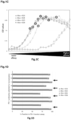
- Fig.1A represents one of multiple 384-well plates detecting PD-1 antibodies from immunized rabbits that inhibit PD-1 function. Antibodies which show no inhibition are seen as signals above the plane of the graph. Antibodies that inhibit PD-1 function remain "flat" with the plane of the graph and represent the majority in FMAT screens.
- Fig.1 B further summarize results of tests of binding of various rabbit anti-PD-1 antibodies to PD-1 expressed on the surface of HEK293 cells. Four antibodies with desired inhibition function and biding affinity were selected and confirmed by other assays below.
- Abs-r-923 the four of rabbit anti-PD-1 antibodies with specifically and strongly binding activity, named as Abs-r-924, Abs-r-925 and Abs-r-926 were defined and selected for characterizations (See in Fig.1C ). Binding data showed that they did not react with other unrelated proteins as coated, but also did not have cross-reactivity with mouse PD-1.
- Antibody-producing cells identified from screening above were used for isolated the genetic sequences encoding antibody heavy and light chains
- the genes encoding the specific antibodies that recognize human PD-1 were retrieved using RT-PCR. Retrieved cells were placed into reverse transcription buffer, and the mRNA from each individual cell was reverse transcribed into cDNA. After generating these amplicons by standard nested polymerase chain reaction (PCR), these amplicons were subjected to direct sequencing. These DNA sequences were then bioinformatically filtered for sequence quality and organized into a sequence database for cladistics analysis, in order to identify how many unique antibody clades were isolated that recognize PD-1.
- PCR polymerase chain reaction
- the amplified and selected sequences were cloned into HEK293 expression system for producing PD-1 antibody.
- Complete antibody variable regions comprising a pair of heavy (V H ) and light chain variable regions (V L ) were reformatted into plasmids with the proper elements for transient expression in mammalian cell lines, e.g., HEK293 using standard molecular biology techniques.
- V H variable heavy
- V L light chain variable regions
- the variable heavy (SEQ ID NO:54) and variable light (SEQ ID NO:56) cDNA sequences were sub-cloned into the vector backbone. Supernatants from transiently transfected mammalian cell lines were used to test for antibody expression, specificity and affinity.
- V H and V L were paired to yield more than hundred of clones, in which 10 (a to j clones) of them were selected and expressed in HEK293 cells and assayed for PD-1 functional inhibition assay (See Fig.1C ). These analyses identified unique clades of sequences that recognize human PD-1. Selected sequences were sub-cloned into PCR 2.1 (LifeTech) for further propagation.
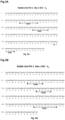
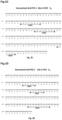
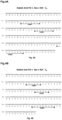
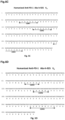
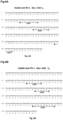
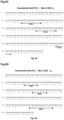
- Figs. 3A , 4A , 5A and 6A HCVR
- Figs. 3B , 4B , 5B and 6B LCVR
- CDRs complementarity determining regions
- FRs framework regions
- Tables 1, 2, 5, 6, 9,10,13 and 14 list each H-CDR or L-CDR by clone name and corresponding sequence identifier, Abs-r-923, Abs-r-924, Abs-r-925 and Abs-r-926. They are also described in PD-1 antibody sequence listing.
- Fig.1D also showed that an example of an ELISA-based binding assay.
- the results represent an average of two experiments. According to PD-1 antibody ability to block the binding of PD-L1, Abs-r-923, Abs-r-924, Abs-r-925 and Abs-r-926 clones are selected as a candidates for further development of a humanized antibody (See also in Example 2 below).
- Humanization of selected rabbit anti-PD-1 antibodies was performed in order to reduce the apparent immunogenicity of the rabbit-based antibodies.
- amino acid sequences of certain rabbit anti-PD-1 antibodies were analyzed and compared against known human antibody sequences. Based on these analyses and comparisons, certain human sequences were chosen for conventional rabbit CDR grafting, and inclusion of suitable back mutations.
- these humanized antibodies were evaluated with respect to criteria such as function, affinity, avidity, binding kinetics, and biochemical behavior such as aggregation as well as expression levels.
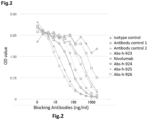
- Example-3 Blocking of humanized PD-1 antibodies binding to PD-L1
- the antibody-protein complexes with 1.5 nM constant human PD-1 were transferred to microtiter plates coated with human PD-L1. After incubating for 1 hour at RT, the wells were washed, and plate-bound human PD-1 was detected with an anti-human IgG Fc antibody conjugated with horseradish peroxidase (HRP) (Abcam, Cat#ab97225). After the plate was washed with washing buffer, 100 ⁇ l/well of TMB substrate was added, then colored, stopped reaction and measured OD value at 450 nm.
- HRP horseradish peroxidase
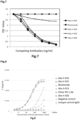
- the humanized anti-PD-1 antibodies, Abs-h-923, Abs-h-924, Abs-h-925 and Abs-h-926 still maintained their functions and specifically blocked the binding of PD-1 to its ligand PD-L1, and significantly better than the blocking effect of Nivolumab.
- Human IgG4 heavy chain constant region fragment IgG4 Fc sequence and ⁇ light chain constant region fragment sequences were synthesized by the company IDT (Integrated DNA Technologies, Coralville, Iowa) respectively, then put to pcDNA3 vector backbone to pBA-H4 and pBA-Ck, pBA-H4 (containing human IgG4 heavy chain constant region IgG4Fc) and pBA-Ck (containing the human ⁇ light chain constant region fragment) vector built by Bioabs company, using the CMV promoter pBA-H4 in VH and CH, puromycin resistance gene use PGK promoter, in pBA-Ck in VL use CMV promoter, neomycin resistance gene SV40 promoter.
- the encoding of the present invention is the humanized anti-PD-1 antibody heavy chain variable region DNA sequences are shown in SEQ ID NOs: 73 (Abs-h-925) the present invention encoding the humanized anti-PD-1 antibody light chain variable region DNA sequence as SEQ ID NOs: 75 (Abs-h-925) and. All tested PD-1 antibodies were purified by protein A column containing suitable resin, MabSelect TM from GE Healthcare.
- the binding affnity of the anti-PD-1 antibodies Abs-h-923, Abs-h-924, Abs-h-925 and Abs-h-926 were determined by surface plasmon resonance (SPR) using the Biacore TM technology.
- This technology allows the label-free determination of the microscopic rate constants for binding (k a ) and dissociation (k d ) of a ligand to a receptor. It is therefore especially suited for characterizing the antibody-antigen interactions.
- Indirect binding of antibodies to the Biacore TM chip surface was done via an anti-human IgG antibody (GE Healthcare Bio-Sciences AB; Cat# BR-1008-39) 25 pg/ml in immobilization buffer (10mM Sodium acetate pH 5.0).
- Anti-PD-1 antibody in 2-fold increasing concentrations from 0.14 to 7.68 nM was diluted into assay buffer to measure affinity of Abs-h-923, Abs-h-924, Abs-h-925 and Abs-h-926.
- the kinetic traces were evaluated with the Biacore TM T2000. The full set of these traces with increasing concentrations is taken together and is called a run. Two zero concentration samples (blank runs) were included in each analyte concentration series to allow double-referencing during data evaluation.
- the kinetic rate constants for association (k a ) and dissociation (k d ) as well as the dissociation equilibrium constant (K D ) were calculated.
- the affinity data of Abs-h-923, Abs-h-924, Abs-h-925 and Abs-h-926 are shown in Table 17.
- the EC 50 of Abs-h-923, Abs-h-924, Abs-h-925 and Abs-h-926 is estimated by determining concentration of Abs-h-923, Abs-h-924, Abs-h-925 and Abs-h-926 that exhibit roughly one-half maximal absorbance from the point at which the Abs-h-923, Abs-h-924, Abs-h-925 and Abs-h-926 display saturation behavior (See Table 18).
- MLR mixed lymphocyte reaction
- Fig.8 summarized the results of an MLR assay performed on human PBMCs treated with the anti-PD-1 antibodies.
- antibody Abs-h-923 showed weaker induced IL-2 response than other three antibodies Abs-h-924, Abs-h-925 and Abs-h-926.
- Table 1 Table 1.
Landscapes
- Health & Medical Sciences (AREA)
- Chemical & Material Sciences (AREA)
- Immunology (AREA)
- Organic Chemistry (AREA)
- Medicinal Chemistry (AREA)
- Life Sciences & Earth Sciences (AREA)
- General Health & Medical Sciences (AREA)
- Proteomics, Peptides & Aminoacids (AREA)
- Genetics & Genomics (AREA)
- Molecular Biology (AREA)
- Biophysics (AREA)
- Biochemistry (AREA)
- Nuclear Medicine, Radiotherapy & Molecular Imaging (AREA)
- General Chemical & Material Sciences (AREA)
- Chemical Kinetics & Catalysis (AREA)
- Pharmacology & Pharmacy (AREA)
- Animal Behavior & Ethology (AREA)
- Public Health (AREA)
- Veterinary Medicine (AREA)
- Peptides Or Proteins (AREA)
- Medicines Containing Antibodies Or Antigens For Use As Internal Diagnostic Agents (AREA)
Claims (3)
- Anti-PD-1-Antikörper oder antigenbindendes Fragment davon, der/das spezifisch an PD-1 bindet und eine Aminosäuresequenz der VH-Region, umfassend SEQ ID NO 74, und eine Aminosäuresequenz der VL-Region, umfassend SEQ ID NO 76, umfasst.
- Anti-PD-1-Antikörper oder antigenbindendes Fragment nach Anspruch 1 zur Verwendung für den Nachweis von PD-1 in vitro oder als diagnostisches Mittel in vitro.
- Antikörpermolekül nach Anspruch 1 zur Verwendung bei der Behandlung eines Krebses, vorzugsweise eines Brustkrebses, Lungenkrebses, Magenkrebses, Dickdarmkrebses, Nierenkrebses oder Melanoms, oder einer Infektionskrankheit bei einem Patienten.
Applications Claiming Priority (1)
| Application Number | Priority Date | Filing Date | Title |
|---|---|---|---|
| PCT/IB2017/051275 WO2018162944A1 (en) | 2017-03-04 | 2017-03-04 | Recombinant antibodies to programmed death 1 (pd-1) and uses therefor |
Publications (3)
| Publication Number | Publication Date |
|---|---|
| EP3589652A1 EP3589652A1 (de) | 2020-01-08 |
| EP3589652A4 EP3589652A4 (de) | 2021-05-05 |
| EP3589652B1 true EP3589652B1 (de) | 2024-12-25 |
Family
ID=63448419
Family Applications (1)
| Application Number | Title | Priority Date | Filing Date |
|---|---|---|---|
| EP17900235.7A Active EP3589652B1 (de) | 2017-03-04 | 2017-03-04 | Rekombinante antikörper gegen programmierten tod 1 (pd-1) und verwendungen dafür |
Country Status (4)
| Country | Link |
|---|---|
| US (1) | US11161905B2 (de) |
| EP (1) | EP3589652B1 (de) |
| CN (1) | CN110637031B (de) |
| WO (1) | WO2018162944A1 (de) |
Families Citing this family (6)
| Publication number | Priority date | Publication date | Assignee | Title |
|---|---|---|---|---|
| WO2020063823A1 (en) * | 2018-09-27 | 2020-04-02 | Zai Lab (Shanghai) Co., Ltd. | Anti-pd-1 antibodies and uses thereof |
| CN110577599A (zh) * | 2019-05-13 | 2019-12-17 | 深圳市润科生物科技有限公司 | 人源抗程序性死亡-1(pd-1)抗体及其应用 |
| KR20220030956A (ko) | 2019-07-05 | 2022-03-11 | 오노 야꾸힝 고교 가부시키가이샤 | Pd-1/cd3 이중 특이성 단백질에 의한 혈액암 치료 |
| TW202120550A (zh) | 2019-08-08 | 2021-06-01 | 日商小野藥品工業股份有限公司 | 雙特異性蛋白質 |
| MX2023011663A (es) | 2021-03-31 | 2023-10-11 | Merus Nv | Dominios de union a pd-1 novedosos. |
| CN115466328B (zh) * | 2021-06-11 | 2025-09-12 | 广东菲鹏制药股份有限公司 | 抗pd-1人源化抗体或其抗原结合片段及其应用 |
Family Cites Families (19)
| Publication number | Priority date | Publication date | Assignee | Title |
|---|---|---|---|---|
| WO2004056875A1 (en) * | 2002-12-23 | 2004-07-08 | Wyeth | Antibodies against pd-1 and uses therefor |
| PL2161336T5 (pl) * | 2005-05-09 | 2017-10-31 | Ono Pharmaceutical Co | Ludzkie przeciwciała monoklonalne przeciwko białku Programmed Death 1 (PD-1) oraz sposoby leczenia raka z zastosowaniem samych przeciwciał anty-PD-1 lub w połączeniu z innymi środkami immunoterapeutycznymi |
| WO2010054007A1 (en) * | 2008-11-07 | 2010-05-14 | Fabrus Llc | Combinatorial antibody libraries and uses thereof |
| EP2496600A1 (de) * | 2009-11-04 | 2012-09-12 | Fabrus LLC | Verfahren zur optimierung von antikörpern auf der basis von affinitätsreifung |
| AU2013263076B2 (en) | 2012-05-15 | 2017-08-31 | Bristol-Myers Squibb Company | Cancer immunotherapy by disrupting PD-1/PD-L1 signaling |
| US9676853B2 (en) * | 2013-05-31 | 2017-06-13 | Sorrento Therapeutics, Inc. | Antigen binding proteins that bind PD-1 |
| WO2015036394A1 (en) | 2013-09-10 | 2015-03-19 | Medimmune Limited | Antibodies against pd-1 and uses thereof |
| LT3702373T (lt) | 2013-09-13 | 2022-11-10 | Beigene Switzerland Gmbh | Anti-pd1 antikūnai ir jų naudojimas terapijai ir diagnostikai |
| TWI681969B (zh) | 2014-01-23 | 2020-01-11 | 美商再生元醫藥公司 | 針對pd-1的人類抗體 |
| CA2935423C (en) | 2014-01-24 | 2023-11-07 | Dana-Farber Cancer Institute, Inc. | Antibody molecules to pd-1 and uses thereof |
| CN105330740B (zh) * | 2014-07-30 | 2018-08-17 | 珠海市丽珠单抗生物技术有限公司 | 抗pd-1抗体及其应用 |
| CA2957258C (en) | 2014-08-05 | 2023-11-07 | MabQuest SA | Immunological reagents |
| WO2016061142A1 (en) * | 2014-10-14 | 2016-04-21 | Novartis Ag | Antibody molecules to pd-l1 and uses thereof |
| GB201419084D0 (en) | 2014-10-27 | 2014-12-10 | Agency Science Tech & Res | Anti-PD-1 antibodies |
| WO2016077397A2 (en) | 2014-11-11 | 2016-05-19 | Sutro Biopharma, Inc. | Anti-pd-1 antibodies, compositions comprising anti-pd-1 antibodies and methods of using anti-pd-1 antibodies |
| TWI595006B (zh) * | 2014-12-09 | 2017-08-11 | 禮納特神經系統科學公司 | 抗pd-1抗體類和使用彼等之方法 |
| DK3237446T3 (en) | 2014-12-22 | 2021-07-26 | Pd 1 Acquisition Group Llc | Anti-PD-1-antistoffer |
| WO2016176504A1 (en) * | 2015-04-28 | 2016-11-03 | Bristol-Myers Squibb Company | Treatment of pd-l1-positive melanoma using an anti-pd-1 antibody |
| CN105175544B (zh) * | 2015-10-20 | 2021-04-09 | 安徽瀚海博兴生物技术有限公司 | 一种抗pd-1人源化单克隆抗体及其应用 |
-
2017
- 2017-03-04 EP EP17900235.7A patent/EP3589652B1/de active Active
- 2017-03-04 CN CN201780086629.4A patent/CN110637031B/zh active Active
- 2017-03-04 WO PCT/IB2017/051275 patent/WO2018162944A1/en not_active Ceased
- 2017-03-04 US US16/488,667 patent/US11161905B2/en active Active
Non-Patent Citations (1)
| Title |
|---|
| VERED KUNIK ET AL: "Structural Consensus among Antibodies Defines the Antigen Binding Site", PLOS COMPUTATIONAL BIOLOGY, vol. 8, no. 2, 23 February 2012 (2012-02-23), pages e1002388, XP055123186, DOI: 10.1371/journal.pcbi.1002388 * |
Also Published As
| Publication number | Publication date |
|---|---|
| US20200062847A1 (en) | 2020-02-27 |
| US11161905B2 (en) | 2021-11-02 |
| WO2018162944A1 (en) | 2018-09-13 |
| CN110637031B (zh) | 2024-04-16 |
| CN110637031A (zh) | 2019-12-31 |
| EP3589652A1 (de) | 2020-01-08 |
| EP3589652A4 (de) | 2021-05-05 |
Similar Documents
| Publication | Publication Date | Title |
|---|---|---|
| JP7259107B2 (ja) | Pd-1アゴニスト抗体およびその使用 | |
| JP7328658B2 (ja) | 抗pd-l1/抗4-1bb二重特異性抗体およびその使用 | |
| JP2026053725A (ja) | B7-h4抗体及びその使用方法 | |
| US12275790B2 (en) | Humanized anti-PD-1 antibody and the use thereof | |
| AU2026201066A1 (en) | Anti-B7-H4 antibody, antigen-binding fragment thereof and pharmaceutical use thereof | |
| US11161905B2 (en) | Recombinant antibodies to programmed death 1 (PD-1) and uses thereof | |
| US10077305B2 (en) | Antibodies against PD-1 and uses thereof | |
| EP3441086B1 (de) | Monoklonaler anti-pd-1-antikörper | |
| TWI726608B (zh) | 抗pd-l1抗體及其作為治療及診斷之用途 | |
| CN112552401B (zh) | 抗pd1抗体及其作为治疗剂与诊断剂的用途 | |
| Fisher et al. | Generation and preclinical characterization of an antibody specific for SEMA4D | |
| CA3165532A1 (en) | Novel lilrb2 antibodies and uses thereof | |
| US12258409B2 (en) | Method of assessing the efficacy of a test agent for modulating programmed death 1 (PD-1) signaling by using anti-phosphotyrosinylated PD-1 monoclonal antibodies | |
| CN112955469A (zh) | 新型拮抗性抗tnfr2抗体分子 | |
| JP2025157305A (ja) | 特定の患者のがんを治療するための抗体の組み合わせ | |
| JP2022525937A (ja) | Btn2に対する特異性を有する抗体及びその使用 | |
| JP2022523145A (ja) | 抗trem1抗体及び関連方法 | |
| US20250277038A1 (en) | Anti-pd-l1 antibody and use thereof | |
| CN110577599A (zh) | 人源抗程序性死亡-1(pd-1)抗体及其应用 | |
| TW202513590A (zh) | 與lilrb1結合的抗體或抗原結合片段及其用途 | |
| CN117858899A (zh) | 抗ccr8抗体及其用途 | |
| HK40050308A (en) | Novel antagonistic anti tnfr2 antibody molecules | |
| HK40012331B (zh) | 抗b7-h4抗体、其抗原结合片段及其医药用途 |
Legal Events
| Date | Code | Title | Description |
|---|---|---|---|
| STAA | Information on the status of an ep patent application or granted ep patent |
Free format text: STATUS: THE INTERNATIONAL PUBLICATION HAS BEEN MADE |
|
| PUAI | Public reference made under article 153(3) epc to a published international application that has entered the european phase |
Free format text: ORIGINAL CODE: 0009012 |
|
| STAA | Information on the status of an ep patent application or granted ep patent |
Free format text: STATUS: REQUEST FOR EXAMINATION WAS MADE |
|
| 17P | Request for examination filed |
Effective date: 20190911 |
|
| AK | Designated contracting states |
Kind code of ref document: A1 Designated state(s): AL AT BE BG CH CY CZ DE DK EE ES FI FR GB GR HR HU IE IS IT LI LT LU LV MC MK MT NL NO PL PT RO RS SE SI SK SM TR |
|
| AX | Request for extension of the european patent |
Extension state: BA ME |
|
| DAV | Request for validation of the european patent (deleted) | ||
| DAX | Request for extension of the european patent (deleted) | ||
| RIC1 | Information provided on ipc code assigned before grant |
Ipc: A61K 39/395 20060101ALI20201109BHEP Ipc: A61P 35/00 20060101ALI20201109BHEP Ipc: C07K 16/28 20060101AFI20201109BHEP |
|
| A4 | Supplementary search report drawn up and despatched |
Effective date: 20210409 |
|
| RIC1 | Information provided on ipc code assigned before grant |
Ipc: C07K 16/28 20060101AFI20210401BHEP Ipc: A61K 39/395 20060101ALI20210401BHEP Ipc: A61P 35/00 20060101ALI20210401BHEP |
|
| STAA | Information on the status of an ep patent application or granted ep patent |
Free format text: STATUS: EXAMINATION IS IN PROGRESS |
|
| 17Q | First examination report despatched |
Effective date: 20230222 |
|
| GRAP | Despatch of communication of intention to grant a patent |
Free format text: ORIGINAL CODE: EPIDOSNIGR1 |
|
| STAA | Information on the status of an ep patent application or granted ep patent |
Free format text: STATUS: GRANT OF PATENT IS INTENDED |
|
| INTG | Intention to grant announced |
Effective date: 20240719 |
|
| GRAS | Grant fee paid |
Free format text: ORIGINAL CODE: EPIDOSNIGR3 |
|
| GRAA | (expected) grant |
Free format text: ORIGINAL CODE: 0009210 |
|
| STAA | Information on the status of an ep patent application or granted ep patent |
Free format text: STATUS: THE PATENT HAS BEEN GRANTED |
|
| AK | Designated contracting states |
Kind code of ref document: B1 Designated state(s): AL AT BE BG CH CY CZ DE DK EE ES FI FR GB GR HR HU IE IS IT LI LT LU LV MC MK MT NL NO PL PT RO RS SE SI SK SM TR |
|
| REG | Reference to a national code |
Ref country code: GB Ref legal event code: FG4D |
|
| REG | Reference to a national code |
Ref country code: CH Ref legal event code: EP |
|
| REG | Reference to a national code |
Ref country code: DE Ref legal event code: R096 Ref document number: 602017087008 Country of ref document: DE |
|
| REG | Reference to a national code |
Ref country code: IE Ref legal event code: FG4D |
|
| REG | Reference to a national code |
Ref country code: LT Ref legal event code: MG9D |
|
| PG25 | Lapsed in a contracting state [announced via postgrant information from national office to epo] |
Ref country code: FI Free format text: LAPSE BECAUSE OF FAILURE TO SUBMIT A TRANSLATION OF THE DESCRIPTION OR TO PAY THE FEE WITHIN THE PRESCRIBED TIME-LIMIT Effective date: 20241225 |
|
| PG25 | Lapsed in a contracting state [announced via postgrant information from national office to epo] |
Ref country code: BG Free format text: LAPSE BECAUSE OF FAILURE TO SUBMIT A TRANSLATION OF THE DESCRIPTION OR TO PAY THE FEE WITHIN THE PRESCRIBED TIME-LIMIT Effective date: 20241225 |
|
| PG25 | Lapsed in a contracting state [announced via postgrant information from national office to epo] |
Ref country code: NO Free format text: LAPSE BECAUSE OF FAILURE TO SUBMIT A TRANSLATION OF THE DESCRIPTION OR TO PAY THE FEE WITHIN THE PRESCRIBED TIME-LIMIT Effective date: 20250325 |
|
| PG25 | Lapsed in a contracting state [announced via postgrant information from national office to epo] |
Ref country code: GR Free format text: LAPSE BECAUSE OF FAILURE TO SUBMIT A TRANSLATION OF THE DESCRIPTION OR TO PAY THE FEE WITHIN THE PRESCRIBED TIME-LIMIT Effective date: 20250326 Ref country code: LV Free format text: LAPSE BECAUSE OF FAILURE TO SUBMIT A TRANSLATION OF THE DESCRIPTION OR TO PAY THE FEE WITHIN THE PRESCRIBED TIME-LIMIT Effective date: 20241225 |
|
| PG25 | Lapsed in a contracting state [announced via postgrant information from national office to epo] |
Ref country code: RS Free format text: LAPSE BECAUSE OF FAILURE TO SUBMIT A TRANSLATION OF THE DESCRIPTION OR TO PAY THE FEE WITHIN THE PRESCRIBED TIME-LIMIT Effective date: 20250325 |
|
| REG | Reference to a national code |
Ref country code: NL Ref legal event code: MP Effective date: 20241225 |
|
| PG25 | Lapsed in a contracting state [announced via postgrant information from national office to epo] |
Ref country code: NL Free format text: LAPSE BECAUSE OF FAILURE TO SUBMIT A TRANSLATION OF THE DESCRIPTION OR TO PAY THE FEE WITHIN THE PRESCRIBED TIME-LIMIT Effective date: 20241225 |
|
| REG | Reference to a national code |
Ref country code: AT Ref legal event code: MK05 Ref document number: 1754100 Country of ref document: AT Kind code of ref document: T Effective date: 20241225 |
|
| PG25 | Lapsed in a contracting state [announced via postgrant information from national office to epo] |
Ref country code: SM Free format text: LAPSE BECAUSE OF FAILURE TO SUBMIT A TRANSLATION OF THE DESCRIPTION OR TO PAY THE FEE WITHIN THE PRESCRIBED TIME-LIMIT Effective date: 20241225 |
|
| PG25 | Lapsed in a contracting state [announced via postgrant information from national office to epo] |
Ref country code: PL Free format text: LAPSE BECAUSE OF FAILURE TO SUBMIT A TRANSLATION OF THE DESCRIPTION OR TO PAY THE FEE WITHIN THE PRESCRIBED TIME-LIMIT Effective date: 20241225 |
|
| PGFP | Annual fee paid to national office [announced via postgrant information from national office to epo] |
Ref country code: DE Payment date: 20250527 Year of fee payment: 9 |
|
| PG25 | Lapsed in a contracting state [announced via postgrant information from national office to epo] |
Ref country code: ES Free format text: LAPSE BECAUSE OF FAILURE TO SUBMIT A TRANSLATION OF THE DESCRIPTION OR TO PAY THE FEE WITHIN THE PRESCRIBED TIME-LIMIT Effective date: 20241225 |
|
| PGFP | Annual fee paid to national office [announced via postgrant information from national office to epo] |
Ref country code: GB Payment date: 20250521 Year of fee payment: 9 |
|
| PG25 | Lapsed in a contracting state [announced via postgrant information from national office to epo] |
Ref country code: IS Free format text: LAPSE BECAUSE OF FAILURE TO SUBMIT A TRANSLATION OF THE DESCRIPTION OR TO PAY THE FEE WITHIN THE PRESCRIBED TIME-LIMIT Effective date: 20250425 |
|
| PG25 | Lapsed in a contracting state [announced via postgrant information from national office to epo] |
Ref country code: PT Free format text: LAPSE BECAUSE OF FAILURE TO SUBMIT A TRANSLATION OF THE DESCRIPTION OR TO PAY THE FEE WITHIN THE PRESCRIBED TIME-LIMIT Effective date: 20250428 |
|
| PG25 | Lapsed in a contracting state [announced via postgrant information from national office to epo] |
Ref country code: EE Free format text: LAPSE BECAUSE OF FAILURE TO SUBMIT A TRANSLATION OF THE DESCRIPTION OR TO PAY THE FEE WITHIN THE PRESCRIBED TIME-LIMIT Effective date: 20241225 |
|
| PGFP | Annual fee paid to national office [announced via postgrant information from national office to epo] |
Ref country code: FR Payment date: 20250527 Year of fee payment: 9 |
|
| PGFP | Annual fee paid to national office [announced via postgrant information from national office to epo] |
Ref country code: CH Payment date: 20250522 Year of fee payment: 9 |
|
| PG25 | Lapsed in a contracting state [announced via postgrant information from national office to epo] |
Ref country code: AT Free format text: LAPSE BECAUSE OF FAILURE TO SUBMIT A TRANSLATION OF THE DESCRIPTION OR TO PAY THE FEE WITHIN THE PRESCRIBED TIME-LIMIT Effective date: 20241225 Ref country code: RO Free format text: LAPSE BECAUSE OF FAILURE TO SUBMIT A TRANSLATION OF THE DESCRIPTION OR TO PAY THE FEE WITHIN THE PRESCRIBED TIME-LIMIT Effective date: 20241225 |
|
| PG25 | Lapsed in a contracting state [announced via postgrant information from national office to epo] |
Ref country code: SK Free format text: LAPSE BECAUSE OF FAILURE TO SUBMIT A TRANSLATION OF THE DESCRIPTION OR TO PAY THE FEE WITHIN THE PRESCRIBED TIME-LIMIT Effective date: 20241225 |
|
| PG25 | Lapsed in a contracting state [announced via postgrant information from national office to epo] |
Ref country code: CZ Free format text: LAPSE BECAUSE OF FAILURE TO SUBMIT A TRANSLATION OF THE DESCRIPTION OR TO PAY THE FEE WITHIN THE PRESCRIBED TIME-LIMIT Effective date: 20241225 |
|
| PG25 | Lapsed in a contracting state [announced via postgrant information from national office to epo] |
Ref country code: IT Free format text: LAPSE BECAUSE OF FAILURE TO SUBMIT A TRANSLATION OF THE DESCRIPTION OR TO PAY THE FEE WITHIN THE PRESCRIBED TIME-LIMIT Effective date: 20241225 |
|
| PG25 | Lapsed in a contracting state [announced via postgrant information from national office to epo] |
Ref country code: SE Free format text: LAPSE BECAUSE OF FAILURE TO SUBMIT A TRANSLATION OF THE DESCRIPTION OR TO PAY THE FEE WITHIN THE PRESCRIBED TIME-LIMIT Effective date: 20241225 |
|
| REG | Reference to a national code |
Ref country code: DE Ref legal event code: R097 Ref document number: 602017087008 Country of ref document: DE |
|
| PG25 | Lapsed in a contracting state [announced via postgrant information from national office to epo] |
Ref country code: DK Free format text: LAPSE BECAUSE OF FAILURE TO SUBMIT A TRANSLATION OF THE DESCRIPTION OR TO PAY THE FEE WITHIN THE PRESCRIBED TIME-LIMIT Effective date: 20241225 |
|
| PG25 | Lapsed in a contracting state [announced via postgrant information from national office to epo] |
Ref country code: MC Free format text: LAPSE BECAUSE OF FAILURE TO SUBMIT A TRANSLATION OF THE DESCRIPTION OR TO PAY THE FEE WITHIN THE PRESCRIBED TIME-LIMIT Effective date: 20241225 |
|
| PLBE | No opposition filed within time limit |
Free format text: ORIGINAL CODE: 0009261 |
|
| STAA | Information on the status of an ep patent application or granted ep patent |
Free format text: STATUS: NO OPPOSITION FILED WITHIN TIME LIMIT |
|
| REG | Reference to a national code |
Ref country code: CH Ref legal event code: L10 Free format text: ST27 STATUS EVENT CODE: U-0-0-L10-L00 (AS PROVIDED BY THE NATIONAL OFFICE) Effective date: 20251105 |
|
| PG25 | Lapsed in a contracting state [announced via postgrant information from national office to epo] |
Ref country code: LU Free format text: LAPSE BECAUSE OF NON-PAYMENT OF DUE FEES Effective date: 20250304 |
|
| 26N | No opposition filed |
Effective date: 20250926 |
|
| REG | Reference to a national code |
Ref country code: BE Ref legal event code: MM Effective date: 20250331 |
|
| PG25 | Lapsed in a contracting state [announced via postgrant information from national office to epo] |
Ref country code: BE Free format text: LAPSE BECAUSE OF NON-PAYMENT OF DUE FEES Effective date: 20250331 |
|
| PG25 | Lapsed in a contracting state [announced via postgrant information from national office to epo] |
Ref country code: IE Free format text: LAPSE BECAUSE OF NON-PAYMENT OF DUE FEES Effective date: 20250304 |
|
| PG25 | Lapsed in a contracting state [announced via postgrant information from national office to epo] |
Ref country code: HR Free format text: LAPSE BECAUSE OF FAILURE TO SUBMIT A TRANSLATION OF THE DESCRIPTION OR TO PAY THE FEE WITHIN THE PRESCRIBED TIME-LIMIT Effective date: 20241225 |
|
| REG | Reference to a national code |
Ref country code: CH Ref legal event code: R18 Free format text: ST27 STATUS EVENT CODE: U-0-0-R10-R18 (AS PROVIDED BY THE NATIONAL OFFICE) Effective date: 20260501 |