EP3588972B1 - Master-wiedergabevorrichtung, slave-wiedergabevorrichtung und lichtemissionsverfahren dafür - Google Patents
Master-wiedergabevorrichtung, slave-wiedergabevorrichtung und lichtemissionsverfahren dafür Download PDFInfo
- Publication number
- EP3588972B1 EP3588972B1 EP18757002.3A EP18757002A EP3588972B1 EP 3588972 B1 EP3588972 B1 EP 3588972B1 EP 18757002 A EP18757002 A EP 18757002A EP 3588972 B1 EP3588972 B1 EP 3588972B1
- Authority
- EP
- European Patent Office
- Prior art keywords
- reproduction apparatus
- light emitting
- emitting elements
- master
- slave
- Prior art date
- Legal status (The legal status is an assumption and is not a legal conclusion. Google has not performed a legal analysis and makes no representation as to the accuracy of the status listed.)
- Active
Links
Images

Classifications
-
- A—HUMAN NECESSITIES
- A63—SPORTS; GAMES; AMUSEMENTS
- A63J—DEVICES FOR THEATRES, CIRCUSES, OR THE LIKE; CONJURING APPLIANCES OR THE LIKE
- A63J17/00—Apparatus for performing colour-music
-
- G—PHYSICS
- G10—MUSICAL INSTRUMENTS; ACOUSTICS
- G10K—SOUND-PRODUCING DEVICES; METHODS OR DEVICES FOR PROTECTING AGAINST, OR FOR DAMPING, NOISE OR OTHER ACOUSTIC WAVES IN GENERAL; ACOUSTICS NOT OTHERWISE PROVIDED FOR
- G10K15/00—Acoustics not otherwise provided for
-
- G—PHYSICS
- G10—MUSICAL INSTRUMENTS; ACOUSTICS
- G10K—SOUND-PRODUCING DEVICES; METHODS OR DEVICES FOR PROTECTING AGAINST, OR FOR DAMPING, NOISE OR OTHER ACOUSTIC WAVES IN GENERAL; ACOUSTICS NOT OTHERWISE PROVIDED FOR
- G10K15/00—Acoustics not otherwise provided for
- G10K15/02—Synthesis of acoustic waves
-
- G—PHYSICS
- G10—MUSICAL INSTRUMENTS; ACOUSTICS
- G10L—SPEECH ANALYSIS TECHNIQUES OR SPEECH SYNTHESIS; SPEECH RECOGNITION; SPEECH OR VOICE PROCESSING TECHNIQUES; SPEECH OR AUDIO CODING OR DECODING
- G10L25/00—Speech or voice analysis techniques not restricted to a single one of groups G10L15/00 - G10L21/00
- G10L25/48—Speech or voice analysis techniques not restricted to a single one of groups G10L15/00 - G10L21/00 specially adapted for particular use
- G10L25/51—Speech or voice analysis techniques not restricted to a single one of groups G10L15/00 - G10L21/00 specially adapted for particular use for comparison or discrimination
-
- H—ELECTRICITY
- H04—ELECTRIC COMMUNICATION TECHNIQUE
- H04R—LOUDSPEAKERS, MICROPHONES, GRAMOPHONE PICK-UPS OR LIKE ACOUSTIC ELECTROMECHANICAL TRANSDUCERS; DEAF-AID SETS; PUBLIC ADDRESS SYSTEMS
- H04R1/00—Details of transducers, loudspeakers or microphones
- H04R1/02—Casings; Cabinets ; Supports therefor; Mountings therein
- H04R1/028—Casings; Cabinets ; Supports therefor; Mountings therein associated with devices performing functions other than acoustics, e.g. electric candles
-
- H—ELECTRICITY
- H05—ELECTRIC TECHNIQUES NOT OTHERWISE PROVIDED FOR
- H05B—ELECTRIC HEATING; ELECTRIC LIGHT SOURCES NOT OTHERWISE PROVIDED FOR; CIRCUIT ARRANGEMENTS FOR ELECTRIC LIGHT SOURCES, IN GENERAL
- H05B47/00—Circuit arrangements for operating light sources in general, i.e. where the type of light source is not relevant
- H05B47/10—Controlling the light source
- H05B47/105—Controlling the light source in response to determined parameters
- H05B47/115—Controlling the light source in response to determined parameters by determining the presence or movement of objects or living beings
- H05B47/12—Controlling the light source in response to determined parameters by determining the presence or movement of objects or living beings by detecting audible sound
-
- H—ELECTRICITY
- H04—ELECTRIC COMMUNICATION TECHNIQUE
- H04R—LOUDSPEAKERS, MICROPHONES, GRAMOPHONE PICK-UPS OR LIKE ACOUSTIC ELECTROMECHANICAL TRANSDUCERS; DEAF-AID SETS; PUBLIC ADDRESS SYSTEMS
- H04R2227/00—Details of public address [PA] systems covered by H04R27/00 but not provided for in any of its subgroups
- H04R2227/005—Audio distribution systems for home, i.e. multi-room use
-
- H—ELECTRICITY
- H04—ELECTRIC COMMUNICATION TECHNIQUE
- H04R—LOUDSPEAKERS, MICROPHONES, GRAMOPHONE PICK-UPS OR LIKE ACOUSTIC ELECTROMECHANICAL TRANSDUCERS; DEAF-AID SETS; PUBLIC ADDRESS SYSTEMS
- H04R2420/00—Details of connection covered by H04R, not provided for in its groups
- H04R2420/07—Applications of wireless loudspeakers or wireless microphones
-
- H—ELECTRICITY
- H04—ELECTRIC COMMUNICATION TECHNIQUE
- H04W—WIRELESS COMMUNICATION NETWORKS
- H04W4/00—Services specially adapted for wireless communication networks; Facilities therefor
- H04W4/80—Services using short range communication, e.g. near-field communication [NFC], radio-frequency identification [RFID] or low energy communication
-
- H—ELECTRICITY
- H05—ELECTRIC TECHNIQUES NOT OTHERWISE PROVIDED FOR
- H05B—ELECTRIC HEATING; ELECTRIC LIGHT SOURCES NOT OTHERWISE PROVIDED FOR; CIRCUIT ARRANGEMENTS FOR ELECTRIC LIGHT SOURCES, IN GENERAL
- H05B45/00—Circuit arrangements for operating light-emitting diodes [LED]
- H05B45/20—Controlling the colour of the light
-
- H—ELECTRICITY
- H05—ELECTRIC TECHNIQUES NOT OTHERWISE PROVIDED FOR
- H05B—ELECTRIC HEATING; ELECTRIC LIGHT SOURCES NOT OTHERWISE PROVIDED FOR; CIRCUIT ARRANGEMENTS FOR ELECTRIC LIGHT SOURCES, IN GENERAL
- H05B47/00—Circuit arrangements for operating light sources in general, i.e. where the type of light source is not relevant
- H05B47/10—Controlling the light source
-
- H—ELECTRICITY
- H05—ELECTRIC TECHNIQUES NOT OTHERWISE PROVIDED FOR
- H05B—ELECTRIC HEATING; ELECTRIC LIGHT SOURCES NOT OTHERWISE PROVIDED FOR; CIRCUIT ARRANGEMENTS FOR ELECTRIC LIGHT SOURCES, IN GENERAL
- H05B47/00—Circuit arrangements for operating light sources in general, i.e. where the type of light source is not relevant
- H05B47/10—Controlling the light source
- H05B47/165—Controlling the light source following a pre-assigned programmed sequence; Logic control [LC]
Definitions
- the present technology relates to a technology for synchronously reproducing audio data with a plurality of reproduction apparatuses and for causing light emitting elements provided in the apparatuses to emit light.
- Patent Literature 1 describes a control method for multi-room reproduction in which a group is configured by a plurality of reproduction apparatuses connected to a network and the same content is synchronously reproduced (refer to specification paragraphs [0043] to [0046] and Fig. 8).
- Patent Literature 2 describes a sound reproduction apparatus including a lighting device.
- reproduced audio data is analyzed.
- the light emission timing, brightness, and the like of the lighting device are appropriately controlled. Since this makes it possible to enjoy the reproduction of audio content not only acoustically but also visually, it is possible to experience high excitement or uplifting (refer to specification paragraphs [0026] to [0041]).
- EP 3518552 relates to a reproduction apparatus capable of executing synchronous reproduction of audio content with a different reproduction apparatus.
- EP 3518552 discloses that it is possible to enjoy music with loud volume in the entire room by causing the plurality of reproduction apparatuses 10 in the same room to reproduce the same content.
- EP 3518552 discloses that the master apparatus 10a downloads content from the content server 20, and simultaneously distributes the content to the slave apparatus 10b by streaming and accordingly, the multi-room reproduction of content is realized.
- US 2014/0070729 discloses an illumination apparatus including an illumination unit, a reception unit, and a control unit configured to control illumination of the illumination unit in accordance with a default illumination pattern.
- US 2016/0128167 discloses a wireless music-modulated lighting method using LED lighting devices and a system.
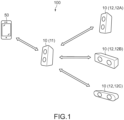
- Fig. 1 is a diagram showing the configuration of a reproduction system according to an embodiment of the present technology.
- This reproduction system 100 includes, for example, a computer 50 and a plurality of reproduction apparatuses 10 capable of reproducing audio data.
- the computer 50 is typically a smartphone or a tablet computer.
- the computer 50 may be of a laptop type or a desktop type.
- a plurality of reproduction apparatuses 10 mainly function as speakers.
- the plurality of reproduction apparatuses 10 include one master reproduction apparatus 11 and one or more slave reproduction apparatuses 12 that can be connected to the master reproduction apparatus 11.
- a plurality of slave reproduction apparatuses 12 can be multi-connected to the master reproduction apparatus 11.
- the computer 50 and the master reproduction apparatus 11 can be connected to each other using near field communication. Further, the master reproduction apparatus 11 and the slave reproduction apparatus 12 can also be connected to each other using near field communication.
- near field communication Bluetooth (registered trademark; the same hereinbelow) is used in the present embodiment.
- Zigbee Zigbee may be used instead of Bluetooth.
- the master reproduction apparatus 11 is configured so as to be multi-connectable to the plurality of slave reproduction apparatus 12.
- the computer 50 includes a storage (not illustrated) for storing audio data.
- the computer 50 can transmit audio data in the storage to the master reproduction apparatus 11, and the master reproduction apparatus 11 can reproduce this. Further, the master reproduction apparatus 11 can transmit the audio data to the slave reproduction apparatus 12 as will be described later, and the slave reproduction apparatus 12 can reproduce the audio data in synchronization with the master reproduction apparatus 11.
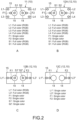
- Parts A to D of Fig. 2 schematically show the configuration of each reproduction apparatus 10, in particular, the arrangement of light emitting elements.
- Lower portions of Parts A to D of Fig. 2 schematically show the functional levels of light emitting elements provided in these reproduction apparatuses 10.
- Part A of Fig. 2 shows the master reproduction apparatus 11, and Parts B to D of Fig. 2 show the slave reproduction apparatus 12.
- the reproduction apparatuses 10 shown in Parts A to D of Fig. 2 correspond to the reproduction apparatuses 10 shown in Fig. 1 .
- Each reproduction apparatus 10 includes a housing 15 and a plurality of speaker units 14.
- a multi-channel type speaker is realized by each speaker unit 14.
- the master reproduction apparatus 11 includes, for example, a plurality of light emitting elements L1 to L4, F1, F2, S1, and S2.
- Each slave reproduction apparatus 12 similarly includes a plurality of light emitting elements.
- a slave reproduction apparatus 12A shown in Part B of Fig. 2 is the same model as the master reproduction apparatus 11.
- the models of the master reproduction apparatus 11 and the slave reproduction apparatus 12A will be referred to as first models for convenience of description.
- the model (second model) of the slave reproduction apparatus 12B shown in Part C of Fig. 2 and the model (third model) of the slave reproduction apparatus 12C shown in Part D of Fig. 2 are different from the first model. That is, at least one of the plurality of slave reproduction apparatuses 12A to 12C is a heterogeneous slave reproduction apparatus different from the model of the master reproduction apparatus 11.
- the number of light emitting elements of the second model is smaller than that of the first model, and the functional level of the light emitting elements of the second model is different from that of the first model. Further, the arrangement of some light emitting elements also differs between these models.
- the number of light emitting elements of the third model is smaller than that of the second model (and the first model), and the functional level of the light emitting elements of the third model is different from that of the second model (and the first model).
- the functional level of at least one of one or more light emitting elements of the third model is different from the functional level of at least one light emitting element corresponding in advance among the plurality of light emitting elements of the second model (and the first model). This will be described in detail later. Further, the arrangement of some light emitting elements also differs between these models.
- One light emitting element is configured to include one or more light emitting diodes (LEDs), for example.
- LEDs light emitting diodes
- a point-like, linear, or planar light emitting region is formed by one or more LEDs.
- the one light emitting region corresponds to one light emitting element.
- a light guide may also be provided as an associated component of the light emitting element.
- each light emitting element is schematically drawn as a star. Note that, these light emitting elements may be formed by organic electro-luminescence (EL).
- Each light emitting element is disposed at a predetermined position of the housing 15 of the reproduction apparatus 10.
- four light emitting elements L1, L2, L3, and L4 are disposed at the four corners of the housing 15.
- Two light emitting elements F1 and F2 are disposed adjacent to the speaker unit 14.
- two light emitting elements S1 and S2 are disposed in the speaker unit 14.
- two light emitting elements L1' and L3' are disposed at the centers of both ends of the housing 15.
- Two light emitting elements F1 and F2 are disposed adjacent to the speaker unit 14.
- two light emitting elements S1' and S2' are disposed in the speaker unit 14.
- two light emitting elements L1" and L3" are disposed at the centers of both ends of the housing 15. Then, two light emitting elements F1 and F2 are disposed adjacent to the speaker unit 14.
- L means a linear light emitting region
- F means a flash that forms, for example, a point-like light emitting region
- S means an arrangement in the speaker unit 14.
- the shape or the arrangement of the light emitting region is not limited to those shown in Parts A to D of Fig. 2 .
- the light emitting elements L1 to L4, L1', and L3' are configured to emit light in full color (for example, RGB values).
- the light emitting elements L1", L3", F1, F2, S1', and S2' are configured to emit light in, for example, a single color (for example, a white color based single color; however, other colors may be applied).
- the light emitting elements S1 and S2 are configured to emit light in full color (for example, RGB values).
- the functional levels of the light emitting elements S1' and S2' of the second model are lower than those of the light emitting elements S1 and S2. Further, the functional levels of the light emitting elements L1" and L3" of the third model are lower than those of the light emitting elements L1, L2, L3, L4, L1', and L3'.
- Fig. 3 is a block diagram showing the system configuration of the reproduction apparatus 10.
- the master reproduction apparatus 11 includes a Bluetooth module (BTM) 11a, a digital signal processor (DSP) 11b, a micro controller unit (MCU) 11c, and a light emitting device 16.
- the slave reproduction apparatus 12 basically has the same configuration as that of the master reproduction apparatus 11.
- the master reproduction apparatus 11 and the slave reproduction apparatus 12 have memories such as a random access memory (RAM) and a read only memory (ROM), which are not illustrated, in addition to these components.
- RAM random access memory
- ROM read only memory
- Programs or data required to realize the operations or functions of the MCUs 11c and 12c is stored in the ROM.
- the light emitting device 16 includes a plurality of light emitting elements L1, L2, F1, S1, and the like, a driver for driving these, and the like.
- the BTM 11a communicates with a BTM (not illustrated) of the computer 50 (refer to Fig. 1 ) or a BTM 12a of another reproduction apparatus 10 on the basis of the Bluetooth standard.
- the BTM 11a mainly performs communication of audio data and data relevant to light emission control.
- the BTMs 11a and 112a function as a "transmission unit” and/or a "reception unit”.
- the DSP 11b of the master reproduction apparatus 11 mainly has a function of analyzing the audio data transmitted from the BTM 11a to generate analysis data and outputting the generated analysis data to the MCU 11c.
- the DSP 11b performs frequency analysis, in particular, low frequency extraction processing as analysis processing.
- the DSP 11b has a function of outputting audio data to the speaker unit 14 through, for example, a DA converter (not illustrated).
- the MCU 11c of the master reproduction apparatus 11 acquires the analysis data from the DSP 11b, and generates illumination information on the basis of the analysis data.
- the MCU 11c mainly functions as a "generation unit". Specifically, the MCU 11c detects a beat on the basis of data of base components as analysis data.
- the DSP 11b and the MCU 11c may detect not only the beat but also a tempo, a rhythm, and a key.
- the MCU 11c can generate illumination information corresponding to the audio data by generating illumination information on the basis of the information, such as the beat.
- the illumination information is information in which the light emission mode is associated with each of the light emitting elements L1 to L4, F1, F2, S1, and S2 of the master reproduction apparatus 11.
- the MCU 11c has a function of causing the plurality of light emitting elements to emit light in a light emission mode based on the generated illumination information.
- the MCU 11c mainly functions as a "light emission control unit".
- the MCU 11c outputs the generated illumination information to the BTM 11a.
- a universal asynchronous receiver transmitter UART
- the MCU 11c includes a light emission control command generation unit (not illustrated) that generates a light emission control command for controlling light emission in synchronization with the slave reproduction apparatus 12.
- the MCU 11c transmits the generated light emission control command to the slave reproduction apparatus 12 through the BTM 11a. In this manner, synchronous light emission by the respective light emitting elements is realized between the master reproduction apparatus 11 and one or more slave reproduction apparatuses 12.
- the MCU 11c further generates a reproduction control command for reproducing the audio data in synchronization with the slave reproduction apparatus 12.
- the MCU 11c transmits the generated reproduction control command to the slave reproduction apparatus 12 through the BTM 11a. In this manner, synchronous reproduction of audio data is realized between the master reproduction apparatus 11 and one or more slave reproduction apparatuses 12.
- the MCU 11c can realize synchronous reproduction by a known method using means, such as a system clock, a counter, and frequency control.
- the MCU 11c can transmit data including the illumination information, the light emission control command, and the reproduction control command described above, which serves as a header portion, and audio data, which serves as a data portion, to the slave reproduction apparatus 12 in a packet format.
- the MCU 11c transmits the illumination information and/or the light emission control command to the slave reproduction apparatus 12 independently of the audio data.
- the MCU 11c transmits data to be synchronized with audio data in a state in which the data to be synchronized with audio data is included in the illumination information and/or the light emission control command.
- the BTM 12a of the slave reproduction apparatus 12 receives the illumination information, the light emission control command, the reproduction control command, and the audio data from the master reproduction apparatus 11.
- the MCU 12c (or the DSP 12b) outputs the audio data to the speaker unit 14 in synchronization with the master reproduction apparatus 11. Further, the MCU 12c controls light emission of its own light emitting element on the basis of the illumination information and the light emission control command.
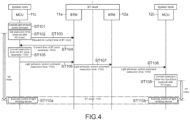
- Fig. 4 is a diagram showing a sequence of synchronization control of light emission by the master reproduction apparatus 11 and the slave reproduction apparatus 12.
- the MCU 11c of the master reproduction apparatus 11 generates a light emission control command (step 101).
- a timer for starting the execution of light emission control after XX msec is set by the system clock of the MCU 11c (step 102).
- the MCU 11c sends a request for the current time of the clock (BT clock) of the BTM 11a (step 103).
- the BTM clock transmits the current time of the BT clock to the MCU 11c in response to the request (step 104).
- the current time of the BT clock is set to, for example, "1000".
- the MCU 11c converts the light emission control execution time (start time) set in step 102 into a BT clock (step 105). For example, the BT clock after conversion is set to "1100".
- the MCU 11c transmits the generated light emission control command (execution time 1100) to the BTM 11a (step 106), and the BTM 11a transmits the light emission control command (execution time 1100) to the BTM 12a of the slave reproduction apparatus 12 (step 107).
- the BTM 12a of the slave reproduction apparatus 12 transmits the light emission control command to the MCU 12c (step 108). Then, the MCU 12c converts the light emission control execution time into a system clock, and sets the light emission control execution time after YY msec (step 109).
- the master reproduction apparatus 11 and the slave reproduction apparatus 12 are connected to each other by near field communication, the system clocks of the MCUs 11c and 12c are in synchronization with each other. Therefore, after step 109, the master reproduction apparatus 11 and the slave reproduction apparatus 12 can simultaneously execute light emission control at the time 1100 (steps 110a and 110b).
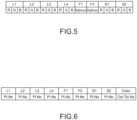
- Fig. 5 is a table showing illumination information according to Embodiment 1 generated by the master reproduction apparatus 11.
- the illumination information is information indicating the light emission mode associated with each of the light emitting elements as described above.
- color values are set in the light emitting elements (first light emitting elements) L1 to L4, S1, and S2 that can emit light in full color.
- Brightness values are set in the light emitting elements (second light emitting elements) F1 and F2 that can emit light in a single color.
- the color values and the brightness values are set by a predetermined algorithm on the basis of a beat detected by beat detection based on analysis data or a tempo, a rhythm, and a key detected on the basis of analysis data.
- the master reproduction apparatus 11 transmits the illumination information to the slave reproduction apparatus 12.
- the transmission interval is a predetermined time unit.
- the time unit is, for example, 30 msec to 200 msec.
- the slave reproduction apparatus 12 receives the illumination information. Then, the MCU 12c of the slave reproduction apparatus 12 assigns the illumination information to each corresponding light emitting element that the MCU 12c itself has, so that the light emitting element emits light. The slave reproduction apparatus 12 causes the light emitting element to emit light on the basis of the illumination information every time the illumination information is received, that is, for each time unit described above. Specifically, the slave reproduction apparatuses 12B and 12C of the second and third models execute light emission control as follows.
- the number, arrangement, and functional levels of light emitting elements of the slave reproduction apparatus 12A (refer to Part A of Fig. 2 ) of the first model are all the same as those of the master reproduction apparatus 11. Therefore, the slave reproduction apparatus 12A of the first model assigns the illumination information to its own light emitting element as it is, and controls the light emission in the same light emission mode as in the master reproduction apparatus 11. The same applies to Embodiment 2 to be described later.
- the number, arrangement, and functional levels of light emitting elements of the slave reproduction apparatus 12B (refer to Part C of Fig. 2 ) of the second model are different from those of the master reproduction apparatus 11.
- the light emitting elements L1 and L3 and the light emitting elements L1' and L3' of the master reproduction apparatus 11 are disposed differently, but the light emitting elements L1 and L3 are assigned to the light emitting elements L1' and L3', respectively. This assignment is determined in advance. That is, the light emitting element L1' corresponds to L1, and the light emitting element L3' corresponds to L3.
- the MCU 12c of the slave reproduction apparatus 12B generates illumination information by associating the data (color values) of the light emission modes of the light emitting elements L1 and L3 with L1' and L3'.
- the light emitting elements S1 and S2 of the master reproduction apparatus 11 are assigned to the light emitting elements S1' and S2', respectively.
- the arrangement of the light emitting elements S1 and S2 and the arrangement of the light emitting elements S1' and S2' are the same between these models, but the functional levels of S1' and S2' are single color and are different from the functional levels of S1 and S2.
- the MCU 12c of the slave reproduction apparatus 12B generates illumination information by converting the color values of S1 and S2 of the received illumination information into brightness values using a predetermined algorithm and associating the brightness values as light emission modes of the light emitting elements S1' and S2'.
- the illumination information is generated such that the light emission modes of the light emitting elements F1 and F2 of the master reproduction apparatus 11 are associated with the light emitting elements F1 and F2 of the slave reproduction apparatus 12B of the second model as they are. Since the slave reproduction apparatus 12B does not have light emitting elements corresponding to the light emitting elements L2 and L4 of the master reproduction apparatus 11, the light emission modes of the light emitting elements L2 and L4 are excluded or neglected.
- the MCU 12c of the slave reproduction apparatus 12B updates the illumination information as described above on the basis of the illumination information received from the master reproduction apparatus 11, and executes the light emission control of the light emitting element on the basis of this.
- the MCU 12c functions as a "light emission control unit”.
- the number, arrangement, and functional levels of light emitting elements of the slave reproduction apparatus 12C (refer to Part D of Fig. 2 ) of the third model are different from those of the master reproduction apparatus 11.
- the light emitting elements L1 and L3 and the light emitting elements L1" and L3" of the master reproduction apparatus 11 are disposed differently, but the light emitting elements L1 and L3 are assigned to the light emitting elements L1" and L3", respectively. This assignment is determined in advance. That is, the light emitting element L1" corresponds to L1, and the light emitting element L3" corresponds to L3.
- the MCU 12c of the slave reproduction apparatus 12 generates illumination information by associating the data (color values) of the light emission modes of the light emitting elements L1 and L3 with L1" and L3" as brightness values using the above-described Equation 1.
- the illumination information is generated such that the light emission modes of the light emitting elements F1 and F2 of the master reproduction apparatus 11 are associated with the light emitting elements F1 and F2 of the slave reproduction apparatus 12 of the third model as they are. Since the slave reproduction apparatus 12 does not have light emitting elements corresponding to the light emitting elements L2 and L4 of the master reproduction apparatus 11, the light emission modes of the light emitting elements L2 and L4 are excluded or neglected.
- the MCU 12c of the slave reproduction apparatus 12C updates the illumination information on the basis of the illumination information received from the master reproduction apparatus 11, and executes the light emission control of the light emitting element on the basis of this.
- the master reproduction apparatus 11 can control light emission individually for each of the light emitting elements on the basis of the illumination information. Further, the slave reproduction apparatus 12 can receive the illumination information and realize light emission according to audio data in synchronization with the master reproduction apparatus 11 on the basis of the illumination information or the updated illumination information.
- a plurality of users can share and enjoy music and light indoors and outdoors.
- Fig. 6 is a table showing illumination information according to Embodiment 2 generated by the master reproduction apparatus 11.
- the illumination information includes a pattern number (Pt. No), which defines a light emission pattern associated with each of the light emitting elements L1 to L4, F1, F2, S1, and S2, and a color table (Col-Tbl. No), which defines a color (Color).
- the light emission pattern is a light pattern defined in advance for each pattern number. There are several tens to several hundreds of light emission patterns, for example.
- the light emission pattern defines how to change the color using a color table in the illumination information on the basis of analysis data (information such as a beat based on the analysis data).
- the color table is a table showing the range of change in color defined in advance for each color table number. That is, one color table indicates data for changing colors in a range defined by a combination of a plurality of color values (RGB values).
- RGB values color values
- One color table defines the color range of the light emission pattern of each light emitting element in the illumination information. For example, one color table defines one or more basic colors and gradation colors or similar colors centered on the basic colors. For example, there are several to dozens of color tables.
- the transmission interval of the illumination information by the master reproduction apparatus 11 is a predetermined time unit.
- the time unit is a time for each timing at which at least one of data items of the light emission modes corresponding to light emitting elements and colors of the illumination information changes.
- the timing at which at least one of the data items of the light emission modes changes is, for example, a timing at which a beat, a tempo, a rhythm, a key, or the like changes or a timing at which the length of a pattern itself determined by the number of bars changes.
- the slave reproduction apparatus 12B of the second model receives the illumination information from the master reproduction apparatus 11. Then, the MCU 12c generates illumination information by assigning the light emission modes of the light emitting elements L1 and L3 of the master reproduction apparatus 11 as light emission modes of its own light emitting elements L1' and L3', thereby controlling the light emission.
- the light emission modes of the light emitting elements F1 and F2 of the master reproduction apparatus 11 are realized as they are by the light emitting elements F1 and F2 of the slave reproduction apparatus 12.
- the MCU 12c of the slave reproduction apparatus 12B of the second model generates illumination information by assigning the light emission modes of the light emitting elements S1 and S2 of the master reproduction apparatus 11 as light emission modes of its own light emitting elements S1' and S2', thereby controlling the light emission.
- the MCU 12c converts a plurality of color values in the color table into brightness values using the above-described Equation 1 to realize the light emission modes of the light emitting elements S1' and S2'.
- the slave reproduction apparatus 12C of the third model receives the illumination information from the master reproduction apparatus 11. Then, the MCU 12c generates illumination information by assigning the light emission modes of the light emitting elements L1 and L3 of the master reproduction apparatus 11 as light emission modes of its own light emitting elements L1" and L3", thereby controlling the light emission. In this case, the MCU 12c converts a plurality of color values in the color table into brightness values using the above-described Equation 1 to realize the light emission modes of the light emitting elements L1" and L3".
- the light emission modes of the light emitting elements F1 and F2 of the master reproduction apparatus 11 are realized as they are by the light emitting elements F1 and F2 of the slave reproduction apparatus 12C.
- the same effect as in the above Embodiment 1 can be obtained. Further, since the illumination information includes the light emission pattern and the color table, more various illuminations can be realized as compared with the above Embodiment 1.
- the reproduction system 100 includes a plurality of slave reproduction apparatuses 12A to 12C of three models. However, the reproduction system 100 may include one or more slave reproduction apparatuses 12 of at least one model.
- At least one of the slave reproduction apparatuses 12 may include only one light emitting element.
- the MCU 12c of each slave reproduction apparatus 12 can also control the light emission using the same illumination information in the flow of the light emitting element of the slave reproduction apparatus 12A, the light emitting element of the slave reproduction apparatus 12B, and the light emitting element of the slave reproduction apparatus 12C. That is, the light emission changes in such a manner that the delay effect is obtained in each slave reproduction apparatus 12. In this case, it is desirable to use the illumination information according to the above Embodiment 2.
- the master reproduction apparatus may determine the configuration or specifications of the slave reproduction apparatus when a connection is made by near field communication or other communication means. For example, at the time of the connection, the master reproduction apparatus may compare the number, arrangement, and functional levels of its own light emitting elements with those of the light emitting elements of the slave reproduction apparatus and transmit the comparison information to the slave reproduction apparatus. Therefore, since these reproduction apparatuses do not have to store in advance information of the number or the arrangement of light emitting elements of the other reproduction apparatus to be connected, it is possible to obtain the information at the time of the connection.
- the arrangement, number, and functional levels of the light emitting elements of each reproduction apparatus 10 can be appropriately changed in design.
- the functional levels of the light emitting elements of the master reproduction apparatus 11 are higher than those of the slave reproduction apparatuses 12B and 12C of the second and third models.
- the functional levels of the light emitting elements of the master reproduction apparatus 11 may be higher than those of the second and third models.
Landscapes
- Engineering & Computer Science (AREA)
- Multimedia (AREA)
- Physics & Mathematics (AREA)
- Acoustics & Sound (AREA)
- Signal Processing (AREA)
- Health & Medical Sciences (AREA)
- Audiology, Speech & Language Pathology (AREA)
- Computational Linguistics (AREA)
- Human Computer Interaction (AREA)
- General Health & Medical Sciences (AREA)
- Circuit Arrangement For Electric Light Sources In General (AREA)
- Reverberation, Karaoke And Other Acoustics (AREA)
Claims (10)
- Slave-Wiedergabeeinrichtung (12), die in der Lage ist, eine synchrone Wiedergabe von Audiodaten zusammen mit einer Master-Wiedergabeeinrichtung (11) auszuführen, wobei die Slave-Wiedergabeeinrichtung (12) umfasst:ein oder mehrere lichtemittierende Elemente;eine Empfangseinheit (12a), die konfiguriert ist, um Audiodaten und Beleuchtungsinformationen, wobei die Beleuchtungsinformationen von der Master-Wiedergabeeinrichtung (11) erzeugt werden, die eine Vielzahl von lichtemittierenden Elementen aufweist und auf der Grundlage von Analysedaten der Audiodaten durch die Master-Wiedergabeeinrichtung (11) erzeugt wird und wobei Lichtemissionsmodi der Vielzahl von lichtemittierenden Elementen der Master-Wiedergabeeinrichtung (11) zugeordnet sind, von der Master-Wiedergabeeinrichtung (11) zu empfangen; undeine Lichtemissionssteuereinheit (12c), die konfiguriert ist, um zu bewirken, dass das eine oder die mehreren lichtemittierenden Elemente der Slave-Wiedergabeeinrichtung (12) Licht auf der Grundlage der empfangenen Beleuchtungsinformationen emittieren,wobei die Slave-Wiedergabeeinrichtung (12) eine heterogene Slave-Wiedergabeeinrichtung ist, bei der das eine oder die mehreren lichtemittierenden Elemente der Slave-Wiedergabeeinrichtung (12) eine andere Anzahl, Anordnung oder Funktionsstufe aufweisen als die Vielzahl von lichtemittierenden Elementen der Master-Wiedergabeeinrichtung (11),wobei die Empfangseinheit (12a) konfiguriert ist, um Anordnungsentsprechungsinformationen, in denen eine Anordnung des einen oder der mehreren lichtemittierenden Elemente der Slave-Wiedergabeeinrichtung (12) einer Anordnung der Vielzahl von lichtemittierenden Elementen der Master-Wiedergabeeinrichtung (11) zugeordnet ist, von der Master-Wiedergabeeinrichtung (11) zu empfangen, und die Lichtemissionssteuereinheit (12c) konfiguriert ist, um zu bewirken, dass das eine oder die mehreren lichtemittierenden Elemente der Slave-Wiedergabeeinrichtung (12) Licht auf der Grundlage der Anordnungsentsprechungsinformationen emittieren.
- Slave-Wiedergabeeinrichtung (12) nach Anspruch 1, wobei
die Empfangseinheit (12a) konfiguriert ist, um einen Lichtemissionssteuerbefehl zu empfangen, der von der Master-Wiedergabeeinrichtung (11) übertragen wird, wobei der Lichtemissionssteuerbefehl zum Synchronisieren von Lichtemission durch die Vielzahl von lichtemittierenden Elementen der Master-Wiedergabeeinrichtung (11) mit Lichtemission durch die lichtemittierenden Elemente der Slave-Wiedergabeeinrichtung (12) dient. - Slave-Wiedergabeeinrichtung (12) nach Anspruch 1 oder 2, wobeidie Master-Wiedergabeeinrichtung (11) konfiguriert ist, um Beleuchtungsinformationen zu erzeugen, in denen Informationen, die einen Farbwert einschließen, mindestens einem der Vielzahl von lichtemittierenden Elementen der Master-Wiedergabeeinrichtung (11) zugeordnet sind, als der Lichtemissionsmodus der Beleuchtungsinformationen, unddie Lichtemissionssteuereinheit (12c) konfiguriert ist, um den Farbwert unter Verwendung eines vorbestimmten Algorithmus umzuwandeln, um zu bewirken, dass mindestens eines des einen oder der mehreren lichtemittierenden Elemente der Slave-Wiedergabeeinrichtung (12) Licht emittiert.
- Slave-Wiedergabeeinrichtung (12) nach Anspruch 3, wobei
die Lichtemissionssteuereinheit (12c) konfiguriert ist, um den Farbwert in einen Helligkeitswert umzuwandeln. - Wiedergabesystem, umfassend:
eine Master-Wiedergabeeinrichtung (11), die in der Lage ist, eine synchrone Wiedergabe von Audiodaten zusammen mit einer oder mehreren Slave-Wiedergabeeinrichtungen (12) durchzuführen, wobei die Master-Wiedergabeeinrichtung (11) umfasst:eine Vielzahl von lichtemittierenden Elementen;eine Erzeugungseinheit (11c), die konfiguriert ist, um Beleuchtungsinformationen, in denen Lichtemissionsmodi der Vielzahl von lichtemittierenden Elementen der Master-Wiedergabeeinrichtung (11) zugeordnet sind, auf der Grundlage von Analysedaten zu erzeugen, die durch Analyse von Audiodaten durch die Master-Wiedergabeeinrichtung erhalten werden;eine Übertragungseinheit (11a), die konfiguriert ist, um die erzeugten Beleuchtungsinformationen an die eine oder die mehreren Slave-Wiedergabeeinrichtungen zu übertragen; undeine erste Lichtemissionssteuereinheit (11c), die konfiguriert ist, um zu bewirken, dass die Vielzahl von lichtemittierenden Elementen der Master-Wiedergabeeinrichtung (11) Licht in den Lichtemissionsmodi auf der Grundlage der Beleuchtungsinformationen emittiert, undeine oder mehrere der Slave-Wiedergabeeinrichtungen (12) nach einem der Ansprüche 1 bis 4. - System nach Anspruch 5, wobei
die Erzeugungseinheit (11c) konfiguriert ist, um die Beleuchtungsinformationen zu erzeugen, in denen ein Farbwert einem ersten lichtemittierenden Element aus der Vielzahl von lichtemittierenden Elementen der Master-Wiedergabeeinrichtung (11) zugeordnet ist und ein Helligkeitswert einem zweiten lichtemittierenden Element der Master-Wiedergabeeinrichtung (11) zugeordnet ist, als der Lichtemissionsmodus der Beleuchtungsinformationen. - System nach Anspruch 5 oder 6, wobei
die Erzeugungseinheit (11c) konfiguriert ist, um die Beleuchtungsinformationen zu erzeugen, die ein Lichtemissionsmuster, das jedem der Vielzahl von lichtemittierenden Elementen der Master-Wiedergabeeinrichtung (11) zugeordnet ist, und eine Farbtabelle, die eine Kombination aus einer Vielzahl von Farbwerten definiert, als den Lichtemissionsmodus der Beleuchtungsinformationen einschließen. - System nach Anspruch 7, wobei
die Erzeugungseinheit (11c) konfiguriert ist, um die Beleuchtungsinformationen zu erzeugen, in denen ein Farbbereich des Lichtemissionsmusters gemäß dem Lichtemissionsmuster durch eine Kombination der Vielzahl von Farbwerten definiert ist, die durch die Farbtabelle definiert sind. - Lichtemissionsverfahren durch eine Master-Wiedergabeeinrichtung, die in der Lage ist, eine synchrone Wiedergabe von Audiodaten zusammen mit einer oder mehreren Slave-Wiedergabeeinrichtungen auszuführen, wobei das Verfahren umfasst:Analysieren von Audiodaten durch die Master-Wiedergabeeinrichtung zum Erfassen von Analysedaten;Erzeugen von Beleuchtungsinformationen, in denen Lichtemissionsmodi auf der Grundlage der erfassten Analysedaten einer Vielzahl von in der Master-Wiedergabeeinrichtung bereitgestellten lichtemittierenden Elementen zugeordnet sind;Übertragen der erzeugten Beleuchtungsinformationen und Anordnungsentsprechungsinformationen, in denen eine Anordnung eines oder mehrerer lichtemittierender Elemente der Slave-Wiedergabeeinrichtung (12) einer Anordnung der Vielzahl von lichtemittierenden Elementen der Master-Wiedergabeeinrichtung (11) zugeordnet ist, an die eine oder die mehreren Slave-Wiedergabeeinrichtungen; undBewirken, dass die Vielzahl von lichtemittierenden Elementen der Master-Wiedergabeeinrichtung (11) auf der Grundlage der Beleuchtungsinformationen Licht in den Lichtemissionsmodi emittiert,wobei mindestens eine der Slave-Wiedergabeeinrichtungen eine heterogene Slave-Wiedergabeeinrichtung ist, bei der das eine oder die mehreren lichtemittierenden Elemente der Slave-Wiedergabeeinrichtung eine andere Anzahl, Anordnung oder Funktionsstufe als die Vielzahl von lichtemittierenden Elementen der Master-Wiedergabeeinrichtung (11) aufweisen.
- Lichtemissionsverfahren durch eine Slave-Wiedergabeeinrichtung, die in der Lage ist, eine synchrone Wiedergabe von Audiodaten zusammen mit einer Master-Wiedergabeeinrichtung auszuführen, wobei das Verfahren umfasst:Empfangen von Audiodaten und Beleuchtungsinformationen, wobei die Beleuchtungsinformationen von der Master-Wiedergabeeinrichtung erzeugt werden, die eine Vielzahl von lichtemittierenden Elementen aufweist und auf der Grundlage von Analysedaten der Audiodaten durch die Master-Wiedergabeeinrichtung erzeugt wird und in der Lichtemissionsmodi der Vielzahl von lichtemittierenden Elementen der Master-Wiedergabeeinrichtung zugeordnet sind, von der Master-Wiedergabeeinrichtung;Empfangen von Anordnungsentsprechungsinformationen, in denen eine Anordnung eines oder mehrerer lichtemittierender Elemente der Slave-Wiedergabeeinrichtung einer Anordnung der Vielzahl von lichtemittierenden Elementen der Master-Wiedergabeeinrichtung zugeordnet ist, von der Master-Wiedergabeeinrichtung; undBewirken, dass das eine oder die mehreren lichtemittierenden Elemente, die in der Slave-Wiedergabeeinrichtung bereitgestellt sind, auf der Grundlage der empfangenen Beleuchtungsinformationen und der Anordnungsentsprechungsinformationen Licht emittieren,wobei die Slave-Wiedergabeeinrichtung eine heterogene Slave-Wiedergabeeinrichtung ist, bei der das eine oder die mehreren lichtemittierenden Elemente der Slave-Wiedergabeeinrichtung eine andere Anzahl, Anordnung oder Funktionsstufe aufweisen als die Vielzahl von lichtemittierenden Elementen der Master-Wiedergabeeinrichtung.
Applications Claiming Priority (2)
| Application Number | Priority Date | Filing Date | Title |
|---|---|---|---|
| JP2017033490 | 2017-02-24 | ||
| PCT/JP2018/000777 WO2018154996A1 (ja) | 2017-02-24 | 2018-01-15 | マスター再生装置、スレーブ再生装置、およびそれらの発光方法 |
Publications (3)
| Publication Number | Publication Date |
|---|---|
| EP3588972A1 EP3588972A1 (de) | 2020-01-01 |
| EP3588972A4 EP3588972A4 (de) | 2020-02-12 |
| EP3588972B1 true EP3588972B1 (de) | 2024-07-17 |
Family
ID=63253232
Family Applications (1)
| Application Number | Title | Priority Date | Filing Date |
|---|---|---|---|
| EP18757002.3A Active EP3588972B1 (de) | 2017-02-24 | 2018-01-15 | Master-wiedergabevorrichtung, slave-wiedergabevorrichtung und lichtemissionsverfahren dafür |
Country Status (5)
| Country | Link |
|---|---|
| US (1) | US11420134B2 (de) |
| EP (1) | EP3588972B1 (de) |
| JP (1) | JP6992798B2 (de) |
| CN (1) | CN110100450B (de) |
| WO (1) | WO2018154996A1 (de) |
Families Citing this family (3)
| Publication number | Priority date | Publication date | Assignee | Title |
|---|---|---|---|---|
| WO2018154996A1 (ja) * | 2017-02-24 | 2018-08-30 | ソニー株式会社 | マスター再生装置、スレーブ再生装置、およびそれらの発光方法 |
| US10805664B2 (en) * | 2018-10-15 | 2020-10-13 | Bose Corporation | Wireless audio synchronization |
| WO2020220181A1 (en) * | 2019-04-29 | 2020-11-05 | Harman International Industries, Incorporated | A speaker with broadcasting mode and broadcasting method thereof |
Family Cites Families (44)
| Publication number | Priority date | Publication date | Assignee | Title |
|---|---|---|---|---|
| US4185276A (en) * | 1977-09-29 | 1980-01-22 | Benson Robert G | Sound and light display |
| US5329431A (en) * | 1986-07-17 | 1994-07-12 | Vari-Lite, Inc. | Computer controlled lighting system with modular control resources |
| US5769527A (en) * | 1986-07-17 | 1998-06-23 | Vari-Lite, Inc. | Computer controlled lighting system with distributed control resources |
| US6211626B1 (en) * | 1997-08-26 | 2001-04-03 | Color Kinetics, Incorporated | Illumination components |
| US7139617B1 (en) * | 1999-07-14 | 2006-11-21 | Color Kinetics Incorporated | Systems and methods for authoring lighting sequences |
| US6016038A (en) * | 1997-08-26 | 2000-01-18 | Color Kinetics, Inc. | Multicolored LED lighting method and apparatus |
| US20040052076A1 (en) * | 1997-08-26 | 2004-03-18 | Mueller George G. | Controlled lighting methods and apparatus |
| US6813777B1 (en) * | 1998-05-26 | 2004-11-02 | Rockwell Collins | Transaction dispatcher for a passenger entertainment system, method and article of manufacture |
| ES2380075T3 (es) * | 2000-06-21 | 2012-05-08 | Philips Solid-State Lighting Solutions, Inc. | Método y aparato para controlar un sistema de iluminación en respuesta a una entrada de audio |
| US7227075B2 (en) * | 2004-08-06 | 2007-06-05 | Henry Chang | Lighting controller |
| JP4724504B2 (ja) * | 2005-09-08 | 2011-07-13 | パイオニア株式会社 | 照明装置 |
| US7459623B2 (en) * | 2006-03-09 | 2008-12-02 | Robertson Bruce E | Sound responsive light system |
| US7924174B1 (en) * | 2006-05-26 | 2011-04-12 | Cooper Technologies Company | System for controlling a lighting level of a lamp in a multi-zone environment |
| JP5098036B2 (ja) | 2006-12-07 | 2012-12-12 | 株式会社メガチップス | 音声再生システム |
| JP5168632B2 (ja) | 2008-03-13 | 2013-03-21 | オーデリック株式会社 | スピーカ配設システム及びスピーカ装置 |
| US10539311B2 (en) * | 2008-04-14 | 2020-01-21 | Digital Lumens Incorporated | Sensor-based lighting methods, apparatus, and systems |
| CN101662691A (zh) | 2008-08-28 | 2010-03-03 | 阿尔派株式会社 | 再现系统和再现方法 |
| US8964298B2 (en) * | 2010-02-28 | 2015-02-24 | Microsoft Corporation | Video display modification based on sensor input for a see-through near-to-eye display |
| FR2973622B1 (fr) * | 2011-03-29 | 2014-02-14 | Awox | Dispositif de diffusion de sons |
| US20130002144A1 (en) * | 2011-06-03 | 2013-01-03 | Osram Sylvania Inc. | Multimode color tunable light source and daylighting system |
| US10030833B2 (en) * | 2011-06-03 | 2018-07-24 | Osram Sylvania Inc. | Multimode color tunable light source and daylighting system |
| US8779681B2 (en) * | 2011-06-03 | 2014-07-15 | Osram Sylvania Inc. | Multimode color tunable light source |
| CN103179475A (zh) | 2011-12-22 | 2013-06-26 | 深圳市三诺电子有限公司 | 无线音箱及其无线音箱系统 |
| WO2013105169A1 (ja) | 2012-01-10 | 2013-07-18 | ソニー株式会社 | 電球型光源装置 |
| US20130279706A1 (en) * | 2012-04-23 | 2013-10-24 | Stefan J. Marti | Controlling individual audio output devices based on detected inputs |
| US9572226B2 (en) * | 2012-07-01 | 2017-02-14 | Cree, Inc. | Master/slave arrangement for lighting fixture modules |
| JP5966784B2 (ja) | 2012-09-07 | 2016-08-10 | ソニー株式会社 | 照明装置およびプログラム |
| WO2014103118A1 (ja) | 2012-12-28 | 2014-07-03 | ソニー株式会社 | 音響再生装置 |
| US9743184B2 (en) * | 2013-01-07 | 2017-08-22 | Teenage Engineering Ab | Wireless speaker arrangement |
| US9288088B1 (en) * | 2013-02-22 | 2016-03-15 | Pi Variables, Inc. | Synchronizing the behavior of discrete digital devices |
| US9980351B2 (en) * | 2013-08-12 | 2018-05-22 | Abl Ip Holding Llc | Lighting element-centric network of networks |
| WO2015092984A1 (ja) | 2013-12-18 | 2015-06-25 | ソニー株式会社 | 音響再生装置 |
| CN103974512A (zh) * | 2014-05-05 | 2014-08-06 | 生迪光电科技股份有限公司 | 一种基于照明装置的无线音乐调光方法及其系统 |
| CA2954589A1 (en) * | 2014-07-07 | 2016-01-14 | Patrizio PISANI | Remote audiovisual communication system between two or more users, lamp with lights with luminous characteristics which can vary according to external information sources, specifically of audio type, and associated communication method |
| US10045427B2 (en) * | 2014-09-29 | 2018-08-07 | Philips Lighting Holding B.V. | System and method of autonomous restore point creation and restoration for luminaire controllers |
| EP3240296B1 (de) | 2014-12-26 | 2023-04-05 | Sony Group Corporation | Informationsverarbeitungsvorrichtung, informationsverarbeitungsverfahren und programm |
| EP3279751A4 (de) * | 2015-04-03 | 2018-05-02 | Lucis Technologies Holdings Limited | Klimaregelungsanlage |
| WO2018200685A2 (en) * | 2017-04-27 | 2018-11-01 | Ecosense Lighting Inc. | Methods and systems for an automated design, fulfillment, deployment and operation platform for lighting installations |
| US10049663B2 (en) * | 2016-06-08 | 2018-08-14 | Apple, Inc. | Intelligent automated assistant for media exploration |
| US10586535B2 (en) * | 2016-06-10 | 2020-03-10 | Apple Inc. | Intelligent digital assistant in a multi-tasking environment |
| IT201600086875A1 (it) * | 2016-08-24 | 2018-02-24 | Osram Gmbh | Procedimento per controllare sorgenti di illuminazione, sistema e prodotto informatico corrispondenti |
| JP7095597B2 (ja) | 2016-09-23 | 2022-07-05 | ソニーグループ株式会社 | 再生装置、再生方法、プログラム、及び再生システム |
| KR102729069B1 (ko) * | 2016-12-01 | 2024-11-13 | 삼성전자 주식회사 | 음성 신호를 입력 또는 출력하는 램프 장치 및 상기 램프 장치의 구동 방법 |
| WO2018154996A1 (ja) * | 2017-02-24 | 2018-08-30 | ソニー株式会社 | マスター再生装置、スレーブ再生装置、およびそれらの発光方法 |
-
2018
- 2018-01-15 WO PCT/JP2018/000777 patent/WO2018154996A1/ja not_active Ceased
- 2018-01-15 EP EP18757002.3A patent/EP3588972B1/de active Active
- 2018-01-15 US US16/471,724 patent/US11420134B2/en active Active
- 2018-01-15 JP JP2019501112A patent/JP6992798B2/ja active Active
- 2018-01-15 CN CN201880005263.8A patent/CN110100450B/zh active Active
Also Published As
| Publication number | Publication date |
|---|---|
| EP3588972A4 (de) | 2020-02-12 |
| WO2018154996A1 (ja) | 2018-08-30 |
| JP6992798B2 (ja) | 2022-01-13 |
| US11420134B2 (en) | 2022-08-23 |
| US20190380190A1 (en) | 2019-12-12 |
| EP3588972A1 (de) | 2020-01-01 |
| CN110100450A (zh) | 2019-08-06 |
| JPWO2018154996A1 (ja) | 2019-12-12 |
| CN110100450B (zh) | 2021-08-03 |
Similar Documents
| Publication | Publication Date | Title |
|---|---|---|
| US11812232B2 (en) | Electronic device and music visualization method thereof | |
| EP3518552B1 (de) | Wiedergabevorrichtung, wiedergabeverfahren, programm und wiedergabesystem | |
| CN105451413B (zh) | 灯光控制方法、装置及系统 | |
| CN107683465B (zh) | 控制终端设备、音频系统和音频系统控制方法 | |
| EP3588972B1 (de) | Master-wiedergabevorrichtung, slave-wiedergabevorrichtung und lichtemissionsverfahren dafür | |
| JP2021508146A (ja) | 照明装置及びそれを含む興行システム | |
| JP2017539057A (ja) | 照明ダイナミクスの制御 | |
| JP2021508147A (ja) | 中央サーバ及びそれを含むドラマティック興行システム | |
| US12106429B2 (en) | Image display system and display control method for controlling a virtual lighting device in a virtual space | |
| US20240032180A1 (en) | Remote live scene control system, methods, and techniques | |
| US9743421B2 (en) | Simultaneous operation of multiple communications protocols | |
| TWI555013B (zh) | 聲感視覺特效系統及聲感視覺特效處理方法 | |
| EP3928594B1 (de) | Verbesserung der erkennung einer lichtszene durch einen benutzer | |
| JP2024180461A (ja) | ライティング装置、ライティング装置制御方法及び演出者端末 | |
| TW201627987A (zh) | 演唱視覺特效系統及演唱視覺特效處理方法 | |
| KR102446031B1 (ko) | 응원봉 제어를 위한 데이터 전송 방법 및 그 장치 | |
| US11553577B2 (en) | System and method for achieving synchronized audio and image control of lighting | |
| CN106131374B (zh) | 一种机器人文件使用、存储方法及系统 | |
| JP2021051877A (ja) | 環境制御システム | |
| CN114222412A (zh) | 基于音乐律动的智能灯泡控制方法、终端和系统 | |
| EP3358859A1 (de) | Steuerungsendgerätevorrichtung, audiosystem und audiosystemsteuerungsverfahren | |
| JP7241297B2 (ja) | 音再生システム、音再生方法及びプログラム | |
| US20180213581A1 (en) | Communication apparatus, communication system, communication method and recording medium | |
| US9805036B2 (en) | Script-based multimedia presentation | |
| KR20140115744A (ko) | 조명 장치를 무선으로 제어할 수 있는 무선 제어 신호 분배 장치 및 무선 제어 신호 분배 시스템 |
Legal Events
| Date | Code | Title | Description |
|---|---|---|---|
| STAA | Information on the status of an ep patent application or granted ep patent |
Free format text: STATUS: THE INTERNATIONAL PUBLICATION HAS BEEN MADE |
|
| PUAI | Public reference made under article 153(3) epc to a published international application that has entered the european phase |
Free format text: ORIGINAL CODE: 0009012 |
|
| STAA | Information on the status of an ep patent application or granted ep patent |
Free format text: STATUS: REQUEST FOR EXAMINATION WAS MADE |
|
| 17P | Request for examination filed |
Effective date: 20190924 |
|
| AK | Designated contracting states |
Kind code of ref document: A1 Designated state(s): AL AT BE BG CH CY CZ DE DK EE ES FI FR GB GR HR HU IE IS IT LI LT LU LV MC MK MT NL NO PL PT RO RS SE SI SK SM TR |
|
| AX | Request for extension of the european patent |
Extension state: BA ME |
|
| REG | Reference to a national code |
Ref country code: DE Free format text: PREVIOUS MAIN CLASS: H04R0001000000 Ref country code: DE Ref legal event code: R079 Ref document number: 602018071866 Country of ref document: DE Free format text: PREVIOUS MAIN CLASS: H04R0001000000 Ipc: H04R0001020000 |
|
| A4 | Supplementary search report drawn up and despatched |
Effective date: 20200115 |
|
| RIC1 | Information provided on ipc code assigned before grant |
Ipc: H04R 1/02 20060101AFI20200109BHEP Ipc: A63J 17/00 20060101ALI20200109BHEP |
|
| DAV | Request for validation of the european patent (deleted) | ||
| DAX | Request for extension of the european patent (deleted) | ||
| STAA | Information on the status of an ep patent application or granted ep patent |
Free format text: STATUS: EXAMINATION IS IN PROGRESS |
|
| 17Q | First examination report despatched |
Effective date: 20201217 |
|
| RAP3 | Party data changed (applicant data changed or rights of an application transferred) |
Owner name: SONY GROUP CORPORATION |
|
| GRAP | Despatch of communication of intention to grant a patent |
Free format text: ORIGINAL CODE: EPIDOSNIGR1 |
|
| STAA | Information on the status of an ep patent application or granted ep patent |
Free format text: STATUS: GRANT OF PATENT IS INTENDED |
|
| INTG | Intention to grant announced |
Effective date: 20240222 |
|
| GRAS | Grant fee paid |
Free format text: ORIGINAL CODE: EPIDOSNIGR3 |
|
| GRAA | (expected) grant |
Free format text: ORIGINAL CODE: 0009210 |
|
| STAA | Information on the status of an ep patent application or granted ep patent |
Free format text: STATUS: THE PATENT HAS BEEN GRANTED |
|
| P01 | Opt-out of the competence of the unified patent court (upc) registered |
Effective date: 20240529 |
|
| AK | Designated contracting states |
Kind code of ref document: B1 Designated state(s): AL AT BE BG CH CY CZ DE DK EE ES FI FR GB GR HR HU IE IS IT LI LT LU LV MC MK MT NL NO PL PT RO RS SE SI SK SM TR |
|
| REG | Reference to a national code |
Ref country code: CH Ref legal event code: EP |
|
| REG | Reference to a national code |
Ref country code: DE Ref legal event code: R096 Ref document number: 602018071866 Country of ref document: DE |
|
| REG | Reference to a national code |
Ref country code: IE Ref legal event code: FG4D |
|
| REG | Reference to a national code |
Ref country code: LT Ref legal event code: MG9D |
|
| REG | Reference to a national code |
Ref country code: NL Ref legal event code: MP Effective date: 20240717 |
|
| PG25 | Lapsed in a contracting state [announced via postgrant information from national office to epo] |
Ref country code: PT Free format text: LAPSE BECAUSE OF FAILURE TO SUBMIT A TRANSLATION OF THE DESCRIPTION OR TO PAY THE FEE WITHIN THE PRESCRIBED TIME-LIMIT Effective date: 20241118 |
|
| REG | Reference to a national code |
Ref country code: AT Ref legal event code: MK05 Ref document number: 1705220 Country of ref document: AT Kind code of ref document: T Effective date: 20240717 |
|
| PG25 | Lapsed in a contracting state [announced via postgrant information from national office to epo] |
Ref country code: NL Free format text: LAPSE BECAUSE OF FAILURE TO SUBMIT A TRANSLATION OF THE DESCRIPTION OR TO PAY THE FEE WITHIN THE PRESCRIBED TIME-LIMIT Effective date: 20240717 |
|
| PG25 | Lapsed in a contracting state [announced via postgrant information from national office to epo] |
Ref country code: PT Free format text: LAPSE BECAUSE OF FAILURE TO SUBMIT A TRANSLATION OF THE DESCRIPTION OR TO PAY THE FEE WITHIN THE PRESCRIBED TIME-LIMIT Effective date: 20241118 Ref country code: NL Free format text: LAPSE BECAUSE OF FAILURE TO SUBMIT A TRANSLATION OF THE DESCRIPTION OR TO PAY THE FEE WITHIN THE PRESCRIBED TIME-LIMIT Effective date: 20240717 |
|
| PG25 | Lapsed in a contracting state [announced via postgrant information from national office to epo] |
Ref country code: NO Free format text: LAPSE BECAUSE OF FAILURE TO SUBMIT A TRANSLATION OF THE DESCRIPTION OR TO PAY THE FEE WITHIN THE PRESCRIBED TIME-LIMIT Effective date: 20241017 |
|
| PG25 | Lapsed in a contracting state [announced via postgrant information from national office to epo] |
Ref country code: GR Free format text: LAPSE BECAUSE OF FAILURE TO SUBMIT A TRANSLATION OF THE DESCRIPTION OR TO PAY THE FEE WITHIN THE PRESCRIBED TIME-LIMIT Effective date: 20241018 Ref country code: FI Free format text: LAPSE BECAUSE OF FAILURE TO SUBMIT A TRANSLATION OF THE DESCRIPTION OR TO PAY THE FEE WITHIN THE PRESCRIBED TIME-LIMIT Effective date: 20240717 Ref country code: PL Free format text: LAPSE BECAUSE OF FAILURE TO SUBMIT A TRANSLATION OF THE DESCRIPTION OR TO PAY THE FEE WITHIN THE PRESCRIBED TIME-LIMIT Effective date: 20240717 |
|
| PG25 | Lapsed in a contracting state [announced via postgrant information from national office to epo] |
Ref country code: BG Free format text: LAPSE BECAUSE OF FAILURE TO SUBMIT A TRANSLATION OF THE DESCRIPTION OR TO PAY THE FEE WITHIN THE PRESCRIBED TIME-LIMIT Effective date: 20240717 |
|
| PG25 | Lapsed in a contracting state [announced via postgrant information from national office to epo] |
Ref country code: LV Free format text: LAPSE BECAUSE OF FAILURE TO SUBMIT A TRANSLATION OF THE DESCRIPTION OR TO PAY THE FEE WITHIN THE PRESCRIBED TIME-LIMIT Effective date: 20240717 |
|
| PG25 | Lapsed in a contracting state [announced via postgrant information from national office to epo] |
Ref country code: IS Free format text: LAPSE BECAUSE OF FAILURE TO SUBMIT A TRANSLATION OF THE DESCRIPTION OR TO PAY THE FEE WITHIN THE PRESCRIBED TIME-LIMIT Effective date: 20241117 Ref country code: AT Free format text: LAPSE BECAUSE OF FAILURE TO SUBMIT A TRANSLATION OF THE DESCRIPTION OR TO PAY THE FEE WITHIN THE PRESCRIBED TIME-LIMIT Effective date: 20240717 |
|
| PG25 | Lapsed in a contracting state [announced via postgrant information from national office to epo] |
Ref country code: HR Free format text: LAPSE BECAUSE OF FAILURE TO SUBMIT A TRANSLATION OF THE DESCRIPTION OR TO PAY THE FEE WITHIN THE PRESCRIBED TIME-LIMIT Effective date: 20240717 |
|
| PG25 | Lapsed in a contracting state [announced via postgrant information from national office to epo] |
Ref country code: RS Free format text: LAPSE BECAUSE OF FAILURE TO SUBMIT A TRANSLATION OF THE DESCRIPTION OR TO PAY THE FEE WITHIN THE PRESCRIBED TIME-LIMIT Effective date: 20241017 Ref country code: ES Free format text: LAPSE BECAUSE OF FAILURE TO SUBMIT A TRANSLATION OF THE DESCRIPTION OR TO PAY THE FEE WITHIN THE PRESCRIBED TIME-LIMIT Effective date: 20240717 |
|
| PG25 | Lapsed in a contracting state [announced via postgrant information from national office to epo] |
Ref country code: RS Free format text: LAPSE BECAUSE OF FAILURE TO SUBMIT A TRANSLATION OF THE DESCRIPTION OR TO PAY THE FEE WITHIN THE PRESCRIBED TIME-LIMIT Effective date: 20241017 Ref country code: PL Free format text: LAPSE BECAUSE OF FAILURE TO SUBMIT A TRANSLATION OF THE DESCRIPTION OR TO PAY THE FEE WITHIN THE PRESCRIBED TIME-LIMIT Effective date: 20240717 Ref country code: NO Free format text: LAPSE BECAUSE OF FAILURE TO SUBMIT A TRANSLATION OF THE DESCRIPTION OR TO PAY THE FEE WITHIN THE PRESCRIBED TIME-LIMIT Effective date: 20241017 Ref country code: LV Free format text: LAPSE BECAUSE OF FAILURE TO SUBMIT A TRANSLATION OF THE DESCRIPTION OR TO PAY THE FEE WITHIN THE PRESCRIBED TIME-LIMIT Effective date: 20240717 Ref country code: IS Free format text: LAPSE BECAUSE OF FAILURE TO SUBMIT A TRANSLATION OF THE DESCRIPTION OR TO PAY THE FEE WITHIN THE PRESCRIBED TIME-LIMIT Effective date: 20241117 Ref country code: HR Free format text: LAPSE BECAUSE OF FAILURE TO SUBMIT A TRANSLATION OF THE DESCRIPTION OR TO PAY THE FEE WITHIN THE PRESCRIBED TIME-LIMIT Effective date: 20240717 Ref country code: GR Free format text: LAPSE BECAUSE OF FAILURE TO SUBMIT A TRANSLATION OF THE DESCRIPTION OR TO PAY THE FEE WITHIN THE PRESCRIBED TIME-LIMIT Effective date: 20241018 Ref country code: FI Free format text: LAPSE BECAUSE OF FAILURE TO SUBMIT A TRANSLATION OF THE DESCRIPTION OR TO PAY THE FEE WITHIN THE PRESCRIBED TIME-LIMIT Effective date: 20240717 Ref country code: ES Free format text: LAPSE BECAUSE OF FAILURE TO SUBMIT A TRANSLATION OF THE DESCRIPTION OR TO PAY THE FEE WITHIN THE PRESCRIBED TIME-LIMIT Effective date: 20240717 Ref country code: BG Free format text: LAPSE BECAUSE OF FAILURE TO SUBMIT A TRANSLATION OF THE DESCRIPTION OR TO PAY THE FEE WITHIN THE PRESCRIBED TIME-LIMIT Effective date: 20240717 Ref country code: AT Free format text: LAPSE BECAUSE OF FAILURE TO SUBMIT A TRANSLATION OF THE DESCRIPTION OR TO PAY THE FEE WITHIN THE PRESCRIBED TIME-LIMIT Effective date: 20240717 |
|
| PG25 | Lapsed in a contracting state [announced via postgrant information from national office to epo] |
Ref country code: SM Free format text: LAPSE BECAUSE OF FAILURE TO SUBMIT A TRANSLATION OF THE DESCRIPTION OR TO PAY THE FEE WITHIN THE PRESCRIBED TIME-LIMIT Effective date: 20240717 Ref country code: RO Free format text: LAPSE BECAUSE OF FAILURE TO SUBMIT A TRANSLATION OF THE DESCRIPTION OR TO PAY THE FEE WITHIN THE PRESCRIBED TIME-LIMIT Effective date: 20240717 Ref country code: DK Free format text: LAPSE BECAUSE OF FAILURE TO SUBMIT A TRANSLATION OF THE DESCRIPTION OR TO PAY THE FEE WITHIN THE PRESCRIBED TIME-LIMIT Effective date: 20240717 |
|
| REG | Reference to a national code |
Ref country code: DE Ref legal event code: R097 Ref document number: 602018071866 Country of ref document: DE |
|
| PG25 | Lapsed in a contracting state [announced via postgrant information from national office to epo] |
Ref country code: EE Free format text: LAPSE BECAUSE OF FAILURE TO SUBMIT A TRANSLATION OF THE DESCRIPTION OR TO PAY THE FEE WITHIN THE PRESCRIBED TIME-LIMIT Effective date: 20240717 |
|
| PG25 | Lapsed in a contracting state [announced via postgrant information from national office to epo] |
Ref country code: CZ Free format text: LAPSE BECAUSE OF FAILURE TO SUBMIT A TRANSLATION OF THE DESCRIPTION OR TO PAY THE FEE WITHIN THE PRESCRIBED TIME-LIMIT Effective date: 20240717 |
|
| PG25 | Lapsed in a contracting state [announced via postgrant information from national office to epo] |
Ref country code: SK Free format text: LAPSE BECAUSE OF FAILURE TO SUBMIT A TRANSLATION OF THE DESCRIPTION OR TO PAY THE FEE WITHIN THE PRESCRIBED TIME-LIMIT Effective date: 20240717 |
|
| PLBE | No opposition filed within time limit |
Free format text: ORIGINAL CODE: 0009261 |
|
| STAA | Information on the status of an ep patent application or granted ep patent |
Free format text: STATUS: NO OPPOSITION FILED WITHIN TIME LIMIT |
|
| 26N | No opposition filed |
Effective date: 20250422 |
|
| REG | Reference to a national code |
Ref country code: DE Ref legal event code: R119 Ref document number: 602018071866 Country of ref document: DE |
|
| REG | Reference to a national code |
Ref country code: CH Ref legal event code: PL |
|
| PG25 | Lapsed in a contracting state [announced via postgrant information from national office to epo] |
Ref country code: SE Free format text: LAPSE BECAUSE OF FAILURE TO SUBMIT A TRANSLATION OF THE DESCRIPTION OR TO PAY THE FEE WITHIN THE PRESCRIBED TIME-LIMIT Effective date: 20240717 |
|
| PG25 | Lapsed in a contracting state [announced via postgrant information from national office to epo] |
Ref country code: LU Free format text: LAPSE BECAUSE OF NON-PAYMENT OF DUE FEES Effective date: 20250115 Ref country code: MC Free format text: LAPSE BECAUSE OF FAILURE TO SUBMIT A TRANSLATION OF THE DESCRIPTION OR TO PAY THE FEE WITHIN THE PRESCRIBED TIME-LIMIT Effective date: 20240717 |
|
| GBPC | Gb: european patent ceased through non-payment of renewal fee |
Effective date: 20250115 |
|
| PG25 | Lapsed in a contracting state [announced via postgrant information from national office to epo] |
Ref country code: DE Free format text: LAPSE BECAUSE OF NON-PAYMENT OF DUE FEES Effective date: 20250801 |
|
| PG25 | Lapsed in a contracting state [announced via postgrant information from national office to epo] |
Ref country code: GB Free format text: LAPSE BECAUSE OF NON-PAYMENT OF DUE FEES Effective date: 20250115 Ref country code: BE Free format text: LAPSE BECAUSE OF NON-PAYMENT OF DUE FEES Effective date: 20250131 |
|
| PG25 | Lapsed in a contracting state [announced via postgrant information from national office to epo] |
Ref country code: FR Free format text: LAPSE BECAUSE OF NON-PAYMENT OF DUE FEES Effective date: 20250131 |
|
| PG25 | Lapsed in a contracting state [announced via postgrant information from national office to epo] |
Ref country code: CH Free format text: LAPSE BECAUSE OF NON-PAYMENT OF DUE FEES Effective date: 20250131 |
|
| REG | Reference to a national code |
Ref country code: BE Ref legal event code: MM Effective date: 20250131 |