EP3583939B1 - Autoassoziative acrylfunktionelle copolymerisate und terpolymere und ihre verwendung als träger von bioaktiven verbindungen - Google Patents
Autoassoziative acrylfunktionelle copolymerisate und terpolymere und ihre verwendung als träger von bioaktiven verbindungen Download PDFInfo
- Publication number
- EP3583939B1 EP3583939B1 EP19382505.6A EP19382505A EP3583939B1 EP 3583939 B1 EP3583939 B1 EP 3583939B1 EP 19382505 A EP19382505 A EP 19382505A EP 3583939 B1 EP3583939 B1 EP 3583939B1
- Authority
- EP
- European Patent Office
- Prior art keywords
- mve
- vitamin
- terpolymers
- poly
- terpolymer
- Prior art date
- Legal status (The legal status is an assumption and is not a legal conclusion. Google has not performed a legal analysis and makes no representation as to the accuracy of the status listed.)
- Active
Links
Images




Classifications
-
- C—CHEMISTRY; METALLURGY
- C08—ORGANIC MACROMOLECULAR COMPOUNDS; THEIR PREPARATION OR CHEMICAL WORKING-UP; COMPOSITIONS BASED THEREON
- C08F—MACROMOLECULAR COMPOUNDS OBTAINED BY REACTIONS ONLY INVOLVING CARBON-TO-CARBON UNSATURATED BONDS
- C08F226/00—Copolymers of compounds having one or more unsaturated aliphatic radicals, each having only one carbon-to-carbon double bond, and at least one being terminated by a single or double bond to nitrogen or by a heterocyclic ring containing nitrogen
- C08F226/06—Copolymers of compounds having one or more unsaturated aliphatic radicals, each having only one carbon-to-carbon double bond, and at least one being terminated by a single or double bond to nitrogen or by a heterocyclic ring containing nitrogen by a heterocyclic ring containing nitrogen
- C08F226/10—N-Vinyl-pyrrolidone
-
- A—HUMAN NECESSITIES
- A61—MEDICAL OR VETERINARY SCIENCE; HYGIENE
- A61K—PREPARATIONS FOR MEDICAL, DENTAL OR TOILETRY PURPOSES
- A61K31/00—Medicinal preparations containing organic active ingredients
- A61K31/33—Heterocyclic compounds
- A61K31/335—Heterocyclic compounds having oxygen as the only ring hetero atom, e.g. fungichromin
- A61K31/35—Heterocyclic compounds having oxygen as the only ring hetero atom, e.g. fungichromin having six-membered rings with one oxygen as the only ring hetero atom
- A61K31/352—Heterocyclic compounds having oxygen as the only ring hetero atom, e.g. fungichromin having six-membered rings with one oxygen as the only ring hetero atom condensed with carbocyclic rings, e.g. methantheline
- A61K31/353—3,4-Dihydrobenzopyrans, e.g. chroman, catechin
- A61K31/355—Tocopherols, e.g. vitamin E
-
- A—HUMAN NECESSITIES
- A61—MEDICAL OR VETERINARY SCIENCE; HYGIENE
- A61K—PREPARATIONS FOR MEDICAL, DENTAL OR TOILETRY PURPOSES
- A61K31/00—Medicinal preparations containing organic active ingredients
- A61K31/56—Compounds containing cyclopenta[a]hydrophenanthrene ring systems; Derivatives thereof, e.g. steroids
- A61K31/57—Compounds containing cyclopenta[a]hydrophenanthrene ring systems; Derivatives thereof, e.g. steroids substituted in position 17 beta by a chain of two carbon atoms, e.g. pregnane or progesterone
- A61K31/573—Compounds containing cyclopenta[a]hydrophenanthrene ring systems; Derivatives thereof, e.g. steroids substituted in position 17 beta by a chain of two carbon atoms, e.g. pregnane or progesterone substituted in position 21, e.g. cortisone, dexamethasone, prednisone or aldosterone
-
- A—HUMAN NECESSITIES
- A61—MEDICAL OR VETERINARY SCIENCE; HYGIENE
- A61K—PREPARATIONS FOR MEDICAL, DENTAL OR TOILETRY PURPOSES
- A61K31/00—Medicinal preparations containing organic active ingredients
- A61K31/74—Synthetic polymeric materials
- A61K31/765—Polymers containing oxygen
-
- A—HUMAN NECESSITIES
- A61—MEDICAL OR VETERINARY SCIENCE; HYGIENE
- A61K—PREPARATIONS FOR MEDICAL, DENTAL OR TOILETRY PURPOSES
- A61K31/00—Medicinal preparations containing organic active ingredients
- A61K31/74—Synthetic polymeric materials
- A61K31/785—Polymers containing nitrogen
- A61K31/787—Polymers containing nitrogen containing heterocyclic rings having nitrogen as a ring hetero atom
-
- A—HUMAN NECESSITIES
- A61—MEDICAL OR VETERINARY SCIENCE; HYGIENE
- A61K—PREPARATIONS FOR MEDICAL, DENTAL OR TOILETRY PURPOSES
- A61K47/00—Medicinal preparations characterised by the non-active ingredients used, e.g. carriers or inert additives; Targeting or modifying agents chemically bound to the active ingredient
- A61K47/30—Macromolecular organic or inorganic compounds, e.g. inorganic polyphosphates
- A61K47/32—Macromolecular compounds obtained by reactions only involving carbon-to-carbon unsaturated bonds, e.g. carbomers, poly(meth)acrylates, or polyvinyl pyrrolidone
-
- A—HUMAN NECESSITIES
- A61—MEDICAL OR VETERINARY SCIENCE; HYGIENE
- A61K—PREPARATIONS FOR MEDICAL, DENTAL OR TOILETRY PURPOSES
- A61K9/00—Medicinal preparations characterised by special physical form
- A61K9/10—Dispersions; Emulsions
- A61K9/107—Emulsions ; Emulsion preconcentrates; Micelles
- A61K9/1075—Microemulsions or submicron emulsions; Preconcentrates or solids thereof; Micelles, e.g. made of phospholipids or block copolymers
-
- A—HUMAN NECESSITIES
- A61—MEDICAL OR VETERINARY SCIENCE; HYGIENE
- A61K—PREPARATIONS FOR MEDICAL, DENTAL OR TOILETRY PURPOSES
- A61K9/00—Medicinal preparations characterised by special physical form
- A61K9/48—Preparations in capsules, e.g. of gelatin, of chocolate
- A61K9/50—Microcapsules having a gas, liquid or semi-solid filling; Solid microparticles or pellets surrounded by a distinct coating layer, e.g. coated microspheres, coated drug crystals
- A61K9/51—Nanocapsules; Nanoparticles
-
- A—HUMAN NECESSITIES
- A61—MEDICAL OR VETERINARY SCIENCE; HYGIENE
- A61K—PREPARATIONS FOR MEDICAL, DENTAL OR TOILETRY PURPOSES
- A61K9/00—Medicinal preparations characterised by special physical form
- A61K9/48—Preparations in capsules, e.g. of gelatin, of chocolate
- A61K9/50—Microcapsules having a gas, liquid or semi-solid filling; Solid microparticles or pellets surrounded by a distinct coating layer, e.g. coated microspheres, coated drug crystals
- A61K9/51—Nanocapsules; Nanoparticles
- A61K9/5107—Excipients; Inactive ingredients
- A61K9/513—Organic macromolecular compounds; Dendrimers
- A61K9/5138—Organic macromolecular compounds; Dendrimers obtained by reactions only involving carbon-to-carbon unsaturated bonds, e.g. polyvinyl pyrrolidone, poly(meth)acrylates
-
- A—HUMAN NECESSITIES
- A61—MEDICAL OR VETERINARY SCIENCE; HYGIENE
- A61P—SPECIFIC THERAPEUTIC ACTIVITY OF CHEMICAL COMPOUNDS OR MEDICINAL PREPARATIONS
- A61P35/00—Antineoplastic agents
-
- B—PERFORMING OPERATIONS; TRANSPORTING
- B82—NANOTECHNOLOGY
- B82Y—SPECIFIC USES OR APPLICATIONS OF NANOSTRUCTURES; MEASUREMENT OR ANALYSIS OF NANOSTRUCTURES; MANUFACTURE OR TREATMENT OF NANOSTRUCTURES
- B82Y5/00—Nanobiotechnology or nanomedicine, e.g. protein engineering or drug delivery
-
- C—CHEMISTRY; METALLURGY
- C08—ORGANIC MACROMOLECULAR COMPOUNDS; THEIR PREPARATION OR CHEMICAL WORKING-UP; COMPOSITIONS BASED THEREON
- C08F—MACROMOLECULAR COMPOUNDS OBTAINED BY REACTIONS ONLY INVOLVING CARBON-TO-CARBON UNSATURATED BONDS
- C08F220/00—Copolymers of compounds having one or more unsaturated aliphatic radicals, each having only one carbon-to-carbon double bond, and only one being terminated by only one carboxyl radical or a salt, anhydride ester, amide, imide or nitrile thereof
- C08F220/02—Monocarboxylic acids having less than ten carbon atoms; Derivatives thereof
- C08F220/10—Esters
- C08F220/26—Esters containing oxygen in addition to the carboxy oxygen
- C08F220/30—Esters containing oxygen in addition to the carboxy oxygen containing aromatic rings in the alcohol moiety
Definitions
- the present invention relates to a family of amphiphilic terpolymers forming nanometric-sized bioactive polymeric multi-micellar nanoparticles, consisting of synthetic polymer systems derived from acrylic functional monomers containing ⁇ -tocopherol (vitamin E) as a bioactive and hydrophobic component, and hydrophilic monomers consisting of N-vinylpyrrolidone and N-vinyl caprolactam. These compounds can be used as controlled release systems for the administration of bioactive compounds.
- ⁇ -Tocopherol is highly hydrophobic, exhibits very low or zero solubility in physiological media and, therefore, is difficult to administer and maintain in the physiological medium in an active form.
- Acrylic derivatives of vitamin E either acrylate or methacrylate
- They can be used for preparing polymer systems in a wide range of compositions by polymerization with relevant vinyl derivatives, among which N-vinyl pyrrolidone and N-vinyl caprolactam are considered.
- the result is a biocompatible polymer system with a high molecular weight that is notably amphiphilic, depending on the content of hydrophilic and hydrophobic components.
- the system acts like a macromolecular compound, with a controlled molecular weight and being distinctly amphiphilic, which is autoassociative under physiological conditions to form nanoparticles with a size controlled depending on the methodology applied in its preparation.
- the bioactive component (vitamin E) is therefore chemically anchored to a micellar system which can offer, on one hand, self-assembly capacity, and at the same time offer very considerable antioxidant activity at the cell level.
- nanoparticles which are stable in aqueous media and physiological medium, can be effectively dispersed in polymer solutions in the form of a gel or high viscosity solutions with resorbable and biodegradable polymers such as chitosan, hyaluronic acid, chondroitin sulfate, gelatin, acacia gum, Aloe Vera, and cellulose derivatives such as methyl cellulose, carboxymethyl cellulose, starches, dextrins, etc.
- resorbable and biodegradable polymers such as chitosan, hyaluronic acid, chondroitin sulfate, gelatin, acacia gum, Aloe Vera
- cellulose derivatives such as methyl cellulose, carboxymethyl cellulose, starches, dextrins, etc.
- the patent FR2 952 936 A1 describes copolymers and terpolymers of acrylic or methacrylic monomers that include an ⁇ -tocopherol-containing (meth)acrylic monomer and two further hydrophilic monomers, that can form nanoparticles in aqueous media at neutral pH.
- the present invention describes the use of a family of terpolymers which are amphiphilic and, under physiological conditions, capable of forming micrometric- or nanometric-sized polymer micelles, which consist of acrylic monomers derived from the ⁇ -tocopherol molecule and highly hydrophilic monomers such as N-vinyl pyrrolidone and/or N-vinyl caprolactam, vinyl imidazol and other hydrophilic vinyl compounds.
- This family of copolymers and terpolymers exhibits dual (antioxidant and amphiphilic) activity which offers the possibility of being used as vehicles for other active ingredients with analgesic, anti-inflammatory, tissue regeneration process activating, antibiotic, antiproliferative, antimicrobial effects, etc.
- the present invention relates to a polymer compound of formula (I):
- the three subindeces m, n and n' are other than zero.
- the compound of the invention is the compound of formula (II): wherein R 1 , m, n and n' are as defined above.
- m has a value between 0.10 and 0.15, more preferably 0.15.
- n has a value between 0.00 and 0.85, excluding 0 for the case of a terpolymer, n preferably being between 0.02 and 0.85.
- n' has a value between 0.00 and 0.85, excluding 0 for the case of a terpolymer, n' preferably being between 0.02-0.85.
- Another aspect of the invention relates to a multi-micellar nanoparticle comprising the polymer compound as defined above.
- the multi-micellar nanoparticle comprises a combination of the copolymers and terpolymers described in the present invention. More preferably, at a weight ratio of 25-50 % terpolymer and 50-75% copolymer.
- the polymer compound of the multi-micellar nanoparticle is the polymer compound of formula (I).
- the polymer compound of the multi-micellar nanoparticle is the polymer compound of formula (II).
- the multi-micellar nanoparticle further comprises a bioactive compound.
- the bioactive compound is selected from the following group: methylprednisolone, dexamethasone, cortisone, ibuprofen, naproxen, flurbiprofen, ketoprofen, vitamin C, polyphenols, carnosic acid, astaxanthin, vitamin B1, vitamin B6, vitamin B12, ® -carotene derivatives, lutein, allantoin, vitamin A, folic acid, vancomycin, rifampicin, linezolid, quaternary ammonium salts, chlorhexidine.
- Another aspect of the invention relates to a controlled release system of bioactive compounds comprising the multi-micellar nanoparticle as described above.
- Another aspect of the invention relates to a pharmaceutical composition
- a pharmaceutical composition comprising the controlled release system as described above.
- the systems described herein consist of copolymers formed by an acrylic derivative monomer component of ⁇ -tocopherol (vitamin E) and a vinyl monomer, which can be, among others, N-vinyl pyrrolidone, N-vinyl caprolactam or a mixture of vinyl compounds that will be an integral part of copolymer systems or terpolymers with a controlled and amphiphilic composition, with a component balance of hydrophilic and hydrophobic sequences that will depend directly on the composition of the systems with the three components, acrylic derivative of vitamin E, N-vinyl pyrrolidone and N-vinyl caprolactam, the incorporation of other vinyl monomers described in the body of the patent furthermore being able to be considered.
- vitamin E ⁇ -tocopherol
- a vinyl monomer which can be, among others, N-vinyl pyrrolidone, N-vinyl caprolactam or a mixture of vinyl compounds that will be an integral part of copolymer systems or terpol
- nanoparticulate systems considered in this patent have the property of being autoassociative in physiological conditions to give rise to stable multi-micellar nanoparticles, and furthermore the capacity of being able to dissociate in a reasonable time period, offering a suitable elimination pathway for the systems once they have performed their main function in biomedical applications deemed appropriate.
- Copopolymer in the present invention is understood to mean a macromolecule made up of two different repeating units, referred to as monomers, which can be attached in different ways by means of chemical bonds.
- the monomers forming the copolymer can be distributed randomly or periodically.
- terpolymer is yielded by the simultaneous polymerization reaction of three monomers that are chemically different in which the ionic, hydrophilic or lipophilic nature of the system as a whole can be modified according to the composition.
- amphiphilic copolymer or terpolymer relates to the systems of two or three different monomers formed by lipophilic sequences or segments attached to hydrophilic segments of varying length.
- the polymer compounds of the present invention have the quality of forming nanometric- or micrometric-sized particles, with a characteristic morphology consisting of a hydrophobic core and a hydrophilic shell. They exhibit the remarkable advantage of the size and morphology of the micelles which can be modulated by controlling the molar composition and the concentration of these polymer systems. Micelles with sizes between 50 and 500 nm are readily administrable by injection, in the area where they are required, or applied in aqueous dispersions or hydrophilic gels topically or locally.
- the compounds of the present invention can be prepared in a wide range of molar compositions, all of which exhibit good cytocompatibility and suitable micellar stability which allows being used not only as compounds with antioxidant activity per se but also as vehicles for the administration and controlled and targeted release of bioactive components and drugs.
- the catalyst of step a) is a tertiary amine.
- reaction time of step a) has a duration comprised between 1 and 60 hours.
- step a) is performed at a temperature of 15 °C a 60 °C.
- the initiator of step b) is a radical initiator (organic peroxide, azo compound, perester).
- the concentration of catalyst used in (a) is between 0.01 and 1.5 equivalents. More preferably, the concentration of reaction activator used in (a) is between 1.0 and 1.8 equivalents.
- the concentration of monomer used in step (b) is between 0.1 and 10 M. More preferably, the concentration of initiator used in step (b) is between 0.01 and 0.1 M.
- the multi-micellar nanoparticles described above can be obtained by a method in which the polymer compound of formula (II or III) is dissolved in an organic solvent and nanoprecipitated in an aqueous medium or physiological medium miscible with the organic solvent.
- the organic solvent is miscible with water and is selected from the following group: dioxane, tetrahydrofuran, dimethylsulfoxide, and dimethylformamide.
- the organic solvent is at a concentration of between 1 and 40 mg/ml. in the mixture.
- the aqueous medium is at a concentration of between 0.2 and 10 mg/ml. in the mixture.
- a mixture of poly(MVE- co -VP) (15:85) (molar feed ratio) copolymer and terpolymers is used, represented by formulas (I) and (II).
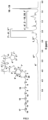
- the monomer was prepared by reacting the ⁇ -tocopherol molecule with methacryloyl chloride in the presence of triethylamine. Dichloromethane was used as a solvent. The reaction diagram is shown in Figure 1 .
- the ⁇ -tocopherol molecule (1 equivalent) and triethylamine (1.5 equivalents) in 150 ml of dichloromethane were introduced in a round-bottom flask.
- the methacryloyl chloride (1.2 equivalents) was added slowly, dropwise, with constant stirring under nitrogen atmosphere and using an ice bath.
- the reaction mixture was kept for 24 hours at room temperature. After 24 hours, the reaction mixture was washed by successive extractions with 1N solutions of NaOH and HCl and the solvent was subsequently removed at reduced pressure.
- the resulting medium was redissolved in hexane and washed 3 times with the same solution of HCl used previously for the purpose of improving purification efficacy.
- the overall efficiency of the reaction was greater than 90 %.
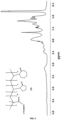
- Figure 2 shows the spectrum of the MVE with the assignation of the resonance signals verifying correct synthesis of the monomer. Signals corresponding to the vinyl protons and to the protons of group (CH 3 ) of the acrylic group can clearly be observed in the spectrum.
- Copolymers were prepared by reacting the obtained MVE monomer and N-vinylpyrrolidone (VP) as a hydrophilic monomer from a composition in the MVE:VP feed ratio (%-molar) of 15:85.
- MVE:VP feed ratio %-molar
- the copolymer was prepared by high-conversion radical polymerization.
- the reaction was carried out by dissolving the monomers in dioxane (1 M) using 2,2'-Azobisisobutyronitrile (AIBN) as initiator (1.5 ⁇ 10 -2 M).
- AIBN 2,2'-Azobisisobutyronitrile
- the prepared solution was deoxygenated by a stream of N2 (g) for 30 minutes at room temperature.
- the reaction mixture was maintained at 60 °C inside a temperature-controlled oven for 24 hours.
- the obtained product was purified by dialysis and lyophilized such that an amorphous white powder was obtained with the following parameters:
- the values of the normalized integrals of the signals characteristic of each monomer are considered. Specifically, the signals taken into account are those appearing in the range of 3 - 5 ppm corresponding to 3 protons of VP and 4 protons of MVE (CH2-13 and CH2-14) and the signal at 0.86 ppm corresponding to 12 protons of MVE (CH3-4a', CH3-8a', CH3-12a' and CH3-13'.
- the weight average molecular weights (Mw), number average molecular weights (Mn) and the polydispersity index ( ⁇ ) are obtained by size-exclusion chromatography (SEC).
- SEC size-exclusion chromatography
- the samples were eluted using three polystyrene-divinylbenzene columns (Polymer Laboratories) connected in series with a pore size of 10 3 , 10 4 and 10 5 A at 30 °C.
- Tetrahydrofuran (THF) was used as the eluent at a flow of 1 ml/min.
- Poly(methyl methacrylate) standards with a molecular weight between 10,300 and 1,400,000 Da were used for calibration.
- the monomer reactivity ratios were calculated by quantitative analysis of 1 H-NMR in situ.
- Copolymerization was carried out in NMR equipment using deuterated dioxane as a solvent at 60 °C. The reactions were performed in the resonance tube after deoxygenating with nitrogen and placing in a capillary tube with dichlorobenzene which will serve as the reference signal. Different concentrations of comonomers were studied for the purpose of covering the entire range of concentrations, with the total monomer concentration being 0.25 M.
- vitamin E methacrylate (MVE), N-vinylpyrrolidone (VP) and N- vinyl caprolactam (VC) terpolymers have been prepared with the molar compositions in the feed ratio summarized in Table 1.
- the synthesized terpolymers are characterized by 1 H-NMR and SEC to know their actual composition and molecular weight, obtaining the results compiled in Table 1.
- Non-loaded nanoparticles were prepared from the poly(MVE-co-VP) copolymers (comparative) and poly(MVE-co-VP-co-VC) terpolymers (according to the invention), synthesized by the nanoprecipitation method.
- the copolymers and terpolymers 20 (10 mg/ml) were dissolved in a water-miscible organic solvent, using dioxane in this case, although it is possible to use other solvents miscible with aqueous media such as dimethylsulfoxide, dimethylformamide, tetrahydrofuran or mixtures thereof.
- nanoparticle solutions were prepared under different conditions described in the following sections.
- the nanoparticle size distribution was determined by dynamic light scattering (DLS) using Zetasizer Nano ZS equipment (Malvern Instruments) equipped with a He-Ne laser at 633 nm and with an angle of 173°. The measurements were taken in polystyrene cuvettes at room temperature. The particle sizes obtained, as well as the polydispersity for the NPs obtained from previously synthesized copolymers and terpolymers, are compiled in Table 2. In all cases, the particle size ranges between 130 and 185 nm with low polydispersity values.
- Table 2 Hydrodynamic diameter (Dh) and polydispersity (PDI) of the nanoparticles obtained from the synthesized Poly(MVE-co-VP) copolymers and Poly(MVEco-VP-co-VC) terpolymers NP D h (nm) PDI Cop-85 136 ⁇ 6 0.14 ⁇ 0.04 Terp-83 156 ⁇ 1 0.12 ⁇ 0.02 Terp-81 171 ⁇ 1 0.14 ⁇ 0.03 Terp-85 183 ⁇ 1 0.15 ⁇ 0.02
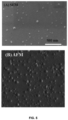
- the morphology of the nanoparticles was observed by Scanning Electron Microscopy (SEM, Philips XL 30 ESEM) and Atomic Force Microscopy (AFM) using the tapping mode. To that end, a drop of the nanoparticle suspension at a 1:50 dilution was deposited and left to dry for 24 hours on a 14 mm glass disc.
- Figure 5 includes the obtained images such that it can be seen that the particles are spherical and do not tend to aggregate.
- the viability assays were performed using human fibroblasts which were maintained and multiplied at 37 °C in an atmosphere with 5 % CO2, using as culture medium DMEM, supplemented with 10 % fetal bovine serum, 1 % of a solution of penicillin-streptomycin and 2 % L-glutamine.
- the viability assay was carried out by an AlamarBlue assay and different dilutions of the NPs in PBS, assaying concentrations between 2 and 0.06 mg/ml.
- the AlamarBlue reagent is a redox indicator that changes color in response to the chemical reduction of the culture medium that takes place as a consequence of cell growth and proliferation.
- the culture medium was changed with 50 ⁇ l of the nanoparticles solutions that were kept in contact with the cells for 24 hours under the same conditions. Once this time period ended, the content of the wells was removed and a solution of the AlamarBlue reagent was added and left to act for 3 hours. Finally, fluorescence readings were taken at 460 /630 em/ex.
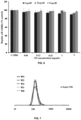
- Figure 6 shows the cell viability results for the NPs prepared from the control poly(MVE-co-VP) copolymer and the different poly(MVE-co-VP-co-VC) terpolymers. In view of the represented results, none of the NP concentrations is cytotoxic, maintaining cell viability above 90 % without significant differences with respect to the control.
- the copolymer and terpolymer nanoparticles can be loaded and used as vehicles for a wide range of bioactive compounds and medicinal products, with the sole condition that they must be insoluble or slightly soluble in aqueous media or physiological medium, whereby offering a very suitable route for the application in the human body of systems which have an absorption limit due to their scarce solubility in physiological medium.
- the application is not limited to a specific family of bioactive components or medicinal products that are difficult to administer or have a limited administration. This opens up a very appealing scenario for localized, targeted and sustained administration by any route of a wide array of possibilities, with its advantage from a therapeutic viewpoint.
- the loaded nanoparticles were prepared at a concentration of 2 mg/ml in PBS and in NaCl from a copolymer in dioxane concentration of 50 mg/ml. Additionally, a concentration of 15 % by weight with respect to the polymer of the active molecule, dexamethasone (Dx) in this case, was added.
- the method is similar to that described for the non-loaded NPs, such that the organic phase was left to drip on the aqueous (PBS or 100 mM NaCl), to finally dialyze the resulting solution for 3 days.
- EE encapsulation efficiency
- the different prepared NPs were lyophilized to eliminate the aqueous phase, obtaining a white powder with a yield of about 90 %.
- 5 mg of each formulation were dissolved in chloroform for 24 hours, to then add 2 ml of ethanol and leave stirring for 24 hours until observing precipitation of the polymer.
- the obtained samples were centrifuged at 10,000 rpm and the supernatant was analyzed by UV (NanoDrop One Thermo Scientific) at a wavelength of 239 nm corresponding to dexamethasone.
- the nanoparticle size distribution could be determined by dynamic light scattering (DLS) using Zetasizer Nano ZS equipment (Malvern Instruments) equipped with a Helium-Neon laser at 633 nm and with detection at an angle of 173°. The measurements were taken in polystyrene cuvettes at room temperature.
- DLS dynamic light scattering
- Table 3 compiles the sizes, polydispersity and EE of the particles loaded with Dx, obtained from the poly(MVE-co-VP) copolymers, poly(MVE-co-VP-co-VC) terpolymers and different mixtures of both polymer systems.
- Table 3 Hydrodynamic diameter (Dh) and polydispersity (PDI) of the nanoparticles loaded with dexamethasone obtained from synthesized Poly(MVE- co -VP) copolymers and Poly(MVE- co -VP- co -VC) terpolymers as well as different mixtures.
- NP Drug EE D h (nm) PDI Cop-85 Dexamethasone 55 140 ⁇ 7 0.10 ⁇ 0.04 Terp-83 45 154 ⁇ 1 0.13 ⁇ 0.02 Terp-81 42 180 ⁇ 2 0.19 ⁇ 0.02 Terp-85 40 154 ⁇ 1 0.10 ⁇ 0.03 Cop-85 + Terp-83 (50:50 w:w) 42 164 ⁇ 2 0.14 ⁇ 0.02 Cop-85 + Terp-83 (75:25 w:w) 48 167 ⁇ 1 0.08 ⁇ 0.01 Cop-85 + Terp-85 (50:50 w:w) 48 149 ⁇ 1 0.08 ⁇ 0.02 Cop-85 + Terp-85 (75:25 w:w) 47 172 ⁇ 1 0.21 ⁇ 0.01
- the size distribution obtained for the NPs loaded with dexamethasone from the poly(MVE-co-VP) copolymers, poly(MVE-co-VP-co-VC) terpolymers and mixtures of both polymer systems is in a range of 140 to 170 nm, with low polydispersities and unimodal size distributions.
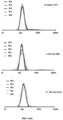
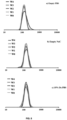
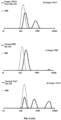
- Table 4 and Figure 7 show the size distribution obtained after 4 weeks of storage of the NPs in refrigerator (4 °C) for the different NPs. It can be observed that the results are similar for the 4 weeks of storage in addition to being similar to the original distribution sizes (week 0) for all the NP types, in a general manner. This behavior is analogous to that observed with the NPs obtained from different synthesized poly(MVE-co-VP-co-VC) terpolymers.
- control NP size distribution was measured to observe their behavior after being stored under freezing at -20 °C.
- the measurement protocol was carried out by continuous weeks of freezing (1, 2, 3 and 4 weeks), that is, 4 different samples were used, each one being thawed and thawed at different times.
- Figure 8 (a) distribution of NPs in PBS with no load, b) NaCl with no load, c) 15% dexamethasone in PBS, and d) 15 % dexamethasone in NaCl, respectively), shows the size distribution of the synthesized NPs, measured for different freezing times, as mentioned above.
- the graphs show that the obtained curves are similar to the sizes of week 0, and the overlap of the curves corresponding to each week of freezing can also be observed.
- This behavior is identical for all synthesized NP types, both for those obtained from poly(MVE-co20 VP) copolymers and poly(MVE-co-VP-co-VC) terpolymers. Therefore, it can be said that all the NPs are stable after a month of storage under the detailed conditions. Furthermore, the formation of agglomerates is not observed since there is an absence of secondary peaks in the curves.
- NPs were synthesized again incorporating a stabilizing agent, TGPS or ⁇ -tocopherol polyethylene glycol 1000-succinate (R14-M043 Sigma-Aldrich) by two different methods:
Landscapes
- Health & Medical Sciences (AREA)
- Chemical & Material Sciences (AREA)
- Medicinal Chemistry (AREA)
- Life Sciences & Earth Sciences (AREA)
- Pharmacology & Pharmacy (AREA)
- General Health & Medical Sciences (AREA)
- Veterinary Medicine (AREA)
- Public Health (AREA)
- Animal Behavior & Ethology (AREA)
- Epidemiology (AREA)
- Engineering & Computer Science (AREA)
- Bioinformatics & Cheminformatics (AREA)
- Nanotechnology (AREA)
- Organic Chemistry (AREA)
- Chemical Kinetics & Catalysis (AREA)
- Optics & Photonics (AREA)
- Biomedical Technology (AREA)
- Physics & Mathematics (AREA)
- Polymers & Plastics (AREA)
- Biophysics (AREA)
- Molecular Biology (AREA)
- Inorganic Chemistry (AREA)
- Dispersion Chemistry (AREA)
- General Chemical & Material Sciences (AREA)
- Nuclear Medicine, Radiotherapy & Molecular Imaging (AREA)
- Biotechnology (AREA)
- General Engineering & Computer Science (AREA)
- Medical Informatics (AREA)
- Crystallography & Structural Chemistry (AREA)
- Medicinal Preparation (AREA)
- Pharmaceuticals Containing Other Organic And Inorganic Compounds (AREA)
- Addition Polymer Or Copolymer, Post-Treatments, Or Chemical Modifications (AREA)
Claims (10)
- Terpolymer der Formel (I):
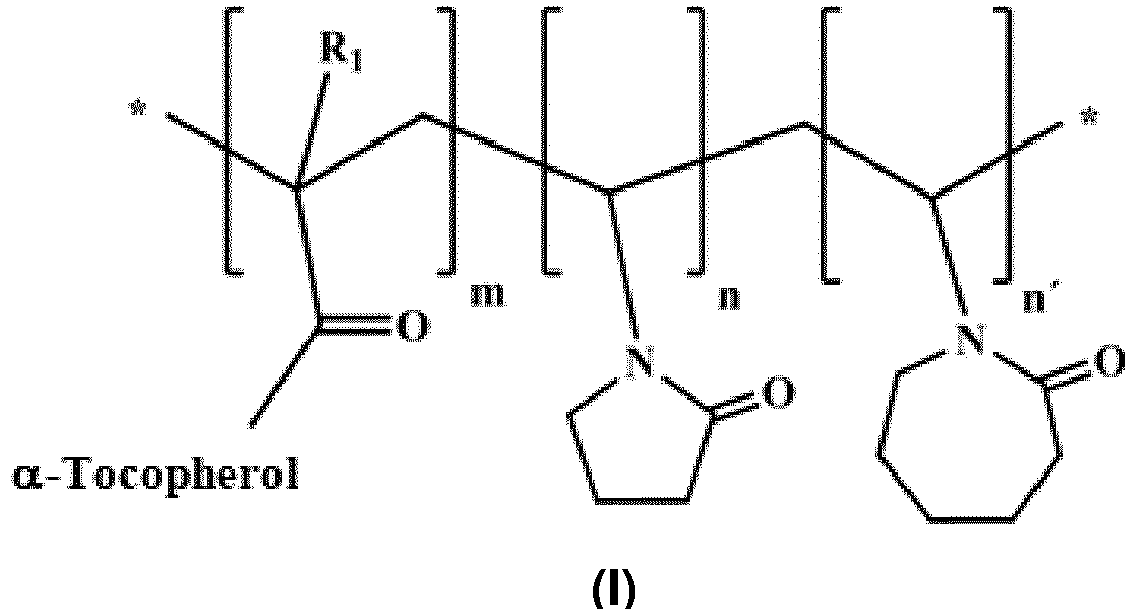 wobei R1 aus Wasserstoff und linearem oder verzweigtem C1-C4-Alkyl ausgewählt ist; m, n und n' den Stoffmengenanteil jeder der durch die Symbole [ ] gebundenen Einheiten in der endgültigen Zusammensetzung der Polymerverbindung darstellt, wobei (m+n+n') = 1 und m, n und n' ungleich Null sind,und * als die aufeinanderfolgende Wiederholung der genannten Einheiten verstanden wird.
 - Terpolymer der Formel (II):

- Terpolymer gemäß einem der vorhergehenden Ansprüche, wobei m einen Wert von 0,15 hat.
- Multimizellen-Nanopartikel, umfassend das Terpolymer nach einem der Ansprüche 1 bis 3.
- Multimizellen-Nanopartikel gemäß Anspruch 4, wobei das Terpolymer die Verbindung der Formel (I) ist.
- Multimizellen-Nanopartikel gemäß Anspruch 4, wobei das Terpolymer die Verbindung der Formel (II) ist.
- Multimizellen-Nanopartikel gemäß Anspruch 4, ferner umfassend eine bioaktive Verbindung.
- Multimizellen-Nanopartikel gemäß Anspruch 7, wobei die bioaktive Verbindung aus der folgenden Gruppe ausgewählt ist: Methylprednisolon, Dexamethason, Cortison, Ibuprofen, Naproxen, Flurbiprofen, Ketoprofen, Vitamin C, Polyphenolen, Carnosolsäure, Astaxanthin, Vitamin B1, Vitamin B6, Vitamin B12, β-Carotin-Derivate, Lutein, Allantoin, Vitamin A, Folsäure, Vancomycin, Rifampicin, Linezolid, quartären Ammoniumsalzen, Chlorhexidin.
- System zur kontrollierten Freisetzung bioaktiver Verbindungen, umfassend den Multimizellen-Nanopartikel gemäß einem der Ansprüche 4 bis 8.
- Pharmazeutische Zusammensetzung, umfassend das System zur kontrollierten Freisetzung nach Anspruch 9.
Applications Claiming Priority (1)
| Application Number | Priority Date | Filing Date | Title |
|---|---|---|---|
| ES201830594A ES2735638B2 (es) | 2018-06-18 | 2018-06-18 | Copolimeros y terpolimeros acrilicos funcionales autoasociados y su uso como vehiculos de compuestos bioactivos |
Publications (3)
| Publication Number | Publication Date |
|---|---|
| EP3583939A1 EP3583939A1 (de) | 2019-12-25 |
| EP3583939C0 EP3583939C0 (de) | 2023-08-09 |
| EP3583939B1 true EP3583939B1 (de) | 2023-08-09 |
Family
ID=67145754
Family Applications (1)
| Application Number | Title | Priority Date | Filing Date |
|---|---|---|---|
| EP19382505.6A Active EP3583939B1 (de) | 2018-06-18 | 2019-06-18 | Autoassoziative acrylfunktionelle copolymerisate und terpolymere und ihre verwendung als träger von bioaktiven verbindungen |
Country Status (2)
| Country | Link |
|---|---|
| EP (1) | EP3583939B1 (de) |
| ES (2) | ES2735638B2 (de) |
Families Citing this family (2)
| Publication number | Priority date | Publication date | Assignee | Title |
|---|---|---|---|---|
| EP3884963A1 (de) * | 2020-03-26 | 2021-09-29 | Consejo Superior de Investigaciones Científicas (CSIC) | Nanopartikel auf naproxen/dexamethason-basis |
| CN116355344B (zh) * | 2023-04-14 | 2024-03-12 | 山东农业大学 | 一种可温度响应的智能控释肥及其制备方法 |
Family Cites Families (3)
| Publication number | Priority date | Publication date | Assignee | Title |
|---|---|---|---|---|
| FR2952936B1 (fr) * | 2009-11-26 | 2011-11-25 | Flamel Tech | Polymere de type acrylique ou methacrylique comprenant des greffons alpha-tocopherol |
| ES2433248B1 (es) * | 2012-05-07 | 2015-03-10 | Consejo Superior Investigacion | Copolimeros anfifilicos portadores de alfa-tocoferol con propiedades antitumorales |
| WO2016187327A1 (en) * | 2015-05-18 | 2016-11-24 | Mendenhall Juana | Injectable therapeutic biocompatible co-polymers and methods of making and using same |
-
2018
- 2018-06-18 ES ES201830594A patent/ES2735638B2/es active Active
-
2019
- 2019-06-18 EP EP19382505.6A patent/EP3583939B1/de active Active
- 2019-06-18 ES ES19382505T patent/ES2958861T3/es active Active
Also Published As
| Publication number | Publication date |
|---|---|
| ES2958861T3 (es) | 2024-02-15 |
| ES2735638B2 (es) | 2021-01-18 |
| EP3583939C0 (de) | 2023-08-09 |
| EP3583939A1 (de) | 2019-12-25 |
| ES2735638A1 (es) | 2019-12-19 |
Similar Documents
| Publication | Publication Date | Title |
|---|---|---|
| Xiong et al. | Stimuli-responsive shell cross-linked micelles from amphiphilic four-arm star copolymers as potential nanocarriers for “pH/redox-triggered” anticancer drug release | |
| Luxenhofer et al. | Doubly amphiphilic poly (2-oxazoline) s as high-capacity delivery systems for hydrophobic drugs | |
| Wang et al. | Self-assembled polypeptide-block-poly (vinylpyrrolidone) as prospective drug-delivery systems | |
| Inoue et al. | An AB block copolymer of oligo (methyl methacrylate) and poly (acrylic acid) for micellar delivery of hydrophobic drugs | |
| Liao et al. | A bio-responsive 6-mercaptopurine/doxorubicin based “Click Chemistry” polymeric prodrug for cancer therapy | |
| EP1971622B1 (de) | Biokompatibles, nicht biologisch abbaubares, nichttoxisches polymer, das zur verwendung für pharmazeutische nanopartikelzusammensetzungen geeignet ist | |
| RU2523714C2 (ru) | Полимерные системы доставки действующих веществ | |
| Hu et al. | Smart pH-responsive polymeric micelles for programmed oral delivery of insulin | |
| Sun et al. | Novel reduction-sensitive micelles for triggered intracellular drug release | |
| San Miguel et al. | Biodegradable and thermoresponsive micelles of triblock copolymers based on 2-(N, N-dimethylamino) ethyl methacrylate and ε-caprolactone for controlled drug delivery | |
| Bury et al. | Novel self-assembly graft copolymers as carriers for anti-inflammatory drug delivery | |
| Qu et al. | Preparation and characterization of thermo-responsive amphiphilic triblock copolymer and its self-assembled micelle for controlled drug release | |
| Mishra et al. | Control drug release behavior by highly stable and pH sensitive poly (N-vinylpyrrolidone)-block-poly (4-vinylpyridine) copolymer micelles | |
| Veeren et al. | Polyvinylpyrrolidone–polycaprolactone block copolymer micelles as nanocarriers of anti-TB drugs | |
| Luo et al. | Preparation and drug controlled-release of polyion complex micelles as drug delivery systems | |
| Pinyakit et al. | Sequential post-polymerization modification of a pentafluorophenyl ester-containing homopolymer: a convenient route to effective pH-responsive nanocarriers for anticancer drugs | |
| Asadi et al. | Dual responsive nanogels for intracellular doxorubicin delivery | |
| Li et al. | Reduction-responsive shell cross-linked micelles derived from amphiphilic triblock copolymer as anticancer drug delivery carrier | |
| Chen et al. | PDEAEMA-based pH-sensitive amphiphilic pentablock copolymers for controlled anticancer drug delivery | |
| EP3583939B1 (de) | Autoassoziative acrylfunktionelle copolymerisate und terpolymere und ihre verwendung als träger von bioaktiven verbindungen | |
| Razmimanesh et al. | Investigation of temperature-responsive tocosomal nanocarriers as the efficient and robust drug delivery system for sunitinib malate anti-cancer drug: effects of MW and chain length of PNIPAAm on LCST and dissolution rate | |
| Nunvářová et al. | Synthesis of amphiphilic copolymers based on dendritic polyethylene grafted by polyhydroxyethylmethacrylate and polyhydroxypropylmethacrylate and their use for construction of nanoparticles | |
| Xiong et al. | Hydrazone cross-linked micelles based on redox degradable block copolymer for enhanced stability and controlled drug release | |
| Cai et al. | Temperature/pH/reduction-sensitive multiple stimulus-responsive nanogels synthesized by one-pot method for design as curcumin carriers | |
| Wang et al. | Glucose-functionalized multidrug-conjugating nanoparticles based on amphiphilic terpolymer with enhanced anti-tumorous cell cytotoxicity |
Legal Events
| Date | Code | Title | Description |
|---|---|---|---|
| PUAI | Public reference made under article 153(3) epc to a published international application that has entered the european phase |
Free format text: ORIGINAL CODE: 0009012 |
|
| STAA | Information on the status of an ep patent application or granted ep patent |
Free format text: STATUS: THE APPLICATION HAS BEEN PUBLISHED |
|
| AK | Designated contracting states |
Kind code of ref document: A1 Designated state(s): AL AT BE BG CH CY CZ DE DK EE ES FI FR GB GR HR HU IE IS IT LI LT LU LV MC MK MT NL NO PL PT RO RS SE SI SK SM TR |
|
| AX | Request for extension of the european patent |
Extension state: BA ME |
|
| STAA | Information on the status of an ep patent application or granted ep patent |
Free format text: STATUS: REQUEST FOR EXAMINATION WAS MADE |
|
| 17P | Request for examination filed |
Effective date: 20200624 |
|
| RBV | Designated contracting states (corrected) |
Designated state(s): AL AT BE BG CH CY CZ DE DK EE ES FI FR GB GR HR HU IE IS IT LI LT LU LV MC MK MT NL NO PL PT RO RS SE SI SK SM TR |
|
| STAA | Information on the status of an ep patent application or granted ep patent |
Free format text: STATUS: EXAMINATION IS IN PROGRESS |
|
| 17Q | First examination report despatched |
Effective date: 20220621 |
|
| GRAP | Despatch of communication of intention to grant a patent |
Free format text: ORIGINAL CODE: EPIDOSNIGR1 |
|
| STAA | Information on the status of an ep patent application or granted ep patent |
Free format text: STATUS: GRANT OF PATENT IS INTENDED |
|
| INTG | Intention to grant announced |
Effective date: 20230313 |
|
| GRAS | Grant fee paid |
Free format text: ORIGINAL CODE: EPIDOSNIGR3 |
|
| GRAA | (expected) grant |
Free format text: ORIGINAL CODE: 0009210 |
|
| STAA | Information on the status of an ep patent application or granted ep patent |
Free format text: STATUS: THE PATENT HAS BEEN GRANTED |
|
| AK | Designated contracting states |
Kind code of ref document: B1 Designated state(s): AL AT BE BG CH CY CZ DE DK EE ES FI FR GB GR HR HU IE IS IT LI LT LU LV MC MK MT NL NO PL PT RO RS SE SI SK SM TR |
|
| REG | Reference to a national code |
Ref country code: GB Ref legal event code: FG4D |
|
| REG | Reference to a national code |
Ref country code: CH Ref legal event code: EP |
|
| REG | Reference to a national code |
Ref country code: DE Ref legal event code: R096 Ref document number: 602019034501 Country of ref document: DE |
|
| REG | Reference to a national code |
Ref country code: IE Ref legal event code: FG4D |
|
| U01 | Request for unitary effect filed |
Effective date: 20230816 |
|
| U07 | Unitary effect registered |
Designated state(s): AT BE BG DE DK EE FI FR IT LT LU LV MT NL PT SE SI Effective date: 20230829 |
|
| PG25 | Lapsed in a contracting state [announced via postgrant information from national office to epo] |
Ref country code: GR Free format text: LAPSE BECAUSE OF FAILURE TO SUBMIT A TRANSLATION OF THE DESCRIPTION OR TO PAY THE FEE WITHIN THE PRESCRIBED TIME-LIMIT Effective date: 20231110 |
|
| PG25 | Lapsed in a contracting state [announced via postgrant information from national office to epo] |
Ref country code: IS Free format text: LAPSE BECAUSE OF FAILURE TO SUBMIT A TRANSLATION OF THE DESCRIPTION OR TO PAY THE FEE WITHIN THE PRESCRIBED TIME-LIMIT Effective date: 20231209 |
|
| PG25 | Lapsed in a contracting state [announced via postgrant information from national office to epo] |
Ref country code: RS Free format text: LAPSE BECAUSE OF FAILURE TO SUBMIT A TRANSLATION OF THE DESCRIPTION OR TO PAY THE FEE WITHIN THE PRESCRIBED TIME-LIMIT Effective date: 20230809 Ref country code: NO Free format text: LAPSE BECAUSE OF FAILURE TO SUBMIT A TRANSLATION OF THE DESCRIPTION OR TO PAY THE FEE WITHIN THE PRESCRIBED TIME-LIMIT Effective date: 20231109 Ref country code: IS Free format text: LAPSE BECAUSE OF FAILURE TO SUBMIT A TRANSLATION OF THE DESCRIPTION OR TO PAY THE FEE WITHIN THE PRESCRIBED TIME-LIMIT Effective date: 20231209 Ref country code: HR Free format text: LAPSE BECAUSE OF FAILURE TO SUBMIT A TRANSLATION OF THE DESCRIPTION OR TO PAY THE FEE WITHIN THE PRESCRIBED TIME-LIMIT Effective date: 20230809 Ref country code: GR Free format text: LAPSE BECAUSE OF FAILURE TO SUBMIT A TRANSLATION OF THE DESCRIPTION OR TO PAY THE FEE WITHIN THE PRESCRIBED TIME-LIMIT Effective date: 20231110 |
|
| REG | Reference to a national code |
Ref country code: ES Ref legal event code: FG2A Ref document number: 2958861 Country of ref document: ES Kind code of ref document: T3 Effective date: 20240215 |
|
| PG25 | Lapsed in a contracting state [announced via postgrant information from national office to epo] |
Ref country code: PL Free format text: LAPSE BECAUSE OF FAILURE TO SUBMIT A TRANSLATION OF THE DESCRIPTION OR TO PAY THE FEE WITHIN THE PRESCRIBED TIME-LIMIT Effective date: 20230809 |
|
| PG25 | Lapsed in a contracting state [announced via postgrant information from national office to epo] |
Ref country code: SM Free format text: LAPSE BECAUSE OF FAILURE TO SUBMIT A TRANSLATION OF THE DESCRIPTION OR TO PAY THE FEE WITHIN THE PRESCRIBED TIME-LIMIT Effective date: 20230809 Ref country code: RO Free format text: LAPSE BECAUSE OF FAILURE TO SUBMIT A TRANSLATION OF THE DESCRIPTION OR TO PAY THE FEE WITHIN THE PRESCRIBED TIME-LIMIT Effective date: 20230809 Ref country code: CZ Free format text: LAPSE BECAUSE OF FAILURE TO SUBMIT A TRANSLATION OF THE DESCRIPTION OR TO PAY THE FEE WITHIN THE PRESCRIBED TIME-LIMIT Effective date: 20230809 Ref country code: SK Free format text: LAPSE BECAUSE OF FAILURE TO SUBMIT A TRANSLATION OF THE DESCRIPTION OR TO PAY THE FEE WITHIN THE PRESCRIBED TIME-LIMIT Effective date: 20230809 |
|
| REG | Reference to a national code |
Ref country code: DE Ref legal event code: R097 Ref document number: 602019034501 Country of ref document: DE |
|
| PLBE | No opposition filed within time limit |
Free format text: ORIGINAL CODE: 0009261 |
|
| STAA | Information on the status of an ep patent application or granted ep patent |
Free format text: STATUS: NO OPPOSITION FILED WITHIN TIME LIMIT |
|
| 26N | No opposition filed |
Effective date: 20240513 |
|
| U20 | Renewal fee for the european patent with unitary effect paid |
Year of fee payment: 6 Effective date: 20240628 |
|
| PG25 | Lapsed in a contracting state [announced via postgrant information from national office to epo] |
Ref country code: MC Free format text: LAPSE BECAUSE OF FAILURE TO SUBMIT A TRANSLATION OF THE DESCRIPTION OR TO PAY THE FEE WITHIN THE PRESCRIBED TIME-LIMIT Effective date: 20230809 |
|
| REG | Reference to a national code |
Ref country code: CH Ref legal event code: PL |
|
| PG25 | Lapsed in a contracting state [announced via postgrant information from national office to epo] |
Ref country code: IE Free format text: LAPSE BECAUSE OF NON-PAYMENT OF DUE FEES Effective date: 20240618 |
|
| PG25 | Lapsed in a contracting state [announced via postgrant information from national office to epo] |
Ref country code: CH Free format text: LAPSE BECAUSE OF NON-PAYMENT OF DUE FEES Effective date: 20240630 |
|
| PGFP | Annual fee paid to national office [announced via postgrant information from national office to epo] |
Ref country code: GB Payment date: 20250627 Year of fee payment: 7 |
|
| U20 | Renewal fee for the european patent with unitary effect paid |
Year of fee payment: 7 Effective date: 20250624 |
|
| PGFP | Annual fee paid to national office [announced via postgrant information from national office to epo] |
Ref country code: ES Payment date: 20250702 Year of fee payment: 7 |
|
| PG25 | Lapsed in a contracting state [announced via postgrant information from national office to epo] |
Ref country code: CY Free format text: LAPSE BECAUSE OF FAILURE TO SUBMIT A TRANSLATION OF THE DESCRIPTION OR TO PAY THE FEE WITHIN THE PRESCRIBED TIME-LIMIT; INVALID AB INITIO Effective date: 20190618 |
|
| PG25 | Lapsed in a contracting state [announced via postgrant information from national office to epo] |
Ref country code: HU Free format text: LAPSE BECAUSE OF FAILURE TO SUBMIT A TRANSLATION OF THE DESCRIPTION OR TO PAY THE FEE WITHIN THE PRESCRIBED TIME-LIMIT; INVALID AB INITIO Effective date: 20190618 |