EP3577484B1 - Netzwerkknoten, verfahren darin, computerprogramm und computerlesbares speichermedium zur verwaltung der positionierung der drahtlosen vorrichtung - Google Patents
Netzwerkknoten, verfahren darin, computerprogramm und computerlesbares speichermedium zur verwaltung der positionierung der drahtlosen vorrichtung Download PDFInfo
- Publication number
- EP3577484B1 EP3577484B1 EP18703652.0A EP18703652A EP3577484B1 EP 3577484 B1 EP3577484 B1 EP 3577484B1 EP 18703652 A EP18703652 A EP 18703652A EP 3577484 B1 EP3577484 B1 EP 3577484B1
- Authority
- EP
- European Patent Office
- Prior art keywords
- prs
- wireless device
- network node
- positioning
- configurations
- Prior art date
- Legal status (The legal status is an assumption and is not a legal conclusion. Google has not performed a legal analysis and makes no representation as to the accuracy of the status listed.)
- Active
Links
Images









Classifications
-
- H—ELECTRICITY
- H04—ELECTRIC COMMUNICATION TECHNIQUE
- H04W—WIRELESS COMMUNICATION NETWORKS
- H04W64/00—Locating users or terminals or network equipment for network management purposes, e.g. mobility management
-
- G—PHYSICS
- G01—MEASURING; TESTING
- G01S—RADIO DIRECTION-FINDING; RADIO NAVIGATION; DETERMINING DISTANCE OR VELOCITY BY USE OF RADIO WAVES; LOCATING OR PRESENCE-DETECTING BY USE OF THE REFLECTION OR RERADIATION OF RADIO WAVES; ANALOGOUS ARRANGEMENTS USING OTHER WAVES
- G01S5/00—Position-fixing by co-ordinating two or more direction or position line determinations; Position-fixing by co-ordinating two or more distance determinations
- G01S5/02—Position-fixing by co-ordinating two or more direction or position line determinations; Position-fixing by co-ordinating two or more distance determinations using radio waves
- G01S5/0205—Details
- G01S5/0236—Assistance data, e.g. base station almanac
Definitions
- Embodiments herein relate to a network node, a method performed therein, a computer program and a computer-readable storage medium.
- embodiments herein relate to managing positioning of the wireless device in a wireless communications network.
- wireless devices also known as wireless communication devices, mobile stations, stations (STA) and/or user equipments (UE), communicate via a Radio Access Network (RAN) to one or more core networks (CN).
- the RAN covers a geographical area and provide radio coverage over service areas also referred to as cells, or cell areas, which may also be referred to as a beam or a beam group, with each service area or beam group being served or controlled by a radio network node such as a radio access node e.g., a Wi-Fi access point or a radio base station (RBS), which in some networks may also be denoted, for example, a gNodeB, a NodeB or eNodeB.
- the radio network node communicates over an air interface operating on radio frequencies with the wireless device within range of the radio network node.
- a Universal Mobile Telecommunications network is a third generation (3G) telecommunications network, which evolved from the second generation (2G) Global System for Mobile Communications (GSM).
- the UMTS terrestrial radio access network (UTRAN) is essentially a RAN using wideband code division multiple access (WCDMA) and/or High Speed Packet Access (HSPA) for user equipments.
- WCDMA wideband code division multiple access
- HSPA High Speed Packet Access
- 3GPP Third Generation Partnership Project
- telecommunications suppliers propose and agree upon standards for e.g. third generation networks, and investigate enhanced data rate and radio capacity.
- 3GPP Third Generation Partnership Project
- radio network nodes may be connected, e.g., by landlines or microwave, to a controller node, such as a radio network controller (RNC) or a base station controller (BSC), which supervises and coordinates various activities of the plural radio network nodes connected thereto.
- RNC radio network controller
- BSC base station controller
- This type of connection is sometimes referred to as a backhaul connection.
- the RNCs and BSCs are typically connected to one or more core networks.
- the Evolved Packet System also called a Fourth Generation (4G) network
- EPS comprises the Evolved Universal Terrestrial Radio Access Network (E-UTRAN), also known as the Long Term Evolution (LTE) radio access network
- EPC Evolved Packet Core
- SAE System Architecture Evolution
- E-UTRAN/LTE is a variant of a 3GPP radio access network wherein the radio network nodes are directly connected to the EPC core network rather than to RNCs.
- the functions of an RNC are distributed between the radio network nodes, e.g. eNodeBs in LTE, and the core network.
- the RAN of an EPS has an essentially "flat" architecture comprising radio network nodes connected directly to one or more core networks, i.e. they are not connected to RNCs.
- the E-UTRAN specification defines a direct interface between the radio network nodes, this interface being denoted the X2 interface.
- the Internet of Things is a vision for the future world where everything that can benefit from a connection will be connected.
- Cellular technologies are being developed or evolved to play an indispensable role in the loT world, particularly e.g. machine type communications (MTC).
- MTC is characterized by lower demands on data rates than for example mobile broadband, but with higher requirements on e.g. low cost device design, better coverage, and ability to operate for years on batteries without having to charge or replace the batteries.
- MTC machine type communications
- 3GPP has standardized Narrowband loT (NB-loT) in Release 13 that has a system bandwidth of 180 kHz and targets improved coverage, long battery life, low complexity communication design, and with a network capacity that is sufficient for supporting a massive number of devices.
- NB-loT Narrowband loT
- Wireless device category M1 is associated with a maximum channel bandwidth of 6 Physical Resource Blocks (PRB), corresponding to 1.08 MHz excluding guard bands or 1.4 MHz including guard bands, which can be compared to 1 PRB for NB-loT wireless devices or 100 PRBs for LTE wireless device of higher categories.
- PRB Physical Resource Blocks
- 3GPP has initiated an LTE Release 14 work item on "Further enhanced MTC" (FeMTC) where a wireless device type based on wireless device category M1 with a maximum channel bandwidth of approximately 25 PRBs, corresponding to 4.5 MHz excluding guard bands and 5 MHz including guard bands, will be specified in order to address even more demanding applications.
- FeMTC Frether enhanced MTC
- OTDOA Observed Time Difference of Arrival
- Both NB-loT and FeMTC are candidates to provide loT services in an unlicensed spectrum.
- the technologies need to be adapted to cater for operation in accordance with national or regional regulations.
- Such regulations may e.g. limit the downlink transmission time and capacity through the introduction of duty cycle requirements.
- ETSI European Telecommunications Standards Institute
- the European Telecommunications Standards Institute is e.g. mandating a 10% duty cycle for all transmitters operating in unlicensed sub-GHz frequency bands.
- Positioning support in Third Generation Partnership Project Long Term Evolution (3GPP LTE) was introduced in Release 9. This enables operators to retrieve positioning information for location-based services and to meet regulatory emergency call positioning requirements.
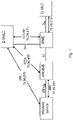
- Positioning in LTE is supported by the architecture shown in Fig. 1 , with direct interactions between a wireless device and a location server, also referred to as a location node, e.g. an Evolved Serving Mobile Location Center (E-SMLC) using an LTE Positioning Protocol (LPP). Moreover, there are also interactions between the location node and a radio network node such as an eNodeB (eNB) via LPP annex (LPPa) protocol, and to some extent also interactions between the eNB and the wireless device via the Radio Resource Control (RRC) protocol. Positioning requests may come from a wireless device, a Mobility Management Entity (MME) or a Gateway Mobile Location Centre (GMLC).
- MME Mobility Management Entity
- GMLC Gateway Mobile Location Centre
- OTDOA has been introduced in 3GPP release 9 as a downlink (DL) positioning method.
- OTDOA in LTE is based on the wireless device measuring the time of arrival (TOA) of signals received from e.g. three radio network nodes.
- the wireless device measures the relative difference between a reference cell and another specific cell, which relative difference measurement is denoted as reference signal time difference (RSTD) measurement. Every such RSTD determines a hyperbola and the interception point of these hyperbolas may be considered as the position of the wireless device.
- the reference cell is selected by the wireless device and the RSTD measurement can be performed on intra-frequency cells, i.e.
- the positioning may be estimated at the location node, which may also provide, to the wireless device, assistance data for positioning the wireless device.
- OTDOA may be a supported method for wireless devices for further enhancements for enhanced machine type communication (FeMTC) also referred to as Coverage Enhancement (CE) devices, and also for wireless devices of Narrowband Internet on Things (NB-loT).
- FeMTC enhanced machine type communication
- CE Coverage Enhancement
- NB-loT Narrowband Internet on Things
- WO 2016/122761 A1 which has been cited by the European Patent Office, describes devices and methods to improve horizontal and vertical positioning accuracy.
- a user equipment (UE), an enhanced NodeB (eNB) and a method of improving positioning accuracy and enabling vertical domain positioning of the UE are generally described in this PCT patent application publication.
- the UE may receive a prslnfo control signal having at least one PRS configuration and subsequently a plurality of Reference Signals (RSs).
- the RSs may have a first Positioning Reference Signal (PRS) pattern in a first set of PRS subframes and a second PRS pattern in a second set of PRS subframes received prior to a subsequent first set of PRS subframes.
- PRS Positioning Reference Signal
- the RSs may have a vertical positioning RS and a lateral positioning RS.
- the UE may measure PRS resource elements (REs), each having a PRS, in the first and second PRS pattern.
- the UE may transmit a measurement of the PRS in the first and second PRS pattern.
- the patterns may enable horizontal and vertical positioning to be determined.
- Wireless devices may possibly support multiple Positioning Reference Signal (PRS) configurations per cell.
- PRS Positioning Reference Signal
- a network node such as an e-SMLC, can enable more advanced processing of PRS signals by the wireless devices.
- An object herein is to provide a mechanism that manages positioning of a wireless device in a wireless communications network in an efficient manner.
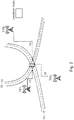
- Fig. 3 is a schematic overview depicting a wireless communications network 1.
- the wireless communications network 1 comprises one or more RANs and one or more CNs.
- the wireless communications network 1 may use one or a number of different technologies, such as Wi-Fi, Long Term Evolution (LTE), LTE-Advanced, 5G, Wideband Code Division Multiple Access (WCDMA), Global System for Mobile communications/enhanced Data rate for GSM Evolution (GSM/EDGE), Worldwide Interoperability for Microwave Access (WiMax), or Ultra Mobile Broadband (UMB), just to mention a few possible implementations.
- LTE Long Term Evolution
- LTE-Advanced 5G
- WCDMA Wideband Code Division Multiple Access
- GSM/EDGE Global System for Mobile communications/enhanced Data rate for GSM Evolution
- WiMax Worldwide Interoperability for Microwave Access
- UMB Ultra Mobile Broadband
- Embodiments herein relate to recent technology trends that are of particular interest in an Internet of Things (loT) or MTC context, however, embodiments are also applicable in further development of the existing wireless communications networks such as e.g. WCDMA and LTE, but also future wireless communications networks such as 5G e.g. New radio (NR).
- LoT Internet of Things
- NR New radio
- a wireless device 10 such as a mobile station, a non-access point (non-AP) STA, a station (STA), a user equipment and/or a wireless terminal, may communicate via one or more Access Networks (AN), e.g. a RAN, to one or more core networks (CN).
- AN Access Networks
- CN core networks
- wireless device is a non-limiting term which means any terminal, wireless communications terminal, user equipment, loT device, Machine Type Communication (MTC) device, Device to Device (D2D) terminal, or node e.g. smart phone, laptop, mobile phone, sensor, relay, mobile tablets or even a small base station communicating within a cell.
- MTC Machine Type Communication
- D2D Device to Device
- the wireless communications network 1 comprises a radio network node 12 providing radio coverage over a geographical area referred to as service area 11 or cell, which may be provided by one or more beams or a beam group where the group of beams is covering the service area of a first radio access technology (RAT), such as NR, 5G, LTE, Wi-Fi or similar.
- the radio network node 12 may be a transmission and reception point e.g. a radio-access network node such as a Wireless Local Area Network (WLAN) access point or Access Point Station (AP STA), an access controller, a base station e.g.
- WLAN Wireless Local Area Network
- AP STA Access Point Station
- a radio base station such as a gNodeB, NodeB, an evolved Node B (eNB, eNode B), a base transceiver station, a radio remote unit, an Access Point Base Station, a base station router, a transmission arrangement of a radio base station, a stand-alone access point or any other network unit capable of communicating with a wireless device within the service area served by the radio network node depending e.g. on the radio access technology and terminology used.
- the radio network node 12 may be referred to as a serving radio network node and communicates with the wireless device 10 with Downlink (DL) transmissions to the wireless device 10 and Uplink (UL) transmissions from the wireless device 10.
- DL Downlink
- UL Uplink
- the wireless communications network 1 may comprise a number of network nodes or core network nodes.
- the wireless communications network 1 may comprise a controlling network node 13 such as a Mobility Management Entity (MME), a Serving General Packet Radio Service (GPRS) Support Node (SGSN), an Access and Mobility Management Function (AMF) node, a server keeping track of wireless devices, or similar.
- the controlling network node 13 controls or manages wireless devices in service areas in the wireless communications network 1.
- the wireless communications network 1 may further comprise a location node 15, such as an e-SMLC or a location management function (LMF) node, for positioning wireless devices or assisting in positioning wireless devices in the wireless communications network.
- a location node 15 such as an e-SMLC or a location management function (LMF) node
- the wireless communications network 1 may in addition comprise another network node 16 such as a an Operation and Maintenance (OAM) node, a gateway, a location controlling node, a Gateway Mobile Location Centre (GMLC) configured to retrieve location or position of wireless devices in wireless communications network 1.
- OAM Operation and Maintenance
- GMLC Gateway Mobile Location Centre
- the location node 15, the radio network node 12 and the other network node 16 are all examples of network nodes and are commonly denoted network nodes.
- the wireless devices 10 may, either on demand or initiated from the wireless device side, send information, also referred to as capability information, about a support for multiple PRS configurations associated to the same service area or radio network node.
- the wireless device 10 may signal to a network node information indicating whether the wireless device supports multiple PRS configurations or not.
- the different PRS configurations may be characterized by different bandwidths, different number of subframes, different number of additional PRS occasions, and/or frequency hopping or not etc.
- the PRS configuration can also be specific for some bandwidths, such as specific configuration for NB-loT devices or specific for a second access technology such as LTE.
- Figs 12a and 12b provide examples of multiple PRS configurations.
- each PRS configuration may be associated to a PRS configuration identifier.
- the PRS configuration identifier may be set for all possible PRS configurations, or specifically per type.
- the PRS configurations may be listed as identifier per PRS configuration, and in addition there may be one PRS configuration defined as for different RATs such as one for legacy LTE, and one for NB-loT.
- the wireless device 10 obtains, from a network node such as the location node 15 or the radio network node 12, assistance data, also referred to as a configuration, comprising two or more PRS configurations associated with the radio network node 12 or the service area of the radio network node 12.
- assistance data also referred to as a configuration
- the wireless device 10 indicates back to the network node a scope of usage of the two or more PRS configurations with an indication, e.g. indicating which of and/or how are the PRS configurations used.
- the network node uses the indication in a positioning related process such as estimating the position of the wireless device 10, or determining the relevance of configuring two or more PRS configurations.
- the network node may also take into account the obtained capability information from the wireless device when using the indication in the positioning related process. For example, may determine that all indications are coming from wireless devices not supporting multiple PRS configurations and thus determine to further use multiple PRS configurations for capable wireless devices.
- the network node is enabled to e.g. determine whether use of two or more PRS configurations is relevant based on one or more obtained indications about the scope of usage of the used PRS configurations. Additionally or alternatively, the network node such as the location node 15 may consider the scope of usage of the used PRS configurations when assessing measurements from wireless devices to ensure that the different measurements are weighted appropriately in the positioning estimation. This may lead to a more accurate positioning of the wireless device 10.
- Managing positioning may mean enabling positioning of the wireless device, enabling determining statistics related to a position of the wireless device, and/or enabling positioning e.g. determining PRS configurations to use.
- the actions do not have to be taken in the order stated below, but may be taken in any suitable order. Actions performed in some embodiments are marked with dashed boxes.
- the wireless device 10 may send, to the network node or another network node, information about the support for using multiple PRS configurations associated to a same service area or radio network node.
- the wireless device 10 may e.g. optionally indicate, to the network node such as the location node 15, its capabilities for supporting multiple PRS configurations.
- the information may be sent using LPP and/or RRC signalling.
- the wireless device 10 obtains, from the network node such as the location node 15 or the radio network node 12, the assistance data, also referred to as a configuration, comprising the two or more PRS configurations associated with the radio network node 12 or the service area of the radio network node 12.
- the PRS configurations of the two or more PRS configurations may be characterized by different bandwidths, different number of subframes, different number of additional PRS occasions, and/or frequency hopping or not etc.
- the wireless device may obtain the assistance data by receiving the assistance data from the network node, e.g. as an LPP or RRC message.
- the wireless device 10 may then use one or more out of the two or more PRS configuration for measurements on PRSs.
- the wireless device 10 may use the obtained configuration for measurements, e.g. PRS measurements.
- the wireless device 10 indicates, to the network node, the scope of usage of the two or more PRS configurations with the indication.
- the wireless device 10 indicates, e.g. transmits an indication, the scope of usage of the used two or more PRS configurations to the network node.
- the indication may indicate that less than all PRS configurations have been used.
- the indication may define how the PRS configurations are used at the wireless device 10.
- the indication may be an index or a real value.
- the indication may be sent in an RRC message or an LPP message.
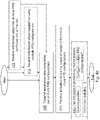
- the method actions performed by the network node 41 for handling positioning of the wireless device 10 in the wireless communications network data according to some embodiments will now be described with reference to a flowchart depicted in Fig. 4b .
- Handling positioning meaning e.g. positioning the wireless device, determining statistics related to a position of the wireless device, and/or enabling positioning e.g. determining PRS configurations to use.
- the actions do not have to be taken in the order stated below, but may be taken in any suitable order. Actions performed in some embodiments are marked with dashed boxes.
- the network node such as the location node 15 may optionally obtain, from the radio network node 12 information about multiple PRS configurations associated to a served cell.
- the network node may moreover optionally obtain, from the wireless device 10, information about supported capabilities associated to multiple PRS configurations.
- the network node transmits to the wireless device 10, assistance data comprising two of more PRS configurations associated with the radio network node 12 or with the service area of the radio network node 12.
- the radio network node 12 may send a configuration or assistance data comprising two of more PRS configurations associated to a cell or with the radio network node 12, i.e. the PRS configuration of a cell or a radio network node.
- the assistance data may be comprised in an RRC message or LPP message.
- the network node receives, from the wireless device 10 the indication indicating the scope of usage of the two of more PRS configurations.
- the indication may indicate that all PRS configurations have been used; only the first PRS configuration and/or the second PRS configuration was used for performing measurement on; or no PRS configurations have been used.
- the network node uses the indication in a positioning related process e.g. the network node may estimate the position of the wireless device 10 based on the received indication.
- the positioning related process may be a process for positioning the wireless device and the network node may estimate the position of the wireless device based on the received indication e.g. the multilateration of the RSTD measurements sent by the wireless device is taking the indication into account.
- the positioning related process may be a process for deciding whether to configure multiple PRS configurations in one or more regions. If there are not many
- the network node may determine to omit the multiple PRS configuration transmissions which cost both in money, resources and energy.
- the positioning related process may be a process for determining statistics of multiple PRS configurations. The network node compiles statistics per region based on the indication. The statistics are used from one region to decide whether to configure multiple PRS configurations in another region, or to decide to disable multiple PRS configurations if the benefits are considered less compared to the costs of transmitting multiple PRS configurations. Statistics may be in terms of number of positioning request from wireless devices with certain different bandwidth capabilities and that may suggest the benefit of having PRS configuration with those bandwidths and enabling the multiple PRS configuration feature for that particular network node.
- the network node may also make assessments about the accuracy and/or relevance of the measurements from a wireless device based on such indications. Measurements where less than all PRS configurations have been used are considered less accurate than measurements where all PRS configurations have been used.
- the indicated measurement quality from the wireless device 10 can also be assessed in a similar manner, where the relevance attributed to the quality statement is determined based on the indication from the wireless device 10 indicating the scope.
- a PRS configuration may comprise:
- the location node 15 may send an update of a new configured value for each of the parameters to the radio network node 12, and also assist the wireless device 10 with new setting parameters.
- the radio network node 12 may acknowledge the ability of changing the PRS configuration parameter setting to the location node 15 prior to any assistance data sent to the wireless device 10.
- Embodiments herein may switch between pre-configured PRS configurations through network signalling.
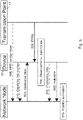
- Fig. 5 is a combined flowchart and signalling scheme according to embodiments herein.
- the radio network node 12 such as a base station and/or a transmission point, may optionally signal its configuration comprising two or more PRS configurations of a cell.
- the wireless device 10 optionally signals its capabilities to the network node, which capability indicates whether the wireless device 10 supports multiple PRS configurations or not.
- the wireless device 10 may thus send, to the network node or another network node, information about the support for using multiple PRS configurations associated to the same service area or radio network node.
- the network node sends assistance data to the wireless device 10 which assistance data comprises the two or more PRS configurations associated to the service area or the radio network node 12.
- the wireless device 10 detects PRSs from the radio network node 12 related to the obtained two or more PRS configurations.
- the wireless devices may thus monitor for PRSs using one or more of the two or more PRS configurations.
- the wireless device 10 may thus use the obtained assistance data to make measurements and prepare, also referred to as compile or create, a report comprising the measurements. Hence, the wireless device 10 may use one or more out of the two or more PRS configuration for performing measurements on PRSs.
- the wireless device 10 may optionally send positioning information comprising the measurements to the network node such as the location node 15. For example, the wireless device may then transmit the positioning information, such as measurements, to the location node 15.
- the wireless device 10 provides, to the network node, the indication indicating the scope of usage of the used two or more PRS configurations. For example, when the wireless device 10 has scanned for PRSs according to the two or more PRS configurations, it may have detected some PRSs, but not all PRSs of the PRS configurations associated with the service area. Therefore, the wireless device 10 indicates the scope of usage of the used two or more PRS configurations to the network node. In one embodiment, the scope of the used two or more PRS configurations is indicated via a list of the used PRS configurations. The list may contain PRS configurations for the same or different radio technologies, bandwidths, configurations etc.
- the scope of usage of the used PRS configuration may be indicated by an indicator informing that less than all PRS configurations has been used, or how much or which parts of the PRS configurations have been used.
- the indication may be represented as an error, with an error cause, indicating that fewer than all PRS configurations have been used.
- the indication may further be per cell, or one indication for all cells.
- the network node may exploit or use the obtained indication(s) to e.g. estimate the wireless device position.
- the network node can compile statistics about the capability information and/or the indication about the scope of usage of the used PRS configurations.
- the statistics are compiled per a region comprising a one or more radio network nodes.
- the statistics are used from one region to decide whether to configure multiple PRS configurations in another region, or to decide to disable multiple PRS configurations if the benefits are considered less compared to the costs of transmitting multiple PRS configurations.
- the network node may also make assessments about the accuracy and/or relevance of the measurements from the wireless device 10 based on such indications of scope of usage. Measurements where less than all PRS configurations have been used are considered less accurate than measurements where all PRS configurations have been used.
- the indicated measurement quality from the wireless device 10 may also be assessed in a similar manner, where the relevance attributed to the quality statement is determined based on the indication from the wireless device 10 indicating the scope.
- Embodiments herein let the wireless device 10 provide the indication of the scope of usage of the used PRS configurations in case two or more PRS configurations are defined. Thereby, the positioning estimation and/or the PRS configuration management at the network node may be refined based on the received indication of the scope of usage.
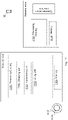
- Figure 6 provides an exemplifying embodiment of such capability indications that the wireless device can use to send capability information to the network node to indicate the support of multiple PRS configurations e.g. a supportedNoCePrsConfigs-r14 parameter.
- Figure 7 shows example of PRS configurations, where each PRS configuration is associated with an identifier, thus, illustrating an exemplifying embodiment with such identifiers for PRS configurations e.g. denoted as cePrs-Configurationlndex-r14.
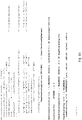
- Figures 8a-8b One exemplifying embodiment of the indication of the scope of usage of the two or more PRS configurations being a list is illustrated by Figures 8a-8b .
- Fig. 8a shows an example of signal measurement information, wherein a list of identifiers associated to used PRS configurations identifiers may be included e.g. a list denoted as usedPrsConfigListRef-r14.
- Fig. 8b shows a continued example of signal measurement information, wherein a list of identifiers associated to used PRS configurations identifiers may be included.
- the indication may be PRS configuration identifiers of used PRS configurations.
- the indication indicating the scope of usage of the two or more PRS configurations may be per cell, or one indication for all cells as in Figure 9.
- Fig. 9 shows an example wherein the indication is an OTDOA target device error cause that it was not possible to measure all PRS configurations.
- the indication may be an error cause indicating that one or more PRS configurations are not used e.g. denoted as unableToMeasureSomePrsConfigurations.
- Fig. 10 is a schematic block diagram depicting the wireless device 10 for enabling or managing positioning of the wireless device in the wireless communications network.
- the wireless device 10 may comprise a processing circuitry 1001, e.g. one or more processors, configured to perform the methods herein.
- a processing circuitry 100 e.g. one or more processors, configured to perform the methods herein.
- the wireless device 10 may comprise an indicating unit 1002.
- the wireless device 10, the processing circuitry 1001, and/or the indicating unit 1002 may be configured send information about a support for using multiple PRS configurations associated to a same service area or radio network node.
- the wireless device 10, the processing circuitry 1001, and/or the indicating unit 1002 may be configured to indicate, to the network node such as the location node 15, the controlling network node, or the other network node, its capabilities when it comes to support multiple PRS configurations.
- the wireless device 10 may comprise an obtaining unit 1003, such as a receiver or transceiver.
- the wireless device 10, the processing circuitry 1001, and/or the obtaining unit 1003 is configured to obtain from the network node assistance data comprising two or more PRS configurations associated with the radio network node 12 or the service area of the radio network node 12.
- the network node assistance data comprising two or more PRS configurations associated with the radio network node 12 or the service area of the radio network node 12.
- the PRS configurations of the two or more PRS configurations may be characterized by different bandwidths, different number of subframes, different number of additional PRS occasions, and/or frequency hopping or not etc.
- the wireless device may comprise a measuring unit 1004.
- the wireless device 10, the processing circuitry 1001, and/or the measuring unit 1004 may be configured to use one or more out of the two or more PRS configuration for measurements on PRSs.
- the wireless device 10, the processing circuitry 1001, and/or the measuring unit 1004 may be configured to, based on the assistance data, measure positioning information e.g. performs RSTD measurements on PRSs as indicated by the two or more PRS configurations.
- the wireless device 10, the processing circuitry 801, and/or the measuring unit 1004 may be configured to use the obtained configuration for measurements, e.g. PRS measurements.
- the wireless device may comprise a transmitting unit 1005, a transmitter or a transceiver.
- the wireless device 10, the processing circuitry 1001, and/or the transmitting unit 1005 are configured to indicate to the network node the scope of usage of the two or more PRS configurations with the indication.
- E.g. configured to transmit, to the network node, an indication indicating the scope of usage of the used two or more PRS configurations.
- the indication may indicate that less than all PRS configurations have been used.
- the indication may define how the PRS configurations are used at the wireless device 10.
- the indication may be an index or a real value.
- the wireless device 10 further comprises a memory 1006 comprising one or more memory units.
- the memory 1006 comprises instructions executable by the processing circuitry 1001 to perform the methods herein when being executed in the wireless device 10.
- the memory 1006 is arranged to be used to store e.g. information, data such as PRS configurations, scope of usage, measurements, PRS information, etc.
- the wireless device 10 may further comprise a communication interface such as transmitter, receiver, transceiver and/or one or more antennas.
- the methods according to the embodiments described herein for the wireless device 10 are respectively implemented by means of e.g. a computer program 1007 or a computer program product, comprising instructions, i.e., software code portions, which, when executed on at least one processor, cause the at least one processor to carry out the actions described herein, as performed by the wireless device 10.
- the computer program 1007 may be stored on a computer-readable storage medium 1008, e.g. a disc or similar.
- the computer-readable storage medium 1008, having stored thereon the computer program may comprise the instructions which, when executed on at least one processor, cause the at least one processor to carry out the actions described herein, as performed by the wireless device 10.
- the computer-readable storage medium may be a non-transitory computer-readable storage medium.
- Fig. 11 is a schematic block diagram depicting the network node such as the location node 15, the radio network node 12 or the other network node 16, for handling positioning of the wireless device in the wireless communications network.
- the network node may comprise a processing circuitry 1101, e.g. one or more processors, configured to perform the methods herein.
- a processing circuitry 1101 e.g. one or more processors, configured to perform the methods herein.
- the network node may comprise an obtaining unit 1102, e.g. a receiver or a transceiver.
- the network node, the processing circuitry 1101, and/or the obtaining unit 1102 may be configured to obtain, from the radio network node 12 information about multiple PRS configurations associated to a served cell.
- the network node, the processing circuitry 1101, and/or the obtaining unit 1102 may be configured to obtain e.g. receive, from the wireless device, information about supported capabilities associated to multiple PRS configurations.
- the network node may comprise a transmitting unit 1103, e.g. a transmitter or transceiver.
- the network node, the processing circuitry 1101, and/or the transmitting unit 1103 is configured to transmit, to the wireless device 10, assistance data comprising two of more PRS configurations associated with the radio network node 12 or with the service area of the radio network node 12.
- the network node, the processing circuitry 1101, and/or the transmitting unit 1103 may be configured to transmit or send assistance data comprising two of more PRS configurations associated with a cell or with the radio network node 12.
- the network node, the processing circuitry 1101, and/or the obtaining unit 1102 is configured to receive from the wireless device 10, the indication indicating the scope of usage of the two of more PRS configurations.
- the network node may comprise a using unit 1104.
- the network node, the processing circuitry 1101, and/or the using unit 1104 is configured to use the indication in a positioning related process.
- the network node, the processing circuitry 1101, and/or the using unit 1104 may be configured to use the received indication when performing a positioning related process e.g. positioning the wireless device 10 or setting up PRS configurations.
- the positioning related process may be a process for positioning the wireless device and the network node, the processing circuitry 1101, and/or the using unit 1104 may be configured to estimate the position of the wireless device 10 based on the received indication.
- the positioning related process may be a process for deciding whether to configure multiple PRS configurations in one or more regions. Alternatively the positioning related process may be a process for determining statistics of multiple PRS configurations.
- the network node, the processing circuitry 1101, and/or the obtaining unit 1102 may be configured to receive, from the wireless device 10, information about a support for using multiple PRS configurations associated to a same service area or radio network node.
- the network node, the processing circuitry 1101, and/or the using unit 1104 may then be configured to use the received information in the positioning related process.
- the network node, the processing circuitry 1101, and/or the obtaining unit 1102 may be configured to receive positioning information from the device, such as measurements.
- the network node further comprises a memory 1105 comprising one or more memory units.
- the memory 1105 comprises instructions executable by the processing circuitry 1101 to perform the methods herein when being executed in the network node.
- the memory 1105 is arranged to be used to store e.g. information, data such as PRS configurations, position estimates, positioning information, indications of scope of usage, etc.
- the network node may further comprise a communication interface such as transmitter, receiver, transceiver and/or one or more antennas.
- the methods according to the embodiments described herein for the network node are respectively implemented by means of e.g. a computer program 1106 or a computer program product, comprising instructions, i.e., software code portions, which, when executed on at least one processor, cause the at least one processor to carry out the actions described herein, as performed by the network node.
- the computer program 1106 may be stored on a computer-readable storage medium 1107, e.g. a disc or similar.
- the computer-readable storage medium 1107, having stored thereon the computer program may comprise the instructions which, when executed on at least one processor, cause the at least one processor to carry out the actions described herein, as performed by the network node.
- the computer-readable storage medium may be a non-transitory computer-readable storage medium.
- functions means or units may be implemented using digital logic and/or one or more microcontrollers, microprocessors, or other digital hardware.
- several or all of the various functions may be implemented together, such as in a single application-specific integrated circuit (ASIC), or in two or more separate devices with appropriate hardware and/or software interfaces between them.
- ASIC application-specific integrated circuit
- Several of the functions may be implemented on a processor shared with other functional components of a wireless terminal or network node, for example.
- processors or “controller” as used herein does not exclusively refer to hardware capable of executing software and may implicitly include, without limitation, digital signal processor (DSP) hardware, read-only memory (ROM) for storing software, random-access memory for storing software and/or program or application data, and non-volatile memory.
- DSP digital signal processor
- ROM read-only memory
- RAM random-access memory
- non-volatile memory non-volatile memory
- the wireless communication network may support e.g. up to three PRS configurations, where each PRS configuration is associated with a set of parameters. Two examples of such PRS configurations are illustrated by Figs 12a and 12b .
- the PRS configurations in this example differ in the configured PRS bandwidth, the number of subframes used for the PRS, whether optional PRS occasions are configured within one PRS period or only one, and whether PRS frequency hopping is configured or not.
- Fig. 12a shows how it is possible to extend a previous LTE PRS which was expanded in the whole bandwidth with multiple other narrower bandwidth PRS configurations. With narrowing the bandwidth we should increase the number of subframes in which the PRS is transmitted.
- Fig. 12a shows how it is possible to extend a previous LTE PRS which was expanded in the whole bandwidth with multiple other narrower bandwidth PRS configurations. With narrowing the bandwidth we should increase the number of subframes in which the PRS is transmitted.
- 12a shows different PRS configurations including a 20MHz, 160ms periodicity PRS (horizontally striped) where each positioning occasion is one sub-frame, a 5MHz PRS with occasions of two sub-frames and 80ms periodicity (vertically striped), and a 1.4MHz PRS with occasions of four sub-frames and 40ms periodicity (diagonally striped).
- Fig. 12b shows how frequency hopping which is an optional feature can be used by transmitting the narrower bandwidth PRS, e.g. 1.4MHz PRS, in different frequencies giving more frequency diversity to the PRS configurations which gives the potential to explore the bandwidth in a more efficient way and/or to reduce the interference.
- PRS narrower bandwidth
- PRS e.g. 1.4MHz PRS
- the wireless communication network may support e.g. up to three PRS configurations, where each PRS configuration is associated with a set of parameters.
- An example set of PRS configurations is illustrated by the Fig. 12B .
- the reasonable representation of the PRS configurations is to use the same PRS configuration index, same PRS ID and same muting pattern, implying that all PRS configurations align with the same overall PRS period and subframe offset.
- the number of subframes in a PRS occasion may vary between PRS configurations, but the first PRS subframe is aligned.
- CE Coverage Enhancement
- the PRS configuration index, the PRS muting pattern and the PRS ID may be shared between the PRS configurations.
- the other parameters are specific per PRS configuration, including the PRS bandwidth, number of PRS subframes per occasion, CE PRS period for the optional additional CE PRS occasions, and CE PRS frequency hopping.
- a CE PRS Configuration identifier cePrsConfigID-r14, indicating the PRS configuration.
- the Signal Measurement Information IE can be used also for reporting of Reference Signal Time Difference (RSTD) based on the CE PRS Configurations.
- RSTD Reference Signal Time Difference
- the target device can be configured with multiple CE PRS configurations, it is relevant for the location node 15 to be aware of which out of the configured CE PRS Configurations the wireless device 10 really used for the RSTD estimation.
- the wireless device transmits the indication of the scope of usage of the two or more PRS configurations e.g. the wireless device 10 may include a field with a list of the used PRS configurations, including also the legacy LTE PRS, e.g.
- the wireless device 10 is assumed to have utilized all configured PRS configurations. Hence the wireless device may reports the used PRS configurations in case less than all PRS configurations have been used.
- the wireless device 10 may also indicate, in the action 440, if the wireless device 10 was unable to measure some of the configured CE PRS configurations.
- the proposed OTDOA target device error cause is unableToMeasureSomePrsConfigurations.
- Some embodiments herein introduce an OTDOA target device error cause unableToMeasureSomePrsConfigurations to represent when the device is unable to measure all configured CE PRS Configurations. This is also an indication of the scope of usage.
- the wireless device 10 may transmit these information elements to indicate capability as described in action 400.
- Some embodiments introduce capability handling. The following capabilities may be reported:
- Embodiments herein may introduce the capabilities ceDensePrsConfig, supportedNoCePrsConfigs, supportedPrsBandwidth, cePrsFrequencyHopping to indicate support for the CE PRS Configurations.
- the IE cePRS-Info provides the information related to configuration for CE devices of PRS configurations in a cell.
- Conditonal presence Explanation NotSameAsPRS0 The field is mandatory present if the muting pattern is not the same as the muting pattern defined by prs-MutingInfo-r9 in prsInfo if available; otherwise it is not present.
- CE-FH The field is mandatory present if frequency hopping is used for the CE PRS configuration; otherwise it is not present.
- CE-PRS The field is mandatory present if additional CE PRS occasions are used within a PRS period; otherwise it is not present.
- cePRS-Info field descriptions cePrs-ConfigurationIndex : This field specfies the positioning reference signals configuration index I PRS as defined in [16]. If defines the subframe offset and the PRS period T PRS of the PRS configuration. cePrs-MutingInfo This field specifies the CE PRS muting configuration of the cell.
- the PRS muting configuration is defined by a periodic PRS muting sequence with periodicity T REP where T REP , counted in the number of PRS occasions [18], can be 2, 4, 8 or 16 which is also the length of the selected bit string that represents this PRS muting sequence. If a bit in the PRS muting sequence is set to "0", then all the CE PRS occasions are muted in the corresponding PRS period.
- a PRS positioning occasion comprises of one or more CE PRS occasions repeated every cePrsPeriod.
- Each CE PRS occasion includes N CEPRS downlink positioning subframes as defined in [16].
- the UE may assume no PRS is transmitted by that cell.
- the UE receives a 16-bit muting pattern (po16-r9) and PRS periodicity T_PRS of 1280 subframes for the same cell, the UE shall assume an 8-bit muting pattern (po8-r9) based o n the first h alf of t h e 16-bit muting pattern cePrsID This field specifies the PRS-ID as defined in [16].
- cePrs-Bandwidth This field specifies the bandwidth that is used to configure the positioning reference signals on. Enumerated values are specified in number of resource blocks (n6 corresponds to 6 resource blocks, n15 to 15 resource blocks and so on) and define 1.4, 3, 5, 10, 15 and 20 MH z bandwidth.
- ceNumDL-Frames This field specifies the number of consecutive downlink subframes N PRS with positioning reference signals, as defined in [16]. Enumerated values define 1, 2, 4, 6, 10, 20, 40, 80, 160 consecutive downlink subframes.
- cePrsConfigID This field specifies the index of the CE PRS configuration.
- cePrsPeriod This field specifies the reduced CE PRS occasion period N CEPRS for additional CE PRS occasions within the PRS period defined by the cePrs-ConfiurationIndex.
- cePrsFhConfig This field specifies the frequency hopping configuration of the CE PRS configuration, where nb-2 means hopping between two narrowbands and nb-4 hopping between four narrowbands.
- cePrsFhNarrowbandsList specifies the narrowbands with CE PRS configured for frequency hopping.
- cePrsFhNarrowband This field indicates the index of a narrowband used in the CE device frequency hopping pattern, see TS 36.211 [16, 6.4.1] and TS 36.213 [28, 7.1.6]. Field values (1..maxAvailNarrowBands-r14) correspond to narrowband indices (0..[maxAvailNarrowBands-r14-1]) as specified in TS 36.211 [16].
- the IE OTDOA-SignalMeasurementInformation is used by the wireless device 10 to provide RSTD measurements to e.g. the location node 15.
- the RSTD measurements are provided for a neighbour cell and the RSTD reference cell, both of which are provided in the IE OTDOA-ProvideAssistanceData.
- the RSTD reference cell may or may not be the same as the assistance data reference cell provided in OTDOA-ReferenceCelllnfo.
- the LPP layer shall inform lower layers that inter-frequency RSTD measurements are stopped.
- the target device may send them in multiple ProvideLocationlnformation messages, as described under sub-clause 5.3.
- Conditional presence Explanation NotSameAsRef0 The field is absent if the corresponding earfcnRef-v9a0 is present. Otherwise, the target device shall include this field if the EARFCN of the RSTD reference cell is not the same as the EARFCN of the assistance data reference cell provided in the OTDOA assistance data.
- NotSameAsRef1 The field is absent if the corresponding earfcnRef is present.
- the target device shall include this field if the EARFCN of the RSTD reference cell is not the same as the EARFCN of the assistance data reference cell provided in the OTDOA assistance data.
- NotSameAsRef2 The field is absent if the corresponding earfcnNeighbour-v9a0 is present. Otherwise, the target device shall include this field if the EARFCN of this neighbour cell is not the same as the earfcnRef for the RSTD reference cell.
- NotSamoAsRef3 The field is absent if the corresponding earfcnNeighbour is present.
- the target device shall include this field if the EARFCN of this neighbour cell is not the same as the earfcnRef for the RSTD reference cell.
- ProvidedByServer0 The target device shall include this field if a tpld for this transmission point is included in the OTDOA-ProvideAssistanceData. Otherwise the field is absent.
- ProvidedByServer1 The target device shall include this field if a prsID for this transmission point is included in the OTDOA-ProvideAssistanceData. Otherwise the field is absent.
- the target device shall include this field if multiple PRS configurations have been provided in the OTDOA-ProvideAssistanceData and not all PRS configurations have been used for estimating timing of the cell. Otherwise the field is absent.
- OTDOA-SignalMeasurementInformation field descriptions systemFrameNumber This field specifies the SFN of the RSTD reference cell containing the starting subframe of the PRS positioning occasion if PRS are available on the RSTD reference cell, or subframe of the CRS for RSTD measurements if PRS are not available on the RSTD reference cell during which the most recent neighbour cell RSTD measurement was performed.
- physCellIdRef This field specifies the physical cell identity of the RSTD reference cell.
- cellGlobalIdRef This field specifies the ECGI, the globally unique identity of a cell in E-UTRA, of the RSTD reference cell. The target shall provide this IE if it knows the ECGI of the RSTD reference cell.
- earfcnRef This field specifies the EARFCN of the RSTD reference cell.
- referenceQuality This field specifies the target device's best estimate of the quality of the TOA measurement from the RSTD reference where T SubframeRxRef is the time of arrival of the signal from the RSTD reference cell.
- neighbourMeasurementList This list contains the measured RSTD values for neighbour cells together with the RSTD reference cell, along with quality for each measurement.
- tpIdRef This field specifies the transmission point ID of the RSTD reference cell.
- prsIdRef This field specifies the PRS-ID of the RSTD reference cell.
- additionalPathsRef This field specifies one or more additional detected path timing values for the RSTD reference cell, relative to the path timing used for determining the rstd value. If this field was requested but is not included, it means the UE did not detect any additional path timing values.
- usedPrsConfigListRef This field specifies one or more PRS configurations that have been used for timing estimation for the RSTD reference cell. If this field is excluded, it means the used all provided PRS configuration of the reference cell.
- physCellIdNeighbour This field specifies the physical cell identity of the neighbour cell for which the RSTDs are provided.
- cellGlobalIdNeighbour This field specifies the ECGI, the globally unique identity of a cell in E-UTRA, of the neighbour cell for which the RSTDs are provided. The target device shall provide this IE if it was able to determine the ECGI of the neighbour cell at the time of measurement.
- earfcnNeighbour This field specifies the EARFCN of the neighbour cell used for the RSTD measurements.
- rstd This field specifies the relative timing difference between this neighbour cell and the RSTD reference cell, as defined in [17]. Mapping of the measured quantity is defined as in [18] subclause 9.1.10.3.
- rstd-Quality This field specifies the target device's best estimate of the quality of the measured rstd.
- tpIdNeighbour This field specifies the transmission point ID for the neighbour cell for which the RSTDs are provided.
- prsIdNeighbour This field specifies the PRS-ID of the neighbour cell for which the RSTDs are provided.
- delta-rstd This field specifies the higher-resolution RSTD ⁇ RSTD as defined in [18] subclause 9.1.10.4. Mapping of the measured quantity is defined as in [18] subclause 9.1.10.4.
- additionalPathsNeighbour This field specifies one or more additional detected path timing values for the neighbour cell, relative to the path timing used for determining the rstd value. If this field was requested but is not included, it means the UE did not detect any additional path timing values.
- usedPrsConfigListNeighbour This field specifies one or more PRS configurations that have been used for timing estimation for the RSTD neighbour cell. If this field is excluded, it means the used all provided PRS configurations of the neighbour cell.
- OTDOA-ProvideCapabilities is used by the wireless device 10 to indicate its capability, see action 400, to support OTDOA and to provide its OTDOA positioning capabilities to the location node.
- OTDOA-ProvideCapabilities field descriptions otdoa-Mode This field specifies the OTDOA mode(s) supported by the target device. This is represented by a bit string, with a one-value at the bit position means the particular OTDOA mode is supported; a zero-value means not supported. A zero-value i n all b it positions in the bit string means OTDOA positioning method is not supported by the target device.
- SupportedBandEUTRA This field specifies the frequency bands for which the target device supports RSTD measurements.
- the target device shall set the corresponding entry of bandEUTRA (i.e. without suffix) to maxFBI.
- interFreqRSTDmeasurement This field, if present, indicates that the target device supports inter-frequency RSTD measurements within and between the frequency bands indicated in SupportedBandEUTRA.
- additionalNeighbourCellInfoList This field, if present, indicates that the target device supports up to 3 ⁇ 24 OTDOA-NeighbourCelllnfoElement in OTDOA-NeighbourCelllnfoList in OTDOA-ProvideAssistanceData without any restriction for the earfcn in each OTDOA-NeihbourCellInfoElement as specified in subclause 6.5.1.2. prs-id
- This field indicates that the target device supports PRS generation based on the PRS-ID as specified in [16] and support for TP-ID in OTDOA-ReferenceCellInfo and OTDOA-NeighbourCellInfoList.
- tp-separation-via-muting This field, if present, indicates that the target device supports RSTD measurements for cells which have associated transmission points (e.g., Remote Radio Heads) within the cell coverage and where these associated transmission points have the same physical cell identity as the associated cell, and where these transmission points are identified via a different muting pattern.
- the field also indicates support for TP-ID in OTDOA-ReferenceCelllnfo and OTDOA-NeighbourCellInfoList.
- additional-prs-config This field, if present, indicates that the target device supports additional PRS configurations.
- the additional PRS configuration in PRS-Info IE comprise: - support for prs-ConfigurationIndex > 2399; - support for N PRS values in addition to 1, 2, 4 and 6 (add-numDL-Frames in PRS-Info); - support for muting bit string lengths > 16 bits.
- prs-based-tbs This field, if present, indicates that the target device supports RSTD measurements for PRS-only TPs.
- additionalPathsReport This field, if present, indicates that the target device supports reporting of timing information for additional detected paths for RSTD reference and each neighbour cell.
- ceDensePrsConfig This field, if present, indicates that the target device supports more than one CE PRS occasion within a PRS period, and an extended number of PRS subframes per CE PRS occasion supportedNoCePrsConfigs This field, if present, indicates that the target device supports two or more PRS configurations supportedPrsBandwidth This field, if present, indicates the maximum PRS bandwidth supported by the target device. If not present, the target device is assumed to support the PRS bandwidth associated with the target device type. cePrsFrequencyHopping This field, if present, indicates that the target device supports CE PRS occasion frequency hopping.
Landscapes
- Engineering & Computer Science (AREA)
- Physics & Mathematics (AREA)
- General Physics & Mathematics (AREA)
- Radar, Positioning & Navigation (AREA)
- Remote Sensing (AREA)
- Computer Networks & Wireless Communication (AREA)
- Signal Processing (AREA)
- Mobile Radio Communication Systems (AREA)
Claims (6)
- Verfahren, das durch einen Netzwerkknoten (15, 12) zum Handhaben einer Positionierung einer drahtlosen Vorrichtung (10) in einem drahtlosen Kommunikationsnetzwerk durchgeführt wird, das Verfahren umfassend- Übertragen (420), an die drahtlose Vorrichtung, von Unterstützungsdaten, umfassend zwei oder mehr Positionierungsreferenzsignal(PRS)-Konfigurationen, die einem Funknetzkwerkknoten (12) oder einem Dienstbereich des Funknetzwerkknotens (12) zugeordnet sind;- Empfangen (430), von der drahtlosen Vorrichtung (10), einer Anzeige, die einen Nutzungsumfang der zwei oder mehr PRS-Konfigurationen anzeigt, wobei die Anzeige anzeigt, dass weniger als die gesamten PRS-Konfigurationen verwendet wurden und/oder wie die PRS-Konfigurationen an der drahtlosen Vorrichtung verwendet werden; und wobei das Verfahren gekennzeichnet ist durch:- Verwenden (440) der Anzeige in einem positionierungsbezogenen Prozess, wobei der positionierungsbezogene Prozess umfasst:- Zusammenstellen, basierend auf der Anzeige, von Statistiken pro Region und- Verwenden der Statistiken aus einer Region, um zu entscheiden, ob mehrere PRS-Konfigurationen in einer anderen Region konfiguriert werden sollen, oder um zu entscheiden, mehrere PRS-Konfigurationen zu deaktivieren, falls die Vorteile verglichen mit den Kosten des Übertragens mehrerer PRS-Konfigurationen als geringer angesehen werden.
- Verfahren nach Anspruch 1, wobei der positionierungsbezogene Prozess ein Prozess zum Positionieren der drahtlosen Vorrichtung ist und wobei der Netzwerkknoten eine Position der drahtlosen Vorrichtung basierend auf der empfangenen Anzeige schätzt.
- Verfahren nach einem der Ansprüche 1 bis 2, ferner umfassend- Empfangen (415), von der drahtlosen Vorrichtung (10), von Informationen über eine Unterstützung zum Verwenden mehrerer PRS-Konfigurationen, die einem gleichen Dienstbereich oder Funknetzwerkknoten zugeordnet sind; und wobei die empfangenen Informationen in dem positionierungsbezogenen Prozess verwendet werden.
- Netzwerkknoten (15, 12) zum Handhaben der Positionierung einer drahtlosen Vorrichtung (10) in einem drahtlosen Kommunikationsnetzwerk, wobei der Netzwerkknoten konfiguriert ist, um ein Verfahren nach einem der Ansprüche 1 bis 3 durchzuführen.
- Computerprogramm, umfassend Anweisungen, die, wenn sie auf mindestens einem Prozessor ausgeführt werden, den mindestens einen Prozessor veranlassen, eines der Verfahren nach einem der Ansprüche 1 bis 3 auszuüben, wie durch den Netzwerkknoten (12, 15, 16) durchgeführt.
- Computerlesbares Speichermedium, auf dem ein Computerprogramm gespeichert ist, umfassend Anweisungen, die, wenn sie auf mindestens einem Prozessor ausgeführt werden, den mindestens einen Prozessor veranlassen, das Verfahren nach einem der Ansprüche 1 bis 3 auszuüben, wie durch den Netzwerkknoten (12, 15, 16) durchgeführt.
Applications Claiming Priority (2)
| Application Number | Priority Date | Filing Date | Title |
|---|---|---|---|
| US201762454086P | 2017-02-03 | 2017-02-03 | |
| PCT/SE2018/050060 WO2018143870A1 (en) | 2017-02-03 | 2018-01-26 | Network node, wireless device and methods performed therein for managing positioning of the wireless device |
Publications (2)
| Publication Number | Publication Date |
|---|---|
| EP3577484A1 EP3577484A1 (de) | 2019-12-11 |
| EP3577484B1 true EP3577484B1 (de) | 2022-08-31 |
Family
ID=61168151
Family Applications (1)
| Application Number | Title | Priority Date | Filing Date |
|---|---|---|---|
| EP18703652.0A Active EP3577484B1 (de) | 2017-02-03 | 2018-01-26 | Netzwerkknoten, verfahren darin, computerprogramm und computerlesbares speichermedium zur verwaltung der positionierung der drahtlosen vorrichtung |
Country Status (4)
| Country | Link |
|---|---|
| US (1) | US11240776B2 (de) |
| EP (1) | EP3577484B1 (de) |
| AR (1) | AR111022A1 (de) |
| WO (1) | WO2018143870A1 (de) |
Cited By (1)
| Publication number | Priority date | Publication date | Assignee | Title |
|---|---|---|---|---|
| EP4152841B1 (de) * | 2017-02-23 | 2026-04-08 | Telefonaktiebolaget LM ERICSSON (PUBL) | Netzwerkknoten, steuerungsnetzwerkknoten und darin durchgeführte verfahren |
Families Citing this family (31)
| Publication number | Priority date | Publication date | Assignee | Title |
|---|---|---|---|---|
| CN110557719B (zh) * | 2018-06-01 | 2021-03-30 | 电信科学技术研究院有限公司 | 定位方法及装置 |
| US10506543B1 (en) | 2018-06-25 | 2019-12-10 | Qualcomm Incorporated | Low power periodic and triggered location of a mobile device using early data transmission |
| US10952178B2 (en) | 2018-06-25 | 2021-03-16 | Qualcomm Incorporated | Low power periodic and triggered location of a mobile device using control plane optimization |
| GB201810547D0 (en) * | 2018-06-27 | 2018-08-15 | Nordic Semiconductor Asa | OFDM channel estimation |
| GB201810548D0 (en) | 2018-06-27 | 2018-08-15 | Nordic Semiconductor Asa | OFDM channel estimation |
| US12206607B2 (en) * | 2018-07-19 | 2025-01-21 | Qualcomm Incorporated | On-demand positioning reference signal (PRS) |
| CN110808820B (zh) * | 2018-07-20 | 2021-09-17 | 大唐移动通信设备有限公司 | 一种定位参考信号传输方法及装置 |
| US11388657B2 (en) * | 2018-08-13 | 2022-07-12 | Qualcomm Incorporated | Methods and systems for supporting unified location of a mobile device in a 5G network |
| US11218933B2 (en) | 2018-09-14 | 2022-01-04 | Qualcomm Incorporated | Systems and methods for deferred 5G location of a mobile device using a combined AMF and LMF based location solution |
| US11936578B2 (en) * | 2018-09-27 | 2024-03-19 | Nokia Technologies Oy | Method and apparatus for resource configuration for positioning reference signals |
| US11297589B2 (en) | 2018-09-28 | 2022-04-05 | Qualcomm Incorporated | Systems and methods for network procedures for on-demand random access channel (RACH) |
| CN111479220B (zh) * | 2019-01-24 | 2022-02-11 | 中国移动通信有限公司研究院 | 定位方法及系统 |
| KR20200120522A (ko) * | 2019-04-12 | 2020-10-21 | 한양대학교 산학협력단 | 측위를 위한 참조신호를 송수신하는 방법 및 장치 |
| EP3942872A4 (de) * | 2019-05-02 | 2022-06-01 | Samsung Electronics Co., Ltd. | Verfahren und vorrichtung zur positionsmessung in einem drahtloskommunikationsnetzwerk |
| US11395301B2 (en) * | 2019-08-12 | 2022-07-19 | Qualcomm Incorporated | Muting pattern configuration options for downlink positioning reference signals (PRS) |
| WO2021197757A1 (en) * | 2020-03-31 | 2021-10-07 | Sony Group Corporation | Methods for supporting positioning of a wireless device and related network nodes and wireless device |
| US20230155778A1 (en) * | 2020-04-20 | 2023-05-18 | Telefonaktiebolaget Lm Ericsson (Publ) | MAC CE for SRS For Positioning |
| WO2021217306A1 (zh) * | 2020-04-26 | 2021-11-04 | 北京小米移动软件有限公司 | Prs配置处理方法及装置、通信设备及存储介质 |
| WO2021217417A1 (zh) * | 2020-04-28 | 2021-11-04 | 北京小米移动软件有限公司 | 信息传输方法、装置、通信设备及存储介质 |
| US11438769B2 (en) * | 2020-04-28 | 2022-09-06 | Charter Communications Operating, Llc | Apparatus and methods for spatial and operational differentiation and optimization in a wireless system |
| US11792607B2 (en) * | 2020-07-22 | 2023-10-17 | Qualcomm Incorporated | Positioning signal frequency hop aggregation |
| US12156035B2 (en) * | 2020-08-04 | 2024-11-26 | Qualcomm Incorporated | Systems and methods for supporting location and country determination for 5G satellite access |
| US20220046444A1 (en) * | 2020-08-04 | 2022-02-10 | Qualcomm Incorporated | Measurement gap sharing between radio resource management and positioning reference signal measurements |
| US12081314B2 (en) * | 2020-10-02 | 2024-09-03 | Qualcomm Incorporated | Satellite and beam specific information updating in non-terrestrial networks |
| US11595938B2 (en) | 2021-02-01 | 2023-02-28 | Qualcomm Incorporated | Positioning based on relative positions of base stations and/or user equipments |
| CN116349254B (zh) * | 2021-03-23 | 2025-08-15 | Oppo广东移动通信有限公司 | 无线通信的方法及设备 |
| CN115715005A (zh) * | 2021-08-05 | 2023-02-24 | 华为技术有限公司 | 一种通信方法及通信装置 |
| KR102466398B1 (ko) * | 2021-10-05 | 2022-11-11 | 주식회사 블랙핀 | 무선 이동 통신 시스템에서 시스템정보의 도움데이터상태와 위치확인프로토콜 메시지의 도움데이터유효성을 이용해서 위치확인을 위한 도움데이터를 송수신하는 방법 및 장치 |
| EP4476988A1 (de) * | 2022-02-09 | 2024-12-18 | InterDigital Patent Holdings, Inc. | Verfahren und vorrichtung zur clusterbasierten positionierung von drahtlosen sende-/empfangseinheiten in einem drahtlosen kommunikationsnetzwerk |
| WO2024017760A1 (en) * | 2022-07-19 | 2024-01-25 | Telefonaktiebolaget Lm Ericsson (Publ) | Positioning reference signal (prs) frequency hopping |
| US20240089895A1 (en) * | 2022-09-09 | 2024-03-14 | Samsung Electronics Co., Ltd. | Method and apparatus for positioning in rrc_idle or rrc_inactive state |
Family Cites Families (3)
| Publication number | Priority date | Publication date | Assignee | Title |
|---|---|---|---|---|
| US9426609B2 (en) * | 2014-01-24 | 2016-08-23 | Qualcomm Incorporated | Methods, apparatuses, and devices for processing positioning reference signals |
| US10383080B2 (en) * | 2015-01-26 | 2019-08-13 | Intel IP Corporation | Device and method to improve horizontal and vertical positioning accuracy |
| US10120060B2 (en) * | 2017-02-02 | 2018-11-06 | Qualcomm Incorporated | Location determination using user equipment preconfigured with positioning reference signal information |
-
2018
- 2018-01-26 EP EP18703652.0A patent/EP3577484B1/de active Active
- 2018-01-26 US US16/483,085 patent/US11240776B2/en active Active
- 2018-01-26 WO PCT/SE2018/050060 patent/WO2018143870A1/en not_active Ceased
- 2018-02-02 AR ARP180100256A patent/AR111022A1/es unknown
Cited By (1)
| Publication number | Priority date | Publication date | Assignee | Title |
|---|---|---|---|---|
| EP4152841B1 (de) * | 2017-02-23 | 2026-04-08 | Telefonaktiebolaget LM ERICSSON (PUBL) | Netzwerkknoten, steuerungsnetzwerkknoten und darin durchgeführte verfahren |
Also Published As
| Publication number | Publication date |
|---|---|
| AR111022A1 (es) | 2019-05-29 |
| EP3577484A1 (de) | 2019-12-11 |
| US20200236644A1 (en) | 2020-07-23 |
| WO2018143870A1 (en) | 2018-08-09 |
| US11240776B2 (en) | 2022-02-01 |
Similar Documents
| Publication | Publication Date | Title |
|---|---|---|
| EP3577484B1 (de) | Netzwerkknoten, verfahren darin, computerprogramm und computerlesbares speichermedium zur verwaltung der positionierung der drahtlosen vorrichtung | |
| EP3577481B1 (de) | Radionetzwerkknoten, standortknoten, mobiles endgerät und darin ausgeführte verfahren zur berichterstattung von gemessenen positionierungsinformationen | |
| EP2622919B1 (de) | Verfahren und knoten zur handhabung von messungen | |
| EP3542503B1 (de) | Systeme und verfahren zur unterstützung von mehreren konfigurationen zur positionierung von referenzsignalen in einem drahtlosen netzwerk | |
| EP3668205B1 (de) | Verfahren und vorrichtung zur positions- und messungsmeldung | |
| US10602473B2 (en) | Facilitated positioning of wireless communication devices | |
| JP6189912B2 (ja) | セルラネットワークにおける測位支援方法及び装置 | |
| EP2569974B1 (de) | Verfahren und vorrichtung zur unterstützung von messkonfigurationen | |
| EP2843989B1 (de) | Verfahren und Vorrichtung zur Messkonfigurationsunterstützung | |
| EP2664202B1 (de) | Verfahren und netzwerkknoten zur signalisierung von komplementären hilfsdaten | |
| EP2950582B1 (de) | Vorrichtung und verfahren in einem funkkommunikationssystem | |
| US9775063B2 (en) | Bandwidth-based initiation of handover for reference signal measurements | |
| EP2606692B1 (de) | Positionierungsknoten, benutzergerät und verfahren dafür | |
| US10511986B2 (en) | Combined measurement report mapping | |
| EP3486677A1 (de) | Verwendung einer positionierungslückenangabe zur verbesserung der positionierungsleistung | |
| EP3399326A1 (de) | Knoten uno verfahren zur positionierungsoptimierung | |
| WO2013155459A1 (en) | Apparatus for improved mobility in a wireless heterogeneous network | |
| WO2014112915A1 (en) | Perform positioning measurements taking ul/dl subframe configuration into account | |
| US10333635B2 (en) | Performing and reporting relative radio measurements | |
| EP3520513B1 (de) | Drahtlose vorrichtung, kernnetzwerkknoten und verfahren darin |
Legal Events
| Date | Code | Title | Description |
|---|---|---|---|
| STAA | Information on the status of an ep patent application or granted ep patent |
Free format text: STATUS: UNKNOWN |
|
| STAA | Information on the status of an ep patent application or granted ep patent |
Free format text: STATUS: THE INTERNATIONAL PUBLICATION HAS BEEN MADE |
|
| PUAI | Public reference made under article 153(3) epc to a published international application that has entered the european phase |
Free format text: ORIGINAL CODE: 0009012 |
|
| STAA | Information on the status of an ep patent application or granted ep patent |
Free format text: STATUS: REQUEST FOR EXAMINATION WAS MADE |
|
| 17P | Request for examination filed |
Effective date: 20190801 |
|
| AK | Designated contracting states |
Kind code of ref document: A1 Designated state(s): AL AT BE BG CH CY CZ DE DK EE ES FI FR GB GR HR HU IE IS IT LI LT LU LV MC MK MT NL NO PL PT RO RS SE SI SK SM TR |
|
| AX | Request for extension of the european patent |
Extension state: BA ME |
|
| STAA | Information on the status of an ep patent application or granted ep patent |
Free format text: STATUS: EXAMINATION IS IN PROGRESS |
|
| 17Q | First examination report despatched |
Effective date: 20191217 |
|
| DAV | Request for validation of the european patent (deleted) | ||
| DAX | Request for extension of the european patent (deleted) | ||
| GRAP | Despatch of communication of intention to grant a patent |
Free format text: ORIGINAL CODE: EPIDOSNIGR1 |
|
| STAA | Information on the status of an ep patent application or granted ep patent |
Free format text: STATUS: GRANT OF PATENT IS INTENDED |
|
| RIC1 | Information provided on ipc code assigned before grant |
Ipc: H04W 64/00 20090101ALN20211018BHEP Ipc: G01S 5/02 20100101AFI20211018BHEP |
|
| INTG | Intention to grant announced |
Effective date: 20211102 |
|
| GRAJ | Information related to disapproval of communication of intention to grant by the applicant or resumption of examination proceedings by the epo deleted |
Free format text: ORIGINAL CODE: EPIDOSDIGR1 |
|
| STAA | Information on the status of an ep patent application or granted ep patent |
Free format text: STATUS: EXAMINATION IS IN PROGRESS |
|
| GRAP | Despatch of communication of intention to grant a patent |
Free format text: ORIGINAL CODE: EPIDOSNIGR1 |
|
| STAA | Information on the status of an ep patent application or granted ep patent |
Free format text: STATUS: GRANT OF PATENT IS INTENDED |
|
| INTC | Intention to grant announced (deleted) | ||
| RIC1 | Information provided on ipc code assigned before grant |
Ipc: H04W 64/00 20090101ALN20220217BHEP Ipc: G01S 5/02 20100101AFI20220217BHEP |
|
| INTG | Intention to grant announced |
Effective date: 20220321 |
|
| GRAS | Grant fee paid |
Free format text: ORIGINAL CODE: EPIDOSNIGR3 |
|
| GRAA | (expected) grant |
Free format text: ORIGINAL CODE: 0009210 |
|
| STAA | Information on the status of an ep patent application or granted ep patent |
Free format text: STATUS: THE PATENT HAS BEEN GRANTED |
|
| AK | Designated contracting states |
Kind code of ref document: B1 Designated state(s): AL AT BE BG CH CY CZ DE DK EE ES FI FR GB GR HR HU IE IS IT LI LT LU LV MC MK MT NL NO PL PT RO RS SE SI SK SM TR |
|
| REG | Reference to a national code |
Ref country code: CH Ref legal event code: EP Ref country code: GB Ref legal event code: FG4D |
|
| REG | Reference to a national code |
Ref country code: AT Ref legal event code: REF Ref document number: 1515686 Country of ref document: AT Kind code of ref document: T Effective date: 20220915 Ref country code: DE Ref legal event code: R096 Ref document number: 602018039966 Country of ref document: DE |
|
| REG | Reference to a national code |
Ref country code: IE Ref legal event code: FG4D |
|
| REG | Reference to a national code |
Ref country code: LT Ref legal event code: MG9D |
|
| REG | Reference to a national code |
Ref country code: NL Ref legal event code: MP Effective date: 20220831 |
|
| PG25 | Lapsed in a contracting state [announced via postgrant information from national office to epo] |
Ref country code: SE Free format text: LAPSE BECAUSE OF FAILURE TO SUBMIT A TRANSLATION OF THE DESCRIPTION OR TO PAY THE FEE WITHIN THE PRESCRIBED TIME-LIMIT Effective date: 20220831 Ref country code: RS Free format text: LAPSE BECAUSE OF FAILURE TO SUBMIT A TRANSLATION OF THE DESCRIPTION OR TO PAY THE FEE WITHIN THE PRESCRIBED TIME-LIMIT Effective date: 20220831 Ref country code: NO Free format text: LAPSE BECAUSE OF FAILURE TO SUBMIT A TRANSLATION OF THE DESCRIPTION OR TO PAY THE FEE WITHIN THE PRESCRIBED TIME-LIMIT Effective date: 20221130 Ref country code: LV Free format text: LAPSE BECAUSE OF FAILURE TO SUBMIT A TRANSLATION OF THE DESCRIPTION OR TO PAY THE FEE WITHIN THE PRESCRIBED TIME-LIMIT Effective date: 20220831 Ref country code: LT Free format text: LAPSE BECAUSE OF FAILURE TO SUBMIT A TRANSLATION OF THE DESCRIPTION OR TO PAY THE FEE WITHIN THE PRESCRIBED TIME-LIMIT Effective date: 20220831 Ref country code: FI Free format text: LAPSE BECAUSE OF FAILURE TO SUBMIT A TRANSLATION OF THE DESCRIPTION OR TO PAY THE FEE WITHIN THE PRESCRIBED TIME-LIMIT Effective date: 20220831 |
|
| REG | Reference to a national code |
Ref country code: AT Ref legal event code: MK05 Ref document number: 1515686 Country of ref document: AT Kind code of ref document: T Effective date: 20220831 |
|
| PG25 | Lapsed in a contracting state [announced via postgrant information from national office to epo] |
Ref country code: PL Free format text: LAPSE BECAUSE OF FAILURE TO SUBMIT A TRANSLATION OF THE DESCRIPTION OR TO PAY THE FEE WITHIN THE PRESCRIBED TIME-LIMIT Effective date: 20220831 Ref country code: IS Free format text: LAPSE BECAUSE OF FAILURE TO SUBMIT A TRANSLATION OF THE DESCRIPTION OR TO PAY THE FEE WITHIN THE PRESCRIBED TIME-LIMIT Effective date: 20221231 Ref country code: HR Free format text: LAPSE BECAUSE OF FAILURE TO SUBMIT A TRANSLATION OF THE DESCRIPTION OR TO PAY THE FEE WITHIN THE PRESCRIBED TIME-LIMIT Effective date: 20220831 Ref country code: GR Free format text: LAPSE BECAUSE OF FAILURE TO SUBMIT A TRANSLATION OF THE DESCRIPTION OR TO PAY THE FEE WITHIN THE PRESCRIBED TIME-LIMIT Effective date: 20221201 |
|
| PG25 | Lapsed in a contracting state [announced via postgrant information from national office to epo] |
Ref country code: SM Free format text: LAPSE BECAUSE OF FAILURE TO SUBMIT A TRANSLATION OF THE DESCRIPTION OR TO PAY THE FEE WITHIN THE PRESCRIBED TIME-LIMIT Effective date: 20220831 Ref country code: RO Free format text: LAPSE BECAUSE OF FAILURE TO SUBMIT A TRANSLATION OF THE DESCRIPTION OR TO PAY THE FEE WITHIN THE PRESCRIBED TIME-LIMIT Effective date: 20220831 Ref country code: PT Free format text: LAPSE BECAUSE OF FAILURE TO SUBMIT A TRANSLATION OF THE DESCRIPTION OR TO PAY THE FEE WITHIN THE PRESCRIBED TIME-LIMIT Effective date: 20230102 Ref country code: ES Free format text: LAPSE BECAUSE OF FAILURE TO SUBMIT A TRANSLATION OF THE DESCRIPTION OR TO PAY THE FEE WITHIN THE PRESCRIBED TIME-LIMIT Effective date: 20220831 Ref country code: DK Free format text: LAPSE BECAUSE OF FAILURE TO SUBMIT A TRANSLATION OF THE DESCRIPTION OR TO PAY THE FEE WITHIN THE PRESCRIBED TIME-LIMIT Effective date: 20220831 Ref country code: CZ Free format text: LAPSE BECAUSE OF FAILURE TO SUBMIT A TRANSLATION OF THE DESCRIPTION OR TO PAY THE FEE WITHIN THE PRESCRIBED TIME-LIMIT Effective date: 20220831 Ref country code: AT Free format text: LAPSE BECAUSE OF FAILURE TO SUBMIT A TRANSLATION OF THE DESCRIPTION OR TO PAY THE FEE WITHIN THE PRESCRIBED TIME-LIMIT Effective date: 20220831 |
|
| PG25 | Lapsed in a contracting state [announced via postgrant information from national office to epo] |
Ref country code: SK Free format text: LAPSE BECAUSE OF FAILURE TO SUBMIT A TRANSLATION OF THE DESCRIPTION OR TO PAY THE FEE WITHIN THE PRESCRIBED TIME-LIMIT Effective date: 20220831 Ref country code: EE Free format text: LAPSE BECAUSE OF FAILURE TO SUBMIT A TRANSLATION OF THE DESCRIPTION OR TO PAY THE FEE WITHIN THE PRESCRIBED TIME-LIMIT Effective date: 20220831 |
|
| REG | Reference to a national code |
Ref country code: DE Ref legal event code: R097 Ref document number: 602018039966 Country of ref document: DE |
|
| PG25 | Lapsed in a contracting state [announced via postgrant information from national office to epo] |
Ref country code: NL Free format text: LAPSE BECAUSE OF FAILURE TO SUBMIT A TRANSLATION OF THE DESCRIPTION OR TO PAY THE FEE WITHIN THE PRESCRIBED TIME-LIMIT Effective date: 20220831 Ref country code: AL Free format text: LAPSE BECAUSE OF FAILURE TO SUBMIT A TRANSLATION OF THE DESCRIPTION OR TO PAY THE FEE WITHIN THE PRESCRIBED TIME-LIMIT Effective date: 20220831 |
|
| PLBE | No opposition filed within time limit |
Free format text: ORIGINAL CODE: 0009261 |
|
| STAA | Information on the status of an ep patent application or granted ep patent |
Free format text: STATUS: NO OPPOSITION FILED WITHIN TIME LIMIT |
|
| 26N | No opposition filed |
Effective date: 20230601 |
|
| PG25 | Lapsed in a contracting state [announced via postgrant information from national office to epo] |
Ref country code: SI Free format text: LAPSE BECAUSE OF FAILURE TO SUBMIT A TRANSLATION OF THE DESCRIPTION OR TO PAY THE FEE WITHIN THE PRESCRIBED TIME-LIMIT Effective date: 20220831 |
|
| REG | Reference to a national code |
Ref country code: CH Ref legal event code: PL |
|
| PG25 | Lapsed in a contracting state [announced via postgrant information from national office to epo] |
Ref country code: LU Free format text: LAPSE BECAUSE OF NON-PAYMENT OF DUE FEES Effective date: 20230126 |
|
| REG | Reference to a national code |
Ref country code: BE Ref legal event code: MM Effective date: 20230131 |
|
| PG25 | Lapsed in a contracting state [announced via postgrant information from national office to epo] |
Ref country code: LI Free format text: LAPSE BECAUSE OF NON-PAYMENT OF DUE FEES Effective date: 20230131 Ref country code: CH Free format text: LAPSE BECAUSE OF NON-PAYMENT OF DUE FEES Effective date: 20230131 |
|
| PG25 | Lapsed in a contracting state [announced via postgrant information from national office to epo] |
Ref country code: FR Free format text: LAPSE BECAUSE OF NON-PAYMENT OF DUE FEES Effective date: 20230131 Ref country code: BE Free format text: LAPSE BECAUSE OF NON-PAYMENT OF DUE FEES Effective date: 20230131 |
|
| PG25 | Lapsed in a contracting state [announced via postgrant information from national office to epo] |
Ref country code: IE Free format text: LAPSE BECAUSE OF NON-PAYMENT OF DUE FEES Effective date: 20230126 |
|
| PGFP | Annual fee paid to national office [announced via postgrant information from national office to epo] |
Ref country code: DE Payment date: 20240129 Year of fee payment: 7 Ref country code: GB Payment date: 20240129 Year of fee payment: 7 |
|
| PG25 | Lapsed in a contracting state [announced via postgrant information from national office to epo] |
Ref country code: IT Free format text: LAPSE BECAUSE OF FAILURE TO SUBMIT A TRANSLATION OF THE DESCRIPTION OR TO PAY THE FEE WITHIN THE PRESCRIBED TIME-LIMIT Effective date: 20220831 |
|
| PG25 | Lapsed in a contracting state [announced via postgrant information from national office to epo] |
Ref country code: MC Free format text: LAPSE BECAUSE OF FAILURE TO SUBMIT A TRANSLATION OF THE DESCRIPTION OR TO PAY THE FEE WITHIN THE PRESCRIBED TIME-LIMIT Effective date: 20220831 |
|
| PG25 | Lapsed in a contracting state [announced via postgrant information from national office to epo] |
Ref country code: MC Free format text: LAPSE BECAUSE OF FAILURE TO SUBMIT A TRANSLATION OF THE DESCRIPTION OR TO PAY THE FEE WITHIN THE PRESCRIBED TIME-LIMIT Effective date: 20220831 |
|
| PG25 | Lapsed in a contracting state [announced via postgrant information from national office to epo] |
Ref country code: BG Free format text: LAPSE BECAUSE OF FAILURE TO SUBMIT A TRANSLATION OF THE DESCRIPTION OR TO PAY THE FEE WITHIN THE PRESCRIBED TIME-LIMIT Effective date: 20220831 |
|
| PG25 | Lapsed in a contracting state [announced via postgrant information from national office to epo] |
Ref country code: BG Free format text: LAPSE BECAUSE OF FAILURE TO SUBMIT A TRANSLATION OF THE DESCRIPTION OR TO PAY THE FEE WITHIN THE PRESCRIBED TIME-LIMIT Effective date: 20220831 |
|
| PG25 | Lapsed in a contracting state [announced via postgrant information from national office to epo] |
Ref country code: CY Free format text: LAPSE BECAUSE OF FAILURE TO SUBMIT A TRANSLATION OF THE DESCRIPTION OR TO PAY THE FEE WITHIN THE PRESCRIBED TIME-LIMIT; INVALID AB INITIO Effective date: 20180126 |
|
| REG | Reference to a national code |
Ref country code: DE Ref legal event code: R119 Ref document number: 602018039966 Country of ref document: DE |
|
| PG25 | Lapsed in a contracting state [announced via postgrant information from national office to epo] |
Ref country code: HU Free format text: LAPSE BECAUSE OF FAILURE TO SUBMIT A TRANSLATION OF THE DESCRIPTION OR TO PAY THE FEE WITHIN THE PRESCRIBED TIME-LIMIT; INVALID AB INITIO Effective date: 20180126 |
|
| GBPC | Gb: european patent ceased through non-payment of renewal fee |
Effective date: 20250126 |
|
| PG25 | Lapsed in a contracting state [announced via postgrant information from national office to epo] |
Ref country code: DE Free format text: LAPSE BECAUSE OF NON-PAYMENT OF DUE FEES Effective date: 20250801 |
|
| PG25 | Lapsed in a contracting state [announced via postgrant information from national office to epo] |
Ref country code: GB Free format text: LAPSE BECAUSE OF NON-PAYMENT OF DUE FEES Effective date: 20250126 |
|
| PG25 | Lapsed in a contracting state [announced via postgrant information from national office to epo] |
Ref country code: TR Free format text: LAPSE BECAUSE OF FAILURE TO SUBMIT A TRANSLATION OF THE DESCRIPTION OR TO PAY THE FEE WITHIN THE PRESCRIBED TIME-LIMIT Effective date: 20220831 |