EP3570409B1 - Drahtloses ladegerät und verfahren zum aktualisieren der firmware in einem drahtlosen ladegerät - Google Patents
Drahtloses ladegerät und verfahren zum aktualisieren der firmware in einem drahtlosen ladegerät Download PDFInfo
- Publication number
- EP3570409B1 EP3570409B1 EP19170069.9A EP19170069A EP3570409B1 EP 3570409 B1 EP3570409 B1 EP 3570409B1 EP 19170069 A EP19170069 A EP 19170069A EP 3570409 B1 EP3570409 B1 EP 3570409B1
- Authority
- EP
- European Patent Office
- Prior art keywords
- version
- firmware program
- processor
- wireless charger
- wireless
- Prior art date
- Legal status (The legal status is an assumption and is not a legal conclusion. Google has not performed a legal analysis and makes no representation as to the accuracy of the status listed.)
- Active
Links
Images




Classifications
-
- H—ELECTRICITY
- H02—GENERATION; CONVERSION OR DISTRIBUTION OF ELECTRIC POWER
- H02J—ELECTRIC POWER NETWORKS; CIRCUIT ARRANGEMENTS OR SYSTEMS FOR SUPPLYING OR DISTRIBUTING ELECTRIC POWER; SYSTEMS FOR STORING ELECTRIC ENERGY
- H02J50/00—Circuit arrangements or systems for wireless supply or distribution of electric power
- H02J50/10—Circuit arrangements or systems for wireless supply or distribution of electric power using inductive coupling
-
- G—PHYSICS
- G06—COMPUTING OR CALCULATING; COUNTING
- G06F—ELECTRIC DIGITAL DATA PROCESSING
- G06F8/00—Arrangements for software engineering
- G06F8/60—Software deployment
- G06F8/65—Updates
-
- G—PHYSICS
- G06—COMPUTING OR CALCULATING; COUNTING
- G06F—ELECTRIC DIGITAL DATA PROCESSING
- G06F8/00—Arrangements for software engineering
- G06F8/60—Software deployment
- G06F8/65—Updates
- G06F8/656—Updates while running
-
- H—ELECTRICITY
- H02—GENERATION; CONVERSION OR DISTRIBUTION OF ELECTRIC POWER
- H02J—ELECTRIC POWER NETWORKS; CIRCUIT ARRANGEMENTS OR SYSTEMS FOR SUPPLYING OR DISTRIBUTING ELECTRIC POWER; SYSTEMS FOR STORING ELECTRIC ENERGY
- H02J50/00—Circuit arrangements or systems for wireless supply or distribution of electric power
- H02J50/10—Circuit arrangements or systems for wireless supply or distribution of electric power using inductive coupling
- H02J50/12—Circuit arrangements or systems for wireless supply or distribution of electric power using inductive coupling of the resonant type
-
- H—ELECTRICITY
- H02—GENERATION; CONVERSION OR DISTRIBUTION OF ELECTRIC POWER
- H02J—ELECTRIC POWER NETWORKS; CIRCUIT ARRANGEMENTS OR SYSTEMS FOR SUPPLYING OR DISTRIBUTING ELECTRIC POWER; SYSTEMS FOR STORING ELECTRIC ENERGY
- H02J50/00—Circuit arrangements or systems for wireless supply or distribution of electric power
- H02J50/80—Circuit arrangements or systems for wireless supply or distribution of electric power involving the exchange of data, concerning supply or distribution of electric power, between transmitting devices and receiving devices
-
- H—ELECTRICITY
- H04—ELECTRIC COMMUNICATION TECHNIQUE
- H04L—TRANSMISSION OF DIGITAL INFORMATION, e.g. TELEGRAPHIC COMMUNICATION
- H04L67/00—Network arrangements or protocols for supporting network services or applications
- H04L67/01—Protocols
- H04L67/06—Protocols specially adapted for file transfer, e.g. file transfer protocol [FTP]
-
- H—ELECTRICITY
- H04—ELECTRIC COMMUNICATION TECHNIQUE
- H04W—WIRELESS COMMUNICATION NETWORKS
- H04W76/00—Connection management
- H04W76/10—Connection setup
- H04W76/19—Connection re-establishment
-
- G—PHYSICS
- G06—COMPUTING OR CALCULATING; COUNTING
- G06F—ELECTRIC DIGITAL DATA PROCESSING
- G06F11/00—Error detection; Error correction; Monitoring
- G06F11/07—Responding to the occurrence of a fault, e.g. fault tolerance
- G06F11/14—Error detection or correction of the data by redundancy in operations
- G06F11/1402—Saving, restoring, recovering or retrying
- G06F11/1415—Saving, restoring, recovering or retrying at system level
- G06F11/1433—Saving, restoring, recovering or retrying at system level during software upgrading
-
- H—ELECTRICITY
- H02—GENERATION; CONVERSION OR DISTRIBUTION OF ELECTRIC POWER
- H02J—ELECTRIC POWER NETWORKS; CIRCUIT ARRANGEMENTS OR SYSTEMS FOR SUPPLYING OR DISTRIBUTING ELECTRIC POWER; SYSTEMS FOR STORING ELECTRIC ENERGY
- H02J7/00—Circuit arrangements for charging or discharging batteries or for supplying loads from batteries
- H02J7/40—Circuit arrangements for charging or discharging batteries or for supplying loads from batteries characterised by the exchange of charge or discharge related data
- H02J7/42—Circuit arrangements for charging or discharging batteries or for supplying loads from batteries characterised by the exchange of charge or discharge related data with electronic devices having internal batteries, e.g. mobile phones
Definitions
- the present invention relates to a wireless charger and to a method for updating firmware in a wireless charger.
- portable devices such as smartphones, tablets, cameras, laptops, handheld gaming consoles, etc.
- portable devices are usually powered by batteries or similar energy storage devices that are rechargeable. It is typical to use adapters with charging cables to charge or recharge such portable devices.
- wireless charging systems have become popular as a means for charging these devices, as they eliminate the need of cables and offer a hassle-free charging method.
- a wireless charging system includes a wireless power transmitter as part of a wireless charger and a wireless power receiver integrated in the portable device.
- the wireless power transmitter includes a transmitter coil and the wireless power receiver includes a receiver coil.
- the wireless power transmitter transmits a power signal to the wireless power receiver by way of inductive or resonant coupling between the transmitter and receiver coils.
- the wireless power receiver receives the power signal, which charges the battery.
- the power transmitter and receiver communicate with each other by modulating the power signal based on various standards, such as the Qi standard developed by the Wireless Power Consortium and the AirFuel Resonant standard developed by the AirFuel Alliance.
- the interaction between the wireless power transmitter and receiver is dictated by a protocol specified by one of these standards.
- the wireless charging systems usually operate based on a version of the firmware program that meets the requirement of the protocol.
- the version of the firmware program is prestored in memories of the wireless charger and the portable device. This version of the firmware program occasionally needs to be updated to correct bugs or add new features.
- Portable devices typically have internet connectivity and thus receive firmware updates over the internet. However, the wireless chargers do not have such internet connectivity and hence cannot receive firmware updates over the internet.
- a conventional method to update a version of the firmware program of a wireless charger includes dissembling the wireless charger and then reprogramming the memory with the latest version of the firmware program.
- most wireless chargers are difficult for a user to dissemble and hence professional assistance is required for dissembling and reprogramming. Therefore, manufacturers of wireless chargers may have to recall the wireless chargers for reprogramming, which is costly and inconvenient, especially when there are many devices to be reprogrammed.
- the aforementioned problem is solvable by including an additional communication port, such as universal asynchronous receiver-transmitter (UART), within the wireless charger so that it can receive the latest version of the firmware programs.
- UART universal asynchronous receiver-transmitter
- the inclusion of a communication port increases the cost and size of wireless charger.
- EP 2 750 040 A1 describes a power supply device that is caused to execute a new program.
- An electronic apparatus that receives power from a power supply device in a non-contact manner includes: an intra-apparatus circuit that operates with power received via a power transmission path from the power supply device to the electronic apparatus; a program acquiring unit that acquires a program to be executed by the power supply device from outside, and stores the program; and an apparatus-side communicating unit that transmits the program to the power supply device via the power transmission path.
- a wireless charger for charging a chargeable device over a wireless communication link, the wireless charger comprising:
- the communication circuit may be further configured to transmit a version number of the first version of the firmware program to the chargeable device over the wireless communication link before the second version of the firmware program is received, and wherein the communication circuit receives the second version of the firmware program based on a comparison performed by the chargeable device between the version number of the first version of the firmware program and a version number of the second version of the firmware program.
- the wireless communication link may disconnect when one of the wireless charger and the chargeable device is powered off.
- the wireless communication link may disconnect when a distance between the wireless charger and the chargeable device is greater than a predefined distance.
- the communication circuit may be further configured to receive information of a size of the second version of the firmware program from the chargeable device before receiving the second version of the firmware program.
- the processor may identify the point of interruption based on a size of the first set of data-packets and the size of the second version of the firmware program.
- the communication circuit may be further configured to receive a version number of the second version of the firmware program from the chargeable device before receiving the second version of the firmware program; and the processor may further initiate reception of the second version of the firmware program when the version number indicates that the first version of the firmware program is older than the second version of the firmware program.
- the wireless communication link may be a bi-directional communication link that is established by way of one of inductive coupling and resonant coupling between the first and second coils.
- a method for updating a firmware program in a wireless charger wherein the wireless charger charges a chargeable device over a wireless communication link, and wherein a first version of the firmware program is stored in a first memory segment of a memory of the wireless charger, the method comprising:
- the method may further comprise: receiving, by the communication circuit, information of a size of the second version of the firmware program from the chargeable device over the wireless communication link before receiving the second version of the firmware program.
- the identification of the point of interruption may be based on a size of the first set of data-packets and the size of the second version of the firmware program.
- the wireless communication link may disconnect when one of the wireless charger and the chargeable device is powered off.
- the wireless communication link may disconnect when a distance between the wireless charger and the chargeable device is greater than a predefined distance.
- the method may further comprise: receiving, by the communication circuit, a version number of the second version of the firmware program from the chargeable device before receiving the second version of the firmware program; and initiating, by the processor, reception of the second version of the firmware program when the version number indicates that the first version of the firmware program is older than the second version of the firmware program.
- the method may further comprise: transmitting, by the communication circuit, a version number of the first version of the firmware program to the chargeable device over the wireless communication link before the second version of the firmware program is received, wherein the wireless charger receives the second version of the firmware program based on a comparison performed by the chargeable device between the version number of the first version of the firmware program and a version number of the second version of the firmware program.
- the wireless communication link may be a bi-directional communication link established between the wireless charger and the chargeable device by way of one of inductive coupling and resonant coupling.
- a wireless charger for charging a chargeable device over a wireless communication link.
- the wireless charger includes a communication circuit, a memory, and a processor.
- the communication circuit includes a first coil.
- the first coil creates an electromagnetic field to transfer energy over the wireless communication link to a second coil in the chargeable device.
- the memory is coupled to the communication circuit.
- the memory includes a first memory segment for storing a first version of a firmware program.
- the memory further includes a second memory segment for storing a second version of the firmware program.
- the processor is coupled to the communication circuit and the memory. The processor operates based on a selected one of the first and second versions of the firmware program stored in the memory.
- the communication circuit is configured to receive the second version of the firmware program from the chargeable device by way of the wireless communication link.
- the communication circuit is further configured to store the second version of the firmware program in the second memory segment.
- the processor selects between the first and second versions of the firmware program based on which of the first and second memory segments was most recently updated.
- a method for updating a firmware program in a wireless charger charges a chargeable device over a wireless communication link.
- a first version of the firmware program is stored in a first memory segment of a memory of the wireless charger.
- the method includes receiving a second version of the firmware program from the chargeable device over the wireless communication link.
- the method further includes storing the second version of the firmware program in a second memory segment of the memory.
- the method further includes selecting between the first and second versions of the firmware program based on which of the first and second memory segments was most recently updated.
- Various embodiments of the present invention provide method and system for updating firmware in a wireless charger.
- the wireless charger operates based on a first version of a firmware program stored in a first or current memory segment of a memory of the wireless charger.
- the wireless charger establishes a wireless communication link with a chargeable device for charging the chargeable device.
- the wireless charger receives a second version of the firmware program from the chargeable device over the wireless communication link established between the wireless charger and the charging device.
- the wireless charger stores the second version of the firmware program in a second or stand-by memory segment of the memory.
- the wireless charger detects interruption in reception of the second version of the firmware program, and identifies the point of interruption, based on a size of the second version of the firmware program and a size of a first set of data-packets of the second version of the firmware program that were received before the wireless communication link was disconnected.
- the wireless charger resumes reception of the second version of the firmware program from the point of interruption, and receives the remaining sets of data-packets of the second version of the firmware program.
- reception of the second version of the firmware program is complete, the wireless charger begins to operate using the second version of the firmware program, and the second memory segment begins to serve as the current memory segment.
- the method and system eliminate the need to dissemble the wireless charger to update its firmware. Since the wireless communication link is used to receive a new version of the firmware program, an additional communication port is not required to be included in the wireless charger. Hence, the method and system offer a cost efficient and timely means to update the version of the firmware program of the wireless charger. Further, if reception of the new version of the firmware program is interrupted due to the wireless communication link being disconnected, the firmware update can be resumed when the wireless communication link is reestablished. Thus, the current version of the firmware program of the wireless charger can be upgraded without any inconvenience.
- the wireless charging system 100 includes a wireless charger 102 that communicates with a chargeable device 104 by way of a wireless communication link 106.
- the wireless charger 102 and the chargeable device 104 communicate with each other based on a wireless charging protocol.
- Examples of the wireless charging protocol include the Qi, AirFuel Inductive, and AirFuel Resonant protocols.
- the wireless charger 102 is an electronic device used for charging the chargeable device 104, wirelessly. Examples of the wireless charger 102 include a wireless charging mat, a wireless charging station, a wireless charging stand, a wireless charging table, and the like.
- the wireless charger 102 is connected to a power source (not shown), such as an alternating current/direct current (AC/DC) adapter, for receiving an input power signal.
- the input power signal is in the form of a DC voltage signal.
- the wireless charger 102 generates an output power signal (not shown) based on the input power signal, and transmits the output power signal to the chargeable device 104, by way of the wireless communication link 106, for charging the chargeable device 104.
- charging of the chargeable device 104 refers to the charging of a battery (not shown) of the chargeable device 104.
- the wireless charger 102 transmits the output power signal for charging the chargeable device 104 in accordance with the wireless charging protocol.
- the wireless charger 102 is programmed to operate based on a first or current version of the firmware program.
- the wireless charger 102 communicates with the chargeable device 104 via the wireless communication link 106 for updating the current version of the firmware program.
- the wireless charger 102 includes a wireless charging transmitter 108 for charging the chargeable device 104 and updating the current version of the firmware program.
- the chargeable device 104 is a portable electronic device including a rechargeable battery (not shown). The battery is charged wirelessly by way of the wireless charger 102. Examples of the chargeable device 104 include smartphones, tablets, cameras, laptops, handheld gaming consoles, wearable devices, etc.
- the chargeable device 104 is equipped with a first communication circuit 110 that provides internet connectivity to the chargeable device 104. Examples of the first communication circuit 110 include a Bluetooth transceiver, a Zigbee transceiver, a near-field communication (NFC) transceiver, a Wi-Fi transceiver, and the like.
- the first communication circuit 110 is known by those of skill in the art.
- the first communication circuit 110 comprises the circuitry within the smartphone that allows the smartphone to access a network (e.g., the internet) using either a cellular or WiFi connection.
- a network e.g., the internet
- the chargeable device 104 connects to the internet by way of the first communication circuit 110, and receives a new version of the firmware program associated with the available firmware update.
- the chargeable device 104 acts as an intermediary for passing the firmware update to the wireless charger 102.
- the chargeable device 104 further includes a wireless charging receiver 112.
- the wireless charging receiver 112 receives the output power signal from the wireless charger 102 over the wireless communication link 106 for charging the battery.
- the wireless charging receiver 112 transmits a data signal, which includes the new version of the firmware program, to the wireless charger 102 over the wireless communication link 106.
- the wireless communication link 106 is a bi-directional communication link established between the wireless charger 102 and the chargeable device 104 based on one of the aforementioned protocols.
- the wireless communication link 106 is established when the chargeable device 104 is placed within a predefined distance from the wireless charger 102.
- the predefined distance defines a range of a wireless power field, such as an electromagnetic field, generated by way of the output power signal.
- the wireless communication link 106 is established when the chargeable device 104 is in contact with the wireless charger 102.
- the wireless communication link 106 is a NFC signal, such as a Bluetooth or Zigbee signal.
- the wireless charging transmitter 108 enables transmission of the output power signal to the chargeable device 104 for charging the chargeable device 104.
- the wireless charging transmitter 108 further enables the wireless charger 102 to perform firmware update operations when the chargeable device 104 determines that the firmware update is available.
- the wireless charging transmitter 108 is implemented on an integrated circuit.
- the wireless charging transmitter 108 includes a first memory 114, a first processor 116, and a second communication circuit 118.
- the first memory 114 is a non-volatile memory used to store the current version of the firmware program for the operation of the wireless charger 102. Examples of the first memory 114 includes a flash memory, a ferromagnetic random-access memory (FRAM), or the like. In one embodiment, the first memory 114 stores an old version of the firmware program associated with a previous firmware update.
- the first memory 114 is connected to the first processor 116 and the second communication circuit 118. In the presently preferred embodiment, the first memory 114 is partitioned into multiple memory segments, such as first through third memory segments 114a-114c.
- the first memory segment 114a is used to store a boot program
- the second memory segment 114b is used to store the first version of the firmware program
- the third memory segment 114c is used to store a second version of the firmware program (i.e., the old version of the firmware program) associated with the previous firmware update.
- the third memory segment 114c may have free memory space for storing the new version of the firmware program.
- the first processor 116 includes suitable logic, circuitry, and/or interfaces for operating based on the wireless charging protocol.
- the first processor 116 is configured to execute various wireless charging operations, as are known in the art, as well as perform firmware update operations.
- the first processor 116 is connected to the first memory 114 and the second communication circuit 118. Examples of the first processor 116 include a microcontroller, a system on chip (SoC), an application-specific integrated circuit (ASIC) processor, a reduced instruction set computing (RISC) processor, a complex instruction set computing (CISC) processor, or a field-programmable gate array (FPGA) processor.
- SoC system on chip
- ASIC application-specific integrated circuit
- RISC reduced instruction set computing
- CISC complex instruction set computing
- FPGA field-programmable gate array
- the first processor 116 loads and runs the boot program from the first memory segment 114a.
- the boot program enables the first processor 116 to identify and select one of the second and third memory segments 114b and 114c as a current memory segment.
- one of the second and third memory segments 114b and 114c is selected by the first processor 116 to function as the current memory segment and the other as a stand-by memory segment.
- the first processor 116 selects one of the second and third memory segments 114b and 114c as the current memory segment, based on a version of a version of the firmware program stored in each of the second and third memory segments 114b and 114c.
- the second version of the firmware program stored in the third memory segment 114c is older than the first version of the firmware program stored in the second memory segment 114b.
- the first processor 116 selects the second memory segment 114b as the current memory segment.
- the firmware versions stored in the second and third memory segments 114b and 114c include a receipt time stamp, and this time stamp is used to determine which firmware version is the newest and should be executed.
- the first version of the firmware program stored in the second memory segment 114b has a later receipt time than the second version of the firmware program stored in the third memory segment 114c, so the first processor 116 selects the second memory segment 114b as the current memory segment and the third memory segment 114c then serves as the stand-by memory segment. Based on the selection of the current memory segment, the first processor 116 loads and runs the version of the firmware program (i.e., the current version of the firmware program) stored in the current memory segment for performing the wireless charging operations.
- the first processor 116 initiates the charging of the chargeable device 104 by way of the second communication circuit 118 and the wireless communication link 106.
- the first processor 116 also may perform firmware update operations by way of the second communication circuit 118 and the wireless communication link 106.
- the first processor 116 receives a third version of the firmware program (i.e., the new version of the firmware program) from the chargeable device 104 by way of the wireless communication link 106 and the second communication circuit 118.
- a third version of the firmware program i.e., the new version of the firmware program
- the first processor 116 detects the interruption in reception of the third version of the firmware program and identifies the point in the file transmission where the interruption occurred (i.e., the point of interruption). The first processor 116 then resumes reception of the third version of the firmware program from the point of interruption when the wireless communication link 106 is reestablished.
- the first processor 116 stores the third version of the firmware program in the memory segment that is identified as the stand-by memory segment. For example, if the third memory segment 114c is identified as the stand-by memory segment, then the first processor 116 stores the third version of the firmware program in the third memory segment 114c. The third version of the firmware program then replaces the second version of the firmware program previously stored in the third memory segment 114c. Upon completion of the firmware update, the first processor 116 selects one of the second and third memory segments 114b and 114c as the current memory segment and operates using the firmware stored in the indicated current memory segment.
- the second communication circuit 118 is connected to the first memory 114 and the first processor 116.
- the second communication circuit 118 establishes the wireless communication link 106 with the chargeable device 104.
- the second communication circuit 118 transmits the output power signal to the chargeable device 104 and receives the third version of the firmware program (i.e., the new version of the firmware program) from the chargeable device 104, by way of the wireless communication link 106.
- the second communication circuit 118 includes a first transceiver 120, a power converter 122, and a transmitter coil 124.
- the first transceiver 120 is connected to the first processor 116 and the first memory 114.
- the first transceiver 120 is a modulator/demodulator circuit.
- the first transceiver 120 is connected to the first memory 114 by way of a buffer memory (not shown).
- the first transceiver 120 receives the input power signal and provides it to the power converter 122.
- the first transceiver 120 also receives the third version of the firmware program transmitted over the wireless communication link 106 by the chargeable device 104.
- the power converter 122 is connected to the first transceiver 120 for receiving the input power signal.
- the power converter 122 also is connected to the first processor 116 for receiving a transmitter control signal.
- the transmitter control signal is a pulse-width modulated (PWM) signal.
- PWM pulse-width modulated
- the power converter 122 converts the input power signal to a first AC voltage signal based on the transmitter control signal.
- An operating frequency of the first AC voltage signal is equal to the operating frequency of the transmitter control signal.
- the power converter 122 then provides the first AC voltage signal to the transmitter coil 124.
- An amount of power transmitted to the chargeable device 104 via the first AC voltage signal is controlled based on the operating frequency of the transmitter control signal and an amplitude of the input power signal. For example, the operating frequency of the transmitter control signal may be reduced or the amplitude of the input power signal may be increased to increase the power transmitted to the chargeable device 104.
- the transmitter coil 124 is an induction coil that is connected to the power converter 122 for receiving the first AC voltage signal.
- the transmitter coil 124 may include a single coil or an array of coils.
- the transmitter coil 124 radiates the first AC voltage signal as the output power signal.
- the wireless charging receiver 112 is connected to the first communication circuit 110 and the battery.
- the wireless charging receiver 112 communicates with the wireless charging transmitter 108 by way of the wireless communication link 106.
- the wireless charging receiver 112 receives the output power signal radiated by the transmitter coil 124 over the wireless communication link 106 and charges the battery, as is known by those of skill in the art.
- the wireless charging receiver 112 transmits the data signal to the wireless charging transmitter 108 over the wireless communication link 106.
- the data signal includes information pertaining to the new version of the firmware program, which includes size information, a version number of the new version of the firmware program and data packets of the new version of the firmware program. In one embodiment, the data signal also indicates an amount of power drawn by the battery of the chargeable device 104 during charging.
- the wireless charging receiver 112 includes a second memory 126, a second processor 128, and a third communication circuit 130.
- the second memory 126 is a non-volatile memory that is connected to the first communication circuit 110, the second processor 128, and the third communication circuit 130.
- the second memory 126 may comprise a flash memory, an FRAM, and the like.
- the second memory 126 receives and stores the firmware update file from the first communication circuit 110.
- the second memory 126 may also store software, such as an operating system, that is compatible with the wireless charging protocol for the operations of the chargeable device 104.
- the second processor 128 is connected to the first communication circuit 110, the second memory 126, and the third communication circuit 130.
- the second processor 128 runs the operating system of the chargeable device 104.
- the second processor 128 may comprise commercially available processors or microcontrollers, including a SoC, an ASIC processor, a RISC processor, a CISC processor, or an FPGA processor.
- the second processor 128 receives the new version of the firmware program associated with the firmware update of the wireless charger 102 by way of the first communication circuit 110 and stores it in the second memory 126.
- the second processor 128 then performs the firmware update operations to update the current version of the firmware program of the wireless charger 102.
- the second processor 128 generates a data signal for transmitting the new version of the firmware program to the wireless charger 102.
- the third communication circuit 130 is connected to the second memory 126 and the second processor 128.
- the third communication circuit 130 includes a second transceiver 132, a power pick-up circuit 134, and a receiver coil 136.
- the receiver coil 136 is an induction coil, and may comprise either a single coil or an array of coils.
- the wireless communication link 106 is established between the transmitter and receiver coils 124 and 136 by inductive coupling therebetween, as is known by those of skill in the art.
- the wireless communication link 106 may established between the transmitter and receiver coils 124 and 136 by resonant coupling therebetween, as is known by those of skill in the art.
- the receiver coil 136 receives the output power signal from the transmitter coil 124 by way of the wireless communication link 106. Based on the output power signal, a second AC voltage signal is induced across the receiver coil 136.
- the power pick-up circuit 134 is connected to the second processor 128, and to the receiver coil 136 for capturing the second AC voltage signal induced across the receiver coil 136.
- the power pick-up circuit 134 also is connected to the second transceiver 132 and provides the second AC voltage signal to the second transceiver 132.
- the second transceiver 132 is connected to the second memory 126, the second processor 128, and the power pick-up circuit 134.
- the second transceiver 132 also is connected to the battery of the chargeable device 104.
- the second transceiver 132 receives the second AC voltage signal and provides it to the battery to charge the battery.
- the second transceiver 132 also receives the data signal from the second processor 128, and provides the data signal to the power pick-up circuit 134, which in turn provides it to the receiver coil 136.
- the receiver coil 136 transmits the data signal to the wireless charger 102 over the wireless communication link 106.
- the first processor 116 loads and runs the boot program from the first memory segment 114a.
- the boot program enables the first processor 116 to identify and select one of the second and third memory segments 114b and 114c as the current memory segment.
- the first processor 116 identifies that the first version of the firmware program stored in the second memory segment 114b (for example) has the most recent time stamp, as compared to the second version of the firmware program stored in the third memory segment 114c, so the first processor 116 selects the second memory segment 114b as the current memory segment.
- the third memory segment 114c in this scenario then serves as the stand-by memory segment.
- the first processor 116 loads and runs the first version of the firmware program (i.e., the current version of the firmware program) from the second memory segment 114b (i.e., the current memory segment) for performing wireless charging operations.
- the first processor 116 further generates a transmitter control signal.
- the power converter 122 Based on the transmitter control signal, the power converter 122 generates the first AC voltage signal, and provides the first AC voltage signal to the transmitter coil 124.
- the transmitter coil 124 radiates the first AC voltage signal as the output power signal.
- the wireless communication link 106 is established between the transmitter and receiver coils 124 and 136.
- the wireless communication link 106 is not established.
- the transmitter coil 124 creates an electromagnetic field to transfer energy (i.e., the output power signal) over the wireless communication link 106 to the receiver coil 136.
- the receiver coil 136 receives the output power signal from the transmitter coil 124.
- the output power signal causes the second AC voltage signal to be induced across the receiver coil 136, which is captured by the power pick-up circuit 134.
- the second transceiver 132 receives the second AC voltage signal, captured by the power pick-up circuit 134, and provides it to the battery for charging. Based on the amount of power drawn by the battery from the second AC voltage signal, the second processor 128 generates the data signal.
- the second transceiver 132 receives the data signal and provides the data signal to the receiver coil 136 by way of the power pick-up circuit 134.
- the receiver coil 136 transmits the data signal to the transmitter coil 124, which provides it to the first processor 116.
- the first processor 116 generates the transmitter control signal again based on the data signal.
- the charging of the chargeable device 104 continues until the battery is charged completely or the wireless communication link 106 is disconnected.
- the first processor 116 During the charging of the chargeable device 104, the first processor 116 generates a firmware update request to inquire about any available firmware update.
- the firmware update request includes a version number of the current version of the firmware program of the wireless charger 102.
- the first processor 116 provides the firmware update request to the second communication circuit 118 for transmission to the chargeable device 104. That is, the second communication circuit 118 transmits the firmware update request from the first processor 116 over the wireless communication link 106 as a part of the output power signal. It will be understood by those of skill in the art that data signals may be combined with the output power signal and transmitted over the wireless communication link 106.
- the wireless charging receiver 112 communicates with the wireless charging transmitter 108 using backscatter modulation, in which the wireless charging receiver 112 modulates the amount of power that it draws from the output power signal.
- the wireless charging transmitter 108 communicates with the wireless charging receiver 112 using Frequency Shift Keying (FSK), in which the wireless charging transmitter 108 modulates the operating frequency of the output power signal.
- FSK Frequency Shift Keying
- Bidirectional communication baud rate is slow, e.g., maximum 2Kbps, considering the blank timing and protocol overhead, the effective data rate could be down to 30 ⁇ 50bps.
- the third communication circuit 130 receives the output power signal and provides it to the second processor 128.
- the second processor 128 isolates the firmware update request from the output power signal. Based on the firmware update request, the second processor 128 determines if any firmware update is available for the wireless charger 102 using the internet to establish a connection with the manufacturer of the wireless charger 102. The firmware update will be referred to as the third version of the firmware program.
- the second processor 128 downloads the third version of the firmware program and stores it in the second memory 126.
- the second processor 128 then generates a firmware availability notification in response to the firmware update request of the first processor 116.
- the firmware availability notification indicates that the firmware update is available with the chargeable device 104.
- the firmware availability notification includes size information and the version number of the third version of the firmware program.
- the firmware availability notification may indicate that no new firmware update is available.
- the second processor 128 provides the firmware availability notification to the third communication circuit 130, which transmits it to the wireless charger 102 as a part of the data signal over the wireless communication link 106.
- the second communication circuit 118 receives the firmware availability notification and provides it to the first processor 116.
- the first processor 116 compares the version number of the first version of the firmware program (i.e., the current version of the firmware program) with the version number of the third version of the firmware program to determine which is newer. In another embodiment, the first processor 116 compares a time-stamp on the first and third versions of the firmware programs to determine which is the latest. When the first processor 116 determines that the first version of the firmware program is older than the third version of the firmware program, the first processor 116 initiates a firmware update. In another embodiment, the first processor 116 may compare the version number of the third version of the firmware program with the version numbers of both the first and second versions of the firmware programs.
- the first processor 116 generates a first request to instruct the chargeable device 104 to initiate transmission of the third version of the firmware program.
- the first request indicates that the wireless charger 102 is ready to receive the third version of the firmware program.
- the first processor 116 provides the first request to the second communication circuit 118, which in turn transmits the first request to the third communication circuit 130 over the wireless communication link 106.
- the third communication circuit 130 provides the first request to the second processor 128.
- the second processor 128 In response to the first request, the second processor 128 generates a first acknowledgement and communicates the first acknowledgement to the first processor 116 by way of the wireless communication link 106. Further, the second processor 128 initiates transmission of the third version of the firmware program to the wireless charger 102. For transmitting the third version of the firmware program, the second processor 128 retrieves the third version of the firmware program from the second memory 126 and provides it to the third communication circuit 130. The third communication circuit 130 transmits the third version of the firmware program in sequential data packets to the second communication circuit 118 over the wireless communication link 106, while the chargeable device 104 is being charged. The third version of the firmware program is transmitted as a part of the data signal.
- the second communication circuit 118 receives the data signal and provides it to the first processor 116.
- the first processor 116 identifies and retrieves the data packets associated with the third version of the firmware program from the data signal.
- the first processor 116 then stores the data packets in the third memory segment 114c (i.e., the stand-by memory segment) to replace the second version of the firmware program.
- the first processor 116 indirectly stores the data packets of the third version of the firmware program in the third memory segment 114c.
- the data packets received by the second communication circuit 118 are first stored in a buffer and then transferred to the third memory segment 114c when the buffer is full.
- the first processor 116 first stores the data packets of the third version of the firmware program in the buffer, and when the buffer is full, the first processor 116 transfers the 128 bytes of the third version of the firmware program from the buffer to the third memory segment 114c. After the transfer, the buffer is available for receiving subsequent data packets of the third version of the firmware program. This process is repeated until reception of the third version of the firmware program is complete. Note, it will be understood by those of skill in the art that rather than the first processor 116 performing the data transfer, a memory controller associated with the processor could perform the data transfer.
- the wireless communication link 106 may be disconnected before reception of the third version of the firmware program is complete, such as if the wireless charger 102 is powered off, the chargeable device is powered off, or the chargeable device 104 is removed from the wireless charger 102 or moved out of range of the wireless charger 102. Therefore, in accordance with an embodiment of the present invention, the first processor 116 detects interruption in reception of the third version of the firmware program when the wireless communication link 106 is broken (disconnected). The wireless charger 102 may have received a first set of data packets of the third version of the firmware program before the disconnection of the wireless communication link 106.
- the first processor 116 identifies the point of interruption (e.g., sets a breakpoint) where reception of the third version of the firmware program is interrupted.
- the breakpoint can be identified based on a size of the first set of data packets and the size of the third version of the firmware program. For example, if the first set of data packets has a size of 30KB and the size of the third version of the firmware program is 62KB, then the first processor 116 can determine that 30KB of the third version of the firmware program has been received and 32KB is pending. Hence, the first processor 116 identifies the point of interruption to be at 30KB.
- the first processor 116 monitors the data signal to detect when the wireless communication link 106 is reestablished.
- the second communication circuit 118 receives the data signal from the chargeable device 104
- the first processor 116 detects that the wireless communication link 106 has been reestablished.
- the wireless charger 102 i.e., the first processor 116
- the wireless charger 102 can determine if the reestablished connection is with a new device or the same device. If the connection is reestablished with the same chargeable device 104, then the first processor 116 resumes reception of the third version of the firmware program from the breakpoint.
- the first processor 116 generates a resume request that indicates the breakpoint, and provides the resume request to the second communication circuit 118 for transmitting to the third communication circuit 130.
- the wireless charger 102 waits until the same rechargeable device is reconnected thereto, and then resumes the firmware update download. In another embodiment, when another or different chargeable device is connected to the wireless charger 102, then the wireless charger 102 can issue a request to the different connected device to download the firmware from the breakpoint. Alternatively, in an example out of the scope of the claims, the wireless charger 102 could ignore the previous, uncompleted download, and re-start the firmware update from the beginning, as long as the newly connected device supports the same firmware update protocol.
- the third communication circuit 130 receives the resume request and provides it to the second processor 128. Based on the resume request, the second processor 128 resumes transmission of the third version of the firmware program from the point of interruption or breakpoint. For example, if the breakpoint is 30KB, the second processor 128 resumes transmission of the third version of the firmware program after 30KB, and transmits the remaining data packets of the third version of the firmware program to the first processor 116 over the wireless communication link 106.
- the wireless communication link 106 may disconnected multiple times during reception of the third version of the firmware program.
- the first processor 116 identifies the point of interruption each time the wireless communication link 106 is broken.
- the first processor 116 selects the third memory segment 114c as the current memory segment, which may be determined because the third version of the firmware program has the latest receipt time compared to the first version of the firmware program stored in the second memory segment 114b.
- the second memory segment 114b then serves as the stand-by memory segment and will be used for receiving a subsequent firmware update.
- the chargeable device 104 has a firmware update application (APP) stored in the second memory 126, which may be executed by a user by opening the app and selecting a firmware update, such as by using a graphical user interface (GUI) on a display (not shown) of the chargeable device 104. Based on the selection by the user, the chargeable device 104 transmits the selected version of the firmware program to the wireless charger 102 and the wireless charger 102 performs the firmware update operations as explained above.
- the version of the firmware program selected by the user may be older than the current version of the firmware program of the wireless charger 102.
- the firmware update application allows the user to downgrade the firmware of the wireless charger 102.
- the version of the firmware program selected by the user may have a version that is newer than the version of the current version of the firmware program of the wireless charger 102.
- the firmware update app allows the user to select either a newer or an older version of the firmware program to be downloaded to the wireless charger 102.
- the wireless charging transmitter 108 updates the firmware of the wireless charger 102 efficiently.
- the wireless charging transmitter 108 uses the wireless communication link 106 established during the charging of the chargeable device 104 to update the firmware.
- the chargeable device 104 uses the data signal to transmit the new version of the firmware program to the wireless charger 102 during the charging of the wireless charger 102. Therefore, the need to disassemble the wireless charger 102 for reprogramming is eliminated.
- the existing wireless communication link 106 is used for communication between the wireless charger 102 and the chargeable device 104.
- the existing wireless communication link 106 is used to transmit the new version of the firmware program from the chargeable device 104 to the wireless charger 102.
- an additional communication port is not required in the wireless charger 102 for receiving firmware updates. This way, an increment in the cost as well as the size of the wireless charger 102 is avoided.
- the first processor 116 automatically updates the firmware of the wireless charger 102 during the charging of the chargeable device 104. Therefore, the user of the chargeable device 104 does not need to connect the chargeable device 104 to the wireless charger 102 specifically for the purpose of updating the firmware.
- the first processor 116 is able to resume reception of the new version of the firmware program from the point of interruption. Therefore, the user of the chargeable device 104 is free to take the chargeable device 104 away from the wireless charger 102 during the firmware update without affecting the first set of data packets that have already been received by the wireless charger 102. Additionally, the firmware update app installed on the chargeable device 104 allows the user to select the new version of the firmware program to be transmitted to the wireless charger 102. Hence, the user can upgrade or downgrade the firmware of the wireless charger 102.
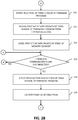
- the operation of the wireless charger 102 and the chargeable device 104 will n ow be explained with reference to FIGS. 2A-2D and 3A-3C .
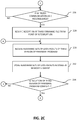
- FIGS. 2A-2D a flow chart illustrating a method for updating firmware in a wireless charger (such as the wireless charger 102 of FIG. 1 ), in accordance with an embodiment of the present invention, is shown.
- the wireless charger 102 is powered on and boots using the boot program stored in the first memory segment 114a and then selects either the second or third memory segments, whichever has the latest firmware version, for execution.
- the first version of the firmware program i.e., the current version of the firmware program
- the third memory segment 114c serves as the stand-by memory segment having the second version of the firmware program stored therein.
- the wireless charger 102 establishes the wireless communication link 106 between the wireless charger 102 and the chargeable device 104, when the chargeable device 104 is brought in contact or within the predefined distance from the wireless charger 102.
- the wireless charger 102 initiates the charging of the chargeable device 104 by transmitting the output power signal to the chargeable device 104 through the wireless communication link 106 (as described with reference to FIG. 1 ).
- the second communication circuit 118 receives the size information and the version number of the third version of the firmware program from the third communication circuit 130.
- the second communication circuit 118 provides the size information and the version number to the first processor 116. Note, it is assumed that the user has used an app on the chargeable device 104 to update the firmware of the wireless charger 102, or the wireless charger 102 has prompted the chargeable device 104 to check the manufacturer's website to see if a firmware update is available, and in response thereto, the size information and the version number of third version of the firmware program are provided to the wireless charger 102.
- the first processor 116 compares the version number of the third version of the firmware program with the version numbers of the first and second versions of the firmware programs.
- the first processor 116 determines whether the version of the third version of the firmware program is newer than the versions of the first and second versions of the firmware programs based on the comparison. If at step 210, the first processor 116 determines that the third version of the firmware program is older than the first and second versions of the firmware programs, step 212 is performed.
- the wireless charger 102 continues to operate based on the first version of the firmware program (i.e., the current version of the firmware program) stored in the second memory segment 114b. It should be noted that in one embodiment, the user can override such version checking and specify a version of the firmware to be downloaded using an app running on the chargeable device 104, as previously discussed.
- step 214 the first processor 116 initiates reception of the third version of the firmware program.
- the first processor 116 transmits the first request to the third communication circuit 130 by way of the second communication circuit 118 and the wireless communication link 106.
- the second processor 128 initiates transmission of the third version of the firmware program to the second communication circuit 118.
- the second communication circuit 118 receives a first set of data packets of the third version of the firmware program from the third communication circuit 130 over the wireless communication link 106.
- the first processor 116 stores the first set of data packets in the stand-by memory segment (i.e., the third memory segment 114c).
- the first processor 116 determines whether the wireless communication link 106 has been disconnected. To determine whether the wireless communication link 106 has been disconnected, the first processor 116 monitors the data signal. If at step 220, the first processor 116 determines that the wireless communication link 106 has not been disconnected, the program skips ahead to step 230. On the other hand, if at step 220, the first processor 116 determines that the wireless communication link 106 has been disconnected, step 222 is performed. At step 222, the first processor 116 detects interruption in reception of the third version of the firmware program.
- the first processor 116 identifies the point of interruption (e.g., breakpoint) where reception of the third version of the firmware program was interrupted. In one embodiment, the first processor 116 identifies the breakpoint based on the size of the first set of data packets received as compared with the size of the third version of the firmware program.
- the point of interruption e.g., breakpoint
- the first processor 116 determines whether the wireless communication link 106 has been reestablished. To determine whether the wireless communication link 106 has been reestablished, the first processor 116 monitors the data signal. If at step 226, the first processor 116 determines that the wireless communication link 106 has not been reestablished, step 226 is performed again. That is, the program loops at step 226 until the connection has been reestablished. If at step 226, the first processor 116 determines that the wireless communication link 106 has been reestablished, then step 228 is performed.
- the first processor 116 resumes reception of the third version of the firmware program.
- the first processor 116 generates the resume request indicating the breakpoint.
- the second communication circuit 118 transmits the resume request to the third communication circuit 130, and based on the resume request, the second processor 128 resumes transmission of the third version of the firmware program from the breakpoint.
- the second communication circuit 118 receives the remaining data packets of the third version of the firmware program from the third communication circuit 130, and at step 232, the first processor 116 stores the remaining data packets in the stand-by memory segment (i.e., the third memory segment 114c).
- the first processor 116 checks whether reception of the third version of the firmware program is complete based on the size of the third version of the firmware program (as compared to the size of the received data packets). If at step 234, the first processor 116 determines that reception of the third version of the firmware program is not complete, the program loops back to step 220. If at step 234, the first processor 116 determines that reception of the third version of the firmware program is complete, step 236 is performed.
- the first processor 116 selects one of the first and third versions of the firmware programs as the current version of the firmware program based on the corresponding receipt time. In other words, the first processor 116 selects one of the second and third memory segments 114b and 114c as the current memory segment based on the receipt time of the first and third versions of the firmware programs. The first processor 116 selects the third version of the firmware program, having the latest receipt time, as the current version of the firmware program. By basing the selection on receipt time as opposed to version number, older versions of the firmware program can be run even if a newer version was previously downloaded.
- the wireless charger 102 operates based on the selected one of the first and third version of the firmware programs.
- the first processor 116 has selected the third version of the firmware program as the current version of the firmware program
- the third memory segment 114c serves as the current memory segment and the first processor 116 operates based on the third version of the firmware program.
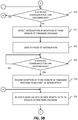
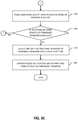
- FIGS. 3A-3C a flow chart illustrating a method for updating firmware in a wireless charger (such as the wireless charger 102 of FIG. 1 ), in accordance with another embodiment of the present invention, is shown.
- the wireless charger 102 is powered on and operates based on the first version of the firmware program (i.e., the current version of the firmware program) stored in the second memory segment 114b (i.e., the current memory segment).
- the third memory segment 114c serves as the stand-by memory segment having the second version of the firmware program stored therein.
- the wireless charger 102 establishes the wireless communication link 106 between the wireless charger 102 and the chargeable device 104, when the chargeable device 104 is brought in contact with or within the predefined distance from the wireless charger 102.
- the wireless charger 102 initiates the charging of the chargeable device 104 by transmitting the output power signal to the chargeable device 104 over the wireless communication link 106.
- the second communication circuit 118 of the wireless charger 102 transmits the version number of the first version of the firmware program to the chargeable device 104 over the wireless communication link 106.
- the second processor 128 determines whether the wireless charger 102 requires a firmware update.
- the user of the chargeable device 104 accesses a firmware update application (app) to check the version of the first version of the firmware program to determine whether the wireless charger 102 requires a firmware update. If it is determined that the wireless charger 102 requires a firmware update, the second processor 128 transmits the size information and the version number of the third version of the firmware program associated with the available firmware update to the wireless charger 102.
- the second communication circuit 118 receives the size information and the version number of the third version of the firmware program, and provides the size information and the version number to the first processor 116. Further, the second processor 128 initiates transmission of the third version of the firmware program to the second communication circuit 118 of the wireless charger 102.
- the second communication circuit 118 receives a first set of data packets of the third version of the firmware program from the third communication circuit 130.
- the first processor 116 stores the first set of data packets in the stand-by memory segment (i.e., the third memory segment 114c).
- the first processor 116 checks to determine whether the wireless communication link 106 has been disconnected. It will be understood by those of skill in the art that while this is shown as a step being executed in series, this check could be performed by an interrupt. For example, if the connection with the chargeable device is disconnected, the first processor 116 could receive an interrupt indicating the disconnection. If at step 314, the first processor 116 determines that the wireless communication link 106 has been disconnected, step 316 is performed. At step 316, the first processor 116 detects interruption in reception of the third version of the firmware program.
- the first processor 116 identifies the point of interruption (i.e., the breakpoint) where reception of the third version of the firmware program is interrupted.
- the first processor 116 determines whether the wireless communication link 106 has been reestablished. If at step 320, the first processor 116 determines that the wireless communication link 106 has not been reestablished, the program loops on step 320. Otherwise step 322 is performed.
- the first processor 116 resumes reception of the third version of the firmware program from the point of interruption (i.e., the breakpoint).
- the second communication circuit 118 receives the remaining data packets of the third version of the firmware program from the third communication circuit 130.
- the first processor 116 stores the remaining data packets of the third version of the firmware program in the stand-by memory segment (i.e., the third memory segment 114c).
- the first processor 116 determines whether reception of the third version of the firmware program is complete. If at step 328, the first processor 116 determines that reception of the third version of the firmware program is not complete, the program loops back to step 314. Otherwise step 330 is performed. At step 330, in the presently preferred embodiment, the first processor 116 selects one of the first and third versions of the firmware programs as the current version of the firmware program based on the corresponding receipt time. Since the third version of the firmware program has the latest receipt time, the first processor 116 selects the third version of the firmware program as the current version of the firmware program. As previously noted, this a user to revert to earlier versions of the firmware.
- the wireless charger 102 operates based on the selected one of the first and third versions of the firmware programs. As the first processor 116 has selected the third version of the firmware program, the wireless charger 102 operates based on the third version of the firmware program and the second memory segment 114b now serves as the stand-by memory segment. If at step 314, the first processor 116 determines that the wireless communication link 106 has not been disconnected, then the program skips ahead to step 324.
- the method illustrated in FIGS. 2A-2D or 3A-3C provides a convenient way of updating the firmware of the wireless charger 102.
- the method uses the existing wireless communication link 106 that is established during the charging of the chargeable device 104 to update the firmware of the wireless charger 102.
- the wireless charger 102 does not need to be dissembled and reprogrammed to update the current version of the firmware program. Further, the method and system eliminate the need for having an additional communication port in the wireless charger 102.
- the current version of the firmware program of the wireless charger 102 may also be downgraded to an older version by the user of the chargeable device 104 by way of the firmware update application installed on the chargeable device 104.
- a method for updating firmware in a wireless charger is implemented.
- the wireless charger charges a chargeable device by way of a wireless communication link established between the wireless charger and the chargeable device.
- a first memory segment of a memory of the wireless charger stores a first version of a firmware program.
- the wireless charger receives a second version of the firmware program from the chargeable device over the wireless communication link.
- the second version of the firmware program is stored in a second memory segment of the wireless charger.
- the wireless charger selects between the first and second versions of the firmware program based on which of the first and second memory segments was most recently updated.
Landscapes
- Engineering & Computer Science (AREA)
- Theoretical Computer Science (AREA)
- Computer Networks & Wireless Communication (AREA)
- Software Systems (AREA)
- General Engineering & Computer Science (AREA)
- Power Engineering (AREA)
- Computer Security & Cryptography (AREA)
- General Physics & Mathematics (AREA)
- Physics & Mathematics (AREA)
- Signal Processing (AREA)
- Charge And Discharge Circuits For Batteries Or The Like (AREA)
- Stored Programmes (AREA)
- Mobile Radio Communication Systems (AREA)
Claims (15)
- Drahtloses Ladegerät (102) zum Laden einer ladbaren Vorrichtung (104) über eine drahtlose Kommunikationsverbindung (106), wobei das Ladegerät Folgendes umfasst:eine Kommunikationsschaltung (118) mit einem ersten Sendeempfänger (120), einem Stromwandler (122) und einer ersten Spule (124), wobei die erste Spule ausgelegt ist zum Erzeugen eines elektromagnetischen Felds zum Transfer von Energie über die drahtlose Kommunikationsverbindung zu einer zweiten Spule (136) in der ladbaren Vorrichtung;einen Speicher (114), der mit der Kommunikationsschaltung gekoppelt ist und ein erstes Speichersegment (114a) zum Speichern eines Boot-Programms, ein zweites Speichersegment (114b) zum Speichern einer ersten Version eines Firmware-Programms und ein drittes Speichersegment (114c) zum Speichern einer zweiten Version des Firmware-Programms umfasst; undeinen mit der Kommunikationsschaltung und dem Speicher gekoppelten Prozessor (116), wobei der Prozessor ausgelegt ist zum Betrieb auf der Basis einer ausgewählten der ersten und zweiten Version des im Speicher gespeicherten Firmware-Programms,wobeidie Kommunikationsschaltung ausgelegt ist zum Empfangen der zweiten Version des Firmware-Programms von der ladbaren Vorrichtung mittels der drahtlosen Kommunikationsverbindung und Speichern der zweiten Version des Firmware-Programms in dem dritten Speichersegment des Speichers;der Prozessor ausgelegt ist zum Auswählen zwischen der ersten und zweiten Version des Firmware-Programms abhängig davon, welches des zweiten und dritten Speichersegments zuletzt aktualisiert wurde;der Prozessor ferner ausgelegt ist zum Betrieb auf der Basis der ersten Version des Firmware-Programms während des Empfangs der zweiten Version des Firmware-Programms;der Prozessor ferner ausgelegt ist zum Identifizieren eines Unterbrechungspunkts, an dem Empfang der zweiten Version des Firmware-Programms unterbrochen wird, wenn sich die drahtlose Kommunikationsverbindung trennt, wobei eine erste Menge von Datenpaketen der zweiten Version des Firmware-Programms durch die Kommunikationsschaltung bis zum Unterbrechungspunkt empfangen wird, undder Prozessor ferner ausgelegt ist zum Wiederaufnehmen des Empfangs der zweiten Version des Firmware-Programms vom Unterbrechungspunkt an, wenn sich die drahtlose Kommunikationsverbindung wiederherstellt, um übrige Mengen von Datenpaketen der zweiten Version des Firmware-Programms zu empfangen.
- Drahtloses Ladegerät nach Anspruch 1, wobei
die Kommunikationsschaltung ferner ausgelegt ist zum Senden einer Versionsnummer der ersten Version des Firmware-Programms zu der ladbaren Vorrichtung über die drahtlose Kommunikationsverbindung, bevor die zweite Version des Firmware-Programms empfangen wird, und wobei die Kommunikationsschaltung ausgelegt ist zum Empfangen der zweiten Version des Firmware-Programms auf der Basis eines durch die ladbare Vorrichtung durchgeführten Vergleichs zwischen der Versionsnummer der ersten Version des Firmware-Programms und einer Versionsnummer der zweiten Version des Firmware-Programms. - Drahtloses Ladegerät nach einem der vorhergehenden Ansprüche, wobei die drahtlose Kommunikationsverbindung dafür ausgelegt ist, sich zu trennen, wenn das drahtlose Ladegerät oder die ladbare Vorrichtung ausgeschaltet wird.
- Drahtloses Ladegerät nach einem der vorhergehenden Ansprüche, wobei die drahtlose Kommunikationsverbindung dafür ausgelegt ist, sich zu trennen, wenn eine Distanz zwischen dem drahtlosen Ladegerät und der ladbaren Vorrichtung größer als eine vordefinierte Distanz ist.
- Drahtloses Ladegerät nach einem der vorhergehenden Ansprüche, wobei
die Kommunikationsschaltung ferner ausgelegt ist zum Empfangen von Informationen einer Größe der zweiten Version des Firmware-Programms von der ladbaren Vorrichtung vor dem Empfangen der zweiten Version des Firmware-Programms. - Drahtloses Ladegerät nach einem der vorhergehenden Ansprüche, wobei
der Prozessor ausgelegt ist zum Identifizieren des Unterbrechungspunkts auf der Basis einer Größe der ersten Menge von Datenpaketen und der Größe der zweiten Version des Firmware-Programms. - Drahtloses Ladegerät nach einem der vorhergehenden Ansprüche, wobeidie Kommunikationsschaltung ferner ausgelegt ist zum Empfangen einer Versionsnummer der zweiten Version des Firmware-Programms von der ladbaren Vorrichtung vor dem Empfang der zweiten Version des Firmware-Programms; undder Prozessor ferner ausgelegt ist zum Einleiten des Empfangs der zweiten Version des Firmware-Programms, wenn die Versionsnummer angibt, dass die erste Version des Firmware-Programms älter als die zweite Version des Firmware-Programms ist.
- Drahtloses Ladegerät nach einem der vorhergehenden Ansprüche, wobei die drahtlose Kommunikationsverbindung eine bidirektionale Kommunikationsverbindung ist, die mittels induktiver Kopplung oder Resonanzkopplung zwischen der ersten und zweiten Spule hergestellt wird.
- Verfahren zum Aktualisieren eines Firmware-Programms in einem drahtlosen Ladegerät (102), wobei das drahtlose Ladegerät eine ladbare Vorrichtung (104) über eine drahtlose Kommunikationsverbindung (106) lädt und wobei eine erste Version des Firmware-Programms in einem ersten Speichersegment (114a) eines Speichers (114) des drahtlosen Ladegeräts gespeichert ist, wobei das Verfahren Folgendes umfasst:Empfangen einer zweiten Version des Firmware-Programms durch eine Kommunikationsschaltung (118) des drahtlosen Ladegeräts von der ladbaren Vorrichtung über die drahtlose Kommunikationsverbindung;Speichern der zweiten Version des Firmware-Programms durch die Kommunikationsschaltung in einem zweiten Speichersegment (114b) des Speichers;Auswählen zwischen der ersten und zweiten Version des Firmware-Programms durch einen Prozessor (116) des drahtlosen Ladegeräts abhängig davon, welches des ersten und zweiten Speichersegments zuletzt aktualisiert wurde;Identifizieren eines Unterbrechungspunkts durch den Prozessor, an dem Empfang der zweiten Version des Firmware-Programms unterbrochen wird, wenn sich die drahtlose Kommunikationsverbindung trennt, wobei die erste Menge von Datenpaketen durch das drahtlose Ladegerät bis zum Unterbrechungspunkt empfangen wird; undWiederaufnehmen des Empfangs der zweiten Version des Firmware-Programms durch den Prozessor vom Unterbrechungspunkt an, wenn sich die drahtlose Kommunikationsverbindung wiederherstellt, um übrige Mengen von Datenpaketen der zweiten Version des Firmware-Programms zu empfangen,wobei der Prozessor während des Empfangs der zweiten Version des Firmware-Programms auf der Basis der ersten Version des Firmware-Programms operiert.
- Verfahren nach Anspruch 9, ferner umfassend:
Empfangen von Informationen einer Größe der zweiten Version des Firmware-Programms durch die Kommunikationsschaltung von der ladbaren Vorrichtung über die drahtlose Kommunikationsverbindung vor dem Empfang der zweiten Version des Firmware-Programms. - Verfahren nach Anspruch 9 oder Anspruch 10, wobei die Identifikation des Unterbrechungspunkts auf einer Größe der ersten Menge von Datenpaketen und der Größe der zweiten Version des Firmware-Programms basiert.
- Verfahren nach einem der Ansprüche 9 bis 11, wobei sich die drahtlose Kommunikationsverbindung trennt, wenn das drahtlose Ladegerät oder die ladbare Vorrichtung ausgeschaltet wird und/oder wenn eine Distanz zwischen dem drahtlosen Ladegerät und der ladbaren Vorrichtung größer als eine vordefinierte Distanz ist.
- Verfahren nach einem der Ansprüche 9 bis 12, ferner umfassend:
Empfangen einer Versionsnummer der zweiten Version des Firmware-Programms durch die Kommunikationsschaltung von der ladbaren Vorrichtung vor dem Empfang der zweiten Version des Firmware-Programms; und Einleiten des Empfangs der zweiten Version des Firmware-Programms durch den Prozessor, wenn die Versionsnummer angibt, dass die erste Version des Firmware-Programms älter als die zweite Version des Firmware-Programms ist. - Verfahren nach einem der Ansprüche 9 bis 13, ferner umfassend:
Senden einer Versionsnummer der ersten Version des Firmware-Programms zu der ladbaren Vorrichtung durch die Kommunikationsschaltung über die drahtlose Kommunikationsverbindung, bevor die zweite Version des Firmware-Programms empfangen wird, wobei das drahtlose Ladegerät die zweite Version des Firmware-Programms auf der Basis eines durch die ladbare Vorrichtung durchgeführten Vergleichs zwischen der Versionsnummer der ersten Version des Firmware-Programms und einer Versionsnummer der zweiten Version des Firmware-Programms empfängt. - Verfahren nach einem der Ansprüche 9 bis 14, wobei die drahtlose Kommunikationsverbindung eine bidirektionale Kommunikationsverbindung ist, die mittels induktiver Kopplung oder Resonanzkopplung zwischen dem drahtlosen Ladegerät und der ladbaren Vorrichtung hergestellt wird.
Applications Claiming Priority (1)
| Application Number | Priority Date | Filing Date | Title |
|---|---|---|---|
| CN201810458642.4A CN110489137B (zh) | 2018-05-15 | 2018-05-15 | 用于更新无线充电器中的固件的系统和方法 |
Publications (2)
| Publication Number | Publication Date |
|---|---|
| EP3570409A1 EP3570409A1 (de) | 2019-11-20 |
| EP3570409B1 true EP3570409B1 (de) | 2021-10-13 |
Family
ID=66239803
Family Applications (1)
| Application Number | Title | Priority Date | Filing Date |
|---|---|---|---|
| EP19170069.9A Active EP3570409B1 (de) | 2018-05-15 | 2019-04-18 | Drahtloses ladegerät und verfahren zum aktualisieren der firmware in einem drahtlosen ladegerät |
Country Status (3)
| Country | Link |
|---|---|
| US (1) | US10628150B2 (de) |
| EP (1) | EP3570409B1 (de) |
| CN (1) | CN110489137B (de) |
Families Citing this family (33)
| Publication number | Priority date | Publication date | Assignee | Title |
|---|---|---|---|---|
| US10705566B2 (en) | 2016-09-09 | 2020-07-07 | Targus International Llc | Systems, methods and devices for native and virtualized video in a hybrid docking station |
| US11231448B2 (en) | 2017-07-20 | 2022-01-25 | Targus International Llc | Systems, methods and devices for remote power management and discovery |
| CN110489137B (zh) * | 2018-05-15 | 2024-04-09 | 恩智浦美国有限公司 | 用于更新无线充电器中的固件的系统和方法 |
| US20190386513A1 (en) * | 2018-06-14 | 2019-12-19 | Integrated Device Technology, Inc. | Bi-directional communication in wireless power transmission |
| WO2020004940A1 (ko) * | 2018-06-28 | 2020-01-02 | 엘지전자 주식회사 | 무선 전력 전송 시스템에서 데이터를 전송 또는 수신하는 장치 및 방법 |
| CN113196205A (zh) | 2018-12-19 | 2021-07-30 | 泰格斯国际有限责任公司 | 用于便携式电子设备的显示和坞接装置 |
| US11360534B2 (en) | 2019-01-04 | 2022-06-14 | Targus Internatonal Llc | Smart workspace management system |
| US11039105B2 (en) * | 2019-08-22 | 2021-06-15 | Targus International Llc | Systems and methods for participant-controlled video conferencing |
| WO2021050575A1 (en) | 2019-09-09 | 2021-03-18 | Targus International Llc | Systems and methods for docking stations removably attachable to display apparatuses and docking stand assemblies |
| CN111459516A (zh) * | 2020-03-12 | 2020-07-28 | 深圳乐动机器人有限公司 | 一种固件升级的方法及充电基座 |
| CN111352645B (zh) * | 2020-03-31 | 2023-08-22 | 广州昂宝电子有限公司 | 用于usb-pd充电器的固件更新方法和装置 |
| US11271611B1 (en) * | 2021-01-28 | 2022-03-08 | Nucurrent, Inc. | Wireless power transfer with in-band virtualized wired communications |
| US11476898B2 (en) | 2021-01-28 | 2022-10-18 | Nucurrent, Inc. | Wireless power transfer system with mode switching using selective quality factor alteration |
| US11316378B1 (en) | 2021-01-28 | 2022-04-26 | Nucurrent, Inc. | Wireless power receiver with in-band virtualized wired communications |
| US11838076B2 (en) | 2021-01-28 | 2023-12-05 | Nucurrent, Inc. | Wireless power transmitter with in-band virtualized wired communications |
| US11483033B2 (en) | 2021-01-28 | 2022-10-25 | Nucurrent, Inc. | Wireless power transfer system with data versus power priority optimization |
| US12355527B2 (en) * | 2021-01-28 | 2025-07-08 | Nucurrent, Inc. | High speed data communications system for industrial use in packaged goods |
| US11418069B1 (en) | 2021-01-28 | 2022-08-16 | Nucurrent, Inc. | Wireless power transfer system with data-priority and power-priority transfer modes |
| CN113656056B (zh) * | 2021-08-26 | 2024-02-23 | 长春捷翼汽车科技股份有限公司 | 充电座和充电座升级的方法、装置、设备、存储介质 |
| US12073205B2 (en) | 2021-09-14 | 2024-08-27 | Targus International Llc | Independently upgradeable docking stations |
| US12170549B2 (en) | 2021-10-08 | 2024-12-17 | Nucurrent, Inc. | Heat diffuser in wrist worn wireless power and data system |
| US12231187B2 (en) | 2021-10-15 | 2025-02-18 | Nucurrent, Inc. | High speed data communications system for industrial use in packaged goods with out of band communications hand off |
| US11626756B1 (en) | 2021-10-15 | 2023-04-11 | Nucurrent, Inc. | Wireless power and data transfer system with out of band communications hand off |
| US11754618B2 (en) | 2021-10-15 | 2023-09-12 | Nucurrent, Inc. | Testing device for electronic devices with in-band virtualized wired communications |
| US12598468B2 (en) * | 2022-09-23 | 2026-04-07 | Apple Inc. | Multi-channel device connection |
| US20240109451A1 (en) * | 2022-09-27 | 2024-04-04 | Ford Global Technologies, Llc | Electric vehicle supply equipment with partitioned control processor |
| CN116185429B (zh) * | 2023-05-05 | 2023-07-07 | 成都市易冲半导体有限公司 | 固件升级方法、装置、接收端设备及存储介质 |
| EP4525270A1 (de) * | 2023-09-12 | 2025-03-19 | Koninklijke Philips N.V. | Drahtlose stromübertragung |
| US20250328332A1 (en) * | 2024-04-17 | 2025-10-23 | Moxa Inc. | Method for automatically updating firmware and host device using the same |
| CN118779863B (zh) * | 2024-06-18 | 2025-07-04 | 湖南开鸿智谷数字产业发展有限公司 | 一种基于可信凭据的固件回滚保护方法及系统 |
| EP4704306A1 (de) * | 2024-08-28 | 2026-03-04 | Koninklijke Philips N.V. | Drahtlose leistungsübertragung |
| DE102024128098A1 (de) * | 2024-09-27 | 2026-04-02 | Einhell Germany Ag | Akkumulator mit einer Akkudatenschnittstelle |
| DE102024128101A1 (de) * | 2024-09-27 | 2026-04-02 | Einhell Germany Ag | Verfahren zum Konfigurieren und/oder Aktualisieren eines Akkumulators |
Citations (1)
| Publication number | Priority date | Publication date | Assignee | Title |
|---|---|---|---|---|
| US7730326B2 (en) * | 2004-11-12 | 2010-06-01 | Apple Inc. | Method and system for updating firmware stored in non-volatile memory |
Family Cites Families (20)
| Publication number | Priority date | Publication date | Assignee | Title |
|---|---|---|---|---|
| US5689825A (en) | 1995-07-28 | 1997-11-18 | Motorola, Inc. | Method and apparatus for downloading updated software to portable wireless communication units |
| US7069452B1 (en) | 2000-07-12 | 2006-06-27 | International Business Machines Corporation | Methods, systems and computer program products for secure firmware updates |
| US7890947B2 (en) | 2000-10-13 | 2011-02-15 | Sony Corporation | System, method and apparatus for embedded firmware code update |
| US20090094593A1 (en) | 2007-10-05 | 2009-04-09 | Jaung Richard L | Wirelessly upgrading software in a mobile computing device |
| EP2313957B1 (de) | 2008-08-18 | 2020-05-20 | Nxp B.V. | Mobilgerät zum steuern eines ladungs-pad-systems |
| US8947042B2 (en) | 2008-11-13 | 2015-02-03 | Qualcomm Incorporated | Wireless power and data transfer for electronic devices |
| US10115520B2 (en) * | 2011-01-18 | 2018-10-30 | Mojo Mobility, Inc. | Systems and method for wireless power transfer |
| JP5866864B2 (ja) * | 2011-08-23 | 2016-02-24 | 株式会社ニコン | 電子機器、電力供給装置、システムおよび機器 |
| EP2605564A1 (de) * | 2011-12-14 | 2013-06-19 | Research In Motion Limited | Systeme, Verfahren und Vorrichtung zur Vorbereitung einer mobilen Vorrichtung zur Bereitstellung |
| US11005285B2 (en) * | 2012-03-21 | 2021-05-11 | Mojo Mobility, Inc. | Wireless power transfer |
| EP2808818B1 (de) | 2013-05-29 | 2016-07-13 | Nxp B.V. | Verarbeitungssystem |
| US9077390B1 (en) | 2013-12-18 | 2015-07-07 | Nxp B.V. | Wireless charging and communication |
| US9843214B2 (en) | 2013-12-28 | 2017-12-12 | Intel Corporation | Wireless charging device for wearable electronic device |
| WO2015156468A1 (ko) * | 2014-04-08 | 2015-10-15 | 에스케이플래닛 주식회사 | 무선 충전 장치와 단말, 그를 포함하는 무선 충전 시스템, 그 제어 방법 및 컴퓨터 프로그램이 기록된 기록매체 |
| KR102270129B1 (ko) * | 2014-09-11 | 2021-06-28 | 삼성전자 주식회사 | 무선 제어 방법, 그 제어 장치 및 서버 |
| ES2730761T3 (es) * | 2015-09-24 | 2019-11-12 | Guangdong Oppo Mobile Telecommunications Corp Ltd | Terminal móvil, adaptador de suministro de alimentación y método de actualización de los mismos |
| WO2017171561A1 (en) * | 2016-04-01 | 2017-10-05 | Powerbyproxi Limited | Method of authentication for a wireless charging system |
| KR102463281B1 (ko) * | 2017-08-25 | 2022-11-07 | 삼성전자주식회사 | 모드 스위칭을 제공하는 전자 장치 및 저장 매체 |
| JP6953947B2 (ja) * | 2017-09-22 | 2021-10-27 | コニカミノルタ株式会社 | 情報処理装置、ファームウェア更新プログラム |
| CN110489137B (zh) * | 2018-05-15 | 2024-04-09 | 恩智浦美国有限公司 | 用于更新无线充电器中的固件的系统和方法 |
-
2018
- 2018-05-15 CN CN201810458642.4A patent/CN110489137B/zh active Active
-
2019
- 2019-01-01 US US16/237,714 patent/US10628150B2/en active Active
- 2019-04-18 EP EP19170069.9A patent/EP3570409B1/de active Active
Patent Citations (1)
| Publication number | Priority date | Publication date | Assignee | Title |
|---|---|---|---|---|
| US7730326B2 (en) * | 2004-11-12 | 2010-06-01 | Apple Inc. | Method and system for updating firmware stored in non-volatile memory |
Also Published As
| Publication number | Publication date |
|---|---|
| US10628150B2 (en) | 2020-04-21 |
| EP3570409A1 (de) | 2019-11-20 |
| CN110489137A (zh) | 2019-11-22 |
| CN110489137B (zh) | 2024-04-09 |
| US20190354361A1 (en) | 2019-11-21 |
Similar Documents
| Publication | Publication Date | Title |
|---|---|---|
| EP3570409B1 (de) | Drahtloses ladegerät und verfahren zum aktualisieren der firmware in einem drahtlosen ladegerät | |
| US20240056123A1 (en) | Wireless power transferring method and device therefor | |
| EP3903405B1 (de) | Elektronische vorrichtung zum drahtlosen aufladen einer externen vorrichtung | |
| KR102494143B1 (ko) | 무선 전력 전달 방법 및 이를 위한 장치 | |
| US10326320B2 (en) | Power supply apparatus, electronic device, control method, program, and recording medium | |
| US20120242294A1 (en) | Headset Charge Via Short-Range RF Communication | |
| WO2019105466A1 (zh) | 可远程升级的便携式电源及远程升级方法 | |
| US20150177330A1 (en) | Method for determining wireless charging requirements for a device | |
| JP7755710B2 (ja) | 送電装置および通信方法、プログラム | |
| EP3726925B1 (de) | Mobiles endgerät, stromversorgungsadapter und aufrüstungsverfahren dafür | |
| WO2017049548A1 (zh) | 移动终端、电源适配器及其升级方法 | |
| EP2911270A1 (de) | Stromübertragungseinheit und Stromübertragungsverfahren | |
| WO2014020464A9 (en) | Wireless inductive power transfer | |
| CN103997131A (zh) | 无线电力传输系统的异物感应装置及方法 | |
| JP2014017989A (ja) | 携帯端末、無接点充電システム及び無接点充電の管理方法 | |
| US10211675B2 (en) | Wireless power feeding system, method of controlling the same, program, and storage medium | |
| CN111149082B (zh) | 用于为移动装置自动备份数据和充电的存储器站点 | |
| KR20170138271A (ko) | 무선 전력 수신기의 동작 방법 및 무선 전력 송신기의 동작 방법 | |
| WO2017176908A1 (en) | Intelligent multi-mode wireless power transfer system | |
| CN107069894A (zh) | 一种用app控制带蓝牙功能的手机无线充电系统 | |
| KR101386059B1 (ko) | 전자기 유도 및 자기 공진 방식을 이용한 무선 충전 케이스 및 무선 충전 방법 | |
| TW201610692A (zh) | 用於支援高功率 usb 周邊裝置的低功率 usb 主機及其方法 | |
| CN211296223U (zh) | 电源适配装置 | |
| CN105607515B (zh) | 一种电动助力车智能升级方法 | |
| EP4462642A1 (de) | Vorrichtung zur drahtlosen stromübertragung, vorrichtung zum drahtlosen stromempfang und verfahren zur drahtlosen stromübertragung |
Legal Events
| Date | Code | Title | Description |
|---|---|---|---|
| PUAI | Public reference made under article 153(3) epc to a published international application that has entered the european phase |
Free format text: ORIGINAL CODE: 0009012 |
|
| STAA | Information on the status of an ep patent application or granted ep patent |
Free format text: STATUS: THE APPLICATION HAS BEEN PUBLISHED |
|
| AK | Designated contracting states |
Kind code of ref document: A1 Designated state(s): AL AT BE BG CH CY CZ DE DK EE ES FI FR GB GR HR HU IE IS IT LI LT LU LV MC MK MT NL NO PL PT RO RS SE SI SK SM TR |
|
| AX | Request for extension of the european patent |
Extension state: BA ME |
|
| STAA | Information on the status of an ep patent application or granted ep patent |
Free format text: STATUS: REQUEST FOR EXAMINATION WAS MADE |
|
| 17P | Request for examination filed |
Effective date: 20200520 |
|
| RBV | Designated contracting states (corrected) |
Designated state(s): AL AT BE BG CH CY CZ DE DK EE ES FI FR GB GR HR HU IE IS IT LI LT LU LV MC MK MT NL NO PL PT RO RS SE SI SK SM TR |
|
| STAA | Information on the status of an ep patent application or granted ep patent |
Free format text: STATUS: EXAMINATION IS IN PROGRESS |
|
| 17Q | First examination report despatched |
Effective date: 20201012 |
|
| GRAP | Despatch of communication of intention to grant a patent |
Free format text: ORIGINAL CODE: EPIDOSNIGR1 |
|
| STAA | Information on the status of an ep patent application or granted ep patent |
Free format text: STATUS: GRANT OF PATENT IS INTENDED |
|
| RIC1 | Information provided on ipc code assigned before grant |
Ipc: H02J 50/10 20160101AFI20210519BHEP Ipc: H02J 50/80 20160101ALI20210519BHEP Ipc: G06F 8/656 20180101ALI20210519BHEP Ipc: H02J 7/00 20060101ALN20210519BHEP Ipc: G06F 11/14 20060101ALN20210519BHEP |
|
| INTG | Intention to grant announced |
Effective date: 20210615 |
|
| GRAS | Grant fee paid |
Free format text: ORIGINAL CODE: EPIDOSNIGR3 |
|
| GRAA | (expected) grant |
Free format text: ORIGINAL CODE: 0009210 |
|
| STAA | Information on the status of an ep patent application or granted ep patent |
Free format text: STATUS: THE PATENT HAS BEEN GRANTED |
|
| AK | Designated contracting states |
Kind code of ref document: B1 Designated state(s): AL AT BE BG CH CY CZ DE DK EE ES FI FR GB GR HR HU IE IS IT LI LT LU LV MC MK MT NL NO PL PT RO RS SE SI SK SM TR |
|
| REG | Reference to a national code |
Ref country code: GB Ref legal event code: FG4D |
|
| REG | Reference to a national code |
Ref country code: CH Ref legal event code: EP |
|
| REG | Reference to a national code |
Ref country code: DE Ref legal event code: R096 Ref document number: 602019008264 Country of ref document: DE |
|
| REG | Reference to a national code |
Ref country code: IE Ref legal event code: FG4D |
|
| REG | Reference to a national code |
Ref country code: AT Ref legal event code: REF Ref document number: 1438878 Country of ref document: AT Kind code of ref document: T Effective date: 20211115 |
|
| REG | Reference to a national code |
Ref country code: LT Ref legal event code: MG9D |
|
| REG | Reference to a national code |
Ref country code: NL Ref legal event code: MP Effective date: 20211013 |
|
| REG | Reference to a national code |
Ref country code: AT Ref legal event code: MK05 Ref document number: 1438878 Country of ref document: AT Kind code of ref document: T Effective date: 20211013 |
|
| PG25 | Lapsed in a contracting state [announced via postgrant information from national office to epo] |
Ref country code: RS Free format text: LAPSE BECAUSE OF FAILURE TO SUBMIT A TRANSLATION OF THE DESCRIPTION OR TO PAY THE FEE WITHIN THE PRESCRIBED TIME-LIMIT Effective date: 20211013 Ref country code: LT Free format text: LAPSE BECAUSE OF FAILURE TO SUBMIT A TRANSLATION OF THE DESCRIPTION OR TO PAY THE FEE WITHIN THE PRESCRIBED TIME-LIMIT Effective date: 20211013 Ref country code: FI Free format text: LAPSE BECAUSE OF FAILURE TO SUBMIT A TRANSLATION OF THE DESCRIPTION OR TO PAY THE FEE WITHIN THE PRESCRIBED TIME-LIMIT Effective date: 20211013 Ref country code: BG Free format text: LAPSE BECAUSE OF FAILURE TO SUBMIT A TRANSLATION OF THE DESCRIPTION OR TO PAY THE FEE WITHIN THE PRESCRIBED TIME-LIMIT Effective date: 20220113 Ref country code: AT Free format text: LAPSE BECAUSE OF FAILURE TO SUBMIT A TRANSLATION OF THE DESCRIPTION OR TO PAY THE FEE WITHIN THE PRESCRIBED TIME-LIMIT Effective date: 20211013 |
|
| PG25 | Lapsed in a contracting state [announced via postgrant information from national office to epo] |
Ref country code: IS Free format text: LAPSE BECAUSE OF FAILURE TO SUBMIT A TRANSLATION OF THE DESCRIPTION OR TO PAY THE FEE WITHIN THE PRESCRIBED TIME-LIMIT Effective date: 20220213 Ref country code: SE Free format text: LAPSE BECAUSE OF FAILURE TO SUBMIT A TRANSLATION OF THE DESCRIPTION OR TO PAY THE FEE WITHIN THE PRESCRIBED TIME-LIMIT Effective date: 20211013 Ref country code: PT Free format text: LAPSE BECAUSE OF FAILURE TO SUBMIT A TRANSLATION OF THE DESCRIPTION OR TO PAY THE FEE WITHIN THE PRESCRIBED TIME-LIMIT Effective date: 20220214 Ref country code: PL Free format text: LAPSE BECAUSE OF FAILURE TO SUBMIT A TRANSLATION OF THE DESCRIPTION OR TO PAY THE FEE WITHIN THE PRESCRIBED TIME-LIMIT Effective date: 20211013 Ref country code: NO Free format text: LAPSE BECAUSE OF FAILURE TO SUBMIT A TRANSLATION OF THE DESCRIPTION OR TO PAY THE FEE WITHIN THE PRESCRIBED TIME-LIMIT Effective date: 20220113 Ref country code: NL Free format text: LAPSE BECAUSE OF FAILURE TO SUBMIT A TRANSLATION OF THE DESCRIPTION OR TO PAY THE FEE WITHIN THE PRESCRIBED TIME-LIMIT Effective date: 20211013 Ref country code: LV Free format text: LAPSE BECAUSE OF FAILURE TO SUBMIT A TRANSLATION OF THE DESCRIPTION OR TO PAY THE FEE WITHIN THE PRESCRIBED TIME-LIMIT Effective date: 20211013 Ref country code: HR Free format text: LAPSE BECAUSE OF FAILURE TO SUBMIT A TRANSLATION OF THE DESCRIPTION OR TO PAY THE FEE WITHIN THE PRESCRIBED TIME-LIMIT Effective date: 20211013 Ref country code: GR Free format text: LAPSE BECAUSE OF FAILURE TO SUBMIT A TRANSLATION OF THE DESCRIPTION OR TO PAY THE FEE WITHIN THE PRESCRIBED TIME-LIMIT Effective date: 20220114 Ref country code: ES Free format text: LAPSE BECAUSE OF FAILURE TO SUBMIT A TRANSLATION OF THE DESCRIPTION OR TO PAY THE FEE WITHIN THE PRESCRIBED TIME-LIMIT Effective date: 20211013 |
|
| REG | Reference to a national code |
Ref country code: DE Ref legal event code: R097 Ref document number: 602019008264 Country of ref document: DE |
|
| PG25 | Lapsed in a contracting state [announced via postgrant information from national office to epo] |
Ref country code: SM Free format text: LAPSE BECAUSE OF FAILURE TO SUBMIT A TRANSLATION OF THE DESCRIPTION OR TO PAY THE FEE WITHIN THE PRESCRIBED TIME-LIMIT Effective date: 20211013 Ref country code: SK Free format text: LAPSE BECAUSE OF FAILURE TO SUBMIT A TRANSLATION OF THE DESCRIPTION OR TO PAY THE FEE WITHIN THE PRESCRIBED TIME-LIMIT Effective date: 20211013 Ref country code: RO Free format text: LAPSE BECAUSE OF FAILURE TO SUBMIT A TRANSLATION OF THE DESCRIPTION OR TO PAY THE FEE WITHIN THE PRESCRIBED TIME-LIMIT Effective date: 20211013 Ref country code: EE Free format text: LAPSE BECAUSE OF FAILURE TO SUBMIT A TRANSLATION OF THE DESCRIPTION OR TO PAY THE FEE WITHIN THE PRESCRIBED TIME-LIMIT Effective date: 20211013 Ref country code: DK Free format text: LAPSE BECAUSE OF FAILURE TO SUBMIT A TRANSLATION OF THE DESCRIPTION OR TO PAY THE FEE WITHIN THE PRESCRIBED TIME-LIMIT Effective date: 20211013 Ref country code: CZ Free format text: LAPSE BECAUSE OF FAILURE TO SUBMIT A TRANSLATION OF THE DESCRIPTION OR TO PAY THE FEE WITHIN THE PRESCRIBED TIME-LIMIT Effective date: 20211013 |
|
| PLBE | No opposition filed within time limit |
Free format text: ORIGINAL CODE: 0009261 |
|
| STAA | Information on the status of an ep patent application or granted ep patent |
Free format text: STATUS: NO OPPOSITION FILED WITHIN TIME LIMIT |
|
| 26N | No opposition filed |
Effective date: 20220714 |
|
| PG25 | Lapsed in a contracting state [announced via postgrant information from national office to epo] |
Ref country code: AL Free format text: LAPSE BECAUSE OF FAILURE TO SUBMIT A TRANSLATION OF THE DESCRIPTION OR TO PAY THE FEE WITHIN THE PRESCRIBED TIME-LIMIT Effective date: 20211013 |
|
| PG25 | Lapsed in a contracting state [announced via postgrant information from national office to epo] |
Ref country code: SI Free format text: LAPSE BECAUSE OF FAILURE TO SUBMIT A TRANSLATION OF THE DESCRIPTION OR TO PAY THE FEE WITHIN THE PRESCRIBED TIME-LIMIT Effective date: 20211013 |
|
| REG | Reference to a national code |
Ref country code: CH Ref legal event code: PL |
|
| REG | Reference to a national code |
Ref country code: BE Ref legal event code: MM Effective date: 20220430 |
|
| PG25 | Lapsed in a contracting state [announced via postgrant information from national office to epo] |
Ref country code: MC Free format text: LAPSE BECAUSE OF FAILURE TO SUBMIT A TRANSLATION OF THE DESCRIPTION OR TO PAY THE FEE WITHIN THE PRESCRIBED TIME-LIMIT Effective date: 20211013 Ref country code: LU Free format text: LAPSE BECAUSE OF NON-PAYMENT OF DUE FEES Effective date: 20220418 Ref country code: LI Free format text: LAPSE BECAUSE OF NON-PAYMENT OF DUE FEES Effective date: 20220430 Ref country code: FR Free format text: LAPSE BECAUSE OF NON-PAYMENT OF DUE FEES Effective date: 20220430 Ref country code: CH Free format text: LAPSE BECAUSE OF NON-PAYMENT OF DUE FEES Effective date: 20220430 |
|
| PG25 | Lapsed in a contracting state [announced via postgrant information from national office to epo] |
Ref country code: BE Free format text: LAPSE BECAUSE OF NON-PAYMENT OF DUE FEES Effective date: 20220430 |
|
| PG25 | Lapsed in a contracting state [announced via postgrant information from national office to epo] |
Ref country code: IE Free format text: LAPSE BECAUSE OF NON-PAYMENT OF DUE FEES Effective date: 20220418 |
|
| PG25 | Lapsed in a contracting state [announced via postgrant information from national office to epo] |
Ref country code: IT Free format text: LAPSE BECAUSE OF FAILURE TO SUBMIT A TRANSLATION OF THE DESCRIPTION OR TO PAY THE FEE WITHIN THE PRESCRIBED TIME-LIMIT Effective date: 20211013 |
|
| P01 | Opt-out of the competence of the unified patent court (upc) registered |
Effective date: 20230725 |
|
| GBPC | Gb: european patent ceased through non-payment of renewal fee |
Effective date: 20230418 |
|
| PG25 | Lapsed in a contracting state [announced via postgrant information from national office to epo] |
Ref country code: GB Free format text: LAPSE BECAUSE OF NON-PAYMENT OF DUE FEES Effective date: 20230418 |
|
| PG25 | Lapsed in a contracting state [announced via postgrant information from national office to epo] |
Ref country code: GB Free format text: LAPSE BECAUSE OF NON-PAYMENT OF DUE FEES Effective date: 20230418 |
|
| PG25 | Lapsed in a contracting state [announced via postgrant information from national office to epo] |
Ref country code: HU Free format text: LAPSE BECAUSE OF FAILURE TO SUBMIT A TRANSLATION OF THE DESCRIPTION OR TO PAY THE FEE WITHIN THE PRESCRIBED TIME-LIMIT; INVALID AB INITIO Effective date: 20190418 |
|
| PG25 | Lapsed in a contracting state [announced via postgrant information from national office to epo] |
Ref country code: MK Free format text: LAPSE BECAUSE OF FAILURE TO SUBMIT A TRANSLATION OF THE DESCRIPTION OR TO PAY THE FEE WITHIN THE PRESCRIBED TIME-LIMIT Effective date: 20211013 Ref country code: CY Free format text: LAPSE BECAUSE OF FAILURE TO SUBMIT A TRANSLATION OF THE DESCRIPTION OR TO PAY THE FEE WITHIN THE PRESCRIBED TIME-LIMIT Effective date: 20211013 |
|
| PG25 | Lapsed in a contracting state [announced via postgrant information from national office to epo] |
Ref country code: MT Free format text: LAPSE BECAUSE OF FAILURE TO SUBMIT A TRANSLATION OF THE DESCRIPTION OR TO PAY THE FEE WITHIN THE PRESCRIBED TIME-LIMIT Effective date: 20211013 |
|
| PGFP | Annual fee paid to national office [announced via postgrant information from national office to epo] |
Ref country code: DE Payment date: 20250319 Year of fee payment: 7 |
|
| PG25 | Lapsed in a contracting state [announced via postgrant information from national office to epo] |
Ref country code: TR Free format text: LAPSE BECAUSE OF FAILURE TO SUBMIT A TRANSLATION OF THE DESCRIPTION OR TO PAY THE FEE WITHIN THE PRESCRIBED TIME-LIMIT Effective date: 20211013 |