EP3565526B1 - Topical detomidine formulations - Google Patents
Topical detomidine formulations Download PDFInfo
- Publication number
- EP3565526B1 EP3565526B1 EP18701853.6A EP18701853A EP3565526B1 EP 3565526 B1 EP3565526 B1 EP 3565526B1 EP 18701853 A EP18701853 A EP 18701853A EP 3565526 B1 EP3565526 B1 EP 3565526B1
- Authority
- EP
- European Patent Office
- Prior art keywords
- detomidine
- formulation
- salt
- topical
- formulations
- Prior art date
- Legal status (The legal status is an assumption and is not a legal conclusion. Google has not performed a legal analysis and makes no representation as to the accuracy of the status listed.)
- Active
Links
Images





Classifications
-
- A—HUMAN NECESSITIES
- A61—MEDICAL OR VETERINARY SCIENCE; HYGIENE
- A61K—PREPARATIONS FOR MEDICAL, DENTAL OR TOILETRY PURPOSES
- A61K31/00—Medicinal preparations containing organic active ingredients
- A61K31/33—Heterocyclic compounds
- A61K31/395—Heterocyclic compounds having nitrogen as a ring hetero atom, e.g. guanethidine or rifamycins
- A61K31/41—Heterocyclic compounds having nitrogen as a ring hetero atom, e.g. guanethidine or rifamycins having five-membered rings with two or more ring hetero atoms, at least one of which being nitrogen, e.g. tetrazole
- A61K31/4164—1,3-Diazoles
-
- A—HUMAN NECESSITIES
- A61—MEDICAL OR VETERINARY SCIENCE; HYGIENE
- A61K—PREPARATIONS FOR MEDICAL, DENTAL OR TOILETRY PURPOSES
- A61K9/00—Medicinal preparations characterised by special physical form
- A61K9/0012—Galenical forms characterised by the site of application
- A61K9/0014—Skin, i.e. galenical aspects of topical compositions
-
- A—HUMAN NECESSITIES
- A61—MEDICAL OR VETERINARY SCIENCE; HYGIENE
- A61K—PREPARATIONS FOR MEDICAL, DENTAL OR TOILETRY PURPOSES
- A61K31/00—Medicinal preparations containing organic active ingredients
- A61K31/33—Heterocyclic compounds
- A61K31/395—Heterocyclic compounds having nitrogen as a ring hetero atom, e.g. guanethidine or rifamycins
- A61K31/41—Heterocyclic compounds having nitrogen as a ring hetero atom, e.g. guanethidine or rifamycins having five-membered rings with two or more ring hetero atoms, at least one of which being nitrogen, e.g. tetrazole
- A61K31/4164—1,3-Diazoles
- A61K31/4168—1,3-Diazoles having a nitrogen attached in position 2, e.g. clonidine
-
- A—HUMAN NECESSITIES
- A61—MEDICAL OR VETERINARY SCIENCE; HYGIENE
- A61K—PREPARATIONS FOR MEDICAL, DENTAL OR TOILETRY PURPOSES
- A61K31/00—Medicinal preparations containing organic active ingredients
- A61K31/33—Heterocyclic compounds
- A61K31/395—Heterocyclic compounds having nitrogen as a ring hetero atom, e.g. guanethidine or rifamycins
- A61K31/41—Heterocyclic compounds having nitrogen as a ring hetero atom, e.g. guanethidine or rifamycins having five-membered rings with two or more ring hetero atoms, at least one of which being nitrogen, e.g. tetrazole
- A61K31/4164—1,3-Diazoles
- A61K31/4174—Arylalkylimidazoles, e.g. oxymetazolin, naphazoline, miconazole
-
- A—HUMAN NECESSITIES
- A61—MEDICAL OR VETERINARY SCIENCE; HYGIENE
- A61K—PREPARATIONS FOR MEDICAL, DENTAL OR TOILETRY PURPOSES
- A61K45/00—Medicinal preparations containing active ingredients not provided for in groups A61K31/00 - A61K41/00
- A61K45/06—Mixtures of active ingredients without chemical characterisation, e.g. antiphlogistics and cardiaca
-
- A—HUMAN NECESSITIES
- A61—MEDICAL OR VETERINARY SCIENCE; HYGIENE
- A61K—PREPARATIONS FOR MEDICAL, DENTAL OR TOILETRY PURPOSES
- A61K47/00—Medicinal preparations characterised by the non-active ingredients used, e.g. carriers or inert additives; Targeting or modifying agents chemically bound to the active ingredient
- A61K47/06—Organic compounds, e.g. natural or synthetic hydrocarbons, polyolefins, mineral oil, petrolatum or ozokerite
- A61K47/08—Organic compounds, e.g. natural or synthetic hydrocarbons, polyolefins, mineral oil, petrolatum or ozokerite containing oxygen, e.g. ethers, acetals, ketones, quinones, aldehydes, peroxides
- A61K47/10—Alcohols; Phenols; Salts thereof, e.g. glycerol; Polyethylene glycols [PEG]; Poloxamers; PEG/POE alkyl ethers
-
- A—HUMAN NECESSITIES
- A61—MEDICAL OR VETERINARY SCIENCE; HYGIENE
- A61K—PREPARATIONS FOR MEDICAL, DENTAL OR TOILETRY PURPOSES
- A61K47/00—Medicinal preparations characterised by the non-active ingredients used, e.g. carriers or inert additives; Targeting or modifying agents chemically bound to the active ingredient
- A61K47/06—Organic compounds, e.g. natural or synthetic hydrocarbons, polyolefins, mineral oil, petrolatum or ozokerite
- A61K47/08—Organic compounds, e.g. natural or synthetic hydrocarbons, polyolefins, mineral oil, petrolatum or ozokerite containing oxygen, e.g. ethers, acetals, ketones, quinones, aldehydes, peroxides
- A61K47/12—Carboxylic acids; Salts or anhydrides thereof
-
- A—HUMAN NECESSITIES
- A61—MEDICAL OR VETERINARY SCIENCE; HYGIENE
- A61P—SPECIFIC THERAPEUTIC ACTIVITY OF CHEMICAL COMPOUNDS OR MEDICINAL PREPARATIONS
- A61P25/00—Drugs for disorders of the nervous system
- A61P25/02—Drugs for disorders of the nervous system for peripheral neuropathies
-
- A—HUMAN NECESSITIES
- A61—MEDICAL OR VETERINARY SCIENCE; HYGIENE
- A61P—SPECIFIC THERAPEUTIC ACTIVITY OF CHEMICAL COMPOUNDS OR MEDICINAL PREPARATIONS
- A61P25/00—Drugs for disorders of the nervous system
- A61P25/04—Centrally acting analgesics, e.g. opioids
-
- A—HUMAN NECESSITIES
- A61—MEDICAL OR VETERINARY SCIENCE; HYGIENE
- A61P—SPECIFIC THERAPEUTIC ACTIVITY OF CHEMICAL COMPOUNDS OR MEDICINAL PREPARATIONS
- A61P29/00—Non-central analgesic, antipyretic or antiinflammatory agents, e.g. antirheumatic agents; Non-steroidal antiinflammatory drugs [NSAID]
- A61P29/02—Non-central analgesic, antipyretic or antiinflammatory agents, e.g. antirheumatic agents; Non-steroidal antiinflammatory drugs [NSAID] without antiinflammatory effect
-
- A—HUMAN NECESSITIES
- A61—MEDICAL OR VETERINARY SCIENCE; HYGIENE
- A61K—PREPARATIONS FOR MEDICAL, DENTAL OR TOILETRY PURPOSES
- A61K47/00—Medicinal preparations characterised by the non-active ingredients used, e.g. carriers or inert additives; Targeting or modifying agents chemically bound to the active ingredient
- A61K47/30—Macromolecular organic or inorganic compounds, e.g. inorganic polyphosphates
- A61K47/32—Macromolecular compounds obtained by reactions only involving carbon-to-carbon unsaturated bonds, e.g. carbomers, poly(meth)acrylates, or polyvinyl pyrrolidone
-
- A—HUMAN NECESSITIES
- A61—MEDICAL OR VETERINARY SCIENCE; HYGIENE
- A61K—PREPARATIONS FOR MEDICAL, DENTAL OR TOILETRY PURPOSES
- A61K47/00—Medicinal preparations characterised by the non-active ingredients used, e.g. carriers or inert additives; Targeting or modifying agents chemically bound to the active ingredient
- A61K47/30—Macromolecular organic or inorganic compounds, e.g. inorganic polyphosphates
- A61K47/36—Polysaccharides; Derivatives thereof, e.g. gums, starch, alginate, dextrin, hyaluronic acid, chitosan, inulin, agar or pectin
- A61K47/38—Cellulose; Derivatives thereof
Definitions
- the present disclosure pertains to formulations that contain detomidine as defined by the claims and the compositions for use in treating pain using such formulations.
- Symptoms of peripheral neuropathy can range from numbness or tingling, to pricking sensations (paresthesia), or muscle weakness. Areas of the body may become abnormally sensitive leading to an exaggeratedly intense or distorted experience of touch (allodynia). When symptoms are severe, they may include burning pain, muscle wasting, paralysis, or organ or gland dysfunction.
- peripheral neuropathy There are numerous forms of peripheral neuropathy, and such forms can follow different patterns. Symptoms can be acute or chronic, and can occur over a period of days, weeks, or years. Acute neuropathies, which include Guillain-Barré syndrome, include symptoms that appear suddenly, progress rapidly, and resolve slowly as damaged nerves heal. Symptoms associated with chronic neuropathies can include a subtle start and slow progression, and periods of relief followed by relapse can occur. Other individuals may experience symptoms that reach a certain level of severity and then stay the same for extended periods of time, and still other chronic neuropathies worsen over time.
- Acute neuropathies which include Guillain-Barré syndrome, include symptoms that appear suddenly, progress rapidly, and resolve slowly as damaged nerves heal. Symptoms associated with chronic neuropathies can include a subtle start and slow progression, and periods of relief followed by relapse can occur. Other individuals may experience symptoms that reach a certain level of severity and then stay the same for extended periods of time, and still other chronic neuropathies worsen over time.
- Diabetic neuropathy represents one of the most common forms of peripheral neuropathy.
- nerve damage is progressive: pain and numbness can first occur in both feet, followed by a gradual progression up both legs. Later, the fingers, hands, and arms may become affected.
- Another form of peripheral neuropathy is postherpetic neuralgia, which is a complication of shingles, which is in turn caused by the chickenpox ( herpes zoster ) virus.
- Postherpetic neuralgia affects nerve fibers and skin and can cause burning pain that persists for long periods following disappearance of the rash and blisters of shingles.
- NSAIDs nonsteroidal antiinflammatory drugs
- Medications that are used for chronic neuropathic pain fall under several classes of drugs: antidepressants, anticonvulsant medications, antiarrythmic medications, and narcotic agents.
- Antidepressants such as tricyclic antidepressants such as amitriptyline or newer serotonin-norepinephrine reuptake inhibitors such as duloxetine hydrochloride or venlafaxine
- anticonvulsant medications such as gabapentin, pregabalin, topiramate, and carbamazepine, although other medications used for treating epilepsy
- Mexiletine is an antiarrythmic medication that may also be used for treatment of chronic painful neuropathies. Narcotic agents have been prescribed for pain that does not respond to any of the preceding medications. However, narcotic medications can lead to dependence and addiction, and there use is therefore limited to situations in which other treatments have failed.
- Topical agents are generally most appropriate for localized chronic pain, such as that deriving from herpes zoster neuralgia (shingles).
- WO2006/048501 discloses Detomidine (1 wt%) transmucosal preparations, with a pH value of 5-7, the compositions comprising components like glycerol as solubilizers and buffers.
- the present disclosure provides topical formulations comprising about 0.001 to about 3 wt% detomidine or a salt thereof; and, a carrier that is suitable for topical administration to a subject's skin, wherein the carrier comprises a water-miscible solubilizer that is present in an amount of 0.1-10% by weight of the formulation as defined by the claims; wherein the formulation has a pH of 4.5 to 9, and, wherein the formulation provides prolonged, substantially non-systemic treatment for pain.
- Such formulations can form a depot of the detomidine or salt thereof in the subject's skin following topical application.
- compositions for use in providing prolonged, non-systemic treatment for pain in a subject in need thereof comprising topically administering to the subject a formulation according to any of the preceding types.
- Also disclosed are methods for forming a subcutaneous depot of detomidine or a salt thereof in a subject comprising topically administering to the subject a formulation according to the above or otherwise disclosed herein, wherein the detomidine or salt thereof is released from the depot into the subject in order to provide prolonged, non-systemic treatment of pain in the subject
- the present disclosure also provides topical formulations comprising about 0.001 to about 3 wt% detomidine or a salt thereof; and, a carrier suitable for topical application to the skin of a subject, wherein the formulation is effective to provide relief from pain in the subject while producing a maximum blood plasma concentration of no more than 1600 pg/mL after four days of twice daily administration of the formulation.
- Also provided are methods for providing treatment for pain in a subject in need thereof comprising topically administering to the subject a formulation according to any one of the preceding types.
- Figures 1-15B and 19-21 all relate to comparative examples.
- the present disclosure relates, inter alia, to topical formulations comprising about 0.001 to about 3 wt% detomidine or a salt thereof, as defined by the claims and compositions for use in treating pain by topical administration of such formulations.
- pain is perhaps the most common symptom accompanying nearly every medical condition that a human can experience, and certain forms of pain, including those deriving from peripheral neuropathy, remain difficult to treat.
- the present inventors have developed new topical formulations containing detomidine or a salt thereof that provide relief from pain over an extended period of time.
- this beneficial effect may result at least partially from the fact that the formulations induce the formation of a depot of the detomidine or salt thereof in the subject's skin, thereby permitting a prolonged effect by release of the drug from the depot over time, and minimizing or avoiding systemic influence of the drug.
- the present formulations can provide treatment of numerous forms of localized pain, of particular benefit is the ability of the formulations to treat pain deriving from a peripheral neuropathy.
- Detomidine is a synthetic alpha-2 adrenoreceptor agonist with sedative and analgesic properties. It is presently sold by prescription under the trade name DORMOSEDAN ® (Zoetis Services LLC, Parsippany, NJ) as a sedative and anesthetic premedication in connection with a variety of minor surgical and diagnostic procedures on horses and other large animals. It is commonly combined with butorphanol in order to increase the degree of analgesia and depth of sedation, and may also be used with ketamine for intravenous anesthesia of short duration.
- DORMOSEDAN ® injection is typically intramuscular or intravenous, but the drug is also available as a gel (DORMOSEDAN GEL ® ) that may be administered by the sublingual route.
- the present disclosure pertains to topical formulations comprising detomidine or a salt thereof that are effective for treating pain in a human subject as defined by the claims.
- the inventive formulations surprisingly can form a depot of the detomidine or salt thereof following topical application to a subject's skin.
- a "depot” represents an accumulation or a deposit of drug in a localized mass, from which the drug is gradually released to the surrounding tissue, thereby providing a prolonged, non-systemic effect for the treatment of pain.
- the present formulations can result in the formation of a depot of the detomidine or salt thereof in the subcutaneous tissue (hypodermis), the epidermis, or the dermis of a subject's skin.
- the formulations limit systemic exposure to the active agent and can achieve target engagement at the skin nociceptors in the epidermal skin layer.
- the depot includes crystals of the detomidine or salt thereof. Such crystals form within the skin, including one or more of its layers, of the subject on which the formulation is topically applied, i.e., the crystals form following delivery of the detomidine or salt thereof into the subject's skin.
- topical formulations comprising about 0.001 to about 3 wt% detomidine or a salt thereof; and, a carrier that is suitable for topical administration to a subject's skin, wherein the carrier optionally comprises a water-miscible solubilizer that is present in an amount of 0.1-10% by weight of the formulation; wherein the formulation has a pH of 4.5 to 9, and, wherein the formulation provides prolonged, substantially non-systemic treatment for pain, as defined by the claims.
- Topical administration of the formulations to a subject can be effective to induce formation of a depot of detomidine or a salt thereof in the subject's skin.
- the formulations contain about 0.001 to about 3 wt% detomidine or a salt thereof.
- the formulations may include about 0.005 to about 3, about 0.003 to about 3, about 0.008 to 3, about 0.01 to about 3, about 0.01 to about 2, about 0.01 to about 1.5, about 0.01 to about 1, 0.033 to about 1, 0.033 to about 0.33, about 0.05 to about 3, about 0.1 to about 3, about 0.1 to about 2.5, about 0.1 to about 2, about 0.1 to about 1.5, about 0.1 to about 1, about 0.33 to about 1, about 0.5 to about 1, or about 0.5 to about 0.75 wt% detomidine or salt thereof, or about 0.001, about 0.002, about 0.003, about 0.005, about 0.007, about 0.008, about 0.009, about 0.01, about 0.03, about 0.05, about 0.075, about 0.08, about 0.09, about 0.1, about 0.2, about 0.3, about 0.33, about 0.5, about 0.7, about 0.75, about 0.8, about 1.0, about
- the detomidine may be present in the formulations in the free base form or as a salt.
- Suitable pharmaceutically acceptable salts of detomidine include detomidine bitartrate, detomidine bitartrate hydrate, detomidine hydrochloride, detomidine p-toluenesulfonate, detomidine phosphate, detomidine thiosemicarbazone, detomidine sulfate, detomidine trifluoroacetate, detomidine hemipentahydrate, detomidine bitartrate hemipentahydrate, detomidine pentafluoropropionate, detomidine p-nitrophenylhydrazone, detomidine o-methyloxime, detomidine semicarbazone, detomidine hydrobromide, detomidine mucate, detomidine oleate, detomidine phosphate
- the formulations as defined by the claims also include a carrier that is suitable for topical administration to a subject's skin.
- the carrier includes a solubilizer as defined by the claims and may include, for example, a buffer.
- the formulation also comprises a gelling agent as defined by the claims and may also include one or more additional components in order to produce the topical form, such as preservatives, antioxidants, permeation enhancers, emulsifying agents, emollients, or humectants.
- the formulations includes 0.1-10% by weight of one or more solubilizers, such as a water-miscible solubilizer.
- the total amount of water-miscible solubilizer may be, for example, about 0.1 to about 10, or about 0.1 to about 5% by weight, or about 0.1, about 0.2, about 0.3, about 0.4, about 0.5, about 0.6, about 0.7, about 0.8, about 0.9, about 1.0, about 1.1, about 1.2, about 1.3, about 1.4, about 1.5, about 1.6, about 1.7, about 1.8, about 1.9, about 2.0, about 2.1, about 2.2, about 2.3, about 2.4, about 2.5, about 2.6, about 2.7, about 2.8, about 2.9, about 3.0, about 3.1, about 3.2, about 3.3, about 3.4, about 3.5, about 3.6, about 3.7, about 3.8, about 3.9, about 4, about 5, about 6, about 7, about 8, about 9, about 10, about 12, about 14, about 16, about 18, about 20, about 22,
- the total amount of the solubilizer e.g., water-miscible solubilizer, is not more than two times, not more than three times, or not more than four times the amount of the detomidine or salt thereof in the formulation.
- the water-miscible solubilizers for the present formulations include alcohols, such as sugar alcohols, diols, polyols, or polyether alcohols, fatty acids, organic solvents, waxes, oils, poloxamers, cyclodextrins, or any combination thereof.
- the solubilizer may be glycerol, polyethylene glycol (such as PEG 3350), propylene glycol, poloxamer 124, poloxamer 407, Labrasol ® (caprylocaproyl polyoxyl-8 glycerides), Kleptose ® HPB, Captisol ® sulfobutylether ⁇ -cyclodextrin, or any combination thereof.
- the water-miscible solubilizer is glycerol, propylene glycol, polyethylene glycol, or any combination thereof.
- the water-miscible solubilizer may include both glycerol and propylene glycol.
- the present formulations can also include a buffer that is effective to maintain the pH of the formulation at about 4.5 to about 9.
- the buffer may be effective to maintain the pH at about 5.0 to about 9, about 5.0 to about 9, about 5.0 to about 8.5, about 5.0 to about 8.2, about 5.0 to about 8, about 5.0 to about 6.0, about 5.0 to about 5.5, about 5.2 to about 9, about 5.2 to about 8.5, about 5.2 to about 8.2, about 5.2 to about 8, about 5.2 to about 7, about 5.2 to about 6, about 5.2 to about 5.5, about 5.5 to about 9, about 5.5 to about 8.5, about 5.5 to about 8.2, or about 5.5 to about 8, or at about 4.5, about 4.6, about 4.7, about 4.8, about 4.9, about 5.0, about 5.1, about 5.2, about 5.3, about 5.4, about 5.5 about 5.6, about 5.7, about 5.8, about 5.9, about 6.0, about 6.1, about 6.2, about 6.3, about 6.4, about 6.5, about 6.6, about 6.7
- the pH of the formulation may be about 4.5 to about 7, for example about 4.5 to about 6, about 5 to about 6, or about 5.5, wherein "about” relates to +/-10% of the recited value.
- the pH of the formulation may be about 7 or lower, such as about 6 or lower.
- Buffers that may be used to maintain the pH of the formulation at a desired level can be readily identified by those of ordinary skill in the art, and may include, for example, water, phosphate buffer, sodium phosphate, buffer, Tris buffer, or citrate buffer.
- the buffer may be present in a quantity that, when combined with the other components of the formulation, brings the total amount of components to 100 wt%.
- the present formulations are designed for topical application to a subject's skin. Accordingly, the formulations are not configured for oral administration or for injection. Put differently, the formulations are non-oral and non-injectable.
- the formulations can include a volatile solvent that at least partially evaporates from the skin surface following application.
- the buffer component is aqueous, and the water that is contained within the aqueous buffer represents the volatile solvent.
- the portion of the formulation that remains following at least partial evaporation can be referred to as the "nonvolatile" or “residual” phase, and the volatile element(s) of the formulation that evaporate from the skin surface represents the "volatile" phase.
- the detomidine or salt thereof is at or close to its saturation point within the nonvolatile phase following evaporation of the volatile phase.
- the detomidine or salt thereof may be present in the residual phase following topical application of the instant formulations at or greater than about 75% of the saturation point of the active agent.
- the detomidine or salt thereof is present in the residual phase at or greater than about 77, about 80, about 82, about 84, about 85, about 87, about 88, about 90, about 92, about 94, about 95, about 96, about 97, about 98, or about 99% of the saturation point for the detomidine or salt thereof.
- the formulations may include an inert excipient that assists with increasing the concentration of the detomidine or salt thereof in the residual phase following topical application.
- excipients can cause "salting out" of the detomidine or salt thereof from the other components of the residual phase, which can have the effect of increasing the activity of the detomidine or salt thereof on the surface of the subject's skin and promote permeability of the drug through the skin.
- inert excipients can include, for example, a polyol or simple sugar, such as sucrose, dextrose, trehalose, mannitol, sorbitol, or xylitol.
- the present formulations provide prolonged, substantially non-systemic treatment for pain.
- the period of time over which the formulations can provide treatment for pain is up to 24 hours when topically applied once a day.
- the formulations are preferably applied twice per day, and in such instances the treatment of pain that is provided by a first of the two topical administrations has a duration that lasts until the second topical administration, and the second daily topical administration has a duration that lasts until the following day's first topical administration.
- substantially non-systemic refers to a treatment effect that is localized to the bodily region (for example, body part) to which the formulation is topically applied, with a minimal or no medically relevant effect outside of that bodily region, or simply no minimal or no medically relevant systemic effect.
- the present formulations may take any appropriate form, including, for example, that of a cream, foam, gel, lotion, or ointment.
- the formulations according to the present disclosure may further comprise one or more additional components in order to produce the topical form, such as thickening or gelling agents, preservatives, antioxidants, permeation enhancers, emulsifying agents, emollients, or humectants.
- Thickening or gelling agents can include, but are not limited to, hydroxymethyl cellulose, hydroxyethyl cellulose, hydroxypropyl cellulose, hydroxypropylmethyl cellulose, xanthan gum, carbomers (acrylates and acrylic acid and its derivatives polymers, such as Carbopol ® 980 (crosslinked polyacrylate polymer)), povidones (e.g., polyvinylpyrrolidone), Poloxamers, Polyamide-3 (e.g., OleoCraft TM HP33), and other appropriate agents.
- carbomers acrylates and acrylic acid and its derivatives polymers, such as Carbopol ® 980 (crosslinked polyacrylate polymer)
- povidones e.g., polyvinylpyrrolidone
- Poloxamers e.g., Polyamide-3 (e.g., OleoCraft TM HP33), and other appropriate agents.
- Preservatives can include, but are not limited to, benzalkonium chloride, parabens, sorbic acid and its salts, benzoic acid and its salts, cetrimonium bromide and chloride salts, phenoxyethanol, and other agents.
- Antioxidants can include, but are not limited to, sodium metabisulfite, ascorbic acid, tocopheryl acetate (for purely aqueous formulations), and BHT or BHA (for hydrophobic formulations).
- Permeation enhancers can include, but are not limited to, Transcutol ® P (highly purified diethylene glycol monoethyl ether EP/NF) or dimethylisosorbide (DMI).
- Transcutol ® P highly purified diethylene glycol monoethyl ether EP/NF
- DMI dimethylisosorbide
- Emulsifying agents can include, but are not limited to, Tweens, Spans, poloxamers (124, 407, 188), Brij S2 and Brij 721, Crodex M (cetearyl alcohol and potassium cetyl Phosphate), Crodafos CES (cetearyl alcohol and dicetyl phosphate and Ceteth-10 phosphate (Crodafos CES), Cithrol DPHS (PEG 30 Dipolyhydroxystearate), cyclopentasiloxane, or macrogol hydroxystearate.
- Tweens Spans
- poloxamers 124, 407, 188
- Crodex M cetearyl alcohol and potassium cetyl Phosphate
- Crodafos CES cetearyl alcohol and dicetyl phosphate and Ceteth-10 phosphate
- Cithrol DPHS PEG 30 Dipolyhydroxystearate
- Emollients can include, but are not limited to, Migliol 810 or 812 (caprylic-capric triglycerides), Isoporpyl Isostearate (Crodamol IPIS), Isostearyl Isostearate (Crodamol ISIS), PPG-11 Stearyl Ether (Arlamol PS11E), Macrogol 6 Glycerol Caprylocaprate (Glycerox 767HC), or Labrasol ® (caprylocaproyl polyoxyl-8 glycerides).
- Humectants can include, but are not limited to, glycerin, propylene glycol, 1,3-propanediol, or 1,2-pentanediol.
- the present formulations may contain detomidine or a salt thereof as the only therapeutic agent.
- the formulations may include a further therapeutic agent in addition to the detomidine or a salt thereof.
- the formulations may further comprise an analgesic (such as an NSAID, an opioid, or acetaminophen), an antidepressant agent (such as a tricyclic antidepressant), an anticonvulsant agent, or a local anesthetic (such as lidocaine, prilocaine, tetracaine, benzocaine, proxymetacaine, and the like).
- the formulations may further comprise one or more additional ⁇ -2-adrenergic agonists.
- Preferred ⁇ -2-adrenergic agonists include clonidine, romifidine, brimonidine, dexmedetomidine, and salts thereof.
- the formulations comprise up to about 1% of detomidine or salt thereof, and produce any one or more of: a blood plasma concentration of no more than about 500 pg/mL of the detomidine or salt thereof in the subject during the first 48 hours of twice-daily topical administration of said formulation; a blood plasma concentration of no more than about 500 pg/mL of the detomidine or salt thereof in the subject during the first 72 hours of twice-daily topical administration of the formulation; a blood plasma concentration of no more than about 500 pg/mL of the detomidine or salt thereof in the subject during the first 96 hours following topical application of the formulation on the subject; a blood plasma concentration of no more than about 800 pg/mL of the detomidine or salt thereof in the subject following the first 96 hours of twice-daily topical administration of the formulation; at least about 120 ng per mg of the subject's dermis per cm 2 of detomidine or salt thereof at any point during the first 24 hours of
- Topical administration of the formulation once- or twice-daily to a subject for up to four days can result in a blood plasma concentration in the subject that is less than that required to achieve a systemic therapeutic effect of the detomidine or salt thereof.
- the topical formulations comprise 0.01 to 5 wt% detomidine hydrochloride, glycerine, propylene glycol, a gelling agent, and a buffer that is effective to maintain the formulation at pH about 4.5 to about 8.2. In some embodiments, the topical formulations comprise 0.01 to 3 wt% detomidine hydrochloride, glycerine, propylene glycol, a cellulose gelling agent, and a buffer that is effective to maintain the formulation at pH about 4.5 to about 6.
- the topical formulations comprise 0.05 to 3 wt% detomidine hydrochloride, glycerine, propylene glycol, a cellulose gelling agent, and a buffer that is effective to maintain the formulation at pH about 5 to about 6.
- the topical formulations comprise 0.1 to 2 wt% detomidine hydrochloride, glycerine, propylene glycol, a cellulose gelling agent, and a buffer that is effective to maintain the formulation at pH about 5 to about 5.5.
- the topical formulations comprise 0.1 to 1 wt% detomidine hydrochloride, glycerine, propylene glycol, hydroxyethyl cellulose, and a buffer that is effective to maintain the formulation at pH about 5 to about 5.5.
- the topical formulations comprise 0.1 to 1 wt% detomidine hydrochloride, glycerine, propylene glycol, hydroxyethyl cellulose, and a buffer that is effective to maintain the formulation at pH about 5.2 to about 5.5. Any of these embodiments may further comprise a preservative.
- any of these embodiments may be effective to produce a depot of the detomidine or salt thereof in the subject's skin following topical application.
- the present disclosure also pertains to topical formulations comprising about 0.001 to about 3 wt% detomidine or a salt thereof; and, a carrier suitable for topical application to the skin of a subject, wherein the formulation is effective to provide relief from pain in the subject while producing a maximum blood plasma concentration of no more than about 1600 pg/mL after four days of twice daily administration of said formulation.
- the topical formulations comprise 0.01 to 1 wt% detomidine hydrochloride, a gelling agent, a water-miscible solubilizer, and a buffer that is effective to provide a pH of about 4.5 to about 7. In certain embodiments, the topical formulations comprise 0.01 to 1 wt% detomidine hydrochloride, a gelling agent, a water-miscible solubilizer, and a buffer that is effective to provide a pH of about 5 to about 6.
- the topical formulations comprise 0.01 to 0.5 wt% detomidine hydrochloride, a gelling agent, a water-miscible solubilizer, and a buffer that is effective to provide a pH of about 4.5 to about 7. In certain embodiments, the topical formulations comprise 0.01 to 0.5 wt% detomidine hydrochloride, a gelling agent, a water-miscible solubilizer, and a buffer that is effective to provide a pH of about 5 to about 6.
- the topical formulations comprise 0.01 to 0.5 wt% detomidine hydrochloride, a gelling agent, a water-miscible solubilizer, and a buffer that is effective to provide a pH of about 5.5. In certain embodiments, the topical formulations comprise 0.03 to 0.2 wt% detomidine hydrochloride, a gelling agent, a water-miscible solubilizer, and a buffer that is effective to provide a pH of about 4.5 to about 7.
- the topical formulations comprise 0.03 to 0.2 wt% detomidine hydrochloride, a gelling agent, a water-miscible solubilizer, and a buffer that is effective to provide a pH of about 5 to about 6. In certain embodiments, the topical formulations comprise 0.05 to 0.15 wt% detomidine hydrochloride, a gelling agent, a water-miscible solubilizer, and a buffer that is effective to provide a pH of about 4.5 to about 7.
- the topical formulations comprise 0.05 to 0.15 wt% detomidine hydrochloride, a gelling agent, a water-miscible solubilizer, and a buffer that is effective to provide a pH of about 5 to about 6. In certain embodiments, the topical formulations comprise about 0.1 wt% detomidine hydrochloride, a gelling agent, a water-miscible solubilizer, and a buffer that is effective to provide a pH of about 4.5 to about 7.
- the topical formulations comprise about 0.1 wt% detomidine hydrochloride, a gelling agent, a water-miscible solubilizer, and a buffer that is effective to provide a pH of about 5 to about 6. In certain embodiments, the topical formulations comprise about 0.1 wt% detomidine hydrochloride, a gelling agent, a water-miscible solubilizer, and a buffer that is effective to provide a pH of about 5.5.
- the topical formulations comprise about 0.1 wt% detomidine hydrochloride, about 1% to about 3% of a gelling agent, about 0.1% to about 50% of a water-miscible solubilizer, and a buffer that is effective to provide a pH of about 4.5 to about 7.
- the topical formulations comprise about 0.1 wt% detomidine hydrochloride, about 1% to about 3% of a gelling agent, about 0.1% to about 30% of a water-miscible solubilizer, and a buffer that is effective to provide a pH of about 4.5 to about 7.
- the topical formulations comprise about 0.1 wt% detomidine hydrochloride, about 1% to about 3% of a gelling agent, about 0.1% to about 30% of a water-miscible solubilizer, and a buffer that is effective to provide a pH of about 5 to about 6.
- the topical formulations comprise about 0.1 wt% detomidine hydrochloride, about 1% to about 3% of a gelling agent, about 0.1% to about 10% of a water-miscible solubilizer, and a buffer that is effective to provide a pH of about 4.5 to about 7.
- the topical formulations comprise about 0.1 wt% detomidine hydrochloride, about 1% to about 3% of a gelling agent, about 0.1% to about 1% of a water-miscible solubilizer, and a buffer that is effective to provide a pH of about 4.5 to about 7.
- the topical formulations comprise about 0.1 wt% detomidine hydrochloride, about 1 % to about 3% of a gelling agent, about 0.1% to about 1 % of a water-miscible solubilizer, and a buffer that is effective to provide a pH of about 5 to about 7.
- the topical formulations comprise about 0.1 wt% detomidine hydrochloride, about 1% to about 3% of a gelling agent, about 0.1% to about 1% of a water-miscible solubilizer, and a buffer that is effective to provide a pH of about 5 to about 6.
- the topical formulations comprise about 0.1 wt% detomidine hydrochloride, about 1% to about 3% of a gelling agent, about 0.1% to about 1% of a water-miscible solubilizer, and a buffer that is effective to provide a pH of about 5.5.
- the topical formulations comprise about 0.1 wt% detomidine hydrochloride, about 1% to about 3% of hydroxyethyl cellulose, about 0.1% to about 1% of glycerin, and a buffer that is effective to provide a pH of about 5 to about 6. In certain embodiments, the topical formulations comprise about 0.1 wt% detomidine hydrochloride, about 1% to about 3% of hydroxyethyl cellulose, about 0.1% to about 1% of glycerin, and a buffer that is effective to provide a pH of about 5.5.
- the topical formulations comprise about 0.1 wt% detomidine hydrochloride, about 1.75% of hydroxyethyl cellulose, about 0.3% of glycerin, and a buffer that is effective to provide a pH of about 5 to about 6. In certain embodiments, the topical formulations comprise about 0.1 wt% detomidine hydrochloride, about 1.75% of hydroxyethyl cellulose, about 0.3% of glycerin, and a buffer that is effective to provide a pH of about 5.5.
- the carrier component of the present formulations can further comprise a buffer.
- such formulations may share any one or more of the characteristics described above with respect to the other inventive formulations, including the quantity of the detomidine or salt thereof; the identity of possible salt forms of the detomidine; the presence, and, the amount and type of possible water-miscible solubilizers; the pH of the formulation; the identity of possible buffers for maintaining the desired pH; the percentage of detomidine or salt thereof relative to its saturation point in the residual phase of the formulation following application to the skin; the presence and identity of optional additional therapeutic agents; the presence of an inert excipient that assists with increasing the concentration of the detomidine or salt thereof in the residual phase following topical application; and, the presence and identity of optional additional components other than a further therapeutic agent or inert excipient.
- the detailed description of these characteristics provided above can apply to the present formulations, as well.
- the formulations comprise up to 1% of detomidine or salt thereof, and produce any one or more of: a maximum blood plasma concentration of no more than about 1400 pg/mL after three days of twice daily administration of the formulation; a maximum blood plasma concentration of no more than about 1200 pg/mL after two days of twice daily administration of the formulation; a maximum blood plasma concentration of no more than about 800 pg/mL after the first day of twice daily administration of the formulation; at least about 120 ng per mg of the subject's dermis per cm 2 of detomidine or salt thereof at any point during the first 24 hours of twice daily topical administration of the formulation; at least about 180 ng per mg of the subject's dermis per cm 2 of detomidine or salt thereof at any point during the first 96 hours of twice-daily topical administration of the formulation; at least about 1200 ng per mg of the subject's epidermis per cm 2 of detomidine or salt thereof at any point during the first 24 hours of twice-daily topical
- Topical administration of the formulations once- or twice-daily to a subject for up to four days can result in a blood plasma concentration in the subject that is less than that required to achieve a systemic therapeutic effect of the detomidine or salt thereof.
- topical administration of the formulations once- or twice-daily to a subject for at least four days results in a blood plasma concentration in the subject that remains less than that required to achieve a systemic therapeutic effect of the detomidine or salt thereof.
- the topical administration can continue for weeks, months, or longer while maintaining a subtherapeutic systemic blood plasma concentration.
- the present invention also provides compositions for use in treating pain in a subject in need thereof comprising topically administering to the subject an effective amount of a formulation according to any one of the embodiments disclosed herein.
- the present disclosure also provides compositions for use in providing prolonged, non-systemic treatment for pain in a subject in need thereof comprising topically administering to the subject a formulation according to any one of the embodiments disclosed above.
- the pain treated according to the methods of the present invention is neuropathic pain.
- the neuropathic pain is postherpetic neuralgia.
- the neuropathic pain is diabetic peripheral neuropathy.
- Also provided herein are methods for forming a subcutaneous (i.e., below skin surface) depot of detomidine or a salt thereof in a subject comprising topically administering to the subject a formulation according to any one of the above-described embodiments, wherein the detomidine or salt thereof is released from the depot into the subject in order to provide prolonged, non-systemic treatment of pain in the subject.
- the subcutaneous depot of detomidine or salt thereof may form in the subcutaneous tissue (hypodermis), the epidermis, or the dermis of a subject's skin.
- the depot can release a sufficient quantity of the detomidine or salt thereof to the patient such that administration of the formulation to the subject on a once- or twice-daily basis is sufficient to provide the prolonged, non-systemic treatment of pain in the subject.
- the depot forms in a least the epidermal and dermal layers of the subject's skin.
- a higher concentration of detomidine is observed in the epidermal layer, as compared to the dermal layer.
- the pain for which any of the above methods provide treatment can be any type of pain for which topical treatment is relevant, whether acute or chronic.
- the pain for which treatment is provided using the present methods may be somatic (caused by the activation of pain receptors in either the body surface or musculoskeletal tissues, such as postsurgical pain), visceral (caused by damage or injury to internal body structures or organs), or neuropathic (postherceptic neuralgia and diabetic neuropathy representing examples).
- Exemplary types of pain that can be treated according to the present methods include carpal tunnel syndrome, abdominal pain, hip pain, knee and other joint pain, pain deriving from piriformis syndrome, back pain, neck or shoulder pain, acute or chronic muscle pain, trigeminal neuralgia, postherceptic neuralgia, sciatica pain, arachnoiditis (spinal pain), pain from complex regional pain syndrome, phantom limb pain diabetes-related nerve pain (neuropathy), pain deriving from depression or anxiety, and pain from compartment syndrome.
- carpal tunnel syndrome abdominal pain, hip pain, knee and other joint pain
- pain deriving from piriformis syndrome back pain, neck or shoulder pain
- acute or chronic muscle pain trigeminal neuralgia
- postherceptic neuralgia sciatica pain
- arachnoiditis spinal pain
- pain from complex regional pain syndrome phantom limb pain diabetes-related nerve pain (neuropathy)
- pain deriving from depression or anxiety and pain from compartment syndrome.
- the topical administration may be performed using conventional techniques.
- the administration may be performed by delivering an aliquot of the formulation to a physician's or subject's hand (preferably gloved), which is used to smear and then rub the formulation onto an area of skin on the body part for which treatment is desired.
- the formulation may be topically administered in the chosen manner on a once-daily or twice-daily basis.
- appropriate temporal spacing between applications should be used. For example, if the subject is awake for a 16 hour period of the day, then a first application can be performed in the morning, and a second application can be performed in the evening, for example, prior to retiring to bed.
- the present invention also includes modified versions of each topical formulation described herein, which are defined by the claims and to compositions for use in topically administering and treating pain described herein using such
- Topical formulations containing detomidine HCl were prepared in order to test in vivo permeability and pharmacokinetics using a minipig in vivo model.
- the tested formulations are described in Table 1, below.
- Table 1 Gel Ointment Formulation pH 6.2 pH 7.2 pH 8.2 pH 7.2 pH 7.2 Dispersed DS Ointment Batch No.
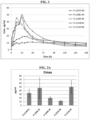
- the blood plasma concentration curves for all tested formulations are shown in FIG. 1 .
- the lowest plasma levels and the slowest penetration rate resulted from the glycerine-based gels (batches R-12074 and R-12081).
- the propylene glycol (PG)-based formulations penetrated faster, achieving Tmax by 12-24 hrs.
- the penetration of the ointment was comparable to the PG-based gels.
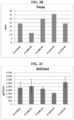
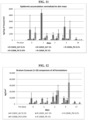
- FIG. 2A , 2B, and 2C provide the results of an analysis of pharmacokinetic parameters (Cmax, Tmax, and AUClast, respectively) resulting from testing of inventive formulations for the ability to avoid systemic effect.
- FIG. 3A and FIG. 3B show the results of an evaluation of the degree of accumulation of detomidine HCl in epidermis and dermis, respectively, following application of the inventive formulations described in Table 1, as expressed in terms of ng/cm 2 .
- Table 2 provides the coefficient of variation percentage for each of the tested formulations in the epidermis and dermis at 12 and 24 hours.
- FIGS. 4A and FIG. 4B show the results of an evaluation of the degree of accumulation of detomidine HCl in epidermis and dermis, respectively, as expressed in terms of percentage of applied dose. After 12 h, 10-26% of the applied dose penetrated into epidermis, and 0.3-1.3% of the applied dose penetrated into dermis. At 24 h, between 9-85% of the applied dose penetrated into epidermis, and 1-5% of the applied dose penetrated into dermis. This data showed that a high proportion of the applied dose could be found in the skin 24 hours later.
- the total test period was five days, with each formulation being applied on the day of surgery (day 0) and then twice per day for the following four days (days 1-4), once in the morning and again about 6-8 hours later.
- Von Frey filaments Ugo Basile
- Filaments were applied until the animal withdrew from the stimuli. Each filament was applied 3-5 times. If withdrawal was not achieved, a thicker filament was applied. If a withdrawal was achieved, a thinner filament was applied (thicker or thinner refers to higher/thicker or lower/thinner gram force). By alternating (3 times) the filament thickness, the force required to achieve withdrawal reaction was determined and recorded.
- Withdrawal reaction was considered as the act of moving away from the stimuli - either by walking away or by twisting of the flank.
- Tail waving alone was not considered as a withdrawal reaction.
- the stimulus was applied on the flank while the pigs were being fed by a specifically assigned researcher to whom the animals were acclimatized. This procedure was carried out on study day 0, at 1,3,5 and 7 hours post surgery. Then again 1 h pre- and post-AM dosing on study days 1-4.
- the before-dosing testing was intended to assess the duration of effect between doses and the after dosing testing assessed the effect immediately after dosing and any accumulation multiple dosing effect. Blood was drawn at each time point, and at the end of the study, blood and tissue were collected.
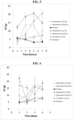
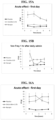
- FIG. 5 shows the von Frey response with respect to each of the tested formulations as measured during the first few hours following topical application immediately after surgery. The scale is in hours following application of the formulations.
- FIG. 6 shows the von Frey response with respect to each of the tested formulations as measured one hour following each topical application over four days.
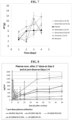
- FIG. 7 shows the von Frey response with respect to each of the tested formulations as measured 15 hours following the preceding evening's dose, and before the first dose of the current day, over four days.
- Ropivacaine consistently reduced pain sensitivity as evidenced by 12-23 grams being required to induce a pain response (avoidance) over the course of five days.
- Clonidine over the course of the week, also reached 20g of force necessary to evoke a response.
- 1% detomidine in glycerin and 0.33% detomidine in glycerin were virtually identical in their efficacy over the 5 day period, requiring 18g force to cause the pigs to feel the von Frey filaments.
- Two-way RM ANOVA showed no significant difference due to treatment between these two groups as well as between them and the ropivacaine and clonidine formulations.
- glycerin During the first day after surgery, 1% detomidine in glycerin was effective within 3 hours of administration.
- the glycerin formulation showed a dose-response effect that was not seen with the PG formulation, which had less efficacy.
- FIG. 8 shows the plasma concentration that was measured with respect to each formulation over time following a first dose on Day 0 and prior to the first dose on each of Days 1-4.
- FIG. 9 shows plasma concentrations that were measured with respect to the test formulations over time following a final dose on the fourth day of the pharmacokinetic evaluation.
- FIG. 10 shows the results of an assessment of the degree of accumulation of detomidine over time in the dermis resulting from application of the test formulations.
- FIG. 11 shows the results of an assessment of the degree of accumulation of detomidine over time in the epidermis.
- the drug levels in the epidermis were 10-100 fold higher than in the dermis. Minimal difference was observed between the Gly and PG-based formulations, but it appears that higher detomidine levels were achieved with 1% strength both in dermis and epidermis; However, the comparison of the drug levels in dermis and epidermis from different formulations should be treated with circumspection due to high variability across the animals.
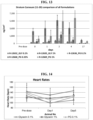
- FIG. 12 shows the results of an assessment of the degree of accumulation of detomidine over time in the stratum corneum, strips 1-10, resulting from application of the test formulations
- FIG. 13 shows the results of an assessment of the degree of accumulation of detomidine over time in the stratum corneum, strips 11-20, resulting from application of the test formulations.
- higher strip numbers correspond to deeper (lower) levels of stratum corneum.
- FIG. 14 shows the results of an assessment of heart rate of the test pigs over time following administration of the test formulations.
- the data show that, from a safety perspective, no negative cardiovascular effects were recorded, i.e ., no drops in heart rates, and no visible skin irritation was observed due to any of the treatments.
- a formulation (batch R-14515) was also prepared comprising 0.33% detomidine HCl, 1.75% hydroxyethyl cellulose (Natrosol 250HH), 1% glycerin, 0.33% propylene glycol, 0.02% benzalkonium chloride as 0.5% sol in water, and citrate buffer 0.05 M pH 5.5 to 100%, but this formulation was not tested.
- FIG. 15A shows the von Frey response with respect to the formulation containing 0.1% clonidine, to Naropin ® (ropivacaine HCl), and to the placebo formulation as measured following topical application immediately after surgery. The scale is in hours following application of the formulations.
- FIG. 15B shows the von Frey response with respect to each of these materials as measured one hour following each topical application over five days.
- FIG. 16A provides a comparison among the von Frey responses with respect to the formulation containing 0.1% detomidine, the Naropin ® (ropivacaine HCl), and the placebo formulation as measured following topical application immediately after surgery. The scale is in hours following application of the formulations.
- FIG. 16B shows the von Frey response with respect to each of these formulations as measured one hour following each topical application over five days.
- FIG. 17A provides a comparison among the von Frey responses with respect to all experimental formulations, as well as the placebo formulation, the Naropin ® (ropivacaine HCl), and the 0.1% clonidine formulation, as measured following topical application immediately after surgery. The scale is in hours following application of the formulations.
- FIG. 17B shows the von Frey response with respect to each of these formulations as measured one hour after each topical application over five days.
- FIG. 18 provides a comparison of the von Frey responses among the dose strengths over all days of the study. These comparisons demonstrate the bell shape efficacy response of the different detomidine strength formulations.
- a positive control formulation containing 1.0% Naropin ® (ropivacaine HCl) 5 mL SC injection was also prepared.
- FIG. 19 shows the von Frey response with respect to each of the tested formulations as measured during the first few hours following topical application immediately after surgery. The scale is in hours following application of the formulations.
- FIG. 20 shows the von Frey response with respect to each of the tested formulations as measured one hour following each topical application over five days.
- FIG. 21 shows the von Frey response with respect to each of the tested formulations as measured 15 hours following the preceding evening's dose, and before the first dose of the current day, over five days.
Landscapes
- Health & Medical Sciences (AREA)
- Chemical & Material Sciences (AREA)
- General Health & Medical Sciences (AREA)
- Veterinary Medicine (AREA)
- Medicinal Chemistry (AREA)
- Pharmacology & Pharmacy (AREA)
- Life Sciences & Earth Sciences (AREA)
- Animal Behavior & Ethology (AREA)
- Public Health (AREA)
- Epidemiology (AREA)
- Chemical Kinetics & Catalysis (AREA)
- General Chemical & Material Sciences (AREA)
- Engineering & Computer Science (AREA)
- Nuclear Medicine, Radiotherapy & Molecular Imaging (AREA)
- Organic Chemistry (AREA)
- Neurology (AREA)
- Oil, Petroleum & Natural Gas (AREA)
- Bioinformatics & Cheminformatics (AREA)
- Biomedical Technology (AREA)
- Neurosurgery (AREA)
- Pain & Pain Management (AREA)
- Dermatology (AREA)
- Rheumatology (AREA)
- Inorganic Chemistry (AREA)
- Medicinal Preparation (AREA)
- Pharmaceuticals Containing Other Organic And Inorganic Compounds (AREA)
- Medicines That Contain Protein Lipid Enzymes And Other Medicines (AREA)
Applications Claiming Priority (2)
| Application Number | Priority Date | Filing Date | Title |
|---|---|---|---|
| US201762443174P | 2017-01-06 | 2017-01-06 | |
| PCT/US2018/012579 WO2018129313A1 (en) | 2017-01-06 | 2018-01-05 | Topical detomidine formulations |
Publications (2)
| Publication Number | Publication Date |
|---|---|
| EP3565526A1 EP3565526A1 (en) | 2019-11-13 |
| EP3565526B1 true EP3565526B1 (en) | 2024-04-17 |
Family
ID=61054537
Family Applications (1)
| Application Number | Title | Priority Date | Filing Date |
|---|---|---|---|
| EP18701853.6A Active EP3565526B1 (en) | 2017-01-06 | 2018-01-05 | Topical detomidine formulations |
Country Status (15)
| Country | Link |
|---|---|
| US (2) | US20190343805A1 (enExample) |
| EP (1) | EP3565526B1 (enExample) |
| JP (1) | JP2020505322A (enExample) |
| KR (1) | KR20190110561A (enExample) |
| CN (1) | CN110114059A (enExample) |
| AU (1) | AU2018205217B2 (enExample) |
| BR (1) | BR112019011961A2 (enExample) |
| CA (1) | CA3049389A1 (enExample) |
| DK (1) | DK3565526T3 (enExample) |
| ES (1) | ES2982022T3 (enExample) |
| HU (1) | HUE068070T2 (enExample) |
| IL (1) | IL266448B2 (enExample) |
| MX (1) | MX382949B (enExample) |
| PL (1) | PL3565526T3 (enExample) |
| WO (1) | WO2018129313A1 (enExample) |
Families Citing this family (5)
| Publication number | Priority date | Publication date | Assignee | Title |
|---|---|---|---|---|
| US20210137830A1 (en) * | 2018-07-11 | 2021-05-13 | Clexio Biosciences Ltd. | Topical detomidine formulations |
| WO2020016827A1 (en) * | 2018-07-18 | 2020-01-23 | Clexio Biosciences Ltd. | Purified crystalline detomidine hydrochloride monohydrate, anhydrate and free base with low amounts of iso-detomidine and other impurities by recrystallisation in water |
| KR20220002950A (ko) * | 2019-05-01 | 2022-01-07 | 클렉시오 바이오사이언시스 리미티드 | 소양증의 치료 방법 |
| WO2020222192A1 (en) | 2019-05-01 | 2020-11-05 | Clexio Biosciences Ltd. | Methods of treating pruritus |
| FR3169318A1 (fr) | 2024-12-11 | 2026-06-12 | Tarian Pharma | Composition comprenant un vasoconstricteur pour prevenir et/ou traiter des neuropathies peripheriques et/ou douleurs neuropathiques |
Family Cites Families (7)
| Publication number | Priority date | Publication date | Assignee | Title |
|---|---|---|---|---|
| DE10256774A1 (de) * | 2002-12-05 | 2004-06-24 | Lts Lohmann Therapie-Systeme Ag | Transmucosale und transdermale Arzneimittel mit verbesserter Wirkstoffresorption |
| FI20041425A0 (fi) * | 2004-11-05 | 2004-11-05 | Orion Corp | Transmukosaalinen veterinäärinen koostumus |
| EP2558101A4 (en) * | 2010-04-15 | 2013-09-18 | Univ Mcgill | TOPICAL TREATMENTS OF PAIN |
| WO2013076160A1 (en) * | 2011-11-21 | 2013-05-30 | Université Libre de Bruxelles | Sustained release formulations useful in the treatment of diseases |
| EP2803668A1 (en) * | 2013-05-17 | 2014-11-19 | Boehringer Ingelheim International Gmbh | Novel (cyano-dimethyl-methyl)-isoxazoles and -[1,3,4]thiadiazoles |
| JP6621747B2 (ja) * | 2013-08-14 | 2019-12-18 | ザ ボード オブ トラスティーズ オブ ザ レランド スタンフォード ジュニア ユニバーシティー | 疼痛を制御するための組成物及び方法 |
| US20150057351A1 (en) * | 2013-08-22 | 2015-02-26 | Sucampo Ag | Method for treating neuropathic pain |
-
2018
- 2018-01-05 ES ES18701853T patent/ES2982022T3/es active Active
- 2018-01-05 JP JP2019531615A patent/JP2020505322A/ja active Pending
- 2018-01-05 BR BR112019011961-2A patent/BR112019011961A2/pt not_active IP Right Cessation
- 2018-01-05 CN CN201880005492.XA patent/CN110114059A/zh active Pending
- 2018-01-05 CA CA3049389A patent/CA3049389A1/en active Pending
- 2018-01-05 PL PL18701853.6T patent/PL3565526T3/pl unknown
- 2018-01-05 EP EP18701853.6A patent/EP3565526B1/en active Active
- 2018-01-05 US US16/475,452 patent/US20190343805A1/en not_active Abandoned
- 2018-01-05 WO PCT/US2018/012579 patent/WO2018129313A1/en not_active Ceased
- 2018-01-05 IL IL266448A patent/IL266448B2/en unknown
- 2018-01-05 DK DK18701853.6T patent/DK3565526T3/da active
- 2018-01-05 AU AU2018205217A patent/AU2018205217B2/en not_active Ceased
- 2018-01-05 HU HUE18701853A patent/HUE068070T2/hu unknown
- 2018-01-05 KR KR1020197023046A patent/KR20190110561A/ko not_active Ceased
- 2018-01-05 MX MX2019008115A patent/MX382949B/es unknown
-
2023
- 2023-01-30 US US18/161,215 patent/US20230172909A1/en not_active Abandoned
Also Published As
| Publication number | Publication date |
|---|---|
| JP2020505322A (ja) | 2020-02-20 |
| IL266448B2 (en) | 2023-11-01 |
| ES2982022T3 (es) | 2024-10-14 |
| CA3049389A1 (en) | 2018-07-12 |
| HUE068070T2 (hu) | 2024-12-28 |
| US20230172909A1 (en) | 2023-06-08 |
| WO2018129313A1 (en) | 2018-07-12 |
| MX382949B (es) | 2025-03-13 |
| EP3565526A1 (en) | 2019-11-13 |
| PL3565526T3 (pl) | 2024-09-09 |
| BR112019011961A2 (pt) | 2019-11-05 |
| KR20190110561A (ko) | 2019-09-30 |
| IL266448B1 (en) | 2023-07-01 |
| AU2018205217B2 (en) | 2023-11-09 |
| IL266448A (en) | 2019-06-30 |
| MX2019008115A (es) | 2019-10-24 |
| CN110114059A (zh) | 2019-08-09 |
| AU2018205217A1 (en) | 2019-05-23 |
| US20190343805A1 (en) | 2019-11-14 |
| DK3565526T3 (en) | 2024-05-13 |
Similar Documents
| Publication | Publication Date | Title |
|---|---|---|
| US20230172909A1 (en) | Topical detomidine formulations | |
| US8609722B2 (en) | Anesthetic composition for topical administration comprising lidocaine, prilocaine and tetracaine | |
| JP6112867B2 (ja) | サキシトキシン誘導体での触覚の喪失の処置 | |
| US20180369136A1 (en) | Devices and methods for transdermal treatment of basal cell carcinoma | |
| US11446257B2 (en) | Transdermal drug delivery system | |
| JP2013516482A (ja) | 局所経皮用デクスメデトミジン組成物およびそれらの使用方法 | |
| US20140037713A1 (en) | Transdermal compositions for anti-cholinergic agents | |
| AU2007269896A1 (en) | Ropinirole-containing pharmaceutical compositions in the form of a gel, uses thereof | |
| US20040131665A1 (en) | Topical anesthetic formulation | |
| EP2777689A1 (en) | New pharmaceutical composition for the treatment of fungal infections | |
| JP7534795B2 (ja) | そう痒症を治療する方法 | |
| CN107921137A (zh) | 组合物和治疗方法 | |
| EP2611445B1 (en) | High dose buprenorphine compositions and use as analgesic | |
| KR20080097420A (ko) | 티오우레아 유도체를 함유하는 소양성 또는 자극성피부질환의 예방 또는 치료용 외용제 조성물 | |
| JP7187310B2 (ja) | Vegf阻害剤の局所投与による皮膚障害の処置 | |
| JP7257378B2 (ja) | 水中油型エマルション | |
| US20220305076A1 (en) | Topical cyclosporine for treating psoriasis and other ailments | |
| WO2020222192A1 (en) | Methods of treating pruritus | |
| JP6016085B2 (ja) | 抗真菌外用組成物及び抗真菌外用組成物の適用方法 | |
| US20250195413A1 (en) | Compositions and methods for treating hair loss | |
| AU2015277554A1 (en) | Transdermal formulations of pergolide and uses thereof |
Legal Events
| Date | Code | Title | Description |
|---|---|---|---|
| STAA | Information on the status of an ep patent application or granted ep patent |
Free format text: STATUS: UNKNOWN |
|
| STAA | Information on the status of an ep patent application or granted ep patent |
Free format text: STATUS: THE INTERNATIONAL PUBLICATION HAS BEEN MADE |
|
| PUAI | Public reference made under article 153(3) epc to a published international application that has entered the european phase |
Free format text: ORIGINAL CODE: 0009012 |
|
| STAA | Information on the status of an ep patent application or granted ep patent |
Free format text: STATUS: REQUEST FOR EXAMINATION WAS MADE |
|
| 17P | Request for examination filed |
Effective date: 20190706 |
|
| AK | Designated contracting states |
Kind code of ref document: A1 Designated state(s): AL AT BE BG CH CY CZ DE DK EE ES FI FR GB GR HR HU IE IS IT LI LT LU LV MC MK MT NL NO PL PT RO RS SE SI SK SM TR |
|
| AX | Request for extension of the european patent |
Extension state: BA ME |
|
| DAV | Request for validation of the european patent (deleted) | ||
| STAA | Information on the status of an ep patent application or granted ep patent |
Free format text: STATUS: EXAMINATION IS IN PROGRESS |
|
| 17Q | First examination report despatched |
Effective date: 20210114 |
|
| REG | Reference to a national code |
Ref country code: DE Free format text: PREVIOUS MAIN CLASS: A61K0009000000 Ref country code: DE Ref legal event code: R079 Ref document number: 602018068135 Country of ref document: DE Free format text: PREVIOUS MAIN CLASS: A61K0009000000 Ipc: A61K0031416400 |
|
| GRAP | Despatch of communication of intention to grant a patent |
Free format text: ORIGINAL CODE: EPIDOSNIGR1 |
|
| STAA | Information on the status of an ep patent application or granted ep patent |
Free format text: STATUS: GRANT OF PATENT IS INTENDED |
|
| RIC1 | Information provided on ipc code assigned before grant |
Ipc: A61K 47/10 20170101ALI20230606BHEP Ipc: A61K 47/38 20060101ALI20230606BHEP Ipc: A61K 47/32 20060101ALI20230606BHEP Ipc: A61K 9/00 20060101ALI20230606BHEP Ipc: A61P 25/02 20060101ALI20230606BHEP Ipc: A61K 31/4168 20060101ALI20230606BHEP Ipc: A61K 31/4164 20060101AFI20230606BHEP |
|
| INTG | Intention to grant announced |
Effective date: 20230703 |
|
| GRAJ | Information related to disapproval of communication of intention to grant by the applicant or resumption of examination proceedings by the epo deleted |
Free format text: ORIGINAL CODE: EPIDOSDIGR1 |
|
| STAA | Information on the status of an ep patent application or granted ep patent |
Free format text: STATUS: EXAMINATION IS IN PROGRESS |
|
| GRAP | Despatch of communication of intention to grant a patent |
Free format text: ORIGINAL CODE: EPIDOSNIGR1 |
|
| STAA | Information on the status of an ep patent application or granted ep patent |
Free format text: STATUS: GRANT OF PATENT IS INTENDED |
|
| INTC | Intention to grant announced (deleted) | ||
| INTG | Intention to grant announced |
Effective date: 20231124 |
|
| GRAS | Grant fee paid |
Free format text: ORIGINAL CODE: EPIDOSNIGR3 |
|
| GRAA | (expected) grant |
Free format text: ORIGINAL CODE: 0009210 |
|
| STAA | Information on the status of an ep patent application or granted ep patent |
Free format text: STATUS: THE PATENT HAS BEEN GRANTED |
|
| AK | Designated contracting states |
Kind code of ref document: B1 Designated state(s): AL AT BE BG CH CY CZ DE DK EE ES FI FR GB GR HR HU IE IS IT LI LT LU LV MC MK MT NL NO PL PT RO RS SE SI SK SM TR |
|
| P01 | Opt-out of the competence of the unified patent court (upc) registered |
Effective date: 20240311 |
|
| REG | Reference to a national code |
Ref country code: GB Ref legal event code: FG4D |
|
| REG | Reference to a national code |
Ref country code: CH Ref legal event code: EP |
|
| REG | Reference to a national code |
Ref country code: DE Ref legal event code: R096 Ref document number: 602018068135 Country of ref document: DE |
|
| REG | Reference to a national code |
Ref country code: IE Ref legal event code: FG4D |
|
| REG | Reference to a national code |
Ref country code: DK Ref legal event code: T3 Effective date: 20240508 |
|
| REG | Reference to a national code |
Ref country code: SE Ref legal event code: TRGR |
|
| RAP4 | Party data changed (patent owner data changed or rights of a patent transferred) |
Owner name: CLEXIO BIOSCIENCES LTD. |
|
| REG | Reference to a national code |
Ref country code: LT Ref legal event code: MG9D |
|
| REG | Reference to a national code |
Ref country code: NL Ref legal event code: FP |
|
| REG | Reference to a national code |
Ref country code: AT Ref legal event code: MK05 Ref document number: 1676587 Country of ref document: AT Kind code of ref document: T Effective date: 20240417 |
|
| PG25 | Lapsed in a contracting state [announced via postgrant information from national office to epo] |
Ref country code: IS Free format text: LAPSE BECAUSE OF FAILURE TO SUBMIT A TRANSLATION OF THE DESCRIPTION OR TO PAY THE FEE WITHIN THE PRESCRIBED TIME-LIMIT Effective date: 20240817 |
|
| PG25 | Lapsed in a contracting state [announced via postgrant information from national office to epo] |
Ref country code: BG Free format text: LAPSE BECAUSE OF FAILURE TO SUBMIT A TRANSLATION OF THE DESCRIPTION OR TO PAY THE FEE WITHIN THE PRESCRIBED TIME-LIMIT Effective date: 20240417 |
|
| PG25 | Lapsed in a contracting state [announced via postgrant information from national office to epo] |
Ref country code: HR Free format text: LAPSE BECAUSE OF FAILURE TO SUBMIT A TRANSLATION OF THE DESCRIPTION OR TO PAY THE FEE WITHIN THE PRESCRIBED TIME-LIMIT Effective date: 20240417 Ref country code: FI Free format text: LAPSE BECAUSE OF FAILURE TO SUBMIT A TRANSLATION OF THE DESCRIPTION OR TO PAY THE FEE WITHIN THE PRESCRIBED TIME-LIMIT Effective date: 20240417 |
|
| PG25 | Lapsed in a contracting state [announced via postgrant information from national office to epo] |
Ref country code: GR Free format text: LAPSE BECAUSE OF FAILURE TO SUBMIT A TRANSLATION OF THE DESCRIPTION OR TO PAY THE FEE WITHIN THE PRESCRIBED TIME-LIMIT Effective date: 20240718 |
|
| PG25 | Lapsed in a contracting state [announced via postgrant information from national office to epo] |
Ref country code: PT Free format text: LAPSE BECAUSE OF FAILURE TO SUBMIT A TRANSLATION OF THE DESCRIPTION OR TO PAY THE FEE WITHIN THE PRESCRIBED TIME-LIMIT Effective date: 20240819 |
|
| REG | Reference to a national code |
Ref country code: ES Ref legal event code: FG2A Ref document number: 2982022 Country of ref document: ES Kind code of ref document: T3 Effective date: 20241014 |
|
| PG25 | Lapsed in a contracting state [announced via postgrant information from national office to epo] |
Ref country code: AT Free format text: LAPSE BECAUSE OF FAILURE TO SUBMIT A TRANSLATION OF THE DESCRIPTION OR TO PAY THE FEE WITHIN THE PRESCRIBED TIME-LIMIT Effective date: 20240417 |
|
| PG25 | Lapsed in a contracting state [announced via postgrant information from national office to epo] |
Ref country code: LV Free format text: LAPSE BECAUSE OF FAILURE TO SUBMIT A TRANSLATION OF THE DESCRIPTION OR TO PAY THE FEE WITHIN THE PRESCRIBED TIME-LIMIT Effective date: 20240417 |
|
| PG25 | Lapsed in a contracting state [announced via postgrant information from national office to epo] |
Ref country code: PT Free format text: LAPSE BECAUSE OF FAILURE TO SUBMIT A TRANSLATION OF THE DESCRIPTION OR TO PAY THE FEE WITHIN THE PRESCRIBED TIME-LIMIT Effective date: 20240819 Ref country code: NO Free format text: LAPSE BECAUSE OF FAILURE TO SUBMIT A TRANSLATION OF THE DESCRIPTION OR TO PAY THE FEE WITHIN THE PRESCRIBED TIME-LIMIT Effective date: 20240717 Ref country code: LV Free format text: LAPSE BECAUSE OF FAILURE TO SUBMIT A TRANSLATION OF THE DESCRIPTION OR TO PAY THE FEE WITHIN THE PRESCRIBED TIME-LIMIT Effective date: 20240417 Ref country code: IS Free format text: LAPSE BECAUSE OF FAILURE TO SUBMIT A TRANSLATION OF THE DESCRIPTION OR TO PAY THE FEE WITHIN THE PRESCRIBED TIME-LIMIT Effective date: 20240817 Ref country code: HR Free format text: LAPSE BECAUSE OF FAILURE TO SUBMIT A TRANSLATION OF THE DESCRIPTION OR TO PAY THE FEE WITHIN THE PRESCRIBED TIME-LIMIT Effective date: 20240417 Ref country code: GR Free format text: LAPSE BECAUSE OF FAILURE TO SUBMIT A TRANSLATION OF THE DESCRIPTION OR TO PAY THE FEE WITHIN THE PRESCRIBED TIME-LIMIT Effective date: 20240718 Ref country code: FI Free format text: LAPSE BECAUSE OF FAILURE TO SUBMIT A TRANSLATION OF THE DESCRIPTION OR TO PAY THE FEE WITHIN THE PRESCRIBED TIME-LIMIT Effective date: 20240417 Ref country code: BG Free format text: LAPSE BECAUSE OF FAILURE TO SUBMIT A TRANSLATION OF THE DESCRIPTION OR TO PAY THE FEE WITHIN THE PRESCRIBED TIME-LIMIT Effective date: 20240417 Ref country code: AT Free format text: LAPSE BECAUSE OF FAILURE TO SUBMIT A TRANSLATION OF THE DESCRIPTION OR TO PAY THE FEE WITHIN THE PRESCRIBED TIME-LIMIT Effective date: 20240417 Ref country code: RS Free format text: LAPSE BECAUSE OF FAILURE TO SUBMIT A TRANSLATION OF THE DESCRIPTION OR TO PAY THE FEE WITHIN THE PRESCRIBED TIME-LIMIT Effective date: 20240717 |
|
| REG | Reference to a national code |
Ref country code: HU Ref legal event code: AG4A Ref document number: E068070 Country of ref document: HU |
|
| PGFP | Annual fee paid to national office [announced via postgrant information from national office to epo] |
Ref country code: PL Payment date: 20241218 Year of fee payment: 8 |
|
| REG | Reference to a national code |
Ref country code: DE Ref legal event code: R097 Ref document number: 602018068135 Country of ref document: DE |
|
| PG25 | Lapsed in a contracting state [announced via postgrant information from national office to epo] |
Ref country code: EE Free format text: LAPSE BECAUSE OF FAILURE TO SUBMIT A TRANSLATION OF THE DESCRIPTION OR TO PAY THE FEE WITHIN THE PRESCRIBED TIME-LIMIT Effective date: 20240417 |
|
| PG25 | Lapsed in a contracting state [announced via postgrant information from national office to epo] |
Ref country code: CZ Free format text: LAPSE BECAUSE OF FAILURE TO SUBMIT A TRANSLATION OF THE DESCRIPTION OR TO PAY THE FEE WITHIN THE PRESCRIBED TIME-LIMIT Effective date: 20240417 |
|
| PG25 | Lapsed in a contracting state [announced via postgrant information from national office to epo] |
Ref country code: SK Free format text: LAPSE BECAUSE OF FAILURE TO SUBMIT A TRANSLATION OF THE DESCRIPTION OR TO PAY THE FEE WITHIN THE PRESCRIBED TIME-LIMIT Effective date: 20240417 Ref country code: RO Free format text: LAPSE BECAUSE OF FAILURE TO SUBMIT A TRANSLATION OF THE DESCRIPTION OR TO PAY THE FEE WITHIN THE PRESCRIBED TIME-LIMIT Effective date: 20240417 |
|
| PG25 | Lapsed in a contracting state [announced via postgrant information from national office to epo] |
Ref country code: SM Free format text: LAPSE BECAUSE OF FAILURE TO SUBMIT A TRANSLATION OF THE DESCRIPTION OR TO PAY THE FEE WITHIN THE PRESCRIBED TIME-LIMIT Effective date: 20240417 |
|
| PG25 | Lapsed in a contracting state [announced via postgrant information from national office to epo] |
Ref country code: SM Free format text: LAPSE BECAUSE OF FAILURE TO SUBMIT A TRANSLATION OF THE DESCRIPTION OR TO PAY THE FEE WITHIN THE PRESCRIBED TIME-LIMIT Effective date: 20240417 Ref country code: SK Free format text: LAPSE BECAUSE OF FAILURE TO SUBMIT A TRANSLATION OF THE DESCRIPTION OR TO PAY THE FEE WITHIN THE PRESCRIBED TIME-LIMIT Effective date: 20240417 Ref country code: RO Free format text: LAPSE BECAUSE OF FAILURE TO SUBMIT A TRANSLATION OF THE DESCRIPTION OR TO PAY THE FEE WITHIN THE PRESCRIBED TIME-LIMIT Effective date: 20240417 Ref country code: EE Free format text: LAPSE BECAUSE OF FAILURE TO SUBMIT A TRANSLATION OF THE DESCRIPTION OR TO PAY THE FEE WITHIN THE PRESCRIBED TIME-LIMIT Effective date: 20240417 Ref country code: CZ Free format text: LAPSE BECAUSE OF FAILURE TO SUBMIT A TRANSLATION OF THE DESCRIPTION OR TO PAY THE FEE WITHIN THE PRESCRIBED TIME-LIMIT Effective date: 20240417 |
|
| PGFP | Annual fee paid to national office [announced via postgrant information from national office to epo] |
Ref country code: NL Payment date: 20250127 Year of fee payment: 8 |
|
| PLBE | No opposition filed within time limit |
Free format text: ORIGINAL CODE: 0009261 |
|
| STAA | Information on the status of an ep patent application or granted ep patent |
Free format text: STATUS: NO OPPOSITION FILED WITHIN TIME LIMIT |
|
| PGFP | Annual fee paid to national office [announced via postgrant information from national office to epo] |
Ref country code: HU Payment date: 20241220 Year of fee payment: 8 |
|
| 26N | No opposition filed |
Effective date: 20250120 |
|
| PGFP | Annual fee paid to national office [announced via postgrant information from national office to epo] |
Ref country code: DE Payment date: 20250129 Year of fee payment: 8 |
|
| PGFP | Annual fee paid to national office [announced via postgrant information from national office to epo] |
Ref country code: DK Payment date: 20250127 Year of fee payment: 8 |
|
| PGFP | Annual fee paid to national office [announced via postgrant information from national office to epo] |
Ref country code: ES Payment date: 20250203 Year of fee payment: 8 |
|
| PGFP | Annual fee paid to national office [announced via postgrant information from national office to epo] |
Ref country code: SE Payment date: 20250127 Year of fee payment: 8 Ref country code: IE Payment date: 20250128 Year of fee payment: 8 |
|
| PG25 | Lapsed in a contracting state [announced via postgrant information from national office to epo] |
Ref country code: SI Free format text: LAPSE BECAUSE OF FAILURE TO SUBMIT A TRANSLATION OF THE DESCRIPTION OR TO PAY THE FEE WITHIN THE PRESCRIBED TIME-LIMIT Effective date: 20240417 |
|
| PGFP | Annual fee paid to national office [announced via postgrant information from national office to epo] |
Ref country code: CH Payment date: 20250201 Year of fee payment: 8 Ref country code: BE Payment date: 20250127 Year of fee payment: 8 |
|
| PGFP | Annual fee paid to national office [announced via postgrant information from national office to epo] |
Ref country code: FR Payment date: 20250127 Year of fee payment: 8 |
|
| PGFP | Annual fee paid to national office [announced via postgrant information from national office to epo] |
Ref country code: GB Payment date: 20250127 Year of fee payment: 8 Ref country code: IT Payment date: 20250121 Year of fee payment: 8 |
|
| PG25 | Lapsed in a contracting state [announced via postgrant information from national office to epo] |
Ref country code: MC Free format text: LAPSE BECAUSE OF FAILURE TO SUBMIT A TRANSLATION OF THE DESCRIPTION OR TO PAY THE FEE WITHIN THE PRESCRIBED TIME-LIMIT Effective date: 20240417 Ref country code: LU Free format text: LAPSE BECAUSE OF NON-PAYMENT OF DUE FEES Effective date: 20250105 |
|
| PG25 | Lapsed in a contracting state [announced via postgrant information from national office to epo] |
Ref country code: CY Free format text: LAPSE BECAUSE OF FAILURE TO SUBMIT A TRANSLATION OF THE DESCRIPTION OR TO PAY THE FEE WITHIN THE PRESCRIBED TIME-LIMIT Effective date: 20240417 |
|
| PG25 | Lapsed in a contracting state [announced via postgrant information from national office to epo] |
Ref country code: TR Free format text: LAPSE BECAUSE OF FAILURE TO SUBMIT A TRANSLATION OF THE DESCRIPTION OR TO PAY THE FEE WITHIN THE PRESCRIBED TIME-LIMIT Effective date: 20240417 |
|
| PG25 | Lapsed in a contracting state [announced via postgrant information from national office to epo] |
Ref country code: LT Free format text: LAPSE BECAUSE OF FAILURE TO SUBMIT A TRANSLATION OF THE DESCRIPTION OR TO PAY THE FEE WITHIN THE PRESCRIBED TIME-LIMIT Effective date: 20240417 |