EP3565214B1 - Systeme und methoden für den verschlüsselten austausch von fahrzeugdaten - Google Patents
Systeme und methoden für den verschlüsselten austausch von fahrzeugdaten Download PDFInfo
- Publication number
- EP3565214B1 EP3565214B1 EP19172019.2A EP19172019A EP3565214B1 EP 3565214 B1 EP3565214 B1 EP 3565214B1 EP 19172019 A EP19172019 A EP 19172019A EP 3565214 B1 EP3565214 B1 EP 3565214B1
- Authority
- EP
- European Patent Office
- Prior art keywords
- data service
- vehicle
- key
- message
- session
- Prior art date
- Legal status (The legal status is an assumption and is not a legal conclusion. Google has not performed a legal analysis and makes no representation as to the accuracy of the status listed.)
- Active
Links
Images




Classifications
-
- H—ELECTRICITY
- H04—ELECTRIC COMMUNICATION TECHNIQUE
- H04L—TRANSMISSION OF DIGITAL INFORMATION, e.g. TELEGRAPHIC COMMUNICATION
- H04L63/00—Network architectures or network communication protocols for network security
- H04L63/04—Network architectures or network communication protocols for network security for providing a confidential data exchange among entities communicating through data packet networks
- H04L63/0428—Network architectures or network communication protocols for network security for providing a confidential data exchange among entities communicating through data packet networks wherein the data content is protected, e.g. by encrypting or encapsulating the payload
- H04L63/0435—Network architectures or network communication protocols for network security for providing a confidential data exchange among entities communicating through data packet networks wherein the data content is protected, e.g. by encrypting or encapsulating the payload wherein the sending and receiving network entities apply symmetric encryption, i.e. same key used for encryption and decryption
-
- H—ELECTRICITY
- H04—ELECTRIC COMMUNICATION TECHNIQUE
- H04L—TRANSMISSION OF DIGITAL INFORMATION, e.g. TELEGRAPHIC COMMUNICATION
- H04L63/00—Network architectures or network communication protocols for network security
- H04L63/06—Network architectures or network communication protocols for network security for supporting key management in a packet data network
- H04L63/062—Network architectures or network communication protocols for network security for supporting key management in a packet data network for key distribution, e.g. centrally by trusted party
-
- H—ELECTRICITY
- H04—ELECTRIC COMMUNICATION TECHNIQUE
- H04L—TRANSMISSION OF DIGITAL INFORMATION, e.g. TELEGRAPHIC COMMUNICATION
- H04L63/00—Network architectures or network communication protocols for network security
- H04L63/04—Network architectures or network communication protocols for network security for providing a confidential data exchange among entities communicating through data packet networks
- H04L63/0428—Network architectures or network communication protocols for network security for providing a confidential data exchange among entities communicating through data packet networks wherein the data content is protected, e.g. by encrypting or encapsulating the payload
-
- G—PHYSICS
- G07—CHECKING-DEVICES
- G07C—TIME OR ATTENDANCE REGISTERS; REGISTERING OR INDICATING THE WORKING OF MACHINES; GENERATING RANDOM NUMBERS; VOTING OR LOTTERY APPARATUS; ARRANGEMENTS, SYSTEMS OR APPARATUS FOR CHECKING NOT PROVIDED FOR ELSEWHERE
- G07C5/00—Registering or indicating the working of vehicles
- G07C5/008—Registering or indicating the working of vehicles communicating information to a remotely located station
-
- H—ELECTRICITY
- H04—ELECTRIC COMMUNICATION TECHNIQUE
- H04L—TRANSMISSION OF DIGITAL INFORMATION, e.g. TELEGRAPHIC COMMUNICATION
- H04L63/00—Network architectures or network communication protocols for network security
- H04L63/08—Network architectures or network communication protocols for network security for authentication of entities
- H04L63/0853—Network architectures or network communication protocols for network security for authentication of entities using an additional device, e.g. smartcard, SIM or a different communication terminal
-
- H—ELECTRICITY
- H04—ELECTRIC COMMUNICATION TECHNIQUE
- H04L—TRANSMISSION OF DIGITAL INFORMATION, e.g. TELEGRAPHIC COMMUNICATION
- H04L63/00—Network architectures or network communication protocols for network security
- H04L63/10—Network architectures or network communication protocols for network security for controlling access to devices or network resources
-
- H—ELECTRICITY
- H04—ELECTRIC COMMUNICATION TECHNIQUE
- H04L—TRANSMISSION OF DIGITAL INFORMATION, e.g. TELEGRAPHIC COMMUNICATION
- H04L63/00—Network architectures or network communication protocols for network security
- H04L63/12—Applying verification of the received information
-
- H—ELECTRICITY
- H04—ELECTRIC COMMUNICATION TECHNIQUE
- H04L—TRANSMISSION OF DIGITAL INFORMATION, e.g. TELEGRAPHIC COMMUNICATION
- H04L67/00—Network arrangements or protocols for supporting network services or applications
- H04L67/01—Protocols
- H04L67/12—Protocols specially adapted for proprietary or special-purpose networking environments, e.g. medical networks, sensor networks, networks in vehicles or remote metering networks
-
- H—ELECTRICITY
- H04—ELECTRIC COMMUNICATION TECHNIQUE
- H04L—TRANSMISSION OF DIGITAL INFORMATION, e.g. TELEGRAPHIC COMMUNICATION
- H04L67/00—Network arrangements or protocols for supporting network services or applications
- H04L67/14—Session management
-
- H—ELECTRICITY
- H04—ELECTRIC COMMUNICATION TECHNIQUE
- H04L—TRANSMISSION OF DIGITAL INFORMATION, e.g. TELEGRAPHIC COMMUNICATION
- H04L9/00—Cryptographic mechanisms or cryptographic arrangements for secret or secure communications; Network security protocols
- H04L9/08—Key distribution or management, e.g. generation, sharing or updating, of cryptographic keys or passwords
- H04L9/0816—Key establishment, i.e. cryptographic processes or cryptographic protocols whereby a shared secret becomes available to two or more parties, for subsequent use
- H04L9/0819—Key transport or distribution, i.e. key establishment techniques where one party creates or otherwise obtains a secret value, and securely transfers it to the other(s)
- H04L9/0822—Key transport or distribution, i.e. key establishment techniques where one party creates or otherwise obtains a secret value, and securely transfers it to the other(s) using key encryption key
-
- H—ELECTRICITY
- H04—ELECTRIC COMMUNICATION TECHNIQUE
- H04L—TRANSMISSION OF DIGITAL INFORMATION, e.g. TELEGRAPHIC COMMUNICATION
- H04L9/00—Cryptographic mechanisms or cryptographic arrangements for secret or secure communications; Network security protocols
- H04L9/08—Key distribution or management, e.g. generation, sharing or updating, of cryptographic keys or passwords
- H04L9/0816—Key establishment, i.e. cryptographic processes or cryptographic protocols whereby a shared secret becomes available to two or more parties, for subsequent use
- H04L9/0819—Key transport or distribution, i.e. key establishment techniques where one party creates or otherwise obtains a secret value, and securely transfers it to the other(s)
- H04L9/0825—Key transport or distribution, i.e. key establishment techniques where one party creates or otherwise obtains a secret value, and securely transfers it to the other(s) using asymmetric-key encryption or public key infrastructure [PKI], e.g. key signature or public key certificates
-
- H—ELECTRICITY
- H04—ELECTRIC COMMUNICATION TECHNIQUE
- H04L—TRANSMISSION OF DIGITAL INFORMATION, e.g. TELEGRAPHIC COMMUNICATION
- H04L9/00—Cryptographic mechanisms or cryptographic arrangements for secret or secure communications; Network security protocols
- H04L9/08—Key distribution or management, e.g. generation, sharing or updating, of cryptographic keys or passwords
- H04L9/0861—Generation of secret information including derivation or calculation of cryptographic keys or passwords
-
- H—ELECTRICITY
- H04—ELECTRIC COMMUNICATION TECHNIQUE
- H04L—TRANSMISSION OF DIGITAL INFORMATION, e.g. TELEGRAPHIC COMMUNICATION
- H04L9/00—Cryptographic mechanisms or cryptographic arrangements for secret or secure communications; Network security protocols
- H04L9/08—Key distribution or management, e.g. generation, sharing or updating, of cryptographic keys or passwords
- H04L9/0861—Generation of secret information including derivation or calculation of cryptographic keys or passwords
- H04L9/0866—Generation of secret information including derivation or calculation of cryptographic keys or passwords involving user or device identifiers, e.g. serial number, physical or biometrical information, DNA, hand-signature or measurable physical characteristics
-
- H—ELECTRICITY
- H04—ELECTRIC COMMUNICATION TECHNIQUE
- H04L—TRANSMISSION OF DIGITAL INFORMATION, e.g. TELEGRAPHIC COMMUNICATION
- H04L9/00—Cryptographic mechanisms or cryptographic arrangements for secret or secure communications; Network security protocols
- H04L9/14—Cryptographic mechanisms or cryptographic arrangements for secret or secure communications; Network security protocols using a plurality of keys or algorithms
-
- H—ELECTRICITY
- H04—ELECTRIC COMMUNICATION TECHNIQUE
- H04L—TRANSMISSION OF DIGITAL INFORMATION, e.g. TELEGRAPHIC COMMUNICATION
- H04L9/00—Cryptographic mechanisms or cryptographic arrangements for secret or secure communications; Network security protocols
- H04L9/32—Cryptographic mechanisms or cryptographic arrangements for secret or secure communications; Network security protocols including means for verifying the identity or authority of a user of the system or for message authentication, e.g. authorization, entity authentication, data integrity or data verification, non-repudiation, key authentication or verification of credentials
- H04L9/3247—Cryptographic mechanisms or cryptographic arrangements for secret or secure communications; Network security protocols including means for verifying the identity or authority of a user of the system or for message authentication, e.g. authorization, entity authentication, data integrity or data verification, non-repudiation, key authentication or verification of credentials involving digital signatures
-
- H—ELECTRICITY
- H04—ELECTRIC COMMUNICATION TECHNIQUE
- H04W—WIRELESS COMMUNICATION NETWORKS
- H04W4/00—Services specially adapted for wireless communication networks; Facilities therefor
- H04W4/30—Services specially adapted for particular environments, situations or purposes
- H04W4/40—Services specially adapted for particular environments, situations or purposes for vehicles, e.g. vehicle-to-pedestrians [V2P]
-
- H—ELECTRICITY
- H04—ELECTRIC COMMUNICATION TECHNIQUE
- H04L—TRANSMISSION OF DIGITAL INFORMATION, e.g. TELEGRAPHIC COMMUNICATION
- H04L2209/00—Additional information or applications relating to cryptographic mechanisms or cryptographic arrangements for secret or secure communication H04L9/00
- H04L2209/84—Vehicles
-
- H—ELECTRICITY
- H04—ELECTRIC COMMUNICATION TECHNIQUE
- H04L—TRANSMISSION OF DIGITAL INFORMATION, e.g. TELEGRAPHIC COMMUNICATION
- H04L2463/00—Additional details relating to network architectures or network communication protocols for network security covered by H04L63/00
- H04L2463/061—Additional details relating to network architectures or network communication protocols for network security covered by H04L63/00 applying further key derivation, e.g. deriving traffic keys from a pair-wise master key
-
- H—ELECTRICITY
- H04—ELECTRIC COMMUNICATION TECHNIQUE
- H04L—TRANSMISSION OF DIGITAL INFORMATION, e.g. TELEGRAPHIC COMMUNICATION
- H04L9/00—Cryptographic mechanisms or cryptographic arrangements for secret or secure communications; Network security protocols
- H04L9/06—Cryptographic mechanisms or cryptographic arrangements for secret or secure communications; Network security protocols the encryption apparatus using shift registers or memories for block-wise or stream coding, e.g. DES systems or RC4; Hash functions; Pseudorandom sequence generators
-
- H—ELECTRICITY
- H04—ELECTRIC COMMUNICATION TECHNIQUE
- H04W—WIRELESS COMMUNICATION NETWORKS
- H04W12/00—Security arrangements; Authentication; Protecting privacy or anonymity
- H04W12/04—Key management, e.g. using generic bootstrapping architecture [GBA]
Definitions
- broadband IP-based datalinks to communicate operations information between the vehicles and their off-vehicle data management systems. This is in part because routing data through broadband IP-based datalinks tends to provide higher bandwidth and more cost-effective options as compared to traditional datalinks routed through Datalink Service Providers (DSPs).
- DSPs Datalink Service Providers
- messages spoofing the operator's central information management systems may be received by the vehicle from other users of the network, or even by passengers on the vehicle who are utilizing IP communications and entertainment services offer to passengers. Even if not manipulated, such communication exchanges could be monitored to obtain sensitive data not intended for public knowledge. In many instances, it is paramount that the on-vehicle communications functions are able to securely exchange communications with the off-vehicle data management systems ensure the safe and efficient operation of the vehicle.
- New and valid certificates would need to be loaded onto the avionics device to enable to sign downlink messages and authenticate uplink message.
- a certificate system would therefore increase the time necessary to perform that replacement, which can delay departure schedules.
- Symmetric key schemes which do not rely on certificates, and traditional certificate-based asymmetric key schemes are known, but these systems as they exists today also present problems. Specifically, they both force on the on-vehicle communications function the need to protect either the symmetric key, or the private key of a public/private asymmetric key pair, from disclosure to maintain communications integrity, which can increase the cost and complexity of the on-board equipment in order for it to provide the needed security.
- US2014/365694 discloses an accessory that can communicate wirelessly with a host device such as a portable electronic device.
- a host device such as a portable electronic device.
- Existing accessory protocols developed for wired communication can be used without modification, and a wireless network connecting the two devices can provide a transport or channel connecting the two devices.
- Establishing a wireless channel can involve the active participation of both devices.
- the host device can create and identify virtual port to be used by the accessory, after which the accessory can initiate communication on that virtual port.
- a host device can be configured to automatically connect to certain accessories upon detection of that accessory on a wireless network under various specific conditions. Encryption of accessory-protocol communications between an accessory and a host device is also provided.
- US2016/241389 discloses a system and method for confidential communication management.
- a server computer can include a protected server key identifier in a response message to a client computer.
- the protected server key identifier can include a server key identifier that identifies a server private key used to encrypt the response message.
- the client computer can pass the protected server key back in a subsequent request, so that the server computer can identify the proper server private key to use for decrypting the request message.
- a message may include encrypted protocol data (e.g., cipher suite) and separately encrypted payload data.
- the encrypted payload data can include a plurality of individually encrypted payload data elements.
- Embodiments of the present disclosure provide methods and systems for encrypted vehicle data service exchanges and will be understood by reading and studying the following specification.
- a vehicle communication manager device located onboard a vehicle comprises a memory comprising a non-volatile memory device storing a fixed embedded public key, wherein the embedded public key is a public key of a public-private key pair associated with a data service system not onboard the vehicle; a processor in communication with a wireless datalink transceiver; a vehicle data service protocol executed by the processor, wherein the vehicle data service protocol initiates a communication session for data service exchanges with the data service system via the wireless datalink transceiver; wherein the vehicle data service protocol causes the processor to: transmit a session request message to the data service system, and receive a session reply message from the data service system in response to the session request message, wherein the session reply message indicates if the vehicle communication manager is authorized for encrypted data service exchanges, and wherein the processor is configured to validate an authenticity of the session reply message using the embedded public key; determine whether to enable message encryption if the session reply message indicates that the vehicle communication manager is authorized for encrypted data service exchanges, and transmit an initialization request message to
- Embodiments described herein are based on a hybrid symmetric and public-private key system that utilizes an embedded public key in lieu of a public key certificate approach. Moreover, any need to store associated device private keys on the vehicle is eliminated.
- FIG. 1 is a diagram illustrating a vehicle diagram illustrating a vehicle data service system 100 of one embodiment of the present disclosure.
- vehicle data service system 100 includes a data service system 120 and at least one vehicle 110 that subscribes to data services offered by the data service system 120.
- Vehicle 110 is not limited to any one type of vehicle, but in alternate embodiments may comprise, for example, any form of automobile, truck, train, aircraft, spacecraft, or water vessel.
- Data service system 120 may comprise one or more network nodes, servers, data storage devices with databases and/or other devices configured to provide one or more vehicles, such as vehicle 110, with data such as but not limited to travel advisories, weather information, passenger and/or cargo manifests, gate and/or terminal information, destination and routing information and schedules, clearances, maintenance data, passenger entertainment, and/or public Internet connectivity.
- vehicle 110 comprises an aircraft and data service system 120 provides Aircraft Communications Addressing and Reporting System (ACARS) data services, which may be hosted, for example, by a government agency, an airline's operations department, or as a third-party subscription service.
- ACARS Aircraft Communications Addressing and Reporting System
- the data service system 120 comprises two primary components, a subscriber validation service 122 and at least one host data service 124.
- the host data service 124 comprises one or more servers that operate to provide vehicle 110 with the data described above through the exchange of uplink (UL) and downlink (DL) data service messages.
- the data service system 120 may comprise multiple host data services 124.
- two independent host data service 120 elements within the same data service system 120 may be utilized to provide load balance or to implements a secondary host data service 124 that acts as backup for a primary host data service 124.
- data service system 120 may include access to multiple host data services 124 separated from subscriber validation service 122, with each host data services 124 applicable to different fleet operators or airlines, for example. It should be noted that regardless of how many host data service 124 instances are accessible through the data service system 120, vehicle 110 will need to go through the subscriber validation service 122 first, before being granted access to any host data service 124.
- the subscriber validation service 122 functions to authenticate that vehicle 110 is authorized to access the services of the host data service 124, and provides the vehicle 110 with a set of public operational keys that are used for establishing communications with the host data service 124.
- the vehicle 110 need only ever store the public key of any public-private key pair, alleviating vehicle 110 of the complexities and/or expensive hardware needed to store private keys and the risks of having such private keys extracted from vehicle hardware by unscrupulous actors.
- the subscriber validations service 122 and host data service 124 may be integrated together as a single computing system and/or network operated by a single system operator.
- the subscriber validation service 122 may operate with one or more separate host data services 124 hosted on networks independent of those used for the subscriber validation service 122.
- access to data service providers may be offered as a service by the operator of the subscriber validation service 122 while the actual relevant data and servers to provide that data resides with the host data service 124.
- the subscriber validation service 122 and host data service 124 are not physically integrated as a single system, they may be communicatively connected by a proprietary communications link 107 between the two services.
- the subscriber validation service 122 and host data service 124 may each comprise network connections 106 with a network 105 (which may comprise an Internet Protocol (IP) network such as but not limited to the public Internet, for example) and communicate through network 105 via the network connections 106.
- IP Internet Protocol
- one or more of those available host data service 124 may be integrated with the subscriber validations service 122, while one or more other host data service 124 may be hosted on by operators on networks independent of those used for the subscriber validation service 122.
- the vehicle 110 establishes a wireless connection 104 with the network 105 through which it communicates to access the services of the data service system 120.
- the wireless connection 104 may be established using any applicable form of wireless connectivity including, but not limited to, IEEE 802.11 (WiFi), cellular communications, optical communications, or other radio and/or satellite communications.
- a vehicle communications manager 112 comprises the functionality to implement protocols, described below, for establishing communications between the vehicle 110 and the data service system 120.
- vehicle communications manager 112 may execute an Internet Protocol (IP) stack for exchanging messages and packets with the network 105.
- IP Internet Protocol
- the vehicle communications manager 112 may be implemented as one or more specialized hardware components onboard the vehicle.
- the functions attributed to the vehicle communications manager 112 may be virtualized or otherwise executed or performed by other onboard vehicle components.
- at least one component of the vehicle communications manager 112 stores an embedded public key (EPK) 114 with which it may authenticate messages from the subscriber validation service 122.
- EPK may be either hardcoded or otherwise embedded in a non-volatile memory storage device such as firmware, EPROM, non-volatile memory, or other non-volatile hardware components of the vehicle communications manager 112, for example.
- a non-volatile memory storage device may comprise any long-term persistent storage hardware that maintains saved data even when power is removed.
- EPK 114 is referred to herein as a self-reliant public key as it is a public key reliant on own authenticity and ability to authenticate messages from the subscriber validation service without the need for further resources beyond the EPK 114 itself.
- the vehicle communications manager 112 in the embodiments described herein never needs to obtain possession of any PKI private key in order to establish bidirectional authenticated communications with the data service system 120.
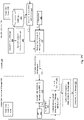
- FIG. 2 is a process flow diagram illustrating the process of establishing authenticated and encrypted communications between the vehicle communication manager 112 and the data service system 120 using the EPK 114.
- the fixed EPK 114 is utilized to setup a secure encrypted connection between the vehicle 112 and data service system 120 through distinct message exchange sequences which comprise a subscriber validation sequence 210 and a session initiation sequence 230. Successful completion of the subscriber validation sequence 210 and the session initiation sequence 230 leads to the ability to perform data service exchanges 250.
- the same EPK 114 may be embedded within and used across multiple vehicles on an operator's vehicle fleet.
- the EPK 114 may be set at the equipment factory so that equipment spare parts received and/or warehoused by the vehicle operator will already have the necessary key pre-installed EPK 114 for performing the exchange shown in Figure 2 . It should also be noted that the pre-installed EPK 114 may be refreshed during periodic vehicle upgrades to mitigate the risk of compromised associated private keys. As will be described in greater detail below, the embedded EPK is used to initiate the communications session. Once initiated, the subscriber validation service 122 will deliver a set of operational keys to the vehicle communication manager 112 in the subscriber validation sequence 210.
- the vehicle communication manager 112 and the host data service 124 will exchange information in order to each independently generate a shared message authentication and encryption keys that are known to both, unique to that communication session, and which may be used to authenticate and encrypt the exchange of uplink (UL) and downlink (DL) data service messages.
- UL uplink
- DL downlink
- the subscription validation sequence 210 begins at 212 where the vehicle communications manager 112 transmits a session request message 213 to the subscriber validation service 122 of the data service system 120.
- the session request message 213 comprises at least a protocol ID associated with the EPK 114 and a Client ID.
- the protocol ID indicates to the subscriber validation service 122 which version of the EPK 114 the vehicle communication manager 112 is using. That is, while the same EPK 114 may be used across multiple vehicles, it is also true that different sets of vehicle may operate using different EPKs. For example a firmware update to upgrade a vehicle communication manger 112 may also update the EPK 114 embedded in that vehicle communication manger 112.
- an operator's fleet may comprise some vehicles where the firmware update has been performed, and others where the firmware update has not been performed.
- the protocol ID thus indicates which EPK 114 the vehicle has so that the subscriber validation service 122 may access the correct associated private key that corresponds to the EPK 114.
- the Client ID may be used to identify the operator of the vehicle 110, or otherwise the holder of the subscription to the data service that vehicle 110 operates under. For example, where the data service system 120 offers services to multiple operators (for example, different airlines) the Client ID will identify said operator of vehicle 110.
- the subscriber validation service 122 will securely store a respective private key, referred to herein as a "subscriber verification private key", for each valid EPK which it recognizes as valid. For example, based on the protocol ID in the session request 213, the subscriber validation service 122 will retrieve and/or identify the subscriber verification private key associated with the EPK 114 as shown at 214. The subscriber validation service 122 will validate the current subscription status, as shown at 215, to authenticate that the session request 213 has been received by an authorized user of the data service system 120. For example, if the operator's subscription is suspended, the subscriber validation service 122 may decline to grant access, even if the EPK 114 is otherwise a valid key.
- subscriber verification private key for each valid EPK which it recognizes as valid. For example, based on the protocol ID in the session request 213, the subscriber validation service 122 will retrieve and/or identify the subscriber verification private key associated with the EPK 114 as shown at 214. The subscriber validation service 122 will validate the current subscription status,
- the subscriber validation service 122 may have access to a database or other data server in order to compare the Protocol ID and/or Client ID received with a listing of active subscriptions and determine whether the subscription held by the vehicle's operator includes encryption services.
- the subscriber validation service 122 can also at this point determine if the subscription further includes one or more optional services such a data compression, for example.
- the sequence 210 continues to 216 where the subscriber validation service 122 retrieves a set of public operational keys associated with the host data service 124 for which the vehicle 110 holds a valid subscription.
- the set of public operational keys includes a public operational authentication key (OAK) and a public operational encryption key (OEK).
- OAK public operational authentication key
- OEK public operational encryption key
- the public OAK and OEK are generated and provided by the host data service 124 to the subscriber validation service 122.
- the subscriber validation service 122 then generates and sends a session reply message 218 back to the vehicle communication manager 112.
- the session reply message 218 includes the public OAK and OEK and an indication of whether encryption service is authorized for the vehicle communication manager 112, and is signed by the Subscriber Verification Private Key.
- the session reply message 218 may further include a network address for the host data service 124.
- the network address for the host data service 124 may be based on subscription status information associated with the Protocol ID and/or Client ID.
- the vehicle communication manager 112 again does not receive, and thus has no reason to be configured to store, any private keys associated with the public OAK and OEK. Moreover, because the session reply message 218 is signed using the Subscriber Verification Private Key that corresponds to the EPK 114, the vehicle communication manager 112 may authenticate that the session reply message 218 is being received from a valid source as shown at 219.
- the session initiation sequence 230 begins at 232 with the vehicle communication manager 112 generating a Key Derivation Key (KDK) onboard the vehicle 110.
- KDK Key Derivation Key
- the vehicle communication manager 112 may also at this point determine whether to enable message encryption, based on whether it supports the capability and whether it is authorized per the session reply message 218.
- the KDK is encrypted using the public OEK.
- An initialization request message 234 is generated by the vehicle communication manager 112 which includes the encrypted KDK and optionally an indication of whether message encryption is elected.
- the initialization request message 234 is transmitted to the host data service 124.
- the initialization request message 234 may be transmitted back to the same network address that the session request 213 was transmitted to. In other embodiments where the host data service 124 and subscriber validation service 122 are not integrated, the initialization request message 234 may be transmitted to the network address indicated by the subscriber validation service 122 in the session reply message 218.
- the host data service 124 upon receiving the initialization request message 234 will decrypt the KDK using a private OEK corresponding to the public OEK, extract the KDK, and identify the election of an optional services, if applicable.
- the host data service 124 may then acknowledge receipt of the KDK by sending back to the vehicle communication manager 112 an initialization response message 237.
- the initialization response message may further confirm the election of optional services.
- the initialization response message 237 is signed by the host data service 124 using the private OAK so that when the vehicle communication manager 112 received the initialization response message 237, it may use the public OAK it received to validate that the initialization response message 237 is being received from a valid source as shown at 238.
- the vehicle communication manger 112 and the host data service 124 will both be in possession of a shared item of information, the KDK, that was initially generated on-board the vehicle at the beginning of the session initialization sequence 230. From this point, the vehicle communication manager 112 and host data service 124 will each independently generate a set of matching symmetric keys, referred to herein as the Message Authentication Key (MAK) and Message Encryption Key (MEK). More specifically, the vehicle communication manager 112 applies the KDK to a key derivation function (KDF) in order to generate a local copy of the Message Authentication Key (MAK) and Message Encryption Key (MEK) as shown at 240. Note that the MEK would not be generated if the encryption option is not authorized, elected, and confirmed via the session reply, initialization request, and initialization response messages, as discussed above.
- KDF key derivation function
- the MAK and MEK generated onboard the vehicle 110 are each locally stored by the vehicle communication manager 112.
- the host data service 124 also applies the KDK to the same KDF in order to generate an identical set of the Message Authentication Key (MAK) and Message Encryption Key (MEK), which are locally stored by the host data service 124.
- MAK Message Authentication Key
- MEK Message Encryption Key
- the KDF may further input additional data known to both the host data service 124 and vehicle communication manager 112 as seed data for generating the MAK and MEK.
- the KDF may input as additional seed data one or more parameters such as, but not limited to, a timestamp of the initialization request message 234, a timestamp of the initialization response message 237, the signature applied to the initialization response message 237, and/or the network address of the host data service 124.
- Inclusion of the timestamps of the initialization request message 234 and initialization response message 237 has the advantage of protecting against capture and replay attacks. For example, messages may be considered valid for only limited durations of time and alteration of timestamps will invalidate the signatures applied to those messages.
- the MEK may comprise a first message encryption key associated with data service uplink messages and a second message encryption key, different from the first message encryption key, associated with data service downlink messages.
- the vehicle communication manger 112 and the host data service 124 Upon completion of the session initiation sequence, the vehicle communication manger 112 and the host data service 124 will both be in possession of shared MEK and MAK, and encrypted data service exchanges may begin as shown in 250 to send information back and forth.
- the vehicle communication manager 112 may use the MEK to encrypt data service DL messages 253 (as shown at 252) and the host data service 124 may decrypt and extract received data service DL messages 253 using its copy of the same MEK (as shown at 254).
- the host data service 124 may encrypt data service UL messages 256 (as shown at 255) and the vehicle communication manager 112 may decrypt and extract receive data service UL messages 256 using the MEK (as shown at 257).
- the encryption algorithms used to encrypt the data service UL and DL messages may be a symmetric block or steam cipher that uses the MEK to transform plaintext into ciphertext.
- Such a symmetric cyrypto-algorithm may be executed very quickly so that the encryption process does not produce any significant latency issues.
- the entire process to arrive at the shared MAK and MEK keys is achieved without the need to ever store a private key onboard the vehicle 110 but still provide bidirectional authenticity, security and encryption.
- the subscriber validation service 122 and host data service 124 may be integrated, or alternatively separate and provided by different entities and hardware.
- the MAK and MEK are valid for the length of a single communications session. Once a connection is lost, the session ends the MAK and MEK become void.
- FIG. 2A is a process flow diagram illustrating a process of data service downlink message encryption during the data service exchanges 250 for one embodiment of the present disclosure.
- an application executed by an on-board processing resource generates a data service DL message.
- the application may comprise an ACARS application executed by an aircraft's Communication Management Unit.
- the data service DL message may comprise a request to obtain information from the host data service 124, or alternately a reply to provide information to the host data service 124.
- the vehicle communication manager 112 may apply that service to the data service DL message as shown at 261.
- the MEK is used in combination with an Initialization Vector (IV).
- IV Initialization Vector
- the data service DL message is encrypted at 264 as a function of the MEK 263 and an IV produced by an IV generator 265.
- the IV generator 265 produces a periodically changing arbitrary number.
- An IV value that is output by the IV generator 265 is used along with the MEK in order to perform the data encryption.
- an IV generator 268 located at the host data service 124 is programed to produce an identical IV as the IV generator 265 at any given point in time.
- the IV at any one point in time comprises a value that is simultaneously known to both the vehicle communication manager 122 and the host data service 124.
- the IV may be valid for only a given length of time after a data service DL message is encrypted.
- the current IV used in conjunction with the MEK 263 may change between messages.
- the encrypted data service DL message 253 is transmitted across the network 105 to the network address of the host data service 124.
- the MEK associated with vehicle 110 is stored in an MEK vault 266 within which the MEK for a specific vehicle 110 is kept encrypted using the private OEK associated with that vehicle 110. It should be understood that since the Host Data Service 124 may have multiple communication sessions established with multiple different vehicles, each vehicle's unique MEK will be securely stored in the MEK vault 266 and encrypted using the private OEK associated with each respective vehicle.
- the encrypted data service DL message 253 is received at the host data service 124, the appropriate MEK is retrieved from the MEK vault 266 and decrypted using the private OEK as shown at 267.
- the data service downlink (DL) message is then decrypted at 269 as a function of the just decrypted MEK and an Initialization Vector (IV) produced by an IV generator 268.
- the Host Data Service's IV generator 268 is programed so that it will compute an IV value matching the IV value generated by the onboard IV generator 265.
- the MEK and IV value used to encrypt the data service DL message at 264 will be the same MEK and IV value applied at 269 to decrypt the data service DL message at 269 and recover the data service DL message at 271.
- the corresponding recovery service such as decompression, can be applied at 270 to arrive at the original data service DL message at 271.
- Figure 2B is a process flow diagram illustrating a process of data service uplink message encryption during the data service exchanges 250 for one embodiment of the present disclosure.
- an application executed by the host data service 124 generates a data service UL message.
- the application may comprise an ACARS application.
- the data service UL message may comprise a request to obtain information from an application on the vehicle 110, or alternately a reply to provide information to an application on the vehicle 110.
- an optional service such as data compression is available, the host data service 124 may apply that service to the data service UL message as shown at 281.
- the appropriate MEK associated with the vehicle 110 is retrieved from the MEK vault 266 and decrypted using the private OEK as shown at 267.
- the data service UL message is then encrypted at 282 as a function of the MEK and an Initialization Vector (IV) produced by IV generator 268.
- the encrypted data service UL message 256 may then be transmitted across the network 105 to the vehicle communication manager 112.
- the host data service's IV generator 268 is programed so that it will compute an IV value matching the IV value generated by the onboard IV generator 265.
- the MEK and IV value used to encrypt the data service UL message at 282 will be the same MEK and IV value applied to decrypt the data service UL message at the Vehicle Communication Manager 112.
- the MEK 263 stored on-board the vehicle and the locally generated IV are applied to decrypt the Data Service UL message as shown at 283.
- the encrypted data service UL message 256 is further protected by the host data service 124 using the MAK, or signed using the private OAK or the MAK.
- the data service UL message may be authenticated at 284 (using the associated public OAK or MEK stored onboard vehicle 110) and then the signature subsequently removed at 285.
- optional services such as compression were applied at 281
- the corresponding recovery service such as decompression, can be applied at 285 to arrive at the original data service UL message at 286.
- DIR has a first value (e.g. 0x00) for DL messages and a second value (e.g. 0x01) for UL messages
- VALUE is a changing value simultaneously known to both IV generators 265 and 268, and PAD comprising one or more padding bits (for example, to bring the IVdata to a predetermined set bit length such as 128 bits in length).
- the function E( ) comprises an encryption function comprising an encryption algorithm such as, but not limited to AES128-CFB128 encryption and DATA is a padding of zeros, such as 128 bits of binary zeros.
- the resulting IV n is 128 bits in length and may be used for the encryption and decryption processes.
- 256 bits may be used, resulting in an IV n that is 256 in length and may be used for the encryption and decryption processes.
- other bit lengths may be used.
- Encrypted Data Service Message E KEY , IV ; Data Service Message
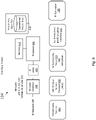
- FIG. 3 is a block diagram illustrating a vehicle communication manager 112 of one embodiment of the present disclosure.
- the elements of the vehicle communication manager 112 may be implemented using discrete hardware components.
- one or more the elements of the vehicle communication manager 112 may be virtualized and executed by processing hardware onboard the vehicle 110.
- the vehicle communication manager 112 described herein may be realized within either a communications management unit (CMU) device installed on the aircraft, or within a communications management function (CMF) executed via onboard processing hardware.
- CMU communications management unit
- CMS communications management function
- the vehicle communication manager 112 comprises a processor 310 coupled to a memory 312 and programed to execute code to perform the functions of the vehicle communication manager described in this disclosure.
- the processor 310 has access to a data storage hardware device 311 in which the EPK 114 is embedded.
- the processor is coupled to at least one wireless datalink transceiver 330 through which wireless communication links 104 with the network 105 are established.
- the network 105 comprises an IP network
- the vehicle communication manager 112 comprises an IP stack 320 through which communications traffic via links 104 are transmitted and received by the vehicle communication manager 112 are processed.
- the vehicle communication manager 112 further comprises a vehicle data service protocol 340 which may be stored in the memory 312 and executed by the processor 310 to carry out the subscription validation sequence 210, session initiation sequence 230 and data service exchanges 250 attributed to the vehicle communication manager 112.
- the vehicle communication manager 112 may further comprise at least one authentication and encryption function 350 stored in the memory 312 and executed by the processor 310 to carry out the message signing, authentication, encryption, and decryption processes for carrying out the subscription validation sequence 210, session initiation sequence 230 and data service exchanges 250.
- the vehicle communication manager 112 further comprises a temporary key store 360 (which may be within memory 312) for storing the public OAK and OEK, the KDK, and the MEK and MAK keys used through-out the subscription validation sequence 210, session initiation sequence 230 and data service exchanges 250. While the EPK 114 remains embedded within the vehicle communication manager for long term use, the keys stored in the key store may be discarded after a data service session is completed.
- a temporary key store 360 (which may be within memory 312) for storing the public OAK and OEK, the KDK, and the MEK and MAK keys used through-out the subscription validation sequence 210, session initiation sequence 230 and data service exchanges 250. While the EPK 114 remains embedded within the vehicle communication manager for long term use, the keys stored in the key store may be discarded after a data service session is completed.
- FIG. 4 is a block diagram illustrating a data service system 120 of one embodiment of the present disclosure where the subscriber validation service 122 and host data service 124 comprise an integrated implementation. That is, in this embodiment, the subscription service provider and the provider hosting the endpoint vehicle data services servers are the same.
- the data service system 120 comprises a processor 410 coupled to a memory 412 and programed to execute code to perform the functions of the data service system 120 described in this disclosure.
- the processor 410 has access to a private key vault 414 in which the subscriber verification private keys 416 are securely stored.
- the private key vault 414 comprises a secure hardware device vault or chip comprising protection mechanisms designed to store private keys in an encrypted format.
- the message when a message needs to be encrypted, decrypted, signed or authenticated using a private key, the message is sent to the private key vault 414 and processed internally by the private key vault 414 which then generates an output that is encrypted, decrypted, signed or authenticated using the appropriate private key.
- the private key vault 414 stores an associated subscriber verification private key for each respective EPK 114 recognized by the subscriber validation service 122.
- the private key vault 414 in this particular integrated embodiment also stores operational private keys 418, associated with the public OAK and OEK keys transmitted to the vehicle communication manager 112.
- the operational private keys 418 may be applied to messages by the processor 410 in the same manner as just described for the subscriber verification private keys 416.
- the processor 410 is coupled to at least one network interface 440 through which communication links 106 with the network 105 are established.
- the data service system 120 comprises an IP stack 420 through which communications traffic via links 106 are transmitted and received.
- the data service system 120 further comprises a vehicle data service protocol 455 which may be stored in the memory 412 and executed by the processor 410 to carry out the subscription validation sequence 210, session initiation sequence 230 and data service exchanges 250 attributed to the data service system 120.
- the data service system 120 further comprises a temporary key store 460 (which may be within memory 412) for storing the public OAK and OEK, the KDK, and the MAK and MEK keys used through-out the subscription validation sequence 210, session initiation sequence 230 and data service exchanges 250.
- the data service system 120 may further comprise at least one authentication and encryption function 465 stored in the memory 412 and executed by the processor 410 to carry out the message signing, authentication, encryption, and decryption processes using the public and symmetrical keys associated with those cryptographic processes performed at the data service system 120.
- the data service system 120 may further comprise the IV generator 268 which may be a stand-alone hardware component or an application executed by the processor 410.
- the data service system 120 comprises a subscription verification function 470 which may be stored in the memory 412 and executed by the processor 410 to perform the subscription status and options check at 215 of the subscription validation sequence.
- subscription status and options information is stored in the memory 412 which may be updated at some periodic basis.
- the subscription verification function 470 may then access this information from the memory 412.
- the subscription verification function 470 may communicate with another subscription status and options information (such as via network 105) in order to validate the subscription status and optional service available to a vehicle.
- the subscription verification function 470 may utilize the Protocol ID and/or Client ID to retrieve information regarding the subscription status, and encryption availability, and other optional service available to a vehicle.
- the vehicle data service 450 may comprise a plurality of functions executed by processor 410 and/or distributed across other processing systems for delivering the vehicle data services subscribed to by the operator of the vehicle 110. That is, the data service DL messages 253 and data service UL messages 256 exchanged with the vehicle communication manager 112 are processed by the vehicle data service 450 to provide the vehicle 110 with the data to which it subscribes.
- the vehicle data service 450 is the element of the host data service 124 that actually performs and provides the ACARS data services.
- FIGS 5 and 6 are block diagrams illustrating a data service system 120 of one embodiment of the present disclosure where the subscriber validation service 122 and host data service 124 are not integrated, but are instead fully separate services. That is, the functions of the subscriber validations service 112 and the host data service 124 are separated.
- the subscriber validation service 122 may receive the public OEK and OAK from the host data service 124 (so that it may forward them to the vehicle 110 to complete the subscription validation sequence 210) but not receive the associated private OEK and OAK, which are instead maintained strictly by the host data service 124.
- This configuration has the advantage of providing end-to-end security from the perspective of the host data service 124 because the subscriber validation service 122 is out of the loop and not involved in the communication of data service DL and UL messages, even though the subscriber validation service 122 will still first validate that the host data service 124 is authorized to have data service exchanges with a specific vehicle 110.
- the operator of the host data service 124 will generate and maintain the public and private OEK and OAK.
- FIG. 5 is a block diagram illustrating the subscriber validation service 122 for such an embodiment.
- the subscriber validation service 122 comprises a processor 510 coupled to a memory 512 and programed to execute code to perform the functions of the subscriber validation service 122 described in this disclosure.
- the processor 510 has access to a private key vault 514 in which the subscriber verification private keys 516 are securely stored.
- the private key vault 514 comprises a secure hardware device vault or chip comprising protection mechanisms designed to store private keys in an encrypted format such as described with respect to Figure 4 and private key vault 414.
- the message when a message needs to be signed or authenticated using a private key, the message is sent to the private key vault 514 and processed internally by the private key vault 514 which then generates an output that is signed or authenticated using the appropriate private key.
- the private key vault 514 stores an associated subscriber verification private key for each respective EPK 114 recognized by the subscriber validation service 122.
- the processor 510 is coupled to at least one network interface 540 through which one or more communication links 106 with the network 105 are established.
- the subscriber validation service 122 comprises an IP stack 520 through which communications traffic via links 106 are transmitted and received.
- the subscriber validation service 122 further comprises a vehicle data service protocol 555 which may be stored in the memory 412 and executed by the processor 410 to carry out the subscription validation sequence 210 attributed to the subscriber validation service 122.
- the subscriber validation service 122 further comprises a temporary key store 560 (which may be within memory 512) for storing the public OAK and OEK, keys used during the subscription validation sequence 210.
- the subscriber validation service 122 may further comprise at least one authentication function 565 stored in the memory 512 and executed by the processor 510 to carry out message signing and authentication processes using public keys.
- the subscriber validation service 122 comprises a subscription verification function 570 which may be stored in the memory 512 and executed by the processor 510 to perform the subscription status, encryption availability, and options check at 215 of the subscription validation sequence 210.
- subscription status, encryption availability, and options information is stored in the memory 512 which may be updated at some periodic basis.
- the subscription verification function 570 may then access this information from the memory 512.
- the subscription verification function 570 may communicate with another subscription status and options information (such as via network 105) in order to validate the subscription status and optional service available to a vehicle.
- the subscription verification function 570 may utilize the Protocol ID and/or Client ID to retrieve information regarding the subscription status and optional service available to a vehicle.
- FIG. 6 is a block diagram illustrating the host data service 124 for a non-integrated embodiment.
- the host data service 124 comprises a processor 610 coupled to a memory 612 and programed to execute code to perform the functions of the host data service 124 described in this disclosure.
- the processor 610 has access to a private key vault 614 in which securely stores the operational private keys 518 associated with the public OAK and OEK keys transmitted to the vehicle communication manager 112.
- the private key vault 614 comprises a secure hardware device vault or chip comprising protection mechanisms designed to store private keys in an encrypted format such as described with respect to Figure 4 and private key vault 414.
- the message when a message needs to be signed or authenticated using a private key, or the KDK decrypted using a private key, the message is sent to the private key vault 614 and processed internally by the private key vault 614 which then generates an output that is decrypted, signed /and or authenticated using the appropriate private key.
- the private key vault 614 stores an associated private OAK and OEK keys for each set of public OAK and OEK keys utilized for the host data service 124.
- the processor 610 is coupled to at least one network interface 640 through which one or more communication links 106 with the network 105 are established.
- the host data service 124 comprises an IP stack 620 through which communications traffic via links 106 are transmitted and received.
- the host data service 124 further comprises a vehicle data service protocol 555 which may be stored in the memory 612 and executed by the processor 610 to carry out the session initiation sequence 230 and data service exchanges 250 attributed to host data service 124.
- the host data service 124 further comprises a temporary key store 660 (which may be within memory 612) for storing the public OAK and OEK keys, the KDK, and the MAK and MEK keys used during the session initiation sequence 230 and data service exchanges 250.
- the host data service 124 may further comprise at least one authentication and encryption function 665 stored in the memory 612 and executed by the processor 610 to carry out message signing, authentication, encryption, and decryption processes using the public and symmetrical keys associated with those cryptographic processes performed at the host data service 124.
- the host data service 124 may further comprise the IV generator 268 which may be a stand-alone hardware component or an application executed by the processor 410.
- the host data service 124 further comprises the vehicle data service 650, which may include a plurality of functions executed by processor 610 and/or distributed across other processing systems for delivering the vehicle data services subscribed to by the operator of the vehicle 110. That is, the data service DL messages 253 and data service UL messages 256 exchanged with the vehicle communication manager 112 are processed by the vehicle data service 650 to provide the vehicle 110 with the data to which it subscribes.
- the vehicle data service 650 is the element of the host data service 124 that actually performs and provides the ACARS data services.
- system and/or device elements, method steps, or example implementations described throughout this disclosure may be implemented at least in part using one or more computer systems, field programmable gate arrays (FPGAs), or similar devices comprising a processor coupled to a memory and executing code to realize those elements, processes, or examples, said code stored on a non-transient hardware data storage device.
- FPGAs field programmable gate arrays
- FIG. 1 A block diagram illustrating an exemplary computing environment in accordance with the present disclosure.
- FIG. 1 A block diagram illustrating an exemplary computing environment in accordance with the present disclosure.
- FIG. 1 A block diagram illustrating an exemplary computing environment in accordance with the present disclosure.
- FIG. 1 A block diagram illustrating an exemplary computing environment in accordance with the present disclosure.
- FIG. 1 A block diagram illustrating an exemplary computing environment in accordance with the present disclosure.
- FIG. 1 A block diagram illustrating an exemplary computing environment in accordance with the present disclosure.
- FIG. 1 A block diagram illustrating an exemplary computing environment in accordance with the present disclosure.
- FIG. 1 A block diagram illustrating an exemplary computing environment in accordance with the present disclosure.
- FIG. 1 A block diagram illustrating an exemplary computing environment in accordance with the present disclosure.
- FIG. 1 A block diagram illustrating an exemplary computing environment in accordance with the present disclosure.
- FIG. 1 A block diagram illustrating an exemplary computing environment in accordance with the present disclosure.
Landscapes
- Engineering & Computer Science (AREA)
- Computer Security & Cryptography (AREA)
- Computer Networks & Wireless Communication (AREA)
- Signal Processing (AREA)
- Computing Systems (AREA)
- General Engineering & Computer Science (AREA)
- Computer Hardware Design (AREA)
- Medical Informatics (AREA)
- General Health & Medical Sciences (AREA)
- Health & Medical Sciences (AREA)
- Physics & Mathematics (AREA)
- General Physics & Mathematics (AREA)
- Mobile Radio Communication Systems (AREA)
- Small-Scale Networks (AREA)
Claims (8)
- Fahrzeug (110), das einen Fahrzeug-Kommunikationsmanager (112) zum Drahtlos-Zugreifen auf Abonnementdatendienste für das Fahrzeug (110) einschließt, der Fahrzeug-Kommunikationsmanager (112) umfassend:einen Speicher (312), der eine nichtflüchtige Speichervorrichtung umfasst, in der ein feststehender eingebetteter öffentlicher Schlüssel gespeichert ist, wobei der eingebettete öffentliche Schlüssel ein öffentlicher Schlüssel eines öffentlich-privaten Schlüsselpaars ist, das einem Datendienstsystem (120) zugeordnet ist, das sich nicht an Bord des Fahrzeugs (110) befindet;einen Prozessor (310) in Kommunikation mit einem Drahtlos-Datenverbindungstransceiver (330);wobei der Prozessor (310) zum Umsetzen von Code programmiert ist, um ein Fahrzeugdatendienstprotokoll (340) umzusetzen, wobei der Prozessor (310) gemäß dem Fahrzeugdatendienstprotokoll (340) über den Drahtlos-Datenverbindungstransceiver (330) eine Kommunikationssitzung für Datendienstaustauschvorgänge mit dem Datendienstsystem (120) einleitet;wobei gemäß dem Fahrzeugdatendienstprotokoll (340) der Prozessor (310) Code ausführt zum:Senden einer Sitzungsanforderungsnachricht (213) an das Datendienstsystem (120), und Empfangen einer Sitzungsantwortnachricht (218) von dem Datendienstsystem (120) als Antwort auf die Sitzungsanforderungsnachricht (213), wobei die Sitzungsanforderungsnachricht (213) mindestens eine Kennung einschließt, die den im Speicher (312) gespeicherten eingebetteten öffentlichen Schlüssel identifiziert, wobei die Sitzungsantwortnachricht (218) angibt, ob der Fahrzeugkommunikationsmanager (112) für verschlüsselte Datendienstaustauschvorgänge autorisiert ist, und wobei der Prozessor konfiguriert ist, eine Authentizität der Sitzungsantwortnachricht (218) unter Verwendung des eingebetteten öffentlichen Schlüssels zu validieren;Generieren eines Schlüsselableitungsschlüssels;Bestimmen, ob die Nachrichtenverschlüsselung aktiviert werden soll, wenn die Sitzungsantwortnachricht (218) angibt, dass der Fahrzeugkommunikationsmanager (112) für verschlüsselte Datendienstaustauschvorgänge autorisiert ist, und Senden einer Initialisierungsanforderungsnachricht (234) an das Datendienstsystem (120), das den Schlüsselableitungsschlüssel und eine Angabe einschließt, ob Nachrichtenverschlüsselung gewählt ist;wobei der Schlüsselableitungsschlüssel innerhalb der Initialisierungsanforderungsnachricht (234) unter Verwendung eines öffentlichen Betriebsverschlüsselungsschlüssels verschlüsselt wird, der in der Sitzungsantwortnachricht (218) empfangen wird;Empfangen einer Initialisierungsantwortnachricht (237) von dem Datendienstsystem (120), die eine Angabe einschließt, die bestätigt, ob Nachrichtenverschlüsselung gewählt ist;wenn die Initialisierungsantwortnachricht (237) bestätigt, dass Nachrichtenverschlüsselung gewählt ist, Generieren mindestens eines Nachrichtenverschlüsselungsschlüssels (MEK, Message Encryption Key) durch Anwenden des Schlüsselableitungsschlüssels auf eine Schlüsselableitungsfunktion;Verschlüsseln von Datendienst-Downlink-Nachrichten, die an einen Host-Datendienst (124) des Datendienstsystems (120) gesendet werden, unter Verwendung des mindestens einen Nachrichtenverschlüsselungsschlüssels, und Entschlüsseln von Datendienst-Uplink-Nachrichten, die von dem Host-Datendienst (124) empfangen werden, unter Verwendung des mindestens einen Nachrichtenverschlüsselungsschlüssels.
- Fahrzeug (110) nach Anspruch 1, wobei der Prozessor (310) gemäß dem Fahrzeugdatendienstprotokoll (340) konfiguriert ist, eine Abonnementvalidierungssequenz (210) durchzuführen;wobei Elemente der Abonnementvalidierungssequenz (210) die Sendung der Sitzungsanforderungsnachricht (213) an das Datendienstsystem (120) und den Empfang der Sitzungsantwortnachricht (218) von dem Datendienstsystem (120) einschließen; undwobei die Sitzungsantwortnachricht (218) einen öffentlichen Betriebsauthentifizierungsschlüssel, einen öffentlichen Betriebsverschlüsselungsschlüssel einschließt und mit einem privaten Abonnentenvalidierungsschlüssel signiert ist, der einem privaten Schlüssel eines öffentlich-privaten Schlüsselpaars entspricht, das dem eingebetteten öffentlichen Schlüssel zugeordnet ist;
wobei der Prozessor (310) gemäß dem Fahrzeugdatendienstprotokoll (340) konfiguriert ist, eine Sitzungseinleitungssequenz (230) durchzuführen;wobei Elemente der Sitzungsanfangssequenz (230) die Sendung der Initialisierungsanforderungsnachricht (234), den Empfang der Initialisierungsantwortnachricht (237), die Validierung der Authentizität der Initialisierungsantwortnachricht (237) unter Verwendung des öffentlichen Betriebsauthentifizierungsschlüssels und das Anwenden des Schlüsselableitungsschlüssels auf die Schlüsselableitungsfunktion einschließen, um den mindestens einen Nachrichtenverschlüsselungsschlüssel zu generieren. - Fahrzeug (110) nach Anspruch 2, wobei das Datendienstsystem (120) einen Abonnementvalidierungsdienst (122) und den Host-Datendienst (124) umfasst, wobei der Fahrzeugkommunikationsmanager (112) während der Abonnementvalidierungssequenz (210) mit dem Abonnementvalidierungsdienst (122) Daten austauscht und wobei der Fahrzeugkommunikationsmanager (112) während der Sitzungsinitialisierungssequenz (230) mit dem Host-Datendienst (124) Daten austauscht.
- Fahrzeug (110) nach Anspruch 3, wobei der Fahrzeugkommunikationsmanager (112) mit dem Abonnementvalidierungsdienst (122) über eine erste Netzwerkadresse kommuniziert, und wobei der Fahrzeugkommunikationsmanager (112) mit dem Host-Datendienst (124) durch eine zweite Netzwerkadresse kommuniziert, wobei die zweite Netzwerkadresse dem Fahrzeugkommunikationsmanager (112) durch die Sitzungsantwortnachricht (218) kommuniziert wird.
- Fahrzeug (110) nach Anspruch 1, das ferner einen Initialisierungsvektorgenerator (265) umfasst, der Initialisierungsvektoren ausgibt;wobei der Prozessor (310) die Datendienst-Downlink-Nachrichten (253) als eine Funktion des mindestens einen Nachrichtenverschlüsselungsschlüssels und mindestens eines Initialisierungsvektors verschlüsselt;wobei der Prozessor (310) die Datendienst-Uplink-Nachrichten (256) als eine Funktion des mindestens einen Nachrichtenverschlüsselungsschlüssels und des mindestens eines Initialisierungsvektors entschlüsselt.
- Fahrzeugdatendienstsystem (120) zum Bereitstellen eines verschlüsselten Zugriffs auf Datendienste für ein Fahrzeug (110), das Fahrzeugdatendienstsystem (120) umfassendeinen Prozessor (410) in Kommunikation mit einer Netzwerkschnittstelle (440);eine Tresorvorrichtung (414) für private Schlüssel, die mit dem Prozessor (410) gekoppelt ist;den Prozessor (410), der zum Ausführen von Code programmiert ist, um ein Fahrzeugdatendienstprotokoll (455) umzusetzen, wobei der Prozessor (410) gemäß dem Fahrzeugdatendienstprotokoll (455) über die Netzwerkschnittstelle (440) eine Kommunikationssitzung für Datendienstaustauschvorgänge mit einem Fahrzeugkommunikationsmanager (112) an Bord des Fahrzeugs (110) einrichtet;wobei der Prozessor (410) gemäß dem Fahrzeugdatendienstprotokoll (455) konfiguriert ist, eine Abonnementvalidierungssequenz (210) durchzuführen zum:Bestimmen eines Abonnementstatus für das Fahrzeug (110) basierend auf mindestens einer Kennung, die von dem Fahrzeug (110) in einer Sitzungsanforderungsnachricht (213) empfangen wird, wobei die mindestens eine Kennung einen eingebetteten öffentlichen Schlüssel identifiziert, der im Fahrzeugkommunikationsmanager (112) gespeichert ist, wobei der Abonnementstatus angibt, ob Verschlüsselungsdienste für den Fahrzeugkommunikationsmanager (112) verfügbar sind;Übermitteln einer Sitzungsantwortnachricht (218) an das Fahrzeug (110) als Antwort auf die Sitzungsanforderungsnachricht (213), wobei die Sitzungsantwortnachricht (218) einen öffentlichen Betriebsverschlüsselungsschlüssel einschließt, wobei die Sitzungsantwortnachricht (218) angibt, ob der Fahrzeugkommunikationsmanager (112) für verschlüsselte Datendienstaustauschvorgänge autorisiert ist, wobei die Sitzungsantwortnachricht unter Verwendung eines privaten Abonnentenvalidierungsschlüssels signiert wird, der dem eingebetteten öffentlichen Schlüssel zugeordnet ist;wobei das Datendienstsystem (120) einen Abonnementvalidierungsdienst (122) und einen Host-Datendienst (124) umfasst, wobei der Fahrzeugkommunikationsmanager (112) während der Abonnementvalidierungssequenz (210) mit dem Abonnementvalidierungsdienst (122) Daten austauscht;wobei gemäß dem Fahrzeugdatendienstprotokoll (455) der Prozessor (410) konfiguriert ist, eine Sitzungseinleitungssequenz (230) durchzuführen, wobei der Fahrzeugkommunikationsmanager (112) während der Sitzungseinleitungssequenz (230) mit dem Host-Datendienst (124) kommuniziert, wobei die Sitzungseinleitungssequenz (230) umfasst:Extrahieren eines Schlüsselableitungsschlüssels aus einer vom Fahrzeugkommunikationsmanager (112) empfangenen Initialisierungsanforderungsnachricht (234), wobei der Schlüsselableitungsschlüssel durch den Prozessor (410) unter Verwendung eines privaten Betriebsverschlüsselungsschlüssels entschlüsselt wird, der dem öffentlichen Betriebsverschlüsselungsschlüssel entspricht; undAnwenden des Schlüsselableitungsschlüssels auf eine Schlüsselableitungsfunktion zum Generieren mindestens eines Nachrichtenverschlüsselungsschlüssels und Übermitteln einer Initialisierungsantwortnachricht (237) an den Fahrzeugkommunikationsmanager (112), die eine Angabe einschließt, die bestätigt, ob Nachrichtenverschlüsselung gewählt ist, wenn der Abonnementstatus angibt, dass Verschlüsselungsdienste für den Fahrzeugkommunikationsmanager (112) verfügbar sind, und die Initialisierungsanforderungsnachricht (234) eine Angabe einschließt, dass Nachrichtenverschlüsselung gewählt ist;wobei der Host-Datendienst (124) konfiguriert ist, unter Verwendung des mindestens einen Nachrichtenverschlüsselungsschlüssels Datendienst-Uplink-Nachrichten zu verschlüsseln, die während der Kommunikationssitzung an den Fahrzeugkommunikationsmanager (112) gesendet werden;wobei der Host-Datendienst (124) konfiguriert ist, unter Verwendung des Nachrichtenverschlüsselungsschlüssels Datendienst-Downlink-Nachrichten zu verschlüsseln, die während der Kommunikationssitzung von dem Fahrzeug-Kommunikationsmanager (112) empfangen werden.
- Fahrzeugdatendienstsystem (120) nach Anspruch 6, wobei die Sitzungsantwortnachricht (218) einen öffentlichen Betriebsauthentifizierungsschlüssel einschließt;wobei der öffentliche Betriebsauthentifizierungsschlüssel und der öffentliche Betriebsverschlüsselungsschlüssel basierend auf dem Abonnementstatus vom Host-Datendienst (124) des Datendienstsystems (120) abgerufen werden;wobei der öffentliche Betriebsauthentifizierungsschlüssel verwendet wird, um die Initialisierungsantwortnachricht (237) zu signieren.
- Fahrzeugdatendienstsystem (120) nach Anspruch 6, wobei der Host-Datendienst (124) ferner einen Initialisierungsvektorgenerator (269) umfasst, der Initialisierungsvektoren ausgibt;
wobei der Host-Datendienst (124) die Datendienst-Uplink-Nachrichten als Funktion des Nachrichtenverschlüsselungsschlüssels und mindestens eines Initialisierungsvektors verschlüsselt.
Applications Claiming Priority (1)
| Application Number | Priority Date | Filing Date | Title |
|---|---|---|---|
| US15/970,522 US10819689B2 (en) | 2018-05-03 | 2018-05-03 | Systems and methods for encrypted vehicle data service exchanges |
Publications (2)
| Publication Number | Publication Date |
|---|---|
| EP3565214A1 EP3565214A1 (de) | 2019-11-06 |
| EP3565214B1 true EP3565214B1 (de) | 2022-06-08 |
Family
ID=66349394
Family Applications (1)
| Application Number | Title | Priority Date | Filing Date |
|---|---|---|---|
| EP19172019.2A Active EP3565214B1 (de) | 2018-05-03 | 2019-04-30 | Systeme und methoden für den verschlüsselten austausch von fahrzeugdaten |
Country Status (3)
| Country | Link |
|---|---|
| US (2) | US10819689B2 (de) |
| EP (1) | EP3565214B1 (de) |
| CN (2) | CN110445747B (de) |
Families Citing this family (17)
| Publication number | Priority date | Publication date | Assignee | Title |
|---|---|---|---|---|
| US10819689B2 (en) | 2018-05-03 | 2020-10-27 | Honeywell International Inc. | Systems and methods for encrypted vehicle data service exchanges |
| US10715511B2 (en) | 2018-05-03 | 2020-07-14 | Honeywell International Inc. | Systems and methods for a secure subscription based vehicle data service |
| US11496445B2 (en) | 2018-05-23 | 2022-11-08 | Sideassure, Inc. | Electronic device for secure communications with an automobile |
| DE102018215141A1 (de) * | 2018-09-06 | 2020-03-12 | Continental Teves Ag & Co. Ohg | Verfahren zur Verbesserung des Nutzungsgrades einer Fahrzeug-zu-X Kommunikationsvorrichtung sowie Fahrzeug-zu-X Kommunikationsvorrichtung |
| US11240006B2 (en) * | 2019-03-25 | 2022-02-01 | Micron Technology, Inc. | Secure communication for a key exchange |
| US11457354B2 (en) * | 2019-12-10 | 2022-09-27 | Baidu Usa Llc | System and method to securely broadcast a message to accelerators |
| EP4106371A4 (de) * | 2020-03-13 | 2023-03-08 | Huawei Technologies Co., Ltd. | Kommunikationsverfahren, -vorrichtung und -system |
| US11418337B2 (en) * | 2020-03-31 | 2022-08-16 | Gm Cruise Holdings Llc | Method of secrets injection for autonomous vehicles |
| CN112423276B (zh) * | 2020-12-02 | 2024-08-09 | 中国电信股份有限公司 | 用于物联网的加密通信系统以及方法 |
| US11528601B1 (en) | 2021-06-09 | 2022-12-13 | T-Mobile Usa, Inc. | Determining and ameliorating wireless telecommunication network functionalities that are impaired when using end-to-end encryption |
| CN113472757B (zh) * | 2021-06-18 | 2022-06-24 | 上汽通用五菱汽车股份有限公司 | 车辆数据的处理方法、处理平台和可读存储介质 |
| WO2023039900A1 (zh) * | 2021-09-18 | 2023-03-23 | 华为技术有限公司 | 一种密钥传输方法及装置 |
| US11897500B2 (en) | 2021-12-13 | 2024-02-13 | Gm Cruise Holdings Llc | Secure management of digital authentication information for autonomous vehicles |
| TWI868416B (zh) * | 2021-12-29 | 2025-01-01 | 新唐科技股份有限公司 | 保護並管理金鑰的方法及裝置 |
| EP4216491B1 (de) * | 2022-01-20 | 2024-02-21 | Mitsubishi Electric R&D Centre Europe B.V. | Verfahren und kommunikationsvorrichtung zur sicherung der kommunikation in einem industriellen lokalen netzwerk |
| CN114710543B (zh) * | 2022-03-28 | 2023-05-26 | 东风汽车集团股份有限公司 | 一种远程监控终端数据业务传输实现方法 |
| CN116634420A (zh) * | 2023-05-05 | 2023-08-22 | 东风汽车集团股份有限公司 | 一种车辆蓝牙钥匙的安全加密方法及系统 |
Family Cites Families (83)
| Publication number | Priority date | Publication date | Assignee | Title |
|---|---|---|---|---|
| US4992656A (en) | 1987-10-26 | 1991-02-12 | Clauser John F | Rotation, acceleration, and gravity sensors using quantum-mechanical matter-wave interferometry with neutral atoms and molecules |
| US4874942A (en) | 1987-10-26 | 1989-10-17 | Clauser John F | Rotation, acceleration, and gravity sensors using quantum-mechanical matter-wave interferometry with neutral atoms and molecules |
| US7194618B1 (en) | 2001-03-05 | 2007-03-20 | Suominen Edwin A | Encryption and authentication systems and methods |
| US6677888B2 (en) | 2001-08-09 | 2004-01-13 | Honeywell International, Inc. | Secure aircraft communications addressing and reporting system (ACARS) |
| US7243366B2 (en) * | 2001-11-15 | 2007-07-10 | General Instrument Corporation | Key management protocol and authentication system for secure internet protocol rights management architecture |
| DE10309817A1 (de) | 2003-03-05 | 2004-09-23 | Francotyp-Postalia Ag & Co. Kg | Verfahren zum sicheren Datenaustausch |
| US8245032B2 (en) | 2003-03-27 | 2012-08-14 | Avaya Inc. | Method to authenticate packet payloads |
| DE602005015831D1 (de) | 2004-04-02 | 2009-09-17 | Research In Motion Ltd | Einsatz und provisionierung drahtloser in der hand gehaltener einrichtungen |
| US7512714B2 (en) | 2004-08-31 | 2009-03-31 | Honeywell International Inc. | System and method for transmitting ACARS messages over a TCP/IP data communication link |
| FR2879388B1 (fr) | 2004-12-15 | 2007-03-16 | Sagem | Procede de transmission securisee, systeme, pare-feu et routeur le mettant en oeuvre |
| EP1856691B1 (de) | 2005-02-01 | 2011-10-05 | The Board of Trustees of The Leland Stanford Junior University | Kinematische sensoren mit atominterferometerphasen |
| US20070067620A1 (en) | 2005-09-06 | 2007-03-22 | Ironkey, Inc. | Systems and methods for third-party authentication |
| US20090006926A1 (en) | 2005-12-16 | 2009-01-01 | Nxp B.V. | Device Providing Selective Error Correction Data Reception |
| US7561574B2 (en) | 2006-02-23 | 2009-07-14 | Computer Associates Think, Inc. | Method and system for filtering packets within a tunnel |
| JP4862202B2 (ja) | 2006-03-08 | 2012-01-25 | 独立行政法人情報通信研究機構 | 中性原子のトラップ装置 |
| US8281387B2 (en) | 2006-06-30 | 2012-10-02 | Intel Corporation | Method and apparatus for supporting a virtual private network architecture on a partitioned platform |
| US8102999B2 (en) | 2006-08-18 | 2012-01-24 | Medtronic, Inc. | Secure telemetric link |
| US7940933B2 (en) | 2006-08-18 | 2011-05-10 | Medtronic, Inc. | Secure telemetric link |
| US7930543B2 (en) | 2006-08-18 | 2011-04-19 | Medtronic, Inc. | Secure telemetric link |
| EP2080314A2 (de) * | 2006-10-25 | 2009-07-22 | Spyrus, Inc. | Verfahren und system für den einsatz erweiterter kryptografischer algorithmen |
| GB0623101D0 (en) | 2006-11-20 | 2006-12-27 | British Telecomm | Secure network architecture |
| US7952999B1 (en) | 2007-05-08 | 2011-05-31 | Juniper Networks, Inc. | Feedback control of processor use in virtual systems |
| FR2921221B1 (fr) | 2007-09-13 | 2009-12-11 | Airbus France | Routeur acars pour applications avioniques distantes |
| US7835734B2 (en) | 2007-09-20 | 2010-11-16 | Honeywell International Inc. | System and method for wireless routing of data from an aircraft |
| CN102144372A (zh) | 2008-09-03 | 2011-08-03 | 阿尔卡特朗讯美国公司 | Ims网络中的联机计费关联 |
| US8468355B2 (en) | 2008-12-19 | 2013-06-18 | University Of South Carolina | Multi-dimensional credentialing using veiled certificates |
| US8510811B2 (en) | 2009-02-03 | 2013-08-13 | InBay Technologies, Inc. | Network transaction verification and authentication |
| EP2517512A1 (de) | 2009-12-21 | 2012-10-31 | BCE Inc. | Verfahren und system zum erhalt von standortinformationen hinsichtlich einer vorrichtung in einem drahtlosen netzwerk |
| US8811616B2 (en) | 2010-04-12 | 2014-08-19 | Flight Focus Pte. Ltd. | Secure aircraft data channel communication for aircraft operations |
| US20110255506A1 (en) | 2010-04-19 | 2011-10-20 | Honeywell International Inc. | Systems and methods for integration of ip-based data link management in existing avionics architectures |
| KR101709720B1 (ko) | 2010-05-19 | 2017-03-08 | 구글 인코포레이티드 | 전자 라이센스 관리 |
| US20120203701A1 (en) * | 2011-02-07 | 2012-08-09 | Ayuso De Paul Joaquin | Systems and methods for establishing a communication session between communication devices |
| WO2012109738A1 (en) | 2011-02-17 | 2012-08-23 | Gedex Inc. | Gravity g radiometer and methods for measuring gravity gradients |
| US8881294B2 (en) | 2011-02-18 | 2014-11-04 | Honeywell International Inc. | Methods and systems for securely uploading files onto aircraft |
| US8935691B2 (en) | 2011-09-19 | 2015-01-13 | Mourad Ben Ayed | Program store for updating electronic devices |
| US9160539B1 (en) | 2011-09-30 | 2015-10-13 | Emc Corporation | Methods and apparatus for secure, stealthy and reliable transmission of alert messages from a security alerting system |
| EP3518458B1 (de) * | 2011-12-15 | 2022-04-06 | INTEL Corporation | Verfahren und vorrichtung für sichere kommunikation über ein netzwerk mit einer hardware-sicherheits-engine |
| US9361465B2 (en) * | 2011-12-28 | 2016-06-07 | Intel Corporation | Privacy-enhanced car data distribution |
| US8812837B2 (en) | 2012-06-01 | 2014-08-19 | At&T Intellectual Property I, Lp | Apparatus and methods for activation of communication devices |
| US8688987B2 (en) | 2012-07-30 | 2014-04-01 | Honeywell International Inc. | Secure key distribution with general purpose mobile device |
| US9355277B2 (en) | 2012-08-31 | 2016-05-31 | Ncr Corporation | Installable secret functions for a peripheral |
| US9134450B2 (en) | 2013-01-07 | 2015-09-15 | Muquans | Cold atom gravity gradiometer |
| US10321310B1 (en) | 2013-06-04 | 2019-06-11 | Rockwell Collins, Inc. | Secure authentication of mobile devices using sensor transfer of keying material |
| US9730268B2 (en) | 2013-06-07 | 2017-08-08 | Apple Inc. | Communication between host and accessory devices using accessory protocols via wireless transport |
| US9369548B2 (en) | 2013-06-25 | 2016-06-14 | The Boeing Company | Arinc 629 ethernet converter |
| US9694903B2 (en) | 2013-06-27 | 2017-07-04 | Airbus Operations (Sas) | Secure aircraft-based mobile device connectivity systems and methods |
| US9185641B2 (en) | 2013-07-16 | 2015-11-10 | Qualcomm Innovation Center, Inc. | Using discoverable peer-to-peer services to allow remote onboarding of headless devices over a Wi-Fi network |
| US8966074B1 (en) | 2013-09-13 | 2015-02-24 | Network Kinetix, LLC | System and method for real-time analysis of network traffic |
| SG11201602093TA (en) * | 2013-09-20 | 2016-04-28 | Visa Int Service Ass | Secure remote payment transaction processing including consumer authentication |
| US9444818B2 (en) | 2013-11-01 | 2016-09-13 | Intuit Inc. | Method and system for automatically managing secure communications in multiple communications jurisdiction zones |
| US9467477B2 (en) | 2013-11-06 | 2016-10-11 | Intuit Inc. | Method and system for automatically managing secrets in multiple data security jurisdiction zones |
| CN103780618B (zh) * | 2014-01-22 | 2016-11-09 | 西南交通大学 | 一种基于访问授权票据的跨异构域身份认证及会话密钥协商方法 |
| CN104868998B (zh) * | 2014-02-23 | 2017-08-01 | 阿姆科技以色列有限公司 | 一种向电子设备供应加密数据的系统、设备和方法 |
| US10021563B2 (en) | 2014-04-29 | 2018-07-10 | Alcatel Lucent | Enhanced authentication for provision of mobile services |
| KR101877159B1 (ko) | 2014-05-20 | 2018-07-10 | 엘지전자 주식회사 | 방송 전송 장치, 방송 전송 장치의 동작 방법. 방송 수신 장치 및 방송 수신 장치의 동작 방법 |
| US9215228B1 (en) | 2014-06-17 | 2015-12-15 | Cisco Technology, Inc. | Authentication of devices having unequal capabilities |
| KR101850726B1 (ko) | 2014-08-22 | 2018-04-20 | 엘지전자 주식회사 | 방송 신호 송신 방법, 방송 신호 송신 장치, 방송 신호 수신 방법 및 방송 신호 수신 장치 |
| US9380044B2 (en) | 2014-09-10 | 2016-06-28 | Cisco Technology, Inc. | Supporting differentiated secure communications among heterogeneous electronic devices |
| US9672260B2 (en) | 2014-10-07 | 2017-06-06 | Google Inc. | Systems and methods for updating data across multiple network architectures |
| US10050955B2 (en) * | 2014-10-24 | 2018-08-14 | Netflix, Inc. | Efficient start-up for secured connections and related services |
| JP6618480B2 (ja) | 2014-11-12 | 2019-12-11 | パナソニック インテレクチュアル プロパティ コーポレーション オブ アメリカPanasonic Intellectual Property Corporation of America | 更新管理方法、更新管理システム及び制御プログラム |
| EP3220572B1 (de) | 2014-11-13 | 2019-12-18 | Panasonic Intellectual Property Corporation of America | Schlüsselverwaltungsverfahren, fahrzeugmontiertes netzwerksystem und schlüsselverwaltungsvorrichtung |
| FR3029619B1 (fr) | 2014-12-05 | 2017-10-06 | Airbus Operations Sas | Systeme de gestion, en particulier systeme de gestion de vol, pour un aeronef. |
| US9538376B2 (en) * | 2014-12-23 | 2017-01-03 | Ssh Communications Security Oyj | Authenticating data communications |
| WO2016113897A1 (ja) | 2015-01-16 | 2016-07-21 | 株式会社オートネットワーク技術研究所 | 通信システム及び照合方法 |
| US9774604B2 (en) | 2015-01-16 | 2017-09-26 | Zingbox, Ltd. | Private cloud control |
| EP3251284B1 (de) * | 2015-01-27 | 2020-08-19 | Visa International Service Association | Verfahren zur sicheren berechtigungsbereitstellung |
| RU2718689C2 (ru) | 2015-02-13 | 2020-04-13 | Виза Интернэшнл Сервис Ассосиэйшн | Управление конфиденциальной связью |
| US9774729B2 (en) | 2015-03-26 | 2017-09-26 | Futurewei Technologies, Inc. | System and method for mobile core data services |
| CN104994112A (zh) * | 2015-07-23 | 2015-10-21 | 陈昊 | 一种无人机与地面站通信数据链加密的方法 |
| US9606854B2 (en) | 2015-08-13 | 2017-03-28 | At&T Intellectual Property I, L.P. | Insider attack resistant system and method for cloud services integrity checking |
| US10219154B1 (en) | 2015-08-18 | 2019-02-26 | Richard J. Hallock | Frictionless or near-frictionless 3 factor user authentication method and system by use of triad network |
| US20190028448A1 (en) * | 2016-02-22 | 2019-01-24 | Continental Automotive Systems, Inc, | Method to establish and update keys for secure in-vehicle network communication |
| EP3229445B1 (de) | 2016-04-06 | 2018-08-08 | The Boeing Company | System und computerimplementiertes verfahren zur multiwegkommunikation mit einem unbemannten flugkörper während einer mission |
| US10063435B2 (en) | 2016-04-11 | 2018-08-28 | The Boeing Company | System and method for context aware network filtering |
| US10819418B2 (en) * | 2016-04-29 | 2020-10-27 | Honeywell International Inc. | Systems and methods for secure communications over broadband datalinks |
| US10825266B2 (en) | 2017-01-10 | 2020-11-03 | Cummins Inc. | Wireless ECU configuration updating |
| US10841084B2 (en) * | 2017-02-03 | 2020-11-17 | Qualcomm Incorporated | Session management authorization token |
| US10387689B2 (en) | 2017-09-22 | 2019-08-20 | Tocreo Labs, L.L.C. | NFC cryptographic security module |
| US11223933B2 (en) | 2018-01-12 | 2022-01-11 | Uatc, Llc | Telecommunications network for vehicles |
| US11729270B2 (en) | 2018-01-29 | 2023-08-15 | Uber Technologies, Inc. | Autonomous vehicle application programming interface and communications systems and methods |
| US10819689B2 (en) | 2018-05-03 | 2020-10-27 | Honeywell International Inc. | Systems and methods for encrypted vehicle data service exchanges |
| US10715511B2 (en) | 2018-05-03 | 2020-07-14 | Honeywell International Inc. | Systems and methods for a secure subscription based vehicle data service |
-
2018
- 2018-05-03 US US15/970,522 patent/US10819689B2/en active Active
-
2019
- 2019-04-23 CN CN201910326994.9A patent/CN110445747B/zh active Active
- 2019-04-23 CN CN202110835961.4A patent/CN113572767B/zh active Active
- 2019-04-30 EP EP19172019.2A patent/EP3565214B1/de active Active
-
2020
- 2020-09-22 US US17/028,302 patent/US11496451B2/en active Active
Also Published As
| Publication number | Publication date |
|---|---|
| US20190342275A1 (en) | 2019-11-07 |
| US11496451B2 (en) | 2022-11-08 |
| CN113572767A (zh) | 2021-10-29 |
| CN110445747B (zh) | 2021-07-30 |
| EP3565214A1 (de) | 2019-11-06 |
| US20210006547A1 (en) | 2021-01-07 |
| CN110445747A (zh) | 2019-11-12 |
| CN113572767B (zh) | 2023-07-04 |
| US10819689B2 (en) | 2020-10-27 |
Similar Documents
| Publication | Publication Date | Title |
|---|---|---|
| US11496451B2 (en) | Systems and methods for encrypted vehicle data service exchanges | |
| EP3565213B1 (de) | Systeme und methoden für einen sicheren abonnement-basierten fahrzeugdatendienst | |
| US10084760B2 (en) | Secure messages for internet of things devices | |
| EP3386163B1 (de) | Vorrichtungen und verfahren zur verwendung in einem dosensystem | |
| US8788802B2 (en) | Constrained cryptographic keys | |
| CN106452749B (zh) | 一种通过卫星通信进行密钥和数据分离传输的方法及系统 | |
| JP6452205B2 (ja) | 衛星システムにおける鍵配布 | |
| EP1976322A1 (de) | Authentifizierungsverfahren | |
| CN105337935B (zh) | 一种建立客户端和服务端长连接的方法和装置 | |
| WO2018226154A1 (en) | Secure and encrypted heartbeat protocol | |
| CN110753321A (zh) | 一种车载tbox与云服务器的安全通信方法 | |
| US20240113885A1 (en) | Hub-based token generation and endpoint selection for secure channel establishment | |
| KR102435030B1 (ko) | 안전한 드론 통신 프로토콜 | |
| JP6950605B2 (ja) | 車両用通信システム | |
| US10050793B2 (en) | Reduction of memory requirement for cryptographic keys | |
| CN113079488B (zh) | 一种信息交互方法、装置及设备 | |
| CN110417722B (zh) | 一种业务数据通信方法、通信设备及存储介质 | |
| Mäurer et al. | A combined link layer security solution for FCI datalink technologies | |
| CN111709538A (zh) | 用于认证飞行器的地面维护设备的系统和方法 | |
| CN117156433B (zh) | 卫星互联网密钥管理分发方法、装置和部署架构 | |
| CN114765541B (zh) | 一种量子密钥卡的密钥分发方法及系统 | |
| Soni et al. | SATCOM-UAV: Efficient and Secure Satellite Based Communication for UAV Swarms with QUIC and TLS | |
| CN120896692A (zh) | 量子安全基础设施的密钥分发方法、装置、设备及介质 | |
| CN121727737A (zh) | 密钥安全交换方法 | |
| CN121126319A (zh) | 一种双向匿名通信方法、装置及电子设备 |
Legal Events
| Date | Code | Title | Description |
|---|---|---|---|
| PUAI | Public reference made under article 153(3) epc to a published international application that has entered the european phase |
Free format text: ORIGINAL CODE: 0009012 |
|
| STAA | Information on the status of an ep patent application or granted ep patent |
Free format text: STATUS: THE APPLICATION HAS BEEN PUBLISHED |
|
| AK | Designated contracting states |
Kind code of ref document: A1 Designated state(s): AL AT BE BG CH CY CZ DE DK EE ES FI FR GB GR HR HU IE IS IT LI LT LU LV MC MK MT NL NO PL PT RO RS SE SI SK SM TR |
|
| AX | Request for extension of the european patent |
Extension state: BA ME |
|
| STAA | Information on the status of an ep patent application or granted ep patent |
Free format text: STATUS: REQUEST FOR EXAMINATION WAS MADE |
|
| 17P | Request for examination filed |
Effective date: 20191115 |
|
| RBV | Designated contracting states (corrected) |
Designated state(s): AL AT BE BG CH CY CZ DE DK EE ES FI FR GB GR HR HU IE IS IT LI LT LU LV MC MK MT NL NO PL PT RO RS SE SI SK SM TR |
|
| STAA | Information on the status of an ep patent application or granted ep patent |
Free format text: STATUS: EXAMINATION IS IN PROGRESS |
|
| 17Q | First examination report despatched |
Effective date: 20201223 |
|
| REG | Reference to a national code |
Ref country code: DE Ref legal event code: R079 Ref document number: 602019015586 Country of ref document: DE Free format text: PREVIOUS MAIN CLASS: H04L0029060000 Ipc: H04L0009080000 |
|
| GRAP | Despatch of communication of intention to grant a patent |
Free format text: ORIGINAL CODE: EPIDOSNIGR1 |
|
| STAA | Information on the status of an ep patent application or granted ep patent |
Free format text: STATUS: GRANT OF PATENT IS INTENDED |
|
| RIC1 | Information provided on ipc code assigned before grant |
Ipc: G07C 5/00 20060101ALI20211206BHEP Ipc: H04L 29/08 20060101ALI20211206BHEP Ipc: H04L 29/06 20060101ALI20211206BHEP Ipc: H04L 9/32 20060101ALI20211206BHEP Ipc: H04L 9/14 20060101ALI20211206BHEP Ipc: H04L 9/08 20060101AFI20211206BHEP |
|
| INTG | Intention to grant announced |
Effective date: 20220111 |
|
| GRAS | Grant fee paid |
Free format text: ORIGINAL CODE: EPIDOSNIGR3 |
|
| GRAA | (expected) grant |
Free format text: ORIGINAL CODE: 0009210 |
|
| STAA | Information on the status of an ep patent application or granted ep patent |
Free format text: STATUS: THE PATENT HAS BEEN GRANTED |
|
| AK | Designated contracting states |
Kind code of ref document: B1 Designated state(s): AL AT BE BG CH CY CZ DE DK EE ES FI FR GB GR HR HU IE IS IT LI LT LU LV MC MK MT NL NO PL PT RO RS SE SI SK SM TR |
|
| REG | Reference to a national code |
Ref country code: AT Ref legal event code: REF Ref document number: 1497676 Country of ref document: AT Kind code of ref document: T Effective date: 20220615 Ref country code: CH Ref legal event code: EP |
|
| REG | Reference to a national code |
Ref country code: DE Ref legal event code: R096 Ref document number: 602019015586 Country of ref document: DE |
|
| REG | Reference to a national code |
Ref country code: IE Ref legal event code: FG4D |
|
| REG | Reference to a national code |
Ref country code: LT Ref legal event code: MG9D |
|
| REG | Reference to a national code |
Ref country code: NL Ref legal event code: MP Effective date: 20220608 |
|
| PG25 | Lapsed in a contracting state [announced via postgrant information from national office to epo] |
Ref country code: SE Free format text: LAPSE BECAUSE OF FAILURE TO SUBMIT A TRANSLATION OF THE DESCRIPTION OR TO PAY THE FEE WITHIN THE PRESCRIBED TIME-LIMIT Effective date: 20220608 Ref country code: NO Free format text: LAPSE BECAUSE OF FAILURE TO SUBMIT A TRANSLATION OF THE DESCRIPTION OR TO PAY THE FEE WITHIN THE PRESCRIBED TIME-LIMIT Effective date: 20220908 Ref country code: LT Free format text: LAPSE BECAUSE OF FAILURE TO SUBMIT A TRANSLATION OF THE DESCRIPTION OR TO PAY THE FEE WITHIN THE PRESCRIBED TIME-LIMIT Effective date: 20220608 Ref country code: HR Free format text: LAPSE BECAUSE OF FAILURE TO SUBMIT A TRANSLATION OF THE DESCRIPTION OR TO PAY THE FEE WITHIN THE PRESCRIBED TIME-LIMIT Effective date: 20220608 Ref country code: GR Free format text: LAPSE BECAUSE OF FAILURE TO SUBMIT A TRANSLATION OF THE DESCRIPTION OR TO PAY THE FEE WITHIN THE PRESCRIBED TIME-LIMIT Effective date: 20220909 Ref country code: FI Free format text: LAPSE BECAUSE OF FAILURE TO SUBMIT A TRANSLATION OF THE DESCRIPTION OR TO PAY THE FEE WITHIN THE PRESCRIBED TIME-LIMIT Effective date: 20220608 Ref country code: ES Free format text: LAPSE BECAUSE OF FAILURE TO SUBMIT A TRANSLATION OF THE DESCRIPTION OR TO PAY THE FEE WITHIN THE PRESCRIBED TIME-LIMIT Effective date: 20220608 Ref country code: BG Free format text: LAPSE BECAUSE OF FAILURE TO SUBMIT A TRANSLATION OF THE DESCRIPTION OR TO PAY THE FEE WITHIN THE PRESCRIBED TIME-LIMIT Effective date: 20220908 |
|
| REG | Reference to a national code |
Ref country code: AT Ref legal event code: MK05 Ref document number: 1497676 Country of ref document: AT Kind code of ref document: T Effective date: 20220608 |
|
| PG25 | Lapsed in a contracting state [announced via postgrant information from national office to epo] |
Ref country code: RS Free format text: LAPSE BECAUSE OF FAILURE TO SUBMIT A TRANSLATION OF THE DESCRIPTION OR TO PAY THE FEE WITHIN THE PRESCRIBED TIME-LIMIT Effective date: 20220608 Ref country code: LV Free format text: LAPSE BECAUSE OF FAILURE TO SUBMIT A TRANSLATION OF THE DESCRIPTION OR TO PAY THE FEE WITHIN THE PRESCRIBED TIME-LIMIT Effective date: 20220608 |
|
| PG25 | Lapsed in a contracting state [announced via postgrant information from national office to epo] |
Ref country code: NL Free format text: LAPSE BECAUSE OF FAILURE TO SUBMIT A TRANSLATION OF THE DESCRIPTION OR TO PAY THE FEE WITHIN THE PRESCRIBED TIME-LIMIT Effective date: 20220608 |
|
| PG25 | Lapsed in a contracting state [announced via postgrant information from national office to epo] |
Ref country code: SM Free format text: LAPSE BECAUSE OF FAILURE TO SUBMIT A TRANSLATION OF THE DESCRIPTION OR TO PAY THE FEE WITHIN THE PRESCRIBED TIME-LIMIT Effective date: 20220608 Ref country code: SK Free format text: LAPSE BECAUSE OF FAILURE TO SUBMIT A TRANSLATION OF THE DESCRIPTION OR TO PAY THE FEE WITHIN THE PRESCRIBED TIME-LIMIT Effective date: 20220608 Ref country code: RO Free format text: LAPSE BECAUSE OF FAILURE TO SUBMIT A TRANSLATION OF THE DESCRIPTION OR TO PAY THE FEE WITHIN THE PRESCRIBED TIME-LIMIT Effective date: 20220608 Ref country code: PT Free format text: LAPSE BECAUSE OF FAILURE TO SUBMIT A TRANSLATION OF THE DESCRIPTION OR TO PAY THE FEE WITHIN THE PRESCRIBED TIME-LIMIT Effective date: 20221010 Ref country code: EE Free format text: LAPSE BECAUSE OF FAILURE TO SUBMIT A TRANSLATION OF THE DESCRIPTION OR TO PAY THE FEE WITHIN THE PRESCRIBED TIME-LIMIT Effective date: 20220608 Ref country code: CZ Free format text: LAPSE BECAUSE OF FAILURE TO SUBMIT A TRANSLATION OF THE DESCRIPTION OR TO PAY THE FEE WITHIN THE PRESCRIBED TIME-LIMIT Effective date: 20220608 Ref country code: AT Free format text: LAPSE BECAUSE OF FAILURE TO SUBMIT A TRANSLATION OF THE DESCRIPTION OR TO PAY THE FEE WITHIN THE PRESCRIBED TIME-LIMIT Effective date: 20220608 |
|
| PG25 | Lapsed in a contracting state [announced via postgrant information from national office to epo] |
Ref country code: PL Free format text: LAPSE BECAUSE OF FAILURE TO SUBMIT A TRANSLATION OF THE DESCRIPTION OR TO PAY THE FEE WITHIN THE PRESCRIBED TIME-LIMIT Effective date: 20220608 Ref country code: IS Free format text: LAPSE BECAUSE OF FAILURE TO SUBMIT A TRANSLATION OF THE DESCRIPTION OR TO PAY THE FEE WITHIN THE PRESCRIBED TIME-LIMIT Effective date: 20221008 |
|
| REG | Reference to a national code |
Ref country code: DE Ref legal event code: R097 Ref document number: 602019015586 Country of ref document: DE |
|
| PG25 | Lapsed in a contracting state [announced via postgrant information from national office to epo] |
Ref country code: AL Free format text: LAPSE BECAUSE OF FAILURE TO SUBMIT A TRANSLATION OF THE DESCRIPTION OR TO PAY THE FEE WITHIN THE PRESCRIBED TIME-LIMIT Effective date: 20220608 |
|
| PLBE | No opposition filed within time limit |
Free format text: ORIGINAL CODE: 0009261 |
|
| STAA | Information on the status of an ep patent application or granted ep patent |
Free format text: STATUS: NO OPPOSITION FILED WITHIN TIME LIMIT |
|
| PG25 | Lapsed in a contracting state [announced via postgrant information from national office to epo] |
Ref country code: DK Free format text: LAPSE BECAUSE OF FAILURE TO SUBMIT A TRANSLATION OF THE DESCRIPTION OR TO PAY THE FEE WITHIN THE PRESCRIBED TIME-LIMIT Effective date: 20220608 |
|
| 26N | No opposition filed |
Effective date: 20230310 |
|
| PG25 | Lapsed in a contracting state [announced via postgrant information from national office to epo] |
Ref country code: SI Free format text: LAPSE BECAUSE OF FAILURE TO SUBMIT A TRANSLATION OF THE DESCRIPTION OR TO PAY THE FEE WITHIN THE PRESCRIBED TIME-LIMIT Effective date: 20220608 |
|
| P01 | Opt-out of the competence of the unified patent court (upc) registered |
Effective date: 20230525 |
|
| REG | Reference to a national code |
Ref country code: CH Ref legal event code: PL |
|
| GBPC | Gb: european patent ceased through non-payment of renewal fee |
Effective date: 20230430 |
|
| PG25 | Lapsed in a contracting state [announced via postgrant information from national office to epo] |
Ref country code: LU Free format text: LAPSE BECAUSE OF NON-PAYMENT OF DUE FEES Effective date: 20230430 |
|
| REG | Reference to a national code |
Ref country code: BE Ref legal event code: MM Effective date: 20230430 |
|
| PG25 | Lapsed in a contracting state [announced via postgrant information from national office to epo] |
Ref country code: MC Free format text: LAPSE BECAUSE OF FAILURE TO SUBMIT A TRANSLATION OF THE DESCRIPTION OR TO PAY THE FEE WITHIN THE PRESCRIBED TIME-LIMIT Effective date: 20220608 |
|
| PG25 | Lapsed in a contracting state [announced via postgrant information from national office to epo] |
Ref country code: GB Free format text: LAPSE BECAUSE OF NON-PAYMENT OF DUE FEES Effective date: 20230430 |
|
| PG25 | Lapsed in a contracting state [announced via postgrant information from national office to epo] |
Ref country code: MC Free format text: LAPSE BECAUSE OF FAILURE TO SUBMIT A TRANSLATION OF THE DESCRIPTION OR TO PAY THE FEE WITHIN THE PRESCRIBED TIME-LIMIT Effective date: 20220608 Ref country code: LI Free format text: LAPSE BECAUSE OF NON-PAYMENT OF DUE FEES Effective date: 20230430 Ref country code: IT Free format text: LAPSE BECAUSE OF FAILURE TO SUBMIT A TRANSLATION OF THE DESCRIPTION OR TO PAY THE FEE WITHIN THE PRESCRIBED TIME-LIMIT Effective date: 20220608 Ref country code: GB Free format text: LAPSE BECAUSE OF NON-PAYMENT OF DUE FEES Effective date: 20230430 Ref country code: CH Free format text: LAPSE BECAUSE OF NON-PAYMENT OF DUE FEES Effective date: 20230430 |
|
| REG | Reference to a national code |
Ref country code: IE Ref legal event code: MM4A |
|
| PG25 | Lapsed in a contracting state [announced via postgrant information from national office to epo] |
Ref country code: BE Free format text: LAPSE BECAUSE OF NON-PAYMENT OF DUE FEES Effective date: 20230430 |
|
| PG25 | Lapsed in a contracting state [announced via postgrant information from national office to epo] |
Ref country code: IE Free format text: LAPSE BECAUSE OF NON-PAYMENT OF DUE FEES Effective date: 20230430 |
|
| PG25 | Lapsed in a contracting state [announced via postgrant information from national office to epo] |
Ref country code: IE Free format text: LAPSE BECAUSE OF NON-PAYMENT OF DUE FEES Effective date: 20230430 |
|
| PG25 | Lapsed in a contracting state [announced via postgrant information from national office to epo] |
Ref country code: BG Free format text: LAPSE BECAUSE OF FAILURE TO SUBMIT A TRANSLATION OF THE DESCRIPTION OR TO PAY THE FEE WITHIN THE PRESCRIBED TIME-LIMIT Effective date: 20220608 |
|
| PG25 | Lapsed in a contracting state [announced via postgrant information from national office to epo] |
Ref country code: BG Free format text: LAPSE BECAUSE OF FAILURE TO SUBMIT A TRANSLATION OF THE DESCRIPTION OR TO PAY THE FEE WITHIN THE PRESCRIBED TIME-LIMIT Effective date: 20220608 |
|
| PGFP | Annual fee paid to national office [announced via postgrant information from national office to epo] |
Ref country code: DE Payment date: 20250428 Year of fee payment: 7 |
|
| PGFP | Annual fee paid to national office [announced via postgrant information from national office to epo] |
Ref country code: FR Payment date: 20250424 Year of fee payment: 7 |
|
| PG25 | Lapsed in a contracting state [announced via postgrant information from national office to epo] |
Ref country code: CY Free format text: LAPSE BECAUSE OF FAILURE TO SUBMIT A TRANSLATION OF THE DESCRIPTION OR TO PAY THE FEE WITHIN THE PRESCRIBED TIME-LIMIT; INVALID AB INITIO Effective date: 20190430 |
|
| PG25 | Lapsed in a contracting state [announced via postgrant information from national office to epo] |
Ref country code: HU Free format text: LAPSE BECAUSE OF FAILURE TO SUBMIT A TRANSLATION OF THE DESCRIPTION OR TO PAY THE FEE WITHIN THE PRESCRIBED TIME-LIMIT; INVALID AB INITIO Effective date: 20190430 |
|
| PG25 | Lapsed in a contracting state [announced via postgrant information from national office to epo] |
Ref country code: TR Free format text: LAPSE BECAUSE OF FAILURE TO SUBMIT A TRANSLATION OF THE DESCRIPTION OR TO PAY THE FEE WITHIN THE PRESCRIBED TIME-LIMIT Effective date: 20220608 |