EP3559760B1 - Verfahren zum betreiben von mehreren geräten mit elektrischen verbrauchern und system mit mehreren solchen geräten - Google Patents
Verfahren zum betreiben von mehreren geräten mit elektrischen verbrauchern und system mit mehreren solchen geräten Download PDFInfo
- Publication number
- EP3559760B1 EP3559760B1 EP17829146.4A EP17829146A EP3559760B1 EP 3559760 B1 EP3559760 B1 EP 3559760B1 EP 17829146 A EP17829146 A EP 17829146A EP 3559760 B1 EP3559760 B1 EP 3559760B1
- Authority
- EP
- European Patent Office
- Prior art keywords
- allocation module
- devices
- processes
- power
- cooking
- Prior art date
- Legal status (The legal status is an assumption and is not a legal conclusion. Google has not performed a legal analysis and makes no representation as to the accuracy of the status listed.)
- Active
Links
Images


Classifications
-
- G—PHYSICS
- G05—CONTROLLING; REGULATING
- G05B—CONTROL OR REGULATING SYSTEMS IN GENERAL; FUNCTIONAL ELEMENTS OF SUCH SYSTEMS; MONITORING OR TESTING ARRANGEMENTS FOR SUCH SYSTEMS OR ELEMENTS
- G05B15/00—Systems controlled by a computer
- G05B15/02—Systems controlled by a computer electric
-
- F—MECHANICAL ENGINEERING; LIGHTING; HEATING; WEAPONS; BLASTING
- F24—HEATING; RANGES; VENTILATING
- F24C—DOMESTIC STOVES OR RANGES ; DETAILS OF DOMESTIC STOVES OR RANGES, OF GENERAL APPLICATION
- F24C7/00—Stoves or ranges heated by electric energy
- F24C7/08—Arrangement or mounting of control or safety devices
- F24C7/087—Arrangement or mounting of control or safety devices of electric circuits regulating heat
-
- H—ELECTRICITY
- H02—GENERATION; CONVERSION OR DISTRIBUTION OF ELECTRIC POWER
- H02J—ELECTRIC POWER NETWORKS; CIRCUIT ARRANGEMENTS OR SYSTEMS FOR SUPPLYING OR DISTRIBUTING ELECTRIC POWER; SYSTEMS FOR STORING ELECTRIC ENERGY
- H02J3/00—Circuit arrangements for AC mains or AC distribution networks
- H02J3/12—Arrangements for adjusting voltage in AC networks by changing a characteristic of the network load
- H02J3/14—Arrangements for adjusting voltage in AC networks by changing a characteristic of the network load by switching loads on to, or off from, the networks, e.g. progressively balanced loading
-
- H—ELECTRICITY
- H05—ELECTRIC TECHNIQUES NOT OTHERWISE PROVIDED FOR
- H05B—ELECTRIC HEATING; ELECTRIC LIGHT SOURCES NOT OTHERWISE PROVIDED FOR; CIRCUIT ARRANGEMENTS FOR ELECTRIC LIGHT SOURCES, IN GENERAL
- H05B1/00—Details of electric heating devices
- H05B1/02—Automatic switching arrangements specially adapted to apparatus ; Control of heating devices
- H05B1/0227—Applications
- H05B1/0252—Domestic applications
- H05B1/0258—For cooking
-
- H—ELECTRICITY
- H02—GENERATION; CONVERSION OR DISTRIBUTION OF ELECTRIC POWER
- H02J—ELECTRIC POWER NETWORKS; CIRCUIT ARRANGEMENTS OR SYSTEMS FOR SUPPLYING OR DISTRIBUTING ELECTRIC POWER; SYSTEMS FOR STORING ELECTRIC ENERGY
- H02J2105/00—Networks for supplying or distributing electric power characterised by their spatial reach or by the load
- H02J2105/40—Networks for supplying or distributing electric power characterised by their spatial reach or by the load characterised by the loads connecting to the networks or being supplied by the networks
- H02J2105/42—Home appliances
-
- H—ELECTRICITY
- H02—GENERATION; CONVERSION OR DISTRIBUTION OF ELECTRIC POWER
- H02J—ELECTRIC POWER NETWORKS; CIRCUIT ARRANGEMENTS OR SYSTEMS FOR SUPPLYING OR DISTRIBUTING ELECTRIC POWER; SYSTEMS FOR STORING ELECTRIC ENERGY
- H02J2105/00—Networks for supplying or distributing electric power characterised by their spatial reach or by the load
- H02J2105/50—Networks for supplying or distributing electric power characterised by their spatial reach or by the load for selectively controlling the operation of the loads
- H02J2105/52—Networks for supplying or distributing electric power characterised by their spatial reach or by the load for selectively controlling the operation of the loads for limitation of the power consumption in the networks or in one section of the networks, e.g. load shedding or peak shaving
-
- Y—GENERAL TAGGING OF NEW TECHNOLOGICAL DEVELOPMENTS; GENERAL TAGGING OF CROSS-SECTIONAL TECHNOLOGIES SPANNING OVER SEVERAL SECTIONS OF THE IPC; TECHNICAL SUBJECTS COVERED BY FORMER USPC CROSS-REFERENCE ART COLLECTIONS [XRACs] AND DIGESTS
- Y02—TECHNOLOGIES OR APPLICATIONS FOR MITIGATION OR ADAPTATION AGAINST CLIMATE CHANGE
- Y02B—CLIMATE CHANGE MITIGATION TECHNOLOGIES RELATED TO BUILDINGS, e.g. HOUSING, HOUSE APPLIANCES OR RELATED END-USER APPLICATIONS
- Y02B70/00—Technologies for an efficient end-user side electric power management and consumption
- Y02B70/30—Systems integrating technologies related to power network operation and communication or information technologies for improving the carbon footprint of the management of residential or tertiary loads, i.e. smart grids as climate change mitigation technology in the buildings sector, including also the last stages of power distribution and the control, monitoring or operating management systems at local level
-
- Y—GENERAL TAGGING OF NEW TECHNOLOGICAL DEVELOPMENTS; GENERAL TAGGING OF CROSS-SECTIONAL TECHNOLOGIES SPANNING OVER SEVERAL SECTIONS OF THE IPC; TECHNICAL SUBJECTS COVERED BY FORMER USPC CROSS-REFERENCE ART COLLECTIONS [XRACs] AND DIGESTS
- Y02—TECHNOLOGIES OR APPLICATIONS FOR MITIGATION OR ADAPTATION AGAINST CLIMATE CHANGE
- Y02B—CLIMATE CHANGE MITIGATION TECHNOLOGIES RELATED TO BUILDINGS, e.g. HOUSING, HOUSE APPLIANCES OR RELATED END-USER APPLICATIONS
- Y02B70/00—Technologies for an efficient end-user side electric power management and consumption
- Y02B70/30—Systems integrating technologies related to power network operation and communication or information technologies for improving the carbon footprint of the management of residential or tertiary loads, i.e. smart grids as climate change mitigation technology in the buildings sector, including also the last stages of power distribution and the control, monitoring or operating management systems at local level
- Y02B70/3225—Demand response systems, e.g. load shedding, peak shaving
-
- Y—GENERAL TAGGING OF NEW TECHNOLOGICAL DEVELOPMENTS; GENERAL TAGGING OF CROSS-SECTIONAL TECHNOLOGIES SPANNING OVER SEVERAL SECTIONS OF THE IPC; TECHNICAL SUBJECTS COVERED BY FORMER USPC CROSS-REFERENCE ART COLLECTIONS [XRACs] AND DIGESTS
- Y04—INFORMATION OR COMMUNICATION TECHNOLOGIES HAVING AN IMPACT ON OTHER TECHNOLOGY AREAS
- Y04S—SYSTEMS INTEGRATING TECHNOLOGIES RELATED TO POWER NETWORK OPERATION, COMMUNICATION OR INFORMATION TECHNOLOGIES FOR IMPROVING THE ELECTRICAL POWER GENERATION, TRANSMISSION, DISTRIBUTION, MANAGEMENT OR USAGE, i.e. SMART GRIDS
- Y04S20/00—Management or operation of end-user stationary applications or the last stages of power distribution; Controlling, monitoring or operating thereof
- Y04S20/20—End-user application control systems
- Y04S20/222—Demand response systems, e.g. load shedding, peak shaving
-
- Y—GENERAL TAGGING OF NEW TECHNOLOGICAL DEVELOPMENTS; GENERAL TAGGING OF CROSS-SECTIONAL TECHNOLOGIES SPANNING OVER SEVERAL SECTIONS OF THE IPC; TECHNICAL SUBJECTS COVERED BY FORMER USPC CROSS-REFERENCE ART COLLECTIONS [XRACs] AND DIGESTS
- Y04—INFORMATION OR COMMUNICATION TECHNOLOGIES HAVING AN IMPACT ON OTHER TECHNOLOGY AREAS
- Y04S—SYSTEMS INTEGRATING TECHNOLOGIES RELATED TO POWER NETWORK OPERATION, COMMUNICATION OR INFORMATION TECHNOLOGIES FOR IMPROVING THE ELECTRICAL POWER GENERATION, TRANSMISSION, DISTRIBUTION, MANAGEMENT OR USAGE, i.e. SMART GRIDS
- Y04S20/00—Management or operation of end-user stationary applications or the last stages of power distribution; Controlling, monitoring or operating thereof
- Y04S20/20—End-user application control systems
- Y04S20/242—Home appliances
Definitions
- the invention relates to a method for operating several devices with electrical consumers or a system with several such devices.
- the disadvantage is that the limitation can have a negative impact on the processes for which the devices are used. For example, if the devices are cooking devices, it must be prevented that an ongoing cooking process is interrupted or aborted at an inconvenient time.
- the EP 2 868 979 A1 discloses a cooking appliance with at least two heating devices and with a control system with which the heating devices of several cooking appliances can be controlled.
- a connection value memory is provided in which a permissible The connected load value of the cooking appliance can be stored.
- a cooking process memory in which cooking processes to be processed are stored.
- the control system regulates the power consumption of the heating devices with regard to upcoming cooking processes and the permissible connected load of the cooking appliance, in such a way that the connected load never exceeds the stored connected load value.
- the EP 2 061 131 A1 describes a method and a device for controlling the distribution of electrical energy for a plurality of electrical heating devices in a kitchen with an appliance control system.
- the electrical energy is to be distributed in such a way that the total power consumption is not greater than a defined maximum value or a percentage of a connection value.
- the object of the invention is to operate several devices within a predetermined limit of the maximum power consumption without the need for a load shedding circuit and without reaching the maximum power consumption having a negative effect on the operation of the devices.
- the appliance asks an allocation module whether the appliance's consumer can be put into operation.
- the allocation module decides on the basis of parameters of the requested process, parameters of currently running and/or planned processes of the other consumers and a specified maximum power value whether the requested process is to be released, modified or at least temporarily blocked.
- the allocation module accesses a database in which performance data and performance profiles for different processes are stored, whereby the performance data the typical energy consumption of the consumers over the course of a day.
- a system is also provided with several devices, each of which has at least one electrical consumer and a control system, and with an allocation module in which a maximum power value for the consumers is stored, with a communication connection between the control system of the devices and the allocation module, via which the controls can send information about planned and current processes to the allocation module and receive an enable signal from the allocation module to start up the consumer.
- the devices are networked with each other so that, based on various parameters suitable for the respective application, it is possible to agree which process has priority over other processes or, conversely, which process is modified or postponed.
- the system has a database in which performance data and performance profiles for different processes are stored, with the performance data being the typical energy consumption of the consumers over the course of a day, and the allocation module is set up to access the database when deciding on an enable signal.
- the invention is based on the basic idea that the devices intelligently coordinate with each other as to when which consumer (i.e. electrical consumer) is operated with which power in order not to exceed a predetermined maximum power value.
- the parameters of the currently running and/or planned processes can be at least one of the following parameters: remaining cooking time, power requirement during cooking, power requirement during heating or preheating. In principle, it can be any parameter that is helpful in deciding whether a new process can currently be started or whether the power consumption in at least one of the currently running processes can be reduced so that a new process can be started with regard to the specified maximum power value.
- the allocation module can be physically present as a control module. It is also possible to implement the allocation module purely as software, which does not have to be part of one of the devices.
- the performance data may show that all the deep fryers are usually in use around lunchtime.
- the performance data may also show that the dishwasher is usually switched on shortly after lunchtime.
- a bakery it may be stored that all the ovens are preheated early in the morning.
- the performance profiles store the electrical power used during a specific process. For the "roast pork" cooking process, for example, it may be stored that a relatively low power is required for most of the cooking process, while a high heating power is required shortly before the end of the cooking process in order to produce the desired crust.
- the allocation module can then make various intelligent decisions. For example, if several ovens need to be preheated, some of the ovens can be switched on earlier so that they heat up before other ovens and then only have to maintain a certain temperature.
- the allocation module can also block a new process if the new process would not currently exceed the specified maximum performance value, but it is clearly evident that the maximum performance value would inevitably be exceeded later due to two or more processes running in parallel and at least partially overlapping, for example because the processes involve a high power consumption towards the end.
- a modified release can consist of starting or executing the requested process with reduced power. This applies in particular to processes where it has no negative impact on the subsequent result if only a reduced power is released. This applies, for example, to the preheating of an oven; the oven can be preheated with reduced power, which only results in the Preheating takes a little longer overall.
- a modified release can also consist of only starting the requested process when the power consumption of at least one other process has decreased. In this case, the corresponding consumer waits until it receives a corresponding signal. For example, preheating an oven can only be released when a currently running heating process of the dishwasher has been completed.
- the allocation module can influence currently running processes by allocating a reduced power consumption to them. For example, the currently running heating of an oven can be intervened in by reducing the released power. This makes it possible to start a requested process immediately and not only when the oven is fully heated.
- a process is at least partially brought forward as a modified release. This can be done in particular taking into account the stored performance data and performance profiles if the allocation module recognizes that certain processes should be brought forward, namely in phases with low power consumption of other processes, so that a "bottleneck" is avoided later.
- the devices make a decision according to predetermined rules as to who implements the allocation module.
- the allocation module is implemented as a dynamic master.
- the consumer controllers are preferably set up in such a way that the function of the allocation module can be taken over by several or even all of the consumer controllers. This has the advantage that no additional, "central" allocation module is necessary. In addition, redundancy results in that the allocation module can be flexibly implemented in a suitable controller of the various controllers.
- the function of the allocation module takes over the control of another consumer if the consumer whose control is currently implemented by the allocation module is switched off.
- One of the The available computing power can be one of the predefined rules according to which the decision is made as to which control system currently implements the allocation module.
- Another rule can be which consumer is not expected to be switched off for a predetermined period of time.
- each of the devices is provided with an allocation control module that is separate from the controller, which is activated when required and otherwise "sleeps".
- the allocation module can also be a server application, for example a cloud-based server application. In this case, a comparatively high computing power can be made available with little effort. It is also possible to update the algorithms used by the allocation module with comparatively little effort.
- the allocation module can override the predetermined maximum power value if this appears to be essential in a particular situation. This decision can be the result of a trade-off between the resulting higher costs for the energy supply on the one hand and the consequences for a particular workflow if the predetermined maximum power value is respected on the other.
- the allocation module ignores the specified maximum power value, it is conceivable that the resulting peak value of the electrical power will be saved and used as the new maximum power value for the current billing period, since it is irrelevant for the further costs in the corresponding month if a higher maximum power value is set.
- the allocation module can apply at least one of the following allocation strategies: “First in - first out”, “Priority for short, performance-intensive processes”, “Prioritization according to the closest completion time”, “Complex prioritization”.
- the allocation strategy "Priority for short, performance-intensive processes" has the advantage that longer-running processes do not lead to other, very short processes being blocked for a long period of time. Instead, it can usually be assumed that it is not so serious in terms of a desired result if longer-running processes are interrupted or postponed for a short period of time so that very short, performance-intensive processes can be processed.
- the allocation strategy "prioritization according to the closest completion time” works in a results-oriented manner in that those processes have priority that have to be completed next for certain (possibly higher-level) reasons, for example because other processes build on them and otherwise the entire production process would be adversely affected.
- the "complex prioritization" allocation strategy can ultimately cover all cases where a flexible response to certain results is required. This can be done, for example, by assigning processes a key figure that reflects their priority. This key figure can, for example, take into account how serious a time delay or a modified release is on the result of the process. or on other processes that build on the respective process. The key figure can also change dynamically, for example because other events have occurred in the meantime that have increased the urgency of a certain process being processed. For example, starting a washing cycle in a dishwasher may initially have a very low priority, but increase over time if the dishwasher has not been given permission for a long period of time due to the performance requirements of other devices and there is a risk of running out of clean dishes at some point.
- the various processes can also be assigned to a specific category of priority, for example a group A with the highest priority, a group B with a slightly lower priority, a group C with a low priority and a group D with the lowest priority.
- a group A with the highest priority a group B with a slightly lower priority
- a group C with a low priority a group D with the lowest priority.
- the allocation strategy "complex prioritization" can pursue the overarching goal of distributing the power in such a way that there is no loss in cooking quality.
- the heating required by the cooking devices is therefore intelligently allocated in such a way that the best overall success is guaranteed.
- the following priority aspects may be relevant: deviation from the cooking time expected by the user, impact on the cooking state, need for user interaction.
- the deviation from the cooking time expected by the user is as small as possible so that the user is irritated as little as possible and the workflow planned by him is affected as little as possible.
- the aspect of the impact on the cooking state takes into account whether a delay or modification of a process will have an impact on the cooked state or not. If there is a risk of impact, the corresponding process is given a high priority so that it is carried out unchanged. For example, searing requires a certain minimum temperature, so limiting the power required for this process is not an option. Processes that require user interaction, such as flipping pancakes or steaks, are given a high priority so that the user does not have to wait. Such processes are given a higher priority than others that can run in the background (and thus outside of the user's focus).
- the devices can basically be any type with electrical consumers that are energy-intensive and therefore have a high connected load. They can in particular be cooking devices, especially combi steamers or pan cooking devices, and deep fryers.
- washing machines may have a lower priority than dishwashers, since it is usually less critical for the production flow if a washing machine load finishes later than having clean dishes available to serve food.
- a display unit is provided with which a user can be shown information about available performance and/or suggestions for a modified process flow.
- the user can also be shown remaining process times and the effects of starting an additional process on processes already running, so that the user can either prepare for a running process to be completed later, or the user can manually give a higher priority to a process already running so that it is completed at a desired time.
- the networked devices can automatically create suggestions for a modified schedule in order to enable peak current values to be kept as low as possible.
- the operator of the devices can also The settings for new values automatically change the processes. For example, a device, such as a thermal cooking device, can suggest a later switch-on time when another device, such as the dishwasher, is heating up, or vice versa.
- the basis for calculating the priority number can vary depending on the recipe step, for example with and without food to be cooked, with and without preheating, standby, cooking (with sub-steps "searing” and “finishing cooking”).
- FIG. 1 three electrical devices 10 are shown, each having a controller 12 and a consumer.
- the electrical consumers 14 are assemblies that have such an electrical power requirement that it is decisive for the connected load of the device 10.
- the electrical consumers 14 are, for example, a heating device with which air, water, oil, another medium or another component of a device can be heated.
- the electrical consumer can also be an electric motor or another electrical component.
- the devices 10, more precisely their controllers 12, are connected via a communication connection 16 to a stationary master 18, which is implemented here as a cloud-based server application.
- Part of the master 18 is an allocation module 20 in which a predefined maximum power value is stored.
- This predefined maximum power value corresponds to the desired maximum power consumption of all devices 10 that belong to the system. This value is usually less than the total connected load of all devices 10 in the system.
- the allocation module 20 can access a database 22 in which performance data and performance profiles of different processes that can run in the devices 10 are stored. Profiles of typical electrical consumption values over the course of the day can also be stored.
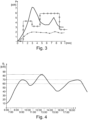
- Figure 3 Examples of different performance data and performance profiles are in Figure 3 shown, in which the possible load curves are plotted for three different devices as examples, namely a first device in a normal, continuous line, a second device in the line marked with crosses and a third device in the line marked with circles.
- the maximum power value of, for example, 60 kW is used, it can be seen that this allows the operation of the electrical devices 10 over three phases "impaired", namely in the morning around 9:00 a.m., at midday between 11:30 a.m. and 2:00 p.m. and in the evening between 6:00 p.m. and 9:00 p.m.
- the "countervalue" for the reduced maximum power consumption of the devices 10 is lower electricity costs for the operator of the electrical devices.
- the allocation module 20 is used to control the maximum power consumption of the devices 10 and, if necessary, to limit it. Generally speaking, this is done by each device 10 obtaining approval from the allocation module 20 before it puts an electrical consumer 14 into operation. The allocation module 20 decides whether approval can be granted based on the power consumption of the other devices.
- the allocation module 20 makes this decision not only on the basis of the current power consumption of the other consumers 14, but also taking into account the power consumption that will result in the future due to currently running processes.
- the corresponding values can be obtained from the database 22.
- FIG. 5 An example of the power consumption of a cooking appliance is Figure 5 shown, where the solid, normal line shows the power consumption in a normal cooking program and the line marked with crosses shows the power curve for the same cooking program, but operated at half power. It can be seen that when operating at half power, a first cooking process section, which corresponds to heating up, is extended, although the overall maximum power consumption is reduced.
- the allocation module 20 checks, for example, whether the currently requested new process, for example "roast pork", leads to a power consumption over the entire cooking time that exceeds the specified maximum power value. A simulation of the power consumption of the devices is therefore carried out according to all currently requested and running processes in order to check whether the specified maximum power value will be exceeded in the future.
- the allocation module 20 can react in different ways.
- the newly requested process is not released, but has to wait until at least one other process has completed or entered a phase in which the power consumption is reduced.
- the allocation module 20 decides that either the newly requested process is released in a modified form, for example with reduced power consumption, or that an already running process is intervened in such a way that the power consumption is reduced there.
- the allocation module 20 can reorganize the processes already running in their sequence or in future process steps in such a way that the newly requested process can be released now. For example, the allocation module can decide to switch on the compressor of a cold room early, although this is actually not necessary again for an hour due to the temperature curve, if this means that the electrical power for the electric motor driving the compressor can be "shifted" to a time period in which load capacities are still available.
- load capacities are in Figure 6 shown as an example in a hatched diagram that shows the total power consumption over one day.
- FIG. 2 a second embodiment of a system with multiple devices 10 is shown.
- the allocation module 20 can be implemented in each of the controllers 12.
- the allocation module is implemented in the device 10 shown here at the top left, while the inactive allocation modules 20' in the other two devices 10 are ready to take over the function of the active allocation module 20 at any time.
- the allocation module 20 passes from one device 10 to another device 10, for example, when the device 10 that currently implements the allocation module 20 is turned off. Another event that can trigger a change of the allocation module 20, for example, if a particularly computationally intensive process has to be carried out in the control system that currently implements the allocation module 20, due to which it appears advantageous to "free up" the computing power previously tied up for the implementation of the allocation module 20.
- a display device 24 can be provided on each of the devices 10, with which the usual operating parameters can be displayed and which can also be used as an operating interface for a user.
- the user can also influence or access the allocation module 20 in such a way that the prioritization of certain processes is influenced. For example, if the devices 10 are cooking devices, an operator can mark a certain cooking process as absolutely preferable if it is essential for the further process that the food to be cooked is ready at a certain time.
- the allocation module 20 can decide which processes are to be prioritized over other processes based on stored characteristics. The practical effects are particularly important here. For example, the operation of a coolant compressor used to cool a cold store can only be denied within certain limits. If the temperature in the cold store rises above a certain value, this can lead to considerable financial damage. Another example is food that must be cooked under very precise conditions in order to achieve the desired result. For example, a certain temperature is essential for searing steak.
- the allocation module 20 must ensure that the power required for searing is available for at least a comparatively short period of time.
- An example of the opposite situation is heating up a dishwasher. The power and thus the speed at which the washing solution is heated up has almost no effect on the result of the washing process. Dishwasher. The power and therefore the speed at which the washing water is heated has almost no effect on the result of the washing process.
Landscapes
- Engineering & Computer Science (AREA)
- General Engineering & Computer Science (AREA)
- Physics & Mathematics (AREA)
- General Physics & Mathematics (AREA)
- Automation & Control Theory (AREA)
- Chemical & Material Sciences (AREA)
- Combustion & Propulsion (AREA)
- Mechanical Engineering (AREA)
- Food Science & Technology (AREA)
- Power Engineering (AREA)
- Supply And Distribution Of Alternating Current (AREA)
Description
- Die Erfindung betrifft ein Verfahren zum Betreiben von mehreren Geräten mit elektrischen Verbrauchern oder und System mit mehreren solchen Geräten.
- Bei gewerblichen Kunden von Energieversorgungsunternehmen wird Strom meist in solchen Mengen verbraucht, dass die Abrechnung des Energieversorgers mittels RLM-Verfahren erfolgt. Bei Betrieben mit mehr als 100 MWh ist dies Standard. Dabei wird die verbrauchte Menge an Energie (in kWh) pro 15 min.-Zeitintervall gemessen und dividiert und der daraus folgende kW-Wert als Basis für den Leistungspreis verwendet (der gesamte Strompreis setzt sich aus Arbeitspreis und Leistungspreis zusammen). Der ermittelte Spitzenwert wird als Basis für den gesamten Monat verwendet. Wird nur einmalig ein hoher kW-Wert benötigt, so erhöhen sich die Kosten insgesamt. Um dies zu verhindern, sind sogenannte Lastabwurfschaltungen bekannt. Diese werden zur Begrenzung der max. Stromaufnahme genutzt.
- Nachteilig ist, dass die Begrenzung ggf. negative Auswirkung auf die Prozesse haben kann, für die die Geräte eingesetzt werden. Handelt es sich beispielsweise um Gargeräte, muss verhindert werden, dass ein laufender Garprozess zu einem ungünstigen Zeitpunkt unterbrochen oder abgebrochen wird.
- In der
DE 199 02 997 A1 ist ein Verfahren beschrieben, mit dem eine Lastabwurfschaltung umgangen werden kann, indem ein Gerät, das zu bestimmten Zeiten nicht abgeschaltet werden soll, für diese Zeiten getrennt von der Lastabwurfschaltung mit Energie versorgt wird. Hierdurch ergibt sich jedoch ein hoher Aufwand beim Anschließen der Geräte. - Die
EP 2 868 979 A1 offenbart ein Gargerät mit mindestens zwei Heizvorrichtungen und mit einer Steuerung, mit welcher die Heizvorrichtungen mehrerer Gargeräte gesteuert werden können. Zudem ist ein Anschlusswertspeicher vorgesehen, in dem ein zulässiger Anschlussleistungswert des Gargeräts hinterlegt werden kann. Des Weiteren ist ein Garprozess Speicher vorhanden, in dem abzuarbeitende Garprozesse hinterlegt sind. Die Steuerung regelt die Leistungsaufnahme der Heizvorrichtungen im Hinblick auf anstehende Garprozesse und die zulässige Anschlussleistung des Gargeräts, und zwar derart, dass die Anschlussleistung zu keinem Zeitpunkt den hinterlegten Anschlussleistungswert überschreitet. - Die
EP 2 061 131 A1 beschreibt ein Verfahren und eine Vorrichtung zur Steuerung der Verteilung von elektrischer Energie für eine Mehrzahl von elektrischen Heizeinrichtungen einer Küche mit einer Apparatesteuerung. Dabei soll die elektrische Energie derart verteilt werden, dass die Gesamtleistungsaufnahme nicht größer ist als ein definierter Maximalwert bzw. ein Prozentsatz eines Anschlusswertes. - Die Aufgabe der Erfindung besteht darin, mehrere Geräte innerhalb einer vorgegebenen Grenze der maximalen Leistungsaufnahme zu betreiben, ohne dass eine Lastabwurfschaltung nötig ist und ohne dass sich das Erreichen der maximalen Leistungsaufnahme negativ auf den Betrieb der Geräte auswirkt.
- Zur Lösung dieser Aufgabe sind bei einem Verfahren zum Betreiben von mehreren Gargeräten, die jeweils mindestens einen elektrischen Verbraucher enthalten, die folgenden Schritten vorgesehen: das Gerät fragt, bevor es den Verbraucher einschaltet, bei einem Allokationsmodul an, ob der Verbraucher des Geräts in Betrieb genommen werden kann. Das Allokationsmodul entscheidet auf der Basis von Parametern des angefragten Prozesses, von Parametern von aktuell laufenden und/oder geplanten Prozessen der anderen Verbraucher und eines vorgegebenen maximalen Leistungswerts, ob der angefragte Prozess freigegeben, modifiziert oder zumindest vorläufig gesperrt wird. Zwischen der Steuerung der Geräte und dem Allokationsmodul ist eine Kommunikationsverbindung vorhanden, wobei die Geräte untereinander vernetzt sind, sodass anhand von verschiedenen, für den jeweiligen Anwendungszweck geeigneten Parametern abgestimmt wird, welcher Prozess Vorrang gegenüber anderen Prozessen hat beziehungsweise umgekehrt, welcher Prozess modifiziert oder zurückgestellt wird. Das Allokationsmodul greift bei der Entscheidung auf eine Datenbank zu, in der Leistungsdaten und Leistungsprofile für unterschiedliche Prozesse hinterlegt sind, wobei es sich bei den Leistungsdaten um den typischen Energieverbrauch der Verbraucher über den Tagesablauf handelt. Zur Lösung dieser Aufgabe ist auch ein System vorgesehen mit mehreren Geräten, die jeweils mindestens einen elektrischen Verbraucher sowie eine Steuerung aufweisen, und mit einem Allokationsmodul, in dem ein maximaler Leistungswert für die Verbraucher hinterlegt ist, wobei eine Kommunikationsverbindung zwischen der Steuerung der Geräte und dem Allokationsmodul vorhanden ist, über die die Steuerungen Informationen über geplante und aktuelle Prozesse an das Allokationsmodul senden vom Allokationsmodul und ein Freigabesignal zur Inbetriebnahme des Verbrauchers empfangen können. Die Geräte sind untereinander vernetzt, sodass anhand von verschiedenen, für den jeweiligen Anwendungszweck geeigneten Parametern abstimmbar ist, welcher Prozess Vorrang gegenüber anderen Prozessen hat beziehungsweise umgekehrt, welcher Prozess modifiziert oder zurückgestellt wird. Das System hat eine Datenbank, in der Leistungsdaten und Leistungsprofile für unterschiedliche Prozesse hinterlegt sind, wobei es sich bei den Leistungsdaten um den typischen Energieverbrauch der Verbraucher über den Tagesablauf handelt, und wobei das Allokationsmodul eingerichtet ist, bei der Entscheidung über ein Freigabesignal auf die Datenbank zuzugreifen.
- Die Erfindung beruht auf dem Grundgedanken, dass die Geräte untereinander eine intelligente Abstimmung treffen, wann welcher Verbraucher (also elektrischer Verbraucher) mit welcher Leistung betrieben wird, um einen vorgegebenen maximalen Leistungswert nicht zu überschreiten.
- Bei den Parametern der aktuell laufenden und/oder geplanten Prozesse kann es sich um mindestens einen der folgenden Parameter handeln: Rest-Garzeit, Leistungsbedarf beim Garen, Leistungsbedarf beim Auf- oder Vorheizen. Grundsätzlich kann es sich um jeden Parameter handeln, der hilfreich für die Entscheidung ist, ob aktuell ein neuer Prozess gestartet werden kann oder ob mindestens in mindestens einem der aktuell laufendenden Prozesse die Leistungsaufnahme so verringert werden kann, dass im Hinblick auf den vorgegebenen maximalen Leistungswert ein neuer Prozess gestartet werden kann.
- Das Allokationsmodul kann physisch vorhanden sein als Steuerungsmodul. Es ist auch möglich, das Allokationsmodul rein als Software zu implementieren, die nicht Bestandteil eines der Gerät sein muss.
- Beispielsweise kann, wenn es sich bei den Verbrauchern um solche handelt, die in einer Gaststätte oder einem Restaurant vorhanden sind, sich aus den Leistungsdaten ergeben, dass üblicherweise um die Mittagszeit sämtliche Fritteusen in Betrieb sind. Es kann sich aus den Leistungsdaten auch ergeben, dass üblicherweise kurz nach der Mittagszeit die Spülmaschine eingeschaltet wird. Bei einer Bäckerei kann hinterlegt sein, dass frühmorgens sämtliche Backöfen vorgeheizt werden. In den Leistungsprofilen ist hinterlegt, welche elektrische Leistung während eines konkreten Prozesses abgerufen wird. Für den Garprozess "Schweinebraten" kann beispielsweise hinterlegt sein, dass über den Großteil des Garprozesses eine vergleichsweise geringe Leistung erforderlich ist, während kurz vor Ende des Garprozesses eine große Heizleistung erforderlich ist, um die gewünschte Kruste zu erzeugen.
- Auf der Basis der Leistungsdaten und Leistungsprofile kann das Allokationsmodul dann verschiedene intelligente Entscheidungen treffen. Beispielsweise können, wenn mehrere Backöfen vorgeheizt werden müssen, einige der Backöfen früher eingeschaltet werden, sodass sie vor anderen Backöfen aufheizen und anschließend lediglich eine bestimmte Temperatur halten müssen. Das Allokationsmodul kann auch einen neuen Prozess sperren, wenn zwar aktuell der vorgegebene maximale Leistungswert mit dem neuen Prozess nicht überschritten würde, aber klar erkennbar ist, dass aufgrund von zwei oder mehr parallel laufenden und sich zumindest teilweise überschneidenden Prozessen der maximale Leistungswert zwangsläufig später überschritten würde, beispielsweise weil die Prozesse gegen Ende hin eine hohen Leistungsaufnahme beinhalten.
- Eine modifizierte Freigabe kann darin bestehen, den angefragten Prozess mit verringerter Leistung zu starten oder auszuführen. Dies betrifft insbesondere solche Prozesse, bei denen es für das spätere Ergebnis ohne negative Auswirkung ist, wenn nur eine verringerte Leistung freigegeben wird. Dies betrifft beispielsweise das Vorheizen eines Backofens; der Backofen kann mit verringerter Leistung vorgeheizt werden, was lediglich dazu führt, dass das Vorheizen insgesamt etwas länger dauert. Eine modifizierte Freigabe kann auch darin bestehen, den angefragten Prozess erst dann zu starten, wenn sich die Leistungsaufnahme mindestens eines anderen Prozesses verringert hat. In diesem Fall wartet der entsprechende Verbraucher, bis er ein entsprechendes Signal empfängt. Beispielsweise kann das Vorheizen eines Backofens erst dann freigegeben werden, wenn ein aktuell laufender Aufheizprozess der Spülmaschine abgeschlossen ist.
- Es ist auch möglich, dass das Allokationsmodul auf aktuell laufende Prozesse dahingehend einwirkt, dass diesen eine verringerte Leistungsaufnahme zugeteilt wird. Beispielsweise kann in das aktuell laufende Aufheizen eines Backofens dahingehend eingegriffen werden, dass die freigegebene Leistung verringert wird. Dies ermöglich es, einen angefragten Prozess unmittelbar zu starten und nicht erst dann, wenn der Backofen vollständig aufgeheizt ist.
- Gemäß einer Ausgestaltung der Erfindung ist vorgesehen, dass als modifizierte Freigabe ein Prozess zumindest teilweise vorgezogen wird. Dies kann insbesondere unter Berücksichtigung der hinterlegten Leistungsdaten und Leistungsprofile geschehen, wenn das Allokationsmodul erkennt, dass bestimmte Prozesse vorverlegt werden sollten, nämlich in Phasen mit geringer Leistungsaufnahme anderer Prozesse, damit später ein "Engpass" vermieden wird.
- Gemäß einer bevorzugten Ausführungsform der Erfindung treffen die Geräte nach vorgegebenen Regeln eine Entscheidung, wer das Allokationsmodul implementiert. Anders ausgedrückt: das Allokationsmodul ist als dynamischer Master implementiert. Zu diesem Zweck sind vorzugsweise die Steuerungen der Verbraucher so eingerichtet, dass die Funktion des Allokationsmoduls von mehreren oder sogar allen der Steuerungen der Verbraucher übernommen werden kann. Dies hat den Vorteil, dass kein zusätzliches, "zentrales" Allokationsmodul notwendig ist. Außerdem ergibt sich eine Redundanz dahingehend, dass das Allokationsmodul flexibel in jeweils einer geeigneten Steuerung der verschiedenen Steuerungen implementiert werden kann.
- Beispielsweise übernimmt die Funktion des Allokationsmoduls die Steuerung eines anderen Verbrauchers, wenn derjenige Verbraucher abgeschaltet wird, dessen Steuerung aktuell das Allokationsmodul implementiert. Eine der vorgegebenen Regeln, nach denen die Entscheidung getroffen wird, welche Steuerung aktuell das Allokationsmodul implementiert, kann beispielsweise die zur Verfügung stehende Rechenleistung sein. Eine andere Regel kann sein, welcher Verbraucher voraussichtlich über einen vorbestimmten Zeitraum nicht abgeschaltet wird.
- Dabei kann vorgesehen sein, dass initial festgelegt ist, welches elektrische Gerät das Allokationsmodul implementiert, und dass das Allokationsmodul neu "vergeben" wird, wenn dies aufgrund geänderter Rahmenbedingungen zweckmäßig erscheint.
- Alternativ zur Variante, dass das Allokationsmodul in den Steuerungen implementiert wird, kann auch vorgesehen sein, dass jedes der Geräte mit einem von der Steuerung getrennten Allokationssteuermodul versehen ist, das bei Bedarf aktiviert wird und ansonsten "schläft".
- Das Allokationsmodul kann auch eine Serveranwendung sein, beispielsweise eine Cloud-basierte Serveranwendung. In diesem Fall kann mit geringem Aufwand eine vergleichsweise hohe Rechenleistung zur Verfügung gestellt werden. Es ist auch mit geringem Aufwand möglich, die vom Allokationsmodul verwendeten Algorithmen mit vergleichsweise geringem Aufwand zu aktualisieren.
- Gemäß einem Aspekt der Erfindung kann das Allokationsmodul sich über den vorgegebenen maximalen Leistungswert hinwegsetzen, wenn dies in einer bestimmten Situation unabdingbar erscheint. Diese Entscheidung kann das Ergebnis einer Abwägung sein zwischen den sich ergebenden höheren Kosten für die Energieversorgung einerseits und andererseits den sich für einen bestimmten Arbeitsablauf ergebenden Konsequenzen, falls der vorgegebene maximale Leistungswert respektiert wird.
- Falls das Allokationsmodul sich über den vorgegebenen maximalen Leistungswert hinwegsetzt, ist denkbar, dass der sich dann ergebende Spitzenwert der elektrischen Leistung gespeichert und im weiteren Ablauf für den aktuellen Abrechnungszeitraum als neuer maximaler Leistungswert verwendet wird, da es für die weiteren Kosten im entsprechenden Monat ohne Bedeutung ist, wenn einer höherer maximaler Leistungswert angesetzt wird.
- Das Allokationsmodul kann mindestens eine der folgenden Zuteilungsstrategien anwenden: "First in - first out", "Vorrang für kurze, leistungsintensive Prozesse", "Priorisierung nach nächstliegendem Abschlusszeitpunkt", "Komplexe Priorisierung".
- Bei der Zuteilungsstrategie "First in - first out" sind keine komplizierten Entscheidungsstrategien seitens des Allokationsmoduls erforderlich; die verschiedenen Prozesse werden einfach in der Reihenfolge abgearbeitet, in der sie beim Allokationsmodul angemeldet werden. Die einzige Interaktion des Allokationsmoduls besteht darin, den nächsten Prozess erst dann freizugeben, wenn eine ausreichende "Leistungsreserve" zum vorgegebenen maximalen Leistungswert gegeben ist. Beim Beispiel eines Garprozesses werden alle Garprozesse in der Reihenfolge ihres Starts mit höchster Priorität abgearbeitet. Eine Neuzuteilung findet erst statt, wenn der zuerst gestartete Prozess einen reduzierten Leistungsbedarf hat oder beendet ist.
- Bei der Zuteilungsstrategie "Vorrang für kurze, leistungsintensive Prozesse" ergibt sich der Vorteil, dass länger andauernde Prozesse nicht dazu führen, dass andere, sehr kurze Prozesse über einen langen Zeitraum blockiert werden. Stattdessen kann meist davon ausgegangen werden, dass es im Hinblick auf ein gewünschtes Ergebnis nicht so gravierend ist, wenn länger andauernde Prozesse für eine kurze Zeitdauer unterbrochen oder aufgeschoben werden, damit sehr kurze, leistungsintensive Prozesse abgearbeitet werden können.
- Die Zuteilungsstrategie "Priorisierung nach nächstliegendem Abschlusszeitpunkt" arbeitet ergebnisorientiert dahingehen, dass diejenigen Prozesse Vorrang haben, die aus bestimmten (unter Umständen übergeordneten) Gründen als nächstes abgeschlossen werden müssen, beispielsweise weil andere Prozesse auf ihnen aufbauen und ansonsten der gesamte Produktionsprozess nachteilig beeinflusst wird.
- Mit der Zuteilungsstrategie "komplexe Priorisierung" können schließlich alle Fälle abgedeckt werden, bei denen flexibel auf bestimmte Ergebnisse reagiert werden muss. Dies kann beispielsweise dadurch abgebildet werden, dass Prozesse mit einer Kennzahl versehen werden, die ihre Priorität wiederspiegelt. Diese Kennzahl kann beispielsweise berücksichtigen, wie gravierend sich eine Zeitverzögerung oder eine modifizierte Freigabe auf das Ergebnis des Prozesses auswirkt oder auf andere Prozesse, die auf den jeweiligen Prozess aufbauen. Die Kennzahl kann sich auch dynamisch ändern, beispielsweise weil in der Zwischenzeit andere Ereignisse stattgefunden haben, aufgrund deren die Dringlichkeit gestiegen ist, dass ein bestimmter Prozess abgearbeitet wird. Beispielsweise kann das Starten eines Spülvorgangs einer Spülmaschine zunächst eine sehr niedrige Priorität haben, aber sich mit der Zeit erhöhen, wenn aufgrund der Leistungsanforderung anderer Geräte die Spülmaschine über einen langen Zeitraum keine Freigabe bekommen hat und dementsprechend irgendwann das saubere Geschirr auszugehen droht.
- Alternativ zu Kennzahlen können die verschiedenen Prozesse auch einer bestimmten Kategorie von Priorität zugeordnet werden, beispielsweise einer Gruppe A mit höchster Priorität, einer Gruppe B mit etwas geringeren Priorität, einer Gruppe C mit geringer Priorität und einer Gruppe D mit niedrigster Priorität. Diese Vorgehensweise erleichtert die Verwaltung der anstehenden Prozesse, da es keine unendlich feine Abstufung (in der Form der Kennzahlen) gibt.
- Wenn es innerhalb derselben Kategorie von Priorität so viele anstehende Garprozesse gibt, dass damit die Leistungsgrenzen überschritten würden, muss er ergänzenden Kriterium für die Priorisierung herangezogen werden, beispielsweise die nächste Ziel-Fertigstellungzeit.
- Beim Beispiel eines Garprozesses kann bei der Zuteilungsstrategie "komplexe Priorisierung" das übergeordnete Ziel verfolgt werden, dass die Leistung so verteilt wird, dass es keine Einbußen bei der Garqualität gibt. Der von den Gargeräten angeforderte Heizbedarf wird daher intelligent so zugeteilt, dass insgesamt der beste Erfolg gewährleistet ist.
- Bei der Zuteilungsstrategie "komplexe Priorisierung" können, wenn ein beteiligtes Gerät ein Gargerät ist, die folgenden Prioritätsgesichtspunkte relevant sein: Abweichung von der vom Benutzer erwarteten Garzeit, Auswirkung auf den Garzustand, Notwendigkeit einer Benutzerinteraktion. Grundsätzlich wird bevorzugt, dass die Abweichung von der vom Benutzer erwarteten Garzeit möglichst gering ist, damit der Benutzer möglichst wenig irritiert wird und auch der von ihm geplante Arbeitsablauf so wenig wie möglich beeinträchtigt wird. Beim Aspekt der Auswirkung auf den Garzustand wird berücksichtigt, ob eine Verzögerung oder eine Modifikation eines Prozesses Auswirkungen auf den Garzustand hat oder nicht. Falls Auswirkungen zu befürchten sind, hat der entsprechende Prozess eine hohe Priorität, sodass er unverändert durchgeführt wird. Beispielsweise ist beim Anbraten eine gewisse Mindesttemperatur erforderlich, sodass es keine Option ist, den Leistungsbedarf für diesen Prozess zu begrenzen. Bei Prozessen, bei denen eine Benutzerinteraktion notwendig ist, beispielsweise das Wenden von Pfannkuchen oder Steaks, ergibt sich eine hohe Priorität, damit der Benutzer nicht warten muss. Solche Prozesse werden höher priorisiert als andere, die im Hintergrund (und damit außerhalb des Fokus des Benutzers) ablaufen können.
- Bei den Geräten kann es sich grundsätzlich um alle Typen mit elektrischen Verbrauchern handeln, die energieintensiv sind und damit eine hohe Anschlussleistung haben. Es kann sich insbesondere um Gargeräte, insbesondere Kombidämpfer oder Tiegel-Gargeräte handeln, und um Fritteusen handeln.
- Es ist auch möglich, die Geräte zu gruppieren, so dass unterschiedliche Arten von Geräten gegenüber anderen Gerätearten eine höhere oder niedrigere Priorität haben. So können beispielsweise Waschmaschinen eine niedrigere Priorisierung haben als Spülmaschinen, da es für den Produktionsablauf üblicherweise weniger kritisch ist, wenn eine Waschmaschinenladung später fertig wird, als dass sauberes Geschirr zur Verfügung steht, um Speisen servieren zu können.
- Gemäß einer Ausführungsform der Erfindung ist eine Anzeigeeinheit vorgesehen, mit der einem Benutzer Informationen über eine verfügbare Leistung und/oder Vorschläge für einen geänderten Ablauf von Prozessen angezeigt werden können. Es können dem Benutzer auch Restprozesszeiten angezeigt werden sowie die Auswirkungen des Starts eines zusätzlichen Prozesses auf bereits laufende Prozesse, sodass der Benutzer sich entweder darauf einstellen kann, dass ein laufender Prozess später abgeschlossen wird, oder der Benutzer einen bereits laufenden Prozess manuell höher priorisieren kann, damit er zu einem gewünschten Zeitpunkt abgeschlossen ist.
- Es ist auch möglich, dass die vernetzten Geräte automatisch Vorschläge für eine veränderte Ablaufplanung erstellen, um möglichst niedrige Spitzenstromwerte zu ermöglichen. Auch kann der Betreiber der Geräte durch die Vorgabe neuer Werte automatisch geänderte Abläufe erhalten. So kann ein Gerät, beispielsweise ein thermischen Gargerät, einen späteren Einschaltzeitpunkt vorschlagen, wenn ein anderes Gerät, beispielsweise die Spülmaschine, gerade hochheizt, oder umgekehrt.
- Soweit es sich bei den Geräten um Gargeräte handelt, sollten an die Priorisierung die folgenden Anforderungen gestellt werden:
- Fairness: Kein Garprozess sollte unverhältnismäßig verlängert werden, während ein anderer bevorzugt wird und damit ohne Zeiteinbußen ablaufen kann.
- Balance: Einem Garprozess sollte nie unverhältnismäßig wenig Heizleistung zur Verfügung stehen.
- Regeln einhalten: Die Prioritätszahl wird nach festen Regeln von allen Gargeräten berechnet. Die Zuteilung von Heizbedarf erfolgt im Konfliktfall, also wenn ansonsten die maximale Leistung überschritten würde, nach Reihenfolge der Prioritätenliste oder wird anteilig entsprechend gewichteten Prioritätszahlen zugeteilt.
- Die Grundlage für die Berechnung der Prioritätszahl kann je nach Rezeptschritt variabel sein, beispielsweise mit und ohne Gargut, mit und ohne Vorheizen, Standby, Garen (mit Unterschritten "Anbraten" und "Fertig garen").
- Mögliche Parameter der Prioritätszahlberechnung können dabei sein:
- Temperatur des Garguts beziehungsweise dessen Abweichung vom Sollwert
- Temperatur des Garraums beziehungsweise Garhilfsmediums beziehungsweise deren Abweichung
- Bei Kombidämpfern: Feuchte beziehungsweise Abweichung vom Sollwert
- Restzeit des Garprozesses beziehungsweise Restzeit im Vergleich zur vom Anwender definierten Fertigstellungszeit (beispielsweise auf Basis von Temperaturen berechnete Prioritätszahl wird gewichtet, also multipliziert, mit zum Beispiel (t_Restzeit+T_Puffer) / T Zeit bis_Fertigstellungszeit.)
- Rezeptschritt-spezifische Faktoren, beispielsweise wenn Interaktionen vom Anwender gefordert sind oder unmittelbar nach dem Beladen des Garraums.
- Die Erfindung wird nachfolgend anhand verschiedener Ausführungsformen beschrieben, die in den beigefügten Zeichnungen dargestellt sind. In diesen zeigen:
-
Figur 1 ein System mit mehreren Geräten gemäß einer ersten Ausführungsform; -
Figur 2 ein System mit mehreren Geräten gemäß einer zweiten Ausführungsform; -
Figur 3 ein Diagramm mit Beispielen von möglichen Lastkurven; -
Figur 4 ein Diagramm mit einem beispielhaften Verlauf der maximalen Last im Tagesprofil; -
Figur 5 ein Diagramm des Energiebedarfs eines Gargeräts mit voller und halber Leistung; und -
Figur 6 in einem Diagramm ein Beispiel für nutzbare Lastkapazitäten. - In
Figur 1 sind drei elektrische Geräte 10 dargestellt, die jeweils eine Steuerung 12 und einen Verbraucher aufweisen. - Im nachfolgenden Ausführungsbeispiel werden zur Veranschaulichung elektrische Verbraucher verwendet.
- Bei den elektrischen Verbrauchern 14 handelt es sich um Baugruppen, die einen solchen elektrischen Leistungsbedarf haben, dass er für den Anschlusswert des Geräts 10 maßgeblich ist. Bei den elektrischen Verbrauchern 14 handelt es sich beispielsweise um eine Heizvorrichtung, mit der Luft, Wasser, Öl, ein anderes Medium oder auch ein anderes Bauteil eines Geräts aufgeheizt werden kann. Beim elektrischen Verbraucher kann es sich auch um einen Elektromotor oder ein anderes elektrisches Bauteil handeln.
- Die Geräte 10, genauer gesagt deren Steuerungen 12, stehen über eine Kommunikationsverbindung 16 mit einem stationären Master 18 in Verbindung, der hier als Cloud-basierte Serveranwendung implementiert ist.
- Teil des Masters 18 ist ein Allokationsmodul 20, in welchem ein vorgegebener maximaler Leistungswert hinterlegt ist. Dieser vorgegebene maximale Leistungswert entspricht der gewünschten maximalen Leistungsaufnahme aller Geräte 10, die zum System gehören. Dieser Wert ist üblicherweise geringer als die aufaddierte Anschlussleistung aller Geräte 10 des Systems.
- Das Allokationsmodul 20 kann auf eine Datenbank 22 zugreifen, in der Leistungsdaten und Leistungsprofile von unterschiedlichen Prozessen hinterlegt sind, die in den Geräten 10 ablaufen können. Es können auch Profile über typische elektrische Verbrauchswerte über den Tag hinterlegt sein.
- Beispiele für verschiedene Leistungsdaten und Leistungsprofile sind in
Figur 3 gezeigt, in der beispielhaft für drei unterschiedliche Geräte die möglichen Lastkurven aufgetragen sind, nämlich in einer normalen, durchgehenden Linie ein erstes Gerät, in der mit Kreuzen gekennzeichneten Linie ein zweites Gerät und in der mit Kreisen gekennzeichneten Linie ein drittes Gerät. - Ein Beispiel für den elektrischen Verbrauch über den Tag ist in
Figur 4 gezeigt. In diesem Beispiel beträgt der maximale elektrische Verbrauch etwas über 80 kW, wobei dieser Wert nur relativ kurzzeitig um 13:00 Uhr herum erreicht wird. - In
Figur 4 sind gestrichelt auch zwei Beispiele für mögliche maximale Leistungswerte eingezeichnet, nämlich ein Leistungswert knapp oberhalb von 70 kW und ein zweiter bei 60 kW. Es ist zu sehen, dass dann, wenn das Allokationsmodul 20 eine maximale Leistungsaufnahme aller Geräte 10 von etwas über 70 kW zulässt, dies zu einer Einschränkung über einen Zeitraum von lediglich zwei Stunden am Tag führt. Im Gegenzug wird bei der Abrechnung des Stromverbrauchs mittels RLM-Verfahren nicht mehr mit dem Spitzenwert von über 90 kW gearbeitet, sondern mit etwas über 70 kW. Dies führt zu einer erheblichen Einsparung. - Wenn der maximale Leistungswert von beispielsweise 60 kW verwendet wird, ist zu sehen, dass dies den Betrieb der elektrischen Geräte 10 über drei Phasen "beeinträchtigt", nämlich vormittags gegen 09:00 Uhr, mittags im Bereich von 11:30 - 14:00 Uhr und abends zwischen 18:00 und 21:00 Uhr. Als "Gegenwert" zur verringerten maximalen Leistungsaufnahme der Geräte 10 ergeben sich geringere Stromkosten für den Betreiber der elektrischen Geräte.
- Beim gezeigten Ausführungsbeispiel dient das Allokationsmodul 20 dazu, die maximale Leistungsaufnahme der Geräte 10 zu kontrollieren und gegebenenfalls zu begrenzen. Dies geschieht allgemein ausgedrückt dadurch, dass jedes Gerät 10, bevor es einen elektrischen Verbraucher 14 in Betrieb nimmt, beim Allokationsmodul 20 hierfür eine Freigabe einholt. Das Allokationsmodul 20 entscheidet aufgrund der Leistungsaufnahme der anderen Geräte, ob die Freigabe erteilt werden kann.
- Das Allokationsmodul 20 trifft diese Entscheidung dabei nicht nur auf der Basis der aktuellen Leistungsaufnahme der anderen Verbraucher 14, sondern auch unter Berücksichtigung der Leistungsaufnahme, die sich aufgrund von aktuell laufenden Prozessen in der Zukunft ergibt. Die entsprechenden Werte können aus der Datenbank 22 bezogen werden.
- Ein Beispiel für die Leistungsaufnahme eines Gargeräts ist in
Figur 5 gezeigt, wobei mit der durchgezogenen, normalen Linie die Leistungsaufnahme in einem normalen Garprogramm dargestellt ist und in der mit Kreuzen markierten Linie der Leistungsverlauf für dasselbe Garprogramm dargestellt ist, jedoch betrieben mit halber Leistung. Es ist zu sehen, dass sich beim Betrieb mit halber Leistung ein erster Garprozessabschnitt, der dem Aufheizen entspricht, verlängert, wobei jedoch insgesamt die maximale Leistungsaufnahme verringert ist. - Wenn es sich bei den Geräten 10 um Gargeräte handelt, prüft das Allokationsmodul 20 beispielsweise, ob der aktuell angefragte neue Prozess, beispielsweise "Schweinebraten", über die gesamte Gardauer zu einer Leistungsaufnahme führt, mit der der vorgegebene maximale Leistungswert überschritten wird. Es wird also eine Simulation der Leistungsaufnahme der Geräte entsprechend allen aktuell angefragten und ablaufenden Prozessen vorgenommen, um zu überprüfen, ob in der Zukunft der vorgegebene maximale Leistungswert überschritten wird.
- Falls dies nicht der Fall ist, wird der neue Prozess freigegeben.
- Falls der neue Prozess dazu führen würde, dass der vorgegebene maximale Leistungswert überschritten wird, kann das Allokationsmodul 20 auf verschiedene Weisen reagieren.
- Im einfachsten Fall wird der neu angefragte Prozess nicht freigegeben, sondern muss warten, bis mindestens ein anderer Prozess abgeschlossen ist oder in eine Phase eingetreten ist, in der die Leistungsaufnahme verringert ist.
- In einem anderen Szenario entscheidet das Allokationsmodul 20, dass entweder der neu angefragte Prozess in modifizierter Form freigegeben wird, beispielsweise mit verringerter Leistungsaufnahme, oder dass in einem bereits laufenden Prozess so eingegriffen wird, dass dort die Leistungsaufnahme verringert wird.
- Es ist auch möglich, dass das Allokationsmodul 20 die bereits ablaufenden Prozesse in ihrer Reihenfolge oder in zukünftigen Prozessabschritten derart neu organisiert, dass der neu angefragte Prozess bereits jetzt freigegeben werden kann. Beispielsweise kann das Allokationsmodul entscheiden, den Kompressor eines Kühlraums vorzeitig einzuschalten, obwohl dies aufgrund des Temperaturverlaufs eigentlich erst wieder in einer Stunde notwendig ist, wenn dadurch die elektrische Leistung für den den Kompressor antreibenden Elektromotor in einen Zeitabschnitt "verschoben" werden kann, in welchem noch Lastkapazitäten vorhanden sind. Solche Lastkapazitäten sind in
Figur 6 beispielhaft schraffiert in einem Diagramm dargestellt, das die gesamte Leistungsaufnahme über einen Tag darstellt. - In
Figur 2 ist eine zweite Ausführungsform eines Systems mit mehreren Geräten 10 gezeigt. Der Unterschied zur ersten Ausführungsform besteht darin, dass das Allokationsmodul 20 hier in jeder der Steuerungen 12 implementiert werden kann. Im gezeigten Ausführungsbeispiel ist das Allokationsmodul in dem hier links oben gezeigten Gerät 10 implementiert, während die inaktiven Allokationsmodule 20' in den beiden anderen Geräten 10 bereitstehen, jederzeit die Funktion des aktiven Allokationsmoduls 20 zu übernehmen. - Das Allokationsmodul 20 geht von einem Gerät 10 auf ein anderes Gerät 10 beispielsweise dann über, wenn das Gerät 10 ausgeschaltet wird, welches aktuell das Allokationsmodul 20 implementiert. Ein anderes Ereignis, welches einen Wechsel des Allokationsmoduls 20 auslösen kann, ist beispielsweise, wenn in der Steuerung, die das Allokationsmodul 20 aktuell implementiert, ein besonders rechenintensiver Vorgang durchgeführt werden muss, aufgrund dessen es vorteilhaft erscheint, die bisher für die Implementierung des Allokationsmoduls 20 gebundene Rechenleistung "freizuschaufeln".
- An jedem der Geräte 10 kann eine Anzeigevorrichtung 24 vorgesehen sein, mit der die üblichen Betriebsparameter angezeigt werden können und die auch als Bedienschnittstelle für einen Benutzer verwendet werden kann. Mittels der Anzeigevorrichtung 24 kann der Benutzer auch auf das Allokationsmodul 20 dahingehend einwirken oder zugreifen, dass die Priorisierung von bestimmten Prozessen beeinflusst wird. Beispielsweise kann, wenn es sich bei den Geräten 10 um Gargeräte handelt, ein Bediener einen bestimmten Garprozess als unbedingt zu bevorzugen markieren, wenn es für den weiteren Ablauf unabdingbar ist, dass die zu garenden Nahrungsmittel zu einem bestimmten Zeitpunkt fertig sind.
- Soweit ein Bediener nicht manuell eingreift, kann das Allokationsmodul 20 aufgrund hinterlegter Merkmale entscheiden, welche Prozesse gegenüber anderen Prozessen zu priorisieren sind. Hierbei sind insbesondere die Auswirkungen in der Praxis entscheiden. Beispielsweise kann der Betrieb eines Kühlmittelkompressors, mit dem ein Kühlhaus gekühlt wird, nur innerhalb gewisser Grenzen nicht freigegeben werden. Falls die Temperatur im Kühlhaus über einen bestimmten Wert ansteigt, kann dies zu einem erheblichen finanziellen Schaden führen. Ein anderes Beispiel sind Lebensmittel, die unter sehr präzisen Bedingungen gegart werden müssen, damit das gewünschte Ergebnis erreicht wird. Beispielsweise ist zum Anbraten von Steak eine gewisse Temperatur unabdingbar. Hier muss das Allokationsmodul 20 gewährleisten, dass mindestens für einen vergleichsweise kurzen Zeitraum die zum Anbraten nötige Leistung zur Verfügung steht. Ein Beispiel für die umgekehrte Situation ist das Aufheizen einer Spülmaschine. Es ist für das Ergebnis des Spülprozesses nahezu ohne Auswirkung, mit welcher Leistung und damit mit welcher Geschwindigkeit die Spülflotte aufgeheizt wird.
Spülmaschine. Es ist für das Ergebnis des Spülprozesses nahezu ohne Auswirkung, mit welcher Leistung und damit mit welcher Geschwindigkeit die Spülflotte aufgeheizt wird.
Claims (15)
- Verfahren zum Betreiben von mehreren Gargeräten (10), die jeweils mindestens einen elektrischen Verbraucher (14) enthalten, mit den folgenden Schritten:- jedes Gerät (10) fragt, bevor es seinen Verbraucher (14) einschaltet, bei einem Allokationsmodul (20) an, ob ein Verbraucher (14) des Geräts (10) in Betrieb genommen werden kann,- das Allokationsmodul (20) entscheidet auf der Basis von Parametern eines angefragten Prozesses des Geräts, von Parametern von aktuell laufenden und/oder geplanten Prozessen der Verbraucher (14) anderer Geräte (10) und eines vorgegebenen maximalen Leistungswerts, ob der angefragte Prozess freigegeben, modifiziert oder zumindest vorläufig gesperrt wird,- wobei eine Kommunikationsverbindung zwischen der Steuerung der Geräte (10) und dem Allokationsmodul (20) vorhanden ist und wobei die Geräte (10) untereinander vernetzt sind, sodass anhand von verschiedenen, für den jeweiligen Anwendungszweck geeigneten Parametern abgestimmt wird, welcher Prozess Vorrang gegenüber anderen Prozessen hat beziehungsweise umgekehrt, welcher Prozess modifiziert oder zurückgestellt wird,- dadurch gekennzeichnet, dass das Allokationsmodul (20) bei der Entscheidung auf eine Datenbank (22) zugreift, in der Leistungsdaten und Leistungsprofile für unterschiedliche Prozesse hinterlegt sind, wobei es sich bei den Leistungsdaten um den typischen Energieverbrauch der Verbraucher (14) über den Tagesablauf handelt.
- Verfahren nach Anspruch 1, dadurch gekennzeichnet, dass die Parameter der aktuell laufenden und/oder geplanten Prozessen mindestens einen der folgenden Parameter umfassen: Rest-Garzeit, Leistungsbedarf beim Garen, Leistungsbedarf beim Auf- oder Vorheizen.
- Verfahren nach einem der vorhergehenden Ansprüche, dadurch gekennzeichnet, dass eine modifizierte Freigabe darin besteht, den Prozess mit verringerter Leistung zu starten oder auszuführen.
- Verfahren nach einem der vorhergehenden Ansprüche, dadurch gekennzeichnet, dass eine modifizierte Freigabe darin besteht, den Prozess erst zu starten, wenn sich die Leistungsaufnahme mindestens eines anderen Prozesses verringert hat.
- Verfahren nach einem der vorhergehenden Ansprüche, dadurch gekennzeichnet, dass eine modifizierte Freigabe darin besteht, einen Prozess zumindest teilweise vorzuziehen.
- Verfahren nach einem der vorhergehenden Ansprüche, dadurch gekennzeichnet, dass die Geräte (10) nach vorgegebenen Regeln eine Entscheidung treffen, wer das Allokationsmodul (20) implementiert.
- Verfahren nach einem der vorhergehenden Ansprüche, dadurch gekennzeichnet, dass das Allokationsmodul (20) mindestens eine der folgenden Zuteilungsstrategien anwendet: "First in - first out", "Vorrang für kurze, leistungsintensive Prozesse", "Priorisierung nach nächstliegendem Abschlusszeitpunkt", "komplexe Priorisierung".
- Verfahren nach Anspruch 8, dadurch gekennzeichnet, dass bei der Zuteilungsstrategie "komplexe Priorisierung", wenn ein beteiligtes Gerät (10) ein Gargerät ist, mindestens einer der folgenden Prioritätsgesichtspunkte berücksichtigt wird: Abweichung von der vom Benutzer erwarteten Garzeit, Auswirkung auf den Garzustand, Notwendigkeit einer Benutzerinteraktion.
- System mit mehreren Geräten (10), die jeweils mindestens einen elektrischen Verbraucher (14) sowie eine Steuerung (12) aufweisen, und mit einem Allokationsmodul (20), in dem ein maximaler Leistungswert für die Verbraucher (14) hinterlegt ist, wobei eine Kommunikationsverbindung (16) zwischen den Steuerungen der Geräte (10) und dem Allokationsmodul (20) vorhanden ist, welche dazu eingerichtet ist, über die Steuerungen (12) Informationen über geplante und aktuelle Prozesse der Geräte an das Allokationsmodul (20) zu senden und vom Allokationsmodul (20) ein auf der Basis von Parametern eines angefragten Prozesses entschiedenes Freigabesignal zur Inbetriebnahme des Verbrauchers (14) an den Steuerungen zu empfangen, und wobei die Geräte (10) untereinander vernetzt sind, sodass anhand von verschiedenen, für den jeweiligen Anwendungszweck geeigneten Parametern abstimmbar ist, welcher Prozess Vorrang gegenüber anderen Prozessen hat beziehungsweise umgekehrt, welcher Prozess modifiziert oder zurückgestellt wird, dadurch gekennzeichnet, dass das System eine Datenbank (22) hat, in der Leistungsdaten und Leistungsprofile für unterschiedliche Prozesse hinterlegt sind, wobei es sich bei den Leistungsdaten um den typischen Energieverbrauch der Verbraucher (14) über den Tagesablauf handelt, und wobei das Allokationsmodul eingerichtet ist, bei der Entscheidung über ein Freigabesignal auf die Datenbank (22) zuzugreifen.
- System nach Anspruch 9, dadurch gekennzeichnet, dass das Allokationsmodul (20) als stationärer Master implementiert ist.
- System nach Anspruch 9 oder Anspruch 10, dadurch gekennzeichnet, dass das Allokationsmodul (20) eine Serveranwendung ist.
- System nach Anspruch 11, dadurch gekennzeichnet, dass das Allokationsmodul (20) eine Cloud-basierte Serveranwendung ist.
- System nach Anspruch 9, dadurch gekennzeichnet, dass das Allokationsmodul (20) als dynamischer Master implementiert ist.
- System nach einem der Ansprüche 9 bis 13, dadurch gekennzeichnet, dass die Geräte (10) aus mindestens einer der folgenden Gerätegruppen stammen: Gargerät, insbesondere Kombidämpfer oder Tiegel-Gargerät, Fritteuse.
- System nach einem der Ansprüche 9 bis 14, dadurch gekennzeichnet, dass eine Anzeigevorrichtung (24) vorgesehen ist, mit der einem Benutzer Informationen über eine verfügbare Leistung und/oder Vorschläge für einen geänderten Ablauf von Prozessen angezeigt werden können.
Applications Claiming Priority (2)
| Application Number | Priority Date | Filing Date | Title |
|---|---|---|---|
| DE102016125572.6A DE102016125572A1 (de) | 2016-12-23 | 2016-12-23 | Verfahren zum Betreiben von mehreren Geräten mit elektrischen Verbrauchern oder Gasverbrauchern und System mit mehreren solchen Geräten |
| PCT/EP2017/082053 WO2018114403A1 (de) | 2016-12-23 | 2017-12-08 | Verfahren zum betreiben von mehreren geräten mit elektrischen verbrauchern oder gasverbrauchern und system mit mehreren solchen geräten |
Publications (2)
| Publication Number | Publication Date |
|---|---|
| EP3559760A1 EP3559760A1 (de) | 2019-10-30 |
| EP3559760B1 true EP3559760B1 (de) | 2024-12-04 |
Family
ID=60972178
Family Applications (1)
| Application Number | Title | Priority Date | Filing Date |
|---|---|---|---|
| EP17829146.4A Active EP3559760B1 (de) | 2016-12-23 | 2017-12-08 | Verfahren zum betreiben von mehreren geräten mit elektrischen verbrauchern und system mit mehreren solchen geräten |
Country Status (5)
| Country | Link |
|---|---|
| US (1) | US11960256B2 (de) |
| EP (1) | EP3559760B1 (de) |
| CN (1) | CN110291471B (de) |
| DE (1) | DE102016125572A1 (de) |
| WO (1) | WO2018114403A1 (de) |
Families Citing this family (4)
| Publication number | Priority date | Publication date | Assignee | Title |
|---|---|---|---|---|
| CN110533277B (zh) * | 2019-07-14 | 2023-04-18 | 太原理工大学 | 基于n-1故障的电-气耦合综合能源系统的稳定性分析方法 |
| CN110752597B (zh) * | 2019-10-22 | 2022-04-12 | 太原理工大学 | 电-气耦合综合能源系统的最小切负荷策略 |
| EP4125175A1 (de) * | 2021-07-29 | 2023-02-01 | KID-Systeme GmbH | Elektrisches leistungsverteilungssystem und verfahren zur bestimmung eines profils von temperatur in abhängigkeit von an elektrische verbraucher zur verfügung gestellter elektrischer leistung |
| DE102022212368A1 (de) | 2022-11-18 | 2024-05-23 | Siemens Healthineers Ag | Medizintechnisches Gerät, System und Verfahren zur Interaktion mit einer Versorgungseinrichtung |
Family Cites Families (23)
| Publication number | Priority date | Publication date | Assignee | Title |
|---|---|---|---|---|
| DE19902997B4 (de) | 1999-01-26 | 2016-06-16 | Convotherm Elektrogeräte GmbH | Verfahren und Vorrichtung zur Beeinflussung der Einwirkung einer Energieoptimierungsanlage zum Begrenzen der elektrischen Leistungsaufnahme mehrerer elektrischer Verbraucher |
| CH694717A5 (de) * | 1999-07-05 | 2005-06-15 | Elro Holding Ag | Steuereinrichtung zur Verteilung elektrischer Energie und Verfahren zum Betrieb der Steuereinrichtung. |
| US6549818B1 (en) * | 1999-07-26 | 2003-04-15 | General Electric Company | Cooking appliance and cooking system |
| US8615332B2 (en) * | 2005-06-09 | 2013-12-24 | Whirlpool Corporation | Smart current attenuator for energy conservation in appliances |
| US8653482B2 (en) * | 2006-02-21 | 2014-02-18 | Goji Limited | RF controlled freezing |
| ATE493785T1 (de) * | 2007-11-15 | 2011-01-15 | Elro Holding Ag | Verfahren und vorrichtung zur steuerung der verteilung von elektrischer energie für eine mehrzahl von elektrischen heizeinrichtungen einer küche |
| DE102008009659B4 (de) * | 2008-02-18 | 2019-06-19 | Rational Ag | Verfahren zur Steuerung von mindestens zwei Gargeräten, Gargerät und System aus mindestens zwei Gargeräten |
| WO2011024366A1 (ja) * | 2009-08-28 | 2011-03-03 | パナソニック株式会社 | 利用時間変更支援装置およびその方法 |
| CA2762395C (en) * | 2010-12-16 | 2018-09-04 | Lennox Industries Inc | Priority-based energy management |
| KR101764612B1 (ko) * | 2011-01-27 | 2017-08-14 | 삼성전자주식회사 | 전기기기, 전력 관리기, 그를 가지는 전력 관리 시스템 및 그 제어 방법 |
| CN102715844A (zh) * | 2011-03-29 | 2012-10-10 | 乐信股份公司 | 用于确定剩余烹饪时间的方法以及利用该方法的显示装置、烹饪器具和厨房网络 |
| KR101343588B1 (ko) * | 2011-10-24 | 2014-01-15 | 엘지전자 주식회사 | 조리 기기, 조리 기기의 전력 제어 방법, 및 이들을 포함한 전력 제어 시스템 |
| AU2013203362B2 (en) * | 2012-06-26 | 2015-10-15 | Isport Marketing Pty Ltd | System for controlling production of food products |
| DE102012017966A1 (de) * | 2012-09-12 | 2014-03-13 | Big Dutchman International Gmbh | Verfahren und System zum Überwachen und/oder Steuern des Ressourcenverbrauchs einer landwirtschaftlichen Anlage |
| DE102012219077A1 (de) * | 2012-10-08 | 2014-04-10 | Siemens Aktiengesellschaft | Verfahren zur Verteilung einer elektrischen Leistung |
| US20140371942A1 (en) * | 2013-01-11 | 2014-12-18 | Nitto Denko Corporation | On-demand power control system, on-demand power control system program, and computer-readable recording medium recording the same program |
| WO2015028511A1 (de) * | 2013-08-28 | 2015-03-05 | Elmos Semiconductor Ag | Vorrichtung zur versorgung mindestens eines verbrauchers mit elektrischer energie bzw. zur bereitstellung elektrischer leistung für mindestens einen verbraucher |
| DE102013112145A1 (de) * | 2013-11-05 | 2015-05-07 | Frima International Ag | Gargerät sowie Verfahren zur Steuerung eines Gargeräts |
| ES2875008T3 (es) * | 2013-11-26 | 2021-11-08 | Electrolux Appliances AB | Quemador de gas, encimera de gas y aparato de cocción de gas |
| US10535995B2 (en) * | 2014-02-03 | 2020-01-14 | Mitsubishi Electric Corporation | Power control system, healthcare instrument, activity measurement apparatus, and power instruction apparatus |
| JP6156576B2 (ja) | 2014-11-10 | 2017-07-05 | 日本電気株式会社 | 電力需給制御装置、電力需給制御方法、及び、プログラム |
| GB2535712A (en) * | 2015-02-24 | 2016-08-31 | Energy Tech Inst Llp | Method and system of monitoring appliance usage |
| WO2017045038A1 (en) * | 2015-09-18 | 2017-03-23 | Carbontrack Pty Ltd | Mesh-networked power control devices, systems and methods |
-
2016
- 2016-12-23 DE DE102016125572.6A patent/DE102016125572A1/de not_active Ceased
-
2017
- 2017-12-08 EP EP17829146.4A patent/EP3559760B1/de active Active
- 2017-12-08 CN CN201780086359.7A patent/CN110291471B/zh active Active
- 2017-12-08 WO PCT/EP2017/082053 patent/WO2018114403A1/de not_active Ceased
- 2017-12-08 US US16/473,025 patent/US11960256B2/en active Active
Also Published As
| Publication number | Publication date |
|---|---|
| US20190357309A1 (en) | 2019-11-21 |
| DE102016125572A1 (de) | 2018-06-28 |
| EP3559760A1 (de) | 2019-10-30 |
| US11960256B2 (en) | 2024-04-16 |
| CN110291471B (zh) | 2023-04-18 |
| CN110291471A (zh) | 2019-09-27 |
| WO2018114403A1 (de) | 2018-06-28 |
Similar Documents
| Publication | Publication Date | Title |
|---|---|---|
| EP2868979B1 (de) | Gargerät sowie Verfahren zur Steuerung eines Gargeräts | |
| EP3559760A1 (de) | Verfahren zum betreiben von mehreren geräten mit elektrischen verbrauchern oder gasverbrauchern und system mit mehreren solchen geräten | |
| DE4334488C2 (de) | Verfahren und Vorrichtung zur Reduzierung der Spitzenbelastung elektrischer Energienetze und Energieerzeuger | |
| WO2009049989A1 (de) | Kochvorrichtung und verfahren mit einer kochvorrichtung | |
| EP2061131B1 (de) | Verfahren und Vorrichtung zur Steuerung der Verteilung von elektrischer Energie für eine Mehrzahl von elektrischen Heizeinrichtungen einer Küche | |
| EP2363646B1 (de) | Verfahren zum Führen von Garprogrammen | |
| EP3730015B1 (de) | Haushaltsküchenmaschine | |
| EP0053383B1 (de) | Verfahren zur rechnergesteuerten Überwachung des Gesamtstromverbrauches einer Gruppe von Stromverbrauchern | |
| DE102011056837B4 (de) | Verfahren zum Betrieb eines Gargeräts | |
| EP0866278A1 (de) | Verfahren zur Regelung thermischer Strecken und Heizeinrichtungen in Haushaltgeräten | |
| DE60002646T2 (de) | Vorrichtung und Verfahren zur Regelung von Heizplatten | |
| EP2369244A1 (de) | Verfahren zum rechtzeitigen Erreichen von Temperatursollwerten durch einen oder mehrere Aufheizprozesse in einer Heizungsanlage eines Gebäudes | |
| DE102014116787A1 (de) | Verfahren zum Betreiben einer Kochfeldeinrichtung und Kochfeldeinrichtung | |
| EP0579917A2 (de) | Steuereinrichtung für ein verschliessbares Gargerät | |
| DE19530826C1 (de) | Verfahren und Vorrichtung zur Optimierung der Leistungsaufnahme bei einem Energieverteilungssystem | |
| EP0913905A2 (de) | Verfahren und Vorrichtung zum Begrenzen der Gesamtleistungsaufnahme einer Mehrzahl von elektrischen Verbrauchern aus einem Stromnetz | |
| DE19900185A1 (de) | Verfahren und Vorrichtung zum Schalten von Verbrauchern eines Elektrogerätes | |
| EP3984424B1 (de) | System mit küchenmaschine und verfahren | |
| EP3189279B1 (de) | Betreiben eines speisenbehandlungsgeräts und speisenbehandlungsgerät | |
| DE102010036157A1 (de) | Verfahren zur Regelung einer Heizeinrichtung für ein Gargerät sowie Heizung für ein Gargerät | |
| EP4217657A1 (de) | Garsystem mit koordinierungseinrichtung für ein gemeinsam geltendes soll-garzeitende | |
| EP3369289B1 (de) | Verfahren zur steuerung eines gargeräts, gargerät und heizelement | |
| WO1997006472A1 (de) | Betriebsverfahren für eine programmgesteuerte recheneinheit zur steuerung von strahlerfeldern insbesondere von thermoformmaschinen | |
| EP2678917B1 (de) | Verfahren zum bestimmen eines startzeitpunkts für den start eines betriebsprozesses eines haushaltsgeräts und haushaltsgerät | |
| DE102010030010A1 (de) | Einrichtung mit einer Mehrzahl von Haushaltsgeräten sowie Verfahren zum Betreiben einer derartigen Einrichtung |
Legal Events
| Date | Code | Title | Description |
|---|---|---|---|
| STAA | Information on the status of an ep patent application or granted ep patent |
Free format text: STATUS: UNKNOWN |
|
| STAA | Information on the status of an ep patent application or granted ep patent |
Free format text: STATUS: THE INTERNATIONAL PUBLICATION HAS BEEN MADE |
|
| PUAI | Public reference made under article 153(3) epc to a published international application that has entered the european phase |
Free format text: ORIGINAL CODE: 0009012 |
|
| STAA | Information on the status of an ep patent application or granted ep patent |
Free format text: STATUS: REQUEST FOR EXAMINATION WAS MADE |
|
| 17P | Request for examination filed |
Effective date: 20190618 |
|
| AK | Designated contracting states |
Kind code of ref document: A1 Designated state(s): AL AT BE BG CH CY CZ DE DK EE ES FI FR GB GR HR HU IE IS IT LI LT LU LV MC MK MT NL NO PL PT RO RS SE SI SK SM TR |
|
| AX | Request for extension of the european patent |
Extension state: BA ME |
|
| DAV | Request for validation of the european patent (deleted) | ||
| DAX | Request for extension of the european patent (deleted) | ||
| STAA | Information on the status of an ep patent application or granted ep patent |
Free format text: STATUS: EXAMINATION IS IN PROGRESS |
|
| 17Q | First examination report despatched |
Effective date: 20210910 |
|
| P01 | Opt-out of the competence of the unified patent court (upc) registered |
Effective date: 20230522 |
|
| GRAP | Despatch of communication of intention to grant a patent |
Free format text: ORIGINAL CODE: EPIDOSNIGR1 |
|
| STAA | Information on the status of an ep patent application or granted ep patent |
Free format text: STATUS: GRANT OF PATENT IS INTENDED |
|
| INTG | Intention to grant announced |
Effective date: 20240709 |
|
| GRAS | Grant fee paid |
Free format text: ORIGINAL CODE: EPIDOSNIGR3 |
|
| GRAA | (expected) grant |
Free format text: ORIGINAL CODE: 0009210 |
|
| STAA | Information on the status of an ep patent application or granted ep patent |
Free format text: STATUS: THE PATENT HAS BEEN GRANTED |
|
| AK | Designated contracting states |
Kind code of ref document: B1 Designated state(s): AL AT BE BG CH CY CZ DE DK EE ES FI FR GB GR HR HU IE IS IT LI LT LU LV MC MK MT NL NO PL PT RO RS SE SI SK SM TR |
|
| REG | Reference to a national code |
Ref country code: GB Ref legal event code: FG4D Free format text: NOT ENGLISH |
|
| REG | Reference to a national code |
Ref country code: CH Ref legal event code: EP |
|
| REG | Reference to a national code |
Ref country code: DE Ref legal event code: R096 Ref document number: 502017016596 Country of ref document: DE |
|
| REG | Reference to a national code |
Ref country code: IE Ref legal event code: FG4D Free format text: LANGUAGE OF EP DOCUMENT: GERMAN |
|
| REG | Reference to a national code |
Ref country code: LT Ref legal event code: MG9D |
|
| REG | Reference to a national code |
Ref country code: NL Ref legal event code: MP Effective date: 20241204 |
|
| PG25 | Lapsed in a contracting state [announced via postgrant information from national office to epo] |
Ref country code: HR Free format text: LAPSE BECAUSE OF FAILURE TO SUBMIT A TRANSLATION OF THE DESCRIPTION OR TO PAY THE FEE WITHIN THE PRESCRIBED TIME-LIMIT Effective date: 20241204 |
|
| PG25 | Lapsed in a contracting state [announced via postgrant information from national office to epo] |
Ref country code: FI Free format text: LAPSE BECAUSE OF FAILURE TO SUBMIT A TRANSLATION OF THE DESCRIPTION OR TO PAY THE FEE WITHIN THE PRESCRIBED TIME-LIMIT Effective date: 20241204 |
|
| PG25 | Lapsed in a contracting state [announced via postgrant information from national office to epo] |
Ref country code: BG Free format text: LAPSE BECAUSE OF FAILURE TO SUBMIT A TRANSLATION OF THE DESCRIPTION OR TO PAY THE FEE WITHIN THE PRESCRIBED TIME-LIMIT Effective date: 20241204 |
|
| PG25 | Lapsed in a contracting state [announced via postgrant information from national office to epo] |
Ref country code: ES Free format text: LAPSE BECAUSE OF FAILURE TO SUBMIT A TRANSLATION OF THE DESCRIPTION OR TO PAY THE FEE WITHIN THE PRESCRIBED TIME-LIMIT Effective date: 20241204 |
|
| PG25 | Lapsed in a contracting state [announced via postgrant information from national office to epo] |
Ref country code: NO Free format text: LAPSE BECAUSE OF FAILURE TO SUBMIT A TRANSLATION OF THE DESCRIPTION OR TO PAY THE FEE WITHIN THE PRESCRIBED TIME-LIMIT Effective date: 20250304 |
|
| PG25 | Lapsed in a contracting state [announced via postgrant information from national office to epo] |
Ref country code: LV Free format text: LAPSE BECAUSE OF FAILURE TO SUBMIT A TRANSLATION OF THE DESCRIPTION OR TO PAY THE FEE WITHIN THE PRESCRIBED TIME-LIMIT Effective date: 20241204 Ref country code: GR Free format text: LAPSE BECAUSE OF FAILURE TO SUBMIT A TRANSLATION OF THE DESCRIPTION OR TO PAY THE FEE WITHIN THE PRESCRIBED TIME-LIMIT Effective date: 20250305 |
|
| PG25 | Lapsed in a contracting state [announced via postgrant information from national office to epo] |
Ref country code: RS Free format text: LAPSE BECAUSE OF FAILURE TO SUBMIT A TRANSLATION OF THE DESCRIPTION OR TO PAY THE FEE WITHIN THE PRESCRIBED TIME-LIMIT Effective date: 20250304 |
|
| PG25 | Lapsed in a contracting state [announced via postgrant information from national office to epo] |
Ref country code: NL Free format text: LAPSE BECAUSE OF FAILURE TO SUBMIT A TRANSLATION OF THE DESCRIPTION OR TO PAY THE FEE WITHIN THE PRESCRIBED TIME-LIMIT Effective date: 20241204 |
|
| PG25 | Lapsed in a contracting state [announced via postgrant information from national office to epo] |
Ref country code: SM Free format text: LAPSE BECAUSE OF FAILURE TO SUBMIT A TRANSLATION OF THE DESCRIPTION OR TO PAY THE FEE WITHIN THE PRESCRIBED TIME-LIMIT Effective date: 20241204 |
|
| PG25 | Lapsed in a contracting state [announced via postgrant information from national office to epo] |
Ref country code: PL Free format text: LAPSE BECAUSE OF FAILURE TO SUBMIT A TRANSLATION OF THE DESCRIPTION OR TO PAY THE FEE WITHIN THE PRESCRIBED TIME-LIMIT Effective date: 20241204 |
|
| PG25 | Lapsed in a contracting state [announced via postgrant information from national office to epo] |
Ref country code: IS Free format text: LAPSE BECAUSE OF FAILURE TO SUBMIT A TRANSLATION OF THE DESCRIPTION OR TO PAY THE FEE WITHIN THE PRESCRIBED TIME-LIMIT Effective date: 20250404 |
|
| PG25 | Lapsed in a contracting state [announced via postgrant information from national office to epo] |
Ref country code: PT Free format text: LAPSE BECAUSE OF FAILURE TO SUBMIT A TRANSLATION OF THE DESCRIPTION OR TO PAY THE FEE WITHIN THE PRESCRIBED TIME-LIMIT Effective date: 20250404 |
|
| PG25 | Lapsed in a contracting state [announced via postgrant information from national office to epo] |
Ref country code: EE Free format text: LAPSE BECAUSE OF FAILURE TO SUBMIT A TRANSLATION OF THE DESCRIPTION OR TO PAY THE FEE WITHIN THE PRESCRIBED TIME-LIMIT Effective date: 20241204 |
|
| PG25 | Lapsed in a contracting state [announced via postgrant information from national office to epo] |
Ref country code: RO Free format text: LAPSE BECAUSE OF FAILURE TO SUBMIT A TRANSLATION OF THE DESCRIPTION OR TO PAY THE FEE WITHIN THE PRESCRIBED TIME-LIMIT Effective date: 20241204 |
|
| PG25 | Lapsed in a contracting state [announced via postgrant information from national office to epo] |
Ref country code: SK Free format text: LAPSE BECAUSE OF FAILURE TO SUBMIT A TRANSLATION OF THE DESCRIPTION OR TO PAY THE FEE WITHIN THE PRESCRIBED TIME-LIMIT Effective date: 20241204 |
|
| PG25 | Lapsed in a contracting state [announced via postgrant information from national office to epo] |
Ref country code: CZ Free format text: LAPSE BECAUSE OF FAILURE TO SUBMIT A TRANSLATION OF THE DESCRIPTION OR TO PAY THE FEE WITHIN THE PRESCRIBED TIME-LIMIT Effective date: 20241204 |
|
| PG25 | Lapsed in a contracting state [announced via postgrant information from national office to epo] |
Ref country code: IT Free format text: LAPSE BECAUSE OF FAILURE TO SUBMIT A TRANSLATION OF THE DESCRIPTION OR TO PAY THE FEE WITHIN THE PRESCRIBED TIME-LIMIT Effective date: 20241204 |
|
| REG | Reference to a national code |
Ref country code: CH Ref legal event code: PL |
|
| PG25 | Lapsed in a contracting state [announced via postgrant information from national office to epo] |
Ref country code: LU Free format text: LAPSE BECAUSE OF NON-PAYMENT OF DUE FEES Effective date: 20241208 |
|
| REG | Reference to a national code |
Ref country code: DE Ref legal event code: R097 Ref document number: 502017016596 Country of ref document: DE |
|
| PG25 | Lapsed in a contracting state [announced via postgrant information from national office to epo] |
Ref country code: SE Free format text: LAPSE BECAUSE OF FAILURE TO SUBMIT A TRANSLATION OF THE DESCRIPTION OR TO PAY THE FEE WITHIN THE PRESCRIBED TIME-LIMIT Effective date: 20241204 |
|
| PG25 | Lapsed in a contracting state [announced via postgrant information from national office to epo] |
Ref country code: MC Free format text: LAPSE BECAUSE OF FAILURE TO SUBMIT A TRANSLATION OF THE DESCRIPTION OR TO PAY THE FEE WITHIN THE PRESCRIBED TIME-LIMIT Effective date: 20241204 |
|
| REG | Reference to a national code |
Ref country code: BE Ref legal event code: MM Effective date: 20241231 |
|
| PG25 | Lapsed in a contracting state [announced via postgrant information from national office to epo] |
Ref country code: DK Free format text: LAPSE BECAUSE OF FAILURE TO SUBMIT A TRANSLATION OF THE DESCRIPTION OR TO PAY THE FEE WITHIN THE PRESCRIBED TIME-LIMIT Effective date: 20241204 |
|
| PLBE | No opposition filed within time limit |
Free format text: ORIGINAL CODE: 0009261 |
|
| STAA | Information on the status of an ep patent application or granted ep patent |
Free format text: STATUS: NO OPPOSITION FILED WITHIN TIME LIMIT |
|
| PG25 | Lapsed in a contracting state [announced via postgrant information from national office to epo] |
Ref country code: BE Free format text: LAPSE BECAUSE OF NON-PAYMENT OF DUE FEES Effective date: 20241231 |
|
| PG25 | Lapsed in a contracting state [announced via postgrant information from national office to epo] |
Ref country code: CH Free format text: LAPSE BECAUSE OF NON-PAYMENT OF DUE FEES Effective date: 20241231 |
|
| PG25 | Lapsed in a contracting state [announced via postgrant information from national office to epo] |
Ref country code: IE Free format text: LAPSE BECAUSE OF NON-PAYMENT OF DUE FEES Effective date: 20241208 |
|
| 26N | No opposition filed |
Effective date: 20250905 |
|
| GBPC | Gb: european patent ceased through non-payment of renewal fee |
Effective date: 20250304 |
|
| PG25 | Lapsed in a contracting state [announced via postgrant information from national office to epo] |
Ref country code: GB Free format text: LAPSE BECAUSE OF NON-PAYMENT OF DUE FEES Effective date: 20250304 |
|
| PGFP | Annual fee paid to national office [announced via postgrant information from national office to epo] |
Ref country code: FR Payment date: 20251218 Year of fee payment: 9 |
|
| REG | Reference to a national code |
Ref country code: AT Ref legal event code: MM01 Ref document number: 1748797 Country of ref document: AT Kind code of ref document: T Effective date: 20241208 |
|
| PGFP | Annual fee paid to national office [announced via postgrant information from national office to epo] |
Ref country code: DE Payment date: 20251222 Year of fee payment: 9 |
|
| PG25 | Lapsed in a contracting state [announced via postgrant information from national office to epo] |
Ref country code: AT Free format text: LAPSE BECAUSE OF NON-PAYMENT OF DUE FEES Effective date: 20241208 |
|
| PG25 | Lapsed in a contracting state [announced via postgrant information from national office to epo] |
Ref country code: CY Free format text: LAPSE BECAUSE OF FAILURE TO SUBMIT A TRANSLATION OF THE DESCRIPTION OR TO PAY THE FEE WITHIN THE PRESCRIBED TIME-LIMIT Effective date: 20241204 |