EP3557514A1 - Procédé et dispositif de vérification d'informations d'entité - Google Patents
Procédé et dispositif de vérification d'informations d'entité Download PDFInfo
- Publication number
- EP3557514A1 EP3557514A1 EP17881231.9A EP17881231A EP3557514A1 EP 3557514 A1 EP3557514 A1 EP 3557514A1 EP 17881231 A EP17881231 A EP 17881231A EP 3557514 A1 EP3557514 A1 EP 3557514A1
- Authority
- EP
- European Patent Office
- Prior art keywords
- entity
- information
- candidate
- user
- condition
- Prior art date
- Legal status (The legal status is an assumption and is not a legal conclusion. Google has not performed a legal analysis and makes no representation as to the accuracy of the status listed.)
- Ceased
Links
Images


Classifications
-
- H—ELECTRICITY
- H04—ELECTRIC COMMUNICATION TECHNIQUE
- H04W—WIRELESS COMMUNICATION NETWORKS
- H04W4/00—Services specially adapted for wireless communication networks; Facilities therefor
- H04W4/02—Services making use of location information
- H04W4/021—Services related to particular areas, e.g. point of interest [POI] services, venue services or geofences
-
- G—PHYSICS
- G06—COMPUTING OR CALCULATING; COUNTING
- G06Q—INFORMATION AND COMMUNICATION TECHNOLOGY [ICT] SPECIALLY ADAPTED FOR ADMINISTRATIVE, COMMERCIAL, FINANCIAL, MANAGERIAL OR SUPERVISORY PURPOSES; SYSTEMS OR METHODS SPECIALLY ADAPTED FOR ADMINISTRATIVE, COMMERCIAL, FINANCIAL, MANAGERIAL OR SUPERVISORY PURPOSES, NOT OTHERWISE PROVIDED FOR
- G06Q30/00—Commerce
- G06Q30/018—Certifying business or products
-
- G—PHYSICS
- G06—COMPUTING OR CALCULATING; COUNTING
- G06Q—INFORMATION AND COMMUNICATION TECHNOLOGY [ICT] SPECIALLY ADAPTED FOR ADMINISTRATIVE, COMMERCIAL, FINANCIAL, MANAGERIAL OR SUPERVISORY PURPOSES; SYSTEMS OR METHODS SPECIALLY ADAPTED FOR ADMINISTRATIVE, COMMERCIAL, FINANCIAL, MANAGERIAL OR SUPERVISORY PURPOSES, NOT OTHERWISE PROVIDED FOR
- G06Q30/00—Commerce
- G06Q30/018—Certifying business or products
- G06Q30/0185—Product, service or business identity fraud
-
- G—PHYSICS
- G06—COMPUTING OR CALCULATING; COUNTING
- G06V—IMAGE OR VIDEO RECOGNITION OR UNDERSTANDING
- G06V20/00—Scenes; Scene-specific elements
- G06V20/35—Categorising the entire scene, e.g. birthday party or wedding scene
-
- H—ELECTRICITY
- H04—ELECTRIC COMMUNICATION TECHNIQUE
- H04W—WIRELESS COMMUNICATION NETWORKS
- H04W4/00—Services specially adapted for wireless communication networks; Facilities therefor
- H04W4/02—Services making use of location information
- H04W4/029—Location-based management or tracking services
Definitions
- the present application relates to the field of computer technologies, and in particular, to a method and apparatus for verifying entity information.
- the entity information can include location information, name information, real scene images, etc.
- verify entity information of a physical store that is provided by a merchant and verify entity information of a company that is provided by a user.
- location information and real scene images in entity information are usually verified through human review, for example, manually review location information and store images of a physical store that are provided by a merchant. For another example, manually review location information and company images of a company that are provided by a user.
- location information and real scene images are complex and variable, authenticity of location information and real scene images of each entity cannot be verified one by one through human review, and verification can only be subjectively performed based on experience.
- forgery of location information and real scene images is very simple, which causes great interference to human review. Therefore, the solution in the existing technology that entity information is verified through human review based on a combination of location information and real scene images is characterized by very low accuracy.
- human review is limited by working hours and manpower, and it is difficult to continuously guarantee timeliness.
- An implementation of the present application provides a method for verifying entity information, to improve accuracy of verifying entity information.
- An implementation of the present application provides an apparatus for verifying entity information, to improve accuracy of verifying entity information.
- the method for verifying entity information includes: determining location information in entity information sent by a user; determining, based on the location information, a candidate entity set whose location relationship with the entity satisfies a predetermined condition, where the candidate entity set does not include the entity; and verifying the entity information based on a result of determining, by the user, candidate entity information corresponding to the candidate entity set under a predetermined verification condition.
- the apparatus for verifying entity information includes a first determining unit, a second determining unit, and a verification unit, where the first determining unit is configured to determine location information in entity information sent by a user; the second determining unit is configured to determine, based on the location information, a candidate entity set whose location relationship with the entity satisfies a predetermined condition, where the candidate entity set does not include the entity; and the verification unit is configured to verify the entity information based on a result of determining, by the user, candidate entity information corresponding to the candidate entity set under a predetermined verification condition.
- the at least one technical solution used in the implementations of the present application can achieve the following beneficial effects:
- the candidate entity set whose location relationship with the entity satisfies the predetermined condition and that does not include the entity is determined based on the location information in the entity information sent by the user, and verification is performed based on the result of determining, by the user, the candidate entity information corresponding to the candidate entity set under the predetermined verification condition.
- verification accuracy is relatively low because authenticity of entity information is subjectively determined through human review
- the present solution the entity is bypassed, and authenticity of the entity is objectively verified based on user's knowledge of an environment around the entity, thereby improving verification accuracy.
- human review interventions can be reduced or even avoided, thereby improving timeliness of a verification process.
- location information and real scene images in entity information are usually verified through human review.
- a merchant provides location information (e.g., "No. XX XX street") of a physical store and store images (e.g., facade photos of the store, and photos of decoration and layout in the store). It's impossible for reviewers to verify each piece of entity information on the spot. Most of the reviewers subjectively determine authenticity of the information based on experience, and there is no standard to determine authenticity.
- forgery of location information and real scene images is very simple. Therefore, based on the previous description, accuracy of human review is very low. In addition, human review is limited by working hours and manpower, and it is difficult to guarantee timeliness.
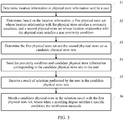
- an implementation of the present application provides a method for verifying entity information, to improve accuracy of verifying entity information. As shown in FIG. 1 , the method includes the following steps: Step 11: Determine location information in entity information sent by a user.
- the entity can be a real object in reality. For example, verification of the entity information in the present application is actually determining whether the entity really exists in reality. In an Internet service, during verification of entity information, whether a physical store of a merchant really exists can be verified, and whether a working place of a user really exists can be verified. Therefore, the entity mentioned here can be a physical store, a working place, etc.
- the entity information can include location information, name information, real scene images, etc.
- location information can be a geographic location
- name information can be a name of the store
- real scene images can be facade photos of the store, photos of decoration and layout in the store, etc.
- the entity information sent by the user can be received, and the location information in the entity information is determined, for example, No. XX XX street.
- coordinate information e.g., "Nxxxx, Exxxx"
- the coordinate information can be sent by using a Global Positioning System (GPS), a BeiDou Navigation Satellite System, etc.
- the entity in the present implementation can be referred to as an entity that is to be verified, to be specific, an entity that is not successfully verified.
- Step 12 Determine, based on the location information, a candidate entity set whose location relationship with the entity satisfies a predetermined condition.
- entity information of an entity that is to be verified is directly verified. Because whether the entity that is to be verified exists cannot be determined, it is difficult to determine authenticity of the entity that is to be verified if verification is not performed on the spot.
- the inventor finds that the entity is relatively fixed, for example, a geographic location of a physical store, a geographic location of a working place, and a geographic location of a public place, and a probability of frequent migration is very small. Therefore, if the entity really exists, a merchant (user) is not only familiar with the entity in which the merchant (user) is located, but also familiar with a nearby entity.
- the information about the entity that is to be verified can be verified by using the entity near the entity that is to be verified.
- the merchant the user
- the information about the entity that is to be verified can also be verified by using the entity that is far away from the entity that is to be verified.
- an entity that has a specific relationship with a location of the entity that is to be verified can be determined based on the location information of the entity that is to be verified, and verification is performed based on user's knowledge of these entities.
- the candidate entity set whose location relationship with the entity satisfies the predetermined condition can be determined.
- a specific predetermined condition can be that a candidate entity is close to the entity that is to be verified (where a proximity condition is satisfied), or a candidate entity is far away from the entity that is to be verified (where a non-proximity condition is satisfied). Whether the proximity condition is satisfied can be filtered by using a predetermined distance threshold.
- Whether the non-proximity condition is satisfied can be filtered by using a predetermined distance threshold, and also can be filtered based on area division at a geographic location. For example, if the predetermined condition is "less than 200 meters", in the present step, an entity whose distance from the entity that is to be verified is less than 200 meters can be identified based on the location information of the entity that is to be verified, and the entity is determined as a candidate entity set.
- a quantity such as three or four can be usually predetermined. For example, three entities are selected from all entities that satisfy a predetermined condition to form a candidate entity set.
- the information about the entity that is to be verified can be verified by using the entity near the entity that is to be verified, and also can be verified by using the entity far away from the entity that is to be verified.
- the present step can include the following: determining, based on the location information, a first entity set whose location relationship with the entity satisfies the proximity condition, and/or determining, based on the location information, a second entity set whose location relationship with the entity satisfies the non-proximity condition; and determining the first entity set and/or the second entity set as the candidate entity set.
- the candidate entity set can include only an entity that is close to the entity that is to be verified, or can include only an entity that is far away from the entity that is to be verified, or can include both an entity that is close to the entity that is to be verified and an entity that is far away from the entity that is to be verified.
- the candidate entity set includes at least the first entity set.
- the information about the entity that is to be verified can be verified by using the entity near the entity that is to be verified. Therefore, when determining the candidate entity set whose location relationship with the entity satisfies the predetermined condition in the present step, the candidate entity set may not include the entity that is to be verified.
- a determined candidate entity needs to have relatively high authenticity, for example, the determined candidate entity can be a well-known entity (e.g., a large shopping mall, a shopping center, or a chain's physical store). That is to say, authenticity of the candidate entity indirectly determines, to some extent, authenticity of the information about the entity that is to be verified.
- the determined candidate entity can be a well-known entity (e.g., a large shopping mall, a shopping center, or a chain's physical store). That is to say, authenticity of the candidate entity indirectly determines, to some extent, authenticity of the information about the entity that is to be verified.
- Step 13 Verify the entity information based on a result of determining, by the user, candidate entity information corresponding to the candidate entity set under a predetermined verification condition.
- the candidate entity set is determined, and the set does not include the entity that is to be verified. Therefore, in this case, the candidate entity information corresponding to the candidate entity set can be provided for the user, and the predetermined verification condition is also provided for the user. The information about the entity that is to be verified is verified based on the result of determining, by the user, the candidate entity information under the predetermined verification condition.
- the candidate entity set determined in step 12 includes three entities that satisfy the proximity condition and five entities that satisfy the non-proximity condition.
- Candidate entity information corresponding to the eight candidate entities can be sent to the user together (or one by one), together with a verification condition of "selecting a nearby entity”. Afterwards, a result of a candidate entity selection performed by the user can be obtained. If three entities selected by the user are the same as the three entities that satisfy the proximity condition, the verification succeeds.
- the candidate entity information corresponding to the eight candidate entities can be sent to the user one by one, together with a verification condition of "selecting a farther entity”. Afterwards, a result of determining by the user for a candidate entity can be obtained. If "farther entities" determined by the user are the same as any three of the five entities that satisfy the non-proximity condition (in other words, a correctness percentage exceeds 50%), the verification succeeds.
- the candidate entity set whose location relationship with the entity satisfies the predetermined condition and that does not include the entity is determined based on the location information in the entity information sent by the user, and the entity is verified based on the result of determining, by the user, the candidate entity information corresponding to the candidate entity set under the predetermined verification condition.
- verification accuracy is relatively low because authenticity of entity information is subjectively determined through human review
- the entity is bypassed, and authenticity of the entity is objectively verified based on user's knowledge of an environment around the entity, thereby improving verification accuracy.
- human review interventions can be reduced or even avoided, thereby improving timeliness of a verification process.
- Step 21 Determine location information in entity information sent by a user.
- the present step is similar to step 11 in Implementation 1. Details are omitted for simplicity.
- Step 22 Determine, based on the location information, a first entity set whose location relationship with the entity satisfies a proximity condition, and determine the first entity set as a candidate entity set.
- step 12 in Implementation 1 it has been mentioned that, considering that the user is more familiar with an environment near the entity (that is to be verified) than an environment far away from the entity, verification performed on the entity by using the first entity set whose location relationship with the entity satisfies the proximity condition is more effective. Therefore, in the present step, the first entity set whose location relationship with the entity satisfies the proximity condition can be determined based on the location information, and then the first entity set is directly determined as the candidate entity set. To be specific, location relationships between entities in the candidate entity set and the entity that is to be verified all satisfy the proximity condition, in other words, the candidate entities are all near the entity that is to be verified.
- the proximity condition can be set to that an entity is within a circular range in which the location information is a center and a radius is a predetermined first threshold.
- the first threshold can be 200 meters.
- the entities in the determined candidate entity set are all within a circular range in which the entity is a center and a radius is 200 meters.
- the determined candidate entity needs to have relatively high authenticity. Therefore, the first entity set (the candidate entity set) in the present step also needs to have relatively high authenticity.
- a quantity of entities in the candidate entity set can be predetermined, but the candidate entity set needs to have a specific quantity of entities, for example, three entities to eight entities.
- human review can be performed, or increase the predetermined first threshold, for example, the first threshold is increased from 200 meters to 500 meters, to satisfy a requirement for the first entity set.
- the first entity set may not include the entity that is to be verified.
- Step 23 Send the proximity condition to the user.
- a predetermined verification condition can be first provided for the user, for example, the user needs to select nearby entities, and therefore, the proximity condition can be sent to the user.
- the proximity condition is "within 200 meters”.
- Step 24 Receive a result of selection performed by the user in the candidate entity set.
- candidate entity information corresponding to the candidate entity set can be sent to the user together with the verification condition in step 23, and a corresponding operation interface is set, so that the user can perform selection, and the result of selection performed by the user in the candidate entity set can be received.
- candidate entity information corresponding to the eight candidate entities can be presented to the user together or one by one, and a function key for implementing selection or determining one by one is set in an operation interface, to wait to receive a selection result of the user.
- the candidate entity information can include name information of a candidate entity, real scene images of the candidate entity, and trademark information of the candidate entity.
- the three pieces of information can be all displayed, or only one piece of information can be displayed, or a combination of any two pieces of information can be displayed.
- Step 25 Verify the entity information based on the selection result.
- the present step can include the following: matching a candidate entity in the selection result with the first entity set.
- a matching degree satisfies a specific condition
- the verification succeeds. If the matching degree does not satisfy the specific condition, the verification fails.
- the specific condition can be that a matching degree is greater than 50%
- the candidate entity set includes eight first entities. If the user can select five (more than five) entities from the eight first entities, the verification succeeds. If the user selects only three entities from the eight first entities, the verification fails, or human review is performed to continue verification.
- the candidate entity set whose location relationship with the entity satisfies the proximity condition and that does not include the entity is determined based on the location information in the entity information sent by the user, and verification is performed based on the result of determining, by the user, the candidate entity information corresponding to the candidate entity set under the proximity condition.
- Implementation 3 is used as an extension of Implementation 1
- An implementation of the present application provides a method for verifying a physical store, to improve accuracy of verifying a physical store. As shown in FIG. 3 , the method includes the following steps:
- Step 31 Determine location information in physical store information sent by a user.
- the physical store information can include location information, and can further include name information, real scene images, trademark information, etc.
- the location information can be coordinates that include a longitude and a latitude.
- Step 32 Determine, based on the location information, a first physical store set whose location relationship with the physical store satisfies a proximity condition, and a second physical store set whose location relationship with the physical store satisfies a non-proximity condition.
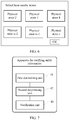
- “physical store 1" is the name information of the physical store that is sent by the user, and "physical store 2", “physical store 3", etc. are existing and real physical stores.
- a location of "physical store 1" in the figure is a location corresponding to the location information (the coordinates including the longitude and the latitude) in the physical store information.
- the proximity condition is that a physical store is within a circular range in which the location information is a center and a radius is predetermined as 200 meters.
- a dashed-line circle is a circle in which the location of "physical store 1" is a center and a radius is 200 meters. In the dashed-line circular range, there are three physical stores: “physical store 2", “physical store 3", and "physical store 4", and the three physical stores are determined as the first physical store set.
- the non-proximity condition is that a physical store is outside a circular range in which the location information is a center and a radius is predetermined as 2000 meters. There are a plurality of physical stores outside the circular range, and three physical stores: "physical store n", “physical store n-1", and “physical store n-2" are selected from the plurality of physical stores and are determined as the second physical store set.
- Step 33 Determine the first physical store set and the second physical store set as candidate physical store sets.
- Step 34 Send the proximity condition and candidate physical store information corresponding to the candidate physical store sets to the user.
- the proximity condition is that the physical store is within the circular range in which the location information of the physical store that is to be verified is the center and the radius is predetermined as 200 meters.
- the present step can be shown in FIG. 6 , the proximity condition is sent to the user as a verification condition, and it can be set that only three physical stores can be selected. For example, "select three nearby stores" can be sent to the user.
- the candidate physical store information corresponding to the candidate physical store sets such as name information and real scene images of a candidate physical store is sent to the user.
- Step 35 Receive a result of selection performed by the user in the candidate physical store sets.
- a selection interface is provided for the user, so that the user can perform selection and return a selection result.
- it can be set that only three physical stores can be selected. Therefore, in the present step, three physical stores selected by the user from the candidate physical store sets can be received.
- Step 36 Match a candidate physical store in the selection result with the first physical store set, and when a matching degree satisfies a specific condition, the verification succeeds.
- the specific condition is that the matching degree is not less than 50%. Therefore, only when the three physical stores selected by the user are two or three of "physical store 2", "physical store 3", and "physical store 4", verification can succeed.
- the first physical store set whose location relationship with the physical store satisfies the proximity condition and that does not include the physical store, and the second physical store set whose location relationship with the physical store satisfies the non-proximity condition are determined, and the two physical store sets are determined as the candidate physical store sets.
- the physical store is verified based on a result of determining, by the user, the candidate physical store information corresponding to the candidate physical store sets under the proximity condition.
- Implementation 4 provides an apparatus for verifying entity information, to improve accuracy of verifying entity information.
- the apparatus includes a first determining unit 41, a second determining unit 42, and a verification unit 43.
- the first determining unit 41 can be configured to determine location information in entity information sent by a user.
- the second determining unit 42 can be configured to determine, based on the location information, a candidate entity set whose location relationship with the entity satisfies a predetermined condition.
- the candidate entity set does not include the entity.
- the verification unit 43 can be configured to verify the entity information based on a result of determining, by the user, candidate entity information corresponding to the candidate entity set under a predetermined verification condition.
- the second determining unit 42 can be configured to determine, based on the location information, a first entity set whose location relationship with the entity satisfies a proximity condition, and/or determine, based on the location information, a second entity set whose location relationship with the entity satisfies a non-proximity condition; and determine the first entity set and/or the second entity set as the candidate entity set.
- the candidate entity set includes at least the first entity set
- the predetermined verification condition is the proximity condition
- the verification unit 43 can be configured to send the proximity condition to the user, receive a result of selection performed by the user in the candidate entity set, and verify the entity information based on the selection result.
- the verification unit 43 can be configured to match a candidate entity in the selection result with the first entity set, where when a matching degree satisfies a specific condition, the verification succeeds.
- the proximity condition includes that an entity is within a circular range in which the location information is a center and a radius is a predetermined first threshold.
- the candidate entity information can include at least one of the following: name information of a candidate entity, real scene images of the candidate entity, and trademark information of the candidate entity.
- the candidate entity set whose location relationship with the entity satisfies the predetermined condition and that does not include the entity is determined based on the location information in the entity information sent by the user, and verification is performed based on the result of determining, by the user, the candidate entity information corresponding to the candidate entity set under the predetermined verification condition.
- the implementations of the present application can be provided as a method, a system, or a computer program product. Therefore, the present application can use a form of hardware only implementations, software only implementations, or implementations with a combination of software and hardware. In addition, the present application can use a form of a computer program product that is implemented on one or more computer-usable storage media (including but not limited to a magnetic disk storage, a CD-ROM, an optical memory, etc.) that include computer-usable program code.
- computer-usable storage media including but not limited to a magnetic disk storage, a CD-ROM, an optical memory, etc.
- These computer program instructions can be provided for a general-purpose computer, a dedicated computer, an embedded processor, or a processor of another programmable data processing device to generate a machine, so that the instructions executed by the computer or the processor of the another programmable data processing device generate an apparatus for implementing a specific function in one or more processes in the flowcharts and/or in one or more blocks in the block diagrams.
- These computer program instructions can be stored in a computer readable memory that can instruct the computer or the another programmable data processing device to work in a specific way, so that the instructions stored in the computer readable memory generate an artifact that includes an instruction apparatus.
- the instruction apparatus implements a specific function in one or more processes in the flowcharts and/or in one or more blocks in the block diagrams.
- a computing device includes one or more processors (CPU), one or more input/output interfaces, one or more network interfaces, and one or more memories.
- the memory may include a non-persistent memory, a random access memory (RAM), and/or a non-volatile memory in a computer readable medium, for example, a read-only memory (ROM) or a flash memory (flash RAM).
- ROM read-only memory
- flash RAM flash memory
- the computer readable medium includes persistent, non-persistent, movable, and unmovable media that can store information by using any method or technology.
- the information can be a computer readable instruction, a data structure, a program module, or other data.
- Examples of a computer storage medium include but are not limited to a phase-change random access memory (PRAM), a static random access memory (SRAM), a dynamic random access memory (DRAM), another type of random access memory (RAM), a read-only memory (ROM), an electrically erasable programmable read-only memory (EEPROM), a flash memory or another memory technology, a compact disc read-only memory (CD-ROM), a digital versatile disc (DVD) or another optical storage, a cassette, a cassette magnetic disk storage or another magnetic storage device or any other non-transmission medium.
- the computer storage medium can be used to store information that can be accessed by a computing device. As described in the present specification, the computer readable medium does not include computer readable transitory media (transitory media
- the implementations of the present application can be provided as a method, a system, or a computer program product. Therefore, the present application can use a form of hardware only implementations, software only implementations, or implementations with a combination of software and hardware. In addition, the present application can use a form of a computer program product that is implemented on one or more computer-usable storage media (including but not limited to a magnetic disk storage, a CD-ROM, an optical memory, etc.) that include computer-usable program code.
- computer-usable storage media including but not limited to a magnetic disk storage, a CD-ROM, an optical memory, etc.
Landscapes
- Business, Economics & Management (AREA)
- Engineering & Computer Science (AREA)
- General Physics & Mathematics (AREA)
- Physics & Mathematics (AREA)
- Theoretical Computer Science (AREA)
- Development Economics (AREA)
- Strategic Management (AREA)
- Accounting & Taxation (AREA)
- General Business, Economics & Management (AREA)
- Economics (AREA)
- Finance (AREA)
- Marketing (AREA)
- Entrepreneurship & Innovation (AREA)
- Computer Networks & Wireless Communication (AREA)
- Signal Processing (AREA)
- Multimedia (AREA)
- Management, Administration, Business Operations System, And Electronic Commerce (AREA)
- Image Analysis (AREA)
- Information Retrieval, Db Structures And Fs Structures Therefor (AREA)
Applications Claiming Priority (2)
| Application Number | Priority Date | Filing Date | Title |
|---|---|---|---|
| CN201611152681.9A CN107038589B (zh) | 2016-12-14 | 2016-12-14 | 一种实体信息验证方法及装置 |
| PCT/CN2017/114434 WO2018107991A1 (fr) | 2016-12-14 | 2017-12-04 | Procédé et dispositif de vérification d'informations d'entité |
Publications (2)
| Publication Number | Publication Date |
|---|---|
| EP3557514A1 true EP3557514A1 (fr) | 2019-10-23 |
| EP3557514A4 EP3557514A4 (fr) | 2019-12-25 |
Family
ID=59530785
Family Applications (1)
| Application Number | Title | Priority Date | Filing Date |
|---|---|---|---|
| EP17881231.9A Ceased EP3557514A4 (fr) | 2016-12-14 | 2017-12-04 | Procédé et dispositif de vérification d'informations d'entité |
Country Status (7)
| Country | Link |
|---|---|
| US (4) | US10531225B2 (fr) |
| EP (1) | EP3557514A4 (fr) |
| JP (1) | JP6773909B2 (fr) |
| KR (1) | KR102225194B1 (fr) |
| CN (1) | CN107038589B (fr) |
| TW (1) | TWI696086B (fr) |
| WO (1) | WO2018107991A1 (fr) |
Families Citing this family (7)
| Publication number | Priority date | Publication date | Assignee | Title |
|---|---|---|---|---|
| CN107038589B (zh) * | 2016-12-14 | 2019-02-22 | 阿里巴巴集团控股有限公司 | 一种实体信息验证方法及装置 |
| US11587097B2 (en) * | 2017-08-17 | 2023-02-21 | James A. STOB | Organization location verification |
| CN110189087A (zh) * | 2018-02-22 | 2019-08-30 | 阿里巴巴集团控股有限公司 | 一种数据处理方法及计算设备 |
| CN110633803B (zh) * | 2019-08-16 | 2023-06-02 | 创新先进技术有限公司 | 一种线下信息核实的方法和系统 |
| WO2022014360A1 (fr) * | 2020-07-15 | 2022-01-20 | ソニーグループ株式会社 | Dispositif de traitement d'image et système de traitement d'informations |
| CN114328656B (zh) | 2021-12-17 | 2025-06-17 | 中国银联股份有限公司 | 真实门店的验证方法、装置、设备及存储介质 |
| CN115099316B (zh) * | 2022-06-10 | 2024-08-02 | 湖北工业大学 | 基于安全内积函数的多客户端人工智能分类方法及系统 |
Family Cites Families (29)
| Publication number | Priority date | Publication date | Assignee | Title |
|---|---|---|---|---|
| US5774525A (en) * | 1995-01-23 | 1998-06-30 | International Business Machines Corporation | Method and apparatus utilizing dynamic questioning to provide secure access control |
| US20020175211A1 (en) * | 2001-03-19 | 2002-11-28 | Francisco Dominquez | Time and attendance system with verification of employee identity and geographical location |
| US7174462B2 (en) * | 2002-11-12 | 2007-02-06 | Intel Corporation | Method of authentication using familiar photographs |
| JP2004272691A (ja) * | 2003-03-10 | 2004-09-30 | Fujitsu Ltd | 物件情報登録方法および物件情報登録装置 |
| US8229458B2 (en) * | 2007-04-08 | 2012-07-24 | Enhanced Geographic Llc | Systems and methods to determine the name of a location visited by a user of a wireless device |
| JP2009168773A (ja) * | 2008-01-21 | 2009-07-30 | Nissan Motor Co Ltd | ナビゲーション装置および情報提供方法 |
| US7889101B2 (en) * | 2008-04-14 | 2011-02-15 | Alpine Electronics, Inc | Method and apparatus for generating location based reminder message for navigation system |
| US20100250599A1 (en) * | 2009-03-30 | 2010-09-30 | Nokia Corporation | Method and apparatus for integration of community-provided place data |
| CN102687141B (zh) * | 2009-06-04 | 2016-10-26 | 赫尔环球有限公司 | 用于团体提供的场所数据的集成的方法和设备 |
| US9710491B2 (en) * | 2009-11-02 | 2017-07-18 | Microsoft Technology Licensing, Llc | Content-based image search |
| US8200247B1 (en) * | 2010-02-08 | 2012-06-12 | Google Inc. | Confirming a venue of user location |
| US20110313779A1 (en) * | 2010-06-17 | 2011-12-22 | Microsoft Corporation | Augmentation and correction of location based data through user feedback |
| US20120290383A1 (en) * | 2011-05-15 | 2012-11-15 | James David Busch | Systems and Methods to Advertise a Physical Business Location with Digital Location-Based Coupons |
| US10386492B2 (en) * | 2013-03-07 | 2019-08-20 | Trimble Inc. | Verifiable authentication services based on global navigation satellite system (GNSS) signals and personal or computer data |
| US9715003B2 (en) * | 2013-03-15 | 2017-07-25 | Facebook, Inc. | Multi-factor location verification |
| CN106030624A (zh) * | 2013-12-06 | 2016-10-12 | 邓白氏公司 | 用于经由移动和地理位置通信收集关于企业的数据的方法和系统 |
| WO2015165071A1 (fr) * | 2014-04-30 | 2015-11-05 | Google Inc. | Identification d'entités devant faire l'objet d'une enquête en utilisant une reconnaissance de devantures de magasins |
| US9402189B2 (en) | 2014-07-02 | 2016-07-26 | Here Global B.V. | Method and apparatus for providing activity-based map job |
| KR101646733B1 (ko) * | 2014-12-29 | 2016-08-09 | 주식회사 오리진픽스 | 미디어 데이터 분류 방법 및 그 장치 |
| CN104636482B (zh) * | 2015-02-16 | 2019-03-26 | 百度在线网络技术(北京)有限公司 | 用于确定目标地址的方法和装置 |
| KR101703712B1 (ko) * | 2015-06-26 | 2017-02-08 | 주식회사 씽크풀 | 휴대단말에서 촬영된 디지털 이미지의 유효성 검증 시스템 및 방법 |
| US10057242B2 (en) * | 2015-07-31 | 2018-08-21 | Digital Authentication Technologies, Inc. | Location authentication using multispectral imaging |
| US20170046891A1 (en) * | 2015-08-12 | 2017-02-16 | Tyco Fire & Security Gmbh | Systems and methods for location identification and tracking using a camera |
| CN105323073A (zh) * | 2015-11-16 | 2016-02-10 | 腾讯科技(深圳)有限公司 | 一种身份验证方法、装置和系统 |
| US10339174B2 (en) * | 2016-02-24 | 2019-07-02 | Time Keeping Systems, Inc. | Automated location visit verification for officer monitoring systems |
| CN107038589B (zh) * | 2016-12-14 | 2019-02-22 | 阿里巴巴集团控股有限公司 | 一种实体信息验证方法及装置 |
| US10412096B2 (en) * | 2017-04-18 | 2019-09-10 | Visa International Service Association | Wireless authentication based on location data |
| CN107687141A (zh) | 2017-07-24 | 2018-02-13 | 周国京 | 一种防撞栏上的新型防撞球 |
| US11120118B2 (en) * | 2017-11-22 | 2021-09-14 | International Business Machines Corporation | Location validation for authentication |
-
2016
- 2016-12-14 CN CN201611152681.9A patent/CN107038589B/zh active Active
-
2017
- 2017-09-18 TW TW106131916A patent/TWI696086B/zh not_active IP Right Cessation
- 2017-12-04 WO PCT/CN2017/114434 patent/WO2018107991A1/fr not_active Ceased
- 2017-12-04 KR KR1020197020440A patent/KR102225194B1/ko active Active
- 2017-12-04 JP JP2019531989A patent/JP6773909B2/ja active Active
- 2017-12-04 EP EP17881231.9A patent/EP3557514A4/fr not_active Ceased
-
2019
- 2019-06-13 US US16/440,868 patent/US10531225B2/en active Active
- 2019-11-25 US US16/693,595 patent/US10681492B1/en active Active
-
2020
- 2020-06-08 US US16/895,778 patent/US10966052B2/en active Active
-
2021
- 2021-03-29 US US17/215,822 patent/US11212641B2/en active Active
Also Published As
| Publication number | Publication date |
|---|---|
| US20200304939A1 (en) | 2020-09-24 |
| US20190313203A1 (en) | 2019-10-10 |
| CN107038589A (zh) | 2017-08-11 |
| US10966052B2 (en) | 2021-03-30 |
| CN107038589B (zh) | 2019-02-22 |
| US10681492B1 (en) | 2020-06-09 |
| US10531225B2 (en) | 2020-01-07 |
| EP3557514A4 (fr) | 2019-12-25 |
| JP2020513632A (ja) | 2020-05-14 |
| WO2018107991A1 (fr) | 2018-06-21 |
| JP6773909B2 (ja) | 2020-10-21 |
| TWI696086B (zh) | 2020-06-11 |
| US20210219093A1 (en) | 2021-07-15 |
| KR102225194B1 (ko) | 2021-03-10 |
| US11212641B2 (en) | 2021-12-28 |
| KR20190097151A (ko) | 2019-08-20 |
| TW201822045A (zh) | 2018-06-16 |
| US20200169835A1 (en) | 2020-05-28 |
Similar Documents
| Publication | Publication Date | Title |
|---|---|---|
| EP3557514A1 (fr) | Procédé et dispositif de vérification d'informations d'entité | |
| CN106547770B (zh) | 一种基于用户地址信息的用户分类、用户识别方法及装置 | |
| US12511637B2 (en) | Method, apparatus, and device for accessing aggregation code payment page, and medium | |
| CN107578238A (zh) | 一种风险控制方法及设备 | |
| CN113449986B (zh) | 一种业务分配方法、装置、服务器及存储介质 | |
| US10373221B1 (en) | On-device directory search | |
| US10473476B2 (en) | Vehicle routing guidance to an authoritative location for a point of interest | |
| US20220201010A1 (en) | Device analytics engine | |
| WO2016175940A1 (fr) | Détermination de noms de lieux sémantiques à partir de comptes rendus de localisation | |
| US20210233127A1 (en) | System and method for identifying wireless communication assets | |
| US12483425B2 (en) | Client-server response time based computer system geolocation | |
| CN116384983A (zh) | 支付处理方法及装置 | |
| US11122437B2 (en) | Detection of GPS spoofing using wireless network visibility to mobile devices | |
| CN107092611A (zh) | 一种位置信息的确定、信息推送方法和设备 | |
| US20150312710A1 (en) | Information processing method and electronic device thereof | |
| US9755946B2 (en) | Confidentially determining route diversity for network routes | |
| US20180109917A1 (en) | Mobile device path and user association | |
| US20220067601A1 (en) | Adaptive risk mitigation | |
| HK1241527A (en) | Entity information verification method and device | |
| HK1241527A1 (en) | Entity information verification method and device | |
| HK1241527B (zh) | 一种实体信息验证方法及装置 | |
| CN105631541A (zh) | 一种确定新增巴士路线的方法与设备 | |
| CN107038007B (zh) | 一种信息显示方法及装置 | |
| US20230397010A1 (en) | Server computer and method for verifying a location of a user device | |
| CN113901347A (zh) | 信息推荐方法和装置 |
Legal Events
| Date | Code | Title | Description |
|---|---|---|---|
| STAA | Information on the status of an ep patent application or granted ep patent |
Free format text: STATUS: THE INTERNATIONAL PUBLICATION HAS BEEN MADE |
|
| PUAI | Public reference made under article 153(3) epc to a published international application that has entered the european phase |
Free format text: ORIGINAL CODE: 0009012 |
|
| STAA | Information on the status of an ep patent application or granted ep patent |
Free format text: STATUS: REQUEST FOR EXAMINATION WAS MADE |
|
| 17P | Request for examination filed |
Effective date: 20190711 |
|
| AK | Designated contracting states |
Kind code of ref document: A1 Designated state(s): AL AT BE BG CH CY CZ DE DK EE ES FI FR GB GR HR HU IE IS IT LI LT LU LV MC MK MT NL NO PL PT RO RS SE SI SK SM TR |
|
| AX | Request for extension of the european patent |
Extension state: BA ME |
|
| A4 | Supplementary search report drawn up and despatched |
Effective date: 20191125 |
|
| RIC1 | Information provided on ipc code assigned before grant |
Ipc: G06Q 30/00 20120101AFI20191119BHEP |
|
| STAA | Information on the status of an ep patent application or granted ep patent |
Free format text: STATUS: EXAMINATION IS IN PROGRESS |
|
| DAV | Request for validation of the european patent (deleted) | ||
| DAX | Request for extension of the european patent (deleted) | ||
| 17Q | First examination report despatched |
Effective date: 20200311 |
|
| RAP1 | Party data changed (applicant data changed or rights of an application transferred) |
Owner name: ADVANCED NEW TECHNOLOGIES CO., LTD. |
|
| REG | Reference to a national code |
Ref country code: DE Ref legal event code: R003 |
|
| STAA | Information on the status of an ep patent application or granted ep patent |
Free format text: STATUS: THE APPLICATION HAS BEEN REFUSED |
|
| 18R | Application refused |
Effective date: 20210211 |