EP3555189B1 - Reparierbare polymerzusammensetzungen - Google Patents
Reparierbare polymerzusammensetzungen Download PDFInfo
- Publication number
- EP3555189B1 EP3555189B1 EP17847753.5A EP17847753A EP3555189B1 EP 3555189 B1 EP3555189 B1 EP 3555189B1 EP 17847753 A EP17847753 A EP 17847753A EP 3555189 B1 EP3555189 B1 EP 3555189B1
- Authority
- EP
- European Patent Office
- Prior art keywords
- group
- formula
- self
- independently
- healing
- Prior art date
- Legal status (The legal status is an assumption and is not a legal conclusion. Google has not performed a legal analysis and makes no representation as to the accuracy of the status listed.)
- Active
Links
- 0 C*(c1cccc(*)c1)=C Chemical compound C*(c1cccc(*)c1)=C 0.000 description 3
- IGUPWLSLCZBFLQ-UHFFFAOYSA-N CC(C)CCOC(C)(C)CC(CC(C)(C)OCCC(C)(C)OC(CC(Cc1ccc(C)cc1)=C)=O)C(C)C Chemical compound CC(C)CCOC(C)(C)CC(CC(C)(C)OCCC(C)(C)OC(CC(Cc1ccc(C)cc1)=C)=O)C(C)C IGUPWLSLCZBFLQ-UHFFFAOYSA-N 0.000 description 1
- HJTBTUJGZYLABW-XFKKCKKNSA-N CC[C@@H](C)[C@@H](C)NC(C)C(C)(C)CC Chemical compound CC[C@@H](C)[C@@H](C)NC(C)C(C)(C)CC HJTBTUJGZYLABW-XFKKCKKNSA-N 0.000 description 1
- IVSZLXZYQVIEFR-UHFFFAOYSA-N Cc1cc(C)ccc1 Chemical compound Cc1cc(C)ccc1 IVSZLXZYQVIEFR-UHFFFAOYSA-N 0.000 description 1
Images


Classifications
-
- C—CHEMISTRY; METALLURGY
- C08—ORGANIC MACROMOLECULAR COMPOUNDS; THEIR PREPARATION OR CHEMICAL WORKING-UP; COMPOSITIONS BASED THEREON
- C08L—COMPOSITIONS OF MACROMOLECULAR COMPOUNDS
- C08L23/00—Compositions of homopolymers or copolymers of unsaturated aliphatic hydrocarbons having only one carbon-to-carbon double bond; Compositions of derivatives of such polymers
- C08L23/02—Compositions of homopolymers or copolymers of unsaturated aliphatic hydrocarbons having only one carbon-to-carbon double bond; Compositions of derivatives of such polymers not modified by chemical after-treatment
- C08L23/04—Homopolymers or copolymers of ethene
- C08L23/08—Copolymers of ethene
- C08L23/0846—Copolymers of ethene with unsaturated hydrocarbons containing atoms other than carbon or hydrogen
- C08L23/0869—Copolymers of ethene with unsaturated hydrocarbons containing atoms other than carbon or hydrogen with unsaturated acids, e.g. [meth]acrylic acid; with unsaturated esters, e.g. [meth]acrylic acid esters
- C08L23/0876—Salts thereof, i.e. ionomers
Definitions
- the present invention relates to the field of repairable polymeric systems, compositions and articles comprising such systems, and the use of additives in such systems.
- Polymeric systems are widely used in a huge number of applications, including applications in which robust mechanical properties are desired (e.g. in the field of protective coatings).
- applications in which robust mechanical properties are desired e.g. in the field of protective coatings.
- the polymeric matrix of a traditional polymer system can only be repaired in limited circumstances, and the polymeric system may no longer be useful for its intended purpose.
- the introduction of healability within a polymeric system is thus desirable in applications including but not limited to polymeric protection systems.
- Healable polymeric systems include for example systems based on the encapsulation approach in which liquid monomers are released and polymerised as a result of a fracture event, and the reversible covalent bond approach as an example of self-healing polymer networks. These approaches offer routes to healability, but often have limited break-heal cycles, reduced strength and toughness and may require external stimuli to initiate healing. There is therefore a need to provide polymeric systems having healable properties while also providing desirable mechanical properties.
- US2016152809A1 discloses a blend of self-healing polymers and non self-healing polymers, wherein the self-healing polymers are typically poly(ethylene-co-methacrylic acid) (Surlyn ® ).
- an m-nitrophenylurea motif can be used to promote healability of a polymeric system while also providing structural organisational capabilities through a supramolecular network.
- the present invention provides a self-healing polymer system having a weight average molecular weight greater than 650 Da, wherein the polymer system comprises an m-nitrophenylurea moiety.
- the present invention provides a polymeric protection system for protecting a pipe or a cable, the polymeric protection system comprising a self-healing polymer system of the present invention.
- the present invention provides a pipe or cable comprising a polymeric protection system of the present invention.
- the present invention provides use of a component comprising an m-nitrophenylurea moiety to provide healability and/or improve mechanical properties of a polymeric system.
- the self-healing polymeric system of the present invention comprises a polymeric component and a low molecular weight additive, wherein the low molecular weight additive comprises an m-nitrophenylurea moiety.
- the low molecular weight additive may have a molecular mass of 650 Da or less, provided the polymeric system as a whole has a weight average molecular weight greater than 650 Da.
- the self-healing polymer system comprises a polymeric component, and the polymeric component comprises an m-nitrophenylurea moiety.
- the m-nitrophenylurea moiety is covalently bound to a polymeric component of the polymer system.
- the m-nitrophenylurea moiety When the m-nitrophenylurea moiety is covalently bound to a polymeric component of the self-healing polymer system, the m-nitrophenylurea moiety is typically present at a terminus of the polymeric component. When the m-nitrophenylurea moiety is covalently bound to a polymeric component of the polymer system, the repeat unit in the polymeric component typically does not comprise a m-nitrophenyl urea unit as a side-chain.
- the repeat unit in the polymeric component is derivable from a monomer which does not comprise a m-nitrophenyl urea unit.
- the self-healing polymer system of the present invention comprises a component represented by Formula (I): W-X Formula (I) wherein, in Formula (I), X is a group comprising one or more sections of polymer chain or a group represented by Formula (II): ⁇ -CO-R Formula (II) and W is a group represented by Formula (III): wherein, in formulae (II) and (III):
- the average molecular weight of a self-healing polymer system is typically the weight average molecular weight (M w ).
- a C 1 -C 20 alkylene group is a linear or branched divalent saturated hydrocarbon group having from 1 to 20 carbon atoms, for example 1 to 15 carbon atoms, 1 to 12 carbon atoms (e.g. 8 to 12 carbon atoms), 1 to 10 carbon atoms (e.g. 6 to 8 carbon atoms), 1 to 6 carbon atoms or 1 to 4 carbon atoms.
- C 1 -C 20 alkylene groups include methylene, linear or branched ethylene, linear or branched propylene, linear or branched butylene, linear or branched pentylene, linear or branched hexylene, linear or branched heptylene, linear or branched octylene, linear or branched nonylene, linear or branched decylene, linear or branched undecylene, linear or branched dodecylene, linear or branched tridecylene, linear or branched tetradecylene, linear or branched pentadecylene, linear or branched hexadecylene, linear or branched heptadecylene, linear or branched octadecylene, linear or branched nonadecylene, and linear or branched eicosylene.
- a C 2 -C 20 alkenylene group is an alkylene group as described above having from 2 to 20 carbon atoms and in which one or more (e.g. 1, 2 or 3) carbon-carbon single bonds are replaced with a carbon-carbon double bond.
- An alkenylene group may have "cis” or “trans” orientation, or alternatively "E” or "Z” orientation.
- a C 2 -C 20 alkynylene group is an alkylene group as described above having from 2 to 20 carbon atoms and in which one or more (e.g. 1, 2 or 3) carbon-carbon single bonds are replaced with a carbon-carbon triple bond.
- halo group is a fluoro, chloro, bromo or iodo group.
- Typical halo groups include fluoro, chloro, and bromo (e.g. fluoro and chloro).
- a C 1 -C 6 alkyl group is a linear or branched monovalent saturated hydrocarbon group having from 1 to 6 carbon atoms, for example 1 to 4 carbon atoms, or 1 to 2 carbon atoms.
- Examples of C 1 -C 6 alkyl groups include methyl, ethyl, n-propyl, i-propyl, n-butyl, i-butyl, t-butyl, n-pentyl, i-pentyl (i.e. 3- methylbut-1-yl), t-pentyl (i.e. 2-methylbut-2-yl), neopentyl (i.e.
- a C 2 -C 6 alkenyl group is an alkyl group as defined above having 2 to 6 carbon atoms in which one or more (e.g. 1, 2, or 3) carbon-carbon single bonds are replaced with a carbon-carbon double bond.
- An alkenyl group may have "cis” or “trans” orientation, or in an alternative notation “E” or "Z” orientation.
- a C 2 -C 6 alkynyl group is an alkyl group as defined above having 2 to 6 carbon atoms in which one or more (e.g. 1, 2, or 3) carbon-carbon single bonds are replaced with a carbon-carbon triple bond.
- a C 1 -C 6 alkyloxy group is a C 1 -C 6 alkyl group as described above attached to the remainder of the compound in which it is present via an oxygen atom.
- a C 2 -C 6 alkenyloxy group is a C 2 -C 6 alkenyl group as described above attached to the remainder of the compound in which it is present via an oxygen atom.
- a C 2 -C 6 alkynyloxy group is a C 2 -C 6 alkynyl group as described above attached to the remainder of the compound in which it is present via an oxygen atom.
- a C 6 -C 14 arylene group is a monocyclic or polycyclic divalent aromatic hydrocarbon group having 6 to 14 ring carbon atoms, e.g. 6 to 10 ring carbon atoms. All rings in a polycyclic arylene group are aromatic. Examples of C 6 -C 14 arylene groups include phenylene, naphthylenylene, anthracenylene and phenanthrenylene.
- a 5- to 14- membered heteroarylene is a monocyclic or polycyclic divalent aromatic group having 5 to 14 ring members, e.g. 6 to 10 ring members, and at least one (e.g., 1, 2, 3 or 4) ring heteroatom selected from N, O and S. All rings in a polycyclic heteroarylene group possess aromaticity.
- Examples of 5- to 14- membered heteroarylene groups include pyridylene, pyrazinylene, pyrimidinylene, pyridazinylene, furanylene, thienylene, pyrazolidinylene, pyrrolylene, oxadiazolylene, oxazolylene, isoxazolylene, thiazolylene, thiadiazolylene, imidazolylene, pyrazolylene, indole, isoindole, indazole, benzimidazole, benzofuran, benzothiophene, quinoline and isoquinoline groups.
- heteroarylene group refers to an "N" atom which can be present in the ring, as will be evident to a skilled chemist the N atom will be protonated (or will carry a substituent as defined above) if it is attached to each of the adjacent ring atoms via a single bond. Such protonated forms are embraced within the present definitions of heteroarylene groups.
- a "polymer chain” or “section of polymer chain” refers to a plurality of chemical subunits (monomer units), each subunit covalently bound to one or more other subunits, to form a chain comprising repeating subunits.
- Any polymer chain or section of polymer chain may be made up of a plurality of the same subunit (e.g. in the case of a homopolymer) or a plurality of different subunits (e.g. in the case of a block copolymer, random co-polymer and terpolymer).
- a polymer chain or section of polymer chain may be linear or branched.
- polymer chains examples include polyolefins such as polyethylene (PE), polypropylene (PP) and ethylene-propylene copolymer; polyacids such as polyacrylic acid, polymethacrylic acid and polyethylene sulfonic acid; ionomers such as poly(ethylene-co-acrylic acid) (pEAA) and poly(ethylene-co-methacrylic acid) (pEMAA); and polyalkylene glycols such as polyethylene glycol (PEG) and polypropylene glycol (PPG); and copolymers of olefins and unsaturated esters such as poly(ethylene-co-vinyl acetate) (EVA) and poly(ethylene-co-butyl acrylate) (EBA).
- PE polyethylene
- PP polypropylene
- EBA poly(ethylene-co-butyl acrylate)
- the presence of an m-nitrophenylurea moiety in a polymer system may result in a healable polymer system.
- Healability can result from a polymer system where reversible interactions, including non-covalent interactions that operate between m-nitrophenylurea groups, that have been broken are able to reform. Healability maybe possible in the absence of external stimuli, or alternatively can be induced by external stimuli such as the application of heat or pressure.
- reversible non-covalent interactions may be formed between a plurality of m-nitrophenylurea moieties in the polymer system of the present invention to form a supramolecular non-covalent network.
- Each urea group can donate two hydrogen bonds, and each nitro group can accept two hydrogen bonds.
- the presence of the m-nitrophenylurea group in the polymer systems of the present invention may therefore allow for formation of a supramolecular network of intermolecular hydrogen bonding, for example between a nitro group of one molecule and a urea group of another molecule.
- each m-nitrophenylurea moiety to donate two intermolecular hydrogen bonds to one or more hydrogen bond acceptor in an adjacent moiety (e.g. an adjacent m-nitrophenylurea moiety), and to accept two intermolecular hydrogen bonds from one or more hydrogen bond donor in an adjacent moiety (e.g. an adjacent m-nitrophenylurea moiety).
- the adjacent moiety comprising the one or more hydrogen bond acceptor to which hydrogen bonds are donated may be the same as or different from the adjacent moiety comprising the one or more hydrogen bond donor from which hydrogen bonds are accepted.
- an m-nitrophenylurea moiety in a first molecule may donate one or more hydrogen bonds to an m-nitrophenyl moiety in a second molecule, and an m-nitrophenylurea moiety in the first molecule may accept one or more hydrogen bonds from an m-nitrophenylurea moiety in a third molecule.
- the m-nitrophenylurea moieties in the second and third molecules may likewise donate or accept hydrogen bonds to/from m-nitrophenylurea moieties in fourth and fifth molecules, etc. thereby forming a supramolecular network of reversible hydrogen bonds throughout the polymer system.
- Effective formation of a supramolecular non-covalent network is promoted by the location of the hydrogen bond-accepting nitro group meta to the hydrogen bond donating urea group, and may promote the formation of a polymer system with desirable elastomeric, rather than semicrystalline or amorphous polymer related properties.
- the self-healing polymer system of the present invention typically comprises a m-nitrophenyl urea unit in an amount of up to 60 wt%, e.g. up to 55 wt %, up to 50 wt %, up to 45 wt%, up to 40 wt% up to 35 wt%, up to 30 wt% or up to 25 wt%, based on the weight of the polymer system.
- the polymer system of the present invention comprises a m-nitrophenyl urea unit in an amount of up to 50 wt% based on the weight of the polymer system.
- the polymer system of the present invention comprises a component represented by Formula (I): W-X Formula (I) wherein, in Formula (I), X is a group comprising one or more sections of polymer chain or a group represented by Formula (II): ⁇ -CO-R Formula (II) and W is a group represented by Formula (III): wherein, in formulae (II) and (III):
- R is -OH, -O-[M] a , - or C 1 -C 6 alkyloxy.
- R is - OH, -O-M + or methoxy. More preferably, R is -OH or -O-[M] a . Still more preferably R is -OH.
- each L is independently a single bond or a C 1 -C 6 alkylene group, wherein said group is unsubstituted or substituted with one two or three substituents Z.
- each L is independently a single bond, or a group selected selected from methylene and ethylene, wherein said group is unsubstituted or substituted with one substituent Z.
- each L is independently a single bond, or a group selected selected from methylene and ethylene, wherein said group is unsubstituted.
- each Y is independently a group selected from -CO-NR 1 -, -NR 1 -CO-, -O-CO-NR 1 -, -NR 1 -CO-O-, -NR 1 -CO-NR 2 -, -O-CO-, -CO-O-, -O-CO-O-, -CO-, -O-, -S(O) o-2 -, -SO 2 -NR 1 -, and -NR 1 -SO 2 -.
- each Y is independently a group selected from -CO-NR 1 -, -NR 1 -CO-, -O-CO-NR 1 -, -NR1-CO-O-, -NR 1 -CO-NR 2 -, -O-CO-, -CO-O-, -O-CO-O-, -CO- and -O-. More preferably, each Y is independently a group selected from -CO-NR 1 -, -NR 1 -CO-, -O-CO-NR 1 -, -NR1-CO-O-, -NR 1 -CO-NR 2 -, -O-CO-, -CO-O-, -CO- and -O-.
- each Y is independently a group selected from -NR 1 -CO-, -O-CO-NR 1 -, -NR 1 -CO-O-, -NR 1 -CO-NR 2 - and -O-.
- each R 1 and R 2 is independently hydrogen, or a C 1 -C 6 alkyl group, wherein said group is unsubstituted or substituted with one two or three substituents Z.
- each R 1 and R 2 is independently hydrogen or an unsubstituted methyl group. More preferably, R 1 and R 2 are each hydrogen.
- each D is independently a group selected from phenylene and 6-membered heteroarylene, wherein said group is unsubstituted or substituted with one two or three substituents Z 1 .
- each D is phenylene and is unsubstituted or substituted with one substituent Z 1 . More preferably, each D is a phenylene group, and is unsubstituted or substituted by one methyl group.
- m is 1 or 2.
- pi-pi stacking interactions between the aryl and/or heteroaryl groups represented by the phenyl group and D in Formula (III) may contribute to the formation of a supramolecular non-covalent network in the polymer system of the present invention.
- each Z is independently F, Cl, -OH, or -NH 2 .
- each Z 1 is independently F, Cl, -OH, -NH 2 or C 1 -C 6 alkyl.
- each Z 1 is independently C 1 -C 6 alkyl. More preferably, each Z 1 is methyl.
- M carries a charge of 1+ or 2+. When M carries a charge of 1+, a is typically 1. When M carries a charge of 2+, a is typically 0.5.
- M may be a metal ion, a main group cation or an organic cation.
- M is ammonium, alkylammonium, arylphosphonium, Na + , K + , Mg 2+ or Ca 2+ .
- M is Na + , K + , Mg 2+ or Ca 2+ . More preferably, M is Na+ or K+, and a is 1. Still more preferably, M is Na+ and a is 1.
- the present invention embraces all geometric and positional isomers of components of the Formula (I) as defined above.
- a component of Formula (I) incorporates a double bond
- the cis- and trans- isomers, as well as mixtures thereof are embraced within the scope of the invention.
- Both the single positional isomers and mixture of positional isomers are also within the scope of the present invention.
- tautomer or “tautomeric form” refers to structural isomers of different energies which are interconvertible via a low energy barrier.
- proton tautomers also known as prototropic tautomers
- Valence tautomers include interconversions by reorganization of some of the bonding electrons.
- the self-healing polymeric system of the present invention comprises one or more polymeric component and a low molecular weight additive, wherein the low molecular weight additive comprises an m-nitrophenylurea moiety.
- the component comprising the m-nitrophenylurea moiety is not covalently bound to the polymeric component.
- the polymeric component may be a component comprising one or more sections of polymer chain.
- the low molecular weight additive typically has a molecular weight of 650 Da or less, e.g. 600 Da or less, 500 Da or less, or 400 Da or less). The low molecular weight additive is typically not covalently bonded to the polymeric component.
- the low molecular weight additive comprising an m-nitrophenylurea moiety is a component of Formula (I'): W-CO-R Formula (I') wherein W and R are as defined herein in connection with Formulae (I) and (II).
- Preferred examples of an additive of Formula (I') include the following compound as well as salts (e.g. the sodium salt) thereof:
- the one or more polymeric component may be any polymeric component, such as a polyolefin, a polyacid, an ionomer, a polyalklene glycol, a copolymer, a terpolymer a polyester, a polycarbonate, a polyamide, a polyurea, a polyurethane, a polyether (e.g. a polyether other than a poly(alkylene glycol)), a poly(alkenyl halide), a polyarylene, a poly(siloxane) or a mixture thereof.
- a polyolefin such as a polyolefin, a polyacid, an ionomer, a polyalklene glycol, a copolymer, a terpolymer a polyester, a polycarbonate, a polyamide, a polyurea, a polyurethane, a polyether (e.g. a polyether other than a poly(alkylene glyco
- the polymeric component is a polyolefin, a polyacid, an ionomer, a polyalklene glycol, a copolymer, a termpolymer, or a mixture thereof.
- the polymeric component is an ionomer or polyacid.
- an ionomer or polyacid is a polymer that comprises ionisable repeating units.
- Ionisable units comprise an ionisable group, which may be covalently bonded to the polymer backbone as a pendant group, either proximally or remotely.
- an ionisable group bonded proximally to the polymer backbone is attached directly to the polymer backbone via a covalent bond.
- an ionisable group bonded remotely to the polymer backbone is attached via a linker group (e.g. a C 1 -C 20 alkylene or C 6 -C 14 arylene linker group).
- the ionisable group maybe a carboxylic or sulfonic acid group.
- the ionisable groups in the ionomer or polyacid may be ionised or non-ionised.
- the degree of ionisation of the ionisable groups will depend on various factors including the pK a of the ionisable group and the conditions to which the ionomer or polyacid are exposed (e.g. pH).
- the ionisable groups in an ionomer or polyacid are preferably all non-ionised (e.g. fully protonated, in the case of a carboxylic acid) or partly ionised (e.g. partly protonated, in the case of a carboxylic acid).
- a polyacid is typically a homopolymer with a single repeating ionisable unit.
- Preferred polyacids include polyacrylic acid, polymethacrylic acid and polyethylene sulfonic acid.
- An ionomer is typically a co-polymer (e.g. a block co-polymer or a random co-polymer) comprising repeat units of both electrically neutral units and ionisable units.
- Preferred ionomers include poly(ethylene-co-acrylic acid) (pEAA) and poly(ethylene-co-methacrylic acid) (pEMA).
- the ionisable units are typically present in an ionomer in an amount of 30% by weight or less, more typically 20% by weight or less.
- the ionisable units are typically present in an ionomer in an amount of 1% by weight or more, more typically 5% by weight or more, still more typically 10% by weight or more. In some embodiments the ionisable units are present in an ionomer in an amount of 5 to 30 % by weight, e.g. 10 to 20 % by weight, e.g. 12 to 18 % by weight, 14 to 16 % by weight or 15 % by weight. In some embodiments, the ionisable units are typically present in an ionomer in an amount of up to 15 mol%.
- the weight percentage of the ionisable unit in an ionomer can be expressed as a number following the name of the ionomer. For example, p(EAA)15 indicates a poly(ethylene-co-acrylic acid) ionomer in which the acrylic acid unit is present in an amount of 15 wt %.
- the amount of the low molecular weight additive (e.g. of Formula (I')) present in the self-healing polymer system is typically from 0.1 to 20 wt %, (e.g. from 0.1 to 10 wt %) relative to the weight of the ionomer or polyacid.
- the amount of the low molecular weight additive (e.g. of Formula (I')) present in the polymer system is from 0.5 to 7.5 wt % (e.g. 0.75 to 6 wt %) relative to the weight of the ionomer or polyacid.
- the low molecular weight additive e.g.
- Formula (I') is present in the polymer system in an amount from 2.5 to 7.5 wt % (e.g. 3 to 7 wt %, 4 to 6 wt % or 5 wt %) relative to the weight of the ionomer or polyacid.
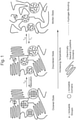
- Figure 1 The mechanism of polymeric melt and supramolecular rearrangements in a simple ionomer or polyacid, such as poly(ethylene-co-acrylic acid), is depicted in Figure 1 .
- Figure 1 shows disordering of ionisable domains at temperatures above T H , and electrically neutral backbone melt at temperatures above T m .
- T H can therefore be defined as the temperature or range of temperatures at which non-covalent bonds (e.g. hydrogen bonds between ionisable groups of the ionomer or polyacid and/or pi-pi stacks between aromatic rings) are dissociated.
- T m is the melting temperature of the self-healing polymer system containing a semicrystalline phase and T g will be the glass transition temperature of the amorphous phase which may be modified by the presence of the supramolecular self-healing network.
- T m is typically a solid to liquid transition in a conventional semicrystalline polymer, but in mixed phase systems it is the temperature above which the polymeric system no longer behaves as a solid but as a semi-solid or as an elastomer.
- Semi-crystalline polymer systems e.g. some polyethylene-based ionomers have a defined melting range of temperatures.
- the polymer system of the present invention does not behave as a 'typical' thermoplastic and may have a non-linear plot of Log(aT) vs T-T g , where T is the actual temperature of a matrix with a particular T g value and aT is the rheometric shift factor.
- healability is present in a polymer system when reversible non-covalent bonds that have been broken are able to reform below T m , it can typically be achieved by controlling factors affecting dissociation and re-association of the non-covalent bonds so as to influence T H and/or T m , as well as by influencing the number and strength of intermolecular non-covalent interactions that are present in the polymer system.
- the dissociation and re-association of intermolecular bonds can be influenced by the formation of a supramolecular non-covalently bonded network formed between molecules of the low molecular weight additive of Formula (I'), as well as the formation of non-covalent bonds formed between the low molecular weight additive of Formula (I') and the polymeric component.
- Factors affecting dissociation and re-association of the non-covalent bonds in a polymer system of this embodiment include the functionality present in the additive of Formula (I') and the amount of the additive of Formula (I').
- m in Formula (III) is 1 or more, and additional pi-pi stacking interactions are present in the polymer system.
- functionality present in the group represented by Formula (II) is capable of forming non-covalent bonds with groups present in the polymeric component.
- Figure 2 is a schematic depiction of a self-healing polymer system according to one embodiment of the invention comprising an ionomer or polyacid and a low molecular weight additive of formula (I').
- the group of Formula (II) interacts with the ionisable groups of the ionomer or polyacid to control T H
- the groups of Formula (III), shown as secondary supermolecular functionality interact with each other to provide secondary supramolecular interactions. These interactions directly affect physical properties and healability.
- a low molecular weight additive of Formula (I') may promote healing by interacting with the ionisable groups in an ionomer or polyacid via non-covalent bonding. For example, these interactions may promote healing at lower temperatures. Accordingly, in some embodiments, the low molecular weight additive of Formula (I') is capable of forming a non-covalent bond (e.g. a hydrogen bond) with an ionisable group of the polymeric component (e.g. ionomer or polyacid).
- a non-covalent bond e.g. a hydrogen bond
- the low molecular weight additive of Formula (I') may be capable of forming a hydrogen bond with a carboxylic acid group.
- Preferred low molecular weight additives of Formula (I') which are capable of forming hydrogen bonds with a carboxylic acid group include those in which each R is independently -OH or -NH 2 , particularly preferably those in which each R is -OH.
- the polymeric component comprises a system of conjugated pibonds (e.g.
- the low molecular weight additive of Formula (I') may be capable of forming pi-pi stacks with the polymeric component (e.g. with an aromatic ring of the polymeric component).
- Preferred low molecular weight additives of Formula (I') which are capable of forming pi-pi stacks with a polymeric component include those in which m is one or more.
- any low molecular weight additive of Formula (I') may be capable of participating in pi-pi stacking, due to the presence of the phenyl ring in the m-nitrophenylurea moiety.
- the low molecular weight additive of Formula (I') may increase the recovery of one or more mechanical property of the self-healing polymer system compared to the polymeric component (e.g. ionomer or polyacid) alone.
- the polymer system may have improved recovery of tensile strength, storage modulus and/or Young's modulus compared to the ionomer or polyacid alone.
- Recovery of mechanical properties may for example be measured as that achieved under elevated temperature conditions (e.g. at 50 °C for 8 hours, or at 60 °C for 2 hours) or under elevated pressure conditions (e.g. at 0.98 MPa for 8 hours).
- the self-healing polymer system has improved recovery while at the same time providing at least one mechanical property (e.g. tensile strength, fracture stress, uniform strain, strain to fracture, storage modulus and/or Young's modulus) which, in absolute terms, is the same as or improved compared to the ionomer or polyacid alone.
- mechanical property e.g. tensile strength, fracture stress, uniform strain, strain to fracture, storage modulus and/or Young's modulus
- Methods of measuring tensile strength, fracture stress, uniform strain, strain to fracture, storage modulus and Young's modulus are well known in the art and include those used in Evaluation Example 1 below.
- the addition of a low molecular weight additive of Formula (I') can preserve or even improve the elastic modulus and/or strength of the parent polymeric component.
- the low molecular weight additive of Formula (I') may strengthen the polymer by providing increased ordering within the polymeric system, for example by introducing a degree of crystallinity or increasing crystallinity in the polymer system compared to the ionomer or polyacid alone. Methods of measuring degree of crystallinity are well known in the art and include density measurement, differential scanning calorimetry (DSC), X-ray diffraction (XRD), infrared spectroscopy and solid state nuclear magnetic resonance (NMR).
- the polymer system has a crystallinity of 1% or more (e.g. 10% or more, 20% or more, 30% or more, 40% or more, 50% or more). In some embodiments, the polymer system has a crystallinity of 60% or less (e.g. 50% or less, 40% or less, 30% or less, 20% % or less, 10% or less). In some embodiments, the self-healing polymer system has a crystallinity of 0% (i.e. an amorphous polymer system.
- the self-healing polymer system comprises a polymeric component, and the polymeric component comprises an m-nitrophenylurea moiety.
- the m-nitrophenylurea moiety is covalently bound to a polymeric component of the polymer system (e.g. an m-nitrophenylurea grafted polymer).
- the polymer system consists of an m-nitrophenylurea grafted polymer, for example of Formula (I) wherein X is a group comprising one or more sections of polymer chain, as described herein.
- healability may arise through the formation of reversible hydrogen bonds between an m-nitrophenylurea moiety of one polymer chaincomprising molecule and an m-nitrophenylurea moiety of another polymer chaincomprising molecule.
- Polymer systems according to such embodiments may thereby comprise a supramolecular network of polymer-chain comprising molecules crosslinked by reversible intermolecular hydrogen bonds. When a polymer system according to such embodiments is damaged, the reversible hydrogen bonds are broken.
- the propensity of the m-nitrophenylurea to participate in intermolecular hydrogen bonding means that the polymer system can be healed by hydrogen bond reformation and reintroduction of non-covalent crosslinking in the polymer system.
- This mechanism is depicted schematically in Figure 3 .
- the self-healing polymer system of the present invention comprises a component of Formula (I) wherein X is a group comprising one or more sections of polymer chain.
- the polymer system may consist of one or more components of Formula (I) wherein X is a group comprising one or more sections of polymer chain.
- the polymer system may comprise one or more components of Formula (I) wherein X is a group comprising one or more sections of polymer chain, and may further comprise one or more additional component.
- the one or more additional component may be a polymeric component (e.g.
- a polymeric component not comprising a group W or a polymeric component not comprising an m-nitrophenylurea moiety
- a non-polymeric component e.g. a plasticiser
- non-grafted and grafted polymer blends or a mixture thereof.
- X is a group comprising one or more section of polymer chain
- W is typically present at a terminus of the group X.
- the one or more section of polymer chain typically does not comprise a m-nitrophenyl urea unit as a side-chain.
- the one or more section of polymer chain is obtainable by polymerisation of a monomer which does not comprise a m-nitrophenyl urea unit.
- the one or more sections of polymer chain maybe sections of any polymer chain, such as a polyolefin, polyacid, ionomer, polyalklene glycol, or mixture thereof.
- the one or more sections of polymer chain are sections of polyalkylene glycol, such as PEG, PPG, or a mixture thereof.
- X is a group comprising one or more sections of polymer chain and further comprises one or more groups selected from -L-,-Y-, -D-, -CR 1 ⁇ , -N ⁇ and - W wherein L, Y, D, W and R 1 are as defined herein in connection with Formulae (I), (II) and (III).
- X comprises a group W
- the group W is typically present at one or more terminus of group X (i.e. one or more end of group X not attached to the group W represented in Formula (I)).
- X When is X does not comprise a group -CR 1 ⁇ or -N ⁇ , X is typically a linear group (i.e. comprising one or more sections of polymer chain in a linear structure. In some embodiments X is a linear group terminating in a group W (i.e. a group W is present at the end of group X not attached to the group W represented in Formula (I)). In such embodiments the component of Formula (I) may be referred to as a bis-m-nitrophenylurea component, and has a linear structure terminating at each end in a group W.
- X comprises a trivalent group -N ⁇ or -CR 1 ⁇
- X is typically a branched group (i.e. a group comprising three or more sections of polymer chain in a branched structure).
- X is a branched group, with each branch terminating in a group W (i.e. a group W is present at each end of group X not attached to the group W represented in Formula (I)).
- the component of Formula (I) may have a three, four or five armed structure, with each arm terminating in a group W, and may be referred to as a tris-, tetrakis-, or pentakis-m-nitrophenylurea component, respectively.
- X is a group comprising one or more sections of polymer chain and is represented by one of Formulae (IV) to (VII): ⁇ -[pc]-Y-W Formula (IV) ⁇ -[pc]-CR 1 -(L-[pc]-W) 2 Formula (V) ⁇ -[pc]-W Formula (VI) * -[pc]-Y-D-Y-L-N(Q)-[L-Y-D-Y-[pc]-Y-D-Y-L-N(Q)] p -Q Formula (VII) wherein, in Formulae (IV) to (VII), Q is a group -L-Y-D-Y-[pc]-W, each [pc] is a section of polymer chain, p is 0, 1, 2, 3 or 4, and Y, L, W, R 1 , D and ⁇ are as defined herein in connection with Formulae (
- each [pc] maybe a section of any polymer chain, such as a polyolefin, polyacid, ionomer, polyalklene glycol, a copolymer, a terpolymer, or mixture thereof.
- Each [pc] is typically a section of polyalklene glycol, such as PEG, PPG, or a mixture thereof.
- Each [pc] typically consists of 2 to 250 monomer units.
- a polymer system comprising a component of Formula (I) in which X is a group represented by one of Formulae (IV) to (VII)
- the average number of monomer units in each [pc] is 2 to 50, e.g. 5 to 50,5 to 40,5 to 10, 6 to 7, 7 to 15, 9 to 12, 10 to 11, 20 to 45, 25 to 40, 30 to 35, or 32 monomer units.
- the group represented by Formula (IV), (V), (VI) or (VII) comprises a total of ten or more monomer units.
- the component of Formula (I) is a bis-m-nitrophenylurea component.
- the component of Formula (I) is a tris-m-nitrophenylurea component.
- the component of Formula (I) is a tris-m-nitrophenylurea component.
- the component of Formula (I) is a tetrakis-m-nitrophenylurea component.
- Formula (VII) When X is represented by Formula (VII) and p is 2, the component of Formula (I) is a pentakis-m-nitrophenylurea component. Typically, p in Formula (VII) is o or 1. Preferably, q in Formula (VII) is o.
- the self-healing polymer system of the present invention is water-swellable.
- X maybe a group comprising one or more sections of polymer chain wherein one or more section of polymer chain is PEG.
- X is a group represented by Formula (IV), (V), (VI) or (VII), and one or more [pc] (e.g. each [pc]) in Formula (IV), (V), (VI) or (VII) is PEG.
- the polymer system of the present invention is water-swellable, and X is a group represented by Formula (IV) or (V) in which each [pc] is PEG.
- X is a group represented by Formula (VI) or (VII) and each [pc] is PPG.
- Preferred components of Formula (I) in which X is a group represented by Formula (IV) include compound 2:
- the average number of monomer units in each section of polymer chain in a component of Compound 2 is 10 or 11.
- Preferred components of Formula (I) in which X is a group represented by Formula (V) include compound 3:
- the average number of monomer units in each section of polymer chain in a component of Compound 3 is 6 or 7.
- Preferred components of Formula (I) in which X is a group represented by Formula (VI) include compound 4:
- Preferred components of Formula (I) in which X is a group represented by Formula (VII) include compounds 5 and 6:
- the average number of monomer units in each section of polymer chain in a component of Compound 4, 5 or 6 is 32.
- Typical uses of the self-healing polymer system of the present invention include any application in which the combination of healability and robust mechanical properties is desirable.
- the polymer system of the present invention is particularly suitable for use as a polymeric protection system for protecting pipes and polymeric systems for protecting cables.
- the polymer system can be used either internally (e.g. the insulation or fibre optic core), externally (e.g. the cable sheath), or both internally and externally.
- the polymer system may be used as a bulk material, layer or coating with other polymers through physical or reactive chemical blending.
- a polymeric protection system for protecting a pipe (also referred to as a polymeric pipe protection system) maybe a polymeric material from which the pipe is made, or may be a protective polymeric coating around a pipe made from a different material such as a different polymeric material (e.g. HDPE, PP, polyethylene co-polymer, polypropylene co-polymer or PVC), a metallic material (e.g. steel, aluminium or copper), glass, or a composite material (e.g. fibreglass or concrete).
- a polymeric protection system for a pipe according to the present invention is a pipe consisting of or consisting essentially of a polymer system of the present invention.
- the polymeric protection system for a pipe according to the present invention is an inner or outer coating for a pipe comprising a material other than the self-healing polymer system of the present invention (e.g. for a pipe comprising a material selected from HDPE, PP, polyethylene co-polymer, polypropylene co-polymer, PVC, steel, aluminium, copper, fibreglass or concrete) wherein the outer coating comprises, consists essentially of or consists of the self-healing polymer system of the present invention.
- the outer coating may further comprise another polymer or resin coating system.
- the dimensions of a pipe used in connection with the polymeric protection system of the present invention are typically the same as or similar to the dimensions typical of consumer and industrial pipes (which will depend on its intended use).
- the polymeric protection system is an inner or outer coating comprising, consisting essentially of or consisting of the self-healing polymer system of the present invention
- the thickness of the coating typically varies depending on the intended use of the pipe and an appropriate thickness can readily be determined by one of skill in the art.
- the thickness of the inner or outer coating may be 0.1mm or more, e.g. 0.1mm to 20mm.
- the pipe used in connection with the polymeric protection system of the present invention may have a wall thickness up to 10cm, or may have a wall thickness of more than 10cm.
- a pipe according to this aspect of the present invention may for example be used as power piping (steam piping etc.), process piping, pipeline transportation systems for gases and/or liquids (e.g. methane, propane, hydrogen and gas mixtures for gas transport and distribution and water, liquid hydrocarbons and/or other liquids), refrigerant piping and/or heat transfer components, gas for energy transmission and/or distribution piping systems, building services piping, slurry transportation piping systems.
- gases and/or liquids e.g. methane, propane, hydrogen and gas mixtures for gas transport and distribution and water, liquid hydrocarbons and/or other liquids
- refrigerant piping and/or heat transfer components e.g. methane, propane, hydrogen and gas mixtures for gas transport and distribution and water, liquid hydrocarbons and/or other liquids
- gas for energy transmission and/or distribution piping systems e.g. methane, propane, hydrogen and gas mixtures for gas transport and distribution and water, liquid hydrocarbons and/or other liquids
- a polymeric protection system for protecting a cable (also referred to as a polymeric cable protection system) maybe the cable insulation, optic fibre core, sub-sheath layer, a cable jacket or part of a cable jacket system.
- the polymeric cable protection system of the present invention is a cable jacket comprising the self-healing polymer system of the present invention.
- the polymeric cable protection system of the present invention is a cable jacket consisting of or consisting essentially of the polymer system of the present invention.
- the polymeric cable protection system of the present invention is a cable jacket having a plurality of layers (e.g. an inner layer, and outer layer and optionally one or more intermediate layers) in which one or more layers (e.g. 1, 2 or 3 layers) comprise the polymer system of the present invention.
- the polymeric cable protection system of the present invention is for electrically conducting cables (e.g. copper cabling or gold cabling). In other embodiments the polymeric cable protection system of the present invention is for optical cables (e.g. fibre-optic cables such as glass fibre-optic cables) or data communication cables with metallic or fibre optic cores. In other embodiments the polymeric cable protection system of the present invention is for structural cables (e.g. structural steel cables).
- the dimensions of a cable used in connection with the polymeric protection system of the present invention are typically the same as or similar to the dimensions typical of a standard cable (which will depend on its intended use).
- the thickness of the cable insulation layer, sub-sheath layer or cable jacket layer comprising the polymer system of the present invention typically varies depending on the intended use of the cable and an appropriate thickness can readily be determined by one of skill in the art. In some embodiments thickness of the cable insulation layer, sub-sheath layer or cable jacket layer maybe 0.2mm or more, e.g. 0.2mm to 50mm.
- Embodiments in which the self-healing polymer system of the present invention is water-swellable are particularly suitable for use in the polymeric protection system of the present invention in environments where the polymeric protection system is or maybe exposed to water.
- a cable of the present invention relates to a cable incorporating the polymeric protection system of the present invention, as described above.
- a cable of the present invention may be an electrically conducting cable, a fibre-optic cable or a structural cable, as described above.
- Polymeric systems comprising an m-nitrophenylurea moiety can be obtained by analogy with known methods, and/or by analogy with the method used in the following examples and preparatory examples.
- compounds of Formula (I') can be synthesised by analogy with the methods taught in Rodriguez et al., J. Med. Chem. 2008, 51, 909-923 and Denny et al., J. Med. Chem. 1979, 22, 134-150 , and/or by analogy with the method used in Preparatory Example 1.
- the low molecular weight additive of Formula (I') can be blended with an ionomer or polyacid according to known polymer blending techniques such as melt phase blending and solution cast blending. Any suitable solvent can be used for solution cast blending, such as for example dimethylformamide (DMF).
- DMF dimethylformamide
- Compounds of Formula (I) in which X is a group of Formula (IV) can be obtained by preparing a bis-aromatic nitro amine urea end cap by analogy with the procedure taught by Denny et al., J. Med. Chem. 1979, 22, 134-150 , and subsequent addition to a suitably bis-functionalised polymer (e.g. a bis acyl chloride poly(ethylene glycol) bis(carboxymethyl) ether).
- a suitably bis-functionalised polymer e.g. a bis acyl chloride poly(ethylene glycol) bis(carboxymethyl) ether.
- Compounds of Formula (I) in which X is a group of Formula (V) can be obtained by addition of phenyl isocyanate to a tris-hydroxyl capped tri-armed polymer (e.g. glycerol ethoylate, for embodiments where [pc] in Formula (V) is PEG), followed by reduction (e.g. via addition of palladium on activated carbon under a hydrogen atmosphere) to give an amine capped tri-armed material.
- a compound of Formula (I) in which X is a group of Formula (V) can be obtained by addition of 3-nitrophenyl isocyanate.
- the aromatic amine 1-(4-aminophenyl)-3-(3-nitrophenyl)urea (0.1 g, 0.36 mmol) was dissolved in dry THF (50 mL). To the solution succinic anhydride was added (0.032g, 0.36 mmol) and the solution stirred under reflux (70 °C) for 24 hrs.
- Poly(ethylene-co-acrylic acid) (15% wt. acrylic acid) (pEAA15) was blended with 5% Compound 1 (relative to the weight of the pEAA15) by solution cast blending in DMF followed by removal of solvent under high vacuum (24 hours at 80 °C).
- Example 1 Tensile Strength (MPa) Fracture Stress (MPa) Uniform Strain (%) Strain to Fracture (%) Storage Modulus (MPa) Young's Modulus (MPa) Example 1 2.66 1.95 9.21 17.14 204.21 1.25 Comparative Example 1 2.20 1.95 7.30 9.84 128.59 0.81
- Compound 1 was found to increase the material's tensile strength, modulus, uniform strain and strain to fracture significantly. The greater increase in uniform strain and strain to fracture as compared to fracture stress indicates that the introduction of a weaker secondary interaction has introduced a material more resilient to mechanical damage.
- Comparative Example 1 Fig. 4A
- Example 1 Fig. 4B
- Comparative Example 1 showed no birefringence, suggesting a fully amorphous phase, yet when blended with compound 1, birefingence was induced.
- the presence of birefringence in system of the present invention demonstrates a level of ordering that could be conducive to the strengthening recorded in Evaluation Example 1.
- Example 1 demonstrated plasticization properties, lowering the T g and T m with respect to Comparative Example 1 (Table 2). This aligns with the observed increase in healability of the blends with respect to the original polymer.
- Table 2 Example T g / °C T m /° C T c /° C
- Example 1 Three studies were undertaken to ascertain levels of healing on films of Example 1 and Comparative Example 1. For thermally supported healing studies, films were cast and cut through before being place in contact as a butt join with no overlap. Thermal healing studies were carried out at 60 °C for 2 hours (Table 3) and 50 °C for 8 hours (Table 4). Temperatures were chosen to be at least 15 °C lower than any melting points recorded in either the repeated scans of thermal history scans carried out as part of Evaluation Example 3. Table 3 Example Tensile Strength (MPa) Fracture Stress (MPa) Uniform Strain Strain to Fracture Storage Modulus (MPa) Young's Modulus (MPa) Example 1 0.88 0.88 0.02 0.02 6.89 0.25 Comp.
- MPa Tensile Strength
- MPa Fracture Stress
- MPa Uniform Strain Strain to Fracture Storage Modulus
- MPa Young's Modulus
- Example 1 0.12 0.12 0.02 0.02 0.19 0.05 Table 4
- Example Tensile Strength (MPa) Fracture Stress (MPa) Uniform Strain Strain to Fracture Storage Modulus (MPa) Young's Modulus (MPa)
- Example 1 1.12 1.12 0.02 0.02 10.42 0.50 Comp.
- Example 1 0.39 0.37 0.02 0.02 3.85 0.18
- Non- thermal healing studies were conducted via pressure application on overlapped films. Films were prepared according to Example 1 and Comparative Example 1 and cut before being overlapped (1 x 10 mm) and subjected to a pressure of 0.98 MPa for 16 h at room temperature. Results are shown in Table 5. Table 5 Example Tensile Strength (MPa) Fracture Stress (MPa) Uniform Strain Strain to Fracture Storage Modulus (MPa) Young's Modulus (MPa) Example 1 1.95 0.96 0.06 0.09 69.56 0.50 Comp. Example 1 1.00 0.84 0.06 0.07 30.56 0.29
- Example 1 Percentage healing values of blends of Example 1 and Comparative Example 1 were calculated based on tensile strength, storage and Young's modulus recovery for each of the three healing studies with the reference values determined on undamaged materials. Results are shown in Table 6 below, in which a) is butt joint healing at 50 °C for 8 hours, b) is butt joint healing at 60 °C for 2 hours and c) is overlap healing under pressure (0.98 MPa) for 8 hours. Table 6 Example Tensile Strength Recovery (%) Storage Modulus Recovery (%) Young's Modulus Recovery (%) Example 1 Comp. Example 1 a b c a b c a b c 33.1 42.1 73.3 3.4 5.1 34.1 20.0 40.0 40.0 5.5 17.7 45.5 0.1 3.0 23.8 6.2 22.2 35.8
- Example 1 demonstrated improved tensile strength recovery in both the thermally supported healing tests and also demonstrated improved tensile strength recovery under the overlap pressure healing test.
- Example 1 demonstrated improved storage modulus recovery at 50 °C for 8 hours, and also improved storage modulus recovery at 60 °C for 2 hours, as well as under pressure.
- Example 1 demonstrated improved Young's modulus recovery at 50 °C for 8 hours, and also demonstrated improved Young's modulus recovery at 60 °C for 2 hours, as well as under pressure.
- Fig. 5A shows a stress/strain graph of the pristine and healed films.
- Fig 5B shows percentage healing efficiency (in regard to different mechanical properties) as a function of time spent apart after film separation.
- the extension rate was 1 mm min -1
- film dimensions were 1 ⁇ 3 ⁇ 20 mm.
- Film length was measured to within ⁇ 0.5 mm and film depth and width were measured to within ⁇ 0.001 mm.
- results for each time period are given for, from left to right, ultimate tensile strength (determined as the highest stress achieved by samples), storage modulus (energy absorbed; determined by integration under the stress-strain curve), and Young's modulus.
Landscapes
- Chemical & Material Sciences (AREA)
- Health & Medical Sciences (AREA)
- Chemical Kinetics & Catalysis (AREA)
- Medicinal Chemistry (AREA)
- Polymers & Plastics (AREA)
- Organic Chemistry (AREA)
- Addition Polymer Or Copolymer, Post-Treatments, Or Chemical Modifications (AREA)
Claims (15)
- Selbstheilendes Polymersystem, das ein Gewichtsmittel des Molekulargewichts von mehr als 650 Da aufweist, wobei das Polymersystem einen m-Nitrophenylharnstoffteil umfasst und wobei das Gewichtsmittel des Molekulargewichts gemäß dem Verfahren bestimmt wird, das in der Patentschrift genannt ist.
- Selbstheilendes Polymersystem nach Anspruch 1, umfassend eine Komponente dargestellt durch Formel (I):
W-X Formel (I)
wobei in Formel (I) X eine Gruppe ist, die einen oder mehrere Abschnitte einer Polymerkette umfasst, oder eine Gruppe dargestellt durch Formel (II):
∗-CO-R Formel (II)
und W eine Gruppe dargestellt durch Formel (III) ist: R Wasserstoff, -OH, -O-[M]a, -NH2, Halogen oder eine Gruppe ausgewählt aus C1-C6Alkyloxy, C2-C6Alkenyloxy oder C2-C6Alkynyloxy ist, wobei die Gruppe nicht substituiert oder substituiert mit einem oder mehreren Substituenten Z ist;L eine Einfachbindung oder eine Gruppe ausgewählt aus C1-C20Alkylen, C2-C20Alkenylen und C2-C20Alkynylen ist, wobei die Gruppe nicht substituiert oder substituiert mit einem oder mehreren Substituenten Z ist;jedes Y unabhängig eine Gruppe ausgewählt aus -CO-NR1-, -NR1-CO-, -O-CO-NR1-, -NR1-CO-O-, -NR1-CO-NR2-, -O-CO-, -CO-O, -O-CO-O-, -CO-, -O-, -S(O)0-2-, -SO2-NR1- und -NR1-SO2-ist;R1 und R2 jeweils unabhängig Wasserstoff oder eine Gruppe ausgewählt aus C1-C6Alkyl, C2-C6Alkenyl oder C2-C6Alkynyl sind, wobei die Gruppe nicht substituiert oder substituiert mit einem oder mehreren Substituenten Z ist;jedes D unabhängig eine Gruppe ausgewählt aus C6-C14Arylen und 5- bis 14-gliedrigem Heteroarylen ist, wobei die Gruppe nicht substituiert oder substituiert mit einem oder mehreren Substituenten Z1 ist;m 0 oder eine ganze Zahl von 1 bis 3 ist;jedes Z unabhängig Halogen, -OH, -NH2, Cyano oder Nitro ist;jedes Z1 unabhängig Z oder eine Gruppe ausgewählt aus C1-C6Alkyl, C2-C6Alkenyl oder C2-C6Alkynyl ist, wobei die Gruppe nicht substituiert oder substituiert mit einem oder mehreren Substituenten Z ist;M ein Metallion ist;a ein Molverhältnis von M zu der Gruppe der Formel (II) ist und 0,5 oder 1 ist; und∗ einen Bindungspunkt an den Rest der Komponente der Formel (I) darstellt.
 - Selbstheilendes Polymersystem nach Anspruch 2, wobei:R -OH, -O-[M]a, - oder C1-C6Alkyloxy ist;jedes L unabhängig eine Einfachbindung oder eine C1-C6Alkylengruppe ist, wobei die Gruppe nicht substituiert oder substituiert mit einem, zwei oder drei Substituenten Z ist;jedes Y unabhängig ausgewählt ist aus -CO-NR1-, -NR1-CO-, -O-CO-NR1-, -NR1-CO-O-, -NR1-CO-NR2-, -O-CO-, -CO-O, -O-CO-O-, -CO- und -O-;jedes R1 und R2 unabhängig Wasserstoff oder eine C1-C6Alkylgruppe ist, wobei die Gruppe nicht substituiert oder substituiert mit einem, zwei oder drei Substituenten Z ist;jedes D unabhängig eine Gruppe ausgewählt aus Phenylen und 6-gliedrigem Heteroarylen ist, wobei die Gruppe nicht substituiert oder substituiert mit einem, zwei oder drei Substituenten Z1 ist:jedes m unabhängig 1 oder 2 ist;jedes Z unabhängig F, Cl, -OH oder -NH2 ist;jedes Z1 unabhängig F, Cl, -OH, -NH2 oder C1-C6Alkyl ist; undM Na+, K+, Mg2+ oder Ca2+ ist.
- Selbstheilendes Polymersystem nach Anspruch 3, wobei:R - OH, -O-[M]a oder Methoxy ist;jedes L unabhängig eine Einfachbindung oder eine Gruppe ausgewählt ausgewählt aus Methylen und Ethylen ist, wobei die Gruppe nicht substituiert ist;jedes Y unabhängig ausgewählt aus -CO-NR1-, -NR1-CO-, -O-CO-NR1-, -NR1-CO-O-, -NR1-CO-NR2- und -O- ist;jedes R1 und R2 unabhängig Wasserstoff oder eine Methylgruppe ist, wobei die Gruppe nicht substituiert ist;jedes D unabhängig eine Phenylengruppe ist, wobei die Gruppe nicht substituiert oder substituiert durch eine Methylgruppe ist;M Na+ oder K+ ist; unda 1 ist.
- Selbstheilendes Polymersystem nach einem der Ansprüche 2 bis 4, wobei die Komponente der Formel (I) eine Komponente dargestellt durch Formel (I') ist:
W-CO-R Formel (I')
wobei W und R wie in einem der Ansprüche 2 bis 4 definiert sind,
und wobei das Polymersystem ferner eine oder mehrere Komponenten umfasst, die eine Polymerkette umfassen, und wobei die eine oder mehreren Komponenten, die eine Polymerkette umfassen, nicht kovalent an die Komponente der Formel (I') gebunden sind. - Selbstheilendes Polymersystem nach Anspruch 5, wobei die Komponente der Formel (I') in einer Menge von 0,1 bis 10 Gew.-% relativ zu dem Gesamtgewicht der einen oder mehreren Komponenten vorhanden ist, die eine Polymerkette umfassen.
- Selbstheilendes Polymersystem nach einem der Ansprüche 5 bis 6, wobei die eine oder mehreren Komponenten, die eine Polymerkette umfassen, ein Ionomer oder eine Polysäure umfassen, wobei vorzugsweise das Ionomer oder die Polysäure Poly(ethylen-co-Acrylsäure) ist, wobei Acrylsäuremonomereinheiten in der Poly(ethylen-co-Acrylsäure) in einer Menge von 5 bis 30 Gew.-% relativ zu dem Gesamtgewicht der Poly(ethylen-co-Acrylsäure) vorhanden sind.
- Selbstheilendes Polymersystem nach einem der Ansprüche 2 bis 4, wobei X eine Gruppe ist, die einen oder mehrere Abschnitte einer Polymerkette umfasst, und ferner eine oder mehrere Gruppen ausgewählt aus -L-, -Y-, -D-, -CR1<, -N< und -W umfasst, wobei L, Y, D, W und R1 wie in einem der Ansprüche 2 bis 4 definiert sind, vorzugsweise die Gruppe, die einen oder mehrere Abschnitte einer Polymerkette umfasst, durch eine der Formeln (IV) bis (VII) dargestellt ist:
∗-[pc]-Y-W Formel (IV)
"-[pc]-CR1(L-[pc]-W)2 Formel (V)
∗-[pc]-W Formel (VI)
∗-[pc]-Y-D-Y-L-N(Q)-[L-Y-D-Y-[pc]-Y-D-Y-L-N(Q)]p-Q Formel (VII)
wobei in den Formeln (IV) bis (VII) Q eine Gruppe -L-Y-D-Y-[pc]-W ist, jedes [pc] ein Abschnitt einer Polymerkette ist, p 0, 1, 2, 3 oder 4 ist, und Y, L, W, R1, D und ∗ wie in einem der Ansprüche 2 bis 4 definiert sind. - Selbstheilendes Polymersystem nach Anspruch 8, wobei jeder von dem einen oder den mehreren Abschnitten einer Polymerkette aus 2 bis 50 Monomereinheiten besteht.
- Selbstheilendes Polymersystem nach einem der Ansprüche 8 oder 9, wobei die Komponente, die einen oder mehrere Abschnitte einer Polymerkette umfasst, insgesamt zehn oder mehr Monomereinheiten umfasst.
- Selbstheilendes Polymersystem nach einem der Ansprüche 8 bis 10, wobei ein oder mehrere Abschnitte einer Polymerkette Polyethylenglykol oder Polypropylenglykol sind und wobei das selbstheilende Polymersystem wasserquellbar ist.
- Selbstheilendes Polymersystem nach Anspruch 2, wobei die Komponente dargestellt durch Formel (I) ausgewählt ist aus:


- Selbstheilendes Polymersystem nach einem der vorhergehenden Ansprüche, wobei m-Nitrophenylharnstoffteile durch nicht-kovalente Bindungen aneinander gebunden sind, um ein supramolekulares Netzwerk zu bilden.
- Selbstheilendes polymeres Schutzsystem zum Schützen eines Rohres oder eines Kabels, umfassend ein Polymersystem wie in einem der Ansprüche 1 bis 13 definiert.
- Rohr oder Kabel, umfassend ein selbstheilendes polymeres Schutzsystem wie in Anspruch 14 definiert.
Applications Claiming Priority (2)
| Application Number | Priority Date | Filing Date | Title |
|---|---|---|---|
| GBGB1621400.9A GB201621400D0 (en) | 2016-12-15 | 2016-12-15 | Repairable polymer compositions |
| PCT/GB2017/053758 WO2018109487A1 (en) | 2016-12-15 | 2017-12-15 | Repairable polymer compositions |
Publications (2)
| Publication Number | Publication Date |
|---|---|
| EP3555189A1 EP3555189A1 (de) | 2019-10-23 |
| EP3555189B1 true EP3555189B1 (de) | 2022-03-16 |
Family
ID=58284577
Family Applications (1)
| Application Number | Title | Priority Date | Filing Date |
|---|---|---|---|
| EP17847753.5A Active EP3555189B1 (de) | 2016-12-15 | 2017-12-15 | Reparierbare polymerzusammensetzungen |
Country Status (3)
| Country | Link |
|---|---|
| EP (1) | EP3555189B1 (de) |
| GB (1) | GB201621400D0 (de) |
| WO (1) | WO2018109487A1 (de) |
Families Citing this family (1)
| Publication number | Priority date | Publication date | Assignee | Title |
|---|---|---|---|---|
| CN115124443B (zh) * | 2022-08-11 | 2023-04-28 | 华南农业大学 | 一种尼卡巴嗪代谢物半抗原、人工抗原及其制备方法与应用 |
Family Cites Families (6)
| Publication number | Priority date | Publication date | Assignee | Title |
|---|---|---|---|---|
| US2893972A (en) * | 1956-11-23 | 1959-07-07 | Du Pont | Stabilization of polyoxymethylene with ureas and thioureas |
| BE606014A (de) * | 1960-07-16 | |||
| NL288284A (de) * | 1962-01-30 | |||
| JP2003520843A (ja) * | 2000-01-28 | 2003-07-08 | エムアイピー・テクノロジーズ・エービー | 分子を認識および触媒するための官能性モノマー |
| DE102004049805A1 (de) * | 2004-10-12 | 2006-04-13 | Universität Dortmund | Verfahren zur Herstellung von molekulargeprägten Polymeren zur Erkennung von Zielmolekülen |
| US11001684B2 (en) * | 2014-12-02 | 2021-05-11 | United States Of America As Represented By The Administrator Of Nasa | Puncture healing engineered polymer blends |
-
2016
- 2016-12-15 GB GBGB1621400.9A patent/GB201621400D0/en not_active Ceased
-
2017
- 2017-12-15 EP EP17847753.5A patent/EP3555189B1/de active Active
- 2017-12-15 WO PCT/GB2017/053758 patent/WO2018109487A1/en not_active Ceased
Also Published As
| Publication number | Publication date |
|---|---|
| GB201621400D0 (en) | 2017-02-01 |
| EP3555189A1 (de) | 2019-10-23 |
| WO2018109487A1 (en) | 2018-06-21 |
Similar Documents
| Publication | Publication Date | Title |
|---|---|---|
| Rao et al. | Imidazolium-functionalized poly (arylene ether sulfone) block copolymer as an anion exchange membrane for alkaline fuel cell | |
| JP7287276B2 (ja) | ポリオレフィン系接着剤組成物 | |
| Yang et al. | Self-healing metallo-supramolecular polymers from a ligand macromolecule synthesized via copper-catalyzed azide–alkyne cycloaddition and thiol–ene double “click” reactions | |
| JP7785017B2 (ja) | グラフト改質ポリプロピレン材料およびその調製方法 | |
| JP5443009B2 (ja) | ポリアニリン付加プレポリマー及びその製造、ポリアニリングラフトポリマー及びその製造、架橋物、並びに塗料 | |
| US20200136164A1 (en) | Proton conducting film having crosslinked structure and fuel cell | |
| Kynaston et al. | Patchy Nanofibers from the Thin Film Self‐Assembly of a Conjugated Diblock Copolymer | |
| JP7750863B2 (ja) | 無水物基含有ポリプロピレングラフトおよびポリプロピレングラフトの調製方法 | |
| Park et al. | Facile synthesis for well‐defined A2B miktoarm star copolymer of poly (3‐hexylthiophene) and poly (methyl methacrylate) by the combination of anionic polymerization and click reaction | |
| Lamm et al. | A facile approach to thermomechanically enhanced fatty acid-containing bioplastics using metal–ligand coordination | |
| Li et al. | Fabrication of a multi-charge generable poly (phenyl isocyanide)-block-poly (3-hexylthiophene) rod–rod conjugated copolymer | |
| Zhu et al. | Comb‐shaped diblock copolystyrene for anion exchange membranes | |
| Schönberger et al. | Polybenzimidazole‐based block copolymers: From monomers to membrane electrode assemblies for high temperature polymer electrolyte membrane fuel cells | |
| Maitra et al. | POSS based electrolytes for rechargeable lithium batteries | |
| Ma et al. | Highly alkaline stable anion exchange membranes from nonplanar polybenzimidazole with steric hindrance backbone | |
| Flachard et al. | Main‐chain poly (1, 2, 3‐triazolium hydroxide) s obtained through AA+ BB click polyaddition as anion exchange membranes | |
| WO2026025673A1 (zh) | 耐极寒低烟无卤阻燃聚烯烃护套、其制备方法和电缆 | |
| Le Mong et al. | Accelerated Single Li‐Ion Transport in Solid Electrolytes for Lithium–Sulfur Batteries: Poly (Arylene Ether Sulfone) Grafted with Pyrrolidinium‐Terminated Poly (Ethylene Glycol) | |
| Lu et al. | A Transparent, Healable and Recyclable Alicyclic Poly (ether‐b‐amide) Multiblock Copolymer with Ultrahigh Toughness | |
| Lo et al. | Design of ion-conductive core-shell nanoparticles via site-selective quaternization of triazole–triazolium salt block copolymers | |
| Alaaeddine et al. | Synthesis and characterization of novel alternating fluorinated copolymers bearing oligo (ethylene oxide) side chains | |
| WO2018109487A1 (en) | Repairable polymer compositions | |
| TWI395790B (zh) | 水可溶性自身酸摻雜聚苯胺摻合體 | |
| KR101930478B1 (ko) | 말단화학을 통한 고분자 전해질 막의 이온 전도도, 기계적 물성 및 모폴로지 제어방법 | |
| Yang et al. | High ionic conduction, toughness and self-healing poly (ionic liquid)-based electrolytes enabled by synergy between flexible units and counteranions |
Legal Events
| Date | Code | Title | Description |
|---|---|---|---|
| STAA | Information on the status of an ep patent application or granted ep patent |
Free format text: STATUS: UNKNOWN |
|
| STAA | Information on the status of an ep patent application or granted ep patent |
Free format text: STATUS: THE INTERNATIONAL PUBLICATION HAS BEEN MADE |
|
| PUAI | Public reference made under article 153(3) epc to a published international application that has entered the european phase |
Free format text: ORIGINAL CODE: 0009012 |
|
| STAA | Information on the status of an ep patent application or granted ep patent |
Free format text: STATUS: REQUEST FOR EXAMINATION WAS MADE |
|
| 17P | Request for examination filed |
Effective date: 20190710 |
|
| AK | Designated contracting states |
Kind code of ref document: A1 Designated state(s): AL AT BE BG CH CY CZ DE DK EE ES FI FR GB GR HR HU IE IS IT LI LT LU LV MC MK MT NL NO PL PT RO RS SE SI SK SM TR |
|
| AX | Request for extension of the european patent |
Extension state: BA ME |
|
| DAV | Request for validation of the european patent (deleted) | ||
| DAX | Request for extension of the european patent (deleted) | ||
| RAP1 | Party data changed (applicant data changed or rights of an application transferred) |
Owner name: KINECTRICS UK LIMITED |
|
| REG | Reference to a national code |
Ref country code: DE Ref legal event code: R079 Ref document number: 602017054771 Country of ref document: DE Free format text: PREVIOUS MAIN CLASS: C08K0005210000 Ipc: C08L0023080000 |
|
| GRAP | Despatch of communication of intention to grant a patent |
Free format text: ORIGINAL CODE: EPIDOSNIGR1 |
|
| STAA | Information on the status of an ep patent application or granted ep patent |
Free format text: STATUS: GRANT OF PATENT IS INTENDED |
|
| GRAJ | Information related to disapproval of communication of intention to grant by the applicant or resumption of examination proceedings by the epo deleted |
Free format text: ORIGINAL CODE: EPIDOSDIGR1 |
|
| GRAP | Despatch of communication of intention to grant a patent |
Free format text: ORIGINAL CODE: EPIDOSNIGR1 |
|
| RIC1 | Information provided on ipc code assigned before grant |
Ipc: C08K 5/21 20060101ALI20210922BHEP Ipc: C08L 23/08 20060101AFI20210922BHEP |
|
| INTG | Intention to grant announced |
Effective date: 20211012 |
|
| INTG | Intention to grant announced |
Effective date: 20211027 |
|
| GRAS | Grant fee paid |
Free format text: ORIGINAL CODE: EPIDOSNIGR3 |
|
| GRAA | (expected) grant |
Free format text: ORIGINAL CODE: 0009210 |
|
| STAA | Information on the status of an ep patent application or granted ep patent |
Free format text: STATUS: THE PATENT HAS BEEN GRANTED |
|
| AK | Designated contracting states |
Kind code of ref document: B1 Designated state(s): AL AT BE BG CH CY CZ DE DK EE ES FI FR GB GR HR HU IE IS IT LI LT LU LV MC MK MT NL NO PL PT RO RS SE SI SK SM TR |
|
| REG | Reference to a national code |
Ref country code: GB Ref legal event code: FG4D |
|
| REG | Reference to a national code |
Ref country code: CH Ref legal event code: EP |
|
| REG | Reference to a national code |
Ref country code: DE Ref legal event code: R096 Ref document number: 602017054771 Country of ref document: DE |
|
| REG | Reference to a national code |
Ref country code: IE Ref legal event code: FG4D |
|
| REG | Reference to a national code |
Ref country code: AT Ref legal event code: REF Ref document number: 1475857 Country of ref document: AT Kind code of ref document: T Effective date: 20220415 |
|
| REG | Reference to a national code |
Ref country code: NL Ref legal event code: FP |
|
| REG | Reference to a national code |
Ref country code: LT Ref legal event code: MG9D |
|
| PG25 | Lapsed in a contracting state [announced via postgrant information from national office to epo] |
Ref country code: SE Free format text: LAPSE BECAUSE OF FAILURE TO SUBMIT A TRANSLATION OF THE DESCRIPTION OR TO PAY THE FEE WITHIN THE PRESCRIBED TIME-LIMIT Effective date: 20220316 Ref country code: RS Free format text: LAPSE BECAUSE OF FAILURE TO SUBMIT A TRANSLATION OF THE DESCRIPTION OR TO PAY THE FEE WITHIN THE PRESCRIBED TIME-LIMIT Effective date: 20220316 Ref country code: NO Free format text: LAPSE BECAUSE OF FAILURE TO SUBMIT A TRANSLATION OF THE DESCRIPTION OR TO PAY THE FEE WITHIN THE PRESCRIBED TIME-LIMIT Effective date: 20220616 Ref country code: LT Free format text: LAPSE BECAUSE OF FAILURE TO SUBMIT A TRANSLATION OF THE DESCRIPTION OR TO PAY THE FEE WITHIN THE PRESCRIBED TIME-LIMIT Effective date: 20220316 Ref country code: HR Free format text: LAPSE BECAUSE OF FAILURE TO SUBMIT A TRANSLATION OF THE DESCRIPTION OR TO PAY THE FEE WITHIN THE PRESCRIBED TIME-LIMIT Effective date: 20220316 Ref country code: BG Free format text: LAPSE BECAUSE OF FAILURE TO SUBMIT A TRANSLATION OF THE DESCRIPTION OR TO PAY THE FEE WITHIN THE PRESCRIBED TIME-LIMIT Effective date: 20220616 |
|
| REG | Reference to a national code |
Ref country code: AT Ref legal event code: MK05 Ref document number: 1475857 Country of ref document: AT Kind code of ref document: T Effective date: 20220316 |
|
| PG25 | Lapsed in a contracting state [announced via postgrant information from national office to epo] |
Ref country code: LV Free format text: LAPSE BECAUSE OF FAILURE TO SUBMIT A TRANSLATION OF THE DESCRIPTION OR TO PAY THE FEE WITHIN THE PRESCRIBED TIME-LIMIT Effective date: 20220316 Ref country code: GR Free format text: LAPSE BECAUSE OF FAILURE TO SUBMIT A TRANSLATION OF THE DESCRIPTION OR TO PAY THE FEE WITHIN THE PRESCRIBED TIME-LIMIT Effective date: 20220617 Ref country code: FI Free format text: LAPSE BECAUSE OF FAILURE TO SUBMIT A TRANSLATION OF THE DESCRIPTION OR TO PAY THE FEE WITHIN THE PRESCRIBED TIME-LIMIT Effective date: 20220316 |
|
| PG25 | Lapsed in a contracting state [announced via postgrant information from national office to epo] |
Ref country code: SM Free format text: LAPSE BECAUSE OF FAILURE TO SUBMIT A TRANSLATION OF THE DESCRIPTION OR TO PAY THE FEE WITHIN THE PRESCRIBED TIME-LIMIT Effective date: 20220316 Ref country code: SK Free format text: LAPSE BECAUSE OF FAILURE TO SUBMIT A TRANSLATION OF THE DESCRIPTION OR TO PAY THE FEE WITHIN THE PRESCRIBED TIME-LIMIT Effective date: 20220316 Ref country code: RO Free format text: LAPSE BECAUSE OF FAILURE TO SUBMIT A TRANSLATION OF THE DESCRIPTION OR TO PAY THE FEE WITHIN THE PRESCRIBED TIME-LIMIT Effective date: 20220316 Ref country code: PT Free format text: LAPSE BECAUSE OF FAILURE TO SUBMIT A TRANSLATION OF THE DESCRIPTION OR TO PAY THE FEE WITHIN THE PRESCRIBED TIME-LIMIT Effective date: 20220718 Ref country code: ES Free format text: LAPSE BECAUSE OF FAILURE TO SUBMIT A TRANSLATION OF THE DESCRIPTION OR TO PAY THE FEE WITHIN THE PRESCRIBED TIME-LIMIT Effective date: 20220316 Ref country code: EE Free format text: LAPSE BECAUSE OF FAILURE TO SUBMIT A TRANSLATION OF THE DESCRIPTION OR TO PAY THE FEE WITHIN THE PRESCRIBED TIME-LIMIT Effective date: 20220316 Ref country code: CZ Free format text: LAPSE BECAUSE OF FAILURE TO SUBMIT A TRANSLATION OF THE DESCRIPTION OR TO PAY THE FEE WITHIN THE PRESCRIBED TIME-LIMIT Effective date: 20220316 Ref country code: AT Free format text: LAPSE BECAUSE OF FAILURE TO SUBMIT A TRANSLATION OF THE DESCRIPTION OR TO PAY THE FEE WITHIN THE PRESCRIBED TIME-LIMIT Effective date: 20220316 |
|
| PG25 | Lapsed in a contracting state [announced via postgrant information from national office to epo] |
Ref country code: PL Free format text: LAPSE BECAUSE OF FAILURE TO SUBMIT A TRANSLATION OF THE DESCRIPTION OR TO PAY THE FEE WITHIN THE PRESCRIBED TIME-LIMIT Effective date: 20220316 Ref country code: IS Free format text: LAPSE BECAUSE OF FAILURE TO SUBMIT A TRANSLATION OF THE DESCRIPTION OR TO PAY THE FEE WITHIN THE PRESCRIBED TIME-LIMIT Effective date: 20220716 Ref country code: AL Free format text: LAPSE BECAUSE OF FAILURE TO SUBMIT A TRANSLATION OF THE DESCRIPTION OR TO PAY THE FEE WITHIN THE PRESCRIBED TIME-LIMIT Effective date: 20220316 |
|
| REG | Reference to a national code |
Ref country code: DE Ref legal event code: R097 Ref document number: 602017054771 Country of ref document: DE |
|
| PLBE | No opposition filed within time limit |
Free format text: ORIGINAL CODE: 0009261 |
|
| STAA | Information on the status of an ep patent application or granted ep patent |
Free format text: STATUS: NO OPPOSITION FILED WITHIN TIME LIMIT |
|
| PG25 | Lapsed in a contracting state [announced via postgrant information from national office to epo] |
Ref country code: DK Free format text: LAPSE BECAUSE OF FAILURE TO SUBMIT A TRANSLATION OF THE DESCRIPTION OR TO PAY THE FEE WITHIN THE PRESCRIBED TIME-LIMIT Effective date: 20220316 |
|
| 26N | No opposition filed |
Effective date: 20221219 |
|
| PG25 | Lapsed in a contracting state [announced via postgrant information from national office to epo] |
Ref country code: SI Free format text: LAPSE BECAUSE OF FAILURE TO SUBMIT A TRANSLATION OF THE DESCRIPTION OR TO PAY THE FEE WITHIN THE PRESCRIBED TIME-LIMIT Effective date: 20220316 |
|
| PG25 | Lapsed in a contracting state [announced via postgrant information from national office to epo] |
Ref country code: IT Free format text: LAPSE BECAUSE OF FAILURE TO SUBMIT A TRANSLATION OF THE DESCRIPTION OR TO PAY THE FEE WITHIN THE PRESCRIBED TIME-LIMIT Effective date: 20220316 |
|
| REG | Reference to a national code |
Ref country code: CH Ref legal event code: PL |
|
| REG | Reference to a national code |
Ref country code: BE Ref legal event code: MM Effective date: 20221231 |
|
| PG25 | Lapsed in a contracting state [announced via postgrant information from national office to epo] |
Ref country code: LU Free format text: LAPSE BECAUSE OF NON-PAYMENT OF DUE FEES Effective date: 20221215 |
|
| PG25 | Lapsed in a contracting state [announced via postgrant information from national office to epo] |
Ref country code: LI Free format text: LAPSE BECAUSE OF NON-PAYMENT OF DUE FEES Effective date: 20221231 Ref country code: IE Free format text: LAPSE BECAUSE OF NON-PAYMENT OF DUE FEES Effective date: 20221215 Ref country code: CH Free format text: LAPSE BECAUSE OF NON-PAYMENT OF DUE FEES Effective date: 20221231 |
|
| PG25 | Lapsed in a contracting state [announced via postgrant information from national office to epo] |
Ref country code: BE Free format text: LAPSE BECAUSE OF NON-PAYMENT OF DUE FEES Effective date: 20221231 |
|
| PG25 | Lapsed in a contracting state [announced via postgrant information from national office to epo] |
Ref country code: HU Free format text: LAPSE BECAUSE OF FAILURE TO SUBMIT A TRANSLATION OF THE DESCRIPTION OR TO PAY THE FEE WITHIN THE PRESCRIBED TIME-LIMIT; INVALID AB INITIO Effective date: 20171215 |
|
| PG25 | Lapsed in a contracting state [announced via postgrant information from national office to epo] |
Ref country code: CY Free format text: LAPSE BECAUSE OF FAILURE TO SUBMIT A TRANSLATION OF THE DESCRIPTION OR TO PAY THE FEE WITHIN THE PRESCRIBED TIME-LIMIT Effective date: 20220316 |
|
| PG25 | Lapsed in a contracting state [announced via postgrant information from national office to epo] |
Ref country code: MK Free format text: LAPSE BECAUSE OF FAILURE TO SUBMIT A TRANSLATION OF THE DESCRIPTION OR TO PAY THE FEE WITHIN THE PRESCRIBED TIME-LIMIT Effective date: 20220316 |
|
| PG25 | Lapsed in a contracting state [announced via postgrant information from national office to epo] |
Ref country code: MC Free format text: LAPSE BECAUSE OF FAILURE TO SUBMIT A TRANSLATION OF THE DESCRIPTION OR TO PAY THE FEE WITHIN THE PRESCRIBED TIME-LIMIT Effective date: 20220316 |
|
| PG25 | Lapsed in a contracting state [announced via postgrant information from national office to epo] |
Ref country code: MC Free format text: LAPSE BECAUSE OF FAILURE TO SUBMIT A TRANSLATION OF THE DESCRIPTION OR TO PAY THE FEE WITHIN THE PRESCRIBED TIME-LIMIT Effective date: 20220316 |
|
| PG25 | Lapsed in a contracting state [announced via postgrant information from national office to epo] |
Ref country code: MT Free format text: LAPSE BECAUSE OF FAILURE TO SUBMIT A TRANSLATION OF THE DESCRIPTION OR TO PAY THE FEE WITHIN THE PRESCRIBED TIME-LIMIT Effective date: 20220316 |
|
| PG25 | Lapsed in a contracting state [announced via postgrant information from national office to epo] |
Ref country code: TR Free format text: LAPSE BECAUSE OF FAILURE TO SUBMIT A TRANSLATION OF THE DESCRIPTION OR TO PAY THE FEE WITHIN THE PRESCRIBED TIME-LIMIT Effective date: 20220316 |
|
| PGFP | Annual fee paid to national office [announced via postgrant information from national office to epo] |
Ref country code: DE Payment date: 20251211 Year of fee payment: 9 |
|
| PGFP | Annual fee paid to national office [announced via postgrant information from national office to epo] |
Ref country code: GB Payment date: 20251217 Year of fee payment: 9 |
|
| PGFP | Annual fee paid to national office [announced via postgrant information from national office to epo] |
Ref country code: NL Payment date: 20251219 Year of fee payment: 9 Ref country code: FR Payment date: 20251229 Year of fee payment: 9 |