EP3554180B1 - Verfahren und vorrichtungen für einen direktzugriff zu einem drahtlosen kommunikationssystem - Google Patents
Verfahren und vorrichtungen für einen direktzugriff zu einem drahtlosen kommunikationssystem Download PDFInfo
- Publication number
- EP3554180B1 EP3554180B1 EP19176927.2A EP19176927A EP3554180B1 EP 3554180 B1 EP3554180 B1 EP 3554180B1 EP 19176927 A EP19176927 A EP 19176927A EP 3554180 B1 EP3554180 B1 EP 3554180B1
- Authority
- EP
- European Patent Office
- Prior art keywords
- random access
- transmit power
- message
- power
- access preamble
- Prior art date
- Legal status (The legal status is an assumption and is not a legal conclusion. Google has not performed a legal analysis and makes no representation as to the accuracy of the status listed.)
- Active
Links
Images




Classifications
-
- H—ELECTRICITY
- H04—ELECTRIC COMMUNICATION TECHNIQUE
- H04W—WIRELESS COMMUNICATION NETWORKS
- H04W74/00—Wireless channel access
- H04W74/08—Non-scheduled access, e.g. ALOHA
-
- H—ELECTRICITY
- H04—ELECTRIC COMMUNICATION TECHNIQUE
- H04L—TRANSMISSION OF DIGITAL INFORMATION, e.g. TELEGRAPHIC COMMUNICATION
- H04L1/00—Arrangements for detecting or preventing errors in the information received
- H04L1/0001—Systems modifying transmission characteristics according to link quality, e.g. power backoff
- H04L1/0023—Systems modifying transmission characteristics according to link quality, e.g. power backoff characterised by the signalling
- H04L1/0028—Formatting
- H04L1/0029—Reduction of the amount of signalling, e.g. retention of useful signalling or differential signalling
-
- H—ELECTRICITY
- H04—ELECTRIC COMMUNICATION TECHNIQUE
- H04L—TRANSMISSION OF DIGITAL INFORMATION, e.g. TELEGRAPHIC COMMUNICATION
- H04L1/00—Arrangements for detecting or preventing errors in the information received
- H04L1/0001—Systems modifying transmission characteristics according to link quality, e.g. power backoff
- H04L1/0023—Systems modifying transmission characteristics according to link quality, e.g. power backoff characterised by the signalling
- H04L1/0032—Without explicit signalling
-
- H—ELECTRICITY
- H04—ELECTRIC COMMUNICATION TECHNIQUE
- H04L—TRANSMISSION OF DIGITAL INFORMATION, e.g. TELEGRAPHIC COMMUNICATION
- H04L1/00—Arrangements for detecting or preventing errors in the information received
- H04L1/004—Arrangements for detecting or preventing errors in the information received by using forward error control
- H04L1/0056—Systems characterized by the type of code used
- H04L1/0057—Block codes
-
- H—ELECTRICITY
- H04—ELECTRIC COMMUNICATION TECHNIQUE
- H04W—WIRELESS COMMUNICATION NETWORKS
- H04W52/00—Power management, e.g. Transmission Power Control [TPC] or power classes
- H04W52/04—Transmission power control [TPC]
- H04W52/06—TPC algorithms
- H04W52/16—Deriving transmission power values from another channel
-
- H—ELECTRICITY
- H04—ELECTRIC COMMUNICATION TECHNIQUE
- H04W—WIRELESS COMMUNICATION NETWORKS
- H04W52/00—Power management, e.g. Transmission Power Control [TPC] or power classes
- H04W52/04—Transmission power control [TPC]
- H04W52/18—TPC being performed according to specific parameters
-
- H—ELECTRICITY
- H04—ELECTRIC COMMUNICATION TECHNIQUE
- H04W—WIRELESS COMMUNICATION NETWORKS
- H04W52/00—Power management, e.g. Transmission Power Control [TPC] or power classes
- H04W52/04—Transmission power control [TPC]
- H04W52/38—TPC being performed in particular situations
- H04W52/50—TPC being performed in particular situations at the moment of starting communication in a multiple access environment
-
- H—ELECTRICITY
- H04—ELECTRIC COMMUNICATION TECHNIQUE
- H04W—WIRELESS COMMUNICATION NETWORKS
- H04W74/00—Wireless channel access
- H04W74/002—Transmission of channel access control information
-
- H—ELECTRICITY
- H04—ELECTRIC COMMUNICATION TECHNIQUE
- H04W—WIRELESS COMMUNICATION NETWORKS
- H04W74/00—Wireless channel access
- H04W74/08—Non-scheduled access, e.g. ALOHA
- H04W74/0833—Random access procedures, e.g. with 4-step access
-
- H—ELECTRICITY
- H04—ELECTRIC COMMUNICATION TECHNIQUE
- H04W—WIRELESS COMMUNICATION NETWORKS
- H04W74/00—Wireless channel access
- H04W74/08—Non-scheduled access, e.g. ALOHA
- H04W74/0866—Non-scheduled access, e.g. ALOHA using a dedicated channel for access
-
- H—ELECTRICITY
- H04—ELECTRIC COMMUNICATION TECHNIQUE
- H04W—WIRELESS COMMUNICATION NETWORKS
- H04W88/00—Devices specially adapted for wireless communication networks, e.g. terminals, base stations or access point devices
- H04W88/02—Terminal devices
-
- H—ELECTRICITY
- H04—ELECTRIC COMMUNICATION TECHNIQUE
- H04L—TRANSMISSION OF DIGITAL INFORMATION, e.g. TELEGRAPHIC COMMUNICATION
- H04L5/00—Arrangements affording multiple use of the transmission path
- H04L5/003—Arrangements for allocating sub-channels of the transmission path
- H04L5/0053—Allocation of signalling, i.e. of overhead other than pilot signals
-
- H—ELECTRICITY
- H04—ELECTRIC COMMUNICATION TECHNIQUE
- H04W—WIRELESS COMMUNICATION NETWORKS
- H04W52/00—Power management, e.g. Transmission Power Control [TPC] or power classes
- H04W52/04—Transmission power control [TPC]
- H04W52/18—TPC being performed according to specific parameters
- H04W52/28—TPC being performed according to specific parameters using user profile, e.g. mobile speed, priority or network state, e.g. standby, idle or non-transmission
- H04W52/281—TPC being performed according to specific parameters using user profile, e.g. mobile speed, priority or network state, e.g. standby, idle or non-transmission taking into account user or data type priority
-
- H—ELECTRICITY
- H04—ELECTRIC COMMUNICATION TECHNIQUE
- H04W—WIRELESS COMMUNICATION NETWORKS
- H04W52/00—Power management, e.g. Transmission Power Control [TPC] or power classes
- H04W52/04—Transmission power control [TPC]
- H04W52/30—Transmission power control [TPC] using constraints in the total amount of available transmission power
- H04W52/32—TPC of broadcast or control channels
- H04W52/325—Power control of control or pilot channels
Definitions
- the present disclosure relates generally to communication, and more specifically to techniques for accessing a wireless communication system.
- Wireless communication systems are widely deployed to provide various communication content such as voice, video, packet data, messaging, broadcast, etc. These wireless systems may be multiple-access systems capable of supporting multiple users by sharing the available system resources. Examples of such multiple-access systems include Code Division Multiple Access (CDMA) systems, Time Division Multiple Access (TDMA) systems, Frequency Division Multiple Access (FDMA) systems, Orthogonal FDMA (OFDMA) systems, and Single-Carrier FDMA (SC-FDMA) systems.
- CDMA Code Division Multiple Access
- TDMA Time Division Multiple Access
- FDMA Frequency Division Multiple Access
- OFDMA Orthogonal FDMA
- SC-FDMA Single-Carrier FDMA
- a wireless communication system may include any number of base stations that can support communication for any number of user equipments (UEs). Each UE may communicate with one or more base stations via transmissions on the downlink and uplink.
- the downlink (or forward link) refers to the communication link from the base stations to the UEs
- the uplink (or reverse link) refers to the communication link from the UEs to the base stations.
- a UE may transmit a random access preamble (or an access probe) on the uplink when the UE desires to gain access to the system.
- a base station may receive the random access preamble and respond with a random access response (or an access grant) that may contain pertinent information for the UE.
- Uplink resources are consumed to transmit the random access preamble, and downlink resources are consumed to transmit the random access response.
- the random access preamble and other signaling sent for system access may cause interference on the uplink.
- the invention relates to a method for wireless communication at a user equipment (UE) according to independent claim 1, the method comprising the following steps: sending a random access preamble for system access; receiving a random access response on a Physical Downlink Control Channel (PDCCH) and/or a Physical Downlink Shared Channel (PDSCH) with a power control (PC) correction indicating adjustment of the transmit power of the UE, a timing advance indicating adjustment to the transmit timing of the UE, uplink resources indicating resources granted to the UE for uplink transmission, and an Implicit Radio Network Temporary Identifier (I-RNTI) identifying the UE during system access; determining transmit power of a message based on the PC correction and a power offset between a first channel used to send the random access preamble and a second channel used to send the message, wherein the determining the transmit power of the message comprises determining the transmit power of the message further based on transmit power of the random access preamble; and sending the message with the determined transmit power.
- PDCCH Physical Downlink
- the invention further relates to an apparatus for wireless communication at a user equipment (UE) according to independent claim 7, the apparatus comprising the following means: means for sending a random access preamble for system access; means for receiving a random access response on a Physical Downlink Control Channel (PDCCH) and/or a Physical Downlink Shared Channel (PDSCH) with a power control (PC) correction indicating adjustment of the transmit power of the UE, a timing advance indicating adjustment to the transmit timing of the UE, uplink resources indicating resources granted to the UE for uplink transmission, and an Implicit Radio Network Temporary Identifier (I-RNTI) identifying the UE during system access; means for determining transmit power of a message based on the PC correction and a power offset between a first channel used to send the random access preamble and a second channel used to send the message, wherein the means for determining the transmit power of the message comprises means for determining the transmit power of the message further based on transmit power of the random access preamble; and means for sending the message with the
- a CDMA system may implement a radio technology such as Universal Terrestrial Radio Access (UTRA), cdma2000, etc.
- UTRA includes Wideband-CDMA (W-CDMA) and Low Chip Rate (LCR).
- cdma2000 covers IS-2000, IS-95 and IS-856 standards.
- a TDMA system may implement a radio technology such as Global System for Mobile Communications (GSM).
- GSM Global System for Mobile Communications
- An OFDMA system may implement a radio technology such as Evolved UTRA (E-UTRA), Ultra Mobile Broadband (UMB), IEEE 802.11 (Wi-Fi), IEEE 802.16 (WiMAX), IEEE 802.20, Flash-OFDM®, etc.
- E-UTRA, E-UTRA and GSM are part of Universal Mobile Telecommunication System (UMTS).
- 3GPP Long Term Evolution (LTE) is an upcoming release of UMTS that uses E-UTRA, which employs OFDMA on the downlink and SC-FDMA on the uplink.
- UTRA, E-UTRA, GSM, UMTS and LTE are described in documents from an organization named "3rd Generation Partnership Project" (3GPP).
- cdma2000 and UMB are described in documents from an organization named "3rd Generation Partnership Project 2" (3GPP2). These various radio technologies and standards are known in the art. For clarity, certain aspects of the techniques are described below for system access in LTE, and LTE terminology is used in much of the description below.
- FIG. 1 shows a wireless multiple-access communication system 100 with multiple evolved Node Bs (eNBs) 110.
- An eNB may be a fixed station used for communicating with the UEs and may also be referred to as a Node B, a base station, an access point, etc.
- Each eNB 110 provides communication coverage for a particular geographic area. The overall coverage area of each eNB 110 may be partitioned into multiple (e.g., three) smaller areas.
- the term "cell” can refer to the smallest coverage area of an eNB and/or an eNB subsystem serving this coverage area.
- the term “sector” can refer to the smallest coverage area and/or the subsystem serving this coverage area. For clarity, 3GPP concept of cell is used in the description below.
- UEs 120 may be dispersed throughout the system.
- a UE may be stationary or mobile and may also be referred to as a mobile station, a terminal, an access terminal, a subscriber unit, a station, etc.
- a UE may be a cellular phone, a personal digital assistant (PDA), a wireless modem, a wireless communication device, a handheld device, a laptop computer, a cordless phone, etc.
- PDA personal digital assistant
- a UE may communicate with one or more eNBs via transmissions on the downlink and uplink.
- a solid line with double arrows indicates communication between an eNB and a UE.
- a broken line with a single arrow indicates a UE attempting to access the system.
- FIG. 2 shows an example transmission structure for the uplink.
- the transmission timeline may be partitioned into units of radio frames.
- Each radio frame may be partitioned into multiple (S) subframes, and each subframe may include multiple symbol periods.
- each radio frame has a duration of 10 milliseconds (ms) and is partitioned into 10 subframes, and each subframe has a duration of 1 ms and includes 12 or 14 symbol periods.
- the radio frames may also be partitioned in other manners.
- the time-frequency resources available for the uplink may be allocated for different types of transmission such as traffic data, signaling/control information, etc.
- one or more Random Access Channel (RACH) slots may be defined in each radio frame and may be used by the UEs for system access. In general, any number of RACH slots may be defined.
- Each RACH slot may have any time-frequency dimension and may be located anywhere within a radio frame. In one design that is shown in FIG. 2 , a RACH slot spans one subframe and covers a predetermined bandwidth of 1.25 MHz.
- the RACH slot location (e.g., the specific subframe and portion of the system bandwidth used for the RACH slot) may be conveyed in system information that is broadcast on a Broadcast Channel (BCH) by each cell.
- BCH Broadcast Channel
- Other parameters for the RACH slot e.g., signature sequences being used
- the system may support one set of transport channels for the downlink and another set of transport channels for the uplink. These transport channels may be used to provide information transfer services to Medium Access Control (MAC) and higher layers.
- the transport channels may be described by how and with what characteristics information is sent over a radio link.
- the transport channels may be mapped to physical channels, which may be defined by various attributes such as modulation and coding, mapping of data to resource blocks, etc.
- Table 1 lists some physical channels used for the downlink (DL) and uplink (UL) in LTE in accordance with one design.
- Table 1 Link Channel Channel Name Description DL PBCH Physical Broadcast Channel Carry system information broadcast over a cell.
- DL PDCCH Physical Downlink Control Channel Carry UE-specific control information for the PDSCH.
- DL PDSCH Physical Downlink Shared Channel Carry data for UEs in a shared manner.
- UL PRACH Physical Random Access Channel Carry random access preambles from UEs attempting to access the system.
- UL PUCCH Physical Uplink Control Channel Carry control information from UEs such as CQI, ACK/NAK, resource requests, etc.
- UL PUSCH Physical Uplink Shared Channel Carry data sent by a UE on uplink resources assigned to the UE.
- the physical channels in Table 1 may also be referred to by other names.
- the PDCCH may also be referred to as a Shared Downlink Control Channel (SDCCH), Layer 1/Layer 2 (L1/L2) control, etc.
- the PDSCH may also be referred to as a downlink PDSCH (DL-PDSCH).
- the PUSCH may also be referred to as an uplink PDSCH (UL-PDSCH).
- the transport channels may include a Downlink Shared Channel (DL-SCH) used to send data to the UEs, an Uplink Shared Channel (UL-SCH) used to send data by the UEs, a RACH used by the UEs to access the system, etc.
- the DL-SCH may be mapped to the PDSCH and may also be referred to as a Downlink Shared Data Channel (DL-SDCH).
- the UL-SCH may be mapped to the PUSCH and may also be referred to as an Uplink Shared Data Channel (UL-SDCH).
- the RACH may be mapped to the PRACH.
- a UE may operate in one of several states such as LTE Detached, LTE Idle and LTE Active states, which may be associated with RRC_NULL, RRC_IDLE and RRC CONNECTED states, respectively.
- Radio Resource Control RRC
- LTE Detached state the UE has not accessed the system and is not known by the system.
- the UE may power up in the LTE Detached state and may operate in the RRC_NULL state.
- the UE may transition to either the LTE Idle state or LTE Active state upon accessing the system and performing registration.
- the UE may have registered with the system but may not have any data to exchange on the downlink or uplink. The UE may thus be idle and operate in the RRC_IDLE state.
- the UE and the system may have pertinent context information to allow the UE to quickly transition to the LTE Active state.
- the UE may transition to the LTE Active state when there is data to send or receive.
- the UE may actively communicate with the system on the downlink and/or uplink and may operate in the RRC_CONNECTED state.
- the UE may transmit a random access preamble on the uplink whenever the UE desires to access the system, e.g., at power up, if the UE has data to send, if the UE is paged by the system, etc.
- a random access preamble is signaling that is sent first for system access and may also be referred to as an access signature, an access probe, a random access probe, a signature sequence, a RACH signature sequence, etc.
- the random access preamble may include various types of information and may be sent in various manners, as described below.
- An eNB may receive the random access preamble and may respond by sending a random access response to the UE.
- a random access response may also be referred to as an access grant, an access response, etc.
- the random access response may carry various types of information and may be sent in various manners, as described below.
- the UE and eNB may further exchange signaling to set up a radio connection and may thereafter exchange data.
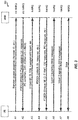
- FIG. 3 shows a message flow for a design of a random access procedure 300.
- the UE may be in the RRC_NULL or RRC_IDLE state and may access the system by sending a random access preamble (step A1).
- the random access preamble may include L bits of information, where L may be any integer value.
- An access sequence may be selected from a pool of 2 L available access sequences and sent for the random access preamble.
- the 2 L access sequences may be of any length and may be designed to have good detection properties. For example, 64 access sequences may be defined based on different cyclic shifts of a Zardoff-Chu sequence of a suitable length.
- the random access preamble may include a random identifier (ID) that may be pseudo-randomly selected by the UE and used to identify the random access preamble from the UE.
- the random access preamble may also include one or more additional bits for downlink channel quality indicator (CQI) and/or other information.
- the downlink CQI may be indicative of the downlink channel quality as measured by the UE and may be used to send subsequent downlink transmission to the UE and/or to assign uplink resources to the UE.
- a 6-bit random access preamble may include a 4-bit random ID and a 2-bit CQI.
- a 6-bit random access preamble may include a 5-bit random ID and a 1-bit CQI.
- the random access preamble may also include different and/or additional information.
- the UE may determine an Implicit Radio Network Temporary Identifier (I-RNTI) that may be used as a temporary ID for the UE during system access.
- I-RNTI Implicit Radio Network Temporary Identifier
- the UE may be identified by the I-RNTI until a more permanent ID such as a Cell RNTI (C-RNTI) is assigned to the UE.
- C-RNTI Cell RNTI
- the I-RNTI may include the following:
- the I-RNTI may have a fixed length (e.g., 16 bits) and may be padded with a sufficient number of zeros (e.g., 2 zeros) to achieve the fixed length.
- the system time may be given in units of radio frames, and an 8-bit system time may be unambiguous over 256 radio frames or 2560 ms.
- the I-RNTI is composed of 4-bit system time, 6-bit RA-preamble identifier, and padding bits (if needed).
- the I-RNTI may be formed with any information that may (i) allow the UE or random access preamble to be individually addressed and (ii) reduce the likelihood of collision with another UE using the same I-RNTI.
- the lifetime of the I-RNTI may be selected based on the maximum expected response time for an asynchronous response to the random access preamble.
- the I-RNTI may also include system time and a pattern (e.g., 000...0 in front of system time) to indicate that the RNTI addresses the RACH.
- RACHs may be available, and the UE may randomly select one of the available RACHs.
- Each RACH may be associated with a different Random Access RNTI (RA-RNTI).
- the UE may be identified by a combination of the RA-preamble identifier and the RA-RNTI of the selected RACH during the system access.
- An I-RNTI may be defined based on any combination of the RA-preamble identifier, RA-RNTI, and system time, e.g., the RA-preamble identifier and RA-RNTI, or the RA-RNTI and system time, etc.
- System time may be beneficial for asynchronous response to the random access preamble.
- the UE may be identified based on the RA-preamble identifier sent separately, e.g., on the PDSCH.
- the UE may send the random access preamble on the selected RACH.
- An eNB may receive the random access preamble from the UE and may respond by sending a random access response on the PDCCH and/or PDSCH to the UE (step A2).
- the eNB may determine the I-RNTI of the UE in the same manner as the UE.
- the eNB may asynchronously respond to the random access preamble from the UE within the lifetime of the I-RNTI.
- the PDCCH/PDSCH may carry the following:
- a cyclic redundancy check may be generated based on all information being sent on the PDCCH/PDSCH.
- the CRC may be exclusive ORed (XORed) with the I-RNTI (as shown in FIG. 3 ), the RA-preamble identifier, the RA-RNTI, and/or other information to identify the UE being addressed. Different and/or other information may also be sent on the PDCCH/PDSCH in step A2.
- the UE may then respond with a unique UE ID in order to resolve possible collision (step A3).
- the unique UE ID may be an International Mobile Subscriber Identity (IMSI), a Temporary Mobile Subscriber Identity (TMSI), another random ID, etc.
- IMSI International Mobile Subscriber Identity
- TMSI Temporary Mobile Subscriber Identity
- the unique UE ID may also be a registration area ID if the UE has already registered in a given area.
- the UE may also send downlink CQI, pilot measurement report, etc., along with the unique UE ID.
- the eNB may receive a unique "handle" or pointer to the unique UE ID. The eNB may then assign a C-RNTI and control channel resources to the UE. The eNB may send a response on the PDCCH and PDSCH (steps A4 and A5).
- the PDCCH may carry a message containing the I-RNTI and DL resources indicating where remaining information is sent on the PDSCH to the UE.
- the PDSCH may carry a message containing the unique UE ID, the C-RNTI (if assigned), CQI resources used by the UE to send downlink CQI, PC resources used to send PC corrections to the UE, etc.
- the messages sent on the PDCCH and PDSCH may also carry different and/or other information.
- the UE may decode the messages sent on the PDCCH and PDSCH to the UE. After decoding these two messages, the UE has sufficient resources configured and can exchange Layer 3 signaling with the eNB (steps A6 and A7).
- the Layer 3 signaling may include Non-Access Stratum (NAS) messages for authentication of the UE, configuration of the radio link between the UE and eNB, connection management, etc.
- NAS Non-Access Stratum
- the UE and eNB may exchange data after completing the Layer 3 signaling (step A8).
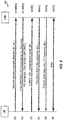
- FIG. 4 shows a message flow for a design of a random access procedure 400.
- the UE may be in the RRC_IDLE or RRC_CONNECTED state and may already have a C-RNTI assigned to the UE.
- the UE may access the system from the RRC_IDLE state in response to receiving data to send or from the RRC_CONNECTED state in response to a handover command.
- the UE may send a random access preamble, which may include a random ID and possibly one or more additional bits for downlink CQI and/or other information (step B1).
- An eNB may receive the random access preamble from the UE and may respond by sending a random access response on the PDCCH and/or PDSCH to the UE (step B2).
- the random access response may include timing advance, UL resources, PC correction, and a CRC that may be XORed with an I-RNTI, an RA-preamble identifier, an RA-RNTI, and/or other information to identify the UE.
- the UE may then send its C-RNTI, downlink CQI, pilot measurement report and/or other information to the eNB (step B3).
- the eNB may then send a response on the PDCCH and PDSCH (steps B4 and B5).
- the PDCCH may carry a message containing the C-RNTI and the DL resources for the PDSCH.
- the PDSCH may carry a message containing the CQI resources, PC resources, etc.
- the UE may decode the messages sent on the PDCCH and PDSCH to the UE. Layer 3 signaling exchanges may be omitted since the UE has been authenticated prior to being assigned the C-RNTI. After step B5, the UE has sufficient resources configured and can exchange data with the eNB (step B6).
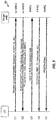
- FIG. 5 shows a message flow for a design of a random access procedure 500 for handover.
- the UE may be communicating with a source eNB and may be handed over to a target eNB.
- the UE may be assigned a random ID by the source eNB for use to access the target eNB.
- a subset of all possible random IDs may be reserved for handover, and the random ID assigned to the UE may be selected from this reserved subset.
- Information regarding the subset of reserved random IDs may be broadcast to all UEs.
- the source eNB may inform the target eNB of the C-RNTI, random ID, CQI resources, PC resources and/or other information for the UE. Collision resolution may not be necessary due to a one-to-one mapping between the assigned random ID and the C-RNTI of the UE.
- the target eNB may thus have pertinent context information for the UE prior to the random access procedure. For simplicity, FIG. 5 shows the random access procedure between the UE and the target eNB.
- the UE may send a random access preamble, which may include the random ID assigned to the UE and possibly other information (step C1).
- the target eNB may receive the random access preamble and may respond by sending a random access response on the PDCCH and/or PDSCH to the UE (step C2).
- the random access response may include timing advance, UL resources, PC correction, and a CRC that may be XORed with the C-RNTI of the UE.
- the UE has sufficient resources configured and can exchange data with the eNB.
- the UE may send a Layer 2 ACK for the information received in step C2 and may also send data and/or other information (step C3).
- the eNB may then send data to the UE on the PDSCH (step C5) and may send signaling for the PDSCH on the PDCCH (step C4).
- FIGS. 3 through 5 show some example random access procedures that may be used for initial system access, system access while idle, and system access for handover. Other random access procedures may also be used for system access.
- hybrid automatic retransmission may be used for messages sent in steps A3, B3 and C3 and later.
- a transmitter may send a transmission of a message, and a receiver may send an ACK if the message is decoded correctly or a NAK if the message is decoded in error.
- the transmitter may send one or more retransmissions of the message, if needed, until an ACK is received for the message or the maximum number of retransmissions has been sent.
- FIG. 6 shows a design of random access preamble transmission by the UE.
- the UE may transmit a random access preamble with an initial transmit power of P TX UE at time T 1 to a target eNB.
- the UE may then wait for a random access response from the eNB. If a random access response is not received within a predetermined time interval, then the UE may wait a particular backoff time and then retransmit the random access preamble in the next available RACH slot after the backoff time.
- the second transmission of the random access preamble is sent with higher transmit power of P TX UE at time T 2 .
- the UE may continue to retransmit the random access preamble with progressively higher transmit power, after waiting a backoff time for each failed transmission, until either (1) a random access response is received from the eNB or (2) the maximum number of transmissions has been sent for the random access preamble.
- the UE receives a random access response after M transmissions of the random access preamble, where in general M ⁇ 1.
- the UE may transmit the first uplink message (e.g., corresponding to step A3, B3 or C3 in FIG. 3 , 4 or 5 , respectively) with transmit power of P msg UE at time T msg .
- the transmit power P msg UE may be selected to achieve reliable reception of the first uplink message while reducing uplink interference.
- a reference signal e.g., a pilot signal
- P RX UE is indicative of the received signal from the recipient eNB.
- the quantity I or N 0 + I oc UE is a signal-to-other-cell-interference-plus-noise ratio for the time-frequency slots used for the downlink reference signal, as measured by the UE.
- the correction factor ⁇ may be used to bias the open loop algorithm.
- the eNB transmit power P TX eNB , the RACH slot interference level N 0 + I oc eNB , the correction factor ⁇ and/or other parameters may be broadcast on the BCH by the recipient eNB. These parameters may be used to determine the transmit power of the random access preamble.
- the UE may estimate this transmit power so that the SNR of the random access preamble at the recipient eNB corresponds to a target value for the SNR target .
- the quantities in equation (2) are in units of dB.
- the receive power and the interference correction may be measured by the UE.
- the offset power and the added correction may be signaled by the recipient eNB on the BCH.
- the UE may increase its transmit power for subsequent transmissions of the random access preamble.
- Equations (1) through (3) show one design of determining the transmit power of the random access preamble.
- the transmit power may also be determined in other manners, e.g., with different parameters than those shown in equation (1) or (2). For example, default values may be used for P TX eNB , N 0 + I oc eNB , I or N 0 + I oc UE , and/or other parameters. Alternatively, these parameters may be absorbed in the correction factor ⁇ .
- the PC correction may indicate the amount of increase or decrease in transmit power and may be given with any number of bits (e.g., four bits) of resolution. In another design, the PC correction may simply indicate whether the transmit power should be increased or decreased by a predetermined amount. Not covered by the claimed invention are the features that the PC correction may also be omitted or may be absorbed in the PUSCH to RACH power offset.
- the PUSCH to RACH power offset may be broadcast on the BCH by the eNB or may be provided by other means.
- the same transmission parameter values and setting are used by all UEs.
- the same target SNR and added correction may be used for the random access preamble by all UEs, and the same PUSCH to RACH power offset may be used for the first uplink message by all UEs.
- the UEs may be classified into multiple classes, and different transmission parameter values and settings may be used for different classes of UEs.
- the UEs may be classified in various manners. For example, the UEs may perform the random access procedure for various scenarios such as initial system access at power up, response to pages sent to the UE, data arriving at the UE, transition to active state, handover from one eNB to another eNB, etc. Different UE classes may be defined for different random access scenarios.
- the UEs may be classified based on their priorities, which may be determined based on service subscription and/or other factors.
- the UEs may be classified based on the types of messages being sent by these UEs. In general, any number of UE classes may be formed based on any set of factors, and each class may include any number of UEs.
- different target SNR values may be used by UEs in different classes.
- the UEs may be classified into two classes, a higher target SNR value may be used by UEs in a first class, and a lower target SNR value may be used by UEs in a second class.
- UEs with the higher target SNR may be able to use more transmit power for their random access preambles, which may allow these random access preambles to be received with higher SNR at the eNBs.
- the use of different target SNR values by different classes of UEs may improve throughput of the RACH via a capture effect.
- multiple UEs may transmit their random access preambles in the same RACH slot, which would then result in collisions of these random access preambles at an eNB.
- a collision between two UEs in two classes occurs, a first random access preamble transmitted with the higher target SNR may observe less interference from a second random access preamble transmitted with the lower target SNR.
- the eNB may be able to correctly decode the first random access preamble and may or may not be able to decode the second random access preamble.
- the eNB may perform interference cancellation, estimate the interference due to the first random access preamble, cancel the estimated interference from the received signal, and then perform decoding for the second random access preamble.
- the likelihood of correctly decoding the second random access preamble may improve due to interference cancellation.
- the capture effect may allow the eNB to correctly decode all or a subset of the random access preambles transmitted in the same RACH slot.
- collisions between these UEs do not create the capture effect, and the eNB may not be able to correctly decode any of the random access preambles transmitted by these UEs. Consequently, all of these UEs may need to retransmit their random access preambles.
- different correction factor values may be used for different classes of UEs.
- different power ramp up values may be used for different classes of UEs. For example, a higher power ramp up value may be used for one class of UEs to potentially reduce random access delay, and a lower power ramp up value may be used for another class of UEs.
- different backoff time values may be used for different classes of UEs. For example, a shorter backoff time may be used for one class of UEs to potentially reduce random access delay, and a longer backoff time may be used for another class of UEs.
- different PUSCH to RACH power offset values may be used for different classes of UEs. This may allow the capture effect to be achieved for the first uplink messages sent by the UEs in different classes.
- One or more of the parameters in equation (2) and/or (4) may have different values for different UE classes, as described above. In other designs, one or more parameters in equation (2) and/or (4) may have values that are specific for individual UEs.
- the target SNR and/or the correction factor ⁇ may have UE-specific values. In this design, each UE may transmit its random access preamble with transmit power determined based on the target SNR and/or the correction factor for that UE. A default value or a broadcast value may be used for each parameter for which the UE-specific value is not available.
- the PUSCH to RACH power offset may have UE-specific values.
- each UE may transmit its first uplink message with transmit power determined based on the PUSCH to RACH power offset value for that UE (or with a default or broadcast value if the UE-specific value is not available).
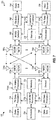
- FIG. 7 shows a block diagram of a design of eNB 110 and UE 120, which are one of the eNBs and one of the UEs in FIG. 1 .
- eNB 110 is equipped with T antennas 724a through 724t
- UE 120 is equipped with R antennas 752a through 752r, where in general T ⁇ 1 and R ⁇ 1.
- a transmit (TX) data processor 714 may receive traffic data for one or more UEs from a data source 712. TX data processor 714 may process (e.g., format, encode, and interleave) the traffic data for each UE based on one or more coding schemes selected for that UE to obtain coded data. TX data processor 714 may then modulate (or symbol map) the coded data for each UE based on one or more modulation schemes (e.g., BPSK, QSPK, PSK or QAM) selected for that UE to obtain modulation symbols.
- modulation schemes e.g., BPSK, QSPK, PSK or QAM
- a TX MIMO processor 720 may multiplex the modulation symbols for all UEs with pilot symbols using any multiplexing scheme. Pilot is typically known data that is processed in a known manner and may be used by a receiver for channel estimation and other purposes. TX MIMO processor 720 may process (e.g., precode) the multiplexed modulation symbols and pilot symbols and provide T output symbol streams to T transmitters (TMTR) 722a through 722t. In certain designs, TX MIMO processor 720 may apply beamforming weights to the modulation symbols to spatially steer these symbols. Each transmitter 722 may process a respective output symbol stream, e.g., for orthogonal frequency division multiplexing (OFDM), to obtain an output chip stream.
- OFDM orthogonal frequency division multiplexing
- Each transmitter 722 may further process (e.g., convert to analog, amplify, filter, and upconvert) the output chip stream to obtain a downlink signal.
- T downlink signals from transmitters 722a through 722t may be transmitted via T antennas 724a through 724t, respectively.
- antennas 752a through 752r may receive the downlink signals from eNB 110 and provide received signals to receivers (RCVR) 754a through 754r, respectively.
- Each receiver 754 may condition (e.g., filter, amplify, downconvert, and digitize) a respective received signal to obtain samples and may further process the samples (e.g., for OFDM) to obtain received symbols.
- a MIMO detector 760 may receive and process the received symbols from all R receivers 754a through 754r based on a MIMO receiver processing technique to obtain detected symbols, which are estimates of the modulation symbols transmitted by eNB 110.
- a receive (RX) data processor 762 may then process (e.g., demodulate, deinterleave, and decode) the detected symbols and provide decoded data for UE 120 to a data sink 764.
- RX data processor 762 may then process (e.g., demodulate, deinterleave, and decode) the detected symbols and provide decoded data for UE 120 to a data sink 764.
- MIMO detector 760 and RX data processor 762 is complementary to the processing by TX MIMO processor 720 and TX data processor 714 at eNB 110.
- traffic data from a data source 776 and signaling may be processed by a TX data processor 778, further processed by a modulator 780, conditioned by transmitters 754a through 754r, and transmitted to eNB 110.
- the uplink signals from UE 120 may be received by antennas 724, conditioned by receivers 722, demodulated by a demodulator 740, and processed by an RX data processor 742 to obtain the traffic data and signaling transmitted by UE 120.
- Controllers/processors 730 and 770 may direct the operation at eNB 110 and UE 120, respectively.
- Memories 732 and 772 may store data and program codes for eNB 110 and UE 120, respectively.
- a scheduler 734 may schedule UEs for downlink and/or uplink transmission and may provide assignments of resources for the scheduled UEs.
- FIG. 8 shows a design of a process 800 for transmitting random access signaling by a UE.
- At least one parameter value for at least one transmission parameter for random access signaling may be determined based on a particular UE class, with the at least one transmission parameter having different values for a plurality of UE classes (block 812).
- the random access signaling may be sent based on the at least one parameter value for system access, e.g., for initial system access at power up, system access to transition to an active state, or system access for handover (block 814).
- the at least one transmission parameter may comprise a target SNR, a power offset, a correction factor, etc.
- the transmit power of the random access signaling may be determined based on the at least one parameter value, and the random access signaling may be sent with the determined transmit power.
- the random access signaling may be a random access preamble
- the at least one transmission parameter may comprise a target SNR for the random access preamble.
- the transmit power of the random access preamble may be determined based on a target SNR value for the particular UE class and other parameters such as received power for a reference signal, an interference level of a time-frequency slot used to send the random access preamble, a power offset, a correction factor, etc.
- the random access preamble may be sent with the determined transmit power.
- the at least one transmission parameter may comprise a backoff time, and the amount of time to wait between successive transmissions of the random access preamble may be determined based on a backoff time value for the particular UE class.
- the at least one transmission parameter may comprise a power ramp, and the transmit power for successive transmissions of the random access preamble may be determined based on a power ramp value for the particular UE class.
- the random access signaling may be a message sent after receiving a random access response for the random access preamble.
- the at least one transmission parameter may comprise a power offset between a first channel (e.g., the RACH) used to send the random access preamble and a second channel (e.g., the PUSCH) used to send the message.
- the transmit power of the message may be determined based on a power offset value for the particular UE class and possibly other parameters such as a PC correction.
- the message may then be sent with the determined transmit power.
- FIG. 9 shows a design of an apparatus 900 for transmitting random access signaling.
- Apparatus 900 includes means for determining at least one parameter value for at least one transmission parameter for random access signaling based on a particular UE class, with the at least one transmission parameter having different values for a plurality of UE classes (module 912), and means for sending the random access signaling based on the at least one parameter value for system access (module 914).
- FIG. 10 shows a design of a process 1000 for transmitting a message for system access.
- a random access preamble may be sent for system access (block 1012).
- a random access response with a PC correction may be received (block 1014).
- the transmit power of a message may be determined based on the PC correction and possibly other parameters (block 1016). For example, the transmit power of the message may be determined further based on the transmit power of the random access preamble, a power offset between a first channel used to send the random access preamble and a second channel used to send the message, etc.
- the message may be sent with the determined transmit power (block 1018).
- the PC correction may be generated based on received signal quality of the random access preamble at a base station.
- the PC correction may indicate the amount of increase or decrease in transmit power for the message.
- the PC correction may also indicate whether to increase or decrease the transmit power by a predetermined amount.
- FIG. 11 shows a design of an apparatus 1100 for transmitting a message for system access.
- Apparatus 1100 includes means for sending a random access preamble for system access (module 1112), means for receiving a random access response with a PC correction (module 1114), means for determining the transmit power of a message based on the PC correction and possibly other parameters (module 1116), and means for sending the message with the determined transmit power (module 1118).
- the modules in FIGS. 9 and 11 may comprise processors, electronics devices, hardware devices, electronics components, logical circuits, memories, etc., or any combination thereof.
- DSP digital signal processor
- ASIC application specific integrated circuit
- FPGA field programmable gate array
- a general-purpose processor may be a microprocessor, but in the alternative, the processor may be any conventional processor, controller, microcontroller, or state machine.
- a processor may also be implemented as a combination of computing devices, e.g., a combination of a DSP and a microprocessor, a plurality of microprocessors, one or more microprocessors in conjunction with a DSP core, or any other such configuration.
- a software module may reside in RAM memory, flash memory, ROM memory, EPROM memory, EEPROM memory, registers, hard disk, a removable disk, a CD-ROM, or any other form of storage medium known in the art.
- An exemplary storage medium is coupled to the processor such that the processor can read information from, and write information to, the storage medium.
- the storage medium may be integral to the processor.
- the processor and the storage medium may reside in an ASIC.
- the ASIC may reside in a user terminal.
- the processor and the storage medium may reside as discrete components in a user terminal.
- the functions described may be implemented in hardware, software, firmware, or any combination thereof. If implemented in software, the functions may be stored on or transmitted over as one or more instructions or code on a computer-readable medium.
- Computer-readable media includes both computer storage media and communication media including any medium that facilitates transfer of a computer program from one place to another.
- a storage media may be any available media that can be accessed by a general purpose or special purpose computer.
- such computer-readable media can comprise RAM, ROM, EEPROM, CD-ROM or other optical disk storage, magnetic disk storage or other magnetic storage devices, or any other medium that can be used to carry or store desired program code means in the form of instructions or data structures and that can be accessed by a general-purpose or special-purpose computer, or a general-purpose or special-purpose processor. Also, any connection is properly termed a computer-readable medium.
- Disk and disc includes compact disc (CD), laser disc, optical disc, digital versatile disc (DVD), floppy disk and blu-ray disc where disks usually reproduce data magnetically, while discs reproduce data optically with lasers. Combinations of the above should also be included within the scope of computer-readable media.
Landscapes
- Engineering & Computer Science (AREA)
- Computer Networks & Wireless Communication (AREA)
- Signal Processing (AREA)
- Quality & Reliability (AREA)
- Mobile Radio Communication Systems (AREA)
Claims (13)
- Verfahren (1000) zur drahtlosen Kommunikation an einem Benutzergerät, UE, das Folgendes umfasst:Senden (1012) einer Zufallszugriffspräambel für den Systemzugriff;Empfangen (1014) einer Zufallszugriffsantwort auf einem Physical Downlink Control Channel, PDCCH, und/oder einem Physical Downlink Shared Channel, PDSCH, mit einer Leistungssteuerungskorrektur, PC, die eine Einstellung der Sendeleistung des UE anzeigt, einer Zeitvorverlegung, die eine Einstellung des Sendetimings des UE anzeigt, Uplink-Ressourcen, die Ressourcen anzeigen, die dem UE für eine Uplink-Übertragung gewährt werden, und einem Implicit Radio Network Temporary Identifier, I-RNTI, der das UE während des Systemzugriffs identifiziert;Bestimmen (1016) der Sendeleistung einer Nachricht auf der Grundlage der PC-Korrektur und eines Leistungs-Offsets zwischen einem ersten Kanal, der zum Senden der Zufallszugriffspräambel verwendet wird, und einem zweiten Kanal, der zum Senden der Nachricht verwendet wird, wobei das Bestimmen der Sendeleistung der Nachricht das Bestimmen der Sendeleistung der Nachricht ferner auf der Grundlage der Sendeleistung der Zufallszugriffspräambel umfasst; undSenden (1018) der Nachricht mit der bestimmten Sendeleistung.
- Verfahren nach Anspruch 1, wobei die PC-Korrektur den Betrag der Zunahme oder Abnahme der Sendeleistung anzeigt.
- Verfahren nach Anspruch 1, wobei die PC-Korrektur anzeigt, ob die Sendeleistung um einen vorbestimmten Betrag erhöht oder verringert werden soll.
- Verfahren nach einem der Ansprüche 1 bis 3, wobei die Zufallszugriffspräambel für den Systemzugriff auf dem Random Access Channel, RACH, übertragen wird und die Nachricht auf dem Physical Uplink Shared Channel, PUSCH, übertragen wird.
- Verfahren nach Anspruch 4, wobei der Leistungsversatz von PUSCH zu RACH einen für das UE spezifischen Wert hat.
- Verfahren nach Anspruch 4, wobei der PUSCH-zu-RACH-Leistungsversatz einen Standard- oder Broadcast-Wert hat.
- Vorrichtung (1100) zur drahtlosen Kommunikation an einem Benutzergerät, UE, umfassend:Mittel (1112) zum Senden einer Zufallszugriffspräambel für den Systemzugriff;Mittel (1114) zum Empfangen einer Zufallszugriffsantwort auf einem Physical Downlink Control Channel, PDCCH, und/oder einem Physical Downlink Shared Channel, PDSCH, mit einer Leistungssteuerungskorrektur, PC, die eine Einstellung der Sendeleistung des UE anzeigt, einer Zeitvorverlegung, die eine Einstellung des Sendeztimings des UE anzeigt, Uplink-Ressourcen, die Ressourcen anzeigen, die dem UE für eine Uplink-Übertragung gewährt werden, und einem Implicit Radio Network Temporary Identifier, I-RNTI, der das UE während des Systemzugriffs identifiziert;Mittel (1116) zum Bestimmen der Sendeleistung einer Nachricht auf der Grundlage der PC-Korrektur und eines Leistungs-Offsets zwischen einem ersten Kanal, der zum Senden der Zufallszugriffspräambel verwendet wird, und einem zweiten Kanal, der zum Senden der Nachricht verwendet wird, wobei das Mittel zum Bestimmen der Sendeleistung der Nachricht Mittel zum Bestimmen der Sendeleistung der Nachricht ferner auf der Grundlage der Sendeleistung der Zufallszugriffspräambel umfasst; undMittel (1118) zum Senden der Nachricht mit der bestimmten Sendeleistung.
- Vorrichtung nach Anspruch 7, wobei die PC-Korrektur den Betrag der Zunahme oder Abnahme der Sendeleistung anzeigt.
- Vorrichtung nach Anspruch 7, wobei die PC-Korrektur anzeigt, ob die Sendeleistung um einen vorbestimmten Betrag erhöht oder verringert werden sollte.
- Vorrichtung nach einem der Ansprüche 7 bis 9, wobei die Zufallszugriffspräambel für den Systemzugriff auf dem Random Access Channel, RACH, übertragen wird und die Nachricht auf dem Physical Uplink Shared Channel, PUSCH, übertragen wird.
- Vorrichtung nach Anspruch 10, wobei der Leistungsversatz von PUSCH zu RACH einen für das UE spezifischen Wert hat.
- Vorrichtung nach Anspruch 10, wobei der PUSCH-zu-RACH-Leistungsversatz einen Standard- oder Broadcast-Wert hat.
- Computerprogramm, das Anweisungen zum Ausführen eines Verfahrens nach einem der Ansprüche 1 bis 6 umfasst, wenn es von mindestens einem Prozessor ausgeführt wird.
Applications Claiming Priority (3)
| Application Number | Priority Date | Filing Date | Title |
|---|---|---|---|
| US82805806P | 2006-10-03 | 2006-10-03 | |
| PCT/US2007/080319 WO2008042967A2 (en) | 2006-10-03 | 2007-10-03 | Random access signaling transmission for system access in wireless communication |
| EP07843757.1A EP2080401B1 (de) | 2006-10-03 | 2007-10-03 | Direktzugriffs-signalisierungsübertragung für systemzugang in einer drahtlos-kommunikation |
Related Parent Applications (1)
| Application Number | Title | Priority Date | Filing Date |
|---|---|---|---|
| EP07843757.1A Division EP2080401B1 (de) | 2006-10-03 | 2007-10-03 | Direktzugriffs-signalisierungsübertragung für systemzugang in einer drahtlos-kommunikation |
Publications (2)
| Publication Number | Publication Date |
|---|---|
| EP3554180A1 EP3554180A1 (de) | 2019-10-16 |
| EP3554180B1 true EP3554180B1 (de) | 2021-05-05 |
Family
ID=39156626
Family Applications (2)
| Application Number | Title | Priority Date | Filing Date |
|---|---|---|---|
| EP19176927.2A Active EP3554180B1 (de) | 2006-10-03 | 2007-10-03 | Verfahren und vorrichtungen für einen direktzugriff zu einem drahtlosen kommunikationssystem |
| EP07843757.1A Active EP2080401B1 (de) | 2006-10-03 | 2007-10-03 | Direktzugriffs-signalisierungsübertragung für systemzugang in einer drahtlos-kommunikation |
Family Applications After (1)
| Application Number | Title | Priority Date | Filing Date |
|---|---|---|---|
| EP07843757.1A Active EP2080401B1 (de) | 2006-10-03 | 2007-10-03 | Direktzugriffs-signalisierungsübertragung für systemzugang in einer drahtlos-kommunikation |
Country Status (20)
| Country | Link |
|---|---|
| US (1) | US8599706B2 (de) |
| EP (2) | EP3554180B1 (de) |
| JP (2) | JP5001373B2 (de) |
| KR (1) | KR101062098B1 (de) |
| CN (1) | CN101523930B (de) |
| AU (1) | AU2007303199B2 (de) |
| BR (1) | BRPI0720514B1 (de) |
| CA (2) | CA2663162A1 (de) |
| ES (2) | ES2745100T3 (de) |
| HU (1) | HUE044312T2 (de) |
| IL (2) | IL197480A0 (de) |
| MX (1) | MX2009003596A (de) |
| MY (1) | MY154775A (de) |
| NO (1) | NO20091763L (de) |
| PH (1) | PH12012500786A1 (de) |
| RU (2) | RU2427106C2 (de) |
| SG (1) | SG166122A1 (de) |
| TW (1) | TWI378672B (de) |
| UA (2) | UA103359C2 (de) |
| WO (1) | WO2008042967A2 (de) |
Families Citing this family (161)
| Publication number | Priority date | Publication date | Assignee | Title |
|---|---|---|---|---|
| GB2445336B (en) * | 2005-11-04 | 2010-12-08 | Nec Corp | Wireless communication system and method of controlling a transmission power |
| KR101265643B1 (ko) | 2006-08-22 | 2013-05-22 | 엘지전자 주식회사 | 무선 통신 시스템에서의 핸드오버 수행 및 그 제어 방법 |
| KR101430449B1 (ko) | 2006-10-02 | 2014-08-14 | 엘지전자 주식회사 | 무선 통신 시스템에서의 페이징 메시지 송수신 방법 |
| KR100938754B1 (ko) | 2006-10-30 | 2010-01-26 | 엘지전자 주식회사 | 비연속 수신을 이용한 데이터 수신 및 전송 방법 |
| EP2057862B1 (de) * | 2006-10-30 | 2017-02-01 | LG Electronics Inc. | Redirektionsverfahren für den aufwärtszugriff |
| WO2008054119A2 (en) * | 2006-10-30 | 2008-05-08 | Lg Electronics Inc. | Methods for transmitting access channel message and response message, and mobile communication terminals |
| US8428013B2 (en) | 2006-10-30 | 2013-04-23 | Lg Electronics Inc. | Method of performing random access in a wireless communcation system |
| US8335233B2 (en) * | 2007-03-01 | 2012-12-18 | Ntt Docomo, Inc. | Base station apparatus and communication control method using an uplink shared channel |
| KR101464748B1 (ko) | 2007-04-30 | 2014-11-24 | 엘지전자 주식회사 | 무선단말의 측정보고 기동방식 |
| KR101461236B1 (ko) | 2007-04-30 | 2014-11-12 | 엘지전자 주식회사 | 무선 호를 연결 과정에서 엔티티의 인증을 수행하는 방법 |
| WO2008133474A1 (en) | 2007-04-30 | 2008-11-06 | Lg Electronics Inc. | Method of transmitting data in wireless communication system supporting multimedia broadcast/multicast service |
| KR101386812B1 (ko) | 2007-04-30 | 2014-04-29 | 엘지전자 주식회사 | 헤더 필드 존재 지시자를 이용한 효율적인 데이터 블록송수신방법 |
| US8081662B2 (en) | 2007-04-30 | 2011-12-20 | Lg Electronics Inc. | Methods of transmitting data blocks in wireless communication system |
| KR20080097338A (ko) | 2007-05-01 | 2008-11-05 | 엘지전자 주식회사 | 불연속 데이터 송수신 방법 |
| KR100917205B1 (ko) | 2007-05-02 | 2009-09-15 | 엘지전자 주식회사 | 무선 통신 시스템에서의 데이터 블록 구성 방법 |
| US8463300B2 (en) | 2007-06-18 | 2013-06-11 | Lg Electronics Inc. | Paging information transmission method for effective call setup |
| ES2428569T3 (es) | 2007-06-18 | 2013-11-08 | Lg Electronics Inc. | Procedimiento para llevar a cabo una sincronización de enlace ascendente en un sistema de comunicación inalámbrica |
| KR101470638B1 (ko) | 2007-06-18 | 2014-12-08 | 엘지전자 주식회사 | 이동통신 시스템에서의 무선자원 향상 방법, 상태정보 보고방법 및 수신장치 |
| KR101387537B1 (ko) | 2007-09-20 | 2014-04-21 | 엘지전자 주식회사 | 성공적으로 수신했으나 헤더 압축 복원에 실패한 패킷의 처리 방법 |
| CN110087317B (zh) | 2007-09-28 | 2021-01-05 | 无线创新信号信任公司 | Wtru、wtru执行的方法、基站执行的方法以及装置 |
| RU2447623C2 (ru) | 2007-10-25 | 2012-04-10 | Интердиджитал Пэйтент Холдингз, Инк. | УПРАВЛЕНИЕ И УСТАНОВКА РЕСУРСОВ С УЛУЧШЕННЫМ MAC-e/es В СОСТОЯНИИ Cell_FACH |
| EP3709749B1 (de) | 2007-10-29 | 2023-09-20 | InterDigital Patent Holdings, Inc. | Behandlung von random-access-kanal-antworten |
| US8665857B2 (en) * | 2007-12-18 | 2014-03-04 | Qualcomm Incorporated | Method and apparatus for sending and receiving random access response in a wireless communication system |
| KR101519345B1 (ko) | 2008-01-01 | 2015-05-21 | 주식회사 팬택 | 랜덤 액세스 요청 송수신 및 랜덤 액세스 응답 송수신 방법 |
| KR20160140967A (ko) * | 2008-01-02 | 2016-12-07 | 시그널 트러스트 포 와이어리스 이노베이션 | 셀 재선택을 위한 방법 및 장치 |
| KR101531914B1 (ko) * | 2008-01-28 | 2015-06-29 | 엘지전자 주식회사 | 단말 유발 채널상태정보 전송 방법 |
| KR101537607B1 (ko) | 2008-02-05 | 2015-07-29 | 엘지전자 주식회사 | 조정필드를 이용한 효율적인 무선채널 전송방법 |
| WO2009105003A1 (en) * | 2008-02-21 | 2009-08-27 | Telefonaktiebolaget Lm Ericsson (Publ) | Adjustment of radio detection level for request signals based observed false detection |
| CN101999219B (zh) | 2008-04-14 | 2014-02-19 | Lg电子株式会社 | 执行随机接入过程的方法和装置 |
| KR100968020B1 (ko) | 2008-06-18 | 2010-07-08 | 엘지전자 주식회사 | 랜덤 액세스 절차를 수행하는 방법 및 그 단말 |
| GB2461780B (en) | 2008-06-18 | 2011-01-05 | Lg Electronics Inc | Method for detecting failures of random access procedures |
| WO2009154403A2 (en) | 2008-06-18 | 2009-12-23 | Lg Electronics Inc. | Method of transmitting power headroom reporting in wireless communication system |
| GB2461159B (en) | 2008-06-18 | 2012-01-04 | Lg Electronics Inc | Method for transmitting Mac PDUs |
| US7957298B2 (en) | 2008-06-18 | 2011-06-07 | Lg Electronics Inc. | Method for detecting failures of random access procedures |
| US11272449B2 (en) | 2008-06-18 | 2022-03-08 | Optis Cellular Technology, Llc | Method and mobile terminal for performing random access |
| GB2461158B (en) | 2008-06-18 | 2011-03-02 | Lg Electronics Inc | Method for performing random access procedures and terminal therof |
| US8494572B2 (en) * | 2008-06-24 | 2013-07-23 | Qualcomm Incorporated | Method and apparatus for power control of first data transmission in random access procedure of FDMA communication system |
| ES2575132T3 (es) * | 2008-07-01 | 2016-06-24 | Telefonaktiebolaget Lm Ericsson (Publ) | Métodos y aparatos para realizar la asignación de preámbulo para el acceso aleatorio en un sistema de telecomunicaciones |
| EP2144379A1 (de) | 2008-07-07 | 2010-01-13 | Nokia Siemens Networks OY | Koordination von Netzwerkknoten |
| US8107390B2 (en) * | 2008-07-21 | 2012-01-31 | Honeywell International Inc. | Apparatus and method for deterministic latency-controlled communications in process control systems |
| US8559351B2 (en) * | 2008-08-01 | 2013-10-15 | Qualcomm Incorporated | Dedicated reference signal design for network MIMO |
| KR101548748B1 (ko) * | 2008-08-07 | 2015-09-11 | 엘지전자 주식회사 | 랜덤 접속 절차를 수행하는 방법 |
| US9094202B2 (en) * | 2008-08-08 | 2015-07-28 | Qualcomm Incorporated | Utilizing HARQ for uplink grants received in wireless communications |
| WO2010018820A1 (ja) * | 2008-08-11 | 2010-02-18 | 株式会社エヌ・ティ・ティ・ドコモ | ユーザ装置及び通信制御方法 |
| US9357563B2 (en) * | 2008-08-12 | 2016-05-31 | Google Technology Holdings LLC | Preventing misuse of random access procedure in wireless communication system |
| US8780816B2 (en) * | 2008-08-12 | 2014-07-15 | Qualcomm Incorporated | Handling uplink grant in random access response |
| US20100074204A1 (en) * | 2008-09-16 | 2010-03-25 | Qualcomm Incorporated | Uplink hybrid automatic repeat request operation during random access |
| KR20100048844A (ko) * | 2008-10-31 | 2010-05-11 | 삼성전자주식회사 | 무선통신시스템에서 상향링크 전력 제어 장치 및 방법 |
| WO2010060749A1 (en) | 2008-11-03 | 2010-06-03 | Nokia Siemens Networks Oy | Random access preamble transmission design with multiple available random access channel resources |
| WO2010052522A1 (en) * | 2008-11-07 | 2010-05-14 | Nokia Corporation | Random access channel message bundling |
| US20100124188A1 (en) * | 2008-11-20 | 2010-05-20 | Chih-Hsiang Wu | Methods utilized in mobile devices and base stations, and the mobile devices and base stations thereof |
| KR100949972B1 (ko) * | 2009-01-02 | 2010-03-29 | 엘지전자 주식회사 | 단말의 임의접속 수행 기법 |
| KR101122095B1 (ko) | 2009-01-05 | 2012-03-19 | 엘지전자 주식회사 | 불필요한 재전송 방지를 위한 임의접속 기법 및 이를 위한 단말 |
| TW201108827A (en) * | 2009-03-16 | 2011-03-01 | Htc Corp | Method of handling random access procedure and related communication device |
| WO2010107354A1 (en) * | 2009-03-17 | 2010-09-23 | Telefonaktiebolaget L M Ericsson (Publ) | High priority random access |
| EP2244515A1 (de) | 2009-04-23 | 2010-10-27 | Panasonic Corporation | Logisches Kanalpriorisierungsverfahren zur Erzeugung von mehrfachen Uplink-Transportblöcken |
| EP2244514A1 (de) | 2009-04-23 | 2010-10-27 | Panasonic Corporation | Logisches Kanalpriorisierungsverfahren zur Erzeugung von mehrfachen Uplink-Transportblöcken |
| US8149776B2 (en) * | 2009-05-12 | 2012-04-03 | Nokia Corporation | Method, apparatus and computer program for user equipment access channel procedures |
| KR20100138812A (ko) * | 2009-06-23 | 2010-12-31 | 한국전자통신연구원 | 멀티미디어 브로드캐스트/멀티캐스트 서비스에서 오류 패킷의 재전송 요구 정보 전송 방법 및 재전송 요구에 대한 오류 패킷 재전송 방법 |
| CN105120522A (zh) * | 2009-07-30 | 2015-12-02 | 华为技术有限公司 | 一种随机接入方法及其装置 |
| CN101998607B (zh) * | 2009-08-31 | 2013-07-31 | 中国移动通信集团公司 | 上行时隙引入下行传输辅同步信号的方法、系统及装置 |
| US8755363B2 (en) * | 2009-09-15 | 2014-06-17 | Qualcomm Incorporated | Physical layer signaling of control parameters |
| CN105491629A (zh) * | 2009-11-05 | 2016-04-13 | 高通股份有限公司 | 实现切换优先化方案 |
| KR101298377B1 (ko) | 2009-12-21 | 2013-08-20 | 한국전자통신연구원 | 셀 식별자를 이용한 상향링크 프리엠블 충돌 방지 방법 및 그 장치 |
| MY163403A (en) | 2010-01-08 | 2017-09-15 | Interdigital Patent Holdings Inc | Maintaining time alignment with multiple uplink carriers |
| EP2524564B1 (de) * | 2010-01-12 | 2019-07-17 | Samsung Electronics Co., Ltd. | Vorrichtung und verfahren für zugriff auf direktzugriffskanal in einem drahtlosen kommunikationssystem |
| SMT201800459T1 (it) | 2010-04-01 | 2018-11-09 | Sun Patent Trust | Controllo della potenza di trasmissione per canali fisici di accesso causale |
| RU2559201C2 (ru) | 2010-04-01 | 2015-08-10 | Панасоник Интеллекчуал Проперти Корпорэйшн оф Америка | Управление мощностью передачи для физических каналов произвольного доступа |
| EP2566277B1 (de) * | 2010-04-28 | 2020-09-23 | LG Electronics Inc. | Verfahren und vorrichtung zur durchführung von direktzugriffsprozeduren in einem drahtlosen kommunikationssystem |
| CN102291846B (zh) * | 2010-06-21 | 2016-01-20 | 中兴通讯股份有限公司 | 一种随机接入方法及实现随机接入的系统 |
| CN102291836B (zh) * | 2010-06-21 | 2016-01-20 | 中兴通讯股份有限公司 | 一种随机接入控制方法及系统 |
| CN102378380B (zh) * | 2010-08-20 | 2014-11-05 | 中兴通讯股份有限公司 | 小区随机接入参数优化的方法及系统 |
| CN102378364B (zh) * | 2010-08-24 | 2014-12-10 | 中兴通讯股份有限公司 | 一种随机接入方法及实现随机接入的系统 |
| US8588163B2 (en) * | 2010-10-01 | 2013-11-19 | Industrial Technology Research Institute | Random access method, parameter assignment method, wireless communication device, and base station using the same |
| US9100922B2 (en) * | 2010-11-09 | 2015-08-04 | Lg Electronics Inc. | Method and terminal apparatus for transmitting a power status report in a wireless communication system |
| JP5844385B2 (ja) * | 2011-02-03 | 2016-01-13 | エヌイーシー ヨーロッパ リミテッドNec Europe Ltd. | 通信のためにワイヤレスネットワークにおいてランダムアクセスチャネルを提供する方法および対応するシステム |
| US8793563B2 (en) * | 2011-02-08 | 2014-07-29 | Institute For Information Industry | Wireless apparatus and method for de-masking a packet |
| CN102740374B (zh) * | 2011-04-01 | 2017-09-26 | 中兴通讯股份有限公司 | 接入控制方法及系统 |
| CN102781086B (zh) * | 2011-05-11 | 2017-06-06 | 中兴通讯股份有限公司 | 一种随机接入信道的功率控制方法及装置 |
| CN102781065B (zh) * | 2011-05-13 | 2016-01-27 | 华为技术有限公司 | 控制终端接入的方法及设备、终端接入方法及设备 |
| US9585083B2 (en) * | 2011-06-17 | 2017-02-28 | Samsung Electronics Co., Ltd. | Apparatus and method for supporting network entry in a millimeter-wave mobile broadband communication system |
| US9232482B2 (en) * | 2011-07-01 | 2016-01-05 | QUALOCOMM Incorporated | Systems, methods and apparatus for managing multiple radio access bearer communications |
| CN102869113B (zh) * | 2011-07-06 | 2016-01-27 | 上海贝尔股份有限公司 | 一种通信网络中的物理随机接入的方法和装置 |
| US8395985B2 (en) | 2011-07-25 | 2013-03-12 | Ofinno Technologies, Llc | Time alignment in multicarrier OFDM network |
| CN103703812B (zh) * | 2011-08-05 | 2017-07-28 | 太阳专利信托公司 | 发送装置、前导码发送装置以及发送方法 |
| WO2013025145A1 (en) * | 2011-08-12 | 2013-02-21 | Telefonaktiebolaget L M Ericsson (Publ) | Radio network node, user equipment and methods therein |
| US8761068B2 (en) * | 2011-08-15 | 2014-06-24 | Qualcomm Incorporated | Supporting DL triggered HS-DPCHH in a cell in CELL—FACH |
| CN102984806A (zh) * | 2011-09-02 | 2013-03-20 | 普天信息技术研究院有限公司 | 一种随机接入过程中回退控制参数的设置和更新方法 |
| WO2013049505A1 (en) | 2011-09-30 | 2013-04-04 | Kyocera Corporation | Systems and methods for small cell uplink interference mitigation |
| CN108834205B (zh) * | 2011-11-04 | 2021-09-28 | 交互数字专利控股公司 | 用于在与多个定时提前关联的多个分量载波上无线传输的功率控制的方法和装置 |
| US9237537B2 (en) | 2012-01-25 | 2016-01-12 | Ofinno Technologies, Llc | Random access process in a multicarrier base station and wireless device |
| US8526389B2 (en) | 2012-01-25 | 2013-09-03 | Ofinno Technologies, Llc | Power scaling in multicarrier wireless device |
| EP3937551A3 (de) | 2012-01-25 | 2022-02-09 | Comcast Cable Communications, LLC | Direktzugriffskanal in einer drahtlosen mehrträgerkommunikation mit zeitvorlaufsgruppen |
| CN104094548B (zh) * | 2012-02-07 | 2018-01-26 | 瑞典爱立信有限公司 | 用于传送定时调整的方法和装置 |
| CN103298128B (zh) * | 2012-02-23 | 2016-10-05 | 华为技术有限公司 | 随机接入处理方法和设备 |
| CN104205670B (zh) * | 2012-03-22 | 2017-12-05 | 中兴通讯(美国)公司 | 机器类型通信数据从移动装置向无线网络的优化传输 |
| US9215678B2 (en) | 2012-04-01 | 2015-12-15 | Ofinno Technologies, Llc | Timing advance timer configuration in a wireless device and a base station |
| US11943813B2 (en) | 2012-04-01 | 2024-03-26 | Comcast Cable Communications, Llc | Cell grouping for wireless communications |
| US20130258956A1 (en) | 2012-04-01 | 2013-10-03 | Esmael Hejazi Dinan | Random Access Process in a Wireless Device |
| US8971280B2 (en) | 2012-04-20 | 2015-03-03 | Ofinno Technologies, Llc | Uplink transmissions in a wireless device |
| US9210664B2 (en) | 2012-04-17 | 2015-12-08 | Ofinno Technologies. LLC | Preamble transmission in a wireless device |
| US11252679B2 (en) | 2012-04-16 | 2022-02-15 | Comcast Cable Communications, Llc | Signal transmission power adjustment in a wireless device |
| US8964593B2 (en) | 2012-04-16 | 2015-02-24 | Ofinno Technologies, Llc | Wireless device transmission power |
| EP2839705B1 (de) | 2012-04-16 | 2017-09-06 | Comcast Cable Communications, LLC | Zellgruppenkonfiguration für uplink-übertragung in einer drahtlosen mehrträgervorrichtung und basisstation mit zeitvorlaufsgruppen |
| US11825419B2 (en) | 2012-04-16 | 2023-11-21 | Comcast Cable Communications, Llc | Cell timing in a wireless device and base station |
| US11582704B2 (en) | 2012-04-16 | 2023-02-14 | Comcast Cable Communications, Llc | Signal transmission power adjustment in a wireless device |
| US9179425B2 (en) | 2012-04-17 | 2015-11-03 | Ofinno Technologies, Llc | Transmit power control in multicarrier communications |
| TWI637648B (zh) * | 2012-04-30 | 2018-10-01 | 內數位專利控股公司 | 電氣和電子工程師協會(ieee)802.11站(sta)及在其中使用的方法 |
| US8971298B2 (en) | 2012-06-18 | 2015-03-03 | Ofinno Technologies, Llc | Wireless device connection to an application server |
| US11882560B2 (en) | 2012-06-18 | 2024-01-23 | Comcast Cable Communications, Llc | Carrier grouping in multicarrier wireless networks |
| US9084228B2 (en) | 2012-06-20 | 2015-07-14 | Ofinno Technologies, Llc | Automobile communication device |
| US9210619B2 (en) | 2012-06-20 | 2015-12-08 | Ofinno Technologies, Llc | Signalling mechanisms for wireless device handover |
| US9179457B2 (en) | 2012-06-20 | 2015-11-03 | Ofinno Technologies, Llc | Carrier configuration in wireless networks |
| US9113387B2 (en) | 2012-06-20 | 2015-08-18 | Ofinno Technologies, Llc | Handover signalling in wireless networks |
| US9107206B2 (en) | 2012-06-18 | 2015-08-11 | Ofinne Technologies, LLC | Carrier grouping in multicarrier wireless networks |
| US11622372B2 (en) | 2012-06-18 | 2023-04-04 | Comcast Cable Communications, Llc | Communication device |
| KR101995266B1 (ko) * | 2012-08-17 | 2019-07-02 | 삼성전자 주식회사 | 빔포밍을 이용한 시스템에서 시스템 액세스 방법 및 장치 |
| US9674886B2 (en) | 2013-01-07 | 2017-06-06 | Lg Electronics Inc. | Method and apparatus for transmitting signals to a plurality of transmission points |
| US9084288B2 (en) * | 2013-03-14 | 2015-07-14 | Qualcomm Incorporated | Dual-SIM wireless communications device and method for mitigating receiver desense in dual-active operation |
| EP2916596B1 (de) * | 2014-03-05 | 2017-08-09 | Fujitsu Limited | Verringerung des Stromverbrauchs einer kleinzelligen Basisstation |
| CN111726875B (zh) * | 2014-06-13 | 2023-07-21 | 华为技术有限公司 | 一种确定发送功率的方法及用户设备 |
| EP3167677B1 (de) * | 2014-07-09 | 2020-06-03 | Telefonaktiebolaget LM Ericsson (publ) | Verfahren, vorrichtungen und computer programme zur keep-alive-signalisierung |
| CN105517182A (zh) * | 2014-09-26 | 2016-04-20 | 中兴通讯股份有限公司 | 一种随机接入信令的发送方法及装置 |
| US10700830B2 (en) | 2014-10-21 | 2020-06-30 | Qualcomm Incorporated | Techniques for conveying identification information in a preamble transmission |
| US20170265230A1 (en) | 2016-03-14 | 2017-09-14 | Futurewei Technologies, Inc. | System and Method for Random Access Backoffs |
| KR102224103B1 (ko) * | 2016-07-22 | 2021-03-08 | 엘지전자 주식회사 | 랜덤 액세스 프리앰블 전송 방법 및 기기 |
| CN107690173B (zh) * | 2016-08-05 | 2020-01-14 | 电信科学技术研究院 | 一种随机接入方法和设备 |
| CN107734597B (zh) * | 2016-08-12 | 2019-07-09 | 中兴通讯股份有限公司 | 一种无线资源配置方法和装置 |
| CN107888267B (zh) * | 2016-09-30 | 2023-11-10 | 华为技术有限公司 | 上行功率控制方法和装置 |
| WO2018059419A1 (zh) * | 2016-09-30 | 2018-04-05 | 华为技术有限公司 | 上行功率控制方法和装置 |
| MX2019004824A (es) * | 2016-11-04 | 2019-08-05 | Ericsson Telefon Ab L M | Metodos, dispositivos y nodos de red para realizar un procedimiento de acceso. |
| MX2019008091A (es) * | 2017-01-05 | 2019-09-04 | Guangdong Oppo Mobile Telecommunications Corp Ltd | Metodo y dispositivo para acceso aleatorio. |
| CN110213834B (zh) * | 2017-01-06 | 2020-09-29 | 华为技术有限公司 | 随机接入方法、用户设备和网络设备 |
| US10863484B2 (en) * | 2017-01-09 | 2020-12-08 | Qualcomm Incorporated | Indication of random-access channel MSG3 resource duration via random-access channel MSG2 |
| US10893550B2 (en) * | 2017-03-11 | 2021-01-12 | Qualcomm Incorporated | Numerology dependent random access timing |
| WO2018203402A1 (ja) * | 2017-05-02 | 2018-11-08 | 株式会社Nttドコモ | ユーザ装置及び基地局 |
| US10728823B2 (en) * | 2017-05-14 | 2020-07-28 | FG Innovation Company Limited | Methods, devices, and systems for beam refinement during handover |
| KR102354591B1 (ko) * | 2017-05-18 | 2022-01-24 | 삼성전자 주식회사 | 무선 통신 시스템에서 단말의 초기 접속 방법 및 장치 |
| US10849076B2 (en) * | 2017-06-26 | 2020-11-24 | Mediatek Inc. | Physical random access channel preamble retransmission for NR |
| CN109219150B (zh) * | 2017-06-30 | 2021-02-09 | 上海华为技术有限公司 | 一种随机接入的方法及基站 |
| CN109561514B (zh) * | 2017-09-26 | 2021-07-20 | 维沃移动通信有限公司 | 一种随机接入过程的处理方法、终端和基站 |
| CN109587812B (zh) * | 2017-09-28 | 2022-12-06 | 中兴通讯股份有限公司 | 随机接入参数确定方法及装置 |
| EP3462797A1 (de) * | 2017-09-28 | 2019-04-03 | Panasonic Intellectual Property Corporation of America | Benutzergerät und basisstation mit beteiligung am priorisierten direktzugriff |
| EP4236184B1 (de) * | 2018-01-12 | 2026-07-29 | ZTE Corporation | Effiziente signalisierung auf der basis von assoziationen von konfigurationsparametern |
| EP3528581A1 (de) * | 2018-02-15 | 2019-08-21 | Panasonic Intellectual Property Corporation of America | Benutzergerät und basisstation für verbesserten priorisierten direktzugriff |
| EP4475625A3 (de) * | 2018-02-15 | 2025-03-05 | Ntt Docomo, Inc. | Endgerät und kommunikationsverfahren |
| CN110557978B (zh) * | 2018-04-04 | 2024-02-06 | 北京小米移动软件有限公司 | 上行传输方法、装置及存储介质 |
| CN112789909A (zh) | 2018-08-10 | 2021-05-11 | 瑞典爱立信有限公司 | 用于卫星通信的随机接入过程 |
| US11979222B2 (en) | 2018-09-27 | 2024-05-07 | Telefonaktiebolaget Lm Ericsson (Publ) | Systems and methods for timing adaptation for satellite communications |
| EP3811686B1 (de) | 2019-01-07 | 2023-09-20 | Telefonaktiebolaget LM Ericsson (publ) | Verfahren, endgerät, basisstation zur leistungssteuerung in einem direktzugriffverfahren |
| US12464470B2 (en) * | 2019-01-17 | 2025-11-04 | Apple Inc. | System and method for power control for 2-step random access channel (RACH) |
| US11979912B2 (en) * | 2019-02-07 | 2024-05-07 | Qualcomm Incorporated | Signaling of transmission parameters |
| EP3925102A1 (de) * | 2019-02-14 | 2021-12-22 | Sony Group Corporation | Kommunikationsvorrichtung, infrastrukturausrüstung und verfahren zur qualitätsinformationsmeldung |
| CN114499803B (zh) * | 2019-04-04 | 2024-06-28 | 华为技术有限公司 | 发送数据的方法、通信装置、计算机存储介质 |
| BR112021024133A2 (pt) * | 2019-06-07 | 2022-01-11 | Qualcomm Inc | Retransmissão adaptativa para um procedimento de acesso aleatório |
| WO2021246848A1 (ko) * | 2020-06-03 | 2021-12-09 | 단국대학교 산학협력단 | 랜덤 액세스를 수행하는 장치 및 방법 |
| CN112203357B (zh) * | 2020-09-30 | 2022-01-21 | 浙江三维利普维网络有限公司 | 一种随机接入方法、装置、存储介质及电子设备 |
| WO2022231217A1 (ko) * | 2021-04-30 | 2022-11-03 | 현대자동차주식회사 | 다중 링크를 지원하는 통신 시스템에서 데이터의 송수신을 위한 방법 및 장치 |
| EP4360389A1 (de) | 2021-06-24 | 2024-05-01 | Telefonaktiebolaget LM Ericsson (publ) | Effizienter direktzugriff in einem drahtlosen telekommunikationssystem |
| TR2023018829A1 (tr) * | 2023-12-27 | 2025-06-23 | Ulak Haberlesme Anonim Sirketi | Nb-iot ci̇hazlarina yöneli̇k rastgele eri̇şi̇m yöntemi̇ |
| GB2641745A (en) * | 2024-06-11 | 2025-12-17 | Nokia Technologies Oy | Enhanced random access protocols |
Family Cites Families (16)
| Publication number | Priority date | Publication date | Assignee | Title |
|---|---|---|---|---|
| US5673259A (en) | 1995-05-17 | 1997-09-30 | Qualcomm Incorporated | Random access communications channel for data services |
| US6031832A (en) * | 1996-11-27 | 2000-02-29 | Telefonaktiebolaget L M Ericsson (Publ) | Method and apparatus for improving performance of a packet communications system |
| US6597675B1 (en) | 1997-04-30 | 2003-07-22 | Telefonaktiebolaget Lm Ericsson (Publ) | Random access in a mobile telecommunications system |
| US6594240B1 (en) | 1998-05-22 | 2003-07-15 | Lucent Technologies Inc. | Methods and apparatus for random backoff based access priority in a communications system |
| KR20000014424A (ko) * | 1998-08-17 | 2000-03-15 | 윤종용 | 접속채널의 프리앰블 송신장치 및 방법 |
| US6628956B2 (en) * | 1999-03-15 | 2003-09-30 | Telefonaktiebolaget Lm Ericsson (Publ) | Adaptive power control in a radio communications systems |
| US6738366B1 (en) * | 1999-04-29 | 2004-05-18 | Hughes Electronics Corporation | System and method for using inhibit sense multiple access (isma) protocol and a capture message to optimize random access control and data packet communication between access terminals and a base station over a wireless reverse common channel |
| US7733896B2 (en) * | 2002-08-19 | 2010-06-08 | Alcatel-Lucent Usa Inc. | Dynamic access priority scheme |
| KR20040064867A (ko) | 2003-01-10 | 2004-07-21 | 삼성전자주식회사 | 이동통신 시스템에서 역방향 메시지의 전송 구간을제공하는 방법 |
| US7239884B2 (en) * | 2003-01-23 | 2007-07-03 | Motorola, Inc. | Method for providing improved access times for a communication device |
| US7103319B2 (en) * | 2003-05-12 | 2006-09-05 | Motorola, Inc. | Physical random access channel power control method for multimedia broadcast/multicast service |
| KR100605800B1 (ko) * | 2003-11-12 | 2006-07-31 | 삼성전자주식회사 | 랜덤 액세스 단계의 서비스 품질을 구현하는이동통신단말과 그 방법 |
| KR101050647B1 (ko) * | 2004-01-15 | 2011-07-19 | 삼성전자주식회사 | 랜덤 엑세스 채널 신호를 다양한 송신 파워 레벨로전송하는 이동통신 단말기 및 방법 |
| US7924871B2 (en) * | 2004-11-24 | 2011-04-12 | Nextel Communications Inc. | Control channel priority access systems and methods |
| DE102005011426B4 (de) * | 2005-03-11 | 2007-03-08 | Infineon Technologies Ag | Kommunikationssysteme, Verfahren zum Steuern eines Mobilfunk-Kommunikationsnetzwerks, Mobilfunk-Teilnehmergerät, Verfahren zum Betreiben eines Mobilfunk-Teilnehmergeräts, Verfahren zum Betreiben eines Kommunikationssystems, Server-Einheit und Verfahren zum Betreiben einer Server-Einheit |
| US20070155390A1 (en) * | 2006-01-04 | 2007-07-05 | Ipwireless, Inc. | Initial connection establishment in a wireless communication system |
-
2007
- 2007-10-03 EP EP19176927.2A patent/EP3554180B1/de active Active
- 2007-10-03 UA UAA201109770A patent/UA103359C2/ru unknown
- 2007-10-03 CA CA002663162A patent/CA2663162A1/en not_active Abandoned
- 2007-10-03 HU HUE07843757 patent/HUE044312T2/hu unknown
- 2007-10-03 BR BRPI0720514-7A patent/BRPI0720514B1/pt active IP Right Grant
- 2007-10-03 AU AU2007303199A patent/AU2007303199B2/en active Active
- 2007-10-03 JP JP2009531584A patent/JP5001373B2/ja active Active
- 2007-10-03 CA CA 2754725 patent/CA2754725C/en active Active
- 2007-10-03 US US12/439,716 patent/US8599706B2/en active Active
- 2007-10-03 ES ES07843757T patent/ES2745100T3/es active Active
- 2007-10-03 KR KR1020097009246A patent/KR101062098B1/ko active Active
- 2007-10-03 MX MX2009003596A patent/MX2009003596A/es active IP Right Grant
- 2007-10-03 WO PCT/US2007/080319 patent/WO2008042967A2/en not_active Ceased
- 2007-10-03 RU RU2009116652/09A patent/RU2427106C2/ru active
- 2007-10-03 SG SG201007249-4A patent/SG166122A1/en unknown
- 2007-10-03 ES ES19176927T patent/ES2874178T3/es active Active
- 2007-10-03 UA UAA200904207A patent/UA97121C2/ru unknown
- 2007-10-03 CN CN2007800370280A patent/CN101523930B/zh active Active
- 2007-10-03 TW TW096137087A patent/TWI378672B/zh active
- 2007-10-03 EP EP07843757.1A patent/EP2080401B1/de active Active
- 2007-10-03 RU RU2011115079/07A patent/RU2479150C2/ru active
-
2009
- 2009-03-06 MY MYPI20090926A patent/MY154775A/en unknown
- 2009-03-08 IL IL197480A patent/IL197480A0/en unknown
- 2009-05-04 NO NO20091763A patent/NO20091763L/no not_active Application Discontinuation
-
2012
- 2012-03-27 JP JP2012072139A patent/JP2012170099A/ja active Pending
- 2012-04-20 PH PH12012500786A patent/PH12012500786A1/en unknown
- 2012-11-05 IL IL222892A patent/IL222892A0/en unknown
Also Published As
Similar Documents
| Publication | Publication Date | Title |
|---|---|---|
| EP2080401B1 (de) | Direktzugriffs-signalisierungsübertragung für systemzugang in einer drahtlos-kommunikation | |
| US9300446B2 (en) | Method and apparatus for random access in an orthogonal multiple-access communication system | |
| RU2417550C2 (ru) | Способ и устройство для произвольного доступа в системе связи множественного доступа с ортогональным разделением каналов | |
| AU2011203130B2 (en) | Random access signaling transmission for system access in wireless communication | |
| AU2011204876A1 (en) | Method and apparatus for random access in an orthogonal multiple-access communication system | |
| HK1136141B (en) | Random access signaling transmission for system access in wireless communication | |
| HK1134200B (en) | Method and apparatus for random access in an orthogonal multiple-access communication system |
Legal Events
| Date | Code | Title | Description |
|---|---|---|---|
| PUAI | Public reference made under article 153(3) epc to a published international application that has entered the european phase |
Free format text: ORIGINAL CODE: 0009012 |
|
| STAA | Information on the status of an ep patent application or granted ep patent |
Free format text: STATUS: REQUEST FOR EXAMINATION WAS MADE |
|
| 17P | Request for examination filed |
Effective date: 20190528 |
|
| AC | Divisional application: reference to earlier application |
Ref document number: 2080401 Country of ref document: EP Kind code of ref document: P |
|
| AK | Designated contracting states |
Kind code of ref document: A1 Designated state(s): AT BE BG CH CY CZ DE DK EE ES FI FR GB GR HU IE IS IT LI LT LU LV MC MT NL PL PT RO SE SI SK TR |
|
| STAA | Information on the status of an ep patent application or granted ep patent |
Free format text: STATUS: EXAMINATION IS IN PROGRESS |
|
| 17Q | First examination report despatched |
Effective date: 20201013 |
|
| GRAP | Despatch of communication of intention to grant a patent |
Free format text: ORIGINAL CODE: EPIDOSNIGR1 |
|
| STAA | Information on the status of an ep patent application or granted ep patent |
Free format text: STATUS: GRANT OF PATENT IS INTENDED |
|
| INTG | Intention to grant announced |
Effective date: 20201218 |
|
| GRAS | Grant fee paid |
Free format text: ORIGINAL CODE: EPIDOSNIGR3 |
|
| GRAA | (expected) grant |
Free format text: ORIGINAL CODE: 0009210 |
|
| STAA | Information on the status of an ep patent application or granted ep patent |
Free format text: STATUS: THE PATENT HAS BEEN GRANTED |
|
| AC | Divisional application: reference to earlier application |
Ref document number: 2080401 Country of ref document: EP Kind code of ref document: P |
|
| AK | Designated contracting states |
Kind code of ref document: B1 Designated state(s): AT BE BG CH CY CZ DE DK EE ES FI FR GB GR HU IE IS IT LI LT LU LV MC MT NL PL PT RO SE SI SK TR |
|
| REG | Reference to a national code |
Ref country code: GB Ref legal event code: FG4D |
|
| REG | Reference to a national code |
Ref country code: CH Ref legal event code: EP Ref country code: CH Ref legal event code: NV Representative=s name: VALIPAT S.A. C/O BOVARD SA NEUCHATEL, CH |
|
| REG | Reference to a national code |
Ref country code: AT Ref legal event code: REF Ref document number: 1391472 Country of ref document: AT Kind code of ref document: T Effective date: 20210515 |
|
| REG | Reference to a national code |
Ref country code: IE Ref legal event code: FG4D |
|
| REG | Reference to a national code |
Ref country code: DE Ref legal event code: R096 Ref document number: 602007061115 Country of ref document: DE |
|
| REG | Reference to a national code |
Ref country code: NL Ref legal event code: FP |
|
| REG | Reference to a national code |
Ref country code: SE Ref legal event code: TRGR |
|
| REG | Reference to a national code |
Ref country code: LT Ref legal event code: MG9D |
|
| REG | Reference to a national code |
Ref country code: AT Ref legal event code: MK05 Ref document number: 1391472 Country of ref document: AT Kind code of ref document: T Effective date: 20210505 |
|
| PG25 | Lapsed in a contracting state [announced via postgrant information from national office to epo] |
Ref country code: FI Free format text: LAPSE BECAUSE OF FAILURE TO SUBMIT A TRANSLATION OF THE DESCRIPTION OR TO PAY THE FEE WITHIN THE PRESCRIBED TIME-LIMIT Effective date: 20210505 Ref country code: LT Free format text: LAPSE BECAUSE OF FAILURE TO SUBMIT A TRANSLATION OF THE DESCRIPTION OR TO PAY THE FEE WITHIN THE PRESCRIBED TIME-LIMIT Effective date: 20210505 Ref country code: BG Free format text: LAPSE BECAUSE OF FAILURE TO SUBMIT A TRANSLATION OF THE DESCRIPTION OR TO PAY THE FEE WITHIN THE PRESCRIBED TIME-LIMIT Effective date: 20210805 Ref country code: AT Free format text: LAPSE BECAUSE OF FAILURE TO SUBMIT A TRANSLATION OF THE DESCRIPTION OR TO PAY THE FEE WITHIN THE PRESCRIBED TIME-LIMIT Effective date: 20210505 |
|
| PG25 | Lapsed in a contracting state [announced via postgrant information from national office to epo] |
Ref country code: IS Free format text: LAPSE BECAUSE OF FAILURE TO SUBMIT A TRANSLATION OF THE DESCRIPTION OR TO PAY THE FEE WITHIN THE PRESCRIBED TIME-LIMIT Effective date: 20210905 Ref country code: GR Free format text: LAPSE BECAUSE OF FAILURE TO SUBMIT A TRANSLATION OF THE DESCRIPTION OR TO PAY THE FEE WITHIN THE PRESCRIBED TIME-LIMIT Effective date: 20210806 Ref country code: PL Free format text: LAPSE BECAUSE OF FAILURE TO SUBMIT A TRANSLATION OF THE DESCRIPTION OR TO PAY THE FEE WITHIN THE PRESCRIBED TIME-LIMIT Effective date: 20210505 Ref country code: LV Free format text: LAPSE BECAUSE OF FAILURE TO SUBMIT A TRANSLATION OF THE DESCRIPTION OR TO PAY THE FEE WITHIN THE PRESCRIBED TIME-LIMIT Effective date: 20210505 Ref country code: PT Free format text: LAPSE BECAUSE OF FAILURE TO SUBMIT A TRANSLATION OF THE DESCRIPTION OR TO PAY THE FEE WITHIN THE PRESCRIBED TIME-LIMIT Effective date: 20210906 |
|
| PG25 | Lapsed in a contracting state [announced via postgrant information from national office to epo] |
Ref country code: RO Free format text: LAPSE BECAUSE OF FAILURE TO SUBMIT A TRANSLATION OF THE DESCRIPTION OR TO PAY THE FEE WITHIN THE PRESCRIBED TIME-LIMIT Effective date: 20210505 Ref country code: DK Free format text: LAPSE BECAUSE OF FAILURE TO SUBMIT A TRANSLATION OF THE DESCRIPTION OR TO PAY THE FEE WITHIN THE PRESCRIBED TIME-LIMIT Effective date: 20210505 Ref country code: CZ Free format text: LAPSE BECAUSE OF FAILURE TO SUBMIT A TRANSLATION OF THE DESCRIPTION OR TO PAY THE FEE WITHIN THE PRESCRIBED TIME-LIMIT Effective date: 20210505 Ref country code: SK Free format text: LAPSE BECAUSE OF FAILURE TO SUBMIT A TRANSLATION OF THE DESCRIPTION OR TO PAY THE FEE WITHIN THE PRESCRIBED TIME-LIMIT Effective date: 20210505 Ref country code: EE Free format text: LAPSE BECAUSE OF FAILURE TO SUBMIT A TRANSLATION OF THE DESCRIPTION OR TO PAY THE FEE WITHIN THE PRESCRIBED TIME-LIMIT Effective date: 20210505 |
|
| REG | Reference to a national code |
Ref country code: DE Ref legal event code: R097 Ref document number: 602007061115 Country of ref document: DE |
|
| PLBE | No opposition filed within time limit |
Free format text: ORIGINAL CODE: 0009261 |
|
| STAA | Information on the status of an ep patent application or granted ep patent |
Free format text: STATUS: NO OPPOSITION FILED WITHIN TIME LIMIT |
|
| 26N | No opposition filed |
Effective date: 20220208 |
|
| PG25 | Lapsed in a contracting state [announced via postgrant information from national office to epo] |
Ref country code: IS Free format text: LAPSE BECAUSE OF FAILURE TO SUBMIT A TRANSLATION OF THE DESCRIPTION OR TO PAY THE FEE WITHIN THE PRESCRIBED TIME-LIMIT Effective date: 20210905 |
|
| REG | Reference to a national code |
Ref country code: BE Ref legal event code: MM Effective date: 20211031 |
|
| PG25 | Lapsed in a contracting state [announced via postgrant information from national office to epo] |
Ref country code: MC Free format text: LAPSE BECAUSE OF FAILURE TO SUBMIT A TRANSLATION OF THE DESCRIPTION OR TO PAY THE FEE WITHIN THE PRESCRIBED TIME-LIMIT Effective date: 20210505 |
|
| PG25 | Lapsed in a contracting state [announced via postgrant information from national office to epo] |
Ref country code: LU Free format text: LAPSE BECAUSE OF NON-PAYMENT OF DUE FEES Effective date: 20211003 Ref country code: BE Free format text: LAPSE BECAUSE OF NON-PAYMENT OF DUE FEES Effective date: 20211031 |
|
| PG25 | Lapsed in a contracting state [announced via postgrant information from national office to epo] |
Ref country code: IE Free format text: LAPSE BECAUSE OF NON-PAYMENT OF DUE FEES Effective date: 20211003 |
|
| PG25 | Lapsed in a contracting state [announced via postgrant information from national office to epo] |
Ref country code: CY Free format text: LAPSE BECAUSE OF FAILURE TO SUBMIT A TRANSLATION OF THE DESCRIPTION OR TO PAY THE FEE WITHIN THE PRESCRIBED TIME-LIMIT Effective date: 20210505 |
|
| PG25 | Lapsed in a contracting state [announced via postgrant information from national office to epo] |
Ref country code: HU Free format text: LAPSE BECAUSE OF FAILURE TO SUBMIT A TRANSLATION OF THE DESCRIPTION OR TO PAY THE FEE WITHIN THE PRESCRIBED TIME-LIMIT; INVALID AB INITIO Effective date: 20071003 |
|
| PG25 | Lapsed in a contracting state [announced via postgrant information from national office to epo] |
Ref country code: TR Free format text: LAPSE BECAUSE OF FAILURE TO SUBMIT A TRANSLATION OF THE DESCRIPTION OR TO PAY THE FEE WITHIN THE PRESCRIBED TIME-LIMIT Effective date: 20210505 |
|
| PG25 | Lapsed in a contracting state [announced via postgrant information from national office to epo] |
Ref country code: MT Free format text: LAPSE BECAUSE OF FAILURE TO SUBMIT A TRANSLATION OF THE DESCRIPTION OR TO PAY THE FEE WITHIN THE PRESCRIBED TIME-LIMIT Effective date: 20210505 |
|
| PGFP | Annual fee paid to national office [announced via postgrant information from national office to epo] |
Ref country code: NL Payment date: 20250916 Year of fee payment: 19 |
|
| PGFP | Annual fee paid to national office [announced via postgrant information from national office to epo] |
Ref country code: GB Payment date: 20250911 Year of fee payment: 19 |
|
| PGFP | Annual fee paid to national office [announced via postgrant information from national office to epo] |
Ref country code: FR Payment date: 20250912 Year of fee payment: 19 |
|
| REG | Reference to a national code |
Ref country code: CH Ref legal event code: U11 Free format text: ST27 STATUS EVENT CODE: U-0-0-U10-U11 (AS PROVIDED BY THE NATIONAL OFFICE) Effective date: 20251101 |
|
| PGFP | Annual fee paid to national office [announced via postgrant information from national office to epo] |
Ref country code: DE Payment date: 20250912 Year of fee payment: 19 |
|
| PGFP | Annual fee paid to national office [announced via postgrant information from national office to epo] |
Ref country code: IT Payment date: 20251010 Year of fee payment: 19 |
|
| PGFP | Annual fee paid to national office [announced via postgrant information from national office to epo] |
Ref country code: CH Payment date: 20251101 Year of fee payment: 19 Ref country code: SE Payment date: 20251010 Year of fee payment: 19 |
|
| PGFP | Annual fee paid to national office [announced via postgrant information from national office to epo] |
Ref country code: ES Payment date: 20251105 Year of fee payment: 19 |