EP3553697B1 - Erzeugung panoramischen videos für videoverwaltungssysteme - Google Patents
Erzeugung panoramischen videos für videoverwaltungssysteme Download PDFInfo
- Publication number
- EP3553697B1 EP3553697B1 EP19167565.1A EP19167565A EP3553697B1 EP 3553697 B1 EP3553697 B1 EP 3553697B1 EP 19167565 A EP19167565 A EP 19167565A EP 3553697 B1 EP3553697 B1 EP 3553697B1
- Authority
- EP
- European Patent Office
- Prior art keywords
- video
- camera
- video stream
- image data
- computer system
- Prior art date
- Legal status (The legal status is an assumption and is not a legal conclusion. Google has not performed a legal analysis and makes no representation as to the accuracy of the status listed.)
- Active
Links
Images


Classifications
-
- H—ELECTRICITY
- H04—ELECTRIC COMMUNICATION TECHNIQUE
- H04N—PICTORIAL COMMUNICATION, e.g. TELEVISION
- H04N23/00—Cameras or camera modules comprising electronic image sensors; Control thereof
- H04N23/60—Control of cameras or camera modules
- H04N23/698—Control of cameras or camera modules for achieving an enlarged field of view, e.g. panoramic image capture
-
- H—ELECTRICITY
- H04—ELECTRIC COMMUNICATION TECHNIQUE
- H04N—PICTORIAL COMMUNICATION, e.g. TELEVISION
- H04N23/00—Cameras or camera modules comprising electronic image sensors; Control thereof
- H04N23/20—Cameras or camera modules comprising electronic image sensors; Control thereof for generating image signals from infrared radiation only
- H04N23/23—Cameras or camera modules comprising electronic image sensors; Control thereof for generating image signals from infrared radiation only from thermal infrared radiation
-
- H—ELECTRICITY
- H04—ELECTRIC COMMUNICATION TECHNIQUE
- H04N—PICTORIAL COMMUNICATION, e.g. TELEVISION
- H04N23/00—Cameras or camera modules comprising electronic image sensors; Control thereof
- H04N23/60—Control of cameras or camera modules
- H04N23/695—Control of camera direction for changing a field of view, e.g. pan, tilt or based on tracking of objects
-
- H—ELECTRICITY
- H04—ELECTRIC COMMUNICATION TECHNIQUE
- H04N—PICTORIAL COMMUNICATION, e.g. TELEVISION
- H04N23/00—Cameras or camera modules comprising electronic image sensors; Control thereof
- H04N23/90—Arrangement of cameras or camera modules, e.g. multiple cameras in TV studios or sports stadiums
Definitions
- Computer systems and related technology affect many aspects of society. Indeed, the computer system's ability to process information has transformed the way we live and work. Computer systems now commonly perform a host of tasks (e.g., word processing, scheduling, accounting, etc.) that prior to the advent of the computer system were performed manually. More recently, computer systems have been coupled to one another and to other electronic devices to form both wired and wireless computer networks over which the computer systems and other electronic devices can transfer electronic data.
- tasks e.g., word processing, scheduling, accounting, etc.
- cameras and other security equipment may be configured to communicate with other computer systems that allow for displaying and/or interacting with such equipment.
- security equipment e.g., motion sensors, alarms, locks, lights, and so forth
- VMS video management system
- businesses and individuals often utilize a video management system (VMS) that can provide management of multiple security devices located on a site that the businesses or individuals may desire to monitor.
- a camera may not technically be configured to provide video image data
- existing video management systems may not be capable of accepting such image data for display.
- Document US 2017/0236300 A1 describes a thermal imaging camera that rotates through a plurality of stop positions and that captures images at a constant rate. Images that correspond to stop positions are retained and sent in a video stream to a video processor.
- Document US 2014/0333776 A1 describes a method of displaying surveillance video streams that includes receiving surveillance video streams generating by a plurality of video cameras and displaying a selected subset of the surveillance video streams in a summary view on at least one display device.
- Document US 5,790,183 describes a panoramic television surveillance system that includes an image-sensing station having an imaging sensor with a line-format field of view mounted on a platform rotatable around an azimuthal scan-rotational axis.
- the imaging sensor collects a "live" television-like panoramic synoptic surveillance image of the full panoramic wide-angle field.
- the image data is delivered by an image-data-delivery line, which incorporates a rotary-joint data link.
- At least some embodiments described herein relate to generating panoramic video viewable at a third-party video management system. according to the appended claims.
- the principles described herein may allow individuals/businesses to better integrate a camera system that generates still images, rather than actual video images (for display in existing third party VMS systems), to utilize legacy equipment (and/or new equipment), while eliminating blind spots, potentially adding advanced analysis and use of images/video captured by on-site cameras, and minimizing licensing fees associated with use of video management systems, as further described herein.
- existing (and/or new) cameras e.g., thermal imaging cameras, standard visible spectrum cameras, and so forth
- panoramic images may be placed in an array and then used to generate panoramic images that minimize and/or eliminate blind spots of a location of the cameras.
- Such functionality may be provided in the form of an integration appliance, e.g., which receives the image data from the camera(s), corresponding to various camera positions, optionally analyzes the received data, and generates a single video stream as an output that is an acceptable input to the third party VMS system (e.g., an Real Time Streaming Protocol "RTSP" stream).
- an integration appliance e.g., which receives the image data from the camera(s), corresponding to various camera positions, optionally analyzes the received data, and generates a single video stream as an output that is an acceptable input to the third party VMS system (e.g., an Real Time Streaming Protocol "RTSP" stream).
- RTSP Real Time Streaming Protocol
- Numbers, percentages, ratios, or other values stated herein may include that value, and also other values that are about or approximately the stated value, as would be appreciated by one of ordinary skill in the art.
- a stated value should therefore be interpreted broadly enough to encompass values that are at least close enough to the stated value to perform a desired function or achieve a desired result, and/or values that round to the stated value.
- the stated values include at least the variation to be expected in a typical formulation process.
- the terms “substantially”, “similarly”, “about” or “approximately” as used herein represent an amount or state close to the stated amount or state that still performs a desired function or achieves a desired result.
- embodiments described herein relate to generating panoramic video viewable at a third-party video management system (VMS).
- VMS third-party video management system
- embodiments may include receiving image data (non-video, still images) captured by at least one camera.
- the received image data may be captured at a plurality of angles associated with a single axis.
- it may be captured by a single camera that rotates through a plurality of camera stop positions, capturing a still image at each stop position as it rotates through the stops arranged around the single axis about which the camera rotates.
- such a single camera may be positioned above the ground (e.g., elevated 15 to 200 feet, or more typically 15 to 50 feet above the ground, e.g., on a tower so as to monitor the area (e.g., a 360° circular area) surrounding the camera position.
- the area e.g., a 360° circular area
- Such images may thus provide a relatively low frame rate virtual video surveillance from the single axis, at each camera stop position.
- While such images provide something of a virtual video surveillance, across a panorama, the frame rate from one still image to the next is typically relatively low (e.g., one every ⁇ 2 seconds), and such image data is not readily accepted for display by existing VMS systems (e.g., which require an RTSP or similar standardized video stream).
- the present invention provides systems and methods allowing such image data to be fed into and displayed by a conventional VMS, e.g., implemented within an integration appliance that is provided between the camera system and the VMS.
- Embodiments may include receiving and optionally analyzing the received image data (e.g., non-video still images) and based on the received image data, generating virtual panoramic video associated with the captured image data.
- Embodiments may further include generating a single video stream of the generated "virtual" panoramic video, and sending the single generated video stream to a third-party VMS.
- the video stream may be usable by the VMS for displaying the generated "virtual" panoramic video.
- the image may actually be panoramic (rather than simply virtual panoramic, if desired).
- panoramic may be used herein for simplicity, although it will be appreciated that in at least some embodiments, the image is only virtually panoramic.
- the generated and displayed panoramic video may be described as "virtual", because in at least some embodiments, no stitching of adjacent still images may actually be performed.
- the generated virtual panoramic video may simply display adjacent still images, adjacent to one another (e.g., they even may be separated from one another by a "box", making it clear with stop position is which). Because they are positioned and displayed adjacent to one another, the result is virtually that of a panorama image. In an embodiment, 180° of the panorama may be displayed in one horizontal panorama, while the remaining 180° may be displayed in another horizontal panorama. Other images and information may also be displayed in the single video stream that is generated, and fed to the VMS.
- the principles described herein may allow individuals/businesses to integrate such a spinning thermal image surveillance camera that captures still images at a plurality of stop positions, along with legacy equipment (and/or new equipment) (e.g., pan/tilt/zoom "PTZ" cameras - typically visible spectrum PTZ cameras), while eliminating blind spots, optionally adding advanced analysis and use of images/video captured by on-site cameras, and minimizing licensing fees associated with use of video management systems, as further described herein.
- legacy equipment and/or new equipment
- PTZ pan/tilt/zoom "PTZ" cameras - typically visible spectrum PTZ cameras
- existing (and/or new) cameras may be placed in an array in desired locations so as to monitor the desired site, and image and other data therefrom may be collected and analyzed to generate virtual panoramic images that minimize and/or eliminate blind spots of a location of the cameras.
- the PTZ camera may be mounted with the rotating thermal imaging camera, e.g., on substantially the same axis about which the thermal camera rotates. Such a PTZ camera may actually capture video images, rather than still images.
- the video of the PTZ camera can be integrated by the integration appliance into the single video feed that is fed to the VMS for display.
- panoramic video/images In addition to generating panoramic video/images, other analyses may be performed with respect to images/video captured by such cameras that allow for determining when events (e.g., intruders, fires, and so forth) have occurred. Panoramic video/images, event detection, and any other relevant data may then be sent in a single video stream to a video management system in any appropriate standard, thus allowing display of the video stream by the video management system, as well as a single licensing fee to the video management system based on only a single video stream (despite utilizing various kinds of data associated with a plurality of cameras).
- events e.g., intruders, fires, and so forth
- Panoramic video/images, event detection, and any other relevant data may then be sent in a single video stream to a video management system in any appropriate standard, thus allowing display of the video stream by the video management system, as well as a single licensing fee to the video management system based on only a single video stream (despite utilizing various kinds of data
- Computing systems are now increasingly taking a wide variety of forms.
- Computing systems may, for example, be handheld devices, appliances, laptop computers, desktop computers, mainframes, distributed computing systems, datacenters, or even devices that have not conventionally been considered a computing system, such as wearables (e.g., glasses).
- the term "computing system” is defined broadly as including any device or system (or combination thereof) that includes at least one physical and tangible processor, and a physical and tangible memory capable of having thereon computer-executable instructions that may be executed by a processor.
- the memory may take any form and may depend on the nature and form of the computing system.
- a computing system may be distributed over a network environment and may include multiple constituent computing systems.
- a computing system 100 typically includes at least one hardware processing unit 102 and memory 104.
- the memory 104 may be physical system memory, which may be volatile, non-volatile, or some combination of the two.
- the term "memory” may also be used herein to refer to non-volatile mass storage such as physical storage media. If the computing system is distributed, the processing, memory and/or storage capability may be distributed as well.
- the computing system 100 also has thereon multiple structures often referred to as an "executable component".
- the memory 104 of the computing system 100 is illustrated as including executable component 106.
- executable component is the name for a structure that is well understood to one of ordinary skill in the art in the field of computing as being a structure that can be software, hardware, or a combination thereof.
- the structure of an executable component may include software objects, routines, methods, and so forth, that may be executed on the computing system, whether such an executable component exists in the heap of a computing system, or whether the executable component exists on computer-readable storage media.
- the structure of the executable component exists on a computer-readable medium such that, when interpreted by one or more processors of a computing system (e.g., by a processor thread), the computing system is caused to perform a function.
- Such structure may be computer-readable directly by the processors (as is the case if the executable component were binary).
- the structure may be structured to be interpretable and/or compiled (whether in a single stage or in multiple stages) so as to generate such binary that is directly interpretable by the processors.
- executable component is also well understood by one of ordinary skill as including structures that are implemented exclusively or near-exclusively in hardware, such as within a field programmable gate array (FPGA), an application specific integrated circuit (ASIC), or any other specialized circuit. Accordingly, the term “executable component” is a term for a structure that is well understood by those of ordinary skill in the art of computing, whether implemented in software, hardware, or a combination. In this description, the terms “component”, “service”, “engine”, “module”, “control”, or the like may also be used. As used in this description and in the case, these terms (whether expressed with or without a modifying clause) are also intended to be synonymous with the term “executable component", and thus also have a structure that is well understood by those of ordinary skill in the art of computing.
- FPGA field programmable gate array
- ASIC application specific integrated circuit
- embodiments are described with reference to acts that are performed by one or more computing systems. If such acts are implemented in software, one or more processors (of the associated computing system that performs the act) direct the operation of the computing system in response to having executed computer-executable instructions that constitute an executable component.
- processors of the associated computing system that performs the act
- Such computer-executable instructions may be embodied on one or more computer-readable media that form a computer program product.
- An example of such an operation involves the manipulation of data.
- the computer-executable instructions may be stored in the memory 104 of the computing system 100.
- Computing system 100 may also contain communication channels 108 that allow the computing system 100 to communicate with other computing systems over, for example, network 110.
- the computing system 100 includes a user interface 112 for use in interfacing with a user.
- the user interface 112 may include output mechanisms 112A as well as input mechanisms 112B.
- output mechanisms 112A might include, for instance, speakers, displays, tactile output, holograms and so forth.
- Examples of input mechanisms 112B might include, for instance, microphones, touchscreens, holograms, cameras, keyboards, mouse of other pointer input, sensors of any type, and so forth.
- Embodiments described herein may comprise or utilize a special purpose or general-purpose computing system including computer hardware, such as, for example, one or more processors and system memory, as discussed in greater detail below.
- Embodiments described herein also include physical and other computer-readable media for carrying or storing computer-executable instructions and/or data structures.
- Such computer-readable media can be any available media that can be accessed by a general purpose or special purpose computing system.
- Computer-readable media that store computer-executable instructions are physical storage media.
- Computer-readable media that carry computer-executable instructions are transmission media.
- embodiments of the invention can comprise at least two distinctly different kinds of computer-readable media: storage media and transmission media.
- Computer-readable storage media includes RAM, ROM, EEPROM, CD-ROM or other optical disk storage, magnetic disk storage or other magnetic storage devices, or any other physical and tangible storage medium which can be used to store desired program code means in the form of computer-executable instructions or data structures and which can be accessed by a general purpose or special purpose computing system.
- a "network” is defined as one or more data links that enable the transport of electronic data between computing systems and/or modules and/or other electronic devices.
- a network or another communications connection can include a network and/or data links which can be used to carry desired program code means in the form of computer-executable instructions or data structures and which can be accessed by a general purpose or special purpose computing system. Combinations of the above should also be included within the scope of computer-readable media.
- program code means in the form of computer-executable instructions or data structures can be transferred automatically from transmission media to storage media (or vice versa).
- computer-executable instructions or data structures received over a network or data link can be buffered in RAM within a network interface module (e.g., a "NIC"), and then eventually transferred to computing system RAM and/or to less volatile storage media at a computing system.
- a network interface module e.g., a "NIC”
- storage media can be included in computing system components that also (or even primarily) utilize transmission media.
- Computer-executable instructions comprise, for example, instructions and data which, when executed at a processor, cause a general purpose computing system, special purpose computing system, or special purpose processing device to perform a certain function or group of functions. Alternatively, or in addition, the computer-executable instructions may configure the computing system to perform a certain function or group of functions.
- the computer executable instructions may be, for example, binaries or even instructions that undergo some translation (such as compilation) before direct execution by the processors, such as intermediate format instructions such as assembly language, or even source code.
- the invention may be practiced in network computing environments with many types of computing system configurations, including, personal computers, desktop computers, laptop computers, message processors, hand-held devices, multi-processor systems, microprocessor-based or programmable consumer electronics, network PCs, minicomputers, mainframe computers, mobile telephones, PDAs, pagers, routers, switches, datacenters, wearables (such as glasses) and the like.
- the invention may also be practiced in distributed system environments where local and remote computing systems, which are linked (either by hardwired data links, wireless data links, or by a combination of hardwired and wireless data links) through a network, both perform tasks.
- program modules may be located in both local and remote memory storage devices.
- Cloud computing environments may be distributed, although this is not required. When distributed, cloud computing environments may be distributed internationally within an organization and/or have components possessed across multiple organizations.
- cloud computing is defined as a model for enabling on-demand network access to a shared pool of configurable computing resources (e.g., networks, servers, storage, applications, and services). The definition of “cloud computing” is not limited to any of the other numerous advantages that can be obtained from such a model when properly deployed.
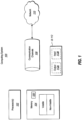
- FIG. 2 illustrates an environment 200 for generating and displaying panoramic video at a third-party video management system using a plurality of camera positions 210A-210D.
- Video management systems e.g., AVIGILON TM , AXXONSOFT, EXCAQVISION, GENETEC TM , GEOVISION, MILESTONE, and so forth
- security devices e.g., cameras, alarms, lights, locks, and so forth
- video security devices e.g., cameras
- Such video management systems may often utilize a user interface that includes a separate video feed for each camera. The video management system may then require the individuals/businesses to pay a licensing fee for each of those video feeds (e.g., a separate licensing fee for each video feed, and ultimately, each camera or camera position).
- legacy equipment e.g., older cameras that are already owned by an individual/business
- legacy equipment may often be placed in various locations at a site of the individuals/businesses such that there are one or more blind spots (i.e., locations within a site that are not visible through a camera) and detection is avoidable by intruders.
- the principles described herein may allow these individuals/businesses to utilize legacy equipment, e.g., in combination with a rotating thermal image camera such as that available from Applicant, so as to better eliminate blind spots, optionally add advanced analysis and use of images/video captured by on-site cameras, and minimizing licensing fees associated with use of video management systems, as further described herein.
- the environment 200 includes a plurality of cameras or camera positions 210 (i.e., camera 210A through camera 210C), a video analytics computer system 220 (i.e., the integration appliance), and a video management system 240. While only three cameras or camera positions 210 are illustrated, the ellipses 210D illustrate that the environment 200 may include any number of cameras 210 or camera stop positions. In some embodiments, at least one of cameras 210 may comprise a thermal imaging camera that is capable of capturing thermal camera images from a plurality of stop positions as it rotates through the stop positions. One or more of the cameras 210 may comprise standard visible spectrum video cameras. Notably, the cameras 210 may utilize any applicable standard of video/images known by one of skill in the art.
- the cameras 210 may include any combination of legacy equipment and/or new equipment acquired by an individual/business.
- camera 210A may be a rotating thermal image camera, that captures still images through a 360° rotation positioned elevated above the ground, at a single axis in the center of a circular area being monitored.
- Cameras 210B and 210C may include a PTZ visible light spectrum camera. In an embodiment, at least one such PTZ camera may be positioned at substantially the same place as thermal camera 210A (i.e., elevated, at the center of the circular monitored area).
- such one or more cameras 210 or camera positions 210 may be placed in an array, as further shown in Figure 3A .
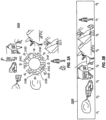
- eight camera positions 310 i.e., camera position 310A through camera position 310H
- the camera stop positions 310 may be oriented within the boundaries of a site/property of a business or individual such that there are no blind spots with respect to locations within the property that can be captured by the camera stop positions 310, collectively.
- Rotating single camera systems that rotate through a plurality of stop positions are described in the above referenced patents and applications of Applicant. Although principally described in the context of a single camera that may rotate through the plurality of stop positions 310A-310H, it will be appreciated that each stop position could instead be a separate camera (or multiple cameras could collectively rotate through the various stop positions).
- the placement or orientation of the camera stop positions 310 may also allow for later stitching of captured images/video to generate panoramic images/video utilizing captured image data from each of the camera stop positions 310.
- the environment 200 also includes a video analytics computer system 220 (i.e., the integration appliance) that may be capable of performing various analytics and enhancements (e.g., stitching together or adjacent positioning of multiple captured camera still images into a panoramic or "virtual" panoramic image)
- System 220 is also capable of generating a single video stream from the input data, and transmitting video, images, and associated user interface(s) to the video management system 240, all as a single video stream, as further described herein.
- the video analytics computer system may correspond to the computer system 100, as described with respect to Figure 1 .
- the video analytics computer system 220 may comprise any type of computer system, including any combination of hardware and/or software that is configured to stitch images received from one or more cameras into a panoramic image, as further described herein.
- the video analytics computer system 220 may include various engines, functional blocks, and components, including communications engine 222, panoramic generation engine 224, monitoring engine 226, location engine 228, and video generation engine 230.
- the various engines, components, and/or functional blocks of the step length analysis computer system 220 may be implemented on a local computer system or may be implemented on a distributed computer system that includes elements resident in the cloud or that implement aspects of cloud computing (i.e., at least one of the various illustrated engines may be implemented locally, while at least one other engine may be implemented remotely).
- the various engines, functional blocks, and/or components of the video analytics computer system 220 may be implemented as software, hardware, or a combination of software and hardware.
- video analytics computer system 220 illustrated in Figure 2 is shown only for exemplary purposes.
- the video analytics computer system 220 may include more or less than the engines, functional blocks, and/or components illustrated in Figure 2 .
- the various engines of the video analytics computer system 220 may access and/or utilize a processor and memory, such as the processor 102 and the memory 104 of Figure 1 , as needed to perform their various functions.
- the video analytics computer system 220 includes communications engine 222, panoramic generation engine 224, monitoring engine 226, location engine 228, and video generation engine 230.
- the communications engine 220 may be configured to communicate (i.e., transmit and/or received data) with both the cameras 210 and the video managements system 240.
- the communications engine 222 may be configured to receive captured images (e.g., thermal camera still images) from the camera that rotates through a plurality of camera positions (e.g., 210A), as well as other cameras of 210 (e.g., a PTZ camera 210B).
- the communications engine 222 may be capable of sending various types of data (e.g., video data, alarm data, intruder detection data, and so forth) to the video management system 240, as further described herein.
- the communications engine 222 may also be configured to receive various types of data from the video management system 240.
- the panoramic generation engine 224 may be configured to receive images captured by the cameras 210 and generate a panoramic image based on still images captured by the rotating thermal imaging camera. In addition, it may also integrate other camera feeds into the generated single video stream (e.g., displaying the PTZ camera feed with the generated virtual panorama).
- Figure 3B illustrates a specific example of generating a panoramic image based on images/video captured by the cameras 310. As shown in Figure 3A , camera 310A through camera 310H (or camera stop positions 310A-310H where 310 is just a single camera) have been placed within positions P1 through P8, respectively. Images captured by each of the cameras 310 within positions P1 through P8 may then be sent to the video analytics computer system 220, and ultimately the panoramic generation engine 224. The panoramic generation engine 224 may then analyze the received images and stitch or adjacently arrange the received images from each of the cameras or camera positions 310 to generate the panoramic image or video 300B.
- the monitoring engine 226 may be configured to detect any intruders or changes that occur with respect to images captured by any of the plurality of cameras 210. For instance, the monitoring engine 226 may perform advanced analytics on images (e.g., sequential still images) provided by the cameras 210 and/or the panoramic generation engine 224 to provide intrusion detection (e.g., unauthorized individuals trespassing), animal migration, heat change detection, fire detection, drone detection, unauthorized movement in water ways, tripwire detection, and so forth.
- intrusion detection e.g., unauthorized individuals trespassing
- animal migration e.g., heat change detection, fire detection, drone detection, unauthorized movement in water ways, tripwire detection, and so forth.
- the monitoring engine 226 may encode any applicable alerts associated with various detected events (e.g., intrusion detection, fire detection, and so forth) into any appropriate format (e.g., ONVIF) that is usable by the video management system 240.
- alerts may be sent to the video management system 240 over Hypertext Transfer Protocol (HTTP).
- HTTP Hypertext Transfer Protocol
- the video management system 240 may trigger any corresponding alarms, as further described herein.
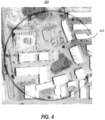
- the location engine 228 may be configured to utilize data detected by the monitoring engine 226 to generate location information associated with detected entities. For instance, upon detecting an event, the location engine may generate an image (e.g., a map image) that illustrates a location of the detected event within a map of the location of the cameras 210. For instance, Figure 4 illustrates a map 400 of a circular monitored area, with highlighting of an area associated with a detected event. In particular, Figure 4 includes a point 410 that corresponds to the location of a detected event (e.g., a detected intruder, a detected fire, motion and so forth).
- a detected event e.g., a detected intruder, a detected fire, motion and so forth.
- one or more of the cameras 210 or other system components on site with the camera may include a Global Positioning System (GPS) device that may allow for determining a position of a detected event that can be used to plot points on a map associated with a location of the detected event.
- GPS Global Positioning System
- a map may include a "radar" with a sweeping mechanism that includes a line traveling from the center of the map (where the rotating thermal image camera is located) to the perimeter of the map in a clockwise or counter-clockwise direction (i.e., similar to the second hand of a watch). Such a sweeping line may indicate at which stop position the camera is currently pointed.
- the system may be configured to cause the PTZ camera to automatically move so as to be centered on and monitor the location where any detected event has occurred.
- the PTZ camera feed may be integrated into the single video stream output by the integration appliance.
- the map may provide zoom capabilities that allow an individual to zoom-in or zoom-out of the map, or of course to zoom in with the PTZ camera.
- the location engine 228 may provide a scalable bird's eye display that shows activity surrounding the cameras 210. Panorama or virtual panorama images may be displayed with such a birds eye view map (e.g., 180° above, and 180° below, as in Figure 5 ), and with any PTZ camera feed as well. All such portions of the displayed image may be fed to the VMS as a single video feed.
- the video generation engine 230 may be configured to generate a video stream that both includes one or more of virtual panoramic video images, event detection, maps, PTZ camera feed, and so forth, and is usable by the video management system 240, as further described herein.
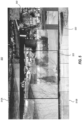
- a single video stream may 500 include a top portion 510A that comprises a plurality of images that each correlate to one of the plurality of camera positions (e.g., the camera positions 210 or 310) and have been displayed adjacent to one another or stitched together to form at least a portion of a panoramic image or video.
- the video stream 500 also includes a bottom portion 510B that comprises another plurality of images that correlate to another plurality of camera stop positions and have been positioned and displayed adjacent to one another or stitched together to form at least a portion of a panoramic video/image.
- the top portion 510A and the bottom portion 510B may each comprise a portion of a panoramic video/image that could be further stitched together to form a single panoramic video/image that includes all of top portion 510A and bottom portion 510B.
- the top portion 510A represents positions 1-8 of the rotating thermal camera
- the bottom portion 510B represents positions 9-16 of the same camera (i.e., each portion covers 180° of the overall 360° panorama that is monitored, which will be apparent from the circular monitored area of Figure 4 ).
- the video stream 500 further includes a middle portion 520 that is configured to show a view illustrated with a particular camera of the plurality of cameras providing the images associated with portion 510A and portion 510B (or another camera entirely - e.g., a separate PTZ visible spectrum "color" camera).
- the portion 520 may periodically cycle through captured video/images of each camera providing captured video/images, or it may highlight an area where some event (e.g., an intruder) has been detected.
- Video portion 530 may focus on captured video/images associated with detected events and may further describe the event with text (e.g., type of event and location of the event).
- the portion 520 and/or the view 530 may each periodically cycle through captured video/images of each of the plurality of cameras or camera positions (e.g., the camera positions 310) or may focus on areas where events have been detected (e.g., intruders, fire, and so forth).
- Figure 5 also includes a portion 540 that illustrates a birds eye map/"radar" view illustrating a birds eye view of the circular monitored area. This portion may include map, "radar", and location data, as further described with respect to Figure 4 .
- the video generation engine 230 may also encode such video/images (e.g., video stream 500), any other information generated by the video analytics computer system, into a single video stream using any appropriate standard.
- the video generation engine may encode still image or video data (e.g., panoramic image data generated by the panoramic generation engine, map/location data generated by the location engine, and so forth) into a single Real Time Streaming Protocol (RTSP) video stream that is usable by the video management system 240 for presenting the video stream.
- RTSP Real Time Streaming Protocol
- the video generation engine queues up each frame of video into a video rendering stack.
- the video rendering stack may then allow for encoding the frame one or more times as part of a continuous video stream using a standard codec (e.g., MP4, H.264, and so forth).
- the frame may then be repeated in order to meet any corresponding frame rate utilized by the video management system 240 (e.g., such as 30 fps, 60fps, or the like).
- video management systems e.g., AVIGILON, AXXONSOFT, EXCAQVISION, GENETEC, GEOVISION, MILESTONE, and so forth
- video management systems may include a user interface 242 that shows video associated with each of a plurality of video cameras fed to such VMS, for example.
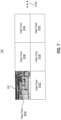
- Figure 6 illustrates a more specific example of a user interface 600 of a typical VMS.
- Figure 6 includes six different video feeds (i.e., video feed 610A through video feed 610F) that may each be associated with a different camera (e.g., the video feed 610A is associated with video captured by a single video camera, the video feed 610B is associated with video captured by another video camera, and so forth).
- the video feed 610A is associated with video captured by a single video camera
- the video feed 610B is associated with video captured by another video camera, and so forth.
- the ellipses 610G represents that the principles described herein may utilize any number of video feeds for display on a given monitor or array of monitors.
- the video management system 240 may also include peripheral devices 244.
- peripheral devices may include additional cameras or types of cameras (e.g., visible spectrum "color" cameras capable of facial recognition, thermal imaging cameras, and so forth), motion detectors, lights, locks, and so forth.
- the video management system may further be configured to utilize these devices and allow control thereof in conjunction with each other by locking doors/gates, turning on/off lights, turning on/off alarms, and so forth in response to detecting particular events (e.g., detecting motion).
- the video analytics computer system 220 may be configured to add additional functionality to the cameras, user interface, and other peripheral devices of the video management system 240.
- the video stream 500 may be provided as a video stream (i.e., as further described with respect to the video generation engine 230 of Figure 2 ) to the video management system 240, as illustrated in Figure 7 .
- the video feed 610A of the video management system 240 may be utilized to display the video stream 500 of Figure 5 .
- this single video stream includes far more data and information than a single camera feed.
- panoramic images For example, it includes panoramic images, the birds eye view, "radar” sweep, feed from a separate PTZ camera, alert information relative to a detected intruder or other event, etc. All this is provided as a single video feed, using only one of the licenses available within the VMS.
- video stream 500 is shown as being displayed within the video feed 610A of the video management system 240, the video stream 500 may be displayed within any given video feed 610 of the video management system. Additionally, while only one video stream is illustrated in Figure 7 as being sent to, and displayed by, the video management system, any number of video streams may be sent by the video analytics computer system 220 to the video management system 240.
- the video analytics computer system 220 may also send any other applicable data and/or metadata to the video management system 240. For instance, alert data using any applicable standard may be sent to the video management system. The video management system may then have rules in place associated with a response to receiving such data (e.g., sound an alarm, turn on/off particular lights, lock/unlock particular doors or gates, and so forth).
- the video analytics engine may send location information associated with detected events, event information associated with particular types (e.g., intruder, fire, and so forth) of events, and so forth. Such information may be displayed within the single video feed associated with "window" 610A, or in another "window" (610B-610F).
- the video analytics computer system may further be configured to communicate directly with any number of peripheral devices (e.g., cameras, alarms, lights, motion detector, locks, and so forth).
- the video analytics computer system may communicate directly with a PTZ camera in a particular location when an event in the particular location has been detected by the video analytics computer system.
- the video analytics computer system may then communicate to the PTZ camera where the event is occurring such that the PTZ camera can pan, tilt, or zoom in a proper direction to be able to capture images/video (and/or perform any other analysis, such as facial recognition) associated with the detected event.
- Similar communications may be sent directly to particular alarms, lights, locks, and so forth, such that these peripheral devices may be fully utilized in response to a detected event.
- a hardware portion of the video analytics computer system may support hardware encoding of video streams, as well as expansion slots to allow additional video encoding hardware to be added to support multiple video streams.
- video stream may comprise a 1080 resolution video wall in H.264 format.
- the hardware portion of the video analytics computer system may also include an ONVIF front end to facilitate discovering and adding the hardware portion of the video analytics computer system to an ONVIF-compliant video management system.
- the hardware portion of the video analytics computer system may provide a Hypertext Markup Language (HTML) interface that allows a user to configure/modify a layout of the video stream (e.g., the video stream 500) to be displayed at the video management system 240, types of data and metadata sent to the video management system, types of alarm/event detection data sent to the video management system, and so forth.
- the hardware portion of the video analytics computer system may provide another Hypertext Markup Language (HTML) interface that allows a user to add additional cameras (e.g., additional cameras to the cameras 210 or the cameras 310) that can then be used in providing panoramic images, event detection, and so forth.
- the video analytics computer system may provide a ready to install deployment of software and hardware with support for common video protocols and common video management systems.
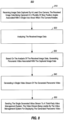
- FIG 8 illustrates a flowchart of a method 800 for generating panoramic video viewable at a third-party video management system.
- the method 800 is described with frequent reference to the environments of Figures 2-6 .
- the method 800 includes, receiving image data captured by at least one camera, the received video data being captured at a plurality of angles (e.g., stop positions) associated with a single axis (act 810), about which the camera may rotate.
- the camera stop positions 310 of Figure 3 may be placed in an array capturing "inside-out" still images surveillance of a circular monitored area, which still images are received by the video analytics computer system 220.
- the method 800 may further include, analyzing the received image data (act 820).
- the video analytics computer system 220 may analyze the received video/images from the camera(s) for identifying the occurrence of events, determining how to position adjacent images together, or to stitch images from adjacent stop positions together into panoramic video/images, and so forth. Whether or not any analytics are provided, the method 800 includes generating panoramic video associated with the captured image data (act 830). For instance, the video analytics computer system 220 may use the received video/images and/or analysis thereof to generate panoramic video/images, as illustrated by the panoramic image of Figure 3B .
- the method 800 further includes, generating a single video stream of the generated panoramic video (act 840).
- the video analytics computer system 220 may generate a single video stream that includes the generated panoramic video, as well as various data, images, and/or video related to detected events.
- the method 800 also includes sending the single generated video stream to a third-party video management system (act 850).
- the video stream may be usable by the video management system for displaying the generated panoramic video.
- the single video stream may include video/images and data from each of the plurality of cameras or camera positions, which video/images (and data) may be shown at the user interface 242 of the video management system, as further described with respect to Figures 5 , 6 and 7 .
Landscapes
- Engineering & Computer Science (AREA)
- Multimedia (AREA)
- Signal Processing (AREA)
- Health & Medical Sciences (AREA)
- Toxicology (AREA)
- Studio Devices (AREA)
- Closed-Circuit Television Systems (AREA)
Claims (15)
- Computersystem (100), das Folgendes umfasst:einen oder mehrere Prozessoren (102); undein oder mehrere computerlesbare Speichermedien (104), auf denen computerausführbare Anweisungen (106) gespeichert sind, die von dem einen oder den mehreren Prozessoren (102) ausführbar sind, um das Computersystem (100) zu veranlassen, ein Panoramavideo zu erzeugen, das auf einem Videoverwaltungssystem (240) eines Drittanbieters angesehen werden kann, wobei die computerausführbaren Anweisungen Anweisungen beinhalten, die ausführbar sind, um das Computersystem (100) zu veranlassen, mindestens Folgendes durchzuführen:Empfangen (810) von Standbilddaten, die von mindestens einer Kamera erfasst werden, wobei die Standbilddaten in einer Vielzahl von Winkeln oder Stopppositionen, die mit einer einzelnen Achse verknüpft sind, erfasst werden;Erzeugen (830) eines Panoramavideos, das mit den erfassten Bilddaten verknüpft ist, auf Basis der empfangenen Standbilddaten;Erzeugen (840) eines einzelnen Videostreams des erzeugten Panoramavideos, wobei das Erzeugen des einzelnen Videostreams das Einreihen von jedem Frame des Panoramavideos in eine Warteschlange in einem Videorenderingstapel, das ein- oder mehrmalige Codieren unter Verwendung eines Codecs als Teil eines kontinuierlichen Videostreams und das Wiederholen des Frames im einzelnen Videostream, um eine entsprechende Framerate zu erfüllen, die vom Videoverwaltungssystem (240) eines Drittanbieters eingesetzt wird, umfasst; undSenden (850) des einzelnen erzeugten Videostreams an ein Videoverwaltungssystem (240) eines Drittanbieters, wobei der Videostream vom Videoverwaltungssystem zum Anzeigen des erzeugten Panoramavideos verwendbar ist.
- Computersystem nach Anspruch 1, wobei die empfangenen Bilddaten von einer Vielzahl von verschiedenen Kameras (210) empfangen werden.
- Computersystem nach Anspruch 1, wobei die mindestens eine Kamera eine einzelne Kamera umfasst, die dazu ausgelegt ist, sich um die einzelne Achse zu drehen und in einer Vielzahl von Stopppositionen (310) über die gesamte Drehung der Kamera anstatt eines Videos Standbilder zu erfassen.
- Computersystem nach einem der vorhergehenden Ansprüche, wobei die mindestens eine Kamera eine Wärmekamera (210A) umfasst, die dazu ausgelegt ist, Wärmekamerabilder zu erfassen.
- Computersystem nach einem der vorhergehenden Ansprüche, wo die computerausführbaren Anweisungen ferner Anweisungen umfassen, die ausführbar sind, um das Computersystem zu veranlassen, die empfangenen Bilddaten zu analysieren (820), wobei das Analysieren der empfangenen Bilddaten das Detektieren, wenn ein oder mehrere Ereignisse an einem von der mindestens einen Kamera überwachten Ort aufgetreten sind, beinhaltet.
- Computersystem nach Anspruch 5, wobei das Analysieren der empfangenen Bilddaten ferner das Bestimmen einer speziellen Stelle des einen oder der mehreren Ereignisse an dem von der mindestens einen Kamera überwachten Ort beinhaltet.
- Computersystem nach Anspruch 6, wobei der gesendete Videostream Daten beinhaltet, die mit der bestimmten speziellen Stelle des einen oder der mehreren Ereignisse verknüpft sind.
- Verfahren, das an einem Computersystem (100), das einen oder mehrere Prozessoren (102) beinhaltet, zum Erzeugen eines Panoramavideos, das an einem Videoverwaltungssystem (240) eines Drittanbieters angesehen werden kann, implementiert wird und Folgendes umfasst:Empfangen (810) von Standbilddaten, die von mindestens einer Kamera erfasst werden, wobei die Standbilddaten in einer Vielzahl von Stopppositionen erfasst werden, die mit einer einzelnen Achse verknüpft sind, um die sich die Kamera dreht;Erzeugen (830) eines Panoramavideos, das aus den erfassten Bilddaten abgeleitet wird, auf Basis der empfangenen Standbilddaten;Erzeugen (840) eines einzelnen Videostreams des erzeugten Panoramavideos, wobei das Erzeugen des einzelnen Videostreams das Einreihen von jedem Frame des Panoramavideos in eine Warteschlange in einem Videorenderingstapel, das ein- oder mehrmalige Codieren unter Verwendung eines Codecs als Teil eines kontinuierlichen Videostreams und das Wiederholen des Frames im einzelnen Videostream, um eine entsprechende Framerate zu erfüllen, die vom Videoverwaltungssystem (240) eines Drittanbieters eingesetzt wird, umfasst; undSenden (850) des einzelnen erzeugten Videostreams an ein Videoverwaltungssystem (240) eines Drittanbieters, wobei der Videostream vom Videoverwaltungssystem zum Anzeigen des erzeugten Panoramavideos verwendbar ist.
- Verfahren nach Anspruch 8, wobei die empfangenen Bilddaten von einer Vielzahl von verschiedenen Kameras (210) empfangen werden, die sowohl eine Wärmebildkamera (210A) beinhalten, die Standbilder in einer Vielzahl von Stopppositionen erfasst, wenn sie sich um die einzelne Achse durch eine Vielzahl dieser Stopppositionen dreht, und wobei die Vielzahl von verschiedenen Kameras auch eine PTZ-Kamera (210B, 210C) für das sichtbare Lichtspektrum beinhaltet, die Videobilddaten erfasst.
- Verfahren nach Anspruch 9, wobei sich die PTZ-Kamera (210B, 210C) und die Wärmekamera (210A) in der Mitte eines kreisförmigen Bereichs befinden, der von der Wärmekamera (210A) überwacht wird, wobei sich die einzelne Achse in der Mitte des überwachten kreisförmigen Bereichs befindet.
- Verfahren nach Anspruch 8, wobei die mindestens eine Kamera eine einzelne Kamera umfasst, die dazu ausgelegt ist, sich um die einzelne Achse zu drehen und in einer Vielzahl von Stopppositionen (310) über die gesamte Drehung Standbilder zu erfassen.
- Verfahren nach einem der Ansprüche 8 bis 11, wobei das Verfahren ferner das Analysieren (820) der empfangenen Bilddaten beinhaltet, wobei das Analysieren der empfangenen Bilddaten das Detektieren, wenn ein oder mehrere Ereignisse an einem von der mindestens einen Kamera überwachten Ort aufgetreten sind, beinhaltet.
- Verfahren nach Anspruch 12, wobei das Analysieren der empfangenen Videodaten ferner das Bestimmen einer speziellen Stelle des einen oder der mehreren Ereignisse am Ort der mindestens einen Kamera beinhaltet.
- Verfahren nach Anspruch 13, wobei der gesendete Videostream Daten beinhaltet, die mit der bestimmten speziellen Stelle des einen oder der mehreren Ereignisse verknüpft sind.
- Computerprogrammprodukt, das ein oder mehrere computerlesbare Medien (104) umfasst, auf denen computerausführbare Anweisungen gespeichert sind, die von einem oder mehreren Prozessoren (102) eines Computersystems (100) ausführbar sind, um das Computersystem (100) zu veranlassen, ein Panoramavideo aus Standbildern anstatt Videobildern zu erzeugen, das auf einem Videoverwaltungssystem (240) eines Drittanbieters angesehen werden kann, wobei die computerausführbaren Anweisungen Anweisungen beinhalten, die ausführbar sind, um das Computersystem (100) zu veranlassen, mindestens Folgendes durchzuführen:Empfangen (810) von Standbilddaten, die von mindestens einer Kamera erfasst werden, wobei die Standbilddaten in einer Vielzahl von Winkeln oder Stopppositionen erfasst werden, die mit einer einzelnen Achse verknüpft sind, um die sich die Kamera dreht, wahlweise wobei die empfangenen Bilddaten von einer Vielzahl von verschiedenen Kameras empfangen werden oder von einer Wärmebildgebungskamera, die dazu ausgelegt ist, Wärmekamerabilder zu erfassen, wenn sie sich durch die Vielzahl von Stopppositionen dreht;Erzeugen (830) eines Panoramavideos, das mit den erfassten Standbilddaten verknüpft ist, auf Basis der empfangenen Standbilddaten;Erzeugen (840) eines einzelnen Videostreams des erzeugten Panoramavideos, wobei das Erzeugen des einzelnen Videostreams das Einreihen von jedem Frame des Panoramavideos in eine Warteschlange in einem Videorenderingstapel, das ein- oder mehrmalige Codieren unter Verwendung eines Codecs als Teil eines kontinuierlichen Videostreams und das Wiederholen des Frames im einzelnen Videostream, um eine entsprechende Framerate zu erfüllen, die vom Videoverwaltungssystem (240) eines Drittanbieters eingesetzt wird, umfasst; undSenden (850) des einzelnen erzeugten Videostreams an ein Videoverwaltungssystem (240) eines Drittanbieters, wobei der Videostream vom Videoverwaltungssystem zum Anzeigen des erzeugten Panoramavideos verwendbar ist, wahlweise wobei der gesendete Videostream teilweise von einer Wärmebildgebungskamera in einer Mitte eines kreisförmigen überwachten Bereichs abgeleitet wird, wobei der gesendete einzelne Videostream ein eingebettetes Video von einer PTZ-Kamera beinhaltet, die sich in einer Mitte des kreisförmigen überwachten Bereichs befindet;wahlweise wobei der gesendete Videostream teilweise von einer Wärmebildgebungskamera in einer Mitte eines kreisförmigen überwachten Bereichs abgeleitet wird, wobei:(i) der gesendete Videostream auch eine Vogelperspektive beinhaltet, die eine Vogelperspektivkarte des kreisförmigen überwachten Bereichs bereitstellt; oder(ii) der gesendete Videostream ein 360°-Panorama, das von der sich drehenden Wärmebildgebungskamera überwacht wird, in zwei 180°-Abschnitte des Panoramas teilt, wobei jeder der zwei 180°-Panoramaabschnitte als separate horizontale Panoramen, eines über dem anderen, angezeigt wird; oder(iii) sowohl (i) als auch (ii);wahlweise wobei die computerausführbaren Anweisungen ausführbar sind, um das Computersystem ferner zu veranlassen, die empfangenen Standbilddaten zu analysieren, wobei das Analysieren der empfangenen Bilddaten das Detektieren, wenn ein oder mehrere Ereignisse an einem Ort der von der mindestens einen Kamera überwacht wird, aufgetreten sind, und das Bestimmen einer speziellen Stelle des einen oder der mehreren Ereignisse an dem von der mindestens einen Kamera überwachten Ort umfasst, wobei der gesendete Videostream wahlweise Daten beinhalten kann, die mit der bestimmten speziellen Stelle des einen oder der mehreren Ereignisse verknüpft sind.
Applications Claiming Priority (2)
| Application Number | Priority Date | Filing Date | Title |
|---|---|---|---|
| US201862657561P | 2018-04-13 | 2018-04-13 | |
| US16/143,153 US10574886B2 (en) | 2017-11-02 | 2018-09-26 | Generating panoramic video for video management systems |
Publications (2)
| Publication Number | Publication Date |
|---|---|
| EP3553697A1 EP3553697A1 (de) | 2019-10-16 |
| EP3553697B1 true EP3553697B1 (de) | 2023-06-07 |
Family
ID=66101941
Family Applications (1)
| Application Number | Title | Priority Date | Filing Date |
|---|---|---|---|
| EP19167565.1A Active EP3553697B1 (de) | 2018-04-13 | 2019-04-05 | Erzeugung panoramischen videos für videoverwaltungssysteme |
Country Status (1)
| Country | Link |
|---|---|
| EP (1) | EP3553697B1 (de) |
Families Citing this family (1)
| Publication number | Priority date | Publication date | Assignee | Title |
|---|---|---|---|---|
| CN113365028B (zh) * | 2021-05-31 | 2022-08-12 | 浙江大华技术股份有限公司 | 一种巡检路径的生成方法、装置及系统 |
Citations (2)
| Publication number | Priority date | Publication date | Assignee | Title |
|---|---|---|---|---|
| EP2319236A1 (de) * | 2008-07-23 | 2011-05-11 | Nxp B.V. | Rahmen-raten-aufwärtsumsetzung |
| EP3103257A1 (de) * | 2014-02-04 | 2016-12-14 | Intel Corporation | Verfahren zur bildwiederholungssteuerung in einer bildfrequenz-aufwärtswandlung |
Family Cites Families (6)
| Publication number | Priority date | Publication date | Assignee | Title |
|---|---|---|---|---|
| US5790183A (en) * | 1996-04-05 | 1998-08-04 | Kerbyson; Gerald M. | High-resolution panoramic television surveillance system with synoptic wide-angle field of view |
| JP3925299B2 (ja) * | 2002-05-15 | 2007-06-06 | ソニー株式会社 | モニタリングシステムおよび方法 |
| US8773503B2 (en) | 2012-01-20 | 2014-07-08 | Thermal Imaging Radar, LLC | Automated panoramic camera and sensor platform with computer and optional power supply |
| WO2014169066A1 (en) | 2013-04-09 | 2014-10-16 | Thermal Imaging Radar, LLC | Fire detection system |
| US11165994B2 (en) * | 2013-05-13 | 2021-11-02 | Texas Instruments Incorporated | Analytics-driven summary views for surveillance networks |
| MX360725B (es) | 2013-08-09 | 2018-11-14 | Thermal Imaging Radar Llc | Métodos para analizar datos de imágenes térmicas de dispositivos virtuales y métodos para correlacionar los valores de profundidad a píxeles de imágenes. |
-
2019
- 2019-04-05 EP EP19167565.1A patent/EP3553697B1/de active Active
Patent Citations (2)
| Publication number | Priority date | Publication date | Assignee | Title |
|---|---|---|---|---|
| EP2319236A1 (de) * | 2008-07-23 | 2011-05-11 | Nxp B.V. | Rahmen-raten-aufwärtsumsetzung |
| EP3103257A1 (de) * | 2014-02-04 | 2016-12-14 | Intel Corporation | Verfahren zur bildwiederholungssteuerung in einer bildfrequenz-aufwärtswandlung |
Non-Patent Citations (2)
| Title |
|---|
| PETER VAN BEEK ET AL: "Server-Side Playout Delay Management for Video Streaming", IMAGE PROCESSING, 2006 IEEE INTERNATIONAL CONFERENCE ON, IEEE, PI, 1 October 2006 (2006-10-01), pages 3077 - 3080, XP031049327, ISBN: 978-1-4244-0480-3 * |
| YUCEL CIMTAY ET AL: "Frame rate up-conversion with nonlinear temporal interpolation", IMAGE AND SIGNAL PROCESSING (CISP), 2012 5TH INTERNATIONAL CONGRESS ON, IEEE, 16 October 2012 (2012-10-16), pages 206 - 210, XP032336457, ISBN: 978-1-4673-0965-3, DOI: 10.1109/CISP.2012.6469856 * |
Also Published As
| Publication number | Publication date |
|---|---|
| EP3553697A1 (de) | 2019-10-16 |
Similar Documents
| Publication | Publication Date | Title |
|---|---|---|
| US11108954B2 (en) | Generating panoramic video for video management systems | |
| US20190037178A1 (en) | Autonomous video management system | |
| AU2004250976B2 (en) | Method and apparatus for providing a scalable multi-camera distributed video processing and visualization surveillance system | |
| MXPA06013936A (es) | Metodo y sistema para monitoreo de seguridad de area extensa, manejo de sensores y conocimiento situacional. | |
| KR101321444B1 (ko) | Cctv 모니터링 시스템 | |
| US12596035B2 (en) | Thermal imaging camera device | |
| US20080192118A1 (en) | Three-Dimensional Surveillance Toolkit | |
| WO2010045404A2 (en) | Network video surveillance system and recorder | |
| US20070226616A1 (en) | Method and System For Wide Area Security Monitoring, Sensor Management and Situational Awareness | |
| CN110062198B (zh) | 一种监控取证方法、装置、系统、电子设备及存储介质 | |
| CN101341753A (zh) | 用于广域安全监控、传感器管理及情况认知的方法和系统 | |
| RU119918U1 (ru) | Система видеолокации | |
| EP3553697A1 (de) | Erzeugung panoramischen videos für videoverwaltungssysteme | |
| KR101842564B1 (ko) | 다중 영상에 대한 집중 영상 감시 방법 및 이를 위한 집중 영상 관리 서버, 집중 영상 감시 시스템, 컴퓨터 프로그램, 그 기록매체 | |
| RU127500U1 (ru) | Система видеонаблюдения | |
| McCurdy et al. | RealityFlythrough: enhancing situational awareness for medical response to disasters using ubiquitous video | |
| US11809675B2 (en) | User interface navigation method for event-related video | |
| KR100970503B1 (ko) | 무인 에이브이 기록 장치를 이용한 시설물 관리방법 | |
| Song et al. | Systems, control models, and codec for collaborative observation of remote environments with an autonomous networked robotic camera | |
| Picus et al. | Novel smart sensor technology platform for border crossing surveillance within foldout | |
| d'Angelo et al. | CamInSens-An intelligent in-situ security system for public spaces | |
| KR101520795B1 (ko) | 영상정보 부정수집 통제 시스템 | |
| Pratl et al. | Smart nodes for semantic analysis of visual and aural data | |
| Sutor | Large-scale high-performance video surveillance | |
| KR20240000307U (ko) | 원격관리를 지원하는 통합관제서버 |
Legal Events
| Date | Code | Title | Description |
|---|---|---|---|
| PUAI | Public reference made under article 153(3) epc to a published international application that has entered the european phase |
Free format text: ORIGINAL CODE: 0009012 |
|
| STAA | Information on the status of an ep patent application or granted ep patent |
Free format text: STATUS: THE APPLICATION HAS BEEN PUBLISHED |
|
| AK | Designated contracting states |
Kind code of ref document: A1 Designated state(s): AL AT BE BG CH CY CZ DE DK EE ES FI FR GB GR HR HU IE IS IT LI LT LU LV MC MK MT NL NO PL PT RO RS SE SI SK SM TR |
|
| AX | Request for extension of the european patent |
Extension state: BA ME |
|
| RIN1 | Information on inventor provided before grant (corrected) |
Inventor name: REES, DANA Inventor name: JONES, LAWRENCE RICHARD Inventor name: KAY, DAVID T. |
|
| STAA | Information on the status of an ep patent application or granted ep patent |
Free format text: STATUS: REQUEST FOR EXAMINATION WAS MADE |
|
| 17P | Request for examination filed |
Effective date: 20200325 |
|
| RBV | Designated contracting states (corrected) |
Designated state(s): AL AT BE BG CH CY CZ DE DK EE ES FI FR GB GR HR HU IE IS IT LI LT LU LV MC MK MT NL NO PL PT RO RS SE SI SK SM TR |
|
| STAA | Information on the status of an ep patent application or granted ep patent |
Free format text: STATUS: EXAMINATION IS IN PROGRESS |
|
| 17Q | First examination report despatched |
Effective date: 20210329 |
|
| REG | Reference to a national code |
Ref country code: DE Ref legal event code: R079 Ref document number: 602019029734 Country of ref document: DE Free format text: PREVIOUS MAIN CLASS: G06K0009000000 Ipc: H04N0005247000 |
|
| GRAP | Despatch of communication of intention to grant a patent |
Free format text: ORIGINAL CODE: EPIDOSNIGR1 |
|
| STAA | Information on the status of an ep patent application or granted ep patent |
Free format text: STATUS: GRANT OF PATENT IS INTENDED |
|
| RIC1 | Information provided on ipc code assigned before grant |
Ipc: H04N 5/232 20060101ALI20220930BHEP Ipc: H04N 5/33 20060101ALI20220930BHEP Ipc: H04N 5/247 20060101AFI20220930BHEP |
|
| INTG | Intention to grant announced |
Effective date: 20221104 |
|
| GRAS | Grant fee paid |
Free format text: ORIGINAL CODE: EPIDOSNIGR3 |
|
| GRAA | (expected) grant |
Free format text: ORIGINAL CODE: 0009210 |
|
| STAA | Information on the status of an ep patent application or granted ep patent |
Free format text: STATUS: THE PATENT HAS BEEN GRANTED |
|
| AK | Designated contracting states |
Kind code of ref document: B1 Designated state(s): AL AT BE BG CH CY CZ DE DK EE ES FI FR GB GR HR HU IE IS IT LI LT LU LV MC MK MT NL NO PL PT RO RS SE SI SK SM TR |
|
| REG | Reference to a national code |
Ref country code: GB Ref legal event code: FG4D |
|
| REG | Reference to a national code |
Ref country code: CH Ref legal event code: EP Ref country code: AT Ref legal event code: REF Ref document number: 1578208 Country of ref document: AT Kind code of ref document: T Effective date: 20230615 Ref country code: DE Ref legal event code: R096 Ref document number: 602019029734 Country of ref document: DE |
|
| P01 | Opt-out of the competence of the unified patent court (upc) registered |
Effective date: 20230512 |
|
| REG | Reference to a national code |
Ref country code: NL Ref legal event code: FP |
|
| REG | Reference to a national code |
Ref country code: LT Ref legal event code: MG9D |
|
| PG25 | Lapsed in a contracting state [announced via postgrant information from national office to epo] |
Ref country code: SE Free format text: LAPSE BECAUSE OF FAILURE TO SUBMIT A TRANSLATION OF THE DESCRIPTION OR TO PAY THE FEE WITHIN THE PRESCRIBED TIME-LIMIT Effective date: 20230607 Ref country code: NO Free format text: LAPSE BECAUSE OF FAILURE TO SUBMIT A TRANSLATION OF THE DESCRIPTION OR TO PAY THE FEE WITHIN THE PRESCRIBED TIME-LIMIT Effective date: 20230907 Ref country code: ES Free format text: LAPSE BECAUSE OF FAILURE TO SUBMIT A TRANSLATION OF THE DESCRIPTION OR TO PAY THE FEE WITHIN THE PRESCRIBED TIME-LIMIT Effective date: 20230607 |
|
| REG | Reference to a national code |
Ref country code: AT Ref legal event code: MK05 Ref document number: 1578208 Country of ref document: AT Kind code of ref document: T Effective date: 20230607 |
|
| PG25 | Lapsed in a contracting state [announced via postgrant information from national office to epo] |
Ref country code: RS Free format text: LAPSE BECAUSE OF FAILURE TO SUBMIT A TRANSLATION OF THE DESCRIPTION OR TO PAY THE FEE WITHIN THE PRESCRIBED TIME-LIMIT Effective date: 20230607 Ref country code: LV Free format text: LAPSE BECAUSE OF FAILURE TO SUBMIT A TRANSLATION OF THE DESCRIPTION OR TO PAY THE FEE WITHIN THE PRESCRIBED TIME-LIMIT Effective date: 20230607 Ref country code: LT Free format text: LAPSE BECAUSE OF FAILURE TO SUBMIT A TRANSLATION OF THE DESCRIPTION OR TO PAY THE FEE WITHIN THE PRESCRIBED TIME-LIMIT Effective date: 20230607 Ref country code: HR Free format text: LAPSE BECAUSE OF FAILURE TO SUBMIT A TRANSLATION OF THE DESCRIPTION OR TO PAY THE FEE WITHIN THE PRESCRIBED TIME-LIMIT Effective date: 20230607 Ref country code: GR Free format text: LAPSE BECAUSE OF FAILURE TO SUBMIT A TRANSLATION OF THE DESCRIPTION OR TO PAY THE FEE WITHIN THE PRESCRIBED TIME-LIMIT Effective date: 20230908 |
|
| PG25 | Lapsed in a contracting state [announced via postgrant information from national office to epo] |
Ref country code: FI Free format text: LAPSE BECAUSE OF FAILURE TO SUBMIT A TRANSLATION OF THE DESCRIPTION OR TO PAY THE FEE WITHIN THE PRESCRIBED TIME-LIMIT Effective date: 20230607 |
|
| PG25 | Lapsed in a contracting state [announced via postgrant information from national office to epo] |
Ref country code: SK Free format text: LAPSE BECAUSE OF FAILURE TO SUBMIT A TRANSLATION OF THE DESCRIPTION OR TO PAY THE FEE WITHIN THE PRESCRIBED TIME-LIMIT Effective date: 20230607 |
|
| PG25 | Lapsed in a contracting state [announced via postgrant information from national office to epo] |
Ref country code: IS Free format text: LAPSE BECAUSE OF FAILURE TO SUBMIT A TRANSLATION OF THE DESCRIPTION OR TO PAY THE FEE WITHIN THE PRESCRIBED TIME-LIMIT Effective date: 20231007 |
|
| PG25 | Lapsed in a contracting state [announced via postgrant information from national office to epo] |
Ref country code: SM Free format text: LAPSE BECAUSE OF FAILURE TO SUBMIT A TRANSLATION OF THE DESCRIPTION OR TO PAY THE FEE WITHIN THE PRESCRIBED TIME-LIMIT Effective date: 20230607 Ref country code: SK Free format text: LAPSE BECAUSE OF FAILURE TO SUBMIT A TRANSLATION OF THE DESCRIPTION OR TO PAY THE FEE WITHIN THE PRESCRIBED TIME-LIMIT Effective date: 20230607 Ref country code: RO Free format text: LAPSE BECAUSE OF FAILURE TO SUBMIT A TRANSLATION OF THE DESCRIPTION OR TO PAY THE FEE WITHIN THE PRESCRIBED TIME-LIMIT Effective date: 20230607 Ref country code: PT Free format text: LAPSE BECAUSE OF FAILURE TO SUBMIT A TRANSLATION OF THE DESCRIPTION OR TO PAY THE FEE WITHIN THE PRESCRIBED TIME-LIMIT Effective date: 20231009 Ref country code: IS Free format text: LAPSE BECAUSE OF FAILURE TO SUBMIT A TRANSLATION OF THE DESCRIPTION OR TO PAY THE FEE WITHIN THE PRESCRIBED TIME-LIMIT Effective date: 20231007 Ref country code: EE Free format text: LAPSE BECAUSE OF FAILURE TO SUBMIT A TRANSLATION OF THE DESCRIPTION OR TO PAY THE FEE WITHIN THE PRESCRIBED TIME-LIMIT Effective date: 20230607 Ref country code: CZ Free format text: LAPSE BECAUSE OF FAILURE TO SUBMIT A TRANSLATION OF THE DESCRIPTION OR TO PAY THE FEE WITHIN THE PRESCRIBED TIME-LIMIT Effective date: 20230607 Ref country code: AT Free format text: LAPSE BECAUSE OF FAILURE TO SUBMIT A TRANSLATION OF THE DESCRIPTION OR TO PAY THE FEE WITHIN THE PRESCRIBED TIME-LIMIT Effective date: 20230607 |
|
| PG25 | Lapsed in a contracting state [announced via postgrant information from national office to epo] |
Ref country code: PL Free format text: LAPSE BECAUSE OF FAILURE TO SUBMIT A TRANSLATION OF THE DESCRIPTION OR TO PAY THE FEE WITHIN THE PRESCRIBED TIME-LIMIT Effective date: 20230607 |
|
| REG | Reference to a national code |
Ref country code: DE Ref legal event code: R097 Ref document number: 602019029734 Country of ref document: DE |
|
| PLBE | No opposition filed within time limit |
Free format text: ORIGINAL CODE: 0009261 |
|
| STAA | Information on the status of an ep patent application or granted ep patent |
Free format text: STATUS: NO OPPOSITION FILED WITHIN TIME LIMIT |
|
| PG25 | Lapsed in a contracting state [announced via postgrant information from national office to epo] |
Ref country code: DK Free format text: LAPSE BECAUSE OF FAILURE TO SUBMIT A TRANSLATION OF THE DESCRIPTION OR TO PAY THE FEE WITHIN THE PRESCRIBED TIME-LIMIT Effective date: 20230607 |
|
| PG25 | Lapsed in a contracting state [announced via postgrant information from national office to epo] |
Ref country code: SI Free format text: LAPSE BECAUSE OF FAILURE TO SUBMIT A TRANSLATION OF THE DESCRIPTION OR TO PAY THE FEE WITHIN THE PRESCRIBED TIME-LIMIT Effective date: 20230607 |
|
| 26N | No opposition filed |
Effective date: 20240308 |
|
| PG25 | Lapsed in a contracting state [announced via postgrant information from national office to epo] |
Ref country code: SI Free format text: LAPSE BECAUSE OF FAILURE TO SUBMIT A TRANSLATION OF THE DESCRIPTION OR TO PAY THE FEE WITHIN THE PRESCRIBED TIME-LIMIT Effective date: 20230607 Ref country code: IT Free format text: LAPSE BECAUSE OF FAILURE TO SUBMIT A TRANSLATION OF THE DESCRIPTION OR TO PAY THE FEE WITHIN THE PRESCRIBED TIME-LIMIT Effective date: 20230607 |
|
| PG25 | Lapsed in a contracting state [announced via postgrant information from national office to epo] |
Ref country code: BG Free format text: LAPSE BECAUSE OF FAILURE TO SUBMIT A TRANSLATION OF THE DESCRIPTION OR TO PAY THE FEE WITHIN THE PRESCRIBED TIME-LIMIT Effective date: 20230607 |
|
| PG25 | Lapsed in a contracting state [announced via postgrant information from national office to epo] |
Ref country code: MC Free format text: LAPSE BECAUSE OF FAILURE TO SUBMIT A TRANSLATION OF THE DESCRIPTION OR TO PAY THE FEE WITHIN THE PRESCRIBED TIME-LIMIT Effective date: 20230607 |
|
| PG25 | Lapsed in a contracting state [announced via postgrant information from national office to epo] |
Ref country code: MC Free format text: LAPSE BECAUSE OF FAILURE TO SUBMIT A TRANSLATION OF THE DESCRIPTION OR TO PAY THE FEE WITHIN THE PRESCRIBED TIME-LIMIT Effective date: 20230607 Ref country code: BG Free format text: LAPSE BECAUSE OF FAILURE TO SUBMIT A TRANSLATION OF THE DESCRIPTION OR TO PAY THE FEE WITHIN THE PRESCRIBED TIME-LIMIT Effective date: 20230607 |
|
| REG | Reference to a national code |
Ref country code: CH Ref legal event code: PL |
|
| PG25 | Lapsed in a contracting state [announced via postgrant information from national office to epo] |
Ref country code: LU Free format text: LAPSE BECAUSE OF NON-PAYMENT OF DUE FEES Effective date: 20240405 |
|
| REG | Reference to a national code |
Ref country code: BE Ref legal event code: MM Effective date: 20240430 |
|
| PG25 | Lapsed in a contracting state [announced via postgrant information from national office to epo] |
Ref country code: LU Free format text: LAPSE BECAUSE OF NON-PAYMENT OF DUE FEES Effective date: 20240405 |
|
| PG25 | Lapsed in a contracting state [announced via postgrant information from national office to epo] |
Ref country code: BE Free format text: LAPSE BECAUSE OF NON-PAYMENT OF DUE FEES Effective date: 20240430 |
|
| PG25 | Lapsed in a contracting state [announced via postgrant information from national office to epo] |
Ref country code: BE Free format text: LAPSE BECAUSE OF NON-PAYMENT OF DUE FEES Effective date: 20240430 Ref country code: CH Free format text: LAPSE BECAUSE OF NON-PAYMENT OF DUE FEES Effective date: 20240430 |
|
| PG25 | Lapsed in a contracting state [announced via postgrant information from national office to epo] |
Ref country code: IE Free format text: LAPSE BECAUSE OF NON-PAYMENT OF DUE FEES Effective date: 20240405 |
|
| PGFP | Annual fee paid to national office [announced via postgrant information from national office to epo] |
Ref country code: NL Payment date: 20250427 Year of fee payment: 7 |
|
| PGFP | Annual fee paid to national office [announced via postgrant information from national office to epo] |
Ref country code: DE Payment date: 20250429 Year of fee payment: 7 |
|
| PGFP | Annual fee paid to national office [announced via postgrant information from national office to epo] |
Ref country code: GB Payment date: 20250428 Year of fee payment: 7 |
|
| PGFP | Annual fee paid to national office [announced via postgrant information from national office to epo] |
Ref country code: FR Payment date: 20250425 Year of fee payment: 7 |
|
| PG25 | Lapsed in a contracting state [announced via postgrant information from national office to epo] |
Ref country code: CY Free format text: LAPSE BECAUSE OF FAILURE TO SUBMIT A TRANSLATION OF THE DESCRIPTION OR TO PAY THE FEE WITHIN THE PRESCRIBED TIME-LIMIT; INVALID AB INITIO Effective date: 20190405 |
|
| PG25 | Lapsed in a contracting state [announced via postgrant information from national office to epo] |
Ref country code: HU Free format text: LAPSE BECAUSE OF FAILURE TO SUBMIT A TRANSLATION OF THE DESCRIPTION OR TO PAY THE FEE WITHIN THE PRESCRIBED TIME-LIMIT; INVALID AB INITIO Effective date: 20190405 |
|
| PG25 | Lapsed in a contracting state [announced via postgrant information from national office to epo] |
Ref country code: TR Free format text: LAPSE BECAUSE OF FAILURE TO SUBMIT A TRANSLATION OF THE DESCRIPTION OR TO PAY THE FEE WITHIN THE PRESCRIBED TIME-LIMIT Effective date: 20230607 |