EP3553543B1 - Procédé et appareil pour estimer la durée de vie d'une batterie - Google Patents
Procédé et appareil pour estimer la durée de vie d'une batterie Download PDFInfo
- Publication number
- EP3553543B1 EP3553543B1 EP17879284.2A EP17879284A EP3553543B1 EP 3553543 B1 EP3553543 B1 EP 3553543B1 EP 17879284 A EP17879284 A EP 17879284A EP 3553543 B1 EP3553543 B1 EP 3553543B1
- Authority
- EP
- European Patent Office
- Prior art keywords
- battery
- voltage
- charge
- measurement time
- voltage information
- Prior art date
- Legal status (The legal status is an assumption and is not a legal conclusion. Google has not performed a legal analysis and makes no representation as to the accuracy of the status listed.)
- Active
Links
Images




Classifications
-
- G—PHYSICS
- G01—MEASURING; TESTING
- G01R—MEASURING ELECTRIC VARIABLES; MEASURING MAGNETIC VARIABLES
- G01R31/00—Arrangements for testing electric properties; Arrangements for locating electric faults; Arrangements for electrical testing characterised by what is being tested not provided for elsewhere
- G01R31/36—Arrangements for testing, measuring or monitoring the electrical condition of accumulators or electric batteries, e.g. capacity or state of charge [SoC]
- G01R31/367—Software therefor, e.g. for battery testing using modelling or look-up tables
-
- G—PHYSICS
- G01—MEASURING; TESTING
- G01R—MEASURING ELECTRIC VARIABLES; MEASURING MAGNETIC VARIABLES
- G01R31/00—Arrangements for testing electric properties; Arrangements for locating electric faults; Arrangements for electrical testing characterised by what is being tested not provided for elsewhere
- G01R31/36—Arrangements for testing, measuring or monitoring the electrical condition of accumulators or electric batteries, e.g. capacity or state of charge [SoC]
- G01R31/382—Arrangements for monitoring battery or accumulator variables, e.g. SoC
-
- G—PHYSICS
- G01—MEASURING; TESTING
- G01R—MEASURING ELECTRIC VARIABLES; MEASURING MAGNETIC VARIABLES
- G01R31/00—Arrangements for testing electric properties; Arrangements for locating electric faults; Arrangements for electrical testing characterised by what is being tested not provided for elsewhere
- G01R31/36—Arrangements for testing, measuring or monitoring the electrical condition of accumulators or electric batteries, e.g. capacity or state of charge [SoC]
- G01R31/382—Arrangements for monitoring battery or accumulator variables, e.g. SoC
- G01R31/3835—Arrangements for monitoring battery or accumulator variables, e.g. SoC involving only voltage measurements
-
- G—PHYSICS
- G01—MEASURING; TESTING
- G01R—MEASURING ELECTRIC VARIABLES; MEASURING MAGNETIC VARIABLES
- G01R31/00—Arrangements for testing electric properties; Arrangements for locating electric faults; Arrangements for electrical testing characterised by what is being tested not provided for elsewhere
- G01R31/36—Arrangements for testing, measuring or monitoring the electrical condition of accumulators or electric batteries, e.g. capacity or state of charge [SoC]
- G01R31/392—Determining battery ageing or deterioration, e.g. state of health
-
- H—ELECTRICITY
- H01—ELECTRIC ELEMENTS
- H01M—PROCESSES OR MEANS, e.g. BATTERIES, FOR THE DIRECT CONVERSION OF CHEMICAL ENERGY INTO ELECTRICAL ENERGY
- H01M10/00—Secondary cells; Manufacture thereof
- H01M10/42—Methods or arrangements for servicing or maintenance of secondary cells or secondary half-cells
- H01M10/48—Accumulators combined with arrangements for measuring, testing or indicating the condition of cells, e.g. the level or density of the electrolyte
-
- H—ELECTRICITY
- H02—GENERATION; CONVERSION OR DISTRIBUTION OF ELECTRIC POWER
- H02J—ELECTRIC POWER NETWORKS; CIRCUIT ARRANGEMENTS OR SYSTEMS FOR SUPPLYING OR DISTRIBUTING ELECTRIC POWER; SYSTEMS FOR STORING ELECTRIC ENERGY
- H02J7/00—Circuit arrangements for charging or discharging batteries or for supplying loads from batteries
- H02J7/80—Circuit arrangements for charging or discharging batteries or for supplying loads from batteries including monitoring or indicating arrangements
- H02J7/82—Control of state of charge [SOC]
- H02J7/825—Detection of fully charged condition
-
- H—ELECTRICITY
- H02—GENERATION; CONVERSION OR DISTRIBUTION OF ELECTRIC POWER
- H02J—ELECTRIC POWER NETWORKS; CIRCUIT ARRANGEMENTS OR SYSTEMS FOR SUPPLYING OR DISTRIBUTING ELECTRIC POWER; SYSTEMS FOR STORING ELECTRIC ENERGY
- H02J7/00—Circuit arrangements for charging or discharging batteries or for supplying loads from batteries
- H02J7/90—Regulation of charging or discharging current or voltage
- H02J7/92—Regulation of charging or discharging current or voltage with prioritisation of loads or sources
-
- Y—GENERAL TAGGING OF NEW TECHNOLOGICAL DEVELOPMENTS; GENERAL TAGGING OF CROSS-SECTIONAL TECHNOLOGIES SPANNING OVER SEVERAL SECTIONS OF THE IPC; TECHNICAL SUBJECTS COVERED BY FORMER USPC CROSS-REFERENCE ART COLLECTIONS [XRACs] AND DIGESTS
- Y02—TECHNOLOGIES OR APPLICATIONS FOR MITIGATION OR ADAPTATION AGAINST CLIMATE CHANGE
- Y02E—REDUCTION OF GREENHOUSE GAS [GHG] EMISSIONS, RELATED TO ENERGY GENERATION, TRANSMISSION OR DISTRIBUTION
- Y02E60/00—Enabling technologies; Technologies with a potential or indirect contribution to GHG emissions mitigation
- Y02E60/10—Energy storage using batteries
Definitions
- the present invention relates to a method and an apparatus for estimating lifespan of a battery; and more particularly to the method and the apparatus for accurately estimating residual lifespan of the battery in its actual use by applying a statistical technique.
- the capacities of the rechargeable batteries are gradually reduced with repeated charge/discharge operation and when the capacities drop to 80% of their original capacities, the batteries are considered to go out of service.
- factors for identifying state of the rechargeable battery may divide state of charge (SOC), state of health (SOH), and state of life (SOL).
- SOC state of charge
- SOH state of health
- SOL state of life
- the SOH is to measure battery capacity that has been decreased so far. To accurately measure it, full charge and discharge tests which repeat cycles of full charge/discharge must be conducted. However, as it was impossible to measure the capacity during use, it could not be applied in estimating the lifespan in real time.
- US 2015/349385 A1 discloses system and method for predicting the remaining useful life (RUL) of a rechargeable battery, such as a lithium-ion rechargeable battery.
- the capacity of the battery is determined based on at least changes of state of charge values estimated at a first and second time and a net charge flow of the battery and applying a particle filter to a capacity degradation formula using the determined capacity to form a capacity degradation model and determining the RUL using the capacity degradation model using a pre-defined end of service threshold.
- the system and method may be used to predict the RUL of a rechargeable battery in an implantable medical device.
- the present invention intends to provide a method and an apparatus for estimating lifespan of a battery in actual use more accurately.
- the present invention as a method for measuring remaining capacity at current state of charge from operation data of a system at a site of an ESS and estimating residual lifespan available in future, intends to provide a method and an apparatus for estimating the residual lifespan by measuring an increment of voltage after a given time when charging a battery which has been fully discharged (at SOC of 0%) under a predetermined charging condition upon an operation of the ESS, calculating capacity at the current time, and applying particle filter as a statistical technique based thereon.
- a method for estimating lifespan of a battery according to claim 1 and an apparatus for estimating lifespan of a battery according to claim 3 are provided. Further embodiments are described in the dependent claims.
- the method for estimating lifespan of the battery comprises steps of: fully discharging the battery; partially charging the fully discharged battery under a predetermined charging condition; acquiring pieces of voltage information at multiple specific points of measurement time while partially charging the battery; and calculating remaining capacity of the battery by using the acquired pieces of voltage information.
- increments of voltage from a time of starting to charge the fully discharged battery to the specific points of measurement time are acquired.
- particle filter is applied to the acquired pieces of voltage information.
- the step of fully discharging is performed when load starts to be stabilized based on operation schedule or accumulated operation pattern of an ESS composed of the battery.
- the step of fully discharging is performed if SOC of the battery is lower than a preset threshold when the load starts to be stabilized.
- the step of calculating the remaining capacity of the battery includes steps of: calculating battery capacity measured at one cycle of full discharge and charge once by using the measured increments of voltage; and calculating the residual lifespan of the battery by applying capacities measured at multiple cycles of full discharge and charge to the particle filter.
- An apparatus for estimating lifespan of a battery comprising: a reference data-storing unit for storing reference data that become a basis of estimating the lifespan of the battery; a charge/discharge-controlling unit for fully discharging the battery subject to the estimation of the lifespan and partially charging the battery under a predetermined charging condition; a voltage information-acquiring unit for acquiring pieces of voltage information of the battery at multiple specific points of measurement time while partially discharging the battery; and a remaining capacity-calculating unit for calculating remaining capacity of the battery by using the acquired pieces of voltage information and the reference data.
- a unit for creating reference data to acquire the pieces of voltage information of the battery at the multiple specific points of measurement time if charge/discharge operations are conducted in a scope that meets the predetermined charging condition after the full discharge, and creating the reference data stored in the reference data-storing unit may be further comprised.
- the remaining capacity-calculating unit repeats a step of calculating battery capacity measured at one cycle of full discharge and charge, and also at multiple cycles of full discharge and charge and then calculate the residual lifespan of the battery by the calculated battery capacities which are applied to particle filter.
- the implementation of a method or an apparatus for estimating lifespan of a battery in accordance with the aforementioned configuration may lead residual lifespan of the battery in use in an ESS to be estimated more accurately.
- the method or the apparatus for estimating lifespan of a battery in the present invention may confirm a period of maintenance and use based on the accurate residual lifespan of a built ESS.
- the method or the apparatus for estimating lifespan of a battery in the present invention may predict whole lifespan and residual lifespan of a manufactured product and emphasize product reliability and predominance of technology.
- a first may be named as a second component without being beyond the scope of the right of the present invention and similarly, even a second component may be named as a first one.
- a component is connected or linked to another component, it may be understood that the component may be directly connected or linked to the another component but also a third component may exist in between them.
- a battery used in an ESS may have a plurality of battery racks, each of which has a plurality of battery modules, but for convenience of explanation, it will be assumed that it has multiple battery modules (or cells).
- SOH state of health
- SOL state of life
- a method for estimating lifespan of a battery in accordance with the present invention estimates state by using increments of voltage of actual operating data of an ESS with a battery. It uses difference between voltages after a given time upon charging at state of full discharge and both partial and full charge/discharge data. Besides, it proposes a variety of statistical relationships to estimate residual lifespan, and according to the present invention, proposes the use of particle filter as an optimal solution.
- Fig. 1 illustrates a method for estimating lifespan of a battery in accordance with one example embodiment of the present invention.
- the illustrated method for estimating the lifespan of the battery comprises steps of: fully discharging the battery under a predetermined discharging condition as S120; partially charging the fully discharged battery under a predetermined charging condition as S140; acquiring pieces of voltage information at multiple specific points of measurement time while partially charging the battery as S160; and calculating remaining capacity of the battery by using the acquired pieces of voltage information as S180.
- the method for estimating capacity (SOH) of the battery illustrated in Fig. 1 is to measure increments of voltage of a lithium-ion battery in use with a random current or power profile at S160 while charging it at a certain C-rate (a charging condition) for a given time at S140 and S170 after fully discharging it at S120 and then to estimate its scope of capacity (SOH) by applying the measured increments of voltage to particle filter, a kind of statistical and analytic technique in serial order at S180.
- the certain C-rate (the charging condition) may be applied even after the full discharge at S120.
- the C-rate which is a fully discharging condition at the step of fully discharging the battery as S120 and the C-rate which is a charging condition at the steps of charging the battery as S140 and S170 may be symmetrically identical to each other or have different conditions.
- the C-rate may use a fully discharging or full charging condition for an hour or use a condition similar to an environment or site where the battery is actually used.
- the method for estimating the lifespan of the battery may be performed with one, two, or multiple cycles of full discharge and charge.
- One cycle of full discharge and charge may have at least two points of time of measuring voltage information.
- at one cycle of full discharge and charge there may be at least two points of measurement time when S150 is performed.
- the method for estimating the lifespan of the battery in accordance with the example embodiment may be performed once or multiple times regularly or irregularly during operation, or multiple times consecutively at a preset point of time of measuring remaining capacity of the battery. In the latter case, after the steps of fully discharging the battery as S120 and acquiring the pieces of the voltage information as S160 are repeated at least twice, the step of calculating the remaining capacity as S180 is performed.
- a cycle of full discharge and full charge or a cycle of full discharge and partial charge may be conducted.
- the latter case is useful because it may shorten the measurement time in an actual operating environment.
- the remaining capacity of the battery is calculated at S180 by using the acquired pieces of voltage information at $160 at the multiple points of the measurement time during one cycle of full charge and discharge.
- pieces of voltage information may be measured multiple times.
- the charging condition (C-rate) is changed at S140 due to the work of measuring a piece of voltage information at a specific point of measurement time
- a piece of the voltage information measured at the next point of measurement time becomes less reliable.
- the voltage may be measured by using a MOSFET which has good gate insulating properties or a current transformer with relatively less turns.
- the method of measuring voltage affects the charging condition to some degree, the charging condition would not be affected at an initial point of measurement time during one cycle of full charge and discharge and therefore, it can be seen that the increasement of the voltage is highly reliable. Meanwhile, the information on the increment of the fully discharged voltage has the largest value at the last point of measurement time during one cycle of full charge and discharge, and the ratio of noise to the large value is low. It can be seen that even the increment of voltage at the last point of measurement time is highly reliable.
- the increment of voltage at the initial point of measurement time and that at the last point of measurement are given higher reliability than those at the other points of measurement time.
- the increments of voltage are measured and acquired from the point of measurement time of the fully discharged battery to the point of measurement time at S150.
- a statistical technique to the pieces of information on increments of voltage acquired at S160 is applied and the residual lifespan of the battery is calculated in a method of comparing them with already stored reference data.
- particle filter is applied to the acquired pieces of voltage information.
- the step S180 of calculating the remaining capacity of the battery may include steps of calculating capacity (SOH) of a battery at one cycle of full charge and discharge during which the measurement is made from the measured increments of voltage at S160; and calculating residual lifespan of the battery (i.e., a cycle of discharge and charge to a preset threshold (e.g., 80% of the capacity) by applying the capacity (SOH) of the battery calculated at multiple cycles of full discharge and charge.
- SOH capacity
- Fig. 2 illustrates an apparatus for estimating lifespan of a battery that may use the method of estimating the lifespan of the battery in Fig. 1 in accordance with another example embodiment of the present invention.
- the apparatus for estimating the lifespan of the battery illustrated comprises: a reference data-storing unit 110 for storing reference data that become a basis of estimating the lifespan of the battery 10; a charge/discharge-controlling unit 120 for fully discharging the battery 10 to estimate the lifespan of and partially charging the battery under a predetermined charging condition; a voltage information-acquiring unit 140 for acquiring pieces of voltage information of the battery 10 at multiple specific points of measurement time while partially discharging the battery; and a remaining capacity-calculating unit 160 for calculating remaining capacity of the battery 10 by using the acquired voltage information and the reference data.
- the reference data may be updated by using not only pieces of information stored in the reference data-storing unit 110 by the manufacturer just after the manufacture of the battery but also accumulated measured data of the battery during actual use.
- the apparatus for estimating the lifespan of the battery may further comprise a unit 180 for creating reference data to acquire the pieces of the voltage information of the battery 10 at specific points of measurement time and storing them in the reference data-storing unit if operation of discharge and charge is conducted within the scope of meeting the fully discharging condition and the charging condition during the actual use of the battery 10.
- the charge/discharge-controlling unit 120 may have a common discharge/charge circuit of the battery 10 and further have a discharge/charge circuit for performing charge and discharge under certain full discharge and charging conditions to calculate the residual lifespan of the battery in accordance with the idea of the present invention.
- the voltage information-acquiring unit 140 may measure non-load voltage or load voltage of the battery 10, but the latter is more appropriate.
- the voltage information-acquiring unit 140 may have a voltage sensor to measure voltage of an output port of the battery 10. It is advantageous that the voltage information-acquiring unit 140 performs a method of measuring voltage that does not affect any charging condition during the course of measuring the residual lifespan of the battery. For instance, it may equip a sensor measuring voltage by using excellent MOSFET with good gate insulating properties or a current transformer with relatively less turns.
- the remaining capacity-calculating unit 160 calculates the residual lifespan of the battery by applying a statistical technique for pieces of information on the increments of voltage acquired by the voltage information-acquiring unit 140 and using a method of comparing the already stored reference data with the reference data-storing unit 110.
- the particle filter is applied for the acquired pieces of voltage information.
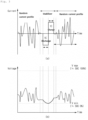
- Figs. 3A and 3B are to explain a course of measuring increments of voltage of a lithium-ion battery in use with a random current or power profile while charging it at a certain C-rate (a charging condition) for a given time after fully discharging it to estimate its current capacity (SOH).
- SOH current capacity
- Fig. 3A illustrates a current pattern from a stabilizer upon charges during actual use after full discharge in accordance with the idea of the present invention
- Fig. 3B illustrates a voltage pattern under the same situation.
- Figs. 3A and 3B illustrate output current and voltage of a battery during a course of charging the battery in actual use under an 1C profile (i.e., a predetermined charging condition) illustrated for a given time after fully discharging it under the 1C profile for measurement to estimate the lifespan of the battery as the random current or power profile in the lithium-ion battery over time.
- 1C profile i.e., a predetermined charging condition
- the illustrated profile is created during a course of estimating the SOH by using the gradient of the charge voltage after full discharge at SOC of 0%. Because the estimation of the capacity illustrated in a section when load becomes stabilized during the actual use is performed, the illustrated current and pattern may be at the state of the load being connected in the actual use. It is more effective to perform at the section when the SOC is low at the moment of the load starting to be stabilized during use of the ESS.
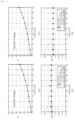
- Fig. 4 illustrates a course of deducing relationships between increments of voltage ⁇ V and SOH as residual lifespan when the charge is performed for the given time after full discharge (for 10 minutes in the drawing).
- Fig. 4A represents change in voltage over time when charging is performed after full discharge every cycle of discharge and discharge of the battery.
- the cross axis of time starts from 2 minutes and the drawing shows a pattern of increasing voltage over time after charge starts. It can be found out that as cycles of discharge and charge of the battery increase, the increments of voltage increase during the same time period.
- the lines are used to check increments of voltage ⁇ V 10 minutes after the charge starts.
- Fig. 4C shows the relationships between the normal remaining capacity of the battery and cycles of discharge and charge, where the remaining capacity of the battery can be seen as the residual lifespan (SOH) of the battery SOH).
- the two graphs in the Fig. 4C show the results under different full discharge and/or charging conditions.
- Fig. 4D shows a graph representing the relationship between voltage ⁇ V and SOH as residual lifespan drawn by combining the results of Fig. 4B and Fig. 4C .
- the increment of voltage ⁇ V and the residual lifespan SOH are inversely proportional in a form of cubic polynomial in the regression analysis graph from Figs. 4A to 4D .
- Figs. 5A through 5C show graphs representing that a model for ⁇ V is acquired by applying a particle filter with respect to 10 measurement values at intervals of 2 minutes from 2 minutes to 20 minutes.
- a0k to a3k may be calculated under Equation 2 below.
- a 1.0 e + 04 * ⁇ 0.2277 0.0308 ⁇ 0.8121 ⁇ 0.4989 ⁇ 0.0474 ⁇ 0.1687 ⁇ 0.1604 ⁇ 0.0518 0.0590 0.1129 0.7180 ⁇ 0.0736 2.5517 1.5624 0.1391 0.5198 0.4973 0.1682 ⁇ 0.1695 ⁇ 0.3332 ⁇ 0.7527 0.0571 ⁇ 2.6653 ⁇ 1.6232 ⁇ 0.1278 ⁇ 0.5256 ⁇ 0.5051 ⁇ 0.1724 0.1708 0.3370 0.2627 ⁇ 0.0135 0.9268 0.5611 0.0378 0.1763 0.1703 0.0584 ⁇ 0.0578 ⁇ 0.1140
- the course as illustrated has an advantage of increasing accuracy in calculating the residual lifespan of the battery when applying to a particle filter the calculated capacities of the battery through two or more cycles of full discharge and charge.
- Figs. 6A and 6C are the graphs with the same relationships as Fig. 4A and Figs. 6B and 6D are to compare the results of estimating the scope of SOH by using the charging voltage with the actual SOH. It can be found out that the mean values of the estimated results from the Figures are similar to the actual SOH.
- Cycles of Discharge/Charge SOH 0 1.000 150 0.975 300 0.967 450 0.960 600 0.956 750 0.951 900 0.946 1050 0.943 1200 0.941 1350 0.936 1500 0.935 1650 0.928 1800 0.928
- Fig. 7 is a broken-line graph drawn with relationships in Table 1.
- Tab. 1 and Fig. 7 show the results of measurement at cycles of discharge and charge from 150 to 1800.
- Equation 3 An equation regarding the particle filter applied to Fig. 8 with respect to the result of Fig. 7 is as shown in Equation 3 and Table 2 below.
- x t + 1 x t ⁇ exp ⁇ b ⁇ t [Table 2]
- the median value as expected values by using the statistical technique in Fig. 8 is a middle line while the low limit is a dotted line as the lower line and the upper limit is a dotted line as the upper line over the middle line.
- the mean values of the results estimated from the results of Fig. 8 appeared to drop similarly to the actual SOH and it can be judged from the expectation of the SOH by using the mean values of the estimated results that 80% could be reduced compared to the initial ones when more experiment is conducted at 6600 cycles. In short, it can be determined that 6600 cycles could be the lifespan of the battery under the actual use environment.
- the present invention which relates to a method and an apparatus for estimating lifespan of a battery, is available in a field of operating and managing batteries.
Landscapes
- Physics & Mathematics (AREA)
- General Physics & Mathematics (AREA)
- Engineering & Computer Science (AREA)
- Manufacturing & Machinery (AREA)
- Chemical & Material Sciences (AREA)
- Chemical Kinetics & Catalysis (AREA)
- Electrochemistry (AREA)
- General Chemical & Material Sciences (AREA)
- Power Engineering (AREA)
- Secondary Cells (AREA)
- Charge And Discharge Circuits For Batteries Or The Like (AREA)
Claims (3)
- Procédé d'estimation de la durée de vie d'une batterie (10), comprenant les étapes suivantes :la décharge complète de la batterie (10) ;la charge partielle de la batterie (10) complètement déchargée dans une condition de charge prédéterminée ;l'acquisition d'éléments d'information de tension à des multiples points spécifiques de temps de mesure pendant la charge partielle de la batterie ; etle calcul d'une capacité restante de la batterie (10) en utilisant les éléments d'information de tension acquis et des données de référence,dans lequel, lors de l'étape d'acquisition d'éléments d'information de tension, des incréments de tension à partir d'un moment de commencement de charge de la batterie complètement déchargée (10) jusqu'aux points spécifiques de temps de mesure sont acquis en tant qu'éléments d'information de tension,dans lequel les incréments de tension sont des différences entre une tension de batterie mesurée au moment de commencement de charge de la batterie complètement déchargée et des tensions de batterie mesurées aux multiples points spécifiques de temps de mesure,dans lequel, lors de l'étape de calcul de la capacité restante de la batterie (10), un filtre à particules est appliqué aux éléments d'information de tension acquis,dans lequel l'étape de décharge complète est effectuée lorsque la charge commence à être stabilisée sur la base d'un calendrier de fonctionnement ou d'un modèle de fonctionnement accumulé d'un ESS composé de la batterie (10),dans lequel l'étape de décharge complète est effectuée si l'état de charge de la batterie (10) est inférieur à un seuil prédéfini lorsque la charge commence à être stabilisée, etdans lequel, lorsque le filtre à particules est appliqué aux éléments d'information de tension acquis, l'incrément de tension au point initial de temps de mesure et l'incrément de tension au dernier point de temps de mesure sont accordés une fiabilité plus élevée que ceux aux autres points de temps de mesure,dans lequel les données de référence sont des données mesurées pendant l'utilisation réelle d'une batterie déjà fabriquée avec la même spécification que la batterie, etdans lequel l'étape de calcul d'une capacité restante de la batterie comprend les étapes suivantes :le calcul de la capacité de batterie mesurée lors d'un cycle de décharge et de charge complètes en utilisant les incréments de tension mesurés ; etle calcul d'une durée de vie résiduelle de la batterie en appliquant au filtre à particules des capacités de batterie mesurées lors de plusieurs cycles de décharge et de charge complètes.
- Appareil pour estimer la durée de vie d'une batterie (10), comprenant :une unité de stockage de données de référence (110) pour stocker des données de référence qui servent de base à l'estimation de la durée de vie de la batterie (10), dans lequel les données de référence sont des données mesurées pendant l'utilisation réelle d'une batterie déjà fabriquée ayant la même spécification que la batterie ;une unité de commande de charge/décharge (120) pour décharger complètement la batterie et charger partiellement la batterie (10) dans une condition de charge prédéterminée ;une unité d'acquisition d'information de tension (140) pour acquérir des éléments d'information de tension de la batterie (10) à des multiples points spécifiques de temps de mesure tout en chargeant partiellement la batterie (10) ; etune unité de calcul de capacité restante (160) pour calculer une capacité restante de la batterie (10) en utilisant les informations de tension acquises et les données de référence,dans lequel l'acquisition d'éléments d'information de tension de la batterie aux multiples points spécifiques de temps de mesure est que des incréments de tension à partir d'un moment de commencement de charge de la batterie complètement déchargée jusqu'aux points spécifiques de temps de mesure sont acquis en tant qu'éléments d'information de tension,dans lequel les incréments de tension sont des différences entre une tension de batterie mesurée au moment de commencement de charge de la batterie complètement déchargée et des tensions de batterie mesurées aux multiples points spécifiques de temps de mesure,dans lequel le calcul d'une capacité restante de la batterie (10) comprend l'application d'un filtre à particules aux éléments d'information de tension acquis ;dans lequel la décharge complète est effectuée lorsque la charge commence à être stabilisée sur la base d'un calendrier de fonctionnement ou d'un modèle de fonctionnement accumulé d'un ESS composé de la batterie (10),dans lequel la décharge complète est effectuée si l'état de charge de la batterie est inférieur à un seuil prédéfini lorsque la charge commence à être stabilisée,dans lequel l'unité de calcul de capacité restante (160) répète une étape de calcul de capacité de batterie mesurée à un cycle de décharge et de charge complètes pour plusieurs cycles de décharge et de charge complètes, et calcule une durée de vie résiduelle de la batterie (10) en appliquant les capacités de batterie calculées au filtre à particules, etdans lequel, lorsque le filtre à particules est appliqué aux éléments d'information de tension acquis, l'incrément de tension au point initial de temps de mesure et l'incrément de tension au dernier point de temps de mesure sont accordés une fiabilité plus élevée que ceux aux autres points de temps de mesure.
- Appareil selon la revendication 2, comprenant en outre une unité (180) pour créer des données de référence pour acquérir les éléments d'information de tension de la batterie (10) aux multiples points spécifiques de temps de mesure si des opérations de charge/décharge sont menées dans une portée qui répond à la condition de charge prédéterminée après la décharge complète, et créer les données de référence stockées dans l'unité de stockage de données de référence (110) .
Applications Claiming Priority (2)
| Application Number | Priority Date | Filing Date | Title |
|---|---|---|---|
| KR1020160167982A KR101882287B1 (ko) | 2016-12-09 | 2016-12-09 | 배터리 수명 추정 방법 및 장치 |
| PCT/KR2017/014231 WO2018106015A1 (fr) | 2016-12-09 | 2017-12-06 | Procédé et appareil pour estimer la durée de vie d'une batterie |
Publications (3)
| Publication Number | Publication Date |
|---|---|
| EP3553543A1 EP3553543A1 (fr) | 2019-10-16 |
| EP3553543A4 EP3553543A4 (fr) | 2020-07-29 |
| EP3553543B1 true EP3553543B1 (fr) | 2024-09-25 |
Family
ID=62492312
Family Applications (1)
| Application Number | Title | Priority Date | Filing Date |
|---|---|---|---|
| EP17879284.2A Active EP3553543B1 (fr) | 2016-12-09 | 2017-12-06 | Procédé et appareil pour estimer la durée de vie d'une batterie |
Country Status (5)
| Country | Link |
|---|---|
| US (1) | US11085968B2 (fr) |
| EP (1) | EP3553543B1 (fr) |
| KR (1) | KR101882287B1 (fr) |
| AU (1) | AU2017371167A1 (fr) |
| WO (1) | WO2018106015A1 (fr) |
Families Citing this family (14)
| Publication number | Priority date | Publication date | Assignee | Title |
|---|---|---|---|---|
| KR102441800B1 (ko) * | 2017-10-12 | 2022-09-13 | 오씨아이 주식회사 | 배터리 수명 예측 방법 및 장치 |
| ES2991479T3 (es) * | 2019-08-23 | 2024-12-03 | Lg Energy Solution Ltd | Método para predecir el estado de salud de una batería y grupo de baterías que lo emplea |
| WO2021075770A1 (fr) * | 2019-10-17 | 2021-04-22 | Samsung Electronics Co., Ltd. | Système et procédé d'estimation de l'état d'une batterie d'un dispositif électronique |
| KR102801609B1 (ko) | 2019-10-24 | 2025-04-25 | 주식회사 엘지에너지솔루션 | 배터리 퇴화도 진단 장치 및 방법 |
| FR3104263B1 (fr) * | 2019-12-10 | 2024-07-19 | Electricite De France | Evaluation de l’autonomie réelle maximale d’un véhicule électrique |
| KR102856950B1 (ko) | 2019-12-11 | 2025-09-05 | 주식회사 엘지에너지솔루션 | 배터리 퇴화도 진단 장치 및 방법 |
| CN113127984B (zh) * | 2019-12-31 | 2024-11-19 | 中移(上海)信息通信科技有限公司 | 设备维护的方法、装置、设备及存储介质 |
| KR102499565B1 (ko) | 2020-03-18 | 2023-02-14 | (재)대구기계부품연구원 | 배터리 전압 안정화 시스템 |
| CN112731167A (zh) * | 2020-12-16 | 2021-04-30 | 北京新能源汽车技术创新中心有限公司 | 一种电池寿命判定方法、装置以及车辆 |
| EP4047380A1 (fr) * | 2021-02-18 | 2022-08-24 | FRONIUS INTERNATIONAL GmbH | Procédé et système d'analyse d'un accumulateur d'énergie, ainsi que système d'approvisionnement énergétique |
| CN115130712B (zh) * | 2021-03-29 | 2025-02-28 | 加百裕工业股份有限公司 | 电池剩余使用寿命预测方法 |
| CN116413626B (zh) * | 2021-12-30 | 2024-11-15 | 比亚迪股份有限公司 | 一种电池老化状态的评估方法、电子设备及存储介质 |
| KR102704715B1 (ko) * | 2023-09-26 | 2024-09-06 | 이중휘 | 배터리 잔존성능 진단 장치 및 방법과 이를 위한 컴퓨터 프로그램 |
| KR20250152865A (ko) * | 2024-04-17 | 2025-10-24 | 주식회사 엘지에너지솔루션 | 배터리 진단 장치 및 그것의 동작 방법 |
Family Cites Families (12)
| Publication number | Priority date | Publication date | Assignee | Title |
|---|---|---|---|---|
| JPH04331427A (ja) | 1991-01-28 | 1992-11-19 | Matsushita Electric Works Ltd | 充電式電気機器 |
| JP2001292534A (ja) | 2000-04-04 | 2001-10-19 | Sekisui Chem Co Ltd | リチウムイオン電池の劣化度判定装置 |
| JP4097183B2 (ja) * | 2001-12-27 | 2008-06-11 | パナソニックEvエナジー株式会社 | 二次電池の残存容量推定方法および装置、並びに電池パックシステム |
| JP2007078506A (ja) | 2005-09-14 | 2007-03-29 | Matsushita Electric Ind Co Ltd | 二次電池の寿命判定装置 |
| US7576545B2 (en) | 2006-10-18 | 2009-08-18 | Honeywell International Inc. | Lithium-ion battery prognostic testing and process |
| KR101429292B1 (ko) | 2008-08-11 | 2014-08-12 | 주식회사 엘지화학 | 이차전지의 수명 예측 장치 및 이를 이용한 수명 예측방법 |
| KR101897069B1 (ko) | 2012-04-16 | 2018-09-12 | 엘지이노텍 주식회사 | 칩 패키지 부재 제조 방법 및 칩 패키지 제조방법 |
| KR101488828B1 (ko) * | 2012-05-08 | 2015-02-04 | 주식회사 엘지화학 | 이차전지 수명 측정 장치, 이를 포함하는 전자기기 및 이차전지 수명 측정 방법 |
| KR101440719B1 (ko) * | 2013-02-26 | 2014-09-17 | 한국항공대학교산학협력단 | 충전전압 특성을 이용한 충전 배터리 고장 예측 시스템, 장치 및 방법 |
| KR102085856B1 (ko) * | 2013-11-11 | 2020-03-09 | 엘지이노텍 주식회사 | 배터리의 상태 추정 방법 및 장치 |
| US20150349385A1 (en) | 2014-04-01 | 2015-12-03 | Medtronic, Inc. | Method and System for Predicting Useful Life of a Rechargeable Battery |
| US10401433B2 (en) * | 2015-01-21 | 2019-09-03 | Samsung Electronics Co., Ltd. | Method and apparatus for estimating battery life |
-
2016
- 2016-12-09 KR KR1020160167982A patent/KR101882287B1/ko active Active
-
2017
- 2017-12-06 US US16/467,085 patent/US11085968B2/en active Active
- 2017-12-06 EP EP17879284.2A patent/EP3553543B1/fr active Active
- 2017-12-06 AU AU2017371167A patent/AU2017371167A1/en not_active Abandoned
- 2017-12-06 WO PCT/KR2017/014231 patent/WO2018106015A1/fr not_active Ceased
Also Published As
| Publication number | Publication date |
|---|---|
| US11085968B2 (en) | 2021-08-10 |
| AU2017371167A1 (en) | 2019-07-25 |
| KR20180066768A (ko) | 2018-06-19 |
| US20190317150A1 (en) | 2019-10-17 |
| WO2018106015A1 (fr) | 2018-06-14 |
| KR101882287B1 (ko) | 2018-07-26 |
| EP3553543A4 (fr) | 2020-07-29 |
| EP3553543A1 (fr) | 2019-10-16 |
Similar Documents
| Publication | Publication Date | Title |
|---|---|---|
| US11085968B2 (en) | Method and apparatus for estimating lifespan of battery | |
| US10908222B2 (en) | Method and device for estimating battery life | |
| US20190170826A1 (en) | Battery state-of-health determination upon charging | |
| US10988047B2 (en) | Method for determining a capacity of a battery cell, evaluation device, monitoring apparatus, high-voltage battery and motor vehicle | |
| JP4767558B2 (ja) | 電源装置用状態検知装置,電源装置及び電源装置に用いられる初期特性抽出装置 | |
| KR101160545B1 (ko) | 이차전지 건강상태 진단장치 | |
| DE102014202622B4 (de) | Verfahren zum Überwachen einer Batterie mit mehreren Batteriezellen, Computerprogramm zum Ausführen des Verfahrens, Batteriemanagementsystem zum Überwachen einer Batterie, Batteriesystem mit dem Batteriemanagementsystem und Fahrzeug mit dem Batteriesystem | |
| US20150226807A1 (en) | Determination of nominal cell resistance for real-time estimation of state-of-charge in lithium batteries | |
| US10203374B2 (en) | System and method for sensing battery capacity | |
| KR101733073B1 (ko) | 이차 전지의 검사 방법 | |
| US9267997B2 (en) | Systems and methods to determine the condition of a battery | |
| EP3045925A1 (fr) | Procédé et système pour déterminer un état de charge de manière itérative d'une cellule de batterie | |
| KR20160128000A (ko) | 배터리 진단 장치 및 그 방법 | |
| US6861842B2 (en) | Method for determining the amount of charge which can still be drawn from an energy storage battery, and an energy storage battery | |
| KR102597670B1 (ko) | 사용후 배터리팩의 수명 추정 방법 및 장치 | |
| CN104833917B (zh) | 用于锂蓄电池中荷电状态实时估算的标称电池电阻的确定 | |
| Li et al. | Real-time estimation of lead-acid battery parameters: A dynamic data-driven approach | |
| US20250155514A1 (en) | Method for determining the ageing progression of a battery storage device | |
| US9075117B2 (en) | Method for calibrating an electrochemical battery | |
| JP2024511082A (ja) | 蓄電装置の容量損失を算定する方法、装置およびコンピュータプログラム製品 | |
| WO2010029355A2 (fr) | Estimation de l’état de charge | |
| US20220011374A1 (en) | Method for determining an ageing function of an accumulator | |
| Stroe et al. | State-of-health estimation of lithium-ion batteries based on partial charging voltage profiles | |
| US20230296685A1 (en) | Determination of open circuit voltage curve for rechargeable batteries | |
| Wu et al. | State-of-charge and state-of-health estimating method for lithium-ion batteries |
Legal Events
| Date | Code | Title | Description |
|---|---|---|---|
| STAA | Information on the status of an ep patent application or granted ep patent |
Free format text: STATUS: THE INTERNATIONAL PUBLICATION HAS BEEN MADE |
|
| PUAI | Public reference made under article 153(3) epc to a published international application that has entered the european phase |
Free format text: ORIGINAL CODE: 0009012 |
|
| STAA | Information on the status of an ep patent application or granted ep patent |
Free format text: STATUS: REQUEST FOR EXAMINATION WAS MADE |
|
| 17P | Request for examination filed |
Effective date: 20190703 |
|
| AK | Designated contracting states |
Kind code of ref document: A1 Designated state(s): AL AT BE BG CH CY CZ DE DK EE ES FI FR GB GR HR HU IE IS IT LI LT LU LV MC MK MT NL NO PL PT RO RS SE SI SK SM TR |
|
| AX | Request for extension of the european patent |
Extension state: BA ME |
|
| DAV | Request for validation of the european patent (deleted) | ||
| DAX | Request for extension of the european patent (deleted) | ||
| A4 | Supplementary search report drawn up and despatched |
Effective date: 20200625 |
|
| RIC1 | Information provided on ipc code assigned before grant |
Ipc: G01R 31/367 20190101ALI20200619BHEP Ipc: G01R 31/382 20190101ALI20200619BHEP Ipc: G01R 31/392 20190101ALI20200619BHEP Ipc: G01R 31/3835 20190101ALI20200619BHEP Ipc: H01M 10/48 20060101ALI20200619BHEP Ipc: G01R 31/36 20200101AFI20200619BHEP |
|
| STAA | Information on the status of an ep patent application or granted ep patent |
Free format text: STATUS: EXAMINATION IS IN PROGRESS |
|
| 17Q | First examination report despatched |
Effective date: 20221121 |
|
| GRAP | Despatch of communication of intention to grant a patent |
Free format text: ORIGINAL CODE: EPIDOSNIGR1 |
|
| STAA | Information on the status of an ep patent application or granted ep patent |
Free format text: STATUS: GRANT OF PATENT IS INTENDED |
|
| INTG | Intention to grant announced |
Effective date: 20240417 |
|
| GRAS | Grant fee paid |
Free format text: ORIGINAL CODE: EPIDOSNIGR3 |
|
| GRAA | (expected) grant |
Free format text: ORIGINAL CODE: 0009210 |
|
| STAA | Information on the status of an ep patent application or granted ep patent |
Free format text: STATUS: THE PATENT HAS BEEN GRANTED |
|
| AK | Designated contracting states |
Kind code of ref document: B1 Designated state(s): AL AT BE BG CH CY CZ DE DK EE ES FI FR GB GR HR HU IE IS IT LI LT LU LV MC MK MT NL NO PL PT RO RS SE SI SK SM TR |
|
| REG | Reference to a national code |
Ref country code: GB Ref legal event code: FG4D |
|
| REG | Reference to a national code |
Ref country code: CH Ref legal event code: EP |
|
| REG | Reference to a national code |
Ref country code: DE Ref legal event code: R096 Ref document number: 602017085136 Country of ref document: DE |
|
| REG | Reference to a national code |
Ref country code: IE Ref legal event code: FG4D |
|
| REG | Reference to a national code |
Ref country code: LT Ref legal event code: MG9D |
|
| PG25 | Lapsed in a contracting state [announced via postgrant information from national office to epo] |
Ref country code: NO Free format text: LAPSE BECAUSE OF FAILURE TO SUBMIT A TRANSLATION OF THE DESCRIPTION OR TO PAY THE FEE WITHIN THE PRESCRIBED TIME-LIMIT Effective date: 20241225 |
|
| PG25 | Lapsed in a contracting state [announced via postgrant information from national office to epo] |
Ref country code: GR Free format text: LAPSE BECAUSE OF FAILURE TO SUBMIT A TRANSLATION OF THE DESCRIPTION OR TO PAY THE FEE WITHIN THE PRESCRIBED TIME-LIMIT Effective date: 20241226 Ref country code: FI Free format text: LAPSE BECAUSE OF FAILURE TO SUBMIT A TRANSLATION OF THE DESCRIPTION OR TO PAY THE FEE WITHIN THE PRESCRIBED TIME-LIMIT Effective date: 20240925 |
|
| PG25 | Lapsed in a contracting state [announced via postgrant information from national office to epo] |
Ref country code: BG Free format text: LAPSE BECAUSE OF FAILURE TO SUBMIT A TRANSLATION OF THE DESCRIPTION OR TO PAY THE FEE WITHIN THE PRESCRIBED TIME-LIMIT Effective date: 20240925 |
|
| PG25 | Lapsed in a contracting state [announced via postgrant information from national office to epo] |
Ref country code: LV Free format text: LAPSE BECAUSE OF FAILURE TO SUBMIT A TRANSLATION OF THE DESCRIPTION OR TO PAY THE FEE WITHIN THE PRESCRIBED TIME-LIMIT Effective date: 20240925 |
|
| PG25 | Lapsed in a contracting state [announced via postgrant information from national office to epo] |
Ref country code: RS Free format text: LAPSE BECAUSE OF FAILURE TO SUBMIT A TRANSLATION OF THE DESCRIPTION OR TO PAY THE FEE WITHIN THE PRESCRIBED TIME-LIMIT Effective date: 20241225 |
|
| REG | Reference to a national code |
Ref country code: NL Ref legal event code: MP Effective date: 20240925 |
|
| PG25 | Lapsed in a contracting state [announced via postgrant information from national office to epo] |
Ref country code: RS Free format text: LAPSE BECAUSE OF FAILURE TO SUBMIT A TRANSLATION OF THE DESCRIPTION OR TO PAY THE FEE WITHIN THE PRESCRIBED TIME-LIMIT Effective date: 20241225 Ref country code: NO Free format text: LAPSE BECAUSE OF FAILURE TO SUBMIT A TRANSLATION OF THE DESCRIPTION OR TO PAY THE FEE WITHIN THE PRESCRIBED TIME-LIMIT Effective date: 20241225 Ref country code: LV Free format text: LAPSE BECAUSE OF FAILURE TO SUBMIT A TRANSLATION OF THE DESCRIPTION OR TO PAY THE FEE WITHIN THE PRESCRIBED TIME-LIMIT Effective date: 20240925 Ref country code: GR Free format text: LAPSE BECAUSE OF FAILURE TO SUBMIT A TRANSLATION OF THE DESCRIPTION OR TO PAY THE FEE WITHIN THE PRESCRIBED TIME-LIMIT Effective date: 20241226 Ref country code: FI Free format text: LAPSE BECAUSE OF FAILURE TO SUBMIT A TRANSLATION OF THE DESCRIPTION OR TO PAY THE FEE WITHIN THE PRESCRIBED TIME-LIMIT Effective date: 20240925 Ref country code: BG Free format text: LAPSE BECAUSE OF FAILURE TO SUBMIT A TRANSLATION OF THE DESCRIPTION OR TO PAY THE FEE WITHIN THE PRESCRIBED TIME-LIMIT Effective date: 20240925 |
|
| REG | Reference to a national code |
Ref country code: AT Ref legal event code: MK05 Ref document number: 1727062 Country of ref document: AT Kind code of ref document: T Effective date: 20240925 |
|
| PG25 | Lapsed in a contracting state [announced via postgrant information from national office to epo] |
Ref country code: NL Free format text: LAPSE BECAUSE OF FAILURE TO SUBMIT A TRANSLATION OF THE DESCRIPTION OR TO PAY THE FEE WITHIN THE PRESCRIBED TIME-LIMIT Effective date: 20240925 |
|
| PG25 | Lapsed in a contracting state [announced via postgrant information from national office to epo] |
Ref country code: IS Free format text: LAPSE BECAUSE OF FAILURE TO SUBMIT A TRANSLATION OF THE DESCRIPTION OR TO PAY THE FEE WITHIN THE PRESCRIBED TIME-LIMIT Effective date: 20250125 Ref country code: PT Free format text: LAPSE BECAUSE OF FAILURE TO SUBMIT A TRANSLATION OF THE DESCRIPTION OR TO PAY THE FEE WITHIN THE PRESCRIBED TIME-LIMIT Effective date: 20250127 |
|
| PG25 | Lapsed in a contracting state [announced via postgrant information from national office to epo] |
Ref country code: RO Free format text: LAPSE BECAUSE OF FAILURE TO SUBMIT A TRANSLATION OF THE DESCRIPTION OR TO PAY THE FEE WITHIN THE PRESCRIBED TIME-LIMIT Effective date: 20240925 Ref country code: SM Free format text: LAPSE BECAUSE OF FAILURE TO SUBMIT A TRANSLATION OF THE DESCRIPTION OR TO PAY THE FEE WITHIN THE PRESCRIBED TIME-LIMIT Effective date: 20240925 |
|
| PG25 | Lapsed in a contracting state [announced via postgrant information from national office to epo] |
Ref country code: ES Free format text: LAPSE BECAUSE OF FAILURE TO SUBMIT A TRANSLATION OF THE DESCRIPTION OR TO PAY THE FEE WITHIN THE PRESCRIBED TIME-LIMIT Effective date: 20240925 |
|
| PG25 | Lapsed in a contracting state [announced via postgrant information from national office to epo] |
Ref country code: AT Free format text: LAPSE BECAUSE OF FAILURE TO SUBMIT A TRANSLATION OF THE DESCRIPTION OR TO PAY THE FEE WITHIN THE PRESCRIBED TIME-LIMIT Effective date: 20240925 Ref country code: EE Free format text: LAPSE BECAUSE OF FAILURE TO SUBMIT A TRANSLATION OF THE DESCRIPTION OR TO PAY THE FEE WITHIN THE PRESCRIBED TIME-LIMIT Effective date: 20240925 |
|
| PG25 | Lapsed in a contracting state [announced via postgrant information from national office to epo] |
Ref country code: PL Free format text: LAPSE BECAUSE OF FAILURE TO SUBMIT A TRANSLATION OF THE DESCRIPTION OR TO PAY THE FEE WITHIN THE PRESCRIBED TIME-LIMIT Effective date: 20240925 Ref country code: CZ Free format text: LAPSE BECAUSE OF FAILURE TO SUBMIT A TRANSLATION OF THE DESCRIPTION OR TO PAY THE FEE WITHIN THE PRESCRIBED TIME-LIMIT Effective date: 20240925 |
|
| PG25 | Lapsed in a contracting state [announced via postgrant information from national office to epo] |
Ref country code: IT Free format text: LAPSE BECAUSE OF FAILURE TO SUBMIT A TRANSLATION OF THE DESCRIPTION OR TO PAY THE FEE WITHIN THE PRESCRIBED TIME-LIMIT Effective date: 20240925 Ref country code: SK Free format text: LAPSE BECAUSE OF FAILURE TO SUBMIT A TRANSLATION OF THE DESCRIPTION OR TO PAY THE FEE WITHIN THE PRESCRIBED TIME-LIMIT Effective date: 20240925 |
|
| REG | Reference to a national code |
Ref country code: DE Ref legal event code: R097 Ref document number: 602017085136 Country of ref document: DE |
|
| PG25 | Lapsed in a contracting state [announced via postgrant information from national office to epo] |
Ref country code: MC Free format text: LAPSE BECAUSE OF FAILURE TO SUBMIT A TRANSLATION OF THE DESCRIPTION OR TO PAY THE FEE WITHIN THE PRESCRIBED TIME-LIMIT Effective date: 20240925 |
|
| PG25 | Lapsed in a contracting state [announced via postgrant information from national office to epo] |
Ref country code: DK Free format text: LAPSE BECAUSE OF FAILURE TO SUBMIT A TRANSLATION OF THE DESCRIPTION OR TO PAY THE FEE WITHIN THE PRESCRIBED TIME-LIMIT Effective date: 20240925 |
|
| REG | Reference to a national code |
Ref country code: CH Ref legal event code: PL |
|
| PLBE | No opposition filed within time limit |
Free format text: ORIGINAL CODE: 0009261 |
|
| STAA | Information on the status of an ep patent application or granted ep patent |
Free format text: STATUS: NO OPPOSITION FILED WITHIN TIME LIMIT |
|
| PG25 | Lapsed in a contracting state [announced via postgrant information from national office to epo] |
Ref country code: LU Free format text: LAPSE BECAUSE OF NON-PAYMENT OF DUE FEES Effective date: 20241206 |
|
| 26N | No opposition filed |
Effective date: 20250626 |
|
| PG25 | Lapsed in a contracting state [announced via postgrant information from national office to epo] |
Ref country code: SE Free format text: LAPSE BECAUSE OF FAILURE TO SUBMIT A TRANSLATION OF THE DESCRIPTION OR TO PAY THE FEE WITHIN THE PRESCRIBED TIME-LIMIT Effective date: 20240925 |
|
| REG | Reference to a national code |
Ref country code: BE Ref legal event code: MM Effective date: 20241231 |
|
| PG25 | Lapsed in a contracting state [announced via postgrant information from national office to epo] |
Ref country code: BE Free format text: LAPSE BECAUSE OF NON-PAYMENT OF DUE FEES Effective date: 20241231 |
|
| PG25 | Lapsed in a contracting state [announced via postgrant information from national office to epo] |
Ref country code: FR Free format text: LAPSE BECAUSE OF NON-PAYMENT OF DUE FEES Effective date: 20241231 |
|
| PG25 | Lapsed in a contracting state [announced via postgrant information from national office to epo] |
Ref country code: CH Free format text: LAPSE BECAUSE OF NON-PAYMENT OF DUE FEES Effective date: 20241231 |
|
| PG25 | Lapsed in a contracting state [announced via postgrant information from national office to epo] |
Ref country code: IE Free format text: LAPSE BECAUSE OF NON-PAYMENT OF DUE FEES Effective date: 20241206 |
|
| PGFP | Annual fee paid to national office [announced via postgrant information from national office to epo] |
Ref country code: DE Payment date: 20250707 Year of fee payment: 9 |
|
| PGFP | Annual fee paid to national office [announced via postgrant information from national office to epo] |
Ref country code: GB Payment date: 20251001 Year of fee payment: 9 |
|
| PG25 | Lapsed in a contracting state [announced via postgrant information from national office to epo] |
Ref country code: HR Free format text: LAPSE BECAUSE OF FAILURE TO SUBMIT A TRANSLATION OF THE DESCRIPTION OR TO PAY THE FEE WITHIN THE PRESCRIBED TIME-LIMIT Effective date: 20240925 |
|
| PG25 | Lapsed in a contracting state [announced via postgrant information from national office to epo] |
Ref country code: CY Free format text: LAPSE BECAUSE OF FAILURE TO SUBMIT A TRANSLATION OF THE DESCRIPTION OR TO PAY THE FEE WITHIN THE PRESCRIBED TIME-LIMIT; INVALID AB INITIO Effective date: 20171206 |