EP3553057B1 - (hetero)arylamidverbindung zur hemmung der proteinkinaseaktivität - Google Patents
(hetero)arylamidverbindung zur hemmung der proteinkinaseaktivität Download PDFInfo
- Publication number
- EP3553057B1 EP3553057B1 EP18741350.5A EP18741350A EP3553057B1 EP 3553057 B1 EP3553057 B1 EP 3553057B1 EP 18741350 A EP18741350 A EP 18741350A EP 3553057 B1 EP3553057 B1 EP 3553057B1
- Authority
- EP
- European Patent Office
- Prior art keywords
- compound
- alkyl
- pharmaceutically acceptable
- acceptable salt
- mmol
- Prior art date
- Legal status (The legal status is an assumption and is not a legal conclusion. Google has not performed a legal analysis and makes no representation as to the accuracy of the status listed.)
- Active
Links
Classifications
-
- A—HUMAN NECESSITIES
- A61—MEDICAL OR VETERINARY SCIENCE; HYGIENE
- A61P—SPECIFIC THERAPEUTIC ACTIVITY OF CHEMICAL COMPOUNDS OR MEDICINAL PREPARATIONS
- A61P31/00—Antiinfectives, i.e. antibiotics, antiseptics, chemotherapeutics
-
- C—CHEMISTRY; METALLURGY
- C07—ORGANIC CHEMISTRY
- C07D—HETEROCYCLIC COMPOUNDS
- C07D417/00—Heterocyclic compounds containing two or more hetero rings, at least one ring having nitrogen and sulfur atoms as the only ring hetero atoms, not provided for by group C07D415/00
- C07D417/14—Heterocyclic compounds containing two or more hetero rings, at least one ring having nitrogen and sulfur atoms as the only ring hetero atoms, not provided for by group C07D415/00 containing three or more hetero rings
-
- A—HUMAN NECESSITIES
- A61—MEDICAL OR VETERINARY SCIENCE; HYGIENE
- A61P—SPECIFIC THERAPEUTIC ACTIVITY OF CHEMICAL COMPOUNDS OR MEDICINAL PREPARATIONS
- A61P31/00—Antiinfectives, i.e. antibiotics, antiseptics, chemotherapeutics
- A61P31/12—Antivirals
-
- A—HUMAN NECESSITIES
- A61—MEDICAL OR VETERINARY SCIENCE; HYGIENE
- A61P—SPECIFIC THERAPEUTIC ACTIVITY OF CHEMICAL COMPOUNDS OR MEDICINAL PREPARATIONS
- A61P35/00—Antineoplastic agents
-
- A—HUMAN NECESSITIES
- A61—MEDICAL OR VETERINARY SCIENCE; HYGIENE
- A61P—SPECIFIC THERAPEUTIC ACTIVITY OF CHEMICAL COMPOUNDS OR MEDICINAL PREPARATIONS
- A61P35/00—Antineoplastic agents
- A61P35/02—Antineoplastic agents specific for leukemia
-
- C—CHEMISTRY; METALLURGY
- C07—ORGANIC CHEMISTRY
- C07D—HETEROCYCLIC COMPOUNDS
- C07D401/00—Heterocyclic compounds containing two or more hetero rings, having nitrogen atoms as the only ring hetero atoms, at least one ring being a six-membered ring with only one nitrogen atom
- C07D401/14—Heterocyclic compounds containing two or more hetero rings, having nitrogen atoms as the only ring hetero atoms, at least one ring being a six-membered ring with only one nitrogen atom containing three or more hetero rings
Definitions
- the present disclosure belongs to the pharmaceutical field.
- the present disclosure relates to a (hetero)arylamide compound represented by formula (I), having the substituents as disclosed in the appended set of claims.
- Said compound inhibits the tyrosine kinase activity of Abelson protein (Abll), Abelson-related protein (Abl2) and related chimeric proteins, particularly Bcr-Abll.
- the present disclosure also relates to pharmaceutical compositions containing the said compound, and use thereof.
- Protein tyrosine kinases are a class of kinases that are involved in proteinases, which catalyze the transfer of ⁇ -phosphate on ATP to protein tyrosine residues, and catalyze the phosphorylation of the phenolic hydroxyl groups on various protein tyrosine residues, thereby in turn activate functional proteins.
- Protein tyrosine kinases play an important role in the cellular signal transduction pathway, regulating a series of physiological and biochemical processes such as cell growth, differentiation and death.
- Abnormal expression of protein tyrosine kinase can lead to disturbances in cell proliferation regulation, which in turn leads to tumorigenesis.
- the abnormal expression of protein tyrosine kinase is also closely related to tumor invasion and metastasis, tumor angiogenesis, and chemotherapy resistance of tumors.
- the tyrosine kinase expressed by the Bcr-Abl fusion gene can cause changes in cell proliferation, adhesion and survival properties, leading to the occurrence of various tumors. Inhibition of Bcr-Abl tyrosine kinase can effectively inhibit tumor growth.
- ABL-001 (also known as Asciminib, chemical name (R)-N-(4-(chlorodifluoromethoxy)phenyl)-6-(3-hydroxypyrrolidin-1-yl)-5-(1H-pyrazol-5-yl)ni cotinamide, which has the following structural formula) is an allosteric inhibitor of ABL1 kinase developed by Novartis Pharmaceuticals Co., Ltd., which inactivates ABL1 by targeting its myristoyl pocket, and is effective in preventing the emergence of drug resistance in the application of ATP inhibitors and/or allosteric inhibitors when used in combination with inhibitors of BCR-ABL tyrosine kinase that compete with ATP.
- Asciminib chemical name (R)-N-(4-(chlorodifluoromethoxy)phenyl)-6-(3-hydroxypyrrolidin-1-yl)-5-(1H-pyrazol-5-yl)ni cot
- ABL-001 has been shown to be effective in eradicating CML in a mouse model when combined with the second-generation BCR-ABL inhibitor nilotinib ( Andrew A. Wylie et al. (2017) Nature 543, 733-737 ).
- Novartis is developing a clinical treatment regimen of ABL-001 in combination with various ATP-competitive BCR-ABL inhibitors, including imatinib, nilotinib, and dasatinib.
- Patent application CN 104 302 634 discloses compound ABL-001, which is capable of inhibiting the tyrosine kinase enzymatic activity of e.g. BCR-ABL1, and use of said compound in the treatment of cancer.
- the present disclosure provides a (hetero)arylamide compound represented by formula (I), or a pharmaceutically acceptable salt, a stereoisomer, a solvate or a hydrate thereof: wherein:
- the disclosure provides a pharmaceutical composition
- a pharmaceutical composition comprising a compound as claimed and a pharmaceutically acceptable excipient.
- the disclosure provides a pharmaceutical composition
- a pharmaceutical composition comprising a compound as claimed and a pharmaceutically acceptable excipient.
- the disclosure provides a kit containing a compound as claimed and other therapeutic agents, and pharmaceutically acceptable carriers, adjuvants or vehicles.
- the disclosure provides a compound or a composition as claimed, for use in the treatment and/or prevention of diseases caused by Bcr-Abl.
- the disease may be selected from the group consisting of: solid tumor, sarcoma, acute lymphocytic leukemia, acute myeloid leukemia, chronic lymphocytic leukemia, chronic myeloid leukemia, gastrointestinal stromal tumor, thyroid cancer, gastric cancer, rectal cancer, multiple myeloma, neoplasia, and other proliferative disease or proliferative diseases.
- the Bcr-Abl caused disease is chronic myeloid leukemia, gastrointestinal stromal tumor, acute myeloid leukemia, thyroid cancer, metastatic invasive cancer, or a combination thereof.
- the compounds as claimed also have the potential to treat or prevent diseases or disorders associated with abnormally activated kinase activity of wild-type Abl, including non-malignant diseases or disorders, such as CNS diseases in particular neurodegenerative diseases (for example Alzheimer's, Parkinson's diseases), motoneuroneuron diseases (amyotophic lateral sclerosis), muscular dystrophies, autoimmune and inflammatory diseases (diabetes and pulmonary fibrosis), viral infections, and prion diseases.
- non-malignant diseases or disorders such as CNS diseases in particular neurodegenerative diseases (for example Alzheimer's, Parkinson's diseases), motoneuroneuron diseases (amyotophic lateral sclerosis), muscular dystrophies, autoimmune and inflammatory diseases (diabetes and pulmonary fibrosis), viral infections, and prion diseases.
- CNS diseases in particular neurodegenerative diseases (for example Alzheimer's, Parkinson's diseases), motoneuroneuron diseases (amyotophic lateral sclerosis), muscular dystrophies,
- C 1-6 alkyl is intended to encompass, C 1 , C 2 , C 3 , C 4 , C 5 , C 6 , C 1-6 , C 1-5 , C 1-4 , C 1-3 , C 1-2 , C 2-6 , C 2-5 , C 2-4 , C 2-3 , C 3-6 , C 3-5 , C 3-4 , C 4-6 , C 4-5 and C 5-6 alkyl.
- C 1-6 alkyl refers to a radical of a straight-chain or branched saturated hydrocarbon group having from 1 to 6 carbon atoms, and it is also referred to herein as "lower alkyl”. In some embodiments, C 1-4 alkyl is particularly preferred.
- alkyl groups include methyl (C 1 ), ethyl (C 2 ), n-propyl (C 3 ), isopropyl (C 3 ), n-butyl (C 4 ), tert-butyl (C 4 ), sec-butyl (C 4 ), iso-butyl (C 4 ), n-pentyl (C 5 ), 3-pentanyl (C 5 ), amyl (C 5 ), neopentyl (C 5 ), 3-methyl-2-butanyl (C 5 ), tertiary amyl (C 5 ), and n-hexyl (C 6 ).
- each instance of an alkyl group is independently optionally substituted, i.e., unsubstituted (an "unsubstituted alkyl") or substituted (a "substituted alkyl") with one or more substituents; e.g., for instance from 1 to 5 substituents, 1 to 3 substituents, or 1 substituent.
- the alkyl group is unsubstituted C 1-6 alkyl ( e.g., -CH 3 ).
- the alkyl group is substituted C 1-6 alkyl.
- C 1-6 alkoxy refers to the group -OR wherein R is a substituted or unsubstituted C 1-6 alkyl group. In some embodiments, C 1-4 alkoxy group is particularly preferred. Specific alkoxy groups include, but are not limited to, methoxy, ethoxy, n-propoxy, isopropoxy, n-butoxy, tert-butoxy, sec-butoxy, n-pentyloxy, n-hexyloxy and 1,2-dimethylbutoxy.
- Halo or halogen means fluorine (F), chlorine (Cl), bromine (Br) and iodine (I).
- the halo group is F, -Cl or Br.
- the halogen group is Cl.
- the halogen group is F.
- the halogen group is Br.
- C 1-6 haloalkyl refers to the above “C 1-6 alkyl", which is substituted by one or more halo groups.
- C 1-4 haloalkyl group is particularly preferred, and more preferably C 1-2 haloalkyl group.
- haloalkyl groups include, but are not limited to, -CF 3 , -CH 2 F, -CHF 2 , -CClF 2 , -CHFCH 2 F, -CH 2 CHF 2 , -CF 2 CF 3 , -CF 2 CClF 2 , -CF 2 CH 3 , -CCl 3 , -CH 2 Cl, -CHCl 2 , 2,2,2-trifluoro-1,1-dimethyl-ethyl, and the like.
- C 3-7 cycloalkyl refers to a radical of a non-aromatic cyclic hydrocarbon group having from 3 to 7 ring carbon atoms and zero heteroatoms. In some embodiments, C 3-6 cycloalkyl is especially preferred, and C 5-6 cycloalkyl is more preferred. Cycloalkyl also includes ring systems wherein the cycloalkyl ring, as defined above, is fused with one or more aryl or heteroaryl groups wherein the point of attachment is on the cycloalkyl ring, and in such instances, the number of carbons continue to designate the number of carbons in the cycloalkyl ring system.
- Exemplary cycloalkyl groups include, but is not limited to, cyclopropyl (C 3 ), cyclopropenyl (C 3 ), cyclobutyl (C 4 ), cyclobutenyl (C 4 ), cyclopentyl (C 5 ), cyclopentenyl (C 5 ), cyclohexyl (C 6 ), cyclohexenyl (C 6 ), cyclohexadienyl (C 6 ), cycloheptyl (C 7 ), cycloheptenyl (C 7 ), cycloheptadienyl (C 7 ), cycloheptatrienyl (C 7 ), and the like.
- each instance of a cycloalkyl group is independently optionally substituted, i.e., unsubstituted (an "unsubstituted cycloalkyl") or substituted (a "substituted cycloalkyl") with one or more substituents.
- the cycloalkyl group is unsubstituted C 3-7 cycloalkyl.
- the cycloalkyl group is a substituted C 3-7 cycloalkyl.
- C 3-7 heterocyclyl refers to a radical of a 3- to 7-membered non-aromatic ring system having ring carbon atoms and 1 to 4 ring heteroatoms, wherein each heteroatom is independently selected from nitrogen, oxygen, sulfur, boron, phosphorus, and silicon.
- the point of attachment can be a carbon or nitrogen atom, as valency permits.
- C 3-6 heterocyclyl is especially preferred, which is a radical of a 3- to 6-membered non-aromatic ring system having ring carbon atoms and 1 to 3 ring heteroatoms.
- C 5-6 heterocyclyl is more preferred, which is a radical of a 5- to 6-membered non-aromatic ring system having ring carbon atoms and 1 to 3 ring heteroatoms.
- each instance of heterocyclyl is independently optionally substituted, i.e., unsubstituted (an "unsubstituted heterocyclyl") or substituted (a "substituted heterocyclyl") with one or more substituents.
- the heterocyclyl group is unsubstituted C 3-7 heterocyclyl.
- the heterocyclyl group is substituted C 3-7 heterocyclyl.
- Heterocyclyl also includes ring systems wherein the heterocyclyl ring, as defined above, is fused with one or more cycloalkyl groups, wherein the point of attachment is on the cycloalkyl ring; or wherein the heterocyclyl ring, as defined above, is fused with one or more aryl or heteroaryl groups, wherein the point of attachment is on the heterocyclyl ring; and in such instances, the number of ring members continue to designate the number of ring members in the heterocyclyl ring system.
- Exemplary 3-membered heterocyclyl groups containing one heteroatom include, without limitation, azirdinyl, oxiranyl, thiorenyl.
- Exemplary 4-membered heterocyclyl groups containing one heteroatom include, without limitation, azetidinyl, oxetanyl and thietanyl.
- Exemplary 5-membered heterocyclyl groups containing one heteroatom include, without limitation, tetrahydrofuranyl, dihydrofuranyl, tetrahydrothiophenyl, dihydrothiophenyl, pyrrolidinyl, dihydropyrrolyl and pyrrolyl-2,5-dione.
- Exemplary 5-membered heterocyclyl groups containing two heteroatoms include, without limitation, dioxolanyl, oxasulfuranyl disulfuranyl, and oxazolidin-2-one.
- Exemplary 5-membered heterocyclyl groups containing three heteroatoms include, without limitation, triazolinyl, oxadiazolinyl, and thiadiazolinyl.
- Exemplary 6-membered heterocyclyl groups containing one heteroatom include, without limitation, piperidinyl, tetrahydropyranyl, dihydropyridinyl, and thianyl.
- Exemplary 6-membered heterocyclyl groups containing two heteroatoms include, without limitation, piperazinyl, morpholinyl, dithianyl, dioxanyl.
- Exemplary 6-membered heterocyclyl groups containing three heteroatoms include, without limitation, triazinanyl.
- Exemplary 7-membered heterocyclyl groups containing one heteroatom include, without limitation, azepanyl, oxepanyl and thiepanyl.
- Exemplary 5-membered heterocyclyl groups fused to a C 6 aryl ring include, without limitation, indolinyl, isoindolinyl, dihydrobenzofuranyl, dihydrobenzothienyl, benzoxazolinonyl, and the like.
- Exemplary 6-membered heterocyclyl groups fused to an aryl ring include, without limitation, tetrahydroquinolinyl, tetrahydroisoquinolinyl, and the like.
- C 6-10 aryl refers to a radical of a monocyclic or polycyclic (e.g., bicyclic) 4n+2 aromatic ring system ( e . g ., having 6, 10 ⁇ electrons shared in a cyclic array) having 6-10 ring carbon atoms and zero heteroatoms.
- an aryl group has six ring carbon atoms ("C 6 aryl”; e . g ., phenyl).
- an aryl group has ten ring carbon atoms ("C 10 aryl”; e . g ., naphthyl such as 1-naphthyl and 2-naphthyl).
- Aryl also includes ring systems wherein the aryl ring, as defined above, is fused with one or more cycloalkyl, or heterocyclyl groups wherein the radical or point of attachment is on the aryl ring, and in such instances, the number of carbon atoms continue to designate the number of carbon atoms in the aryl ring system.
- each instance of an aryl group is independently optionally substituted, i.e., unsubstituted (an "unsubstituted aryl") or substituted (a "substituted aryl") with one or more substituents.
- the aryl group is unsubstituted C 6-10 aryl.
- the aryl group is substituted C 6-10 aryl.
- C 5-10 heteroaryl refers to a radical of a 5-10 membered monocyclic or bicyclic 4n+2 aromatic ring system ( e . g ., having 6 or 10 ⁇ electrons shared in a cyclic array) having ring carbon atoms and 1-4 ring heteroatoms, wherein each heteroatom is independently selected from nitrogen, oxygen and sulfur.
- the point of attachment can be a carbon or nitrogen atom, as valency permits.
- Heteroaryl bicyclic ring systems can include one or more heteroatoms in one or both rings.
- Heteroaryl further includes ring systems wherein the heteroaryl ring, as defined above, is fused with one or more cycloalkyl, or heterocyclyl groups wherein the point of attachment is on the heteroaryl ring, and in such instances, the number of ring members continue to designate the number of ring members in the heteroaryl ring system.
- C 5-6 heteroaryl is especially preferred, which is a radical of a 5-6 membered monocyclic or bicyclic 4n+2 aromatic ring system having ring carbon atoms and 1-4 ring heteroatoms.
- each instance of a heteroaryl group is independently optionally substituted, i.e., unsubstituted (an "unsubstituted heteroaryl") or substituted (a "substituted heteroaryl") with one or more substituents.
- the heteroaryl group is unsubstituted 5- to 10-membered heteroaryl.
- the heteroaryl group is substituted 5- to 10-membered heteroaryl.
- Exemplary 5-membered heteroaryl groups containing one heteroatom include, without limitation, pyrrolyl, furanyl and thiophenyl.
- Exemplary 5-membered heteroaryl groups containing two heteroatoms include, without limitation, imidazolyl, pyrazolyl, oxazolyl, isoxazolyl, thiazolyl, and isothiazolyl.
- Exemplary 5-membered heteroaryl groups containing three heteroatoms include, without limitation, triazolyl, oxadiazolyl, and thiadiazolyl.
- Exemplary 5-membered heteroaryl groups containing four heteroatoms include, without limitation, tetrazolyl.
- Exemplary 6-membered heteroaryl groups containing one heteroatom include, without limitation, pyridinyl.
- Exemplary 6-membered heteroaryl groups containing two heteroatoms include, without limitation, pyridazinyl, pyrimidinyl, and pyrazinyl.
- Exemplary 6-membered heteroaryl groups containing three or four heteroatoms include, without limitation, triazinyl and tetrazinyl, respectively.
- Exemplary 7-membered heteroaryl groups containing one heteroatom include, without limitation, azepinyl, oxepinyl, and thiepinyl.
- Exemplary 5,6-bicyclic heteroaryl groups include, without limitation, indolyl, isoindolyl, indazolyl, benzotriazolyl, benzothiophenyl, isobenzothiophenyl, benzofuranyl, benzoisofuranyl, benzimidazolyl, benzoxazolyl, benzisoxazolyl, benzoxadiazolyl, benzthiazolyl, benzisothiazolyl, benzthiadiazolyl, indolizinyl, and purinyl.
- Exemplary 6,6-bicyclic heteroaryl groups include, without limitation, naphthyridinyl, pteridinyl, quinolinyl, isoquinolinyl, cinnolinyl, quinoxalinyl, phthalazinyl, and quinazolinyl.
- Nirile group represents the group -CN.
- Niro group represents the group -NO 2 .
- pharmaceutically acceptable salt refers to those salts which are, within the scope of sound medical judgment, suitable for use in contact with the tissues of humans and lower animals without undue toxicity, irritation, allergic response and the like, and are commensurate with a reasonable benefit/risk ratio.
- Pharmaceutically acceptable salts are well known in the art. For example, Berge et al., describes pharmaceutically acceptable salts in detail in J. Pharmaceutical Sciences (1977) 66:1-19 .
- Pharmaceutically acceptable salts of the compounds of the present disclosure include those derived from suitable inorganic and organic acids and bases.
- a "subject" to which administration is contemplated includes, but is not limited to, humans (i.e., a male or female of any age group, e.g., a pediatric subject (e.g, infant, child, adolescent) or adult subject (e.g., young adult, middle-aged adult or senior adult)) and/or a non-human animal, e.g., a mammal such as primates ( e.g., cynomolgus monkeys, rhesus monkeys), cattle, pigs, horses, sheep, goats, rodents, cats, and/or dogs.
- the subject is a human.
- the subject is a non-human animal.
- the terms "human,” “patient,” and “subject” are used interchangeably herein.
- the terms “treat,” “treating” and “treatment” contemplate an action that occurs while a subject is suffering from the specified disease, disorder or condition, which reduces the severity of the disease, disorder or condition, or retards or slows the progression of the disease, disorder or condition ("therapeutic treatment”), and also contemplates an action that occurs before a subject begins to suffer from the specified disease, disorder or condition (“prophylactic treatment").
- the "effective amount" of a compound refers to an amount sufficient to elicit the desired biological response.
- the effective amount of a compound disclosed herein may vary depending on such factors as the desired biological endpoint, the pharmacokinetics of the compound, the disease being treated, the mode of administration, and the age, health, and condition of the subject.
- An effective amount encompasses therapeutically effective amount and prophylactically effective amount.
- a "therapeutically effective amount" of a compound is an amount sufficient to provide a therapeutic benefit in the treatment of a disease, disorder or condition, or to delay or minimize one or more symptoms associated with the disease, disorder or condition.
- a therapeutically effective amount of a compound means an amount of therapeutic agent, alone or in combination with other therapies, which provides a therapeutic benefit in the treatment of the disease, disorder or condition.
- the term "therapeutically effective amount” can encompass an amount that improves overall therapy, reduces or avoids symptoms or causes of disease or condition, or enhances the therapeutic efficacy of another therapeutic agent.
- a prophylactically effective amount of a compound is an amount sufficient to prevent a disease, disorder or condition, or one or more symptoms associated with the disease, disorder or condition, or prevent its recurrence.
- a prophylactically effective amount of a compound means an amount of a therapeutic agent, alone or in combination with other agents, which provides a prophylactic benefit in the prevention of the disease, disorder or condition.
- the term “prophylactically effective amount” can encompass an amount that improves overall prophylaxis or enhances the prophylactic efficacy of another prophylactic agent.
- Bcr-Abl1 refers to a fusion protein created from the N-terminal exons of the breakpoint cluster region (BCR) gene and the major C-terminal part (exons 2-11) of the Abelson (ABL1) gene.
- the most common fusion transcripts encode for a 210-kDa protein (p210 Bcr-Abll), while rarer tanscripts encode a 190-kDa protein (p190 Bcr-Abll) and a 230-kDa protein (p230 Bcr-Abll).
- the Abll sequences of these proteins contains an Abll tyrosine kinase domain which is tightly regulated in the wild-type protein, but constitutively activated in the Bcr-Abll fusion proteins. This deregulated tyrosine kinase interacts with multiple cellular signalling pathways leading to transformation and deregulated proliferation of the cells.
- Bcr-Abl1 mutants refers to the numerous single site mutations in Bcr-Abll including: Glu255 ⁇ -Lys, Glu255 ⁇ Val, Thr315 ⁇ Ile, Met244 ⁇ Val, Phe317 ⁇ Leu, Leu248 ⁇ Val, Met343 ⁇ Thr, Gly250 ⁇ Ala, Met351 ⁇ Thr, Gly250 ⁇ Glu, Glu355 ⁇ Gly, Gln252 ⁇ His, Phe358 ⁇ Ala, Gln252 ⁇ Arg, Phe359 ⁇ Val, Tyr253 ⁇ His, Val379 ⁇ Ile, Tyr253 ⁇ Phe, Phe382 ⁇ Leu, Glu255 ⁇ Lys, Leu387 ⁇ Met, Glu255 ⁇ Val, His396 ⁇ Pro, Phe311 ⁇ Ile, His396 ⁇ Arg, Phe311 ⁇ Leu, Ser417 ⁇ Tyr, Thr315 ⁇ Ile, Glu459 ⁇ Lys and Phe486 ⁇ Ser.
- C-Abl refers to the full length gene product of a non-mutated wild-type Abl1.
- compound disclosed herein or “compound as claimed” refers to the following compound of formula (I), (Ia) and (Ib), or a pharmaceutically acceptable salt, a stereoisomer, a solvate, or a hydrate thereof as set out in the appended set of claims.
- the present disclosure relates to a compoud of formula (I), or a pharmaceutically acceptable salt, a stereoisomer, a solvate or a hydrate thereof: wherein:
- the present disclosure relates to the above compound, wherein Ar is selected from the following groups that are optionally substituted by one or two R:
- the present disclosure relates to the above compound, which is formula (Ia), or a pharmaceutically acceptable salt, a stereoisomer, a solvate or a hydrate thereof: wherein, Ar and Het are as defined herein.
- the present disclosure relates to the above compound, or a pharmaceutically acceptable salt, a stereoisomer, a solvate or a hydrate thereof, wherein:
- the present disclosure relates to the above compound, or a pharmaceutically acceptable salt, a stereoisomer, a solvate or a hydrate thereof, wherein:
- the present disclosure relates to the above compound, which is formula (Ib), or a pharmaceutically acceptable salt, a stereoisomer, a solvate or a hydrate thereof: wherein:
- the present disclosure relates to the above compound, which is formula (Ib), or a pharmaceutically acceptable salt, a stereoisomer, a solvate or a hydrate thereof: wherein:
- the present disclosure relates to the above compound, which is formula (Ib), or a pharmaceutically acceptable salt, a stereoisomer, a solvate or a hydrate thereof: wherein:
- the present disclosure relates to the above compound, which is formula (Ib), or a pharmaceutically acceptable salt, a stereoisomer, a solvate or a hydrate thereof: wherein:
- the present disclosure relates to the above compound, which is formula (Ib), or a pharmaceutically acceptable salt, a stereoisomer, a solvate or a hydrate thereof: wherein:
- the present disclosure relates to the above compound, which is formula (Ib), or a pharmaceutically acceptable salt, a stereoisomer, a solvate or a hydrate thereof: wherein:
- the present disclosure relates to the above compound, which is formula (Ic), or a pharmaceutically acceptable salt, a stereoisomer, a solvate or a hydrate thereof, wherein: wherein:
- the present disclosure relates to the above compound, which is formula (Ic), or a pharmaceutically acceptable salt, a stereoisomer, a solvate or a hydrate thereof, wherein: wherein: Ar is selected from the following groups:
- the present disclosure relates to the above compound, which is formula (Ic), or a pharmaceutically acceptable salt, a stereoisomer, a solvate or a hydrate thereof, wherein: wherein: Ar is selected from the following groups: Y 1 and Y
- Y 1 is N; in another specific embodiment, Y 1 is CR a ; in another specific embodiment, Y 1 is CH.
- Y is CR a ; in another specific embodiment, Y is N; in another specific embodiment, Y is CH.
- R 1 is selected from hydrogen, halo, nitrile, nitro, C 1-6 alkyl or C 1-6 haloalkyl; in another specific embodiment, R 1 is selected from hydrogen, halo, nitrile, nitro or C 1-6 alkyl; in another specific embodiment, R 1 is selected from hydrogen or halo; in another specific embodiment, R 1 is hydrogen; in another specific embodiment, R 1 is halo (F, Cl, Br or I); in another specific embodiment, R 1 is nitrile; in another specific embodiment, R 1 is nitro; in another specific embodiment, R 1 is C 1-6 alkyl (methyl, ethyl, propyl, isopropyl, butyl, iso-butyl, tert-butyl, pentyl, iso-pentyl, hexyl, and the like); in another specific embodiment, R 1 is C 1-6 haloalkyl (-CF 3 , -CH 2 F, -CHF 2 , -
- R 2 is selected from hydrogen, C 1-6 alkyl or C 1-6 haloalkyl; in another specific embodiment, R 2 is selected from C 1-6 alkyl or C 1-6 haloalkyl; in another specific embodiment, R 2 is hydrogen; in another specific embodiment, R 2 is C 1-6 alkyl (methyl, ethyl, propyl, isopropyl, butyl, iso-butyl, tert-butyl, pentyl, iso-pentyl, hexyl, and the like); in another specific embodiment, R 2 is C 1-6 haloalkyl (-CF 3 , -CH 2 F, -CHF 2 , -CClF 2 , -CHFCH 2 F, -CH 2 CHF 2 , -CF 2 CF 3 , -CF 2 CClF 2 , -CF 2 CH 3 , -CCl 3 , -CH 2 Cl, -CHCl 2 , 2,2,2-trifluorty
- Z is a chemical bond; in another specific embodiment, Z is O; in another specific embodiment, Z is S(O) 0-2 ; in another specific embodiment, Z is NR b ; in another specific embodiment, Z is NH
- -Z-R 2 together form -SF 5 .
- Ar is wherein X 1 is S; in more specific embodiment, Ar is
- X 2 is CR; in another specific embodiment, X 2 is CH; in another specific embodiment, X 2 is N.
- X 3 is CR; in another specific embodiment, X 3 is CH; in another specific embodiment, X 3 is N.
- X 4 is CR; in another specific embodiment, X 4 is CH; in another specific embodiment, X 4 is N.
- one of X 2 , X 3 and X 4 is C atom that connects the parent core; in one specific embodiment, X 2 is C atom that connects the parent core; in another specific embodiment, X 3 is C atom that connects the parent core; in another specific embodiment, X 4 is C atom that connects the parent core.
- Ar is the following groups that are optionally substituted by one or two R:
- Het is N-phenyl
- X 9 is O; in another specific embodiment, X 9 is S; in another specific embodiment, X 9 is NR b ; in another specific embodiment, X 9 is C(R) 2 .
- m is 0; in another specific embodiment, m is 1; in another specific embodiment, m is 2.
- n is 0; in another specific embodiment, n is 1; in another specific embodiment, n is 2; in another specific embodiment, n is 3; in another specific embodiment, n is 4; in another specific embodiment, n is 5; in another specific embodiment, n is 6.
- Het is wherein, X 9 is C(R) 2 .
- R a is independently selected from hydrogen, halo, nitrile, nitro, hydroxy, -NH 2 , -NHC 1-6 alkyl, -N(C 1-6 alkyl) 2 , C 1-6 alkyl, C 1-6 haloalkyl or C 1-6 alkoxyl; in another specific embodiment, R a is hydrogen; in another specific embodiment, R a is halo; in another specific embodiment, R a is nitrile; in another specific embodiment, R a is nitro; in another specific embodiment, R a is hydroxy; in another specific embodiment, R a is -NH 2 ; in another specific embodiment, R a is -NHC 1-6 alkyl; in another specific embodiment, R a is -N(C 1-6 alkyl) 2 ; in another specific embodiment, R a is C 1-6 alkyl; in another specific embodiment, R a is C 1-6 haloalkyl; in another specific embodiment, R a is C 1-6 alkoxyl.
- R b is independently selected from hydrogen, C 1-6 alkyl or C 1-6 haloalkyl; in another specific embodiment, R b is hydrogen; in another specific embodiment, R b is C 1-6 alkyl; in another specific embodiment, R b is C 1-6 haloalkyl.
- R 1a , R 2a and R are independently selected from hydrogen, halo, hydroxy, -NH 2 , -NHC 1-6 alkyl, -N(C 1-6 alkyl) 2 , C 1-6 alkyl, C 1-6 haloalkyl, C 1-6 alkoxyl, C 3-7 cycloalkyl, C 3-7 heterocyclyl, C 6-10 aryl or C 5-10 heteroaryl; in another specific embodiment, R 1a , R 2a and R are hydrogen; in another specific embodiment, R 1a , R 2a and R are halo; in another specific embodiment, R 1a , R 2a and R are hydroxy; in another specific embodiment, R 1a , R 2a and R are -NH 2 ; in another specific embodiment, R 1a , R 2a and R are -NHC 1-6 alkyl; in another specific embodiment, R 1a , R 2a and R are -N(C 1-6 alkyl) 2 ; in another specific embodiment,
- two R groups on the same or adjacent atoms may together form C 3-7 cycloalkyl, C 3-7 heterocyclyl, C 6-10 aryl or C 5-10 heteroaryl; in another specific embodiment, two R groups on the same or adjacent atoms may together form C 3-7 cycloalkyl; in another specific embodiment, two R groups on the same or adjacent atoms may together form C 3-7 heterocyclyl. In another specific embodiment, two R groups on the same or adjacent atoms may together form C 6-10 aryl; in another specific embodiment, two R groups on the same or adjacent atoms may together form C 5-10 heteroaryl.
- any technical solution in any one of the above specific embodiments, or any combination thereof may be combined with any technical solution in other specific embodiments or any combination thereof.
- any technical solution of Y 1 or any combination thereof may be combined with any technical solution of Y, R 1 , R 2 , Z, Ar, X 1 to X 4 X 9 , Het, m, n, R a , R b , R 1a , R 2a and R or any combination thereof.
- the present disclosure is intended to include all combination of such technical solutions, which are not exhaustively listed here to save space.
- the compounds disclosed herein are selected from the following compounds: or
- Compounds described herein can comprise one or more asymmetric centers, and thus can exist in various stereoisomeric forms, e.g., enantiomers and/or diastereomers.
- the compounds described herein can be in the form of an individual enantiomer, diastereomer or geometric isomer (such as cis- and trans-isomer), or can be in the form of a mixture of stereoisomers, including racemic mixtures and mixtures enriched in one or more stereoisomer.
- Isomers can be isolated from mixtures by methods known to those skilled in the art, including chiral high pressure liquid chromatography (HPLC) and the formation and crystallization of chiral salts; or preferred isomers can be prepared by asymmetric syntheses.
- HPLC high pressure liquid chromatography
- the compounds disclosed herein show therapeutic efficacy especially on diseases or disorders that are dependent on the activity of Bcr-Abll.
- the compounds disclosed herein inhibit the ATP binding site of Bcr-Abll (including wild-type Bcr-Abll and/or its mutations (including T315I mutations)).
- Carcinoma cells utilize invapodia to degrade the extra cellular matrix during tumor invasion and metastasis.
- Abl kinase activity is required for Src-induced invapodia formation, regulating distinct stages of invapodia assembly and function.
- the compounds disclosed herein, therefore, as inhibitors of Abl, have the potential to be used as therapies for the treatment of metastatic invasive carcinomas.
- An inhibitor of c-Abl kinase can be used to treat brain cancers: including Glioblastoma which is the most common and most aggressive malignant primary brain tumor in which the expression of c-Abl is immunohistochemically detectable in a subset of patients. Therefore a new c-Abl inhibitor with high brain exposure represents a solid therapeutic approach for glioblastoma and other brain cancers.
- Compounds disclosed herein can be useful in the treatment of viruses.
- viral infections can be mediated by Abll kinase activity, as in the case of pox viruses and the Ebola virus.
- Imatinib and nilotinib have been shown to stop the release of Ebola viral particles from infected cells, in vitro.
- Compounds disclosed herein that inhibit c-Abl kinase therefore, can be expected to reduce the pathogen's ability to replicate.
- Parkinson's disease is the second most prevalent chronic neurodegenerative disease with the most common familial autosomal-recessive form being caused by mutations in the E3 ubiquitin ligase, parkin. Recent studies showed that activated c-ABL was found in the striatum of patients with sporadic Parkinson's disease. Concomitantly, parkin was tyrosine-phosphorylated, causing loss of its ubiquitin ligase and cytoprotective activities as indicated by the accumulation of parkin substrates.
- the compounds or compositions disclosed herein are also useful in the treatment of diseases, disorders or conditions mediated by Bcr-Abl kinase: respiratory diseases, allergies, rheumatoid arthritis, osteoarthritis, rheumatic disorders, psoriasis, ulcerative colitis, Crohn's disease, septic shock, proliferative disorders, atherosclerosis, allograft rejection after transplantation, diabetes, stroke, obesity or restenosis, leukemia, stromal tumor, thyroid cancer, systemic mastocytosis, eosinophilia syndrome, fibrosis, polyarthritis, scleroderma, lupus erythematosus, graft versus host disease, neurofibromatosis, pulmonary hypertension, Alzheimer's disease, seminoma, dysgerminoma, mast cell tumor, lung cancer, bronchial carcinoma, dysgerminoma, testicular intraepithelial neoplasia, melanoma, breast
- compositions, formulations and kits are provided.
- the disclosure provides a pharmaceutical composition
- a pharmaceutical composition comprising a compound of the present disclosure (also referred to as the "active ingredient") and a pharmaceutically acceptable excipient.
- the pharmaceutical composition comprises an effective amount of the compound of the present disclosure.
- the pharmaceutical composition comprises a therapeutically effective amount of the compound of the present disclosure.
- the pharmaceutical composition comprises a prophylactically effective amount of the compound of the present disclosure.
- a pharmaceutically acceptable excipient for use in the present disclosure refers to a non-toxic carrier, adjuvant or vehicle which does not destroy the pharmacological activity of the compound formulated together.
- Pharmaceutically acceptable carriers, adjuvants, or vehicles that can be used in the compositions of the present disclosure include, but are not limited to, ion exchangers, alumina, aluminum stearate, lecithin, serum proteins (e.g., human serum albumin), buffer substances (such as phosphate), glycine, sorbic acid, potassium sorbate, a mixture of partial glycerides of saturated plant fatty acids, water, salt or electrolyte (such as protamine sulfate), disodium hydrogen phosphate, potassium hydrogen phosphate, sodium chloride, zinc salt, silica gel, magnesium trisilicate, polyvinyl pyrrolidone, cellulose-based materials, polyethylene glycol, sodium carboxymethyl cellulose, polyacrylate, wax, polyethylene-polyoxypropylene block polymers
- kits e.g., pharmaceutical packs.
- Kits provided may include a compound disclosed herein, other therapeutic agents, and a first and a second containers (eg, vials, ampoules, bottles, syringes, and/or dispersible packages or other suitable container) containing the compound disclosed herein or other therapeutic agents.
- kits provided can also optionally include a third container containing a pharmaceutically acceptable excipient for diluting or suspending the compound disclosed herein and/or other therapeutic agent.
- the compound disclosed herein provided in the first container and the other therapeutic agents provided in the second container is combined to form a unit dosage form.
- formulation examples illustrate representative pharmaceutical compositions that may be prepared in accordance with this disclosure.
- the present disclosure is not limited to the following pharmaceutical compositions.
- a compound of the present disclosure may be admixed as a dry powder with a dry gelatin binder in an approximate 1:2 weight ratio. A minor amount of magnesium stearate is added as a lubricant. The mixture is formed into 0.3-30 mg tablets (0.1-10 mg of active compound per tablet) in a tablet press.
- a compound of the present disclosure may be admixed as a dry powder with a dry gelatin binder in an approximate 1:2 weight ratio. A minor amount of magnesium stearate is added as a lubricant. The mixture is formed into 30-90 mg tablets (10-30 mg of active compound per tablet) in a tablet press.
- a compound of the present disclosure may be admixed as a dry powder with a dry gelatin binder in an approximate 1:2 weight ratio. A minor amount of magnesium stearate is added as a lubricant. The mixture is formed into 90-150 mg tablets (30-50 mg of active compound per tablet) in a tablet press.
- a compound of the present disclosure may be admixed as a dry powder with a dry gelatin binder in an approximate 1:2 weight ratio. A minor amount of magnesium stearate is added as a lubricant. The mixture is formed into 150-240 mg tablets (50-80 mg of active compound per tablet) in a tablet press.
- a compound of the present disclosure may be admixed as a dry powder with a dry gelatin binder in an approximate 1:2 weight ratio. A minor amount of magnesium stearate is added as a lubricant. The mixture is formed into 240-270 mg tablets (80-90 mg of active compound per tablet) in a tablet press.
- a compound of the present disclosure may be admixed as a dry powder with a dry gelatin binder in an approximate 1:2 weight ratio. A minor amount of magnesium stearate is added as a lubricant. The mixture is formed into 270-450 mg tablets (90-150 mg of active compound per tablet) in a tablet press.
- Exemplary Formulation 7 - Tablets A compound of the present disclosure may be admixed as a dry powder with a dry gelatin binder in an approximate 1:2 weight ratio. A minor amount of magnesium stearate is added as a lubricant. The mixture is formed into 450-900 mg tablets (150-300 mg of active compound) in a tablet press.
- Exemplary Formulation 8 - Capsules A compound of the present disclosure may be admixed as a dry powder with a starch diluent in an approximate 1:1 weight ratio. The mixture is filled into 250 mg capsules (125 mg of active compound per capsule).
- Exemplary Formulation 9 - Liquid A compound of the present disclosure (125 mg) may be admixed with sucrose (1.75 g) and xanthan gum (4 mg) and the resultant mixture may be blended, passed through a No. 10 mesh U.S. sieve, and then mixed with a previously made solution of microcrystalline cellulose and sodium carboxymethyl cellulose (11:89, 50 mg) in water. Sodium benzoate (10 mg), flavor, and color are diluted with water and added with stirring. Sufficient water may then be added to produce a total volume of 5 mL.
- Exemplary Formulation 10 - Injection A compound of the present disclosure may be dissolved or suspended in a buffered sterile saline injectable aqueous medium to a concentration of approximately 5 mg / mL.
- parenteral administration as used herein includes subcutaneous administration, intradermal administration, intravenous administration, intramuscular administration, intra-articular administration, intraarterial administration, intrasynovial administration, intrasternal administration, intracerebroventricular administration, intralesional administration, and intracranial injection or infusion techniques.
- the compounds provided herein are administered in an effective amount.
- the amount of the compound actually administered will typically be determined by a physician, in the light of the relevant circumstances, including the condition to be treated, the chosen route of administration, the actual compound administered, the age, weight, and response of the individual patient, the severity of the patient's symptoms, and the like.
- the compounds provided herein When used to prevent the disorder disclosed herein, the compounds provided herein will be administered to a subject at risk for developing the condition, typically on the advice and under the supervision of a physician, at the dosage levels described above.
- Subjects at risk for developing a particular condition generally include those that have a family history of the condition, or those who have been identified by genetic testing or screening to be particularly susceptible to developing the condition.
- the pharmaceutical compositions provided herein can also be administered chronically ("chronic administration").
- Chronic administration refers to administration of a compound or pharmaceutical composition thereof over an extended period of time, e.g., for example, over 3 months, 6 months, 1 year, 2 years, 3 years, 5 years, etc, or may be continued indefinitely, for example, for the rest of the subject's life.
- the chronic administration is intended to provide a constant level of the compound in the blood, e.g., within the therapeutic window over the extended period of time.
- the pharmaceutical composition may be given as a bolus, e.g., in order to raise the concentration of the compound in the blood to an effective level.
- the placement of the bolus dose depends on the systemic levels of the active ingredient desired through the body, e.g., an intramuscular or subcutaneous bolus dose allows a slow release of the active ingredient, while a bolus delivered directly to the veins ( e . g ., through an IV drip) allows a much faster delivery which quickly raises the concentration of the active ingredient in the blood to an effective level.
- the pharmaceutical composition may be administered as a continuous infusion, e.g., by IV drip, to provide maintenance of a steady-state concentration of the active ingredient in the subject's body.
- the pharmaceutical composition may be administered as first as a bolus dose, followed by continuous infusion.
- compositions for oral administration can take the form of bulk liquid solutions or suspensions, or bulk powders. More commonly, however, the compositions are presented in unit dosage forms to facilitate accurate dosing.
- unit dosage forms refers to physically discrete units suitable as unitary dosages for human subjects and other mammals, each unit containing a predetermined quantity of active material calculated to produce the desired therapeutic effect, in association with a suitable pharmaceutical excipient.
- Typical unit dosage forms include prefilled, premeasured ampules or syringes of the liquid compositions or pills, tablets, capsules or the like in the case of solid compositions.
- the compound is usually a minor component (from about 0.1 to about 50% by weight or preferably from about 1 to about 40% by weight) with the remainder being various vehicles or excipients and processing aids helpful for forming the desired dosing form.
- each dose provides from about 0.01 to about 20 mg/kg of the compound provided herein, with preferred doses each providing from about 0.1 to about 10 mg/kg, and especially about 1 to about 5 mg/kg.
- Transdermal doses are generally selected to provide similar or lower blood levels than are achieved using injection doses, generally in an amount ranging from about 0.01 to about 20% by weight, preferably from about 0.1 to about 20% by weight, preferably from about 0.1 to about 10% by weight, and more preferably from about 0.5 to about 15% by weight.
- Injection dose levels range from about 0.1 mg/kg/hour to at least 10 mg/kg/hour, all for from about 1 to about 120 hours and especially 24 to 96 hours.
- a preloading bolus of from about 0.1 mg/kg to about 10 mg/kg or more may also be administered to achieve adequate steady state levels.
- the maximum total dose is not expected to exceed about 2 g/day for a 40 to 80 kg human patient.
- Liquid forms suitable for oral administration may include a suitable aqueous or nonaqueous vehicle with buffers, suspending and dispensing agents, colorants, flavors and the like.
- Solid forms may include, for example, any of the following ingredients, or compounds of a similar nature: a binder such as microcrystalline cellulose, gum tragacanth or gelatin; an excipient such as starch or lactose, a disintegrating agent such as alginic acid, Primogel, or corn starch; a lubricant such as magnesium stearate; a glidant such as colloidal silicon dioxide; a sweetening agent such as sucrose or saccharin; or a flavoring agent such as peppermint, methyl salicylate, or orange flavoring.
- a binder such as microcrystalline cellulose, gum tragacanth or gelatin
- an excipient such as starch or lactose, a disintegrating agent such as alginic acid, Primogel, or corn starch
- Injectable compositions are typically based upon injectable sterile saline or phosphate-buffered saline or other injectable excipients known in the art.
- the active compound in such compositions is typically a minor component, often being from about 0.05 to 10% by weight with the remainder being the injectable excipient and the like.
- Transdermal compositions are typically formulated as a topical ointment or cream containing the active ingredient(s).
- the active ingredients When formulated as a ointment, the active ingredients will typically be combined with either a paraffinic or a water-miscible ointment base. Alternatively, the active ingredients may be formulated in a cream with, for example an oil-in-water cream base.
- Such transdermal formulations are well-known in the art and generally include additional ingredients to enhance the dermal penetration of stability of the active ingredients or Formulation. All such known transdermal formulations and ingredients are included within the scope provided herein.
- transdermal administration can be accomplished using a patch either of the reservoir or porous membrane type, or of a solid matrix variety.
- the compounds of the present disclosure can also be administered in sustained release forms or from sustained release drug delivery systems.
- sustained release materials can be found in Remington's Pharmaceutical Sciences.
- the present disclosure also relates to the pharmaceutically acceptable formulations of a compound of the present disclosure.
- the formulation comprises water.
- the formulation comprises a cyclodextrin derivative.
- the most common cyclodextrins are ⁇ -, ⁇ - and ⁇ - cyclodextrins consisting of 6, 7 and 8 ⁇ -l ,4-linked glucose units, respectively, optionally comprising one or more substituents on the linked sugar moieties, which include, but are not limited to, methylated, hydroxyalkylated, acylated, and sulfoalkylether substitution.
- the cyclodextrin is a sulfoalkyl ether ⁇ -cyclodextrin, e.g., for example, sulfobutyl ether ⁇ -cyclodextrin, also known as Captisol. See, e.g., U.S. 5,376,645 .
- the formulation comprises hexapropyl- ⁇ -cyclodextrin ( e.g., 10-50% in water).
- the compounds disclosed herein are also useful in the treatment of diseases, disorders or conditions mediated by Bcr-Abl kinase: respiratory diseases, allergies, rheumatoid arthritis, osteoarthritis, rheumatic disorders, psoriasis, ulcerative colitis, Crohn's disease, septic shock, proliferative disorders, atherosclerosis, allograft rejection after transplantation, diabetes, stroke, obesity or restenosis, leukemia, stromal tumor, thyroid cancer, systemic mastocytosis, eosinophilia syndrome, fibrosis, polyarthritis, scleroderma, lupus erythematosus, graft versus host disease, neurofibromatosis, pulmonary hypertension, Alzheimer's disease, seminoma, dysgerminoma, mast cell tumor, lung cancer, bronchial carcinoma, dysgerminoma, testicular intraepithelial neoplasia, melanoma, breast cancer, neuro
- the present disclosure thus provides the use of the compound disclosed herein, especially in the treatment of diseases and disorders mediated by inappropriate Bcr-Abl activity.
- the inappropriate Bcr-Abl activity referred to herein is any Bcr-Abl activity that deviates from the normal Bcr-Abl activity expected in a particular mammalian subject.
- Inappropriate Bcr-Abl activity may take the form of, for instance, an abnormal increase in activity, or an aberration in the timing and or control of Bcr-Abl activity.
- Such inappropriate activity may result then, for example, from overexpression or mutation of the protein kinase leading to inappropriate or uncontrolled activation.
- the present disclosure is directed to methods of regulating, modulating, or inhibiting Bcr-Abl for the prevention and/or treatment of disorders related to unregulated or inappropriate Bcr-Abl activity.
- the said disorder mediated by Bcr-Abl activity is respiratory diseases.
- the said disorder is proliferative diseases.
- the said disorder is cancer.
- the said disorder is leukemia.
- compounds disclosed herein can also be useful in the treatment of neural degeneration. While native c-ABL tyrosine kinase remains relatively quiescent in healthy adult brain, it can be activated in the brain of patients with CNS diseases, including neurodegenerative diseases such as, Alzheimer's disease (AD), Parkinson's disease (AD), frontotemporal dementia (FTD), Picks disease, Niemann-Pick type C disease (NPC) and other degenerative, inflammatory and autoimmune diseases and ageing.
- CNS diseases including neurodegenerative diseases such as, Alzheimer's disease (AD), Parkinson's disease (AD), frontotemporal dementia (FTD), Picks disease, Niemann-Pick type C disease (NPC) and other degenerative, inflammatory and autoimmune diseases and ageing.
- an effective amount of a compound disclosed herein will generally be administered in a single or multiple doses at an average daily dose of from 0.01 mg to 50 mg of compound per kilogram of patient body weight, preferably from 0.1 mg to 25 mg of compound per kilogram of patient body weight.
- the compounds disclosed herein may be administered to a patient in need of such treatment in a daily dosage range of from about 1 mg to about 3500 mg per patient, preferably from 10 mg to 1000 mg.
- the daily dose per patient can be 10, 20, 30, 40, 50, 60, 70, 80, 90, 100, 150, 200, 250, 300, 350, 400, 500, 600, 700, 800, 900 or 1000 mg. It can be administered one or more times daily, weekly (or several days apart) or on an intermittent schedule.
- the compound can be administered one or more times per day on a weekly basis (e.g., every Monday), continually or for several weeks, such as 4-10 weeks.
- the administration may be continued for several days (e.g., 2-10 days), followed by a few days (e.g., 1-30 days) without administration of the compound, and the cycle may be repeated indefinitely or repeated for a given number of times, such as 4-10. Cycles.
- the compounds disclosed herein may be administered daily for 5 days, then intermittently for 9 days, then administered daily for 5 days, then intermittent for 9 days, and so on, and the cycle is repeated indefinitely or repeated 4-10 times.
- the compounds of the present disclosure can be prepared according to conventional methods in the art and using suitable reagents, starting materials, and purification methods known to those skilled in the art.
- each reaction is usually carried out in an inert solvent at room temperature to reflux temperature (e.g., 0 °C to 100 °C, preferably 0 °C to 80 °C).
- the reaction time is usually from 0.1 to 60 hours, preferably from 0.5 to 24 hours.
- Step 1 Synthesis of 6-chloro-5-bromo-N-(4-(chlorodifluoromethoxy)phenyl)nicotinamide (compound 2)
- 6-chloro-5-bromonicotinic acid (1.17 g, 4.97 mmol)
- 4-(chlorodifluoromethoxy)aniline 0.8 g, 4.15 mmol
- 20 mL anhydrous DMF 2-(7-aza-1H-benzotriazol-1-yl)-1,1,3,3-tetramethyluronium hexafluorophosphate (HATU, 2.1 g, 5.39 mmol) and N,N-diisopropylethylamine (DIPEA, 534 mg, 4.15 mmol) were added, and the reaction was stirred under nitrogen protection at room temperature for 18 hours.
- DIPEA N,N-diisopropylethylamine
- Step 2 Synthesis of (R)-6-(3-hydroxypyrrolidin-1-yl)-5-bromo-N-(4-(chlorodifluoromethoxy)phenyl)nicotinamide (compound 4)
- Step 3 Synthesis of (R)-6-(3-hydroxypyrrolidin-1-yl)-5-(4,4,5,5-tetramethyl-1,3,2-dioxaborolan-2-yl)-N-(4-(chloro difluoromethoxy)phenyl)nicotinamide (compound 5)
- Step 4 Synthesis of (R)-6-(3-hydroxypyrrolidin-1-yl)-5-(isothiazol-3-yl)-N-(4-(chlorodifluoromethoxy)phenyl)nico tinamide (compound 6)
- Step 1 Synthesis of 6-chloro-5-(2-trimethylsilylethyn-1-yl)-N-(4-(chlorodifluoromethoxy)phenyl)nicotinamide (compound 9)
- Step 2 Synthesis of 6-chloro-5-ethynyl-N-(4-(chlorodifluoromethoxy)phenyl)nicotinamide (compound 10)
- Step 3 Synthesis of 6-chloro-5-(1H-1,2,3-triazol-5-yl)-N-(4-(chlorodifluoromethoxy)phenyl)nicotinamide (compound 11)
- Step 4 Synthesis of (R)-6-(3-hydroxypyrrolidin-1-yl)-5-(1H-1,2,3-triazol-5-yl)-N-(4-(chlorodifluoromethoxy)phen yl)nicotinamide (compound 12)
- Step 1 Synthesis of (R)-6-(3-tert-butyldimethylsilyloxypyrrolidin-1-yl)-5-bromo-N-(4-(chlorodifluoromethoxy)phe nyl)nicotinamide (compound 13)
- Step 2 Synthesis of (R)-6-(3-tert-butyldimethylsilyloxypyrrolidin-1-yl)-5-cyano-N-(4-(chlorodifluoromethoxy)phe nyl)nicotinamide (compound 14)
- Step 3 Synthesis of (R)-6-(3-tert-butyldimethylsilyloxypyrrolidin-1-yl)-5-(1H-1,2,3,4-tetrazol-5-yl)-N-(4-(chlorodi fluoromethoxy)phenyl)nicotinamide (compound 15)
- Step 4 Synthesis of (R)-6-(3-hydroxypyrrolidin-1-yl)-5-(1H-1,2,3,4-tetrazol-5-yl)-N-(4-(chlorodifluoromethoxy)ph enyl)nicotinamide (compound 16)
- Step 1 Synthesis of (R)-6-(3-hydroxypyrrolidin-1-yl)-5-cyano-N-(4-(chlorodifluoromethoxy)phenyl)nicotinamide (compound 17)
- Step 2 Synthesis of (R)-6-(3-hydroxypyrrolidin-1-yl)-5-aminothioformyl-N-(4-(chlorodifluoromethoxy)phenyl)nic otinamide (compound 18)
- Step 3 Synthesis of (R)-6-(3-hydroxypyrrolidin-1-yl)-5-((dimethylamino)methyleneaminothioformyl)-N-(4-(chloro difluoromethoxy)phenyl)nicotinamide (compound 19)
- Step 4 Synthesis of (R)-6-(3-hydroxypyrrolidin-1-yl)-5-(1,2,4-thiodiazol-5-yl)-N-(4-(chlorodifluoromethoxy)phen yl)nicotinamide (compound 20)
- Step 1 Synthesis of (R)-6-(3-fluoropyrrolidin-1-yl)-5-bromo-N-(4-(chlorodifluoromethoxy)phenyl)nicotinamide (compound 21)
- Step 2 Synthesis of (R)-6-(3-fluoropyrrolidin-1-yl)-5-(4,4,5,5-tetramethyl-1,3,2-dioxaborolan-2-yl)-N-(4-(chlorodi fluoromethoxy)phenyl)nicotinamide (compound 22)
- Step 3 Synthesis of (R)-6-(3-fluoropyrrolidin-1-yl)-5-(isothiazol-4-yl)-N-(4-(chlorodifluoromethoxy)phenyl)nicoti namide (compound 23)
- Step 1 Synthesis of (R)-6-(3-dimethylaminopyrrolidin-1-yl)-5-bromo-N-(4-(chlorodifluoromethoxy)phenyl)nicotin amide (compound 29)
- Step 2 Synthesis of (R)-6-(3-dimethylaminopyrrolidin-1-yl)-5-(4,4,5,5-tetramethyl-1,3,2-dioxaborolan-2-yl)-N-(4-( chlorodifluoromethoxy)phenyl)nicotinamide (compound 30)
- Step 3 Synthesis of (R)-6-(3-dimethylaminopyrrolidin-1-yl)-5-(isothiazol-4-yl)-N-(4-(chlorodifluoromethoxy)phen yl)nicotinamide (compound 31)
- Step 3 Synthesis of 6-(3-hydroxy-4-fluoropyrrolidin-1-yl)-5-bromo-N-(4-(chlorodifluoromethoxy)phenyl)nicotina mide (compound 40)
- Step 4 Synthesis of 6-(3-hydroxy-4-fluoropyrrolidin-1-yl)-5-(4,4,5,5-tetramethyl-1,3,2-dioxaborolan-2-yl)-N-(4-(c hlorodifluoromethoxy)phenyl)nicotinamide (compound 41)
- Step 5 Synthesis of 6-(3-hydroxy-4-fluoropyrrolidin-1-yl)-5-(isothiazol-4-yl)-N-(4-(chlorodifluoromethoxy)phenyl )nicotinamide (compound 42)
- RPMI-1640 medium (GIBCO, Cat. No. A10491-01), fetal bovine serum (GIBCO, Cat. No. 10099141), antibiotics (penicillin-streptomycin), IL-3 (PeproTech), puromycin;
- the compounds disclosed herein exhibit relatively low inhibitory activity against Ba/F 3 cells that are related to drug side effects (IC 50 greater than 1000 nM), and exhibit excellent inhibitory activity against Ba/F 3 Bcr-Abl T315I mutant cells (the optimal IC 50 ⁇ 100nM). Therefore, the compounds disclosed herein can be used as Bcr-Abl inhibitors for use in the treatment of patients with tumor that is resistant to existing tyrosine kinase inhibitor (TKI) treatment, with have good prospects, such as chronic, blast, and accelerated phases of chronic myeloid leukemia (CML) patients and chronic myeloid leukemia and acute lymphoblastic leukemia patients with Philadelphia chromosome-positive (Ph + ).
- TKI tyrosine kinase inhibitor
- the compounds disclosed herein also have an excellent therapeutic index (obtained by dividing the IC 50 of the Ba/F 3 parent cells by the IC 50 of Ba/F 3 Bcr-Abl T315I ), for example, the compound of Example 2 has a therapeutic index greater than 180, and the compound of Example 3 has a therapeutic index greater than 90.
- Rats were fed with a standard diet and water. Fasting began 16 hours before the test.
- the drugs were dissolved in PEG400 and dimethyl sulfoxide. Blood was collected from the eyelids at a time point of 0.083 hour, 0.25 hour, 0.5 hour, 1 hour, 2 hours, 4 hours, 6 hours, 8 hours, 12 hours, and 24 hours after administration.
- Rats were briefly anesthetized after inhalation of ether, and 300 ⁇ L of blood samples were collected from the eyelids to test tubes. There was 30 ⁇ L of 1% heparin salt solution in the test tube. The tubes were dried overnight at 60 °C before use. After the blood sample was collected at the last time point, rats were anesthetized with ether and sacrificed.
- ABL-001 was used as a positive control, and the experimental results are shown in Table 2 below.
- Table 2 PK parameters of Example compounds in rats PK parameters ABL-001
- the experimental results indicate that the compounds disclosed herein have better pharmacokinetic properties.
- the compound of Example 2 was found to have better metabolic parameters - maximum plasma exposure (C max ), plasma exposure (AUC last ), and oral availability (F%).
- Example 18 Pharmacodynamic evaluation of BA/F3 (BCR-ABL T315I ) in subcutaneous tumor model
- mice 32 NOD/SCID mice, female, 7-8 weeks old (age at tumor cell inoculation), average body weight 21.8 g, were purchased from Beijing Huafukang Bioscience Co., Inc, animal certificate number: 11401300068166. Feeding environment: SPF level.
- the experimental animals were kept in separate ventilated boxes with constant temperature and humidity, wherein the temperature of the breeding room was 22.3-24.5 °C, the humidity was 51-58%, the ventilation is 10-20 times/hour, and 12h/12h day and night; rat full-price pellet feed, that was sterilized with cobalt 60 radiation, was continuous supplied and freely accessible without limitation, and drinking tap water (used after high-pressure steam sterilization), was continuous supplied in water bottle and freely accessible.
- the rat boxes are polysulfone mouse boxes, which were used after autoclaving. The specification of the boxes is 325 mm ⁇ 210 mm ⁇ 180 mm, the bedding is autoclaved corn cob, 4 animals per box.
- the IACUC approval number, experiment number, experiment starting time, project leader, experimenter, animal source, group, animal number, etc. were indicated on the cage; and experimental animals were marked with ear tags.
- Each NOD/SCID mouse was subcutaneously inoculated with 5 ⁇ 10 6 BA/F3(BCR-ABL T315I ) cells in the right dorsal area, wherein the cells were resuspended in PBS (0.1 ml/mouse), to establish a subcutaneous tumor model.
- the tests were divided into vehicle control group, positive control ABL001 15 mg/kg group, the compound of Example 2 15 mg/kg group; 6 mice in each group.
- the mice were dosed twice a day, vehicle control group was administered for 15 days, positive control ABL001 15 mg/kg was administered for 19 days, and the compound of Example 2 15 mg/kg group was administered for 19 days.
- the efficacy was evaluated according to the relative tumor growth inhibition rate (TGI), and the safety evaluation was performed according to the body weight changes and deaths of the animals.
- TGI tumor growth inhibition rate
- TGI% (1-T/C) ⁇ 100%.
- T/C% is the relative tumor proliferation rate, that is, the percentage of tumor volume or tumor weight of the treatment group and the control group at a certain time point.
- T and C are the relative tumor volume (RTV) or tumor weight (TW) of the treatment group and the control group at a specific time point, respectively.
- the compounds disclosed herein have better anti-tumor effects and better safety.
- TGI tumor growth inhibition rate
Landscapes
- Organic Chemistry (AREA)
- Chemical & Material Sciences (AREA)
- Health & Medical Sciences (AREA)
- Life Sciences & Earth Sciences (AREA)
- General Health & Medical Sciences (AREA)
- Animal Behavior & Ethology (AREA)
- General Chemical & Material Sciences (AREA)
- Medicinal Chemistry (AREA)
- Nuclear Medicine, Radiotherapy & Molecular Imaging (AREA)
- Pharmacology & Pharmacy (AREA)
- Veterinary Medicine (AREA)
- Chemical Kinetics & Catalysis (AREA)
- Public Health (AREA)
- Oncology (AREA)
- Communicable Diseases (AREA)
- Hematology (AREA)
- Virology (AREA)
- Pharmaceuticals Containing Other Organic And Inorganic Compounds (AREA)
- Plural Heterocyclic Compounds (AREA)
Claims (15)
- Verbindung der Formel (I) oder ein pharmazeutisch unbedenkliches Salz, ein Stereoisomer, ein Solvat oder ein Hydrat davon:
 Y1 aus CRa oder N ausgewählt ist;Y unabhängig aus CRa oder N ausgewählt ist;R1 aus Wasserstoff, Halogen, Nitril, Nitro, C1-6-Alkyl oderC1-6-Halogenalkyl ausgewählt ist, wobei das C1-6-Alkyl oder C1-6-Halogenalkyl wahlweise durch eine R1a-Gruppe substituiert ist;R2 aus Wasserstoff, C1-6-Alkyl oder C1-6-Halogenalkyl ausgewählt ist, wobei das C1-6-Alkyl oder C1-6-Halogenalkyl wahlweise durch eine R2a-Gruppe substituiert ist;Z eine chemische Bindung, O, S(O)0-2 oder NRb ist;oder -Z-R2 zusammen -SF5 ausbilden;
 wobei X1 S ist, X2 bis X4 unabhängig aus CR oder N ausgewählt sind; und eines von X2, X3 undX4 ein C-Atom ist, das an den Stammkern gebunden ist; Het
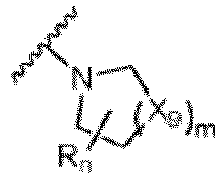 wobei X9 aus O, S, NRb or C(R)2 ausgewählt ist;m 0, 1 oder 2 ist;n 0, 1, 2, 3, 4, 5 oder 6 ist;Ra unabhängig aus Wasserstoff, Halogen, Nitril, Nitro, Hydroxy, -NH2, -NHC1-6-Alkyl, -N(C1-6-Alkyl)2, C1-6-Alkyl, C1-6-Halogenalkyl oder C1-6-Alkoxyl ausgewählt ist;Rb unabhängig aus Wasserstoff, C1-6-Alkyl oder C1-6-Halogenalkyl ausgewählt ist;R1a, R2a und R unabhängig aus Wasserstoff, Halogen, Hydroxy, -NH2, -NHC1-6-Alkyl, -N(C1-6-Alkyl)2, C1-6-Alkyl, C1-6-Halogenalkyl, C1-6-Alkoxyl, C3-7-Cycloalkyl, C3-7-Heterocyclyl, C6-10-Aryl oder C5-10-Heteroaryl ausgewählt sind;oder zwei R-Gruppen auf denselben oder benachbarten Atomen zusammen C3-7-Cycloalkyl, C3-7-Heterocyclyl, C6-10-Aryl oder C5-10-Heteroaryl ausbilden können.
 - Verbindung nach Anspruch 1, die Formel (la) ist, oder ein pharmazeutisch unbedenkliches Salz, ein Stereoisomer, ein Solvat oder ein Hydrat davon:

- Verbindung nach einem der Ansprüche 1 bis 2 oder ein pharmazeutisch unbedenkliches Salz, ein Stereoisomer, ein Solvat oder ein Hydrat davon, wobei:
Het
oder Het ausgewählt ist aus den folgenden Gruppen, die wahlweise durch ein, zwei, drei oder mehr R substituiert sind:



- Verbindung nach einem der Ansprüche 1 bis 3, die Formel (Ib) ist, oder ein pharmazeutisch unbedenkliches Salz, ein Stereoisomer, ein Solvat oder ein Hydrat davon:

Ar ausgewählt ist aus den folgenden Gruppen, die wahlweise durch ein oder zwei R substituiert sind:
- Verbindung nach einem der Ansprüche 1 bis 3, die Formel (Ib) ist, oder ein pharmazeutisch unbedenkliches Salz, ein Stereoisomer, ein Solvat oder ein Hydrat davon:

Ar ausgewählt ist aus den folgenden Gruppen, die wahlweise durch ein oder zwei R substituiert sind:

- Verbindung nach einem der Ansprüche 1 bis 3, die Formel (Ib) ist, oder ein pharmazeutisch unbedenkliches Salz, ein Stereoisomer, ein Solvat oder ein Hydrat davon:

Ar ausgewählt ist aus den folgenden Gruppen, die wahlweise durch ein oder zwei R substituiert sind: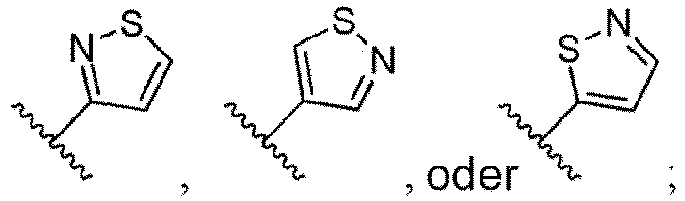
- Verbindung nach einem der Ansprüche 1 bis 3, die Formel (Ib) ist, oder ein pharmazeutisch unbedenkliches Salz, ein Stereoisomer, ein Solvat oder ein Hydrat davon:

Ar ausgewählt ist aus den folgenden Gruppen, die wahlweise durch ein oder zwei R substituiert sind:
- Verbindung nach Anspruch 1
oder ein pharmazeutisch unbedenkliches Salz, ein Stereoisomer, ein Solvat oder ein Hydrat davon, wobei die Verbindung ausgewählt ist aus:


- Verbindung nach Anspruch 1, die

oder ein pharmazeutisch unbedenkliches Salz davon. - Verbindung nach Anspruch 1, die

oder ein pharmazeutisch unbedenkliches Salz davon. - Verbindung nach Anspruch 1, die

oder ein pharmazeutisch unbedenkliches Salz davon. - Verbindung nach Anspruch 1, die

oder ein pharmazeutisch unbedenkliches Salz davon. - Pharmazeutische Zusammensetzung, umfassend:die Verbindung nach einem der Ansprüche 1 bis 12 oder ein pharmazeutisch unbedenkliches Salz, ein Stereoisomer, ein Solvat oder ein Hydrat davon undpharmazeutisch unbedenkliche Hilfsstoffe.
- Kit, umfassend
einen ersten Behälter, der die Verbindung nach einem der Ansprüche 1 bis 12 oder ein pharmazeutisch unbedenkliches Salz, ein Stereoisomer, ein Solvat oder ein Hydrat davon umfasst; und wahlweise einen zweiten Behälter, der andere therapeutische Mittel umfasst; und wahlweise einen dritten Behälter, der pharmazeutisch unbedenkliche Hilfsstoffe zum Verdünnen oder Suspendieren der Verbindung und/oder anderer therapeutischer Mittel umfasst. - Verbindung nach einem der Ansprüche 1 bis 12 oder ein pharmazeutisch unbedenkliches Salz, ein Stereoisomer, ein Solvat oder ein Hydrat davon oder eine pharmazeutische Zusammensetzung nach Anspruch 13 zur Verwendung bei der Behandlung und/oder Vorbeugung von Bcr-Abl-vermittelten Erkrankungen; vorzugsweise
wobei die Bcr-Abl-vermittelten Erkrankungen eine proliferative Erkrankung sind, die ausgewählt ist aus: solidem Tumor, Sarkom, akuter lymphozytischer Leukämie, akuter myeloischer Leukämie, chronischer lymphozytischer Leukämie, chronischer myeloischer Leukämie, gastrointestinalen Stromatumoren, Schilddrüsenkrebs, Magenkrebs, Rektalkrebs, multiplem Myelom, Neoplasie und anderer proliferativer Erkrankung oder anderen proliferativen Erkrankungen; oder die Bcr-Abl-vermittelten Erkrankungen metastatischer invasiver Krebs, Virusinfektion oder ZNS-Erkrankungen sind.
Applications Claiming Priority (2)
| Application Number | Priority Date | Filing Date | Title |
|---|---|---|---|
| CN201710044900 | 2017-01-20 | ||
| PCT/CN2018/073338 WO2018133826A1 (zh) | 2017-01-20 | 2018-01-19 | 用于抑制蛋白激酶活性的(杂)芳基酰胺类化合物 |
Publications (3)
| Publication Number | Publication Date |
|---|---|
| EP3553057A1 EP3553057A1 (de) | 2019-10-16 |
| EP3553057A4 EP3553057A4 (de) | 2019-12-18 |
| EP3553057B1 true EP3553057B1 (de) | 2022-10-26 |
Family
ID=62908912
Family Applications (1)
| Application Number | Title | Priority Date | Filing Date |
|---|---|---|---|
| EP18741350.5A Active EP3553057B1 (de) | 2017-01-20 | 2018-01-19 | (hetero)arylamidverbindung zur hemmung der proteinkinaseaktivität |
Country Status (5)
| Country | Link |
|---|---|
| US (2) | US10875853B2 (de) |
| EP (1) | EP3553057B1 (de) |
| JP (1) | JP6778833B2 (de) |
| CN (2) | CN110724139B (de) |
| WO (1) | WO2018133826A1 (de) |
Families Citing this family (9)
| Publication number | Priority date | Publication date | Assignee | Title |
|---|---|---|---|---|
| JP6778833B2 (ja) | 2017-01-20 | 2020-11-04 | 深▲チェン▼市塔吉瑞生物医薬有限公司Shenzhen TargetRx, Inc. | キナーゼ活性を抑制するための(ヘテロ)アリールアミド類化合物 |
| CN108602800B (zh) * | 2017-01-20 | 2019-08-27 | 深圳市塔吉瑞生物医药有限公司 | 用于抑制蛋白激酶活性的(杂)芳基酰胺类化合物 |
| WO2019154252A1 (zh) * | 2018-02-07 | 2019-08-15 | 深圳市塔吉瑞生物医药有限公司 | 取代的烟酰胺类化合物及药物组合物及其用途 |
| NZ773110A (en) | 2018-09-18 | 2024-11-29 | Terns Inc | Compounds for treating certain leukemias |
| WO2021143927A1 (zh) * | 2020-01-19 | 2021-07-22 | 正大天晴药业集团股份有限公司 | 作为bcr-abl抑制剂的化合物 |
| EP4349829A4 (de) * | 2021-05-28 | 2025-12-10 | Chia Tai Tianqing Pharmaceutical Group Co Ltd | Verbindung als bcr-abl-hemmer |
| CN114149409B (zh) * | 2021-11-16 | 2024-03-22 | 中国药科大学 | 一种具有蛋白激酶抑制活性的(杂)芳基酰胺类化合物 |
| CN116135851B (zh) * | 2021-11-17 | 2025-09-23 | 武汉众诚康健生物医药科技有限公司 | 一种芳香胺化合物及其应用 |
| CN115109048B (zh) * | 2022-08-10 | 2023-12-08 | 中国药科大学 | 一种(杂)芳基酰胺类化合物 |
Family Cites Families (8)
| Publication number | Priority date | Publication date | Assignee | Title |
|---|---|---|---|---|
| US5376645A (en) | 1990-01-23 | 1994-12-27 | University Of Kansas | Derivatives of cyclodextrins exhibiting enhanced aqueous solubility and the use thereof |
| CN100343237C (zh) * | 2002-06-28 | 2007-10-17 | 日本新药株式会社 | 酰胺衍生物及医药品 |
| AU2007305016B2 (en) * | 2006-10-02 | 2011-11-03 | Novartis Ag | Compounds and compositions as protein kinase inhibitors |
| WO2013171640A1 (en) * | 2012-05-15 | 2013-11-21 | Novartis Ag | Benzamide derivatives for inhibiting the activity of abl1, abl2 and bcr-abl1 |
| MX357305B (es) | 2012-05-15 | 2018-07-04 | Novartis Ag | Compuestos y composiciones para inhibir la actividad de abl-1, abl-2, y bcr-abl1. |
| KR20150008406A (ko) | 2012-05-15 | 2015-01-22 | 노파르티스 아게 | Abl1, abl2 및 bcr-abl1의 활성을 억제하기 위한 벤즈아미드 유도체 |
| WO2015106292A1 (en) * | 2014-01-13 | 2015-07-16 | Coferon, Inc. | Bcr-abl tyrosine-kinase ligands capable of dimerizing in an aqueous solution, and methods of using same |
| JP6778833B2 (ja) | 2017-01-20 | 2020-11-04 | 深▲チェン▼市塔吉瑞生物医薬有限公司Shenzhen TargetRx, Inc. | キナーゼ活性を抑制するための(ヘテロ)アリールアミド類化合物 |
-
2018
- 2018-01-19 JP JP2019560439A patent/JP6778833B2/ja active Active
- 2018-01-19 CN CN201911104181.1A patent/CN110724139B/zh active Active
- 2018-01-19 EP EP18741350.5A patent/EP3553057B1/de active Active
- 2018-01-19 CN CN201880000978.4A patent/CN108699039B/zh active Active
- 2018-01-19 US US16/479,271 patent/US10875853B2/en active Active
- 2018-01-19 WO PCT/CN2018/073338 patent/WO2018133826A1/zh not_active Ceased
-
2020
- 2020-11-16 US US17/098,675 patent/US11319317B2/en active Active
Also Published As
| Publication number | Publication date |
|---|---|
| US20210171517A1 (en) | 2021-06-10 |
| US10875853B2 (en) | 2020-12-29 |
| EP3553057A1 (de) | 2019-10-16 |
| JP2020506964A (ja) | 2020-03-05 |
| CN108699039A (zh) | 2018-10-23 |
| JP6778833B2 (ja) | 2020-11-04 |
| CN110724139B (zh) | 2021-05-18 |
| WO2018133826A1 (zh) | 2018-07-26 |
| US11319317B2 (en) | 2022-05-03 |
| EP3553057A4 (de) | 2019-12-18 |
| CN110724139A (zh) | 2020-01-24 |
| CN108699039B (zh) | 2019-12-20 |
| US20190375745A1 (en) | 2019-12-12 |
Similar Documents
| Publication | Publication Date | Title |
|---|---|---|
| US11319317B2 (en) | (Hetero)arylamide compound for inhibiting protein kinase activity | |
| EP3553056B1 (de) | (hetero)arylamidverbindung zur hemmung der proteinkinaseaktivität | |
| WO2021219091A2 (zh) | 喹喔啉酮衍生物作为kras g12c突变蛋白的不可逆抑制剂 | |
| EP3782998B1 (de) | Substituierte pyrrolotriazinverbindung, pharmazeutische zusammensetzung damit und ihre verwendung | |
| EP4043465A1 (de) | Substituiertes aromatisches kondensiertes ringderivat, diese enthaltende zusammensetzung und deren verwendung | |
| BR112016018384B1 (pt) | Compostos farmacêuticos e composição farmacêutica dos mesmos | |
| WO2019154252A1 (zh) | 取代的烟酰胺类化合物及药物组合物及其用途 | |
| WO2023216910A1 (zh) | 取代的双环杂芳基化合物作为usp1抑制剂 | |
| US20220098204A1 (en) | Substituted fused aromatic ring derivative, composition and use thereof | |
| CN117402142A (zh) | 用于抑制蛋白激酶活性的(杂)芳基酰胺类化合物 | |
| CN111518082A (zh) | 一种氨基嘧啶类化合物及包含该化合物的组合物及其用途 | |
| CN114149409B (zh) | 一种具有蛋白激酶抑制活性的(杂)芳基酰胺类化合物 | |
| WO2017097113A1 (zh) | 用于抑制蛋白酪氨酸激酶活性的氨基嘧啶类化合物 | |
| CN114874189A (zh) | 取代的杂芳基衍生物及其组合物及用途 | |
| US12312329B2 (en) | Aminopyrimidine compound used for inhibiting activity of protein kinase | |
| HK40068410A (en) | Chronic kidney disease treatment or prevention method |
Legal Events
| Date | Code | Title | Description |
|---|---|---|---|
| STAA | Information on the status of an ep patent application or granted ep patent |
Free format text: STATUS: THE INTERNATIONAL PUBLICATION HAS BEEN MADE |
|
| PUAI | Public reference made under article 153(3) epc to a published international application that has entered the european phase |
Free format text: ORIGINAL CODE: 0009012 |
|
| STAA | Information on the status of an ep patent application or granted ep patent |
Free format text: STATUS: REQUEST FOR EXAMINATION WAS MADE |
|
| 17P | Request for examination filed |
Effective date: 20190710 |
|
| AK | Designated contracting states |
Kind code of ref document: A1 Designated state(s): AL AT BE BG CH CY CZ DE DK EE ES FI FR GB GR HR HU IE IS IT LI LT LU LV MC MK MT NL NO PL PT RO RS SE SI SK SM TR |
|
| AX | Request for extension of the european patent |
Extension state: BA ME |
|
| A4 | Supplementary search report drawn up and despatched |
Effective date: 20191118 |
|
| RIC1 | Information provided on ipc code assigned before grant |
Ipc: A61P 35/00 20060101ALI20191112BHEP Ipc: A61K 31/444 20060101ALI20191112BHEP Ipc: A61P 31/00 20060101ALI20191112BHEP Ipc: A61K 31/4436 20060101ALI20191112BHEP Ipc: A61K 31/4439 20060101ALI20191112BHEP Ipc: C07D 417/14 20060101ALI20191112BHEP Ipc: C07D 401/14 20060101AFI20191112BHEP |
|
| STAA | Information on the status of an ep patent application or granted ep patent |
Free format text: STATUS: EXAMINATION IS IN PROGRESS |
|
| 17Q | First examination report despatched |
Effective date: 20200313 |
|
| DAV | Request for validation of the european patent (deleted) | ||
| DAX | Request for extension of the european patent (deleted) | ||
| RAP1 | Party data changed (applicant data changed or rights of an application transferred) |
Owner name: SHENZHEN TARGETRX, INC. |
|
| RIN1 | Information on inventor provided before grant (corrected) |
Inventor name: ZHAO, JIUYANG Inventor name: AL, YIXIN Inventor name: WANG, YIHAN |
|
| GRAP | Despatch of communication of intention to grant a patent |
Free format text: ORIGINAL CODE: EPIDOSNIGR1 |
|
| STAA | Information on the status of an ep patent application or granted ep patent |
Free format text: STATUS: GRANT OF PATENT IS INTENDED |
|
| INTG | Intention to grant announced |
Effective date: 20220516 |
|
| GRAS | Grant fee paid |
Free format text: ORIGINAL CODE: EPIDOSNIGR3 |
|
| GRAA | (expected) grant |
Free format text: ORIGINAL CODE: 0009210 |
|
| STAA | Information on the status of an ep patent application or granted ep patent |
Free format text: STATUS: THE PATENT HAS BEEN GRANTED |
|
| AK | Designated contracting states |
Kind code of ref document: B1 Designated state(s): AL AT BE BG CH CY CZ DE DK EE ES FI FR GB GR HR HU IE IS IT LI LT LU LV MC MK MT NL NO PL PT RO RS SE SI SK SM TR |
|
| REG | Reference to a national code |
Ref country code: GB Ref legal event code: FG4D |
|
| REG | Reference to a national code |
Ref country code: CH Ref legal event code: EP |
|
| REG | Reference to a national code |
Ref country code: AT Ref legal event code: REF Ref document number: 1526972 Country of ref document: AT Kind code of ref document: T Effective date: 20221115 |
|
| REG | Reference to a national code |
Ref country code: DE Ref legal event code: R096 Ref document number: 602018042254 Country of ref document: DE |
|
| REG | Reference to a national code |
Ref country code: IE Ref legal event code: FG4D |
|
| REG | Reference to a national code |
Ref country code: LT Ref legal event code: MG9D |
|
| REG | Reference to a national code |
Ref country code: NL Ref legal event code: MP Effective date: 20221026 |
|
| REG | Reference to a national code |
Ref country code: AT Ref legal event code: MK05 Ref document number: 1526972 Country of ref document: AT Kind code of ref document: T Effective date: 20221026 |
|
| PG25 | Lapsed in a contracting state [announced via postgrant information from national office to epo] |
Ref country code: NL Free format text: LAPSE BECAUSE OF FAILURE TO SUBMIT A TRANSLATION OF THE DESCRIPTION OR TO PAY THE FEE WITHIN THE PRESCRIBED TIME-LIMIT Effective date: 20221026 |
|
| PG25 | Lapsed in a contracting state [announced via postgrant information from national office to epo] |
Ref country code: SE Free format text: LAPSE BECAUSE OF FAILURE TO SUBMIT A TRANSLATION OF THE DESCRIPTION OR TO PAY THE FEE WITHIN THE PRESCRIBED TIME-LIMIT Effective date: 20221026 Ref country code: PT Free format text: LAPSE BECAUSE OF FAILURE TO SUBMIT A TRANSLATION OF THE DESCRIPTION OR TO PAY THE FEE WITHIN THE PRESCRIBED TIME-LIMIT Effective date: 20230227 Ref country code: NO Free format text: LAPSE BECAUSE OF FAILURE TO SUBMIT A TRANSLATION OF THE DESCRIPTION OR TO PAY THE FEE WITHIN THE PRESCRIBED TIME-LIMIT Effective date: 20230126 Ref country code: LT Free format text: LAPSE BECAUSE OF FAILURE TO SUBMIT A TRANSLATION OF THE DESCRIPTION OR TO PAY THE FEE WITHIN THE PRESCRIBED TIME-LIMIT Effective date: 20221026 Ref country code: FI Free format text: LAPSE BECAUSE OF FAILURE TO SUBMIT A TRANSLATION OF THE DESCRIPTION OR TO PAY THE FEE WITHIN THE PRESCRIBED TIME-LIMIT Effective date: 20221026 Ref country code: ES Free format text: LAPSE BECAUSE OF FAILURE TO SUBMIT A TRANSLATION OF THE DESCRIPTION OR TO PAY THE FEE WITHIN THE PRESCRIBED TIME-LIMIT Effective date: 20221026 Ref country code: AT Free format text: LAPSE BECAUSE OF FAILURE TO SUBMIT A TRANSLATION OF THE DESCRIPTION OR TO PAY THE FEE WITHIN THE PRESCRIBED TIME-LIMIT Effective date: 20221026 |
|
| PG25 | Lapsed in a contracting state [announced via postgrant information from national office to epo] |
Ref country code: RS Free format text: LAPSE BECAUSE OF FAILURE TO SUBMIT A TRANSLATION OF THE DESCRIPTION OR TO PAY THE FEE WITHIN THE PRESCRIBED TIME-LIMIT Effective date: 20221026 Ref country code: PL Free format text: LAPSE BECAUSE OF FAILURE TO SUBMIT A TRANSLATION OF THE DESCRIPTION OR TO PAY THE FEE WITHIN THE PRESCRIBED TIME-LIMIT Effective date: 20221026 Ref country code: LV Free format text: LAPSE BECAUSE OF FAILURE TO SUBMIT A TRANSLATION OF THE DESCRIPTION OR TO PAY THE FEE WITHIN THE PRESCRIBED TIME-LIMIT Effective date: 20221026 Ref country code: IS Free format text: LAPSE BECAUSE OF FAILURE TO SUBMIT A TRANSLATION OF THE DESCRIPTION OR TO PAY THE FEE WITHIN THE PRESCRIBED TIME-LIMIT Effective date: 20230226 Ref country code: HR Free format text: LAPSE BECAUSE OF FAILURE TO SUBMIT A TRANSLATION OF THE DESCRIPTION OR TO PAY THE FEE WITHIN THE PRESCRIBED TIME-LIMIT Effective date: 20221026 Ref country code: GR Free format text: LAPSE BECAUSE OF FAILURE TO SUBMIT A TRANSLATION OF THE DESCRIPTION OR TO PAY THE FEE WITHIN THE PRESCRIBED TIME-LIMIT Effective date: 20230127 |
|
| P01 | Opt-out of the competence of the unified patent court (upc) registered |
Effective date: 20230530 |
|
| REG | Reference to a national code |
Ref country code: DE Ref legal event code: R097 Ref document number: 602018042254 Country of ref document: DE |
|
| PG25 | Lapsed in a contracting state [announced via postgrant information from national office to epo] |
Ref country code: SM Free format text: LAPSE BECAUSE OF FAILURE TO SUBMIT A TRANSLATION OF THE DESCRIPTION OR TO PAY THE FEE WITHIN THE PRESCRIBED TIME-LIMIT Effective date: 20221026 Ref country code: RO Free format text: LAPSE BECAUSE OF FAILURE TO SUBMIT A TRANSLATION OF THE DESCRIPTION OR TO PAY THE FEE WITHIN THE PRESCRIBED TIME-LIMIT Effective date: 20221026 Ref country code: EE Free format text: LAPSE BECAUSE OF FAILURE TO SUBMIT A TRANSLATION OF THE DESCRIPTION OR TO PAY THE FEE WITHIN THE PRESCRIBED TIME-LIMIT Effective date: 20221026 Ref country code: DK Free format text: LAPSE BECAUSE OF FAILURE TO SUBMIT A TRANSLATION OF THE DESCRIPTION OR TO PAY THE FEE WITHIN THE PRESCRIBED TIME-LIMIT Effective date: 20221026 Ref country code: CZ Free format text: LAPSE BECAUSE OF FAILURE TO SUBMIT A TRANSLATION OF THE DESCRIPTION OR TO PAY THE FEE WITHIN THE PRESCRIBED TIME-LIMIT Effective date: 20221026 |
|
| PG25 | Lapsed in a contracting state [announced via postgrant information from national office to epo] |
Ref country code: SK Free format text: LAPSE BECAUSE OF FAILURE TO SUBMIT A TRANSLATION OF THE DESCRIPTION OR TO PAY THE FEE WITHIN THE PRESCRIBED TIME-LIMIT Effective date: 20221026 Ref country code: AL Free format text: LAPSE BECAUSE OF FAILURE TO SUBMIT A TRANSLATION OF THE DESCRIPTION OR TO PAY THE FEE WITHIN THE PRESCRIBED TIME-LIMIT Effective date: 20221026 |
|
| REG | Reference to a national code |
Ref country code: CH Ref legal event code: PL |
|
| PLBE | No opposition filed within time limit |
Free format text: ORIGINAL CODE: 0009261 |
|
| STAA | Information on the status of an ep patent application or granted ep patent |
Free format text: STATUS: NO OPPOSITION FILED WITHIN TIME LIMIT |
|
| PG25 | Lapsed in a contracting state [announced via postgrant information from national office to epo] |
Ref country code: LU Free format text: LAPSE BECAUSE OF NON-PAYMENT OF DUE FEES Effective date: 20230119 |
|
| REG | Reference to a national code |
Ref country code: BE Ref legal event code: MM Effective date: 20230131 |
|
| 26N | No opposition filed |
Effective date: 20230727 |
|
| PG25 | Lapsed in a contracting state [announced via postgrant information from national office to epo] |
Ref country code: LI Free format text: LAPSE BECAUSE OF NON-PAYMENT OF DUE FEES Effective date: 20230131 Ref country code: CH Free format text: LAPSE BECAUSE OF NON-PAYMENT OF DUE FEES Effective date: 20230131 |
|
| PG25 | Lapsed in a contracting state [announced via postgrant information from national office to epo] |
Ref country code: SI Free format text: LAPSE BECAUSE OF FAILURE TO SUBMIT A TRANSLATION OF THE DESCRIPTION OR TO PAY THE FEE WITHIN THE PRESCRIBED TIME-LIMIT Effective date: 20221026 Ref country code: BE Free format text: LAPSE BECAUSE OF NON-PAYMENT OF DUE FEES Effective date: 20230131 |
|
| PG25 | Lapsed in a contracting state [announced via postgrant information from national office to epo] |
Ref country code: IE Free format text: LAPSE BECAUSE OF NON-PAYMENT OF DUE FEES Effective date: 20230119 |
|
| PG25 | Lapsed in a contracting state [announced via postgrant information from national office to epo] |
Ref country code: IT Free format text: LAPSE BECAUSE OF FAILURE TO SUBMIT A TRANSLATION OF THE DESCRIPTION OR TO PAY THE FEE WITHIN THE PRESCRIBED TIME-LIMIT Effective date: 20221026 |
|
| PG25 | Lapsed in a contracting state [announced via postgrant information from national office to epo] |
Ref country code: MC Free format text: LAPSE BECAUSE OF FAILURE TO SUBMIT A TRANSLATION OF THE DESCRIPTION OR TO PAY THE FEE WITHIN THE PRESCRIBED TIME-LIMIT Effective date: 20221026 |
|
| PG25 | Lapsed in a contracting state [announced via postgrant information from national office to epo] |
Ref country code: MC Free format text: LAPSE BECAUSE OF FAILURE TO SUBMIT A TRANSLATION OF THE DESCRIPTION OR TO PAY THE FEE WITHIN THE PRESCRIBED TIME-LIMIT Effective date: 20221026 |
|
| PG25 | Lapsed in a contracting state [announced via postgrant information from national office to epo] |
Ref country code: BG Free format text: LAPSE BECAUSE OF FAILURE TO SUBMIT A TRANSLATION OF THE DESCRIPTION OR TO PAY THE FEE WITHIN THE PRESCRIBED TIME-LIMIT Effective date: 20221026 |
|
| PG25 | Lapsed in a contracting state [announced via postgrant information from national office to epo] |
Ref country code: BG Free format text: LAPSE BECAUSE OF FAILURE TO SUBMIT A TRANSLATION OF THE DESCRIPTION OR TO PAY THE FEE WITHIN THE PRESCRIBED TIME-LIMIT Effective date: 20221026 |
|
| PG25 | Lapsed in a contracting state [announced via postgrant information from national office to epo] |
Ref country code: CY Free format text: LAPSE BECAUSE OF FAILURE TO SUBMIT A TRANSLATION OF THE DESCRIPTION OR TO PAY THE FEE WITHIN THE PRESCRIBED TIME-LIMIT; INVALID AB INITIO Effective date: 20180119 |
|
| PG25 | Lapsed in a contracting state [announced via postgrant information from national office to epo] |
Ref country code: HU Free format text: LAPSE BECAUSE OF FAILURE TO SUBMIT A TRANSLATION OF THE DESCRIPTION OR TO PAY THE FEE WITHIN THE PRESCRIBED TIME-LIMIT; INVALID AB INITIO Effective date: 20180119 |
|
| PG25 | Lapsed in a contracting state [announced via postgrant information from national office to epo] |
Ref country code: TR Free format text: LAPSE BECAUSE OF FAILURE TO SUBMIT A TRANSLATION OF THE DESCRIPTION OR TO PAY THE FEE WITHIN THE PRESCRIBED TIME-LIMIT Effective date: 20221026 |
|
| PGFP | Annual fee paid to national office [announced via postgrant information from national office to epo] |
Ref country code: GB Payment date: 20251204 Year of fee payment: 9 |
|
| PGFP | Annual fee paid to national office [announced via postgrant information from national office to epo] |
Ref country code: FR Payment date: 20251208 Year of fee payment: 9 |
|
| PGFP | Annual fee paid to national office [announced via postgrant information from national office to epo] |
Ref country code: DE Payment date: 20251210 Year of fee payment: 9 |