EP3552666B1 - Glitter enthaltend celluloseacetat - Google Patents
Glitter enthaltend celluloseacetat Download PDFInfo
- Publication number
- EP3552666B1 EP3552666B1 EP19166454.9A EP19166454A EP3552666B1 EP 3552666 B1 EP3552666 B1 EP 3552666B1 EP 19166454 A EP19166454 A EP 19166454A EP 3552666 B1 EP3552666 B1 EP 3552666B1
- Authority
- EP
- European Patent Office
- Prior art keywords
- glitter
- film
- cellulose acetate
- weight
- cellulose
- Prior art date
- Legal status (The legal status is an assumption and is not a legal conclusion. Google has not performed a legal analysis and makes no representation as to the accuracy of the status listed.)
- Active
Links
Images
Classifications
-
- A—HUMAN NECESSITIES
- A61—MEDICAL OR VETERINARY SCIENCE; HYGIENE
- A61Q—SPECIFIC USE OF COSMETICS OR SIMILAR TOILETRY PREPARATIONS
- A61Q1/00—Make-up preparations; Body powders; Preparations for removing make-up
- A61Q1/02—Preparations containing skin colorants, e.g. pigments
-
- A—HUMAN NECESSITIES
- A61—MEDICAL OR VETERINARY SCIENCE; HYGIENE
- A61K—PREPARATIONS FOR MEDICAL, DENTAL OR TOILETRY PURPOSES
- A61K8/00—Cosmetics or similar toiletry preparations
- A61K8/18—Cosmetics or similar toiletry preparations characterised by the composition
- A61K8/72—Cosmetics or similar toiletry preparations characterised by the composition containing organic macromolecular compounds
- A61K8/73—Polysaccharides
- A61K8/731—Cellulose; Quaternized cellulose derivatives
-
- A—HUMAN NECESSITIES
- A61—MEDICAL OR VETERINARY SCIENCE; HYGIENE
- A61K—PREPARATIONS FOR MEDICAL, DENTAL OR TOILETRY PURPOSES
- A61K8/00—Cosmetics or similar toiletry preparations
- A61K8/02—Cosmetics or similar toiletry preparations characterised by special physical form
- A61K8/0241—Containing particulates characterized by their shape and/or structure
- A61K8/0254—Platelets; Flakes
- A61K8/0258—Layered structure
-
- A—HUMAN NECESSITIES
- A61—MEDICAL OR VETERINARY SCIENCE; HYGIENE
- A61K—PREPARATIONS FOR MEDICAL, DENTAL OR TOILETRY PURPOSES
- A61K8/00—Cosmetics or similar toiletry preparations
- A61K8/18—Cosmetics or similar toiletry preparations characterised by the composition
- A61K8/19—Cosmetics or similar toiletry preparations characterised by the composition containing inorganic ingredients
- A61K8/26—Aluminium; Compounds thereof
-
- A—HUMAN NECESSITIES
- A61—MEDICAL OR VETERINARY SCIENCE; HYGIENE
- A61K—PREPARATIONS FOR MEDICAL, DENTAL OR TOILETRY PURPOSES
- A61K8/00—Cosmetics or similar toiletry preparations
- A61K8/18—Cosmetics or similar toiletry preparations characterised by the composition
- A61K8/72—Cosmetics or similar toiletry preparations characterised by the composition containing organic macromolecular compounds
- A61K8/84—Cosmetics or similar toiletry preparations characterised by the composition containing organic macromolecular compounds obtained by reactions otherwise than those involving only carbon-carbon unsaturated bonds
- A61K8/85—Polyesters
-
- A—HUMAN NECESSITIES
- A61—MEDICAL OR VETERINARY SCIENCE; HYGIENE
- A61Q—SPECIFIC USE OF COSMETICS OR SIMILAR TOILETRY PREPARATIONS
- A61Q1/00—Make-up preparations; Body powders; Preparations for removing make-up
- A61Q1/02—Preparations containing skin colorants, e.g. pigments
- A61Q1/04—Preparations containing skin colorants, e.g. pigments for lips
-
- A—HUMAN NECESSITIES
- A61—MEDICAL OR VETERINARY SCIENCE; HYGIENE
- A61Q—SPECIFIC USE OF COSMETICS OR SIMILAR TOILETRY PREPARATIONS
- A61Q1/00—Make-up preparations; Body powders; Preparations for removing make-up
- A61Q1/02—Preparations containing skin colorants, e.g. pigments
- A61Q1/10—Preparations containing skin colorants, e.g. pigments for eyes, e.g. eyeliner, mascara
-
- A—HUMAN NECESSITIES
- A61—MEDICAL OR VETERINARY SCIENCE; HYGIENE
- A61Q—SPECIFIC USE OF COSMETICS OR SIMILAR TOILETRY PREPARATIONS
- A61Q1/00—Make-up preparations; Body powders; Preparations for removing make-up
- A61Q1/12—Face or body powders for grooming, adorning or absorbing
-
- A—HUMAN NECESSITIES
- A61—MEDICAL OR VETERINARY SCIENCE; HYGIENE
- A61Q—SPECIFIC USE OF COSMETICS OR SIMILAR TOILETRY PREPARATIONS
- A61Q19/00—Preparations for care of the skin
-
- A—HUMAN NECESSITIES
- A61—MEDICAL OR VETERINARY SCIENCE; HYGIENE
- A61Q—SPECIFIC USE OF COSMETICS OR SIMILAR TOILETRY PREPARATIONS
- A61Q19/00—Preparations for care of the skin
- A61Q19/001—Preparations for care of the lips
-
- B—PERFORMING OPERATIONS; TRANSPORTING
- B32—LAYERED PRODUCTS
- B32B—LAYERED PRODUCTS, i.e. PRODUCTS BUILT-UP OF STRATA OF FLAT OR NON-FLAT, e.g. CELLULAR OR HONEYCOMB, FORM
- B32B15/00—Layered products comprising a layer of metal
- B32B15/04—Layered products comprising a layer of metal comprising metal as the main or only constituent of a layer, which is next to another layer of the same or of a different material
-
- B—PERFORMING OPERATIONS; TRANSPORTING
- B32—LAYERED PRODUCTS
- B32B—LAYERED PRODUCTS, i.e. PRODUCTS BUILT-UP OF STRATA OF FLAT OR NON-FLAT, e.g. CELLULAR OR HONEYCOMB, FORM
- B32B15/00—Layered products comprising a layer of metal
- B32B15/04—Layered products comprising a layer of metal comprising metal as the main or only constituent of a layer, which is next to another layer of the same or of a different material
- B32B15/08—Layered products comprising a layer of metal comprising metal as the main or only constituent of a layer, which is next to another layer of the same or of a different material of synthetic resin
-
- C—CHEMISTRY; METALLURGY
- C09—DYES; PAINTS; POLISHES; NATURAL RESINS; ADHESIVES; COMPOSITIONS NOT OTHERWISE PROVIDED FOR; APPLICATIONS OF MATERIALS NOT OTHERWISE PROVIDED FOR
- C09C—TREATMENT OF INORGANIC MATERIALS, OTHER THAN FIBROUS FILLERS, TO ENHANCE THEIR PIGMENTING OR FILLING PROPERTIES ; PREPARATION OF CARBON BLACK ; PREPARATION OF INORGANIC MATERIALS WHICH ARE NO SINGLE CHEMICAL COMPOUNDS AND WHICH ARE MAINLY USED AS PIGMENTS OR FILLERS
- C09C1/00—Treatment of specific inorganic materials other than fibrous fillers; Preparation of carbon black
-
- A—HUMAN NECESSITIES
- A61—MEDICAL OR VETERINARY SCIENCE; HYGIENE
- A61K—PREPARATIONS FOR MEDICAL, DENTAL OR TOILETRY PURPOSES
- A61K2800/00—Properties of cosmetic compositions or active ingredients thereof or formulation aids used therein and process related aspects
- A61K2800/40—Chemical, physico-chemical or functional or structural properties of particular ingredients
- A61K2800/42—Colour properties
-
- A—HUMAN NECESSITIES
- A61—MEDICAL OR VETERINARY SCIENCE; HYGIENE
- A61K—PREPARATIONS FOR MEDICAL, DENTAL OR TOILETRY PURPOSES
- A61K2800/00—Properties of cosmetic compositions or active ingredients thereof or formulation aids used therein and process related aspects
- A61K2800/40—Chemical, physico-chemical or functional or structural properties of particular ingredients
- A61K2800/60—Particulates further characterized by their structure or composition
- A61K2800/61—Surface treated
- A61K2800/62—Coated
- A61K2800/624—Coated by macromolecular compounds
Definitions
- the present invention relates to glitter, comprising a film that comprises cellulose acetate, the film comprising at least 60% by weight of cellulose acetate, based on the weight of the film, the glitter also being coated with a metal, its use in cosmetic products as well as cosmetic Products that include the glitter.
- Glitter is widely used to create a glittering surface effect and is used, among other things, in particular in cosmetic articles.
- Foils or films made of plastic are used to produce such glitter, which are cut into individual, comparatively small particles by means of a cutting process.
- films made from polyethylene terephthalate are mainly used for the production of glitter.
- the invention is therefore based on the object of providing glitter which has improved gloss effects and an improved skin feeling.
- a further object of the invention is to provide glitter which has better surface coverage (covering power) and which can be used in cosmetic products because of their good compatibility.
- foils based on polyethylene terephthalate have mainly been used for the production of glitter. It has surprisingly been shown that the object of the invention, ie to provide glitter with an improved gloss effect and improved skin feeling, and glitter with improved surface coverage (opacity), can be achieved by using films based on cellulose acetate, such as described in the claims.
- the present invention thus relates to glitter comprising a film based on cellulose acetate.
- the invention also relates to the use of glitter in cosmetic formulations.
- the present invention is directed to glitter comprising a film comprising cellulose acetate, strictly as defined in claim 1.
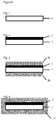
- Figures 1 to 4 show schematically glitter according to the invention.
- Quantities in the context of the present invention relate to% by weight, unless otherwise stated or evident from the context.
- the percentages by weight add up to 100% by weight.
- Glitter are small particles with different shapes.
- they have a size, for example a maximum diameter in a main direction of extent of the particle, of 0.02 mm to 7.0 mm, preferably 0.050 mm to 6.0 mm, for example 0.06 mm to 2.0 mm, e.g. 0, 1 mm to 0.5 mm, for example from 100 ⁇ m to 200 ⁇ m.
- the glitter particles are not particularly limited and can, for example, be in the form of platelets, needles, cuboids, etc., or punched into certain shapes, for example hexagons, squares, circles, ovals, stars, etc.
- the glitter is flat executed, for example as platelets with a wide variety of shapes, e.g.
- the thickness of the platelets preferably being between 4 ⁇ m and 50 ⁇ m, for example between 5 ⁇ m and 45 ⁇ m, e.g. between 10 ⁇ m and 35 ⁇ m, for example between 14 ⁇ m and 23 ⁇ m, and / or the size, for example a maximum diameter in a main direction of extent of the glitter, of 0.02 mm to 7.0 mm, preferably 0.050 mm to 6.0 mm, for example 0.06 mm to 2.0 mm, for example 0.1 mm to 0.5 mm.
- the present invention relates to glitter, comprising a film which comprises cellulose acetate.
- the cellulose acetate is not particularly restricted here, for example with regard to the degree of substitution.
- the film comprises at least 60% by weight of cellulose acetate, preferably more than 60% by weight, more preferably more than 70% by weight, even more preferably more than 80% by weight, and particularly preferably more than 90% by weight, for example more than 95% by weight or even more than 99% by weight, based on the weight of the film.
- additives and / or one or more other polymers such as cellulose, modified cellulose, regenerated cellulose, starch, polylactic acid (PLA), polybutylene adipate terephthalate (PBAT), polybutylene succinate (PBS), thermoplastic starch (TPS), polyhydroxyalkanoate (PHA), etc., in an amount of up to 40% by weight, preferably less than 40% by weight, more preferably less than 30% by weight, even more preferably less than 20% by weight, and particularly preferably less than 10% by weight, for example less than 5% by weight, or even less than 1% by weight, may be present in the film, which are not particularly limited.
- the film can contain glycerol triacetate / glycerol triacetate (triacetin) as an additive according to certain embodiments.
- the mass fraction of glycerol triacetate can preferably be less than 40% by weight, more preferably less than 30% by weight, even more preferably less than 20% by weight, and particularly preferably less than 10% by weight, for example less than 5% by weight. , or even less than 1% by weight, based on the weight of the film.
- the film cannot contain glycerol triacetate either.
- the film can according to certain Embodiments contain additives which can act, for example, as antiblocking and / or sliding aids.
- antiblocking and / or sliding aids are not particularly restricted and can include, for example, amorphous silicas, fatty acid amides and / or talc.
- the amount added for such antiblocking and / or sliding aids can, according to certain embodiments, be o-2.5% by weight, preferably 0-1.5% by weight, more preferably 0-1% by weight, based on the weight of the film.
- the film consists essentially of cellulose acetate or even consists of cellulose acetate, apart from unavoidable impurities.
- the glitter is furthermore coated with a metal, preferably aluminum, silver, gold and / or copper, preferably aluminum.
- the coating can take place on one side, on two opposite sides, on the entire film or in some other way.
- the film or a metal layer for example an aluminum layer
- a coating based on cellulose or modified cellulose preferably based on cellulose nitrate, cellulose acetate butyrate, cellulose acetate propionate and / or cellulose acetate, and / or based on polyurethane -, acrylate, styrene-acrylate and / or epoxy base coated.
- the coating can be present on one side, two opposite sides, on the entire metal layer, for example aluminum layer, the foil and the metal layer, for example aluminum layer, or in some other way.
- Coatings based on cellulose or modified cellulose preferably based on cellulose nitrate, cellulose acetate butyrate, are particularly preferred, Cellulose acetate propionate base and / or cellulose acetate base, in particular cellulose acetate base.
- the glitter according to the invention can also comprise further color and / or effect layers, as they are known to the person skilled in the art and which a person skilled in the art can suitably coat, for example from the gas phase or from liquid / solution.
- the film of the glitter according to the invention has a thickness of 5 ⁇ m or more, preferably more than 10 ⁇ m, more preferably more than 12 ⁇ m, and / or a thickness of 40 ⁇ m or less, for example less than 40 ⁇ m, preferably less than 30 ⁇ m, more preferably less than 28 ⁇ m and particularly preferably less than 25 ⁇ m, for example also less than 20 ⁇ m or even less than 15 ⁇ m.
- the film can also be transparent or essentially transparent, for example with a transmissivity to light in the visible range of 380 to 780 nm, of 70%, or 80%, or 90% or more. According to certain embodiments, the film thus has a transmissivity to light in the wavelength range from 380 to 780 nm of at least 70%, preferably at least 80%, more preferably at least 90%.
- the film can be colored or undyed, but is undyed in accordance with certain embodiments.
- a coloring layer preferably aluminum, or the film and the metal coating, a coloring layer.
- the film has a modulus of elasticity of less than 3000 Nmm -2 , preferably 2000-2500 Nmm -2 , measured in accordance with ASTM D883.
- a glitter comprising a film which has a modulus of elasticity of less than 3000 Nmm -2 , preferably 2000-2500 Nmm -2 , measured in accordance with ASTM D883.
- the film is not limited to this further, second aspect of the invention and can be made of any material, for example cellulose derivatives such as cellulose acetate, polyethylene (PE), polypropylene (PP), PET, cellulose, regenerated cellulose, starch, PLA, and / or comprise or consist of further polymeric materials and / or mixtures thereof.
- This glitter of the second aspect can furthermore have the exemplary configurations mentioned above and given below, the material of the film not being restricted here to one comprising cellulose acetate. Also disclosed is of course also a cosmetic product comprising such a glitter of the second aspect, which is not particularly restricted and can be configured as indicated below, as well as the use of the glitter of the second aspect in a cosmetic product.
- the film in a glitter according to the invention can also be produced with hologram embossing, as is known from conventional glitter, for example from FIG US 5,810,957 or EP2 163 381 A is known whereby reference is made to the two documents with regard to the holgram coinage.
- the holgram embossing can also be implemented on the film comprising cellulose acetate. Common methods such as soft embossing and hard embossing can be used for production.
- FIG Figures 1 to 4 show schematic sectional views through glitter with a structure according to the invention.
- Glitters according to the invention include, for example, glitter particles with a size of 100 ⁇ m to 200 ⁇ m and a thickness of 14 ⁇ m to 23 ⁇ m, but are not limited to this.
- transparent particles 1 consisting essentially of cellulose acetate can be obtained as a film of the glitter according to the invention by cutting a cellulose acetate film.
- the particles 1 consisting essentially of cellulose acetate can be coated on one side with a metal layer, for example an aluminum layer 2.
- a coating made of aluminum can preferably be vapor-deposited under vacuum.
- the particles 1, which are coated on one side with aluminum 2 and essentially consist of cellulose acetate, can be used in a further embodiment, as in FIG Fig. 3 shown, additionally be coated evenly on two opposite sides with layers 3a, 3b of, for example, cellulose acetate.
- the particles 1 coated on one side with aluminum 2 and consisting essentially of cellulose acetate can be used in a further embodiment, as in FIG Fig. 4 shown, be coated uniformly on all sides with a layer 4 of, for example, cellulose acetate.
- the film which consists essentially of cellulose acetate, can also be colored according to alternative configurations.
- the layers of cellulose acetate 3a, 3b and / or 4 on the particles consisting essentially of cellulose acetate can also be colored according to alternative configurations.
- the method for producing the glitter of the invention is not particularly limited.
- a film, in particular comprising cellulose acetate can be suitably cut into particles of a suitable size and optionally coated with metal, polymer, etc. in the usual way.
- a low tensile strength and low elongation at break for example in particular of cellulose acetate films, can affect the processability in the manufacture of glitter.
- the foils are typically processed "off the roll".
- the processing machines e.g. film coating and / or glitter cutting machine
- large tensile forces usually act on the films.
- Another aspect of the present invention is directed to the use of glitter according to the invention in cosmetic products.
- the cosmetic product is not particularly limited here.
- Cosmetic products include here for example pastes, ointments, creams, emulsions, solutions, lipstick, lip gloss, mascara, mousse, eye shadow, eye liner, powder, pressed powder, loose glitter powder, nail polish, soaps, shampoo, sunscreen, lotions, aerosol sprays, etc. which the glitter may contain in the formulations in the usual quantities.
- a cosmetic product which comprises glitter according to the invention is also disclosed.
- the cosmetic product is not particularly restricted and it can be, for example, a paste, an ointment, a cream, an emulsion, a solution, a lipstick, lip gloss, mascara, mousse, eye shadow, eye liner, powder, pressed powder , loose glitter powder, nail polish, soap, shampoo, sunscreen, a lotion, an aerosol spray, etc. act, whereby the glitter can be contained in the cosmetic product in usual amounts, for example between 0.01 and 75% by weight, for example between 1 and 10% by weight based on the cosmetic product, or even up to 100% by weight in the case of powder and loose glitter powder.
- the usual ingredients can be present in the cosmetic products, such as carriers, fillers, oils, waxes, fats, emulsifiers, antioxidants, film formers, odorants and / or flavorings, stabilizers, solvents, surfactants, preservatives, thickeners, rheological additives, colorants , Vitamins, buffer substances, cosmetic active ingredients, skin-active substances, for example skin-care substances, UV filters, etc., all of which are not particularly restricted.
- the cosmetic products can be, for example, hydrophilic, hydrophobic and / or lipophilic in nature.
- Corresponding components are, for example, from DE 102005055576 A1 known, to which reference is made by way of example with regard to cosmetic formulations for the production of cosmetic products.
- Glitter according to the invention according to Figure 2 with a size of 100 ⁇ m to 200 ⁇ m and a thickness of 14 ⁇ m to 23 ⁇ m of a cellulose acetate film in the glitter were prepared by coating a cellulose acetate film with aluminum by vapor deposition on one side and cutting to the specified size.
- glitter with foils made from polylactic acid (PLA), regenerated cellulose and polyethylene terephthalate (PET) were produced by corresponding processes with the same size and coating.
- E-modules of the foils in the glitter in example 1 Cellulose acetate PLA Regenerated cellulose PET Modulus of elasticity [Nmm -2 ] ASTM D883 2000-2500 3500-4000 3000-3500 3600-4500
- CA cellulose acetate
- films based on CA also have better chemical resistance, for example tested as resistance to ethanol.
- the good resistance profile of CA enables the glitters according to the invention to be used in most cosmetic formulations.
- PBAT polybutylene adipate terephthalate
- PBS polybutylene succinate
- TPS thermoplastic starch
- PHA polyhydroxyalkanoate
- PBAT, PBS and TPS form soft, elastic films that cannot be cut into glitter particles - this is due to the low glass transition temperatures (Tg) of these polymers.
- PBS has a glass transition temperature of - 30 ° C.
- the glass transition temperature for PLA is + 50 ° C.
- TPS is not resistant to hydrolysis. Films based on PHA are whitish and cloudy and, in comparison to transparent films, do not produce any high-gloss, reflective surfaces.
- a glitter according to the invention (glitter example according to Fig. 2 from Example 1) and one from the prior art corresponding glitter (comparative glitter consisting of a polyethylene terephthalate film with Al coating of the same size from Example 1) was assessed comparatively.
- Table 2 Composition of the face powder ingredient % W / W Phase a Talk 19.5 Mica 39.3 Nylon 12 8.0 Silicon dioxide (silica) 5.0 Zinc stearate 6.0 Propyl paraben 0.2 CI 77491 (iron oxide red; Iron Oxide Red) 0.3 CI 77492 (iron oxide yellow; Iron Oxide Yellow) 0.7 Phase B Tridecyl stearate (and) tridecyl trimellitate (and) dipentaerythrityl hexacaprylate / hexacarate 2.0 Phase C. Glitter 19.0 total 100.0
- Table 3 Composition of the eyeshadow ingredient % W / W Phase a Talk 32.9 Mica 21.9 Boron nitride 2.0 Silicon dioxide (silica) 5.0 Magnesium stearate 3.0 Propyl paraben 0.2 Phase B Dimethicone 5.0 METHOXY PEG-17 / METHOXY PEG-11 / HDI CROSSPOLYMER 5.0 Glitter 25.0 total 100.0
- the eyeshadow with the glitter according to the invention is glossier and has better coverage than the eyeshadow with the comparison glitter.
- Table 4 Composition of the lip gloss ingredient % W / W Phase a Paraffinum Liquidum 42.7 Polyisobutene 37.4 Triisodecyl trimellitate 4.0 Mineral oil (and) ethylene / propylene / styrene copolymer & butylene / ethylene / styrene copolymer 3.0 Silica Dimethylsilylat (Silica Dimethyl Silylate) 2.0 Ethyl hexyl palmitate 2.0 Hydrogenated polyisobutene 2.0 Polyethylene 1.5 Sorbitan sesquiisostearate 1.0 Mineral wax (Cera Microcristallina) 0.5 Propyl paraben 0.2 Phase B Glitter 3.7 total 100.0
- the lip gloss with the glitter according to the invention has a softer skin feel than the lip gloss with the comparison glitter.
- Table 5 Composition of the eyeliner ingredient % W / W Phase a water 73.5 Xanthan Gum (Xanthan Gum) 0.9 Glitter 2.5 Phase B Propylene glycol 2.0 Phenoxyethanol (and) ethylhexylglycerin 0.8 Polyurethane-35 19.5 Laureth-4 0.8 total 100.0
- the eyeliner with the glitter according to the invention has a more uniform distribution of the glitter particles and thus shows a better gloss effect than the eyeliner with the comparison glitter.
Landscapes
- Health & Medical Sciences (AREA)
- Life Sciences & Earth Sciences (AREA)
- Veterinary Medicine (AREA)
- Animal Behavior & Ethology (AREA)
- General Health & Medical Sciences (AREA)
- Public Health (AREA)
- Birds (AREA)
- Epidemiology (AREA)
- Chemical & Material Sciences (AREA)
- Dermatology (AREA)
- Inorganic Chemistry (AREA)
- Organic Chemistry (AREA)
- Cosmetics (AREA)
Description
- Die vorliegende Erfindung betrifft Glitter, umfassend eine Folie, die Celluloseacetat umfasst, wobei die Folie wenigstens 60 Gew.% Celluloseacetat umfasst, bezogen auf das Gewicht der Folie, wobei der Glitter ferner mit einem Metall beschichtet ist, dessen Verwendung in kosmetischen Produkten, sowie kosmetische Produkte, welche den Glitter umfassen.
- Glitter finden vielfach Anwendung zur Erzeugung eines glitzernden Oberflächeneffektes und werden unter anderem und insbesondere in kosmetischen Artikeln eingesetzt. Zur Herstellung derartiger Glitter werden Folien oder Filme aus Kunststoff verwendet, die mittels eines Schneidvorganges in einzelne, vergleichbar kleine Partikel geschnitten werden. Hauptsächlich werden derzeit Filme aus Polyethylenterephthalat für die Herstellung von Glitter verwendet.
- Ein beispielhaftes Verfahren zur Herstellung solcher Glitter ist in der
DE 102010001971 A1 offenbart. Hierin werden Glitter offenbart, die von allen Seiten beschichtet werden. Weitere Glitter werden auch offenbart inDE 699 08 552 T2 ,DE 10 2012 102165 A1 ,EP 1 809 256 A2 ,EP 2 918 630 A1 und insbsondere "Attain Group Ltd: "Bio-Glitter - Home", 9. Januar 2018 (2018-01-09), siehe :URL:https://web.archive.org/web/20180109034240/https://www.bio-glitter.com/. - Es besteht jedoch weiterhin ein Bedarf an Glitter, welche verbesserte Glanzeffekte aufweisen. Weiterhin ist es wünschenswert, Glitter mit einem verbesserten Skin-Feeling bereitzustellen, also solche, die bei einer Anwendung in kosmetischen Produkten ein weicheres und angenehmeres Gefühl auf der Haut hervorrufen. Darüber hinaus besteht ein Bedarf an Glitter, welche eine bessere Flächenabdeckung (Deckkraft) aufweisen.
- Der Erfindung liegt daher die Aufgabe zugrunde, Glitter bereitzustellen, welche verbesserte Glanzeffekte und ein verbessertes Skin-Feeling aufweisen. Weiterhin ist es Aufgabe der Erfindung, Glitter bereitzustellen, welche eine bessere Flächenabdeckung (Deckkraft) aufweisen und welche aufgrund Ihrer guten Verträglichkeit in Kosmetikprodukten eingesetzt werden können.
- Bisher wurde für die Herstellung von Glitter hauptsächlich Folien auf Basis von Polyethylenterephthalat verwendet. Es hat sich überraschend gezeigt, dass die Aufgabe der Erfindung, also Glitter mit verbessertem Glanzeffekt und verbessertem Skin-Feeling, sowie Glitter mit verbesserter Flächenabdeckung (Deckkraft) bereitzustellen, gelöst werden kann, indem bei der Herstellung von Glitter Folien auf Basis von Celluloseacetat, wie in den Ansprüche beschrieben, verwendet werden.
- Die vorliegende Erfindung betrifft somit Glitter umfassend eine Folie auf Basis von Celluloseacetat. Weiterhin betrifft die Erfindung die Verwendung von Glitter in kosmetischen Formulierungen.
- In einem ersten Aspekt ist die vorliegende Erfindung auf Glitter, umfassend eine Folie, die Celluloseacetat umfasst, strikt wie in Anspruch 1 definiert, gerichtet.
- Weiterhin offenbart sind die Verwendung der erfindungsgemäßen in kosmetischen Produkten sowie kosmetische Produkte, umfassend die erfindungsgemäßen Glitter. Weitere bevorzugte Ausgestaltungen der vorliegenden Erfindung ergeben sich aus den abhängigen Ansprüchen und der folgenden detaillierten Beschreibung der Erfindung.
- Die beiliegenden Zeichnungen sollen Ausführungsformen der vorliegenden Erfindung veranschaulichen und ein weiteres Verständnis dieser vermitteln. Im Zusammenhang mit der Beschreibung dienen sie der Erklärung von Konzepten und Prinzipien der Erfindung. Andere Ausführungsformen und viele der genannten Vorteile ergeben sich im Hinblick auf die Zeichnungen. Die Elemente der Zeichnungen sind nicht notwendigerweise maßstabsgetreu zueinander dargestellt. Gleiche, funktionsgleiche und gleich wirkende Elemente, Merkmale und Komponenten sind in den Figuren der Zeichnungen, sofern nichts anderes ausgeführt ist, jeweils mit denselben Bezugszeichen versehen.
-
Figuren 1 bis 4 zeigen schematisch erfindungsgemäße Glitter. - So nicht anderweitig definiert haben hierin verwendete technische und wissenschaftliche Ausdrücke dieselbe Bedeutung, wie sie von einem Fachmann auf dem Fachgebiet der Erfindung gemeinhin verstanden wird.
- Mengenangaben im Rahmen der vorliegenden Erfindung beziehen sich auf Gew.%, soweit nicht anderweitig angegeben oder aus dem Kontext ersichtlich ist. In der Folie, die Celluloseacetat umfasst, ergänzen sich die Gew.%-Anteile auf 100 Gew.%.
- Glitter sind kleine Partikel mit verschiedensten Formen. Insbesondere weisen sie eine Größe, beispielsweise einen maximalen Durchmesser in einer Hauptausdehnungsrichtung des Partikels, von 0,02 mm bis 7,0 mm, bevorzugt 0,050 mm bis 6,0 mm, beispielsweise 0,06 mm bis 2,0 mm, z.B. 0,1 mm bis- 0,5 mm auf, beispielsweise von 100 µm bis 200 µm, auf. Hinsichtlich der Form sind die Glitterpartikel nicht besonders beschränkt und können beispielsweise als Plättchen, Nadeln, Quader, etc. vorliegen, oder zu bestimmten Formen gestanzt sein, beispielsweise Sechsecken, Quadraten, Kreisen, Ovalen, Sternen, etc. Gemäß bestimmten Ausführungsformen sind die Glitter flach ausgeführt, beispielsweise als Plättchen mit verschiedensten Formen, z.B. auch sechseckig, rechteckig, quadratisch, sternförmig, rund, oval, etc., wobei bevorzugt die Dicke der Plättchen zwischen 4 µm und 50 µm, beispielsweise zwischen 5 µm und 45 µm, z.B. zwischen 10 µm und 35 µm, beispielshaft zwischen 14 µm und 23 µm liegen kann, und/oder die Größe, beispielsweise ein maximaler Durchmesser in einer Hauptausdehnungsrichtung der Glitter, von 0,02 mm bis 7,0 mm, bevorzugt 0,050 mm bis 6,0 mm, beispielsweise 0,06 mm bis 2,0 mm, z.B. 0,1 mm bis- 0,5 mm betragen kann.
- In einem ersten Aspekt betrifft die vorliegende Erfindung Glitter, umfassend eine Folie, die Celluloseacetat umfasst. Hierbei ist das Celluloseacetat nicht besonders beschränkt, beispielsweise hinsichtlich des Substitutionsgrads.
- Gemäß bestimmten Ausführungsformen umfasst die Folie wenigstens 60 Gew.% Celluloseacetat, bevorzugt mehr als 60 Gew.%, weiter bevorzugt mehr als 70 Gew.%, noch weiter bevorzugt mehr als 80 Gew.%, und insbesondere bevorzugt mehr als 90 Gew.%, beispielsweise mehr als 95 Gew.% oder sogar mehr als 99 Gew.%, bezogen auf das Gewicht der Folie.
- Daneben können jedoch auch weitere Zusatzstoffe und/oder ein oder mehr weitere Polymere wie beispielsweise Cellulose, modifizierte Cellulose, regenerierte Cellulose, Stärke, Polymilchsäure (PLA), Polybutylenadipat-terephthalat (PBAT), Polybutylensuccinat (PBS), thermoplastische Stärke (TPS), Polyhydroxyalkanoat (PHA), etc., in einer Menge von bis zu 40 Gew.%, bevorzugt weniger als 40 Gew.%, weiter bevorzugt weniger als 30 Gew.%, noch weiter bevorzugt weniger als 20 Gew.%, und insbesondere bevorzugt weniger als 10 Gew.%, beispielsweise weniger als 5 Gew.%, oder sogar weniger als 1 Gew.%, in der Folie vorhanden sein, welche nicht besonders beschränkt sind.
- Beispielsweise kann die Folie als Zusatzstoff gemäß bestimmten Ausführungsformen Glyceroltriacetat/Glycerintriacetat (Triacetin) enthalten. Der Massenanteil von Glyceroltriacetat kann hierbei bevorzugt weniger als 40 Gew.%, weiter bevorzugt weniger als 30 Gew.%, noch weiter bevorzugt weniger als 20 Gew.%, und insbesondere bevorzugt weniger als 10 Gew.%, beispielsweise weniger als 5 Gew.%, oder sogar weniger als 1 Gew.%, betragen, bezogen auf das Gewicht der Folie. Auch kann die Folie kein Glyceroltriacetat enthalten. Alternativ oder zusätzlich kann die Folie gemäß bestimmten Ausführungsformen Additive enthalten, welche z.B. als Antiblock- und/oder Gleithilfsmittel wirken können. Diese Antiblock und/oder Gleithilfsmittel sind nicht besonders beschränkt und können beispielsweise amorphe Kieselsäuren, Fettsäureamide und/oder Talk umfassen. Die Zugabemenge für solche Antiblock und/oder Gleithilfsmittel kann gemäß bestimmten Ausführungsformen o - 2,5 Gew.%, bevorzugt 0 - 1,5 Gew.%, weiter bevorzugt 0 - 1 Gew.% betragen, bezogen auf das Gewicht der Folie.
- Gemäß bestimmten Ausführungsformen besteht die Folie im Wesentlichen aus Celluloseacetat oder besteht sogar aus Celluloseacetat, abgesehen von unvermeidbaren Verunreinigungen.
- Gemäß bestimmten Ausführungsformen ist der Glitter ferner mit einem Metall, vorzugsweise Aluminium, Silber, Gold und/oder Kupfer, bevorzugt Aluminium, beschichtet. Die Beschichtung kann hierbei gemäß bestimmten Ausführungsformen auf einer Seite, auf zwei gegenüberliegenden Seiten, auf der gesamten Folie oder in anderer Weise erfolgen.
- Gemäß bestimmten Ausführungsformen ist die Folie oder eine Metallschicht, beispielsweise eine Aluminiumschicht, mit einer Beschichtung auf Basis von Cellulose oder modifizierter Cellulose, bevorzugt auf Cellulosenitrat-Basis, Celluloseacetatbutyrat-Basis, Celluloseacetatpropionat-Basis und/oder Celluloseacetat-Basis, und/oder auf Polyurethan-, Acrylat-, Styrol-Acrylat- und/oder Epoxidbasis beschichtet. Auch hier kann die Beschichtung auf einer Seite, zwei gegenüberliegenden Seiten, auf der gesamten Metallschicht, beispielsweise Aluminiumschicht, der Folie und der Metallschicht, beispielsweise Aluminiumschicht, oder auf andere Weise vorhanden sein.
- Insbesondere bevorzugt sind Beschichtungen auf Basis von Cellulose oder modifizierter Cellulose, bevorzugt auf Cellulosenitrat-Basis, Celluloseacetatbutyrat-Basis, Celluloseacetatpropionat-Basis und/oder Celluloseacetat-Basis, insbesondere Celluloseacetat-Basis.
- Darüber hinaus kann der erfindungsgemäße Glitter auch weitere farb- und/oder effektgebende Schichten umfassen, wie sie dem Fachmann bekannt sind und die ein Fachmann geeignet beschichten kann, beispielsweise aus der Gasphase oder aus Flüssigkeit/Lösung.
- Gemäß bestimmten Ausführungsformen weist die Folie der erfindungsgemäßen Glitter eine Dicke von 5 µm oder mehr, bevorzugt von mehr als 10 µm, weiter bevorzugt von mehr als 12 µm, und/oder eine Dicke von 40 µm oder weniger, beispielsweise weniger als 40 µm, bevorzugt weniger als 30 µm, weiter bevorzugt weniger als 28 µm und besonders bevorzugt weniger als 25 µm, beispielsweise auch weniger als 20 µm oder sogar weniger als 15 µm, auf.
- Insbesondere bei diesen dicken Folien umfassend Celluloseacetat kann im erfindungsgemäßen Glitter eine weiter verbesserte gleichmäßige Verteilung in der kosmetischen Formulierung erreicht werden. Nach der Applikation auf der Haut ergeben sich dadurch weiter verbesserte Glanzeffekte und eine weiter verbesserte Flächendeckung (Deckkraft).
- Gemäß bestimmten Ausführungsformen kann die Folie zudem transparent oder im Wesentlichen transparent, beispielsweise mit einer Transmissivität gegenüber Licht im sichtbaren Bereich von 380 bis 780 nm, von 70%, oder 80%, oder 90% oder mehr, sein. Gemäß bestimmten Ausführungsformen weist die Folie also eine Transmissivität gegenüber Licht im Wellenlängenbereich von 380 bis 780 nm von mindestens 70%, bevorzugt mindestens 80%, weiter bevorzugt mindestens 90%, auf.
- Die Folie kann gemäß weiteren Ausführungsformen gefärbt oder ungefärbt sein, ist gemäß bestimmten Ausführungsformen jedoch ungefärbt. Zudem kann in bestimmten Ausführungsformen auf die Beschichtung mit Metall, bevorzugt Aluminium, oder die Folie und die Metallbeschichtung eine farbgebende Schicht aufgebracht werden.
- Gemäß bestimmten Ausführungsformen weist die Folie ein E-Modul von weniger als 3000 Nmm-2 auf, bevorzugt 2000 - 2500 Nmm-2, gemessen gemäß ASTM D883.
- Der vergleichsweise geringe E-Modul - entspricht einer geringeren Steifigkeit - wirkt sich positiv auf das weiche und angenehme Hautgefühl aus. Somit ist auch ein Glitter offenbart umfassend eine Folie, welche ein E-Modul von weniger als 3000 Nmm-2, bevorzugt 2000 - 2500 Nmm-2, gemessen gemäß ASTM D883, aufweist. Darüber hinaus ist die Folie für diesen weiteren, zweiten Aspekt der Erfindung nicht beschränkt und kann aus einem beliebigen Material sein, beispielsweise Cellulosederivate wie Celluloseacetat, Polyethylen (PE), Polypropylen (PP), PET, Cellulose, regenerierte Cellulose, Stärke, PLA, und/oder weitere polymere Materialien und/oder Mischungen davon umfassen oder daraus bestehen. Auch dieser Glitter des zweiten Aspekts kann weiterhin die oben genannten und nachfolgend angegebenen beispielhaften Ausgestaltungen aufweisen, wobei hier das Material der Folie nicht auf eines umfassend Celluloseacetat beschränkt ist. Ebenfalls offenbart sind natürlich auch ein kosmetisches Produkt umfassend einen solchen Glitter des zweiten Aspekts, welches nicht besonders beschränkt ist und wie nachfolgend angegeben ausgestaltet sein kann, wie auch die Verwendung des Glitters des zweiten Aspekts in einem kosmetischen Produkt.
- Insgesamt kann aufgrund der verbesserten mechanischen Eigenschaften (E-Modul, Gleitfähigkeit) der im erfindungsgemäßen Glitter des ersten Aspekts verwendeten Folie ein deutlich verbessertes Skin-Feeling mit den erfindungsgemäßen Glitter des ersten Aspekts, beispielsweise in einem kosmetischen Produkt, erreicht werden.
- Gemäß bestimmten Ausführungsformen kann die Folie in einem erfindungsgemäßen Glitter auch mit einer Hologramm-Prägung hergestellt werden, wie sie bei herkömmlichen Glitter bekannt ist, beispielsweise aus der
US 5,810,957 oderEP2 163 381 A bekannt ist, wobei auf die beiden Dokumente hinsichtlich der Holgramm-Prägung Bezug genommen wird. Überraschenderweise lässt sich die Holgramm-Prägung auch auf der Folie umfassend Celluloseacetat realisieren. Zur Herstellung können hierbei gängige Verfahren verwendet werden, wie das sogenannte Soft-Embossing und das Hard-Embossing. - Nachfolgend wird die Erfindung näher erläutert anhand beispielhafter Ausführungsformen erfindungsgemäßer Glitter, insbesondere des ersten Aspekts, welche in
Figuren 1 bis 4 gezeigt sind. Die Figuren zeigen hierbei schematisch Schnittansichten durch Glitter mit einem erfindungsgemäßen Aufbau. - Erfindungsgemäße Glitter umfassen hierbei beispielsweise Glitterpartikel mit einer Größe von 100 µm bis 200 µm und einer Dicke von 14 µm bis 23 µm, sind jedoch nicht hierauf beschränkt. Gemäß einer ersten beispielhaften Ausführungsform, die in
Fig. 1 dargestellt ist, können transparente, im Wesentlichen als aus Celluloseacetat bestehenden Partikel 1 als Folie der erfindungsgemäßen Glitter durch Schneiden einer Celluloseacetat-Folie gewonnen werden. - Gemäß einer weiteren Ausführungsform, die in
Fig. 2 dargestellt ist können die im Wesentlichen aus Celluloseacetat bestehenden Partikel 1 einseitig mit einer Metallschicht, beispielsweise einer Aluminiumschicht 2, beschichtet sein. Eine Beschichtung aus Aluminium kann hierbei vorzugsweise unter Vakuum aufgedampft werden. - Darüber hinaus können die einseitig mit Aluminium 2 beschichteten, im Wesentlichen aus Celluloseacetat bestehenden Partikel 1 in einer weiteren Ausführungsform, wie in
Fig. 3 gezeigt, zusätzlich auf zwei gegenüberliegenden Seiten gleichmäßig mit Schichten 3a, 3b aus beispielsweise Celluloseacetat beschichtet sein. - Alternativ können die einseitig mit Aluminium 2 beschichteten, im Wesentlichen aus Celluloseacetat bestehenden Partikel 1 in einer weiteren Ausführungsform, wie in
Fig. 4 gezeigt, auf allen Seiten gleichmäßig mit einer Schicht 4 aus beispielsweise Celluloseacetat beschichtet sein. - In den
Figuren 1 bis 4 kann die im Wesentlichen aus Celluloseacetat bestehende Folie gemäß alternativen Ausgestaltungen auch gefärbt sein. In denFiguren 3 bis 4 können zudem die Schichten aus Celluloseacetat 3a, 3b und/oder 4 auf den im Wesentlichen aus Celluloseacetat bestehenden Partikeln gemäß alternativen Ausgestaltungen auch gefärbt sein. - Das Verfahren zur Herstellung der erfindungsgemäßen Glitter ist nicht besonders beschränkt. Eine Folie, insbesondere umfassend Celluloseacetat, kann hierbei geeignet zu Partikeln geeigneter Größe geschnitten und ggf. auf übliche Weise mit Metall, Polymer, etc. beschichtet werden. Hierbei können sich eine geringe Zugfestigkeit und geringe Bruchdehnung, beispielsweise insbesondere von Celluloseacetat-Folien, auf die Verarbeitbarkeit bei der Glitterherstellung auswirken. Bei der Glitterherstellung werden die Folien typischerweise "von Rolle" verarbeitet. Dabei wirken in den Verarbeitungsmaschinen (z.B. Folienbeschichtung und/oder Glitterschneidmaschine) üblicherweise große Zugkräfte auf die Folien. Bei der Verarbeitung ist es daher erforderlich, die auftretenden Zugkräfte so gering wie möglich zu halten, um ein Abreißen der Folie in den Verarbeitungsmaschinen zu vermeiden. Dies kann beispielsweise durch eine entsprechend gestaltete Bahnführung in den Verarbeitungsmaschinen und die entsprechende Auslegung der bahnführenden Transportwalzen erzielt werden, um zu große Zugkräfte auf die Folie zu vermeiden.
- Das Aufbringen verschiedener Beschichtungen ist nicht besonders beschränkt und kann beispielsweise aus der Gasphase und/oder aus Lösung erfolgen.
- Ein weiterer Aspekt der vorliegenden Erfindung ist auf die Verwendung von erfindungsgemäßen Glittern in kosmetischen Produkten gerichtet. Das kosmetische Produkt ist hierbei nicht besonders beschränkt. Kosmetische Produkte umfassen hierbei beispielsweise Pasten, Salben, Cremes, Emulsionen, Lösungen, Lippenstift, Lip Gloss, Mascara, Mousse, Eye Shadow, Eye Liner, Puder, gepresste Puder, loses Glitterpulver, Nagellack, Seifen, Shampoo, Sonnenschutzmittel, Lotionen, Aerosol-Sprays, usw., welche die Glitter in üblichen Mengen in den Formulierungen enthalten können.
- Zudem offenbart ist ein kosmetisches Produkt, welches erfindungsgemäße Glitter umfasst. Das kosmetische Produkt ist hierbei nicht besonders beschränkt, und es kann sich beispielsweise um eine Paste, eine Salbe, eine Creme, eine Emulsion, eine Lösung, einen Lippenstift, Lip Gloss, Mascara, Mousse, Eye Shadow, Eye Liner, Puder, gepressten Puder, loses Glitterpulver, Nagellack, Seife, Shampoo, Sonnenschutzmittel, eine Lotion, ein Aerosol-Spray, usw, handeln, wobei die Glitter in üblichen Mengen im kosmetischen Produkt enthalten sein können, beispielsweise zwischen 0,01 und 75 Gew.%, z.B. zwischen 1 und 10 Gew.% bezogen auf das kosmetische Produkt, oder sogar bis zu 100 Gew.% im Falle von Puder und losem Glitterpulver. Daneben können in den kosmetischen Produkten die üblichen Bestandteile vorhanden sein, wie Trägerstoffe, Füllstoffe, Öle, Wachse, Fette, Emulgatoren, Antioxidationen, Filmbildner, Geruchs- und/oder Geschmacksstoffe, Stabilisatoren, Lösemittel, Tenside, Konservierungsmittel, Verdicker, rheologische Additive, Farbstoffe, Vitamine, Puffersubstanzen, kosmetische Wirkstoffe, hautaktive Stoffe, z.B. hautpflegenden Stoffe, UV-Filter, etc., welche alle nicht besonders beschränkt sind. Die kosmetischen Produkte können beispielsweise hydrophiler, hydrophober und/oder lipophiler Natur sein. Entsprechende Bestandteile sind beispielsweise aus der
DE 102005055576 A1 bekannt, auf die beispielhaft in Bezug auf kosmetische Formulierungen zur Herstellung kosmetischer Produkte Bezug genommen wird. - Die obigen Ausführungsformen, Ausgestaltungen und Weiterbildungen lassen sich, sofern sinnvoll, beliebig miteinander kombinieren. Weitere mögliche Ausgestaltungen, Weiterbildungen und Implementierungen der Erfindung umfassen auch nicht explizit genannte Kombinationen von zuvor oder im Folgenden bezüglich der Ausführungsbeispiele beschriebenen Merkmalen der Erfindung. Insbesondere wird der Fachmann auch Einzelaspekte als Verbesserungen oder Ergänzungen zu der jeweiligen Grundform der vorliegenden Erfindung hinzufügen.
- Die Erfindung wird im Anschluss mit Bezug auf verschiedene Beispiele davon weiter im Detail erläutert. Die Erfindung ist jedoch nicht auf diese Beispiele beschränkt.
- Erfindungsgemäße Glitter gemäß
Figur 2 mit einer Größe von 100 µm bis 200 µm und einer Dicke von 14 µm bis 23 µm einer Celluloseacetat-Folie in den Glittern wurden durch Beschichten einer Celluloseacetat-Folie mit Aluminium durch Aufdampfen auf einer Seite und Schneiden auf die vorgegebene Größe hergestellt. - Zum Vergleich wurden Glitter mit Folien aus Polymichsäure (PLA, polylactic acid), regenerierter Cellulose und Polyethylenterephthalat (PET) durch entsprechende Verfahren mit dergleichen Größe und Beschichtung hergestellt.
- Für die verschiedenen Materialien ergeben sich hierbei unterschiedliche E-Module, welche in Tabelle 1 angegeben sind.
Tabelle 1: E-Module der Folien in den Glittern in Beispiel 1 Celluloseacetat PLA Regenerierte Cellulose PET E-Modul [Nmm-2] ASTM D883 2000 - 2500 3500 - 4000 3000 - 3500 3600 - 4500 - Marktüblich sind neben den herkömmlichen PET (Polyethylenterephthalat)-basierten Glittern auch Glitter erhältlich, die auf biologisch abbaubaren Folien basieren. Entsprechende Glitter sind hergestellt aus PLA (Polylactose) oder regenerierter Cellulose bekannt und kommerziell erhältlich. CA weist hierbei überraschenderweise im Vergleich zu PLA eine deutlich bessere Abbaubarkeit auf.
- Im Vergleich zu PLA und regenerierter Cellulose ermöglicht die vergleichsweise hohe Temperaturbeständigkeit bei Celluloseacetat (CA) daneben die Verwendung in kosmetischen Produkten wie Lippenstift-Formulierungen, deren Herstellung typischerweise bei Temperaturen von bis zu 100 °C erfolgt.
- Im Vergleich zu PLA und regenerierter Cellulose weisen Filme auf Basis von CA zudem eine bessere chemische Beständigkeit auf, beispielsweise getestet als Beständigkeit gegen Ethanol. Das gute Beständigkeitsprofil von CA ermöglicht die Verwendung der erfindungsgemäßen Glitter in den meisten kosmetischen Formulierungen.
- Weitere kommerziell verfügbare, biologisch abbaubare Folien bestehen aus Polybutylenadipat-terephthalat (PBAT), Polybutylensuccinat (PBS), thermoplastischer Stärke (TPS) oder Polyhydroxyalkanoat (PHA). Aufgrund materialtechnischer Eigenschaften sind diese Folien jedoch nicht für die Glitterherstellung geeignet. PBAT, PBS und TPS bilden weiche, elastische Filme, die sich nicht zu Glitterpartikeln schneiden lassen - dies hängt mit den niedrigen Glasübergangstemperaturen (Tg) dieser Polymere zusammen. PBS hat eine Glasübergangstemperatur von - 30 °C. Zum Vergleich liegt die Glasübergangstemperatur für PLA bei + 50 °C. TPS ist darüber hinaus nicht hydrolysebeständig. Auf PHA basierenden Filme sind weißlich trübe und ergeben im Vergleich zu transparenten Filmen keine hochgläzende, reflekierende Oberflächen.
- Somit zeigt sich die hervorragende Verwendbarkeit von Celluloseacetat-Folien in erfindungsgemäßen Glittern im Vergleich zu denen des Stands der Technik.
- In den nachfolgenden Formulierungsbeispielen werden jeweils ein erfindungsgemäßer Glitter (Glitterbeispiel gemäß
Fig. 2 aus Beispiel 1) und ein dem Stand der Technik entsprechender Glitter (Vergleichsglitter bestehend aus einem Polyethylenterephthalat-Film mit Al-Beschichtung mit gleicher Größe aus Beispiel 1) vergleichend beurteilt. - Mit diesen Glittern wurden verschiedene kosmetische Produkte auf übliche Weise hergestellt, mit den Bestandteilen/Inhaltsstoffen und Anteilen (Gew.%, bezogen auf das Produkt) gemäß den jeweiligen Angaben in Tabellen 2, 3, 4 und 5.
-
Tabelle 2: Zusammensetzung des Gesichtspuders Inhaltsstoff %W/W Phase A Talk 19,5 Glimmer (Mica) 39,3 Nylon 12 8,0 Siliziumdioxid (Silica) 5,0 Zinkstearat 6,0 Propylparaben 0,2 CI 77491 (Eisenoxid rot; Iron Oxide Red) 0,3 CI 77492 (Eisenoxid gelb; Iron Oxide Yellow) 0,7 Phase B Tridecylstearat (und) Tridecyltrimellitat (und) Dipentaerythrityl Hexacaprylate/Hexacarate 2,0 Phase C Glitter 19,0 Summe 100,0 -
- 1. Inhaltsstoffe der Phase A mischen
- 2. Phase B und Phase C in die Phase A mischen Der Gesichtspuder mit dem erfindungsgemäßen Glitter ist glänzender und weist ein weicheres Hautgefühl auf als der Gesichtspuder mit dem Vergleichsglitter.
-
Tabelle 3: Zusammensetzung des Lidschattens Inhaltsstoff %W/W Phase A Talk 32,9 Glimmer (Mica) 21,9 Bornitrid 2,0 Siliziumdioxid (Silica) 5,0 Magnesiumstearat 3,0 Propylparaben 0,2 Phase B Dimethicone 5,0 METHOXY PEG-17/METHOXY PEG-11/HDI CROSSPOLYMER 5,0 Glitter 25,0 Summe 100,0 -
- 1. Inhaltsstoffe der Phase A mischen
- 2. Inhaltsstoffe der Phase B mischen
- 3. Phase A und Phase B homogen vermischen
- 4. 30 min bei 150 bar pressen
- Der Lidschatten mit dem erfindungsgemäßen Glitter ist glänzender und weist eine bessere Deckkraft auf als der Lidschatten mit dem Vergleichsglitter.
-
Tabelle 4: Zusammensetzung des Lipgloss Inhaltsstoff %W/W Phase A Paraffinum Liquidum 42,7 Polyisobuten 37,4 Triisodecyltrimellitat 4,0 Mineralöl (und) Ethylen/Propylen/StyrolCopolymer & Butylen/Ethylen/StyrolCopolymer 3,0 Silica Dimethylsilylat (Silica Dimethyl Silylate) 2,0 Ethylhexylpalmitat 2,0 Hydriertes Polyisobuten 2,0 Polyethylen 1,5 Sorbitansesquiisostearat 1,0 Mineralwachs (Cera Microcristallina) 0,5 Propylparaben 0,2 Phase B Glitter 3,7 Summe 100,0 -
- 1. Inhaltsstoffe der Phase A homogen mischen
- 2. Phase B in Phase A einrühren
- Der Lipgloss mit dem erfindungsgemäßen Glitter weist ein weicheres Hautgefühl auf als der Lipgloss mit dem Vergleichsglitter.
-
Tabelle 5: Zusammensetzung des Eyeliners Inhaltsstoff %W/W Phase A Wasser 73,5 Xanthan (Xanthan Gum) 0,9 Glitter 2,5 Phase B Propylenglycol 2,0 Phenoxyethanol (und) Ethylhexylglycerin 0,8 Polyurethan-35 19,5 Laureth-4 0,8 Summe 100,0 -
- 1. Inhaltsstoffe der Phase A homogen mischen
- 2. Inhaltsstoffe der Phase B der Reihe nach zugeben und einmischen
- Der Eyeliner mit dem erfindungsgemäßen Glitter weist eine gleichmäßigere Verteilung der Glitterpartikel auf und zeigt dadurch einen besseren Glanzeffekt als der Eyeliner mit dem Vergleichsglitter.
Claims (9)
- Glitter, umfassend eine Folie, die Celluloseacetat umfasst, wobei die Folie wenigstens 60 Gew.% Celluloseacetat umfasst, bezogen auf das Gewicht der Folie, wobei der Glitter ferner mit einem Metall beschichtet ist.
- Glitter nach Anspruch 1, wobei die Folie im Wesentlichen aus Celluloseacetat besteht.
- Glitter gemäß einem der vorigen Ansprüche, wobei der Glitter mit Aluminium beschichtet ist.
- Glitter gemäß einem der vorigen Ansprüche, wobei die Folie oder eine Metallschicht, beispielsweise eine Aluminiumschicht, mit einer Beschichtung auf Basis von Cellulose oder modifizierter Cellulose, bevorzugt auf Cellulosenitrat-Basis, Celluloseacetatbutyrat-Basis, Celluloseacetatpropionat-Basis und/oder Celluloseacetat-Basis, und/oder auf Polyurethan-, Acrylat-, Styrol-Acrylat- und/oder Epoxidbasis beschichtet ist.
- Glitter gemäß einem der vorigen Ansprüche, wobei die Folie eine Dicke von 5 µm oder mehr aufweist, und/oder wobei die Folie eine Dicke von 40 µm oder weniger aufweist.
- Glitter gemäß einem der vorigen Ansprüche, wobei die Folie eine Transmissivität gegenüber Licht im Wellenlängenbereich von 380 bis 780 nm von mindestens 70% aufweist.
- Glitter gemäß einem der vorigen Ansprüche, wobei die Folie ein E-Modul von weniger als 3000 Nmm-2 aufweist, bevorzugt 2000 - 2500 Nmm-2, gemessen gemäß ASTM D883.
- Verwendung von Glitter gemäß einem der Ansprüche 1 - 7 in kosmetischen Produkten.
- Kosmetisches Produkt, umfassend einen Glitter gemäß einem der Ansprüche 1 - 7.
Applications Claiming Priority (1)
| Application Number | Priority Date | Filing Date | Title |
|---|---|---|---|
| DE102018205562.9A DE102018205562A1 (de) | 2018-04-12 | 2018-04-12 | Glitter und dessen Verwendung in kosmetischen Formulierungen |
Publications (2)
| Publication Number | Publication Date |
|---|---|
| EP3552666A1 EP3552666A1 (de) | 2019-10-16 |
| EP3552666B1 true EP3552666B1 (de) | 2020-10-21 |
Family
ID=66239748
Family Applications (1)
| Application Number | Title | Priority Date | Filing Date |
|---|---|---|---|
| EP19166454.9A Active EP3552666B1 (de) | 2018-04-12 | 2019-04-01 | Glitter enthaltend celluloseacetat |
Country Status (4)
| Country | Link |
|---|---|
| US (1) | US20190314261A1 (de) |
| EP (1) | EP3552666B1 (de) |
| CN (1) | CN110368328A (de) |
| DE (1) | DE102018205562A1 (de) |
Families Citing this family (5)
| Publication number | Priority date | Publication date | Assignee | Title |
|---|---|---|---|---|
| KR102334447B1 (ko) * | 2019-10-29 | 2021-12-03 | 코스맥스 주식회사 | 폴리에틸렌 테레프탈레이트 기질 펄 포함 논프레스 타입 고형상 화장료 조성물 |
| EP4046621A1 (de) | 2021-02-17 | 2022-08-24 | Sigmund Lindner GmbH | Glitter und dessen verwendung |
| FR3148369A1 (fr) | 2023-05-05 | 2024-11-08 | L'oreal | Composition comprenant une matière colorante naturelle ou d’origine naturelle, des paillettes réfléchissantes, au moins une huile et/ou un corps gras solide et procédé la mettant en oeuvre |
| FR3162144A1 (fr) | 2024-05-15 | 2025-11-21 | L'oreal | Composition comprenant au moins une nacre, des paillettes réfléchissantes, au moins une huile et procédé de maquillage la mettant en œuvre |
| FR3163258A1 (fr) | 2024-06-18 | 2025-12-19 | L'oreal | Composition comprenant au moins deux nacres, des paillettes réfléchissantes, et procédé de maquillage la mettant en œuvre |
Family Cites Families (12)
| Publication number | Priority date | Publication date | Assignee | Title |
|---|---|---|---|---|
| US5261952A (en) * | 1992-03-31 | 1993-11-16 | Binney & Smith Inc. | Solid marking composition containing glitter |
| US5464690A (en) | 1994-04-04 | 1995-11-07 | Novavision, Inc. | Holographic document and method for forming |
| BR9906911A (pt) * | 1998-01-13 | 2000-10-10 | Minnesota Mining & Mfg | Partìculas de glìter, artigo, artigo compósito, dispersão, combinação dispersiva, composto de moldagem, composição moldável por injeção, composição cosmética, e, composição tópica medicamentosa |
| KR100416941B1 (ko) * | 2001-02-13 | 2004-01-31 | 동아연필 주식회사 | 수성 금속광택 잉크 조성물 |
| US20060024491A1 (en) * | 2004-07-27 | 2006-02-02 | Engelhard Corporation | Optical effect films with customized central layer |
| US20060088586A1 (en) * | 2004-10-27 | 2006-04-27 | Bunick Frank J | Dosage forms having a microreliefed surface and methods and apparatus for their production |
| DE102005055576A1 (de) | 2005-11-18 | 2007-05-24 | Merck Patent Gmbh | Rotes Effektpigment und dessen Verwendung in der Kosmetik und im Lebensmittel- und Pharmabereich |
| GB2463713B (en) | 2008-09-12 | 2012-12-19 | Api Foils Ltd | Holographic film |
| DE102010001971A1 (de) | 2010-02-16 | 2011-08-18 | Sigmund Lindner GmbH, 95485 | Verfahren zur Herstellung von Glitter |
| US20120266905A1 (en) * | 2011-04-25 | 2012-10-25 | Amanda Best | Adhering ornamental particles to a nail |
| DE102012102165A1 (de) * | 2012-03-14 | 2013-10-02 | Eckart Gmbh | Kompositpartikel, Verfahren zu deren Herstellung und Verwendung derselben |
| DE102014204819A1 (de) * | 2014-03-14 | 2015-09-17 | Sigmund Lindner GmbH | Glitter und Verfahren zu dessen Herstellung |
-
2018
- 2018-04-12 DE DE102018205562.9A patent/DE102018205562A1/de not_active Withdrawn
-
2019
- 2019-04-01 EP EP19166454.9A patent/EP3552666B1/de active Active
- 2019-04-10 US US16/380,565 patent/US20190314261A1/en not_active Abandoned
- 2019-04-11 CN CN201910288458.4A patent/CN110368328A/zh active Pending
Non-Patent Citations (1)
| Title |
|---|
| None * |
Also Published As
| Publication number | Publication date |
|---|---|
| CN110368328A (zh) | 2019-10-25 |
| EP3552666A1 (de) | 2019-10-16 |
| DE102018205562A1 (de) | 2019-10-17 |
| US20190314261A1 (en) | 2019-10-17 |
Similar Documents
| Publication | Publication Date | Title |
|---|---|---|
| EP3552666A1 (de) | Glitzer enthaltend celluloseacetat | |
| EP3666831B1 (de) | Glitter und dessen verwendung in kosmetischen formulierungen, beschichtungsmaterialien und kunststoffen | |
| DE60012614T2 (de) | Wasserfreie Make-up oder Hautpflegemittel die Fasern und Polyole enthalten | |
| DE2612330C2 (de) | ||
| DE69711778T2 (de) | Kosmetische verwendung natürlicher mikrofibrillen und eines filmbildenden polymers als zusammengesetztes umhüllungsmittel für haare, wimpern, augenbrauen und nägel | |
| DE60221739T2 (de) | Zusammensetzung mit flüssiger Fettphase, geliert durch ein teilkristallines Polymer | |
| DE60034919T2 (de) | Kosmetische Zusammensetzung, die einen Ester einer hydroxylierten Fettsäure enthält | |
| DE69600718T2 (de) | Durch extrudieren erhaltene, in Form einer weichen Paste vorliegende Zusammensetzung und Herstellungsverfahren | |
| DE69600043T2 (de) | Expandiertes festes Produkt auf Basis von Stärke, das kugelähnliche bestimmte Grösse enthält sowie seiner Anwendung zur topischen Verwendung | |
| DE102017010188A1 (de) | Sonnenschutzmittelzusammensetzungen | |
| EP1335957B1 (de) | Kosmetikstift | |
| DE69500420T2 (de) | Kosmetische Zusammensetzung in Form einer weichen Paste und ihr herstellungsverfahren | |
| EP2008644A2 (de) | Wimperntusche mit Styrol/Acrylat-Copolymeren | |
| DE10358091A1 (de) | Kosmetische Zusammensetzung zur Erzeugung eines kosmetischen Überzugs mit einem metallisch und mehrfarbig schillernden Erscheinungsbild und künstlicher Fingernagel | |
| EP1139980B1 (de) | Kosmetische oder medizinische zubereitung für die topische anwendung | |
| DE3327001C2 (de) | Feste Puder-Zubereitung und Verfahren zur Herstellung derselben | |
| DE19734544B4 (de) | Schellackhaltiges kosmetisches Produkt und Verfahren zu dessen Herstellung | |
| EP2918630B1 (de) | Glitter und verfahren zu dessen herstellung | |
| DE102020003169A1 (de) | mineralölfreie W/O-Emulsion mit variabler Konsistenz | |
| WO2011095303A1 (de) | Steife folie mit hoher durchstoss- und weiterreissfestigkeit | |
| DE69600374T3 (de) | Zubereitung in Form von einer weichen Paste und Herstellungsverfahren | |
| EP4046622B1 (de) | Glitter und dessen verwendung | |
| DE202019101289U1 (de) | Kosmetische Zubereitung und kosmetischer Stift | |
| DE60035027T2 (de) | Poröser film und verfahren zu seiner herstellung | |
| DE69901559T2 (de) | Handhabbares festes produkt auf basis von hydrophobem mineralpulver |
Legal Events
| Date | Code | Title | Description |
|---|---|---|---|
| PUAI | Public reference made under article 153(3) epc to a published international application that has entered the european phase |
Free format text: ORIGINAL CODE: 0009012 |
|
| STAA | Information on the status of an ep patent application or granted ep patent |
Free format text: STATUS: THE APPLICATION HAS BEEN PUBLISHED |
|
| AK | Designated contracting states |
Kind code of ref document: A1 Designated state(s): AL AT BE BG CH CY CZ DE DK EE ES FI FR GB GR HR HU IE IS IT LI LT LU LV MC MK MT NL NO PL PT RO RS SE SI SK SM TR |
|
| AX | Request for extension of the european patent |
Extension state: BA ME |
|
| STAA | Information on the status of an ep patent application or granted ep patent |
Free format text: STATUS: REQUEST FOR EXAMINATION WAS MADE |
|
| 17P | Request for examination filed |
Effective date: 20200330 |
|
| RBV | Designated contracting states (corrected) |
Designated state(s): AL AT BE BG CH CY CZ DE DK EE ES FI FR GB GR HR HU IE IS IT LI LT LU LV MC MK MT NL NO PL PT RO RS SE SI SK SM TR |
|
| GRAP | Despatch of communication of intention to grant a patent |
Free format text: ORIGINAL CODE: EPIDOSNIGR1 |
|
| STAA | Information on the status of an ep patent application or granted ep patent |
Free format text: STATUS: GRANT OF PATENT IS INTENDED |
|
| INTG | Intention to grant announced |
Effective date: 20200619 |
|
| GRAS | Grant fee paid |
Free format text: ORIGINAL CODE: EPIDOSNIGR3 |
|
| GRAA | (expected) grant |
Free format text: ORIGINAL CODE: 0009210 |
|
| STAA | Information on the status of an ep patent application or granted ep patent |
Free format text: STATUS: THE PATENT HAS BEEN GRANTED |
|
| AK | Designated contracting states |
Kind code of ref document: B1 Designated state(s): AL AT BE BG CH CY CZ DE DK EE ES FI FR GB GR HR HU IE IS IT LI LT LU LV MC MK MT NL NO PL PT RO RS SE SI SK SM TR |
|
| REG | Reference to a national code |
Ref country code: GB Ref legal event code: FG4D Free format text: NOT ENGLISH |
|
| REG | Reference to a national code |
Ref country code: CH Ref legal event code: EP |
|
| REG | Reference to a national code |
Ref country code: IE Ref legal event code: FG4D Free format text: LANGUAGE OF EP DOCUMENT: GERMAN |
|
| REG | Reference to a national code |
Ref country code: DE Ref legal event code: R096 Ref document number: 502019000310 Country of ref document: DE |
|
| REG | Reference to a national code |
Ref country code: AT Ref legal event code: REF Ref document number: 1325244 Country of ref document: AT Kind code of ref document: T Effective date: 20201115 |
|
| REG | Reference to a national code |
Ref country code: NL Ref legal event code: FP |
|
| PG25 | Lapsed in a contracting state [announced via postgrant information from national office to epo] |
Ref country code: PT Free format text: LAPSE BECAUSE OF FAILURE TO SUBMIT A TRANSLATION OF THE DESCRIPTION OR TO PAY THE FEE WITHIN THE PRESCRIBED TIME-LIMIT Effective date: 20210222 Ref country code: RS Free format text: LAPSE BECAUSE OF FAILURE TO SUBMIT A TRANSLATION OF THE DESCRIPTION OR TO PAY THE FEE WITHIN THE PRESCRIBED TIME-LIMIT Effective date: 20201021 Ref country code: FI Free format text: LAPSE BECAUSE OF FAILURE TO SUBMIT A TRANSLATION OF THE DESCRIPTION OR TO PAY THE FEE WITHIN THE PRESCRIBED TIME-LIMIT Effective date: 20201021 Ref country code: NO Free format text: LAPSE BECAUSE OF FAILURE TO SUBMIT A TRANSLATION OF THE DESCRIPTION OR TO PAY THE FEE WITHIN THE PRESCRIBED TIME-LIMIT Effective date: 20210121 Ref country code: GR Free format text: LAPSE BECAUSE OF FAILURE TO SUBMIT A TRANSLATION OF THE DESCRIPTION OR TO PAY THE FEE WITHIN THE PRESCRIBED TIME-LIMIT Effective date: 20210122 |
|
| REG | Reference to a national code |
Ref country code: LT Ref legal event code: MG4D |
|
| PG25 | Lapsed in a contracting state [announced via postgrant information from national office to epo] |
Ref country code: SE Free format text: LAPSE BECAUSE OF FAILURE TO SUBMIT A TRANSLATION OF THE DESCRIPTION OR TO PAY THE FEE WITHIN THE PRESCRIBED TIME-LIMIT Effective date: 20201021 Ref country code: IS Free format text: LAPSE BECAUSE OF FAILURE TO SUBMIT A TRANSLATION OF THE DESCRIPTION OR TO PAY THE FEE WITHIN THE PRESCRIBED TIME-LIMIT Effective date: 20210221 Ref country code: PL Free format text: LAPSE BECAUSE OF FAILURE TO SUBMIT A TRANSLATION OF THE DESCRIPTION OR TO PAY THE FEE WITHIN THE PRESCRIBED TIME-LIMIT Effective date: 20201021 Ref country code: LV Free format text: LAPSE BECAUSE OF FAILURE TO SUBMIT A TRANSLATION OF THE DESCRIPTION OR TO PAY THE FEE WITHIN THE PRESCRIBED TIME-LIMIT Effective date: 20201021 Ref country code: BG Free format text: LAPSE BECAUSE OF FAILURE TO SUBMIT A TRANSLATION OF THE DESCRIPTION OR TO PAY THE FEE WITHIN THE PRESCRIBED TIME-LIMIT Effective date: 20210121 Ref country code: ES Free format text: LAPSE BECAUSE OF FAILURE TO SUBMIT A TRANSLATION OF THE DESCRIPTION OR TO PAY THE FEE WITHIN THE PRESCRIBED TIME-LIMIT Effective date: 20201021 |
|
| PG25 | Lapsed in a contracting state [announced via postgrant information from national office to epo] |
Ref country code: HR Free format text: LAPSE BECAUSE OF FAILURE TO SUBMIT A TRANSLATION OF THE DESCRIPTION OR TO PAY THE FEE WITHIN THE PRESCRIBED TIME-LIMIT Effective date: 20201021 |
|
| REG | Reference to a national code |
Ref country code: DE Ref legal event code: R097 Ref document number: 502019000310 Country of ref document: DE |
|
| PG25 | Lapsed in a contracting state [announced via postgrant information from national office to epo] |
Ref country code: RO Free format text: LAPSE BECAUSE OF FAILURE TO SUBMIT A TRANSLATION OF THE DESCRIPTION OR TO PAY THE FEE WITHIN THE PRESCRIBED TIME-LIMIT Effective date: 20201021 Ref country code: LT Free format text: LAPSE BECAUSE OF FAILURE TO SUBMIT A TRANSLATION OF THE DESCRIPTION OR TO PAY THE FEE WITHIN THE PRESCRIBED TIME-LIMIT Effective date: 20201021 Ref country code: EE Free format text: LAPSE BECAUSE OF FAILURE TO SUBMIT A TRANSLATION OF THE DESCRIPTION OR TO PAY THE FEE WITHIN THE PRESCRIBED TIME-LIMIT Effective date: 20201021 Ref country code: SM Free format text: LAPSE BECAUSE OF FAILURE TO SUBMIT A TRANSLATION OF THE DESCRIPTION OR TO PAY THE FEE WITHIN THE PRESCRIBED TIME-LIMIT Effective date: 20201021 Ref country code: SK Free format text: LAPSE BECAUSE OF FAILURE TO SUBMIT A TRANSLATION OF THE DESCRIPTION OR TO PAY THE FEE WITHIN THE PRESCRIBED TIME-LIMIT Effective date: 20201021 Ref country code: CZ Free format text: LAPSE BECAUSE OF FAILURE TO SUBMIT A TRANSLATION OF THE DESCRIPTION OR TO PAY THE FEE WITHIN THE PRESCRIBED TIME-LIMIT Effective date: 20201021 |
|
| PLBE | No opposition filed within time limit |
Free format text: ORIGINAL CODE: 0009261 |
|
| STAA | Information on the status of an ep patent application or granted ep patent |
Free format text: STATUS: NO OPPOSITION FILED WITHIN TIME LIMIT |
|
| PG25 | Lapsed in a contracting state [announced via postgrant information from national office to epo] |
Ref country code: DK Free format text: LAPSE BECAUSE OF FAILURE TO SUBMIT A TRANSLATION OF THE DESCRIPTION OR TO PAY THE FEE WITHIN THE PRESCRIBED TIME-LIMIT Effective date: 20201021 |
|
| 26N | No opposition filed |
Effective date: 20210722 |
|
| PG25 | Lapsed in a contracting state [announced via postgrant information from national office to epo] |
Ref country code: AL Free format text: LAPSE BECAUSE OF FAILURE TO SUBMIT A TRANSLATION OF THE DESCRIPTION OR TO PAY THE FEE WITHIN THE PRESCRIBED TIME-LIMIT Effective date: 20201021 |
|
| PG25 | Lapsed in a contracting state [announced via postgrant information from national office to epo] |
Ref country code: MC Free format text: LAPSE BECAUSE OF FAILURE TO SUBMIT A TRANSLATION OF THE DESCRIPTION OR TO PAY THE FEE WITHIN THE PRESCRIBED TIME-LIMIT Effective date: 20201021 Ref country code: SI Free format text: LAPSE BECAUSE OF FAILURE TO SUBMIT A TRANSLATION OF THE DESCRIPTION OR TO PAY THE FEE WITHIN THE PRESCRIBED TIME-LIMIT Effective date: 20201021 |
|
| PG25 | Lapsed in a contracting state [announced via postgrant information from national office to epo] |
Ref country code: LU Free format text: LAPSE BECAUSE OF NON-PAYMENT OF DUE FEES Effective date: 20210401 |
|
| REG | Reference to a national code |
Ref country code: BE Ref legal event code: MM Effective date: 20210430 |
|
| PG25 | Lapsed in a contracting state [announced via postgrant information from national office to epo] |
Ref country code: IE Free format text: LAPSE BECAUSE OF NON-PAYMENT OF DUE FEES Effective date: 20210401 |
|
| PG25 | Lapsed in a contracting state [announced via postgrant information from national office to epo] |
Ref country code: IS Free format text: LAPSE BECAUSE OF FAILURE TO SUBMIT A TRANSLATION OF THE DESCRIPTION OR TO PAY THE FEE WITHIN THE PRESCRIBED TIME-LIMIT Effective date: 20210221 |
|
| PG25 | Lapsed in a contracting state [announced via postgrant information from national office to epo] |
Ref country code: BE Free format text: LAPSE BECAUSE OF NON-PAYMENT OF DUE FEES Effective date: 20210430 |
|
| REG | Reference to a national code |
Ref country code: CH Ref legal event code: PL |
|
| PG25 | Lapsed in a contracting state [announced via postgrant information from national office to epo] |
Ref country code: LI Free format text: LAPSE BECAUSE OF NON-PAYMENT OF DUE FEES Effective date: 20220430 Ref country code: CH Free format text: LAPSE BECAUSE OF NON-PAYMENT OF DUE FEES Effective date: 20220430 |
|
| PG25 | Lapsed in a contracting state [announced via postgrant information from national office to epo] |
Ref country code: CY Free format text: LAPSE BECAUSE OF FAILURE TO SUBMIT A TRANSLATION OF THE DESCRIPTION OR TO PAY THE FEE WITHIN THE PRESCRIBED TIME-LIMIT Effective date: 20201021 |
|
| PG25 | Lapsed in a contracting state [announced via postgrant information from national office to epo] |
Ref country code: HU Free format text: LAPSE BECAUSE OF FAILURE TO SUBMIT A TRANSLATION OF THE DESCRIPTION OR TO PAY THE FEE WITHIN THE PRESCRIBED TIME-LIMIT; INVALID AB INITIO Effective date: 20190401 |
|
| PG25 | Lapsed in a contracting state [announced via postgrant information from national office to epo] |
Ref country code: MK Free format text: LAPSE BECAUSE OF FAILURE TO SUBMIT A TRANSLATION OF THE DESCRIPTION OR TO PAY THE FEE WITHIN THE PRESCRIBED TIME-LIMIT Effective date: 20201021 |
|
| PG25 | Lapsed in a contracting state [announced via postgrant information from national office to epo] |
Ref country code: TR Free format text: LAPSE BECAUSE OF FAILURE TO SUBMIT A TRANSLATION OF THE DESCRIPTION OR TO PAY THE FEE WITHIN THE PRESCRIBED TIME-LIMIT Effective date: 20201021 |
|
| PG25 | Lapsed in a contracting state [announced via postgrant information from national office to epo] |
Ref country code: MT Free format text: LAPSE BECAUSE OF FAILURE TO SUBMIT A TRANSLATION OF THE DESCRIPTION OR TO PAY THE FEE WITHIN THE PRESCRIBED TIME-LIMIT Effective date: 20201021 |
|
| PGFP | Annual fee paid to national office [announced via postgrant information from national office to epo] |
Ref country code: NL Payment date: 20250422 Year of fee payment: 7 |
|
| REG | Reference to a national code |
Ref country code: AT Ref legal event code: MM01 Ref document number: 1325244 Country of ref document: AT Kind code of ref document: T Effective date: 20240401 |
|
| PGFP | Annual fee paid to national office [announced via postgrant information from national office to epo] |
Ref country code: DE Payment date: 20250417 Year of fee payment: 7 |
|
| PGFP | Annual fee paid to national office [announced via postgrant information from national office to epo] |
Ref country code: IT Payment date: 20250430 Year of fee payment: 7 |
|
| PGFP | Annual fee paid to national office [announced via postgrant information from national office to epo] |
Ref country code: FR Payment date: 20250424 Year of fee payment: 7 |
|
| PG25 | Lapsed in a contracting state [announced via postgrant information from national office to epo] |
Ref country code: AT Free format text: LAPSE BECAUSE OF NON-PAYMENT OF DUE FEES Effective date: 20240401 |
|
| PGFP | Annual fee paid to national office [announced via postgrant information from national office to epo] |
Ref country code: GB Payment date: 20260324 Year of fee payment: 8 |
|
| PGFP | Annual fee paid to national office [announced via postgrant information from national office to epo] |
Ref country code: AT Payment date: 20260410 Year of fee payment: 5 |