EP3551671B1 - Verbessertes verfahren und system für die dampfphasenpolymerisierung von olefinmonomeren - Google Patents
Verbessertes verfahren und system für die dampfphasenpolymerisierung von olefinmonomeren Download PDFInfo
- Publication number
- EP3551671B1 EP3551671B1 EP17811914.5A EP17811914A EP3551671B1 EP 3551671 B1 EP3551671 B1 EP 3551671B1 EP 17811914 A EP17811914 A EP 17811914A EP 3551671 B1 EP3551671 B1 EP 3551671B1
- Authority
- EP
- European Patent Office
- Prior art keywords
- gas
- reactor
- solid separator
- pressure
- polymer particles
- Prior art date
- Legal status (The legal status is an assumption and is not a legal conclusion. Google has not performed a legal analysis and makes no representation as to the accuracy of the status listed.)
- Active
Links
Images
Classifications
-
- B—PERFORMING OPERATIONS; TRANSPORTING
- B01—PHYSICAL OR CHEMICAL PROCESSES OR APPARATUS IN GENERAL
- B01J—CHEMICAL OR PHYSICAL PROCESSES, e.g. CATALYSIS OR COLLOID CHEMISTRY; THEIR RELEVANT APPARATUS
- B01J19/00—Chemical, physical or physico-chemical processes in general; Their relevant apparatus
- B01J19/18—Stationary reactors having moving elements inside
- B01J19/1862—Stationary reactors having moving elements inside placed in series
-
- B—PERFORMING OPERATIONS; TRANSPORTING
- B01—PHYSICAL OR CHEMICAL PROCESSES OR APPARATUS IN GENERAL
- B01J—CHEMICAL OR PHYSICAL PROCESSES, e.g. CATALYSIS OR COLLOID CHEMISTRY; THEIR RELEVANT APPARATUS
- B01J19/00—Chemical, physical or physico-chemical processes in general; Their relevant apparatus
- B01J19/24—Stationary reactors without moving elements inside
-
- C—CHEMISTRY; METALLURGY
- C08—ORGANIC MACROMOLECULAR COMPOUNDS; THEIR PREPARATION OR CHEMICAL WORKING-UP; COMPOSITIONS BASED THEREON
- C08F—MACROMOLECULAR COMPOUNDS OBTAINED BY REACTIONS ONLY INVOLVING CARBON-TO-CARBON UNSATURATED BONDS
- C08F2/00—Processes of polymerisation
- C08F2/001—Multistage polymerisation processes characterised by a change in reactor conditions without deactivating the intermediate polymer
-
- C—CHEMISTRY; METALLURGY
- C08—ORGANIC MACROMOLECULAR COMPOUNDS; THEIR PREPARATION OR CHEMICAL WORKING-UP; COMPOSITIONS BASED THEREON
- C08F—MACROMOLECULAR COMPOUNDS OBTAINED BY REACTIONS ONLY INVOLVING CARBON-TO-CARBON UNSATURATED BONDS
- C08F2/00—Processes of polymerisation
- C08F2/01—Processes of polymerisation characterised by special features of the polymerisation apparatus used
-
- C—CHEMISTRY; METALLURGY
- C08—ORGANIC MACROMOLECULAR COMPOUNDS; THEIR PREPARATION OR CHEMICAL WORKING-UP; COMPOSITIONS BASED THEREON
- C08F—MACROMOLECULAR COMPOUNDS OBTAINED BY REACTIONS ONLY INVOLVING CARBON-TO-CARBON UNSATURATED BONDS
- C08F2/00—Processes of polymerisation
- C08F2/34—Polymerisation in gaseous state
-
- B—PERFORMING OPERATIONS; TRANSPORTING
- B01—PHYSICAL OR CHEMICAL PROCESSES OR APPARATUS IN GENERAL
- B01J—CHEMICAL OR PHYSICAL PROCESSES, e.g. CATALYSIS OR COLLOID CHEMISTRY; THEIR RELEVANT APPARATUS
- B01J2219/00—Chemical, physical or physico-chemical processes in general; Their relevant apparatus
- B01J2219/18—Details relating to the spatial orientation of the reactor
- B01J2219/182—Details relating to the spatial orientation of the reactor horizontal
-
- C—CHEMISTRY; METALLURGY
- C08—ORGANIC MACROMOLECULAR COMPOUNDS; THEIR PREPARATION OR CHEMICAL WORKING-UP; COMPOSITIONS BASED THEREON
- C08F—MACROMOLECULAR COMPOUNDS OBTAINED BY REACTIONS ONLY INVOLVING CARBON-TO-CARBON UNSATURATED BONDS
- C08F10/00—Homopolymers and copolymers of unsaturated aliphatic hydrocarbons having only one carbon-to-carbon double bond
- C08F10/02—Ethene
-
- C—CHEMISTRY; METALLURGY
- C08—ORGANIC MACROMOLECULAR COMPOUNDS; THEIR PREPARATION OR CHEMICAL WORKING-UP; COMPOSITIONS BASED THEREON
- C08F—MACROMOLECULAR COMPOUNDS OBTAINED BY REACTIONS ONLY INVOLVING CARBON-TO-CARBON UNSATURATED BONDS
- C08F10/00—Homopolymers and copolymers of unsaturated aliphatic hydrocarbons having only one carbon-to-carbon double bond
- C08F10/04—Monomers containing three or four carbon atoms
- C08F10/06—Propene
Definitions
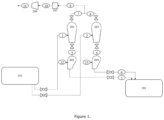
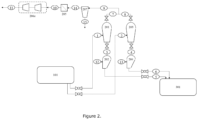
- the present disclosure relates to a continuous olefin polymerization process comprising polymerization of at least one olefin monomer in at least two serial vapor phase polymerization reactors containing an agitated bed of forming polymer particles, comprising a polymer particles transfer step wherein forming polymer particles are transferred from an upstream reactor to a downstream reactor comprising in a repeating sequence the steps of discharging at least one charge of polymer powder and reactive gases from the upstream reactor into a gas-solid separator; collecting the polymer powder separated in the gas-solid separator in a pressure transfer chamber; increasing the pressure in the pressure transfer chamber with a pressurizing gas to a pressure that is higher than the operating pressure of the downstream reactor; and discharging the polymer powder from the pressure transfer chamber into the downstream reactor, wherein said process reduces the carry-over of reactive gases from the upstream reactor to the downstream reactor.
- the present disclosure further relates to a system suitable for the present continuous vapor phase olefin polymerization process.
- US 4,420,592 describes a process for the polymerization of an olefin in the gaseous phase in a multiplicity of steps in at least two independent polymerization zones connected to each other by a transfer passage, which comprises feeding an olefin and a catalyst into a first polymerization zone, polymerizing the olefin in the gaseous phase, intermittently or continuously withdrawing a gaseous stream containing the resulting polymer from the first zone and feeding it into said transfer passage, introducing the withdrawn polymer-containing gaseous stream into a second polymerization zone through the transfer passage, feeding the olefin into the second zone, wherein an inert gas zone is provided in the transfer passage and at least a part of the gas components of the gaseous stream containing the polymer is replaced by an inert gas. It is taught in US 4,420,592 that by substituting an inert gas for at least a part of the polymer-containing gaseous stream in the transfer passage it is possible to select desired polymerization conditions
- US 6,069,212 describes a method and apparatus for continuous vapor phase polymerization of a polymerizable monomer or mixture thereof to produce normally solid polymer substances in two or more serially disposed vapor phase polymerization reactors, each containing a quench-cooled subfluidized particulate bed of polymerized monomers, which allows maintaining each reactor at independently selected operating conditions.
- the process of US 6,069,212 includes:
- CN1887916 discloses continuous vapor phase polymerization of olefin homopolymers in two serially disposed vapor phase polymerization reactors separated by partition boards into several polymerization areas.
- the present disclosure provides a continuous olefin polymerization process comprising polymerization of at least one olefin monomer in at least two serial vapor phase polymerization reactors containing an agitated bed of forming polymer particles, comprising a polymer particles transfer step wherein forming polymer particles are transferred from an upstream reactor to a downstream reactor, wherein the forming polymer particles transport step comprises in a repeating sequence the steps of:
- a valve between the gas-solid separator and the pressure transfer chamber is closed and the pressure in the pressure transfer chamber is increased with a pressurizing gas to a pressure that is higher than the operating pressure of the downstream reactor.
- a pressurizing gas may be selected from the group consisting of one or more selected from the group consisting of nitrogen, fuel gas, methane, ethane, propane, ethylene and propylene.
- the pressurizing gas preferably is propylene, most preferably polymer grade propylene consisting of at least 99.7 wt-% propylene.
- the pressurizing gas preferably is ethylene, most preferably polymer grade ethylene consisting of at least 99.7 wt-% ethylene.
- the upstream reactor is a horizontal stirred reactor containing multiple reaction zones, each reaction zone having at least one inlet for a gaseous stream and optionally additionally an inlet for a liquid stream and, wherein one reaction zone comprised in the upstream reactor vessel is a polymer discharge reaction zone from which forming polymer particles are discharged and subsequently transported to the downstream reactor and wherein the ratio of the hydrogen concentration to the olefin monomer concentration in the polymer discharge reaction zone ([H 2 ] discharge zone /[Olefin monomer] discharge zone ) is reduced compared to the ratio of the hydrogen concentration to the olefin monomer concentration in the preceding reactor zone ([H 2 ] preceding zone /[Olefin monomer] preceding zone ).
- the means to the ratio of the hydrogen concentration to the olefin monomer concentration in the polymer discharge reaction zone comprises an inlet for a liquid reactor recycle stream optionally further comprising an inert diluent or the olefin monomer.
- the means to the ratio of the hydrogen concentration to the olefin monomer concentration in the polymer discharge reaction zone comprises an inlet for a gaseous recycle stream optionally further comprising an inert diluent or the olefin monomer.
- the upstream reactor comprises an internal barrier to prevent back-mixing of the forming polymer product from the polymer discharge reaction zone to one or more other reaction zones comprised in the upstream reactor.
- thermodynamic models based on PC-SAFT
- the sorption of the different gas components in the amorphous PP was estimated by developing simplified empirical correlations able to mimic the behaviour predicted by PC-SAFT.
- the detailed description of the transport phenomena occurring between the different gas systems showed that the non-instantaneous equilibrium between phases and the combined flow mechanisms of convection and diffusion between intra and interparticle gas phase are the main aspects affecting the gas distribution.
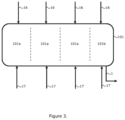
- the reactor is divided into four imaginary zones, each being 1 ⁇ 4 or 25% of the reactor volume.
- the discharge zone is the last zone and comprises 1 ⁇ 4 or 25% of the total reactor volume.
- F purge.base is below the entrainment flow of polymer particles and is selected in such a manner as to prevent entrainment of the polymer particles.
- the entrainment flow can be calculated by a skilled person based on e.g. particle size.
- Operating conditions in gas-solid separator/pressure transfer chamber Manipulated variable Variation H 2 Take- over (g/h) Deviation from base case (%) Purge flow (F purge ) 0.5 F purge,base 430 +3.4 2.5 F purge,base 406 -2.4 Purge duration No purge 457 +10 50% longer purge 409 -1.7
- P base is lower than the pressure of the reactor, preferably between 25 to 50% of the pressure of the reactor; the higher the reactor pressure is, the lower this percentage.
- P base is equal to or higher to 7.5 barg.
Landscapes
- Chemical & Material Sciences (AREA)
- Chemical Kinetics & Catalysis (AREA)
- Organic Chemistry (AREA)
- Health & Medical Sciences (AREA)
- Medicinal Chemistry (AREA)
- Polymers & Plastics (AREA)
- Polymerisation Methods In General (AREA)
- Addition Polymer Or Copolymer, Post-Treatments, Or Chemical Modifications (AREA)
Claims (13)
- Kontinuierlicher Olefinpolymerisationsprozess, umfassend eine Polymerisation von mindestens einem Olefinmonomer in mindestens zwei seriellen Dampfphasenpolymerisationsreaktoren, die ein bewegtes Bett von sich bildenden Polymerteilchen enthalten, umfassend einen Übertragungsschritt der Polymerteilchen, wobei sich bildende Polymerteilchen von einem vorgeschalteten Reaktor in einen nachgeschalteten Reaktor übertragen werden, wobei der Transportschritt von sich bildenden Polymerteilchen in einer sich wiederholenden Sequenz die folgenden Schritte umfasst:a) Austragen mindestens einer Charge aus sich bildendem Polymerpulver und reaktiven Gasen aus dem vorgeschalteten Reaktor in einen Gas-Feststoff-Abscheider, wobei das Polymerpulver von den reaktiven Gasen getrennt wird;b) Sammeln des in dem Gas-Feststoff-Abscheider abgetrennten Polymerpulvers in einer Druckübertragungskammer;c) Schließen eines Ventils zwischen dem Gas-Feststoff-Abscheider und der Druckübertragungskammer und Erhöhen des Drucks in der Druckübertragungskammer mit einem Druckgas auf einen Druck, der höher ist als der Betriebsdruck des nachgeschalteten Reaktors;d) Austragen des Polymerpulvers aus der Druckübertragungskammer in den nachgeschalteten Reaktor durch Öffnen und anschließendes Schließen eines Ventils zwischen der Druckübertragungskammer und dem nachgeschalteten Reaktor; unde) Öffnen des Ventils zwischen dem Gas-Feststoff-Abscheider und der Druckübertragungskammer,wobei der Druck in der Druckübertragungskammer vor dem Austragen mindestens einer Charge von sich bildendem Polymerpulver und reaktiven Gasen aus dem vorgeschalteten Reaktor in den Gas-Feststoff-Abscheider 105-500 kPaa beträgt,wobei das mindestens eine Olefinmonomer Propylen oder eine Mischung aus Ethylen und Propylen ist.
- Prozess nach Anspruch 1, wobei der Gas-Feststoff-Abscheider während der Schritte (a)-(e) in offener Gaskommunikation mit dem Einlass eines Abgaskompressors steht.
- Prozess nach Anspruch 1 oder 2, wobei der Abgaskompressor ein mehrstufiger Abgaskompressor ist.
- Prozess nach einem der Ansprüche 1-3, wobei der Gasstrom von dem Gas-Feststoff-Abscheider zu dem Einlass des Abgaskompressors einem zweiten Gas-Feststoff-Abscheider, bevorzugt einem Zyklon, zugeführt wird.
- Prozess nach einem der Ansprüche 1-4, wobei der Polymerteilchen-Übertragungsschritt in zwei alternierenden, sich wiederholenden Sequenzen durchgeführt wird.
- Prozess nach einem der Ansprüche 1-5, wobei jede sich wiederholende Sequenz 60-600 Sekunden, bevorzugt 100-300 Sekunden, besonders bevorzugt 120-240 Sekunden dauert.
- Prozess nach einem der Ansprüche 1-6, wobei das Druckgas ausgewählt ist aus der Gruppe bestehend aus einem oder mehreren, ausgewählt aus der Gruppe bestehend aus Stickstoff, Brenngas, Methan, Ethan, Propan, Ethylen und Propylen.
- Prozess nach einem der Ansprüche 1-7, wobei der vorgeschaltete Reaktor ein horizontaler Rührreaktor ist, der mehrere Reaktionszonen enthält, wobei jede Reaktionszone mindestens einen Einlass für einen gasförmigen Strom und optional zusätzlich einen Einlass für einen Flüssigkeitsstrom aufweist und wobei es sich bei einer in dem vorgeschalteten Reaktorbehälter umfassten Reaktionszone um eine Polymeraustragungsreaktionszone handelt, aus der sich bildende Polymerteilchen ausgetragen und anschließend zu dem nachgeschalteten Reaktor transportiert werden, und wobei das Verhältnis der Wasserstoffkonzentration zu der Olefinmonomerkonzentration in der Polymeraustragungsreaktionszone ([H2]Austragungszone/[Olefinmonomer]Austragungszone) im Vergleich zu dem Verhältnis der Wasserstoffkonzentration zu der Olefinmonomerkonzentration in der vorhergehenden Reaktorzone ([H2]vorhergehende Zone/[Olefinmonomer]vorhergehende Zone) reduziert ist.
- System, das für einen kontinuierlichen Dampfphasen-Olefinpolymerisationsprozess nach einem der Ansprüche 1-8 geeignet ist, umfassend mindestens zwei serielle Polymerisationsreaktoren, die ein bewegtes Bett von sich bildenden Polymerteilchen enthalten, ein Mittel, um sich bildende Polymerteilchen von einem vorgeschalteten Reaktor zu einem nachgeschalteten Reaktor zu übertragen, wobei das Mittel zum Übertragen von sich bildenden Polymerteilchen einen Gas-Feststoff-Abscheider, der durch ein Ventil mit einer Druckübertragungskammer verbunden ist, und ein Mittel zum Aufrechterhalten des Drucks in der Druckübertragungskammer bei 105-500 kPaa vor dem Austragen des Polymerpulvers von dem vorgeschalteten Reaktor zu dem Gas-Feststoff-Abscheider umfasst und wobei das Mittel zum Aufrechterhalten des Drucks in dem Gas-Feststoff-Abscheider ein mehrstufiger Abgaskompressor ist und wobei der Einlass des Abgaskompressors in kontinuierlicher offener Gaskommunikation mit dem Gas-Feststoff-Abscheider steht.
- System nach Anspruch 9, wobei das Mittel, um sich bildende Polymerteilchen von einem vorgeschalteten Reaktor in einen nachgeschalteten Reaktor zu übertragen, zwei parallele Gas-Feststoff-Abscheider, zwei parallele Druckübertragungskammern und einen Abgaskompressor umfasst.
- System nach einem der Ansprüche 9-10, wobei das Abgas aus dem Gas-Feststoff-Abscheider einem zweiten sequenziellen Gas-Feststoff-Abscheider zugeführt wird, wobei der zweite sequenzielle Gas-Feststoff-Abscheider bevorzugt ein Zyklon ist.
- System nach einem der Ansprüche 9-11, wobei der vorgeschaltete Reaktor mehrere Reaktionszonen enthält, wobei jede Reaktionszone mindestens einen Einlass für einen Flüssigkeitsstrom und mindestens einen Einlass für einen gasförmigen Strom aufweist, wobei der Reaktor mehrere Einlässe für einen gasförmigen Strom umfasst, um unterschiedliche Wasserstoff-zu-Olefin-Verhältnisse einzustellen, und wobei eine in dem vorgeschalteten Reaktor umfasste Reaktionszone eine Polymeraustragungsreaktionszone ist, die einen Auslass für sich bildende Polymerteilchen an das Mittel zum Übertragen der sich bildenden Polymerteilchen an den nachgeschalteten Reaktor umfasst.
- Verwendung des Prozesses nach einem der Ansprüche 1-8 oder des Systems nach einem der Ansprüche 9-12 zum Herstellen von heterophasischen Polypropylen-Copolymeren.
Applications Claiming Priority (2)
| Application Number | Priority Date | Filing Date | Title |
|---|---|---|---|
| EP16203351 | 2016-12-12 | ||
| PCT/EP2017/081468 WO2018108620A1 (en) | 2016-12-12 | 2017-12-05 | Improved process and system for vapor phase polymerization of olefin monomers |
Publications (2)
| Publication Number | Publication Date |
|---|---|
| EP3551671A1 EP3551671A1 (de) | 2019-10-16 |
| EP3551671B1 true EP3551671B1 (de) | 2025-07-02 |
Family
ID=57544278
Family Applications (1)
| Application Number | Title | Priority Date | Filing Date |
|---|---|---|---|
| EP17811914.5A Active EP3551671B1 (de) | 2016-12-12 | 2017-12-05 | Verbessertes verfahren und system für die dampfphasenpolymerisierung von olefinmonomeren |
Country Status (4)
| Country | Link |
|---|---|
| US (1) | US11292854B2 (de) |
| EP (1) | EP3551671B1 (de) |
| CN (1) | CN110291116B (de) |
| WO (1) | WO2018108620A1 (de) |
Families Citing this family (5)
| Publication number | Priority date | Publication date | Assignee | Title |
|---|---|---|---|---|
| WO2022108804A1 (en) * | 2020-11-17 | 2022-05-27 | Ineos Usa Llc | Process |
| US11608392B2 (en) * | 2020-11-17 | 2023-03-21 | Ineos Usa Llc | Polymerization process |
| WO2025017061A1 (en) * | 2023-07-19 | 2025-01-23 | Basell Poliolefine Italia S.R.L. | Multistage process for the polymerization of olefins |
| EP4527497A1 (de) | 2023-09-19 | 2025-03-26 | Lummus Novolen Technology GmbH | Energieeffiziente polypropylenherstellung durch reduzierung des stromverbrauchs eines wärmeabweisungssystems |
| EP4631613A1 (de) | 2024-04-11 | 2025-10-15 | Lummus Novolen Technology GmbH | Verfahren und system zur übertragung von polymerpartikeln zwischen in reihe angeordneten polymerisationszonen |
Citations (1)
| Publication number | Priority date | Publication date | Assignee | Title |
|---|---|---|---|---|
| US5521264A (en) * | 1995-03-03 | 1996-05-28 | Advanced Extraction Technologies, Inc. | Gas phase olefin polymerization process with recovery of monomers from reactor vent gas by absorption |
Family Cites Families (8)
| Publication number | Priority date | Publication date | Assignee | Title |
|---|---|---|---|---|
| IT1098272B (it) | 1978-08-22 | 1985-09-07 | Montedison Spa | Componenti,di catalizzatori e catalizzatori per la polimerizzazione delle alfa-olefine |
| JPS6045645B2 (ja) | 1980-10-09 | 1985-10-11 | 三井化学株式会社 | オレフイン類の気相重合方法 |
| IT1190681B (it) | 1982-02-12 | 1988-02-24 | Montedison Spa | Componenti e catalizzatori per la polimerizzazione di olefine |
| ES2097520T3 (es) * | 1992-05-29 | 1997-04-01 | Amoco Corp | Polimerizacion de alfa-olefinas. |
| US6069212A (en) | 1996-08-20 | 2000-05-30 | Bp Amoco Corporation | Transfer of polymer particles between vapor phase polymerization reactors containing quench-cooled subfluidized particulate beds of polymerized monomer |
| ES2317273T3 (es) | 2004-07-30 | 2009-04-16 | Saudi Basic Industries Corporation | Composiciones de copolimero de propileno con elevada transparencia. |
| CN1887916A (zh) * | 2005-06-30 | 2007-01-03 | 高煦 | 气相多段聚合方法及聚合反应器 |
| ATE526348T1 (de) | 2006-11-15 | 2011-10-15 | Basell Poliolefine Srl | Mehrstufiges verfahren zur polymerisation von olefinen |
-
2017
- 2017-12-05 EP EP17811914.5A patent/EP3551671B1/de active Active
- 2017-12-05 US US16/468,013 patent/US11292854B2/en active Active
- 2017-12-05 WO PCT/EP2017/081468 patent/WO2018108620A1/en not_active Ceased
- 2017-12-05 CN CN201780086143.0A patent/CN110291116B/zh active Active
Patent Citations (1)
| Publication number | Priority date | Publication date | Assignee | Title |
|---|---|---|---|---|
| US5521264A (en) * | 1995-03-03 | 1996-05-28 | Advanced Extraction Technologies, Inc. | Gas phase olefin polymerization process with recovery of monomers from reactor vent gas by absorption |
Also Published As
| Publication number | Publication date |
|---|---|
| CN110291116B (zh) | 2022-03-29 |
| US11292854B2 (en) | 2022-04-05 |
| US20190330385A1 (en) | 2019-10-31 |
| WO2018108620A1 (en) | 2018-06-21 |
| EP3551671A1 (de) | 2019-10-16 |
| CN110291116A (zh) | 2019-09-27 |
Similar Documents
| Publication | Publication Date | Title |
|---|---|---|
| EP3551671B1 (de) | Verbessertes verfahren und system für die dampfphasenpolymerisierung von olefinmonomeren | |
| EP1415999B1 (de) | Verfahren und Vorrichtung zur Herstellung von Olefinpolymeren | |
| EP1636277B1 (de) | Verfahren zur katalytischen polymerisation von olefinen, ein reaktorsystem und seine verwendung in diesem verfahren | |
| FI119644B (fi) | Laite ja menetelmä olefiinin polymeroimiseksi kaasufaasissa | |
| KR102065862B1 (ko) | 올레핀 중합 공정으로부터 미반응된 단량체의 회수 | |
| CN105924551B (zh) | 聚合方法 | |
| EP1767550B1 (de) | Methode zur Temperaturkontrolle in einem Wirbelschichtreaktor | |
| US20250025822A1 (en) | Reactor vent control to avoid vent column breakthrough | |
| CA2530465C (en) | Process for treating a polyolefin discharged from an olefin polymerization reactor | |
| EP3551672B1 (de) | Verbessertes verfahren und system für die dampfphasenpolymerisierung von olefinmonomeren | |
| US11492422B2 (en) | Olefin polymerization processes | |
| CN106029705A (zh) | 包括脱气段的聚合方法和聚合单元 | |
| EP1040868B1 (de) | Verfahren zur mehrstufigen Gasphasenpolymerisation und dafür geeignete Vorrichtung | |
| CA2001202A1 (en) | Method for extraction of impurities from powder material | |
| CN111748050A (zh) | 多相丙烯聚合材料粒子的制造方法 | |
| EP4631613A1 (de) | Verfahren und system zur übertragung von polymerpartikeln zwischen in reihe angeordneten polymerisationszonen | |
| RU2738657C2 (ru) | Способы регулирования и системы, предназначенные для очистки полимерного продукта продувкой | |
| WO2025002964A1 (en) | Olefin polymerization process | |
| AU2002243855A1 (en) | Processing using condensing mode in fluidized beds, with liquid phase enrichment and bed injection |
Legal Events
| Date | Code | Title | Description |
|---|---|---|---|
| STAA | Information on the status of an ep patent application or granted ep patent |
Free format text: STATUS: UNKNOWN |
|
| STAA | Information on the status of an ep patent application or granted ep patent |
Free format text: STATUS: THE INTERNATIONAL PUBLICATION HAS BEEN MADE |
|
| PUAI | Public reference made under article 153(3) epc to a published international application that has entered the european phase |
Free format text: ORIGINAL CODE: 0009012 |
|
| STAA | Information on the status of an ep patent application or granted ep patent |
Free format text: STATUS: REQUEST FOR EXAMINATION WAS MADE |
|
| 17P | Request for examination filed |
Effective date: 20190529 |
|
| AK | Designated contracting states |
Kind code of ref document: A1 Designated state(s): AL AT BE BG CH CY CZ DE DK EE ES FI FR GB GR HR HU IE IS IT LI LT LU LV MC MK MT NL NO PL PT RO RS SE SI SK SM TR |
|
| AX | Request for extension of the european patent |
Extension state: BA ME |
|
| DAV | Request for validation of the european patent (deleted) | ||
| DAX | Request for extension of the european patent (deleted) | ||
| STAA | Information on the status of an ep patent application or granted ep patent |
Free format text: STATUS: EXAMINATION IS IN PROGRESS |
|
| 17Q | First examination report despatched |
Effective date: 20200401 |
|
| REG | Reference to a national code |
Ref country code: DE Ref legal event code: R079 Free format text: PREVIOUS MAIN CLASS: C08F0002000000 Ipc: C08F0002340000 Ref country code: DE Ref legal event code: R079 Ref document number: 602017090326 Country of ref document: DE Free format text: PREVIOUS MAIN CLASS: C08F0002000000 Ipc: C08F0002340000 |
|
| GRAP | Despatch of communication of intention to grant a patent |
Free format text: ORIGINAL CODE: EPIDOSNIGR1 |
|
| STAA | Information on the status of an ep patent application or granted ep patent |
Free format text: STATUS: GRANT OF PATENT IS INTENDED |
|
| RIC1 | Information provided on ipc code assigned before grant |
Ipc: B01J 19/18 20060101ALI20250325BHEP Ipc: B01J 19/24 20060101ALI20250325BHEP Ipc: C08F 2/00 20060101ALI20250325BHEP Ipc: C08F 2/01 20060101ALI20250325BHEP Ipc: C08F 2/34 20060101AFI20250325BHEP |
|
| INTG | Intention to grant announced |
Effective date: 20250417 |
|
| GRAS | Grant fee paid |
Free format text: ORIGINAL CODE: EPIDOSNIGR3 |
|
| GRAA | (expected) grant |
Free format text: ORIGINAL CODE: 0009210 |
|
| STAA | Information on the status of an ep patent application or granted ep patent |
Free format text: STATUS: THE PATENT HAS BEEN GRANTED |
|
| AK | Designated contracting states |
Kind code of ref document: B1 Designated state(s): AL AT BE BG CH CY CZ DE DK EE ES FI FR GB GR HR HU IE IS IT LI LT LU LV MC MK MT NL NO PL PT RO RS SE SI SK SM TR |
|
| REG | Reference to a national code |
Ref country code: GB Ref legal event code: FG4D |
|
| REG | Reference to a national code |
Ref country code: CH Ref legal event code: EP |
|
| REG | Reference to a national code |
Ref country code: DE Ref legal event code: R096 Ref document number: 602017090326 Country of ref document: DE |
|
| REG | Reference to a national code |
Ref country code: IE Ref legal event code: FG4D |
|
| REG | Reference to a national code |
Ref country code: NL Ref legal event code: MP Effective date: 20250702 |
|
| PG25 | Lapsed in a contracting state [announced via postgrant information from national office to epo] |
Ref country code: PT Free format text: LAPSE BECAUSE OF FAILURE TO SUBMIT A TRANSLATION OF THE DESCRIPTION OR TO PAY THE FEE WITHIN THE PRESCRIBED TIME-LIMIT Effective date: 20251103 |
|
| PG25 | Lapsed in a contracting state [announced via postgrant information from national office to epo] |
Ref country code: NL Free format text: LAPSE BECAUSE OF FAILURE TO SUBMIT A TRANSLATION OF THE DESCRIPTION OR TO PAY THE FEE WITHIN THE PRESCRIBED TIME-LIMIT Effective date: 20250702 |
|
| REG | Reference to a national code |
Ref country code: AT Ref legal event code: MK05 Ref document number: 1809191 Country of ref document: AT Kind code of ref document: T Effective date: 20250702 |