EP3551561B1 - A system for item logistics and a mobile container of boxes used in this system - Google Patents
A system for item logistics and a mobile container of boxes used in this system Download PDFInfo
- Publication number
- EP3551561B1 EP3551561B1 EP17735627.6A EP17735627A EP3551561B1 EP 3551561 B1 EP3551561 B1 EP 3551561B1 EP 17735627 A EP17735627 A EP 17735627A EP 3551561 B1 EP3551561 B1 EP 3551561B1
- Authority
- EP
- European Patent Office
- Prior art keywords
- container
- vehicle
- point
- containers
- boxes
- Prior art date
- Legal status (The legal status is an assumption and is not a legal conclusion. Google has not performed a legal analysis and makes no representation as to the accuracy of the status listed.)
- Active
Links
Images

Classifications
-
- B—PERFORMING OPERATIONS; TRANSPORTING
- B65—CONVEYING; PACKING; STORING; HANDLING THIN OR FILAMENTARY MATERIAL
- B65G—TRANSPORT OR STORAGE DEVICES, e.g. CONVEYORS FOR LOADING OR TIPPING, SHOP CONVEYOR SYSTEMS OR PNEUMATIC TUBE CONVEYORS
- B65G67/00—Loading or unloading vehicles
- B65G67/02—Loading or unloading land vehicles
- B65G67/04—Loading land vehicles
- B65G67/20—Loading covered vehicles
-
- B—PERFORMING OPERATIONS; TRANSPORTING
- B65—CONVEYING; PACKING; STORING; HANDLING THIN OR FILAMENTARY MATERIAL
- B65G—TRANSPORT OR STORAGE DEVICES, e.g. CONVEYORS FOR LOADING OR TIPPING, SHOP CONVEYOR SYSTEMS OR PNEUMATIC TUBE CONVEYORS
- B65G67/00—Loading or unloading vehicles
- B65G67/02—Loading or unloading land vehicles
-
- B—PERFORMING OPERATIONS; TRANSPORTING
- B65—CONVEYING; PACKING; STORING; HANDLING THIN OR FILAMENTARY MATERIAL
- B65G—TRANSPORT OR STORAGE DEVICES, e.g. CONVEYORS FOR LOADING OR TIPPING, SHOP CONVEYOR SYSTEMS OR PNEUMATIC TUBE CONVEYORS
- B65G1/00—Storing articles, individually or in orderly arrangement, in warehouses or magazines
- B65G1/02—Storage devices
- B65G1/04—Storage devices mechanical
-
- B—PERFORMING OPERATIONS; TRANSPORTING
- B65—CONVEYING; PACKING; STORING; HANDLING THIN OR FILAMENTARY MATERIAL
- B65G—TRANSPORT OR STORAGE DEVICES, e.g. CONVEYORS FOR LOADING OR TIPPING, SHOP CONVEYOR SYSTEMS OR PNEUMATIC TUBE CONVEYORS
- B65G67/00—Loading or unloading vehicles
- B65G67/02—Loading or unloading land vehicles
- B65G67/24—Unloading land vehicles
-
- B—PERFORMING OPERATIONS; TRANSPORTING
- B65—CONVEYING; PACKING; STORING; HANDLING THIN OR FILAMENTARY MATERIAL
- B65G—TRANSPORT OR STORAGE DEVICES, e.g. CONVEYORS FOR LOADING OR TIPPING, SHOP CONVEYOR SYSTEMS OR PNEUMATIC TUBE CONVEYORS
- B65G2201/00—Indexing codes relating to handling devices, e.g. conveyors, characterised by the type of product or load being conveyed or handled
- B65G2201/02—Articles
- B65G2201/0235—Containers
-
- B—PERFORMING OPERATIONS; TRANSPORTING
- B65—CONVEYING; PACKING; STORING; HANDLING THIN OR FILAMENTARY MATERIAL
- B65G—TRANSPORT OR STORAGE DEVICES, e.g. CONVEYORS FOR LOADING OR TIPPING, SHOP CONVEYOR SYSTEMS OR PNEUMATIC TUBE CONVEYORS
- B65G2203/00—Indexing code relating to control or detection of the articles or the load carriers during conveying
- B65G2203/02—Control or detection
- B65G2203/0208—Control or detection relating to the transported articles
- B65G2203/0233—Position of the article
Definitions
- the invention relates to the field of the transportation, distribution, logistics, in particular, to constructions of mobile containers used in this field.
- Optimal distribution of purchased items between a logistics warehouse and a place, from which a final buyer takes purchased items is a field to whose improvement attention and effort is constantly given.
- the aim is to ensure the most convenient distribution and logistics of purchased items with the lowest possible costs and / or losses for customers.
- information technologies strongly penetrate into all segments of our lives, new opportunities appear; delivery of purchased items to buyers is no exception.
- One of those possibilities offered by information technologies is that customers order purchased items online, purchased items are delivered to the item order delivery point. In the case of large quantities of delivered items, common delivery points, where items delivered from the warehouse are placed in separate boxes and shelves with locks, from which the buyer takes items, are no longer suitable.
- the mentioned container has technical measures allowing to move, change the location on a stable surface, as well as the container is equipped with an electronic movement and positioning control system with artificial intelligence measures that enable decision making for controlling parameters of movement of a container in relation to the environment of movement of containers, selection of a place for the container in a vehicle and a point, to provide the fastest automatic exchange of containers between the vehicle and the point.
- Container control system operates in accordance to surrounding containers. The container can independently move in the vehicle and the point.
- the patent document US2012 / 0099953A1 (published on 26 April 2012 ) provides a shuttle for a warehouse, whose wheels are driven by an electric motor, controlled by the controller that receives control commands from a general warehouse system controller, and the mentioned controller is equipped with technical measures, which provide possibilities to inform about the shuttle in the warehouse.
- the shuttle is equipped with a simple control system that can execute commands received from a central control system and to inform about its position in the warehouse.
- the control system is simple, rigid, and unable to independently make complex decisions and low customizable.
- the patent document US2016 / 0236866A1 (published on 18 August 2016 ) provides an autonomous transport vehicle for transferring case units to and from predefined storage areas.
- the document describes a vehicle that has a higher level of independence than the device mentioned in a document US2012 / 0099953A1 , but is designed to move only in a single environment, under well-defined conditions, and cannot make decisions under more uncertain conditions.
- JPH09132328A discloses a system according to the preamble of claim 1.
- the invention is defined by the system according to claim 1.
- a mobile container of boxes is equipped with a movement enabling technical measures and control system with artificial intelligence measures.
- a container controlled by such control system may be automatically loaded from the vehicle into the item delivery point and empty containers may be loaded back into the vehicle.
- Containers can also change the location in the vehicle and the point in order to ensure the fastest exchange of containers between the vehicle and the point.
- the system Due to the high level of automation, the system provides a faster and cheaper distribution and delivery of items from the warehouse to buyers of items than common distribution systems. Also for the operation of such system less human workforce is needed.
- This description provides a system for item delivery, distribution, and logistics from the distribution warehouse to the item order delivery point and the mobile container of boxes used in this system, which ensures the function of this system.
- the system allows distributing purchased items to delivery points much faster than before the former; due to the high level of automation, a system is less crowded.
- the mentioned logistics system has at least the following elements:
- the item storage and distribution warehouse is for distributing item quantities. Usually item manufacturers deliver their items produced in different quantities to the warehouse. Items delivered by manufacturers are checked, if necessary, sorted or otherwise prepared for storage and directed to the storage place and containers. Upon receipt of a purchase order, items are delivered from storage places and containers to the place in the warehouse (or close to it), where items are checked, sorted and prepared for transportation to points (1) and in accordance with those orders they are placed into boxes (4). Items are placed into boxes (4) in accordance with quantities and types specified in the order received from the buyer. A single customer order may be placed in one or more boxes (4). The box (4) is placed into the container (3), where other boxes (4), which will be delivered to the same point (1), are put, i.e.
- Container (3) is moved or moves itself in accordance with the existing program to the place for loading the vehicle (2), where containers (3) for delivering to the same point (1) or points (1) which are provided in a route for a particular vehicle (2), are stored. Containers (3) are lined up in the place for loading in such order and sequence as they will be unloaded from the vehicle (2) into points (1).
- a vehicle (2) for transporting containers (3) and boxes (4) is placed into these containers with items or without them between the warehouse and a point (1).
- the vehicle (2) is a truck for transporting cargos with a trailer (s) or without them; the cargo compartment of a truck at the time of the freight has to be covered on all sides to protect the transported items.
- the cargo compartment of a truck must contain at least one container.
- a vehicle (2) should have a possibility to load / unload transported containers (3) preferably through the side of the vehicle (2) and / or its trailer side, i.e. the cargo compartment must be able to remove covers for protecting the cargo during its transportation, to provide other possibilities necessary for loading and / or unloading a container (3).
- rails and guides (5) can be installed in the floor or on the floor of the cargo compartment of a vehicle (2).
- rails (5) are transverse cross-section elongated elements made of metal or any other material having similar physical properties that are stably attached to the floor of the cargo compartment of the vehicle (2) on which containers (3) roll.
- Rails (5) are arranged according to openings of the cargo, through which containers (3) are loaded and / or unloaded, and to the form of the floor of the vehicle (2).
- openings and places for loading and / or unloading containers (3) are installed on the side of the cargo compartment; the one is installed in very front of the cargo compartment; the other is installed at very rear of the cargo compartment.
- the longitudinal rails (5) and perpendicular to the longitudinal rails (5) must be connected in such a way that containers (3) could move on both longitudinal rails (5) and perpendicular to the longitudinal rails and move from the longitudinal rails (5) to the perpendicular to the longitudinal rails and / or vice versa; it should be able to move in a circle, through the entire perimeter of the cargo compartment.
- Transverse cross-section of rails (5) must be in a form that can be properly attached to the floor of the cargo compartment.
- the transverse cross-section of rails (5) and wheels of the container (3) which rest on the rail (5) may be matched shapes that rails (5) could hold the container (3) in vertical position, i.e. the wheel would not be only placed on rails (5), but also fastened in such a way that it does not break and move away from rails (5) and that the container (3) could no longer maintain the vertical position.
- Item order delivery point (1) is for delivering boxes (4) with items to buyers who ordered them.
- boxes (4) used to deliver orders may be returned to the container (3) and transported back to the warehouse for reuse.
- a shape of the point (1) can recall a cuboid or similar geometric shape.
- outer walls of the point (1) are made of metal in the factory, when they are made; they are brought and installed in a permanent location of the point (1).
- the point (1) can be transportable, i.e. adapted to be easily transported from one location to another.
- equipment for storing and delivering items to buyers are installed inside the point (1).
- the mentioned equipment for storing and delivering in the point (1) is set out on two levels.
- Containers (3) with items in boxes (4) are placed on the upper level; Items are placed on this level before customers arrive to take them away.
- Devices (6) for taking boxes (4) in the point (1) are of such shape and size that containers (3) could fit under and between mentioned units, i.e. a taking device (6) "straddles" the container (3).
- Lower the level of the equipment of the point (1) is for sorting boxes (4), placing temporarily before the delivery in order to speed up the process of delivering boxes (4), or for other purposes, for transferring boxes (4) to delivery devices.
- Containers (3) transported by vehicles (2) are unloaded into points from the other side than devices for delivering boxes.
- points (1) are equipped with flat connectors - bridges (7), which are used to connect the vehicle (2) with the point (1), to execute a function of the connector, bridge when the container (3) move between the vehicle (2) and a point (1) on the surface of the flat connector (7).
- a flat connector (7) can be moved up and down while maintaining a horizontal plane in order to adapt to a possible different height of the floor of the cargo compartment of the vehicle.
- Rails (5), on which the container (3) moves from the vehicle (2) to the point (1), can be installed on the surface of the flat connector (7). Rails (5) must be connected to rails installed in the vehicle (2) that the container (3) could properly move from rails of the vehicle (2) to rails (5) in a point (1).
- the container (3) consists of the base, a frame construction in form of shelves located on the base into which boxes (4) with items are placed and attached.
- the container (3) shall be sized according to usual logistics system cargo dimensions, for example, according to the pallet size and the potential height is selected according to the most common height of the cargo compartment of the vehicle.
- dimensions of the base of the container (3) may be the following: width: - 1.2 m, length ⁇ 1.2m.
- the base of the container (3) is equipped with technical measures such as wheels enabling the movement of the container (3) on the horizontal plane. Wheels may be connected to devices generating the torque force such as an electric motor or an electric motor with various measures modificating rotary motion. Electric motors are controlled by electronic control devices equipped with software with artificial intelligence measures.
- Wheels are attached to the base of the container (3) in such way that they could change the direction of the movement of the container (3).
- the base of the container (3) is equipped with technical software measures which are able to hold the container (3) in vertical position, although the base on which the container (3) moves can be tilted a little to horizontal position.
- the container (3) has sensors for measuring distance to surrounding objects and software measures which allow avoiding collisions with other objects.
- the container (3) can have a scanner to scan tags, where tags are attached onto external objects (e. g. on the floor, walls and ceiling of a vehicle (2) or a point (1)) and help the moving container (3) to achieve the purpose, also help to properly position and control the movement with regard to external objects.
- the container (3) can move on rails (5), guides installed in the warehouse, the vehicle (2), or the point (1). Rails (5) allow avoiding the ground roughness, and also enable to precisely control and monitor the container (3) and the movement path. In other embodiment, power required for the movement of the container (3) can be supplied through rails (5).
- the base of the container (3) consists of only vertical supports holding the container (3), legs of the container (3) mounted at edges of the container (3) resting on the base on which the container (3) is placed.
- the drive unit of the container (3) which is separated from the container (3) can be used to transport the container from one location to another.
- the mentioned drive unit of the container (3) and mentioned supports holding the container (3) must be such that the drive unit could pass between supports without touching them.
- the drive unit of the container (3) stops under the container (3), connects to a container (3), slightly lifts the container (3) from the base on which the container (3) is placed. The drive unit lifted up a container (3) can transport it.
- a single device can be used to transport a number of containers (3) at different times: after transporting one container, the drive device may transport the other container (3). Due to vertical supports of the container, the drive unit is placed under the container (3) and therefore the drive unit can go to any container (3) without spacing between containers (3).
- the container (3) is controlled by an electronic control system.
- Artificial intelligence measures understand various mathematical-statistical models (e. g. fuzzy logic, artificial neural networks, etc.), installed in the electronic device control units.
- Electronic control measures are understood as a hardware of the control system which can be placed into the container (3) (if the drive unit is installed in the container (3)), or separate from the container (3) (if the drive unit is separated from the container (3)) or partially in the container (3) partially in a separate device.
- the software of the control system is installed in these electronic measures.
- the control system of the container (3) characterized by artificial intelligence achieving the highest speed of the automatic exchange of containers (3) between the vehicle (2) and the point (1) is able to optimize the placement and exchange of containers (3) in the vehicle (2) and the point (1) in order to achieve the fastest exchange of containers (3). Optimization result is the location, movement trajectories (and / or other motion parameters) of the container (3) in the vehicle (2) and the point (1), interactions among several adjacent containers (3) in order to ensure optimum locations.
- control system of the container (3) characterized by artificial intelligence has the ability to continually learn and improve optimal locations and their assurance methods.
- feedback enabling to monitor the actual duration for the exchange of containers (3) is installed. Monitoring the actual duration for the exchange of containers (3) and comparing them with the optimization results, the possible causes of non-compliance, which are assessed and used for subsequent optimization cases, are identified.
- the control system compares the exchange optimization results with real exchange results, analyze the possible causes of discrepancies with regard to the above reasons, adjusts the optimization algorithm, i.e. it adapts to characteristics of the controlled object. Very large discrepancies may indicate the occurrence of mechanical failure (wear), thus the control system with artificial intelligence is able to identify some failures, as well as to carry out their prevention.
- the container (3) has an electronic tagging device, an electronic tag (e. g. based on RFID) containing information which may be read by a reader from a distance.
- a tag contains information about a container (3) and other information.
- the information about the container (3) and / or other information may be recorded on a tag i.e. information can be easily kept up to date on demand.
- box (-es) (4) in the warehouse When the appropriate quantity of items ordered by the buyer are collected and placed into box (-es) (4) in the warehouse, the box (4) is placed into a container (3) which contains all the boxes (4) for a single and the same point (1) (buyers will take all the boxes from the same point (1)).
- a container (3) with boxes (4) in the warehouse is moved or moves itself to the intermediate storage, where containers (3) transported by a single vehicle (2) in a specific route are collected and grouped. Containers (3) are placed into the vehicle (2) in a manner that is most convenient to unload in different points. Containers (3) can move in the vehicle (2), i.e.
- Containers (3) in a point (1) may also change their location in order to prepare for as much as possible faster and smoother automatic loading / unloading.
- the unloading device (6) of the container (3) of the point (1) allows a box (4) to be taken from the container (3) down to the lower level in order to prepare and deliver items to buyers as soon as possible.
- containers (3) with empty boxes may be loaded into the vehicle (2) from the point (1) through the other opening of the vehicle (2).
- items are protected from external influences. This is particularly important for food products.
- the term "items” may also include perishable food products, vegetables, and fruits and so on.
Landscapes
- Engineering & Computer Science (AREA)
- Mechanical Engineering (AREA)
- Aviation & Aerospace Engineering (AREA)
- Warehouses Or Storage Devices (AREA)
- Management, Administration, Business Operations System, And Electronic Commerce (AREA)
- Loading Or Unloading Of Vehicles (AREA)
Description
- The invention relates to the field of the transportation, distribution, logistics, in particular, to constructions of mobile containers used in this field.
- Optimal distribution of purchased items between a logistics warehouse and a place, from which a final buyer takes purchased items, is a field to whose improvement attention and effort is constantly given. The aim is to ensure the most convenient distribution and logistics of purchased items with the lowest possible costs and / or losses for customers. As information technologies strongly penetrate into all segments of our lives, new opportunities appear; delivery of purchased items to buyers is no exception. One of those possibilities offered by information technologies is that customers order purchased items online, purchased items are delivered to the item order delivery point. In the case of large quantities of delivered items, common delivery points, where items delivered from the warehouse are placed in separate boxes and shelves with locks, from which the buyer takes items, are no longer suitable. In case of large quantities of items delivered, such delivery points have to be very large, because of that it becomes more difficult to install them in places that serve a large flow of customers, it takes long time to place delivered items into specific boxes and shelves, and it becomes inconvenient for buyers to use such points. A solution, which facilitates the use of a point for both those who transport items and those who take them, is necessary.
- This description provides a system for item logistics between the warehouse and the item order delivery point and a container, which is the most important component of such system, resolving the above mentioned problems, used in this system. The mentioned container has technical measures allowing to move, change the location on a stable surface, as well as the container is equipped with an electronic movement and positioning control system with artificial intelligence measures that enable decision making for controlling parameters of movement of a container in relation to the environment of movement of containers, selection of a place for the container in a vehicle and a point, to provide the fastest automatic exchange of containers between the vehicle and the point. Container control system operates in accordance to surrounding containers. The container can independently move in the vehicle and the point.
- The patent document
US2012 / 0099953A1 (published on 26 April 2012 ) provides a shuttle for a warehouse, whose wheels are driven by an electric motor, controlled by the controller that receives control commands from a general warehouse system controller, and the mentioned controller is equipped with technical measures, which provide possibilities to inform about the shuttle in the warehouse. In this case the shuttle is equipped with a simple control system that can execute commands received from a central control system and to inform about its position in the warehouse. The control system is simple, rigid, and unable to independently make complex decisions and low customizable. - The patent document
US2016 / 0236866A1 (published on 18 August 2016 ) provides an autonomous transport vehicle for transferring case units to and from predefined storage areas. The document describes a vehicle that has a higher level of independence than the device mentioned in a documentUS2012 / 0099953A1 , but is designed to move only in a single environment, under well-defined conditions, and cannot make decisions under more uncertain conditions.JPH09132328A - The invention is defined by the system according to claim 1.
- The above solutions of the related art are characterized by the following shortcomings:
- item transport device has no or insufficient technical measures that would ensure the shortest duration for automatic exchange between the vehicle and the delivery point;
- item transport device is not suitable to move in the vehicle, the delivery point and between them;
- control unit for the item transport device operates regardless of other transport devices.
- Technical solutions with such shortcomings cannot effectively ensure the fast exchange of items between the vehicle and the delivery point. A technical solution that avoids mentioned shortcomings is provided below.
- This description provides a new fast item distribution logistics system and its key element - a mobile container of boxes allowing such system to be realized. A mobile container of boxes is equipped with a movement enabling technical measures and control system with artificial intelligence measures. A container controlled by such control system may be automatically loaded from the vehicle into the item delivery point and empty containers may be loaded back into the vehicle. Containers can also change the location in the vehicle and the point in order to ensure the fastest exchange of containers between the vehicle and the point.
- Due to the high level of automation, the system provides a faster and cheaper distribution and delivery of items from the warehouse to buyers of items than common distribution systems. Also for the operation of such system less human workforce is needed.
-
-
Fig.1 provides a general view of a vehicle and a point. -
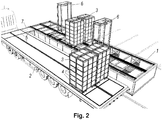
Fig. 2 provides a general view of a vehicle and a point where the vehicle and the point is represented by the absence of external walls and membranes in order to show a possible arrangement of elements inside the vehicle and the point - The provided figures are more illustrative in nature, scale, proportion and other aspects do not necessarily reflect the actual technical solution.
- This description provides a system for item delivery, distribution, and logistics from the distribution warehouse to the item order delivery point and the mobile container of boxes used in this system, which ensures the function of this system. The system allows distributing purchased items to delivery points much faster than before the former; due to the high level of automation, a system is less crowded.
- The mentioned logistics system has at least the following elements:
- item collecting, storage and distribution warehouse (hereinafter - the warehouse);
- item order delivery point (hereinafter - the point) (1);
- vehicle (2) for transporting items and their transport containers (containers (3), boxes (4)) between the warehouse (s) and the point (s) (1);
- a container (3), which can move and change the location in the warehouse, the point (1), and the vehicle (2) under the existing software with artificial intelligence measures; boxes(3) which are placed into a container (4);
- a box (4) in which items are put and which is placed into a container (3).
- The item storage and distribution warehouse is for distributing item quantities. Mostly item manufacturers deliver their items produced in different quantities to the warehouse. Items delivered by manufacturers are checked, if necessary, sorted or otherwise prepared for storage and directed to the storage place and containers. Upon receipt of a purchase order, items are delivered from storage places and containers to the place in the warehouse (or close to it), where items are checked, sorted and prepared for transportation to points (1) and in accordance with those orders they are placed into boxes (4). Items are placed into boxes (4) in accordance with quantities and types specified in the order received from the buyer. A single customer order may be placed in one or more boxes (4). The box (4) is placed into the container (3), where other boxes (4), which will be delivered to the same point (1), are put, i.e. only boxes (4) which buyers will take from the same point (1) are placed into the container (3). The container (3) is moved or moves itself in accordance with the existing program to the place for loading the vehicle (2), where containers (3) for delivering to the same point (1) or points (1) which are provided in a route for a particular vehicle (2), are stored. Containers (3) are lined up in the place for loading in such order and sequence as they will be unloaded from the vehicle (2) into points (1).
- A vehicle (2) for transporting containers (3) and boxes (4) is placed into these containers with items or without them between the warehouse and a point (1). The vehicle (2) is a truck for transporting cargos with a trailer (s) or without them; the cargo compartment of a truck at the time of the freight has to be covered on all sides to protect the transported items. The cargo compartment of a truck must contain at least one container. Also a vehicle (2) should have a possibility to load / unload transported containers (3) preferably through the side of the vehicle (2) and / or its trailer side, i.e. the cargo compartment must be able to remove covers for protecting the cargo during its transportation, to provide other possibilities necessary for loading and / or unloading a container (3).
- In other embodiment, rails and guides (5) can be installed in the floor or on the floor of the cargo compartment of a vehicle (2). In this case, rails (5) are transverse cross-section elongated elements made of metal or any other material having similar physical properties that are stably attached to the floor of the cargo compartment of the vehicle (2) on which containers (3) roll. Rails (5) are arranged according to openings of the cargo, through which containers (3) are loaded and / or unloaded, and to the form of the floor of the vehicle (2). In one of embodiments, openings and places for loading and / or unloading containers (3) are installed on the side of the cargo compartment; the one is installed in very front of the cargo compartment; the other is installed at very rear of the cargo compartment. In order to properly install openings it is necessary to remove completely the side of the cargo compartment through which containers move (3) and to extend rails (5) in the floor to the edge of the side of the floor. In this case, when two openings for loading / unloading are installed in the cargo compartment, rails (5) are installed in two pairs on the floor of the cargo compartment along the cargo compartment. In places where containers (3) are loaded / unloaded, rails (5) are installed perpendicular to the longitudinal axis of the cargo compartment. The longitudinal rails (5) and perpendicular to the longitudinal rails (5) must be connected in such a way that containers (3) could move on both longitudinal rails (5) and perpendicular to the longitudinal rails and move from the longitudinal rails (5) to the perpendicular to the longitudinal rails and / or vice versa; it should be able to move in a circle, through the entire perimeter of the cargo compartment. Transverse cross-section of rails (5) must be in a form that can be properly attached to the floor of the cargo compartment. In other embodiment, the transverse cross-section of rails (5) and wheels of the container (3) which rest on the rail (5), may be matched shapes that rails (5) could hold the container (3) in vertical position, i.e. the wheel would not be only placed on rails (5), but also fastened in such a way that it does not break and move away from rails (5) and that the container (3) could no longer maintain the vertical position.
- Item order delivery point (1) is for delivering boxes (4) with items to buyers who ordered them. When items are delivered to points (1), boxes (4) used to deliver orders may be returned to the container (3) and transported back to the warehouse for reuse.
- A shape of the point (1) can recall a cuboid or similar geometric shape. Mostly outer walls of the point (1) are made of metal in the factory, when they are made; they are brought and installed in a permanent location of the point (1). The point (1) can be transportable, i.e. adapted to be easily transported from one location to another. Inside the point (1) equipment for storing and delivering items to buyers are installed. The mentioned equipment for storing and delivering in the point (1) is set out on two levels. Containers (3) with items in boxes (4) are placed on the upper level; Items are placed on this level before customers arrive to take them away. On the upper level devices (6) for taking boxes (4) from the container (3) and for transferring to the lower level and taking empty boxes (4) from the lower level and placing them into the container (s) (3) for empty boxes (4).
- Devices (6) for taking boxes (4) in the point (1) are of such shape and size that containers (3) could fit under and between mentioned units, i.e. a taking device (6) "straddles" the container (3). Lower the level of the equipment of the point (1) is for sorting boxes (4), placing temporarily before the delivery in order to speed up the process of delivering boxes (4), or for other purposes, for transferring boxes (4) to delivery devices. Containers (3) transported by vehicles (2) are unloaded into points from the other side than devices for delivering boxes. For the proper loading of the container (3), points (1) are equipped with flat connectors - bridges (7), which are used to connect the vehicle (2) with the point (1), to execute a function of the connector, bridge when the container (3) move between the vehicle (2) and a point (1) on the surface of the flat connector (7). A flat connector (7) can be moved up and down while maintaining a horizontal plane in order to adapt to a possible different height of the floor of the cargo compartment of the vehicle. Rails (5), on which the container (3) moves from the vehicle (2) to the point (1), can be installed on the surface of the flat connector (7). Rails (5) must be connected to rails installed in the vehicle (2) that the container (3) could properly move from rails of the vehicle (2) to rails (5) in a point (1).
- The container (3) consists of the base, a frame construction in form of shelves located on the base into which boxes (4) with items are placed and attached. In one embodiment, the container (3) shall be sized according to usual logistics system cargo dimensions, for example, according to the pallet size and the potential height is selected according to the most common height of the cargo compartment of the vehicle. In other embodiment, dimensions of the base of the container (3) may be the following: width: - 1.2 m, length ~ 1.2m. The base of the container (3) is equipped with technical measures such as wheels enabling the movement of the container (3) on the horizontal plane. Wheels may be connected to devices generating the torque force such as an electric motor or an electric motor with various measures modificating rotary motion. Electric motors are controlled by electronic control devices equipped with software with artificial intelligence measures. Wheels are attached to the base of the container (3) in such way that they could change the direction of the movement of the container (3). In other embodiment, the base of the container (3) is equipped with technical software measures which are able to hold the container (3) in vertical position, although the base on which the container (3) moves can be tilted a little to horizontal position. In one of embodiments, the container (3) has sensors for measuring distance to surrounding objects and software measures which allow avoiding collisions with other objects. In other embodiment, the container (3) can have a scanner to scan tags, where tags are attached onto external objects (e. g. on the floor, walls and ceiling of a vehicle (2) or a point (1)) and help the moving container (3) to achieve the purpose, also help to properly position and control the movement with regard to external objects.
- In other embodiment, the container (3) can move on rails (5), guides installed in the warehouse, the vehicle (2), or the point (1). Rails (5) allow avoiding the ground roughness, and also enable to precisely control and monitor the container (3) and the movement path. In other embodiment, power required for the movement of the container (3) can be supplied through rails (5).
- In other embodiment, the base of the container (3) consists of only vertical supports holding the container (3), legs of the container (3) mounted at edges of the container (3) resting on the base on which the container (3) is placed. In the embodiment, when the container (3) comprises mentioned vertical supports, the drive unit of the container (3) which is separated from the container (3) can be used to transport the container from one location to another. The mentioned drive unit of the container (3) and mentioned supports holding the container (3) must be such that the drive unit could pass between supports without touching them. The drive unit of the container (3) stops under the container (3), connects to a container (3), slightly lifts the container (3) from the base on which the container (3) is placed. The drive unit lifted up a container (3) can transport it. In this embodiment, a single device can be used to transport a number of containers (3) at different times: after transporting one container, the drive device may transport the other container (3). Due to vertical supports of the container, the drive unit is placed under the container (3) and therefore the drive unit can go to any container (3) without spacing between containers (3).
- In another embodiment, in order to ensure the movement of the container (3) external drive measures installed in objects surrounding a container (3) i.e. in the warehouse, the vehicle (2), or the point (1). In this case the container (3) must connect, be connected to the external drive unit before starting to move and disconnect, be disconnected after finishing to move.
- As mentioned above, the container (3) is controlled by an electronic control system. This description provides artificial intelligence measures installed in a control system of the container (3). Artificial intelligence measures understand various mathematical-statistical models (e. g. fuzzy logic, artificial neural networks, etc.), installed in the electronic device control units. Electronic control measures are understood as a hardware of the control system which can be placed into the container (3) (if the drive unit is installed in the container (3)), or separate from the container (3) (if the drive unit is separated from the container (3)) or partially in the container (3) partially in a separate device. The software of the control system is installed in these electronic measures.
- The control system of the container (3) characterized by artificial intelligence achieving the highest speed of the automatic exchange of containers (3) between the vehicle (2) and the point (1) is able to optimize the placement and exchange of containers (3) in the vehicle (2) and the point (1) in order to achieve the fastest exchange of containers (3). Optimization result is the location, movement trajectories (and / or other motion parameters) of the container (3) in the vehicle (2) and the point (1), interactions among several adjacent containers (3) in order to ensure optimum locations.
- In addition to the optimization function, the control system of the container (3) characterized by artificial intelligence has the ability to continually learn and improve optimal locations and their assurance methods. In order to ensure the learning function, feedback, enabling to monitor the actual duration for the exchange of containers (3) is installed. Monitoring the actual duration for the exchange of containers (3) and comparing them with the optimization results, the possible causes of non-compliance, which are assessed and used for subsequent optimization cases, are identified.
- Learning function creates assumptions for adaptability features. The control system compares the exchange optimization results with real exchange results, analyze the possible causes of discrepancies with regard to the above reasons, adjusts the optimization algorithm, i.e. it adapts to characteristics of the controlled object. Very large discrepancies may indicate the occurrence of mechanical failure (wear), thus the control system with artificial intelligence is able to identify some failures, as well as to carry out their prevention.
- In order to identify the container (3), the container (3) has an electronic tagging device, an electronic tag (e. g. based on RFID) containing information which may be read by a reader from a distance. A tag contains information about a container (3) and other information. In other embodiment, the information about the container (3) and / or other information may be recorded on a tag i.e. information can be easily kept up to date on demand.
- When the appropriate quantity of items ordered by the buyer are collected and placed into box (-es) (4) in the warehouse, the box (4) is placed into a container (3) which contains all the boxes (4) for a single and the same point (1) (buyers will take all the boxes from the same point (1)). A container (3) with boxes (4) in the warehouse is moved or moves itself to the intermediate storage, where containers (3) transported by a single vehicle (2) in a specific route are collected and grouped. Containers (3) are placed into the vehicle (2) in a manner that is most convenient to unload in different points. Containers (3) can move in the vehicle (2), i.e. they can change their location in order to optimally locate in the vehicle (2) and to prepare for the fastest possible unloading of full containers (3) from the vehicle (2) to the point (1) and loading of containers (3) with empty boxes (4) from the point (1) to the vehicle (2). When the container (3) is transported to a specific point (1), containers (3) with items are unloaded into points (1) and containers (3) with empty boxes (4) are loaded from the point (1) into the vehicle (2). A container (3) in the vehicle (2) can change its location in order to prepare for the next automatic loading / unloading. Containers (3) in a point (1) may also change their location in order to prepare for as much as possible faster and smoother automatic loading / unloading. The unloading device (6) of the container (3) of the point (1) allows a box (4) to be taken from the container (3) down to the lower level in order to prepare and deliver items to buyers as soon as possible. At the lower level, a temporary placing of boxes (4) with items, distribution to deliver a box (4) via an appropriate device for delivering boxes (4), collection of empty boxes (4), their transportation to a place at a lower level where they are lifted to the upper level, in which they are placed into a container (s) (3) for empty boxes (4). While full containers with items are unloaded through one loading / unloading opening of the vehicle (2), containers (3) with empty boxes may be loaded into the vehicle (2) from the point (1) through the other opening of the vehicle (2). There is another way for the exchange of containers (3) between the vehicle (2) and the point (1).
- Throughout the logistics chain from the placement into boxes (4) in the warehouse to taking from the point (1) by the buyer, items are protected from external influences. This is particularly important for food products. In this specification the term "items" may also include perishable food products, vegetables, and fruits and so on.
- To illustrate and describe this invention, description of preferred embodiments is given above. This is not a complete or limiting description aimed at prescribing a precise form or embodiment. The description given above should be regarded more as an illustration than a constraint. Obviously, the specialists in this field may clearly see a multitude of modifications and variations. The embodiment has been selected and described so as to enable the specialists in this field to best understand the principles behind this invention and their best practical application for different embodiments with different modifications fit for a specific application or embodiment customization. The invention scope is defined by the attached claim wherein all the used terms have the broadest possible meanings unless stated otherwise.
- Embodiments described by specialists in the respective field may contain changes that do not depart from the scope of this invention, as described in the claim given next.
Claims (1)
- Item logistics system, comprising a container (3) for placing boxes (4),the container (3) having a base on which a frame-type construction, in which boxes (4) are placed, is mounted, the container (3) comprising wheels or other movement enabling technical measures wherein the system comprises an external drive unit, wherein a drive control device is equipped with technical measures allowing the container (3) to change the location according to the given algorithm with artificial intelligence measures, which are mounted in the lower part of the base, the item logistics system comprising a vehicle (2), a delivery point (1) and a flat connector (7),wherein the external drive unit is separated from the container (3),and wherein the external drive unit can connect to a container (3) and thereby change its location,characterized in that the item logistics system comprises rails and guides (5),wherein the container (3) rests with the wheels or other movement enabling technical measures on the rails and guides (5) installed in the floor of the vehicle (2) and on the floor in the delivery point (1),and wherein the rails (5) for the container (3) extend through the flat connector (7) used for the automatic exchange of containers (3) between the vehicle (2) and the delivery point (1).
Priority Applications (2)
| Application Number | Priority Date | Filing Date | Title |
|---|---|---|---|
| HRP20220449TT HRP20220449T1 (en) | 2016-12-09 | 2017-05-23 | A system for item logistics and a mobile container of boxes used in this system |
| PL17735627T PL3551561T3 (en) | 2016-12-09 | 2017-05-23 | A system for item logistics and a mobile container of boxes used in this system |
Applications Claiming Priority (2)
| Application Number | Priority Date | Filing Date | Title |
|---|---|---|---|
| LT2016532A LT6546B (en) | 2016-12-09 | 2016-12-09 | THE THINGS LOGISTICS SYSTEM AND THE MOBILE BOX CONTAINER USED IN THE SYSTEM |
| PCT/IB2017/053020 WO2018104801A1 (en) | 2016-12-09 | 2017-05-23 | A system for item logistics and a mobile container of boxes used in this system |
Publications (2)
| Publication Number | Publication Date |
|---|---|
| EP3551561A1 EP3551561A1 (en) | 2019-10-16 |
| EP3551561B1 true EP3551561B1 (en) | 2022-01-05 |
Family
ID=59285276
Family Applications (1)
| Application Number | Title | Priority Date | Filing Date |
|---|---|---|---|
| EP17735627.6A Active EP3551561B1 (en) | 2016-12-09 | 2017-05-23 | A system for item logistics and a mobile container of boxes used in this system |
Country Status (18)
| Country | Link |
|---|---|
| US (1) | US20200071098A1 (en) |
| EP (1) | EP3551561B1 (en) |
| JP (1) | JP2020502006A (en) |
| KR (1) | KR20190092509A (en) |
| CN (1) | CN110198904B (en) |
| AU (1) | AU2017371916B2 (en) |
| BR (1) | BR112019011471A2 (en) |
| CA (1) | CA3046187A1 (en) |
| DK (1) | DK3551561T3 (en) |
| EA (1) | EA201991226A1 (en) |
| ES (1) | ES2910075T3 (en) |
| HR (1) | HRP20220449T1 (en) |
| IL (1) | IL267080A (en) |
| LT (1) | LT6546B (en) |
| MX (1) | MX2019006665A (en) |
| PL (1) | PL3551561T3 (en) |
| PT (1) | PT3551561T (en) |
| WO (1) | WO2018104801A1 (en) |
Families Citing this family (7)
| Publication number | Priority date | Publication date | Assignee | Title |
|---|---|---|---|---|
| USD888102S1 (en) * | 2018-06-19 | 2020-06-23 | Curtis O'Hare | Flat air manifold and connector |
| NO345766B1 (en) * | 2018-10-12 | 2021-07-19 | Autostore Tech As | A mobile storage system and a method of providing the mobile storage system |
| NL1043058B1 (en) * | 2018-10-30 | 2020-06-02 | R P Van Der Donk Beheer B V | FLEXIBLE COMBINED TRANSPORT OF PERSONS AND GOODS |
| CN113183847B (en) * | 2020-01-14 | 2023-06-02 | 明创能源股份有限公司 | Self-propelled transport vehicle for distributed real-time transmission and distribution system and standard container for the transport vehicle |
| CN112061815A (en) * | 2020-09-10 | 2020-12-11 | 彭振明 | Wisdom commodity circulation conveying system |
| CN113104474A (en) * | 2021-04-12 | 2021-07-13 | 深圳优制云工业互联网有限公司 | Automatic material distribution method, device and system for production line |
| CN117508981B (en) * | 2022-07-28 | 2026-03-03 | 北京极智嘉科技股份有限公司 | A warehousing system |
Family Cites Families (11)
| Publication number | Priority date | Publication date | Assignee | Title |
|---|---|---|---|---|
| GB910538A (en) * | 1960-05-27 | 1962-11-14 | Ralph Tuck | Means for loading and unloading bulk storage bins or containers on to and from lorries or the like |
| DE1285951B (en) * | 1965-06-18 | 1968-12-19 | Bahlsen Werner | Transfer device for roll pallets loaded with stacks of packages |
| JPH09132328A (en) * | 1995-11-09 | 1997-05-20 | Daifuku Co Ltd | Cargo loading and unloading facility |
| JP3928193B2 (en) * | 1996-09-26 | 2007-06-13 | マツダ株式会社 | Trolley loading device |
| US7500448B1 (en) * | 2005-09-30 | 2009-03-10 | Melhorn J Michael | Self-propelled poultry cage handler and method |
| EP2948821B1 (en) * | 2013-01-28 | 2017-04-26 | Amazon Technologies, Inc. | Inventory system with connectable inventory holders |
| NL2010899C2 (en) * | 2013-05-31 | 2014-12-08 | Heering Group B V | Transport system and a method for transporting livestock. |
| US8972045B1 (en) * | 2013-09-23 | 2015-03-03 | Amazon Technologies, Inc. | Inter-facility transport in inventory management and fulfillment systems |
| DE102015014714A1 (en) * | 2014-12-22 | 2016-06-23 | Sew-Eurodrive Gmbh & Co Kg | System with carriers and different modes of transport and method of operating a system |
| US11030573B2 (en) * | 2018-07-24 | 2021-06-08 | Staples, Inc. | Automated guided vehicle control and organizing inventory items using predictive models for slow item types |
| NO345278B1 (en) * | 2019-03-29 | 2020-11-30 | Autostore Tech As | Method and computer program for controlling storage and retrieval of personal storage containers in an automated storage and retrieval system |
-
2016
- 2016-12-09 LT LT2016532A patent/LT6546B/en unknown
-
2017
- 2017-05-23 ES ES17735627T patent/ES2910075T3/en active Active
- 2017-05-23 US US16/467,231 patent/US20200071098A1/en not_active Abandoned
- 2017-05-23 EP EP17735627.6A patent/EP3551561B1/en active Active
- 2017-05-23 EA EA201991226A patent/EA201991226A1/en unknown
- 2017-05-23 CN CN201780083398.1A patent/CN110198904B/en active Active
- 2017-05-23 KR KR1020197019511A patent/KR20190092509A/en not_active Withdrawn
- 2017-05-23 HR HRP20220449TT patent/HRP20220449T1/en unknown
- 2017-05-23 DK DK17735627.6T patent/DK3551561T3/en active
- 2017-05-23 PL PL17735627T patent/PL3551561T3/en unknown
- 2017-05-23 BR BR112019011471A patent/BR112019011471A2/en not_active Application Discontinuation
- 2017-05-23 MX MX2019006665A patent/MX2019006665A/en unknown
- 2017-05-23 AU AU2017371916A patent/AU2017371916B2/en active Active
- 2017-05-23 JP JP2019531256A patent/JP2020502006A/en active Pending
- 2017-05-23 WO PCT/IB2017/053020 patent/WO2018104801A1/en not_active Ceased
- 2017-05-23 CA CA3046187A patent/CA3046187A1/en active Pending
- 2017-05-23 PT PT177356276T patent/PT3551561T/en unknown
-
2019
- 2019-06-04 IL IL267080A patent/IL267080A/en unknown
Also Published As
| Publication number | Publication date |
|---|---|
| BR112019011471A2 (en) | 2019-10-22 |
| LT2016532A (en) | 2018-06-25 |
| AU2017371916A1 (en) | 2019-07-25 |
| CN110198904B (en) | 2021-09-14 |
| EP3551561A1 (en) | 2019-10-16 |
| EA201991226A1 (en) | 2019-11-29 |
| IL267080A (en) | 2019-08-29 |
| CA3046187A1 (en) | 2018-06-14 |
| AU2017371916B2 (en) | 2022-12-22 |
| KR20190092509A (en) | 2019-08-07 |
| HRP20220449T1 (en) | 2022-07-22 |
| US20200071098A1 (en) | 2020-03-05 |
| ES2910075T3 (en) | 2022-05-11 |
| CN110198904A (en) | 2019-09-03 |
| PL3551561T3 (en) | 2022-05-02 |
| PT3551561T (en) | 2022-04-11 |
| DK3551561T3 (en) | 2022-04-11 |
| JP2020502006A (en) | 2020-01-23 |
| WO2018104801A1 (en) | 2018-06-14 |
| LT6546B (en) | 2018-07-25 |
| MX2019006665A (en) | 2019-11-28 |
Similar Documents
| Publication | Publication Date | Title |
|---|---|---|
| EP3551561B1 (en) | A system for item logistics and a mobile container of boxes used in this system | |
| JP7783918B2 (en) | Automated Retail Supply Chain and Inventory Control Systems | |
| US11932491B2 (en) | Transfer station configured to handle cargo and cargo receptacle sorting method | |
| EP4044083B1 (en) | Inventory management system and method | |
| US12071307B2 (en) | System and method of order fulfilment | |
| US11220400B2 (en) | Material storage and sortation system | |
| RU2562087C2 (en) | Equipment for laying of packages having no trays with different dimensions on racks of warehouse | |
| US20210370988A1 (en) | Package locker unit and package delivery management | |
| CN119067528A (en) | Multi-node supply chain system and supply chain workflow execution method using transportable and continuously traceable storage containers | |
| US20190177086A1 (en) | A picking system having a transport robot for moving underneath individualshelves and transporting vehicle | |
| US20180290829A1 (en) | Method and system for delivering items in delivery containers | |
| CN104822888B (en) | Integrated supply chain building | |
| JP7325499B2 (en) | delivery station | |
| CN112623602B (en) | Automatic unloading and stacking method for logistics warehouse | |
| US20220219904A1 (en) | Transport rack and transport rack docking interface | |
| US20230391564A1 (en) | Methods and devices for handling and examining transport racks for delivering goods | |
| EP3332672A1 (en) | Mobile magazine | |
| EA041411B1 (en) | GOODS LOGISTICS SYSTEM AND MOBILE CASE CONTAINER USED IN THIS SYSTEM | |
| KR102904962B1 (en) | Smart Material Management System | |
| JP7476451B2 (en) | Collection station and item collection and delivery system equipped with same | |
| WO2022155236A2 (en) | Transport rack and transport rack docking interface |
Legal Events
| Date | Code | Title | Description |
|---|---|---|---|
| REG | Reference to a national code |
Ref country code: HR Ref legal event code: TUEP Ref document number: P20220449T Country of ref document: HR |
|
| STAA | Information on the status of an ep patent application or granted ep patent |
Free format text: STATUS: UNKNOWN |
|
| STAA | Information on the status of an ep patent application or granted ep patent |
Free format text: STATUS: THE INTERNATIONAL PUBLICATION HAS BEEN MADE |
|
| PUAI | Public reference made under article 153(3) epc to a published international application that has entered the european phase |
Free format text: ORIGINAL CODE: 0009012 |
|
| STAA | Information on the status of an ep patent application or granted ep patent |
Free format text: STATUS: REQUEST FOR EXAMINATION WAS MADE |
|
| 17P | Request for examination filed |
Effective date: 20190611 |
|
| AK | Designated contracting states |
Kind code of ref document: A1 Designated state(s): AL AT BE BG CH CY CZ DE DK EE ES FI FR GB GR HR HU IE IS IT LI LT LU LV MC MK MT NL NO PL PT RO RS SE SI SK SM TR |
|
| AX | Request for extension of the european patent |
Extension state: BA ME |
|
| DAV | Request for validation of the european patent (deleted) | ||
| DAX | Request for extension of the european patent (deleted) | ||
| STAA | Information on the status of an ep patent application or granted ep patent |
Free format text: STATUS: EXAMINATION IS IN PROGRESS |
|
| 17Q | First examination report despatched |
Effective date: 20210112 |
|
| GRAP | Despatch of communication of intention to grant a patent |
Free format text: ORIGINAL CODE: EPIDOSNIGR1 |
|
| STAA | Information on the status of an ep patent application or granted ep patent |
Free format text: STATUS: GRANT OF PATENT IS INTENDED |
|
| INTG | Intention to grant announced |
Effective date: 20211029 |
|
| GRAS | Grant fee paid |
Free format text: ORIGINAL CODE: EPIDOSNIGR3 |
|
| GRAA | (expected) grant |
Free format text: ORIGINAL CODE: 0009210 |
|
| STAA | Information on the status of an ep patent application or granted ep patent |
Free format text: STATUS: THE PATENT HAS BEEN GRANTED |
|
| AK | Designated contracting states |
Kind code of ref document: B1 Designated state(s): AL AT BE BG CH CY CZ DE DK EE ES FI FR GB GR HR HU IE IS IT LI LT LU LV MC MK MT NL NO PL PT RO RS SE SI SK SM TR |
|
| REG | Reference to a national code |
Ref country code: GB Ref legal event code: FG4D |
|
| REG | Reference to a national code |
Ref country code: CH Ref legal event code: EP |
|
| REG | Reference to a national code |
Ref country code: AT Ref legal event code: REF Ref document number: 1460369 Country of ref document: AT Kind code of ref document: T Effective date: 20220115 |
|
| REG | Reference to a national code |
Ref country code: DE Ref legal event code: R096 Ref document number: 602017051882 Country of ref document: DE |
|
| REG | Reference to a national code |
Ref country code: IE Ref legal event code: FG4D |
|
| REG | Reference to a national code |
Ref country code: FI Ref legal event code: FGE |
|
| REG | Reference to a national code |
Ref country code: PT Ref legal event code: SC4A Ref document number: 3551561 Country of ref document: PT Date of ref document: 20220411 Kind code of ref document: T Free format text: AVAILABILITY OF NATIONAL TRANSLATION Effective date: 20220405 Ref country code: DK Ref legal event code: T3 Effective date: 20220405 |
|
| REG | Reference to a national code |
Ref country code: NO Ref legal event code: T2 Effective date: 20220105 |
|
| REG | Reference to a national code |
Ref country code: LT Ref legal event code: MG9D |
|
| REG | Reference to a national code |
Ref country code: SE Ref legal event code: TRGR |
|
| REG | Reference to a national code |
Ref country code: NL Ref legal event code: FP |
|
| REG | Reference to a national code |
Ref country code: ES Ref legal event code: FG2A Ref document number: 2910075 Country of ref document: ES Kind code of ref document: T3 Effective date: 20220511 |
|
| REG | Reference to a national code |
Ref country code: EE Ref legal event code: FG4A Ref document number: E022209 Country of ref document: EE Effective date: 20220404 |
|
| REG | Reference to a national code |
Ref country code: HR Ref legal event code: ODRP Ref document number: P20220449T Country of ref document: HR Payment date: 20220518 Year of fee payment: 6 |
|
| REG | Reference to a national code |
Ref country code: HR Ref legal event code: T1PR Ref document number: P20220449 Country of ref document: HR |
|
| PG25 | Lapsed in a contracting state [announced via postgrant information from national office to epo] |
Ref country code: RS Free format text: LAPSE BECAUSE OF FAILURE TO SUBMIT A TRANSLATION OF THE DESCRIPTION OR TO PAY THE FEE WITHIN THE PRESCRIBED TIME-LIMIT Effective date: 20220105 Ref country code: LT Free format text: LAPSE BECAUSE OF FAILURE TO SUBMIT A TRANSLATION OF THE DESCRIPTION OR TO PAY THE FEE WITHIN THE PRESCRIBED TIME-LIMIT Effective date: 20220105 Ref country code: BG Free format text: LAPSE BECAUSE OF FAILURE TO SUBMIT A TRANSLATION OF THE DESCRIPTION OR TO PAY THE FEE WITHIN THE PRESCRIBED TIME-LIMIT Effective date: 20220405 |
|
| PG25 | Lapsed in a contracting state [announced via postgrant information from national office to epo] |
Ref country code: GR Free format text: LAPSE BECAUSE OF FAILURE TO SUBMIT A TRANSLATION OF THE DESCRIPTION OR TO PAY THE FEE WITHIN THE PRESCRIBED TIME-LIMIT Effective date: 20220406 |
|
| PG25 | Lapsed in a contracting state [announced via postgrant information from national office to epo] |
Ref country code: IS Free format text: LAPSE BECAUSE OF FAILURE TO SUBMIT A TRANSLATION OF THE DESCRIPTION OR TO PAY THE FEE WITHIN THE PRESCRIBED TIME-LIMIT Effective date: 20220505 |
|
| REG | Reference to a national code |
Ref country code: DE Ref legal event code: R097 Ref document number: 602017051882 Country of ref document: DE |
|
| PG25 | Lapsed in a contracting state [announced via postgrant information from national office to epo] |
Ref country code: SM Free format text: LAPSE BECAUSE OF FAILURE TO SUBMIT A TRANSLATION OF THE DESCRIPTION OR TO PAY THE FEE WITHIN THE PRESCRIBED TIME-LIMIT Effective date: 20220105 Ref country code: SK Free format text: LAPSE BECAUSE OF FAILURE TO SUBMIT A TRANSLATION OF THE DESCRIPTION OR TO PAY THE FEE WITHIN THE PRESCRIBED TIME-LIMIT Effective date: 20220105 Ref country code: RO Free format text: LAPSE BECAUSE OF FAILURE TO SUBMIT A TRANSLATION OF THE DESCRIPTION OR TO PAY THE FEE WITHIN THE PRESCRIBED TIME-LIMIT Effective date: 20220105 |
|
| PLBE | No opposition filed within time limit |
Free format text: ORIGINAL CODE: 0009261 |
|
| STAA | Information on the status of an ep patent application or granted ep patent |
Free format text: STATUS: NO OPPOSITION FILED WITHIN TIME LIMIT |
|
| PG25 | Lapsed in a contracting state [announced via postgrant information from national office to epo] |
Ref country code: AL Free format text: LAPSE BECAUSE OF FAILURE TO SUBMIT A TRANSLATION OF THE DESCRIPTION OR TO PAY THE FEE WITHIN THE PRESCRIBED TIME-LIMIT Effective date: 20220105 |
|
| 26N | No opposition filed |
Effective date: 20221006 |
|
| PG25 | Lapsed in a contracting state [announced via postgrant information from national office to epo] |
Ref country code: MC Free format text: LAPSE BECAUSE OF FAILURE TO SUBMIT A TRANSLATION OF THE DESCRIPTION OR TO PAY THE FEE WITHIN THE PRESCRIBED TIME-LIMIT Effective date: 20220105 Ref country code: LU Free format text: LAPSE BECAUSE OF NON-PAYMENT OF DUE FEES Effective date: 20220523 |
|
| PG25 | Lapsed in a contracting state [announced via postgrant information from national office to epo] |
Ref country code: SI Free format text: LAPSE BECAUSE OF FAILURE TO SUBMIT A TRANSLATION OF THE DESCRIPTION OR TO PAY THE FEE WITHIN THE PRESCRIBED TIME-LIMIT Effective date: 20220105 |
|
| REG | Reference to a national code |
Ref country code: HR Ref legal event code: ODRP Ref document number: P20220449 Country of ref document: HR Payment date: 20230518 Year of fee payment: 7 |
|
| P01 | Opt-out of the competence of the unified patent court (upc) registered |
Effective date: 20230526 |
|
| REG | Reference to a national code |
Ref country code: AT Ref legal event code: UEP Ref document number: 1460369 Country of ref document: AT Kind code of ref document: T Effective date: 20220105 |
|
| PG25 | Lapsed in a contracting state [announced via postgrant information from national office to epo] |
Ref country code: HU Free format text: LAPSE BECAUSE OF FAILURE TO SUBMIT A TRANSLATION OF THE DESCRIPTION OR TO PAY THE FEE WITHIN THE PRESCRIBED TIME-LIMIT; INVALID AB INITIO Effective date: 20170523 |
|
| PG25 | Lapsed in a contracting state [announced via postgrant information from national office to epo] |
Ref country code: MK Free format text: LAPSE BECAUSE OF FAILURE TO SUBMIT A TRANSLATION OF THE DESCRIPTION OR TO PAY THE FEE WITHIN THE PRESCRIBED TIME-LIMIT Effective date: 20220105 Ref country code: CY Free format text: LAPSE BECAUSE OF FAILURE TO SUBMIT A TRANSLATION OF THE DESCRIPTION OR TO PAY THE FEE WITHIN THE PRESCRIBED TIME-LIMIT Effective date: 20220105 |
|
| REG | Reference to a national code |
Ref country code: HR Ref legal event code: ODRP Ref document number: P20220449 Country of ref document: HR Payment date: 20240516 Year of fee payment: 8 |
|
| PG25 | Lapsed in a contracting state [announced via postgrant information from national office to epo] |
Ref country code: MT Free format text: LAPSE BECAUSE OF FAILURE TO SUBMIT A TRANSLATION OF THE DESCRIPTION OR TO PAY THE FEE WITHIN THE PRESCRIBED TIME-LIMIT Effective date: 20220105 |
|
| REG | Reference to a national code |
Ref country code: HR Ref legal event code: ODRP Ref document number: P20220449 Country of ref document: HR Payment date: 20250516 Year of fee payment: 9 |
|
| PGFP | Annual fee paid to national office [announced via postgrant information from national office to epo] |
Ref country code: NL Payment date: 20250520 Year of fee payment: 9 |
|
| PGFP | Annual fee paid to national office [announced via postgrant information from national office to epo] |
Ref country code: FI Payment date: 20250521 Year of fee payment: 9 |
|
| PGFP | Annual fee paid to national office [announced via postgrant information from national office to epo] |
Ref country code: DE Payment date: 20250519 Year of fee payment: 9 Ref country code: PL Payment date: 20250519 Year of fee payment: 9 |
|
| PGFP | Annual fee paid to national office [announced via postgrant information from national office to epo] |
Ref country code: ES Payment date: 20250612 Year of fee payment: 9 Ref country code: GB Payment date: 20250519 Year of fee payment: 9 Ref country code: DK Payment date: 20250519 Year of fee payment: 9 |
|
| PGFP | Annual fee paid to national office [announced via postgrant information from national office to epo] |
Ref country code: NO Payment date: 20250520 Year of fee payment: 9 |
|
| PGFP | Annual fee paid to national office [announced via postgrant information from national office to epo] |
Ref country code: BE Payment date: 20250519 Year of fee payment: 9 Ref country code: IT Payment date: 20250516 Year of fee payment: 9 |
|
| PGFP | Annual fee paid to national office [announced via postgrant information from national office to epo] |
Ref country code: HR Payment date: 20250516 Year of fee payment: 9 |
|
| PGFP | Annual fee paid to national office [announced via postgrant information from national office to epo] |
Ref country code: LV Payment date: 20250519 Year of fee payment: 9 Ref country code: PT Payment date: 20250604 Year of fee payment: 9 |
|
| PGFP | Annual fee paid to national office [announced via postgrant information from national office to epo] |
Ref country code: EE Payment date: 20250526 Year of fee payment: 9 Ref country code: FR Payment date: 20250519 Year of fee payment: 9 |
|
| PGFP | Annual fee paid to national office [announced via postgrant information from national office to epo] |
Ref country code: CH Payment date: 20250601 Year of fee payment: 9 |
|
| PGFP | Annual fee paid to national office [announced via postgrant information from national office to epo] |
Ref country code: AT Payment date: 20250519 Year of fee payment: 9 |
|
| PGFP | Annual fee paid to national office [announced via postgrant information from national office to epo] |
Ref country code: TR Payment date: 20250516 Year of fee payment: 9 |
|
| PGFP | Annual fee paid to national office [announced via postgrant information from national office to epo] |
Ref country code: CZ Payment date: 20250519 Year of fee payment: 9 |
|
| PGFP | Annual fee paid to national office [announced via postgrant information from national office to epo] |
Ref country code: IE Payment date: 20250519 Year of fee payment: 9 |
|
| PGFP | Annual fee paid to national office [announced via postgrant information from national office to epo] |
Ref country code: SE Payment date: 20250519 Year of fee payment: 9 |